Scene

Intersection for the Arts lays off staff, halts programming

8

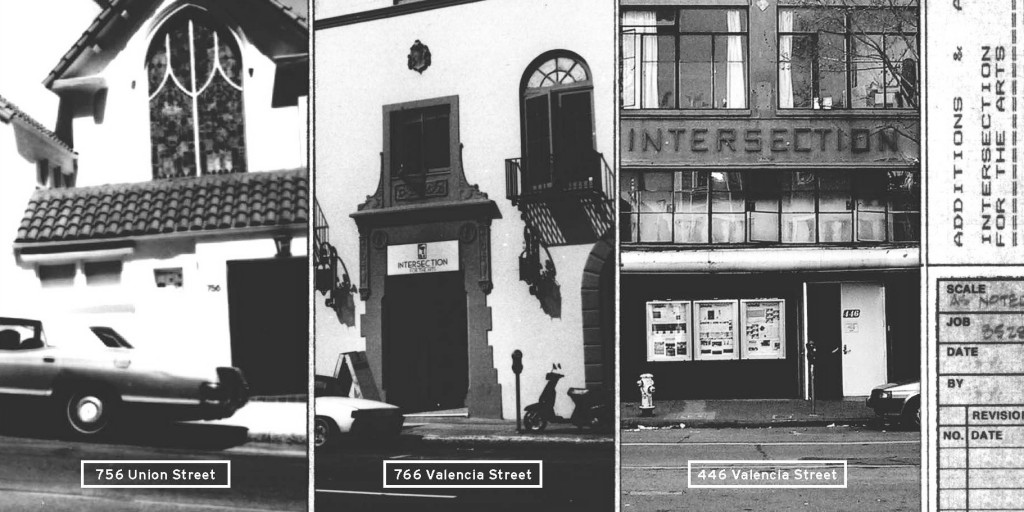
Intersection for the Arts, one of the city’s most established alternative arts venues, is the latest casualty in a city slowly strangling its arts and music scene. 

The decades-old studio and artists space will lay off most of its staff and program directors by the end of the month, and will no longer produce its own arts programming.

“With the specific shifts in the economy and culture of San Francisco, it has been increasingly difficult to operate and sustain a community-based nonprofit arts organization like Intersection,” ousted program directors Kevin B. Chen, Rebeka Rodriguez and Sean San Jose wrote in a joint statement. “For the decade-plus that we have been able to work together, we have collaborated and worked for varied and multiple voices – the marginalized, under-represented, young, immigrant, queer, people of color, disenfranchised voices.

The layoffs were confirmed by Intersection for the Arts’ Board of Directors Chair Yancy Widmer in a post on Intersection for the Arts’ website.

“Our financial situation is deeply challenged,” he wrote, “and it has become apparent that the current business model is no longer sustainable.”

He explained the move in the post:

Our financial situation has always been fragile. Like many non-profit, grassroots arts organizations, it has been a perpetual struggle, dependent on “angel donors,” “heroic” leadership and unpredictable trends. The move from our long-time home in the Mission to an improved facility in SOMA was a significant effort to address this issue, but it was increasingly clear that they were not enough to build the financial foundation we need not merely to survive, but to grow and thrive.

Recognizing that the organization needed fundamental change to sustain its contributions to community life, the Board embarked on a deep organizational examination that led to a substantial rethinking of our role in the community and a refining of our mission.

The layoffs follow a sold-out run of Chasing Mesherle, a play tackling white privelige and the fatal shooting of Oscar Grant at Fruitvale Station, in Oakland. 

Intersection’s own programming will end, but they’ll still play host for other art shows. Additionally, Intersection’s Incubator programs will remain unaffected. The incubator spawned Litquake, Youth Speaks, Cutting Ball Theater, and many other arts programs and organizations are still being brewed there even now. 

artgallery

An art show on prison life at Intersection for the Arts.

In his post, Widmer invited the public to weigh in on the changes at Intersection by emailing transitions@theintersection.org.

We’ll post the full text of Chen, Rodriguez and San Jose’s email below.

We want to personally write you as our work and time at Intersection is suddenly coming to a close. As of June 1, Intersection will be undergoing substantial changes. As part of these changes, the three of us, in addition to other staff, will be laid off at the end of May. With the specific shifts in the economy and culture of San Francisco, it has been increasingly difficult to operate and sustain a community-based nonprofit arts organization like Intersection.

It is truly miraculous that we were able to exist for so long and be able to thrive with programs for as long as we did. Working together with Deborah Cullinan and other amazing colleagues for all the years we did, it worked not just because of the genuine investment and dedication of all at Intersection and us as a staff, but rather, it worked because of YOU — your creative vision, your zeal for social justice, your enthusiasm to collaborate, your desire to communicate and connect. We can not thank you enough for how much you have inspired us, changed us, and taught us.  We are proud, still inspired, and ever changed by being able to support, develop, produce, and premiere new works of the highest order by artists and collaborators of the utmost amazing quality, originality, creativity, and heart – more than 15 years of new works and voices. Thank YOU. We look forward to witnessing more.

For the decade-plus that we have been able to work together, we have collaborated and worked for varied and multiple voices – the marginalized, under-represented, young, immigrant, queer, people of color, disenfranchised voices. We are proud of the work we have accomplished, birthing countless beautiful, resonant, and profound projects. Our work with community based organizations, schools, after-school programs, lock down facilities, coalitions, and individuals has allowed us to collectively flourish and grow.

We look forward to seeing you, experiencing new work, hearing and being part of dialogues, and partaking in both action and reaction to this world we all live in together. If you feel strongly about this kind of work that has happened at, with, and through Intersection over these past 15 years, we ask of you all:

DO IT!

MAKE IT HAPPEN!

TELL PEOPLE!

TELL OUR STORIES!

SUPPORT COMMUNITY!

CREATE ART!

In continued solidarity,

Kevin B. Chen 

Rebeka Rodriguez 

Sean San Jose 


This Week’s Picks: May 28 – June 3, 2014

0

WEDNESDAY 21


Brody Dalle

There is a serious deficit of female fierceness in punk rock at the moment. The music industry as a whole is a boys’ club, and it’s incredibly difficult for women to make a name for themselves in rock. Not only has Brody Dalle done this, she’s done it three times over, fronting beloved LA punk bands the Distillers and Spinnerette, and now as a solo artist, with her new record Diploid Love. She’s an inspiration in many ways — as a formidable frontperson, gifted musician, badass artist, and mother — and now, over 15 years since the Distillers began writing and performing, her work is tighter than ever. Diploid Love is a departure from the straightforward punk aesthetic of the Distillers and the pure rock ‘n’ roll of Spinnerette — the songs range from ballads and torch songs to angry rockers, all of them solid and heartfelt. Dalle’s versatility is impressive, but I’m happy to say that through it all she manages to keep her trademarked sonic sneer that made us fall in love with her to begin with. (Haley Zaremba)

$14, 8pm

Slim’s

333 11th St, SF

(415) 255-0333

www.slimspresents.com


‘Milk’

On May 21, 1979, Dan White was convicted of manslaughter and sentenced to just seven years in jail for assassinating Mayor George Moscone and Supervisor Harvey Milk. Thirty-five years ago today, the city took to the streets in outrage over the lenient sentence of a murderer. The White Night riots began with a march down Castro Street, continued into violent protests at City Hall and finished with police retaliation, tear gas, vandalization, and injury. Needless to say, Harvey Milk lived on as a hero of the gay rights movement in San Francisco and around the country. In honor of this anniversary, the Castro Theatre is celebrating Milk’s legacy with a special screening of Gus Van Sant’s Academy Award-winning Milk, starring Sean Penn as our favorite gay rights activist. The film chronicles the last eight years of Milk’s life, and how he changed this city for the better. (Laura B. Childs)

5:30pm and 8pm, $11

Castro Theatre

429 Castro, SF

(415) 621-6350

www.castrotheatre.com


THURSDAY 22


The Acro-Cats

If you attended either the Roxie’s or Oakland’s cat video festival a couple weeks ago and have been in feline withdrawal ever since, have no fear — the cat circus is here. Yes, it’s the Acro-Cats, an all-kitty circus troupe, complete with a cat rock band, that’s touring the country. Feats of derring-do will include cats jumping through hoops, cats jumping on tightropes, cats riding on skateboards, cats balancing on balls…you get the idea. They also arrive in a “Cat Car.” Founder Samantha Martin has taken in over a dozen stray or orphaned cats and found homes for 130 more in her lifetime; a percentage of ticket sales will go to kitty rescue programs. Sounds like a purrr-fect evening to me. (Emma Silvers)

Through Sun/25, 8:30pm, $24

The Southside Theatre at Fort Mason Center, SF

www.circuscats.com


Black Flag

Legendary punk band Black Flag blazed the path for underground music in the United States during the 1970s and ’80s with its rigorous work ethic, groundbreaking recordings, and relentless touring that built a network and foundation for independent artists that still exists today. Recently resurrected by Greg Ginn, the founder-guitarist-primary songwriter and sole continuous member, the band released its first new record in nearly two decades last year, and is once again hitting the road and ripping through the new tunes along with old favorites like “TV Party,” “Six Pack” and “Rise Above.” (Sean McCourt)

With HOR, Cinema Cinema and Violence Creeps

8pm, $20-$25

Brick and Mortar Music Hall

1710 Mission, SF

(415) 800-8782

www.brickandmortarmusic.com


Rock ‘n’ roll history: ‘American Jukebox’

“Plug into this jukebox and see the face and figures behind the greatest American Music,” says the co-founder of City Lights Bookstore, Lawrence Ferlinghetti, about American Jukebox. For Christopher Felver’s newest photography book, 240 photographs from tours and encounters with musicians over the past 25 years have been compiled into a photographic journey chronicling the heritage of American music and capturing its lively spirit. Scattered between playlists, autographed lyrics, record sleeves, and anecdotes are portraits of musicians caught in action on stage or posed under Felver’s lens. From Doc Watson to John Cage and Sonny Rollins to Patti Smith, American Jukebox celebrates the vitality of the music industry and its rich history. The photographer will appear in person to read and sign books. (Childs)

7pm, free

Books Inc. Bookstore Opera Plaza

601 Van Ness, SF

(415) 776-1111

www.booksinc.net


FRIDAY 23


The Avengers

One of the best bands to come out of the San Francisco punk scene in the late 1970s, the Avengers mixed impassioned politics and social commentary into their potent blend of dynamic and invigorated music. Fronted by singer Penelope Houston, they secured themselves a place in history when they opened for the Sex Pistols’ final gig at Winterland in January of ’78 and threatened to steal the show. Though they lasted only a couple of years before they broke up, the group made a lasting impression — and now, 35 years later, Houston and original guitarist Greg Ingraham are back and better than ever. (McCourt)

With Kicker and California

9pm, $15

The Chapel

777 Valencia, SF

(415) 551-5157

www.thechapelsf.com


Rocketship

They might not have ever achieved widespread mainstream success, but the Sacramento-based band Rocketship had enough of a devoted following in the ’90s that news of their reunion for this year’s Popfest caused more than a little ripple of excitement among indie-pop lovers. This Slumberland Records showcase, part of the little indie-fest-that-could’s special weekend of bringing fuzz- and grunge-pop favorites from the ’90s and aughts back together, has a pretty stellar lineup from start to finish — you’re sure to see some cardigan-sporting superfans out in full force. (Emma Silvers)

With The Mantles, Bouracer, and The Softies

8pm, $18-$20

Rickshaw Stop

155 Fell, Sf

www.rickshawstop.com


SATURDAY 24

“The Hop”

Looking for a blast from the past party for this holiday weekend? Then check out Handsome Hawk Valentine’s “The Hop,” which will feature rockabilly bands including guitar slinger extraordinaire Deke Dickerson and his Ecco-Fonics and Kay Marie, along with Sin Sisters Burlesque. Slick back that pomp or put on those stilettos and get gone — but if you don’t have time before you get there, don’t worry: You can get in on some free retro hairstyling and photos, and then hoot and holler for the Bettie Page Clothing “Rockabilly Prom King and Queen” contest before you dance the night away. (McCourt)

9pm, $12

Elbo Room

647 Valencia, SF

(415) 552-7788

www.elbo.com


International Beer Festival

In the 30 years since the first International Beer Festival, a lot has changed. It all began with a selection of five beers (Pabst being one of the highlights) to now over 100 international and local craft brewers. Expect local brews from SF staples and Bay Area bites from local gems like the O-inducing Pizza Orgasmica. For over three decades, this beer festival has served as the perfect excuse to drink for a good cause — two birds, one stone — since the festival is entirely organized and staffed by parents of Telegraph Hill Cooperative Nursery School students. The proceeds are donated to Tel-Hi’s preschool, which will fund the school’s programs for the entire year. Now that’s drinking responsibly. (Childs)

7pm, $75

Festival Pavilion

Fort Mason Center, SF

www.sfbeerfest.com


SUNDAY 25


‘Grease’ Sing-A-Long

Whether you’re more of a fast-talkin’, gum-smackin’ Pink Lady or a dead ringer for Olivia Newton-John’s good girl Sandy, your stylistic choices will be welcome at this Castro Theatre tradition. Get ready for “Summer Lovin’,” “Greased Lightnin’,” “Beauty School Dropout,” and boatloads more overt sexual innuendo — a lot of which sounds pretty damn un-PC by today’s standards (“Tell me more, tell me more, did she put up a fight? Wait, what?!”) — than you probably noticed when you and your friends were all obsessed with this movie and crushing hard on John Travolta back at theater camp. The good news: Frankie Avalon was a teen-dream idol for a reason, Stockard Channing’s Rizzo is still the coolest of them all, and your hair goop is safe here. (Silvers)

2:30pm and 7pm, $16

Castro Theatre

429 Castro, SF

(415) 621-6350

www.castrotheatre.com


MONDAY 26


Perfect Pussy

One of the buzziest bands of 2014, frenetic Syracuse-based punk rockers Perfect Pussy didn’t need the shock-value band name to make headlines — but it hasn’t hurt. The hype around the five-piece reached a fever pitch sometime around SXSW, when it became clear that vocalist Meredith Graves’ unusually confessional, literate writing (for noise punk) and take-no-bullshit delivery translated into a seriously mind-screwing live show, music blog darlings or no. She’s also been pretty articulate about feminism in interviews. In short: probably not a flash in the pan, and well worth seeing live. (Silvers)  

With Potty Mouth, Wild Moth, Crabapple

8pm, $10-$12, all ages

Rickshaw Stop 155 Fell, SF

www.rickshawstop.com


The Guardian listings deadline is two weeks prior to our Wednesday publication date. To submit an item for consideration, please include the title of the event, a brief description of the event, date and time, venue name, street address (listing cross streets only isn’t sufficient), city, telephone number readers can call for more information, telephone number for media, and admission costs. Send information to Listings, the Guardian, 225 Bush, 17th Flr., SF, CA 94105; or e-mail (paste press release into e-mail body — no attachments, please) to listings@sfbg.com. Digital photos may be submitted in jpeg format; the image must be at least 240 dpi and four inches by six inches in size. We regret we cannot accept listings over the phone.

Gettin’ festy

0

esilvers@sfbg.com

LEFT OF THE DIAL Earlier this month, Oakland singer-songwriter Ash Reiter was at Hipnic, an annual three-day music festival in Big Sur thrown by promoters folkYEAH!, featuring Cass McCombs, the Fresh & Onlys, the Mother Hips, Nicki Bluhm & the Gramblers, and plenty of other Bay Area folky faves. Held at the Fernwood Resort and campgrounds, with families gathering under the shade of redwoods, it’s one of the cozier, more homegrown summer festivals in the greater Bay Area — there’s nary a Coachella-esque VIP section in sight — but a three-day pass still comes in at a cool $240.

Looking around, Reiter saw how the ticket price had shaped the crowd.

“There was obviously some great music, but that kind of boutique festival thing is so expensive that a lot of the audience seemed like older, well-off folks, parents — I mean, those are the people who can afford to go to these things,” she recalls. “I’m sure a lot of the bands playing wouldn’t be able to go to that festival, if they weren’t playing.”

It was that kind of thinking that sparked the idea for Hickey Fest, a three-day festival now in its second year and named for its location in Standish Hickey State Park in Mendocino County, “where the South Fork of the Eel River shimmers against the backdrop of the majestic redwoods,” according to the fest’s flyers. Born of the desire to curate a “musical experience outside of just your average festival, a chance for musicians to actually hang out and talk to each other and get to know each other that’s not just in a loud rock club,” Reiter launched Hickey Fest over Memorial Day weekend last year, with a lineup of friend-bands like Warm Soda, Farallons, Cool Ghouls, and Michael Musika. The goal: A festival her musician friends would actually enjoy, in an atmosphere that wouldn’t be “as overwhelming as a BottleRock or an Outside Lands.” She estimates some 500 to 600 people attended in total.

This year’s festival, which runs June 20-22 in the same location, includes another local-love lineup, including Papercuts, Sonny and the Sunsets, Black Cobra Vipers, and more. A $60 ticket gets you three days of music and camping. “I wanted it to be about community, about putting the fun back in music,” says Reiter, who will also perform. “So I did intentionally try to make it as cheap as possible.”

It’s a sentiment rarely heard from music promoters, especially as the days get longer and the work-ditching gets ubiquitous and the college kids are all turned loose for the summer. Festival season is upon us, Bay Area, and make no mistake: It’s a great way to see touring bands from all over the country. It’s a great platform for local bands, who get the chance to play bigger stages and reach new audiences. And as a music fan, it’s a great way to spend a shit-ton of money.

FIELD OF DREAMS

In the summer of 1969, when Woodstock was changing the meaning of “music festival” on the East Coast via Jimi solos and free, mud-covered love, plans were taking shape for a San Francisco festival that, had it actually taken place, would have been legendary: The Wild West Festival, scheduled for Aug. 22-24, was designed as a three-day party, with regular (ticketed) concerts each night in Kezar Stadium, while other bands performed free music all day, each day, in Golden Gate Park.

Bill Graham and other SF rock scene movers and shakers worked collaboratively on organizing the festival, which — had it happened — would have seen Janis Joplin, the Grateful Dead, Jefferson Airplane, Sly and the Family Stone, Santana, Country Joe and the Fish, the Steve Miller Band, and half a dozen other iconic bands of the decade all taking the stage within 72 hours.

Why’d it fall apart? According to most versions of the story, too many of those involved wanted the whole damn thing to be free. Graham, among others, countered that, while the free music utopia was a nice idea, lights, a sound system, and other basic accoutrements of a music festival did in fact cost American dollars. The plans collapsed amid in-fighting, and the infamous Altamont free music festival was planned as a sort of make-up for December of that year — an organizational disaster of an event that came to be known for the death of Meredith Hunter, among other violence, signaling the end of a certain starry-eyed era.

So yeah, money has always been a sticky part of live music festivals. But the industry has boomed in a particularly mind-boggling way over the last decade; never before have ticket prices served as such a clear barrier to entry for your average, middle-class music fan. Forget Hipnic: In the days after Outside Lands sold out, enterprising San Franciscans began plonking their three-day festival passes onto the “for sale” section of Craigslist at upwards of $1,000 each.

The alternative? The “screw that corporate shit, let’s do our own thing” attitude, which is, of course, exactly the kind of attitude that’s birthed the bumper crop of smaller summer festivals that have sprung up in the Bay Area over the past few years, like Phono del Sol (July 12, an indie-leaning daylong affair in SF’s Potrero del Sol Park, started by hip-kid music blog The Bay Bridged in 2010, tickets: $25-$30) and Burger Boogaloo (a cheekily irreverent punk, surf, and rockabilly fest over July 4 weekend in Oakland’s Mosswood Park — weekend pass: $50). Both pair bigger, buzzy acts with national reach like Wye Oak (Phono del Sol) or Thee Oh Sees and the great Ronnie Spector (Burger Boogaloo) with a slew of local openers.

“I’ve played a few festivals, and when it’s a really big thing, you realize there are just so many other huge bands that people would rather see,” says Mikey Maramag, better known as the folk-tronica brains behind SF’s Blackbird Blackbird. He’ll be sharing a bill with Thao and the Get Down Stay Down, Nick Waterhouse, White Fence, A Million Billion Dying Suns, and others at Phono del Sol — which, judging by last year’s attendance, could draw some 5,000 to 6,000 people.

“I think at smaller festivals you have more people who take the time to really listen, appreciate the music more, really big fans,” he says. “There are fewer artists on this bill [than at large festivals] but they’re all great ones — I’m especially excited to see Wye Oak.”

Maramag will be debuting some songs from his new album, Tangerine Sky, out June 3; the show will serve as a welcome-home from a quick national tour to promote it.

Then there are the even more modest summer offerings, like SF Popfest, which takes place over four days (May 22-25) at various small venues in the city. It’s not exactly a traditional festival — you’re not likely to find slideshows online of the “BEST POPFEST FASHION!!1!” the way we’ve unfortunately become accustomed to from Coachella — but for the small contingent of super passionate ’90s indie-pop fans in the Bay Area (hi!), this is one not to miss.

“I’ve been getting a lot of calls from people who think it’s a very different kind of festival than it is. App people. This one guy had some kind of offer about a parking app for festivals, I think? Which would really not make any sense at all,” says Josh Yule, guitarist for SF jangle-pop maestros Cruel Summer, who received the mantle of SF Popfest organizer from his predecessor in the mid-aughts (older history of the festival is a little hazy, as it’s always been primarily organized by musicians for musicians — for fun and, says Yule, absolutely no profit whatsoever). There was talk of getting some beer sponsors at some point, but he decided against it. “We have friends working the door at most of these things. I was a punk kid in high school, I guess, I tend to stay away from things that would make this go in a more corporate direction.”

This year’s fest is centered around reunions of bands who’ve been broken up for a while, like cult-favorite Sacramento popsters Rocketship, who haven’t played together in at least a decade; the band will be at the Rickshaw Stop Fri/23 for a Slumberland Records showcase. Dressy Bessy, Dreamdate, the Mantles, Terry Malts, and plenty others will all make appearances throughout the fest, as well as a few newer bands, like the female-fronted Stockton garagey-punk band Monster Treasure.

“Obviously it’s not gonna be thousands of people, it’s not going to be outside — it’s going to be 100 to 200 like-minded individuals who all enjoy the same thing, and they all get it,” says Yule. “We got these bands back together to play and they’re all excited about it even though there’s no [financial] guarantee…It’s that community that I’ve always been involved in and sometimes I feel like it’s not around anymore. So it’s nice to go ‘Oh wait, there it is. It’s still there, and it’s still strong.'”

CROWD SURFING

For local bands just starting to make a name for themselves, of course, there’s nothing like a larger and yes, very corporate festival for reaching new audiences. Take the locals stage at LIVE 105’s BFD, the all-day radio-rock party celebrating its 20th year June 1 at the Shoreline: Curated by the station’s music director, Aaron Axelsen — aka the DJ who’s launched 1,000 careers, thanks to his Sunday night locals-only show, Soundcheck, as well as booking up-and-comers for Popscene — the locals stage at BFD has a pretty good track record for launching bands onto the next big thing. The French Cassettes, one of SF’s current indie-pop darlings, sure hope that holds true for them.

“Aaron Axelsen has been really generous to us. I think we’re all clear that none of this would be happening without him,” says singer-guitarist Scott Huerta. The band will be playing songs from its newest album, out on cassette (duh) at the end of May. “But we’re super excited just to be in there. Hopefully we make some new fans. I know I used to find out about new bands by going to BFD and just passing by that stage. It’s by all the food vendors, so as long as people are hungry, we’ll be good. Don’t eat before you come.”

For the Tumbleweed Wanderers, an Oakland-based soul-folk-rock band that’s been hustling back and forth across the country for the past year, hitting the stage at Outside Lands (Aug. 8-10) — that festival everyone loves to hate and hates to love — will be the culmination of years of playing around the festival, quite literally.

“In 2011, we busked outside, and I think that’s the year [our keyboard player] Patrick almost got arrested?” says Rob Fidel, singer-guitarist, with a laugh. “Then the next year we got asked to play Dr. Flotsam’s Hell Brew Review, which is this thing in the park just outside Outside Lands, and we did that for an hour and a half every day for free. And then busked outside. I like to say we played Outside Lands more than any other band that year.

“But to be on the other side of that all of a sudden is awesome,” he says, noting that the band will be playing some tunes from a new record set for release later this year. “It was the same when we played the Fillmore for the first time — we used to busk outside of there and the venue would get super pissed, and now, oh look, that same guy’s carrying our amps…but I think the experience of working our way up like that has kinda taught us you’re gonna see the same people on the way up as on the way down. And we’ve worked really hard these past few years. It’s nice to feel like we’ve earned it.”

It’s only a slight exaggeration to say there are roughly 1,000 other music festivals happening throughout the Bay Area this summer — at the Guardian, our inboxes have been filling up with press releases and show announcements since February; check out the roundup below for a mere smattering of what’s going on. And, ticket price hand-wringing aside, you don’t need to be rich to rock out: Stern Grove’s free Sunday lineups, with heavy hitters like Smokey Robinson, Andrew Bird, Rufus Wainwright, and the Zombies, are among the best we’ve seen. In the East Bay, the Art+Soul Festival is always a source of up-and-comers in hip-hop, funk, and more — this year for the whopping price of $15.

So, yeah, we never got that Janis and Sly and Jefferson Airplane show. So be it. As a music fan in the Bay Area, there’s no better time than summer to smack yourself, remember that you’re super lucky to live here, grab a sweater (because layers), and get out to hear some music. Call it your own damn three-month-long Wild West Festival. We’ll see you in the bathroom line.


May

SF Popfest, May 22-25, locations vary throughout SF, www.sfpopfest.com

Audio on the Bay, Craneway Pavilion, Richmond, May 23-25, www.insomniac.com

BottleRock Napa Valley, Napa, May 30-June 1, www.bottlerocknapavalley.com


June

LIVE 105’s BFD, June 1, Shoreline Amphitheatre, Mountain View, www.live105.cbslocal.com

Not Dead Yet Fest, June 7, Thee Parkside, SF, www.notdeadyetfest.com

OMINODAY Music Festival, June 7, McLaren Park, SF, www.ominoday.weebly.com

The San Francisco Jazz Festival, June 11-22, locations vary. www.sfjazz.org

Reggae in the Hills, Calaveras County Fairgrounds, June 13-15, www.reggaeinthehills.com

Hickey Fest, June 20-22, Leggett, www.hickeyfest.wordpress.com

San Francisco Free Folk Festival, June 21-22, Presidio Middle School, SF, www.sffolkfest.org

Berkeley World Music Festival, June 22, People’s Park, Berk., www.berkeleyworldmusic.org


July

High Sierra Music Festival, July 3-6, Quincy, www.highsierramusic.com

Burger Boogaloo, July 5-6, Mosswood Park, Oak., www.burgerboogaloo.com

Phono del Sol, July 12, Potrero del Sol Park, SF, www.phonodelsol.com

Northern Nights, July 18-20, Mendocino/Humboldt, www.northernnights.org


August

Art + Soul Oakland, Aug. 2-3, City Center, Oak., www.artandsouloakland.com

Outside Lands, Aug. 8-10, Golden Gate Park, SF, www.sfoutsidelands.com

First City Festival, Aug. 23-24, Monterey, www.firstcityfestival.com


Throughout the summer: Stern Grove Festival, Sundays, www.sterngrove.org; People in Plazas, dates vary, throughout downtown SF, www.peopleinplazas.org.

It’s all reel

0

cheryl@sfbg.com

FILM As far as Hollywood is concerned, it’s already been summer for weeks, with superheroes (Captain America and Spider-Man have had their turns; X-Men: Days of Future Past opens Fri/23) and monsters (Godzilla) looking mighty comfortable atop the box office. But the season is just getting started, screen fiends, and there’s plenty more — maybe too many more, if you’re operating on a limited popcorn budget — ahead. Read on for a highly opinionated, by-no-means-comprehensive guide; as always, dates are subject to change. (And keep reading for a list of local film festivals, too, since the healthiest diet is always a balanced one.)

The first post-Memorial Day weekend unveils Angelina Jolie (dem cheekbones!) as Sleeping Beauty’s worst nightmare in Maleficent, probably the biggest Disney casting coup since Johnny Depp sailed to the Caribbean. First-time helmer Robert Stromberg has a pair of Oscars for his art-direction work on Avatar (2009) and Alice in Wonderland (2010); if this dark fantasy clicks with audiences, expect a raft of live-action films starring Disney’s ever-growing stable of villains (fingers crossed for Ursula the Sea Witch next).

If fairy tales aren’t your thing, add thriller Cold in July to your calendar (like Maleficent, it’s out May 30). It’s the latest from genre man Jim Mickle (2013’s We Are What We Are), with his highest-profile cast to date. Dexter‘s Michael C. Hall, rocking a mullet, plays a small-town Texan whose unremarkable life goes into pulpy overdrive after he kills a burglar, angering the man’s ex-con father (Sam Shepard). But nothing is what it seems in this twisty tale, which also features Don Johnson and a synth score — both stellar enhancements to the film’s late-1980s aesthetic.

Moving into June, sci-fi thriller Edge of Tomorrow  has Tom Cruise saving the world — just another day on the job for the suspiciously ageless star, though he apparently lives the same day over and over here. Look for director Doug Liman (multiple Bourne movies) and co-stars like Emily Blunt and Game of Thrones‘ Noah Taylor to add some depth — though, OK, this’ll probably still be a one-man show. Never change, Tom. Elsewhere June 6, erstwhile Divergent ass-kicker Shailene Woodley aims to prove she’s not just the poor man’s Jennifer Lawrence with young-adult weepie The Fault in Our Stars.

June 13, undercover cops Schmidt and Jenko — played by the likable team of Jonah Hill and Channing Tatum — return for more jokes (and winks, because they’re in on the joke too, you guys!) in 22 Jump Street. Far less comedic, and far more brain-melting, is sci-fi drama The Signal, which starts off like a typical road-trip movie, then switches gears a few times before slam-banging into weirdness so out-there it’s almost (almost) a spoiler to note that Laurence “Morpheus” Fishburne plays a key role.

The following week (June 20), Aussie filmmaker David Michôd — whose gritty 2010 Animal Kingdom became an insta-classic of the crime genre, and launched the stateside careers of Jackie Weaver and Joel Edgerton — reunites with Kingdom star Guy Pearce for The Rover, the outback-set tale of a man seeking revenge on a gang of car thieves. In an intriguing casting choice, former vampire Robert Pattinson co-stars as a wounded baddie forced along for the ride.

Next up, June 27 unleashes Transformers: Age of Extinction. Memo to the world: Until we all agree to stop seeing these movies, Michael Bay and company will keep grinding ’em out. At least this one is LaBeouf-less.

Ahead of the long Fourth of July weekend, July 2 unleashes saucy comedy Tammy, which stars Melissa McCarthy (she also co-wrote the script) and Susan Sarandon as a road-tripping granddaughter and grandmother. Or, you could check out Eric Bana as an NYPD detective who teams up with a priest (Edgar “Carlos the Jackal” Ramírez, recently cast in the Swayze role in the highly unnecessary Point Break remake) in Deliver Us From Evil; despite sharing a title with Amy Berg’s harrowing 2006 doc about pedophiles in the Catholic Church, it’s about demonic possession — but is still probably less frightening than the Berg film, to be honest.

July 11, Richard Linklater’s Boyhood has a gimmicky premise — filmed over 12 years, it charts the coming-of-age of a child, and his relationship with his parents (played by Ethan Hawke and Patricia Arquette) — but also glowing reviews from its film festival stints. And, just when you thought it was safe to go back to the banana aisle, Dawn of the Planet of the Apes arrives, laying further waste to a San Francisco that already took a beating in the first film, not to mention losing most of its downtown to Godzilla and friends just a week ago. Andy Serkis returns as chimp king Caesar. Also: Roman Polanski’s latest, Venus in Fur — based on the David Ives play, and starring Polanski’s wife, Emmanuelle Seigner — arrives on our shores after picking up a César award for the director in France.

Andy and Lana Wachowski’s latest eye candy-laden epic action fantasy, Jupiter Ascending, is about an ordinary human (Mila Kunis) who turns out to be Neo the One, er, royalty from another planet. Based on production stills, this film also features Channing Tatum flying through the air shooting guns and stuff. July 18 also brings The Purge: Anarchy, sequel to last year’s sleeper hit about a near-future America that allows a crime spree free-for-all one night per year. The follow-up lacks Lena Heady — but it does have Michael K. “Omar” Williams, and the characters actually leave the house this time.

https://www.youtube.com/watch?v=5w0KAHhKECg

Then, on July 25, choose your hero: Dwayne “The Rock” Johnson sporting a hat made out of a lion’s head (and, apparently, beard made out of yak hair) in Hercules, or those dancin’ kids of Las Vegas-set Step Up All In. (For those keeping score, this is the fifth Step Up film.) Plus, there’s Woody Allen’s 1920s-set Magic in the Moonlight, starring Emma Stone as a psychic and Colin Firth as the skeptic who falls for her. Sounds kinda twee, and Allen’s private life remains controversial, but that cast, which also includes Marcia Gay Harden and Jackie Weaver, is all kinds of dynamite.

August begins with a bang — Marvel’s hotly-anticipated Guardians of the Galaxy, which just about broke the Internet when its first trailer rolled out in February, is out on the first — before meandering a bit. Taking a break from her own Marvel duties, Scarlett Johansson (so great in Under the Skin) plays a different kind of superhuman in Luc Besson’s Lucy, while the live action-CG mash-up I’m not sure anyone was really begging for, Teenage Mutant Ninja Turtles, also takes a bow (both Aug. 8).

As the summer winds down, Phillip Noyce (2002’s The Quiet American) strays onto YA turf with an adaptation of Lois Lowry’s The Giver, with Jeff “The Dude” Bridges playing the title role, and Brenton Thwaits (who also stars in The Signal, above) as his protégé. Also out Aug. 15, The Expendables 3 adds Harrison Ford, Antonio Banderas, and Wesley Snipes (!!) to its cast o’ aging action hunks. Don’t you worry, Nic Cage — there’s still room for you in the inevitable part four. And don’t miss The Trip to Italy, which re-teams British comedians Steve Coogan and Rob Brydon for a foodie road trip that will make you guffaw (at the impressions) and drool (over the plates of pasta).

Labor Day looms as Robert Rodriguez brings Frank Miller’s Sin City: A Dame to Kill For, which looks to be as visually stunning as its 2005 predecessor, if not much friendlier to the female perspective; a sports drama inspired by Concord’s own De La Salle High School football team, When the Game Stands Tall; and yet another YA adaptation, If I Stay, starring Chloë Grace Moretz, who is one of the more dynamic teen actors of late, and may make this girlfriend-in-a-coma tale livelier than it sounds. *

ESCAPE THE MULTIPLEX: SUMMER FESTIVALS

San Francisco Green Film Festival (May 29-June 4; www.sfgreenfilmfest.org) Doc-heavy fest of films from 21 countries that explore environmental issues and themes.

San Francisco Silent Film Festival (May 29-June 1; www.silentfilm.org) Exquisitely curated and rock-concert-popular showcase of films from cinema’s earliest days, plus live accompaniment and special guests.

SF DocFest (June 5-19; www.sfindie.com) The San Francisco Independent Film Festival’s doc-tastic offshoot consistently offers a strong slate of true-life tales.

New Filipino Cinema (June 11-15; www.ybca.org) Documentaries, narratives, shorts, and experimental films direct from the Philippines’ burgeoning film scene.

Queer Women of Color Film Festival (June 14-16; www.qwocmap.org) Five shorts programs highlight 55 works, with a focus this year on queer culture in Southeast Asian, North African, Middle Eastern, and other Muslim communities.

Martin Scorsese Presents Masterpieces of Polish Cinema (June 14-Aug 23, bampfa.berkeley.edu) Rare and important works by Andrzej Wajda, Jerzy Kawalerowicz, Wojciech Has, and others — and since Uncle Marty’s in charge, expect glorious digital restorations across the board.

Frameline (June 19-29; www.frameline.org) The oldest and largest fest of its kind, the San Francisco International LGBT Film Festival has been programming the best in queer cinema for 38 years.

San Francisco Jewish Film Festival (July 24-Aug 10; www.sfjff.org) Also the oldest and largest fest of its kind, the SFJFF presents year-round programming, though this fest, now in its 34th year, is its centerpiece event.

On the town

0

arts@sfbg.com

DANCE

Now in his fourth year guiding the newly constituted Oakland Ballet Company, Artistic Director Graham Lustig seems to have found his stride in creating a troupe that respects its past but is no longer tied down by it. If, for the time being, the “ballet” part of the company’s name has to take a back seat to the place where it is at home, so be it.

“Oakland-esque,” four world premieres for OBC’s spring season at the Malonga Casquelourd Center for the Arts, offered an affable afternoon of spiffily danced, and at the very least conceptually intriguing, choreography.

Kudos to the program’s ability to throw a spotlight on the city’s tradition in the arts. Choreographers Sonya Delwaide and Molissa Fenley teach at Mills College. Jazz piano great Earl “Fatha” Hines spent his last years in Oakland, while Larry Graham (of Sly and the Family and Graham Central Station) grew up there and created what became known as “East Bay Funk.” Guests Sonsheree Giles and Joel Brown perform with AXIS Dance Company; Garion “Noh-Justice” Morgan and Rayshawn “Looney” Thompson do so with street dancers Turffeinz.

Delwaide’s Rocky Road, named after the ice cream invented in Oakland in 1929, takes a light-hearted but intricately shaped approach to Hines’ joyously embracing pianisms within a big band context. With a quartet of four (Jori Jahn, Megan Terry, Marte Madera, and Matthew Roberts) and two soloist couples, Delwaide’s tongue-in-cheek approach to both jazz and ballet brought out a commonality between these very different arts: Both shine with a surface of ease while demanding great technical facility; their soloists also often perform against backup groups, known in ballet as the corps.

Rocky‘s loose-limbed dancers kicked, slinked, and stepped with, against, and behind the beat. With the women on point, they inhabited a universe in which stylistic differences didn’t matter, but dancing full out did.

The soloist couple from inside OBC — the liquidly expressive and ever so versatile Sharon Wehner partnered by a refined Evan Flood — was paired with AXIS’s fierce Giles and Brown on wheels. In its individual duets and sharing the same stage, this quartet confirmed, one more time, that lyricism, grace, and power communicate no matter what shape they take. It helped that Delwaide has an embracing, refined choreographic voice.

Robert Moses’s choreography for TIP pitted furiously fast, shifting ensembles of various sizes against Graham’s bass-heavy, beat-heavier music. In part because of the dated-looking teenage outfits of white tops and checkered skirts and pants (by Christopher Dunn), I thought of Moses perhaps having looked at TIP as a memory of some 1970s club scene.

TIP began with a clump of people who just happened to come upon each other, and turned into a sweaty night in which they hooked up with each other and switched partners with ease. Some interactions stood out, such as the three sitting upstage who companionably slid along on their butts. Or the male dancer who tried out three women in a row. In a hetero duet, a woman lent much-needed support to her back-falling companion. TIP‘s surfeit of material developed a somewhat messy structure, yet it allowed the eye to wander over a sea of intense dancing, out of which limbs arose like curling smoke.

Mills College’s majestic grove of redwood trees has inspired both poets and painters. It also provided Fenley with ideas for the verticality, restraint, and elegance for Redwood Park. She set it on a quintet to a score by Joan Jeanrenaud, here excellently performed by percussionists Nava Dunkelman and Ann Wray. At first the music’s sharp attacks and tonal variations seemed at odds with the tranquil dancing’s soft strides and pliant turns spinning off into extended patterns — but as Redwood evolved, you realized that both arose from a calmly spacious sense of time. The piece was designed for five men, but Emily Kerr successfully pinch-hit for an injured one. While it was good to see dancers as different as Vincent Chavez, Flood, Madera, and Roberts attempt this spare choreography, not everyone was equally up to the task.

Turf dancing (taking up room on the floor) developed as way of claiming urban territory, and as a tribute to lives lost on Oakland’s streets. Lustig’s Turfland was a well-intentioned but unconvincing attempt to bring two of its practitioners to the concert stage, and have his ballet dancers in turn follow them out into the street.

Much of the piece looked improvised and none of the dancers — with the exception of Chavez, who fluidly straddled both worlds — seemed at ease. It takes more than performing on the tip of your toes, whether in blocked shoes or sneakers, to find a common language. These dancers were about as far apart as the washed-out visuals of the stage and the graffiti-inspired, scintillatingly beautiful backdrops by Samuel Renaissance. *


Guardian Intelligence: May 21 – 27, 2014

0

P>Because nothing screams “invest in healthcare” like an aging Sammy Hagar: The former Van Halen rocker teamed up with Metallica’s James Hetfield, Green Day’s Billie Joe Armstrong, Train’s Pat Monahan, Nancy Wilson of Heart, and other rock ‘n roll veterans for a special one-time acoustic show at The Fillmore May 15, benefiting the Pediatric Cancer program at UCSF Benioff Children’s Hospital — what organizers were calling the first annual “Acoustic-4-A-Cure” show. That’s a lot of oversized egos for one stage, but hey, we can’t knock rockin’ for a good cause.


HAIL THE TRAIL

Celebrate the 25th anniversary of the San Francisco Bay Trail — still a work in progress, with 60 percent of the “ring around the Bay” having been completed — Sat/24, at a re-dedication of the Rosie the Riveter World War II National Historic Park visitor center in Richmond. The center houses exhibits dedicated to civilian efforts on the home front during World War II, embodied by the iconic female factory worker. The festive ceremony will be a vintage-themed affair, complete with WWII-era big band jazz, swing dancing, and a costume contest. And in a nod to our current century, the event will also unveil the first Bay Trail smartphone app. Let the summer hiking season begin! www.baytrail.org


PROP. 13 PRESSURE

Public policy group Evolve California sent out a survey to California candidates for public office, and discovered that a full 80 percent support reforming Prop. 13. The nearly four-decades-old law bases property taxes on purchase price, not current market value, and is often blamed for lost revenues that could go toward, say, rescuing California’s public education system from the dregs. The vast majority of hopefuls running for federal, state, and local office said they’d support reassessing commercial properties at market value, as long as small businesses, homeowners, and renters remain protected.


GUTS OF THE CITY

A daylong conference Sat/31 will expose curious participants to some of the lesser-known aspects of city life: The design and planning of public transit, water systems, wireless networks, and other kinds of urban infrastructure. MacroCity, to be held at the Brava Theater on 24th Street in the Mission, will feature talks on everything from San Francisco’s modern military ruins, to the city’s transportation history, to water systems feeding San Francisco. Visit themacrocity.com for more.


BISON: “YAWN”

One Bay to Breakers participant apparently heard the call of the wild, as the poncho-clad man was caught on video jumping into the Golden Gate Park bison paddock. Two officers arrested him in short order, and the SFPD Richmond station tweeted afterwards, “The bison seemed unimpressed.”


PORN DISCRIMINATION

San Francisco based porn star Eden Alexander was rushed to an emergency room after a near-fatal reaction to a common prescription drug. But when she tried using crowd-funding site Giveforward to cover the cost of her treatment, she was told by its payment operators, WePay, that her fundraiser would be cancelled because its terms state “you will not accept payments … in connection with pornographic items.” Alexander only sought funding for her medical costs.


MISSION: RUMBA

Dust off your feather headdress — it’s time yet again for Carnaval (Fri/23-Sun/25) when Harrison between 16th and 24th streets becomes one giant celebration of the music, dance, food, and art of Latin America. This year’s theme is “La Rumba de la Copa Mundial,” or a Celebration of the World Cup, which starts June 12 in Brazil. Sure, there’ll be plenty of drunken revelry, but this is also a great showcase of the deep-rooted Latino arts scene that’s holding on here, determinedly, even as the Mission changes: Look for the Arte Expo, featuring works from the Mexican Museum, Mission Cultural Center, Galleria de la Raza, Accion Latina, BRAVA, and Precita Eyes. The parade’s on Sun/25; see www.carnavalsanfrancisco.org to plan your route.


WANGIN’ IT

Insanely talented Chinese pianist Yuja Wang drops in on our SF Symphony once a year to tickle the ivories and steal a few hearts. Seriously: Her annual appearance here has become an event as eagerly anticipated as the return of the swallows to Capistrano or a sweet, light beating at the Folsom Street Fair. This time around (Thu/22-Sun/25, www.sfsymphony.org) she’ll be taking on Prokofiev’s magical, romping Piano Concerto No. 1 and Litolff’s whirling scherzo from Concerto Symphonique — a double treat for music lovers.


MEAT US SOON

We had doubts about 4505 Meats moving into the old Brother-in-Law BBQ #2 space on Divisadero — that hood moved upscale long ago, but a fancy BBQ in that particular space had the potential to be more sacrilegious than celebratory. Well, at least one local outlet is smitten: SFist has been drooling over 4505’s $18 “Big Mac” — “two beef patties lovingly caressing a block of fried macaroni and cheese” — and “famed bacon-studded hot dogs wrapped in macaroni and cheese and then deep fried.” We’ll let you know how all that goes down, once we can afford it!

Thick as blood: Sibling duo Broods are the next kiwis on the rise

1

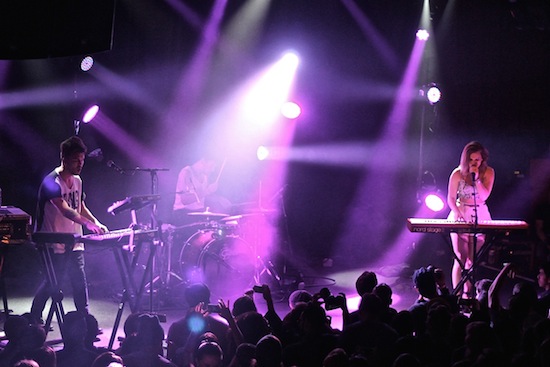
“Kiwis tend to hold back and be too humble. They don’t want to be over-confident, but I think people are starting to realize that a little bit of confidence can go quite well,” says Caleb Nott, the elder brother of the sibling sensation from New Zealand known as Broods. He sits comfortably next to his sister, Georgia, in the back of The Independent, several hours before their show.

The brother-sister electro-pop duo didn’t get that confidence until the release of their first single, “Bridges,” on SoundCloud, created waves on the world wide interwebs last October. “Bridges” became a hit in the blogosphere and in this hemisphere alike, earning over 200,000 streams in a week.

“It all happened at once,” says 19-year-old Georgia. The singer has an innocent face, giving her the appearance of a much younger teenager. “We went from nobody really knowing us to people on the other side of the world wanting to meet us.”

Later that night, the band starts the night off with “Never Gonna Change,” a deep-synth track with correspondingly morose lyrics. “You’re pushing down on my shoulders, and emptying my lungs,” sings Georgia, lyrics reminiscent of a certain internationally-acclaimed Kiwi. Georgia moves slowly around the stage while Caleb creates layered synths and hypnotic beats. The two remain relatively reserved both on stage and in private. Georgia’s voice is sweet and breathy to the likes of Imogen Heap and Romy Madley Croft of The XX. Caleb brings more energy during the upbeat tracks, bouncing up and down behind his keyboard while Georgia skips around stage in a printed corset crop top and white billowy shorts.

broods

Georgia, a self-proclaimed depressing music lover (“I love sad songs,”) falls deeply into “Taking You There,” a personal favorite and one of the strongest songs from the self-titled EP. Caleb gently strums an acoustic guitar and offers deep vocals to accompany his sisters’ silvery, dream-like hums. The audience moves to the soft beat and sings along. Most of the audience knows the words to every song on Broods’ EP, which the siblings admit to still be adjusting to.

“Seeing people wearing our T-shirts in the crowd,” says Caleb before the show. “That’s so weird and crazy, you’ve got my face on your T-shirt.”

Since October, Broods — the name obviously referring to the band members’ blood relation but also the melancholic nature of their songs — has played two US tours, spent a brief stint touring with Haim, and is scheduled as the opening act for Ellie Goulding’s Australia/New Zealand tour this summer.

“Over the last couple of years, people have started to look over to Auckland and to New Zealand as a whole for new music.” Caleb explains. From LadyHawke, to The Naked and Famous, Lorde and now Broods, the New Zealand music scene is a treasure trove of indie talent. Caleb says the music scene remains relatively tight-knit where everyone supports each other in their own music genre but doesn’t reach out beyond, reminiscent to a private high-school. “It’s pretty cliquey, because it’s very small.”

“This one’s for Lorde,” says Georgia in between songs. She dives into the gentle lullaby “Sleep Baby Sleep.” The mesmerizing beat and soft vocals is characteristic of Lorde’s debut album.

The band is clearly following in her footsteps, from the grassroots release of the Broods EP, to the dark coming-of-age tones, to the producer who discovered them. Joel Little found Caleb and Georgia while a judge for a music competition in 2011 but the band wasn’t formed until early 2013 in Auckland. After producing Lorde’s Grammy Award-winning debut album, Joel Little began work on “Bridges.”

broods

Broods closes the show with its first single, “Bridges,” a moody track about broken relationships. Georgia starts out with muted piano chords and an ethereal voice that builds into Caleb’s rich synth soundscape. Georgia’s voice is exceptionally developed for her age. She plays a soft version of a song from their upcoming album. She’s most comfortable behind the piano, her instrument of choice. “And I’m trying hard to make you love me, but I don’t wanna try too hard,” she sings moodily about falling in love with the perfect man.

Broods has played in San Francisco twice now but has yet to play a show in New Zealand. The siblings will head home next week to work on their debut album with Joel Little. Then, they will play their first proper show in their hometown of Nelson with their 17-year-old sister, who is set to open with her folk band. Clearly, talent runs in the family.

Memorial concert follows DA’s decision not to charge driver who killed cyclist

160

In the wake of yesterday’s decision by the District Attorney’s Office not to bring criminal charges against the driver who killed 24-year-old Amélie Le Moullac as she cycled in the Folsom Street bike lanes on her way to work last August, her family will be holding a benefit concert this Friday (May 16) for Amélie’s Angels, a charity created in her name to benefit needy schoolchildren in Haiti.

The concert by Amelie’s mother, organist Jessie Jewitt, and other Bay Area musicians starts at 7:30pm in St. Mark’s Episcopal Church in Palo Alto, featuring the Palo Alto Philharmonic and Conducter Geoffrey Pope. Amélie’s friend and co-worker Steve Lynch, who told us the event will be both a memorial and a fundraiser, said he was disappointed by the DA’s office decision not to bring charges in the case.

“I personally find this to be very upsetting, particularly given the way her investigation was handled, but the main reason I wanted to write you was to see if you would be interested in mentioning the benefit concert. It’s something that we’re trying to do to get her family some closure,” Lynch told us.

As KQED reported yesterday, the DA’s Office decided there was insufficicient evidence to bring an involuntary manslaughter charge against delivery truck driver Gilberto Alcantar, who turned right at Sixth Street across Le Moullac’s path, killing her. The San Francisco Police Department had recommended criminal charges after initially conducting only a cursory investigation, an insult that was compounded by Sgt. Richard Ernst showing up and making insensitive, victim-blaming comments at a memorial event by cyclists at the scene of Le Moullac’s death. Afterward, bike activists asked nearby businesses if they has surveillance video of the accident, finding video that police had neglected to seek that led investigators to conclude that Alcantar didn’t have the right-of-way when he ran over Le Moullac.

The Board of Supervisors held hearings on how the SFPD conducts such investigations, and Police Chief Greg Suhr later apologized for Ernst’s comments and the faulty investigation and pledged to conduct more thorough investigations when motorists kill cyclists, including looking at the three other similar fatalities last year. Alcantar was never even given a traffic citation in the deadly accident, but Le Moullac’s family has filed a civil wrongful death lawsuit against Alcantar and the company he was driving for at the time, Daylight Foods.

Since the accident, the San Francisco Municipal Transportation Agency has created new bike lanes and other markings on Folsom Street to more clearly delineate how bikes and cars should merge as they approach intersections so as to avoid the illegal “right hook” turns that are so dangerous to cyclists.

In a public statement announcing Amélie’s Angels and the benefit concert, Jewitt said, “Many people have asked me whether I was going to set up some type of fund or activity to improve the safety of SF streets for bicyclists. Although great improvements need to be made in this area, I leave it to advocates such as the Bicycle Coalition and other concerned individuals to petition for these changes. Amélie was not a cyclist. She was simply a young woman who thought that cycling to work would help the environment and would be a good form of exercise. In the days following her death, I felt her love so intensely, I knew I had to channel it into some activity that would directly enhance the lives of others.”

Bimbo’s 365 club

0

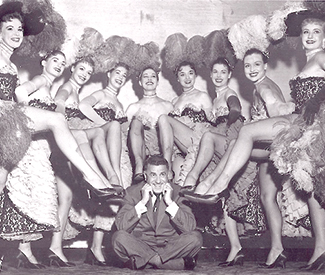
When Agostino “Bimbo” Giuntoli first arrived in San Francisco from Italy in 1922, the 19-year-old found work as a janitor and then as a cook at the swanky Palace Hotel. He likely didn’t think that, within 10 years, he’d be running one of the hottest Prohibition-era speakeasies in the city — where well-heeled guests came to drink, gamble, and watch a young Rita Hayworth dance in the chorus line. Even tougher to believe, most likely, would be the fact that his club is still in business, and run by his family, nearly 85 years later.

Bimbo’s 365, named for its owner (whose nickname was born of a boss not knowing how to pronounce Italian) and its original address on Market Street, is one of a dwindling number of family-owned businesses in San Francisco — and at a time when other historic venues like Café du Nord are shuttering or getting a yuppified overhaul, Bimbo’s seems (knock on wood) to be going strong.

“We work really hard, and we’re very fortunate to be where we are,” says Michael Cerchiai, who reopened the club as a live venue in 1988 after nearly two decades of it being available only as a rental for private parties. Soon after, Bimbo’s served as a hub for the burgeoning swing revival of the ’90s and the growing acid jazz scene. Erykah Badu played there on her first national tour, as did Fiona Apple; the last time George Clinton and the P-Funk All-Stars came through, Stevie Wonder showed up unannounced and sang too.

“We’re a tight-knit Italian family, so it’s a lot of tough love. We get things off our chest, and I think sometimes you can’t do that when it’s not a family-run business,” says Cerchiai, who recalls going to shows with his siblings when they were small children — back when the club was black-tie only. “We had a Felix [tuxedo rental] down the street, so we’d get dressed up and check out the show, and that was a way to see our grandfather and our dad.”

Michael’s brother Gino, and their father, Graziano Cerchiai (Mr. Bimbo’s 83-year-old son-in-law), are three of the seven staff members running the present-day Bimbo’s — whose stage has most recently seen Nicki Bluhm and the Gramblers, Flaming Lips, and the White Stripes, among others.

Says Cerchiai, “Having grown up here, loving music, it’s just gratifying to see people coming out, enjoying a show, and having a good time.”

1025 Columbus Ave, SF

(415) 474-0365

bimbos365club.com

GameShop Classic

0

One of the original Internet viral videos, the “Nintendo 64 kid,” features a familiar Christmas scene cranked to 11. A pajama-clad brother and sister jointly tear open a wrapped box sitting under the tree, and the present spurs a sudden, joyous, but frighteningly excited squeal. “IT’S A NINTENDO SIXTY-FOOOOOOOUR!” the brother screams, at a pitch that’s not-quite human. “OH MY GODDDDD!” His eyes nearly pop out of his head.

Walking into GameShop Classic is just like that.

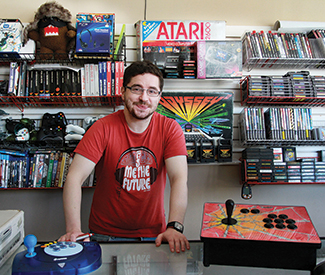
Old-school video games line the walls, from the common to the rare: a Magnavox Odyssey 2 (circa 1978); the NES classic, Duck Hunt; a Sega Genesis CDX (built to resemble a DiscMan); and even an Atari Lynx (1989), one of the last console creations from the company that started the video game craze.

Gene Pereverzev, the owner, is humble about his store’s collection (first derived from his personal collection). Through trades and Internet hunts, he’s built a small arsenal of retro-gaming goodies.

For now, he said, GameShop Classic is a pop-up inside of his FixLaptop.com store on Taraval Street, nestled in the sleepy, foggy, Sunset District. But even a fledgling startup is worthy of note.

The video game industry’s emphasis on major titles and blockbuster sales have all but demolished mom-and-pop video game stores. San Francisco is littered with Gamestops, a national corporate behemoth filled with pushy clerks selling unnecessary video game warranties, stocking only the newest and bloodiest digital creations.

GameShop Classic harks back to a time when daring digital stories were lovingly told with pixels so few they could be counted with the naked eye. Pereverzev, 28, has high hopes for GameShop Classics’ future: Soon it may play host to classic video game tournaments (Soul Calibur! Smash Brothers!). He wants to bring the video game community together.

And should you want to re-create one of the Internet’s first viral videos, Pereverzev has you covered. In the window of his store sits an originally boxed Nintendo 64.

2101 Taraval St. 415-242-9990

The Philosophy of Drunk

0

THE WEEKNIGHTER  Weekends are for amateurs. Weeknights are for pros. That’s why each week Broke-Ass Stuart (www.brokeassstuart.com) will be exploring a different San Francisco bar, bringing you stories about the places and people who make San Francisco one of the most phenomenal cities in the world. Who wants a drink?

“I feel like I’m on vacation in my own town! I’ve literally never walked around here in the 12 years I’ve lived in San Francisco!”

I was excitedly telling this to Alex as we walked out of the West Portal Muni tunnel towards the Philosopher’s Club (824 Ulloa St, SF.415-753-0599). Sometimes you get stuck in a rut and feel like you’ve seen everything there is to see in San Francisco, and then one day, you decide to do something different.

I’d heard great things about the Philosopher’s Club for a long time, that it was a solid dive bar with friendly regulars and a cool staff. Also, when I’d written an article about SF’s writer bars years before, someone had gotten butt-hurt at me in the comments about not including the Philosopher’s Club, so I figured it had a literary bent as well. Because of all this I’d somehow built it into my mind as a dark, cave-like, candlelit bar, where old men screamed at each other about Dostoevsky and James Joyce. Of course, like nearly everything, I was completely wrong.

Walking in on Tuesday evening I found a well-enough lighted bar that had no cave-like tendencies at all. The Grateful Dead wafted from the speakers and instead of old curmudgeons arguing about Oliver Wendell Holmes, I found people a variety of ages watching a couple teams on TV doing hockey stuff. Helmets of 10 or so football teams sat above the back bar near a ton of SF Giants bobbleheads surveying the scene and mildly nodding their accession.

“It’s a fucking sports bar?” I asked Alex, who’d been there before. “I was thinking these particular philosophers would be closer to the Dalai Lama than to Yogi Berra” to which Alex simply pointed to the ceiling and said, “Actually the Dalai Lama is right there”.

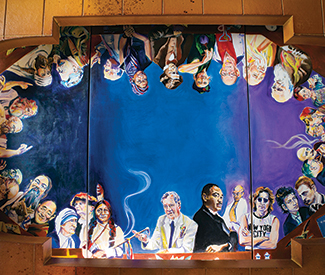
Looking up I saw a big chunk cut out of the ceiling and in the space left over was a mural. The center of it was painted blue and ringing it were about 30 or so philosophers peering down on the patrons disapprovingly while we drank. John Lennon was looking directly at us, arms crossed. Mark Twain looked askance, refusing to make eye contact. And MLK whispered to Gandhi that he had a dream that one day Broke-Ass Stuart would be able to walk out of a bar not completely shit-faced.

Okay, maybe I was projecting a bit, but it is a little weird to literally get looked down upon by the greatest minds in history while getting tanked. When Mother Theresa is keeping tabs on your bar tab, it makes getting a good buzz on a little awkward.

Or it doesn’t. The great thing about the Philosopher’s Club is that they actually don’t give a fuck. I almost wonder if the name is some kind of joke the owner started with his buddies like, “You know who are great philosophers? Drunk people, that’s who!” and thusly named the bar. Truthfully, I don’t even know. I forgot to ask the bartender because I was too caught up in checking out the old photos and death notices on the wall, singing along to “Sugaree”, and admiring that the men’s room had a trough.

That night Alex and I joined the philosopher’s club by getting drunk at the Philosopher’s Club and all was right with the world. I think it’s time I start exploring more San Francisco neighborhoods I never go to. Maybe your neighborhood is next.

Stuart Schuffman aka Broke-Ass Stuart is a travel writer, poet, and TV host. You can find his online shenanigans at www.brokeassstuart.com


This Week’s Picks: May 14 – 20, 2014

0

WEDNESDAY 13


KQED Presents an Evening With Ken Burns

Remember slowly drifting off while watching documentaries during history class on a warm afternoon? Well, if there’s anyone who can make a historical documentary interesting, it’s the great Ken Burns. If you’ve ever used iPhoto, iMovie, or Final Cut Pro, you’re familiar with “The Ken Burns Effect.” Known for bringing life to still photographs, the Ken Burns Effect is back with The Roosevelts: An Intimate History. Burns will present a sneak preview of his seven-part, 14-hour documentary after an onstage conversation about the film, which will premiere on PBS in September. The film takes the unique perspective of weaving together the lives of Theodore, Franklin, and Eleanor Roosevelt, illuminating the influential stories of how two presidents and a first lady played integral roles in shaping American history — from human and civil rights battles to the creation of National Parks to the defeat of Hitler. (Laura B. Childs)

7:30pm, $25

Castro Theatre

429 Castro, SF

(415) 621-6350

www.castrotheatre.om


Rocking the robots

If you’ve never seen Sleepbomb do its thing at the band members’ main stomping ground, you’re in for a rare treat. This postindustrial improvisational band, made up mostly of Zeitgeist employees and regulars, will play a live soundtrack to Metropolis, the cult-classic silent film by German Expressionist filmmaker Fritz Lang. Sleepbomb has done live soundtracks to Metropolis and Nosferatu before in the Zeitgeist beer garden, and it’s always an eerie, artsy, urban, robotic, drunken good time. (Steven T. Jones)

8pm, donation-based

Zeitgeist

199 Valencia, SF

www.zeitgeistsf.com


THURSDAY 15


Anti-Nowhere League

British hardcore punk stalwarts the Anti-Nowhere League have made a name for themselves over the past three decades with an unabashedly aggressive and in-your-face approach, as evidenced by their signature songs “I Hate People” and the profanity-laced “So What” — the latter was even notoriously covered by Metallica. In a perfect pairing, Southern California punk icons T.S.O.L (True Sounds of Liberty), who became infamous for the police riots that would break out at their shows, and the tune “Code Blue,” an ode to the joys of necrophilia, join the bill for what promises to be one hell of show. (Sean McCourt)

With The Riverboat Gamblers and Dime Runner

9pm, $18-$20

DNA Lounge

375 11th St, SF

(415) 626-1409

www.dnalounge.com


FRIDAY 16


Fou Fou fabulous

Fou Fou Ha, our favorite cartoon performance troupe, makes a big leap forward as it returns to its roots for its latest original show, In Living Colors. This psychedelic dance journey through an exotic world is described as “Alice in Wonderland meets the Forbidden Zone,” combining elaborate 3D pop-up sets and projections by Obscura Digital. It’s a new twist on the lively choreographed comedy that is classic Fou, but on an occasion that’s a little bittersweet for Mama Fou (aka Maya Lane) and the rest of Family Fou. The troupe got its start in this location back when it was CELLspace, the players kept it as their home during its evolution into Inner Mission, and now this looks like it will be Fou Fou Ha’s final performance in a space that is being shut down this fall and converted into condos. So come laugh, cry, dance, and laugh some more. (Jones)

9pm, DJ dancing until 1:30am

$25 advance, $30 door

Inner Mission

2035 Bryant, SF

www.foufouha.eventbrite.com


Zion I

Last time Zion I was at the Independent was for a guest appearance during the venue’s 10th anniversary celebration. Tonight, the Bay Area indie hip-hop duo is back. Baba Zumbi and AmpLive of Zion I have been making music together for over 15 years. AmpLive brings the electronic dance beats that vacillate between reggae and drum ‘n’ bass, Zumbi carries the vocals with socially conscious lyrics. Originally formed in Atlanta, the Berkeley-based duo creates a relatable sound that’s difficult to define. Neither West Coast hip-hop, nor East Coast rap, the band’s musical influences remains deeply engrained in songs that deliver messages of unity and hope. (Childs)

9pm, $25

The Independent

628 Divisadero, SF

(415) 771-1421

www.theindependentsf.com


SATURDAY 17


Black Market SF Presents ‘Rendezvous’

Secrets, truths and lies…Black Market SF is hosting one of its legendary events tonight for the curious: Rendezvous. They say, curiosity killed the cat, but in this case, let your curiosity run wild. This clandestine discovery market will carry an assortment of local craft and food vendors as well as many secret activities to be discovered on the night of. Explore one of SF’s best-kept secrets in the intimate setting of the Folsom Street Foundry. If the city’s best craft artisans and food purveyors don’t pique your interest, an exclusive live set of up-and-coming acts will spearhead the dance party. This mysterious night will be one for the books. (Childs)

6pm-11pm, $8

Folsom Street Foundry

1425 Folsom Street

(415) 795-3644

www.folsomstreetfoundry.com


‘Nomad: The Blue Road’

Many tribal people living on parched lands engage in ritualistic dances to encourage the falling of precious rain. Since water is the world’s most important and most endangered natural resource, we might as well try dancing. It just could help. For this weekend the bi-national Dance Monks, an interdisciplinary ensemble that works both in the Bay Area and Mexico, has enlisted local artists — Dohee Lee, NAKA Dance among them — to help out drought-stricken California. NOMAD: The Blue Road, takes audiences along the path of Strawberry Creek, Berkeley’s beloved small stream that still burbles and runs under the urban asphalt of downtown Berkley. The piece starts on the UC campus and winds its way along the creek’s trajectory with performances along the path. (Rita Felciano)

May 17-18, 11am, free

UC Berkeley Campus

Oxford and Center St, Berk.

www.dancemonks.com


SUNDAY 18


Bay to Breakers people-watching

If you have friends participating in the race but, like so many of us, you also feel a local’s urge to get the hell out of town during Bay to Breakers weekend — or at least as far away from the costumed, beer-soaked debauchery as possible — get the best of both worlds by hitting one of the rival Hayes Street house parties along the course, with DJs, more than you could ever want to drink, and probably very little pressure to be athletic in any way. Alternatively, hit Alamo Square for an amazing view of some 30,000 people all making their way up the Hayes Street Hill. Just remember: The cops have pledged a zero-tolerance policy for public drunkenness this year. We’ll see how that all shakes out. (Emma Silvers)

All day, free

Throughout SF

Check www.baytobreakers.com for the official route and other events


Iggy Azalea

First things first, she’s the realest. The Australian beauty and hip-hop performer, Iggy Azalea, has been making waves in this hemisphere since her Clueless-inspired music video for her hit single “Fancy.” With sassy raps and catchy hooks about the glam life, Azalea’s sound is reminiscent of the “it” girls of the early 2000’s. Think Gwen Stefani’s vocals and Lil’ Kim’s beats, but this former model adds personal flair with her zero-fucks-given charisma and unabashed obsession with America. She’s opened for household names such as Beyoncé and Rita Ora, but since the release of her debut album, The New Classic, Azalea is on the prowl with her Monster Energy Outbreak Tour. (Childs)

8pm, $35

The Fillmore

1805 Geary, SF

(415) 346-6000

www.thefillmore.com


MONDAY 19


Ben Folds with the San Francisco Symphony

In the 17 years since his old band, Ben Folds Five, burst onto the national scene with “Brick” — likely the catchiest, most radio-friendly song ever penned about an abortion at Christmastime — pianist-singer-songwriter-storyteller Ben Folds has proven to be so much more than a flash in the pan. On this tour, he’s been performing solo with orchestras and symphonies around the world; if you’re not quite sure how his songwriting would stand up to such elaborate instrumentation, search for videos online of his performances with the Western Australian Symphony Orchestra. This one-off show should be a treat for devotees of the singer’s nearly three-decade career as well as symphony fans — nothing like a little pop-rock-classical synergy on a Monday night. (Silvers)

7:30pm, prices vary, see website for details

Davies Symphony Hall

Grove between Van Ness and Franklin, SF

www.sfsymphony.org


TUESDAY 20


Write Club SF

Who says writing isn’t a contact sport? The monthly Write Club, which bills itself with the motto “literature as bloodsport,” pits local lit figures against each other in a competitive readings series, with writers arguing such topics as “snow vs. fire,” “ham vs. turkey,” and “Santa vs. Jesus.” This month’s will see six writers, including Caitlin Gill, Rachel Bublitz, and founders Steven Westdahl and Casey Childers arguing over topics such as “beginning” vs. “end.” The audience picks the winner, and proceeds go to a charity of the winner’s choice. Reading, arguing, a full bar — what’s not to like? (Silvers)

8pm, $10

Make-Out Room

322522nd St, SF

www.writeclubsf.com


Damien Jurado

Serious Damien Jurado fans — and the folksy indie-rocker does seem to inspire a certain (well-deserved) fervor amongst a certain set — know the songwriter’s gift for storytelling owes as much to a willingness to get weird as it does to playing with narrative. Jurado’s latest release, January’s Brothers and Sisters of the Eternal Son, is the third piece in a three-part collaboration with producer Richard Swift, and it shies away from neither the religious overtones nor the heady, spaced-out hero’s journey type of tale 2012’s Maraqopa laid out; it’s more stripped-down, if anything, so those themes are laid bare. Live, he’s known for making even large rooms feel intimate; this show shouldn’t disappoint. (Silvers)

8pm, $15

The Independent

628 Divisadero, SF

www.theindependentsf.com


The Guardian listings deadline is two weeks prior to our Wednesday publication date. To submit an item for consideration, please include the title of the event, a brief description of the event, date and time, venue name, street address (listing cross streets only isn’t sufficient), city, telephone number readers can call for more information, telephone number for media, and admission costs. Send information to Listings, the Guardian, 225 Bush, 17th Flr., SF, CA 94105; or e-mail (paste press release into e-mail body — no attachments, please) to listings@sfbg.com. Digital photos may be submitted in jpeg format; the image must be at least 240 dpi and four inches by six inches in size. We regret we cannot accept listings over the phone.

Swimming solo

2

esilvers@sfbg.com

LEFT OF THE DIAL As rock ‘n’ roll narratives go, it’s a rather familiar one: Singer and bandleader who has achieved moderate success with one full-band sound announces that he’s been repressing his true musical instincts for far too long, decides to go solo, and puts out an album that’s a sonic 180 from what fans are used to. History tells us that this is either the moment when stars are born (Michael Jackson, Lou Reed), or the moment when everyone goes, “Oh, maybe the other band members are responsible for way more of the stuff I like than I previously realized?” (Hall, without Oates).

Birds & Batteries frontman Mike Sempert doesn’t seem overly concerned about this fork in the road. For one, when the singer-songwriter began teasing new songs out into the world last month in anticipation of releasing his first solo effort, Mid Dream (out May 6 on Blue Velvet), it became clear that longtime fans of his old band — a San Francisco staple of the last five years that blended Sempert’s husky vocals and Americana influences with an indie electro-pop danceability (aka plenty of synth) — weren’t going to be upset. Far from it: While the album is a clear departure from the heady, airy detachment of Birds & Batteries’ oeuvre, the element that brought those songs down to earth — the understated soulfulness of Sempert’s vocals and songwriting — has emerged in full force on Mid Dream.


A richly introspective album written and recorded in the months before Sempert left the Bay Area for LA last year (to be with his now-wife — SF music scene doomsdayers, calm down), Mid Dream is equal parts wistfulness and hope, uncertainty and a surprised sort of satisfaction about growing up; in other words, it sounds exactly like those rare, heightened moments when you can actually feel one chapter of your life coming to an end and another beginning. Stripped bare of synthesizers and most other electronic elements and loaded up on melody, wall-of-feeling choruses, and ocean imagery, the album also serves as a kind of coming-out party for Sempert’s love of ’70s folk-rockers like Tom Petty, Harry Nilsson, and Randy Newman. Sempert will play these songs for the first time on home turf at the Rickshaw Stop May 14.

“I always had two personalities that I was exploring with Birds & Batteries. Initially it was this merging of the folk-Americana-singer-songwriter thing with the synthy art-pop stuff,” says Sempert. “But I’d gotten to a point where I wanted to zero in more on a sound, and instead of taking my singer-songwriter stuff and trying to adapt it, I just started putting those songs to the side…so I’ve had this stack of songs I wanted to try developing for a while.”

After a few years in a row of hustling full-time in B&B, the timing felt right last year to take a breather and consider the pile, he says. “That’s a hard-working band, and we had a lot of good times and successes, but frankly I got pretty burned out…especially with the kind of ‘take over the world’ thing we were trying to do. I got married, I moved to LA; it just felt like time to focus on making music for the right reasons and from the heart, without a big agenda.”

To be clear, that shouldn’t be read as a dig at his old bandmates — two of whom, drummer Colin Fahrner and bassist Jill Heinke, he invited to make up his current rhythm section. Sempert emphasizes that the entire record is a family affair of sorts, with regulars from the Bay Area folk scene and many an Oakland friend-band — including Sonya Cotton, Kacey Johansing, Emily Ritz, Andrew Maguire, Anton and Lewis Patzner, and more — adding backup vocals, strings, percussion; the list goes on. Sempert gives an extra-special nod to TaughtMe songwriter-engineer Blake Henderson, who helped him shape his vision for the record.

“I had so much help, so many supportive people around me in the songwriter community in the Bay Area,” he says. “Honestly, at the beginning of deciding to make [the album], I was just thinking ‘I bet my friends will like this.’ And for this one, the idea of just getting to share it with them — that was enough.”

Mike Sempert (CD release)
With Farallons and Kacey Johansing
Wed/14, 8pm, $20
The Rickshaw Stop
155 Fell, SF
www.rickshawstop.com


What kind of person looks at a massively expensive three-day music festival whose inaugural year was widely considered an organizational failure and public relations nightmare, not to mention one that cost the city in which it took place thousands of dollars, and says “Hey — I want to be in charge of that next year”?

Dave Graham, it turns out. As the CEO of the brand-new BottleRock Napa Valley — a festival now in its second year, spanning May 30 to June 1, with headliners OutKast and The Cure, but, as Graham emphasizes, one owned and run by entirely different people than those responsible for last summer’s debacle — Graham has gotten used to answering the question: Why the hell would you want to take this on?

“For one, I had an amazing time last year,” says Graham, a Napa native and entrepreneur. “I was born and raised here, this was just the coolest thing that I’d ever experienced, and I couldn’t believe it was going on in my own backyard.” He noted what mistakes had been made, he said, and when the chance arose to invest in a partnership for 2014, he saw an opportunity to make something great. The only problem(s)? A boatload of debt, and the task of trying to find investors for this year’s festival in a community of merchants still stinging from 2013. Then there was the fact that, at the time of signing on in January, Graham and his partners had less than three months to book a lineup.

“It’s been challenging, to say the least,” says Graham. “Once we bought the rights to the name BottleRock, it was difficult, and understandably so, for people in the music industry, creditors, and just the general population to understand that we had zero to do with the mess that was created last year, and that we had no obligation to make a bad situation better…but we’re committed to doing just that. The main thing was, we just wanted to keep it local.”

Time will tell whether or not Graham and his team succeed in winning back the hearts of Napa residents and business owners. Given the time period they had for booking, the lineup they pulled off is pretty impressive on its own — if a little ’90s-tastic, stacked with alt-rock staples like Cracker, Weezer, Third Eye Blind, and Blues Traveler. But hey, if your idea of a good festival is getting super nostalgic with a slightly older set over a nice glass or two of pinot noir (note: nothin’ wrong with that) and you have the dough to spare (single day: $149), it’d probably be worth your while to see what else the new guys can pull off.

BottleRock Napa ValleyMay 30 – June 1
$149 and up (way up)
www.bottlerocknapavalley.com
 

Two other shows you should probably go to this week: San Francisco’s Cool Ghouls, who make some of most unpretentiously happy, jangly, beach-brat garage pop you’ve ever heard, are headlining The Chapel Thursday/15. And A Minor Forest, SF math rock veterans who made lots of people very happy when they got back together last year, will be there Saturday/17.

In case you hadn’t noticed, The Chapel’s bookers are killing it lately. And despite lots of angry internet buzz about noise complaints from The Chapel’s neighbors — let’s be real, our reaction over here was something like “If you rent an apartment next to a music venue on Valencia and then complain that there’s music coming out of it, you are everything that is wrong with everything, please leave,” — a representative from the venue says there’s really no news, nothing to get up in arms about.

“The Chapel had the normal, required Planning Commission ‘look back’ hearing [May 8] where they make sure the business is in compliance with Planning conditions,” Patricia Dedekian, a manager at The Chapel, told us. “There was only one neighbor who has done 99 percent of the complaining and he appeared at the hearing. We passed the hearing with flying colors, with unanimous support from the Planning Commissioners.” Still, you know. Support your local venues. It’s not hard to do when they’re putting on several rad shows a week.

Stony lonesome

0

arts@sfbg.com

FILM Prison should be the most natural setting for film noir, as that’s where most of the genre’s protagonists are headed (if they don’t get bumped off first), and where many of them have already been. But it’s had spotty representation onscreen, with time served either skipped over in the narrative (how many pulp fictions start with a hard-luck protagonist just getting out of long-term for what’s sure to be short-term freedom?), or dominating entirely.

This spring’s edition of “I Wake Up Dreaming,” the recurrent Roxie noir showcase programmed by Elliot Lavine, has a number of notable titles dealing with the claustrophobic consequences of crime-not-paying. What’s even more notable this time around is the cross-pollination with Lavine’s other Roxie perennial, the series of Hollywood “pre-Codes” made in an approximately five-year window between the advent of “talkies” and the 1934 arrival of more rigidly enforced, censorious industry standards toward potentially objectionable content. Their peaks separated by about 15 years, pre-Codes and noirs shared a taste for hard-boiled dialogue and seamy situations, so their programmatic overlapping here feels right.

Two of the strongest entries here were released at least a decade before the arrival of anything that might legitimately be labeled noir. Daintily titled Ladies They Talk About (1933) is a rip-roaring original Women in Prison exploiter, with the inimitable Barbara Stanwyck as a moll who sashays into the hoosegow after enabling a bank stick-up. Getting two-to-five in San Quentin’s women’s ward, which here is like the world’s saltiest sorority, she quickly identifies her allies and enemies while spurning the visits of a childhood pal turned crusading DA (Preston Foster) — when she’d ratted on herself to prove “I’m on the level now” to him, he had the noive to actually charge her with the crime. That bum!

Another enduring star who came in with the sound era, Edward G. Robinson, gets all of Two Seconds (1932) to recall what got him to the electric chair — though that translates into a still-trim 67 minutes’ screen time in Mervyn LeRoy’s drama. The first half is a gem of snappy patter as the headliner and a terrific Foster play construction-worker roommates — Robinson the penny-pinching plodder, Foster the one always ready to blow his paycheck on booze, broads, and the horses. Yet it’s the former who’s taken for a chump’s ride by dancehall girl Vivienne Osborne, whose personality goes from Jekyll to Hyde the moment she’s manipulated him into an unholy matrimony. You can guess what happens — she’s already murder just to live with. As a none-too-bright lug who can’t get a break, Robinson gets a serious acting workout here, even if the climactic pre-execution Big Speech smacks overmuch of writing for Oscar’s sake.

Several rarities that verge on horror come from before and after the semi-official, immediately post-World War II noir era. Miracles for Sale (1939) was the final feature for director Tod Browning of Lon Chaney Sr. and Freaks (1932) fame. It stars Robert Young as a professional “magic” debunker investigating murders connected to an alleged witchcraft circle. Even so, this slick comedy thriller provides scant outlet for Browning’s love of the macabre.

Even less frequently revived are three early 1960s chillers: Erstwhile Incredible Shrinking Man Grant Williams plays a psychiatric patient and serial killer in The Couch (1962), Robert Bloch’s first screenplay after Hitchcock adapted his novel Psycho. The Hypnotic Eye (1960) has tall, dark, and handsome Jacques Bergerac (who married Dorothy Malone and Ginger Rogers) as a hypnotist whose prettier subjects tend to grotesquely disfigure themselves. Two on a Guillotine (1965) is a sub-William Castle gothic with the punishingly perky duo of Connie Stevens and Dean Jones having to spend an inheritance-earning week in the inevitable haunted house. They’re all terrible, but have a certain creaky charm.

Holding up very well indeed is 1949’s The Window, a rare genuine independent production of the era to achieve major recognition. As opening on-screen text announces, it’s the story of the boy who cried wolf — updated to a modern NYC tenement, where little Bobby Driscoll is testing the patience of his parents and playmates with his constant fabrications. Thus nobody believes him, of course, when he witnesses a real murder. Once his homicidal neighbors catch wind of him, our grade-school protagonist becomes prey himself. Criminal child endangerment was far from a typical story element in those days, and with its still-tense chase finale amid crumbling condemned buildings, The Window presented such a novelty that it won a (rather generous) special Oscar for Driscoll, who was usually seen in the more wholesome environs of Disney films like Song of the South (1946) and Treasure Island (1950). Yet soon after, adolescent acne would kill his acting career. Ironically echoing this famous role, the by-then heroin-addicted ex-con was found dead in an abandoned 1968 NYC tenement at age 31, his body found by playing children.

Other “Dreaming” highlights include a glossy 1947 double bill showcasing talented Warner Brothers star Ann Sheridan, the better being The Unfaithful, though Nora Prentiss has the virtue of being partly shot in SF. As sleepers go, though, two vintage “Bs” may rep the series’ best discoveries. Perhaps the program’s least likely inclusion is Angels in Disguise (1948), a later entry among the Bowery Boys’ nearly 100 juvenile hijinks. This one is a spoof of tough urban crime dramas, and a surprisingly good one, complete with shadow-heavy noir imagery and hard-boiled voiceover narration. As ever, the scene stealer is rubber-faced beanpole Huntz Hall.

From 1957, Death in Small Doses (“The picture that crosses the forbidden territory … of THRILL PILLS!”) rips the lid off amphetamine abuse among long-distance truckers, with future Mission: Impossible and Airplane! (1980) star Peter Graves as an undercover federal investigator. What makes it unmissable, however, is the supporting turn by none other than Chuck Connors (1979’s Tourist Trap, 1973’s Soylent Green) as perpetually hopped-up boarding-house hepcat “Mink.” If scene-stealing were a crime, Hall might get life without parole, but Connors would merit the chair. *

“I WAKE UP DREAMING 2014”

May 16-26

Roxie Theater

3117 16th St, SF

www.roxie.com


Sisterhood of rhythm

0

arts@sfbg.com

DANCE The Mother’s Day weekend premiere of Sarah Bush Dance Project’s reconceived 2011 Rocked by Women was a tenderly raucous, often humorous celebration of an overly sentimentalized holiday. Bush looks at the education of a “girlchild” in the “not-so-promised land” by paying tribute to the mothers who raised us physically. But it was pioneer “mothers” — the feminists of the 1970s, the lesbian activists of many decades, artists and entrepreneurs like Olivia Records and Club Q — who made us the women we have become. Their legacy, Bush realized, was in danger of being forgotten by the current generation of women for whom the battles had been fought. Molded into a convincing piece of dance theater, Rocked by Women is a joyous and self-effacing acknowledgement of prices paid and gains won.

Just as music energized the civil rights movement of the 1960s, feminism in its earlier and later stages drew inspiration from talented musicians who started the women’s music movement. Bush drew on that rich heritage and shaped Rocked‘s three parts around contributions from two generations of songwriters such as Holly Near, Cris Williams, and k.d. lang, as well as Janet Jackson, Tracy Chapman, Missy Elliott, and Bikini Kill. Julie Wolf also contributed music arrangements and wrote original songs.

Rocked derives its impressive energy as much from music as from dance. Yet Natalie Aceves, Krystal Bates, Joanna Gartner, Bianca Mendoza, Juliann Witt, and Bush performed with an intuitive grace, passion, and an almost delirious delight at the choreography’s lush physicality. Much like works by Dance Brigade (Bush’s home company), Rocked contains personal material that also feels universal, speaking to those who don’t fit into given norms, and who have had to struggle to become who they are meant to be. Using contact improv, disco, jazz, and hip-hop in an almost narrative way, the individual dances comment on the songs but do so from a distance. At its best, Rocked became a weighty yet explosive expression of the power of an indomitable spirit and embracing courage.

The show opened and closed with Near’s iconic “Mountain Song.” At first, a trio of kicking “babies” are cuddled by their mothers. It ends with the dancers facing the audience in a sing-along about the unstoppability of women who refuse to have “their dreams taken away.”

Each of the work’s movements explored a different aspect of growing up. In “Her Childhood,” the dancers engaged in circle games and playfully sculpted a mountain from their bodies. One of them triumphantly climbed it. They also donned masks cut from fashion magazines and tugged and pushed their bodies in an attempt to reshape them. Here, ballet’s preoccupation with perfection came in for a kick or two. The choreography had a sense of humor but you couldn’t miss the underlying pain and rage.

The emergence of a young girl’s sexual identity permeated the whole piece and resulted in a number of awkwardly tender duets. In one, the group’s smallest dancers, Mendoza and Bates, discover each other’s differences: Mendoza is Latina, Bates African American. Second movement “Her Adolescence” brings group pressures and rejections, driving and exploring of sexual identity; the choreography veered between plaintive and painfully funny. With Jackson’s “Control” providing the beat, the ensemble performed impressive unison hip-hop that opened into individually athletic feats. It was followed by a dancing-with-“boys” number as an awkward, one-sided groping session. In “Gossip,” teens entangled themselves in yards and yards of telephone lines. For Chapman’s “Fast Car,” they built themselves into a monster automobile that, predictably, crashed, leaving Mendoza stunned and bereft. In an achingly lovely courting duet, Mendoza gently reaches towards Aceves who keeps turning away.

The third movement — “Herself” — opened with a video of the Michigan Womyn’s Music Festival and rather unfocused dancing on stage. The pace picked up with mock taiko drumming to recorded drum. Another playfully confrontational scene involved a boom box, one set of headphones, and Mendoza and Aceves’ different musical tastes. They come to a meeting of minds and take it from there.

The tribute to Club Q, as both a sanctuary for lesbians and a place for fierce dancing, is wonderfully evoked by Bush’s own fierce dancers. It ends in dreamy slow dancing duet for Witt and Bates. Choreographing anger is not easy. When Bush interrupted the lovers, her danced fury felt like an arrow shooting straight at them.

While Rocked‘s documentary clips are convincingly integrated into the stage action, earlier uses of video — shadowy images, dancers sitting as if in lecture by Judy Grahn, crawling from beneath the screen — are not telling enough. That needs rethinking. But Rocked is a warm, skillfully created, and generous show that just might become a Mother’s Day tradition. * sarahbushdance.com/rocked-by-women

Getting the Kink out

2

joe@sfbg.com

The spotlights shone down, the athletes tussled, and the crowd screamed.

The toned and tattooed female wrestler tackled the topless, tanned, blond wrestler from behind, pulling her down like a tumbling tower. The mat thumped. Cheers erupted. In a sudden reversal, the tanned wrestler gained leverage with her right arm and slammed the tattooed fighter’s shoulders onto the mat, giving the blond the win.

What happened next was definitely not standard wrestling fare.

The tanned wrestler, triumphant, digitally penetrated the tattooed fighter. Her moans silenced the crowd, who listened, rapt. The fight wasn’t sport, but porn, America’s real favorite pasttime. Ultimate Surrender is just one of San Francisco-based studio Kink.com’s 30 or so paid subscription porn websites, including Fucking Machines, Everything Butt, and Hogtied.

But a new series of proposed state laws threatens the state’s porn industry, and the freakiest city on the West Coast may soon say goodbye to its highest profile porn purveyor, Kink.com, which for years has operated out of the historic Armory building on 14th and Mission streets.

The situation raises a question: Is Kink.com breaking up with San Francisco? If legislation requiring condoms on-set in porn and stricter state safety requirements become law, Kink.com CEO Peter Acworth tells the Guardian he has no choice but to leave California entirely.

“We can’t do business under those circumstances,” Acworth told us. “We can’t make a product that can compete.”

The tussle between pornographers, porn actors, and state lawmakers is a crucible where worker safety — and the right to choose how that safety is implemented — may soon be decided. Caught in the crossfire, freaky and sex-positive San Francisco stands to get a whole lot less kinky.


ECHOES OF LOS ANGELES

California Assembly Bill 1576 would legally require condom use while shooting porn, mandatory STD testing, and pornographic studios required to hold health records of their talent. The bill cleared the Assembly’s Committee on Labor and Employment just last month, the first step on a short road to gaining the governor’s signature.

Assemblymember Isadore Hall (D-Los Angeles), sponsored the bill, and the day it cleared committee he was triumphant.

“For too long, the adult film industry has thrived on a business model that exploits its workers and puts profit over workplace safety,” Hall said in a press statement. “The fact is, adult film actors are employees, like any other employee for any other business in the state. A minimum level of safety in the workplace should not have to be negotiated.”

The concern is largely over HIV infection on the sets of porn studios, and two parallel statewide efforts are working towards safety on porn sets. The state bill is the first, and the second is the renewed vigor in enforcing longstanding California Division of Occupational Safety and Health regulations.

In the early 1990’s, the federal Occupational Safety and Health Administration adopted a bloodborne pathogens regulation, and DOSH adopted a similar regulation soon after. DOSH’s standard requires employers to take measures to prevent employees’ eyes, skin, and mucous membranes from coming in contact with blood and “other potentially infectious materials,” including semen and vaginal secretions.

To some industries, the standard mandates rubber gloves and goggles. For the porn industry, the DOSH regulations are a moratorium on porn stars ejaculating on each others’ faces, deeming facials a workplace hazard. That standard porn finale can have life-changing ramifications.

“In 2004, there was a big (HIV) outbreak in the industry,” Eugene Murphy, senior safety engineer at DOSH, told the Guardian. “It was demonstrated HIV was clearly contracted on set.”

These infections mostly occurred in Los Angeles, once the center of the porn universe until Measure B arguably changed that. Los Angeles voters mandated porn studio condom use in 2012, and two years later, LA newspapers reported many pornographers have relocated to Las Vegas to escape the regulatory requirements.

The statewide pushback on porn is largely driven by the AIDS Healthcare Foundation, whose President Michael Weinstein has smiled for the cameras alongside Hall and other lawmakers every step of the way.

DOSH began its part in the porn crackdown in Los Angeles, but Murphy was charged with looking into San Francisco’s Kink.com, where Acworth is chafing against the idea of mandatory condoms.


RUBBERS REBUFFED

Acworth said he used to believe condoms should be mandatory for performers. After the porn set HIV infections in 2004, Kink.com buckled down.

“I attempted to run the business as condom mandatory for about a year,” Acworth told us. He even pronounced their necessity in an interview on CNN. But there were complications.

“There was pressure from the models themselves because of the chaffing issues,” he said. Porn performers have echoed those sentiments as well.

In an interview with entertainment site Nerve, popular porn star James Deen (see “Dick and smile,” 7/31/12) said he had no problem with personal condom use, but women he’s worked with often complained of chafing.

“I was talking to a girl about it and she was like, ‘Dude, I’m in pain everyday and constantly swollen,'” he told Nerve. “Condoms are intended to be used on an average-sized penis for average sex, and we have entertainment sex, for anywhere from 20 minutes to four hours.”

The condom effort tanked at Kink. Acworth said he withdrew the policy after listening to his performers’ wishes. The studio does adhere to 14-day HIV tests, and condoms are available in a “double-blind” agreement, by which actors can purportedly safely ask for condoms and not fear retaliation.

Despite those efforts, Kink was later awash in condom controversy. Earlier this year, DOSH fined Kink $78,000 in violations connected with the alleged on-stage HIV infections of two actors in 2013, one of whom alleged that a shoot continued despite one actor having a bleeding cut on his penis.

Acworth adamantly asserts the HIV transmission happened in these actors’ personal lives, and says the issue is used as a wedge by the AIDS Healthcare Foundation to push a political agenda. The Guardian attempted to contact the foundation but did not hear back by press time.

Regardless, Murphy said, DOSH is pursuing regulatory requirements around bloodborne pathogens at Kink, and the enforcement of those regulations is not tied to the whether the initial HIV infection case was verified or not.

“My concern,” Murphy said, “is whether there is a healthy and safe workplace.”


COMMUNITY TIES

Acworth came to San Francisco for the reasons many do: he wanted a place to be weird, or in his case, kinky.

He wanted a new home from which to shoot his leather porn site, Hogtied.com. New York City was big, but at the time (the ’90s), he felt San Francisco had a more established leather scene in the Folsom Street Fair and leather shops like Mr. S.

“San Francisco,” Acworth said, sitting across from us in a leather bondage chair, “appeared to be more geared up.”

Although not universally loved within the BDSM community, the studio is popular in San Francisco. Part of the credit may go to Kink’s recent revitalization of one of the largest spaces in its 200,000-square-foot historic brick fortress: the Drill Court.

The vast, arch-roofed space was outfitted with modern sound proofing for the benefits of performers and neighbors, but its life as a performance space is not new. In the 1920s, boxers traded blows under its lights, and history may repeat itself, Armor Community Center Sales Manager Quincy Krashna told us.

He’s in talks with Golden Boy Promotions (boxer Oscar De La Hoya’s company) to bring prize fighting back to this historic space. In recent months, the Drill Court played host to a massive New Year’s Eve party, a Game of Thrones-themed dance night and cancer fundraiser, and even an evangelical medical conference, where missionaries offered free dental and doctor checkups to the public.

“The Holy Spirit was truly present at this event,” a doctor from the program, Building Bridges, wrote on the program’s website.

Even bigger changes could be in store. Last month, Acworth filed an application with the city to convert most of the historic Armory into office space, what he called a “last ditch” plan in case the state condom ban passes and Kink decamps for Nevada.

“This move represents an insurance policy,” he told us.

In a public May 11 letter to Weinstein of the AIDS Healthcare Foundation, Acworth asked the foundation for a truce: “I am reaching out to you and AHF, in the hopes of a day where we may sit across the table from one another and agree on common goals and strategy on protecting performers as opposed to continuing this battle.”

As he notes in his letter, if pornographers lose this battle, the companies may relocate. If Acworth finds himself uncomfortably bound and gagged by new regulations, his safe word may be: Nevada.

Tune in to Alternative Ink, the Guardian’s radio show LISTEN NOW

8

Greetings, Guardianistas, we’re making the leap from your eyeballs to your earholes with Alternative Ink, our new radio show on BFF.fm, San Francisco’s best Internet radio station. Tune in this Sunday, May 11, from 6-8pm for a blend of music, talk, and random musings that is uniquely Guardian. [UPDATE: You can listen to last night’s show by clicking here.”]

Actually, our first show was two weeks ago, but we decided to call it a soft launch while we found our voice and learned how all knobs and buttons work. But we quickly found our groove and now we’re ready to get into some trouble with a larger audience.

This week’s crew includes Editor-in-Chief Steven T. Jones, Music Editor Emma Silvers, News Editor Rebecca Bowe, Reporter Joe Fitzgerald Rodriguez, and a special guest appearance by Street Fight columnist Jason Henderson. Art Director Brooke Ginnard says she’s sitting this one out after producing our first show, but you never know.  

We’ll be talking about bikes, buses, and the implications of how people get around; our new BayLeaks encrypted tip system and the city scandals it’s exposing; Kink.com and controversial threats it faces; promising new clean energy technologies and related issues from the upcoming Based on Earth column; and the local music scene, from a solo street trumpteer to the hottest up-and-coming local bands. And if we get drunk enough, we might even dish on the evolving situation with our corporate overlords, who knows?

You can hear Alternative Ink every other week as we tag-team this time slot with our colleagues down the hall at SF Weekly, but trust us, ours is the one you wanna hear. So tune in Sunday. 

Marcus Books of San Francisco evicted

For months, we’ve been covering the story of Marcus Books, the nation’s oldest continuously operating black-owned, black-themed bookstore located in San Francisco’s Fillmore District. Facing eviction from the purple Victorian where the bookstore had operated since 1981, the family that owns it had launched an ambitious fundraising campaign in an effort to remain in place.

Widespread community support for the culturally significant bookstore even led to the Board of Supervisors granting landmark status for the bookstore’s Fillmore Street address, on account of “its long-term association with Marcus Books … and for its association with Jimbo’s Bop City, one of the City’s most famous, innovative and progressive jazz clubs.”    

But as the Bay Guardian has just learned, the bookstore was evicted on May 6. Now it seems the family is in the process of packing up the books and determining what the next step is.

In the meantime, here’s an open letter sent to supporters via email by bookstore co-owners Tamiko, Greg, and Karen Johnson.

Dear Supporters: 
It was difficult to know what to tell you about our struggle to stay in our building, its winding path of lawyers and judges and protests and promises, hopes and gravities made it difficult to report our status on a curved road. But the current property owner has changed the locks to the door of 1712 Fillmore Street.

Marcus Books missed a couple of rent payments (not such a rare thing considering that at the same time the largest US banks and even our government asked taxpayers to give them hundreds of billions of dollars of assistance). However, the mortgage holder, PLM Lender, foreclosed on the building that housed Marcus Books of San Francisco since 1981. It was sold to the Sweis family (realtors and owners of Royal Taxi in San Francisco). The Johnson family (co-owners of Marcus Books of San Francisco) has been trying to buy the building back for a year and half.   

The Sweis’ bought this building in a bankruptcy “auction” (apparently, they were the only bidder) for $1.6 million. The Johnsons offered $1.8 million; the Sweis set their price at $3.20 million, hoping to double their purchase price after a few months ownership. After some public outrage resulting in public protests against the Sweis, a negotiation brought their asking price down to $2.6 million, adding a million dollar profit to their purchase without adding any improvements to the property and adding a stipulation that the entire $2.6 million be raised within 90 days.

Marcus Books supporters, including the local chapter of the NAACP; ACCE (Alliance of Californians for Community Empowerment; Japantown activists; Westside Community Services; Julian Davis, our fearless legal council; Carlos Levexier’s “Keep It Lit” campaign committee; local literary community including writers and other bookstores; people from all over the world: friends, family, customers, churches and unions took a stand against the bulldozing of community. Individuals, unions, and churches donated $25,000. The Community Land Trust of San Francisco garnered loan pledges of $200,000 and Westside Community Services offered a loan of $1.60 million. Though by any standards that would have been more than enough for a down payment, the Sweiss’ refused the $1.85 million start and filed for eviction.

Concurrently, the San Francisco Board of Supervisors unanimously passed a resolution requiring every division of city government make it a priority that they each use their “powers” to help Marcus Books stay in its location. In addition, and after 5 years of efforts by John Templeton (the leader in Black California history), and Greg Johnson (co-owner of Marcus Books of San Francisco), London Breed and Malia Cohen, two San Francisco Supervisors, initiated the Board of Supervisors’ unanimous vote granting landmark status.

With the numerous speeches of San Francisco Mayor Ed Lee stating his commitment to righting the wrongs of the San Francisco Redevelopment Agency’s slaughter of the thriving African American Fillmore District, we at Marcus Books believed the City would take some affirmative action on our behalf, since Marcus Books is the only surviving Black business since the Redevelopment devastation. Maybe that support is around the next bend? Well the locks have been changed, the cavalry is not in sight, and it’s time to pack up the books and store them till we find another space.

You might ask yourself, why bother? Materialism rules the day. That is not news. More often than not, we take it for granted that the “bottom line” is the only line worth respecting, though it respects no one. This is a common conception, but not right. Right is the vertical line that runs through all levels: from its spiritual top to its earthly roots. This verticality is manifested only by integrity. Integrity defies gravity in its perpetual longing for truth. Millions of people have been put out of their homes by bottom-line-feeders. It’s common, but it’s not okay, now or at any other time. Sometimes you just have to take a stand. Integrity is a verb.

In 1970, I had a vision bout rebirth. A segment of that vision informs this struggle. In this particular scene, the spirit is climbing the Tree of Humanity, being lifted higher and higher by those entwined in The Tree. The spirit never steps on anyone’s face or heart. It just carries their dreams up with it. Because it is growing towards rebirth, it gets younger with each step up. Though there are thousands of supporters at the bottom of The Tree, there are fewer at the top and the helping hands are fewer and far between. At the top of The Tree, at the stratum of the clouds, quantity has morphed in into quality. Here a storm of wind and rain rages, lightning strikes and a mad dog spirals up The Tree, snapping at the heels of the now, infant spirit. Teetering on a limb, the spirit sees a man face down in the mud at the bottom of The Tree. Seems he got there from letting go of his faith in The Tree. The surrounding clouds urge the spirit fall.
 
“Cross Section”
The rumors, that were whispered,
            Here, the silence screams,
            And branches battle shadows
            To defend their dreams.
 
            Where Black is cut in pieces,
            Can’t hold myself together.
            Time cuts me down,
            Life me brought up,
            But lead me to this weather.
 
            The Time says, ‘Fall
            To soulless ease.
            To struggle is disgrace.
            The gravity will grant you peace,
            And hide your shameful face.’
 
            But I am born of honor:
            Descendent from above.
            My Father’s name is Wisdom
            And my Mother’s name is Love.
            And I have strength of purpose.
            That’s what my climb’s about.
            As I’m cut off,
            I will hold ON
            And trustingly Black-out.”
 
(Copyright 1997, Karen Johnson)
 
 For the hundreds of people who have lent their time, money, and prayers, we are truly grateful.
 
–Tamiko, Greg, and Karen Johnson, co-owners Marcus Books of San Francisco
 
 . . . to be continued

Carmageddon cometh

42

news@sfbg.com

STREET FIGHT

San Francisco — already overwhelmed with private automobiles — faces a grim future of gridlock unless there is a radical change in how we think about city streets, parking, and regional transportation.

The facts are clear. Every day there are 1.7 million private car trips to, from, or within the city, according to the city’s transportation plan. Coupled with almost 10,000 vehicles registered per square mile, San Francisco today has one of the densest concentrations of cars on the planet, more than any peer city in the United States. In the business-as-usual scenario, the streets are forecast to absorb another half-million car trips. By 2040 there will be 2.2 million car trips on the exact same street grid we have today.

This is madness and it is dysfunctional for everyone. If you think Muni is unreliable now, it will be useless in 2040 as it stalls in the morass of 2.2 million car trips jammed onto city streets. Pedestrian injuries and deaths will rise with another 160 cars hitting pedestrians annually, simply due to oversaturation of automobiles. Cyclists might be able to weave around the stalled traffic, but it will be an ugly scene that fouls the air. Motorists will be stuck in their own gridlock, evermore impatient, distracted, honking, lurching through blocked intersections, sneaking through yellow lights, blocking crosswalks, double parking, and irritated with fellow drivers and everyone around. No one will be happy

This does not have to be. The city’s transportation agency hopes to reduce car trips from 1.7 to 1.6 million by 2018, a modest goal but barely holding the line. Reducing existing car trips by 100,000 while also adding thousands upon thousands of housing units and jobs, most coming with more parking, will quickly undo this humble ambition. The city can do more and the data shows us that there are many opportunities.

Consider that 68 percent of car trips within San Francisco are less than three miles. That’s 650,000 car trips per day that are generally pretty short — with a bicycle it’s less than a half-hour ride on relatively even terrain. If the city were able to get half of those car trips to switch to bicycle trips, it would be well on its way to averting carmageddon.

A more ambitious goal, increasing cycling to 20 percent of all trips, is the official city policy adopted by the Board of Supervisors. That’s 500,000-600,000 trips by bicycle every day, most of which can take place within that three-mile range, especially if cleverly arranged “wiggles” (level routes circumventing steeper hills) are laid out on the most logical corridors. But to carry that many cyclists, real space has to be allocated for them.

Out at San Francisco State University, where I teach a new Bicycle Geographies course that aims to increase cycling to the campus, there is tremendous opportunity to shift these kinds of short trips to bicycling. For students, faculty, and staff, bicycling is compatible with rapid transit, particularly for the “last mile” segments, such as between BART and SF State.

Bicycling is also a way to relieve local bus and light rail transit crowding — the 28 bus line on 19th Avenue, for example, is often jam packed and the city has only modest goals to improve that key line. Unlike transit or highways, bicycles do not require costly, long-term capital investment or operating funds and so can be deployed much more quickly.

It will be decades and cost hundreds of millions to improve the M-line, only now in the planning phase. We can lay down cycletracks much more quickly. Bicycling is also among the most equitable forms of urban transportation because it is affordable and accessible to almost everyone. This is obviously relevant to working-class students at SF State.

SF State has a memorandum of understanding with the city that obliges the university to reduce drive-alone automobile trips to campus, and the campus will not build any more car parking. With 4 percent of commute trips to SF State by bicycle (and only 2 percent among faculty) there is potential to increase the mode-share of bicycling as a path to reducing greenhouse gas emissions and auto trips.

The spatial proximity to Daly City and Balboa Park BART stations, as well as the Excelsior and Sunset, all under three miles from campus, means that the bicycle is well-suited to be a substitute for many short-range automobile trips and help the campus meet its goals. Yet what my students have found this semester is that it is all but impossible to bike safely to and from SF State, and the southwestern quadrant of San Francisco is largely left out of current bicycle planning in the city.

Taking multiple bicycle field trips over the past few months, we surveyed the opportunities for making safe routes to campus and envisioned what it would take to increase cycling to 20 percent of trips to and from SF State. Starting with the Balboa Park station, which is next to a deplorable tangle of freeway ramps, we ask what it would look like if fully-separated cycletracks were built on Geneva or Ocean avenues. These could connect City College and the Excelsior, and by way of a westward and southward jog, to a bicycle boulevard on Holloway Avenue, enabling a safe and convenient, 1.7-mile, 15-minute bike ride to SF State. Expanding the nascent Bay Area Bike Share to connect SF State and Balboa Park BART would create even more opportunity for cycling.

To the south of SF State, Daly City BART is a 1.4-mile, 10-minute bike ride that is daunting and poorly signed. It could be made safe and inviting with bicycle boulevards on streets parallel to traffic-clogged 19th Avenue and Junipero Serra. Borrowing from signature bicycle and pedestrian bridges in Pleasant Hill and Berkeley, perhaps there is an opportunity to build a bridge across Brotherhood Way toward the BART station, leveling an otherwise steep climb that discourages cycling.

To the north of campus, describing the designated 20th Avenue bicycle route as “a bit of a challenge” is an understatement. Cyclists must thread a cluttered shopping mall parking lot and overbuilt wide streets, and then confront a median blockading the way across Sloat Boulevard. While the megaproject to improve the M-line could include a cycletrack on this stretch of 19th Avenue, we should not wait a generation to increase cycling between SF State and the Sunset. The 20th Avenue route can be made welcoming now, with a fully-separated cycletrack and fixes on the Sloat intersection.

SF State, probably one of the most diverse campuses in the nation, has highly motivated students seeking real solutions to the huge problems society faces. The students are coming of age under extreme pressure of economic inequity and ecological duress, but they also see ways out of the mess created by the wasteful car culture and its linkages to ecological and social problems. They want to act now, and unlike past generations, they are shunning driving and many of them desire to reside in livable cities that offer choices for how they get around.

But what we have found this semester is that the campus is extremely isolated, difficult to access by bicycle, and walled-off by car sewers. Older, uninviting bicycle lanes are fragmented, disjointed, and seem to be an afterthought. With imagination, ingenuity, and political will, this can be remedied with bicycle improvements that cost far less than adding more car lanes and parking to the campus or surrounding area. And this would go much further at improving quality of life for neighbors who now have to put up with campus-generated traffic. Keeping the status quo, which means even more car trips but within the same space, is a dead end.


TRANSBAY DREAMS

Speaking of dead ends, San Francisco seems to specialize in dead-end train projects. The Central Subway, which is experiencing cost overruns and possible mismanagement, is one of these dead ends. There is no current option to have trains exiting to Geary or onto Columbus and possibly running on Lombard into the Marina, and that is a shame. Having the subway exit to the surface is probably the only way to make this project worthwhile.

There’s another dead end train project at the Transbay Terminal in downtown San Francisco. Yet unlike the Central Subway quagmire, I am impressed with the scale and possibilities for the Transbay Terminal project and there is opportunity to fix this dead end. Going back to the city’s business-as-usual traffic forecast, in 2040 car trips into the city from the Bay Bridge would increase 18 percent, and by 21 percent from San Mateo County. Aside from scratching my head wondering where exactly all of these cars are supposed to go, we simply need to stop this onslaught before the city becomes too dumb to move.

BART cannot solve it alone, as it will probably approach half a million riders per day by 2016, placing many downtown stations at or near capacity. BART also does not run all the way down the peninsula. Sometimes there are back-of-the envelope proposals to build a second BART tunnel under the bay, but this idea should be weighed against another idea. Rather than build a second BART tunnel to Oakland, how about a joint Amtrak California/Caltrain tunnel under the bay, and creating a true Grand Central Station of the West at Transbay? Let’s punch through the dead end currently planned for the east end of the Transbay Terminal “train box” and truly connect Northern California by rail.

This does not need to be high-speed rail, but rather the conventional, off-the-shelf electric rail already planned for Caltrain, of the variety that operates in the Northeastern US and much of Europe — efficient, high capacity trains that can travel 100-120 mile per hour comfortably and safely. In conjunction with a new transbay rail tunnel, the Capitol Corridor should be electrified and right of way captured from the freight railroads. One could take an electrified “baby bullet” from San Jose, through San Francisco, and continue to the East Bay and Sacramento. As Caltrain is electrified to the south, let’s also electrify the Altamonte Commuter Express trains, bring them across a rebuilt Dumbarton Bridge, and run high-frequency rail service into the new Transbay Terminal.

Understanding that this will take time to build, in the short term the Bay Bridge should be reconfigured to have bus-only lanes (and a bicycle lane on the bottom deck of the west span) and a greatly expanded AC Transit service that can relieve the looming BART crowding to the East Bay.

How to pay for these transbay dreams? A transbay rail project could get funding from Amtrak and other federal sources, requiring our congressional delegation to work for it. The state gasoline tax or eventual carbon taxes, and revenue from tolling Bay Area freeways, should be in the mix. The 101 and 280 should be tolled as well as the Caldecott Tunnel and I-80 in the East Bay, with revenue directed at electric rail in the long term and regional buses short term. And while people are talking about reforming Proposition 13 to end the artificially low property taxes on commercial land, let’s remember that transit — whether Muni, BART, or Caltrain — brings massive value to commercial property owners. They should be realistically expecting to pay in. In short, there are possibilities and ways to do this.

Here’s one small additional idea for raising seed money: In the wake of the Google bus controversy, the SFCTA, SFMTA, SF Planning Department, and City Attorney’s Office should assemble a crack team of California Environmental Quality Act experts and send them (on Caltrain and bike share!) down to comment on every large-scale suburban office project proposed in Silicon Valley. For example, Mountain View, where Google has its campus, is effectively displacing part of its transportation and housing responsibility to San Francisco.

As part of the CEQA mitigation for these suburban office projects, San Francisco ought to be demanding that Google/ Mountain View contribute to paying for the Transbay Terminal and electrifying Caltrain (a separate fund would be directed to affordable housing as mitigation for displacement). This is a similar line of reasoning to the May 1 lawsuit against the Google bus pilot, but it draws in those responsible for the poor planning in suburban sprawl. Regardless, the city ought to take a look at a CEQA mitigation angle for addressing the impacts these suburban decisions are having on the city.


PRAYING FOR ENLIGHTENMENT

One last point about transit finance: I sure hope Mayor Ed Lee, his political advisors, and all those religious ministers who complained about paying for metered parking on Sundays (see “Politics over policy,” April 22) have a plan to advocate for the November ballot proposals to help finance Muni.

They sold out sustainable transit advocates, their biggest ally on the November ballot initiatives, and have offered no rational explanation for their strategy, just an emotional hunch that somehow some people can’t cope with Sunday metering, and that making it free again will convince them to support increased public transit funding.

I imagine there is a well-thought-out campaign strategy, whereby every Sunday between now and November, the mayor is visiting all the churches in the city, and cajoling the ministers to use their pulpits to enthusiastically preach the merits of increasing the vehicle license fee (as well as approving a related general obligation bond).

After all, the VLF is a progressive tax — the more expensive your car, the more you pay. The older and cheaper your car, the less you pay. And bringing in $73 million annually would contribute to making God’s green earth cleaner, and help transport God’s children safely to work and on their errands. Praise the Lord and free parking on Sunday! Amen.

Street Fight is a monthly column by Jason Henderson, a geography professor at SF State and the author of Street Fight: The Politics of Mobility in San Francisco.

Skin deep

1

arts@sfbg.com

FILM A 1779 painting commissioned by the First Earl of Mansfield (and now owned by the present one) portrays two young women near a lake. One faces us formally, composedly, suggesting the posture held over hours of sitting in the (unknown) artist’s studio; but the other, whose arm she grasps, is tilted forward in motion, wears an exotic feathered turban and plunging neckline, with one hand rakishly cradling a cheek. The contrast is all the more striking because the former lady is white and the latter black, yet the image lacks any typical indicator that their relationship was a master-servant one. Indeed, they give every appearance of simply being friends.

Without that canvas, history might have entirely forgotten Dido Elizabeth Belle, who’d been born 18 years earlier in the West Indies to Sir John Lindsay, an admiral of the British Navy, and Maria Belle — who may have been an African slave captured from the Spanish in Havana. At some early point Dido was deposited in England, to the care of Lindsay’s childless aunt and uncle. Little is known about the decades she spent in their household, during which time her father passed away. But interestingly, the great-uncle she was primarily raised by was also Lord Chief Justice at a time when there was increasing public pressure for the Empire to end its participation in the lucrative global slave trade. He eventually made court decisions that at least began turning the English legal tide against that cruel institution.

His life is much better chronicled than that of illegitimate ward Dido, so in focusing on her experience, the new costume drama Belle is by necessity largely an imaginative fiction. This handsome piece directed by former actress Amma Asante and written by Misan Sagay offers all the conventional satisfactions of Masterpiece Theatre-type cinema, involving as it does well-dressed aristocratic intrigue in fabulous settings. But while Belle is just a thoroughly satisfying rather than truly inspired example of the genre, it benefits from having more on its mind than romance and royalty: Taking place in an almost absurdly rarefied, privileged circumstance, particularly as compared to the institutionalized brutality shown in something like 2013’s 12 Years a Slave, it nonetheless also makes us confront the injustice of rating one class of person beneath another.

Entrusted with all naive good intentions by dashing, kind Lindsay (Matthew Goode) to previously unmet relatives after her mother’s death, young Dido (Lauren Julien-Box) suffers the inevitable culture shock. But she’s not half as shocked as her new minders, who sputter “But … she’s black!” before dad promptly sails off again. Nonetheless, Lord Mansfield (Tom Willkinson), Lady Mansfield (Emily Watson) and live-in spinster sibling Lady Murray (Penelope Wilton) endeavor to raise this child as they would any other — like Elizabeth (Cara Jenkins), another illegitimate family offspring they’ve been stuck with. The two girls become inseparable, and so long as they stay within the enormous estate’s bounds, they are equals.

But once they reach marriageable age, their differently disabled social statuses become hard to ignore. Both are beautiful and well-bred, yes. But quiet, intelligent Dido (Gugu Mbatha-Raw) is heiress to a fortune, one that might tempt suitors even as her skin color makes her very existence a sordid scandal for some. Meanwhile, Elizabeth (Sarah Gadon) is blonde, vivacious, and penniless, which makes her pretty well useless in this milieu where blue blood is prized, yet in reality held less valuable than cash money. Undesirable to their alleged peers, and barred by propriety from marrying “beneath” them, they seemingly cannot marry at all — and what other role is left them in this era, besides the unhappy spinster-housekeeper one Lady Murray endures? Among those dangling possible solutions — albeit sometimes treacherously — are two bachelor sons (James Norton, Harry Potter villain Tom Felton) of the icy Lady Ashford (Miranda Richardson), and a more humbly born legal apprentice (Sam Reid) who hopes to sway Judge Mansfield toward the abolitionist cause.

Belle does indeed sometimes commit the sin of forcing post-Civil Rights morality and other very modern mindsets on characters who would hardly be so advanced in the late 1700s. But that seems forgivable in this context, given that a movie that fully internalized Dido’s perceived racial inferiority would be too bleak to provide any of this one’s Jane Austen-esque pleasures. (Besides, there is some admittedly sketchy evidence that the real Dido was educated and otherwise treated as an equal within her immediate family circle, not to mention unthinkingly obeyed by their servants.)

There’s a fairy-tale appeal to the lovely, deft leads, a familiar satisfying dastardliness to their foes, and of course no end of scene-stealing from the support-cast veterans. Unlike a movie such as 1999’s Mansfield Park or the awful Reese Witherspoon Vanity Fair (2004), the weightier external historical issues aren’t clumsily shoehorned into existing texts. Belle gets to address both fancy-dress love stuff and the grotesque injustice of a “civilized” world built on slavery because, in this stranger-than-fiction instance, the two are more or less evenly relevant. Which makes this a guilt-free teacake of its type, one you can have and eat, too. *


BELLE opens Fri/9 in San Francisco.

SFIFF 57: Strange love, Varda, Swedish grrrls, and more!

2

The 57th San Francisco International Film Festival runs through May 8; all the details are here. Guardian correspondent and confirmed film fest addict Jesse Hawthorne Ficks checks in with his mid-SFIFF picks and reactions.

Charlie McDowell’s The One I Love (screens tomorrow; ticket info here) showcases exceptional performances by Mark Duplass and Elisabeth Moss and should be a multiple Independent Spirit Award nominee come next statuette season. This unique genre fluster-cluck digs much deeper into marital problems than you would ever expect (audiences seemed quite flipped upside down after the film’s world premiere at Sundance). Similar to films like Darren Araonfsky’s Pi (1998), Christopher Nolan’s Memento (2000), and Shane Caruth’s Primer (2004), this will be a film that’ll spark conversations and inspire repeat viewings.

Mexican auteur Fernando Eimbcke, who directed Duck Season (2004) and Lake Tahoe (2008) is back with another coming-of-age stunner: Club Sandwich. The director’s slow-burning method of sticking two people in a room and allowing life’s natural moments to unfold is as precise as the tiny moustache on the protagonist’s upper lip. Rewarding to those who are patient, Club Sandwich is the perfect reminder of that pre-adolescent summer that changed just about everything.  

Agnes Varda’s latest opus, From Here to There, is a 225 minute, five-part miniseries originally made for French television. It casually chronicles her guest appearances at film festivals and cinematheques around the world with numerous asides and melancholic moments that have made Varda one of the most likable icons of cinema. In fact, the episodes work similarly to her earliest films Cleo From 5-7 (1962) and La Pointe Courte (1955), gracefully moving the viewer through moments that seem minor at first, but are in fact profound. (Listening to an 85-year-old Varda get distracted and start talking about the history of chairs brought me to tears.) Like her 2008 film The Beaches of Agnes (2008), this is a must see.

Swedish auteur Lukas Moodysson is back and he may have just created one of the most riotous punk rock extravaganzas ever. We Are the Best! (Sweden/Denmark), which takes place in the early 1980s and is based on wife Coco Moodysson’s graphic novel, allows the all-grrrl band to blossom into real-life punk rockers. Evoking passionate punk portrayals like 1980’s Times Square and 1981’s Ladies & Gentleman, The Fabulous Stains (fun fact: Moodysson was unaware of the latter film until I interviewed him!), this drama seems to capture Stockholm circa 1982 in perfect detail. The soundtrack was a major part of discussion during the Q&A, becoming the perfect entry point for those of us desiring an history lesson on the Swedish punk scene. But what I found most exciting about We Are the Best! is its approach to gender roles, as its young female characters attempt to cast aside pressures to look pretty. Either way, Moodysson has created a film just as enjoyable as his debut feature, 1998’s Show Me Love. It has the potential to become a worldwide hit in the same vein as Trainspotting (1996) and Run Lola Run (1999). (Info on screenings today and May 7 here!)

https://www.youtube.com/watch?v=nL-0RLaFcSg

In the 1990s, Tsai Ming-liang’s films were often mentioned alongside works by Hirokazu Kore-eda and Hou Hsiao-hsien. But two decades later, only Tsai has stayed the determined course of creating endurance-driven, contemplative cinema. Presenting his tenth feature (and showcasing yet again his alter ego, actor Lee Kang-sheng), Stray Dogs (Taiwan) is a breathtaking meditation on a homeless Taiwanese family, who are quietly doing what they can to get by. With this film, Tsai has almost abandoned story completely, instead favoring long, drawn-out, surreal, one-shot sequences — next-level abstractness that will either send you running for the hills or leave you unblinkingly glued to the screen.

The film is made to be watched more than once and upon multiple viewings you gain not only patience for Tsai’s masterful aesthetic but an appreciation for how futuristically meditative it is. Someone should program Stray Dogs with his 2012 short Sleepwalk, which follows a monk as he walks, and his follow-up film Journey to the West (2014) which stars Lee and Denis Lavant(!) Whether that would equal absolute transcendence or absolute boredom depends on the viewer, of course. I can’t think of a more emotionally implosive filmmaker working today. 

https://www.youtube.com/watch?v=vnvSUGgF2R0

Rewatching Hong Sang-soo’s Our Sunhi (South Korea) is in fact as monumentally enjoyable as viewing his previous film, In Another Country (2012). This new film represents another solid entry for the director. The succinct ways in which his male characters are emotionally self-destructive with one another can and should be compared to best of Eric Rohmer and Woody Allen’s films. And this time out, he has created a female protagonist (played by hilariously by Jung Yoo-mi) that adds a complexity to his alcoholic-ridden world. If you were a fan of Hong’s films and stopped watching them, it’s time to come back and enjoy one of the funniest films of the festival circuit.

The surprise documentary hit at this year’s SFIFF most definitely has to be Julie Bertuccelli’s School of Babel (France). Simple catalogue description: “The film details a year in the life of a Parisian class of immigrant youth from countries around the globe — boys and girls ages 11 to 15 — who have come to France to seek asylum, escape hardship or simply better their lives.” What is so overwhelming about this personal journey is how the film not only showcases the student-teacher relationships, but the parent-student dynamics. It culminates in a devastating filmmaker-audience relationship.

Exploring pedagogy as a whole caught me off guard so intensely that I, like many in the theater, felt we were back in school trying to figure out all of life’s problems in between breaks for recess. The film ties in perfectly to the San Francisco Film Society’s Education program, which serves more than 11,000 students and teachers every year, from kindergarten through college, to develop media literacy, cultural awareness, global understanding, as well as a lifelong appreciation of cinema. Do whatever it takes to see this film yourself, and if you’re a teacher, share it with your own students.