Scene

Live review: Mastodon at the Fox Theater

0

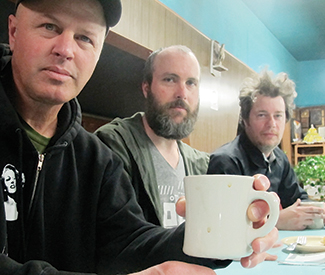
They still exist: big metal bands that go on old-fashioned tours, rather than exclusively playing festivals or headlining package tours (aka shows that start at 4pm and are comprised of two bands you actually want to see and five others the label shoehorns in because that’s the only way they’ll get exposure). Also still in existence: a band that will tour between albums, in fact hitting the road less than two months before a new album drops, and play a set that contains two new songs (to give fans a taste of what’s to come), but is mostly composed of familiar back-catalogue tunes. 

Not, however, still around: actual Mastodons.

No worries, dudes — Mastodon the band shows no sign of going anywhere, and based on what drummer Brann Dailor said at the end of last night’s show at Oakland’s Fox Theater, they’ll soon be back in the Bay Area, pumping their sixth studio release, Once More ‘Round the Sun, which arrives in late June. Based on the two new songs heard last night (“Chimes at Midnight” and “High Road;” stream the latter via the band’s Soundcloud page, or check out the “Audio Visualizer” below the jump), your sludgy summer soundtrack awaits.

https://www.youtube.com/watch?v=L4PztrhXkXo

This between-albums tour was slightly more stripped-down than, say, shows supporting 2009’s Crack the Skye, which boasted a hypnotic visual component built heavily around the album’s astral-projection-meets-Rasputin-themes (in other words, it went well with the funny-smelling smoke that tends to waft around during Mastodon shows). Here, we just got a backdrop of a pair of psychedelic eyes, plus a light show with occasional Laser Floyd flourishes. But Mastodon is not a band that needs bells and whistles to enhance its crushing riffs. Nor does it spend a lot of time chatting up the crowd between songs, though it’s clear this is a band that appreciates its fans, evidenced by the huge array of t-shirt designs and other merch available in the Fox lobby. (Personal favorites: a shirt inspired by the “Come and play with us, Danny!” scene from The Shining, and a pair of gym shorts with “Asstodon” emblazoned on the booty. Perfect attire for the Bay Area’s recent heat wave, no?)

Opening the show for the Atlanta, Ga. foursome were a pair of heavy-hitting European imports: Kvelertaka personal favorite of the Prince of Norway — and Gojira (“We are Gojira from France!”, as the Bayonne-based band is fond of saying). The latter summed up the feeling of the crowd with its enthusiastic performance, and singer-guitarist Joe Duplantier’s frequent declarations of how fuckin’ stoked he was to be on tour with the mighty Mastodon. Us too, bro. Us too.  

Kitten Grenade on why you shouldn’t underestimate the ukulele

0

By Rebecca Huval

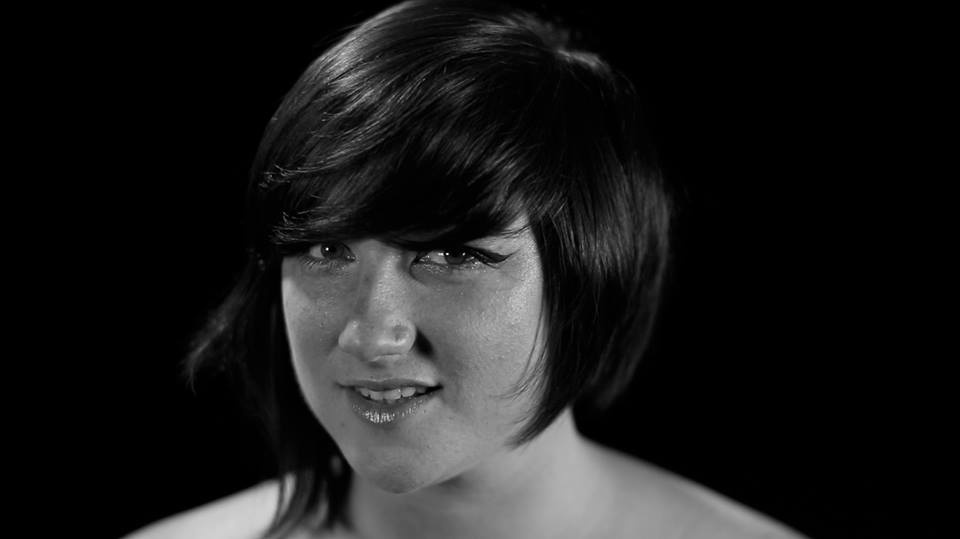
Kitten Grenade takes the ukulele seriously. Katelyn Sullivan picked up the instrument when she was lonely and unhappy in Los Angeles, jonesing to be back in San Francisco. Now the instrument adds chiaroscuro to her self-titled debut EP released this January: the lilting chords contrast her brassy voice and its message of heartbreak.

“It’s got a deep soul, the ukulele,” she says ahead of her Friday, May 2nd show at the DNA Lounge. People unfairly pick on the instrument for being silly, Sullivan says, and she laughs when she reveals that she now has eight of them. Like a defensive cat lady, she says, “Each one has a different sound and personality.”

Her band, started in January 2013, is built on the idea of contrast. She named it Kitten Grenade after her art illustration thesis about juxtaposition: “Something cute and fuzzy, and something destructive. That idea captures a lot that’s in the music and my life.”

Even though Sullivan is engaged to her boyfriend of eight years, she says she’s dealt with her share of tragedies and unrequited loves that have wormed their way into her lyrics. Just recently, Sullivan has been coping with the death of her fiance’s 24-year-old brother, who fell off a balcony. Grief enters her songs through a “heartbreak filter.” In the first track on her EP, “Anomaly,” she sings about a lovers’ quarrel: “Touching fingers, eyes linger everywhere they’re not supposed to be/Said I’m sorry, no you hurt me, or were you not listening.” Her minimal orchestration, with mournful harmonies and light percussion, set the stage for her clarion voice to deliver these confessional lyrics.

Not every track is a tear-jerker. The surprisingly upbeat “Death Song” uses catchy, syncopated ukulele strumming to accompany Sullivan’s dreamy melody. The song begins quietly, “We started out without our lungs and somehow learned to breathe,” and builds to a shout, “the dust that we create is all that’s left of our dreams.” Her track “Gray,” with some vaudevillian-tinged vocals, uses ethereal background singing and the higher registers of the ukulele to seem reminiscent of Yael Naim. With musical role models from Fiona Apple to tUnE-yArDs, Sullivan reflects the range of their difference in her broad palette of styles.

Her lyrics are uniquely San Franciscan as Karl enters: “Oh these starry eyes get misty, fog rolls in and hides the misery.” Originally from Maryland, Sullivan has lived in San Francisco for 10 years. She adores the music scene here and playing with fellow band Halcyonaire, “the freaking sweetest guys.” But given the recent tech boom, she advocates that music supporters see shows regularly to keep artists from leaving the city. “I make that a goal to make a band’s week by seeing their Wednesday 11 o’clock show. It means a lot to me, so you have to pass it forward.”

She’s seen San Francisco from both sides: before as a retailer on 16th and Valencia Streets, and now as a tech worker for the karaoke app StarMaker. “I get to sing all the time,” she says. “I love my company — they’re down-to-earth and they’re all about getting people to sing.”

Sullivan herself needed some coaxing before singing in public. She started her musical life in middle school through opera and musical theatre, and her training shows up today in her voice’s creaminess and smooth projection. But she went through a period in high school when she was too shy to sing. She abandoned music for art school, where she met her current fiance.

“He helped me find my confidence,” she says. “If I hadn’t met him, I wouldn’t have the confidence to go up on stage and sing these personal songs. The path of life is so interesting. If I hadn’t lost my confidence, I wouldn’t have gotten into art and illustration, I wouldn’t have met my fiance, and that’s how I regained my confidence. Life wouldn’t have been the same if I hadn’t had that hiatus.” Contrasts formed Kitten Grenade and continue to give it a full-bodied sound, with ukulele playing that is both sweet and seriously soulful.

Kitten Grenade

With Electric Strawberry and The Stand Out State
Friday, May 2
7pm, $10
DNA Lounge
375 11th St, SF
(415) 626-1409

This Week’s Picks: April 30 – May 6, 2014

0

May the fourth be with you

THURSDAY 1


Carletta Sue Kay

Randy Walker has been active in the San Francisco music scene for over 15 years, singing in various bands and working at our beloved Amoeba records, but it was only when he adopted the female persona befitting of his songwriting that he began gaining recognition. For his alter ego, Walker adopted the name of his cousin, an ex-con who served time for domestic terrorism and threatening to blow up her boyfriend with a pipe bomb. As Carletta Sue Kay, Walker is a sight to behold, wig askew, makeup smeared, and dress disheveled. But what comes out of Carletta’s mouth is anything but messy. Ranging from torch songs to pure rock and roll, Walker’s voice soars clearly and beautifully, singing of love and heartbreak in a truly touching way. (Haley Zaremba)

With the Young Lovers, Moon Honey, Queen Crescent

8pm, $10

The Rickshaw Stop

155 Fell, SF

(415) 861-2011

www.rickshawstop.com


Astonishing Animation

If you have yet to experience the mystical and beautiful worlds built by Hayao Miyazaki, your inner child is missing out. From the lush countryside where a magical Totoro roams, to an ethereal castle that floats high in the clouds, to a bustling bathhouse filled with both good and bad spirits, Miyazaki’s films bring together stunning animation and sublime storytelling that’s entertaining for both children and adults. This week, the Yerba Buena Center for the Arts begins its monthlong tribute to Japanese animation with a retrospective of the most influential films by Studio Ghibli and its founder. After 50 years in animation — and a well-deserved Oscar — the Japanese animator and director announced his retirement (for the third time) last month on the eve of the US release of his The Wind Rises. While the films are crucial to Japanese culture, with countless references to Japanese mythology, they also serve as social commentary on the environment, technology, and gender roles. Explore the astonishing realms and characters that have captivated audiences for centuries, beginning with Miyazaki’s debut film, Nausicaä of the Valley of the Wind. (Laura B. Childs)

7:30pm, $10

Check YBCA’s website for additional showtimes

Yerba Buena Center for the Arts

701 Mission, SF

(415) 978 2787

www.ybca.org


San Francisco Ballet

This is San Francisco Ballet’s last program of the season, and one that illustrates why some of us still love ballet the way we do. The intellectual rigor and deep musicality of George Balanchine’s Agon remains as breathtaking as it was when premiered in 1957. In 1983, Jerome Robbins — who has been called the greatest American-born choreographer — also took the music of his time and made it his own. In Glass Pieces, named after its composer but perhaps also for its luminous transparency, you see the music come to life by giving it a swing that is quintessentially Robbins. In between the two, Artistic Director Helgi Tomasson programmed Mr. B’s Brahms-Schoenberg Quartet. The work is musically intriguing, and gorgeously choreographed. You need first-class dancers to make it work. SFB has them. (Rita Felciano)

May 1, 3, 6, 9, 8pm; May 3 and 11, 2pm; May 7, 7:30pm; $15-$340

War Memorial Opera House, SF

(415) 865-2000

www.sfballet.org


FRIDAY 2


Marcus Shelby: The Legacy of Duke Ellington: 50 Years of Swing!

Put up your dukes: Shakespeare’s got them, and so does jazz. They come together in this glorious tribute to Edward Kennedy “Duke” Ellington by Marcus Shelby and his 16-piece jazz orchestra. The two-part program begins with selections from the incomparable composer’s full half-century of music making, featuring guest appearances by singer Faye Carol and violinist Mathew Szemela. Then, in the second half,Shelby and his orchestra join forces with members of the California Shakespeare Theater, performing Such Sweet Thunder, Ellington and celebrated collaborator Billy Strayhorn’s 12-part musical suite inspired by the woks of the Bard. (Robert Avila)

May 2, 8pm, $22 and up

Zellerbach Hall, UC Berkeley

(510) 642-9988

www.calperformances.org


SATURDAY 3


Cinco de Mayo Block Party

It’s that time of year again when the United States celebrates a Mexican holiday that Mexico doesn’t celebrate. Where Americans see the date as a sort of Mexican Fourth of July, Mexican-Americans observe Cinco de Mayo to honor their heritage. In their 152 years, the Cinco de Mayo festivities have continuously brought together Americans and Mexicans from a variety of communities and backgrounds. This year’s celebration will take place in the heart of the Mission District on Valencia Street between 21st and 24th streets. The block party will include yummy Latino foods, exotic music and dance as well as colorful artistry for purchase. Enjoy the sunny Sunday with this vibrant community that has shaped our city’s culture. (Childs)

10am-6pm, free

Valencia between 21st and 24th streets, SF

(415) 206-7752

www.sfcincodemayo.com


Trainwreck Cabaret

One part comedy show, one part burlesque night, one part off-color magic showcase, Trainwreck Cabaret bills itself as “San Francisco’s most unusual variety show,” a wild, woolly mashup of singers, dancers, and all kinds of other performers from the city’s creative underground; the idea is to take the vibe of old vaudeville and give it a dark (darker?) modern twist. Hire a babysitter, grab an early drink nearby, and enter the charmingly divey Dark Room Theater with zero expectations — this monthly showcase is the place to be for a good, weird time. Who says the Mission’s all yuppies these days? (Emma Silvers)

10pm, $20

Dark Room Theater

2263 Mission, SF

www.darkroomsf.com


SUNDAY 4


Yerba Buena Gardens Festival

If you tire of the Powell and Market street performers — no disrespect, that dude on the buckets is no joke — ’tis the season to wiggle over a few blocks and check out the impressive talent on display at this year’s Yerba Buena Gardens festival. Today’s kick-off concert features a 10-time Grammy winner, Latin jazz pianist Eddie Palmieri, and his Salsa Orchestra; Palmieri is 77 years young and has been putting out records since 1962. The rest of the fest, which runs through Oct. 26, includes a wide array of performers, with the next few weeks bringing San Jose Taiko, Pacific Mambo Orchestra, Ensemble Mik Nawooj, André Thieffy and Zydeco Magic, John Santos Sextet, and more to the stage. Pack a lunch and soak up the sounds. (Cheryl Eddy)

1pm, free

Yerba Buena Gardens

760 Howard, SF

www.ybgfestival.org


Urban Air Market

Hayes Valley welcomes the Urban Air Market for the first time this year. Explore over 100 booths selling sustainable men’s, women’s, and children’s apparel, eco-friendly art and home decor, and organic beauty and health products. What’s more, in celebration of its 10th anniversary, the sustainable marketplace will have live music and creative performances, DIY demos and “re-fashion” workshops. Whether you’re on the hunt for a special Mother’s Day gift, looking for a unique gift for yourself, or just in need of an outdoor stroll, this urban block party is the perfect lazy Sunday afternoon affair. (Childs)

11am-6pm, free

Octavia at Hayes, SF

www.urbanairmarket.com


How Weird Street Faire

This street fair, an electronic music dance party that has long been one of our favorite events in San Francisco, returns for its 15th annual incarnation, bigger and better than ever. With a tip of its space helmet to the date it landed on this year — “May the Fourth be with you,” the unofficial Star Wars Day — the theme for this year is How Weird in Outer Space. So come as your favorite alien or space cadet, or come in good old-fashioned raver ware, but just come — because this is a seven-stage dance party not to be missed. (Steven T. Jones)

Noon-8pm, $10 requested donation (gets you a Magic Sticker good for reduced-price drinks)

Howard at 2nd St, SF

www.howweird.org


MONDAY 5


Ingrid Michaelson

Picking up the piano at age four and attending private music schools throughout her upbringing, Ingrid Michaelson’s entire life has revolved around music. Now, at 34, it shows. Michaelson has perfected the art of the pop hook and disarming lyricism. After she worked tirelessly to self-record, self-promote, and even co-release all her own work, Michaelson’s DIY ethic finally got her noticed on the Internet in 2006. Thanks to her insanely catchy and cleverly tender “The Way I Am,” Michaelson found her way to the spotlight and continues to churn out charming sing-alongs that are impossible to dislike. Her songs have been featured in virtually every popular TV show, and you may be surprised at just how many of her songs you’re familiar with. Her charged, confident live act is not to be missed. (Zaremba)

With Storyman, The Alternate Routes

7:30pm, $29.50

Fox Theater

1807 Telegraph, Oakland

(510) 302-2250

www.thefoxoakland.com


TUESDAY 6


The Pains of Being Pure at Heart

With a name like The Pains of Being Pure at Heart, it’s difficult not to regress into your angsty 16-year-old self. The band was born in the time of MySpace, putting out songs with longer titles than length, making them relatable and, better yet, quotable — perfect for scribbling in notebook margins or typing into AIM away messages. The Pains have grown from an awkward trio playing drum beats on an iPod into a solid indie foursome since Kip Berman and Alex Naidus formed the band based on a mutual reverence for Smashing Pumpkins and Nirvana. Fun fact: Keyboard and backup vocalist Peggy Wang doubles as one of the pioneering editors at BuzzFeed. The indie band veers into shoegaze with its lulling boy-girl vocals. The Pains are playing at the Independent just a week before the release of Days of Abandon, so expect several songs from the band’s upcoming third album. (Childs)

8pm, $15

The Independent

628 Divisadero, SF

(415) 771-1421

www.theindependentsf.com


Atomic Bomb! The Music of William Onyeabor with David Byrne

Having recently been re-issued via Luaka Bop, featured from NPR to Vice, and championed by Damon Albarn, now is the opportune time for Nigerian musician William Onyeabor to rise from (near hoax-like) obscurity and revel in belated fame. [See: Rodriguez.] Just one problem: a born-again Christian, Onyeabor has cast out and disowned the synthesizer-driven (and occasionally politically minded) Afro-funk dance tracks he created in the ’70s and ’80s. But to celebrate the music, a cover band featuring David Byrne, Hot Chip’s Alexis Taylor, Bloc Party’s Kele Okereke, and LCD Soundsystem drummer Pat Mahoney should do it justice. (Ryan Prendiville)

With The Lijadu Sisters, Joshua Redman, Sinkane, Money Mark, and more

8pm, $32.50-45

The Warfield

982 Market, SF

(415) 345-0900

www.thewarfieldtheatre.com


The Guardian listings deadline is two weeks prior to our Wednesday publication date. To submit an item for consideration, please include the title of the event, a brief description of the event, date and time, venue name, street address (listing cross streets only isn’t sufficient), city, telephone number readers can call for more information, telephone number for media, and admission costs. Send information to Listings, the Guardian, 225 Bush, 17th Flr., SF, CA 94105; or e-mail (paste press release into e-mail body — no attachments, please) to listings@sfbg.com. Digital photos may be submitted in jpeg format; the image must be at least 240 dpi and four inches by six inches in size. We regret we cannot accept listings over the phone.

Listen: Yesway’s “Howlin’ Face”

0

Emily Ritz and Kacey Johansing aren’t exactly strangers to the Bay’s indie-folk scene — Johansing’s second solo LP, 2013’s Ghosts, has spread like lush acoustic pop wildfire around the city since its release, while Ritz is part of the Oakland-based experimental “noir pop” outfit DRMS, which put out the ambitious American 707 earlier this year, a hypnotically weird and weirdly delightful short film and accompanying soundtrack.

But together, they make something else entirely: Dreamy harmonies layered with guitar are shaped by odd time signatures, beats that sound like they’ve stopped by to visit from the electronic/chillwave world, and vibraphone apperances (they’re often accompanied by Andrew Maguire, who also backs Thao Nguyen); it’s music for the last hazy hour of a party, when the stragglers decide to watch the sunrise, or a long slightly stoned solo walk with a lot of things to think about, maybe, or if you have the technology to listen to music underwater, it’s also be great for a swim. The duo’s debut album’s not out until June 3, but this single should tide you over.

Check Yesway online here.

José James on Ice-T, moving forward, and stone-cold jazz

0

By Micah Dubreuil

You might not be alone if you do a double-take when hearing José James’ new single for the first time. The song, “EveryLittleThing,” off the singer’s forthcoming album on Blue Note Records (While You Were Sleeping, out June 10), recalls a grinding club hit more than the effortless mix of jazz and neo-soul that made him famous. It is a surprise, to say the least — the driving, electric sound is nothing like the mellow and easy cool of his previous record, No Beginning No End, released in 2013.

And that’s just fine with James. The 36-year-old singer is a perpetual denier of expectations. He was born and raised in Minneapolis, maybe not the first city that comes to mind when you think of jazz. After appearing as a finalist in the prestigious Thelonious Monk International Vocal Competition in 2004, James released two albums with a heavy influence of electronic house music, produced by British DJ Giles Peterson. His third album was a duo set of jazz standards with pianist Jef Neve, but it wasn’t until he recorded the groove-based single for No Beginning No End that he was signed to the legendary Blue Note Records.

That album and platform brought him to a broader audience worldwide, compelling listeners with its sophisticated grooves and his rich tenor voice. The presence of some of the modern messiahs of cool (the band included Grammy-winning keyboardist Robert Glasper and bassist Pino Palladino — the later revered for his work on D’Angelo’s Voodoo), cemented James’ place at the forefront of the hip young jazz and soul scene.

But even on that album there were hints of a broader agenda. Landing right in the middle of the record was a track that could only be described as guitar-driven acoustic pop, a left turn in a career of left turns. Perhaps the defining trait of his generation is the habitual rejection of genre boundaries, and James has no intention of letting up. As part of his tour to promote the new record, James will hit The Independent Saturday, April 26. We spoke over the phone while he was in Chicago.

San Francisco Bay Guardian You’re on tour previewing your new album which, based on the single “EveryLittleThing,” has a very different sound from your previous work. What was the inspiration to go in this direction?

José James A lot of people don’t understand the lifespan of a project. It was three years from the start of writing No Beginning No End to the last tour. By that point we had gotten really comfortable with the material. I wanted more energy. I love neo-soul and R&B, but I wanted to go back to how I used to feel about music as a teenager, when it was all about the Beastie Boys, A Tribe Called Quest, and Nirvana.

SFBG For this album you’ve started writing on guitar. What sparked that decision?

JJ The guitar came back into my life when I was recording the song “Sword + Gun” in Paris with Hindi Zahra (off No Beginning) because we didn’t have a band at that session. It’s how we came up with the initial riff. From that moment on I thought: “I should play guitar again.”

SFBG What’s different about the band on this tour?

JJ No horns, just keys, bass, drums and guitars. Almost everybody is doubling. If they’re not alternating on two instruments they’re singing as well. It really feels like a band now, instead of just a jazz band.

SFBG Every album you make sounds really different. Is this an intentional decision or product of musical exploration?

JJ I think it’s both. I would never be happy just doing the same thing. Whatever I release an album I have to tour it for a year, maybe two, which is a long time. Coming from a jazz background I really need things to be fresh night after night, so it has to be material that can grow.

After working on No Beginning No End for three years, I had explored every option in a hip-hop/groove/neo-soul/jazz project that I wanted to do. It was the same with Miles and Coltrane: they would exhaust all the possibilities of a certain style, so moving on wasn’t really a choice. It’s not like I’m sitting there thinking “I’m going to mess up people’s heads with the next one” — it just kind of happens like that. For me it’s such a natural progression, but when you release a single or album it takes people by surprise, especially if they haven’t been with you for the journey.


SFBG How has the response been so far?

JJ It’s been really great. I think people are surprised by the sound and hearing me in that sound on Blue Note Records. It was cool of them to drop “EveryLittleThing” as a single. People are curious when they hear it — it makes them more interested in what the album’s going to sound like. I think honestly it’s the best album I’ve ever made. The songwriting and production are way above anything I’ve ever done, so I’m super excited.

SFBG So Blue Note has been supportive of your decision to make this kind of music?

JJ There are a lot of people who work at Blue Note. Don Was is super supportive and he’s the president, so that energy flows from the top down. There are definitely some stone-cold jazz people, both at the label and in the community, but honestly Blue Note hasn’t been a stone-cold jazz label for a long time. I think the single took everybody by surprise, especially because they were so in love with “No Beginning No End,” which is an easy album to fall in love with.

SFBG There’s a young generation of Blue Note musicians (yourself, Robert Glasper, Derrick Hodge, Takuya Kuroda, etc.) that are redefining the terms of modern jazz. Do you feel like you guys are part of a community, in terms of exploring and expanding what jazz can be today?

JJ Yeah, absolutely, we all help each other along. It’s just a generational shift. It’s not such a huge deal for us; I don’t even know if it’s expansion. Hodge and Glasper play with Maxwell, and they play with Mos Def, and then they play their own stuff. It’s just the normal reality of musicians of that level now. We just want to play music. It’s different for me, because I’m not an instrumentalist, so it always comes under my name and that brings a little bit of pressure, you know what I mean? But it’s a cool scene and I can’t wait to see what they come up with next.

SFBG Do you expect to reach a wider audience with the new sound?

JJ I mean, that’s always the goal for anything, really. I think there’s a core José James fan who understands I’m going to do something different on every album. With each album I definitely hope to bring in different people. When I did Blackmagic, I connected with Flying Lotus and other DJs and producers. It’s not necessarily a conscious effort but the music takes it in different directions. We’re still playing some jazz clubs in the US — which is kind of funny, hearing a song like “EveryLittleThing” in a jazz club. You’d be surprised: we played at a jazz club in Boston two nights ago and people loved it. It’s all in the presentation. I don’t start with that song. I lead people to it so they understand it musically.

SFBG What shows did you go see when you were growing up?

JJ Mostly I would see any hip-hop show I could get to, like Das EFX or De La Soul or basically anybody who came through Minneapolis. It was a good music city to grow up in; First Avenue was still pretty fresh and Prince had a club downtown where he would play sometimes. I remember seeing Ice-T perform “Colors,” and he came out for the second set and did the Body Count stuff. It was cool to see Ice-T do heavy metal. I think people forget about that because now it’s so straight-laced: bands just do one thing. But back then people were really mixing it up in cool ways. I remember Digable Planets touring with horn players.


SFBG Did you listen to jazz?

JJ I didn’t see jazz live, but once I discovered the archives – Blue Note, Prestige, impulse! – I turned into a crazy record-buyer. I bought everything I could and became obsessed with getting the whole catalogue. It was something that nobody else knew about at my school, and I thought I was that much cooler because I was checking out all the music that Q-Tip and those guys were sampling.

SFBG What do you think about the future of jazz?

JJ Jazz is a at place where it’s going to be firmly museum-music, and there’s something to be said that as much as people can hate on new music, it’s music that people like. It speaks to them. This is the point where jazz artists need to decide whether we are going to be keepers of the flames or we’re going to stay current. I know that people like Herbie Hancock or Quincy Jones were able to take their jazz skills and make amazing music. Anytime I listen to “Off The Wall” or any of the Al Green stuff I think to myself: a jazz mind is responsible for this.

SFBG Do you have any influences that might surprise people?

JJ Kurt Cobain. I know it’s the anniversary of his death, but he’s one of the artists who really had an impact on me at an early age. His influence is like a John Coltrane or a Marvin Gaye. I think the unplugged album that Nirvana made shows what a great band they were and what a great songwriter he was.That’s what I’m focusing on right now. More so than a sound I really want to write great songs that have meaning and really mark a time and place.

José James
With Moonchild
9pm, $18
The Independent
628 Divisadero, SF
www.theindependentsf.com

Promo: Win a VIP ticket package to SFCMP’s Sweet Thunder Festival!

0

SFCMP’s Sweet Thunder Festival welcomes some of the nation’s leading alt-classical performers for four unprecedented days and nights of music at Fort Mason Center, April 24-27. 
Alongside SFCMP, the Bay Area’s “premier new music ensemble,” Sweet Thunder presents:

  • The first SF appearances of  ICE (The International Contemporary Ensemble) – whoThe New Yorker says sets “the new gold standard for new music,”
  • JACK Quartet – “one of the Best New York Alt-Classical,” according to NPR,
  • San Diego’s red fish blue fish percussion ensemble, who rocked Ojai North last summer,
  • The “Grandfather of electronic music,” 81-year-old legend Morton Subotnick, in a rare and special SF performance,
  • And many beloved heroes and heroines of the Bay Area taped music and electro-acoustic scene.

Don’t miss the biggest new music event of the year, with free events, installations, panel discussions and more. Get single tickets and passes, and more info at sfcmp.org/sweet-thunder.

Enter to win a VIP ticket package including a pair of Sweet Thunder Festival passes (good for all shows) AND a pair of Thursday night Launch Party passes here!

Thursday, April 24 — Sunday, April 27 @ Fort Mason Center, SF

A really good kiss

1

THE WEEKNIGHTER Weekends are for amateurs. Weeknights are for pros. That’s why each week Broke-Ass Stuart (www.brokeassstuart.com) will be exploring a different San Francisco bar, bringing you stories about the places and people who make San Francisco one of the most phenomenal cities in the world. Who wants a drink?

 I used to hang out at the Noc Noc (557 Haight Street, SF. 415-861-5811) for too many hours in a row just so I could make out with the bartender after she got off work. She’d feed me bottles of powerful sake and I’d sit around bullshitting with the half dozen or so other dudes who’d come by with hopes of getting in her pants.

“This might be the night,” I imagined them telling themselves each evening on the walk over; it was the same thing regulars patrons of hot bartenders have been telling themselves since the day hot bartenders were invented.

I’d convinced myself I wasn’t one of them, since it was me that she made out with after her shift, but more often than not she’d get off and we’d cross Haight Streeet to Molotov’s so I could watch her play pool with all the dudes who hung around fawning over her at the bar. I’m not a competitive person and even more so, hate being forced into vying for someone’s attention, so I got tired of the scene fairly quickly and stopped doing it. Still, she was a really good kisser.   

I spent a lot of time at the Noc Noc in my youth though. Many years ago I dated a USF girl who was under 21 and we’d go there because she and her friends could get in. They never carded back in those days (don’t worry ABC, they do now) and we’d sit on the Beetlejuice looking chairs, amongst the psychedelic cave paintings and the black lights, drinking sake and beer. I’d tell those naïve USF kids wild stories about what it was like to be over 21 even though I was just barely so, but it was good enough to impress them and my girlfriend and I would make out and be in love up and down Haight Street. Other people would see us and feel sick or jealous or both. She was also a really good kisser.

The name Noc Noc derives from Nocturnal Nocturne. When Ernest Takai opened the Lower Haight joint in 1986 it was the “first place to play industrial, ambient, dance, acid jazz in San Francisco” or so the website tells me. I didn’t know any of this stuff until right now when I went to the Noc Noc’s website. Anytime I’d ever asked anyone at the bar why the place looked so fucking perfectly unusual I got a bunch of drunk stories that basically amounted to “some crazy ass Japanese dude opened the place and I think he was an artist and liked music or something,” which was good enough for me.

Vagueness makes a bar story good and allows room for mystery, which is something the world is sorely lacking these days. When you can answer any question that’s ever been asked, simply by Googling it, mystery becomes the first casualty of too much information.   

One of my favorite Joni Mitchell lines is, “Everything comes and goes, marked by lovers and styles of clothes.” And like always, Joni is right. We keep track of who we were back when, by remembering the people we dated and the silly shit we wore. But the same goes for the places we hung out in. The Noc Noc opened in 1986 and its dark corners and dark beats have been a cornerstone for kissing San Franciscans ever since. Making out with someone is one of the last bits of mystery left in the world. You have no idea where that path will lead but the initial excitement it makes you feel is worth all the Googleable knowledge in the world. Google is a lot of things, but it will never be a really good kisser.

Stuart Schuffman aka Broke-Ass Stuart is a travel writer, poet, and TV host. You can find his online shenanigans at www.brokeassstuart.com

Projections

27

The 57th San Francisco International Film Festival runs April 24-May 8. Screening venues include the Castro Theatre, 429 Castro, SF; New People Cinema, 1746 Post, SF; Pacific Film Archive, 2575 Bancroft, Berk; and Sundance Kabuki Cinemas, 1881 Post, SF. For tickets (most shows $15) and complete schedule, visit festival.sffs.org.

Harmony Lessons (Emir Baigazin, Kazakhstan/Germany/France, 2013) Darwinian natural selection seems to be the guiding principle at the rural Kazakh school where bright farm boy Aslan (Timur Aidarbekov) is sent to further his education. What he learns there is mostly about survival, as he soon discovers the institution is dominated by an elaborate system of bullying and extortion in which a few older students terrorize the younger and weaker. Emir Baigazin’s striking debut feature applies a rigor both aesthetic and intellectual to a familiar theme here, his script as methodical as his minimalist compositions in dissecting the havoc wreaked by (and eventual unraveling of) a corrupt system that’s a microcosm of a societal whole. Fri/25, 3:30pm, Kabuki; May 4, 12:45pm, Kabuki; May 5, 6:15pm, Kabuki. (Dennis Harvey)

When Evening Falls on Bucharest or Metabolism (Corneliu Porumboiu, Romania/France, 2013) Romanian moviemaker Corneliu Porumboiu (2009’s Police, Adjective) turns his lens around, toward the casting couch and the oh-so-delicate damage done, in his third feature film. An everyday kind of corruption, sex, lies, and video — zipless, tapeless, and forging way beyond the limits of film — is the name of the game when a director (Bogdan Dumitrache) nonchalantly drops a nude scene on his actress (Diana Avramut) and the two try out a few ideas, on-camera for the screen and off-camera in the bedroom. The hardly working relationship plays both ways, as the moviemaker bends in turn to his producer, in this minimalist albeit layered glimpse into the unlovely guts of the last sacred cow: the so-called creative process. Fri/25, 3:45pm, New People; Sat/26, 6:30pm, Kabuki; Mon/28, 8:30pm, PFA. (Kimberly Chun)

Hellion (Kat Candler, US) Beer drinking and metal tees, shit-talking and shit-kicking, boys and their toys and their broken dreams — the signatures of director-writer Kat Candler are familiar even to those unversed in her 2006 Jumping Off Bridges and the short that this extended-play feature is based on. Yet somehow the motocross-fixated Jacob (Josh Wiggins) is finding his own fresh hell amid this testosterone-scape: with the death of his mother, his faded baseball star of a father (Aaron Paul) is struggling to hold the family together and kick his tendency to take refuge at the bottom of a beer can. Meanwhile younger brother Wes (Deke Garner) has been taken away and placed with the boys’ Aunt Pam (Juliette Lewis). Candler makes this hell of hurts fresh with her close attention to detail, relishing the whipped cream sandwiches and sofa bounce-offs of home-alone kids as well as the throttled rage of the Metallica and Slayer soundtrack, and charged performances from all, in particular Paul, also an executive producer here, and Lewis, two small-town castaways just a hair less lost than the kids. Fri/25, 6:30pm, Kabuki; Tue/29, 4pm, Kabuki. (Chun)

Blind Dates (Levan Koguashvili, Georgia, 2013) This rather wonderful deadpan comedy from Georgia (the former Soviet territory, not Jimmy Carter’s home) revolves around two best friends, male schoolteachers looking for love on the mutual brink of 40. Doleful-looking history prof Sandro (Andro Sakhvarelidze) and robust soccer coach Iva (Archil Kikodze) seem hapless and thwarted at every turn, yet simultaneously oblivious to scads of available women around them. The gentle, rueful tenor sneaks up on you, delivering some big laughs and narrative surprises as well as a very soulful sum impact. One of this year’s SFIFF sleepers (with no US distribution in sight), this droll yet bighearted gem is not to be missed. Fri/25, 9pm, Kabuki; Sun/27, 8:15pm, PFA; Tue/29, 6:30pm, New People. (Harvey)

Child of God (James Franco, US, 2013) You may not know that SFIFF It Guy James Franco has directed nearly two dozen shorts, documentaries, and features since 2005, in addition to his acting and miscellaneous multimedia dabblings. Don’t worry: You haven’t missed much. But this adaptation of a 1973 Cormac McCarthy novel is a great leap forward from his prior efforts, most of which felt like pretentious grad school thesis films. Scott Haze is startlingly good as Lester Ballard, a Tennessee hillbilly whose lack of conventional home, family, social instincts, or behavioral restraint gets him perpetually in trouble with the law — trouble that takes a macabre turn when he finds a dead woman’s body. The story’s shock value might easily have played as exploitative or ludicrous, but Franco hits the right tenor of mad intensity to reflect Lester’s near-feral state, in which acts that might appall any “civilized” mindset make perfect sense to him. Fri/25, 9:30pm, Kabuki; Mon/28, 3:45pm, New People. (Harvey)

The Double (Richard Ayoade, UK, 2013) Simon (Jesse Eisenberg) is a lowly clerk who gets nothing but indifference and scorn both at work and in his pitiful private life. Things slip even more insidiously beyond his control with the arrival of James (Eisenberg again), his exact doppelgänger — though no one else seems to notice that — and a climber as ruthlessly efficient as Simon is hapless. Not only does he steal his look-alike’s ideas in a rapid rise to the top, he seems to take great pleasure in kicking Simon further downward. Applying a Kafkaesque gloss to Dostoyevsky’s novella, with stylistic hat-tips to the Coens and Terry Gilliam, Richard Ayoade’s second feature is very different from his prior Submarine (2010) in all ways but one: It, too, is both overwhelmed and rendered fascinating by an excess of high directorial “style” whose self-consciousness infuses every frame and puts quote marks around every emotion. As a result, The Double is a striking objet d’art you’ll either love or hate — or enjoy aesthetically while being annoyed by its sacrifice of depth for a showoff surface. Sat/26, 1pm, Kabuki; Tue/29, 9:15pm, Kabuki. (Harvey)

Tangerines (Zaza Urushadze, Estonia/Georgia, 2013) It’s 1992, and carpenter Ivo (Lemit Ulfsak) and farmer Marcus (Elmo Nuganen) are old neighbors who are practically the only residents left in their rural Abkhazia village — everyone else has fled the approaching war between Georgian and Russia-backed North Caucasian forces that erupted over this disputed land after the USSR’s dissolution. The 60-something men have stayed behind out of habit, and to harvest Marcus’ latest (perhaps last) tangerine crop. When a shootout on Ivo’s doorstep leaves him stuck with one wounded soldier from each side, these uninvited guests must be kept from outside discovery — and from one another’s throats — as they recover. Wry and poignant, Georgian writer-director Zaza Urushadze’s antiwar microcosm is beautifully crafted, particularly in Rein Kotov’s gorgeous photography of the verdant countryside. Sat/26, 9pm, Kabuki; Sun/27, 6:15pm, Kabuki; May 6, 8:30pm, PFA. (Harvey)

The Sacrament (Ti West, US, 2013) This very disappointing latest by Ti West, of flavorful indie horrors The House of the Devil (2009) and The Innkeepers (2011), basically puts a piece of tracing paper over the climactic events at Jonestown, changing the names but otherwise refusing to do anything different — or really anything at all — with that historical model of mass religious cult freak out. Joe Swanberg, A.J. Bowen, and Kentucker Audley play filmmakers who visit a secretive jungle compound in order to figure out if somebody’s sister (Amy Seimetz) is staying there of her own free will or not. She seems to be doing OK, and in fact appears to be the favored apostle of enigmatic leader “Father” (Gene Jones). But once the strangers get a glimpse behind the facade of their carefully stage-managed visit, they glean that not everyone is happy here — indeed, some may be desperate to escape. Despite some good performance moments, there’s little psychological insight or real suspense to this fictionalized take on the 1978 catastrophe at Rev. Jim Jones’ Guyana settlement, and its quasi-“found footage” aesthetic feels very tired. Sat/26, 11:45pm, Kabuki; Mon/28, 9pm, Kabuki. (Harvey)

https://www.youtube.com/watch?v=UD8TrqVrFyU

All That Jazz (Bob Fosse, US, 1979) Stage and screen choreographer and director Bob Fosse’s autobiographical phantasmagoria modeled itself on Fellini’s very Italian 1963 8 1/2 (which also inspired the stage/film musical Nine), but its heart is pure, cold American show-biz brass. Roy Scheider is terrific as Fosse alter ego Joe Gideon, a driven workaholic whose decades of numerous excesses (pills, smoking, women, etc.) have put him at serious risk of a fatal heart attack just as he’s simultaneously starting rehearsals for a Broadway musical and finishing up editing on a Hollywood feature. The external pressure is exceeded only by his own compulsive perfectionism. He reviews his life of professional triumphs and failed relationships as it very possibly sputters toward an end. Like Joe’s character (and creator), Jazz is egomaniacal, charming, over-the-top, sexy, sexist, indulgent, and overbearing — a glitzy portrait of a brilliant heel, with dazzling musical numbers. Seldom revived in recent years, it’s being shown in a newly restored print. Sun/27, 12:30pm, Kabuki; May 2, 8:30pm, PFA. (Harvey)

Belle (Amma Asante, UK, 2013) The child of a British naval officer and a Caribbean slave, Belle (Gugu Mbatha-Raw) is deposited on the doorstep — well, the estate grounds — of her father’s relatives in 1769 England after her mother dies. Soon she’s entirely orphaned, which makes her a wealthy heiress and aristocratic title holder at the same time that she is something less than human in the eyes of her adopted society. For Belle is black (or more properly, mixed-race), and thus a useless curiosity at best as a well-bred noblewoman of the “wrong” racial makeup. Based on a murky actual historical chapter, Amma Asante’s film is that rare sumptuous costume drama which actually has something on its mind beyond romance and royalty. Not least among its pleasures is a fine supporting cast including Tom Wilkinson, Miranda Richardson, Penelope Wilton, and Emily Watson. Sun/27, 6:30pm, Kabuki; Tue/29, 3:30pm, Kabuki. (Harvey)

https://www.youtube.com/watch?v=nL-0RLaFcSg

Stray Dogs (Tsai Ming-liang, Taiwan/France, 2013) The fate of those left behind — the homeless, the stray dogs — amid the go-go aggression of tiger markets is ostensibly Tsai Ming-liang’s first concern in what he’s said is his last film. But the “Second Wave” Taiwanese director can’t help but leave a mark — those amazing performances, those achingly long, meditative shots — that makes you hungry for more. Ever so loosely knitting together a series of lengthy, gorgeously composed images that resemble still lifes of a metamorphosing Taipei that’s rapidly leaving its cultural core, the family, in the dust, Stray Dogs wanders, hangs, then drifts once more, much like the homeless father (Tsai regular Lee Kang-sheng) and two children at its rootless center. Dad holds an advertising sign at an intersection — necessitating what might be the longest urination shot in cinema and a singular burst into poetry and song — while the kids feed themselves with supermarket samples and wash up in public restrooms. Will they be brought together by the missing matriarch, in the form of a grocery store manager, or just a random instance of art or beauty in a crumbling building? Beauty, it seems, is everywhere, Tsai seems to signal, and time — here, spent and bent to new ends — might or might not tell, while this mesmerizing, testing, and ultimately rewarding digital farewell to the movies keeps you hanging on. Mon/28, 6pm, Kabuki; Tue/29, 3:15pm, New People; April 30, 6:30pm, PFA. (Chun)

The Overnighters (Jesse Moss, US) If you’re looking for a movie to affirm the resilient generosity of the American spirit (or economy), this isn’t it. But Bay Area filmmaker Jesse Moss’ new documentary is as engrossing as it is dismaying. When a fracking-related job boom hits low-population North Dakota, close-knit Williston — which had a population of just 12,000 at the millennium’s turn — suddenly becomes a magnet for the unemployed and desperate. That includes a diverse racial mix of men, including some transients, a few felons and ex-cons, plus others whom many locals are willing to skittishly term “trash.” There’s scant housing available to accommodate them; Pastor Jay Reinke of Concordia Lutheran tries to help out by letting some new arrivals sleep on the church (and even his family home’s) floor. But his congregation is increasingly unhappy about that, as is the community in general. The Overnighters grows more complicated, however, than a simple portrait of small-town closed-mindedness and a clergyman acting like Jesus would. Not every charity case is grateful, or honest, or manageable. Meanwhile, Rev. Reinke’s own psychological baggage starts looking pretty dang heavy well before a game changing late revelation that is painful on about 20 different levels. Mon/28, 6:30pm, Kabuki; May 3, 1pm, New People. (Harvey)

The Other One: The Long Strange Trip of Bob Weir (Mike Fleiss, US) Bob Weir gets a little of his share of the critical limelight in this doc by Mike Fleiss, which focuses on Weir’s personal life and gives Grateful Dead chronology a light scramble. It kicks off with a cruise across the Golden Gate Bridge with the SF-born musician, who was taught to drive by Neal Cassady and gleans admiration from both expected quarters (Sammy Hagar) and less so (The National, which tries a brief jam with Weir) and drops tidbits about his dyslexia, early hangouts with Palo Alto banjo player Jerry Garcia, his chronic shoulder pain, and songwriting approaches (“There’s no logic to it. It comes through the window when it wants to come though the window”), along with a visit to the famed Dead house at 710 Ashbury with his wife and daughters. Couched amid a bevy of performance snippets, none very long, the road-weathered rhythm guitarist comes off as a bit of tough nut to crack and almost too humdrum in his current downplayed presentation to ever really lead us on a truly “long, strange trip.” Still, this document serves as a decent primer for the rock generalist on the man (though not of his bands apart from the Dead) and goes a little way toward generating gratitude for the man oft dubbed an unsung hero. Tue/29, 8:50pm, PFA; May 2, 9:30pm, Kabuki. (Chun)

Eastern Boys (Robin Campillo, France, 2013) We first meet well-off, middle-aged single gay man Daniel (Olivier Rabourdin) as he’s cruising a Paris train station for rough trade in writer-director Robin Campillo’s bravura opening sequence. He settles on impish Marek (Kirill Emelyanov), negotiates an assignation, and goes home. But later on it’s not Marek who turns up on Daniel’s doorstep, but a couple dozen young former-Soviet-bloc illegal émigrés who take over his luxury apartment for an epic party as they cart his possessions out the door. (This unpleasant passage is the most difficult to swallow, as there’s no explanation why our protagonist is so passive about being robbed.) Yet Marek does eventually turn up, and despite all, a relationship develops — always at risk of incurring anger from “Boss” (Danill Vorobyev), the thuggish leader of the immigrant community Marek has aligned himself with. Like the Laurent Cantet films (1999’s Human Resources, 2001’s Time Out, 2008’s The Class) Campillo has edited, Eastern Boys doesn’t fill in all its narrative blanks, but is grounded in recognizable characters we can empathize with as the scenario takes unexpected turns. It’s a provoking movie that’s ultimately well worthwhile. April 30, 9:10pm, PFA; May 2, 6pm, Kabuki; May 4, 8:45pm, New People. (Harvey)

Kumiko, the Treasure Hunter (David Zellner, US) Fargo (1996), now also an FX series, is having a moment — and as bracingly sweet, tragicomic, and strange as its inspiration, Kumiko, the Treasure Hunter sets course from where the Coen Brothers left off. Essential ingredients include another moviemaking team of brothers, David and Nathan Zeller, and a waterlogged VHS tape of the North Dakota micro-epic, the latter leading one woman into white-out lunacy beyond the grinding conformity of Tokyo office work or small-town Minnesota mundanities. Shy, odd, and obsessive Kumiko (Rinko Kikuchi) is the nail that must be pounded down, as the Japanese saying goes; as she trudges through her job at a large, alienating company, her fantasy world is fueled by a video of Fargo she finds buried in a sea cave. Those grainy images set her on a quest among the determinedly kawaii in Japan and the hilariously humane in the States, which she compares to that of the conquistadors’. Even when accompanied by the Octopus Project’s vivid electronic score, which spells out the horror of this journey, Kumiko’s no Aguirre — though, like Fargo, her adventure’s end is based on a true case. A wonderfully weird — and ultimately compassionate — vamp on the power of fantasy and obsession that crosses international datelines. May 1, 8:45pm, Kabuki; May 3, 2:30pm, Kabuki; May 4, 12:30pm, Kabuki. (Chun)

Difret (Zeresenay Berhane Mehari, Ethiopia) Zeresenay Berhane Mehari’s film dramatizes a shocking human rights issue in Ethiopia: the continuing acceptance in rural areas of forcibly abducting young women for marriage. Fourteen-year-old Hirut (Tizita Hagere) is walking home from school one day when she’s surrounded by seven armed men, dragged off to a hut, then raped by the suitor whose marriage proposal she’d already rejected. When later she kills him in an escape attempt, tribal law decrees she be executed (and buried alongside him as “wife”). But a city lawyer for a women’s rights organization (Meron Getnet) takes up her cause. This is powerful material, but Difret would be a better film, and even better advocacy, if it didn’t handle its fictive events in such heavy-handed, pedestrian, everything spelled-out-for-you fashion. May 1, 6:30pm, Pacific Film Archive; May 3, 3:15pm, Kabuki; May 7, 3:30pm, Kabuki. (Harvey)

Abuse of Weakness (Catherine Breillat, France/Belgium/Germany, 2013) Those who last saw Isabelle Huppert as a dutiful daughter in 2012’s Amour will be both thrilled and piqued to see the tables turned so remarkably in Catherine Breillat’s Abuse of Weakness. Huppert gives an unapologetic, stunning tour de force performance in what appears to be a story torn from the filmmaker’s own life, when Breillat suffered a series of strokes in the ’00s and ended up entangled in a loving and predatory friendship with con man Christophe Rocancourt. Here, moviemaker and writer Maud (Huppert) is particularly vulnerable when she meets celebrity criminal and best-selling writer Vilko (Kool Shen). She is determined to have him star in her next film, despite the protestations of friends and family, and he helps her in return — by simply helping her get around and giving her focus when half her body seems beyond her control, while his constant machinations continue to compel her. Crafting a layered, resonant response to what seems like an otherwise clear-cut case of abuse, Breillat seems to have gotten something close to one of her best films out of the sorry situation, while Huppert reminds us — with the painful precision of this intensely physical role — why she’s one of France’s finest. May 1, 9pm, Kabuki. (Chun)

Of Horses and Men (Benedikt Erlingsson, Iceland/Germany, 2013) Benedikt Erlingsson’s astonishing directorial debut weaves together a half dozen disparate stories involving beautiful horses and mostly unlucky humans in and near a modern Icelandic small town. It’s a horsey movie like no other, each surprising tale marked to various degrees by black comedy, cruel fate, very earthy humor, and hints of the fantastical. Nature being a harsh mistress, some events here are rather shocking or tragic — those who automatically despise any film in which animals come to harm (only in dramatic terms, of course) had best stay clear. But less delicate souls may well find this unique equine-themed mix of folk art and fable exhilaratingly original. May 2, 4:30pm, Kabuki; May 3, 8:45pm, Kabuki; May 5, 6pm, Kabuki. (Harvey)

Salvation Army (Abdellah Taïa, Morocco, 2013) Paris-based Moroccan writer Abdellah Taïa adapts his presumably autobiographical 2006 novel in this accomplished feature. Teenaged Abdellah (Said Mrini) is stuck in the middle of a large, rambunctious family where his parents continually fight, sometimes violently, and he has to keep his feelings hidden — not least because they largely revolve around an infatuation with older brother Slimane (Amine Ennaji). While that attraction remains forbidden, Abdellah does find ways to access love or at least sex with other older men, though these sometimes exploitative interludes leave him dissatisfied. Salvation Army would be an effective if unmemorable portrait-of-the-artist-as-a-young-queer if it didn’t take an abrupt, unexpected jump forward 10 years, to chart the rough early days of a now-adult protagonist (Karim Ait M’Hand) in supposedly more gay-friendly (but not necessarily immigrant-friendly) France. It’s these later scenes that lend this directorial debut by (so far) the only out gay Arab Moroccan scribe its lingering gravity. May 2, 9pm, Kabuki; May 4, 8:30pm, PFA; May 6, 6:30pm, Kabuki. (Harvey)

Intruders (Noh Young-seok, South Korea, 2013) Noh Young-seok’s insidiously clever black comedy-thriller takes its time getting to the nasty stuff — although things start getting weird for our protagonist right away, when his bus ride to a remote resort region is interrupted by an overly-friendly local who will figure in his troubles later on. Sang-jin (Jun Kuk-ho) is here to spend some alone time finishing a screenplay. But he’s unlikely to get much work done, given various pesterings from the hitherto mentioned ex-con New Best Friend (Oh Tae-kyung), an obnoxious quartet of skiers, some hostile poachers, and … well, you’ll have to wait until the very end to get the complete list of unwanted guests. As misunderstandings and bodies pile up, Intruders cleverly finds ways to make the worst possible scenario even worse. May 2, 9:45pm, Kabuki; May 7, 9:30pm, Kabuki; May 8, 5:30pm, Kabuki. (Harvey)

Palo Alto (Gia Coppola, US) Adapted from the 2010 short story collection by James Franco, first-time director Gia Coppola’s depressive, aimless tale of disaffected youth tracks the ennuis and misadventures of a handful of Palo Alto teenagers: shy, inexperienced April (Emma Roberts), teetering on the edge of an affair with her soccer coach (Franco); naively promiscuous Emily (Zoe Levin); budding head case Fred (Nat Wolff); and his friend Teddy (Jack Kilmer, son of Val, who plays April’s out-to-lunch stepfather), who ambivalently participates in Fred’s mayhem while pining after April. Adult supervision is nearly Peanuts-level sparse — in other Peninsula households, helicopter parents may be fine-tuning the lives of their children down to the last extracurricular; here, the stoned, distracted elders who occasionally wander in front of the camera are more like flaky, absentee roommates. Meanwhile, their young charges fill the empty hours with copious amounts of alcohol consumption, random property destruction, and a round or two of social crucifixion. May 3, 7:30pm, Kabuki. (Lynn Rapoport)

The Lady Eve (Preston Sturges, US, 1941) Superficially the most conventional of Preston Sturges’ classics — being a romantic comedy vehicle for two major stars — this 1941 gem is no less great for it. Barbara Stanwyck plays Jean, the feminine lure in a team of wily con artists who spy easy prey in Henry Fonda, a fabulously wealthy “bumble-puppy” more interested in studying Amazonian snakes than inheriting the family brewery fortune. They relieve him of considerable cash at the card table, but when Jean decides she really does love the big dope and comes clean, he thinks she’s still lying. Now a woman scorned — and whatta woman! — Jean hatches a spectacular revenge scheme to teach him the lesson he deserves. As is Sturges’ wont, the film goes over the top a bit toward the end. But who cares, when Eve is so brilliantly written and performed, not to mention consistently hilarious. Film critic David Thomson and journalist-novelist Geoff Dyer will be present for this screening in conjunction with Thomson’s acceptance of the Mel Novikoff Award. May 4, 3pm, Kabuki. (Harvey)

https://www.youtube.com/watch?v=z5rVCYqW8U4

Ping Pong Summer (Michael Tully, US) Eighties teen flicks of the My Bodyguard (1980), smart-dweebs-beat-the-bullies ilk are paid homage in Michael Tully’s deadpan satire, which is closer in spirit to the Comedy of Lameness school whose patron saint is Napoleon Dynamite. Radley (Marcello Conte) is an average teen so excited to be spending the summer of 1985 in Ocean City, Md., with his family that he renames himself “Rad Miracle.” He acquires a New Best Friend in Teddy (Myles Massey), who as the whitest black kid imaginable might make even Rad look cool by comparison. However, they are both dismayed to discover the local center for video gaming and everything else they like is ruled by bigger, older, cuter, and snottier douchebag Lyle Ace (Joseph McCaughtry) and his sidekick. Only kicking Lyle’s ass at ping pong — with some help from a local weirdo (a miscast Susan Sarandon, apparently here because she’s an offscreen ping pong enthusiast) — can save Rad’s wounded dignity, and the summer in general. A big step up from Tully’s odd but pointless prior Septien (2011), this has all the right stuff (including a soundtrack packed with the likes of Mr. Mister, the Fat Boys, Mary Jane Girls, New Edition, Whodini, and Night Ranger) to hilariously parody the era’s inanities. But it’s just mildly amusing — a droll attitude with lots of period detail but not much bite. May 4, 6:30pm, Kabuki; May 7, 8:45pm, New People. (Harvey)

The One I Love (Charlie McDowell, US) Sophie (Elisabeth Moss) and Ethan (Mark Duplass) have hit a speed bump in their relationship — they don’t have fun together like they used to, and even direct attempts to replicate that past magic fall completely flat. Ergo they take the advice of a couples counselor (Ted Danson) and book a weekend at a country getaway he swears has done “wonders” for all his previous clients in relationship trouble. Things get off to a pleasant enough start, but the duo’s delight at recapturing their old mojo becomes complicated when they realize … well, it’s best to know as little as possible going into The One I Love, a first feature for director Charlie McDowell and scenarist Justin Lader that approaches a fantastical narrative idea with a poker face and considerable ingenuity. Duplass and (especially) Moss are terrific in roles that eventually require some very complicated (and subtle) nuances. May 6, 9:15pm, Kabuki. (Harvey)

Night Moves (Kelly Reichardt, US, 2013) Not to be confused with Arthur Penn’s same-named 1975 Gene Hackman thriller, Kelly Reichardt’s latest film nonetheless is also a memorably quiet, unsettling tale of conspiracy and paranoia. It takes us some time to understand what makes temporary allies of jittery Josh (Jesse Eisenberg), Portland, Ore.-style alterna-chick Dena (Dakota Fanning) and genial rural recluse Harmon (Peter Sarsgaard), beyond it being a mission of considerable danger and secrecy. When things don’t go exactly as planned, however, the three react very differently to the resulting fallout, becoming possibly greater threats to one another than the police or FBI personnel pursuing them. While still spare by mainstream standard, this is easily Reichardt’s most accessible work, carrying the observational strengths of 2010’s Meek’s Cutoff, 2008’s Wendy and Lucy, and 2006’s Old Joy over to a genuinely tense story that actually goes somewhere. May 7, 9pm, Kabuki; May 8, 7:30pm, Kabuki. (Harvey)


Film Listings: April 23 – 29, 2014

0

Film listings are edited by Cheryl Eddy. Reviewers are Kimberly Chun, Dennis Harvey, Lynn Rapoport, and Sara Maria Vizcarrondo. For rep house showtimes, see Rep Clock.

SF INTERNATIONAL FILM FESTIVAL

The 57th San Francisco International Film Festival runs April 24-May 8. Screening venues include the Castro Theatre, 429 Castro, SF; New People Cinema, 1746 Post, SF; Pacific Film Archive, 2575 Bancroft, Berk; and Sundance Kabuki Cinemas, 1881 Post, SF. For tickets (most shows $15) and complete schedule, visit festival.sffs.org. For coverage, see film section.

OPENING

Alan Partridge Steve Coogan recently took a serious-movie detour in last year’s Philomena, but he’s primarily a comedian — famed stateside for roles in cult movies like 24 Hour Party People (2002) and The Trip (2011). In his native England, he’s also beloved for playing buffoonish, image-obsessed host Alan Partridge in multiple TV and radio series — and now, a feature film, in which a giant media conglomerate takes over Alan’s North Norwich Digital radio station and gives it a cheesy corporate makeover. When he learns staffing cuts are afoot, Alan secretly throws his longtime friend and fellow DJ Pat (Colm Meany) under the bus. Though he’s oblivious to Alan’s betrayal, the depressed and disgruntled Pat soon bursts into the station, toting a shotgun and taking hostages, and Alan is designated the official go-between — to his utter delight, since he becomes the center of the surrounding media circus (“I’m siege-face!” he crows), and his already-inflated head balloons to even more gargantuan proportions. Along the way, he and Pat continue broadcasting, taking calls from listeners, spinning Neil Diamond records, and occasionally interfacing with an increasingly annoyed police force. Fear not if you haven’t seen any previous Alan Partridge outings — this film is stand-alone hilarious. (1:30) Embarcadero, Shattuck, Smith Rafael. (Eddy)

Brick Mansions This Luc Besson-produced thriller about an undercover Detroit cop stars Paul Walker in one of his final roles. (1:30) Presidio.

Dancing in Jaffa World champion ballroom dancer Pierre Dulaine, possessed of perfect posture and a flamboyant personality, returns to his native Jaffa, a city he hasn’t laid eyes on since his family (Palestinian mother, Irish father) fled in 1948. His love of teaching was dramatized in 2006’s Take the Lead — hey, if someone’s gonna make a movie about your life, you could do worse than being played by Antonio Banderas — but his task in Dancing in Jaffa is a far less glitzy one. Here, the real-life Dulaine aims to train a group of 11-year-olds how to merengue, rumba, tango, and jive, which is tall order under any circumstances, since these kids are still firmly entrenched in the awkward “boys/girls are icky” zone. Complicating matters even further is Dulaine’s determined quest to pair up tiny dancers from both Jewish and Palestinian Israeli schools, despite skeptical parents and religious restrictions against mingling with the opposite sex; it’s his fervent hope that performing together will help the kids see past their differences, and signal hope for the future. Though her documentary hits the expected beats — a depressed youngster we meet early in the film is delightfully (yet unsurprisingly) transformed by the power of dance — director Hilla Medalia (2007’s To Die in Jerusalem) does an admirable job contextualizing the students’ stories, capturing the cultural tensions that permeate everyday life in Jaffa. And a hat-tip to the kids themselves, who become surprisingly graceful hoofers despite all initial suggestions to the contrary. (1:28) Opera Plaza. (Eddy)

The German Doctor Argentine writer-director Lucía Puenzo (2007’s XXY) adapts her novel Wakolda for this drama imagining a post-World War II chapter in the life of Nazi doctor Josef Mengele. It’s 1960, and there’s a new doctor residing in Bariloche, Argentina — a stunningly picturesque town in the Andean foothills that seems to harbor an awful lot of Germans. Polite, well-dressed “Helmut” (Alex Brendemühl) befriends innkeepers Eva (Natalia Oreiro) and Enzo (Diego Peretti), taking a special interest in their 12-year-old daughter Lilith (Florencia Bado), whose petite frame (cruel classmates call her “dwarf”) awakens his let’s-experiment impulses. He gets even more attached when he finds out a pregnant Eva is carrying twins. Meanwhile, Israeli agents are moving in, having just snagged Mengele’s fellow war criminal Eichmann in Buenos Aires, and Lilith’s family soon catches on to their new friend’s true identity. Measured, multi-lingual performances — Brendemühl is both suave and menacing as the “Angel of Death,” forever penciling in his grotesque medical sketchbook — and the contrast between The German Doctor‘s dark themes and the Patagonian beauty of its setting bring haunting nuance to Puenzo’s twisted-history tale. (1:33) Embarcadero, Shattuck. (Eddy)

“Human Rights Watch Film Festival” The 2014 fest wraps up with a pair of nightmarish tales about men who endured wrongful imprisonment. Marc Wiese’s Camp 14 — Total Control Zone follows the solemn Shin Dong-hyuk, who was born in a North Korean death camp and managed to escape not only the camp, but the country itself; he’s thought to be the only person ever to do so. He endured unimaginable horrors both physical (beatings, starvation, torture) and mental (being forced to watch his mother and brother’s executions), and finally gathered the courage to flee when he met a recent detainee who was full of tales from the outside world. These days, he no longer lives in fear; he’s based in South Korea but travels the world speaking with human-rights groups. But he’s a man understandably scarred by his past, living in a nearly empty apartment and rarely raising his voice above a whisper. Meanwhile, American injustice gives a showcase performance in An Unreal Dream: The Michael Morton Story, Al Reinert’s emotional documentary about an innocent man convicted of killing his wife, thanks to some shoddy good ol’ boy police work. Though his own son turned against him as his years behind bars stretched into decades, Morton — now free and reconciled with his family, thanks to the Innocence Project — remains an inspiring, almost beatific example of the power of forgiveness. In Morton’s case, it helps that the real murderer was eventually nabbed and punished; in Camp 14, we meet a pair of former guards who shrug off the horrific cruelty they regularly inflicted on prisoners — and we’re reminded of the hundreds of thousands of North Koreans who remain behind bars, serving life sentences for made-up “crimes.” Not a shred of closure to be found in that one. Yerba Buena Center for the Arts. (Eddy)

Next Goal Wins World Cup fever is imminent — first game is June 12! — so there’s no better timing for this doc, which chronicles the transformation of American Samoa’s soccer team from international joke (thanks to a record-breaking 31-0 drubbing by Australia in 2001) to inspirational underdogs. Filmmakers Steve Jamison and Mike Brett visit the close-knit island nation just as Dutch hired-gun coach Thomas Rongen swoops in to whip the team into shape. Though he’s initially unimpressed, Rongen soon realizes that what his players lack in athletic ability, they make up for in heart, particularly beleaguered keeper Nicky Salapu (coaxed out of retirement, he’s still haunted by the 2001 loss) and upbeat Jaiyah Saelua, who is 100 percent accepted by her teammates, even though she happens to be transgender (“I’m not a male or a female — I’m a soccer player!”) Next Goal Wins is ultimately as much a window into American Samoan culture as it is a sports saga, adding richness to a tale that’s already heart-poundingly rousing. (1:30) Roxie. (Eddy)

The Other Woman Cameron Diaz, Leslie Mann, and Kate Upton star in this comedy about a trio of women who gang up on the man (Game of Thrones’ Nikolaj Coster-Waldau) who’s been playing them all. (1:49) Presidio.

The Quiet Ones Jared Harris (Mad Men) stars in this spooky Hammer Films drama about an Oxford professor studying the supernatural. (1:38)

Teenage This collage documentary by Matt Wolf (2008’s Wild Combination: A Portrait of Arthur Russell) is based on Jon Savage’s Teenage: The Creation of Youth Culture, spanning the adolescent experience from 1875-1945. First-person narrators (voiced by Jena Malone and Ben Whishaw, among others) reflect on the lives of teens from the US, the UK, and Germany, emphasizing current events (notably the stock market crash and World Wars I and II, the latter including segments on the Hitler Youth), and social problems (child labor, racial intolerance) and changes (the rise of Hollywood idols and teen gangs), as well as dance, fashion, nightlife (London’s Bright Young Things get a special spotlight), and music fads. Stock footage, vintage images, textured sound design, and creative reenactments shape this unusually artistic look at the rise of an age group that didn’t merit distinct status 150 years ago — but has since become popular culture’s most influential force, for better and worse. (1:17) Opera Plaza, Shattuck. (Eddy)

Walking with the Enemy Movie history abounds with dramas about the obvious dangers and complicated delights of passing during World War II — Agnieszka Holland’s Europa Europa (1990) and Paul Verhoeven’s Black Book (2006) come immediately to mind. But despite the inherent interest in this story (based on a real person, Pinchas Tibor Rosenbaum), Walking with the Enemy doesn’t hold its own next to those efforts. Elek (Jonas Armstrong), the handsome, intrepid son of a rabbi, is working in Budapest doing what any red-blooded young man of any era might, joking with his boss and flirting with the adorable Hannah (Hannah Tointon). When Hungary’s relations with the Nazis sour, the country’s Jewish citizens are gradually packed off and subjected to deadly crackdowns instigated by Adolf Eichmann, and Hungary’s Regent Horthy (Ben Kingsley) seems powerless to do very much, apart from allowing the neutral Swiss consulate to issue a stream of documents claiming the city’s Jewish denizens as its own. When two SS officers come calling in the Jewish quarter, attack Hannah, and are ultimately killed, fluent German speaker Elek and his friends snatch at the desperate measure of donning their uniforms to spy on their oppressors and save as many Jews as they can. What may have made for a fascinating tale, however, is reduced to broad strokes, awkward choices like onscreen IDs, and comically simplistic characterization, making Walking feel more like a TV movie or an educational film than anything with real power. (2:08) (Chun)

ONGOING

Bears (1:26) 1000 Van Ness, Shattuck.

Captain America: The Winter Soldier Marvel’s most wholesome hero returns in this latest film in the Avengers series, and while it doesn’t deviate from the expected formula (it’s not a spoiler to say that yes, the world is saved yet again), it manages to incorporate a surprisingly timely plot about the dangers of government surveillance. Steve Rogers (Chris Evans), hunkiest 95-year-old ever, is still figuring out his place in the 21st century after his post-World War II deep freeze. Nick Fury (Samuel L. Jackson) has him running random rescue missions with the help of Black Widow (Scarlett Johansson), but SHIELD is working on a top-secret project that will allow it to predict crimes before they occur. It isn’t long before Cap’s distrust of the weapon — he may be old-fashioned, but he ain’t stupid — uncovers a sinister plot led by a familiar enemy, with Steve’s former BFF Bucky doing its bidding as the science-experiment-turned-assassin Winter Soldier (Sebastian Stan). Anthony Mackie, Robert Redford, and series regular Cobie Smulders are fine in supporting roles, and Johansson finally gets more to do than punch and pose, but the likable Evans ably carries the movie — he may not have the charisma of Robert Downey Jr., but he brings wit and depth to a role that would otherwise be defined mainly by biceps and CG-heavy fights. Oh, and you know the drill by now: superfans will want to stick around for two additional scenes tucked into the end credits. (2:16) Balboa, Marina, Metreon, 1000 Van Ness, Sundance Kabuki. (Eddy)

Cesar Chavez “You always have a choice,” Cesar Chavez (Michael Peña) tells his bullied son when advising him to turn the other cheek. Likewise, actor-turned-director Diego Luna had a choice when it came to tackling his first English-language film; he could have selected a less complicated, sprawling story. So he gets props for that simple act — especially at a time when workers’ rights and union power have been so dramatically eroded — and for his attempts to impact some complicated nuance to Chavez’s fully evident heroism. Painting his moving pictures in dusty earth tones and burnt sunlight with the help of cinematographer Enrique Chediak, Luna vaults straight into Chavez’s work with the grape pickers that would come to join the United Farm Workers — with just a brief voiceover about Chavez’s roots as the native-born son of a farm owner turned worker, post-Depression. Uprooting wife Helen (America Ferrera) and his family and moving to Delano as a sign of activist commitment, Chavez is seemingly quickly drawn into the 1965 strike by the Mexican workers’ sometime rivals: Filipino pickers (see the recent CAAMFest short documentary Delano Manongs for some of their side of the story). From there, the focus hones in on Chavez, speaking out against violence and “chicken shit macho ideals,” hunger striking, and activating unions overseas, though Luna does give voice to cohorts like Dolores Huerta (Rosario Dawson), growers like Bogdanovitch (John Malkovich), and the many nameless strikers — some of whom lost their lives during the astonishingly lengthy, taxing five-year strike. Luna’s win would be a blue-collar epic on par with 1979’s Norma Rae, and on some levels, he succeeds; scanning the faces of the weathered, hopeful extras in crowd scenes, you can’t help but feel the solidarity. The people have the power, as a poet once put it, and tellingly, his choice of Peña, stolidly opaque when charismatic warmth is called for, might be the key weakness here. One suspects the director or his frequent costar Gael García Bernal would make a more riveting Chavez. (1:38) Metreon. (Chun)

Divergent Based on the blockbuster dystopian-future YA novel by Veronica Roth (the first in a trilogy), Divergent is set in a future city-state version of Chicago in which society is divided into five character-based, color-coded factions: Erudite, Amity, Candor, Abnegation, and Dauntless. Like her peers, Beatrice Prior (Shailene Woodley), the film’s Abnegation-born teenage heroine, must choose a permanent faction — with the help of a standardized aptitude test that forgoes penciling in bubbles in favor of virtual reality psychic manipulation. When the test fails to triangulate her sole innate personality trait, she learns that she belongs to a secret, endangered sixth category: Divergent, an astonishing set of people who are not only capable of, say, acts of selflessness but can also produce intelligent thought, or manifest bravery in the face of danger. Forced to hide her aberrant nature in a society whose leaders (Kate Winslet) are prone to statements like “The future belongs to those who know where they belong,” and seemingly bored among Abnegation’s hive of gray cardigan-wearing worker bees, Beatrice chooses Dauntless, a dashing gang of black-clad, alterna-rock music video extras who jump on and off moving trains and live in a warehouse-chic compound whose dining hall recalls the patio at Zeitgeist. Fittingly, a surly, tattooed young man named Four (Theo James) leads Beatrice, now Tris, and her fellow initiates through a harsh proving regimen that, if they fail, will cast them into an impoverished underclass. Director Neil Burger (2006’s The Illusionist, 2011’s Limitless) and the behemoth marketing force behind Divergent are clearly hoping to stir up the kind of madness stoked by the Twilight and Hunger Games series, but while there are bones a-plenty to pick with those franchises, Divergent may have them beat for pure daffiness of premise and diameter of plot holes — and that’s after screenwriters Evan Daugherty and Vanessa Taylor’s major suturing of the source material’s lacunae. The daffiness doesn’t translate into imaginative world-building, and while a couple of scenes convey the visceral thrills of life in Dauntless, the tension between Tris and Four is awkwardly ratcheted up, and the film’s shift into a mode of crisis is equally jolting without generating much heat. (2:20) Metreon, 1000 Van Ness. (Rapoport)

Dom Hemingway We first meet English safecracker Dom (Jude Law) as he delivers an extremely verbose and flowery ode to his penis, addressing no one in particular, while he’s getting blown in prison. Whether you find this opening a knockout or painfully faux will determine how you react to the rest of Richard Shepard’s new film, because it’s all in that same overwritten, pseudo-shocking, showoff vein, Sprung after 12 years, Dom is reunited with his former henchman Dickie (Richard E. Grant), and the two go to the South of France to collect the reward owed for not ratting out crime kingpin Mr. Fontaine (Demian Bichir). This detour into the high life goes awry, however, sending the duo back to London, where Dom — who admits having “anger issues,” which is putting it mildly — tries to woo a new employer (Jumayn Hunter) and, offsetting his general loutishness with mawkish interludes, to re-ingratiate himself with his long-estranged daughter (Emilia Clarke). Moving into Guy Ritchie terrain with none of the deftness the same writer-director had brought to debunking James Bond territory in 2006’s similarly black-comedic crime tale The Matador, Dom Hemingway might bludgeon some viewers into sharing its air of waggish, self conscious merriment. But like Law’s performance, it labors so effortfully hard after that affect that you’re just as likely to find the whole enterprise overbearing. (1:33) Metreon, Sundance Kabuki. (Harvey)

Draft Day (2:00) 1000 Van Ness, Presidio, SF Center, Sundance Kabuki.

Faust It’s taken nearly three years for Aleksandr Sokurov’s Faust to get to the Bay Area. That seems apt for what was surely, in 2011, the least popular recipient of the Venice Film Festival’s Golden Lion in decades. Sokurov is a bit of a weirdo; even his popular triumphs — 1997’s rhapsodic Mother and Son; 2002’s extraordinary 300-years-of-history-in-one-traveling-shot Russian Ark — are very rarefied stuff, disinterested in conventional narrative or making their meanings too clear. In production scale, Faust is Sokurov’s biggest project, which hardly stops it also being possibly his most perverse. It rings bells redolent of certain classic 1970s Herzog features, and of course Sokurov’s own prior ones (as well as those by his late mentor Tarkovsky). But it has a stoned strangeness all its own. It’s not 140 minutes you should enter lightly, because you are going to exit it headily, drunk off the kind of questionable homebrew elixir that has a worm floating in it. In a clammy mittle-Yurropeon town in which the thin margin between pissy bourgeoisie and dirty swine is none too subtly delineated when a funeral march collides with a cartful of porkers, Professor Faust (the marvelously plastic Johannes Zeiler) dissects a corpse in his filthy studio. Impoverished and hungry, the questionably good doctor is an easy mark for Mephistophelean moneylender Mauricius Muller (physical theater specialist Anton Adasinsky), an insinuating snake who claims the soul is “no heavier than a coin,” and will happily relieve Faust of his in return for some slippery satisfactions. Coming complete with the director’s trademark distortion effects (in both color tinting and image aspect), Faust has a soft, queasy, pickled feel, like a disquieting dream too fascinating to wake yourself from. (2:14) Roxie. (Harvey)

Finding Vivian Maier Much like In the Realms of the Unreal, the 2004 doc about Henry Darger, Finding Vivian Maier explores the lonely life of a gifted artist whose talents were discovered posthumously. In this case, however, the filmmaker — John Maloof, who co-directs with Charlie Siskel — is responsible for Maier’s rise to fame. A practiced flea-market hunter, he picked up a carton of negatives at a 2007 auction; they turned out to be striking examples of early street photography. He was so taken with the work (snapped by a woman so obscure she was un-Google-able) that he began posting images online. Unexpectedly, they became a viral sensation, and Maloof became determined to learn more about the camerawoman. Turns out Vivian Maier was a career nanny in the Chicago area, with plenty of former employers to share their memories. She was an intensely private person who some remembered as delightfully adventurous and others remembered as eccentric, mentally unstable, or even cruel; she was a hoarder who was distrustful of men, and she spoke with a maybe-fake French accent. And she was obsessed with taking photographs that she never showed to anyone; the hundreds of thousands now in Maloof’s collection (along with 8mm and 16mm films) offer the only insight into her creative mind. “She had a great eye, a sense of humor, and a sense of tragedy,” remarks acclaimed photographer Mary Ellen Mark. “But there’s a piece of the puzzle missing.” The film’s central question — why was Maier so secretive about her hobby? — may never be answered. But as the film also suggests, that mystery adds another layer of fascination to her keenly observed photos. (1:23) Clay, Shattuck. (Eddy)

The Galapagos Affair: Satan Came to Eden Extensive archival footage and home movies (plus one short, narrative film) enhance this absorbing doc from San Francisco-based Dayna Goldfine and Dan Geller (2005’s Ballets Russes). It tells the tale of a double murder that occurred in the early 1930s on Floreana — the most remote of the already scarcely-populated Galapagos Islands. A top-notch cast (Cate Blanchett, Diane Kruger, Connie Nielsen, Josh Radnour) gives voice to the letters and diary entries of the players in this stranger-than-fiction story, which involved an array of Europeans who’d moved away from civilization in search of utopian simplicity — most intriguingly, a maybe-fake Baroness and her two young lovers — and realized too late that paradise isn’t all it’s cracked up to be. Goldfine and Geller add further detail to the historic drama by visiting the present-day Galapagos, speaking with residents about the lingering mystery and offering a glimpse of what life on the isolated islands is like today. (2:00) Embarcadero, Shattuck. (Eddy)

The Grand Budapest Hotel Is this the first Wes Anderson movie to feature a shootout? It’s definitely the first Anderson flick to include a severed head. That’s not to say The Grand Budapest Hotel, “inspired by” the works of Austrian novelist Stefan Zweig, represents too much of a shift for the director — his intricate approach to art direction is still very much in place, as are the deadpan line deliveries and a cast stuffed with Anderson regulars. But there’s a slightly more serious vibe here, a welcome change from 2012’s tooth-achingly twee Moonrise Kingdom. Thank Ralph Fiennes’ performance as liberally perfumed concierge extraordinaire M. Gustave, which mixes a shot of melancholy into the whimsy, and newcomer Tony Revolori as Zero, his loyal lobby boy, who provides gravitas despite only being a teenager. (Being played by F. Murray Abraham as an older adult probably helps in that department.) Hotel‘s early 20th century Europe setting proves an ideal canvas for Anderson’s love of detail — the titular creation rivals Stanley Kubrick’s rendering of the Overlook Hotel — and his supporting cast, as always, looks to be enjoying the hell out of being a part of Anderson’s universe, with Willem Dafoe, Jeff Goldblum, and Adrien Brody having particularly oversized fun. Is this the best Wes Anderson movie since 2001’s The Royal Tenenbaums? Yes. (1:40) Balboa, California, 1000 Van Ness, Piedmont, Presidio, SF Center, Sundance Kabuki, Vogue. (Eddy)

A Haunted House 2 (1:26) 1000 Van Ness, SF Center.

Heaven is for Real (1:40) Metreon.

Jodorowsky’s Dune A Chilean émigré to Paris, Alejandro Jodorowsky had avant-garde interests that led him from theater and comic book art to film, making his feature debut with 1968’s Fando y Lis. Undaunted by its poor reception, he created El Topo (1970), a blood-soaked mix of spaghetti western, mysticism, and Buñuellian parabolic grotesquerie that became the very first “midnight movie.” After that success, he was given nearly a million dollars to “do what he wanted” with 1973’s similarly out-there The Holy Mountain, which became a big hit in Europe. French producer Michel Seydoux asked Jodorowsky what he’d like to do next. Dune, he said. In many ways it seemed a perfect match of director and material. Yet Dune would be an enormous undertaking in terms of scale, expense, and technical challenges. What moneymen in their right mind would entrust this flamboyant genius/nut job with it? They wouldn’t, as it turned out. So doc Jodorowsky’s Dune is the story of “the greatest film never made,” one that’s brain-exploding enough in description alone. But there’s more than description to go on here, since in 1975 the director and his collaborators created a beautifully detailed volume of storyboards and other preproduction minutiae they hoped would lure Hollywood studios aboard this space phantasmagoria. From this goldmine of material, as well as input from the surviving participants, Pavich is able to reconstruct not just the film’s making and unmaking, but to an extent the film itself — there are animated storyboard sequences here that offer just a partial yet still breathtaking glimpse of what might have been. (1:30) Embarcadero. (Harvey)

The Lunchbox Ila (Nimrat Kaur) is a self-possessed housewife and a great cook, whose husband confuses her for another piece of furniture. She tries to arouse his affections with elaborate lunches she makes and sends through the city’s lunchbox delivery service. Like marriage in India, lunchbox delivery has a failure rate of zero, which is what makes aberrations seem like magical occurrences. So when widow Saajan (Irrfan Khan) receives her adoring food, he humbly receives the magical lunches like a revival of the senses. Once Ila realizes her lunchbox is feeding the wrong man she writes a note and Saajan replies — tersely, like a man who hasn’t held a conversation in a decade — and the impossible circumstances lend their exchanges a romance that challenges her emotional fidelity and his retreat from society. She confides her husband is cheating. He confides his sympathy for men of lower castes. It’s a May/December affair if it’s an affair at all — but the chemistry we expect the actors to have in the same room is what fuels our urge to see it; that’s a rare and haunting dynamic. Newcomer Kaur is perfect as Ila, a beauty unmarked by her rigorous distaff; her soft features and exhausted expression lend a richness to the troubles she can’t share with her similarly stoic mother (Lillete Dubey). Everyone is sacrificing something and poverty seeps into every crack, every life, without exception — their inner lives are their richness. (1:44) Albany, Opera Plaza. (Vizcarrondo)

Noah Darren Aronofsky’s Biblical epic begins with a brief recap of prior Genesis events — creation is detailed a bit more in clever fashion later on — leading up to mankind’s messing up such that God wants to wipe the slate clean and start over. That means getting Noah (Russell Crowe), wife Naameh (Jennifer Connelly), and their three sons and one adopted daughter (Emma Watson) to build an ark that can save them and two of every animal species from the imminent slate-wiping Great Flood. (The rest of humanity, having sinned too much, can just feed the fishes.) They get some help from fallen angels turned into Ray Harryhausen-type giant rock creatures voiced by Nick Nolte and others. There’s an admirable brute force and some startling imagery to this uneven, somber, Iceland-shot tale “inspired” by the Good Book (which, needless to say, has endured more than its share of revisions over the centuries). Purists may quibble over some choices, including the device of turning minor Biblical figure Tubal-Cain (Ray Winstone) into a royal-stowaway villain, and political conservatives have already squawked a bit over Aronofsky’s not-so-subtle message of eco-consciousness, with Noah being bade to “replenish the Earth” that man has hitherto rendered barren. But for the most part this is a respectable, forceful interpretation that should stir useful discussion amongst believers and non believers alike. Its biggest problem is that after the impressively harrowing flood itself, we’re trapped on the ark dealing with the lesser crises of a pregnancy, a discontented middle son (Logan Lerman), and that stowaway’s plotting — ponderous intrigues that might have been leavened if the director had allowed us to hang out with the animals a little, rather than sedating the whole menagerie for the entire voyage. (2:07) 1000 Van Ness, SF Center, Shattuck, Sundance Kabuki. (Harvey)

Oculus Tim (Brenton Thwaites) and Kaylie (Karen Gillan) are grown siblings with a horrible shared past: When they were children, their parents (Rory Cochrane, Katee Sankhoff) moved them all into a nice suburban house, decorating it with, among other things, a 300-year-old mirror. But that antique seemed to have an increasingly disturbing effect on dad, then mom too, to ultimately homicidal, offspring-orphaning effect. Over a decade later, Tim is released from a juvenile mental lockup, ready to live a normal life after years of therapy have cleaned him of the supernatural delusions he think landed him there in the first place. Imagine his dismay when Kaylie announces she has spent the meantime researching aforementioned “evil mirror” — which turns out to have had a very gruesome history of mysteriously connected deaths — and painstakingly re-acquiring it. She means to destroy it so it can never wreak havoc, and has set up an elaborate room of camcorders and other equipment in which to “prove” its malevolence first, with Tim her very reluctant helper. Needless to say, this experiment (which he initially goes along with only in order to debunk the whole thing for good) turns out to be a very, very bad idea. The mirror is clever — demonically clever. It can warp time and perspective so our protagonists don’t know whether what they’re experiencing is real or not. Expanding on his 2006 short film (which was made before his excellent, little-seen 2011 horror feature Absentia), Mike Flanagan’s tense, atmospheric movie isn’t quite as scary as you might wish, partly because the villain (the spirit behind the mirror) isn’t particularly well-imagined in generic look or murky motivation. But it is the rare new horror flick that is genuinely intricate and surprising plot-wise — no small thing in the current landscape of endless remakes and rehashes. (1:44) Metreon, 1000 Van Ness, Shattuck. (Harvey)

On My Way Not for nothing too does the title On My Way evoke Going Places (1974): director Emmanuelle Bercot is less interested in exploring Catherine Deneuve’s at-times-chilled hauteur than roughing up, grounding, and blowing fresh country air through that still intimidatingly gorgeous image. Deneuve’s Bettie lost her way long ago — the former beauty queen, who never rose beyond her Miss Brittany status, is in a state of stagnation, working at her seafood restaurant, having affairs with married men, living with her mother, and still sleeping in her girlhood room. One workday mid-lunch hour, she gets in her car and drives, ignoring all her ordinary responsibilities and disappearing down the wormhole of dive bars and back roads. She seems destined to drift until her enraged, equally lost daughter Muriel (Camille) calls in a favor: give her son Charly (Nemo Schiffman) a ride to his paternal grandfather’s. It’s chance to reconnect and correct course, even after Bettie’s money is spent, her restaurant appears doomed, and the adorable, infuriating Charly acts out. The way is clear, however: what could have been a musty, predictable affair, in the style of so many boomer tales in the movie houses these days, is given a crucial infusion of humanity and life, as Bercot keeps an affectionate eye trained on the unglamorous everyday attractions of a French backwater and Deneuve works that ineffable charm that draws all eyes to her onscreen. Her Bettie may have kicked her cigarette habit long ago, but she’s still smokin’ — in every way. (1:53) Embarcadero. (Chun)

Only Lovers Left Alive Jim Jarmusch has subverted genre films before — you don’t have to dig deep to find fierce defenders of 1995 Western Dead Man — but his latest, Only Lovers Left Alive, is poised to be his biggest commercial hit to date. That’s not merely because it’s a vampire film, though this concession to trendiness will certainly work in its favor, as will the casting of high-profile Avengers (2012) star Tom Hiddleston. But this is still a Jarmusch vampire movie, and though it may be more accessible than some of the director’s more existential entries, it’s still wonderfully weird, witty, and — natch — drenched in cool. The opening credits deploy a gothic, blood red font across a night sky — a winking nod to the aesthetics of Hammer classics like Horror of Dracula (1958). Then, the camera begins to rotate, filming a record as it plays, and symbolizing the eternal life of the two figures who’ve entered the frame: gloomy Adam (Hiddleston, rocking a bedhead version of Loki’s dark ‘do), who lurks in a crumbling Detroit mansion, and exuberant Eve (Tilda Swinton, so pale she seems to glow), who dwells amid piles of books in Tangier. These two live apart, partially due to the hassle of traveling when one can’t be in the sun (red-eye flights are a must). Yet they remain entangled in spirit, a phenomenon referenced amid much talk of what Einstein called “spooky action at a distance,” and when at last they reunite, it’s glorious. Unlike those old Hammer films, there’s no stake-wielding Van Helsing type pursuing these creatures of the night; if there’s a villain, it’s actual and emotional vampire Ava (Mia Wasikowska), Eve’s bad-penny sibling, who swoops in for a most unwelcome visit. But Only Lovers Left Alive‘s biggest antagonist is simply the outside world, with its epidemics of dull minds and blood-borne diseases. The delight Jarmusch takes in tweaking the vampire mythos is just as enjoyable as his interest in exploring the agony, ecstasy, and uneventful lulls of immortality. (2:03) Embarcadero, Shattuck, Sundance Kabuki. (Eddy)

Particle Fever “We are hearing nature talk to us,” a physicist remarks in awe near the end of Particle Fever, Mark Levinson’s intriguing doc about the 2012 discovery of the Higgs boson particle. Earlier, another scientist says, “I’ve never heard of a moment like this in [science] history, where an entire field is hinging on a single event.” The event, of course, is the launch of the Large Hardon Collider, the enormous machine that enabled the discovery. Though some interest in physics is probably necessary to enjoy Particle Fever, extensive knowledge of quarks and such is not, since the film uses elegant animation to refresh the basics for anyone whose eyes glazed over during high-school science. But though he offers plenty of context, Levinson wisely focuses his film on a handful of genial eggheads who are involved in the project, either hands-on at the European Organization for Nuclear Research (CERN), or watching from afar as the mighty LHC comes to life. Their excitement brings a welcome warmth to the proceedings — and their “fever” becomes contagious. (1:39) Opera Plaza, Shattuck. (Eddy)

The Raid 2 One need not have seen 2011’s The Raid: Redemption to appreciate this latest collaboration between Welsh director Gareth Evans and Indonesian actor, martial artist, and fight choreographer Iko Uwais — it’s recommended, of course, but the sequel stands alone on its own merits. Overstuffed with gloriously brutal, cleverly choreographed fight scenes, The Raid 2 — sometimes written with the subtitle “Berendal,” which means “thugs” — picks up immediately after the events of the first film. Quick recap of part one: a special-forces team invades an apartment tower controlled by gangsters. Among the cops is idealistic Rama (Uwais). Seemingly bulletproof and fleet of fists and feet, Rama battles his way floor-by-floor, encountering machete-toting heavies and wild-eyed maniacs; he also soon realizes he’s working for a police department that’s as corrupt as the gangster crew. The Raid‘s gritty, unadorned approach resonated with thrillseeking audiences weary of CG overload. A second Raid film was inevitable, especially since Evans — who became interested in Indonesian martial arts, or pencak silat, while working on 2007 doc The Mystic Art of Indonesia — already had its story in mind: Rama goes undercover within a criminal organization, a ploy that necessitates he do a prison stint to gain the trust of a local kingpin. Naturally, not much goes according to plan, and much blood is shed along the way, as multiple power-crazed villains set their sinister plans into motion. With expanded locations and ever-more daring (yet bone-breakingly realistic) fight scenes aplenty — including a brawl inside a moving vehicle, and a muddy, bloody prison-yard riot — The Raid 2 more than delivers. Easily the action film of the year so far, with no contenders likely to topple it in the coming months. (2:19) Metreon, 1000 Van Ness, Sundance Kabuki. (Eddy)

The Railway Man The lackluster title — OK, it’s better than that of director Jonathan Teplitzky’s last movie, 2011’s Burning Man, which confused sad Burners everywhere — masks a sensitive and artful adaptation of Eric Lomax’s book, based on a true story, about an English survivor of WWII atrocities. As Railway Man unfolds, we find Eric (Colin Firth), a stammering, attractive eccentric, oddly obsessed with railway schedules, as he meets his sweet soul mate Patti (Nicole Kidman) in vaguely mid-century England. Their romance, however, takes a steep, downward spiral when Patti discovers her new husband’s quirks overlay a deeply damaged spirit, one with scars that never really healed. As Eric grows more isolated, his best friend Finlay (Stellan Skarsgard) reveals some of their experiences as POWs forced to toil on the seemingly impossible-to-build Thai-Burma Railway by Japanese forces. The brutality of the situation comes home when the young Eric (played by Jeremy Irvine of 2011’s War Horse) takes the rap for building a radio and undergoes a period of torture. The horror seems rectifiable when Finlay discovers that the most memorable torturer Nagase (played at various ages by Tanroh Ishida and Hiroyuki Sanada) is still alive and, outrageously, leading tours of the area. Revenge is sweet, as so many other movies looking at this era have told us, but Railway Man strives for a deeper, more difficult message while telling its story with the care and attention to detail that points away from the weedy jungle of a traumatic past — and toward some kind of true north where reconciliation lies. (1:53) Albany, Embarcadero, Piedmont. (Chun)

Rio 2 (1:41) Four Star, Metreon, 1000 Van Ness.

That Demon Within Hong Kong action director Dante Lam’s latest resides firmly within his preferred wheelhouse of hyper-stylized cops-and-robbers thriller, though this one’s more ghoulish than previous efforts like 2008’s Beast Stalker. Merciless bandits — identities concealed behind traditional masks — have been causing all kinds of trouble, heisting diamonds, mowing down bystanders, blowing up cars, exchanging mad gunfire with police, etc. After he’s injured in one such battle, sinister Hon (Nick Cheung), aka “the Demon King,” stumbles to the hospital, where cop Dave (Daniel Wu) donates blood to save the man’s life, not realizing he’s just revived HK’s public enemy number one. The gangster is soon back to his violent schemes, and Dave — a withdrawn loner given to sudden rage spirals — starts having spooky hallucinations (or are they memories?) that suggest either the duo has some kind of psychic connection, or that Dave is straight-up losing his mind. Meanwhile, a police inspector everyone calls “Pops” (Lam Kar-wah) becomes obsessed with taking Hon down, with additional tension supplied by crooked cops and infighting among the criminal organization. Does an overwrought, mind-warpingly brutal finale await? Hell yes it does. (1:52) Metreon. (Eddy)

Transcendence Darn those high-tech romantics, hiding out and planning global takeover in their shadowy Berkeley Craftsmen and hippie-dippie leafy grottos. That’s one not-so-great notion emanating from this timely thriller, helmed by a first-time director (and veteran cinematographer) Wally Pfister and writer Jack Paglen. In line with the dreamy, brainy idealism of its protagonists — and the fully loaded promises of artificial intelligence — Transcendence starts with a grand idea teeming with torn-from-the-tech-headlines relevancy, only to spiral off course, seemingly far out of the control of its makers. Ray Kurzweil-like scientist Will Caster (Johnny Depp) is in the midst of refining his work on artificial intelligence when Luddite terrorists shoot him, using a bullet coated with radioactive material, after a lecture on the UC Berkeley campus. That tragedy allows Will and devoted wife Evelyn (Rebecca Hall) a chance to put his ideas into action and to attempt to preserve that beautiful mind, with the help of friend and kindred researcher Max (Paul Bettany). Yet once his intelligence gets online, out to a Burning Man-like tabula rasa desert, and in the cloud, quite literally, there apparently are no limits in sight. Transcendence‘s stoppers, however, are all too human, including technical flubs that betray its newbie filmmaker’s limitations; script slip-ups that, for instance, highlight a rather dated fear of “Y2K”; and a narrative that ends up reading a bit too much like a technophobic Invasion of the Body Snatchers. (1:59) California, Four Star, Marina, Metreon, 1000 Van Ness, Sundance Kabuki. (Chun)

Under the Skin At the moment, Scarlett Johansson is playing a superhero in the world’s top blockbuster. Her concurrent role in Jonathan Glazer’s Under the Skin — the tale of an alien who comes to earth to capture men, but goes rogue once her curiosity about the human world gets the better of her — could not be more different in story or scope. Her character’s camouflage (dark wig, thickly-applied lipstick) was carefully calibrated to make her unrecognizable, since Glazer (2000’s Sexy Beast) filmed the alien’s “pick-up” scenes — in which Johansson’s unnamed character cruises around Glasgow in a nondescript van, prowling for prey — using hidden cameras and real people who had no idea they were interacting with a movie star. The film takes liberties with its source material (Michel Farber’s novel), with “feeding” scenes that are far more abstract than as written in the book, allowing for one of the film’s most striking visual motifs. After the alien seduces a victim, he’s lured into what looks like a run-down house. The setting changes into a dark room that seems to represent an otherworldly void, with composer Mica Levi’s spine-tingling score exponentially enhancing the dread. What happens next? It’s never fully explained, but it doesn’t need to be. When the alien begins to mistakenly believe that her fleshy, temporary form is her own, she abandons her predatory quest — but her ill-advised exploration of humanity leads her into another dark place. A chilling, visceral climax caps one of the most innovative sci-fi movies in recent memory. (1:47) California, SF Center, Sundance Kabuki. (Eddy)

Watermark Daring to touch the hem of — and then surpass — Godfrey Reggio’s trippy-movie-slash-visual-essays (1982’s Koyaanisqatsi, 2013’s Visitors) and their sumptuous visual delights and global expansivenesses, with none of the cheese or sensational aftertaste, Watermark reunites documentarian Jennifer Baichwal and photographer Edward Burtynsky, the latter the subject of her 2006 film, Manufactured Landscapes. Baichwal works directly with Burtynsky, as well as DP Nick de Pencier, as the artist assembles a book on the ways water has been shaped by humans. Using mostly natural sound and an unobtrusive score, she’s able to beautifully translate the sensibility of Burtynsky’s still images by following the photographer as he works, taking to the air and going to ground with succinct interviews that span the globe. We meet scientists studying ice cores drilled in Greenland, Chinese abalone farmers, leather workers in Bangladesh, and denizens on both sides of the US/Mexico border who reminisce about ways of life that have been lost to dams. Even as it continually, indirectly poses questions about humans’ dependence on, desire to control, and uses for water, the movie always reminds us of the presence and majesty of oceans, rivers, and tributaries with indelible images — whether it’s a time-lapse study of the largest arch dam in the world; the glorious mandalas of water drilling sites related to the Ogallala Aquifer; or a shockingly stylized scene of Chinese rice terraces that resembles some lost Oskar Kokoschka woodcut. While striking a relevant note in a drought-stricken California, Watermark reaches a kind of elegant earthbound poetry and leaves one wondering what Baichwal and Burtynsky will grapple with next. (1:31) Opera Plaza, Shattuck. (Chun)

Le Week-End Director Roger Michell and writer Hanif Kureishi first collaborated two decades ago on The Buddha of Suburbia, when the latter was still in the business of being Britain’s brashest multiculti hipster voice. But in the last 10 years they’ve made a habit of slowing down to sketching portraits of older lives — and providing great roles for the nation’s bottomless well of remarkable veteran actors. Here Lindsay Duncan and Jim Broadbent play a pair of English academics trying to re-create their long-ago honeymoon’s magic on an anniversary weekend in Paris. They love each other, but their relationship is thorny and complicated in ways that time has done nothing to smooth over. This beautifully observed duet goes way beyond the usual adorable-old-coot terrain of such stories on screen; it has charm and humor, but these are unpredictable, fully rounded characters, not comforting caricatures. Briefly turning this into a seriocomedy three-way is Most Valuable Berserker Jeff Goldblum as an old friend encountered by chance. It’s not his story, but damned if he doesn’t just about steal the movie anyway. (1:33) Embarcadero, Shattuck. (Harvey) *


California, from scratch

0

esilvers@sfbg.com

I was 12 years old in 1996, which is the year Jawbreaker, the punk band that’s been (somewhat controversially) called “the sound of the Mission,” disbanded for good. I started listening to them about four years later, and really only started listening-listening to them, in the way that Jawbreaker fans listen to Jawbreaker — obsessively, open-veined, with every part of your body engaged — a few years after that, when I was in college in San Diego, 500 miles from the ’90s Bay Area punk scene that I had only just begun to realize was special once it (and I) was all but gone.

I suspect, however, and a few friends’ Jawbreaker-love stories have confirmed this, that it doesn’t matter how old you are when you start listening to Jawbreaker, because Jawbreaker songs — in the universality of their lyrical angst, wedged as they are in that the puzzle-piece-shaped sweet spot between well-crafted pop and sore throat-inducing (in singer Blake Schwarzenbach’s case, throat polyp-causing) punk rock — will make you feel like a teenager. And not in the hopeful, peppy way people usually mean when they say something “made them feel like a teenager.” I mean, really, confused, hormonal, nostalgic, angry, in love, frustrated, drunk, fist-in-air triumphant, wistful about something you can’t quite place, and generally just fucking waterlogged with feeling.

The band’s enduring popularity and the reverence with which it’s still treated among the ’90s punk/emo-loving population — Google image-search “Jawbreaker tattoo” if you don’t believe me — is certainly, in large part, thanks to that: As an adult, that mood gets harder to access; you don’t often stumble onto art which opens a portal into that level of emotion. Jawbreaker picks you up and hurls you down it before you know what’s happening.

Drummer Adam Pfahler, the driving force behind the past few years of remastered re-issues of Jawbreaker’s iconic albums (on his own label, Blackball Records) has been plenty busy since that band met its demise. He opened Lost Weekend Video on Valencia, and still works there a few days a week. He lives in Bernal Heights; he has two teenage daughters. He’s played in at least a dozen other bands, including J Church and Whysall Lane. So does it bug him that people still mainly associate him with Jawbreaker, some 18 years after they broke up?

“Not at all — I’m totally grateful for that band, and the fact that people still feel that strongly about it is insane,” says the drummer, during a phone interview in which he multi-tasks impressively: He has about 20 minutes before it’s time to run to an evening practice with his new band, California, and he’s making pasta for his kids while answering questions.

“I’m definitely not running from that legacy. I love it, and so do Blake [Schwarzenbach] and Chris [Bauermeister, Jawbreaker’s bassist],” he says. “It is a little funny because I’ve been playing all along…it’s just that certain things take hold or get seen better than others.”

Of course, certain things, like this new project, have the benefit of being able to attach the words “Ex-Jawbreaker/Green Day” to a flier or listing, as the Rickshaw Stop has advertised California’s April 24 show — the band’s third official outing — though Pfahler’s a bit uncomfortable with using his star power that way. Hopefully, he says, the band will be earning that buzz on its own soon enough.

After all, California, a three-piece, is something of a Bay Area punk supergroup: On guitar and vocals you have Green Day‘s Jason White, who, despite having played lead guitar on the band’s tours for the past decade or so, only “officially” became a member in 2012; he also shares guitar and vocal duties with Billie Joe Armstrong in the long-running side project (and supergroup of its own, in a way) Pinhead Gunpowder. Bass and backup vocals are courtesy of Dustin Clark of The Insides; Pfahler is on drums.

“I’d kind of been starting to do stuff under my own name in 2011, just to try writing my own songs again,” says White, noting that Green Day is on an “indefinite break” — though he did just get off the phone with Armstrong, who called to tell him about how crazy it was to play with the Replacements at Coachella the previous night. (White, with a laugh: “I hadn’t wanted to go at all but now I’m super jealous, and bummed that I wasn’t there.”)

White started playing out acoustically about three years ago, at places like the Hotel Utah. When he was asked to play a friend’s 40th birthday party, he invited Clark to play bass; Clark asked Pfahler, whom he’d been playing with (they’re old friends — also SF experimental rockers Erase Errata, featuring Clark’s wife, Bianca Sparta, on drums, used to play in the basement of Lost Weekend). All three are veterans of the scene; all three were excited about trying something new.

“I’m at a place where I just want to try any and everything, stretch out on my own, experiment with some different ideas,” says White, who says he’s also a huge Jawbreaker fan. “And all three of us have pretty distinct individual tastes, which has made for a really nice mix of the three, I think.”

california
California at the Hemlock Tavern earlier this month. Photo by Greg Schneider.

There’s no music online for fans to listen to or buy just yet — and thanks to a name cribbed from a novella by Pfahler’s friend, the writer Amra Brooks, the band’s virtually un-Googlable — but a handful of demos they’ve recorded suggest a leaning toward the poppier end of the spectrum than you might expect from these three. White’s vocals are clean, earnest, not trying too hard to be too much, reminiscent of the Promise Ring, or of the days (day?) before “emo” became code for whiny and tossed around like a dirty word; tight, punchy, early Green Day-esque bridges and hooks are grounded, kept from being overly sugary by the heft of the rhythm section.

“This is very much a new band, in the garage band sense of the word — I’m happy to pester people with texts and emails to get them to come see our shows, because I’m really proud of this one,” says Pfahler. It’s an especially collaborative band, he says, which tend to be the kind he enjoys — as opposed to “just being the guy back there, being told to count to four.” They have plans to record in the next few months, but right now is the best part, says Pfahler: seeing what works and what doesn’t after hours of practicing, seeing how people react at live shows, when the songs are still malleable. “It’s a little like the early, fun part of a relationship,” is how White puts it. Pfahler: “If you’re fortunate enough to have the opportunity to play them out this early on in the process, once you record it’s almost like the death of those songs.”

Pfahler does feel fortunate, in a number of ways. As a longtime Mission District resident and business owner, he’s had a front-row seat for the neighborhood’s drastic changes over the past two decades. Is he tired of the conversation about gentrification?

“I am a little tired of it, but I’m no less passionate about how I feel,” he says. “It’s harsh. It limits things. We’re feeling that in the shop in a very real way, and certainly people are buying fewer records — but they’re paying for high cuisine, organic wine, you know. There’s no shortage of new bands screaming about this stuff, and they definitely have something to be mad about. It’s good fodder for angry music. When Jawbreaker settled here it was a pretty fertile time; you could get things going back then. I mean, the practice space I use now is shared between 13 people, and it costs more than my first apartment did. And there’s no bathroom! It would definitely be tough to be a kid trying to make music here.”

“At the same time, I think my kids are lucky to be here,” he says, as he beckons one of them to the stove to test the pasta. “Even with this craziness going on. They get around on public transportation, they go to shows. They’re going to be the backlash. They’re smart kids and they have really good bullshit detectors.

“That generation, I have a lot of hope for.”

CALIFORNIA
With El Terrible and Vela Eyes
Thu/24, 8pm, $10
Rickshaw Stop
155 Fell, SF
www.rickshawstop.com

Also: We’d be remiss to not mention the musical offerings the SFIFF has planned this year: Thao and the Get Down Stay Down and Stephen Merritt of the Magnetic Fields will each be performing live original scores during film festival offerings, on Tue/29 and Tue/6, respectively, at the Castro Theatre. Cross-media creative pollination never sounded so sweet. For tickets: http://tinyurl.com/l8srz9j

Reel-ality

3

cheryl@sfbg.com

SFIFF “I’m the wrong kind of person to be really big and famous,” Elliott Smith admits in Heaven Adores You, Nickolas Rossi’s moving portrait of the late indie musician, who went from regional star to superstar after his Oscar nomination for 1997’s Good Will Hunting. “It was fun … for a day,” Smith reflects — and anyone who saw Smith’s hushed Academy Awards performance, on a night that also included Celine Dion’s chest-thumping rendition of “My Heart Will Go On,” has likely never forgotten it.

But Heaven isn’t overly concerned with Smith’s sudden celebrity and mysterious end (in 2003, he was found with two apparently self-inflicted stab wounds to the chest, but his death was ruled “undetermined,” rather than a suicide). Instead, it’s an artfully crafted study of a unique talent, avoiding music doc clichés in favor of more creative choices, like illustrating college-radio interviews — far more revealing than anything Smith would share with journos seeking Oscar sound bites — with gorgeously composed shots of Smith’s beloved Portland, Ore. Heaven widens to contextualize Smith’s importance within the 1990s Portland scene, with former members of his pre-solo band, Heatmiser, and fellow musician and longtime girlfriend Joanna Bolme among the interviewees. (Unfortunately absent: Hunting director Gus Van Sant.) But Smith’s soulful, eerily timeless songs (described here as “little pictures made of words”) remain Heaven‘s focus — appropriate, since they were always Smith’s focus, too.

A less-tragic tale of reluctant fame unfolds in Jody Shapiro’s Burt’s Buzz, which opens as its subject, Burt’s Bees co-founder Burt Shavitz, arrives in Taiwan to what can only be described as a hero’s welcome. Given the fact that Burt’s Bees products crowd drugstore shelves as ubiquitously as Neutrogena and Cover Girl, you’d be forgiven for assuming THE Burt lives the lavish life of a lip-balm magnate. Which is not the case, since the aging Shavitz prefers an exceedingly spartan life in rural Maine, with a woodstove providing heat and a begrudging acceptance of running water. “A good day is when no one shows up, and you don’t have to go anywhere,” Shavitz opines.

Not that he has any choice. When Burt’s Bees went from homespun to corporate, all the dough went to Shavitz’s former business (and romantic) partner Roxanne Quimby, who’d bought him out when their relationship went sour; most of Shavitz’s income seems to stem from making personal appearances for a company he no longer has much else to do with. (Quimby’s upbeat son is interviewed in her stead, though we do glimpse her in excerpts from a TV program entitled How I Made My Millions.) Still, Shavitz — knowing that Burt’s Bees is stuck with him forever, since his name and bearded visage decorate the brand’s folksy packaging — remains remarkably blasé about his financial situation. He’s not into material possessions, though he’s comfortable enough to have a “majordomo” help him with his affairs, and is enough of a diva to demand rice milk rather than the soy milk proffered by his eager-to-please Taiwanese hosts.

Shapiro’s documentary is a bit overlong (do we really need to see ol’ Burt Skyping with his dog?), but it wisely highlights the most interesting element of Shavitz’s story, which is not “Did he get ripped off?” or “Look at this crazy hippie!” but “Is this guy more self-aware than he’s letting on?” Though his assistant insists “He’s like Colonel Sanders, and he simply does not understand that,” it’s never entirely clear — though Shavitz’s own assertion that “No one has ever accused me of being ambitious” certainly has the ring of truth, rather than bitterness, to it.

Elsewhere in SFIFF’s documentary programming, two films take contrasting approaches to the artistic process. Of local interest, Jeremy Ambers’ Impossible Light, a close-up look at the Bay Lights — the high-tech art installation that illuminates the western span of the Bay Bridge — smartly runs a lean 71 minutes. First, we meet project founder Ben Davis, who had a brain wave one sunny day while idly staring at the bridge, which he’d always appreciated despite its ugly-stepsister status next to the glamorous Golden Gate. After artist and LED wizard Leo Villareal joins up, the ball really gets rolling, and Light tags along as a dedicated group of big thinkers form alliances with Caltrans engineers and other hands-on types who believe in Davis’ “impossible idea.” Nobody who sees this film about what became a truly collaborative process — Bridge workers scale the towers, tinkering with laptops! Creative types scramble to raise eight million bucks from private donors! — will ever take the intricately twinkling end result for granted.

The opposite of straightforward: The Seventh Walk, inspired by the nature-themed art of Indian painter Paramjit Singh. Director Amit Dutta brings Singh’s work to life with his questing camera, floating through the Kangra Valley’s leafy forests and across streams as water rushes, birds squawk, and insects hiss on the soundtrack. We also see Singh himself, dabbing his textured, abstract work onto canvases as the movie around him becomes more surreal. Occasional poetry fragments appear on screen to make the waking-dream vibe even more immersive: “Deep in the forest, the musk deer frantically pursues its own fragrance: laughter!”

Despite its title, it takes awhile for laughter to enter Happiness, Thomas Balmès’ tale of Peyangki, a restless nine-year-old monk living in remote Bhutan — the last pocket of the country, which prizes its “gross national happiness,” to get electricity. Stunningly composed shots (those mountains!) showcase a simple, deeply traditional lifestyle that’s about to completely change, for better and probably worse — ominously, everyone’s conversations already revolve around television. When Peyangki gets the chance to travel to the capital city, he’s fascinated by everything: mannequins, crutches, packaged snacks, aquarium fish, and, at last, TV, where the first thing he glimpses is Wrestlemania (and he’s on to it immediately: “Is it real?”), and you can practically see the innocence melting away.

http://www.youtube.com/watch?v=HA7FKRygwLc

A more conventionally-structured doc comes from Stanley Nelson, no stranger to powerful material with previous films like 2011’s Freedom Riders, 2006’s Jonestown: The Life and Death of People’s Temple, and 2003’s The Murder of Emmett Till. Nelson returns to the civil rights movement for Freedom Summer, which mixes archival material and contemporary interviews to detail the youth-propelled African American voter drive amid menacing intolerance in 1964 Mississippi.

News reports about the disappearances of workers James Chaney, Andrew Goodman, and Michael Schwerner — “Mickey” to wife Rita, as eloquent and composed today as she is in 1964 footage — weave throughout the film, with the discovery of their bodies recalled by folk legend Pete Seeger, who learned about it while performing on a Mississippi stage. While the events detailed in Freedom Summer have been covered by numerous other documentaries, Nelson’s impressive array of talking heads (not identified by name, though many are recognizable) brings a personal, eyewitness touch to this history lesson. *


The 57th San Francisco International Film Festival runs April 24-May 8. Screening venues include the Castro Theatre, 429 Castro, SF; New People Cinema, 1746 Post, SF; Pacific Film Archive, 2575 Bancroft, Berk; and Sundance Kabuki Cinemas, 1881 Post, SF. For tickets (most shows $15) and complete schedule, visit festival.sffs.org.

Where there’s smoke

0

news@sfbg.com

It was April 20 in Golden Gate Park, the fabled 4/20 in the parlance of pot smokers, and we found Nick and Chris standing under the shade of a tree with a cluster of friends, including Geoff, the proud owner of a five-foot bong.

Nick had done several hits through the supersized smoking device that day. Beside him, Chris took hits from his own handheld bong. “I’m feeling good,” Nick reported. “But I’m also kinda hungry. I could go for some Chinese food. Ohh, and some Sapporo!”

Administering a hit of marijuana through such unwieldy paraphernalia is quite the operation, requiring one person to stand and hold one end, another to light the marijuana once it’s packed into the bowl, and a third to inhale the five-foot column of milky smoke that rises through the chamber. The smokers on the receiving end contorted their faces as they inhaled, inevitably coughing and laughing as they breathed out, seemingly amazed by the experience. The college-age friends were in 420-induced bliss.

The annual 420 celebration in Golden Gate Park is unpermitted, with no official organizers, yet thousands of festivalgoers nevertheless flock to it year after year. It’s a quintessentially San Francisco experience: Young and old congregate for a collective daylong smoke-out, bringing drums, dogs, grills, shade structures, hand-blown glass, tie-dyed tapestries, Hacky Sacks, sound systems, and other picnic paraphernalia along with them.

The area around Hippie Hill — at the eastern end of the park, near Kezar Stadium — was a jumble of humanity crammed elbow to elbow, reeking of pot smoke. The crowd reflected a wide range of ethnicities and brought out many displaying an outlandish sense of fashion, sporting shiny plastic marijuana-leaf necklaces, sleeve tattoos, piercings, face paint, and piles upon piles of dreadlocked hair.

San Francisco maintains an iconic status as a weed-friendly city. While 420 in Golden Gate Park is a lighthearted scene that’s also proved irksome for city agencies plagued by leftover trash and traffic jams, serious year-round marijuana advocacy efforts continue to mark the Bay Area as a hotbed for drug policy reform and thriving, legitimate pot-based entrepreneurship.


GREEN BEACON

The movement to legalize marijuana for medical purposes started in San Francisco, the lovechild of the city’s hippie movement and its caregiving response to the AIDS epidemic. It was Dennis Peron and other activists here who wrote Proposition 215, the statewide legalization measure that California voters approved in 1996.

A decade ago, the San Francisco Board of Supervisors approved a comprehensive set of regulations for its two dozen or so medical marijuana dispensaries, guidelines that have proven to work well and be a model for other jurisdictions to follow, elevating pot purveyors into accepted members of the business community (see “Marijuana goes mainstream,” 1/27/10).

Some have even begun to regard the Bay Area as a model for how to implement a sensible approach to regulating marijuana. On April 16, US Rep. Dina Titus (D-Las Vegas) traveled to San Francisco on a fact-finding mission after Clark County, Nevada legalized medical marijuana, with Las Vegas and other Nevada cities expected to follow shortly.

“I want the state to learn from someone who’s done it right,” Titus told the Guardian as she toured The Apothecarium on Market Street, an elegant dispensary reputed to be one of San Francisco’s finest.

In addition to helping guide Nevada’s implementation of medical marijuana legalization, Titus said she’s working on federal legislation that would better protect small businesses involved with a marijuana industry that is growing rapidly in the US, thanks to Colorado and Washington taking the next step and legalizing even recreational uses of marijuana.

For example, Titus wants to make sure marijuana businesses have full access to banking services, something that the US Department of Justice has occasionally interfered with. As Titus told us, “The federal government shouldn’t be wasting time and going after people who are abiding their state laws.”


BLISS AND BOUNDARIES

Back at 420 on Hippie Hill, Amber and Charlie lounged on a blanket with Gizmo, an affectionate pooch they’d adopted from “this guy who lives in a tree house” in Santa Cruz. The young couple, ages 18 and 20 respectively, had hitchhiked to California from Washington. Yes, “we may have done some weed,” Charlie said before letting out a peal of laughter.

“It’s been pretty awesome,” Amber said. “Literally, there was smoke coming from everywhere,” the moment 4:20pm arrived. As far as the eye could see, she said, the scene was nothing but “people smoking weed. It was crazy.”

Lilian was at the park with a friend, wearing a crown of daisies she’d woven with flowers plucked from nearby the park entrance. “All day we’ve been doing joints and blunts and pipes,” she explained. “We haven’t had any bong hits yet, but we had a couple vape hits, because they were like giving free test trials here at the park. So we were like, alright, why not?”

Lilian exulted the “positive vibes” of the event, but it wasn’t all weed and roses. A short while later, reports of gunfire sent police cars racing into the park with sirens wailing. While police later reported that they never found evidence of anyone actually discharging a weapon, two different individuals were arrested on charges of possessing a firearm.

Emergency personnel responded to four medical calls, police reported the following day, including one person who had a seizure, someone who suffered an abrasion at Haight and Ashbury streets, and two underaged individuals who experienced problems after becoming overly intoxicated. For a crowd of thousands pushed the boundaries of indulgence, quite a small number suffered harm.

Eight other arrests stemmed from charges of selling marijuana or possessing it for sale, possession or sale of opiates, one warrant arrest, and another on charges of “malicious mischief,” according to police.

A few days before the unpermitted gathering, city officials held a press conference announcing a “comprehensive plan” to crack down on the anticipated debauchery, which included not only the Golden Gate Park marijuana celebration but the “Hunky Jesus” competition, a countercultural hallmark held annually on Easter Sunday in Dolores Park.

“Last year we had a lot of challenges,” said Sup. London Breed, whose District 5 encompasses Golden Gate Park. “We need to make the city and streets safe this year. We want people to come and enjoy San Francisco, but we also want them to respect San Francisco.”

Thus, city agencies ramped up deployment of both plainclothes and uniformed police officers, and sent out more parking and traffic control officers.

The previous year, when massive amounts of debris had been left strewn throughout the park, it took 25 city employees over 12 hours to clean up five tons of trash left by intoxicated visitors, said Phil Ginsburg, general manager of the city’s Recreation and Parks Department. The Department of Public Works’ tab for cleanup exceeded $10,000.

But the main draw of the event, in true San Francisco fashion, was behavior Police Chief Greg Suhr hinted in advance would essentially be tolerated. “The sale of marijuana is still a felony,” Suhr emphasized, “but I don’t think [the SFPD is] naive enough to believe that we can stop people from smoking on 4/20.”


CANNABIS AS MEDICINE

Advocates for legalizing even recreational use of marijuana had hoped to make the November ballot this year, but the campaign’s signature-gathering effort has sputtered out.

Sponsored by the California Cannabis Hemp Initiative, the legalization measure was named for Jack Herer, a renowned cannabis advocate who passed away in 2010. The campaign is now ramping up for another try in 2016, when some advocates hope the presidential election will drive younger voters to the polls.

But while efforts to legalize weed in California for recreational use falter for now, the legitimate use of cannabis for medicinal purposes has giving rise to healthy businesses and research on health benefits. At the April 16 event at the Apothecarium, Titus had lots of questions for Allie Butler, an expert in marijuana who has a master’s degree in public health and told Titus, “I want to do cannabis research for the rest of my life.”

Butler introduced Titus to the various strains of marijuana, explaining what ailments each is good for. The CaliWidow can be a cure for headaches, she explained, and Blue Dream is “good for nausea. We prescribe that for cancer patients all day.” She indicated another strain, saying, “this is the Jack Herer, it’s my mom’s favorite.” Fancy, knowledgeable, and above ground, this isn’t your mom’s marijuana business anymore.

Tale of two tech titans

19

San Francisco Magazine just published an intriguing interview with Salesforce CEO Marc Benioff, and Benioff’s attitude and approach to San Francisco seems to be a striking contrast to the city’s other top tech titan, venture capitalist Ron Conway, who we profiled over a year ago.

While Conway burst onto the political scene a few years ago with a pledge to destroy the progressive movement in San Francisco, sponsoring Mayor Ed Lee and his allies as the main vehicle for those ambitions, Benioff is a San Francisco native who seems to understand this city’s values and accept the responsibilities that come with great wealth and power.

“I say, if you want to be in this city and take advantage of all this great infrastructure—our mass transit, our schools, our hospitals, the safety and stability that we have—then also give back. These are the table stakes for doing business here. This is not a new idea,” Benioff told San Francisco Magazine Editor Jon Steinberg in this extended Q&A.

The news peg for the article was a new Benioff initiative in which he’s asking local tech companies to contribute $500,000 each to Tipping Point Community, which funds local community service programs, an effort that Benioff calls SF Gives.

“The first person I called was Ron Conway. I said, ‘Ron, what we’re going to do is get companies to give $500,000, and I’m going to raise $10 million, and we are going to give back to S.F. en masse with money from organizations, not just individuals.’ He said, ‘This is never gonna work. I run sf.citi [a political advocacy group for 500 local tech companies], and people won’t even pay their dues. You’re not going to raise millions of dollars,’” Benioff told the magazine.

The difference is that Conway is pushing an aggressive political agenda, seeking business tax breaks and special treatment from City Hall for the companies he’s invested in while being tone-deaf to the political backlash it’s causing in San Francisco, one that Benioff acknowledges and says the industry must address.

“Because this is not about any political agenda. It’s not. It’s about pure-play philanthropy: giving back to nonprofits and NGOs that can make a difference in S.F,” was how Benioff answered the question about why companies are more willing to donate to SF Gives than sf.citi.

As we documented in our profile of Conway, this guy is a old school conservative with a history of right-wing politics who conveniently dropped his Republican Party affiliation when he arrived in San Francisco pushing an aggressive pro-business agenda.

As we wrote in our article about an event seven years ago when Conway burst onto the scene and declared his intentions: “’This guy stood up and said that we have to take the city back from the progressives,’ [former Mayor Art] Agnos told us. ‘I barely knew who he was. I’ve been in San Francisco since 1966, and here he comes telling us what to do.;”

To understand this tale of two tech titans, contrast that approach with this comment from Benioff: “It’s a city of innovation, of flamboyance, of transformation, and during boom times, S.F. always changes and evolves. But tied into that has always been generosity: the Haas family, the Hellmans, the Fishers, the Shorensteins. During every one of these boom times, the people who benefited the most were also giving back the most. But this time around, we haven’t been able to talk about a broad philanthropic effort to couple with the growth. So this seemed like a great opportunity.”

Film Listings: April 16 – 22, 2014

0

Film listings are edited by Cheryl Eddy. Reviewers are Kimberly Chun, Dennis Harvey, Lynn Rapoport, and Sara Maria Vizcarrondo. For rep house showtimes, see Rep Clock.

OPENING

Bears John C. Reilly narrates this Disneynature documentary about grizzlies in Alaska. (1:26) Shattuck.

Faust See “Devil’s Advocate.” (2:14) Roxie.

A Haunted House 2 Marlon Wayans returns to star in this sequel, which spoofs last year’s The Conjuring, among other targets. (1:26)

Heaven is for Real No. (1:40)

Only Lovers Left Alive See “Blood Lush.” (2:03) Embarcadero.

The Railway Man The lackluster title — OK, it’s better than that of director Jonathan Teplitzky’s last movie, 2011’s Burning Man, which confused sad Burners everywhere — masks a sensitive and artful adaptation of Eric Lomax’s book, based on a true story, about an English survivor of WWII atrocities. As Railway Man unfolds, we find Eric (Colin Firth), a stammering, attractive eccentric, oddly obsessed with railway schedules, as he meets his sweet soul mate Patti (Nicole Kidman) in vaguely mid-century England. Their romance, however, takes a steep, downward spiral when Patti discovers her new husband’s quirks overlay a deeply damaged spirit, one with scars that never really healed. As Eric grows more isolated, his best friend Finlay (Stellan Skarsgard) reveals some of their experiences as POWs forced to toil on the seemingly impossible-to-build Thai-Burma Railway by Japanese forces. The brutality of the situation comes home when the young Eric (played by Jeremy Irvine of 2011’s War Horse) takes the rap for building a radio and undergoes a period of torture. The horror seems rectifiable when Finlay discovers that the most memorable torturer Nagase (played at various ages by Tanroh Ishida and Hiroyuki Sanada) is still alive and, outrageously, leading tours of the area. Revenge is sweet, as so many other movies looking at this era have told us, but Railway Man strives for a deeper, more difficult message while telling its story with the care and attention to detail that points away from the weedy jungle of a traumatic past — and toward some kind of true north where reconciliation lies. (1:53) Albany, Embarcadero. (Chun)

That Demon Within Hong Kong action director Dante Lam’s latest resides firmly within his preferred wheelhouse of hyper-stylized cops-and-robbers thriller, though this one’s more ghoulish than previous efforts like 2008’s Beast Stalker. Merciless bandits — identities concealed behind traditional masks — have been causing all kinds of trouble, heisting diamonds, mowing down bystanders, blowing up cars, exchanging mad gunfire with police, etc. After he’s injured in one such battle, sinister Hon (Nick Cheung), aka “the Demon King,” stumbles to the hospital, where cop Dave (Daniel Wu) donates blood to save the man’s life, not realizing he’s just revived HK’s public enemy number one. The gangster is soon back to his violent schemes, and Dave — a withdrawn loner given to sudden rage spirals — starts having spooky hallucinations (or are they memories?) that suggest either the duo has some kind of psychic connection, or that Dave is straight-up losing his mind. Meanwhile, a police inspector everyone calls “Pops” (Lam Kar-wah) becomes obsessed with taking Hon down, with additional tension supplied by crooked cops and infighting among the criminal organization. Does an overwrought, mind-warpingly brutal finale await? Hell yes it does. (1:52) Metreon. (Eddy)

Transcendence Academy Award-winning cinematographer Wally Pfister (2010’s Inception) makes his directorial debut with this sci-fi thriller about an AI expert (Johnny Depp) who downloads his own mind into a computer, with dangerously chaotic results. (1:59) California, Four Star, Marina.

Watermark Daring to touch the hem of — and then surpass — Godfrey Reggio’s trippy-movie-slash-visual-essays (1982’s Koyaanisqatsi, 2013’s Visitors) and their sumptuous visual delights and global expansivenesses, with none of the cheese or sensational aftertaste, Watermark reunites documentarian Jennifer Baichwal and photographer Edward Burtynsky, the latter the subject of her 2006 film, Manufactured Landscapes. Baichwal works directly with Burtynsky, as well as DP Nick de Pencier, as the artist assembles a book on the ways water has been shaped by humans. Using mostly natural sound and an unobtrusive score, she’s able to beautifully translate the sensibility of Burtynsky’s still images by following the photographer as he works, taking to the air and going to ground with succinct interviews that span the globe. We meet scientists studying ice cores drilled in Greenland, Chinese abalone farmers, leather workers in Bangladesh, and denizens on both sides of the US/Mexico border who reminisce about ways of life that have been lost to dams. Even as it continually, indirectly poses questions about humans’ dependence on, desire to control, and uses for water, the movie always reminds us of the presence and majesty of oceans, rivers, and tributaries with indelible images — whether it’s a time-lapse study of the largest arch dam in the world; the glorious mandalas of water drilling sites related to the Ogallala Aquifer; or a shockingly stylized scene of Chinese rice terraces that resembles some lost Oskar Kokoschka woodcut. While striking a relevant note in a drought-stricken California, Watermark reaches a kind of elegant earthbound poetry and leaves one wondering what Baichwal and Burtynsky will grapple with next. (1:31) Opera Plaza, Shattuck. (Chun)

ONGOING

Afternoon of a Faun: Tanaquil Le Clercq Writer-director Nancy Buirski’s documentary follows the short, brilliant career of a young dancer named Tanaquil Le Clercq, who came up in the New York City ballet world of the 1940s and ’50s. Le Clercq was discovered by George Balanchine, married him (as three other dancers had done before her), sparked a paradigm shift in the ballet world regarding what was considered the quintessential dancer’s body, had numerous ballets set on her by Balanchine and Jerome Robbins, and then, at the peak of her career, at age 27, was stricken by polio and left paralyzed in both legs. The film takes its time moving toward this catastrophe, recounting Le Clercq’s early adult life through interviews with her contemporaries and tracking her professional progress through gorgeous archival footage of her performances. Equally moving archival material are the letters from a longtime correspondence between Le Clercq and Robbins that documented two very different periods of her life: the first, when Robbins was choreographing ballets for her, including Afternoon of a Faun, and professing his love; the second, after her paralysis, when she wrote him a series of poignant communications describing her impressions of her illness and her new, circumscribed world. The film has some trouble holding on to its center — as in life, Balanchine proves a magnetic force, and Afternoon of a Faun feels inexorably drawn to his professional and personal details. We don’t get enough of Le Clercq, which you could say is the tragedy of her story — nobody did. But the letters do provide a sense of someone resourceful and responsive to life’s richness and joys, someone who would get past this crisis and find a way to reshape her life. (1:31) Opera Plaza. (Rapoport)

Bad Words Settling a grudge score whose precise origin remains unclear until late in the game, world-class misanthrope Guy Trilby (Jason Bateman) is celebrating his 40th birthday by competing in a national spelling bee. Yes, spelling bees are generally for children, and so is this one. But Guy has found a legal loophole permitting his participation, and the general hate wending his way from contest staff (Allison Janney, Philip Baker Hall) — let alone the tiger-mom-and-dad parents ready to form a lynch mob — is just icing on the cake where he’s concerned. What’s more, as some sort of majorly underachieving near-genius, he’s in fact well equipped to whup the bejesus out of overachieving eight-year-olds when it comes to saying the right letters out loud. The only people on his side, sorta, are the online journalist (Kathryn Hahn) reporting on his perverse quest, and the insidiously cute Indian American competitor (Rohan Chand) who wants to be besties, or perhaps just to psych him out. (Note: The tyke’s admitted favorite word is “subjugate.”) Written by Andrew Dodge, this comedy in the tradition (a little too obviously) of 2003’s Bad Santa and such provides the always enjoyable Bateman with not only a tailor-made lead role, but a directorial debut as well. He does just fine by both. Yet as nicely crafted and frequently-pretty-funny Bad Words is, at core it’s a rather petty movie — small, derivative, and cynically mean-spirited without the courage of genuine biliousness. It’s at once not-half-bad, and not half as badass as it pretends to be. (1:29) 1000 Van Ness. (Harvey)

Captain America: The Winter Soldier Marvel’s most wholesome hero returns in this latest film in the Avengers series, and while it doesn’t deviate from the expected formula (it’s not a spoiler to say that yes, the world is saved yet again), it manages to incorporate a surprisingly timely plot about the dangers of government surveillance. Steve Rogers (Chris Evans), hunkiest 95-year-old ever, is still figuring out his place in the 21st century after his post-World War II deep freeze. Nick Fury (Samuel L. Jackson) has him running random rescue missions with the help of Black Widow (Scarlett Johansson), but SHIELD is working on a top-secret project that will allow it to predict crimes before they occur. It isn’t long before Cap’s distrust of the weapon — he may be old-fashioned, but he ain’t stupid — uncovers a sinister plot led by a familiar enemy, with Steve’s former BFF Bucky doing its bidding as the science-experiment-turned-assassin Winter Soldier (Sebastian Stan). Anthony Mackie, Robert Redford, and series regular Cobie Smulders are fine in supporting roles, and Johansson finally gets more to do than punch and pose, but the likable Evans ably carries the movie — he may not have the charisma of Robert Downey Jr., but he brings wit and depth to a role that would otherwise be defined mainly by biceps and CG-heavy fights. Oh, and you know the drill by now: superfans will want to stick around for two additional scenes tucked into the end credits. (2:16) Balboa, Marina, Metreon, 1000 Van Ness, Sundance Kabuki. (Eddy)

Cesar Chavez “You always have a choice,” Cesar Chavez (Michael Peña) tells his bullied son when advising him to turn the other cheek. Likewise, actor-turned-director Diego Luna had a choice when it came to tackling his first English-language film; he could have selected a less complicated, sprawling story. So he gets props for that simple act — especially at a time when workers’ rights and union power have been so dramatically eroded — and for his attempts to impact some complicated nuance to Chavez’s fully evident heroism. Painting his moving pictures in dusty earth tones and burnt sunlight with the help of cinematographer Enrique Chediak, Luna vaults straight into Chavez’s work with the grape pickers that would come to join the United Farm Workers — with just a brief voiceover about Chavez’s roots as the native-born son of a farm owner turned worker, post-Depression. Uprooting wife Helen (America Ferrera) and his family and moving to Delano as a sign of activist commitment, Chavez is seemingly quickly drawn into the 1965 strike by the Mexican workers’ sometime rivals: Filipino pickers (see the recent CAAMFest short documentary Delano Manongs for some of their side of the story). From there, the focus hones in on Chavez, speaking out against violence and “chicken shit macho ideals,” hunger striking, and activating unions overseas, though Luna does give voice to cohorts like Dolores Huerta (Rosario Dawson), growers like Bogdanovitch (John Malkovich), and the many nameless strikers — some of whom lost their lives during the astonishingly lengthy, taxing five-year strike. Luna’s win would be a blue-collar epic on par with 1979’s Norma Rae, and on some levels, he succeeds; scanning the faces of the weathered, hopeful extras in crowd scenes, you can’t help but feel the solidarity. The people have the power, as a poet once put it, and tellingly, his choice of Peña, stolidly opaque when charismatic warmth is called for, might be the key weakness here. One suspects the director or his frequent costar Gael García Bernal would make a more riveting Chavez. (1:38) Metreon. (Chun)

Cuban Fury (1:37) Metreon, 1000 Van Ness.

Divergent Based on the blockbuster dystopian-future YA novel by Veronica Roth (the first in a trilogy), Divergent is set in a future city-state version of Chicago in which society is divided into five character-based, color-coded factions: Erudite, Amity, Candor, Abnegation, and Dauntless. Like her peers, Beatrice Prior (Shailene Woodley), the film’s Abnegation-born teenage heroine, must choose a permanent faction — with the help of a standardized aptitude test that forgoes penciling in bubbles in favor of virtual reality psychic manipulation. When the test fails to triangulate her sole innate personality trait, she learns that she belongs to a secret, endangered sixth category: Divergent, an astonishing set of people who are not only capable of, say, acts of selflessness but can also produce intelligent thought, or manifest bravery in the face of danger. Forced to hide her aberrant nature in a society whose leaders (Kate Winslet) are prone to statements like “The future belongs to those who know where they belong,” and seemingly bored among Abnegation’s hive of gray cardigan-wearing worker bees, Beatrice chooses Dauntless, a dashing gang of black-clad, alterna-rock music video extras who jump on and off moving trains and live in a warehouse-chic compound whose dining hall recalls the patio at Zeitgeist. Fittingly, a surly, tattooed young man named Four (Theo James) leads Beatrice, now Tris, and her fellow initiates through a harsh proving regimen that, if they fail, will cast them into an impoverished underclass. Director Neil Burger (2006’s The Illusionist, 2011’s Limitless) and the behemoth marketing force behind Divergent are clearly hoping to stir up the kind of madness stoked by the Twilight and Hunger Games series, but while there are bones a-plenty to pick with those franchises, Divergent may have them beat for pure daffiness of premise and diameter of plot holes — and that’s after screenwriters Evan Daugherty and Vanessa Taylor’s major suturing of the source material’s lacunae. The daffiness doesn’t translate into imaginative world-building, and while a couple of scenes convey the visceral thrills of life in Dauntless, the tension between Tris and Four is awkwardly ratcheted up, and the film’s shift into a mode of crisis is equally jolting without generating much heat. (2:20) Metreon, 1000 Van Ness. (Rapoport)

Dom Hemingway We first meet English safecracker Dom (Jude Law) as he delivers an extremely verbose and flowery ode to his penis, addressing no one in particular, while he’s getting blown in prison. Whether you find this opening a knockout or painfully faux will determine how you react to the rest of Richard Shepard’s new film, because it’s all in that same overwritten, pseudo-shocking, showoff vein, Sprung after 12 years, Dom is reunited with his former henchman Dickie (Richard E. Grant), and the two go to the South of France to collect the reward owed for not ratting out crime kingpin Mr. Fontaine (Demian Bichir). This detour into the high life goes awry, however, sending the duo back to London, where Dom — who admits having “anger issues,” which is putting it mildly — tries to woo a new employer (Jumayn Hunter) and, offsetting his general loutishness with mawkish interludes, to re-ingratiate himself with his long-estranged daughter (Emilia Clarke). Moving into Guy Ritchie terrain with none of the deftness the same writer-director had brought to debunking James Bond territory in 2006’s similarly black-comedic crime tale The Matador, Dom Hemingway might bludgeon some viewers into sharing its air of waggish, self conscious merriment. But like Law’s performance, it labors so effortfully hard after that affect that you’re just as likely to find the whole enterprise overbearing. (1:33) Metreon, Sundance Kabuki. (Harvey)

Draft Day (2:00) 1000 Van Ness, Presidio, SF Center, Sundance Kabuki.

Finding Vivian Maier Much like In the Realms of the Unreal, the 2004 doc about Henry Darger, Finding Vivian Maier explores the lonely life of a gifted artist whose talents were discovered posthumously. In this case, however, the filmmaker — John Maloof, who co-directs with Charlie Siskel — is responsible for Maier’s rise to fame. A practiced flea-market hunter, he picked up a carton of negatives at a 2007 auction; they turned out to be striking examples of early street photography. He was so taken with the work (snapped by a woman so obscure she was un-Google-able) that he began posting images online. Unexpectedly, they became a viral sensation, and Maloof became determined to learn more about the camerawoman. Turns out Vivian Maier was a career nanny in the Chicago area, with plenty of former employers to share their memories. She was an intensely private person who some remembered as delightfully adventurous and others remembered as eccentric, mentally unstable, or even cruel; she was a hoarder who was distrustful of men, and she spoke with a maybe-fake French accent. And she was obsessed with taking photographs that she never showed to anyone; the hundreds of thousands now in Maloof’s collection (along with 8mm and 16mm films) offer the only insight into her creative mind. “She had a great eye, a sense of humor, and a sense of tragedy,” remarks acclaimed photographer Mary Ellen Mark. “But there’s a piece of the puzzle missing.” The film’s central question — why was Maier so secretive about her hobby? — may never be answered. But as the film also suggests, that mystery adds another layer of fascination to her keenly observed photos. (1:23) Clay. (Eddy)

The Galapagos Affair: Satan Came to Eden Extensive archival footage and home movies (plus one short, narrative film) enhance this absorbing doc from San Francisco-based Dayna Goldfine and Dan Geller (2005’s Ballets Russes). It tells the tale of a double murder that occurred in the early 1930s on Floreana — the most remote of the already scarcely-populated Galapagos Islands. A top-notch cast (Cate Blanchett, Diane Kruger, Connie Nielsen, Josh Radnour) gives voice to the letters and diary entries of the players in this stranger-than-fiction story, which involved an array of Europeans who’d moved away from civilization in search of utopian simplicity — most intriguingly, a maybe-fake Baroness and her two young lovers — and realized too late that paradise isn’t all it’s cracked up to be. Goldfine and Geller add further detail to the historic drama by visiting the present-day Galapagos, speaking with residents about the lingering mystery and offering a glimpse of what life on the isolated islands is like today. (2:00) Embarcadero. (Eddy)

The Grand Budapest Hotel Is this the first Wes Anderson movie to feature a shootout? It’s definitely the first Anderson flick to include a severed head. That’s not to say The Grand Budapest Hotel, “inspired by” the works of Austrian novelist Stefan Zweig, represents too much of a shift for the director — his intricate approach to art direction is still very much in place, as are the deadpan line deliveries and a cast stuffed with Anderson regulars. But there’s a slightly more serious vibe here, a welcome change from 2012’s tooth-achingly twee Moonrise Kingdom. Thank Ralph Fiennes’ performance as liberally perfumed concierge extraordinaire M. Gustave, which mixes a shot of melancholy into the whimsy, and newcomer Tony Revolori as Zero, his loyal lobby boy, who provides gravitas despite only being a teenager. (Being played by F. Murray Abraham as an older adult probably helps in that department.) Hotel‘s early 20th century Europe setting proves an ideal canvas for Anderson’s love of detail — the titular creation rivals Stanley Kubrick’s rendering of the Overlook Hotel — and his supporting cast, as always, looks to be enjoying the hell out of being a part of Anderson’s universe, with Willem Dafoe, Jeff Goldblum, and Adrien Brody having particularly oversized fun. Is this the best Wes Anderson movie since 2001’s The Royal Tenenbaums? Yes. (1:40) Balboa, 1000 Van Ness, Presidio, SF Center, Sundance Kabuki, Vogue. (Eddy)

Jodorowsky’s Dune A Chilean émigré to Paris, Alejandro Jodorowsky had avant-garde interests that led him from theater and comic book art to film, making his feature debut with 1968’s Fando y Lis. Undaunted by its poor reception, he created El Topo (1970), a blood-soaked mix of spaghetti western, mysticism, and Buñuellian parabolic grotesquerie that became the very first “midnight movie.” After that success, he was given nearly a million dollars to “do what he wanted” with 1973’s similarly out-there The Holy Mountain, which became a big hit in Europe. French producer Michel Seydoux asked Jodorowsky what he’d like to do next. Dune, he said. In many ways it seemed a perfect match of director and material. Yet Dune would be an enormous undertaking in terms of scale, expense, and technical challenges. What moneymen in their right mind would entrust this flamboyant genius/nut job with it? They wouldn’t, as it turned out. So doc Jodorowsky’s Dune is the story of “the greatest film never made,” one that’s brain-exploding enough in description alone. But there’s more than description to go on here, since in 1975 the director and his collaborators created a beautifully detailed volume of storyboards and other preproduction minutiae they hoped would lure Hollywood studios aboard this space phantasmagoria. From this goldmine of material, as well as input from the surviving participants, Pavich is able to reconstruct not just the film’s making and unmaking, but to an extent the film itself — there are animated storyboard sequences here that offer just a partial yet still breathtaking glimpse of what might have been. (1:30) Embarcadero. (Harvey)

Joe “I know what keeps me alive is restraint,” says Nicolas Cage’s titular character, a hard-drinking, taciturn but honorable semi-loner who supervises a crew of laborers clearing undesirable trees in the Mississippi countryside. That aside, his business is mostly drinking, occasionally getting laid, and staying out of trouble — we glean he’s had more than enough of the latter in his past. Thus it’s against his better judgment that he helps out newly arrived transient teen Gary (the excellent Tye Sheridan, of 2012’s Mud and 2011’s The Tree of Life), who’s struggling to support his bedraggled mother and mute sister. Actually he takes a shine to the kid, and vice versa; the reason for caution is Gary’s father, whom he himself calls a “selfish old drunk.” And that’s a kind description of this vicious, violent, lazy, conscienceless boozehound, who has gotten his pitiful family thrown out of town many times before and no doubt will manage it once again in this new burg, where they’ve found an empty condemned house to squat in. David Gordon Green’s latest is based on a novel by the late Larry Brown, and like that writer’s prose, its considerable skill of execution manages to render serious and grimly palatable a steaming plate load of high white trash melodrama that might otherwise be undigestible. (Strip away the fine performances, staging and atmosphere, and there’s not much difference between Joe and the retro Southern grind house likes of 1969’s Shanty Tramp, 1974’s ‘Gator Bait or 1963’s Scum of the Earth.) Like Mud and 2011’s Killer Joe, this is a rural Gothic neither truly realistic or caricatured to the point of parody, but hanging between those two poles — to an effect that’s impressive and potent, though some may not enjoy wallowing in this particular depressing mire of grotesque nastiness en route to redemption. (1:57) Metreon, Presidio. (Harvey)

The Lego Movie (1:41) Metreon.

The Lunchbox Ila (Nimrat Kaur) is a self-possessed housewife and a great cook, whose husband confuses her for another piece of furniture. She tries to arouse his affections with elaborate lunches she makes and sends through the city’s lunchbox delivery service. Like marriage in India, lunchbox delivery has a failure rate of zero, which is what makes aberrations seem like magical occurrences. So when widow Saajan (Irrfan Khan) receives her adoring food, he humbly receives the magical lunches like a revival of the senses. Once Ila realizes her lunchbox is feeding the wrong man she writes a note and Saajan replies — tersely, like a man who hasn’t held a conversation in a decade — and the impossible circumstances lend their exchanges a romance that challenges her emotional fidelity and his retreat from society. She confides her husband is cheating. He confides his sympathy for men of lower castes. It’s a May/December affair if it’s an affair at all — but the chemistry we expect the actors to have in the same room is what fuels our urge to see it; that’s a rare and haunting dynamic. Newcomer Kaur is perfect as Ila, a beauty unmarked by her rigorous distaff; her soft features and exhausted expression lend a richness to the troubles she can’t share with her similarly stoic mother (Lillete Dubey). Everyone is sacrificing something and poverty seeps into every crack, every life, without exception — their inner lives are their richness. (1:44) Opera Plaza. (Vizcarrondo)

Mr. Peabody and Sherman Mr. P. (voiced by Ty Burrell) is a Nobel Prize-winning genius dog, Sherman (Max Charles) his adopted human son. When the latter attends his first day of school, his extremely precocious knowledge of history attracts jealous interest from bratty classmate Penny (Ariel Winter), with the eventual result that all three end up being transported in Peabody’s WABAC time machine to various fabled moments — involving Marie Antoinette, King Tut, the Trojan Horse, etc. — where Penny invariably gets them in deep trouble. Rob Minkoff’s first all-animation feature since The Lion King 20 years ago is spun off from the same-named segments in Jay Ward’s TV Rocky and Bullwinkle Show some decades earlier. It’s a very busy (sometimes to the brink of clutter), often witty, imaginatively constructed, visually impressive, and for the most part highly enjoyable comic adventure. The only minuses are some perfunctory “It’s about family”-type sentimentality — and scenarist Craig Wright’s determination to draw from history the “lesson” that nearly all women are pains in the ass who create problems they must then be rescued from. (1:30) 1000 Van Ness. (Harvey)

Muppets Most Wanted Building on the success of The Muppets, Jim Henson’s beloved creations return to capitalize on their revitalized (and Disney-owned) fame. This follow-up from Muppets director James Tobin — technically, it’s the seventh sequel to the original 1979 Muppet Movie, as Dr. Bunsen Honeydew points out in one of the film’s many meta moments — improves upon the 2011 film, which had its charms but suffered by concentrating too much on the Jason Segal-Amy Adams romance, not to mention annoying new kid Walter. Here, human co-stars Ricky Gervais, Tina Fey, and others (there are more cameos than you can count) are relegated to supporting roles, with the central conflict revolving around the Muppets’ inability to notice that Constantine, “the world’s most dangerous frog,” has infiltrated their group, sending Kermit to Siberian prison in his place. Constantine and his accomplice (Gervais, whose character’s last name is “Badguy”) use the Muppets’ world tour as a front for their jewel-heist operation; meanwhile, his infatuated warden (Fey) forces Kermit to direct the annual gulag musical. Not helping matters are a bumbling Interpol agent (Ty Burrell) and his CIA counterpart (Sam the American Eagle, natch). Really, all that’s needed is a simple plot, catchy songs, and plenty of room to let the Muppets do their thing — Miss Piggy and Animal are particularly enjoyable here; Walter’s still around, but he’s way more tolerable now that he’s gotten past his “man or muppet” angst — and the film delivers. All the knowing winks to the grown-up fans in the audience are just an appreciated bonus. (1:46) 1000 Van Ness, SF Center. (Eddy)

Noah Darren Aronofsky’s Biblical epic begins with a brief recap of prior Genesis events — creation is detailed a bit more in clever fashion later on — leading up to mankind’s messing up such that God wants to wipe the slate clean and start over. That means getting Noah (Russell Crowe), wife Naameh (Jennifer Connelly), and their three sons and one adopted daughter (Emma Watson) to build an ark that can save them and two of every animal species from the imminent slate-wiping Great Flood. (The rest of humanity, having sinned too much, can just feed the fishes.) They get some help from fallen angels turned into Ray Harryhausen-type giant rock creatures voiced by Nick Nolte and others. There’s an admirable brute force and some startling imagery to this uneven, somber, Iceland-shot tale “inspired” by the Good Book (which, needless to say, has endured more than its share of revisions over the centuries). Purists may quibble over some choices, including the device of turning minor Biblical figure Tubal-Cain (Ray Winstone) into a royal-stowaway villain, and political conservatives have already squawked a bit over Aronofsky’s not-so-subtle message of eco-consciousness, with Noah being bade to “replenish the Earth” that man has hitherto rendered barren. But for the most part this is a respectable, forceful interpretation that should stir useful discussion amongst believers and non believers alike. Its biggest problem is that after the impressively harrowing flood itself, we’re trapped on the ark dealing with the lesser crises of a pregnancy, a discontented middle son (Logan Lerman), and that stowaway’s plotting — ponderous intrigues that might have been leavened if the director had allowed us to hang out with the animals a little, rather than sedating the whole menagerie for the entire voyage. (2:07) 1000 Van Ness, SF Center, Sundance Kabuki. (Harvey)

Nymphomaniac: Volume I Found battered and unconscious in a back alley, Joe (Charlotte Gainsbourg) is taken in by good Samaritan Seligman (Stellan Skarsgaard), to whom she explains “It’s all my fault — I’m just a bad human being.” But he doesn’t believe there are such things. She seeks to enlighten him by narrating the story of her life so far, from carnally curious childhood to sexually voracious adulthood. Stacy Martin plays her younger self through a guided tour of excesses variously involving Christian Slater and Connie Nielsen as her parents; a buncha guys fucked on a train, on a teenage dare; Uma Thurman as one histrionically scorned woman; and Shai LaBeouf as a first love who’s a cipher either because he’s written that way, or because this particular actor can’t make sense out of him. For all its intended provocation, including some graphic but unsurprisingly (coming from this director) unerotic XXX action, von Trier’s latest is actually less offensive than much of his prior output: He’s regained his sense of humor here, and annoying as its “Look at me, I’m an unpredictable artist” crap can be (notably all the stuff about fly-fishing, cake forks, numerology, etc. that seems randomly drawn from some Great Big Book of Useless Trivia), the film’s episodic progress is divertingly colorful enough. But is Joe going to turn out to be more than a two-dimensional authorial device from a director who’s never exactly sussed women (or liked people in general)? Will Nymphomaniac arrive at some pointed whole greater than the sum of its naughty bits? The answer to both is probably “Nah.” But we won’t know for sure until the two-hour second half arrives (see review below) of a movie that, in fairness, was never really intended to be split up like this. (1:50) Smith Rafael. (Harvey)

Nymphomaniac, Volume II The second half of Lars von Trier’s anecdotal epic begins with Joe (Charlotte Gainsbourg) recalling the quasi-religious experience of her spontaneous first orgasm at age 12. Then she continues to tell bookish good Samaritan Seligman (Stellan Skarsgard) — who reveals he’s an asexual 60-something virgin — the story of her sexually compulsive life to date. Despite finding domestic stability at last with Jerome (Shia LeBeouf), she proves to have no talent for motherhood, and hits a tormenting period of frigidity eventually relieved only by the brutal ministrations of sadist K (Jamie Bell, burying Billy Elliott for good). She finds a suitable professional outlet for her peculiarly antisocial personality, working as a sometimes ruthless debt collector under the tutelage of L (Willem Dafoe), and he in turn encourages her to develop her own protégé in the form of needy teenager P (Mia Goth). If Vol. I raised the question “Will all this have a point?,” Vol. II provides the answer, and it’s (as expected) “Not really.” Still, there’s no room for boredom in the filmmaker’s most playfully arbitrary, entertaining, and least misanthropic (very relatively speaking) effort since his last four-hour-plus project 20 years ago, TV miniseries The Kingdom. Never mind that von Trier (in one of many moments when he uses Joe or Seligman as his mouthpiece) protests against the tyranny of political correctitude that renders a word like “Negro” unsayable — you’re still free to feel offended when his camera spends more time ogling two African men’s variably erect dicks in one brief scene that it does all the white actors’ cocks combined. But then there’s considerably more graphic content all around in this windup, which ends on a predictable note of cheap, melodramatic irony. But that’s part of the charm of the whole enterprise: Reeling heedlessly from the pedantic to the shocking to the trivial, like a spoiled child it manages to be kinda cute even when it’s deliberately pissing you off. (2:10) Opera Plaza, Smith Rafael. (Harvey)

Oculus Tim (Brenton Thwaites) and Kaylie (Karen Gillan) are grown siblings with a horrible shared past: When they were children, their parents (Rory Cochrane, Katee Sankhoff) moved them all into a nice suburban house, decorating it with, among other things, a 300-year-old mirror. But that antique seemed to have an increasingly disturbing effect on dad, then mom too, to ultimately homicidal, offspring-orphaning effect. Over a decade later, Tim is released from a juvenile mental lockup, ready to live a normal life after years of therapy have cleaned him of the supernatural delusions he think landed him there in the first place. Imagine his dismay when Kaylie announces she has spent the meantime researching aforementioned “evil mirror” — which turns out to have had a very gruesome history of mysteriously connected deaths — and painstakingly re-acquiring it. She means to destroy it so it can never wreak havoc, and has set up an elaborate room of camcorders and other equipment in which to “prove” its malevolence first, with Tim her very reluctant helper. Needless to say, this experiment (which he initially goes along with only in order to debunk the whole thing for good) turns out to be a very, very bad idea. The mirror is clever — demonically clever. It can warp time and perspective so our protagonists don’t know whether what they’re experiencing is real or not. Expanding on his 2006 short film (which was made before his excellent, little-seen 2011 horror feature Absentia), Mike Flanagan’s tense, atmospheric movie isn’t quite as scary as you might wish, partly because the villain (the spirit behind the mirror) isn’t particularly well-imagined in generic look or murky motivation. But it is the rare new horror flick that is genuinely intricate and surprising plot-wise — no small thing in the current landscape of endless remakes and rehashes. (1:44) Metreon, 1000 Van Ness. (Harvey)

On My Way Not for nothing too does the title On My Way evoke Going Places (1974): director Emmanuelle Bercot is less interested in exploring Catherine Deneuve’s at-times-chilled hauteur than roughing up, grounding, and blowing fresh country air through that still intimidatingly gorgeous image. Deneuve’s Bettie lost her way long ago — the former beauty queen, who never rose beyond her Miss Brittany status, is in a state of stagnation, working at her seafood restaurant, having affairs with married men, living with her mother, and still sleeping in her girlhood room. One workday mid-lunch hour, she gets in her car and drives, ignoring all her ordinary responsibilities and disappearing down the wormhole of dive bars and back roads. She seems destined to drift until her enraged, equally lost daughter Muriel (Camille) calls in a favor: give her son Charly (Nemo Schiffman) a ride to his paternal grandfather’s. It’s chance to reconnect and correct course, even after Bettie’s money is spent, her restaurant appears doomed, and the adorable, infuriating Charly acts out. The way is clear, however: what could have been a musty, predictable affair, in the style of so many boomer tales in the movie houses these days, is given a crucial infusion of humanity and life, as Bercot keeps an affectionate eye trained on the unglamorous everyday attractions of a French backwater and Deneuve works that ineffable charm that draws all eyes to her onscreen. Her Bettie may have kicked her cigarette habit long ago, but she’s still smokin’ — in every way. (1:53) Embarcadero. (Chun)

Particle Fever “We are hearing nature talk to us,” a physicist remarks in awe near the end of Particle Fever, Mark Levinson’s intriguing doc about the 2012 discovery of the Higgs boson particle. Earlier, another scientist says, “I’ve never heard of a moment like this in [science] history, where an entire field is hinging on a single event.” The event, of course, is the launch of the Large Hardon Collider, the enormous machine that enabled the discovery. Though some interest in physics is probably necessary to enjoy Particle Fever, extensive knowledge of quarks and such is not, since the film uses elegant animation to refresh the basics for anyone whose eyes glazed over during high-school science. But though he offers plenty of context, Levinson wisely focuses his film on a handful of genial eggheads who are involved in the project, either hands-on at the European Organization for Nuclear Research (CERN), or watching from afar as the mighty LHC comes to life. Their excitement brings a welcome warmth to the proceedings — and their “fever” becomes contagious. (1:39) Opera Plaza. (Eddy)

The Raid 2 One need not have seen 2011’s The Raid: Redemption to appreciate this latest collaboration between Welsh director Gareth Evans and Indonesian actor, martial artist, and fight choreographer Iko Uwais — it’s recommended, of course, but the sequel stands alone on its own merits. Overstuffed with gloriously brutal, cleverly choreographed fight scenes, The Raid 2 — sometimes written with the subtitle “Berendal,” which means “thugs” — picks up immediately after the events of the first film. Quick recap of part one: a special-forces team invades an apartment tower controlled by gangsters. Among the cops is idealistic Rama (Uwais). Seemingly bulletproof and fleet of fists and feet, Rama battles his way floor-by-floor, encountering machete-toting heavies and wild-eyed maniacs; he also soon realizes he’s working for a police department that’s as corrupt as the gangster crew. The Raid‘s gritty, unadorned approach resonated with thrillseeking audiences weary of CG overload. A second Raid film was inevitable, especially since Evans — who became interested in Indonesian martial arts, or pencak silat, while working on 2007 doc The Mystic Art of Indonesia — already had its story in mind: Rama goes undercover within a criminal organization, a ploy that necessitates he do a prison stint to gain the trust of a local kingpin. Naturally, not much goes according to plan, and much blood is shed along the way, as multiple power-crazed villains set their sinister plans into motion. With expanded locations and ever-more daring (yet bone-breakingly realistic) fight scenes aplenty — including a brawl inside a moving vehicle, and a muddy, bloody prison-yard riot — The Raid 2 more than delivers. Easily the action film of the year so far, with no contenders likely to topple it in the coming months. (2:19) Metreon, 1000 Van Ness, Sundance Kabuki. (Eddy)

Rio 2 (1:41) Four Star, Metreon, 1000 Van Ness, Presidio.

300: Rise of An Empire We pick up the 300 franchise right where director Zack Snyder left off in 2006, with this prequel-sequel, which spins off an as-yet-unreleased Frank Miller graphic novel. In the hands of director Noam Murro, with Snyder still in the house as writer, 300: Rise of an Empire contorts itself, flipping back and forth in time, in an attempt to explain the making of Persian evil prince stereotype Xerxes (Rodrigo Santoro) —all purring androgyny, fashionable piercings, and Iran-baiting, Bush-era malevolence — before following through on avenging 300‘s romantically outnumbered, chesty Spartans. As told by the angry, mourning Spartan Queen Gorgo (Lena Headey of Game of Thrones), the whole mess apparently began during the Battle of Marathon, when Athenian General Themistokles (Sullivan Stapleton) killed Xerxes’s royal father with a well-aimed miracle arrow. That act ushers in Xerxes’s transformation into a “God King” bent on vengeance, aided and encouraged by his equally vengeful, elegantly mega-goth naval commander Artemisia (Eva Green), a Greek-hating Greek who likes to up the perversity quotient by making out with decapitated heads. In case you didn’t get it: know that vengeance is a prime mover for almost all the parties (except perhaps high-minded hottie Themistokles). Very loosely tethered to history and supplied with plenty of shirtless Greeks, taut thighs, wildly splintering ships, and even proto-suicide bombers, Rise skews toward a more naturalistic, less digitally waxy look than 300, as dust motes and fire sparks perpetually telegraph depth of field, shrieking, “See your 3D dollars hard at work!” Also working hard and making all that wrath look diabolically effortless is Green, who as the pitch-black counterpart to Gorga, turns out to be the real hero of the franchise, saving it from being yet another by-the-book sword-and-sandal war-game exercise populated by wholesome-looking, buff, blond jock-soldiers. Green’s feline line readings and languid camp attitude have a way of cutting through the sausage fest of the Greek pec-ing order, even during the Battle of, seriously, Salamis. (1:43) Metreon. (Chun)

Under the Skin At the moment, Scarlett Johansson is playing a superhero in the world’s top blockbuster. Her concurrent role in Jonathan Glazer’s Under the Skin — the tale of an alien who comes to earth to capture men, but goes rogue once her curiosity about the human world gets the better of her — could not be more different in story or scope. Her character’s camouflage (dark wig, thickly-applied lipstick) was carefully calibrated to make her unrecognizable, since Glazer (2000’s Sexy Beast) filmed the alien’s “pick-up” scenes — in which Johansson’s unnamed character cruises around Glasgow in a nondescript van, prowling for prey — using hidden cameras and real people who had no idea they were interacting with a movie star. The film takes liberties with its source material (Michel Farber’s novel), with “feeding” scenes that are far more abstract than as written in the book, allowing for one of the film’s most striking visual motifs. After the alien seduces a victim, he’s lured into what looks like a run-down house. The setting changes into a dark room that seems to represent an otherworldly void, with composer Mica Levi’s spine-tingling score exponentially enhancing the dread. What happens next? It’s never fully explained, but it doesn’t need to be. When the alien begins to mistakenly believe that her fleshy, temporary form is her own, she abandons her predatory quest — but her ill-advised exploration of humanity leads her into another dark place. A chilling, visceral climax caps one of the most innovative sci-fi movies in recent memory. (1:47) SF Center, Sundance Kabuki. (Eddy)

Le Week-End Director Roger Michell and writer Hanif Kureishi first collaborated two decades ago on The Buddha of Suburbia, when the latter was still in the business of being Britain’s brashest multiculti hipster voice. But in the last 10 years they’ve made a habit of slowing down to sketching portraits of older lives — and providing great roles for the nation’s bottomless well of remarkable veteran actors. Here Lindsay Duncan and Jim Broadbent play a pair of English academics trying to re-create their long-ago honeymoon’s magic on an anniversary weekend in Paris. They love each other, but their relationship is thorny and complicated in ways that time has done nothing to smooth over. This beautifully observed duet goes way beyond the usual adorable-old-coot terrain of such stories on screen; it has charm and humor, but these are unpredictable, fully rounded characters, not comforting caricatures. Briefly turning this into a seriocomedy three-way is Most Valuable Berserker Jeff Goldblum as an old friend encountered by chance. It’s not his story, but damned if he doesn’t just about steal the movie anyway. (1:33) Embarcadero. (Harvey) *


Like brothers do

2

SUPER EGO I’ve been a huge, squealing, panty-tossing fan of the Bronx-born Martinez Brothers since they were 14 and 17. Don’t call NAMBLA: If you’ve ever seen Chris and Steve work their supreme magic on the turntables, you know these two bopping, smiling dudes have wise old souls and an infectious spirit of musical joy.

When the brothers burst onto the scene, a new generation was rediscovering disco and house via the Internet: here, suddenly, like Athena springing from Zeus’s brow, appeared two vinyl wunderkinder versed fluently, it seemed, in Warehouse, Loft, and Paradise Garage — thanks, in part, to their club-hopping dad. Now they’re barely in their 20s, have gone through their globetrotting headliner and Ibiza-residency phases, tuned their style to a deeper post-minimal vibe (including some ace hip-hop), and started digging more extensively into their roots.

“You know, we just want to play good music, to treat music as an adventure again for everybody, not play to any tired expectations,” Chris told me over the phone as he headed from the brothers’ studio in Queens back to his house. “But we also want to bring our cultural background into it, keep repping where we and the music are from.”

To that end, the brothers have launched their own label Cuttin Headz, and paired with Detroit’s Seth Troxler for another label, Tuskegee, devoted to releasing dance music from black and Latino origin.

Cuttin’ Headz (the name’s cribbed from an ODB Wu-Tang demo) “is all about freedom for us,” Chris said. “We put so much care into each release, and now we’re taking that to a new level, learning some new skills to put it all in place.” As for Tuskegee, it’s bringing a necessary corrective to the pale, pale dance scene, as well as unearthing some surprising roots.

“Our point of view right now is coming from that moment in the ’90s right before house music became taboo to young kids into hip-hop. We want to bring the ‘urban environment’ feel back into house, real deep house and real techno that feels like the city.”

Meanwhile, they’re hitting Coachella before making it up here. “San Francisco has such a place in my heart,” Chris gushed. “We wish we were there back in the day when SF was so crazy, but luckily there’s still remnants of that spirit to be found. Hang in there, we love you!”

AS YOU LIKE IT WITH THE MARTINEZ BROTHERS Fri/18, 9pm-4am, $20–$25. Monarch, 101 Sixth St, SF. www.monarchsf.com


GUY GERBER

My favorite “emotive techno” Israeli wizard returns to up things to another level with his stylish musical chops. Prepare for liftoff. At the Base party.

Thu/17, 10pm, $10. Vessel, 85 Campton Pl., SF. www.vesselsf.com

MINILOGUE

Excellently deep electronic grooves with an intelligent, psychedelic glow from this Swedish duo. This party’s being put on by the Symbiosis folks, so there’ll be a little burner fairy dust in the air.

Thu/17, 10pm-4am, $20. Mighty, 119 Utah, SF. www.mighty119.com


INC.

Another brother act, Andrew and Daniel Aged from LA come on like “Black-winged angels of nu-R&B” and head up an evening of pretty darkness at the fantastic 120 Minutes monthly. With Brogan Bentley, S4NtA_MU3rTE, and Chauncey_CC. Fri/18, 10pm, $15 advance. Elbo Room, 647 Valencia, SF. www.elbo.com


FLIGHT FACILITIES

Looking back, 2009 was a year of epic (as in actually epic) house records. The dancefloor-devastating treatment these two remixing Australians visited upon the Lowbrows’ “Dream in the Desert” was a high point. They make their own lovely, hugely popular tunes as well.

Fri/18, 9pm, $20. Mezzanine, 444 Jessie, SF. www.mezzaninesf.com


NINA KRAVIZ

No matter where you fall in the polarizing debate about what she represents in terms of the current state of DJ stardom, Russia’s Nina Kraviz is defintely kinda weird and also definitely kinda magic. And she will make you dance.

Sat/19, 9pm-3am, $25 advance. Harlot, 46 Minna, SF. www.harlotsf.com


Giving thanks: On growing up with Nirvana

3

For all of the world-wide media attention surrounding the induction of Nirvana into the Rock and Roll Hall of Fame tonight and the 20th anniversary of the death of Kurt Cobain this week, there is one very simple, yet pivotally important aspect of the band that seems to be getting somewhat neglected in the frenzy of coverage.

There’s plenty of talk about how influential the band was on the mainstream music scene and the commercial record industry, and even more on the tragedy and tortured soul of Cobain; yet in all of the discussions, dissertations and analysis of the Nirvana phenomenon, if that’s what you want to call it, it almost feels that one key component has been left on the backburner — the fact that the band made some absolutely amazing music, and has touched multiple generations of fans with that gift.

Sure, Nirvana moved millions of units in record stores, and they knocked Michael Jackson out of the number one spot in the Billboard charts. For people like me, however, those are secondary accomplishments, footnotes in what the band meant to us. I didn’t hear about Nirvana by watching MTV or keeping track of what was hot in the Billboard 100. I was 12 years old when Nevermind came out. I was turned on to them by a friend at a sleepover in junior high school, a personal connection that I doubt is seldom done anymore in the age of the internet.

This was when I first heard “Smells Like Teen Spirit” — it was late at night, and after we had been told to go to sleep. After we turned out the lights, my friend turned on a small flashlight and got out his Walkman — that’s a portable cassette tape player, for you youngsters — from underneath his bed and passed it over to me. He told me that he had heard this new song by some new band, and that I needed to hear it — but he hadn’t wanted to play it earlier out loud with his kid brother and parents around for some reason.

He told me that I would probably feel like jumping up and running around the room, and that it had this crazy energy about it.

I put on my headphones, and hit play.

I haven’t been the same person since.

When the first chords came out of the headphones, I wasn’t sure what to think — by the time the distortion, drums, and bass kicked in and had gone through about two bars, I was hooked. My friend was right, after the subdued verse, the musical anticipation was palpable from the build-up of the pre-chorus; by the time the “hello, hello, hello, how low” burst into the all-out aural assault of “With the lights out, it’s less dangerous,” I was practically jumping out of bed, mad with an energy I had never known before.

Nirvana became the soundtrack to my life, and while they opened up the doors to so much more music for me in the ensuing years, they remain my favorite band, the lynchpin for what I’ve become as an adult. I’ve been covering music professionally for almost a decade and a half now; I wouldn’t be doing so if it wasn’t for Nirvana. While I am excited that the band is getting the recognition they so rightly deserve now with the Hall of Fame induction, it is with bittersweet emotions that they are doing so, being so close to the anniversary of the death of their driving force, their heart and soul, Kurt Cobain.

There is a quote from Cobain that has been repeated often over the years, but I think it might sum up best the feelings and attitude that I took away from Nirvana and their music. As the band was starting to catapult to fame in late 1991, he was asked what the name Nirvana meant to him. He replied, “The word that has come up in every definition that I’ve read is freedom. So we kind of like to think of our music as musical freedom.”

I think that is what I and so many countless fans around the world took from Nirvana. A sense of freedom. Not just musically, but artistically, culturally, and personally. A gateway to being your own person, regardless of what those around you or what society as a whole might think of you. The blurry photo of the band in the liner notes to Nevermind features Cobain flipping the bird to the camera. I think that attitude of “Fuck you, I’ll do what I want” has transcended generations, and is part of what keeps Nirvana a force to be reckoned with.

kurt cobain

I consider myself very lucky to have seen Nirvana live in concert once; that experience, in 8th grade, at the age of 14, further cemented the impact that the band would have on my life. The raw energy and emotion of the show makes it the one to which all others that have come after have been held up to. Some have come close, none have ever matched it.

In Septembe rof 2011, I made the pilgrimage to Seattle ito visit an exhibit celebrating Nirvana’s legacy and impact on popular culture and the 20th anniversary of Nevermind at the Experience Music Project museum, “Nirvana: Taking Punk To The Masses.” It featured a treasure trove of artifacts and interactive installations; seeing the actual instruments that were used to create the music that has had such a profound effect on my life was awe-inspiring; as was gazing at hand-written lyric sheets,  original demo tapes, artwork, family photos, stage props, and more.

In an article I wrote about the experience, I noted that when my friend and I came to the end of the exhibit, we both commented that while it was an amazingly touching experience to see what was there, it somehow seemed too short, that there really should have been more to it. It was then that we looked at each other and came to what should have been an obvious realization; for all their influence and impact on our lives and the lives of millions of fans around the world, Nirvana only existed for a mere seven years. Their career, like Kurt Cobain’s life, was cut much too short. In that short time, however, they made an incredible impression on their fans, myself being one of them.

It’s hard to sum up more than 20 years worth of feelings and emotions in one simple article; I’ve done my best here for now. Kurt, Krist, and Dave: Congratulations on your induction into the Rock and Roll Hall of Fame. And more importantly, thank you for the music.

Theater Listings: April 9 – 15, 2014

0

Stage listings are compiled by Guardian staff. Performance times may change; call venues to confirm. Reviewers are Robert Avila, Rita Felciano, and Nicole Gluckstern. Submit items for the listings at listings@sfbg.com.

THEATER

OPENING

Fences Marin Theatre Company, 397 Miller, Mill Valley; www.marintheatre.org. $37-58. Previews Thu/10-Sat/12, 8pm; Sun/13, 7pm. Opens Tue/15, 8pm. Runs Tue and Thu-Sat, 8pm (also April 19, May 3, and May 10, 2pm; April 24, 1pm); Wed, 7:30pm; Sun, 2 and 7pm. Through May 11. Marin Theatre Company performs August Wilson’s Pulitzer- and Tony-winning drama, with an all-star cast of Bay Area talent: Carl Lumbly, Steven Anthony Jones, and Margo Hall.

Smash Dragon Theatre, 2120 Broadway, Redwood City; www.dragonproductions.net. $30. Previews Thu/10, 8pm. Opens Fri/11, 8pm. Runs Thu-Sat, 8pm; Sun, 2pm. Through May 4. Dragon Theatre performs Jeffrey Hatcher’s political comedy.

Tribes Berkeley Repertory Theatre, Roda Theatre, 2015 Addison, Berk; www.berkeleyrep.org. $29-99. Previews Fri/11-Sat/12 and Tue/15, 8pm; Sun/13, 7pm. Opens April 16, 8pm. Runs Tue and Thu-Sat, 8pm (also Sat, 2pm); Wed and Sun, 7pm (also Sun, 2pm). Berkeley Rep performs Nina Raine’s family drama about a young deaf man who comes of age.

ONGOING

Bauer San Francisco Playhouse, 450 Post, SF; www.sfplayhouse.org. Tue-Thu, 7pm; Fri-Sat, 8pm (also Sat, 3pm); Sun/13, 2pm. Through April 19. San Francisco Playhouse presents the world premiere of Lauren Gunderson’s drama about artist Rudolf Bauer.

E-i-E-i-OY! In Bed with the Farmer’s Daughter NOHSpace, 2840 Mariposa, SF; www.vivienstraus.com. $20. Fri-Sat, 8pm. Through May 10. Vivien Straus performs her autobiographical solo show.

Every Five Minutes Magic Theatre, Fort Mason Center, Marina at Laguna, SF; www.magictheatre.org. $20-60. Tue, 7pm; Fri-Sat, 8pm (also Wed/9, 2:30pm); Sun, 2:30pm. Through April 20. Magic Theatre presents the world premiere of Linda McLean’s drama about a man’s homecoming after years behind bars.

Feisty Old Jew Marsh San Francisco Main Stage, 1062 Valencia, SF; www.themarsh.org. $25-100. Sat, 8pm; Sun, 7pm. Extended through May 4. Charlie Varon performs his latest solo show, a fictional comedy about “a 20th century man living in a 21st century city.”

Foodies! The Musical Shelton Theater, 533 Sutter, SF; www.foodiesthemusical.com. $32-34. Fri-Sat, 8pm. Open-ended. AWAT Productions presents Morris Bobrow’s musical comedy revue all about food.

The Habit of Art Z Below Theatre, 470 Florida, SF; www.therhino.org. $15-25. Wed/9-Sat/12, 8pm; Sun/13, 3pm. Theatre Rhinoceros performs a “very British comedy” by History Boys author Alan Bennett.

Hundred Days Z Space, 450 Florida, SF; www.zspace.org. $10-100. Thu/10-Sat/12, 8pm; Sun/13, 7pm. Married musical duo the Bengsons (Abigail and Shaun) provide the real-life inspiration and guiding rock ‘n’ roll heart for this uneven but at times genuinely rousing indie musical drama, a self-referential meta-theater piece relating the story of a young couple in 1940s America who fall madly in love only to discover one of them is terminally ill. As an exploration of love, mortality, and the nature of time, the story of Sarah and Will (doubled by the Bengsons and, in movement sequences and more dramatically detailed scenes, by chorus members Amy Lizardo and Reggie D. White) draws force from the potent musical performances and songwriting of composer-creators Abigail and Shaun Bengson (augmented here by the appealing acting-singing chorus and backup band that also feature El Beh, Melissa Kaitlyn Carter, Geneva Harrison, Kate Kilbane, Jo Lampert, Delane Mason, Joshua Pollock). Playwright Kate E. Ryan’s book, however, proves too straightforward, implausible, and sentimental to feel like an adequate vessel for the music’s exuberant, urgent emotion and lilting, longing introspection. Other trappings of director Anne Kauffman’s elaborate production (including an inspired set design by Kris Stone that echoes the raw industrial shell of the theater; and less-than-inspired choreography by the otherwise endlessly inventive Joe Goode) can add texture at times but also prove either neutral figures or distracting minuses in conveying what truth and heft there is in the material. Ultimately, this still evolving world premiere has a strong musical beat at its core, which has a palpable force of its own, even if it’s yet to settle into the right combination of story and staging. (Avila)

I Never Lie: The Pinocchio Project Phoenix Theatre, 414 Mason, SF; www.99stockproductions.org. $15. Thu/10-Sat/12, 8pm. 99 Stock Productions performs Meredith Eden’s bold fairytale retelling.

Lovebirds Marsh San Francisco Studio, 1062 Valencia, SF; www.themarsh.org. $15-50. Thu/10-Fri/11, 8pm; Sat/12, 8:30pm. Theater artist and comedian Marga Gomez presents the world premiere of her 10th solo show, described as “a rollicking tale of incurable romantics.”

Painting the Clouds With Sunshine Eureka Theatre, 215 Jackson, SF; www.42ndStMoon.org. $25-75. Wed-Thu, 7pm; Fri, 8pm; Sat, 6pm (also Sat/12, 1pm); Sun, 3pm. Through April 20. 42nd Street Moon performs a world premiere, a first for the company: Greg MacKellan and Mark D. Kaufmann’s tribute to songs from 1930s movie musicals.

Pearls Over Shanghai Hypnodrome Theatre, 575 10th St, SF; www.thrillpeddlers.com. $30-35. Thu-Sat, 8pm. Through May 31. Thrillpeddlers present the fifth anniversary revival production of its enormously popular take on the 1971 Cockettes musical.

The Scion Marsh San Francisco, 1062 Valencia, SF; www.themarsh.org. $15-60. Thu-Fri, 8pm; Sat, 5pm. Through April 18. In his latest solo show, Brian Copeland (Not a Genuine Black ManThe Waiting Period) explores an infamous crime in his hometown of San Leandro: the 2000 murder of three government meat inspectors by Stuart Alexander, owner of the Santos Linguisa Factory. The story is personal history for Copeland, at least indirectly, as the successful comedian and TV host recounts growing up nearby under the common stricture that “rules are rules,” despite evidence all around that equity, fairness, and justice are in fact deeply skewed by privilege. Developed with director David Ford, the multiple-character monologue (delivered with fitful humor on a bare-bones stage with supportive sound design by David Hines) contrasts Copeland’s own youthful experiences as a target of racial profiling with the way wealthy and white neighbor Stuart Alexander, a serial bully and thug, consistently evaded punishment and even police attention along his path to becoming the “Sausage King,” a mayoral candidate, and a multiple murderer (Alexander died in 2005 at San Quentin). The story takes some meandering turns in making its points, and not all of Copeland’s characterizations are equally compelling. The subject matter is timely enough, however, though ironically it is government that seems to set itself further than ever above the law as much as wealthy individuals or the bogus “legal persons” of the corporate world. The results of such concentrated power are indeed unhealthy, and literally so — Copeland’s grandmother (one of his more persuasive characterizations) harbors a deep distrust of processed food that is nothing if not prescient — but The Scion’s tale of two San Leandrans leaves one hungry for more complexity. (Avila)

She Rode Horses Like the Stock Exchange Thick House, 1695 18th St, SF; www.crowdedfire.org. $15-35. Wed/9-Sat/12, 8pm. Crowded Fire offers a fine West Coast premiere of a clever if less than satisfying satire of the nouveaux riche and pauvre by American playwright Amelia Roper, in which two married couples meet on the grass of their neighborhood park and unravel their tangled, starkly childlike relations and dreams. Amy (a sharp and spirited Zehra Berkman) is a smart and restless woman who knows what she wants and can get it too, but without the slightest idea of how to sit comfortably still and enjoy a sunny Sunday morning. Her husband, Henry (a droll, unfussy, good-natured George Sellner), is clearly the antidote to the corporate jungle Amy works in, an agreeably boyish nurse and nurturer, who alleviates the stress of his own workweek in a children’s cancer ward with a scoop of strawberry-flavored ice cream on a cone. Soon they are sharing their modest picnic blanket with a bounding, slightly older couple, well-pampered housewife Sara (Marilee Talkington, alternately splendid and deflated in a beautifully modulated performance) and bank-owning breadwinner Max (an equally dynamic Kevin Clarke, outwardly suave yet reveling in Ubu-esque paroxysms of infantile yearning). Against a backdrop of post-pastoral suburban ease (succinctly evoked in scenic designer Maya Linke’s dangling mobiles, a lovely abstraction of dappled light and trees), we see the couples first commiserate then trade places, like pirate ships on the high seas of finance capitalism. Yet their viciousness has a gentleness around it too, like children playing pirates. In their jockeying, they seem both utterly willful and beyond their ken, while the triumphs and possibilities of a bygone innocence reassert themselves in unguarded moments like a lost Eden. If anything, the play hits its themes (including this sandbox metaphor) a little too forcefully even for satire, and its fleet 80 minutes get only so far in producing a sense of personal and systemic exhaustion as well as transcendence. The play’s agile humor and director M. Graham Smith’s strong and astute cast make the going a pleasure, however, even if we leave wanting a deeper excavation of that pristine lawn. (Avila)

Shit & Champagne Rebel, 1772 Market, SF; shitandchampagne.eventbrite.com. $25. Fri-Sat, 8pm. Open-ended. D’Arcy Drollinger is Champagne White, bodacious blond innocent with a wicked left hook in this cross-dressing ’70s-style white-sploitation flick, played out live on Rebel’s intimate but action-packed barroom stage. Written by Drollinger and co-directed with Laurie Bushman (with high-flying choreography by John Paolillo, Drollinger, and Matthew Martin), this high-octane camp send-up of a favored formula comes dependably stocked with stock characters and delightfully protracted by a convoluted plot (involving, among other things, a certain street drug that’s triggered an epidemic of poopy pants) — all of it played to the hilt by an excellent cast that includes Martin as Dixie Stampede, an evil corporate dominatrix at the head of some sinister front for world domination called Mal*Wart; Alex Brown as Detective Jack Hammer, rough-hewn cop on the case and ambivalent love interest; Rotimi Agbabiaka as Sergio, gay Puerto Rican impresario and confidante; Steven Lemay as Brandy, high-end calf model and Champagne’s (much) beloved roommate; and Nancy French as Rod, Champagne’s doomed fiancé. Sprawling often literally across two buxom acts, the show maintains admirable consistency: The energy never flags and the brow stays decidedly low. (Avila)

The Speakeasy Undisclosed location (ticket buyers receive a text with directions), SF; www.thespeakeasysf.com. $70 (gambling chips, $5-10 extra; after-hours admission, $10). Thu-Sat, 7:40, 7:50, and 8pm admittance times. Extended through May 24. Boxcar Theater’s most ambitious project to date is also one of the more involved and impressively orchestrated theatrical experiences on any Bay Area stage just now. An immersive time-tripping environmental work, The Speakeasy takes place in an “undisclosed location” (in fact, a wonderfully redesigned version of the company’s Hyde Street theater complex) amid a period-specific cocktail lounge, cabaret, and gambling den inhabited by dozens of Prohibition-era characters and scenarios that unfold around an audience ultimately invited to wander around at will. At one level, this is an invitation to pure dress-up social entertainment. But there are artistic aims here too. Intentionally designed (by co-director and creator Nick A. Olivero with co-director Peter Ruocco) as a fractured super-narrative — in which audiences perceive snatches of overheard stories rather than complete arcs, and can follow those of their own choosing — there’s a way the piece becomes specifically and ever more subtly about time itself. This is most pointedly demonstrated in the opening vignettes in the cocktail lounge, where even the ticking of Joe’s Clock Shop (the “cover” storefront for the illicit 1920s den inside) can be heard underscoring conversations (deeply ironic in historical hindsight) about war, loss, and regained hope for the future. For a San Francisco currently gripped by a kind of historical double-recurrence of the roaring Twenties and dire Thirties at once, The Speakeasy is not a bad place to sit and ponder the simulacra of our elusive moment. (Avila)

“Standing On Ceremony: The Gay Marriage Plays” New Conservatory Theatre Center, 25 Van Ness, SF; www.nctcsf.org. $25-45. Wed-Sat, 8pm; Sun, 2pm. Through April 27. New Conservatory Theatre Center performs short plays about marriage equality by Mo Gaffney, Neil LaBute, Wendy MacLeod, Paul Rudnick, and others.

Top Girls Gough Street Playhouse, 1620 Gough, SF; www.custommade.org. $15-35. Thu/10-Sat/12, 8pm; Sun/13, 7pm. Custom Made Theatre Company performs Caryl Churchill’s celebration of powerful women.

The Two Chairs Bindlestiff Studios, 185 Sixth St, SF; www.performersunderstress.com. $10-30. Thu/10-Sat/12, 8pm; Sun/13, 2pm. In this world premiere by Performers Under Stress of its co-founder Charles Pike’s play, two chairs, per title, come matched with two cameras projecting two angles on two characters — He (Vince Faso, alternating nights with Duane Lawrence) and She (Juliana Egley, alternating nights with Valerie Fachman) — who sit at right angles to one another in a series of terse, vaguely clinical encounters. Introduced and concluded each time with cheeky inter-titles (à la Beckett) and the sound of a buzzer (à la Beckett — pretty much everything here is à la Beckett), their interactions unfold as progressive variations on a theme, freighted with references to the Goldberg Variations and other pretentious class markers (belied somewhat by the characters’ less than wholly sophisticated demeanors). Each mysterious not to say unorthodox session also concludes with a limp slap and the exchange of an envelope, as a banal male heterosexual masochist fantasy is jokily and tediously pursued to the point of He’s final erasure. Directed by PUS’s Scott Baker, the production adds a generational variation too across the alternating casts. But at least with the younger cast (Faso and Egley), the exploration comes across as glib and lifeless, and Pike’s self-conscious regression to an old-school avant-garde style feels too ersatz to be persuasive. (Avila)

Venus in Fur Geary Theater, 415 Geary, SF; www.act-sf.org. $20-120. Wed/9-Sat/12, 8pm (also Sat/12, 2pm); Sun/13, 7pm. American Conservatory Theater performs a new production of David Ives’ 2012 Tony-nominated play.

The World’s Funniest Bubble Show Marsh San Francisco, 1062 Valencia, SF; www.themarsh.org. $8-11. Sun, 11am. Extended through May 25. The popular, kid-friendly show by Louis Pearl (aka “The Amazing Bubble Man”) returns to the Marsh.

BAY AREA

Accidental Death of an Anarchist Berkeley Repertory Theatre, Roda Theatre, 2015 Addison, Berk; www.berkeleyrep.org. $29-99. Tue and Thu-Sat, 8pm (no show April 18; also Sat and April 17, 2pm); Sun, 2 and 7pm. Through April 20. Berkeley Rep presents comic actor Steven Epp in Dario Fo’s explosive political farce, directed by Christopher Bayes.

Arms and the Man Barn Theatre, 30 Sir Francis Drake, Ross; www.rossvalleyplayers.com. $13-26. Thu/10, 7:30pm; Fri/11-Sat/12, 8pm; Sun/13, 2pm. Ross Valley Players perform George Bernard Shaw’s romantic comedy.

The Coast of Utopia Ashby Stage, 1901 Ashby, Berk; www.shotgunplayers.org. $20-35 (three-show marathon days, $100-125). Part One: Voyage runs through April 17; Part Two: Shipwreck runs through April 19; Part Three: Salvage runs through April 27. Three-play marathon April 26. Through April 27. Check website for showtime info. Shotgun Players performs Tom Stoppard’s epic The Coast of Utopia trilogy, with all three plays performed in repertory.

East 14th Marsh Berkeley, 2120 Allston, Berk; www.themarsh.org. $20-50. Fri, 8pm; Sat, 8:30pm. Through April 26. Don Reed’s hit autobiographical solo show returns to the Marsh Berkeley.

Geezer Marsh Berkeley, 2120 Allston, Berk; www.themarsh.org. $25-50. Thu, 8pm; Sat, 5pm. Through April 26. Geoff Hoyle moves his hit comedy about aging to the East Bay.

The Hound of the Baskervilles Mountain View Center for the Performing Arts, 500 Castro, SF; www.theatreworks.org. $19-73. Tue-Wed, 7:30pm; Thu-Sat, 8pm (also Sat, 2pm); Sun, 2 and 7pm. Through April 27. TheatreWorks performs Stephen Canny and John Nicholson’s comedic send-up of Sherlock Holmes.

Johnny Guitar, the Musical Masquers Playhouse, 105 Park Place, Point Richmond; www.masquers.org. $22. Fri-Sat, 8pm; Sun, 2pm. Through April 26. Masquers Playhouse performs the off-Broadway hit based on the campy Joan Crawford Western.

Sleuth Center REPertory Company, 1601 Civic, Walnut Creek; www.centerrep.org. $33-54. Wed, 7:30pm; Thu-Sat, 8pm (also April 26, 2:30pm); Sun, 2:30pm. Through April 26. Center REPertory Company performs Anthony Shaffer’s classic, Tony-winning thriller.

The 25th Annual Putnam County Spelling Bee Julia Morgan Theater, 2640 College, Berk; www.berkeleyplayhouse.org. $18-60. Fri, April 24, and May 1, 7pm; Sat, 1 and 6pm; Sun, noon and 5pm. Through May 4. Berkeley Playhouse performs the Tony-winning musical comedy.

Vampire Lesbians of Sodom and Sleeping Beauty or Coma Live Oaks Theater, 1301 Shattuck, Berk; www.viragotheatre.org. $28. Thu-Sat, 8pm; Sun, 2pm. Through April 19. Virago Theatre Company performs Charles Busch’s outrageous double bill.

Wittenberg Aurora Theatre, 2081 Addison, Berk; www.auroratheatre.org. $32-60. Previews Wed/9, 8pm. Opens Thu/10, 8pm. Runs Tue, 7pm; Wed-Sat, 8pm; Sun, 2 and 7pm. Through May 4. Aurora Theatre Company performs David Davalos’ comedy about reason versus faith.

PERFORMANCE/DANCE

BATS Improv Bayfront Theater, B350 Fort Mason Center, SF; www.improv.org. $20. “Super Scene,” Fri, 8pm. Through April 25. “Spring Musical,” Sat, 8pm. Through April 26.

“The Big Gay Comedy Show” Marines’ Memorial Theater, 609 Sutter, SF; www.richmondermet.org. Sun/13, 7:30pm. $35-70. Benefit for the Richmond/Ermet AIDS Foundation with Bruce Vilanch, Marga Gomez, Shann Carr, Ali Mafi, and others.

Caroline Lugo and Carolé Acuña’s Ballet Flamenco Peña Pachamama, 1630 Powell, SF; www.carolinalugo.com. Sat/12, April 19, 30, May 4, 10-11, 17, and 25, 6:15pm. $15-19. Flamenco performance by the mother-daughter dance company, featuring live musicians.

“CubaCaribe Festival of Dance and Music” Dance Mission Theater, 3316 24th St, SF; www.brownpapertickets.com. Fri/11-Sat/12, 8pm; Sun/13, 7pm. $27. “Week One: Moving Forward” with Alafia Dance Ensemble (Haiti), Alayo Dance Company (Afro-Cuban), Cunamacué (Peru), Duniya Dance and Drum Company (West Africa), Las Que Son Son (Cuba), Las Puras (US), and Nicole Klaymoon’s Embodiment Project (African Diaspora).

“Dream Queens Revue” Aunt Charlie’s Lounge, 133 Turk, SF; www.dreamqueensrevue.com. Wed/9, 9:30pm. Free. Drag with Collette LeGrande, Ruby Slippers, Sophilya Leggz, Bobby Ashton, and more.

Feinstein’s at the Nikko 222 Mason, SF; www.feinsteinssf.com. Fri/11, 8pm. $60-75. Joan Collins in “One Night with Joan.”

“Invidious” Private Mission District home, SF; www.brownpapertickets.com. Thu/10-Sun/13, 6:30 and 9pm. $40. Contemporary dance company FACT/SF performs a new, site-specific work.

“The Life You’ll Never Have” Stage Werx Theatre, 446 Valencia, SF; www.foulplaysf.com. Wed/9, 7pm writing party; 8pm performance. $20. The audience crafts each evening’s soap opera-inspired play at this interactive, immersive performance by Exquisite Corpse Theatre.

“Magic at the Rex” Hotel Rex, 562 Sutter, SF; www.magicattherex.com. Sat, 8pm. Ongoing. $25. Magic and mystery with Adam Sachs and mentalist Sebastian Boswell III.

“Mischief” Skylark Bar, 3089 16th St, SF; www.hunnybunnyburlesque.com. Fri/11, 8pm. Free. Burlesque and variety show.

“Mission in Motion” Brava Theater Center, 2781 24th St, SF; www.brava.org. Sun/13, 3pm. $5-10. Mission Academy for the Performing Arts presents a showcase and benefit for Brava youth performing arts programs.

“Mortified” DNA Lounge, 375 11th St, SF; www.getmortified.com. Fri/11, 7:30pm. $21. Also Sat/12, 8pm, $20, Uptown, 1928 Telegraph, Oakl. Fearless storytellers share their most adorably embarrassing childhood writings.

“Rotunda Dance Series” San Francisco City Hall, 1 Carlton B. Goodlett Place, SF; www.dancersgroup.org. Fri/11, noon. Free. This month, the Tiruchitrambalam School of Dance performs classical Indian dance.

“San Francisco Comedy College” Purple Onion at Kells, 530 Jackson, SF; www.purpleonionatkells.com. $5-10. “New Talent Show,” Wed-Thu, 7. Ongoing. “The Cellar Dwellers,” stand-up comedy, Wed-Thu, 8:15pm and Fri-Sat, 7:30pm. Ongoing.

“Shotz: EarthTax” Tides Theatre, 533 Sutter, SF; www.amiosnyc.com. Tue/15, 8pm. $10. Seven plays, five minutes each, created in less than a month, and united under the theme “EarthTax.”

Terminator Too: Judgment Play DNA Lounge, 373 11th St, SF; www.dnalounge.com. May 1, 9pm. $25-50. The creators of Point Break Live! take on James Cameron’s 1991 sci-fi classic, with an audience member picked on the night of the show to embody Schwarzenegger’s iconic role.

“Yuri and Friends presents Thai Rivera” Punch Line Comedy Club, 444 Battery, SF; www.punchlinecomedyclub.com. Tue/15, 8pm. $15. Stand-up comedy.

BAY AREA

AXIS Dance Company Malonga Casquelourd Center for the Arts, 1428 Alice, Oakl; axisdance.brownpapertickets.com. Fri/11-Sat/12, 8pm; Sun/13, 2pm. $10-25. The company performs Yvonne Rainer’s iconic Trio A.

Diablo Ballet Hillbarn Theatre, 1285 E. Hillsdale, Foster City; www.diabloballet.org. Fri/11-Sat/12, 8pm. $45. The company’s 20th season continues with Emotions into Movement.

“IMPACT” Odell Johnson Theater, Laney College, 900 Fallon, Oakl; www.destinyarts.org. Fri/11-Sat/12, 7:30pm (also Sat/12, 2pm). $13-30. Destiny Arts Youth Performance Company celebrates the youth arts and violence prevention organization’s 25th anniversary with this world-premiere show, a mix of dance, theater, spoken word, rap, and song.

“MarshJam Improv Comedy Show” Marsh Berkeley, 2120 Allston, Berk; www.themarsh.org. Fri, 8pm. Ongoing. $10. Improv comedy with local legends and drop-in guests.

“A Month in the Country” Ashby Stage, 1901 Ashby, Berk; www.shotgunplayers.org. Tue/15, 7pm. $20. Staged reading of Ivan Turgenev’s play presented by Shotgun Players.

“Stand-Up Sit-Down” La Peña Cultural Center, 3105 Shattuck, Berk; www.lapena.org. Fri/11, 8pm. $15. Comedy and interview show with Karinda Dobbins and Dhaya Lakshminarayanan.

*


Film Listings: April 9 – 15, 2014

0

Film listings are edited by Cheryl Eddy. Reviewers are Kimberly Chun, Dennis Harvey, Lynn Rapoport, and Sara Maria Vizcarrondo. For rep house showtimes, see Rep Clock.

OPENING

Cuban Fury Nick Frost, Rashida Jones, and Chris O’Dowd star in this comedy about competitive salsa dancing. (1:37)

Dom Hemingway We first meet English safecracker Dom (Jude Law) as he delivers an extremely verbose and flowery ode to his penis, addressing no one in particular, while he’s getting blown in prison. Whether you find this opening a knockout or painfully faux will determine how you react to the rest of Richard Shepard’s new film, because it’s all in that same overwritten, pseudo-shocking, showoff vein, Sprung after 12 years, Dom is reunited with his former henchman Dickie (Richard E. Grant), and the two go to the South of France to collect the reward owed for not ratting out crime kingpin Mr. Fontaine (Demian Bichir). This detour into the high life goes awry, however, sending the duo back to London, where Dom — who admits having “anger issues,” which is putting it mildly — tries to woo a new employer (Jumayn Hunter) and, offsetting his general loutishness with mawkish interludes, to re-ingratiate himself with his long-estranged daughter (Emilia Clarke). Moving into Guy Ritchie terrain with none of the deftness the same writer-director had brought to debunking James Bond territory in 2006’s similarly black-comedic crime tale The Matador, Dom Hemingway might bludgeon some viewers into sharing its air of waggish, self conscious merriment. But like Law’s performance, it labors so effortfully hard after that affect that you’re just as likely to find the whole enterprise overbearing. (1:33) Elmwood. (Harvey)

Draft Day Kevin Costner stars in this comedy-drama set behind the scenes of the NFL. (2:00) Presidio.

Finding Vivian Maier Much like In the Realms of the Unreal, the 2004 doc about Henry Darger, Finding Vivian Maier explores the lonely life of a gifted artist whose talents were discovered posthumously. In this case, however, the filmmaker — John Maloof, who co-directs with Charlie Siskel — is responsible for Maier’s rise to fame. A practiced flea-market hunter, he picked up a carton of negatives at a 2007 auction; they turned out to be striking examples of early street photography. He was so taken with the work (snapped by a woman so obscure she was un-Google-able) that he began posting images online. Unexpectedly, they became a viral sensation, and Maloof became determined to learn more about the camerawoman. Turns out Vivian Maier was a career nanny in the Chicago area, with plenty of former employers to share their memories. She was an intensely private person who some remembered as delightfully adventurous and others remembered as eccentric, mentally unstable, or even cruel; she was a hoarder who was distrustful of men, and she spoke with a maybe-fake French accent. And she was obsessed with taking photographs that she never showed to anyone; the hundreds of thousands now in Maloof’s collection (along with 8mm and 16mm films) offer the only insight into her creative mind. “She had a great eye, a sense of humor, and a sense of tragedy,” remarks acclaimed photographer Mary Ellen Mark. “But there’s a piece of the puzzle missing.” The film’s central question — why was Maier so secretive about her hobby? — may never be answered. But as the film also suggests, that mystery adds another layer of fascination to her keenly observed photos. (1:23) Clay, Shattuck. (Eddy)

The Galapagos Affair: Satan Came to Eden Extensive archival footage and home movies (plus one short, narrative film) enhance this absorbing doc from San Francisco-based Dayna Goldfine and Dan Geller (2005’s Ballets Russes). It tells the tale of a double murder that occurred in the early 1930s on Floreana — the most remote of the already scarcely-populated Galapagos Islands. A top-notch cast (Cate Blanchett, Diane Kruger, Connie Nielsen, Josh Radnour) gives voice to the letters and diary entries of the players in this stranger-than-fiction story, which involved an array of Europeans who’d moved away from civilization in search of utopian simplicity — most intriguingly, a maybe-fake Baroness and her two young lovers — and realized too late that paradise isn’t all it’s cracked up to be. Goldfine and Geller add further detail to the historic drama by visiting the present-day Galapagos, speaking with residents about the lingering mystery and offering a glimpse of what life on the isolated islands is like today. (2:00) Embarcadero, Shattuck. (Eddy)

Interior. Leather Bar. James Franco and Travis Mathews’ “docufilm” imagines and recreates footage cut from the 1980 film Cruising. (1:00) Roxie.

Joe “I know what keeps me alive is restraint,” says Nicolas Cage’s titular character, a hard-drinking, taciturn but honorable semi-loner who supervises a crew of laborers clearing undesirable trees in the Mississippi countryside. That aside, his business is mostly drinking, occasionally getting laid, and staying out of trouble — we glean he’s had more than enough of the latter in his past. Thus it’s against his better judgment that he helps out newly arrived transient teen Gary (the excellent Tye Sheridan, of 2012’s Mud and 2011’s The Tree of Life), who’s struggling to support his bedraggled mother and mute sister. Actually he takes a shine to the kid, and vice versa; the reason for caution is Gary’s father, whom he himself calls a “selfish old drunk.” And that’s a kind description of this vicious, violent, lazy, conscienceless boozehound, who has gotten his pitiful family thrown out of town many times before and no doubt will manage it once again in this new burg, where they’ve found an empty condemned house to squat in. David Gordon Green’s latest is based on a novel by the late Larry Brown, and like that writer’s prose, its considerable skill of execution manages to render serious and grimly palatable a steaming plate load of high white trash melodrama that might otherwise be undigestible. (Strip away the fine performances, staging and atmosphere, and there’s not much difference between Joe and the retro Southern grind house likes of 1969’s Shanty Tramp, 1974’s ‘Gator Bait or 1963’s Scum of the Earth.) Like Mud and 2011’s Killer Joe, this is a rural Gothic neither truly realistic or caricatured to the point of parody, but hanging between those two poles — to an effect that’s impressive and potent, though some may not enjoy wallowing in this particular depressing mire of grotesque nastiness en route to redemption. (1:57) (Harvey)

The New Black The Human Rights Watch Film Festival (April 10-27 at Yerba Buena Center for the Arts) kicks off with Yoruba Richen’s look at uneasy tensions between African American Christians and marriage-equality activists. Though Richen is careful to give voice to both sides, The New Black‘s most charismatic figure is Sharon Lettman-Hicks of the National Black Justice Coalition, who’s straight and a churchgoer, but is tirelessly dedicated to LGBT rights both professionally and personally — as in a scene in which a backyard barbecue at her home turns into a friendly but assertive education session for her less open-minded relatives. Elsewhere, we meet an African American church leader who’s against same-sex marriage but isn’t portrayed as a one-note villain; a group of young LGBT political volunteers, many of whom are estranged from intolerant parents; an adorable two-mom family hoping to make their partnership legal; and the gospel singer formerly known as Tonéx, whose decision to come out greatly affected his burgeoning Christian music career. Maryland’s same-sex marriage referendum, decided during the 2012 election, is the film’s focal point, but it also boldly digs into deeper issues, exploring why a community that fought so hard for its own civil rights a generation ago has such trouble supporting the LGBT cause. (1:22) Yerba Buena Center for the Arts. (Eddy)

Oculus Tim (Brenton Thwaites) and Kaylie (Karen Gillan) are grown siblings with a horrible shared past: When they were children, their parents (Rory Cochrane, Katee Sankhoff) moved them all into a nice suburban house, decorating it with, among other things, a 300-year-old mirror. But that antique seemed to have an increasingly disturbing effect on dad, then mom too, to ultimately homicidal, offspring-orphaning effect. Over a decade later, Tim is released from a juvenile mental lockup, ready to live a normal life after years of therapy have cleaned him of the supernatural delusions he think landed him there in the first place. Imagine his dismay when Kaylie announces she has spent the meantime researching aforementioned “evil mirror” — which turns out to have had a very gruesome history of mysteriously connected deaths — and painstakingly re-acquiring it. She means to destroy it so it can never wreak havoc, and has set up an elaborate room of camcorders and other equipment in which to “prove” its malevolence first, with Tim her very reluctant helper. Needless to say, this experiment (which he initially goes along with only in order to debunk the whole thing for good) turns out to be a very, very bad idea. The mirror is clever — demonically clever. It can warp time and perspective so our protagonists don’t know whether what they’re experiencing is real or not. Expanding on his 2006 short film (which was made before his excellent, little-seen 2011 horror feature Absentia), Mike Flanagan’s tense, atmospheric movie isn’t quite as scary as you might wish, partly because the villain (the spirit behind the mirror) isn’t particularly well-imagined in generic look or murky motivation. But it is the rare new horror flick that is genuinely intricate and surprising plot-wise — no small thing in the current landscape of endless remakes and rehashes. (1:44) (Harvey)

Rio 2 More 3D tropical adventures with animated birds Blu (Jesse Eisenberg) and Jewel (Anne Hathaway) and their menagerie of pals, with additional voices by Andy Garcia, Leslie Mann, Bruno Mars, Jamie Foxx, and more. (1:41) Four Star, Presidio.

Under the Skin See “The Hunger.” (1:47)

ONGOING

Afternoon of a Faun: Tanaquil Le Clercq Writer-director Nancy Buirski’s documentary follows the short, brilliant career of a young dancer named Tanaquil Le Clercq, who came up in the New York City ballet world of the 1940s and ’50s. Le Clercq was discovered by George Balanchine, married him (as three other dancers had done before her), sparked a paradigm shift in the ballet world regarding what was considered the quintessential dancer’s body, had numerous ballets set on her by Balanchine and Jerome Robbins, and then, at the peak of her career, at age 27, was stricken by polio and left paralyzed in both legs. The film takes its time moving toward this catastrophe, recounting Le Clercq’s early adult life through interviews with her contemporaries and tracking her professional progress through gorgeous archival footage of her performances. Equally moving archival material are the letters from a longtime correspondence between Le Clercq and Robbins that documented two very different periods of her life: the first, when Robbins was choreographing ballets for her, including Afternoon of a Faun, and professing his love; the second, after her paralysis, when she wrote him a series of poignant communications describing her impressions of her illness and her new, circumscribed world. The film has some trouble holding on to its center — as in life, Balanchine proves a magnetic force, and Afternoon of a Faun feels inexorably drawn to his professional and personal details. We don’t get enough of Le Clercq, which you could say is the tragedy of her story — nobody did. But the letters do provide a sense of someone resourceful and responsive to life’s richness and joys, someone who would get past this crisis and find a way to reshape her life. (1:31) Opera Plaza. (Rapoport)

Bad Words Settling a grudge score whose precise origin remains unclear until late in the game, world-class misanthrope Guy Trilby (Jason Bateman) is celebrating his 40th birthday by competing in a national spelling bee. Yes, spelling bees are generally for children, and so is this one. But Guy has found a legal loophole permitting his participation, and the general hate wending his way from contest staff (Allison Janney, Philip Baker Hall) — let alone the tiger-mom-and-dad parents ready to form a lynch mob — is just icing on the cake where he’s concerned. What’s more, as some sort of majorly underachieving near-genius, he’s in fact well equipped to whup the bejesus out of overachieving eight-year-olds when it comes to saying the right letters out loud. The only people on his side, sorta, are the online journalist (Kathryn Hahn) reporting on his perverse quest, and the insidiously cute Indian American competitor (Rohan Chand) who wants to be besties, or perhaps just to psych him out. (Note: The tyke’s admitted favorite word is “subjugate.”) Written by Andrew Dodge, this comedy in the tradition (a little too obviously) of 2003’s Bad Santa and such provides the always enjoyable Bateman with not only a tailor-made lead role, but a directorial debut as well. He does just fine by both. Yet as nicely crafted and frequently-pretty-funny Bad Words is, at core it’s a rather petty movie — small, derivative, and cynically mean-spirited without the courage of genuine biliousness. It’s at once not-half-bad, and not half as badass as it pretends to be. (1:29) 1000 Van Ness, SF Center, Sundance Kabuki. (Harvey)

Breathe In In Drake Doremus’s lyrical tale of a man in midlife crisis, Guy Pearce plays Keith Reynolds, a high school music teacher living in upstate New York with his wife, Megan (Amy Ryan), and teenage daughter, Lauren (Mackenzie David). Quietly harboring his discontent, Keith spends solitary moments wistfully sifting through glory-days photographs of his former band and memories of the undomesticated life he and Megan led two decades ago in New York City, which the two revisit in a low-toned call-and-response that doesn’t need to erupt into a blistering argument to clarify their incompatible positions. The melancholy calm is disrupted by the arrival of a British exchange student named Sophie (Felicity Jones, who also starred in Doremus’s 2011 film, Like Crazy). Evading a scene of loss and heartbreak at home, 18-year-old Sophie has come to spend a semester at Lauren’s high school, a juxtaposition that presents us with two wildly distinct species of teenager. Lauren is a brittle, popular party girl whom we watch making poor choices with a predatory classmate; Sophie is a soulful, reserved young woman whose prodigious talent at the piano first jars Keith out of his malaise into an uncomfortable awareness. A scene before Sophie’s arrival in which the family plays Jenga and Keith pulls out the wrong piece, toppling the tower, perhaps presses its ominous visual message too hard. Meanwhile, similarities to 2012’s Nobody Walks underscore the argument that this subject matter is an old, tired tale. But for the most part, the intimacy that develops between Keith and Sophie is constructed with delicate restraint, and Doremus and writing partner Ben York Jones have crafted a textured portrait of a man trying to repossess the past. (1:37) Metreon. (Rapoport)

Captain America: The Winter Soldier Marvel’s most wholesome hero returns in this latest film in the Avengers series, and while it doesn’t deviate from the expected formula (it’s not a spoiler to say that yes, the world is saved yet again), it manages to incorporate a surprisingly timely plot about the dangers of government surveillance. Steve Rogers (Chris Evans), hunkiest 95-year-old ever, is still figuring out his place in the 21st century after his post-World War II deep freeze. Nick Fury (Samuel L. Jackson) has him running random rescue missions with the help of Black Widow (Scarlett Johansson), but SHIELD is working on a top-secret project that will allow it to predict crimes before they occur. It isn’t long before Cap’s distrust of the weapon — he may be old-fashioned, but he ain’t stupid — uncovers a sinister plot led by a familiar enemy, with Steve’s former BFF Bucky doing its bidding as the science-experiment-turned-assassin Winter Soldier (Sebastian Stan). Anthony Mackie, Robert Redford, and series regular Cobie Smulders are fine in supporting roles, and Johansson finally gets more to do than punch and pose, but the likable Evans ably carries the movie — he may not have the charisma of Robert Downey Jr., but he brings wit and depth to a role that would otherwise be defined mainly by biceps and CG-heavy fights. Oh, and you know the drill by now: superfans will want to stick around for two additional scenes tucked into the end credits. (2:16) Balboa, Marina, Metreon, 1000 Van Ness, Sundance Kabuki. (Eddy)

Cesar Chavez “You always have a choice,” Cesar Chavez (Michael Peña) tells his bullied son when advising him to turn the other cheek. Likewise, actor-turned-director Diego Luna had a choice when it came to tackling his first English-language film; he could have selected a less complicated, sprawling story. So he gets props for that simple act — especially at a time when workers’ rights and union power have been so dramatically eroded — and for his attempts to impact some complicated nuance to Chavez’s fully evident heroism. Painting his moving pictures in dusty earth tones and burnt sunlight with the help of cinematographer Enrique Chediak, Luna vaults straight into Chavez’s work with the grape pickers that would come to join the United Farm Workers — with just a brief voiceover about Chavez’s roots as the native-born son of a farm owner turned worker, post-Depression. Uprooting wife Helen (America Ferrera) and his family and moving to Delano as a sign of activist commitment, Chavez is seemingly quickly drawn into the 1965 strike by the Mexican workers’ sometime rivals: Filipino pickers (see the recent CAAMFest short documentary Delano Manongs for some of their side of the story). From there, the focus hones in on Chavez, speaking out against violence and “chicken shit macho ideals,” hunger striking, and activating unions overseas, though Luna does give voice to cohorts like Dolores Huerta (Rosario Dawson), growers like Bogdanovitch (John Malkovich), and the many nameless strikers — some of whom lost their lives during the astonishingly lengthy, taxing five-year strike. Luna’s win would be a blue-collar epic on par with 1979’s Norma Rae, and on some levels, he succeeds; scanning the faces of the weathered, hopeful extras in crowd scenes, you can’t help but feel the solidarity. The people have the power, as a poet once put it, and tellingly, his choice of Peña, stolidly opaque when charismatic warmth is called for, might be the key weakness here. One suspects the director or his frequent costar Gael García Bernal would make a more riveting Chavez. (1:38) Elmwood, Metreon. (Chun)

Divergent Based on the blockbuster dystopian-future YA novel by Veronica Roth (the first in a trilogy), Divergent is set in a future city-state version of Chicago in which society is divided into five character-based, color-coded factions: Erudite, Amity, Candor, Abnegation, and Dauntless. Like her peers, Beatrice Prior (Shailene Woodley), the film’s Abnegation-born teenage heroine, must choose a permanent faction — with the help of a standardized aptitude test that forgoes penciling in bubbles in favor of virtual reality psychic manipulation. When the test fails to triangulate her sole innate personality trait, she learns that she belongs to a secret, endangered sixth category: Divergent, an astonishing set of people who are not only capable of, say, acts of selflessness but can also produce intelligent thought, or manifest bravery in the face of danger. Forced to hide her aberrant nature in a society whose leaders (Kate Winslet) are prone to statements like “The future belongs to those who know where they belong,” and seemingly bored among Abnegation’s hive of gray cardigan-wearing worker bees, Beatrice chooses Dauntless, a dashing gang of black-clad, alterna-rock music video extras who jump on and off moving trains and live in a warehouse-chic compound whose dining hall recalls the patio at Zeitgeist. Fittingly, a surly, tattooed young man named Four (Theo James) leads Beatrice, now Tris, and her fellow initiates through a harsh proving regimen that, if they fail, will cast them into an impoverished underclass. Director Neil Burger (2006’s The Illusionist, 2011’s Limitless) and the behemoth marketing force behind Divergent are clearly hoping to stir up the kind of madness stoked by the Twilight and Hunger Games series, but while there are bones a-plenty to pick with those franchises, Divergent may have them beat for pure daffiness of premise and diameter of plot holes — and that’s after screenwriters Evan Daugherty and Vanessa Taylor’s major suturing of the source material’s lacunae. The daffiness doesn’t translate into imaginative world-building, and while a couple of scenes convey the visceral thrills of life in Dauntless, the tension between Tris and Four is awkwardly ratcheted up, and the film’s shift into a mode of crisis is equally jolting without generating much heat. (2:20) Metreon, 1000 Van Ness, Sundance Kabuki. (Rapoport)

Ernest & Celestine Belgian animators Vincent Patar and Stéphane Aubier are best known for the stop-motion shorts series (and priceless 2009 subsequent feature) A Town Called Panic, an anarchic, absurdist, and hilarious creation suitable for all ages. Their latest (co-directed with Benjamin Renner) is … not like that at all. Instead, it’s a sweet, generally guileless children’s cartoon that takes its gentle, watercolor-type visual style from late writer-illustrator Gabrielle Vincent’s same-named books. Celestine (voiced by Pauline Brunner) is an orphaned girl mouse that befriends gruff bear Ernest (the excellent Lambert Wilson), though their improbable kinship invites social disapproval and scrapes with the law. There are some clever satirical touches, but mostly this is a softhearted charmer that will primarily appeal to younger kids. Adults will find it pleasant enough — but don’t expect any Panic-style craziness. (1:20) Elmwood, Opera Plaza. (Harvey)

Non-Stop You don’t want to get between Liam Neeson and his human shield duties. The Taken franchise has restyled the once-gentle acting giant into the type of weather-beaten, all-business action hero that Harrison Ford once had a lock on. Throw in a bit of the flying-while-addled antihero high jinks last seen in Flight (2012) and that pressured, packed-sardine anxiety that we all suffer during long-distance air travel, and we have a somewhat ludicrous but nonetheless entertaining hybrid that may have you believing that those salty snacks and the seat-kicking kids are the least of your troubles. Neeson’s Bill Marks signals the level of his freestyle alcoholism by giving his booze a stir with a toothbrush shortly before putting on his big-boy air marshal pants and boarding his fateful flight. Marks is soon contacted by a psycho who promises, via text, to kill one person at a time on the flight unless $150 million is deposited into a bank account that — surprise — is under the bad-good air marshal’s name. The twists and turns — and questions of who to trust, whether it’s Marks’ vaguely likeable seatmate (Julianne Moore) or his business class flight attendant (Michelle Dockery) — keep the audience on edge and busily guessing, though director Jaume Collet-Serra doesn’t quite dispel all the questions that arise as the diabolical scheme plays out and ultimately taxes believability. The fun is all in the getting there, even if the denouement on the tarmac deflates. (1:50) Four Star. (Chun)

The Grand Budapest Hotel Is this the first Wes Anderson movie to feature a shootout? It’s definitely the first Anderson flick to include a severed head. That’s not to say The Grand Budapest Hotel, “inspired by” the works of Austrian novelist Stefan Zweig, represents too much of a shift for the director — his intricate approach to art direction is still very much in place, as are the deadpan line deliveries and a cast stuffed with Anderson regulars. But there’s a slightly more serious vibe here, a welcome change from 2012’s tooth-achingly twee Moonrise Kingdom. Thank Ralph Fiennes’ performance as liberally perfumed concierge extraordinaire M. Gustave, which mixes a shot of melancholy into the whimsy, and newcomer Tony Revolori as Zero, his loyal lobby boy, who provides gravitas despite only being a teenager. (Being played by F. Murray Abraham as an older adult probably helps in that department.) Hotel‘s early 20th century Europe setting proves an ideal canvas for Anderson’s love of detail — the titular creation rivals Stanley Kubrick’s rendering of the Overlook Hotel — and his supporting cast, as always, looks to be enjoying the hell out of being a part of Anderson’s universe, with Willem Dafoe, Jeff Goldblum, and Adrien Brody having particularly oversized fun. Is this the best Wes Anderson movie since 2001’s The Royal Tenenbaums? Yes. (1:40) Balboa, 1000 Van Ness, Presidio, SF Center, Sundance Kabuki, Vogue. (Eddy)

Gravity “Life in space is impossible,” begins Gravity, the latest from Alfonso Cuarón (2006’s Children of Men). Egghead Dr. Ryan Stone (Sandra Bullock) is well aware of her precarious situation after a mangled satellite slams into her ship, then proceeds to demolition-derby everything (including the International Space Station) in its path. It’s not long before she’s utterly, terrifyingly alone, and forced to unearth near-superhuman reserves of physical and mental strength to survive. Bullock’s performance would be enough to recommend Gravity, but there’s more to praise, like the film’s tense pacing, spare-yet-layered script (Cuarón co-wrote with his son, Jonás), and spectacular 3D photography — not to mention George Clooney’s warm supporting turn as a career astronaut who loves country music almost as much as he loves telling stories about his misadventures. (1:31) Metreon. (Eddy)

The Great Beauty The latest from Paolo Sorrentino (2008’s Il Divo) arrives as a high-profile contender for the Best Foreign Language Film Oscar, already annointed a masterpiece in some quarters, and duly announcing itself as such in nearly every grandiose, aesthetically engorged moment. Yes, it seems to say, you are in the presence of this auteur’s masterpiece. But it’s somebody else’s, too. The problem isn’t just that Fellini got there first, but that there’s room for doubt whether Sorrentino’s homage actually builds on or simply imitates its model. La Dolce Vita (1960) and 8 1/2 (1963) are themselves swaying, jerry-built monuments, exhileratingly messy and debatably profound. But nothing quite like them had been seen before, and they did define a time of cultural upheaval — when traditional ways of life were being plowed under by a loud, moneyed, heedless modernity that for a while chose Rome as its global capital. Sorrentino announces his intention to out-Fellini Fellini in an opening sequence so strenuously flamboyant it’s like a never-ending pirouette performed by a prima dancer with a hernia. There’s statuary, a women’s choral ensemble, an on-screen audience applauding the director’s baffled muse Toni Servillo, standing in for Marcello Mastroianni — all this and more in manic tracking shots and frantic intercutting, as if sheer speed alone could supply contemporary relevancy. Eventually The Great Beauty calms down a bit, but still its reason for being remains vague behind the heavy curtain of “style.” (2:22) Opera Plaza. (Harvey)

It Felt Like Love Set on the outer edges of Brooklyn and Queens, writer-director Eliza Hittman’s debut feature tracks the summertime wanderings and missteps of 14-year-old Lila (Gina Piersanti), whose days mainly consist of trailing in the wake of her more sexually experienced and perpetually coupled-off best friend, Chiara (Giovanna Salimeni). The camera repeatedly finds Lila in voyeur mode, as Chiara and her boyfriend, Patrick (Jesse Cordasco), negotiate their physical relationship and redefine the limits of PDA, unfazed by Lila’s silent, watchful presence. It’s clear she wants some part of this, though her motivations are a murky compound of envy, loneliness, and longing for a sense of place among her peers. A brief encounter with an older boy, Sammy (Ronen Rubinstein), whom Chiara knows — more of a sighting, really — provides the tiniest of openings, and Lila forces her way through it with an awkward insistence that is uncomfortable and sometimes painful to witness. Lila lacks Chiara’s fluid verbal and physical vernacular, and her attempts at mimicry in the cause of attracting Sammy’s attention only underline how unready and out of her depth she is. As Lila pushes into his seedy, sleazy world — a typical night is spent getting wasted and watching porn with his friends — their encounters don’t look like they feel like love, though Piersanti poignantly signals her character’s physical desire in the face of Sammy’s bemused ambivalence. Hittman unflinchingly leads her hapless protagonist through scenes that hover uneasily between dark comedy and menace without ever quite landing, and this uncertainty generates an emotional force that isn’t dispelled by the drifting, episodic plot. (1:22) Roxie. (Rapoport)

Jinn (1:37) Metreon.

Jodorowsky’s Dune A Chilean émigré to Paris, Alejandro Jodorowsky had avant-garde interests that led him from theater and comic book art to film, making his feature debut with 1968’s Fando y Lis. Undaunted by its poor reception, he created El Topo (1970), a blood-soaked mix of spaghetti western, mysticism, and Buñuellian parabolic grotesquerie that became the very first “midnight movie.” After that success, he was given nearly a million dollars to “do what he wanted” with 1973’s similarly out-there The Holy Mountain, which became a big hit in Europe. French producer Michel Seydoux asked Jodorowsky what he’d like to do next. Dune, he said. In many ways it seemed a perfect match of director and material. Yet Dune would be an enormous undertaking in terms of scale, expense, and technical challenges. What moneymen in their right mind would entrust this flamboyant genius/nut job with it? They wouldn’t, as it turned out. So doc Jodorowsky’s Dune is the story of “the greatest film never made,” one that’s brain-exploding enough in description alone. But there’s more than description to go on here, since in 1975 the director and his collaborators created a beautifully detailed volume of storyboards and other preproduction minutiae they hoped would lure Hollywood studios aboard this space phantasmagoria. From this goldmine of material, as well as input from the surviving participants, Pavich is able to reconstruct not just the film’s making and unmaking, but to an extent the film itself — there are animated storyboard sequences here that offer just a partial yet still breathtaking glimpse of what might have been. (1:30) Embarcadero. (Harvey)

The Lego Movie (1:41) Metreon, 1000 Van Ness.

The Lunchbox Ila (Nimrat Kaur) is a self-possessed housewife and a great cook, whose husband confuses her for another piece of furniture. She tries to arouse his affections with elaborate lunches she makes and sends through the city’s lunchbox delivery service. Like marriage in India, lunchbox delivery has a failure rate of zero, which is what makes aberrations seem like magical occurrences. So when widow Saajan (Irrfan Khan) receives her adoring food, he humbly receives the magical lunches like a revival of the senses. Once Ila realizes her lunchbox is feeding the wrong man she writes a note and Saajan replies — tersely, like a man who hasn’t held a conversation in a decade — and the impossible circumstances lend their exchanges a romance that challenges her emotional fidelity and his retreat from society. She confides her husband is cheating. He confides his sympathy for men of lower castes. It’s a May/December affair if it’s an affair at all — but the chemistry we expect the actors to have in the same room is what fuels our urge to see it; that’s a rare and haunting dynamic. Newcomer Kaur is perfect as Ila, a beauty unmarked by her rigorous distaff; her soft features and exhausted expression lend a richness to the troubles she can’t share with her similarly stoic mother (Lillete Dubey). Everyone is sacrificing something and poverty seeps into every crack, every life, without exception — their inner lives are their richness. (1:44) Embarcadero. (Vizcarrondo)

Mistaken for Strangers Tom Berninger, brother to the National vocalist Matt Berninger, is the maker of this doc — ostensibly about the band but a really about brotherly love, competition, and creation. It spins off a somewhat genius conceit of brother vs. brother, since the combo is composed of two sets of siblings: twins Aaron and Bryce Dessner on guitars and Scott and Bryan Devendorf on bass and drums respectively. The obvious question — what of singer Matt and his missing broheim? Turns out little bro Tom is one of those rock fans — of metal and not, it seems, the National — more interested in living the life and drinking the brewskis than making the music. So when Matt reaches out to Tom, adrift in their hometown of Cincinnati, to work as a roadie for the outfit, it’s a handout, sure, but also a way for the two to spend time together and bond. A not-quite-realized moviemaker who’s tried to make his own Z-budget scary flicks but never seems to finish much, Tom decides to document, and in the process gently poke fun at, the band (aka his authority-figures-slash-employers), which turns out to be much more interesting than gathering their deli platters and Toblerone. The National’s aesthetic isn’t quite his cup of tea: they prefer to wrap themselves in slinky black suits like Nick Cave’s pickup band, and the soft-spoken Matt tends to perpetually stroll about with a glass of white wine or bubbly in hand when he isn’t bursting into fourth-wall-busting high jinks on stage. Proud of his sib yet also intimidated by the National’s fame and not a little envious of the photo shoots, the Obama meetings, and the like, Tom is all about having fun. But it’s not a case of us vs. them, Tom vs. Matt, he discovers; it’s a matter of connecting with family and oneself. In a Michael Moore-ian sense, the sweet-tempered Mistaken for Strangers is as much, if not more so, about the filmmaker and the journey to make the movie than the supposed subject. (1:15) Roxie. (Chun)

The Monuments Men The phrase “never judge a book by its cover” goes both ways. On paper, The Monuments Men — inspired by the men who recovered art stolen by the Nazis during World War II, and directed by George Clooney, who co-wrote and stars alongside a sparkling ensemble cast (Cate Blanchett, Matt Damon, John Goodman, Jean Dujardin, Bob Balaban, Hugh “Earl of Grantham” Bonneville, and Bill Fucking Murray) — rules. Onscreen, not so much. After they’re recruited to join the cause, the characters fan out across France and Germany following various leads, a structural choice that results in the film’s number one problem: it can’t settle on a tone. Men can’t decide if it wants to be a sentimental war movie (as in an overlong sequence in which Murray’s character weeps at the sound of his daughter’s recorded voice singing “White Christmas”); a tragic war movie (some of those marquee names die, y’all); a suspenseful war movie (as the men sneak into dangerous territory with Michelangelo on their minds); or a slapstick war comedy (look out for that land mine!) The only consistent element is that the villains are all one-note — and didn’t Inglourious Basterds (2009) teach us that nothing elevates a 21st century-made World War II flick like an eccentric bad guy? There’s one perfectly executed scene, when reluctant partners Balaban and Murray discover a trove of priceless paintings hidden in plain sight. One scene, out of a two-hour movie, that really works. The rest is a stitched-together pile of earnest intentions that suggests a complete lack of coherent vision. Still love you, Clooney, but you can do better — and this incredible true story deserved way better. (1:58) Four Star. (Eddy)

Mr. Peabody and Sherman Mr. P. (voiced by Ty Burrell) is a Nobel Prize-winning genius dog, Sherman (Max Charles) his adopted human son. When the latter attends his first day of school, his extremely precocious knowledge of history attracts jealous interest from bratty classmate Penny (Ariel Winter), with the eventual result that all three end up being transported in Peabody’s WABAC time machine to various fabled moments — involving Marie Antoinette, King Tut, the Trojan Horse, etc. — where Penny invariably gets them in deep trouble. Rob Minkoff’s first all-animation feature since The Lion King 20 years ago is spun off from the same-named segments in Jay Ward’s TV Rocky and Bullwinkle Show some decades earlier. It’s a very busy (sometimes to the brink of clutter), often witty, imaginatively constructed, visually impressive, and for the most part highly enjoyable comic adventure. The only minuses are some perfunctory “It’s about family”-type sentimentality — and scenarist Craig Wright’s determination to draw from history the “lesson” that nearly all women are pains in the ass who create problems they must then be rescued from. (1:30) 1000 Van Ness. (Harvey)

Muppets Most Wanted Building on the success of The Muppets, Jim Henson’s beloved creations return to capitalize on their revitalized (and Disney-owned) fame. This follow-up from Muppets director James Tobin — technically, it’s the seventh sequel to the original 1979 Muppet Movie, as Dr. Bunsen Honeydew points out in one of the film’s many meta moments — improves upon the 2011 film, which had its charms but suffered by concentrating too much on the Jason Segal-Amy Adams romance, not to mention annoying new kid Walter. Here, human co-stars Ricky Gervais, Tina Fey, and others (there are more cameos than you can count) are relegated to supporting roles, with the central conflict revolving around the Muppets’ inability to notice that Constantine, “the world’s most dangerous frog,” has infiltrated their group, sending Kermit to Siberian prison in his place. Constantine and his accomplice (Gervais, whose character’s last name is “Badguy”) use the Muppets’ world tour as a front for their jewel-heist operation; meanwhile, his infatuated warden (Fey) forces Kermit to direct the annual gulag musical. Not helping matters are a bumbling Interpol agent (Ty Burrell) and his CIA counterpart (Sam the American Eagle, natch). Really, all that’s needed is a simple plot, catchy songs, and plenty of room to let the Muppets do their thing — Miss Piggy and Animal are particularly enjoyable here; Walter’s still around, but he’s way more tolerable now that he’s gotten past his “man or muppet” angst — and the film delivers. All the knowing winks to the grown-up fans in the audience are just an appreciated bonus. (1:46) 1000 Van Ness, SF Center. (Eddy)

Need for Speed Speed kills, in quite a different way than it might in Breaking Bad, in Aaron Paul’s big-screen Need for Speed. “Big” nonetheless signals “B” here, in this stunt-filled challenge to the Fast and the Furious franchise, though there’s no shame in that — the drive-in is paved with standouts and stinkers alike. Tobey (Paul) is an ace driver who’s in danger of losing his auto shop, also the hangout for his pals (Scott Mescudi, Rami Malek, Ramon Rodriguez) and young sidekick Pete (Harrison Gilbertson), when archrival Dino (Dominic Cooper) arrives with a historic Mustang in need of restoration. Tragedy strikes, and Tobey must hook up with that fateful auto once more to win a mysterious winner-takes-all race, staged by eccentric, rich racing-fiend Monarch (Michael Keaton). Along for the ride are the (big) eyes and ears for the Mustang’s new owner — gearhead Julia (Imogen Poots). All beside the point, since the racing stunts, including a showy helicopter canyon save, are the real stars of Speed, while the touchstone for stuntman-turned-director Scott Waugh — considering the car and the final SF and Northern California race settings — is, of course, Bullitt (1968), which is given an overt nod in the opening drive-in scene. The overall larky effect, however, tends toward Smokey and the Bandit (1977), especially with Keaton’s camp efforts at Wolfman Jack verbiage-slanging roaring in the background. And despite the efforts of the multicultural gallery of wisecracking side guys, this script-challenged popcorn-er tends to blur what little chemistry these characters have with each other, skip the residual car culture insights of the more specific, more urban Fast series, and leave character development, in particular Tobey’s, in the dust in its haste to get from point A to B. (2:10) Metreon. (Chun)

Noah Darren Aronofsky’s Biblical epic begins with a brief recap of prior Genesis events — creation is detailed a bit more in clever fashion later on — leading up to mankind’s messing up such that God wants to wipe the slate clean and start over. That means getting Noah (Russell Crowe), wife Naameh (Jennifer Connelly), and their three sons and one adopted daughter (Emma Watson) to build an ark that can save them and two of every animal species from the imminent slate-wiping Great Flood. (The rest of humanity, having sinned too much, can just feed the fishes.) They get some help from fallen angels turned into Ray Harryhausen-type giant rock creatures voiced by Nick Nolte and others. There’s an admirable brute force and some startling imagery to this uneven, somber, Iceland-shot tale “inspired” by the Good Book (which, needless to say, has endured more than its share of revisions over the centuries). Purists may quibble over some choices, including the device of turning minor Biblical figure Tubal-Cain (Ray Winstone) into a royal-stowaway villain, and political conservatives have already squawked a bit over Aronofsky’s not-so-subtle message of eco-consciousness, with Noah being bade to “replenish the Earth” that man has hitherto rendered barren. But for the most part this is a respectable, forceful interpretation that should stir useful discussion amongst believers and non believers alike. Its biggest problem is that after the impressively harrowing flood itself, we’re trapped on the ark dealing with the lesser crises of a pregnancy, a discontented middle son (Logan Lerman), and that stowaway’s plotting — ponderous intrigues that might have been leavened if the director had allowed us to hang out with the animals a little, rather than sedating the whole menagerie for the entire voyage. (2:07) Marina, 1000 Van Ness, SF Center, Sundance Kabuki. (Harvey)

Nymphomaniac: Volume I Found battered and unconscious in a back alley, Joe (Charlotte Gainsbourg) is taken in by good Samaritan Seligman (Stellan Skarsgaard), to whom she explains “It’s all my fault — I’m just a bad human being.” But he doesn’t believe there are such things. She seeks to enlighten him by narrating the story of her life so far, from carnally curious childhood to sexually voracious adulthood. Stacy Martin plays her younger self through a guided tour of excesses variously involving Christian Slater and Connie Nielsen as her parents; a buncha guys fucked on a train, on a teenage dare; Uma Thurman as one histrionically scorned woman; and Shai LaBeouf as a first love who’s a cipher either because he’s written that way, or because this particular actor can’t make sense out of him. For all its intended provocation, including some graphic but unsurprisingly (coming from this director) unerotic XXX action, von Trier’s latest is actually less offensive than much of his prior output: He’s regained his sense of humor here, and annoying as its “Look at me, I’m an unpredictable artist” crap can be (notably all the stuff about fly-fishing, cake forks, numerology, etc. that seems randomly drawn from some Great Big Book of Useless Trivia), the film’s episodic progress is divertingly colorful enough. But is Joe going to turn out to be more than a two-dimensional authorial device from a director who’s never exactly sussed women (or liked people in general)? Will Nymphomaniac arrive at some pointed whole greater than the sum of its naughty bits? The answer to both is probably “Nah.” But we won’t know for sure until the two-hour second half arrives (see review below) of a movie that, in fairness, was never really intended to be split up like this. (1:50) Opera Plaza, Smith Rafael. (Harvey)

Nymphomaniac, Volume II The second half of Lars von Trier’s anecdotal epic begins with Joe (Charlotte Gainsbourg) recalling the quasi-religious experience of her spontaneous first orgasm at age 12. Then she continues to tell bookish good Samaritan Seligman (Stellan Skarsgard) — who reveals he’s an asexual 60-something virgin — the story of her sexually compulsive life to date. Despite finding domestic stability at last with Jerome (Shia LeBeouf), she proves to have no talent for motherhood, and hits a tormenting period of frigidity eventually relieved only by the brutal ministrations of sadist K (Jamie Bell, burying Billy Elliott for good). She finds a suitable professional outlet for her peculiarly antisocial personality, working as a sometimes ruthless debt collector under the tutelage of L (Willem Dafoe), and he in turn encourages her to develop her own protégé in the form of needy teenager P (Mia Goth). If Vol. I raised the question “Will all this have a point?,” Vol. II provides the answer, and it’s (as expected) “Not really.” Still, there’s no room for boredom in the filmmaker’s most playfully arbitrary, entertaining, and least misanthropic (very relatively speaking) effort since his last four-hour-plus project 20 years ago, TV miniseries The Kingdom. Never mind that von Trier (in one of many moments when he uses Joe or Seligman as his mouthpiece) protests against the tyranny of political correctitude that renders a word like “Negro” unsayable — you’re still free to feel offended when his camera spends more time ogling two African men’s variably erect dicks in one brief scene that it does all the white actors’ cocks combined. But then there’s considerably more graphic content all around in this windup, which ends on a predictable note of cheap, melodramatic irony. But that’s part of the charm of the whole enterprise: Reeling heedlessly from the pedantic to the shocking to the trivial, like a spoiled child it manages to be kinda cute even when it’s deliberately pissing you off. (2:10) Embarcadero, Smith Rafael. (Harvey)

On My Way Not for nothing too does the title On My Way evoke Going Places (1974): director Emmanuelle Bercot is less interested in exploring Catherine Deneuve’s at-times-chilled hauteur than roughing up, grounding, and blowing fresh country air through that still intimidatingly gorgeous image. Deneuve’s Bettie lost her way long ago — the former beauty queen, who never rose beyond her Miss Brittany status, is in a state of stagnation, working at her seafood restaurant, having affairs with married men, living with her mother, and still sleeping in her girlhood room. One workday mid-lunch hour, she gets in her car and drives, ignoring all her ordinary responsibilities and disappearing down the wormhole of dive bars and back roads. She seems destined to drift until her enraged, equally lost daughter Muriel (Camille) calls in a favor: give her son Charly (Nemo Schiffman) a ride to his paternal grandfather’s. It’s chance to reconnect and correct course, even after Bettie’s money is spent, her restaurant appears doomed, and the adorable, infuriating Charly acts out. The way is clear, however: what could have been a musty, predictable affair, in the style of so many boomer tales in the movie houses these days, is given a crucial infusion of humanity and life, as Bercot keeps an affectionate eye trained on the unglamorous everyday attractions of a French backwater and Deneuve works that ineffable charm that draws all eyes to her onscreen. Her Bettie may have kicked her cigarette habit long ago, but she’s still smokin’ — in every way. (1:53) Embarcadero. (Chun)

Particle Fever “We are hearing nature talk to us,” a physicist remarks in awe near the end of Particle Fever, Mark Levinson’s intriguing doc about the 2012 discovery of the Higgs boson particle. Earlier, another scientist says, “I’ve never heard of a moment like this in [science] history, where an entire field is hinging on a single event.” The event, of course, is the launch of the Large Hardon Collider, the enormous machine that enabled the discovery. Though some interest in physics is probably necessary to enjoy Particle Fever, extensive knowledge of quarks and such is not, since the film uses elegant animation to refresh the basics for anyone whose eyes glazed over during high-school science. But though he offers plenty of context, Levinson wisely focuses his film on a handful of genial eggheads who are involved in the project, either hands-on at the European Organization for Nuclear Research (CERN), or watching from afar as the mighty LHC comes to life. Their excitement brings a welcome warmth to the proceedings — and their “fever” becomes contagious. (1:39) Opera Plaza. (Eddy)

The Raid 2 One need not have seen 2011’s The Raid: Redemption to appreciate this latest collaboration between Welsh director Gareth Evans and Indonesian actor, martial artist, and fight choreographer Iko Uwais — it’s recommended, of course, but the sequel stands alone on its own merits. Overstuffed with gloriously brutal, cleverly choreographed fight scenes, The Raid 2 — sometimes written with the subtitle “Berendal,” which means “thugs” — picks up immediately after the events of the first film. Quick recap of part one: a special-forces team invades an apartment tower controlled by gangsters. Among the cops is idealistic Rama (Uwais). Seemingly bulletproof and fleet of fists and feet, Rama battles his way floor-by-floor, encountering machete-toting heavies and wild-eyed maniacs; he also soon realizes he’s working for a police department that’s as corrupt as the gangster crew. The Raid‘s gritty, unadorned approach resonated with thrillseeking audiences weary of CG overload. A second Raid film was inevitable, especially since Evans — who became interested in Indonesian martial arts, or pencak silat, while working on 2007 doc The Mystic Art of Indonesia — already had its story in mind: Rama goes undercover within a criminal organization, a ploy that necessitates he do a prison stint to gain the trust of a local kingpin. Naturally, not much goes according to plan, and much blood is shed along the way, as multiple power-crazed villains set their sinister plans into motion. With expanded locations and ever-more daring (yet bone-breakingly realistic) fight scenes aplenty — including a brawl inside a moving vehicle, and a muddy, bloody prison-yard riot — The Raid 2 more than delivers. Easily the action film of the year so far, with no contenders likely to topple it in the coming months. (2:19) Metreon. (Eddy)

Rob the Mob Based on a stranger-than-fiction actual case, this rambunctious crime comedy stars Michael Pitt and Nina Arianda as Tommy and Rosie, a coupla crazy kids in early 1990s Queens — crazy in love, both before and after their strung-out robbery antics win them both a stint in the pen. When Tommy gets out 18 months later, he finds Rosie has managed to stay clean, even getting a legit job as a debt collector for positive-thinking nut and regular employer of strays Dave (a delightful Griffin Dunne). She wants Tommy to do likewise, but the high visibility trial of mob kingpin John Gotti gives him an idea: With the mafia trying to keep an especially low profile at present, why not go around sticking up the neighborhood “social clubs” where wise guys hang out, laden with gold chains and greenbacks but (it’s a rule) unarmed? Whatta they gonna do, call the police? This plan is so reckless it just might work, and indeed it does, for a while. But these endearingly stupid lovebirds can’t be counted on to stay under the radar, magnetizing attention from the press (Ray Romano as a newspaper columnist), the FBI, and of course the “organization” — particularly one “family” led by Big Al (Andy Garcia). Written by Jonathan Fernandez, this first narrative feature from director Raymond DeFitta since his terrific 2009 sleeper hit City Island is less like that screwball fare and more like a scaled down, economically downscaled American Hustle (2013), another brashly comedic period piece inspired by tabloid-worthy fact. Inspiration doesn’t fully hold up to the end, but the film has verve and style to spare, and the performances (also including notable turns from Cathy Moriarty, Frank Whaley, Burt Young, Michael Rispoli, Yul Vazquez and others) are sterling. (1:42) Embarcadero. (Harvey)

Sabotage Puzzle over the bad Photoshop job on the Sabotage poster. The hard-to-make-out Arnold Schwarzenegger in the foreground could be just about any weathered, sinewy body — telling, in gory action effort that wears its grit like a big black sleeve tattoo on its bicep and reads like an attempt at governator reinvention. Yet this blood-drenched twister, front-loaded with acting talent and directed by David Ayer (2012’s End of Watch), can’t quite make up its mind where it stands. Is it a truth-to-life cop drama about a particularly thuggy DEA team, an old-fashioned murder mystery-meets-heist-exercise, or just another crowd-pleasing Pumping Arnie flick? Schwarzenegger is Breacher, the leader of a team of undercover DEA agents who like to caper on the far reaches of bad lieutenant behavior: wild-eyed coke snorting (a scene-chomping Mireille Enos); sorry facial hair (Sam Worthington, as out of his element as the bead at the end of his goatee); unfortunate cornrows (Joe Manganiello); trash-talking (Josh Holloway); and acting like a suspiciously colorless man of color (Terrence Howard). We know these are bad apples from the start — the question is just how bad they are. Also, how fast can the vanilla homicide cops (Olivia Williams, Harold Perrineau) lock them down, as team members are handily, eh, dismembered and begin to turn on each other and Schwarzenegger gets in at least one semi-zinger concerning an opponent with 48 percent body fat? Still, the sutured-on archetypal-Arnie climax comes as a bit of a shock in its broad-stroke comic-book violence, as the superstar pulls rank, sabotages any residual pretense to realism, and dons a cowboy hat to tell his legions of shooting victims, “I’m different!” Get to the choppers, indeed. (1:49) Metreon, 1000 Van Ness. (Chun)

300: Rise of An Empire We pick up the 300 franchise right where director Zack Snyder left off in 2006, with this prequel-sequel, which spins off an as-yet-unreleased Frank Miller graphic novel. In the hands of director Noam Murro, with Snyder still in the house as writer, 300: Rise of an Empire contorts itself, flipping back and forth in time, in an attempt to explain the making of Persian evil prince stereotype Xerxes (Rodrigo Santoro) —all purring androgyny, fashionable piercings, and Iran-baiting, Bush-era malevolence — before following through on avenging 300‘s romantically outnumbered, chesty Spartans. As told by the angry, mourning Spartan Queen Gorgo (Lena Headey of Game of Thrones), the whole mess apparently began during the Battle of Marathon, when Athenian General Themistokles (Sullivan Stapleton) killed Xerxes’s royal father with a well-aimed miracle arrow. That act ushers in Xerxes’s transformation into a “God King” bent on vengeance, aided and encouraged by his equally vengeful, elegantly mega-goth naval commander Artemisia (Eva Green), a Greek-hating Greek who likes to up the perversity quotient by making out with decapitated heads. In case you didn’t get it: know that vengeance is a prime mover for almost all the parties (except perhaps high-minded hottie Themistokles). Very loosely tethered to history and supplied with plenty of shirtless Greeks, taut thighs, wildly splintering ships, and even proto-suicide bombers, Rise skews toward a more naturalistic, less digitally waxy look than 300, as dust motes and fire sparks perpetually telegraph depth of field, shrieking, “See your 3D dollars hard at work!” Also working hard and making all that wrath look diabolically effortless is Green, who as the pitch-black counterpart to Gorga, turns out to be the real hero of the franchise, saving it from being yet another by-the-book sword-and-sandal war-game exercise populated by wholesome-looking, buff, blond jock-soldiers. Green’s feline line readings and languid camp attitude have a way of cutting through the sausage fest of the Greek pec-ing order, even during the Battle of, seriously, Salamis. (1:43) Metreon, 1000 Van Ness. (Chun)

The Unknown Known After winning an Oscar for 2003’s The Fog of War: Eleven Lessons from the Life of Robert S. McNamera, Errol Morris revisits the extended-interview documentary format with another Secretary of Defense, Donald Rumsfeld. The film delves into Rumsfeld’s lengthy political career — from Congress to the Nixon, Ford, and George W. Bush administrations — drawing insights from the man himself and his extensive archive of memos (“there have to be millions”) on Vietnam, 9/11, Osama bin Laden, the “chain of command,” torture, the Iraq War, etc., as well as archival footage that suggests the glib Rumsfeld’s preferred spin on certain events is not always factually accurate (see: Saddam Hussein and WMDs). Morris participates from behind the camera, lobbing questions that we can hear and therefore gauge Rumsfeld’s immediate reaction to them. (The man is 100 percent unafraid of prolonging an awkward pause.) A gorgeous Danny Elfman score soothes some of the anger you’ll feel digesting Rumsfeld’s rhetoric, but you still may find yourself wanting to shriek at the screen. In other words, another Morris success. (1:42) Elmwood, Presidio. (Eddy)

Le Week-End Director Roger Michell and writer Hanif Kureishi first collaborated two decades ago on The Buddha of Suburbia, when the latter was still in the business of being Britain’s brashest multiculti hipster voice. But in the last 10 years they’ve made a habit of slowing down to sketching portraits of older lives — and providing great roles for the nation’s bottomless well of remarkable veteran actors. Here Lindsay Duncan and Jim Broadbent play a pair of English academics trying to re-create their long-ago honeymoon’s magic on an anniversary weekend in Paris. They love each other, but their relationship is thorny and complicated in ways that time has done nothing to smooth over. This beautifully observed duet goes way beyond the usual adorable-old-coot terrain of such stories on screen; it has charm and humor, but these are unpredictable, fully rounded characters, not comforting caricatures. Briefly turning this into a seriocomedy three-way is Most Valuable Berserker Jeff Goldblum as an old friend encountered by chance. It’s not his story, but damned if he doesn’t just about steal the movie anyway. (1:33) Embarcadero. (Harvey)

The Wind Rises Hayao Miyazaki announced that Oscar nominee The Wind Rises would be his final film before retiring — though he later amended that declaration, as he’s fond of doing, so who knows. At any rate, it’d be a shame if this was the Japanese animation master’s final film before retirement; not only does it lack the whimsy of his signature efforts (2001’s Spirited Away, 1997’s Princess Mononoke), it’s been overshadowed by controversy — not entirely surprising, since it’s about the life of Jiro Horikoshi, who designed war planes (built by slave labor) in World War II-era Japan. Surprisingly, a pacifist message is established early on; as a young boy, his mother tells him, “Fighting is never justified,” and in a dream, Italian engineer Giovanni Caproni assures him “Airplanes are not tools for war.” But that statement doesn’t last long; Caproni visits Jiro in his dreams as his career takes him from Japan to Germany, where he warns the owlish young designer that “aircraft are destined to become tools for slaughter and destruction.” You don’t say. A melodramatic romantic subplot injects itself into all the plane-talk on occasion, but — despite all that political hullabaloo — The Wind Rises is more tedious than anything else. (2:06) Sundance Kabuki. (Eddy) *