Interview

Tenant defenders, hate-free billboards and budget hackers

Tech sector startups aren’t the only folks “disrupting” things in the Bay Area as of late. Social justice activists are mounting their own creative, grassroots responses to unjust practices – and while they don’t often have deep pockets, they’ve got the collective momentum of people who give a damn propelling them onward. Below, a few examples of what’s percolating on this front.

Landing at the landlord’s

Earlier this year, we told you about Jeremy Mykaels, a tenant and disabled senior living with AIDS who has rented his apartment in the Castro for more than four decades, and is now battling eviction. Here’s his story, posted to a website he created where he also lists other properties where seniors have been targeted with evictions.

Eviction Free Summer, a group of tenant activists who made a splash at the San Francisco Pride Parade this past June with a faux-Google bus, has started rallying people together to show up outside the homes and offices of landlords after they issue eviction notices. On Sat/10, they’re planning to caravan to Union City, where they’ll stage a protest outside the homes of the property owners who are evicting Mykaels. More information can be found here.

Disruptive enough for you?

Hate is lame

In response to a series of anti-Muslim ads that appeared on San Francisco transit vehicles, a group of online activists seeks to drown out the hate speech by taking things to a whole new level. Yes, they’re posting their anti-hate message onto a billboard.

From Aug. 5 until Sept. 1, a billboard at 10th and Howard streets will proclaim: “Hate Has No Place in Our City: San Francisco Embraces Diversity and Acceptance, Not Hate and Bigotry.”

The effort was crowd-funded through Louder, a platform for crowd promotion, through about $3,000 in donations from 100 individuals from throughout the country. It was spearheaded by San Francisco resident Christie George, who teamed up with New Yorker Ateqah Khaki to get the project off the ground.

 “When I read about the ads in other cities, I was horrified by how hateful they were. But when I learned that they were coming to San Francisco, I felt like I couldn’t be silent, and was compelled to do something to celebrate how much this city embraces diversity,” George said.

Next Thursday, Aug. 15, the “No Place For Hate” team will host a meet-up for contributors and supporters, featuring talks from the campaign organizers and some comments by Louder founder Colin Mutchler.

Budget for direct democracy

Meanwhile, in Oakland, the effort to hack Oakland’s budget with a ballot measure that would put discretionary spending in the hands of ordinary people is starting to pick up speed.

As Community Democracy Project co-director Sonya Rifkin explained in this interview with Shareable: “We care about a wide range of issues and lot of problems come back to questions of power – access to resources and self-determination and being engaged in decisions that affect our lives. Problems arise in politics from the right people not being invited to the table. The strength of this process is people getting connecting and understanding each others’ perspectives and empowering communities, which can have far reaching potential for enabling people to solve their own problems.”

Bonus: Sounds of badass señoras

Lastly, the Pacifica Radio Archives has received a $128,000 matching grant from the National Archives – the largest-ever grant for a public radio project, according to spokesperson Stephenie Hendricks — to restore historic recordings of powerful women. Once completed, the recordings will be made available – for free! – to colleges and universities through the archive’s “Campus Campaign.” Pacifica doesn’t accept corporate funding, and it’s hoping to fundraise a matching amount from its listeners.

The recordings were made between 1963 and 1987, and we even have a sample for you. This is the voice of Bella Abzug, a member of the House of Representatives and leader of the women’s movement, recorded in 1981.

Bomb the Music Industry!’s Jeff Rosenstock: Poster boy for manic depression in DIY rock’n’roll

0

To get a feel for why Jeff Rosenstock plays the way he does, you have to go back almost a decade to the sweaty, now-defunct scene in New Jersey and Long Island that caught the tail-end of the big ska-punk boom and the beginning of the emo explosion.

In the late ‘90s-early 2000s, word-of-mouth was still king in that local music scene. Many bands, like Rosenstock’s pre-Bomb the Music Industry! group, the Arrogant Sons of Bitches, entertained consistently at all-age, low-budget shows. It got to a point where kids in nearly every skank pit in the area knew the band’s songs by heart. They had no real radio play, and were seen mostly on shaky handheld video camera footage from Bloomfield Ave Cafe or the like, but still were on tour forever, had discernable sing-along singles, and (almost) released a split in Japan.

Personally, I remember coming home from their shows realizing I knew all the words to a song that wasn’t on any of the albums I owned. They had a frenetic, punkish wall-of-sound that required so many members that climbing on stage for a dive almost guaranteed you a chance to snag a microphone. Hell, they encouraged it.

http://www.youtube.com/watch?v=iKTqkrDYnwM

As Rosenstock recalls, the end of Arrogant Sons of Bitches was not easy. “We all just really wanted different things from life but were really steadfast on keeping this band together. It all ended in a big band fight. I just shouted ‘I don’t even want to press records! I’m sick of t-shirts and shit, I hate this!’ and [other band members] were like ‘but that’s what we should do because we’re a band!’”

So when ASOB did finally break up in 2005, Jeff immediately formed Bomb the Music Industry! Instead of pressing merch, he’d bring a printer to shows and encourage fans to attend with blank shirts. And he opened up Quote Unquote records to release his music for free online and host the music of his friends on a donation-based Paypal system.

The uncertainty surrounding his own abilities to breakthrough with this new collective — after 10 years in ASOB — enveloped the first few bedroom EPs that Rosenstock released as BTMI! These were snotty songs about losing a band and trying to self-righteously save one’s foothold in a music scene while battling depression. Many of the tracks had to do with still drunkenly chasing the dream of rock stardom over day jobs while his friends were either succeeding at their musical ends or working their own dead-end jobs.

Rosenstock took the manic, convoluted ska-punk sound of ASOB and flipped it new wave with intricately synthesized backing tracks layered thick over his guitar, horns, and vocals. Check out “It Ceases To Be ‘Whining’ If You Stop ‘Shitting Blood’” on 2006’s Album Without Band. According to the diary-like song explanations, which used to accompany Rosenstock’s releases, this one was “about all the pressures of being in a band that is about to break and feeling like if you DON’T break, you’re personally responsible for all of it. It’s also about the machine that a band creates when it decided to buy a van, sell merch, put out records, et cetera.”

The year 2005 also saw the beginning of BTMI! as a live band.

“I called up a few friends to see if they wanted to play [shows],” Rosenstock says. “ASOB, at some point, had 12 to 15 people in it —  we all grew up playing music together. It would have been pretty hard [not to play with] anybody from that band. Then everybody couldn’t go on tour for a while, that’s when I had those one-man tours. Anyone who showed up would go ‘oh, it’s just you and an iPod.’ I didn’t want to bum anyone out.”

http://www.youtube.com/watch?v=Ass-JUyWFfs

But bumming people out, especially through verbose confessions of desolation and broken friendships, is a core tenant of Rosenstock’s music.

The album Scrambles (2009) found Rosenstock in New York City, up to his eyeballs in debt and living in a van after grabbing an assortment of musicians and moving to Athens, Ga. to write a concept album chronicling the experience. The resulting album, Get Warmer, was the first BTMI! album recorded with a live band — not just Rosenstock on his computer.

Scrambles hits a high note with the piano-driven, almost Andrew WK-esque rocker “Fresh Attitude, Young Body.” With his voice cracking amid what sounds too resigned to be a full-on panic attack, Rosenstock shouts “You’re alone and you’re wet in a hospital bed and your family and friends will inherit your debt as you breathe from machines/Yeah, I know it sounds mean but you’re probably gonna die alone.”

BTMI!’s music is the nagging voice in the back of your head that just won’t allow you to forget your hangups and have a good time. People relate to Rosenstock and there is a slew of YouTube fan videos from around the world to prove it.

“I’m just like ‘holy shit, I can return the favor!’” Rosenstock tells me. “Because growing up, if I didn’t have Operation Ivy records, I would have gone completely insane. At the same time, it’s interesting because the songs I write go into a lot of stuff in my life but that doesn’t necessarily mean I’m good at talking about it. When people come up to me at shows I’m just like ‘okay, uh, cool!’”

His albums are like an ongoing journal, which chronicles his journey from teenage singer in a regionally successful ska-punk band to doing dishes in a car during New York winters, and taunting slumlords. “I ain’t giving you shit, I ain’t paying my rent til I got hot water and my toilet’s fixed. I don’t care. Try to kick me out if you want to” he says in a track off 2010’s Adults!!!: Smart!!! Shithammered!!! and Excited By Nothing!!!!!!!

http://www.youtube.com/watch?v=XQTJZ-Oix7k

“Maybe I’m just not that good at writing about other people. Maybe I’m just too self-centered to figure that out, I don’t know” he says. “I get stressed out about just about everything, [writing songs] is a way to help me vent about all the little minutiae that gets to you in your day.”

He adds, “I end up writing songs about really specific stuff. [But right now] I have my home situation on lock. It took a while. I wouldn’t happily go back to living out of a van with my girlfriend and staying at people’s houses every night, getting dressed in a van and trying to somehow work up the courage to go into a job interview when you look like shit, feel like shit, and smell terrible.”

When I ask about the recent breakup of Bomb the Music Industry!, Jeff says that what started as a collective gained enough momentum and support that members became irreplaceable. “Bomb has always taken up all my energy and all my focus. So to have that be a once a year kind of thing [to accommodate irreplaceable members moving out-of-country] didn’t really feel right.”

Jeff Rosenstock
With Sean Bonnette (Andrew Jackson Jihad), Dog Party, Hard Girls
Aug. 13, 9pm, $10
Bottom of the Hill
1233 17th Street SF
www.bottomofthehill.com

Theater Listings: August 7 – 13, 2013

0

Stage listings are compiled by Guardian staff. Performance times may change; call venues to confirm. Reviewers are Robert Avila, Rita Felciano, and Nicole Gluckstern. Submit items for the listings at listings@sfbg.com. For complete stage listings, visit www.sfbg.com.

THEATER

OPENING

Marius Southside Theatre, Fort Mason Center, Bldg D, SF; www.generationtheatre.com. $20-35. Opens Thu/8, 8pm. Runs Thu-Sat, 8pm; Sun, 3pm. Through Aug 25. GenerationTheatre performs R. David Valayre’s new English translation of Marcel Pagnol’s classic about a man who dreams of traveling the seas.

ONGOING

Can You Dig It? Back Down East 14th — the 60s and Beyond Marsh San Francisco, 1062 Valencia, SF; www.themarsh.org. $15-50. Sat, 8:30pm; Sun, 7pm. Through Aug 25. Don Reed’s new show offers more stories from his colorful upbringing in East Oakland in the 1960s and ’70s. More hilarious and heartfelt depictions of his exceptional parents, independent siblings, and his mostly African American but ethnically mixed working-class community — punctuated with period pop, Motown, and funk classics, to which Reed shimmies and spins with effortless grace. And of course there’s more too of the expert physical comedy and charm that made long-running hits of Reed’s last two solo shows, East 14th and The Kipling Hotel (both launched, like this newest, at the Marsh). Can You Dig It? reaches, for the most part, into the “early” early years, Reed’s grammar-school days, before the events depicted in East 14th or Kipling Hotel came to pass. But in nearly two hours of material, not all of it of equal value or impact, there’s inevitably some overlap and indeed some recycling. Reed, who also directs the show, may start whittling it down as the run continues. But, as is, there are at least 20 unnecessary minutes diluting the overall impact of the piece, which is thin on plot already — much more a series of albeit often very enjoyable vignettes and some painful but largely unexplored observations, wrapped up at the end in a sentimental moral that, while sincere, feels rushed and inadequate. (Avila)

God of Carnage Shelton Theater, 533 Sutter, SF; www.sheltontheater.com. $26-38. Thu-Sat, 8pm. Through Sept 7. Shelton Theater performs Yasmina Reza’s award-winning play about class and parenting.

Gold Rush! The Un-Scripted Barbary Coast Musical Un-Scripted Theater Company, 533 Sutter, Second Flr, SF; www.un-scripted.com. $10-20. Thu-Sat, 8pm. Through Aug 24. The Un-Scripted Theater Company performs an improvised musical about gold-rush era San Francisco.

Gorgeous Hussy: An Interview With Joan Crawford Exit Theatre, 156 Eddy, SF; www.wilywestproductions.com. $15-35. Fri/9 and Aug 15-16, 8pm. Running in repertory with Lawfully Wedded (below), this world premiere by Morgan Ludlow imagines a young writer’s encounter with the legendary movie star.

How to Make Your Bitterness Work for You Stage Werx Theatre, 446 Valencia, SF; www.stagewerx.org. $15-25. Mon-Tue, 8pm. Through Aug 27. Kent Underwood is a motivational speaker and self-help expert with some obvious baggage of his own in this solo play from former comedy writer and stand-up comedian Fred Raker (It Could Have Been a Wonderful Life). The premise, similar to that of Kurt Bodden’s Steve Seabrook: Better Than You (ongoing at the Marsh), has the audience overlapping with participants in an Underwood seminar. Underwood, however, two years on the seminar circuit and still unable to get his book published, deviates from the script to answer texts related to a possible career breakthrough. Meanwhile, with the aid of some bullet points and illustrative slides, he explains the premise of said manuscript, “How to Make Your Bitterness Work For You,” as the sad truth of his own underdog status emerges between the laugh lines. But where Bodden is careful to make his Seabrook a somewhat believable character despite the absurdity of it all (or rather, while firmly embracing the absurdity of the self-help industry itself), Raker and director Kimberly Richards put much more space between the playwright/performer and his character, which turns out to be a less effective strategy. Verisimilitude might not have mattered much if the comic material were stronger. Unfortunately, despite the occasional zinger, much of the humor is weak or corny and the narrative (interrupted at regular intervals by an artificial tone representing the arrival of a fresh text message) too contrived to sell us on the larger story. (Avila)

Keith Moon: The Real Me Eureka Theatre, 215 Jackson, SF; www.brownpapertickets.com. $40. Thu-Sat, 8pm; Sun, 7pm. Extended through Aug 18. Was Keith Moon the greatest rock ‘n’ roll drummer ever? Veteran solo performer and drum stylist Mick Berry doesn’t exactly come out and say so, but his biographical play about Moon definitely makes a good case for the possibility. Keith Moon: The Real Me, written and performed by Berry, kicks off with a literal bang, a hi-octane cover of “Baba O’Riley,” featuring Berry’s exuberantly crashing cymbals layered over the iconic, rapidfire synth riff that runs throughout the song. Though the characters of the play are all portrayed by Berry — with references to all the requisite sex, drugs, and self-destruction thrown into the mix — a full band stands at the ready behind two transparent screens to flesh out the show’s strongest element: the rock-and-roll. In order to channel Moon’s full-throttle drumming, Berry enlisted the assistance of Frank Simes, the music director of the Who’s 2012-2013 tour, while to channel Moon’s freewheeling but insecure personality, he enlisted local director Bobby Weinapple. The script itself is still ragged, and a couple of key moments, particularly when Moon’s car is attacked in early 1970, are presented in such a way that the context comes later, which is confusing if you don’t already know the history of the incident. But if you don’t mind a bit of chat with your rock concert, you’ll probably find this fusion of the two intriguing. Just remember, when the nice concessions people offer you complimentary earplugs, take them. (Gluckstern)

Lawfully Wedded: Plays About Marriage Exit Theatre, 156 Eddy, SF; www.wilywestproductions.com. $15-35. Thu/8, Sat/10, and Aug 17, 8pm. Running in repertory with Gorgeous Hussy (above), this world premiere “collage of scenes and stories” by Morgan Ludlow, Kirk Shimano, and Alina Trowbridge takes on marriage equality.

Oil and Water This week: Troupe Studio Space, 855 Treat, SF; www.sfmt.org. Wed/7, 7pm, free (suggested donation $20; seating is limited so RSVP suggested at brownpapertickets.com/event/391924). Also Sat/10, 7pm, free, Community Park, East 14th and F St, Davis; and Sun/11, 4pm, free, Southside Park, Bandshell, Sixth and T St, Sacramento. After presenting 53 seasons of free theater in the parks of San Francisco (and elsewhere), the San Francisco Mime Troupe faced a financial crisis in April that threatened to shut down this season before it even started. The resultant show, funded by an influx of last-minute donations, is one cut considerably closer to the bone than in previous years: instead of one two-hour musical, it’s two loosely-connected one-acts riffing on general environmentalist themes. In Deal With the Devil, a surprisingly sympathetic (not to mention downright hawt) Devil (Velina Brown) shows up to help an uncertain president (Rotimi Agbabiaka) regain his conscience and win back his soul, while in Crude Intentions adorable, progressive, same-sex couple Gracie (Velina Brown) and Tomasa (Lisa Hori-Garcia) wind up catering a “benefit” shindig for the Keystone XL Pipeline giving them the opportunity to perpetrate a little guerrilla direct action on a bombastic David Koch (Hugo E Carbajal). Throughout, the performers remain upbeat if somewhat over-extended as they sing, dance, and slapstick their way to the sobering conclusion that the time to turn things around in the battles over global environmental protection is now — or never. (Gluckstern)

So You Can Hear Me Marsh San Francisco, 1062 Valencia, SF; www.themarsh.org. $15-50. Fri, 8pm; Sat, 5pm. Extended through Aug 24. A 23-year-old with no experience, just high spirits and big ideals, gets a job in the South Bronx teaching special ed classes and quickly finds herself in over her head. Safiya Martinez, herself a bright young woman from the projects, delivers this inspired accounting of her time not long ago in perhaps the most neglected sector of the public school system — a 60-minute solo play that makes up for its slim plot with a set of deft, powerful, lovingly crafted characterizations. These complex portraits, alternately hysterical and startling, offer their own moving ruminations on a violent but also vibrant stratum of American society, deeply fractured by pervasive poverty and injustice and yet full of restive young personalities too easily dismissed, ignored, or crudely caricatured elsewhere. An effervescent, big-hearted, and very talented performer, Martinez’s own bounding personality and contagious passion for her former students (as complicated as that relationship was), makes this deeply felt tribute all the more memorable. (Avila)

Steve Seabrook: Better Than You Marsh San Francisco, 1062 Valencia, SF; www.themarsh.org. $15-50. Sat, 8:30pm. Extended through Aug 24. The bitter fruit of the personal growth industry may sound overly ripe for the picking, but Kurt Bodden’s deftly executed “seminar” and its behind-the-scenes reveals, directed by Mark Kenward, explore the terrain with panache, cool wit, and shrewd characterization. As both writer and performer, Bodden keeps his Steve Seabrook just this side of overly sensational or maudlin, a believable figure, finally, whose all-too-ordinary life ends up something of a modest model of its own. (Avila)

Stories High XII: The Soma Edition Bindlestiff Studio, 185 Sixth St, SF; www.bindlestiffstudio.org. $10-20. Thu-Sat, 8pm. Through Aug 17. Four mini-plays about “living, working, playing, and struggling” in SoMa, written by Dianne Aquino Chui, Paolo Salazar, Cristal Fiel, and Conrad Panganiban.

Sweet Bird of Youth Tides Theatre, 533 Sutter, Second Flr, SF; www.tidestheatre.org. $20-40. Wed-Sat, 8pm. Through Aug 24. Tides Theatre performs Tennessee Williams’ Gulf Coast-set drama about an improbable couple.

Wunderworld Creativity Theater, 221 Fourth St, SF; www.wunderworld.net. $10-15. Sat/10-Sun/11, 2pm (also Sat/10, 11am; Sun/11, 5pm). In an irresistible boost to the Children’s Creativity Museum’s new Creativity Theater (formerly Zeum), beloved Bay Area comedian, playwright, and performer Sara Moore (Show Ho) teams up with gifted co-writer and performer Michael Phillis (The Bride of Death) and director Andrew Nance for a largely wordless, but gabble-packed, family-friendly comedy that asks what Alice might find down the rabbit hole were she to tumble down it again as an octogenarian? The 60-minute play showcases the elastic features and sharp comedic instincts of both Moore (as a hilarious and heartfelt Alice, whom no one recognizes these days unless she stretches her face smooth again) and Phillis (who kicks things off with a mimed pre-curtain speech deserving of its own encore, before coming back as the now droopy-eared White Rabbit). Equally endearing are performances by Dawn Meredith Smith (as Caterpillar, Red Queen, and a rest home nurse), choreographer Rory Davis (as the Cheshire Cat), and the inimitable Joan Mankin as Alice’s bored nursing-home roommate and the Mad Hatter. (Avila)

BAY AREA

A Comedy of Errors Forest Meadows Amphitheater, 890 Bella, Dominican University of California, San Rafael; www.marinshakespeare.org. $20-37.50. Presented in repertory Fri-Sun through Sept 29; visit website for performance schedule. Marin Shakespeare Company presents a cowboy-themed spin on the Bard’s classic.

No Man’s Land Berkeley Repertory Theatre, Roda Theatre, 2015 Addison, Berk; www.berkeleyrep.org. $35-135. Tue and Thu-Sat, 8pm (also Thu and Sat, 2pm; no matinee Aug 29); Wed and Sun/11, 7pm (also Aug 28, 2pm); Aug 18 and 25, 2pm. Through Aug 31. Acting legends and erstwhile X-Men Patrick Stewart and Ian McKellen star in this pre-Broadway engagement of Harold Pinter’s play.

Sea of Reeds Ashby Stage, 1901 Ashby, Berk; www.shotgunplayers.org. $20-35. Wed-Thu, 7pm; Fri-Sat, 8pm; Sun, 5pm. Through Aug 18. Although the introduction of supporting characters, musicians, and a musical score (by Marco D’Ambrosio) breaks new ground for a longtime solo artist, Sea of Reeds is classic Josh Kornbluth. Directed by longtime creative partner David Dower, the show features the boyish comedic persona, the intricate storytelling, and the biographical referents that have given him a loyal following over the years. Diehard fans aside, the show’s cheesy, somewhat self-regarding conceit of staging “spontaneous” interactions between Kornbluth and his trainer (Beth Wilmurt) may not work with everyone. Perhaps more challenging, though, is the persistence of a less than fully examined disjunction between the political values of his parents and his own political and ethical evolution — a disjunction highlighted here in the narrative’s fraught Middle Eastern setting and its vague navigation between the violence of religious zealotry and a plea for tolerance. (Avila)

The Wiz Julia Morgan Theater, 2640 College, Berk; www.berkeleyplayhouse.org. $17-60. Wed-Thu and Sat, 7pm (also Sat, 2pm); Sun, noon and 5pm. Through Aug 25. The first time I saw the movie version of The Wiz with Diana Ross, Michael Jackson, Richard Pryor, and Lena Horne (among others) it pretty much blew my young, Wizard of Oz-loving mind, swapping funky R&B for syrupy ballads, sophisticated silver pumps in place of the familiar sequined red ones, and mean city streets and subways in place of the more bucolic surroundings of the 1939 Victor Fleming film. Unfortunately, from a certain perspective, the 1970s feel just about as dated today as the 1930s, and consequently The Wiz doesn’t seem quite as innovative as it once did. And while there are some nods to the political climate of today made by the creative team behind the Berkeley Playhouse’s production (such as a pair of almost randomly-wielded rainbow flags, and a handful of t-shirts printed with peace-and-love messages), they mostly steer clear of making any kind of overt statements, even in regards to the all black casting (now thoroughly integrated). Similarly, many of the trappings of the “seventies” have also been axed in favor of more fanciful, almost cartoonish, costuming and choreography. It’s long for a children’s musical, clocking in at around two-and-a-half hours, but that seems no deterrent to the plucky Wiz Kidz youth ensemble who tread the floorboards as a pack of munchkins, a band of sweatshop laborers, and a groovy bunch of glammed-up citizens of the Emerald City. Grown-up voices of special note belong to Taylor Jones as Dorothy, Nicole Julien as Aunt Em/Glinda, Amy Lizardo as Addaperle, Reggie D. White as Tin Man, and Sarah Mitchell as Evillene. (Gluckstern) *


Catch a falling star

0

arts@sfbg.com

FILM Now that “train wreck” is an official celebrity category popular media ignores at its peril, certain people and projects are deemed doomed automatically. Lindsay Lohan can’t redeem herself — she’d lose her entertainment value by regaining any respect. Ergo, The Canyons — the first theatrical feature she’s starred in since 2007, the year of triple A-bombs Georgia Rule, Chapter 27, and I Know Who Killed Me — was earmarked as a disaster from the outset.

How could it be otherwise, with the now-disgraced former Disney luminary co-starring opposite porn superstar James Deen in an envelope-pushing screenplay from literary bad boy Bret Eaton Ellis (Less Than Zero, American Psycho)? Its apparent rejection from the Sundance and SXSW festivals, plus Lohan’s widely reported difficulty on set — not to mention Ellis’ dissatisfaction with the “langorous” final results — only heightened a sense that The Canyons would be a pretentious, full-frontal crapfest. Even US distributor IFC has been highly reluctant to let anyone see the film more than a week in advance of its opening dates, as if assuming any reviews would be damning ones.

We live in a reality-TV-dominated world of sharply divided winners and losers now. Now that she’s typecast as an off screen fuckup, Lohan’s professional endeavors must follow suit. They have to be bad, because we enjoy her failing so much.

But The Canyons isn’t exactly bad, despite the gloatingly negative publicity rained on it. (And despite the fact that we do, eventually, catch a glimpse of Deen’s famous johnson.) Instead, it’s a middling exercise in upscale erotic-thrillerdom, beautifully crafted (on a Kickstarter dime), clever yet superficial in terms of psychological depth. Its indictment of jaded LA life centers on glamorous couple Tara (Lohan) and Christian (Deen). The latter is a producer slash trust-fund brat who’s pushed an “open relationship” credo onto his trophy spouse, yet turns pathologically jealous once it’s clear she’s cheating with wannabe actor Ryan (Nolan Funk), the boyfriend of his former assistant Gina (Amanda Brooks).

This isn’t headed anywhere pleasant. Ellis trades on his usual themes of corrosive privilege, sex, and violence to deliver a rather simplistic if sardonic lesson in Hollywood amorality that director Paul Schrader angles toward credibility. His sleek feature is the latest for an important American filmmaker who wrote the scripts for Scorsese milestones Taxi Driver (1976), Raging Bull (1980), and The Last Temptation of Christ (1988), as well as writing-directing such less generally heralded yet admired titles as Blue Collar (1978), Hardcore (1979), American Gigolo (1980), and Affliction (1997).

No one would call the serious-minded Schrader a sexploitationist. Yet many of his films cast sexuality in a queasy, predatory light — the runaway daughter sucked into porn in Hardcore, TV star Bob Crane’s sex addiction in Auto Focus (2002), those murderous-when-aroused Cat People (1982), and the decadent wealthy couples preying on younger specimens in both The Comfort of Strangers (1990) and The Canyons. Schrader turns the latter into a stern, chilly, minimalist exercise in psychological suspense. A little underwhelming at first (in part because Lohan’s performance is little wobbly, Deen’s a tad one-note), it actually improves with repeat viewings.

I caught up with Schrader in a recent phone interview. He said the project came about because funding for another Ellis screenplay he was going to direct fell through. “I said, ‘What you do, Bret, writing about beautiful people doing bad things in nice rooms, is something we can do for much less money.'”

So they funded it themselves (with Kickstarter donors). Originally contacted to make a cameo appearance, Lohan wanted in as both lead and co-producer once she’d read the script. Deen was Ellis’ idea, prevailing despite Schrader’s initial skepticism. “These two boldfaced names from porn and celebrity culture — it just became irresistible. You’ve got to find a way to make some noise on a microbudget film like this,” he says, and that casting turned out to be a publicity godsend.

Asked if it was a difficult shoot, he says, “Every shoot is difficult. Sometimes you run out of money, sometimes the weather turns against you. And sometimes you have high-strung performers. Lindsay needs to live in a world of crisis. It’s unnecessary — but that’s what she needs.”

When it’s suggested that The Canyons is like American Gigolo with women now the primary sexual commercial properties, Schrader corrects: “It’s with smart phones as the primary sexual commercial property.” The characters’ obsessive use of social media — they spend dinners barely maintaining conversation as they stare at their phones, and use Grindr-like apps for casual hookups — is one aspect of their alienated state.

Another is that they work in a film business when “the whole notion of theatrical cinema is changing. That was the concept from the beginning: making cinema for the post-theatrical era.” (The Canyons, already available in streaming formats, opens with a montage of shuttered Los Angeles movie houses.) “This was designed to be distributed through the Internet and cable. I saw these kids as not really caring about movies. I told the cast this was about some twentysomething Angelenos who went to see a movie, but the theater closed. And they stayed in line because they had nowhere else to go.” 

THE CANYONS opens Fri/9 at the Roxie.

The killer inside me

18

cheryl@sfbg.com

FILM What does Anwar Congo — a man who has brutally strangled hundreds of people with piano wire — dream about?

As Joshua Oppenheimer’s Indonesia-set documentary The Act of Killing discovers, there’s a thin line between a guilty conscience and a haunted psyche, especially for an admitted killer who’s never been held accountable for anything. In fact, Congo has lived as a hero in North Sumatra for decades — along with hundreds of others who participated in the country’s ruthless anti-communist purge in the mid-1960s.

In order to capture this surreal state of affairs, Oppenheimer zeroes in on a few subjects — like the cheerful Congo, fond of flashy clothes, and the theatrical Herman Koto — and a method, spelled out by The Act of Killing‘s title card: “The killers proudly told us stories about what they did. To understand why, we asked them to create scenes in whatever ways they wished.” Because Congo and company are huge movie buffs, they chose to re-create their crimes with silver-screen flourish.

There are garish costumes and gory makeup. Koto cross-dresses as a Wild West damsel in distress. There are props: a stuffed tiger, a dummy torso with a detachable head. There are dancing girls. And there are mental consequences, primarily for Congo, whose emotional fragility escalates as the filming continues.

The Act of Killing is, to be succinct, mind-blowing. It’s overwhelming and shocking. The unseen Oppenheimer — who openly converses with his subjects from behind the camera — is the film’s main director, with assists from co-directors Christine Cynn and “Anonymous;” given the subject matter, it’s not surprising that many Indonesian crew members are credited that way.

To understand how The Act of Killing came to be, I tracked down Oppenheimer, who’s been giving a steady stream of interviews with the film’s release. Initially, he says, he went with Cynn to Indonesia to interview plantation workers who were being poisoned by herbicides. Though the workers were in desperate need of a union, it soon became apparent that “the biggest problem they had in organizing was fear. Their parents or grandparents had been in a strong plantation workers’ union until 1965 — when they were put in concentration camps by the army because they were accused of being communist sympathizers. Many were [eventually] killed by local death squads. So the workers were afraid this could happen again.”

Oppenheimer and Cynn soon returned to make “a film about what had happened in 1965 — the horrors that this community had lived through, and also the regime of fear and corruption that was based on what had happened.” But the task proved more difficult than they’d planned.

“It turned out that survivors had been officially designated ‘unclean’ by the military and by the government, and were under surveillance. They weren’t allowed access to decent jobs. They even had to get special permission to get married,” Oppenheimer says. “So when we filmed the survivors, we would invariably be stopped by the police. They would take our tapes and our cameras, and detain us. It was very difficult to get anything done. And it was frightening, especially for the survivors.”

Along the way, Oppenheimer began visiting neighbors — “initially, quite cautiously” — whom survivors suspected of being involved in the disappearances of their loved ones. “The perpetrators would invite me in, and I would ask them about their pasts, and what they did for a living,” he recalls. “Immediately they would start talking about their role in the killings. Horrible stories, told in a boastful register, often in front of their children, grandchildren, or wives. Then they would invite me to the places where they killed and show me how they went about it. They’d launch into these spontaneous demonstrations. I was horrified.”

He was also intrigued. Before going any further, he went to Jakarta to speak with human rights organizations — making sure it wouldn’t be “too dangerous or too sensitive” to make the documentary he envisioned. “The human rights advocates said, ‘You must continue. You’re on to something terribly important. Nobody has talked to the perpetrators before,'” he says. “And the survivors told us to continue, because [a film like this] will point out something that everybody knows is true, but has been too afraid to say.”

So Oppenheimer returned to North Sumatra, filming every perpetrator he could find. (They were all boastful, he says.) “My questions started to shift from what happened in 1965 — to what on earth is going on now? Are they trying to keep everybody afraid by telling these terrible stories? Are they trying to convince themselves that what they did was justified? Or is it both at once?”

Because the men where so open with Oppenheimer, he felt comfortable asking more pointed questions about their actions. The method of the film, he says, evolved organically as a result. “I said, ‘You participated in one of the biggest killings in human history. Your whole society’s based on it. Your life has been shaped by it. I want to understand what it means, so show me what you’ve done, however you want. I will film the process and the reenactments. I will put this together and try and understand what this means, and how you want to be seen, and how you see yourself.'”

He met Anwar Congo during the course of these interviews. “He was the 41st perpetrator I filmed,” Oppenheimer remembers. “I think I lingered on him because somehow his pain was close to the surface. The past was present for him. That really upset me. And when he danced on the roof [where he’d committed multiple murders], I realized that this was at once a grotesque and horrific allegory for their impunity.”

Congo, whose gangster career began as a movie-ticket scalper, proved a fascinating and troubling main subject. “Anwar would watch the reenactments [of the killings he participated in] and suggest these embellishments. He would feel something was wrong with them,” Oppenheimer says. “But what he felt was wrong with them, but he couldn’t voice consciously, was that what he did was wrong. He didn’t dare say that, because he’s never been forced to admit what he did was wrong. As [another perpetrator says], ‘Killing is the worst thing you can do. But if you’re paid well enough, go ahead and do it, but make up a good excuse so you can live with yourself.’ Well, the government provided a good excuse in the form of propaganda, and Anwar has clung to that ever since. It’s not a surprise that at the end of the film, the reenactments become the prism through which he sees the horror of what he’s done.”

He continues. “People ask me, does Anwar feel remorse at the end of the film? I would say no, because remorse implies a kind of conscious, resolved awareness. Does he regret what he’s done? I would say, categorically, yes. He has nightmares. He is tormented.”

Though The Act of Killing, which is executive-produced by Errol Morris and Werner Herzog, is opening across America, its target audience in Indonesia will have more limited access. Still, Oppenheimer maintains, there’s hope; human-rights organizations have been screening the film for locals, including survivors and journalists. Those who have seen it, he says, have embraced it.

“The film has allowed Indonesians to say, ‘We have to address gangsterism and corruption in the government, and we have to address the fact that this whole system has been built on mass graves.’ It has enabled people to talk, without fear, about what they know to be true about their country. But there is a long way to go.” 

THE ACT OF KILLING opens Fri/9 in Bay Area theaters.

Get tough with defiant disrupters

8

EDITORIAL It may sometimes seem like we at the Bay Guardian don’t like the technology industry, but nothing could be further from the truth. We tweet, click, post, and share, playing with all the hot new tech toys that spring from the innovative minds of Bay Area residents. This is an important sector of the local economy, one that often empowers people who were just getting by to remain in expensive San Francisco.

Yes, we do regularly criticize tech (and some of its biggest neoliberal cheerleaders in City Hall), as we do to Airbnb, Lyft, and other so-called “shareable economy” companies in this issue. But that’s only because we strongly believe in open and transparent discussions about public policy and the needs of city residents.

And frankly, that’s not happening these days.

Instead of engaging directly and honestly with the people and our elected representatives, Airbnb has chosen to duck its obligations to the city of its birth and dodge attempts to create a public dialogue about its dangerously flawed business model. Same thing with Lyft, another company that acts as if it’s entitled to undermine civic institutions without so much as a public conversation first.

Yes, these companies have come up with cool ideas that have become popular with Bay Area residents. In a city where it was tough to find a cab on Saturday nights, Lyft made it easier to find rides and allowed people to make some extra cash off their cars. Airbnb was also a great idea that makes travel cheaper and more personal.

The beauty of these ideas is their simplicity — but that is also their main flaw, because San Francisco isn’t a simple city. It’s a complex, dynamic city with difficult landlord-tenant dynamics, and a congested city that tries to achieve the right balance of cabs on the roadways, both systems that are the products of decades-long struggles that have spawned reams of regulations.

These tech-savvy fortune hunters, who don’t understand or appreciate that history, think it’s enough to have a good idea and some rich venture capitalists willing to back it. They espouse vaguely libertarian ideas about “disruptive” technologies empowering people, but then they wait for government officials to solve the problems with their business models, raking in millions of dollars in profits in the meantime and delaying their day of public reckoning as long as possible.

For example, in a May interview on KQED’s Forum, Airbnb’s David Hantman was asked why the company was defying a city ruling that it must pay the transient occupancy tax, he said they were waiting for the city to adopt a new regulatory structure first.

That’s not an acceptable or defensible position, and it is only continuing because Mayor Ed Lee has publicly supported the company’s defiance of city law and rulings. Mr. Mayor, if these are the types of “jobs” you’re creating — part time jobs with no benefits in an underground economy that cannibalizes other industries, breaks city laws, and won’t pay local taxes — then this city is in real trouble.

We’re happy to see Board President David Chiu trying to solve Airbnb’s problems, but he needs the support of other top city officials who are willing to put pressure on the company to bargain in good faith. And yes, we’re talking to Mayor Lee, Tax Collector Jose Cisneros, and City Attorney Dennis Herrera, among others.

If you make the city appear impotent to enforce its own laws or too willing to go easy on wealthy corporations, it will only embolden more young opportunists to disrupt the city’s regulatory authority and its social fabric. You work for us, not the venture capitalists, and it’s time to show some spine.


Local activists respond to Bradley Manning verdict

Jeff Paterson, an organizer with the Bradley Manning Support Network and Courage to Resist, didn’t hesitate when asked for his initial reaction to the verdict declared for whistleblower Pfc. Bradley Manning on July 30.

“We’re relieved,” Paterson said. “There was a very real possibility that a military judge would convict Bradley Manning of aiding the enemy,” but the 25-year-old U.S. Army private was acquitted of this charge. “So in that sense, we dodged a bullet.”

But Manning was still found guilty on five espionage charges, and five theft charges. Not to mention held in solitary confinement and reportedly “kept naked and tortured emotionally before his trial began in June.”

A month-long sentencing process follows the verdict, and for the charges he was found guilty of, Manning could still face a life behind bars. “We think any more time than he’s served is outrageous,” said Paterson.

Paterson was among a crowd of supporters who convened at Market and Powell Streets July 30 for a rally and march staged in response to the verdict. With chants of “prosecute the war criminals, free Bradley Manning!” and “whistleblowing is not a crime!” protesters marched up crowded Powell Street during rush hour.

“We need to know the truth in this society,” a march participant who introduced herself as Caroljean said, as she peered through the eyes of a Bradley Manning mask and explained that she was there because “we are all Bradley Manning.” Caroljean added, “Whistleblowing is an American democratic right, and if it isn’t, then we don’t live in a democracy anymore.” She’d attended a Buddhist candlelight vigil the previous night, she added, “to support him and give him strength for today.”

Paterson noted that he had traveled to Fort Meade to witness much of the trial. Getting into the courtroom required going through three layers of security, he said, and he’d noticed private security guards in plainclothes trailing him as he came and went. (In a recent interview on Democracy Now, independent journalist Alexa O’Brien noted that she and other journalists who reported on trial “had armed guards roaming the aisles, actually standing behind reporters, peering into our computers, coming every five minutes behind us.”)

But when he heard Manning testify on the stand about why he did what he did, Paterson said, “for those of us who spent so much time working on his behalf, it was an important moment to hear why he felt it was worth risking his life” to carry out the largest leak of classified information in U.S. history.

Theater Listings: July 31 – August 7, 2013

0

Stage listings are compiled by Guardian staff. Performance times may change; call venues to confirm. Reviewers are Robert Avila, Rita Felciano, and Nicole Gluckstern. Submit items for the listings at listings@sfbg.com.

THEATER

OPENING

Stories High XII: The Soma Edition Bindlestiff Studio, 185 Sixth St, SF; www.bindlestiffstudio.org. $10-20. Opens Thu/1, 8pm. Runs Thu-Sat, 8pm. Through Aug 17. Four mini-plays about “living, working, playing, and struggling” in SoMa, written by Dianne Aquino Chui, Paolo Salazar, Cristal Fiel, and Conrad Panganiban.

BAY AREA

No Man’s Land Berkeley Repertory Theatre, Roda Theatre, 2015 Addison, Berk; www.berkeleyrep.org. $35-135. Opens Sat/3, 8pm. Runs Tue and Thu-Sat, 8pm (also Thu and Sat, 2pm; no matinee Aug 29); Wed, Sun/4, and Aug 11, 7pm (also Sun/4 and Aug 28, 2pm); Aug 18 and 25, 2pm. Through Aug 31. Acting legends and erstwhile X-Men Patrick Stewart and Ian McKellen star in this pre-Broadway engagement of Harold Pinter’s play.

ONGOING

Can You Dig It? Back Down East 14th — the 60s and Beyond Marsh San Francisco, 1062 Valencia, SF; www.themarsh.org. $15-50. Sat, 8:30pm; Sun, 7pm. Through Aug 25. Don Reed’s new show offers more stories from his colorful upbringing in East Oakland in the 1960s and ’70s. More hilarious and heartfelt depictions of his exceptional parents, independent siblings, and his mostly African American but ethnically mixed working-class community — punctuated with period pop, Motown, and funk classics, to which Reed shimmies and spins with effortless grace. And of course there’s more too of the expert physical comedy and charm that made long-running hits of Reed’s last two solo shows, East 14th and The Kipling Hotel (both launched, like this newest, at the Marsh). Can You Dig It? reaches, for the most part, into the “early” early years, Reed’s grammar-school days, before the events depicted in East 14th or Kipling Hotel came to pass. But in nearly two hours of material, not all of it of equal value or impact, there’s inevitably some overlap and indeed some recycling. Reed, who also directs the show, may start whittling it down as the run continues. But, as is, there are at least 20 unnecessary minutes diluting the overall impact of the piece, which is thin on plot already — much more a series of albeit often very enjoyable vignettes and some painful but largely unexplored observations, wrapped up at the end in a sentimental moral that, while sincere, feels rushed and inadequate. (Avila)

Foodies! The Musical Shelton Theater, 533 Sutter, SF; www.foodiesthemusical.com. $30-34. Fri-Sat, 8pm. Open-ended. AWAT Productions presents Morris Bobrow’s musical comedy revue all about food.

God of Carnage Shelton Theater, 533 Sutter, SF; www.sheltontheater.com. $26-38. Thu-Sat, 8pm. Through Sept 7. Shelton Theater performs Yasmina Reza’s award-winning play about class and parenting.

Gold Rush! The Un-Scripted Barbary Coast Musical Un-Scripted Theater Company, 533 Sutter, Second Flr, SF; www.un-scripted.com. $10-20. Thu-Sat, 8pm. Through Aug 24. The Un-Scripted Theater Company performs an improvised musical about gold-rush era San Francisco.

Gorgeous Hussy: An Interview With Joan Crawford Exit Theatre, 156 Eddy, SF; www.wilywestproductions.com. $15-35. Thu/1, Sat/3, Aug 9, and 15-16, 8pm. Running in repertory with Lawfully Wedded (below), this world premiere by Morgan Ludlow imagines a young writer’s encounter with the legendary movie star.

Hedwig and the Angry Inch Boxcar Theatre, 505 Natoma, SF; www.boxcartheatre.org. $27-43. Thu-Sat, 8pm. Open-ended. John Cameron Mitchell’s cult musical comes to life with director Nick A. Olivero’s ever-rotating cast.

How to Make Your Bitterness Work for You Stage Werx Theatre, 446 Valencia, SF; www.stagewerx.org. $15-25. Mon-Tue, 8pm. Through Aug 27. Kent Underwood is a motivational speaker and self-help expert with some obvious baggage of his own in this solo play from former comedy writer and stand-up comedian Fred Raker (It Could Have Been a Wonderful Life). The premise, similar to that of Kurt Bodden’s Steve Seabrook: Better Than You (ongoing at the Marsh), has the audience overlapping with participants in an Underwood seminar. Underwood, however, two years on the seminar circuit and still unable to get his book published, deviates from the script to answer texts related to a possible career breakthrough. Meanwhile, with the aid of some bullet points and illustrative slides, he explains the premise of said manuscript, “How to Make Your Bitterness Work For You,” as the sad truth of his own underdog status emerges between the laugh lines. But where Bodden is careful to make his Seabrook a somewhat believable character despite the absurdity of it all (or rather, while firmly embracing the absurdity of the self-help industry itself), Raker and director Kimberly Richards put much more space between the playwright/performer and his character, which turns out to be a less effective strategy. Verisimilitude might not have mattered much if the comic material were stronger. Unfortunately, despite the occasional zinger, much of the humor is weak or corny and the narrative (interrupted at regular intervals by an artificial tone representing the arrival of a fresh text message) too contrived to sell us on the larger story. (Avila)

Keith Moon: The Real Me Eureka Theatre, 215 Jackson, SF; www.brownpapertickets.com. $40. Extended run: Thu/1-Sat/3, 8pm; Sun/4, 7pm. Was Keith Moon the greatest rock ‘n’ roll drummer ever? Veteran solo performer and drum stylist Mick Berry doesn’t exactly come out and say so, but his biographical play about Moon definitely makes a good case for the possibility. Keith Moon: The Real Me, written and performed by Berry, kicks off with a literal bang, a hi-octane cover of “Baba O’Riley,” featuring Berry’s exuberantly crashing cymbals layered over the iconic, rapidfire synth riff that runs throughout the song. Though the characters of the play are all portrayed by Berry — with references to all the requisite sex, drugs, and self-destruction thrown into the mix — a full band stands at the ready behind two transparent screens to flesh out the show’s strongest element: the rock-and-roll. In order to channel Moon’s full-throttle drumming, Berry enlisted the assistance of Frank Simes, the music director of the Who’s 2012-2013 tour, while to channel Moon’s freewheeling but insecure personality, he enlisted local director Bobby Weinapple. The script itself is still ragged, and a couple of key moments, particularly when Moon’s car is attacked in early 1970, are presented in such a way that the context comes later, which is confusing if you don’t already know the history of the incident. But if you don’t mind a bit of chat with your rock concert, you’ll probably find this fusion of the two intriguing. Just remember, when the nice concessions people offer you complimentary earplugs, take them. (Gluckstern)

Lawfully Wedded: Plays About Marriage Exit Theatre, 156 Eddy, SF; www.wilywestproductions.com. $15-35. Fri/2, Aug 8, 10, and 17, 8pm. Running in repertory with Gorgeous Hussy (above), this world premiere “collage of scenes and stories” by Morgan Ludlow, Kirk Shimano, and Alina Trowbridge takes on marriage equality.

Sex and the City: LIVE! Rebel, 1760 Market, SF; trannyshack.com/sexandthecity. $25. Wed, 7 and 9pm. Open-ended. It seems a no-brainer. Not just the HBO series itself — that’s definitely missing some gray matter — but putting it onstage as a drag show. Mais naturellement! Why was Sex and the City not conceived of as a drag show in the first place? Making the sordid not exactly palatable but somehow, I don’t know, friendlier (and the canned a little cannier), Velvet Rage Productions mounts two verbatim episodes from the widely adored cable show, with Trannyshack’s Heklina in a smashing portrayal of SJP’s Carrie; D’Arcy Drollinger stealing much of the show as ever-randy Samantha (already more or less a gay man trapped in a woman’s body); Lady Bear as an endearingly out-to-lunch Miranda; and ever assured, quick-witted Trixxie Carr as pent-up Charlotte. There’s also a solid and enjoyable supporting cast courtesy of Cookie Dough, Jordan Wheeler, and Leigh Crow (as Mr. Big). That’s some heavyweight talent trodding the straining boards of bar Rebel’s tiny stage. The show’s still two-dimensional, even in 3D, but noticeably bigger than your 50″ plasma flat panel. Update: new episodes began May 15. (Avila)

So You Can Hear Me Marsh San Francisco, 1062 Valencia, SF; www.themarsh.org. $15-50. Fri, 8pm; Sat, 5pm. Extended through Aug 24. A 23-year-old with no experience, just high spirits and big ideals, gets a job in the South Bronx teaching special ed classes and quickly finds herself in over her head. Safiya Martinez, herself a bright young woman from the projects, delivers this inspired accounting of her time not long ago in perhaps the most neglected sector of the public school system — a 60-minute solo play that makes up for its relatively slim plot with a set of deft, powerful, lovingly crafted characterizations. These complex portraits, alternately hysterical and startling, offer their own moving ruminations on a violent but also vibrant stratum of American society, deeply fractured by pervasive poverty and injustice and yet full of restive young personalities too easily dismissed, ignored, or crudely caricatured elsewhere. An effervescent, big-hearted, and very talented performer, Martinez’s own bounding personality and contagious passion for her former students (as complicated as that relationship was), makes this deeply felt tribute all the more memorable. (Avila)

Steve Seabrook: Better Than You Marsh San Francisco, 1062 Valencia, SF; www.themarsh.org. $15-50. Sat, 8:30pm. Extended through Aug 24. Self-awareness, self-actualization, self-aggrandizement — for these things we turn to the professionals: the self-empowerment coaches, the self-help authors and motivational speakers. What’s the good of having a “self” unless someone shows you how to use it? Writer-performer Kurt Bodden’s Steve Seabrook wants to sell you on a better you, but his “Better Than You” weekend seminar (and tie-in book series, assorted CDs, and other paraphernalia) belies a certain divided loyalty in its own self-flattering title. The bitter fruit of the personal growth industry may sound overly ripe for the picking, but Bodden’s deftly executed “seminar” and its behind-the-scenes reveals, directed by Mark Kenward, explore the terrain with panache, cool wit, and shrewd characterization. As both writer and performer, Bodden keeps his Steve Seabrook just this side of overly sensational or maudlin, a believable figure, finally, whose all-too-ordinary life ends up something of a modest model of its own. (Avila)

Sweet Bird of Youth Tides Theatre, 533 Sutter, Second Flr, SF; www.tidestheatre.org. $20-40. Wed-Sat, 8pm. Through Aug 24. Tides Theatre performs Tennessee Williams’ Gulf Coast-set drama about an improbable couple.

Wunderworld Creativity Theater, 221 Fourth St, SF; www.wunderworld.net. $10-15. Sat-Sun, 2pm (also Sat, 11am; Sun, 5pm). Through Aug 11. In an irresistible boost to the the Children’s Creativity Museum’s new Creativity Theater (formerly Zeum), beloved Bay Area comedian, playwright, and performer Sara Moore (Show Ho) teams up with gifted co-writer and performer Michael Phillis (The Bride of Death) and director Andrew Nance for a largely wordless, but gabble-packed, family-friendly comedy that asks what Alice might find down the rabbit hole were she to tumble down it again as an octogenarian? The 60-minute play showcases the elastic features and sharp comedic instincts of both Moore (as a hilarious and heartfelt Alice, whom no one recognizes these days unless she stretches her face smooth again) and Phillis (who kicks things off with a mimed pre-curtain speech deserving of its own encore, before coming back as the now droopy-eared White Rabbit). Equally endearing are performances by Dawn Meredith Smith (as Caterpillar, Red Queen, and a rest home nurse), choreographer Rory Davis (as the Cheshire Cat), and the inimitable Joan Mankin as Alice’s bored nursing-home roommate and the Mad Hatter. (Avila)

BAY AREA

A Comedy of Errors Forest Meadows Amphitheater, 890 Bella, Dominican University of California, San Rafael; www.marinshakespeare.org. $20-37.50. Presented in repertory Fri-Sun through Sept 29; visit website for performance schedule. Marin Shakespeare Company presents a cowboy-themed spin on the Bard’s classic.

The Loudest Man on Earth Lucie Stern Theatre, 1305 Middlefield, Palo Alto; www.theatreworks.org. $19-73. Wed/31, 7:30pm; Thu/1-Sat/3, 8pm (also Sat/3, 2pm); Sun/4, 2 and 7pm. TheatreWorks presents the world premiere of Catherine Rush’s unconventional romantic comedy starring acclaimed actor Adrian Blue, who is deaf.

A Maze Live Oak Theatre, 1301 Shattuck, Berk; www.justtheater.org. $15-30. Thu/1-Sun/4, 8pm. Just Theater performs Rob Handel’s drama about multiple characters re-inventing their identities, running in repertory with Underneath the Lintel (below).

Oil and Water This week: Lakeside Park, Bellevue at Perkins, Oakl; www.sfmt.org. Wed/31-Thu/1, 7pm. Free. Also Sat/3, 2pm, Frances Willard/Ho Chi Minh Park, Hillegass and Derby, Berk; www.sfmt.org. Free. Also Sun/4, 2pm, Yerba Buena Gardens, Mission at Third St, SF; www.sfmt.org. Free. Through Sept 2. It’s a rough year for mimes, or at any rate for the San Francisco Mime Troupe who, after presenting 53 seasons of free theater in the parks of San Francisco (and elsewhere), faced a financial crisis in April that threatened to shut down this season before it even started. The resultant show, funded by an influx of last-minute donations, is one cut considerably closer to the bone than in previous years. With a cast of just four actors and two musicians, plus a stage considerably less ornate then usual, even the play has shrunk in scale, from one two-hour musical to two loosely-connected one-acts riffing on general environmentalist themes. In Deal With the Devil, a surprisingly sympathetic (not to mention downright hawt) Devil (Velina Brown) shows up to help an uncertain president (Rotimi Agbabiaka) regain his conscience and win back his soul, while in Crude Intentions adorable, progressive, same-sex couple Gracie (Velina Brown) and Tomasa (Lisa Hori-Garcia) wind up catering a “benefit” shindig for the Keystone XL Pipeline giving them the opportunity to perpetrate a little guerilla direct action on a bombastic David Koch (Hugo E Carbajal) with a “mole de petróleo” and a smartphone. Throughout, the performers remain upbeat if somewhat over-extended as they sing, dance, and slapstick their way to the sobering conclusion that the time to turn things around in the battles over global environmental protection is now — or never. (Gluckstern)

Sea of Reeds Ashby Stage, 1901 Ashby, Berk; www.shotgunplayers.org. $20-35. Wed-Thu, 7pm; Fri-Sat, 8pm; Sun, 5pm. Through Aug 18. The stage comes unusually populated in this latest from well-known Bay Area monologist and red-diaper baby Josh Kornbluth: a four-piece musical ensemble (El Beh, Jonathan Kepke, Olive Mitra, and Eli Wirtschafter) sits stage right, a standing table with some reed-making equipment appears stage left. Front and center is Kornbluth and his oboe, before him a music stand and behind him three “reeds”—freestanding concave walls of a bamboo-hue (designed by Nina Ball). But there’s more: Kornbluth’s physical trainer (Amy Resnick, replaced by Beth Wilmurt beginning August 7), bounding up from her seat in the first row to lend Kornbluth support or, more productively, prod him in the right direction as he takes the long road home to setting up a promised recital of Bach’s Cantata No. 82. That set up hinges on his recent bar mitzvah, at 52, in Israel, and its unexpected connections between his life-long oboe playing, his Communist upbringing in New York, his mixed marriage, his conversations with a local rabbi, and the Book of Exodus (specifically, Moses’s trail-blazing for the Israelites across the Red Sea, a.k.a., the Sea of Reeds). Although the introduction of supporting characters, musicians, and a musical score (by Marco D’Ambrosio) breaks new ground for the longtime soloist, Sea of Reeds is classic — indeed classical (thanks to a final few tenuous bars from the promised Bach cantata) — Kornbluth. Directed by longtime creative partner David Dower, the show features the boyish comedic persona, the intricate storytelling, and the biographical referents that have given him a loyal following over the years. Diehard fans aside, the show’s cheesy, somewhat self-regarding conceit of staging “spontaneous” interactions between Kornbluth and his trainer may not work with everyone. Perhaps more challenging, though, is the persistence of a less than fully examined disjunction between the political values of his parents and his own political and ethical evolution — a disjunction highlighted here in the narrative’s fraught Middle Eastern setting and its vague navigation between the violence of religious zealotry and a plea for tolerance. (Avila)

The Spanish Tragedy Forest Meadows Amphitheater, 890 Bella, Dominican University of California, San Rafael; www.marinshakespeare.org. $20-37.50. Presented in repertory Fri-Sun through Aug 11; visit website for performance schedule. Marin Shakespeare Company performs Thomas Kyd’s Elizabethan revenge tragedy.

Underneath the Lintel Live Oak Theatre, 1301 Shattuck, Berk; www.justtheater.org. $15-30. Wed/31, 8pm; Sat/3-Sun/4, 3pm. Just Theater performs Glen Berger’s literary comedy, running in repertory with A Maze (above).

The Wiz Julia Morgan Theater, 2640 College, Berk; www.berkeleyplayhouse.org. $17-60. Wed-Thu and Sat, 7pm (also Sat, 2pm); Sun, noon and 5pm. Through Aug 25. The first time I saw the movie version of The Wiz with Diana Ross, Michael Jackson, Richard Pryor, and Lena Horne (among others) it pretty much blew my young, Wizard of Oz-loving mind, swapping funky R&B for syrupy ballads, sophisticated silver pumps in place of the familiar sequined red ones, and mean city streets and subways in place of the more bucolic surroundings of the 1939 Victor Fleming film. Unfortunately, from a certain perspective, the 1970s feel just about as dated today as the 1930s, and consequently The Wiz doesn’t seem quite as innovative as it once did. And while there are some nods to the political climate of today made by the creative team behind the Berkeley Playhouse’s production (such as a pair of almost randomly-wielded rainbow flags, and a handful of t-shirts printed with peace-and-love messages), they mostly steer clear of making any kind of overt statements, even in regards to the all black casting (now thoroughly integrated). Similarly, many of the trappings of the “seventies” have also been axed in favor of more fanciful, almost cartoonish, costuming and choreography. It’s long for a children’s musical, clocking in at around two-and-a-half hours, but that seems no deterrent to the plucky Wiz Kidz youth ensemble who tread the floorboards as a pack of munchkins, a band of sweatshop laborers, and a groovy bunch of glammed-up citizens of the Emerald City. Grown-up voices of special note belong to Taylor Jones as Dorothy, Nicole Julien as Aunt Em/Glinda, Amy Lizardo as Addaperle, Reggie D. White as Tin Man, and Sarah Mitchell as Evillene. (Gluckstern)

PERFORMANCE/DANCE

“Amplitude I” Yerba Buena Center for the Arts, 701 Mission, SF; www.ybca.org. Fri/2, 7-9pm. Free with gallery admission ($8-10). Writers Ed Bok Lee, D. Scot Miller, Aleida Rodriguez, and Pireeni Sundaralingam share poetry addressing “the impact of migration and diasporic experiences on identity.”

BATS Improv Bayfront Theater, B350 Fort Mason, SF; www.improv.org. Fri-Sat, 8pm. Through Aug 31. $20. The company’s 19th annual Summer Improv Festival kicks off this week with “Split Decision.”

“Burlesque and Why! (The Naked Truth)” Stage Werx, 446 Valencia, SF; www.burlesqueandwhy.com. Thu/1, 8pm; Fri/2-Sat/3, 10pm (also Sat/3, 7pm); Sun/4, 5 and 8pm. $5-35. Red Hots Burlesque presents its first stage show, with performers sharing “behind-the-curtain” stories.

Caroline Lugo and Carolé Acuña’s Ballet Flamenco Peña Pachamama, 1630 Powell, SF; www.carolinalugo.com. Sun/4, Aug 17, and 25, 6:15pm. $15-19. Flamenco performance by the mother-daughter dance company, featuring live musicians.

“The Fantasy Club” Alcove Theater, 414 Mason, SF; www.thealcovetheater.com. Fri-Sat, 8pm; Sun, 5pm. Through Aug 11. $15-18.50. All Terrain Theater performs Rachel Bublitz’s world-premiere comedy about a sexy housewife caught between her husband and her high-school crush.

Bobcat Goldthwait Cobb’s Comedy Club, 915 Columbus, SF; www.cobbscomedyclub.com. Fri/2, 8 and 10pm; Sat/3, 7:30 and 9:45pm. $25. The comedian, director, and NPR personality performs.

“Mission Position Live” Cinecave, 1034 Valencia, SF; www.missionpositionlive.com. Thu, 8pm. Ongoing. $10. Stand-up comedy with rotating performers.

“Le nozze di Figaro” Everett Auditorium, 450 Church, SF; www.merola.org. Thu/1, 7:30pm; Sat/3, 2pm. $25-60. Merola Opera Program performs Mozart’s classic comedy.

“ODC/Dance presents Summer Sampler” ODC Theater, 3153 17th St, SF; www.odcdance.org. Fri/2-Sat/3, 8pm. $30-45. Featuring the world premiere of Kimi Okada’s Two If By Sea; Triangulating Euclid, a collaboration between Brenda Way, KT Nelson, and Kate Weare; and Weare’s The Light Has Not the Arms to Carry Us.

“The Romane Event Comedy Show” Make-Out Room, 3225 22nd St, SF; www.pacoromane.com. Wed/31, 8-10pm. $10. The comedy show celebrates its 100th edition with performers Bucky Sinister, Joe Tobin, Ronn Vigh, David Gborie, Scott Simpson, and Paco Romane.

“San Francisco Magic Parlor” Chancellor Hotel Union Square, 433 Powell, SF; www.sfmagicparlor.com. Thu-Sat, 8pm. Ongoing. $40. Magic vignettes with conjurer and storyteller Walt Anthony.

“Trapeze 8: Hot August Hoo-Ha” Rickshaw Stop, 155 Fell, SF; www.rickshawstop.com. Fri/2, 9pm. $10. “Big bass burlecto-swing party” with DJs Delachaux, the Klown, and JSIN-J, plus burlesque performances by Lux O’ Matic, Fou Fou Ha, Eva D’ Luscious, and more.

“Union Square Live” Union Square, between Post, Geary, Powell, and Stockton, SF; www.unionsquarelive.org. Through Oct 9. Free. Music, dance, circus arts, film, and more; dates and times vary, so check website for the latest.

BAY AREA

“Love in the Dark: Pauline Kael and the Movies” Ashby Stage, 1901 Ashby, Berk; www.shotgunplayers.org. Mon/5, 8pm. $15. The Shotgun Cabaret presents Mary Baird in this First Person Singular production about the legendary film critic.

“The Phantom Tollbooth” Ward Nine Chapel Auditorium, 1501 Walnut, Berk; www.stagedoorconservatory.org. Thu/1-Sat/3, 7:30pm. $15-25. Stage Door Conservatory presents the stage adaptation of the children’s adventure novel. *


SF Jewish Film Festival, Hugh Jackman, killer whales, and more: new movies!

3

This week: the 33rd San Francisco Jewish Film Festival takes off with screenings all over the Bay Area; check out my take on some of the documentary selections here. Also, the harrowing documentary Blackfish opens, a film that will make you never want to visit SeaWorld again (with good reason). My interview with the film’s director, Gabriela Cowperthwaite, here.

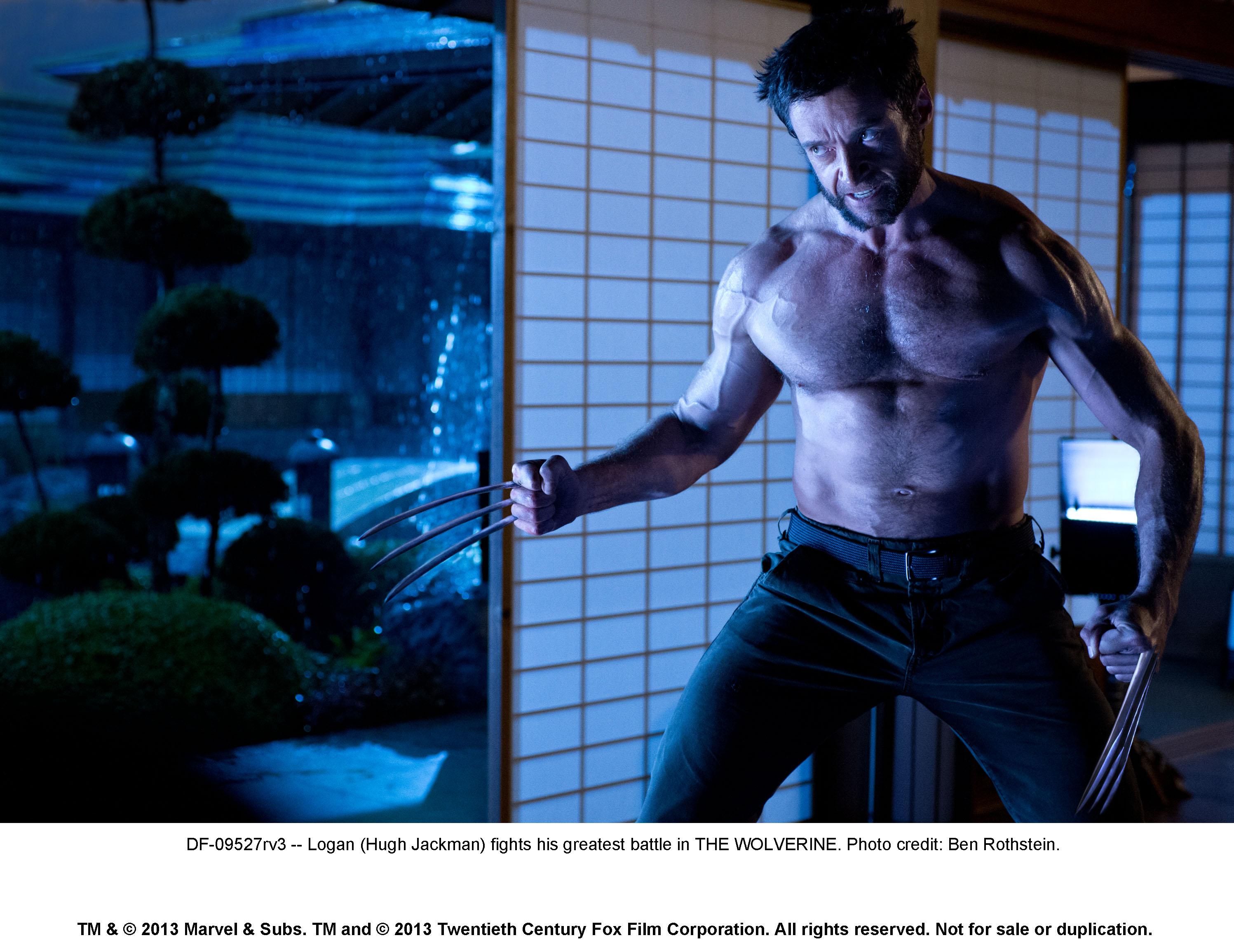
Elsewhere, Hollywood hopes you’re ready for yet more claw-bearing Hugh Jackman (in The Wolverine), Danish actor Mads Mikklesen shines as a falsely-accused man in The Hunt; indie darling Andrew Bujalski delivers what may be his finest film to date with Computer Chess; a majorly great/bad/quotable/mind-blowing cult film plays the Clay’s midnight series; and more. Read on for our short takes.

http://www.youtube.com/watch?v=vnoHSnJsy6Q

Computer Chess Mumblecore maestro Andrew Bujalski (2002’s Funny Ha Ha; 2005’s Mutual Appreciation) makes his first period picture, kinda, with this stubbornly, gloriously retro saga set at an early-1980s computer-chess tournament (with a few ventures into the freaky couples-therapy seminar being held at the same hotel). The technology is dated, both on and off-screen, as hulking machines with names like “Tsar 3.0” and “Logic Fortress” battle for nerdly supremacy as a cameraman, wielding the vintage cameras that were actually used to film the feature, observes. Tiny dramas highlighting the deeply human elements lurking amid all that computer code emerge along the way, and though the Poindexters (and the grainy cinematography) are authentically old-school, the humor is wry and awkwardly dry — very 21st century. Keep an eye out for indie icon Wiley Wiggins, last seen hiding from Ben Affleck’s hazing techniques in 1993’s Dazed and Confused, as a stressed-out programmer. (1:32) (Cheryl Eddy)

http://www.youtube.com/watch?v=qNHPB-dS1t0

Fame High This doc by Scott Hamilton Kennedy (2008’s The Garden) steps behind the doors of the LA County High School for the Arts, where teens toil in (and out of) the classroom to achieve their artistic dreams. There’s the jazz pianist with the overbearing stage dad; the sheltered ballerina whose Juilliard aspirations depend on her learning to loosen up on the dance floor; the sparkplug actress who hails from a theatrical family; and the harpist-singer whose mother moved with her from small-town Wisconsin to nurture her talents. As the year progresses, Fame High tracks each teen’s struggle to negotiate academics and arts, their relationships with their parents, budding romances, and rebellions both tentative and full-blown. In a culture in which insta-fame seems the norm, thanks to reality TV competitions and the internet, Fame High serves as a reminder that most show-biz careers are built on hard work and difficult lessons — with the added bonus of likeable, well-chosen subjects, all of whom happen to be easy to root for. (1:41) Elmwood. (Cheryl Eddy)

http://www.youtube.com/watch?v=ieLIOBkMgAQ

The Hunt Mads Mikkelsen has the kind of face that is at once strikingly handsome and unconventional enough to get him typecast in villain roles. Like so many great foreign-accented actors, he got his big international break playing a bad guy in a James Bond film — as groin-torturing gambler Le Chiffre in 2006 franchise reviver Casino Royale. Currently, he’s creeping TV viewers out as a young Dr. Lecter on Hannibal. His ability to evoke both sympathy and a suspicion of otherness are particularly well deployed in Thomas Vinterberg’s very Danish The Hunt, which won Mikkelsen the Best Actor prize at Cannes last year. He plays Lucas, a lifelong small-town resident recently divorced from his son’s mother, and who currently works at the local kindergarten. One day one of his charges says something to the principal that suggests Lucas has exposed himself to her. Once the child’s misguided “confession” is made, Lucas’ boss immediately assumes the worst. She announces her assumptions at a parent-teachers meeting even before police can begin their investigation. By the time they have, the viral paranoia and suggestive “questioning” of other potential victims has created a full-on, massive pederasty scandal with no basis in truth whatsoever. The Hunt is a valuable depiction of child-abuse panic, in which there’s a collective jumping to drastic conclusions about one subject where everyone is judged guilty before being proven innocent. Its emotional engine is Lucas’ horror at the speed and extremity with which he’s ostracized by his own community — and its willingness to believe the worst about him on anecdotal evidence. Engrossing, nuanced, and twisty right up to the fade-out, The Hunt deftly questions one of our era’s defining public hysterias. (1:45) (Dennis Harvey)

http://www.youtube.com/watch?v=S4uPcFRBJbM

Plimpton! Starring George Plimpton as Himself Tom Bean and Luke Poling’s Plimpton! Starring George Plimpton as Himself, an affectionate portrait of the longtime Paris Review editor and “professional collector of experiences” who wrote books, articles, and made TV specials about his delight in being “the universal amateur.” His endeavors included playing football with the Detroit Lions, hockey with the Boston Bruins, and the triangle with the New York Philharmonic, among even more unusual pursuits. Some called him a dilettante (to his face while he was alive, and in this doc, too), but most of the friends, colleagues, and family members here recall Plimpton — born to an upper-crust New York family, he was friends with the Kennedys and worshipped Hemingway — as an irrepressible adventurer who more or less tailored a journalism career around his talents and personality. (1:29) Roxie. (Cheryl Eddy)

http://www.youtube.com/watch?v=R6OoZNdAQuA

Samurai Cop Terrible movies deserve restoration too! Such is the case with this under-the-radar 1989 direct-to-video atrocity whose slowly accumulated cult audience now has a newly restored print to watch in apt contexts like the Clay’s midnight series. It’s a martial arts movie shot in the US by an Iranian director (Amir Shervan), with at least one porn star (Krista Lane of such classics as Fatal Erection, Days Gone Bi, Mammary Lane, and The Bitches of Westwood) in the cast. Shervan also wrote the script, and to say the dialogue is a tad ESL would be a very kind way of putting it. Low-end Miami Vice-like duo Joe (Matt Hannon) and Frank (Mark Frazer) are cops on the trail of Japanese gangsters led by Mr. Fugiyama (Gerard Okamura), with Robert Z’Dar (from 1988’s Manic Cop) as their main enforcer. Joe acts like the slimiest swingin’-dick stud on the fern bar scene, his spray-tanned, long-feathered-hair vanity just partially excused when he takes off his shirt to reveal Tarzan-worthy musculature. (Hitherto a film-crew carpenter, Hannon understandably never acted again.) Frank is, er, African American. (Black sidekicks never require much character definition in this sort of movie.) Between fight scenes that feature some of the most ludicrous martial-arts howls ever (personal favorite: “Wafu!”), we get numerous gratuitous soft core sex scenes that briefly provide a female full-frontal glimpse. Other highlights include the peppy aerobics-workout synth score, an outrageously swishy “comedy gay” Costa Rican waiter, and the opening credit “Hollywood Royal Pictures presents.” You will laugh, you will cry (from the pain). While Samurai Cop will no doubt be an experience to remember watched on the big screen with an unruly crowd, you might also want to check out its DVD extras, the most memorable of which is an interview with today’s Z’Dar — a huge, burly actor now incongruously hair-dyed, rouge-painted and otherwise completely weird-looking. (1:36) Clay. (Dennis Harvey)

http://www.youtube.com/watch?v=7UrOOoOXLV8

The To Do List Mistress of deadpan Aubrey Plaza stars in this raunchy comedy about a recent high-school grad determined to go all the way (and then some) before she ships off to college. (1:44)

http://www.youtube.com/watch?v=AWemNKXIou4

The Wolverine James Mangold’s contribution to the X-Men film franchise sidesteps the dizzy ambition of 2009’s X-Men Origins: Wolverine and 2011’s X-Men: First Class, opting instead for a sleek, mostly smart genre piece. This movie takes its basics from the 1982 Wolverine series by Chris Claremont and Frank Miller, a stark dramatic comic, but can’t avoid the convoluted, bad sci-fi plot devices endemic to the X-Men films. The titular mutant with the healing factor and adamantium-laced skeleton travels to Tokyo, to say farewell to a dying man who he rescued at the bombing of Nagasaki. But the dying man’s sinister oncologist has other plans, sapping Wolverine of his healing powers as he faces off against ruthless yakuza and scads of ninjas. The movie’s finest moments come when Mangold pays attention to context, taking superhero or Western movie clichés and revamping them for the modern Tokyo setting, such as a thrilling duel on top of a speeding bullet train. Another highlight: Rila Fukushima’s refreshing turn as badass bodyguard Yukio. Oh, and stay for the credits. (2:06) (Sam Stander)

Burning Man event will benefit its new nonprofit, whose future role is still murky

5

There’s a pricey event in San Francisco this evening “exploring the past, present, and future of Burning Man,” with all proceeds going to The Burning Man Project, the nonprofit vessel that Black Rock City LLC created to supposedly take over operations of this venerable cultural phenomenon. With the murky, ever-evolving plan for what that allegedly imminent transition looks like and what the new governance structure will be, the forum could shed some light on the subject — but I wouldn’t bet on it.

For my latest cover story on Burning Man and its leadership, which ran last month, I sat down with founder Larry Harvey and LLC board member Marian Goodell to discuss the transition at length. Even after listening to the recording of that interview several times, I still had a hard time discerning what the plan is, mostly because I don’t think they even really know at this point.

Even though Harvey told me “we’re pretty much on schedule” to turn operations of the late summer event over to the new nonprofit board next year, it doesn’t seem that the hand-picked nonprofit board will have any real authority. And the relationship of the nonprofit to the LLC — which will continue to control all things Burning Man, despite Harvey indicating otherwise when he announced the plan two year ago — is still being defined.

“I would answer that a little more completely by saying what we’re really in the middle of doing is looking at the structure for Black Rock City LLC, which is an event production company and its infrastructure and doing the outreach to the world,” Goodell told me, adding the six current board members will still guide the event and culture and that “we’re more necessary than ever.”

Some veteran burners consider that to be a fairly bold statement coming from a business that derives its value mostly from the volunteer efforts of the 60,000 people who create Black Rock City every year, and whose “10 principles” (prominently posted on the front page of the Survival Guide circulated to all attendees this year) include Participation, Radical Inclusion, Communal Effort, Civic Responsibility, and Decommodification.

In the wake of my last story, I heard from sources within the LLC who appreciated me raising these issues and trying to keep the organization honest and true to its principles, but they’re all afraid to speak out publicly, mostly of Goodell’s wrath. They said that while four of the six LLC board members do seem willing to give up some control over the event and culture, Harvey and Goodell have gone the opposite direction and seem to be expanding their control as they travel the world as burner ambassadors.

In their interview with me, both Harvey and Goodell made clear their indispensible roles in protecting the event from “meddling” by the nonprofit board and with sheperding the larger burner culture.

“Oh no. We are giving up managing the event in favor of managing the culture in the greater world, that’s what we’re doing. And we can hardly do it fast enough because we don’t have time to manage the event,” Harvey said, later noting the LLC could become essentially a consulting firm that Burning Man regional organizations around the world pay for services. “That’s how things work in the real world.”

Tonight’s event is entitled “This is Burning Man,” named after the seminal burner book penned by the host of the event, Brian Doherty, who will lead the discussion with Harvey and co-founder Michael Mikel, aka Danger Ranger. The 7pm event is at Z Space Theater, 450 Florida, with tickets ranging from $20-$125.

I’ve always appreciated Doherty and his book, which I drew from for my own book on the culture’s modern era, The Tribes of Burning Man, and he contacted me after my last article to say he was glad to see me raising these issues. And he did tell me that one of the topics he plans to cover tonight is “the original corporate structure and why that might be changing.”

Yet Doherty, a libertarian who is a senior editor at Reason Magazine, doesn’t really share the view that the burner community has sweat equity in the event and therefore a right to help guide a culture that has evolved significantly since the LLC was formed in 1997.

“I no longer approach the event with a close-focus journalists eye, but do still consider it a fascinating unfolding story not just of a bunch of interesting people trying to ride a tiger they’ve let loose — and this applies to organizers and attendees — but about the most fun thing one can do with your time. I also maintain, I know controversially, that in most respects any attendee should care about, the event has been in most important respects the same since it got its current shape in 1998,” he told me. “Yes if you are dealing with the bureaucracy or burning big art or trying to get it funded or working for BMorg, a lot has changed. If you are one of the blessed 90 percent who are buying tickets and enjoying or paricipating in a way that does not have to intersect any of that, well, you still have the same Burning Man us boring old folk had, and please enjoy it. I would say preserve it; you can certainly try to evolve it, but it seems resistant to change in some respects.”

That may be true, but that isn’t what Harvey told the burner community two years ago, when he promised to “gift the event back to the community,” a meme that was uncritically repeated and amplifed in the documentary “Spark: A Burning Man Story,” that is now making the theatrical rounds.

“Arguments welcome, thanks for caring, the story of how this thing was built is still one of the great American culture stories of our time, with characters as fun and deep and resonate of great pantheonic virtues as you’ll find,” Doherty says. “This does not mean I worship them as Gods — merely respect them as representing virtues, vices, and concerns and ideas as old as human civilization.”

It may not always seem like it, but I also respect Harvey, Goodell, and the rest of the Burning Man leadership, even if I think a little more clarity and open public discussion is necessary now, so let me close with some more of their comments from our interview.

“We want to make sure the event production company has sufficient autonomy, they can function with creating freedom and do what it does best, which is producing the Burning Man event, without being unduly interferred with by the nonprofit organization,” Harvey said.

“That’s why you heard it one way initially, and you’re hearing it slightly differently now, and it could go back again,” Goodell said. “We don’t think it’s sensible, either philosophically or fiscally, to essentially strip away all these entities and take all these employees and plop them in the middle of The Burning Man Project.”

“So there’s directly administered by this huge collossus at the center,” Harvey added.

“That looks like the US government,” Goodell interjected. “We think it would look like a many tentacled beast. That’s what we’re all afraid of in the world, a government putting their paws into us too much.”

Yet it wouldn’t be a government, but a bunch of nonprofit board members and experienced burners who would represent Burning Man’s constituent communities. Harvey said something like that might eventually work, but for now, that’s not what’s happening.

“We might change our minds at any time, that’s our perogative, but right now we’re absolutely on the path that you heard at the talk at the Bently Reserve two years ago,” Goodell said.

“We are in fact relinquishing our control,” Harvey said. “We are delegating the authority that the partners held as executives to the staff that operates it.”

Jello sounds off

0

When setting up an interview with Jello Biafra, I got this light-hearted warning: “There is no such thing as a short interview with Jello.” It’s true, the legendary punk showman/spoken word enthusiast is full of political ideas, historical references, and elder-punk-dude tales. How can he be expected to keep it brief?

Below, we spend an intense half hour discussing the media, corruption, spoken word, Jello Biafra and the Guantanamo School of Medicine, Jello Biafra and the New Orleans Raunch and Soul All-Stars, and the future of underground rock’n’roll. (For the feature on Jello Biafra and the Guantanamo School of Medicine, see this week’s paper):

San Francisco Bay Guardian
Where do you gather your news? What are your sources for political commentary in your songs?

Jello Biafra Why, the Bay Guardian, of course! Where would a local voter be without your fine rag? I just hope the new ownership and staff goes pedal to the metal to keep up the standard of muckraking and ethics. There’s so much corruption to dig up in this area.

I think the real renaissance was before the Weekly was sold to New Times/VVM, when the Guardian and the Weekly were both muckraking papers concentrating on local issues and were trying to out-scoop each other. That’s what I’d like to see continue and come back.

But basically I’d read a lot of periodicals. Locally, we have you folks, among others. And then you know Nation, Progressive, Mother Jones, interesting things people send me in the mail, digitally or otherwise, talking to people, putting two and two together — trying to write songs about stuff that no one else has! Or at least not in the same way.

SFBG Why is that? Why choose to write songs about something no one else has?

JB It’s just filling in the gaps with what’s interesting. I’m proud that no two of my music albums sound alike. Not even the Lard albums sound alike. From Dead Kennedys onward my mission as the main lyricist and composer of the damn tunes, I kind of stick to my punk core — whether I intend to or not, it’s just who and what I am — and but kind of widen the base of the pyramid to what you can do with that energy.

http://www.youtube.com/watch?v=NQpPvFPegdE

SFBG What are some the topics you focused on when writing White People and the Damage Done?

JB I guess it was a little more focused as a semi-concept album, than anything since Frankenchrist. It’s basically about grand theft austerity, and how unnecessary it is, what a scam it is. People have asked me when we go to play different cities or countries, what I think is the biggest problem in the world today and they expect me to say something like “climate change” which I prefer to call “climate collapse” because that’s what it is, or inequality, or war, or whatever, and I say you know, there’s a worse one, it’s corruption. Because that is what’s blocking anything constructive being done about all the other problems. There’s a thread through White People and the Damage Done about that. 

The title track is not so much about race specifically, but about this attitude of the higher ups in the United States, the EU, and others, is that other countries, especially ones run by people of color, where we call them “Third World” or whatever, are somehow unfit to govern themselves and need us to pull the strings, plant the puppets, and tell everyone what to do. And it’s often for the purposes of looting their resources and exploiting their people. And what kind of unintended consequences that can have.

For example, we talk about why we need more democracy in Iran, and we don’t have the big bad Soviet Empire to freak out everyone anymore so we have Iran and North Korea instead. Wait a minute, you want democracy in the Middle East? Well Iran was a democracy in the early 1950s, guess who decided to overthrow the democratically-elected leader Mohammad Mosaddegh, and put the most hated person in the country, the Shah, back into power? But he was our policeman for the gulf basically, and he got overthrown anyway. And now it’s a theocratic regime. Where would be today if we had just left that region alone in the 1950s?

Same for Afghanistan. I nearly went through the roof when I found out about an interview with Jimmy Carter’s old national security advisor, Zbigniew Brzezinski’s, whose daughter is on one of the morning cartoon pundit shows, bragged on an interview with French media about what a great thing we did by arming, training, and financing the guerrillas in Afghanistan before the Soviet Union invaded, and how we cracked apart the evil empire, hooray for us, we win.

But look what we created for crying out loud. We were even helping back a young hothead with a trust fund named Osama Bin Laden. And then once the Soviets were out, we didn’t lift a finger to help rebuild the country, let alone take back the guns and rocket-launchers. And now look where we are. That’s another example of white people and the damage done.

[Pause] hold on my juice machine, now I have to turn it off, it’s bouncing all over the counter.

SFBG What kind of juice are you making?

JB Oh, just a mixture of stuff. Spinach, apples, other things.

SFBG Can you tell me about forming Guantanamo School of Medicine?

JB Here we go again. I wanted to have another band ever since Dead Kennedys, it just never quite happened. Either people weren’t available, or I was off doing spoken word or other adventures, but of course I never stopped making albums, there was Lard, two with the Melvins, one with DOA, Mojo Nixon, NoMeansNo.

I kept the music out there, I just didn’t have a performing vehicle. And then when I was down at the Warfield seeing the Stooges on Iggy’s 60th birthday, it occurred to me, “oh shit, I turn 50 next year. I better do something or I may never get another chance.” If it’s half as good as the Stooges, I’ll declare victory.

SFBG Do you have any other projects coming up?

JB I started getting back into spoken word. I did a tour in Australia after the band’s tour was done. And at some point, something that will probably see the light of day: some of the New Orleans guys from Cowboy Mouse and Dash Rip Rock dared me to come down there during the jazz fest a few years ago and do a whole set of New Orleans soul and rhythm and blues songs, which I did with some badly needed garage rock added in and we got Mojo Nixon’s keyboard wizard with all the Jerry Lee Lewis moves, and quite the cacophonous horn section, as well as [Cowboy Mouth’s] Fred LeBlanc, and [Dash Rip Rock’s] Bill Davis.

The multitrack recording was a trainwreck, but then Ben Mumphrey who works with Frank Black and the Pixies and many others, called me up and said he could rescue this recording. Slowly but surely he has been rescuing it. So Jello Biafra and the New Orleans Raunch and Soul All-Stars will see the light of day somehow. We haven’t been able to pull it together to play a show though. 

http://www.youtube.com/watch?v=as8Y2HWzUwI

SFBG I was wondering your opinion of this new, kind of second tech bubble taking over in areas like the Mission?

JB Again, I refer you to one of my songs. It came out on the EP of the rest of the recording session when we recorded The Audacity of Hype with Billy Gould. The song is called “Dot Com Monte Carlo.” And sure enough there was a little mini firestorm on the Internet of course. A lot of people writing in were too chicken-shit to sign their own names, but they said ‘oh that’s such an old topic, it doesn’t matter anymore.’

Well I had this funny feeling we weren’t done with the Dot Com Holocaust. Sure enough, now it’s more aggressive and obnoxious than ever. Dot Com Monte Carlo — that’s kind of what Willie Brown’s puppets are trying to turn this city into, yet again.

It has been really sad for me to see so many cool people and artists and service-workers and people of color just bull-dozed out of this town to make room for more mini little yuppies who treat San Francisco as a suburb of Silly-clone Valley.

And now you don’t see people like me when I was 19, just moving out to San Francisco chasing a dream. There was a time when the vitality of the underground was maintained by entire bands moving here as a unit. Everybody from MDC and the Dicks to DRI and later, Zen Guerilla, the only one I can think of in recent years, who dare tried to relocate to San Francisco were I believe No Doctors and Sixteen Bitch Pile-Up, and I’m not sure either one of them exist at this point. Maybe they all packed up and left. A lot of that underground fire, and that’s not just confined to rock of course, but a lot is going on in Oakland now.

SFBG Yeah, I’ve had a lot of bands telling me they can’t afford San Francisco anymore, so they’ve been moving to the East Bay or beyond…

JB I mean, I’d hate to see San Francisco turn any further into a giant Aspen, Colorado, or even Boulder, Colorado, which is where I fled from in order to come here [in ’78.]

SFBG Are there current East Bay or San Francisco bands that you feel like are doing good things?

JB Of course I always brain-fart on this question. Well, of course I’m going to support my label bands, I love Pins of Light.

SFBG How involved are you with Alternative Tentacles? Are you going out and finding bands?

JB Well I’m still the absentee-thought-lord, the buck stops with me. Someone deeply suspicious of capitalism has wound up owning a business by default, whether I should or not. Luckily there’s still money to pay a shrinking staff and to make sure we can keep putting out cool things. But it’s becoming harder and harder because of the combination of a crashed economy, rents going through the ceiling all over country, and file-sharing on the other hand. Of course, one feeds the other when people don’t have any money.

That doesn’t mean I support these misguided efforts, these major label RIAA scams to blackmail people and sue them for file-sharing. They’ve raked in over a hundred million dollars doing that and no artist has seen a penny. That’s not the way to solve this.

On the other hand, when I see one of the best bands we’ve seen in years like the Phantom Limbs break up way too soon, I can’t help but wonder whether file-sharing might be a part of the problem, with so many people going crazy over them and going to their shows all over the place, and then hardly anybody buys the album.

When you’ve got people in the age of high housing and transportation cost trying to keep themselves fed or also sustain a family, that hurts. I wonder how many people save up money from their shitty jobs for years in order to make some really cool piece of music only to find that nobody actually gives anything back; they’re that much more likely to quit making anything.

Maybe the solution is, for people who want to get their friends into really cool music, don’t just send them the whole album, pick some favorites and send them a little teaser package, a little file to inspire them to check out them more.

Not to mention, be conscious of whose file you’re sharing. Major labels go so far out of their way to rip off their artists anyways, with an army of lawyers to back them up. But when it’s an underground artist or label, that’s different. I never would have thought that GSL would’ve stopped, for example. Or that Touch and Go would draw mainly into reissues and back catalogue. It’s not just the economy and music industry crashed that’s to blame, it’s also people who don’t think artists should get any of their support.

SFBG Do you still love performing in front of a crowd? Do you have any recent performances with this band that you’ll take with you?

JB I’m not sure I’d be doing it if there wasn’t this inner need to do it. I’m really greatful that at my age anybody even cares about what I have to say, or new stuff I’ve been making.

We’ve been able to play a lot of places Dead Kennedys weren’t, because countries hadn’t opened up yet and they were still under the boot of Communist dictators or Latin American military or whatever. And we get to play for people in those places now. I don’t have the kind money where I can go jet-setting around to these places, I have to play my way to places like Buenos Aires or Slovenia, or I’ll never get there.

Bringing these musical riffs in my head to life and to have them actually work and getting to play them for people, that’s always pretty cool.

Some of the stranger moments were last time we were in Geneva we had a stage-diver in a wheelchair. The crowd was very gentle with him, passing him around, and making sure he was reunited with the chair, which was floating somewhere else in the crowd. Three or four songs later, he’d be back again! That was good.

Also, being able to scrape together just enough of my high school Spanish to be able to talk to people in Buenos Aires from the stage about some songs that were written with them in mind. I mean, “Bleed for Me,” the old Dead Kennedys song, was written about the Dirty Wars. And this was the first time I could actually dedicate “Bleed for Me” to the Desaparecidos in Argentina and explain it a little bit.

Jello Biafra and the Guantanamo School of Medicine
With D.I., the Divvys, Girl-illa Biscuits
Fri/26, 9pm, $15
Uptown
1928 Telegraph, Oakl.
www.uptownnightclub.com

Theater Listings: July 24 – 31, 2013

0

Stage listings are compiled by Guardian staff. Performance times may change; call venues to confirm. Reviewers are Robert Avila, Rita Felciano, and Nicole Gluckstern. Submit items for the listings at listings@sfbg.com.

THEATER

OPENING

Gorgeous Hussy: An Interview With Joan Crawford Exit Theatre, 156 Eddy, SF; www.wilywestproductions.com. $15-35. Opens Fri/26, 8pm. Runs Aug 1, 3, 9, 15-16, 8pm. Running in repertory with Lawfully Wedded (below), this world premiere by Morgan Ludlow imagines a young writer’s encounter with the legendary movie star.

Lawfully Wedded: Plays About Marriage Exit Theatre, 156 Eddy, SF; www.wilywestproductions.com. $15-35. Opens Thu/25, 8pm. Runs Sat/27, Aug 2, 8, 10, and 17, 8pm. Running in repertory with Gorgeous Hussy (above), this world premiere “collage of scenes and stories” by Morgan Ludlow, Kirk Shimano, and Alina Trowbridge takes on marriage equality.

ONGOING

Can You Dig It? Back Down East 14th — the 60s and Beyond Marsh San Francisco, 1062 Valencia, SF; www.themarsh.org. $15-50. Sat, 8:30pm; Sun, 7pm. Through Aug 25. Don Reed’s new show offers more stories from his colorful upbringing in East Oakland in the 1960s and ’70s. More hilarious and heartfelt depictions of his exceptional parents, independent siblings, and his mostly African American but ethnically mixed working-class community — punctuated with period pop, Motown, and funk classics, to which Reed shimmies and spins with effortless grace. And of course there’s more too of the expert physical comedy and charm that made long-running hits of Reed’s last two solo shows, East 14th and The Kipling Hotel (both launched, like this newest, at the Marsh). Can You Dig It? reaches, for the most part, into the “early” early years, Reed’s grammar-school days, before the events depicted in East 14th or Kipling Hotel came to pass. But in nearly two hours of material, not all of it of equal value or impact, there’s inevitably some overlap and indeed some recycling. Reed, who also directs the show, may start whittling it down as the run continues. But, as is, there are at least 20 unnecessary minutes diluting the overall impact of the piece, which is thin on plot already — much more a series of albeit often very enjoyable vignettes and some painful but largely unexplored observations, wrapped up at the end in a sentimental moral that, while sincere, feels rushed and inadequate. (Avila)

Chance: A Musical Play About Love, Risk, and Getting it Right Alcove Theater, 415 Mason, Fifth Flr, SF; www.thealcovetheater.com. $40-60. Thu/25-Sat/27, 8pm (also Sat/27, 3pm); Sun/28, 5pm. New Musical Theater of San Francisco presents Richard Isen’s world premiere work inspired by the writings of Oscar Wilde.

Foodies! The Musical Shelton Theater, 533 Sutter, SF; www.foodiesthemusical.com. $30-34. Fri-Sat, 8pm. Open-ended. AWAT Productions presents Morris Bobrow’s musical comedy revue all about food.

God of Carnage Shelton Theater, 533 Sutter, SF; www.sheltontheater.com. $26-38. Thu-Sat, 8pm. Through Sept 7. Shelton Theater performs Yasmina Reza’s award-winning play about class and parenting.

Gold Rush! The Un-Scripted Barbary Coast Musical Un-Scripted Theater Company, 533 Sutter, Second Flr, SF; www.un-scripted.com. $10-20. Thu-Sat, 8pm. Through Aug 24. The Un-Scripted Theater Company performs an improvised musical about gold-rush era San Francisco.

Hedwig and the Angry Inch Boxcar Theatre, 505 Natoma, SF; www.boxcartheatre.org. $27-43. Thu-Sat, 8pm. Open-ended. John Cameron Mitchell’s cult musical comes to life with director Nick A. Olivero’s ever-rotating cast.

How to Make Your Bitterness Work for You Stage Werx Theatre, 446 Valencia, SF; www.stagewerx.org. $15-25. Mon-Tue, 8pm. Through Aug 27. Kent Underwood is a motivational speaker and self-help expert with some obvious baggage of his own in this solo play from former comedy writer and stand-up comedian Fred Raker (It Could Have Been a Wonderful Life). The premise, similar to that of Kurt Bodden’s Steve Seabrook: Better Than You (ongoing at the Marsh), has the audience overlapping with participants in an Underwood seminar. Underwood, however, two years on the seminar circuit and still unable to get his book published, deviates from the script to answer texts related to a possible career breakthrough. Meanwhile, with the aid of some bullet points and illustrative slides, he explains the premise of said manuscript, “How to Make Your Bitterness Work For You,” as the sad truth of his own underdog status emerges between the laugh lines. But where Bodden is careful to make his Seabrook a somewhat believable character despite the absurdity of it all (or rather, while firmly embracing the absurdity of the self-help industry itself), Raker and director Kimberly Richards put much more space between the playwright/performer and his character, which turns out to be a less effective strategy. Verisimilitude might not have mattered much if the comic material were stronger. Unfortunately, despite the occasional zinger, much of the humor is weak or corny and the narrative (interrupted at regular intervals by an artificial tone representing the arrival of a fresh text message) too contrived to sell us on the larger story. (Avila)

Keith Moon: The Real Me Eureka Theatre, 215 Jackson, SF; www.brownpapertickets.com. $40. Thu/25-Sat/27, 8pm; Sun/28, 7pm. Was Keith Moon the greatest rock ‘n’ roll drummer ever? Veteran solo performer and drum stylist Mick Berry doesn’t exactly come out and say so, but his biographical play about Moon definitely makes a good case for the possibility. Keith Moon: The Real Me, written and performed by Berry, kicks off with a literal bang, a hi-octane cover of “Baba O’Riley,” featuring Berry’s exuberantly crashing cymbals layered over the iconic, rapidfire synth riff that runs throughout the song. Though the characters of the play are all portrayed by Berry — with references to all the requisite sex, drugs, and self-destruction thrown into the mix — a full band stands at the ready behind two transparent screens to flesh out the show’s strongest element: the rock-and-roll. In order to channel Moon’s full-throttle drumming, Berry enlisted the assistance of Frank Simes, the music director of the Who’s 2012-2013 tour, while to channel Moon’s freewheeling but insecure personality, he enlisted local director Bobby Weinapple. The script itself is still ragged, and a couple of key moments, particularly when Moon’s car is attacked in early 1970, are presented in such a way that the context comes later, which is confusing if you don’t already know the history of the incident. But if you don’t mind a bit of chat with your rock concert, you’ll probably find this fusion of the two intriguing. Just remember, when the nice concessions people offer you complimentary earplugs, take them. (Gluckstern)

Sex and the City: LIVE! Rebel, 1760 Market, SF; trannyshack.com/sexandthecity. $25. Wed, 7 and 9pm. Open-ended. It seems a no-brainer. Not just the HBO series itself — that’s definitely missing some gray matter — but putting it onstage as a drag show. Mais naturellement! Why was Sex and the City not conceived of as a drag show in the first place? Making the sordid not exactly palatable but somehow, I don’t know, friendlier (and the canned a little cannier), Velvet Rage Productions mounts two verbatim episodes from the widely adored cable show, with Trannyshack’s Heklina in a smashing portrayal of SJP’s Carrie; D’Arcy Drollinger stealing much of the show as ever-randy Samantha (already more or less a gay man trapped in a woman’s body); Lady Bear as an endearingly out-to-lunch Miranda; and ever assured, quick-witted Trixxie Carr as pent-up Charlotte. There’s also a solid and enjoyable supporting cast courtesy of Cookie Dough, Jordan Wheeler, and Leigh Crow (as Mr. Big). That’s some heavyweight talent trodding the straining boards of bar Rebel’s tiny stage. The show’s still two-dimensional, even in 3D, but noticeably bigger than your 50″ plasma flat panel. Update: new episodes began May 15. (Avila)

So You Can Hear Me Marsh San Francisco, 1062 Valencia, SF; www.themarsh.org. $15-50. Fri, 8pm; Sat, 5pm. Extended through Aug 24. A 23-year-old with no experience, just high spirits and big ideals, gets a job in the South Bronx teaching special ed classes and quickly finds herself in over her head. Safiya Martinez, herself a bright young woman from the projects, delivers this inspired accounting of her time not long ago in perhaps the most neglected sector of the public school system — a 60-minute solo play that makes up for its relatively slim plot with a set of deft, powerful, lovingly crafted characterizations. These complex portraits, alternately hysterical and startling, offer their own moving ruminations on a violent but also vibrant stratum of American society, deeply fractured by pervasive poverty and injustice and yet full of restive young personalities too easily dismissed, ignored, or crudely caricatured elsewhere. An effervescent, big-hearted, and very talented performer, Martinez’s own bounding personality and contagious passion for her former students (as complicated as that relationship was), makes this deeply felt tribute all the more memorable. (Avila)

Steve Seabrook: Better Than You Marsh San Francisco, 1062 Valencia, SF; www.themarsh.org. $15-50. Sat, 8:30pm. Extended through Aug 24. Self-awareness, self-actualization, self-aggrandizement — for these things we turn to the professionals: the self-empowerment coaches, the self-help authors and motivational speakers. What’s the good of having a “self” unless someone shows you how to use it? Writer-performer Kurt Bodden’s Steve Seabrook wants to sell you on a better you, but his “Better Than You” weekend seminar (and tie-in book series, assorted CDs, and other paraphernalia) belies a certain divided loyalty in its own self-flattering title. The bitter fruit of the personal growth industry may sound overly ripe for the picking, but Bodden’s deftly executed “seminar” and its behind-the-scenes reveals, directed by Mark Kenward, explore the terrain with panache, cool wit, and shrewd characterization. As both writer and performer, Bodden keeps his Steve Seabrook just this side of overly sensational or maudlin, a believable figure, finally, whose all-too-ordinary life ends up something of a modest model of its own. (Avila)

Sweet Bird of Youth Tides Theatre, 533 Sutter, Second Flr, SF; www.tidestheatre.org. $20-40. Wed-Sat, 8pm. Through Aug 24. Tides Theatre performs Tennessee Williams’ Gulf Coast-set drama about an improbable couple.

Tinsel Tarts in a Hot Coma: The Next Cockettes Musical Hypnodrome, 575 10th St, SF; www.thrillpeddlers.com. $30-35. Thu/25-Sat/27, 8pm. Thrillpeddlers and director Russell Blackwood continue their Theatre of the Ridiculous series with this 1971 musical from San Francisco’s famed glitter-bearded acid queens, the Cockettes, revamped with a slew of new musical material by original member Scrumbly Koldewyn, and a freshly re-minted book co-written by Koldewyn and “Sweet Pam” Tent — both of whom join the large rotating cast of Thrillpeddler favorites alongside a third original Cockette, Rumi Missabu (playing diner waitress Brenda Breakfast like a deliciously unhinged scramble of Lucille Ball and Bette Davis). This is Thrillpeddlers’ third Cockettes revival, a winning streak that started with Pearls Over Shanghai. While not quite as frisky or imaginative as the production of Pearls, it easily charms with its fine songs, nifty routines, exquisite costumes, steady flashes of wit, less consistent flashes of flesh, and de rigueur irreverence. The plot may not be very easy to follow, but then, except perhaps for the bubbly accounting of the notorious New York flop of the same show 42 years ago by Tent (as poisoned-pen gossip columnist Vedda Viper), it hardly matters. (Avila)

Wunderworld Creativity Theater, 221 Fourth St, SF; www.wunderworld.net. $10-15. Sat-Sun, 2pm (also Sat, 11am; Sun, 5pm). Through Aug 11. In an irresistible boost to the the Children’s Creativity Museum’s new Creativity Theater (formerly Zeum), beloved Bay Area comedian, playwright, and performer Sara Moore (Show Ho) teams up with gifted co-writer and performer Michael Phillis (The Bride of Death) and director Andrew Nance for a largely wordless, but gabble-packed, family-friendly comedy that asks what Alice might find down the rabbit hole were she to tumble down it again as an octogenarian? The 60-minute play showcases the elastic features and sharp comedic instincts of both Moore (as a hilarious and heartfelt Alice, whom no one recognizes these days unless she stretches her face smooth again) and Phillis (who kicks things off with a mimed pre-curtain speech deserving of its own encore, before coming back as the now droopy-eared White Rabbit). Equally endearing are performances by Dawn Meredith Smith (as Caterpillar, Red Queen, and a rest home nurse), choreographer Rory Davis (as the Cheshire Cat), and the inimitable Joan Mankin as Alice’s bored nursing-home roommate and the Mad Hatter. (Avila)

BAY AREA

A Comedy of Errors Forest Meadows Amphitheater, 890 Bella, Dominican University of California, San Rafael; www.marinshakespeare.org. $20-37.50. Opens Sat/27, 8pm. Presented in repertory Fri-Sun through Sept 29; visit website for performance schedule. Marin Shakespeare Company presents a cowboy-themed spin on the Bard’s classic.

The Loudest Man on Earth Lucie Stern Theatre, 1305 Middlefield, Palo Alto; www.theatreworks.org. $19-73. Tue-Wed, 7:30pm; Thu-Sat, 8pm (also Sat, 2pm); Sun, 2 and 7pm. Through Aug 4. TheatreWorks presents the world premiere of Catherine Rush’s unconventional romantic comedy starring acclaimed actor Adrian Blue, who is deaf.

A Maze Live Oak Theatre, 1301 Shattuck, Berk; www.justtheater.org. $15-30. Thu-Sun, 8pm. Through Aug 4. Just Theater performs Rob Handel’s drama about multiple characters re-inventing their identities, running in repertory with Underneath the Lintel (below).

Oil and Water This week: Mill Valley Community Center (on the back lawn), 180 Camino Alto, Mill Valley; www.sfmt.org. Free. Wed/24, 7pm (music 6:30pm). Also Thu/25, 7pm (music 6:30pm), free, Montclair Ball Field, 6300 Moraga, Montclair; www.sfmt.org. Also Sat/27-Sun/28, 2pm (music 1:30pm), free, Live Oak Park, Shattuck at Berryman, Berk; www.sfmt.org. It’s a rough year for mimes, or at any rate for the San Francisco Mime Troupe who, after presenting 53 seasons of free theater in the parks of San Francisco (and elsewhere), faced a financial crisis in April that threatened to shut down this season before it even started. The resultant show, funded by an influx of last-minute donations, is one cut considerably closer to the bone than in previous years. With a cast of just four actors and two musicians, plus a stage considerably less ornate then usual, even the play has shrunk in scale, from one two-hour musical to two loosely-connected one-acts riffing on general environmentalist themes. In Deal With the Devil, a surprisingly sympathetic (not to mention downright hawt) Devil (Velina Brown) shows up to help an uncertain president (Rotimi Agbabiaka) regain his conscience and win back his soul, while in Crude Intentions adorable, progressive, same-sex couple Gracie (Velina Brown) and Tomasa (Lisa Hori-Garcia) wind up catering a “benefit” shindig for the Keystone XL Pipeline giving them the opportunity to perpetrate a little guerilla direct action on a bombastic David Koch (Hugo E Carbajal) with a “mole de petróleo” and a smartphone. Throughout, the performers remain upbeat if somewhat over-extended as they sing, dance, and slapstick their way to the sobering conclusion that the time to turn things around in the battles over global environmental protection is now — or never. (Gluckstern)

Sea of Reeds Ashby Stage, 1901 Ashby, Berk; www.shotgunplayers.org. $20-35. Wed-Thu, 7pm; Fri-Sat, 8pm; Sun, 5pm. Through Aug 18. The stage comes unusually populated in this latest from well-known Bay Area monologist and red-diaper baby Josh Kornbluth: a four-piece musical ensemble (El Beh, Jonathan Kepke, Olive Mitra, and Eli Wirtschafter) sits stage right, a standing table with some reed-making equipment appears stage left. Front and center is Kornbluth and his oboe, before him a music stand and behind him three “reeds”—freestanding concave walls of a bamboo-hue (designed by Nina Ball). But there’s more: Kornbluth’s physical trainer (Amy Resnick, replaced by Beth Wilmurt beginning August 7), bounding up from her seat in the first row to lend Kornbluth support or, more productively, prod him in the right direction as he takes the long road home to setting up a promised recital of Bach’s Cantata No. 82. That set up hinges on his recent bar mitzvah, at 52, in Israel, and its unexpected connections between his life-long oboe playing, his Communist upbringing in New York, his mixed marriage, his conversations with a local rabbi, and the Book of Exodus (specifically, Moses’s trail-blazing for the Israelites across the Red Sea, a.k.a., the Sea of Reeds). Although the introduction of supporting characters, musicians, and a musical score (by Marco D’Ambrosio) breaks new ground for the longtime soloist, Sea of Reeds is classic — indeed classical (thanks to a final few tenuous bars from the promised Bach cantata) — Kornbluth. Directed by longtime creative partner David Dower, the show features the boyish comedic persona, the intricate storytelling, and the biographical referents that have given him a loyal following over the years. Diehard fans aside, the show’s cheesy, somewhat self-regarding conceit of staging “spontaneous” interactions between Kornbluth and his trainer may not work with everyone. Perhaps more challenging, though, is the persistence of a less than fully examined disjunction between the political values of his parents and his own political and ethical evolution — a disjunction highlighted here in the narrative’s fraught Middle Eastern setting and its vague navigation between the violence of religious zealotry and a plea for tolerance. (Avila)

The Spanish Tragedy Forest Meadows Amphitheater, 890 Bella, Dominican University of California, San Rafael; www.marinshakespeare.org. $20-37.50. Presented in repertory Fri-Sun through Aug 11; visit website for performance schedule. Marin Shakespeare Company performs Thomas Kyd’s Elizabethan revenge tragedy.

This Is How It Goes Aurora Theatre, 2081 Addison, Berk; www.auroratheatre.org. $32-60. Wed/24-Sat/27, 8pm; Sun/28, 2 and 7pm. An awkward love triangle between former high school classmates gets the caustic Neil LaBute treatment in Aurora Theatre Company’s production of This is How it Goes. Not content to merely skewer the familiar battles between the sexes, LaBute further prods his captive audience with the big stick of race relations, and the often unacknowledged prejudices that lurk in the hearts of men. And women. There are no innocents in this play, though each character certainly has moments where they play upon audience sympathies, only to betray them a few inflammatory lines later. As the marriage between the successful yet self-conscious African American alpha male Cody (Aldo Billingslea) and his neurotically placating Caucasian wife Belinda (Carrie Paff) erodes, the mostly affable (and former fat kid) “Man” (Gabriel Marin) insinuates himself in the middle of their troubled relationship, obviously still carrying the torch for Belinda he did 15 years ago — as well as the same wary animosity an unpopular kid carries for the star of the track team, in this case, Cody. All three actors do a very good job of shape-shifting between their middle-class Jekyll and Hyde selves, assisted in part by Marin’s amiable asides, which don’t so much lull the audience as tease them with the idea that things are about to get better, when they can only get worse. (Gluckstern)

Underneath the Lintel Live Oak Theatre, 1301 Shattuck, Berk; www.justtheater.org. $15-30. Mon and Wed, 8pm; Sat-Sun, 3pm. Through Aug 4. Just Theater performs Glen Berger’s literary comedy, running in repertory with A Maze (above).

The Wiz Julia Morgan Theater, 2640 College, Berk; www.berkeleyplayhouse.org. $17-60. Wed-Thu and Sat, 7pm (also Sat, 2pm); Sun, noon and 5pm. Through Aug 25. Berkeley Playhouse travels to Oz with the Tony-winning musical.

PERFORMANCE/DANCE

Atamira Dance Company Joe Goode Performance Annex, 401 Alabama, SF; www.sfiaf.org. Sat/27, 8pm. $18-25. The contemporary Maori ensemble performs.

BATS Improv Bayfront Theater, B350 Fort Mason, SF; www.improv.org. $20. BATS Improv performs spontaneous shows based on current events (Fri/26, 8pm) and “Improvised Shakespeare” (Sat/27, 8pm).

“Bay Area Playwrights Festival” Thick House Theater, 1695 18th St, SF; www.playwrightsfoundation.org. Fri/26-Sun/28. $15. Three Bay Area playwrights and three New Yorkers contribute brand-new works to this 36th annual fest. The six plays were chosen from 425 submissions.

Chris Black and Megan Finlay Deborah Slater Dance Theater’s Studio 210, 3435 Cesar Chavez, SF; www.deborahslater.org. Fri/26-Sat/27, 8pm. $10-25. New works by Black (“Duets for Girls”) and Finlay (a physical and acrobatic show based on Macbeth), Studio 210’s summer artists-in-residence.

Caroline Lugo and Carolé Acuña’s Ballet Flamenco Peña Pachamama, 1630 Powell, SF; www.carolinalugo.com. Sat/27, Aug 4, 17, and 25, 6:15pm. $15-19. Flamenco performance by the mother-daughter dance company, featuring live musicians.

“Comics Quitting” Cinecave, 1034 Valencia, SF; www.cyniccave.com. Sun/28, 9pm. $10. Bryan Blank hosts this comedy show about quitting, with Scott Simpson, Luke Lockfield, Keith D’Souza, and Leslie Small performing.

“Dr. Zebrovski’s Hour of Power” CounterPULSE, 1310 Mission, SF; www.counterpulse.org. Fri/26-Sun/28, 8pm. $15-25. Theater, dance, performance art, and social commentary converge in this presentation by “the world’s number one dance psychic.”

“Dream Queens Revue” Aunt Charlie’s Lounge, 133 Turk, SF; www.dreamqueensrevue.com. Wed/24, 9:30-11:30pm, free. Fab drag with Collette LeGrande, Ruby Slippers, Sophilya Leggz, and more.

“Factory Parts” NOH Space, 2840 Mariposa, SF; www.foolsfury.org. Thu/25-Sun/28, 8pm. $15. The latest venture from foolsFURY (Port Out Starboard Home) is a festival of work-in-progress, offering glimpses into the creative process of several local and national (New York) companies as each tries out anywhere from 10 to 30 minutes of material related to a current project. The results, predictably, are all over the place, and that’s just fine given the premise of the festival. There’s definitely something to be said for entering into material in development being put on its feet before an audience for the first time. The expectations and energy in the room, as well as the nature of the encounter between performers and audiences, are distinct in some worthwhile ways — and things move along pretty quickly. The challenge for such a festival rests in curating companies and artists whose overall competence is at a solid level to begin with, so that even watching them flail about in exploration is likely to be fascinating or at least rewarding. Judging only by an encounter with Program A (the first of three programs in the festival), works can range from the fairly polished and surprising to the bare bones but intriguing to the unfinished but clearly tedious. The full program, however, offers some enticing names and subjects, while promising ever-finer gradations in this spectrum. (Avila)

50 Shades! The Musical Marines’ Memorial Theatre, 609 Sutter, SF; www.50shadesmusical.com. Wed/24-Thu/25, 8pm; Fri/26-Sat/27, 6:30 and 9:30pm (also Sat/27, 3pm); Sun/28, 3 and 6:30pm. $20-65. Musical parody of Fifty Shades of Grey.

“Mission Position Live” Cinecave, 1034 Valencia, SF; www.missionpositionlive.com. Thu, 8pm. Ongoing. $10. Stand-up comedy with rotating performers.

Red Hots Burlesque El Rio, 3158 Mission, SF; www.redhotsburlesque.com. Wed, 7:30-9pm. Ongoing. $5-10. Come for the burlesque show, stay for OMG! Karaoke starting at 8pm (no cover for karaoke).

“Resonance: Stories of Past and Present” Dance Mission Theater, 3316 24th St, SF; www.brownpapertickets.com. Fri/26-Sat/27, 8pm. $30-35. World-music percussion and dance with the Bay Area’s Maikaze Daiko (taiko), Japan’s GONNA (Wadaiko drumming), and more.

“San Francisco Magic Parlor” Chancellor Hotel Union Square, 433 Powell, SF; www.sfmagicparlor.com. Thu-Sat, 8pm. Ongoing. $40. Magic vignettes with conjurer and storyteller Walt Anthony.

“Sketch 3: Expectations” ODC Theater, 3153 17th St, SF; (415) 863-9834. Thu/25-Sat/27, 8pm; Sun/28, 7pm. $25-30. San Francisco contemporary ballet company Amy Seiwert’s Imagery performs.

“Union Square Live” Union Square, between Post, Geary, Powell, and Stockton, SF; www.unionsquarelive.org. Through Oct 9. Free. Music, dance, circus arts, film, and more; dates and times vary, so check website for the latest.

“Video Games Live” Davies Symphony Hall, 201 Van Ness, SF; www.sfsymphony.org. Thu/25-Fri/26, 7:30pm. $30-100. Multimedia concert experience featuring music from games like Final Fantasy and Skyrim, plus a Guitar Hero contest and a costume competition.

BAY AREA

“Inhale. Exhale. Repeat. — A 24-Hour Performance-A-Thon” Temescal Arts Center, 511 48th St, Oakl; info@dandeliondancetheater.org. Fri/26, 7:30pm until Sat/27, 8:30pm. $12-24. Dandelion Dancetheater presents this participatory performance project, with dance improvisation, breath-based musical improv, solo dance, and other elements. Join in or simply watch.

“Maori Picnic Banquet” Golden Gate Rugby Club, 725 California, Treasure Island; www.sfiaf.org. Sun/28, 2-9pm. $20-50. SF International Arts Festival and New Zealand American Association of San Francisco present traditional music and dance of the Pacific with the Atamira Dance Company and other artists.

*


The truth hurts

3

cheryl@sfbg.com

SAN FRANCISCO JEWISH FILM FESTIVAL The 33rd San Francisco Jewish Film Festival broadens its scope this year with a theme — “Life Through a Jew(ish) Lens” — that allows it to encompass a wide spectrum of films. Though plenty of SFJFF’s programs do specifically address Jewish religion and culture, some of the films I watched were only tangentially “Jew(ish)” — as in, they simply happened to be made by a Jewish filmmaker. For fans of quality programming, however, that’s a moot point: SFJFF 2013 is a solid if eclectic festival, with a typically strong showing of documentaries well worth seeking out.

Previously seen locally at the San Francisco International Film Festival, Martha Shane and Lana Wilson’s After Tiller is as timely as ever, with the advent of increasingly restrictive abortion legislation in states like Texas and North Carolina. This doc focuses on the four (yes, only four) doctors in America who are able to perform late-term abortions — all colleagues of Dr. George Tiller, assassinated in 2009 by a militant anti-abortionist.

The film highlights the struggles of what’s inherently a deeply difficult job; even without sign-toting (and possibly gun-toting) protestors lurking outside their offices, and ever-shifting laws dictating the legality of their practices, the situations the doctors confront on a daily basis are harrowing. We sit in as couples make the painful decision to abort babies with “horrific fetal abnormalities;” a rape victim feels guilt and relief after terminating a most unwanted pregnancy; a 16-year-old Catholic girl in no position to raise a child worries that her decision to abort will haunt her forever; and a European woman who decides she can’t handle another kid tries to buy her way into the procedure. The patients’ faces aren’t shown, but the doctors allow full access to their lives and emotions — heavy stuff.

Similarly devastating is Brave Miss World, Cecilia Peck’s portrait of Israeli activist Linor Abargil, who survived a violent rape just weeks before she won the Miss World pageant in 1998. As Linor travels around the world on her mission to help others heal from their own sexual assaults, it becomes clear that she still has some lingering issues of her own to deal with. Taking action — working tirelessly to keep her rapist in prison; making a painful return trip to Milan, where the attack happened — only brings a certain amount of closure. Her emotional fragility manifests itself in a newfound embrace of religion (much to the confusion of her largely secular family, fiancé, and gay best friend), which is somewhat at odds with Brave Miss World‘s female-empowerment message. Still, though it gets a bit documentary-as-therapy, Brave Miss World offers a compelling look at one woman’s determined quest to help others who’ve suffered similar traumas — urging them, through sheer force of personality, to speak out and become activists themselves.

More cinematic therapy is offered up by the structurally similar Here One Day and My Father and the Man in Black. In both of these first-person docs, the filmmaker remembers a parent who committed suicide, making extensive use (in both cases) of remarkably candid audio and written diaries that were left behind. In Here One Day, Kathy Leichter delves into her troubled mother’s manic depression as she cleans out the closets of the New York City apartment where she grew up — and where her own young family now resides. Even more fraught with meaning than her mother’s physical leftovers — a mix of both meaningful (her writings and recordings) and pack-ratty (a trash-scavenged Marie Antoinette bust, a Coca-Cola memorabilia collection) — is the window where she leapt to her death in 1995. Leichter’s father, longtime New York State Senator Franz Leichter, is among the family members who speak openly about the event.

Filmmaker Jonathan Holiff’s My Father and the Man in Black is no less personal, but it offers slightly broader appeal, weaving the tale of Holiff’s father, Saul Holiff, and his stint as Johnny Cash’s manager from 1960-73. Holiff’s association with Cash coincided with the musician’s At Folsom Prison triumph, but also with the height of his raging drug problem; the beleaguered Holiff spent much of his time doing damage control in the wake of cancelled (or should-have-been cancelled) concerts. Parenting wasn’t a high priority, the younger Holiff recalls, but once the filmmaker discovers his father’s memoir and memorabilia-stuffed storage locker, he’s able to piece together the man behind the anger (and the drinking problem). The film relies perhaps too heavily on re-enactments (that, in turn, are heavily inspired by 2005’s Walk the Line), but it offers a not-often-seen perspective on show biz’s darker aspects, as witnessed by a man tasked with managing a superstar whose addictions often threatened to overtake his talent.

Beyond parental angst, another favorite theme among SFJFF doc-makers is race. Paul Saltzman builds off an incident in his own life for The Last White Knight, an insightful but at-times difficult to watch film anchored by an interview with Delay De La Beckwith, aging racist. (His father, the late Byron De La Beckwith, was finally convicted in 1997 of killing civil rights leader Medgar Evers in 1963.) Saltzman and the younger Beckwith, who are around the same age, first met in 1965: one, an idealistic student who traveled to Mississippi to help register African American voters; the other, a proud KKK member who punched Saltzman in the face because he didn’t care much for meddling outsiders. Welcome to the South!

Using animation, interviews with other civil rights activists (including Harry Belafonte and Morgan Freeman — though the latter insists “I don’t talk race”), and personal reflections, The Last White Knight strives to explore the current state of race in America. At its heart, though, it’s about the two men who form a surprising friendship of sorts, despite their combative past. It’s unclear, after all these years, if Beckwith is truly a chuckling specter of evil (“Got what they deserved,” he drawls when asked about the 1964 murders of civil rights workers Andrew Goodman, James Chaney, and Michael Schwerner), or a simple-minded man who thinks nothing of saying “Obama is a direct descendent of the devil” — and, while smiling and chatting with a man he knows is Jewish, “Jews control all the money and the media.” Jaw-dropping doesn’t begin to cover it, but Saltzman remains admirably composed throughout.

Race also factors, inevitably, into The Trials of Muhammad Ali, Bill Siegel’s lively investigation of the boxing champ’s Nation of Islam conversion, name change, and refusal to fight in Vietnam. If you’ve seen an Ali doc before (or even the 2001 biopic), a lot of the footage and material will feel familiar. But Trials, which offers interviews with Louis Farrakhan and Ali’s former wife Khalilah, among others, does well to narrow its focus onto one specific — albeit complicated and controversial — aspect of Ali’s life.

http://www.youtube.com/watch?v=99HMxN94bEc

Contemporary civil rights struggles factor heavily in Dawn Porter’s Gideon’s Army (first screened here at DocFest), about a trio of public defenders struggling with daunting work loads (one women has 180 clients at a time) and a system seemingly rigged against low-income defendants, many of whom plead guilty, whether or not they actually are, because they simply have no other options. Like After Tiller, it’s a doc that offers a sobering, eye-opening look at a job you wouldn’t want — yet makes you glad that those who do it are such steadfast characters.

And if all that sounds too intense, take note of these two films: Mehrnaz Saeedvafa’s Jerry and Me, in which the filmmaker and teacher reflects on Hollywood’s influence on her pre-revolutionary Tehran youth (including her love of Jerry Lewis; if you’ve ever wanted to see clips of 1960’s Cinderfella dubbed in Persian, this is your chance); and Amy Winehouse: The Day She Came to Dingle, a made-for-Irish-TV concert film that spotlights the singer in 2006, before her slide into addiction derailed her career and ended her life. Here, her voice sounds stunning as she croons her hits in a tiny, 200-year-old church; she’s also sweetly jazzed to discuss her influences (dig her story of hearing Ray Charles for the first time) in an accompanying sit-down interview that reveals how endearing and intelligent she could be. *

SAN FRANCISCO JEWISH FILM FESTIVAL

July 25-Aug 12, most shows $12

Various venues in SF, Berk, Oakl, San Rafael, and Palo Alto

www.sfjff.org


Brutal murder, wrenching trial: HBO’s must-see doc “The Cheshire Murders”

10

It was, people said, Connecticut’s version of the In Cold Blood murders. In July 2007, Jennifer Hawke-Petit and her two daughters, 11-year-old Michaela and 17-year-old Hayley, were murdered by a pair of strangers — Steven Hayes and Joshua Komisarjevsky, who’d picked the family at random — while patriarch William Petit lay bound and beaten in the basement of their suburban home. He survived; the women perished either at the hands of their attackers or in the fire the men set to cover their tracks.

Clearly, the bare facts of the case — which took place in Cheshire, Conn., a bedroom community near New York City — are horrific enough, without considering any of its other elements. But The Cheshire Murders, created for HBO’s Summer Documentary Series by married filmmaking team Kate Davis and David Heilbroner (2010’s Stonewall Uprising), reveals that the deaths may have been preventable if only police had intervened; a frantic bank teller dialed 911 after observing a frightened Jennifer Petit withdrawing a large sum of money for the waiting Hayes. Or, perhaps the family would have been spared if Komisarjevsky and Hayes, men with long rap sheets, had been more closely monitored by their parole officers and drug counselors — or had received better mental-health care during their respective troubled childhoods.

But all the “what if” scenarios in the world can’t restore three lives — or fill the void felt by those they left behind. Using revealing interviews that explore the many facets of the case, deft editing, and a sensitive yet questioning tone, The Cheshire Murders is a both thought-provoking and disturbing viewing experience. I spoke with Davis and Heilbroner ahead of the film’s Mon/22 HBO debut.

SF Bay Guardian A story like The Cheshire Murders, with its many lurid details, could come across as exploitation, but your film manages to avoid that.

David Heilbroner It would have been very easy to go down the “murder-tainment” path. Obviously, we didn’t go there.

SFBG The earliest interviews in the film seem to occur right after the crimes. How did you first hear about the murders, and how did you go about getting access to your subjects?

DH We heard about the murders, I think, like everybody else — in the papers the next day. We’ve been working with Sheila Nevins, who is the President of HBO Documentary Films, for over a decade, and she called us up. I used to be a prosecutor and I’ve written true crime, and she said, “You guys should go to Cheshire and take a look at what’s going on. There might be a movie — I don’t know, but go look.”

So Kate and I went, and what really got us hooked was that nothing about this case screwed together all that logically right from the beginning. It just was a mystery. It didn’t make sense. It was the wrong town: Cheshire, this stuff just doesn’t happen there. It was the wrong family: usually when you have a crime like this, it turns out one of them was dealing drugs after all. Like Breaking Bad or something, the guy’s actually cooking meth in the basement. But everyone in this family was wonderful. They were all just good, upright citizens. The didn’t bring this upon themselves at all.

And the perpetrators weren’t lifelong arsonists, or sexual predators, or people with vicious assaults in their records. They were petty burglars. And then, Mrs. Petit turns out to have been at the bank and alerted the police in a timely fashion, when the perpetrators were separated and the family was still alive. And yet, 35 minutes later, everybody’s dead.

So, it just was full of weird mysteries that got us immediately hooked on what happened, and why.

SFBG It seemed like you had pretty generous access to everyone (except the police, who refused to comment at all). Several family members on both sides give very open interviews. How forthcoming were they really, and how did you get access to them?

KD It was not easy. The town had virtually shut its doors because it was inundated by a tidal wave of media trucks and reporters. It’s a place where people like to keep to themselves, and privacy is considered a really important commodity. So they were shell-shocked and didn’t want to talk, by and large.

But we stuck around, because we had the latitude to do that with HBO’s support. And beyond that, it really took months for people to understand that this would be a story that really would take place over time, and that we would allow people to speak for themselves, and we weren’t trying to squeeze them into our version of the story. We also assured the people in the film that us filming them, before the trial particularly, wouldn’t affect the trial, because nobody would see the material until after both trials were done. But did it take a long time? Yes.

DH It took months. People were shell-shocked by the horror of the crime, and wary of being taken advantage of. They didn’t want their sound bites taken out of context, and they wanted to trust us. So we spent a long time talking to people about what exactly we were trying to do. They’re hard questions to answer when you’d love someone to open up and be part of your film, but you have to earn their trust.

Now that the film is done, we were able to show it to a few of the central characters in the film — I was actually shaking, I was so nervous showing it to them, because I really wanted them to like it and think we hadn’t abused their kindness — and I’m delighted to say that they all really liked the film, and really believe in it. That’s more gratifying than I can say.

SFBG Did you try to interview either of the killers?

DH We did try. Steven Hayes, shortly after his trial, fell apart mentally. He started writing crazy letters to these sort of death row groupies who are out there, and his letters were intercepted. He’d started taking credit for 17 rape-murder-abductions, none of which were true. He was just losing it, and saying all this crazy stuff, and his lawyer said, “You know, I just can’t have you interview him in this state. He’s a mess.” He was falling apart anyway; he was depressed, he was on meds during the trial, he was deeply suicidal.

As for Joshua Komisarjevsky, the prison authorities have not been kind to any reporting. They literally wouldn’t allow us to film any exteriors of the prison in which he was incarcerated, unless we were off the perimeter of the property. Eventually we hit a brick wall with them. And even if Steven had said yes, we probably wouldn’t have gotten in, ultimately. Not unlike what happened with the Cheshire police, we offered any number of compromises and suggestions, and the prison authorities flatly rebuffed all filming requests.

As for the Cheshire police, if you’ve seen the film, you know there is a terrible scandal about the way they treated the family [of Jennifer Hawke-Petit]. I went and had two meetings with the Chief of Police in Cheshire, and I said, “Our film’s going to come out, and it’s going to say X, Y, and Z, and it’s not very flattering to you. I bet you have good answers to this. Please be in our film. We will honor what you have to say and let you give your point of view, and rebut these allegations if you want to.” And they said no. They didn’t want to say anything.

I’m sorry to say, both the Cheshire police and the correctional authorities have lot of unanswered questions. [After his arrest,] Steven Hayes was able to squirrel away days and days of medication, even though he was on suicide watch, so how did that happen? So many mysteries in this case. It just kept getting weirder as the trial wore on.

SFBG The film’s revelation about the timeline of the crime — that the police could have, maybe, intervened while Jennifer Hawke-Petit was at the bank — was something that the mainstream media hadn’t really covered.

DH What was also missed was that they came up with a cover story. Right after the crime, both the state and the local police had this story about how, the minute they arrived at the crime scene, the house was already on fire and the perpetrators were running out of the building. And that was directly contradicted by their own records. It shows that they had a full complement of officers, about 16 of them, surrounding the house for about half an hour.

That was really troubling — this is a crime that took place in small-town America, with a local police force that everyone knows, and you’d think if anyone was going to stand up for me, and protect me, and tell me the truth about what happened, it would be those guys.

SFBG I appreciated how you included the Hartford Courant reporter in the film. It seemed like he encountered some of the same frustrations that you guys did.

DH Yeah. Colin Poitras. He was a model reporter, I thought, because he was very cool-headed, extremely dogged, just wanted the facts. He had to bring a lawsuit to even pry loose heavily redacted [case] documents. He was very gracious to let us into this real-time process of reporting on an ongoing event.

SFBG The film ends up making a pretty strong statement against the death penalty, although for reasons not normally mentioned in death-penalty debates: it was known from the beginning that the trial would be long and costly, and would make the crime’s most traumatic details public knowledge. Plus, the men were willing to plead guilty in exchange for life sentences, but emotions were so high that the quest for death sentences kind of took over. Did you start out making The Cheshire Murders with that theme in mind, or did it emerge while you were filming?

KD David, you have a legal background, so you may have been aware of the two-part stage of death penalty trials. But it was new to me. I went into the film really being quite open-minded. I was historically anti-death penalty, but with this case, I thought — particularly as a filmmaker — that I would learn more, and make a better film, and think more deeply about things if I could set aside my political beliefs and just watch the story unfold.

So if anything, I went into this thinking that this might steer me toward understanding why somebody would want the death penalty, and that I might end up more pro-death penalty than I was. But in watching the re-victimization of the family members on both sides, and what they had to go through — with these protracted displays of the worst evidence you can imagine — even the jurors suffered from PTSD and many of them had to undergo therapy after the trial.

This was all avoidable, had these guys been locked up for life. In the end, in the end, that’s what will happen, because the chances of them actually being put to death is slim to none.

DH There are any number of documentaries that have looked at the death penalty, and I’ve seen a lot of them. Most of them are about cases where guilt is ultimately in question. Maybe they didn’t do it, this was a miscarriage of justice and god forbid we execute somebody who didn’t do it. That’s the worst indictment of the death penalty.

This is the first case that’s the poster child for the death penalty, if you’re going to have a death penalty. These guys definitely did it. They admitted they did it. And what they did is just awful. There’s no conceivable good spin you can put on tying girls to their beds, dousing them with gasoline, and setting them on fire. It’s as bad as it gets.

Then, since guilt isn’t the question, and since the horribleness of the crime isn’t the question, it becomes, “What is the death penalty going to achieve, emotionally, in terms of society, in terms of finances?” It was a chance to document that and it had never been done before. I think it gives you a chance to really look the death penalty squarely in the eye and decide whether you believe in it, not when someone’s innocent, but when someone’s guilty.

KD And guilty of, arguably, one of the worst domestic crimes in US history.

SFBG Somebody in the movie mentions that it’s like a modern-day In Cold Blood.

DH It’s a comparison that gets made often, and with good reason. There’s an uncanny similarity between the crimes. A family of four in a nice rural home. Two perpetrators who barely know each other break in, in the hopes of stealing money, and by morning nearly everybody’s dead. And they’re eventually sentenced to death. The similarities were resonant in my mind as we were making the film.

SFBG Did you try to get a more formal interview with William Petit, or is what’s in the movie all he was willing to share one-on-one?

DH That was what he was willing to share, and that was more than he was willing to share with anybody but Oprah. He did do one sit-down interview with Oprah, although he refused to discuss the crime. To this day, he refuses to discuss the crime publicly. He doesn’t do interviews. We were close with his family and he agreed to talk with us on camera on a couple of occasions, and he was inundated with requests. I think he spent as much time fending off the media as he did being at the trial. He couldn’t walk down the street without this school of fish of cameras and mics following him, just hoping he might say something.

So to get the few intimate moments we got with him — it was hard to find him when he wasn’t surrounded. We were grateful. And I think it gives you a glimpse into his loneliness and his struggle with pain, anger, and frustration, which is completely understandable, given that he is a man who literally lost everything in his life overnight.

SFBG What are the advantages of working with a company like HBO, and making a film for cable rather than theatrical release?

KD First of all, it really reaches millions of people. The audience is built-in. And for such a national story, I think it was important for us to know that it would be seen if we were going to invest that kind of time. Theatrical documentaries are a wonderful way to see films, but the numbers of people who see them are much smaller.

Also, HBO is one of the few places in the world that has the appetite and the financial backing to support long-term stories like this. The fact that the film went on for years, and the trial took a long time, didn’t stop them from wanting to continue to make the film.

DH Having a place like HBO, which will give you a national audience and potentially an international platform, is really amazing. If your goal as a filmmaker is to get your take on a subject into the public zeitgeist, it’s a great way to go. And they’re wonderful to work with, I have to say. At least with Kate and me, they do not have a heavy editorial hand; they’re just helpful and I have always been really grateful to work with them.

THE CHESHIRE MURDERS airs Mon/22 on HBO.

Burning Bacon

7

news@sfbg.com

Bacon has its own buzz these days, infused with an almost cult-like enthusiasm that’s hard to explain. But the uptick in business that my employer, the Bacon Bacon Food Truck, has recently experienced can hardly be explained by the pork product’s faddish popularity.

Bacon Bacon is in demand more than ever, and it’s all because a small group of neighbors who raised a stink inadvertently set off a national media craze, thereby inspiring bacon-loving supporters to come out in droves and place their orders.

When Jim Angelus opened a neighborhood breakfast sandwich shop five blocks from where he lives with his wife and daughters in the Haight, he never imagined he’d set off a media feeding frenzy about bacon. But that’s what happened.

Jim is my boss. I am a news intern at the Bay Guardian and a recent hire at the Bacon Bacon Food Truck as a line cook. Our menu is crammed full of items like bacon-wrapped fried chicken, a bacon-filled parody of the It’s-It ice cream sandwich called the “That’s-That,” and in quintessential San Francisco fashion, a BLT with goat cheese called “THE L.G.B.T.”

We’re open at Brick and Mortar, on Mission and Duboce streets in San Francisco, for lunch service. We recently reclaimed our original Frederick Street location, pending installation of a costly ventilation system replacement to be OK’d by the Planning Commission as a result of a dustup stemming from neighborhood complaints.

Just a typical San Francisco small business, right?

But ever since a group of neighbors in proximity to our location in the Haight filed complaints with the San Francisco Planning Department about the smell of bacon, sparking a media firestorm, things have gotten a bit surreal.

A Wall Street Journal reporter recently interviewed us for what would become a front-page article. Bacon Bacon even made Saturday Night Live in May, with Amy Poehler informing the nation that a “San Francisco bacon restaurant” was closed for its bacon smell.

Bloggers blogged, tweeters tweeted, and Bacon Bacon was thrown into the spotlight when ABC’s Good Morning America aired a segment titled, “big bacon battle sizzling.”

That media spectacle started to smell like business. Random San Franciscans, many of whom had only heard of us through recent headlines, began to walk up to the truck, stop by the new location and espouse gestures of solidarity to a crew of cooks bewildered by their sudden celebrity status. Many of these supporters had never even eaten the food.

It all started with a series of short San Francisco Examiner articles by Andrea Koskey, with catchy headlines like “Bacon Bacon Aroma Set To End,” which went viral in May. “One of the things I’ve taken away from all of this,” says Angelus, “is how few people called me [as the story was going viral] and asked questions.”

Maybe because it was about bacon, the media attention was largely sensational. “The Haight-Ashbury district was all about peace and love until bacon entered the picture,” Vauhini Vara’s Wall St. Journal story began on July 11, the day Bacon Bacon’s Planning Commission hearing was scheduled. When I asked Vauhini why she was doing the piece, said she just wanted to do more “fun” articles.

“Plus,” she added, as if to explain everything, “it’s bacon!”


THE SIZZLE

Angelus started the Bacon Bacon food truck two years ago, moving away from the late nights and weekends of the restaurant business to do a lunch-only truck so he could have more time with his family.

But, as he said the day before the hearing as a recently hired personal assistant scrolled through journalists’ emails, “a lot of this has been a huge distraction in running a business.”

The Wong Family, which owns Ashbury Market, offered Jim a lease on the deli portion of their building to operate as a commissary for the Bacon Bacon Food Truck (which then had four employees, Angelus included), and they started making bacon. The Planning Department stipulated that Angelus needed a “limited use restaurant” permit to operate. That’s when the trouble started.

Shortly after Angelus opened his doors in January of 2012, a handful of neighbors complained about the smell of bacon and the influx of bacon lovers to the new restaurant in their residential neighborhood. Contrary to SNL-fueled legend, none of the neighbors “complained to the cops that [they] smelled bacon.” Instead, they filed a discretionary review application, a process in which anyone can urge the Planning Department to take action if it’s found that the case demonstrates an exceptional and extraordinary circumstance. The Health Department allowed the restaurant to operate in the interim, as long as issues with the Planning Department were ultimately resolved.

But when the issue still wasn’t resolved more than a year later, the Health Department imposed a 75-day deadline by which the planning permits must be secured. Once that deadline passed in May, Bacon Bacon was shut down. This prompted the media frenzy, which continued through July 11 — when the Planning Commission unanimously ruled that it could reopen as long as an air filtration system was installed.

Four major-network television crews filmed the three-hour hearing, periodically running out of the hearing room to grab more videotape. Phylis Johnson-Silk lives around the corner from Bacon Bacon, on Downey St. “If they put in a nail salon,” she said during the commission meeting, “[these neighbors] would complain about that. Put in a bakery, then it’d be the smell of yeast!”

“I know [the neighbors] call FedEx when the truck is double parked for deliveries on their block,” said Mike Shell, who showed up to defend Bacon Bacon independently of the company in a pork-pink tie.

In an email to members of the Haight Ashbury Improvement Association, HAIA president Ted Lowenberg urged opponents to attend the Planning Commission hearing. “We have to get as many voices as possible to attend to say the Commission must take discretionary review,” he wrote. “The owner has committed a number of cardinal sins vis-a-vis the normal process of getting a business started, and to simply let this slide through creates havoc with the planning code and process. It would like legalizing Al Capone’s liquor sales because he’s been doing it for a while, whilst getting away with murder. Now is the time to scream, ‘STOP THIS!!!'”

Neighbor David Nevins described for the commission the physical “clouds” of bacon smell that wafted down the block, “almost toxic smelling.”

His wife, Inge, visibly teared up after her turn to speak. “This should not be a popularity contest,” she said. “This should be about proper placement of a restaurant … There are people on our sidewalks eating this stuff!”

In Bacon Bacon opponent David Nevins’ plea to the Planning Commission, he cited the Wall Street Journal’s interview with the head of Iowa State University’s Sensory Evaluation Unit as evidence that the bacon smell was a nuisance, while complaining the media overexposure had turned the proceedings into a “joke.”

“I have no problem with what the health department did,” Angelus said. “They waited a year and a half for us to sort all this out and it wasn’t working. The Planning Department was really banking on us resolving the issue with the neighbors.”

“This is a residential neighborhood, not a commercial neighborhood,” David Nevins said, “The commercial activity that’s existed is ‘limited commercial use,’ which means that it respects the integrity of the neighborhood that it’s in.”

If it weren’t for the Bacon Bacon buzzwords involved, it’s likely that none of us would have heard about any of this. The neighbors, who spent a lot of money obtaining top-level legal representation and footing the bill for all sorts of tests to check the credibility of Bacon Bacon’s operations, might have gained more traction if it weren’t for the public scrutiny.

But at the same time, it’s a prime example of the kind of story which gains national media attention simply because the topic is trendy.

Instead of reading about world affairs in the morning papers this week, many Americans will be reading about their breakfasts.

Labors of love

0

Los Angeles’s Teatro Jornalero Sin Fronteras makes common cause with Santa Rosa’s the Imaginists

(Note: what follows is an extended version of a story and interview that appears in this week’s Guardian.)

A white passenger van pulls to the curb in a largely residential Spanish-speaking neighborhood in Santa Rosa, discharging a group of Latino men and women at the door of a converted warehouse. The visitors vary by age, class, and education. All hail from Mexico or Central America, but more recently Los Angeles, where they’re among the cities thousands of jornaleros, or day laborers, making their way job by job, often without secure documentation, or much security of any kind.
Standing beside the warehouse on this quiet street, they could be mistaken for an ad hoc work crew. But the warehouse is a theater, and this sunny afternoon in June is the culmination of a precious week off. Not that these men and women aren’t here in Santa Rosa to work — just this time it’s on a play.

Brent Lindsay and Amy Pinto, founders and artistic directors of the Imaginists, greet the visitors warmly as they collect outside the theater and slowly saunter in, joining other members and friends of the Santa Rosa company inside its spacious single room, together with their small children. The two groups have known each other barely a week, but already seem more than colleagues — more like extended family.

It’s the final day of a weeklong artistic exchange between the Imaginists and Teatro Jornalero Sin Fronteras (Day Laborer Theater without Borders), a Los Angeles–based Spanish-language ensemble theater created by and for the immigrant day laborer population. The ten-member troupe, founded in 2008 under the umbrella of LA’s Cornerstone Theater and led by co-artistic directors Juan José Mangandi and Lorena Moran, has so far created 15 short plays that they perform mostly at day laborer centers across Los Angeles — although this last year saw TJSF tour both Northern California and El Salvador. The plays examine everything from the legal and human rights of immigrant workers to health issues to the transnational cultures migrant workers share and foster.

After some socializing over a light breakfast of coffee and pan dulce, the two companies gather in a circle for some warm up exercises led by both Lindsay and Moran. One particular challenging memory game provokes mild frustration and laughter. “This is why we do this exercise,” explains Moran to her actors, all amateurs and volunteers united by the unique opportunities their theater has offered them. “We need to connect to another person and remember details about them.”

Then they all get back to work on a playlet they’ve been developing from improvisations. It begins with two workers who alternately pay off and slip by a snoozing guard (played by Imaginists company member Eliot Fintushel) to dump toxic waste into a nearby stream. When this causes an environmental disaster, a government spokesperson (played by Pinto) assures people in the audience that their organic produce is safe. Meanwhile, a cleanup crew of migrant workers is slowly poisoned to death. A news team rushes to the scene of the eco-disaster, but seems to take no notice of the brown bodies sprawled over it. Left alone onstage, the workers rise as ghosts — beginning with one who sings, “They’re carrying me off to the cemetery. Don’t anyone cry for me. Just sing my favorite song…” — and one by one exit the stage.

Throughout, Lindsay directs from a chair audience-side, giving advice or suggestions at various points. All, however, are welcome to chime in with comments and do. An elderly woman named Adela Palacios, for instance, suggests that before departing the stage each ghost can simply state their name and what they did for a living, a suggestion readily embraced by all. Soon the form of the scene has a solid arc, and the action gains many subtleties, as well as a tone that makes a virtue of the mix of amateur and professional actors. Combining slapstick, winking asides, an eerie sense of tragedy, and a moving use of direct address, it’s a surprisingly affecting bit of work.

“We come to the theater as older people,” explains Moran. “But we feel we’ve found a company [in the Imaginists] like us. We share the same path.” A native of Guatemala who worked in business administration before fleeing domestic abuse and the country, Moran (translated by Gustavo Servin, a young member of the Imaginists) speaks eloquently about the company she joined five years ago amid a dangerous working life that was both foreign and alienating to her. She acknowledges frankly, “Theater saved my life.”

TJSF is currently developing its first full-length play, Caminos al Paraíso (Paths to Paradise), written by Mangandi and directed by Moran. This exchange in Santa Rosa, made possible by a grant from the Network of Ensemble Theaters, has offered TJSF the opportunity to learn important technical aspects of crafting a full evening’s production from their more experienced colleagues. At the same time, it’s offered the Imaginists, which has grown into a bilingual company since rooting itself in Santa Rosa, a chance to advance their own mission through contact with a deeply community-driven Latino theater. But neither motive really captures the personal ties and mutual respect that have been forming here, the subtle and profound reciprocity of influence, and the solidarity emerging from it all.

“TJSF is a brave, important theater company that is telling stories that we don’t usually hear,” reflected Amy Pinto recently by email. “They tell them with humor, with heartache, in a group, in Spanish. Coming together for a week, we were able to strengthen our own resolve to tell these stories, not to be afraid of being deemed ‘political.’ For the Latino members of the Imaginists, the exchange was a catalyst to take ownership and be empowered by their histories and stories. This exchange reinforced how necessary it is to have comrades, to share experiences and methods, to have a network of support throughout the country for this work.”

The Imaginists plan to travel to Los Angeles for another face-to-face meeting with TJSF over next steps. Together they hope to develop something that can tour to labor centers across the country.

In the meantime, inspired by the exchange, the Imaginists are concocting a new play, based on a famous children’s story, which will address the plight of undocumented people. Working title: REAL.

“For Teatro Jornalero there is no division,” notes Pinto. “They are telling the stories of their lives. They are humanizing a ‘political’ situation. We have to let that sit in us, that uncomfortability — can we turn our politics off and on? No. Everything in art is a choice.”

She adds that the encounter held surprises for them too. “To have an encounter where all your expectations are turned upside down,” she marvels, “theater can do that. We are changed. There was so much laughter the entire week. And a fare share of tears.”

Voices from Teatro Jornalero Sin Fronteras

The following excerpts are from conversations that took place on Saturday, June 22, at the warehouse theater of the Imaginists in Santa Rosa. Members of the Imaginists and Teatro Jornalero Sin Fronteras had just completed their rehearsal, ahead of a public performance that evening, and were seated in a semi-circle to answer a few questions about their collaboration. Translation was provided by Julie Kaiser.

SF Bay Guardian Can I ask a general question of the members of Teatro Jornalero? Anyone who would like to answer please do. What brought you to the company, and why did you join? What does being in the company offer you?

Teatro Jornalero Sin Fronteras My name is Alberto Scareño. I found out about this when some of my friends told me about it. It was really interesting, so I called them up to see if there was a spot for me. They said, sure, come that day. And I went in. I’ve never been an actor. We started with exercises. It was really interesting and relaxing. Sometimes I have a lot of stress, or I’m just mad, and to come to this place that relaxes me — it relieves my stress, and time flies. Now what I hope for is to work with even more verve and learn more about the theater.

SFBG What kind of work do you do to make a living?

TJSF Every morning I go out and look for work at a corner in central Los Angeles. I’m a day laborer.

SFBG And you still find energy after a long day’s work for theater?

TJSF The deal is, I don’t get work everyday. So if I don’t work one day, then I have energy to go. When I work, I’m tired, but I get there, and I get my friends, and we do the exercises and I relax. And it’s fascinating.

SFBG Anyone else?

TJSF My name is Xico [pronounced “Chico”] Salvador Paredes. I was on a workers’ corner in California — I’d joined a battle to have a [day laborer] center made — and the first person that [I met] was Juan José. He had participated in theater as an actor, and he was starting to work on his play about illegals. Then he invited me and Lorena [Paredes is married to artistic director Lorena Moran], and other guys, to work in theater. At first I didn’t like it, because I’m a worker: I just get work, get work, get work — I’m not interested in anything else. I send money [home]. That was my only vision, to have a day of work.

But after I came in, I realized, it’s a weapon for communication and understanding, a means of connecting with other people. We started to create pieces out of our own experience, and to recreate our experience. It serves to take out of us what’s inside of us, and to let us know that we’re not alone. The best part of being in this theater is that we’re getting together with people who don’t know what a day laborer is. A day laborer stands on a corner. In the morning he’s cold. He doesn’t have anything to eat. He doesn’t have the security he’s going to actually get work. People walk by and say, “Oh what a lazy guy,” or they pass by as if you’re just a tree, because you’re just standing there all the time. Nobody understands what you’re doing standing there. But a day laborer has huge hope. And he doesn’t know if he’s going to get work. And that’s us.

With the theater, we’ve told many people about what a day laborer is, and shared with those who don’t know anything about their rights. Now we can say, “This is what it is.” It’s really difficult. I just got into a situation where I’ve gotten into the deportation process. I’m in the struggle, but I also have to go to court. I have to do lots of things. And I might get deported. I came here not just to work; I came here to tell my story. And my story’s big. No bigger than anybody else’s. But it’s very positive for people to hear: Here we are.

TJSF I’m Mario Rivera, and I’m very happy to be here sharing with you all. I’m also, like my friends here, a day laborer and I work in central Los Angeles. I came into the theater because I was invited by Lorena. What I like is learning from my compañeros. I had nerves when people looked at me, and I lost that. I lost that fear, and I really like being here. I’d like to learn more from everybody. And I like the play that we’re doing here [with the Imaginists]. This all suits me. I like all of this.

TJSF I’m Adela Palacios. And I’m not very good for talking. The reason why I’m in the theater is because I don’t have work. I studied nursing. Two times I graduated in nursing. I am a nurse. But I had an accident. Now I can’t find work. In this country there’s a lot of discrimination about age. I looked for work for two years. The only opportunity I’ve found, that opened doors for me without discrimination, was this theater. We are volunteers. We don’t have work. They help us. Sometimes they give us food. I am very grateful to this great person, Lorena. And I’m very grateful to Cornerstone Theater. We have some understanding there. We are not heard as we should be [in society], but they do a little, what they can. They give us a little bit of a normal life. My stress is better than it was. And they’ve done everything possible. They do what they can. They can’t do more. I’m really grateful. You have to accept what there is and not ask for much.

TJSF I’m Heidi Guevara. My problem is I have a fear of being in front of people. But now it’s gone. I didn’t think I’d ever do something like this, because I’m really embarrassed easily. Now I have the courage to be in front of people. Lorena gives us exercises. And they help you to use your voice and express yourself, to overcome your shame. It’s a little complicated, but I’m learning more little by little. And here we go! I’ve been with them one year — you have to keep learning and learning. You know this. You have to keep going and learning. Little by little, but I’m going. Thank you, Lorena.

TJSF My name is Raul Salinas. I’m from northern Mexico. Chihuahua. I have six kids. I’ve been ten years here. Now I’m in the Centro Jornalero for work. I don’t have full-time work. I’ve been with the theater three months. How did I get here? I don’t know. It was just chance. One day Lorena came to the work center. She came to do casting for a play that they’re doing called Ways to Paradise. I wasn’t going to do it. No. But there was another person who wanted to go and I helped him with directions to the place where they were doing the casting. And then I got involved. Now I’m involved with Ways to Paradise, about the problems facing migrant workers, explaining who we are, what we’re doing: Yeah, we’re undocumented, we’re from Central America, Mexico … I started thinking about the work, and I really like it. So I stayed. That’s it. There’s not much more to tell.

SFBG I’d like to ask Lorena: How did you become involved in the theater, and how has your relationship with it evolved over the years?

Lorena Moran I would like to tell you the story of Teatro Jornalero, how the project got created. In 2006, Michael John Garcés, the director of Cornerstone Theater, wrote a play called The Illegals. He went and did castings at all the day laborer centers. [Co–artistic director] Juan José [Mangandi] came out of that. He participated in the work, along with other workers from day laborer centers at the national level. And they were invited to a national congress of day laborers. One day they were bored, just hanging out. And Juan José said, “You know what? I have the script of The Illegals. Why don’t we just do a little piece of it and present it to the congress?” It was a marvelous idea.

We have lots of ideas that are marvelous. We need a reason to do it and we also need people to help us. Nothing is possible without that. This was a great idea of Juan José. And we got a lot of help from Michael Garcés and Cornerstone Theater. Roberta Uno of the Ford Foundation gave us our first grant, a big grant of several thousand dollars for two years. And right now, we’re working on a small grant of $25,000 for two years. It’s not much — it’s a big deal to maintain 21 people on $25,000. But it would not have been possible at all if we didn’t have these workers — gardeners, housekeepers, bouncers, day laborers, nurses — they all have stories and voices. And they can educate others, and educate themselves about the rules of this country, the laws, their status as undocumented people.

In 2008, I was invited to participate in a casting for the first company of Teatro Jornalero Sin Fronteras. We were 12 members, two directors. Ethan Sawyer, an American graduate of Northwestern, helped train Juan José, who didn’t know anything about the technical part of theater but had a big spirit for it. They helped us, and the other 12 members of the company.

And that’s how my story starts. I’d had just a year here. I’m from Guatemala. I suffered domestic violence; that’s something I don’t want to remember. They even have my three kids; they’re still there now. But I’m here. And I’m growing a better life. And my dream is that when I’m a citizen I can bring my kids here. But nevertheless, I’ve had five years in this country, and the theater saved my life. And if I’m well, I want my friends to be well, in spite of the traumas, the economic problems. I was this close to getting deported once. I was this close to getting deported once. I was working on a corner with my husband, Xico. I was working gardening, in construction, cleaning houses. I spent five months making six houses. Twelve men, one woman. I was the only woman building houses.

All that showed me the world of day laborers from the roots up. We’d get up at 5:00 in the morning and be standing next to Home Depot. And somebody would drive up and say, “I need somebody,” and we’d run. It was like trying to play the raffle. In my country I’m actually a business administrator. I have a university degree. It’s a totally different life. And there I am, standing on the day laborer corner. I’ve had to clean bathrooms, deal with sexual harassment, I’ve had to clean, and change floors out, and paint — it was a completely different thing for my life. And I realized this is the moment to find a sense of what it’s like to be a migrant. Separated from our families, from our countries; we’re not raking in money, we just want to live with dignity.

So we did a casting. We had some administrative help from Michael John Garcés. And I was named the managing director. It was a whole process. It didn’t happen immediately. But from the beginning I was a part of this group. There’s a moment when you’re present, and there’s a moment when you leave. I don’t know when I’ll leave. But I want people to love this group. We have a voice, and we have a story. We ourselves are part of this story, and we’re writing it.

For today, I’m grateful for my life, and I share with Brent and Amy and their group. I haven’t stop writing, because each day I want to get down every word that drops out of their mouths. For me, it’s part of my learning. That’s what this exchange is all about. We’re training in technical ways with a group that has a lot of similarity with us. They’re helping our community of day laborers and house cleaners. We’re talking. Not in the same idiom, but the same language. And I’m very grateful.

SFGB Can you say a little more about what it’s been like to work with the Imaginists?

LM This is a dream. It’s a dream. To think it all started those years again with Juan José and Sergio in Washington, DC. Juan José Mangandi, the other artistic director, he dreams all the time. He thinks of all these big ideas. For four years we’ve been looking for funds to do this. And we found a grant. And here we are. And we’re dreaming of a second one. We don’t know when or how, but we have a dream, we’re going to keep going, we want to build a network of theaters nationally in the same line as [Teatro Jornalero]. But even so, we have to talk more. This coming together now is a first pass.

We’re just dreaming — some groups in a bus, in a van, connecting with each other from different cities. We’re empowering our voice as immigrants with respect to the larger population of whites, African American, and other groups. This is the story that we have. We’re trying to remove the barriers to our opportunities. It’s huge that we came together.

SFBG What about for the Imaginists?

Amy Pinto For us, the kind of work we’re doing — in bringing Spanish and English together, the issues of the day laborers, and bringing people who are day laborers and professionals together to perform — sometimes the community doesn’t understand, and we’re not always supported. So you [Teatro Jornalero] coming here gives us strength. You teach us how to be strong and to come together to make this kind of work. I think for [Imaginists company members] Zahira [Diaz], and Sergio [Zavala], and Marcela [Mejia], and Gustavo [Servin], who is young, meeting all of you — they see the road then; and it can empower them to take more leadership.

Brent Lindsay It reminds us of why we do theater.

LM I have one question for Amy and Brent. How did it come about that two white people decided to come so close to our community, and do such magic things and help empower us? There’s migrants and Latinos — how did two white people decide to tell our stories, to live our stories?

BL There was a gentleman in the video that you showed. Close to the end, he said, I want to be proud of what I do in life. Like you, Lorena, theater saved me. And it became my religion because it saved me. My investment in theater now is the investment of human beings, what theater can give to others. Because what it did for us, that gift — now we should become its messenger. We have to invite every person into this art form. For the reasons that you’re finding: It heals us. It’s too easy to let fear divide us. We have to worker harder, to overcome fear and come together. Because so much of that fear is based on nothing. It’s nonsense. And the best way we learn that is to do what we’re doing now.

A conversation with co–artistic director Juan José Magandi [translation by Marcela Mejia]

SFBG Can you tell me about Caminos al Paraíso and your part in the production?

Juan José Mangandi As the dramaturg, I try to put the stories together in a cohesive way, drawing from the experience of the actors and my own — as a day laborer, as a community organizer, as an undocumented person. There was a lot of pressure of impose specific themes or stories, but in the end I put in what I felt was the most appropriate for the story as a whole. I was tempted to tell my own personal story, but I tried to tell the story of our community. it’s the first full-length play of Teatro Jornalero since I’ve been working with them, seven years now.

SFBG What was the starting point for this new project?

JJM I’ve worked for many years on behalf of day laborers, and have heard many stories, experiences, tragedies, dreams, songs. So Caminos al Paraíso is the story of the breakdown of connection, of what it feels like for people to lose their home, their town, their country. For example, Chronic Stress Disorder is something that affects many immigrants. Every time you cross a border, and then another, the syndrome grows worse. You don’t get rid of it. It manifests in the way you behave — in anxiety, fear, even the change in the diet has an effect, in addition to the intrinsic dangers that a journey like that implies.

So we speak about these things, so people know what happens when one cross the border, including the abuses on the Mexican side of the border. Everybody talks about the US and the racism and the discrimination of an imperialistic government, but what happens when our own people are the ones that are doing the discriminating? So the governments from Mexico and Central American countries say they want to protect the rights of our emigrants and yet they are often the first ones to commit abuses. So it’s a critique of the economic, political, and social conditions. It’s an industry, an industry of immigrants, not only here but there as well, where for the ones that benefit — the government, the traffickers, the narcos, everybody — it’s a business, it creates a lot of employment for people.

So there are a lot of tragic events that immigrants experience before they arrive in the US. And then what happens when we arrive in “paradise”? That will be the second half, and that’s a totally different story. We start to mix with other races, and we start to change. I mentioned already the diet, but also the culture, the values, the sense of belonging to a community, not necessarily a country. And chronic health problems can ensue. Many become bipolar or diabetic, suffer from high cholesterol, high blood pressure. It’s like the body is not prepared for all of this processed food. It’s a big shock physically, in addition to all the other aspects impacting the humanity of the immigrant.

We are escaping because we are old, victims of the corruption, the lack of opportunities. But we come here and there are no jobs really, and we don’t have a social identity — just the paper itself makes such a difference. It’s like being invisible. Besides doing dangerous work, we are also breaking with our cultures, with our identities, who we were and where we came from. Some people get really uptight about clinging to their past identities. It can become a big obstacle to making bridges to connection with each other, to understand each other.

SFBG Do you see the theater you’re making as a means of helping forge a new culture, bridging those divides?

JJM I think that the theater is a weapon of social struggle and transformation—not only for the people that are out in the audience but also for the actors themselves. The government teaches us about political borders, and then the poverty and the ignorance help us create another border, another barrier. We want to be different, we want to be better than the other, we want to separate form each other—a Salvadoran has to be better than a Mexican, a Mexican has to be better than a Guatemalan, and so on. For me, in my experience, the great problem is, and my big question is: Why can’t we integrate? This is what Teatro Jornalero is searching and striving for, to break these separations. We’ve had people from Cuba, Mexico, Salvador, Guatemala… Sometimes it gets heavy between the actors. There’s an inner racism. All of these themes that hurt so much, that we don’t want to talk about, are in Caminos al Paraíso. But then there is also a message for the community. That we should get ready to integrate. That we like this country. That we have adopted it as our own. Now we want them to adopt us as well, as members, and let us taste the good of this country so we can practice compassion for the ones that come after us.

Inmates on hunger strike win support from California legislators

The largest prison hunger strike in California history officially began on July 8, and though some California legislators have voiced support for state prison inmates, the California Department of Corrections and Rehabilitation (CDCR) won’t cede an inch. Prisoners are in for a long battle.

Estimates indicate that over 29,000 inmates have joined ranks to refuse meals in 24 of the state’s 33 prisons and all four of the private, out-of-state facilities where California sends offenders. Additionally, thousands of inmates have declined to attend work and educational assignments since the strike commenced a week ago.

The CDCR released its own tally July 11, stating that there were only 12,421 participants. Asked about the discrepancy between numbers, CDCR Deputy Press Secretary Terry Thornton said, “we have inmates who skip a meal here and skip a meal there,” and clarifying that the estimate included only inmates who had met the CDCR’s official metric of nine consecutive missed meals up to that point. 

State Assemblyman Tom Ammiano, who authored a 2012 senate bill aimed at increasing media access in prisons which was vetoed by Governor Jerry Brown, issued a statement last week “join[ing] the protesters in urging prison officials to make more progress in establishing fair and humane policies in the prisons paid for by California taxpayers. We should not be the focus of international human rights concerns.”

This hunger strike, and an earlier pair that took place in 2011, was orchestrated by the Short Corridor Collective, a group of four inmates confined to security housing units (SHUs) at Pelican Bay State Prison, a supermax facility 15 minutes south of the Oregon border.

A network of legal advisers and prisoners’ rights advocates facilitated communication between participating inmates, and the Prisoner Hunger Strike Solidarity Coalition is serving as the main conduit for information traveling from prisons to the public. The Coalition has summarized the goals of the strike in this video and mobilized support across the state. This past Saturday, July 13, several hundred activists participated in a rally at Corcoran, a California State Prison in the Central Valley.

In the Guardian last week, Toshio Meronek reported on the motivations behind the strike. The Short Corridor Collective’s five core demands include ending group punishment and long-term solitary confinement, abolishing a “debriefing policy” that encourages prisoners to exchange information about other inmates in return for favorable treatment, providing more nutritious food, and allowing for weekly phone calls and annual photographs. Inmate groups outside of Pelican Bay have documented separate sets of grievances, also published on the Solidarity Coalition’s website.

The 2011 strikes ended when the CDCR promised to create a formal “step down” process, through which SHU inmates could be vetted and prepared for reintroduction into general prison populations.

That program got underway last fall and, by all accounts, progressed slowly with limited success. In a press release issued Thursday, the CDCR disclosed that “since last October, [it] has conducted 382 case-by-case reviews of [gang] validated inmates housed indefinitely in SHUs. As of June 28, 208 inmates housed in SHUs have either been transferred or are approved for transfer to a general population facility and 115 inmates were placed in various phases of the Step-Down Program.”

At this rate, it would take nearly 20 years to conduct reviews of the over 10,000 inmates presently held in solitary confinement in California. Completion of the step down process, meanwhile, could take an additional four years for inmates enrolled in the first phase.

In a statement circulated shortly after the CDCR’s on Thursday, State Senator Mark Leno wrote, “I have concerns that this review process is moving too slowly and I would like to see it accelerated.” 

Leno stated “grave concerns about the Department’s over-reliance on the use of solitary confinement and in particular on a policy in which suspicion of gang affiliation is sufficient grounds for keeping an inmate in solitary confinement indefinitely.”

In a KALW radio interview Thursday morning, Thornton asserted that the CDCR doesn’t “negotiate with people who are trying to hold the prison system hostage. We don’t condone these types of disturbances. We will keep the lines of communication open. And we will manage the prisons as safely as possible with as little interruption to normal programming as possible.”

Also on Thursday, Corrections Secretary Jeffrey Beard’s confirmation was pushed through after being in limbo since Governor Brown appointed him in December 2012. Almost immediately, Beard declared all step-down reviews suspended, in what may well be the first official retaliatory action by the state against the hunger strikers.

Beard inherits not only the hunger strike, but a prison system long plagued by severe overcrowding, high recidivism rates, gross mismanagement of inmate health services, and a Supreme Court order to release close to 46,000 low-risk offenders.

“The prisoners are complaining about indeterminate solitary sentences not based on findings of misbehavior, but on alleged gang associations,” explained Rachel Meeropol, a Senior Staff Attorney at the Center for Constitutional Rights (CCR), which filed a class action lawsuit against the state and CDCR last May alleging inhumane treatment of Pelican Bay prisoners through the use of security housing units. “California is an outlier in the number of prisoners that it holds in indeterminate solitary confinement.” In the CDCR system, inmates can spend decades in SHUs, sometimes without ever understanding what landed them there in the first place.

The hunger strikers seek a binding, written agreement from the CDCR that commits to a maximum sentence of five years in solitary confinement. Given the UN Human Rights Council’s recent judgment that “any imposition of solitary confinement beyond 15 days constitutes torture or cruel, inhuman or degrading treatment” and “should be subject to an absolute prohibition,” the Short Corridor representatives think their demand is reasonable.

In his statement last week, Ammiano indicated that he “continue[s] to be concerned about the policies being used to segregate prisoners who are deemed – often on weak public grounds – to be gang leaders.”

Donna Willmott, a member of the media committee for the Prison Hunger Strike Solidarity Coalition, said the vast majority of inmates in SHUs are there because they have received validation of gang affiliation from the CDCR. She described a “fundamentally flawed and corrupt” process, in which validating evidence is often scant.

“People have been sent to the SHU for indefinite terms for having Aztec art on their walls or a George Jackson book in their cells. And there’s no appeal process,” Willmott explained. “The way you get out of the SHU is parole, snitch, or die.”

‘Fruitvale Station’ opens! Plus, giant monsters, giant robots, and more new movies!

1

This week marks the opening of Ryan Coogler’s Fruitvale Station, a moving look at Oscar Grant’s final hours; it’s an especially important film for Bay Area residents, but will likely have nationwide impact. Check out my interview with rookie writer-director Ryan Coogler here.

And, as always, there’s more. SO MUCH MORE. Emily Savage writes about Peaches Christ‘s campy, vampy, celeb-filled tribute (Sat/13 at the Castro!) to 1996 cult classic The Craft here.

PLUS! Pacific Rim‘s giant robot vs. giant monster smackdown, a 3D surfing doc, and all the rest, after the jump.

http://www.youtube.com/watch?v=cFRC3sF3Md4

Grown Ups 2 Adam Sandler, Kevin James, Chris Rock, and David Spade reunite for another round of dad comedy. (1:42)

http://www.youtube.com/watch?v=THu4E99uvYw

How to Make Money Selling Drugs Want to see a deeply thought-provoking, well-made documentary (with commentary by The Wire‘s David Simon, among others) about America’s War on Drugs? Seek out last year’s The House I Live In, and give Matthew Cooke’s more superficial distillation of the same subject (does David Simon ever turn down a talking-head request?) a pass. That’s not to say How to Make Money Selling Drugs is a total fail, but its slick production values and gimmicky premise (complete with video game style “levels” tracing the rise through the drug trade) wear thin after awhile. However, Drugs does offer a lively viewing experience, with an array of colorful characters — former dealers and law enforcement officers, with some celebrities sprinkled in — holding forth on, and sometimes bragging about, how drug empires are built and dismantled. Speaking of celebrities, the film’s biggest coup is an eerie interview with Eminem, in which he candidly discusses the depths of his prescription-drug addiction. It’s a rare moment of killer honesty amid Drugs‘ short-attention-span flash. (1:34) Roxie. (Cheryl Eddy)

http://www.youtube.com/watch?v=6CJ570hqy0c

One Track Heart: The Story of Krishna Das Born Jeffrey Kagel, “average neurotic Long Island kid,” the man now known as Grammy nominee Krishna Das underwent a spiritual transformation after trying acid, dropping out of college, meeting Be Here Now author Ram Dass, and becoming a follower of Hindu guru Neem Karoli Baba, a.k.a. Maharaj-ji. A rock ‘n’ roller who declined the chance to join the band that became Blue Oyster Cult, KD’s talents became entwined with his religion years after Maharaj-ji’s death — an emotionally devastating event that led to a brief but raging coke habit. He began performing kirtan, or call-and-response chants, at yoga studios, and (unwittingly or not) became part of a suddenly trendy movement to “make enlightenment accessible,” per the New York Times. Now he’s recorded multiple albums with Rick Rubin and tours the country, playing to rapt audiences at venues as big as the Warfield. Whether or not you can stomach New Age music or philosophy (or share the opinion that Krishna Das once overheard about himself: that he’s “an American burger with Indian ketchup”), Jeremy Frindel’s One Track Heart keeps its running time brief (just over an hour) and avoids deifying its subject — someone who clearly digs the spotlight, but who has also enough done soul-searching to keep his ego mostly in check and a higher power in mind. (1:12) (Cheryl Eddy)

http://www.youtube.com/watch?v=5guMumPFBag

Pacific Rim The fine print insists this film’s title is actually Warner Bros. Pictures and Legendary Pictures Pacific Rim (no apostrophe, guys?), but that fussy studio demand flies in the face of Pacific Rim‘s pursuit of pure, dumb fun. One is tempted to picture director/co-writer Guillermo del Toro plotting out the battle scenes using action figures — Godzillas vs. Transformers is more or less what’s at play here, and play is the operative word. Sure, the end of the world seems certain, thanks to an invading race of giant “Kaiju” who’ve started to adapt to Earth’s decades-long countermeasures (giant robot suits, piloted by duos whose minds are psychically linked), but there’s far too much goofy glee here for any real panic to accumulate. Charlie Hunnam is agreeable as the wounded hunk who’s humankind’s best hope for salvation, partnered with a rookie (Rinko Kikuchi) who’s eager, for her own reasons, to kick monster butt. Unoriginal yet key supporting roles are filled by Idris Elba (solemn, ass-kicking commander); Charlie Day (goofy science type); and Ron Perlman (flashy-dressing, black-market-dealing Kaiju expert). Pacific Rim may not transcend action-movie clichés or break much new ground (drinking game idea: gulp every time there’s an obvious reference or homage, be it to Toho or Bruckheimer), but damn if it doesn’t pair perfectly with popcorn. (2:11) (Cheryl Eddy)

http://www.youtube.com/watch?v=n0FFV5yGXd4

Storm Surfers 3D With 3D being slapped indiscriminately on too many interchangeable Hollywood flicks these days, it’s easy to forget that there are some subjects that practically beg for the format. Incredibly, it seems no one thought to make a 3D film about surfing, the sport and spectacle to which stereoscopic cinema is ideally suited. Christopher Nelius and Justin McMillan’s movie (actually the third Storm Surfers entry so far) follows best-friend Australian surfing legends Ross Clarke-Jones and Tom Carroll as, guided by surf forecaster Ben Matson, they race off on short notice to various locations where huge storm-fed waves can be expected. This is risky business, and there’s human interest in the two riders’ different ways of struggling with aging (they’re both nearing 50), possibly mortal danger, and family responsibilities. These way heavily on Carroll; nothing does on Clarke-Jones, who is your basic “fuck it, let’s go” thrill junkie. Their genial personalities help spark what’s otherwise a solid if unremarkable surfing doc — albeit one that does indeed look great in 3D. (1:35) (Dennis Harvey)

More ill winds

8

EDITORIAL After years of hype, the 34th America’s Cup finally got underway on the San Francisco Bay this past week — with a single boat formally winning in a match against itself, a fitting metaphor for this whole disappointing affair.

Emirates Team New Zealand sailed solo while its Italian would-be competitor, Luna Rossa, stayed ashore to protest a rule change on rudder design that had been unilaterally decided by regatta director Iain Murray. The third competitor with Larry Ellison’s Oracle Racing team that is defending the cup and hosting the event, Swedish team Artemis, was still trying to rebuild its vessel after a tragic accident resulted in the death of a renowned sailor in May.

It was a lame kickoff. The anticipated hordes of race-goers have yet to materialize, with the once-regal America’s Cup reduced to just another Fisherman’s Wharf tourist trap. In a display that might as well have been used to entice tourists to the Wax Museum, a barker outside the event’s sprawling Pier 27 spectator area fruitlessly tried to lure passersby: “See the fastest boats in the world!”

In an interview with ABC7 news, Oracle Racing CEO Russell Coutts declared the Italians to be “acting like a bunch of spoiled babies,” adding that if they didn’t want to race, they should just leave. You could practically hear the event’s corporate sponsors burying their faces in the palms of their hands.

It wasn’t supposed to be this way. In 2010, when software tycoon Larry Ellison of the Oracle Racing Team hinted to city officials that he might want to stage the next Cup on the Bay, if not Italy or some other exotic destination, economists with the Bay Area Council trumpeted the economic gain that stood to be reaped if Ellison’s plan was realized.

Since a dozen teams competed during the last America’s Cup, the authors of the study reasoned, at least as many could be expected to join this time around. Those initial projections — $1.4 billion in economic activity (like three Super Bowls!, the analysts enthused), thousands of new jobs, a tourism windfall — sounded so rosy in part because 15 syndicates were expected to compete.

But in time, this optimism faded and the city is arguably on the hook for millions in race-related costs. Fortunately, then-District 6 Sup. Chris Daly scuttled an initial plan to cede vast swaths of city-owned waterfront property to Ellison in exchange for the expected economic gain, thus averting an even greater loss.

Meanwhile, Oracle is weathering accusations that it cheated by slipping a design change into a list of safety recommendations, conveniently granting itself a competitive edge. An international jury’s decision on whether to honor the rule change was still up in the air at press time. While we at the Guardian find ourselves rooting for the Kiwis, we remind Ellison that it isn’t too late to right this ship — and cutting a check to the city to cover its losses would be a great place to start.

Independence movement

0

arts@sfbg.com

THEATER/DANCE The crowd outside the Niebyl-Proctor Marxist Library in Oakland was hopping. Fidgeting, really — imperceptibly at first, but soon enough bodies were bouncing and flailing, until the scrum of dancers packed shoulder-to-front-to-back on the sidewalk morphed their collective way through the front door.

June 22 marked one year’s worth of PPP, the monthly performance series instigated by Oakland-based dance collective SALTA. As much a scene as a performance platform, PPP has been building an ethic of serious, unbridled experimentation in a low-key setting where failure is as valid as success, and no one ever encounters a price tag, a door charge, or a gate keeper.

In terms of curation, PPP is equally promiscuous and shrewd, emphasizing a cross-generational perspective. “We try to reach out to people who have paved pathways for us,” says one SALTA member. “And we’ve been a little brazen about cold-emailing, cold-calling people who are in town, like Jeremy Wade.” Meanwhile, PPP has been building a unique audience for contemporary dance-performance and inspiring dialogue about the ethics of art-making in the Bay Area.

As an attribute of its headlong dive into experimentation and openness, PPP never sits still but moves restlessly and freely from one donated space to another. With each space come new networks as well as many PPP diehards. As its members explain, the anniversary installment marked the beginning of a summer hiatus for PPP, so that the collective can better focus on advancing other projects — all geared to creating space, in the widest sense, for dance in Oakland.

SALTA is very much the restive and searching reflection of its monthly series. What began as necessity — a space for dance — has been embraced as ethic. Not that the two were entirely strangers to begin with. As suggested by the conversation below with the members of SALTA (currently seven young women who preferred to speak as members of the collective rather than use their individual names), the realities of dance today imply, more than ever, a confrontation with the values of the dominant culture.

SFBG Which came first, PPP or SALTA, and what’s the relationship?

SALTA It’s funny, we were just talking about this earlier — it’s so confusing!

SALTA I guess we, as a collective, came first.

SALTA And we named that SALTA.

SALTA But the name SALTA didn’t come until after we had the name PPP.

SALTA We all came together in the idea of making space for dance. We were talking a lot about having an actual space and, in the meantime, [we said] let’s do a performance series. So that came second, and then it eclipsed a lot of what we’d been doing. We’re actually going to take a break over the summer and focus on some other stuff.

SALTA We want to have classes, [and start] a dance publication. We want to work on networking. We’ve had some out of town people, but just because the West Coast can be very isolating.

SFBG How did it all start?

SALTA We’re all based in Oakland, and we wanted to have a space for dance to happen here — there are not a lot of venues that are really open for experimental work. That was the big thing: we’re sick of going to San Francisco all the time, and we want to figure out what the community is in Oakland and see what we can build. Something that’s been really cool from the beginning is that a lot of non-dancers come to PPP, a lot of Oakland people who hear about it from different arenas.

SALTA As well as there not being institutions interested in the kind of work we were doing, we were also not interested in institutionalizing art, in the way that it’s done. Also, financially, making it a free event was really important to us as artists and the way we want to make art. Not having to play this whole [“who do you know”] game. It was modeled, or got a lot of guidance from Jmy [Leary] in LA, who started [dance organizers/activists] AUNTS in New York. That’s been a model that we’ve been in dialogue with.

SALTA She’s a mentor of ours, and a benefactor actually, through the Yellow House fund. We originally wanted to create a space here in Oakland similar to Pieter Pasd in LA, but the realities of being who we are as artists and where we are in our lives, as transient people, we thought we’d keep the space moving. We figured out that that worked over the past year.

SFBG I like this ethic of moving around, of asking for a free space each time. It seems a good social ethic to encourage, and it really pushes back against the spirit of the times.

SALTA It’s interesting who said no to the proposal, and who has been really willing to donate space and time — and their art.

SALTA I feel as we continue to exist and assert ourselves into spaces, it opens up more. We have to find a space, ask for a free space, because as dancers we don’t have the resources to be renting all the time. So where there’s this huge scene of First Friday or whatever — “art’s happening all the time in Oakland” — we’re not a part of that. It would be interesting at some point. Well, we WILL be a part of that. [Laughter.] But what does that mean? And how much more legit, in a certain sense, do we have to become? *

For a longer version of this interview, visit www.sfbg.com/pixel_vision; for more information on SALTA, visit www.saltadance.info.