Interview

Film Listings: October 2 – 8, 2013

0

Film listings are edited by Cheryl Eddy. Reviewers are Kimberly Chun, Dennis Harvey, Lynn Rapoport, Sam Stander, and Sara Maria Vizcarrondo. For rep house showtimes, see Rep Clock.

MILL VALLEY FILM FESTIVAL

The 36th Mill Valley Film Festival runs Oct. 3-13 (most shows $12.50-$14). Major venues are the Christopher B. Smith Rafael Film Center, 1118 Fourth St, San Rafael; Cinéarts@Sequoia, 25 Throckmorton, Mill Valley; Lark Theater, 549 Magnolia, Larkspur; and 142 Throckmorton Theater, 142 Throckmorton, Mill Valley. Complete schedule at www.mvff.com; for commentary, see “Go North, Film Fan.”

OPENING

Blind Detective Johnnie To’s latest makes its local debut as part of the San Francisco Film Society’s “Hong Kong Cinema” series, hot on the heels of his Drug War, which had a theatrical run earlier this year. Blind Detective shares Drug War‘s crime theme and moody palette, but it also has — whimsy alert! — an accordion-inflected score. The cute quotient is further upped by Andy Lau and Sammi Cheng, who’ve been frequently paired in To’s lighter fare (perhaps most memorably in 2001’s Love on a Diet, which attired its attractive stars in fat suits). Lau plays a former cop who left the force after losing his vision, yet continues to solve crimes (in pursuit of reward money) using, among other unorthodox methods, his superior sense of smell. Cheng plays a scrappy policewoman who admires his investigative skills and asks him to track down a long-lost childhood friend. He agrees, but not before slyly tricking her into helping him pursue lucrative paydays on unrelated cases. Lau’s wannabe-Sherlock antics and Cheng’s lovelorn flailings wear thin after two-plus hours, but Blind Detective still manages to entertain despite its odd blend of broad comedy and serial-killer thrills. (2:10) Vogue. (Eddy)

Gravity “Life in space is impossible,” begins Gravity, the latest from Alfonso Cuarón (2006’s Children of Men). Egghead Dr. Ryan Stone (Sandra Bullock) is well aware of her precarious situation after a mangled satellite slams into her ship, then proceeds to demolition-derby everything (including the International Space Station) in its path. It’s not long before she’s utterly, terrifyingly alone, and forced to unearth near-superhuman reserves of physical and mental strength to survive. Bullock’s performance would be enough to recommend Gravity, but there’s more to praise, like the film’s tense pacing, spare-yet-layered script (Cuarón co-wrote with his son, Jonás), and spectacular 3D photography — not to mention George Clooney’s warm supporting turn as a career astronaut who loves country music almost as much as he loves telling stories about his misadventures. (1:31) Balboa, Cerrito, Presidio. (Eddy)

The Institute In 2008, mysterious flyers began popping up around San Francisco that touted esoteric inventions such as “Poliwater” and the “Vital-Orbit Human Force Field” and included a phone number for the curiously-monikered Jejuene Institute. On the other side of the phone line, a recording would direct callers to a Financial District office building where they would undergo a mysterious induction process, embarking on an epic, multi-stage, years-long alternate reality game, designed primarily to reveal the magic in the mundane. In Spencer McCall’s documentary The Institute, viewers are introduced to the game in much the same way as prospective inductees, with few clues as to what lies in store ahead. A handful of seemingly random interviewees offer a play-by-play recap of their own experiences exploring rival game entities the Jejune Institute and Elsewhere Public Works Agency — while video footage of them dancing in the streets, warding off ninjas, befriending Sasquatches, spelunking sewers, and haunting iconic Bay Area edifices gives the viewer a taste of the wonders that lay in store for the intrepid few (out of 10,000 inductees) who made it all the way to the end of the storyline. Frustratingly, however, at least for this former inductee, McCall’s documentary focuses on fleshing out the fictions of the game, barely scratching the surface of what must surely be an even more intriguing set of facts. How did a group of scrappy East Bay artists manage to commandeer an office in the Financial District for so long in the first place? Who were the artists behind the art? And where am I supposed to cash in these wooden “hobo coins” now? (1:32) New Parkway, Roxie. (Gluckstern)

Parkland Timed to tie in with the 50th anniversary of the JFK assassination, writer-director Peter Landesman’s sprawling ensemble drama takes that tragedy as its starting point and spirals outward, highlighting ordinary folks who were caught up in the drama’s aftermath by virtue of their jobs or circumstance. There’s a lot going on here, with a huge cast of mostly-recognizable faces (Billy Bob Thornton as Secret Service Agent Forest Sorrells; Paul Giamatti as amateur filmmaker Abraham Zapruder; Ron Livingston as an FBI agent; hey, there’s Oscar winner Marcia Gay Harden in two scenes as a stern nurse!), but the events depicted are so familiar that the plot never becomes confusing. Landesman — who favors scenes of breakneck-paced action punctuated by solemn moments of emotion — might’ve done better to narrow his focus a bit, perhaps keeping just to the law-enforcement characters or to Lee Harvey Oswald’s family (James Badge Dale plays his shell-shocked brother, while Jackie Weaver hams it up as his eccentric mother). But paired with 2006’s Bobby, Parkland — named for the hospital where both JFK and Oswald died — named for the hospital where both JFK and Oswald died — could make for an interesting, speculative-history double-feature for Camelot buffs. That said, Oliver Stone fans take note: Parkland is strictly Team Lone Gunman. (1:33) Elmwood, 1000 Van Ness. (Eddy)

Runner Runner Justin Timberlake is a gambler who runs afoul of con man Ben Affleck in this action drama from Brad Furman (2011’s The Lincoln Lawyer). (1:31) Elmwood, Presidio.

We Are What We Are See “Eat Your Meat.” (1:45) California.

When Comedy Went to School This scattershot documentary by Ron Frank and Mevlut Akkaya is about two big subjects — the Catskill Mountains resorts that launched a couple generations of beloved Jewish entertainers, and mid-to-late 20th century Jewish comedians in general. There’s a lot of overlap between them, but the directors (and writer Lawrence Richards) can’t seem to find any organizing focus, so their film wanders all over the place, from the roles of resort social directors and busboys to clips from History of the World Part I (1981) and Fiddler on the Roof (1971) to the entirely irrelevant likes of Larry King. That said, there’s entertaining vintage performance footage (of Totie Fields, Woody Allen, etc.) and interview input from the still-kicking likes of Sid Ceasar, Jackie Mason, Mort Sahl, Jerry Stiller, and Jerry Lewis. For some this will be a welcome if not particularly well crafted nostalgic wallow. For others, though, the pandering tone set by one Lisa Dawn Miller’s (wife of Sandy Hackett, who’s son of Buddy) cringe-worthy opening rendition of “Make ‘Em Laugh” — to say nothing of her “Send in the Clowns” at the close — will sum up the pedestrian mindset that makes this doc a missed opportunity. (1:23) Opera Plaza, Shattuck. (Harvey)

ONGOING

Baggage Claim Robin Thicke may be having the year of a lifetime, but spouse Paula Patton is clearly making a bid to leap those “Blurred Lines” between second banana-dom and Jennifer Aniston-esque leading lady fame with this buppie chick flick. How competitive is the game? Patton has a sporting chance: she’s certainly easy on the eyes and ordinarily a welcome warm and sensual presence as arm candy or best girlfriend — too bad her bid to beat the crowd with Baggage Claim feels way too blurry and busy to study for very long. The camera turns to Patton only to find a hot, slightly charming mess of mussed hair, frenetic movement, and much earnest emoting. I know the mode is single-lady desperation, but you’re trying too hard, Paula. At least the earnestness kind of works — semi-translating in Baggage Claim as a bumbling ineptitude that offsets Patton’s too-polished-and-perfect-to-be-real beauty. After all, we’re asked to believe that Patton’s flight attendant Montana can’t find a good man, no matter how hard she tries. That’s the first stretch of imagination, made more implausible by pals Sam (Adam Brody) and Janine (singer-songwriter Jill Scott), who decide to try to fix her up with her old high-flying frequent-flier beaus in the quest to find a mate in time for her — humiliation incoming — younger sister’s wedding. Among the suitors are suave hotelier Quinton (Djimon Hounsou), Republican candidate Langston (Taye Diggs), and hip-hop mogul Damon (Trey Songz), though everyone realizes early on that she just can’t notice the old bestie (Derek Luke) lodged right beneath her well-tilted nose. Coming to the conclusion that any sane single gal would at the end of this exercise, Patton does her darnedest to pour on the quirk and charm — and that in itself is as endearing as watching any beautiful woman bend over backwards, tumbling as she goes, to win an audience over. The strenuous effort, however, seems wasted when one considers the flimsy material, played for little more than feather-light amusement by director-writer David E. Talbert. (1:33) Metreon, 1000 Van Ness. (Chun)

Battle of the Year Nothing burns Americans more than getting beat at their own culture game. Hence the premise of this 3D dance movie named after the international b-boy competition that regularly shuts out US teams. Diddy-like hip-hop kingpin Dante (Laz Alonso) is feeling the softness of the market, never mind that the trend cycles have spun the other way — we gotta win the b-boy crown back from the Koreans and Russians! So he enlists his old friend and now-down-and-out coach Jason (Lost‘s Josh Holloway) to assemble a winning crew from ragtag talents pulled from across the country, among them the strutting Rooster (Chris Brown). How does one put together a real team from this loose gathering of testosterone-saturated, ever-battling egos? Korean American director Benson Lee twirls off his own documentary Planet B Boy with this fictitious exercise that begs this question: why aren’t there more 3D dance movies? Probably because, much like porn, everything surrounding the money shots usually feels like filler. Leave aside the forced drama of bad news unbearables like Brown and his frenemies — the moments when Battle really lives up to the hype are when the movie’s many hyperathletic, gravity-defying b-boys like Ivan “Flipz” Velez, Jon “Do Knock” Cruz, and David “Kid” Shreibman show off their moves. (1:49) 1000 Van Ness, SF Center. (Chun)

Blue Jasmine The good news about Blue Jasmine isn’t that it’s set in San Francisco, but that it’s Woody Allen’s best movie in years. Although some familiar characteristics are duly present, it’s not quite like anything he’s done before, and carries its essentially dramatic weight more effectively than he’s managed in at least a couple decades. Not long ago Jasmine (a fearless Cate Blanchett) was the quintessential Manhattan hostess, but that glittering bubble has burst — exactly how revealed in flashbacks that spring surprises up to the script’s end. She crawls to the West Coast to “start over” in the sole place available where she won’t be mortified by the pity of erstwhile society friends. That would be the SF apartment of Ginger (Sally Hawkins), a fellow adoptive sister who was always looked down on by comparison to pretty, clever Jasmine. Theirs is an uneasy alliance — but Ginger’s too big-hearted to say no. It’s somewhat disappointing that Blue Jasmine doesn’t really do much with San Francisco. Really, the film could take place anywhere — although setting it in a non-picture-postcard SF does bolster the film’s unsettled, unpredictable air. Without being an outright villain, Jasmine is one of the least likable characters to carry a major US film since Noah Baumbach’s underrated Margot at the Wedding (2007); the general plot shell, moreover, is strongly redolent of A Streetcar Named Desire. But whatever inspiration Allen took from prior works, Blue Jasmine is still distinctively his own invention. It’s frequently funny in throwaway performance bits, yet disturbing, even devastating in cumulative impact. (1:38) Clay, Metreon, 1000 Van Ness. (Harvey)

Cloudy With a Chance of Meatballs 2 (1:35) Balboa, Cerrito, Elmwood, Metreon, 1000 Van Ness, Presidio.

Don Jon Shouldering the duties of writer, director, and star for the comedy Don Jon, Joseph Gordon-Levitt has also picked up a broad Jersey accent, the physique of a gym rat, and a grammar of meathead posturing — verbal, physical, and at times metaphysical. His character, Jon, is the reigning kingpin in a triad of nightclubbing douchebags who pass their evenings assessing their cocktail-sipping opposite numbers via a well-worn one-to-10 rating system. Sadly for pretty much everyone involved, Jon’s rote attempts to bed the high-scorers are spectacularly successful — the title refers to his prowess in the art of the random hookup — that is, until he meets an alluring “dime” named Barbara (Scarlett Johansson), who institutes a waiting period so foreign to Jon that it comes to feel a bit like that thing called love. Amid the well-earned laughs, there are several repulsive-looking flies in the ointment, but the most conspicuous is Jon’s stealthy addiction to Internet porn, which he watches at all hours of the day, but with a particularly ritualistic regularity after each night’s IRL conquest has fallen asleep. These circumstances entail a fair amount of screen time with Jon’s O face and, eventually, after a season of growth — during which he befriends an older woman named Esther (Julianne Moore) and learns about the existence of arty retro Swedish porn — his “Ohhh&ldots;” face. Driven by deft, tight editing, Don Jon comically and capably sketches a web of bad habits, and Gordon-Levitt steers us through a transformation without straining our capacity to recognize the character we met at the outset — which makes the clumsy over-enunciations that mar the ending all the more jarring. (1:30) Four Star, Marina, 1000 Van Ness, SF Center, Sundance Kabuki. (Rapoport)

Elysium By the year 2154, the one percent will all have left Earth’s polluted surface for Elysium, a luxurious space station where everyone has access to high-tech machines that can heal any wound or illness in a matter of seconds. Among the grimy masses in burned-out Los Angeles, where everyone speaks a mixture of Spanish and English, factory worker Max (Matt Damon) is trying to put his car-thief past behind him — and maybe pursue something with the childhood sweetheart (Alice Braga) he’s recently reconnected with. Meanwhile, up on Elysium, icy Secretary of Defense Delacourt (Jodie Foster, speaking in French and Old Hollywood-accented English) rages against immigration, even planning a government takeover to prevent any more “illegals” from slipping aboard. Naturally, the fates of Max and Delacourt will soon intertwine, with “brain to brain data transfers,” bionic exo-skeletons, futuristic guns, life-or-death needs for Elysium’s medical miracles, and some colorful interference by a sword-wielding creeper of a sleeper agent (Sharlto Copley) along the way. In his first feature since 2009’s apartheid-themed District 9, South African writer-director Neill Blomkamp once again turns to obvious allegory to guide his plot. If Elysium‘s message is a bit heavy-handed, it’s well-intentioned, and doesn’t take away from impressive visuals (mercifully rendered in 2D) or Damon’s committed performance. (2:00) Metreon, 1000 Van Ness. (Eddy)

Enough Said Eva (Julia Louis-Dreyfus) is a divorced LA masseuse who sees naked bodies all day but has become pretty wary of wanting any in her bed at night. She reluctantly changes her mind upon meeting the also-divorced Albert (James Gandolfini), a television archivist who, also like her, is about to see his only child off to college. He’s no Adonis, but their relationship develops rapidly — the only speed bumps being provided by the many nit-picking advisors Eva has in her orbit, which exacerbate her natural tendency toward glass-half-empty neurosis. This latest and least feature from writer-director Nicole Holofcener is a sitcom-y thing of the type that expects us to find characters all the more adorable the more abrasive and self-centered they are. That goes for Louis-Dreyfus’ annoying heroine as well as such wasted talents as Toni Colette as her kvetching best friend and Catherine Keener as a new client turned new pal so bitchy it makes no sense Eva would desire her company. The only nice person here is Albert, whom the late Gandolfini makes a charming, low-key teddy bear in an atypical turn. The revelation of an unexpected past tie between his figure and Keener’s puts Eva in an ethically disastrous position she handles dismally. In fact, while it’s certainly not Holofcener’s intention, Eva’s behavior becomes so indefensible that Enough Said commits rom-com suicide: The longer it goes on, the more fervently you hope its leads will not end up together. (1:33) 1000 Van Ness, SF Center. (Harvey)

The Family It’s hard to begrudge an acting monolith like Robert De Niro from cashing out in his golden years and essentially going gently into that good night amid a volley of mild yuks. And when his mobster-in-witness-protection Giovanni Manzoni takes a film-club stage in his Normandy hideout to hold forth on the veracity of Goodfellas (1990), you yearn to be right there in the fictional audience, watching De Niro’s Brooklyn gangster take on his cinematic past. That’s the most memorable moment of this comedy about an organized criminal on the lam with his violent, conniving family unit. Director-cowriter Luc Besson aims to lightly demonstrate that you can extract a family from the mob but you can’t expunge the mob from the family. There’s a $20 million bounty on Giovanni’s head, and it’s up to his keeper Stansfield (Tommy Lee Jones) to keep him and his kin quiet and undercover. But the latter has his hands full with Gio penning his memoirs, wife Maggie (Michelle Pfeiffer) blowing up the local supermarket, daughter Belle (Dianna Agron, wrapped in bows like a soft-focus fantasy nymphet) given to punishing schoolyard transgressors with severe beatings, and son Warren (John D’Leo) working all the angles in class. Besson plays the Manzoni family’s violence for chuckles, while painting the mob family’s mayhem with more ominous colors, making for a tonal clash that’s as jarring as some of his edits. The pleasure here comes with watching the actors at play: much like his character, De Niro is on the run from his career-making albeit punishing past, though if he keeps finding refuge in subpar fare, one wonders if his “meh” fellas will eventually outweigh the Goodfellas. (1:51) Metreon, 1000 Van Ness, Sundance Kabuki. (Chun)

In a World… (1:33) Presidio, Sundance Kabuki.

Inequality for All Jacob Kornbluth’s Inequality for All is the latest and certainly not the last documentary to explore why the American Dream is increasingly out of touch with everyday reality, and how the definition of “middle class” somehow morphed from “comfortable” to “struggling, endangered, and hanging by a thread.” This lively overview has an ace up its sleeve in the form of the director’s friend, collaborator, and principal interviewee Robert Reich — the former Clinton-era Secretary of Labor, prolific author, political pundit, and UC Berkeley Professor of Public Policy. Whether he’s holding forth on TV, going one-on-one with Kornbluth’s camera, talking to disgruntled working class laborers, or engaging students in his Wealth and Poverty class, Inequality is basically a resourcefully illustrated Reich lecture — as the press notes put it, “an Inconvenient Truth for the economy.” Fortunately, the diminutive Reich is a natural comedian as well as a superbly cogent communicator, turning yet another summary of how the system has fucked almost everybody (excluding the one percent) into the one you might most want to recommend to the bewildered folks back home. He’s sugar on the pill, making it easier to swallow so much horrible news. (1:25) California, Metreon. (Harvey)

Insidious: Chapter 2 The bloodshot, terribly inflamed font of the opening title gives away director James Wan and co-writer and Saw series cohort Leigh Whannell’s intentions: welcome to their little love letter to Italian horror. The way an actor, carefully lit with ruby-red gels, is foregrounded amid jade greens and cobalt blues, the ghastly clown makeup, the silent movie glory of a gorgeous face frozen in terror, the fixation with 1981’s The Beyond — lovers of spaghetti shock will appreciate even a light application of these aspects, even if many others will be disappointed by this sequel riding a wee bit too closely on its financially successful predecessor’s coattails. Attempting to pick up exactly where 2011’s Insidious left off, Chapter 2 opens with a flashback to the childhood of demonically possessed Josh Lambert (Patrick Wilson), put into a trance by the young paranormal investigator Elise. Flash-forward to Elise’s corpse and the first of many terrified looks from Josh’s spouse Renai (Rose Byrne). She knows Josh killed Elise, but she can’t face reality — so instead she gets to face the forces of supernatural fantasy. Meanwhile Josh is busy forcing a fairy tale of normalcy down the rest of his family’s throats — all the while evoking a smooth-browed, unhinged caretaker of the Overlook Hotel. Subverting that fiction are son Dalton (Ty Simpkins), who’s fielding messages from the dead, and Josh’s mother Lorraine (Barbara Hershey), who sees apparitions in her creepy Victorian and looks for help in Elise’s old cohort Carl (Steve Coulter) and comic-relief ghost busters Specs (Whannell) and Tucker (Angus Sampson). Sure, there are a host of scares to be had, particularly those of the don’t-look-over-your-shoulder variety, but tribute or no, the derivativeness of the devices is dissatisfying. Those seeking wickedly imaginative death-dealing machinations, or even major shivers, will curse the feel-good PG-13 denouement. (1:30) Metreon, 1000 Van Ness. (Chun)

Instructions Not Included (1:55) Metreon.

Inuk Though the Greenlandic-language Inuk takes its name from its troubled Inuit protagonist, ice is arguably its central character. And the lyrical sweep and striking beauty of the icy expanses in Uummannaq Bay and Nuuk, Greenland, threaten to upstage the adventure story at Inuk‘s heart. Seeking refuge from his alcoholic mother and her abusive friends and escaping into hip-hop, the teenage Inuk (Gaaba Petersen) has been found battered and sleeping his car far too often, so he’s taken to a in the north by teacher and foster care worker Aviaaja (Rebekka Jorgensen) to learn about the old ways of hunters and an ancient wisdom that is melting away with the polar icecap. A journey by dogsled with local hunters turns into a rite of passage when bear hunter Ikuma (Ole Jørgen Hammeken) takes Inuk under his damaged wing and attempts to reconnect him to his heritage. “The ice is no place for attitude,” he declares, as Inuk makes foolish choices, kills his first seal, and learns the hard way about survival north of the Arctic Circle. You can practically feel the freezing cold seeping off the frames of this gorgeous-looking film — a tribute to director Mike Magidson and his crew’s skills, even when the overt snow-blinding symbolism blots out clarity and threatens to swallow up Inuk. (1:30) Roxie. (Chun)

Lee Daniels’ The Butler (1:53) 1000 Van Ness, SF Center, Sundance Kabuki, Vogue.

Metallica: Through the Never The 3D IMAX concert film is lurching toward cliché status, but at least Metallica: Through the Never has more bite to it than, say, this summer’s One Direction: This is Us. Director Nimród Antal (2010’s Predators) weaves live footage of the Bay Area thrash veterans ripping through hits (“Enter Sandman,” “For Whom the Bell Tolls,” etc.) into a narrative (kinda) about one of the band’s roadies (The Place Beyond the Pines‘ Dane DeHaan). Sent on a simple errand, the hoodie-wearing hesher finds himself caught in a nightmarish urban landscape of fire, hanging bodies, masked horsemen, and crumbling buildings — more or less, the dude’s trapped in a heavy metal video, and not one blessed with particularly original imagery. The end result is aimed more at diehards than casual fans — and, R-rated violence aside, there’s nothing here that tops the darkest moments of highly personal 2004 documentary Metallica: Some Kind of Monster. (1:32) Metreon, 1000 Van Ness. (Eddy)

Morning (1:30) Metreon.

Museum Hours Feature documentaries Benjamin Smoke (2000) and Instrument (2003) are probably Jem Cohen’s best-known works, but this prolific filmmaker — an inspired choice for SFIFF’s Golden Gate Persistence of Vision Award, honoring “a filmmaker whose main body of work is outside the realm of narrative feature filmmaking” — has a remarkably diverse resumé of shorts, music videos, and at least one previous narrative film (albeit one with experimental elements), 2004’s Chain. Cohen appears in person to discuss his work and present his latest film, Museum Hours, about a guard at Vienna’s Kunsthistorisches Museum (“the big old one,” the man calls it) who befriends a Montreal woman visiting her comatose cousin. It’s a deceptively simple story that expands into a deeply felt, gorgeously shot rumination on friendship, loneliness, travel, art history and appreciation, and finding the beauty in the details of everyday life. (1:46) Opera Plaza. (Eddy)

On the Job Filipino director Erik Matti’s gritty crime thriller has such a clever hook that Hollywood is already circling it for a remake. No shock there. It is surprising, however, that On the Job is based on true events, in which prisoners were temporarily sprung to work as hired guns for well-connected politicos. (Kinda genius, if you think about it.) The big-screen version has veteran inmate Tang (Joel Torre) dreading his imminent parole; he’d rather have the steady income from his grisly gig than be unable to provide for his wife and daughter. As he counts down to his release, he trains volatile Daniel (Gerald Anderson) to take his place. Poking around on the other side of the law are world-weary local cop Acosta (Joey Marquez) and hotshot federal agent Francis (Piolo Pascual), who reluctantly team up when a hit cuts close to home for both of them. The case is particularly stressful for Francis, whose well-connected father-in-law turns out to be wallowing in corruption. Taut, thrilling, atmospheric, and graphic, On the Job makes up for an occasionally confusing storyline by offering bang-up (literally) entertainment from start to finish. Groovy score, too. (2:00) Metreon. (Eddy)

Planes Dane Cook voices a crop duster determined to prove he can do more than he was built for in Planes, the first Disney spin-off from a Pixar property. (Prior to the film’s title we see “From The World of Cars,” an indicator the film is an extension of a known universe — but also not quite from it.) And indeed, Planes resembles one of Pixar’s straight-to-DVD releases as it struggles for liftoff. Dreaming of speed, Dusty Crophopper (Cook) trains for the Wings Around the World race with his fuel-truck friend, Chug (Brad Garrett). A legacy playing Brewster McCloud and Wilbur Wright makes Stacy Keach a pitchy choice for Skipper, Dusty’s reluctant ex-military mentor. Charming cast choices buoy Planes somewhat, but those actors are feathers in a cap that hardly supports them — you watch the film fully aware of its toy potential: the race is a geography game; the planes are hobby sets; the cars will wind up. The story, about overcoming limitations, is in step with high-value parables Pixar proffers, though it feels shallower than usual. Perhaps toys are all Disney wants — although when Ishani (a sultry Priyanka Chopra) regrets an integrity-compromising choice she made in the race, and her pink cockpit lowers its eyes, you can feel Pixar leaning in. (1:32) 1000 Van Ness. (Vizcarrondo)

Populaire Perhaps if it weren’t set in the 1950s, this would be the fluorescent-lit story of a soul-sucking data entry job and the office drone who supplements it with a moonlighting gig. But it is the ’50s — a cheery, upbeat version of the era — and director Régis Roinsard’s Populaire reflects its shiny glamour onto the transformation of small-town girl Rose Pamphyle (Déborah François) from an incompetent but feisty secretary with mad hunting-and-pecking skills into a celebrated and adored speed-typing champion. Her daffy boss, Louis Échard (Romain Duris), is a handsome young insurance salesman who bullies her (very charmingly) into competing against a vast secretarial pool in a series of hectic, nail-biting tourneys, which treat typing as a sporting event for perhaps the first time in cinematic history. (See also: scenes of Rose cranking up her physical endurance with daily jogs and cross-training at the piano.) The glamour slips a touch when Populaire starts to delve into psychological motivations to rationalize some of Louis’s more caddish maneuvers. But meanwhile, back in the arena, bets are made, words-per-minute stats are quoted by screaming, tearful fans in the bleachers, hearts are won and bruised, a jazz band performs that classic tune “Les Secrétaires Cha Cha Cha,” and we find ourselves rooting passionately for Rose to best the reigning champ’s 512(!)-wpm record. (1:51) Smith Rafael. (Rapoport)

Prisoners It’s a telling sign of this TV-besotted times that the so-called best-reviewed film of the season so far resembles a cable mystery in line with The Killing and its ilk — in the way that it takes its time while keeping it taut, attempts to stretch out beyond the perimeters of the police procedural, and throws in the types of envelope-pushing twists that keep easily distractible viewers coming back. At two and a half hours plus, Prisoners feels like a hybrid, more often seen on a small screen that has borrowed liberally from cinema since David Lynch made the Twin Peaks crossing, than the large, as it brings together an art-house attention to detail with the sprawl and topicality of a serial. Incendies director Denis Villeneuve carefully loads the deck with symbolism from the start, opening with a shot of a deer guilelessly approaching a clearing and picking at scrubby growth in the cold ground, as the camera pulls back on two hunters: the Catholic, gun-toting Keller (Hugh Jackman) and his son (Dylan Minnette), intent on gathering a Thanksgiving offering. Keller and his fragile wife Grace (Maria Bello) are coming together with another family — headed up by the slightly more yuppified Franklin (Terence Howard) and his wife Nancy (Viola Davis) — for Thanksgiving in what seems like a middle-class East Coast suburb. The peace is shattered when the families’ young daughters suddenly disappear; the only clues are the mysterious RV that rumbles slowly through the quiet neighborhood and ominous closeups from a predator’s perspective. Police detective Loki (Jake Gyllenhaal) is drawn into the mystery when the RV is tracked down, along with its confused driver Alex (Paul Dano). That’s no consolation to the families, each grieving in their own way, with Keller perpetually enraged and Franklin seemingly on the brink of tears. When Alex’s aunt (an unrecognizable Melissa Leo) comes forward with information about her nephew, Keller decides to take matters into his own hands in ways that question the use of force during interrogation and the very definition of imprisonment. Noteworthy performances by Jackman, Gyllenhaal, and Dano highlight this elegant, wrenching thriller — while Villeneuve’s generally simple, smart choices might make the audience question not only certain characters’ morality but perhaps their own. (2:33) Four Star, Marina, 1000 Van Ness, SF Center, Sundance Kabuki. (Chun)

Riddick This is David Twohy’s third flick starring Vin Diesel as the titular misunderstood supercriminal. Aesthetically, it’s probably the most interesting of the lot, with a stylistic weirdness that evokes ’70s Eurocomix in the best way — a pleasing backdrop to what is essentially Diesel playing out the latest in a series of Dungeons & Dragons scenarios where he offers his wisecracking sci-fi take on Conan. Gone are the scares and stakes of Pitch Black (2000) or the cheeseball epic scale of The Chronicles of Riddick (2004); this is a no-nonsense action movie built on the premise that Riddick just can’t catch a break. He’s on the run again, targeted by two bands of ruthless mercenaries, on a planet threatened by an oncoming storm rather than Pitch Black‘s planet-wide night. One unfortunate element leaves a bitter taste: the lone female character in the movie, Dahl (Katee Sackhoff), is an underdeveloped cliché “Strong Female Character,” a violent, macho lesbian caricature who is the object of vile sexual aggression (sometimes played for laughs) from several other characters, including Riddick. (1:59) Metreon. (Stander)

Rush Ron Howard’s Formula One thriller Rush is a gripping bit of car porn, decked out with 1970s period details and goofily liberated camera moves to make sure you never forget how much happens under (and around, and on top of) the hood of these beastly vehicles. Real life drivers James Hunt and Niki Lauda (played by Chris Hemsworth and Daniel Brühl, respectively) had a wicked rivalry through the ’70s; these characters are so oppositional you’d think Shane Black wrote them. Lauda’s an impersonal, methodical pro, while Hunt’s an aggressive, undisciplined playboy — but he’s so popular he can sway a group of racers to risk their lives on a rainy track, even as Lauda objects. It’s a lovely sight: all the testosterone in the world packed into a room bound by windows, egos threatening to bust the glass with the rumble of their voices. I’m no fan of Ron Howard, but maybe the thrill of Grand Theft Auto is in Rush like a spirit animal. (The moments of rush are the greatest; when Lauda’s lady friend asks him to drive fast, he does, and it’s glorious.) Hunt says that “being a pro kills the sport” — but Howard, an overly schmaltzy director with no gift for logic and too much reliance on suspension of disbelief, doesn’t heed that warning. The laughable voiceovers that bookend the film threaten to sink some great stuff, but the magic of the track is vibrant, dangerous, and teeming with greatness. (2:03) 1000 Van Ness, SF Center, Sundance Kabuki. (Vizcarrondo)

Short Term 12 A favorite at multiple 2013 festivals (particularly SXSW, where it won multiple awards), Short Term 12 proves worthy of the hype, offering a gripping look at twentysomethings (led by Brie Larson, in a moving yet unshowy performance) who work with at-risk teens housed in a foster-care facility, where they’re cared for by a system that doesn’t always act with their best interests in mind. Though she’s a master of conflict resolution and tough love when it comes to her young chargers, Grace (Larson) hasn’t overcome her deeply troubled past, to the frustration of her devoted boyfriend and co-worker (John Gallagher, Jr.). The crazy everyday drama — kids mouthing off, attempting escape, etc. — is manageable enough, but two cases cut deep: Marcus (Keith Stanfield), an aspiring musician who grows increasingly anxious as his 18th birthday, when he’ll age out of foster care, approaches; and 16-year-old Jayden (Kaitlyn Dever), whose sullen attitude masks a dark home life that echoes Grace’s own experiences. Expanding his acclaimed 2008 short of the same name, writer-director Destin Daniel Cretton’s wrenchingly realistic tale achieves levels of emotional honesty not often captured by narrative cinema. He joins Fruitvale Station director Ryan Coogler as one of the year’s most exciting indie discoveries. (1:36) Opera Plaza, Roxie. (Eddy)

Thanks for Sharing (1:52) Metreon, Sundance Kabuki.

20 Feet From Stardom Singing the praises of those otherwise neglected backup vocalists who put the soul into that Wall of Sound, brought heft to “Young Americans,” and lent real fury to “Gimme Shelter,” 20 Feet From Stardom is doing the rock ‘n’ roll true believer’s good work. Director Morgan Neville follows a handful of mainly female, mostly African American backing vocal legends, charts their skewed career trajectories as they rake in major credits and keep working long after one-hit wonders are forgotten (the Waters family) but fail to make their name known to the public (Merry Clayton), grasp Grammy approval yet somehow fail to follow through (Lisa Fischer), and keep narrowly missing the prize (Judith Hill) as label recording budgets shrivel and the tastes, technology, and the industry shift. Neville gives these industry pros and soulful survivors in a rocked-out, sample-heavy, DIY world their due on many levels, covering the low-coverage minis, Concert for Bangladesh high points, gossipy rumors, and sheer love for the blend that those intertwined voices achieve. One wishes the director had done more than simply touch in the backup successes out there, like Luther Vandross, and dug deeper to break down the reasons Fischer succumbed to the sophomore slump. But one can’t deny the passion in the voices he’s chosen to follow — and the righteous belief the Neville clearly has in his subjects, especially when, like Hill, they are ready to pick themselves up and carry on after being told they’re not “the Voice.” (1:30) Smith Rafael. (Chun)

Wadjda Hijabs, headmistresses, and errant fathers fall away before the will and wherewithal of the 11-year-old title character of Wadjda, the first feature by a female Saudi Arabian filmmaker. Director Haifaa al-Mansour’s own story — which included filming on the streets of Riyadh from the isolation of a van because she couldn’t work publicly with the men in the crew — is the stuff of drama, and it follows that her movie lays out, in the neorealist style of 1948’s The Bicycle Thief, the obstacles to freedom set in the path of women and girls in Saudi Arabia, in terms that cross cultural, geographic, and religious boundaries. The fresh star setting the course is Wadjda (first-time actor Waad Mohammed), a smart, irrepressibly feisty girl practically bursting out of her purple high-tops and intent on racing her young neighborhood friend Abudullah (Abdullrahman Algohani) on a bike. So many things stand in her way: the high price of bicycles and the belief that girls will jeopardize their virginity if they ride them; her distracted mother (Reem Abdullah) who’s worried that Wadjda’s father will take a new wife who can bear him a son; and a harsh, elegant headmistress (Ahd) intent on knuckling down on girlish rebellion. So Wadjda embarks on studying for a Qu’ran recital competition to win money for her bike and in the process learns a matter or two about discipline — and the bigger picture. Director al-Mansour teaches us a few things about her world as well — and reminds us of the indomitable spirit of girls — with this inspiring peek behind an ordinarily veiled world. (1:37) Opera Plaza. (Chun)

We’re the Millers After weekly doses on the flat-screen of Family Guy, Modern Family, and the like, it’s about time movieland’s family comedies got a little shot of subversion — the aim, it seems, of We’re the Millers. Scruffy dealer David (Jason Sudeikis) is shambling along — just a little wistful that he didn’t grow up and climb into the Suburban with the wife, two kids, and the steady 9-to-5 because he’s a bit lonely, much like the latchkey nerd Kenny (Will Poulter) who lives in his apartment building, and neighboring stripper Rose (Jennifer Aniston), who bites his head off at the mailbox. When David tries to be upstanding and help out crust punk runaway Casey (Emma Roberts), who’s getting roughed up for her iPhone, he instead falls prey to the robbers and sinks into a world of deep doo-doo with former college bud, and supplier of bud, Brad (Ed Helms). The only solution: play drug mule and transport a “smidge and a half” of weed across the Mexican-US border. David’s supposed cover: do the smuggling in an RV with a hired crew of randoms: Kenny, Casey, and Rose&sdquo; all posing as an ordinary family unit, the Millers. Yes, it’s that much of a stretch, but the smart-ass script is good for a few chortles, and the cast is game to go there with the incest, blow job, and wife-swapping jokes. Of course, no one ever states the obvious fact, all too apparent for Bay Area denizens, undermining the premise of We’re the Millers: who says dealers and strippers can’t be parents, decent or otherwise? We may not be the Millers, but we all know families aren’t what they used to be, if they ever really managed to hit those Leave It to Beaver standards. Fingers crossed for the cineplex — maybe movies are finally catching on. (1:49) Metreon. (Chun)

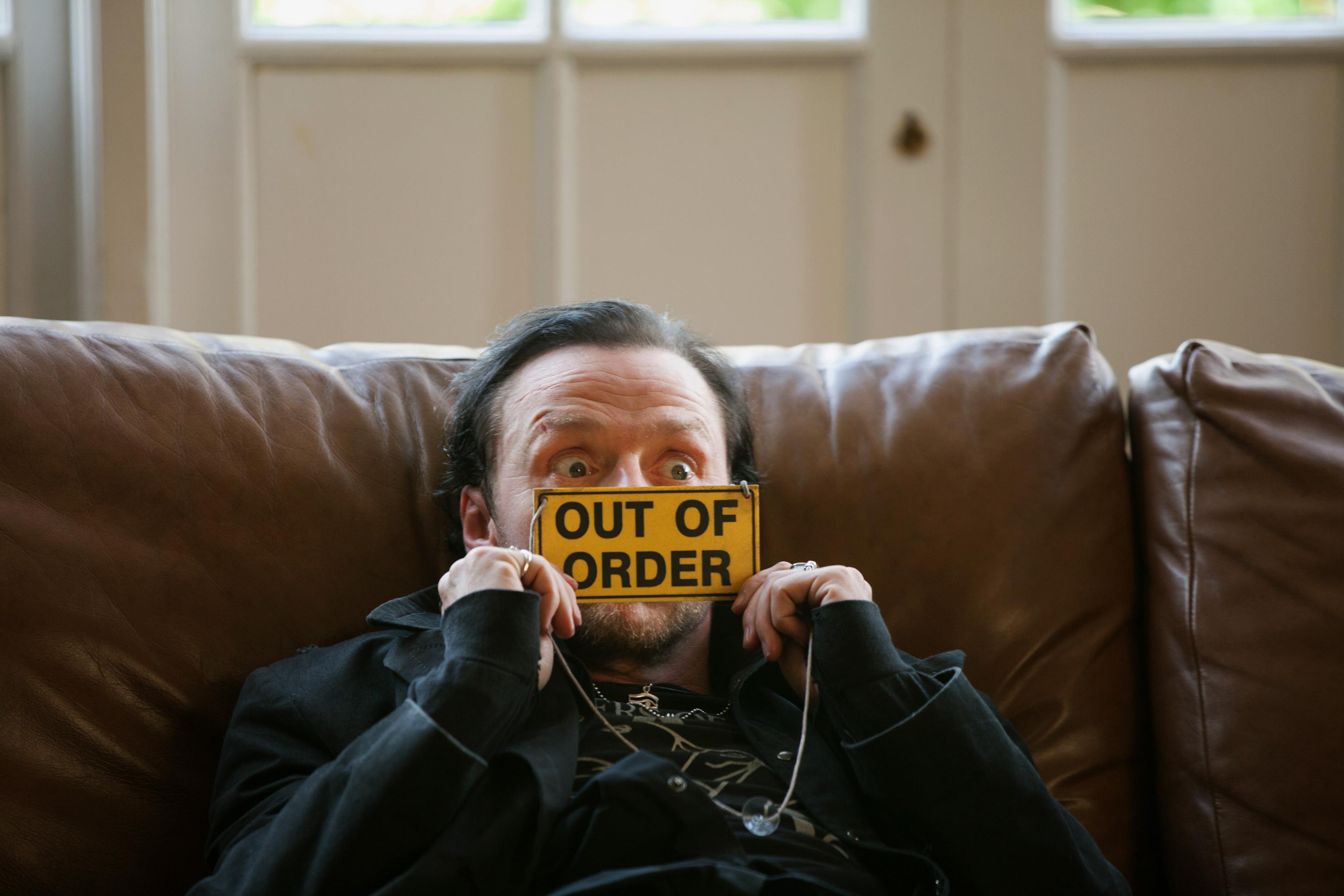
The World’s End The final film in Edgar Wright’s “Blood and Ice Cream Trilogy” finally arrives, and the TL:DR version is that while it’s not as good as 2004’s sublime zombie rom-com Shaun of the Dead, it’s better than 2007’s cops vs. serial killers yarn Hot Fuzz. That said, it’s still funnier than anything else in theaters lately. Simon Pegg returns to star and co-write (with Wright); this time, the script’s sinister bugaboo is an invasion of body snatchers — though (as usual) the conflict is really about the perils of refusing to actually become an adult, the even-greater perils of becoming a boring adult, and the importance of male friendships. Pegg plays rumpled fuck-up Gary, determined to reunite with the best friends he’s long since alienated for one more crack at their hometown’s “alcoholic mile,” a pub crawl that ends at the titular beer joint. The easy chemistry between Pegg and the rest of the cast (Nick Frost, Paddy Considine, Martin Freeman, and Eddie Marsan) elevates what’s essentially a predictable “one crazy night” tale, with a killer soundtrack of 1990s tunes, slang you’ll adopt for your own posse (“Let’s Boo-Boo!”), and enough hilarious fight scenes to challenge This is the End to a bro-down of apocalyptic proportions. (1:49) Metreon, 1000 Van Ness. (Eddy) *

 

Endorsements 2013

125

We’re heading into a lackluster election on Nov. 5. The four incumbents on the ballot have no serious challengers and voter turnout could hit an all-time low. That’s all the more reason to read up on the issues, show up at the polls, and exert an outsized influence on important questions concerning development standards and the fate of the city’s waterfront, the cost of prescription drugs, and the long-term fiscal health of the city.


PROP. A — RETIREE HEALTH CARE TRUST FUND

YES

Note: This article has been corrected from an earlier version, which incorrectly stated that Prop A increases employee contributions to health benefits.

Throughout the United States, the long-term employee pension and health care obligations of government agencies have been used as wedge issues for anti-government activists to attack public employee unions, even in San Francisco. The fiscal concerns are real, but they’re often exaggerated or manipulated for political reasons.

That’s one reason why the consensus-based approach to the issue that San Francisco has undertaken in recent years has been so important, and why we endorse Prop. A, which safeguards the city’s Retiree Health Care Trust Fund and helps solve this vexing problem.

Following up on the consensus pension reform measure Prop. B, which increased how much new city employees paid for lifetime health benefits, this year’s Prop. A puts the fund into a lock-box to ensure it is there to fund the city’s long-term retiree health care obligations, which are projected at $4.4 billion over the next 30 years.

“The core of it says you can’t touch the assets until it’s fully funded,” Sup. Mark Farrell, who has taken a lead role on addressing the issue, told us. “The notion of playing political football with employee health care will be gone.”

The measure has the support of the entire Board of Supervisors and the San Francisco Labor Council. Progressive Sup. David Campos strongly supports the measure and he told us, “I think it makes sense and is something that goes beyond political divides.”

There are provisions that would allow the city to tap the fund in emergencies, but only after it is fully funded or if the mayor, controller, the Trust Board, and two-thirds of the Board of Supervisors signs off, a very high bar. So vote yes and let’s put this distracting issue behind us.


PROP. B — 8 WASHINGTON SPECIAL USE DISTRICT

NO, NO, NO!

Well-meaning people can arrive at different conclusions on the 8 Washington project, the waterfront luxury condo development that was approved by the Board of Supervisors last year and challenged with a referendum that became Prop. C. But Prop. B is simply the developer writing his own rules and exempting them from normal city review.

We oppose the 8 Washington project, as we explain in our next endorsement, but we can understand how even some progressive-minded people might think the developers’ $11 million affordable housing and $4.8 million transit impact payments to the city are worth letting this project slide through.

But Prop. B is a different story, and it’s something that those who believe in honesty, accountability, and good planning should oppose on principle, even if they support the underlying project. Contrary to the well-funded deceptions its backers are circulating, claiming this measure is about parks, Prop. B is nothing more than a developer and his attorneys preventing meaningful review and enforcement by the city of their vague and deceptive promises.

It’s hard to know where to begin to refute the wall of mendacity its backers have erected to fool voters into supporting this measure, but we can start with their claim that it will “open the way for new public parks, increased access to the Embarcadero Waterfront, hundreds of construction jobs, new sustainable residential housing and funding for new affordable housing.”

There’s nothing the public will get from Prop. B that it won’t get from Prop. C or the already approved 8 Washington project. Nothing. Same parks, same jobs, same housing, same funding formulas. But the developer would get an unprecedented free pass, with the measure barring discretionary review by the Planning Department — which involves planners using their professional judgment to decide if the developer is really delivering what he’s promising — forcing them to rubber-stamp the myriad details still being developed rather than acting as advocates for the general public.

“This measure would also create a new ‘administrative clearance’ process that would limit the Planning Director’s time and discretion to review a proposed plan for the Site,” is how the official ballot summary describes that provision to voters.

Proponents of the measure also claim “it empowers voters with the decision on how to best utilize our waterfront,” which is another deception. Will you be able to tweak details of the project to make it better, as the Board of Supervisors was able to do, making a long list of changes to the deal’s terms? No. You’re simply being given the opportunity to approve a 34-page initiative, written by crafty attorneys for a developer who stands to make millions of dollars in profits, the fine details of which most people will never read nor fully understand.

Ballot box budgeting is bad, but ballot box regulation of complex development deals is even worse. And if it works here, we can all expect to see more ballot measures by developers who want to write their own “special use district” rules to tie the hands of planning professionals.

When we ask proponents of this measure why they needed Prop. B, they claimed that Prop. C limited them to just talking about the project’s building height increases, a ridiculous claim for a well-funded campaign now filling mailers and broadcast ads with all kinds of misleading propaganda.

With more than $1 million and counting being funneled into this measure by the developer and his allies, this measure amounts to an outrageous, shameless lie being told to voters, which Mayors Ed Lee and Gavin Newsom have shamefully chosen to align themselves with over the city they were elected to serve.

As we said, people can differ on how they see certain development deals. But we should all agree that it’s recipe for disaster when developers can write every last detail of their own deals and limit the ability of professional planners to act in the public interest. Don’t just vote no, vote hell no, or NO, No, no!


PROPOSITION C — 8 WASHINGTON REFERENDUM

NO

San Francisco’s northeastern waterfront is a special place, particularly since the old Embarcadero Freeway was removed, opening up views and public access to the Ferry Building and other recently renovated buildings, piers, and walkways along the Embarcadero.

The postcard-perfect stretch is a major draw for visiting tourists, and the waterfront is protected by state law as a public trust and overseen by multiple government agencies, all of whom have prevented development of residential or hotel high-rises along the Embarcadero.

Then along came developer Simon Snellgrove, who took advantage of the Port of San Francisco’s desperate financial situation, offered to buy its Seawall Lot 351 and adjacent property from the Bay Club at 8 Washington St., and won approval to build 134 luxury condos up to 12 stories high, exceeding the city’s height limit at the site by 62 percent.

So opponents challenged the project with a referendum, a rarely used but important tool for standing up to deep-pocketed developers who can exert an outsized influence on politicians. San Franciscans now have the chance to demand a project more in scale with its surroundings.

The waterfront is supposed to be for everyone, not just those who can afford the most expensive condominiums in the city, costing an average of $5 million each. The high-end project also violates city standards by creating a parking space for every unit and an additional 200 spots for the Port, on a property with the best public transit access and options in the city.

This would set a terrible precedent, encouraging other developers of properties on or near the waterfront to also seek taller high-rises and parking for more cars, changes that defy decades of good planning work done for the sensitive, high-stakes waterfront.

The developers would have you believe this is a battle between rival groups of rich people (noting that many opponents come from the million-dollar condos adjacent to the site), or that it’s a choice between parks and the surface parking lot and ugly green fence that now surrounds the Bay Club (the owner of which, who will profit from this project, has resisted petitions to open up the site).

But there’s a reason why the 8 Washington project has stirred more emotion and widespread opposition that any development project in recent years, which former City Attorney Louise Renne summed up when she told us, “I personally feel rich people shouldn’t monopolize the waterfront.”

A poll commissioned by project opponents recently found that 63 percent of respondents think the city is building too much luxury housing, which it certainly is. But it’s even more outrageous when that luxury housing uses valuable public land along our precious waterfront, and it can’t even play by the rules in doing so.

Vote no and send the 8 Washington project back to the drawing board.


PROP. D — PRESCRIPTION DRUG PURCHASING

YES

San Francisco is looking to rectify a problem consumers face every day in their local pharmacy: How can we save money on our prescription drugs?

Prop. D doesn’t solve that problem outright, but it mandates our politicians start the conversation on reducing the $23 million a year the city spends on pharmaceuticals, and to urge state and federal governments to negotiate for better drug prices as well.

San Francisco spends $3.5 million annually on HIV treatment alone, so it makes sense that the AIDS Healthcare Foundation is the main proponent of Prop. D, and funder of the Committee on Fair Drug Pricing. Being diagnosed as HIV positive can be life changing, not only for the health effects, but for the $2,000-5,000 monthly drug cost.

Drug prices have gotten so out-of-control that many consumers take the less than legal route of buying their drugs from Canada, because our neighbors up north put limits on what pharmaceutical companies can charge, resulting in prices at least half those of the United States.

The high price of pharmaceuticals affects our most vulnerable, the elderly and the infirm. Proponents of Prop. D are hopeful that a push from San Francisco could be the beginning of a social justice movement in cities to hold pharmaceutical companies to task, a place where the federal government has abundantly failed.

Even though Obamacare would aid some consumers, notably paying 100 percent of prescription drug purchases for some Medicare patients, the cost to government is still astronomically high. Turning that around could start here in San Francisco. Vote yes on D.


ASSESSOR-RECORDER

CARMEN CHU

With residential and commercial property in San Francisco assessed at around $177 billion, property taxes bring in enough revenue to make up roughly 40 percent of the city’s General Fund. That money can be allocated for anything from after-school programs and homeless services to maintaining vital civic infrastructure.

Former District 4 Sup. Carmen Chu was appointed by Mayor Ed Lee to serve as Assessor-Recorder when her predecessor, Phil Ting, was elected to the California Assembly. Six months later, she’s running an office responsible for property valuation and the recording of official documents like property deeds and marriage licenses (about 55 percent of marriage licenses since the Supreme Court decision on Prop. 8 have been issued to same-sex couples).

San Francisco property values rose nearly 5 percent in the past year, reflecting a $7.8 billion increase. Meanwhile, appeals have tripled from taxpayers disputing their assessments, challenging Chu’s staff and her resolve. As a district supervisor, Chu was a staunch fiscal conservative whose votes aligned with downtown and the mayor, so our endorsement isn’t without some serious reservations.

That said, she struck a few notes that resonated with the Guardian during our endorsement interview. She wants to create a system to automatically notify homeowners when banks begin the foreclosure process, to warn them and connect them with helpful resources before it’s too late. Why hasn’t this happened before?

She’s also interested in improving system to capture lost revenue in cases where property transfers are never officially recorded, continuing work that Ting began. We support the idea of giving this office the tools it needs to go out there and haul in the millions of potentially lost revenue that property owners may owe the city, and Chu has our support for that effort.


CITY ATTORNEY

DENNIS HERRERA

Dennis Herrera doesn’t claim to be a progressive, describing himself as a good liberal Democrat, but he’s been doing some of the most progressive deeds in City Hall these days: Challenging landlords, bad employers, rogue restaurants, PG&E, the healthcare industry, opponents of City College of San Francisco, and those who fought to keep same-sex marriage illegal.

The legal realm can be more decisive than the political, and it’s especially effective when they work together. Herrera has recently used his office to compel restaurants to meet their health care obligations to employees, enforcing an earlier legislative gain. And his long court battle to defend marriage equality in California validated an act by the executive branch.

But Herrera has also shown a willingness and skill to blaze new ground and carry on important regulation of corporate players that the political world seemed powerless to touch, from his near-constant legal battles with PG&E over various issues to defending tenants from illegal harassment and evictions to his recent lawsuit challenging the Accreditation Commission of Community and Junior Colleges over its threats to CCSF.

We have issues with some of the tactics his office used in its aggressive and unsuccessful effort to remove Sheriff Ross Mirkarimi from office. But we understand that is was his obligation to act on behalf of Mayor Ed Lee, and we admire Herrera’s professionalism, which he also exhibited by opposing the Central Subway as a mayoral candidate yet defending it as city attorney.

“How do you use the power of the law to make a difference in people’s lives every single day?” was the question that Herrera posed to us during his endorsement interview, one that he says is always on his mind.

We at the Guardian have been happy to watch how he’s answered that question for nearly 11 years, and we offer him our strong endorsement.


TREASURER/TAX COLLECTOR

JOSE CISNEROS

It’s hard not to like Treasurer/Tax Collector Jose Cisneros. He’s charming, smart, compassionate, and has run this important office well for nine years, just the person that we need there to implement the complicated, voter-approved transition to a new form of business tax, a truly gargantuan undertaking.

Even our recent conflicts with Cisneros — stemming from frustrations that he won’t assure the public that he’s doing something about hotel tax scofflaw Airbnb (see “Into thin air,” Aug. 6) — are dwarfed by our understanding of taxpayer privacy laws and admiration that Cisneros ruled against Airbnb and its ilk in the first place, defying political pressure to drop the rare tax interpretation.

So Cisneros has the Guardian’s enthusiastic endorsement. He also has our sympathies for having to create a new system for taxing local businesses based on their gross receipts rather than their payroll costs, more than doubling the number of affected businesses, placing them into one of eight different categories, and applying complex formulas assessing how much of their revenues comes from in the city.

“This is going to be the biggest change to taxes in a generation,” Cisneros told us of the system that he will start to implement next year, calling the new regime “a million times more complicated than the payroll tax.”

Yet Cisneros has still found time to delve into the controversial realm of short-term apartment sublets. Although he’s barred from saying precisely what he’s doing to make Airbnb pay the $1.8 million in Transient Occupancy Taxes that we have shown the company is dodging, he told us, “We are here to enforce the law and collect the taxes.”

And Cisneros has continued to expand his department’s financial empowerment programs such as Bank on San Francisco, which help low-income city residents establish bank accounts and avoid being gouged by the high interest rates of check cashing outlets. That and similar programs are now spreading to other cities, and we’re encouraged to see Cisneros enthusiastically exporting San Francisco values, which will be helped by his recent election as president of the League of California Cities.


SUPERVISOR, DIST. 4

KATY TANG

With just six months on the job after being appointed by Mayor Ed Lee, Sup. Katy Tang faces only token opposition in this race. She’s got a single opponent, accountant Ivan Seredni, who’s lived in San Francisco for three years and decided to run for office because his wife told him to “stop complaining and do something,” according to his ballot statement.

Tang worked in City Hall as a legislative aide to her predecessor, Carmen Chu, for six years. She told us she works well with Sups. Mark Farrell and Scott Wiener, who help make up the board’s conservative flank. In a predominantly Chinese district, where voters tend to be more conservative, Tang is a consistently moderate vote who grew up in the district and speaks Mandarin.

Representing the Sunset District, Tang, who is not yet 30 years old, faces some new challenges. Illegal “in-law” units are sprouting up in basements and backyards throughout the area. This presents the thorny dilemma of whether to crack down on unpermitted construction — thus hindering a source of housing stock that is at least within reach for lower-income residents — look the other way, or “legalize” the units in an effort to mitigate potential fire hazards or health risks. Tang told us one of the greatest concerns named by Sunset residents is the increasing cost of living in San Francisco; she’s even open to accepting a little more housing density in her district to deal with the issue.

Needless to say, the Guardian hasn’t exactly seen eye-to-eye with the board’s fiscally conservative supervisors, including Tang and her predecessor, Chu. We’re granting Tang an endorsement nevertheless, because she strikes us as dedicated to serving the Sunset over the long haul, and in touch with the concerns of young people who are finding it increasingly difficult to gain a foothold in San Francisco.

Put up your dukes: 40 years of SF’s Grand Ducal Council

0

The global gay charitable network (which started in SF) known as the Imperial Council has been in the news of late: Empress I, Jose Sarria, the Widow Norton, passed away earlier this month and was given a grand funeral at Grace Cathedral that was covered throughout the world.

Now the other major Court Council, the Grand Ducal Council of San Francisco, founded to have a bit more fun, is also getting some attention. On Sat/28 the SF Grand Ducal Council SF Grand Ducal Council will crown the newly elected monarchs for the 40th Reign. at an elaborate and festive coronation event, open to all. (Elections were held last Saturday, and we won’t know who won until the ceremony.)

The theme, chosen by outgoing monarchs Paloma Volare and Moses “Moe Jo” Garcia is “Dancing With the Czars at the Ice Castle.” I exchanged emails with Moe Jo about the theme, the Council, and the Grand Ducal mission:

SFBG Tell us a little about the Grand Ducal Council and what you do.
MOE JO The San Francisco Council of Grand Dukes and Grand Duchesses, Inc., also known as the San Francisco Ducal Council, was founded in 1972 to provide diverse areas of the San Francisco community with charitable and personal support, and has positively affected hundreds of people and groups that may be overlooked by other fundraising organizations. The Ducal Council receives no support from government resources, and depends on fundraisers such as this event (the coronation), and donations from individuals and business.

SFBG Do you feel like you and Paloma accomplished what you set out to do during your reign?
MOE JO Absolutely, when we first started this reign back in September 2012 we both wanted to reach out even more to parts of the community that previously we barely had touched. We had a plan to reach out to the Latino and Transgender communities, plus we wanted to educate the LGBT community even more on what the Grand Ducal Council of San Francisco is all about. I truly believe that we did accomplish those goals. Furthermore, we reached out to new people and as a result we have four or more new members that hold permanent titles (Royal Daddy’s Boy, Royal Baby Boy and Girl, Mr. Royal Bunny, etc.).

SFBG Can you tell me a bit about the Coronation? The theme intrigues me! What can we expect? Is there anything super-special for the 40th year?
MOE JO “Coronation XL (40): Dancing With the Czars at the Ice Castle” will be a celebration of what the Grand Ducal Council of San Francisco is all about… Diversity! We will be celebrating all cultures and different countries that we represent. The audience will be taken to a place where Royalty, fashion, and glamor will be showcased. There will be several surprises during coronation, and the only way anyone will experience them is if they attend this wondrous event!


SFBG
Obviously the death of Jose, Empress I affected the Council. Will there be a special tribute?
MOE JO Most definitely, we will have a memorial at the entrance of the ballroom with an oversized picture and beautiful red roses surrounding it. We have also included a special page in our coronation book where we have placed individuals who we have lost in the past year to let them know that although they are gone, they will never be forgotten.

SFBG Will you miss wearing your crown and cape? Or do you get to keep them?
MOE JO Having a crown for the year was very nice. Although the crown was never the main point of the reign, it sure felt good to wear it from time to time. Unfortunately, we do not get to keep the crown: on the night of coronation, I will be crowning the new Grand Duke so the crown I wore this year I will be placing it on his head. I can honestly say I will not miss the crown, I did everything in my power to raise a lot of money and we raised over $53,000 for local charities. I worked hard and did all I could, and I am very proud of this great achievement… A crown? I am sure I will purchase one down the road… 🙂

Grand Ducal Coronation XL (40): Dancing With the Czars at the Ice Castle

Sat/28, 5pm, $40

Hotel Whitcomb

1231 Market, SF.

www.sfducal.org

Special thanks to volunteer of the year Colby Michaels for helping with this interview.

Geeking out on Kathleen Hanna’s the Julie Ruin at Slim’s

0

After explaining that the next song would be about how there are thousands of feminists, all around the world, and driving home the obvious point — there is not one sole leader of the feminist movement — Kathleen Hanna giggled, hearing yet another shout-out from the audience. She jokingly replied, “OK, OK, but I am the number one feminist.”

It was this typical audience-artist interplay that brought the excitement of Hanna’s return to the stage, via new/old project the Julie Ruin at Slim’s last night.

Wearing a darling baby smock and her standard high brunette bun, Hanna bounced out on stage like she’d never left, chugging from a jug of water and robo-dancing during rare vocal lulls. In reality, the Bikini Kill and Le Tigre frontperson has been out of the bar-light for nearly a decade, struggling with neurological Lyme disease. Early in the Julie Ruin’s set, Hanna noted, “It’s been a long time since I’ve been on this stage, and there was a time when I thought I’d never return.”

The poppy set, performed by the five-piece joined by percussionist Fredo Ortiz, switched off, one for one, between lo-fi songs off 1997 self-titled solo record Julie Ruin (thickened up with additional instrumentaion), and new bolder, more fully realized the Julie Ruin collaboration, Run Fast (Dischord). The sold-out crowd, which was packed tightly into Slim’s, cheered for each song, hollering loving refrains toward Hanna at every possible chance. It felt like long-attached Bikini Kill and Le Tigre fans came out of the woodwork, cute haircuts in tact, but also a newer, younger batch of the Julie Ruin fans were sprinkled throughout.(Don’t worry, I picked up a tote bag at the merch table.)

The avid fans cheered hard for older songs off the ’97 solo record like “Radical or Pro-Parental” and doubly for newer danceable riot grrrl rock songs such as first Run Fast single “Oh C’mon” and “Girls Like Us.” There was a “Le Tigre cover” (Hanna’s words) of “Eau d’Bedroom Dancing” off Le Tigre’s self-titled 1999 debut. At one point, Hanna began singing the emotional cover of “Stay Monkey” from the first Julie Ruin album — someone in the audience requested it — but then admitted she’d forgotten the words, perhaps a symptom of the Lyme disease? (During our interview a few weeks back, she said she would often use the wrong words for things during the recording process for this new record, and the band would go with it in a stream-of-consciousness burst.)

Together, the relatively newly assembled band members of the Julie Ruin worked liked family, smiling, dancing, winking — which makes sense, given that Kathi Wilcox, Kenny Mellman, Carmine Covelli, and Sara Landeau are all musician-pals from Hanna’s past. Wilcox, of course, also being from Bikini Kill, among other bands.

Mellman took the lead on the one track in which he wrote the lyrics, “South Coast Plaza,” explaining that the song was about friends in SF (where he lived from 1987-1997) who made a pact to kill one another if one got sick, and it actually happened. He said he placed the friendship in Orange County though (hence, South Coast Plaza, a weirdly fancy mall at which I have spent many wasted teenage afternoons).

But Hanna was up front for most songs, as well she should be. The whole night felt like a bittersweet reunion, and perhaps it was, though Hanna stressed that we should look toward the future. Because for girls like us, there’s always a place in our hearts for a female-empowerment pop anthem.

The Rim Fire and climate change

The monstrous blaze that swept through Yosemite and burned 237,841 acres was a record breaker. According to the latest statistics from Cal Fire, the Rim Fire was the fourth highest in the history of California, with a $77 million price tag. Thanks to the efforts of more than 4,000 firefighters and support personnel, the blaze was 80 percent contained as of the latest update on Sept. 4.

While the exact cause remains a mystery for now, it’s worth pointing out that the Rim Fire could not have reached such epic proportions if it hadn’t been for the dry conditions in place when the smoldering began. And as climate change continues to alter weather patterns across the Western United States, projected declines in precipitation and higher average temperatures will lead to more of the same conditions that give rise to hot destructive infernos.

Daniel Berlant, an information officer with Cal Fire, noted in a recent telephone interview that summers have been longer and hotter over the past decade, a trend that has coincided with a spike in wildfires.

According to Cal Fire statistics, there were 5,135 fires in California from January 1 through August 31 of this year. Over the same time span last year, there were 3,731 fires recorded. The five-year average is even lower, at 3,638.

Another troubling statistic: Seven out of the 10 largest wildfires in California history occurred in the last decade alone.

“What we’ve been seeing here in this past decade is longer summers – seven to eight days longer than normal,” Berlant explained. “There’s a correlation between a longer summer and more wildfires,” he continued, and when rainfall finally does arrive, it comes in at record lows, Berlant explained. Meanwhile, “The high temperatures evaporate more of the rain.”

Brush and vegetation that take in moisture from rainfall have a better chance at withstanding a fiery blaze, Berlant noted, but when things stay bone dry, the plants act as kindling that causes the blaze to burn hotter.

So as climate change continues to transform the natural landscapes of the West, costly raging wildfires might be what Californians have to look forward to. Find that depressing? Here’s a captivating YouTube time-lapse video to distract you.

Still secret

22

news@sfbg.com
A high-profile local civil rights ordinance passed last year to shine light on the San Francisco Police Department’s joint activities with the FBI has been undermined by the SFPD’s refusal to disclose its surveillance activities. This comes at a time when the public is learning more than ever about the federal government’s intrusion into the privacy of law-abiding US citizens.

In May 2012, the Board of Supervisors unanimously passed the Safe San Francisco Civil Rights Ordinance, which Mayor Ed Lee signed in a photo-op ceremony with Police Chief Greg Suhr and the activists who supported it. They claimed the board’s passage of the ordinance ushered in a new era of transparency over the SFPD’s previously secretive work with the FBI-led Joint Terrorism Task Force.

“The ordinance basically requires three things,” Nasrina Bargzie, a civil rights attorney at the Asian Law Caucus who worked on the measure, told the Bay Guardian. “The first part requires that the Police Department work with the JTTF has to follow the California constitutional rights of privacy, so they’re not following the lax standards of the [US] Department of Justice. The second part is that they can no longer enter into any secret agreements with the FBI; it has to go before the Police Commission in a public setting. The final part of the ordinance exists to make sure the rules are being followed, so there is a requirement for a yearly report.”

At the time of its passage, activists told the Guardian that the ordinance was only as strong as the SFPD’s willingness to disclose its activities (see “Mayor Lee signs watered-down limits on SFPD spying,” 5/9/12). But the SFPD’s refusal to disclose even minimal, basic information calls into question the ordinance’s value.

After the release of multiple reports earlier this year that activists called inadequate, Suhr is now maintaining silence regarding the JTTF, while claiming the department is in full compliance with the ordinance. According to Bargzie, Suhr told her the FBI is barring him from disclosing the requested information.

Following multiple efforts by the Guardian to get a comment out of SFPD about the ordinance and whether the department was indeed taking a subservient role to the FBI, SFPD Sgt. Dennis Toomer told us, “We’re not talking about that at all.”

LACK OF RESPONSE

Activists have sparred with Chief Suhr over implementation of the ordinance and its required annual report since at least the beginning of 2013.

Deputy Chief John Loftus presented the first report to the Police Commission on Jan. 23, which claimed the SFPD was in “full compliance” with the ordinance without providing any details. Activists and the public quickly demanded a real response.

“The commission presented this short oral report, which was a little short of two minutes long,” Bargzie told us. “There was no data that we were not already aware of. It was just basic statements claiming that they were complying with the ordinance.”

Suhr apologized for the omissions while stating his department was still in compliance with the ordinance’s guidelines, pledging to be more forthcoming. At this time, SFPD Sgt. Michael Andraychak told the Guardian: “The Chief’s Office is in the process of scheduling meetings with Nasrina Bargzie [of the Asian Law Caucus] to develop a report with more detail so those concerned and the public can be as informed as possible. Chief Suhr is committed to remain in compliance with the ordinance.”

The Coalition for Safe San Francisco, an activist group consisting of Muslim Legal Fund of America, Asian Law Caucus, and dozens of other groups, met with Suhr to discuss setting up a template for the reports.

Suhr then released a second report, which contained more relevant information, stating that SFPD officers did not act as informants in 2012 and three full-time SFPD officers were assigned to the JTTF.

But the report still omitted key oversight information, such as whether any prosecutions resulted from JTTF and SFPD investigations, which would allow the Muslim Legal Fund of America and other groups to determine who the SFPD is arresting and why.

Last year, Suhr told a San Francisco Examiner reporter that his officers followed up on 2,000 tips regarding counterterrorism activities. However, this information curiously did not make it into the official report.

“We contacted the chief to let him know we were not okay with this. We had another meeting with him and he said he’d think about it and get back to us and now he is claiming he cannot honor a basic component of the ordinance,” Bargzie told us. “He asserts in writing this is because the FBI will not let him share the basic information.”

WEAKENED LEGISLATION

The weak efforts behind the implementation of the SSFCRO date back to Mayor Lee’s veto of a stronger ordinance in April 2012, which would have codified privacy protections and given the Police Commission more power to stop FBI-SFPD activities that did not comply with Department General Order (DGO) 8.10, the 1990 policy aimed at protecting First Amendment activities. After Lee’s veto, the Board of Supervisors passed a weaker version. Both were sponsored by Sup. Jane Kim.

John Crew, a former police practices expert with the Northern California American Civil Liberties Union, raised concerns to the Guardian about the weakened legislation. “It is a step in the right direction, there’s no doubt it’s progress,” Crew told us at the time. “But whether it’s real progress depends on the implementation. Ultimately, it will come down to political will at the Police Commission to enforce privacy protections.”

Much of the ordinance’s failure stems from the apparent lack of real intent to disclose what the activists sought. Critics painted the SSFCRO signing ceremony as a hollow symbolic act, a way for Mayor Lee and Chief Suhr to publicly promote civil rights and progressive ideals with an ordinance they purposefully weakened.

“My sense is that [the SFPD] is not taking this seriously,” Bargzie told us. “I think they probably believe that they are providing as much information as the FBI will let them and Chief Suhr thinks it’s fine that the FBI can tell him to share what they tell him to.”

The lack of transparency regarding the JTTF’s work with the SFPD requires the public to trust the federal government to safeguard civil liberties. But in the wake of whistleblower Edward Snowden’s leak exposing the expansive surveillance system by the National Security Agency and the SFPD’s notorious history of illegal surveillance and racial profiling, the public has little reason to trust the authorities.

HISTORY OF SPYING
The passage of the SSFCRO is the latest effort to counter a long history of racial profiling, spying on radical political groups, and other constitutional violations, episodes that have been followed by progressive reforms in San Francisco.
Prior to the passage of DGO 8.10 in 1990, the SFPD notoriously participated in the surveillance of non-criminal, pacifist political organizations. During the 1984 Democratic National Convention, the SFPD carried out surveillance on law-abiding organizations and, throughout the 1980s, it created files on civil, labor, and special interest groups in the Bay Area, revelations that led to the adoption of DGO 8.10.
But even after that, disclosures surfaced showing that the SFPD was blatantly violating its own rules. They included then-Police Chief Tony Ribera admitting that files on non-criminal political activity were not destroyed (as required by the ’90s reforms), the selling of confidential intelligence material to foreign governments and private entities, and the actions of SFPD Intelligence Officer Tom Gerad, who informed on local political groups for the FBI.
In the subsequent years following the Gerad scandal, San Francisco sought to strengthen DGO 8.10, requiring more transparency and oversight. But this progress was undercut in 2007 when the SFPD secretly signed a secret JTTF Memorandum of Understanding (MOU) undermining DGO 8.10.
San Francisco’s Human Rights Commission held hearings in which the community voiced concerns over illegal police and federal surveillance. In response, the SFPD said they were unable to discuss arrangements with the JTTF without the permission of the FBI.
In 2011, the previously secret MOU was unearthed by the ACLU (see “Spies in blue,” 4/26/11), prompting Suhr to issue Bureau Order #2011-07, which reinforced that SFPD personnel were under the jurisdiction of local and state privacy protections and did not spy on law-abiding groups. SFPD Public Information Officer Albie Esparza said the order reversed the language of the 2007 memo.
Part of Suhr’s amendment to SFPD policy at the time included the necessity of a predicate offense in all SFPD investigations. Thus, the SFPD could not investigate or spy on those who were not suspected of violating the California Penal Code or federal law.
Activists wanted those protections enshrined in city law, which resulted in last’s vetoed ordinance and passage of the watered down Safe San Francisco Civil Rights Ordinance in 2012, which activists now say they feel duped by.
“We have been extremely disappointed at the lack of information that has been included in the reports,” Summer K. Hararah, Regional Director for the Greater San Francisco Area Muslim Legal Fund of America told us. “If the SFPD is going to violate rights of Arab-Americans, the police chief has a responsibility to stand up to the FBI.”

POST 9/11 WORLD
Lax federal guidelines for counterterrorism have been building since the Bush Administration began implementing emergency measures after 9/11 terrorist attacks in 2001. In San Francisco’s case, the FBI has subjected local law enforcement to these rules.
Since 9/11, both the ACLU of Northern California and the Human Rights Commission have publicized cases of racial profiling and surveillance of pacifist, non-criminal Muslim and Middle-Eastern groups in San Francisco. A 2007 FBI memorandum illustrated a prominent instance of this profiling in which FBI agents attended Ramadan Iftar dinners in San Francisco purportedly as part of the FBI’s mosque outreach program. Under this guise, the agents collected data on certain attendants, including names, the content of conversations, and other information covered by the First Amendment. According to the FBI Domestic Investigations and Operations Guide, the JTTF is permitted to conduct surveillance of this nature, by identifying “locations of concentrated ethnic communities in the Field Office’s domain, if these locations will reasonably aid in the analysis of the potential threats and vulnerabilities, and, overall assist domain awareness for the purpose of performing intelligence analysis.” These policies directly contradict SSFCO, DGO 8.10, and the California Constitution’s privacy protections. In Portland, Ore., the local government successfully fought this issue by bifurcating local law enforcement from the JTTF after the public and the ACLU raised concerns over similar constitutional violations and racial profiling. This Portland model is now a precedent for activist groups nationwide, seeking to end the lack of oversight permeating their local police departments. “Portland has been a great model,” Hararah told us. “When the FBI began to interview Muslim men in mass after 9/11, Portland was one of the few that said ‘absolutely not.'” But in San Francisco, Lee (whose office also didn’t respond to our request for comment) and Suhr’s symbolic promotion of civil rights has diminished into a case of them basically bullshitting the public. “Civil rights is not a symbolic issue,” Hararah told us. “The mayor backed this legislation and we want to see that the commitment is put forth with global insurance. The first step is having info about what the JTTF is doing to be sure it abides by human rights protections and is appropriate.”

Hormone replacement therapy and video games: Anna Anthropy talks Dy5phoria

2

Video games go to alien worlds all the time, but rarely have they explored a transgender person’s identity until Dys4ia. The 2012 Adobe Flash game traced designer Anna Anthropy’s hormone replacement therapy journey, guiding the player through trying on women’s clothing for the first time, dealing with the agony of shaving, and correcting all the people who call you “sir” instead of “ma’am.”

Anthropy was kind enough to let the Guardian interview her in her Oakland home, dodge her energetic cats, and record an audio interview where she walks us through her new game, Dy5phoria, the new chapter and pseudo-sequel to Dys4ia. You can also read a selection from the audio interview below. 

SF Bay Guardian How do you pronounce the new title? 

Anna Anthropy I’ve been calling it Dys-five-ia out loud, but it’s spelled like Dys4ia with a 5 instead of an S. 

SFBG You’re hitting steam now with added content, can you tell us what’s new?

AA Dys4ia is made up of four chapters which represent different times in my life when I was starting to go on hormone replacement therapy. Dy5phoria which will come with Dys4ia is a fifth chapter that follows what’s happened in my life since the place Dys4ia ended.

SFBG Not quite a sequel but downloadable content?

AA Like a fifth chapter, if you will. 

Listen to the full 26 minute interview in the Sound Cloud file above.

SFBG Can you talk about what seperated it from mainstream games?

AA Oh god I’m so sick of talking about Dys4ia, but I will! It’s essentially a collection of short fast scenes, kind of like Wario Ware, that represents the different facets of what happened to me in this part of my life. The frustrations of dealing with gatekeepers and being misgendered. It’s also about the moments of beauty and hope that reassure me that things maybe are getting closer to how I want them to be in my life.

SFBG What were those moments of hope?

AA One of the things that happens to me in Dys4ia is my tits get bigger, and that was nice.

One of the things in Dy5phoria that has changed is the ways I’ve externalized my femininity more and felt prettier and better about being a girl. It was important that mixed in the bullshit I put in the reasons about why this is important to me.

SFBG Can you talk about how Dy5phoria is different than what came before it?

AA In Dys4ia the avatars in the scenes are really inconsistent. Depending on the context I might be a blobby stick figure, or a shield, a razor, a little munchy thing depending on the experience. My body was going through flux at the time, it made sense for the game to represent that by not having a consistent avatar. In Dy5phoria all the levels have a consistent avatar that look like me and who I’ve become comfortable being.

There’s a different motif in the game, there’s some consistency now, some sort of permanence.

SFBG There’s an 8-bit retro style right? It’s like an NES game.

AA Kind of. I don’t want it to be Nintendo retro because I think thats twee and bad, I think that’s overused.

SFBG Omni retro?

AA Sure.

SFBG Tell me where you are in development and what you’re doing today.

AA My process for this game is that every day I sit down and do a single scene. The one I’m working on today is about painting my nails, and the ways I’ve found to externalize my femininity more. The level is just that: a hand with a nail polish brush. Its just that.You paint my nails, and then its over.

Nails painted in screenshot of Dy5phoria

SFBG Well thats the power of videogames right? You carry out the narrative act, as opposed to simply watching it. You mentioned the TSA level earlier. What happened to you and what’s the problem making that read well?

AA There’s a level in Dy5phoria when I was groped by the TSA at the airport. The way that big horrible scanning thing works is there’s a button with a female and a male button. I’ve had it go either way. This particular time I got scanned as male. On the screen parts of me came up as suspicious areas, and there on the screen there were squares around my tits.

My tits came up as an anomaly, and this guy (security) was obliged to grope my breasts. I’m attempting to translate this to a scene in Dy5phoria. I don’t think it’s reading as well as it could because it’s a bit too complicated. 

SFBG Do you think your game designer chops have improved since you did Dys4ia?

AA It’s more like my interests have changed. I’m a lot less interested in making digital games than I used to be. I’ve sort of been envisioning what a fifth chapter of Dys4ia would look like, but when the opportunity came I’m actually more interested in board games than sitting down and coding a game. This is the last game I want to code myself, but I kind of have to because Dys4ia is all mine, all my project. This is kind of a closing of the book for me, in a lot of ways. 

SFBG So you’ll never do digital games again?

AA It’s not that I won’t do digital games again, I’m actually announcing a new game at Indiecade. I just don’t want to do the programming myself. I’ve always learned the coding I needed to do, a mish mash. That’s why I work on Twine games because I don’t have to do any coding. Dy5phoria will be the last project I’ll code myself but it won’t be my last digital game.

SFBG You mentioned you’re sick of talking about Dys4ia, but when I was at GaymerX I met this gal who recently transitioned her gender and was working at your workshop there. She has so completely totally inspired by you. You should have seen her face.

AA I did in fact see her face, she came up to my autograph session, and told me the game was meaningful. Those comments make me feel really good. I’m sick of answering questions about Dys4ia but I’m not sick of hearing it means something to people. That’s why I do anything, I want to make things that will actually connect with people. She told me and other people have told me Dys4ia gave her the confidence to make the decision to start going on hormones.

Hormones have been positioned as the central experience of being trans, which I don’t think is good, because there are trans people who don’t go on hormones. But for those people that are thinking of going on hormones is I hoped Dys4ia would give some sense about what that would be like an the challenges and really really nice things of being on hormones would be like. If it has done that for people I feel accomplished in that regard. 

SFBG And it seems sometimes you’re at the center to this kind of very indie, very LGBT conscious, very different game movement that seems to be happening a lot here in the Bay Area and other places as well. Can you talk about what’s bringing the rise of that about?

AA I think what’s important to outsiders of the mainstream game industry that the industry is mostly pitching to straight cis males. I think what’s making it possible for people to participate are tools like Twine, a hypertext tool where only recently people started realizing they could use it to make games.

Because the tool is so simple if you’re capable of writing you’re capable of making a game with Twine. You can make almost journal style, personal games. There are a lot more autobiographical games coming out with this tool.

The industry is spending millions to make games, they don’t have the liberty to make something risky and personal and weird. If something takes a few hours to make or a few days or a week, you can make what you want.

These avenues of gaming that are barred to queer and marginalized people, people who are barred from making games in this sexist, cisnormative tech culture have found an avenue in making games in Twine and other free game tools. There are avenues for making games for people who the industry don’t think are its mainstream. 

D5phoria is due out on Steam in the fall. You can play the first in the series, Dys4ia, here

Fall, out

1

arts@sfbg.com

GAMER Gamers who’ve grown weary of blasting aliens and other generic supervillains need not worry: the Bay Area’s indie video game designers share your pain. There’s an indie game revolution being birthed right here in our backyard, led by a cadre of designers who really couldn’t give two flying flamethrowers about making another first-person shooter. The best part? The games are all (mostly) free.


DY5PHORIA

By Anna Anthropy, music by Liz Ryerson

Available via Steam Fall/Winter 2013, price TBD


Video games go to alien worlds all the time, but rarely have they explored a transgender person’s identity until Dys4ia. The 2012 Adobe Flash game traced designer Anna Anthropy’s hormone replacement therapy journey, guiding the player through trying on women’s clothing for the first time, dealing with the agony of shaving, and correcting all the people who call you “sir” instead of “ma’am.”

It only takes a moment before you want to slap each pixilated person who blurts out “sir” — and that moment personifies gaming’s unique power to make a player experience someone else’s life. Anthropy (www.auntiepixelante.com) runs with that concept, yanking and pulling the player (willingly) along the transition into her new gender identity.

Anthropy’s new release, Dy5phoria (note the subtle title change), is not quite a sequel to the original, she says. It’s a rerelease of the original game with a brand new chapter, one where she tells the story of finally learning to be comfortable with her new self. The new scenes have more detailed animations than the first release, and though Dy5phoria shares the original’s nebulously retro pixel style, the character you control on screen is a fully formed person. This was a conscious choice, Anthropy explains.

“In (the original) the avatar you controlled changed depending on the context. You might be a blobby thing, a shield, or a little munchie mouth thing,” she says. “My body and identity were going through a lot of flux at the time, and it made sense for the game to represent that by not having a consistent avatar.”

Clearly, this is a new frontier for games; a girl who recently started her journey transitioning told the Bay Guardian that Dys4ia gave her the confidence to make the decision to begin hormone therapy and come out to her parents. Though Anthropy notes that hormones aren’t necessarily the central experience of being trans, she was touched Dys4ia could help people.

D5sphoria will be available via download service Steam “when it’s done,” Anthropy said, which will likely be at the end of fall or slightly later. The original Dys4ia flash game is available at www.newgrounds.com, a website stuffed full of indie games. It’s free to play, and simple enough for even casual gamers to get through in less time than an episode of the Big Bang Theory.

Read our Q&A with Anna Anthropy and hear our audio interview with her here


CLIMBING 208 FEET UP THE RUIN WALL

By Porpentine

Available at aliendovecote.com; free to play in any web browser


“Leave the tomb behind, and with all your stolen riches, return to the land of the living.” Once you click “return,” you’ve started your climb. Where do you go next?

That’s a question most Twine games ask, as the text-based games mostly resemble the choose-your-own-adventure books of a 1980s childhood. Climbing is one of the better, briefer ones, and though the adventure ultimately is linear, the branching paths will make you chuckle and make you think.

Climb. Climb. Climb. And when you’re done, check out twinehub.weebly.com for even more text-based Twine games. You can also learn how to make your own.


HUGPUNX

By Merritt Kopas, music by SCRAPS/Laura Hill

Available at www.mkopas.net; free to play in Flash-enabled web browsers


Have you ever sat with someone playing Halo, and heard the TV calling out “triple kill, KILLING SPREE!” and other lovely hyper-masculine achievements? Well, now’s your chance to go on a hugging spree.

HUGPUNX is described as a “fluoro-pink queer urban hugging simulator” — and indeed, players basically run around doing just that. Hugging. People. Lots of them. The music is fun and light, and you’ll be shimmying in your seat while you play. The game is simple to control — use the arrow keys to move, and Z to hug. Plus, you can hug giant cats. The world needs more games where you can hug giant cats.

CRYPTWORLDS: YOUR DARKEST DESIRES COME TRUE By Cicada Marionette Available at www.cicadamarionette.com; free in PC, MAC, and LINUX versions Missed Burning Man? This game may be a nerdy substitute to the insanity of the desert. Played a bit like The Legend of Zelda, the game (created by a Texas-based developer) begins with the player talking to the folks in surrounding towns and crypts, performing fetch quests and collecting inventory items. Unlike Zelda, though, a crypt filled with human sacrifices (who all sort of look like Indiana Jones), a horse-god, and a “programming hell” await you. Hundreds of nerds in plaid pants stand by their desks around a flame, or a volcano, I can’t quite tell. But don’t worry — once you escape, there’s a pulsating monster that resembles somebody’s liver just above you. Bring your favorite Burning Man party favors and play this game in the dark for hours. * For a podcast interview with Dy5phoria‘s Anna Anthropy, visit www.sfbg.com.

Slipping away

10

By Amy Yannello

Note: This article has been corrected from an earlier version.

As she had done countless times before, Gloria Davidson sat and waited for her son to be brought into the courtroom. His hands and feet were shackled, and his blue uniform branded him as different — someone to be judged apart from the rest of the crowd in this room.

His crime? Aaron Davidson has schizophrenia.

On that day earlier this year, which Gloria recounted and shared with the Guardian in a recent interview, he faced charges for violating one of five restraining orders against him — but he didn’t understand what he’d done to deserve them, his mother said.

“The neurons and synapses in his brain fire inappropriately and he sees and hears things that are not really there,” Gloria explained. “As a result, his responses to his perceived reality are often unwarranted or make no sense,” she continued, “or frighten the people around him.” Aaron could neither speak coherently nor acknowledge that his actions had led to restraining orders, she said.

In his case, the judge deemed Aaron “incompetent to stand trial” and sent him to Napa State Hospital for treatment. He remains there, where he’ll turn 36 later this month.

Davidson is one of three Bay Area mothers with adult sons at NSH to push for full, statewide implementation of Laura’s Law.

Known formally as “assisted outpatient treatment” (AOT), the law is named for Laura Wilcox, a 19-year-old college student who lost her life when Scott Harlan Thorpe, a man with a persistent and severe mental illness who had stopped taking his medication, shot and killed her and a coworker at a Nevada City mental health clinic.

While Thorpe, then 41, was in too deep of a state of psychosis to benefit from AOT at the time of the shootings, his family, psychiatrist, and the Wilcoxes all believed that if the legislation had been in effect even six months earlier, when Thorpe’s family first noticed he’d stopped taking medication, the tragedy could have been averted.


DEBATE ON INVOLUNTARY TREATMENT

Through AOT, an individual’s family, doctor, or trusted third party may advocate to a judge that a patient is at risk of decompensation — serious psychological deterioration making it impossible to function independently — if left untreated. In very narrow circumstances, a judge may order a person to receive AOT as a condition of being allowed to continue living independently.

Currently, only Nevada, Los Angeles and Yolo counties have embraced the law, which allows courts in very limited circumstances to compel into treatment those residents who are too ill to know they are ill.

This “lack of insight” — a neurological condition known as “anosognosia” — is said to affect upward of 40 percent of people with serious mental illnesses.

Gloria Davidson and Teresa Pasquini, another mother of a mentally ill NSH patient, are now pushing for Laura’s Law implementation in Contra Costa County. They’re joined by a third mother, Candy DeWitt, who founded a project called Voices of Mothers Project to bring together parents of people suffering from anosognosia. Alameda County’s Behavioral Health Care Services has issued a report recommending to its Board of Supervisors that it approve a one-year AOT pilot project. The issue is expected to be taken up at the BOS’ Oct. 28 meeting, where it would need a majority vote to be approved, DeWitt said. 

Laura’s Law isn’t without its detractors. “Where does it end?” asked Dan Brzovic, an attorney based in the Oakland office of Disability Rights California. “Pretty soon, we’ll have people saying that anyone with a mental illness cannot think for themselves.”

“The moral issue is that people who are competent to make choices for themselves must be given that right,” he continued. “That’s if they have the capacity. If they don’t, then there are involuntary treatment options already on the books, like conservatorship.”

But the debate surrounding Laura’s Law and mental health service delivery goes deeper, since underlying questions remain about whether dedicated funding has translated to sufficient levels of care. Each of the three mothers told the Guardian that their sons — all deemed to be suffering from “serious mental illness” — never received adequate treatment as they moved through California’s fragmented and broken public mental health system, despite the advent of Proposition 63, the 2004 ballot initiative that created California’s Mental Health Services Act.

A staggering report released in mid-August by State Auditor Elaine Howle brings this claim into focus. According to the audit, the California Department of Mental Health and the Oversight and Accountability Commission have exercised such “minimal oversight” since MHSA went into effect that the state has “little assurance” that $7.4 billion has been used “effectively and appropriately.” That amount represents the total funding generated by the MHSA — which imposes a 1 percent tax on personal income in excess of $1 million — from 2006 to 2012.

In response to these revelations, Rose King, a co-author of Prop. 63 who previously served as a consultant for then-Attorney General Bill Lockyer, stated, “No county has been required to demonstrate its accountability for any spending or program choices. The public — and state officials — have no idea whether counties have improved county mental health systems, whether spending complies with the law, and whether private contractors have delivered promised services.”


“WASTE, FRAUD, MISMANAGEMENT”

The MHSA ramped up services for some 600,000 adults and children in the public mental health system, bringing in $1 billion per year in dedicated funding for the treatment of serious mental illness.

But beyond patients tracked via Medi-Cal, no one tracks the true number of uninsured patients served. There isn’t a data system capturing all the clients or services tied to MHSA funds, making outcomes impossible to track with accuracy.

Some funding has gone to client advocacy groups who actively oppose Laura’s Law. Disability Rights California and the California Network of Mental Health Clients, both opponents of AOT, received $3 million and $1.5 million in MHSA grants respectively. These groups believe voluntary services should be the only programs to receive funding through MHSA and have actively threatened to sue counties that have tried to implement Laura’s Law.

Some of the very people who campaigned hardest for MHSA have since become watchdogs monitoring its implementation. They include King, who lost both a husband and son to suicide due to lack of treatment for their severe mental illnesses, and Pasquini — whose only son is languishing in NSH with a diagnosis of schizophrenia and a felony charge for an alleged assault on a fellow patient while on the incorrect medication.

These embattled mothers say they’ve observed a system awash in “waste, fraud and mismanagement.” They also charge that the system results in disproportionate services for what King terms the “worried well” — people merely experiencing life’s ups and downs — in many cases to the neglect of those struggling with what’s classified as “serious mental illness.”


MISSPENDING OF FUNDS DESIGNATED FOR PREVENTION?

Under the MHSA, only a specified population may receive treatment using these funds. Patients must have been diagnosed with “serious mental illness,” amounting to psychological problems that are severe enough to prevent an individual from functioning independently without assistance should they go untreated.

But critics like King and DJ Jaffe of the Mental Illness Policy Org. (MIPO), a national think tank that has been critical of California’s management of MHSA monies, contend that the 20 percent of MHSA funds designated for Prevention and Early Intervention (PEI) programs are instead being funneled into programs with little connection to mental illness treatment.

The MHSA specifically limits PEI dollars to programs that “prevent mental illnesses from becoming severe or disabling” or that “limit the duration of untreated mental illness.”

Yet King contends that these funds have been used instead to underwrite social service programs ranging from domestic violence prevention and parenting classes, to social skills for disadvantaged youth — all good causes that are nevertheless “not legitimate recipients” of money intended for mental illness treatment, King says.


CONFLICT-OF-INTEREST ALLEGATIONS

Jaffe’s organization has seized on the PEI expenditures as a violation of the MHSA, turning a skeptical eye on the 16-member Mental Health Services Oversight and Accountability Commission.

In 2011, according to a MIPO analysis, more than $23 million in PEI grants went to advocacy organizations and service providers with direct financial ties to both OAC commissioners and committee members. MIPO characterized it as “insider dealing” and a violation of California conflict-of-interest laws.

OAC committee member Rusty Selix, a lobbyist and Prop. 63 co-author, dismissed the MIPO report, saying, “I don’t see any conflict.”

Selix added that unpaid OAC board members recuse themselves from voting whenever it’s deemed to be necessary. And he defended a system where stakeholders, such as consumers and family members, also serve on committees, saying, “You can’t expect to include them in the process without crisscrossing some stakeholders who also receive MHSA grants.”

Jaffe took a different tack. “The problem, besides the blatant conflict-of-interest,” countered Jaffe, “is how these PEI monies are being spent. And they’re not being spent to help the seriously mentally ill,” he continued. “Yet year after year, they’re getting approved. Millions and millions of taxpayer dollars that were supposed to go to treat the sickest among us are being spent on social programs.”


NOT ENOUGH BEDS

Some believe the broad issue of funds not making it to the intended target population might be playing out within the microcosm of San Francisco. In 2010-11, the most recent available data, San Francisco County received $23 million in MHSA funding, 75 percent of which was earmarked for direct services.

But that money hasn’t gone toward ensuring that there are enough beds for treating mentally ill patients, according to Geoff Wilson, president of the Physicians’ Organizing Committee. Wilson’s organization reported that as of August, San Francisco General Hospital had dropped to 19 emergency psychiatric beds, down from 88 two years ago.

“It’s unconscionable. We’ve got the highest 5150 rate in the state,” Wilson told The Guardian, referring to 72-hour psychiatric holds imposed by law enforcement. We’re not saying ‘lock everyone up,’ we’re just saying that for people who need it, the beds need to be there, and there’s barely any left in the city.”

Wilson explained the cuts by saying that when Medi-Cal stopped paying for the care — essentially “raising the bar” for what it took to keep someone in a psychiatric inpatient bed — the county slashed the number of beds because it “simply wasn’t profitable” to keep them open.

Asked to respond to this claim, SFDPH spokesperson Eileen Shields told the Guardian that only Barbara Garcia, the agency director, was in a position to respond. But Garcia was out of town and unavailable for comment.

According to the POC’s Dr. Cameron Quanbeck, it costs $250 per day to house inmates in jail, compared with $1,700 per day for hospital care. In March, Sheriff Ross Mirkarimi testified before the Mental Health Board that the jail system had become the “default” place for people with mental illness, identifying more than 70,000 contacts with Jail Psychiatric Services in 2012 alone.


LAW ENFORCEMENT AND LAURA’S LAW

According to the U.S. Department of Justice, 16 percent of inmates have a severe mental illness, making jails and prisons the largest de facto psychiatric treatment facilities. The National Sheriff’s Association has come out in support of AOT laws in all 50 states.

Pasquini says her son could have benefited from AOT, and she believes that “AOT should be a mandated MHSA program in every county to prevent tragedy and intervene with the criminalization of mental illness.”

Since his initial diagnosis of schizo-affective disorder at 16, Pasquini’s 31-year-old son has had more than 70 emergency contacts with law enforcement and/or ambulance personnel, most of them resulting in 5150 holds.

He is now a patient at NSH, where “he wants to die every day, and I don’t blame him,” continued Pasquini. “It’s a reality for him. His illness has progressed, because every time you have a ‘break,’ you get a little worse. He’s the perfect candidate for Laura’s Law.”


“Refeeding” is prison authorities’ new word for force-feeding

The practice of force-feeding inmates has a branding problem.

The issue first came to light after a U.S. District Judge last week granted the California Department of Rehabilitation and Corrections, or CDRC, the ability to feed inmates who are hunger striking even if they signed “Do Not Resuscitate” waivers, commonly known as DNR’s. The order called any DNR granted during the beginning of the hunger strike 50 days ago as invalid.

As the negotiations wind on, it’s looking more inevitable that the hunger strike holdouts will soon be near death. But when the prisons start force-feeding inmates, a whole new problem will arise: image.

The CDRC have given all the concessions they’re willing to give, they said, and if an inmate dies while fasting they’d become a martyr. At some point, the prisons may have to feed the inmates via liquid in an IV, or even via tubes.

The tubes are inserted through the nose and directly into their stomachs, and conjure images of alleged terrorists at Guantanamo Bay. 

In a video made by musician Mos Def, aka Yasiin Bey, Bey allowed himself to be force fed to bring attention to Guantanamo’s detainees. Bey is strapped to a chair, and a clear plastic tube is inserted through his nose as he screams, writhes, and begs for it to stop.

“The tube went in and the first part of it is not that bad, but then you get this burning,” he said in the video. “It starts to be like really unbearable, like something is reaching into the back of my brain…. I really couldn’t take it.”

For Mos Def, the feeding was brief. For inmates, the process can take two hours.

To address that issue the California Department of Corrections and Rehabilitation (CDCR) has taken to calling force feeding “refeeding,” which is term that already has a definition: feeding someone who has recently ended a fast. It has medical significance because a whole host of ailments can occur when someone who is ending a fast is fed the wrong foods, or fed too quickly. They can even die. 

But now the CDCR has used the word “refeeding” to mean feeding inmates who have already signed DNRs and are fed to prevent death. The word was in every major news report on the court’s recent decision, from Democracy Now to Al Jazeera.

“Refeeding” is the new force-feeding. 

Joyce Hayhoe, legislative director of California Correctional Health Care Services, wanted to make it clear that no one has been force-fed yet, and that refeeding was not force feeding.

“What I would like to say is we’re not force-feeding anybody,” she told the Guardian. “When doctors do not have a valid DNR, in the absence of any other information, when we have an inmate we cannot communicate with, we’re going to save their lives.”

But the sticking point in her statement is the word “valid,” advocates say. What is a valid DNR? The health care providers allege that some inmates began the hunger strike because of intimidation by senior gang members in the jails. Hayhoe said one inmate hid food so his fellow hunger strikers would not know, and that “implied something” to her.

There were 12,000 inmates who started the hunger strike on July 8, according to counts by the prisons themselves. Of those, it’s entirely conceivable that a few were coerced, said Dr. Ronald Ahnen, a politics professor at Saint Mary’s College focusing on prison reform.

“Is it possible some prisoners were coerced,” due to the sheer number of inmates involved, he said in an interview. But, “if you read the call from the hunger strike forward, and you heard from the reps in Pelican Bay (Prison), they have always stated emphatically and clearly that the hunger strike is voluntary. They have said no one should continue with the hunger strike longer than they were willing or able to do.”

Now the number of inmates in the hunger strike is down to 92, according to the CDRC. Of those, 41 have been on a hunger strike continuously since it began on July 8.

Hayhoe said there are only a handful of strikers with DNRs left, but would not reveal specific numbers. 

Ahnen, who is affiliated with the hunger strikers as a reform advocate but did not speak as their spokesperson, said that though those numbers have dwindled, they’re still significant.

“What amazes me is, 41 people who have been without food for 50 days. I think the major media is missing the importance of that,” he said. “When you think of the Irish hunger strike that we all think of from 1980, that’s 23 individuals who all died. We now have 42, risking their lives to have humane conditions in their confinement. Its very, very historic.”

Lost in the debate over food are the actual reasons for striking. The inmates have five core issues which you can see at their website here, but mostly they revolve around quality of life in Segregated Housing Units, commonly referred to as the SHU. The prisoners say it is solitary confinement, and they can be thrown in there easily by being told they have affiliations with gangs.

“I’ve had prisoners tell me their investigators say they can use any evidence and implicate anyone (as a gang member),” Ahnen said.

And the inmates have little recourse once they’ve been labeled a gang member and thrown in the SHU. Toshio Meronek covered this for Bay Guardian last month (“Hungry for Reform,” 7/3/13), saying it would take nearly 20 years to conduct reviews of the over 10,000 inmates presently held in solitary confinement in California.

In a statement circulated shortly after the CDCR’s on Thursday, State Senator Mark Leno wrote, “I have concerns that this review process is moving too slowly and I would like to see it accelerated.”

The hunger strike is one of the inmate’s last tools to reform that system. Now, in a cell that strips away most all human freedoms, “refeeding” may take away an inmate’s choice to die.

The federal judge’s decision to strip away that right reverberated across the world. The United Nations Special Rapporteur on torture, Juan E. Méndez, issued a statement saying “it is not acceptable to use threats of forced feeding or other types of physical or psychological coercion against individuals who have opted for the extreme recourse of a hunger strike.”

Hayhoe, from the prison’s health services, said there is some wiggle room in having your request to not be resuscitated honored.

“If a person has signed a DNR during the hunger strike, the best thing they can do is start having discussions with his primary care physician and expressing their need,” she said. The inmates have been sustained on Gatorade and vitamins, she said, and are not yet at the point of needing resuscitation.

Ahnen also clarified that the violent method of force-feeding may not be used. Another way to do it, he said, is to feed patients through an IV should they lapse into unconsciousness.

“This is a more likely scenario,” he said, but it is still force-feeding. Hayhoe said she would contact a doctor to see when each method would be used, but did not have the information immediately available.

These inmates are close to dehydration, close to organ failure, and close to death for their principles, Ahnen said, and now their political stand won’t be honored. They’ll be force-fed, no matter what terminology is used to describe it.

“Make no mistake about it, if a prisoner is being fed against their will, this is force feeding,” he said.

And with the flip of a word, the inmates have lost their right to die.

To learn see future actions on the hunger strike, visit http://prisonerhungerstrikesolidarity.wordpress.com/take-action-2/ .

The robot apocalypse, Mr. Darcy, outlaws, and revolutionaries: new movies!

4

Let’s Boo-Boo! Edgar Wright’s latest bromance-in-genre-clothing, The World’s End, opens today, and it’s a riot. Elsewhere, there’s a rom-com about Jane Austen obsessives, Hollywood’s latest supernatural-teen fantasy, and an indie horror flick critic Dennis Harvey calls “a very bloody good ride.” (Check out those reviews below).

Longer features this week include my interview with director David Lowery about his neo-Western Ain’t Them Bodies Saints, and Harvey’s take on artist-couple doc Cutie and the Boxer. http://www.youtube.com/watch?v=KbHr8YyjSlg

Austenland Jane (Keri Russell) is a Jane Austen fanatic who finds real-life modern romance highly lacking as compared to the fictive Regency Era variety — though having a life-sized cutout of Colin Firth as Mr. Darcy in her bedroom surely didn’t help recent relationships. After yet another breakup, she decides to live her fantasy by flying to England to vacation at the titular theme park-fantasy role play establishment, where guests and staff meticulously act out Austen-like scenarios of well-dressed upper class leisure and chaste courtship. Upon arriving, however, Jane discovers she’s very much a second-class citizen here, not having been able to afford the “platinum premium” package purchased by fellow guests. Thus cast by imperious proprietor Mrs. Wattlesbrook (Jane Seymour) as the unmarriageable “poor relation,” she gets more flirtatious vibes from the actor cast as sexy stable boy (Bret McKenzie) than the one playing a quasi-Darcy (JJ Feild), at least initially. Adapting Shannon Hale’s novel, Jerusha Hess (making her directorial bow after several collaborations with husband Jared Hess, of 2004’s Napoleon Dynamite) has delightfully kitsch set and costume designs and a generally sweet-natured tone somewhat let down by the very broad, uninspired humor. Even wonderful Jennifer Coolidge can’t much elevate the routine writing as a cheerfully vulgar Yank visitor. The rich potential to cleverly satirize all things Austen is missed. Still, the actors are charming and the progress lively enough to make Austenland harmless if flyweight fun. (1:37) (Dennis Harvey)

Long Distance Revolutionary: A Journey with Mumia Abu-Jamal Or, almost everything you ever wanted to know about the guy who inspired all those “Free Mumia” rallies, though Abu-Jamal’s status as a cause célèbre has become somewhat less urgent since his death sentence — for killing a Philadelphia police officer in 1981 — was commuted to life without parole in 2012. Stephen Vittoria’s doc assembles an array of heavy hitters (Alice Walker, Giancarlo Esposito, Cornel West, Angela Davis, Emory Douglas) to discuss Abu-Jamal’s life, from his childhood in Philly’s housing projects, to his teenage political awakening with the Black Panthers, to his career as a popular radio journalist — aided equally by his passion for reporting and his mellifluous voice. Now, of course, he’s best-known for the influential, eloquent books he’s penned since his 1982 incarceration, and for the worldwide activists who’re either convinced of his innocence or believe he didn’t receive a fair trial (or both). All worthy of further investigation, but Long Distance Revolutionary is overlong, fawning, and relentlessly one-sided — ultimately, a tiresome combination. (2:00) Roxie. (Cheryl Eddy)

The Mortal Instruments: City of Bones Adapted from the first volume of Cassandra Clare’s bestselling YA urban fantasy series, The Mortal Instruments: City of Bones follows young Clary Fray (Lily Collins) through her mother’s disappearance, the traumatic discovery of her supernatural  heritage, and her induction into the violent demon-slaying world of Shadowhunters.  This franchise-launching venture is unlikely to win any new converts with its flimsy acting, stilted humor, and clichéd action. It will probably also disappoint diehard fans, since it plays fast and loose with the mythology and plot of the novel, with crucial details and logical progressions left by the wayside for no clear reason. It’s never particularly awful — except for a few plot twists that fall wincingly, hilariously flat — but it’s hard to care about the perfectly coiffed, emotionally clueless protagonists. Fantastic character actors Jared Harris, Lena Headey, and Jonathan Rhys Meyers are all dismally underused, though at least Harris gets to exercise a bit of his vaguely irksome British charm. (2:00) (Sam Stander)

The World’s End The final film in Edgar Wright’s “Blood and Ice Cream Trilogy” finally arrives, and the TL:DR version is that while it’s not as good as 2004’s sublime zombie rom-com Shaun of the Dead, it’s better than 2007’s cops vs. serial killers yarn Hot Fuzz. That said, it’s still funnier than anything else in theaters lately. Simon Pegg returns to star and co-write (with Wright); this time, the script’s sinister bugaboo is an invasion of body snatchers — though (as usual) the conflict is really about the perils of refusing to actually become an adult, the even-greater perils of becoming a boring adult, and the importance of male friendships. Pegg plays rumpled fuck-up Gary, determined to reunite with the best friends he’s long since alienated for one more crack at their hometown’s “alcoholic mile,” a pub crawl that ends at the titular beer joint. The easy chemistry between Pegg and the rest of the cast (Nick Frost, Paddy Considine, Martin Freeman, and Eddie Marsan) elevates what’s essentially a predictable “one crazy night” tale, with a killer soundtrack of 1990s tunes, slang you’ll adopt for your own posse (“Let’s Boo-Boo!”), and enough hilarious fight scenes to challenge This is the End to a bro-down of apocalyptic proportions. (1:49) (Cheryl Eddy)

You’re Next The hit of the 2011 Toronto Film Festival’s midnight section — and one that’s taken its sweet time getting to theaters — indie horror specialist (2010’s A Horrible Way to Die, 2007’s Pop Skull, 2012’s V/H/S) Adam Wingard’s feature isn’t really much more than a gussied-up slasher. But it’s got vigor, and violence, to spare. An already uncomfortable anniversary reunion for the wealthy Davison clan plus their children’s spouses gets a lot more so when dinner is interrupted by an arrow that sails through a window, right into someone’s flesh. Immediately a full on siege commences, with family members reacting with various degrees of panic, selfishness. and ingenuity, while an unknown number of animal-masked assailants prowl outside (and sometimes inside). Clearly fun for its all-star cast and crew of mumblecore-indie horror staples, yet preferring gallows’ humor to wink-wink camp, it’s a (very) bloody good ride. (1:36) (Dennis Harvey)

One thousand surveillance cams in SF and counting

If you walk through densely populated commercial corridors on a regular basis, chances are you’re being recorded. Based on information compiled by CommunityCam, a data visualization project plotting the location of security cameras, there are at least 1,100 surveillance devices installed throughout San Francisco – and possibly many more.

Billed as a “community service initiative” designed to make neighborhoods safer, the CommunityCam platform was developed by VideoSurveillance.com, a proprietor of IP-connected CCTV systems that has served customers ranging from California Pacific Medical Center to Harvard University to Lockheed Martin.

The web-based platform reveals the precise locations of visible security cameras throughout the city, incorporating a crowd-sourcing component that allows anyone to plot the location of a camera.

San Francisco neighborhoods with the highest concentration of surveillance cameras include the Financial District, the areas around North Beach and Chinatown, and the Marina, the data shows. The vast majority of the cameras are privately owned, but the map plots all visible security cameras regardless of whether they’re operated by commercial interests or public agencies.

VideoSurveillance.com president Josh Daniels, a Portland resident who previously lived in San Francisco, launched the effort, which he described as an effort to improve public safety.

“The CommunityCam network of cameras gives community residents a way to investigate when an incident occurs,” Daniels said in an interview with the Guardian. Noting that accidents such as cyclist collisions or physical assaults were common in San Francisco streets, he said, “it’s just impossible to investigate these kinds of incidents in San Francisco” without the presence of security cameras. He called the project “a way to let people know that video surveillance can be used in very positive ways.”

While Daniels is not formally partnering with police, he described law enforcement as  “very interested in the locations of the cameras” and said he’d met with law enforcement groups in San Francisco as well as neighborhood groups, landlords, and building managers. He added that across the board, police agencies are “very strapped from a financial resources standpoint,” so his project can serve as a tool for those agencies without additional cost.

And collaboration with law enforcement could expand further down the road, Daniels said. “In the future there’s potential to expand the program and expand the services to give law enforcement access to privately held cameras,” Daniels said, “but that’s a long way off.” Media representatives from SFPD had not responded to the Guardian’s request for comment by press time.

While the CommunityCam platform introduces a new level of transparency to private security systems installed throughout the city, it also raises a number of questions. While it’s billed as a public safety program designed to illustrate the useful attributes of CCTV, CommunityCam also serves to illustrate the growing surveillance infrastructure in public space, a phenomenon that necessarily raises questions about the erosion of privacy in a hyper-connected world.

The early-stage data-mapping project also presents questions about how this tool could ultimately be developed and utilized, particularly if it’s used toward developing a broader or more centralized surveillance infrastructure. If public safety officials or private security entities use the data to identify gaps where public space isn’t being monitored, it could be used to justify the installation of still more cameras.

Earlier this year, the Guardian spotlighted San Francisco’s pilot project testing out “smart” streetlights that would be wired into a centralized IP-connected system, with possible future uses as street surveillance. We’ve also kept an eye on the San Francisco Police Department’s efforts to collect surveillance footage from local bars.

Privacy and civil liberties advocates have flagged concerns about the proliferation of CCTV cameras in public spaces. Privacy advocates focused on CCTV are particularly active in the UK, where studies suggest the average Londoner is caught on camera 300 times per day on average, and new technologies such as cameras that incorporate license plate readers have been adopted in smaller cities.

Daniels said he’s very familiar with these concerns, but was dismissive of the idea that security cameras in public space presented any sort of encroachment on personal privacy. “My own opinion is that I don’t believe I have an expectation to privacy in a public setting,” he said.

While Daniels noted that CommunityCam is the first-ever attempt to plot security cameras in an interactive online format, it’s not actually true. Last summer, European privacy activists who wished to draw attention to the proliferation of CCTV cameras led a game called “camspotting” in Brussels, part of an international activism effort known as “1984 Action Day.” After going out and logging camera locations, they plotted them on an online map.

Sublime nonsense: extended interview with Wet the Hippo’s John Gilkey

5

Note: this is an extended version of an interview that appears in this week’s paper.
 
The sets are gone, and the costumes, and that giant blue-and-yellow tent. Master clown and performance maker John Gilkey has ended his fourth stint with Cirque du Soleil since 1996. But if the wiry, often wild-haired Gilkey and his Muppet-like mug are no strangers to the big time, they move just as ferociously through a bare stage in a small venue wearing not much more than, these days, a bushy beard.
 
It’s been three years since Gilkey last performed in San Francisco — flanked by comedians Alec Jones-Trujillo and Donny Divanian, the deadpan naïfs of his avant-comedy trio, We Are Nudes. Just as the very funny yet vaguely unnerving, off-center style of Nudes occupied some indeterminate territory between sketch comedy and Dadaist destruction, Gilkey’s latest venture — the Los Angeles–based eight-member improvisational ensemble known as Wet the Hippo — takes its audience beyond the usual endpoints of improv.


Born out of his Idiot Workshop classes in clown, Wet the Hippo is a big brand new baby of a beast, only four months old but charging forward with gusto — and an edgy, searching brilliance Gilkey is clearly thrilled with. He is frankly in love with his cast members, with whom Gilkey interacts as director, prodding them from onstage and off. Ahead of their first tentative tour (a three-stop zero-budget swing through Arcata, Placerville, and San Francisco), Gilkey picked up the phone from his LA roost to talk Hippo-thetically.
 
SF Bay Guardian Wet the Hippo is quite a change from Cirque du Soleil, more low-to-the-ground, very much autonomous.
 
John Gilkey Yeah, what we’re doing now — there’s eight of us, there’s no budget. Yeah. Low-to-the-ground is a good way to put it.
 
SFBG It’s a big contrast, but maybe there are similarities?
 
JG One way I describe the show: I’m taking everything I learned from Cirque about the creation process they have — although I should be clear about that: The creation process changed after Franco [Dragone] left. But when Franco was still there. And also when I was on Franco’s creative team for [his independent Las Vegas spectacular] Le Rêve — I’ve taken that process and I’ve applied that to this ten-dollar-a-ticket show with eight people. It’s an amazing contrast. And in some ways it’s quite similar. When I’m working with the performers, I work with them similarly to Franco in that he’s trying really to get to the nut of the person. His number one question is, “Who are you?” He’s trying to figure out what is it about this person that’s interesting. Their strengths, their weaknesses, their physicality, their voice, all this stuff — how can we magnify this person into an interesting stage presence?

I do that with my little cast here. It’s why I’ll do things like try to play with the juxtapositions — surreal qualities that Franco looks for, taking things that don’t belong together and squishing them together, layering the mise-en-scène, so you’ve got different things going on. Things that if you don’t hit it just right they conflict or distract. But if you get it just right, in the pocket, somehow they’ll come together into a holistic focus.
 
SFBG It’s an improvised show, but it’s clearly not the Harold — or other improv forms we’re familiar with.
 
JG It’s something new that we’re trying to do, so we’re learning about it, discovering it as we go forward, as we search. It’s an evolving process. But what I’m looking for as the director, both offstage and onstage — or the conductor/director when I’m onstage — is to try to get everybody buzzing, ringing, in tune, and then see how they harmonize. I think when we hit, it is music. It’s on a level you can’t quite put into words. This is when we succeed. We don’t always succeed. Part of the show is us searching for that, which is also fun. We play a lot with success and failure. When we’re failing we try to really make sure that we acknowledge it and somehow use it to our advantage.
 
SFBG How can failure work to your advantage?
 
JG One thing we’re discovering is that the highs aren’t as high if the lows aren’t as low. So that’s one reason to fail. And I tell people when we’re rehearsing or in the classes that I teach (all of this came out of these classes): This is the spirit of clown. You’re always looking to get yourself into danger. You want to be in danger. That’s where the drama really comes. Instead of pretending, we try to really get into danger.
 
SFBG It seems that really good clown toys with disaster, really, or death, ultimately. It’s horror and laughter at once in the face of mortal truth.
 
JG Yeah, absolutely death. There’s this beautiful book, I don’t know if you ever read it, The Death and Resurrection Show. It’s out of print. You sometimes can get it online for like 200 bucks. Rogan Taylor. Anyway, his thought is that all modern entertainment can be traced back to early shamanism, to healers, and that even many modern performers have gone through something like the shaman’s journey. In fact, it’s the same as the hero’s journey — you get taken away from the place you know, you get torn asunder, you go through this process of learning how to put yourself back together, then you go back to this place that you’re originally from, and you share what you’ve learned. You learn about Charlie Chaplin growing up poor and unhealthy and having to survive that kind of childhood, and then anything that he creates is infused with those lessons he learned.

So death is always a part of it. We talk about dying onstage, when we’re doing comedy. It’s super visceral. We want to touch people on as many levels as we can.
 
SFBG In the show, you’re onstage and off as the director-conductor, prodding people. Where has that come from? Your work with Franco? Your work in the Idiot Workshop?
 
JG Yes, exactly. It’s inspired by my work with Franco and how Franco worked with the performers in Cirque. In turn, I think Franco got a lot of inspiration from working with guys like Philippe Gaulier, who was originally a teacher at the [École Jacques Lecoq] in Paris, and eventually went off on his own. He and Lecoq and this guy Pierre Byland were all credited with developing the modern clown form. So to be fair, Franco was heavily influenced by that. We, influenced by Franco, were in class and in rehearsals really trying to push the performers into the place where they don’t want to be — again, getting back to this danger and death idea. It’s that that’s where they become vulnerable, and that’s when you really see who they are.

So in rehearsals we often talked about am I going to be part of it, or do we get rid of me before we go onstage? As things developed, we [found] that with me there we could get into more danger — because I could help us get out of it. And I could push the performers into danger by being onstage. Also it just added a weird, wild element that was hard to define for the public. It kept the questions going, which felt engaged. There’s no fourth wall, so we want the public always to be engaged. When they’re not, that’s when we’re done.

In fact, all of the performers, except for the musician, have a fair amount of improv experience. And they’ve all felt limited by improv, because despite what it sounds like, there’s a lot of structure in improv. In terms of rules, but there’s also an imposed structure in terms of how you play as an actor, what’s accepted and what’s not. If you go too far, you freak out your fellow performers. So you have to stay in a particular window of commitment. There are certain emotional colors that you can share, and certain colors that you can’t, because otherwise you just freak people out and they don’t know how to follow you.

But we push to real extremes. I think that’s one of the things that makes us kind of special, that there’s this trust among us. We can go super far and the other [actor] can match us, no matter how far we go. We challenge each other with that.
 
SFBG This reminds me of a solo piece of yours, the one where you’re running in slow motion to a swelling score and you get shot down, and you get back up and get shot down again, and it goes on and on and on. It’s hilarious, at first, and then it’s something else, something more. You pass through the laughter to a mixture of horror and beauty.
 
JG Right. And that’s our goal. We want to find those moments. And we realize that to do that we have to push super far. It’s like when sense becomes nonsense, but somehow makes more sense. Earlier, in the beginning of the conversation, we were saying it becomes musical when we’re hitting. That musical quality is the sublime, another way to say it. It’s resonating on so many levels that we’re not quite sure; we’re not accustomed to processing it emotionally.
 
SFBG This is an exploration that goes beyond the usual endpoints — something riskier, unknown?
 
JG In standard improv, in standard comedy, you’re going for the laugh, always. I believe there’s something that is greater than the laugh. Maybe the easiest way to say it is that it’s the sublime. And the way to get to the sublime is to ask an actor to play at their most genius level—either absolute smartest or absolute stupidest. It’s not a linear progression from stupid to genius; it’s circular. It’s where they meet. It’s where the genius in you meets the idiot in you that you become so beautiful that you hit sublime. It’s beyond laughter. It’s the moment where you get your mind blown.
 
WET THE HIPPO

Mon/26-Tue/27, 7:30pm, $10 (advance tickets here)

Venue TBD (“Look for the skinny violinist at 22nd St and Valencia at 7:30pm; you will be escorted to the venue from there”), SF

www.wetthehippo.com

Sublime nonsense

3

arts@sfbg.com

THEATER The sets are gone, and the costumes, and that giant blue-and-yellow tent. Master clown and performance maker John Gilkey has ended his fourth stint with Cirque du Soleil since 1996. But if the wiry, often wild-haired Gilkey is no stranger to the big time, he moves just as ferociously through a bare stage in a small venue wearing not much more than, these days, a bushy beard.

It’s been three years since Gilkey last performed in San Francisco — flanked by comedians Alec Jones-Trujillo and Donny Divanian, the deadpan naïfs of his avant-comedy trio, We Are Nudes. Just as the very funny yet vaguely unnerving, off-center style of Nudes occupied some indeterminate territory between sketch comedy and Dadaist destruction, Gilkey’s latest venture — the Los Angeles–based eight-member improvisational ensemble known as Wet the Hippo — takes its audience beyond the usual endpoints of improv.

Born out of his Idiot Workshop classes in clown, Wet the Hippo is a big, brand-new baby of a beast, only four months old but charging forward with gusto — and an edgy, searching brilliance Gilkey is clearly thrilled with. He is frankly in love with his cast members, with whom he interacts as director, prodding them from onstage and off. Ahead of their first tentative tour (a three-stop zero-budget swing through Arcata, Placerville, and SF), Gilkey picked up the phone from his LA roost to talk Hippo-thetically.

SF Bay Guardian Wet the Hippo is quite a change from Cirque du Soleil, more low-to-the-ground, very much autonomous.

John Gilkey Yeah, what we’re doing now — there’s eight of us, there’s no budget. Low-to-the-ground is a good way to put it.

SFBG It’s a big contrast, but maybe there are similarities?

JG One way I describe the show: I’m taking everything I learned from Cirque about the creation process they have. (Although I should be clear about that: the creation process changed after Franco [Dragone] left.) But I was on Franco’s creative team for [his independent Las Vegas spectacular] Le Rêve —I’ve taken that process and I’ve applied that to this 10-dollar-a-ticket show with eight people. It’s an amazing contrast. And in some ways it’s quite similar.

When I’m working with the performers, I work with them similarly to Franco in that he’s trying really to get to the nut of the person. His number one question is, “Who are you?” He’s trying to figure out what is it about this person that’s interesting. Their strengths, their weaknesses, their physicality, their voice, all this stuff — how can we magnify this person into an interesting stage presence? I do that with my little cast here.

SFBG It’s an improvised show, but it’s clearly not the Harold, or other improv forms we’re familiar with.

JG It’s something new that we’re trying to do, so we’re learning about it, discovering it as we go forward, as we search. It’s an evolving process. But what I’m looking for as the director, both offstage and onstage — or the conductor-director when I’m onstage — is to try to get everybody buzzing, ringing, in tune, and then see how they harmonize. I think when we hit, it is music. It’s on a level you can’t quite put into words. This is when we succeed. We don’t always succeed. Part of the show is us searching for that, which is also fun. We play a lot with success and failure. When we’re failing we try to really make sure that we acknowledge it and somehow use it to our advantage.

SFBG How can failure work to your advantage?

JG One thing we’re discovering is that the highs aren’t as high if the lows aren’t as low. So that’s one reason to fail. And I tell people when we’re rehearsing or in the classes that I teach (all of this came out of these classes): This is the spirit of clown. You’re always looking to get yourself into danger. You want to be in danger. That’s where the drama really comes. Instead of pretending, we try to really get into danger.

SFBG This is an exploration that goes beyond the usual endpoints — something riskier, unknown?

JG In standard improv, in standard comedy, you’re going for the laugh, always. I believe there’s something that is greater than the laugh. Maybe the easiest way to say it is that it’s the sublime. And the way to get to the sublime is to ask an actor to play at their most genius level — either absolute smartest or absolute stupidest. It’s not a linear progression from stupid to genius; it’s circular. It’s where they meet. It’s where the genius in you meets the idiot in you that you become so beautiful that you hit sublime. It’s beyond laughter. It’s the moment where you get your mind blown. *

WET THE HIPPO

Mon/26-Tue/27, 7:30pm, $10 (advance tickets here)

Venue TBD (“Look for the skinny violinist at 22nd St and Valencia at 7:30pm; you will be escorted to the venue from there”), SF

www.wetthehippo.com

For an extended version of this interview, visit www.sfbg.com/pixel_vision.


Theater Listings: August 14 – 20, 2013

0

Stage listings are compiled by Guardian staff. Performance times may change; call venues to confirm. Reviewers are Robert Avila, Rita Felciano, and Nicole Gluckstern. Submit items for the listings at listings@sfbg.com.

THEATER

OPENING

In Friendship: Stories By Zona Gale Z Below, 470 Florida, SF; www.zspace.org. $20-50. Previews Wed/14-Thu/15, 7pm; Fri/16, 8pm. Opens Sat/17, 8pm. Runs Wed-Thu, 7pm; Fri-Sat, 8pm; Sun, 3pm. Through Sept 8. Word for Word performs Zona Gale’s “comedy of American manners.”

BAY AREA

All’s Well That Ends Well Forest Meadows Amphitheater, 890 Bella, Dominican University of California, San Rafael; www.marinshakespeare.org. $20-37.50. Previews Fri/16, 8pm. Opens Aug 24, 8pm. Presented in repertory Fri-Sun through Sept 28; visit website for performance schedule. Marin Shakespeare Company continues its outdoor season with the Bard’s classic romance.

Lady Windermere’s Fan Bruns Amphitheater, 100 California Shakespeare Theater Way, Orinda; www.calshakes.org. $35-62. Previews Wed/14-Fri/16, 8pm. Opens Sat/17, 8pm. Runs Tue-Thu, 7:30pm; Fri-Sat, 8pm (also Sept 7, 2pm); Sun, 4pm. Through Sept 8. California Shakespeare Theater performs Oscar Wilde’s comedy.

Orlando Live Oak Theatre, 1301 Shattuck, Berk; www.theatrefirst.com. $10-30. Previews Thu/15, 8pm. Opens Fri/16, 8pm. Runs Thu-Sat, 8pm; Sun, 5pm. Through Sept 15. TheatreFIRST performs Sarah Ruhl’s gender-shifting comedy, which takes place over a span of 300 years.

ONGOING

Can You Dig It? Back Down East 14th — the 60s and Beyond Marsh San Francisco, 1062 Valencia, SF; www.themarsh.org. $15-50. Sat, 8:30pm; Sun, 7pm. Through Aug 25. Don Reed’s new show offers more stories from his colorful upbringing in East Oakland in the 1960s and ’70s. More hilarious and heartfelt depictions of his exceptional parents, independent siblings, and his mostly African American but ethnically mixed working-class community — punctuated with period pop, Motown, and funk classics, to which Reed shimmies and spins with effortless grace. And of course there’s more too of the expert physical comedy and charm that made long-running hits of Reed’s last two solo shows, East 14th and The Kipling Hotel (both launched, like this newest, at the Marsh). Can You Dig It? reaches, for the most part, into the “early” early years, Reed’s grammar-school days, before the events depicted in East 14th or Kipling Hotel came to pass. But in nearly two hours of material, not all of it of equal value or impact, there’s inevitably some overlap and indeed some recycling. Reed, who also directs the show, may start whittling it down as the run continues. But, as is, there are at least 20 unnecessary minutes diluting the overall impact of the piece, which is thin on plot already — much more a series of often very enjoyable vignettes and some painful but largely unexplored observations, wrapped up at the end in a sentimental moral that, while sincere, feels rushed and inadequate. (Avila)

Foodies! The Musical Shelton Theater, 533 Sutter, SF; www.foodiesthemusical.com. $30-34. Fri-Sat, 8pm. Open-ended. AWAT Productions presents Morris Bobrow’s musical comedy revue all about food.

God of Carnage Shelton Theater, 533 Sutter, SF; www.sheltontheater.com. $26-38. Thu-Sat, 8pm. Through Sept 7. Shelton Theater performs Yasmina Reza’s award-winning play about class and parenting.

Gold Rush! The Un-Scripted Barbary Coast Musical Un-Scripted Theater Company, 533 Sutter, Second Flr, SF; www.un-scripted.com. $10-20. Thu-Sat, 8pm. Through Aug 24. The Un-Scripted Theater Company performs an improvised musical about gold-rush era San Francisco.

Gorgeous Hussy: An Interview With Joan Crawford Exit Theatre, 156 Eddy, SF; www.wilywestproductions.com. $15-35. Thu/15-Fri/16, 8pm. Running in repertory with Lawfully Wedded (below), this world premiere by Morgan Ludlow imagines a young writer’s encounter with the legendary movie star.

Hedwig and the Angry Inch Boxcar Theatre, 505 Natoma, SF; www.boxcartheatre.org. $27-43. Thu-Sat, 8pm. Open-ended. John Cameron Mitchell’s cult musical comes to life with director Nick A. Olivero’s ever-rotating cast.

How to Make Your Bitterness Work for You Stage Werx Theatre, 446 Valencia, SF; www.stagewerx.org. $15-25. Mon-Tue, 8pm. Through Aug 27. Kent Underwood is a motivational speaker and self-help expert with some obvious baggage of his own in this solo play from former comedy writer and stand-up comedian Fred Raker (It Could Have Been a Wonderful Life). The premise, similar to that of Kurt Bodden’s Steve Seabrook: Better Than You (ongoing at the Marsh), has the audience overlapping with participants in an Underwood seminar. Underwood, however, two years on the seminar circuit and still unable to get his book published, deviates from the script to answer texts related to a possible career breakthrough. Meanwhile, with the aid of some bullet points and illustrative slides, he explains the premise of said manuscript, “How to Make Your Bitterness Work For You,” as the sad truth of his own underdog status emerges between the laugh lines. But where Bodden is careful to make his Seabrook a somewhat believable character despite the absurdity of it all (or rather, while firmly embracing the absurdity of the self-help industry itself), Raker and director Kimberly Richards put much more space between the playwright/performer and his character, which turns out to be a less effective strategy. Verisimilitude might not have mattered much if the comic material were stronger. Unfortunately, despite the occasional zinger, much of the humor is weak or corny and the narrative (interrupted at regular intervals by an artificial tone representing the arrival of a fresh text message) too contrived to sell us on the larger story. (Avila)

Keith Moon: The Real Me Eureka Theatre, 215 Jackson, SF; www.brownpapertickets.com. $40. Thu/15-Sat/17, 8pm; Sun/18, 7pm. Was Keith Moon the greatest rock ‘n’ roll drummer ever? Veteran solo performer and drum stylist Mick Berry doesn’t exactly come out and say so, but his biographical play about Moon definitely makes a good case for the possibility. Keith Moon: The Real Me, written and performed by Berry, kicks off with a literal bang, a hi-octane cover of “Baba O’Riley,” featuring Berry’s exuberantly crashing cymbals layered over the iconic, rapid-fire synth riff that runs throughout the song. Though the characters of the play are all portrayed by Berry — with references to all the requisite sex, drugs, and self-destruction thrown into the mix — a full band stands at the ready behind two transparent screens to flesh out the show’s strongest element: the rock-and-roll. In order to channel Moon’s full-throttle drumming, Berry enlisted the assistance of Frank Simes, the music director of the Who’s 2012-2013 tour, while to channel Moon’s freewheeling but insecure personality, he enlisted local director Bobby Weinapple. The script itself is still ragged, and a couple of key moments, particularly when Moon’s car is attacked in early 1970, are presented in such a way that the context comes later, which is confusing if you don’t already know the history of the incident. But if you don’t mind a bit of chat with your rock concert, you’ll probably find this fusion of the two intriguing. Just remember, when the nice concessions people offer you complimentary earplugs, take them. (Gluckstern)

Lawfully Wedded: Plays About Marriage Exit Theatre, 156 Eddy, SF; www.wilywestproductions.com. $15-35. Sat/17, 8pm. Running in repertory with Gorgeous Hussy (above), this world premiere “collage of scenes and stories” by Morgan Ludlow, Kirk Shimano, and Alina Trowbridge takes on marriage equality.

Marius Southside Theatre, Fort Mason Center, Bldg D, SF; www.generationtheatre.com. $20-35. Thu-Sat, 8pm; Sun, 3pm. Through Aug 25. GenerationTheatre performs R. David Valayre’s new English translation of Marcel Pagnol’s classic about a man who dreams of traveling the seas.

Sex and the City: LIVE! Rebel, 1760 Market, SF; trannyshack.com/sexandthecity. $25. Wed, 7 and 9pm. Open-ended. It seems a no-brainer. Not just the HBO series itself — that’s definitely missing some gray matter — but putting it onstage as a drag show. Mais naturellement! Why was Sex and the City not conceived of as a drag show in the first place? Making the sordid not exactly palatable but somehow, I don’t know, friendlier (and the canned a little cannier), Velvet Rage Productions mounts two verbatim episodes from the widely adored cable show, with Trannyshack’s Heklina in a smashing portrayal of SJP’s Carrie; D’Arcy Drollinger stealing much of the show as ever-randy Samantha (already more or less a gay man trapped in a woman’s body); Lady Bear as an endearingly out-to-lunch Miranda; and ever assured, quick-witted Trixxie Carr as pent-up Charlotte. There’s also a solid and enjoyable supporting cast courtesy of Cookie Dough, Jordan Wheeler, and Leigh Crow (as Mr. Big). That’s some heavyweight talent trodding the straining boards of bar Rebel’s tiny stage. The show’s still two-dimensional, even in 3D, but noticeably bigger than your 50″ plasma flat panel. Update: new episodes began May 15. (Avila)

So You Can Hear Me Marsh San Francisco, 1062 Valencia, SF; www.themarsh.org. $15-50. Fri, 8pm; Sat, 5pm. Extended through Aug 24. A 23-year-old with no experience, just high spirits and big ideals, gets a job in the South Bronx teaching special ed classes and quickly finds herself in over her head. Safiya Martinez, herself a bright young woman from the projects, delivers this inspired accounting of her time not long ago in perhaps the most neglected sector of the public school system — a 60-minute solo play that makes up for its slim plot with a set of deft, powerful, lovingly crafted characterizations. These complex portraits, alternately hysterical and startling, offer their own moving ruminations on a violent but also vibrant stratum of American society, deeply fractured by pervasive poverty and injustice and yet full of restive young personalities too easily dismissed, ignored, or crudely caricatured elsewhere. An effervescent, big-hearted, and very talented performer, Martinez boasts a bounding personality and contagious passion for her former students (as complicated as that relationship was), and makes this deeply felt tribute all the more memorable. (Avila)

Steve Seabrook: Better Than You Marsh San Francisco, 1062 Valencia, SF; www.themarsh.org. $15-50. Sat, 8:30pm. Extended through Aug 24. Self-awareness, self-actualization, self-aggrandizement — for these things we turn to the professionals: the self-empowerment coaches, the self-help authors and motivational speakers. What’s the good of having a “self” unless someone shows you how to use it? Writer-performer Kurt Bodden’s Steve Seabrook wants to sell you on a better you, but his “Better Than You” weekend seminar (and tie-in book series, assorted CDs, and other paraphernalia) belies a certain divided loyalty in its own self-flattering title. The bitter fruit of the personal growth industry may sound overly ripe for the picking, but Bodden’s deftly executed “seminar” and its behind-the-scenes reveals, directed by Mark Kenward, explore the terrain with panache, cool wit, and shrewd characterization. As both writer and performer, Bodden keeps his Steve Seabrook just this side of overly sensational or maudlin, a believable figure, finally, whose all-too-ordinary life ends up something of a modest model of its own. (Avila)

Stories High XII: The Soma Edition Bindlestiff Studio, 185 Sixth St, SF; www.bindlestiffstudio.org. $10-20. Thu/15-Sat/17, 8pm. Four mini-plays about “living, working, playing, and struggling” in SoMa, written by Dianne Aquino Chui, Paolo Salazar, Cristal Fiel, and Conrad Panganiban.

Sweet Bird of Youth Tides Theatre, 533 Sutter, Second Flr, SF; www.tidestheatre.org. $20-40. Wed-Sat, 8pm. Through Aug 24. Tides Theatre performs Tennessee Williams’ Gulf Coast-set drama about an improbable couple.

BAY AREA

A Comedy of Errors Forest Meadows Amphitheater, 890 Bella, Dominican University of California, San Rafael; www.marinshakespeare.org. $20-37.50. Presented in repertory Fri-Sun through Sept 29; visit website for performance schedule. Marin Shakespeare Company presents a cowboy-themed spin on the Bard’s classic.

No Man’s Land Berkeley Repertory Theatre, Roda Theatre, 2015 Addison, Berk; www.berkeleyrep.org. $35-135. Tue and Thu-Sat, 8pm (also Thu and Sat, 2pm; no matinee Aug 29); Wed, 7pm (also Aug 28, 2pm); Sun/18 and Aug 25, 2pm. Through Aug 31. Acting legends and erstwhile X-Men Patrick Stewart and Ian McKellen star in this pre-Broadway engagement of Harold Pinter’s play.

Oil and Water This week: San Lorenzo Park, Dakota at Ocean, Santa Cruz; www.sfmt.org. Free (donations accepted). Sat/17-Sun/18, 3pm (music at 2:30pm). Through Sept 2 at NorCal parks. It’s a rough year for mimes, or at any rate for the San Francisco Mime Troupe who, after presenting 53 seasons of free theater in the parks of San Francisco (and elsewhere), faced a financial crisis in April that threatened to shut down this season before it even started. The resultant show, funded by an influx of last-minute donations, is one cut considerably closer to the bone than in previous years. With a cast of just four actors and two musicians, plus a stage considerably less ornate then usual, even the play has shrunk in scale, from one two-hour musical to two loosely-connected one-acts riffing on general environmentalist themes. In Deal With the Devil, a surprisingly sympathetic (not to mention downright hawt) Devil (Velina Brown) shows up to help an uncertain president (Rotimi Agbabiaka) regain his conscience and win back his soul, while in Crude Intentions adorable, progressive, same-sex couple Gracie (Velina Brown) and Tomasa (Lisa Hori-Garcia) wind up catering a “benefit” shindig for the Keystone XL Pipeline giving them the opportunity to perpetrate a little guerrilla direct action on a bombastic David Koch (Hugo E Carbajal) with a “mole de petróleo” and a smartphone. Throughout, the performers remain upbeat if somewhat over-extended as they sing, dance, and slapstick their way to the sobering conclusion that the time to turn things around in the battles over global environmental protection is now — or never. (Gluckstern)

Sea of Reeds Ashby Stage, 1901 Ashby, Berk; www.shotgunplayers.org. $20-35. Wed/14-Thu/15, 7pm; Fri/16-Sat/17, 8pm; Sun/18, 5pm. The stage comes unusually populated in this latest from well-known Bay Area monologist and red-diaper baby Josh Kornbluth: a four-piece musical ensemble (El Beh, Jonathan Kepke, Olive Mitra, and Eli Wirtschafter) sits stage right, a standing table with some reed-making equipment appears stage left. Front and center is Kornbluth and his oboe, before him a music stand and behind him three “reeds”—freestanding concave walls of a bamboo-hue (designed by Nina Ball). But there’s more: Kornbluth’s physical trainer (Beth Wilmurt), bounding up from her seat in the first row to lend Kornbluth support or, more productively, prod him in the right direction as he takes the long road home to setting up a promised recital of Bach’s Cantata No. 82. That set up hinges on his recent bar mitzvah, at 52, in Israel, and its unexpected connections between his life-long oboe playing, his Communist upbringing in New York, his mixed marriage, his conversations with a local rabbi, and the Book of Exodus (specifically, Moses’s trail-blazing for the Israelites across the Red Sea, a.k.a., the Sea of Reeds). Although the introduction of supporting characters, musicians, and a musical score (by Marco D’Ambrosio) breaks new ground for the longtime soloist, Sea of Reeds is classic — indeed classical (thanks to a final few tenuous bars from the promised Bach cantata) — Kornbluth. Directed by longtime creative partner David Dower, the show features the boyish comedic persona, the intricate storytelling, and the biographical referents that have given him a loyal following over the years. Diehard fans aside, the show’s cheesy, somewhat self-regarding conceit of staging “spontaneous” interactions between Kornbluth and his trainer may not work with everyone. Perhaps more challenging, though, is the persistence of a less than fully examined disjunction between the political values of his parents and his own political and ethical evolution — a disjunction highlighted here in the narrative’s fraught Middle Eastern setting and its vague navigation between the violence of religious zealotry and a plea for tolerance. (Avila)

The Wiz Julia Morgan Theater, 2640 College, Berk; www.berkeleyplayhouse.org. $17-60. Wed-Thu and Sat, 7pm (also Sat, 2pm); Sun, noon and 5pm. Through Aug 25. The first time I saw the movie version of The Wiz with Diana Ross, Michael Jackson, Richard Pryor, and Lena Horne (among others) it pretty much blew my young, Wizard of Oz-loving mind, swapping funky R&B for syrupy ballads, sophisticated silver pumps in place of the familiar sequined red ones, and mean city streets and subways in place of the more bucolic surroundings of the 1939 Victor Fleming film. Unfortunately, from a certain perspective, the 1970s feel just about as dated today as the 1930s, and consequently The Wiz doesn’t seem quite as innovative as it once did. And while there are some nods to the political climate of today made by the creative team behind the Berkeley Playhouse’s production (such as a pair of almost randomly-wielded rainbow flags, and a handful of t-shirts printed with peace-and-love messages), they mostly steer clear of making any kind of overt statements, even in regards to the all black casting (now thoroughly integrated). Similarly, many of the trappings of the “seventies” have also been axed in favor of more fanciful, almost cartoonish, costuming and choreography. It’s long for a children’s musical, clocking in at around two-and-a-half hours, but that seems no deterrent to the plucky Wiz Kidz youth ensemble who tread the floorboards as a pack of munchkins, a band of sweatshop laborers, and a groovy bunch of glammed-up citizens of the Emerald City. Grown-up voices of special note belong to Taylor Jones as Dorothy, Nicole Julien as Aunt Em/Glinda, Amy Lizardo as Addaperle, Reggie D. White as Tin Man, and Sarah Mitchell as Evillene. (Gluckstern)

PERFORMANCE/DANCE

“Amplitude II” Yerba Buena Center for the Arts, 701 Mission, SF; www.ybca.org. Fri/16, 7-9pm. Free with gallery admission ($8-10). Novelist Laleh Khadivi, scholar Paula Moya, and others lead this event in which audience members are invited to read excerpts from novels recommended by participating artists. There will also be an expanded cinema performance by Michelle Dizon (2012’s Perpetual Peace).

BATS Improv Bayfront Theater, B350 Fort Mason, SF; www.improv.org. Fri-Sat, 8pm. Through Aug 31. $20. The company’s 19th annual Summer Improv Festival continues with “Spontaneous Broadway” (Fri/16); “SF vs. LA Theatresports” (Sat/17); “Duoprov Championship” (Aug 23-24); and “Choose Your Own Adventure” (Aug 30-31).

Kurt Braunohler Verdi Club, 2424 Mariposa, SF; kurttub.eventbrite.com. Fri/16, 8pm. $18. The comedian release his new album, How Do I Land?, with fellow performers Laura Kightlinger, the Business, and a special musical guest.

Caroline Lugo and Carolé Acuña’s Ballet Flamenco Peña Pachamama, 1630 Powell, SF; www.carolinalugo.com. Sat/17 and Aug 25, 6:15pm. $15-19. Flamenco performance by the mother-daughter dance company, featuring live musicians.

“Help Is On the Way 19” Palace of Fine Arts, 3301 Lyon, SF; www.helpisontheway.org. Sun/18, 7:30pm (silent auction and VIP party, 5pm; pre-show gala reception, 6-7:30pm; post-show party, 10-11:45pm). $65-125. Alex Newell (Glee) and Judy Garland impersonator Jim Bailey headline this benefit for the Richmond/Ermet AIDS Foundation.

“Iolanthe” Yerba Buena Center for the Arts, Lam Research Theater, 700 Howard, SF; www.ybca.org. Fri/16-Sat/17, 8pm (also Sat/17, 2pm); Sun/18, 2pm. $15-59. Lamplighters Music Theatre performs Gilbert and Sullivan’s classic musical comedy.

“Merola Grand Finale” War Memorial Opera House, 301 Van Ness, SF; www.merola.org. Sat/17, 7:30pm. $25-45. Future opera headliners perform.

“Mission Position Live” Cinecave, 1034 Valencia, SF; www.missionpositionlive.com. Thu, 8pm. Ongoing. $10. Stand-up comedy with rotating performers.

“Okeanos Intimate” Aquarium of the Bay, Pier 39, SF; www.capacitor.org. Sat, 7pm. Through Sept 28. $20-30 (free aquarium ticket with show ticket). Dance-circus company Capacitor presents a family-friendly series of performances inspired by the ocean. Each show features a pre-performance talk by a marine biologist or oceanographer.

“Performing Diaspora Festival” CounterPULSE, 1310 Mission, SF; www.counterpulse.org. Thu-Sun, 8pm. Through Aug 25. $20-30 sliding scale. This week: Byb Chanel Bibene, Joti Singh, and Jia Wu; next week: Jewlia Eisenberg, Muisi-kongo Malongo, and Nadhi Thekkek.

“RAWdance presents the Concept Series: 14” 66 Sanchez Studio, 66 Sanchez, SF; www.rawdance.org. Sat/17-Sun/18, 8pm (also Sun/18, 3pm). Pay what you can. Intimate salon of contemporary dance with Nina Haft and Company, Stranger Lover Dreamer, Post: Ballet, the Anata Project, Fog Beast, and RAWdance. Plus popcorn!

“San Francisco Drag King Contest” Space 550, 550 Barneveld, SF; www.sfdragkingcontest.com. Sat/17, 10pm. $15-35. The 18th rendition of this popular contest, hosted by Sister Roma and Fudgie Frottage, benefits Pets Are Wonderful Support; a dance party with guest DJs follows.

“San Francisco Magic Parlor” Chancellor Hotel Union Square, 433 Powell, SF; www.sfmagicparlor.com. Thu-Sat, 8pm. Ongoing. $40. Magic vignettes with conjurer and storyteller Walt Anthony.

San Francisco Opera Sigmund Stern Grove, 19th Ave at Sloat, SF; www.sterngrove.org. Sun/18, 2pm. Free. As part of the Stern Grove Festival, SF Opera performs an outdoor concert featuring the works of Verdi, Wagner, and Benjamin Britten.

“San Francisco Son Jarocho Festival” Yerba Buena Gardens, Mission at Third, SF; www.brava.org. Thu/15, 12:30-1:30pm, free. Son de Madera performs. Additional events at Brava Theater Center, 2781 24th St, SF; www.brava.org. Thu/15, 7pm: screening of documentary Soneros del Tesechoacan ($5); Fri/16, 8pm: Los Soneros del Tesechoacan perform with Cambalache ($18-35); Sat/17, 8pm: Son de Madera play a concert with Dia Pa’ Son ($18-35); and Sun/18, times and prices vary: workshops, master classes, and more.

“SPF6” ODC Theater, 3153 17th St, SF; www.odcdance.org. Wed/14-Sun/18, 7pm (also Wed/14-Sat/17, 9pm; Sat/17-Sun/18, 4pm; Sun/18, 2pm). $10-20. SAFEhouse, which fosters new performing artists through residencies and other programs, presents its sixth annual Summer Performance Festival.

“Union Square Live” Union Square, between Post, Geary, Powell, and Stockton, SF; www.unionsquarelive.org. Through Oct 9. Free. Music, dance, circus arts, film, and more; dates and times vary, so check website for the latest.

Yerba Buena Gardens Festival Mission at Third St, SF; www.ybgf.org. Free. This week: “Brazil in the Gardens” (Sat/18, 1-2:30pm); “Poetry Tuesday at Jessie Square” (Tue/20, 12:30-1:30pm).

BAY AREA

“My Own Fairytale” Marsh Berkeley, 2120 Allston, Berk; www.themarsh.org. Fri-Sat, 8pm. Through Aug 24. $15-30. Leslie Noel presents a workshop performance of her new musical about heartbreak, love, and betrayal.

“Legally Blonde: The Musical” Valley Center for the Arts, Regent’s Theater, Holy Names University, 3500 Mountain Blvd, Oakl; www.stagedoorconservatory.org. Fri/16-Sat/17, 7:30pm; Sun/18, 2pm. $15-35. Stage Door Conservatory performs the musical based on the Reese Witherspoon comedy.

“The Peace Project; Shaking & Shocking” Laney College Theater, 900 Fallon, Oakl; www.dnaga.org. Fri/16-Sat/17, 8pm; Sun/18, 5pm. $15-20. dNaga in partnership with PDActive and Danspace presents Claudine Naganuma’s work about the ways in which patients manage Parkinson’s Disease.

“TheatreWorks New Works Festival” Lucie Stern Theatre, 1305 Middlefield, Palo Alto; www.theatreworks.org. Wed-Sun, showtimes vary. $19 (festival pass, $65). TheatreWorks performs its 12th annual fest, with a line-up that includes a new comedy from Pulitzer winner Beth Henley. *


PG&E union spreads lies about CleanPowerSF

San Francisco’s municipal power agency is gearing up to launch one of the most climate-friendly alternative energy programs in the country, but the forces behind a misleading opposition campaign seek to torpedo that effort.

This past weekend, glossy ads depicting seashells and spilled oil blanketed the doorknobs of Noe Valley residences. Paid for by IBEW 1245, the union that represents employees of Pacific Gas & Electric Co., the door hangers conveyed the fear-mongering message that CleanPowerSF “isn’t clean. It’s dirtier than our current power.”

To put it bluntly, that’s bullshit.

Taking them at face value, you might conclude that Shell was about to begin drilling offshore in the San Francisco Bay and that city officials were planning to meet the city’s energy needs with a polluting power plant run solely off tar sands oil. They might even club some baby seals while they were at it.

What’s really happening is that the San Francisco Public Utilities Commission is gearing up for a hearing on Tue/13 to discuss rate setting for CleanPowerSF, a municipal green energy program that’s been in the works for years. As the power agency inches closer to a full program launch, PG&E and its employees are worried they’ll lose business when San Francisco customers are automatically enrolled in the CleanPowerSF program.

The new power program will continue to use PG&E infrastructure and its existing billing system, but customers’ homes will be powered with a greener electricity mix procured through the city-run program, which is contracting with Shell Energy North America to purchase electricity on the open market from a variety of green power sources.

Naturally, San Francisco is teeming with savvy environmentalists who aren’t buying the slick oppositional blitzkrieg. On Aug. 13, some will band together to set the record straight when a host of representatives from the Sierra Club and others rally at City Hall at noon to express support for immediate implementation of CleanPowerSF.

“Clean energy aggregation is on the rise across the country, making an immediate and direct impact on climate emissions,” said Shawn Marshall, Director of LEAN Energy US. LEAN works with organizations that use the municipal power-purchasing model that CleanPower SF is based on. “The only thing blocking progress in San Francisco is corporate politics, and we encourage the city to deliver on its environmental promises by pressing ahead with CleanPowerSF.”

In a letter to San Francisco Mayor Ed Lee, former EPA administrator and World Wildlife Fund Chairman Emeritus William K. Reilly emphasized that CleanPowerSF “is a crucial step for achieving California’s 2020 greenhouse gas goals. It’s also an essential model for California and the rest of the country as cities and communities are compelled to address the problems fueled by climate change.”

Back to those misleading ads. While it is true that Shell is an oil company with a shoddy track record of human rights abuses, it is not true that the energy supplied by CleanPowerSF will be dirtier than electricity provided by PG&E.

To the contrary, only 20 percent of PG&E’s energy mix is derived from green power sources, while the majority of its electricity is generated by nuclear facilities or natural gas power plants. PG&E is also the company responsible for the hexavalent chromium groundwater contamination in the California town of Hinkley, in the Mojave Desert, which provided the basis for the movie Erin Brockovich.

And more recently, PG&E was responsible for the deadly pipeline explosion in San Bruno, which leveled an entire neighborhood. In comparison, CleanPower SF will offer a 100 percent renewable energy mix out of the starting gate.

Some of that mix will initially be derived from renewable energy credits. Called RECs, they’re cheaper because they are “credits” accounting for green power generated somewhere, as opposed to actual green power coming straight over the power lines.

But it’s important to note that the initial use of RECs is a pricing strategy designed to put the agency in a financial position to support green power projects here in San Francisco a little further down the road.

The long-term plan of constructing green power facilities locally would create permanent, decent-paying jobs. It would also supply San Franciscans with electricity generated with technology that can harness the unlimited power potential of the California sun, or the wind that blows in off the Pacific Ocean. This is the outcome that PG&E affiliates seek to thwart, because they fear profit loss.

A few months ago, in an interview with the Guardian, SFPUC spokesperson Charles Sheehan emphasized that it had taken many conversations to get to the point that the agency has finally reached.

“We’ve lowered the rate, we’re now more competitive with PG&E’s baseline offering, and we’re on parity with their potential green tariff program,” he explained. Speaking of a dedicated revenue stream that would go toward funding local clean-power projects, he said, “That line item is really critical to get us to the build-out that we’ve all collectively envisioned as a staff, and as a community.”

Taxis reinvent themselves to be more like Lyft

For all the (justified) grumbling about the business models of ridesharing services like Lyft and Uber, the so-called ridesharing revolution may prove to be a catalyst for a taxi industry overhaul.

“We’re adding hundreds more taxis, and our board has approved regulations for each vehicle to provide real-time locational information,” San Francisco Municipal Transportation Agency spokesperson Paul Rose told me in an interview yesterday.

“One of our goals is to move forward with making the data available to our customers to hail a cab with an app,” Rose added, referencing a plan unveiled by the transit agency several weeks ago. Faced with stiff competition from random vehicles adorned with garish pink mustaches, the taxi industry is taking a stab at evolution, or at least imitation.

This week’s issue of the Guardian includes a story by journalist and part-time Lyft driver Josh Wolf, exposing a catch-22 facing Lyft drivers seeking full-coverage auto insurance. On our Politics Blog, reporter Joe Fitzgerald highlights a similar question that surfaced around ridesharing after an Uber driver’s involvement in a terrible accident.

The question of who foots the bill after someone gets crippled in a rideshare wreck is one of many accompanying the rise of unregulated app-connected cabs. Customers hailing a car with Uber have nowhere to turn in the event of a bad encounter, in contrast with the SFMTA’s complaint system for monitoring registered cabbies.

The SFMTA receives 100 to 120 cab-related complaints each month, and requires the city’s 311 information hotline info to be posted in every registered vehicle. “We follow up with every incident,” Rose said. “Results range from addressing or notifying the driver, to the very extreme – a revocation of a permit.”

To be a cab driver right now, paying off the pricey medallion they must purchase in order to operate while oblivious new transplants rake in the cash without following the same set of rules, must be infuriating.

At the same time, let’s be honest here. There’s a reason people are ditching conventional cabs and climbing into cars with random strangers who may be beckoned with the tap of a smartphone. And it has nothing to do with passengers’ sentiments about government regulation or newly minted tech millionaires.

Head over to Yelp (sorry, but it’s instructive) and read the comments yourself: Services like Lyft, Uber, and Sidecar are garnering rave reviews (Homobiles actually seems to have won the most ardent fans of all), while Yelpers use the online forum for virtual venting sessions to describe their frustrating taxi experiences. Maybe it’s a skewed sample, but there seem to be lot of people out there who were left languishing while waiting for a cab, and they’re pissed. No wonder Silicon Valley investors think it’s a good idea to dump $60 million into some faux-taxi scheme lacking clarity on even the basic question of insurance.

Wolf wrote about his experience as a Lyft driver; here’s my personal anecdote as a taxi patron. I called for a cab on a recent weekday and it never showed. When I phoned again to ask where it was, a robotic voice intoned, “an error has occurred,” and then the line went dead. Twice. When I dialed a second company, the dispatcher told me flat out that there were no cars close by. He suggested I just call someplace else, because he couldn’t help. 

Fail.

The taxi industry lags far behind the lightning-speed reality many Bay Area residents have come to inhabit, but if it weren’t for the competition, they might not have any incentive to change.

Rideshare services might be your quintessential rogue tech companies backed by nauseating sums of venture capital, but at the end of the day, people also want taxi service that does not suck. The Lyft drivers I’ve met tend to be people like Wolf – young, idealistic, bent on pursuing a creative passion despite the city’s high cost of living, and grateful for flexible work hours that make it possible to follow that dream and still make rent.

With that, here’s a sappy breakup letter composed to Yellow Cab by one Cori D., a Yelper. “I just don’t love you anymore,” she writes. “You’ve left me waiting on the curb one too many times now without a word. No ‘I’ll be a little late’ or ‘sorry you’re late for work now.’ … So I’m leaving you. In fact, I’ll confess that I’ve been cheating on you. Uber is just so handsome and reliable. … You might even say he bends over backward for me.”

True story? Or just some clever guerilla marketing orchestrated to plug Uber? Like most things pertaining to San Francisco’s information-age gold rush, it’s impossible to know for sure.

Agency official under fire for development project endorsement

Did a high-ranking official of a regional conservation authority improperly use her influence to secure $10,000 for a nonprofit she chairs the board of? That’s the allegation raised against San Francisco Bay Conservation and Development Commission Vice-Chair Anne Halsted in a complaint filed with the Fair Political Practices Commission, a statewide ethics agency.

Halsted appeared in a campaign ad produced by Open Up the Waterfront, which is pushing a San Francisco ballot measure seeking public approval for 8 Washington, a controversial waterfront development project that has become a political flashpoint in San Francisco.

https://www.youtube.com/watch?v=VF6OrFcwzn0&feature=youtu.be

Halsted also chairs of the board of directors of SPUR, a member-supported San Francisco nonprofit focused on planning issues.

In addition to publicly endorsing Open Up the Waterfront, SPUR received a $10,000 donation from San Francisco Waterfront Partners, the 8 Washington developers and major funders of the ballot initiative, sometime between May and the end of June. The campaign ad was posted to YouTube on July 22.

Geraldine Crowley, a volunteer working on a competing ballot measure campaign formed in opposition to 8 Washington, No Wall on the Waterfront, seized on this donation in her FPPC complaint. Crowley charged that Halsted violated conflict-of-interest rules under the California Political Reform Act, saying Halsted “used [her] official position to influence a governmental decision in which the official knows or has reason to know that he or she has a financial interest.”

“I would just like to have her portion of the commercial erased,” Crowley said in an interview. “What she says in the commercial does not reflect how all of BCDC feels about Open Up The Waterfront.” 

The video also features an appearance by Will Travis, retired director of BCDC. “This appears to be a violation of the conflict-of-interest rules designed to prevent financial gifts from influencing public officials entrusted to steward public assets  such as the Bay,” said Jon Golinger, a spokesperson for No Wall on the Waterfront. 

Halsted didn’t respond to our request for comment, but she did contact BCDC Chair Zack Wasserman to address the concerns raised by No Wall on the Waterfront in a message that was later forwarded to the Guardian.

“For several years [I] have supported a project called 8 Washington which is near the waterfront, but totally outside BCDC’s jurisdiction. Because a recent video advocating the project indicated that I, a supporter of the project, am vice chair of BCDC, some have worried that it implies BCDC support – something I have never envisioned or contemplated!  Please be assured that my advocacy is personal because I believe it is an excellent project, not because any organization with which I associate has voted to endorse the project!  Sorry if this confused anyone.”

Whether Halsted influenced the $10,000 donation to SPUR in connection with her support for the project remains unclear. The organization’s operating budget exceeded $3 million during the 2011-2012 year, according to SPUR’S annual report.

“When it comes to conflict-of-interest violations, it needs to be found that a public official is making governmental decisions based on money that has been given to them,” Gary Winuk, chief of the enforcement division at FPPC said. “After we receive the complaint, we wait 10 days for the person accused to respond, then launch an investigation and review all the facts if there is just cause.” 

David Beltran, spokesperson for Open Up the Waterfront, criticized the complaint as “a reckless and meritless attempt to suppress free speech.”

It’s likely to be a week or more before the FPPC determines whether Crowley’s complaint has any validity. If the FPPC determines that that Halsted did indeed violate the conflict-of-interest rules under the California Political  Reform Act, she may face penalties such as a misdemeanor and $5,000 per violation.

Larry Goldzband, the commission’s executive director, noted that BCDC has yet to endorse the project.

“The multi-use project proposed at 8 Washington Street in San Francisco is not in the jurisdiction of the San Francisco Bay Conservation and Development Commission,” Goldzband said. “BCDC has neither considered nor endorsed the project, nor has any Commissioner asked that the Commission review the project in any manner.”