Gentrification

Tech Bubble 2.0

58

OPINION We all remember the first dot-com bubble, right? Web technology start-ups flocked to San Francisco in the late 1990s. Thousands of would-be entrepreneurs and techies filled up the city. Gentrification of Central City neighborhoods accelerated sharply. Apartment rents jumped, followed by the condo boom. Demand for commercial office space, especially South of Market, quickly grew red-hot. Rents zoomed, and office developers rushed dozens of proposed new projects forward.

The leaders of Mayor Willie Brown’s gutless Planning Department rubber-stamped all they could, and decried the annual limit imposed on their approvals by the 1986 community-activist-sponsored Proposition M ballot measure.

The activists and the mayor put two competing measures on the November 2000 ballot in response. Both lost, but the progressive slate for the Board of Supervisors swept that election, defeating most of the mayor’s candidates.

And then Tech Bubble 1.0 popped. The peak year was 2000. The big dot-com bust, 9/11, and finally the Great Recession all followed.

The city’s office market crashed. Some new office buildings were foreclosed by their lenders. Many approved office developments went unbuilt. Overall office market vacancies approached 20 percent by 2010.

Ah, but here we go again — Tech Bubble 2.0! A new wave of recent technology industry start-ups — like Twitter and Yelp — are joining the growing survivors of Bubble Number 1 — like Salesforce. And San Francisco has become a premiere national media venue for the tech industry.

Thousands of would-be entrepreneurs and techies are again filling up the city. Apartment rents are going through the roof. Gentrification of Central City neighborhoods is accelerating even faster. Demand for commercial office space, still in SoMa, is red-hot again.

But by 2011 so much vacant space was on the market, and so many approved buildings were waiting for anchor tenants to start construction, that there has been room for them all so far. Several new buildings got underway. Mayor Ed Lee strategically took advantage of this market boom to target economic expansion to the Central Market District, the last disinvested zone of San Francisco’s Downtown.

Even today though, city office vacancies still exceed 5 percent. And according to the most recent Planning Department report, more than a dozen already-approved new buildings, totaling more than 4.5 million square feet, are waiting to start construction in the Transbay Transit District, South of Market, and Mission Bay. Another 5 million feet of office space is proposed for more than a dozen more pipeline projects for those areas. Plus another 2.5 million feet is planned for projects on Port property — including the San Francisco Giant’s huge project — that are not even on the Planning Department’s list yet!

How does this total of 12 million square feet of pending new San Francisco office buildings compare to historic demand? Going back to 1986, the amount of new office space actually built — true long-term market demand through the boom/bust business cycles — averages out to about only 750,000 square feet a year. The city’s old-school corporate headquarters dramatically downsized or even moved out of San Francisco — like Chevron and Bank of America — and that’s still ongoing. The new tech industry is mostly replacing them. So these 30+ identifiable current projects would provide a 16-year supply of office space at historic rates.

But even in the face of this evident market glut of future office buildings, the usual civic development hypsters are once again muttering about gutting Proposition M, and radically upzoning Soma for even greater office expansion. Is that who City Hall will listen to this time too?

Bubble? What Bubble? [Pop!]

John Elberling is executive director of the Tenants and Owners Development Corporation.

“It just gets different”: Ali Liebegott on her third book ‘Cha-Ching!’

1

When you’ve spent long, smelly months in a bus traveling the world sharing words with pockets of alternative community, the issue of place takes the fore. As she releases her third book Cha-Ching!, and as her decades-old Sister Spit collective embarks upon yet another tour of spoken word, queer revelry, and cramped living conditions, author Ali Liebegott is getting academic about it.

“I’m kind of obsessed with how artists can live,” she tells me in a SoMa coffeehouse. She had texted me for clarification the night before on whether it was okay to look “scummy” at our interview, but she looks pretty neat in her white tee, motorcycle helmet sitting next to her on a bench. “And how queer people can live. I always think, where would I live if I couldn’t live in San Francisco or New York?”

Liebegott teaches Sarah Schulman’s Gentrification of the Mind — a book that looks at how economic displacement changes our brain’s wiring — in her fiction class at Mills College. And in Cha-Ching!, the economy is an ever-present force, guiding protagonist Theo into shitty apartments in both NY and SF neighborhoods where there are few out gay people. (Not to mention a ludicrously depressing janitor job at a junk mail factory.) The book is Liebegott’s third after The Beautifully Worthless and The IHOP Papers

When I ask whether they’re getting easier to write as time goes on she just laughs. “If I had been a plumber, I’d be able to fix things in my sleep. It doesn’t get easier, it just gets different.”

Liebegott reads from Cha-Ching! at City Lights in October

In an ever-more-caffeinated manner, she and I discuss how those higher rents are coinciding with an era in which publishing houses are more hesitant about what they throw their weight behind. “[Queer literature] is the first to go,” Liebegott says. “All the queer books at Barnes and Noble are behind a potted plant, there’s like four of them, and one of those is Best Lesbian Erotica 1994.”

So it’s good that, as poor queers and creatives and poor creatives and queers get kicked out of their urban homes and prime shelf space, Sister Spit is on the rise. Once restricted to queer female writers, the tour now includes a variety of genders, and different kinds of artists.  

Liebegott’s book is one of the first to come out on the imprint that the group’s founder Michelle Tea was able to start through City Lights Books in the fall of 2012 — The Beautifully Worthless was also released through the imprint, as well as the amazing Sister Spit anthology from earlier this year. Tea’s fantastical young adult novel Mermaid in Chelsea Creek, set to drop this summer, is delicious. The collective’s gig at the main library on Sun/31 is in advance of yet another of its fabled tours. This time the path lies up and down the coasts, up to Canada, and into the Mid-West. 

>>LISTEN TO CITY LIGHTS BOOKS’ RECENT PODCAST INTERVIEW WITH ALI LIEBEGOTT 

Along the way, the Sister Spit artists will meet audience members in places where there is no queer community, places where people fundraised to get them there. 

“I don’t want to say we’re a beacon of hope, but it is nice to give people this connection that they might not have,” Liebegott says. 

And that connection, more and more, may not be associated with any specific urban area. San Francisco, for example, would be beyond Liebegott’s reach as a home if it weren’t for her and her girlfriend’s rent control. “I kind of feel like we’re headed towards hell,” Liebegott muses, taking in our swank, caffeinated surroundings. “I feel like we’re already there.”

Regardless, art. Cha-Ching! deals in gambling addiction, drug addiction, poverty, ennui, animal abuse, powerlessness — but nonetheless, can be laugh out loud funny even, especially, when characters hit their low points.

She’s already planning her next book, about a war vet obsessed with feeding ducks. “I feel like I’m so mired in depressing things!” Liebegott says. “My threshold for that is much higher than most people.”

Cha-Ching!‘s ending, though, leaves room to hope that queers can triumph over today’s adversities. Or does it? At any rate, you have ample chances to buy the book at this week’s readings (Liebegott is one of the featured artists at the Sister Spit reading on Sun/31 as well.)

In other news, Liebegott’s big into Sizzler. She told me to write that.

Ali Liebegott’s Cha-Ching! release party

Wed/27, 7pm, free

City Lights Bookstore

261 Columbus, SF

www.citylights.com


Sister Spit tour kick-off reading

Sun/31, 2-5pm, free

San Francisco Main Library

100 Larkin, SF

www.sfpl.org

Gentrification’s simple math

66

Chuck Nevius is big into gentrification these days. He thinks it’s a dandy thing and “no longer a dirty word,” says the even longtime residents of the Mission love it, and has a nice photo of a person walking in Dogpatch, where two really cool dive bars just shut down — thanks to the gentrication that’s such a great thing.

Nevius quotes Randy Shaw, who has a bizarre statement:

In the ’70s and ’80s there was massive displacement of residents in the Haight, Noe Valley and the Castro,” says Randy Shaw, executive director of the Tenderloin Housing Clinic. “But now you are seeing a massive influx of upper-income people into previously unoccupied areas.”

What? “Previously unoccupied?” Like the Mission and Soma and Dogpatch? Unoccupied by the wealthy, maybe, but there are people living in almost every square inch of San Francisco, and in some parts of town, they are low-income people, and richer people force them out. That’s happening on the same scale today that it did in the 1980s, except worse: In the 80s, if you werer priced out of the Haight or Noe Valley or the Castro you could move to the Western Addition or the Mission or Soma. Now prices are so high everywhere in town that your only move is out of San Francisco altogether.

And while ol’ Chuck does admit there are downsides, he seems to think that somehow you can move wealthier people and more upscale establishments into existing lower-income areas without anything bad happening, as long as you respect “the delicate balancing act.”

But it isn’t a balancing act at all — it’s a zero-sum game. There’s finite space in this city, and when when something or someone comes in, something or someone has to leave. (Yes, you could build a lot more housing, but nobody’s building housing for working-class people.) But you can’t build more storefronts on Valencia or Mission; force out the existing community serving businesses and they have noplace else to go.

San Francisco has failed spectacularly at the fundamental challenge facing a city under this kind of pressure. First, before you allow more development, more upscaling, more of what C.W. Nevius loves, you have to protect existing vulnerable populations. That’s not a balancing act; that’s a mandate. If you don’t do it, you lose the character of the city and San Francisco becomes another sterile, corporate community.

Jesus. Why is this so hard to understand? I’ve lived through it several times, these booms that people like Mayor Lee and Nevius always celebrate, and every time, the pattern has been the same, the city has been damaged, and community institutions have been lost. I’m not one of those preservationists opposed to all change, but again: First protect existing vulnerable populations.


Western SoMa Plan changed to lessen development impacts to nightlife and Muni

14

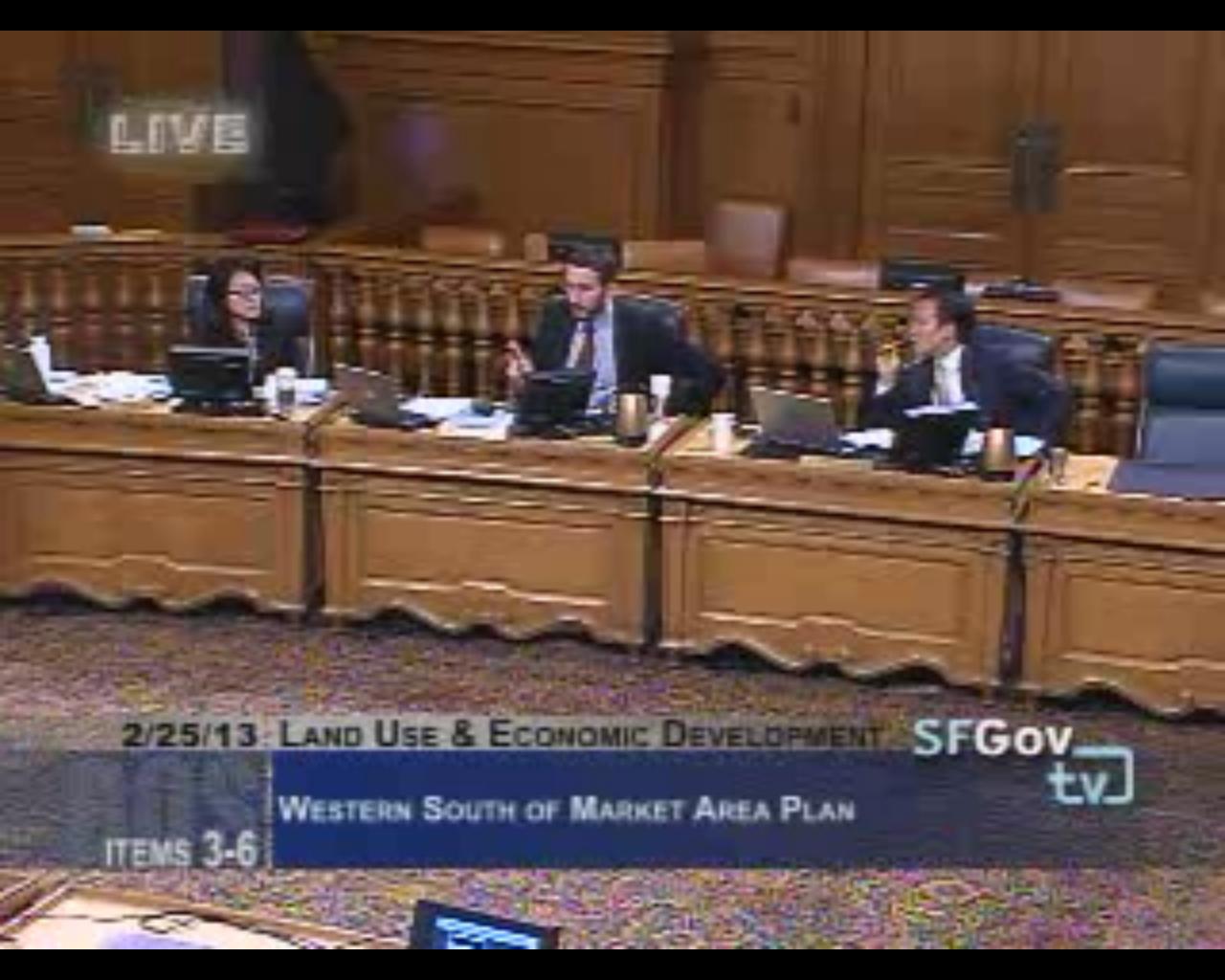
The Western SoMa Community Plan had its first hearing before the Board of Supervisors Land Use and Economic Development Committee today, with dozens of speakers praising the eight-year citizen-based planning effort that developed it but with much of the testimony criticizing the plan’s emphasis on facilitating housing development to the exclusion of other goals.

As we’ve reported, the nightlife community has in recent months been pushing for changes to the plan that would better protect nightclubs from complaints and pressure from nearby residents, particularly along 11th Street. Area Sup. Jane Kim has supported that effort and those concerns were echoed by Sup. Scott Wiener, the committee chair and a strong nightlife advocate.

“I have had significant concerns about this plan…and I’m hoping we can address them over the course of this hearing,” Wiener said.

Wiener also opened another front of attack on the plan by noting that it doesn’t adequately pay for the impact that thousands of new housing units would have on Muni and other aspects of the transportation system. In particular, he criticized a policy in the plan that would let 13 large properties get increased density in exchange for higher affordable housing fees that would be offset by lower transit and other impact fees paid to the city.

“What are we doing to make sure our transportation system keeps pace?” Wiener asked of Planning Department staff, later asking again, “Where would we get the money to improve transit for these increased residents?” Wiener didn’t get back any answers that seemed to satisfy him, so he asked for a more detailed report when the plan returns next week for a second hearing. That concern was echoed by the third committee member, Board President David Chiu, who said, “Building housing without money for transit will lead to long-term problems.”

The concern seemed to revive a losing fight that Wiener led in December over expanding who pays the city’s Transit Impact Development Fee, which pitted transportation advocates against affordable housing activists. Fernando Marti of the Council of Community Housing Organizing rued the revival of that conflict. “We’ve been here before, pitting [transportation against affordable housing needs] as if it were a zero sum game,” Marti told the committee, noting the importance of policies to balance out market rate housing and calling it a “plan for stability in a neighborhood facing large-scale gentrification.”

Marti’s COCHO colleague Peter Cohen, who was closely involved with the plan’s creation, also urged the committee not to tweak the housing policies or the revenues it creates for affordable housing. “This is a major upzoning,” Cohen said. “In 20 years, perhaps all the market rate stock [of housing in the plan area] will be gentrified.”

But the issue raised most often during more than two hours of public testimony involved nightlife and the need to strike a better balance between housing development and entertainment, much of the input stirred up by the California Music and Culture Association, a industry-backed trade group that formed largely in response to crackdowns on clubs in SoMa.

“It’s often said San Francisco can plan more for fun, and this is a great opportunity to do that,” said Guy Carson, a CMAC founder who owns Cafe du Nord. Longtime nightlife advocate Terrence Alan took part in the Western SoMa Task Force for four years before resigning in frustration, and he told the committee, “We are bringing up issues we felt marginalized in bringing up earlier.”

But several people involved with the task force, as well as speakers representing development interests, urged supervisors to pass the place without significant modifications. “There are dozens or hundreds of compromises in this plan,” Cohen said, urging supervisors not to upset that careful balance.

Task Force Chair Jim Meko – whose leadership was widely praised in the testimony – detailed the extensive outreach and detailed work that went into the plan, and offered a simple plea to the committee: “Please pass this plan so we can get on with our lives.”

The committee unanimously voted to support the change made to the plan by the Planning Commission to ban new residential development on the raucous 300-block of 11th Street, but to reverse the commission’s decision to grandfather in one final 24-home residential project on that block, in the so-called “purple building” at 340 11th Street. A number of other small changes to the plan were also unanimously approved.

But Kim objected to Wiener’s motion to eliminate the plan provision that would reduce the transit and open space fees and raise the affordable housing fees that developers of those 13 large parcels would pay. “I don’t think it’s good policy to reduce transit impact fees when we’re increasing population,” Wiener said.

“This has gone through an extensive community process,” Kim countered, adding that, “I hate that we’re always having this discussion about transit versus affordable housing.”

But Chiu sided with Wiener and the amendment was approved on a 2-1 vote with Kim in dissent. Yet Chiu held open the possibility of changing his mind next week when the plan returns to committee for a final vote – the delay prompted by the other revisions in the plan – when Planning staff will provide more information on the fee structure and its impacts.

If the committee gives final approval to the plan next Monday, it could be before the full board for approval the next day.

Can we have cool new additions without gentrifying the Mission?

44

Do livability and gentrification go hand-in-hand? In other words, as you improve a neighborhood like the Valencia Street corridor with bike lanes, wide sidewalks, parklets, and other improvements that are part of the so-called “livability agenda,” does that necessarily drive up rents and force out the working class?

That was a contention made to me recently by owner of nightclubs and small business advocate Michael O’Connor, who has been critical of the Valencia Street improvement project and other initiatives supported by the group Livable City and its Executive Director Tom Radulovich. And it’s part of a larger discussion about whether neighborhoods pay a price for their own success.

O’Connor says the toll taken by livability projects is just too high in the form of rising rents and lost diversity, which is why he’s focused on Oakland for his latest business ventures. Radulovich understands the concern, but he says that safety measures like pedestrian-friendly design and lighting improvements shouldn’t be avoided simply because they make a neighborhood more attractive, and that the answer is making sure social justice and equity remain part of these political conversations.

Frankly, as a resident of the Mission, I had to admit O’Connor’s point that the Valencia Street Improvement Project – in combination with condo conversions, the latest dot-com boom (those dreaded Google-busers), and other upward pressures on cost of living – had the the effect of sterilizing and gentrifying that once-vibrant corridor.

Now, those who want to open cool new businesses in the area have turned to Mission Street, where the commercial rents are still reasonable but also rising, and there are some people wringing their hands about that now too. It’s sort of an economic development domino theory in reverse.

The Mission Local blog last month ran a post that mentioned my friend Illy McMahan’s groovy new store on Mission near 20th Street: Carousel SF, a consignment store featuring the stylishly re-purposed furniture, golden flea market finds, and the works of local artists (many from the Burning Man world, where McMahan met her business partner Kelley Wehman among the indie circus freaks of the Red Nose District).

The article presented that and other more upscale new Mission Street businesses – including Hi-Lo BBQ and Mission Oyster Bar – as spilling over from their “saturation” of Valencia Street, and some comments denigrated the “yuppie real estate developers” behind the trend and said, “Will the last Latino left in the Mission please turn off the lights on the way out.”

I understand the sentiment, but I’m still troubled by it in the same way that I am with O’Connor’s belief that livability improvements should be abandoned because they can gentrify an area. As I’ve argued before, it’s up to San Francisco’s political class to find a way to maintain the city’s affordability and diversity and balance that against its relentless economic development promotion.

After all, McMahan is a single mother of modest means, and the fact that she has an opportunity to start a business based on her sense of style and network of contacts with artists should be a good thing for San Francisco. She and Weham went through The Women’s Initiative training program to learn about operating a small business, getting a loan to open through its Working Solutions affiliate.

“Since 1988, Women’s Initiative has been assisting high-potential low-income women who dream of business ownership,” reads a description on its website, noting that 99 percent of participants are low-income women and 78 percent are women of color. Combine that with McMahan and Wehman’s artistic roots in the Burning Man world — and the need for artists to have outlets to sell their works here — and it’s hard to imagine a business that is more quintessentially San Francisco than this one.

“This store represents our take on aesthetics and our mutual love for all things previous and peculiar. It also gives us the opportunity to showcase the incredibly talented artist communities we’re fortunate to be a part of, while keep the pricing at an affordable level throughout the store,” McMahan says in a press release announcing the recent opening of Carousel SF.

Will this cool new business attract other ones near it? I’m sure they hope so. Will that begin to cause Mission Street to go the way of that parallel universe a block away on Valencia, with rising rents and the calls for livability improvements that inevitably follow? I sure hope not. But our challenge now is to facilitate the dreams of low-income women who strive to be small business owners while ensuring that they can remain welcome and stable in the neighborhoods that they’re helping to improve.

Was it a great year?

149

At noon Dec. 19, a group of about 50 housing activists led by the Housing Rights Committee gathered at 18th and Castro, next to the giant Shopping Season Tree, to discuss the wave of evictions tenants are facing at the end of 2012. Tommi Avicolli Mecca held up a list of 26 buildings that are currently being clear of tenants under the Ellis Act, a state law that allows landlords to evict all their tenants and sell the property as a single-family home or tenancies in common. With him was a long line of tenants who are facing holiday homelessness thanks to landlord greed.

“There are too many tenants being evicted to fit in front of the tree,” he said.

We heard story after story: A man living with AIDS facing the loss of his home after 17 years. A family being forced out after 18 years. Seniors, kids, disabled people … all of them almost certainly displaced from San Francisco.

“San Francisco is becoming a city of the rich, and we are being pushed aside,” said Lisa Thornton, who works at Rainbow Grocery and is losing her home.

“This,” Mecca said, “is an epidemic of evictions.”

And we all know why: As the second tech boom roars in to San Francisco, high-paid young workers are able to afford to buy TICs or single-family homes, and long-term rent-control-protected tenants simply can’t compete. It’s not a pretty pciture.

So I almost barfed when I say Randy Shaw’s glowing paen to Mayor Ed Lee. “San Francisco had one of its greatest years in 2012, as the city’s job growth and vibrancy outpaced nearly everywhere else,” he wrote.

Oh, gee, he says, there are some problems:

Few want San Francisco to become a city where only the rich and subsidized poor can live. But these same fears were felt in the 1980’s. When I was moving to San Francisco in 1979, the lines for vacant apartments were just as long and the competition for vacant units as fierce as what we read about in 2012. We couldn’t believe we had to pay $375 for a Mission one bedroom apartment, a rate that is less than half the cost of an SRO room without private bathroom today. San Francisco has long been an expensive city that keeps getting pricier.

So what — because we were worried about displacement in the 1980s means we shouldn’t be worried today? Those worries were real — gentrification of San Francisco neighborhoods has been rampant for decades. It’s changed the city, for the worse.

In the 1980s, Shaw was part of a broad coalition that fought to get rent control laws and eviction protections and limits on condo conversions. Now he’s acting as if none of that was worth the fight, as if protecting affordable housing wasn’t, and isn’t, the most critical issue in the city today.

A great year? Fantastic vibrancy and job growth? Not if you’re one of the growing numbers of people who are losing their homes to Ed Lee’s vision of economic development.


Agnos and other progressives rally for Olague

72

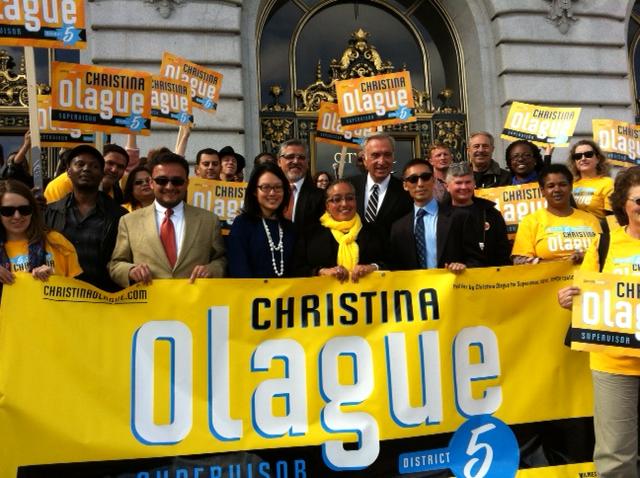
A string of prominent local progressive leaders today offered their support to Sup. Christina Olague – including former Mayor Art Agnos, who announced his endorsement of her in the District 5 supervisorial race – in a rally on the steps of City Hall.

In the process, many voiced a need to broaden and redefine progressivism as valuing independence and diversity of perspective more than just stands on specific issues, traits they said Olague embodies. But more than anything, the rally seemed aimed to consolidating progressive support around Olague as the best hope to beat moderate London Breed in one of the city’s most progressive districts.

“District 5 is often referred to as the most progressive of San Francisco’s supervisorial districts. It includes a diversity of views and opinions on how to meet the challenges all our communities face,” Agnos said. “And it takes a supervisor who know how to listen, to hear and respect those differing views, while working for a resolution that moves us forward.”

Sup. David Campos made only a veiled, indirect reference to the problems some progressives (himself among them) have had with some of Olague’s stands since she was appointed to the job by Mayor Ed Lee, but he said, “Those of us who have worked with her know what’s in her heart…She has been the independent person we always knew she would be and I’m proud to stand with her today.”

Several speakers made reference to Olague’s working class roots, her perspective as a Latina and member of the LGBT community, and her history of progressive activism in San Francisco. Cleve Jones, Gabriel Haaland, Sandra Fewer, and Sup. Eric Mar were among those there to offer support.

“It was a big give by the Mayor’s Office to appoint someone who wasn’t always going to agree with him,” said Sup. Jane Kim, but that was about the only positive reference to the Mayor’s Office, which turned on Olague after she voted to reinstate Sheriff Ross Mirkarimi, setting the stage for her return to the progressive fold.

“To be a progressive is to share an ideology that understands and believes that the best decisions for our city require the participation of all of us, no matter who we are, where we live, or how big our checkbook is,” Agnos said. “As with so many who have endorsed her, that progressive label says she is a politician who understand this fundamental truth.”

SF Rising board member Alicia Garza kicked off the rally by saying, “We are here to set the record straight that the progressive movement is alive and well in San Francisco.” Later, she praise Olague’s history as a community organizer, saying that, “She understands deeply what it means to empower communities.”

Sup. John Avalos, another supervisor who hasn’t always agreed with Olague in the last nine months and just endorsed last week, commended her for the courage it takes to assert her values instead of simply supporting the mayor who appointed her. He said Olague recognizes that, “We live in a city of extremes, with extreme differences between the haves and have-nots.”

Another new progressive endorsement, coming in the wake of one-time progressive favorite Julian Davis’ troubles, was Quintin Mecke, who said he first worked with Olague on anti-gentrification issues 13 years ago. “I trusted her work then and I trust her work today,” he said. Activist Lisa Feldstein – like Mecke, a former D5 candidate – echoed the sentiment.

“I’m here because I really trust Christina and want to fight for her,” Feldstein said. “She comes from a place of integrity and compassion.”

When Olague finally took the podium, she said, “I am humbled by the heartfelt words of my colleagues.” She also tried to help define progressivism in San Francisco, said that it “isn’t about a cult of personality.”

Instead, she said it’s about working to building people’s capacity to create an inclusive and just city. “It’s about building a movement that can weather any storm,” Olague said, closing by saying she’ll ensure “the progressive voice is always strong in District 5 and I’ll keep working to make it heard until I’m blue in the face…I am the most progressive person in the race.”

SF Stories: Mattilda Sycamore Bernstein

1

San Francisco was where I first learned to gasp and grasp at the possibilities of radical queer self-invention and communal care. This was 1992. I was 19: childhood meant suffocation, college was pointless shit. All around me, people were dying of AIDS and drug addiction and suicide, but finally I was finding other queer incest survivors, whores, vegans, runaways, anarchists, dropouts, drug addicts, sluts, activists and freaks trying not to disappear. We were scarred and broken and brutalized but determined to create something else, something we could live with, something we could call home or healing or even just help, I need help here, can you help?

Of course, we were not the first wave of queer migration to San Francisco in search of ways to cope and hope, visions of lust and love not bounded by convention, brazen challenges to the violence of status quo normalcy. But learning how to dream is always a difficult process. It’s what we needed one another for.

And yet, there is a certain kind of smugness in queer San Francisco, this sense that we have arrived, that we’ve done our work, that we’ve created something beyond the twin traps of gay assimilation and straight normalcy. The problem is that often a sophisticated rhetoric camouflages the same tired patterns of abuse and neglect, and this hurts more when it comes from those you believe in, right? I know that it has hurt me more.
Let me tell you about the friend who will always be there, no matter what. We met when I was 19: we held one another and broke apart walls. We tried to share everything about our lives, and then when we ran out of things to disclose we dug deeper. This relationship lasted for 16 years, but I lost it all when I told this friend he was the most important person in my life. I told him I felt confident about the longevity of our relationship, about our intimacy and our trust, but I never felt secure because of the five-year period when he lied about everything due to a disastrous alcoholism, a five-year period he kept telling me he’d gotten past. It’s true that he wasn’t drinking anymore. When I told him I still didn’t feel secure, I thought he would ask me what he could do, but instead he became enraged, and our relationship was over.

This is just one example of the gap between rhetoric and reality; there are too many. When I arrived in San Francisco in 1992, the city sheltered outsider queer cultures unimaginable in most places. Twenty years of gentrification, homogenization, and assimilation later, and yes, these cultures still exist in some form, even if they have been decimated in both density and imagination. Perhaps what’s changed the most for me is that now I need to live elsewhere in order to dream.

Mattilda Bernstein Sycamore (mattildabernsteinsycamore.com) is most recently the editor of Why Are Faggots So Afraid of Faggots?: Flaming Challenges to Masculinity, Objectification, and the Desire to Conform. Mattilda’s next book, The End of San Francisco, will be out in April 2013 from City Lights—it might break your heart.

SF Stories: Kevin Killian

0

46TH ANNIVERSARY SPECIAL Today it’s mostly about the rents. People come to my tiny apartment, a shoebox I share with three cats and a genius, and they wonder two things at the same time—what the mad Romantic poet Holderlin called the condition of “pallaksch,” an occurrence that presses your yes and no buttons simultaneously. I can see my visitors wondering, you’re only an avant-garde writer at the bottom of the heap, how can you afford to live in San Francisco? And another part of them is answering their own questions by guessing, it must be rent control.

We moved into our place in 1990. Minna Street was then the foulest street I’d ever lived on, but because of the recent earthquake of 1989 the rents were dirt cheap and you just couldn’t say no. From what I understand, the building shook so much during the quake that if you didn’t live on the ground floor, you got the hell out. And the bottom feeders, like ourselves, moved in. I said, “Lightning’s not gonna strike twice,” and so far the building hasn’t crumbled. We came to love our little alley, the neighbors, the quiet, even the drug dealers. It was the bohemian quandary: if a neighborhood improves, does gentrification automatically follow?

I write this in the mourning attendant to the September 29th death, in New York, of radical geographer Neil Smith, the Scots-born teacher and theorist whose work on uneven development has helped us identify these patterns more clearly. Walking down the streets of a big city, or even passing through my shoebox (for he taught us that the same patterns that shape a city are shaping our interiors too), it’s impossible not to think of the man. “Capital,” he wrote, “is continually invested in the built environment in order to produce surplus value and expand the basis of capital itself. But equally, capital is continually withdrawn from the built environment so that it can move elsewhere and take advantage of higher profit rates.” That’s the uneven part of the theory of uneven development. We always wondered why there was so much crack and prostitution on Minna Street, a stones throw from City Hall, from the Opera House, from the other landmarks of capital. But Smith knew. How does rent control even survive in a totalizing city like San Francisco? It has to for capital to flourish, to breed, to flex its muscles.

The legends of the uneven are rampant. When I interviewed the poets and artists who flocked to San Francisco after WWII for my book on the life of Jack Spicer, men and women 85 today if still they live, they would invariably mention moving into a room in North Beach that was 19 dollars a month, a four-bedroom flat in the Fillmore for sixty a month. When the evidence of inflation is pressed up to one’s face like a rag dowsed in chloroform, we younger people inhale sharply. And we’re the same way, we who moved here later on, in the 60s, 70s, even the 80s, when rents were 200, 300, 500 dollars. It wasn’t like we could afford our apartments even then. But at least there would be another worse one we could repair to when “times got tough.” And now, instead, there are fields further away, from which capital has been temporarily withdrawn. Oakland we hear. Last month we counted and realized that only three poets under the age of forty remain in San Francisco. And in each case it’s an exception—a quirk in the system—perhaps the wrinkle that determines the system’s face? The face that says yes to us and no to us with the same grinning wet mouth.

Kevin Killian’s new novel is called Spreadeagle (from Publication Studio). His next book is Tagged, a collection of his intimate color photos of poets, artists, filmmakers, musicians naked, or the next thing to it, edited by Darin Klein. (A show of this work opens at White Columns in New York on October 27th). On November 8, SFMOMA and San Francisco Poets Theater present a revival of Killian’s 1995 play WET PAINT, in conjunction with the Jay DeFeo retrospective (Nov 3 — February 3, 2013) organized jointly by SFMOMA and New York’s Whitney Museum.


SF Stories: Benjamin Bac Sierra

5

46TH ANNIVERSARY SPECIAL 

Puro San Fran: These words have inspired me to somewhere beyond my city and to someone beyond myself. Puro San Fran, I have howled into our smashed streets, into the lush jungles of Okinawa, death deserts of Saudi Arabia, the overly intellectual classrooms at U.C. Berkeley — into barrios worldwide.

Puro San Fran can be literally translated into Pure San Francisco, but what exactly is so pure about this Golden Gated city is the subject for this musing.

As an adolescent homeboy from our Mission district, I shouted Puro San Fran with anger, as a demand to combat. In different evolutions, though, St. Francis blessed me with different powers that forced me to confront profound paradoxes, within myself and my home.

Puro San Fran is more than a battle-cry; it is a meditation, a mantra that has soothed me and granted me an identity that has fueled my consciousness. I like to pride myself as a Missionero and Cortlandero before gentrification of those gritty hoods, but it is idealistic impurity to tell the tale that the Mission district is all I knew. I liked to claim those territories as if I, we, owned those streets, but those streets were only half my story.

A veteran Muni bus rider by age 11, I would graffiti tag my name and the name of our break dance crew all over every neighborhood — the Haight, Noe Valley, Soma (back when all that existed there were dull warehouses), the Sunset, Excelsior, etc. At 14 years old, we, brown skinned, would blow white angel-dust smoke halos into San Francisco’s spitting seashore at Ocean Beach. During the crack-era 1980s, we would drink and fight at rat-infested Union Square, a home for black-bearded bums who we would share our Mad-Dog 20/20 wine with. Parading our poverty on 30th street after our many 49ers Superbowl victories, we proclaimed the streets as ours, not knowing or understanding that the actual tar and cement would be “rehabilitated” (gentrified) before we would be, so that now almost all of my former San Franeros have vanished outside its borders.

Except for very brief stints in backyard cities, I did not truly explore outside of San Francisco until I was seventeen and joined the Marine Corps. Before then, I had never even heard of other major Bay Area cities called Santa Rosa, Richmond, Berkeley, or Menlo Park. My world, my life was Puro San Fran, but it was that spirit that also charged me forward, so that now I have trumpeted our unique city everywhere I have traveled. With San Fran spirit, I thrust myself into becoming a student, a writer, a professor, a father, a sinner, and a fuller human being.

San Francisco is changing, as it has always been changing, but we are at our roots Native American hippie Missionary 49er Giant locos. Thanks to our counterculture tradition, we believe in peace and diversity as an essence, yet we contradict ourselves by also being hedonistic kings and queens who wear the golden crown of capitalism on the West Coast. What goes on in Vegas may stay in Vegas, but what goes on here in San Fran becomes a permanent tattoo on our souls, and we like to believe we have them, that stuff of souls. We live in the moment trusting it is forever. Go to AT&T Park during the Giants playoffs; you will feel the forever, and you will fall in love with it. Puro San Fran, therefore, is a hopeless romantic nostalgia for something that never really existed but that always is possible. With that purity, that hopeless possibility, that profound paradox, I write and represent us all. Con Safos.

Benjamin Bac Siera is a San Francisco City College English composition and literature professor and author of Barrio Bushido, an ode to Mission District vato locos.

World homeless day protest targets Castro landlord

54

In a protest marking World Homeless Day, the squatter group Homes Not Jails briefly occupied a vacant building on Castro St. tonight. Twenty were arrested.

This is the third year that the group has staged a building occupation to draw attention to buildings that lie vacant while people live on the streets.This year’s demonstration began in Dolores Park, where a group of about 50 held a rally and concert. 

The group then marched up 18th street, chanting “house keys not handcuffs” and “housing is a human right.” 

When the protest arrived at the building, on the 500 block of Castro St., activists opened the building and entered it. From the roof, protesters dropped a banner reading “Gentrification equals assimilation.”

One man who entered the building had seen the march on 18th st. and joined along the way. “I don’t believe there should be this many abandoned houses,” said the man, who identified only as Scott. “I don’t mind being homeless, though,” he added. “I like sleeping under the stars.”

Police lined up across the street and closed Castro between 18th and 19th to traffic. After about 40 minutes, they charged the building. Those on the sidewalk were pushed aside, and those inside the building were arrested. According to SFPD spokesperson Michael Andraychak, there were 20 arrests.

After more than two hours, the police reopened the street.

During that time, Andraychak said, “Several people had run into an annex in the rear. Several had gone downstairs and broke into an adjoining restaurant.” Arrestees were also being searched and processed in the building.

The city’s most recent “Homeless Point-in-Time Count and Survey” finds that there were 6,455 homeless individuals and families living in San Francisco; Homes Not Jails estimates 11,000 homeless individuals. 

In either case, as members of the group often point out, the amount of vacant housing in the city is more than enough to shelter the whole homeless population. The 2011 census finds that San Francisco has 378,261 total housing units, and 9.4 percent, or about 35,000, are vacant.  

Homes Not Jails formed in 1992 to connect these homeless people to these vacant buildings. According to one organizer, the group is “made up of squatters who live in vacant places.”

He said that today’s largely symbolic housing occupation has a purpose. “It’s the experience people have when they come into a vacant, liberated space. There’s no other feeling like that. It’s transformative.”

Last year, the group targeted the Cathedral Hill Hotel , the site of a new hospital project still riled in controversy. They also less conspicuously occupied several other nearby buildings, include the Charlie Hotel. Some of these buildings are still active squats. 

Across the street, a large crowd gathered, watching the action. 

Some neighbors supported the protest. “I think it’s fantastic,” said Jesse Oliver Sanford, who lives two doors down from the building.

Sanford said the building’s long vacancy frustrated him, and the space should instead be used for something beneficial. “You could put a nonprofit soup kitchen there,” said Sanford. “I don’t understand why we’re not providing more services for queer youth. This building is twice the size of LYRIC and just a block away.”

“If the queer history here means anything, we need to have a place with a political base. That means low income and mixed income,” Sanford continued. Instead, he said, low income people are being squeezed out of the neighorhood.  “If you lose your lease, you lose all you have” he said, mentioning that a neighbor of his had recently had his rent increased by $1,000 per month.

The building that protesters occupied, comprised of a ground floor storefront and second floor apartments, has been vacant for more than five years.

The building’s owner, Les Natali, owns several other properties in the Castro. The neighboring Patio Café, the restaurant that protesters allegedly entered, has been vacant for more than ten years. Natali also owns Toad Hall as well as Badlands, where he has come under fire for racist business practices. Natali used to own the Pendulum, “the Castro’s only African American gay bar,” before he closed it, sparking community outrage.

The buiding protesters occupied “used to be the Bakery Café,” remembered a neighbor who didn’t wish to be identified. “It was a great place to hang out and a major employer of young people. It would be great if it was a functioning business or some community benefit, and rent controlled housing on top.”

“This is at least getting a lot close to those real issues,” he said of the protest.

UPDATE: All 20 arrested are being held on charges of burglary, conspiracy and vandalism. Most have bails set at $325,000.

Open doors await on Affordable Housing Day

2

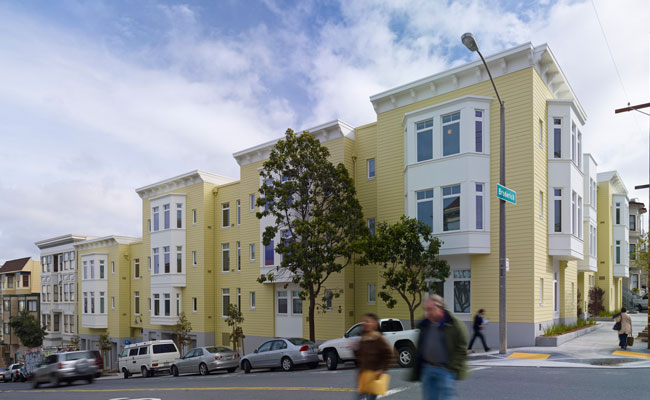
Tomorrow, 10/6 from 1pm-4pm, you can tour several of the city’s affordable housing sites — there’s even a handy citywide bike tour! — and  get an indepth look inside many of the innovative buildings that have recently gone up (or been rehabbed) in San Francisco, helping to house the homeless and make the city an affordable place to live for seniors, families, and people with special needs.

There will be refreshments! And also access to detailed information about the design, finances, and management of the buildings. And if you’re interested in finding out how to apply to live at one of the sites, there’ll be info about that, too. 

For Nosey Parkers like me who just like to go inside buildings and have a good gander, this will be pretty neat. (Also, my husband works in non-profit housing, and I get the backstory on a lot of the great stuff going on at these buildings, but never get to see it all!) And many of the buildings are doing really cool things environmentally and designwise. Complete list of locations and official press release after the jump.

SITE LIST:

Armstrong Place, 3rd Street & Armstrong
Bayview Commons, 4445 3rd Street
Bishop Swing, 275 10th Street
Broadway Family Apartments, 810 Battery Street
CASA, 5199 Mission Street
I Hotel, 868 Kearny Street
Mendelsohn House, 737 Folsom
Mosaica, 2949 19th Street
Notre Dame Plaza, 347 Dolores Street
St. Peters Place, 29th Avenue & Geary Street
The Hayes, 55 Page Street
Westbrook Plaza, 255 7th Street
Zygmunt Arendt House, 850 Broderick

Affordable Housing Day San Francisco to be held on Saturday, October 6
The Council of Community Housing Organizations, the American Institute of Architects San Francisco, and SPUR invite the community to an open house highlighting the benefits of affordable housing in San Francisco.

SAN FRANCISCO ─ As part of a citywide Affordable Housing Day, neighborhood affordable housing organizations throughout San Francisco will open up selected buildings for tours, info sessions and refreshments. Included in the tours will be examples of housing designed for seniors, families and people with special needs. The goal of the citywide day is to provide an opportunity for up close and personal experience with the people and places that make up San Francisco’s affordable housing. Each location will have detailed information about design, finance and management of these housing developments as a sample of the many affordable housing sites across the city. And for individuals interested in obtaining affordable housing, each participating organization will have information about qualifications, the application process, and vacancies.

Fernando Martí, co-director of the Council of Community Housing Organizations which is sponsoring the event, said “These are great examples of housing for everyday San Franciscans, slowing SF’s family flight, so that our children and grandchildren can continue to live in the City they helped build. Affordable housing also preserves the diversity of our neighborhoods, stabilizing communities from gentrification, while improving living conditions.”

There will be building tours throughout the city including the South of Market, Richmond, Mission, Excelsior, Bayview and Western Addition neighborhoods. Participants are welcome to visit all the open house locations, or just stop by the building in their neighborhood. Participating organizations include: Bernal Heights Neighborhood Center, Bridge Housing, Chinatown Community Development Center, Community Housing Partnership, Episcopal Community Services, Mercy Housing, San Francisco Housing Development Corporation, Tenants and Owners Development Corporation, Tenderloin Neighborhood Development Corporation , and The Hayes (55 Page).

“Creating affordable housing helps build our economy, creates jobs in San Francisco and supports families so they can stay, live and succeed in our City,” said San Francisco Mayor Ed Lee. “We must create a permanent source of revenue to fund the production of housing in San Francisco to ensure that seniors, people with disabilities and San Francisco families can continue to call San Francisco home.” Supervisor Christina Olague representing the city’s Western Addition and Hayes Valley neighborhoods where two sites will be open on Affordable Housing Day, said “We are fortunate to have such wonderful examples of affordable housing in my district, it’s a critical part of making diverse and stable neighborhoods.”

Please join us for San Francisco Affordable Housing Day, a free event to be held Saturday, October 6 from 1:00pm – 4:00pm. This is an open house format, so visitors can start at any of the 13 sites.


Endorsements 2012: San Francisco propositions

85

PROPOSITION A

CITY COLLEGE PARCEL TAX

YES

The scathing accreditation report by the Western Association of Schools talks about governance problems at the San Francisco Community College District — a legitimate matter of concern. But most of what threatens the future of City College is a lack of money.

Check out the accreditation letter; it’s on the City College website. Much of what it says is that the school is trying to do too much with limited resources. There aren’t enough administrators; that’s because, facing 20 percent cuts to its operating budget, the college board decided to save front-line teaching jobs. Student support services are lacking; that’s because the district can barely afford to keep enough classes going to meet the needs of some 90,000 students. On the bigger picture, WASC and the state want City College to close campuses and concentrate on a core mission of offering two-year degrees and preparing students to transfer to four-year institutions. That’s because the state has refused to fund education at an adequate level, and there’s not enough money to both function as a traditional junior college and serve as the training center for San Francisco’s tech, hospitality and health-care industry, provide English as a second language classes to immigrants and offer new job skills and rehabilitation to the workforce of the future.

It’s fair to say that WASC would have found some problems at City College no matter what the financial situation (and we’ve found more — the nepotism and corruption under past boards has been atrocious). But the only way out of this mess is either to radically scale back the school’s mission — or to increase its resources. We support the latter alternative.

Prop. A is a modest parcel tax — $79 dollars a year on each property lot in the city. Parcel taxes are inherently unfair — a small house in Hunters Point pays as much as a mansion in Pacific Heights or a $500 million downtown office building. But that’s the result of Prop. 13, which leaves the city very few ways to raise taxes on real property. In the hierarchy of progressive tax options, parcel taxes are better than sales taxes. And the vast majority of San Francisco homeowners and commercial property owners get a huge benefit from Prop. 13; a $6 a month additional levy is hardly a killer.

The $16 million this tax would raise annually for the district isn’t enough to make up for the $25 million a year in state budget cuts. But at least the district would be able to make reasonable decisions about preserving most of its mission. This is one of the most important measures on the ballot; vote yes.

PROPOSITION B

PARKS BOND

YES

There are two questions facing the voters: Does the San Francisco Recreation and Parks Department need money to fix up badly decrepit, sometimes unsafe facilities, and build out new park areas, particularly in underserved neighborhoods? Has the current administration of the department so badly mismanaged Rec-Park, so radically undermined the basic concept of public access to public space, so utterly alienated neighborhoods and communities all over the city, that it shouldn’t be trusted with another penny?

And if your answer to both is yes, how the hell do you vote on Prop. B?

It’s a tough one for us. The Guardian has never, in 46 years, opposed a general obligation bond for anything except jail or prisons. Investing in public infrastructure is a good thing; if anything, the cautious folks at City Hall, who refuse to put new bonds on the ballot until old ones are paid off, are too cautious about it. Spending public money (paid by increased property taxes in a city where at least 90 percent of real estate is way under taxed thanks to Prop. 13) creates jobs. It’s an economic stimulus. It adds to the value of the city’s resources. In this case, it fixes up parks. All of that is good; it’s hard to find a credible case against it.

Except that for the past few years, under the administrations of Mayors Gavin Newsom and Ed Lee and the trusteeship of Rec-Park Directors Jared Blumenfeld and Phil Ginsburg, the city has gone 100 percent the wrong way. Parks are supposed to be public resources, open to all; instead, the department has begun charging fees for what used to be free, has been turning public facilities over to private interests (at times kicking the public out), and has generally looked at the commons as a source of revenue. It’s a horrible precedent. It makes us sick.

Ginsburg told us that he’s had no choice — deep budget cuts have forced him to look for money wherever he can find it, even if that means privatizing the parks. But Ginsburg also admitted to us that, even as chief of staff under Newsom, he never once came forward to push for higher taxes on the wealthy, never once suggested that progressive revenue sources might be an option. Nor did any of the hacks on the Rec-Park Commission. Instead, they’ve been busy spending tens of thousands of dollars on an insane legal battle to evict the Haight Ashbury Neighborhood Council’s recycling center — entirely because rich people in the Haight don’t want poor people coming through their elite neighborhood to cash in bottles and cans for a little money.

So now we’re supposed to cough up another $195 million to enable more of this?

Well, yes. We’re not happy to be endorsing Prop. B, but the bottom line is simple: The bond money will go for things that need to be done. There are, quite literally, parks in the city where kids are playing in unsafe and toxic conditions. There are rec centers that are pretty close to falling apart. Those improvements will last 50 years, well beyond the tenure of this mayor of Rec-Park director. For the long-term future of the park system, Prop. B makes sense.

If the measure fails, it may send Lee and Ginsburg a message. The fact that so many neighborhood leaders are opposing it has already been a signal — one that so far Ginsburg has ignored. We’re going Yes on B, with all due reservations. But this commission has to go, and the sooner the supervisors can craft a charter amendment to give the board a majority of the appointments to the panel the better.+

PROPOSITION C

AFFORDABLE HOUSING TRUST FUND

YES

This measure is about who gets to live in San Francisco and what kind of city this will be in 20 years. If we leave it up to market forces and the desires of developers, about 85 percent of the housing built in San Francisco will be affordable only by the rich, meaning the working class will be forced to live outside the city, clogging regional roadways and transit systems and draining San Francisco of its cultural diversity and vibrancy. And that process has been accelerated in recent years by the latest tech bubble, which city leaders have decided to subsidize with tax breaks, causing rents and home prices to skyrocket.

Mayor Ed Lee deserves credit for proposing this Housing Trust Fund to help offset some of that impact, even if it falls way short of the need identified in the city’s Housing Element, which calls for 60 percent of new housing construction to be affordable to prevent gentrification. We’re also not thrilled that Prop. C actually reduces the percentage of housing that developers must offer below market rates and prevents that 12 percent level from later being increased, that it devotes too much money to home ownership assistance at the expense of the renters who comprise the vast majority of city residents, and that it depends on the passage of Prop.E and would take $15 million from the increased business taxes from that measure, rather than restoring years of cuts to General Fund programs.

But Prop. C was a hard-won compromise, with the affordable housing folks at the table, and they got most of what they wanted. (Even the 12 percent has a long list of exceptions and thus won’t apply to a lot of new market-rate housing.) And it has more chance of actually passing than previous efforts that were opposed by the business community and Mayor’s Office. This measure would commit the city to spending $1.5 billion on affordable housing projects over the next 30 years, with an initial $20 million annual contribution steadily growing to more than $50 million annually by 2024, authorizing and funding the construction of 30,000 new rental units throughout the city. With the loss of redevelopment funds that were devoted to affordable housing, San Francisco is a city at risk, and passage of Prop. C is vital to ensuring that we all have a chance of remaining here. Vote yes.

PROPOSITION D

CONSOLIDATING ODD-YEAR LOCAL ELECTIONS

YES

There’s a lot of odd stuff in the San Francisco City Charter, and one of the twists is that two offices — the city attorney and the treasurer — are elected in an off-year when there’s nothing else on the ballot. There’s a quaint kind of charm to that, and some limited value — the city attorney is one of the most powerful officials in local government, and that race could get lost in an election where the mayor, sheriff, and district attorney are all on the ballot.

But seriously: The off-year elections have lower turnout, and cost the city money, and it’s pretty ridiculous that San Francisco still does it this way. The entire Board of Supervisors supports Prop. D. So do we. Vote yes.

PROPOSITION E

GROSS RECEIPTS TAX

YES

Over the past five years, Board of Supervisors President David Chiu estimates, San Francisco has cut about $1.5 billion from General Fund programs. It’s been bloody, nasty, awful. The budget reductions have thrown severely ill psych patients out of General Hospital and onto the streets. They’ve forced the Recreation and Parks Department to charge money for the use of public space. They’ve undermined everything from community policing to Muni maintenance.

And now, as the economy starts to stabilize a bit, the mayor wants to change the way businesses are taxed — and bring an additional $28.5 million into city coffers.

That’s right — we’ve cut $1.5 billion, and we’re raising taxes by $28.5 million. That’s less than 2 percent. It’s insane, it’s inexcusable, it’s utterly the wrong way to run a city in 2012. It might as well be Mitt Romney making the decision — 98 percent cuts, 2 percent tax hikes.

Nevertheless, that’s where we are today — and it’s sad to say this is an improvement from where the tax discussion started. At first, Mayor Lee didn’t want any tax increase at all; progressive leaders had to struggle to convince him to allow even a pittance in additional revenue.

The basic issue on the table is how San Francisco taxes businesses. Until the late 1990s, the city had a relatively rational system — businesses paid about 1.5 percent of their payroll or gross receipts, whichever was higher. Then 52 big corporations, including PG&E, Chevron, Bechtel, and the Gap, sued, arguing that the gross receipts part of the program was unfair. The supervisors caved in to the legal threat and repeal that part of the tax system — costing the city about $30 million a year. Oh, but then tech companies — which have high payrolls but often, at least at first, low gross receipts — didn’t want the payroll tax. The same players who opposed the other tax now called for its return, arguing that taxing payroll hurts job growth (which is untrue and unfounded, but this kind of dogma doesn’t get challenged in the press). So, after much discussion and debate, and legitimate community input, the supervisors unanimously approved Prop. E — which raises a little more money, but not even as much as the corporate lawsuit in the 1990s set the city back. It’s not a bad tax, better than the one we have now — it brings thousands of companies the previously paid no tax at all into the mix (sadly, some of them small businesses). It’s somewhat progressive — companies with higher receipts pay a higher rate. We can’t argue against it — the city will be better off under Prop. E than it is today. But we have to look around our battered, broke-ass city, shake our poor bewildered heads and say: Is this really the best San Francisco can do? Sure, vote yes on E. And ask yourself why one of the most liberal cities in America still lets Republican economic theory drive its tax policy.

PROPOSITION F

WATER AND ENVIRONMENT PLAN

NO, NO, NO

Reasonable people can disagree about whether San Francisco should have ever dammed the Tuolumne River in 1923, flooding the Hetch Hetchy Valley and creating an engineering marvel that has provided the city with a reliable source of renewable electricity and some of the best urban drinking water in the world ever since. The project broke the heart of famed naturalist John Muir and has caused generations since then to pine for the restoration of a valley that Muir saw as a twin to his beloved nearby Yosemite Valley.

But at a time when this country can’t find the resources to seriously address global warming (which will likely dry up the Sierra Nevada watershed at some point in the future), our deteriorating infrastructure, and myriad other pressing problems, it seems insane to even consider spending billions of dollars to drain this reservoir, restore the valley, and find replacement sources of clean water and power.

You can’t argue with the basic facts: There is no way San Francisco could replace all the water that comes in from Hetch Hetchy without relying on the already-fragile Delta. The dam also provides 1.7 billion kilowatt hours a year of electric power, enough to meet the needs of more than 400,000 homes. That power now runs everything from the lights at City Hall to Muni, at a cost of near zero. The city would lose 42 percent of its energy generation if the dam went away.

Besides, the dam was, and is, the lynchpin of what’s supposed to be a municipal power system in the city. As San Francisco, with Clean Power SF, moves ever close to public power, it’s insane to take away this critical element of any future system.

On its face, the measure merely requires the city to do an $8 million study of the proposal and then hold a binding vote in 2016 that would commit the city to a project estimated by the Controller’s Office to cost somewhere between $3 billion and $10 billion. Yet to even entertain that possibility would be a huge waste of time and money.

Prop. F is being pushed by a combination of wishful (although largely well-meaning) sentimentalists and disingenuous conservatives like Dan Lungren who simply want to fuck with San Francisco, but it’s being opposed by just about every public official in the city. Vote this down and let’s focus our attention on dealing with real environmental and social problems.

PROPOSITION G

CORPORATE PERSONHOOD

YES

If San Francisco voters pass Prop. G, it won’t put any law into effect. It’s simply a policy statement that sends a message: Corporations are not people, and it’s time for the federal government to tackle the overwhelming and deeply troubling control that wealthy corporations have over American politics.

Prop. G declares that money is not speech and that limits on political spending improve democratic processes. It urges a reversal of the notorious Citizens United vs. Federal Elections Commission Supreme Court decision.

A constitutional amendment, and any legal messing with free speech, has serious potential problems. If corporations are limited from spending money on politics, could the same apply to unions or nonprofits? Could such an amendment be used to stop a community organization from spending money to print flyers with political opinions?

But it’s a discussion that the nation needs to have, and Prop. G is a modest start. Vote yes.

Downtown development

1

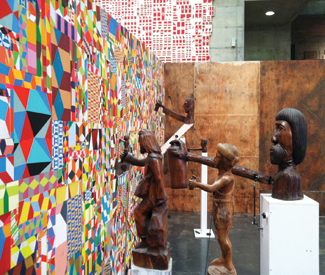
LIT/VISUAL ARTS The term “Mission School” was coined in these pages by Glen Helfand in 2002 to describe a loose-knit group of artists based around the Mission District who were then just beginning to break through into international art world success. These artists — including Barry McGee, Margaret Kilgallen, Chris Johanson, Alicia McCarthy, Rigo 23 and others — made use of found materials and shared an informal aesthetic that was influenced as much by the low rent streets of the city around them as a relaxed, collective Bay Area vibe.

A decade later, it seems safe to say that the Mission School was probably the last major art movement of its kind in this country, and itself the end of an era. For over three decades, significant art and music breakthroughs in this country were linked to specific urban neighborhoods (hip-hop to the South Bronx; Warhol’s Factory to downtown Manhattan, riot grrrl to Olympia, Wash.; grunge to Seattle; Fort Thunder in Providence, RI, etc.) Today, with the rise of the importance of MFA programs as a means to enter the art world, and the lack of locality fostered by the internet, the era of geographic specificity as arts incubator has perhaps passed us for good.

Two new books take us back to those freer, more experimental days at the inception of the SoHo and East Village arts scenes of New York in the 1970s and 80s. 112 Greene Street: The Early Years (1970-1974) (Radius Books, 192 pp., $50) is a brief, but invigorating oral history from the early years of what we now know as SoHo. This just-released catalog to last year’s exhibition at Zwirner Gallery in Chelsea brings to life the sense of discovery and improvisation of the nascent neighborhood scene that centered around the legendary pioneering alternative arts space and its north star, the late Gordon Matta-Clark.

In October 1970, when Jeffrey Lew and Matta-Clark opened 112 Greene Street in the storefront of a “rundown former rag picking factory,” the area south of Houston Street was a wasteland of abandoned former textile factories known as Hell’s Hundred Acres. The space, with its lack of heat, and its raw walls, uneven floors, and poor artificial lighting resembled the city then falling apart all around it. The ruins of the city not only influenced the work; sometimes they literally became work.

Alan Saret remembers walking near Canal Street with Matta-Clark one night when a cornice simply fell off a building right in front of them. Saret found some other cornices on the ground nearby and paid the crew of a passing city garbage truck to haul them back to 112 Greene where they became part of a sculpture piece he called Cornices.

Far from the uptown galleries where Manhattan art world power then was consolidated, 112 Greene’s isolation and state of decay fostered a certain kind of “anything goes” artistic freedom and collaborative spirit. For the first opening at 112 Greene, Matta-Clark jackhammered a hole in the basement floor and filled the area with dirt, where he planted a cherry tree that he kept alive all winter with grow lamps. For a later exhibition, George Trakas wanted to do a two-story sculpture, so he simply cut a hole in the floor so his piece could rise up out of the basement into the main floor. The only rule seemed to be that work had to be created on site and could not be made for sale.

Perhaps predictably, with this last rule, the space could barely keep its doors open. Yet, there is a timeless lesson here for those running arts spaces today: the downfall of 112 Greene came ironically only after it finally achieved financial stability. When Lew landed a big NEA grant in 1973, pure art experimentation and spontaneity gradually gave way to formal scheduling and programming guidelines from the funders in DC, who demanded more and more say in the operation of the space. “The excitement that anything could happen waned as paperwork and schedules were enforced,” remembers Lew. The core group of artists slowly drifted away from 112 Greene, just as the original SoHo, too, was beginning to change all around them into the high-end shopping district it is today.

The SoHo model has become a cynical real estate gentrification strategy, as developers create prefab arts — and shopping — neighborhoods in empty warehouse districts across the country from Miami to Portland, Ore. to Brooklyn. But if, say, Bushwick’s art scene feels less like a real place than the shores of a desert island where hundreds of young artists have been randomly washed up by the storms of the global economy, 112 Greene Street reminds us that the first art neighborhoods were formed organically around genuine community. In 1971, Matta-Clark and artist Carol Goodden started an artist-run collective restaurant in SoHo called Food. By all accounts, Food was not some relational aesthetic stunt; it was a well loved and sincere attempt to provide cheap meals, a gathering place, and jobs to artists in the scene.

112 Greene Street ends before Matta-Clark’s untimely death from pancreatic cancer at age 35 in 1978, and before the artist would famously take the work he developed in the ruins of 112 Greene out into the ruins of the city with a practice he dubbed “Anarchitecture.” He took the city as his canvas, transforming raw space by sawing dramatic cuts in the floors and facades of abandoned buildings in the South Bronx and industrial parts of New Jersey. But the charm and dreamy freedom of the era 112 Greene Street depicts comes through in Matta-Clark’s film, Day’s End. In it, Matta-Clark works calmly with a blowtorch, cutting holes in the steel ceiling of an abandoned city pier on the Hudson River (with no apparent fear of getting caught) as the space slowly fills with radiant light.

A decade later, another artist who would die too young, David Wojnarowicz, would also find a wide-open playground in the rotting piers along the river. Wojnarowicz would spend hours at the piers, writing about what he saw there, having sex with strangers, and drawing murals or writing poetry on the crumbling walls. Wojnarowicz delighted in the ruins and saw the piers as a sign that America’s empire was fading away before his eyes. That today we know it was actually only Wojnarowicz’s world that was about to disappear is just one of the many poignant aspects of Cynthia Carr’s beautiful new book, Fire in the Belly: The Life and Times of David Wojnarowicz (Bloomsbury USA, 624 pp., $35), the first comprehensive biography to date of the artist, writer, and activist who died of AIDS at the age of 39 in 1992.

On the run from an abusive father, Wojnarowicz started sleeping with older men for money while living on the streets in his teens. Drawn to other criminals and outlaws, his first published writings were based on interviews he did with street hustlers, travelers, and homeless people he met in skid row waterfront diners and on hitchhiking trips. In the works of Jean Genet, he found a literary moral universe that helped him make sense of his own worldview. One of his earliest surviving works, a collage entitled St. Genet, depicts the French writer wearing a halo in the foreground while in the background, Jesus is tying off to shoot up. While Wojnarowicz would continue to use such blunt religious imagery in his work, the collage resonates in other ways. Carr reports that it was Kathy Acker who first called Wojnarowicz “a saint” when she appeared with him at his final public reading in 1991. The identification of Wojnarowicz’s life and work with the tragic loss of so many daring, outlaw artists to AIDS is so complete that Wojnarowicz has become a patron saint to young queer and activist artists today, his life story surrounded by an aura of myth.

Carr, a former arts reporter for the Village Voice, carefully picks apart myth from fact: Wojnarowicz didn’t actually start selling his body for money at age nine as he often claimed and he also wasn’t a founding member of ACT UP as many people suppose (though he did participate in some ACT UP protests). Yet, the complex and more human Wojnarowicz that Carr leaves us with is no less inspiring a figure — a self-taught artist whose lifelong struggle to make meaningful art out of his own experience, sexuality, and ultimate diagnosis with an incurable disease would almost by chance place him front and center in the story of the AIDS crisis and the great culture wars of the late 1980s and early ’90s.

Carr, a resident of the East Village now for four decades, became friends with Wojnarowicz late in his life, and she refreshingly breaks journalistic “objectivity” to insert her own eyewitness perspective into the narrative at many key junctures. One senses Fire in the Belly is so good precisely because it is a story only Carr could personally tell. Built on years of observation, Fire in the Belly has the ambitious scope and rich detail of a novel, and, more than a biography, is the story of a fabled East Village scene now irrevocably lost.

Wojnarowicz arrived in a gritty East Village where whole blocks had been abandoned to heroin dealers and bricked up tenements. A nihilistic neighborhood arts scene embraced the decay of the streets as an aesthetic, and galleries like Civilian Warfare Studios presented a giddy cocktail of downtown punk and queer culture mixed with the freshly born graffiti and hip-hop scenes of the South Bronx. Carr relates now-famous events like Gracie Mansion’s “Loo Division” show (mounted in the bathroom of her E. Ninth Street walkup), Keith Haring painting on the snow on the street in front of his show at Fun Gallery, and the exploits of the Wrecking Crew — a team including Wojnarowicz and other artists who would binge on acid and stay awake for days, filling galleries with creepy and crazed collaborative installations.

The artists’ isolation would not protect them from the art world for long. Soon, limos were disgorging passengers at openings on the heroin and rat-filled terra incognita east of First Avenue. East Village stalwarts like Jean-Michel Basquiat and Haring became rich and internationally famous, and even Wojnarowicz became a fairly established up-and-coming art star. The rags-to-riches story of the East Village scene might be the same kind of innocent tale of lost Bohemia as that of 112 Greene, were it not for the AIDS crisis shadowing it the whole time. Carr skillfully juxtaposes the narrative of openings and parties with chronological news reports of the then-unknown new disease. Carr describes a party on Fire Island in July 1981: writer Cookie Mueller read a story from the New York Times out loud to the room about a strange, new “gay cancer”. Photographer Nan Goldin, who was present, remembers today, “We all just kind of laughed.”

Carr’s tale picks up suspense after Wojnarowicz himself is diagnosed with AIDS. Over a breathtaking two-year period, Wojanrowicz embarks on an urgent mission to complete every single art project he’d ever hoped to accomplish in the time left to him in life. In the process he almost reluctantly becomes the fiery AIDS activist we remember today. While working on his career retrospective, he also battles the harassment of his landlord who is determined to evict Wojnarowicz and convert his loft in the gentrifying East Village into a cinema multiplex. He struggles to complete his memoir, even as his work becomes the focus of battles over government funding of art. Soon, Republicans denounce the dying man’s work as obscene and anti-Christian on the floors of Congress, and Wojnarowicz becomes a target of conservative Mississippi preacher Reverand Donald Wildmon’s public attacks. Wojnarowicz absorbed these attacks and the era’s stunning homophobia and turned them into what became the most powerful work of his career, the myth of his own life.

Carr’s book stands along with recent work like Sarah Schulman’s Gentrification of The Mind as a corrective to the uncritical nostalgia for the lost New York City of the 1970s and 80s that seems to have flowed like a river from Patti Smith’s 2009 memoir, Just Kids. These works unromantically detail what has been lost and then lovingly describe exactly how painfully it was all lost. Yet, perhaps all is not lost. While arts neighborhoods like the ones described in 112 Greene Street and Fire in the Belly seem like a thing of the past, the towering myths left behind by figures like Matta-Clark and Wojanrowicz still bring young artists against all odds to the rehabbed neighborhoods of San Francisco and New York today. Everytime Sara Thustra serves a meal at an opening at Adobe Books on 16th Street or Homonomixxx shuts down a Wells Fargo bank, we walk, if just for a short time, the streets of our old familiar city.

David Wojnarowicz: Cynthia Carr and Amy Scholder in Conversation
Wed/3, 7:30pm, free
Lecture Hall
San Francisco Art Institute
800 Chestnut, SF
www.sfai.edu/event/CynthiaCarr

The real McGee

0

caitlin@sfbg.com

STREET ART Gone are the days when Barry McGee, or Twist, or Ray Fong, or whatever alias he happened to be painting under at the time, stalked the San Francisco streets throwing up 3-D screws, Clarion Alley stunners, and his much-admired tags. Nowadays, he exhibits in big-deal gallery shows, like his mid-career retrospective that opened to much fanfare at the Berkeley Art Museum and Pacific Film Archive on August 24.

BAM/PFA devoted a space the size of a downtown parking garage to McGee’s works, which have ballooned in size as the years go on. Walls literally bulge with clusters of photos and drawings, a homage to the multifarious chorus of the street. A four-pack of dummies from his show at Pittsburgh’s 55th Carnegie International perch on each other shoulders, the uppermost’s arm mechanically waving a spray can. Look, an upended white van! Curator Lawrence Rinder had “no idea” how McGee and his henchmen managed to fit the vehicle into the gallery, as Rinder told a passel of press types at a media preview.

Recently-completed behemoth wall of his patched acid tests in Brooklyn notwithstanding, McGee is the poster child for decades-old genre of “street artist” — those who may have gotten started on the street, but now focus their creative oeuvre on recreating street art-style works indoors.

You’ll never miss the graffiti cultural reference at the retrospective — outside BAM/PFA, tags covered one wall of the museum (“SNITCH” the faker said, tricking me for a moment into thinking that someone had beef with McGee, which would be heresy in these parts) and its glass front doors.

This juxtaposition may be the main thing that keeps McGee’s art interesting. Small tropes impregnate the Berkeley retrospective: on one red wall McGee’s buffed his own work, then overlaid it with blank speech bubbles. Creation, censure, empty creation — it’s the weird feedback loop of his gallery-street life encapsulated.

“I appreciates his early stuff more than the esoteric stuff he’s doing today,” says muralist Sirron Norris when I call him at his Valencia Street studio to talk about McGee’s influence. “That stuff just goes right over my head.”

Norris moved to SF in 1997. Initially a commercial artist, “I was just blown away by the fact that there were cartoons in museums and galleries, and that was because of Barry,” he said. “I thought, I can do that.” McGee and his partner Margaret Kilgallen were instrumental in Norris’ decision to paint his now-signature blue bears and Victorion anti-gentrification Transformer on walls in the Mission and Western Addition. (Catch his most recent, whimsical mega-wall, info in this week’s rundown of our favorite Bay Area murals)

“He was doing something different.” Susan Cervantes co-founded Precita Eyes Mural Arts in 1977, and since then has been at the nexus of community mural-making in San Francisco and the Mission. The kind of murals that Precita Eyes sponsors tend to more neighborhood, family-based than McGee’s works, which even then smacked of high art potential (or were they high art already? A graduate of the SF Art Institute, the “street artist cum gallery artist” cliché was never apt in describing McGee.) Cervantes has known him since before he got into street art, and once he started on her neighborhood’s walls, she says his influence on other artists was undeniable.

“He showed us another way of seeing the world around us,” she tells me in a phone interview. “There’s things that have more content in them than just doing your name, or doing different styles of lettering.”

Looking around at the murals in the Bay today, the possibilities McGee exposed us to are evident. But I wonder sometimes who is becoming inspired by his gallery works, or those of other “street artists” who have found a way to support themselves in the art world. Are there baby taggers out there who are having their minds blown by this street-gallery mashup, who see possibilities for the once-and-sometimes-subversive art, not just increased the potential commercial viability?

Well anyway, I sure hope so.

BARRY MCGEE

Through Dec. 9, $9.50 museum admission

Berkeley Art Museum and Pacific Film Archive

2626 Bancroft Way, Berk.

bampfa.berkeley.edu


The darn thing’s got wings

0

marke@sfbg.com

SUPER EGO And thus the epic saga of the Eagle Tavern, legendary drunken gay leather biker den of iniquity (which secretly boasted one of the best DJs in the city, Don Baird, on Sundays), closed for a year and a half, ravenously beset upon by upscale restaurant developers, canonized by the Sisters of Perpetual Indulgence, radicalized by queer activists desperate to preserve the scared space around which were scattered the ashes of some of our ancestors, transformed into a symbol of contemporary gentrification, gutted by real estate agents, tossed around by the Board of Supervisors like a hot potato, has finally entered another stage.

Please welcome new gay proprietors Mike Leon and Alex Montiel, who told me they hope to open the SF Eagle (www.sf-eagle.com) by Halloween, they’ll still hold charitable events, they’re looking forward to hosting live music nights again, and they’ll be doing their best to preserve that precious Eagle ambiance. You can read the whole story here, but little patent leather caps off to Glendon Anna Conda Hyde, David Campos, Jane Kim, El Rio (which hosted the Eagle’s wonderfully pervy Sunday beer busts in exile), and everyone else who pushed for the preservation of queer nightlife space in SoMa.

Says Glendon, who really led the push, “People thought we couldn’t preserve queer nightlife in this city — but that’s just a lazy excuse for gentrification. we should all be proud of what happens when we come together. Our nightlife history is a powerful force.”

That’s great. Now if we could only get the EndUp back on track, I could do my old Sunday bar (literally) crawl: Eagle, Lone Star, EndUp. Except for those times when I simply curled up beneath a parked car on Harrison. She was hella classy in the ’00s.


SF ELECTRONIC MUSIC FESTIVAL

There’s a lot going on at this annual feast of nifty experimentation — Negativwobblyland, William Basinski, Dieter Moebius, Cheryl E. Leonard, Guillermo Galindo, soddering trio Loud Objects, Machine Shop’s amplified gongs — kind of freaking out about it, ready for scary beautiful.

Wed/5-Sun/9, various times, prices, and locations. www.sfemf.org


NEW WAVE CITY 20TH ANNIVERSARY

Holy Echo and the Bunnymen! San Francisco’s longest-running party is celebrating two decades? Somebody call Square Pegs. I adore DJs Skip and Shindog — they started being retro about the ’80s almost before the ’80s were over. And their selections (Bauhaus, New Order, the Cure, Depeche Mode) somehow transcend the casket of ubiquity, possibly because of the lively and actually old-school cool crowd still riding the brave new waves of aural devotion. Here’s to 20 more years of Tears for Fears, at which point it will be like listening to Elvis in the ’90s. Or something. Prefab Sprout had a song about it. Just go.

Fri/7, 9pm-3am, $12. DNA Lounge, 375 11th St., SF. www.newwavecity.com


PUSH THE FEELING: LES SINS

Underground indie impresario Kevin Meenan’s monthly Push the Feeling parties are a hot ticket already — but add in Les Sins and we’re entering another dimension? Who are Les Sins? Oh, just chillwave-plus genius Toro Y Moi dropping a DJ set. For an intimate crowd in Lower Haight. For $5. And you’re one of the only people who know about it.

Fri/7, 9pm, $5. Underground SF, 424 Haight, SF. www.epicsauce.com


DARK ENTRIES THIRD ANNIVERSARY

Speaking of New Wave Cities — Josh Cheon’s Dark Entries label has kept the Bay Area at the forefront of the minimal and dark wave movement, which mines overlooked bands of the synth music past and reverential present acts that are direct descendents of those slightly sinister new waves. (Recent signee Linea Aspera is to die for.) This dark celebration features a live performance by Max + Mara plus a glowering set by Cheon himself, with Nihar, Jason P, and Dreamweapon.

Sat/8, 10pm, $5. SubMission, 2183 Mission, SF. www.darkentriesrecords.com


SOUL CLAP AND DANCE OFF

Considering the garage powerhouse that is Oakland, it’s weird to me that we don’t have a huge dirty-funk, pervy girl group, kooky Hairspray 1960s dance-party scene here. (Hard French and any concert by Shannon and the Clams come close.) NYC DJ Jonathan Toubin was set to bring his great Night Train party here last year, but he was almost killed by a freak accident in Portland that made national headlines (a car drove into his hotel room and ran over him in bed). Well, he’s recovered enough now to get the party going again, and this groovy dance-off will also be an all-ages celebration of life. Celebrity judges and the cream of our underground garage crop will be in attendance.

Sun/9, 7pm, $13, all ages. Great American Music Hall, 859 O’Farrell, SF. www.gamh.com


OPERA IN THE PARK

Dearest drama queens, have you had a hard night out on the town? Do you need your over-the-top batteries recharged? How about just a lovely day on the lawn to check out other cute arts enthusiasts — like me! — swooning along to our hometown opera company’s overwhelming melodiousness? Bring a little (secret) wine, and let’s sing along.

Sun/9, 1:30pm, free. Sharon Meadow, Golden Gate Park, SF. www.sfopera.org


Nite Trax: The Eagle flies again

41

I hung out yesterday evening with the new occupants of the Eagle Tavern (now known as the SF Eagle, apparently) at a celebration of the lease-signing at the Lone Star Saloon. Alex Montiel and Mike Leon seem perfect to replace the former Eagle operators Joe and John: Tough-looking and leather-bearish, a tad gruff at first but friendly once they warm to you, and a wee bit shy of the press right now.

They’ll be releasing their full plans for the storied queer bar in a couple weeks, but I did manage to squeeze some juicy info out of Alex. They hope to open the bar in time for Halloween, the liquor license has indeed been secured (in fact, they have two!), and they’ll be doing their best to return some of the Eagle’s ambiance to the now-pretty-much-gutted space, with a few slight modifications to the bar layout for code and traffic flow reasons.   

It’s certainly been a long, winding, super-convoluted road to get to this point!

I’m not sure anyone can convey all the twists and turns and backroom mechanations of the whole thing — Jay Barmann at Grubstreet has done some excellent reporting on it all, but there were still many, many balls in the air, shall we say, and the shady politics got slightly out of control. The fight to keep a historically queer space queer — despite the previous occupants’ quasi-abandonment, despite the lucrative offers from upscale restaurants, despite the limited power and will of the city to legislate such things — was a bit of a hot gay potato for the past year. (The Eagle’s infamous, charitable Sunday Beer Busts lived on in monthly form at El Rio in the Mission, at least.)

Even the idea of a “historic queer space” was questioned: if the Sisters of Perpetual Indulgence had sanctified it, and the ashes of multiple queer people were scattered about a place that raised tens of throusands of dollars for amazing local causes and was regarded as the heart of the old school gay leather rock ‘n roll biker community, was it important enough to fight for?

Hats off to Milk Club president and outspoken queer activist Glendon Anna Conda Hyde for saying, “Hell yes!”

Glendon (identified slightly incorrectly in a recent Chron story as the Norm of the Eagle’s “Cheers” — that was actually the frizzy-haired dear in the thong and flip-flops who stood around clutching a goblet of piss) kept the Eagle issue at the forefront of the city’s debate about gentrification and the loss of queer nightlife spaces, angering some fussy queens with his usual passion and stridency, but in the end succeeding in rallying an assortment of powerful players to the Eagle’s defense.

I talked to Glendon today about how the whole thing went down. His basic summation was that Supervisors David Campos and Jane Kim did excellent jobs of making sure the Eagle stayed queer (Sup. Scott Weiner does not get very high marks from him in this regard), and that dubious dealings by the person supposedly representing the owner of the building — who lives north of the city, and who Glendon said had indeed wanted to welcome in new queer owners all along — were what kept screwing everything up. Finally the building owner (actually, the manager of a trust that includes several elderly owners) awarded the lease to Mike and Alex after he realized what was happening with his representation and the reaction of the community.

“I think it’s so great,” Glendon told me. “People keep saying that you can’t revitalize queer nightlife in SoMa — but that’s just a lazy excuse for gentrification. I’m glad we could band together to ensure a future for queer spaces in this city. We should be proud of what happened here. Our shared queer history is a powerful force. 

“We’re still fighting for an officially recognized queer historical district in SoMa that will honor those who came before us, and also help preserve lively alternative queer spaces. Supervisor Christina Olague and CMAC [California Music and Culture Association] is working hard on that. One of the major problems is that it’s illegal to say something has to be or remain ‘gay.’ I think we saw here that it can be done within the limits of current boundaries.”

As for the future of the Eagle? “Mike and Alex have indicated that while they’ll still be preserving the main traditions and atmosphere — as well as probably hiring some of the old staff back — they are hoping it will be a much more open space. Already the Lexington Club is planning to host a fundraiser to help them remodel, so that suggests the Eagle will be more women-friendly, and there may be new parties there from some of the city’s younger promoters as well.”

My favorite part of this whole thing — besides the colorful faux-funeral outside Foreign Cinema restaurant, or the “assless chaps” takeover of the Skylark bar (both at one point identified as villains in the Eagle saga)? Beyond the banding together of the community to save an actually cool place that is a huge and drunken part of my life (also, DJ Don Baird on Sundays was secretly the best DJ in the city)?

At one point it was announced that the Eagle was to become a fancy pizza place with a wood-fired oven on the back patio. Glendon turned to me and hissed: “I always knew the straights wanted to put us in the oven!” 

Howdy, strangers

0

arts@sfbg.com

FALL ARTS Gemma Paintin and James Stenhouse were obsessed with Americana long before the two Bristol-based performance makers (known collectively as Action Hero) ever set their cowboy boots in the United States. In fact, they’d performed their site-specific first piece, a barroom exploration of the Western (called simply A Western) for years before lobbing it into the belly of the beast, where it appeared as part of Austin, Texas’ Fusebox Festival in 2010.

“We were shitting it,” remembers Paintin, in a British phrase meaning mighty fretful. But the crowd loved it; Paintin calls it their best audience ever. She and Stenhouse have worked together since 2005 on pieces that engage the audience as co-conspirators as well as subjects in their own right. A good example is their piece, Watch Me Fall, which had the audience cheering on a series of ridiculous, slightly risky stunts from either side of a long runway, a work that Paintin explains was inspired by the duo’s interest in motorcycle daredevil Evel Knievel.

>>VIEW OUR FULL FALL ART 2012 PREVIEW

A diminutive woman with bright blond bangs, Paintin spoke last week at a sidewalk table outside BrainWash Café, fresh from a rehearsal at CounterPULSE, where she and James were in the fifth day of leading a collaborative performance workshop with a selected group of Bay Area–based American artists (Laura Arrington, Andrea Hart, Xandra Ibarra, Richie Israel, Elizabeth McSurdy, Mica Sigourney, and Ernesto Sopprani).

Stenhouse was not able to join the conversation — rehearsal had run long and he was following its willy-nilly course to a local karaoke bar, where he and the rest of the group were planning to take turns singing Tammy Wynette’s “Stand by Your Man.” A couple of days earlier, the group had gone tailgating at a pre-season NFL game in Oakland. Such are the trails, happy or otherwise, down which the adventurer in Americana must travel. (You can follow some of the research results thus far — in a process McSurdy calls “aesthetically polyamorous” — in the group’s blog posts at www.counterpulse.org.)

The workshop sets out to investigate American cultural mythologies using the concept of the stranger or outsider as starting point. Hosted by CounterPULSE with leadership from program director Julie Phelps, the program is part of a major cultural exchange project by CounterPULSE’s collaborator on Stranger in a Strange land, the arts-based University of Chichester in the South of England.

“All the work of the Department of Performing Arts is about making radical new work, and we have a reputation for working with exciting and challenging artists, hence our connection to Action Hero,” explained Ben Francombe, head of the department, by email. “The University of Chichester has instigated this overall project as a way to explore different interdisciplinary working methods,” he continues, “which involve the idea of exchange.” Francombe adds that the University is keen to continue having a presence in the Bay Area.

“It’s been really fun actually,” enthuses Paintin, clearly pleased with how experienced and open-minded her American counterparts have proven with collaboration. “We’re trying to just be about the process.”

STRANGER IN A STRANGE LAND

Mon/27, 8 p.m., $10-$20

CounterPULSE

1310 Mission, SF

www.counterpulse.org


TAKE ANOTHER BOW, LAZARUS

The fall theater season includes several worthy returns (in addition to shiny new premieres) worth keeping in déjà view:

Chinglish The new comedy about East-West miscommunication from David Henry Hwang (M. Butterfly) has already been to Hong Kong but rebounds to the West Coast courtesy of Berkeley Rep. Aug. 24–Oct. 7; www.berkeleyrep.org

San Francisco Fringe Festival It’s a phoenix, really, rising each September like a sassy, gangling, 41–headed bird of play. Sept. 5–16; www.sffringe.org

Invasion! Crowded Fire delivers its own politically pointed comedy of miscommunication and cultural misconceptions in its West Coast premiere of Jonas Hassen Khemiri’s 2011 Obie-winner. Sept. 6–29; crowdedfire.dreamhosters.com

Geezer and The Real Americans The Hoyle boys — veteran clown and physical actor Geoff Hoyle and bounding son Dan, a theater sensation in his own right — return to the Marsh for re-runs of their respective, wildly popular solo shows. The Real Americans: Sept. 7–29; Geezer: Oct. 6–Nov. 18; www.themarsh.org

The Normal Heart Larry Kramer’s 1985 play returns (in the new Broadway revival directed by George C. Wolfe) at a time when the history of the AIDS crisis has become endangered by a vague “normalizing” narrative of American progress, or what Sara Schulman aptly calls “the gentrification of the mind.” Here’s an opportunity to remember lots of things, not least those who died and fought, a great play, a vital movement, a continuing health emergency, and the importance of mass resistance. Sept. 13–Oct. 7, www.act-sf.org

Roughin’ It 2: Theater. Oysters. Campfire. Booze. Again. Fresh from sold-out success with Duck Lake, PianoFight heads back up to Point Reyes for a second season of woozy waddling, shucking and jiving along the shore of Tamales Bay, featuring everything in the subtitle including brand new short plays harvested from a bed of delicious local playwrights. Sept. 15 and 22; www.pianofight.com

Assassins Shotgun Players mount the Sondheim musical about presidential recalls made and attempted from John Wilkes Booth onward, an election-year favorite directed by Susannah Martin. Sept. 26–Oct. 28; www.shotgunplayers.org

Rhinoceros Paris-based Theatre de la Ville’s production of the Ionesco play — a modernist classic on individual resistance to tyrannical conformity — is a remounting of the company’s acclaimed 2004 production, making its first US tour. Sept. 27–28, www.calperformances.org

Acid Test: The Many Incarnations of Ram Dass “Be Here Now” all over again in Lynne Kaufman’s new play — not so much a theatrical return as a serious flashback — starring the exceptional Warren David Keith as the titular giant of 1960s counterculture, a Harvard prof turned LSD advocate and spiritual teacher. Oct. 4–Nov. 24, www.themarsh.org  

Einstein on the Beach Composer Philip Glass and director Robert Wilson reinvented the opera in 1976 as an enthrallingly weird-ass piece of avant-garde spectacle and the world has not been the same since. This remounting —overseen by the original team of Glass, Wilson, and choreographer Lucinda Childs — marks the first performances of the five-hour formalist extravaganza in 20 years. The international tour takes its highly anticipated Bay Area bow courtesy of co-commissioner Cal Performances. Oct. 26–28, www.calperformances.org

Farmville, for real

11

yael@sfbg.com

In the next few months, San Francisco will lose some of its most beloved urban farms.

The City Hall victory garden is now reduced to dirt. The grants that kept afloat Quesada Gardens Initiative, which creates community gardens in Bayview, were temporary and are now drying up. Kezar Gardens, funded by the Haight Asbury Neighborhood Council recycling center, is facing eviction by the city.

Time is up for Hayes Valley Farm, on the old freeway ramp, where developers are now ready to build condos.

St. Paulus Lutheran Church has also announced that it wants to sell the land that the Free Farm uses at Eddy and Gough.

“There’s the old joke about developers,” said Antonio Roman-Alcalá, co-founder of Alemany Farm and the San Francisco Urban Agriculture Alliance. “God must be a developer, because they always seem to get their way.”

At the same time, new urban agriculture projects have sprung up across San Francisco. Legislation authored by Sup. David Chiu will create a city Urban Agriculture Program, with the goal of coordinating efforts throughout the city.

So is the movement to grow food in the city progressing? It’s a tricky question that gets down to one of the oldest conflicts in San Francisco: The best use of scarce, expensive land.

THE VALUE OF FARMING

The San Francisco Planning and Urban Research Association lauds the value of community gardens. An April 2012 SPUR report notes that urban agriculture connects people “to the broader food system, offers open space and recreation, provides hands-on education, presents new and untested business opportunities, and builds community.”

According to the report, the city had “nearly 100 gardens and farms on both public and private land (not including school gardens),” two dozen of which started in the past four years.

But that’s nowhere near enough for the demand. “The last time waiting lists were surveyed, there were over 550 people waiting,” Eli Zigas, Food Systems and Urban Agriculture Program Manager at SPUR, told us. “That likely underrepresents demand because some people who are interested haven’t put their name down.”

Changes in zoning last year, and the recent ordinance to create the Urban Agriculture Program, show a measure of city support for urban farming and gardening.

“We have one of the most permissive zoning codes for urban agriculture that I know of in the country,” said Zigas.

One zoning change from 2011 makes it explicit that community gardens and farms less than one acre in size are welcome anywhere in the city, and that projects on larger plots of land are allowed in certain non-residential districts.

More recent legislation is meant to streamline the process of starting to grow food in the city. Applying to use empty public land for a garden can be an arduous process, and every public agency has a different approach. The hoops to jump through for land owned by the Police Department, for example, are entirely different than what the Public Utilities Commission requires. A new Urban Agriculture Program would coordinate efforts.

“The idea is to create a new program that will serve as the main point of entry. Whether it will be managed by existing agency or nonprofit is to be determined,” said Zigas.

If the timeline laid out in the ordinance is followed, the plan will be implemented by Jan.1, 2014.

By then, if all goes according to plan, no San Franciscan looking to garden will wait more than a year for access to a community garden plot.

NO NEW LAND

Roman-Alcalá said that efforts to clear the way for urban agriculture are much less controversial than for affordable housing and other tenets of anti-gentrification. But for all the good the latest legislation does, it doesn’t secure a single square foot of land for urban agriculture.

“If you look at the language, there’s nowhere in it that mandates or prioritizes urban agriculture on any site,” said Roman-Alcalá. “The closest thing is a call for an audit of city owned rooftops. That’s the closest it comes to changing land use.”

And it won’t be easy. “No matter how much support there is for urban agriculture, in the end, developers and their ability to make money is going to be prioritized,'” he said. “The only way to really challenge that right now is cultural. Social change is not an event but a process.”

Janelle Fitzpatrick, a member of the Hayes Valley Farm Resource Council and a neighborhood resident who has been volunteering at the farm since it started, is committed to that process.

“Hayes Valley Farm proves that when the city, developers, and communities come together, urban agriculture projects can be successful,” Fitzpatrick said. She and dozens of other volunteers created the farm, which is now lush with food crops, flowers, and trees. The farm has a bee colony, a seed library, and a green house. It offers yoga and urban permaculture classes.

Hayes Valley Farm started on land that used to be ramps to the Central Freeway before that section was damaged in the Loma Prieta earthquake. The land under the freeway was toxic, but volunteers spent six months layering mulch and cardboard and planting fava beans to create soil. It took less than a year to create a productive farm on a lot that had been vacant and overgrown for nearly two decades.

“We’re producing food, we’re producing community, we’re producing education,” said Zoey Kroll, another volunteer and resource council member.

When they vacate their land in the winter, many Hayes Valley Farm team members will already be knee deep in new urban agriculture projects. These include Bloom Justice, a flower farm in the Lower Haight that Kroll says will teach job skills like forestry and landscaping. The farm has also built a relationship with Hunters Point Family, working together to offer organic gardening and produce at Double Rock Community Garden at the Alice Griffith Housing Development and Adam Rogers Community Garden.

As for the loss of the current site, Kroll says, “It’s an exercise in detachment.” Change in landscapes and ownership is part of urban life, she said — “We’re a city of renters.”

We’re also a city of very limited land. “Securing permanent public land for urban agriculture would be challenging,” said Kevin Bayuk, an instructor at the Urban Permaculture Institute. “And securing long-term tenure on anything significant, an acre or more of land in San Francisco, if it were on private land, would be cost prohibitive.”

Of the city’s three largest farms, only Alemany Farm seems secure in its future. The farm is on Recreation and Parks Department land, and has been working with the department since 2005 to create a somewhat autonomous governance structure.

Community gardens on Rec-Park land are subject to a 60-page rulebook, and according to Roman-Alcalá, Alemany Farm’s operations were restricted by the rules.

Last week, the group’s plan to be reclassified as a farm instead of a garden was approved, eliminating some of the rules and creating an advisory council of community stakeholders that will exert decision making power over the farm, although Rec-Park still has ultimate authority.

“Now it’s more secure,” said Roman-Alcalá. “We’ve finally reached this point where the city acknowledges it as a food production site.”

“I think the urban agriculture movement is still growing and burgeoning in the grassroots sense,” said Bayuk. “And I think some of the grassroots growth is reflected in the policy and code changes. “I’m optimistic for the idea of people putting land into productive use to meet human needs and be a benefit of all life.”

This article has been corrected to reflect information about the location and ownership of the Free Farm.

Guardian Voices: Hassle-free housing

64

I’m talking to the amazing organizers at Causa Justa:: Just Cause (CJJC) about their work to protect homeowners from foreclosure by the big banks, about their long history of tenants’ rights work, and what they are up to right now. Blanca Solis says they’ve launched a new campaign for what they’re calling the “Hassle-Free Housing” ordinance. She’s a grassroots leader from CJJC, and she’s asking for our support. To protect tenants from unscrupulous landlords. To stop unfair evictions. To stop wringing our hands about gentrification and families leaving the city. She says we can do something very straightforward to keep working families in their homes.
 
On Tuesday July 31st, Solis will join other tenant leaders, advocates and supporters at city hall to call for an end to tenant harassment by landlords. The San Francisco Tenants Union will be there. Organizers at CJJC have learned from years of experience with Latino tenants struggling to make ends meet in the midst of this rapidly gentrifying city that “one of the quickest and cheapest ways to evict a tenant is by harassing them until the situation becomes unbearable and the tenant moves on their own. Whey they leave, the landlord has an empty unit that they can rent to new tenants at market-rate rent.”
 
Faced with a pattern of such blatantly unfair practices, tenant activists took the issue to the voters in 2008; when “Prop M” passed, it was an important victory for this still-majority-renter-city. But then, the landlord’s lawyers got hold of it, and sued to stop implementation.
 
No one seems to be denying that landlords do this, and that it’s wrong. But what can a family do to stop the harassment, hold on to their housing and get some relief? Here’s where the “Hassle-Free Housing” ordinance comes in. It builds on Prop M and addresses the landlords’ legal issue. It would “allow tenants to claim damages from their landlords for each incident of harassment in small claims court to collect statutory damages of up to $2,000 for each incident.”
 
Sounds good, let’s do it. City Hall – get on it.
 
All over San Francisco, probably every night, people are sitting around shaking their heads about how expensive the city has become. How families have been pushed and priced out. Folks shrug and say “But, what can you do?”
 
There is a long, proud, and painful history in San Francisco of everyday people organizing to put a stop to unfair evictions, developer-driven displacement, and the over-production of luxury housing. From the African American community’s fight to save the Fillmore from redevelopment’s “negro removal” in the 1960s, to the Filipino-led struggle to stop the eviction of elderly men at the I-Hotel in the 1970s, and to Mission activists’ campaigns to control land use during the intense gentrification of the 1990’s dot-com boom. (Just this week there’s a big celebration marking the 35th Anniversary of the I-Hotel struggle.) 
 
These “housing justice” fights are ultimately about who has the power to shape the future of our city and who has the power to determine who can and cannot afford to live here. That’s where we all come in – all of us who are renters whose lives will be better with a “Hassle-Free Housing” ordinance; all of us whose housing is insecure – because we fear foreclosure or are a paycheck away from homelessness. This is an issue of people power, and you can do something now – attend the press conference at 10am tomorrow on the steps of City Hall, or go to CJJC’s website to sign up as a campaign supporter. Being right is good, but ultimately it’s people power that matters.
 
When Solis was asked why she joined the hassle-free housing campaign and why she’s coming to City Hall tomorrow, she said:
 
“Que los supervisores aseguren que los inquilinos estemos protegidos de los desalojos injustos por parte de los caseros y asi mismo vivamos en lugares dignos, seguros y libres de hostigamiento”
 
“So that the supervisors can ensure that we, tenants, are protected from illegal and unjust evictions by landlords and be able to live in homes that are dignified, safe and free of harassment”
 
Solis and the other incredible grassroots leaders at CJJC are full of courage and determination, and have not given up hope that there is a bright future for San Francisco. Let’s join them!