Gentrification

Guardian Voices: My San Francisco

29

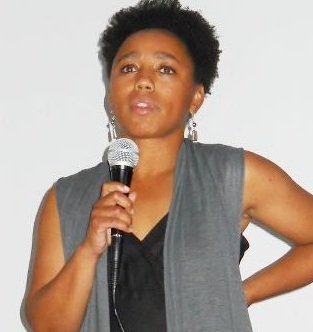
I’ve spent the last 12 years learning to love and sometimes hate San Francisco, and I’ve made it my home. A few months after my 31st birthday, I drove out here from the midwest to contribute to social change in a place where I could be Black, LGBT, and a community organizer – and not be forced to have my dyke identity matter quite so much. (More on that history somewhere else…) While doing grassroots community work in this city, I found love, made life-long friends, started a family and developed an incredible multi-ethnic community that has deeply enriched my life. Over the years, we’ve shared moments of tragedy and the sweetness of victory, and all of it together has defined a “San Francisco experience” quite different from what I expected. And quite different from what the tour guides sell.

Over these years, I developed an analysis of the political, economic and cultural life of this incredibly contradictory city. I’ve come to understand the structural roots of gentrification, the nature of corporate elite rule in a supposedly progressive town, and the challenges white activists face dealing with the complexities of politics in a “majority minority” city. But most of all, it’s the people in my particular San Francisco who I’ve come to love, and I’m now carrying all of their stories with me as I move in new directions. 

My San Francisco is the people rarely quoted in the local media and most often mentioned only in the context of one social problem or another. They are the mostly poor and working-class families of color I’ve been learning from all these years, people whose daily suffering goes mostly unnoticed, whose political leadership is rarely respected, and whose view of San Francisco is rarely taken into account. This is the San Francisco largely off the political and geographic map, where neither tour buses nor politicians tend to go.

My San Francisco has been in the southeast quarter, the Frisco where people work hard and do whatever is necessary to feed their families, have loud family BBQs in the park, and rock their Giants gear as much and as often as possible. The folks getting evicted, foreclosed on, and displaced by being priced out. They are Black and Latino folks who’ve joined grassroots organizations — mostly women — who make incredible daily sacrifices to change the world. They are volunteer community organizers, who might go to school or take care of other people’s children during the day, and organize for change one meeting at a time, at night. They face the threat of deportations, police harassment, and stressful low-wage work. When they join a membership-based organization, they get a community with shared values and support, but they don’t get money, status or personal power. The Frisco families I know and love don’t identify as “moderate” or “progressive,” but they know that rich people don’t have the right to rule the world, that public education and decent housing should be basic human rights, and that it makes no sense, in the middle of such deep unemployment, to raise bus fares and make it more expensive to take the bus to work. They have compassion, common-sense, critical thinking, and courage. They should be running the city.

The grassroots leaders, activists and organizers who’ve become such an intimate part of my life and whose stories now make up “my San Francisco” don’t align nicely with most dominant ideas about this place. They are not cool, cosmopolitan and carefree. But neither are they simply victims of downtown’s political power. Their leadership is the only hope for this city that I have.

It’s the young Black women with heartbreaking stories of brothers and cousins lost through gun violence, and with less public but equally horrifying private horrors of sexual violence and abuse that have traumatized them to their core.  But they are proud to be born and raised in this city and are leading community meetings, developing campaign strategies, educating their peers about Prop. 13 and their right to quality education. I have their tears, their youthful giggles, and their dreams for the future, all here in my head. 

I have the stories of undocumented Latina immigrant women, who too suffered sexual abuse when crossing the border, but now here in the US take incredible risks and do practically everything in their power to ensure their children have a better life than their own. I have the sound of their laughter together, often in Spanish —  of  these mamas, as they make plans to call 100 people for the next meeting, and the shaking in their voice when they rise to speak out in public against the racism they witness in our public schools. These women in my San Francisco have knocked on thousands of doors, talked to tens of thousands of people about the pressing issues of our times. But they are ignored on the streets of our city and in the halls of power, invisible to so many middle class, often white, professionals and activists who just don’t know, understand, or appreciate this ‘other’ San Francisco.

I love this San Francisco, and my hope is that this column can lift up these stories in coming weeks and months. San Francisco will never, ever, become the city of our dreams until the people doing the hard, often invisible work of grassroots organizing in the communities most impacted by city’s contradictions, play a more central role in defining the city’s politics. There is new leadership emerging in communities of color, and the future of San Francisco lies in their power.

Brown, Pak, and Olague

38

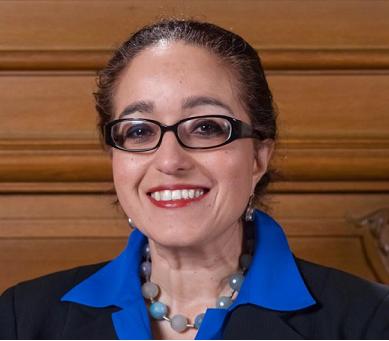
Christina Olague was a great planning commissioner. I’ve always liked her, and when she was appointed we pointed out how strongly she was rooted in the progressive community.

Olague has strong progressive activist credentials, from working with the Mission Anti-Displacement Coalition to protect low-income renters during the last dot-com boom to her more recent community organizing for the Senior Action Network. She co-chaired the 2003 campaign that established the city’s minimum wage and has been actively involved in such progressive organizations as the Milk Club, Transit Riders Union, and the short-lived San Francisco People’s Organization.

She also served two terms on the Planning Commission — appointed by Board of Supervisors then-President Matt Gonzalez in 2004 and reappointed by then-President Aaron Peskin in 2008 — where she was known for doing her homework on complicated land use issues and usually landing on the progressive side of divided votes.

We’ve had some disagreements since she took office — particularly around 8 Washington. (I also disagreed with the Labor Council on that one, and only three of the supervisors agreed with me.) And it’s not the first time an elected official I supported turned around and infuriated me on a development vote.

I want Olague to succeed; I want her to come to us in the fall with a record that makes us want to endorse her for a full four-year term. She’s been talking seriously about violence in the district and about young people, predominantly African Americans, getting killed. I feel like she wants to do the right thing.

But her reelection effort is starting to feature some bad actors.

At a recent fundraiser in Chinatown, former Mayor Willie Brown, who ranks as one of the most corrupt public officials in modern San Francisco history and whose administration was a disaster for poor and working-class people (he once even said that poor people ought to just get out of town because this city is too expensive for them), stood up and made a speech, warmly endorsed Olague and said he would be with her “all the way.” Olague then thanked Rose Pak, the Chinatown power broker, for “all of her support over the last few months.”

This makes me nervous. And it hasn’t helped my nerves that I’ve been trying to talk to Olague about these issues for the last week, and she keeps avoiding the conversation by not returning calls or cutting conversations short when I do reach her.

Willie Brown, with his Chron column, has taken on this funny, warm, man-about-town persona, but when he was running City Hall, everything was about money. He cut deals right and left that destroyed communities and neighborhoods. He oversaw, aided and encouraged what we called the “Economic Cleansing of San Francisco.” Tens of thousands of working-class people, artist, writers, young people … were driven out of the city by a steamroller of gentrification — all with the mayor’s blessing.

Now he’s working as a private attorney, and last time we checked was getting $200,000 a year to represent PG&E. We have no idea what other big corporate clients he has or what he does for them — but it’s clearly not writing legal briefs and handling litigation. He gets paid for being a political fixer. For the bad guys.

And he’s going to be with Olague “all the way.”

Damn.

How they do it in New York: ‘Brooklyn Boheme’ premieres, SFNY goes out with a bang

0

Do people within a “scene” ever recognize it at the time? Does that self-awareness kill the vibe, or is it essential in forming a group identity? Perhaps the answers can be gleaned at the Thu/12 Bay Area premiere of hip-hop writer Nelson George’s latest flick Brooklyn Boheme — a documentary filled with glimpses of baby Rosie Perez, Erykah Badu, and Talib Kweli in the thick of their Fort Greene, Brooklyn heyday. The show’s being thrown down by SFNY,  the three-year event series concluding this week that has connected SF and NYC with promises of slick DJs in fancy hotels and bicoastal culture swap. 

Hip-hop historian Jeff Chang interviewed George about the period he explores in Boheme. In that exchange, George’s top five moments from Fort Greene circa mid-’80s to ’90s make it sound like a dream: 

“1. I had a book party for The Death of Rhythm & Blues at my place at 19 Willoughby Avenue in 1988 that attracted a very eclectic group of folks, from Russell Simmons to Melba Moore to supermodels. It was a very fun, memorable party.

2. Chris Rock coming over to that same apartment to pitch me the film that eventually became CB4.

3. Sneaking around one night to the apartments of two women who lived around the corner from each other for booty calls. A very risky, but exciting night.”

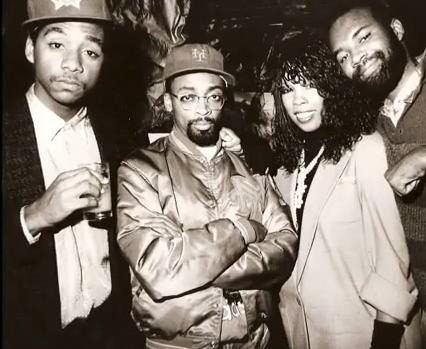
Judging from the trailer, Brooklyn Boheme is an insider’s look at the kids everyone wanted to be like in the ’90s. Yeah, that’s Michael Jordan hanging with Spike Lee, what? Mos Def — sorry, Yasiin Bey — pre-Hitchhiker’s Guide to the Galaxy, visual artist Lorna Simpson reminiscing on the productivity that came from hanging out around densely-packed, extravagantly brilliant people (Lorna, I’m down for tips on how to do this if you’re offering.) The snapshot of the temporary community is made even more poignant with the knowledge of what came about in the neighborhood later on. The trailer acknowledges that Fort Greene has become synonymous with gentrification. Blame it on the artists… 

After the flick, head to the Clift Hotel for sets by KM/FM (King Most, FA, and Marky), Wonway Posibul (Latin Soul Brothers-Thinkbeat Radio), Haylow (Roy Ayers Project-70/30), and Jerry Nice (Groove Merchant Records). 

Brooklyn Boheme premiere

Thu/12 8pm; $5 movie only, $15-$45 movie and afterparty

Clay Theater 

2261 Fillmore, SF


SFNY wrap party-Brooklyn Boheme afterparty

Thu/12 10pm-2am

Clift Hotel 

495 Geary, SF

sfny6.eventbrite.com

Our Weekly Picks: June 27-July 3

0

WEDNESDAY 27

“Turbulence (a dance about the economy)”

Breaking down the proscenium is one thing. Favoring installations over stage presentation is another. But messing with the distinction of representation and participation is something else entirely. No one I know of so radically questions the very essence of performance as does Keith Hennessy. What do you call it when in the process of creation, the viewer disappears into the action? For Hennessy it’s a political act. “Turbulence, (a dance about the economy),” which he describes as a “collaborative failure,” was already in the making when Occupy Wall Street exploded. Just as in life, during the “Turbulence” presence at CounterPULSE last December, some people stepped up, others left, the majority sat and waited. (Rita Felciano)

8pm, free

CounterPULSE

1310 Mission, SF

(415) 626-2060

www.counterpulse.org


THURSDAY 28

Andy Rourke of the Smiths (DJ set)

Your inner disco dancer better not be dead, because Smiths bassist Andy Rourke is coming to town, with a crate of records in tow. Ever since he moved to NYC from across the pond, Rourke has become a fixture in the city’s DJ circuit. Instead of aiming for a unified sound with his sets, he jumps impulsively between pop, funk, and electronica, compiling a vibrantly erratic patchwork quilt of his musical influences. Will Rourke tip his hat to the Mozfather with a few beloved Smiths numbers when we least expect it? Only one way to find out, so, clubgoers of the world unite! (Taylor Kaplan)

With Aaron Axelsen and Omar

10pm, $12

Rickshaw Stop

155 Fell, SF

(415) 861-2011

www.rickshawstop.com


Russian Circles

These dudes produce a lot of noise for just three people. The Chicago-based Russian Circles employ heavy use of effects pedals to layer their instrumental, wallowing metal, creating a deep pitß of sound. Their songs seamlessly transition from chugging, mathematical guitar riffs to soft, melodic interludes. In concert, the band is impressively able to replicate and expand upon their complex recorded work, which features enough tempo, time signature, and key shifts to awe anyone with a basic understanding of music theory. It’s metal for the thinking (wo)man, but not to worry, it still shreds. (Haley Zaremba)

With Deafheaven, And So I Watch You From Afar

8pm, $14

Great American Music Hall

859 O’Farrell, SF

(415) 885-0750

www.gamh.com


FRIDAY 29

“The Official Blues Brothers Revue”

With an all-star musical cast and the comedic genius of John Belushi and Dan Aykroyd, the beloved 1980 film The Blues Brothers paired one of the best soundtracks of all time with an action packed storyline that continues to thrill. The movie — which screens at the Paramount Theatre in Oakland on Friday night — has also inspired a top notch musical tribute show, “The Official Blues Brothers Revue,” featuring the talents of Wayne Catania and Kieron Lafferty as Jake and Elwood, all with the approval of Belushi’s estate and Aykroyd. So put on your suits, shades, and fedoras and get ready to join the boys this weekend on their “mission from God!” (Sean McCourt)

Fri/29-Sat/30, 8 and 10pm, $25–$35

Yoshi’s

1330 Fillmore, SF

(415) 655-5600

www.yoshis.com


Pepper 19-Year Anniversary

It’s been 19 years since a gaggle of scruffy dance-and-drink fanatics took over Monday nights at Don’s Different Ducks bar in the Lower Haight, spun some funky house records, and imbibed with abandon, often using the plywood-covered pool table as a dance floor. Pepper, they called it, and although it’s moved around a lot since the Don’s days (it was one of the Guardian’s favorite roving parties of the 1990s), it’s still held strong, retaining its ragtag aura even as its players have become lionized. For this installment, at 222 Hyde in the Tenderloin, DJ Charlotte the Baroness returns from her new home in Chicago to join originator Toph One, fresh out of the hospital after a tragic hit-and-run, on the decks with the Pepper family. Good friends, good fortune, new faces, no-holds-barred dancing. (Marke B.)

9pm, $5

222 Hyde, SF

(415) 345-8222

www.222hyde.com


Dent May

She visits from Brooklyn, he attempts to show her a fun time. “You Can’t Force a Dance Party,” from 2009’s The Good Feeling Music of Dent May & His Magnificent Ukulele, wryly introduced May as an affective personality to rival Jonathan Richman and Jens Lekman. It’s not hard to see the autobiographical elements in his music when he sings of his native state, “For you I’ll try so hard to make you see, it ain’t so bad in Mississippi.” Dropping out of NYU, May returned home to work on music and helped found the Cats Purring arts collective/”infotainment cult.” With his new release, Do Things — a slice of sun that sounds like the product of playing with a drum machine after listening to “Wouldn’t It Be Nice” on repeat/acid — May proves that the party is wherever he goes. (Prendiville)

With Quintron and Miss Pussycat

9pm, $9–$12

New Parish

579 18th St., Oakl.

www.thenewparish.com


Sat/30 9:30pm, $10–$12

With Quintron and Miss Pussycat, Shannon and the Clams

Elbo Room

647 Valencia, SF (415) 552-7788

www.elbo.com


Sandwell District

The SF techno scene blossomed nicely in spring, a kaleidoscope of pixellated textures, live experiments, and visiting representatives of a global scene unburdened from any anti-intellectual strains by the rise of pop EDM. There was also some damn good dancing to be had, no lie. Perhaps auguring a summer full of even deeper, and, perhaps, harder sounds, a showcase from Berlin’s Sandwell District label kicks the season off with some sophisticated boom-boom from Function, Rrose, and Silent Servant at Public Works, presented by the As You Like It party crew. Entrancing UK slow-burn disco king Mark E gives something to swing our skirts to upstairs, and the whole shebang kicks off with the debut of Amélie Ravalec’s documentary Paris/Berlin: 20 Years of Underground Techno. (Marke B.)

9pm, $15–$20

Public Works

161 Erie, SF

(415) 932-0955

www.ayli-sf.com


SATURDAY 30

The Slow Motion Cowboys

The music of the Slow Motion Cowboys has a subtle summery ease — it makes you want to pick up a banjo and play along, perhaps while sipping some lemonade out on the porch. You’d close your eyes and strum along to the sounds of upright bass, gentle guitar picking, baritone ukulele, and fiddle. The group’s original songwriting style and arrangements capture that wistful feeling of yearning that so characterizes classic folk and bluegrass music. While contemporary enough to strike interest in a city audience, their sound is country enough to provide you with much needed peace of mind on a Saturday night out on the town. (Shauna C. Keddy)

6pm, $8–$10

Amnesia

835 Valencia, SF

(415) 970- 0012

www.amnesiathebar.com


Kafana Balkan

Admit it: you could use a lot more woozy oompah-pah in your life, a splash of wheeling fiddle-dee-dee, soaring hurrah, and bouncey bass arpeggio. Forget the automated four-four march of your quotidian existence, and whirl away from the rat race like a romanticized gypsy, a musical nomad free of the cubicle, the log-in, the comments section, the endless update. Kafana Balkan, one of our best Romani-inspired parties, mixes gypsy tunes and strong drink with a wee bit of playa dust to conjure non-stop ecstatic dancing: this blowout with live powerhouses Brass Menazeri and Fishtank Ensemble (and fantastic DJ Zeljko) is just the ticket to chase away any reality blues. (Marke B.)

9pm, $15

Great American Music Hall

859 O’Farrell, SF.

www.slimspresents.com


SUNDAY 1

Party Hard(ing)

When it comes to the high stakes game of gentrification, the Divisadero Corridor — lovingly dubbed DivCo by the passels of farmers market-minded individuals that have repopulated the once-African American, once-Western Addition — is betting high. The neighborhood has the critical mass of sustainability activists needed to launch high profile wars against big bank incursion, and drive the conversation on what kinds of new businesses belong on their street. The Harding Theater at 616 Divisadero is a new battle site. Neighborhood groups hope to thwart the efforts of condo developers and make it a community space. Today, come party and fundraise to that end with local vendors, barbers, musicians, and chefs in a gorgeous Alamo Square mansion. (Caitlin Donohue)

7-10pm, $20

Westerfield Mansion

1988 Fulton, SF

Facebook: Party Hard(ing)

www.nddivis.org


Lower Dens

Ever since Lower Dens made some year-end lists with 2010’s Twin Hand Movement, bandleader Jana Hunter has kept Kraftwerk’s Radio-Activity in heavy rotation. And, it shows. The Baltimore outfit’s breakthrough follow-up record, Nootropics, doubles down on thick, Krautrockabilly grooves, with the Zen-like propulsion of Lou Reed cruising the Autobahn. The production aesthetic is fascinating in its ability to sound both dry and soaked in reverb, and the album’s second half reveals a newfound interest in Musique concrète, giving the material an artier edge. Sure, they’ve upped their studio game, but the question remains: how will the band rock these songs in a live setting? (Kaplan)

With No Joy, Alan Resnick

8pm, $15

Independent

628 Divisadero, SF

(415) 771-1421

www.theindependentsf.com


MONDAY 2

The Casualties

Punk’s not dead! The Casualties made sure of it when they formed in New York in 1990 with the purpose of bringing punk back to its roots, in the style of the Exploited and pre-Rollins Black Flag. More than 20 years and eight studio albums later, they’re following through on their proclamation “The punx are fucking here/ You know who we are/ We’re here til the end/ Die hards! Die hards!” With over two decades to perfect their stage dives and liberty spikes, the Casualties are guaranteed to deliver a killer show. Expect some brutal circle pits. (Zaremba)

With Nekromantix, Down By Law, Lower Class Brats, the Sheds

7pm, $16

Oakland Metro Opera House

630 Third St, Oakl.

(510) 763-1146

www.oaklandmetro.org

The Guardian listings deadline is two weeks prior to our Wednesday publication date. To submit an item for consideration, please include the title of the event, a brief description of the event, date and time, venue name, street address (listing cross streets only isn’t sufficient), city, telephone number readers can call for more information, telephone number for media, and admission costs. Send information to Listings, the Guardian Building, 135 Mississippi St., SF, CA 94107; fax to (415) 487-2506; or e-mail (paste press release into e-mail body — no text attachments, please) to listings@sfbg.com. Digital photos may be submitted in jpeg format; the image must be at least 240 dpi and four inches by six inches in size. We regret we cannot accept listings over the phone.

Win a pair of tickets to the premiere of Brooklyn Boheme and the SFNY Wrap Party afterwards

0

SFNY brings BK-to-the-BAY with the Bay Area premiere of Brooklyn Boheme, a feature documentary by Diane Paragas and Nelson George, at the historic Clay Theatre in the Fillmore District of San Francisco. Brooklyn Boheme pays homage to the black arts movement that flourished in Fort Greene, Brooklyn throughout the mid-80′s and 90′s. Brooklyn Boheme speaks to experiences familiar to many artistically significant neighborhoods across the US – the formation of a thriving community in the wake of inequality and marginalization, the creative potential of those communities, and the effects of gentrification as a result of various forms of urban renewal. Writer, historian, director, and Brooklyn resident Nelson George will be in attendance for an intimate discussion following the film.

Join San Francisco’s freshest DJ’s for the official after-party and the very last SFNY event, to be held at a secret location deep in the heart and soul of the City. For the past three years, SFNY has successfully connected local independent artists and businesses by providing opportunities for creative collaborations amongst attendees. With five milestone events to date, KM/FM has had the privilege of rocking alongside some of NYC’s most distinguished selectors at some of NYC’s most iconic designer hotels. SFNY humbly invites the left coast to do the right thing one last time… for more information about the event click here.

Enter for your chance to win a pair of tickets by emailing sfbgpromos@sfbg.com with the title as ‘SFNY’ and include your name and mailing address. One lucky winner will receive a pair off tickets to the event.  Winner will be announced on Monday, July 2nd.

Thursday, July 5, 7pm doors open, 8pm screening, 9:30pm discussion with Nelson George @ the Clay Theater, 2261 Fillmore Street, SF | $15
SFNY Wrap Party Secret Location, TBA, 10pm-2am • 21+

Mecke joins crowded District 5 supervisorial race

26

Progressive activist Quintin Mecke jumped into the District 5 supervisorial race today, echoing gentrification concerns raised this week by the Guardian and The New York Times and promising to be an independent representative of one of the city’s most progressive districts, a subtle dig at Sup. Christina Olague’s appointment by Mayor Ed Lee.

“The City is at an economic crossroads. As a 15 year resident of District 5, I cannot sit idly by while our City’s policies force out our residents and small businesses, recklessly pursuing profits for big business at whatever cost,” he began a letter to supporters announcing his candidacy, going on to cite the NYT article on the new tech boom that I wrote about earlier this week.

“What we do next will define the future of San Francisco; the city is always changing but what is important is how we choose to manage the change. One path leads to exponential rent increases, national corporate chain store proliferation, and conversion of rent-controlled housing. The other path leads to controlled and equitable growth, where the fruits of economic development are shared to promote and preserve what is great about this City and our district,” Mecke wrote.

Mecke came in second to Gavin Newsom in the 2007 mayor’s race and then served as the press secretary to Assembly member Tom Ammiano before leaving that post last week to run for office. Mecke joins Julian Davis and John Rizzo in challenging Olague from her left, while London Breed and Thea Selby are the leading moderates in a race that has 10 candidates so far, the largest field in the fall races.

Although he never mentioned Olague by name, Mecke closed his message by repeatedly noting his integrity and independence, a theme that is likely to be a strong one in this race as Olague balances her progressive history and her alliance with the fiscally conservative mayor who appointed her.

“Politics is nothing without principles; and it’s time now to put my own principles into action in this race,” Mecke wrote. “District 5 needs a strong, independent Supervisor. I am entering this race to fight for the values that I believe in and to fight to preserve what is great about District 5 and the city. I have brought principled independence to every issue I’ve worked on and that’s what I’ll continue to bring to City Hall.”

In an interview with the Guardian, Mecke said he sees the campaign as a “five-month organizing project” to reach both regular voters and residents of the district who haven’t been politically engaged, including those in the tech sector. He’d like to see the perspective of workers represented in discussions about technology, not simply the narrow view of venture capitalist Ron Conway that Mayor Lee has been relying on.

“Local politics needs new blood,” Mecke said, “it needs to hear from these people.”

Save Adobe Books?

2

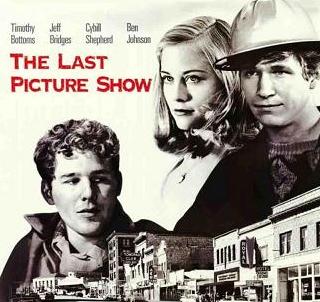
Adobe Books owner Andrew McKinley didn’t have to think long when I asked him the corniest question of our interview, occasioned by the announcement that his store was in serious danger of having to close. Question: if you had to choose one book to describe your situation, what would it be? “It reminds me of The Last Picture Show by Larry McMurty,” McKinley gamely responded. “It’s about a movie theater in a small Texas town that’s dying out.”

But! ask Mission District bibliophiles. Can Adobe Books be saved? The answer, according to McKinley, lies in whether you have a buddy with $60,000 to save the future of SF books — or better yet, $3 million.

McKinley has owned the store for the past 24 years, originally with a business partner. “I always dreamed of having a store filled with artists, poets, and writers,” he told me. “Meeting people who want to be artists has been the best part.” For decades, that’s what he did — he even opened a gallery space in the back that hosted near-monthly art openings. But times, they are a’changin’ — and rising real estate costs in the area have made it impossible for the bookstore to continue to exist in its prime location astride Valencia and 16th Streets. Granted, this isn’t the first time the alarm has been sounded, but McKinley forsees having to close his doors for good at some point over the next few months. 

Unless… and on this point he’s almost reluctant to give us hope. Unless some “angel” descends from heaven (or the hills south of Dolores Park perhaps) to pluck Adobe from its doom. With $60,000, McKinley reckons he could keep the shop open for three more years — that amount is approximately a year’s rent on the space. With $3 million, said “golden angel” could buy the building and ensure that the inner Mission continues to have a place to buy dog-eared paperbacks and browse well-curated banks of sweet, sweet literature. 

But. “I don’t want to be a charity,” says McKinley. “I feel that closure might be the best solution if no one can step into save it.” The bookshopkeep allows that he hasn’t exactly bent over backwards to adjust our times of Amazon.com and 140-character attention spans. He could have added a cafe to augment the business, he posits. Maybe started selling new and remaindered volumes. 

But. There it is, he didn’t, and now we’re faced with losing yet another Mission bookstore to the march of time. (Granted, it’s not all bad news for bookworms — Modern Times Bookstore Collective was able to relocate to a gorgeous new location on 24th Street and the Dog-Eared Books family recently had a new baby not too far away in the form of Phoenix Books.) 

Unless. McKinley says the notion of re-starting Adobe as a member-based collective has been thrown around by some of the shop’s super fans. But that could be just the well-wishing of the community members he’s held so dear over the years. 

Just remember. “The knowledge in books is not as important to get by in this modern world,” says McKinley. “People don’t put together large collections of books as much. It is funny, more books have been created in the last few decades and more people can read than ever before.” We read you, sir.

P.S., massive sale going on right now at Adobe Books. 

Adobe Books

3166 16th St., SF

(415) 864-3936

adobebooksbackroomgallery.blogspot.com

On utopian frequencies

0

arts@sfbg.com

CULTURE It’s the tangible buzz I notice first, a tingling awareness of something important about to occur, followed swiftly by the realization that there are free quesadillas courtesy of the Great Tortilla Conspiracy, silk-screened with chocolate sauce and rabble-rousing sentiment: “Eat the Rich.”

It’s opening night for the ambitious Streetopia festival, and the scene outside the Luggage Store Gallery is vibrant and chocolate-scented. On the sidewalk, Brontez Purnell scrawls ritual sigils in bright pink chalk, while a watchful Amara Tabor-Smith, in Butoh face paint and bare feet, leans against a tree, waiting to enter the circle and begin her ceremonial dance. Festival co-curator (with Kal Spelletich and Erick Lyle) Chris Johanson is overheard gushing unselfconsciously about the “vibe,” and among the gathered throng of artists and tourists, Sixth Street residents and urban activists, bookworms and cinephiles, tastemakers and thinkers, old punks and new parents, it’s as apt a descriptor of the electric excitement as any.

Inside the Luggage Store itself, a fanciful reimagining of the space awaits, just past the heavily-graffitied stairwell and the bright shock of Day-Glo paint and black light of the entryway. A multi-level, wooden loft structure dominates the gallery itself, crammed with little nooks in which one might find a contemplative interactive art project involving paper boats, a tribute to Valerie Solanas, a solitary disco ball, a pirate radio set-up, a “live open letter office,” and countless murals, photographs and sculptures — frankly too much to absorb in one sweep through.

Down Market Street, beneath the Renoir Hotel, the cacophonous screech and throb from Shaun O’Dell’s noise installation “THE SOMETHING” attracts the curious, with amplifier knobs to twiddle, an out-of-tune ukulele to bang, synthesizers to desynchronize, and numerous cameras to record the emphatically spontaneous proceedings on. A rare opportunity for the public to visit the San Francisco Drug Users Union to view an art installation by Barry McGee, plus the promise of free food at the Tenderloin National Forest/Luggage Store Annex at 509 Ellis, entices the intrepid to wander further afield, into the TL night.

Impressively all-encompassing by any measure, Streetopia’s first weekend (it opened May 18) included nods to almost every possible artistic discipline with participants from all corners of the country. It gave space to panel talks, such as AIDS chronicler and former ACT UP activist Sarah Schulman’s “A Gentrification of the Mind” (an event co-curator Erick Lyle was eager to point out represented “the multi-generational teaching and sharing aspect of Streetopia”). It reinvigorated the idea of food as communion with Sy Wagon’s Free Café, the previously-mentioned Great Tortilla Conspiracy, and the War Gastronomy Food Cart; precipitated an off-site “spirit gardening” event at the Hayes Valley Farm with performance artist-musician Ryder Cooley; and hosted the kickoff to “endurance” performer Marshall Weber’s 72-hour poetry reading — a marathon that made that morning’s Bay to Breakers run look even more inconsequential than usua l.

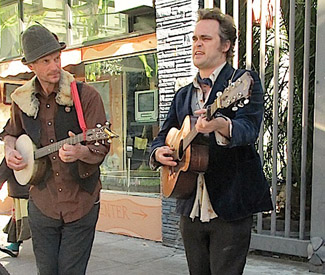
My favorite moment of the project thus far, however, came on the evening of May 20 at the Tenderloin National Forest during an all-too rare performance by dark folk minstrels Hazy Loper, currently a duo comprised of Devon Angus and Patrick Kadyk. Torn between our desire to listen to the mournful melodies and observe the onset of the solar eclipse, the entire crowd wound up in the street squinting at the sun through postcard pinholes, loosely-clenched fists, the holes of a colander, and the leaves of a nearby tree, while the band gamely finished their set out on the curb for the whole neighborhood to enjoy. It was an experience that, for me, best encapsulated a straying from the script that the entire Streetopia project seems designed to encourage: offering a framework for building lasting interpretations of an urban utopia, rather than an experience ready-made and soon forgotten.

STREETOPIA

Through June 23

Various venues, SF

www.streetopiasf.com


Our 2012 Small Business Awards

5

WOMEN IN BUSINESS

KELLY MALONE, WORKSHOP AND INDIE MART

In a tech-obsessed society, our hands navigate today’s gleaming gadgets more often than those of yesteryear: a sewing machine, say, or a manual drill. DIY goddess Kelly Malone has spent years trying to change that — and in so doing has created a business that serves as a cultural touchstone for the budding Divisadero Street corridor.

Malone’s brick-and-mortar shop is named Workshop (1798 McAllister, SF. 415-874-9186. www.workshopsf.org), and it’s a place where aspiring crafters receive hours of instruction in oft-neglected skills like sewing, knitting, and terrarium-making — all while drinking Pabst Blue Ribbon and meeting new friends. After receiving an enthusiastic response from her Indie Mart (www.indie-mart.com), a handmade craft fair she started six years ago in the backyard of her Mission digs, Malone saw a need for a hub for would-be crafters.

“I wanted to create a space that was super ‘hit it and quit it,'” she says. “Where you could come in and take a class, but you didn’t necessarily need to become some expert knitter. A place for people to sit down and get their hands dirty, learn to make something, and get inspired.”

Malone started Workshop on scant funding. Instead of relying on bank loans, she looked to her immediate community for investors. “I’ve started every business without money, which has forced me to really put myself out there and grow my businesses by meeting people and being super-passionate about what I do,” she says.

Malone says having a big budget to open her businesses would have been fun, but saving her pennies and having flea markets and garage sales to pay for sewing machines gives her more street cred, DIY all the way.

And like our favorite kind of businesspeople, Malone hardly sees her enterprises as a sterile way to make a quick buck. “I’m never going to get rich off these businesses, but if I get to the point where I can have a couple people on staff like I do now, and have enough to pay bills and go get some beers, hey, that’s good enough for me.” (Mia Sullivan)

CHAIN ALTERNATIVE

SPORTS BASEMENT

Although based locally, Sports Basement (www.sportsbasement.com) is technically a chain, as it now boasts four locations: an 80,000 square-foot building at the old commissary in the Presidio, SoMa’s brick-and-wood location, a store in Sunnyvale that once mimicked the inside of a computer (look for the remaining “ESC” keyboard sign), and another nearing Mount Diablo in Walnut Creek. But beyond the fact that it offers the only real alternative to national conglomerates when it comes to one-stop athletic and outdoor gear, the retail company is fiercely dedicated to its Bay Area community. Plus, its cozy, with hand-painted cardboard signs detailing specials, comfy couches, and super-friendly staff.

Founder Eric Prosnitz came up with the Sports Basement idea in an effort to create a more personalized experience in an off-price retail outlet, something tailored more closely to Northern California’s environment. Products change every week, discounts rule, and employees are encouraged to treat customers as individuals with a continuum of outdoor lifestyle needs. And the Basement recognizes that it’s an expansive company with the power to affect various neighborhoods. Last year, its locations hosted more than 2,000 community groups at 7,000 events, averaging around four events per store per day. Ten-15% of the retail space serves as free community space. Examples: Walnut Creek holds a fundraiser in the form of a kid apparel fashion show, Sunnyvale hosts ASHA for India, an organization dedicated to providing education for underprivileged children in India; Bryant St. houses the AIDS Lifecycle organization, and Presidio is the meeting spot for Golden Gate Mother’s Group — just to mention a few.

Aaron Schweifler, Director of Operations at Sports Basement, says the staff is encouraged to be creatively autonomous, and hopes each store will provide a shopping experience that can “wow” local residents. We are wowed! (Soojin Chang)

TENANT ADVOCATE

GREG MARKOULIS, AMERICAN INDUSTRIAL CENTER

In 1975, Greg Markoulis of American Industrial Center (2345 Third St., SF. www.aicproperties.com) was scouring San Francisco to find a new home for his family’s 25-year-old shoe manufacturing company. When American Can Company, one of the city’s oldest and busiest industrial complexes, offered an attractive deal on a vacant Third Street building, Markoulis gladly took them up. The new abode reinvigorated the company, transforming it from a street corner location to a community space housing more than 285 businesses — now including graphic designers, commercial photographers, architects, light industrial manufacturers, a winery, a yoga center, a martial arts studio, and a medley of Web-based companies and art collectives. That expansive spirit soon spread, helping to reinvigorate the entire Dogpatch area, which had suffered a lengthy period of industrial decline.

Thirty-seven years later, AIC still keeps the family ethos alive. When making executive decisions, Greg Makoulis says the company’s priorities align much more with how relatives interact with one another rather than those of a typical business. “The ideas of the oldest generation with the most experience are considered first,” says Markoulis.

As this side of town is rapidly undergoing gentrification, he could very well have sold the building to a corporation. But he sees his tenants as valuable community members, not just paychecks. Markoulis thrives on finding working solutions to accommodate his tenants, and respects the fact that people’s needs are ever-changing. Markoulis describes AIC’s priority to be “giving everyone a stable place to operate in.”

In Markoulis’ experience, one of the biggest challenges that AIC has faced over the years has to do with the cost and time for newly opening businesses to acquire permits. He hopes to see changes in San Francisco’s building and planning department, because he thinks a faster turnaround would help foster employment opportunities. (Soojin Chang)

CULTURE CHAMPION

DON ALAN, HEMLOCK TAVERN AND CASANOVA LOUNGE

“I think the challenge for San Francisco is to take care of the venues that its got,” says Don Alan of the ever-shrinking live music scene here. Alan has contributed enormously to the preservation of live rock in the City by the Bay with his raucous Hemlock Tavern space in Polk Gulch (1131 Polk, SF. 415-923-0923, www.hemlocktavernsf.com) on the site of former gay bar the Giraffe. He’s also a preservationist of dive bar ambiance, opening Mission District favorite Casanova Lounge, full to the brim of attractive indie young ‘uns on the make.

Alan got his rock start in the on community radio in Madison, WI, soon coming to SF and opening storied live bluegrass and jazz cafe Radio Valencia. “We opened the Casanova while we still had Radio Valencia and we realized that a bar format would work better for live entertainment than a cafe format,” Alan says. “We opened the Hemlock in 2001 after we closed Radio Valencia. I was really excited about having a space like this. I was very interested in having a kind of old Wisconsin tavern feel because that’s where I grew up. It was perfect for me, finding a space that had a small venue so we didn’t have to be concerned about getting 200 people in every night, so we could book the kind of music that we wanted and to have a big enough bar to support that.”

“But basically this is a subsidized entertainment operation. The money is made at the Hemlock’s bar and the culture happens in the back room with the shows. The culture wouldn’t happen without this up here.” So go buy a beer or eight, already, and then take in one of those rarer-and-rarer raging shows. (Mirissa Neff)

EMPLOYEE-OWNED BUSINESS AWARD

MANDELA FOODS COOPERATIVE

“In high school, all I wanted was there to be a place to find fruits and vegetables,” says Mandela Foods Cooperative (1430 Seventh St., Oakl. 510-452-1133, www.mandelafoods.com) worker-owner James Berk. “I never thought I’d be the one that could provide that. It’s an interesting place to be in.”

Before the store opened, Berk’s native West Oakland was a food dessert. A dependence on convenience stores for nutrition was leading to rampant bad health in his community, so when the opportunity arose to be a part of a for-profit, organic-heavy grocery store in Mandela Marketplace, he took it. Responding to the neighborhood’s request, the shop employs and is owned by community residents. These worker-owners make all the shop’s decisions in group meetings, aiming for consensus when it comes to many essential issues.

Now, nearly three years after opening its doors, Mandela Foods Cooperative is a neighborhood staple. The majority of customers live within a radius of a few blocks and come to snap up bestselling items like orange juice, coconut water, and kale (a vegetable Berk said he had never heard of before working at the store.)

Ready-made food is also popular, from full plate meals to sandwiches that neighbors drop in to buy, despite a Subway next door. Though the shop’s focus continues to be on organic, naturally-produced foods, worker-owners see a need for a greater diversity of products: cheap staples alternating with more spendy products geared towards sustainable foodies. Business is stronger than ever right now, too — Berk says the small shop is on pace to break even this year.

So how is it banding with your neighbors to bring the rest of the block ingredients for a healthy diet? About as positive as you’d imagine it to be. “There’s a unity here that I’m not accustomed to,” says Berk. (Caitlin Donohue)

ARTHUR JACKSON DIVERSITY IN SMALL BUSINESS AWARD

CHERYL BURR, PINKIE’S BAKERY AND CITIZEN’S BAND

Cheryl Burr has no idea why her first bakery boss left her 16-year old self in charge of the pastries. “I would never have let a teenager do that at my business!” she chuckles. But really, the guy was showing prescience — Burr and business partner Chris Beerman, who originally shared space in a bakery-bento retail window in Potrero Hill, opened the doors of their Pinkie’s Bakery (1196 Folsom, SF. 415-556-4900, www.pinkiesbakerysf.com) in SoMa nearly three years ago and have been tickling sweet teeth with their skills there ever since.

“I’ve always been a super-strong personality,” Burr tells us, sitting in the sunny table area of Pinkie’s. Though the Asian American breadsmith built a respectable career in high-class kitchens around the city, there came a moment when she wanted to be able to execute her own vision. “I’ve gotten to this point in my career where I didn’t want to answer to anybody.”

So she took control of her own trajectory, renting space in a commercial kitchen, starting her own hustle. Burr supplied pies to wholesale accounts, mainly friends of friends she’d met through her years in the restaurant business. Her commercial space is part of a culinary reinvigoration of the neighborhood around Seventh Street and Folsom. Pinkie’s is a stone’s throw from Bloodhound Bar, Sightglass Coffee, Radius restaurant, Terroir wine bar and more. “There is definitely a sense of community and partnership around here,” says Burr, who will sometimes refer to the strip as “Folsoma.”

Pinkie’s is also a room away from Citizen’s Band, Beerman and Burr’s freshly-sourced diner. The same customers that come for Burr’s famous levain bread and apple butter morning buns can now also order a dinner of poutine with wild mushroom gravy and crispy pork belly right next door.

“We want to continue to refine what we’re doing here,” Burr says when asked about her future business plans. Did that young woman on her first baking job envision the success of her own bread basket? She smiles. “I’m not entirely sure what I envisioned, but it’s different.” (Caitlin Donohue)

GOLDEN SURVIVOR AWARD

PHIL’S ELECTRIC

During World War II, Phil Sidari was commissioned to make artificial limbs for disabled US veterans returning home. The shortage of finished goods during wartime also prompted Sidari to begin constructing small appliances out of spare parts. Thus, 61 years ago, Phil’s Electric (2701 Lombard, SF. 415-921-3776, www.philselectric.com) was born.

Sidari passed away at the ripe old age of 103, but his friends Vicki and Bob Evans took the reins in the 1970s when Phil decided to retire. Vicki says the store has gone through quite a few changes over the years, including a relocation 28 years ago from Fillmore Street to a quiet corner near the gates of the Presidio.

The shop is intimate, homey, and entirely a family affair. Bob and Vicki’s sons Tom and Ken help their parents run the business and provide excellent customer service to their patrons. Phil’s Electric specializes in the repair of vacuums and lamps but also sells coffee makers, blenders, vacuums, razors, and a host of other small electronic items.

Yet the rise of cheap, disposable electronics has made it difficult a business that’s founded on, well, fixing things. “In the past, almost everything got repaired, but that’s changing,” says Vicki. “For example, you can buy a Cuisinart coffeemaker that, after its warranty, there are no parts for it. So you throw it out. Whereas, say 12 years ago, we would have had a part for that and fixed it for you.”

Phil’s Electric also faces stiff competition from the Internet and larger stores. But it does have some advantages. “Internet companies are working out of a warehouse somewhere, so they don’t really have any commitment to the neighborhood or the city or the community,” Vicki says. And the unique thing about San Franciscans, according to Vicki, is our interest in supporting neighborhood businesses. “If we moved this to a suburban area, I don’t know if we’d have that many loyal customers.”

Vicki’s favorite part about the business? The human aspect and her autonomy. “You can interact with your customers and really try to be flexible and meet people’s needs.” (Mia Sullivan)

SMALL BUSINESS ADVOCATE

CALIFORNIA MUSIC AND CULTURE ASSOCIATION

Two years ago, during the climax of the police and regulatory crackdown on San Francisco nightlife that we dubbed the “War of Fun,” the California Music and Culture Association (www.cmacsf.org) was formed to advocate for all the club owners, promoters, DJs, and other creatures of the night who create our urban soundtrack and culture.

Since then, CMAC has become powerful advocate on behalf of nightlife, demonstrating an influence on Mayor Ed Lee and other city leaders and promoting an understanding at City Hall of the important role played by nightlife, which a recent Controller’s Office report found accounts for $4.2 billion in annual economic activity.

“As the recent Controller’s report demonstrated, the small businesses that make up the nightlife economy have a huge impact on the overall economy, and we’re happy the city is starting to realize this,” Alix Rosenthal, co-chair of the CMAC board, told us.

Now, with the help of newly hired Executive Director Laura Hahn, CMAC hopes to move from playing defense against crackdowns and punitive legislation to playing offense by expanding its membership and developing a proactive agenda that will help nightlife and its purveyors flourish.

“Now that we don’t have our back against the wall, we’re trying to expand,” Hahn told us. “We want to bring it to even smaller business owners like individual DJs, promoters, and individual musicians — the backbone of nightlife in San Francisco.”

But not matter what new realms CMAC gets into, small business advocacy will always be at the core of its mission. As Hahn said, “We want to focus on standing up for the little guys who don’t have people fighting for them in City Hall.” CMAC will host the 2012 San Francisco Nightlife Awards, Thursday, May 31 at Mezzanine, doing even more to bring local nightlife to the fore. (Steve Jones)

GOOD NEIGHBOR

SHANNON AMITIN, FARM:TABLE

“People always ask me if I ever consider expanding,” Shannon Amitin, owner of farm:table (754 Post, SF. 415-292-7089, www.farmtablesf.com) says over the phone, although I swear I can hear his eyes twinkling. “I usually laugh and say, ‘Yes, but only if I can find a much smaller space.'”

The joke — or rather the good fortune — here is that Amitin’s bustling Tenderloin cafe and restaurant squeaks just shy of 265 square feet, with a large communal table for sharing some of the best gourmet dishes in the area. Those dishes are delectably evanescent: the three-year-old resto’s changing daily menu is Tweeted each morning for your rising and shining appetite. Featured as I write this: polenta cake + yukon potato hash + soft egg, asiago + rooftop herb frittata.

“Rooftop”? Yep, farm:table harvests most of its herbs and many greens from its roof, adding a bit of green to the neighborhood. Coming soon, another bit of green in the form of a farm:table parklet, whose funding was secured via, what else, Kickstarter. Farm:table itself has become a community hub for nightlife characters, nonprofit advocates, and office workers.

And yes, there is delicious coffee. Amitin cut his teeth dripping cups of Blue Bottle behind the original’s counter, but became disillusioned when Blue Bottle tipped from a friendly experiment into a chain-aspirational juggernaut. “I saw what I didn’t want to do,” he says. “That’s what led me to something small and personal. I have really good people working for me, in a vibrant area, with a crowd that’s open to new flavors. I want to keep that magic.” (Marke B.)

READERS’ CHOICE

PINK BUNNY

It’s been open less than a year, yet Marina luxury erotic goods boutique Pink Bunny (1772 Union, SF. 415-441-7399, www.pinkbunny.biz) has hopped into our readers’ hearts — and possibly other parts as well. Founder and CEO Serene Martinez showcases quality adult toys from the likes of Jimmyjane and gorgeous lingerie in a lovely, well-curated space. Union Street, get kinky!


Open Walls Baltimore: What the murals said, how the streets responded

1

Most of you will know the neighborhood I was walking that early evening in from The Wire. In fact, the school where season four was shot was a few blocks away. That TV show is an eternal point of reference for Baltimore’s Greenmount West neighborhood, which Open Walls, the town’s first street art festival which I was in the hood to cover, was hoping to combat. The festival, going since March, will conclude with a closing party on May 25.

“Hey! I have a question for you!” Sometimes when you’re walking through half-vacant blocks at dusk you don’t turn around when people yell at you from across the street (you know white people), but this time the Argentines and I turned. A woman was walking towards us and pointing up at Jetsonorama’s massive, half-finished wheatpaste of a man’s face hovering in the dark above our heads.

>>RELATED READ: CAITLIN DONOHUE’S INTERVIEW WITH GAIA, THE 23-YEAR OLD STREET ARTIST-ORGANIZER OF OPEN WALLS

“What are you guys doing with that wall? Is that Mr. Tony?”

It should be noted that I have little to nothing to do with Open Walls, though I managed to secure a spot sleeping on a half-inflated mattress in 23-year street artist and festival organizer Gaia‘s cavernous live-work space for a week to watch the haphazard business of trucking half-cans of paint and open containers of paste across town in various station wagons by underpaid, incredibily dedicated staff and volunteers.

But even though – alongside season four’s Primary School No. 42 – hundreds of young artists lived in a massive ex-cork factory just a few blocks from where we had our exchange, it struck me the woman that evening saw us (some white and Latino scruffy-types) as a big enough anomaly on her block that she knew we had to be associated with the steet art festival.  

“You know Mr. Tony?” I asked. “Yeah,” she replied, with something that sounded like worry in her voice. “Why is he up on the wall?” “You’ll have to ask the artist,” I said. “Do you like it?” “Oh yeah, it’s really nice,” she told us, walking away, back into the night.

Around the corner in an alleyway, I’d seen Jetsonorama’s mirror-image pasting on either side of the narrow corrdor; a black kid on his bike. It seemed like he was reflecting the neighborhood back at itself, in stark contrast with the neon triangles and backwards wording of Baltimore artist Josh Van Horn’ previously-completed building-sized piece or even Argentine Jaz‘s corner park, which he’d lined with regal, painterly drawings of big cats. 

So that night, back at Gaia’s paint-covered live-work circus, Jetsonorama and I found a quiet place to talk about street art. Of course, I set my Android up wrong and none of the video footage of our epic, enlightening interview recorded, so I’ll steal his quotes from an epic and enlightening blog post he later wrote on his trip to Bmore. 

Jetsonorama, a.k.a. 50-something family physician Chip Thomas, lives on a northeastern Arizona Navajo reservation. He initially came for a four-year engagement to pay back his medical school loans, but, he tells me, “I loved the land, loved the people. So I decided to stay on.” His street art career began in 2009 on a trip to Brazil where he was struck by the sense of community that had arisen among the street artists he met there. 

And so upon his return to the rez, he began printing and posting images from photos he’d taken of people and animals there in the community. Jetsonorama saw them as an expression of the hip-hop culture he’d grown up in, love letters to the beleagured reservation he adored. He called the series Big. His next project was the Painted Desert Project, started with a friend. The work started earning props from those omnipresent street art blogs, and Jetsonorama began an online correspondence with Gaia, another artist who does “site-specific” (often a code word for “something the neighborhood will like”) wheatpastes.

The decision of what to paint is a defining aspect of street artists. Many of the artists at Open Walls like Rome’s Sten and Lex, Argentina’s Jaz, and Capetown’s Freddy Sam, create works that follow a specific artistic canon — like gallery painters, their inspiration can be culled from all over. Others, like Gaia, Jetsonorama, Chris Stain — even the New York artist LNY who dropped through Baltimore for a night to put up his wheatpaste of a boy astride a halo-ed horse — will often choose themes that reflect the geographic location of their work. This approach can often lead to a sense that a piece was created for neighborhood residents, avoiding the fate of pieces like Swoon’s Open Walls wheatpaste of an ancient woman (an Aborigine elder she met in Australia, though that fact was apparent in the finished piece.) The neighborhood, it was said around among the street artists, didn’t really get that piece, found it “creepy.”

Freddy Sam comments on his wall’s reception in Baltimore

To date, Jetsonorama is the only African American artist that is part of the Open Walls, which made his exchanges with neighborhood residents particularly meaningful. 

Indeed, they shaped his time in Baltimore. When Jetsonorama’s first attempt at pasting up Mr. Tony — a neighborhood legend, by the way, known for raising pigeons and wearing quarters in the stretched holes in his earlobes, which Tony will tell you is his change for the payphone — failed on an unprepped wall, he tried again. As he and street artist-festival organizer Nanook worked into the wee hours of the morning on the first draft, the block turned out to support them, telling them how much they liked the piece. So when the wheatpaste refused to stick to the wall, Jetsonorama extended his eight-day trip, eventually staying for two weeks and turning out a second version of Tony and a few other pieces. 

Open Walls Baltimore was all about balancing art and neighborhood – an apt reflection of the city’s plan for those blocks, given that Greenmount West and adjoining Charles North are both parts of the planned Station North arts district. In addition to the half-vacant blocks, Greenmount West is marked by old factories that have been filled with hundreds of working artists. Artists plus low-income renters: an age-old recipe for gentrification.

Those involved with Open Walls are well aware that their project may be a harbinger of higher rents in the neighborhood. “There’s a latent fear of this being one aspect of a changing neighborhood,” festival organizer and 23-year old wheatpaste artist Gaia told me when I interviewed him in his live-work studio space, the chaotic center of Open Walls. 

“Not all developers are totally evil, despite what people may say,” says Ben Stone, executive director of Station North, the area’s arts advocacy organization that is playing a large role in the implementation of Open Walls. Our interview took place at a sidewalk cafe in front of Cafe Bohemian on Charles Street, the bustling center of the North Charles neighborhood that was once the commercial center of the city in addition to being its geographic hub (the bus and train station is a few blocks away.) Stone told me that neighborhood associations envision a future for the area that includes the same number of low income units – but no more. That means that all the infill of those abandoned buildings can be more expensive housing, even “30-story buildings,” Stone says.

Stone tells me that the aim behind Open Walls is to attract real estate developers to the area so more of the empty properties can be turned into housing and other businesses. It also looks to make visible the art scene that is going on in Greenmount West behind the doors like those of the famous Copy Cat, an ex-factory megalith of artist housing. Doing murals out on the street inspires conversation between the street artists and the other residents of Greenmount West. 

Jetsonorama certainly found that to be true. He tells me a handful of stories of neighbors taking pride in the fact that a black man was participating in an endeavor that was seen as being controlled by forces outside the neighborhood. He recounts an exchange that happened while putting up a piece for Open Walls in the Station Village area. A woman stopped at a light, rolled down her car window, and yelled at him the following: 

“That’s nice! I like that. Thank you for sharing your art with us. Be sure to put your name on it when you’re done because if you don’t, the white man will come along and say he did it.”  

What the preservation vote says about the 2012 supervisors

64

UPDATE: Important update at the end of this story

What does it mean that a historic preservation law favored by developers and promoted by Sup. Scott Wiener passed the Board of Supervisors 8-3? Maybe nothing. Historic preservation is a strange poliltical issue, favored by some of the wealthy white homeowner types who love pretty buildings (and aren’t so good on other issues), and this thing was sold as a way to help low-income people and affordable housing. But the reality is that the Wiener measure will make it harder to declare historic districts, and thus will take away a tool that the left can use to stop uncontrolled commercial development. And remember: The affordable housing community wasn’t pushing this bill, and, for the most part, hasn’t had problems with historic preservation. The most progressive political club in the city, the Harvey Milk LGBT Democratic Club, came out strongly against the measure and urged Sup. Christina Olague, a co-sponsor, to oppose it:

We are extremely troubled that you appear to be buying into the flawed, bogus and self-serving arguments by SPUR and other supporters of this legislation that historic preservation is classist and leads to gentrification, interferes with the production of affordable housing and is a tool of San Francisco’s elite.  Nothing could be further from the truth.

There was a way to address the issues of low-income people in historic districts without making it harder to block inappropropriate development, but Wiener’s bill went much further. And while I respect Scott Wiener and find him accessible and straightforward, and I agree with him on some issues, he isn’t someone whose basic agenda promotes the interests of tenants or low-income people. His supporters are much more among the landlord class and the downtown folks. The San Francisco Chronicle, which is a conservative paper on economic and development issues, loved the legislation.

So what happened when this got to the Board? Only three people — the ones the Chron calls “the stalwart left flank of the Board” — voted no.

John Avalos, David Campos and Eric Mar. They are now the solid left flank, the ones who can be counted on to do the right thing on almost every issue. Once upon a time, there were six solid left votes. Now there are three.

What does this mean for the other key issues coming up, including CPMC, 8 Washington, and the city budget? Maybe nothing. As I say, this issue is complicated. Olague told me, for example, that she’s really worried about working-class people who can’t afford to comply with the increased regulations that come with historic districts. Her vote doesn’t mean she’s dropped out of the progressive camp, or that she (or Sups. Jane Kim and David Chiu) can’t be counted on in the future. I really want to believe that this was just an aberration, a vote where I’ll look back in the fall and say: Okay, we disagreed on that one, but nobody’s perfect

Still, it’s kind of depressing: The dependable progressive vote is down to three.

UPDATE/CORRECTION: I didn’t know when I posted this that Olague had spoken to the Milk Club leadership after the club’s statement went out and the club has since issued a correction:

Due to a misunderstanding, Supervisor Christine Olague’s position on the Historic Preservation Commission’s critical role in the life of San Franicsco was misrepresented in our weekly newsletter. Supervisor Olague is looking into ways to help continue Historic District status for the Queer community, the Filipino community in the South of Market area, and the Japantown area. She is specifically looking for wording that would help these plans remain viable and welcomes any questions on her position and on her plan. Our apologies to the Supervisor for this unfortunate mistake.

Wiener goes after historic preservation

40


Sup. Scott Wiener is pushing a bill that would make it more difficult to create historic districts in San Francisco, and it’s already cleared the Land Use and Economic Development Committee.

UPDATE: Milk Club calls on Sup. Olague to drop her support for the bill.

The measure hasn’t received a lot of news media attention, but it could have a far-reaching effect on development in San Francisco.

In essence, the Wiener bill amends two parts of the city planning code to tighten the requirements for designating a part of the city as a protected historic area — a designation that makes it harder to demolish or substantially alter buildings.
Developers and some property owners dislike the historic designation. Perservationists see it as a way to prevent the destruction of buildings and neigbhorhoods that are a part of the city’s heritage.

Classic example: In the 1980s, members of the Residential Builders Association were tearing down vintage Victorians in the Richmond district and replacing them with boxy, multi-unit apartments that were worth more money than a single-family home. The builders made a lot of quick cash; the city lost some elegant old houses that can never be replaced.

They couldn’t do that as easily in Alamo Square, which is a historic district.

On the other hand, the owners of those stately well-protected houses in these special districts have to go through increased Planning Department scrutiny any time they want to make any substantial alteration in the structure.

Context: Less than 1 percent of the developed part of San Francisco is currently in a historic district. It’s not a huge deal, and most people don’t pay any attention to this stuff.

But it’s important, and here’s why: One, this city doesn’t care enough about its past — but more important, preservation is a tool that can be used to prevent very bad things from happening.

If we’d had good historic preservation laws in the 1970s, the International Hotel could have been designated an historic structure and wouldn’t have been demolished. Same, possibly, for the Goodman Building. Preservation laws could have been used to fight some of the horrors of redevelopment, which mowed down African American and Filipino neighborhoods in the 1960s and 1970s.

Some of Wiener’s suggestions are relatively benign. He wants to exempt affordable housing units from the laws that apply to historic districts, and Sup. Christina Olague, his co-sponsor, wants an economic hardship exemption so that the owners of buildings, particularly in communities of color, can avoid expensive battles over minor repairs and alterations.

I’m fine with all of that. I’m all for it. Good idea. Although it’s not fair to say that this process was driven by a concern for affordable housing; I spoke to Peter Cohen, at the Council of Community Housing Organizations, and he told me that the idea didn’t come from his crew. Not one affordable housing activist showed up at the Land Use hearing to support the Wiener bill.

But the measure also adds more burdens to the process of designating an historic district. It mandates a written survey of all property owners and occupants in an area proposed for historic designation — an expensive and cumbersome thing that isn’t required for commercial development, demolitions, zoning changes, massive market-rate housing projects, full-on gentrification, or anything else that screws up neighborhoods.
It requires the Planning Commission to consider whether historic preservation conflicts with “the provision of housing to meet the city’s regional housing needs allocation,” which is odd because the commission didn’t consider that when it approved 8 Washington, which directly conflicts with the city’s housing needs allocation, or when it’s allowed 20,000 units of mostly high-end housing over the past decade without any provision for the proper corresponding amount of affordable housing.

In short, it gives opponents of historic preservation more ways to stop new protections. That’s going to make developers very happy.

I asked Wiener why he decided to do this, what the problem was that this law is meant to solve. His answer: There are lots of potential new historic districts (including where he lives, in the Duboce Park and Dolores Street areas) and he wants to be sure that there’s a “robust community process.” Excuse me, Supervisor: There’s a robust community process every time anyone does anything in this town, and designating a historic district is no different.

Also: “A lot of people believe that in some situations, historic preservation can be taken to the extremes. This is a real hot topic for the city.”

Now here’s where it gets interesting (and even more complicated). There’s a neighborhood group called the Mission Dolores Neighborhood Association that’s been trying for almost seven years to get the area between Market and 20, Valencia and Sanchez designated a historic district. Peter Lewis, a musician who has been leading the battle, told me that he got involved because developers were tearing down some important old buildings (a Willis Polk building on Dolores and 15th came down a few years ago) and he wanted to halt it.
The group’s got sophistication and resources — MDNA has raised $80,000 for the necessary studies and has been working the the Planning Department and the Historic Preservation Commission.

Wiener is opposed to the idea — particularly the concept of including the Dolores Street median (designed by John Mclaren, he of Golden Gate Park fame) and Dolores Park in the district. The median’s already a state landmark.

“He’s been very polite to us, but he’s made it clear he doesn’t want to see streets or parks included in any historic designation,” Lewis told me.
Why? Well, for one thing, the Planning Department is talking about building bulb-outs on Dolores as a traffic-calming measure. Historic designation for the median might make that more difficult. And Lewis opposes the bulb-outs for all the wrong reasons: “They just want to get people out of their cars,” he said, dismissively.

But really: Is this all worth pushing a measure that could undermine preservation and encourage demolitions and bad development all over the city? Is the current system really all that bad? Didn’t a measure to strengthen historic preservation (placed on the ballot with an 11-0 vote on the Board of Supervisors) just pass overwhelmingly two years ago?

Because it seems to me that this is a solution in search of a problem.


Oakland protest: Tear gas, one arrest

0

Tuesday morning brought an eruption of protests though out downtown Oakland as Occupy activists marched and rallied in support of a national general strike day to mark May Day.

Though the action lacked the numbers of last fall’s Port of Oakland strike, three early morning marches of several hundred protesters made there way through Oakland drawing attention to issues of gentrification, patriarchy and what protesters characterized as the injustices of capitalism.

In a city still waiting for an economic recovery, the protests were a reminder that simmering tensions over economic disparities continue to cause major disruptions of business as usual in Oakland.

Activists focused attention on Child Protective Services and the family court system. The agency was criticizing the for dividing families and sharpening the financial strain on poor families.

“This is where lawyers get rich, where judges get rich, and everyone else suffers,” stated an Occupy Oakland activist on the steps of the courthouse on 13th and Oak.

By noon various marches and protests converged on Oscar Grant Plaza, as roughly 1,000 protesters blocking traffic at 14th and Broadway. Protester danced to a portable sound system carted around in wheel chair, and danced around a maypole erected in the intersection.

OPD’s new crowd-control tactics were in display as riot police entered the crowd to make an arrest as bystanders were moved away with tear gas, concussion grenades and batons.

One woman was arrested and a 19-year-old Oakland woman, was struck in the head with a police baton. Bleeding heavily from the blow, she was rushed to the hospital after Occupy medics determined her wound was beyond their capacity to treat.

It was unclear what provoked the arrest.

Further protests are planned for this afternoon.

UPDATE: Sergeant Jeff Thomason, OPD public affairs, told us there have been four arrests, related to an incident in which paint was allegedly thrown at a police officer. Oakland has summoned mutual aid from the California Highway Patrol, the Alameda County Sheriff’s Office and the Pleasanton and Hayward PDs.

A street art festival in Baltimore?

2

Ever since I visited the Wynwood neighborhood of Miami during the shock and awe of Art Basel 2011, the concept of street art as an agent of neighborhood change has been loitering around my brain space. What does it mean that an art that was once deemed outsider is now on the radar of bankers and real estate brokers alike as a means of increasing property value?

Perhaps no one has looked more into the matter than Gaia, sociological wheatpaste artist and 23-year old organizer of Baltimore’s first large-scale public arts festival Open Walls. Since March, Gaia has coordinated walls by over 23 artists in his neighborhood of half-vacant blocks of row houses and factory buildings, Greenmount West (and the adjacent, less economically-depressed Charles North.) The area has been pegged as an arts district by Baltimore’s cultural organizations – and perhaps more importantly, the bank sponsors of Open Walls. The festival culminates in a Final Friday celebration on May 25.

Gaia thinks a lot about where his murals are placed. For a wheatpaste series he called his Legacy Project, he installed the faces of developers throughout history — Robert Moses, Le Corbusier — often alongside their most damning quotes, on the very urban areas they irrevocably altered with slum clearance. 

I sat down with him to talk in his studio and festival mission control, a ramshackle converted factory space where the bulk of Open Walls’ artists bunk on air mattresses and sometimes – I can personally attest – in the building’s freight elevator. We talked about what the murals would mean to Baltimore, and geeked out on social contradiction.

SFBG: Tell me about Open Walls.

G: It’s not very community involved. It is more of a street art, public art situation where a lot of material for the work is being generated from the neighborhood. But a lot of it is not specific, it’s just about mural-making. I’ve been trying to find a balance as a curator of site-determined work and work that’s not generated by the context of Baltimore.

SFBG: Why is site-specific street art important for a festival like this?

G: One, it provides more access to the artwork for the initial introduction of the piece to the neighborhood. Advertising and street art, we utilize the same signifiers and tools. The difference being, the artwork attempts to communicate beyond the place of sale. The less specific your work is, the closer to guerrilla branding it is, rather than street art or genuine public art. So by working with the history of a place in a manner that’s determined by the space you’re working in, you circumvent the problem of promoting yourself. You’re not just plastering a single image all over the city – that’s a graffiti mentality that is more like straight advertisement.

SFBG: Why do you like living in Baltimore?

G: I like how tough this city is. It feels almost human in scale. You can be on a first name basis with the neighbors. Plus, I can make a living and not have to work two jobs or be a barista rather than focusing on my art. And it has all these secrets that take a million years to find. All the cutty neighborhoods, all the cutty streets…

SFBG: Do you think that there’s any way current residents will be able to keep their space here in Greenmount West, what with all the arts and revitalization movement?

G: Most of the vacant buildings are owned by the government. It all depends on the government. A significant portion of the neighborhood is subsidized housing. When the government decides to flip this neighborhood, that’ll change everything. Most everything you see that is vacant is vacant for a reason – it’s not this mysterious, mystical, organic situation. A lot of them are being held by speculators, Many public, private organizations are responsible for holding onto them so that something could be done to them. For the most part, it’s decades of the waiting game.

SFBG: Did you talk to neighborhood groups before painting started?

G: We talked to the New Greenmount West Community Association. There was a plan that was presented to them, there was an idea of these are the artists and this is where we want to paint. We worked on lining up landlords with an artist that they dig. Balancing that local aesthetic and the more spectacular aesthetic. We’ve definitely had a little negative feedback and a lot of positive feedback. I think people are wary of it because its the most visible aspect of this process of gentrification. People never walk up to a contractor and say ‘Hey you cant build this building,’ but people walk up to murals all the time. It becomes a lightning rod. There’s a latent fear of this being one aspect of a shifting neighborhood.

SFBG: What does Open Walls mean for Baltimore?

G: We’re coming at this project from a lot of different angles. We want to put Baltimore on the map, at least give it some shine. We want to fuel more interest in the local art scene and make visible what happens invisibly inside. Putting it out on the streets, so you know exactly where you’re at. Really it’s just about pushing the envelope in Baltimore. You know, we have so many vacant properties. But this is also about cooperation between stakeholders in this neighborhood.

A year and a half ago my block was two rows of vacant buildings, the abandoned coat factory, and an abandoned green space in front of my house. Now there’s City Arts, which is subsidized living for artists. There’s a lot going on in the neighborhood, a lot of reinvestment.

There’s so many abandoned buildings in Baltimore. I mean it’s suburbanization fueled by the flow of capital and racism. The city went from one million people to a city of 640,000 so there’s a lot of empty space and not much to do with it. The flow of capital comes back around. We have this aesthetic conjuncture of people moving back to the city. We’ve been experiencing divestment for sixty, seventy years now, so its about time.

SFBG: Is that the goal of the festival, to reverse suburbanization?

G: The goal is to make good art work. The goal is to find a balance between interesting, really inspiring, and also intriguing art on the walls – but also to find a balance between that and something that speaks to the neighborhood. I’ve been [placing] the more spectacular, flashy murals on Charles Street. The theater is there, that’s where all the nightlife is. I’ve been keeping it more local on the west side. It’s all about trying to understand the sliding scale of subjectivity. I try to shy away from artwork “by consensus” if you will. 

Watch this space for Caitlin Donohue’s continued coverage of Open Walls including — duh — shots of the actual murals

On eve of May Day, Valencia, Mission Police Station vandalized

37

A group of protesters left a trail of broken glass and paint tonight as they made their way from Dolores Park to Duboce on Valencia. Windows were broken, garbage cans overturned, paint bombs thrown, and messages saying “yuppies go home” as well as anarchist symbols were spray-painted on several restaurants, art galleries and cafes.

The façade of the police station on Mission and 17th was vandalized and broken.

A gathering at Dolores Park was advertised as a “a ruckus street party to counter gentrification, capitalism, and the policing of our communities.” About 200 attended, and chatted about their plans for the following day’s May Day activities while music played.

Shortly after 9pm, the group left the park and began to march on Dolores. Some overturned recycling bins and vandalized the windows at Farina restaurant minutes after turning the corner on 18th St, while others held back.

Dozens flocked to the sidewalk and began yelling, “this is not an Occupy SF action!”  while passers-by looked on, concerned.

The group turned on Valencia, continuing to shrink in size and break windows. Within half an hour there were less than 50 people in the march.

About 40 of police on foot followed the march along Valencia, trailing behind as vandalism continued. SFPD representatives were not immediately available for comment, but based on witness accounts there were no arrests.

Neighborhood residents were angered and confused by the destruction. One man who did not wish to be named said, “They kept doing it while other people in the march were trying to get them to stop. It was childish.”

Occupy Oakland protester Jesse Smith told CBS he was “more than a little shaken” by the events. 

“I know Occupiers,” Smith told CBS. “None of us have any idea who they were.”

A message on the Occupy SF website reads, “The march in the Mission Monday night was not an OccupySF event. OccupySF does not endorse this kind of destruction of the 99%’s property. The individuals involved in this destruction are not known to OccupySF, and we believe they are outside provocateurs sent in to tarnish the image of Occupy prior to the May Day actions.”

What’s going on for Bay Area May Day?

6

UPDATE: The Golden Gate Labor Coalition has announced a change of plans. Instead of Golden Gate Bridge pickets, the coalition will be supporting a strike of ferry workers, who plan to bring all morning ferry service to a standstill. They have announced that the actions at the Golden Gate Bridge are cancelled, and instead workers will be demonstrating in solidarity with ferry workers in Larkspur- specific locations will be announced later today.

May 1, International Workers Day — May Day — used to strike fear into the hearts of bosses. The first May Day in 1867 was a fight for the eight-hour workday in Chicago (see more history at Citizen Radio at the Occupy Oakland Tribune). Since then, May 1 has remained a day when grievances are aired, when students and workers party in the street, when people strike in ways that shows whose really boss (you can’t have that work that keeps everything running without all those workers.) But mostly in other countries.

In the US, the day has diminished in importance, although it has resurged in recent years focused on immigrants rights. But what with Occupy Wall Street, labor and union organizing ramping up, and student strikes, and all these people working more and more closely together, May Day is coming back to the US.

The Bay Area certainly won’t be left out. Here is a list of May Day events, starting tonight and ending–well, who knows when. If you know of others, write them in the comments: it wouldn’t be a decentralized massive attempt at a full-on general strike without you!

THE NIGHT BEFORE (Mon/30)

5:30pm, San Francisco:

City workers from SEIU Local 1021 will gather at City Hall in a continued offensive surrounding their ongoing contract negotiations. The program runs until 7:30 pm, but the protest will go on “until they kick us out!”

8pm, San Francisco:

“The strike starts early” with a gathering at Dolores Park. According to a press release, demonstrators will meet “for a ruckus street party to counter gentrification, capitalism, and the policing of our communities.” www.strikemay1st.com/the-strike-starts-early

MAY DAY (Tue/1)

All day:

National Nurses United/California Nurses United is on strike at Sutter Health locations throughout the Bay Area. According to a press release, “some 4,500 RNs will be affected by the planned walk-out.”

ILWU Local 10, which worked in solidarity with Occupy Oakland in two port shutdowns last fall, is planning another one. They say that a work stoppage will halt the Port of Oakland’s operations all day.

7-10am, San Francisco:

The Golden Gate Bridge labor coalition, representing several unions of workers on the bridge, have been without a contract since April 2011. They originally called for a strike and resulting shut down of the bridge- and had massive support behind them. They’re now saying the protest will involve picketing at the bridge instead. So come join a picket, or if you cross the bridge don’t take the workers for granted- the bridge doesn’t work without them. www.occupythebridge.com

7am, San Francisco:

Meet at 16th st and Mission to be a part of the first SF Bike Cavalry of the day, a critical mass that will ride to the Golden Gate Bridge in solidarity with the picket. www.sfbikecavalry.org

8:30am – 12pm, Oakland:

Occupy Oakland will join others protesting, picketing, and generally striking at three (or four?) “action stations.” Meet at Snow Park for a “flying picket” that will “shut down banks and the Chamber of Commerce.” Meet at First and Broadway to “occupy Child Protective Services” in response to a decision they made to de-grant custody of one woman’s children based in part on her involvement in Occupy Oakland. Meet at 22nd and Telegraph to cause mayhem at uptown and downtown business associations. www.strikemay1st.com/119/

10am, San Francisco:

A rally and march for immigrants rights (the people who have been holding down US May Day for years.) Meet at 24th St Mission Bart for a march to 16th St. 

11am, San Francisco:

Janitors and retail workers at Westfield Mall are engaged in an ongoing labor dispute, and they’ll be picketing in solidarity at 5th and Market. 

11am, San Francisco:

A second SF Bike Cavalry will convene at Justin Herman Plaza to support the janitors strike, the immigrants’ rights march, and the Peoples Street Festival

11:30am, Hayward:

The Amalgameted Transit Union Local 192 will protest “substandard conditions” and “institutionalized racism” (according to a press release) at the operators of AC Transit, A-Para Transit Corporation, 22990 Clawiter Rd in Hayward.

12pm, San Francisco:

All the San Francisco students who walk out of school, workers who call in sick, people who usually do all the housework, who, for the day, say screw it, and other “general strike” participants will converge at Montgomery and Market for the People’s Street Festival. Music, performance, art and fun for the whole family. 

Noon-1pm, Oakland:

A mass rally in Oakland, at 14th and Broadway, with food, speakers, music, activities, and generally a lot to do that you can’t if you’re at work. 

1-3pm, Oakland:

According to Occupy Oakland “After the rally, those in attendance have the opportunity to stay downtown or join one of the autonomous actions that will be departing from 14th & Broadway to continue shutting down various capitalist institutions in the downtown area.”

3pm, Oakland:

Meet at Fruitvale Plaza (next to the Fruitvale Bart station) for likely the biggest action of the day. The March for Dignity and Resistance is being called the Bay Area’s regional protest and supporters will be there from all over the area. mayday2012.blogspot.com

6pm, San Francisco:

Celebrate workers rights at a fundraiser for Young Workers United, a self-described “multi-racial and bilingual membership organization dedicated to improving the quality of jobs for young and immigrant workers.” The party is at El Rio, 3158 Mission. www.occupysf.org

On May Day, local groups who have taken to occupying spaces in ways other than public square-camping will be ramping up their efforts. The occupied farm at Gill Tract will push on, and in a message from Occupy San Francisco: “On May Day, the SF Commune will open it’s doors and conduct another Open Occupation in solidarity with the May 1st General Strike.” So if you’re looking for someone to sleep while protesting a complex web of oppressive forces Tuesday night, you may be in luck.

For more information, see www.strikemay1st.com, a clearinghouse for Bay Area May Day plans.

Also see:

www.occupythebridge.com

www.occupysf.org

mayday2012.blogspot.com

www.decolonizeoakland.org

www.occupyoakland.org

Items

0

marke@sfbg.com

SUPER EGO So many things I want to write about this week, if only my delicate, exquisite hands could stop doing these fluttery bird-like motions in front of my gorgeous face. Girls, I’ve got a serious case of the Vogues, which along with Perma-Nod, Fist Pump, “Woo!”-itis, Twirlfoot, Strobe-eye, and Record Bag Shoulder will soon flood hospital wards and special care facilities nationwide with my rapidly aging (mid-20s) club generation.

That’s why universal healthcare is so very important! Have we learned nothing from disco’s untreated polyester scars, the shaken sacroiliacs of funk, Rave Damage, Swing Elbow, Goth Pout, the horrible social stigma of Breakdancer’s Breath? Shit staaank. Don’t laugh, teenage Post-Millennials, it’s coming for you. One day you’ll be holding your phone up to record that underground light show, when you’ll realized with horror that no one uses phones as cameras anymore, not even you. You’ll only be holding your phone up in your mind. And then you’ll catch Skrillexatosis.

What am I even talking about? The things I most want to tell you are these. 1) Mimosas and house dancing on Sunday mornings 6am-2pm at Monroe in North Beach are rad, especially the second and third Sundays of each month, hosted by the Pressure! and Forward crews respectively. 2) The Entertainment Commission is actually considering the use of mimes to help control rowdy nighttime crowds, for realz. (Read more on SFBG.com’s Noise blog.) 3) Flaunting its global fan base, amazing weekly Honey Soundsystem is now simulcasting its Sunday night parties at www.mixlr.com /hnysndsystm — so you can kiki out while doing your dishes at home. 4) I just about died when rap prodigy Azaelia Banks broke into the Prodigy’s “Firestarter” at Coachella, did you see it? More please.


THE TUBESTEAK CONNECTION 8-YEAR ANNIVERSARY

Have you noticed we may be going through another heavy period of gentrification? DJ Bus Station John started his weekly Thursday night club in reaction to the last tech boom’s more blanding effects, drawing upon underground queer ’70s culture to keep the gay ’00s freaky, slutty, and disco-lickingly funky (also cell-phone free: don’t Tweet in this room, love, keep it between us.) “A reliable source of good music and fresh meat delivered w/love (& refreshingly w/o irony) by a 50-something bear qween,” is how BSJ himself describes it. “You won’t believe what you just 8!” is how I do.

Thu/19 and every Thursday, 10pm, $5-7. Aunt Charlie’s, 133 Turk, SF.


ROCK IT SCIENCE LABORATORIES DOUBLE ANNIVERSARY

Seven years of parties, two years as a record label, and always keepin’ it ravey-styley — local player Eric Sharp started off throwing Afterglow undergrounds at the storied Infinite Kaos venue and has become a bedrock of the Bay Area dance music (and an early handlebar mustache pioneer), now celebrating with DJ Fame, Eric Reilly, and his RISL (www.rislabs.com) family, which is us, of course. Expect craziness.

Fri/20, 10pm-late, $5 before 11pm. Public Works, 161 Erie, SF. www.publicsf.com


JEFF MILLS

As “The Wizard” on Detroit’s WJLB FM in the ’80s, the genius Mills cut ‘n scratched electro, hip-hop, house, and techno into breathtaking, highly influential conflagrations of party-starting awe. Now he not only beams genius slices of intelligent techno down from the Mothership — he basically is the Mothership, often on multiple turntables, and will deliciously demolish Public Works, along with beloved Detroit house legend Terrance Parker, LA heavy technoist Drumcell, our own Icee Hot DJs, Mossmoss, and more. Sat/21, $15–25. Public Works, 161 Erie, SF. www.publicsf.com

San Francisco’s loss

116

news@sfbg.com

San Francisco is increasingly losing its working and creative classes to the East Bay and other jurisdictions — and with them, much of the city’s diversity — largely because of policy decisions that favor expensive, market-rate housing over the city’s own affordable housing goals.

“It’s definitely changing the character of the city,” said James Tracy, an activist with Community Housing Partnership. “It drains a big part of the creative energy of the city, which is why folks came here in the first place.”

>>Is Oakland cooler than San Francisco? Oaklanders respond.

Now, as San Francisco officials consider creating an affordable housing trust fund and other legislative changes, it’s fair to ask: Does City Hall have the political will to reverse the trend?

Census data tells a big part of the story. In 2000, the median owner-occupied home in San Francisco cost $369,400, and by 2010 it had more than doubled to $785,200. Census figures also show median rents have gone from $928 in 2000 up to $1,385 in 2010 — and even a cursory glance at apartment listings show that rents have been steadily rising since then.

Tracy and other affordable housing activists testified at an April 9 hearing before the Board of Supervisors Land Use and Economic Development Committee on a new study by the Budget and Legislative Analyst, commissioned last July by Sup. David Campos, entitled “Performance Audit of San Francisco’s Affordable Housing Policies and Programs.”

“There’s a hearing right now at City Hall about our housing stock and how it’s been skewing upward toward those with higher incomes,” Board President David Chiu told us, noting that it is sounding an alarm that, “Creative individuals that make this place so special are being driven out of the city.”

Oakland City Council member Rebecca Kaplan said that San Francisco’s loss has been a gain for Oakland and other East Bay cities, which are enjoying a new cultural vibrancy that has so far been largely free of the gentrifying impacts that can hurt a city’s diversity.

“You can add more people without getting rid of anybody if you do it right. Most of development is looking at places that are now completely empty like the Lake Merritt BART station parking lot, empty land around the Coliseum, and the West Oakland BART station,” Kaplan told us. “We have to commit to revitalization without displacement.”

Yet the fear among some San Franciscans is that we’ll have just the opposite: displacement that actually hinders the city’s attempts at economic revitalization. “What’s at stake is the economic recovery of the city,” Tracy said. “You can’t have such a large portion of the workforce commuting into the city.”

TOO MANY CONDOS

A big part of the problem is that San Francisco is building plenty of market-rate (read: really expensive) housing, but not nearly enough affordable housing. The report Campos commissioned looked at how well the city did at meeting various housing construction goals it set for itself from 1999 to 2006 in its state-mandated Housing Element, which requires cities to plan for the housing needs of its population and absorb a fair share of the state’s affordable housing needs.

The plan called for 7,363 market-rate units, or 36 percent of the total housing construction, with the balance being housing for those with moderate, low, or very low incomes. Developers built 11,293 market rate units during that time, 154 percent of what was needed and 65 percent of the total housing construction. There were only 725 units built for those with moderate incomes (just 13 percent the goal) and just over half the number of low-income units needed and 83 percent of the very low-income goal met.

“We have to do a better job of monitoring and evaluating each project,” Chiu said. “Every incremental decision we make determines whether this will be a city for just the wealthy.”

The situation for renters is even worse. From 2001-2011, the report showed there were only 1,351 rental units built for people in the low to moderate income range, people who make 50-120 percent of the area median income, which includes a sizable chunk of the working class living in a city where about two-thirds of residents rent.

“The Planning Commission does not receive a sufficiently comprehensive evaluation of the City’s achievement of its housing goals,” the report concluded, calling for the planners and policymakers to evaluate new housing proposals by the benchmark of what kind of housing the city actually needs. Likewise, it concluded that the Board of Supervisors isn’t being regularly given information it needs to correct the imbalance or meet affordable housing needs.

Policy changes made under former Mayor Gavin Newsom also made this bad situation even worse. Developers used to build affordable housing required by the city’s inclusionary housing law rather than pay in-lieu fees to the city by a 3-1 ratio, but since the formulas in that law changed in 2010, 55 percent of developers have opted to pay the fee rather than building housing.

Also in 2010, Newsom instituted a policy that allowed developers to defer payment of about 85 percent of their affordable housing fees, resulting in an additional year-long delay in building affordable housing, from 48 months after the market rate project got permitted to 60 months now.

Tracy and the affordable housing activists say the city needs to reverse these trends if it is to remain diverse. “It’s not even debatable that the majority housing built in the city needs to be affordable,” Tracy said.

Mayor Ed Lee has called for an affordable housing trust fund, the details of which are still being worked out as he prepares to submit it for the November ballot. Chiu said that would help: “I will require a lot of different public policies, but a lot of it will be an affordable housing trust fund.”

GROWTH AND DIVERSITY

San Francisco’s problems have been a boon for Oakland.

“With much love and affection to my dear SF friends, I must say that Oakland is more fun,” Kaplan told us. “Also I think a lot of people are choosing to live in Oakland now for a variety of reasons that aren’t just about price. We have a huge resurgent art scene, an interconnected food, restaurant, and club scene, a place where multicultural community of grassroots artists is thriving, best known from Art Murmur.”

There is fear that Oakland could devolve into the same situation plaguing San Francisco, with rising housing prices that displace its diverse current population, but so far that isn’t happening much. Oakland remains much more racially and economically diverse than San Francisco, particularly as it attracts San Francisco’s ethnically diverse residents.

“We’re not looking at a situation where the people moving into town are necessarily predominantly white,” Kaplan said. “We’re having large growth in quite a range of communities, including growing Ethiopian and Eritrean and Vietnamese populations…If you don’t want to live in a multicultural community, maybe Oakland’s not your cup of tea.”

According to the 2010 census, a language other than English is spoken at home in 40.2 percent of Oakland households, compared to 25.4 percent in San Francisco. “Almost every language in the world spoken in Oakland,” Kaplan said.

African Americans make up 28 percent of Oakland’s population, compared to only 6.1 percent in San Francisco, and 6.2 percent of the population of California. In San Francisco, the number of black-owned businesses is dismal at 2.7 percent, compared to 4 percent statewide and 13.7 percent in Oakland. The census also finds that 25.4 percent Oaklanders are people of Latino origin, compared to San Francisco at 15.1 percent and 37.6 percent statewide. San Francisco is 33.3 percent Asian, compared to Oakland at 16.8 percent and all of California at 13 percent.

Both cities are less white than California as a whole; the state’s white population is 57.6 percent, compared to 34 percent in Oakland and 48.5 percent in San Francisco.

Gentrification shows its face differently depending on the neighborhood. Some say Rockridge, a trendy Oakland neighborhood where prices have recently increased, has gone too far down the path.

“Rockridge has been ‘in’ for a long time, but the prices are staggering and it isn’t as interesting any more,” Barbara Hendrickson, an East Bay real estate agent, told us.

The nationwide foreclosure crisis didn’t spare Oakland and may have sped up its gentrification process. “The neighborhoods are being gentrified by people who buy foreclosures and turn them into sweet remolded homes,” observed Hendrickson.

Yet Kaplan said many of these houses simply remain vacant, driving down values for surrounding properties and destabilizing the community. “I think we need a policy where the county doesn’t process a foreclosure until the bank has proven that they own the note,” said Kaplan, who mentioned that the city has had some success using blight ordinances to hold banks accountable for the empty buildings.

And as if San Francisco didn’t have enough challenges, Kaplan also noted another undeniable advantage: the weather. “The weather is really quite something,” she said. “I have days with a meeting in San Francisco and I always have to remember to bring completely different clothing. Part of why I wanted to live in California was to be able to spend more time outdoors, be healthy, bicycle, things like that. So that’s pretty easy to do over here in Oakland.”

Heading East: The flight from San Francisco

13

EDITORIAL There is no simple free-market solution to gentrification and displacement. There’s no way a crowded city like San Francisco can simply rely on the forces of supply and demand to protect vulnerable populations. And there’s no way the city’s flawed housing policy can prevent the loss of thousands of San Franciscans — particularly young, creative people who help keep a city lively — from fleeing to a town where they can actually afford the rent.

Richard Florida, the famous social and economic theorist who coined the term “creative class” argues that artists and writers and geeks and musicians are the forces that drive modern economies. His pioneering 2002 essay in the Washington Monthly was titled “Why cities without gays and rock bands are losing the economic development race.”

Florida’s something of an elitist and he ignores the contributions that tens of thousands of others (including retired people, union members and nonprofit workers) make a community. He idolizes tech culture and often ignores issues like class and race.

But he’s got a point: Nobody who’s doing anything cool wants to live in a city where everyone is rich and everything is clean and boring. And that’s the danger San Francisco faces.

Just go over to Oakland for a few days and talk to all the people who were once part of this city’s cultural scene. They’ll tell you what anyone with any sense knows: You don’t attract creative people to a city by giving out tax breaks for corporations and building fancy office space. The rock bands that Florida talks about aren’t going to stay in a city because it has high-end jobs for people with advanced degrees. Artists need a place where they can afford the rent.

San Francisco is still a great urban center, by any possible standard, and has all the qualities of diversity, openness, energy, politics and fun that have made generations of immigrants from all over the world want to make it their home. But at a certain point, housing becomes more important than all of the other development issues that local government can address.

Take Andy Duvall, a musician we interviewed who was part of San Francisco for 15 years before he was literally priced out of town. For half of what he was paying in the Mission, Duvall has more than twice the space in Oakland — and the situation is just getting worse. While most of the country is still mired in a deep housing slump (and parts of San Francisco are facing a foreclosure crisis), rents in this town are soaring, beyond the affordability of almost anyone who currently lives here. According to the city’s own statistics, only about 10 percent of San Franciscans can afford the rent on a median market-rate apartment. That means if they’re evicted or lose their homes, they have to leave town.

The supervisors held a hearing April 9 on affordable housing, and the message was profound: “Affordable housing preserves the neighborhood in more ways than one; residents are the foundation on which the economy is built. From any angle, if we can’t afford to live here, there is no city,” observed Val Sinckler, a Western Addition resident.

But while the mayor is working to attract companies that will pay high-end salaries to people who can afford to pay far more rent than the average San Franciscan, he’s a long way from coming up with the money to even begin to mitigate the problem.

An effective policy to preserve San Francisco requires strict regulation (to prevent evictions and displacement), a mandate that commercial developers build housing for their workforce and that residential developers meet the needs of low- and moderate-income residents — and a large investment of public money in affordable housing. If Lee isn’t willing to talk serious about those three crucial elements, then he’s presiding over the decline of one of the world’s coolest cities.

Editorial: The flight from San Francisco

23

EDITORIAL There is no simple free-market solution to gentrification and displacement. There’s no way a crowded city like San Francisco can simply rely on the forces of supply and demand to protect vulnerable populations. And there’s no way the city’s flawed housing policy can prevent the loss of thousands of San Franciscans — particularly young, creative people who help keep a city lively — from fleeing to a town where they can actually afford the rent.

Richard Florida, the famous social and economic theorist who coined the term “creative class” argues that artists and writers and geeks and musicians are the forces that drive modern economies. His pioneering 2002 essay in the Washington Monthly was titled “Why cities without gays and rock bands are losing the economic development race.”

Florida’s something of an elitist and he ignores the contributions that tens of thousands of others (including retired people, union members and nonprofit workers) make a community. He idolizes tech culture and often ignores issues like class and race.

But he’s got a point: Nobody who’s doing anything cool wants to live in a city where everyone is rich and everything is clean and boring. And that’s the danger San Francisco faces.

Just go over to Oakland for a few days and talk to all the people who were once part of this city’s cultural scene. They’ll tell you what anyone with any sense knows: You don’t attract creative people to a city by giving out tax breaks for corporations and building fancy office space. The rock bands that Florida talks about aren’t going to stay in a city because it has high-end jobs for people with advanced degrees. Artists need a place where they can afford the rent.

San Francisco is still a great urban center, by any possible standard, and has all the qualities of diversity, openness, energy, politics and fun that have made generations of immigrants from all over the world want to make it their home. But at a certain point, housing becomes more important than all of the other development issues that local government can address.

Take Andy Duvall, a musician we interviewed who was part of San Francisco for 15 years before he was literally priced out of town. For half of what he was paying in the Mission, Duvall has more than twice the space in Oakland — and the situation is just getting worse. While most of the country is still mired in a deep housing slump (and parts of San Francisco are facing a foreclosure crisis), rents in this town are soaring, beyond the affordability of almost anyone who currently lives here. According to the city’s own statistics, only about 10 percent of San Franciscans can afford the rent on a median market-rate apartment. That means if they’re evicted or lose their homes, they have to leave town.

The supervisors held a hearing April 9 on affordable housing, and the message was profound: “Affordable housing preserves the neighborhood in more ways than one; residents are the foundation on which the economy is built. From any angle, if we can’t afford to live here, there is no city,” observed Val Sinckler, a Western Addition resident.

But while the mayor is working to attract companies that will pay high-end salaries to people who can afford to pay far more rent than the average San Franciscan, he’s a long way from coming up with the money to even begin to mitigate the problem.

An effective policy to preserve San Francisco requires strict regulation (to prevent evictions and displacement), a mandate that commercial developers build housing for their workforce and that residential developers meet the needs of low- and moderate-income residents — and a large investment of public money in affordable housing. If Lee isn’t willing to talk serious about those three crucial elements, then he’s presiding over the decline of one of the world’s coolest cities.