Education

Government shutdown puts thousands of SF veterans’ benefits at risk

69

More than 7,000 employees in Veterans Benefits Administration offices nationwide were furloughed today (Tues/8), the newest casualty of the federal government shutdown.

As the Republicans in Washington hold the nation hostage over President Obama’s Affordable Care Act, federal employees are leaving their offices in droves. Now the veterans who rely on the federal government for healthcare and education checks have nothing to do but wait on word of their uncertain futures. 

The furlough of veterans benefits workers comes at an especially awful time as they struggle to meet an enormous backlog of health benefit claims, revealed this year by the Berkeley-based Center for Investigative Reporting.

“VA’s ability to make significant progress reducing the disability claims backlog is hampered without the increased productivity gained from overtime for claims processors,” the Veterans Benefits Administration said in a statement released today. The agency has reduced the disability claims backlog by more than 190,000 claims over the last six months, it wrote.  

But even worse, it said that if the government shutdown persists into late October there would be no funding available to supply veterans with their November support checks — money many rely on for rent and food.

In the event of a prolonged shutdown, claims processing and payments in these programs would be suspended when available funding is exhausted,” the office wrote in a release.

San Francisco has veterans of many stripes who depend on federal benefits: Students paying tuition, ex-soldiers getting housing benefits, the disabled seeking health care, all would be left without support.

The loss can be felt keenly at City College of San Francisco, where the employees of its pioneering Veterans’ Resource Center wait in fear of Nov. 1. 

 “With the government shutdown we’re going to have a massive amount of people coming in asking questions,” said Adam Harris, a student worker at CCSF’s Veterans’ Resource Center. The 25-year-old is a veteran himself, and served in the Navy for six years as a petty officer second class in Iraq, Afghanistan, and Guantanamo Bay.  

“If people aren’t paid on the first when they’re expected to you get a wave of people asking ‘where’s my money at?’” he said. The GI Bill pays for full tuition for student veterans who have completed their service, and those still serving. But it’s not just tuition. 

“It’s pretty much a living allowance,” he said. In addition to tuition the the GI Bill pays for housing, food and living expenses. City College of San Francisco alone has over 1,200 student veterans according to their own data, many of whom attend full time. 

The state community college chancellor’s office, which oversees California’s 112 community colleges, said the loss of benefits would be dire for its student veterans.

“Should this come about, our student veterans would be left without education benefits and basic housing allowances,” said Paul Feist, a spokesperson for the Community College Chancellor’s office.  “It’s probably safe to assume that many student veterans would be forced to drop out of school should this occur.”

They noted that the VA’s educational benefits hotline is inaccessible during the government shutdown, cutting off a vital counseling service as student veterans navigate their tuition payments.

The CA Community College Chancellor’s Office most recent data shows that as of the 2011-12 school year, there were over 44,000 community college student veterans receiving benefits statewide, many of whom are in the Bay Area. All would be affected. 

Rachel Maddow announcing the shutdown of veteran benefits offices, which give advice and aid for veterans seeking help with their education, lhousing and health benefits.

Student at the state level colleges will fare no better, though, and there are just over 700 student veterans at San Francisco State University, according to their website. The head of SFSU’s veterans center, Rogelio Manaois, said that his office was sending regular updates to SFSU students and that they were prepared for the possible delay of benefits.

Notably not all veterans depend on the GI Bill to live. Some vets the Guardian spoke to at City College said that they had part time jobs and would not be in hardship if there were a drop in payments. Also, the VA Medical Center in the Outer Richmond announced on its website that it will not be affected by the government shutdown. Not all veterans are in the same boat, however.

Bobby Hollingsworth served as a Criminal Investigations Divisions investigator in the US Army from 1999 to 2010. Though he’s now a graduate of SFSU, he and his family depend on disability payments from the VA to live. 

Hollingsworth injured his his leg in basic training, and the repeated stress through the years required multiple surgeries that he never fully recovered from. His disability payments also cover PTSD, as through his decade of service he spent over a year listening to the explosions of mortar shells peppering his Containerized Housing Unit in Iraq. 

He remembers those days vividly.

“I heard commotion and opened my door and looked up and to the side of our CHU’s. The sky was lit up like a scene in Star Wars” he said. “We got hit with seven mortars that night and a few airmen were rushed to the hospital with unknown injuries. We just never really followed up on those things. At the time maybe we thought best not to know.”

To say he earned his benefits is an understatement, he said, and the same goes for all of his fellow Veterans. 

As a documentary filmmaker, he is investigating other Veterans who have been denied their education benefits. Now the government shutdown may delay Hollingsworth’s payments as well. 

His wife depends on them for college, he said, and without his disability payments he may be unable to make his first mortgage payment on their new house. His wife and four-year-old son will be fine for now, he said, but if the payments are delayed for long he’ll be worried.

“I can hold out for a month because of emergency savings and the food bank,” he said. “But by December, it will be a nightmare.”

Yesterday the VA posted their “Veterans Field Guide to Government Shutdown,” which can be read here.  

Cyclists testify to SFPD bias as supervisors call for reforms

66

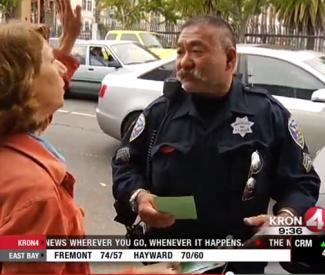
The cyclists of San Francisco were angry. Sup. Jane Kim was skeptical. Sup. Scott Wiener was unconvinced. Sup. Eric Mar said bikers were “pissed.” Deputy Chief of Police Mike Biel said he was too, but his anger could have just as easily been attributed to the 35 minutes he spent at the stand, acting as a whipping post for frustrations with the SFPD, as it could be to the department’s mistreatment of San Francisco cyclists.

Either way, the cyclists ruled the day.

During Thursday’s (10/3) Board of Supervisors Neighborhood Services and Safety Committee, Sup. David Campos called for a joint Board of Supervisors-Police Commission hearing regarding SFPD investigation protocol for bike accidents, but no immediate timetable has been set for the matter.

Without Police Chief Greg Suhr in attendance — his chiefly presence was required “reading to the children,” as Biel noted multiple times — Biel was left to stand solo in front of both frustrated supervisors and an incensed public.

At one point, following a particularly ambiguous response from Biel regarding accident checklists, Wiener asked bluntly, “Do you think there’s enough traffic cops in San Francisco? I don’t see bike cops, personally.”

To which Biel responded, “I’d like to see more.”

In fact, there was little defense on the part of Biel — and by extension, the Police Department — when it came to the seemingly lax (at best, malicious at worst) approach the SFPD has taken toward bike accidents in the past four years.

He even echoed Mar’s “pissed” comment, saying, “I was pissed too,” in regards to both what Mar called the “supposed investigation” of the Aug. 14 death of 24-year-old Amelie Le Moullac and the flippant attitude some in the department had taken towards cyclists in the days and weeks following. But he also stated that he didn’t think there was a negative bias in the SFPD.

The board’s decision to continue the conversation was bolstered by nearly 40 often-horrific testimonials regarding police treatment of cyclists in the City. And nearly all the stories could make the average person cring with the frustration, anger, and outrage they had the power to illicit.

Leah Shahum, executive director for the San Francisco Bike Coalition, told a story of a woman who was unable to make it to the hearing due to the injuries sustained in an April accident.

The woman, whom she didn’t identify, was biking in Golden Gate Park with her husband and son — the son was on the back of the woman’s bike — when she was hit from behind by a car, while she was stopped in the designated bike lane.

Witnesses stated that the driver was at fault. Her husband said the same thing. The police insisted on questioning the two of them more about their helmet usage — “which they were wearing,” according to Shahum — than they did about the actual events of the accident. Incidentally, adults aren’t required to wear bike helmets in California.

Robin Levitt, a Hayes Valley resident, talked about the strange “culture of blaming the victim” that has seemingly been propagated in the City, and how “in Germany, it’s immediately assumed that the vehicle is at fault, so drivers are safer.”

(And for what it’s worth, when Biel denied that same sentiment’s existence earlier with the committee, supervisors didn’t seem too convinced either. Mar even asked Biel, “Is there a bias or blame-the-victim attitude in the San Francisco Police Department?” which Biel promptly denied.)

And then there was Edward Hasbrouk, a former professional cyclist who has “never owned a motor vehicle.” He was biking home from work one evening when his progress in a Valencia Street bike line was impeded by a double-parked car in line for a valet service.

(Wiener has called for increased police enforcement of laws against double-parking. During today’s (Tues/8) Board of Supervisors meeting, he asked Mayor Ed Lee to support the effort, noting that SFPD rarely issues tickets to double-parkers despite “its impacts on traffic, Muni, cycling, and pedestrians.”)

Hasbrouk said that after a somewhat heated back-and-forth between the valet drivers, he flagged down a police officer to help him resolve the dispute, but the officer instead made Hasbrouk “carry [his] bicycle to the sidewalk.” Hasbrouk then said, “What would I have to do to get you to ticket these cars double-parked?” That comment got him arrested for felony vandalism, according to Hasbrouk. Expunging the arrest cost him nearly $3,000 and a night in jail.

But given the SFPD’s lack of pragmatism when it comes to investigating these accidents (for instance, Biel said SFPD doesn’t require a continuing education for officers assigned to traffic enforcement, despite what Shahum says are complex issues surrounding a rapidly growing population of cyclists), and it’s boorish behavior following the Le Moullac tragedy in August, it’s high time for change.

And a joint hearing could be just the place to start.

Supervisors examine anti-cyclist bias at SFPD

17

The Board of Supervisors Neighborhood Services and Safety Committee held a high-profile and well-attended hearing Oct. 3 to examine how the San Francisco Police Department investigates motorist versus bicyclist collisions. Sup. Jane Kim called the hearing following revelations about shoddy police work and anti-cyclist bias in the Aug. 14 death of cyclist Amelie Le Moullac.

Dozens of cyclists told horror stories of being hit by cars and then treated badly by police, which routinely absolves motorists of responsibility even in cases where they are clearly at fault.

Deputy Police Chief Mike Biel admitted some shortcomings in their investigations and promised to do better, and he apologized for the absence of Police Chief Greg Suhr and Sgt. Richard Ernst, who showed up at an Aug. 21 memorial event for Le Moullac to make inaccurate and insensitive comments criticizing cyclists. Kim had requested testimony from both men. Sup. David Campos pledged to hold another hearing on the issue, this time at a rare joint hearing of the Board of Supervisors and Police Commission.

San Francisco Bicycle Coalition Executive Director Leah Shahum urged the SFPD to, “Focus limited traffic enforcement resources on known dangerous intersections and known dangerous behaviors.” (Read Shahum’s op-ed on the hearing.)

Concerns about selective enforcement and anti-cyclist bias by the SFPD were heightened in the week before the hearing when officers started enforcement stings focused on stop sign-running cyclists riding the Wiggle, one of the city’s most popular and heavily traveled bike routes.

Among those stopped and given a written warning — one of 534 written warnings and 16 citations the SFPD reported giving out to cyclists in September — was Guardian Editor Steven T. Jones, whose Oct. 1 blog post on whether SFPD should strictly enforce laws requiring cyclist to completely stop at stop signs was the most commented SFBG.com post of the last week.

Shahum told us that the Bike Coalition has done education campaigns urging cyclists to yield to pedestrians on the Wiggle, but that none of the seven intersections on the Wiggle meet the SFPD’s own stated goals of focusing enforcement on the five most dangerous intersections in each police district. “When you look at the data on the Wiggle,” Shahum said, “it’s not a high collision area.”

Alerts: October 9 – 15, 2013

0

WEDNESDAY 9

March against evictions Bayanihan Center, 1010 Mission, SF. www.sdaction.org. 12:30-2pm, free. “Soma Time, and the Livin Ain’t Easy: Walk of Shame” will start at the Bayanihan Center near Sixth and Mission. The march is intended to call attention to and protest matters such as ever-increasing rents and unfair evictions of senior citizens and other long-term residents by profit seekers. This demonstration is a joint effort of local residents, Senior and Disability Action, the Bill Sorro Housing Program and the Housing Rights Committee. For more information, contact Senior and Disability Action at (415) 546-1333. SATURDAY 12


Ohlone Big Time Cultural Event Crissy Field Center, 603 Mason, SF. www.ohloneprofiles.org. 12-6pm Saturday; 12-5pm Sunday, free. This festival will feature tribal dances, music, traditional skills demos, discussions, vendors and camping. It coincides with Fleet Week and Indigenous People’s Weekend. Several California Indian tribes will be participating. Organizers hope to make this an annual event. The Ohlone are a Native American tribe indigenous to Northern California but not currently recognized by the federal government, and the event is meant to raise awareness about their presence in the Bay Area.


Help find the way forward The Way Christian Center, 1305 University, Berk. tinyurl.com/whichwayforwardCA. Contact@ellabakercenter.org. 9:30-noon, free. Donations accepted. The Oakland-based Ella Baker Center has been empowering low-income populations in the Bay Area since 1996. Its latest effort — Which Way Forward California? — is pushing for state funds to be spent on education, job training and other helpful services — rather than prisons. Join the center at this inaugural community strategy session, and give your input on ways to achieve this change. RSVP at tinyurl.com/whichwayforwardCA.

SUNDAY 13  

Book reading: The Great Sioux Nation Eric Quezada Community Center, 518 Valencia, SF. tinyurl.com/518columbusdaytalk. 4-6 p.m., free. Author Roxanne Dunbar Ortiz and Sioux elder Bill Means will discuss the new edition of the important book, “The Great Sioux Nation: Sitting in Judgment on America,” originally published in 1977. Join them the day before Columbus Day as they discuss both the impact of the book and the present-day attitude toward a holiday that many perceive as nothing more than an endorsement of genocide.

Rights and wrongs

11

news@sfbg.com

On a February evening in 2011, Derrick Walls ran into a friend at a bus stop near Third Street and Palou Avenue in the Bayview. Walls was headed to view a used car he thought he might be interested in buying. The men chatted briefly and, as the 44 bus rolled into sight, Walls shook his friend’s hand to say goodbye.

Seconds after they parted ways, a police cruiser passing on the other side of the street pulled a U-turn, screeched to a halt, and discharged police officers who quickly apprehended both men.

“I guess they thought they saw something,” recalled 43-year-old Walls. “I was just talking to my friend. I was going to leave because the bus was coming and I shook his hand to say ‘see you later’ and I guess the cops saw that and thought it was a transaction.”

The officers searched both men at the site. Their discovery of cash on Walls and drugs on the other man seemed to confirm that they had just witnessed a drug deal. The $1,680 Walls had saved up for a new car was alleged to be the sale’s proceeds and confiscated on the spot as evidence.

Later on at the station, a strip search of Walls yielded no evidence of drug possession or intent to sell. His friend copped to the drug charge but confessed that he’d purchased his stash elsewhere — not from Walls.

Three days later, Walls was released from custody and all charges against him were dropped. Two and a half years later, however, the city still has his money.

“I never went to court or anything,” recalled Walls. “You would think they would just give my money back right then. But they told me to go to [the civil courthouse on] McAllister Street to some other people.”


TWICE WRONGED

How assets seized in a criminal investigation migrate from the jailhouse to the civil courthouse — and how those wrongfully accused of crimes can get their money back — is not always clear.

“The state has such incredible power to wield and people have very little recourse,” says attorney Nick Gregoratos with Prisoner Legal Services, a division of the San Francisco Sheriff’s Department that helps the accused assert their rights.

San Francisco Police Department spokesperson Gordon Shyy would say only that the police follow the Department of Justice’s Asset Forfeiture Policy Manual and that they “don’t seize assets on the street, they take things as evidence.”

But that “evidence” often stays in the bank accounts of police or prosecutors, subsidizing their operations. DOJ guidelines say that when assets from a criminal investigation cease to have evidentiary value, they can be returned through an administrative or civil process.

“Approximately half the time, people contest the amount or contest it in its entirety,” said Assistant District Attorney Alex Bastian, who estimates that the San Francisco District Attorney’s Office handles 200 to 250 asset forfeiture cases per year.

“There are certain situations where if a charge is dropped, there is still, in fact, a forfeiture proceeding that goes forward,” Bastian explained. “There’s a criminal proceeding beyond a reasonable doubt and the civil [case] is a preponderance of evidence and the burden of proof is on the party contesting the forfeiture.”

Contesting an asset seizure can be difficult if the claimant is incarcerated or poor. Regulations seem designed to induce fatigue and resignation in those without a lawyer and the costs associated with retaining a lawyer often exceed the amount of money seized in the first place. In some cases, claimants have a right to court-appointed counsel, but they aren’t made aware of that fact.

Gregoratos represented Walls and has, over the years, worked with many others like him who have been deprived of their property without due process.

Gregoratos described another client who had cash seized by police as she was on her way to purchase a money order in SoMa to pay her rent. She was arrested on suspicion of drug sales, but there wasn’t enough evidence to support any charges against her.

The woman was instructed to file a claim within a month to get her money back. But she filed at the criminal rather than the civil court and administrators there waited until just before 30 days were up to notify the woman of her error.

The following morning, her $1,500 was considered officially forfeited because she had statutorily defaulted on her right to file claim.

“There would have been no way that they could have taken her money other than that she couldn’t figure out how to navigate the system and didn’t know her rights,” said Gregoratos, who later filed a motion opposing the default. “Essentially, she’s being precluded from having any judicial review.”


STACKED DECK

Many forfeiture cases unfold similarly, with the government capturing assets through a series of bureaucratic mechanisms stacked against individuals. Claimants are faced unexpectedly with the burden of proof that assets were lawfully obtained, even when law enforcement wasn’t able to meet that burden against them.

Often “the case is handled completely by the [prosecutorial] agency. There’s no judge, no hearing, no evidence, no appeal. So many people still lose by default,” commented Brenda Grantland, a Marin attorney who has fought government seizures for more than 30 years.

Civil asset forfeiture has a long and controversial history in the United States. In the Revolutionary War era, the British were known to impound the property of colonists who had fallen out of favor with the crown, without proof of guilt.

In the War on Drugs, forfeiture gained popularity as a way to strangle the financial channels underlying trafficking operations while providing a funding source for the law enforcement agencies that waged that war.

“The law is so complicated and the agencies are motivated to win these cases because it brings in money to their bank accounts. And they’re hooked on the money now. And the more money they get, the more corrupt they get,” said Grantland, who is president of the Forfeiture Endangers American Rights (FEAR) Foundation.

In 2010, the most recent year for which the California Department of Justice reported asset forfeiture statistics, San Francisco seized $391,643 in 115 separate actions completed in the city. Between 2002 and 2010, it seized nearly $6.5 million.

In most states, asset forfeitures follow federal regulations. In California, the Health and Safety Code dictates that 65 percent of assets forfeited are distributed to the local law enforcement agency responsible for the seizure, while 10 percent go to the prosecuting agency that processed the action and 1 percent go to train those who profit from forfeitures in the ethical application of related laws.

But Grantland says that training has done little to deter a “grab first, ask questions later,” approach. Critics have argued that the practice presents challenges to both the Fourth and 14th Amendments.


SCAMMING THE POOR

Police “don’t have to find any evidence of crime,” Grantland told us. “They have dogs that pretend to be clairvoyant. It’s all a hoax. I don’t care how much they’ve tested and trained those dogs, they can’t possibly know that’s drug money.”

Contrary to its original purpose, civil forfeitures at the local level tend to disproportionately target small-time offenders. Of the seizures completed in San Francisco in 2010, nearly half yielded under $1,000 and one as little as $242. More than three-quarters of forfeitures involved less than $2,000.

“They’re getting money from the weakest, poorest class of people,” Grantland said. “When you seize $500 or $600 every few minutes, it adds up pretty quickly.”

Though the San Francisco Police Department was the beneficiary of $254,568 in 2010 alone, SFPD’s Shyy denied that revenue from forfeitures — which funds equipment purchases, education, and training — influences its policies or tactics.

“If someone has a large amount of cash, we can’t just take it from them. That’s considered robbery,” Shyy said. But that’s pretty much what happened to Walls. “If I did that to somebody on street like that, I’d be in jail,” he said. “But they can just do it to me.”

In the last two years, Walls has complied with all the court’s discovery requests to prove the cash taken from him was lawfully obtained. He has provided paystubs from a longshoreman’s job he has held for eight years at the Port of Oakland.

Gregoratos said that the court “has people over a barrel” and will likely hold Walls’ cash for a full three years. The District Attorney has the option of re-filing a notice of forfeiture until the statute of limitations on the original criminal action is up.

“How are you going to re-file on something that was thrown out? That’s just an excuse to keep my money for a whole ‘nother year,” Walls argued. “I did everything I was supposed to do and they still haven’t given back my money.”

The great divide

0

arts@sfbg.com

FILM Whatever the wisdom of Obama’s strategy for Syria, public response has made it clear that most Americans no longer want the US to meddle in foreign affairs — at least not if it costs money and might embroil our troops in another endless, winless imbroglio. This is a little flummoxing, since not so long ago we gave another president a free pass to invade countries for far more dubious reasons, and are still paying the price for those rubber stamps in many, many ways a decade later.

So why the turnabout? It’s pretty simple. Not only is 9/11 an increasingly distant memory rather than a recent open wound inviting retaliatory action (no matter how reckless or misguided), but the economic downturn has shifted Americans’ attitude toward (an even bigger than usual case of) “The hell with other people’s problems, what about me?” For good or ill, there is no injustice we feel more keenly, or care about more deeply, than that we suffer ourselves.

Yet the explanations proffered as to what happened to make us so enraged (and broke) are utterly contradictory. We’re still the richest country on Earth — richer than ever, in fact — so why do so few citizens feel that fact even remotely relates to their everyday reality?

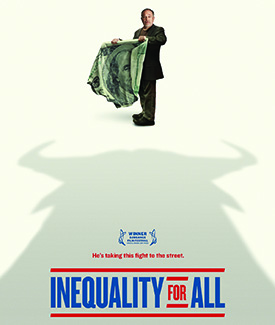
Jacob Kornbluth’s Inequality for All is the latest and certainly not the last documentary to explore why the American Dream is increasingly out of touch with everyday reality, and how the definition of “middle class” somehow morphed from “comfortable” to “struggling, endangered, and hanging by a thread.” This lively overview has an ace up its sleeve in the form of the director’s friend, collaborator, and principal interviewee Robert Reich — the former Clinton-era secretary of labor, prolific author, political pundit, and UC Berkeley professor of Public Policy. Whether he’s holding forth on TV, going one-on-one with Kornbluth’s camera, talking to disgruntled working class laborers, or engaging students in his Wealth and Poverty class, Inequality is basically a resourcefully illustrated Reich lecture — as the press notes put it, “an Inconvenient Truth for the economy.”

Fortunately, the diminutive Reich is a natural comedian (he’s spent a life honing self-deprecatory height jokes) as well as a superbly cogent communicator, turning yet another summary of how the system has fucked almost everybody (excluding the one percent) into the one you might most want to recommend to the bewildered folks back home. He’s sugar on the pill, making it easier to swallow so much horrible news.

Reich takes us through the gamut of horrible figures: how the US now has the most unequal distribution of wealth among all developed nations (by far); how as adjusted for inflation the average male makes less than he did in 1978 while the average “person at the top” makes two-and-a-half times more (over $1 million annually as opposed to just under $400,000); how general productivity, profits, and costs of living have continued to rise since then, while 99-percenter wages flatlined; how eerily the stats on 1928 and 2007 mirror each other, in terms of peak wealth concentration and unregulated financial-sector speculation. (We all know what happened in 1929 and 2008: ka-boom, or rather, ka-bust.)

Contradicting the “trickle-down theory,” Reich stresses that the very, very wealthy can’t spend enough to uphold their share of a US whose well-being is now 70 percent dependent on consumer purchases — it behooves everyone for that money to be spread around more evenly, because “What makes an economy stable is a strong middle class.” (He also makes the point that contrary to even common liberal wisdom, globalization hasn’t significantly reduced the number of American jobs — only the amount that they pay.)

There are man-and-woman-on-the-street interviews — not just with those on the losing end of this equation, but with one company-owning Richie Rich who freely admits current tax rates, loopholes, and so on mean people like him pull far less than their fair weight society, job creators or no. (On the other hand there’s Mitt Romney, who shifts the silver spoon to the side of his mouth long enough to decry the “envy” and “class warfare” behind all income-inequality debate.)

We also hear from the usual chorus of reactionary hysterics, like the Fox yobbo who swears Reich surely must “secretly worship Karl Marx” to hold the opinions he does. Doesn’t he realize that all government is bad, and all things free market inherently good? Never mind that the “Great Prosperity” — America’s economic golden age from 1947 to 1977 — was precisely the time that unions were strongest, the middle-class flourished, the rich were taxed up the wazoo (and seldom complained about it, at least publicly), and the government kept close watch on Wall Street and corporate hijinks. That so many have come to accept an economic logic blatantly opposing everything that made that period prosperous for almost everyone testifies to decades of brilliant conservative propaganda.

Now we live in an era where duly employed (even doubly employed) people see their homes foreclosed upon, and higher education is a crippling financial burden many can afford only at the price of possibly lifelong debt. Yet we’re told that minimum wage laws are for crybabies and upward mobility remains a matter of, y’know, really wanting it.

Having seen all this coming a long way off (he admits by the end of his post under old college buddy Clinton, “I became a true pain in the ass” to anyone who’d listen), Reich prefers not to say “I told you so” but “Here’s what you can do” — despite Citizens United and other developments that have drastically reduced citizens’ influence on public policy. Depressing as much of what he says is, he’s such a mensch that hearing him say it here is still pretty enjoyable. *


INEQUALITY FOR ALL opens Fri/27 in San Francisco.

Blow your mind

6

rebecca@sfbg.com

SEX Examples of Americans’ obsession with sex abound. It seemed the mainstream media would never get over Miley Cyrus’ ostentatious twerking at the Video Music Awards. Politician Anthony Weiner managed to live down his sexting scandal, only to mar his comeback with still more sexting. Robin Thicke’s “Blurred Lines” broke records for its searing popularity, but its rape-y message inspired a feminist parody, substituting the lyrics “you’re a good girl” with “you’re a douchebag.”

One researcher in the field of human sexuality estimates that 95 percent of all the sexual activity humans have — in every society — is for pleasure, not for reproduction. Despite the fact that almost everyone is apparently having sex for the sake of sex, we still live in a country where certain public schools stick to abstinence-only sex education with zero information about birth control. Meanwhile, right-wing opposition to women’s reproductive rights threatens to send laws governing access to abortion and contraceptives hurtling back to the Dark Ages.

Given the ongoing cultural clash, it’s fitting that San Francisco — famous for its sexual institutions like the Folsom Street Fair, Kink.com, Good Vibrations, and the Lusty Lady (may she rest in peace) — is poised to lead the way in offering one of the only Ph.D. programs in human sexuality nationwide.

San Francisco already boasts numerous pioneers in sexual education and related studies. City College of San Francisco, for example, began offering one of the first gay literature courses in the country in 1972, leading to the 1989 establishment of the first Gay and Lesbian Studies Department nationwide. And the National Sexuality Resource Center at San Francisco State University was created to promote sexual literacy, with the goal of replacing misinformation about sexuality and dispelling negative attitudes with evidence-based research on sexual health, education and rights.

The newest Ph.D. program will be housed at the California Institute of Integral Studies (CIIS, www.ciis.edu), and is scheduled to get under way in 2014. Gilbert Herdt, an anthropologist who founded SF State’s National Sexuality Resource Center and has been working in the field of human sexuality for some 35 years, is the program director.

Formerly a professor at Stanford and the University of Chicago, Herdt had long dreamed of creating a Ph.D. program with a multidisciplinary approach to human sexuality, an effort he believes would have been stymied a decade ago by political resistance.

“A lot of people are shocked when they realize there is only one Ph.D. program in the United States on human sexuality,” Herdt notes, referencing a program offered at Philadelphia’s Widener University focused on sex education. The CIIS program will be the first accredited doctoral program in human sexuality in the western United States.

It took decades for women’s studies and gender studies to be considered Ph.D.-worthy academic disciplines, Herdt points out. But when it comes to this endeavor, “there’s one big difference: Human sexuality remains a taboo in the United States.”

Consider this. In the Netherlands, Germany and France, sex education in schools can begin as early as kindergarten. Here in the US, states such as Florida still lack comprehensive programs offering in-depth information on sexually transmitted disease or contraception. It might not come as much of a surprise that Western Europe has lower rates of unwanted teen pregnancy, HIV and STDs.

Sex ed was eroded as part of a political backlash. “In the ’70s, there began to be a series of moral campaigns — some were directed against abortion … some were directed against homosexuality,” Herdt notes. “When Reagan was elected, it ushered in a whole new social campaign — and for the first time, opposition to sex education and opposition to abortion was joined, and served as a bridge to connect different groups who had previously never been working together: groups that were against gun control, groups that were against abortion rights, and groups that were against homosexuality.”

All of which has led to the current state of affairs, and as things stand, “I consider the United States one of the most backward countries when it comes to comprehensive sexual education and positive values regarding sexual behavior,” Herdt says. But he’s hoping to play a role in changing that.

The Ph.D. program at CIIS seeks to train a new generation of experts in human sexuality with a pair of concentrations. The first centers on clinical practice for contemporary practitioners, marriage and family therapists or psychiatrists. The current training requirement for clinicians on human sexuality is a measly eight hours, which “just shows the disregard that society has for sexual pleasure, and sexual wellbeing and relationship formation, and so on,” in Herdt’s view.

The second concentration centers on sexual policy leadership. Asked to identify some of the most pressing policy issues of concern to sexologists, the program director said existing gaps in comprehensive sex education is a top priority, and predicted transgender rights would intensify as a major issue. “I also feel that the Republican assault on women’s bodies, women’s contraceptive and reproductive rights — this is a huge and very dangerous area.”

Herdt became involved with CIIS through a conference called Expanding the Circle, which merges the LGBT community with individuals working in higher education from throughout the country. Prior to that, he ran the National Sexuality Resource Center at SF State. Asked why he’d looked to CIIS rather than a major university to house the program, Herdt responded, “these large premier institutions, such as Stanford and Berkeley — you know, they have many, many extremely important programs … But they do have a more traditional emphasis when it comes to disciplines.”

At CIIS, on the other hand, he found openness to the kind of academic program he envisioned. Pepper Schwartz, a professor of sociology at the University of Washington, columnist and author of numerous books on sex, will be a professor there along with Sean Cahill, director of Health Policy Research at The Fenway Institute and co-author of LGBT Youth in America’s Schools.

Promoting sexual literacy is just as important of a program goal as influencing policy, Herdt said. “Americans really continue to have very sex-negative attitudes when it comes to the body, the integration of sexuality with all the elements of their lives. So many people feel that sex is fragmented in their lives, and they don’t have a holistic sense of wellbeing.”

While advancements in neuroscience, psychology and other forms of research have all served to further our understanding of sexuality, Herdt bristles at the idea that it is all hard-wired.

“I’m very much aware that Americans continue to have a view that when it comes to the important things in sexuality, they’re all hard-wired in the brain,” he says. “I do not agree with that view. I believe that the most important things in human sexuality are the things we learn in society. The values we learn, the ethics, the way we can form relationships. The way we learn to love. Or not to love, to hate. These are such tremendously important issues in human sexuality and human development.” He added, “Let’s put it in its proper way: It’s interactive.”

Brown signs bike buffer law as SF wrestles with cyclist-motorist relations

18

It took three tries, but cycling advocates and California legislators were finally able to get Gov. Jerry Brown’s signature yesterday on a new law requiring motorists to give at least three feet of clearance when passing bicyclists.

We criticized Brown for vetoing a similar bill in 2011 when he raised concerns about slowing automobile traffic, and then he frustrated supporters of the bill last year when his veto-prompting issue was how the new bill encouraged motorists to cross a double-yellow line to pass cyclists when it was safe to do so.

This time, the compromise that won Brown over was a requirement that drivers slow down to a “reasonable and prudent” speed if they aren’t able to given cyclists a full three feet because of road conditions. That’s not ideal, but at least it’s finally becoming illegal for cars to zip closely past cyclists, a dangerous, unnerving, and unfortunately too common practice.

San Francisco has become an intriguing testing ground for cyclist-motorist relations as the number of people choosing to pedal to work, play, or on errands has exploded, based on both official stats and by simply observing Market Street at commute time, which is like a mini Critical Mass everyday, or the overflowing bike parking areas in downtown buildings.

The city is also now wrestling with anti-cyclists biases in law enforcement and among some political figures, which will be the subject of City Hall hearings next month. Certainly, there is bad behavior on the roads by both cyclists and motorists, and often times poor understanding by both about the rules of the road, particularly on those dangerous “right hook” turns when motorists cross a bike lane (motorists should signal, then pull all the way to the right when it’s their turn, and cyclists should pass on their left, taking the lane if necessary), which have resulted in at least two cyclist fatalities in SF this year.

This new law provides some much needed clarity and public awareness to an important public safety issue — and it should be just the beginning of creating new laws and public education campaigns to help promote safe cycling and raise driver awareness of the need to slow down, pay attention, and share the roads. 

UPDATE: Dave Snyder, executive director of the California Bicycle Coalition, which worked on the new law, told us he expects more benefit from publicizing the new law than from police enforcing it.

“The main benefit is educational, just getting people who drive to give people on bikes plenty of space. I don’t expect much enforcement,” he told us. “There’s a heckuva lot more that we need to do to make California bicyclists safer.”

The main need he cited is more money for bike lanes, particularly those separated from automobile traffic: We ned funding to build bike networks so we dno’t need to worry about being passed at high speed.”

Fight to save City College grows teeth and bites back

99

Saving City College of San Francisco became a bigger battle yesterday when the California Federation of Teachers announced a lawsuit in San Francisco Superior Court to keep CCSF open.

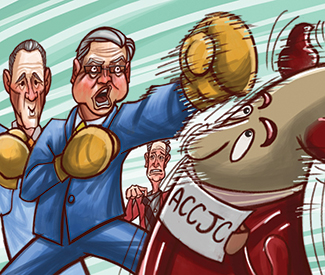
The suit is directed against the Accrediting Commission for Community and Junior Colleges, which pronounced the college’s death sentence July 3 by promising to revoke its accreditation in a year, without which a school cannot receive state funding and its students cannot get federal loans. 

Now, the ACCJC finds itself the institution under investigation by the feds and even City Attorney Dennis Herrera, and the CFT lawsuit is the latest legal challenge to the accreditors. 

The CFT charged the accrediting commission with using unfair and illegal business practices in its efforts to abolish City College. When asked for a statement about the impending lawsuit, ACCJC representative Tom Lane declined to comment.

“The ACCJC must be held accountable for their reckless, irresponsible and illegal actions,” CFT President Joshua Pechtalt explained at the Sept. 23 press conference held on the steps of City Hall, where the suit was announced. More importantly, Pechtalt said, winning this lawsuit could potentially stop the closure of CCSF.

A group of students, faculty, and elected officials stood with Pechtalt on the stone steps. One by one, they enumerated the improper activities that will be the basis of their lawsuit against the ACCJC: failing to adhere to its own policies and bylaws, violations of state and federal laws, and sanctioning CCSF without just cause.

Assemblymember Tom Ammiano said that the illegal behavior must stop here and now.

“The blatant lack of transparency, the loose interpretation of the rules, all seen through a lens of hubris and elitism, cannot continue,” he said. “San Francisco is our backyard and the college is our treasure.”

While Ammiano admitted that CCSF is not without its flaws and areas in need of improvement, he was quick to assert that closing the college was not the solution. “Stay out of our backyard unless you have something constructive to say,” he declared.

CCSF Student Trustee Shanell Williams assured the crowd that the lawsuit would be won. “The diverse population of the San Francisco Bay Area, including working families, single parents, new immigrants and others, depends greatly on this college being here,” she said. “If we lose City, we are going to be on our way to being an indentured, working class state.”

If the ACCJC succeeds in San Francisco, it will pave the way for identical treatment of other schools across the state, Williams said. Likewise, CCSF triumphing over the commission would be a victory for every community college in California.

Sup. David Campos also recognized the vital importance of CCSF’s continued existence. “We cannot have the American dream alive in San Francisco if City College closes,” he said. “This fight is about the soul of our city. ”

The US Department of Education has cited the ACCJC for failing to follow its own rules and procedures. A month ago, the Joint Legislative Audit Committee began investigating the commission. The following day, Herrera filed a lawsuit against the ACCJC, claiming it had illegally allowed its advocacy and political bias to prejudice its evaluation of college accreditation standards.

A new report released by the city’s Budget and Legislative Analyst on Sept. 16 detailed the economic impact to San Francisco if City College were to close. The report was requested by Supervisor Eric Mar. We’ve detailed some of the report’s findings in the infographic below. 

ccsf closure infographic 


Community forum planned on Mission gentrification

111

The recent debate about high-end retailer Jack Spade seeking to open up shop in the former location of Adobe Books has placed concerns about gentrification in San Francisco’s Mission District to the front burner yet again.

To spark a dialogue about an appropriate community response to the changing fabric of the neighborhood, community activists have organized a discussion forum scheduled for Monday, Sept. 23.

As rents soar, countless longtime businesses and residents are being priced out of the Mission. From the event description:

“How do we, as a community, feel about this? What can we learn from each other as we consider how to confront the issues of a changing neighborhood and city? Coming from our many perspectives, are there matters that some, most, or all of us can agree upon? … What urgent and long-term actions can we take to support existing local businesses and maintain the diversity and unique character of the Mission District? These are just a few of the questions we may discuss at this meeting.”

The meeting will be hosted at the Center for Political Education on Valencia Street, and participants will represent a host of local businesses and community organizations including Calle 24 SF, Eviction Free San Francisco, Encantada Gallery, the Mission Neighborhood Resource Center, PODER, Shaping San Francisco and the Valencia Corridor Merchants Association.

The discussion will be moderated by Rose Aguilar, host of Your Call on KALW.

The event will be held at 522 Valencia on Monday, Sept. 23 at 6pm and is free to attend.

Bill on Brown’s desk to make two-tiered system of college tuition: for the rich, and the poor

66

It seems that one California politician is adapting an old adage for a modern era: If at first students protest and get pepper sprayed, try, try that legislation again. 

AB 955 is a bill that would create a pilot program to raise community college tuition, allowing six allegedly overcrowded community colleges to charge the full cost of their classes during summer and winter sessions. A three-unit class would jump in cost from $138 to roughly $600, depending on the college involved. Authored by Assemblyman Das Williams (D- Santa Barbara), the bill now sits on Governor Jerry Brown’s desk awaiting his signature. 

The colleges in the pilot are College of the Canyons, Crafton Hills College, Long Beach City College, Oxnard College, Pasadena City College and Solano Community College.

Local community college advocates said the pilot program could crack open the door to a future where two-tiered access to community college is the norm: The rich will be able to get classes, and the poor will be crowded out. 

Those fears are prompting local San Francisco activists to join in the fray.

“AB 955 creates a system of haves and have nots,” said Shanell Williams, the student trustee of City College of San Francisco (no relation to Assemblyperson Williams). “Students that cannot afford to pay more will essentially be denied access,” she said.

Williams is a staunch advocate for education equality at City College, and led many of the rallies decrying the school’s loss of accreditation. She now plans to lead a rally against the bill here in San Francisco. But she’s not the only one who thinks this is a bad idea.

Santa Monica College tried to make a similar two-tiered system for tuition last year, offering classes that were previously closed due to lack of state funding by sticking the whole price of the class on students. Santa Monica College students were far from pleased.

Protests erupted, students were pepper sprayed, the incident became national news, and the idea was criticized across the board as class warfare. 

The students’ outrage doesn’t just stem from raised tuition, but from a broken promise. 

The idea of “open access” to classes is mandated by California’s educational master plan, which states that all students over the age of 18 should have access to community colleges and that tuition would be free. Part of the Donahoe Education Act of 1960, it was signed into law that year by Governor Edmund “Pat” Brown.

The Master Plan has eroded slowly since the 90s, and the once tuition-free UC and CSU systems now charge their students fees in excess of $3,000 a semester for full time enrollment — inflated prices which so far the community college system has resisted. Classes cost $46 per-unit at each of the 112 community colleges in California.

Assemblyman Williams  justified his bill in an op-ed for The Daily Californian, saying the idea of open access has failed as the California community college system has already shut over 500,000 students from its doors, according to data from the state community college chancellor’s office.

“Yes, $600 is more expensive than $138, but only in the short term,” Williams wrote. “What’s the cost to a student forced by the current lack of classes to have to face one to four more years of living expenses to complete his or her education? It’s a lot more than $600.”

But Jessica Jones, two-year student body president of Santa Rosa Junior College, fears that the pilot program may just be the beginning.

“Who’s to say it won’t go like wildfire across the state?” she said in comments to the Guardian. Unlike the UC and CSU students, she fears the community college students she sees everyday would have more to lose when the fees are hiked.  More often, she said, those students are “working many jobs, many have families, you’ll see less and less students able to take courses.”

It isn’t just activists who fear this will go statewide. The state chancellor of all 112 California Community Colleges, Brice Harris, has also publicly denounced the bill.

“The next time the budget goes in the tank they’ll tell (us), we can’t give it to you, tell your colleges to raise fees,” he said at a recent state meeting. “All of us who believe this is bad public policy for California are going to have to speak out forcefully with the (Brown) administration to make them understand what a huge policy change this is for the state of California,” he said. 

Jessica Jones works with the Student Senate of California Community Colleges, and though their opinion is not uniform, many student leaders statewide are organizing actions against the fee hike pilot program. Crafton Hills College, Modesto Junior College, Pasadena City College, Long Beach City College, Santa Rosa Junior College and De Anza College will all have demonstrations or engage in write-in campaigns by the end of next week.

Williams, the City College Student Trustee is organizing a demonstration in San Francisco as well. The protest will be at Powell Street BART station on Tuesday, Sept. 24, at 6pm. 

Advocates say solidarity is key to achieve real immigration reform

13

by Reed Nelson

When Lourdes Perez got off work in the recent past, she didn’t put her feet up. She said she couldn’t worry about dinner or her son’s extracurricular activities. All she could think about was her safety and the safety of her son.

Perez was trapped in an abusive relationship, and — like many other undocumented women in the Bay Area — felt that calling the police wasn’t an option. Perez doesn’t speak much English, making her an easy target for her abusive spouse and fearful of local authorities charged with protecting the abused. And that makes no sense.

But for an estimated 2.6 million undocumented Californians, things haven’t made sense in quite some time. Fear of deportation has forced many, like Perez, to try and go unnoticed day in and day out. Now, with federal immigration reform moving forward and policy initiatives at the local level aimed toward improving safety for undocumented survivors of domestic violence, advocates have finally seen some progress – yet immigrant rights advocates seem to agree that the work as being far from finished.

Dozens of community members turned out for a Sept. 12 event, “What’s Beyond DOMA in Immigration Reform? The Next Steps for Women & LGBTQ Communities,” hosted in San Francisco by Asian Students Promoting Immigrant Rights Through Education (ASPIRE) and API Equality Northern California.

The event marked the first time “we’ve had a round table or panel discussion that brings in so many different perspectives and community organizations,” co-host Sammie Wills noted.

In 1996, then-President Clinton signed a sweeping legislation banning safety-net access for millions of immigrants and refugees, according to panelist Gabriela Villareal, policy manager for the California Immigrant Policy Center. “[The law] basically barred [immigrants and refugees] from safety-net support for the first five years of them being here,” Villareal said.

But things have worsened since then. Much of the panel discussion focused on the draconian Secure Communities (S-Comm) — a shadowy partnership between the FBI and the U.S. Immigration and Customs Enforcement (ICE) that began in 2008, and has resulted in the deportations of 784 San Franciscans since 2010, according to data provided by the office of Sup. John Avalos.

A week before the forum, Avalos’ proposed Due Process for All ordinance received veto-proof supermajority support (8-3) from the San Francisco Board of Supervisors. An attempt to neutralize S-Comm at the local level, the legislation makes it illegal for law enforcement to detain undocumented citizens solely in response to immigration detainer requests issued by ICE under S-Comm.

Stacy Umezu, programs co-director at Community United Against Violence (CUAV), urged forum participants to contact state elected officials urging support for the TRUST Act, statewide legislation similar to Due Process for All which would bar police from detaining individuals solely in response to requests from federal immigration authorities.

In the meantime, activists are continuing to advocate for meaningful reform. Alex Aldana, part of the East Bay Immigrant Youth Coalition, for instance, found civil disobedience to be the most effective mode for change. “I’m undocumented and unafraid, queer and not ashamed,” Aldana said during the discussion.

Amy Lin, from Aspire, perhaps summed up the mission of this eclectic group best when she discussed her personal experience as a doubly marginalized individual. As part of the LGBTQ community and the undocumented community, she said, she is stigmatized by even those already marginalized.

Solidarity was key, she said. And by sticking together, she and the rest of the panelists hope to steer immigration reform toward the inclusive and fair plateau they’ve been seeking all along.

Solomon: Obama will launch a huge propaganda blitz–and may attack Syria even if he loses the vote in Congress

22

Norman Solomon is co-founder of RootsAction.org and founding director of the Institute for Public Accuracy. His books include “War Made Easy: How Presidents and Pundits Keep Spinning Us to Death.” Information on the documentary based on the book is at www.WarMadeEasyTheMovie.org.

Grassroots pressure has forced President Obama to seek approval from Congress for an attack on Syria. But Obama is hell-bent on ordering a missile assault on that country, and he has two very important aces in the hole.

The administration is about to launch a ferocious propaganda blitz that will engulf a wide range of U.S. media. And as a fallback, the president is reserving the option of attacking Syria no matter what Congress does.

Until Obama’s surprise announcement Saturday that he will formally ask Congress for authorization of military action against Syria, the impassioned pitches from top U.S. officials in late August seemed to be closing arguments before cruise missiles would hit Syrian targets. But the pre-bombing hyper spin has just gotten started.

The official appeals for making war on yet another country will be ferocious. Virtually all the stops will be pulled out; all kinds of media will be targeted; every kind of convoluted argument will be employed.

Hell hath no fury like war-makers scorned. Simmering rage will be palpable from political elites who do not want to see Congress set an unprecedented precedent: thwarting the will of a president who wants Pentagon firepower unleashed on another country.

President Obama and top Democrats such as House Minority Leader Nancy Pelosi will twist every arm they can to get a “yes” vote for attacking Syria. Meanwhile, most mainline media pundits, numbingly addicted to war, will often chastise and denigrate foes of authorization.

But we have a real chance to prevent a U.S. attack. One cogent argument after another, from intelligence veterans and policy analysts and weapons experts, has debunked the messaging for war on Syria. And some members of Congress — not nearly enough, but some — have begun to speak up with cogent opposition.

One of NPR’s inside-the-box hosts of “All Things Considered” on August 30 asked Rep. Zoe Lofgren (D-Calif.) about the Obama administration’s claim that missile strikes on Syria would be “a limited action” and not “war.” Congresswoman Lofgren replied: “I think that anyone who argues that shooting missiles and dropping bombs on another country is not an act of war has got some further education warranted. If somebody shot cruise missiles at Washington for only one day, we would still consider it an act of war, wouldn’t we?”

Not many members of Congress have Lofgren’s clarity, and many of their votes on authorization are up for grabs. Each of us can help affect the outcome by demanding that our senators and representative oppose the war resolution. We should make our voices heard in all sorts of public venues.

The president’s move for a congressional vote should cause a major escalation of anti-war activism. A straw in the wind: during just a few hours after Obama’s announcement on Saturday afternoon, nearly 10,000 people took the initiative via RootsAction.org to email members of Congress with a “No Attack on Syria” message.

National opinion polling and momentum inside Congress indicate that we can defeat Obama’s war resolution. It’ll be a tremendous fight, but we can prevail.

But even if Obama loses the vote in Congress, there’s a very real danger that he will proceed with ordering an attack on Syria.

Burying the lead almost a dozen paragraphs into a September 1 news story, the New York Times mentioned in passing: “White House officials indicated that Mr. Obama might still authorize force even if Congress rejected it.”

A careful reading of Obama’s Rose Garden announcement on Saturday verifies that he never quite said he will abide by the decision of Congress if it refuses to approve an attack on Syria. Instead, the president filled his statement with hedging phrases, detouring around any such commitment with words like these:

*  “I have decided that the United States should take military action against Syrian regime targets. … And I’m prepared to give that order. But … I’m also mindful that I’m the President of the world’s oldest constitutional democracy.”

*  “I will seek authorization for the use of force from the American people’s representatives in Congress.” 

*  “Over the last several days, we’ve heard from members of Congress who want their voices to be heard. I absolutely agree. So this morning, I spoke with all four congressional leaders, and they’ve agreed to schedule a debate and then a vote as soon as Congress comes back into session.”  

*  “And all of us should be accountable as we move forward, and that can only be accomplished with a vote.” 

*  “I’m ready to act in the face of this outrage. Today I’m asking Congress to send a message to the world that we are ready to move forward together as one nation.”

At the grassroots, people across the United States will be working very hard to prevent congressional approval of an attack on Syria. That activism is imperative. But we should also understand that Obama has not committed himself to abide by the decision that Congress makes.

Norman Solomon is co-founder of RootsAction.org and founding director of the Institute for Public Accuracy. His books include “War Made Easy: How Presidents and Pundits Keep Spinning Us to Death.” Information on the documentary based on the book is at www.WarMadeEasyTheMovie.org.

(Bruce B. Brugmann edits and writes the bruce blog on the Bay Guardian website at sfbg.com.  He is the editor at large of the Bay Guardian and former editor and co-founder and co-publisher with his wife Jean Dibble, 1966-2012.)

Changing the narrative

45

news@sfbg.com

Three distinct players with three distinct strategies for saving City College of San Francisco showed their hands last week, all centered around the Accrediting Commission of Community and Junior Colleges, which plans to revoke City College’s accreditation in less than a year.

City Attorney Dennis Herrera filed a lawsuit against the ACCJC, state lawmakers are revving up to investigate it, and City College Super Trustee Bob Agrella is doing his best to quietly meet the accreditor’s standards.

Whether any of the approaches will save the school is anyone’s guess, but one thing’s for sure: In the process of saving City College, its accreditation agency has gone from an unknown bureaucracy to a polarizing political punching bag.


HERRERA FILES SUIT

Herrera threw a right hook at the ACCJC on Aug. 22, announcing his lawsuit to stop them from closing City College. It offers a scathing critique of the accreditation agency and those whose agenda it is pushing.

The ACCJC said City College failed to meet certain standards by its deadline last July, leading the agency to order its closure in exactly one year. Since then, enrollment at the college of 85,000 students plummeted and the school is fighting for its very existence. Now Herrera is saying that closure action was improper, unwarranted, and out of line with the agency’s prior actions.

Herrera’s suit alleges the ACCJC unlawfully allowed its advocacy and political bias to prejudice its evaluation of college accreditation standards. “It is a matter of public record that the ACCJC has been an advocate to reshape the mission of California community colleges,” Herrera said at a press conference.

The agenda he said it was advocating for is the completion agenda, which was the focus of our July 9 cover story, “Who Killed City College?” Essentially, it’s the move to force community colleges to focus on only two-year transfer students at the expense of so-called “non-credit” classes, which can be lifelong learning skills or English as Second Language classes.

“There’s a reason judges aren’t advocates and advocates aren’t judges,” Herrera said. “We should have a problem when an entity charged with evaluation engages in political advocacy.”


City College avoided those reform efforts from the state for years, and Herrera alleges that the ACCJC tried to sanction City College because of that resistance.

ACCJC President Barbara Beno was not available for comment. In a statement, the agency said it was surprised to learn Herrera filed a suit against the ACCJC, and that the suit appears to be “without merit” and an attempt to “politicize and interfere with the ongoing accreditation review process.”

Herrera may be playing cowboy, guns aimed right at the ACCJC, but he also said he doesn’t want the agency to close, just to clean up its act and be accountable. But on the other side of the OK Corral, an investigation by the California Legislature is under way — and it may be sizing up a coffin for the ACCJC.


JLAC VS. ACCJC

Just a day before Herrera announced his lawsuit, the California Joint Legislative Audit Committee voted to investigate the accrediting commission. The audit committee is a legislative fact-finding body usually staffed by former investigative journalists, and the senators who asked for the hearing were out for the ACCJC’s blood.

“The stakes are high and the commission’s power is absolute,” Sen. Jim Beall, D-San Jose, told the audit committee. He then outlined the danger of losing community colleges that faced closure at the hand of the ACCJC.

Sen. Jim Nielsen, R-Gerber, was much more direct. “Sen. Beall and I met with (ACCJC) President Barbara Beno in my office,” he said. “In all my career, in my thousands of meetings with agency individuals, representatives, secretaries, etcetera, I have never met with such an arrogant, condescending individual in her response to Sen. Beall and I. That attitude reflected in such a senior person raised huge red flags for me.”


In public comment, Assemblymember Tom Ammiano, D-SF, noted that recently the U.S. Department of Education upheld the California Federation of Teachers’ complaints that the ACCJC process “is guilty of no transparency, little accountability, and conflict of interest.”

Then it was the ACCJC’s turn to defend itself. Beno was unable to attend, but ACCJC Vice President Krista Johns and Commissioner Frank Gornick were there instead.

Gornick defended the accrediting commission, saying it was “rigorously” evaluated every six years. Ultimately, the committee voted 10-1 to investigate a number of mysteries regarding the ACCJC: how it stacks up to the five other accrediting bodies nationwide, determining the ACCJC’s compliance with open meeting laws (it denied public access to a recent “public meeting,” also barring a San Francisco Chronicle reporter), and an evaluation of the fairness in how the agency issues sanctions.


MEET THE NEW BOSS

Amid the state and city level battles over City College, one key player prefers to work quietly. Super Trustee Bob Agrella, tasked by the state to take over the power of City College’s Board of Trustees and save the college, feels his hands are tied.

“My job is to play within the rules and regulations of the ACCJC,” Agrella told the Guardian. Sitting in his office at City College’s Ocean Campus, he pointed out that the accreditation agency actually has a rule that says colleges have to be on amicable terms with the ACCJC — or else.

“One of the eligibility requirements is the college maintains good relationship with the commission,” Agrella said. Notably, if City College fails to meet its requirements, it won’t be able to keep its accreditation in its evaluation next July.

So while Herrera and JLAC can blast the ACCJC, Agrella feels like he needs to remain neutral or he could blow City College’s chances at staying open.

If he were to try battling the commission on its rules, Agrella told us, he would do it within the framework of the ACCJC’s own policies. But it’s exactly those policies that Herrera said the ACCJC is violating.

The lawsuit from Herrera’s office alleges, among other things, that the evaluating team that ACCJC sent to review City College was stacked with the school’s political enemies from a body called the California Community College Student Success Task Force, which City College loudly and publicly opposed (full disclosure: as a former City College student, I spoke against the Task Force at a hearing in January 2012, and that public testimony is cited in Herrera’s lawsuit).

The ACCJC’s president, Beno, wrote multiple letters to state agencies in support of the Task Force’s recommendations, the suit alleges. This action contradicts the ACCJC’s conflict of interest policy, according to the suit, which defines a conflict as including “any personal or professional connections that would create either a conflict or the appearance of conflict of interest.”

So if the ACCJC won’t play by the rules, shouldn’t Agrella support the actions of Herrera and JLAC to resist the ACCJC’s decree?

“In fairness to the people taking these actions, they feel time is of the essence,” Agrella said. “I just happen to, respectfully, disagree with it, because my job is not to push the (ACCJC). My job is to try to retain accreditation.”

But it’s becoming increasingly clear that the ACCJC may not be the only body that will decide the fate of City College.

Chronicle: Don’t question the City College takeover, just submit to the flawed ACCJC

71

I have very low expectations from editorials in the San Francisco Chronicle, which generally share a worldview with the Chamber of Commerce and carry water for some powerful Establishment figure or another. But today’s editorial on City Attorney Dennis Herrera’s lawsuit defending City College is so bad and illogical that it reads like an Onion parody of a Chronicle editorial.

Clearly put up to it by some of the most reactionary figures in the Mayor’s Office, Chronicle Editorial Page Editor John Diaz or one his lackeys parrot the submissive stance that Mayor Ed Lee has taken toward outsiders with corporatist agenda that have seized control of City College and sought to make a high-profile example of it.

“The city’s leaders should be calling for tough love, not coddling dysfunction. Fortunately, Mayor Ed Lee has done just that – but, regrettably, the city attorney is going in the opposite direct [sic],” the Chronicle wrote.

And by “tough love,” they apparently mean obedient and unquestioning compliance with an obscure accrediting agency’s demand that City College slash community-based curriculum; close facilities relied on by both students and local nonprofit groups; rip up contracts with faculty and force instructors to live on part-time wages; distill course offerings down to just what serve corporations, universities, and banking interests; and other aspects of an educational agenda that hasn’t been properly vetted in public hearings or approved by any elected body.

Herrera is to be applauded for pointing out the overreach and conflicts-of-interest on the Accrediting Commission of Community and Junior Colleges, which were also recently criticized by the US Department of Education. And we’re excited to see what Herrera uncovers during the discovery process in his lawsuit against a secretive, corporate-connected, document-shredding agency that broke its own internal rules in its treatment of City College.

The Chronicle graciously refers to these unavoidable facts in a brief paragraph, writing that the ACCJC “is not without flaws. It’s secretive, and its internal policies drew a rebuke from the U.S. Department of Education after City College faculty filed complaints about its conduct.”

But then it dimisses that and shows a suspicious incuriosity about why the ACCJC is being so secretive and what its agenda might be, instead doubling down on criticizing City College in a way that is so over-the-top that this fine institution is unrecognizable to anyone who is actually familiar with it, which Diaz and company clearly aren’t.   

“The needed changes include hiring a comptroller to organize financial controls, making sure students pay for classes, and overhauling a loose-fit governance system that puts faculty, students and staff in charge of operations with inadequate administrative controls. Lee has strongly endorsed an overhaul of City College’s ramshackle operations,” the Chronicle writes.

Unlike us here at the Guardian, where I’ve written two recent editorials in support of democracy and local control and critical of Lee and others who have been too quick to cooperate with the toppling of the locally elected Board of Trustees, the Chronicle apparently believe in more authoritarian methods of governance.

“The first repairs are now under way. The powers of the elected community college board are on hold, and a special trustee dispatched by state Community College Chancellor Brice Harris is in charge,” the Chronicle writes.

And as we report in our upcoming issue, that special trustee also has no interest in questioning the ACCJC’s process or methods or even allowing the public to review internal communications. It’s a shame that bootlickers like Lee and the Chronicle have sold out such an important local institution to their corporate masters, but luckily for San Francisco, Herrera, the California Federation of Teachers, the Guardian, other progressive media voices, and hundreds of our community partners aren’t giving up so easily, instead pushing for an open, truthful, democratic, and transparent discussion about City College’s mission and its future.

SF City Attorney Dennis Herrera sues to keep City College open

49

City Attorney Dennis Herrera filed a suit today to block City College of San Francisco’s accreditation agency from closing down the school.

The accreditation agency, the Association of California Community and Junior Colleges, moved to put City College on a sanction last July that would lead to its closure in exactly one year. Since then, enrollment at the college has plummeted and the school has been in the fight for its very existence. Now Herrera is saying that closure action was improper, unwarranted, and out of line with the agency’s prior actions.

Herrera’s suit alleges the ACCJC unlawfully allowed its advocacy and political bias to prejudice its evaluation of college accreditation standards, he said. “It is a matter of public record that the ACCJC has been an advocate to reshape the mission of California community colleges,” Herrera said, and that was the basis of his suit.

The ACCJC cannot be advocates for change in the higher education system, he said. “There’s a reason judges aren’t advocates and advocates aren’t judges,” he said. “Now we have no problem with the right of others to advocate an agenda against the open access mission… but we should have a problem with an entity charged with evaluation engages in political advocacy.”

Notably, the ACCJC wanted City College to shrink its mission, concentrating its money on students who could transfer easily to four year institutions from City College, which many advocates say would leave students learning trades, new English learners, and other disenfranchised students in the dust. You can see our coverage on that here.

Above: Text of Herrera’s suit and a press release with more information, courtesy of Sara Bloomberg, reporter for City College’s newspaper The Guardsman.


Herrera also filed an administrative action against the California Community College Board of Governors, saying they had abandoned their role as the check and balance on community colleges, and left it to a private institution that was unaccountable to the public (for full disclosure, I am named in Herrera’s suit on pages 16 and 18 for my role advocating against the Student Success Act of 2012 to the Board of Governors. I was a student at the time, not a professional reporter, and I have no personal stance on the future of the ACCJC). The Board of Governors oversees the 112 community colleges in California, the largest body of community colleges in the country. 

Alisa Messer, the faculty union president of City College, agreed that the Board of Governors should not be abdicating its policy and oversight role. 

“No outside, unaccountable agency should be making up its own rules or setting policy for our state’s colleges,” she said. 

City College Trustee Rafael Mandelman applauded action against the ACCJC.

“At this point I think it absolutely critical the ACCJC is not in the driver’s seat making these decisions, they’re not fit to do that,” he told the Guardian.

This past Tuesday City College submitted review documents to the ACCJC attesting to why it should be allowed to stay open and accredited, and Therese M. Stewart, the chief deputy city attorney, said that while they sent an order to ACCJC not to destroy documents, they had not yet obtained any documents yet. “We haven’t actually sought documents yet from the ACCJC, we asked them to not destroy documents so that we may seek them later,” she said. “Eventually we will get them.”

City College’s judges get judged

10

City College of San Francisco had its accreditation revoked by the Accrediting Commission of Junior and Community Colleges in July, and now the ACCJC is getting a taste of its own medicine — its own existence has been threatened over its treatment of City College.

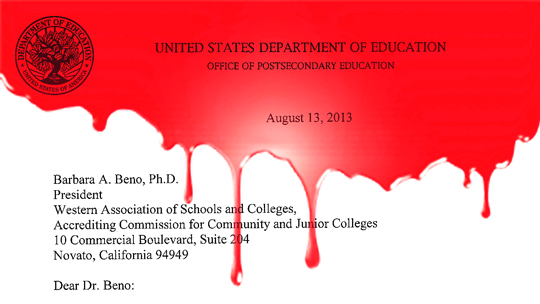
In an Aug. 13 letter to ACCJC President Barbara Beno, the Department of Education found it out of compliance with the Education Secretary’s regulations governing accrediting agencies, as well as the ACCJC’s own internal rules.

“Therefore, we have determined that in order to avoid initiation of an action to limit, suspend or terminate ACCJC’s recognition, ACCJC must take immediate steps to correct the areas of non-compliance in this letter,” the letter reads.

The DOE found the ACCJC noncompliant in four areas: A conflict of interest because Beno’s husband served on the visiting team that evaluated City College, no clear policies on who should serve on those teams (with the letter noting the teams were stacked with administrators rather than educators), no defined distinction between “deficiencies” and “recommendations” or indication of their severity levels, and failure to give CCSF two years to correct those deficiencies, as ACCJC policies call for.

Ironically, the ACCJC has plenty of time to correct its own shortcomings. “The process in this case is that ACCJC will have an opportunity to provide information about the steps it has taken to come into compliance with the cited criteria in its response to the draft staff analysis of the agency’s petition for renewal of its recognition, which is currently under review,” DOE spokesperson Jane Glickman told the Guardian, noting that there will be a hearing in mid-December, with possible actions ranging from limiting the agency’s authority to giving it another year to come into compliance.

But she said the DOE can’t directly help City College: “The Department does not have the authority to require an agency to change any accreditation decision it has made. The agency (ACCJC) needs to amend its policies and procedures and provide documentation that it follows its amended policies and procedures to demonstrate that it is in compliance with the cited criteria.”

The California Federation of Teachers, which filed the appeal with the DOE, wants the ACCJC to reconsider its sanction of City College in light of these validated concerns over its process.

“We are gratified that the U.S. Dept. of Education agreed with us that the process was deeply flawed, and we call on the ACCJC to rescind its unprecedented decision to deny accreditation to CCSF,” CFT President Joshua Pechthalt, wrote in a press release.

But ACCJC Vice President of Policy and Research Krista Johns told us that DOE’s concerns were narrow and shouldn’t affect its actions against City College:”The overall result of the US Department [of Education]’s analysis and study of the documents presented by the CFT about the ACCJC really affirmed that we are in compliance to a very large degree with all of the many regulations that touch on accreditors.”

But it’s still an open question whether the DOE’s findings will affect the decision to revoke City College’s accreditation and turn control over the institution to a state-appointed special trustee.

“We’re still analyzing the letter. There’s a lot in there,” Paul Feist, spokesperson for the State Community College Chancellor’s Office, told us. “I don’t know if it could say there is any reprieve [for City College]. Regardless, there are a number of problems with City College that need fixing.”

But even a cursory analysis of the letter reveals something that raises suspicions about the integrity of the entire process: the DOE letter raises concerns about why the ACCJC chose to go beyond its own policies to sock it to City College.

The college’s appeal ultimately is in the hands of the new Super Trustee of City College, Bob Agrella, who acts with all of the powers of the college’s now defunct board. But Agrella has, in past interviews, agreed with the way the ACCJC is run.

“I think the way the commission operates is okay,” he told City College’s newspaper, The Guardsman. “I’ve dealt with their policies and operating procedures at other institutions where I worked that were dealing with addressing accreditation problems—not to the same degree as here at City College—and the process worked there.”

But Karen Saginor, the ex-City College academic senate president, said the DOE criticism of the process should be taken into account in the appeal of the accreditation revocation decision.

“It’s pretty exciting, that letter,” Saginor told the Guardian. “It’s recognition from an important authority that there are irregularities in the process that put us on show cause. We’ve been saying ‘it wasn’t fair.’ And we’ve been told ‘its a totally fair process, you’re just not happy because you don’t like the result.’ Now we have an important authority verifying what we’ve been saying.”

Protect local power and control

30

EDITORIAL There’s a growing stench of political corruption — or, at the very least, hidden agendas aimed at subverting popular will in favor of entrenched corporate interests — emanating from the Mayor’s Office these days. And it’s undermining projects and institutions that are vital to the future of San Francisco.

In the last week, a pair of important developments illuminated the shady way business gets done in San Francisco. The first instance concerned City College of San Francisco, which had its accreditation rashly revoked last month, prompting Mayor Ed Lee to enthusiastically support the disbanding of the locally elected Board of Trustees and the takeover of City College by state-appointed outsiders bent on shutting down community-based facilities and classes.

While Lee and the San Francisco Chronicle have been cheerleading this loss of local control and the corporatist agenda behind it — CCSF was criticized for resisting the narrowing of its mission to focus on job training and college prep — we at the Guardian have questioned this process and the motives behind it.

In a cover story (“Who killed City College?” July 9), editorial (“Why democracy matters,” July 23), and other coverage, we’ve highlighted how the attack on CCSF is part of national movement to focus schools on job training rather than broad-based education, and questioned the haste with which CCSF’s local leadership was usurped.

Critics mocked these concerns, as they did those of the California Federation of Teachers, which formally challenged the actions by the Accrediting Commission of Community and Junior Colleges, with Lee and others saying that we need to just accept the death threats against CCSF and do whatever these outsiders are asking.

So on Aug. 13, when the US Department of Education sustained the CFT appeal and found the ACCJC in violation of federal regulations and its own internal standards in its approach to City College, it validated our concerns and called into question Lee’s hair-trigger abandonment of City College’s local leaders.

Frankly, we’re puzzled by Lee’s approach to City College — from his appointment of right-wing ideologue Rodrigo Santos as a trustee last year (who subsequently got trounced in the election) to his resistance to helping the college before the state takeover — but we suspect it’s connected to Lee’s focus on “jobs, jobs, jobs” to the exclusion of other issues and values.

But Lee only counts private sector jobs, not those created to serve the public interest like the thousands of jobs that would be created by CleanPowerSF, a program that Lee opposes and that his appointees to the SF Public Utilities Commission are actively subverting.

As we report in this issue, CleanPowerSF is a renewable energy program approved last year by a veto-proof majority on the Board of Supervisors, but it’s being blocked by the SFPUC’s refusal to approve the rates and sign the contracts, with commissioners raising concerns that go well beyond their purview at this point.

It’s time for Mayor Lee to start serving the people of San Francisco instead of the corporate titans and political benefactors who elevated this loyal career bureaucrat into the big chair in Room 200.


Music Listings: August 14-20, 2013

0

WEDNESDAY 14

ROCK
Bottom of the Hill: 1233 17th St., San Francisco. Bang Bang, The Comet Empire, Jared Cohen & The Future Proofs, 9 p.m., $8.
El Rio: 3158 Mission, San Francisco. The Wearies, The Avenues, Modern Kicks, 9 p.m., $5.
Elbo Room: 647 Valencia, San Francisco. Evil Eyes, Wiles, Yellow Belly, Popgang DJs, 9 p.m., free.
Hemlock Tavern: 1131 Polk, San Francisco. Buildings, Hawks, Sex Snobs, 8 p.m., $7.
The Independent: 628 Divisadero, San Francisco. Ivan & Aloysha, The Record Company, 8 p.m., $13-$15.
Make-Out Room: 3225 22nd St., San Francisco. Jonathan Richman with Tommy Larkins, Through Aug. 15, 7 p.m., $15.
Monarch: 101 6th St., San Francisco. The Shape, Hungry Skinny, The Surgeon Generals, Scissors for Lefty, 8 p.m., $8.
Rickshaw Stop: 155 Fell, San Francisco. Nightbox, Nova Albion, Silver Hands, 8 p.m., $10-$12.

DANCE
The Cafe: 2369 Market, San Francisco. “Sticky Wednesdays,” w/ DJ Mark Andrus, 8 p.m., free.
Cat Club: 1190 Folsom, San Francisco. “Bondage A Go Go,” w/ DJs Damon, Tomas Diablo, & guests, 9:30 p.m., $5-$10.
The Cellar: 685 Sutter, San Francisco. “Eye Candy Wednesdays,” 9 p.m., free.
Club X: 715 Harrison, San Francisco. “Electro Pop Rocks: Pirates of EPRrrrgh,” 18+ dance party, 9 p.m.
Edinburgh Castle: 950 Geary, San Francisco. “1964,” w/ DJ Matt B & guests, Second and Fourth Wednesday of every month, 10 p.m., $2.
F8: 1192 Folsom St., San Francisco. “Housepitality,” w/ Eric Cloutier, Michael Perry, DJ Sep, 9 p.m., $5-$10.
Harlot: 46 Minna, San Francisco. “Qoöl,” w/ Mark Slee, William Wardlaw, 5 p.m.
Infusion Lounge: 124 Ellis, San Francisco. “Indulgence,” 10 p.m.
The Knockout: 3223 Mission, San Francisco. “Disorder: Synthpop Edition,” w/ Sex in Latex, Strube Jackson, DJ Nickie, 10 p.m., $5.
Lookout: 3600 16th St., San Francisco. “What?,” w/ resident DJ Tisdale and guests, 7 p.m.
MatrixFillmore: 3138 Fillmore, San Francisco. “Innov8,” 8 p.m.
Monarch: 101 6th St., San Francisco. “Soul Phunktion,” w/ resident DJs Kimmy Le Funk, Primo, and M3, 9 p.m.
Public Works: 161 Erie, San Francisco. Clipping, Ritualz, Brandon Nickell, Worker/Parasite, 9 p.m., $6.
Q Bar: 456 Castro, San Francisco. “Booty Call,” w/ Juanita More, Joshua J, guests, 9 p.m., $3.

HIP-HOP
Double Dutch: 3192 16th St., San Francisco. “Cash IV Gold,” w/ DJs Kool Karlo, Roost Uno, and Sean G, 10 p.m., free.
Skylark Bar: 3089 16th St., San Francisco. “Mixtape Wednesday,” w/ resident DJs Strategy, Junot, Herb Digs, & guests, 9 p.m., $5.

ACOUSTIC
50 Mason Social House: 50 Mason, San Francisco. Sing Out of Darkness: Where It Began, American Foundation for Suicide Prevention benefit featuring Sweet Hayah, Sugar Ponies, The Tommy P. Project, Gentry Bronson, Tim Brochier, and host Julie Mayhew., 6:30 p.m., $3-$5 suggested donation.
Cafe Divine: 1600 Stockton, San Francisco. Craig Ventresco & Meredith Axelrod, 7 p.m., free.
Fiddler’s Green: 1333 Columbus, San Francisco. Terry Savastano, Every other Wednesday, 9:30 p.m., free/donation.
Hotel Utah: 500 Fourth St., San Francisco. Tom Goss, Jeb Havens, The Plastic Arts, 8 p.m., $10-$12.
The Lost Church: 65 Capp St., San Francisco. Mick Shaffer, Jim Bruno, 8 p.m., $10.
Milk Bar: 1840 Haight, San Francisco. Delaney & Paris, 1 Man Banjo, 9 p.m., free.
Plough & Stars: 116 Clement, San Francisco. Blood & Dust, 9 p.m.

JAZZ
Amnesia: 853 Valencia, San Francisco. Gaucho, Eric Garland’s Jazz Session, The Amnesiacs, 7 p.m., free.
Burritt Room: 417 Stockton St., San Francisco. Terry Disley’s Rocking Jazz Trio, 6 p.m., free.
Club Deluxe: 1511 Haight, San Francisco. The Techtonics, Every other Wednesday, 8:30 p.m., free.
Jazz Bistro At Les Joulins: 44 Ellis, San Francisco. Charles Unger Experience, 7:30 p.m., free.
Le Colonial: 20 Cosmo, San Francisco. The Cosmo Alleycats featuring Ms. Emily Wade Adams, 7 p.m., free.
Oz Lounge: 260 Kearny, San Francisco. Hard Bop Collective, 6 p.m., free.
Pier 23 Cafe: Pier 23, San Francisco. Mitch Woods, 6 p.m., free.
Revolution Cafe: 3248 22nd St., San Francisco. Michael Parsons Trio, Every other Wednesday, 8:30 p.m., free/donation.
Savanna Jazz Club: 2937 Mission, San Francisco. “Cat’s Corner,” 9 p.m., $10.
Sheba Piano Lounge: 1419 Fillmore, San Francisco. Fran Sholly, 8 p.m.
Top of the Mark: One Nob Hill, 999 California, San Francisco. Ricardo Scales, Wednesdays, 6:30-11:30 p.m., $5.
Zingari: 501 Post, San Francisco. Chris Duggan, 7:30 p.m., free.

INTERNATIONAL
BeatBox: 314 11th St., San Francisco. Queer Salsa Night, 8 p.m.
Bissap Baobab: 3372 19th St., San Francisco. Timba Dance Party, w/ DJ WaltDigz, 10 p.m., $5.
Cafe Cocomo: 650 Indiana, San Francisco. “Bachatalicious,” w/ DJs Good Sho & Rodney, 7 p.m., $5-$10.
Cigar Bar & Grill: 850 Montgomery, San Francisco. Grupo Falso Baiano, 8 p.m.
Pachamama Restaurant: 1630 Powell, San Francisco. “Cafe LatinoAmericano,” 8 p.m., $5.
Union Square Park: 333 Post, San Francisco. Second Annual Son Jarocho Festival, w/ DiaPa’Son, 12:30 p.m., free.

BLUES
The Royal Cuckoo: 3202 Mission, San Francisco. Big Bones & Chris Siebert, 7:30 p.m., free.
The Saloon: 1232 Grant, San Francisco. Leah Tysse, 9:30 p.m.
Yoshi’s San Francisco: 1330 Fillmore, San Francisco. David Ryan Harris, 8 p.m., $18-$23.

FUNK
Vertigo: 1160 Polk, San Francisco. “Full Tilt Boogie,” w/ KUSF-in-Exile DJs, Second Wednesday of every month, 8 p.m.-1:30 a.m., free.

SOUL
Boom Boom Room: 1601 Fillmore, San Francisco. Soul Mechanix, 9:30 p.m., free.
The Cellar: 685 Sutter, San Francisco. “Color Me Badd,” w/ DJ Matt Haze, Wednesdays, 5-9 p.m.

THURSDAY 15

ROCK
Bottom of the Hill: 1233 17th St., San Francisco. The Lonely Wild, Kris Orlowski, The Sad Bastard Book Club, 9 p.m., $10.
Brick & Mortar Music Hall: 1710 Mission, San Francisco. The Love Dimension, The Tenderloins, The Chaw, 9 p.m., $7.
Cafe Du Nord: 2170 Market, San Francisco. Filligar, Torches, Tracing Figures, 8:30 p.m., $12-$15.
S.F. Eagle: 398 12th St., San Francisco. Thursday Nite Live: White Fang, Glitz, Honey Bucket, Twin Trilogy, 9 p.m.
Hemlock Tavern: 1131 Polk, San Francisco. Useless Children, Dreamdecay, Vibrating Antennas, 9 p.m., $7.
Hotel Utah: 500 Fourth St., San Francisco. Sweet Water, Sad Tires, Azyphyryx, 9 p.m., $7.
The Knockout: 3223 Mission, San Francisco. The Royal Deuces, Rockin’ Lloyd Tripp, Hi-Road Players, Los High Tops, 10 p.m., $6.
Make-Out Room: 3225 22nd St., San Francisco. Jonathan Richman with Tommy Larkins, Through 7 p.m., $15.
Milk Bar: 1840 Haight, San Francisco. Illusion of Self, Drive Thru Mystics, Reverter, Pre-Legendary, 8 p.m., $8.
Thee Parkside: 1600 17th St., San Francisco. Howl, Lord Dying, Cormorant, Hornss, 9 p.m., $10.

DANCE
Abbey Tavern: 4100 Geary, San Francisco. DJ Schrobi-Girl, 10 p.m., free.
Aunt Charlie’s Lounge: 133 Turk, San Francisco. “Tubesteak Connection,” w/ DJ Bus Station John, 9 p.m., $5-$7.
BeatBox: 314 11th St., San Francisco. “Jukebox,” w/ DJ Page Hodel, 9 p.m., $10.
The Cafe: 2369 Market, San Francisco. “¡Pan Dulce!,” 9 p.m., $5.
Cat Club: 1190 Folsom, San Francisco. “All ‘80s Thursdays,” w/ DJs Damon, Steve Washington, Dangerous Dan, and guests, 9 p.m., $6 (free before 9:30 p.m.).
The Cellar: 685 Sutter, San Francisco. “XO,” w/ DJs Astro & Rose, 10 p.m., $5.
Club X: 715 Harrison, San Francisco. “The Crib,” 9:30 p.m., $10, 18+.
Elbo Room: 647 Valencia, San Francisco. “Afrolicious,” w/ DJs Pleasuremaker, Señor Oz, and live guests, 9:30 p.m., $5-$7.
The EndUp: 401 Sixth St., San Francisco. EDMSF Thursdays, 10 p.m., $10 (free before midnight).
F8: 1192 Folsom St., San Francisco. “Beat Church,” w/ resident DJs Neptune & Kitty-D, Third Thursday of every month, 10 p.m., $10.
Infusion Lounge: 124 Ellis, San Francisco. “I Love Thursdays,” 10 p.m., $10.
John Colins: 138 Minna, San Francisco. “SoLuna Dance Party,” w/ DJs Miquel Penn & Motive, 9 p.m., free.
Laszlo: 2532 Mission, San Francisco. “Werk It,” w/ DJ Kool Karlo, Third Thursday of every month, 9 p.m., free.
Madrone Art Bar: 500 Divisadero, San Francisco. “Night Fever,” 9 p.m., $5 after 10 p.m.
MatrixFillmore: 3138 Fillmore, San Francisco. “Fusion,” w/ DJ Big Bad Bruce, 9 p.m., $5.
Monarch: 101 6th St., San Francisco. “Green Gorilla Lounge,” w/ The Revenge, DJ M3, Anthony Mansfield, Kimmy Le Funk, 9 p.m., $10.
Public Works: 161 Erie, San Francisco. “JackHammer Disco,” w/ James Murphy (DJ set), Conor, Solar, J-Boogie, 9 p.m., $18-$23.
Q Bar: 456 Castro, San Francisco. “Throwback Thursday,” w/ DJ Jay-R, 9 p.m., free.
Raven: 1151 Folsom St., San Francisco. “1999,” w/ VJ Mark Andrus, 8 p.m., free.
Rickshaw Stop: 155 Fell, San Francisco. “Popscene,” w/ Guardian, Metal Mother, DJs Omar & Aaron, 9:30 p.m., $10.
Slide: 430 Mason, San Francisco. “Euphony,” w/ Mikey Tan, Monika Santucci, Halloran, 9 p.m.
Temple: 540 Howard, San Francisco. “Solid,” w/ Marten Hørger, DJ Icon, Sychosis, Sunny Daze, 10 p.m., $10.
The Tunnel Top: 601 Bush, San Francisco. “Tunneltop,” DJs Avalon and Derek ease you into the weekend with a cool and relaxed selection of tunes spun on vinyl, 10 p.m., free.
Underground SF: 424 Haight, San Francisco. “Bubble,” 10 p.m., free.
Vessel: 85 Campton, San Francisco. “Base,” w/ Butch, 10 p.m., $5-$10.

HIP-HOP
Eastside West: 3154 Fillmore, San Francisco. “Throwback Thursdays,” w/ DJ Madison, 9 p.m., free.
Park 77 Sports Bar: 77 Cambon, San Francisco. “Slap N Tite,” w/ resident Cali King Crab DJs Sabotage Beats & Jason Awesome, free.
The Parlor: 2801 Leavenworth, San Francisco. “Locals Night Out,” w/ DJ Illy D, 9 p.m., free.
Showdown: 10 Sixth St., San Francisco. “Tougher Than Ice,” w/ DJs Vin Sol, Ruby Red I, and Jeremy Castillo, Third Thursday of every month, 10 p.m.
Skylark Bar: 3089 16th St., San Francisco. “Peaches,” w/lady DJs DeeAndroid, Lady Fingaz, That Girl, Umami, Inkfat, and Andre, 10 p.m., free.

ACOUSTIC
Atlas Cafe: 3049 20th St., San Francisco. Mountain Dojo (Toshio Hirano & Dave Berry), 8 p.m., free.
The Lost Church: 65 Capp St., San Francisco. Yonat, Whitney Myer, Graham Patzner, 8 p.m., $10-$15.
Plough & Stars: 116 Clement, San Francisco. Tipsy House, Third Thursday of every month, 9 p.m., free.

JAZZ
Blush! Wine Bar: 476 Castro, San Francisco. Doug Martin’s Avatar Ensemble, 7:30 p.m., free.
Bottle Cap: 1707 Powell, San Francisco. The North Beach Sound with Ned Boynton, Jordan Samuels, and Tom Vickers, 7 p.m., free.
Cafe Claude: 7 Claude, San Francisco. The Monroe Trio, 7:30 p.m., free.
Center for New Music: 55 Taylor St., San Francisco. Erik Jekabson String-tet, Matt Renzi Cello Quartet, 7:30 p.m., $8-$10.
Club Deluxe: 1511 Haight, San Francisco. Michael Parsons, 8:30 p.m., free.
Le Colonial: 20 Cosmo, San Francisco. Steve Lucky & The Rhumba Bums, 7:30 p.m.
The Lucky Horseshoe: 453 Cortland, San Francisco. Ralph Carney’s Serious Jass Project, 9 p.m.
Pier 23 Cafe: Pier 23, San Francisco. Ned Boynton, 7 p.m., free.
The Royal Cuckoo: 3202 Mission, San Francisco. Chris Siebert, 7:30 p.m., free.
Savanna Jazz Club: 2937 Mission, San Francisco. Savanna Jazz Jam with Eddy Ramirez, 7:30 p.m., $5.
Sheba Piano Lounge: 1419 Fillmore, San Francisco. Sebastian Parker Trio, 8 p.m.
Top of the Mark: One Nob Hill, 999 California, San Francisco. Stompy Jones, 7:30 p.m., $10.
Yoshi’s San Francisco: 1330 Fillmore, San Francisco. NaJe, in Yoshi’s lounge, Third Thursday of every month, 6:30 p.m., free; Eliane Elias, Aug. 15-16, 8 & 10 p.m., $20-$25.
Zingari: 501 Post, San Francisco. Barbara Ochoa, 7:30 p.m., free.

INTERNATIONAL
Bissap Baobab: 3372 19th St., San Francisco. “Pa’Lante!,” w/ Juan G, El Kool Kyle, Mr. Lucky, 10 p.m., $5.
Pachamama Restaurant: 1630 Powell, San Francisco. “Jueves Flamencos,” 8 p.m., free.
Verdi Club: 2424 Mariposa, San Francisco. The Verdi Club Milonga, w/ Christy Coté, DJ Emilio Flores, guests, 9 p.m., $10-$15.
Yerba Buena Gardens: Fourth St. & Mission, San Francisco. Second Annual Son Jarocho Festival, w/ Son de Madera, 12:30 p.m., free; Pacific Mambo Orchestra, at Jessie Square, 6 p.m., free.

REGGAE
Pissed Off Pete’s: 4528 Mission St., San Francisco. Reggae Thursdays, w/ resident DJ Jah Yzer, 9 p.m., free.

BLUES
50 Mason Social House: 50 Mason, San Francisco. Bill Phillippe, 5:30 p.m., free.
Biscuits and Blues: 401 Mason, San Francisco. Alan Iglesias & Crossfire, 8 & 10 p.m., $20.
Jazz Bistro At Les Joulins: 44 Ellis, San Francisco. Bohemian Knuckleboogie, 7:30 p.m., free.
The Saloon: 1232 Grant, San Francisco. Chris Ford, 4 p.m.; Steve Freund, 9:30 p.m.

EXPERIMENTAL
The Luggage Store: 1007 Market, San Francisco. Dark Spring, Hare & Arrow, 8 p.m., $6-$10.

FRIDAY 16

ROCK
Bottom of the Hill: 1233 17th St., San Francisco. Tribute to Joe Strummer & Benefit for Strummerville, Music education fundraiser with Eric McFadden & Friends, The Hooks, Interchords, Jane Wiedlin, Delphine De St. Paër, and Lantz Lazwell., 9 p.m., $10-$12.
Cafe Du Nord: 2170 Market, San Francisco. Zoo Station, Chronic Town, Pretending, 9 p.m., $15.
The Chapel: 777 Valencia St., San Francisco. Part Time, Sam Flax, Ruby Pins, 9 p.m., $12.
El Rio: 3158 Mission, San Francisco. Night Call, DJ Emotions, 10 p.m., free.
Hemlock Tavern: 1131 Polk, San Francisco. English Singles, The Rantouls, 9:30 p.m., $7.
Hotel Utah: 500 Fourth St., San Francisco. Mother Falcon, Sonny Pete, The Visibles, 9 p.m., $10-$12.
Thee Parkside: 1600 17th St., San Francisco. VKTMS, Unko Atama, Sharks from Mars, Bad Coyotes, Stay Scared, 9:30 p.m., $8.

DANCE
1015 Folsom: 1015 Folsom St., San Francisco. Paper Diamond, Roach Gigz, AnnaLove, UltraViolet, DJ Dials, VNDMG, Releece, Teleport, Jocelyn, 10 p.m., $20 advance.
Audio Discotech: 316 11th St., San Francisco. Opening Weekend with DJs David Carvalho & D.Lo, 9 p.m.
BeatBox: 314 11th St., San Francisco. “U-Haul: Nerd Out Edition,” w/ DJs Ms. Jackson & China G, 10 p.m., $5-$10.
Cafe Flore: 2298 Market, San Francisco. “Kinky Beats,” w/ DJ Sergio, 10 p.m., free.
The Cafe: 2369 Market, San Francisco. “Boy Bar,” w/ DJ Matt Consola, 9 p.m., $5.
Cat Club: 1190 Folsom, San Francisco. “The Witching Hour,” w/ DJs Sage, Daniel Skellington, Joe Radio, and Melting Girl, 9:30 p.m., $7 ($3 before 10 p.m.).
The Cellar: 685 Sutter, San Francisco. “F.T.S.: For the Story,” 10 p.m.
The EndUp: 401 Sixth St., San Francisco. “Fever,” 10 p.m., free before midnight.
F8: 1192 Folsom St., San Francisco. “Vintage,” w/ DJ Toph One & guests, 5 p.m., free; Sweater Beats, Penthouse Penthouse, Lil Texas, 9 p.m., $10-$15.
The Grand Nightclub: 520 4th St., San Francisco. “We Rock Fridays,” 9:30 p.m.
Harlot: 46 Minna, San Francisco. “The Animal Party: Under the Sea,” w/ DJs Travis Wild & Panic City, 9 p.m.
The Independent: 628 Divisadero, San Francisco. Ulrich Schnauss, Doombird, 9 p.m., $25.
Infusion Lounge: 124 Ellis, San Francisco. “Escape Fridays,” 10 p.m., $20.
Lookout: 3600 16th St., San Francisco. “HYSL,” 9 p.m., $3.
Madrone Art Bar: 500 Divisadero, San Francisco. “That ‘80s Show,” w/ DJs Dave Paul & Jeff Harris, Third Friday of every month, 9 p.m., $5.
Manor West: 750 Harrison, San Francisco. “Fortune Fridays,” 10 p.m., free before 11 p.m. with RSVP.
MatrixFillmore: 3138 Fillmore, San Francisco. “F-Style Fridays,” w/ DJ Jared-F, 9 p.m.
Mezzanine: 444 Jessie, San Francisco. “Dirtybird Players,” w/ Justin Martin, Worthy, J. Phlip, Leroy Peppers, 9 p.m., $20 ($5 before 11 p.m.).
Mighty: 119 Utah, San Francisco. “Bada Big Boom 6,” w/ DJs from Pink Mammoth, Bassyx, Disco Knights, and more, 9 p.m., $6+ advance.
Monarch: 101 6th St., San Francisco. Derrick Carter, Mark Farina, Sharon Buck, 9 p.m., $20-$30.
OMG: 43 6th St., San Francisco. “Release,” 9 p.m., free before 11 p.m.
Public Works: 161 Erie, San Francisco. Afrolicious Sound System, DJ Shotnez, Dub Gabriel, Kush Arora, 9 p.m., $8-$15.
Q Bar: 456 Castro, San Francisco. “Pump: Worq It Out Fridays,” w/ resident DJ Christopher B, 9 p.m., $3.
Ruby Skye: 420 Mason, San Francisco. Simon Patterson, Blurr, Niko Zografos, 9 p.m., $20-$25 advance.
Slate Bar: 2925 16th St., San Francisco. “Darling Nikki,” w/ resident DJs Dr. Sleep, Justin Credible, and Durt, Third Friday of every month, 8 p.m., $5.
Supperclub San Francisco: 657 Harrison, San Francisco. “Fire & Ice,” w/ DJ Chris White, 10 p.m., $10 advance.
Temple: 540 Howard, San Francisco. “Fresh Juice,” w/ DJ Mei-Lwun, Manic Mondays, Quadrobe, Airavata, Zoukis, Chemical Ali, Papa Lu, David Gregory, Halloran, 10 p.m., $15.
Vessel: 85 Campton, San Francisco. Sex Panther, DJ Donovan, DJ Nile, Hector Garza, 10 p.m., $10-$30.
Wish: 1539 Folsom, San Francisco. “Bridge the Gap,” w/ resident DJ Don Kainoa, Fridays, 6-10 p.m., free; “Depth,” w/ resident DJs Sharon Buck & Greg Yuen, Third Friday of every month, 10 p.m., free.

HIP-HOP
Brick & Mortar Music Hall: 1710 Mission, San Francisco. Bambu, Rocky Rivera, Rey Resurreccion, Ruby Ibarra, The Kasamas, Vandal9, 9 p.m., $10-$15.
EZ5: 682 Commercial, San Francisco. “Decompression,” Fridays, 5-9 p.m.
John Colins: 138 Minna, San Francisco. “Juicy,” w/ DJ Ry Toast, Third Friday of every month, 10 p.m., $5 (free before 11 p.m.).
Showdown: 10 Sixth St., San Francisco. “Fresh to Def Fridays: A Tribute to Yo! MTV Raps,” w/ resident DJs Boom Bostic, Inkfat, and Hay Hay, Third Friday of every month, 10 p.m.
Slim’s: 333 11th St., San Francisco. Mickey Avalon, 9 p.m., $26.

ACOUSTIC
Giordano Brothers: 303 Columbus, San Francisco. Rich McCulley, 9 p.m., free.
Mercury Cafe: 201 Octavia, San Francisco. Toshio Hirano, Third Friday of every month, 7:30 p.m., free, all ages.
Plough & Stars: 116 Clement, San Francisco. “Bluegrass Bonanza,” w/ Steep Ravine, 9 p.m., $6-$10.
The Sports Basement: 610 Old Mason, San Francisco. “Breakfast with Enzo,” w/ Enzo Garcia, 10 a.m., $5.

JAZZ
Beach Chalet Brewery & Restaurant: 1000 Great Highway, San Francisco. Johnny Smith, 8 p.m., free.
Bird & Beckett: 653 Chenery, San Francisco. The Third Quartet, Third Friday of every month, 5:30 p.m., free.
Cafe Claude: 7 Claude, San Francisco. Nick Rossi Trio, 7:30 p.m., free.
Cafe Royale: 800 Post, San Francisco. West Side Jazz Club, 9 p.m.
Jazz Bistro At Les Joulins: 44 Ellis, San Francisco. Charles Unger Experience, 7:30 p.m., free.
Pier 23 Cafe: Pier 23, San Francisco. Gaucho, 8 p.m., free.
Revolution Cafe: 3248 22nd St., San Francisco. Emily Anne’s Delights, Third Friday of every month, 8:45 p.m., free/donation.
The Royal Cuckoo: 3202 Mission, San Francisco. Jules Broussard, Danny Armstrong, and Chris Siebert, 7:30 p.m., free.
Savanna Jazz Club: 2937 Mission, San Francisco. Benn Bacot, 7:30 p.m., $10.
Top of the Mark: One Nob Hill, 999 California, San Francisco. Black Market Jazz Orchestra, 9 p.m., $10.
Yoshi’s San Francisco: 1330 Fillmore, San Francisco. Eliane Elias, Aug. 15-16, 8 & 10 p.m., $20-$25.
Zingari: 501 Post, San Francisco. Joyce Grant, 8 p.m., free.

INTERNATIONAL
Bissap Baobab: 3372 19th St., San Francisco. Qumbia Qrew, Third Friday of every month, 8 p.m.
Brava Theater Center: 2781 24th St., San Francisco. Second Annual Son Jarocho Festival, w/ Los Soneros del Tesechoacán, Cambalache, 8 p.m., $18-$35.
Cafe Cocomo: 650 Indiana, San Francisco. Taste Fridays, featuring local cuisine tastings, salsa bands, dance lessons, and more, 7:30 p.m., $15 (free entry to patio).
Cigar Bar & Grill: 850 Montgomery, San Francisco. Mazacote, 8 p.m.
Little Baobab: 3388 19th St., San Francisco. “Paris-Dakar African Mix Coupe Decale,” 10 p.m.
Pachamama Restaurant: 1630 Powell, San Francisco. Cuban Night with Fito Reinoso, 7:30 & 9:15 p.m., $15-$18.
Verdi Club: 2424 Mariposa, San Francisco. “Café Flamenco,” w/ Yaelisa & Caminos Flamencos, Third Friday of every month, 8 & 9:30 p.m., $18-$22 ($10 for kids under 12).

REGGAE
Gestalt Haus: 3159 16th St., San Francisco. “Music Like Dirt,” 7:30 p.m., free.

BLUES
Biscuits and Blues: 401 Mason, San Francisco. Alan Iglesias & Crossfire, 8 & 10 p.m., $20.
Boom Boom Room: 1601 Fillmore, San Francisco. Bill Phillippe, 6 p.m., free.
Lou’s Fish Shack: 300 Jefferson St., San Francisco. Eldon Brown, 8:30 p.m.
The Saloon: 1232 Grant, San Francisco. David M’ore, 4 p.m.; Shad Harris, 9:30 p.m.
Sheba Piano Lounge: 1419 Fillmore, San Francisco. South City Blues Band, 9 p.m.

EXPERIMENTAL
Center for New Music: 55 Taylor St., San Francisco. “Cords/Strings/Wires,” a night of improvised music by “mix and match” ensembles featuring Aurora Josephson, Scott Looney, Lisa Mezzacappa, Tim Perkis, Fay Victor, and Scott Walton, 8 p.m., $8-$10.

FUNK
Amnesia: 853 Valencia, San Francisco. “Hella Tight,” w/ resident DJs Vinnie Esparza, Jonny Deeper, & Asti Spumanti, Third Friday of every month, 10 p.m., $5.
Boom Boom Room: 1601 Fillmore, San Francisco. Steppin’, The Neckbeard Boys, 9:30 p.m., $10.
Elbo Room: 647 Valencia, San Francisco. Benefit for Friday Jumbo with Albino!, Black Water Gold, Fundraiser for the famed percussionist of Fela Kuti’s Africa 70, with the man himself sitting in with both bands., 9:30 p.m., $10-$12.
Make-Out Room: 3225 22nd St., San Francisco. “Loose Joints,” w/ DJs Centipede, Damon Bell, & Tom Thump, 10 p.m., $5.

SOUL
DNA Lounge: 375 11th St., San Francisco. Black Sheep S.C. Presents the San Francisco Classic 20th Anniversary Vintage Scooter Rally, w/ DJs GloryBoy Kev, Dr. Scott, Soulciter, and Mini (upstairs), 9 p.m., free.
Edinburgh Castle: 950 Geary, San Francisco. “Soul Crush,” w/ DJ Serious Leisure, 10 p.m., free.
The Knockout: 3223 Mission, San Francisco. “Oldies Night,” W/ DJs Primo, Daniel, Lost Cat, and friends, Third Friday of every month, 10 p.m., $5.
Rickshaw Stop: 155 Fell, San Francisco. Midtown Social, Soul Pie, Hotel Eden, Kevin Eagle Oliver, DJ Tom Temprano, 9 p.m., $10.

SATURDAY 17

ROCK
Bender’s: 806 S. Van Ness, San Francisco. Let It Burn, Texas Thieves, Makeout’s 50th birthday party, 10 p.m., $5.
Bottom of the Hill: 1233 17th St., San Francisco. Black Sheep S.C. Presents the San Francisco Classic 20th Anniversary Vintage Scooter Rally, w/ The Dukes of Hamburg, Sandollar Sound, Rile 9 Collective, 9 p.m., $10.
Brick & Mortar Music Hall: 1710 Mission, San Francisco. Bells Atlas, Waterstrider, Joey Dozik, 9 p.m., $7-$10.
The Chapel: 777 Valencia St., San Francisco. Steve Taylor Band, 10 p.m., free.
El Rio: 3158 Mission, San Francisco. Great American Cities, Nonagon, We Will Be Lions, 9 p.m., $8.
Hemlock Tavern: 1131 Polk, San Francisco. Evangelista, Jackie-O Motherfucker, Badwater Bob, 9 p.m., $15.
Hotel Utah: 500 Fourth St., San Francisco. The Valiant Sailors, The Letters Home, The Peripherals, Diamond Heights, 9 p.m., $8.
Make-Out Room: 3225 22nd St., San Francisco. The American Professionals, The Bye Bye Blackbirds, Rich McCulley, 7 p.m., $8.
Red Devil Lounge: 1695 Polk, San Francisco. Cherie Currie, Bite, DJ Omar, 8 p.m., $15-$18.
Slim’s: 333 11th St., San Francisco. Led Zeppelin 2, 9 p.m., $20.
Thee Parkside: 1600 17th St., San Francisco. Walrus, Abatis, The Devil in California, 9:30 p.m., $8.

DANCE
Amnesia: 853 Valencia, San Francisco. “O.K. Hole,” w/ Patricia, Past Protocol Preservation Society, C.L.A.W.S., Nay Nay, Keith Slogan, 9 p.m., $5.
Audio Discotech: 316 11th St., San Francisco. Opening Weekend with DJs Pierce Fulton & Lucas Med, 9 p.m.
BeatBox: 314 11th St., San Francisco. “Evolution,” w/ DJ Dave Aude, 10 p.m., $5-$50.
Cafe Flore: 2298 Market, San Francisco. “Bistrotheque,” w/ DJ Ken Vulsion, 8 p.m., free.
Cat Club: 1190 Folsom, San Francisco. “New Wave City: Tribute to The Cure,” w/ DJs Skip, Shindog, Xander, and Donimo, 9 p.m., $7-$12.
DNA Lounge: 375 11th St., San Francisco. “Bootie S.F.: 10-Year Anniversary,” w/ A+D, Smash-Up Derby vs. Hubba Hubba Revue, DJ Dada, JoeJoe, Ding Dong, Ernie Trevino, Haute Mess, Meikee Magnetic, Mixtress ShiZaam, Grandpamini, DJ Tripp, John!John!, much more, 9 p.m., $10-$20.
The EndUp: 401 Sixth St., San Francisco. “The Show,” w/ Ben Seagren, Dean Samaras, and guests, Third Saturday of every month, 10 p.m., $10-$20 (free before 11 p.m.).
F8: 1192 Folsom St., San Francisco. “Cult,” w/ DJs Markie, Jenö, Sunshine Jones, Cosmic Jason, Andre, and Danja Koja, 10 p.m., $5-$10.
The Independent: 628 Divisadero, San Francisco. The Hood Internet, Richie Cunning, Popgang DJs, 9 p.m., $15.
Infusion Lounge: 124 Ellis, San Francisco. “Social Addiction,” Third Saturday of every month, 10 p.m., $20.
Lexington Club: 3464 19th St., San Francisco. “Hot Summer Nights,” w/ DJ Rapid Fire, 9 p.m., free.
Lookout: 3600 16th St., San Francisco. “Bounce!,” 9 p.m., $3.
Madrone Art Bar: 500 Divisadero, San Francisco. “Fringe,” w/ DJs Blondie K & subOctave, Third Saturday of every month, 9 p.m., $5 (free before 10 p.m.).
Mezzanine: 444 Jessie, San Francisco. Fehrplay, Jeremy Olander, 9 p.m., $10-$15.
Mighty: 119 Utah, San Francisco. “Leopalooza,” w/ DJ Icey, All Good Funk Alliance, DJ Shotnez, DJ Wolfie, U9lift, Ground Control, Tom Thump, Konnekt, 10 p.m., $15-$17.50.
Milk Bar: 1840 Haight, San Francisco. “The Queen Is Dead: A Tribute to the Music of Morrissey and the Smiths,” w/ DJ Mario Muse & guests, Third Saturday of every month, 9 p.m.
Monarch: 101 6th St., San Francisco. Anthony Mansfield, Galen, DJ Gravity, Shissla, DJ Sol, Tamo, 9 p.m., $10-$20.
Powerhouse: 1347 Folsom, San Francisco. “Beatpig,” Third Saturday of every month, 9 p.m.
Public Works: 161 Erie, San Francisco. “Deep Blue,” w/ Lee Burridge, DJ Rooz, DJ Bo (in the main room), 9:30 p.m., $13-$25.
Rickshaw Stop: 155 Fell, San Francisco. “Bearracuda: 7-Year Anniversary,” w/ DJs Kam Shafaati & Steve Sherwood, 9 p.m., $5-$10.
Ruby Skye: 420 Mason, San Francisco. “World Town,” w/ Thomas Gold, Trevor Simpson, 9 p.m., $25-$45 advance.
Slate Bar: 2925 16th St., San Francisco. “Smiths Night S.F.: 3-Year Anniversary,” w/ The Certain People Crew, 10 p.m., $5.
Slide: 430 Mason, San Francisco. “Luminous,” w/ DJ Zhaldee, 9 p.m.
Sub-Mission Art Space (Balazo 18 Gallery): 2183 Mission, San Francisco. “Requiem,” w/ DJs Xiola, Owen, and Mel Draper, 9:30 p.m., $5.
Temple: 540 Howard, San Francisco. “Crush,” w/ DJ Nile, Mikey Tan, Reggie Soares, Nanosaur, D3fbot, DJ Gize, DJ Bizkit, 10 p.m., $20.
Underground SF: 424 Haight, San Francisco. “Deep Crates,” w/ DJs Spaziale, Kizmiaz, Smac, JD, and Duarte, 9 p.m., $5 (free before 10 p.m.).
Vessel: 85 Campton, San Francisco. LA Riots, 10 p.m., $10 advance.

HIP-HOP
111 Minna Gallery: 111 Minna St., San Francisco. “Shine,” Third Saturday of every month, 10 p.m.
John Colins: 138 Minna, San Francisco. “The Bump,” w/ The Whooligan, Third Saturday of every month, 10 p.m., free.
The Knockout: 3223 Mission, San Francisco. “The Booty Bassment,” w/ DJs Dimitri Dickinson & Ryan Poulsen, Third Saturday of every month, 10 p.m., $5.
Showdown: 10 Sixth St., San Francisco. “Purple,” w/ resident DJs ChaunceyCC & Party Pablo, Third Saturday of every month, 10 p.m.
Yoshi’s San Francisco: 1330 Fillmore, San Francisco. “The Ol’ Skool House Party,” w/ Big Daddy Kane, plus DJs Pos Red, Supreme, and C.J. Flash (in Yoshi’s lounge), 10:30 p.m., $25-$30.

ACOUSTIC
Atlas Cafe: 3049 20th St., San Francisco. Craig Ventresco & Meredith Axelrod, Saturdays, 4-6 p.m., free.
Bazaar Cafe: 5927 California, San Francisco. Clayton J. Foor, 7 p.m.
Cafe Du Nord: 2170 Market, San Francisco. Bobby Long, Michael Bernard Fitzgerald, Blind Willies, 9:30 p.m., $15.
Plough & Stars: 116 Clement, San Francisco. R.J. Comer & The Porch Bandits, 9 p.m.
The Riptide: 3639 Taraval, San Francisco. The Nickel Slots, 9 p.m., free.

JAZZ
Cafe Claude: 7 Claude, San Francisco. Mad & Eddie Duran Trio, 7:30 p.m., free.
Club Deluxe: 1511 Haight, San Francisco. Saturday Afternoon Jazz, w/ Danny Brown, Danny Grewen, Eugene Warren, & Beth Goodfellow, 4:30 p.m., free.
Jazz Bistro At Les Joulins: 44 Ellis, San Francisco. Bill “Doc” Webster & Jazz Nostalgia, 7:30 p.m., free.
Rasselas Ethiopian Cuisine & Jazz Club: 1534 Fillmore, San Francisco. Rasselas Farewell Party with the Robert Stewart Experience, 8 p.m.
The Royal Cuckoo: 3202 Mission, San Francisco. Jules Broussard, Danny Armstrong, and Chris Siebert, 7:30 p.m., free.
Zingari: 501 Post, San Francisco. Barbara Ochoa, 8 p.m., free.

INTERNATIONAL
1015 Folsom: 1015 Folsom St., San Francisco. “Pura,” 9 p.m., $20.
Brava Theater Center: 2781 24th St., San Francisco. Second Annual Son Jarocho Festival, w/ Son de Madera, DiaPa’Son, 8 p.m., $18-$35.
Cigar Bar & Grill: 850 Montgomery, San Francisco. Conjunto Picante, 8 p.m.
Little Baobab: 3388 19th St., San Francisco. “Paris-Dakar African Mix Coupe Decale,” 10 p.m.
Make-Out Room: 3225 22nd St., San Francisco. “El SuperRitmo,” Latin dance party with DJs Roger Mas & El Kool Kyle, 10 p.m., $5.
OMG: 43 6th St., San Francisco. “Bollywood Blast,” Third Saturday of every month, 9 p.m., $5 (free before 10:30 p.m.).
Pachamama Restaurant: 1630 Powell, San Francisco. Peña Eddy Navia & Pachamama Band, 8 p.m., free.
The Ramp: 855 Terry Francois, San Francisco. Alexis y la Original, 5:30 p.m.
Revolution Cafe: 3248 22nd St., San Francisco. Go Van Gogh, Third Saturday of every month, 9 p.m., free/donation.

REGGAE
Asiento: 2730 21st St., San Francisco. “Kulcha Latino,” w/ DJs Stepwise & Ras Rican, 8 p.m., free.

BLUES
Biscuits and Blues: 401 Mason, San Francisco. Albert Castiglia, 7:30 & 10 p.m., $20.
Lou’s Fish Shack: 300 Jefferson St., San Francisco. Willie G, 8:30 p.m.
The Saloon: 1232 Grant, San Francisco. Kathy Tejcka, 4 p.m.; Curtis Lawson, 9:30 p.m.
Sheba Piano Lounge: 1419 Fillmore, San Francisco. The O.G. Rhythm & Blues Band, 9 p.m.

COUNTRY
Pier 23 Cafe: Pier 23, San Francisco. Misisipi Mike & The Midnight Gamblers, 10 p.m., free.

FUNK
Boom Boom Room: 1601 Fillmore, San Francisco. Gravity A, 9:30 p.m., $12 advance.

SOUL
Elbo Room: 647 Valencia, San Francisco. “Saturday Night Soul Party,” w/ DJs Lucky, Phengren Oswald, and Paul Paul, Third Saturday of every month, 10 p.m., $10 ($5 in formal attire).
Yoshi’s San Francisco: 1330 Fillmore, San Francisco. Michael Henderson, 8 & 10 p.m., $23-$31.

SUNDAY 18

ROCK
Amoeba Music: 1855 Haight, San Francisco. The Polyphonic Spree, 3 p.m., free.
El Rio: 3158 Mission, San Francisco. “Space Prom, Part II,” w/ The Y Axes, 8 p.m., free.
Hemlock Tavern: 1131 Polk, San Francisco. CCR Headcleaner, Lazy, Pure Bliss, 8:30 p.m., $6.
The Knockout: 3223 Mission, San Francisco. Completed Exposition, Replica, Rad, Tom Hanks, 5 p.m., $6.
Neck of the Woods: 406 Clement St., San Francisco. Selebrities, Rare Times, 9 p.m., $10.

DANCE
The Cellar: 685 Sutter, San Francisco. “Replay Sundays,” 9 p.m., free.
The Edge: 4149 18th St., San Francisco. “’80s at 8,” w/ DJ MC2, 8 p.m.
Elbo Room: 647 Valencia, San Francisco. “Dub Mission,” w/ DJ Sep & Maneesh the Twister, 9 p.m., $6 (free before 9:30 p.m.).
The EndUp: 401 Sixth St., San Francisco. “T.Dance,” 6 a.m.-6 p.m.; “Sunday Sessions,” 8 p.m.; “Soul Affair,” Third Sunday of every month, 8 p.m.
F8: 1192 Folsom St., San Francisco. “Stamina Sundays,” w/ DJs Lukeino, Jamal, and guests, 10 p.m., free.
Holy Cow: 1535 Folsom, San Francisco. “Honey Sundays,” w/ Honey Soundsystem & guests, 9 p.m., $5.
The Knockout: 3223 Mission, San Francisco. “Sweater Funk,” 10 p.m., free.
Lookout: 3600 16th St., San Francisco. “Jock,” Sundays, 3-8 p.m., $2.
Monarch: 101 6th St., San Francisco. “Reload,” w/ Ruben Lenten, Unders, Keith Kraft, 9 p.m.
Otis: 25 Maiden, San Francisco. “What’s the Werd?,” w/ resident DJs Nick Williams, Kevin Knapp, Maxwell Dub, and guests, 9 p.m., $5 (free before 11 p.m.).
The Parlor: 2801 Leavenworth, San Francisco. DJ Marc deVasconcelos, 10 p.m., free.
Phoenix Hotel: 601 Eddy, San Francisco. Sunday Summer Series, w/ Jeremy Sole, Wiseacre, Trus’me, 1-7 p.m., $10 advance.
Q Bar: 456 Castro, San Francisco. “Gigante,” 8 p.m., free.
Showdown: 10 Sixth St., San Francisco. “The Dark Wave Rises,” w/ DJ Xtine Noir & DJ From Full House, Third Sunday of every month, 10 p.m.
Slate Bar: 2925 16th St., San Francisco. “She Said…: A Queer Affair,” Third Sunday of every month, 4 p.m., $3-$5.
Temple: 540 Howard, San Francisco. “Sunset Arcade,” 18+ dance party with bar games and video arcade, 7 p.m., $5.

ACOUSTIC
50 Mason Social House: 50 Mason, San Francisco. Delaney & Paris, Comically raunchy folk music duo from Portland., 7 p.m., $6-$8.
Amnesia: 853 Valencia, San Francisco. The B-Stars, Third Sunday of every month, 9 p.m., $7.
Cafe Du Nord: 2170 Market, San Francisco. Peter Bradley Adams, Rachel Efron, 8 p.m., $12-$15.
Club Deluxe: 1511 Haight, San Francisco. Musical Mayhem with the Dimestore Dandy, 5:30 p.m., free.
The Lucky Horseshoe: 453 Cortland, San Francisco. Sunday Bluegrass Jam, 4 p.m., free.
Madrone Art Bar: 500 Divisadero, San Francisco. “Spike’s Mic Night,” Sundays, 4-8 p.m., free.
Milk Bar: 1840 Haight, San Francisco. The Rogers, John Roy Zat & Brian Bloom, 4 p.m., free.
Neck of the Woods: 406 Clement St., San Francisco. “iPlay,” open mic with featured weekly artists, 6:30 p.m., free.
Pier 23 Cafe: Pier 23, San Francisco. Misisipi Mike, 5 p.m., free.
Plough & Stars: 116 Clement, San Francisco. Seisiún with Pat O’Donnell, Sean O’Donnell, and John Sherry, 9 p.m.
The Rite Spot Cafe: 2099 Folsom, San Francisco. Snow Angel, The Hallflowers, 9 p.m., free.
St. Luke’s Episcopal Church: 1755 Clay, San Francisco. “Sunday Night Mic,” w/ Roem Baur, 5 p.m., free.
Thee Parkside: 1600 17th St., San Francisco. Rich McCulley, 4 p.m., free.

JAZZ
Biscuits and Blues: 401 Mason, San Francisco. Steve Lucky & The Rhumba Bums, 7 & 9 p.m., $15.
Club Deluxe: 1511 Haight, San Francisco. Jay Johnson, 9 p.m., free.
Jazz Bistro At Les Joulins: 44 Ellis, San Francisco. Bill “Doc” Webster & Jazz Nostalgia, 7:30 p.m., free.
Madrone Art Bar: 500 Divisadero, San Francisco. “Sunday Sessions,” 10 p.m., free.
Musicians Union Local 6: 116 Ninth St., San Francisco. Noertker’s Moxie, Frozen Reflections, 7:30 p.m., $8-$10.
Revolution Cafe: 3248 22nd St., San Francisco. Jazz Revolution, 4 p.m., free/donation.
The Riptide: 3639 Taraval, San Francisco. The Cottontails, Third Sunday of every month, 7 p.m., free.
The Royal Cuckoo: 3202 Mission, San Francisco. Lavay Smith & Chris Siebert, 7:30 p.m., free.
Savanna Jazz Club: 2937 Mission, San Francisco. Vocal Jam with Kelly Park, 7 p.m., $5.
Yoshi’s San Francisco: 1330 Fillmore, San Francisco. Brian Simpson & Jeff Kashiwa Groovetet, 7 p.m., $23-$27.
Zingari: 501 Post, San Francisco. Barbara Ochoa, 7:30 p.m., free.

INTERNATIONAL
Atmosphere: 447 Broadway, San Francisco. “Hot Bachata Nights,” w/ DJ El Guapo, 5:30 p.m., $10 ($15-$20 with dance lessons).
Bissap Baobab: 3372 19th St., San Francisco. “Brazil & Beyond,” 6:30 p.m., free.
Oasis Bar & Grill: 401 California Ave., San Francisco. “El Vacilón,” 4 p.m., $10.
The Ramp: 855 Terry Francois, San Francisco. Grupo da Sete, 5:30 p.m.
Thirsty Bear Brewing Company: 661 Howard, San Francisco. “The Flamenco Room,” 7:30 & 8:30 p.m.
Yerba Buena Gardens: Fourth St. & Mission, San Francisco. Brazil in the Gardens, w/ Bata Ketu, 1 p.m., free.

BLUES
Lou’s Fish Shack: 300 Jefferson St., San Francisco. A.C. Myles, 4 p.m.
Revolution Cafe: 3248 22nd St., San Francisco. HowellDevine, 8:30 p.m., free/donation.
The Saloon: 1232 Grant, San Francisco. Blues Power, 4 p.m.; Silvia C, 9:30 p.m.
Sheba Piano Lounge: 1419 Fillmore, San Francisco. Bohemian Knuckleboogie, 9 p.m., free.

COUNTRY
Tupelo: 1337 Green St., San Francisco. “Twang Sunday,” 4 p.m., free; “Twang Sunday,” w/ The West Nile Ramblers, 4 p.m., free.

EXPERIMENTAL
The Lab: 2948 16th St., San Francisco. “Godwaffle Noise Pancakes,” w/ Aaron Dilloway, Transient, Mason Jones, Aux Yux Crux, Jungle Jim, noon, $5-$10; “Godwaffle Noise Pancakes,” w/ Scummerai with Aaron Dilloway, Kanoko Nishi, Styrofoam Sanchez, Horseflesh, Lycanthropic Legions of Noise, Rigormortis Clitaurus, Tara Sreekrishnan, 7:30 p.m., $10.

FUNK
Pier 23 Cafe: Pier 23, San Francisco. Hot Pocket, Third Sunday of every month, 4 p.m., $5.

SOUL
Boom Boom Room: 1601 Fillmore, San Francisco. “Deep Fried Soul,” w/ DJs Boombostic & Soul Sauce, 9:30 p.m., $5.
Delirium Cocktails: 3139 16th St., San Francisco. “Heart & Soul,” w/ DJ Lovely Lesage, 10 p.m., free.

MONDAY 19

ROCK
The Chapel: 777 Valencia St., San Francisco. The Polyphonic Spree, Harper Simon, Seryn, 9 p.m., $20-$25.
Hemlock Tavern: 1131 Polk, San Francisco. Surf Club, Hibou, DJ Craft Spells, 6 p.m., $7.
The Independent: 628 Divisadero, San Francisco. Queensrÿche, Something Unto Nothing, 8 p.m., $39.50.

DANCE
Delirium Cocktails: 3139 16th St., San Francisco. “Null & Void,” w/ DJs Bite Mark & Erix, 10 p.m., free.
DNA Lounge: 375 11th St., San Francisco. “Death Guild,” 18+ dance party with DJs Decay, Joe Radio, Melting Girl, & guests, 9:30 p.m., $3-$5.
Q Bar: 456 Castro, San Francisco. “Wanted,” w/ DJs Key&Kite and Richie Panic, 9 p.m., free.
Underground SF: 424 Haight, San Francisco. “Vienetta Discotheque,” w/ DJs Stanley Frank and Robert Jeffrey, 10 p.m., free.

ACOUSTIC
Amnesia: 853 Valencia, San Francisco. Windy Hill, Third Monday of every month, 9 p.m., free.
Bazaar Cafe: 5927 California, San Francisco. West Coast Songwriters Competition, 7 p.m.
Cafe Du Nord: 2170 Market, San Francisco. Weatherside Whiskey Band, The Creak, Eight Belles, 9 p.m., $8.
The Chieftain: 198 Fifth St., San Francisco. The Wrenboys, 7 p.m., free.
El Rio: 3158 Mission, San Francisco. Garden Party, Mark Nelsen & Devin Farney, She Owl, 7 p.m., $5.
Fiddler’s Green: 1333 Columbus, San Francisco. Terry Savastano, 9:30 p.m., free/donation.
Hotel Utah: 500 Fourth St., San Francisco. Open mic with Brendan Getzell, 8 p.m., free.
Osteria: 3277 Sacramento, San Francisco. “Acoustic Bistro,” 7 p.m., free.
The Saloon: 1232 Grant, San Francisco. Peter Lindman, 4 p.m.

JAZZ
Cafe Divine: 1600 Stockton, San Francisco. Rob Reich, First and Third Monday of every month, 7 p.m.
Le Colonial: 20 Cosmo, San Francisco. Le Jazz Hot, 7 p.m., free.
Sheba Piano Lounge: 1419 Fillmore, San Francisco. Eric Wiley, 8 p.m.
The Union Room at Biscuits and Blues: 401 Mason, San Francisco. The Session: A Monday Night Jazz Series, pro jazz jam with Mike Olmos, 7:30 p.m., $12.
Zingari: 501 Post, San Francisco. Nora Maki, 7:30 p.m., free.

REGGAE
Skylark Bar: 3089 16th St., San Francisco. “Skylarking,” w/ I&I Vibration, 10 p.m., free.

BLUES
Jazz Bistro At Les Joulins: 44 Ellis, San Francisco. Bohemian Knuckleboogie, 7:30 p.m., free.
The Saloon: 1232 Grant, San Francisco. The Bachelors, 9:30 p.m.

SOUL
Madrone Art Bar: 500 Divisadero, San Francisco. “M.O.M. (Motown on Mondays),” w/ DJ Gordo Cabeza & Timoteo Gigante, 8 p.m., free.

TUESDAY 20

ROCK
50 Mason Social House: 50 Mason, San Francisco. Thieves of Malta, The Grandpa Paws, 9 p.m., free.
Boom Boom Room: 1601 Fillmore, San Francisco. ZuhG, Third Tuesday of every month, 9:30 p.m., $5.
Bottom of the Hill: 1233 17th St., San Francisco. Save KUSF Benefit with The She’s, The Yes Go’s, False Priest, 9 p.m., $10.
Cafe Du Nord: 2170 Market, San Francisco. Bored Spies, Grand Hallway, Goh Nakamura, Scrabbel, 8 p.m., $10.
The Chapel: 777 Valencia St., San Francisco. Strangers Family Band, Once & Future Band, 9 p.m., $12.
DNA Lounge: 375 11th St., San Francisco. All Shall Perish, Aethere, As Artifacts, Parasitic Ejaculation, 7:30 p.m., $15-$20.
The Knockout: 3223 Mission, San Francisco. Ruleta Rusa, Culture Abuse, The Vans, DJ Taypoleon, 9:30 p.m., $7.
Sutro Baths: Point Lobos Ave., San Francisco. Wild Moth, Dreamdecay, 3 p.m.

DANCE
Aunt Charlie’s Lounge: 133 Turk, San Francisco. “High Fantasy,” w/ DJ Viv, Myles Cooper, & guests, 10 p.m., $2.
MatrixFillmore: 3138 Fillmore, San Francisco. “TRL,” w/ DJ Big Bad Bruce, 10 p.m.
Monarch: 101 6th St., San Francisco. “Soundpieces,” 10 p.m., free-$10.
Q Bar: 456 Castro, San Francisco. “Switch,” w/ DJs Jenna Riot & Andre, 9 p.m., $3.
Underground SF: 424 Haight, San Francisco. “Shelter,” 10 p.m., free.
Wish: 1539 Folsom, San Francisco. “Tight,” w/ resident DJs Michael May & Lito, 8 p.m., free.

HIP-HOP
Skylark Bar: 3089 16th St., San Francisco. “True Skool Tuesdays,” w/ DJ Ren the Vinyl Archaeologist, 10 p.m., free.

ACOUSTIC
Amnesia: 853 Valencia, San Francisco. Michael Musika, Sandy’s, Indianna Hale, 9:15 p.m., $7.
Bazaar Cafe: 5927 California, San Francisco. Songwriter-in-Residence: Wilson Wong, 7 p.m. continues through Aug. 27.
Plough & Stars: 116 Clement, San Francisco. Seisiún with Autumn Rhodes, 9 p.m.
The Rite Spot Cafe: 2099 Folsom, San Francisco. Drizzoletto, 8:30 p.m., free.

JAZZ
Beach Chalet Brewery & Restaurant: 1000 Great Highway, San Francisco. Gerry Grosz Jazz Jam, 7 p.m.
Blush! Wine Bar: 476 Castro, San Francisco. Kally Price & Rob Reich, 7 p.m., free.
Burritt Room: 417 Stockton St., San Francisco. Terry Disley’s Rocking Jazz Trio, 6 p.m., free.
Cafe Divine: 1600 Stockton, San Francisco. Chris Amberger, 7 p.m.
Cafe Royale: 800 Post, San Francisco. Sheilani Alix, 8 p.m.
Club Deluxe: 1511 Haight, San Francisco. Eugene Warren Trio, 8:30 p.m., free.
Jazz Bistro At Les Joulins: 44 Ellis, San Francisco. M.B. Hanif & The Sound Voyagers, 7:30 p.m., free.
Oz Lounge: 260 Kearny, San Francisco. Emily Hayes & Mark Holzinger, 6 p.m., free.
Revolution Cafe: 3248 22nd St., San Francisco. West Side Jazz Club, 5 p.m., free; Panique, Third Tuesday of every month, 8:30 p.m., free/donation.
Verdi Club: 2424 Mariposa, San Francisco. “Tuesday Night Jump,” w/ Stompy Jones, 9 p.m., $10-$12.
Yoshi’s San Francisco: 1330 Fillmore, San Francisco. Keiko Matsui 25th Anniversary Tour, 8 p.m., $25.
Zingari: 501 Post, San Francisco. Hubert Emerson, 7:30 p.m., free.

INTERNATIONAL
The Cosmo Bar & Lounge: 440 Broadway, San Francisco. “Conga Tuesdays,” 8 p.m., $7-$10.
Elbo Room: 647 Valencia, San Francisco. “Brazilian Wax,” w/ DJs Carioca & Lucio K, Third Tuesday of every month, 9 p.m., $7.
F8: 1192 Folsom St., San Francisco. “Underground Nomads,” w/ rotating resident DJs Cheb i Sabbah, Amar, Sep, and Dulce Vita, plus guests, 9 p.m., $5 (free before 9:30 p.m.).

REGGAE
Milk Bar: 1840 Haight, San Francisco. “Bless Up,” w/ Jah Warrior Shelter Hi-Fi, 10 p.m.

BLUES
Biscuits and Blues: 401 Mason, San Francisco. John Garcia Band, 8 & 10 p.m., $15.
The Saloon: 1232 Grant, San Francisco. Lisa Kindred, Third Tuesday of every month, 9:30 p.m.

FUNK
Madrone Art Bar: 500 Divisadero, San Francisco. “Boogaloo Tuesday,” w/ Oscar Myers & Steppin’, 9:30 p.m., free.

SOUL
Make-Out Room: 3225 22nd St., San Francisco. “Lost & Found,” w/ DJs Primo, Lucky, and guests, 9:30 p.m., free.


*UPDATED 8/15* Tables turned: Department of Education finds City College’s accreditors out of compliance

23

UPDATE 8/15, 7PM: The U.S. Department of Education got back to the Guardian to explain their letter in further detail, answering the questions “Can the Department of Ed. reverse the decision to revoke City College’s accreditation?” and “How likely is it that the ACCJC will be closed by the Department of Ed.?”

Their answers, via spokesperson Jane Glickman: “The Department does not have the authority to require an agency to change any accreditation decision it has made.  The agency (ACCJC) needs to amend its policies and procedures and provide documentation that it follows its amended policies and procedures to demonstrate that it is in compliance with the cited criteria. During the past few years, a small number of agencies have withdrawn from the recognition process after having been found out of compliance with a large number of criteria rather than facing a decision to deny their request for a renewal of recognition. A few agencies have had their recognition limited for a period of time.”

And how likely is i the ACCJC will be closed? “The language in the letter is standard whenever we find an agency out of compliance with any criteria because of the statutory requirements.  The process in this case is that ACCJC will have an opportunity to provide information about the steps it has taken to come into compliance with the cited criteria in its response to the draft staff analysis of the agency’s petition for renewal of its recognition, which is currently under review. The Assistant Secretary is required to make a decision within 90 days of the National Advisory Committee on Institutional Quality and Integrity (NACIQI) meeting.  The meeting is scheduled for mid December.   Possible decisions include:
* continuing the agency’s recognition and requiring the agency to come into compliance with the cited criteria within 12 months and to submit a compliance report 30 days thereafter for review (as described above)
* limiting the agency’s recognition in some way
* denying the request for renewal of recognition

In making such a decision, the Assistant Secretary would take into consideration the severity of the compliance issues and potential impact on the agency’s being a reliable authority as to the quality of the education provided by the entities it accredits.  It would not be based merely on the number of citations.” END UPDATE

City College had its accreditation revoked by the Accrediting Commission of Junior and Community Colleges this past July, and now the ACCJC is getting a taste of its own medicine — its own existence has been threatened over its treatment of City College.

[Editor’s Note: This story may have major implications as far as City College’s future accreditation status. We posted this ASAP, but will be adding more information from sources as the news develops. Refresh this page for the newest info.]

In a letter to the accrediting commission of the West, the ACCJC, the Department of Education found it out of compliance with the (Education) Secretary’s Criteria for Recognition, a set of national education standards all accrediting bodies are held to. 

And the ACCJC’s non-compliance with those four standards could lead to its termination. 

From the letter: “Therefore, we have determined that in order to avoid initiation of an action to limit, suspend or terminate ACCJC’s recognition, ACCJC must take immediate steps to correct the areas of non-compliance in this letter.”

The DOE found the accrediting commission, ACCJC, noncompliant in four areas: A conflict of interest as the president, Barbara Beno, had her husband serve on the visiting team that evaluated City College, no clear policies on who should serve on those teams, no clear distinction between “deficiencies” and “recommendations,” and what the severity level for those would be, and for not following their own policies on a two-year timeframe to correct those deficiencies. 

Krista Johns, vice president of policy and research at the ACCJC, talked to the Guardian, painting the DOE letter in a positive light.

“The overall result of the US departments analysis and study of the documents presented by the CFT about the ACCJC really affirmed that we are in compliance to a very large degree with all of the many regulations that touch on accreditors,” Johns said.

The California Federation of Teachers had a different take on the letter. “We are gratified that the U.S. Dept. of Education agreed with us that the process was deeply flawed, and we call on the ACCJC to rescind its unprecedented decision to deny accreditation to CCSF,” wrote CFT President Joshua Pechthalt, in a press release. 

But will the DOE’s findings halt the decision to revoke City College’s accreditation? That’s the $200 million question, and its all too soon to have any decisions drawn yet, said Paul Feist, spokesperson for the State Community College Chancellor’s Office.

“We’re still analyzing the letter. Theres a lot in there,” he said. “I don’t know if it could say there is any reprieve (for City College). Regardless there are a number of problems with City College that need fixing.”

But even a cursory analysis of the letter reveals something that could truly turn everything around: The DOE letter could be seen as saying that the institution is out of compliance with its own policies, which is huge. And it raises the question of why the ACCJC chose to go beyond its own policies to sock it to City College.

The letter basically says that the ACCJC treated “deficiencies” found in 2012 with enough gravity to begin revoking the college’s accreditation, but did not find them serious enough to follow its own procedure of only allowing two years to correct those same deficiencies, which the ACCJC found in 2006.

Basically, the ACCJC is contradicting itself, the DOE wrote, leading to the question: “Were they even deficiencies in the first place?”

“The agency cannot treat an issue serious enough to require reporting and to be part of the rationale for the show cause order, but not serious enough to enforce the timeframe to return to compliance, as required by federal regulation,” the report reads. “The commission has not demonstrated appropriate implementation of this regulation. Allowing an institution to be out-of-compliance with any standard for more than two years is not permissible within 602.20(a)of the Secretary’s Criteria for Recognition.” 

Notably, the ACCJC’s own bylaws, under Article XI, Section 7, a college could appeal its accreditation decision if “there were errors or omissions in carrying out prescribed procedures on the part of the evaluation team and/or the Commission which materially affected the Commission’s action.”

In plain english, if the ACCJC messed up on enforcing its own policies, City College may get a pass on its accreditation decision.

The ACCJC responded to the allegation in its press release, saying “the (DOE) has determined the ACCJC should have taken adverse action on CCSF sooner after the 2006 evaluation review…However, the Commission feels it acted in a timely fashion.”


The accrediting commission denied that it violated any of its policies, and said the text of their bylaws would make it hard to use the DOE letter to make an appeal to reverse their decision to close City College. 


“The important part (of the appeals process bylaws) is ‘which materially affected the Commission’s action,’” Johns, from the ACCJC said. She said any error on the ACCJC’s part would need to be seen as having enough gravity to have affected their decision making process. 

And the independent panel that oversees the appeals process is actually chosen by Dr. Barbara Beno, president of the ACCJC, and a few other colleagues on the commission.

The commission gets to choose and appoint the people who investigate themselves, essentially.

When asked if this looked like a conflict of interest baked into the system, Johns disagreed. 

“This is fully in line with regulations and practice of accreditation, she said, adding “The institution (City College) does have the right to challenge any hearing members for cause.”

The college’s appeal ultimately is in the hands of the new Super Trustee of City College, Bob Agrella, who acts with all of the powers of the college’s now defunct board. But Agrella has, in past interviews, agreed with the way the ACCJC is run. 

“I think the way the commission operates is OK,” he told Sara Bloomberg, of City College’s newspaper, The Guardsman. “I’ve dealt with their policies and operating procedures at other institutions where I worked that were dealing with addressing accreditation problems—not to the same degree as here at City College—and the process worked there.” 

The non-compliance was discovered after the California Federation of Teachers, working with City College’s teacher union, the AFT 2121, filed a nearly 300-page legal complaint against the ACCJC with the Department of Education, alleging that the accrediting commission had conflicts of interest in evaluating City College and did not follow its own policies or procedures. But as the battle over the ACCJC’s verdict to revoke City College’s accreditation raged on, a split erupted in the college.

Half of the college rallied with groups like Save CCSF, calling the decision about City College unjust. Another half of the college basically said “sit down and shutup,” calling the protests and legal filings unwarranted, sour grapes, and a crazy conspiracy theory. 


Even local media outlets have played it mostly straight, and generally have not held the ACCJC’s feet to the fire. The Guardian however published many articles, such as “Who Killed City College?” pointing out irregularities in the ACCJC’s process. 


People like Karen Saginor, the ex-City College academic senate president, long fought the ACCJC decision and now feel vindicated. 

“Its pretty exciting, that letter,” Saginor told the Guardian. “Its recognition from an important authority that there are irregularities in the process that put us on show cause. We’ve been saying ‘it wasn’t fair.’ And we’ve been told ‘its a totally fair process, you’re just not happy because you don’t like the result.’ Now we have an important authority verifying what we’ve been saying.”

Time will tell what will come of the DOE letter, if anything. But for now it seems that if the ACCJC being out of compliance with its own rules is a conspiracy theory, then the Department of Education is wearing the biggest tin-foil hat in the room, and is onto something significant.

Grow some more brain wrinkles at these cool campuses

2


BEYOND BOOKISH

For anyone who interpreted Amazon’s Kindle as a harbinger of doom, a nonprofit celebrating the production, artistry, and importance of books in an increasingly digital world might be just the support group you need. There’s something for everybody at the San Francisco Center for the Book, which offers 300 classes annually ranging from the basic, such as Introduction to Letterpress Printing, to the obscure, like Miniature Variations on Exposed-Spine Sewings. Take a single-session workshop or enroll in one of two certificate programs offered in printing and bookbinding.

San Francisco Center for the Book, 375 Rhode Island Street, SF. Dates and prices vary. www.sfcb.org


SCHOOL, CURRICULUM-FREE

The Public School, originally launched in LA, is an online platform where anyone can propose a class topic, connect with interested locals, and organize the curriculum, meeting times, and location. This year Bay Area activists and scholars opened up a space in 2141 Broadway, Oakl., for Public School classes and working groups. Classes are free and open to all, and some convene outside of the Oakland space. Recent classes include readings of Spinoza, Hegel, Plato’s Symposium, and the Bible, plus cinema, contemporary art, philosophy, radical politics, queer feminism, romance languages, and yoga.

Runs seven days a week, free. Bay Area Public School, 2141 Broadway, Oakl. www.thepublicschool.org


HEY, POINDEXTER

Nerd Nite is held the third Wednesday of every month at Rickshaw Stop in San Francisco. Organizers describe it as being “like the Discovery Channel … with beer!” Throughout the night, speakers deliver brief, fun-yet-informative presentations across all disciplines, which may involve bands, acrobats, trivia, and other shenanigans. Nerd Nite No. 39 will cover “the secret lives of jock brains” and other highly scientific-sounding talks. You might learn a lot from the geeks at Nerd Nite, whose slogan is “be there and be square.”

Third Wednesdays. Doors at 7pm, show at 8pm. Rickshaw Stop, 155 Fell, SF. $8, sf.nerdnite.com.


EGGS HARD-TO-EASY

If you thought you already knew how to cook an egg, think again. Among the many classes offered by foodie education hub 18 Reasons is “Eggs: Elegant + Economical.” Learn to poach, emulsify, bake, braise and revel in the full spectrum of hard-to-easy (in terms of runniness and difficulty level) scrambling and frying techniques. This class is on the pricier end but 18 Reasons, a self-described community food space, occasionally hosts more affordable courses and also operates a free six-week cooking class series for low-income families.

Mondays through August 26, 6-9pm. 18 Reasons, 3674 18th St., SF. $75, www.18reasons.org


FROM TAROT TO TIBETAN HEALING

Depending on your feelings about new-age style spirituality, you just might find the workshops on offer at the California Institute for Integral Studies to be intriguing. The wisdom of the tarot as it relates to the psychological implications of symbols? Psychological wellness through the mastery of “timelessness”? Tibetan sound healing? Vedic chants? Practicing the path of yoga in daily life? The workshops range from free to a few hundred dollars, but if cultivating a deep sense of inner peace is your thing, consider giving it all a spin.

Dates, times, and prices vary. CIIS, 1453 Mission, SF. www.ciis.edu>.