Economy

The economies of desire

0

THEATER Since 2010, This Is What I Want has hitched its program to the National Queer Arts Festival to explore the artistic and social ground between intimacy and performance. Privileging the immediate, even confused elaborations of desire over the canny or slickly theorized, TIWIW (produced by THEOFFCENTER in association with SOMArts, the Center for Sex and Culture, and the Queer Cultural Center) challenges adept, professional performance makers to risk forgoing the usual control or cohesion in the hope of finding new avenues for creation and participation.

TIWIW’s free-ranging curatorial approach, which includes artists operating outside queer or identity-based practices, gets a further boost this year with the inclusion of several Los Angeles–based artists and a symposium at the Center for Sex and Culture moderated by Carol Queen.

San Francisco–based performance artist and choreographer Tessa Wills took over as artistic director this year at the invitation of TIWIW’s founder, choreographer Jesse Hewit. Wills’s own piece caps the five-day program with a “participatory experience” at the Center for Sex and Culture, and in general she brings a particular stamp to this year’s festival, even as TIWIW stretches out within and beyond the Bay Area via a curatorial team that includes Hewit, Rachael Dichter, and Los Angeles–based artists Anna Martine Whitehead and Doran George.

Wills, a thirtysomething whose relaxed mien belies a probing stare, is an internationally produced performance maker who grew up studying music, ballet, and contemporary dance in England before relocating to the Bay Area. She’s one of those artists always worth going out of your way for. In fact, she was behind one of the more memorable contributions to last year’s TIWIW program (more on that below). Wearing a sleeveless T-shirt that nonchalantly compliments the shorn sides of her sandy brown bob, Wills sat down at a Mission café last week to discuss her directorial vision for TIWIW and the economies of desire.

San Francisco Bay Guardian Can you describe briefly the curatorial process this year?

Tessa Wills We asked people to apply, either people whose work we like or with a specific piece in mind, like Sara Kraft’s — Rachael [Dichter] knew exactly what the piece was. [Multimedia artist Sara Kraft’s The Truth employs a pair of dueling narratives in what the artist describes as a desperate search for objectivity, “fueled by the deeply subjective madness of desire, loss and the chaos of experience.” It premiered at Yerba Buena Center for the Arts in 2007.]

I had the curatorial statement underway, and the other curators added to it, enriched it or changed parts, and we invited people from there. About half of them are new commissions from people we are just excited by, like Dia [Dear] and Mica [Sigourney], and half of them are pieces that already exist. There are loads of people coming up from LA this time because two of the curators are down there.

SFBG One of those is British artist Doran George. How did he become involved?

TW I followed his work in England but never met him. Then he came to San Francisco, and we made very fast, intense connections around work and politics, and also a friendship. So we were looking for a way to work with each other.

When Jesse asked me to direct TIWIW and invite in curators, it seemed like that was really where Doran was at. A lot of his work is about somatics as it relates to gender. Because he was [in Los Angeles], it seemed sensible to think about other people that could support him and his choices down there. Anna Martine [Whitehead] is also down there working, and obviously she has this strong history with the festival, and her voice is clear, rich and powerful.

SFBG Can you explain the emphasis on desire and economy in your work and in your directorial approach overall?

TW Broadly, people in this festival [in the last two years] have looked at desire through the lens of sexuality — but they also have not. My artistic direction has put it very specifically; I really wanted to bring in that question of how money and desire weave together, and where the places of empowerment and disempowerment are around that. I’ve brought sex work to the fore in that. Doran also is interested in that. But we were very careful in the curating to broaden that out a lot. The pieces are not all about sex; but the pieces are all about desire. So there is breadth, but also that very specific thing that I’ve brought in.

In my piece, at Center for Sex and Culture on Saturday, there are nine people who are “charging,” they’re doing one-on-one performances with audiences. Basically, they’re facilitating you talking about your desire. But it’s not like straight sex work. It’s not like they’re going to meet your desire. They’re going to interrogate it with you and charge it up.

SFBG So “charge up” has a double entendre.

TW It’s got a double entendre, exactly. All of the chargers are sex workers. I identify as a sex-worker ally, and I identify in the space between performance and sex work. Those are my two communities. So this theme, the value of desire, somehow has those two together.

SFBG Where do you see subversive or radical points of departure in the intersections of desire and economy? 

TW People will take money and then use it for their subversive practices. So there’s that. Then there’s the fact that everybody is working for free to put this festival on. I think that adds a really interesting perspective to the conversation about how desire and money relate. Because the thing that’s really driven this festival is this passionate desire to put it on for its own sake. It defies any economic logic that any of us are working this hard. I mean, it’s ridiculous. I feel stupid how hard I’m working on this.

SFBG That’s the position of a lot of art-making in this society. But then, ridiculousness is a tried-and-true strategy of subversion too. I’m reminded of the argument in Judith Halberstam’s book, The Queer Art of Failure, where a willingness to “fail” — in the terms set by the dominant social and economic order — may offer a way out from under that order, and suggest alternatives beyond its reach or ken.

TW There are all these other economies that come to light when you look at that disconnect or failure [vis-à-vis the dominant economic model]—then it’s like, ok, that’s obviously not working, so what else can be motivating? There are just so many diverse economies at work. Like DavEnds piece, for example. She was really motivated by wanting to have close, intimate exchanges and make more friends. The people she’s brought into her piece, she’s very clear about it, are people that she wants to be friends with.

SFBG There’s a social impulse mixed in there. I also like the idea that desire could be tied to giving away or losing, as opposed to taking, receiving, gaining or possessing. Does that resonate with some of the pieces this year? 

TW Yes, I think that’s right. Mica Sigourney’s piece is one that I was very keen to curate. He’s the only one who’s been in all the iterations of the festival, and I think each time he’s done [TIWIW], it’s gotten a little closer to actually managing to stage desire, in motion, on the stage. His piece is kind of a secret, but there’s a way in which he is working directly with money. He’s trying to figure out his erotic value in the moment, with the audience. There’s a way in which his work always gets right to the heart of the theme for me.

SFBG Back to your piece: Does it build on previous work?

TW Yes. Last year, when I was at the festival, I did this piece with electric butt plugs. [Note: In this piece, Wills and co-performer Harold Burns were naked inside (what looked like) giant pink bath scrunchies (designed by Honey McMoney), wearing electric butt-plugs attached to a microphone set low before a pillow at the front of the stage. Individual audience members could come kneel and whisper their fantasies, their words registering solely in the physical responses and expressions of the performers.]

When they asked me to be in the festival, I identified that what I’m really excited about is the process of saying what you want, the somatic experience of saying what you want — especially if it feels transgressive inside of you. I don’t really care what the content of the thing is. And I don’t care whether society thinks it’s ok or not. I’m not really interested in any of that. I’m just interested in the physical, somatic experience of saying what you want. That seems like the most valuable thing for me.

So what I did in the butt-plug piece was to get the audience to come up and say things, to say what they wanted, and they couldn’t really be heard, and then we would just get the sensation — we would get the quality of how they were talking but we wouldn’t get the content. And we’d experience that in a very intimate, deep way. That’s what I wanted to try and develop a bit further this year. So after this week of people watching other people struggle and interrogate and stage their desire, [in this piece] they get to have all of that research land in their own body. They have their own process of saying what they desire, and they have their own somatic experience.

SFBG So it’s very individual and private, there’s no larger audience, there’s no documentation of the whole thing.

TW Exactly. It’s kind of rough for me as an artist, because I’ve put so much work into it, and it’s a very generous piece in terms of the amount — like we talked about the economic worth and the amount of one-on-one time with the audience. So it’s very sad for me to never get an audience response, actually.

SFBG No payoff?

TW Yeah, I’ll never get that.


THIS IS WHAT I WANT

Performances Wed/27-Fri/29, 8pm, $20

SOMArts Cultural Center

934 Brannan, SF

“Slow Sex Symposium” Sat/30, noon-4pm, free

“This Is What You Want — Experiential” Sat/30, 5-11pm, $15-$25

Center for Sex and Culture

1349 Mission, SF

thisiswhatiwant.eventbrite.com

Our Weekly Picks: June 27-July 3

0

WEDNESDAY 27

“Turbulence (a dance about the economy)”

Breaking down the proscenium is one thing. Favoring installations over stage presentation is another. But messing with the distinction of representation and participation is something else entirely. No one I know of so radically questions the very essence of performance as does Keith Hennessy. What do you call it when in the process of creation, the viewer disappears into the action? For Hennessy it’s a political act. “Turbulence, (a dance about the economy),” which he describes as a “collaborative failure,” was already in the making when Occupy Wall Street exploded. Just as in life, during the “Turbulence” presence at CounterPULSE last December, some people stepped up, others left, the majority sat and waited. (Rita Felciano)

8pm, free

CounterPULSE

1310 Mission, SF

(415) 626-2060

www.counterpulse.org


THURSDAY 28

Andy Rourke of the Smiths (DJ set)

Your inner disco dancer better not be dead, because Smiths bassist Andy Rourke is coming to town, with a crate of records in tow. Ever since he moved to NYC from across the pond, Rourke has become a fixture in the city’s DJ circuit. Instead of aiming for a unified sound with his sets, he jumps impulsively between pop, funk, and electronica, compiling a vibrantly erratic patchwork quilt of his musical influences. Will Rourke tip his hat to the Mozfather with a few beloved Smiths numbers when we least expect it? Only one way to find out, so, clubgoers of the world unite! (Taylor Kaplan)

With Aaron Axelsen and Omar

10pm, $12

Rickshaw Stop

155 Fell, SF

(415) 861-2011

www.rickshawstop.com


Russian Circles

These dudes produce a lot of noise for just three people. The Chicago-based Russian Circles employ heavy use of effects pedals to layer their instrumental, wallowing metal, creating a deep pitß of sound. Their songs seamlessly transition from chugging, mathematical guitar riffs to soft, melodic interludes. In concert, the band is impressively able to replicate and expand upon their complex recorded work, which features enough tempo, time signature, and key shifts to awe anyone with a basic understanding of music theory. It’s metal for the thinking (wo)man, but not to worry, it still shreds. (Haley Zaremba)

With Deafheaven, And So I Watch You From Afar

8pm, $14

Great American Music Hall

859 O’Farrell, SF

(415) 885-0750

www.gamh.com


FRIDAY 29

“The Official Blues Brothers Revue”

With an all-star musical cast and the comedic genius of John Belushi and Dan Aykroyd, the beloved 1980 film The Blues Brothers paired one of the best soundtracks of all time with an action packed storyline that continues to thrill. The movie — which screens at the Paramount Theatre in Oakland on Friday night — has also inspired a top notch musical tribute show, “The Official Blues Brothers Revue,” featuring the talents of Wayne Catania and Kieron Lafferty as Jake and Elwood, all with the approval of Belushi’s estate and Aykroyd. So put on your suits, shades, and fedoras and get ready to join the boys this weekend on their “mission from God!” (Sean McCourt)

Fri/29-Sat/30, 8 and 10pm, $25–$35

Yoshi’s

1330 Fillmore, SF

(415) 655-5600

www.yoshis.com


Pepper 19-Year Anniversary

It’s been 19 years since a gaggle of scruffy dance-and-drink fanatics took over Monday nights at Don’s Different Ducks bar in the Lower Haight, spun some funky house records, and imbibed with abandon, often using the plywood-covered pool table as a dance floor. Pepper, they called it, and although it’s moved around a lot since the Don’s days (it was one of the Guardian’s favorite roving parties of the 1990s), it’s still held strong, retaining its ragtag aura even as its players have become lionized. For this installment, at 222 Hyde in the Tenderloin, DJ Charlotte the Baroness returns from her new home in Chicago to join originator Toph One, fresh out of the hospital after a tragic hit-and-run, on the decks with the Pepper family. Good friends, good fortune, new faces, no-holds-barred dancing. (Marke B.)

9pm, $5

222 Hyde, SF

(415) 345-8222

www.222hyde.com


Dent May

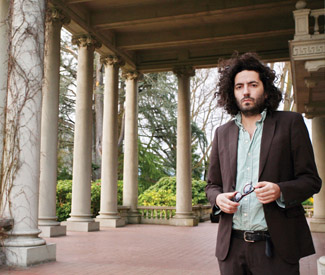
She visits from Brooklyn, he attempts to show her a fun time. “You Can’t Force a Dance Party,” from 2009’s The Good Feeling Music of Dent May & His Magnificent Ukulele, wryly introduced May as an affective personality to rival Jonathan Richman and Jens Lekman. It’s not hard to see the autobiographical elements in his music when he sings of his native state, “For you I’ll try so hard to make you see, it ain’t so bad in Mississippi.” Dropping out of NYU, May returned home to work on music and helped found the Cats Purring arts collective/”infotainment cult.” With his new release, Do Things — a slice of sun that sounds like the product of playing with a drum machine after listening to “Wouldn’t It Be Nice” on repeat/acid — May proves that the party is wherever he goes. (Prendiville)

With Quintron and Miss Pussycat

9pm, $9–$12

New Parish

579 18th St., Oakl.

www.thenewparish.com


Sat/30 9:30pm, $10–$12

With Quintron and Miss Pussycat, Shannon and the Clams

Elbo Room

647 Valencia, SF (415) 552-7788

www.elbo.com


Sandwell District

The SF techno scene blossomed nicely in spring, a kaleidoscope of pixellated textures, live experiments, and visiting representatives of a global scene unburdened from any anti-intellectual strains by the rise of pop EDM. There was also some damn good dancing to be had, no lie. Perhaps auguring a summer full of even deeper, and, perhaps, harder sounds, a showcase from Berlin’s Sandwell District label kicks the season off with some sophisticated boom-boom from Function, Rrose, and Silent Servant at Public Works, presented by the As You Like It party crew. Entrancing UK slow-burn disco king Mark E gives something to swing our skirts to upstairs, and the whole shebang kicks off with the debut of Amélie Ravalec’s documentary Paris/Berlin: 20 Years of Underground Techno. (Marke B.)

9pm, $15–$20

Public Works

161 Erie, SF

(415) 932-0955

www.ayli-sf.com


SATURDAY 30

The Slow Motion Cowboys

The music of the Slow Motion Cowboys has a subtle summery ease — it makes you want to pick up a banjo and play along, perhaps while sipping some lemonade out on the porch. You’d close your eyes and strum along to the sounds of upright bass, gentle guitar picking, baritone ukulele, and fiddle. The group’s original songwriting style and arrangements capture that wistful feeling of yearning that so characterizes classic folk and bluegrass music. While contemporary enough to strike interest in a city audience, their sound is country enough to provide you with much needed peace of mind on a Saturday night out on the town. (Shauna C. Keddy)

6pm, $8–$10

Amnesia

835 Valencia, SF

(415) 970- 0012

www.amnesiathebar.com


Kafana Balkan

Admit it: you could use a lot more woozy oompah-pah in your life, a splash of wheeling fiddle-dee-dee, soaring hurrah, and bouncey bass arpeggio. Forget the automated four-four march of your quotidian existence, and whirl away from the rat race like a romanticized gypsy, a musical nomad free of the cubicle, the log-in, the comments section, the endless update. Kafana Balkan, one of our best Romani-inspired parties, mixes gypsy tunes and strong drink with a wee bit of playa dust to conjure non-stop ecstatic dancing: this blowout with live powerhouses Brass Menazeri and Fishtank Ensemble (and fantastic DJ Zeljko) is just the ticket to chase away any reality blues. (Marke B.)

9pm, $15

Great American Music Hall

859 O’Farrell, SF.

www.slimspresents.com


SUNDAY 1

Party Hard(ing)

When it comes to the high stakes game of gentrification, the Divisadero Corridor — lovingly dubbed DivCo by the passels of farmers market-minded individuals that have repopulated the once-African American, once-Western Addition — is betting high. The neighborhood has the critical mass of sustainability activists needed to launch high profile wars against big bank incursion, and drive the conversation on what kinds of new businesses belong on their street. The Harding Theater at 616 Divisadero is a new battle site. Neighborhood groups hope to thwart the efforts of condo developers and make it a community space. Today, come party and fundraise to that end with local vendors, barbers, musicians, and chefs in a gorgeous Alamo Square mansion. (Caitlin Donohue)

7-10pm, $20

Westerfield Mansion

1988 Fulton, SF

Facebook: Party Hard(ing)

www.nddivis.org


Lower Dens

Ever since Lower Dens made some year-end lists with 2010’s Twin Hand Movement, bandleader Jana Hunter has kept Kraftwerk’s Radio-Activity in heavy rotation. And, it shows. The Baltimore outfit’s breakthrough follow-up record, Nootropics, doubles down on thick, Krautrockabilly grooves, with the Zen-like propulsion of Lou Reed cruising the Autobahn. The production aesthetic is fascinating in its ability to sound both dry and soaked in reverb, and the album’s second half reveals a newfound interest in Musique concrète, giving the material an artier edge. Sure, they’ve upped their studio game, but the question remains: how will the band rock these songs in a live setting? (Kaplan)

With No Joy, Alan Resnick

8pm, $15

Independent

628 Divisadero, SF

(415) 771-1421

www.theindependentsf.com


MONDAY 2

The Casualties

Punk’s not dead! The Casualties made sure of it when they formed in New York in 1990 with the purpose of bringing punk back to its roots, in the style of the Exploited and pre-Rollins Black Flag. More than 20 years and eight studio albums later, they’re following through on their proclamation “The punx are fucking here/ You know who we are/ We’re here til the end/ Die hards! Die hards!” With over two decades to perfect their stage dives and liberty spikes, the Casualties are guaranteed to deliver a killer show. Expect some brutal circle pits. (Zaremba)

With Nekromantix, Down By Law, Lower Class Brats, the Sheds

7pm, $16

Oakland Metro Opera House

630 Third St, Oakl.

(510) 763-1146

www.oaklandmetro.org

The Guardian listings deadline is two weeks prior to our Wednesday publication date. To submit an item for consideration, please include the title of the event, a brief description of the event, date and time, venue name, street address (listing cross streets only isn’t sufficient), city, telephone number readers can call for more information, telephone number for media, and admission costs. Send information to Listings, the Guardian Building, 135 Mississippi St., SF, CA 94107; fax to (415) 487-2506; or e-mail (paste press release into e-mail body — no text attachments, please) to listings@sfbg.com. Digital photos may be submitted in jpeg format; the image must be at least 240 dpi and four inches by six inches in size. We regret we cannot accept listings over the phone.

No more fast food: Slow Sex Symposium proposes a love beyond capitalism

0

After a hectic Pride weekend, it’s about time to slow down. A Sat/30 performance-workshop (part of this week’s stellar This Is What I Want performance art fest — read Guardian theater critic Robert Avila’s enlightening interview with artistic director Tessa Wills here) should fit the bill nicely. Introducing “Slow Sex Symposia” and its curator, internationally-acclaimed writer and dancer Doran George. George is planning an afternoon exploration into alternative sexual practices, lifestyles, and unique relationships. Slow sex is a term the artist coined to serve as counterpoint to today’s fast-paced, commercialized notions of sex. Last week, George and I spoke about what it was like to work with a blockbuster lineup of artist, “the economics of queer desire,” and a childhood solo of  “Yankee Doodle.”

San Francisco Bay Guardian: Tell us about the slow sex movement. What makes it important?

Doran George: Slow sex is not a movement as far as I know. It’s a term that I coined for the symposium because I like the idea that communities of alternative sexual practice are engaged in the long-term process of cultivating a culture of sex that takes time, in contrast with the immediacy of practicing conventional ideas about sex. 

Setting up a good SM scene, negotiating non-monogamy, negotiating racist ideas about the sexuality of non-white bodies while still claiming the space for pleasure, these all take time. There is also a parallel [between slow sex and] the slow food movement, in the sense that I believe the radical pleasure community provides a model of sexual practice that is more nourishing, [similar to how] slow food is better than its fast equivalent. 

>>FOR MORE ON THE FESTIVAL, READ “ECONOMIES OF DESIRE”: ROBERT AVILA’S INTERVIEW WITH THIS IS WHAT I WANT‘S ARTISTIC DIRECTOR

SFBG: In your artist statement you reference accessibility to touch, conceptualizing new models of relationships, and the complexities of race in the sex industry. Can the slow sex movement move into mainstream and can queer forms of thought (around sex) be integrated into popular culture?

DG: There are many examples of alternative sexual practice entering mainstream culture. Unfortunately most of them are bitterly disappointing. Mainstream culture constantly needs new images and ideas to make it seem exciting, but at the same time it is usually committed to sustaining convention. Take Madonna’s use of SM imagery in the late 20th century as an example. Although some of the aesthetics were tantalizing, the bodies and constructions of gender were incredibly conservative. There were no sexy butch leather dykes on Madonna’s stage or in her videos. 

I think this is partly because the real power of alternative sexual culture is located in the fact that it is something you have learn and practice — it often entails carefully unpicking and rethinking relationships.. All of this takes careful work that is difficult for the fast consumer culture to contend with. In this sense I’m not sure that existing structures for the production and distribution of mainstream culture are very well designed for alternative sexual culture because radical sex depends upon local economy rather than global corporations. 

SFBG:  You are working with a blockbuster cast of queer artists, sex educators, and performers. What was it like working alongside all these influential queer people?

DG: I first heard about radical sex culture when I was in the fourth year of my dance training, nearly 20 years ago. Rachel Kaplan came to my dance academy and gave me a copy of More Out than In which was writing that came out of 848 space about the intersection between art, sex and community. 

A few years later I came to San Francisco from London with an artist’s grant to research diverse sexual cultures. It was 1999 and I was refusing to use gendered pronouns and regularly getting harassed on those big red buses for looking like a freak. When I first arrived in the Bay Area I felt like a queen. Susan Stryker showed me the hot-spots of transgender history and bought me my first\-ever burrito in the Mission. Pat (now Patrick) Califia and Matt Rice took me out for sushi. Annie Sprinkle gave me a pin badge that said “metamorphosexual” on it, and I met with Carol Queen and a host of other San Francisco folk. 

I was overwhelmed by the culture that had emerged in this city, the ideas and practices that people had pioneered, and the history that was being recorded. Returning to the UK I carried on making my own dance works that were influenced by the knowledge I had gleaned from people in the Bay. Being able to create a symposium that looks at how the unique sex culture of San Francisco has informed and been informed by the practice of art is therefore my own way of honoring the people and the gifts I was given as a young queer artists. 

SFBG: What does the term “the economics of queer desire” mean for you?

DG: I’m interested in how conventional economies of desire are queered, or how the queer dimensions of economies of desire become visible. Someone said to me recently that the extra-marital affair is the straight way to play. It made me laugh and struck me as a beautiful queering of heterosexuality, although Carol Queen’s Bend Over Boyfriend is still my all time favorite queering of straight sex.

SFBG: Where does art, desire, and sex intersect in your opinion?

DG: I don’t think that art, desire, and sex ever don’t intersect. Artistic practice has been involved in representing ideals of gender, desire and sex for centuries, and they inform the way that we practice sex. The symposium provides two different frames in which to think, one of them is

performance, and the other is sexual practice, but in reality these things are not separate. Having two frames is useful because it helps to start a conversation by giving us two different ideas to talk about: Performers make their work to represent or express something, and sex radicals do their practice to connect with people erotically (in all the different dimensions that the erotic can exist).

SFBG: How should attendees of the Slow Sex Symposia expect to walk away feeling? 

DG: I hope that attendees will walk away thinking about their feelings, and feeling about their thinking! I also hope their thinking and feeling moves in lots of different directions. My desire for the symposium is that it will provide a space for discourse about sexual and artistic practice to proliferate. A strong culture is one that can contend with diverse opinions being voiced.

SFBG: I enjoyed reading your bio on the This is What I Want website. You are quite an accomplished artist and scholar. Can you tell us something about yourself most people don’t know?

DG: My first major stage performance was a solo rendition of “Yankee Doodle” at the age of nine in the scout gangshow at the amateur dramatic theatre in a working class hosiery town in the British midlands. I don’t think the audience or I ever really recovered! 

Slow Sex Symposia 

Sat/30 noon-4pm, free with reservation

Center for Sex and Culture

1349 Mission, SF

www.theoffcenter.org

Why do Lee, Chiu, and others want to stifle economic growth?

16

Why do Mayor Ed Lee, Board of Supervisors President David Chiu, and San Francisco’s two major daily newspapers want to punish success? Because that’s exactly what their proposal to create a new gross receipts tax for businesses – in which corporations would be taxed more as they grow, thus encouraging economic stagnation – would do.

Right now, the city taxes businesses through a payroll tax, levying taxes based on the number of employees the company has. But under a gross receipts tax that would replace the payroll tax, employees have a disincentive to be productive and efficient and increase their companies’ profits because that would expose those companies to more of the city’s onerous tax burden.

Why would investors and employees want to grow a business in San Francisco when that would only submit them to higher taxes. Clearly, this is anti-business measure that is likely to plunge our local economy back into the depths of the recession. Don’t our leaders understand the need to help this fragile economic recovery?

Okay, okay, in case you haven’t guessed it yet, the previous three paragraphs are satire of the ridiculously overblown and misleading political rhetoric used by Lee and other critics of the city’s payroll tax, which they deride as as “job killer” that makes companies not want to hire new employees.

“Mayor Lee and Board President David Chiu proposed a gross receipts tax as an alternative to the City’s current payroll tax, which punishes companies for growing and creating new jobs in San Francisco,” Lee’s office wrote in a press release it distributed last week.

Yet my argument that a gross receipts taxes “punishes companies for growing” is just as logically sound as Lee’s argument that the payroll tax discourages companies from “creating new jobs” – and both arguments are also complete hyperbolic bullshit. But it’s seductively simple and widely parroted bullshit.

“To attract more companies to San Francisco and encourage existing employers to hire more employees, it is past time to do away with this tax,” our new neighbors down the hall, the editors of the Examiner, wrote in their editorial today, a oft-repeatedly refrain from the Chronicle and SF Chamber of Commerce as well. It later added that switching tax methods “wouldn’t penalize companies for employing people or paying them well. And city policy wouldn’t give employers any incentive to shed employees during a downturn.”

But the reality is that the 1.5 percent payroll tax is too small to really be a factor in the decision by corporations to add new employees, something they are already loath to do unless forced to by rising demand. It is simply one imperfect gauge of the size of a company and its ability to pay local taxes, just as the gross receipts tax is.

Health insurance costs, which Lee’s CPMC deal doesn’t adequate contain, is a far bigger factor in a company’s hiring decisions. So is commercial rent, which Lee’s corporate welfare policies are causing to go up downtown and throughout the city.

For decades, conservatives have tried to sell the general public on bogus trickle down economic theories that we all benefit from corporate tax cuts and that people will simply stop working if you tax them, ideas that should have been discarded as they were discredited. But they’re back with a vengeance, in supposedly liberal San Francisco of all places, actively peddled by key Lee supporters like billionaire venture capitalist Ron Conway, who only recently dropped his Republican party affiliation in favor of declined to state.

But it’s time to call out this voodoo economics for what it is: self-serving bullshit that ought to be rejected by citizens of a city that prides itself as being more educated and enlightened than the rubes in the flyover states that have been so thoroughly manipulated by the Republican Party and Blue Dog Democrats, to the detriment of our entire country.

Now, the Examiner’s argument that the business tax reform proposal would broaden and stabilize the tax base is a sound and meaningful argument, which is why the concept enjoys widespread support from across the ideological spectrum and is worth doing (although progressives rightful argue that if the tax base is being broadened then the city should reap some benefits from that, logic that Lee inexplicably resists).

Yet as the City Hall debates that will shape the details of business tax reform begin in a couple of weeks, it’s time to drop this misleading “job killer” label that has been promulgated by Republicans and other fiscal conservatives over the last decade and have an honest debate over what’s best for San Francisco’s private and public sectors.

Suspended state

0

news@sfbg.com

In May, a rip appeared in the social safety net that catches many of the people whose careers have been derailed by the continuing economic crisis when Californians lost eligibility for federal relief money under the Fed-Ed portion of the federal unemployment insurance extension program.

The news of the funding loss came to program recipients in a letter from the California Employment Development Department (EDD). According to data obtained from the EDD by the Bay Guardian, 1,994 San Franciscans were among the more than 92,000 people statewide who were cut from the unemployment roles earlier then expected, as the maximum length of benefits was reduced suddenly from 99 weeks to 79 weeks.

A nuance in the legislation that regulates state-by-state eligibly for Fed-Ed caused California’s early exit from the program, while individuals in other states with lower unemployment rates and stronger employment prospects remain eligible for longer coverage. New York state, with an unemployment rate of 8.5 percent, 2.4 points lower then California’s rate, continues to receive Fed-Ed funding.

Ironically, that’s because the recession has lingered longer here than elsewhere, and unemployed Californians are now being punished for being stuck for so long in such a slow economy.

“In order for a state to qualify for the Fed-Ed extension program you have to have a high unemployment rate and certainty California does have a high unemployment rate,” EDD Deputy Director Loree Levy told us. “It is just not 10 percent higher than what it has been over the last three years, and that is a requirement of the program. So the good news is that California’s economy is improving. It is unfortunate news for a lot of the long-term unemployed individuals who will now be doing without these extension benefits.”

In San Francisco, the economy is definitely improving. The Bureau of Labor Statistics (BLS) reports that the San Francisco metropolitan area, which includes San Francisco and San Mateo counties, saw the second highest 12-month rise in employment nationally, creating more than 25,000 jobs, a 2.7 percent leap in employment. This big jump, the second highest nationally, reduced the city’s unemployment rate to 7 percent in April, leaving San Francisco a rare rose in a sea of briars.

But that’s little consolation to people in industries that have yet to recover, from construction to education to other government jobs.

While the city’s economy has been buoyed by tourism, technology, and a segment of pre-existing affluence that has weathered the economic crisis, the statewide the picture is much different. The state’s “improving economy” left more than two million Californians unemployed in May, 10.9 percent the state’s workforce.

When statewide unemployment ticked up slightly in April, the state’s three-month average registered as 8 percent higher than the three-year average, missing by a statistical sliver the federal program’s threshold 10 percent increase. This triggered the BLC, which tracks unemployment across the nation, to notify the California EDD that funding of the Fed-Ed program would cease.

The trouble with this metric as a benchmark for benefits dispersion is when discouraged workers self identify as having stopped looking for a job, they are no longer included in the unemployment figures used by the BLS to determine Fed-Ed eligibility. If a fraction of these workers had identified themselves as seeking work, the Fed-Ed relief would have continued to flow into California.

If the state edges back across that threshold in the coming months, Fed-Ed money will flow into the state again, but those recently cut from the unemployment roles who did not exhaust their Fed-Ed eligibility time will not qualify to be re-added to the program.

The program’s loss could have a significant impact on the state’s economy going forward.

“In the three years since Fed-Ed was passed, more than 912,00 people in California have relied on the benefits,” Levy says. “That has brought $5 billion of federal funds into the ailing state economy. It has had a tremendous impact on the economy and when you add in a multiplying effect from money spent out there from these benefits on local businesses, it can be almost a $10 billion effect on the economy.”

As the economic crisis drags on, federal stimulus and relief programs that were planned with a short downturn in mind dry up, a political climate of austerity in government spending has taken its place. Individuals caught in the fallout of the economic crisis increasingly find themselves with nowhere to turn.

Only one out of three unemployed workers statewide currently receive any unemployment benefits, and before the end of Fed-Ed, a staggering 700,000 people who had been receiving benefits during the economic crisis exhausted the previous maximum 99 weeks without finding work.

“What happens when we require people to go out and get jobs when there are no jobs? That’s a nightmare. People are being cut off with no place to turn,” Princeton professor of economics Paul Krugman said at the Commonwealth Club of San Francisco last month. “Benefits that are emergency benefits should not depend on some arbitrary timeline for the individual but for the duration of the emergency. If we have a flood, you don’t say ‘We are only going to help flood victims for three days.’ We help them until the flood recedes.”

Of those Californians who still do receive an unemployment check, over half have been out of work for more than six months, the period at which normal state funding ends and federally emergency extension programs take over. The remaining federal unemployment extension program enacted during the economic crisis — the Emergency Unemployment Compensation program — is set to phase out on Dec. 23 of this year. That is bad news for Californians locked out of the labor market who have exhausted the normal six months of state funded benefits.

Responding to the release of May’s week jobs report, House Minority Leader Nancy Pelosi (D-SF) said the report, “Makes clear that we have more work to do to restore security and opportunity for the middle class. The time is now for Republicans to join us in moving forward on behalf of the middle class.”

Without the renewal by Congress of federal unemployment extension deep in the presidential election cycle, another larger surge in people booted from the unemployment roles will be locked in competition for the state’s paltry offering of new job creation — a punishing musical chairs game with real life stakes.

Meister: Walker won in Wisconsin, but so did labor

15

By Dick Meister

Dick Meister, former labor editor of the SF Chronicle and KQED-TV Newsroom, has covered labor and politics for more than a half-century. Contact him through his website, www.dickmeister.com.

Yes, labor lost its attempt to recall Wisconsin Gov. Scott Walker, one of the most virulent labor opponents anywhere.  But as AFL-CIO President Richard Trumka declared, the heated election campaign was “not the end of the story, but just the beginning.”

The campaign, triggered by Walker all but eliminating the collective bargaining rights of most of Wisconsin’s 380,000 public employees, showed that labor is quite capable of mounting major drives against anti-labor politicians, a lesson that won’t be lost on unions or their opponents.

And labor’s political enemies, while perhaps emboldened by labor’s failure in Wisconsin, undoubtedly will hesitate, lest they be confronted with similarly heavy union opposition in their attempts to restrict the bargaining rights of public employees.

Think of it: Labor was outspent hugely by outside corporate interests that funneled $50 million into Walker’s campaign, outspending labor seven-to-one. Yet labor managed to capture nationwide attention and support, and though losing the gubernatorial race, managed to wrest control of Wisconsin’s State Senate from Walker’s Republican allies.

Trumka was rightly awed by “the tremendous outpouring of solidarity and energy from Wisconsin’s working families, against overwhelming odds. Whether it was standing in the snow, sleeping in the Capitol, knocking on doors or simply casting a vote, we admire the heart and soul everyone poured into this effort” in response to “a gargantuan challenge” to labor.

The Senate victory was almost as important as recall of Walker would be. It gave Democrats a one-seat majority in the 33-seat Senate, which will make it much harder for Walker and his Republican allies to enact his anti-labor agenda.

Trumka says he believes  “the new model that Wisconsin’s working families have built won’t go away after one election – it will only grow.” The election, he adds, was “an important moment, and an important message has been sent: Politicians will be held to account by working people.”

Walker, as Trumka says, was forced “to answer for his efforts to divide the state and punish hard-working people.” Trumka optimistically believes that inspired working people elsewhere, union and non-union alike, will follow the lead of the anti-Walker forces and “forge a new path forward.”

Trumka concludes that the challenge to labor and its allies in Wisconsin and everywhere else is “to create an economy that celebrates hard work over partisan agendas.” He said the recall election moved that goal closer.

Of course Richard Trumka is highly partisan, as he should be. But that doesn’t necessarily lessen his credibility. Facts are facts. Although not victorious, labor waged an extraordinary campaign that laid the groundwork for future campaigns that could result in important labor victories.

That would at the least increase the strength of the nation’s working people and diminish the strength of those who, like Scott Walker, would weaken the vital rights of workers and their unions.

Dick Meister, former labor editor of the SF Chronicle and KQED-TV Newsroom, has covered labor and politics for more than a half-century. Contact him through his website, www.dickmeister.com.

Stage Listings

0

Stage listings are compiled by Guardian staff. Performance times may change; call venues to confirm. Reviewers are Robert Avila, Rita Felciano, and Nicole Gluckstern. Submit items for the listings at listings@sfbg.com. For further information on how to submit items for the listings, see Picks.

THEATER

OPENING

Aftermath Stagewerx, 446 Valencia, SF; www.brownpapertickets.com. $25. Previews Thu/7, 8pm. Opens Fri/8, 8pm. Runs Thu-Sat, 8pm. Through June 30. Theatre, Period presents Jessica Blank and Erik Jenson’s docu-drama, based on interviews with Iraqi civilians forced to flee after the US military’s arrival in 2003.

Lips Together, Teeth Apart New Conservatory Theatre Center, 25 Van Ness, SF; www.nctcsf.org. $25-45. Previews Wed/6-Fri/8, 8pm. Opens Sat/9, 8pm. Runs Wed-Sat, 8pm; Sun, 2pm. Through July 1. New Conservatory Theatre Center performs Terrence McNally’s play about two straight couples spending July 4 amid Fire Island’s gay community.

Reunion SF Playhouse, Stage Two, 533 Sutter, SF; (415) 677-9596, www.sfplayhouse.org. $20. Previews Wed/6-Thu/7, 7pm; Fri/8, 8pm. Opens Sat/9, 8pm. Runs Wed-Thu, 7pm; Fri-Sat, 8pm. Through June 30. SF Playhouse presents a world premiere drama by local playwright Kenn Rabin.

“Risk Is This…The Cutting Ball New Experimental Plays Festival” Exit on Taylor, 277 Taylor, SF; (415) 525-1205, www.cuttingball.com. Free ($20 donation for reserved seating; $50 donation for five-play reserved seating pass). Opens Fri/8, 8pm. Runs Fri-Sat, 8pm. Through July 14. Cutting Ball’s annual fest of experimental plays features two new works and five new translations in staged readings.

Vital Signs Marsh San Francisco, 1062 Valencia, SF; (415) 282-3055, www.themarsh.org. $15-50. Previews Fri/8 and June 15, 8pm; Sat/9, 8:30pm. Opens June 16, 8:30pm. Runs Sat, 8:30pm; June 22, 8pm. Through July 21. The Marsh San Francisco presents Alison Whittaker’s behind-the-scenes look at nursing in America.

BAY AREA

Wheelhouse TheatreWorks at the Mountain View Center for the Performing Arts, 500 Castro, Mtn View; (650) 463-1960, www.theatreworks.org. $19-69. Previews Wed/6-Fri/8, 8pm. Opens Sat/9, 8pm. Runs Tue-Wed, 7:30pm; Thu-Sat, 8pm (also Sat, 2); Sun, 2 and 7pm. Through July 1. TheatreWorks’ 60th world premiere is a musical created by and starring pop-rock trio GrooveLily.

ONGOING

A Behanding in Spokane SF Playhouse, 533 Sutter, SF; www.sfplayhouse.org. $20-70. Tue-Thu, 7pm; Fri-Sat, 8pm (also Sat, 3pm). Through June 30. If Garth Ennis had been asked to write a comic book about a one-handed sociopath with a dark obsession, he might well have written something similar to Martin McDonagh’s A Behanding in Spokane. And admittedly, approached from that angle, a lot of the script’s dramatic flaws are more easily forgiven. There’s not a whole lot of subtle context or languid metaphor to be found in McDonagh’s criminal caper about the little-known “hand-dealing” trade, but as in Ennis’ best known work, Preacher, the pretty girl (Melissa Quine) is the smartest one in the room; the sociopath (Rod Gnapp) is interested in enacting as vicious a revenge on all humanity while spewing as many blatantly offensive invectives as possible; the boyfriend (Daveed Diggs) has some arrested development issues to work out; and the receptionist (Alex Hurt) takes the caricature of man-child to a whole new level. In fact, while all four actors deliver rock-solid performances of their mostly unsympathetic characters, it’s Hurt’s that impresses most. His spooky intensity and goofily tone-deaf determination plays like a combination of Adam Sandler and Arno Frisch, and if there’s a real sociopath in the room, the evidence suggests it’s probably him. Ultimately though the piece relies too heavily on hollow one-liners to remain interesting — a 20-minute farce stretched to 90 minutes — and quite unlike an Ennis comic, it does not leave one wanting more. (Gluckstern)

The Full Monty Eureka Theatre, 215 Jackson, SF; www.roltheatre.com. $25-36. Thu-Sat, 8pm (also Sat, 2pm); Sun, 2pm. Through June 30. In desperate times, how far would you go to turn a buck? The central premise of the 1997 movie and its namesake musical comedy The Full Monty, the answer to this question is right in the title, which limits the suspense, but amps up the expectations. Set not in Sheffield, England as in the movie, but the similarly economically challenged climate of Buffalo, New York circa the late nineties, the comical romp follows a group of unemployed steel workers who decide, rather optimistically, that spending one night as exotic dancers will solve their immediate financial woes. Banish all notions of a Hot Chocolate sing-along; the soundtrack of the stage musical has little in common with its cinematic predecessor, but there are a couple of toe-tappers, particularly the songs writ for the ladies: a belter’s anthem for their spry but elderly accompanist Jeanette (Cami Thompson), a snarky commentary on male beauty, “The Goods,” for the ensemble. On opening night, Ray of Light’s production ran about 15 minutes long after a late start, and the tempo seemed sluggish in parts, but once it hits its stride, The Full Monty should provide a welcome antidote to the ongoing, we’re-still-in-a-recession blues, red leather g-strings and all. (Gluckstern) Fwd: Life Gone Viral Marsh San Francisco, 1062 Valencia, SF; (415) 282-3055, www.themarsh.org. $20-50. Thu/7, 8pm; Sat/9, 8:30pm; Sun/10, 7pm. The internet becomes comic fodder for creator-performers Charlie Varon and Jeri Lynn Cohen, and creator-director David Ford.

100 Saints You Should Know Thick House, 1695 18th St, SF; www.therhino.org. $10-30. Wed-Thu, 7:30pm; Fri-Sat, 8pm; Sun, 3pm. Through June 17. Theatre Rhinoceros performs Kate Fodor’s comedy-drama about family love, homosexuality, and adolescence.

Othello Phoenix Theatre, 414 Mason, SF; www.brownpapertickets.com. $15-18. Thu/7-Sat/9, 8pm. Ninjaz of Drama performs Shakespeare’s classic in a contemporary setting.

Slipping New Conservatory Theatre Center, 25 Van Ness, SF; www.nctcsf.org. $25-45. Wed-Sat, 8pm; Sun, 2pm. Through July 1. New Conservatory Theatre Center performs Daniel Talbott’s drama about a gay teen who finds new hope after a traumatic breakup.

Tenderloin Exit on Taylor, 277 Taylor, SF; (415) 525-1205, www.cuttingball.com. $10-50. Extended run: June 14 and 21, 7:30pm; June 15-16 and 22-23, 8pm (also June 16 and 23, 2pm); June 18 and 24, 5pm. Annie Elias and Cutting Ball Theater artists present a world premiere “documentary theater” piece looking at the people and places in the Cutting Ball Theater’s own ‘hood.

The Waiting Period MainStage, Marsh San Francisco, 1062 Valencia, SF; (415) 282-3055, www.themarsh.org. $15-50. Fri, 8pm; Sat, 5pm. Extended through July 7. Brian Copeland (comedian, TV and radio personality, and creator-performer of the long-running solo play Not a Genuine Black Man) returns to the Marsh with a new solo, this one based on more recent and messier events in Copeland’s life. The play concerns an episode of severe depression in which he considered suicide, going so far as to purchase a handgun — the title coming from the legally mandatory 10-day period between purchasing and picking up the weapon, which leaves time for reflections and circumstances that ultimately prevent Copeland from pulling the trigger. A grim subject, but Copeland (with co-developer and director David Ford) ensures there’s plenty of humor as well as frank sentiment along the way. The actor peoples the opening scene in the gun store with a comically if somewhat stereotypically rugged representative of the Second Amendment, for instance, as well as an equally familiar “doood” dude at the service counter. Afterward, we follow Copeland, a just barely coping dad, home to the house recently abandoned by his wife, and through the ordinary routines that become unbearable to the clinically depressed. Copeland also recreates interviews he’s made with other survivors of suicidal depression. Telling someone about such things is vital to preventing their worst outcomes, says Copeland, and telling his own story is meant to encourage others. It’s a worthy aim but only a fitfully engaging piece, since as drama it remains thin, standing at perhaps too respectful a distance from the convoluted torment and alienation at its center. (Avila)

BAY AREA

Black n Blue Boys/Broken Men Berkeley Repertory Theatre, Thrust Stage, 2025 Addison, Berk; www.berkeleyrep.org. $14.50-73. Tue, Thu-Sat, 8pm (also Sat, 2pm); Wed and Sun, 7pm (also Sun, 7pm). Through June 24. Berkeley Rep presents a world premiere from writer-performer Dael Orlandersmith (a Pulitzer finalist for 2002’s Yellowman).

Crevice La Val’s Subterranean, 1834 Euclid, Berk; www.impacttheatre.com. $10-20. Thu/7-Sat/9, 8pm. Just in case you were feeling panicked about the persistently recessed state of the economy and what might be your own less than ideal place in it, the Impact Theatre and Playground co-presentation of Lauren Yee’s Crevice might help to put your woes into perspective. That’s because slacker sibs Liz (Marissa Keltie) and Rob (Timothy Redmond) are only slightly exaggerated representatives of Generation Next whose penchant for making lackluster life choices has sentenced them to an indefinite prison term of couch-surfing and Teen Mom marathons in their childhood home. Naturally, they desire change, but it’s not until their mother (Laura Jane Bailey) starts having a hot fling with a younger man that things do. In an egregious breach of the TMI line, it appears that Mom’s orgasms open a “crevice” into an alternate reality that Rob and Liz subsequently fall into. Thus removed from the entropy of their former reality they begin testing the parameters of their new one, quickly coming to the realization that sometimes the alternatives to what you already have are even worse. Getting home again is a convoluted, not fully mapped-out process, but in the interim, their navigation of their erstwhile wonderland offers most of the play’s best lines as well as the uncomfortably effective transformation of Reggie D. White from Liz’s nerdish best buddy to multi-lingual Mafia killer and casual sadist. (Gluckstern)

God of Carnage Marin Theatre Company, 397 Miller, Mill Valley; www.marintheatre.org. $34-55. Tue and Thu-Sat, 8pm (also June 16, 2pm); Wed, 7:30pm; Sun, 2 and 7pm. Through June 17. Marin Theatre Company performs Yasmina Reza’s Tony-winning comedy about two sets of parents who meet after their children get into a schoolyard fight.

The Great Divide Ashby Stage, 1901 Ashby, Berk; www.shotgunplayers.org. $20-30. Wed-Thu, 7pm; Fri-Sat, 8pm; Sun, 5pm. Through June 24. Shotgun Players performs Adamn Chanzit’s drama about the hot topic of fracking, inspired by Ibsen’s An Enemy of the People.

Not Getting Any Younger Marsh Berkeley, 2120 Allston, Berk; (415) 282-3055, www.themarsh.org. $15-50. Fri, 8pm; Sat, 5pm. Extended through June 30. Marga Gomez is back at the Marsh, a couple of too-brief decades after inaugurating the theater’s new stage with her first solo show — an apt setting, in other words, for the writer-performer’s latest monologue, a reflection on the inevitable process of aging for a Latina lesbian comedian and artist who still hangs at Starbucks and can’t be trusted with the details of her own Wikipedia entry. If the thought of someone as perennially irreverent, insouciant, and appealingly immature as Gomez makes you depressed, the show is, strangely enough, the best antidote. Note: review from the show’s 2011 run at the Marsh San Francisco. (Avila)

The Odyssey Angel Island; (415) 547-0189, www.weplayers.org. $40-76 (some tickets include ferry passage). Sat-Sun, 10:30am-4pm (does not include travel time to island). Through July 1. We Players present Ava Roy’s adaptation of Homer’s epic poem: an all-day adventure set throughout the nature and buildings of Angel Island State Park.

The Tempest Bruns Amphitheater, 100 California Shakespeare Theater Way, Orinda; (510) 809-3290, www.calshakes.org. $35-71. Tue-Thu, 7:30pm; Fri-Sat, 8pm (also June 23, 2pm); Sun, 4pm. Through June 25. California Shakespeare Theater opens its season with this dance-filled interpretation of the Bard’s classic tale.

The World’s Funniest Bubble Show Marsh Berkeley, TheaterStage, 2120 Allston, Berk; (415) 826-5750, www.themarsh.org. $8-50. Fri, 6pm; Sun/10, June 16, 24, and 30, 11am. Through June 30. Louis “The Amazing Bubble Man” Pearl returns with this kid-friendly, bubble-tastic comedy.

PERFORMANCE/DANCE

American Foundation for Equal Rights benefit Bayfront Theater, Fort Mason Center, Marina at Laguna, SF; www.brownpapertickets.com. Mon/11, 8pm. $25-50. BATS Improv and Tom Bruett of marriageequalityplays.com present short plays by local playwrights, plus an improvised short play, on the theme of marriage equality.

“Beef Cake Comedy Show” Deco Lounge, 510 Larkin, SF; www.decosf.com. Sun/10, 8pm. $10. Comedy music group Saw Dem Eyes headlines this night of “straight guys telling jokes with their shirts off.”

“The BY Series” ODC Theater, 3153 17th St, SF; www.odcdance.org. Thu-Sat, 8pm; Sun, 2pm. Through June 17. $25. Robert Moses’ Kin Dance Company presents work by guest choreographers Molissa Fenley, Ramon Ramos Alayo, and Sidra Bell, plus the world premiere of Moses’ Scrubbing the Dog.

“Elect to Laugh” Studio Theater, Marsh San Francisco, 1062 Valencia, SF; (415) 282-3055, www.themarsh.org. Tue, 8pm. Ongoing through Nov 6. $15-50. Will Durst and friends perform in this weekly political humor show that focuses on the upcoming presidential election.

“Elementary, My Dear Watson, It Was Crack” Purple Onion, 140 Columbus, SF; (415) 956-1653. Thu/7, 9pm. $20. Comedian Will Franken performs his latest one-man sketch comedy show.

“A Funny Night for Comedy” Actors Theatre of San Francisco, 855 Bush, SF; www.natashamuse.com. Sun/10, 7pm. $10. Natasha Muse and Ryan Cronin host a comedy talk show, followed by “A Funny Night for Improv” at 9pm.

“Feel the Power of the Dork Side” Exit Theatre, 156 Eddy, SF; www.brownpapertickets.com. Fri/8-Sat/9, 8pm. $15. Engineering professor by day, stand-up comedian by night: Dr. Pete Ludovice performs his solo show.

“Get In Front” Herbst Theater, 401 Van Ness, SF; www.getinfront.org. Wed/6, 7pm. $35-250. A benefit for Cancer Prevention Institute of California, this event features performances by principal dancers from San Francisco Ballet, Alonzo King LINES Ballet, ODC/Dance, and more.

“House of Matter” Dance Mission Theater, 3316 24th St, SF; www.brownpapertickets.com. Fri/8-Sat/9, 8pm; Sun/10, 7pm. $15-25. Nicole Klaymoon’s Embodiment Project presents its latest installment of urban dance theater.

“Idina Menzel: Barefoot at the Symphony” Davies Symphony Hall, 201 Van Ness, SF; (415) 864-6000. Thu/7, 8pm. $69.50-125. The Tony winner performs a show of Broadway and modern pop songs.

“Kunst-Stoff Arts/Fest 2012” Kunst-Stoff Arts, One Grove, SF; kunststoffartsfest2012.eventbrite.com. Thu/7-Sat/9 (Program One) and June 14-16 (Program Three), 8:30pm; Tue/12, 8pm (Program Two). $15. Program one: Dance Elixir and Kunst-Stoff Dance Company; program two: Silvia Girardi performing multimedia theater work All I Wanted to Say; program three: Bruno Augusto and Meisha Bosma.

“Performance Night at the Strand” Strand Theater, 1127 Market, SF; maryarmentroutdancetheater.com. Fri/8, 8:15pm. Free (donations accepted). Mary Armentrout Dance Theater, Oakland’s Milkbar, and Paz de la Calzada present an evening of site-specific performances and installations inspired by de la Calzada’s mural on the shuttered Strand Theater.

“R16 North American B-Boy Championships” Palace of Fine Arts Theater, 3301 Lyon, SF; www.r16usa.com. Sat/9, 2-6pm. $10-25. Come check out dancers popping, locking, and otherwise vying to represent North America at the Supreme World Championship finals in South Korea.

San Francisco Ethnic Dance Festival de Young Museum, 50 Hagiwara Tea Garden, Golden Gate Park, SF; www.worldartswest.org. Sat/9, 2pm. $15. Artist dialogue with “American Tribal Style Belly Dance” creator Carolena Nericcio, followed by a performance by FatChanceBellyDance. Also Sun/10, 2pm, Asian Art Museum, 200 Larkin, SF; www.worldartswest.org. Sun/10, 2pm. Free with museum admission ($7-12). Shamanic dance performace by Korean dance master Il Hyun Kim.

“Sex and the City: Live!” Rebel, 1760 Market, SF; www.brownpapertickets.com. Tue, 7 and 9pm. Through June 26. $25. Heklina, D’Arcy Drollinger, Lady Bear, Trixxie Carr play the fab four in this drag-tastic homage to the HBO series.

“Talkies” Artists’ Television Access, 992 Valencia, SF; www.atasite.org. Fri/8, 8pm. $6. Stand-up comedy and short comedic films hosted by Anna Seregina and George Chen.

“Voca People” Marines’ Memorial Theatre, 609 Sutter, Second Flr, SF; www.marinesmemorialtheatre.com. Tue-Fri, 8pm; Sat, 6:30 and 9:30pm; Sun, 3 and 6pm. Through June 17. $49-75. A capella from outer space.

“X” Garage, 715 Bryant, SF; www.brownpapertickets.com. Wed/6-Thu/7, 8pm. $10-20. Australian performer Sunny Drake presents his new show in conjunction with the National Queer Arts Festival.

BAY AREA

“Jazz Hams” Odell Johnson Performing Arts Center, Laney College, 900 Fallon, Oakl; www.brownpapertickets.com. Sat/9, 8pm; Sun/10, 1pm. $10. The plus-sized performers of Big Moves present a new, full-scale production featuring an array of dance styles.

Stage Listings

0

Stage listings are compiled by Guardian staff. Performance times may change; call venues to confirm. Reviewers are Robert Avila, Rita Felciano, and Nicole Gluckstern. Submit items for the listings at listings@sfbg.com. Complete listings are located at www.sfbg.com.

THEATER

OPENING

Aftermath Stagewerx, 446 Valencia, SF; www.brownpapertickets.com. $25. Previews Thu/7, 8pm. Opens Fri/8, 8pm. Runs Thu-Sat, 8pm. Through June 30. Theatre, Period presents Jessica Blank and Erik Jenson’s docu-drama, based on interviews with Iraqi civilians forced to flee after the US military’s arrival in 2003.

Lips Together, Teeth Apart New Conservatory Theatre Center, 25 Van Ness, SF; www.nctcsf.org. $25-45. Previews Wed/6-Fri/8, 8pm. Opens Sat/9, 8pm. Runs Wed-Sat, 8pm; Sun, 2pm. Through July 1. New Conservatory Theatre Center performs Terrence McNally’s play about two straight couples spending July 4 amid Fire Island’s gay community.

Reunion SF Playhouse, Stage Two, 533 Sutter, SF; (415) 677-9596, www.sfplayhouse.org. $20. Previews Wed/6-Thu/7, 7pm; Fri/8, 8pm. Opens Sat/9, 8pm. Runs Wed-Thu, 7pm; Fri-Sat, 8pm. Through June 30. SF Playhouse presents a world premiere drama by local playwright Kenn Rabin.

“Risk Is This…The Cutting Ball New Experimental Plays Festival” Exit on Taylor, 277 Taylor, SF; (415) 525-1205, www.cuttingball.com. Free ($20 donation for reserved seating; $50 donation for five-play reserved seating pass). Opens Fri/8, 8pm. Runs Fri-Sat, 8pm. Through July 14. Cutting Ball’s annual fest of experimental plays features two new works and five new translations in staged readings.

Vital Signs Marsh San Francisco, 1062 Valencia, SF; (415) 282-3055, www.themarsh.org. $15-50. Previews Fri/8 and June 15, 8pm; Sat/9, 8:30pm. Opens June 16, 8:30pm. Runs Sat, 8:30pm; June 22, 8pm. Through July 21. The Marsh San Francisco presents Alison Whittaker’s behind-the-scenes look at nursing in America.

BAY AREA

Wheelhouse TheatreWorks at the Mountain View Center for the Performing Arts, 500 Castro, Mtn View; (650) 463-1960, www.theatreworks.org. $19-69. Previews Wed/6-Fri/8, 8pm. Opens Sat/9, 8pm. Runs Tue-Wed, 7:30pm; Thu-Sat, 8pm (also Sat, 2); Sun, 2 and 7pm. Through July 1. TheatreWorks’ 60th world premiere is a musical created by and starring pop-rock trio GrooveLily.

ONGOING

The Full Monty Eureka Theatre, 215 Jackson, SF; www.roltheatre.com. $25-36. Thu-Sat, 8pm (also Sat, 2pm); Sun, 2pm. Through June 30. Ray of Light Theatre performs the hit musical.

Fwd: Life Gone Viral Marsh San Francisco, 1062 Valencia, SF; (415) 282-3055, www.themarsh.org. $20-50. Thu/7, 8pm; Sat/9, 8:30pm; Sun/10, 7pm. The internet becomes comic fodder for creator-performers Charlie Varon and Jeri Lynn Cohen, and creator-director David Ford.

100 Saints You Should Know Thick House, 1695 18th St, SF; www.therhino.org. $10-30. Wed-Thu, 7:30pm; Fri-Sat, 8pm; Sun, 3pm. Through June 17. Theatre Rhinoceros performs Kate Fodor’s comedy-drama about family love, homosexuality, and adolescence.

Othello Phoenix Theatre, 414 Mason, SF; www.brownpapertickets.com. $15-18. Thu/7-Sat/9, 8pm. Ninjaz of Drama performs Shakespeare’s classic in a contemporary setting.

Slipping New Conservatory Theatre Center, 25 Van Ness, SF; www.nctcsf.org. $25-45. Wed-Sat, 8pm; Sun, 2pm. Through July 1. New Conservatory Theatre Center performs Daniel Talbott’s drama about a gay teen who finds new hope after a traumatic breakup.

The Waiting Period MainStage, Marsh San Francisco, 1062 Valencia, SF; (415) 282-3055, www.themarsh.org. $15-50. Fri, 8pm; Sat, 5pm. Extended through July 7. Brian Copeland (comedian, TV and radio personality, and creator-performer of the long-running solo play Not a Genuine Black Man) returns to the Marsh with a new solo, this one based on more recent and messier events in Copeland’s life. It’s a worthy aim but only a fitfully engaging piece, since as drama it remains thin, standing at perhaps too respectful a distance from the convoluted torment and alienation at its center. (Avila)

BAY AREA

Black n Blue Boys/Broken Men Berkeley Repertory Theatre, Thrust Stage, 2025 Addison, Berk; www.berkeleyrep.org. $14.50-73. Tue, Thu-Sat, 8pm (also Sat, 2pm); Wed and Sun, 7pm (also Sun, 7pm). Through June 24. Berkeley Rep presents a world premiere from writer-performer Dael Orlandersmith (a Pulitzer finalist for 2002’s Yellowman).

Crevice La Val’s Subterranean, 1834 Euclid, Berk; www.impacttheatre.com. $10-20. Thu/7-Sat/9, 8pm. Just in case you were feeling panicked about the persistently recessed state of the economy and what might be your own less than ideal place in it, the Impact Theatre and Playground co-presentation of Lauren Yee’s Crevice might help to put your woes into perspective. Slacker sibs Liz (Marissa Keltie) and Rob (Timothy Redmond) are only slightly exaggerated representatives of Generation Next; when their mother (Laura Jane Bailey) starts having a hot fling with a younger man, her orgasms open a “crevice” into an alternate reality that Rob and Liz fall into. Their navigation of their erstwhile wonderland offers most of the play’s best lines as well as the uncomfortably effective transformation of Reggie D. White from Liz’s nerdish best buddy to multi-lingual Mafia killer and casual sadist. (Gluckstern)

Not Getting Any Younger Marsh Berkeley, 2120 Allston, Berk; (415) 282-3055, www.themarsh.org. $15-50. Fri, 8pm; Sat, 5pm. Extended through June 30. Marga Gomez is back at the Marsh, a couple of too-brief decades after inaugurating the theater’s new stage with her first solo show — an apt setting, in other words, for the writer-performer’s latest monologue, a reflection on the inevitable process of aging for a Latina lesbian comedian and artist who still hangs at Starbucks and can’t be trusted with the details of her own Wikipedia entry. If the thought of someone as perennially irreverent, insouciant, and appealingly immature as Gomez makes you depressed, the show is, strangely enough, the best antidote. Note: review from the show’s 2011 run at the Marsh San Francisco. (Avila)

The Odyssey Angel Island; (415) 547-0189, www.weplayers.org. $40-76 (some tickets include ferry passage). Sat-Sun, 10:30am-4pm (does not include travel time to island). Through July 1. We Players present Ava Roy’s adaptation of Homer’s epic poem: an all-day adventure set throughout the nature and buildings of Angel Island State Park.

Chevron meets amid angry shareholders, liability, and environmental disasters

3

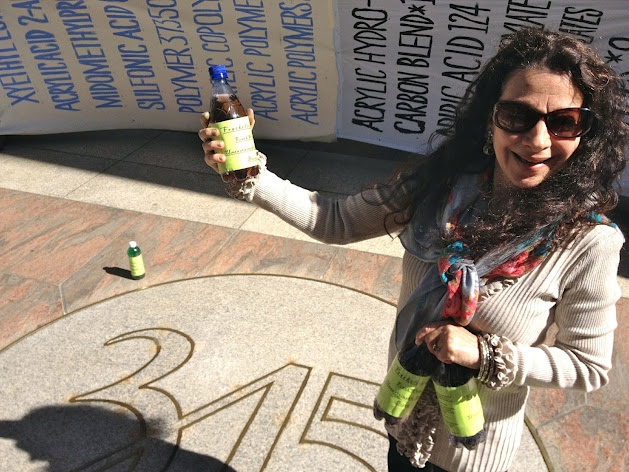
About 40 gathered outside Chevron’s San Francisco offices yesterday to mark its annual shareholder meeting. The demonstration was organized by OccupySF’s environmental justice working group, and used art and street theater to criticize Chevron’s involvement in hydraulic fracturing, a natural gas extraction process that may threaten parts of California’s water supply.

The afternoon protest came after a larger group showed up to Chevron’s world headquarters in San Ramon for the shareholder meeting that morning. According to Ginger Cassady of Rainforest Action Network (RAN), who helped organize the protest, it was a “big, colorful demonstration” with “over 100” in attendance.

Groups like the True Cost of Chevron and RAN’s Change Chevron campaign have been pressuring the company for years on a variety of issues. This year, workers and residents in areas where Chevron operates from Ecuador, Brazil, Angola and Nigeria travelled to San Ramon to voice their concerns. These ranged from oil-contaminated land in the Ecuadorian Amazon to an explosion on an oil rig off the shore of Nigeria in January. In that explosion, two workers were killed and more than 100 local people left the city for fear of contamination and other health risks caused by a fire that burned for months before going out on its own, despite Chevron’s efforts to contain the flames.

About 30 activists from around the world entered the meeting with proxy votes, according to Cassady. None interrupted the meeting, instead waiting their turn to speak. There were no arrests.

Some people with proxy votes, however, were not allowed access to the meeting. João Antonio de Moraes, national coordinator of Brazil’s United Federation of Oil Workers (FUP), was not allowed access, along with two representatives from United Steel Workers. Another worker, at the meeting to present in support of a resolution for worker safety, was initially blocked from entering but allowed access after a dispute, but had his presentation notes confiscated.

At the meeting, Chevron CEO John Watson announced “tremendous performance momentum” for the company, with “earnings of $26.9 billion” in the past year, according to a press release.

“Watson reinforced Chevron’s long-standing culture of safety and environmental stewardship, and resulting industry-leading performance,” the press release states. “He also highlighted Chevron’s commitment to partnerships that address health, education and economic development issues in the communities where the company operates, and Chevron’s global social investments of approximately $1 billion over the past six years.”

But Chevron is also suffering financially due to liability following oil spills, explosions, and contamination, a concern protest organizers say Watson failed to address. Representatives from Chevron did not return calls for comment.

The company recently settled with plaintiffs in Ecuador after an appeals court there ordered that they pay $18 billion in fines for spilling and deliberately dumping a total of 345 million gallons of crude oil in the Amazon rainforest of northeastern Ecuador.

Stockholders in attendance voted on eleven proposals, including seven submitted by shareholders, at the meeting. All of the votes went with the recommendation of the Board of Directors- including a proposal to reform the Board of Directors itself. That proposal asked that the Board of Directors find an independent Chair to head it up, as the current Chair is Chevron’s CEO, John Watson. The Board of Directors has the authority to incentivize and, if necessary, fire CEOs.

“We believe this presents a conflict of interest that can result in excessive management influence on the board of weaken the board’s management oversight,” read the proposal.

The proposal, along with several others, mentioned the Ecuador lawsuit, saying “we believe that independent board leadership is key at Chevron, given the questions raised about the oversight by the board of the CEO’s management and disclosure to shareholders of the financial and operational risks to the company from the $18 billion dollar judgment in the Ecuadorian courts in 2011.”

“With all these major legal liabilities that Chevron is facing a lot of people are concerned,” said Cassady.  “Chevron is profitable at the expense of worker safety, the environment, human rights and our economy.”

Other stockholder proposals dealt with safety, transparency, and the environmental impacts of Chevron’s international operations. A proposal asking Chevron to disclose money spent on lobbying received approximately 23 percent of votes, a proposal asking for a report on what the company has done to reduce the risk of accidents like the Niger Delta explosion received only eight percent of the vote, and a proposal that Chevron nominate a new board member with environmental expertise failed as well with 23 percent of votes cast.

Shareholders also voted on a proposal that Chevron release a report on the financial, environmental, and community impacts of hydraulic fracturing, the focus of the afternoon protest in San Francisco. The proposal received about 27 percent of the vote.

Hydraulic fracturing, or fracking, is the process of extracting natural gas by injecting dense underground rock formations with a pressurized mixture of water, sand and chemicals. It has been hailed as an environmentally friendly alternative to oil drilling, as natural gas burns cleaner than oil.

But protest movements have coalesced around fracking practices in the Appalachian mountains region and above the Marcellus Shale, as residents report toxic chemicals in their water supplies, endangering drinking water as well as water used for raising livestock and growing food.

The 2010 documentary Gasland included now notorious footage of residents near a Pennsylvania fracking operations whose tap water bursts into flames.

Fracking operations in California are less well known. The protest outside of Chevron’s San Francisco offices yesterday drew attention to this issue- and the extensive list of chemicals present in fracking solution.

“It’s happening in California, but it’s not really talked about” said Ellen Osuna. Osuna now lives in San Francisco, but moved from New York, where she says she worried about her water supply since it comes from aquifers near the Marcellus Shale.

The protest featured an 180-foot banner, painted by artist Ruthie Sakheim. The banner listed more than 70 chemicals found in fracking fluid, in alphabetical order.

“It’s not even halfway through the A’s” said Sakheim.

She also handed out bottles of water oil-colored water labeled “Frackelicious Frackwater Unsustainable Energy Drink.” The label listed some of the more toxic chemicals involved in the process under “ingredients” along with “no preservatives, no artificial flavors, 100 percent poison.”
 
According to a report released by the Congressional Committee on Energy and Commerce, fracking fluid contains 750 chemicals, which “ranged from generally harmless and common substances, such as salt and citric acid, to extremely toxic substances, such as benzene and lead” as well as many carcinogens, according to the report.

These chemicals, along with gas itself, can enter water supplies when the casing on wells cracks or when wastewater containers spill.

The Safe Drinking Water Act of 2005 specifically exempts hydraulic fracturing, a lack of regulation known as the Halliburton Loophole.

Fracking currently takes place in nine California counties, including Sacramento, Los Angeles, Santa Barbara and Monterey.  But the extent of hydraulic fracturing in California isn’t well known, and yesterday, the California Senate rejected SB1054, which would have required energy companies to notify landowners before using hydraulic fracturing on or near their land.

In between chants of  “ban fracking now!” Sakheim told me that she spent several months painting the banner, and plans to continue the project of listing the chemicals involved in fracking in artistic form.

“I have three kids,” said Sakheim. “I really worry about what will happen to them with these corporations having so much control to influence government.”

Bikes and business, a new and evolving union in SF

3

Building Owners and Managers Association of San Francisco (BOMA) is being honored by the San Francisco Bicycle Coalition at next week’s annual Golden Wheel Awards, recognizing BOMA’s help earlier this year in passing a city law requiring commercial landlords to let workers bring their bikes indoors or another secure bike parking area.

It is a strange and noteworthy honor for BOMA, a downtown force that is usually at odds with SFBC and progressive political entities, including opposing an effort to pass similar bikes-in-buildings legislation a decade ago. But this time, BOMA was an early partner on legislation sponsored by progressive Sup. John Avalos, an indicator of just how much the politics surrounding urban cycling have changed in recent years, particularly in San Francisco.

In the city where Critical Mass was born 20 years ago this fall – since then exported to dozens of cities around the world, globalizing urban cyclists’ demand for the equal right to use roadways often built mainly for automobiles – the bicycle has moved from the preferred mode of rebels, children, and the poor into a mainstream transportation option recognized even by the suits in the corner offices.

“They’re responding to a market demand. They see lots of employees looking for bike access in their buildings,” San Francisco Bicycle Coalition Executive Director Lean Shahum said BOMA.

It was a point echoed by John Bozeman, BOMA’s government and public affairs manager and a regular cyclist. “Ten years ago, our members didn’t see it as something their tenants were asking of them,” Bozeman told us. “With the rise of young workers coming into our buildings, there was a greater demand for better bike access.”

But there are different ways of looking at this switch, which could undermine the progressive movement in San Francisco as SFBC increasingly adopts a more neoliberal approach of reliance on corporate support, rather than relying primarily on the political strength of their 12,000-plus members. For example, the Sunday Streets road closures that SFBC helped initiate are sponsored by a long list of corporations looking to improve their public image, including Bank of America (whose representative recently joined SFBC and city officials at a press conference announcing an expansion of the program), California Pacific Media Center, and Clear Channel, and in the past PG&E and Lennar.

“It reflects that bicycling sells real estate, and that’s a recent trend in hip, tech-focused cities,” says Jason Henderson, a San Francisco State University geography professor now finishing up a book on the politics of transportation, which explores these shifting dynamics.

The relationship with and dependence upon the business community could diminish SFBC’s willingness to champion bold reforms to our transportation system, such as congestion pricing charges for cars entering the city core during peak hours or demanding public transit mitigation fees of downtown corporations.

“On the other hand, it’s helping legitimize the bike as a legitimate form of transportation when the power elite accept it,” Henderson said.

Whatever the case, SFBC decision to honor BOMA with an award – which will be presented on the evening of June 5 during an event at the swank War Memorial Building – represents a new and evolving political dynamic for San Francisco.

“San Francisco has become a very different place in terms of embracing bicycling,” Shahum said. “There is a strong understanding that biking is good for the economy.”

Destroy build destroy

0

arts@sfbg.com

MUSIC “Harsh urban space, with a light misting.” That’s how Dan Bejar describes 2011’s Kaputt, his ninth full-length under the Destroyer moniker; listen to it with headphones, on a foggy day in San Francisco, and you just might agree.

Much has been made of the stylistic shift the Vancouver singer-songwriter has initiated on this record. Awash with fretless bass, lite-jazz sax noodling, and a syrupy synth-haze reminiscent of Avalon by Roxy Music, Kaputt comes across as subdued and wistful, in contrast to the baroque, acerbic tone of his previous output.

Bejar spoke with me over the phone from his home in Vancouver, detailing the second Destroyer lineup since the release of Kaputt, and their renewed approach to the material, as, “more dynamic and muscular than the aesthetic of the production… it’s mostly just a disco band, really,” he explains, with a tinge of sarcasm. “Yeah, hard-rock disco.”

However, while the previous tour was almost exclusively concerned with translating Kaputt to the stage, Bejar suggests that his current octet has, “probably learned twice as much material as any other Destroyer band before it.” The upcoming tour will find Destroyer approaching older, guitar and piano-based songs with trumpet, sax, and mega-synths for the first time. “We’ve not necessarily Kaputtified [the older material],” he explains, “but definitely given things a new sound.”

Kaputtified? Bejar wouldn’t likely be using this word if the album didn’t possess such a distinct, consistent atmosphere. The production aesthetic of Kaputt has inspired countless nerd-debates over the past year or so, largely concerning the merits of tributing a musical era — the early 1980sthat some listeners find questionable these days.

“I think there’s some things on the record that, some people might find repellent,” Bejar observes. “Not necessarily younger people so much as people my age, or a bit older, who maybe lived through the late ’70s and the ’80s, and were kind of just bludgeoned with really bad examples of production techniques and instrumentation that went down.”

That said, Bejar himself is hesitant to slap the “’80s” tag on Kaputt, despite this strong reaction from the blogosphere. “You never know when your intentions, and when the reality of what you’re doing, match up,” he admits, “[but] I always just think the songs are distinct enough that they can just grab hold of whatever style they feel like, and still come out sounding like their own voice.”

Another common misconception about Kaputt is the suggestion that it was written and recorded from a nostalgic perspective. After all, Bejar was a mere nine years of age when Avalon came out. “I don’t think it’s really nostalgic,” he insists. “I’ve always thought of it more as, say, someone on their deathbed, pumped full of morphine, maybe seeing what visions go wafting by.”

This deathbed image sheds some light on what Bejar describes as a “blankness” at the heart of Kaputt‘s songwriting and vocal delivery. “The sense of space was always important,” he contends. “There’s probably half the word count than there is on any other Destroyer album.” This relative economy of words is reflected in Kaputt‘s relaxed, unhurried pacing, which provides a stark contrast to the freewheeling energy of, say, 2006’s Destroyer’s Rubies.

In describing his aesthetic influences, Bejar mentions, “most of my inspiration comes from Miles Davis, on a daily basis, anyway,” Thinking within that context, Kaputt very well might be Destroyer’s In a Silent Way: a deeply transitional affair steeped in lush ambiance, with the ability to go hog-wild, but the class, restraint, and wisdom to keep things at a simmer.

It’s an ideal soundtrack to this city at its grayest. A light misting, indeed.

DESTROYER

With Sandro Perri, Colossal Yes

Tue/5, 9pm, $25

Fillmore

1805 Geary, SF

(415) 346-6000

www.thefillmore.com


A different world

0

arts@sfbg.com

DANCE Moving, especially when it’s not by choice, is never fun. Losing your home after some 30 years of relative comfort and security is really the pits. That’s how I felt when I heard that the San Francisco Ethnic Dance Festival — my first encounter with the Bay Area’s voluptuous dance culture — would not be able to continue performing at the Palace of Fine Arts because of the Doyle Drive reconstruction.

Yet EDF has survived; the new, smaller, more varied venues have encouraged the re-thinking of what had become a comfortable format. One more time EDF is taking its shows on the road — to Fort Mason Center’s Cowell Theater and Firehouse, and to the de Young Museum, the Asian Art Museum, and the Novellus Theater at Yerba Buena Center for the Arts. Presentations range from intimate lecture formats to full-throttle multi-company performances.

Unlike previous years, however, the popular January auditions (where you could get your fill, or a least a taste of what world dance is all about, for a $10 day pass) had to be cancelled for financial reasons. Like other arts organizations, EDF is struggling, though the 34-year-old fest has been hit particularly hard. “We were forced into an expansion of projects at a time when the economy was contracting,” says Carlos Carvajal, EDF’s co-artistic director along with CK Ladzepko. The Novellus Theater also seats 200 fewer people than the Palace, a significant loss of earned income.

The Ghana-born Ladzekpo founded his African Music and Dance Festival in 1973 and has introduced generations of artists into the intricacies of African rhythms and traditions. Carvajal started folk dancing when he was in high school in San Francisco and has performed with SF Ballet and European and South American companies. Both men have been closely involved with the Festival for years — as adjudicators and observers and now as artistic directors.

The absence of auditions allowed the two curators to go for the best and the brightest for this year’s 30 slots. They were particularly looking for innovation because, as Carvajal quotes Ladzekpo, “We can’t hide behind tradition.” Master artists whose primary concern was the preservation and dissemination of specific traditions started many of these ensembles. But more and more, this generation of ethnic dancers feels free to reinterpret and experiment what used to be considered inviolate practices.

Today’s artistic directors very likely have not only encountered other global dance forms but probably have studied modern dance, choreography, and even ballet. Many of them are as willing to test the boundaries of their fields as their colleagues in other art forms. This year’s line-up, while still offering plenty of what we all have come to love — Chinese Dragon dance, Native American hoop dance, rites of passages rituals from Liberia, temple ceremonies from Bali — offers plenty of contemporary choreography grounded in specific cultural traditions. It’s global dance in all its complexity.

Two different gamelans working together — as the Balinese Gamelan Sekar Jaya and the Sundanese Pusaka Sunda are for the new Bayangan Jiwa — would have been unheard of two decades ago (not to speak of them using very cutting-edge shadow-light technology). Neither would you have had an Uzbek percussionist (Abbos Kosimov) pair up with a Tajikistani dancer (Mariam Gaibova). And, “We specifically asked Abhinaya Dance Company to return with San Jose Taiko,” Carvajal says. It took guts and imagination to bring (successfully) together Japanese Taiko and Indian Bharata Natyam.

Carvajal is also delighted by how Carola Zertuche has revitalized Theatre Flamenco of San Francisco. For EDF, the Company will perform flamenco barefoot, milonga style, reconnecting the dance with its Moorish and Gypsy roots and also reminding us that flamenco’s percussive qualities originated in a musician’s use of a cane and not the dancer’s heels.

Maybe OngDance Company personifies EDF at its most sophisticated. At Dance Mission Theater in January they showed themselves profoundly steeped in Korean tradition, absolutely contemporary in their perspective and brilliant in the art of stagecraft. They’ll present Shadow of Cheoyong during the festival’s third weekend of performances. *

SAN FRANCISCO ETHNIC DANCE FESTIVAL

June 2-July 1, $12-$20

Various venues, SF

www.worldartswest.org


Stage Listings

0

Stage listings are compiled by Guardian staff. Performance times may change; call venues to confirm. Reviewers are Robert Avila, Rita Felciano, and Nicole Gluckstern. Submit items for the listings at listings@sfbg.com. For further information on how to submit items for the listings, see Picks.

THEATER

OPENING

The Full Monty Eureka Theatre, 215 Jackson, SF; www.roltheatre.com. $25-36. Opens Thu/31, 8pm. Runs Thu-Sat, 8pm (also Sat, 2pm); Sun, 2pm. Through June 30. Ray of Light Theatre performs the hit musical.

100 Saints You Should Know Thick House, 1695 18th St, SF; www.therhino.org. $10-30. Previews Thu/31, 7:30pm and Fri/1, 8pm. Opens Sat/2, 8pm. Runs Wed-Thu, 7:30pm; Fri-Sat, 8pm; Sun, 3pm. Through June 17. Theatre Rhinoceros performs Kate Fodor’s comedy-drama about family love, homosexuality, and adolescence.

BAY AREA

Black n Blue Boys/Broken Men Berkeley Repertory Theatre, Thrust Stage, 2025 Addison, Berk; www.berkeleyrep.org. $14.50-73. Opens Wed/30, 8pm. Runs Tue, Thu-Sat, 8pm (also Sat, 2pm); Wed and Sun, 7pm (also Sun, 7pm). Through June 24. Berkeley Rep presents a world premiere from writer-performer Dael Orlandersmith (a Pulitzer finalist for 2002’s Yellowman).

The Tempest Bruns Amphitheater, 100 California Shakespeare Theater Way, Orinda; (510) 809-3290, www.calshakes.org. $35-71. Previews Wed/30-Fri/1, 8pm. Opens Sat/2, 8pm. Runs Tue-Thu, 7:30pm; Fri-Sat, 8pm (also June 23, 2pm); Sun, 4pm. Through June 25. California Shakespeare Theater opens its season with this dance-filled interpretation of the Bard’s classic tale.

ONGOING

Endgame and Play American Conservatory Theater, 415 Geary, SF; (415) 749-2228, www.act-sf.org. $10-95. Wed/30-Sat/2, 8pm (also Wed/30, Sat/2-Sun/3, 2pm). The stage is bare save for three cocoon-like urns in a row, each containing an emergent head, literally trapped side by side as in an existentialist’s nightmare. In staccato bursts of speech punctuated by the rapid jumping of a follow-spot, the three heads (Anthony Fusco, Annie Purcell, and René Augesen) narrate their respective sides of an adulterous triangle, not once, but twice, incorporating subtle variations on delivery and cadence during the second go-round. The static staging and deconstructed syntax of Samuel Beckett’s seldom-produced short Play is a good introduction to Beckett’s sensibilities, and sets the mood for the main event, the better-known Endgame. This ferocious exploration of habit, habitat, cruelty and fealty has a lot of food for thought to chew on no matter who produces it, but ACT’s version does lack a certain meaty heft. There’s just something a little too smooth in Bill Irwin’s manner as the chairbound, petty tyrant Hamm, and all too often his poisonous ire comes off as merely petulant. Nick Gabriel, as his beleaguered servant Clov, fares somewhat better (or in fact worse), inhabiting his painful mobility with an appropriately long-suffering manner and frustrated despair, and Hamm’s two legless “cursed progenitors” Nell (Barbara Oliver) and Nagg (Giles Havergal) inject some much appreciated warmth into the generally bleak atmosphere. (Gluckstern)

Fwd: Life Gone Viral Marsh San Francisco, 1062 Valencia, SF; (415) 282-3055, www.themarsh.org. $20-50. Thu, 8pm; Sat, 8:30pm; Sun, 7pm. Through June 10. The internet becomes comic fodder for creator-performers Charlie Varon and Jeri Lynn Cohen, and creator-director David Ford.

My Tia Loca’s Life of Crime Bindlestiff Studio, 185 Sixth St, SF; www.brownpapertickets.com. $20. Thu/31-Sat/2, 8pm. “No Human is Illegal,” the immigrant rights activists like to remind, a message adeptly conveyed by Roy Conboy’s My Tia Loca’s Life of Crime, presented by Guerrilla Rep at Bindlestiff Studio. A pointed yet comical commentary on the “crimes” of one Tia Loca (Cat Callejas) which include sneaking back over the border between Mexico and the US after being illegally deported from her actual native country by “La Migra” and impersonating a plainclothes cop in order to find her long-lost daughter, the central message of the play is one of solidarity — familia first. The family bond is most strikingly evident between Callejas’ feisty, independent eccentric and Melvign Badiola as her goofy nephew Memo, who shares her tendency for extralegal action as well as a love for mole. The comedic chemistry between the two is tough and tender, and full of casually hilarious, bickering repartee. The staging is mostly a delight with great jams provided by Brandon Bigelow and Jonah Pavon, strong acting support from Lainey Garrity, Matt Gunnison, and Kirsten Broadbear, and a snappy pace. Regrettably the play’s ending, a dreamlike nod to magical realism and low-riders, feels somewhat tacked on and not fully plotted out, unlike the down-to-earth retelling of events that illustrate Tia’s “criminal” past. But “life aint no pinche bowl of cherries,” and even imperfect, Tia is important. (Gluckstern)

Othello Phoenix Theatre, 414 Mason, SF; www.brownpapertickets.com. $15-18. Thu-Sat, 8pm. Through June 9. Ninjaz of Drama performs Shakespeare’s classic in a contemporary setting.

Slipping New Conservatory Theatre Center, 25 Van Ness, SF; www.nctcsf.org. $25-45. Wed-Sat, 8pm; Sun, 2pm. Through July 1. New Conservatory Theatre Center performs Daniel Talbott’s drama about a gay teen who finds new hope after a traumatic breakup.

The Waiting Period MainStage, Marsh San Francisco, 1062 Valencia, SF; (415) 282-3055, www.themarsh.org. $15-50. Fri, 8pm; Sat, 5pm. Extended through July 7. Brian Copeland (comedian, TV and radio personality, and creator-performer of the long-running solo play Not a Genuine Black Man) returns to the Marsh with a new solo, this one based on more recent and messier events in Copeland’s life. The play concerns an episode of severe depression in which he considered suicide, going so far as to purchase a handgun — the title coming from the legally mandatory 10-day period between purchasing and picking up the weapon, which leaves time for reflections and circumstances that ultimately prevent Copeland from pulling the trigger. A grim subject, but Copeland (with co-developer and director David Ford) ensures there’s plenty of humor as well as frank sentiment along the way. The actor peoples the opening scene in the gun store with a comically if somewhat stereotypically rugged representative of the Second Amendment, for instance, as well as an equally familiar “doood” dude at the service counter. Afterward, we follow Copeland, a just barely coping dad, home to the house recently abandoned by his wife, and through the ordinary routines that become unbearable to the clinically depressed. Copeland also recreates interviews he’s made with other survivors of suicidal depression. Telling someone about such things is vital to preventing their worst outcomes, says Copeland, and telling his own story is meant to encourage others. It’s a worthy aim but only a fitfully engaging piece, since as drama it remains thin, standing at perhaps too respectful a distance from the convoluted torment and alienation at its center. (Avila)

BAY AREA

Crevice La Val’s Subterranean, 1834 Euclid, Berk; www.impacttheatre.com. $10-20. Thu-Sat, 8pm. Through June 9. Just in case you were feeling panicked about the persistently recessed state of the economy and what might be your own less than ideal place in it, the Impact Theatre and Playground co-presentation of Lauren Yee’s Crevice might help to put your woes into perspective. That’s because slacker sibs Liz (Marissa Keltie) and Rob (Timothy Redmond) are only slightly exaggerated representatives of Generation Next whose penchant for making lackluster life choices has sentenced them to an indefinite prison term of couch-surfing and Teen Mom marathons in their childhood home. Naturally, they desire change, but it’s not until their mother (Laura Jane Bailey) starts having a hot fling with a younger man that things do. In an egregious breach of the TMI line, it appears that Mom’s orgasms open a “crevice” into an alternate reality that Rob and Liz subsequently fall into. Thus removed from the entropy of their former reality they begin testing the parameters of their new one, quickly coming to the realization that sometimes the alternatives to what you already have are even worse. Getting home again is a convoluted, not fully mapped-out process, but in the interim, their navigation of their erstwhile wonderland offers most of the play’s best lines as well as the uncomfortably effective transformation of Reggie D. White from Liz’s nerdish best buddy to multi-lingual Mafia killer and casual sadist. (Gluckstern)

God of Carnage Marin Theatre Company, 397 Miller, Mill Valley; www.marintheatre.org. $34-55. Tue and Thu-Sat, 8pm (also Sat/2 and June 16, 2pm; Tue/7, 1pm); Wed, 7:30pm; Sun, 2 and 7pm. Through June 17. Marin Theatre Company performs Yasmina Reza’s Tony-winning comedy about two sets of parents who meet after their children get into a schoolyard fight.

The Great Divide Ashby Stage, 1901 Ashby, Berk; www.shotgunplayers.org. $20-30. Wed-Thu, 7pm; Fri-Sat, 8pm; Sun, 5pm. Through June 24. Shotgun Players performs Adamn Chanzit’s drama about the hot topic of fracking, inspired by Ibsen’s An Enemy of the People.

The Kipling Hotel: True Misadventures of the Electric Pink ’80s New venue: Marsh Berkeley, 2120 Allston, Berk; (415) 282-3055, www.themarsh.org. $20-50. Sat, 8:30pm; Sun, 7pm. Extended through June 10. This new autobiographical solo show by Don Reed, writer-performer of the fine and long-running East 14th, is another slice of the artist’s journey from 1970s Oakland ghetto to comedy-circuit respectability — here via a partial debate-scholarship to UCLA. The titular Los Angeles residency hotel was where Reed lived and worked for a time in the 1980s while attending university. It’s also a rich mine of memory and material for this physically protean and charismatic comic actor, who sails through two acts of often hilarious, sometimes touching vignettes loosely structured around his time on the hotel’s young wait staff, which catered to the needs of elderly patrons who might need conversation as much as breakfast. On opening night, the episodic narrative seemed to pass through several endings before settling on one whose tidy moral was delivered with too heavy a hand, but if the piece runs a little long, it’s only the last 20 minutes that noticeably meanders. And even with some awkward bumps along the way, it’s never a dull thing watching Reed work. (Avila)

Not Getting Any Younger Marsh Berkeley, 2120 Allston, Berk; (415) 282-3055, www.themarsh.org. $15-50. Fri, 8pm; Sat, 5pm. Extended through June 30. Marga Gomez is back at the Marsh, a couple of too-brief decades after inaugurating the theater’s new stage with her first solo show — an apt setting, in other words, for the writer-performer’s latest monologue, a reflection on the inevitable process of aging for a Latina lesbian comedian and artist who still hangs at Starbucks and can’t be trusted with the details of her own Wikipedia entry. If the thought of someone as perennially irreverent, insouciant, and appealingly immature as Gomez makes you depressed, the show is, strangely enough, the best antidote. Note: review from the show’s 2011 run at the Marsh San Francisco. (Avila)

The Odyssey Angel Island; (415) 547-0189, www.weplayers.org. $40-76 (some tickets include ferry passage). Sat-Sun and Fri/1, 10:30am-4pm (does not include travel time to island). Through July 1. We Players present Ava Roy’s adaptation of Homer’s epic poem: an all-day adventure set throughout the nature and buildings of Angel Island State Park.

The World’s Funniest Bubble Show Marsh Berkeley, TheaterStage, 2120 Allston, Berk; (415) 826-5750, www.themarsh.org. $8-50. Fri, 6pm; Sun/3, June 10, 16, 24, and 30, 11am. Through June 30. Louis “The Amazing Bubble Man” Pearl returns with this kid-friendly, bubble-tastic comedy.

PERFORMANCE/DANCE

“The Bilarious Show” LGBT Center Rainbow Room, 1800 Market, SF; www.qcomedy.com. Sat/2, 7:30pm, $12. The National Queer Arts Festival presents this all-bi line-up of comedy, music, and performance.

“Elect to Laugh” Studio Theater, Marsh San Francisco, 1062 Valencia, SF; (415) 282-3055, www.themarsh.org. Tue, 8pm. Ongoing through Nov 6. $15-50. Will Durst and friends perform in this weekly political humor show that focuses on the upcoming presidential election.

“Larry Hankin’s Street Stories” Marsh San Francisco, Studio Theater, 1062 Valencia, SF; (415) 282-3055, www.themarsh.org. Fri/1-Sat/2, 8pm. $20-35. The San Francisco comedy legend performs his solo show.

“The News” Somarts Cultural Center, 934 Brannan, SF; www.somarts.org. Tue/5, 7:30pm. $5. New and experimental queer performance works from Nic Alea, Hallie Dalsimer, and more.

“Parkour Deux” CounterPULSE, 1310 Mission, SF; www.counterpulse.org. Fri/1-Sun/3, 8pm (also Sun/3, 2pm). $15-22. Scott Wells and Dancers perform new work.

“The Romane Event Comedy Show” Make-Out Room, 3225 22nd St, SF; romaneeventcomedyshow.eventbrite.com. Wed/30, 7:30pm. $10. Stand-up with Ms. Pat and the Bay Area Comedy All-Stars.

San Francisco Ethnic Dance Festival Fort Mason Center, Cowell Theater, Marina at Laguna, SF; www.worldartswest.org. Sat/2, 4pm; Sun/3, 4pm. $12-20. Weekend one of the 34th annual festival, “The World United Through Dance,” features a world premiere by Bay Area troupe Gamelan Sekar Jaya, in collaboration with Sudanese gamelan Pusaka Sunda.

“Sex and the City: Live!” Rebel, 1760 Market, SF; www.brownpapertickets.com. Tue, 7 and 9pm. Through June 26. $25. Heklina, D’Arcy Drollinger, Lady Bear, Trixxie Carr play the fab four in this drag-tastic homage to the HBO series.

“Shadow of a Doubt” Dance Mission Theater, 3316 24th St, SF; www.dancecontinuumsf.org. Fri/1-Sun/3, 8pm. $20. Dance Continuum SF performs a dance-theater concert with four premieres and one repertory work.

“Voca People” Marines’ Memorial Theatre, 609 Sutter, Second Flr, SF; www.marinesmemorialtheatre.com. Tue-Fri, 8pm; Sat, 6:30 and 9:30pm; Sun, 3 and 6pm. Through June 17. $49-75. A capella from outer space.

“The Water is Clear and Still” Z Space, 450 Florida, SF; www.brownpapertickets.com. Thu/31-Sat/2, 8pm; Sun/3, 2pm. $25. Liss Fain Dance performs a world premiere performance installation inspired by short stories by Jamaica Kincaid.

“X” Garage, 715 Bryant, SF; www.brownpapertickets.com. June 5-7, 8pm. $10-20. Australian performer Sunny Drake presents his new show in conjunction with the National Queer Arts Festival.

BAY AREA

“Dances for Oakland” Laney College Theater, 900 Fallon, Oakl; www.savagejazz.org. Thu/31-Sat/2, 8pm; Sun/3, 3pm. $5-20. Savage Jazz Dance Company performs in celebration of its 20th anniversary.

“RoCo Dance Onstage” Marin Veterans’ Memorial Auditorium, Marin Center, 10 Avenue of the Flags, San Rafael; (415) 499-6800. Fri/1, 8pm; Sat/2, 7pm. $19.50-29. RoCo Dance and Fitness presents two nights of performance featuring over 700 dancers of all ages. *


On the Cheap May 23-29, 2012

0


WEDNESDAY 23

Cuba in Focus opportunity to hear panel of Cuban experts speak live 2969 Mission, SF. (415) 821-6545, www.answersf.org. 7pm, $5-10 suggested donation. Cuba is becoming more accessible to US citizens, and some of the country’s social accomplishments are admired on a global scale. Is the US government continuing to present a distorted image of Cuba in order to justify its policy of hostility, subversion, and economic and political sanctions? Hear a panel of renowned experts on Cuba’s economy and social issues discuss this and other timely issues.


THURSDAY 24

Revolution, A Love Story book release event Berkeley Fellowship of Unitarian Universalists” Hall, 1924 Cedar, Berk. www.bfuu.org, cindysheehanssoapbox.blogspot.com. 6:30pm potluck, 7pm event, $5-10 suggested donation. No one turned away. Cindy Sheehan presents her reasons for writing this tale about her personal exposure to the Bolivarian revolution in Venezuela in Revolution, A Love Story.


FRIDAY 25

Poetry Reading with Jennifer Arin and Elisabeth Frost 601 Van Ness, SF. (415) 776-1111. 7pm, free. Attend a friendly and fun evening with one poet from the West Coast and one from the East Coast. Tonight, Jennifer Arin reads from her new book of poetry, Ways We Hold, and Elisabeth Frost, winner of the White Pine Press poetry contest, reads from her poetry collection, All of Us.


SATURDAY 26

Dionysian Festival and birthday party for Isadora Duncan Mary Sano Studio 245 Fifth St., SF. (415) 357-1817, www.duncandance.org. 8pm on Sat/26 and 6pm on Sun/27, $16. Celebrate the 135th birthday of local progenitor of modern dance, Isadora Duncan, who was born in San Francisco on May 26, 1877. Mary Sano, one of the foremost interpreters of Duncans legacy will perform traditional Duncan repertoire with her group, as well as some exciting new work.

Urban Homestead Skillshare Festival to inspire self-sustainable living Hayes Valley Farm, 450 Laguna St, SF. www.sfbace.org. 10am-6pm, sliding scale admission. Learn how to backyard compost, create an urban garden, grow fruit trees, raise chickens, grow herbs for medicine, create co-housing, and cultivate oyster mushrooms and more at this sustainable living educational event.

The 34th Annual San Francisco Carnaval Festival Harrison St. between 16th and 23rd Streets, SF. www.sfcarnaval.org. 5/26 and 5/27, 10am-6pm, free. Today and tomorrow, the festival transforms seven blocks of Harrison Street into a wonderland of miscellaneous food, music, dance, art, crafts and other fun activities and events on several stages for the entire family to enjoy. This years festival highlights include three stages of continuous live music from around the globe, salsa dance classes and competitions, childrens activities, and drumming.


SUNDAY 27

A Different Kind of Carnival with Electro Acoustic Brazilian Jungle Music Red Poppy Art House, 2698 Folsom St., SF. www.josegarcia.com. 7pm, $12-20 sliding scale. Take a musical journey into the Amazon in search of healing with Jose Garcia’s new show entitled “Bicho do Mato” (Animal of the Jungle). Introspection, wildlife, and magical deities of Amazonian life are the themes of this show.

Creating a Shamanic Rattle 1663 Mission St., Gruenwald Press 2nd Floor, SF. shamansrattle.eventbrite.com. 2pm-4pm, $15. Within each of us there is a healer/shaman, and in some of us this aspect of the self may appear dormant. During this event you’ll seek to awaken your inner shaman as you create your own unique shamanic rattle using seaweed, dried seeds, stones, sticks, paint, twine, beads and intention, along with some other surprises.


Monday 28

Memorial Day: A Day of Honor and Remembrance Presidio of San Francisco, 34 Graham St., SF. www.presidio.gov, (415) 561-5418. 10am-12pm, free. Join veterans and the community for Memorial Day at the Presidio. A procession will begin along the new green in the Main Post, led by the 191st Army Band. The formal program at 11am in the National Cemetery features music by the 191st Army Band, a color guard, and remarks by military and civilian dignitaries.


TUESDAY 29

Crime and Punishment in SF, a History Association sideshow and talk St. Philip’s Catholic Church, 725 Diamond, SF. 7pm doors, 7:30pm presentation. $5 admission for nonmembers. Almost as soon as gold as discovered at Sutter’s Mill in 1848, the world began to pour (or rush, if you will) into San Francisco. Ever since, sensational crime — frauds, swindles and murders — has been a feature of this city. John Ralston, author of the book This Date in San Francisco, will present an illustrated program on several of these crimes from the beginning of SF through the mid-20th century.


Stage Listings May 23-29, 2012

0

Stage listings are compiled by Guardian staff. Performance times may change; call venues to confirm. Reviewers are Robert Avila, Rita Felciano, and Nicole Gluckstern. Submit items for the listings at listings@sfbg.com. For further information on how to submit items for the listings, see Picks.

THEATER

OPENING

Othello Phoenix Theatre, 414 Mason, SF; www.brownpapertickets.com. $15-18. Opens Thu/26, 8pm. Runs Thu-Sat, 8pm. Through June 9. Ninjaz of Drama performs Shakespeare’s classic in a contemporary setting.

Slipping New Conservatory Theatre Center, 25 Van Ness, SF; www.nctcsf.org. $25-45. Previews Wed/23-Fri/25, 8pm. Opens Sat/26, 8pm. Runs Wed-Sat, 8pm; Sun, 2pm. Through July 1. New Conservatory Theatre Center performs Daniel Talbott’s drama about a gay teen who finds new hope after a traumatic breakup.

BAY AREA

God of Carnage Marin Theatre Company, 397 Miller, Mill Valley; www.marintheatre.org. $34-55. Previews Thu/24-Sat/26, 8pm; Sun/27, 7pm. Opens Tue/29, 8pm. Runs Tue and Thu-Sat, 8pm (also June 2 and 16, 2pm; June 7, 1pm); Wed, 7:30pm; Sun, 2 and 7pm. Through June 17. Marin Theatre Company performs Yasmina Reza’s Tony-winning comedy about two sets of parents who meet after their children get into a schoolyard fight.

ONGOING

“Best of PlayGround 16: A Festival of New Writers and New Plays” Thick House, 1695 18th St, SF; www.playground-sf.org. $10-40. Thu/24-Sat/26, 8pm; Sun/27, 7pm. Seven short plays and musicals by Bay Area authors, plus a staged-readings series.

“DIVAfest” Exit Theatreplex, 156 Eddy, SF; (415) 673-3847, www.theexit.org. $15-25. Through Sun/27. Entering its second decade, the estrogen-centric DIVAfest at the Exit is so jam-packed with activities — workshops, burlesque, symposiums, readings, singer-songwriter nights — you’d be forgiven for not realizing that plays are also on the menu. But in fact, they are the main course. This year’s smorgasbord features three very different solo shows, each encapsulating a wholly unique female voice. Genevieve Jessee’s Girl in, but not of, the ‘Hood, which won a “Best of the Fringe Festival” award in 2011, has since been reworked with a new director, Exit Theatre stalwart Michelle Talgarow, rendering it sharper and more comic without minimizing the inner turmoil experienced by the main character, Jessee herself. Catherine Debon’s Alma Colarada, which also won a “Best of the Fringe” in 2011, is an emotionally-charged, experimental roller-coaster ride that appropriately begins and ends on a train. Detailing a family history fraught with World War II resistance fighting, concentration camps, communist sympathies, and endless trains, Debon nimbly vacillates between the neuroses of the present day and the deep despair of the past, while still finding a way to end to piece on a triumphal note. Last but by no means least, the laugh-out-loud romantic farce Pussy, by Maura Halloran, details the tricky intricacies of a lesbian-feline-nosy neighbor ménage à “cat-re”. Yes, it’s about a cat … hmmm, or is it? You should really take the opportunity to find out. (Gluckstern)

Down to This Exit Stage Left, 156 Eddy, SF; www.sleepwalkerstheatre.com. $12-20. Thu/24-Sat/26, 8pm. Thirty-something Charlie (Derek Fischer) plays this little game with himself where he tosses a rotten egg at the kitchen trash as if he were making a free-throw in sudden-death overtime. This little moment, innocent and ordinary on the surface, puzzles one-night stand Donna (Tonya Narvaez) after she happens on the scene. That she would be baffled, even momentarily disturbed by so common a flight of sports-dude imagination is our first taste of the strained mechanics of Adam Chanzit’s slight pulp revenge tale: sure enough, this game of chance turns out to be a (pretty ridiculous) psychopathology ruling Charlie’s world. When a moment later his equally imbalanced and estranged wife (Kendra Lee Oberhauser), fresh from prison and packing heat, bursts in on the two lovebirds, Charlie’s fate-game will become the tortured trope in a table-turning showdown between all three — plus Charlie’s hapless roommate (Jomar Tagatac) and his crew-cut–sporting sidekick (Shane Rhoades). Chanzit offers some mild surprises and amusing banter along the way in Sleepwalkers’ world premiere — helmed by artistic director Tore Ingersoll-Thorp — but the plot and characters are stretched thin, and the tension often grows slack despite the able and likable cast. By the time the story climaxes in a coin-toss of an ending (designed to work out one of two ways, depending), it’s too big a muddle to generate more than a momentary quiver of anticipation over anybody’s fate. (Avila)

Endgame and Play American Conservatory Theater, 415 Geary, SF; (415) 749-2228, www.act-sf.org. $10-95. Tue-Sat, 8pm (also Wed, Sat-Sun, 2pm; no matinee Wed/23). Through June 3. ACT presents two absurd dark comedies by Samuel Beckett.

Fwd: Life Gone Viral Marsh San Francisco, 1062 Valencia, SF; (415) 282-3055, www.themarsh.org. $20-50. Thu, 8pm; Sat, 8:30pm; Sun, 7pm. Through June 10. The internet becomes comic fodder for creator-performers Charlie Varon and Jeri Lynn Cohen, and creator-director David Ford.

It’s All the Rage Studio Theater, Marsh San Francisco, 1062 Valencia, SF; (415) 282-3055, www.themarsh.org. $15-50. Thu/24, 8pm; Sat/26, 8:30pm, Sun/27, 7pm. Longtime comedian and radio host Marilyn Pittman’s solo play wrestles with the legacy of her parents’ violent deaths in a 1997 murder-suicide initiated by her father. It’s disturbing material that Pittman, a stout middle-aged woman with a gregarious and bounding personality, approaches indirectly via a good deal of humor — including recounting the first time she did her growing-up-lesbian bit before her mother in a DC comedy club. But the pain and confusion trailing her for 13 years is never far behind, whether in accounts of her own battle with anger (and the broken relationships it has left in its wake) or in ominous memories of her too complacent mother or her charming but domineering father, whose controlling behavior extended to casually announcing murderous dreams while policing the boundaries of his marriage against family interference. A fine mimic, Pittman deploys a Southern lilt in playing each parent, on a stage decorated with a hint of their Southwestern furnishings and a framed set of parental photographs. In not exactly knowing where to lay blame for, or find meaning in, such a horrifying act, the play itself mimics in subtler form the emotional tumult left behind. There’s a too brief but eerie scene in which her veteran father makes reference to a murder among fellow soldiers en route to war, but while PTSD is mentioned (including as an unwanted patrimony), the 60-minute narrative crafted by Pittman and director David Ford wisely eschews any pat explanation. If transitions are occasionally awkward and the pace a bit loose, the play leaves one with an uncomfortable sense of the darker aspects of love, mingled with vague concentric histories of trauma and dislocation in a weird, sad tale of destruction and staying power. Note: review from the show’s 2009 run at the Marsh San Francisco. (Avila)

My Tia Loca’s Life of Crime Bindlestiff Studio, 185 Sixth St, SF; www.brownpapertickets.com. $20. Thu-Sat, 8pm. Through June 2. Guerrilla Rep performs a new play by Roy Conboy, chair of SF State’s Playwriting Department.

A Raisin in the Sun Buriel Clay Theater, African American Art and Culture Complex, 762 Fulton, SF; 1-800-838-2006, www.african-americanshakes.org. $10-35. Sat/26, 8pm; Sun/27, 3pm. African-American Shakespeare Company performs Lorraine Hansberry’s classic drama.

Tenderloin Exit on Taylor, 277 Taylor, SF; (415) 525-1205, www.cuttingball.com. $10-50. Thu/24, 7:30pm; Fri/25-Sat/26, 8pm (also Sat/26, 2pm); Sun/27, 5pm. Annie Elias and Cutting Ball Theater artists present a world premiere “documentary theater” piece looking at the people and places in the Cutting Ball Theater’s own ‘hood.

To Be Young, Gifted and Black: Honoring Lorraine Hansberry In Her Own Words Gough Street Playhouse, Trinity Episcopal Church, 1620 Gough, SF; www.custommade.org. $22-28. Thu/24-Sat/26, 8pm; Sun/27, 7pm. Custom Made Theater and Multi Ethnic Theater collaborate on this tribute to the groundbreaking playwright.

The Waiting Period MainStage, Marsh San Francisco, 1062 Valencia, SF; (415) 282-3055, www.themarsh.org. $15-50. Fri, 8pm; Sat, 5pm. Extended through July 7. Brian Copeland (comedian, TV and radio personality, and creator-performer of the long-running solo play Not a Genuine Black Man) returns to the Marsh with a new solo, this one based on more recent and messier events in Copeland’s life. The play concerns an episode of severe depression in which he considered suicide, going so far as to purchase a handgun — the title coming from the legally mandatory 10-day period between purchasing and picking up the weapon, which leaves time for reflections and circumstances that ultimately prevent Copeland from pulling the trigger. A grim subject, but Copeland (with co-developer and director David Ford) ensures there’s plenty of humor as well as frank sentiment along the way. The actor peoples the opening scene in the gun store with a comically if somewhat stereotypically rugged representative of the Second Amendment, for instance, as well as an equally familiar “doood” dude at the service counter. Afterward, we follow Copeland, a just barely coping dad, home to the house recently abandoned by his wife, and through the ordinary routines that become unbearable to the clinically depressed. Copeland also recreates interviews he’s made with other survivors of suicidal depression. Telling someone about such things is vital to preventing their worst outcomes, says Copeland, and telling his own story is meant to encourage others. It’s a worthy aim but only a fitfully engaging piece, since as drama it remains thin, standing at perhaps too respectful a distance from the convoluted torment and alienation at its center. (Avila)

The Wrong Dick Dark Room Theater, 2263 Mission, SF; www.darkroomsf.com. $20. Thu/24-Sat/26, 8pm. Ham Pants Productions presents a noir-inspired comedy set in San Francisco.

BAY AREA

Crevice La Val’s Subterranean, 1834 Euclid, Berk; www.impacttheatre.com. $10-20. Thu-Sat, 8pm. Through June 9. Just in case you were feeling panicked about the persistently recessed state of the economy and what might be your own less than ideal place in it, the Impact Theatre and Playground co-presentation of Lauren Yee’s Crevice might help to put your woes into perspective. That’s because slacker sibs Liz (Marissa Keltie) and Rob (Timothy Redmond) are only slightly exaggerated representatives of Generation Next whose penchant for making lackluster life choices has sentenced them to an indefinite prison term of couch-surfing and Teen Mom marathons in their childhood home. Naturally, they desire change, but it’s not until their mother (Laura Jane Bailey) starts having a hot fling with a younger man that things do. In an egregious breach of the TMI line, it appears that Mom’s orgasms open a “crevice” into an alternate reality that Rob and Liz subsequently fall into. Thus removed from the entropy of their former reality they begin testing the parameters of their new one, quickly coming to the realization that sometimes the alternatives to what you already have are even worse. Getting home again is a convoluted, not fully mapped-out process, but in the interim, their navigation of their erstwhile wonderland offers most of the play’s best lines as well as the uncomfortably effective transformation of Reggie D. White from Liz’s nerdish best buddy to multi-lingual Mafia killer and casual sadist. (Gluckstern)

The Great Divide Ashby Stage, 1901 Ashby, Berk; www.shotgunplayers.org. $20-30. Previews Wed/23-Thu/24, 7pm. Opens Fri/25, 8pm. Runs Wed-Thu, 7pm; Fri-Sat, 8pm; Sun, 5pm. Through June 24. Shotgun Players performs Adamn Chanzit’s drama about the hot topic of fracking, inspired by Ibsen’s An Enemy of the People.

*The Kipling Hotel: True Misadventures of the Electric Pink ’80s New venue: Marsh Berkeley, 2120 Allston, Berk; (415) 282-3055, www.themarsh.org. $20-50. Sat, 8:30pm; Sun, 7pm. Extended through June 10. This new autobiographical solo show by Don Reed, writer-performer of the fine and long-running East 14th, is another slice of the artist’s journey from 1970s Oakland ghetto to comedy-circuit respectability — here via a partial debate-scholarship to UCLA. The titular Los Angeles residency hotel was where Reed lived and worked for a time in the 1980s while attending university. It’s also a rich mine of memory and material for this physically protean and charismatic comic actor, who sails through two acts of often hilarious, sometimes touching vignettes loosely structured around his time on the hotel’s young wait staff, which catered to the needs of elderly patrons who might need conversation as much as breakfast. On opening night, the episodic narrative seemed to pass through several endings before settling on one whose tidy moral was delivered with too heavy a hand, but if the piece runs a little long, it’s only the last 20 minutes that noticeably meanders. And even with some awkward bumps along the way, it’s never a dull thing watching Reed work. (Avila)

Not Getting Any Younger Marsh Berkeley, 2120 Allston, Berk; (415) 282-3055, www.themarsh.org. $15-50. Fri, 8pm; Sat, 5pm. Extended through June 30. Marga Gomez is back at the Marsh, a couple of too-brief decades after inaugurating the theater’s new stage with her first solo show — an apt setting, in other words, for the writer-performer’s latest monologue, a reflection on the inevitable process of aging for a Latina lesbian comedian and artist who still hangs at Starbucks and can’t be trusted with the details of her own Wikipedia entry. If the thought of someone as perennially irreverent, insouciant, and appealingly immature as Gomez makes you depressed, the show is, strangely enough, the best antidote. Note: review from the show’s 2011 run at the Marsh San Francisco. (Avila)

The Odyssey Angel Island; (415) 547-0189, www.weplayers.org. $40-76 (some tickets include ferry passage). Sat-Sun, Fri/25, and June 1, 10:30am-4pm (does not include travel time to island). Through July 1. We Players present Ava Roy’s adaptation of Homer’s epic poem: an all-day adventure set throughout the nature and buildings of Angel Island State Park.

The World’s Funniest Bubble Show Marsh Berkeley, TheaterStage, 2120 Allston, Berk; (415) 826-5750, www.themarsh.org. $8-50. Sun/27, June 3, 10, 16, 24, and 30, 11am. Louis “The Amazing Bubble Man” Pearl returns with this kid-friendly, bubble-tastic comedy.

PERFORMANCE/DANCE

BATS Improv Bayfront Theater, Fort Mason Center, Marina at Laguna, SF; www.improv.org. Fri/25, 8pm: “Director’s Cut!,” $20. Sat/26, 8pm: “Improvised Murder Mystery,” $20.

“Bitter Melon” Dewey Monument, Union Square, Stockton at Geary, SF; www.pushdance.org. Fri/27-Mon/28, 8pm (or sundown). Free. Push Dance Company and Union Square Live present a world premiere by Raissa Simpson.

“Des Voix … Found in Translation” Z Space, 450 Florida, SF; www.desvoixfestival.com. Fri/25-Sun/27, times vary. $20-75. Playwrights Foundation and Cultural Services of the Consulate General of France/SF present this first-ever festival of newly translated plays by vanguard French authors.

“Dionysian Festival” Mary Sano Studio of Duncan Dancing, 245 Fifth St, Ste 314, SF; (415) 357-1817, www.duncandance.org. Sat/26, 8pm; Sun/27, 6pm. $18. Mary Sano and her Duncan Dancers present the 15th annual festival honoring the birthday of modern dance pioneer Isadora Duncan. Program includes Duncan repertoire as well as new works by Sano.

“Elect to Laugh” Studio Theater, Marsh San Francisco, 1062 Valencia, SF; (415) 282-3055, www.themarsh.org. Tue, 8pm. Ongoing through Nov 6. $15-50. Will Durst and friends perform in this weekly political humor show that focuses on the upcoming presidential election.

“Litquake’s Epicenter: A Night of Edith Piaf” Tosca Café, 242 Columbus, SF; www.litquake.org. Tue/29, 7pm. Free. Litquake and City Lights Books celebrate the French chanteuse with author Carolyn Burke (No Regrets: The Life of Edith Piaf) and singer Betty Roi.

“Parkour Deux” CounterPULSE, 1310 Mission, SF; www.counterpulse.org. Fri/25-Sun/27 and June 1-3, 8pm (also June 3, 2pm). $15-22. Scott Wells and Dancers perform new work. *


Our 2012 Small Business Awards

5

WOMEN IN BUSINESS

KELLY MALONE, WORKSHOP AND INDIE MART

In a tech-obsessed society, our hands navigate today’s gleaming gadgets more often than those of yesteryear: a sewing machine, say, or a manual drill. DIY goddess Kelly Malone has spent years trying to change that — and in so doing has created a business that serves as a cultural touchstone for the budding Divisadero Street corridor.

Malone’s brick-and-mortar shop is named Workshop (1798 McAllister, SF. 415-874-9186. www.workshopsf.org), and it’s a place where aspiring crafters receive hours of instruction in oft-neglected skills like sewing, knitting, and terrarium-making — all while drinking Pabst Blue Ribbon and meeting new friends. After receiving an enthusiastic response from her Indie Mart (www.indie-mart.com), a handmade craft fair she started six years ago in the backyard of her Mission digs, Malone saw a need for a hub for would-be crafters.

“I wanted to create a space that was super ‘hit it and quit it,'” she says. “Where you could come in and take a class, but you didn’t necessarily need to become some expert knitter. A place for people to sit down and get their hands dirty, learn to make something, and get inspired.”

Malone started Workshop on scant funding. Instead of relying on bank loans, she looked to her immediate community for investors. “I’ve started every business without money, which has forced me to really put myself out there and grow my businesses by meeting people and being super-passionate about what I do,” she says.

Malone says having a big budget to open her businesses would have been fun, but saving her pennies and having flea markets and garage sales to pay for sewing machines gives her more street cred, DIY all the way.

And like our favorite kind of businesspeople, Malone hardly sees her enterprises as a sterile way to make a quick buck. “I’m never going to get rich off these businesses, but if I get to the point where I can have a couple people on staff like I do now, and have enough to pay bills and go get some beers, hey, that’s good enough for me.” (Mia Sullivan)

CHAIN ALTERNATIVE

SPORTS BASEMENT

Although based locally, Sports Basement (www.sportsbasement.com) is technically a chain, as it now boasts four locations: an 80,000 square-foot building at the old commissary in the Presidio, SoMa’s brick-and-wood location, a store in Sunnyvale that once mimicked the inside of a computer (look for the remaining “ESC” keyboard sign), and another nearing Mount Diablo in Walnut Creek. But beyond the fact that it offers the only real alternative to national conglomerates when it comes to one-stop athletic and outdoor gear, the retail company is fiercely dedicated to its Bay Area community. Plus, its cozy, with hand-painted cardboard signs detailing specials, comfy couches, and super-friendly staff.

Founder Eric Prosnitz came up with the Sports Basement idea in an effort to create a more personalized experience in an off-price retail outlet, something tailored more closely to Northern California’s environment. Products change every week, discounts rule, and employees are encouraged to treat customers as individuals with a continuum of outdoor lifestyle needs. And the Basement recognizes that it’s an expansive company with the power to affect various neighborhoods. Last year, its locations hosted more than 2,000 community groups at 7,000 events, averaging around four events per store per day. Ten-15% of the retail space serves as free community space. Examples: Walnut Creek holds a fundraiser in the form of a kid apparel fashion show, Sunnyvale hosts ASHA for India, an organization dedicated to providing education for underprivileged children in India; Bryant St. houses the AIDS Lifecycle organization, and Presidio is the meeting spot for Golden Gate Mother’s Group — just to mention a few.

Aaron Schweifler, Director of Operations at Sports Basement, says the staff is encouraged to be creatively autonomous, and hopes each store will provide a shopping experience that can “wow” local residents. We are wowed! (Soojin Chang)

TENANT ADVOCATE

GREG MARKOULIS, AMERICAN INDUSTRIAL CENTER

In 1975, Greg Markoulis of American Industrial Center (2345 Third St., SF. www.aicproperties.com) was scouring San Francisco to find a new home for his family’s 25-year-old shoe manufacturing company. When American Can Company, one of the city’s oldest and busiest industrial complexes, offered an attractive deal on a vacant Third Street building, Markoulis gladly took them up. The new abode reinvigorated the company, transforming it from a street corner location to a community space housing more than 285 businesses — now including graphic designers, commercial photographers, architects, light industrial manufacturers, a winery, a yoga center, a martial arts studio, and a medley of Web-based companies and art collectives. That expansive spirit soon spread, helping to reinvigorate the entire Dogpatch area, which had suffered a lengthy period of industrial decline.

Thirty-seven years later, AIC still keeps the family ethos alive. When making executive decisions, Greg Makoulis says the company’s priorities align much more with how relatives interact with one another rather than those of a typical business. “The ideas of the oldest generation with the most experience are considered first,” says Markoulis.

As this side of town is rapidly undergoing gentrification, he could very well have sold the building to a corporation. But he sees his tenants as valuable community members, not just paychecks. Markoulis thrives on finding working solutions to accommodate his tenants, and respects the fact that people’s needs are ever-changing. Markoulis describes AIC’s priority to be “giving everyone a stable place to operate in.”

In Markoulis’ experience, one of the biggest challenges that AIC has faced over the years has to do with the cost and time for newly opening businesses to acquire permits. He hopes to see changes in San Francisco’s building and planning department, because he thinks a faster turnaround would help foster employment opportunities. (Soojin Chang)

CULTURE CHAMPION

DON ALAN, HEMLOCK TAVERN AND CASANOVA LOUNGE

“I think the challenge for San Francisco is to take care of the venues that its got,” says Don Alan of the ever-shrinking live music scene here. Alan has contributed enormously to the preservation of live rock in the City by the Bay with his raucous Hemlock Tavern space in Polk Gulch (1131 Polk, SF. 415-923-0923, www.hemlocktavernsf.com) on the site of former gay bar the Giraffe. He’s also a preservationist of dive bar ambiance, opening Mission District favorite Casanova Lounge, full to the brim of attractive indie young ‘uns on the make.

Alan got his rock start in the on community radio in Madison, WI, soon coming to SF and opening storied live bluegrass and jazz cafe Radio Valencia. “We opened the Casanova while we still had Radio Valencia and we realized that a bar format would work better for live entertainment than a cafe format,” Alan says. “We opened the Hemlock in 2001 after we closed Radio Valencia. I was really excited about having a space like this. I was very interested in having a kind of old Wisconsin tavern feel because that’s where I grew up. It was perfect for me, finding a space that had a small venue so we didn’t have to be concerned about getting 200 people in every night, so we could book the kind of music that we wanted and to have a big enough bar to support that.”

“But basically this is a subsidized entertainment operation. The money is made at the Hemlock’s bar and the culture happens in the back room with the shows. The culture wouldn’t happen without this up here.” So go buy a beer or eight, already, and then take in one of those rarer-and-rarer raging shows. (Mirissa Neff)

EMPLOYEE-OWNED BUSINESS AWARD

MANDELA FOODS COOPERATIVE

“In high school, all I wanted was there to be a place to find fruits and vegetables,” says Mandela Foods Cooperative (1430 Seventh St., Oakl. 510-452-1133, www.mandelafoods.com) worker-owner James Berk. “I never thought I’d be the one that could provide that. It’s an interesting place to be in.”

Before the store opened, Berk’s native West Oakland was a food dessert. A dependence on convenience stores for nutrition was leading to rampant bad health in his community, so when the opportunity arose to be a part of a for-profit, organic-heavy grocery store in Mandela Marketplace, he took it. Responding to the neighborhood’s request, the shop employs and is owned by community residents. These worker-owners make all the shop’s decisions in group meetings, aiming for consensus when it comes to many essential issues.

Now, nearly three years after opening its doors, Mandela Foods Cooperative is a neighborhood staple. The majority of customers live within a radius of a few blocks and come to snap up bestselling items like orange juice, coconut water, and kale (a vegetable Berk said he had never heard of before working at the store.)

Ready-made food is also popular, from full plate meals to sandwiches that neighbors drop in to buy, despite a Subway next door. Though the shop’s focus continues to be on organic, naturally-produced foods, worker-owners see a need for a greater diversity of products: cheap staples alternating with more spendy products geared towards sustainable foodies. Business is stronger than ever right now, too — Berk says the small shop is on pace to break even this year.

So how is it banding with your neighbors to bring the rest of the block ingredients for a healthy diet? About as positive as you’d imagine it to be. “There’s a unity here that I’m not accustomed to,” says Berk. (Caitlin Donohue)

ARTHUR JACKSON DIVERSITY IN SMALL BUSINESS AWARD

CHERYL BURR, PINKIE’S BAKERY AND CITIZEN’S BAND

Cheryl Burr has no idea why her first bakery boss left her 16-year old self in charge of the pastries. “I would never have let a teenager do that at my business!” she chuckles. But really, the guy was showing prescience — Burr and business partner Chris Beerman, who originally shared space in a bakery-bento retail window in Potrero Hill, opened the doors of their Pinkie’s Bakery (1196 Folsom, SF. 415-556-4900, www.pinkiesbakerysf.com) in SoMa nearly three years ago and have been tickling sweet teeth with their skills there ever since.

“I’ve always been a super-strong personality,” Burr tells us, sitting in the sunny table area of Pinkie’s. Though the Asian American breadsmith built a respectable career in high-class kitchens around the city, there came a moment when she wanted to be able to execute her own vision. “I’ve gotten to this point in my career where I didn’t want to answer to anybody.”

So she took control of her own trajectory, renting space in a commercial kitchen, starting her own hustle. Burr supplied pies to wholesale accounts, mainly friends of friends she’d met through her years in the restaurant business. Her commercial space is part of a culinary reinvigoration of the neighborhood around Seventh Street and Folsom. Pinkie’s is a stone’s throw from Bloodhound Bar, Sightglass Coffee, Radius restaurant, Terroir wine bar and more. “There is definitely a sense of community and partnership around here,” says Burr, who will sometimes refer to the strip as “Folsoma.”

Pinkie’s is also a room away from Citizen’s Band, Beerman and Burr’s freshly-sourced diner. The same customers that come for Burr’s famous levain bread and apple butter morning buns can now also order a dinner of poutine with wild mushroom gravy and crispy pork belly right next door.

“We want to continue to refine what we’re doing here,” Burr says when asked about her future business plans. Did that young woman on her first baking job envision the success of her own bread basket? She smiles. “I’m not entirely sure what I envisioned, but it’s different.” (Caitlin Donohue)

GOLDEN SURVIVOR AWARD

PHIL’S ELECTRIC

During World War II, Phil Sidari was commissioned to make artificial limbs for disabled US veterans returning home. The shortage of finished goods during wartime also prompted Sidari to begin constructing small appliances out of spare parts. Thus, 61 years ago, Phil’s Electric (2701 Lombard, SF. 415-921-3776, www.philselectric.com) was born.

Sidari passed away at the ripe old age of 103, but his friends Vicki and Bob Evans took the reins in the 1970s when Phil decided to retire. Vicki says the store has gone through quite a few changes over the years, including a relocation 28 years ago from Fillmore Street to a quiet corner near the gates of the Presidio.

The shop is intimate, homey, and entirely a family affair. Bob and Vicki’s sons Tom and Ken help their parents run the business and provide excellent customer service to their patrons. Phil’s Electric specializes in the repair of vacuums and lamps but also sells coffee makers, blenders, vacuums, razors, and a host of other small electronic items.

Yet the rise of cheap, disposable electronics has made it difficult a business that’s founded on, well, fixing things. “In the past, almost everything got repaired, but that’s changing,” says Vicki. “For example, you can buy a Cuisinart coffeemaker that, after its warranty, there are no parts for it. So you throw it out. Whereas, say 12 years ago, we would have had a part for that and fixed it for you.”

Phil’s Electric also faces stiff competition from the Internet and larger stores. But it does have some advantages. “Internet companies are working out of a warehouse somewhere, so they don’t really have any commitment to the neighborhood or the city or the community,” Vicki says. And the unique thing about San Franciscans, according to Vicki, is our interest in supporting neighborhood businesses. “If we moved this to a suburban area, I don’t know if we’d have that many loyal customers.”

Vicki’s favorite part about the business? The human aspect and her autonomy. “You can interact with your customers and really try to be flexible and meet people’s needs.” (Mia Sullivan)

SMALL BUSINESS ADVOCATE

CALIFORNIA MUSIC AND CULTURE ASSOCIATION

Two years ago, during the climax of the police and regulatory crackdown on San Francisco nightlife that we dubbed the “War of Fun,” the California Music and Culture Association (www.cmacsf.org) was formed to advocate for all the club owners, promoters, DJs, and other creatures of the night who create our urban soundtrack and culture.

Since then, CMAC has become powerful advocate on behalf of nightlife, demonstrating an influence on Mayor Ed Lee and other city leaders and promoting an understanding at City Hall of the important role played by nightlife, which a recent Controller’s Office report found accounts for $4.2 billion in annual economic activity.

“As the recent Controller’s report demonstrated, the small businesses that make up the nightlife economy have a huge impact on the overall economy, and we’re happy the city is starting to realize this,” Alix Rosenthal, co-chair of the CMAC board, told us.

Now, with the help of newly hired Executive Director Laura Hahn, CMAC hopes to move from playing defense against crackdowns and punitive legislation to playing offense by expanding its membership and developing a proactive agenda that will help nightlife and its purveyors flourish.

“Now that we don’t have our back against the wall, we’re trying to expand,” Hahn told us. “We want to bring it to even smaller business owners like individual DJs, promoters, and individual musicians — the backbone of nightlife in San Francisco.”

But not matter what new realms CMAC gets into, small business advocacy will always be at the core of its mission. As Hahn said, “We want to focus on standing up for the little guys who don’t have people fighting for them in City Hall.” CMAC will host the 2012 San Francisco Nightlife Awards, Thursday, May 31 at Mezzanine, doing even more to bring local nightlife to the fore. (Steve Jones)

GOOD NEIGHBOR

SHANNON AMITIN, FARM:TABLE

“People always ask me if I ever consider expanding,” Shannon Amitin, owner of farm:table (754 Post, SF. 415-292-7089, www.farmtablesf.com) says over the phone, although I swear I can hear his eyes twinkling. “I usually laugh and say, ‘Yes, but only if I can find a much smaller space.'”

The joke — or rather the good fortune — here is that Amitin’s bustling Tenderloin cafe and restaurant squeaks just shy of 265 square feet, with a large communal table for sharing some of the best gourmet dishes in the area. Those dishes are delectably evanescent: the three-year-old resto’s changing daily menu is Tweeted each morning for your rising and shining appetite. Featured as I write this: polenta cake + yukon potato hash + soft egg, asiago + rooftop herb frittata.

“Rooftop”? Yep, farm:table harvests most of its herbs and many greens from its roof, adding a bit of green to the neighborhood. Coming soon, another bit of green in the form of a farm:table parklet, whose funding was secured via, what else, Kickstarter. Farm:table itself has become a community hub for nightlife characters, nonprofit advocates, and office workers.

And yes, there is delicious coffee. Amitin cut his teeth dripping cups of Blue Bottle behind the original’s counter, but became disillusioned when Blue Bottle tipped from a friendly experiment into a chain-aspirational juggernaut. “I saw what I didn’t want to do,” he says. “That’s what led me to something small and personal. I have really good people working for me, in a vibrant area, with a crowd that’s open to new flavors. I want to keep that magic.” (Marke B.)

READERS’ CHOICE

PINK BUNNY

It’s been open less than a year, yet Marina luxury erotic goods boutique Pink Bunny (1772 Union, SF. 415-441-7399, www.pinkbunny.biz) has hopped into our readers’ hearts — and possibly other parts as well. Founder and CEO Serene Martinez showcases quality adult toys from the likes of Jimmyjane and gorgeous lingerie in a lovely, well-curated space. Union Street, get kinky!


Stage Listings May 16-22, 2012

0

Stage listings are compiled by Guardian staff. Performance times may change; call venues to confirm. Reviewers are Robert Avila, Rita Felciano, and Nicole Gluckstern. Submit items for the listings at listings@sfbg.com. For further information on how to submit items for the listings, see Picks.

THEATER

OPENING

My Tia Loca’s Life of Crime Bindlestiff Studio, 185 Sixth St, SF; www.brownpapertickets.com. $20. Opens Thu/17, 8pm. Runs Thu-Sat, 8pm. Through June 2. Guerrilla Rep performs a new play by Roy Conboy, chair of SF State’s Playwriting Department.

BAY AREA

The Great Divide Ashby Stage, 1901 Ashby, Berk; www.shotgunplayers.org. $20-30. Previews Wed/16-Thu/17 and May 23-24, 7pm; Fri/18-Sat/19, 8pm; Sun/20, 5pm. Opens May 25, 8pm. Runs Wed-Thu, 7pm; Fri-Sat, 8pm; Sun, 5pm. Through June 24. Shotgun Players performs Adamn Chanzit’s drama about the hot topic of fracking, inspired by Ibsen’s An Enemy of the People.

ONGOING

“Best of PlayGround 16: A Festival of New Writers and New Plays” Thick House, 1695 18th St, SF; www.playground-sf.org. $10-40. Thu-Sat, 8pm; Sun, 7pm. Through May 27. Seven short plays and musicals by Bay Area authors, plus a staged-readings series.

“DIVAfest” Exit Theatreplex, 156 Eddy, SF; (415) 673-3847, www.theexit.org. $15-25. Through May 27. Entering its second decade, the estrogen-centric DIVAfest at the Exit is so jam-packed with activities — workshops, burlesque, symposiums, readings, singer-songwriter nights — you’d be forgiven for not realizing that plays are also on the menu. But in fact, they are the main course. This year’s smorgasbord features three very different solo shows, each encapsulating a wholly unique female voice. Genevieve Jessee’s Girl in, but not of, the ‘Hood, which won a “Best of the Fringe Festival” award in 2011, has since been reworked with a new director, Exit Theatre stalwart Michelle Talgarow, rendering it sharper and more comic without minimizing the inner turmoil experienced by the main character, Jessee herself. Catherine Debon’s Alma Colarada, which also won a “Best of the Fringe” in 2011, is an emotionally-charged, experimental roller-coaster ride that appropriately begins and ends on a train. Detailing a family history fraught with World War II resistance fighting, concentration camps, communist sympathies, and endless trains, Debon nimbly vacillates between the neuroses of the present day and the deep despair of the past, while still finding a way to end to piece on a triumphal note. Last but by no means least, the laugh-out-loud romantic farce Pussy, by Maura Halloran, details the tricky intricacies of a lesbian-feline-nosy neighbor ménage à “cat-re”. Yes, it’s about a cat … hmmm, or is it? You should really take the opportunity to find out. (Gluckstern)

Down to This Exit Stage Left, 156 Eddy, SF; www.sleepwalkerstheatre.com. $12-20. Thu-Sat, 8pm. Through May 26. Thirty-something Charlie (Derek Fischer) plays this little game with himself where he tosses a rotten egg at the kitchen trash as if he were making a free-throw in sudden-death overtime. This little moment, innocent and ordinary on the surface, puzzles one-night stand Donna (Tonya Narvaez) after she happens on the scene. That she would be baffled, even momentarily disturbed by so common a flight of sports-dude imagination is our first taste of the strained mechanics of Adam Chanzit’s slight pulp revenge tale: sure enough, this game of chance turns out to be a (pretty ridiculous) psychopathology ruling Charlie’s world. When a moment later his equally imbalanced and estranged wife (Kendra Lee Oberhauser), fresh from prison and packing heat, bursts in on the two lovebirds, Charlie’s fate-game will become the tortured trope in a table-turning showdown between all three — plus Charlie’s hapless roommate (Jomar Tagatac) and his crew-cut–sporting sidekick (Shane Rhoades). Chanzit offers some mild surprises and amusing banter along the way in Sleepwalkers’ world premiere — helmed by artistic director Tore Ingersoll-Thorp — but the plot and characters are stretched thin, and the tension often grows slack despite the able and likable cast. By the time the story climaxes in a coin-toss of an ending (designed to work out one of two ways, depending), it’s too big a muddle to generate more than a momentary quiver of anticipation over anybody’s fate. (Avila)

Endgame and Play American Conservatory Theater, 415 Geary, SF; (415) 749-2228, www.act-sf.org. $10-95. Opens Wed/16, 8pm. Runs Tue-Sat, 8pm (also Wed, Sat-Sun, 2pm; no matinees Wed/16 or May 23; Tues/22 performance at 7pm). Through June 3. ACT presents two absurd dark comedies by Samuel Beckett.

Fwd: Life Gone Viral Marsh San Francisco, 1062 Valencia, SF; (415) 282-3055, www.themarsh.org. $20-50. Thu, 8pm; Sat, 8:30pm; Sun, 7pm. Through June 10. The internet becomes comic fodder for creator-performers Charlie Varon and Jeri Lynn Cohen, and creator-director David Ford.

*Hot Greeks Hypnodrome Theatre, 575 10th St, SF; www.brownpapertickets.com. $30-35. Thu/17-Sat/19, 8pm. Cheap thrills don’t come much cheaper or more thrilling than at a Thrillpeddlers musical extravaganza, and their newly remounted run of Hot Greeks affords all the glitter-dusted eye-candy and labyrinthian plot points we’ve come to expect from their gleefully exhibitionist ranks. Structured as loosely as possible on Aristophanes’ Lysistrata, Greeks appropriately enough follows the trials and tribulations of a college sorority tired of “losing” their boyfriends to the big football match every year (Athens U vs. Sparta Tech). Pledging to withhold sex from the men unless they call off the game results in frustration for all, only partially alleviated by the discovery that sexual needs can be satisfied by “playing the other team,” as it were. But like other Cockettes’ revivals presented by the Thrillpeddlers, the momentum of the show is carried forward not by the rather thinly-sketched narrative, but by the group song-and-dance numbers, extravagant costuming (and lack thereof), ribald wordplay, and overt gender-fuckery. In addition to many TP regulars, including a hot trio of Greek columns topped with “capital” headdresses who serve as the obligatory chorus (Steven Satyricon, Ste Fishell, Bobby Singer), exciting new additions to the Hypnodrome stage include a bewigged Rik Lopes as stalwart sister Lysistrata, angelically-voiced Maggie Tenenbaum as the not-so-angelic Sodoma, and multi-faceted cabaret talent Tom Orr as heartthrob hunk Pendulum Pulaski. (Gluckstern)

It’s All the Rage Studio Theater, Marsh San Francisco, 1062 Valencia, SF; (415) 282-3055, www.themarsh.org. $15-50. Thu, 8pm; Sat, 8:30pm, Sun, 7pm. Extended through May 27. Longtime comedian and radio host Marilyn Pittman’s solo play wrestles with the legacy of her parents’ violent deaths in a 1997 murder-suicide initiated by her father. It’s disturbing material that Pittman, a stout middle-aged woman with a gregarious and bounding personality, approaches indirectly via a good deal of humor — including recounting the first time she did her growing-up-lesbian bit before her mother in a DC comedy club. But the pain and confusion trailing her for 13 years is never far behind, whether in accounts of her own battle with anger (and the broken relationships it has left in its wake) or in ominous memories of her too complacent mother or her charming but domineering father, whose controlling behavior extended to casually announcing murderous dreams while policing the boundaries of his marriage against family interference. A fine mimic, Pittman deploys a Southern lilt in playing each parent, on a stage decorated with a hint of their Southwestern furnishings and a framed set of parental photographs. In not exactly knowing where to lay blame for, or find meaning in, such a horrifying act, the play itself mimics in subtler form the emotional tumult left behind. There’s a too brief but eerie scene in which her veteran father makes reference to a murder among fellow soldiers en route to war, but while PTSD is mentioned (including as an unwanted patrimony), the 60-minute narrative crafted by Pittman and director David Ford wisely eschews any pat explanation. If transitions are occasionally awkward and the pace a bit loose, the play leaves one with an uncomfortable sense of the darker aspects of love, mingled with vague concentric histories of trauma and dislocation in a weird, sad tale of destruction and staying power. Note: review from the show’s 2009 run at the Marsh San Francisco. (Avila)

A Raisin in the Sun Buriel Clay Theater, African American Art and Culture Complex, 762 Fulton, SF; 1-800-838-2006, www.african-americanshakes.org. $10-35. Fri-Sat, 8pm (no show May 25); Sun, 3pm. Through May 27. African-American Shakespeare Company performs Lorraine Hansberry’s classic drama.

“San Francisco International Arts Festival” Various venues, SF; www.sfiaf.org. Free-$70. Through Sun/20. Performance festival featuring theater and dance from Cuba, Iran, Russia, the U.S., China, Japan, Estonia, and more.

Tenderloin Exit on Taylor, 277 Taylor, SF; (415) 525-1205, www.cuttingball.com. $10-50. Thu, 7:30pm; Fri-Sat, 8pm (also Sat, 2pm); Sun, 5pm. Through May 27. Annie Elias and Cutting Ball Theater artists present a world premiere “documentary theater” piece looking at the people and places in the Cutting Ball Theater’s own ‘hood.

To Be Young, Gifted and Black: Honoring Lorraine Hansberry In Her Own Words Gough Street Playhouse, Trinity Episcopal Church, 1620 Gough, SF; www.custommade.org. $22-28. Thu-Sat, 8pm; Sun, 7pm. Through May 27. Custom Made Theater and Multi Ethnic Theater collaborate on this tribute to the groundbreaking playwright.

The Waiting Period MainStage, Marsh San Francisco, 1062 Valencia, SF; (415) 282-3055, www.themarsh.org. $15-50. Fri, 8pm; Sat, 5pm. Extended through July 7. Brian Copeland (comedian, TV and radio personality, and creator-performer of the long-running solo play Not a Genuine Black Man) returns to the Marsh with a new solo, this one based on more recent and messier events in Copeland’s life. The play concerns an episode of severe depression in which he considered suicide, going so far as to purchase a handgun — the title coming from the legally mandatory 10-day period between purchasing and picking up the weapon, which leaves time for reflections and circumstances that ultimately prevent Copeland from pulling the trigger. A grim subject, but Copeland (with co-developer and director David Ford) ensures there’s plenty of humor as well as frank sentiment along the way. The actor peoples the opening scene in the gun store with a comically if somewhat stereotypically rugged representative of the Second Amendment, for instance, as well as an equally familiar “doood” dude at the service counter. Afterward, we follow Copeland, a just barely coping dad, home to the house recently abandoned by his wife, and through the ordinary routines that become unbearable to the clinically depressed. Copeland also recreates interviews he’s made with other survivors of suicidal depression. Telling someone about such things is vital to preventing their worst outcomes, says Copeland, and telling his own story is meant to encourage others. It’s a worthy aim but only a fitfully engaging piece, since as drama it remains thin, standing at perhaps too respectful a distance from the convoluted torment and alienation at its center. (Avila)

The Wrong Dick Dark Room Theater, 2263 Mission, SF; www.darkroomsf.com. $20. Thu-Sat, 8pm. Through May 26. Ham Pants Productions presents a noir-inspired comedy set in San Francisco.

Zorba Eureka Theater, 215 Jackson, SF; (415) 255-8207, www.42ndstmoon.org. $20-50. Wed/16, 7pm; Thu/17-Fri/18, 8pm; Sat/19, 6pm; Sun/20, 3pm. 42nd Street Moon performs Kander and Ebb’s musical salute to Greece.

BAY AREA

Crevice La Val’s Subterranean, 1834 Euclid, Berk; www.impacttheatre.com. $10-20. Thu-Sat, 8pm. Through June 9. Just in case you were feeling panicked about the persistently recessed state of the economy and what might be your own less than ideal place in it, the Impact Theatre and Playground co-presentation of Lauren Yee’s Crevice might help to put your woes into perspective. That’s because slacker sibs Liz (Marissa Keltie) and Rob (Timothy Redmond) are only slightly exaggerated representatives of Generation Next whose penchant for making lackluster life choices has sentenced them to an indefinite prison term of couch-surfing and Teen Mom marathons in their childhood home. Naturally, they desire change, but it’s not until their mother (Laura Jane Bailey) starts having a hot fling with a younger man that things do. In an egregious breach of the TMI line, it appears that Mom’s orgasms open a “crevice” into an alternate reality that Rob and Liz subsequently fall into. Thus removed from the entropy of their former reality they begin testing the parameters of their new one, quickly coming to the realization that sometimes the alternatives to what you already have are even worse. Getting home again is a convoluted, not fully mapped-out process, but in the interim, their navigation of their erstwhile wonderland offers most of the play’s best lines as well as the uncomfortably effective transformation of Reggie D. White from Liz’s nerdish best buddy to multi-lingual Mafia killer and casual sadist. (Gluckstern) (Gluckstern)

A Hot Day in Ephesus Live Oak Theatre, 1301 Shattuck, Berk; info@aeofberkeley.org. $12-15. Fri/18-Sat/19, 8pm. Actors Ensemble performs the world premiere of a musical based on Shakespeare’s Comedy of Errors.

*The Kipling Hotel: True Misadventures of the Electric Pink ’80s New venue: Marsh Berkeley, 2120 Allston, Berk; (415) 282-3055, www.themarsh.org. $20-50. Sat, 8:30pm; Sun, 7pm. Extended through June 10. This new autobiographical solo show by Don Reed, writer-performer of the fine and long-running East 14th, is another slice of the artist’s journey from 1970s Oakland ghetto to comedy-circuit respectability — here via a partial debate-scholarship to UCLA. The titular Los Angeles residency hotel was where Reed lived and worked for a time in the 1980s while attending university. It’s also a rich mine of memory and material for this physically protean and charismatic comic actor, who sails through two acts of often hilarious, sometimes touching vignettes loosely structured around his time on the hotel’s young wait staff, which catered to the needs of elderly patrons who might need conversation as much as breakfast. On opening night, the episodic narrative seemed to pass through several endings before settling on one whose tidy moral was delivered with too heavy a hand, but if the piece runs a little long, it’s only the last 20 minutes that noticeably meanders. And even with some awkward bumps along the way, it’s never a dull thing watching Reed work. (Avila)

Not Getting Any Younger Marsh Berkeley, 2120 Allston, Berk; (415) 282-3055, www.themarsh.org. $15-50. Fri, 8pm; Sat, 5pm. Extended through June 30. Marga Gomez is back at the Marsh, a couple of too-brief decades after inaugurating the theater’s new stage with her first solo show — an apt setting, in other words, for the writer-performer’s latest monologue, a reflection on the inevitable process of aging for a Latina lesbian comedian and artist who still hangs at Starbucks and can’t be trusted with the details of her own Wikipedia entry. If the thought of someone as perennially irreverent, insouciant, and appealingly immature as Gomez makes you depressed, the show is, strangely enough, the best antidote. Note: review from the show’s 2011 run at the Marsh San Francisco. (Avila)

The Odyssey Angel Island; (415) 547-0189, www.weplayers.org. $40-76 (some tickets include ferry passage). Sat-Sun, May 25, and June 1, 10:30am-4pm (does not include travel time to island). Through July 1. We Players present Ava Roy’s adaptation of Homer’s epic poem: an all-day adventure set throughout the nature and buildings of Angel Island State Park.

The World’s Funniest Bubble Show Marsh Berkeley, TheaterStage, 2120 Allston, Berk; (415) 826-5750, www.themarsh.org. $8-50. Extended run: May 5-27 (Sat-Sun, 11am); June 3-July 15 (Sun, 11am). Louis “The Amazing Bubble Man” Pearl returns with this kid-friendly, bubble-tastic comedy.

PERFORMANCE/DANCE

BATS Improv Bayfront Theater, Fort Mason Center, Marina at Laguna, SF; www.improv.org. Fri, 8pm, through May 25: “Director’s Cut!,” $20. Sat, 8pm, through May 26: “Improvised Murder Mystery,” $20.

“A Celebration of Harold Pinter” Royce Gallery, 2901 Mariposa, SF; www.brownpapertickets.com. Fri/18-Sat/19, 7:30pm. $30. John Malkovich directs Julian Sands in this tribute to the famed author and playwright.

“Chanticleer and the Fox: Nun’s Priest’s Tale” Seventh Avenue Performances, 1329 Seventh Ave, SF; www.chaucertheater.org. Sat/19, 7:30pm. $20. Also Sun/20, 2pm, Christ Presbyterian Church, 620 del Ganado, San Rafael. Chaucer Theatre performs musical theater inspired by Canturbury Tales.

City Ballet School Cowell Theater, Fort Mason Center, Marina at Laguna, SF; www.fortmason.org. Sat/19-Sun/20, 2pm. $28. “Spring Showcase” featuring new choreography by Yuri Zhukov.

“Die Blonde Cabaret” Stage Werx Theatre, 446 Valencia, SF; www.stagewerx.org. Mon/21, 6:30pm. $5. Stand-up and burlesque performer Marié Lake presents her comedy cabaret.

“Drinking/Songs: A Night of Beer and the Music That Goes With It” 50 Mason Social House, 50 Mason, SF; www.brownpapertickets.com. Wed/16, 8pm. $20. Singing, beer-drinking, a drinking-songs competition, and more.

“Elect to Laugh” Studio Theater, Marsh San Francisco, 1062 Valencia, SF; (415) 282-3055, www.themarsh.org. Tue, 8pm. Ongoing through Nov 6. $15-50. Will Durst and friends perform in this weekly political humor show that focuses on the upcoming presidential election.

“The Heart of Mexico” Yerba Buena Center for the Arts, Novellus Theater, 700 Howard, SF; (415) 978-2787, www.ybca.org. Sun/20, 3pm. $20-39. Folkloric dance from Mexico performed by the acclaimed Compañia Mazatlán Bellas Artes.

“The Keys to Heaven” Exit on Taylor, 277 Taylor, SF; www.cuttingball.com. Sun/20, 1pm. Free. Cutting Ball Theater presents this August Strindberg reading as part of its “Hidden Classics” series.

“Low Down” Z Space, Theater Artaud, 450 Florida, SF; www.levydance.org. Thu/17-Fri/19, 8pm; Sat/20, 2pm. $18-25. LEVYdance and the Foundry present a world premiere collaboration exploring the body’s ability to tell a story.

“Man vs. Wild: Tales of the Great Outdoors!” Intersection for the Arts, 925 Mission, SF; www.litupwriters.com. Wed/16, 7:30pm. $7. Humor reading with the LitUp Writers.

“Martini Cabaret Burlesque” Biscuits and Blues, 401 Mason, SF; www.eventbrite.com. Sun/20, 6pm. $20. Tasteful striptease with costumes and props.

“Porchlight Storytelling Series: I Surrender” Verdi Club, 2424 Mariposa, SF; www.brownpapertickets.com. Mon/21, 8pm. $15. True tales with Harold Atkins, Dennis Collinson, Heather Gold, and more.

“Previously Secret Information” Stage Werx Theatre, 446 Valencia, SF; www.stagewerx.org. Sun/20, 7pm. $15. Storytelling with Paul Myers, Josh Healey, and Joe Klocek.

“Qcomedy Showcase” Stage Werx Theatre, 446 Valencia, SF; www.stagewerx.org. Mon/21, 8pm. $8-20. With Lisa Geduldig, Matina Bevis, and more.

“Ruth Asawa San Francisco School of the Arts 30th Year Anniversary Dance Concert” Palace of Fine Arts, 3301 Lyon, SF; www.sfsota.org. Fri/18-Sat/19, 8pm. $18-28. Student dancers, guests, and artists in residence perform to celebrate the 30th anniversary of this arts and educational institution.

“Smack Dab” Magnet, 4122 18th St, SF; www.magnetsf.org. Wed/16, 8pm. Free. Open mic with featured reader Jai Arun Ravine.

“Tales of Pangu: Lifting Up the Sky” CounterPulse, 1310 Mission, SF; www.counterpulse.org. Sat/19, 8pm. $10-20. Eth-Noh-Tec storytelling theater and Gay Asian Pacific Alliance present this multimedia performance collaboration.

“The Vagina Monologues” Castro Theatre, 429 Castro, SF; (415) 621-6120. Thu/17, 7:30pm. $30. A one-night-only performance in honor of Asian Pacific American Heritage Month.

“Verbatim Verboten” Garage, 715 Bryant, SF; www.brownpapertickets.com. Fri/18-Sat/19, 8pm. $15. The “invasion-of-privacy revue” created by Michael Martin and hosted by Wonder Dave Crady.