Economy

The really bad news about the state budget

24

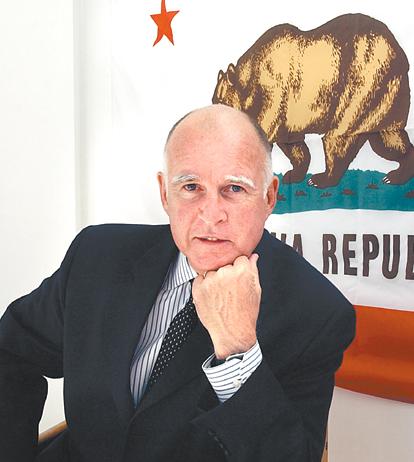
There’s no way to put a good spin on the new budget figures released by the Guv. No matter what happens in November, people who need help are going to get screwed in this state. Public schools will lose money. Health-care for the poor will be near collapse. Cities and counties will struggle to preserve the local safety nets. It’s just a disaster, and there’s no other way to look at it.

Of course, if we don’t approve Jerry’s tax plan in November, it will all be much, much worse. And he seems to be doing the right thing to promote the idea, making it clear just how deep the cuts will be and where they will hit.

But the tax plan is nowhere near enough, not even enough to keep the state at its current austerity level, much less to repair some of the damage and replace the funding that’s already been eliminated. And while the notion of cutting state workers back to a four-day week, or of mandatory furloughs, may sound better than cutting specific services, think about what it means:

First, all that money that the state workers give up will instantly disappear from the economy. Most of these folks aren’t wealthy, and they spend what they earn. That’s a hit to already-depressed demand. Then there’s the impact on the rest of us. Try getting an appointment at the DMV. (You think it’s bad now? Take away 20 percent of the employees.) Try getting a court date if you’ve been injured. (Oh, but if you’re a landlord, don’t worry — evictions won’t be slowed down at all.) This is going to be awful.

Here’s what I would say to Jerry: Push not only for your tax measure but to elect enough Democrats to pass taxes without going to the ballot. There’s no reason this current measure needs a vote of the public; the Legislature has every legal ability to pass all of those taxes. And if it weren’t for a handful of Republicans who drink the no-tax Kool Aide, it would be happening.

Closing a few corporate loopholes and instituting an oil-severance tax would solve much of the remaining deficit. Reinstating Schwarzenneger’s cuts to the vehicle license fee would solve the rest. And all of that can be done without a ballot fight.

The moderate Democrats in Sacto annoy me as much as the Republicans sometimes, but if Brown and Legistlative leaders make it clear that they’re helping candidates in swing districts, but that they expect them not to be obstructionist on taxes, there could be much better news in the years ahead.


Obama’s mistake

4

By Gabriel Haaland and Laura Thomas

Last month, Obama came out swinging against medical marijuana in an interview, defended his raids of law-abiding clubs, and is currently positioning himself to the right of former President George Bush — despite the fact that nearly 75 percent of Americans support legalized medical marijuana.

In Northern California, Melinda Haag, Obama’s US Attorney for the Northern District of California, is resolutely determined to shut down medical marijuana access. Her district starts in the Bay Area and runs up the California coast to the Oregon border. Ironically, her district may have the strongest support in the entire country for medical marijuana, from voters, law enforcement, elected officials, businesses, and community members. Why is she so obsessed with shutting down the clubs? She claims that it’s because she is protecting the children of California. Really. So the next time someone is dying of cancer and they don’t have legal access to medical marijuana, we will be sure to remember that the children of California are safe. And let’s be clear: She is going after regulated clubs and the idea of a regulated industry — regulations that communities, sheriffs, Boards of Supervisors, and health departments have built.

Haag is targeting community leaders, such as Richard Lee, the chief promoter of California’s effort to legalize marijuana, and Oaksterdam, the area where most of the medical dispensaries are in Oakland. She also shut down Mendocino’s ground-breaking regulation of marijuana growers — literally driving past illegal grows to one recently inspected and certified by Mendocino sheriff’s deputies. She subpoenaed Department of Public Health records used to issue licenses for dispensaries here. She is going after dispensaries in San Francisco that are in full compliance with local and state law, merely because they are within an arbitrary distance from a school or park, even if the park is unused, or the school opened after the dispensary did.

Her actions are not protecting children from the harms of marijuana. She states that dispensaries attract crime, which is not proven by any evidence. What does cause crime is the black market, especially the black market for marijuana imported from Mexico, where 50,000 people have been lost in prohibition-related violence. The less people can produce, purchase, and consume marijuana grown here in California, the worse things get for Mexico. She also seems oddly concerned about the evils of capitalism, worried that people may be making a living from the medical marijuana industry. While we may not be the biggest fans of capitalism, we don’t think closing small businesses (or even large ones) in these economic times is a great idea. Haag’s actions have put thousands out of work and eliminated tax revenues for localities and the state. She’s using taxpayer resources to make the local economy a little bit worse. Thanks.

In San Francisco, elected officials including the mayor, the Board of Supervisors, the district attorney, the city attorney, Assemblymember Tom Ammiano, State Senator Mark Leno, the Democratic County Central Committee, and most recently, Democratic Congressional Leader Nancy Pelosi, have all spoken out against Obama’s efforts to undermine legal, regulated medical marijuana in California. The San Francisco Chronicle has run not one, but two editorials in the last month on the topic, plus a column from conservative columnist Deb Saunders. There have been rallies, protests, petitions, meetings, and letters asking her to stop going after medical marijuana.

What will it take to get Obama to wake up to the fact that his effort are not supported by three quarters of the country and that, in particular, Melinda Haag is obsessed with shutting down any regulated medical marijuana business? She is making things worse: leaving patients to the black market to find their medication, undermining law enforcement efforts to work with medical marijuana producers, and exacerbating the violence in Mexico.

But instead of reining her in, Obama is doubling down one of the most popular causes in America.. Medical marijuana is far more popular in the U. S. right now than Congress, the president, or Republican candidate Mitt Romney. The most serious moment at the Correspondents Dinner in Washington, DC last week was when comedian Jimmy Kimmel asked Obama point-blank why he was going after medical marijuana. None of it makes much sense. How much evidence is needed to convince Obama and Haag that their actions are creating harm, not eliminating it? How much evidence is needed that this is not what the voters and taxpayers want? What kind of data do they need that regulation reduces crime? How many patients need to tell their stories? What will it take to change her actions?

And when will Obama wake up to the fact that he is making a huge mistake? 

Gabriel Haaland is a member of the San Francisco Democratic County Central Committee. Laura Thomas works with the Drug Policy Alliance.

May Day protests begin with ferry workers strike

1

[Editor’s Note: We’ll be covering May Day events in San Francisco and Oakland throughout the day, so check back for regular updates.]

May Day activities have begun with a strike by ferry workers and Golden Gate Transit workers, halting parts of the morning commute.

About 100 ferry workers picketed at the Ferry Building in San Francisco, as well as the Larkspur Ferry Terminal. In anticipation of the strike, the Golden Gate Bridge District announced that they would cancel morning ferry service yesterday. Service should resume at 2:15.

Workers from the Golden Gate Bridge Coalition say that they have offered concessions of more than $2 million and are still locked in labor disputes, prompting the strike for the traditional International Workers Day. 

“The last thing that bridge, bus, and ferry workers want to do is to inconvenience passengers, but what other option has management left us?” said Alex Tonisson, co-chair of the Golden Gate Bridge Labor Coalition, in a press release.

The strikes come after a rough start to May Day demonstrations in San Francisco. A plan for workers on the Golden Gate Bridge to strike and shut down traffic on the bridge was called off two days before the planned demonstration. Last night, protesters vandalized store windows, cars, and the Mission Police station in a march along Valencia St. Organizers with Occupy SF and Occupy Oakland were quick to distance themselves and condemn the destruction, both physically at the protest and in subsequent statements. 

We will continue to update as events unfold.

The two defining votes of 2012

38

The Board of Supervisors will be facing two votes in the next couple of months that will define this board, establish the extent of the mayor’s political clout — and potentially play a decisive role in the political futures of several board members.

Oh: They’ll also have a lasting impact on the future of this city.

I’m talking about 8 Washington and CPMC — one of them the most important vote on housing policy to come along in years, the other a profound decision that will change the face of the city and alter the health-care infrastructure for decades to come.

Both projects have cleared the Planning Commission, as expected. Neither can go forward without approval from a majority of the supervisors. And there will be intense downtown lobbying on both of them.

The 8 Washington project would create what developer Simon Snellgrove calls the most expensive condos ever built in San Francisco. A piece of waterfront property would become a gated community for the very, very rich, many of whom won’t even live here most of the time. If it’s approved, the economy won’t collapse, neighborhoods won’t be destroyed — but it will make a powerful statement about the city’s housing policy. The message: We build housing for the 1 percent. We are a city that caters only to one very tiny group of people. We are willing to let the needs of the few drive our policy over the needs of the many.

Face it: There is no shortage of housing for the people who will buy Snellgrove’s condos. There’s a severe shortage of housing for most of the people who actually work in San Francisco. And the city’s housing policy is so scewed up that it’s making things worse. That’s the message of 8 Washington.

Then there’s CPMC. California Pacific Medical Center wants to put a snazzy state-of-the art new medical center on Van Ness, which is all well and good. But the giant nonprofit Sutter Health, which operates CPMC, has been openly hostile to some of the city’s demands (for housing, transit and other environmental mitigiation) and the proposal that Mayor Ed Lee has signed off on is way out of balance. There’s not anything even close to a reasonable link between jobs and housing — which will impact the entire city. You bring in a lot of new workers and don’t help build enough housing for them and everyone’s rent goes up.

CPMC also wants to radically downsize St. Luke’s Hospital, the only full-service facility on the south side of town except for the overcrowded and overloaded SF General. Health care for a sizable part of the city will suffer.

This is a very big deal, and the Chamber of Commerce is pushing hard for the supes to approve it. A lot of labor and the entire affordable housing community is against it.

So put those two votes in front of a board where the progressive majority has been very shaky of late — and where Lee will be working hard to line up six votes — and you’ve got potential political dynamite. Supervisor John Avalos told me he has serious concerns about both projects. Sup. David Campos told me he feels the same way. Sup Eric Mar is unlikely to vote for 8 Washington and unlikely to oppose the health-care workers and the progressive leaders who want to block the CPMC deal and make Sutter come back with a better offer, but some elements of labor are pushing hard for 8 Washington and Mar is up for re-election in one of the city’s swing districts.

Sup. David Chiu is against 8 Washington. I’ve called Sups. Jane Kim and Christina Olague (who was not a fan of the project when she was on the Planning Commission) but they haven’t gotten back to me. Olague is running for re-election this fall in the city’s most progressive district, one that’s right on the edge of the CPMC project site; Kim’s district is on the other edge.

You can’t really count to six on either of these projects without getting Chiu and/or Kim and/or Olague. Chiu has no progressive opposition, but if he supports the CPMC deal, someone may decide to challenge him. If Olague supports either project, it will give her opponents plenty of fodder for the fall campaign (John Rizzo, who is running against her, told me he opposes both). If Olague opposes the two projects, it’s going to be much harder for anyone to run against her from the left since she will have demonstrated that she can stand up the mayor on tough issues.

I’ll let you know if I hear more.


Obama and state’s rights

8

So how many angry pot smokers (and how many of my libertarian-leaning blog trolls) are going to love this? The governors of four western states want to take control of federal land inside their borders, and they’re organizing to do it. Mostly a political stunt — the governors want to allow more mining, ranching, and drilling on public lands, and the feds are taking it a bit more slowly. And nothing new — we’ve had these western range wars for decades, and for decades Utah governors have insisted that the state ought to be making the decisions around the 66 percent of the total Utah land mass that’s owned by Washington.

There’s no doubt in my mind that the administration is doing the right thing by resisting — you can’t just take national parks and national forests and Bureau of Land Management land and turn it over to development-oriented states. Much of that was federal land before there were states. And it’s not as if the Interior Department is all pristine about it — there’s already far too much resource development on public property, and the public doesn’t get anywhere near enough money for it. Sometimes it’s so bad it’s nutty.

But Obama’s got a problem, and it’s called medical marijuana — and he’s doing the same dumb thing that presidents before him have done, and all it does is create allies for the far right. Hell, after the U.S. attorney started attacking dispensaries I was ready to seceed. Let’s take California and walk; we’re already the ninth largest economy in the world, and we pay far more in federal tax money than we get in federal benefits. The Sierra makes a pretty defensible permiter; who needs Washington?

Of course, I’m quite happy that Obama doesn’t want to let the nuts in Arizona and Alabama get away with their racist and oppressive anti-immigrant laws and I’m happy to argue (in those cases) that immigration is a federal issues and that states shouldn’t try to mess around with it.

Except that San Francisco is a sanctuary city, and we have our own policy, which is excellent and the feds should leave us alone. And when this city did same-sex marriage, in defiance of state law, that was one of the coolest things ever.

You see where I’m going here.

Both sides can raise this Constitutional stuff and argue state’s rights and a long list of other things, and any good law school professor can spend years talking and writing about the historical and legal issues. There are some things that should be left to the states, and some things that the federal government should do, and that is always evolving.

But really, a lot of this is about policy. Legal pot is a good thing. So is same-sex marraige. Crackdowns on immigration are bad. Drilling and mining on public land are a problem, whether it’s state land or federal land. Politics isn’t perfect, and I’m willing to take our victories where we can get them.

But when the president is inconsistent (he’s cracking down on medical marijuana in CA but not Colorado; he’s against the Arizona/Alabama laws but still his ICE trying to mess with SF’s Sanctuary City) and does things that make his allies and supporters (that’s us potheads) mad at him, then it’s easier for the governor of Utah to say the feds are on his land and should leave him alone. Just like the pot farms.


Why austerity sucks

8

European nations are starting to take some of the same steps that Republicans are suggesting for the US — reductions in the public sector, cuts in benefits, etc. And Joseph Stiglitz, an economist who actually knows what he’s talking about, argues that it’s a terrible idea — and that goes for the United States, too. Check out this fascinating interview.:

When you look at America, you have to concede that we have failed. Most Americans today are worse off than they were fifteen years ago. A full-time worker in the US is worse off today than he or she was 44 years ago. That is astounding – half a century of stagnation. The economic system is not delivering. It does not matter whether a few people at the top benefitted tremendously – when the majority of citizens are not better off, the economic system is not working.

More:

The European: What do you say to someone who argues thus: Demographic change and the end of the industrial age have made the welfare state financially unsustainable. We cannot expect to cut down on our debt without fundamentally reducing welfare costs in the long run.
Stiglitz: That is absurd. The question of social protection does not have to do with the structure of production. It has to do with social cohesion or solidarity. That is why I am also very critical of Draghi’s argument at the European Central Bank that social protection has to be undone. There are no grounds upon which to base that argument.

The thing about Stiglitz is that, unlike many academic economists, he’s been right most of the time over a stellar career. And he’s right now.

Guardian endorsements for June 5 election

34

>>OUR ONE-PAGE “CLEAN SLATE” PRINTOUT GUIDE IS HERE. 

As usual, California is irrelevant to the presidential primaries, except as a cash machine. The Republican Party has long since chosen its nominee; the Democratic outcome was never in doubt. So the state holds a June 5 primary that, on a national level, matters to nobody.

It’s no surprise that pundits expect turnout will be abysmally low. Except in the few Congressional districts where a high-profile primary is underway, there’s almost no news media coverage of the election.

But that doesn’t mean there aren’t some important races and issues (including the future of San Francisco’s Democratic Party) — and the lower the turnout, the more likely the outcome will lean conservative. The ballot isn’t long; it only takes a few minutes to vote. Don’t stay home June 5.

Our recommendations follow.

PRESIDENT

BARACK OBAMA

Sigh. Remember the hope? Remember the joy? Remember the dancing in the streets of the Mission as a happy city realized that the era of George Bush and The Gang was over? Remember the end of the war, and health-care reform, and fair economic policies?

Yeah, we remember, too. And we remember coming back to our senses when we realized that the first people at the table for the health-policy talks were the insurance industry lobbyists. And when more and more drones killed more and more civilian in Afghanistan, and the wars didn’t end and the country got deeper and deeper into debt.

Oh, and when Obama bailed out Wall Street — and refused to spend enough money to help the rest of us. And when his U.S. attorney decided to crack down on medical marijuana.

We could go on.

There’s no question: The first term of President Barack Obama has been a deep disappointment. And while we wish that his new pledge to tax the millionaires represented a change in outlook, the reality is that it’s most likely an election-year response to the popularity of the Occupy movement.

Last fall, when a few of the most progressive Democrats began talking about the need to challenge Obama in a primary, we had the same quick emotional reaction as many San Franciscans: Time to hold the guy accountable. Some prominent left types have vowed not to give money to the Obama campaign.

But let’s get back to reality. The last time a liberal group challenged an incumbent in a Democratic presidential primary, Senator Ted Kennedy wounded President Jimmy Carter enough to ensure the election of Ronald Reagan — and the begin of the horrible decline in the economy of the United States. We’re mad at Obama, too — but we’re realists enough to know that there is a difference between moderate and terrible, and that’s the choice we’re facing today.

The Republican Party is now entirely the party of the far right, so out of touch with reality that even Reagan would be shunned as too liberal. Mitt Romney, once the relatively centrist governor of Massachusetts, has been driven by Newt Gingrich and Rick Santorum so deeply into crazyland that he’s never coming back. We appreciate Ron Paul’s attacks on military spending and the war on drugs, but he also opposes Medicare and Social Security and says that people who don’t have private health insurance should be allowed to die for lack of medical care.

No, this one’s easy. Obama has no opposition in the Democratic Primary, but for all our concerns about his policies, we have to start supporting his re-election now.

U.S. SENATE

DIANNE FEINSTEIN

The Republicans in Washington didn’t even bother to field a serious candidate against the immensely well-funded Feinstein, who is seeking a fourth term. She’s a moderate Democrat, at best, was weak-to-terrible on the war, is hawkish on Pentagon spending (particularly Star Wars and the B-1 bomber), has supported more North Coast logging, and attempts to meddle in local politics with ridiculous ideas like promoting unknown Michael Breyer for District Five supervisor. She supported the Obama health-care bill but isn’t a fan of single-payer, referring to supporters of Medicare for all as “the far left.”

But she’s strong on choice and is embarrassing the GOP with her push for reauthorization of an expanded Violence Against Women Act. She’ll win handily against two token Republicans.

U.S. CONGRESS, DISTRICT 2

NORMAN SOLOMON

The Second District is a sprawling region stretching from the Oregon border to the Golden Gate Bridge, from the coast in as far as Trinity County. It’s home to the Marin suburbs, Sonoma and Mendocino wine country, the rough and rural Del Norte and the emerald triangle. There’s little doubt that a Democrat will represent the overwhelmingly liberal area that was for almost three decades the province of Lynn Woolsey, one of the most progressive members in Congress. The top two contenders are Norman Solomon, an author, columnist and media advocate, and Jared Huffman, a moderate member of the state Assembly from Marin.

Solomon’s not just a decent candidate — he represents a new approach to politics. He’s an antiwar crusader, journalist, and outsider who has never held elective office — but knows more about the (often corrupt) workings of Washington and the policy issues facing the nation than many Beltway experts. He’s talking about taxing Wall Street to create jobs on Main Street, about downsizing the Pentagon and promoting universal health care. He’s a worthy successor to Woolsey, and he deserves the support of every independent and progressive voter in the district.

U.S. CONGRESS, DISTRICT 12

NANCY PELOSI

Nancy Pelosi long ago stopped representing San Francisco (see: same-sex marriage) and began representing the national Democratic party and her colleagues in the House. She will never live down the privatization of the Presidio or her early support for the Iraq war, but she’s become a decent ally for Obama and if the Democrats retake the House, she’ll be setting the agenda for his second term. If the GOP stays in control, this may well be her last term.

Green Party member Barry Hermanson is challenging her, and in the old system, he’d be on the November ballot as the Green candidate. With open primaries (which are a bad idea for a lot of reasons) Hermanson needs support to finish second and keep Pelosi on her toes as we head into the fall.

U.S. CONGRESS, DISTRICT 12

BARBARA LEE

This Berkeley and Oakland district is among the most left-leaning in the country, and its representative, Barbara Lee, is well suited to the job. Unlike Pelosi, Lee speaks for the voters of her district; she was the lone voice against the Middle East wars in the early days, and remains a staunch critic of these costly, bloody, open-ended foreign military entanglements. We’re happy to endorse her for another term.

U.S. CONGRESS, DISTRICT 13

JACKIE SPEIER

Speier’s more of a Peninsula moderate than a San Francisco progressive, but she’s been strong on consumer privacy and veterans issues and has taken the lead on tightening federal rules on gas pipelines after Pacific Gas and Electric Company killed eight of her constituents. She has no credible opposition.

STATE SENATE, DISTRICT 11

MARK LENO

Mark Leno started his political career as a moderate member of the Board of Supervisors from 1998 to 2002. His high-profile legislative races — against Harry Britt for the Assembly in 2002 and against Carole Migden for the Senate in 2008 — were some of the most bitterly contested in recent history. And we often disagree with his election time endorsements, which tend toward more downtown-friendly candidates.

But Leno has won us over, time and again, with his bold progressive leadership in Sacramento and with his trailblazing approach to public policy. He is an inspiring leader who has consistently made us proud during his time in the Legislature. Leno was an early leader on the same-sex marriage issue, twice getting the Legislature to legalize same-sex unions (vetoed both times by former Gov. Arnold Schwarzenegger). He has consistently supported a single-payer health care system and laid important groundwork that could eventually break the grip that insurance companies have on our health care system. And he has been a staunch defender of the medical marijuana patients and has repeatedly pushed to overturn the ban on industrial hemp production, work that could lead to an important new industry and further relaxation of this country wasteful war on drugs. We’re happy to endorse him for another term.

STATE ASSEMBLY, DISTRICT 17

TOM AMMIANO

Ammiano is a legendary San Francisco politician with solid progressive values, unmatched courage and integrity, and a history of diligently and diplomatically working through tough issues to create ground-breaking legislation. We not only offer him our most enthusiastic endorsement — we wish that we could clone him and run him for a variety of public offices. Since his early days as an ally of Harvey Milk on gay rights issues to his creation of San Francisco’s universal health care system as a supervisor to his latest efforts to defend the rights of medical marijuana users, prison inmates, and undocumented immigrants, Ammiano has been a tireless advocate for those who lack political and economic power. As chair of Assembly Public Safety Committee, Ammiano has blocked many of the most reactionary tough-on-crime measures that have pushed our prison system to the breaking point, creating a more enlightened approach to criminal justice issues. We’re happy to have Ammiano expressing San Francisco’s values in the Capitol.

STATE ASSEMBLY, DISTRICT 19

PHIL TING

Once it became abundantly clear that Assessor-Recorder Phil Ting wasn’t going to get elected mayor, he started to set his eyes on the state Assembly. It’s an unusual choice in some ways — Ting makes a nice salary in a job that he’s doing well and that’s essentially his for life. Why would he want to make half as much money up in Sacramento in a job that he’ll be forced by term limits to leave after six years?

Ting’s answer: he’s ready for something new. We fear that a vacancy in his office would allow Mayor Ed Lee to appoint someone with less interest in tax equity (prior to Ting, the city suffered mightily under a string of political appointees in the Assessor’s Office), but we’re pleased to endorse him for the District 19 slot.

Ting has gone beyond the traditional bureaucratic, make-no-waves approach of some of his predecessors. He’s aggressively sought to collect property taxes from big institutions that are trying to escape paying (the Catholic Church, for example) and has taken a lead role in fighting foreclosures. He commissioned, on his own initiative, a report showing that a large percentage of the foreclosures in San Francisco involved some degree of fraud or improper paperwork, and while the district attorney is so far sitting on his hands, other city officials are moving to address the issue.

His big issue is tax reform, and he’s been one the very few assessors in the state to talk openly about the need to replace Prop. 13 with a split-role system that prevents the owners of commercial property from paying an ever-declining share of the tax burden. He wants to change the way the Legislature interprets Prop. 13 to close some of the egregious loopholes. It’s one of the most important issues facing the state, and Ting will arrive in Sacramento already an expert.

Ting’s only (mildly) serious opponent is Michael Breyer, son of Supreme Court Justice Breyer and a newcomer to local politics. Breyer’s only visible support is from the Building Owners and Managers Association, which dislikes Ting’s position on Prop. 13. Vote for Ting.

DEMOCRATIC COUNTY CENTRAL COMMITTEE

You can say a lot of things about Aaron Peskin, the former supervisor and retiring chair of the city’s Democratic Party, but the guy was an organizer. Four years ago, he put together a slate of candidates that wrenched control of the local party from the folks who call themselves “moderates” but who, on critical economic issues, are really better defined as conservative. Since then, the County Central Committee, which sets policy for the local party, has given its powerful endorsement mostly to progressive candidates and has taken progressive stands on almost all the ballot issues.

But the conservatives are fighting back — and with Peskin not seeking another term and a strong slate put together by the mayor’s allies seeking revenge, it’s entirely possible that the left will lose the party this year.

But there’s hope — in part because, as his parting gift, Peskin helped change state law to make the committee better reflect the Democratic voting population of the city. This year, 14 candidates will be elected from the East side of town, and 10 from the West.

We’ve chosen to endorse a full slate in each Assembly district. Although there are some candidates on the slate who aren’t as reliable as we might like, 24 will be elected, and we’re picking the 24 best.

DISTRICT 17 (EAST SIDE)

John Avalos

David Campos

David Chiu

Petra DeJesus

Matt Dorsey

Chris Gembinsky

Gabriel Robert Haaland

Leslie Katz

Rafael Mandelman

Carole Migden

Justin Morgan

Leah Pimentel

Alix Rosenthal

Jamie Rafaela Wolfe


DISTRICT 19 (WEST SIDE)

Mike Alonso

Wendy Aragon

Kevin Bard

Chuck Chan

Kelly Dwyer

Peter Lauterborn

Hene Kelly

Eric Mar

Trevor McNeil

Arlo Hale Smith

State ballot measures

PROPOSITION 28

YES

LEGISLATIVE TERM LIMITS

Let us begin with a stipulation: We have always opposed legislative term limits, at every level of government. Term limits shift power to the executive branch, and, more insidiously, the lobbyists, who know the issues and the processes better than inexperienced legislators. The current system of term limits is a joke — a member of the state Assembly can serve only six years, which is barely enough time to learn the job, much less to handle the immense complexity of the state budget. Short-termers are more likely to seek quick fixes than structural reform. It’s one reason the state Legislatures is such a mess.

Prop. 28 won’t solve the problem entirely, but it’s a reasonable step. The measure would allow a legislator to serve a total of 12 years in office — in either the Assembly, the Senate, or a combination. So an Assembly member could serve six terms, a state Senator three terms. No more serving a stint in one house and then jumping to the other, since the term limits are cumulative, which is imperfect: A lot of members of the Assembly have gone on to notable Senate careers, and that shouldn’t be cut off.

Still, 12 years in the Assembly is enough time to become a professional at the job — and that’s a good thing. We don’t seek part-time brain surgeons and inexperienced airline pilots. Running California is complicated, and there’s nothing wrong with having people around who aren’t constantly learning on the job. Besides, these legislators still have to face elections; the voters can impose their own term limits, at any time.

Most of the good-government groups are supporting Prop. 28. Vote yes.

PROPOSITION 29

YES

CIGARETTE TAX FOR CANCER RESEARCH

Seriously: Can you walk into the ballot box and oppose higher taxes on cigarettes to fund cancer research? Of course not. All of the leading medical groups, cancer-research groups, cancer-treatment groups and smoking-cessation groups in the state support Prop. 29, which was written by the American Cancer Society and the American Heart Association.

We support it, too.

Yes, it’s a regressive tax — most smokers are in the lower-income brackets. Yes, it’s going to create a huge state fund making grants for research, and it will be hard to administer without some issues. But the barrage of ads opposing this are entirely funded by tobacco companies, which are worried about losing customers, particularly kids. A buck a pack may not dissuade adults who really want to smoke, but it’s enough to price a few more teens out of the market — and that’s only good news.

Don’t believe the big-tobacco hype. Vote yes on 29.

San Francisco ballot measures

PROPOSITION A

YES

GARBAGE CONTRACT

A tough one: Recology’s monopoly control over all aspects of San Francisco’s waste disposal system should have been put out to competitive bid a long time ago. That’s the only way for the city to ensure customers are getting the best possible rates and that the company is paying a fair franchise fee to the city. But the solution before us, Proposition A, is badly flawed public policy.

The measure would amend the 1932 ordinance that gave Recology’s predecessor companies — which were bought up and consolidated into a single behemoth corporation — indefinite control over the city’s $220 million waste stream. Residential rates are set by a Rate Board controlled mostly by the mayor, commercial rates are unregulated, and the company doesn’t even have a contract with the city.

Last year, when Recology won the city’s landfill contract — which was put out to bid as the current contract with Waste Management Inc. and its Altamont landfill was expiring — Recology completed its local monopoly. At the time, Budget Analyst Harvey Rose, Sup. David Campos, and other officials and activists called for updating the ordinance and putting the various contracts out to competitive bid.

That effort was stalled and nearly scuttled, at least in part because of the teams of lobbyists Recology hired to put pressure on City Hall, leading activists Tony Kelley and retired Judge Quentin Kopp to write this measure. They deserve credit for taking on the issue when nobody else would and for forcing everyone in the city to wake up and take notice of a scandalous 70-year-old deal.

We freely admit that the measure has some significant flaws that could hurt the city’s trash collection and recycling efforts. It would split waste collection up into five contracts, an inefficient approach that could put more garbage trucks on the roads. No single company could control all five contracts. Each of those contracts would be for just five years, which makes the complicated bidding process far too frequent, costing city resources and hindering the companies’ ability to make long-term infrastructure investments.

It would require Recology to sell its transfer station, potentially moving the waste-sorting facility to Port property along the Bay. Putting the transfer station in public hands makes sense; moving it to the waterfront might not.

On the scale of corrupt monopolies, Recology isn’t Pacific Gas and Electric Co. It’s a worker-owned company and has been willing to work in partnership with the city to create one of the best recycling and waste diversion programs in the country. For better or worse, Recology controls a well-developed waste management infrastructure that this city relies on, functioning almost like a city department.

Still, it’s unacceptable to have a single outfit, however laudatory, control such a massive part of the city’s infrastructure without a competitive bid, a franchise fee, or so much as a contract. In theory, the company could simply stop collecting trash in some parts of the city, and San Francisco could do nothing about it.

As a matter of public policy, Prop. A could have been better written and certainly could, and should, have been discussed with a much-wider group, including labor. As a matter of real politics, it’s a messy proposal that at least raises the critical question: Should Recology have a no-bid, no contract monopoly? The answer to that is no.

Prop. A will almost certainly go down to defeat; Kopp and Kelly are all alone, have no real campaign or committee and just about everyone else in town opposes it. Our endorsement is a matter of principle, a signal that this longtime garbage deal has to end. If Recology will work with the city to come up with a contract and a bid process, then Prop. A will have done its job. If not, something better will be on the ballot in the future.

For now, vote yes on A.

PROPOSITION B

YES

COIT TOWER POLICY

In theory, city department heads ought to be given fair leeway to allocate resources and run their operations. In practice, San Francisco’s Department of Recreation and Parks has been on a privatization spree, looking for ways to sell or rent public open space and facilities as a way to balance an admittedly tight budget. Prop. B seeks to slow that down a bit, by establishing as city policy the premise that Coit Tower shouldn’t be used as a cash cow to host private parties.

The tower is one of the city’s most important landmarks and a link to its radical history — murals painted during the Depression, under the Works Progress Administration, depict local labor struggles. They’re in a bit of disrepair –but that hasn’t stopped Rec-Park from trying to bring in money by renting out the place for high-end events. In fact, the tower has been closed down to the public in the past year to allow wealthy patrons to host private parties. And the city has more of that in mind.

If the mayor and his department heads were acting in good faith to preserve the city’s public spaces — by raising taxes on big business and wealthy individuals to pay for the commons, instead of raising fees on the rest of us to use what our tax dollars have already paid for — this sort of ballot measure wouldn’t be necessary.

As it is, Prop. B is a policy statement, not an ordinance or Charter amendment. It’s written fairly broadly and won’t prevent the occasional private party at Coit Tower or prevent Rec-Park from managing its budget. Vote yes.


On the scene: SFIFF, week one!

0

Guardian film critic Sam Stander was among the crowds this past weekend as the 55th San Francisco International Film Festival kicked off its programming. The festival continues through May 3 at the Castro Theatre, 429 Castro, SF; Pacific Film Archive, 2575 Bancroft, Berk.; SF Film Society Cinema, 1746 Post, SF; and Sundance Kabuki Cinema, 1881 Post, SF. Check out additional Guardian coverage here, here, here, and here. Remaining festival playdates (and additional screening info) are noted after each review below.

The Day He Arrives (Hong Sang-soo, South Korea, 2011) Perhaps the seed was planted by the festival programmer who introduced the screening with a mention of Woody Allen, but this latest black & white film from the South Korean auteur feels akin to Stardust Memories (1980) and 8 1/2 (1963), a cleverly convoluted exploration of an artist’s anxieties. When lapsed filmmaker Sungjoon returns to Seoul to visit a friend, his encounters with compatriots and lovers old and new spiral into repetition and absurdity; the truth of any given situation is essentially inaccessible, leading to often uproarious contradictions, especially with a sympathetic audience like that at the Kabuki Fri/20. This is what one might call a movie-movie, a trip through deception of self and others through the medium of cinematic expression. Mon/23, 9:30pm, Kabuki; April 25, 9pm, PFA. Also plays SF Film Society Cinema May 4-10.

Bonsái (Cristián Jiménez, Chile/France/Argentina/Portugal, 2011) Adapted from Alejandro Zambra’s acclaimed novella, this cleverly structured and sweetly sad film positively wallows in literary allusions. Julio is supposed to transcribe the newest work by novelist Gazmuri, but when he’s passed over for someone cheaper, Julio writes his own manuscript and tells his girlfriend it’s Gazmuri’s. The film flips back and forth between Julio’s college years (the grist for his novel) and his present life, full of anxiety and ennui. He and his lost love, Emilia, used to read every night before bed, and a running joke about Proust serves as a charming framing device. The bonsai tree of the title plays a relatively small role, more a metaphor than a filmic image, but Jiménez’s presentation of how one man tries to shape his own story like a bonsai is touching, if sometimes emotionally simplistic. Tue/24, 6:30pm, PFA.

Oslo, August 31 (Joachim Trier, Norway, 2011) Heroin movies are rarely much fun, and Oslo is no exception, though here the stress lies not in grisly realism but visceral emotional honesty. Following an abortive, Virginia Woolf-esque suicide attempt during evening leave from his rehab center, recovering addict Anders visits Oslo for a job interview. He reconnects bittersweetly with an old friend, tries and fails to meet up with his sister, and eventually submerges himself in the nightlife that once fueled his self-destruction. Expressionistic editing conveys Anders’ sense of detachment and urge for release, with scenes and sounds intercut achronologically and striking sound design which homes in on stray conversations. A late intellectual milieu is signified throughout, quite humorously, by serious discussions of popular television dramas, presumably an update of similar concerns addressed in Pierre Drieu La Rochelle’s 1931 novel Le Feu follet, on which the film is based. April 27, 9:15pm, FSC.

The Source (Jodi Wille and Maria Demopolous, USA, 2012) Remembered for its health food restaurant and musical recordings, the early-’70s cult known as the Source Family was at once an archetypal utopian post-hippy community and a bizarre, unique twist on the notorious subcultures of that era. Charismatic leader Jim Baker, a.k.a. Father Yod, experimented with various branches of mysticism and philosophy, and surrounded himself with over 100 followers at the society’s peak. Eventually casting himself as a god on earth, Yod’s relationship with his “family” became increasingly complex and problematic, but some of his followers still subscribe to his teachings. Among them is family historian Isis Aquarian, whose photos and footage provide the backbone of this engrossing documentary, along with the images taken by other family members. The filmmakers successfully present Yod as an exceptionally powerful personality without valorizing him unduly – a great feat, presenting a not-too-worshipful biography of a self-proclaimed deity. April 27, 3pm, Kabuki; April 29, 6:15pm, FSC.

The Queen of Versailles (Lauren Greenfield, USA/Denmark, 2012) Photographer Lauren Greenfield set out to document the life of the Siegel family, a timeshare dynasty in the process of building the biggest house in America, a palatial edifice inspired by Versailles. But what she stumbled upon was a much richer story, as Westgate Resorts founder David Siegel and his wife, former computer engineer and beauty queen Jackie Siegel, fell on hard times when the economy crashed in 2008. Their maddeningly luxurious lifestyle has suddenly become a strain on their resources; the lives of their seven children and one niece, as well as their domestic staff, change drastically as they struggle to adjust. David’s financial turmoil over the megalithic PH Towers in Las Vegas provides a backdrop to their tumultuous family life, but what emerges is a mix of ironic humor and biting tragedy, and a surprisingly persistent familial bond. Theatrical release, summer 2012.

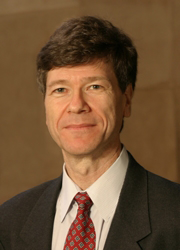
Jeffrey Sachs: A world adrift

0


By Jeffrey D. Sachs


Jeffrey D. Sachs is Professor of Economics and Director of the Earth Institute at Columbia University. He is also Special Adviser to United Nations Secretary-General on the Millennium Development Goals

NEW YORK – The annual spring meetings of the International Monetary Fund and the World Bank have provided a window onto two fundamental trends driving global politics and the world economy. Geopolitics is moving decisively away from a world dominated by Europe and the United States to one with many regional powers but no global leader. And a new era of economic instability is at hand, owing as much to physical limits to growth as to financial turmoil.

Europe’s economic crisis dominated this year’s IMF/World Bank meetings. The Fund is seeking to create an emergency rescue mechanism in case the weak European economies need another financial bailout, and has turned to major emerging economies – Brazil, China, India, the Gulf oil exporters, and others – to help provide the necessary resources. Their answer is clear: yes, but only in exchange for more power and votes at the IMF. As Europe wants an international financial backstop, it will have to agree.  

Of course, the emerging economies’ demand for more power is a well-known story. In 2010, when the IMF last increased its financial resources, the emerging economies agreed to the deal only if their voting share within the IMF was increased by around 6%, with Europe losing around 4%. Now emerging markets are demanding an even greater share of power.

The underlying reason is not difficult to see. According to the IMF’s own data, the European Union’s current members accounted for 31% of the world economy in 1980 (measured by each country’s GDP, adjusted for purchasing power). By 2011, the EU share slid to 20%, and the Fund projects that it will decline further, to 17%, by 2017.

This decline reflects Europe’s slow growth in terms of both population and output per person. On the other side of the ledger, the global GDP share of the Asian developing countries, including China and India, has soared, from around 8% in 1980 to 25% in 2011, and is expected to reach 31% by 2017.

The US, characteristically these days, insists that it will not join any new IMF bailout fund. The US Congress has increasingly embraced isolationist economic policies, especially regarding financial help for others. This, too, reflects the long-term wane of US power. The US share of global GDP, around 25% in 1980, declined to 19% in 2011, and is expected to slip to 18% in 2017, by which point the IMF expects that China will have overtaken the US economy in absolute size (adjusted for purchasing power).

But the shift of global power is more complicated than the decline of the North Atlantic (EU and US) and the rise of the emerging economies, especially the BRICS (Brazil, Russia, India, China, and South Africa). We are also shifting from a unipolar world, led mainly by the US, to a truly multipolar world, in which the US, the EU, the BRICS, and smaller powers (such as Nigeria and Turkey) carry regional weight but are reticent to assume global leadership, especially its financial burdens. The issue is not just that there are five or six major powers now; it is also that all of them want a free ride at the others’ expense.

The shift to such a multipolar world has the advantage that no single country or small bloc can dominate the others. Each region can end up with room for maneuver and some space to find its own path. Yet a multipolar world also carries great risks, notably that major global challenges will go unmet, because no single country or region is able or willing to coordinate a global response, or even to participate in one.

The US has shifted rapidly from global leadership to that kind of free riding, seeming to bypass the stage of global cooperation. Thus, the US currently excuses itself from global cooperation on climate change, IMF financial-bailout packages, global development-assistance targets, and other aspects of international collaboration in the provision of global public goods.

The weaknesses of global policy cooperation are especially worrisome in view of the gravity of the challenges that must be met. Of course, the ongoing global financial turmoil comes to mind immediately, but other challenges are even more significant.

Indeed, the IMF/World Bank meetings also grappled with a second fundamental change in the world economy: high and volatile primary commodity prices are now a major threat to global economic stability and growth.

Since around 2005, the prices of most major commodities have soared. Prices for oil, coal, copper, gold, wheat, maize, iron ore, and many other commodities have doubled, tripled, or risen even more. Fuels, food grains, and minerals have all been affected.  Some have attributed the rise to bubbles in commodities prices, owing to low interest rates and easy access to credit for commodity speculation. Yet the most compelling explanation is almost certainly more fundamental.

Growing world demand for primary commodities, especially in China, is pushing hard against the physical supplies of global resources. Yes, more oil or copper can be produced, but only at much higher marginal production costs.

But the problem goes beyond supply constraints. Global economic growth is also causing a burgeoning environmental crisis. Food prices are high today partly because food-growing regions around the world are experiencing the adverse effects of human-induced climate change (such as more droughts and extreme storms), and of water scarcity caused by excessive use of freshwater from rivers and aquifers.

In short, the global economy is experiencing a sustainability crisis, in which resource constraints and environmental pressures are causing large price shocks and ecological instability. Economic development rapidly needs to become sustainable development, by adopting technologies and lifestyles that reduce the dangerous pressures on the Earth’s ecosystems. This, too, will require a level of global cooperation that remains nowhere to be seen.

The IMF/World Bank meetings remind us of an overarching truth: our highly interconnected and crowded world has become a highly complicated vessel. If we are to move forward, we must start pulling in the same direction, even without a single captain at the helm.

Jeffrey D. Sachs is Professor of Economics and Director of the Earth Institute at Columbia University. He is also Special Adviser to United Nations Secretary-General on the Millennium Development Goals
.

Copyright: Project Syndicate, 2012.
www.project-syndicate.org

Dick Meister: Fair Trade: Not With Columbia

1

By Dick Meister

Dick Meister, former labor editor of the SF Chronicle and KQED-TV Newsroom, has covered labor and politics for more than a half century. Contact him through his website, www.dickmeister.net, which includes more than 350 of his columns.

By all accounts, Colombia is one of the world’s worst abusers of workers and their unions. Yet President Obama has just signed a Free Trade Agreement with Columbian President Juan Manuel Santos.

The agreement, set to go into effect May 15, will align the United States with a nation in which working people have very few of the basic labor rights long granted U.S. workers.

In fact, trying to exercise those rights in Colombia can be fatal. Two-dozen Colombian labor leaders and organizers were killed during the past year.

The U.S.-Colombia trade agreement was supposed to implement an “Action Plan on Labor Rights” that the two nations agreed to in 2011. The plan was designed to “protect internationally recognized labor rights, prevent violence against labor leaders, and prosecute the perpetrators of such violence” in Colombia.

Violence continues, however, as does the anti-union actions of the Colombian government and Colombian employers. Colombian union leaders noted in a joint statement that though the action plan calls for some badly needed reforms, it does not address many others also needed. That includes combating the serious violations of labor and human rights that continue to plague Colombia.

Many workers, for example, are prevented from exercising the two most important of all labor rights – the right to collective bargaining and to free association. The labor leaders said the government has done very little to prosecute the employers who deny those rights and other fundamental rights of workers.

“Labor activists and other human rights defenders remain subject to threats and violence, including murder, when they stand up to fight for their rights,” the leaders concluded.

As now written, the leaders said, the Colombia Free Trade Agreement “perpetuates a destructive economic model that expands the rights and privileges of big business and multinational corporations at the expense of workers, consumers and the environment.”

Other trade agreements that have followed that basic model have “historically benefitted a small minority of business interests, while leaving workers, families and communities behind.”

Key U.S. labor leaders also have denounced the U.S.-Colombia trade agreement, even though it was championed by President Obama, who generally gets high marks from labor’s establishment, as he should.

AFL-CIO President Richard Trumka saw Obama’s signing of the agreement as “deeply disappointing and troubling. We regret that the administration has placed commercial interests above the interests of workers and their trade unions.”

That is, the administration thinks the returns U.S. businesses and the economy generally gain from trading with Colombia are more important than protecting Colombian workers from exploitation by rejecting deals with businesses that violate the workers’ rights.

Trumka and the Colombian union leaders want a new trade agreement with lofty but reachable goals of creating jobs on a widespread scale, boosting economic development and raising the standard of living in both the United States and Colombia.

Workers would be guaranteed stronger protections. But more than that, Trumka and the Colombian leaders would add provisions “to ensure a healthy environment, safe food and production, and the ability to regulate financial and other markets to avoid crises like that of 2008.”

That would be fair trade as well as free trade – a vital, necessary fair and free trade agreement that would benefit millions of people on both sides of the agreement.

Dick Meister, former labor editor of the SF Chronicle and KQED-TV Newsroom, has covered labor and politics for more than a half century. Contact him through his website, www.dickmeister.net, which includes more than 350 of his columns.


Music Listings

0

Since club life is unpredictable, it’s a good idea to call ahead or check the venue’s website to confirm bookings and hours. Prices are listed when provided to us. Visit www.sfbg.com/venue-guide for venue information. Submit items for the listings at listings@sfbg.com. For further information on how to submit items for the listings, see Picks.

WEDNESDAY 18

ROCK/BLUES/HIP-HOP

Rome Balestrieri vs Troy Neihardt Johnny Foley’s Dueling Pianos. 9:30pm.

Branden Daniel and the Chics, Cellar Doors, Dig-Its Elbo Room. 9pm, $6.

Dear Hunter, Native Thieves Bottom of the Hill. 8pm, $15.

First Aid Kit Slim’s. 9pm, $16-$19.

Godspeed You! Black Emperor, Pierced Arrows Great American Music Hall. 8pm, $21.

Gotye, Missy Higgins Bill Graham Civic Auditorium, 99 Grove, SF; www.apeconcerts.com. 8pm, $39.50.

High & Tight, Cryptics, Blank Spots Hemlock Tavern. 9pm, $6.

Katchafire Mezzanine. 9pm, $27.

No Lovely Thing, Happy Idiot El Rio. 9pm, $5.

Pro Blues Jam with Tommy Castro Biscuits and Blues. 8 and 10pm, $15.

Eddie Roberts’ Roughneck Brick and Mortar Music Hall. 9pm, $7-$10.

Terry Savastano Johnny Foley’s. 9pm, free.

Soul Train Revival Boom Boom Room. 8pm, $10.

Suzanne Vega & Duncan Sheik Yoshi’s. 8pm, $35; 10pm, $25.

Wild Flag, EMA Fillmore. 8pm, $20.

JAZZ/NEW MUSIC

Cat’s Corner with Nathan Dias Savanna Jazz. 9pm, $10.

Chris Amberger Trio & Jazz Jam Yoshi’s Lounge. 6:30 and 9:30pm.

Cosmo AlleyCats Le Colonial, 20 Cosmo Place, SF; www.lecolonialsf.com. 7-10pm.

Dink Dink Dink, Gaucho, Michael Abraham Amnesia. 7pm, free.

Varla Jean Merman Rrazz Room. 8pm, $35-$40.

Ricardo Scales Top of the Mark, 999 California, SF; www.topofthemark.com. 6:30pm, $5.

FOLK/WORLD/COUNTRY

Dan Coyle Coffee Adventures, 1331 Columbus, SF; www.dancoyle.com. 11am-1pm, free.

DANCE CLUBS

Booty Call Q-Bar, 456 Castro, SF; www.bootycallwednesdays.com. 9pm. Juanita MORE! and Joshua J host this dance party.

Coo-Yah! Som., 2925 16th St, SF; (415) 558-8521. 10pm, free. DJs Daneekah and Green B spin reggae and dancehall with weekly guests.

Dark Sparkle Cafe Du Nord. 9:30pm, $5.

Mary Go Round Lookout, 3600 16th St, SF; www.lookoutsf.com. 10pm, $5. Drag with Suppositori Spelling, Mercedez Munro, and Ginger Snap.

Megatallica Fiddler’s Green, 1333 Columbus, SF; www.megatallica.com. 7pm, free. Heavy metal hangout.

Spilt Milk Milk Bar. 9pm, free. With Bobby Browser, Mountaincount, Shaky Premise, and Taylor Fife.

THURSDAY 19

ROCK/BLUES/HIP-HOP

Black Elk, Totimoshi, Minot Bottom of the Hill. 9pm, $10.

Cat Empire, Stripes and Lines Slim’s. 9pm, $26.

Control-R, Tremor Low, Meddling Kids El Rio. 8pm, $5.

Escape the Fate, Attack Attack!, World Alive, Secrets, Mest Regency Ballroom. 6:30pm, $22.

Fitz and the Tantrums California Academy of Sciences, 55 Music Concourse, SF; www.calacademy.org. Big Bang After Dark event with J Boogie.

Godspeed You! Black Emperor, Pierced Arrows Great American Music Hall. 8pm, $21.

Guitar Wizards From the Future, Dic Stusso and the Boy Toys, Creepy Marbles Hemlock Tavern. 9pm, $6.

“Heartless World Showcase Vol. IV” Brick and Mortar Music Hall. 9pm, $10. With Moe Green, G-Mo, and more.

Height, Rio Rio, Great American Cities Thee Parkside. 9pm, $7.

Housse De Racket, Spector, popscene DJs Rickshaw Stop. 9:30pm, $12.

Madness, DJ Harry Duncan Warfield. 8pm, $35-$42.50.

Troy Neihardt vs Rome Balestrieri Johnny Foley’s Dueling Pianos. 9:30pm.

Paranoids, Siddhartha, Foreign Cinema Knockout. 9:30pm, $6.

Real Nasty Boom Boom Room. 8pm, $7.

Curtis Salgado Biscuits and Blues. 8 and 10pm, $18.

Sonny and the Sunsets, Range of Light Wilderness, Nightgowns Amnesia. 9pm, $8-$10.

Stan Erhart Band Johnny Foley’s. 9pm, free.

Squeeze Fillmore. 8pm, $35.

Tokyo Raid Blue Macaw, 2565 Mission, SF; www.thebluemacawsf.com. 9pm.

Wild Beasts, Superhumanoids Independent. 8pm, $20.

JAZZ/NEW MUSIC

Big Band and Jazz Combos San Francisco State University, Knuth Hall, SF; creativearts.sfsu.edu. 7pm, free.

Kenny G Yoshi’s. 8pm, $46; 10pm, $40.

Stompy Jones Top of the Mark, 999 California, SF; www.topofthemark.com. 7:30pm, $10.

Varla Jean Merman Rrazz Room. 8pm, $35-$40.

Naje Yoshi’s Lounge. 6:30pm.

Ned Boyton Trio Bottle Cap, 1707 Powell, SF; www.bottlecapsf.com. 7-10pm, free.

FOLK/WORLD/COUNTRY

Black Crown String Band Atlas Cafe, 3049 20th St, SF; www.atlascafe.net. 8-10pm, free.

Savanna Jazz Jam with Nora Maki Savanna Jazz. 7:30pm, $5.

Anoushka Shankar Herbst Theatre, 401 Van Ness, SF; www.sfjazz.org. 7:30pm, $25-$60.

Twang! Honky Tonk Fiddler’s Green, 1330 Columbus, SF; www.twanghonkytonk.com. 5pm. Live country music, dancing, and giveaways.

DANCE CLUBS

Afrolicious Elbo Room. 9:30pm, $5. DJ/host Pleasuremaker spins Afrobeat, Tropicália, electro, samba, and funk.

Arcade Lookout. 9pm, free. Indie dance party.

Generations SOM. 10pm, $5.With DJs Platurn, Theory, Matthew Africa, and Franchise.

Get Low Som., 2925 16th St, SF; (415) 558-8521. 10pm, free. Jerry Nice and Ant-1 spin Hip-Hop, 80’s and Soul with weekly guests.

Thursdays at the Cat Club Cat Club. 9pm, $6 (free before 9:30pm). The best of the 80s with DJ’s Damon, Steve Washington, and Dangerous Dan.

Tropicana Madrone Art Bar. 9pm, free. Salsa, cumbia, and reggaeton with DJs Don Bustamante, Apocolypto, Sr. Saen, Santero, and Mr. E.


FRIDAY 20

ROCK/BLUES/HIP-HOP

Rome Balestrieri, Troy Neihardt, Jason Marion Johnny Foley’s Dueling Pianos. 9pm.

Godspeed You! Black Emperor, Pierced Arrows Great American Music Hall. 8pm, $21.

Goldenboy, Adios Amigo, Genius and the Thieves Thee Parkside. 9pm, $8.

Lea Grant Lost Church, 65 Capp, SF; www.thelostchurch.com. 8pm, $10.

Infamous Stringdusters, Dead Winter Carpenters Independent. 9pm, $22.

“KUSF-in-Exile Blown Out, Blowout Benefit Show” Bender’s, 806 Van Ness, SF; www.savekusf.org. 9pm, $5. With Uzi Rash, Cool Ghouls, Chen Santa Maria.

Les Sans Culottes, Cyclub, Fact on File Hemlock Tavern. 9:30pm, $8.

Los Rakas, Kaz Kyzah Brick and Mortar Music Hall. 9pm, $15-$20.

Moonalice Slim’s. 9pm, $4.20.

OV7 Fillmore. 9pm, $30.

Phenomenauts, La Plebe, Custom Kicks Bottom of the Hill. 10pm, $12.

School of Seven Bells, Exitmusic Rickshaw Stop. 9pm, $15.

Lavay Smith and Her Red Hot Skillet Lickers Biscuits and Blues. 8 and 10pm, $20.

Ticket To Ride Johnny Foley’s. 9pm, free.

Kerry Wing, Jonny Cat and the Coo Coo Birds Cafe Du Nord. 9pm, $10.

Zeds Dead, Araabmusic, XI Regency Ballroom. 9pm, $30.

JAZZ/NEW MUSIC

Audium 1616 Bush, SF; www.audium.org. 8:30pm, $20. Theater of sound-sculptured space.

Benn Bacot Savanna Jazz. 7:30pm, $8.

Black Market Jazz Orchestra Top of the Mark, 999 California, SF; www.topofthemark.com. 9pm, $10.

Terry Disely Bottle Cap, 1707 Powell, SF; www.bottlecapsf.com. 5:30-8:30pm, free.

Finisterra Piano Trio Old First Church, 1751 Sacramento, SF; www.oldfirstconcerts.com. 8pm, $14-$17.

Kenny G Yoshi’s. 8pm, $48; 10pm, $44.

Varla Jean Merman Rrazz Room. 8pm, $35-$40.

Kate McGarry Swedish American Hall. 8pm, $25.

Ways & Means Committee Yoshi’s Lounge. 6:30pm.

FOLK/WORLD/COUNTRY

Bluegrass Bonanza Plough and Stars. 9:30pm, $6-$10.

Eric John Kaiser Alliance Francaise, 1345 Bush, SF; www.ericjohnkaiser.com. 7pm, $10-$15.

Taste Fridays 650 Indiana, SF; www.tastefridays.com. 8pm, $18. Salsa and bachata dance lessons, live music.

DANCE CLUBS

Fix Your Hair Elbo Room. 10pm, $7. Queer dance party with DJs Andre and Jenna Riot.

Hella Tight Amnesia.10pm, $5.

JackHammer Disco Public Works. 9pm, $10-$15. With Joey Negro + Jeno, Conor and Chris Orr.

Joe Lookout, 3600 16th St.,SF; www.lookoutsf.com. 9pm. Rotating DJs, shirt-off drink specials.

Oldies Night Knockout. 9pm, $2-$4.With DJs Primo and Daniel B.

Old School JAMZ El Rio. 9pm. Fruit Stand DJs spinning old school funk, hip-hop, and R&B.

Paris to Dakar Little Baobab, 3388 19th St, SF; (415) 643-3558. 10pm, $5. Afro and world music with rotating DJs including Stepwise, Steve, Claude, Santero, and Elembe.

Pledge: Fraternal Lookout. 9pm, $3-$13. Benefiting LGBT and nonprofit organizations. DJ Christopher B and DJ Brian Maier.

RIS Labs: 7 Years of Parties Public Works Oddjob Loft. 10pm, $5. With DJs Fame, Eric Sharp, Reilly Steel, and Jr Waikiki.

Trannyshack: David Bowie Tribute DNA Lounge. 9:30pm, $15.

Vinyl, Soul Pie, DJ K-Os Boom Boom Room. 9pm, $15.

SATURDAY 21

ROCK/BLUES/HIP-HOP

Birds & Batteries, Mwahaha, Ownership Bottom of the Hill. 9:30pm, $12.

Dedvolt, Swillerz Thee Parkside. 3pm, free.

Judea Eden Band, Amy Meyers Band, Bill Burnor & the Bad Ass Boots El Rio. 3pm, $8.

Katdelic Boom Boom Room. 9pm, $15.

Lotus, NVO Fillmore. 9pm, $25.

Mix Master Mike, DJ Shortkut Mighty. 9pm.

Naked and Famous, Vacationer, Now Now Regency Ballroom. 9pm, $27.

Troy Neihardt, Jason Marion, Rome Balestrieri Johnny Foley’s Dueling Pianos. 9pm.

John Nemeth Biscuits and Blues. 8 and 10pm, $20.

Poor Man’s Whiskey, Jugtown Pirates Great American Music Hall. 9pm, $20-$23.

Chuck Ragan, Nathaniel Rateliff, Cory Branan Slim’s. 9pm, $17.

Frankie Rose, Dive Brick and Mortar Music Hall. 9pm, $10-$12.

Top Secret Band Johnny Foley’s. 9pm, free.

Uni and her Ukulele Amnesia. 6-10pm, $7-$10.

JAZZ/NEW MUSIC

Audium 1616 Bush, SF; www.audium.org. 8:30pm, $20. Theater of sound-sculptured space.

Kenny G Yoshi’s. 8pm, $48; 10pm, $44.

Michael LaMacchia Yoshi’s Lounge. 6:30pm.

Varla Jean Merman Rrazz Room. 8pm, $35-$40.

Jon Raskin & Carla Harryman, Pamela Z Cyperian’s, 2097 Turk, SF; www.noevaleyymusicseries.com. 8pm, $18.

Suzanna Smith Savanna Jazz. 7pm, $8.

FOLK/WORLD/COUNTRY

Go Van Gough Revolution Cafe, 3248 22 St, SF; (415) 642-0474. 9pm.

Julio Bravo y Orquesta Salsabor Ramp Restaurant, 855 Terry Francois, SF; (415) 621-2378. 5:30-8:30pm.

Johannes Moller Green Room, 401 Van Ness, SF; www.sfwmpac.org. 8-10pm, $34.

Sistema Bomb Make-Out Room. 10pm, $5.

Craig Ventresco & Meredith Axelrod Atlas Cafe, 3049 20th St, SF; www.atlascafe.net. 4-6pm, free.

DANCE CLUBS

Bootie SF: Bootchella DNA Lounge. 9pm, $10-$20. With DJ Tyme & Nathan Scot, Smash-Up Derby, Italian Robot, Cowboy Girls, and more.

Booty Bassment Knockout. 9pm, $5. With DJs Ryan Poulsen and Dimitri Dickenson.

Fringe Madrone Art Bar. 9pm, $5. Indie music video dance party with DJ Blondie K and subOctave.

OK Hole Amnesia. 9pm. Live music, DJs, visuals.

Jeff Mills, Terrence Parker, Drumcell Public Works. 9pm, $20-$25.

M.O.M. SF Anniversary Cafe Du Nord. 9pm, $12-$15. Motown dance party with Hitsville Soul Sisters, and more.

Octave (live), David Javate, Max Gardner, Zenith Monarch, 101 Sixth St., SF; www.monarchsf.com. 9pm, $20.

Paris to Dakar Little Baobab, 3388 19th St, SF; (415) 643-3558. 10pm, $5. Afro and world music with rotating DJs including Stepwise, Steve, Claude, Santero, and Elembe.

Saturday Night Soul Party Elbo Room. 10pm, $5-$10. DJs Lucky, Paul Paul, and Phengren Oswald spin ’60s soul 45s.

Smiths Night SF Rock-It Room. 9pm, free. Revel in 80s music from the Smiths, Joy Division, New Order, and more.

Radio Franco Bissap, 3372 19th St, SF; (415) 826 9287. 6 pm. Rock, Chanson Francaise, Blues.

Wild Nights Kok BarSF, 1225 Folsom, SF; www.kokbarsf.com. 9pm, $3. With DJ Frank Wild.

SUNDAY 22

ROCK/BLUES/HIP-HOP

Careless Hearts, Court & Spark, Hooks, Paula Frazer Bottom of the Hill. 2:30pm, $8. Celebrating Corie Woods.

Easy Leaves, Bob Harp, Harkenbacks Amnesia. 8pm, $7-$10.

Kevorkian Death Cycle, Hex RX, Scar Tissue DNA Lounge. 9pm, $13.

Noh Mercy, Erase Errata Cafe Du Nord. 7:30pm, $12.

Taurus, Wild Hunt, Lady of the Lake Elbo Room. 4-8pm, $6.

Daniel Whittington Showdown, Sixth St., SF; www.showdownsf.com. 8pm, free.

Yellow Boyz, Lyricks, Manifest Brick and Mortar Music Hall. 9pm, $10-$13.

JAZZ/NEW MUSIC

Charles Lloyd New Quartet Herbst Theatre, 401 Van Ness, SF; www.sfjazz.org. 7pm, $30-$70.

Kenny G Yoshi’s. 7pm, $44; 9pm, $38.

Gaucho Gypsy Jazz Bliss Bar, 2086 24 St, SF; www.blissbar.com. 4:30pm, $10.

Varla Jean Merman Rrazz Room. 7pm, $35-$40.

Jennifer Muhawi Hotel Rex, 562 Sutter, SF; www.jennifermuhawi.com. 6pm, free.

Noertker’s Moxie Quintet Cafe Royale, 800 Post, SF; www.caferoyale-sf.com. 7pm, free.

Raquel Yoshi’s Lounge. 6:30pm.

Savanna Jazz Jam Savanna Jazz. 7pm, $5.

FOLK/WORLD/COUNTRY

Bay Area Youth Harp Ensemble San Francisco Public Montessori School, 2340 Jackson, SF; sfpmearthday.webs.com. 2pm, $5-$15.

Salsa Sundays El Rio. 3pm, 8-$10. With Danilo y Orquesta Universal.

Twang Sunday Thee Parkside. 4pm, free. With Maurice Tani, 77 Deora & Friends.

DANCE CLUBS

Batcave Club 93, 93 9th St, SF 10pm, $5. Death rock, goth, and post-punk with Steeplerot, XChrisT, Necromos and c_death.

Dub Mission Elbo Room. 9pm, $6. Dub, dubstep, and roots with DJs Sep, Ludichris, and Ripley.

Jock Lookout, 3600 16th St, SF; www.lookoutsf.com. 3pm, $2. Raise money for LGBT sports teams while enjoying DJs and drink specials.

La Pachanga Blue Macaw, 2565 Mission, SF; www.thebluemacawsf.com. 6pm, $10. Salsa dance party with live Afro-Cuban salsa bands.

MONDAY 23

ROCK/BLUES/HIP-HOP

All Tiny Creatures, Minor Kingdom, Kill Moi Bottom of the Hill. 9pm, $10.

Behemoth, Watain, Devil’s Blood, In Solitude Slim’s. 7:30pm, $26.

Facts on File, Sasha Bell, Parlour Suite, Karina Denike Knockout. 9pm, $8.

Falling Still, New Position, Spyrals El Rio. 7pm, free.

Japanther, Boys Who Say No Sub-Mission. 8pm

John Mceuen and Sons Jonathan and Nathan Cafe Du Nord. 9pm, $15.

“Merrill Garbus of tUnE-yArDs live with Buster Keaton Shorts” Castro Theatre, 429 Castro, SF; festival.sffs.org. 8pm, $20-$25.

Monkeys in Space, American Economy, Dogfood Elbo Room. 9pm, $6.

Nick Moss and the Flip Tops Biscuits and Blues. 8 and 10pm, $18.

Our Lady Peace Great American Music Hall. 8pm, $25.

Welcome Matt Osteria, 3277 Sacramento, SF; www.osteriasf.com. 7pm, free.

JAZZ/NEW MUSIC

Bossa Nova Tunnel Top, 601 Bush, SF; (415) 722-6620. 8-11:30pm, free. Live acoustic Bossa Nova.

Ruth Asawa School of the Arts Big Band Yoshi’s. 8pm, $10-$15. With Wollongong Conservatorium of Music Jazz Orchestra Australia.

“Yoshi’s Jazz Supper Club” Yoshi’s Lounge. 6:30pm. With David Correa and Cascada.

FOLK/WORLD/COUNTRY

Earl Brothers Amnesia. 6pm.

DANCE CLUBS

Death Guild DNA Lounge. 9:30pm, $3-5. Gothic, industrial, and synthpop with Joe Radio, Decay, and Melting Girl.

Krazy Mondays Beauty Bar, 2299 Mission, SF; www.thebeautybar.com. 10pm, free. Hip-hop and other stuff.

M.O.M. Madrone Art Bar. 6pm, free. DJs Timoteo Gigante, Gordo Cabeza, and Chris Phlek playing all Motown every Monday.

Vibes’N’Stuff El Amigo Bar, 3355 Mission, SF; (415) 852-0092. 10pm, free. Conscious jazz and hip-hop from 1960s-early ’90s with DJs Luce Lucy, Vinnie Esparza, and more.

TUESDAY 24

ROCK/BLUES/HIP-HOP

Buffalo Tooth, Wild Moth, Creepers, Havarti Elbo Room. 9pm, $5.

Caveman Brick and Mortar Music Hall. 9pm, $9-$12.

Flatliners, Heartsounds, Civil War Rust Thee Parkside. 8pm, $10.

Japanther, Hightower, Boys Who Say No Hemlock Tavern. 9pm, $7.

Midnite Independent. 9pm, $30.

Nick Moss and the Flip Tops Biscuits and Blues. 8 and 10pm, $18.

Neon Indian, Lemonade Fillmore. 8pm, $25.

Real Estate, Twerps, Melted Toys Great American Music Hall. 8pm, $17-$19.

Rocketship Rocketship, Aloha Screwdriver Knockout. 10pm, $5.

Screaming Females, Audacity, Street Eaters Bottom of the Hill. 9pm, $10.

Shannon & the Clams, Natural Child, Chuckleberries El Rio. 7pm, $7.

Stan Erhart Band Johnny Foley’s. 9pm, free.

JAZZ/NEW MUSIC

Dr. Lonnie Smith Trio Yoshi’s Lounge. 8pm, $22

Marty Eggers Pier 23, Embarcadero, SF; (415) 362-5125. 5-8pm.

Gaucho Bottle Cap, 1707 Powell, SF; www.bottlecapsf.com. 7-10pm, free.

Men of Endurance Rrazz Room. 8pm, $25.

DANCE CLUBS

Eclectic Company Skylark, 9pm, free. DJs Tones and Jaybee spin old school hip hop, bass, dub, glitch, and electro.

F*ck Yeah Boom Boom Room. 8pm, $5. Live electronica with Secret Slayers, Slayers Club.

Post-Dubstep Tuesdays Som., 2925 16th St, SF; (415) 558-8521.10pm, free. DJs Dnae Beats, Epcot, Footwerks spin UK Funky, Bass Music. Study Hall John Colins Lounge, 138 Minna, SF; www.johncolins.com. 9pm. Hip-hop, dancehall, and Bay slaps with DJ Left Lane.


In city workers’ shoes

6

We both work under City Hall’s iconic dome as civil servants. While I often work late into the evening hours as a supervisor, Robert’s back-breaking work as a janitor is often done past the midnight hour, five nights a week.

I had the opportunity to meet Robert last week, as part of the “Walk A Day In Our Shoes” program of Service Employees International Union, Local 1021.

Robert is 52 years old. He’s worked for the city since 1999. Before that, he worked for San Francisco Unified School District. He sweeps and mops the floors and stairs of the famous rotunda and cleans 150 cubicles.

Last week, Robert had me take off my jacket and tie, roll up my sleeves and do his job for a while. I swept the marble floors, which are truly unending. I mopped the grand marble staircase behind happy couples exchanging wedding vows. He let me attempt to push a gigantic whirring machine that felt more like a Zamboni than a vacuum.

When I was younger, I had a summer job as a janitor at a public high school, so I know how truly strenuous Robert’s job is.

Robert injured his spine as a result of pushing that heavy vacuum for years. When he was in the hospital treating his spinal injury, the doctors discovered cancer. While in chemotherapy, he didn’t miss a day of work. He lives cancer-free today.

Robert is also a green pioneer at City Hall — he started a recycling program here before it was popular to do so. After that, the rest of the city caught on. He has photos of himself and the past four mayors in his home. He offers directions to visitors. He has a son, and they both live in his sister’s home. He speaks lovingly of his wife, who he lost to diabetes several years ago.

As our economy evolves, we can’t leave people like Robert — those who support our world-class city —behind. While we court businesses who create new jobs in our city, we also need to reinvest in the people who do the important work that often goes unnoticed.

Hospital workers are up at 4am, preparing meals for patients. Library technicians provide bilingual translation for our children. Others, like Robert, are up until 1am, making sure we have a clean and safe environment to work every day.

After years of concessions to balance deep budget deficits, city workers experienced ongoing cuts to their wages and benefits. In current contract negotiations, they are being asked to give hundreds more each month in healthcare costs to insure their children.

We appreciate all they have done to help our city in times of need. As our city recovers economically, it’s time to thank them, to ask others to help shoulder the costs for affordable housing, parks and recreation facilities and schools, and to reform our local business tax — which is paid by only 10% of our city’s companies.

Last week, I got to know a fellow civil servant whose work we need to remember to value. Which is why I will stand alongside Robert, labor unions, nonprofits, community members and neighbors on Wednesday, April 18, in front of City Hall from 4pm to 7pm. Please join us in supporting the workforce that supports us all, 24 hours a day. 

David Chiu is president of the Board of Supervisors.Thousands of community allies, elected officials, and SEIU 1021 members will rally on Wednesday, April 18 to close tax loopholes on mega banks and corporations from 4pm to 7pm at City Hall.

Alerts

0

FRIDAY 13

Born N Raised in Frisco Eric Quesada Center for Culture and Politics, 518 Valencia, SF, 6:30pm, free www.tinyurl.com/poormagevent. A celebration of the end of the People Skool/Escuela de la Gente Winter 2012 session’s course, entitled Born N Raised in Frisco. This class concerned the “stories, poetry, music and media of people who have undergone the trauma of eviction, removal, gentriFUKation, displacement and/or forced migration out of San Francisco due to poverty, redlining, and/or re-devil-opment” and is part of the Uncle Al Robles Living Library project. People Skool, presented by POOR Magazine, lets the voices of San Francisco be heard, and this graduation party will continue the mission of POOR Magazine- to provide “poor people-led/indigenous people-led, grassroots, arts familia creating media, education and art on poverty, racism, disability, indigenous resistance and im/migraiton locally and globally.” 

SATURDAY 14

Just Cause Direct Action Training Lake Merritt United Methodist Church, 1330 Lakeshore, Oakland, 9am-6pm, free. Register at www.tinyurl.com/99springoakland. Around the country, a huge coalition of organizations moveon.org, Green For All, Code Pink, Jobs With Justice, UNITE HERE, and dozens of others have joined forces to present the 99% Spring action training. Their goal is true train 100,000 people in non-violent direct action and this is the week. In the Bay Area, a community-wide training will be led by Causa Justa / Just Cause, Mujeres Unidas y Activas (MUA), the School of Unity and Liberation (SOUL), and the Ruckus Society. The first part of the day will be a lesson on the current political economy, the second part a training in nonviolent direct action “open to people who are organizing with local organizations, Occupy groups, or who want to get involved in actions this Spring.” Smaller trainings in San Francisco will also take place at Million Fishes gallery and the UNITE HERE Local 2 headquarters.

Occupy Oakland Patriarchy BBQ and Speakout Rainbow Park, 5800 International Blvd, 1-5pm, free, www.tinyurl.com./OOpatriarchy. Occupy Oakland continues its weekly Saturday barbecues, meant to engage those who have been occupying with other Oakland residents, share free food, and build community. Last week, they commemorated the anniversary of the death of Black Panther Party icon Lil Bobby Hutton with a celebration of black power; this week, the theme is a speak-out on issues ranging from cuts to schools and services to low wages to racist policing. As organizers say, “the cycle of violence that currently exists attacks poor people, people of color, and women, and is specifically designed to keep us weak so we will passively accept our place in society.”

SUNDAY 15

Youth Theater Project Mission Cultural Center for Latino Arts, 2868 Mission, SF, 4/14 7pm and 4/15 2pm, free, www.tinyurl.com/youththeaterproject. The San Francisco Mime Troupe presents theater written by and about youth in San Francisco. The play comes after an eight-week workshop, and according to the Mime Troupe “The Project promotes artistic expression, discipline, and cross-cultural understanding as creative alternatives to drugs, gangs, prejudice, hostility and violence.” 

Heading East: The flight from San Francisco

13

EDITORIAL There is no simple free-market solution to gentrification and displacement. There’s no way a crowded city like San Francisco can simply rely on the forces of supply and demand to protect vulnerable populations. And there’s no way the city’s flawed housing policy can prevent the loss of thousands of San Franciscans — particularly young, creative people who help keep a city lively — from fleeing to a town where they can actually afford the rent.

Richard Florida, the famous social and economic theorist who coined the term “creative class” argues that artists and writers and geeks and musicians are the forces that drive modern economies. His pioneering 2002 essay in the Washington Monthly was titled “Why cities without gays and rock bands are losing the economic development race.”

Florida’s something of an elitist and he ignores the contributions that tens of thousands of others (including retired people, union members and nonprofit workers) make a community. He idolizes tech culture and often ignores issues like class and race.

But he’s got a point: Nobody who’s doing anything cool wants to live in a city where everyone is rich and everything is clean and boring. And that’s the danger San Francisco faces.

Just go over to Oakland for a few days and talk to all the people who were once part of this city’s cultural scene. They’ll tell you what anyone with any sense knows: You don’t attract creative people to a city by giving out tax breaks for corporations and building fancy office space. The rock bands that Florida talks about aren’t going to stay in a city because it has high-end jobs for people with advanced degrees. Artists need a place where they can afford the rent.

San Francisco is still a great urban center, by any possible standard, and has all the qualities of diversity, openness, energy, politics and fun that have made generations of immigrants from all over the world want to make it their home. But at a certain point, housing becomes more important than all of the other development issues that local government can address.

Take Andy Duvall, a musician we interviewed who was part of San Francisco for 15 years before he was literally priced out of town. For half of what he was paying in the Mission, Duvall has more than twice the space in Oakland — and the situation is just getting worse. While most of the country is still mired in a deep housing slump (and parts of San Francisco are facing a foreclosure crisis), rents in this town are soaring, beyond the affordability of almost anyone who currently lives here. According to the city’s own statistics, only about 10 percent of San Franciscans can afford the rent on a median market-rate apartment. That means if they’re evicted or lose their homes, they have to leave town.

The supervisors held a hearing April 9 on affordable housing, and the message was profound: “Affordable housing preserves the neighborhood in more ways than one; residents are the foundation on which the economy is built. From any angle, if we can’t afford to live here, there is no city,” observed Val Sinckler, a Western Addition resident.

But while the mayor is working to attract companies that will pay high-end salaries to people who can afford to pay far more rent than the average San Franciscan, he’s a long way from coming up with the money to even begin to mitigate the problem.

An effective policy to preserve San Francisco requires strict regulation (to prevent evictions and displacement), a mandate that commercial developers build housing for their workforce and that residential developers meet the needs of low- and moderate-income residents — and a large investment of public money in affordable housing. If Lee isn’t willing to talk serious about those three crucial elements, then he’s presiding over the decline of one of the world’s coolest cities.

Editorial: The flight from San Francisco

23

EDITORIAL There is no simple free-market solution to gentrification and displacement. There’s no way a crowded city like San Francisco can simply rely on the forces of supply and demand to protect vulnerable populations. And there’s no way the city’s flawed housing policy can prevent the loss of thousands of San Franciscans — particularly young, creative people who help keep a city lively — from fleeing to a town where they can actually afford the rent.

Richard Florida, the famous social and economic theorist who coined the term “creative class” argues that artists and writers and geeks and musicians are the forces that drive modern economies. His pioneering 2002 essay in the Washington Monthly was titled “Why cities without gays and rock bands are losing the economic development race.”

Florida’s something of an elitist and he ignores the contributions that tens of thousands of others (including retired people, union members and nonprofit workers) make a community. He idolizes tech culture and often ignores issues like class and race.

But he’s got a point: Nobody who’s doing anything cool wants to live in a city where everyone is rich and everything is clean and boring. And that’s the danger San Francisco faces.

Just go over to Oakland for a few days and talk to all the people who were once part of this city’s cultural scene. They’ll tell you what anyone with any sense knows: You don’t attract creative people to a city by giving out tax breaks for corporations and building fancy office space. The rock bands that Florida talks about aren’t going to stay in a city because it has high-end jobs for people with advanced degrees. Artists need a place where they can afford the rent.

San Francisco is still a great urban center, by any possible standard, and has all the qualities of diversity, openness, energy, politics and fun that have made generations of immigrants from all over the world want to make it their home. But at a certain point, housing becomes more important than all of the other development issues that local government can address.

Take Andy Duvall, a musician we interviewed who was part of San Francisco for 15 years before he was literally priced out of town. For half of what he was paying in the Mission, Duvall has more than twice the space in Oakland — and the situation is just getting worse. While most of the country is still mired in a deep housing slump (and parts of San Francisco are facing a foreclosure crisis), rents in this town are soaring, beyond the affordability of almost anyone who currently lives here. According to the city’s own statistics, only about 10 percent of San Franciscans can afford the rent on a median market-rate apartment. That means if they’re evicted or lose their homes, they have to leave town.

The supervisors held a hearing April 9 on affordable housing, and the message was profound: “Affordable housing preserves the neighborhood in more ways than one; residents are the foundation on which the economy is built. From any angle, if we can’t afford to live here, there is no city,” observed Val Sinckler, a Western Addition resident.

But while the mayor is working to attract companies that will pay high-end salaries to people who can afford to pay far more rent than the average San Franciscan, he’s a long way from coming up with the money to even begin to mitigate the problem.

An effective policy to preserve San Francisco requires strict regulation (to prevent evictions and displacement), a mandate that commercial developers build housing for their workforce and that residential developers meet the needs of low- and moderate-income residents — and a large investment of public money in affordable housing. If Lee isn’t willing to talk serious about those three crucial elements, then he’s presiding over the decline of one of the world’s coolest cities.


Social liberalism beats economic populism?

13

Eric Alterman, who writes on media for The Nation, has a book out on the history of liberalism in America and a fascinating essay in The New York Times on how progessives lost the economic war. It’s hard to make a case this complicated in a few hundred words, so he sounds as if he’s somewhat downplaying the importance of civil rights. And American history is, of course, complicated and the post-War era one of the most confusing times to understand and analyze. But Alterman seems to come down on the side of those who argue that the fight for what he calls the “rights agenda” undermined the battle for economic equality:

In other words, economic liberalism is on life-support, while cultural liberalism thrives. The obvious question is why. The simple answer is that cultural liberalism comes cheap. Supporting same-sex marriage or a woman’s right to choose does not cost the wealthy anything or restrict their ability to become wealthier.

He also disses incompetence, always an easy target, since the economic crises that post-War liberals addressed — from inner-city and rural poverty to energy prices and inflation — defied easy solutions and there were bound to be mistakes. But here’s his basic hit:

“The great liberal failing of this time,” Daniel Patrick Moynihan observed as early as 1968, was “constantly to over-promise and to overstate, and thereby constantly to appear to under-perform.” This not only alienated key constituencies, but it also diminished the trust between the governing and the governed that previous generations of liberals had worked so hard to earn.

Caught in the crosswinds of so many simultaneous crises — I have not even mentioned Vietnam — many liberals chose to focus, rather perversely, on a “rights” agenda and the internecine fights it engendered within their increasingly fractured coalition. They lost sight of the essential element that had made the coalition possible in the first place: the sense that liberalism stood with the common man and woman in their struggle against economic forces too large and powerful to be faced by individuals on their own.

In other words, if we’d just been willing to throw the gays and the women under the bus (or do what so many “liberals” so often suggested, and move more slowly on things like abortion rights, comparable worth and same-sex marriage, which are so easy for the Right to use as wedge issues) we might have held on to the coalition that was able to wage the War on Povery under LBJ.

Okay, that’s not fair — Alterman is a lot more nuanced than that. And I agree with him entirely that it’s easy (particularly in a place like San Francisco) to support same-sex marriage, and that cultural issues can give fiscal conservatives cover with a left-leaning electorate. It drives me nuts. And I completely agree that Obama needs to return liberalism to an economic populist agenda.

And a lot of this discussion has been done before, starting with Thomas Frank and What’s the Matter with Kansas?

But would we really be better off in the long run if we’d abandoned the “rights” agenda in favor of economic equality? Or is it possible that the Right is losing steam on the Culture War and in the process discrediting its economic ideas? Do women who heard Rush Limbaugh call a law student a “slut” start questioning what he says about taxes?

I dunno. Interesting questions.

Why Wall Street loves the War on Drugs

46

The raid on Oaksterdam has just about everyone in local politics engaging in a little head-scratching: What possible reason would the Obama administration have to crack down on medical marijuana in an election year? How does it help the president, who will be facing an unsettled and angry electorate in a still-tough economy, to alienate the pot smoking liberals of the world, who were at one point among his most loyal constituents?

What a fucking idiot.

Here’s what make it worse: I don’t think anyone at Goldman Sachs talked to the White House about this, but the 1 percent clearly have a lot to gain from the drug war.

And it has nothing to do with drugs.

Let’s be logical here. There’s only one possible way to increase economic equality in this country, and it involves government intervention. With union membership at a fraction of what it once was, government is the only institution with the power these days to enforce income redistribution. The wealthy have to be forced to pay higher taxes, and that money has to be spent on public education, affordable housing, economic development, public-sector-driven job creation and other programs that are proven to narrow the wealth gap.

But that’s tricky, since the Right has done such an effective job (with the help of corrupt politicians of every stripe, including liberals) of making Americans mistrust government. How do you get people to vote for higher taxes when they think the money’s going to be wasted on pointless wars and crony contracts — and on sending federal agents to roust pot clubs?

The two factors that most accounted for the fall of economic liberalism in the 1960s were Vietnam and pot. My parents generation saw the government as the nation’s leaders who got us out of the Great Depression and won World War II. My generation saw government as the assholes who were sending us to die in Southeast Asia and putting us in jail for smoking weed. That’s why when Ronald Reagan announced that “government is not the solution, it’s the problem,” so many of my peers nodded (through the haze) and said: Right on.

There are more progressives in the Bay Area today who distrust and dislike the federal government than there were before the raids began. We’re going back to the days when “the feds” became a dirty word. And it’s undermining everything that Obama is tyring to do with the economy.

Yeah, Wall Street, which is trying to get rid of pesky regulations, loves this — if you hate the feds in Oaksterdam, it’s hard to love them at the IRS and Securities and Exchange Commission. That’s what the 1 percent relies on. And it’s working.


Mayor McLaughlin on synthetic biology issue

1

For my story about synthetic biology in this week’s Guardian, I tried to reach Mayor Gayle McLaughlin of Richmond, where Lawrence Berkeley National Laboratory is building its second campus. The group Synbiowatch is questioning the safety and environmental responsibility of these new technologies. McLaughlin was traveling and just got back to us, so we thought we’d share the perspective of a Green Party mayor of the city where this work will take place.

SFBG: Do you have any concerns about safety at the lab or with the regulation of the synthetic biology field?

GM: I understand that this issue is extremely important. I was at the symposium “Unmasking the Synthetic Biology Lab” held in Berkeley last week and have been learning about the risks and concerns related to this field.

SFBG: Are you worried that we’re entering another “economic bubble,” this time with so-called “green jobs,” and that it could pop like previous bubbles and end up hurting Richmond?

GM: I think that green and sustainable job development will continue, as there is an absolute necessity for our human survival that we create a sustainable planet on which to live and thrive as well as pass along to future generations.

SFBG: The activists say the Precautionary Principle should dictate a slower and more careful and regulated approach to developing newly engineered microorganisms, do you share that view?

GM: I absolutely agree. There needs to a slow and deliberate process that fully researches and regulates this new engineering. I believe that science has a responsibility to examine step by step what is in the interest of us all as human beings – what truly advances us and what may cause us more problems.

SFBG: While the lab diversifies Richmond’s economy, much this research is funded by and could ultimately by developed by Chevron and other big energy companies. Is that appropriate for research into new energy forms that is sponsored with public money?

GM: I agree that the lab diversifies Richmond’s economy and I support opportunities it offers our community that come from positive, safe and healthy scientific exploration, education, and job opportunities. 

The fact that big energy corporations are funding much of the research definitely brings up concerns for me. We need to make sure that science is not conducted with an eye toward profit-making, but rather for the advancement of humanity. We know that our society currently is corporate-run, so we need to continuously raise the issue that true science has an obligation not to the corporations but to the people. This issue is something that should be raised everywhere.

Playing God?

6

steve@sfbg.com

THE GREEN ISSUE When Richmond was selected as the site for Lawrence Berkeley National Laboratory’s huge second campus in January, city officials and community leaders celebrated the “green” jobs it would create, hundreds of them, diversifying an economy dependent on Chevron and its massive oil refinery. But a new coalition called Synbiowatch (www.synbiowatch.org) is questioning how green those jobs really are and raising fears about the new scientific realm on which they rely.

It’s called synthetic biology, which combines engineering and computer science with the biological sciences to design new microbes that don’t exist in nature — living, self-replicating organisms — taking the field of genetic engineering to another level by allowing scientists to actually write new DNA codes and incubate new life forms.

Proponents tout myriad potential benefits from the approach, from medical treatments (such as developing new anti-malarial drugs or creating new viruses that would attack cancer cells in humans) to the creation of renewable energy sources that might eventually replace fossil fuels, a major focus of the new lab and its main partner, the U.S. Department of Energy’s Joint BioEnergy Institute (JBEI).

“JBEI researchers are engineering new types of microbes using the latest tools in biotechnology,” notes a cartoonish video on its website (www.jbei.org) explaining how these engineered organisms will turn grasses and other abundant biomass matter into powerful fuels — a task that is not yet possible — which can run cleaner burning internal combustion engines.

But the environmentalists, labor organizers, scientists, and community activists who make up Synbiowatch say this technology not only doesn’t live up to its speculative hype, but that it is being developed too rapidly and without adequate oversight given its potential to alter natural ecosystems in unpredictable ways.

“We need a precautionary approach to health and safety,” Jim Thomas — program manager for ETC Group (which stands for Erosion, Technology, and Concentration) and lead author of the 2007 report “Extreme Genetic Engineering: An Introduction to Synthetic Biology” — told journalists during a March 28 briefing at Center for Genetics and Society in Berkeley.

He was joined by UC Berkeley microbial ecologist Ignacio Chapela, a researcher who has publicized environmental impacts of the biotechnology industry; Nnimmo Bassey, executive director of Environmental Rights Action in Nigeria and chair of Friends of the Earth International; molecular biologist Becky McClain, who won a $1.4 million civil lawsuit against her old employer, Pfizer, after blowing the whistle on safety violations in its biotech research; Henry Clark of the West County Toxics Coalition; and Richmond activist Gopal Dayaneni of Movement Generation Justice and Ecology Project. All took part in a conference the next day entitled “Unmasking the Bay Area Bio Lab and Synthetic Biology: Health, Justice, and Communities at Risk.”

Thomas said this coalition formed in recent years to counter the rapid development of what he says is now a $1.6 billion industry that has successfully resisted meaningful government regulation and oversight, despite the fact that the microbes it produces “have no analog in nature, and they will grow and reproduce.”

With no natural predators, the new microbes could reproduce unchecked. “We cannot allow these corporations to play God. They are not God,” said Bassey, who has spent a career combating the false claims and environmental degradation of some of the same big energy corporations (such as Chevron, Shell, and BP) sponsoring this new research. “It’s reckless, it’s out of control, it’s all about money.”

The biggest target of these activists’ ire is Jay Keasling, who directs the JBEI program, helped found the Richmond lab, and has pioneered synthetic biology research for LBNL and UC Berkeley, in addition to starting several companies to take advantage of that research. His latest is Lygos, which he formed in February to develop commercial applications for JBEI’s work on developing new fuels.

Keasling tells us that his critics are wrong and that these new microbes are basically just modifications of substances that scientists have worked with for decades and know how to safely handle. “What we’re trying to do is make the engineering of biology more reliable, so it’s safer and more predictable,” Keasling told us.

He dismissed the idea that these new microbes could threaten ecosystems if they escape from the lab, noting that microbes whose genetic sequencing has been altered in experiments over the last 40 years haven’t proven to be resilient in nature. “When they’re exposed to the environment, they generally don’t survive,” he said. “They get eaten by the other microbes completely.”

But the fear raised by Synbiowatch is that these rapid technological advances could produce a more durable new microbe, and that these scientists are essentially playing God with the basic building blocks of life before they really understand the implications of what they’re creating. Does Keasling think it’s possible that one of his new microbes might be more of a survivor than its predecessors?

“There’s always a possibility, but in 40 years of doing research in this area, that has not been found,” Keasling told us.

That’s not good enough for Synbiowatch and other critics, who say that it’s important to practice the Precautionary Principle — which places the burden of proof on innovators to prove that new technologies won’t be harmful to the environment or human health — before this new lab ramps up its research and development.

The new facility is expected to produce more than 800 jobs. Dayaneni said it’s understandable that Richmond officials embraced the new lab and the prospect of green jobs, but he called the promises of synthetic biology “a wolf in sheep’s clothing, or a wolf genetically engineered to look like a sheep.” He called the new lab “a shell institution for a host of corporate interests” seeking to “synthesize fuel in a petri dish” as much to create an economic bubble as a long-term energy solution.

But he and Bassey said the nascent industry isn’t focused on the many potential downsides of its pursuit, including the degradation of vast tracts of land and consumption of natural resources in order to acquire the sugars needed to fuel the process. “They will need a massive amount of land,” Bassey said. “This is what the progenitors of synthetic biology have failed to acknowledge.”

Keasling does acknowledge that to develop large-scale energy production of the new technology — something he said is still decades away from being viable — will indeed require vast tracts of land growing crops such as jatropha that have been developed for their fuel production potential, something Bassey said will displace poor people around the world.

“Farmers are being tricked to grow crops that are only for industrial uses,” he said. “Farmers that would normally grow crops for food will now be growing it for machines.”

Bassey ridiculed claims that such crops would only utilized marginal lands, but Keasling said the idea is to make use of currently nonproductive vegetation such as switchgrass, using the new microbes to extract sugars from their cellulose. “My hope is the plants will be grown on marginal land and the people who own it will make money from growing it,” Keasling said. “In some ways, it’s giving something back to the farmers.”

Dayaneni compared the new facility and industry to the short-sighted hubris of the nuclear industry before Japan’s Fukushima disaster: “You don’t build a nuclear power plant on the edge of the ring of fire and you don’t build a synthetic biology laboratory on the edge of the ring of fire either.”

Yet Keasling said he and his colleagues are far more aware of these issues and the need for safety and security than activists are giving them credit for. “The synthetic biology community is made up of people who are really concerned about the environment,” Keasling told us.

But McClain said her case shows corporations will often disregard worker safety and environmental consequences in pursuit of profits, often with the complicity of scientists enamored by new discoveries. “There is a lack of integrity and leadership in our scientific leadership,” she said, later adding, “The bottom line is we’re giving the scientific community the right to self-regulate, but that comes with responsibility.”

Keasling said he thinks there is a middle ground possible because “we’re not against regulation, we believe in regulation, it’s important, but it has to be sensible.” He also defended the role that large energy and biotechnology corporations have played in funding this research and licensing the patented new technologies it produces.

“We live in a capitalist system, somebody has to fund this research and science,” Keasling said. “The government doesn’t have the money.”

We and Mr. Jones

1

caitlin@sfbg.com

THE GREEN ISSUE No one can accuse Van Jones of being a one trick pony. In the early days of his activist career he monitored police violence in the Bay Area, and from there gradually widened the frame of his activist efforts. Jones formed the Ella Baker Center for Human Rights in Oakland in 1996, then became a green jobs pioneer, promoting environmentally-friendly work in low income communities — a revolutionary tactic that eventually landed him a short-lived adviser position within President Obama’s Council on Environmental Quality.

In his new book Rebuild the Dream (Nation Books, 278pp, $25.99) Jones has expanded his talking points to include the ways in which the financial sector has let us down, how Obama only did what we forced him to do (we gotta yell louder, Jones says), and how we can help fix the economy by focusing on “collaborative consumption.” Call it holistic activism. He’s launched a national junket to talk Rebuild that will bring him to the Commonwealth Club on April 16.

It is perhaps this kind of nuanced approach that scared the bejeezus out of the conservative demagogues whose smear campaign convinced Jones to resign from his White House post in 2009. Leave it to Glenn Beck to shame someone for saying he wanted “a whole new system” (as Jones proclaimed in a speech at a youth climate change conference.) The conservative media accused Jones of a communist past — which was accurate enough — and of signing a 9/11 truther petition that said that George Bush had prior knowledge of the World Trade Center attacks. He was innocent of this last point, the organization in question admitted months later, to a deafening media silence.

But Jones hasn’t retracted his call for a new system. In fact, in the pages of Rebuild the Dream he seems to step into a post-resignation hybrid role, in which he is no longer an outsider activist, but still has no formal role in Washington, D.C. Accordingly, he seems less fired up by the actions of national politicians as the agenda-pushing energy of the Tea Party and Occupy movements, which his new book spends entire chapters analyzing and critiquing. Even certain innovative businesses get a shout-out.

“You have Kiva, Kickstarter, Airbnb, and Zip Car already beginning to point to a future economy where more people are sharing fewer things,” Jones told the Guardian in a phone interview last week. “That’s good for people and the planet. You are also are saving money and you’re relying on people and relationships rather than dollars, you’re refinancing your social capital.”

He calls this economic ethos “collaborative consumption,” and it’s a heady idea for proponents of self-sustaining communities. Building a new economy on this business model, however, will take some tweaking that’s not covered in Rebuild — the city-level debate on whether SF Airbnb users should be subject to the city’s 14 percent hotel tax is one current-day example of how things can get complicated.

Rebuild offers a fairly honest critique of Obama’s successes and failures during the president’s first year in office. Nonetheless, the timing of the book, with it’s underlying message that we need to stay engaged in the political system to achieve real change, seems somewhat cagily timed. Is Rebuild the Dream part of Obama’s re-election campaign?

“The answer is no,” Jones is quick to reply. “We’re a non-partisan organization, we don’t endorse political candidates.”

But the election year publication is no coincidence: he wants all candidates to start talking about fixing the institutional reasons behind inequality.

“The two factors once used to pull people out of poverty were home ownership and education,” he says. “Those have now become the two factors by which people are being pulled into poverty because of the underwater mortgage problem and the fact that kids are coming away from college with massive debt and no ability to get a job. We think that these are issues that the politicians need to be forced to respond to and rethink.”

VAN JONES

April 17, 7pm, $20

Commonwealth Club

595 Market, second floor, SF.

(415) 597-6700

www.commonwealthclub.org


Guest opinion: Free Muni for all youth

20

On Tuesday, April 3, the Municipal Transportation Agency board faces a decision between providing free Muni passes for all San Francisco youth or providing free passes to only low-income youth. ComMunity advocates and Sup. David Campos have identified the funding. We are calling on the MTA board to take this opportunity to invest in a new generation of transit riders by establishing free Muni for ALL youth.

The movement to win free Muni passes for youth originated from cuts of between 40 percent and 100 percent to yellow school busses over the next two years.  As a society, we have responsibility to make sure youth can access free public education — and as a city we have a responsibility to get kids to school even as state funding is eliminated.

Right now 60 percent of all trips in San Francisco are taken by car, and for years we have not seen a huge change in transit mode share. If San Francisco wants to meet our climate objectives, we need to take steps now to encourage young people to get out of their cars.  In New York City, a program of free transit passes for youth has created generations of loyal transit riders. In order to truly become a transit-first city, we need to do the same here.

While the struggle to afford bus fare is obviously a larger challenge for very low-income families, due to the high cost of living in the city, there are many working-class and middle-income families who also struggle with the costs of transit for their children. The costs of housing, food, healthcare, and transit add up quickly for San Francisco families and have all contributed to a crisis of family flight out of San Francisco.

San Francisco currently has the smallest child population of any major U.S. city. While this is complex problem, requiring a huge investment in affordable housing and a strategy to bring more working-class jobs to the city, by establishing free Muni for all youth the city can take a very concrete step forward towards making the city more family friendly. Thousands of families would benefit from an extremely modest investment of $8.7 million a year.

The low-income youth and parents who have been at the forefront of this movement advocating for the free youth passes are nervous about their own ability to access a low-income-only pass because of the bureaucratic challenges they experience trying to apply to other government programs. The Muni Lifeline pass for low-income adults is very hard to access, requiring applicants to wait for hours during a weekday at the Human Service Agency headquarters.

The Federal Free School Lunch Program requires parents to provide documentation of income level. Using a means test would be difficult and costly to administer and could exclude some low-income young people — especially those from undocumented families and the children of parents who work in the informal economy. San Francisco should not create paperwork barriers that will prevent our young people from getting to school.

The documentation required now to get youth clipper cards prevents many families from getting them. Immigrant families who do not have copies of all their birth certificates are prevented from getting youth passes when they encounter difficulties getting birth records from their native countries.

With all of those factors, it just makes sense to make Muni free for all youth.

Jane Martin is an organizer with People Organized to Win Employment Rights (POWER).