Economy

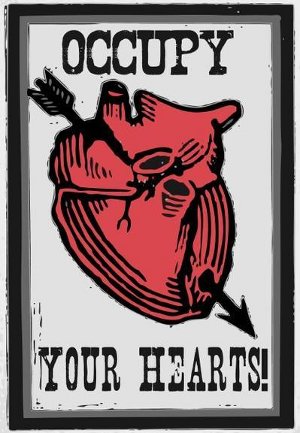
Breaking: hundreds with OccupySF ‘occupying’ building

40

UPDATE: Representatives of the Archdiocese have made clear that they will not make a decision regarding the building occupation until the morning 

OccupySF, along with at least 400 supporters and homeless advocacy groups, have entered a vacant ’building and plan to turn it into a community center. Participants served a free dinner, unrolled sleeping bags and tacked up posters in rooms marked “sleeping quarters” by organizers, and are currently meeting to decide next steps.

“Occupy San Francisco and Occupy Oakland originally were providing food and shelter to those who didn’t have it previously. That’s the plan I think, to provide food, shelter and a space for political organizing,” said protester Samantha Levens, 33, a deckhand on the Alameda-Oakland Ferry. 

The building, 888 Turk, is the former site of Westside Mental Health Center and has been vacant since the closure of that mental health clinic about five years ago. It is owned by the Archdiocese of San Francisco.

It is available for lease through HC&M Commercial Properties.

About 400 marched to the building at 4:30pm, trailed by an former AC Transit decorated and converted to a protest-party vehicle by Occupy Oakland. The march had the air of an April Fools Day Carnival, complete with clowns, jugglers, and a man dressed as Captain America alongside people with bandanas and Guy Fawkes masks. Protesters marched from Union Square on Geary, chanting “homes not jails” and ”housekeys not handcuffs.”

The march followed a rally in Union Square, in which homeless advocates from Berkeley, Oakland and Sacramento spoke to the crowd, and performers including the Mixcoatl Anahuac dance group and the Brass Liberation Orchestra kept the mood festive.

The protest was part of a national day to defend the rights of the homeless with protests in 17 cities. Paul Boden of the Western Regional Advocacy Project, which planned the Union Square protest, spoke speficically about Business Improvement Districts in San Francisco, which he claimed funell property taxes to businesses at the expense of the homeless.

When the march arrived at Turk and Gough, the site of the building, it had already been unlocked from the inside, and protesters on the roof held a sign reading “organize or starve.”

About 40 police officers provided an on-foot escort for the march. Officers as well as several police vehicles are currently standing by the “occupied” site, and declined to provide comment at this time. 

An OccupySF-associated building takeover occurred Jan. 20 just a few blocks away at the former Cathedral Hill Hotel. At the request of the building’s owners, police entered the building, and no occupiers remained the following morning.

“Occupy SF through the OccupySF commune has inhabited a vacant building for the purpose of creating a community center in the spirit of the buildings original intention, to create a center for health and healing,” according to a press release issued by the group.


Of Monsters, Men, and Me

3

Editor’s Note: California is transferring many prison inmates to jails in their counties of origin, a process known as Realignment that will impact the San Francisco Sheriff’s Department. Mayor Ed Lee removed the elected head of that department last week, and the process for determining whether Lee acted appropriately could take months. With that context in mind, we present this inside look at Realignment by Eugene Alexander Day, a third strike inmate at Soledad Prison who will be writing occasional articles about prison life for the Guardian.

A perfect storm is brewing. An unparalleled crisis in corrections is exacerbated by an even worse economy. As a reform-minded inmate buried under a life sentence, it feels like hope is on the horizon. Judicial oversight is the cornerstone.

Due to a murderous and unconstitutional medical department, the Supreme Court implemented a population cap on the California Department of Corrections and Rehabilitation (CDCR). December marked the first of four benchmarks. By mid-2013, the prison population must be brought down by 33,000 inmates.

In response, the Legislature passed Prison Realignment (AB 109), which started in October. Once the dust of Realignment settles, state facilities will become the sole domain of real criminals. Serious and violent offenders, called “strikers,” must serve 80 to 85 percent of their sentences. The rest of us are serving life sentences for third strikes, murders, or other violent crimes.

Under Realignment, the counties will maintain custody of those eligible for day-for-day time credits, called “half-timers,” which includes parole violators. For years, experts have been calling for such a shift. Stemming the flow of parole violators and nonviolent, non-serious, and non-sexual offenders, called the three “nons,” is the first real attempt by the state to do the right thing.

By ignoring the evidence for so long, austerity measures and public safety are extremely difficult to reconcile due to judicial oversight. In 2007, Gov. Schwarzenegger convened an expert panel that crafted a road map of rehabilitative recommendations to address overcrowding. The state’s other expert panel, the socially irresponsible Legislature, instead chose to double-down on a bad bet.

Under the banner of building more prisons, underscored by sending inmates out-of-state, some of Schwarzenegger’s panel’s rehabilitative recommendations were codified as unfunded mandates. When the economy took a dive in 2008, the state lawyered up – and got its ass kicked in court.

It took some of the sting off my life sentence when the Supreme Court smashed the CDCR in 2011. Systemic mismanagement corrupted a generation of salvageable prisoners. As someone who lives, breathes, and sleeps the politics of justice, the Legislature didn’t simply kick the can down the road – it pushed the state closer to the precipice. State leaders have set a poor example. By failing to follow the evidence in 2007, all 58 counties had Realignment shoved down their throats in 2011.

This lens through which I see the world is depicted as “synchronized drowning” by Attorney General Kamala Harris. For the last 13 years, I’ve struggled to keep my wits in this sea of despair. Deviants need structured treatment, not more of the same. Shifting the responsibility of tens of thousands of offenders away from CDCR is an idea of brilliant simplicity.

Local law enforcement, prosecutors, and the courts are better suited to solve local problems. These offenders are members of your community. The next time the task force stomps through the ghetto snatching up people of color, they must think about how to house all of these people of imperfection. Good. Most need help, not a jackboot.

To continually be considered part of this particular problem is unacceptable. In her book Monster Factory, Sunny Schwartz opined that everyone from civilians to officers to prisoners “were collaborators in a system that accepted and invested in failure.” No one is exempt. Everyone is to blame. Lives are at stake.

Both Schwartz and Harris describe jails and prisons as crime colleges. I feel like I received tenure in the worst-performing school district in the nation. Untreated criminogenic factors give serious offenders the artistic license to develop unholy subsocietal norms. We sow the seeds of recidivism when low-risk offenders are subjected to our gangbanger, dope-fiend bullshit. Parole violators and the three “nons” are low-hanging fruit: easy to treat and even easier to corrupt.

The counties might hate Realignment, but I hate the fact it took so long. Marking a happy day in this collaborator’s miserable life, a whole class of offenders have been diverted away from the Monster Factory. Excellent. Realignment is not some hug-a-thug program. It’s basic math. So used to being treated like shit, I will die before I advocate for mollycoddling prisoners. Using offenders as earmarks to maintain an unsustainable status quo is a feeling worse than death. Fix the problem.

My dreams are skewed. In my way of thinking, prisons should become factories that turn monsters into advocates for social justice. Offenders need to learn the difference between pro-social and antisocial behavior, not how to shove dope up their asses or participate in a riot.

Our Weekly Picks: March 28-April 3

0

WEDNESDAY 28

“How to Drink Like a Locavore” Rents in the Mission and Noe Valley rose 10 percent in the last six months? Sea changes are afoot in this city (as always). But let’s make lemonade with the lemons of increasing preciousness — the monied have certainly provided a market for the Bay’s burgeoning local liquor scene. Community service for having snapped up the rental market? Today, for $25 anyone can sample pours from more than six distilleries in the tony climes of the Commonwealth Club — the ambrosial offerings of St. George’s Spirits, Anchor, and Distillery No. 209 included. Oh, and there’ll be an expert panel of hoochmakers to educate on what you’re sipping. Ask them if they need a roommate. (Caitlin Donohue)

6:30 p.m., $7–<\d>$25

595 Market, SF

(415) 597-6700

www.commonwealthclub.org


Sea of Bees

To call Julie Baenziger’s brand of sweet, haunting, exasperated vocals unique is an understatement. The Sea of Bees leader hails from California’s Central Valley and creates dreamy, blissful folk rock with a small group of co-conspirators. Sea of Bees’ debut album, Songs for the Ravens (2010), received critical acclaim and carries a fair bit of angst (with subtlety, mind you). Its forthcoming LP, Orangefarben, out this spring, includes “Gnomes,” a dynamic, surreal track released last summer on EP. Baenziger’s songs focus on love, sadness, hope, and intimacy, and her soulful style and live candor will draw you in.(Mia Sullivan)

With Radiation City, the Loom

8 p.m., $10

Rickshaw Stop

155 Fell, SF

(415) 861-2011

www.rickshawstop.com


THURSDAY 29

The Ferocious Few

Oh the Ferocious Few, how do we love thee, let me count the ways. That with just a guitar and drum kit you are nonetheless able to create a rock’n’roll ruckus any five-piece combo would be lucky to emulate (one). That Francisco Fernandez’s vocals, a honeyed firewater blaze, haunt every BART-station-street-corner-park-bench you’ve ever played (two). That every lyric you’ve penned about love lost slices right through the heart and straight for the jugular (three).That despite the massive setback of getting your gear stolen (since recovered), you still made it to SXSW with aplomb to spare (four). That you’re headlining a gig, indoors for a change, just before we went into major FF withdrawal (five). There are more reasons, but we’re out of word count. Just go. (Nicole Gluckstern)

With Zodiac Death Valley, B. Hamilton

8 p.m., $14

Great American Music Hall

859 O’Farrell, SF

(415) 885-0750

www.slimspresents.com


FRIDAY 30

“Dance Anywhere”

The world is in the toilet, and at times it feels like a giant cosmic hand is just about to flush us all. But a glimmer of hope for humanity lurks amid events like “Dance Anywhere,” which advises even the two-left-footed among us to pause and bust a joyful move in as part of a coordinated, global public art movement. Check the event’s website to line up your time zone (in San Francisco, it’s noon), and limber up for your solo macarena — or find your way to a free professional performance. Bay Area participants include Anne Bluethenthal Dance (at SFMOMA), Raisa Simpson and Push Dance Co. (at the Oakland Museum of California), and Alyce Finwall Dance Theatre (on 343 Sansome’s rooftop deck). In the words of Footloose: dance your ass off! (Eddy)

Noon, free

Various locations

www.danceanywhere.org


Kevin Brownlow

“The visual resources of the cinema have never been stretched further than in Napoléon vu par Abel Gance.” — that’s what Academy-honored film historian Kevin Brownlow had to say about the 1927 epic in his silent film tome The Parade’s Gone By… Now, his decades of restoration work on the film are culminating with screenings at the Paramount Theater in Oakland (the remaining two are Sat/31 and Sun/1; visit www.silentfilm.org for info). Brownlow will appear at UC Berkeley’s Pacific Film Archive to present “Abel Gance’s Napoléon, A Restoration Project Spanning a Lifetime,” a discussion of his work, sure to be an invaluable companion to the movie itself, which will feature scenes from the film and live piano accompaniment from Judith Rosenberg. (Sam Stander)

Book signing and reception, 5:30 p.m.; on Napoleon, 7:00 p.m., $5.50–<\d>$9.50

Pacific Film Archive

2575 Bancroft Way, Berk.

(510) 642-1412

bampfa.berkeley.edu


“Computer Face: A Show by Kirk Read”

Make way Wolf Blitzer, writer-performer-instigator Kirk Read, following the campaign trail as a sex worker like Mother Courage hauling her wares after the armies of Europe, offers his own take on the Republican primaries — among so much else — in his latest performance piece, now up through this weekend at the Garage. Read’s theater work is often grouped, not unreasonably, under performance art, queer cabaret, and such, but he has a quality that feels sui generis and shouldn’t be missed. Exuding a charming combination of practical, everyday groundedness and unmoored fancy, Read is a pure artist, and Rick Santorum’s hot wet nightmare. (Robert Avila)

Through Sat/31, $10–$20

Garage

975 Howard, SF

(415) 518-1517

www.975howard.com


Galactic

For those who aren’t really into jam, think of Galactic as an incarnate of Phish with brass instead of wah; but really, if you have a soul and like fun, you should probably acquaint yourself with Galactic, as it represents jazz-funk jam at its finest. The group’s live shows have been known to induce expressive dance as well as impressive marijuana intake. The pulsing and ecstatic Carnivale Electricos, which came out this past Mardi Gras, is an ode to carnivale in New Orleans (the band’s home city) and Brazil, where people take the responsibility of engaging in lustful debauchery on this crazy night quite seriously. (Sullivan)

With Soul Rebels Brass Band, Corey Henry

Fri/30-Sat/31, 9 p.m., $41.50

Fillmore

1805 Geary, SF

(415) 346-6000

www.thefillmore.com


Filastine

Could there be anything more emblematic of the “global economy” — its giddy consumerism, its nomadic promise, its horrid displacement — than the lowly shopping cart? Audio-visual percussionist Filastine makes the shopping cart central to his transnational electro bass music project, zinging, plucking, and kicking its ribs to turn a metaphor into a dance party of resistance. His amazing latest video, “Colony Collapse,” was filmed at several sites of ecological disaster, pairing with the sites’ residents to make a fractured song of despair and hope. His live stage show, this appearance opening for Bay Area electro-jazz-hop collective Beats Antique, couples virtuoso live drumming and electronic grooves with a visual spectacle that holds crowds spellbound, a neat complement to the mobile dance parties and sonic activism he’s renowned for leading, from Tokyo to Barcelona. (Marke B.)

With Beats Antique, the Loyd Family Players

8 p.m., $25

Fox Theater

1807 Telegraph, Oakl.

(510) 548-3010

www.thefoxoakland.com


SATURDAY 31

Pilot 60

ODC’s Pilot Program is giving young choreographers a leg up, so to speak. Having an idea about making a dance is easy. Shaping it so that it makes sense to the choreographer as well as to an audience is tough. Being in the same boat with others, however, helps. Just ask the dozens of choreographers who over the years (this is Pilot’s 60th incarnation) have gone through this well structured, proven way to nudge budding professionals to the spotlight. Alison Williams, Samantha Giron, Milissa Payne Bradley, David Schleiffers, Lisa Fagan and Claudia Anata Hubiak will be presenting works this time around. (Rita Felciano)

Sat/31-Sun/1, 8 p.m., $12

ODC Dance Commons, Studio B

351 Shotwell, SF

(415) 863-9834

www.odctheater.org


SUNDAY 1

“Memorabilia from the Ira and Leonore Gershwin Trust”

Know your Gershwins: Ira was the older brother (born 1896), but he outlived George (born 1898) by nearly 50 years. Together, they were a songwriting dream team ruling Broadway and American popular song — but even after George’s death, Ira continued writing lyrics for the stage and screen. He died in 1983; his widow, Leonore, died in 1991 after devoting her later years to preserving the legacy of the talented brothers. Fans won’t want to miss the exhibition of items from the Ira and Leonore Gershwin Trust (sheet music, concert posters, family photos, awards), as well as related events, including a talk by Ira’s nephew Mike Strunsky (Mon/2) and performances of The Man That Got Away: Ira After George (April 13-15). (Eddy)

Through June 15

Gallery hours Mon.-Thurs., 7 a.m.-10 p.m.; Fri.-Sun., 7 a.m.-8 p.m., free

Jewish Community Center of San Francisco

Katz Snyder Gallery

3200 California, SF

www.jccsf.org


“April Fools With Miss Coco Peru”

Tempting as it might be to play a trick on some poor fool today, firing the opening shot in a prank war is risky — payback is, after all, a notorious bitch. Instead of getting your April Fool’s Day guffaws at the expense at someone else, why not show your appreciation for a razor-sharp and unfailingly glamorous comedian? Miss Coco Peru, star of screens big (1999’s Trick) and small (“Wee Britain”-era Arrested Development) — and, of course, of stage (Ugly Coco) — performs her latest, There Comes a Time, a no-holds-barred monologue reflecting on her colorful life in the spotlight. Earlier in the day, Miss Peru will be on hand for a short Q&A after a screening of 2003’s Girls Will Be Girls, a campy cult comedy (tantalizingly described as “every novel Jacqueline Susann’s ever written”) with a sequel due out this year. (Eddy)

Screening, noon, $10

Performance, 7 and 9:30 p.m., $29.95

Victoria Theatre

2961 16th St., SF

(415) 863-0611

www.ticketfly.com


Chain & the Gang

You’re either with Ian Svenonius or you’re against him. The shamanic leader of Nation of Ulysses, Make-Up, and Weird War (all quality on their own, according to me) inspires fervor, mirrored weirdness, and the occasional eye-roll (hey, I’ve seen it). His most recent project Chain & the Gang (touring now in support new LP, In Cool Blood ) doesn’t get any less quirked, so if you’re not in line with Svenonius, you won’t find it as thrilling as the rest of us. With a muffled scream here, a tambourine shake there, and a buzzing chainsaw guitar slicing through it all, Chain & the Gang is a testament to Svenonius’s continuity, and his ongoing ability to scrap genres, culling the best bits of the past — Southern blues, working man shuffles, post-punk, and mod — for his own future perfect. (Emily Savage)

With Neonates, the Smell

9 p.m., $9–$12

Brick and Mortar Music Hall

1710 Mission, SF

(415) 800-8782

www.brickandmortarmusic.com


TUESDAY 3

Field Report

Chris Porterfield used to be a member of the now-defunct Wisconsin-based act DeYarmond Edison with Justin Vernon (Bon Iver) and the men of Megafaun (Brad Cook, Phil Cook, Joe Westerlund). He also made music under the Conrad Plymouth moniker for a while but recently debuted his new project, Field Report, at SXSW — a lush and poetic picture of longing, nostalgia, and hope. The retrospection and emotionality wrapped into Porterfield’s folksy, bluesy Americana is easily relatable and will make you want to melt into his world. Field Report’s debut album, which was recorded in Vernon’s studio and produced by Paul Koderie, is due out in July. (Sullivan)

With Megafaun

9 p.m., $12

Cafe Du Nord

2170 Market, SF

(415) 861-5016

www.cafedunord.com


The Guardian listings deadline is two weeks prior to our Wednesday publication date. To submit an item for consideration, please include the title of the event, a brief description of the event, date and time, venue name, street address (listing cross streets only isn’t sufficient), city, telephone number readers can call for more information, telephone number for media, and admission costs. Send information to Listings, the Guardian Building, 135 Mississippi St., SF, CA 94107; fax to (415) 487-2506; or e-mail (paste press release into e-mail body — no text attachments, please) to listings@sfbg.com. Digital photos may be submitted in jpeg format; the image must be at least 240 dpi and four inches by six inches in size. We regret we cannot accept listings over the phone.

Texas highlights

1

>>View Mirissa’s complete SXSW 2012 diary here.

MUSIC To be at SXSW is to know you’re missing out on a lot of good music. Fortunately the music you do see makes up for the difference, and very often it’s the unexpected showcases, the things that weren’t on your radar until that very moment, that end up being the highlights of your experience. That said, here are some of my impressions from this year’s slate:


WEDNESDAY, MARCH 14

On the way to the ZZ Ward show I stumbled upon Grupo Canalon playing on a street corner. Incidentally, a friend from SF had recommended it as an act that shouldn’t be missed. The group hails from the town of Timbiqui in Cauca and plays traditional Afro-Colombian roots music, with lots of percussion, a marimba, and a capella vocals. Even the hipsters on Sixth Street couldn’t resist dancing.

Amid an extended sound check plagued by feedback, a frustrated ZZ Ward assured the Bat Bar audience that her performance would be worth the wait. The words seemed cocky in the moment but she and her band delivered. Based in LA, the chanteuse’s “dirty blues with beats” sound has gathered its fair share of buzz and she seems to have the poise and the chops to become a star.

As I walked through the heart of Sixth Street not only was every venue overflowing with showcases but it was hard to swing a stick without hitting an “unofficial” street showcase. I snapped photos of two guys furiously strumming acoustic guitars in front of the Ritz Theater. When asked what their band’s name was, the taller one replied “Well I’m Mike and he’s Gabe… that’s as far as we’ve gotten.”


THURSDAY, MARCH 15

In the afternoon I wandered downtown only to run into Andy and Christian of San Franpsycho. They had a rack of clothes and a mobile screenprinting setup — representing SF style deep in the heart of Texas. As we commiserated about the craziness that is SXSW, SF local Danny Lannon of The Frail happened by.

Then it was off to catch a few songs by the White Eyes at the Taiwan music showcase. Frontperson Gau Xiao-gao was festooned in a nude leotard with fabric streamers while she led her band through the punk and straight-forward rock paces.

Later on I went to Spinlet’s All Africa party at Copa. After some confusion about the schedule, Kenya’s Sauti Sol took the stage. The first thing to notice about Sauti Sol was the band’s incredible clothing. The musicians were all wearing these beautifully tailored kanga-print jackets with beaded epaulets. En masse it kind of resembled an East African Sgt. Pepper’s Lonely Hearts Club Band. The second thing to notice was the great music. It navigated effortlessly from rocking out to singing soaring harmonies, all the while spontaneously breaking into lockstep dancing. The crowd ate it up.


FRIDAY, MARCH 16

At the big SPIN blowout Santigold‘s rhythm section entered the stage wearing Max Headroom-esque caps, her backup singers came out in outfits that were a spin on matador chic, then Santigold herself finally came out donning a crown. While her big hits like “L.E.S. Artistes” sent the crowd into frenzied sing-a-longs, her new material was received almost as enthusiastically, boding well for her album release come April.

At the globalFEST showcase the crowd was enjoying the sounds of Janka Nabay and the Bubu Gang, M.A.K.U SoundSystem, and Chicha Libre. Boston’s Debo Band closed the night with its take on retro Ethiopian pop music. I first caught the band a little over a year ago and since then its live act has grown by leaps and bounds. The band has been working with producer Thomas “Tommy T” Gobena of Gogol Bordello and it seems it learned a few things from the Gogol performance playbook. Keep an eye out for its release later this summer.


SATURDAY, MARCH 17

As I crossed the threshold into Empire Auto’s warehouse space I was enveloped in a complete sensory overload. The room was bathed in a light that made it feel like the crowd was hanging in suspension, and dubstep producer Starkey had that crowd feeling his beats. Literally. The bass was so pounding that it rattled my organs. A few minutes later the bass cut out completely, leaving the crowd adrift as Starkey protested over the PA “Yo, I wasn’t even in the red! Is anyone out there even working?”

The production manager told me that the bass was so heavy that it had knocked Starkey’s laptop off his table, and they were trying to get him to take it down a notch. Yet the thing the manager was even more worried about was that Daedelus was returning to the venue later that evening. Apparently two nights before his bass was so relentless that it had blown two woofers, cracked two windows, and fried the hard drive of the computer delivering the club’s visuals. Hopefully that night didn’t go out with too much of a bang.

Over at the Nat Geo showcase Israeli culture-clasher Balkan Beat Box was rocking songs from its newly released album Give. One track that had particular traction was “Enemy in Economy,” which details leader Tomer Yosef’s experience being taken for a terrorist on an Alaska Airlines flight. The crowd couldn’t get enough of the song’s hook “Welcome to the USA/we hope you have a wonderful day.”

Meanwhile Nigerian-German singer Nneka was inside playing her beautiful blend of politically conscious music. My SXSW experience closed out with Jimmy Cliff‘s set on the patio stage. By kicking things off with “You Can Get It If You Really Want” he wasted no time in giving the capacity crowd what they really wanted. As the patio tent got progressively more hazy it seemed the perfect moment to bid adieu to the festival and make my way home.

Stage Listings

0

Stage listings are compiled by Guardian staff. Performance times may change; call venues to confirm. Reviewers are Robert Avila, Rita Felciano, and Nicole Gluckstern. Submit items for the listings at listings@sfbg.com. For further information on how to submit items for the listings, see Picks.

THEATER

OPENING

Hot Greeks Hypnodrome Theatre, 575 10th St, SF; www.brownpapertickets.com. $30-69. Previews Thurs/22-Sat/24, 8pm. Opens March 29, 8pm. Runs Thurs-Sat, 8pm. Through May 5. Thrillpeddlers launch a new version (new cast, songs, costumes, etc.) of the Cockettes classic by Scrumbly Koldewyn and Martin Worman.

The Rita Hayworth of this Generation Shotwell Studios, 3252-A 19th St, SF; www.brownpapertickets.com. $10-15. Opens Fri/23, 8pm. Runs Fri-Sat, 8pm. Through April 7. Writer and performer Tina D’Elia performs her solo, multi-character play about a queer Latina performer inspired by the legendary Hollywood goddess.

ONGOING

A Bright Room Called Day Gough Street Playhouse, 1620 Gough, SF; www.custommade.org. $25-32. Thurs-Sat, 8pm; Sun, 7pm. Through April 8. Custom Made Theatre performs Tony Kushner’s drama set in Berlin just before the Nazi takeover.

"Celebration of Women’s History Month:" The Right Thing Thick House, 1695 18th St, SF; www.3girlstheatre.org. $30. Dates and showtimes vary. Through April 1. Over one long day of legal mediation, aggrieved former CEO Zell Gardner (a brash but vulnerable Catherine Castellanos) and attorney Manny Diamond (a sharp, loquacious Louis Parnell) square off against Zell’s former Big Pharma pals headed up by vindictive interim CEO David Heller (a coolly cutting Lol Levy) flanked by Zell’s longtime colleague Chris McKnight (a nicely down-to-earth John Flanagan). Zell’s lawyer becomes increasingly ambivalent, however, as Manny discovers his tough, brassy mess of a pill-popping client has been less than forthcoming about the charge of sexual harassment the other side is using to justify her dismissal and the company’s pocketing of the three million Zell expected as compensation — a charge involving Zell’s 19-year-old goddaughter, Sam (Karina Wolfe). Attempting to reconcile the parties and broker a deal is retired judge Leigh Mansfield (Helen Shumaker), but she has her work cut out for her with this crowd. AJ Baker’s new drama — the inaugural production of newcomers 3Girls Theatre — take issues of sexual politics and power in its high-powered setting and cracks them against the everyday familial and social dynamics that are perhaps a casualty of the corporate ethos, but without opening them up to a satisfactory degree. Director Suze M. Allen assembles a generally strong cast (Castellanos is riveting throughout), and some scenes smolder with just the right teeth-baring tension, but pacing is inconsistent and the script’s own wayward drift — together with an odd, unnecessary video backdrop—distract from the concentrated treatment the story demands. (Avila)

*Fool For Love Boxcar Studios, 125A Hyde, SF; www.boxcartheatre.org. $25. Showtimes vary. Through April 14. Another installment of Boxcar Theatre’s epic Sam Shepard repertory project, Fool for Love inaugurates their newest performance space within their Hyde Street Studios location. A depressingly realistic reproduction of a claustrophobic motel room, the tiny jewel-box theatre provides no refuge for the actors, and certainly not for the audience, each trapped beneath the pitiless gaze of the other. And if that too-close-for-comfort intimacy doesn’t get to you, the intentionally difficult subject matter — a "typical" Shepardian foray into alcohol-fueled ranting, violence, incest, and casual cruelty — probably will. Shepard’s strength in monologue shows itself off to meaty effect from May’s (Lauren Doucette) melancholy description of her mother’s love affair with the Old Man (Jeff Garrett) to Eddie’s (Brian Trybom) candid admittance to May’s timid suitor Martin (Geoffrey Nolan) that he and May are not cousins at all but half-siblings who have "fooled around" with each other. In addition to the reliably strong performances from each of the actors, Fool features a notably clever bit of staging involving the Old Man who appears not as a specter wandering the periphery of the stage, but as a recurring figure on the black-and-white television, interrupting the flow of cheesy Westerns with his garrulous trailer park wisdom and an omnipresent Styrofoam cup filled, one suspects, with something stronger than just coffee. (Gluckstern)

Glengarry Glen Ross Actors Theatre of San Francisco, 855 Bush, SF; (415) 345-1287, www.brownpapertickets.com. $26-40. Fri/23-Sat/24, 8pm. David Mamet’s cutthroat comedy, courtesy of the Actors Theatre of San Francisco.

It’s All the Rage Studio Theater, Marsh San Francisco, 1062 Valencia, SF; (415) 282-3055, www.themarsh.org. $15-50. Thurs, 8pm; Sat, 8:30pm, Sun, 7pm. Through April 15. Longtime comedian and radio host Marilyn Pittman’s solo play wrestles with the legacy of her parents’ violent deaths in a 1997 murder-suicide initiated by her father. It’s disturbing material that Pittman, a stout middle-aged woman with a gregarious and bounding personality, approaches indirectly via a good deal of humor — including recounting the first time she did her growing-up-lesbian bit before her mother in a DC comedy club. But the pain and confusion trailing her for 13 years is never far behind, whether in accounts of her own battle with anger (and the broken relationships it has left in its wake) or in ominous memories of her too complacent mother or her charming but domineering father, whose controlling behavior extended to casually announcing murderous dreams while policing the boundaries of his marriage against family interference. A fine mimic, Pittman deploys a Southern lilt in playing each parent, on a stage decorated with a hint of their Southwestern furnishings and a framed set of parental photographs. In not exactly knowing where to lay blame for, or find meaning in, such a horrifying act, the play itself mimics in subtler form the emotional tumult left behind. There’s a too brief but eerie scene in which her veteran father makes reference to a murder among fellow soldiers en route to war, but while PTSD is mentioned (including as an unwanted patrimony), the 60-minute narrative crafted by Pittman and director David Ford wisely eschews any pat explanation. If transitions are occasionally awkward and the pace a bit loose, the play leaves one with an uncomfortable sense of the darker aspects of love, mingled with vague concentric histories of trauma and dislocation in a weird, sad tale of destruction and staying power. Note: review from the show’s 2009 run at the Marsh. (Avila)

Julius Caesar Buriel Clay Theater, African American Art and Culture Complex, 762 Fulton, SF; 1-800-838-3006, www.african-americanshakes.org. $10-30. Sat, 8pm; Sun, 4pm. Through April 1. African-American Shakespeare Company performs a version of the Bard’s classic set during the ongoing civil wars of West Africa.

*Maurice New Conservatory Theatre Center, 25 Van Ness, SF; (415) 861-8972, www.nctcsf.org. $25-45. Wed/21-Sat/24, 8pm; Sun/25, 2pm. The eponymous hero of E.M. Forster’s late novel (written early but published only posthumously) wrestles with his love for another man in Edwardian England — oscillating between defiant assertion of feeling and an anguished recoil into desperate treatments like hypnotism — but manages to find happiness as a homosexual by the end of the story. No doubt that would have most appalled the guardians of those extremely homophobic, repressive times. Today there’s still much to recognize in the confused feelings and social censure faced by such a figure, though what helps make the 1998 stage adaptation (by Brits Andy Graham and Roger Parsley) so compelling a story is the not always flattering complexity and honesty with which Forster portrays the (at least partly autobiographical) Maurice Hall — played winningly by an intelligent, agile Soren Santos in New Conservatory Theatre Center’s persuasive U.S. premiere. Maurice’s outré sexuality is one thing; his class position and status as a man are another, affording him certain limited protection and also contributing to certain weaknesses of character, which become most apparent vis-à-vis his mother (a quietly potent Lindsey Murray) and sister (an effervescent Hilary Hyatt) as well as his second love, ambitious young laborer Alec Scudder (a nicely restrained Andrew Nolan). Director George Maguire rightly concentrates on the reciprocal influences between these vital characters and gets fine performances from his entire cast in an uncluttered, sure and measured production, with capable John Hurst in several supporting roles and Alex Kirschner doing excellent work as Clive Durham, Maurice’s Cambridge classmate and mercurial first love. (Avila)

Merchants Exit Stage Left, 156 Eddy, SF; www.brownpapertickets.com. $10-25. Thurs/22-Sat/24, 8pm. According to playwright Susan Sobeloff, the vision for Merchants, premiering this month at the EXIT Theatre, came to her after watching Shakespeare’s The Merchant of Venice, a play at least partially responsible for cementing the caricature of the money-hungry Jew in Western literary tradition for centuries to come. Her intention to write a play featuring a family of more "rounded" Jews doesn’t entirely coalesce once it becomes clear that the bulk of the dramatic tension actually revolves very closely around monetary concerns. As one family business folds, and other members get squeezed out of their jobs by the new economy, a new family business of sorts begins to grow around the quirky, confessional performance art of youngest daughter, Mercedes (Maura Halloran). Emotional blackmail and sheer desperation kickstart their efforts to turn Mercedes into a financially-sustainable "brand," while the all too human costs of burnout, fatigue, and simmering resentments are roundly disregarded, until a crisis point is reached. It’s difficult to connect with this particular set of almost comically self-absorbed characters, despite the desire to root for the underdog, and the play would have benefited from a staging that allowed either more humor or more humanity to creep into the relentless tirades that characterize much of the dialogue. (Gluckstern)

The Real Americans Marsh Studio Theater, 1062 Valencia, SF; (415) 282-3055, www.themarsh.org. $25-50. Fri, 8pm; Sat, 5pm. Extended through April 14. Dan Hoyle revives his hit solo show about small-town America.

Sam Marlowe and the Mean Streets of San Francisco Stage Werx, 446 Valencia, SF; (415) 412-3989, www.catchynametheatre.org. $20. Thurs-Sat, 8pm. Through April 7. Catchy Name Theatre presents a world premiere noir play by Jim Strope.

*True West Boxcar Studios, 125A Hyde, SF; (415) 967-2227, www.boxcartheatre.org. $25. Thurs-Sat, 8pm. Through April 7. The first installment of Boxcar Theatre’s four-play Sam Shepard repertory project, True West ushers in the ambitious run with a bang. This tale of two brothers who gradually assume the role of the other is one of Shepard’s most enduring plays, rich with humorous interludes, veering sharply into dangerous terrain at the drop of a toaster. In time-honored, True West tradition, the lead roles of Austin, the unassuming younger brother, and Lee, his violent older sibling, are being alternated between Nick A. Olivero and Brian Trybom, and in a new twist, the role of the mother is being played by two different actresses as well (Adrienne Krug and Katya Rivera). The evening I saw it, Olivero was playing Austin, a writer banging away at his first screenplay, and Trybom was Lee, a troubled, alcoholic drifter who usurps his brother’s Hollywood shot, and trashes their mother’s home while trying to honor his as yet unwritten "contract". The chemistry between the two actors was a perfect blend of menace and fraternity, and the extreme wreckage they make of both the set (designed by both actors), and their ever-tenuous relationship, was truly inspired. (Gluckstern)

Waiting for Godot New venue: SF Playhouse Stage Two, 533 Sutter, SF; (415) 336-3522, www.tidestheatre.org. $20-32. Thurs, 7pm; Fri-Sat, 8pm. Extended through April 14. The fuchsia papier-mâché tree and swirling grey-on-white floor pattern (courtesy of scenic designer Richard Colman) lend a psychedelic accent to the famously barren landscape inhabited by Vladimir (Keith Burkland) and Estragon (Jack Halton) in this production of the Samuel Beckett play by newcomers Tides Theatre. The best moments here broadcast the brooding beauty of the avant-garde classic, with its purposely vague but readily familiar world of viciousness, servility, trauma, want, fear, grudging compassion, and the daring, fragile humor that can look it all squarely in the eye. (Avila)

The Waiting Period MainStage, Marsh San Francisco, 1062 Valencia, SF; (415) 282-3055, www.themarsh.org. $15-50. Fri, 8pm; Sat, 5pm. Extended through April 27. Brian Copeland (comedian, TV and radio personality, and creator-performer of the long-running solo play Not a Genuine Black Man) returns to the Marsh with a new solo, this one based on more recent and messier events in Copeland’s life. The play concerns an episode of severe depression in which he considered suicide, going so far as to purchase a handgun — the title coming from the legally mandatory 10-day period between purchasing and picking up the weapon, which leaves time for reflections and circumstances that ultimately prevent Copeland from pulling the trigger. A grim subject, but Copeland (with co-developer and director David Ford) ensures there’s plenty of humor as well as frank sentiment along the way. The actor peoples the opening scene in the gun store with a comically if somewhat stereotypically rugged representative of the Second Amendment, for instance, as well as an equally familiar "doood" dude at the service counter. Afterward, we follow Copeland, a just barely coping dad, home to the house recently abandoned by his wife, and through the ordinary routines that become unbearable to the clinically depressed. Copeland also recreates interviews he’s made with other survivors of suicidal depression. Telling someone about such things is vital to preventing their worst outcomes, says Copeland, and telling his own story is meant to encourage others. It’s a worthy aim but only a fitfully engaging piece, since as drama it remains thin, standing at perhaps too respectful a distance from the convoluted torment and alienation at its center. (Avila)

BAY AREA

Cabaret Larkspur Café Theater (American Legion Hall Post 313), 500 Magnolia, Larkspur; www.brownpapertickets.com. $25-45. Fri-Sat, 8pm; Sun, 7pm (no show April 8). Through April 15. Independent Cabaret Productions and Shakespeare at Stinson move their production of the Kander and Ebb classic from Fort Mason to the North Bay.

The Coast of Utopia: Voyage Ashby Stage, 1901 Ashby, Berk; www.shotgunplayers.org. $20-30. Opens Fri/23, 8pm. Runs Wed-Thurs, 7pm; Fri-Sat, 8pm; Sun, 5pm. Through April 29. Shotgun Players present Tom Stoppard’s riff on pre-revolutionary Russia.

A Doctor in Spite of Himself Berkeley Repertory Theatre, Roda Theatre, 2015 Addison, Berk; (510) 647-2949, www.berkeleyrep.org. $14.50-73. Thurs/22 and Sat/24, 8pm; Wed/21 and Sun/25, 7pm (also Sun/25, 2pm). Berkeley Rep performs a contemporary update of the Molière comedy.

*The Kipling Hotel: True Misadventures of the Electric Pink ’80s New venue: Marsh Berkeley, 2120 Allston, Berk; (415) 282-3055, www.themarsh.org. $20-50. Sat, 8:30pm; Sun, 7pm. Extended through May 6. This new autobiographical solo show by Don Reed, writer-performer of the fine and long-running East 14th, is another slice of the artist’s journey from 1970s Oakland ghetto to comedy-circuit respectability — here via a partial debate-scholarship to UCLA. The titular Los Angeles residency hotel was where Reed lived and worked for a time in the 1980s while attending university. It’s also a rich mine of memory and material for this physically protean and charismatic comic actor, who sails through two acts of often hilarious, sometimes touching vignettes loosely structured around his time on the hotel’s young wait staff, which catered to the needs of elderly patrons who might need conversation as much as breakfast. On opening night, the episodic narrative seemed to pass through several endings before settling on one whose tidy moral was delivered with too heavy a hand, but if the piece runs a little long, it’s only the last 20 minutes that noticeably meanders. And even with some awkward bumps along the way, it’s never a dull thing watching Reed work. (Avila)

Now Circa Then Lucie Stern Theatre, 1305 Middlefield, Palo Alto; (650) 463-1960, www.theatreworks.org. $19-69. Tues-Wed, 7:30pm; Thurs-Sat, 8pm (also Sat, 2pm); Sun, 2 and 7pm. Through April 1. TheatreWorks performs Carly Mensch’s comedy about a romance that blooms between two historical re-enactors.

The Pirates of Penzance Julia Morgan Center for the Arts, 2640 College, Berk; (510) 845-8542, www.juliamorgan.org. $17-35. Fri-Sat, 7pm (also Sat, 2pm); Sun, noon and 5pm. Through April 1. Berkeley Playhouse performs the Gilbert and Sullivan classic, with the setting shifted to a futuristic city.

Red Berkeley Repertory Theatre, Thrust Stage, 2025 Addison, Berk; (510) 647-2949, www.berkeleyrep.org. $14.50-83. Opens Thurs/22, 8pm. Runs Tues and Thurs-Fri, 8pm (also March 29 and April 26, 2pm; no show April 27); Wed, 7pm; Sat-Sun, 2pm (also Sat, 8pm; Sun, 7pm; no matinee March 31). Through April 29. Berkeley Rep performs John Logan’s Tony Award-winning play about artist Mark Rothko.

Titus Andronicus La Val’s Subterranean, 1834 Euclid, Berk; www.impacttheatre.com. $10-20. Thurs-Sat, 8pm. Through March 31. Impact Theatre takes on the Bard’s bloodiest tragedy.

The World’s Funniest Bubble Show Marsh Berkeley, TheaterStage, 2120 Allston, Berk; (415) 826-5750, www.themarsh.org. $8-50. Extended run: Sun/25 and April 1, 11am. Also May 5-27 (Sat-Sun, 11am); June 3-July 15 (Sun, 11am). Louis "The Amazing Bubble Man" Pearl returns with this kid-friendly, bubble-tastic comedy.

PERFORMANCE/DANCE

"Arthur in Underland" CounterPULSE, 1310 Mission, SF; www.counterpulse.org. Fri/23-Sat/24, 8pm. $15-24. Dandelion Dancetheater performs a new work about a young man whose life is changed when he becomes part of a rock group’s entourage.

"Elect to Laugh" Studio Theater, Marsh San Francisco, 1062 Valencia, SF; (415) 282-3055, www.themarsh.org. Tues, 8pm. Ongoing through Nov 6. $15-50. Will Durst and friends perform in this weekly political humor show that focuses on the upcoming presidential election.

"Enchantingly Wicked" Davies Symphony Hall, 201 Van Ness, SF; www.sfgmc.org. Wed/21, 8pm. $15-75. San Francisco Gay Men’s Chorus and Stephen Schwartz perform musical theater hits.

Hope Mohr Dance Z Space, 450 Florida, SF; www.zspace.org. Thurs/22-Sat/24, 8pm. $20-25. The company presents its fifth San Francisco home season, with a rare solo by Hope Mohr and the Bay Area debut of New York-based choreographer-performer Dusan Tynek’s company.

"Improvised Shakespeare" Bayfront Theater, Fort Mason Center, Marina at Laguna, SF; www.improv.org. Sat/24, 8pm. $20. Bay Area Theatre Sports (BATS) presents Improvised Shakespeare, a fine troupe (and a slightly different lineup each night, but on March 10 including Kasey Klemm, Rebecca Stockley, Tim Orr, William Hall, Zoe Galvez, and Regina Saisi) with no idea what full length Shakespeare-ish play they will lay on their eager audience until the latter gift them with a title and a key word or two. The rest is remarkably well-tethered mayhem, as cast spontaneously riffs on the audience cue, the conventions of Elizabethan drama, and its own inventions —including the unintentional slip of the tongue, which in this context can prove as productive as anything. March 10 saw the premiere — and simultaneous closing — of an ephemeral little comedy called Two Crows. The players strutted and fretted (or frolicked, really) an hour or so upon the stage.’Twas an idiotic tale, told by some of the sharpest improvisers around, and signifying nothing, save good times. (Avila)

"indifference and MASTERWORK" CounterPULSE, 1310 Mission, SF; www.eventbrite.com. Thurs/22-Sun/25, 8pm, $17-30. New works by artists-in-residence Lisa Townsend and Mica Sigourney.

"ODC Dance/Downtown" Yerba Buena Center for the Arts, Novellus Theater, 700 Howard, SF; www.odcdance.org. Through Sun/25, programs and showtimes vary. $15-750. ODC/Dance kicks off its 41st annual home season with two programs of new works, plus an opening-night gala.

"Octopus’s Garden" Alcove Theater, 414 Mason, Fifth Flr, SF; www.thealcovetheater.com. Sat, 8pm. Through April 7. $25-35. PianoFight performs Scott Herman’s modern-family drama.

"Regeneration" Yerba Buena Center for the Arts, 701 Mission, SF; www.ybca.org. Thurs/22-Sat/24, 8pm, $25. Performance duo Eiko and Koma highlight new and old works from their four-decade oeuvre.

"2012 Rhino Benefit Extravaganza" Eureka Theatre, 215 Jackson, SF; www.therhino.org. Mon/26, 8pm. $25. Queer talent performances (plus free food and drinks!) to benefit Theatre Rhinoceros.

It’s not what you get, it’s what you keep

0

caitlin@sfbg.com

LIT In Redefining Black Power (City Lights Books, 206pp, $16.95), Joanne Griffith’s assemblage of her interviews with black thought leaders, Obama is not the focus, but his presidency is the frame. Journalists, activists, an economist, a theologist who wrote speeches for Martin Luther King, Jr. — each chapter of the book is a dialogue faithfully transcribed from Griffith’s well-informed questionings, reminding readers that the fight for expanded democracy in the United States didn’t end when the brand-new First Family took the stage that night in Chicago’s Grant Park.

Because when it comes to the fight for equal rights in this country — as economist Julienne Malveaux quotes from Lauryn Hill in her Redefining Black Power interview — “it’s not what you get, it’s what you keep.”

Griffith wants to make sure that the words of black leaders are kept in history’s permanent ledger. The Redefining Black Power project was born after she visited KPFK in Los Angeles, where the Pacifica Radio Archives are kept. The archives, a repository for interviews with African American leaders going back for decades, inspired her role as a modern day chronologist. With the help of Brian DeShazor, director of the Archives, Griffith has been airing one historical interview a week on her BBC Radio 5 Sunday evening show.

She also started conducting interviews herself. This edition of Redefining Black Power (she hopes there will be more) is structured as a look at the state of black America since President Obama ascended to the Oval Office, public fist bumps, and dolorous battles over health care.

The book is important, more readable than you’d think interview transcripts would be, and includes seldom-heard perspectives like those of an activist who refuses to vote and calls President Obama “crack” for African Americans, and a Ghana-born New York journalist who asserts we must never forget what it meant when Malia Obama wears her hair in twists.

Griffith acts as the conduit of information, rarely the pontificator herself. That’s why we tapped her for a Guardian interview via email last month, eager to hear what she’s learned about black power today.

SFBG: Explain where the interviews in the book came from. How did you become acquainted with the Pacifica Radio Archives and why are they important?

JG: The idea for the Redefining Black Power Project, of which the book is part, was born out of the historic audio held in the Pacifica Radio Archives, a national treasure trove of material charting America’s history from a progressive perspective dating back to 1949. But it was one recording of Fannie Lou Hamer addressing the 1964 Democratic national convention that sparked the idea for Redefining Black Power. Brian DeShazor heard the tape and wanted to find a permanent way to preserve and share the voices held in the Archives with a wider audience, and what better way than through the written word? Brian approached City Lights Books with the idea, and this book is the result, drawing on the voices of history to link us to the election of Barack Obama, one of the most significant moments in the social and political history of the United States. Through this project, we hope to preserve the voices, opinions and perspectives of African-Americans in this so called ‘Age of Obama’ for historians to digest and explore in years to come.

How did I get involved? As a complete audio nut, I always make a point of visiting local radio stations wherever I travel in the world. Back in 2007, I was in Los Angeles, called KPFK to arrange a visit and was introduced to the Pacifica Radio Archives. Because of this work and the extensive list of people I have interviewed over the years, Brian invited me to do the interviews for the Redefining Black Power project. Through this book, we delve into the role of the activist from different perspectives; the legal system, the media, religion, the economy, green politics and emotional justice.

SFBG: Was there an interview from the book in which your subject’s answers deeply surprised you? 

Joanne Griffith: It was Dr Vincent Harding, the man behind Dr. Martin Luther King Jr.’s “Beyond Vietnam” speech that surprised me the most. A true veteran of the civil rights movement, he made the point that the election of President Obama was never the goal of the movement; instead he prefers to call the work “the movement for the expansion and deepening of democracy in America.” Put this way, it made me realize more than ever, that the work we do today is not in isolation, but part of a wider movement, stretching back all the way to slavery. And the work isn’t over.

SFBG: Who should read this book? How should it be used? 

JG: Use it as a conversation starter to discuss issues in your own community. Parents, use it as a way to engage your children in history. Students, use it as a resource for papers on race and the Obama presidency. Most importantly, everyone, share your thoughts at www.redefiningblackpower.com. This book is not the end of the project; we’re only getting started.


SXSW Music Day 4: Nneka, Balkan Beat Box, Jimmy Cliff

0

During my last day in Austin SXSW reached critical mass. This year St. Patrick’s Day happened to coincide with the big Saturday blowout, and as I made my way downtown the revelry was in full effect. Partiers who looked to be in high school swirled about dressed in t-shirts with slogans like “Hello, My Name is Beer” and “Let’s Get Wasted!!!” In the midst of this I came across a couple contentedly sitting in the middle of the street in complete stillness while staring into one another’s eyes.


I had to forgo a set by British soul singer Michael Kiwanuka in order to catch CHLLNGR at Karma Lounge. CHLLNGR is the moniker of electronic musician Steven Borth, a native-Californian who lives in Denmark full-time and is one of Spoek Mathambo‘s main collaborators. Backed by drummer Gunnar Olsen, Borth is a talented multi-instrumentalist who liberally played his saxophone throughout a set that was deeply steeped in sexy R&B.


After that it was off to the Nat Geo showcase at Stage on Sixth. British singer Alice Russell and Quantic were in full swing. Russell’s larger-than-life voice and the band’s rolling soul had everyone putting their hands together. “Pushin’ on” was a crowd favorite. 


I stopped by the Montreal musician showcase and caught a few songs by Haligonian garage band Each Other. From there it was a several block climb to Empire Auto Garage where I thought I was going to catch some French bands. But I must have read the schedule wrong because MC Kosha Dillz was holding court on the small patio. After he finished his last song he mentioned that his performance was part of the Oy Vey showcase, “The coolest Jewish rap party without many Jewish rappers.”


As I crossed the threshold into the venue’s main warehouse space I was enveloped by a complete sensory overload. The room was bathed in light that was directed in such a way that it felt like the crowd was hanging in suspension, and Philadelphia-based dubstep producer Starkey had the crowd feeling his beats. Literally. The bass was so pounding that it rattled my organs. As I approached the stage the speakers’ vibrations became too intense so I hung in the back of the room to survey the scene. A few minutes later the bass cut out completely, leaving the crowd adrift as Starkey protested over the PA “Yo, I wasn’t even in the red! Is anyone out there even working?” 


I asked the production manager what had happened. He said that the bass was so heavy that it knocked the Starkey’s laptop off the table, and that they were trying to get him to take it down a notch. Yet the thing he was even more worried about was that Daedelus was returning to the venue later that eve. Apparently two nights ago his bass was so relentless that it had blown two woofers, cracked two windows, and fried the hard drive of the computer delivering the club’s visuals. Hopefully the night didn’t go out with too much of a bang. Meanwhile the woofers came back online and the crowd commenced thrashing to Starkey’s beats.


Back at Stage on Sixth Israeli culture-clashers Balkan Beat Box were setting up after having spent 24 hours en route from California to Austin. While playing though complete exhaustion they rocked several songs from their newly released album Give. One track that had particular traction was “Enemy in Economy,” which details frontman Tomer Yosef’s experience being mistaken for a terrorist on an Alaska Airlines flight. The crowd couldn’t get enough of the song’s hook “Welcome to the USA, we hope you have a wonderful day.”

http://www.youtube.com/watch?v=xPDxJIW0Xzo


Nigerian-German singer Nneka was inside playing her beautiful blend of politically conscious music. Her set took place under the watchful eyes of Willie Nelson, Janis Joplin, and Johnny Cash… all featured on the venue’s huge wall mural.


My SXSW experience closed out with Jimmy Cliff‘s set on the patio stage. By kicking things off with “You Can Get It If You Really Want” he wasted no time in giving the capacity crowd what they really wanted. As the patio tent got progressively hazy it seemed the perfect moment to bid adieu to the festival and make my way home. 


Dick Meister: Labor’s David vs. GOP’s Goliath

0

By Dick Meister

 Dick Meister, former labor editor of the SF Chronicle and KQED-TV Newsroom, has covered labor and politics for more than a half-century. Contact him through his website, www.dickmeister,com, which includes more than 350 of his columns.

Organized labor is doing exactly what it must do to combat the onslaught against unions being waged by Republican politicians nationwide, throwing lots of money and lots of ground troops into the election campaigns of Democrats – most especially President Obama’s campaign for re-election.

The AFL-CIO made it official with a ringing endorsement of Obama. Federation President Rich Trumka declared that “as president, Barack Obama has placed his faith in America’s working men and women to lead our country to economic recovery and our full potential. So we’re putting our faith in him.”

Trumka acknowledged that the AFL-CIO has sometimes disagreed with Obama and “often pushed his administration to do more – and do it faster.” But he said there never has been any doubt about Obama’s commitment to working families.

On the other hand, Trumka noted, the Republicans seeking their party’s presidential nomination have all “pledged to uphold the special privileges of Wall Street and the 1% that have produced historic economic inequality and drowned out the voices of working people.”

Trumka characterized working people as “the Davids standing up to Goliath in today’s politics. Our strength is in our numbers, our values and plain hard work. When we come together, we are formidable.”

Labor’s political forces have indeed been formidable in past elections, putting millions of dollars and millions of union members into the campaigns of labor-friendly Democrats such as Obama. The AFL-CIO pledges to do even more for Obama’s re-election bid, aided in part by a 2010 Supreme Court ruling that allows unions to go door-to-door to solicit support from non-union voters as well as union members.

Unions expect to spend $400 million this year on national, state and local elections, fully one-fourth of it coming from a key AFL-CIO affiliate, the American Federation of State, County and Municipal Employees. The Service Employees International Union expects to mobilize 100,000 of its members, many of them public employees. The AFL-CIO itself anticipates spending nearly $7 million it has collected primarily for campaigning among non-union voters.

The federation aims to outdo its extraordinary campaign for Obama’s election in 2008. A quarter-million union volunteers took part in that effort, knocking on 14 million doors, making 76 million phone call, sending out 57 million pieces of mail and distributing 29 million leaflets at work sites.

It’s certainly true that Obama has generally been a good friend to organized labor. But what, specifically, has he done for working people and their unions? Why do unionists feel he’s deserving of so much union money and so much union effort?

Why? The AFL-CIO’s Trumka cites, for example, Obama’s American Recovery and Reinvestment Act which “saved or created 3.6 million jobs” and averted a second Great Depression. There’s also Obama’s championing of comprehensive health insurance reform which “set the nation on a path toward health security,” and Wall Street reform that will eventually lead to reversal of the financial deregulation “that put our entire economy at risk.”

Re-electing a labor-friendly president will be only a part of labor’s election-day mission. Unions will be campaigning at least as hard to defeat the many anti-union Republicans who are running at the local, state and national level and threatening the very existence of unions.

As AFL-CIO Political Director Michael Podhorzer notes, “they’ve clearly tried to weaken unions and drain our treasuries. But the consequence has been more like kicking a hornets’ nest than draining our resources.”

Unions hope to repeat their success of last November in Ohio, where they waged a major campaign that repealed a Republican-sponsored law that greatly weakened the collective bargaining rights of the state’s public employees. It was an overwhelming victory with 62 percent voting for repeal, only 38 percent for retaining the law, which was similar to those proposed elsewhere, along with other anti-union measures.

The AFL-CIO is confident that it can rally millions of voters for Obama in Ohio and other battleground states, including Michigan, Pennsylvania and Wisconsin. Unions have already had a major impact in Wisconsin, where voters have approved the holding of recall elections for Gov. Scott Walker, his lieutenant governor and four Republican state senators because of their support for legislation that stripped public employees of their collective bargaining rights. Previous labor campaigns led to the recall of two other Republican state senators.

Obama would seem to need unions as much as they need him. The latest polls indicate that only about half the citizenry approves of the job he’s doing. He’s going to have to work hard to win over the large body of Americans who apparently don’t share labor’s view of him, but who could be convinced to at least give him another four years to meet their expectations.

Labor’s election–year role, in short, will be to do much of the convincing needed to help rally millions of voters behind their friend in the White House. That would be highly rewarding to labor and to millions of Americans, union and non-union alike.

Dick Meister, former labor editor of the SF Chronicle and KQED-TV Newsroom, has covered labor and politics for more than a half-century. Contact him through his website, www.dickmeister,com, which includes more than 350 of his columns.

Awww, the poor finance industry

63

It must be so awful to be a recruiter in the finance industry these days. Seems college kids just aren’t as interested in going to work for companies that crashed the U.S. economy, perpetuate the wealth gap and screw their clients. Besides, the money’s just not as good any more: The folks at Goldman Sachs only got $125,000 in bonuses last year.

I wonder if anyone’s talking about cutting their pensions. Oh, wait — their greed helped cut other people’s pensions!

Now maybe the smartest college students will think about doing something more productive for the world. Except that the ones who didn’t start out rich will have trouble with that, since they’ll graduate with about $100,000 in debt, and the only way to pay it off is to work for someplace that pays a shitload of money. So maybe Wall Street will be saved anyway.


Stage Listings

0

Stage listings are compiled by Guardian staff. Performance times may change; call venues to confirm. Reviewers are Robert Avila, Rita Felciano, and Nicole Gluckstern. Submit items for the listings at listings@sfbg.com. For further information on how to submit items for the listings, see Picks.

THEATER

OPENING

Sam Marlowe and the Mean Streets of San Francisco Stage Werx, 446 Valencia, SF; (415) 412-3989, www.catchynametheatre.org. $20. Opens Thurs/15, 8pm. Runs Thurs-Sat, 8pm. Through April 7. Catchy Name Theatre presents a world premiere noir play by Jim Strope.

BAY AREA

The Coast of Utopia: Voyage Ashby Stage, 1901 Ashby, Berk; www.shotgunplayers.org. $20-30. Previews Wed/14-Thurs/15, 7pm; Fri/16-Sat/17, 8pm; Sun/18, 5pm. Opens March 23, 8pm. Runs Wed-Thurs, 7pm; Fri-Sat, 8pm; Sun, 5pm. Through April 29. Shotgun Players present Tom Stoppard’s riff on pre-revolutionary Russia.

Red Berkeley Repertory Theatre, Thrust Stage, 2025 Addison, Berk; (510) 647-2949, www.berkeleyrep.org. $14.50-83. Previews Fri/16-Sat/17 and Tues/20, 8pm; Sun/18, 7pm. Opens March 22, 8pm. Runs Tues and Thurs-Fri, 8pm (also March 29 and April 26, 2pm; no show April 27); Wed, 7pm; Sat-Sun, 2pm (also Sat, 8pm; Sun, 7pm; no matinees Sat/17-Sun/18 or March 31). Through April 29. Berkeley Rep performs John Logan’s Tony Award-winning play about artist Mark Rothko.

ONGOING

*Blue/Orange Lorraine Hansberry Theatre, 450 Post, SF; (415) 474-8800, www.lhtsf.org. $43-53. Wed/14-Sat/17, 8pm (also Sat/17, 2pm); Sun/18, 2pm. Lorraine Hansberry Theater offers an uneven but worthwhile production of British playwright Joe Penhall’s sardonic comedy of ideas and institutional racism, an intriguingly frustrating three-hander about a young doctor (a bright Dan Clegg) at a psychiatric teaching hospital who begins a battle royal with his suave and pompous supervising physician (a comically nimble Julian Lopez-Morillas) over the release of a questionably-sane black patient. Originally brought in by police for creating a disturbance, Christopher (the excellent Carl Lumbly) still exhibits signs of psychosis and his ability to care for himself seems doubtful to the young doctor treating him. The older physician appeals to the patient’s general competence, hospital procedures, the shortage of beds, and the exigencies of career advancement in countering the younger doctor’s insistence on keeping the patient beyond the mandatory 28-day period required by law. For his part, Christopher, nervous and rather manic, is at first desperately eager to be released back to his poor London neighborhood. Competing interviews with the two doctors complicate his perspective and ours repeatedly, however, as a heated debate about medicine, institutionalization, cultural antecedents to mental "illness," career arcs, and a "cure for black psychosis," leave everyone’s sanity in doubt. Although our attention can be distracted by a too-pervading sound design and less than perfect British accents, Edris Cooper-Anifowoshe directs a strong and engaging cast in a politically resonant not to say increasingly maddening play. (Avila)

"Celebration of Women’s History Month:" The Right Thing Thick House, 1695 18th St, SF; www.3girlstheatre.org. $30. Dates and showtimes vary. Through April 1. Over one long day of legal mediation, aggrieved former CEO Zell Gardner (a brash but vulnerable Catherine Castellanos) and attorney Manny Diamond (a sharp, loquacious Louis Parnell) square off against Zell’s former Big Pharma pals headed up by vindictive interim CEO David Heller (a coolly cutting Lol Levy) flanked by Zell’s longtime colleague Chris McKnight (a nicely down-to-earth John Flanagan). Zell’s lawyer becomes increasingly ambivalent, however, as Manny discovers his tough, brassy mess of a pill-popping client has been less than forthcoming about the charge of sexual harassment the other side is using to justify her dismissal and the company’s pocketing of the three million Zell expected as compensation — a charge involving Zell’s 19-year-old goddaughter, Sam (Karina Wolfe). Attempting to reconcile the parties and broker a deal is retired judge Leigh Mansfield (Helen Shumaker), but she has her work cut out for her with this crowd. AJ Baker’s new drama — the inaugural production of newcomers 3Girls Theatre — take issues of sexual politics and power in its high-powered setting and cracks them against the everyday familial and social dynamics that are perhaps a casualty of the corporate ethos, but without opening them up to a satisfactory degree. Director Suze M. Allen assembles a generally strong cast (Castellanos is riveting throughout), and some scenes smolder with just the right teeth-baring tension, but pacing is inconsistent and the script’s own wayward drift — together with an odd, unnecessary video backdrop—distract from the concentrated treatment the story demands. (Avila)

*Fool For Love Boxcar Studios, 125A Hyde, SF; www.boxcartheatre.org. $25. Showtimes vary. Through April 14. Another installment of Boxcar Theatre’s epic Sam Shepard repertory project, Fool for Love inaugurates their newest performance space within their Hyde Street Studios location. A depressingly realistic reproduction of a claustrophobic motel room, the tiny jewel-box theatre provides no refuge for the actors, and certainly not for the audience, each trapped beneath the pitiless gaze of the other. And if that too-close-for-comfort intimacy doesn’t get to you, the intentionally difficult subject matter — a "typical" Shepardian foray into alcohol-fueled ranting, violence, incest, and casual cruelty — probably will. Shepard’s strength in monologue shows itself off to meaty effect from May’s (Lauren Doucette) melancholy description of her mother’s love affair with the Old Man (Jeff Garrett) to Eddie’s (Brian Trybom) candid admittance to May’s timid suitor Martin (Geoffrey Nolan) that he and May are not cousins at all but half-siblings who have "fooled around" with each other. In addition to the reliably strong performances from each of the actors, Fool features a notably clever bit of staging involving the Old Man who appears not as a specter wandering the periphery of the stage, but as a recurring figure on the black-and-white television, interrupting the flow of cheesy Westerns with his garrulous trailer park wisdom and an omnipresent Styrofoam cup filled, one suspects, with something stronger than just coffee. (Gluckstern)

Geezer Marsh San Francisco, MainStage, 1062 Valencia, SF; (415) 282-3055, www.themarsh.org. $25-100. Thurs/15 and Sat/17, 8pm; Sun/18, 5pm. Geoff Hoyle’s hit solo show returns.

Glengarry Glen Ross Actors Theatre of San Francisco, 855 Bush, SF; (415) 345-1287, www.brownpapertickets.com. $26-40. Fri-Sat, 8pm. Through March 24. David Mamet’s cutthroat comedy, courtesy of the Actors Theatre of San Francisco.

It’s All the Rage Studio Theater, Marsh San Francisco, 1062 Valencia, SF; (415) 282-3055, www.themarsh.org. $15-50. Thurs, 8pm; Sat, 8:30pm, Sun, 7pm. Through April 15. Longtime comedian and radio host Marilyn Pittman’s solo play wrestles with the legacy of her parents’ violent deaths in a 1997 murder-suicide initiated by her father. It’s disturbing material that Pittman, a stout middle-aged woman with a gregarious and bounding personality, approaches indirectly via a good deal of humor — including recounting the first time she did her growing-up-lesbian bit before her mother in a DC comedy club. But the pain and confusion trailing her for 13 years is never far behind, whether in accounts of her own battle with anger (and the broken relationships it has left in its wake) or in ominous memories of her too complacent mother or her charming but domineering father, whose controlling behavior extended to casually announcing murderous dreams while policing the boundaries of his marriage against family interference. A fine mimic, Pittman deploys a Southern lilt in playing each parent, on a stage decorated with a hint of their Southwestern furnishings and a framed set of parental photographs. In not exactly knowing where to lay blame for, or find meaning in, such a horrifying act, the play itself mimics in subtler form the emotional tumult left behind. There’s a too brief but eerie scene in which her veteran father makes reference to a murder among fellow soldiers en route to war, but while PTSD is mentioned (including as an unwanted patrimony), the 60-minute narrative crafted by Pittman and director David Ford wisely eschews any pat explanation. If transitions are occasionally awkward and the pace a bit loose, the play leaves one with an uncomfortable sense of the darker aspects of love, mingled with vague concentric histories of trauma and dislocation in a weird, sad tale of destruction and staying power. Note: review from the show’s 2009 run at the Marsh. (Avila)

Julius Caesar Buriel Clay Theater, African American Art and Culture Complex, 762 Fulton, SF; 1-800-838-3006, www.african-americanshakes.org. $10-30. Sat, 8pm; Sun, 4pm. Through April 1. African-American Shakespeare Company performs a version of the Bard’s classic set during the ongoing civil wars of West Africa.

*Maurice New Conservatory Theatre Center, 25 Van Ness, SF; (415) 861-8972, www.nctcsf.org. $25-45. Wed-Sat, 8pm; Sun, 2pm. Through March 25. The eponymous hero of E.M. Forster’s late novel (written early but published only posthumously) wrestles with his love for another man in Edwardian England — oscillating between defiant assertion of feeling and an anguished recoil into desperate treatments like hypnotism — but manages to find happiness as a homosexual by the end of the story. No doubt that would have most appalled the guardians of those extremely homophobic, repressive times. Today there’s still much to recognize in the confused feelings and social censure faced by such a figure, though what helps make the 1998 stage adaptation (by Brits Andy Graham and Roger Parsley) so compelling a story is the not always flattering complexity and honesty with which Forster portrays the (at least partly autobiographical) Maurice Hall — played winningly by an intelligent, agile Soren Santos in New Conservatory Theatre Center’s persuasive U.S. premiere. Maurice’s outré sexuality is one thing; his class position and status as a man are another, affording him certain limited protection and also contributing to certain weaknesses of character, which become most apparent vis-à-vis his mother (a quietly potent Lindsey Murray) and sister (an effervescent Hilary Hyatt) as well as his second love, ambitious young laborer Alec Scudder (a nicely restrained Andrew Nolan). Director George Maguire rightly concentrates on the reciprocal influences between these vital characters and gets fine performances from his entire cast in an uncluttered, sure and measured production, with capable John Hurst in several supporting roles and Alex Kirschner doing excellent work as Clive Durham, Maurice’s Cambridge classmate and mercurial first love. (Avila)

Merchants Exit Stage Left, 156 Eddy, SF; www.brownpapertickets.com. $10-25. Thurs-Sat, 8pm. Through March 24. According to playwright Susan Sobeloff, the vision for Merchants, premiering this month at the EXIT Theatre, came to her after watching Shakespeare’s The Merchant of Venice, a play at least partially responsible for cementing the caricature of the money-hungry Jew in Western literary tradition for centuries to come. Her intention to write a play featuring a family of more "rounded" Jews doesn’t entirely coalesce once it becomes clear that the bulk of the dramatic tension actually revolves very closely around monetary concerns. As one family business folds, and other members get squeezed out of their jobs by the new economy, a new family business of sorts begins to grow around the quirky, confessional performance art of youngest daughter, Mercedes (Maura Halloran). Emotional blackmail and sheer desperation kickstart their efforts to turn Mercedes into a financially-sustainable "brand," while the all too human costs of burnout, fatigue, and simmering resentments are roundly disregarded, until a crisis point is reached. It’s difficult to connect with this particular set of almost comically self-absorbed characters, despite the desire to root for the underdog, and the play would have benefited from a staging that allowed either more humor or more humanity to creep into the relentless tirades that characterize much of the dialogue. (Gluckstern)

The Real Americans Marsh Studio Theater, 1062 Valencia, SF; (415) 282-3055, www.themarsh.org. $25-50. Fri, 8pm; Sat, 5pm; Sun/18, 2pm. Extended through April 14. Dan Hoyle revives his hit solo show about small-town America.

*True West Boxcar Studios, 125A Hyde, SF; (415) 967-2227, www.boxcartheatre.org. $25. Thurs-Sat, 8pm. Through April 7. The first installment of Boxcar Theatre’s four-play Sam Shepard repertory project, True West ushers in the ambitious run with a bang. This tale of two brothers who gradually assume the role of the other is one of Shepard’s most enduring plays, rich with humorous interludes, veering sharply into dangerous terrain at the drop of a toaster. In time-honored, True West tradition, the lead roles of Austin, the unassuming younger brother, and Lee, his violent older sibling, are being alternated between Nick A. Olivero and Brian Trybom, and in a new twist, the role of the mother is being played by two different actresses as well (Adrienne Krug and Katya Rivera). The evening I saw it, Olivero was playing Austin, a writer banging away at his first screenplay, and Trybom was Lee, a troubled, alcoholic drifter who usurps his brother’s Hollywood shot, and trashes their mother’s home while trying to honor his as yet unwritten "contract". The chemistry between the two actors was a perfect blend of menace and fraternity, and the extreme wreckage they make of both the set (designed by both actors), and their ever-tenuous relationship, was truly inspired. (Gluckstern)

Waiting for Godot New venue: SF Playhouse Stage Two, 533 Sutter, SF; (415) 336-3522, www.tidestheatre.org. $20-32. Thurs, 7pm; Fri-Sat, 8pm. Extended through April 14. The fuchsia papier-mâché tree and swirling grey-on-white floor pattern (courtesy of scenic designer Richard Colman) lend a psychedelic accent to the famously barren landscape inhabited by Vladimir (Keith Burkland) and Estragon (Jack Halton) in this production of the Samuel Beckett play by newcomers Tides Theatre. The best moments here broadcast the brooding beauty of the avant-garde classic, with its purposely vague but readily familiar world of viciousness, servility, trauma, want, fear, grudging compassion, and the daring, fragile humor that can look it all squarely in the eye. (Avila)

The Waiting Period MainStage, Marsh San Francisco, 1062 Valencia, SF; (415) 282-3055, www.themarsh.org. $15-50. Fri, 8pm; Sat, 5pm. Extended through April 27. Brian Copeland (comedian, TV and radio personality, and creator-performer of the long-running solo play Not a Genuine Black Man) returns to the Marsh with a new solo, this one based on more recent and messier events in Copeland’s life. The play concerns an episode of severe depression in which he considered suicide, going so far as to purchase a handgun — the title coming from the legally mandatory 10-day period between purchasing and picking up the weapon, which leaves time for reflections and circumstances that ultimately prevent Copeland from pulling the trigger. A grim subject, but Copeland (with co-developer and director David Ford) ensures there’s plenty of humor as well as frank sentiment along the way. The actor peoples the opening scene in the gun store with a comically if somewhat stereotypically rugged representative of the Second Amendment, for instance, as well as an equally familiar "doood" dude at the service counter. Afterward, we follow Copeland, a just barely coping dad, home to the house recently abandoned by his wife, and through the ordinary routines that become unbearable to the clinically depressed. Copeland also recreates interviews he’s made with other survivors of suicidal depression. Telling someone about such things is vital to preventing their worst outcomes, says Copeland, and telling his own story is meant to encourage others. It’s a worthy aim but only a fitfully engaging piece, since as drama it remains thin, standing at perhaps too respectful a distance from the convoluted torment and alienation at its center. (Avila)

BAY AREA

Cabaret Larkspur Café Theater (American Legion Hall Post 313), 500 Magnolia, Larkspur; www.brownpapertickets.com. $25-45. Fri-Sat, 8pm; Sun, 7pm (no show April 8). Through April 15. Independent Cabaret Productions and Shakespeare at Stinson move their production of the Kander and Ebb classic from Fort Mason to the North Bay.

A Doctor in Spite of Himself Berkeley Repertory Theatre, Roda Theatre, 2015 Addison, Berk; (510) 647-2949, www.berkeleyrep.org. $14.50-73. Tues and Thurs-Sat, 8pm (no show March 23); Wed and Sun, 7pm (also Sun, 2pm). Through March 25. Berkeley Rep performs a contemporary update of the Molière comedy.

*The Kipling Hotel: True Misadventures of the Electric Pink ’80s New venue: Marsh Berkeley, 2120 Allston, Berk; (415) 282-3055, www.themarsh.org. $20-50. Sat, 8:30pm; Sun, 7pm. Extended through May 6. This new autobiographical solo show by Don Reed, writer-performer of the fine and long-running East 14th, is another slice of the artist’s journey from 1970s Oakland ghetto to comedy-circuit respectability — here via a partial debate-scholarship to UCLA. The titular Los Angeles residency hotel was where Reed lived and worked for a time in the 1980s while attending university. It’s also a rich mine of memory and material for this physically protean and charismatic comic actor, who sails through two acts of often hilarious, sometimes touching vignettes loosely structured around his time on the hotel’s young wait staff, which catered to the needs of elderly patrons who might need conversation as much as breakfast. On opening night, the episodic narrative seemed to pass through several endings before settling on one whose tidy moral was delivered with too heavy a hand, but if the piece runs a little long, it’s only the last 20 minutes that noticeably meanders. And even with some awkward bumps along the way, it’s never a dull thing watching Reed work. (Avila)

Mesmeric Revelation Berkeley City Club, 2315 Durant, Berk; (510) 558-1381, www.centralworks.org. Thurs/15-Sat/17, 8pm; Sun/18, 5pm. Central Works opens its season of world premieres with Aaron Henne’s Edgar Allen Poe-inspired drama.

Now Circa Then Lucie Stern Theatre, 1305 Middlefield, Palo Alto; (650) 463-1960, www.theatreworks.org. $19-69. Tues-Wed, 7:30pm; Thurs-Sat, 8pm (also Sat, 2pm); Sun, 2 and 7pm. Through April 1. TheatreWorks performs Carly Mensch’s comedy about a romance that blooms between two historical re-enactors.

The Pirates of Penzance Julia Morgan Center for the Arts, 2640 College, Berk; (510) 845-8542, www.juliamorgan.org. $17-35. Fri-Sat, 7pm (also Sat, 2pm); Sun, noon and 5pm. Through April 1. Berkeley Playhouse performs the Gilbert and Sullivan classic, with the setting shifted to a futuristic city.

Titus Andronicus La Val’s Subterranean, 1834 Euclid, Berk; www.impacttheatre.com. $10-20. Thurs-Sat, 8pm. Through March 31. Impact Theatre takes on the Bard’s bloodiest tragedy.

The World’s Funniest Bubble Show Marsh Berkeley, TheaterStage, 2120 Allston, Berk; (415) 826-5750, www.themarsh.org. $8-50. Extended run: Sun/18, March 25, and April 1, 11am. Also May 5-27 (Sat-Sun, 11am); June 3-July 15 (Sun, 11am). Louis "The Amazing Bubble Man" Pearl returns with this kid-friendly, bubble-tastic comedy.

PERFORMANCE/DANCE

"Arthur in Underland" CounterPULSE, 1310 Mission, SF; www.counterpulse.org. Fri-Sun, 8pm. Through March 24. $15-24. Dandelion Dancetheater performs a new work about a young man whose life is changed when he becomes part of a rock group’s entourage.

"The Big Blow" Ebenezer/Herchurch Lutheran, 678 Portola, SF; www.sflgfb.org. Fri/16, 8pm. Free. In honor of the blustery month of March, the San Francisco Lesbian/Gay Freedom Band performs powerful songs arranged for wind ensembles.

Chitresh Das Dance Company Samsun Hall, Asian Art Museum, 200 Larkin, SF; www.kathak.org. Thurs/15-Fri/16, 7pm; Sun/18, 2pm. $35-55. Chitresh Das Dance Company and the Asian Art Museum present Darbar, a new work in conjunction with the exhibition "Maharaja: The Splendor of India’s Royal Courts."

Dance Repertory Fort Mason Center, Cowell Theater, Marina at Buchanan, SF; (415) 225-0934. "Dance Repertory Review," Fri/16, 8pm; "Vision Series Dance Festival," Sat/17, 4pm and Sun/18, 6pm; "Dance Repertory Extravaganza," Sat/17, 8pm. $15-20. A series of showcases highlights emerging artists and college ensembles.

"Elect to Laugh" Studio Theater, Marsh San Francisco, 1062 Valencia, SF; (415) 282-3055, www.themarsh.org. Tues, 8pm. Ongoing through Nov 6. $15-50. Will Durst and friends perform in this weekly political humor show that focuses on the upcoming presidential election.

"Enchantingly Wicked" Davies Symphony Hall, 201 Van Ness, SF; www.sfgmc.org. March 20-21, 8pm. $15-75. San Francisco Gay Men’s Chorus and Stephen Schwartz perform musical theater hits.

"Exit Cuckoo" Women’s Building, 3543 18th St, SF; www.exitcuckoo.com. Sat/17, 8pm. $15. Lisa Ramirez performs her play about working as a nanny in New York City.

"Improvised Shakespeare" Bayfront Theater, Fort Mason Center, Marina at Laguna, SF; www.improv.org. Sat/17 and March 24, 8pm. $20. Bay Area Theatre Sports (BATS) presents Improvised Shakespeare, a fine troupe (and a slightly different lineup each night, but on March 10 including Kasey Klemm, Rebecca Stockley, Tim Orr, William Hall, Zoe Galvez, and Regina Saisi) with no idea what full length Shakespeare-ish play they will lay on their eager audience until the latter gift them with a title and a key word or two. The rest is remarkably well-tethered mayhem, as cast spontaneously riffs on the audience cue, the conventions of Elizabethan drama, and its own inventions —including the unintentional slip of the tongue, which in this context can prove as productive as anything. March 10 saw the premiere — and simultaneous closing — of an ephemeral little comedy called Two Crows. The players strutted and fretted (or frolicked, really) an hour or so upon the stage.’Twas an idiotic tale, told by some of the sharpest improvisers around, and signifying nothing, save good times. (Avila)

"ODC Dance/Downtown" Yerba Buena Center for the Arts, Novellus Theater, 700 Howard, SF; www.odcdance.org. March 15-25, programs and showtimes vary. $15-750. ODC/Dance kicks off its 41st annual home season with two programs of new works, plus an opening-night gala.

"Rhythm and Roots" Dance Mission Theater, 3316 24th St, SF; www.brownpapertickets.com. Fri/16-Sat/17, 8pm; Sun/18, 6pm. $25-35. San Francisco World Percussion Arts Festival presents this performance of taiko drumming, tabla, dulcimer, Shakuhachi, and dance traditions from Japan, West Africa, and India.


Occupying the Capitol

5

It’s an unseasonably hot day at UC Davis, and student activists are milling around a tent city, set up especially for 100 people arriving from a four-day March on Education. The school, one of the hubs of the Occupy movement, gained notoriety when public safety Officer John Pike casually pepper sprayed a line students during a sit-in back in November. Now, officers bike through the idyllic scene, smiling and chatting up occupiers.

Everyone is preparing for the next day, March 5, the statewide day to defend education that will bring thousands of students and teachers to Sacramento to demand an end to budget cuts and fee hikes at California’s schools, community colleges, and universities.

Those on the march hope to highlight the importance of this issue, marching 79 miles from the Bay Area. The first night, the march stayed in Richmond, and the next day Richmond’s Mayor Gayle McLaughlin came out to welcome them.

Students march annually on Sacramento, and say they won’t stop until education is affordable (or, as some would demand, free). A climate of worldwide protest over disparities in wealth and opportunity, including Occupy protests in the United States, helped fuel a larger than usual turnout this year.

More than 5,000 people converged in Sacramento March 5 and marched to the Capitol building, occupying the Rotunda all day. Many chanted “no cuts, no fees, education must be free.”

Community college student throughout the state are reeling from the cuts, and resulting fee hikes—course units, once free, were raised from $26 to $36 per unit last year, and will be increased another $10 this summer. These costs go towards closing the state budget deficit, and not toward a bigger course catalogue; classes continue to be slashed.

Frances Gotoh of San Bernardino Valley College is back at school after being laid off from her longtime job at Bank of America. She said she desperately needs the retraining; without it her job prospects look dim. She needs to support her family—her 20-year-old son is also a college student—but says she can’t afford the increasing fees. “Why is education being taken away?” asked Gotoh. “It belongs to the people.”

Josselyn Torres, a psychology major at Sonoma State University, felt similarly. “Every year, the fees are getting higher but the class size is getting bigger,” said Torres, who noted that many of her friends won’t be graduating with her because so many of the classes they needed were cut. “The politicians have all gone to college. If they keep cutting our education, how can we make it as far as them?”

When the march reached the Capitol, student and state government leaders spoke on the importance of education. Students demanded an end to fee hikes and budget cuts. Assembly Speaker John Perez (D-Los Angeles) and Senate President Pro Tem Darrell Steinberg (D-Sacramento) praised student activists and expounded on the necessity of accessibility to education. Almost all speakers decried the two-thirds majority needed to raise taxes, allowing just a few Republicans to block them.

Lt. Gov. Gavin Newsom also spoke, describing the need to support education in staunchly free-market terms: “You can’t have an economic development strategy without a workforce development strategy.”

Periodically, the crowd interrupted Newsom and other politicians in the midst of making promises with chants of “show us.” They also chanted this election year threat: “You’ll hear us out or we’ll vote you out!”

Around 12:30 p.m., the permitted rally ended and thousands dispersed. About 400 stayed to “Occupy the Capitol.” The group streamed into the building and into the rotunda. California Highway Patrol officers, responsible for policing the Capitol, blocked more than 150 from entering the central area. So, communicating via the Peoples Mic with several rounds of crowd repetition for every sentence spoken, the group participated in a statewide general assembly.

Some building employees showed support, but the only politician to sit down with the protesters was Newsom, who sits on the UC Board of Regents and CSU Board of Trustees. He chatted with students, some of whom requested that he ask police to stop blocking students from meeting in the same area; he didn’t do so, but was able to convince them to give protesters in the rotunda access to bathrooms.

The group managed to collectively decide on demands of the state: support the Millionaire’s Tax ballot initiative, repeal Prop. 13, cancel all student debt, fund all education through college, and democratize the Board of Regents. When building closed at 6 p.m., officers declared the assembly unlawful and arrested 70 who refused to disperse.

Meanwhile, another 400 or so attended a permitted rally on the Capitol lawn called by several Sacramento labor unions to support Occupy the Capitol.

Over the past five years, education funding in California has been cut drastically. Spending per K-12 student per year has gone down by almost $2,000 and higher education has seen program cuts and tuition hikes. Gov. Jerry Brown’s latest budget proposal includes still more cuts to California colleges and universities.

Several proposed ballot initiatives are designed to address this. An initiative sponsored by Brown would bring spending per student per year up by $1,000, stabilizing at $7,658 (it was $7,096 in 2011-12) and reversing a five-year slide. But it would still be less than 2007-08, according to a report from the California Budget Project (CBP).

That report shows K-12 education spending is the biggest piece of the state budget, although California ranks dismally low compared to other states for spending on K-12 education: 47th in the country.

The governor’s proposal would raise funds with a combination of a tax increase for those earning $250,000 and over per year and a sales tax increase. But critics say the increase in the sales tax, which is notoriously regressive, would hurt lower and middle income families.

The measure is up against other potential ballot initiatives that would raise revenue strictly from the wealthiest Californians. The so-called Millionaire’s Tax, for example, would raise funds for education by increasing taxes on those making $1 million or more per year. The Millionaire’s Tax also has the advantage of resulting in a permanent change in the law, while Brown’s measure would apply only for the next five years.

“California’s problems have also been exacerbated by tax cuts, one-time ‘solutions,’ overly optimistic assumptions, and the fact that the two-thirds vote requirement for the legislature to approve any tax measure has blocked adoption of a balanced approach towards bridging the budget gap,” according to the CBP report.

Teachers’ unions are divided over the best ballot measure. The California Teachers’ Association has endorsed Brown’s measure, emphasizing that it includes a plan to close the budget deficit.

“The governor’s initiative is the only initiative that provides additional revenues for our classrooms and closes the state budget deficit, and guarantees local communities will receive funds to pay for the realignment of local health and public safety services that the Legislature approved last year,” said Dean Vogel, CTA president, in a press release.

But the Millionaire’s Tax was sponsored by the California Federation of Teachers, and it has now been endorsed by this student general assembly. John Rizzo, president of the City College of San Francisco Board of Trustees, also endorsed the measure.

“We’ve got to tell the state of California that we cannot continue this. We cannot continue the cuts to our community colleges, to UCs, to the California State Universities,” said Rizzo, speaking at a March 1 rally in San Francisco.

According to a recent report, of five polls conducted throughout California, each initiative has majority support, but voter prefer the Millionaire’s Tax, with a recent Field Poll showing 63 percent support.

Legislators are also at work trying to increase education funding. Assembly Speaker Perez has introduced a bill that would slash tuition fees by two-thirds at CSU and UC schools for students of families making less than $150,000 per year. The bill would also allocate funding to city colleges throughout the state, for them to determine how to best use the money.

The cost of the plan, about $1 billion, would be paid by eliminating a corporate tax loophole that the Legislature approved in 2009, which would allow companies to choose the cheaper of two formulas for calculating their taxes. Critics have called the legislation bad for business, saying that removing tax incentives would hurt California companies.

“The California Middle Class Scholarship Act is very simple,” Perez told students at UC Davis when he unveiled the bill on Feb. 3. “Too many families are getting squeezed out of higher education. For students whose families make $150,000 a year or less, too much to qualify for our current financial aid system, but not enough to be able to write a check for the cost of education, without feeling that pinch, the Middle Class Scholarship Act reduces fees at the UC system and at the CSU system by two-thirds, giving tremendous assistance to those families to make college affordable again.”

Education advocates say California needs to do something to reverse the spiraling cost of higher education in California, which could do long-term damage to the state, affecting young people and businesses that need skilled workers and spiraling out from there. And these advocates say this short-sighted strategy is easily preventable if there is the political will to address it.

“There are a lot of sources of revenue that are not being taken advantage of,” Lisa Schiff, a member of Parents for Public Schools of San Francisco, told us.

Even if tuitions were lowered or—as the most ambitious of protesters demand—higher education was made free, most former students would still be saddled with massive debt. As costs have risen, debts of hundreds of thousands of dollars are commonplace. With the job market recovery slow and painful, graduates often feel helpless to pay back their debt.

Robert Meister, a professor of Political and Social Thought at UC Santa Cruz and president of the Council of UC Faculty Associations, has long argued that the state’s higher education systems ought to focus on keeping tuitions low and student debt in check (see “In the red,” 1/11/11).

Yet he told us that growing income inequality makes people even more desperate for a college education and willing to accept levels of student debt that limit their ability to become anything more than corporate cogs after graduation. “Their ability to raise tuition is a function of the growth of income inequality,” he told us.

In his speech at UC Davis, Perez cast the issue as one of a disinvestment in the state’s future: “California’s public colleges and universities has been one of our most prestigious institutions, and, unfortunately, because of the collapse of the economy, we’ve moved away from fully investing in those universities and colleges.”

A month later, the school again served as a backdrop for illustrating the problem and calling for reform. Dani Galietti, a MFA student at UC Davis who was setting up a performance art piece when I arrived, greets everyone cheerfully and is thrilled about the Occupy movement.

“I wanted to share myself and my work with the movement,” Galietti tells me while taping a “paper trail” to the sidewalk; she plans to walk on it with home-made stamps attached to the bottoms of her shoes.

But her mood darkens when I ask about her student debt. “I came out of five years of education $100,000 in debt,” says Galietti, “and I’m not the only one.”

She is a first generation college student, she explains, who helped pay for school with McNair scholarships.

“I grew up one of five, with a single mother,” Galietti explains. “We struggled my whole life, as a lot of people have, financially.”

“So many people are graduating with so much debt. There’s this looming fear, fear and hopelessness. The economy’s bad, the job market sucks. I’m so thankful that they’re out here. People are active, they’re making a difference.”

“We need education,” Galietti says. “I mean, knowledge is power.”


Teachers, students demand funding for education

9

People across the Bay Area joined in the National Day of Action to Defend Public Education March 1, with rallies at Berkeley City Hall, UC Berkeley, Oakland City Hall, SF State, and at the State Building on Golden Gate Ave.  Demonstrators at UC Santa Cruz shut down the campus for the day demanding well-funded and quality public education.

At the State building, about 100 engaged in civil disobedience, entering the building’s large lobby for a teach-in on the importance of public education. Speakers included teachers and students from several local schools, including City College of San Francisco, San Francisco State University, and Mission High School.

Around 4 p.m, most left the building to go two blocks down the street to Civic Center Plaza, where about 400 converged to share stories of hardship in affording education and voice demands.

Students from local elementary schools express their concerns at the Civic Center rally to defend public education. Video by Carol Harvey

The day of action was supported and shaped in part by Occupy groups throughout the country, including, here in the city, Occupy SF, Occupy SF State and Occupy CCSF. But unlike most occupy-affiliated demonstrations, speakers March. 1 urged the crowd to support specific policies; initiatives that may go to the ballot in November.

Specifically, the group expressed support for the Millionaire’s Tax measure. If the measure passes, California residents earning $1 million per year would pay an additional three percent in income taxes; those making $2 million or make per year would add five percent. 60 percent of funds raised would go towards education.

There are several competing ballot initiatives to fund education, including one proposed by Governor Jerry Brown. According to a recent Field Poll, the Millionaire’s Tax polls the highest, with 63 percent support.

Some protesters also expressed support for the Tax Oil to Fund Education Initiative.

Support for both measures was one of the demands on a demand letter distributed throughout the events. Activists began the protest with lobbying at the offices of state legislators, and convinced four aides to fax the demand letter to their representatives, including Leland Yee, Mark Leno, Fiona Ma, and Tom Ammiano.

However, some protesters at the State Building teach-in emphasized that legislation would not solve the whole problem.

“This issue is bigger than just taxes. The same power structure that is causing the destruction of our educational system is also destroying the face of the planet that we live on. It’s destroying our personal relationships with one another and all of our brothers and sisters around the world,” said Ivy Anderson, a 2011 SF State graduate and organizer with the environmental group Deep Green Resistance.

The event was peaceful and lasted only a few hours. When the state building closed at 6 p.m., 14 remained inside, continuing to “occupy.” Police issued a dispersal order shortly after six o’ clock, and by 6:40, 13 had been cited on-site and released, according to SF occupier Joshua.

At that point, several raced to board buses down the block, joining about 100 others who began a march to Sacramento. Known as the “99 Mile March for Education,” protesters plan to walk about 20 miles a day until arriving in Sacramento March 5 to take their demands for accessible education to the governor.

According to Joshua, the conflict-free day was a success.

“We had a great rally, and I thought it was an excellent lead-up to Sacramento,” said Joshua.

“But the capitol is obviously going to be a bigger fish.”

The war is over. Fun won.

1

steve@sfbg.com

>>Read Sup. Scott Weiner’s op-ed on SF nightlife here

Two years ago, the war on fun that the Bay Guardian had been chronicling and decrying since 2006 — involving overzealous cops, NIMBY neighbors complaining about noise, escalating fees on outdoor events, and politicians scapegoating nightclubs for urban violence –- seemed to be reaching a peak of official intolerance.

The San Francisco Police Department and California Department of Alcoholic Beverage Control were running amok, with an especially troublesome pair of enforcers harassing disfavored club owners and guests, getting rough with patrons at private parties, and seizing laptop computers from DJs and cameras from those who documented the abuses (see “The new War on Fun,” 3/23/10). Then-Mayor Gavin Newsom and then-Police Chief Heather Fong and their underlings only fed the conflict with brash statements and by refusing to support the nightlife industry.

But today, all involved say the situation has turned completely around, with the nightlife industry asserting its importance to San Francisco’s culture and economy and getting key support from a new generation of political leaders. It may be too early to say the war on fun is over, but everyone is certainly enjoying a welcome cease-fire.

Police Chief Greg Suhr has longstanding relationships with many leaders in the nightlife community -– and he’s someone who says that he goes out regularly and has a son who plays drums for a local band.

“I consider many of the people in the entertainment community to be personal friends,” Suhr told us. “And if there’s a problem, I don’t think anyone has been shy about approaching me personally.”

At the same time, the industry has taken on a higher political profile in town since forming the California Music and Culture Association two years ago during the height of the conflicts with the city and the ABC. The group now has monthly meetings with a nightlife liaison that Suhr has assigned to work through issues.

“The lines of communication are open. Despite some differences in opinion, there is a growing sense of trust and respect that is developing in these meetings,” CMAC co-chair Alix Rosenthal told us.

Rather than bashing the nightclubs as a source of trouble, political officials have been openly courting CMAC, which holds regular public events and forums on nightlife issues, including an “Industry Cocktail Hour with Mayor Ed Lee” on the evening Feb. 29 from 5-7 p.m. at The Grand, a club owned by the newest Entertainment Commission member, Steven Lee.

Sup. Scott Wiener has also been a strong advocate for nightlife issues, and has commissioned a city study on the economic benefits of the nightlife industry, which he discusses in this week’s Guardian Op-ed and which will be the subject of March 5 rally and hearing at City Hall.

Preliminary results in the study, with was conducted by City Economist Ted Egan, show that the nightlife industry generates $4.2 billion in annual spending, $55 million in taxes, and employs 48,000 people. And those figures don’t include outdoor events such as street fairs or the Outside Lands Festival, which another recent study by concert organizers found generated $60.6 million in San Francisco and $6.6 million in surrounding communities last year.

“People coming into the city to enjoy themselves is our number one industry,” Suhr said, noting how important it is to balance public safety concerns with support for the city’s cultural and entertainment offerings.

Rosenthal said CMAC was happy that Wiener commissioned the study. “This study is going to be helpful,” she said. “We’ll have hard data to show how much the entertainment economy contributes to San Francisco’s entire economy.”

Dick Meister: The IWW Legacy

0

By Dick Meister

Dick Meister, former labor editor of the SF Chronicle and KQED-TV Newsroom, has covered labor and politics for more than a half-century. Contact him through his website, www.dickmeister.com, which includes more than 350 of his columns.

The Occupy Wall Street Movement and the other anti-capitalist forces of today could find no greater inspiration than the Industrial Workers of the World – the IWW, one of the most influential organizations in U.S. history, that was founded in Chicago in 1905 by a band of fiercely dedicated idealists.

The Wobblies, as they were called, battled against overwhelming odds. Their only real weapon was an utter refusal to compromise in a single-minded march toward a Utopia that pitted them against the combined forces of government and business.

Their weapon, their goals, the power of their opponents, the imperfect world about them made it inevitable that they would lose. But this is not to say the Wobblies failed because they didn’t reach their goal of creating “One Big Union” to wage a general strike that would put all means of production in the hands of workers and transform the country into a “Cooperative Commonwealth of Workers.”

To say the Wobbles failed would be to misinterpret the history of the Wobbly battle that left the world, as few battles leave it, a little less imperfect.

You need not believe in the simple Marxism and direct action techniques of the Wobblies to appreciate their great contribution to democracy, to union theory and practice, to folk music and literature, to the American idiom.

The IWW was founded by a group of socialists and dissident union organizers as an alternative to the American Federation of Labor, which they saw as an elitist and racist handmaiden of the capitalist class that controlled the economy. They denounced the AFL for ignoring the racially and ethnically mixed mass of unskilled workers in favor of the far fewer skilled and semi-skilled white craftsmen who were organized into separate unions according to their crafts.

The Wobblies would bring all workers, all of them members of the working class, into the “One Big Union” regardless of their race, nationality, craft or work skills.

Wobbly organizers crisscrossed the country on freight trains to spread their message. They mounted street corner soapboxes in many cities, often battling police and vigilantes who tried to silence them. They organized lumberjacks, mine workers, farm workers, factory and mill hands. They led strikes.

The speeches, the written statements and the songs of the Wobblies were powerful, simple, direct and moving. So were the cartoons, posters and other material that filled the IWW’s tremendous outpouring of publications, among them a dozen foreign-language newspapers that were distributed among the many unskilled immigrants from European nations where unions had goals similar to those of the IWW.

Much of what was said and sung and written is still with us, a century later. Probably most important are the brilliant insights of the IWW’s chief leaders, Bill Haywood and Elizabeth Gurley Flynn, and the songs of famed IWW martyr Joe Hill, those simple satirical rhymes set to familiar melodies that focused workers on a common body of ideals.

You’ve probably heard at least one of Hill’s songs. Remember? “You will eat, bye and bye/ In that glorious land above the sky/ Work and pray, live on hay/You’ll get pie in the sky when you die.”

The IWW legacy goes far beyond words and song. There’s still much of value that we can draw from its history, sadly including what the IWW’s ultimate fate tells us about how excessively undemocratic our government can be if left unchecked.

The Wobblies’ refusal to support U.S. entry into World War I and their refusal to abandon strikes and other organizational activities during the war were used as an excuse by officials at all levels of government to side with employers. They called out troops and police to attack non-violent IWW strikers and raid IWW offices. They encouraged vigilantism and lynchings and generally raised public hysteria against “IWW terror” that allegedly hampered the war effort.

After the war ended in 1918, officials seized on the IWW’s open support for the Bolshevik revolutionaries in Russia as an excuse to crush Wobbly strikes and organizing efforts by mass arrests and imprisonment of strikers and IWW leaders for engaging in “Bolshevik conspiracies.”

The IWW was all but destroyed. Membership shrank steeply and steadily, to the point that today the organization has only a relative handful of members, most of them employed at coffee shops, bookstores and other small businesses, their message spread primarily via websites.

Make no mistake, though. Employers did make some concessions in response to the IWW, and the very example of the Wobblies, their spirit of protest, their tactics, their history, and their courage continue to inspire labor and political activists worldwide.

As author Joyce Kornbluh notes in her magnificent IWW anthology, “Rebel Voices,” the Wobblies made “an indelible mark on the American labor movement and American society” – laying the groundwork for later mass unionization, inspiring the formation of groups to protect the civil liberties of dissidents, prompting prison and farm labor reforms and leaving behind “a genuine heritage … industrial democracy.”

Dick Meister, former labor editor of the SF Chronicle and KQED-TV Newsroom, has covered labor and politics for more than a half-century. Contact him through his website, www.dickmeister.com, which includes more than 350 of his columns.


Why do evictions continue despite widespread banking fraud?

9

Do you think a groundbreaking report – showing that 84 percent of foreclosures in San Francisco over the last three years involved faulty paperwork, some of it amounting to fraud – would finally mean swift justice for victims of those crimes?

Think again.

According to Assessor-Recorder Phil Ting, whose office produced the astonishing report, government action is certainly appropriate in the follow-up to the report. “There are potential legal action on behalf of the attorney general and potential policy solutions at the state level,” said Ting.

But these solutions will likely take their long, bureaucratic time. And in the meantime, San Francisco homeowners — many of whom say that they were lied to, tricked, or defrauded by the lenders or beneficiaries of their mortgage loans — will continue to be kicked out of their homes with no legal oversight.

People have been claiming these injustices for years. Now, the report has proven that the vast majority of them are probably right.

“Until now, public information in California regarding improper foreclosure practices has been largely anecdotal. This report is important because it is the first to provide a rigorous, quantifiable analysis of the nature and frequency of foreclosure irregularities in California,” said Lou Pizante of Aequitas, a mortgage investigation firm that partnered with the Assessor-Recorder’s office to produce the report, in a press release.

The report focuses on six areas: assignments, notice of default, substitution of trustee, notice of trustee sale, suspicious activities indicative of potential fraud, and conflicts relating to MERS (short for Mortgage Electronic Registration Systems, Inc.).

In 99 percent of loans, the report identifies “one of more irregularities.” In 84 percent, there were “what appear to be one or more clear violations of the law.”
These violations include forging signatures, failing to file proper paperwork, failing to notify borrowers of things that they are legally required to know such as changes in the owners of their mortgages and notices that they have been put on track for foreclosure. And lots of felony fraud. 

Yet Ting told us it will be difficult to use these findings to hold banks and other lenders accountable, at least any time soon.
The report is likely the beginning of a lengthy process that will, at best, involve investigations from several city and state departments.
Matt Dorsey, press secretary for the city attorney’s office, confirmed that “we’re working with our client department the Assessor-Recorder,” but couldn’t say much else.

District Attorney George Gascon released a statement addressing the report, which says that “Mortgage-related fraud is a top priority in my office will prosecute those who pray on vulnerable homeowners. Many people have lost their homes due to foreclosures, tearing apart families and communities.”

But according to Assistant District Attorney Omid Talai, the DA’s office cannot begin looking into the cases until it receives documents from the Assessor-Recorder detailing the allegations in the report.

Talai emphasized that “our door remains open, and we would always welcome anyone with any kind of information”; homeowners with documents that they believe contain proof of invalid foreclosure proceedings can go to the DA themselves.

But will the release of the report help these homeowners?
 
When asked if people who believe they were a victim of these “irregularities” and “felony crimes” could use the report to challenge their lenders, Ting replied, “they could potentially.”

But, “the alternate question would be asked, which is: were they actually making payments on their homes? If they weren’t, they would have a very hard time challenging their foreclosure.”

Yet, anecdotally, lenders often tell consumers that they need to stop making loan payments in order to qualify for loan modification. They then get put on the fast track for foreclosure. Ting said his office heard these anecdotes too.

“Unfortunately, oftentimes when that happens, it’s done verbally. We also heard that. But it becomes almost impossible to prove,” Ting told me.

So banks can lie to consumers, thus potentially immunizing themselves from prosecution based on crimes committed against consumers. Then to top it all off, when folks get evicted and become homeless, they can be ticketed or jailed for sitting on the sidewalk. Thanks, justice system.

Hopefully, this report can act as an important step in the right direction.

“I’m proud of the fact that this is the first report of its kind, in the state, really identifying these issues on a systematic basis,” said Ting.

At least now the thousands of San Francisco residents that have lost their homes can point to evidence proving that this is a more complicated problem than people borrowing money that they can’t afford to pay back.

As the report states, “Reckless borrowing notwithstanding, much publicly available evidence suggests that there are indeed many legitimate victims of abusive lending and service practices.”

These people didn’t need the report to tell them that they were “legitimate victims.” But let’s hope that, with its help, they can see some justice.

Who gets to live here?

38

yael@sfbg.com

Housing policy — which determines who will be able to live in San Francisco — has been a hot topic at City Hall these days.

At a Board of Supervisors Land Use and Economic Development Committee meeting on Feb. 13, representatives from the Mayors Office of Housing (MOH) reported on the state of middle-income housing in San Francisco, at the request of Sup. Scott Wiener. “Middle class” people make up 28 percent of the city’s population, a 10 percent decrease in the past two decades, and to reverse that decline would cost about $4.3 billion in housing subsidies, or more than half the city’s annual budget.

Wiener, who insists that “middle income and low income housing are not mutually exclusive,” said he’s raising the issue because the needs of the shrinking middle class are not being addressed. But during the public comment period, a long procession of low-income residents say city housing policies have kept them on the brink of homelessness. The takeaway message was: don’t embark on new housing efforts until you can enforce the ones that are already in place.

Also underscoring the desperate state of many San Francisco residents, Assessor-Recorder Phil Ting released a report Feb. 16 that contains shocking statistics about invalid foreclosures and illegal evictions in San Francisco. Ting found that 99 percent of all foreclosure proceedings in San Francisco in the past four years have contained paperwork irregularities, and in 84 percent of cases, banks or lenders have committed fraud or broke other laws.

With the loss of the redevelopment agencies, Mayor Ed Lee’s proposal for a housing trust fund, renewed calls for more condo conversions, and a new focus on middle income housing incentives, the conversation on housing in San Francisco is heating up.


MOVING TOWARDS RENTAL

San Francisco’s housing market is 64 percent rentals and 36 percent ownership, according to MOH. So despite the focus of politicians and developers on homeownership, housing policy in San Francisco mostly involves renters, many of whom face myriad threats.

Rents can be so steep that market-rate rental housing is becoming increasingly accessible only for parts of the middle class and the highest income brackets in the city. People in San Francisco tend to pay a huge chunk of their income towards rent.

The federal Housing and Urban Development Agency considers it reasonable for a households to pay 30 percent of their income towards rent; but for the city’s very low income households, rent is typically nearly 60 percent of income. For middle income households, the average percent paid toward rent has increased since 1990, but remains below 30 percent.

Those people fall mainly into the middle-income bracket, those earning 80-120 percent of Area Median Income (AMI.) Planning Director John Rahaim said that for the very low-income population (0-50 percent AMI) all rental housing is “virtually off-limits.”

So, for the middle class, renting a place in San Francisco is tough. For the low and very-low income, it’s next to impossible. And that reality threatens the city’s diversity.

“The highest rent burden still falls on lower income residents, many of whom pay 70 percent of their income as rent,” Sup. Eric Mar, who also sits on the Land Use Committee, said at the hearing. “In my district, people have whole families living in their living room or extra bedroom.”

But things may be looking up for renters. MOH’ Brian Cheu said developers believe that the market trends are heading towards construction of new rental housing after being almost exclusively owner-occupied units for many years. Cheu said there are 725 rental units in the pipeline for the next five to ten years, more than twice the new housing units meant for ownership slated for that time period.

Most of this will be market rate housing, and thus still unaffordable for a good deal of the population. But for those making around 100 percent of AMI — the middle class that Wiener hopes to serve — there are more rental units on the way.

“Any increase in supply of rental housing would help,” said San Francisco Tenants Rights head Ted Gullickson, “because there’s been virtually no new rental housing built in San Francisco is last 20 years.”

Even as Wiener promised to continue to prioritize the needs low-income residents, the foreclosure crisis was barely acknowledged at the Feb. 13 hearing. Many low-income residents say they are not sure they can trust the city’s claim that “this is not a matter of us vs. them.”

At public comment, many community members spoke of the housing troubles that they were already facing. Yue Hua Yu, who spoke at the Feb. 13 hearing, lives with her family of four in a single residency occupancy hotel room (SRO), units intended for single occupants.

“We would support a policy that protects the city’s affordable housing stock,” said a statement from Wing Hoo Leumg, president of the Chinatown Community Tenants Association.

Renting may be the realistic choice for most San Franciscans, but homeownership remains an important goal and achievement for many families, and the main obsession of many politicians.

Part of the middle class exodus is unmistakably due to better homeownership rates in Oakland, Daly City, Marin, and other surrounding areas. But there are neighborhoods with higher rates of homeownership than others, including Bayview-Hunters Point.

BHP has long been a prime spot for low-income homeowners, but it’s slated for extensive new housing construction in the coming decades that could compromise its affordability. It is also an area hit hard by the foreclosure crisis: there have been 2,000 foreclosures in Bayview in the past four years, according to Ed Donaldson, housing counseling director at the San Francisco Housing Development Corporation.

Rising prices and the foreclosure crisis have played a large part in the large-scale African American out-migration that has devastated San Francisco communities in recent decades.


APARTMENTS OR CONDOS?

One of the biggest points of controversy in the homeownership debate has been the issue of condo conversion, which was brought up again this past week at the Feb. 14 Board of Supervisors meeting, when Sup. Mark Farrell asked Lee if he would support legislation to let 2400 tenancy-in-common (TIC) owners bypass legal limits and fastrack towards condo conversion.

Farrell framed this as “a vehicle to allow residents of our city to realize their goal of homeownership.”

On Jan. 16, the city held its annual condo conversion lottery, in which 200 lucky TIC owners win the chance to convert their units into condos, thereby legally becoming homeowners. TICs and condo conversion have long been fraught with controversy in San Francisco, where there is never enough housing for everyone who wants it.

Condo conversion proponents say that turning a TIC — usually a building that used to be rental housing that has been purchased by a group of people that own it in common — into condos is a cheap way to become a homeowner in a city as expensive as San Francisco.

But tenants rights advocates have long opposed this process on the basis that it depletes the city of its rental housing stock. “When you have more condo conversions, you have more evictions, and it’s harmful to low-income residents” Gullicksen said.

This controversy, and the struggle to maintain a balance between opportunities for homeownership and reasonable rents has raged in San Francisco for years. In 1982, the Board of Supervisors passed a limit of 200 condo conversions per year as a compromise. There are no regulations, however, on converting rental housing to TICs.

“This has come up almost every single year for years and years about this time,” said Peter Cohen, organizer with the Council of Community Housing Organizations.

This year, however, proponents are not simply reiterating a request to bypass the condo conversion lottery. Plan C, a coalition of San Francisco moderates, is pushing for adding a fee to condo conversion, ranging from $10,000 to $25,000, which would go towards an affordable housing fund.

Mayor Lee said that he is open to considering a change in condo conversion policy, “providing it balances our need for revenue for affordable housing, the value that responsible homeownership brings to the city, and the rights of tenants who could be affected by a change in policy.”


WHOSE TRUST FUND?

This comes at a time when the city is facing a loss of millions per year for affordable housing with the dissolution of the redevelopment agency (see “Transfer of power, Jan. 31).

That dissolution led to Mayor Lee’s plan for an affordable housing trust fund, to be voted on as a ballot measure this November. The kick-off for that plan also began recently, with a press conference and big-tent meeting to discuss what it might look like.

On the day after the Land Use Committee meeting, where he started the conversation on “middle class” housing, Wiener posed a question to Lee at a Board of Supervisors meeting, asking how the mayor plans to “ensure that the housing trust fund that comes out of the process you have convened will meaningfully address the need for moderate/middle income housing.”

Some are concerned that too much of the trust fund could be allocated outside low-income demographics. “There’s a limited size pie of resources,” Cohen said. “Just in a matter of the last months, we lost the redevelopment agency. The city is madly scrambling to try to replace that through housing trust fund, and working to get us back to somewhere close to where we were…Is that pie, that has dramatically shrunk, going to be stretched further for another income band?”

That question will be important when the proposal goes to vote in November. According to Donaldson, many low-income homeowners will not vote for the measure unless it addresses their needs. The specifics of the measure calling for the trust fund are still being worked out. But, it will likely be funded by an increase of the transfer tax paid when homes change ownership.

Yet that proposal was the subject of an unusual political broadside from the San Francisco Association of Realtors, which last week sent out election-style mailers attacking the idea. “Brace yourself for an unexpected visit from the city’s tax collector,” the mailer warns, showing the hand of government bursting through the wall of a home, urging people to contact Lee’s office.

The measure may also see opposition from low-income communities, especially if, as Wiener has urged in the past week, it allocates a chunk of funds towards middle-income housing.

“It’s hard to find people who will support it. They’re saying, ‘what’s in it for me? Why would I vote for a transfer tax that I’m going to have to pay to help finance the building of affordable housing or middle-income housing. Why support programs that will support middle income people, who make more money than existing homewoners?” explained Donaldson. To agree on a way forward for housing in San Francisco, policymakers will need to reconcile a range of interests. In the worst-case scenario, the profit interests of realtors and developers will overtake the interests of San Francisco families struggling to continue to live in the city they love. But housing advocates are willing to work together to come to a solution. “Let’s put everything on the table, and let’s figure it out. In the spirit of cooperation, and with the understanding that each respective constituent group is not going to get everything that they want, but let’s put all the cards of the table,” said Donaldson.

Editor’s Notes

1

“San Francisco’s economy is moving in the right direction,” Mayor Ed Lee told the Examiner last week. “My economic development and job creation policies are setting San Francisco on a path toward economic recovery.”

The normally modest mayor is making a rather sweeping statement there — the US economy is improving in general, and I don’t think the mayor can take credit for all of it. But he’s absolutely correct that he’s promoted policies that are aimed at bringing more tech companies in to San Francisco, and over the next few years, they will no doubt create a lot of high-paid jobs for people with specific skills that require a high degree of training and education.

Is that “the right direction” for the city? I lived here the last time that San Francisco was part of a tech boom, and I’m not so sure.

See, bringing all sorts of new wealth into town sounds good on the surface, and for some people — particularly real-estate speculators, landlords and purveyors of high-end services — it is. But in a city that has limited space and nearly unlimited demand for housing, lots of new rich people and lots of high-paid people looking for places to live puts pressure on the existing residents, particularly the poor and the working class. It screws the middle class, too — if you’re a teacher or a nurse and you want to buy a house in San Francisco during a boom, you’re S.O.L. You can barely afford to rent — and if you’re already renting, you’re constantly at risk of losing your home, and your ability to live in this city, because your landlord can make more money kicking you out and selling the place as a tenancy in common to someone with more money.

There’s no way to build enough new affordable rental housing, or housing that middle-class families can buy, to keep up with the demand. It’s impossible. Developers won’t do that — there’s too much money to be made in high-end housing for anyone in the private marketplace to waste time on anything else.

The only way to preserve the middle class in the upcoming boom that Lee is promoting is to aggressively protect existing rental housing stock — which means preventing condo conversions and TICs and the stuff that gets promoted as “middle-class housing.” The only way to prevent massive displacement of people and existing businesses is to regulate space in the city more tightly than anyone has ever done — which will, by its nature, make it harder for the newcomers and new millionaires to find places to live.

That’s the tradeoff. That’s the fact that Lee and his allies don’t seem to want to grasp

Justin Vivian Bond talks Occupy Wall Street, the power of language, and the politics behind the music

1

When Justin Vivian Bond was a little kid, v (more about that unique pronoun below) confidently wore Iced Watermelon lipstick to school and, inspired by feminist movements of the time, brandished a sign reading “Kids Lib!” Adults told the young Mx. Bond that these things were wrong, but v knew how right they felt, and represents for queer pride and radical poltics to this day. The writer, singer and activist is best known for v’s role as Kiki DuRane in Kiki and Herb, a drag cabaret show with partner Kenny Mellman. The show started in San Francisco and made it to Broadway, and was nominated for a 2007 Tony award. V’s memoir Tango: My Childhood, Backwards and in High Heels was released this year (wherein Bond tells the lipstick story and a lot more about growing up gender-free). Bond is still touring and will be back in San Francisco Feb. 23, performing from v’s new album, Dendrophile. I talked with v about the upcoming concert, v’s recent performance at Occupy Wall Street, and how music can bring people together.

SFBG What can people expect at your upcoming concert?

JVB I’m going to be performing songs from Dendrophile. I did my release concert when I was in the Bay Area in the spring. So some songs from that, some others songs, and some monologues about contemporary political observations. Also– 20 years ago I married a local performer by the name of Leigh Crow, aka Elvis Herselvis, and she and her band the Whoa Nellies are going to be opening. So it’s going to be an anniversary celebration.

SFBG You performed at Occupy Wall Street. What was that like?

JVB It was really awesome. I performed for the Trans-form the Occupation rally Nov. 13. It was a lot of trans activists talking about trans issues and establishing a presence of trans people within the revolution. It was so inspiring, empowering and exciting for me to perform my song on the Peoples’ Mic. The song, New Economy, is about the current obsession with whether people have enough and who has it. It was such a great experience.

Of course, the next day the police came in and closed Zuccoti park down. In my show I joked that once the queers and the trans people started making their presence known the police they realized they’d better shut it down. They were probably having flash backs to the ACT UP and Queer Nation days!

SFBG Do you think there has been a good presence of queer and trans issues in the Occupy movement?

JVB There certainly was that day. We didn’t get to see how that manifested within the community at the park. But I do feel that there are a lot of queer and trans people involved in raising awareness about social and economic disparities within our culture, so I think that its an inevitability that the subjects are going to be part of the Occupy conversation. Because trans people are constantly being oppressed and harassed.

SFBG How do you think music can help bring that kind of political awareness?

JVB I think that music is a way of bringing people together, especially people that may not realize how much they have in common, or may not have an excuse to be in the same space. If there’s an artist who starts voicing thoughts, ideas, and political sentiments, that’s one person making a statement, and people all of a sudden find themselves in a room with like-minded people. Community is formed. That community can become a larger voice, and that’s a powerful way of affecting the culture. Historically, music and artists have been a rallying potent for great and powerful change.

SFBG What’s your most powerful political song?

JVB Probably New Economy, this song that I did at occupy Wall Street . There’s also my cover of 22nd Century, which was written by Exuma, whose a Bahamian voodoo priest and spiritual revolutionary writer. That one really seems to get people going.


SFBG What inspired New Economy?

JVB I wrote it when the stock market was collapsing and everybody was freaking out. People were losing their 401k plans or health insurance. As an artist, I’ve never had those things. So seeing people freaking about something I’m so used to dealing with was kind of comforting. It was like, we are all going to be on a similar level for a while and try to figure out how to solve peoples problems. The song is about our commonality. The final line is “take what you need and give a little back,” because I believe there is enough out there for everybody.

SFBG
You’ve been involved with Radical Faeries, a group that celebrates queer sexuality, connection with the earth, and community. Have you been involved recently, and what does it mean to you?
 

JVB I haven’t been to a Faerie Gathering since the fall, but yes, I’m still involved. Its about community, and its about finding alternative economies, and ways of sharing and supporting each other on a very human, person-to-person level. That’s as opposed to having your reality dictated by the mass media and corporations.

SFBG Last year, you announced your official pronoun: V. You also use the honorific Mx. The move raised awareness for genderqueer and non-gender-conforming people, and also created backlash. It’s been a year now—how are you feeling about your pronoun decision?

JVB It’s been really great for me. Of course there’s frustration with people who somehow feel like they know me or my trip better than I do. But in general its been really liberating. And on a social level, I’ve met a lot of wonderful people who are going through similar experiences, that are not interested in being part of a fundamentalist or gender-fascist paradigm. So it’s nice to meet other people who feel this same way, and amazing to find out how many of those people there are out there.

SFBG
I know some writers don’t like using gender-neutral pronouns (some commonly-used pronouns that don’t signify a particular gender include ze and they.) But as a writer who has used the incorrect pronoun for somebody in the past, then edited the piece, I feel– it’s not that hard to respect how people identify!

JVB
I’ve been shocked to find out how heavily invested some writers are are in what they’re used to. For people that make their living using words, I’m almost shocked at how inflexible they can be. As for me, I love language and the power of it. The conversation that the pronoun provokes has been a great conversation to have with so many people. There have been times when people have done that same thing with me, then they fix it online and apologize, so that’s a nice thing.

SFBG Well thank you, and we’re excited for your concert.

JVB It’s going to be really fine show. It’s going to be a celebration, and I’m looking forward to it.

Valentine’s Day dump the banks rally: If only all break-ups involved this much singing (VIDEO)

7

Protesters across the country participated in “break up with your bank” day on Feb. 14. Several protesters happened throughout the Bay Area, including a demonstration organized by Causa Justa :: Just Cause, Occupy Bernal, Occupy SF Housing, and the San Francisco Tenants Union.

In past months those organizations have variously stopped evictions and foreclosures, prevented homes from being auctioned off, and organized mass protests. They’ve created trouble shutting down bank branches, sometimes for hours, on dozens of occasions.

For Valentine’s Day, protesters decided to have a little fun.

“Our intention is not to shut down the banks,” insisted Causa Justa organizer Maria Zamudio. “Just to break up with them.”

About 60 marched through the financial district Feb. 14, presenting large red broken hearts and “dump the banks” banners decorated with pink balloons.

http://www.youtube.com/watch?v=6-f6pHXQkbs

Security guards at the banks that the group approached locked their doors. Protesters, amused, began chanting “the banks shut themselves down.”

Bank of America building locked their doors when they saw the protest approaching. At the Wells Fargo west coast headquarters around the corner, a representative who identified himself as David accepted the card.

Afterwards, a dozen members of the group headed to City Hall for a Board of Supervisors meeting in support of a resolution brought by Supervisor John Avalos and co-sponsored by Supervisor Eric Mar. The resolution supports the city treasurer’s office in its recent efforts to include social responsibility and community reinvestment in its evaluation criteria as it searches for new banks in which to invest San Francisco’s money. The resolution passed.

“It’s not a victory, but a great step in the right direction,” said Zamudio. She hopes that the social responsibility assessment will look at a bank’s history with predatory loans, investment in small businesses, and refinancing mortgages.

Conversation on Golden Gate Park concerts continues

11

“I call for this hearing each year,” said District 1 Supervisor Eric Mar. The focus of the hearing was large events in Golden Gate Park, and each year, hundreds of San Franciscans have something to say about it.

At the Land Use Committee meeting Feb. 13, the room was packed with concert industry representatives, local artists, police officers, a couple dozen members of the Carpenters In Action from the United Brotherhood of Carpenters Local 22, and neighbors. Lots and lots of neighbors.

Many of the Richmond and Sunset residents who spoke are furious with the many large concerts that take place in Golden Gate Park throughout the year, including Hardly Strictly Bluegrass, Alice’s Summerthing, Outside Lands, and Power to the Peaceful.

They spoke of unbearable noise, impossible parking, and crime spilling over from the event crowds. One man said that during Outside Lands, his house shakes so much that he feels “trapped inside an acoustic guitar for three days straight.”

The Recreation and Parks Department has implemented several measures addressing these ongoing concerns since the first annual hearing on this topic in 2009. Dana Ketchum and Nick Kinsey represented the department at the hearing, speaking in detail of tightened permitting measures, increased outreach to the community about upcoming events, and a hotline set up so neighbors can call in noise complaints more efficiently during large concerts and performances.

Ketchum said that noise complaints have resulted more than once in Rec and Parks representatives threatening to pull the plug on amplified sound in the park if partiers don’t turn it down. One neighbor called the hotline, “more useless than yesterday’s spit.”

Proponents of the events, too, were passionate.

Local hip hop artist Tom Shimura, aka Lyrics Born spoke on the importance of the events to the San Francisco music scene. Shimura praised how the Outside Lands lineup is 20 percent local artists.

“These festivals launch careers and create Bay Area success stories,” said Shimura.

“I just wanted to say that I’m a big fan,” said Supervisor Mar.

Many supporters cited a recently released San Francisco State University Study, which finds that Outside Lands generates “more than $60 million for the San Francisco economy,” and even claims the festival creates “683 full-time equivalent jobs” in the city.

Some Richmond residents demanded that all the festivals be cancelled, and, barring that, that they be issued the personal cell phone numbers of the Rec and Parks staff.

“It’s clear everyone supports these events,” said Supervisor Mar at the hearing’s conclusion.

“It’s a matter of collaboration.”