Development

Film Listings

0

Frameline36, the San Francisco International LGBT Film Festival, runs through Sun/24 at Castro Theatre, 429 Castro, SF; Roxie Theater, 3117 16th St., SF; Victoria Theatre, 2961 16th St., SF; and Rialto Cinemas Elmwood, 2966 College, Berk. For tickets (most shows $9-$11) and schedule, visit www.frameline.org.

OPENING

Abraham Lincoln: Vampire Hunter America’s 16th president jumps aboard the bloodsucker bandwagon. (1:45) Presidio.

Brave Kelly Macdonald, Emma Thompson, and Billy Connolly star in Pixar’s fantasy about a strong-willed girl who brings turmoil upon her Scottish kingdom when she defies a long-held tradition. (1:33) Balboa, Presidio, Shattuck.

5 Broken Cameras Palestinian Emad Burnat bought his first camcorder in 2005 with the intention of bottling family memories, but when Israeli forces began the construction of settlements in Bil’in (his home village in the West Bank) Burnat stumbled into activist-filmmaker territory. In documenting his community’s nonviolent resistance to the Israeli occupation, Burnat’s friends and family (much like his cameras) are shot at, injured, and even killed. His son Gabreel’s first words are “wall” and “cartridge,” epitomizing the psychological toll of the struggle. Israeli forces are depicted as an eerily faceless entity, with colonialist aspirations run amok. Burnat isn’t interested in highlighting the political delicacy of the situation, and frankly, he’s given us something far more powerful than your average piece of fair-and-balanced journalism on the Israel-Palestine conflict. Splitting the difference between home-video montage and war-zone nightmare, 5 Broken Cameras skillfully merges the political and the personal, profoundly humanizing the Palestinian movement for independence. (1:30) Embarcadero, Shattuck. (Taylor Kaplan)

Found Memories The literal Portuguese-to-English translation of this film’s title — “stories that exist only when remembered” — is clunky, but more poignantly accurate than Found Memories. At first, it’s not entirely clear if Brazilian Júlia Murat is making a narrative or a documentary. In an tiny, isolated community populated by elderly people, Madalena (Sonia Guedes) follows a schedule she’s kept for years, probably decades: making bread, attending church, doing chores, tending the cemetery gates, writing love letters to a long-absent partner (“Isn’t it strange that after all these years, I still find your things around the house?”), and grousing at the “annoying old man” who grinds the town’s coffee beans. One day, young photographer Rita (Lisa Fávero) drifts into the village, an exotic import from the outside, modern world. Slowly, despite their differences, the women become friends. That’s about it for plot, but as this deliberately-paced film reflects on aging, dying, and memories (particularly in the form of photographs), it offers atmospheric food for thought, and a few moments of droll humor. Note, however, that viewer patience is a requirement to reap its rewards. (1:38) SF Film Society Cinema. (Eddy)

The Invisible War Kirby Dick’s searing documentary takes a look at the prevalence of rape within U.S. military ranks, a problem whose unbelievably high levels of occurrence would long ago have caused huge public outcry and imposed reform in any other institutional context. Yet because it’s the military — where certain codes of loyalty, machismo, and insularity dominate from the grunt level to the highest ranks — the issue has not only been effectively kept secret, but perpetrators almost never suffer any disciplinary measures, let alone jail time or dishonorable discharges. Meanwhile the women — some studies estimate 20% of all female personnel (and 1% of the men) suffer sexual assault from colleagues — are further traumatized by an atmosphere that creates ideal conditions for stalking, rape, and “blame the victim” aftermaths from superiors. (Indeed, for many the superior to whom they would have reported an attack was the one who attacked them.) Most end up quitting promising service careers (often pursued because of generations of family enlistment), dealing with the serious mental health consequences on their own. The subjects who’ve come forward on the issue here are inspiring in their bravery, and dedication to a patriotic cause and vocation that ultimately, bitterly betrayed them. Their stories are so engrossing that The Invisible War is as compulsively watchable as its topic and statistics are inherently appalling. (1:39) Metreon. (Harvey) 

Oslo, August 31st Heroin movies are rarely much fun, and Oslo is no exception, though here the stress lies not in grisly realism but visceral emotional honesty. Following an abortive, Virginia Woolf-esque suicide attempt during evening leave from his rehab center, recovering addict Anders visits Oslo for a job interview. He reconnects bittersweetly with an old friend, tries and fails to meet up with his sister, and eventually submerges himself in the nightlife that once fueled his self-destruction. Expressionistic editing conveys Anders’ sense of detachment and urge for release, with scenes and sounds intercut achronologically and striking sound design which homes in on stray conversations. A late intellectual milieu is signified throughout, quite humorously, by serious discussions of popular television dramas, presumably an update of similar concerns addressed in Pierre Drieu La Rochelle’s 1931 novel Le Feu follet, on which the film is based. (1:35) Elmwood, Embarcadero, Smith Rafael. (Sam Stander)

Seeking a Friend for the End of the World See “Apocalypse Meh.” (1:41) Marina, Piedmont, Shattuck.

Ultrasonic Is it madness to imagine a stylish new twist on the claustrophobic conspiracy thriller? Multi-hyphenate director, co-writer, and cinematographer (and musician and software engineer) Rohit Colin Rao manages just that with this head-turning indie feature film debut, while managing to translate a stark indie aesthetic encapsulated by Dischord and Touch and Go bands, lovers of Rust Belt warehouses and waffle houses, culture vultures who revere both Don DeLillo and Wisconsin Death Trip, and critics who lean too hard on the descriptor “angular.” Musician Simon York (Silas Gordon Brigham) is one denizen firmly placed in that cultural landscape, but the pressures of funding his combo’s album, coping with the diminishing returns of his music teacher livelihood, and anticipating the arrival of a baby with his wife, Ruth (Cate Buscher), seem to be piling on his murky brow. Simon begins to hear a hard-to-pin-down sound that no one else can detect, though Ruth’s eccentric and possibly certified conspiracy-theorist brother Jonas (Sam Repshas) is quick to affirm — and build on — his fears. Painting his handsome, stylized mise-en-scène in noiry blacks and wintry whites, Rohit positively revels in this post-punk jewel of a world he’s assembled, and it’s a compelling one even if it’s far from perfect and ultimately shies away from the deepest shadows. (1:30) Roxie. (Chun)

Ongoing 

Bel Ami Judging from recent attempts to shake off the gloomy atmosphere and undead company of the Twilight franchise, Robert Pattinson enjoys a good period piece, but hasn’t quite worked out how to help make one. Last year’s Depression-era Water for Elephants was a tepid romance, and Declan Donnellan and Nick Ormerod’s belle epoque–set Bel Ami is an ungainly, oddly paced adaptation of the Guy de Maupassant novel of the same name. A down-and-out former soldier of peasant stock, Georges Duroy (Pattinson) — or “Bel Ami,” as his female admirers call him — gains a brief entrée into the upper echelons of France’s fourth estate and parlays it into a more permanent set of social footholds, campaigning for the affections of a triumvirate of Parisian power wives (Christina Ricci, Uma Thurman, and Kristin Scott Thomas) as he makes his ascent. His route is confusing, though; the film pitches forward at an alarming pace, its scenes clumsily stacked together with little character development or context to smooth the way, and Pattinson’s performance doesn’t clarify much. Duroy shifts perplexingly between rapacious and soulful modes, eyeing the ladies with a vaguely carnivorous expression as he enters drawing rooms, dining rooms, and bedrooms, but leaving us with little sense of his true appetites or other motivations. (1:42) Lumiere, Smith Rafael. (Rapoport) 

Bernie Jack Black plays the titular new assistant funeral director liked by everybody in small-town Carthage, Tex. He works especially hard to ingratiate himself with shrewish local widow Marjorie (Shirley MacLaine), but there are benefits — estranged from her own family, she not only accepts him as a friend (then companion, then servant, then as virtual “property”), but makes him her sole heir. Richard Linklater’s latest is based on a true-crime story, although in execution it’s as much a cheerful social satire as I Love You Philip Morris and The Informant! (both 2009), two other recent fact-based movies about likable felons. Black gets to sing (his character being a musical theater queen, among other things), while Linklater gets to affectionately mock a very different stratum of Lone Star State culture from the one he started out with in 1991’s Slacker. There’s a rich gallery of supporting characters, most played by little-known local actors or actual townspeople, with Matthew McConaughey’s vainglorious county prosecutor one delectable exception. Bernie is its director’s best in some time, not to mention a whole lot of fun. (1:39) Embarcadero, Four Star, Presidio, Shattuck, Smith Rafael. (Harvey)

The Best Exotic Marigold Hotel (1:42) Albany, Four Star, Piedmont, SF Center, Sundance Kabuki.

A Cat in Paris This year’s Best Animated Film nominees: big-budget entries Kung Fu Panda 2, Puss in Boots, and eventual winner Rango, plus Chico and Rita, which opened just before Oscar night, and French mega-dark-horse A Cat in Paris. Sure, Jean-Loup Felicioli and Alain Gagnol’s film failed to cash in on 2011’s Paris craze, but it’s still a charming if featherweight noir caper, being released stateside in an English version that features the voices of Marcia Gay Harden and Anjelica Huston. A streetwise kitty named Dino spends his days hanging with Zoey, a little girl who’s gone mute since the death of her father — a cop killed in the line of duty. Zoey’s mother (Harden), also a cop, is hellbent on catching the murderer, a notorious crook named Costa who runs his criminal empire with Reservoir Dogs-style imprecision. At night, Dino sneaks out and accompanies an affable burglar on his prowlings. When Zoey falls into Costa’s clutches, her mom, the thief, and (natch) the feisty feline join forces to rescue her, in a series of rooftop chase scenes that climax atop Notre Dame. At just over an hour, A Cat in Paris is sweetly old-fashioned and suitable for audiences of all ages, though staunch dog lovers may raise an objection or two. (1:07) Opera Plaza. (Eddy) 

Dark Shadows Conceptually, there’s nothing wrong with attempting to turn a now semi-obscure supernaturally themed soap opera with a five-year run in the late 1960s and early ’70s into a feature film. Particularly if the film brings together the sweetly creepy triumvirate of Tim Burton, Johnny Depp, and Helena Bonham Carter and emerges during an ongoing moment for vampires, werewolves, and other things that go hump in the night. Depp plays long-enduring vampire Barnabas Collins, the undead scion of a once-powerful 18th-century New England family that by the 1970s — the groovy decade in which the bulk of the story is set — has suffered a shabby deterioration. Barnabas forms a pact with present-day Collins matriarch Elizabeth (Michelle Pfeiffer) to raise the household — currently comprising her disaffected daughter, Carolyn (Chloë Grace Moretz), her derelict brother, Roger (Jonny Lee Miller), his mournful young son, David (Gulliver McGrath), David’s live-in lush of a psychiatrist, Dr. Hoffman (Carter), and the family’s overtaxed manservant, Willie (Jackie Earle Haley) — to its former stature, while taking down a lunatic, love-struck, and rather vindictive witch named Angelique (Eva Green). The latter, a victim of unrequited love, is the cause of all Barnabas’s woes and, by extension, the entire clan’s, but Angelique can only be blamed for so much. Beyond her hocus-pocus jurisdiction is the film’s manic pileup of plot twists, tonal shifts, and campy scenery-chewing by Depp, a startling onslaught that no lava lamp joke, no pallid reaction shot, no room-demolishing act of paranormal carnality set to Barry White, and no cameo by Alice Cooper can temper. (2:00) SF Center. (Rapoport)

The Dictator As expected, The Dictator is, yet again, Sacha Baron Cohen doing his bumbling-foreigner shtick. Said character (here, a ruthless, spoiled North African dictator) travels to America and learns a heaping teaspoon of valuable lessons, which are then flung upon the audience — an audience which, by film’s end, has spent 80 minutes squealing at a no-holds-barred mix of disgusting gags, tasteless jokes, and schadenfreude. If you can’t forgive Cohen for carbon-copying his Borat (2006) formula, at least you can muster admiration for his ability to be an equal-opportunity offender (dinged: Arabs, Jews, African Americans, white Americans, women of all ethnicities, and green activists) — and for that last-act zinger of a speech. If The Dictator doesn’t quite reach Borat‘s hilarious heights, it’s still proudly repulsive, smart in spite of itself, and guaranteed to get a rise out of anyone who watches it. (1:23) 1000 Van Ness, SF Center, Shattuck. (Eddy)

Double Trouble When crooks nab a priceless painting from a Taipei museum, two security guards — wannabe hero Jay (Jaycee “Son of Jackie” Chan) and Chinese-tourist-on-vacation Ocean (Xia Yu) — reluctantly team up to recover the piece. A road trip of sorts ensues, laden with petty bickering, wacky melees, bonding moments, mistaken identity, gangsters both comical and sinister, and other buddy-comedy trappings. As expected, there are a few high-flying fight scenes; in the film’s production notes, director David Hsun-Wei Chang reveals he was inspired by the Rush Hour movies. Alas, Chan is neither as charismatic nor as breathtakingly nimble as his father (and, obvi, Xia is no Chris Tucker). It should be noted, however, that one of the slithery art thieves is played by underwear model Jessica C., famed in Hong Kong for her “police siren boobs.” So there’s that. (1:29) Metreon. (Eddy)

Elena The opening, almost still image of breaking dawn amid bare trees — the twigs in the foreground almost imperceptibly developing definition and the sky gradually growing ever lighter and pinker in the corners of the frame — beautifully exemplifies the crux of this well-wrought, refined noir, which spins slowly on the streams of dog-eat-dog survival that rush beneath even the most moneyed echelons of Moscow. Sixtyish former nurse Elena (Nadezhda Markina) is still little more than a live-in caretaker for Vladimir (Andrey Smirnov), her affluent husband of almost 10 years. She sleeps in a separate bed in their modernist-chic condo and dutifully funnels money to her beloved layabout son and his family. Vladimir has less of a relationship with his rebellious bad-seed daughter (Yelena Lyadova), who may be too smart and hedonistic for her own good. When a certain unlikely reunion threatens Elena’s survival — and what she perceives as the survival of her own spawn — a kind of deadly dawn breaks over the seemingly obedient hausfrau, and she’s driven to desperate ends. Bathing his scenes in chilled blue light and velvety dark shadows, filmmaker Andrey Zvyagintsev (2003’s The Return) keeps a detached but close eye on the proceedings while displaying an uncanny talent for plucking the telling detail out of the wash of daily routine and coaxing magnetic performances from his cast. (1:49) Lumiere. (Chun)

Headhunters Despite being the most sought-after corporate headhunter in Oslo, Roger (Aksel Hennie) still doesn’t make enough money to placate his gorgeous wife; his raging Napoleon complex certainly doesn’t help matters. Crime is, as always, the only solution, so Roger’s been supplementing his income by stealthily relieving his rich, status-conscious clients of their most expensive artworks (with help from his slightly unhinged partner, who works for a home-security company). When Roger meets the dashing Clas Greve (Nikolaj Coster-Waldau of Game of Thrones) — a Danish exec with a sinister, mysterious military past, now looking to take over a top job in Norway — he’s more interested in a near-priceless painting rumored to be stashed in Greve’s apartment. The heist is on, but faster than you can say “MacGuffin,” all hell breaks loose (in startlingly gory fashion), and the very charming Roger is using his considerable wits to stay alive. Based on a best-selling “Scandi-noir” novel, Headhunters is just as clever as it is suspenseful. See this version before Hollywood swoops in for the inevitable (rumored) remake. (1:40) Lumiere. (Eddy)

The Hunger Games Katniss Everdeen (Jennifer Lawrence) is a teenager living in a totalitarian state whose 12 impoverished districts, as retribution for an earlier uprising, must pay tribute to the so-called Capitol every year, sacrificing one boy and one girl each to the Hunger Games. A battle royal set in a perilous arena and broadcast live to the Capitol as gripping diversion and to the districts as sadistic propaganda, the Hunger Games are, depending on your viewpoint, a “pageant of honor, courage, and sacrifice” or a brutal, pointless bloodbath involving children as young as 12. When her little sister’s name comes up in the ann­ual lottery, Katniss volunteers to take her place and is joined by a boy named Peeta Mellark (Josh Hutcherson), with whom she shares an old, unspoken bond. Tasked with translating to the screen the first installment of Suzanne Collins’s rabidly admired trilogy, writer-director Gary Ross (2003’s Seabiscuit, 1998’s Pleasantville) telescopes the book’s drawn-out, dread-filled tale into a manageable two-plus-hour entertainment, making great (and horrifying) use of the original work’s action, but losing a good deal of the narrative detail and emotional force. Elizabeth Banks is comic and unrecognizable as Effie Trinket, the two tributes’ chaperone; Lenny Kravitz gives a blank, flattened reading as their stylist, Cinna; and Donald Sutherland is sufficiently creepy and bloodless as the country’s leader, President Snow. More exceptionally cast are Woody Harrelson as Katniss and Peeta’s surly, alcoholic mentor, Haymitch Abernathy, and Stanley Tucci as games emcee Caesar Flickerman, flashing a bank of gleaming teeth at each contestant as he probes their dire circumstances with the oily superficiality of a talk show host. (2:22) 1000 Van Ness. (Rapoport)

Hysteria Tanya Wexler’s period romantic comedy gleefully depicts the genesis of the world’s most popular sex toy out of the inchoate murk of Victorian quackishness. In this dulcet version of events, real-life vibrator inventor Mortimer Granville (Hugh Dancy) is a handsome young London doctor with such progressive convictions as a belief in the existence of germs. He is, however, a man of his times and thus swallows unblinking the umbrella diagnosis of women with symptoms like anxiety, frustration, and restlessness as victims of a plague-like uterine disorder known as hysteria. Landing a job in the high-end practice of Dr. Robert Dalrymple (Jonathan Pryce), whose clientele consists entirely of dissatisfied housewives seeking treatments of “medicinal massage” and subsequent “parosysm,” Granville becomes acquainted with Dalrymple’s two daughters, the decorous Emily (Felicity Jones) and the first-wave feminist Charlotte (Maggie Gyllenhaal). A subsequent bout of RSI offers empirical evidence for the adage about necessity being the mother of invention, with the ever-underused Rupert Everett playing Edmund St. John-Smythe, Granville’s aristocratic friend and partner in electrical engineering. (1:35) Opera Plaza. (Rapoport)

The Intouchables Cries of “racism” seem a bit out of hand when it comes to this likable albeit far-from-challenging French comedy loosely based on a real-life relationship between a wealthy white quadriplegic and his caretaker of color. The term “cliché” is more accurate. And where were these critics when 1989’s Driving Miss Daisy and 2011’s The Help — movies that seem designed to make nostalgic honkies feel good about those fraught relationships skewed to their advantage—were coming down the pike? (It also might be more interesting to look at how these films about race always hinge on economies in which whites must pay blacks to interact with/educate/enlighten them.) In any case, Omar Sy, portraying Senegalese immigrant Driss, threatens to upset all those pundits’ apple carts with his sheer life force, even when he’s shaking solo on the dance floor to sounds as effortlessly unprovocative, and old-school, as Earth, Wind, and Fire. In fact, everything about The Intouchables is as old school as 1982’s 48 Hrs., spinning off the still laugh-grabbing humor that comes with juxtaposing a hipper, more streetwise black guy with a hapless, moneyed chalky. The wheelchair-bound Philippe (Francois Cluzet) is more vulnerable than most, and he has a hard time getting along with any of his nurses, until he meets Driss, who only wants his signature for his social services papers. It’s not long before the cultured, classical music-loving Philippe’s defenses are broken down by Driss’ flip, somewhat honest take on the follies and pretensions of high culture — a bigger deal in France than in the new world, no doubt. Director-writer Olivier Nakache and Eric Toledano aren’t trying to innovate —they seem more set on crafting an effervescent blockbuster that out-blockbusters Hollywood — and the biggest compliment might be that the stateside remake is already rumored to be in the works. (1:52) Embarcadero. (Chun)

Jiro Dreams of Sushi Celebrity-chef culture has surely reached some kind of zeitgeist, what with the omnipresence of Top Chef and other cooking-themed shows, and the headlines-making power of people like Paula Deen (diabetes) and Mario Batali (sued for ripping off his wait staff). Unconcerned with the trappings of fame — you’ll never see him driving a Guy Fieri-style garish sports car — is Jiro Ono, 85-year-old proprietor of Sukiyabashi Jiro, a tiny, world-renowned sushi restaurant tucked into Tokyo’s Ginza station. Jiro, a highly-disciplined perfectionist who believes in simple, yet flavorful food, has devoted his entire life to the pursuit of “deliciousness” — to the point of sushi invading his dreams, as the title of David Gelb’s reverential documentary suggests. But Jiro Dreams of Sushi goes deeper than food-prep porn (though, indeed, there’s plenty of that); it also examines the existential conflicts faced by Jiro’s two middle-aged sons. Both were strongly encouraged to enter the family business — and in the intervening years, have had to accept the soul-crushing fact that no matter how good their sushi is, it’ll never be seen as exceeding the creations of their legendary father. (1:21) Bridge. (Eddy)

Lola Versus Greta Gerwig’s embattled late-twentysomething, the titular Lola, apologetically invokes the Saturn return to explain the chaos that enters her life when her emotionally underdeveloped boyfriend proposes, panics, and dumps her. Workaday elements of the industry-standard romantic comedy surface, lightly revised: a crass, loopy BFF (co-writer Zoe Lister Jones) who can’t find true love and says things like “I have to go wash my vagina”; a vaguely soulful male friend (Hamish Linklater, 2011’s The Future) who’s secretly harboring nonplatonic feelings (or maybe just an opportunistic streak); wacky yet vaguely successful Age of Aquarius parents (a somewhat toneless Debra Winger and a nicely gone-to-seed Bill Pullman). One can see why it would be tempting to blame a planet’s galactic travels for the solipsistic meandering that Lola engages in, bemusedly lurching, often under chemical influences, from one bout of poor decision-making to the next. She claims to be searching for a path out of the chaos into some calmer place (fittingly, she’s a comp lit Ph.D. candidate who’s writing her dissertation on silence), but as the movie transports us mercilessly from one scene of turmoil to the next, we have little reason to believe her. The script has funny moments, and Gerwig sometimes succeeds in making Lola feel like a charming disaster, but her personal discoveries, while certainly valuable, feel false and forced. (1:26) Metreon. (Rapoport)

Madagascar 3: Europe’s Most Wanted (1:33) Balboa, Metreon, 1000 Van Ness, Presidio.

Marvel’s The Avengers The conflict — a mystical blue cube containing earth-shattering (literally) powers is stolen, with evil intent — isn’t the reason to see this long-hyped culmination of numerous prequels spotlighting its heroic characters. Nay, the joy here is the whole “getting’ the band back together!” vibe; director and co-writer Joss Whedon knows you’re just dying to see Captain America (Chris Evans) bicker with Iron Man (a scene-stealing Robert Downey Jr.); Thor (Chris Hemsworth) clash with bad-boy brother Loki (Tom Hiddleston); and the Hulk (Mark Ruffalo) get angry as often as possible. (Also part of the crew, but kinda mostly just there to look good in their tight outfits: Jeremy Renner’s Hawkeye and Scarlett Johansson’s Black Widow.) Then, of course, there’s Nick Fury (Samuel L. Jackson) running the whole Marvel-ous show, with one good eye and almost as many wry quips as Downey’s Tony Stark. Basically, The Avengers gives you everything you want (characters delivering trademark lines and traits), everything you expect (shit blowing up, humanity being saved, etc.), and even makes room for a few surprises. It doesn’t transcend the comic-book genre (like 2008’s The Dark Knight did), but honestly, it ain’t trying to. The Avengers wants only to entertain, and entertain it does. (2:23) Metreon, 1000 Van Ness, Sundance Kabuki. (Eddy)

Men in Black III Why not? It’s been ten years since Men in Black II (the one where Lara Flynn Boyle and Johnny Knoxville — remember them? — played the villains), Will Smith has barely aged, and he hasn’t made a full-on comedy since, what, 2005’s Hitch? Here, he does a variation on his always-agreeable exasperated-guy routine, clashing with his grim, gimlet-eyed partner Agent K (Tommy Lee Jones, and in a younger incarnation, a spot-on Josh Brolin) in a plot that involves a vicious alien named Boris (Flight of the Conchords’ Jermaine Clement), time travel, Andy Warhol, the moon (as both space-exploration destination and modern-day space-jail location), and lines that only Smith’s delivery can make funny (“This looks like it comes from planet damn.“) It’s cheerful (save a bit of melodrama at the end), crisply paced, and is neither a must-see masterpiece nor something you should mindfully sleep through if it pops up among your in-flight selections. Oh, and it’s in 3D. Well, why not? (1:42) 1000 Van Ness, SF Center, Shattuck. (Eddy)

Moonrise Kingdom Does Wes Anderson’s new film mark a live-action return to form after 2007’s disappointingly wan Darjeeling Limited? More or less. Does it tick all the Andersonian style and content boxes? Indubitably. In the most obvious deviation Anderson has taken with Moonrise, he gives us his first period piece, a romance set in 1965 on a fictional island off the New England coast. After a chance encounter at a church play, pre-teen Khaki Scout Sam (newcomer Jared Gilman) instantly falls for the raven-suited, sable-haired Suzy Bishop (Kara Hayward, ditto). The two become pen pals, and quickly bond over the shared misery of being misunderstood by both authority figures and fellow kids. The bespectacled Sam is an orphan, ostracized by his foster parents and scout troop (much to the dismay of its straight-arrow leader Edward Norton). Suzy despises her clueless attorney parents, played with gusto by Bill Murray and Frances McDormand in some of the film’s funniest and best scenes. When the two kids run off together, the whole thing begins to resemble a kind of tween version of Godard’s 1965 lovers-on the-lam fantasia Pierrot le Fou. But like most of Anderson’s stuff, it has a gauzy sentimentality more akin to Truffaut than Godard. Imagine if the sequence in 2001’s The Royal Tenenbaums where Margot and Richie run away to the Museum of Natural History had been given the feature treatment: it’s a simple yet inspired idea, and it becomes a charming little tale of the perils of growing up and selling out the fantasy. But it doesn’t feel remotely risky. It’s simply too damn tame. (1:37) California, Metreon, Piedmont, Sundance Kabuki. (Michelle Devereaux)

Music From the Big House See review at sfbg.com/pixel_vision. (1:27) Sundance Kabuki.

Peace, Love and Misunderstanding How is that even as a bona fide senior, Jane Fonda continues to embody this country’s ambivalence toward women? I suspect it’s a testament to her actorly prowess and sheer charisma that she’s played such a part in defining several eras’ archetypes — from sex kitten to counterculture-heavy Hanoi Jane to dressed-for-success feminist icon to aerobics queen to trophy wife. Here, among the talents in Bruce Beresford’s intergenerational chick-flick-gone-indie as a loud, proud, and larger-than-life hippie earth mama, she threatens to eclipse her paler, less colorful offspring, women like Catherine Keener and Elizabeth Olsen, who ordinarily shine brighter than those that surround them. It’s ostensibly the tale of high-powered lawyer Diane (Keener): her husband (Kyle MacLachlan) has asked for a divorce, so in a not-quite-explicable tailspin, she packs her kids, Zoe (Olsen) and Jake (Nat Wolff), into the car and heads to Woodstock to see her artist mom Grace (Fonda) for the first time in two decades. Grace is beyond overjoyed — dying to introduce the grandchildren to her protests, outdoor concerts, and own personal growhouse — while urbanite Diane and her kids find attractive, natch, diversions in the country, in the form of Jude (Jeffrey Dean Morgan), Cole (Chace Crawford), and Tara (Marissa O’Donnell). Yet there’s a lot of troubled water for the mother and daughter to cross, in order to truly come together. Despite some strong characterization and dialogue, Peace doesn’t quite fly — or make much sense at its close — due to the some patchy storytelling: the schematic rom-com arch fails to provide adequate scaffolding to support the required leaps of faith. But that’s not to deny the charm of the highly identifiable, generous-spirited Grace, a familiar Bay Area archetype if there ever was one, who Fonda charges with the joy and sadness of fallible parent who was making up the rules as she went along. (1:36) Opera Plaza, Shattuck, Smith Rafael. (Chun)

Prometheus Ridley Scott’s return to outer space — after an extended stay in Russell Crowe-landia — is most welcome. Some may complain Prometheus too closely resembles Scott’s Alien (1979), for which it serves as a prequel of sorts. Prometheus also resembles, among others, The Thing (1982), 2001: A Space Odyssey (1968), and Event Horizon (1997). But I love those movies (yes, even Event Horizon), and I am totally fine with the guy who made Alien borrowing from all of them and making the classiest, most gorgeous sci-fi B-movie in years. Sure, some of the science is wonky, and the themes of faith and creation can get a bit woo-woo, but Prometheus is deep-space discombobulation at its finest, with only a miscast Logan Marshall-Green (apparently, cocky dude-bros are still in effect at the turn of the next millennium) marring an otherwise killer cast: Noomi Rapace as a dreamy (yet awesomely tough) scientist; Idris Elba as Prometheus‘ wisecracking captain; Charlize Theron as the Weyland Corportation’s icy overseer; and Michael Fassbender, giving his finest performance to date as the ship’s Lawrence of Arabia-obsessed android. (2:03) Metreon, 1000 Van Ness, Sundance Kabuki. (Eddy)

Rock of Ages (2:03) California, Four Star, Marina, 1000 Van Ness, SF Center, Sundance Kabuki.

Safety Not Guaranteed San Francisco-born director Colin Trevorrow’s narrative debut feature Safety Not Guaranteed, written by Derek Connolly, has an improbable setup: not that rural loner Kenneth (Mark Duplass) would place a personal ad for a time travel partner (“Must bring own weapons”), but that a Seattle alt-weekly magazine would pay expenses for a vainglorious staff reporter (Jake Johnson, hilarious) and two interns (Aubrey Plaza, Karan Soni) to stalk him for a fluff feature over the course of several days. The publishing budget allowing that today is true science-fiction. But never mind. Inserting herself “undercover” when a direct approach fails, Plaza’s slightly goth college grad finds she actually likes obsessive, paranoid weirdo Kenneth, and is intrigued by his seemingly insane but dead serious mission. For most of its length Safety falls safely into the category of off-center indie comedics, delivering various loopy and crass behavior with a practiced deadpan, providing just enough character depth to achieve eventual poignancy. Then it takes a major leap — one it would be criminal to spoil, but which turns an admirable little movie into something conceptually surprising, reckless, and rather exhilarating. (1:34) Metreon, Shattuck. (Harvey)

Snow White and the Huntsman It’s unclear why the zeitgeist has blessed us this year with two warring iterations of the Snow White fairy tale, one broadly comedic (April’s Mirror Mirror), one starkly emo. But it was only natural that Kristen Stewart would land in the latter rendering, breaking open the hearts of swamp beasts and swordsmen alike with the chaste glory of her mien. As Snow White flees the henchmen and hired killers dispatched by her seriously evil stepmother, Queen Ravenna (Charlize Theron), and traverses a blasted, virulent forest populated with hallucinogenic vapors and other life-threatening obstacles, Stewart need not act so much as radiate a dazzling benignity, weeping the tears of a martyr rather than a frightened young girl. (Unfortunately, when required to deliver a rallying declaration of war, she sounds as if she’s speaking in tongues after a heavy hit on the crack pipe.) It’s slightly uncomfortable to be asked, alongside a grieving, drunken huntsman (The Avengers’ Chris Hemsworth), a handful of dwarfs (including Ian McShane and Toby Jones), and the kingdom’s other suffering citizenry, to fall worshipfully in line behind such a creature. But first-time director Rupert Sanders’s film keeps pace with its lovely heroine visually, constructing a gorgeous world in which armies of black glass shatter on battlefields, white stags dissolve into hosts of butterflies, and a fairy sanctuary within the blighted kingdom is an eye-popping fantasia verging on the hysterical. Theron’s Ravenna, equipped in modernist fashion with a backstory for her sociopathic tendencies, is credible and captivating as an unhinged slayer of men, thief of youth, destroyer of kingdoms, and consumer of the hearts of tiny birds. (2:07) Metreon, 1000 Van Ness, Shattuck. (Rapoport)

That’s My Boy (1:55) Metreon, SF Center.

Turn Me On, Dammit! The 15-year-old heroine of writer-director Jannicke Systad Jacobsen’s Turn Me On, Dammit! is first heard in voice-over, flatly cataloging the over familiar elements of the small town in rural Norway where she lives — and first seen lying on the kitchen floor of her house sharing an intimate moment with a phone sex operator named Stig (Per Kjerstad). Largely ruled by her hormones and longing to get it on with someone other than herself and the disembodied Stig, Alma (Helene Bergsholm) spends large segments of her life unspooling sexual fantasies starring Artur (Matias Myren), the boy she has a crush on, and Sebjorn (Jon Bleiklie Devik), who runs the grocery store where she works and is the father of her two closest friends: burgeoning political activist Sara (Malin Bjorhovde) and full-fledged mean girl Ingrid (Beate Stofring). Back in real life, a strange and awkward physical interaction with Artur leads Alma, excited and confused, to describe the experience to her friends, a mistake that precipitously leads to total social ostracism among her peers. With the possible exception of some unnecessary dog reaction shots during the aforementioned opening scene, documentary maker Jacobsen’s first narrative feature film is an engaging and impressive debut, presenting a sympathetic and uncoy depiction of a young girl’s sexuality and exploiting the rich contrast between Alma’s gauzier fantasies and the realities of her waking world to poignantly comic effect. (1:16) Opera Plaza. (Rapoport)

The Woman in the Fifth A rumpled American writer with a hinted-at dark past (Ethan Hawke) shows up in Paris, to the horror of his French ex-wife and confused delight of his six-year-old daughter. An ill-advised nap on public transportation results in all of his bags being stolen; broke and out of sorts, he takes a grimy room above a café and a gig monitoring the surveillance-cam feed at what’s obviously some kind of illegal enterprise. During the day he stalks his daughter and romances both sophisticated Margit (Kristen Scott Thomas) and nubile Ania (Joanna Kulig); he also dodges his hostile neighbor (Mamadou Minte) and shady boss (Samir Guesmi). Based on Douglas Kennedy’s novel, the latest from Pawel Pawlikowski (2004’s My Summer of Love), offers some third-act twists (gory, distressing ones) that suggest Hawke’s character (and, by extension, the viewer) may not be perceiving reality with 100 percent accuracy. Moody, melancholy, not-entirely-satisfying stuff. (1:23) SF Film Society Cinema. (Eddy)

Your Sister’s Sister The new movie from Lynn Shelton — who directed star and (fellow mumblecore director) Mark Duplass in her shaggily amusing Humpday (2009) — opens somberly, at a Seattle wake where his Jack makes his deceased brother’s friends uncomfortable by pointing out that the do-gooder guy they’d loved just the last couple years was a bully and jerk for many years before his reformation. This outburst prompts an offer from friend-slash-mutual-crush Iris (Emily Blunt) that he get his head together for a few days at her family’s empty vacation house on a nearby island. Arriving via ferry and bike, he is disconcerted to find someone already in residence — Iris’ sister Hannah (Rosemarie DeWitt), who’s grieving a loss of her own (she’s split with her girlfriend). Several tequila shots later, two Kinsey-scale opposites meet, which creates complications when Iris turns up the next day. A bit slight in immediate retrospect and contrived in its wrap-up, Shelton’s film is nonetheless insinuating, likable, and a little touching while you’re watching it. That’s largely thanks to the actors’ appeal — especially Duplass, who fills in a blunderingly lucky (and unlucky) character’s many blanks with lived-in understatement. (1:30) Albany, Embarcadero, Sundance Kabuki. (Harvey)
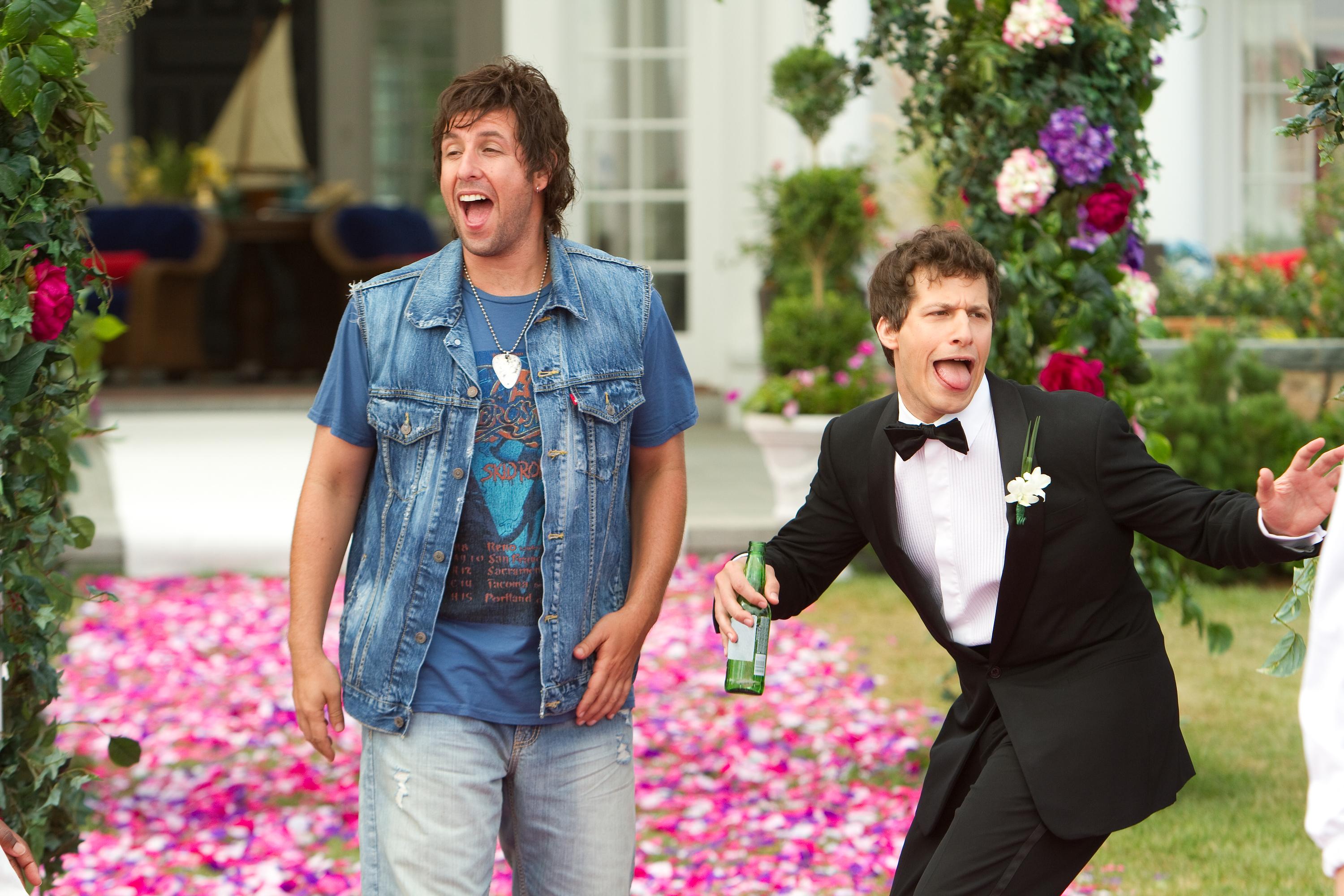

 

In case you have time between Frameline screenings: new movies!

1

This week: Frameline, Frameline, Frameline! Our coverage here. Ticket and schedule info here.

Hollywood’s two big releases are the Adam Sandler-Andy Samberg arrested-development yukfest That’s My Boy, and the Tom Cruise hair metal musical Rock of Ages. If you’re excited about either, you probably aren’t the type of person who gives two shits what movie critics say. Just a guess. So, enjoy. As you were.

Also of note for movie fans: the San Francisco Museum and Historical Society opens “The Stuff That Dreams Are Made Of: San Francisco and the Movies” this weekend. It features work by Madeleine Ellster herself, Kim Novak, plus:

“The exhibition paints a picture of the amazing breadth of the Bay Area’s film history and filmmaking community, using educational text panels, photographs, posters, vintage cameras, movie props and other objects. Slide shows, lectures, book signings, oral history recordings, screenings, and multimedia will also be part of the exhibition.”

(I can’t confirm there will be a Harry Callahan street shootin’ simulator, but that would be pretty awesome, no?)

But back to the movie theater:

This weekend, it’s a Duplass-a-thon, as Dennis Harvey reviews mumblecore’s first sex symbol in Safety Not Guaranteed and Your Sister’s Sister. Below, you’ll find our takes on another mumblecore overachiever, Greta Gerwig, who less success with the wee-bit-twee Lola Versus; handcuffed-together-at-a-music-festival (don’t ya hate when that happens?) rom-rom Tonight You’re Mine, featuring Natalie Tena (Osha for all my fellow Game of Thrones devotees also going through withdrawals); delightful coming-of-age Norwegian import Turn Me On, Dammit!; and The Woman in the Fifth, the latest movie to remind us that yes, Kristin Scott Thomas can totally speak French! And maybe the first to let us know that Ethan Hawke can, too.

http://www.youtube.com/watch?v=b5hYBMZft9w

Lola Versus Greta Gerwig’s embattled late-twentysomething, the titular Lola, apologetically invokes the Saturn return to explain the chaos that enters her life when her emotionally underdeveloped boyfriend proposes, panics, and dumps her. Workaday elements of the industry-standard romantic comedy surface, lightly revised: a crass, loopy BFF (co-writer Zoe Lister Jones) who can’t find true love and says things like “I have to go wash my vagina”; a vaguely soulful male friend (Hamish Linklater, 2011’s The Future) who’s secretly harboring nonplatonic feelings (or maybe just an opportunistic streak); wacky yet vaguely successful Age of Aquarius parents (a somewhat toneless Debra Winger and a nicely gone-to-seed Bill Pullman). One can see why it would be tempting to blame a planet’s galactic travels for the solipsistic meandering that Lola engages in, bemusedly lurching, often under chemical influences, from one bout of poor decision-making to the next. She claims to be searching for a path out of the chaos into some calmer place (fittingly, she’s a comp lit Ph.D. candidate who’s writing her dissertation on silence), but as the movie transports us mercilessly from one scene of turmoil to the next, we have little reason to believe her. The script has funny moments, and Gerwig sometimes succeeds in making Lola feel like a charming disaster, but her personal discoveries, while certainly valuable, feel false and forced. (1:26) (Lynn Rapoport)

Tonight You’re Mine Ah, the old chained-together gimmick, so effective in creating conflict in movies like 1973 women-in-prison classic Black Mama, White Mama. Alas, Tonight You’re Mine contains zero escaped cons, and is instead a pretty contrived love story about two rockers who’re inexplicably handcuffed together, mid-argument, by a mysterious man prowling the grounds at Scotland’s massive T in the Park music festival. Whether or not Adam (Luke Treadaway, last seen getting very stoned mid-alien invasion in 2011’s Attack the Block) and Morello (Game of Thrones‘ Natalie Tena) will ditch their clearly-wrong-for-them partners and fall for each other is hardly up for debate. What saves Tonight You’re Mine is its authentic rock-festival atmosphere; director David Mackenzie filmed amid the actual chaos of the 2010 T in the Park fest, so there’s plenty of mud, inebriated extras, and background music swirling around the budding romance. Also, though her character is underdeveloped here, Tena has a punky appeal that suggests a star on the rise. (1:20) (Cheryl Eddy)

http://www.youtube.com/watch?v=eySFZRVcHYM

Turn Me On, Dammit! The 15-year-old heroine of writer-director Jannicke Systad Jacobsen’s Turn Me On, Dammit! is first heard in voice-over, flatly cataloging the over familiar elements of the small town in rural Norway where she lives — and first seen lying on the kitchen floor of her house sharing an intimate moment with a phone sex operator named Stig (Per Kjerstad). Largely ruled by her hormones and longing to get it on with someone other than herself and the disembodied Stig, Alma (Helene Bergsholm) spends large segments of her life unspooling sexual fantasies starring Artur (Matias Myren), the boy she has a crush on, and Sebjorn (Jon Bleiklie Devik), who runs the grocery store where she works and is the father of her two closest friends: burgeoning political activist Sara (Malin Bjorhovde) and full-fledged mean girl Ingrid (Beate Stofring). Back in real life, a strange and awkward physical interaction with Artur leads Alma, excited and confused, to describe the experience to her friends, a mistake that precipitously leads to total social ostracism among her peers. With the possible exception of some unnecessary dog reaction shots during the aforementioned opening scene, documentary maker Jacobsen’s first narrative feature film is an engaging and impressive debut, presenting a sympathetic and uncoy depiction of a young girl’s sexuality and exploiting the rich contrast between Alma’s gauzier fantasies and the realities of her waking world to poignantly comic effect. (1:16) (Rapoport)

The Woman in the Fifth A rumpled American writer with a hinted-at dark past (Ethan Hawke) shows up in Paris, to the horror of his French ex-wife and confused delight of his six-year-old daughter. An ill-advised nap on public transportation results in all of his bags being stolen; broke and out of sorts, he takes a grimy room above a café and a gig monitoring the surveillance-cam feed at what’s obviously some kind of illegal enterprise. During the day he stalks his daughter and romances both sophisticated Margit (Kristen Scott Thomas) and nubile Ania (Joanna Kulig); he also dodges his hostile neighbor (Mamadou Minte) and shady boss (Samir Guesmi). Based on Douglas Kennedy’s novel, the latest from Pawel Pawlikowski (2004’s My Summer of Love), offers some third-act twists (gory, distressing ones) that suggest Hawke’s character (and, by extension, the viewer) may not be perceiving reality with 100 percent accuracy. Moody, melancholy, not-entirely-satisfying stuff. (1:23) SF Film Society Cinema. (Eddy)

The 8 Washington embarrassment

16

I wasn’t shocked by the vote on 8 Washington. I knew it was happening; I knew we’d lost when the EIR went through. I knew we couldn’t count on a solid progressive bloc any more. I knew that the lobbying was intense.

But I have to say, at the end of the day I was embarrassed. Because the supervisors sold the city cheap.

In the earlier board discussions, Sup. Christina Olague and Sup. Eric Mar mentioned their concerns about the heigh and bulk of the project and said they would work with the developer, Simon Snellgrove, on changes. But the final project was exactly the same size.

Olague and Sup. Jane Kim were concerned about the amount of parking; the developer agreed to cut 50 spaces. But the actual size of the garage won’t be reduced at all; the only promise: There won’t be valet parking, so maybe not so many cars will fit.

Yes, Snellgrove agreed to set aside some scholarships for low-income kids to swim in the pool, which is a great thing and I fully support it. For a project that, according to available figures, will net the developer $200 million in profit — according to Sup. David Chiu’s analysis, a 72 percent rate of return — the scholarship money is peanuts.

There’s an additional 50 cent parking levy to pay for surface improvements in the area.

But as Chiu asked at the June 12 meeting, “Is the city getting an appropriate level of benefits based on Snellgrove’s profits?” Project foe Brad Paul — a veteran of more than 30 years of the city’s development wars — doesn’t think so. “They got nothing,” he told me.

Here’s how it went down:

Chiu started off by introducing the board’s budget analyis, Harvey Rose. Rose said he’d reviewed the finances of the project, and concluded that the city would get $50 million less out of the project than the developer or the Port of San Francisco, which owns some of the land and is a primary proponent, had originally claimed. Chiu also noted that not all the documents were in the file, but nobody else seemed to care.

In fact, through most of the discussion — limited discussion — and final votes, it was pretty clear that nobody was swayed by any of the facts that Chiu put forward. This deal was done long before the board members took their seats.

Chiu offered a series of amendments, none of them terribly radical. He pointed out that the deal requires the city to pay the developer $5 million for open-space improvements. “That’s an anomaly,” Chiu said, and moved that it be removed.

Kim, who throughout the meeting was the strongest supporter of the project, argued that the city often reimburses developers for open space. More, she said, compared to what the city has asked other major residential developers to give, this project is just dandy. “I would not say this is not a fair deal for the city,” she told her colleagues.

The vote on the $5 million giveaway? Developer 6, SF 5. Siding with Snellgrove: Christina Olague, Scott Wiener, Carmen Chu, Sean Elsbernd, Mark Farrell, and Jane Kim. Siding with Chiu and project opponents: John Avalos, David Campos, Malia Cohen, and Eric Mar. It’s an odd lineup — Cohen doesn’t always vote with the progressives, and I have to say it’s strange to see Kim and Olague siding with the four most conservative supervisors.

Chius’s second proposal: Since the city’s benefits were $50 million less than advertised, why not add $14 million to the affordable housing fee?
Developer: 7. Affordable housing: 4. Voting for the developer: Olague, Wiener, Chu, Elsbernd, Farrell, Kim and Mar.

Okay, one last try. Chiu suggested maybe just $2 million more for affordable housing. Wiener, as is he way, went off on his usual complaint that too much of the affordable housing money is for poor people and not enough for the middle class. The final vote:

Developer: 6. Affordable housing: 5. Voting for the developer: Olague, Wiener, Chu, Elsbernd, Farrell, Kim.

Kim, again, took the lead in promoting the deal on the final vote, saying that a parking lot and a private club were not a good use for the space and that “we are achieving here is a higher and better use for the land.” That’s what every developer talks about, by the way — higher and better use.

She also talked about One Rincon, that hideous tower next to the Bay Bridge that was approved after then-Sup. Chris Daly cut a deal with the developer that the San Francisco Chronicle denounced as a “shakedown.

Kim said that, considering the much-smaller size of the Snellgrove project, the benefits were richer than the Rincon deal.

I never liked the Rincon deal — that tower’s a disaster, an ugly scar on the skyline, and there was nowhere near enough affordable housing money. That’s because I think that the city should be building six affordable units for every four market-rate units, that there’s no need for more housing for the very rich and that our current housing policy is a disaster. (The Guardian wrote an editorial at the time that said it was good that Daly had gotten that much money, but was dubious about the whole project. In retrospect, we were too kind.)

I think all my readers at this point know that. So does Daly.

But I asked the former supervisor anyway to comment on the difference between 8 Washington and One Rincon. His thoughts:

1. The Rincon Hill agreement was negotiated by the district Supervisor working together with the communities most impacted by the development. 8 Washington was opposed by the district Supervisor and many nearby residents.
2. Most people in the South of Market were not diametrically opposed to highrise development in that location. The Planning Department had been working on a Rincon Hill neighborhood plan and was recommending upzoning for the area.
3. Rincon Hill had no waterfront trust issues.
4. The Rincon HIll development impact fee was $25 per square foot (over and above the required inclusionary affordable housing fee even though the Mayor’s Office contended that over $20 per square foot would kill the deal.) According to Kim’s release, her 8 Washington deal netted an additional $2 million for affordable housing and a $.50 parking surcharge. This even though development in Rincon Hill is not as valuable as the northern waterfront.

Folks: I think the city got taken to the cleaners here. I’ll stipulate that I’m against this project for much broader reasons. And maybe I’m just an old commie who thinks that the richer you are, the more you should give back, that the affordable housing fees on the most expensive condos in San Francisco should be higher than normal, that if Snellgrove nets $200 million, then the city by definition left too much on the table.

But I don’t think I’m alone in believing that if you’re going to approve something that will make a developer this rich, and let him use public land to do it, on the waterfront, you ought to get your fair share. And that didn’t happen.

Embarrassing.

Same time next year

0

GAMER There was a moment when it seemed this year’s Electronic Entertainment Expo (better known as E3) would be the most exciting since way back in 2006, the year Wii and PlayStation 3 premiered. This January, rumors swirled around Sony and Microsoft, that they were developing next generation consoles, and perhaps looking to premiere them alongside Nintendo’s big Wii U reveal.

But Microsoft’s decision instead was to coast on their current success as market leader, and Sony chose to concentrate on setting themselves apart in an increasingly multi-platform marketplace by focusing on peripherals and exclusives. So, at least one more year for this generation of gaming, making E3 2012 pretty interchangeable with 2011.

Nintendo’s presentation played it safe with first-party games that were either already known (Pikmin 3) or practically indistinguishable from past installments (New Super Mario Bros. 2), and left innovation for new Wii U software to third party developers. Playing nice with outside development teams will go a long way towards winning back the “hardcore” crowd Nintendo desperately craves but the dearth of exciting games evoked too-fresh memories of last year’s disastrous 3DS launch.

Speaking on the Wii U at an investor presentation prior to E3, Nintendo president Satoru Iwata stated “There is always a limit to our internal resources … if I said that an overwhelmingly rich software lineup would be prepared from day one, it would be too much of a promise to make.” Attendees at Nintendo’s conference would have been wise to heed that warning, as an initially excited crowd grew more restless with each announcement that wasn’t a hi-definition Zelda or Metroid game.

On the other side of the coin, Microsoft opened with a guaranteed bread-winner for the Xbox and their only exclusive blockbuster releasing this year, Halo 4. Coupled with the annual release of Call of Duty, the Xbox is in a safe spot, and Microsoft was smart to concentrate the rest of their show on apps and an application they’re calling SmartGlass, even if doing so created some disappointment in the crowd. An experiment in tablet crosstalk, SmartGlass is just one example of the “second-screen” gameplay all three publishers appear keen on for 2013.

Last of the “big three” publishers, Sony attempted to entice consumers into supporting the low-selling PlayStation Move and the new PSVita handheld, but their exclusive titles remained the most compelling reason to own a PlayStation. A new project from Quantic Dream, Beyond: Two Souls improves on Heavy Rain‘s cinematic storytelling, and Naughty Dog’s post-apocalyptic survival piece The Last of Us wowed audiences with gruesome one-on-one combat. Sony also featured the Expo’s biggest failure: way too much time devoted to a buggy and simplistic augmented reality book, Wonderbook, based on the Harry Potter franchise.

Concentrating on games over peripherals, Ubisoft had arguably this year’s best showing. New action/stealth IP WATCH_DOGS, about a hacker who can control the power of a city’s technology, had many declaring it E3’s biggest surprise, and Ubisoft also delivered strong demos for Splinter Cell: Blacklist, Assassin’s Creed III, Far Cry 3, and Rayman Legends, the last of which harnessed the possibilities of the Wii U in ways even Nintendo couldn’t match.

On the E3 show floor, the Tomb Raider series’ reboot is emotionally engrossing and includes a more robust upgrade system than the game it most closely resembles, Uncharted. Where Uncharted is known for strong story and characters, Tomb Raider competes with a terrifying sense of helplessness and mature storytelling. Making its debut at E3, Star Wars 1313 also made a lot of promises about being first to set a “mature” game in the Star Wars universe. It’ll be interesting to see if LucasArts uses that freedom as a tableau to create a truly interesting story, or if it becomes a bar to hit in terms of language and violence. Either way, 1313 features some of the most realistic motion capture I’ve ever seen, and lighting and animation that rivals entries in the film series. If there was a constant among the big E3 games, it was the year 2013. Publishers are tired of getting beat up each fall by Call of Duty‘s annual release and have relocated to next spring. Most titles demoed at E3 have been slotted for 2013’s first quarter, which currently looks as stuffed with games as November usually does. It’ll be interesting to see who stands their ground and who makes one last push to the barren summer months. If 2013 looks to be an exciting time to be a gamer, in 2012 it remains business as usual. 

Stage Listings

0

Stage listings are compiled by Guardian staff. Performance times may change; call venues to confirm. Reviewers are Robert Avila, Rita Felciano, and Nicole Gluckstern. Submit items for the listings at listings@sfbg.com. For further information on how to submit items for the listings, see Picks.

THEATER

OPENING

5 Lesbians Eating a Quiche Phoenix Theatre, 414 Mason, SF; www.tidestheatre.org. $20-38. Opens Fri/15, 8pm. Runs Thu-Sat, 8pm (also Sat, 10pm). Through July 21. Tides Theatre performs Evan Linder and Andrew Hobgood’s comedy about five women forced into a bomb shelter during a mid-breakfast nuke attack.

BAY AREA

Emotional Creature Berkeley Repertory Theatre, Roda Theatre, 2015 Addison, Berk; www.berkeleyrep.org. $14.50-73. Previews Thu/14-Sat/16 and June 19-21, 8pm; Sun/17, 7pm. Opens June 22, 8pm. Runs Tue and Thu-Sat, 8pm (also Sat, 2pm; no show July 13); Wed, 7pm (no show July 4); Sun, 2 and 7pm. Through July 15. Berkeley Rep presents Eve Ensler’s world premiere, based on her best-seller I Am an Emotional Creature: The Secret Life of Girls Around the World.

Salomania Aurora Theatre, 2081 Addison, Berk; www.auroratheatre.org. $30-55. Previews Fri/15-Sat/16 and June 20, 8pm; Sun/17, 2pm; June 19, 7pm. Opens June 21, 8pm. Runs Tue, 7pm; Wed-Sat, 8pm; Sun, 2 and 7pm. Throgh July 22. Aurora Theatre Company closes its 20th season with writer-director Mark Jackson’s world premiere, commissioned especially for the company, about a San Francisco-born dancer notorious for her take on the "Dance of the Seven Veils."

ONGOING

Aftermath Stagewerx, 446 Valencia, SF; www.brownpapertickets.com. $25. Thu-Sat, 8pm. Through June 30. Theatre, Period presents Jessica Blank and Erik Jenson’s docu-drama, based on interviews with Iraqi civilians forced to flee after the US military’s arrival in 2003.

A Behanding in Spokane SF Playhouse, 533 Sutter, SF; www.sfplayhouse.org. $20-70. Tue-Thu, 7pm; Fri-Sat, 8pm (also Sat, 3pm). Through June 30. If Garth Ennis had been asked to write a comic book about a one-handed sociopath with a dark obsession, he might well have written something similar to Martin McDonagh’s A Behanding in Spokane. And admittedly, approached from that angle, a lot of the script’s dramatic flaws are more easily forgiven. There’s not a whole lot of subtle context or languid metaphor to be found in McDonagh’s criminal caper about the little-known "hand-dealing" trade, but as in Ennis’ best known work, Preacher, the pretty girl (Melissa Quine) is the smartest one in the room; the sociopath (Rod Gnapp) is interested in enacting as vicious a revenge on all humanity while spewing as many blatantly offensive invectives as possible; the boyfriend (Daveed Diggs) has some arrested development issues to work out; and the receptionist (Alex Hurt) takes the caricature of man-child to a whole new level. In fact, while all four actors deliver rock-solid performances of their mostly unsympathetic characters, it’s Hurt’s that impresses most. His spooky intensity and goofily tone-deaf determination plays like a combination of Adam Sandler and Arno Frisch, and if there’s a real sociopath in the room, the evidence suggests it’s probably him. Ultimately though the piece relies too heavily on hollow one-liners to remain interesting — a 20-minute farce stretched to 90 minutes — and quite unlike an Ennis comic, it does not leave one wanting more. (Gluckstern)

The Full Monty Eureka Theatre, 215 Jackson, SF; www.roltheatre.com. $25-36. Thu-Sat, 8pm (also Sat, 2pm); Sun, 2pm. Through June 30. In desperate times, how far would you go to turn a buck? The central premise of the 1997 movie and its namesake musical comedy The Full Monty, the answer to this question is right in the title, which limits the suspense, but amps up the expectations. Set not in Sheffield, England as in the movie, but the similarly economically challenged climate of Buffalo, New York circa the late nineties, the comical romp follows a group of unemployed steel workers who decide, rather optimistically, that spending one night as exotic dancers will solve their immediate financial woes. Banish all notions of a Hot Chocolate sing-along; the soundtrack of the stage musical has little in common with its cinematic predecessor, but there are a couple of toe-tappers, particularly the songs writ for the ladies: a belter’s anthem for their spry but elderly accompanist Jeanette (Cami Thompson), a snarky commentary on male beauty, "The Goods," for the ensemble. On opening night, Ray of Light’s production ran about 15 minutes long after a late start, and the tempo seemed sluggish in parts, but once it hits its stride, The Full Monty should provide a welcome antidote to the ongoing, we’re-still-in-a-recession blues, red leather g-strings and all. (Gluckstern)
Fwd: Life Gone Viral Marsh San Francisco, 1062 Valencia, SF; (415) 282-3055, www.themarsh.org. $20-50. Sat, 8:30pm; Sun, 7pm (June 24, show at 2pm; July 15, show at 7:30pm). Extended through July 22. The internet becomes comic fodder for creator-performers Charlie Varon and Jeri Lynn Cohen, and creator-director David Ford.

Lips Together, Teeth Apart New Conservatory Theatre Center, 25 Van Ness, SF; www.nctcsf.org. $25-45. Wed-Sat, 8pm; Sun, 2pm. Through July 1. New Conservatory Theatre Center performs Terrence McNally’s play about two straight couples spending July 4 amid Fire Island’s gay community.

100 Saints You Should Know Thick House, 1695 18th St, SF; www.therhino.org. $10-30. Wed-Thu, 7:30pm; Fri-Sat, 8pm; Sun, 3pm; starting June 22, runs Fri-Sat, 8pm; Sun, 3pm. Extended through July 1. Homespun scenic design notwithstanding, Theatre Rhinoceros and artistic director John Fisher offer a fine, engrossing production of this 2007 play by Kate Fodor (Hannah and Martin, RX), a sturdy comedy-drama about two fractured families colliding awkwardly in a sort of spiritual vacuum. Matthew (an intriguingly restrained Wiley Herman) is a desolate but forbearing Catholic priest sent on a leave of absence after a venial transgression involving some artful nude male photographs. Returning home, he endures a pained relationship with his devout, passively domineering Irish mother (Tamar Cohn, channeling a nicely measured mixture of stony discipline and childlike vulnerability). Soon Matthew gets an unexpected visit from single mom Theresa (a bright but shrewdly self-possessed Ann Lawler), a former Deadhead who now cleans the rectory and finds herself overcome with an urge to ask the gentle priest about prayer — just at the moment his faith seems to have left him. Meanwhile, Theresa’s too-cool-for-school teenager, Abby (a deft and hilarious Kim Stephenson), waits outside and does some preying of her own on a slower-witted but game young man from the neighborhood (a charmingly quirky Michael Rosen), both of them roiling with confused yearnings. The appealing characters and unexpected storyline come supported by some excellent dialogue, developing a searching theme that ultimately has less to do with formal religion than the ordinary but ineffable need it promises (problematically) to meet. "I think I could be religious or whatever if it made any sense," notes Abby, "but it doesn’t make any sense." It’s easy to agree with the teenager on this one. 100 Saints is a genuinely funny and compassionate play discerning enough to avoid naming the depths it sounds. (Avila)

Reunion SF Playhouse, Stage Two, 533 Sutter, SF; (415) 677-9596, www.sfplayhouse.org. $20. Wed-Thu, 7pm; Fri-Sat, 8pm. Through June 30. SF Playhouse presents a world premiere drama by local playwright Kenn Rabin.

"Risk Is This…The Cutting Ball New Experimental Plays Festival" Exit on Taylor, 277 Taylor, SF; (415) 525-1205, www.cuttingball.com. Free ($20 donation for reserved seating; $50 donation for five-play reserved seating pass). Fri-Sat, 8pm. Through July 14. Cutting Ball’s annual fest of experimental plays features two new works and five new translations in staged readings.

Slipping New Conservatory Theatre Center, 25 Van Ness, SF; www.nctcsf.org. $25-45. Wed-Sat, 8pm; Sun, 2pm. Through July 1. New Conservatory Theatre Center performs Daniel Talbott’s drama about a gay teen who finds new hope after a traumatic breakup.

Tenderloin Exit on Taylor, 277 Taylor, SF; (415) 525-1205, www.cuttingball.com. $10-50. Extended run: Thu, 7:30pm; Fri-Sat, 8pm (also Sat, 2pm); Sun, 5pm. Extended through June 24. Annie Elias and Cutting Ball Theater artists present a world premiere "documentary theater" piece looking at the people and places in the Cutting Ball Theater’s own ‘hood.

Vital Signs Marsh San Francisco, 1062 Valencia, SF; (415) 282-3055, www.themarsh.org. $15-50. Previews Fri/15, 8pm. Opens Sat/16, 8:30pm. Runs Sat, 8:30pm; June 22, 8pm. Through July 21. The Marsh San Francisco presents Alison Whittaker’s behind-the-scenes look at nursing in America.

The Waiting Period MainStage, Marsh San Francisco, 1062 Valencia, SF; (415) 282-3055, www.themarsh.org. $15-50. Fri, 8pm; Sat, 5pm. Extended through July 7. Brian Copeland (comedian, TV and radio personality, and creator-performer of the long-running solo play Not a Genuine Black Man) returns to the Marsh with a new solo, this one based on more recent and messier events in Copeland’s life. The play concerns an episode of severe depression in which he considered suicide, going so far as to purchase a handgun — the title coming from the legally mandatory 10-day period between purchasing and picking up the weapon, which leaves time for reflections and circumstances that ultimately prevent Copeland from pulling the trigger. A grim subject, but Copeland (with co-developer and director David Ford) ensures there’s plenty of humor as well as frank sentiment along the way. The actor peoples the opening scene in the gun store with a comically if somewhat stereotypically rugged representative of the Second Amendment, for instance, as well as an equally familiar "doood" dude at the service counter. Afterward, we follow Copeland, a just barely coping dad, home to the house recently abandoned by his wife, and through the ordinary routines that become unbearable to the clinically depressed. Copeland also recreates interviews he’s made with other survivors of suicidal depression. Telling someone about such things is vital to preventing their worst outcomes, says Copeland, and telling his own story is meant to encourage others. It’s a worthy aim but only a fitfully engaging piece, since as drama it remains thin, standing at perhaps too respectful a distance from the convoluted torment and alienation at its center. (Avila)

BAY AREA

Black n Blue Boys/Broken Men Berkeley Repertory Theatre, Thrust Stage, 2025 Addison, Berk; www.berkeleyrep.org. $14.50-73. Tue, Thu-Sat, 8pm (also Sat, 2pm); Wed and Sun, 7pm (also Sun, 7pm). Through June 24. Berkeley Rep presents a world premiere from writer-performer Dael Orlandersmith (a Pulitzer finalist for 2002’s Yellowman).

Emilie: La Marquise Du Chatelet Defends Her Life Tonight Berkeley City Club, 2315 Durant, Berk; www.brownpapertickets.com. $18-25. Thu-Sat, 8pm; Sun, 2pm. Through July 1. Symmetry Theatre Company presents Bay Area playwright Lauren Gunderson’s romantic drama centering on the life of 18th-century French physicist and mathematician, Émilie du Châtelet (Danielle Levin) and her (here tempestuous) long-term romance with Voltaire (Robert Parsons). In a familiar conceit left accordingly vague, fate rematerializes Emilie from some hazy afterlife so that she may relive key moments in her life and account for herself. A Cartesian mind/body split rules the replay, with Emilie finding herself painfully attenuated from the world of the senses — her flashback self (played by an impressive Blythe Foster) alone able to enjoy sensual contact with her surroundings. Meanwhile, love and loyalty face the test as Emilie goes head-to-head with a male-dominated scientific establishment over a certain theorem she calls "force vivre" — a formula into which Gunderson cleverly folds theoretical physics and the irrational heart. There’s even a visual aid: a running tally is kept throughout on a screen at the back of the stage, where hash marks appear and disappear under the headings "philosophy" and "love" as the scenes wind their desultory way back toward the moment of her demise. Chloe Bronzan directs a cast of strong actors but their work is uneven. Foster alone is consistently commanding in a part that, while minor, suggests what a more muscular approach overall might have accomplished. The normally formidable Parsons seems uncommitted in the part of Voltaire, admittedly a character too simpering and watery as written to merit much credence. Instead of palpable relationships — whether with lovers or ideas — Emilie deploys self-conscious verbiage, strained repartee and heavy thematic underscoring to churn what amounts to thin drama. (Avila)

God of Carnage Marin Theatre Company, 397 Miller, Mill Valley; www.marintheatre.org. $34-55. Wed/13, 7:30pm; Thu/14-Sat/16, 8pm (also Sat/16, 2pm); Sun/17, 2 and 7pm. Marin Theatre Company performs Yasmina Reza’s Tony-winning comedy about two sets of parents who meet after their children get into a schoolyard fight.

The Great Divide Ashby Stage, 1901 Ashby, Berk; www.shotgunplayers.org. $20-30. Wed-Thu, 7pm; Fri-Sat, 8pm; Sun, 5pm. Through June 24. Shotgun Players performs Adamn Chanzit’s drama about the hot topic of fracking, inspired by Ibsen’s An Enemy of the People.

The Kipling Hotel: True Misadventures of the Electric Pink ’80s New venue: Marsh Berkeley, 2120 Allston, Berk; (415) 282-3055, www.themarsh.org. $20-50. Sat, 8:30pm; Sun, 7pm. Extended through July 15. This new autobiographical solo show by Don Reed, writer-performer of the fine and long-running East 14th, is another slice of the artist’s journey from 1970s Oakland ghetto to comedy-circuit respectability — here via a partial debate-scholarship to UCLA. The titular Los Angeles residency hotel was where Reed lived and worked for a time in the 1980s while attending university. It’s also a rich mine of memory and material for this physically protean and charismatic comic actor, who sails through two acts of often hilarious, sometimes touching vignettes loosely structured around his time on the hotel’s young wait staff, which catered to the needs of elderly patrons who might need conversation as much as breakfast. On opening night, the episodic narrative seemed to pass through several endings before settling on one whose tidy moral was delivered with too heavy a hand, but if the piece runs a little long, it’s only the last 20 minutes that noticeably meanders. And even with some awkward bumps along the way, it’s never a dull thing watching Reed work. (Avila)

Not Getting Any Younger Marsh Berkeley, 2120 Allston, Berk; (415) 282-3055, www.themarsh.org. $15-50. Fri, 8pm; Sat, 5pm. Extended through June 30. Marga Gomez is back at the Marsh, a couple of too-brief decades after inaugurating the theater’s new stage with her first solo show — an apt setting, in other words, for the writer-performer’s latest monologue, a reflection on the inevitable process of aging for a Latina lesbian comedian and artist who still hangs at Starbucks and can’t be trusted with the details of her own Wikipedia entry. If the thought of someone as perennially irreverent, insouciant, and appealingly immature as Gomez makes you depressed, the show is, strangely enough, the best antidote. Note: review from the show’s 2011 run at the Marsh San Francisco. (Avila)

The Odyssey Angel Island; (415) 547-0189, www.weplayers.org. $40-76 (some tickets include ferry passage). Sat-Sun, 10:30am-4pm (does not include travel time to island). Through July 1. We Players present Ava Roy’s adaptation of Homer’s epic poem: an all-day adventure set throughout the nature and buildings of Angel Island State Park.

The Tempest Bruns Amphitheater, 100 California Shakespeare Theater Way, Orinda; (510) 809-3290, www.calshakes.org. $35-71. Tue-Thu, 7:30pm; Fri-Sat, 8pm (also June 23, 2pm); Sun, 4pm. Through June 25. California Shakespeare Theater opens its season with this dance-filled interpretation of the Bard’s classic tale.

Wheelhouse TheatreWorks at the Mountain View Center for the Performing Arts, 500 Castro, Mtn View; (650) 463-1960, www.theatreworks.org. $19-69. Tue-Wed, 7:30pm; Thu-Sat, 8pm (also Sat, 2); Sun, 2 and 7pm. Through July 1. TheatreWorks’ 60th world premiere is a musical created by and starring pop-rock trio GrooveLily.

The World’s Funniest Bubble Show Marsh Berkeley, TheaterStage, 2120 Allston, Berk; (415) 826-5750, www.themarsh.org. $8-50. Fri, 6pm; Sat/16, June 24, and 30, 11am. Through June 30. Louis "The Amazing Bubble Man" Pearl returns with this kid-friendly, bubble-tastic comedy.

PERFORMANCE/DANCE

"The Amen Corner" Lorraine Hansberry Theatre, 450 Post, SF; www.lhtsf.org. Mon/18, 7pm. $25. Project1Voice presents this benefit staged reading of James Baldwin’s play, part of a simultaneous staged-reading event with 25 other African American theaters across the country.

"Branded Funny" Purple Onion, 140 Columbus, SF; www.eventbrite.com. Thu/14, 8pm. $15. Stand-up with Melanie Bega, Seth Hardiman, and Justin Lucas.

"The BY Series" ODC Theater, 3153 17th St, SF; www.odcdance.org. Thu/14-Sat/16, 8pm; Sun/17, 2pm. $25. Robert Moses’ Kin Dance Company presents work by guest choreographers Molissa Fenley, Ramon Ramos Alayo, and Sidra Bell, plus the world premiere of Moses’ Scrubbing the Dog.

Alicia Dattner Exit Theatre, 156 Eddy, SF; www.theexit.org. Fri/15-Sat/16, 8pm. $26. The comedian performs.

"DEEPER, Architectural Meditations at CounterPULSE" CounterPULSE, 1310 Mission, SF; www.counterpulse.org. $25. Fri-Sun, 8pm. Through July 1. Lizz Roman and Dancers perform a site-specific work.

"Elect to Laugh" Studio Theater, Marsh San Francisco, 1062 Valencia, SF; (415) 282-3055, www.themarsh.org. Tue, 8pm. Ongoing through Nov 6. $15-50. Will Durst and friends perform in this weekly political humor show that focuses on the upcoming presidential election.

"Fresh Meat Festival" Brava Theater, 2781 24th St, SF; www.freshmeatproductions.org. $15-20. Fri/15-Sat/16, 8pm; Sun/17, 7pm. $15-25. The transgender and queer performance festival celebrates its 11th year with members of Vogue Evolution (America’s Best Dance Crew), Emily Vasquez (American Idol), drag star Miss Barbie-Q, same-sex ballroom champs William DeVries and Kumi Keali’I, and Sean Dorsey Dance.

"hOPPomage" Shotwell Studios, 3252-A 19th St, SF; www.brownpapertickets.com. Fri-Sat, 8pm; Sun/17, 3pm. Through June 23. $10-15. An evening of "mental dance" inspired by artist Dennis Oppenheim with Driveway Dancers.

"Jillarious Tuesdays" Tommy T’s Showroom, 1000 Van Ness, SF; www.jillarious.com. Tue, 7:30. Ongoing. $20. Weekly comedy show with Jill Bourque, Kevin Camia, Justin Lucas, and special guests.

"Kunst-Stoff Arts/Fest 2012" Kunst-Stoff Arts, One Grove, SF; kunststoffartsfest2012.eventbrite.com. Thu/14-Sat/16, 8:30pm. $15. Bruno Augusto and Meisha Bosma perform.

"Porch Light: I Do: The Wedding Show" Verdi Club, 2424 Mariposa, SF; www.brownpapertickets.com. Mon/18, 8pm. $15. Wedding-themed storytelling with Eugene Ashton-Gonzalez, Barbara Berman, Clint Catalyst, and more.

"Previously Secret Information" Stage Werx Theater, 446 Valencia, SF; www.eventbrite.com. Sun/17, 7pm. $15. Comic storytelling with C.W. Nevius, Jack Boulware, and more.

"Qcomedy Showcase" Stage Werx Theater, 446 Valencia, SF; www.qcomedy.com. Mon/18, 8pm. $8-20. Special Pride edition with stand-up comedians Julia Jackson, Scott Backman, Enzo Lombard, Justin Simpson, Karen Ripley, and drag performers House of Glitter.

"Queeriosity" San Francisco LGBT Community Center, 1800 Market, SF; www.youthspeaks.org. Fri/15, 7pm. Free. Youth Speaks hosts this literary arts and performance showcase for LGBTQ youth.

San Francisco Ethnic Dance Festival Novellus Theater, Yerba Buena Center for the Arts, 700 Howard, SF; www.worldartswest.org. Sat/16-Sun/17, 3pm (also Sat/16, 3pm). $18-58. This weekend’s program includes dance from China, Cuba, Hawaii, Hungary, India, and more.

Sex and the City: Live!" Rebel, 1760 Market, SF; www.brownpapertickets.com. Tue, 7 and 9pm. Through June 26. $25. Heklina, D’Arcy Drollinger, Lady Bear, Trixxie Carr play the fab four in this drag-tastic homage to the HBO series.

"Two by 24: Love on Loop" UN Plaza, Market between Hyde and Seventh St, SF; www.rawdance.org. Tue/19, 11am-7pm. Free. RAWdance performs an eight-hour contemporary dance installation.

"Voca People" Marines’ Memorial Theatre, 609 Sutter, Second Flr, SF; www.marinesmemorialtheatre.com. Wed/13-Fri/15, 8pm; Sat/16, 6:30 and 9:30pm; Sun/17, 3 and 6pm. $49-75. A capella from outer space.

"When We Fall Apart" Z Space, 450 Florida, SF; www.zspace.org. Thu/14-Sat/16, June 20-21, and 27-28, 7pm; June 22-23 and 29-30, 7 and 9pm. $20-35. Joe Goode Performance Group presents a world premiere, an exploration of "home" with a set designed by architect Cass Calder Smith.

"Wonderland" Circus Center, 755 Frederick, SF; wonderlandatcircuscenter.eventbrite.com. Fri/15-Sat/16, 7pm; Sun/17, 2pm. Free (advance registration recommended). Family-friendly show of aerialists, acrobats, and other circus-style performers. *

Suspended state

0

news@sfbg.com

In May, a rip appeared in the social safety net that catches many of the people whose careers have been derailed by the continuing economic crisis when Californians lost eligibility for federal relief money under the Fed-Ed portion of the federal unemployment insurance extension program.

The news of the funding loss came to program recipients in a letter from the California Employment Development Department (EDD). According to data obtained from the EDD by the Bay Guardian, 1,994 San Franciscans were among the more than 92,000 people statewide who were cut from the unemployment roles earlier then expected, as the maximum length of benefits was reduced suddenly from 99 weeks to 79 weeks.

A nuance in the legislation that regulates state-by-state eligibly for Fed-Ed caused California’s early exit from the program, while individuals in other states with lower unemployment rates and stronger employment prospects remain eligible for longer coverage. New York state, with an unemployment rate of 8.5 percent, 2.4 points lower then California’s rate, continues to receive Fed-Ed funding.

Ironically, that’s because the recession has lingered longer here than elsewhere, and unemployed Californians are now being punished for being stuck for so long in such a slow economy.

“In order for a state to qualify for the Fed-Ed extension program you have to have a high unemployment rate and certainty California does have a high unemployment rate,” EDD Deputy Director Loree Levy told us. “It is just not 10 percent higher than what it has been over the last three years, and that is a requirement of the program. So the good news is that California’s economy is improving. It is unfortunate news for a lot of the long-term unemployed individuals who will now be doing without these extension benefits.”

In San Francisco, the economy is definitely improving. The Bureau of Labor Statistics (BLS) reports that the San Francisco metropolitan area, which includes San Francisco and San Mateo counties, saw the second highest 12-month rise in employment nationally, creating more than 25,000 jobs, a 2.7 percent leap in employment. This big jump, the second highest nationally, reduced the city’s unemployment rate to 7 percent in April, leaving San Francisco a rare rose in a sea of briars.

But that’s little consolation to people in industries that have yet to recover, from construction to education to other government jobs.

While the city’s economy has been buoyed by tourism, technology, and a segment of pre-existing affluence that has weathered the economic crisis, the statewide the picture is much different. The state’s “improving economy” left more than two million Californians unemployed in May, 10.9 percent the state’s workforce.

When statewide unemployment ticked up slightly in April, the state’s three-month average registered as 8 percent higher than the three-year average, missing by a statistical sliver the federal program’s threshold 10 percent increase. This triggered the BLC, which tracks unemployment across the nation, to notify the California EDD that funding of the Fed-Ed program would cease.

The trouble with this metric as a benchmark for benefits dispersion is when discouraged workers self identify as having stopped looking for a job, they are no longer included in the unemployment figures used by the BLS to determine Fed-Ed eligibility. If a fraction of these workers had identified themselves as seeking work, the Fed-Ed relief would have continued to flow into California.

If the state edges back across that threshold in the coming months, Fed-Ed money will flow into the state again, but those recently cut from the unemployment roles who did not exhaust their Fed-Ed eligibility time will not qualify to be re-added to the program.

The program’s loss could have a significant impact on the state’s economy going forward.

“In the three years since Fed-Ed was passed, more than 912,00 people in California have relied on the benefits,” Levy says. “That has brought $5 billion of federal funds into the ailing state economy. It has had a tremendous impact on the economy and when you add in a multiplying effect from money spent out there from these benefits on local businesses, it can be almost a $10 billion effect on the economy.”

As the economic crisis drags on, federal stimulus and relief programs that were planned with a short downturn in mind dry up, a political climate of austerity in government spending has taken its place. Individuals caught in the fallout of the economic crisis increasingly find themselves with nowhere to turn.

Only one out of three unemployed workers statewide currently receive any unemployment benefits, and before the end of Fed-Ed, a staggering 700,000 people who had been receiving benefits during the economic crisis exhausted the previous maximum 99 weeks without finding work.

“What happens when we require people to go out and get jobs when there are no jobs? That’s a nightmare. People are being cut off with no place to turn,” Princeton professor of economics Paul Krugman said at the Commonwealth Club of San Francisco last month. “Benefits that are emergency benefits should not depend on some arbitrary timeline for the individual but for the duration of the emergency. If we have a flood, you don’t say ‘We are only going to help flood victims for three days.’ We help them until the flood recedes.”

Of those Californians who still do receive an unemployment check, over half have been out of work for more than six months, the period at which normal state funding ends and federally emergency extension programs take over. The remaining federal unemployment extension program enacted during the economic crisis — the Emergency Unemployment Compensation program — is set to phase out on Dec. 23 of this year. That is bad news for Californians locked out of the labor market who have exhausted the normal six months of state funded benefits.

Responding to the release of May’s week jobs report, House Minority Leader Nancy Pelosi (D-SF) said the report, “Makes clear that we have more work to do to restore security and opportunity for the middle class. The time is now for Republicans to join us in moving forward on behalf of the middle class.”

Without the renewal by Congress of federal unemployment extension deep in the presidential election cycle, another larger surge in people booted from the unemployment roles will be locked in competition for the state’s paltry offering of new job creation — a punishing musical chairs game with real life stakes.

Hospital standoff

2

steve@sfbg.com

The controversial and long-awaited proposal by California Pacific Medical Center (CPMC) to build a 550-bed luxury hospital atop Cathedral Hill and to rebuild St. Luke’s Hospital has finally arrived at the Board of Supervisors — where it appears to have little support.

So far, not one supervisor has stepped up to sponsor the deal, and board members say it will have to undergo major changes to meet the city’s needs. “There are still a lot of questions that remain,” Sup. David Campos told us, citing labor, housing, community benefits, and a long list of other issues that he doesn’t believe CPMC has adequately addressed. “It tells me there’s still more work to be done.”

CPMC, which is Sacramento-based nonprofit corporation Sutter Health’s most lucrative affiliate, has been pushing the project for almost a decade. Its advocates have subtly used a state seismic safety deadline for rebuilding St. Luke’s — a hospital relied on by low-income residents of the Mission District and beyond — as leverage to build the massive Cathedral Hill Hospital it envisions as the Mayo Clinic of the West Coast.

But the project’s draft environmental impact report shows the Cathedral Hill Hospital would have huge negative impacts on the city’s transportation system and exacerbate its affordable housing crisis. And CPMC has been in a pitched battle with its labor unions over its refusal to guarantee the new jobs will go to current employees or local residents and be unionized. There are also concerns with the market power CPMC will gain from the project, how that will affect health care costs paid by the city and its residents, and with the company’s appallingly low charity care rates compared to other health care providers (see “Lack of charity,” 12/13/11).

CPMC had refused to budge in negotiations with the Mayor’s Office under two mayors, for which Mayor Ed Lee publicly criticized the company’s intransigence last year. But under pressure from the business community and local trade unions who support the project, Lee cut a deal with CPMC in March.

That development agreement for the $2.5 billion project calls for CPMC to pay $33 million for public transit and roadway improvements, $20 million to endow community clinics and other social services, and $62 million for affordable housing programs, nearly half of which would go toward helping its employees buy existing homes.

While those numbers seem large, community and labor leaders from San Franciscans for Healthcare, Housing, Jobs and Justice (SFHHJJ), which formed in opposition to the project, say they don’t cover anywhere near the project’s full impacts. And given that CPMC made about $180 million in profit last year in San Francisco alone — money that subsidizes the rest of Sutter’s operations — they say the company can and should do better.

“This is about standing up to corporate blackmail,” SFHHJJ member Steve Woo, a community organizer with the Tenderloin Neighborhood Development Corporation, told us.


PIVOTAL PROJECT

CPMC is perhaps the most high-profile project the board will consider this year, one that will impact the city for years, so the political and economic stakes are high.

The Planning Commission voted 5-1 on April 26 to approve the deal and its environmental impact report, citing the project’s economic benefits and the looming deadline for rebuilding St. Luke’s. The Board of Supervisors was scheduled to consider the appeal of that decision on June 12 (after Guardian press time), but activists say supervisors planned to continue the item until July 17.

In the meantime, the board’s Land Use Committee has scheduled a series of hearings on different aspects of the project, starting June 15 with a project overview and presentation on the jobs issue, continuing June 25 with a hearing on its impacts to the health care system. Traffic and neighborhood impacts would be heard the next week, and then housing after that.

Calvin Welch, a progressive activist and nonprofit affordable housing developer, said the project’s EIR makes clear just how paltry CPMC’s proposed mitigation measures are. It indicates that the project’s 3,000 new workers will create a demand for at least 1,400 new two-bedroom housing units. Even accepting that estimate — which Welch says is low given that many employees have families and won’t simply be bunking with one another — the $26 million being provided for new housing construction would only create about 90 affordable studio apartments.

“We’re going to end up, if we want to house that workforce, subsidizing CPMC,” Welch told us.

Compounding that shortcoming is the fact that the Cathedral Hill Hospital is being built in a special use district that city officials established for the Van Ness corridor — where there is a severe need for more housing, particularly affordable units. The SUD calls for developers to build three square feet of residential for every square foot of non-residential development.

“That would require building 3 million square feet of residential housing with this project,” Welch said. “We don’t think $26 million meets the housing requirement for this project, let alone what was envisioned by this [Van Ness corridor] plan.”

SFHHJJ is calling for CPMC to provide at least $73 million for affordable housing, with no more than 20 percent of that going to the company’s first-time homebuyer assistance program. That assistance program does nothing to add to the city’s housing stock and critics call it a valuable employee perk that will only increase the demand for existing housing — and thus drive up prices.

But the business community is strongly backing the deal, and the trade unions are expected to turn out hordes of construction workers at the hearing to make this an issue of jobs — rather than a corporation paying for its impacts to the community.

“After a decade of discussion, debate and compromise, the city’s departments, commissions, labor, business and community groups all agree on CPMC,” San Francisco Chamber of Commerce President Steve Falk wrote in a June 8 e-mail blast entitled “Message to the Board of Supervisors: Don’t Stand in the Way of Progress.”

“The fate of our city’s healthcare infrastructure now lies solely with the Board of Supervisors,” the Chamber says. “When it comes time to vote, let’s insist they make the right choice.”

Yet it’s simply inaccurate to say that labor and community groups support the deal, and both are expected to be well-represented at the hearings.


CARE FOR WHOM?

Economic justice issues related to health care access and costs are another potential pitfall for this project. SFJJHH activists note that no supervisors have signed on to sponsor the project yet — which is unusual for something this big — and that even the board’s most conservative supervisors have raised concerns that the city’s health care costs aren’t adequately contained by the deal.

“There’s a significant amount of dissatisfaction with the deal, even among conservatives,” SFJJHH member Paul Kumar, a spokesperson for the National Union of Healthcare Workers, told the Guardian.

On the progressive side, a big concern is that CPMC is proposing to rebuild the 220-bed St. Luke’s with only 80 beds, which activists say is not enough. And even then, CPMC is only agreeing to operate that hospital for 20 years, or even less time if Sutter’s fortunes turn around and the hospital giant begins losing money.

CPMC Director of Communications Kathryn Graham, responding by email to questions and issues raised by the Guardian, wrote generally and positively about CPMC and the project without addressing the specific concerns about whether housing, transportation, and other mitigation payments are too low.

On the jobs issue, she wrote, “Our project will create 1,500 union construction jobs immediately—and preserves and protects the 6,200 health care professional jobs that exist today at the hospitals. Currently, nearly 50 percent of our current employees live in San Francisco. During the construction phase of this project, we are committed to hire at least 30 percent of workers from San Francisco. We will create 500 permanent new jobs in just the next five years—200 are guaranteed to be local hires from underserved San Francisco neighborhoods. We don’t know where you got the ridiculous idea that our employees must reapply for jobs at our new hospitals. That is incorrect.”

Yet CPMC has resisted requests by the California Nurses Association and other unions to be recognized at the new facility or to agree to card-check neutrality that would make it easier to unionize. And union representatives say CPMC has offered few assurances about staffing, pay, seniority, and other labor issues.

As one CNA official told us, “If they aren’t going to guarantee jobs to the existing employees, those are jobs lost to the city.”

“We’re giving Sutter a franchise over San Francisco’s health care system for 30 to 40 years, so we should ensure there are basic worker and community protections,” Kumar said.

Welch and other activists say they believe CPMC is prepared to offer much more than it has agreed to so far, and they’re calling on the supervisors to be tougher negotiators than the Mayor’s Office was, including being willing to vote down the project and start over if it comes down to that.

“They make too much money in this city to just leave town,” Welch said of CPMC’s implied threat to pull out of San Francisco and shutter St. Luke’s. “It’s bullshit.”

The biggest burn ever

0

steve@sfbg.com

Burning Man is more popular than ever, judging by a demand for tickets that far exceeded supply this year, after selling out last year for the first time in its 26-year history — and now this year’s event will be far bigger than ever.

The Bureau of Land Management, which manages the Nevada desert where burners build Black Rock City every August, has set a population cap for Burning Man at 60,900, an increase of more than 10,000 over previous events.

For Black Rock City LLC, the San Francisco-based company that stages Burning Man, there was mixed news in BLM’s June 12 permit decision.

BRC was denied the multi-year event permit it sought, but as it struggles to meet demand for this increasingly popular countercultural institution, BLM honored BRC’s late request for more people than the 58,000 it had sought for this year.

“After further discussions, there were requests for a bit more,” Cory Roegner, who oversees the event from BLM’s district office in Winnemucca, told us. Asked why BRC sought the population bump, he said, “The more people they can have, the better.”

BLM has been processing BRC’s lengthy environment assessment and its request for a five-year permit that would allow the event to grow steadily from 58,000 to 70,000 people in 2016. The cap for this year could have been set as low at 50,000, creating some drama around this announcement, but the agency instead issued a single-year permit with a population cap of 60,900.

BRC was placed on probation last fall after violating its 50,000-person cap by a few thousand people each on Sept. 2 and 3, and BLM rules limit groups on probation to a single-year permit. BRC has appealed the status to the Interior Board of Land Appeals, which has not yet acted on it or answered Guardian inquiries.

“Unless we do hear back from them, Black Rock City would be precluded from a multi-year permit,” Roegner told us.

He also said that if BRC violates the population cap for a second year in a row, it could be barred from holding future events, although the high population cap should mean that won’t be a big problem this year, clearing the way for Burning Man’s steady growth through at least 2016.

“Based on the evaluation [of this year’s event], we will consider a multi-year permit going to 2016,” Roegner told us.

BRC has already sold 57,000 tickets and will give away thousands more to art collectives, staff, and VIPs. But the cap is based on a daily population count and BRC board member Marian Goodell said the event never has all attendees there at once.

She said staying below the cap this year shouldn’t be difficult given that many of those who build the city and work on the major art pieces leave before the final weekend when the eponymous Man burns. “Usually at least 6,000 leave before we hit the peak. Sometimes more on dusty, wet, or cold years,” she told us.

It could have been a lot more difficult. BLM officials had told the Guardian in April that they were considering keeping last year’s population cap of 50,000, which could have presented BRC with a logistical nightmare and/or ticket-holder backlash in trying to stay under the cap.

“The issue between us and the BLM continues to be the population cap,” Burning Man founder Larry Harvey told the Guardian.

Harvey, Goodell, and others with BRC took a lobbying trip to Washington DC in late April trying to shore up political support for the event and its culture, arguing that it has become important for artistic and technical innovation and community building rather than just a big party.

Harvey told us he believes that Burning Man could grow to 100,000 participants, although he conceded that would need further study and creative solutions to key problems such as getting people to and from the isolated location accessed only by one highway lane in each direction.

“We think we could go to 100,000 if it was measured growth, carefully planned,” Harvey said.

On the transportation question, he said, “it’s a question of flow.” Right now, participants arriving or leaving on peak days often wait in lines that can take four hours or more.

“We’ve talked to engineers that have proposed solutions to that,” Harvey said of the transportation issue, although he wouldn’t discuss possible solutions except to say, “You could exit in a more phased fashion.”

Roegner said that was one of the big issues identified in the EA. “We are taking a closer look at a couple items this year, traffic being one,” he said. Another one is the use of decomposed granite, which is placed under flaming artworks to prevent burn scars on the playa, and making sure it is properly cleaned up each year.

BRC was facing a bit of a crisis in confidence after this year’s ticket debacle, when a new lottery-based ticket distribution system and higher than expected demand left up to two-thirds of burner veterans without tickets. The resulting furor caused BRC to abandon plans for a secondary sale and instead sell the final 10,000 tickets through established theme camps, art collectives, and volunteers groups.

“It’s pretty obvious that we’ll do something like that again because we don’t expect demand to go down,” Harvey said of that direct distribution of tickets, which was criticized in some burner circles as promoting favoritism and undermining the event’s stated principle of inclusivity.

Yet he also emphasized that much of Burning Man’s growth is occurring off the playa — in cities and at regional events around the world. “All of this is by way of dealing with the capacity problem. I don’t know how much we can grow in the Black Rock Desert,” he said.

Another realm full of both possibilities and perils — depending on one’s perspective — is the ongoing development of The Burning Man Project, a nonprofit that BRC created last year to gradually take on new initiatives, followed by taking over staging of the event, and eventually (probably in five years) full control of Burning Man and its brand and trademarks.

“God knows, we have a lot of opportunities before us,” Harvey said, adding that BMP is now focused on fundraising. “It is the objective before we transfer the event to start transferring the regional events, and that will take more money and staff.”

After that, he sees unlimited potential to grow the culture, not just Black Rock City. “We’ve got to focus on the people. We’re becoming less event-centric,” he said. “We think of this as a cultural movement.”

Guardian City Editor Steven T. Jones is the author of The Tribes of Burning Man: How an Experimental City in the Desert is Shaping the New American Counterculture. For reactions and details on the EA, visit the sfbg.com politics blog.


Burning Man population cap set at 60,900, way more than ever

64

Burning Man is more popular than ever, judging by a demand for tickets that far exceeded supply this year, after selling out last year for the first time in its 26-year history — and now this year’s event will be far bigger than ever.

The Bureau of Land Management, which manages the Nevada desert where burners build Black Rock City every August, has set a population cap for Burning Man at 60,900, an increase of more than 10,000 over previous events.

For Black Rock City LLC, the San Francisco-based company that stages Burning Man, there was mixed news in BLM’s June 12 permit decision. BRC was denied the multi-year event permit it sought, but as it struggles to meet demand for this increasingly popular countercultural institution, BLM honored BRC’s late request for more people than the 58,000 it had sought for this year.

“After further discussions, there were requests for a bit more,” Cory Roegner, who oversees the event from BLM’s district office in Winnemucca, told us. Asked why BRC sought the population bump, he said, “The more people they can have, the better.”

BLM has been processing BRC’s lengthy environment assessment and its request for a five-year permit that would allow the event to grow steadily from 58,000 to 70,000 people in 2016. The cap for this year could have been set as low as 50,000, creating some drama around this announcement, but the agency instead issued a single-year permit with a population cap of 60,900.

BRC was placed on probation last fall after violating its 50,000-person cap by a few thousand people each on Sept. 2 and 3, and BLM rules limit groups on probation to a single-year permit. BRC has appealed the status to the Interior Board of Land Appeals, which has not yet acted on it or answered Guardian inquiries.

“Unless we do hear back from them, Black Rock City would be precluded from a multi-year permit,” Roegner told us.

He also said that if BRC violates the population cap for a second year in a row, it could be barred from holding future events, although the high population cap should mean that won’t be a big problem this year, clearing the way for Burning Man’s steady growth through at least 2016.

“Based on the evaluation [of this year’s event], we will consider a multi-year permit going to 2016,” Roegner told us.

BRC has already sold 57,000 tickets and will give away thousands more to art collectives, staff, and VIPs. But the cap is based on a daily population count and BRC board member Marian Goodell said the event never has all attendees there at once.

She said staying below the cap this year shouldn’t be a problem given that many of those who build the city and work on the major art pieces leave before the final weekend when the eponymous Man burns. “Usually at least 6,000 leave before we hit the peak. Sometimes more on dusty, wet, or cold years,” she told us.

It could have been a lot more difficult. BLM officials had told the Guardian in April that they were considering keeping last year’s population cap of 50,000, which could have presented BRC with a logistical nightmare and/or ticket-holder backlash in trying to stay under the cap.

“The issue between us and the BLM continues to be the population cap,” Burning Man founder Larry Harvey told the Guardian.

Harvey, Goodell, and others with BRC took a lobbying trip to Washington DC in late April trying to shore up political support for the event and its culture, arguing that it has become important for artistic and technical innovation and community building rather than just a big party.

Harvey told us he believes that Burning Man could grow to 100,000 participants, although he conceded that would need further study and creative solutions to key problems such as getting people to and from the isolated location accessed only by one highway lane in each direction.

“We think we could go to 100,000 if it was measured growth, carefully planned,” Harvey said.

On the transportation question, he said, “it’s a question of flow.” Right now, participants arriving or leaving on peak days often wait in lines that can take four hours or more.

“We’ve talked to engineers that have proposed solutions to that,” Harvey said of the transportation issue, although he wouldn’t discuss possible solutions except to say, “You could exit in a more phased fashion.”

Roegner said that was one of the big issues identified in the EA. “We are taking a closer look at a couple items this year, traffic being one,” he said. Another one is the use of decomposed granite, which is placed under flaming artworks to prevent burn scars on the playa, and making sure it is properly cleaned up each year.

BRC was facing a bit of a crisis in confidence after this year’s ticket debacle, when a new lottery-based ticket distribution system and higher than expected demand left up to two-thirds of burner veterans without tickets. The resulting furor caused BRC to abandon plans for a secondary sale and instead sell the final 10,000 tickets through established theme camps, art collectives, and volunteers groups.

“It’s pretty obvious that we’ll do something like that again because we don’t expect demand to go down,” Harvey said of that direct distribution of tickets, which was criticized in some burner circles as promoting favoritism and undermining the event’s stated principle of inclusivity.

Now that BRC has received a high population cap, it could conceivably sell more tickets to this year’s event, something Goodell said the board will consider, weighing that against the imperative of staying under the population cap this year. “The board needs to talk about what the ramifications of that are. There is a lot of demand out there,” Goodell told us.

Harvey emphasized that much of Burning Man’s growth is occurring off the playa — in cities and at regional events around the world. “All of this is by way of dealing with the capacity problem. I don’t know how much we can grow in the Black Rock Desert,” he said.

Another realm full of both possibilities and perils — depending on one’s perspective — is the ongoing development of The Burning Man Project, a nonprofit that BRC created last year to gradually take on new initiatives, followed by taking over staging of the event, and eventually (probably in five years) full control of Burning Man and its brand and trademarks.

“God knows, we have a lot of opportunities before us,” Harvey said, adding that BMP is now focused on fundraising. “It is the objective before we transfer the event to start transferring the regional events, and that will take more money and staff.”

After that, he sees unlimited potential to grow the culture, not just Black Rock City. “We’ve got to focus on the people. We’re becoming less event-centric,” he said. “We think of this as a cultural movement.”

Guardian City Editor Steven T. Jones is the author of The Tribes of Burning Man: How an Experimental City in the Desert is Shaping the New American Counterculture.

Sutter’s CPMC deal isn’t healthy

28

At 10am on Friday, June 15, at the main chambers of the Board of Supervisors, the first of a series of public hearings will be held on specific aspects of the  development agreement governing the $1.9 billion Sutter Health/California Pacific Medical Center proposal to expand and centralize the giant health-care outfit’s health center by building a new 555 bed hospital at Geary and Van Ness. The deal involves demolishing the existing 220-bed hospital at St. Luke’s at Mission and Cesar Chavez and rebuilding a new 80-bed facility, expanding the Ralph K. Davies hospital at Duboce and Noe and closing down the old Children’s Hospital in Laurel Heights.

The hearing will be the first before the Board of Supervisors. Thus far, the project has been before only the executive branch: the Planning Commission and the mayor. After a brief introduction on the overall project the hearing will focus on the issue of jobs.

This is the largest project to be negotiated by the Lee administration — and although the mayor introduced it to the board in May, not one supervisor has yet joined him to sponsor the legislation. That’s an an odd situation given the importance of the project – and the fact that Mayor Lee can usually count on an automatic four votes from the conservative faction of the board. But not this time.

The hearing was requested by a coalition of more than 60 community, neighborhood, labor, and environmental organizations — San Franciscans for Healthcare, Housing, Jobs and Justice (SFHHJJ) — which has been closely following the project for the last two years.  Members of the coalition have already appealed the project’s environmental impact report, passed last month by the Planning Commission, and SFHHJJ has developed a series of amendments to the agreement that it has been pressing on the Board of Supervisors.  Board President David Chiu agreed to set a series of hearings on the project before it voted on, along with the determination of the appeal of the EIR, in  late July.  SGHHJJ hopes to use the hearings to get across the serious shortcoming of the agreement.  In addition, depending upon the appeal of the EIR,  a law suit may well be filed by some members of the Coalition.

In short, what starts next Friday is a big deal.

Not only is it a big deal in the development war that is at the heart of San Francisco politics, but it also is a big deal given what may well be done by the Supreme Court in deciding the constitutionality of all or part of the Affordable Health Care Act. If Obama’s health reform is struck down by the court, in all or in part, which seems almost certain, Sutter/CPMC’s plan will most definitely take on even more importance for the future of health care and its costs in San Francisco.

Sutter currently controls about a third of the market for health care in San Francisco.  With the construction of this project, it will control about 40 percent — a portion most knowledgable observers feel will give it market dominance  and an ability to actually set health care costs in San Francisco. Sutter’s business model — as shown in Berkeley when it took over Alta Bates and elsewhere in the state – demonstrates that  with a dominate market position, it jacks up prices.

As the San Francisco Chronicle noted in 2010: “…Sutter Health Co. has market power that commands prices 40 to 70 percent higher than its rivals per typical procedure — and pacts with insurers that keep those prices secret”.

A US Supreme Court that weakens or strikes down health care reform will simply re-establish the status-quo ante, a situation in which Sutter will thrive.

And that’s why the board’s conservative members are not supporting Mayor Lee’s deal: it simply does not protect the city — itself a major health care consumer for both its workforce and Healthy San Francisco — from Sutter’s history of turning market power into high health care charges.

SFHHJJ want the development agreement amended to place a cap on the costs charged to the city, allowing Sutter no more than 115 percent of the average charged  by  San Francisco’s other private, nonprofit hospitals.  It also wants Sutter/CPMC low charity care payments pegged at an average of what other nonprofit hospitals contribute, and it is calling for rebuilding St. Luke’s in San Francisco medically underserved south east to 180 beds, not the sure-to-fail size of 80 beds.

But there’s even more to deplore about the proposed deal.

In housing, although the EIR showed that a demand would be created for some 1,500 new two-bedroom homes, Sutter/CPMC agreed to only provide funds to build about 90 such homes. Such a massive shortfall will boost housing prices all other San Franciscans will pay.

The project’s impact on public transit at the Geary / Van Ness intersection will be large and ongoing. More than 20,000 new car trips will be generated at that intersection by the new hospital. Plans for a Bus Rapid Transit raised roadway for the 38 Geary — the most used bus line in the city — will have to be altered at an unknown price since the project calls for all auto traffic to enter the site on the Geary Avenue side.

Again, San Francisco taxpayers will be on the hook to pay for these new costs.

But it is the jobs aspect of the deal that is the most distressing. Sutter/CPMC has a long history of labor disputes with its workforce. Last year it replaced nurses who took a day off to protest their working conditions, and a replacement nurse hired by Sutter accidentally killed a patient. Sutter/CPMC refuses to agree to hire all of its 6,000 current employees for the new facilities. It’s requiring them all to apply as new workers, losing all of their seniority, with a real prospect that many currently employed San Francisco residents will lose their jobs once the new facility opens. All that Sutter/CPMC has agreed to do is hire 50 residents a year for four years – 200 new local jobs, total.

The  June 15 hearing will focus on the jobs issue and public comment is sure to be hot on this laughable “commitment” agreed to by the “jobs” administration.

Calvin Welch is a longtime community organizer living in San Francisco. He currently teachs a course in the development history of San Francisco at San Francisco State University and the University of San Francisco.

Mecke joins crowded District 5 supervisorial race

26

Progressive activist Quintin Mecke jumped into the District 5 supervisorial race today, echoing gentrification concerns raised this week by the Guardian and The New York Times and promising to be an independent representative of one of the city’s most progressive districts, a subtle dig at Sup. Christina Olague’s appointment by Mayor Ed Lee.

“The City is at an economic crossroads. As a 15 year resident of District 5, I cannot sit idly by while our City’s policies force out our residents and small businesses, recklessly pursuing profits for big business at whatever cost,” he began a letter to supporters announcing his candidacy, going on to cite the NYT article on the new tech boom that I wrote about earlier this week.

“What we do next will define the future of San Francisco; the city is always changing but what is important is how we choose to manage the change. One path leads to exponential rent increases, national corporate chain store proliferation, and conversion of rent-controlled housing. The other path leads to controlled and equitable growth, where the fruits of economic development are shared to promote and preserve what is great about this City and our district,” Mecke wrote.

Mecke came in second to Gavin Newsom in the 2007 mayor’s race and then served as the press secretary to Assembly member Tom Ammiano before leaving that post last week to run for office. Mecke joins Julian Davis and John Rizzo in challenging Olague from her left, while London Breed and Thea Selby are the leading moderates in a race that has 10 candidates so far, the largest field in the fall races.

Although he never mentioned Olague by name, Mecke closed his message by repeatedly noting his integrity and independence, a theme that is likely to be a strong one in this race as Olague balances her progressive history and her alliance with the fiscally conservative mayor who appointed her.

“Politics is nothing without principles; and it’s time now to put my own principles into action in this race,” Mecke wrote. “District 5 needs a strong, independent Supervisor. I am entering this race to fight for the values that I believe in and to fight to preserve what is great about District 5 and the city. I have brought principled independence to every issue I’ve worked on and that’s what I’ll continue to bring to City Hall.”

In an interview with the Guardian, Mecke said he sees the campaign as a “five-month organizing project” to reach both regular voters and residents of the district who haven’t been politically engaged, including those in the tech sector. He’d like to see the perspective of workers represented in discussions about technology, not simply the narrow view of venture capitalist Ron Conway that Mayor Lee has been relying on.

“Local politics needs new blood,” Mecke said, “it needs to hear from these people.”

Pinoy rising

0

arts@sfbg.com

FILM Cinema has had a long and colorful history in the Philippines, with a first “golden age” of home-grown product in the 1950s, a turn toward exportable exploitation films in the ’60s, notable new-wave directors (like Lino Brocka) emerging in the ’70s, and so forth — sustaining one of the world’s most prolific film industries despite difficulties political and otherwise. At the turn of the millennium those wheels were wobbling and slowing, however, hard-hit by a combination of too many low-grade formula films, shrinking audiences, and stiffer competition from slick imported entertainments. The commercial sector stumbled on, but as a shadow of its robust former self.

But there’s something percolating beyond hard consonants on the archipelago these days, signs of a new DIY vigor coming from independent sectors juiced by the inexpensive accessibility of digital technology, undaunted (at least so far) by problems of exhibition and income-generating at home. It’s a sprawling, unpredictable, work-in-progress scene that some figure could well become the next “it” spot for cineaste types seeking one of those spontaneous combustions of fresh talent that arise occasionally where you least expect it — like Romania, to name one recent example.

One person who definitely thinks that’s the case is Joel Shepard, Yerba Buena Center for the Arts’ longtime Film/Video Curator. He’s traveled to the Philippines several times in recent years (once serving on the jury at CineManila), and has previously programmed a few prime examples of the country’s edgy new voices — particularly Brilliante Mendoza, whose notorious 2009 police-corruption grunge horror Kinatay (a.k.a. Butchered) was one of the most hotly divisive Cannes jury-prize winners in recent history. Now YBCA is presenting “New Filipino Cinema,” Shepard’s first “big fat snapshot” — hopefully to be continued on an annual basis — of a wildly diverse current filmic landscape, assembled in collaboration with Manila critic Philbert Ortiz Dy.

Shepard’s program notes call the Philippines “an extremely fascinating country…but the more I learned about the place and its people, the less I felt like I actually understood anything. The truth felt more and more slippery.” One might get a similar sensation watching the films in this expansive (nearly 30 titles, shorts included) sampler, in that they’re all over the map stylistically and thematically — from lyrical to gritty, satirical to anarchistic — suggesting no single defining “movement” or aesthetic to New Filipino Cinema.

Nor should they, since these movies reflect very different cultures, politics, and issues in regions hitherto underrepresented onscreen. After all, Manila isn’t the only place you can get your hands on a digital camera; and Tagalog is primary language for just one-third of all Filipinos.

The series opener has significant local ties: Loy Arcenas is a lauded stage set designer who’s worked frequently with our own American Conservatory Theater. Unavailable for preview, in description his feature directorial debut Niño (2011) sounds redolent of Luchino Visconti and The Garden of the Finzi-Continis (as well as, perhaps, 1975’s Grey Gardens) as it depicts a once grand family of Spanish émigrés living in decrepit splendor, diminished over generations by political inconvenience and a proud, fatal inability to adapt.

Their aristocratic pretensions are a far cry from the rowdier real life captured or depicted in other YBCA selections. A bizarre footnote to the United States’ complicated, incriminating relationship with the Philippines is documented in Monster Jiminez’s Kano: An American and His Harem (2010). Its subject is a Yankee Vietnam vet whose military pension allowed him to construct a sort of one-man imperialist paradise centered around his penis. Whether he was a gracious benefactor, a bullying rapist, or both is a puzzle only clouded further by contradictory input from former/current wives and mistresses (even while he’s in prison), stateside relatives who recall a childhood ideal to shape a sociopath, and the authorities who’ve lately kept him in prison.

War is ongoing, marriage an impractical hope in Arnel M. Mardoquio’s impressive Crossfire (2011), whose young lovers in southern region Mindanao must dodge government-vs.-rebel-vs.-bandit guns as well as a rural poverty sufficient to make our heroine vulnerable to being offered as a lender-debt payoff. Their plight is starkly contrasted with the spectacular scenery of countryside few tourists will ever hazard.

Its atmospheric opposite is Lawrence Fajardo’s Amok (2011), whose thousand threads of seemingly free-floating narrative depict life dedicatedly melting down all race, age, class, and economic divisions during a heat wave passage through one of Manila’s busiest intersections. What birth and development keeps apart gets nail-gunned together, however, once this string of naturalistic vignettes hits a plot device that delivers deus ex machina to all with no melodramatic restraint. Fate also lays heavy hand on the junior protagonists of Mes de Guzman’s At the Corner of Heaven and Earth (2011), a crude but honest neo-realist drama about four orphaned and runaway boys trying to eke out a marginal existence in Nueva Vizcaya.

Should this all sound pretty grim, be informed there’s lots of levity — albeit much of it gallows-humored — on the YBCA slate. Jade Castro’s exuberantly silly Remington and the Curse of the Zombadings (2011) finds the funny in homophobia as its crass young hero (a farcically deft Mart Escudero) is “cursed” by an angry queen he’d insulted to become gay himself; meanwhile somebody goes around their regional burg assassinating cross-dressers via ray-gun. Plus: zombies, and the proverbial kitchen sink. Also on the frivolous side is Antoinette Jadaone’s mockumentary Six Degrees of Separation from Lilia Cuntapay (2011), in which the titular veteran screen thespian struggles for recognition after decades playing bit parts and occasional showier ones, notably as witchy folkloric “aswang” attempting to suck the lifeblood from newborn babes. (See aswang-related coverage in this week’s Trash column, too.)

Yet those are but moderately playful New Filipino Cinema exercises compared to the determined off-map outrages practiced by Mondomanila (2011). This gonzo eruption of spermazoidal huzzah! by multimedia Manila punk underground mover Khavn de la Cruz seeks to leave no societal cavity unexplored, or unoffended. Opening with an infamous quote from Brokedown Palace (1999) star Claire Danes, who characterized Manila as a “ghastly and weird city … [with] no sewage system,” it delivers both fuck-you and fuck-me to that judgment via 75 minutes of mad under caste collage. There isn’t much plot. But there’s variably judged arson, pedophilia, yo-yo trick demonstrations, poultry abuse, upscale mall shopping, voyeuristic pornographia, Tagalog rap, rooftop drum soloing, and limbless-little-person salesmanship of duck eggs.

Further complicating your comprehension of a very complex scene, the YBCA series encompasses avant-garde shorts by veteran John Torres and newer experimentalists. There’s also a free afternoon Indie-Pino Music Fest Sat/9, and on June 17 there’s a postscript: Lav Diaz’s Florentina Hubaldo, CTE, the six-hour latest epic in a career whose patience-testing wide open cinematic spaces make Béla Tarr look like Michael Bay. 

“NEW FILIPINO CINEMA”

June 7-17, $8

Yerba Buena Center for the Arts

701 Mission, SF

www.ybca.org

Stage Listings

0

Stage listings are compiled by Guardian staff. Performance times may change; call venues to confirm. Reviewers are Robert Avila, Rita Felciano, and Nicole Gluckstern. Submit items for the listings at listings@sfbg.com. For further information on how to submit items for the listings, see Picks.

THEATER

OPENING

Aftermath Stagewerx, 446 Valencia, SF; www.brownpapertickets.com. $25. Previews Thu/7, 8pm. Opens Fri/8, 8pm. Runs Thu-Sat, 8pm. Through June 30. Theatre, Period presents Jessica Blank and Erik Jenson’s docu-drama, based on interviews with Iraqi civilians forced to flee after the US military’s arrival in 2003.

Lips Together, Teeth Apart New Conservatory Theatre Center, 25 Van Ness, SF; www.nctcsf.org. $25-45. Previews Wed/6-Fri/8, 8pm. Opens Sat/9, 8pm. Runs Wed-Sat, 8pm; Sun, 2pm. Through July 1. New Conservatory Theatre Center performs Terrence McNally’s play about two straight couples spending July 4 amid Fire Island’s gay community.

Reunion SF Playhouse, Stage Two, 533 Sutter, SF; (415) 677-9596, www.sfplayhouse.org. $20. Previews Wed/6-Thu/7, 7pm; Fri/8, 8pm. Opens Sat/9, 8pm. Runs Wed-Thu, 7pm; Fri-Sat, 8pm. Through June 30. SF Playhouse presents a world premiere drama by local playwright Kenn Rabin.

“Risk Is This…The Cutting Ball New Experimental Plays Festival” Exit on Taylor, 277 Taylor, SF; (415) 525-1205, www.cuttingball.com. Free ($20 donation for reserved seating; $50 donation for five-play reserved seating pass). Opens Fri/8, 8pm. Runs Fri-Sat, 8pm. Through July 14. Cutting Ball’s annual fest of experimental plays features two new works and five new translations in staged readings.

Vital Signs Marsh San Francisco, 1062 Valencia, SF; (415) 282-3055, www.themarsh.org. $15-50. Previews Fri/8 and June 15, 8pm; Sat/9, 8:30pm. Opens June 16, 8:30pm. Runs Sat, 8:30pm; June 22, 8pm. Through July 21. The Marsh San Francisco presents Alison Whittaker’s behind-the-scenes look at nursing in America.

BAY AREA

Wheelhouse TheatreWorks at the Mountain View Center for the Performing Arts, 500 Castro, Mtn View; (650) 463-1960, www.theatreworks.org. $19-69. Previews Wed/6-Fri/8, 8pm. Opens Sat/9, 8pm. Runs Tue-Wed, 7:30pm; Thu-Sat, 8pm (also Sat, 2); Sun, 2 and 7pm. Through July 1. TheatreWorks’ 60th world premiere is a musical created by and starring pop-rock trio GrooveLily.

ONGOING

A Behanding in Spokane SF Playhouse, 533 Sutter, SF; www.sfplayhouse.org. $20-70. Tue-Thu, 7pm; Fri-Sat, 8pm (also Sat, 3pm). Through June 30. If Garth Ennis had been asked to write a comic book about a one-handed sociopath with a dark obsession, he might well have written something similar to Martin McDonagh’s A Behanding in Spokane. And admittedly, approached from that angle, a lot of the script’s dramatic flaws are more easily forgiven. There’s not a whole lot of subtle context or languid metaphor to be found in McDonagh’s criminal caper about the little-known “hand-dealing” trade, but as in Ennis’ best known work, Preacher, the pretty girl (Melissa Quine) is the smartest one in the room; the sociopath (Rod Gnapp) is interested in enacting as vicious a revenge on all humanity while spewing as many blatantly offensive invectives as possible; the boyfriend (Daveed Diggs) has some arrested development issues to work out; and the receptionist (Alex Hurt) takes the caricature of man-child to a whole new level. In fact, while all four actors deliver rock-solid performances of their mostly unsympathetic characters, it’s Hurt’s that impresses most. His spooky intensity and goofily tone-deaf determination plays like a combination of Adam Sandler and Arno Frisch, and if there’s a real sociopath in the room, the evidence suggests it’s probably him. Ultimately though the piece relies too heavily on hollow one-liners to remain interesting — a 20-minute farce stretched to 90 minutes — and quite unlike an Ennis comic, it does not leave one wanting more. (Gluckstern)

The Full Monty Eureka Theatre, 215 Jackson, SF; www.roltheatre.com. $25-36. Thu-Sat, 8pm (also Sat, 2pm); Sun, 2pm. Through June 30. In desperate times, how far would you go to turn a buck? The central premise of the 1997 movie and its namesake musical comedy The Full Monty, the answer to this question is right in the title, which limits the suspense, but amps up the expectations. Set not in Sheffield, England as in the movie, but the similarly economically challenged climate of Buffalo, New York circa the late nineties, the comical romp follows a group of unemployed steel workers who decide, rather optimistically, that spending one night as exotic dancers will solve their immediate financial woes. Banish all notions of a Hot Chocolate sing-along; the soundtrack of the stage musical has little in common with its cinematic predecessor, but there are a couple of toe-tappers, particularly the songs writ for the ladies: a belter’s anthem for their spry but elderly accompanist Jeanette (Cami Thompson), a snarky commentary on male beauty, “The Goods,” for the ensemble. On opening night, Ray of Light’s production ran about 15 minutes long after a late start, and the tempo seemed sluggish in parts, but once it hits its stride, The Full Monty should provide a welcome antidote to the ongoing, we’re-still-in-a-recession blues, red leather g-strings and all. (Gluckstern) Fwd: Life Gone Viral Marsh San Francisco, 1062 Valencia, SF; (415) 282-3055, www.themarsh.org. $20-50. Thu/7, 8pm; Sat/9, 8:30pm; Sun/10, 7pm. The internet becomes comic fodder for creator-performers Charlie Varon and Jeri Lynn Cohen, and creator-director David Ford.

100 Saints You Should Know Thick House, 1695 18th St, SF; www.therhino.org. $10-30. Wed-Thu, 7:30pm; Fri-Sat, 8pm; Sun, 3pm. Through June 17. Theatre Rhinoceros performs Kate Fodor’s comedy-drama about family love, homosexuality, and adolescence.

Othello Phoenix Theatre, 414 Mason, SF; www.brownpapertickets.com. $15-18. Thu/7-Sat/9, 8pm. Ninjaz of Drama performs Shakespeare’s classic in a contemporary setting.

Slipping New Conservatory Theatre Center, 25 Van Ness, SF; www.nctcsf.org. $25-45. Wed-Sat, 8pm; Sun, 2pm. Through July 1. New Conservatory Theatre Center performs Daniel Talbott’s drama about a gay teen who finds new hope after a traumatic breakup.

Tenderloin Exit on Taylor, 277 Taylor, SF; (415) 525-1205, www.cuttingball.com. $10-50. Extended run: June 14 and 21, 7:30pm; June 15-16 and 22-23, 8pm (also June 16 and 23, 2pm); June 18 and 24, 5pm. Annie Elias and Cutting Ball Theater artists present a world premiere “documentary theater” piece looking at the people and places in the Cutting Ball Theater’s own ‘hood.

The Waiting Period MainStage, Marsh San Francisco, 1062 Valencia, SF; (415) 282-3055, www.themarsh.org. $15-50. Fri, 8pm; Sat, 5pm. Extended through July 7. Brian Copeland (comedian, TV and radio personality, and creator-performer of the long-running solo play Not a Genuine Black Man) returns to the Marsh with a new solo, this one based on more recent and messier events in Copeland’s life. The play concerns an episode of severe depression in which he considered suicide, going so far as to purchase a handgun — the title coming from the legally mandatory 10-day period between purchasing and picking up the weapon, which leaves time for reflections and circumstances that ultimately prevent Copeland from pulling the trigger. A grim subject, but Copeland (with co-developer and director David Ford) ensures there’s plenty of humor as well as frank sentiment along the way. The actor peoples the opening scene in the gun store with a comically if somewhat stereotypically rugged representative of the Second Amendment, for instance, as well as an equally familiar “doood” dude at the service counter. Afterward, we follow Copeland, a just barely coping dad, home to the house recently abandoned by his wife, and through the ordinary routines that become unbearable to the clinically depressed. Copeland also recreates interviews he’s made with other survivors of suicidal depression. Telling someone about such things is vital to preventing their worst outcomes, says Copeland, and telling his own story is meant to encourage others. It’s a worthy aim but only a fitfully engaging piece, since as drama it remains thin, standing at perhaps too respectful a distance from the convoluted torment and alienation at its center. (Avila)

BAY AREA

Black n Blue Boys/Broken Men Berkeley Repertory Theatre, Thrust Stage, 2025 Addison, Berk; www.berkeleyrep.org. $14.50-73. Tue, Thu-Sat, 8pm (also Sat, 2pm); Wed and Sun, 7pm (also Sun, 7pm). Through June 24. Berkeley Rep presents a world premiere from writer-performer Dael Orlandersmith (a Pulitzer finalist for 2002’s Yellowman).

Crevice La Val’s Subterranean, 1834 Euclid, Berk; www.impacttheatre.com. $10-20. Thu/7-Sat/9, 8pm. Just in case you were feeling panicked about the persistently recessed state of the economy and what might be your own less than ideal place in it, the Impact Theatre and Playground co-presentation of Lauren Yee’s Crevice might help to put your woes into perspective. That’s because slacker sibs Liz (Marissa Keltie) and Rob (Timothy Redmond) are only slightly exaggerated representatives of Generation Next whose penchant for making lackluster life choices has sentenced them to an indefinite prison term of couch-surfing and Teen Mom marathons in their childhood home. Naturally, they desire change, but it’s not until their mother (Laura Jane Bailey) starts having a hot fling with a younger man that things do. In an egregious breach of the TMI line, it appears that Mom’s orgasms open a “crevice” into an alternate reality that Rob and Liz subsequently fall into. Thus removed from the entropy of their former reality they begin testing the parameters of their new one, quickly coming to the realization that sometimes the alternatives to what you already have are even worse. Getting home again is a convoluted, not fully mapped-out process, but in the interim, their navigation of their erstwhile wonderland offers most of the play’s best lines as well as the uncomfortably effective transformation of Reggie D. White from Liz’s nerdish best buddy to multi-lingual Mafia killer and casual sadist. (Gluckstern)

God of Carnage Marin Theatre Company, 397 Miller, Mill Valley; www.marintheatre.org. $34-55. Tue and Thu-Sat, 8pm (also June 16, 2pm); Wed, 7:30pm; Sun, 2 and 7pm. Through June 17. Marin Theatre Company performs Yasmina Reza’s Tony-winning comedy about two sets of parents who meet after their children get into a schoolyard fight.

The Great Divide Ashby Stage, 1901 Ashby, Berk; www.shotgunplayers.org. $20-30. Wed-Thu, 7pm; Fri-Sat, 8pm; Sun, 5pm. Through June 24. Shotgun Players performs Adamn Chanzit’s drama about the hot topic of fracking, inspired by Ibsen’s An Enemy of the People.

Not Getting Any Younger Marsh Berkeley, 2120 Allston, Berk; (415) 282-3055, www.themarsh.org. $15-50. Fri, 8pm; Sat, 5pm. Extended through June 30. Marga Gomez is back at the Marsh, a couple of too-brief decades after inaugurating the theater’s new stage with her first solo show — an apt setting, in other words, for the writer-performer’s latest monologue, a reflection on the inevitable process of aging for a Latina lesbian comedian and artist who still hangs at Starbucks and can’t be trusted with the details of her own Wikipedia entry. If the thought of someone as perennially irreverent, insouciant, and appealingly immature as Gomez makes you depressed, the show is, strangely enough, the best antidote. Note: review from the show’s 2011 run at the Marsh San Francisco. (Avila)

The Odyssey Angel Island; (415) 547-0189, www.weplayers.org. $40-76 (some tickets include ferry passage). Sat-Sun, 10:30am-4pm (does not include travel time to island). Through July 1. We Players present Ava Roy’s adaptation of Homer’s epic poem: an all-day adventure set throughout the nature and buildings of Angel Island State Park.

The Tempest Bruns Amphitheater, 100 California Shakespeare Theater Way, Orinda; (510) 809-3290, www.calshakes.org. $35-71. Tue-Thu, 7:30pm; Fri-Sat, 8pm (also June 23, 2pm); Sun, 4pm. Through June 25. California Shakespeare Theater opens its season with this dance-filled interpretation of the Bard’s classic tale.

The World’s Funniest Bubble Show Marsh Berkeley, TheaterStage, 2120 Allston, Berk; (415) 826-5750, www.themarsh.org. $8-50. Fri, 6pm; Sun/10, June 16, 24, and 30, 11am. Through June 30. Louis “The Amazing Bubble Man” Pearl returns with this kid-friendly, bubble-tastic comedy.

PERFORMANCE/DANCE

American Foundation for Equal Rights benefit Bayfront Theater, Fort Mason Center, Marina at Laguna, SF; www.brownpapertickets.com. Mon/11, 8pm. $25-50. BATS Improv and Tom Bruett of marriageequalityplays.com present short plays by local playwrights, plus an improvised short play, on the theme of marriage equality.

“Beef Cake Comedy Show” Deco Lounge, 510 Larkin, SF; www.decosf.com. Sun/10, 8pm. $10. Comedy music group Saw Dem Eyes headlines this night of “straight guys telling jokes with their shirts off.”

“The BY Series” ODC Theater, 3153 17th St, SF; www.odcdance.org. Thu-Sat, 8pm; Sun, 2pm. Through June 17. $25. Robert Moses’ Kin Dance Company presents work by guest choreographers Molissa Fenley, Ramon Ramos Alayo, and Sidra Bell, plus the world premiere of Moses’ Scrubbing the Dog.

“Elect to Laugh” Studio Theater, Marsh San Francisco, 1062 Valencia, SF; (415) 282-3055, www.themarsh.org. Tue, 8pm. Ongoing through Nov 6. $15-50. Will Durst and friends perform in this weekly political humor show that focuses on the upcoming presidential election.

“Elementary, My Dear Watson, It Was Crack” Purple Onion, 140 Columbus, SF; (415) 956-1653. Thu/7, 9pm. $20. Comedian Will Franken performs his latest one-man sketch comedy show.

“A Funny Night for Comedy” Actors Theatre of San Francisco, 855 Bush, SF; www.natashamuse.com. Sun/10, 7pm. $10. Natasha Muse and Ryan Cronin host a comedy talk show, followed by “A Funny Night for Improv” at 9pm.

“Feel the Power of the Dork Side” Exit Theatre, 156 Eddy, SF; www.brownpapertickets.com. Fri/8-Sat/9, 8pm. $15. Engineering professor by day, stand-up comedian by night: Dr. Pete Ludovice performs his solo show.

“Get In Front” Herbst Theater, 401 Van Ness, SF; www.getinfront.org. Wed/6, 7pm. $35-250. A benefit for Cancer Prevention Institute of California, this event features performances by principal dancers from San Francisco Ballet, Alonzo King LINES Ballet, ODC/Dance, and more.

“House of Matter” Dance Mission Theater, 3316 24th St, SF; www.brownpapertickets.com. Fri/8-Sat/9, 8pm; Sun/10, 7pm. $15-25. Nicole Klaymoon’s Embodiment Project presents its latest installment of urban dance theater.

“Idina Menzel: Barefoot at the Symphony” Davies Symphony Hall, 201 Van Ness, SF; (415) 864-6000. Thu/7, 8pm. $69.50-125. The Tony winner performs a show of Broadway and modern pop songs.

“Kunst-Stoff Arts/Fest 2012” Kunst-Stoff Arts, One Grove, SF; kunststoffartsfest2012.eventbrite.com. Thu/7-Sat/9 (Program One) and June 14-16 (Program Three), 8:30pm; Tue/12, 8pm (Program Two). $15. Program one: Dance Elixir and Kunst-Stoff Dance Company; program two: Silvia Girardi performing multimedia theater work All I Wanted to Say; program three: Bruno Augusto and Meisha Bosma.

“Performance Night at the Strand” Strand Theater, 1127 Market, SF; maryarmentroutdancetheater.com. Fri/8, 8:15pm. Free (donations accepted). Mary Armentrout Dance Theater, Oakland’s Milkbar, and Paz de la Calzada present an evening of site-specific performances and installations inspired by de la Calzada’s mural on the shuttered Strand Theater.

“R16 North American B-Boy Championships” Palace of Fine Arts Theater, 3301 Lyon, SF; www.r16usa.com. Sat/9, 2-6pm. $10-25. Come check out dancers popping, locking, and otherwise vying to represent North America at the Supreme World Championship finals in South Korea.

San Francisco Ethnic Dance Festival de Young Museum, 50 Hagiwara Tea Garden, Golden Gate Park, SF; www.worldartswest.org. Sat/9, 2pm. $15. Artist dialogue with “American Tribal Style Belly Dance” creator Carolena Nericcio, followed by a performance by FatChanceBellyDance. Also Sun/10, 2pm, Asian Art Museum, 200 Larkin, SF; www.worldartswest.org. Sun/10, 2pm. Free with museum admission ($7-12). Shamanic dance performace by Korean dance master Il Hyun Kim.

“Sex and the City: Live!” Rebel, 1760 Market, SF; www.brownpapertickets.com. Tue, 7 and 9pm. Through June 26. $25. Heklina, D’Arcy Drollinger, Lady Bear, Trixxie Carr play the fab four in this drag-tastic homage to the HBO series.

“Talkies” Artists’ Television Access, 992 Valencia, SF; www.atasite.org. Fri/8, 8pm. $6. Stand-up comedy and short comedic films hosted by Anna Seregina and George Chen.

“Voca People” Marines’ Memorial Theatre, 609 Sutter, Second Flr, SF; www.marinesmemorialtheatre.com. Tue-Fri, 8pm; Sat, 6:30 and 9:30pm; Sun, 3 and 6pm. Through June 17. $49-75. A capella from outer space.

“X” Garage, 715 Bryant, SF; www.brownpapertickets.com. Wed/6-Thu/7, 8pm. $10-20. Australian performer Sunny Drake presents his new show in conjunction with the National Queer Arts Festival.

BAY AREA

“Jazz Hams” Odell Johnson Performing Arts Center, Laney College, 900 Fallon, Oakl; www.brownpapertickets.com. Sat/9, 8pm; Sun/10, 1pm. $10. The plus-sized performers of Big Moves present a new, full-scale production featuring an array of dance styles.

Film Listings

0

Film listings are edited by Cheryl Eddy. Reviewers are Kimberly Chun, Max Goldberg, Dennis Harvey, and Lynn Rapoport. For rep house showtimes, see Rep Clock. For complete film listings, see www.sfbg.com.

OPENING

Bel Ami Judging from recent attempts to shake off the gloomy atmosphere and undead company of the Twilight franchise, Robert Pattinson enjoys a good period piece, but hasn’t quite worked out how to help make one. Last year’s Depression-era Water for Elephants was a tepid romance, and Declan Donnellan and Nick Ormerod’s belle epoque–set Bel Ami is an ungainly, oddly paced adaptation of the Guy de Maupassant novel of the same name. A down-and-out former soldier of peasant stock, Georges Duroy (Pattinson) — or “Bel Ami,” as his female admirers call him — gains a brief entrée into the upper echelons of France’s fourth estate and parlays it into a more permanent set of social footholds, campaigning for the affections of a triumvirate of Parisian power wives (Christina Ricci, Uma Thurman, and Kristin Scott Thomas) as he makes his ascent. His route is confusing, though; the film pitches forward at an alarming pace, its scenes clumsily stacked together with little character development or context to smooth the way, and Pattinson’s performance doesn’t clarify much. Duroy shifts perplexingly between rapacious and soulful modes, eyeing the ladies with a vaguely carnivorous expression as he enters drawing rooms, dining rooms, and bedrooms, but leaving us with little sense of his true appetites or other motivations. (1:42) Clay, Smith Rafael. (Rapoport)

Double Trouble When crooks nab a priceless painting from a Taipei museum, two security guards — wannabe hero Jay (Jaycee “Son of Jackie” Chan) and Chinese-tourist-on-vacation Ocean (Xia Yu) — reluctantly team up to recover the piece. A road trip of sorts ensues, laden with petty bickering, wacky melees, bonding moments, mistaken identity, gangsters both comical and sinister, and other buddy-comedy trappings. As expected, there are a few high-flying fight scenes; in the film’s production notes, director David Hsun-Wei Chang reveals he was inspired by the Rush Hour movies. Alas, Chan is neither as charismatic nor as breathtakingly nimble as his father (and, obvi, Xia is no Chris Tucker). It should be noted, however, that one of the slithery art thieves is played by underwear model Jessica C., famed in Hong Kong for her “police siren boobs.” So there’s that. (1:29) Metreon. (Eddy)

Elena The opening, almost still image of breaking dawn amid bare trees — the twigs in the foreground almost imperceptibly developing definition and the sky gradually growing ever lighter and pinker in the corners of the frame — beautifully exemplifies the crux of this well-wrought, refined noir, which spins slowly on the streams of dog-eat-dog survival that rush beneath even the most moneyed echelons of Moscow. Sixtyish former nurse Elena (Nadezhda Markina) is still little more than a live-in caretaker for Vladimir (Andrey Smirnov), her affluent husband of almost 10 years. She sleeps in a separate bed in their modernist-chic condo and dutifully funnels money to her beloved layabout son and his family. Vladimir has less of a relationship with his rebellious bad-seed daughter (Yelena Lyadova), who may be too smart and hedonistic for her own good. When a certain unlikely reunion threatens Elena’s survival — and what she perceives as the survival of her own spawn — a kind of deadly dawn breaks over the seemingly obedient hausfrau, and she’s driven to desperate ends. Bathing his scenes in chilled blue light and velvety dark shadows, filmmaker Andrey Zvyagintsev (2003’s The Return) keeps a detached but close eye on the proceedings while displaying an uncanny talent for plucking the telling detail out of the wash of daily routine and coaxing magnetic performances from his performers. (1:49) Lumiere. (Chun)

Madagascar 3: Europe’s Most Wanted The animated zoo animals (voiced by Ben Stiller, Chris Rock, David Schwimmer, and Jada Pinkett Smith) join a circus. Hence the clown wigs. (1:33)

Peace, Love and Misunderstanding How is that even as a bona fide senior, Jane Fonda continues to embody this country’s ambivalence toward women? I suspect it’s a testament to her actorly prowess and sheer charisma that she’s played such a part in defining several eras’ archetypes — from sex kitten to counterculture-heavy Hanoi Jane to dressed-for-success feminist icon to aerobics queen to trophy wife. Here, among the talents in Bruce Beresford’s intergenerational chick-flick-gone-indie as a loud, proud, and larger-than-life hippie earth mama, she threatens to eclipse her paler, less colorful offspring, women like Catherine Keener and Elizabeth Olsen, who ordinarily shine brighter than those that surround them. It’s ostensibly the tale of high-powered lawyer Diane (Keener): her husband (Kyle MacLachlan) has asked for a divorce, so in a not-quite-explicable tailspin, she packs her kids, Zoe (Olsen) and Jake (Nat Wolff), into the car and heads to Woodstock to see her artist mom Grace (Fonda) for the first time in two decades. Grace is beyond overjoyed — dying to introduce the grandchildren to her protests, outdoor concerts, and own personal growhouse — while urbanite Diane and her kids find attractive, natch, diversions in the country, in the form of Jude (Jeffrey Dean Morgan), Cole (Chace Crawford), and Tara (Marissa O’Donnell). Yet there’s a lot of troubled water for the mother and daughter to cross, in order to truly come together. Despite some strong characterization and dialogue, Peace doesn’t quite fly — or make much sense at its close — due to the some patchy storytelling: the schematic rom-com arch fails to provide adequate scaffolding to support the required leaps of faith. But that’s not to deny the charm of the highly identifiable, generous-spirited Grace, a familiar Bay Area archetype if there ever was one, who Fonda charges with the joy and sadness of fallible parent who was making up the rules as she went along. (1:36) Embarcadero, Smith Rafael. (Chun)

Prometheus Ridley Scott returns to Alien (1979) turf with this sci-fi thriller starring Charlize Theron, Michael Fassbender, Idris Elba, Noomi Rapace, and Guy Pearce. (2:03)

ONGOING

Bernie Jack Black plays the titular new assistant funeral director liked by everybody in small-town Carthage, Tex. He works especially hard to ingratiate himself with shrewish local widow Marjorie (Shirley MacLaine), but there are benefits — estranged from her own family, she not only accepts him as a friend (then companion, then servant, then as virtual “property”), but makes him her sole heir. Richard Linklater’s latest is based on a true-crime story, although in execution it’s as much a cheerful social satire as I Love You Philip Morris and The Informant! (both 2009), two other recent fact-based movies about likable felons. Black gets to sing (his character being a musical theater queen, among other things), while Linklater gets to affectionately mock a very different stratum of Lone Star State culture from the one he started out with in 1991’s Slacker. There’s a rich gallery of supporting characters, most played by little-known local actors or actual townspeople, with Matthew McConaughey’s vainglorious county prosecutor one delectable exception. Bernie is its director’s best in some time, not to mention a whole lot of fun. (1:39) Embarcadero, Smith Rafael. (Harvey)

A Cat in Paris This year’s Best Animated Film nominees: big-budget entries Kung Fu Panda 2, Puss in Boots, and eventual winner Rango, plus Chico and Rita, which opened just before Oscar night, and French mega-dark-horse A Cat in Paris. Sure, Jean-Loup Felicioli and Alain Gagnol’s film failed to cash in on 2011’s Paris craze, but it’s still a charming if featherweight noir caper, being released stateside in an English version that features the voices of Marcia Gay Harden and Anjelica Huston. A streetwise kitty named Dino spends his days hanging with Zoey, a little girl who’s gone mute since the death of her father — a cop killed in the line of duty. Zoey’s mother (Harden), also a cop, is hellbent on catching the murderer, a notorious crook named Costa who runs his criminal empire with Reservoir Dogs-style imprecision. At night, Dino sneaks out and accompanies an affable burglar on his prowlings. When Zoey falls into Costa’s clutches, her mom, the thief, and (natch) the feisty feline join forces to rescue her, in a series of rooftop chase scenes that climax atop Notre Dame. At just over an hour, A Cat in Paris is sweetly old-fashioned and suitable for audiences of all ages, though staunch dog lovers may raise an objection or two. (1:07) Opera Plaza. (Eddy)

The Color Wheel Carlen Altman, a nervous comedian who moonlights as a Jewish rosary maker, was doing stand-up in Brooklyn when filmmaker Alex Ross Perry approached her about collaborating on a project. The idea for a brother-sister movie came to be: The Color Wheel, a droll and perverse take on vexed lives in transition, tinged with 16mm. Perry directed, produced, and edited the film while co-writing with Altman. When the film begins, a dopey JR (Altman) shows up at the apartment of her misanthropic brother Colin (Perry). JR convinces him to help move her stuff out of her professor ex-boyfriend’s place. Inevitably, their Northeastern road trip follows other tangents, taking the pair on a hilarious and sad journey that raises more questions than answers about their fraught relationship. They meet a lot of jerks, but no one more so than themselves; their characters, filterless with no desire to grow up or shut up, are far behind everyone they encounter. With all its zeitgeisty humor and lovably awful people, The Color Wheel takes some dark turns — it begins as a charming, dour comedy, but ends up viscerally queasy and pitiful, with its two leads as mixed-up as ever. (1:23) Roxie. (Ryan Lattanzio)

I Wish It’s tempting to hold Hirokazu Kore-eda’s I Wish up to that other kids adventure story in the theaters, Wes Anderson’s Moonrise Kingdom, but that’s a disservice to Anderson: his arch look back at an age of innocence comes off as loftily contrived in contrast to this gently empathetic, ground-level view of children’s dreams and desires, one that falls well short of preciousness, thanks to Kore-eda’s acute eye for a changing Japan. Brothers Koichi and Ryunosuke (real-life sibs Koki and Ohshiro Maeda) are living apart like their two parents: the former bunks with his mother (Nene Otsuka) and grandparents in Kagoshima, where he plots to get his parents together again and frets over the ash-spewing still-active volcano; the latter is busy enabling his laid-back guitar-playing father (Jo Odagiri of 2003’s Bright Future) on the other side of the island, where he grows fava beans, eats takeout, and hangs out with pals like budding actress Megumi (Kara Uchida). These offspring of Peter Pan-like parents, who have had a tough time growing up and fulfilling their own dreams, have been forced to grow up fast — but Koichi is pinning his hopes on something faster: the new bullet train line that will link his town with his brother’s. He gets it in his mind that if a wish is made when the first trains pass each other, a miracle, like his bickering parents’ reunion, will occur. The kids conspire to grab to that magical moment, by hook or crook, and a little help from an elderly couple that might have stepped out of an older, more gracious Japan, as rhapsodized by Yasujiro Ozu. And as with his devastating portrait of abandoned kids eking out a living on their own, Nobody Knows (2004), Kore-eda effortlessly coaxes great performances out of his child actors. Like Nobody Knows‘s Akira, Koichi and Ryunosuke are determined to persevere, post-familial meltdown, through all personal Armageddons, be they triggered by volcano, tsunami, or heartbreak. (2:08) Opera Plaza, Smith Rafael. (Chun)

Moonrise Kingdom Does Wes Anderson’s new film mark a live-action return to form after 2007’s disappointingly wan Darjeeling Limited? More or less. Does it tick all the Andersonian style and content boxes? Indubitably. In the most obvious deviation Anderson has taken with Moonrise, he gives us his first period piece, a romance set in 1965 on a fictional island off the New England coast. After a chance encounter at a church play, pre-teen Khaki Scout Sam (newcomer Jared Gilman) instantly falls for the raven-suited, sable-haired Suzy Bishop (Kara Hayward, ditto). The two become pen pals, and quickly bond over the shared misery of being misunderstood by both authority figures and fellow kids. The bespectacled Sam is an orphan, ostracized by his foster parents and scout troop (much to the dismay of its straight-arrow leader Edward Norton). Suzy despises her clueless attorney parents, played with gusto by Bill Murray and Frances McDormand in some of the film’s funniest and best scenes. When the two kids run off together, the whole thing begins to resemble a kind of tween version of Godard’s 1965 lovers-on the-lam fantasia Pierrot le Fou. But like most of Anderson’s stuff, it has a gauzy sentimentality more akin to Truffaut than Godard. Imagine if the sequence in 2001’s The Royal Tenenbaums where Margot and Richie run away to the Museum of Natural History had been given the feature treatment: it’s a simple yet inspired idea, and it becomes a charming little tale of the perils of growing up and selling out the fantasy. But it doesn’t feel remotely risky. It’s simply too damn tame. (1:37) Metreon, Sundance Kabuki. (Michelle Devereaux)

Snow White and the Huntsman It’s unclear why the zeitgeist has blessed us this year with two warring iterations of the Snow White fairy tale, one broadly comedic (April’s Mirror Mirror), one starkly emo. But it was only natural that Kristen Stewart would land in the latter rendering, breaking open the hearts of swamp beasts and swordsmen alike with the chaste glory of her mien. As Snow White flees the henchmen and hired killers dispatched by her seriously evil stepmother, Queen Ravenna (Charlize Theron), and traverses a blasted, virulent forest populated with hallucinogenic vapors and other life-threatening obstacles, Stewart need not act so much as radiate a dazzling benignity, weeping the tears of a martyr rather than a frightened young girl. (Unfortunately, when required to deliver a rallying declaration of war, she sounds as if she’s speaking in tongues after a heavy hit on the crack pipe.) It’s slightly uncomfortable to be asked, alongside a grieving, drunken huntsman (The Avengers’ Chris Hemsworth), a handful of dwarfs (including Ian McShane and Toby Jones), and the kingdom’s other suffering citizenry, to fall worshipfully in line behind such a creature. But first-time director Rupert Sanders’s film keeps pace with its lovely heroine visually, constructing a gorgeous world in which armies of black glass shatter on battlefields, white stags dissolve into hosts of butterflies, and a fairy sanctuary within the blighted kingdom is an eye-popping fantasia verging on the hysterical. Theron’s Ravenna, equipped in modernist fashion with a backstory for her sociopathic tendencies, is credible and captivating as an unhinged slayer of men, thief of youth, destroyer of kingdoms, and consumer of the hearts of tiny birds. (2:07) Metreon, 1000 Van Ness. (Rapoport) *

Chevron meets amid angry shareholders, liability, and environmental disasters

3

About 40 gathered outside Chevron’s San Francisco offices yesterday to mark its annual shareholder meeting. The demonstration was organized by OccupySF’s environmental justice working group, and used art and street theater to criticize Chevron’s involvement in hydraulic fracturing, a natural gas extraction process that may threaten parts of California’s water supply.

The afternoon protest came after a larger group showed up to Chevron’s world headquarters in San Ramon for the shareholder meeting that morning. According to Ginger Cassady of Rainforest Action Network (RAN), who helped organize the protest, it was a “big, colorful demonstration” with “over 100” in attendance.

Groups like the True Cost of Chevron and RAN’s Change Chevron campaign have been pressuring the company for years on a variety of issues. This year, workers and residents in areas where Chevron operates from Ecuador, Brazil, Angola and Nigeria travelled to San Ramon to voice their concerns. These ranged from oil-contaminated land in the Ecuadorian Amazon to an explosion on an oil rig off the shore of Nigeria in January. In that explosion, two workers were killed and more than 100 local people left the city for fear of contamination and other health risks caused by a fire that burned for months before going out on its own, despite Chevron’s efforts to contain the flames.

About 30 activists from around the world entered the meeting with proxy votes, according to Cassady. None interrupted the meeting, instead waiting their turn to speak. There were no arrests.

Some people with proxy votes, however, were not allowed access to the meeting. João Antonio de Moraes, national coordinator of Brazil’s United Federation of Oil Workers (FUP), was not allowed access, along with two representatives from United Steel Workers. Another worker, at the meeting to present in support of a resolution for worker safety, was initially blocked from entering but allowed access after a dispute, but had his presentation notes confiscated.

At the meeting, Chevron CEO John Watson announced “tremendous performance momentum” for the company, with “earnings of $26.9 billion” in the past year, according to a press release.

“Watson reinforced Chevron’s long-standing culture of safety and environmental stewardship, and resulting industry-leading performance,” the press release states. “He also highlighted Chevron’s commitment to partnerships that address health, education and economic development issues in the communities where the company operates, and Chevron’s global social investments of approximately $1 billion over the past six years.”

But Chevron is also suffering financially due to liability following oil spills, explosions, and contamination, a concern protest organizers say Watson failed to address. Representatives from Chevron did not return calls for comment.

The company recently settled with plaintiffs in Ecuador after an appeals court there ordered that they pay $18 billion in fines for spilling and deliberately dumping a total of 345 million gallons of crude oil in the Amazon rainforest of northeastern Ecuador.

Stockholders in attendance voted on eleven proposals, including seven submitted by shareholders, at the meeting. All of the votes went with the recommendation of the Board of Directors- including a proposal to reform the Board of Directors itself. That proposal asked that the Board of Directors find an independent Chair to head it up, as the current Chair is Chevron’s CEO, John Watson. The Board of Directors has the authority to incentivize and, if necessary, fire CEOs.

“We believe this presents a conflict of interest that can result in excessive management influence on the board of weaken the board’s management oversight,” read the proposal.

The proposal, along with several others, mentioned the Ecuador lawsuit, saying “we believe that independent board leadership is key at Chevron, given the questions raised about the oversight by the board of the CEO’s management and disclosure to shareholders of the financial and operational risks to the company from the $18 billion dollar judgment in the Ecuadorian courts in 2011.”

“With all these major legal liabilities that Chevron is facing a lot of people are concerned,” said Cassady.  “Chevron is profitable at the expense of worker safety, the environment, human rights and our economy.”

Other stockholder proposals dealt with safety, transparency, and the environmental impacts of Chevron’s international operations. A proposal asking Chevron to disclose money spent on lobbying received approximately 23 percent of votes, a proposal asking for a report on what the company has done to reduce the risk of accidents like the Niger Delta explosion received only eight percent of the vote, and a proposal that Chevron nominate a new board member with environmental expertise failed as well with 23 percent of votes cast.

Shareholders also voted on a proposal that Chevron release a report on the financial, environmental, and community impacts of hydraulic fracturing, the focus of the afternoon protest in San Francisco. The proposal received about 27 percent of the vote.

Hydraulic fracturing, or fracking, is the process of extracting natural gas by injecting dense underground rock formations with a pressurized mixture of water, sand and chemicals. It has been hailed as an environmentally friendly alternative to oil drilling, as natural gas burns cleaner than oil.

But protest movements have coalesced around fracking practices in the Appalachian mountains region and above the Marcellus Shale, as residents report toxic chemicals in their water supplies, endangering drinking water as well as water used for raising livestock and growing food.

The 2010 documentary Gasland included now notorious footage of residents near a Pennsylvania fracking operations whose tap water bursts into flames.

Fracking operations in California are less well known. The protest outside of Chevron’s San Francisco offices yesterday drew attention to this issue- and the extensive list of chemicals present in fracking solution.

“It’s happening in California, but it’s not really talked about” said Ellen Osuna. Osuna now lives in San Francisco, but moved from New York, where she says she worried about her water supply since it comes from aquifers near the Marcellus Shale.

The protest featured an 180-foot banner, painted by artist Ruthie Sakheim. The banner listed more than 70 chemicals found in fracking fluid, in alphabetical order.

“It’s not even halfway through the A’s” said Sakheim.

She also handed out bottles of water oil-colored water labeled “Frackelicious Frackwater Unsustainable Energy Drink.” The label listed some of the more toxic chemicals involved in the process under “ingredients” along with “no preservatives, no artificial flavors, 100 percent poison.”
 
According to a report released by the Congressional Committee on Energy and Commerce, fracking fluid contains 750 chemicals, which “ranged from generally harmless and common substances, such as salt and citric acid, to extremely toxic substances, such as benzene and lead” as well as many carcinogens, according to the report.

These chemicals, along with gas itself, can enter water supplies when the casing on wells cracks or when wastewater containers spill.

The Safe Drinking Water Act of 2005 specifically exempts hydraulic fracturing, a lack of regulation known as the Halliburton Loophole.

Fracking currently takes place in nine California counties, including Sacramento, Los Angeles, Santa Barbara and Monterey.  But the extent of hydraulic fracturing in California isn’t well known, and yesterday, the California Senate rejected SB1054, which would have required energy companies to notify landowners before using hydraulic fracturing on or near their land.

In between chants of  “ban fracking now!” Sakheim told me that she spent several months painting the banner, and plans to continue the project of listing the chemicals involved in fracking in artistic form.

“I have three kids,” said Sakheim. “I really worry about what will happen to them with these corporations having so much control to influence government.”

Sup. Cohen answers some Impertinent Questions on sunshine

1

b3 Note:  I sent some Impertinent Questions to the supervisors who voted against Bruce Wolfe, an excellent task force member,  and for Todd David (See other sunshine blogs.) To their credit, Sups.Elsbernd and Malia Cohen responded, Sup. David Chiu said he could not make the deadline but would reply with a new deadline.  Sups.Wiener and Farrell and Carmen Chiu have not responded.

Dear Bruce –
It was nice to see you the other night at the Potrero Hill Boosters dinner. I believe very strongly in the Sunshine Ordinance, transparency and efficiency in government. I also believe that the Sunshine Ordinance Task Force is an essential component of ensuring that our City departments are open with members of the public. As I mentioned in my comments on Tuesday, I have significant concerns with opinions of some of the Task Force’s members that the City Charter does not apply to them in the same manner as it applies to all other elected and appointed bodies in the City. I also have concerns about the inefficiency of Task Force meetings and the process by which complaints are adjudicated. I was encouraged by the qualifications of a number of new applicants that applied to serve on the Task Force. In particular I believe that the newly appointed members bring a diverse skill set in consumer advocacy, media relations and community involvement in governmental issues. It has also been one of my commitments as a member of the Board of Supervisors to increase the diversity of the membership of our City’s appointed bodies, whether that be on the Small Business Commission, Entertainment Commission or the Sunshine Ordinance Task Force, and I believe that the new appointees bring a much needed level of diversity to this body. I also want to stress that we still have a number of seats that the Rules Committee has not yet recommended appointments to. I know that it is my intention and I would also bet that it is the intention of my colleagues to ensure that these remaining vacant seats meet the requirement to have a physically handicapped individual on the Task Force, as well as individuals who bring expertise and experience in the above mentioned areas.

Always at your service,
Supervisor Malia Cohen

B 3 comment: Your “strong” belief in the sunshine ordinance and task force is admirable but would be more so if you didn’t reject knowledgeable representatives from the organizations with open government and public access credentials and experience.  And if you weren’t voting for the big development projects that want as little sunshine as possible on their contracts and operations and lobbying. 

Oakland gets jilted

0

By Frank Artrage

news@sfbg.com

After a secret whirlwind courtship that lasted a mere five months, Mayor Ed Lee and the Golden State Warriors tied the knot May 22 at Piers 30-32, announcing their unexpected union at the site they intend to occupy with a new basketball arena by 2017.

The Warriors’ entrepreneurial new owners — Joe Lacob and Peter Guber — say they love this “iconic site” and promised to build a “spectacular sports and entertainment complex” that is “architecturally significant.”

But what about Oakland, the team’s unceremoniously jilted current homemaker? The perception from the East Bay is that Lacob and Guber were duplicitous and underhanded in their dealings with city officials that were desperately trying to retain the city’s three main sports franchises — the Oakland Athletics baseball club, the Oakland Raiders football team, and the Golden State Warriors basketballers — all of whom have recently signaled interest in moving.

Several sources told us that the Warriors’ new owners have been lying to Oakland officials about their intentions for months. For example, Oakland City Councilmember Larry Reid told me “that when our staff had conversations with the new owners, they always indicated they hadn’t yet come to a final decision.”

Reid told me what happened next. “I get a call Sunday night at 9:30 telling me about their move like a thief in the night.” Reid said. “It’s upsetting.”

On the fan site GoldenStWarriors, Lacob seemed to belittle Oakland. In an 18-minute video, Lacob predicts that Oakland will be left with only one sports team someday. “I think they’re challenged,” he said when asked what’s wrong with Oakland, adding the city is in “a difficult situation.”

Sports talk radio hosts, fan sites, and bloggers, however, seem to be evenly divided on the move. Even hardcore Oakland and Warriors blogger Ethan Sherwood Strauss prefers the San Francisco site. At his Warriorsworld site, Strauss wrote: “I’d never leave Oakland…. I have everything at arm’s length. There’s food from around the world, teeming farmers markets, lush green hills, Redwood trees, Mosswood Park, Grand Lake Theatre — this is all within two miles.”

But: “Guess which is the better place for the Golden State Warriors? It’s that west bay city national broadcasters keep showing during Warriors games while pretending Oakland doesn’t exist.”

Thus far, neither Oakland Mayor Jean Quan nor Mayor Lee have made any comments regarding the other side’s situation or whether their mutually reported “good relationship” has been strained. But it must be devastating to Quan, given all of her work and hoopla over her recent announcements surrounding her ambitious plans for the “Coliseum City” project.

Not unlike the Warriors’ “world class arena” planned for their new San Francisco home, Coliseum City, according to Quan, will be a “world-class sports and entertainment district.” Ryan Phillips, writing on the Oakland North blog in March, said that the project includes “building hotels, retail, office and residential space in the Coliseum complex…as well as building an Oakland Airport Business Park just across the freeway on the way to the airport. The business park will be developed to attract tech companies.”

Mayor Quan issued a press release following the Warriors’ bombshell to announce that she remains “bullish” on her Coliseum City project. Her new spin is that, “Coliseum City is a long-term development project that was never dependent on any one tenant. It was always a larger project than just one sports team.”

But if there’s even one team missing from the original trinity, then they have no choice but to lower their expectations and scale back their plans. Therefore, the Warriors’ move could trigger a complete unraveling of not only her recent plans to keep the Oakland A’s baseball team in Oakland, but also efforts to keep any team there.

For example, a case study published by the Airport Area Business Association (AABA) in conjunction with Coliseum City principal and manager Oakland-based JRDV Urban International, and students at UC Berkeley’s Haas School of Business found, The Coliseum complex presents a unique opportunity to prepare a pioneering business model that generates revenue for both public and private interests.”

Presciently, in the wake of this announced move by the Warriors and how that hurts Oakland, the study asked: “Are the withdrawal of redevelopment monies, the negative perception of Oakland (and especially Deep East Oakland) by investors and the soft commercial real estate market insurmountable? Can the City of Oakland and Alameda County garner the public support required to approve the necessary public financing and inspire investor confidence?”

Manning up, Councilmember Reid told me that Oakland bears some responsibility for this fiasco. “I’ve been agitating for 10 years to get this Coliseum project going. But let me tell you about two critical mistakes Oakland has made over the last decade,” he said. “One, Oakland has always taken the position that these teams had no place to go. Well, you see where that thinking got us today…Two, 10 years ago the decision was made to invest in the old [Oakland] Army Base. Yet, to this day, not one spade of dirt has been unearthed to symbolize any kind of progress is underway there. In fact, the whole project is at a standstill.”

Maybe, but Oakland and Warriors’ fans should not despair. It is not a done deal because a million things could go wrong. For example, this will be the fifth attempt to develop Piers 30-32 into something spectacular over the last several years.

Also, environmental groups and local activists are already squawking about the site. It has to pass a notoriously tough approval process of at least four major agencies. Financing might fall through, at least until Warriors ownership present to the press, government, and citizens some details: Tuesday’s press conference was basically a pep rally — the only thing missing were the pom-poms. Finally, Pier 30-32 and the site have yet to pass muster over the environmental and safety concerns and myriad other requirements of the California Environmental Quality Act (CEQA).

If any obstacle dooms the Warriors’ plans, Oakland’s Assistant City Administrator Fred Blackwell said they’d keep the door open for these prodigal owners: “And in the end, we will leave a space for the Warriors after they are exhausted from the CEQA litigation and cost increases required to be on the San Francisco Waterfront.”

“In a nutshell,” according to a City Hall press aide, Blackwell “means that waterfront development is expensive and requires an extensive and complex environmental review and permitting process involving review and approval by a number of local, state, and sometimes federal agencies.”

But what if it is a success? Oakland loses even more than just the Warriors. At least one politician pointed out, and I also heard this on 95.7 FM The Game, that what’s to stop circuses, ice shows, and major rock stars from ditching Oakland and following the Warriors to this splashy and scenic new entertainment venue?


Housing and highrise offices

0

EDITORIAL It's something of a civic shame that the only way San Francisco can build a new transit terminal is to sell a private developer the rights to stick a 1,070-foot highrise office tower on public land. In fact, it's a sad statement on the city, state, and local government: Once upon a time — and it wasn't the long ago — tax dollars collected through a progressive system paid for major infrastructure projects.

But there's no easy way to raise $4 billion in tax money for the Transbay Terminal — even though it ought to be seen as part of the high-speed rail project, and the federal and state government ought to be picking up the tab. So San Francisco ambles forward, selling land and lease rights to the highest bidder.

In this case, Gerald Hines of Houston won the right to build the largest highrise west of the Mississippi on property owned by the Transbay Joint Powers Authority. There are all sorts of drawbacks to the deal — among other things, it will cast shadows on a number of city parks, all the way to Portsmouth Square in Chinatown. Like any massive office complex, it will put pressure on Muni, on city streets, on police and fire and other city services — and no commercial office building ever pays its fair share of that burden. And since in this case the major recipient of the money from the project will be the TJPA, the city's General Fund will suffer.

Oh, and the building is ugly.

Meanwhile, city planners want to increase height limits all around the Transbay Terminal and allow hundreds of units of new (luxury) housing and more commercial office space. It's going to be a new highrise neighborhood, complete with a rooftop park and a few little patches of ground-level open space, which won't get a whole lot of sun, particularly in the morning and evening.

And at this point, there's been very little focus on what ought to be the defining issue of this and the other major developments on the city's planning horizon, and that's affordable housing.

This city has a terrible jobs-housing mix. The vast majority of the people who currently work in San Francisco can't afford to buy a house here, and many of them can only rent if they pay for more than the federal standard of one-third of their income for housing. So people who work in hotels and restaurants and city, state and federal offices and hospitals and even financial district companies wind up living far from the city and commuting. Nobody thinks that's a sound environmental policy.

And this kind of full-scale rezoning and development will only make it worse. According to the City Planning Department, the Hines project will pay about $27 million into the city's affordable housing fund, enough to pay for maybe 60 or 70 housing units. That won't even begin to cover the need created by the thousands of employees who will fill that tower. The market-rate housing on the site will almost certainly be beyond the reach of most San Franciscans, and probably many of the office workers who fill the Hines building. And only 35 percent of the new housing — at maximum — will be affordable.

San Francisco has to get a grip. The city can't keep allowing more high-end housing and highrise office space without a plan to meet its housing needs. We're glad to see the mayor talking about a $50 million a year fund, but that will barely meet existing needs; it can't possible keep pace with new development.

So before the supervisors rush ahead to approve this ambitious new downtown district, they need to ask Hines, and the TJPA, and any other developer who comes along, how it intends to meet the demonstrated need for affordable housing that these projects will create — and demand a much higher level of payment that what's currently on the city's books.

Sunshine eclipsed

1

As an advocate for the passage of the San Francisco Sunshine Ordinance in the early 1990s, I felt obligated to take my first and only City Hall position and serve as a founding member of the Sunshine Ordinance Task Force. I served for l0 years and helped with many other good members to build the task force into a strong and respected agency for helping citizens get access to records and meetings and hold city officials accountable for suppressing access and information.

The task force is the first and best local sunshine task force of its kind in the country, if not the world. It is the only place where citizens can file an access complaint without an attorney or a fee and force a city official, including the mayor, to come before the task force for questioning and a ruling on whether they had violated sunshine laws. The task force lacked enforcement powers, but it still annoyed city officials, including Mayor Willie Brown.

In fact, Brown spent a good deal of time trying to kick me off the task force. He used one jolly maneuver after another, even getting an agent to make a phony complaint against me for violating the ordinance with an email (The complaint went nowhere). I refused to budge and decided to stay on until Brown left office—on the principle that neither the mayor nor anybody else from City Hall could arbitrarily kick members off the task force.

That principle held until about 3pm last Thursday (May 17) at the meeting of the Board of Supervisors Rules Committee to appoint candidates to the task force. At that meeting, without proper notice, advance warning, explanation, apology, or even a nice word or two, the supervisors suddenly turned a normal drowsy committee meeting into an unprecedented bloodbath for the task force and its independence. Sup. Mark Farrell played the heavy, Jane Kim was the facilitating chair, and David Campos was the reluctant third party, working together to bring Willie Brownism back at the task force with a vengeance.

The committee rejected four qualified candidates from three organizations who are mandated by the Sunshine Ordinance to choose representatives for the task force because of the organizations’ special open government credentials. (Doug Comstock, editor of the West of Twin Peaks Observer; Attorney Ben Rosenfeld from the Northern California chapter of Society of Professional Journalists, sponsor of the ordinance; Allyson Washburn from the League of Women Voters and Suzanne Manneh from America New Media.)

The committee without blushing asked the organizations to come up with a “list of names,” a whiff of grapeshot aimed at members and organizations who had served the public well for years. Who wants to go before the supervisors on a list of names for a bout of public character assassination? Meanwhile, while knocking off the qualified, knowledgeable candidates, the committee approved four neophytes without experience and then unanimously appointed David Pilpel, a former task force member known for delaying meetings with bursts of nitpicking. He almost always comes down on the side of City Hall and against citizens with their complaints.

Farrell also tried to bounce Bruce Wolfe, an excellent member, but Kim and Campos supported him and his name was sent on to the full board for approval.

Then, when Wolfe’s name got to the board on May 22, it was a repeat of Willie Brownism and this time to the max. Sup. Scott Wiener moved to amend the motion and substituted Todd David. Farrell seconded. The vote was 6-5, meaning that Willie Brownism wiped the sunshine slate clean of anybody who would raise a pesky question of city officials and the City Attorney’s Office.

The infamous votes against Wolfe: Wiener (ah, yes, the heir of the Harvey Milk and Harry Britt seat in the Castro), Farrell (where is Janet Reilly when we need her?), Malia Cohen (who comes from the Potrero Hill/Bay View/Hunters Point district that needs all the sunshine it can get in facing an Oklahoma-style land rush of development), David Chiu (who was reportedly angry over the unanimous task force opinion finding he violated the Sunshine Ordinance with late submission of documents before the controversial vote to redevelop Parkmerced), Carmen Chu and Sean Elsbernd (neighborhood supes way out in West Portal and the Sunset who almost always vote the downtown line at City Hall). The good votes for Wolfe: John Avalos, Eric Mar, Cristina Olague, Jane Kim, and David Campos.

Campos told me that the organization candidates were “eminently qualified,” that they should have been appointed, and that he would fight for them. He advised the organizations to “stand by their candidates.” He is urging that the issue of organization candidates come back to the next Rules Committee.

Rick Knee, SPJ’s mandated journalist on the task force surveying the carnage, said the supervisors’ actions stem “partly from a desire by some supervisors to sabotage the task force and ordinance itself, and partly from a vendetta by certain supervisors after the task force found several months ago that the board violated local and state open meeting laws when it railroaded some last minute changes to a contract on the Parkmerced development project without allowing sufficient time for public review and comment.”

Knee is right, and it isn’t just Parkmerced, but all the high-stakes development deals flowing through City Hall these days, with their advocates preferring to cut backroom deals rather than being subjected to the full scrutiny of the public and the task force.

James Chaffee, a former chair of the task force, watched the board proceedings with outrage and fired off a letter to all supervisors later that day. He charged that the board in sacking Wolfe violated the Sunshine Ordinance on several counts. Among them: the board changed the committee recommendation on Wolfe without allowing public comment and it passed over Wolfe even though the ordinance requires at least one member of the task force to be “physically handicapped.” That was Wolfe.

Thus, Chaffee wrote, the orchestrated coup was “the perfect example of a failure to follow the sunshine ordinance that led to the sort of problem that it was intended to forestall, namely the supervisors taking an action without being informed of what they are doing.  If Scott Weiner and David Chiu and the rest of the crew did not consider the citizens the enemy and exercize judgment about whether they were complying with the spirit of open government rather than just shaving off the letter of the law as closely as possible, this could have been avoided.”

Chaffee said he couldn’t tell if David was physically handicapped but he said nothing in his application for the task force nor was any disability apparent from the video of the rules committee meeting.

Chaffee said David’s  application showed he  was “self-employed as an investor, obtained a BA from Stanford in 1993, has never attended a task force meeting, and left the statement of his qualifications blank.”

Chaffee said, “It’s easy to see why Scott Wiener likes him. He said it would be a long road before he would go against the city attorney’s office and when it came to constitutional law, he would place the city attorney’s opinion above his own because the city attorney is an ‘expert.'”

I sent Chaffee’s letter and my Bruce Blog post ( “The return of Willie Brown to the Sunshine Task Force,” 5/21) to City Attorney Dennis Herrera for comment: How can his office sit by while the letter and spirit of the sunshine laws are being violated in the move to sabotage the sunshine ordinance and task force? I also sent Chaffee’s letter, with the Bruce blog, to the supervisors with similar questions: Why  are you violating the sunshine laws to kick out the best candidates? For their answers (coming)  and the latest on this evolving controversy, follow along at  www.sfbg.com/bruce.

There you have it:  the state of sunshine and open government in city hall in San Francisco in May of 2012. Todd David over Bruce Wolfe. David  Pilpel uber alles.  Five inexperienced candidates over five experienced candidates. David Pilpel uber alles. A city attorney who rolls over and over and over again. And a whiff of grapeshot for the three organizations mandated by the charter to have represenatives on the task force  because of their open government and public access credentials (the Northern California chapter of the Society of Professional Journalists, the League of Women Voters, and America New Media.)  On guard,  b3


Danzig on Doyle, his fans, Verotik, and that Metallica anniversary

0

Glenn Danzig has spawned a cult following with his dark and brooding voice, and the sinisterly seductive imagery of his lyrics. From the early days – some 35 years back – as front person for horror punk icons the Misfits, to metal-infused Samhain, and finally to the eponymous Danzig, where he achieved a degree of mainstream success, he has taken macabre themes, blasted them with an obsessive sheen, and come up with some of the most hauntingly memorable songs this side of hell.

Danzig comes to the Warfield on Sunday night on the second stop of a brief two-week tour that finds the 56-year-old icon reuniting with Misfits guitarist Doyle Wolfgang Von Frankenstein. Doyle comes as a special guest for a handful of concerts that promise to feature a set of classic tunes with his old band mate.

Speaking over the phone from Los Angeles, the man who has made a living bellowing songs like “All Hell Breaks Loose,” “Skulls,” “Twist of Cain,” “Mother” and countless others is for the most part fairly soft-spoken, and keeps his responses short and to the point.

When first asked about the upcoming show with Doyle, he simply said, “We do a Danzig set, and then about two-thirds of the way in we bring out Doyle and do a bunch of old stuff.”

Later on though, Danzig did agree that the music he’s made has had a lasting impact on those who grew up listening to it, along with kids today just now discovering the Misfits and Samhain, or even newer solo releases such as 2010’s Deth Red Sabaoth.

“That’s the great part, because no one sees all the bullshit you have to go through, so when people come up and tell you what your stuff means to them, it’s pretty cool.”

Danzig was in San Francisco most recently last December, when he was a special guest at Metallica’s 30th anniversary run at the Fillmore, singing “Die Die, My Darling” and “Last Caress,” two Misfits tunes that Metallica covered in their early days as a band.

“I hadn’t seen those guys in a while, and James called me up, and was telling me that the kids were getting to see it for $19.81 total — they were doing it for all the right reasons. I think they just wanted to let fans have a great time, and it was a lot of fun, I got to see a lot of old friends.”

Speaking of covers, Danzig himself is currently finishing up work on an as-yet-untitled album of cover songs, the first of which, “Devils Angels,” is available to listen to on his website. The record, which is due out in the late summer or early fall, is one of many projects that the singer has on his plate at the moment, or hopes to in the near future.

Once the covers album is completed and released, Danzig plans to record Black Aria III, the latest in a series of classical solo projects, and then set about working on the next Danzig record.

In addition to making music, Danzig has been writing several different horror and fantasy-themed comic books over the years, published by his own company, Verotik. One of his titles, Ge Rouge, has been in the development stages of being made into a film for several years, but has run into differing problems.

“We had it going with one production company, but we had to yank it because it just wasn’t going anywhere with them — eventually you get tired of doing all these re-writes on it, and you just say, ‘Look man, either you’re doing this or you’re not doing it!’” says Danzig.

“We had a bunch of other people that wanted to see it, but we couldn’t show it to them because we had a contract – once we’re out of the contract we can start showing it to other people. And I’m always writing scripts, so…we’ll see,” he laughs.

Danzig
Sun/27, 8pm, $35-$38
Warfield
982 Market St, SF
www.thewarfieldtheatre.com