• No categories

Politics Blog

Legalize it–All of it

64

Tomorrow is election day in Los Angeles and beyond the biggest race (for mayor between a pair of dull left of center bureaucrats of whom the less said is better), the most important ballot measures are three that, in varying degrees, are used to restrict the explosion and proliferation of Cannabis Clinics, “pot clubs”, “Chronicatoriums” (OK, I made that one up) or whatever you’d care to call them. Naturally, the most popular of these, according to polls, is the measure that would severely restrict the number of such venues as they are the classic NIMBY, filling up Southern California’s mini-malls with stoners disinclined to buy anything else from whatever shops are there. Which, regardless of what moral trepidation is claimed by shopkeepers, is the source of their objection, as the Brains or Cyndi Lauper could tell you, money does change everything.

That this is restraint of trade in the extreme is an understatement but given the nature of “medicinal marijuana”, what do you expect? While it is true that marijuana does have valid medical use for glaucoma, nausea from chemo, insomnia and some forms of nerve pain, the only reason this half measure exists is as the gateway to the drug’s eventual legalization. As the case with any “moral scourge”, once it is plainly obvious that the world isn’t gonna end because people toke up and enough marginally interested voters switch their positions as a result (see the companion issue “marriage, gay“), end of laws. Which is why I’ve always seen medicinal marijuana as a crock of undiluted crap in the first place–the drug, in fact all recreational drugs, should be legal for adults period. Not incrementally and yes, all of them.

For the weed, that is inevitable and has happened already in Colorado and Washington state (with some restrictions). Marijuana is not seen as a dangerous drug, not responsible for overdoses, not anywhere near as physically addiciting (if at all) as the presently legal alcohol, nicotine or caffeine. While it’s true that some of the affectations that go along with it can be somewhat inexplicable (see “bands, jam“), they tend to be harmless and as is, the legalization of the drug is a slam dunk (or should be). This isn’t exactly a radical idea and does have an unusual array of proponents.

In reality, all recreational drugs should be. Even the “bad” ones. First of all as “bad” as hard drugs are supposed to be, the laws that govern the punishment for their use are far worse, more life destroying, costlier and have made the US the world’s number one prison state. Secondly, despite being illegal and punishment for same being draconian, people still seem to do lots of them at the danger of their health and well being–yet, when heart disease and diabetes are the first and seventh causes of death in the US, there is no similar call for imprisonment for either overeating, sedentary lifestyle or the injection of corn syrup into processed foods which lead to both–seems absurd. And yes–one does have to eat to live, one doesn’t have to eat everything!

It’s true–tweakers are gross, crackheads are whacked and junkies are thieving, scheming troublemakers. But banning their jollies hasn’t changed any of this. What they do is illegal and they still do it–in the case of the narcotic addict, simply giving them the drugs they want plus clean supplies for injection ends their stealing and severely reduces HIV/HCV transmission. As far as the other drugs go, were they legal, they would not be brewed in a bathtub or in a clandestine lab and have the kinds of impurities that wreak misery on them and (as is the case with heroin/opiate addicts) simply giving them their drugs ends the street crime that goes along with it. Most importantly (but generally unknown to non users), once the stigma of “criminal” is gone, the positive effect is two fold–people that want to seek treatment can do so without stigma and much more importantly, the badge of perverse honor that goes with being an outlaw/renegade dope fiend a la Charlie Parker, Keith Richards or Johnny Thunders is history. Junkies are resourceful, cunning people, but it’s no fun to be a junkie when all you do is go to a clinic, fix and nod out all day.

But because our Puritan roots suggest that all “bad behavior” (as if self-medicating is such a thing) can be stamped out with enough force, none of this will ever come to pass, I fear. It is (no pun intended) Johnny’s pipe dream. And I have no personal stake in this–I haven’t had a drink or rec. drug since Reagan was president, the USSR extant and indie rock any good. The binary thinking which leads to “drugs bad, must be eradicated” is what keeps the prison complex alive and well and the murderous Mexican drug cartels in business. Get rid of the “well-intentioned” laws and both disappear. However, my faith in the common sense of people died long before my sobriety was born, sad to say. 



Do falling jobless numbers mean we’re smart and focused, or rich and exclusive?

73

The unemployment rate continues to drop in San Francisco and all over California, according to new numbers released today by the California Employment Development Department, which were trumpeted by Mayor Ed Lee as vindication for his economic development policies.

“San Francisco’s steady economic recovery is the result of our continued focus on job creation, education and training residents for the demands of the 21st century workforce. San Franciscans are getting back to work across the spectrum of job sectors – from hospitality to construction to technology to service industry jobs and we will continue to help these sectors grow in our City,” Lee said in a press release.

But are Lee’s neoliberal policies of promoting technology and other corporations with tax breaks and city-subsidized training programs and financing mechanisms really creating the rosy economic picture he’s painting? And even if it is helping to promote boom times, at what point have we essentially reached full employment, the point at which we should maybe turn our focus and resources to addressing the rising cost of living here?

After all, San Francisco’s unemployment rate of 5.4 percent is third only to Marin County (4.6 percent) and San Mateo County (5.1 percent). Those three counties also just happen to be the three counties with the highest per capita incomes in the state, a fact that explains our jobless rate more than the mid-Market payroll tax exemption and other taxpayer giveaways.

“Unemployment rates tend to be lowest in areas with high education attainment,” Ruth Kavanagh, EDD’s labor market consultant for this area, told us when we called to discuss the disparties among counties.

What about the rising cost of living in San Francisco? Clearly, this is becoming a much more difficult city for the unemployed and marginally employed to remain living in. How much are gentrification, evictions, and the exodus to the East Bay (Alameda County’s rate is 7 percent, still better than the statewide rate of 8.5 percent) and other locales a factor in our low jobless rate?

Kavanagh said the EDD doesn’t directly track that and so she couldn’t address the question. But she did say that the Bay Area was indeed experiencing the fastest job growth in the state, driven largely by the tech industry. In the last year, this three-county area has added 9,600 jobs in Professional Business Services (which includes tech) and 4,600 each in Leisure & Hospitality and Construction.

Indeed, in his State of the City speech in January, Lee touted the 23 construction cranes on the city skyline as the best gauge of the state of the city. And if counting jobs is one’s only measure of success, San Francisco is doing as well as can be expected. Kavanagh said most economists consider “full employment” within the capitalist system to be somewhere between 4-5 percent.     

Yet Lee says he’s not backing off from his full-throttle focus on economic development. “San Francisco’s unemployment rate today stands at a five-year low and I will continue to pursue policies that get people back to work, support San Francisco families and invest in our City’s future,” he said. “This Summer through San Francisco Summer Jobs +, we are setting an aggressive goal of putting 6,000 youth to work in paid jobs and internships, and I will continue working hard to make sure all San Franciscans have access to good paying jobs.”

Now if only we all had access to reasonably priced housing, health care, food, entertainment, and a transportation system built to handle a growing population.

-sigh-

Now get back to work!

Forget Bay to Breakers — it’s time for a Thong Parade!

39

Well, OK — if you’re a nudist you’ll probably be doing Bay to Breakers on Sunday. It’s one of the few sanctioned city events you’re allowed to attend in your birthday suit.

On Saturday, however, in order to draw attention to the absurdity of banning nudity in the city while still keeping it legal on its most crowded and family friendly days, the organizers of “Bare as You Dare: Thong Parade” are encouraging people to don their best mankini or panties and join them at Jane Warner Plaza in the Castro, noon-2pm tomorrow, Sat/18. “Come hang out with us!” Press release after the jump:

Saturday, May 18, 2012 From Noon to 2pm
Starts at Jane Warner Plaza, San Francisco

DON’T BE LATE!

The THONG PARADE happens the day before the Bay to Breakers, so you have two great reasons to be in SF that weekend!

Some city officials claim the nudity ban was implemented to protect public safety by totally eliminating the huge crowds that gather because of the naked people. Leathermen, drag queens, tattooed persons and lots of other citizens draw attention.

WHO WILL BE BANNED NEXT?

Tell your city leaders you don’t want San Francisco sanitized!

Wear a thong, a jock strap, a g-string, a cock sock, panties, briefs, boxers. Organizers have applied for a sidewalk parade permit.

Bring a sign or paint a message on your body for a group march around the Castro neighborhood, along Market Street and the City Hall/downtown area. Route maps will be provided at the event.

Be a part of the resurgence of fun and quirkiness in the Castro and beyond!

Parade group meets in JWP at noon. Parade will take place on the sidewalk and we’ll be walking through the Castro and surrounding areas and then return to conclude at Harvey Milk Plaza under the Pride Flag. Come hang out with us!   

Can’t a guy even smoke crack in peace any more?

7

Okay: Yes, it’s really funny that the mayor of Toronto, who is an odd guy at best, was apparently caught on a cell-phone video sucking on a crack pipe. Insert jokes here. Go ahead.

It reminds me, since I’m very old, of the last crack-pipe mayor, Marion Barry, who in 1990 fell into an FBI sting when a former girlfriend invited him to her hotel room to have sex. Turns out she was an FBI informant, and when she suggested they get high before getting into bed, the fibbies caught Barry on a secret camera. Didn’t do much to harm his career — he served six months in jail and was soon re-elected mayor.

In Ford’s case, it’s hard to see how he’d even get arrested. I don’t know Canadian law, but a videotape of someone smoking out of a glass pipe isn’t legal evidence of cocaine posession (hey, it could have been medical marijuana). At this point, there really isn’t a crime. But already, there are calls for him to resign, and it’s going to be hard to put this behind him.

The interesting twist, though, is that the person who filmed him wasn’t a cop at all; it was someone else in the room, quite possibly a dealer, who was looking for a big cash score. Which could be coming — Gawker is trying to raise $200,000 to pay for the clip. (Yes, you can chip in and help crowd-fund the further embarassment of a politician!)

Now, it’s pretty likely that the person with the camera wasn’t a good-government crusader or an anti-drug type. What happened here, it appears, is someone who is either selling crack or smoking it with Hizzoner then gets into not-quite extortion or blackmail (though he might have called Ford before putting it out on the open market) but certainly a setup of another kind.

I’m not advocating that the mayor of Toronto (or anyone else) smoke crack. It’s nasty shit. But isn’t it just a tiny bit creepy that you can’t even sit in a crack den without worrying that you’re going to star in a Gawker video?

What if instead of smoking crack he’d been fucking a woman (or a guy) he wasn’t married to? Would Gawker raise $200,000 to see a mayor having consensual sex outside of Holy Matrimony? (Eeew, I don’t want to see Rob Ford having sex, but you get the point.)

I’m sorry, trolls, but I have to admit that (like pretty much everyone I know) I have done things in my life, in the privacy of my own or someone else’s home, that I don’t think should be public (crack smoking, for better or worse, not being one of them). Never hurt anyone, so it’s my fucking business. And it’s kind of creepy to think that anyone in the room could be filming me now, for all of posterity. 

From now on, folks, hide the crack pipe.


The Ro Khanna party

17

When Ro Khanna, a young, energetic intellectual property lawyer, ran for Congress against Tom Lantos, he was the candidate of the progressives. I liked Khanna, and appreciated his willingness to take on the almost unheard-of task of challenging a longtime incumbent in a Democratic primary. At that point, in 2004, the big issues were the war and the PATRIOT Act, and Khanna was against both. Lantos, who was always hawkish on defense issues (and a die-hard supporter of Israel, no matter what the Israeli government was doing), was clearly out of touch with his district. But Khanna never got much traction, and he lost pretty badly.

Now he’s back, in a new era of top-two primaries (which has its own problems), and in a different district. He’s taking on Mike Honda, who, like Lantos, has been around a while, and hasn’t faced serious opposition in years.

And this time around, it’s not Matt Gonzalez and the left supporting Khanna — it’s Lite Guv Gavin Newsom, who beat Gonzalez for mayor of SF, along with Ron Conway and the tech industry. And  instead of talking about failed US military policies, he’s talking about bringing the interests of Silicon Valley to Washington:

“The premise of this campaign is quite simple,” Khanna told the crowd. “We’ve had quite brilliant people…use technology to change the world. And it’s time that we actually change politics, that Silicon Valley has the potential to do this.” “It’s not just about having a tech agenda. This is about something much deeper — our values, and our ability to use those values to change Washington and the world,” he told them.

Now: It’s not as if Mike Honda has been horrible to Silicon Valley. He’s been involved in all sorts of tech-related issues. But he’s of a different generation, and however stereotypical it may be to say it, there’s a certain level of ageism in the tech world right now. Honda is old; the wealth in the tech world is overwhelmingly young. Politico notes:

Khanna’s decision to take on Honda also reflects a long-standing frustration among many young California pols who have been patiently waiting for older members to exit the state’s congressional delegation. Last year’s induction of an independent redistricting committee and a jungle primary system in which the top two finishers in an open primary advance to the runoff regardless of party affiliation, helped push many senior members into retirement.

Oh, and Honda is very much a pro-labor guy. And tech firms are almost never unionized, and their owners and workers don’t tend to have the same sympathies for labor unions as young activists did 20 years ago.

Politico doesn’t give Khanna much of a shot; it’s going to be a tough battle. Honda’s been around the district forever, and has no apparent scandals or gaffes (and unlike poor Pete Stark, he doesn’t seem to be losing his marbles).

But money talks, and Khanna’s got a lot of it — and in some ways, this will be a new-money-v.-old-Democratic Party, tech v. labor kind of battle that will say a lot about where Bay Area politics are going as the region’s population, and wealth, are dramatically and rapidly changing.

The “Do Nothing” Solution to “Illegal Immigration”

114

Both sides of the political aisle have made a major issue out of the problem of the 11 million people inside the US illegally or presently undocumented. The president has said this is a priority and Florida senator Marco Rubio has agreed. They are theoretically opposed to each other, yet Rubio’s proposals entailed in the Border Security, Economic Opportunity, and Immigration Modernization Act of 2013 don’t differ a great deal from Obama’s. In a nutshell, Rubio has suggested that the wholesale eviction of 11 million people is impossible and that the bill offers them an opportunity for legalization and permanent residence and citizenship. Naturally, the “jump through hoops” process begins here: Fines and background checks and no federal bennies.

Sounds completely reasonable, but you’d think Rubio had suggested that the government was handing out lollipops and bon-bons, making Spanish the new “official language” and changing the “Star Spangled Banner” to “Guantanmera” by the reaction of his “conservative” peers. A cursory Google reveals an enraged base represented by such intellectual heavweights as Townhall.com and Ann “To Hell With Palin, I Was Here First” Coulter. Any concessions to the teeming masses of south of the border is treasonous amnesty and in their hardly humble opinions, this will lead to “de-Europeanization” (ie less white).

As far as what the generally pitiful Democrats are offering, it is only marginally different than Rubio’s idea. Which is also reasonable, but overlooks the crux of the issue, because no one anywhere has to unmitigated gall (until now) to say it: “Illegal Immigration reform” is a solution in search of a problem, because in reality, it isn’t a problem at all!

The way I see it, a problem means an aggrieved party and in this instance, there isn’t one. People want to hire help for whatever the task is, other people agree to do it for a price, end of story. The idea that “illegal immigrants are stealing American workers jobs” sounds fairly solid on its face unless you happen to live in the American Southwest and notice that wherever day laborers congregate, there aren’t a whole hell of a lot of white folks. As far as “taking away jobs that union carpenters/plumbers/electricians do”, isn’t it the union’s job to protect their own for one and for two, a skyscraper isn’t built and wired with dudes from the Lowe’s parking lot. It is not worth a major contractor’s license to screw with E-Verify (I passed an E-Verify check myself a few months ago for my radio show!).

Assuming you “legalized” every man, woman in child in the US tomorrow, what happens? The working person’s price rises. Which means that they will be replaced by new people from Central America or Asia that will remain invisible. See, we are a free country with open borders–people can come and go as they please, this isn’t a gulag (yet) (The irony of the most virulent anti-USSR voices being the loudest for a border fence is astounding). Not only is there no way to stop it, there isn’t even a real reason to stop it–as China and Japan might tell you, an aging and shrinking worker base is starting to hurt them and hard.

Fact is, both major political parties support and oppose it for a pair of reasons of their own. Democrats love this, as it accelerates the “Bluing” of the Southwest with millions of new voters beholding and grateful to them, making a Republican national electoral victory mathematically impossible. The other reason they love it is because it replenishes their most loyal and organized base, labor. Republicans hate it for two reasons as well–newly legal workers will have more rights, bargaining power and higher pay, which means that a new cheap labor era is gonna take a while. The other reason is the one they vehemently deny but is as obvious as the honkers on their maps–their base’s great unifier isn’t economics or even social issues, but race. That the Dixiecrats of the last century are now almost entirely Republican. The glue that holds them intact, whether they’d care to admit it or not, is white supremacy. And a sea of legal Americans that are a deeper shade of soul galls them to the cores of their rancid selves. Were they serious about “sending all of these people back to where they came from”, they’d boycott every and any business that employs them, which means they’d pretty much have to stop eating. I’ve seen what the average reactionary looks like--that ain’t happening.

In fact, when the “illegals” are white, they say nothing.

Obama and Rubio both cry out that the system is “broken” but it isn’t. Undocumenteds pour billions into the coffers of state and federal and don’t get it back and whatever their costs are to health or schools, they’re balanced off by what the public saves in lower food and service costs. They’re a wash. Which means that any changes to the laissez-faire system only make everyone’s life harder and more complex. If there is a solution, the easiest one would be a “seven year rule”–you prove you’ve actually been here 7 years, no criminal record, you take a citizenship test, that’s it. 

We have undocumented people in this very neighborhood. They want the same things we do. That’s good enough for me.


JAW


Is Larkin Street Youth Services using public funds to fight a union organizing drive?

57

Larkin Street Youth Services does great and important social work with homeless youth in San Francisco, for which it receives generous support from city taxpayers, as well as federal grants. That’s why its employees and some prominent local officials are questioning the organization’s aggressive, deceptive, and anti-union resistance to the request by a majority of its 88 employees to be represented by Service Employees International Union Local 1021.

A majority of employees submitted an organizing petition on April 8, asking LSYS Executive Director Sherilyn Adams to honor the request and recognize card check neutrality, as other local city-supported nonprofits have done, such as Tenderloin Housing Clinic. But SEIU organizer Peter Masiak said Adams refused to even discuss it, leading the National Labor Relations Board to set a mail-in ballot election that begins May 21.

“That was two months she was able to buy by forcing this election,” he told us.

Adams and LSYS management have used that time to try to undermine the organizing effort with staff meetings and mailers that criticize SEIU in particular and the labor movement in general, using misleading scare tactics about the costs of organizing.  

“In my view, if employees become represented by a union, our organization will be significantly impacted, and not for the better,” Adams wrote in an April 23 email to staff announcing the NLRB election. LSYS management has also posted flyers with inaccurate information on the costs of joining the union and dated information about a contentious contract impasse between Local 1021 and its workers that has [since been settled. CORRECTION: Local 1021 workers rejected that settlement, with negotiations scheduled to restart May 21].

“They have been engaged in an anti-union campaign and hired outside counsel to fight this,” Masiak told us, noting how inappropriate such actions are for an organization that gets the vast majority of its funding from government grants. “I think it’s a misuse of these funds.”

Some public officials agree, including Assembly member Tom Ammiano and Sup. John Avalos, who have written letters to LSYS criticizing the tactics and urging Adams to recognize the union.

“Their desire to have a voice on the job and develop professionally in a supportive environment should be celebrated by LSYS management,” Ammiano wrote to Adams on April 30, noting his long history of advocating for increased city funding of the organization. “Unions are an important voice for employees regarding salary, benefits, working conditions, and many other issues. I strongly encourage you to accept card check recognition, to remain neautral during your employees’ organizing efforts, and not to use public funds on anti-union attorneys or consultants, so that your employees may make their own decision on whether or not to form a union.”

Eva Kersey, who works in LSYS HIV-prevention programs and helped organize the union drive, said it was driven by concerns about low wages, poor benefits, and the belief that “we don’t have a meaningful voice in how our programs are run,” she told us.

Kersey said she was disappointed at how management has reacted to the organizing drive. “What was most surprising is the general lack of respect we’ve gotten as workers and an organizing committee,” Kersey said, citing belittling management statements about how employees were being manipulated by the desperate union. “We’ve put a lot of work into this and put ourselves out there in a lot of ways.”

But Kersey believes support for the union has only grown and that LSYS employees — who are used to cutting through the bullshit they hear from troubled teens — haven’t been swayed by the speeches, flyers, and emails from management.

“I don’t think they’re very effective. They’re pretty one-sided,” Kersey said.  

Adams did not return our calls for comment, but had LSYS spokesperson Nicole Garroutte respond by asking for questions in writing, and we provided a list raising the issues and concerns expressed in this article. She didn’t answer the questions directly but offered this prepared statement: “Thank you for your interest in Larkin Street and, in particular, the election process that is currently underway. Out of respect for all of our employees and to help ensure a fair and independent process, we will confine our response to reaffirming the high degree to which we value our staff and the faith that we have in their ability to make informed individual decisions regarding the election. We recognize that there are expected differences of opinions regarding the preferred labor-management model, but we are confident that we all share a mutual passion for our mission and, most importantly, for assisting to our fullest potential the vulnerable clients we serve. We would be happy to talk further after the election process is concluded.” 

Masiak said the ballots will be mailed out May 21, they must be returned by June 5, and they will counted June 6.

Cryin’ wolf

128

This has been a wretched stretch of brutal press for Barack Obama lately. Battered over and over by revelations of IRS malfeasance, aggressive assaults on press freedom at the AP and Benghazi ad infinitum, the hits keep on coming, amplified by the dual forces of the “Conservative Entertainment Complex” (as exemplified by this great pundit) and a “liberal media” that has realized that Internet hits are their most likely saving grace and revenue stream. It has reached such fevered pitch that the media is making a chilling analogy commonplace!

Thing is, once you get out of the fever swamps of the Internet, where seething Caucasian retirees amped up on Fox n Metamucil dominate debates with wildly incoherent snatches of reactionary-babble that sound like bizarre code to the unintiated, nobody–and I do mean NOBODY–gives a rodent’s anus about any of this. Be it at the laundromat, the gym, the coffee shop, kid’s schools, diner—general talk in my neck of the woods is a smorgasbord of the usual celeb/weather thing. And why?

Not just because none of this impacts anyone directly (certainly not as directly as this, which affects everyone that breathes, namely everyone alive), but in reality, because the Republican Noise Machine’s ceasleless elevation of every Obama falter/failure to a matter of the utmost urgency (requiring Obama’s removal) has rendered the public and even a fair amount of the blogosphere numb to their unending pounding. Benghazi–a bloody mess of a tragedy that left four Americans dead has actually been called by one of the GOP’s most repellant figureheads as more significant than 9/11. Another has called for impeachment. As the same level of outrage never existed during the Bush years (and similar attacks that left 60 people dead), this is transparent nonsense. Not to mention the hearings themselves over Benghazi, which deliberately leave out testimony from any key players that might deviate off script.

http://www.youtube.com/watch?v=b3HTaJJugwc

Of greater importance would be the IRS and AP scandals. But even these are revealed to be borderline ridiculous–the IRS didn’t single out only Tea Party groups and the AP’s claim of political persecution is no more than an attempt to deflect a legitmate inquiry into a serious security breach. Let’s get real: Using the IRS to persecute one’s opponents is serious beyond serious–but when the campaign finance laws have been upended, the IRS making legitimate inquiries into an organization’s status is to be expected.

The real issue at hand here is that for over 20 years, the Republican Party has molehilled into mountains every story that they thought would sway public opinion. And it tends to crest at the same time as well–right after a Democratic incumbent shocks them by trouncing a challenger, as was also the case in 1996. Never mind that the kitchen sink was thrown at both Clinton and Obama, whose policies themselves could barely be described as genuinely progressive, the only thing that mattered was wrecking their approval ratings in time for midterms or for the next presidential election–and as the Democrats gained seats in 1998 and their dreadful candidate outpolled the Republican in the popular vote in 2000, it really doesn’t work.

But they’ll cry wolf forever, because at this point “conservative politics” are a lucrative racket. And by playing this bait and switch game, the public tunes out even the things that are critical to them. So, “Benghazi” and the others replace “ACORN” or “Jeremiah Wright” for a spell and then roll back into the sea of noise like so many barking seals. But as the media lock that existed 15 some years ago disappears, these stories will hopefully carry less gravity in the future and pass along with the embittered folks whose panic over cultural changes has turned them into easy marks. Can’t come fast enough for me.


Why is the SF housing market “positive?”

81

It’s been a long, long time since anyone said that traffic is terrific. When there are too many cars on the road, it’s considered bad, not healthy — even if the boom in single-occupant auto travel is a sign of a recovering economy and lots of job creation.

So why do newspaper reports still talk about a “positive market trend” when home prices reach levels that no middle-class people can ever afford? Why does the Chronicle run a quote like this …

Steve Berkowitz, CEO of online listing company Move Inc., said the region “is seeing a real stabilization and a really positive market trend. There is a very solid market in all the Bay Area counties.”

… without any indication that soaring housing prices are bad for most people who want to live in the area, bad for businesses, particularly small businesses, that have trouble paying employees enough to afford to live near where they work, bad for the environment (when people have to move further and further from their jobs to find affordable housing) and generally bad for the region?

Yes, it’s good to see that people who were underwater on their homes are getting back into the black. But for the most part, what we’re seeing is the affordability of homes soar way beyond the reach of the vast majority of people who work in San Francisco. That’s not “terrific.” That’s terrifying.

More protests over Willits bypass project

Controversy over the Willits Bypass continued Monday, as Willits protesters sought to block Caltrans contractors from continuing work on the highway construction project. Protester Robert Chevalier, 66, locked himself to a Caterpillar tractor used for hauling felled logs using a steel “lock box.” At another location, four other protesters unfurled a banner to block work trucks that were preparing for pile-driving tests. Chevalier was arrested along with protesters Sara Grusky and Ellen Faulkner, who is 75.

Meanwhile, a new tree-sitter took to the branches of a rare wetland ash earlier this month. The protester, who goes by the name Condor, stationed himself at the northern end of the bypass on May 2. Since then, Condor has been replaced by a tree sitter who goes by the name of Hawk. “Part of the message of the medium is that birds move around,” explained Naomi Wagner, a spokesperson for Redwood Nation Earth First.

Condor was the eighth tree-sitter to protest the bypass. The first five were forcibly removed by CHP with cherry pickers on April 2. Two others decamped more recently before being arrested.

In the meantime, construction on the six-mile, four-lane highway continues, albeit with a few setbacks. On April 9, an inspector for the North Coast Water Quality Control Board visited the site and found that Caltrans had violated its permits by disturbing ground within 50 feet of streams and failing to follow statewide practices designed to prevent streamside runoff.

Critics maintain that it’s typical of Caltrans to go ahead with construction, even if that means violating the conditions of their permits. Jamie Chevalier of Earth First said, “Caltrans will just do what they’re gonna do and pay a fine.”

According to Caltrans spokesperson Phil Frisbie, however, the inspection was “normal routine business.”

“[The infraction] was an oversight on Caltrans and the contractor’s parts because the vegetation is so dense you can’t actually see the creek.” said Frisbie. “It won’t happen again.”

Last week, the California Transportation Commission approved an additional $26 million for the creation and rehabilitation of approximately 2,000 acres of wetlands. Many of those mitigation projects are years down the road, said Frisbie, a fact that alarms Chevalier and other opponents of the bypass.

Frisbie also said they were aware of the new tree-sitter, and were monitoring the situation.

When the Guardian reached Condor by phone last week, the tree sitter said he’d experienced minimal contact with Caltrans employees so far. “Yesterday they limbed an oak tree about a 100 feet from me,” he said. “I guess that was their response to my presence.”

Chevalier, the protester who locked himself to the Caterpillar, is a retired commercial fisherman who worked for years in Alaska.  He said he felt compelled to take a stand: “One thing we learned from fishing is that taking care of our rivers and forests creates a booming economy that will last. These big make-work projects leave the locals and the taxpayers worse off than before. It’s just a waste,” he said. “This project is trashing the land, water, and local jobs that we really do need.”

Can the tech boom solve our housing crisis? No, but it can make it worse

64

 San Francisco Housing Action Coalition and San Francisco Magazine posed an intriguing question at a forum they sponsored last night in the W Hotel: “San Francisco’s Housing Crisis: Can the Tech Boom Help Us?” Unfortunately, it wasn’t a question they ever really addressed at an event of, by, and for developers and their most ardent supporters.

Instead, the event was mostly just pro-development boosterism supporting HAC’s goal of building 100,000 new homes in SF over the next 20 years, and the discussion seems to show that the tech boom will exacerbate the housing crisis without ever addressing it, particularly given the local tax breaks and subsidies Mayor Ed Lee keeps giving the industry.

“San Francisco must radically increase its anemic housing production,” HAC Executive Director Tim Colen said during the introduction.

The pro-development cheerleading was slightly offset by the dose of reality offered by panelist Peter Cohen of the San Francisco Council of Community Housing Organizations, who noted that market rate developers aren’t building for today’s San Franciscans, 61 percent of whom make less than 120 percent of the Area Median Income. 

“We don’t believe the market will ever touch the 120 and lower,” Cohen said, later offering, “How do we build for the kind of San Francisco we have now?”

San Francisco Magazine Editor-in-Chief Jon Steinberg, who moderated the panel, said this event grew out of an important and widely acclaimed story that David Talbot wrote for the magazine last fall, “How Much Tech Can One City Take?” that raised critical questions about the wisdom of the big bet that San Francisco has placed on an industry driven by speculative bubbles.

“We got more responses from readers than anything we published in our history,” Steinberg said of the article, before shamefully expressing second thoughts on publishing it. “I felt the writer had been a little hard on our friends in the tech industry.”

He introduced UC Berkeley Economics Professor Enrico Moretti, whose 2012 book “The New Geography of Jobs” argues for reducing regulations that hinder housing production in cities, by saying that if he’d read it before publishing Talbot’s excellent article, “I think it would have had a little different tenor.”

Yet Moretti’s presentation was an overly simplistic Economics 101 argument that housing prices go up when demand is strong and supply is weak. “It doesn’t take a degree in economics to know those workers will bid up the price of housing,” Moretti said after noting San Francisco added 21,500 job but just 2,548 new housing units last year.

That’s the basic line we hear a lot these days, that only a massive housing construction boom will keep housing prices down and prevent mass displacement. “The only answer is to radically increase the supply,” said SPUR Executive Director Gabriel Metcalf, noting that means tossing out many of the city’s historic preservation and height and density restrictions. “All we have to do is get out of the way and allow housing to increase to make it normal again.”

Metcalf confidently predicted that housing prices and rents would drop if the city pursued that kind of unfettered housing boom, offering to buy Cohen a beer if he was wrong. Yet even Moretti’s research shows that Metcalf would probably lose that bet.

Moretti compared San Francisco to Seattle, which is also experiencing a comparable high-tech job boom that exacerbated a housing supply shortage, which Seattle responded to by following the prescription of HAC and building thousands of new condos in the downtown core.

The result was that rents in Seattle have increased 31 percent less than San Francisco’s, which he called significant, despite the fact that rents are still on the rise there even with a massive influx of new people and condos and all the infrastructure challenges that presents (it’s widely accepted that new development in San Francisco doesn’t pay for the full cost of infrastructure needed to serve it, which is a huge issue in the transportation sector alone).

Nobody had a good answer to Cohen’s point that building tons of market rate housing won’t actually do much to prevent the displacement of a majority of current city residents. As he put it, “What’s missing is who is that housing for, who is it actually serving?”

Metcalf welcomes the wholesale transformation of San Francisco – “It will be a change, a total change, and guess what? That could be great.” – but even he argues for the importance of policies that protect those on the bottom half of the economic scale, from rent control to more government-subsidized affordable housing production.

As Metcalf, one of the biggest market rate development cheerleaders in city, said, “If it were not for rent control, I would have been forced out of the city by now.”

Brown raids cap-and-trade funds, delaying action on climate change

5

Greenhouse gas concentrations in the atmosphere continue to rise to dangerous levels, but still our political leaders delay taking meaningful actions to address the looming crisis. The latest example: Gov. Jerry Brown is borrowing $500 million from the state’s new cap-and-trade program — money designated specifically for efforts to address climate change — to help balance the revised state budget proposal that he released today.

And the worst part was that Brown is raiding these funds even though there was no good reason to do so. “The Governor’s Budget reflected California’s most stable fiscal footing in well over a decade,” was the first sentence in the budget document, which admirably begins to restore education funding, partly because voters approved the Prop. 30 tax package last year.

While Brown said that the $500 million raid is just a loan that will be paid back with interest, the action highlights the short-term thinking that animates our political and business leaders, who seem content with hollow gestures and symbolic actions that fall far short of what’s actually needed to minimize climate change and sea level rise (even the cap-and-trade system itself is a business-friendly half-measure; simply capping then decreasing emmissions would have been far more effective).

There are a multitude of immediate needs for that “borrowed” money that would have big impacts to the carbon emmissions that our state continues to spew into the atmosphere, such as helping Muni and other urban transit systems overcome budget deficits that hamper their ability to provide good alternatives to private automobile use, which is one of the top sources of greenhouse gas emmissions.  

Environmentalists and advocates for social and economic justice — who have fought to direct some of these funds to reducing emmissions in low-income communities, where it is an acute public health issue on top of the long-term climate change threat — immediately criticized the governor’s move.

“The governor is playing a dangerous game that could wreck California’s push toward clean energy,” Greenlining Institute Legal Counsel Ryan Young said in a press release. “Voters of color turned out in force to protect AB 32, the clean energy law, when it was under attack by Prop. 23 [last year’s effort to repeal it], and they did it based on the promise that it would bring clean energy investments to polluted and struggling communities. These are the same voters who provided Jerry Brown’s victory margin when he ran for governor. Seizing these funds for other uses will hurt our state’s neediest communities, and it’s simply not necessary.”

Longtime Sierra Club legislative director Bill Magavern, who works with the Coalition for Clean Air, told Capital Weekly that the money is urgently needed for a variety of programs to reduce pollution in communities of color: “These important goals are now shunted aside as broken promises. The Governor has spoken of the urgency of addressing our climate crisis, but he has not put his money where his mouth is. It’s important to remember that none of the dollars in the Greenhouse Gas Reduction Fund come from taxes, and they were never intended to go to the General Fund.”

Another gauge is also telling: how do the polluters feel about the governor’s new budget? Well, here’s another press release we got on the governor’s new budget, from a conservative business organization that has long opposed meaningful efforts to address climate change: “California Manufacturers & Technology Association president Jack Stewart made the following media statement after Gov. Jerry Brown’s proposed ‘May Revise’ budget: ‘We congratulate Gov. Jerry Brown on a proposed balanced budget that will help California provide important government services. We appreciate that the Governor proposes the addition of a statewide sales tax exemption on the purchase of manufacturing equipment.  This will make California a more competitive place to scale up production.”

Same as it ever was.

Randy Shaw just loves Capitalism

215

Well: We all know that Randy Shaw, director of the Tenderloin Housing Clinic and editor of BeyondChron, is a loyal, devoted fan of Mayor Ed Lee. We know that he pretty much sees no wrong in the Lee Administration. But his attack on the Chron’s John King for daring to say that there’s a lack of planning on the waterfront is remarkable not only because there IS a lack of planning on the waterfront but because Shaw’s position is essentially that King is (gasp) anti-Captialist.

Seriously:

Ultimately, King’s critique is more directed at the U.S. capitalist system than to Mayor Lee, his predecessors, or other urban mayors. Private developers have long called the shots in urban America because the government does not go into the lucrative business of building and operating office buildings, luxury housing or tourist hotels. In the absence of government development, private interests determine what gets built. And when planners decide, under King’s favored approach, to dictate land use policies for a certain area, success is dependent on attracting private investment.

 Randy: The whole concept of city planning is “dictating land use policies for a certain area.” That’s not just King’s favored approach; it’s the essence of how progressive cities operate. Yes, you (sadly) have to attract private investment, but you don’t have to let the private developers lead the way. You can say: This is the kind of city we want; if you want to build here, build to our terms.

If you don’t do that, you become the wild west.

I’m surprised how far Randy Shaw has moved to the right on development issues in the past year; this piece could have been written by the folks at SPUR. Everything is about serving the needs of the private sector.

So BeyondChron is now the voice of the developers, and the Chronicle is the one raising the critical issues. What an odd world this has become.


Tech guru says Internet destroying middle class

28

Jaron Lanier isn’t a Luddite. He can’t be dismissed as a crackpot, whiner critic who is jealous of the success of others. He virtually invented virtual reality; he was a tech guru when most of today’s tech titans were still in diapers. So when he says that the Internet is destroying the middle class, maybe everyone ought to stop for a second and listen.

Okay, as I’ve said before: The Internet didn’t destroy San Francisco. Technology is a tool; it can be used in good ways and bad ways, and its impacts on society, particularly on the poor, can be mitigated by government action (or greatly worsened by inaction).

But Lanier is concerned that the business boom that has been created by high tech has made social inequality worse and is wiping out the middle class that is so essential to a stable country. He talks about how Kodak had 140,000 workers, many of them middle class, and Instagram has 13:

You have this intense concentration of the formal benefits, and that winner-take-all feeling is not just for the people who are on the computers but also from the people who are using them. So there’s this tiny token number of people who will get by from using YouTube or Kickstarter, and everybody else lives on hope. There’s not a middle-class hump. It’s an all-or-nothing society.

More important, the youth-driven culture of the current economic boom ignores that fact that some people are old, and have families, and get sick and disabled, and need a kind of stability that our current march of “disruptive” capitalism is destroying:

We don’t realize that our society and our democracy ultimately rest on the stability of middle-class jobs. When I talk to libertarians and socialists, they have this weird belief that everybody’s this abstract robot that won’t ever get sick or have kids or get old. It’s like everybody’s this eternal freelancer who can afford downtime and can self-fund until they find their magic moment or something.

And Lanier IS a guy who can afford downtime and self-fund. But he’s also 53, and has a little more perspective on life. He recognizes that the middle class has always had, and needs, some sort of public-sector support, whether it’s through tax policy or education or job creation, particularly in unstable economic times. It’s fine for capitalism to be disruptive — as long as there’s a safety net to make sure that all the people disrupted out of their livelihoods aren’t disrupted out of their homes.

Young people, Googlers, Facebookians, Twitterati: Maybe you should listen to your elders.

DPH: Unaffordable housing is bad for your health

To cover rent on a two-bedroom apartment at “fair market value” in SoMa, a San Francisco minimum-wage earner would have to work 7.4 full-time jobs.

That jaw-dropper of a statistic is just one tidbit in a fascinating dataset featured in a recently published interactive map plotting housing affordability in San Francisco neighborhoods. Combining data from Craigslist and PadMapper, the U.S. Census Bureau’s American Community Survey, and the local minimum wage ($10.24 per hour, widely regarded as generous), the map isn’t the handiwork of affordable housing activists. [Note: this reflects the 2012 minimum wage, the rate now stands at $10.55.]

Instead, it was created by the San Francisco Department of Public Health’s Program on Health, Equity and Sustainability. To view the full map and dig around for data on your neighborhood of interest, go here.

The embedded dataset reveals that the median income in SoMa is $91,000 lower than the $158,000 one would need to afford renting a market-rate two-bedroom. This figure, expressed as $-91,000, is known as the “affordability gap,” and the map plots these gaps neighborhood by neighborhood.

It was rolled out as part of a weeklong effort to raise public awareness about the link between affordable housing and public health, explains Cyndy Comerford, manager of planning and fiscal policy at the Environmental Health division of DPH. The reason? “Unmet housing needs in San Francisco can result in significant public health concerns,” Comerford says.

A lack of affordable rental housing can push more tenants into substandard or overcrowded living situations, she adds. Housing units within reach for lower income residents might be squeezed up against a highway, for instance, putting tenants in close proximity to noise, traffic, or air pollution, thus increasing their risks for experiencing heart or respiratory problems. Substandard housing also makes lead or mold exposure more likely, possibly triggering serious health issues over time.

For residents who fork over a significant percentage of their income for rent, other problems can arise. “It leaves little money for other provisions,” such as healthy food or preventative health care, Comerford adds, so low-income tenants have a higher likelihood of malnourishment or preventable disease related to nutrition.

The map is part of a broader DPH initiative known as the Sustainable Communities Index, which provides datasets for more than 100 health indicators. There’s a whole section on housing, which even covers the negative health effects of eviction: “Involuntary displacement contributes to stress, loss of supportive social networks and increased risk for substandard housing conditions and overcrowding,” DPH points out.

More information is yet to come: “Every day this week, we’ll put out a new bit of information around health and housing,” Comerford says.

Taking a broader view, it appears that sweeping cuts to public programs will present a whole new set of challenges for lower-income populations who have a higher risk of housing-related health problems. As a New York Times opinion piece highlighting the public health ramifications of austerity measures notes, “there are warning signs … that health trends are worsening. Prescriptions for antidepressants have soared. Three-quarters of a million people (particularly out-of-work young men) have turned to binge drinking. Over five million Americans lost access to health care in the recession because they lost their jobs.”

Amid all this, as a consequence of the $85 billion “sequester” that began on March 1, “Public housing budgets will be cut by nearly $2 billion this year,” the New York Times piece continues, “even while 1.4 million homes are in foreclosure.”

Why rent control works

108

I shouldn’t even bother to talk about this, because all it will do is stir up the trolls, but I’m getting sick of all the talk about rent control being a source of San Francisco’s housing problem. The latest is an editorial in the Business Times, which I buy to read J.K. Dineen’s stories about commercial real-estate, among other things. I should treat it like the Wall Street Journal; nobody takes the Journal’s editorial page seriously.

But the BT is just putting in print the argument that I’m hearing from the neo-libertarians who seem to be more and more populous in this town. And it goes like this:

Rent control distorts the market, which should be controlled by supply and demand. When you have rent control, evil tenants can stay in one place a really long time, thus “reducing urban vitality by discouraging mobility.” They can save their money for something other than rent. And it’s deeply unfair to landlords, because, as the BT notes:

By artificially limiting the return a building’s owner can generate on his investment, it discourages him from spending to maintain or upgrade the city’s housing stock. Rent increases are ordained not by supply and demand but by the city’s rent board. Legally, controlled rents can only go up each year by a fraction of the inflation rate. The ability to recoup costs of improvement or maintenance are also tightly curtailed. Costs are subject to no such limitations, so generally as a rent-controlled landlord, the longer you do it, the further behind you get.

Actually, rents go up by the percentage of the inflation rate that’s due to housing. The ability to recoup maintenance costs are not “tightly curtailed.” But more important, this notion that landlords “get further behind” because they can’t raise the rent assumes that most landlords — and their bankers — are idiots.

When you buy a piece of rental property, you typically have to prove to the bank that the rental income from the place is adequate to cover the mortgage, the taxes, the insurance, and upkeep, the same way a person buying a home has to prove that he or she has adequate income to pay the costs. When banks make loans the borrowers can’t repay, you get the mortgage crisis we’ve seen — but most of those units were single-family homes.

If I buy a rental property, the rent that’s coming in TODAY is matched with the price I’m paying TODAY. If the rents are too low to cover the cost, I have no business buying the place. And the bank has no business loaning me the money.

In San Francisco, unless you’re a complete moron, you buy rental property knowing, as the banker does, exactly what the current tenants are paying, and understanding, as the banker does, that the law won’t let me raise those rents by more than a modest amount each year. You’re making a profit at those rent levels; if not, you shouldn’t buy the place.

Now: Under Prop. 13, your property taxes can’t go up by much more than the rent goes up each year. And if you aren’t a speculative gambler (if you are, you have no rights anyway), you almost certainly have a fixed-rate mortgage. So your biggest “costs” are just as constrained as the rents you get. Meanwhile, your property continues to appreciate in value as the tenants pay your mortgage and taxes.

I know a lot of landlords in San Francisco, and the honest ones all say that owning rental property is a great deal — for the owner. There are probably some poor landlords who either (a) made bad business decisions or (b) were subject to some awful disaster and now find themselves unable to make ends meet. But they are not common.

Here’s the bottom line: Rent control prevents landlords from making speculative profits when the housing market booms. It also allows non-wealthy people to live here, for long periods of time, and become part of the San Francisco community. Housing stability INCREASES “urban vitality.” That’s the point.

Real, effective rent control would include limits on rent increases when a property becomes vacant. Berkeley had that in the 1980s. It didn’t cause urban blight or landlords abandoning buildings; instead, it helped create the Gourmet Ghetto and a thriving local business scene because tenants had more money to spend. It was a great success, until the state outlawed it.

Oh, and don’t tell me it discourages new construction: All new construction, since 1979, is exempt from rent control in San Francisco.

Rent control is, I will admit, bad for people who see housing as a speculative commodity, to be traded with little regard for its function as a basic human right. But I see housing more as a regulated utility — private owners have the right to a regular, acceptable return on investment, but not to excessive profits. Tenants have the right to live in the same place their entire lives, as long as they pay the (stable) rent and don’t become a nuisance.

These are good things for a city. The only problem with San Francisco rent control is that it isn’t strong enough.

Attack me, trolls. Or better, make a civil counter-argument that doesn’t start with “The problem with Tim is ….” Cuz we all know about my problems.


The Chron discovers the lack of waterfront planning

12

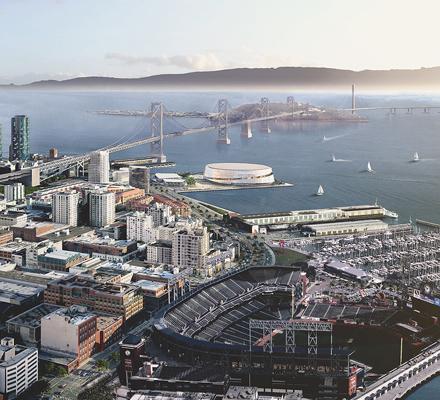
So the Chronicle’s John King (who’s generally not a bad architecture critic and really seems to understand city planning) finally discovered something that some of us have been talking about for months: There’s no comprehensive planning on the waterfront. Instead, it’s all developer-driven projects that make little sense as part of a well-thought-out future for the area.

Once again, we are hampered by the Chron’s paywall, so unless you subscribe you can’t read the whole story. But here’s the gist of it:

Instead of mapping out how the next frontiers of growth should be filled in, Mayor Ed Lee’s administration is letting developers frame the debate. They select a site, cook up a proposal and then see what will fly.

He notes that there are good touches in the new Warriors proposal, although:

[N]obody envisioned an 18,000-seat arena on a pier until the Warriors called City Hall. The team loved the glamour of the camera-friendly location. The Lee administration saw a chance to fill a void left open when the America’s Cup organizers shifted gears. …. the whole effort is aimed at soothing objections to what the team owners want. It isn’t connected to a pre-existing vision of what this part of the city could be.

There have been successful community-based planning efforts in other parts of town. But the waterfront — which is unique and immensely valuable — is nothing but a collection of projects that developers want. And Lee is going along:

Today, instead, we have a mayor’s office that wants to make things happen. Progress is measured in terms of construction jobs, housing units and new buildings that might lure the likes of Google up north. Planners on the city and state payrolls are put in the reaction mode, massaging the details the best they can.If this continues, some of what gets built could be terrific.Some of it could also be an alien presence in the city around it. And that’s not a legacy that any mayor should want.

It’s all too reminiscent of Dot-Com Boom I, when Willie Brown was in charge and city planning was driven entirely by campaign money. Highrise office buidlings in the residential Mission? No problem — just wave the dollars in front of the mayor. Not saying Lee is that corrupt — but he’s so excited about building stuff that he can’t bother to take a step back and ask: Is this the city we really want?


Hey, you! “Tech people” are not the douchebags you think we are

I hear a lot of talk, especially from my own queer community, about how “tech people” are ruining San Francisco. From skyrocketing rent prices and disappearing diversity to economic and cultural ruination, the tech community has become the scapegoat for a lot of the problems we are facing in the city as a whole. As a tech worker, I’m writing this to say: wake up and direct your anger at the real sources of these problems.

First of all, let’s get one thing straight. The vast majority of “tech people” in San Francisco don’t make nearly as much money as you think they do. We are not making six-figure salaries, we are not personally driving up rent costs, and we are not killing the cultural community here. Simply put, we are trying to further our careers and make the city we call home a nicer place to live. 

From day one of living in San Francisco, I’ve put blood sweat and tears into building the cultural community in SF (music, mostly), and I’ll never stop doing that. I first moved here with my husband in 2006 from Indiana. We fell deeply in love with the city while visiting several times early on in our relationship, and knew this was where we wanted to call home. Of course queer acceptance came into play, but I loved the fact that the city had a life of its own, an entity with which I felt a kinship. I immediately immersed myself in the music scene here, forming a touring band and quickly becoming a booker and promoter for live shows. It wasn’t until several years into my time here that I snuck my way into the tech industry. Thankfully all those hours spent in my parent’s basement as a child on the computer helped! Here I am, five years into my tenure at Bay Area music tech startup Thrillcall, hustling every day to help build music communities not only in SF, but across the country.

I bust my ass doing this for modest pay just to get ahead and know I’m working in a field (music) that I love. I know many others like myself who have day jobs in the tech community that do the same.

However, accusations that I’ve been hearing lately would have you believe otherwise. Claims that “people like us” are ruining San Francisco by gentrifying everything and pushing out what San Francisco truly is. Protip: the Bay Area has, for quite some time now, been a hub for technology. This is not a new thing. Stop acting like it is. Directing anger towards us for what you consider woes to the community at large here is way off base. Bubbles have happened constantly since the early 1990s (or hey, 1840s), and anyone who has lived here for long can tell you this is true. 

The tipping point for me, to be honest, was the nonsense of people beating up a “Google Bus” piñata in the Mission, shouting epithets about how they’re the bane of San Francisco. The people that ride those buses are not to blame. They are not heading up that company, they don’t make millions of dollars, and they certainly don’t deserve the hatred being directed at them by many people here in San Francisco.

They’re utilizing a method of mass transportation (cutting down on carbon footprint) provided by their employer. If you want to be angry about something, be angry at the company, not the people who work for it. If you want to actually do something about it (beating a piñata in a public place solves nothing), then take your grievances to the heads of the companies you think are responsible for the predicament that San Francisco currently finds herself in.

You know what is ruining San Francisco? Complacency. Apathy. Misguided hate. Inaction. Put some energy into making change, not senseless whining.

If you’re upset about rising rent costs, be angry at the money-hungry landlords that do absolutely nothing to put money back into the city or help build culture. Want SF prices to stop skyrocketing? Let’s organize and drive proposals with our city government. Upset about the recent sanitization of many of the lovely traditions and values of San Francisco? Get mad at a-holes like Scott Weiner, who is actually supported by a lot of longtime, non-tech residents. Want more culture, arts, music? Maybe try reaching out to people that can help in the tech world instead of complaining about everything going downhill. 

A vast majority of the tech workers here in SF are upwardly mobile, culturally involved people. We are not ruining this city. We live here for much more than just the jobs we have. We love it, and it’s where we call home. We have as much control over the cost of living here as everybody else. And we are not the companies we work for, however large or small. Corporations, for the most part, suck. We all know that. Demonizing the people that work for them (while contributing to this wonderful city) is baseless, classless, and makes you look like a total dick.

We’re not the douchebags you think we are. Let’s put our energy toward doing good, instead of just pointing fingers. A great deal can be accomplished if people took an active role toward coexisting, rather than shouting “ENEMY!” to anyone who will listen. 


Supes worry about 8 Wash shit show

48

The Chronicle seems to have entirely missed the latest installation in the 8 Washington shit show, but the Ex has the story, and, even if it doesn’t mean the project is in the toilet, it’s given opponents another reason to flush it.

Could I possibly use any worse metaphors?

Sups. David Campos and David Chiu are unhappy that city agencies — possibly fast-tracking a project that the mayor’s pal Rose Pak really loves — may not have been fully forthcoming about the fact that there’s a chance the construction (or the shifting of ground after the project is complete) could crack a sewage line that serves about a quarter of the city.

Here’s what makes me nervous:

During construction, liability to pay for damage after a pipe rupture would be on the developer. Simon Snellgrove of the Pacific Waterfront Partners has long fought to build the 134-unit condo development, even hitting the streets himself to try to hamper the signature-gathering effort by the development’s opponents to place the referendum on the November ballot.
Once all the units are sold, damage liability would shift to the homeowners.

What does that mean? It means if there’s a catastrophic sewage rupture after construction is complete, there will be lawsuits aplenty over who is at fault and who pays — and in the meantime, the taxpayers will fork over the money to keep the effluvium out of the streets. Which could be (I’m sorry, can’t help it) a shitload of money.

That, and the fact that the city is willing to let some very serious concerns slide in the name of building condos for the richest of the rich who won’t even really live here most of the time.

Commission approves soccer project but pushes the city to restore habitat

43

The California Coastal Commission today upheld San Francisco’s plan to replace the Beach Chalet grass soccer fields at the west end of Golden Gate Park with artificial turf and high stadium lights after an emotional five-hour hearing, but not before voicing concerns about the loss of natural terrain and urging the city to do wildlife habitat restoration work on adjacent land.

The soccer project has been repeatedly approved by city agencies despite strong opposition from some neighbors and environmentalists, who say it conflicts with a Local Coastal Plan that calls for it to be a “naturalistic” setting. Their appeal to the commission — which enforces the California Coastal Act of 1976 and regulates development in the coastal zone statewide — was supported by commission staff, giving hope to opponents.  

But the dearth of playing fields in the city and bad conditions on this often soggy, gopher-ridden site drove the local approvals of the project, and advocates for soccer and youth dominated public testimony at today’s hearing, which was held in San Rafael. Supportive speakers made arguments ranging from the exodus of families from the city to the need to combat youth obesity and diabetes to concerns that the woods surrounding the field is now “a fornication playground for gay men, it’s a shooting gallery for drug users, and it’s a toilet for the homeless,” all ills they say the turf and lights will help dispel.    

“I urge you to reject the appeal and allow San Francisco to manage our park system,” Sup. Scott Wiener testified to the commission, adding, “San Francisco has a crisis in that we are losing our families and losing our children.”

Former Sup. Aaron Peskin took the opposite position, calling the commission’s staff report “well-reasoned” and telling commissioners they have an obligation to protect coastal areas on behalf of all Californians: “It is the role of the commission not to succumb to political pressure.”

After public testimony and before a lunch break when he needed to leave, Commissioner Steve Blank made a motion to adopt staff recommendations and deny the city’s project, rejecting the various arguments made by supporters as irrelevant to whether this project complied with the Coastal Act and should be built so close to the ocean.

“Our review is based on the needs of 38 million Californians. One of the reasons our coastline looks the way is does is because of this commission,” Blank said, later adding, “This project looks like an industrial sports facility which is the antithesis of a naturalistic setting.”

He acknowledged arguments that the site has been soccer fields for more than 60 years and that many San Franciscans want them there. But he analogized it to the city’s one-time embrace of the Embarcadero Freeway before decades later realizing it wasn’t an appropriate waterfront use and tearing it down.

After a lunch break, the commissioner who seconded his motion, Esther Sanchez, continued Blank’s arguments against the project. “Our purview is different than the city and county of San Francisco,” she said. The commission’s role is ensuring compliance with the Coastal Act and LCP — which was developed by the city and approved by the commission decades ago — and its call to “emphasize naturalistic land use qualities of the western part of the park for visitor use,” saying the city should use other parks if it wants artificial turf fields.

But Commissioner Steven Kinsey called for the commission to defer to the city process and argued that turf and lights don’t necessarily violate the vague language in the LCP. “Grass alone does not make the site naturalistic,” Kinsey said, making a motion to approve the city’s project.

Commissioner Martha McClure then strongly sided sided with Kinsey and the city, and Commissioners Robert Garcia and Wendy Mitchell followed suit, saying how they personally liked turf more than grass. “It’s great for the environment, it’s water reducing, it stays green,” Mitchell said, noting that she’s replacing the lawn at her Southern California home with turf, calling the staff report “arrogant,” and saying, “I’m disappointed that we’re hearing this item.”

Garcia said the project will improve the public’s access to the coastal zone, which is something the Coastal Act also encourages.

“Artificial turf has become a savior for us, we can keep all our fields in play,” Commissioner Carole Groom, a member of the San Mateo County Board of Supervisors, later said, making her the fifth solid vote for the city’s project.

That left four swing votes on this 11-member commission who all said this was a difficult decision. They were inclined to let the project go through, but they were bothered by converting seven acres of real grass to artificial turf and wanted to mitigate that loss of wildlife habitat.

Chair Mary Shallenberger took issue with Mitchell’s comments. “I think they is absolutely properly before us,” she said. “This is how the process is supposed to work. Staff ended their presentation by saying this is a judgment call,” commending project opponents for filing the appeal.

“This was a very hard one for me,” Commissioner Dayna Bochco said, raising doubts that “seven acres of plastic would be a natural and healtful condition.”

Commissioner Jana Zimmer shared the concern and seized on a comment that SF Recreation and Parks Director Phil Ginsburg made earlier expressing a desire to restore as a naturalistic setting a long-neglected four-acre site next to Beach Chalet that used to be the city’s old wastewater treatment plant, noting that $6.5 million in the city’s last parks bond was set aside for habitat restoration in Golden Gate Park.

“I’d like to find a way to link the finding here to that requirement,” Zimmer said, asking Ginsburg whether he could make that commitment.

Ginsburg said that would be the top staff recommendation for the bond money, but that a public process and environmental review would be needed and he couldn’t make the commitment.

“I do believe mitigation is required here,” Bochco said. “We’re taking away seven acres of habitat and I want it replaced with something.”

A majority of commissioners, those for and against the project, strongly urged Ginsburg to follow-through on his pledge to pursue habitat restoration on the adjacent site. But with concerns expressed about tying the two projects together — which raised both legal and local control issues — the motion to do so failed on a 5-6 vote.

With Ginsburg’s pledge and the writing on the wall, the commission then voted unanimously to approve the project, clearing the way for the city to break ground as early as this summer.