• No categories

Politics Blog

Because they’re assholes

56

Yesterday, Business Insider, the bastion of leftist socialism, reported that the Republican Party’s negatives are polling at an all time high. 59% of the public disapproves of the GOP. That number has only been this high once before.

The piece and a companion on Yahoo attributes the dissatisfaction to over-reach on the IRS/Benghazi issues mostly. Also the phenomena of “gerrymandering as electoral poison”, where congress-people from safe districts reflect their constituents’ views and those constituents are way out of America’s mainstream. Logical reasons, all of them.

I disagree. How many people really follow these scandals that closely? 40% of the people that thought Benghazi was a major issue can’t even find it on a map and they care about it. Imagine the people that hear “Benghazi” and think of the actor with the similar name or the tiger with the similar name. Most people don’t care at all about these matters, so why would they dislike the GOP that much?

The reason is painfully obvious and is not a surprise. But no one wants to say it aloud. I will, though–while many Republicans are indeed wonderful people (and relatives), most of them in 2013 are just plain assholes.

They’re assholes. The kind of unpleasant, red-eyed, mouth-foaming obsessives whose every thought centers around partisan politics and how every news item can be determined as good or bad. Not “true” or “false”, mind you. And this monomaniacal focus means that dealing with them in person is a drag and on the Internet, a nightmare. Any buzz word, anything they heard in their hermetically-sealed-off-from-reality echo chamber is barfed back onto the rest of us in a technicolor spew of incomprehensible talking points. Conversations with them have to be carefully parsed so as not to set them off. That may be OK when dealing with a child with an emotional issue, but these are technically adults. Who wants to self-censor everything lest they get a torrent of twittery back?

It’s like the guy on the bus that hasn’t bathed in a month. No one wants to sit near him. And the guy on the bus may be a great guy. But at that moment, he stinks. That’s how Republicans have become on the issue of politics. Keep them away from the topic and they may be OK, but because so many of them live for the stimulating rush of “telling off the libs”, they’re basically, well, assholes.

The worst part of this is that their hapless and cowardly adversaries, the Democratic Party, now need do almost nothing to win elections. All a Democrat has to be is “not them” in a fair part of the country to be competitive. Smile a lot, seem reasonable and speak calmly even as you do awful shit (see “drones”) or nothing (see “Gitmo” or “non prosecution of Wall Street”). (See Obama, Barack).

This was not the case in my youth. Republicans were generally the thoughful, prudent careful ones and even if they were still Tory-like, they weren’t aggressive about it and saw the other person’s point of view. Today’s Republican politician and their enablers bellow out inane Heritage Foundation horseshit and with a patina of smug contempt for the uncoverted, not unlike the above it all hippies post-Altamont. Their leaders and pundits wonder what might win people over to them? Simple. Stop catering to and being assholes. After that, you’ll be fine.

Pride reverses course, schedules public meeting May 31

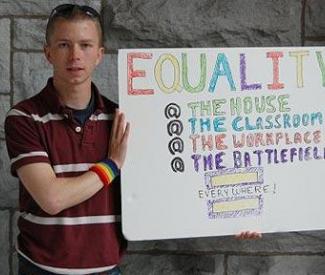
In a surprising but welcome change of course — after it locked out Bradley Manning supporters and press at a meeting last month, and its statement that it would not hold any more public meetings until after Pride because its decision to rescind the grand marshalship from Manning was “final” — the SF Pride board has scheduled a public meeting for May 31, 6:30pm, at the Metropolitan Community Church.

And yet the letter to “community members” couldn’t resist a couple of digs:

***”The SF Pride Board recognizes and regrets the recent error in the announcement of Mr. Bradley Manning as the Electoral College’s Community Grand Marshal” (perhaps it will offer some proof at the meeting that this was, indeed, an error — and more openly address the fact that a beloved staffer was fired over this?)

***Its condescending tone and implication that Manning supporters are violent: “We continue to be open to peaceful and constructive conversation with set ground rules but will not condone violence in any form moving forward.”

Still, with this board, the meeting is at least something.   

Dear Community Members:

For the past four decades, SF Pride has stood firmly to advance its mission to educate the world about LGBT issues, commemorate LGBT heritage, celebrate LGBT culture, and liberate LGBT people.

Thank you for your patience regarding the rescheduling of our community meeting to discuss the recent Electoral College voting. The integrity of the elections process and procedures are very important to SF Pride and the community at large. The SF Pride Board recognizes and regrets the recent error in the announcement of Mr. Bradley Manning as the Electoral College’s Community Grand Marshal. As promised, in the spirit of fairness and transparency, we are calling for an open forum where we can hear the full range of the community’s concerns.

With this in mind, we have secured the Metropolitan Community Church of San Francisco sanctuary for Friday, May 31st starting at 6:30 p.m., which is located at 150 Eureka Street between 18th & 19th Streets in the Castro District.  We encourage all concerned to participate in this public forum that will be facilitated by Scott Shafer, host of KQED’s California Report.

 We continue to be open to peaceful and constructive conversation with set ground rules but will not condone violence in any form moving forward. To ensure that community members have the opportunity to speak along with securing the safety of all attendees, we will have security on the premises.  

Please also note that MCC encourages attendees to be respectful of their space –and their neighbors– and to take their water bottles, coffee cups, etc with them when leaving.  The event cannot go past 9:30 p.m.


Pot, domestic worker bills win approval

3

Two bills that we’ve been following, one to regulate medical marijuana and the other to give domestic workers some basic rights, won approval from a key state Assembly committee and are headed for the Assembly floor.

Assemblymember Tom Ammiano’s AB 473, which would create a division under the Department of Alcoholic Beverage Control to write statewide regs for dispensaries, cleared the Appropriations Committee (where many good bills go to die) May 24. It’s a big step: For years, most of official Sacramento was afraid even to talk about the devil weed, much less take action on something that might look like a sign of approval. Now that the biggest problem with medical marijuana is zoning (and federal crackdowns) — and frankly, California is only a couple of years away from following Colorado and legalizing pot anyway — it makes sense to have a framework in place to ensure quality control, register dispensaries … and maybe convince the feds to back down.

The Domestic Workers Bill of Rights, AB 241, would require people to treat household workers with the same respect and the same types of benefits as most other workers. It would mandate work breaks, sleep breaks, overtime … pretty basic stuff. But the guv, for reasons known only to him, vetoed it last time around. Perhaps he’ll come to his senses.

The bills will probably make it to the Assembly floor next week.


Talk Radio’s Funny Secret

39

Most folks do one thing for a living and are happy that way. I’m not. I need a lot of challenges that change all the time. I have a lot of different occupations, acting, playing music, writing and talk radio host on an LA station.Of the latter, I knew nothing about the genre at all when I got into it 10 1/2 years ago. Never listened to it and still don’t. News stations occasionally, but generally, the sound in the car is music.I found that there are a lot of people that just love talk radio and in all walks of life. Most remarkably, lots of fellow musicians. They’re addicted to it, the raving and the story-telling, the “painting a picture with words”. And many talk show hosts are “lifers” that dread being “on the beach“. It’s a massive rush to keep spieling, as Mike Watt would say and it is a rare skill. As I have never had a problem freely offering an opinion (asked for or not) or at a loss for words, it was a natural fit.Thing is, talk radio is really not at all what it appears to be. On the surface, it is the voice of outrage, the sound of angry people, villagers rising up with pitchforks to the sound of their leader’s voice, pure populism. And that’s what many successful hosts do. They represent for the little person–or so it seems.

In reality, no. If one listens closely to what 95% of talk hosts actually say, it’s fairly clear that they are not challenging the audience’s ideas, but bolstering them for the most part. Picking a common enemy and railing on same for hours–the voices inside the heads of the listener are congruent with what the show host is saying–he or she isn’t even articulating it half the time but spitting out time worn cliches.Ask yourself–when was the last time you heard a talk show host take a completely unexpected turn? As almost all news/talk is rightist, when was the last time you heard a private entity (not owned by a liberal) railed on? The government is fair game, but as right-wing Americans have been trained since diapers to hate the government (while mooching off same), who cares? Or suggested that nationalism (ours and the Muslims) is the root cause of terrorism. Or that the NRA are conmen. Or…….Also, the hatred of the government seems to abate on the airwaves five minutes after a Republican is elected. Which makes sense as a lot of talk shows hosts see themselves as indispensable parts of the GOP’s machine.This isn’t news to anyone, really. But the idea that the talk show host is the valiant bearer of the torch of freedom is pure fantasy. When was the last time a talk host was hauled off the air by the government for saying anything? Yes, profanity brings high fines. But all action against talk hosts comes from the public, generally in the form of embargoes or from stations afraid of a backlash fomented by the same public.

That the genre is getting beaten up on badly of late has a few proximate causes. An aging base of fans is one reason. Another is the sheer tedium of predictability–a road trip from Portland Me to Portland OR would be about 4 days long and there is almost no chance you’d ever hear anything on AM that’s different one city from another. That means dullness and laziness and copycatting, 

The irony is that when AM talk stations–supposedly moribund–go back to their roots and go local and social and personal, they thrive. In California, KMJ in Fresno and KFI in Los Angeles are the prime examples. Limited national babble and lots of local means the hosts can’t lean on talking points or be completely predictable (as the audience is right there in the center of the topics, not distant from DC). It helps that in the latter station’s case, their morning and afternoon shows have hosts whose politics are wildly unpredictable. KFI is the nation’s #1 talk station and since KMJ became privately owned, its ratings have soared. What does that tell you?

Yes, saying shit on the air to piss people off on purpose sounds like it would work, but it never does. Conversely, kissing the audience’s ass for three hours at a time is just as bad. If talk really were the voice of the people, it would be impossible to suss what it would do, just as it’s impossible to figure out what people (us) do. Simple, huh?

Mind Boggling

8

Today on the 101 headed home from gym, I saw a 2010 GMC SUV with the bumper stickers “Who Is John Galt?” and “I Love Capitalism” on the back.

If memory serves, said vehicle was made after the US Government saved said company via loans, that is, taxpayer dollars.

I guess this is the right-wing whackaloon version of “Deadhead sticker on a Cadillac”.


Phobic Phatheads

26

No issue in America has had as abrupt a public opinion turn as gay rights. Once a third rail that could never be touched by politicians lest the juggernaut of America’s homophobes land on them, gay rights are now on their way to be accepted for what they actually are–basic human rights. Same sex marriage polls favorably by almost 3-2, ten years go, that figure was reversed. It’s easy to see why–as more gays and lesbians come out, more friends, neighbors, coworkers and family realize the plainly obvious–put a human face on an abstraction and the abstraction disappears. When it’s your kid or workmate, you get mighty angry when they’re attacked.

Nothing ever changes completely that fast, though. The two major stories of today–18 year old Floridian Kaitlyn Hunt’s refusal of a plea bargain in exchange for charges of sexual abuse of a minor (a 15 year old female) and the Boy Scouts of America’s decision to let openly gay kids join–are examples of the residue of obstinate, fundamentalist lunacy when it comes to the issue of same sex relationships, especially those of teens.

In the former’s case, Ms Hunt has been in an ongoing relationship with a younger girl for over a year, which began when both of them were minors. According to Hunt’s attorney, the younger girl’s parents were indeed aware of this at the time and seem to have waited until Hunt achieved majority before pressing charges which are two felony counts of “lewd and lascivious battery on a child 12 to 16” .

The local DA offered a plea deal of house arrest for a few years, which doesn’t sound too extreme–but part of the deal means Hunt becomes a registed sex offender, which affects the rest of her life. Hunt (no fool she) refused this. 

That the relationship has been ongoing and that the “victim’s” parents picked the date they did to press charges indicates that they are vindictive and clueless. Their anger is really aimed at their own daughter because as fundamentalists, a lesbian child is a clear rebuke to their beliefs. The narrative of “older girl as seducer” is comforting, but ultimately absurd. This was and is a consensual relationship between peers and one set of parents cannot accept it and are willing to ruin another person’s life. It never occurs to them that in doing this, they may well ruin their own daughter’s faith and trust in them. But when you have been thinking inside the box your whole life, this never arises.

The case of the BSA is simple. Pressure from the rest of the world circa 2013 plus some really ugly moments for them has dragged them into the modern world. Naturally, the yammering toads on America’s right flank are going predictably bonkers. One, because many of them do believe their own bullshit, two, because this is lucrative (“only we can protect you, send us money and we’ll show you how”) and three because when one major article of faith is obliterated, all of them are vulnerable. If gay marriage, open gay relationships between teens and openly gay Scouts are acceptable, what else falls? People may wonder why these liars should be heeded at all and there goes the scam!

The saddest part of this is that lots of people get hurt badly to keep this backward-thinking idiocy afloat. Make no mistake, this is idiotic–the idea that accepting gay people is going to lead to sodomy-filled orgies in the streets is identical to the fear baiting of the 1960’s where “the blacks are going to marry your daughter”. Which rarely happened. One KKK becomes another–the Ku Klux Klan of the bygone era becomes the Krazy Klown Kult of today. Except that the latter has a formal title–the Republican Party.

Therefore, for this madness to end, the Republicans have got to tell the fundies to stow it. Not only is this nonsense ugly, it could very well doom them to extinction. As today’s birthday boy once sang in the 60’s, the times are a changing. And in reality, Kaitlyn Hunt should be a hero to the GOP for doing what they believe is the greatest thing any American can do. Stand up to government tyranny. Unless it’s theirs, of course. 


Democrats reject 8 Washington

51

The San Francisco Democratic Party has voted to oppose the 8 Washington project and to endorse the ballot measure that would halt it.

By a 15-4 margin, the Democratic County Central Commitee, which makes policy for the local party, endorsed a No vote on the fall referendum that would negate the height limit increase developer Simon Snellgrove says he needs to build the ultra-luxury condos. The units would be the most expensive in San Francisco history.

The supervisors approved the height limit last fall. The referendum puts the issue directly before the voters, and foes of the project need a “no” vote to reject it.

“This was a huge victory,” Jon Golinger, who is running the campaign against the condos, told me. “The Democratic Party is a huge endorsement in San Francisco.”

That’s particularly true in a low-turnout election — and since there aren’t any high-profile races on this November’s ballot, I would guess only the most serious voters will make it to the polls.

The Sierra Club — another group that carries a lot of clout — has already come out against the project.

Snellgrove’s forces first tried to delay the vote until late summer, arguing that the committee needed more time to get all the facts. But Sup. David Chiu, a DCCC member, noted that this project has been discussed and analyzed and fought over for so long already that there’s nothing new anyone could possibly learn by delaying.

The motion to delay failed. Only Bevan Dufty, Sup. Scott Wiener, Sup. Malia Cohen and Kat Anderson voted in favor of the project. Voting against were Bill Fazio, Trevor McNeil, Kelly Dwyer, Leah Pimentel, Hene Kelly, Alix Rosenthal, Carole Migden, Rafael Mandelman, Matt Dorsey, Petra DeJesus, Assemblymember Tom Ammiano, State Senator Leland Yee, Chiu, Sup. David Campos, and Sup. John Avalos.


Da Mayor, local hire advocate

Even as Sup. John Avalos continues to be raked over the coals by San Francisco Examiner columnist Melissa Griffin for his so-called “peacocking, disrespectful demeanor” and “flexible hate speech standards,” the progressive District 11 supervisor nevertheless earned something akin to praise May 22 from an unlikely figure: former San Francisco Mayor Willie Brown.

The San Francisco Chronicle columnist, attorney (Brown mentioned in his speech that he paid $50 a semester for law school), sometimes PG&E consultant, self-proclaimed “buddy” of former California Gov. Arnold Schwarzenegger, and all-around power broker delivered his Annual Lecture on Political Trends at the Commonwealth Club yesterday. He plugged his own column, saying, “On Sunday, you can read a column that can’t be disputed. Because it’s my version of the facts.”

Brown is known for his cozy relationship with Mayor Ed Lee and is politically at odds with Avalos, who ran against Lee in 2011. Emphasizing his support for Lee, Brown lauded him for clinching the city’s right to host Super Bowl 2016 events in San Francisco. He pointed out, “That Super Bowl is going to be exactly when he’s possibly seeking reelection.”

Brown also mentioned accompanying the mayor on a recent trip to China, where Lee was reportedly “treated as if he was the president of America instead of just the mayor of San Francisco.”

However, Da Mayor had a bone to pick. He launched into a tale of how he often wanders down to the city’s bustling construction sites, marked by “these 24 or 25 cranes that you see around town” (presumably he finds time for this aimless wandering this between international excursions, dining with the Gettys in North Beach, and palling around with his “buddy” Schwarzenegger?). “Invariably I take a look at the cars, the crews,” he said, and has concluded that “they’re not San Franciscans.” Not only are private development projects being built by out-of-towners, he said, no local hire requirement was imposed upon the city’s Central Subway contractors. 

Giving voice to a cause long championed by Avalos, a progressive who fought doggedly to enact a local hire ordinance, Brown expressed frustration that locals aren’t the ones scoring gigs in the city’s construction bonanza.  

Then he gave Avalos a sort of backhanded compliment, calling him “the strongest advocate for local hire,” but saying “he hasn’t followed up the way he should follow up, to ensure that people who live here get the jobs.”

It seems unfair to lay the blame for this at Avalos’ feet, but Da Mayor seems to be on the money as far as this point is concerned: As long as SF has embarked on a building frenzy, shouldn’t it be residents who reap the benefits of decent paying construction gigs?

Enough already

106

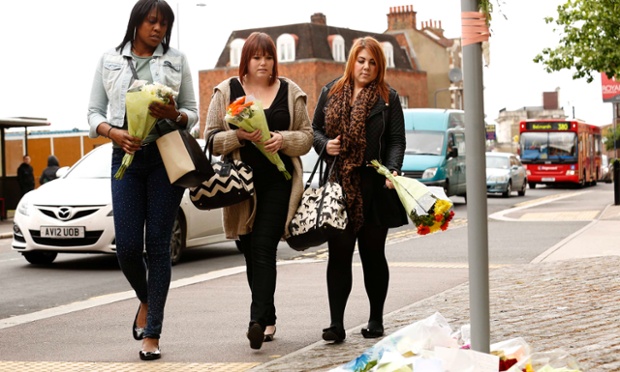
The gruesome and sordid attack in Woolwich, UK has alarmed and horrified that nation and a fair amount of the world. An unprovoked beheading by cleaver of the 25 year old Afghanistan war vet has stunned London and in the wake of the killing, reprisals have been carried out against Muslims in the UK as well. There have been heroes in this story as well, but it is impossible to imagine that anything would balance off this lunatic brutality. 

As has become almost rote in the wake of these events, both sides in this battle are already fully engaged. I don’t mean the British military and local terrorists. I mean the dildos and dildettes of the Net, who regard every news story no matter what it is as vindication or repudiation of their cause.

When it became clear that the attackers were Muslims, you could almost hear the Pamela Geller’s and Steven Emerson’s of the world climaxing in sexual ecstasy over the intertubes. Their “opposition”, the people that trot out Tim McVeigh as the “white Christian terrorist” by way of “everyone does it” when these attacks occur were silent–they’d lost this one. Better luck next time, I suppose.

Which isn’t quite as sickening as the violence itself, but shit: What is wrong with these people? A dad had his head lopped off and for all the expressed sorrow by Islamophobes, they were actually pretty jazzed. Whether they admit it or not, what’s one dead dude you never met compared to the thrill of rubbing it in some “dumb lib’s” face? You were right and what’s better than that? Nothing!

It’s just as bad when it’s some white supremacist asshole and the “I told you so” palaver comes from the left. 

Thing is, the idea that “my team won, yay!” over this story and other negates the painfully obvious. This is a complex issue. It doesn’t boil down to “see, I told you the Islamofascists were crazy/No, they aren’t”. Imperialism, propping up bogus sheikdoms, coups, invasions, nationalism–a melange of those plus the asymetricality of terrorism is complicated. Nobody wants to delve too deeply into the actual cause. They just wanna be the “right person at the water cooler this morning”. To which I say enough already. Really. 


Airbnb is still snubbing SF, even after a NY judge rules it illegal there

39

Now that a judge in New York has ruled that Airbnb is illegal there, a model that violates city tenant laws and state law, that should put pressure on the San Francisco-based company to finally stop snubbing cities and find a way to exist within local regulatory frameworks and finally start paying its taxes.   

It was good to hear KQED’s Forum discuss Airbnb this morning – it was getting lonely as the only local reporter highlighting the company’s open defiance of San Francisco’s ruling that it should be paying the city’s Transient Occupancy Tax, just like hotels – and to finally question an Airbnb executive on an issue the company has been refusing to address publicly (yes, they still aren’t returning my calls).

But the answer that David Hantman, Airbnb’s global head of public policy, gave this morning was pretty astounding in its hypocritical arrogance. He acknowledged the tax ruling by San Francisco and the company’s lack of compliance, and said the company was waiting for clarification on the various issues related to the questions of the legality of some of the short-term rentals it facilitates before paying its taxes.

In other words, this company is making tens of millions of dollars annually in San Francisco alone on a business model that it developed – one that often runs afoul of local land use and tenant laws, and in violation of people’s leases – and it’s up to city officials to find a solution to this company’s problems before it will pay taxes?!?

To his credit, Board of Supervisors President David Chiu has been trying to do just that for months, slogging through a number of complex and difficult issues that arise from this business model, and he has been clear throughout that Airbnb should be paying its taxes to the city, which it isn’t.

“It’s reasonable to ask people who benefit from the economic transactions we’re talking about to pay their fair share,” Chiu reiterated on Forum, citing the cost to the city of serving the 16 million tourists who visit the city each year.

Coincidentally, there’s a German television crew from ARD (Germany’s equivilent of the BBC) in San Francisco this week doing a story on Airbnb and the shareable economy, interviewing me about my coverage of the company, as well as others, including Airbnb co-founder Nathan Blecharczyk.

The ARD reporter told me this afternoon that Blecharczyk was animated and expansive when discussing how wonderful his company is and how it’s changing the world, but he became terse and unresponsive when she raised the issue of local taxes and regulations.

As I said on camera today, Airbnb and other shareable economy companies are cool, I’ve used them myself, and they’re certainly here to stay. But I just don’t understand their unwillingness to be good corporate citizens and to pay the taxes they owe to support the city services that their customers use.

Chiu has clearly said that Airbnb should pay the TOT — which my reporting has shown would bring $1.8 million annually into city coffers — and that paying its taxes will be a part of the regulatory package he’s working on. But sources have also told me that negotiations have been hard slog, largely because of Airbnb’s unwillingness to play by the rules and because of the unqualified support the company has from Mayor Ed Lee, whose main political fundraiser, Ron Conway, is also a major investor in Airbnb.

Hopefully the New York ruling and growing media scrutiny will prompt the young executives at Airbnb to finally become good faith partners in a city that has been so good to them — a city whose leaders seem anxious to return the favor and legalize Airbnb’s operations in San Francisco.


Weiner Rises!

27

Midnight Wednesday, Anthony Weiner–who resigned from Congress two years ago because of a “sexting” scandal–has announced he will run for mayor of New York City. He will enter a crowded field to replace Michael “Big Gulps Are Murder” Bloonberg.

As he has a boatload of cash and 100% name recognition, he will be a force to be reckoned with. Plus, his main opponent, Christine Quinn has serious personal issues of her own. New York politics and politicians being what they are, from Walker and LaGuardia to Ed Koch and Rudy Giuliani, means that this will be very amusing to the rest of the country.

Weiner, if you recall, sent out bare chested (among other things) pics to females via text a few years ago. That was the proximate cause of the uproar behind his resignation. It can be debated whether this was really the reason or not–Weiner went after the insurance industry with an awful lot of gusto. And, like fellow New Yorker Eliot Spitzer, he paid for it–screw with the mega-wealthy while you are playing games on the Internet or with hookers and they will snag you.

The difference between Weiner and Spitzer is while Spitzer (a lawman) was breaking the law and having actual sex, Weiner was doing neither. For all of the hand-wringing and ridicule Weiner brought on himself and his wife, he did absolutely nothing wrong. In fact, he did absolutely nothing at all, because sexting and cyber sex are not sex. At all. By any stretch of the definition of sex.

Minus actual contact between parties, there is no sex. Weiner could not impregnate the women he was sexting nor could he directly provide them sexual pleasure and most importantly, if this is sex, when has sexting ever led to an STD? If there is no sexual transmission, there is no sex. The objection that he was indiscreet stands (no pun), but if there was any real unhappiness over these non-existent trysts, where is it?

Cyber sex is no more sex than a strip club or porn is sex or for that matter, flirting is sex. Because that’s all cybersex really is, flirtation. And for all the noise this nonsense generated, Huma Abedin (Mrs. Weiner) never left him–it is entirely possible that she sees this for what it is–nothing. She may even like the idea that her husband is a popular figure among women and that when it comes to the actual act, it’s her and he. (So far as we know).

Weiner, like Spitzer and even the pitiful John Edwards, were held up as pariahs because of their dalliances. But the truth is, they enraged the powers that be, from hammering Wall Street to suggesting that there are “two Americas” where the lesser one gets screwed a lot harder than anything in A Weiner’s provocative prose and photos. As the voters of South Carolina just sent back a cheater whose actual behavior is a hundred times worse than Bony Tony’s was, maybe this idiocy can finally be put to rest once and for all, but I wouldn’t count on it. 


Sanctioned for sound violations, club owner fires ethics charge back at Entertainment Commission

57

The San Francisco Entertainment Commission last night voted to restrict the hours, sound limits, and other operating conditions for Brick & Mortar Music Hall — the Mission Street live music venue that has received a series of noise complaints from its neighbors on Woodward Street — until it completes soundproofing work to deal with the problem.

While acknowledging the sound problem and pledging to address it, club co-owner Jason Perkins responded to the action today with a written complaint that makes a serious allegation: that Entertainment Commission inspector Vajra Granelli last year recommended Brick & Mortar hire an overly expensive security company he founded, Yojimbo Protective Services, and that would solve the problems it was having with the commission, Perkins wrote, “an obvious conflict that a person who is regulating us is also trying to get us to use his company.”

There is no proof that Granelli actually made the extortionary suggestion or that it was connected to the club’s current problems with its neighbors, who seem to have legitimate issues with noise. “They have a sound problem and they have to deal with it,” Entertainment Commission Executive Director Jocelyn Kane told us, calling the allegation against Granelli a diversionary tactic that has nothing to do with the case. “The neighbors are being reasonable, they just want them to fix the sound.”

Yet it does appear that Granelli is still involved with Yojimbo Protective Services, which he co-founded in 2003 to do security for entertainment venues, and that may violate city conflict-of-interest rules against outside employment in an industry that he regulates. Kane said Granelli was out-of-town and that she would get him a message about addressing the issue, but we never heard from him.

When we called Yojimbo for Granelli, someone who identified himself as Ed the CEO (presumably co-founder Edward Cissel) said, “I can take a message for him. He’s not usually here at the office.” And when I identified myself as a reporter for the Guardian, Ed said of Granelli, “He has little or nothing to do with the daily interactions of this company.”

Yet Granelli (who was profiled by the Examiner last year) remains the agent of service on the company’s business permits. Kane said she was aware of Granelli’s connnection to Yojimbo, but that, “When he took this job, he divested himself.” Indeed, on the Form 700 Statement of Economic Interests that city employees are required to complete, which Granelli renewed last month, he claims to have no reportable outside economic interests. A link to a list of clients and description of its focus on entertainment venues on the Yojimbo website has recently been removed.

Later, when we noted that Granelli still appears to be involved with the company, Kane wrote, “It remains my understanding that Vaj Granelli sits on the Board of Yojimbo but derives no financial benefit from the company, nor is responsible for any day to day operations.”

Perkins alleges that last summer, “I was told I had a security problem by Vaj Granelli,” who recommended he hire Yojimbo shortly after the club received its first of seven noise violation citations, which Granelli issued. Perkins said that when Granelli made the suggestion again following another noise complaint in October — by which time Perkins said he had learned of Granelli’s connection to the company — “I blew up and told him to fuck off, and immediately we start getting hammered by complaints.”

During the hearing last night, the commission had little patience or sympathy for Perkins, accusing him of misrepresenting his neighborhood outreach efforts and creating problems in the neighborhood by refusing the spend the necessary money on soundproofing the club, a perspective supported by several Woodward neighbors who testified they could hear music in their living rooms and that Perkins has resisted their entreaties to fix the problem.

“Rather than doing it, I believe you’ve used delay tactics,” Commission President Audrey Joseph told him, urging him to instead, “Be a big boy and just deal with the problem, which is what you need to do.”

The commission then voted unanimously to recondition the club’s entertainment permit to require it to close at 11:30pm on weeknights and 12:30am on weekends, cap its allowed outside sound at 80 decibels, provide a direct phone number to neighbors with complaints, and complete necessary soundproofing work by next month.

“We got sucker-punched last night, it’s so unfair,” Perkins told us, noting that the new sound limit will essentially prevent them from hosting live music. He claims that he was only recently made aware of some of the noise citations and they have repeatedly upgraded their soundproofing.

Kane denies that Brick & Mortar has been treated unfairly, and she said that it’s a popular music venue that everyone involved wants to see continue operating. As for Granelli’s connection to Yojimbo Protective Services, she told us, “I’m not suggesting he’s not affiliated, I’m just saying it’s not relevant.”

Activists’ zine documents violent arrests at SF State

Emotions ran high at San Francisco State University on May 21, where a group of activists held a rally decrying police officers’ excessive use of force in an incident that occurred last Thursday, May 16. Five arrests were made that night outside a student dormitory. YouTube videos showing police officers tackling the arrestees to the ground, as onlookers cry out in dismay, have drawn thousands of hits.

The five young people were arraigned May 21 and face charges of misdemeanor trespassing, with some facing additional charges of resisting and obstructing an officer. Resham MacFarlane, a friend of the arrestees who accompanied them to the university, said they had all been on campus as guests of SF State students who reside in the dorm.

Officially, the arrests were made by San Francisco State University Police Department. However, individuals who were at the scene told the Bay Guardian that SFPD officers were responsible for injuring several arrestees to the point of requiring them to be transported off the scene by ambulance. According news reports, a campus police officer also sustained minor injuries. 

At the rally yesterday, supporters of the five arrestees distributed a zine they’d created to document the events, including detailed descriptions of the injuries sustained. Melissa Nahlen, 25, reportedly wound up with “cuts near her eyes, a bruised and swollen lip, a swollen left hand … and cannot bend her neck downward due to being stomped on by the police.” Since she cannot afford to hire an attorney, Nahlen is being represented by the San Francisco Public Defender’s Office.

Another arrestee, Carlos Cruz, was transported from the scene in an ambulance and brought to a hospital before being taken to jail at 850 Bryant. Cruz was reportedly released yesterday, May 21. During the arraignment hearing, the court appointed defense attorney Stuart Hanlon to represent him, since he was unable to afford an attorney, and the San Francisco Public Defender’s Office cannot legally represent multiple co-defendants. 

“Carlos almost immediately received a blow to the head after being told he was trespassing,” according to activists’ written account. He was “Hit on head multiple times … Large bruise on shoulder, swollen wrists, loss of feeling in his thumb and forefinger in his right hand, bruises all over shins and knees, laceration on ear.” MacFarlane, a friend of Cruz’s, said that when she visited him in jail “he had a bruise on his sternum.”

Reached by phone, SFPD spokesperson Albie Esparza said he could not offer detailed comment on the incident because it was under SF State’s jurisdiction. “It’s not our investigation,” Esparza said. “We made no arrests. It would be inappropriate to comment on someone else’s jurisdiction.” SFPD only responded at the behest of SF State, he said, and were called in because “it was a chaotic scene.” 

Nan Broadman, a spokesperson at SF State, said campus police initially reported to the dorm because “an unidentified caller said a drunk male was harassing passersby” outsidethe building. A friend of the arrestees noted that they had been drinking earlier on that night. Broadman said a police report for the incident was not publicly available, and did not know whether a formal investigation of officer misconduct was underway.

MacFarlane and another friend of the arrestees, who gave her name as Natasha Noel, both said the trouble started when Cruz and a friend went outside to smoke a cigarrette and encountered police, who immediately pursued them upstairs into the dormitory. The physical clash between officers and arrestees is reflected in the YouTube videos, which Natasha recorded with her cell phone. Someone pulled the fire alarm during the incident, and the building was evacuated. 

A day earlier, on May 15, SFPD’s tactical unit conducted an early morning raid at an abandoned building at 200 Broad Street, where some 30 people had been living for months. Esparza said the building’s owner initally contacted police for assistance with removing the squatters. Because the abandoned building had been occupied for so long, police sought guidance from the San Francisco City Attorney’s office as to whether they should proceed, since it was unclear whether the squatters’ presence constituted a civil, or criminal matter. The City Attorney ultimately determined that because it wasn’t a residential property, they could be removed on criminal trespassing charges rather than evicted in a civil proceeding.

A handful of those squatters, including Cruz, MacFarlane, Nahlen and some others, wound up making their way to friends’ dorm rooms at SF State. The arrests occurred just hours after their arrival on campus, according to MacFarlane.

A detailed narrative included as part of the zine notes that the squatted building was known as “the SF Commune, a community center and social space for organizers in the Ocean View district of the city.” According to this account, squatters took over the property, which had been abandoned for several years, in April of 2012. “The building was filled with needles, broken glass, and buckets of human feces. The group worked for weeks cleaning up the building, moving out all the hazardous materials and disposing of them properly, and turning the building into a livable home and organizing space.”

MacFarlane said she had been staying at the squat. “I had another place to stay, but I chose to stay at the commune,” she explained, adding that she found it to be a positive and constructive atmosphere. “There was lots of music and art every day.”

For No God’s Sake

21

The nightmarish aftermath of the Moore, Oklahoma EF-5 tornado is in rebuilding and rebounding mode. People are digging out of the mess. Survivors located. Businesses re-opening.

And the stories emanating from the Prairie are running the gamut. From heart warming to predictably dire. The human spirit seems both undaunted and inexplicable. 

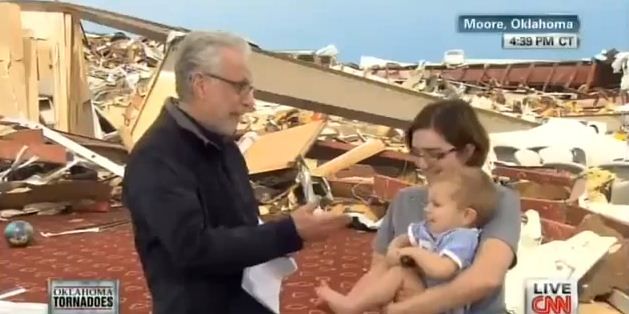
But because the world we live in now has around the clock news cycles and a plethora of channels devoted to same, sometimes the mavens of media reveal themselves to be a sorry lot. So was the case of Wolf Blitzer–a CNN talking head of much experience–and his interview with a local named Rebecca Vitsmun whose response to a question posed by Blitzer threw him.

Blitzer asked Vitsmun if she thanked the Lord for presumably sparing her life and that of her baby. She replied (nervously) that she didn’t as she was an atheist, quickly adding that she didn’t blame people that did.  

It was quick and she was good humored about it. But there’s something really rancid about Blitzer’s question. The subtext isn’t theological or even sociological. It’s bigotry–Oklahoma is a deeply religious state with an enormous Evangelical community, so Blitzer assumed without asking that this woman must be one of those people.

This is no different than asking someone with an Irish surname what beer they drink, or a Mexican their favorite recipe for salsa or any number of stereotypes. The presumption that this woman is religious without asking (did the same question arise in New Jersey after Sandy?) pigeonholes Oklahomans as one-dimensional fanatics.

If you are a person over a certain age (40 say), ask yourself if newsmen asked these questions in our long gone youths. They didn’t. It would have been seen as trivial, leading and out of place. But because our culture has been “Tebowed” to death by loud public declarations of fealty to the Lord, this kind of piffle is not only manistream, it’s encouraged.

The moment passed, but it seems to have ignited the standard back and forth over the existance of a God or not. Not the issue (although asking someone whose home was razed if they thank the presumable force behind the razing does seem a little absurd). Religion is a matter of faith, conjecture and wishful thinking/culture. The news is supposed to be facts. I know that Blitzer has to filibuster to fill space, but c’mon, man–everything has its place. 


PG&E can’t survive solar energy

33

Years ago, in the middle of the boom in nuclear power plants, we used to say, only half in jest, the private utilities would never accept solar energy because you can’t put a meter on the sun. Turns out that’s pretty close to true.

A new report by The Energy Collective argues that Pacific Gas and Electric Company may be the first utility in the country to go under — because of competition with cheap solar in sunny California. Once solar becomes competitive with PG&E, more and more customers will install panels, forcing PG&E to raise rates on the remaining customers, who will then have even more reason to go solar. The groundwork is already there:

PG&E’s marginal prices cannot compete with solar. Large residential customers pay 31¢-35¢/kWh [kilowatt-hour], the same prices that cause the solar revolutions in Hawaii and Australia. Even worse, according to PG&E, “By 2022, PG&E’s top residential rate could reach 54 cents.” Residential customers represent about 40 percent of PG&E’s retail electric revenue. Commercial customers experience high rates, too. Unlike residential customers, who need a commercial third party to own the solar panels to take advantage of the accelerated depreciation, commercial customers can keep that advantage for themselves, making solar more financially attractive. Commercial customers represent about 46 percent of PG&E’s retail electric revenue.

If it happens soon, it will happen here:

“There is nowhere else in the U.S. with the same confluence of events,” says Short: “High and rising marginal prices, good sunshine, and inability to respond to changed competitive circumstances. If ever an electric utility was set up to fall to solar, it is PG&E.”

This is a great argument for promoting CleanPowerSF (and a good explanation for why PG&E wants to kill it), and shows the need for an eventual municipal takeover of the grid, because even with widespread solar, there’s going to be a need to power to move around between generators and users at different times of the day. And if PG&E is headed for collapse, the city ought to be able to get the infrastructure cheap.


Thou Shalt Not Speak Ill Of The Lord God Oil

31

Every Monday, Wednesday and Friday morning, I take a brutal boot-camp type class at the Hollywood YMCA here in LA. 45 minutes of sheer hell, but as these things are measured, surely worth it. I’ve been going for the last year and a half at the prodding and urging of my friend Stacy “Beano” Johnson, a lively and lovely woman and an ex-pat Okie from outside Tulsa. Yesterday, I walked in to find her strecthing and she seemed, as you would imagine, distraught. Her state is devastated. Despite downward revisions of casualties, at least 24 people were killed by the storm and the cost to insurers will be over 1 billion dollars. Luckily, none of her family or friends were among the dead or wounded.

Because we are 1) good friends and 2) I am by nature very inquisitve, I asked her if her people back there were putting some of the cause on this particularly violent and early in the year twister on man-made climate change. Beano turned kind of reddish and responded “hell yeah they do. And why wouldn’t they? Summers are getting hot as hell there and it feels like it’s headed to 120 degrees when we go back for vacation. I know damned well it is”.

She isn’t a scientist and is also a self-proclaimed “California liberal” (by way of disclaimer). But this is nothing new to anyone with kin in “flyover country”–my younger brother has been telling me for ten years that the farmers in “Tornado Alley” where he is in Western Illinois talk about the heating and extremes and the effect on crops–and, as Beano has said, why wouldn’t they? 2010 was one of the hottest years on record, another freak tornado devastated Joplin MO in 2011, a drought nearly destroyed the entire Midwest’s crop output last year and now this. Yes–this is where tornadoes happen and they have been happening forever. But scientists warned us that “weather patterns are going to get more extreme and more violent” as the planet heats up and yes it has, and according to 97% of said scientists, the culprit is fossil fuels.

That no peer-reviewed publication has said otherwise and that the only “scientists” that claim that the jury is out tend to be on oil company payrolls isn’t exactly a new revelation. But in Oklahoma, were any politician to claim that the destruction in Moore was because of man-made climate change, they’d be demolished in the next election like so many of the homes were a few days ago.

And why? Because oil is one of the state’s biggest employers, in refining and extraction and logistics. Koch is king in the Sooner State. And even though the average Okie is beginning to see the light, they are willing to look the other way when their livelihood is concerned–their jobs are, in a way, literally to die for.

It is disgusting and sad and vile, but as Louisiana governor Bobby Jindal could tell you, there’s no percentage to ever attack the mighty hand of the petro-oligarchy. Despite the cheapskate idiocy by British Petroleum that nearly ruined that state’s fishing and tourism industries, at no point did Jindal demand that BP pay for all the damage they’d wreaked.

And so the oil companies continue their version of bullshit, as their exec’s declare that to destroy the planet is “God’s will” and their paid shills in broadcasting claim zero culpability, the planet roasts and the people of Moore are wondering where they’re gonna live. And if you think this is just far fetched lefty hand wringing, even the almighty insurance industry knows climate change is real and are changing their rates accordingly. These people play the “life and death odds” for a living in actuarial tables. They know.

Meanwhile, Oklahoma’s two Republican senators are asking for the same federal aid that they denied to Jersey and New York, “God’s will” is again invoked (by America’s #1 publicity hound family) and no one dares speak the truth, that black gold and natural gas are slowly cooking its users and that these same people will battle renewable and clean power with every trick in their arsenal even as it makes their grand-kids lives sheer misery. You might say that the denial is as high as an elephant’s eye in O-kla-Homa……


Senate goes after tax-cheating Apple

13

Glad I’m not the only one who thinks its an outrage that the world’s most valuable company, with vast revenues and huge cash surpluses, is looking for ways to avoid paying federal taxes. A US Senate committee is going after Apple, with the chair, Carl Levin, saying the company created “ghost corporations” in Ireland to hide profits and cheat the US out of $9 billion.

Now, just for the record: What Apple is doing is probably legal. The federal tax code is, to put it mildly, all fucked up, and it allows US companies to get away with all sorts of gimmicks.

But remember: Somebody has to pay for all the debt that GW Bush racked up in his foolish wars, and all the other (much smaller) expenses that the federal government incurs. So if Apple hids $9 billion, then you and me — or, as the late, great Jonathan Kwitny put it, “the millions of lathe operators, clerks, computer programmers, dirt farmers, druggists, and hod carriers who are harnessed collectively as the American taxpayer” — have to make up the difference.

I’m glad Sen. Levin is on this.


Young, creative people who work hard

173

I almost don’t know what to say, except: Finally, someone admits it.

Rebecca Pederson, writing in The Bold Italic, explains why she actually likes the idea that San Francisco is becoming so expensive that thousands of longtime residents are being forced out; see, if it’s more expensive to live here, then young, creative people will work harder:

People who want to make a living here from their creative work should have to hustle; it makes the successes much more meaningful.

Ah, yes. “Hustle.” So all the older people who are, say, not trained in the tech field, or might be disabled and unable to “hustle,” or the single parents who “hustle” all the goddam day just to keep the family together, or all the “creative” people who work for nonprofits or (gasp) are artists — and trust me, they “hustle” as much as any tech worker … they don’t get to live here any more. Because

We can’t afford to walk barefoot around Golden Gate Park and write half-sonnets about trees. This city’s too expensive now.

I don’t know anyone who thinks we still live in the Beat era. I don’t know anyone who has ever written a half-sonnet about trees, and nobody with any sense of public health walks barefoot in Golden Gate Park. Get a clue.

But I do know a whole lot of people, including some who work for websites, who are seeing their lives and their community destroyed by rising prices — which are due primarily to greed in the real-estate industry.

I don’t think all tech workers are anywhere near as dumb as Rebecca Pederson, but I do see a lot of her attitude around: We are young and have money, and you are old and in the way. That’s capitalism.

The “older people are losers” attitude was the worst part of the Sixties ethos (although disdain for labor — often reciprocated by conservative unions — was pretty bad, too.) This is a big city, with a diverse population. Not everyone is healthy and able to “hustle.” Not everyone is young and carefree. Please, my friends: Have respect for the community you recently dropped into.

Yes, I was a San Francisco immigrant, too, in a different era, and I know things will always change, but I don’t remember my young friends believing that they were by nature better and smarter than the people who already lived here. It’s called respect.


New BART director wants to raise fares in San Francisco and end “A” Fast Pass

34

Are BART passengers in San Francisco being subsidized by Muni riders and by BART customers from the suburbs? Or is it the other way around? And does it really matter, or should we just be thankful that people are choosing BART over clogging the roadways in this transit-first city?

These are some of the questions arising from an aggressive effort by the newest, youngest member of the BART Board of Directors, Zakhary Mallett, who has proposed severing BART’s partnership with the San Francisco Municipal Transportation Authority to end their joint “A” Fast Pass program that allows unlimited rides on both systems for $74 per month.

And after he’s done with that, Mallett says he’ll take aim at the BART fare structure that charges $1.75 for rides of six miles or less, saying that San Francisco residents shouldn’t be able to access BART’s relatively luxurious trains for less than the $2 it costs to catch a Muni bus.

These are arguments that the 25-year-old Mallet started making last year when he successfully ran against longtime Director Lynette Sweet of San Francisco, with the El Sobrante resident snatching the District 7 seat that represents slivers of San Francisco, Alameda, and Contra Costa counties.  

Mallett, who has a master’s degree in city planning from UC Berkeley, claims his stand is about “fairer fares” and ending “cross subsidies” among various transit riders. But BART  President Tom Radulovich — the Livable City executive director who has represented San Francisco on the board for more than 16 years — said his new colleague is simply wrong in his assessment, and that’s he’s pushing it in inappropriate ways.

“I think the Fast Pass works,” Radulovich told us. “I’d love to see us go in the opposite direction [that Mallett is proposing], with more passes for more parts of the system.”

Mallett’s basic argument concerns the difference between the “M” Fast Pass, which allows unlimited rides on Muni for $64 per month, and the “A” Fast Pass, which lets riders also use BART for an extra $10 per month. SFMTA pays BART $1.02 for each of those rides, so Mallett believes that riders who take more than 10 trips per month on BART are being subsidized by other Muni riders. Nevermind the fact that the reason people buy Fast Passes is precisely because they are a bargain for heavy users of the transit system.

“My ultimate goal is equity in fares,” Mallett told us. “My concern is certainly subsidies. I’m guessing that there are subsidies.”

Yet Radulovich said that some simple, back-of-the-envelope math shows that Mallett is wrong, as he believes the more detailed fare study now underway will also show. Radulovich said that given Muni fare-box recovery rates of less than 25 percent, it would cost the agency more than $4 to pay for the trips it is paying BART just over $1 to provide.

“If [Fast Pass A] didn’t exist, Muni would need to pull buses off of other lines and put them on the BART lines,” Radulovich said. “What I told Muni is that if BART carried all your passengers, you’d make money. So that argument [being made by Mallet] is really absurd to me.”

Plus, there’s the simple fact that all transit is subsidized by taxpayers because of the public good it does, both as a direct service and as a diversion for people who might otherwise add congestion to the roadways. So we asked Mallett: What’s the harm? Isn’t it good that people are using public transit?

Mallett responded that, “The harm is who is paying for the subsidies, and it is other transit riders.” In fact, he even makes the racial argument that African-American Muni riders from Bayview shouldn’t be subsidizing white BART riders from Glen Park.  

Yet for all his concern about fare equity, Mallet seems to have tried to avoid doing the federal Title VI analysis that would look at whether low-income individuals and certain ethnic or geographic groups of citizens are being hurt by changes in the fare structure.

In late February, Mallett began contacting officials with the Federal Transportation Administration with a series of phone calls and emails to get information and debate the issue, and that written correspondance was obtained by the Bay Guardian.

“BART needs a way out of this agreement and the agreement stipulates that its way out is to provide a ninety (90) day notice, period.  But depending on how Title VI requirements are interpreted, it can greatly hinder our ability to impose a termination of this agreement,” Mallett wrote to Jonathan Ocana of the FTA’s Office of Civil Rights in a March 5 email, apparently following up on their phone conversation.

Mallett tells the Guardian that he wasn’t trying to avoid a Title VI analysis, only to clarify which agency was required to perform it and to let BART move forward with termination if the SFMTA drags its feet on the study. But he also did seem to make arguments that such a study shouldn’t be required.

“I want to point out that, should this agreement be terminated, the ‘value’ of the FastPass is only impacted in that it would no longer work on BART.  That is, the price of the FastPass would remain the same and could still be used on SFMTA/MUNI services at that same price.  The only change is that the convenience of using it on a third party’s service (i.e., BART’s service) would be discontinued,” Mallett wrote.

Marci Malaster, deputy director of the FTA’s Office of Civil Rights, didn’t agree with Mallett’s analysis, as she told him in a March 14 email: “Once a transit rider enters the BART system, he/she is a BART fare-paying customer, regardless of the fare media used.  From the passenger’s perspective, a fare media currently available for use on BART (the Muni Adult “A” FastPass) would no longer be available for use on BART.  Since this effectively results in a fare increase, BART would need to conduct a fare equity analysis to determine whether elimination of this fare media would result in a disparate impact.  In addition to Title VI concerns, Federal transit law requires a public participation process when a fare is increased.”

That seems clear enough, but Mallett didn’t let it go, responding to Malaster by writing, “the mixed messages I have received in my discussions with FTA staff prior to receiving the below response from you makes this determination somewhat suspect in my mind. Among other things I suspect is that my arguments/viewpoints that I articulated to Mr. Ocana telephonically were not properly relayed for your consideration.  I requested that he allow me to speak to whomever the decision maker is and that request was never granted.”

BART General Manager Grace Crunican was apparently not pleased with Mallett for the tenor and content of his communications with FTA staff, particularly after BART got in trouble with the agency last year for avoiding Title VI analysis on its Oakland Airport connection.

She became aware of the correspondance when Mallett CCed her on one of his emails — which he apparently forget about, writing to her on March 19 that “I am not sure where or from whom you received information about my communications” — and when she was contacted by the FTA with concerns about what BART was up to.

“A plain reading of your inquiry could easily lead the FTA to conclude that BART was looking for a way to avoid doing a Title VI analysis in its haste to terminate the FastPass Agreement with SFMTA.  Furthermore, you called into question the integrity of FTA staff in your correspondence.  My letter to the FTA was intended to clearly express to them BART’s intent to comply with whatever determination is made by the FTA and to nip in the bud any impression that we were less than committed to Title VI compliance,” Crunican wrote to Mallett in March 20 email. “I acted because the issue seemed to be escalating quickly, involving both the S.F. and D.C. offices of the FTA.  As you must be aware, the FTA is critical to our success and we are in repair mode following past Title VI issues.  We work very hard to maintain a good relationship with the FTA and anything that appears to be inconsistent coming from the District could be damaging to maintaining that relationship.”

But Mallett told the Guardian that his comments have been misinterpreted. “It is incorrect that I don’t want to do that analysis,” Mallett said, maintaining that it was simply a question of who does the analysis. “I was confused who does what. I understand now that BART and SFMTA have to work together.”

Yet he’s showing no signs of backing off of pushing for San Francisco BART riders to pay higher fares. Mallett made a detailed argument on his campaign website that San Francisco BART riders are being subsidized by other BART and Muni riders. He is hoping the current fare study supports raising fares on short BART trips in San Francisco.  

“I’m of the opinion it is an inefficiently low price. You get more for less, that’s why it’s an inefficient fare,” Mallett told us of BART being cheaper than Muni in San Francisco. “My goal is to efficiently price transportation.”

But Radulovich said that since BART’s inception, the heavy ridership in the system’s core has helped hold down fares for longer trips, which use more energy and staff time and create more wear-and-tear on the system, necessarily making them significantly more expensive than the average San Francisco trip.

“He’s making the opposite argument and it’s not substantiated in my mind,” Radulovich said. “The heavy usage in San Francisco subsidizes the rest of the system.”

Beyond just this issue, Radulovich said he’s bothered by the larger neoliberal ideology that Mallett is representing, which treats transit as a commodity that should use pricing to achieve maximum efficiency, rather than a vital public service that should be available to all income brackets in roughly equal measure, which is the progressive position.

“There is a danger of this neoliberal argument that ignores equity,” Radulovich said of Mallett’s focus on fare efficiency, particularly as it tries to privilege BART use over Muni. “People who are relatively rich will stay on BART and there’s something unsettling about that. Let’s push the poor people onto the bus.”

BART spokesperson Alicia Trost said the agency is currently working on renewing its FastPass agreement with SFMTA and that they are pleased with the arrangement: “We are working with SFMTA to get a new agreement pass and that’s separate from what Director Mallett has said publicly,” she said. “It helps comply with the city’s transit-first policies and we’re supportive of that intent.”

SFMTA spokesperson Paul Rose told us the new Fast Pass agreement woud increase what SFMTA pays for each BART ride from $1.02 now up to $1.19 in the new agreement, but other than that, “We don’t have any specific plans to make any changes.”

Radulovich said BART has come a long way from its early days, that were characterized by the mantra “the rich ride, the poor pay,” because San Francisco and Oakland paid a disproportionate amount of money to become accessible by white people in the suburbans of Contra Costa and San Mateo counties.  

“For the first time in our history, we’re really looking at these equity issues,” Radulovich said, a study that Mallett said he also supports and looks forward to reviewing. But when that involves pitting transit riders against one another, Radulovich said, “We send the wrong message to people who want to use transit.”


UCSF medical centers prepare for strike

On Tuesday morning at 4 a.m., a 48-hour strike will begin at University of California medical centers across the state.

The strike was called by the American Federation of State, County, and Municipal Employees (AFSCME) Local 3299, a union representing more than 13,000 UC patient care technical workers.

AFSCME has been at an impasse on contract negotiations with UC for months. Administrators have pointed to proposed pension reform measures as the central issue, while the union has highlighted rising executive salaries and bonuses that they deem unfair at a time when frontline staff positions have been cut. AFSCME also recently called for new caps on UC executives’ pensions.

Speaking on a conference call earlier today, Jack Stobo, senior vice president for health sciences and services at the UC system, told reporters that the upcoming strike would affect patient care. He said 150 surgeries had to be rescheduled, and estimated that some 100 patient transfers would be delayed. “We have canceled a number of chemotherapy sessions and approximately half of radiation sessions with patients who are about to start radiation therapy,” he added. 

UC administrators pegged the total cost of the two-day strike at about $20 million for the entire system, mostly associated with hiring temporary staffers. They did not provide the number of temporary staffers that would be brought on. Stobo said the strike “will impact our ability to provide the quality services that we’re committed to provide to a large number of patients.”

AFSCME, on the other hand, says it has been working for months to craft a patient protection plan. “We have a patient protection task force in place in the event of a medical emergency,” such as an event that would cause a major influx of patients, AFSCME 3299 spokesperson Todd Stenhouse told the Bay Guardian. “Our workers are the ones … who understand the stakes. That’s why they’ve taken pains to make sure patients are protected.”

Union representatives say they are striking in part due to concern about the long-term erosion of patient care, stemming from cuts to frontline staff positions earlier this year.

“This strike is not just about the next two days – it’s about the fact that UC is endangering its patients every day with chronic understaffing and reckless cost cutting,” said AFSCME 3299 President Kathryn Lybarger. “If we don’t stand up to it now, we are inviting disaster when thousands of new patients begin flooding UC hospitals with the onset of the Affordable Care Act in the coming year.”

Earlier today, a California Superior Court decision enjoined certain respiratory therapists and other critical classifications from striking, but the ruling does not prevent the strike from going forward. The decision stemmed from an effort by UC to halt the strike by petitioning for injunctive relief with the Public Employees Relations Board (PERB). The labor board upheld the union’s right to strike and only sought a temporary injunction in court.

Meanwhile, AFSCME-represented UC service workers will also hold a “sympathy strike” in support of patient care employees, and the University Professional and Technical Employees (UPTE), a union which represents pharmacists, clinical lab scientists, social workers and other health care professionals, is also planning a daylong sympathy strike on May 21. 

Jelger Kalmijn, systemwide president of UPTE, told the Bay Guardian that his union membership had voted to strike because “we support our sisters and brothers who work at UCSF.” He added that UPTE is also in contract negotiations with UC, and noted that pension reform is a key issue. “People stay here because of the benefits and the pension,” Kalmijn said. “It’s a serious concern. When [UC] makes half a billion in profit, why should employees have to give up their right to retire with dignity?”

Ray Manzarek, RIP

5

Ray Manzarek, co-founder and keyboardist of the Doors, died today at 74. Complications from bile duct cancer.

As the master of the spooky-sounding and creepy organ first heard in rock and roll in “96 Tears” or “She’s About A Mover”, Manzarek was both the embellishment and the bottom for Venice CA’s most famous band. They had no bass (live, on records they did). The bass was Ray’s left hand–according to Manzarek, every time they tried to add a bass, the sound became leaden and useless. And so, that oddly springy feel the Doors made real owed as much to Ray as it did their colorful frontman or their jazzy guitarist and drummer.

He also produced X’s first four discs and wonderfully, too–never tried to clean them up or polish them and while his keys were all over their debut, they disappeared afterwards, when the band was better known and more confidant.

He was cool. Changed my life too!

When I was 16, my friend Tommy got us backstage passes for the Doors/Dr John gig on the Boston Commons (Tommy knew Chuck Leavell from Florida, Chuck was playing keys with Dr John.)

As Dr John was doing his gris-gris thing onstage, I found myself standing next to Ray Manzarek and as I had a J in me pocket, I sparked her up and passed it to my childhood hero. He and his wife and I finished the reefer.

I couldn’t even talk–not because of the herb, but because I had SMOKED A JOINT WITH RAY FUCKING MANZAREK!!!!!

Thanks for helping me be a kid, Ray. Peace to you.

Housing for the rootless superrich

61

When San Francisco looks at building ultra-luxury housing — places like 8 Washington — and some city officials and “experts” say it’s going to help meet the housing needs of the city, we ought to look at what’s happening in Manhattan. There, high-end housing is being flooded with people who don’t live in Manhattan, won’t live in Manhattan, and will at best hang out there a few weeks a year.

Only 10 floors have been completed in what is intended to be the tallest residential building in the Western Hemisphere — a slender, 84-story tower on Park Avenue at 56th Street in Manhattan. But the top penthouse is already under contract for $95 million. Other buyers have snapped up apartments on lower floors for prices that are almost as breathtaking. While their identities are not known, it is likely that many are the rootless superrich: Russian metals barons, Latin American tycoons, Arab sheiks and Asian billionaires.

Why does that matter? Other than the fact that, according to developers, “Only about a quarter of the units will be occupied at any one time,” which doesn’t make for street life, community or even much in the way of economic benefits? Here’s the problem:

The growth in high-end projects in Manhattan comes as housing for the working and middle class is in increasingly short supply in the city. These buildings are proving so profitable that they are warping the local real-estate market, making it more difficult to put up more-affordable housing.

Developers have long complained that the prices of land, construction materials and labor are high in New York, even if they are somewhat less expensive than in London or Hong Kong.

But builders of ultraluxury apartments have much more latitude on costs because they are securing spectacular prices for their projects.

As a result, the luxury building trend is driving up the overall cost of land in the city. Several developers maintained that they could build moderately priced housing only if they could get significant tax breaks.

Sound familiar? There is, one New York architects say, “only two markets, ultraluxury and subsidized housing.” San Francisco is also an international city, and prices here are even better than New York. So don’t be surprised if, in a city that doesn’t seem a bit concerned about how much new housing costs or who the buildings are designed for, we reach Manhattan-like levels of insanity.


“One powerful newsroom” pulls back from its San Francisco roots

22

Locally focused journalism in San Francisco took another big hit today with the announcement that The Bay Citizen — which was founded by the late Warren Hellman in 2009 specifically to augment declining reporting on San Francisco and the Bay Area — is being folded into Center for Investigative Reporting [Updated below].

When the two entities merged last year, Bay Guardian and others raised concerns that local accountability journalism in San Francisco would suffer and that the strong donor base that Hellman developed to support Bay Citizen was being used to support CIR, whose board is chaired by former San Francisco Chronicle Editor Phil Bronstein, who engineered the deal.

“It’s exciting for us to be able to address what has been a vacuum in San Francisco for a long time,” CIR Executive Director Robert Rosenthal, addressing the need to strengthen local coverage, told us last year.

But today, in an upbeat press release and blog post announcing The Bay Citizen’s demise entitled “One Powerful Newsroom,” Rosenthal seems to dismiss the importance of San Francisco City Hall coverage and other locally based reporting in justifying CIR’s flip to a more national focus.  

“We know that as long as we are telling the right stories – the stories that no one else is covering, the stories that reveal deeply hidden information, the stories that actually make a difference in people’s lives – it doesn’t matter if they are about San Francisco or Sacramento or Washington, D.C.,” wrote Rosenthal, who has not yet returned our call to discuss the issue [see below].

For anyone who cares about journalism and accountability in San Francisco, where wealthy interests have essentially partnered with the Mayor’s Office on an ambitious agenda that is changing the face and future of the city, it does matter where reporters focus their time and energies.

CIR Editorial Director Mark Katches also wrote today that in addition to less coverage of San Francisco, the merged organization will do fewer overall stories: “First and foremost, we have rededicated ourselves to high-impact investigative reporting – stories that matter. We’ve largely stopped covering routine stories and breaking news, which got in the way of this core mission. Last year, we generated about 1,000 stories. By choice, we expect to produce about 200 stories this year. But the stories we go after will be the ones we think can make a difference.

“The newsroom will also rethink the scope of its coverage: Last year, about 95 percent of the stories generated out of this newsroom were either focused on the Bay Area or the state of California. That left a small fraction of our work focused on national or international issues or produced in a way that would appeal to an audience outside California’s borders,” wrote Katches, who also hasn’t yet returned our call (we’ll update this post if and when we hear back from Rosenethal and Katches).

While it’s always good to have more quality journalism focused on national and international issues, San Francisco needs more accountability journalism, not less, particularly when the Chronicle newsroom has been decimated and the stories that its reporters are doing are now stuck behind an online paywall, further reducing readership.

That dearth of San Francisco-based reporting is why Hellman created The Bay Citizen, as he told me while he was conceiving the concept and shortly after it was created. “It will focus on local news events, including politics and the arts, the kind of thing that is just dying at the Chronicle,” Hellman told me.

And now, just as we feared, two of the Chronicle editors who oversaw that demise — Bronstein and Rosenthal — are killing off the once-successful local newsroom that was created to shine a critical light on what’s happening in San Francisco and around the Bay Area.

We certainly wish CIR well and we hope that this “one powerful newsroom” will continue to devote some reporting resources to San Francisco, as they did most recently in exposing radioactive contamination at Treasure Island. But this is still a sad day for the Fourth Estate in the rapidly evolving city of St. Francis.

Update: Rosenthal just got back to me and expressed the hope that San Francisco won’t suffer from this latest move: “We’re going to continue doing what we hope will be stories that make a difference in San Francisco and the Bay Area.”

But as a longtime newspaper editor who also values local reporters working beats to hold powerful people and entities accountable and to inform local citizens about issues that affect them, Rosenthal said that he understands the Guardian’s concerns.

“I love beat reporting, and yes, beat reporting will suffer,” Rosenthal said, decrying the newsroom cutbacks in communities across the country. “At the same time, we’re the only news organization, if you can call us that, in the country that has been adding staff in the last five years.”

Rosenthal emphasized that there were no layoffs during last year’s merger or as part of this current move, and in the always challenging modern media environment, he said the question he wrestles with is: “How do we keep the whole organization alive?”

Rosenthal also said CIR plans to expand its investigative reporting on the technology industry and its impact on San Francisco and other cities, which should benefit the need for accountability journalism here.

“We don’t want to abandon the Bay Area or the Bay Area media,” he said, citing recent coverage of Bay Area pedestrian deaths as an example the kind of stories that can make a difference locally.

As for Hellman’s vision of The Bay Citizen as a local news outlet, Rosenthal said, “It evolved.”