Bay Guardian Archives

Pixilated joy

0


SUPER SMASH BROS.

Platforms: 3DS/WiiU

Nintendo is ready to pull on our retro-gaming heartstrings yet again with the newest Super Smash Bros. The fan-service fighter pits four characters against each other in a battle royale, and the now-familiar Nintendo roster of Mario, Link, Starfox, Donkey Kong, and gang will be joined by new third party characters: the blue bomber, Megaman, and everyone’s favorite pellet muncher, Pac-Man. Online play and the ability to create your own fighters using the Wii and 3DS Mii system are enough to get any Nintendo geek doing a barrel roll for joy.

Release: 3DS, Oct. 3; WiiU, Holiday 2014

www.smashbros.com


CONFLICKS: REVOLUTIONARY SPACE BATTLES

Platforms: Windows/Mac OS/Linux

Leonardo Da Vinci has discovered a way to transmute egg yolk into a super-powerful golden substance that jump-starts human intelligence and allows the manipulation of space-time (like you do). This strange, wonderfully chicken-laden concept launches the French Revolution into space, as Renaissance-era kingdoms wage war in a Real Time Strategy-style game. It’s like Age of Empires meets Starcraft meets chickens. This is the game no one knew we wanted until we saw it enslave fowl, and launch to the stars. Bawk bawk bawk la revolucion!

Release: Fall 2014

http://artificestudio.com


WORLD OF DIVING

Platforms: PC/Mac OS

World of Diving is like a fish tank you can dive into, and just relax. It’s not a game in the traditional sense, rife with goals, action, or perilous adventure (though you must avoid the occasional shark). The game outfits the player in diving gear for a leisurely paddle through ocean reefs, sunken ships, and other underwater settings. Your mission? To look at the pretty fish, snap photos of them, and chill out. There are occasional checklists (how many lionfish can you find?), and the randomly generated maps are sure to keep things fresh, but this is definitely a placid affair. Bonus: The game is Oculus Rift compatible, if you want a dose of virtual reality swimming.

Release: Fall 2014 (demo available now)

www.divegame.net


THEATERRHYTHM FINAL FANTASY CURTAIN CALL: COLLECTOR’S EDITION

Platform: 3DS

The Final Fantasy series is known for its stellar orchestral compositions, so it’s surprising so few games in the series have centered around music. But now that historic injustice has ended! TheaterRhythm is a rhythm game (like Guitar Hero), centered entirely around chibi-versions of well-known Final Fantasy characters. Okay, it is a little strange to avenge the death of Aerith while battling Sephiroth using hip-swinging dance moves, but still … Chocobos, dancing! The quest mode spans most of Final Fantasy‘s 13-plus games, giving every FF fan music to jam to.

Release: Sept. 16

www.theatrhythm.com


CATLATERAL DAMAGE

Platforms: Linux, Mac OS, OUYA, Windows

The life of a cat seems easy, but this game will convince you otherwise. Cats have goals, dammit, and in Catlateral Damage you must knock over as many of your owner’s possessions as you can within the time allotted. Look, a perfectly whole coffee mug! It’s an obvious invitation for a swat of your paws. The satisfying crash signals gaming success. The demo, out now, features cel-shaded cartoon graphics à la Zelda: The Wind Waker, and your kitty avatar seems to be able to jump with super-feline prowess. But don’t hiss over the small stuff, because you’ll have too much fun swatting the big stuff, like that TV on the dresser.

Release: Fall/Winter 2014 (demo available now)

www.catlateraldamage.com *


Local movers

0

arts@sfbg.com

FALL ARTS I wish somebody could come up with a better word than the ugly “locavore,” particularly since it was originally used for cattle. But the idea of eating locally-grown food is fabulous: it’s good for the environment, the wallet, and the state of one’s psyche. The same approach also rings true for the way we feed our spirits. Local artists seed, tend, and harvest a crop that needs and deserves our attention. The sheer variety of Bay Area-cultivated dance offerings this fall could make gluttons out of many of us. Here is a baker’s dozen to whet your appetite. All but a few are world premieres.

For The Imperfect is Our Paradise, Liss Fain Dance’s Liss Fain fashioned her choreography from the cadences of William Faulkner’s prose in The Sound and the Fury. Imperfect promises to be another of her translucently intelligent dances, here performed in designer Matthew Antaky’s reconfigured ODC Theater. Sept. 11-14, ODC Theater, SF; www.lissfaindance.org.

In This is the Girl, Christy Funsch of Funsch Dance Experience reaches out — big time. Known for her exquisite solos, Funsch steps back into ensemble work, with seven dancers, six taiko drummers, and a chorus of singers. Never fear, the core of this look at womanhood is still that wondrous partnership between Funsch and Nol Simonse. Sept. 12-14, Dance Mission Theater, SF; www.funschdance.org.

The world premiere of Multiple Mary and Invisible Jane, by Jo Kreiter’s Flyaway Productions, takes place on the exterior wall of the UC Hastings College of the Law in San Francisco’s Tenderloin. The work gives voice to the homeless women who live in the surrounding neighborhood, whose lives have become even more difficult because of San Francisco rapid gentrification. Multiple is another of Kreiter’s finely crafted, emotionally resonant choreographies that also serves the political and social aspirations so basic to her artistry. Sept. 12-20, 333 Golden Gate, SF; http://flyawayproductions.com.

Jose Navarrete and Debbie Kajiyama’s NAKA honors the late Anastasio Hernandez-Rojas with The Anastasio Project. Mexican citizen Hernandez-Rojas, a longtime US resident, died in 2010 after being taken into custody by the US Border Patrol after re-entering the country. For the multidisciplinary Anastasio, NAKA collaborated with the Oakland Eastside Arts Alliance, whose youth are subjected disproportionally to violence and discrimination — and sometimes lose their lives — in conflicts with authority. Two years in the making, NAKA’s project aimed to help these artists develop their own voices. Sept. 19-21, Eastside Arts Alliance, Oakl; http://nkdancetheater.com/anastasio.

Now with a permanent home at Kunst-Stoff, the Mark Foehringer Dance Project/SF has taken on its most ambitious project yet. Besides choreography, Dances of the Sacred and Profane inspired contributions from motion-capture and digital artists and electronic musicians. Dances offers a high-tech encounter with the French Impressionists — radicals in their own days. Sept. 13-14 and 19-21, Cowell Theater, SF; http://www.mfdpsf.org.

Besides being a choreographer for her own Push Dance Company, Raissa Simpson has also a well-defined entrepreneurial spirit. Following the adage that if you want something done, ask a busy person, Simpson put together a two-program “PUSHfest,” spotlighting artists she thought would mesh well together. The idea is to establish cross-cultural communication in a field where too often, you only go and see what you already know. Sept. 19-21, ODC Theater, SF; www.pushdance.org.

Joe Goode Performance Group is bringing back two radically different works that complement each other poignantly. What do they have in common? They speak of vulnerability, self-awareness, and longing. The 2008 Wonderboy, a collaboration with puppeteer Basil Twist, is tender, poetic, and musical. Goode’s solo 29 Effeminate Gestures, now performed by Melecio Estrella, dates back to 1987; it is fierce, proud, and angry. Sept. 25-Oct. 4, Z Space, SF; http://joegoode.org.

A few years ago kathak master Chitresh Das teamed very successfully with tap virtuoso Jason Samuel Smith. Watching and listening to them, you felt dance approaching a state of pure music. Now, in Yatra: Masters of Kathak and Flamenco, Das has perhaps found an even closer spirit in Antonio Hidalgo Paz, whose flamenco ancestors came to Europe from northern India. Sept. 27-28, Palace of Fine Arts, SF; www.kathak.org.

With Jenny McAllister’s 13th Floor Dance Theater, you never know what you’ll get — except that it’ll be wacky, with a skewed sense of humor. For A Wake, the company’s latest excursion into absurdity, McAllister draws inspiration from James Joyce’s Finnegans Wake. I have always been told that the book is a comedy, and perhaps now we’ll find out why. Oct. 16-19, ODC Theater, SF; www.13thfloordance.org.

Dohee Lee is a phenomenon unto herself. Steeped in Korean shamanistic traditions, masked and contemporary dancing, Korean-style drumming, and extended vocal techniques, she brings all of these into play in MAGO, an installation piece in which she looks at the upheaval created by developer of her home island, Jeju. Nov. 14-15, Yerba Buena Center for the Arts, SF; www.doheelee.com.

Both a scientist and a dancer, Katharine Hawthorne asks questions about time — via clocks geological, chronological, biological, and mythic — and the way it manifests itself in our physical bodies. For the intimate Pulse, she recorded her dancers’ heartbeats to explore how their internal senses of time related to external clock time. In The Escapement, she looks at the history of time-keeping, and the way it affects our sense of darkness and light. Nov. 20-23, ODC Theater, SF; www.khawthorne.net.

In its 40th year of teaching and performing, Diamano Coura West African Dance Company reminds us of Oakland’s importance as one of the country’s pre-eminent preservers of deeply held African and Pan-African cultural values. This year’s annual repertory concert includes a piece called M’Balsanney. Nov. 29-30, Laney College, Oakl; www.diamanocoura.org.

Former ODC dancer Private Freeman, who was a soldier and a dancer, inspired Deborah Slater Dance Theater’s world premiere, Private Life. Now in its 25th year, Slater’s company creates intelligently conceived and thoughtfully realized work that challenges established thinking on stage and off. Dec. 11-14, ODC Theater, SF; www.deborahslater.org. *


Alerts: August 27 – September 2, 2014

0

THURSDAY 28


SF MIME TROUPE PERFORMANCE

855 Treat, SF. www.sfmt.org. 6:30-7:30pm, suggested donation $20. The old commie, the tech newbie, and the flag-waving beautician, all trapped on a boat. It sounds like a reality show … or a performance by San Francisco’s Mime Troupe, called “Ripple Effect.” In case you’re tired of experiencing the struggles of SF’s rising rent in real time, here’s a theatre performance concerning just that.


Mission community meeting

Episcopal Church of Saint John the Evangelist, 1661 15th St., SF. plaza16.org. 6pm, free.

The focus of this Mission community meeting will be on seeking unity, as organizations and individuals face a crisis of displacement and gentrification. Organizers of the Plaza 16 Coalition will also provide updates regarding current and proposed development in the Mission, and in particular the proposed development at 1979 Mission Street.

FRIDAY 29


SF Tenants Union: Stop the Flip in the Richmond and Haight

The Panhandle, 267 Central Ave., SF. www.sftu.org. noon, free. Join the San Francisco Tenants Union in its campaign to stop real estate speculation and displacement in San Francisco. Come learn about Proposition G, the anti-speculation tax, which will appear on the Nov. 4 ballot.


SUNDAY 31


35th Annual Xicano Moratorium Day

1701 E. 19th St., Oakl., tinyurl.com/xicanamoratorium. 11-4pm, free. It’s been nearly 44 years since the largest anti-war protest came out of the Chicano movement, and this daylong festival will commemorate that history while providing a space for dance, performance, and discussion about a Bay Area community movement against displacement.


MONDAY 1 Attack of the typewriters: Old School Letter Writing Party Make-out room, 3225 22nd St., SF. tinyurl.com/letterattack. 6-8pm, free. Letters tend to have a nostalgic and romantic feel to them, falling under genres like “love letters,” or “letters to grandma.” Then there’s letters to council members and politicians — the sort that might feel trivial, but deserve to be celebrated. At the Old School Letter Writing party, you’ll be provided with a typewriter, stamps, envelopes, paper, and the unusual feeling that you’re not the only one who cares enough to write to the president.

Gearing up for war

0

joe@sfbg.com

A tear gas canister explodes as citizens flee from the gun-toting warriors, safely guarded behind their armored vehicles. Dressed in patterned camo and body armor, they form a skirmish line as they fire projectiles into the crowd. Flash bang explosions echo down the city’s streets.

Such clashes between police and protesters have been common in Ferguson, Mo., in the past few weeks since the death of Michael Brown, an unarmed black teenager killed by a police officer. But it’s also a scene familiar to anyone from Occupy Oakland, where Iraq veteran Scott Olsen suffered permanent brain damage after police shot a less-than-lethal weapon into his head, or similar standoffs in other cities.

police embed 1As the country watched Ferguson police mobilize against its citizens while donning military fatigues and body armor and driving in armored vehicles, many began drawing comparisons to soldiers in Iraq or Afghanistan — indeed, viral photos featuring side-by-side comparisons made it difficult to distinguish peace officers from wartime soldiers.

So how did law enforcement officers in police departments across the country come to resemble the military? And what impact is that escalation of armaments having on otherwise peaceful demonstrations? Some experts say the militarization of police actually encourages violence.

Since the ’90s, the federal Department of Defense has served as a gun-running Santa Claus for the country’s local police departments. Military surplus left over from wars in the Middle East are now hand-me-downs for local police across the country, including here in the Bay Area.

A grenade launcher, armored command vehicles, camera-mounted SWAT robots, mounted helicopter weapons, and military grade body armor — these are just some of the weapons and equipment obtained by San Francisco law enforcement agencies since the ’90s. They come from two main sources: the Department of Defense Excess Property Program, also known as the 1033 loan program, and a multitude of federal grants used to purchase military equipment and vehicles.

A recent report from the American Civil Liberties Union, “The War Comes Home: The Excessive Militarization of American Policing,” slammed the practice of arming local police with military gear. ACLU spokesperson Will Matthews told us the problem is stark in the Bay Area.

“There was no more profound example of this than [the response to] Occupy,” he told the Guardian. He said that military gear “serves usually only to escalate tensions, where the real goal of police is to de-escalate tension.”

The ACLU, National Lawyers Guild, and others are calling for less provocative weaponry in response to peaceful demonstrations, as well as more data to track the activities of SWAT teams that regularly use weaponry from the military.

The call for change comes as a growing body of research shows the cycle of police violence often begins not with a raised baton, but with the military-style armor and vehicles that police confront their communities with.


PREPARING FOR BATTLE

What motivation does the federal government have to arm local police? Ex-Los Angeles Police Department Deputy Chief Stephen Downing told the Guardian, “I put this at the feet of the drug war.”

The initial round of funding in the ’90s was spurred by the federal government’s so-called War on Drugs, he said, and the argument that police needed weaponry to match well-armed gangs trafficking in narcotics. That justification was referenced in the ACLU’s report.

After 9/11, the desire to protect against unknown terrorist threats also spurred the militarization of police, providing a rationale for the change, whether or not it was ever justified. But a problem arises when local police start to use the tactics and gear the military uses, Downing told us.

When the LAPD officials first formed military-like SWAT teams, he said, “they always kept uppermost in their mind the police mission versus the military mission. The military has an enemy. A police officer, who is a peace officer, has no enemies.”

“The military aims to kill,” he said, “and the police officer aims to preserve life.”

And when police departments have lots of cool new toys, there is a tendency to want to use them.

When we contacted the SFPD for this story, spokesperson Albie Esparza told us, “Chief [Greg Suhr] will be the only one to speak in regards to this. He is not available for the next week or two. You may try afterwards.”


“CRAIGSLIST OF MILITARY EQUIPMENT”

Local law enforcement agencies looking to gear up have two ways to do it: One is free and the other is low-cost. The first of those methods has been heavily covered by national news outlets following the Ferguson protests: the Department of Defense’s 1033 loan program.

The program permanently loans gear from the federal government, with strings attached. For instance, local police can’t resell any weapons they’re given.

To get the gear, first an agency must apply for it through the national Defense Logistics Agency in Fort Belvoir, Va. In California, the Governor’s Office of Emergency Services is the go-between when local police file grant applications to the DLA.

The bar to apply is low. A New Hampshire law enforcement agency applied for an armored vehicle by citing that community’s Pumpkin Festival as a possible terrorism target, according to the ACLU’s report. But the report shows such gear is more likely to be used against protestors or drug dealers than festival-targeting terrorists.

“It’s like the Craigslist of military equipment, only the people getting this stuff are law enforcement agencies,” Kelly Huston, a spokesperson of OEMS, told the Guardian. “They don’t have to pay for this equipment, they just have to come get it.”

Troublingly, where and why the gear goes to local law enforcement is not tracked in a database at the state level. The Guardian made a public records requests of the SFPD and the OEMS, which have yet to be fulfilled. Huston told us the OEMS is slammed with records requests for this information.

“The majority of the documents we have are paper in boxes,” Huston told us, describing the agency’s problem with a rapid response. “This is not an automated system.”

The Guardian obtained federal grant data through 2011 from the OEMS, but with a caveat: Some of the grants only describe San Francisco County, and not the specific agency that requested equipment.

Some data of police gear requested under the 1033 loan program up to 2011 is available thanks to records requests from California Watch. The New York Times obtained more recent 1033 loan requests for the entire country, but it does not delineate specific agencies, only states.

Available data shows equipment requested by local law enforcement, which gravitates from the benign to the frightening.


TOYS FOR COPS

An Armament Subsystem is one of the first weapons listed in the 1033 data, ordered by the SFPD in 1996. This can describe mounted machine guns for helicopters (though the SFPD informed us it has since disbanded its aero-unit). From 1995 to 1997, the SFPD ordered over 100 sets of fragmentation body armor valued at $45,000, all obtained for free. In 1996, the SFPD also ordered one grenade launcher, valued at $2,007.

Why would the SFPD need a grenade launcher in an urban setting? Chief Suhr wouldn’t answer that question, but Downing told us it was troubling.

“It’s a pretty serious piece of military hardware,” he said. “I’ll tell you a tiny, quick story. One of the first big deployments of SWAT (in Los Angeles) was the Black Panthers in the ’60s. They were holed up in a building, well armed and we knew they had a lot of weapons in there,” he said. “They barricaded the place with sandbags. Several people were wounded in the shooting, as I recall. The officers with military experience said the only way we’ll breach those sandbags and doors is with a grenade launcher.”

In those days, they didn’t have a grenade launcher at the ready, and had to go through a maze of official channels to get one.

“They had to go through the Governor’s Office to the Pentagon, and then to Camp Pendleton to get the grenade launcher,” Downing told us. “[The acting LAPD chief] said at the time, ‘Let’s go ahead and ask for it.’ It was a tough decision, because it was using military equipment against our citizens.”

But the chief never had to use the grenade launcher, Downing said. “They resolved the situation before needing it, and we said ‘thank god.'”

The grenade launcher was the most extreme of the equipment procured by local law enforcement, but there were also helicopter parts, gun sights, and multitudes of armored vehicles, like those seen in Ferguson.

By contrast, the grants programs are harder to track specifically to the SFPD, but instead encompass funds given to the San Francisco Municipal Transportation Agency, the Sheriff’s Department, and even some schools. That’s because the grants cover not only allow the purchase of military surplus vehicles and riot gear, but also chemical protective suits and disaster-related supplies.

But much of the requested gear and training has more to do with active police work than emergency response.

San Francisco County agencies used federal loans to purchase $113,000 “command vehicles” (which are often armored). In 2010, the SFPD purchased a $5,000 SWAT robot (which often comes equipped with cameras and a remote control), as well as $15,000 in Battle Dress Uniforms, and $48,000 for a Mobile Communications Command Vehicle.

In 2008, the SFPD ordered a Bearcat Military Counterattack Vehicle for $306,000.

The Lenco website, which manufactures Bearcats, says it “may also be equipped with our optional Mechanical Rotating Turret with Cupola (Tub) and Weapon Ready Mounting System, suitable for the M60, 240B and Mark 19 weapons system.”

Its essentially an armored Humvee that can be mounted with rotating gun turrets.

police embed 2

Department of Homeland Security grants were used to purchase Type 2 Mobile Field Training, which Department of Homeland Security documentation describes as involving eight grenadiers, two counter-snipers, two prisoner transportation vans, and 14 patrol vehicles.

All told, the Bay Area’s many agencies were awarded more than $386 million in federal grants between 2008 and 2011, with San Francisco netting $48 million of those rewards. Through the 1033 loan program, San Francisco obtained over $1.4 million in federal surplus gear from 1995 to 2011.

But much of that was received under the radar, and with little oversight.

“Anytime they’re going to file for this equipment, we think the police should hold a public hearing,” Matthews, the ACLU spokesperson, told us.

In San Francisco, there is a public hearing for the procurement of military weapons, at the Police Commission. But a Guardian analysis of agenda documents from the commission shows these hearings are often held after the equipment has already been ordered.

Squeezed between a “status report” and “routine administrative business,” a March 2010 agenda from the commission shows a request to “retroactively accept and expend a grant in the amount of $1,000,000.00 from the U.S. Department of Justice.”

This is not a new trend. In 2007, the Police Commission retroactively approved three separate grants totaling over $2 million in funding from the federal government through the OEMS, which was then called the Emergency Management Agency.

Police Commission President Anthony Mazzucco did not respond to the Guardian’s emails requesting an interview before our press time, but one thing is clear: The SFPD requests federal grants for military surplus, then sometimes asks the Police Commission to approve the funding after the fact.

Many are already critiquing this call to arms, saying violent gear begets violent behavior.


PROVOCATIVE GEAR

A UC Berkeley sociologist, with his small but driven team and an army of automatic computer programs, are now combing more than 8,000 news articles on the Occupy movement in search of a pattern: What causes police violence against protesters, and protester violence against police?

Nicholas Adams and his team, Deciding Force, already have a number of findings.

“The police have an incredible ability to set the tone for reactions,” Adams told us. “Showing up in riot gear drastically increases the chances of violence from protesters. The use of skirmish lines also increases chances of violence.”

Adams’s research uses what he calls a “buffet of information” provided by the Occupy movement, allowing him to study over 200 cities’ police responses to protesters. Often, as in Ferguson, protesters were met by police donned in equipment and gear resembling wartime soldiers.

Rachel Lederman is a warrior in her own right. An attorney in San Francisco litigating against police for over 20 years, and now the president of the National Lawyers Guild Bay Area chapter, she’s long waged legal war against police violence.

Lederman is quick to note that the SFPD in recent years has been much less aggressive than the Oakland Police Department, which injured her client, Scott Olsen, in an Occupy protest three years ago.

“If you compare OPD with the San Francisco Police on the other side of the bay,” she told us, “the SFPD do have some impact munitions they bring at demonstrations, but they’ve never used them.”

Much of this is due to the SFPD’s vast experience in ensuring free speech, an SFPD spokesperson told us. San Francisco is a town that knows protests, so the SFPD understands how to peacefully negotiate with different parties beforehand to ensure a minimum of hassle, hence the more peaceful reaction to Occupy San Francisco.

Conversely, in Oakland, the Occupy movement was met by a hellfire of tear gas and flash bang grenades. Protesters vomited into the sidewalk from the fumes as others bled from rubber bullet wounds.

But some protesters the Guardian talked to noted that the night SFPD officers marched on Occupy San Francisco, members of the city’s Board of Supervisors and other prominent allies stood between Occupiers and police, calling for peace. We may never know what tactics the SFPD would have used to oust the protesters without that intervention.

As Lederman pointed out, the SFPD has used reactive tactics in other protests since.

“We’ve had some problems with SFPD recently, so I’m reluctant to totally praise them,” she said, recalling a recent incident where SFPD and City College police pepper-sprayed one student protester, and allegedly broke the wrists and concussed another. Photos of this student, Otto Pippenger, show a black eye and many bruises.

In San Francisco, a city where protesting is as common as the pigeons, that is especially distressing.

“It’s an essential part of democracy for people to be able to demonstrate in the street,” Lederman said. “If police have access to tanks, and tear gas and dogs, it threatens the essential fabric of democracy.”

Waiting for answers

0

rebecca@sfbg.com

As word spread to San Francisco that police in Ferguson, Mo., were taking reporters into custody and firing tear gas at demonstrators outraged by the death of Mike Brown, a small group of writers and organizers with ties to the Mission District was gearing up to hold street demonstrations of its own.

On Aug. 21 and 22, they staged vigils and a march and rally in memory of a different shooting victim: Alejandro (“Alex”) Nieto, who died suddenly in Bernal Heights Park on March 21 after being struck by a volley of police bullets.

Despite palpable anger expressed during the events held to mark five months since Nieto’s death, it was a far cry from the angry demonstrations unleashed on the streets of Ferguson, where it was like something stretched too far and snapped.

People who knew Nieto gathered for a sunset vigil in Bernal Heights Park at the place where he was killed. They returned the following morning for a sunrise vigil, incorporating a spiritual element with Buddhist chanting. Hours later, in a march preceded by dancers who spun in the streets, donning long feathered headdresses and ankle rattles made out of hollowed tree nuts, they progressed from Bernal Hill to the San Francisco Federal Building.

Despite a visible police mobilization, the protests remained peaceful, with little interaction between officers and demonstrators. Instead, the focus remained on the contents of a civil rights complaint filed Aug. 22 by attorney John Burris, famous for his track record of representing victims of police violence.

Burris, who is representing Nieto’s parents, said he rejected the SFPD’s explanation of why officers were justified in discharging their weapons and killing Nieto. “What we will seek to do is to vindicate his interests, his good name, and to show through the evidence that the narrative put forth by the police was just flat-out wrong,” Burris said at the rally.

Nieto’s encounter with police arose because a 911 caller erroneously reported that he had a black handgun, leading police to enter the park in search of a gunman. In reality, Nieto possessed a Taser, not a firearm. On the night he was killed, he’d gone to the park to eat a burrito just before starting his shift as a part-time security guard at a nightclub, where all the guards carry Tasers. In addition to working at that job, Nieto, who was 28, had been studying administration of justice at City College of San Francisco in hopes of becoming a youth probation officer.

Days after the shooting, police said Nieto had pointed his Taser at officers when they approached. At a March 26 town hall meeting convened shortly after the incident, Police Chief Greg Suhr told attendees that Nieto had “tracked” officers with his Taser, emitting a red laser.

“When the officers asked him to show his hands, he drew the Taser from the holster. And these particular Tasers, as soon as they’re drawn, they emit a dot. A red dot,” Suhr said, adding that Nieto had verbally challenged officers when they asked him to drop his weapon. “When the officers saw the laser sight on them, tracking, they believed it to be a firearm, and they fired at Mr. Nieto.”

Yet attorney Adante Pointer, of Burris’s law office, told the Bay Guardian that a person claiming to be an eyewitness to the shooting has come forward with a different account. The witness, whose identity Pointer did not disclose, said he never saw Nieto draw his Taser and did not hear any verbal exchange prior to bullets being fired.

“To suggest that he’d engaged in the most ridiculous outrageous conduct, of pointing a … Taser at the police when they had guns drawn, is insulting,” Burris said at the rally.

The version of events included in the complaint, which Pointer said was based in part on witness accounts, differs greatly from the SFPD account.

“An SFPD patrol car entered the park and drove up a fire trail before stopping approximately 75 to 100 feet away from Mr. Nieto who at that time was casually walking down the jogging trail to the park’s entrance,” Burris’ complaint states. “Two officers emerged from the patrol car and immediately took cover using their car for protection. Several other officers had also gathered on the jogging path, appeared to be carrying rifle-type guns and were positioned behind Mr. Nieto. One of the officers behind the patrol car called out and ordered Mr. Nieto to ‘stop.’ Within seconds a quick volley of bullets were fired at Mr. Nieto. No additional orders or any other verbal communication was heard between the first officer yelling ‘stop’ and the initial volley of gunfire that rang out.”

SFPD spokesperson Albie Esparza told us the department was unable comment on the matter because “anytime there’s a lawsuit, we cease to speak to anybody about that.”

Adriana Camarena, an author and Mission District resident who helped organize the rally, decried the lack of transparency surrounding the Nieto case in comments delivered outside the Federal Building.

“For five months, city officials have kept sealed all records that could explain what happened on March 21 2014,” Camarena charged. “For five months, SFPD, the Police Commission, the District Attorney’s Office, the Medical Examiner’s Office, and the mayor have maintained in secrecy the names of the four officers who killed Alex Nieto, the original 911 calls, eyewitness reports, the number of bullets fired, and the autopsy report. For five months, the Nieto family has been kept in the dark about the facts that could ease some of their trauma about what happened the day that police killed their son.”

Mike Brown was shot and killed by a police officer in Ferguson on Aug. 9. On Aug. 11, following angry demonstrations, police said they would release the name of the officer who shot Brown — but declined to do so Aug. 12, citing fears over the officer’s safety and threats communicated via social media. Yet on Aug. 15, Officer Darren Wilson was identified by officials as the person who shot Brown.

In San Francisco, the names of the four officers who shot Nieto have not been released. Esparza told the Guardian that this was because “there’s specified credible threats against the officers’ lives,” citing a Supreme Court ruling determining that law enforcement agencies can withhold this information under such circumstances.

In addition to the federal civil complaint, friends and supporters of Nieto delivered a petition with almost 1,000 signatures to the U.S. Department of Justice, calling for a federal investigation into the shooting.

Multiple investigations are underway at the local level, but have been stalled due to one missing piece: an autopsy report to be issued by the San Francisco Medical Examiner. Despite the delay in releasing the formal autopsy results, “We did see the body and we did take photographs of it,” Burris noted, referring to his office’s review of the body after it was released to Nieto’s family for burial. Based on that review, Burris said attorneys determined that Nieto had been shot by police more than 10 times.

We placed multiple phone calls to the offices of the Medical Examiner and the District Attorney seeking details about the status of the investigation and to ask about the delay, but received no response.

However Bill Barnes, a spokesperson for the City Administrator’s Office, which the Medical Examiner’s Office reports to, told us the timing of the report is consistent with that of other complex homicide investigations. Barnes added that the Medical Examiner’s Office is waiting on the results of a second toxicology report. The initial results were inconclusive, he said, so another round of testing was initiated.

But that explanation does little to quell the anger of activists who say the SFPD is merely seeking to cover up an unjustified shooting. Pointer said he could see no reason for information being withheld for five months.

“There’s no reason as to why the information that this family deserves as to how their son — our brother, our friend, our leader, our organizer — met his death,” he said at the rally. “There’s just no reason why that story hasn’t been told. If you, the police department, had been justified, why not be transparent? Why not open up your files and let us inspect it so that we can see that what you’re saying is the truth?”

Your official Hardly Strictly Bluegrass lineup is here

0

Ah, fall in San Francisco. The kids go back to school, the pumpkin beers and lattes make their first appearances, the leaves…um, mostly stay the same color, and the weather usually gets a little warmer.

OK, so maybe we don’t really do fall the way most of the country does fall. You know which part we do really well, though? Music. Art. Festivals. Excuses to drink pumpkin beers outside while taking in a live performance. Pick up this week’s big Fall Arts preview issue (on stands now!) for a guide to the best the Bay Area has to offer these next few months in music, theater, film, dance, visual art, and more.

If you want an easy tip, though? The jewel in the Pumpkin IPA Excuse crown is Hardly Strictly Bluegrass, now in its 14th year and free as ever, thanks to the legacy of one mister Warren Hellman. After a month of teaser medleys, the folks from the Slim’s/Great American Music Hall family (who book HSB) announced the full lineup today for this year’s party in Golden Gate Park, which runs Friday, Oct. 3 through Sunday, Oct. 5.

At first glance we’re seeing a lot of big-name veterans (Emmylou, of course, plus the irreplaceable Chris Isaak, Mavis Staples, and more) alongside a number of unexpected but very welcome newcomers, like Sun Kil Moon and LA punk legends X. Other top-shelf indie-folk young’uns adding fresh blood to the scene: Dawes, The Apache Relay, Sharon Van Etten, Waxahatchee. And we’ll never complain about seeing Ryan Adams, Lucinda Williams, Yo La Tengo, or Deltron for free.

We’ll have more to come in the weeks leading up to the fest, but for now — make sure you know where that cooler is. We’re gonna put on some Lucinda Williams. See you in the park.

HARDLY STRICTLY BLUEGRASS 2014

Emmylou Harris

Sister Sparrow & The Dirty Birds

The Apache Relay

The Time Jumpers Featuring Vince Gill

Kenny Sears

Dawn Sears and Ranger Doug Green

Blackie and The Rodeo Kings

Nitty Gritty Dirt Band

X Acoustic

Mavis Staples

Thao & The Get Down Stay Down

Whograss

Jessica Hernandez & The Deltas

Reckless Kelly

Willie Watso

Joe Russo’s Almost Dead

Carlene Carter

The Go To Hell Man Clan

Kevin Welch

Kieran Kane & Fats Kaplin

Sarah Jarosz

Dave Alvin & Phil Alvin with The Guilty Ones

Chris Smither

Justin Townes Earle

Lake Street Dive

Dave Rawlings Machine

Buddy Miller’s Cavalcade of Stars: Kate York

Striking Matches

Nikki Lane

Shawn Colvin

Tony Joe White

Buddy Miller & Friends

Poor Man’s Whiskey (Friday morning middle school program)

Chris Isaak

Robert Earl Keen

Ralph Stanley & The Clinch Mountain Boys

Holler Down The Hollow: A Hardly Strictly Salute To the Masters (Dickens, Hellman, Reed, Scruggs, Seeger, Watson & Winchester)

Built To Spill

John Prine

Ryan Adams

Buckwheat Zydeco

Dry Branch Fire Squad

The McCrary Sisters

Moonalice

Johnnyswim

Hot Rize Featuring Red Knuckles & The Trailblazers

Jerry Douglas Presents Earls of Leicester

The Flatlanders Featuring Joe Ely

Jimmie Dale Gilmore & Butch Hancock

Rising Appalachia

The Mastersons

Peter Rowan’s Twang An’ Groove

Dwight Yoakam

Red Baraat

Bad Luck Jonathan

Lukas Nelson & Promise of The Real

St. Paul & The Broken Bones

Chuck Prophet & The Mission Express ‘Strings In The Temple’

Jesse DeNatale

The Waybacks

The Felice Brothers

Caitlin Rose

Shelly Colvin

Bruce Cockburn

Alison Brown Quintet

Hurray For The Riff Raff

Béla Fleck & Abigail Washburn, Blue Rodeo

Lucinda Williams

The Lone Bellow

Steve Earle & The Dukes

Bill Kirchen & Too Much Fun

Malawi Mouse Boys

Parker Millsap

Rosanne Cash

Deltron 3030 with The 3030 Orchestra

Conor Brings Friends For Friday Featuring: Waxahatchee

The Good Life

Jonathan Wilson

Sharon Van Etten

Dawes

Conor Oberst

Sun Kil Moon

Chuck Cannon

Tweedy

Rose’s Pawn Shop

The Sam Chase

T Bone Burnett

Social Distortion

The High Bar Gang

The Aquabats! (Friday morning middle school program)

Laurie Lewis & The Right Hands

Cibo Matto

Jason Isbell

Robbie Fulks

Yo La Tengo

Evolfo Doofeht


Did Big Soda swing a key endorsement by a progressive democratic club?

0

Did the soda industry buy a prominent progressive political endorsement? Sunday’s San Francisco Chronicle raised the question in a story by Heather Knight, who goes on to air a number of rumors propagated by the soda tax supporters against the Harvey Milk LGBT Democratic Club.

First things first: the sugary beverage tax already has a lot of progressive support. Unions, health groups, and loads of other San Franciscans have backed the two cents per ounce tax on sugary beverages, Proposition E, which is slated to appear on this November’s ballot. The endorsement of “No on E” by the Milk Club is certainly a bit out of left field, and rightfully raised eyebrows in political circles.

That’s the argument Knight uses in her Sunday article, using a few quotes from the soda tax’s paid public relations’ people to take a big swing at Sup. David Campos, alleging this is a big ole scheme he’s orchestrated in order to get Coca Cola’s money to fund the Milk Club’s slate card, which would also feature Campos, giving him a boost in his Assembly race against Sup. David Chiu.

It’s a seemingly convincing scenario, and we’re not soothsayers. Maybe it’s true. But there are a number of reasons to not believe the hype.

First, we at the Guardian heard those same rumors and whispers too, but that wasn’t all we heard. One politico told us the beverage industry might be funding the Milk Club with $300,000 in campaign funds for their November ballot fliers. Our reaction was “um, what?!”

That’s more money than techie-billionaire Ron Conway spent backing Mayor Ed Lee’s major pet projects on the June ballot. Hell, it’s more money than some candidates raise in their entire races. That should’ve been the first red flag for the “soda milking the Milk Club” theory, but it wasn’t the last.

Second, though the club did accept money from the American Beverage Association, it wasn’t anywhere within spitting distance of $300,000. Tom Temprano, co-president of the Milk Club, told us they accepted $5,000 from the beverage industry to put on their annual gala. For context, SEIU Local 1021 donated $4,000 to the dinner. This is all data that would come out publicly in a few months through ethics filings anyhow, but long after the rumor of big beverage industry money would’ve caused its damage.

“All you get for sponsoring our dinner is a mention in the program and a plug on the stage,” Temprano told us. “If the [beverage industry] paid us anywhere near what the rumors are, I would’ve flown out Elton John to serenade [Assemblymember] Tom Ammiano in person.”

Though the $5,000 is not chump change to the Milk Club, its leadership doesn’t make endorsement decisions, which are enacted by a vote of the club’s members. In a heated exchange last week, Milk Club political wonks batted soda tax points back and forth like a beach ball. There was hardly a consensus on the matter.

“They didn’t vote the way I wanted but the process was very democratic,” Sup. Eric Mar told us. Mar was one of the authors of the soda tax, and even he doesn’t believe the Milk Club’s palms were greased by big soda’s big money.

“I feel that there are rumors being spread to undercut the integrity of the Harvey Milk Club, the strongest progressive voice and political leadership in the city right now,” he said. “I stand behind them even though they voted no on [the soda tax].”

Laura Thomas, co-president of the Milk Club, told us she is actually in favor of the soda tax. It’s easy to see why. As Deputy State Director of the Drug Policy Alliance, she has day-to-day experience with public health, and she sees the far reaching affect of soda’s loads of sugar on San Francisco’s kids.

“I do support [the tax], and I’ve spoken passionately for it in our meetings,” Thomas told the Guardian. “I’d say it’s something we’re passionate on all sides about.”

The last stickler in the money-influence theory is a bit trickier. Many we talked to traced some of these rumors back to Chiu’s campaign spokesperson, Nicole Derse. When we spoke to her, she pounced on the subject like a hyena on carrion.

“The Harvey Milk Club has sold out to the soda industry,” she told us. “What would Harvey Milk think of this gross display of hypocrisy? David Campos needs to answer some serious questions on his position on the soda tax and his campaign.”

Notice how she shifted the Milk Club assertion, which we asked her about, straight into a Campos critique. She’s affable, she’s smart, but in that moment, Derse also sounded gleeful.

We then asked Derse if the rumor about the Milk Club and Campos came from her.

“I am not the person that started this rumor. But do you really think it’s a coincidence David Campos is broke and needs a vehicle to fund his campaign? I think it speaks for itself, if it happens,” she said. “If the Milk Club does not take hundreds of thousands of dollars from the American Beverage Association, I will happily be wrong.”

Actually, when it comes to spreading rumors through news outlets, being right or wrong doesn’t really matter. All you need to do is raise the question of impropriety, proof or no. It’s grandma’s classic recipe for a good political smear, as old as the hills, and very, very easy to do.

Update [8/26]: This story stirred up quite a bit of controversy, and folks called, emailed, Facebooked and Tweeted at us with one point: sure the Milk Club didn’t take all that much money from the American Beverage Association for the gala, but what about the future? Would they take a large sum from the ABA? Tom Temprano answered: “I find that completely unlikely. I’m going to say that’s not a situation we’re going to be in. But I haven’t had a conversation with anyone with anybody about money yet. Our entire board and PAC chair make decisions on fundraising.”

So there you are. If a donation in the tens of thousands of dollars should land on the Milk Club’s doorstep, Temprano is now on the record.

Burning Man shark jump creates media pile-on

0

We seem to have tapped into the meme of the moment with last week’s cover story, “Burning Man jumps the shark,” which took issue with how this high-minded experiment has been sullied by the money-driven values and practices of mainstream America, with the complicity of the company that stages the event.   

The SF Weekly also had a Burning Man cover story that same day, a more uncritical piece written by an event insider Ben Wachs that nonetheless slammed the organization’s deceptive transition to nonprofit status. He wrote that “not one person contacted for this article said they understood what The Burning Man Project does, or how it’s supposed to advance the culture.”

The same day that those two papers hit the streets, The New York Times published “A Line is Drawn in the Desert,” a revealing and scathing indictment of how rich, clueless tech titans are undermining the event’s stated “Participation” and “Radical Self-Reliance” principles with exclusive, walled-off, servant-staffed camps built with dues of as much as $25,000 per person.  

“Over the last two years, Burning Man, which this year runs from Aug. 25 to Sept. 1, has been the annual getaway for a new crop of millionaire and billionaire technology moguls, many of whom are one-upping one another in a secret game of I-can-spend-more-money-than-you-can and, some say, ruining it for everyone else,” writes reporter Nick Bilton, a Burning Man veteran.

And the on-playa publication BRC Weekly threw several great articles onto last week’s pile-on, including the searing satire “Ten Principles of Earning Man,” which it lists as: Radical Seclusion, Grifting, Project Branding, Radical Staff Compliance, Radical Self-Indulgence, Corporate Support, Plausible Deniability, Petroleum Powered Space, Appropriation, and Expediency.

The paper’s regular “Lingo” and “Out/In” lists also includes a few gems. “Broner: Derogatory tern for male burners who can’t seem to leave their obnoxious and entitled douchbag behavior back in the Default World.” And it concludes that “whining” about Burning Man is out and “staying home” is in.

It is true that many longtime burners are indeed staying home this year (including yours truly), but it’ll be interesting to see what impact this chorus of current criticism has on future events and the company that stages them.   


PS Even God/Mother Nature is being hard on Burning Man this year, with huge rainstorms early this morning making the playa impassible and currently shutting down access to the event until the surface dries out, probably tomorrow at the earliest. 

Federal complaint filed over death of Alex Nieto as supporters vow to keep fighting

Protests have sprung up throughout the week in San Francisco, Oakland, and nationwide in response to the police shooting of 18-year-old Mike Brown in Ferguson, MO.

This afternoon [Fri/22], at the San Francisco Federal Building, a similar rally took place – only this one was in memory of a different shooting victim, Alejandro (“Alex”) Nieto, who was gunned down by San Francisco police officers five months ago. Nieto, who died at the age of 28, had been pursuing a career as a juvenile probation officer and studying at City College of San Francisco. 

There’s much to say regarding recent developments in this case – Attorney John Burris, who is representing Nieto’s parents, Refugio and Elvira Nieto, filed a federal civil rights lawsuit today alleging wrongful death and violation of civil rights.

Shortly before Nieto was killed on March 21, a person had dialed 911 to report seeing a man in Bernal Heights Park with a gun. In reality Nieto, who worked part-time as a security guard, had a Taser in his holster, not a firearm. But the call sent police vehicles racing into the park in pursuit of a gunman.

What transpired next is in dispute: Police say Nieto pointed his Taser at officers, causing them to mistake it for a firearm and discharge their weapons. Yet Burris offered a very different account in the federal complaint, based on the account of an eyewitness, audio recordings, and other information gathered independently by attorneys and community supporters. “Based upon the witnesses’ accounts there, in fact, was no justification for this unwarranted use of deadly force as contrary to the Defendants’ claims, they did not hear Mr. Nieto threaten anyone or see him attempt to grab or point any object at the officers prior to being shot,” the compaint charges.

Investigations currently underway at the local level have been delayed by a Medical Examiner’s report, according to attorney Adante Pointer, who works with Burris. The Medical Examiner’s office did not return phone calls from the Bay Guardian, but Bill Barnes, a spokesperson for the City Administrator, said in an interview that the Medical Examiner’s office is waiting on the results of a toxicology report. Initial results were inconclusive, Barnes added, so another round of testing is underway.

Look for a more in-depth story in next week’s Bay Guardian.

But for now, give a listen to what activism around issues of police violence sounds like when it’s coming out of the Mission District of San Francisco.

Longtime organizer Roberto Hernandez, who worked alongside his father and Cesar Chavez decades ago in the United Farm Workers’ movement, delivered some comments outside the San Francisco Federal Building today when activists who had marched from Bernal Heights Park gathered for a rally in memory of Nieto. Hernandez was there with his son, Tito, who also led the crowd in some chants.

Koch brothers and other right-wing outsiders challenge Bay Area minimum wage measures

0

In recent months, San Francisco and Oakland have unveiled ballot measures that would raise minimum wage for workers currently struggling with the Bay Area’s rising cost of living. But as November draws closer, a network of right-wing organizations — with ties to the infamous Koch brothers — have been funding campaigns aimed at convincing workers that low wages are actually better for their livelihoods.

“Two of the richest men in the world are spending millions to hold down low-wage workers and that is just immoral,” said Roxanne Sanchez, President of Service Employee International Union Local 1021, who organized Raise the Bay, a series of efforts to raise minimum wage in cities around the Bay Area. 

SEIU leaders and local journalists have chided the Koch brothers and their right-wing ilk for funding campaigns aimed at dissuading the public from voting on higher minimum wages in the area. The Koch brothers are heirs to an oil fortune and are notorious for influencing national and state politics through so called “dark money” groups, which are not obligated to disclose financial information, including their donors.

An initial $200,000 campaign was launched by the Charles Koch Foundation in July. A well-produced advertisement, which ran in Wichita, Kansas, asserts that people earning $34,000 are already on the “road to economic freedom.” Charles Koch later told the Wichita Eagle newspaper that minimum wage is an obstacle preventing workers on limited income from “rising up.”

In the Bay Area, conservative media outlet CalWatchDog — which is funded by a group of right-wing investors, including the Koch Brothers — criticized Oakland politicians for voting down a diluted alternative to Oakland’s primary minimum wage initiative, Raise Up Oakland. CalWatchDog claimed the local leaders’ decisions were largely influenced by labor union contributions, which was later proven to be a case of political chicanery.

Similarly, in San Francisco, conservative lobby group Employment Policies Institute funded a billboard that reads: “With a new $15 minimum wage, employees will replaced by less costly, automated alternatives.” It also advertises a website called BadIdeaCA.com, which shares similar predictions.

Employment Policies Institute receives donations from Lynne & Harry Bradley Foundation, a Wisconsin nonprofit that also contributes to anti-abortion, anti-environment, and anti-LGBTQ campaigns. The Lynne & Harry Bradley Foundation also donates to CalWatchDog.

In San Francisco, income inequality is growing at an alarming rate, and San Francisco’s ballot initiative hopes to help workers survive in the changing economic landscape.

And leaders of SEIU Local 1021 say they will continue to challenge the Koch brothers and their campaigns to thwart Bay Area wage increases. “The Koch Brothers might be billionaires, but they don’t have enough money to hold us back,” said Pete Castelli, executive director of Local 1021. “We challenge them to crawl out from under their rock, shine a light on their plans, and publicly debate workers about raising the minimum wage.”

Not just an Animal Collective side project: Entering the Slasher House with Avery Tare

0

In spite of music videos that are more than vaguely reminiscent of the horror film genre — not to mention the band’s name — the “jazz power trio” of Avey Tare’s Slasher Flicks are far more than some campy side project.

Comprised of multi-instrumentalist and founding Animal Collective member Avey Tare, Angel Deradoorian (of Dirty Projectors, Deradoorian) on keyboard, and drummer Jeremy Hyman (of Ponytail, Dan Deacon), Slasher Flicks aim to make sounds that “come from a place that’s not human.” Live music fans will be happy to hear that the group used only minimal overdubs while recording their debut album Enter the Slasher House (out this past April), which is somewhat of a rarity amongst many of today’s crispy jams — and also something that’s immediately evident when Slasher Flicks take the stage.

Avey Tare, aka Dave Portner, spoke to the SFBG about one of his favorite places to play, letting each band member’s personality shine through, and creating an experience for the audience where they can synonymously get lost in something and feel like part of a collective. Avey Tare’s Slasher Flicks will be playing LA’s FYF fest this weekend before making their second visit to the Great American Music Hall this Sunday the 24th.

San Francisco Bay Guardian You’re clearly a person who likes to stay busy, considering the Slasher Flicks tour and the Animal Collective DJ sets that have been popping up recently. As far as live performances go, do your various projects satisfy different creative needs? I’m thinking about the elaborate stage set up for the Centipede Hz tour, which makes anything else seem minimal, really. Or are the props irrelevant and it’s more about the kind of work you get to produce?

Avey Tare I think the longer I play with Animal Collective or even just make music in the live realm the more interested I become with creating some all encompassing submersible experience. Who knows where this will go next. I’ve reached a point personally and creatively where I want to go beyond just showing up at clubs and playing live. This probably has a lot to do with the fact that my interests are deep in the visual art and film world. That said I have been enjoying the more minimal set up with Slasher Flicks. It’s nice to just set up and jam and have that be that. As long as our fans can get lost in something or feel like they had some unique experience then I’m happy.

SFBG How was it that Jeremy, Angel, and yourself came together to form Slasher Flicks? You’ve been cited as the main songwriter for most of the Animal Collective albums, but for Enter the Slasher House you crafted an outline of sorts for the songs on acoustic guitar, and let Angel create melodic lines to flesh them out.

AT Sort of. All of my songs do start on on a skeletal level.  It really depends on what is needed after that or how I want them to be produced. Each song requires its own place and sounds and atmosphere.  A lot of the melodic lines for Slasher Flicks were actually written by me but when it comes down to playing something with other people, you don’t really know what its going to be like til everyone is playing it. For me it’s crucial that Jeremy’s and Angel’s personality gets to shine through so a lot of the rhythms and melodies are sort of loosely placed and left open for their embellishments or reworking etc. You just sort of know when everything clicks. It’s more of a feeling. That’s what playing music with people is about for me. It’s definitely a collective experience, and when you can make your audience feel a part of that collective, then it’s even more rewarding.

Angel and I have been a couple for awhile now. Because we are around each other in creative situations and so aware of how each of us operate it has always just seemed natural that we would work on something together especially ’cause of the respect we have for each other’s talents. I met Jeremy through Angel, actually, but was immediately into his drumming after seeing him play a bunch over the last few years.  For some reason I just got it in my head that I wanted to do a collection of songs for a three-piece. Once the songs were written it seemed logical to ask Jeremy and Angel to play them. I guess we are lucky in that we melded very easily.

SFBG Last year Slasher Flicks opened up for Deerhunter at the GAMH before Enter the Slasher House was released. Are you looking forward to returning to the venue and headlining this time? I was fortunate enough to attend that first show, but after being able to listen to the album at home I realize all the more how fitting the GAHM is for the music — especially the bouncy, funhouse-feel of “Little Fang.”

AT I love Great American. It’s definitely my favorite place to play in SF and one of my favorite places anywhere. I have great memories from playing shows there. I think this size venue is probably my favorite to play.

SFBG Speaking of “Little Fang,” the video for the song was directed by your sister (Abby Portner) yet it still has that undeniable Animal Collective hallmark — sharing similar aesthetic qualities to ODDSAC (a visual album collaboration between AC and Danny Perez). I know that ODDSAC took over four years to complete. How has the process of marrying the audio and visual changed for you since working on that project?  

AT ODDSAC was unique in that we were trying to write the music and make the sounds as the videos were being created and attempting to piece it together as a whole while we worked. It also took awhile because we were working on other records during the process, as well. It’s always tough putting visuals to my/the groups music because I always have such intense feelings and visuals attached to it that are inside of me.  There is often a moment where I have to just give up the resistance to someone else’s vision of the music. It can be tough, but it’s been really rewarding so far and taught me a lot about what I like and don’t like. 

AVEY TARE’S SLASHER FLICKS

Sun/24, 8pm, $16

Great American Music Hall

859 O’Farrell, SF

www.slimspresents.com

To boldly go…beyond the grave! This week’s new movies

0

A mask-wearing musician, a Star Trek alum, coming-of-age tales, a rom-com with a sci-fi twist, a rom-com with a zombie twist, and a romantic drama (rom-dram?) with a metaphysical twist are all part of the weekend movie outlook. Read on for reviews and trailers!

https://www.youtube.com/watch?v=Wk-hWzq67w4

Frank Who doesn’t want to be a musical savant, visually riveting, naturally gifted, freed from convention, and liberated of linear thought? The exception might be the doll-headed, damaged namesake of this comedy loosely inspired by the life of late English musician and comedian Frank Sidebottom (real name: Chris Sievey), and real-life Sidebottom sideguy Jon Ronson, who co-wrote the screenplay. And if this loving, very funny, bromantic take on the so-called creative process of rock seems a bit forced at times, that’s only because the movie is so clearly filtered through the archetypal wannabe, made likable by Domhnall Gleeson. His office worker Jon is struggling to write songs when he stumbles across a band, Soronprfbs, after watching their keyboard player attempt to drown himself at the beach. Manager Don (Scoot McNairy) taps the bystander to contribute to the chaos happening onstage, then drags him off for the making of the album. Mysterious leader Frank (Michael Fassbender), who never takes off his massive, faux-happy head, finds inspiration in threads protruding from upholstery. As Jon’s nest egg gets sucked into the recording budget and theremin player Clara (Maggie Gyllenhaal) rages against the interloper, he posts the band’s, er, artistry to YouTube, obtaining the group a coveted gig at South by Southwest. But who really wants this shot at fame? The sideman with a will to power, or the damaged true talent? Director Lenny Abrahamson and Ronson wisely place Frank squarely in the viral video/GIF/Vine-poisoned multiplatform miasma of today, put across all the more powerfully by Gleeson and particularly Fassbender, who reveals a fine singing voice. While cleverly referencing outsider artists big and small by way of right-on original songs by Stephen Rennicks, Frank asks vital questions about motivation and art-making in an era when it seems like everyone is getting their 15 minutes of fame — and we’re getting increasingly weary of eyeballing it and filtering the wheat from the gone-in-a-nanosecond chaff. Some make music because they want to be stars, while others, Frank says, do it because they have little other choice. (1:34) (Kimberly Chun)

If I Stay Chloë Grace Moretz stars as a teen caught in limbo between life and death in this adaptation of Gayle Forman’s best-selling YA novel. (1:47) 

Island of Lemurs: Madagascar Morgan Freeman (who else?) narrates this IMAX documentary following scientist Dr. Patricia Wright as she studies lemurs on the island of Madagascar. (:40)

Life After Beth See “(Un)Deadpan.” (1:28) DIRECTV.

Me and You See “Cruel Stories of Youth.” (1:43) Roxie.

The One I Love Sophie (Elisabeth Moss) and Ethan (Mark Duplass) have hit a speed bump in their relationship — they don’t have fun together like they used to, and even direct attempts to replicate that past magic fall completely flat. Ergo they take the advice of a couples counselor (Ted Danson) and book a weekend at a country getaway he swears has done “wonders” for all his previous clients in relationship trouble. Things get off to a pleasant enough start, but the duo’s delight at recapturing their old mojo becomes complicated when they realize … well, it’s best to know as little as possible going into The One I Love, a first feature for director Charlie McDowell and scenarist Justin Lader that approaches a fantastical narrative idea with a poker face and considerable ingenuity. Duplass and (especially) Moss are terrific in roles that eventually require some very complicated (and subtle) nuances. (1:31) (Dennis Harvey)

Rich Hill See “Cruel Stories of Youth.” (1:31)

Sin City: A Dame To Kill For Frank Miller and Robert Rodriguez co-direct this sequel to 2005’s Sin City, based on Miller’s graphic novel series. (1:38)

To Be Takei The erstwhile and forever Mr. Sulu’s surprisingly high public profile these days no doubt sparked this documentary portrait by SF’s own Jennifer Kroot (2009’s It Came From Kuchar). But she gives it dramatic heft by highlighting the subject’s formative years in World War II Japanese-American internment camps, and finds plenty of verite humor in the everyday byplay between fairly recently “out” gay celebrity George and his longtime life and business partner Brad Altman — the detail-oriented, pessimistic worrywart to his eternally upbeat (if sometimes tactlessly critical) star personality. We get glimpses of them in the fan nerdsphere, on The Howard Stern Show, at Takei’s frequent speaking engagements (on internment and gay rights), and in his latter-day acting career both as perpetual TV guest and a performer in a hopefully Broadway-bound new musical (about internment). Then of course there’s the Star Trek universe, with all surviving major participants heard from, including ebullient Nichelle Nichols, sad-sack Walter Koenig, thoughtfully distanced Leonard Nimoy, and natch, the Shat (who acts like a total asshat, dismissing Takei as somebody he sorta kinda knew professionally 50 years ago.) We also hear from younger Asian American actors who view the subject as a role model, even if some of his actual roles weren’t so trailblazing (like a couple “funny Chinaman” parts in Jerry Lewis movies, and in John Wayne’s 1968 pro-Vietnam War film The Green Berets). Even if you’ve tired of Takei’s ubiquity online and onscreen, this campy but fond tribute is great fun. (1:30) Sundance Kabuki. (Dennis Harvey)

When the Game Stands Tall Jim Caviezel, Laura Dern, Michael Chiklis, and Alexander Ludwig star in this football drama, based on the real-life 151-game winning streak held by Concord’s De La Salle High School. (1:55)

Little Dragon roosts at The Fox

0

By Rob Goszkowski

Janet Jackson was in heavy rotation when Little Dragon went to work on Nabuma Rubberband, the album they released in May. That’s the Janet-era Janet — the sexy, sultry version of the R&B superstar — so it’s no coincidence that there are a few slow jams on the fourth record by the electro, soul, and synthpop quartet.

“I think we fit in right now at the moment. But we do love the ’80s and the sounds of that era have been a big part of our childhood soundtrack,” explains drummer Erik Bodin.

At the moment of this correspondence, he and the band, including vocalist Yukimi Nagano, bassist Fredrik Källgren Wallin, and keyboardist Håkan Wirenstrand, are “in Japan, trying out all the extra technical features everything has. Like automatic toilet cover lifts and such. We are also doing some shows at the Summersonic festival.” The lack of high-tech privies not withstanding, the band is excited about its return to the U.S. (They hit the Fox Theater for a sold-out show tomorrow, Fri/22.)

“We always felt love from California, and especially the Bay Area,” says Bodin. “People really seem to have an easy time getting down to our music.”

Indeed, much of Nabuma Rubberband is easy to dance to. It’s also restrained and mature in many respects, amid the bounce and clap of its soundscapes. It is — and feels like — an album recorded during winter months in Sweden. The beats can be sparse, the lyrics world-weary, yet they’re still fun. That dichotomy is well-represented in the album cover artwork by Chinese photographer Li Wei. It features a photo by of a little girl in a white dress in mid-air with her arms outstretched, the background a flat field of dormant, brown grass and traces of a smoggy/foggy city on the horizon.

And then there’s “Paris,” one of the album’s three singles, with its wonderful depth: a rollicking hi-hat and a danceable beat, but with somber chords and singer Yukimi clearly expressing that pulling away from the relationship in question.

It’s a workable songwriting strategy and they return to it over the course of the record. While there’s a solid groove in every track, the band may pair it with sober warnings about the greed (“blinded by the rubberbands”) or the risk in the pursuit of fame (“You’re aiming the royal scene/Fast luck /TV dreams/ Pretty girl, don’t get struck”) “It’s all up to each and everyone to interpret the lyrics … but of course we put a lot of consciousness into our lyrics and music,” Bodin says. “It’s nice to mix it up and pair dance music next to deeper, more-serious lyrics.” (Nagano breaks down the meaning of the title track here.)

The band has deliberately not abandoned what made them creatively compelling when they first formed the group as high school students in Gothenburg, Sweden. Youth provides energy and unpredictability, which is great for creativity, but it can also lead to bad decisions that can hurt the group and its career. The band’s name is reference to Yukimi’s feisty personality — she’s the youngest in the group. While the resulting tension has settled, Bodin contends that they haven’t changed that much since they started playing together in 1996.

“Fred is still the tallest. Yukimi still the smallest. Håkan is still the smartest (he thinks). Erik is still the smartest (actual fact). It feels like the circumstances have become different, though. We don’t have as much time as we used to just playing, fighting, painting and such. It’s both a good and sad thing. We feel it’s important to protect the childishness and playfulness.”

Their spurts of levity aren’t hard to find. In their music video for “Paris,” the band halts its road trip through the countryside in an orange VW bus at a small roadside deli. Håkan, repleat with a magnificent red beard, loses badly in an arm-wrestling match to a petite, straight-faced girl. Why is unclear. “That is a question we all wonder about,” Bodin says, maintaining the band’s dry humor. “He is not so strong after all, it turned out.”

Or they’ll apply a few less-serious words with a serious message. A trifling man playing games with his lover is called “smooth cat rider.” A pretty girl hung up on “the free fantasy” of easy fame?  That’s “Riding a unicorn through your Dali.” Bodin will neither confirm nor deny the accuracy of these interpretations during his interview with the Bay Guardian, only acknowledging that, “Fred wants to ride a cat, but the rest of us prefer the more reliable unicorns.”

Despite the diversion in opinion about which animal is more worthy of a saddle, the band is committed to being a single unit with the inevitable rise and fall of internal disagreement that accompanies it. “You get a buzz out of seeing all different wills and wishes clash and turn into a beautiful ‘trasmatta,’” Bodin says cryptically. “There is a hidden translation quest calling upon the reader in this answer.”

LITTLE DRAGON

Friday, Aug, 22, 8pm, $29.50

1807 Telegraph, Oakl.

www.thefoxoakland.com


Treasure Island challenge appealed to California Supreme Court

0

Critics of current plans to build 8,000 new homes and acres of commercial and office space on Treasure Island — despite the challenge of radiological contamination and rising seas — will now have one last chance to send the project back to the drawing board before planned construction begins next year.

Citizens for a Sustainable Treasure Island, headed by Aaron Peskin and Saul Bloom, has dug deep and appealed its previous judicial denials to the California Supreme Court. “We have spent a lot of money on this case because this is extremely important,” Bloom told us. “It’s important that the city is transparent with its plans.”

Bloom and the appeal contend the the project’s approved Environment Impact Report is inadequate because it doesn’t take into account the full impacts of a project that has continued to evolve and that still doesn’t have a full fleshed out plan for dealing with transportation or other realms.

“It’s touted to be a sustainable development, but we don’t see how a 20,000-person development in the middle of a rising bay with one way on and off, plus a ferry terminal, can ever be sustainable,” said Bloom, who has also tangled with project developers Lennar Urban over its long-stalled Hunters Point Shipyard development.

Lead developer Wilson Meany didn’t immediately return Guardian calls for comment on the appeal. Just this week, a study of the site by the city, state, and US Navy found new evidence of radiological contamination on the island, a holdover from the days when it was a Navy base that housed ships used in nuclear testing in the Pacific.

“It’s ironic that on the day we appealed this case to the Supreme Court, Treasure Island Development Authority and the US Navy found more elevated levels of radiation out there, including under an occupied home,” Peskin told us.

Officials have pledged to seek more public input as details of the development plan are finalized later this year, something Bloom said should have happened before the EIR was certified, calling for it to be deemed a program EIR rather than a project EIR, which would then subject the development to further study.

While the Appeals Court ruled that deficiencies in the EIR can be dealt with in supplemental EIRs later, the group is calling on the Supreme Court to require more detailed study now before allowing the project to proceed. As Bloom told us, “Change the project EIR to a program EIR and we’ll go away happy.” 

Sacramento Bee wins legal battle, UC Davis pepper spraying cops must be named

0

Nearly three years after UC Davis campus police pepper sprayed a line of peaceful, seated student protesters from the Occupy movement, The Sacramento Bee has won a legal battle to release the names of officers involved, the newspaper reported today.

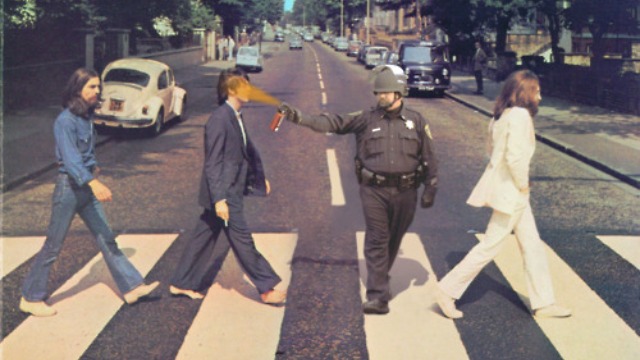
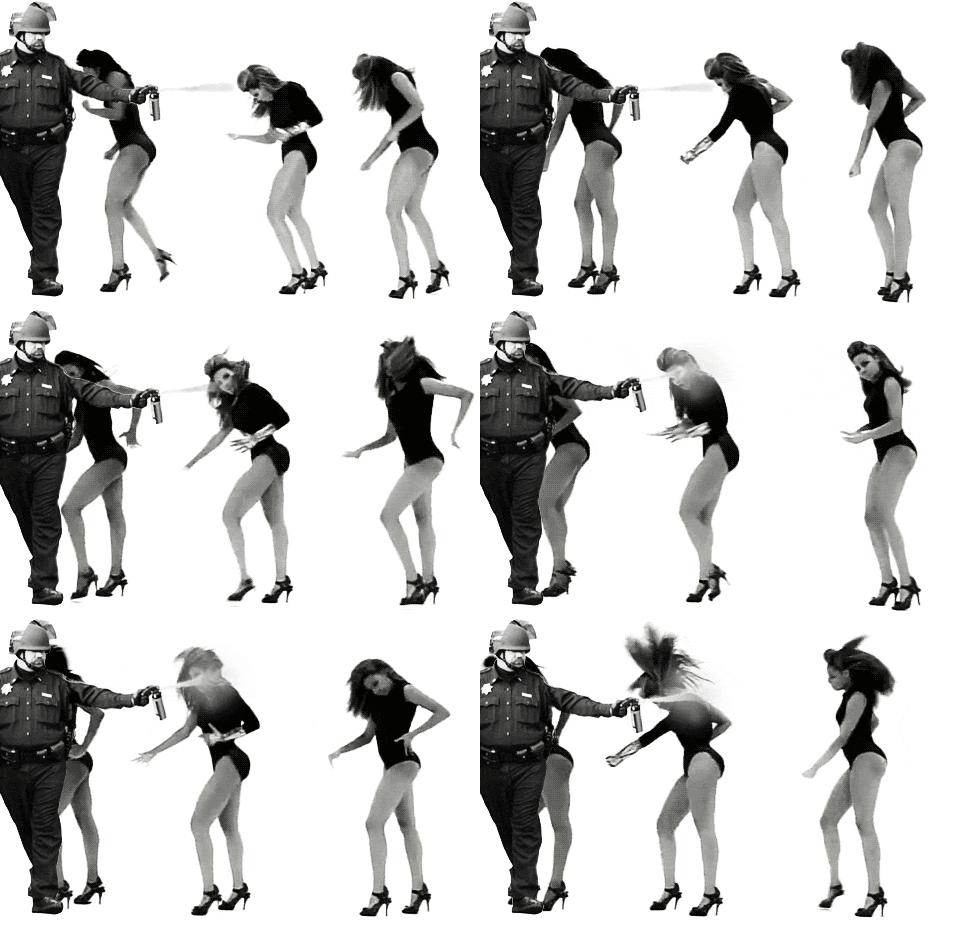
Though the notorious campus police officer Lt. John Pike has long been identified (and turned into countless hilarious internet memes), there were other officers who took action that day. A review of the viral video of the incident shows additional officers pepper spraying student protesters, and carrying them away from their seated positions like sacks of potatoes.

These officers were the subject of an independent report into the incident conducted by former state Supreme Court Justice Cruz Reynoso, which was released to the public in 2012. But the names of involved officers were redacted, and the Federated University Police Officers Association went to court saying those names should be shielded. The Bee filed suit for the names, and was later joined in court by the Los Angeles Times in a legal tussle that lasted two years.

“The University of California Office of the President commissioned and paid for the Reynoso Report with the intent to make it public,” spokesman Steve Montiel said in a statement, according to the Bee. “We attempted to publish the full, unredacted report in March 2012, and the campus police officers’ union brought a lawsuit to keep us from doing so.”

The police union may have had some reason to worry, as officer Pike, 40, claimed in a workers’ compensation suit that he suffered anxiety and depression, as well as death threats. He eventually won a $38,000 settlement, but perhaps he and the other officers should have considered the fallout of spraying peaceful protesters directly in the face beforehand.

The win was handed down Wednesday night, as the police union’s appeal to protect the officers’ names was dismissed by the state Supreme Court. The court is expected to release the names of the involved officers sometime tonight, according to the Bee.

And one last pepper spray meme, because we couldn’t resist:

gif

Video of suspect in Feather beating released

0

The SFPD has released video footage of a suspect in the violent beating of Feather, aka Bryan Higgins, who died last week at SF General:

https://www.youtube.com/watch?v=mWVZhlg4vKE

Police said they had the footage of the suspect during the initial stages of the investigation, but it had been under review for a week and a half until it was released today. Feather’s Radical Faerie community and family had been waiting anxiously for the video’s release.

Feather was found beaten around 7:30am, Aug. 14, near the corner of Church and Duboce streets.

Anyone recognizing the man is urged to contact 415-575-4444 or text TIP411 with “SFPD” at the start of the message.

A memorial fund for expenses incurred by Feather’s death has been set up by his husband and family. 

UPDATE: SFGate is reporting that the footage came from a passing taxi.


Who will run Gleneagles Golf Course? If it’s not the city, who cares?

0

As we watch today’s Recreation and Park Commission meeting on extending political insider Tom Hsieh’s no-bid contract to run the once-public Gleneagles Golf Course — which is being contested by a rival group headed by venture capitalist Brian Smith and notorious landlord attorney Andrew Zacks — we can only hope that both sides lose and the public interest somehow reemerges from this muck and mire.

Particularly disgusting is how poor children of color are being used as bargaining chips in this clash of political and economic elites, as public speaker after speaker (mostly from groups with ties to the Mayor’s Office, where Hsieh has long and deep political ties that allowed him to take over this public space nine years ago without a competitive bidding process) tries to make this decision about teaching poor kids from nearly Sunnydale housing project how to golf.

Yes, that’s what these kids really need, to learn how to play one of the most expensive and elitist sports out there, because with a little support from the First Tee program, they can all become the next Tiger Woods, right? Oh, and of course, given that the Mayor’s Office is in on this strange scheme, it’s also about jobs, jobs, jobs, with the building trades unions also supporting Hsieh and his buddies in the Mayor’s Office.

By all accounts, even CW Nevius’ column in today’s Chronicle and earlier coverage by that paper, Gleneagles is in bad physical shape and has been poorly maintained by Hsieh. Nonetheless, Hsieh blamed rising water rates related to the drought for his problem, last month threatening to close the course unless he got a more lucrative deal with run the course, triggering Smith’s bid for the course and his accusations that Hsieh and his buddies in the Mayor’s Office are pulling a fast one.

“This is a city resource and it is apparently being mismanaged,” Smith told the commission this morning, noting that he only wants to help bring golf to the masses (his side echoes Hsieh’s ruse about “the children” as part of its sales pitch) because “nobody gets into a water-dependent business during a drought, I can tell you that.”

That raises a good question: Why are we devoting city resources to such a water-dependent use of public space during a drought, in an era of global warming when droughts will only become more frequent? But the broader question is this: Why don’t we just return Gleneagles to the city and let it be managed as part of the large McLaren Park that it’s a part of?

Members of the McLaren Park Collaborative spoke at the hearing, urging the commission not to view Gleneagles separately from McLaren, even as they voiced support for Hsieh and thanked him for his fundraising support of their citizen-based group. That’s Hsieh’s main forte, raising money from the rich, which he has done on behalf of the last three mayoral adminitrations and other political schemes by downtown interests and the city’s various political power brokers.

This whole issue stinks, and it’s hard to even care what’s now being said as the commission heads into a closed session discussion of what to do with Gleneagles, particularly given there’s almost no chance that this mayoral appointed commission of political climbers will vote to reclaim this public space for the broad public interest. 

UPDATE: The commission voted unanimously to extend Hsieh’s lease of Gleneagles for another nine years, a decision that must be confirmed by the Board of Supervisors next month. 

Eyewitness claims victim of officer-involved shooting did not brandish Taser

A person claiming to be an eyewitness to the fatal shooting of Alejandro Nieto has come forward to say he did not see Nieto point a Taser at police officers before they opened fire, according to attorney Adante Pointer, who is representing Nieto’s family.

The eyewitness, whose identity Pointer would not disclose, told the attorney that he “did not see Alex point a Taser at anybody” and “did not see or hear any back-and-forth exchange that police said took place,” Pointer said in a phone interview with the Bay Guardian.

At a March 26 town hall meeting convened shortly after the officer-involved shooting, which occurred on March 21 in Bernal Heights Park, San Francisco Police Chief Greg Suhr told attendees that Nieto, a 28-year-old City College student, had “tracked” officers with his Taser in the moments before police discharged their weapons.

“When the officers asked him to show his hands, he drew the Taser from the holster. And these particular Tasers, as soon as they’re drawn, they emit a dot. A red dot,” the police chief said, adding that Nieto had verbally challenged officers when they asked him to drop his weapon. “When the officers saw the laser sight on them, tracking, they believed it to be a firearm, and they fired at Mr. Nieto,” Suhr said at the time.

Pointer said the person who claims to be an eyewitness did not know Nieto, and had no connection to the incident aside from having been in the park on the night that the shooting occurred.

He said that because the San Francisco Police Department was not forthcoming with information in the months following the shooting, “we launched our own investigation to get to the bottom of this.” The eyewitness came forward after his office initiated a concerted effort to gather information, he added.

Pointer, who works with the Law Offices of John Burris, plans to file a federal civil complaint against the city tomorrow [Fri/22].

Today [Thu/21] marks five months since Nieto’s death. Supporters plan to gather in Bernal Heights Park for a 7pm sunset vigil. They’ll return at 5am the following day for a sunrise vigil, featuring Buddhist chanting and a reading of the names of those killed by the SFPD in past decades, according to an event announcement.

Later that day, also at Bernal Heights Park, friends and supporters of Nieto plan to gather at noon for a non-violent “March for Civil Rights Against Police Killings!” The march will progress from Bernal Heights Park to the Federal Building on Golden Gate Avenue, where Pointer will file the complaint.