LEFT OF THE DIAL Any musician who’s just released an album will tell you that a little bit of attention is never a bad thing. But a strongly worded cease-and-desist attorney’s letter from the daughter of Aerosmith’s Steven Tyler wasn’t exactly what the dudes in bAd bAd had in mind when they put out their first, self-titled full-length last month. With a shiny new cassette (!) for sale and a release show at Amnesia May 3, members of the lo-fi mariachi-surf-punk band had good reason to be in high spirits. And then, April 22…
“It’s an aggressive letter,” said singer Christian Zamora, one half of a pair of brothers who, in turn, make up half of the four-piece. “Like, a really, really aggressive letter. We’re supposed to cease and desist within 48 hours, and remove all signs of our existence as bAd bAd online, in fliers, everywhere.” Meaning, of course, that the band wouldn’t be able to sell its brand-new pride and joy, bAd bAd’s debut album.
The accusers in question were badbad, an electro-pop duo out of LA that consists of Chelsea Tylerand her fiance, actor Jon Foster. According to a letter from the duo’s attorney, the San Francisco band has been “capitaliz[ing] on the goodwill and reputation” of the other band. The problem, as far as Zamora saw it? Though the duo’s online bio states that they formed in 2011, they played their first-ever show — “a Tommy Hilfiger party…yeah, I know” — in the spring of 2013, the same year they released their first and only song, and, from what Zamora can tell, the same year they actually trademarked the name. Whereas bAd bAd has been at a sort of low-profile hustle since forming in early 2012, playing regular shows at spots like El Rio and Brick and Mortar Music Hall.
“Why do they even care?” said Zamora by phone on April 23, just after word began spreading amongst Bay Area friend-bands thanks to a Facebook post he’d written. “We play modest shows, and I think we’re good, but it’s nowhere near their scene.” The two bands wouldn’t have even been aware of one another’s existence were it not for a Spotify snafu that ignored their stylization differences and lumped their music together.
The singer, who said his and his brother’s love for mariachi music comes in part from their Spanish roots, decided to have a lawyer friend look into their options and legal obligations, while staring down the prospect of having to give away their debut album for free.
Less a week later? Don’t say social media never did anything for you. Friday, April 25, after the story had been picked up by websites like PandoDaily, Zamora received an email from the other badbad, which had abruptly changed their tune. Explaining that “If there is anything we stand for, it’s fair business,” Foster and Tyler said they had looked “deep within [them]selves” and decided to change their own band name. Zamora and his bandmates wrote back thanking them, adding that “&ldots;this week and the threat of losing our alias has been enlightening in helping us realize just how much we have grown to love the bAd bAd name over the years.”
Long story short: Spirits should be pretty high at this party.
With Cruel Summer, Male Gaze, and Bob Thayer
7pm, $7-$10
Amnesia
853 Valencia, SF
ww.amnesiathebar.com
OTHER RELEASES
Springtime in the Bay Area is beautiful — but if we’re being honest, to the casual observer, it doesn’t look all that different from any other season. Unlike on the East Coast, where the appearance of blossoms and warmer weather serves as sweet, necessary, not-a-moment-too-soon relief from the tyranny of extremity-numbing slush and sleet and monochromatic down-stuffed outfits, the arrival of spring in Northern California is more or less marked by temperatures maybe 5 to 10 degrees warmer than the ones January brought us.
So what sets spring apart? The shit-ton of stuff going on. Restaurant openings, film festivals, museum parties galore. And judging by my overflowing mailbox (yes, the physical, snail-mail one, though my email inbox is similarly bulging), it’s a very popular time for record releases. Here’s a sampling of other new releases from local bands to look for in the next month:
Future Twin
Future Twin have the distinction of being the only band I can think of that could get away with describing their sound as “punkadelic farmageddon moongayz,” and have a first-time listener go “Oh yeah, that pretty much makes sense.” The synthed-out, cinematic vocals-led three-piece has made a name for itself with energetic live shows over the last three years, but 2014 is shaping up to be the year they invade your living room. They’re in the middle of shopping their full-length debut, Wavelength Sovereignty, around to different labels, but in the meantime they’ve decided to reward loyal fans with a very hearty aperitif: Chillality, a five-song “cassingle” the band recorded at Fantasy in Berkeley, out Tue/29; they’re celebrating with a release show Wed/30.
With The Spyrails and What Fun Life Was
8pm, $7
El Rio
3158 Mission, SF
Annie Girl & the Flight
Remember way back in March, when our On the Rise issue told you about the irresistible It Factor in singer Annie Girl‘s stage presence? No? That’s ok, it’s been a rough few weeks for me too. Besides, I have a feeling that with the release of this band’s new EP, Pilot Electric, theirs is a name you’ll have a hard time avoiding in these parts; you might as well catch their spaced-out, hypnotic art-rock at this Fri/2 EP release/tour kickoff show, while tickets to their gigs are still cheap.
Oakland’s Whiskerman is another band that seems like it should be bigger given the affinity our current pop culture zeitgeist seems to have for smoky, Southern-flecked soul-rock. Graham Patzner is a natural frontman if there ever was one, the younger brother of Anton and Lewis Patzner (better known as the mind-blowing, metal-accompanying string duo Judgement Day), born to a symphony violinist and a symphony trombonist. Setting aside how unfair that seems for a minute, Whiskerman isn’t riding anyone’s coattails. Patzner’s clear vocals move fluidly through blues, gospel, and straight-ahead rock ‘n’ roll, accompanied by bass, guitar and drums, as well as his own talents on guitar, keys, and violin. Serious dance parties have been known to ensue; the new EP, Bad News, suggests this could be a continuing problem.
Of all the new releases that have come across my desk over the past month, none has made me feel quite so much like ditching work and taking a drive down 101-south with the top rolled down and the wind in my hair as Adult Life, the debut full-length from SF’s own garage-fuzz-pop five-piece Cocktails. Of course, I drive an ’88 Volvo with very few moveable parts, and wind’s never been very kind to my hair, but you get the idea. Unabashedly catchy and, in places, perfectly snotty odes to summer and relationships are delivered through sonic nods to our ’70s power-pop and classic punk heroes. The album’s not out ’til mid-June, but you can catch new songs at shows throughout May, like at the Make-Out Room May 12.
If there were any doubt that Oakland’s most loveable weirdos had staying power, last week’s firework-filled free Converse Rubber Tracks show at the Chapel — just before tUnE-yArDs took off on tour opening for the Arcade Fire — should have laid that to rest. Nikki Nack, out May 6, is full of R&B grooves and plenty of synthed-out weirdness, lest anyone was worried that singer Merill Garbus would get boring as she achieved more mainstream success. The band won’t be back in the Bay until a two-night stand at the Fillmore June 6 and 7 (with openers Sylvan Esso and Goldie winner The Seshen, respectively) but check this space next week — we’ll be checking in with Garbus from the road in the days before the album officially drops.
FILM It’s no wonder John Turturro’s Fading Gigolo is already shaping up as one of the year’s few indie hits so far — like many such before it, it offers a titillating surface premise belied by the reassuring confirmation of a staid moral outlook beneath. The writer-director plays Fioravante, a middle aged native Brooklynite whose working hours as a florist are shrinking; meanwhile older friend Murray (Woody Allen) faces closing the bookstore his family has operated for three generations. The latter hits upon an unlikely moneymaking scheme when his female dermatologist mentions she and her best friend would pay for the first-time novelty of a three-way. Murray proposes Fioravante provide the meat in their sandwich, and despite all initial resistance, he consents to a trial one-on-one with the client — played by Sharon Stone, so it’s not exactly a huge sacrifice. This goes well, as do appointments with her BFF Sofia Vergara, another socialite bombshell in unlikely need of professional erotic assistance.
It’s with the addition of a third customer that things get complicated: Fioravante gets referred to Avigal (Vanessa Paradis), whose status as widow of an older Hasidic rabbi requires a suffocating level of propriety. Starved for affection, she lets Fioravante (passing himself off as a Sephardic Jew) touch her ostensibly aching back, which is just as bad as a five-alarm coital orgasm so far as her community elders are concerned. Their clandestine meetings do not escape the vigilant notice of an officious neighborhood patroller (Liev Schreiber) already smitten with Avigal, and whose suspicions of criminal activity are enflamed by jealousy.
It’s ironic that while most screen depictions of heterosexual prostitution feature nothing but young, beautiful women servicing men of more realistically variable attractiveness, this ostensible role-reversal keeps the gender inequity just so. Fioravante is a not-so-young, not-particularly handsome man (albeit one made attractive by Turturro’s air of gentlemanly gravity here) who gets only hot numbers as Janes — it’s still a male fantasy, only now the guy is getting paid. Fading Gigolo‘s general affability lets it get away with a boatload of cultural and casting stereotypes, not least Vergara as a fiery Latina who might as well have muy caliente tattooed on her voluptuous flesh. For “plain,” virtuous contrast we get a glammed-down Paradis, the model-singer-actor who’s been France’s leading pop pinup for about a quarter-century. Then there’s Sharon Stone, playing Sharon Stone, which is to say archly channeling two things: a) Aren’t I hotter than ever? and b) I am smarter than the rest of you combined (and hotter too).
There are no unattractive women here — in fact Brooklyn itself seems to have been airbrushed free of clutter, human and otherwise. Even Allen, doing his usual dithery standup shtick, gets a spouse (Tunisian singer M’Barka Ben Taleb) half his age, and who further extends the film’s gloss of multiculturalism as harmless exotica. (It wasn’t clear to me whether the dark-skinned kids running around were their kids, or grandkids — while Avigal’s six children are kept conveniently off screen, lest they spoil the mood of desire.)
Fading Gigolo goes down very easily, even if on his fifth feature behind the camera Turturro remains a sometimes stilted director and careless scenarist. Taking a leaf from Allen’s notebook, this romantic fantasy is shot in warm, soft tones, draped in cool jazz, and takes place in an idealized New York City that’s part nostalgia, part pure imagination. The scented-bath atmosphere allows you to overlook the clumsier, poorly developed bits. And the film’s sometimes naive good nature almost lets it get away with being an entirely narcissistic male daydream of what women really want: an average (but secretly exceptional) guy whom beauties throw themselves at because he alone understands they want to be wooed.
Another guy performing a sort of perfected masculinity for the benefit of needy others is Tom Hardy’s titular character in Steven Knight’s Locke. This virtual solo show has the actor as Ivan Locke, a 40-ish construction manager driving to London on the eve of “the biggest cement pour” ever attempted in Europe. But he’s driving away from that, to the shrill indignation of superiors who expect his reliable on-site supervision, and the increasingly drunken panic of the flunky (voice of Andrew Scott) he’s deputized to take his place. The reason for this unprecedented dereliction of responsibility is that Ivan is committed to another responsibility, to “take care of my fuckup.”
As we gradually realize during his 85-minute drive, that means showing up for the premature birth of the baby he’s sired by a fragile, rather hysterical-sounding woman (Olivia Colman) in the brief sole detour from marital infidelity he’s ever taken. Doing so may well end his career, as well as his long-standing marriage to the mother of his sons. But our protagonist is determined at any cost not to become his own late father (with whom he has imaginary conversations), a wastrel who never made good on his obligations to family or anyone else.
Shot repeatedly in real time with multiple cameras over 12 nights (the actors voicing Bluetooth callers also performed “live” in conference-call fashion), then assembled from 16 full-length takes, Locke is a striking experiment that never quite escapes an air of theatrical stunt. In retrospect you realize most of its tension derives not from the core emotional crises, but from narrative red herrings — primarily our terror that anyone multitasking this recklessly behind the wheel is an accident waiting to happen. But the chameleonic Hardy, playing a rather square, middle-class, essentially humorless type unlike any he’s done before, makes this effortfully “decent” man so compelling you can’t look away. If there’s anything this actor can’t do, he hasn’t tried it yet. *
FILM Almost 10 years ago, a sprawling music doc entitled Metal: A Headbanger’s Journey kick-started the careers of Canadian filmmakers Sam Dunn and Scot McFadyen. Since 2005, the duo has worked on films about Rush, Iron Maiden, and Motorhead; they’ve also collaborated on a doc about Satan and will soon take on a project about “a very important heavy metal band who shall temporarily remain nameless.” Their current feature adds a third co-director, Reginald Harkema, for the colorful story of Alice Cooper, née Vincent Furnier, who’s as famous for songs like 1972’s “School’s Out” as he is for his horror-meets-vaudeville stage shtick.
Though Super Duper Alice Cooper retraces tales that will be familiar to anyone who’s read Cooper’s autobiographies or seen his Behind the Music episode, the directors tried to make the film as visually dynamic as possible, tapping old footage and animation and avoiding any talking heads. On the eve of the film’s premiere at the Tribeca Film Festival, and just ahead of its local screenings, I spoke to them about their approach.
SF Bay Guardian You’ve made a number of rock docs. What’s different about Super Duper Alice Cooper?
Scot McFadyen We’d finished doing Rush: Beyond the Lighted Stage (2010), and we were at an awards ceremony in London, where we were approached by Shep [Gordon, Alice Cooper’s longtime manager] about doing a doc on Alice. We decided that we’d be into it if we could do it in this sort of “doc opera,” highly visual way without talking heads. We thought that would be a really fun challenge. He’s such a cultural icon — I think it’s important for people to realize how much effect he’s had since the early 1970s, and how much an influence he’s been as a pioneering shock rocker.
SFBG Can you elaborate on “doc opera”?
Reginald Harkema The idea came because Sam and Scot have cut their teeth on documentaries, whereas I come in from a feature-drama side. I said, why don’t we take the approach of mythologizing our character? Why don’t we take the usual documentary material — TV appearances and magazine spreads, concerts and photos — and marry it with a rock opera concept? And Alice’s music is perfect for that because he’s very self-referential. His music became the soundtrack to his own rock opera.
SFBG Cooper has been open about his past and this film doesn’t contain any shocking new revelations. How did you strategize around that?
SM Alice is such a showman. He does a lot of interviews, and we hear the same stories over and over. We did, like, 40 hours of interviews with him just trying to get him to go beyond the surface. And it was great to talk with [original Alice Cooper band bassist and Cooper childhood friend] Dennis Dunaway, because he was a big part of creating that character and bringing the band to life.
RH Also, when we were talking to Bernie Taupin, he wanted to tell the real story of his experiences with Alice, which involved cocaine and freebasing, which he felt a little bit guilty about bringing Alice into. And Alice has been very protective of that part of his past being revealed until now.
SFBG How did you choose your interview subjects?
RH We didn’t want to have any journalistic voices in the film, or anyone observing Alice from an analytical point of view. We treated it more like a drama, in the sense that people enter the story as Alice moves through his life. So obviously, Dennis at the outset, meeting Shep Gordon, and eventually we hear from Elton John, who was really blown away by his concert at the Hollywood Bowl. We really wanted to talk to the pivotal characters in terms of Alice’s development as an artist.
SFBG Coincidentally, the doc Supermensch: The Legend of Shep Gordon is also about to hit theaters. Have you seen it?
SM Yes! It’s funny, because you’ll see there are a couple of stories in there that are similar to our film — and what’s great is that they’re completely different in his doc than in Alice’s doc. It really shows you how everyone’s memories are affected from that period. By the end, [Supermensch] is much more about Shep and his life than about him and Alice, but there are some moments of crossover for sure.
SFBG Supermensch is directed by Mike Myers, which leads to the obvious question: why no Wayne’s World (1992) clips in your movie?
SM We’d seen the docs about Alice in the past, but it seemed like the most Shakespearean, dramatic moment of his life was when he stepped onstage sober. And that was in 1986. That was the point where this Jekyll and Hyde character was able to overcome his demons. Yeah, he went on and did “Poison” and had a number one hit with that, and then did Wayne’s World, but that was after the endpoint of our story.
SFBG Ending the movie in the 1980s also allows you to avoid going into Alice’s conservative political views.
RH He’s pretty apolitical, really — he’s a rich guy who lives in Arizona. He’s no Ted Nugent. But the goal of the story was to talk about how this kid, Vincent Furnier, transformed into the character of Alice Cooper. If you ask any performer, especially vocalists, they’ll tell you they go through some sort of transition before they go onstage. I think what makes Alice unique is that he becomes this character. And so while we didn’t necessarily want to touch on the political side of his life, we did want to show that this was a nice Christian kid from suburban Phoenix who became the godfather of shock rock. It was important to us to paint that picture. *
SUPER EGO “People shouldn’t actually call me sir,” Pete Tong says over the phone, that legendary radio voice of his immediately springing 21 glorious years of BBC Radio 1 Essential Mixes up in my mind. “I was recently awarded an MBE, which is a big honor, being recognized as a distinguished individual in the UK. I’m pretty sure it’s the first time someone from the electronic dance community’s gotten it. But it’s not a knighthood. I didn’t have to kneel before Her Majesty or anything.”
“Of course,” he adds, “if someone wants to call me ‘sir,’ I won’t discourage them.”
Two or three generations of dance music fans who grew up on his show might bow to that suggestion. Pete, who recently relocated to Los Angeles from London (“Why? Well, I’m speaking with you poolside”), and for the record can charm the pants off a telephone pole, is in a unique, possibly historic position right now. He’s a globally recognized and respected DJ and dance music advocate who can effortlessly straddle the pop-chart popular and the heady underground. And he’s arriving in America with a new nationally syndicated radio show (hear it here on KYLD, Sundays 11pm-midnight), just as our dance community seems the most divided it’s ever been.
“I look at the differences between the pop EDM scene and the more underground scene and I see opportunity. I’m a glass-half-full kind of person. But it’s already been five years since David Guetta had that big hit and people like Deadmaus and Skrillex began to break. Now’s when we start seeing if they’ve paved the way for ambitious acts with a different sound, like Disclosure and Rudimental, to break through on that scale. It’s very exciting. Maybe I’m optimistic, but I see a second wave breaking that can include the best of both worlds.”
That’s a refreshing viewpoint, and his recently announced All Gone to Sea cruise (www.allgonetosea.com), which somewhat disorientingly mixes the likes of Calvin Harris, Scuba, Steve Angello, and Jackmaster in its lineup, bears out his rosy outlook. As for his DJ sets, however — like the one Fri/2 at Public Works — he still lands firmly on the underground side: Check out his gorgeous April Mixmag Lab mix for a taste of what he brings to our shores.
“I absolutely love San Francisco. The history, especially when it comes to music, demands respect. You can’t dumb anything down when it comes to SF, there’s such a cultural heritage. Not that I won’t play banging tunes. But you like to think a bit on your feet, don’t you?”
Pete Tong with Tim Green, Fri/2, 9:30pm-3:30am, $15–$25 advance. Public Works, 161 Erie, SF. www.publicsf.com
ALL OF THE ABOVE
Your chance to check out wee, chic new club Mercer with some solid future bass and uptempo soul from DJ Bluz, King Most, Freddy Anzures, and Marky.
Before everyone slips down the glowing rabbit hole formerly known as the Detroit Electronic Music Festival, the As You Like It crew is lubing it up with ace techno players DVS1, John Osborne, and Keith Kamp.
Fri/2, 9pm-4am, $15 advance. Monarch, 101 Sixth St, SF. www.monarchsf.com
CHROME CANYON
If you tell me there is this incredible synth nerd recreating the beautifully mad ’70s sci-fi filmscapes of composers like Vangelis and Tangerine Dream, but dance-y, I will scream, “Where?!” and you will say, “At the monthly Push the Feeling party, duh.”
Motown on Mondays started out as a lark at Madrone Lounge — and now it’s spread its weekly magic to cities all over the country. Big ups to DJs Gordo Cabeza, Timoteo Gigante, and crew, blowing up this special bash with the Con Brio and Brass Magic bands.
Sat/3, 730pm doors, 8pm show, $20. The Independent, 628 Divisadero, SF. www.theindependentsf.com
PANTHA DU PRINCE
Sheer organic audio wizardry from this “sonic house” pioneer, breaking dance music down to its atomic parts and rearranging them, via unexpected live instruments, into gorgeous prisms.
DANCE “Location, location, location” is real estate’s mantra, as those of us who keep running up against it know only too well. But location has also become essential to dance, especially for artists who want to forego the theater and make the outside world their stage.
For the last six years, Dancers’ Group, the Bay Area’s dance service organization, has sponsored the ONSITE series, weaving free dance performances into the urban fabric. Recent events have showcased Amara Tabor-Smith’s He Moved Swiftly (various locations), Jo Kreiter’s Niagara Falling (Seventh and Market streets), and Erika Chong Shuch’s Love Everywhere (City Hall Rotunda). Sara Shelton Mann’s The Eye of Horus, performed in Jessie Square, is the latest addition. She could not have chosen a better location.
Gently terraced and surrounded on three sides by glass and steel — but also the warmth of the old bricks of St. Patrick Church and the newer ones of the Contemporary Jewish Museum — Jessie Square opens itself to the greenery of Yerba Buena Gardens. The totality suggests an urban environment in which disparate perspectives (nature and culture, the past and the present, private and public spaces) harmoniously bump against each other.
In other words, Jessie Square was a perfect stage for Mann to send her dancer-disciples into a 40-minute performance in which they revealed different aspects of themselves, inspired by the way the Egyptian god Horus embodied multiple identities.
Each of the four — Christine Bonansea, Jorge de Hoyos, Jesse Hewit, and Sara Yassky — had developed a multi-sectional solo that, according to the preperformance information, was based on archetypes as derived from Caroline Myss’ book Sacred Contracts. Whatever the generating forces for these solos were, in performance they emerged and receded into the much larger activities at Jessie Square, the whole becoming a kind of moving tableau vivant. The dancers transformed lunchtime crowd actions — eating, talking, strolling, and waiting — into something beyond the commonplace. They injected poetry into daily life.
Generous and welcoming as these types of performances are, I personally miss the more intimate and more focused encounters that inside spaces offer. Mann and production designer David Szlasa stepped in with props or directions as needed. In a favorite moment, Szlasa’s breadcrumbs coaxed a flock of pigeons into a procession across the square. Mann pulled Bonansea up to her full height to send her off on an imaginary tightrope; she also shushed (or at least I think she did) Hewit’s screaming tantrum. Later on, when he sat immobile in a beggar’s pose, she brought him what I first saw as a fishing rod. It was a whip.
Eye is fullof small incidents — some touching, some hilarious, some nonsensical — controlled by planning and a lot of serendipity. Hewit tried a shoulder stand, holding a carnation. De Hoyos raced along a diagonal as if shot from a bow. Yassick played what looked like a solitary game of bocce ball. Interspersing these lighter incidents were moments of anguish, lack of stability, and a sense of mortality. At one point or another, just about everyone looked dead as the plank that de Hoyos dragged around.
Bonansea bitterly wept as she put her clown makeup on; her mad laughter while racing the square became monstrous. Yassky, apparently in severe pain, rubbed a balloon against her belly and approached a passerby who politely put his phone away to acknowledge her.
Sometimes, the dancers disappeared in the crowd. I had lost sight of de Hoyos when someone pointed him out leaping and gesticulating on top of the parking garage. If there were any narrative suggestions, it was the ongoing give and take between de Hoyos and Mann. Or perhaps it was Bonansea marching up to de Hoyos, who had dropped to the ground after his lovely ballad fragment. In her best French rhetorical manner, the petite performer started a discourse (on, among other things, mortality) and the corpse in front of her. She finally decided that theory had run into reality and proceeded with mouth-to-mouth resuscitation.
If Bonansea was something of clown figure, the powerful Yassky seemed imprisoned inside her own body. She is a slender, gamine performer, and I don’t think I ever saw her relax. When she held her limbs tight to her body, they looked like they were enchaining her. When she crouched on a tiny stool on one leg, she repeatedly spilled water and salt offered to her. Whispering into a mike, she asked for help. Clawing her throat while lying on her back, she looked about ready to expire.
For all the portentous self-examination in Eye, the work was free-spirited, unpretentious, and yet quite serious. The boom box sound score, however, needs rethinking; much of it was too blatantly obvious. While Eye greatly benefited from its gorgeous location, at times it looked too thin, dissipating some of its energy. It probably will benefit from the additional performers — Sherwood Chen and a group of community volunteers — who will join the final show Sat/3. *
Passover ended last week — Bubbe’s back in Florida, gefilte fish leftovers have been composted, and matzoh crumbs no longer spangle your favorite hoodie. But the saga of an oppressed people throwing off its shackles under the auspices of a vengeful yet baffling god remains timeless. Arthur Szyk and the Art of the Haggadah, a magical exhibition at the Contemporary Jewish Museum (www.thecjm.org) through June 29, displays the story of the Jews’ ancient exodus from Egypt as illustrated in one of the world’s most beautiful books.
Szyk (1894-1951), a Jewish Pole who emigrated first to France in 1927 and then to the UK and US, was an ambitious and popular illustrator and artist whose work became more politically engaged with the rise of National Socialism in Germany. As early as 1933, he equated Hitler with the pharaoh of the Torah in his work. This eventually led to a fully illustrated Haggadah, the Passover dinner ceremony guide that retells the story of the Jews’ flight from Egypt.
Taking what seems like equal influence from illuminated medieval manuscripts, Art Nouveau style, Eastern European folk art, and satirical cartoons, the 48 exquisite illustrations teem with contemporary references — for example, the “wicked son” in the story of the four sons sports a Hitler-like mustache. (Many of the drawings also prominently featured swastikas, until they were painted over upon the book’s release in 1940, perhaps in capitulation to the British publisher.)
Beyond the prescient political bite, though, of this classic book — like many Jewish kids, my husband received a replica as a bar mitzvah present — lies its sheer artfulness. The small pages, Mughal miniature-like, brim with gorgeous calligraphy, eye-popping design elements (Szyk based his layouts on graph paper), touching portraits, and a veritable bestiary of symbolic animals. It’s an epic piece of storytelling, which has become part of the epic story itself.
The Golden State Warriors’ announcement that its planned 18,000-seat basketball arena would be moved off the San Francisco waterfront was fresh in everyone’s mind when former San Francisco Mayor Art Agnos visited the Bay Guardian office on April 23, and he was electrified by the win.
“I resent anyone suggesting that this is not a genuine people-powered victory — again,” Agnos said. “Because that’s what it was, bottom line.”
The former mayor has traveled up and down the city in recent months promoting Proposition B, an initiative on the June 3 ballot that may well have cleared the Warriors Arena from its proposed waterfront perch at Piers 30-32 had the team not announced that it would be taking that step independently.
If it passes, Prop. B will require voter approval for any development project along city-owned waterfront property that exceeds height limits set by the Waterfront Land Use Plan approved in 1997. Such a rule would have squarely targeted the Warriors’ proposal.
The sports arena had been slated for a 13-acre parcel a stone’s throw from the Bay Bridge that is now a parking lot, where it would have hovered above the water like a floating spacecraft. Across the street, at a site known as Seawall Lot 330, the Warriors had proposed installing shops, parking, a condo tower, and a hotel.
Agnos and the backers of Prop. B hadn’t anticipated the Warriors’ announcement that its waterfront venue would be moved to private property, a 12-acre lot in Mission Bay purchased from tech giant Salesforce.com.
“We thought, because people at the top of this city’s government told us so, they would prevail,” Agnos said of Mayor Ed Lee and others championing the waterfront arena. “They didn’t.”
Agnos and his allies say it was the prospect of voters having to sign off on a proposal that was hatched behind closed doors that caused the Warriors to choose a more appropriate location.
“We helped them go to a different place where we now support what they’re doing — because it makes more sense for this city, and for our bay, as well as our waterfront. That’s what the issue is,” Agnos told us. “The spin doctors had their ass handed to ’em … had their ass handed to ’em, by a low-income group of allies, over their $20,000–$30,000, gold-plated contracts per month. And so now, they understand.”
They understand that the waterfront of San Francisco is a battleground and the people are willing to fight to ensure the public interest trumps private profits.
A rendering of proposed development at Pier 70, envisioning tech offices and housing.
PRECIOUS PARCELS
A historic map hanging in a corridor at the Port of San Francisco building, in a rehabbed terminal at Pier 1 along The Embarcadero, traces the original curve of a coastline that once separated the city from San Francisco Bay.
The existing waterfront juts out considerably from where its natural edge once fell, and today’s urban landscape features a mix of entire neighborhoods, tall buildings, parks, restaurants, merchant corridors, and transport terminals, all perched atop fill covered by layers of concrete.
Its shipping days long gone, much of San Francisco’s human-constructed waterfront now serves as a draw for visitors, the iconic subject of countless tourist photographs. But at other locations along the shoreline, vacant waterfront parcels are hotly contested land-use battlefronts.
“We’re clearly in a period of significant controversy,” the Port’s Special Project Manager Brad Benson told us. The Warriors Arena, Benson said, had been an opportunity for the Port to rehabilitate and generate revenue from Piers 30-32, which originated as two finger piers constructed in 1912, joined by a concrete slab in the 1950s.
Despite being in control of some of the most valuable real estate along the West Coast, the Port of San Francisco remains in a perpetual financial pinch, due to its need to fix up crumbling piers and aging infrastructure. The Port is governed by a Waterfront Land Use Plan, outlining possible uses for each parcel, and it also conducted a survey to identify properties that could be developed to help generate revenue.
“The Port has a big capital need,” Benson said, noting that many of the “piers and buildings were beyond their useful life when they were transferred to the city” from the state in 1968. Facing nearly $2 billion in capital needs, the Port’s modus operandi is to seek out private developers to partner with on development projects for parcels under its ownership, in order to secure funding that would go toward backlogged improvements.
That didn’t happen with the Warriors, however — the sports team approached the city out of the blue, and the project quickly won the fervent backing of Mayor Lee, who has appointment power over the five-member commission that governs the Port. At one point, Lee even claimed that this flashy sports arena would be his “legacy project.”
To longtime grassroots activists who are deeply involved in how land-use decisions are made on valuable waterfront parcels, it looked to be yet another example of what Prop. B supporter Jennifer Clary called “kneejerk development” — out of sync with carefully thought out shoreline planning efforts.
“The Port gets jerked around by every mayor,” said Clary, president of San Francisco Tomorrow, part of the coalition backing Prop. B. “Every mayor comes up with some stupid project.” She ticked off a list of failed waterfront developments (such as Mills Mall, proposed for Piers 27-31; and a 50-story U.S. Steel Building that would have towered over the Ferry Building), only to have them voted down or halted by grassroots neighborhood activists who viewed them as inappropriate designs fueled by greed and greased by political connections.
Behind the objection to Prop. B, Clary added, “is that the mayor will have to think a little more” before backing projects of this nature.
Whether opponents of the Warriors Arena plan looked at it and saw a traffic nightmare, an inappropriate use of public land, or a bad financial deal for a city needing to contend with ever-growing pressures on its critical infrastructure, members of the coalition that’s backing Prop. B feared the public would have little sway when it came to the final decision-making. A bid to restore that balance, by arming voters with veto power under the law, was the impetus behind Prop. B.
City Hall has ignored the will of regular folks who collectively own Port land along the shoreline, said Agnos, campaign consultant Jon Golinger, and Prop. B proponent and Sierra Club volunteer Becky Evans — listening only to the Mayor’s Office and deep-pocketed developers who stand to make millions by building on extremely valuable land that’s held in the public trust under California law.
“The people are putting the developers in touch with the values of this city, and what we want in this city,” Agnos said, thumping his index finger on the table to emphasize the point. “Prop. B puts people in the room who have not been there, and now [developers] have to pay attention.”
The task of developing Piers 30-32 would have required expensive substructure modification, requiring the involvement of bureaucratic agencies such as the US Army Corps of Engineers, the Bay Conservation Development Commission, and the State Lands Commission. The Warriors estimated that it would invest $120 million in improvements such as seismic upgrades and an elevation grade to deal with the looming problem of sea-level rise, but the threat of having to win voter approval represented yet another hoop to jump through. So when a new option opened up offering greater certainty, the Warriors pulled the plug on Piers 30-32.
Even though Lee’s “legacy project,” the main physical target of Prop. B, is no longer a factor in the June election, backers of the initiative say the measure is still important to restore democratic balance in a development process that freezes out ordinary citizens. Opponents, meanwhile, say the initiative threatens to undermine a complex planning process that engages the public and needn’t be tampered with.
IN THE PIPELINE
Prop. B would prohibit city officials from approving taller buildings than are currently allowed under zoning for Port-owned waterfront parcels, unless voters give those height increases a green light at the ballot box.
Since many of the properties in question are already built out, or preserved by historic landmark designation, Prop. B would impact only a handful of waterfront lots that remain in play as potential sites for new development. Among them are Piers 30-32 and Seawall Lot 351, the site of the 8 Washington luxury condo tower that the electorate flushed down the tubes in a decisive ballot referendum vote last fall, despite Board of Supervisors’ approval.
The same group that opposed 8 Washington launched Prop. B. Last year’s ballot referendum — also named Prop. B, and buoyed by the campaign slogan No Wall on the Waterfront — asked voters whether they favored increasing building heights above the zoning limit at the waterfront site where the luxury condo project would have gone.
San Francisco voters, in no mood to support a high rise for the superrich at a time when anger over skyrocketing rents was bubbling over and droves of low-income residents were being edged out by eviction, shot it down. Many political observers took the outcome as a signal that City Hall politicians are out of touch with voters.
Simon Snellgrove, the developer of the failed 8 Washington project, is reportedly working on a new building design. But since any new plans for 8 Washington are embryonic at best, and the fate of Piers 30-32 is anyone’s guess, the Prop. B ballot measure has immediate implications for two waterfront developments in particular.
One, on and around Pier 48, is being pushed by the San Francisco Giants. The other lies farther south, at Pier 70, a sprawling strip of waterfront that runs behind Illinois Street, from The Ramp restaurant at Mariposa to the old Potrero Power Plant.
The Giants’ planned development would be a short distance from AT&T Park.
During World War II, some 18,500 workers built ships at Pier 70 for the war effort, in brick and metal warehouses that still stand vacant and dilapidated. The site also housed a coal-fired power plant that was later converted to natural gas, leaving behind toxic residue that is up to Pacific Gas and Electric Co. to remediate. Farther north along Pier 70, BAE Systems conducts ship repair, a task that has been performed at the site since 1868.
Today, a 28-acre parcel of Pier 70 that is proposed for development by Forest City is home to nothing more than pigeons, feral cats, and the occasional hawk that swoops into a cavernous metal-roofed structure that stands near the waterfront and dates back to 1941, barely visible from the street. Someday in the not-so-distant future, developers imagine it will be populated with tech office workers (Google is used as an example of an anchor tenant in slides presented to the city), makers and small vendors, and thousands of residents who would call the place home.
The site is zoned with a 40-foot height limit, but developers are considering plans with a range of building heights that would be on a similar scale to Mission Bay. Part of the improvements to the property will require raising the elevation grade to deal with sea-level rise. Forest City has planned for a minimum of around 1,000 residential units — the majority market-rate, but with a mix of affordable housing as well.
Representatives from Forest City said that if Prop. B passes, “We’ll be prepared to seek voter approval with a dynamic project guided by … a community-based master plan,” and had not taken an official stance on the ballot measure. If voters were to reject an increase of the 40-foot height limit at the site, which is zoned for heavy industry, the project would no longer be financially feasible.
GIANT TOWER SCRUTINIZED
At Seawall Lot 337, a parcel near the Giants’ stadium which is primarily used as a parking lot during baseball games, the team is backing a project that would include 3.5 million square feet of new residential, office, and retail development, possibly including a 380-foot tower. Across the way at Pier 48 would be a new Anchor Steam brewery, and about five acres of open space.
The Giants plan resulted from the Port’s request for potential development partners to submit bids for that property, which went out in 2007.
“They very quietly have been pushing a plan that Prop. B made public,” Golinger said of the Giants’ plans. “They screamed at everyone involved in our coalition during the signature drive to get us to drop it. They funded a lawsuit … to get it kicked off the ballot.”
The Guardian independently confirmed that the team is part of the group that has challenged Prop. B in court. That legal challenge was unsuccessful in getting the initiative struck from the June ballot, but a judge could take up the question again if Prop. B is approved.
The parcel where the Giants have pitched a rental housing, office, and retail complex with a maximum height limit of 380 feet is zoned with a height limit of zero, zoned for open space in city plans. Nevertheless, “The [Port’s request for qualifications] called for developing up to 300 feet,” Benson explained, calling the current zoning “a remnant of the old Mission Bay plan,” which envisioned a park with wetlands and open space. The Port’s request for proposals went out after a subcommittee was formed, and public hearings were held on the design plans.
Asked why the Port would bake such a tall height limit into its RFQ, Benson responded, “There was a desire to avoid replicating the heights at Mission Bay,” the nearby redevelopment area characterized by lower, boxy buildings that seem to be universally regarded as ugly and lacking charm.
Few people are as intimately familiar with Mission Bay as Corinne Woods, whose houseboat is enveloped on either side by the sprawling development. When Woods first claimed a berth at Mission Creek for her floating home in 1985, “it was surrounded by open empty fields, abandoned warehouses, and lots of fennel,” she said. “We had wonderful parties.”
Outside her dock just off Channel Street is a community garden, a strip of green space shaded by willow and eucalyptus trees where night herons take refuge. Just beyond that is the Mission Bay South redevelopment area, a sprawling construction site that’s ushered in building cranes, swirling dust, pile drivers, and more recently, a five-alarm blaze that required the entire Fire Department to extinguish.
The fledgling neighborhood that now occupies the already-built part of Mission Bay might as well have dropped out of the sky, and the building profiles are wide and flat. “I would rather see slim, articulated towers, with more open space,” Woods admitted.
In the years between 1985 and today, Woods has fought the Port on behalf of her live-aboard community to be allowed to remain floating in place, becoming an unlikely expert on the byzantine process of waterfront planning along the way.
As a key member of half-dozen or so community advisory groups formed to weigh in on major waterfront developments, Woods has ardent faith in the civic engagement aspect of the planning process. She fears Prop. B could upset years of careful neighborhood negotiations by limiting the discussion to nothing more than a conversation about height limits.
Corinne Woods opposes Prop. B.
Woods is a plaintiff in the lawsuit the Giants are funding to challenge Prop. B, aligned with developer-friendly housing activist Tim Colen and building trades head Michael Theriault on the side that opposes Prop. B. But despite the millions of dollars that are on the line, Woods insists she has no dog in this fight. “I can’t even get free tickets to Giants games,” she said.
She does hope for the five-acre park that the Giants plan would install as part of the Seawall 337 / Pier 48 plan, a short walk from her houseboat. But she says her opposition to Prop. B is rooted in her experience of a traditional planning process that rewards neighbors who have the patience to sit through hours of grueling advisory group meetings with negotiating power vis-à-vis developers. Asked directly what the problem is with letting voters weigh in, Woods responded, “Because they don’t know what the fuck they’re talking about!”
But that leave-it-to-the-experts attitude is just the thing that Prop. B’s backers say is dangerous for waterfront planning, since it places final decision-making in the hands of profit-seeking real estate interests, a public agency in dire need of funding, and a mayor with political ties to developers.
THE HOUSING QUESTION
Given that the thrust of Prop. B is to democratize the planning process, few are in a hurry to align themselves with the formal No on B campaign — most of the opposition money seems to have been funneled into the Giants’ lawsuit, even though the Giants have officially taken a neutral stance on Prop. B. However, the message from opponents of Prop. B is that the initiative would kill sorely needed housing.
The Port of San Francisco, which is legally barred from taking a position on the initiative, reported in a February analysis to the Department of Elections that it could have the effect of leaving between 1,990 and 3,690 new housing units “delayed, reduced, or abandoned,” including between 268 and 596 affordable units. Those figures are based on early project proposals brought by the Warriors, the Giants, and Forest City, assuming those planning proposals would be “delayed by a need for a vote, or rejected by the voters” under a Prop. B regime.
A nonbinding Giants term sheet notes that the team would build rental housing, 15-20 percent of those units affordable, while Forest City’s Pier 70 proposal includes 1,000 new housing units with on-site affordable that would exceed the 12 percent required under city law.
Targeting housing “is a scary message,” campaign consultant Golinger said, charging the opposition with preying on voters’ fears to encourage people to vote down a measure that would democratize waterfront planning.
“This myth that we’re trying to stop housing is just that,” Agnos chimed in. “It’s just a political ploy by those who want to build high-end, high-rise, luxury condos — a la 8 Washington, a la Giants — on public property.”
The housing question is key. At a time when so many people are facing eviction or being priced out, the refrain that building more housing is the only solution to relieve pressure is oft-repeated, particularly by developers. However, these projects would introduce far more market-rate units than affordable projects, plopping down well-to-do neighborhoods in spaces that have sat on the margins in recent history, further changing the social character of the city. And proponents of Prop. B question whether the waterfront is really the right place to add new affordable units.
Meanwhile, the affordable housing community seems to be aligned in its support of Prop. B. The San Francisco Tenants Union, the Affordable Housing Alliance, the AIDS Housing Alliance of San Francisco, and other organizations that have aligned to push for stronger tenants’ rights and promote affordable housing have all endorsed the measure.
WHO DECIDES?
Given the popularity of a measure that fundamentally seeks to democratize the planning process, all development teams with skin in the game have declined to take a position on the measure. So have Mayor Lee and Board of Supervisors President David Chiu, who each played significant roles in recent waterfront battles, with Lee championing the Warriors Arena and Chiu opposing 8 Washington and assisting with the signature-gathering effort to stop it.
Sup. David Campos, in contrast with Chiu and Lee, has taken a stance on Prop. B. In a recent interview, he outlined his reasons for supporting it.
“I think that something has happened in City Hall, where I think the approval process is such that it has led to certain projects being approved that don’t really reflect the reality of what this city needs, and that have truly left the public out of the process in a meaningful way,” Campos told us. “And 8 Washington passed 8-3 at the Board of Supervisors, with a supermajority. The fact that the voters overwhelmingly rejected that project tells you that there has been a disconnect between what the board and folks in City Hall are doing, and where the public actually is.” To correct that imbalance and allow more San Franciscans to shape the city’s waterfront, Campos said, “I think it’s appropriate for us to go to the ballot and let the voters decide.”
The San Francisco City Attorney’s Office last week filed a pair of lawsuits against local landlords who illegally rent out apartments on a short-term basis, units that had been cleared of tenants using the Ellis Act. Meanwhile, the San Francisco Tenants Unions has hired attorney Joseph Tobener to file more such lawsuits, and he is preparing to file at least seven lawsuits involving 20 units.
The lawsuits are the latest actions in a fast-moving crackdown on Airbnb and other online companies that facilitate short-term apartment rentals that violate city laws against converting apartments into de facto hotel rooms, including VRBO.com and Homeaway.com.
Board of Supervisors President David Chiu recently introduced legalization that would legalize, limit, and regulate such rentals, a measure that will be considered this summer. That legislation comes on the heels of Airbnb’s decision to stop stonewalling the city (and us at the Guardian, which has been raising these issues for the last two years) by agreeing to start paying the transient occupancy taxes it owes to the city for its transactions and creating new terms of service that acknowledge its business model may violate local laws in San Francisco and elsewhere (see “Into thin air,” 6/6/13).
As we’ve reported, City Attorney Dennis Herrera has been working with tenant groups and others on a legal action aimed at curtailing the growing practice of landlords using online rental services to skirt rent control laws and other tenant protection, removing units from the permanent housing market while still renting them out at a profit.
“In the midst of a housing crisis of historic proportions, illegal short-term rental conversions of our scarce residential housing stock risks becoming a major contributing factor,” Herrera said in a public statement. “The cases I’ve filed today target two egregious offenders. These defendants didn’t just flout state and local law to conduct their illegal businesses, they evicted disabled tenants in order to do so. Today’s cases are the first among several housing-related matters under investigation by my office, and we intend to crack down hard on unlawful conduct that’s exacerbating—and in many cases profiting from—San Francisco’s alarming lack of affordable housing.”
Tobener tells the Guardian that the San Francisco Tenants Union hired him to discourage local landlords from removing units from the market. “The San Francisco Tenants Union is just fed up with the loss of affordable housing,” Tobener told us. “It’s not about the money, it’s about getting these units back on the market.” (Steven T. Jones)
SF LOOKS TO MARIN FOR RENEWABLES
Just in time for Earth Day, a renewed effort to reduce the city’s carbon emissions was introduced at the April 22 Board of Supervisors yesterday. Sup. John Avalos introduced a resolution calling for a study of San Francisco joining Marin Clean Energy, which provides renewable energy to that county’s residents.
The move is seen largely as an effort to circumvent Mayor Ed Lee’s opposition to implementing a controversial renewable energy plan called CleanPowerSF (see “Revisionist future,” April 15).
“Mayor Lee and the Public Utilities Commission objected to CleanPowerSF, but they have offered no other solution to provide San Franciscans with 100 percent renewable electricity,” Avalos said in a public statement. “With this ordinance, we can either join Marin or we can implement our own program, but we can no longer afford to do nothing.”
The resolution is the latest effort in the long saga to implement CleanPowerSF, San Francisco’s proposed renewable energy alternative to PG&E, whose current energy mix is only 19 percent renewable. Much of PG&E’s current mix is dirty and directly contributes to half of San Francisco’s carbon footprint, according to the city’s own recent Climate Action Strategy.
Joining Marin under a Joint Powers Authority would provide a vehicle for San Francisco to enact CleanPowerSF’s goals, long blocked by the mayor. San Francisco’s renewable energy effort may have lingered in legal limbo for years, but Marin made the switch to renewables in 2010.
“It’s something people want, and it also reduces greenhouse gas emissions,” Marin Clean Energy Executive Officer Dawn Weisz told the Guardian. Much of Northern California, she noted, has little choice but to use PG&E for their electricity.
“The people never chose to have a monopoly in place,” she said. “People like having choices.” (Joe Fitzgerald Rodriguez)
BEACH FIRES CONTAINED
The National Parks Service is once again moving to limit and maybe even ban fires on Ocean Beach, replaying an episode from 2007 that was temporarily solved by volunteers and artistic new fire rings placed by the group Burners Without Borders, despite a lack of follow-through by NPS’s Golden Gate National Recreation Area.
Citing complaints about burning toxic materials, leaving messes, and people drinking on the beach (gasp!), the GGNRA this week announced a summer pilot program that would include moving the curfew up from 10pm to 9pm, installing a dozen new fire rings, and improved public outreach and monitoring of the conditions on the beach.
“We [have] over the years seen a rising problem over safety and general breaking of park rules like broken bottles. And with incidents of assault and underage drinking, mostly occurring during the night, GGNRA Area Director Howard Levitt told the Guardian.
But Tom Price, who helped create the 2007 compromise, said GGNRA never kept its end of the bargain — such as installing more rings to supplement the half-dozen created by artists, or creating visible signage so visitors would know what the rules area — and now it’s acting in a rapid, unilateral, and unreasonable way to ban beach fires.
“They never did the outreach or education or put out more fire rings,” Price said, urging people to let GGNRA know they support allowing fires on Ocean Beach, one of just two spots within GGNRA jurisdiction where they’re allowed (Muir Beach is the other). “The Parks Service has to be reasonable, and banning fires after 9pm in not reasonable.” (Steven T. Jones and Bryan Augustus)
TAX WEALTH, PIKETTY SAYS
French economist Thomas Piketty got a warm welcome in San Francisco last week when nearly 200 people turned out to hear him discuss what is fast-becoming the defining book of this new Gilded Era of escalating disparities in wealth: Capital in the 21st Century.
“The book has been so popular that Harvard University Press has run out,” The Green Arcade owner Patrick Marks said in introducing Piketty at a the April 22 event held across Market Street from the bookstore, in the McRoskey Mattress Company, in order to accommodate the large crowd.
Indeed, Capital has recently been lauded by a string of influential publications, ranging from The Nation through The New York Times to the Wall Street Journal, all acknowledging this as perhaps the most exhaustive study on wealth data ever collected — and a clear-eyed warning that capitalism isn’t the self-correcting system that its biggest boosters claim it is.
Piketty’s work shows how when the return on capital is greater than the annual growth rate of the overall economy, which is usually the case (except when interrupted temporarily by the major wars of the 20th Century, or the 90 percent tax rate on the highest US incomes after World War II), that dynamic consolidates wealth in ever-fewer hands, which is bad for the health of the economic system. The only real cure, Piketty concludes, is a progressive global tax on wealth. Yet Piketty tries to avoid being too prescriptive, choosing to let his research speak for itself. “All I’m trying to do is present this book so everyone can make up his own mind,” Piketty told the gathering. In fact, he thinks the cure he outlines at the end of his book is less important than what comes before it: “You can disagree with everything in Part IV and still find interest in Parts I, II, and III.” (Steven T. Jones)
Senate Bill 1262 was introduced in the California Senate on Feb. 21 by veteran legislator Lou Correa. It is a medical marijuana bill designed to regulate physicians, dispensaries, and cultivation sites via rigid government oversight. Sponsored by the California Police Chiefs Association, SB 1262 promises to “provide a clear road map for the responsible implementation of Proposition 215 in California since voters approved it in 1996.”
The Compassionate Use Act of 1996, which created Heath & Safety Code 11362.5, ensures that seriously ill Californians have the right to obtain and use marijuana for medical purposes when the use is deemed appropriate and recommended by a physician.
As a licensed physician with a registered medical practice in San Francisco, I have reviewed the wording of SB 1262. The bill is highly punitive, clearly seeking to punish doctors who recommend medical marijuana (MM). SB 1262 concerns me most because it duplicates and violates existing state and federal statutes that clarify the physicians’ role in recommending MM.
In the 2002 case Conant v. McCaffrey, the federal government was enjoined by the US District Court in San Francisco from punishing physicians for recommending MM. That ruling affirms physicians’ First Amendment right to make recommendations.
SB 1262 requires the Medical Board of California to audit any physician who recommends MM more than 100 times a year. On April 2, the US Supreme Court struck down limits on federal campaign donations under the auspices of First Amendment free speech rights. Thus, a SCOTUS precedent was set that can be legally interpreted to defend a physician’s free speech right to authorize as many patients to use MM as deemed medically necessary.
SB 1262 establishes requirements for prescribing and record-keeping for physicians who recommend MM in a bill sponsored by law enforcement officials who lack medical or relevant education training. Guidelines and accepted standards for recommending MM were developed by licensed California physicians and adopted by the MBC on May 7, 2004.
SB 1262 violates the California law that protects the privacy of patient medical information — The Confidentiality of Medical Information Act — as well as federal law protecting health information, by mandating physicians report all MM recommendations along with private patient records. The Health Insurance Portability and Accountability Act (HIPAA) requires patient authorization for disclosure of patient health information. HIPAA is a federal regulation, and MBC has no authority to evaluate HIPAA violations.
SB 1262 mandates a training and certification requirement for any doctor who recommends MM, with a $5,000 fine for noncompliance. I support SB 1262’s efforts to establish standards for quality assurance and testing of marijuana cultivated for medical use, but even that section duplicates guidelines developed and adopted by the Attorney General’s Office in 2008.
Physicians are capable of regulating their practice standards without law enforcement oversight and SB 1262 is opposed by the California Medical Association, which issued guidelines for physicians recommending MM in 2004, which includes proper record-keeping and annual examinations.
“Medical marijuana evaluation clinics are engaged in the practice of medicine, and physicians are responsible for their patients,” that 20-page Digest for Medical Marijuana Clinics affirms.
Marijuana remains listed in Schedule 1 of the federal Controlled Substances Act and has no accepted medical use. The lack of dose response curve research conducted in large population-controlled trials coupled with the lack of standardized cannabinoid profiling, potency, pesticide, and microbiological testing make it difficult for the physician to offer dosing recommendations for MM short of the adage “start low, go slow.”
The American Public Health Association, American Academy of HIV Medicine, and many other medical institutions join Americans for Safe Access — the largest member-based marijuana advocacy organization in the country — in promoting safe and legal access to MM for therapeutic uses and research. Polling shows Americans of all political stripes support medical marijuana, and SB 1262 would be a step backward that the public doesn’t want to take.
Ahimsa Porter Sumchai is a physician and former District 10 supervisorial candidate.
OUR CLEAN SLATE VOTERS GUIDE TO TAKE TO THE POLLS IS HERE.
Editor’s Note: Election endorsements have been a long and proud part of the Guardian’s 48-year history of covering politics in San Francisco, the greater Bay Area, and at the state level. In low-turnout elections like the one we’re expecting in June, your vote counts more than usual, and we hope our endorsements and explanations help you make the best decisions.
GOVERNOR: JERRY BROWN
There is much for progressives to criticize in Jerry Brown’s latest stint as governor of California. He has stubbornly resisted complying with federal court orders to substantially reduce the state’s prison population, as well as shielding the system from needed journalistic scrutiny and reforms of solitary confinement policies that amount to torture. Brown has also refused to ban or limit fracking in California, despite the danger it poses to groundwater and climate change, irritating environmentalists and fellow Democrats. Even Brown’s great accomplishment of winning passage for the Prop. 30 tax package, which eased the state back from financial collapse, sunsets too early and shouldn’t have included a regressive sales tax increase. Much more needs to be done to address growing wealth disparities and restore economic and educational opportunity for all Californians.
For these reasons and others, it’s tempting to endorse one of Brown’s progressive challenges: Green Party candidate Luis Rodriguez or Peace and Freedom Party candidate Cindy Sheehan (see “Left out,” April 23). We were particularly impressed by Rodriguez, an inspiring leader who is seeking to bring more Latinos and other marginalized constituencies into the progressive fold, a goal we share and want to support however we can.
But on balance, we decided to give Brown our endorsement in recognition of his role in quickly turning around this troubled state after the disastrous administration of Arnold Schwarzenegger — and in the hope that his strong leadership will lead to even greater improvement over his next term. While we don’t agree with all of his stands, we admire the courage, independence, and vision that Brown brings to this important office. Whether he is supporting the California High-Speed Rail Project against various attacks, calling for state residents to live in greater harmony with the natural world during the current drought, or refusing to shrink from the challenges posed by global warming, Jerry Brown is the leader that California needs at this critical time.
LIEUTENANT GOVERNOR: GAVIN NEWSOM
Gavin Newsom was mayor of San Francisco before he ascended to the position of Lieutenant Governor, and we at the Bay Guardian had a strained relationship with his administration, to put it mildly. We disagreed with his fiscally conservative policies and tendency to align himself with corporate power brokers over neighborhood coalitions. As lieutenant governor, Newsom is tasked with little — besides stepping into the role of governor, should he be called upon to do so — but has nevertheless made some worthwhile contributions.
Consider his stance on drug policy reform: “Once and for all, it’s time we realize that the war on drugs is nothing more than a war on communities of color and on the poor,” he recently told a crowd at the Democratic Party convention in Los Angeles. “It is fundamentally time for drug policies that recognize and respect the full dignity of human beings. We can’t wait.” In his capacity as a member of the UC Board of Regents, Newsom recently voted against a higher executive compensation package for a top-level administrator, breaking from the pack to align with financially pinched university students. In Sacramento, Newsom seems to come off as more “San Francisco” than in his mayoral days, and we’re endorsing him against a weak field of challengers.
SECRETARY OF STATE: DEREK CRESSMAN
Although the latest Field Poll shows that he has only single-digit support and is unlikely to make the November runoff, we’re endorsing Derek Cressman for Secretary of State. As a longtime advocate for removing the corrupting influence of money from politics through his work with Common Cause, Cressman has identified campaign finance reform as the important first step toward making the political system more responsive to people’s needs. As Secretary of State, Cressman would be in a position to ensure greater transparency in our political system.
We also like Alex Padilla, a liberal Democrat who has been an effective member of the California Senate. We’ll be happy to endorse Padilla in November if he ends up in a runoff with Republican Pete Peterson, as the current polling seems to indicate is likely. But for now, we’re endorsing Cressman — and the idea that campaign finance reform needs to be a top issue in a state and country that are letting wealthy individuals and corporations have disproportionate influence over what is supposed to be a democracy.
CONTROLLER: BETTY YEE
The pay-to-play politics of Leland Yee and two other California Democrats has smeared the Assembly. Amid the growls of impropriety, a report by the Center for Investigative Reporting has painted Speaker of the Assembly John Perez, a leading candidate for Controller, with a similar brush. CIR revealed Perez raised money from special interest groups to charities his lover favored, a lover later sued for racketeering and fraud.
Betty Yee represents an opportunity for a fresh start. On the state’s Board of Equalization she turned down campaign donations from tobacco interests, a possible conflict of interest. She also fought for tax equity between same-sex couples. The Controller is tasked with keeping watch on and disbursing state funds, a position we trust much more to Yee’s careful approach than Perez’s questionable history. Vote for Yee.
TREASURER: JOHN CHIANG
While serving as California’s elected Controller, John Chiang displayed his courage and independence by refusing to sign off on budgetary tricks used by then-Gov. Arnold Schwarzenegger and some legislative leaders, insisting on a level of honesty that protected current and future Californians. During those difficult years — as California teetered on the brink of bankruptcy, paralyzed by partisan brinksmanship each budget season, written off as a failed state by the national media — Chiang and retiring Treasurer Bill Lockyer were somehow able to keep the state functioning and paying its bills.
While many politicians claim they’ll help balance the budget by identifying waste and corruption, Chiang actually did so, identifying $6 billion by his estimate that was made available for more productive purposes. Now, Chiang wants to continue bringing fiscal stability to this volatile state and he has our support.
ATTORNEY GENERAL: KAMALA HARRIS
Kamala Harris has kept the promise she made four years ago to bring San Francisco values into the Attorney General’s Office, focusing on the interests of everyday Californians over powerful vested interests. That includes strengthening consumer and privacy protections, pushing social programs to reduce criminal recidivism rather than the tough-on-crime approach that has ballooned our prison population, reaching an $18 billion settlement with the big banks and mortgage lenders to help keep people in their homes, and helping to implement the Affordable Care Act and the legalization of same-sex marriage in the state.
Harris has maintained her opposition to the death penalty even though that has hurt her in the statewide race, and she brings to the office an important perspective as the first woman and first African American ever to serve as the state’s top law enforcement officer. While there is much more work to be done in countering the power of wealthy individuals and corporations and giving the average Californian a stronger voice in our legal system, Harris has our support.
INSURANCE COMMISSIONER: DAVE JONES
We’ve been following Dave Jones’s legislative career since his days on the Sacramento City Council and through his terms in the California Legislature, and we’ve always appreciated his autonomy and progressive values. He launched into his role as Insurance Commissioner four years ago with an emergency regulation requiring health insurance companies to use no more than 20 percent of premiums on profits and administrative costs, and he has continued to do what he can to hold down health insurance rates, including implementing the various components of the Affordable Care Act.
More recently, Jones held hearings looking at whether Uber, Lyft, and other transportation network companies are adequately insured to protect both their drivers and the general public, concluding that these companies need to self-insure or otherwise expand the coverage over their business. It was a bold and important move to regulate a wealthy and prosperous new industry. Jones deserves credit for taking on the issue and he has earned our endorsement.
SUPERINTENDENT OF SCHOOLS: TOM TORLAKSON
This race is a critical one, as incumbent Tom Torlakson faces a strong challenge from the charter school cheerleader Marshall Tuck. An investment banker and Harvard alum, Tuck is backed by well-heeled business and technology interests pushing for the privatization of our schools. Tech and entertainment companies are pushing charter schools heavily as they wait in the wings for lucrative education supply contracts, for which charter schools may open the doors. And don’t let Waiting for Superman fool you, charter schools’ successful test score numbers are often achieved by pushing out underperforming special needs and economically disadvantaged students.
As national education advocate Diane Ravitch wrote in her blog, “If Tuck wins, the privatization movement will gain a major stronghold.” California ranks 48th in the nation in education spending, a situation we can thank Prop. 13 for. We’d like to see Torlakson advocate for more K-12 school dollars, but for now, he’s the best choice.
BOARD OF EQUALIZATION: FIONA MA
Fiona Ma was never our favorite member of the San Francisco Board of Supervisors, and in the California Legislature, she has seemed more interested in party politics and leadership than moving legislation that is important to San Francisco. There are a few exceptions, such as her attempts last year to require more employers to offer paid sick days and to limit prescription drug co-payments. But she also notoriously tried to ban raves at public venues in 2010, a reactionary bill that was rejected as overly broad.
But the California Board of Equalization might just be a better fit for Ma than the Legislature. She’s a certified public accountant and would bring that financial expertise to the state’s main taxing body, and we hope she continues in the tradition of her BOE predecessor Betty Yee in ensuring the state remains fair but tough in how it collects taxes.
ASSEMBLY, DISTRICT 17: DAVID CAMPOS
The race to replace progressive hero Tom Ammiano in the California Assembly is helping to define this important political moment in San Francisco. It’s a contest between the pragmatic neoliberal politics of Board of Supervisors President David Chiu and the populist progressive politics of Sup. David Campos, whom Ammiano endorsed to succeed him.
It’s a fight for the soul of San Francisco, a struggle to define the values we want to project into the world, and, for us at the Bay Guardian, the choice is clear. David Campos is the candidate that we trust to uphold San Francisco’s progressive values in a state that desperately needs that principled influence.
Chiu emphasizes how the two candidates have agreed on about 98 percent of their votes, and he argues that his effectiveness at moving big legislation and forging compromises makes him the most qualified to represent us in Sacramento. Indeed, Chiu is a skilled legislator with a sharp mind, and if “getting things done” — the prime directive espoused by both Chiu and Mayor Ed Lee — was our main criterion, he would probably get our endorsement.
But when you look at the agenda that Chiu and his allies at City Hall have pursued since he came to power — elected as a progressive before pivoting to become a pro-business moderate — we wish that he had been a little less effective. The landlords, tech titans, Realtors, and Chamber of Commerce have been calling the shots in this city, overheating the local economy in a way that has caused rapid displacement and gentrification.
“Effective for whom? That’s what’s important,” Campos told us during his endorsement interview, noting that, “Most people in San Francisco have been left behind and out of that prosperity.”
Campos has been a clear and consistent supporter of tenants, workers, immigrants, small businesses, environmentalists — the vast majority of San Franciscans, despite their lack of power in City Hall. Chiu will sometimes do right by these groups, but usually only after being pushed to do so by grassroots organizing and lobbying efforts.
Campos correctly points out that such lobbying is more difficult in Sacramento, with its higher stakes and wider range of competing interests, than it is on the local level. Chiu’s focus on always trying to find a compromise often plays into the hands of wealthy interests, who sometimes just need to be fought and stopped.
We have faith in Campos and his progressive values, and we believe he will skillfully carry on the work of Ammiano — who is both an uncompromising progressive and an effective legislator — in representing San Francisco’s values in Sacramento.
ASSEMBLY, DISTRICT 19: PHIL TING
Incumbent Phil Ting doesn’t have any challengers in this election, but he probably would have won our support anyway. After proving himself as San Francisco’s Assessor, taking a strong stance against corporate landowners and even the Catholic Church on property assessments, Ting won a tough race against conservative businessman Michael Breyer to win his Assembly seat.
Since then, he’s been a reliable vote for legislation supported by most San Franciscans, and he’s sponsoring some good bills that break new ground, including his current AB 1193, which would make it easier to build cycletracks, or bike lanes physically separated from cars, all over the state. He also called a much-needed Assembly committee hearing in November calling out BART for its lax safety culture, and we hope he continues to push for reforms at that agency.
PROPOSITION 41: YES
Over a decade ago, Californians voted to use hundreds of millions of our dollars to create the CalVet Home and Farm Loan Program to help veterans purchase housing. But a reduction in federal home loan dollars, the housing crisis, and a plummeting economy hurt the program.
Prop. 41 would repurpose $600 million of those bond funds and raise new money to create affordable housing rental units for some of California’s 15,000 homeless veterans. This would cost Californians $50 million a year, which, as proponents remind us, is one-tenth of 1 percent of the state budget. Why let hundreds of millions of dollars languish unused? We need to reprioritize this money to make good on our unfulfilled promises to homeless veterans.
PROPOSITION 42: YES
This one’s important. Last year, Gov. Jerry Brown sought to gut the California Public Records Act by making it optional for government agencies to comply with many of the requirements built into this important transparency law. The CPRA and the Ralph M. Brown Act require government agencies to make records of their activities available for public scrutiny, and to provide for adequate notice of public meetings. Had the bill weakening these laws not been defeated, it would have removed an important defense against shadowy government dealings, leaving ordinary citizens and journalists in the dark.
Prop. 42 is a bid to eliminate any future threats against California’s important government transparency laws, by expressly requiring local government agencies — including cities, counties, and school districts — to comply with all aspects of the CPRA and the Brown Act. It also seeks to prevent local agencies from denying public records requests based on cost, by eliminating the state’s responsibility to reimburse local agencies for cost compliance (the state has repeatedly failed to do so, and local bureaucracies have used this as an excuse not to comply).
SF’S PROPOSITION A: YES
Prop. A is a $400 million general obligation bond measure that would cover seismic retrofits and improvements to the city’s emergency infrastructure, including upgrades to the city’s Emergency Firefighting Water System, neighborhood police and fire stations, a new facility for the Medical Examiner, and seismically secure new structures to house the police crime lab and motorcycle unit.
The Board of Supervisors voted unanimously to place Prop. A on the ballot, and a two-thirds majority vote is needed for it to pass. Given that San Franciscans can expect to be hit by a major earthquake in the years to come, upgrading emergency infrastructure, especially the high-pressure water system that will aid the Fire Department in the event of a major blaze, is a high priority.
SF’S PROPOSITION B: YES
As we report in this issue (see “Two views of the waterfront”), San Francisco’s waterfront is a valuable place targeted by some ambitious development schemes. That’s a good thing, particularly given the need that the Port of San Francisco has for money to renovate or remove crumbling piers, but it needs to be carefully regulated to maximize public benefits and minimize private profit-taking.
Unfortunately, the Mayor’s Office and its appointees at the Port of San Francisco have proven themselves unwilling to be tough negotiators on behalf of the people. That has caused deep-pocketed, politically connected developers to ignore the Waterfront Land Use Plan and propose projects that are out-of-scale for the waterfront, property that San Francisco is entrusted to manage for the benefit of all Californians.
All Prop. B does is require voter approval when projects exceed existing height limits. It doesn’t kill those projects, it just forces developers to justify new towers on the waterfront by providing ample public benefits, restoring a balance that has been lost. San Francisco’s waterfront is prime real estate, and there are only a few big parcels left that can be leveraged to meet the needs of the Port and the city. Requiring the biggest ones to be approved by voters is the best way to ensure the city — all its residents, not just the politicians and power brokers — is getting the best deals possible.
SF SUPERIOR COURT JUDGE: DANIEL FLORES
Daniel Flores has an impressive list of endorsers, including the Democratic, Republican, and Green parties of San Francisco — a rare trifecta of political party support. But don’t hold the GOP nod against Flores, who was raised in the Excelsior by parents who immigrated from El Salvador and who interned with La Raza Centro Legal while going to McGeorge School of Law. And he did serve in the Marines for six years, which could explain the broad range of support for him.
Flores is a courtroom litigator with experience in big firms and his own practice, representing clients ranging from business people to tenants fighting against their landlords. Flores told us that he wants to ensure those without much money are treated fairly in court, an important goal we support. We also liked Kimberly Williams and hope she ends up on the bench someday, but in this race, Flores is the clear choice.
CONGRESS, DISTRICT 12: NANCY PELOSI
This was a hard decision for us this year. Everyone knows that Pelosi will win this race handily, but in past races we’ve endorsed third party challengers or even refused to endorse anyone more often than we’ve given Pelosi our support. While Pelosi gets vilified by conservatives as the quintessential San Francisco liberal, she’s actually way too moderate for our tastes.
Over her 21 years in Congress, she has presided over economic policies that have consolidated wealth in ever fewer hands and dismantled the social safety net, environmental policies that have ignored global warming and fed our over-reliance on the private automobile, and military policies that expanded the war machine and overreaching surveillance state, despite her insider’s role on the House Intelligence Committee.
Three of her opponents — Democrat David Peterson, Green Barry Hermanson, and fiery local progressive activist Frank Lara of the Peace and Freedom Party — are all much better on the issues that we care about, and we urge our readers to consider voting for one of them if they just can’t stomach casting a ballot for Pelosi. In particular, Hermanson has raised important criticisms of just how out of whack our federal budget priorities are. We also respect the work Lara has done on antiwar and transit justice issues in San Francisco, and we think he could have a bright political future.
But we’ve decided to endorse Pelosi in this election for one main reason: We want the Democrats to retake the House of Representatives this year and for Pelosi to once again become Speaker of the House. The Republican Party in this country, particularly the Tea Party loyalists in the House, is practicing a dangerous and disgusting brand of political extremism that needs to be stopped and repudiated. They would rather shut the government down or keep it hopelessly hobbled by low tax rates than help it become an effective tool for helping us address the urgent problems that our country faces. Pelosi and the Democrats aren’t perfect, but at least they’re reasonable grown-ups and we’d love to see what they’d do if they were returned to power. So Nancy Pelosi has our support in 2014.
CONGRESS, DISTRICT 13: BARBARA LEE
Barbara Lee has been one of our heroes since 2001, when she was the only member of Congress to vote against the Authorization for the Use of Military Force Against Terrorists, braving the flag-waving nationalism that followed the 9/11 attacks on the World Trade Center and Pentagon to warn that such an overly broad declaration of war was dangerous to our national interests. She endured death threats and harsh condemnation for that principled stand, but she was both courageous and correct, with our military overreach still causing problems for this country, both practical and moral.
Lee has been a clear and consistent voice for progressive values in the Congress for 16 years, chairing both the Congressional Black Caucus and Congressional Progressive Caucus, taking stands against capital punishment and the Iraq War, supporting access to abortions and tougher regulation of Wall Street, and generally representing Oakland and the greater Bay Area well in Washington DC. She has our enthusiastic support.
CONGRESS, DISTRICT 14: JACKIE SPEIER
Jackie Speier has given her life to public service — almost literally in 1978 when she was an aide to then-Rep. Leo Ryan and survived the airstrip shootings that triggered the massacre at Jonestown — and she has earned our ongoing support. Speier has continued the consumer protection work she started in the California Legislature, sponsoring bills in Congress aimed at protecting online privacy. She has also been a strong advocate for increasing federal funding to public transit in the Bay Area, particularly to Muni and for the electricification of Caltrain, an important prelude to the California High-Speed Rail Project. In the wake of the deadly natural gas explosion in San Bruno, Speier has pushed for tough penalties on Pacific Gas & Electric and expanded pipeline safety programs. She has been a strong advocate of women’s issues, including highlighting the epidemic of sexual assault on college campuses and in the military, seeking greater protections, institutional accountability, and recourse for victims. More recently, Speier has become a key ally in the fight to save City College of San Francisco, taking on the federal accreditation process and seeking reforms. Speier is a courageous public servant who deserves your vote.
It was good news for San Francisco when the Golden State Warriors withdrew a proposal to build a new arena on Piers 30-32 and to instead build it on private land in Mission Bay, sparing city residents a costly and divisive fight sullied by millions of dollars in political advocacy and propaganda.
The new location near the intersection of 16th and Third streets is still close enough to the water to provide picturesque images for network television, but without sparking concerns about the city’s stewardship of coastal land held in trust for the people of California. The new site will have better public access once the Central Subway is completed, and it could help encourage the teardown of Interstate 280 and its conversion into a multi-modal boulevard like Octavia, a good idea the city is now studying.
Best of all, this provides a golden opportunity for the city and the Port of San Francisco to launch a truly public process for how to use Pier 30-32, the largest remaining open stretch of the central waterfront, as well as the adjacent Seawall Lot 330. Rather than simply reacting to big ideas hatched behind closed doors, the public could take part in a truly democratic process to proactively shape this high-profile public property.
Admittedly, there are challenges to overcome, starting with the high cost of demolishing these aging piers, so it’s likely that the valuable Seawall Lot 330 will be part of the equation, with its pure profit potential used to help pay for whatever happens to the piers. But how that balancing act is done would be for the public to decide.
Should we open up that stretch of waterfront by not replacing the piers, or replacing it with a much smaller pier? Could it become an artificial wetland that is both pretty and ecologically beneficial in an era of rising seas? Would we accept a luxury condo tower on the seawall lot to help pay for this new open space? Or maybe the city would want to float a bond and seek grants to help remove this bay fill and keep the seawall lot to a more limited and public-interest use?
These are the kinds of honest and direct questions San Francisco should be asking its citizens. The waterfront is an invaluable resource, and it shouldn’t be treated as merely a liability because the Port needs money. The same goes for Seawall Lot 351 that was part of the 8 Washington project that voters rejected, as well as Seawall Lot 337 that is part of the Giants proposal at Pier 48.
The views of the people of San Francisco shouldn’t be afterthought to be avoided, as opponents of Proposition B seem to believe, but a creative resource that could help shape the San Francisco of tomorrow.
THE WEEKNIGHTERWeekends are for amateurs. Weeknights are for pros. That’s why each week Broke-Ass Stuart (www.brokeassstuart.com) will be exploring a different San Francisco bar, bringing you stories about the places and people who make San Francisco one of the most phenomenal cities in the world. Who wants a drink?
I used to hang out at the Noc Noc (557 Haight Street, SF. 415-861-5811) for too many hours in a row just so I could make out with the bartender after she got off work. She’d feed me bottles of powerful sake and I’d sit around bullshitting with the half dozen or so other dudes who’d come by with hopes of getting in her pants.
“This might be the night,” I imagined them telling themselves each evening on the walk over; it was the same thing regulars patrons of hot bartenders have been telling themselves since the day hot bartenders were invented.
I’d convinced myself I wasn’t one of them, since it was me that she made out with after her shift, but more often than not she’d get off and we’d cross Haight Streeet to Molotov’s so I could watch her play pool with all the dudes who hung around fawning over her at the bar. I’m not a competitive person and even more so, hate being forced into vying for someone’s attention, so I got tired of the scene fairly quickly and stopped doing it. Still, she was a really good kisser.
I spent a lot of time at the Noc Noc in my youth though. Many years ago I dated a USF girl who was under 21 and we’d go there because she and her friends could get in. They never carded back in those days (don’t worry ABC, they do now) and we’d sit on the Beetlejuice looking chairs, amongst the psychedelic cave paintings and the black lights, drinking sake and beer. I’d tell those naïve USF kids wild stories about what it was like to be over 21 even though I was just barely so, but it was good enough to impress them and my girlfriend and I would make out and be in love up and down Haight Street. Other people would see us and feel sick or jealous or both. She was also a really good kisser.
The name Noc Noc derives from Nocturnal Nocturne. When Ernest Takai opened the Lower Haight joint in 1986 it was the “first place to play industrial, ambient, dance, acid jazz in San Francisco” or so the website tells me. I didn’t know any of this stuff until right now when I went to the Noc Noc’s website. Anytime I’d ever asked anyone at the bar why the place looked so fucking perfectly unusual I got a bunch of drunk stories that basically amounted to “some crazy ass Japanese dude opened the place and I think he was an artist and liked music or something,” which was good enough for me.
Vagueness makes a bar story good and allows room for mystery, which is something the world is sorely lacking these days. When you can answer any question that’s ever been asked, simply by Googling it, mystery becomes the first casualty of too much information.
One of my favorite Joni Mitchell lines is, “Everything comes and goes, marked by lovers and styles of clothes.” And like always, Joni is right. We keep track of who we were back when, by remembering the people we dated and the silly shit we wore. But the same goes for the places we hung out in. The Noc Noc opened in 1986 and its dark corners and dark beats have been a cornerstone for kissing San Franciscans ever since. Making out with someone is one of the last bits of mystery left in the world. You have no idea where that path will lead but the initial excitement it makes you feel is worth all the Googleable knowledge in the world. Google is a lot of things, but it will never be a really good kisser.
Stuart Schuffman aka Broke-Ass Stuart is a travel writer, poet, and TV host. You can find his online shenanigans at www.brokeassstuart.com
THEATER How we hear — or if we hear — is to some extent a matter of association. We’re inclined to listen to, take seriously, and treat as equal those people with whom we identify and can sympathize, people who seem to share basic things, including certain values, with us. Such is the implication (and provocation) in English playwright Nina Raine’s engaging drama, Tribes, which roots itself in an eccentric London family — one of whose members is deaf — in order to explore wider social questions of affiliation and communication, exclusion and indifference. The play in this way takes on literal and metaphorical deafness, exploring clan-like thinking and behavior in and through the politics of the deaf community.
The serious questions at the heart of the play, however, come agreeably packaged in a very loud and amusing family of cantankerous extraverts headed by a former scholar turned author named Christopher (a gruffly and charmingly expansive Paul Whitworth) and his wife, a novice novelist named Beth (a cheerful yet concerned Anita Carey, in an admirably supple performance). The household has recently expanded to former proportions with the return of grown 20-something children Sylvia (Nell Geisslinger) and Daniel (Dan Clegg), who rejoin their grown and deaf brother, Billy (a sympathetic, impressively complex James Caverly), around the family’s book-lined living room (in Todd Rosenthal’s detailed, naturalistic scenic design, which transforms when necessary into offsite locations or inner spaces via Christopher Akerlind’s mutable lighting and Jake Rodriguez’s evocative sound design).
We meet this dysfunctional, codependent set of oddball overachievers and outcasts around the long table to the left of center stage, where they engage in clearly quotidian bouts of whining and dining. “Why am I surrounded by my children again,” wonders Christopher rhetorically. “When are you going to fuck off?”
Playwright Raine has an ear for the kinds of cruel jabs, off-color remarks, and outrageous propositions that, it seems, only a family can indulge in (let along get away with) without so much as a tremor of trepidation or regret. In this smarty secular Jewish household, that sniping is especially vituperative, colorfully earthy (especially in Dad’s frequent bon mots), and colored over by an intellectual hue: Christopher’s pet theme is the rootedness of feeling and personality in language. Daniel, plagued by a damning superego that has produced condemnatory voices in his head, is writing a thesis more or less arguing the opposite — that language does not determine meaning. His socially awkward sister, meanwhile, has taken up the pursuit of music (where feeling transcends language), singing opera in pubs. Moreover, despite their constant assailing of one another, there’s a collective pride undergirding it all — a satisfied sense of the family’s own positive difference from the rest of the (alternatingly intimidating and pitiable) world.
But, notably, these animated discussions among the family tribe, with which the play begins, rarely include Billy. When he speaks — in the pronounced but muted tones of someone who does not completely hear his own voice — it’s usually to ask what everyone else is talking about. Treated as an equal (with a nonchalance bordering at times on indifference) and yet simultaneously eclipsed by his loudmouthed, self-involved relatives, Billy ironically stands out (to us) by virtue of his quiet remove.
He soon breaks free and into clearer view after meeting a woman named Ruth (a sharp and vital Elizabeth Morton) with whom he falls instantly in love. Ruth is losing her hearing, but coming from deaf parents, she is well acquainted with the community and culture of the deaf. This does not make her transition any easier, however. Indeed, it complicates it in subtle ways. More than any other character, she straddles both worlds: the hearing and the non-hearing. It makes her both threatening and attractive to Billy’s family, who fear Billy’s categorization and cooptation as part of a deaf minority.
Billy, unusually adept at lip reading and emboldened by his love for Ruth and the community she provides access to, takes a job with a law court providing crucial transcriptions from audio-less video for criminal trials. This allows him to move out of the family home for the first time. Ruth teaches him ASL, which he begins to use more and more exclusively. Both he and Ruth meanwhile confront a family that places a premium on the connection between language and feeling. From this constellation of voices and positions, a serious split emerges that throws the family into a tailspin while asking a series of stimulating questions about where, and how, we belong.
Raine’s 2010 play (originally produced by London’s Royal Court Theatre) gets a spirited, involving production from Berkeley Rep and director Jonathan Moscone. Moscone (the artistic director of California Shakespeare Theater who excelled at another contemporary family-social drama when he helmed Bruce Norris’s Clybourne Park at ACT) stirs the hornet’s nest of mad, madcap family living with an expert hand, and his fine cast delivers Raine’s witty (albeit sometimes too thematically forceful) dialogue with precision and ease. If the play wraps up a little abruptly, it also leaves much in the ensuing silence to continue listening to. 2
TRIBES
Through May 18
Tue and Thu-Sat, 8pm (also Sat, 2pm); Wed and Sun, 7pm (also Sun, 2pm; no 2pm show May 18), $29-99
Anyone who digs the Vietnamese vittles from the Rice Paper Scissors ladies will be happy to know they have expanded their weekday lunch hours to the weekend, and have launched brunch at Brick & Mortar Music Hall (1710 Mission, SF. www.brickandmortarmusic.com). Come by 11am–2pm Saturdays and Sundays and you’ll find a menu with a bit of Chinese influence too, with dishes like daikon rice cakes with Chinese sausage and dry-fried chicken wings. And why try to resist a fried egg banh mi or banh xeo? Just do it. Like it hot? There’s a mapo scramble, which sounds promising, plus a Sriracha Bloody Mary. Don’t forget your cash! No cards accepted, yo.
Fans of the Lime Tree in the Inner Sunset (and its roti, corn fritters, beef rendang, and martabak) will be pleased to know a second location has opened across the park in the Inner Richmond (836 Clement, SF. 415-831-8811). This popular Southeast Asian restaurant is fired up and ready to serve you Tue–Fri 11am–3pm and 5pm–9:30pm, Sat 12pm–9:30pm, and Sun 12pm–9pm.
Izakaya Roku (1819 Market, SF. www.rokusf.com) has two new chefs in the kitchen — and they’re brothers! Ends up Masaru and Yasu come from owner Jay Hamada’s same hometown in Japan (Miyazaki), and they’re collaborating and putting some country-style dishes from home on the menu. Also available: You’ll now find the Japanese curry that’s served from the JapaCurry food truck at the restaurant. Good stuff.
MOOD INDIGO
It’s not easy to be open for 15 years in the restaurant biz, but one place that just seems to keep getting even better is Bernal neighborhood restaurant Blue Plate (3218 Mission, SF. www.blueplatesf.com). It’s been feeding us fried chicken, famed meatloaf, and sell-your-soul-to-the-devil mac and cheese for 15 years, so now it’s time to celebrate!
For three nights, the Plate’s lined up three special winemaker dinners: Thursday May 1, Steve and Chrystal Clifton of Palmina Wines will be in attendance, 5:30pm–10pm, followed by Sean Thackrey Wines Friday May 2, 5:30pm–10:30pm, and John Lancaster of Skylark, Saturday May 3, 5:30pm–10:30pm. The winemakers will mingle with guests, talking about their wines — and here’s the best part: You’ll get a wine flight of five tastes for just $15. Chef Sean Thomas will be cooking up an à la carte menu (here’s hoping the grilled squid will be on there, so good). Make your reservation soon (415-282-6777), tables are filling up. All hail the neighborhood restaurant!
HERE, PIG
The full-tilt pig-fest that is Cochon 555 returns to San Francisco on Sunday, April 27, when five chefs compete to be crowned the Prince or Princess of Porc, plus there are five pigs (all heritage breeds from small-scale farmers) used for the whole hog menu, and five winemakers to keep you feeling good. This year, Kim Alter (Plum), Mark Liberman (TBD), Michael Rotondo (Parallel 37), Richie Nakano (Hapa Ramen), and David Bazirgan (Dirty Habit) will be competing by creating up to six dishes each, and judges and attendees will determine the winner.
Additional bonuses: a station featuring Goose Island Beer and Hudson Valley Foie Gras; a bourbon bar featuring Eagle Rare, Buffalo Trace, Breckenridge Bourbon, Hirsch, Templeton Rye, and Luxardo (pig and bourbon, you do the math); a cheese bar from Mission Cheese; a prosciutto di Parma station; an ice cream social; plus a hog butchering demo. Are you ready for all this? Yeah, it’s pretty debauched. Show up hungry. At the Ritz-Carlton, San Francisco, 600 Stockton, SF. 5pm–8pm (4pm entry for VIP). $125 general admission, $200 VIP, www.cochon555.com
Marcia Gagliardi is the founder of the weekly tablehopper e-column; subscribe for more at www.tablehopper.com. Get her app: Tablehopper’s Top Late-Night Eats. On Twitter: @tablehopper.
The 57th San Francisco International Film Festival runs April 24-May 8. Screening venues include the Castro Theatre, 429 Castro, SF; New People Cinema, 1746 Post, SF; Pacific Film Archive, 2575 Bancroft, Berk; and Sundance Kabuki Cinemas, 1881 Post, SF. For tickets (most shows $15) and complete schedule, visit festival.sffs.org.
Harmony Lessons (Emir Baigazin, Kazakhstan/Germany/France, 2013) Darwinian natural selection seems to be the guiding principle at the rural Kazakh school where bright farm boy Aslan (Timur Aidarbekov) is sent to further his education. What he learns there is mostly about survival, as he soon discovers the institution is dominated by an elaborate system of bullying and extortion in which a few older students terrorize the younger and weaker. Emir Baigazin’s striking debut feature applies a rigor both aesthetic and intellectual to a familiar theme here, his script as methodical as his minimalist compositions in dissecting the havoc wreaked by (and eventual unraveling of) a corrupt system that’s a microcosm of a societal whole. Fri/25, 3:30pm, Kabuki; May 4, 12:45pm, Kabuki; May 5, 6:15pm, Kabuki. (Dennis Harvey)
When Evening Falls on Bucharest or Metabolism (Corneliu Porumboiu, Romania/France, 2013) Romanian moviemaker Corneliu Porumboiu (2009’s Police, Adjective) turns his lens around, toward the casting couch and the oh-so-delicate damage done, in his third feature film. An everyday kind of corruption, sex, lies, and video — zipless, tapeless, and forging way beyond the limits of film — is the name of the game when a director (Bogdan Dumitrache) nonchalantly drops a nude scene on his actress (Diana Avramut) and the two try out a few ideas, on-camera for the screen and off-camera in the bedroom. The hardly working relationship plays both ways, as the moviemaker bends in turn to his producer, in this minimalist albeit layered glimpse into the unlovely guts of the last sacred cow: the so-called creative process. Fri/25, 3:45pm, New People; Sat/26, 6:30pm, Kabuki; Mon/28, 8:30pm, PFA. (Kimberly Chun)
Hellion (Kat Candler, US) Beer drinking and metal tees, shit-talking and shit-kicking, boys and their toys and their broken dreams — the signatures of director-writer Kat Candler are familiar even to those unversed in her 2006 Jumping Off Bridges and the short that this extended-play feature is based on. Yet somehow the motocross-fixated Jacob (Josh Wiggins) is finding his own fresh hell amid this testosterone-scape: with the death of his mother, his faded baseball star of a father (Aaron Paul) is struggling to hold the family together and kick his tendency to take refuge at the bottom of a beer can. Meanwhile younger brother Wes (Deke Garner) has been taken away and placed with the boys’ Aunt Pam (Juliette Lewis). Candler makes this hell of hurts fresh with her close attention to detail, relishing the whipped cream sandwiches and sofa bounce-offs of home-alone kids as well as the throttled rage of the Metallica and Slayer soundtrack, and charged performances from all, in particular Paul, also an executive producer here, and Lewis, two small-town castaways just a hair less lost than the kids. Fri/25, 6:30pm, Kabuki; Tue/29, 4pm, Kabuki. (Chun)
Blind Dates (Levan Koguashvili, Georgia, 2013) This rather wonderful deadpan comedy from Georgia (the former Soviet territory, not Jimmy Carter’s home) revolves around two best friends, male schoolteachers looking for love on the mutual brink of 40. Doleful-looking history prof Sandro (Andro Sakhvarelidze) and robust soccer coach Iva (Archil Kikodze) seem hapless and thwarted at every turn, yet simultaneously oblivious to scads of available women around them. The gentle, rueful tenor sneaks up on you, delivering some big laughs and narrative surprises as well as a very soulful sum impact. One of this year’s SFIFF sleepers (with no US distribution in sight), this droll yet bighearted gem is not to be missed. Fri/25, 9pm, Kabuki; Sun/27, 8:15pm, PFA; Tue/29, 6:30pm, New People. (Harvey)
Child of God (James Franco, US, 2013) You may not know that SFIFF It Guy James Franco has directed nearly two dozen shorts, documentaries, and features since 2005, in addition to his acting and miscellaneous multimedia dabblings. Don’t worry: You haven’t missed much. But this adaptation of a 1973 Cormac McCarthy novel is a great leap forward from his prior efforts, most of which felt like pretentious grad school thesis films. Scott Haze is startlingly good as Lester Ballard, a Tennessee hillbilly whose lack of conventional home, family, social instincts, or behavioral restraint gets him perpetually in trouble with the law — trouble that takes a macabre turn when he finds a dead woman’s body. The story’s shock value might easily have played as exploitative or ludicrous, but Franco hits the right tenor of mad intensity to reflect Lester’s near-feral state, in which acts that might appall any “civilized” mindset make perfect sense to him. Fri/25, 9:30pm, Kabuki; Mon/28, 3:45pm, New People. (Harvey)
The Double (Richard Ayoade, UK, 2013) Simon (Jesse Eisenberg) is a lowly clerk who gets nothing but indifference and scorn both at work and in his pitiful private life. Things slip even more insidiously beyond his control with the arrival of James (Eisenberg again), his exact doppelgänger — though no one else seems to notice that — and a climber as ruthlessly efficient as Simon is hapless. Not only does he steal his look-alike’s ideas in a rapid rise to the top, he seems to take great pleasure in kicking Simon further downward. Applying a Kafkaesque gloss to Dostoyevsky’s novella, with stylistic hat-tips to the Coens and Terry Gilliam, Richard Ayoade’s second feature is very different from his prior Submarine (2010) in all ways but one: It, too, is both overwhelmed and rendered fascinating by an excess of high directorial “style” whose self-consciousness infuses every frame and puts quote marks around every emotion. As a result, The Double is a striking objet d’art you’ll either love or hate — or enjoy aesthetically while being annoyed by its sacrifice of depth for a showoff surface. Sat/26, 1pm, Kabuki; Tue/29, 9:15pm, Kabuki. (Harvey)
Tangerines (Zaza Urushadze, Estonia/Georgia, 2013) It’s 1992, and carpenter Ivo (Lemit Ulfsak) and farmer Marcus (Elmo Nuganen) are old neighbors who are practically the only residents left in their rural Abkhazia village — everyone else has fled the approaching war between Georgian and Russia-backed North Caucasian forces that erupted over this disputed land after the USSR’s dissolution. The 60-something men have stayed behind out of habit, and to harvest Marcus’ latest (perhaps last) tangerine crop. When a shootout on Ivo’s doorstep leaves him stuck with one wounded soldier from each side, these uninvited guests must be kept from outside discovery — and from one another’s throats — as they recover. Wry and poignant, Georgian writer-director Zaza Urushadze’s antiwar microcosm is beautifully crafted, particularly in Rein Kotov’s gorgeous photography of the verdant countryside. Sat/26, 9pm, Kabuki; Sun/27, 6:15pm, Kabuki; May 6, 8:30pm, PFA. (Harvey)
The Sacrament (Ti West, US, 2013) This very disappointing latest by Ti West, of flavorful indie horrors The House of the Devil (2009) and The Innkeepers (2011), basically puts a piece of tracing paper over the climactic events at Jonestown, changing the names but otherwise refusing to do anything different — or really anything at all — with that historical model of mass religious cult freak out. Joe Swanberg, A.J. Bowen, and Kentucker Audley play filmmakers who visit a secretive jungle compound in order to figure out if somebody’s sister (Amy Seimetz) is staying there of her own free will or not. She seems to be doing OK, and in fact appears to be the favored apostle of enigmatic leader “Father” (Gene Jones). But once the strangers get a glimpse behind the facade of their carefully stage-managed visit, they glean that not everyone is happy here — indeed, some may be desperate to escape. Despite some good performance moments, there’s little psychological insight or real suspense to this fictionalized take on the 1978 catastrophe at Rev. Jim Jones’ Guyana settlement, and its quasi-“found footage” aesthetic feels very tired. Sat/26, 11:45pm, Kabuki; Mon/28, 9pm, Kabuki. (Harvey)
https://www.youtube.com/watch?v=UD8TrqVrFyU
All That Jazz (Bob Fosse, US, 1979) Stage and screen choreographer and director Bob Fosse’s autobiographical phantasmagoria modeled itself on Fellini’s very Italian 1963 8 1/2 (which also inspired the stage/film musical Nine), but its heart is pure, cold American show-biz brass. Roy Scheider is terrific as Fosse alter ego Joe Gideon, a driven workaholic whose decades of numerous excesses (pills, smoking, women, etc.) have put him at serious risk of a fatal heart attack just as he’s simultaneously starting rehearsals for a Broadway musical and finishing up editing on a Hollywood feature. The external pressure is exceeded only by his own compulsive perfectionism. He reviews his life of professional triumphs and failed relationships as it very possibly sputters toward an end. Like Joe’s character (and creator), Jazz is egomaniacal, charming, over-the-top, sexy, sexist, indulgent, and overbearing — a glitzy portrait of a brilliant heel, with dazzling musical numbers. Seldom revived in recent years, it’s being shown in a newly restored print. Sun/27, 12:30pm, Kabuki; May 2, 8:30pm, PFA. (Harvey)
Belle (Amma Asante, UK, 2013) The child of a British naval officer and a Caribbean slave, Belle (Gugu Mbatha-Raw) is deposited on the doorstep — well, the estate grounds — of her father’s relatives in 1769 England after her mother dies. Soon she’s entirely orphaned, which makes her a wealthy heiress and aristocratic title holder at the same time that she is something less than human in the eyes of her adopted society. For Belle is black (or more properly, mixed-race), and thus a useless curiosity at best as a well-bred noblewoman of the “wrong” racial makeup. Based on a murky actual historical chapter, Amma Asante’s film is that rare sumptuous costume drama which actually has something on its mind beyond romance and royalty. Not least among its pleasures is a fine supporting cast including Tom Wilkinson, Miranda Richardson, Penelope Wilton, and Emily Watson. Sun/27, 6:30pm, Kabuki; Tue/29, 3:30pm, Kabuki. (Harvey)
https://www.youtube.com/watch?v=nL-0RLaFcSg
Stray Dogs (Tsai Ming-liang, Taiwan/France, 2013) The fate of those left behind — the homeless, the stray dogs — amid the go-go aggression of tiger markets is ostensibly Tsai Ming-liang’s first concern in what he’s said is his last film. But the “Second Wave” Taiwanese director can’t help but leave a mark — those amazing performances, those achingly long, meditative shots — that makes you hungry for more. Ever so loosely knitting together a series of lengthy, gorgeously composed images that resemble still lifes of a metamorphosing Taipei that’s rapidly leaving its cultural core, the family, in the dust, Stray Dogs wanders, hangs, then drifts once more, much like the homeless father (Tsai regular Lee Kang-sheng) and two children at its rootless center. Dad holds an advertising sign at an intersection — necessitating what might be the longest urination shot in cinema and a singular burst into poetry and song — while the kids feed themselves with supermarket samples and wash up in public restrooms. Will they be brought together by the missing matriarch, in the form of a grocery store manager, or just a random instance of art or beauty in a crumbling building? Beauty, it seems, is everywhere, Tsai seems to signal, and time — here, spent and bent to new ends — might or might not tell, while this mesmerizing, testing, and ultimately rewarding digital farewell to the movies keeps you hanging on. Mon/28, 6pm, Kabuki; Tue/29, 3:15pm, New People; April 30, 6:30pm, PFA. (Chun)
The Overnighters (Jesse Moss, US) If you’re looking for a movie to affirm the resilient generosity of the American spirit (or economy), this isn’t it. But Bay Area filmmaker Jesse Moss’ new documentary is as engrossing as it is dismaying. When a fracking-related job boom hits low-population North Dakota, close-knit Williston — which had a population of just 12,000 at the millennium’s turn — suddenly becomes a magnet for the unemployed and desperate. That includes a diverse racial mix of men, including some transients, a few felons and ex-cons, plus others whom many locals are willing to skittishly term “trash.” There’s scant housing available to accommodate them; Pastor Jay Reinke of Concordia Lutheran tries to help out by letting some new arrivals sleep on the church (and even his family home’s) floor. But his congregation is increasingly unhappy about that, as is the community in general. The Overnighters grows more complicated, however, than a simple portrait of small-town closed-mindedness and a clergyman acting like Jesus would. Not every charity case is grateful, or honest, or manageable. Meanwhile, Rev. Reinke’s own psychological baggage starts looking pretty dang heavy well before a game changing late revelation that is painful on about 20 different levels. Mon/28, 6:30pm, Kabuki; May 3, 1pm, New People. (Harvey)
The Other One: The Long Strange Trip of Bob Weir (Mike Fleiss, US) Bob Weir gets a little of his share of the critical limelight in this doc by Mike Fleiss, which focuses on Weir’s personal life and gives Grateful Dead chronology a light scramble. It kicks off with a cruise across the Golden Gate Bridge with the SF-born musician, who was taught to drive by Neal Cassady and gleans admiration from both expected quarters (Sammy Hagar) and less so (The National, which tries a brief jam with Weir) and drops tidbits about his dyslexia, early hangouts with Palo Alto banjo player Jerry Garcia, his chronic shoulder pain, and songwriting approaches (“There’s no logic to it. It comes through the window when it wants to come though the window”), along with a visit to the famed Dead house at 710 Ashbury with his wife and daughters. Couched amid a bevy of performance snippets, none very long, the road-weathered rhythm guitarist comes off as a bit of tough nut to crack and almost too humdrum in his current downplayed presentation to ever really lead us on a truly “long, strange trip.” Still, this document serves as a decent primer for the rock generalist on the man (though not of his bands apart from the Dead) and goes a little way toward generating gratitude for the man oft dubbed an unsung hero. Tue/29, 8:50pm, PFA; May 2, 9:30pm, Kabuki. (Chun)
Eastern Boys (Robin Campillo, France, 2013) We first meet well-off, middle-aged single gay man Daniel (Olivier Rabourdin) as he’s cruising a Paris train station for rough trade in writer-director Robin Campillo’s bravura opening sequence. He settles on impish Marek (Kirill Emelyanov), negotiates an assignation, and goes home. But later on it’s not Marek who turns up on Daniel’s doorstep, but a couple dozen young former-Soviet-bloc illegal émigrés who take over his luxury apartment for an epic party as they cart his possessions out the door. (This unpleasant passage is the most difficult to swallow, as there’s no explanation why our protagonist is so passive about being robbed.) Yet Marek does eventually turn up, and despite all, a relationship develops — always at risk of incurring anger from “Boss” (Danill Vorobyev), the thuggish leader of the immigrant community Marek has aligned himself with. Like the Laurent Cantet films (1999’s Human Resources, 2001’s Time Out, 2008’s The Class) Campillo has edited, Eastern Boys doesn’t fill in all its narrative blanks, but is grounded in recognizable characters we can empathize with as the scenario takes unexpected turns. It’s a provoking movie that’s ultimately well worthwhile. April 30, 9:10pm, PFA; May 2, 6pm, Kabuki; May 4, 8:45pm, New People. (Harvey)
Kumiko, the Treasure Hunter (David Zellner, US) Fargo (1996), now also an FX series, is having a moment — and as bracingly sweet, tragicomic, and strange as its inspiration, Kumiko, the Treasure Hunter sets course from where the Coen Brothers left off. Essential ingredients include another moviemaking team of brothers, David and Nathan Zeller, and a waterlogged VHS tape of the North Dakota micro-epic, the latter leading one woman into white-out lunacy beyond the grinding conformity of Tokyo office work or small-town Minnesota mundanities. Shy, odd, and obsessive Kumiko (Rinko Kikuchi) is the nail that must be pounded down, as the Japanese saying goes; as she trudges through her job at a large, alienating company, her fantasy world is fueled by a video of Fargo she finds buried in a sea cave. Those grainy images set her on a quest among the determinedly kawaii in Japan and the hilariously humane in the States, which she compares to that of the conquistadors’. Even when accompanied by the Octopus Project’s vivid electronic score, which spells out the horror of this journey, Kumiko’s no Aguirre — though, like Fargo, her adventure’s end is based on a true case. A wonderfully weird — and ultimately compassionate — vamp on the power of fantasy and obsession that crosses international datelines. May 1, 8:45pm, Kabuki; May 3, 2:30pm, Kabuki; May 4, 12:30pm, Kabuki. (Chun)
Difret (Zeresenay Berhane Mehari, Ethiopia) Zeresenay Berhane Mehari’s film dramatizes a shocking human rights issue in Ethiopia: the continuing acceptance in rural areas of forcibly abducting young women for marriage. Fourteen-year-old Hirut (Tizita Hagere) is walking home from school one day when she’s surrounded by seven armed men, dragged off to a hut, then raped by the suitor whose marriage proposal she’d already rejected. When later she kills him in an escape attempt, tribal law decrees she be executed (and buried alongside him as “wife”). But a city lawyer for a women’s rights organization (Meron Getnet) takes up her cause. This is powerful material, but Difret would be a better film, and even better advocacy, if it didn’t handle its fictive events in such heavy-handed, pedestrian, everything spelled-out-for-you fashion. May 1, 6:30pm, Pacific Film Archive; May 3, 3:15pm, Kabuki; May 7, 3:30pm, Kabuki. (Harvey)
Abuse of Weakness (Catherine Breillat, France/Belgium/Germany, 2013) Those who last saw Isabelle Huppert as a dutiful daughter in 2012’s Amour will be both thrilled and piqued to see the tables turned so remarkably in Catherine Breillat’s Abuse of Weakness. Huppert gives an unapologetic, stunning tour de force performance in what appears to be a story torn from the filmmaker’s own life, when Breillat suffered a series of strokes in the ’00s and ended up entangled in a loving and predatory friendship with con man Christophe Rocancourt. Here, moviemaker and writer Maud (Huppert) is particularly vulnerable when she meets celebrity criminal and best-selling writer Vilko (Kool Shen). She is determined to have him star in her next film, despite the protestations of friends and family, and he helps her in return — by simply helping her get around and giving her focus when half her body seems beyond her control, while his constant machinations continue to compel her. Crafting a layered, resonant response to what seems like an otherwise clear-cut case of abuse, Breillat seems to have gotten something close to one of her best films out of the sorry situation, while Huppert reminds us — with the painful precision of this intensely physical role — why she’s one of France’s finest. May 1, 9pm, Kabuki. (Chun)
Of Horses and Men (Benedikt Erlingsson, Iceland/Germany, 2013) Benedikt Erlingsson’s astonishing directorial debut weaves together a half dozen disparate stories involving beautiful horses and mostly unlucky humans in and near a modern Icelandic small town. It’s a horsey movie like no other, each surprising tale marked to various degrees by black comedy, cruel fate, very earthy humor, and hints of the fantastical. Nature being a harsh mistress, some events here are rather shocking or tragic — those who automatically despise any film in which animals come to harm (only in dramatic terms, of course) had best stay clear. But less delicate souls may well find this unique equine-themed mix of folk art and fable exhilaratingly original. May 2, 4:30pm, Kabuki; May 3, 8:45pm, Kabuki; May 5, 6pm, Kabuki. (Harvey)
Salvation Army (Abdellah Taïa, Morocco, 2013) Paris-based Moroccan writer Abdellah Taïa adapts his presumably autobiographical 2006 novel in this accomplished feature. Teenaged Abdellah (Said Mrini) is stuck in the middle of a large, rambunctious family where his parents continually fight, sometimes violently, and he has to keep his feelings hidden — not least because they largely revolve around an infatuation with older brother Slimane (Amine Ennaji). While that attraction remains forbidden, Abdellah does find ways to access love or at least sex with other older men, though these sometimes exploitative interludes leave him dissatisfied. Salvation Army would be an effective if unmemorable portrait-of-the-artist-as-a-young-queer if it didn’t take an abrupt, unexpected jump forward 10 years, to chart the rough early days of a now-adult protagonist (Karim Ait M’Hand) in supposedly more gay-friendly (but not necessarily immigrant-friendly) France. It’s these later scenes that lend this directorial debut by (so far) the only out gay Arab Moroccan scribe its lingering gravity. May 2, 9pm, Kabuki; May 4, 8:30pm, PFA; May 6, 6:30pm, Kabuki. (Harvey)
Intruders (Noh Young-seok, South Korea, 2013) Noh Young-seok’s insidiously clever black comedy-thriller takes its time getting to the nasty stuff — although things start getting weird for our protagonist right away, when his bus ride to a remote resort region is interrupted by an overly-friendly local who will figure in his troubles later on. Sang-jin (Jun Kuk-ho) is here to spend some alone time finishing a screenplay. But he’s unlikely to get much work done, given various pesterings from the hitherto mentioned ex-con New Best Friend (Oh Tae-kyung), an obnoxious quartet of skiers, some hostile poachers, and … well, you’ll have to wait until the very end to get the complete list of unwanted guests. As misunderstandings and bodies pile up, Intruders cleverly finds ways to make the worst possible scenario even worse. May 2, 9:45pm, Kabuki; May 7, 9:30pm, Kabuki; May 8, 5:30pm, Kabuki. (Harvey)
Palo Alto (Gia Coppola, US) Adapted from the 2010 short story collection by James Franco, first-time director Gia Coppola’s depressive, aimless tale of disaffected youth tracks the ennuis and misadventures of a handful of Palo Alto teenagers: shy, inexperienced April (Emma Roberts), teetering on the edge of an affair with her soccer coach (Franco); naively promiscuous Emily (Zoe Levin); budding head case Fred (Nat Wolff); and his friend Teddy (Jack Kilmer, son of Val, who plays April’s out-to-lunch stepfather), who ambivalently participates in Fred’s mayhem while pining after April. Adult supervision is nearly Peanuts-level sparse — in other Peninsula households, helicopter parents may be fine-tuning the lives of their children down to the last extracurricular; here, the stoned, distracted elders who occasionally wander in front of the camera are more like flaky, absentee roommates. Meanwhile, their young charges fill the empty hours with copious amounts of alcohol consumption, random property destruction, and a round or two of social crucifixion. May 3, 7:30pm, Kabuki. (Lynn Rapoport)
The Lady Eve (Preston Sturges, US, 1941) Superficially the most conventional of Preston Sturges’ classics — being a romantic comedy vehicle for two major stars — this 1941 gem is no less great for it. Barbara Stanwyck plays Jean, the feminine lure in a team of wily con artists who spy easy prey in Henry Fonda, a fabulously wealthy “bumble-puppy” more interested in studying Amazonian snakes than inheriting the family brewery fortune. They relieve him of considerable cash at the card table, but when Jean decides she really does love the big dope and comes clean, he thinks she’s still lying. Now a woman scorned — and whatta woman! — Jean hatches a spectacular revenge scheme to teach him the lesson he deserves. As is Sturges’ wont, the film goes over the top a bit toward the end. But who cares, when Eve is so brilliantly written and performed, not to mention consistently hilarious. Film critic David Thomson and journalist-novelist Geoff Dyer will be present for this screening in conjunction with Thomson’s acceptance of the Mel Novikoff Award. May 4, 3pm, Kabuki. (Harvey)
https://www.youtube.com/watch?v=z5rVCYqW8U4
Ping Pong Summer (Michael Tully, US) Eighties teen flicks of the My Bodyguard (1980), smart-dweebs-beat-the-bullies ilk are paid homage in Michael Tully’s deadpan satire, which is closer in spirit to the Comedy of Lameness school whose patron saint is Napoleon Dynamite. Radley (Marcello Conte) is an average teen so excited to be spending the summer of 1985 in Ocean City, Md., with his family that he renames himself “Rad Miracle.” He acquires a New Best Friend in Teddy (Myles Massey), who as the whitest black kid imaginable might make even Rad look cool by comparison. However, they are both dismayed to discover the local center for video gaming and everything else they like is ruled by bigger, older, cuter, and snottier douchebag Lyle Ace (Joseph McCaughtry) and his sidekick. Only kicking Lyle’s ass at ping pong — with some help from a local weirdo (a miscast Susan Sarandon, apparently here because she’s an offscreen ping pong enthusiast) — can save Rad’s wounded dignity, and the summer in general. A big step up from Tully’s odd but pointless prior Septien (2011), this has all the right stuff (including a soundtrack packed with the likes of Mr. Mister, the Fat Boys, Mary Jane Girls, New Edition, Whodini, and Night Ranger) to hilariously parody the era’s inanities. But it’s just mildly amusing — a droll attitude with lots of period detail but not much bite. May 4, 6:30pm, Kabuki; May 7, 8:45pm, New People. (Harvey)
The One I Love (Charlie McDowell, US) Sophie (Elisabeth Moss) and Ethan (Mark Duplass) have hit a speed bump in their relationship — they don’t have fun together like they used to, and even direct attempts to replicate that past magic fall completely flat. Ergo they take the advice of a couples counselor (Ted Danson) and book a weekend at a country getaway he swears has done “wonders” for all his previous clients in relationship trouble. Things get off to a pleasant enough start, but the duo’s delight at recapturing their old mojo becomes complicated when they realize … well, it’s best to know as little as possible going into The One I Love, a first feature for director Charlie McDowell and scenarist Justin Lader that approaches a fantastical narrative idea with a poker face and considerable ingenuity. Duplass and (especially) Moss are terrific in roles that eventually require some very complicated (and subtle) nuances. May 6, 9:15pm, Kabuki. (Harvey)
Night Moves (Kelly Reichardt, US, 2013) Not to be confused with Arthur Penn’s same-named 1975 Gene Hackman thriller, Kelly Reichardt’s latest film nonetheless is also a memorably quiet, unsettling tale of conspiracy and paranoia. It takes us some time to understand what makes temporary allies of jittery Josh (Jesse Eisenberg), Portland, Ore.-style alterna-chick Dena (Dakota Fanning) and genial rural recluse Harmon (Peter Sarsgaard), beyond it being a mission of considerable danger and secrecy. When things don’t go exactly as planned, however, the three react very differently to the resulting fallout, becoming possibly greater threats to one another than the police or FBI personnel pursuing them. While still spare by mainstream standard, this is easily Reichardt’s most accessible work, carrying the observational strengths of 2010’s Meek’s Cutoff, 2008’s Wendy and Lucy, and 2006’s Old Joy over to a genuinely tense story that actually goes somewhere. May 7, 9pm, Kabuki; May 8, 7:30pm, Kabuki. (Harvey)
MUSIC Like some bastard love child of Link Wray and Johnny Thunders, Berlin-by-way-of-Israel rock ‘n’ roller Charlie Megira has mastered the art of blending 1950s-style rock guitar and spooky, blood-curdling howls. In his newest incarnation (though not as new as it may seem, but we’ll get to that later), the Bet She’an Valley Hillbillies, he takes those building blocks and adds a vroom-vroom rockabilly twang.
It’s a sound he describes in a typically poetic — and esoteric — word dump: “The beginning of the end of music…dealing with the local in an exotic manner. It don’t mean a thang if it ain’t got that twang…Rings of Fire that burn like love.” Got it.
Bigger news: After a long battle to obtain the proper visa, Megira will head to the United States for his first ever stateside tour, beginning Mon/28 at Vacation SF, then Tue/29 at the Nightlight in Oakland. In a travel loop, he’ll stop by the Austin Psych Festival in Texas and head back to the Bay for a pop in at the Makeout Room on May 14. During the tour, Megira and the Bet She’an Valley Hillbillies will be selling a cassette called The End of Teenage (Guitars and Bongos), a mix of original rockabilly and surf.
That Bet She’an Valley Hillbillies name is a nod to his childhood. He was born and raised in the northern Bet She’an region of Israel, obsessed with Algerian and Moroccan music like Salim Halali and Joe Amar. There was also the excellent record collection of his father, who once upon a time was a musician as well. “They told me that my father used to have a trumpet when he was a kid. I guess he didn’t stick with it,” says Megira. “But he used to play a number on family occasions like weddings. It was great.” Through his father’s vinyl stash, Megira absorbed the likes of Elvis, James Brown, Santana, and 1960s Israeli folk-pop star Esther Ofarim.
Later, a cousin introduced him to “popular music like Rod Stewart,” and hair metal legends White Snake.
“I used to ask him while watching the [White Snake] videos, ‘why are they wearing ripped clothes and torn jeans?’ I thought that they were poor or something,” he says.
He began a succession of his own bands, including perhaps the most well known, at least in Israel: The Modern Dance Club. Before MDC there was the Schneck, Naarey Hahefker, Oley Hagardom, Los Tigres, The Wall of Death, No Hay Banda, The Tralalala Boys; the list goes on.
I first caught on to the Modern Dance Club through its cheeky, perfectly ’60s-aping beach-blanket-bingo encapsulated video for “Dynamite Rock,” off second full-length Rock-n-Roll Fragments. (It was originally released in 2002 and rereleased on Birdman Records in 2009.) The song sounds like a fuzzier, Israeli “Teenager in Love.” It was hard to believe Megira was a modern-day musician, as the Modern Dance Club name hinted at and a quick Google search confirmed. He looked and sounded of another era, a toothy, pompadoured rocker with western motif style and hip-shaking guitar lines. Rock-n-Roll Fragments also contains a song called “Bet She’an Valley Hillbillies,” which informed his next act.
Years later, I learned of Modern Dance Club’s connection to Bay Area-based record label, Guitars and Bongos (Greg Ashley, Dancer), which released its double LP Love Police. It was the small Oakland label’s very first release after forming in 2011. More recently Guitars and Bongos released that tour tape, The End of Teenage.
“I read about [Megira] in an Israeli newspaper and heard him on Israeli radio,” says Guitars and Bongos co-founder Eran Yarkon, who lived in Israel for a year before moving to Oakland. “I never thought I would have a label. But of course I was a big fan, and so is my friend Julie Cohen, so we thought of ways to put out Charlie’s music in the US on vinyl. Julie came out with the name of the label, which is based on a Lou Christie song.”
Others might have found Megira through Israeli filmmaker Ari Folman’s follow-up to his wildly popular (and Oscar-nominated) film Waltz with Bashir (2008). The film, sci-fi epic The Congress (2013), included music by Megira and also an animated version of the rocker. “It was great seeing my cartoon character alongside Elvis and Yoko Ono.”
Folman had heard Love Police and tracked Megira down to be in his film. In it, Megira’s cartoon performs his own original song — haunting, slow-burning “Tomorrow’s Gone,” off an early release — and also plays guitar on covers of Bob Dylan’s “Forever Young” and Leonard Cohen’s “If It Be Your Will,” sung by actress Robin Wright in the film.
Appearing in Folman’s film was a coup, no doubt, but the move from Israel to Berlin with his wife and young son a few years back was an even bigger milestone, an epic journey north leading to a prime creativity peak. “It all felt a bit like The Flight Into Egypt theme you find in Gothic paintings. Germany is now our Egypt.”
In Berlin, he revived a sound he first visited in his Rock-n-Roll Fragments days and formed a band by the same name as that aforementioned track: Bet She’an Valley Hillbillies, with a bassist who goes by the Dead Girl (also a member of the Modern Dance Club) and bongo player named Corso, whom Megira met while doing integration classes at a college in Berlin.
For the Bet She’an Valley Hillbillies US tour, however, Michael Beach (Electric Jellyfish, Michael Beach, Shovels) and Alexa Pantalone (Pang, Penny Machine) will back Megira. No matter, he’s long been the songwriter and main driving force behind his bands, fronting with cool abandonment and a sweltering connection to vintage rockers of yore.
Like his sonic ancestors, moody rockers with greasy pomps and snarling attitude, he seems to be on the rebellious, rock ‘n’ roll trip — roaring with fuzzed-out ’50s riffs that still pummel like Link Wray, growling like Johnny Thunders — yet bound to family, home life, and even self-improvement.
However serious, Megira claims, “I want to finally learn how to sing and dance like a serious entertainer and to communicate with people like a normal person. Maybe I should take some courses or something.” But then he’d be a so-called normal person, and what fun is that?
I was 12 years old in 1996, which is the year Jawbreaker, the punk band that’s been (somewhat controversially) called “the sound of the Mission,” disbanded for good. I started listening to them about four years later, and really only started listening-listening to them, in the way that Jawbreaker fans listen to Jawbreaker — obsessively, open-veined, with every part of your body engaged — a few years after that, when I was in college in San Diego, 500 miles from the ’90s Bay Area punk scene that I had only just begun to realize was special once it (and I) was all but gone.
I suspect, however, and a few friends’ Jawbreaker-love stories have confirmed this, that it doesn’t matter how old you are when you start listening to Jawbreaker, because Jawbreaker songs — in the universality of their lyrical angst, wedged as they are in that the puzzle-piece-shaped sweet spot between well-crafted pop and sore throat-inducing (in singer Blake Schwarzenbach’s case, throat polyp-causing) punk rock — will make you feel like a teenager. And not in the hopeful, peppy way people usually mean when they say something “made them feel like a teenager.” I mean, really, confused, hormonal, nostalgic, angry, in love, frustrated, drunk, fist-in-air triumphant, wistful about something you can’t quite place, and generally just fucking waterlogged with feeling.
The band’s enduring popularity and the reverence with which it’s still treated among the ’90s punk/emo-loving population — Google image-search “Jawbreaker tattoo” if you don’t believe me — is certainly, in large part, thanks to that: As an adult, that mood gets harder to access; you don’t often stumble onto art which opens a portal into that level of emotion. Jawbreaker picks you up and hurls you down it before you know what’s happening.
Drummer Adam Pfahler, the driving force behind the past few years of remastered re-issues of Jawbreaker’s iconic albums (on his own label, Blackball Records) has been plenty busy since that band met its demise. He opened Lost Weekend Video on Valencia, and still works there a few days a week. He lives in Bernal Heights; he has two teenage daughters. He’s played in at least a dozen other bands, including J Church and Whysall Lane. So does it bug him that people still mainly associate him with Jawbreaker, some 18 years after they broke up?
“Not at all — I’m totally grateful for that band, and the fact that people still feel that strongly about it is insane,” says the drummer, during a phone interview in which he multi-tasks impressively: He has about 20 minutes before it’s time to run to an evening practice with his new band, California, and he’s making pasta for his kids while answering questions.
“I’m definitely not running from that legacy. I love it, and so do Blake [Schwarzenbach] and Chris [Bauermeister, Jawbreaker’s bassist],” he says. “It is a little funny because I’ve been playing all along…it’s just that certain things take hold or get seen better than others.”
Of course, certain things, like this new project, have the benefit of being able to attach the words “Ex-Jawbreaker/Green Day” to a flier or listing, as the Rickshaw Stop has advertised California’s April 24 show — the band’s third official outing — though Pfahler’s a bit uncomfortable with using his star power that way. Hopefully, he says, the band will be earning that buzz on its own soon enough.
After all, California, a three-piece, is something of a Bay Area punk supergroup: On guitar and vocals you have Green Day‘s Jason White, who, despite having played lead guitar on the band’s tours for the past decade or so, only “officially” became a member in 2012; he also shares guitar and vocal duties with Billie Joe Armstrong in the long-running side project (and supergroup of its own, in a way) Pinhead Gunpowder. Bass and backup vocals are courtesy of Dustin Clark of TheInsides; Pfahler is on drums.
“I’d kind of been starting to do stuff under my own name in 2011, just to try writing my own songs again,” says White, noting that Green Day is on an “indefinite break” — though he did just get off the phone with Armstrong, who called to tell him about how crazy it was to play with the Replacements at Coachella the previous night. (White, with a laugh: “I hadn’t wanted to go at all but now I’m super jealous, and bummed that I wasn’t there.”)
White started playing out acoustically about three years ago, at places like the Hotel Utah. When he was asked to play a friend’s 40th birthday party, he invited Clark to play bass; Clark asked Pfahler, whom he’d been playing with (they’re old friends — also SF experimental rockers Erase Errata, featuring Clark’s wife, Bianca Sparta, on drums, used to play in the basement of Lost Weekend). All three are veterans of the scene; all three were excited about trying something new.
“I’m at a place where I just want to try any and everything, stretch out on my own, experiment with some different ideas,” says White, who says he’s also a huge Jawbreaker fan. “And all three of us have pretty distinct individual tastes, which has made for a really nice mix of the three, I think.”
California at the Hemlock Tavern earlier this month. Photo by Greg Schneider.
There’s no music online for fans to listen to or buy just yet — and thanks to a name cribbed from a novella by Pfahler’s friend, the writer Amra Brooks, the band’s virtually un-Googlable — but a handful of demos they’ve recorded suggest a leaning toward the poppier end of the spectrum than you might expect from these three. White’s vocals are clean, earnest, not trying too hard to be too much, reminiscent of the Promise Ring, or of the days (day?) before “emo” became code for whiny and tossed around like a dirty word; tight, punchy, early Green Day-esque bridges and hooks are grounded, kept from being overly sugary by the heft of the rhythm section.
“This is very much a new band, in the garage band sense of the word — I’m happy to pester people with texts and emails to get them to come see our shows, because I’m really proud of this one,” says Pfahler. It’s an especially collaborative band, he says, which tend to be the kind he enjoys — as opposed to “just being the guy back there, being told to count to four.” They have plans to record in the next few months, but right now is the best part, says Pfahler: seeing what works and what doesn’t after hours of practicing, seeing how people react at live shows, when the songs are still malleable. “It’s a little like the early, fun part of a relationship,” is how White puts it. Pfahler: “If you’re fortunate enough to have the opportunity to play them out this early on in the process, once you record it’s almost like the death of those songs.”
Pfahler does feel fortunate, in a number of ways. As a longtime Mission District resident and business owner, he’s had a front-row seat for the neighborhood’s drastic changes over the past two decades. Is he tired of the conversation about gentrification?
“I am a little tired of it, but I’m no less passionate about how I feel,” he says. “It’s harsh. It limits things. We’re feeling that in the shop in a very real way, and certainly people are buying fewer records — but they’re paying for high cuisine, organic wine, you know. There’s no shortage of new bands screaming about this stuff, and they definitely have something to be mad about. It’s good fodder for angry music. When Jawbreaker settled here it was a pretty fertile time; you could get things going back then. I mean, the practice space I use now is shared between 13 people, and it costs more than my first apartment did. And there’s no bathroom! It would definitely be tough to be a kid trying to make music here.”
“At the same time, I think my kids are lucky to be here,” he says, as he beckons one of them to the stove to test the pasta. “Even with this craziness going on. They get around on public transportation, they go to shows. They’re going to be the backlash. They’re smart kids and they have really good bullshit detectors.
“That generation, I have a lot of hope for.”
CALIFORNIA With El Terrible and Vela Eyes Thu/24, 8pm, $10 Rickshaw Stop 155 Fell, SF www.rickshawstop.com
Also: We’d be remiss to not mention the musical offerings the SFIFF has planned this year: Thao and the Get Down Stay Down and Stephen Merritt of the Magnetic Fields will each be performing live original scores during film festival offerings, on Tue/29 and Tue/6, respectively, at the Castro Theatre. Cross-media creative pollination never sounded so sweet. For tickets: http://tinyurl.com/l8srz9j
SFIFF “I’m the wrong kind of person to be really big and famous,” Elliott Smith admits in Heaven Adores You, Nickolas Rossi’s moving portrait of the late indie musician, who went from regional star to superstar after his Oscar nomination for 1997’s Good Will Hunting. “It was fun … for a day,” Smith reflects — and anyone who saw Smith’s hushed Academy Awards performance, on a night that also included Celine Dion’s chest-thumping rendition of “My Heart Will Go On,” has likely never forgotten it.
But Heaven isn’t overly concerned with Smith’s sudden celebrity and mysterious end (in 2003, he was found with two apparently self-inflicted stab wounds to the chest, but his death was ruled “undetermined,” rather than a suicide). Instead, it’s an artfully crafted study of a unique talent, avoiding music doc clichés in favor of more creative choices, like illustrating college-radio interviews — far more revealing than anything Smith would share with journos seeking Oscar sound bites — with gorgeously composed shots of Smith’s beloved Portland, Ore. Heaven widens to contextualize Smith’s importance within the 1990s Portland scene, with former members of his pre-solo band, Heatmiser, and fellow musician and longtime girlfriend Joanna Bolme among the interviewees. (Unfortunately absent: Hunting director Gus Van Sant.) But Smith’s soulful, eerily timeless songs (described here as “little pictures made of words”) remain Heaven‘s focus — appropriate, since they were always Smith’s focus, too.
A less-tragic tale of reluctant fame unfolds in Jody Shapiro’s Burt’s Buzz, which opens as its subject, Burt’s Bees co-founder Burt Shavitz, arrives in Taiwan to what can only be described as a hero’s welcome. Given the fact that Burt’s Bees products crowd drugstore shelves as ubiquitously as Neutrogena and Cover Girl, you’d be forgiven for assuming THE Burt lives the lavish life of a lip-balm magnate. Which is not the case, since the aging Shavitz prefers an exceedingly spartan life in rural Maine, with a woodstove providing heat and a begrudging acceptance of running water. “A good day is when no one shows up, and you don’t have to go anywhere,” Shavitz opines.
Not that he has any choice. When Burt’s Bees went from homespun to corporate, all the dough went to Shavitz’s former business (and romantic) partner Roxanne Quimby, who’d bought him out when their relationship went sour; most of Shavitz’s income seems to stem from making personal appearances for a company he no longer has much else to do with. (Quimby’s upbeat son is interviewed in her stead, though we do glimpse her in excerpts from a TV program entitled How I Made My Millions.) Still, Shavitz — knowing that Burt’s Bees is stuck with him forever, since his name and bearded visage decorate the brand’s folksy packaging — remains remarkably blasé about his financial situation. He’s not into material possessions, though he’s comfortable enough to have a “majordomo” help him with his affairs, and is enough of a diva to demand rice milk rather than the soy milk proffered by his eager-to-please Taiwanese hosts.
Shapiro’s documentary is a bit overlong (do we really need to see ol’ Burt Skyping with his dog?), but it wisely highlights the most interesting element of Shavitz’s story, which is not “Did he get ripped off?” or “Look at this crazy hippie!” but “Is this guy more self-aware than he’s letting on?” Though his assistant insists “He’s like Colonel Sanders, and he simply does not understand that,” it’s never entirely clear — though Shavitz’s own assertion that “No one has ever accused me of being ambitious” certainly has the ring of truth, rather than bitterness, to it.
Elsewhere in SFIFF’s documentary programming, two films take contrasting approaches to the artistic process. Of local interest, Jeremy Ambers’ Impossible Light, a close-up look at the Bay Lights — the high-tech art installation that illuminates the western span of the Bay Bridge — smartly runs a lean 71 minutes. First, we meet project founder Ben Davis, who had a brain wave one sunny day while idly staring at the bridge, which he’d always appreciated despite its ugly-stepsister status next to the glamorous Golden Gate. After artist and LED wizard Leo Villareal joins up, the ball really gets rolling, and Light tags along as a dedicated group of big thinkers form alliances with Caltrans engineers and other hands-on types who believe in Davis’ “impossible idea.” Nobody who sees this film about what became a truly collaborative process — Bridge workers scale the towers, tinkering with laptops! Creative types scramble to raise eight million bucks from private donors! — will ever take the intricately twinkling end result for granted.
The opposite of straightforward: The Seventh Walk, inspired by the nature-themed art of Indian painter Paramjit Singh. Director Amit Dutta brings Singh’s work to life with his questing camera, floating through the Kangra Valley’s leafy forests and across streams as water rushes, birds squawk, and insects hiss on the soundtrack. We also see Singh himself, dabbing his textured, abstract work onto canvases as the movie around him becomes more surreal. Occasional poetry fragments appear on screen to make the waking-dream vibe even more immersive: “Deep in the forest, the musk deer frantically pursues its own fragrance: laughter!”
Despite its title, it takes awhile for laughter to enter Happiness, Thomas Balmès’ tale of Peyangki, a restless nine-year-old monk living in remote Bhutan — the last pocket of the country, which prizes its “gross national happiness,” to get electricity. Stunningly composed shots (those mountains!) showcase a simple, deeply traditional lifestyle that’s about to completely change, for better and probably worse — ominously, everyone’s conversations already revolve around television. When Peyangki gets the chance to travel to the capital city, he’s fascinated by everything: mannequins, crutches, packaged snacks, aquarium fish, and, at last, TV, where the first thing he glimpses is Wrestlemania (and he’s on to it immediately: “Is it real?”), and you can practically see the innocence melting away.
http://www.youtube.com/watch?v=HA7FKRygwLc
A more conventionally-structured doc comes from Stanley Nelson, no stranger to powerful material with previous films like 2011’s Freedom Riders, 2006’s Jonestown: The Life and Death of People’s Temple, and 2003’s The Murder of Emmett Till. Nelson returns to the civil rights movement for Freedom Summer, which mixes archival material and contemporary interviews to detail the youth-propelled African American voter drive amid menacing intolerance in 1964 Mississippi.
News reports about the disappearances of workers James Chaney, Andrew Goodman, and Michael Schwerner — “Mickey” to wife Rita, as eloquent and composed today as she is in 1964 footage — weave throughout the film, with the discovery of their bodies recalled by folk legend Pete Seeger, who learned about it while performing on a Mississippi stage. While the events detailed in Freedom Summer have been covered by numerous other documentaries, Nelson’s impressive array of talking heads (not identified by name, though many are recognizable) brings a personal, eyewitness touch to this history lesson. *
The 57th San Francisco International Film Festival runs April 24-May 8. Screening venues include the Castro Theatre, 429 Castro, SF; New People Cinema, 1746 Post, SF; Pacific Film Archive, 2575 Bancroft, Berk; and Sundance Kabuki Cinemas, 1881 Post, SF. For tickets (most shows $15) and complete schedule, visit festival.sffs.org.
SFIFF First things first: Brand-new San Francisco Film Society Executive Director Noah Cowan’s two favorite movies are 1942 Preston Sturges screwball comedy The Palm Beach Story and 1974 disaster drama The Towering Inferno. Appropriately, our first meeting takes place in downtown San Francisco, where that fictional world’s tallest building (containing Steve McQueen, Paul Newman, Faye Dunaway, Fred Astaire, and O.J. Simpson, among others) went up in flames.
Cowan is very freshly transplanted from his native Toronto, where he worked for years in various roles at the Toronto International Film Festival; his career highlights also include co-founding Cowboy Pictures and the Global Film Initiative. He’s so new in town that his 12-year-old greyhound, Ruckus, has yet to make the move (“He’s gonna come down in the fall, because it’s been so busy, and I’m traveling a lot this summer”); he’s barely had time to find an apartment (home is now the Inner Sunset) and get his bearings.
But the San Francisco International Film Festival, now in its 57th year, waits for no man — not even this man, SFFS’ fourth executive director after the deaths of Graham Leggat in 2011 and Bingham Ray in 2012, and the brief tenure of Ted Hope, who began a new job at Fandor earlier this year. As the fest ramps up to its opening this week, the energetic Cowan — a huge San Francisco fan — gives the impression of someone who plans on going the distance.
SF Bay Guardian So, you started in early March, and the festival begins April 24. You’re plunging right into it!
Noah Cowan Yeah! But I think it’s better that way, because I’m experiencing the key event of the organization. I was able to help out at the very last minute on a few of the bigger films, but [starting right before SFIFF] allowed me to see the tail end of the programming process, and start thinking about ways we want to move things in the future.
SFBG How does this job differ from what you were doing previously?
NC My role in Toronto was really as an artistic leader, as opposed to an executive leader. Obviously there’s artistic-leadership aspects of my current job, but I have the benefit here of three really capable artistic heads: [director of programming] Rachel Rosen, who runs the festival and our other film screening programs; [Filmmaker360 director] Michelle Turnure-Salleo, who runs the filmmaker services and filmmaking area; and Joanne Parsont, who is a gifted director of education. I’m more strategic guidance and day-to-day administration, really learning how to run and expand and change the business.
In my career, I’ve gone back and forth between these two tendencies. I really feel now that I want to be back in the executive director’s seat. I was co-president of my own business for almost 10 years, and I’ve really missed that — the ability to mentor staff and to shape the overall tone of an institution. San Francisco provides unusually interesting opportunities for making a new kind of institution. It’s just a place that loves invention, and the people, including our board, have a real can-do attitude about change. For me, it’s a dream come true! I just need to get through the festival [laughs] to get a breath.
There are certain holdovers from my role in Toronto, where we built a crazy big building, [the TIFF Bell Lightbox, which opened in 2010]. There’s nothing else like it in the world of film, and I had the great honor and privilege of being able to oversee the artistic life of that building. Maybe some things that we did there aren’t going to translate here, but some of them will. We engaged in a lot of pilots in education and film-community outreach that taught me some valuable lessons about how those can and can’t work, and what’s changed about education now that we’re in the digital world.
In addition, I’ve learned the pros and cons of having your own theater space. While I’m highly optimistic that we’ll have alliances in the future where we’ll be able to have a year-round screening presence, I’m going to be pretty cautious about how we go about that from a business perspective.
SFBG SFFS already has several special presentations and mini-festivals throughout the year (Taiwan Film Days, French Cinema Now, etc.) When you say “year-round,” do you mean an increase in programming? Weekly screenings?
NC What would exactly happen in that theater is still a question. Maybe it’s just these small festivals that we have. I think there’s something about being associated with a permanent space, even if you don’t own it, that is really important for a film institution — to really be anchored. Film is kind of a retail business in a funny way, and while festivals are the Black Friday of film going, you need to have a sustainable relationship with your audience to be able to grow it, and to have them trust you to follow different pathways.
SFBG Fortunately, like Toronto, San Francisco has a built-in audience of film fanatics.
NC It’s interesting here — it’s more diffuse environment. While there are a lot of film festivals in Toronto, there are a million in San Francisco and in the Bay Area in general, and there’s positives and negatives about that. When I have a second, after our festival, I’m looking forward to reaching out and understanding the needs of other film organizations in the city, and how we might be able to help. So far, this has felt like a city that really welcomes collaboration, so I hope we’ll be able to have some really exciting conversations.
SFBG What are you most excited about at this year’s SFIFF?
NC I really like this festival. There are a number of terrific films. I really like Rachel Rosen’s taste! Very much like the Toronto festival, the San Francisco festival is really focused on audiences: what kind of audiences are going to be interested in what kinds of films, and in general, an eye to audience enjoyment in the selections, even for films that are on the difficult side. There’s a thoughtfulness to the kinds of responses that the programmers would like to elicit, which really fits in with my own philosophies of why film festivals and film organizations are generally on the planet.
In terms of individual films, there are some films that I’ve championed before that are here, like Roberto Minervini’s Stop the Pounding Heart, or James Franco’s Child of God, which I was the programmer of this past year in Toronto. I’m happy to see them again! And then there’s some new work, particularly in the documentary area, that really impresses me — films like Art and Craft and Burt’s Buzz, which are really strong and really accessible.
And then, of the many elements that drew me to San Francisco, probably the biggest one was the incredible work that we’re doing in making films. So I’ll be paying very special attention to the San Francisco Film Society-supported films — we have seven films that we’ve supported, strictly church and state in terms of being selected for the festival, that are going to be here because they’re just the best films of the year, particularly from an American independent perspective. I’m just so delighted that we can have these deep, family associations with films like Hellion, Little Accidents, and Manos Sucias. These are all films of really high caliber that are going to be among the most talked-about films of the year. *
The 57th San Francisco International Film Festival runs April 24-May 8. Screening venues include the Castro Theatre, 429 Castro, SF; New People Cinema, 1746 Post, SF; Pacific Film Archive, 2575 Bancroft, Berk; and Sundance Kabuki Cinemas, 1881 Post, SF. For tickets (most shows $15) and complete schedule, visit festival.sffs.org.
SUPER EGO Whoever decided to pack Disclosure (charging $50 for a DJ set!), the adorable Martinez Brothers, Easter with the Sisters of Perpetual Indulgence, 420 in the Park, two insane undergrounds, and 200 bottomless mimosa brunches into one blurred weekend deserves to be packed into a giant pastel plastic egg and rolled down Mt. Tam. My head feels like a gargantuan green Bunnyzilla hopped upon a ketchup packet, not cute. So here are some brief items of interest before I lay down for just a minute.
Stylish Portrero-ish club and gallery Project One is no more. Longtime party people Sean and Isabel Manchester of Wish, Mighty, and Chambers have snatched it up, rejiggered it with a chic vibe, programmed lots of Bay-favorite DJs, and christened it Mercer (251 Rhode Island, SF. www.mercer-sf.com), a lounge and “micro-club” named for the famous street in their beloved native Soho, NYC. The space is still bumping the Turbosound system inherited from 222 Hyde (RIP) Check it out.
Time to cue up — the 2014 DMC San Francisco Regional DJ Battle and Scratch Competition (Sat/26, noon-7pm, $15 advance, $20. Mighty, 119 Utah, SF. www.mighty119.com) will fill Mighty all day long with epic pyrotechnics. The Bay Area holds intimate acquaintance with the all-powerful DMC World DJ Championship title: We’ve won it several times in the past 30 years — once, in fact, with this year’s host, DJ Apollo. This is the first time in three decades that there will be “test run” of a separate scratch competition (scratching was introduced to the DMC in 1986), so I’m itching to see who steps up.
Two new killer fancy cocktails for your face. SF’s been exploding with mezcal bars and
classic Negroni cocktails — combine the two for a knockout mescal Negroni ($11) at the awesome Lolo (3230 22nd St, SF. www.lolosf.com). And, at my new favorite Thai spot, downtown’s Kin Khao (55 Cyril Magnin, SF. www.kinkhao.com), grab the zesty, incredible Kathoey Collins, a.k.a. the “ladyboy” ($12). Flavored with traditional Thai blue flowers, it changes color before your very eyes to a lovely lavender, “for something you don’t quite expect,” says jovial owner Pim Techamuanvivit.
SHLOHMO
Aw, known this LA bass-head darling since he was a wee glitcher, chopping up slabs of raw atmosphere and layering on pretty discombobulations. Now he and his sound are all blown up, coming straight from Coachella for two days at Great American. With Purple, Jim-E Stack, and Chad Salty.
Wed/23 and Thur/24, 8pm doors, 9pm show, $20–$25. Great American Music Hall, 859 O’Farrell, SF. www.gamh.com
#TURNUP
We love our hometown queer hip-hop heroes and their party crowd of radiant children. Rump-pumping duo Double Duchess will take the floor at this throwdown, with Guardian cover star Micahtron motormouthing on the mic.
Fri/25, 10pm, $10. Elbo Room, 647 Valencia, SF. www.elbo.com
FEATHERS AND FEDORAS
The Guardian’s hosting a roaring ’20s evening knees up at the de Young Museum, grab your favorite flapper and hightail it over. With live Parisian speakeasy band Trio Zincalo, Decobelles dance troupe, our very own astrologer Jessica Lanyadoo giving live readings, a full bar, and oodles more.
Fri/25, 6pm-8:30pm, free. De Young Museum, 50 Hagiwara Tea Garden Dr., Golden Gate Park, SF. www.tinyurl.com/SFBGfeathers
EDU IMBERNON
So excited to hear Edu again. Valencian hero of Spanish techno, he added some much-needed swing to the Berlin sound of the late 2000s with the classic “”El Baile Alema” (along with another Spanish favorite, Coyu). He easily slips crowds under his spell.
Sat/26, 10pm-late, $10. Audio, 316 11th St., SF. www.audiosf.com
6TH BOROUGH PROJECT
Craig Smith and Graeme Clark (a.k.a. The Revenge) are quality re-edit hypnotists from the UK, introducing new audiences to very deep soulful disco, Latin funk, and deliciously strange grooves via their quick-handed cut-and-pastes.
Sat/26, 9:30pm-3am, $10–$15. Monarch, 101 Sixth St, SF. www.monarchsf.com
FELIX DA HOUSECAT
The sweet, eccentric Chicagoan may still be revered here mostly for his sassy electroclash output in the early 2000s, but he really does have banging house running through his veins. With the funky pastiche-master Todd Edwards and Australian Tornado Wallace (whose beard rivals our own Jason Kendig’s).
Kenny Dope and Mr. V’s beloved NYC party debuts in SF — and will surely show us some masters at work, bopping from soulful house to disco classics, funky hip-hop to Latin jazz and beyond.
It was April 20 in Golden Gate Park, the fabled 4/20 in the parlance of pot smokers, and we found Nick and Chris standing under the shade of a tree with a cluster of friends, including Geoff, the proud owner of a five-foot bong.
Nick had done several hits through the supersized smoking device that day. Beside him, Chris took hits from his own handheld bong. “I’m feeling good,” Nick reported. “But I’m also kinda hungry. I could go for some Chinese food. Ohh, and some Sapporo!”
Administering a hit of marijuana through such unwieldy paraphernalia is quite the operation, requiring one person to stand and hold one end, another to light the marijuana once it’s packed into the bowl, and a third to inhale the five-foot column of milky smoke that rises through the chamber. The smokers on the receiving end contorted their faces as they inhaled, inevitably coughing and laughing as they breathed out, seemingly amazed by the experience. The college-age friends were in 420-induced bliss.
The annual 420 celebration in Golden Gate Park is unpermitted, with no official organizers, yet thousands of festivalgoers nevertheless flock to it year after year. It’s a quintessentially San Francisco experience: Young and old congregate for a collective daylong smoke-out, bringing drums, dogs, grills, shade structures, hand-blown glass, tie-dyed tapestries, Hacky Sacks, sound systems, and other picnic paraphernalia along with them.
The area around Hippie Hill — at the eastern end of the park, near Kezar Stadium — was a jumble of humanity crammed elbow to elbow, reeking of pot smoke. The crowd reflected a wide range of ethnicities and brought out many displaying an outlandish sense of fashion, sporting shiny plastic marijuana-leaf necklaces, sleeve tattoos, piercings, face paint, and piles upon piles of dreadlocked hair.
San Francisco maintains an iconic status as a weed-friendly city. While 420 in Golden Gate Park is a lighthearted scene that’s also proved irksome for city agencies plagued by leftover trash and traffic jams, serious year-round marijuana advocacy efforts continue to mark the Bay Area as a hotbed for drug policy reform and thriving, legitimate pot-based entrepreneurship.
GREEN BEACON
The movement to legalize marijuana for medical purposes started in San Francisco, the lovechild of the city’s hippie movement and its caregiving response to the AIDS epidemic. It was Dennis Peron and other activists here who wrote Proposition 215, the statewide legalization measure that California voters approved in 1996.
A decade ago, the San Francisco Board of Supervisors approved a comprehensive set of regulations for its two dozen or so medical marijuana dispensaries, guidelines that have proven to work well and be a model for other jurisdictions to follow, elevating pot purveyors into accepted members of the business community (see “Marijuana goes mainstream,” 1/27/10).
Some have even begun to regard the Bay Area as a model for how to implement a sensible approach to regulating marijuana. On April 16, US Rep. Dina Titus (D-Las Vegas) traveled to San Francisco on a fact-finding mission after Clark County, Nevada legalized medical marijuana, with Las Vegas and other Nevada cities expected to follow shortly.
“I want the state to learn from someone who’s done it right,” Titus told the Guardian as she toured The Apothecarium on Market Street, an elegant dispensary reputed to be one of San Francisco’s finest.
In addition to helping guide Nevada’s implementation of medical marijuana legalization, Titus said she’s working on federal legislation that would better protect small businesses involved with a marijuana industry that is growing rapidly in the US, thanks to Colorado and Washington taking the next step and legalizing even recreational uses of marijuana.
For example, Titus wants to make sure marijuana businesses have full access to banking services, something that the US Department of Justice has occasionally interfered with. As Titus told us, “The federal government shouldn’t be wasting time and going after people who are abiding their state laws.”
BLISS AND BOUNDARIES
Back at 420 on Hippie Hill, Amber and Charlie lounged on a blanket with Gizmo, an affectionate pooch they’d adopted from “this guy who lives in a tree house” in Santa Cruz. The young couple, ages 18 and 20 respectively, had hitchhiked to California from Washington. Yes, “we may have done some weed,” Charlie said before letting out a peal of laughter.
“It’s been pretty awesome,” Amber said. “Literally, there was smoke coming from everywhere,” the moment 4:20pm arrived. As far as the eye could see, she said, the scene was nothing but “people smoking weed. It was crazy.”
Lilian was at the park with a friend, wearing a crown of daisies she’d woven with flowers plucked from nearby the park entrance. “All day we’ve been doing joints and blunts and pipes,” she explained. “We haven’t had any bong hits yet, but we had a couple vape hits, because they were like giving free test trials here at the park. So we were like, alright, why not?”
Lilian exulted the “positive vibes” of the event, but it wasn’t all weed and roses. A short while later, reports of gunfire sent police cars racing into the park with sirens wailing. While police later reported that they never found evidence of anyone actually discharging a weapon, two different individuals were arrested on charges of possessing a firearm.
Emergency personnel responded to four medical calls, police reported the following day, including one person who had a seizure, someone who suffered an abrasion at Haight and Ashbury streets, and two underaged individuals who experienced problems after becoming overly intoxicated. For a crowd of thousands pushed the boundaries of indulgence, quite a small number suffered harm.
Eight other arrests stemmed from charges of selling marijuana or possessing it for sale, possession or sale of opiates, one warrant arrest, and another on charges of “malicious mischief,” according to police.
A few days before the unpermitted gathering, city officials held a press conference announcing a “comprehensive plan” to crack down on the anticipated debauchery, which included not only the Golden Gate Park marijuana celebration but the “Hunky Jesus” competition, a countercultural hallmark held annually on Easter Sunday in Dolores Park.
“Last year we had a lot of challenges,” said Sup. London Breed, whose District 5 encompasses Golden Gate Park. “We need to make the city and streets safe this year. We want people to come and enjoy San Francisco, but we also want them to respect San Francisco.”
Thus, city agencies ramped up deployment of both plainclothes and uniformed police officers, and sent out more parking and traffic control officers.
The previous year, when massive amounts of debris had been left strewn throughout the park, it took 25 city employees over 12 hours to clean up five tons of trash left by intoxicated visitors, said Phil Ginsburg, general manager of the city’s Recreation and Parks Department. The Department of Public Works’ tab for cleanup exceeded $10,000.
But the main draw of the event, in true San Francisco fashion, was behavior Police Chief Greg Suhr hinted in advance would essentially be tolerated. “The sale of marijuana is still a felony,” Suhr emphasized, “but I don’t think [the SFPD is] naive enough to believe that we can stop people from smoking on 4/20.”
CANNABIS AS MEDICINE
Advocates for legalizing even recreational use of marijuana had hoped to make the November ballot this year, but the campaign’s signature-gathering effort has sputtered out.
Sponsored by the California Cannabis Hemp Initiative, the legalization measure was named for Jack Herer, a renowned cannabis advocate who passed away in 2010. The campaign is now ramping up for another try in 2016, when some advocates hope the presidential election will drive younger voters to the polls.
But while efforts to legalize weed in California for recreational use falter for now, the legitimate use of cannabis for medicinal purposes has giving rise to healthy businesses and research on health benefits. At the April 16 event at the Apothecarium, Titus had lots of questions for Allie Butler, an expert in marijuana who has a master’s degree in public health and told Titus, “I want to do cannabis research for the rest of my life.”
Butler introduced Titus to the various strains of marijuana, explaining what ailments each is good for. The CaliWidow can be a cure for headaches, she explained, and Blue Dream is “good for nausea. We prescribe that for cancer patients all day.” She indicated another strain, saying, “this is the Jack Herer, it’s my mom’s favorite.” Fancy, knowledgeable, and above ground, this isn’t your mom’s marijuana business anymore.
Sunday meters will be free starting July 1, a losing proposition for many, including seniors and people with disabilities who advocated for free Muni passes at the same SFMTA meeting.
There’s a dire need. Betty Trainer, board president of Seniors & Disability Action, relayed a senior’s story printed on one of 500 cards collected by her advocacy group.
“I’m often cold and can’t walk like I used to,” Trainer read aloud. “Most days I’m stuck in my room on my own. Help me out. No one should be a recluse for lack of money.”
In increasingly expensive San Francisco, seniors and people with disabilities often can’t afford to take a bus. They asked the SFMTA board to grant them mobility, but were denied.
Tom Nolan, president of the SFMTA Board of Directors, said it would be a matter of “when, not if” the board would revisit funding free Muni for elderly and disabled passengers, and would likely take up the question again in January.
Yet many who spoke out at the meeting hammered home the point that paid Sunday meters could have easily covered the cost of such a program.
Meanwhile, a SFMTA study found that paid Sunday meters also made life easier for drivers and business proprietors. So why would the SFMTA board vote down a measure with so many benefits?
Ultimately, the decision on Sunday meters stemmed from political pressure from the Mayor’s Office. The vote reflects decision-making not predicated on whether the policy worked or not, but whether it could be sacrificed to gain political leverage.
GOOD FOR EVERYBODY
The SFMTA’s December 2013 “Evaluation of Sunday Parking Management” study may not sound like entertaining bedtime reading, but the report identifies surprising biggest winner of the paid Sunday meter program: drivers.
“It is now easier to find parking spaces in commercial and mixed use areas on Sundays,” the report begins. Between 2012 and 2013, the average parking availability on Sunday doubled during metered hours, increasing from 15 percent to 31 percent. Parking search times were lowered as well.
Sunday drivers in 2012 spent an average of 14 minutes circling for a spot; in 2013, the average was dramatically reduced to four minutes.
That created a ripple effect benefiting businesses too, as higher turnover meant more customers cycling through parking spaces, something the business advocates have pointed out.
“You can drive into merchant areas now where you couldn’t before,” Jim Lazarus, senior vice president of public policy at the San Francisco Chamber of Commerce, told us in an interview for a previous story.
Paid Sunday meters also provided sorely needed funding for Muni.
The SFMTA’s most recent budget projection anticipated that paid Sunday meters would yield as much as $11 million. The already approved Free Muni for Youth program and the stalled free Muni for seniors and people with disabilities program would cost Muni about $9 million, all told.
That nearly direct cost correlation could be the reason why the free Muni issue got wrapped into arguments against repealing paid Sunday meters.
“To some people $23 may not be much, but to [seniors], every penny counts,” Pei Juan Zheng, vice president of the Community Tenants Association, told the board. She spoke in Cantonese, through a interpreter. “I know some senior couples who can only afford one Muni pass and share it, taking turns to go on doctor’s visits.”
So paid parking meters benefit many diverse constituents, and even SFMTA Executive Director Ed Reiskin publicly favored them. Making Sunday meters free again wasn’t Reiskin’s idea, he told us back in February.
That order came straight from Mayor Ed Lee.
POLITICAL MINDS
Lee’s statement to the press the day after the meters were repealed said it all.
“Repealing Sunday parking meters is about making San Francisco a little more affordable for our families and residents on Sunday, plain and simple,” Lee wrote. “Instead of nickel and diming our residents at the meter on Sunday, let’s work together to support comprehensive transportation funding measures this year and in the future that will invest in our City’s transportation system for pedestrians, bicyclists, transit riders and drivers alike.”
Lee’s reasoning doesn’t address Sunday meters as policy, but as political fallout.
Two initiatives seeking funds for Muni are headed for the November ballot. In public statements, Lee repeatedly expressed fear that keeping in place Sunday meter fees, which generate revenue for Muni, would dissuade car-bound voters from supporting more funding for Muni at the polls.
The SFMTA board didn’t even pretend to vote against the measure for its policy merits, instead vocalizing what insiders already knew: Mayor Lee wanted the paid meters killed.
“We need to take a step back and make sure we win in November,” said Joel Ramos, an SFMTA director, moments before the vote.
“I know Mayor Lee has some of the best political minds in his office,” Cheryl Brinkman, another SFMTA director, chimed in. “Lee is certain this will help us in November and help us with our ballot measures.”
It seems these “best political minds” had greater sway in the end than SFMTA’s own policy reports on funding and benefits brought by Sunday meters.
VOTING FOR THE MAYOR
The SFMTA Board of Directors is appointed solely by the mayor. Efforts in 2010 to reform the body to be a mix of appointments from the Board of Supervisors and the Mayor’s Office went nowhere.
So as things stand, SFMTA directors’ chances of reappointment depend upon the will of the mayor.
After the SFMTA board voted on Sunday meters, we phoned Brinkman to ask if Lee’s appointment power swayed her vote on paid Sunday meters. She dismissed the idea, saying, “I have really strong confidence in this MTA board.”
But Brinkman did say she was told by the Mayor’s Office, though not the mayor himself, that Lee wanted to “kind of give people a break.”
“I don’t know if you’ve heard this about the Mayor’s Office, but they tend to be a little aggressive when they want people to be in line with the mayor,” Oka told StreetsBlog SF.
Notably, Lee opted to not reappoint Oka, instead appointing Cristina Rubke, whose sole political experience beforehand was advocating in public comment for the America’s Cup, according to SF Weekly. Oka was unavailable for comment for this story.
It’s not an unreasonable reach to say Oka’s frequent outspoken opposition to the positions of sitting mayors may have cost him his reappointment.
And Oka’s story raises another question: Does the SFMTA genuflect to the wishes of the Mayor’s Office? A look at past SFMTA board votes shows members’ startling consensus with the mayor, and with each other, for an ostensibly political board.
On smaller projects where one may expect political agreement, it’s there: The SFMTA board voted unanimously in 2011 to convert a portion of Haight Street for two-bus lanes, and in 2012 the board voted unanimously to approve Oak and Fell streets bike lanes.
But the board votes unanimously on more politically divisive matters too. Earlier this year, the commuter shuttle pilot program was greeted with controversy centered on Google buses. The packed SFMTA board meeting was perhaps one of the most contentious in recent memory, with those delivering public comment split between favoring the pilot program, or not.
But despite the fractious debate, the board voted unanimously to enact the commuter shuttle pilot program, a project the mayor had publicly championed.
“I don’t want to give anyone the impression that this mayor pressures the MTA board,” Brinkman told us. “This mayor,” she said, “really doesn’t.”
Before the vote, directors Ramos and Brinkman both acknowledged paid Sunday meters offer many benefits for drivers, but said the SFMTA failed to make the political argument for those benefits.
“We need to regroup and better explain parking management,” Brinkman told us in a phone interview. “Not just to the people who park but the Board of Supervisors, and even up to the Mayor’s Office.”
But even the directors who spoke favorably about paid Sunday meters voted to repeal them.
Hours after the public comment session finally wound to an end, it was time for SFMTA board members to vote on Sunday meters. Rather than discussing pros and cons, they swiftly rejected the program. And, in a move that should surprise no one, they voted unanimously.
The California Occupational Safety and Health Administration has fined Bay Area Rapid Transit for three “willful/serious” safety violations in connection with the death of two transit workers last October, saying BART is at fault due to a lack of safety measures.
“Safety standards are designed to save lives,” acting Cal/OSHA chief Juliann Sum said in a statement, “and they were not followed.”
The transit workers were killed in the final days of the BART strike. The accident claimed the lives of Christopher Sheppard, a BART manager and member of the AFSCME union, and Larry Daniels, a contractor, who had been inspecting a “dip in the rail” before they were hit by an oncoming train.
The workers were required to go through what’s called a Simple Approval process to get permission to work on the track, but the OSHA citation seized on that process as a dangerous underlying factor in the fatal accident.
“Employer’s control method, namely the ‘Simple Approval’ procedure, does not safeguard personnel working on tracks during railcar movement,” the citation reads. “The employer allowed workers to conduct work on the railway tracks where trains were traveling. The employees had no warning that a train moving at more than 65 miles-per-hour was … approaching the location where they were working.”
BART General Manager Grace Crunican quickly issued a statement. “Passenger and employee safety is our top priority at BART,” Crunican said. “BART has fundamentally upgraded its safety procedures with the implementation of an enhanced wayside safety program and a proposed budget investment of over $5 million.” She added that Cal/OSHA considered the safety violations to be “abated” in light of these changes, “meaning that none … pose continuing safety hazards.”
Simple Approval has since been terminated, BART spokesperson Alicia Trost told the Guardian. “BART permanently eliminated Simple Approval immediately following the tragic deaths,” she said. “We are also implementing the extra layers of protection for track workers.”
Notably, the two workers were killed during BART management’s attempt to train managers to operate trains during the strike, according to the National Transportation Safety Board, which continues to investigate the incident. (Joe Fitzgerald Rodriguez)
SORRY STATE OF PUBLIC HOUSING
Sup. London Breed has proposed setting aside city funding to renovate vacant and dilapidated public housing units, in an effort to quickly make housing available for homeless families in the face of a dire shortage.
At the April 15 Board of Supervisor’s meeting, Breed cited an anticipated budget surplus and called for the Controller and City Attorney to begin drafting a supplemental budgetary appropriation of $2.6 million, for renovating 172 San Francisco Housing Authority units sitting vacant.
“There are over 40 public housing developments in San Francisco, and given the decades of mismanagement and financial neglect that public housing has endured, many units are currently not available for San Franciscans to live in,” Breed said. “As we grapple with an unprecedented affordability crisis and an acute shortage of housing, particularly affordable housing, these fallow public housing units represent one of our best and cheapest opportunities to make housing available now.” Breed, who represents District 5, previously lived in San Francisco public housing.
The Housing Authority receives its funding through the federal government, but spokesperson Rose Marie Dennis said those federal dollars don’t stretch far enough for the agency to perform routine restoration of vacant units. “We have to work with the resources that we have,” she said.
According to an analysis by Budget & Legislative Analyst Harvey Rose, the city has lost $6.3 million in rent that could have been collected had its empty public housing units been occupied.
The day after Breed floated her proposal for a budgetary supplemental, tragedy struck at Sunnydale, the Housing Authority’s largest housing development, when a deadly fire claimed the lives of a 32-year-old resident and her 3-year-old son. The cause of the fire is under investigation, but a San Francisco Chronicle report noted that the Housing Authority had planned to rebuild Sunnydale for years due to its poor condition.
The following day, April 17, Mayor Ed Lee announced that emergency funding of $5.4 million had been identified through the Mayor’s Office of Housing and Community Development, to address serious deferred maintenance needs — such as busted elevators in apartment complexes where disabled seniors rely on wheelchairs and canes to get around. (Rebecca Bowe)
SUPES OUTFOX LANDLORDS
When the San Francisco Board of Supervisors gave final approval April 15 for legislation to substantially increase landlord payments to tenants in the case of Ellis Act evictions, it reflected a key change designed to counter a recent eviction push by landlords.
Winning approval on a 9-2 vote, with Sups. Mark Farrell and Katy Tang opposed, the legislation increases the current required relocation payments of $5,265 per person or $15,795 per unit (plus an additional $3,510 for those with disabilities or over age 62) up to the equivalent of two years’ rent for a comparable unit. That translates to tens of thousands of dollars.
For example, the Controller’s Office calculates that a family evicted from a two-bedroom apartment in the Mission District rented at $909 per month would be entitled to $44,833 in relocation payment.
The legislation was originally scheduled to go into effect 120 days after passage, in order to give city officials enough time to implement it. But when sponsoring Sup. David Campos heard landlords were rushing to evict tenants prior to the fee increase, he checked in with the City Attorney’s Office and other departments to see whether they could be ready sooner. After getting the green light, Campos amended the measure to go into effect 30 days after it’s enacted into law.
The question now is whether Mayor Ed Lee, who has not taken a position on the legislation, will act quickly to sign it. He was initially given 10 days to decide. Since a veto-proof majority approved the legislation, the mayor’s decision is to either grant approval or stall the inevitable, triggering more evictions at lower levels of relocation assistance. (Steven T. Jones)
POLICE TAPES BROUGHT TO LIGHT
Police radio dispatch records from March 21, the night 28-year-old Alejandro Nieto was gunned down in Bernal Heights Park by San Francisco Police Department officers, had been impossible to obtain despite requests from journalists, attorneys, and community members who had ties to Nieto.
Then, incredibly — thanks to a combination of tenacious reporting and the website Broadcastify.com — the radio dispatch audio popped up in a news report on KQED’s website.
Originally captured in real-time by a website works like an automatic police scanner and preserves all files, the recordings offer a rare, behind-the-scenes glimpse of what occurred in the moments leading up to the highly controversial officer-involved shooting.
The SFPD’s account of the incident is that officers opened fire in defense of their own lives because Nieto pointed a Taser at them, causing them to believe he was tracking them with a firearm.
But the audio files that have now surfaced reflect no mention of a suspect brandishing a weapon.
The first mention of a “221” — police code for person with a gun — is to relate a 911 caller’s description of a Latino male suspect, who has “got a gun on his hip, and is pacing back and forth on the north side of the park near a chain-linked fence.” Just before the shooting, a voice can be heard saying over the radio, “There’s a guy in a red shirt, way up the hill, walking toward you guys.” Several seconds later, another voice calmly states, “I got a guy right here.”
Twenty-six seconds after that, a person can be heard shouting, “Shots fired! Shots fired!”
“What’s very telling is that none of the people are saying, the guy had a gun, he pointed it at us,” said attorney Adante Pointer of the law office of John Burris, which is preparing to file a complaint on behalf of Nieto’s family against the SFPD. “It begs the question, did [Nieto] do what they said he did?”
“If this was a righteous shooting,” Pointer added, “then [SFPD] … shouldn’t have any fear of public scrutiny.”
Friends and supporters of Nieto have led marches to protest the shooting and set up a website for ongoing events, justice4alexnieto.org. (Rebecca Bowe)
It’s never been easy for progressives to mount a serious campaign for the California governor’s office. The high water mark was in 1934 when famous author/activist Upton Sinclair ran on his End Poverty In California platform and got nearly 38 percent of the vote despite being shut out by the major newspapers at the time.
That campaign was cited by both of this year’s leading leftist challengers to Gov. Jerry Brown — Green Party candidate Luis Rodriguez and Peace and Freedom Party candidate Cindy Sheehan — who say the goal of ending poverty is more important than ever, but who are also having a hard time getting media coverage for that message.
The latest Field Poll from April 9 shows Brown with a 40-point lead on his closest challenger, conservative Republican Tim Donnelly (57 to 17 percent, with 20 percent undecided). Republicans Andrew Blount and Neel Kashkari were at 3 and 2 percent, respectively, while Rodriguez and Sheehan are among the 11 also-rans who shared the support of 1 percent of the California electorate.
Perhaps that’s to be expected given that Brown is a Democrat who pulled the state back from the edge of the fiscal abyss largely by backing the Prop. 30 tax package in 2012, with most of the new revenue coming from increased income taxes on the rich. But to hear Rodriguez and Sheehan tell it, Brown is just another agent of the status quo at a time when the growing gap between rich and poor is the state’s most pressing problem.
“We have to put all our resources into ending poverty,” Rodriguez told us.
The campaigns that Rodriguez and Sheehan are running seem indicative of the state of progressive politics in California these days, with good work being done on individual issues by an array of groups, but little coordination among them or serious work on the kind of organizing and coalition-building needed to win statewide office.
There is still hope, particularly given California’s open primary system, where all Rodriguez or Sheehan need to do is beat the top Republican challenger in June in order to face Brown in a two-person race in November — an outcome that would definitely elevate their progressive message.
“One of our sayings is ‘second place wins the race,'” Sheehan told the Guardian.
But at this point, that seems unlikely, a longshot that points to the need for progressive-minded Californians to rebuild the movement and win over new generations of voters, particularly the young people disconnected from electoral politics and largely behind by the economic system.
REACHING VOTERS
When we asked Sheehan how her campaign was going, she replied, “It’s going.” When we pushed for a bit more, she told us, “It’s very, very grassroots and we’ve been trying to get the word out.”
And by “very, very grassroots,” Sheehan seems to mean that it’s not going very well, in terms of fundraising, volunteer support, media exposure, or any of the things a campaign needs to be successful. It’s been a disappointment for a woman who started her public political life as a media darling.
The year after Sheehan’s son Casey died fighting the Iraq War in 2004, she set up an encampment outside then-President George W. Bush’s ranch in Crawford, Texas, instantly becoming a high-profile anti-war activist just as public opinion was turning strongly against the war.
Sheehan parlayed that fame into international activism for peace and other progressive causes, writing a pair of autobiographical/political books, and mounting a primary challenge against then-Speaker of the House Nancy Pelosi in 2008, finishing in second place with about 16 percent of the vote. Sheehan was also the running mate of presidential candidate Roseanne Barr in 2012, although their Peace and Freedom Party ticket didn’t appear on the ballot in most states.
But these days, Sheehan has found it tougher to recapture the media spotlight she once enjoyed, causing her to sometimes bristle with frustration and a sense of entitlement, as she did with us at the Guardian for failing to help her amplify her message before now.
“Who came in 2nd against Pelosi? Who received well into ‘double digits?’ The campaign can’t get steam if ‘lefties’ put the same criteria as the [San Francisco] Chronicle for example for coverage. If I were truly in this for my ‘ego’ I would have quit a long time ago. You write, I campaign all over the world for the things I care about,” Sheehan wrote in a testy April 3 email exchange with me after a supporter seeking our coverage sent her a message in which I questioned the prospects of her campaign.
But getting progressive support in a race against Pelosi in San Francisco clearly isn’t the same thing as having a progressive campaign gain traction with a statewide audience, particularly because Sheehan doesn’t have many prominent endorsers or organizational allies.
By contrast, Rodriguez seems to be outhustling Sheehan, racing up and the down the state to promote his candidacy and work on rebuilding the progressive movement, with an emphasis on reaching communities of color who feel estranged from politics.
“People like me and others on the left need to step up if we’re not going to just accept the control of the two-party system. We have to fight for that democratic reality, we have to make it real,” Rodriguez told us. “You can’t just say vote, vote, vote. You have to give them something to vote for.”
ON THE ISSUES
Rodriguez is the author of 15 books, including poetry, journalism, novels, and a controversial memoir on gang life, Always Running, winning major writing awards for his work. He lives in the Los Angeles area, where he’s been active in community-building in both the arts and political realms.
Rodriguez is running on a platform that brings together environmental, social justice, and anti-poverty issues, areas addressed separately by progressive groups who have made only halting progress on each, “which is why we need to make them inseparable.”
While he said Brown has improved the “terrible situation he inherited from Schwarzenegger,” Rodriguez said that the fortunes of the average Californian haven’t turned around.
“People are hurting in the state of California. I think Brown has to answer for that,” Rodriguez said, noting that people are frustrated with the economic system and looking for solutions. “I don’t think Gov. Brown has a plan for it. In fact, I think he’s making it worse.”
Sheehan is critical of Brown for his opposition to full marijuana legalization, his resistance to prison reform, for allowing fracking, and for doing little to challenge the consolidation of wealth.
“My main issue is always, of course, peace and justice. But a corollary of that is for the resources of this state to be more fairly distributed to help people’s lives,” Sheehan said, calling that economic justice stand an outgrowth of her anti-war activism. “Since my son was killed, I’ve been starting to connect the dots about the empire we live under.”
When she studied California history at UCLA, Sheehan said, “I was inspired by Upton Sinclair and his End Poverty In California campaign in the ’30s.” She reminisces about the California of her childhood, when college education was free and the social safety net was intact, keeping people from economic desperation.
“It’s been done before and we can do it again,” Sheehan said. “I love this state, I love its potential, and I miss the way it was when I was growing up.”
OBSTACLES TO OVERCOME
Money is a challenge for statewide candidates given the size of California, which has at least a half-dozen major media markets that all need to be tapped repeatedly to reach voters throughout the state.
“I won’t take any corporate dollars and only people with money get heard,” Rodriguez told us.
But he says California has a large and growing number of voters who don’t identify with either major party, as well as a huge number of Latino voters who have yet to really make their voices heard at election time.
“I’m really banking on the people that nobody is counting,” Rodriguez said. “This is the time when people need to come together. We have to unite on these central things.”
That’s always a tough task for third-party candidates. Sheehan has a paltry list of endorsers, owing partly to the left-leaning organizations like labor unions staying with Brown, even though Sheehan claims many of their members support her.
“The rank and file is supportive of our message, but the leadership is still tied in with the Democratic Party,” Sheehan told us. “This state is deeply controlled by the Democratic Party, even more than it was a few years ago.”
But Sheehan considers herself a strong and seasoned candidate. “I’ve run for Congress, I’ve run for vice president, and I think that politics should be local,” Sheehan told us, saying her main strength would be, “I would work with people to create a better state, not against people.”
It was a theme she returned to a few times in our conversation, her main selling point. “It’s about inspiring a movement,” Sheehan said. “My biggest gift is getting out there and talking to people.” But if her strengths are indeed inspiring a movement, working with allies, and building coalitions, then why isn’t her campaign doing those things? Sheehan admits that it’s been difficult, telling us, “I found it easier in San Francisco to get the word out.”





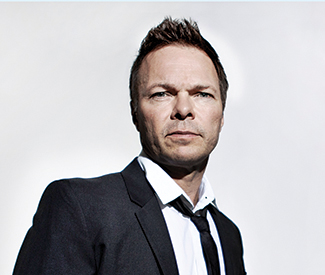







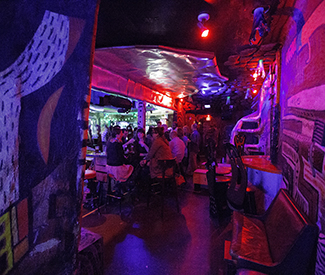





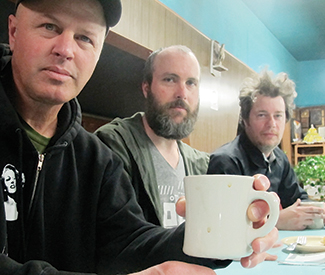






 So paid parking meters benefit many diverse constituents, and even SFMTA Executive Director Ed Reiskin publicly favored them. Making Sunday meters free again wasn’t Reiskin’s idea, he told us back in February.