Volume 46 [2011–12]

The cat and the hedgehog

1

le.chicken.farmer@gmail.com

CHEAP EATS You know who I love? Hedgehog. One year ago today we had our first date, and now we are domestical partners. She calls me root beer eyes. I know it’s a compliment because her favorite drink is Abita root beer with bourbon in it, and sometimes she looks at me like that.

One year ago today, I was a tagalong nanny for a Tulane-S.F. State couple, and Hedgehog was supervising sound editor for an HBO show set in New Orleans. This year, she is also a writer for that show, and I am a tagalong housewife. Count em: two dreams come true!

For our anniversary, she’s on set all day, and I’m writing this then going to play flag football. Maybe we will see each other in bed.

What a difference a year makes! One year ago today, for example, it was Monday. I had the day off. She did too. For our first date we were going to go to the cemetery, but then we found out it was closed. In New Orleans, the dead do not receive visitors on Mondays. They have been partying too hard all weekend. They have hangovers, and couldn’t get out of bed, let alone a grave.

So we went to the French Canadian Quarter instead, ate lunch, walked along the river, looked at the water, drank at a gay bar, walked some more, and did not kiss.

OK.

Now, the big loser in all of this, of course, is Stoplight. The cat. Not only because I’ve been home a lot less, but — even sadlier than that — my domestical partner is allergic to my domesticated partner. So before we left for the Big Greasy this time, I had to have a little talk with my furry friend.

Well, but first I had to have a little talk with some cheese farmers from Petaluma. Which brings us (very very naturally) to the downtown Berkeley farmer’s market one Saturday.

As it happened — and we’ll never know why — Hedgehog was stricken on that particular day with a very bad stomachache, so all she could do while I sought out and talked with my cheese farmers was sit on a bench and watch some hippies play their guitars. Maybe she was moaning and groaning, too. I know I would have been, if I had to sit on a bench and watch hippies play their guitars.

In fact, I was sure she was going to puke. (The kids had it. It was going around.)

Now: my cheese farmers, on whose cheese farm Stoplight was born, had told me way back when that if things didn’t work out for him in the big city, they would take him back. This, they unflinchingly, un-guilt-trippingly agreed to do. So I bought some cheese.

The drop would be made the following Saturday. Meanwhile, I was surprised to learn upon fetching my li’l sicky, Hedgehog was hungry. So here’s to the curative powers of hippies! I take back everything I said about them.

The Berkeley farmer’s market has a lot of greasy looking and happy smelling food stands, but Hedgehog understandably wanted something healthy. Which to her means pho. Pho ga. (That’s chicken.)

We have a running argument about pho. Beef is best, I say. Whatever, says she. For sure, downtown Berkeley is not the best place to be when dying for Vietnamese food in a hurry.

But we saw Saigon Express there on the corner of Addison and Shattuck, went in, sat right next to the bathrooms (just in case), and ordered our pho.

And of course Hedgehog was yelping the place while we waited for it. Two people mentioned food poisoning.

Food poisoning doesn’t scare me. Stomach bugs do. But according to Hedgehog, it’s impossible to tell the difference. “Food poisoning takes three days to hit you, usually,” she said.

“Really?”

“Could be,” she said. Then she started Googling that. But the pho came and was surprisingly fantastically delicious. At least mine was. The beef broth, heavy on the star anise, was really very wonderful. And the rare beef was still pink.

The noodles had a good texture. A little bit of pull to them, not mushy. Basil, cilantro, jalapenos, sprouts. And nobody threw up. Not even Hedgehog. New favorite restaurant:

SAIGON EXPRESS

Mon.-Sat. 10:30 a.m.-9:30 p.m.

2045 Shattuck Ave., Berk.

(510) 486-1778

MC/V

Beer & wine

Twisted misters

1

cheryl@sfbg.com

FILM This year’s San Francisco Independent Film Festival kicks off with a film that knows exactly what time it is: 4:44 Last Day on Earth.

Abel Ferrara’s latest imagines what the end of the world might be like for a volatile Lower East Side couple — he’s an ex-junkie (Ferrara favorite Willem Dafoe), she’s a young painter (Shanyn Leigh, Ferrara’s real-life companion). The film’s title refers to the predicted instant that an environmental catastrophe will completely dissolve the ozone layer, but 4:44 is mostly set indoors, specifically within the headspace of Dafoe’s character. It’s a gritty film that veers between self-indulgence and stuff that honestly seems pretty practical (sure, there’s a lot of Skyping, but if the world were ending, wouldn’t you?); as far as inward-looking disaster movies go, anyone planning an apocalypse film festival could double-bill 4:44 nicely with 2011’s Melancholia.

IndieFest is not an apocalypse film festival, per se. You could choose to have a jolly old time; there’s a power ballad sing-along, and even a flick called I Like You. But the selections for sick puppies are truly, truly outstanding this year. Personally, I recommend going as dark as you can possibly stand.

Start your journey with Michael R. Roskam’s Bullhead, a Belgian import that just scored a Best Foreign Language Film Oscar nomination. The five-second description of this film, which is about a cattle farmer who injects both his livestock and his own body with illegal hormones, doesn’t do it justice. Who knew there was such a thing, for instance, as a “hormone mafia underworld”? While some of Bullhead‘s nuances, which occasionally pivot on culture-clash moments specific to its Belgium setting, will inevitably be lost on American viewers, the most important parts of the movie come through loud and clear, and you won’t soon forget them.

http://www.youtube.com/watch?v=5fvLVNlMvus

Also memorable is Snowtown, another standout Australian crime film on the heels of Animal Kingdom (2010). While Snowtown — whose vérité shooting style recalls Andrea Arnold’s films about desperate living amid Britain’s council estates — isn’t quite as exportable as Animal Kingdom, it is just as uncomfortably tense, and features a teenage protagonist struggling to survive amid close-to-home evil. It’s based on the real-life case of Australia’s worst serial killer, and follows the gruesome facts quite closely. The film has a lot of characters that come and go without much explanation or introduction, which starts to seem deliberate after awhile. Fortunately, the core cast is magnetic. Remember 2005’s Wolf Creek? Snowtown is just as intense.

Still have a lust for blood? Of course you do. British director Ben Wheatley made a splash with 2009 gangster drama Down Terrace; he’s back with much buzz surrounding Kill List, with a review in the IndieFest catalog citing it as “the number one horror film of the year.” I’d hate to hand out that accolade so early in 2012, but this hired-killer-down-the-rabbit-hole tale is indeed worth considering.

Of course, there’s more to horror than guts and torture; if you need a reminder as to why, check out the festival’s pair of home-is-where-the-creepy-is films from Austria, Beside My Brother and Still Life. Beside My Brother‘s set-up — an emotionally disturbed father pretends his twin sons are the same person, and forces them to live as such, a practice they maintain into adulthood — is more promising than its payoff. Remember how in Dead Ringers (1988), the doppelganger bros were gynecologists? Here, they’re painters, and pretty bland ones at that. Far more harrowing is Still Life, about the irrevocable damage wrought by a father’s single, horrible revelation. First-time feature director Sebastian Meise manages to distill the complete crumbling of a seemingly normal-ish family into a slender, wrenching 77 minutes.

Speaking of harrowing, there’s nothing scarier in all of IndieFest than the early scenes of documentary Last Days Here, made by Don Argott and Demian Fenton (directors of 2009’s excellent The Art of the Steal). The film alights upon Bobby Liebling, dubbed the “godfather of doom” for his forty-plus year stint fronting legendary band Pentagram, as a fiftysomething crack addict living in his parents’ basement. Last Days Here is both heartfelt and gloves-off; it’s also blessed with having one of the most unbelievable comeback stories at its core (not a spoiler if you keep abreast of Bay Area concerts; Pentagram’s played here several times in recent years). It, like many of the films discussed here, has a distributor and will be coming around after IndieFest, but I implore you not to sleep on this one — even if you don’t love heavy metal, but especially if you do.

Less successful but no less intriguing is Atlanta oddity Snow On Tha Bluff, which is somewhere between an old-school ethnographic film — like, Robert Flaherty old — and self-aware product of the YouTube generation. The opening and closing scenes are obviously staged, as a drug dealer named Curtis Snow steals a video camera and decides he’ll make an autobiographical movie from the footage he collects. What’s between those bookends is what appears to be an authentic record of life in Snow’s crime-infested neighborhood, complete with drive-by shootings, home invasions, run-ins with the police, copious drug use, etc. Why any of the involved would allow their faces to be shown on camera while, say, firing a non-street legal weapon into a rival’s home is the film’s biggest mystery; its biggest accomplishment is obscuring the obvious lines of demarcation between what’s real and what’s not.

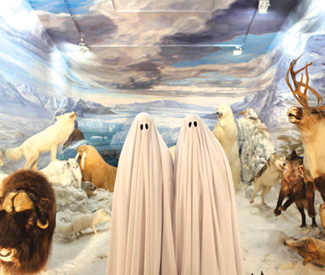
To end your IndieFest experience on a slightly uplifted note, you will have to die — or at least be cool with hanging out with the ghosts in Finisterrae, the first feature from Catalan artist Sergio Caballaro.

Expressing themselves via droll, post-production “dialogue” (in Russian, subtitled in English), the newly-deceased, sheet-wearing duo decides they would like to live again. A-journeying they go, following the wind and encountering an array of strange characters, including enough taxidermied animals to make Chuck Testa‘s head spin. Finisterrae starts slow but builds to glorious, gorgeously filmed and supremely weird heights. Hippies beware.

SAN FRANCISCO INDEPENDENT FILM FESTIVAL

Feb. 9-23, most films $11

Roxie Theater

3117 16th St., SF

www.sfindie.com


Eternal return

2

arts@sfbg.com

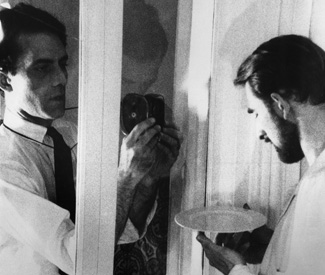
FILM Gregory Markopoulos was born in Toledo, Ohio, but his Greek heritage lights the way in critical appraisals of his refined and elusive body of work. Many of the films featured in the Pacific Film Archive’s “Seconds of Eternity” series are imagined on the stage of Greek myth. After leaving New York in 1967 with his partner Robert Beavers, an outstanding filmmaker in his own right, Markopoulos drew still closer to his ancestral home. He died in 1992, but Beavers, who will be on hand at the PFA to shepherd the films, has preserved the work for the Temenos, a unique archive and biennial outdoor screening cycle located near Lyssaraia, Markopoulos’s father’s home. This June brings another such event.

Markopoulos’s films have themselves long achieved mythic stature. He was a colossal figure during the heroic phase of the American avant-garde and then left it behind. Dissatisfied with exhibition standards, he withdrew his prints from circulation (the Temenos screenings represents the idealistic rejoinder). Remarkably, he requested that critic P. Adams Sitney excise a full chapter on his works from Visionary Film, generally considered the central critical survey of the American avant-garde. So Markopoulos went to almost unthinkable lengths to maintain the primacy of his early films (he continued making new ones, as well). Any opportunity to watch these ravishing films close to home is unusual.

Markopoulos once remarked that “locations and beautiful faces have been the backbone of my work,” and one sees that to an archetypal degree in Psyche (1947), the first film of his Du Sang, de la volupté et de la mort trilogy, made when he was still a teenage student at USC living across the hall from Curtis Harrington. Inspired by a Pierre Louÿs novella, the film replaces spoken language with dynamic color and framing. We begin with a man and woman crossing each other on a leafy Angeleno street: a few steps further and they turn back to consider what they’ve just passed. All that follows might be transpire within this instant: a languid fantasia hatched within a fugitive moment of lost time. Markopoulos frames the couple in deep focus two-shots, grazing shoulders and lips and tumbling toward dreams.

An evident poverty of means only concentrates the film’s withdrawal into a private world of frustrated beauty (across town Kenneth Anger was fashioning his more explicitly Dionysian Fireworks). The dive into inexpressible desire reaches a peak when Ralph Vaughn Williams’ “Serenade” suddenly drops out and the image snaps to a silent interlude of natural splendor bordering on abstraction — sea grass gorgeously superimposed upon the sea. This image gives magnificent form to the phrase “out of the blue” and overflows the frame in such a way as to shake loose the film’s more studied visual effects.

Markopoulos would later articulate in written form (“Towards a New Narrative Form in Motion Pictures”) what he set out to accomplish beginning with Psyche: “The film maker gradually convinces the spectator not only to see and to hear, but to participate in what is being created on the screen, on both the narrative and introspective levels. The magnificent landscapes of emotions, with colors brighter than the film viewer has ever been concerned with, begin to exist. The transient impact of meetings, handshakes, kisses, and the hours apart from these contacts becomes revealed in all its astounding simplicity.”

http://www.youtube.com/watch?v=w59mrfKQRdQ

That “astounding simplicity” is readily apparent in A Christmas Carol (1940), a compressed bildungsroman evoking a richly embroidered fabric of memory with only a few spare images (mother setting the table, father looking up over his newspaper, figures dancing on a nearby rooftop). Twice a Man (1963) reveals the full extent of Markopoulos’ dream of a new narrative language. A psychologically fraught interpolation of the myth of Hippolytus and Phaedra (son seduced by mother and liberated from suicidal thoughts by a healer-artist), the film surfaces an internal state of emergency in a persistently emergent form.

Most remarkable is the densely interleaved editing by which Markopoulos folds multiple registers of time, color, and theme. Though often likened to other seminal works of the American avant-garde (especially Stan Brakhage’s Dog Star Man, 1961-64), Twice a Man‘s fractal form also recalls contemporaneous French films like Alain Resnais’s Muriel (1963) — though if anything Markopoulos’s cutting seems more evolved for its thoroughgoing commitment to simultaneity. Beginning with a ferry ride into blue New York, suggestive of any number of mythic crossings, there is an ever-sharpening concordance of different blocks of imagery. The protagonist’s central struggle to get out from under his mother and be reborn as his own person takes root in these syntactical somersaults. Indeed, this is where the modernist character of Markopoulos’s work shines through: a classical story embodied in the radical address of the senses. (You don’t need a neurologist to know that your brain gets a tune-up watching this film). Less successful is the cut-up spoken address that Phaedra delivers to her son, with which Markopoulos seems a little too assured of his genius. The haranguing pure speech dampens an otherwise brilliant film with a faintly misogynistic mist.

Though Markopoulos delved still deeper into myth with his Illiac Passion (1964-1967), he also gravitated towards more focused portraits of people and places in these years. San Francisco Cinematheque will screen Galaxie (1966), his anthology of New York people, in May. Meanwhile, the PFA sneaks in Ming Green (1966) before the epic Illiac Passion. The silent film gathers up images of the New York home Markopoulos was soon to leave as if for a bouquet. Edited in camera with great fluency, Ming Green revises the still life for cinema: the apartment’s objects sit in repose, vibrating with the articulation of color and residue of memory. Flourishing superimpositions put on a terrific show without abandoning the refined air of quietude. It’s unlikely that you’ll see a more exquisite short roll of film this year.

SECONDS OF ETERNITY: THE FILMS OF GREGORY J. MARKOPOULOS

Feb. 9-16, $5.50-$9.50

Pacific Film Archive

2575 Bancroft, Berk.

(510) 642-5249

bampfa.berkeley.edu

Hippies do it better

0

caitlin@sfbg.com

HERBWISE I am not given overmuch to squealing over technology, particularly weed technology. Over the past few months I have sampled candy cane-flavored rolling papers, a cannabis aphrodisiac shot, the Ziggy Marley-endorsed Marijuana Man comic book.

Mind you, I’m not complaining. But –- minus perhaps Humboldt Hemp Wicks –- none of those products have found their way into my everyday retinue. Until, that is, the subject of last week’s Herbwise, Randy Thompson of the vaporizer website Puff it Up, introduced me to a singular machine.

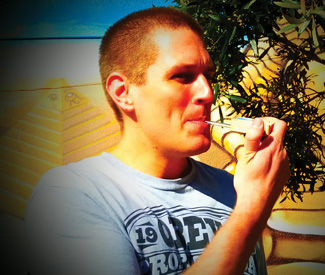
The Magic-Flight Launch Box is a thing of beauty. A clean maple wood box barely larger than a matchbox, it makes the black plastic tabletop models I once associated with vaporizing look clunky, wasteful. Vaporizing, university studies show, cuts down on the lung-coating tar that results from pipes and joints. Plus, it imparts a much cleaner marijuana taste –- perfect for the scores of cannabis connoisseurs who are popping up across the Bay Area.

Operating the Launch Box is simple. Insert the glass mouthpiece into the small round hole, a battery (two lithium batt’s and a recharger come with the starter kit) into the large round hole, press down for about five seconds, and inhale. No wall jack, no noise, no black plastic. The back of the box is engraved with a manifesto on what love is.

Obviously, hippies made it. Namely, a one Forrest Landry, who in a recent phone interview with the Guardian explained that the Launch Box’s ingenious design is a reflection of a New Age philosophy he’s cultivated over decades.

“Understanding the nature of communication allows us to understand the nature of community,” Landry says. “The vaporizer as a device is a communication event. We’re helping people breathe easier because of what we do.” The Launch Box’s backside is engraved with Landry’s personal philosophy on love (precious!)

He says the internationality of the product extends to the mindset of the company’s staff, who convene in a workshop located just outside San Diego. “Working with these tools is a kind of meditation. Doing this kind of work allows for an expanded awareness. You’re not aware just of how the tool is cutting the wood.”

Once an East Coast software developer, Landry changed careers upon his migration to California (to follow a lady love, he tells me). “I was thinking about what community of folks I want in my life.”

The answer was cannabis folks –- or more accurately, herbal folks, since the Launch Box can be used to ingest other plants like St. John’s wort (a useful tool for fighting seasonal affective disorder) and tobacco. Magic-Flight plans to start selling its own herbal blends in the next few months that can be vaporized solo or with cannabis.

The last thing that Landry wants is for Magic-Flight to be considered an activist company –- but that’s not to say that there’s nothing the federal government can learn from his philosophy.

“We’re not trying to shift the laws or policies per se, but we’re promoting the idea that love is enabling choice. We’re hoping the government realizes that enabling choice is a good thing.”

The story of hip-hop

0

By Courtney Garcia

MUSIC From the start, Ice-T was a versatile chameleon, the product of an integrated culture, and a student of the marginalized.

Born in New Jersey, raised in the Crenshaw District of LA, he joined the Crips then pursued the army to pay his bills. His career was blazed in rap, though he once flipped the game to heavy metal. Multifaceted talent that he is, Ice would later grow even more famous on television.

It’s no surprise, then, that he now adds the title of director to his resume, with the debut of his first documentary, Something From Nothing: The Art of Rap, at this year’s Sundance Film Festival. The feature length endeavor is the pioneering artist’s tribute to the culture that bred him, beat him, and made him who he is; it’s a culture he feels is slowly slipping from his grasp. It’s a story as much about the traditions of hip-hop as it is a fervent call to action, told through the eyes of its maker and his impressive posse of friends.

The premise, nevertheless, is simple: this is the story of hip-hop. “It’s a lot of life lessons because you’re not only hearing about rap, but experiences and struggles,” explained Ice during a one-on-one breakfast interview at The Lift in Park City, Utah. He was present for the screenings, along with Grandmaster Caz and Chuck D, both of whom appear in the film.

Other notable feature players include Eminem, Dr. Dre, Kool Moe Dee, Kanye West, Royce da 5’9,” Common, Rakim, KRS-One, Bun B, and Snoop Dogg. “You’re hearing people who you thought woke up successful talk about how they thought about quitting, how they had to find their voice,” Ice said. “I wanted to catch these guys when they were vulnerable, to show they’re real people, and that success doesn’t come without some blows.”

Ice got into rap initially to avoid falling back into gang life, first experimenting with turntables while enlisted in the military. Musically, he made his name as an underground artist before signing with Warner Music/Sire Records, and eventually winning a Grammy for his song, “Back On the Block.” He would follow such success with a branch into acting, currently starring in the primetime series, Law & Order: Special Victims Unit. And while his schedule is more than demanding, he found time between shoots to direct this documentary, a film he believes had to be made to challenge the fallacious imagery of hip-hop in American culture.

“This movie is not about the money or the cars, it’s about the craft,” he says. “The only questions we get asked by the press were, you know, ‘Who are you having sex with?’ ‘How high do you get?’ ‘Who don’t you like?’ They don’t care about your work…I wanted people to see the hip-hop I know, not the hip-hop that’s been given out until now. You’re getting this image that’s not real.”

Something From Nothing begins on the streets of New York, and follows the beat to the sunny coast of Los Angeles. Interviewing the gamut of rap’s finest, Ice catches his friends at the record store, in the studio, on their patio and at the diner. They eat; they smoke; they talk hip-hop. Some, like Kanye, freestyle for the camera; others spit the rhymes they can’t get out of their heads.

In one of the more poignant scenes, Ice speaks with Eminem about his toil to commit to the trade amidst extreme discouragement, and the moment he realized it was his raison d’etre. Equally surreal, the filmmaker travels to Dr. Dre’s lavish estate in the Hollywood Hills, where the two converse about the late, Tupac Shakur.

Because the name ‘Ice-T’ signifies authority, the strength of this film is his access to the inside, exposing tales most people would never have a chance to hear. He hits on every shade of the genre, from gangster rap to native tongue, the poetics of Q-Tip to the in-your-face anarchy of Immortal Technique.

Introducing the film at Sundance, he described his impetus as a dissatisfaction with the current state of hip-hop, and an earnest aim to improve the situation.

Later, he elaborated. “To me, the most pinnacle moment in the movie was when Mos Def quoted Q-Tip saying ‘rap is not pop; rap never had pop ambitions.’ It’s a counterculture. Now it’s become pop, and how you gonna get mad at the kids? They want to eat; they want to make money; they want to live. If you ask me what my dream is, I would love to see a 19 year-old Public Enemy come out of nowhere; I would love to see the new 18 year-old Ice Cube just come kick in the door, and start telling motherfuckers, ‘Fuck the bling, this is what’s good. Let’s talk about Obama, let’s talk about Occupy Wall Street. Let’s go in.'”

He added, “It will never get radio play, but I believe if a young group of kids really nailed it, they could get a movement going. And it’s needed. I took Rage Against the Machine out as my opening act, so of course I want to see that. The terrain is wide open.”

It’s rare to catch Ice-T without his signature shades, and somehow it’s obvious he truly is the OG he claims. Yet his inner sincerity and passion show through in this project, an ode to the first platform to ever give him a voice. He sold the rights to film after the Sundance showings to The Indomina Group for worldwide distribution; a theatrical release is planned for summer.

“Music has that power to give people emotion, and that’s what’s lacking right now,” he reiterated. “They’re not using art form at full power. They’re just rubbing the surface of it.”

Brews you can use

0

caitlin@sfbg.com

BEER Even if your hankering for a beer paunch pales in comparison, say, to your desire to fit into your Valentine’s Day party dress, you have a responsibility to indulge during SF Beer Week. It’s not just a gustatory pleasure — consider yourself stumping for a burgeoning local industry. From Feb. 10-19, the fest will stage everything from urban beer hikes to beer-and-chocolate pairing events, beer-and-cheese couplings to a showcase of the finest in local bitter ales. Recently, the Guardian had the pleasure of a one-on-one (via email) with David McLean, the mastermind behind the superlative suds at Magnolia Brewery. He is also a member of the SF Brewer’s Guild, the organizing entity behind Beer Week. McLean shared with us his can’t-miss picks for hobnobbing and hops during this year’s festival. And yes, they include an stout made with Hog Island oysters.

SFBG: How has the beer scene changed over the past year in the Bay Area? Has there been a profound expansion? 

DM: Here and everywhere. We started in 2011 with about 1,700 breweries in the country. We are creeping up on 2,000 a year later and there are something like 800 or so known to be in planning. It’s safe to say craft beer is exploding right now. In the Bay Area, some notable highlights are Southern Pacific, Elevation 66, Dying Vines, Pacific Brewing Laboratories, and Heretic Brewing. There are plenty more on the way in 2012.

SFBG: Anyone new on the scene whose brews you’re excited to sample? 

DM: After many delays (all par for the course) it is super-exciting to have Southern Pacific Brewing Company open just in time for Beer Week. As the first new brewery built in San Francisco in many years — close to 10 — that one leads the pack in terms of excitement level. Another SF company just getting off the ground is Pacific Brewing Laboratories, which is starting to get its Squid Ink IPA and a couple of other beers into bars and restaurants. Almanac’s latest seasonal release, Winter Wit, should be hitting the streets just in time for Beer Week too, and it’s worth hunting down.

SFBG: A food-beer pairing event you think is a can’t-miss?

DM: Some pairings are just so perfect as to be timeless. They’re less about being creative and more about flavors that need no help fitting together. A personal favorite is oysters and beer, particularly oysters and certain kinds of stout, especially dry stouts. We go a step further at Magnolia with an oyster stout we make using Hog Island Sweetwater oysters in the beer. The effect is subtle, and maybe it is gilding the lily, but a few freshly-shucked Sweetwaters and a glass of that beer, Oysterhead Stout, is about as good as it gets. We’ll be spending all day on Valentine’s Day shucking a variety of oysters and serving them with that stout and some other good oyster-pairing beers until the oysters run out. If I were free on Mon/13, you might find me at the “Butcher and the Beer at the Beast and the Hare” — it’s a dinner with [4505 Meats butcher] Ryan Farr and Almanac Beer.

SFBG: Your tip for making it through Beer Week — how do you survive such a strenuous schedule?

DM: The well-timed vacation waiting on the other side of Beer Week helps maintain my sanity during Beer Week. With multiple events to work everyday, it’s a definitely a marathon and not a sprint. But it is also one of the premier celebrations of craft beer in the country and the sense of enthusiasm, camaraderie, and support from the beer community is more than enough to help us all get through the week. It’s energizing, actually. But don’t forget to hydrate.

SF BEER WEEK OPENING CELEBRATION

Fri/10 6-10 p.m., $65

Concourse Exhibition Center

635 Eighth St., SF

www.sfbeerweek.org


Making black herstory, every day

8

news@sfbg.com

Deconstructing the roots of

The black n gray suits

with hands in the Loot

That has buried the truth

About our black, brown and disabled youth

— excerpt from KKKourt by Tiny

OPINION On the first day of Black Herstory Minute (I mean, Month), I practiced black herstory, and walked through activism and breathed organizing and lived resistance by putting my body in the benches belonging to the criminal injustice system (a.k.a. the plantation) at 850 Bryant. I was there to support a struggle against injustice in the case of a young African warrior for truth, Fly Benzo, a.k.a. Debray Carpenter — student, son, media producer, organizer, and hip-hop artist who is facing a felony charge, jail sentence and $95,000 fine for nothing more than exercising his First Amendment right to free speech.

How many among you, overwhelmed with multiple Face-crack postings and a cacophony of tweets, might have missed the story of Fly, who spoke the truth about racism, police brutality and the unjust death of Kenneth Harding Jr. to a cop in a poor-people-of-color neighborhood, Bayview, which is under seize from the occupying army known as the police (or po’lice as we call them at POOR Magazine)?

As a woman criminalized and incarcerated for the sole act of being poor and houseless, the melanin-challenged daughter of a poor black single mother who spent all of her life in poverty and in struggle, I have witnessed first hand unequal justice against people of color and poor people. It’s a fact that remains, in 2012, still a very dire reality.

“They arrested me for exercising my Constitutional right to free speech,” said Benzo, 22.

Benzo’s revolution began when he was born to conscious African-descendant parents who, like many African descendant people in San Francisco, have been under the constant threat of removal, displacement, redlining, and ongoing police harassment for decades. He has been speaking out about injustices since he was a teen, starting with the fact that hardly any Bayview residents were hired to construct the multi-million-dollar T-Train that runs from downtown to Third Street — and the dramatic rise in the violent policing of the T-Train and the Muni bus lines that run through the poor communities of color in S.F.

But the beginning of Benzo’s current battle with the criminal injustice system began when he began to speak up about Harding, murdered by San Francisco police officers for not having a $2 dollar bus transfer. The judge might not admit the video that was taken at the scene of Benzo’s arrest, making his case all the more difficult to fight, and the truth all the more difficult to hear and see, which is where community support comes in.

A lot of people and organizers and politricksters talk about stopping the violence and how to “deal” with the inequities of racism and classism and violence on our youth of color. And yet when this brother spoke out, used his voice for nothing but truth and resistance about injustices he personally experiences everyday, who comes out to support him?

Practicing revolutionaries at POOR Magazine, the Idriss Stelly Foundation, The BayView Newspaper, Education not Incarceration, and United Playaz have been there, as well as his hard-working attorney, Severa Keith, and a few more. But we all need to be there, fighting for a very alive, very revolutionary, young truth-teller who is making black history, every day.

Tiny, a.k.a. Lisa Gray-Garcia, is an editor at POOR Magazine. Opening statements in the trial of Debray Carpenter are expected to begin Feb. 8 in Dept. 27.

Ellison wins, SF loses

6

EDITORIAL San Francisco’s not going to lose the America’s Cup. Oracle CEO and yachting billionaire Larry Ellison is too excited about the prospect of bringing the sport (and his company’s logo on the sail of his boat) to a mass audience for the first time in history that he’s not about to abandon San Francisco Bay. The process is too far along; that much is a done deal.

But the development agreements for the city’s waterfront is not a done deal at all — in fact, the proposal could wind up giving Ellison effective control over five piers and a valuable waterfront lot that he could develop for condos. And the city won’t get anywhere near enough out of the deal.

The development agreement is really just a sideshow in the cup planning; nobody’s disagreeing that Ellison’s America’s Cup Event Authority will need space to stage the race, and that will require the renovation of some waterfront property. And nobody disputes that the event will bring tourism and revenue to the city, which will offset some of the cost of allowing Ellison rights to the waterfront.

The rest of it is purely a real estate deal: Ellison’s offering to put millions of dollars into renovating crumbling and underused piers, and in exchange the Port of San Francisco — which lacks the money to rebuild the waterfront and has no credible plans for a good part of its property — could give Ellison long-term low-cost leases and development rights on Piers 26, 28, 30-32 and possibly 29, as well as Seawall Lot 330 at Embarcadero and Bryant.

The city’s never been terribly good at cutting tough deals with real-estate developers, and the history of San Francisco is littered with examples of the taxpayers losing out to the speculators and builders. And in the furor of excitement over the America’s Cup, this development agreement could become the latest sellout.

The original projections for the economic impact of the event are looking more and more questionable; it’s entirely possible that San Francisco will wind up with far less than the $1.4 billion in spending and the thousands of jobs that cup promoters have promised. It’s still going to be a big deal, and the city (particularly the hospitality industry) will do well — but it’s not the answer to all of San Francisco’s problems. By the end of 2013, the event will be over — and Ellison will have essentially taken title to a huge amount of public land, for as long as 60 years into the future. And he won’t be paying the city the normal development fees, the normal impact fees, or even reasonable annual rent to the Port.

The supervisors need to put aside the hype around a sailing regatta and look at this for what it is: A real-estate development agreement with one of the world’s richest people. And right now, it’s not a good deal for the city.

Cheap dates!

0

VALENTINE’S Whether you’re hopelessly in love, completely philophobic, or somewhere in between, here’s a sweet slew of events on the horizon that won’t tap you dry. We’ve chosen our favorites that are all less than $20 (except for a couple worthwhile charity fundraisers). Now go out and get starry-eyed, you kid.  


——-

WEDNESDAY 8

Aphrodesia Afterhours Valentine’s Day Conservatory of Flowers, Golden Gate Park, 100 John F. Kennedy, SF. (415) 831-2090, www.conservatoryofflowers.org. 6 p.m.-10 p.m., $10. Chocolate is hands down the best part of Valentine’s Day. Join local chocolatier TCHO’s chief chocolate guru, Brad Kintzer, for his demonstration on how to transform beans into bliss. Afterwards, grab a love potion from the Cocktail Lab, frolic amongst the orchids, and enjoy a live performance by Le Quartet de Jazz. Remember to take a picture in the photobooth — a night dedicated to chocolate is a night to remember.

Love on Wheels dating game Public Works, 161 Erie, SF. (415) 932-0955, www.sfbike.org. 6 p.m., $5 for SF Bicycle Coalition members; $10 for non-members. The cutest people always seem to be railing past each other on their bikes. The SF Bicycle Coalition is going to sit all you guys down so you can date already. Lovebirds will quiz three potential dates (hidden from view) and go on a date provided by one of the sponsors. This annual tradition is a cute hoot.


——-

THURSDAY 9

“Animal Attraction” NightLife aquarium gallery and sex talk California Academy of Sciences, 55 Music Concourse, SF. (415) 379-8000, www.calacademy.org. 6 p.m.-10 p.m., $12. Cal Academy’s weekly Thursday evening party, NightLife, is launching a new gallery for fish-lovers (and friends!) with a series of reproduction-themed talks. Various experts will be talking about mating strategies in the animal kingdom, penis bones of different species, and the sex life of Zodiac signs. Dr. Carol Queen from Good Vibrations will be sharing her knowledge about the science of orgasms. So let’s do like they do on the Discovery Channel.

“Cupid’s Back” sixth annual Valentine’s Day party Supperclub, 657 Harrison, SF. (415) 348-0900, cupidsback.kintera.org. 8 p.m.-midnight, $30-35. Gay charity impressario Mark Rhoades is back — like Cupid, you might say — with this popular shindig that brings together oodles of hot men. DJ Juanita More will fluff the crowd, and it all goes to help out our invaluable GLBT Historical Society. Shoot your arrow and it goes real high …

“Go Deep” lube wrestling for the boys El Rio, 3158 Mission, SF. (415) 379-8000, www.calacademy.org/events/nightlife. 8 p.m.-11:30 p.m., $10–$15. What says romance more than watching half-naked queer boys with fantastical monikers like Yogzar and Red Dragon wrestling in a vat of lube? Slide your way into V-Day at this monthly (second Thursdays) grip ‘n slip put on by neo-Vaudevillian troupe SF Boylesque, with DJ Drama Bin Laden, a performance by the Bohemian Brethren, and Cajon food from Family Meal available on the back patio.


——–

FRIDAY 10

 ——–

FRIDAY 10

Bardot A Go Go Pre-Valentine’s Dance Rickshaw Stop, 155 Fell, SF. (415) 861-2011, www.bardotagogo.com. 9 p.m., $10. “Music by French people for everybody” is the motto of the neato longtime roving Bardot A Go Go — and that includes a bubbly beretful of cute folks who revel in 1960s pop glamour filtered through contemporary va-va-voom. Live band Nous Non Plus is très adorable, and DJs Pink Frankenstein, Brother Grimm, and Cali Kid bring French kisses galore. Plus: free hairstyling by Peter Thomas Hair Design, d’accord.

I Heart Some Thing The Stud, 399 9th St., SF. (415) 863-6623, www.studsf.com. 10 p.m.-late, $8. “We love love! We just love it!” scream the awesome queens of Some Thing, the mind-altering weekly friday drag show and party at the Stud. You may detect a hint of the sardonic in there, but the smart Some Thingers always cover their bases with a healthy dose of sincerity to go with the staged pop culture send-ups. heart-shaped performers include Glamamore, Manicure Versace, Cricket Bardot, and Nikki Sixx Mile. Afterhours dancing, too.

Mortified’s Annual Doomed Valentine’s Show DNA Lounge, 375 11th St., SF. (415) 626-1409, www.getmortified.com. 7:30 p.m., $14 adv; $21 at door. Do you remember your first kiss when you went in for the gold, missed completely, and your lips puckered mid-air? Well, the folks at Mortified sure do. They have sorted through the oldest and nerdiest notebooks, letters, photos, and shoeboxes so that they can share with you their most humiliating romantic encounters. Reinvigorate your disdain for this holiday by taking comedic comfort in the mishaps of these thick-skinned Valentine’s veterans.

Ninth Annual Food from the Heart Festival Ferry Building Marketplace, 1 Ferry Building, SF. (415) 983-8000, www.ferrybuildingmarketplace.com. Through Saturday. 5:30-8 p.m., free entrance. Nothing says “I love you” like food. Give the gift of a happy stomach to your lover this Valentine’s in the candlelit Grand Nave of the Ferry Building, with a night of dancing and eating. Revel in the magic of the waterfront, sip on wine poured by local Napa Vinters, and taste a scrumptious hors-d’oeuvre or five.

“On The Edge 2” erotic photography exhibition Gallery 4N5, 863 Mission, SF. (415) 522-2400, www.gallery4n5.com. Through Sunday. Gallery hours Fri., 4 p.m.-9 p.m.; Sat., 11 p.m.-9 p.m.; Sun., noon-5 p.m., free. Valentine’s Day may be about romance for some people, but for us it’s about getting naked. (And eating, but mostly getting naked.) This group exhibition features 400 pictures of artful sexiness taken by 25 erotic photographers who bring on the nudes.


——–

SATURDAY 11

“Drunk with Love” with Carol Peters The Emerald Tablet, 80 Fresno, SF. (415) 500-2323, www.carolpeters.net. 8 p.m., $10. Carol Peters, a.k.a. “Velvet Voice,” is known for her passionate and amorous renderings. For one steamy night in light of Valentine’s Day, Peters will grace the stage to croon sensual tunes that capture the many dimensions of love.

Valentine’s Surprise SF Lindy Ball Womens Building, 3543 18th St., SF. sfswingjam.eventbee.com. 7:30 p.m.-12:30 a.m., $22 This Lindy Hop and Swing ball is actually the centerpiece of a three-day swing summit in celebration of romance (check the website for full line-up) — because what says, “I love you” more than artfully mopping the floor with your partner? We sure don’t know. Hoppin’ workshops and technique tune-up sessions complement the ball, which consists of a Lindy contest, live swing music, and a surprise 91st birthday celebration for classic movie star Ray Hirsch. Lessons offered!

Watson’s “Naked at the Art Museum Scavenger Hunt” Legion of Honor, 34th Ave, SF. (415) 750-3600, legionofhonor.famsf.org. Through Sunday. 2 p.m.-4:30 p.m., $20. Who said museums had to be tame? Bring a lover or friend this weekend to the Legion of Honor for a sexy scavenger hunt. You will scope the halls for studly sculptures, titillating paintings, bathing beauties, and many sexy inanimate objects more. Museums will never be the same again.


———-

SUNDAY 12

SF Mixtape Society’s “Under The Covers” music exchange and contest The Make-Out Room, 3225 22nd St, SF. (415) 440-4177, www.sfmixtapesociety.com. 6 p.m., free with mix. Don’t have someone to make a mixtape for this year? It’s OK. Your ex’s music taste was awful anyways! Put that playlist you love on a CD, cassette, or USB drive and have it land right in the ears of a random yet lucky someone. You’ll end the night with someone else’s coveted mix, and everyone will get to vote for the playlist with the best track listings and artwork.


———

MONDAY 13

Litquake Literary Festival presents: Love Hurts readings of grief-stricken passages of love and lust The Make-Out Room, 3225 22nd St, SF. (415) 440-4177, www.litquake.org. 7 p.m., $10. Ten Bay Area writers will give their own cynical (and mostly hilarious) twists on the forlorn words of some of the most melancholic and/or melodramatic novels ever written. Come sort out the parallels between drug dependency and romance in Valley of the Dolls, the masochistic plotline of The Story of O, and many more classics that well forewarned of broken hearts.


———

TUESDAY 14

Club Neon’s Eighth Annual Valentine’s Day Underwear Party The Knockout, 3223 Mission, SF. (415) 550-6884, www.theknockoutsf.com. 10 p.m.-2 a.m., $5, free with no pants before 11 p.m.! This is THE event for fresh and nubile indie heartbreakers, stripping down to make you all “damn!” and stuff. One of our favorite annual pantsless throwdowns, with steamy rock DJs Jamie Jams and EmDee making you want to take it all off.

The Fifth Annual Poetry and Music Battle of ALL of the Sexes Uncle Al and Mama Dee’s Cafe at POOR Magazine, 2940 16th St, SF. (415) 865-1932, www.poormagazine.org. 7 p.m., $5-$20 suggested donation for dinner and show. Instead of scribbling your words in to a Hallmark card, show off your love this Valentine’s in rhyme and verse. All proceeds will support POOR magazine, a local arts organization that advocates education and media access for struggling communities. The theme is 1950s, but the beats will be timeless.

Love Story film showing and gala with Justin MX Bond Castro Theatre, 429 Casto, SF. (415) 621-6120, www.castrotheatre.com. 8 p.m., $10 film only; $25 for gala tickets. Relive the drama, the tragic heartaches, and the swooning love story of the 1970 film classic. Ali MacGraw will be at the Castro mezzanine in person, “Theme from Love Story” will be sung by Katya Smirnoff-Skyy, and special guest Mx Justin Vivian bond will be doing a “sorry” medley.

http://www.youtube.com/watch?v=oMjsuYytrkg

Passion Punch Valentine’s day kickboxing class UFC Gym, 1975 Diamond, Concord. (925) 265-8130, www.ufcgyms.com. 6:30 p.m., free. Valentine’s got you foaming at the mouth? Let it out. This 60-minute class will incorporate dynamic boxing moves so that you can punch away all the annoyances you will be feeling by the end of this day.

The Crackpot Crones present “I Hate Valentine’s Day” sketch comedy and improv show The Dark Room, 2263 Mission, SF. (415) 648-5244, www.crackpotcrones.com. 8 p.m., $20. Outrageous duo Terry Baum and Carolyn Myers are providing a public service for the romantically challenged. They will be making fun of everything Valentine’s related — especially silly little concepts like true love and soul mates. Belt along to the song, “The Twelve Days of Being Dumped,” and give your best evil cackle at this sketch comedy show.

Valentine’s Day Party with T.I.T.S and Uzi Rash Hemlock, 1131 Polk, SF. (415) 923-0923, www.hemlocktavern.com. 9 p.m., free. There is no need for all the fuss, the fancy gifts, the cutesy ribbons, or the overpriced dinner. If you’re sick of the pink, come dance your anti-heart out at this doom punk show. Flowers wilt anyways.

Toward the sun

1

I was pretty excited to hear about Heliotrope (www.heliotropesf.com), the new line of locally sourced, all-natural, unisex, essential oil-based, mostly fragrance-free beauty products launched by Bay Area style maven Jonathan Plotzker. I got more excited when Heliotrope’s exquisite, neighborhood-feeling retail boutique opened in Noe Valley (1515 Church, SF. 415-643-4847) — you mean I can grab some insanely good hot and sour soup from Eric’s Chinese and snag some natural product to vanish my all-night party bags? OK!

But things really got crazy for me when Plotzker told me over the phone about Heliotrope’s massage candles — when the candles melt, the heated wax dissolves into an oil perfect for an intimate rubdown. “We’re all about integration,” he said with a laugh, “our candles will melt you two ways.” Yes, I could go for a two-way melt right about now, in the middle of winter.

Plotzker had just returned from a visit to one of his chemists in Sonoma. “One of my original visions for the line was to help bring to light a lot of the small-batch local beauty developing going on,” he said. “The name Heliotrope means ‘turn toward the sun’ — but besides have the connotation of ‘enlightenment,’ I just really like the word. I think it describes our customers: smart, nature-oriented, and confident.” He adds that the company’s wood-grain logo comes from a scan of an actual redwood log that he happened to have in his car when he met with a graphic designer, giving it an extra local angle.

Heliotrope puts out dozens of products, from Witch Hazel and Birch Head-to-Toes Wash to single-note lemongrass essential oil. (The Heliotrope boutique sells a full range of accessories as well.) I asked Plotzker to pick out a few favorites that he’d recommend for our unique Bay Area winter.


FACE CARE


OLIVE LEAF AND NEROLI MOISTURIZER

Neroli is the essential oil of the orange blossom, and it’s a wonder, with anti-inflammatory and anti-redness properties. No more winter bloaty look. ($29 for 2 ounces, $39 for four ounces)


FRANKINCENSE AND ROSE GERANIUM OIL SERUM

People are realizing how good the right kind of oils can be for their skin! Our serums are concentrated treatments for the face — the frankincense calms, and the rose geranium rejuvenates. ($42)


ROSEWATER AND VITAMINS EYE LIFT CREAM

The rosewater acts as a humectant, meaning that the rose oil molecule attracts and retains the water molecule, keeping you hydrated and healthy. ($32)


BODY AND MASSAGE


SHEA AND BEESWAX HAND AND CUTICLE THERAPY

This is my favorite product in the shop. It’s a rich, creamy treatment for hands, cuticles, and nails that sinks in quickly so you don’t feel it — and your mittens won’t stick to your hands. ($16)


SOY AND SHEA BUTTER MASSAGE CANDLES

Soy wax melts at a lower temperature, so the resulting liquid can be poured on the skin and used as a smooth and natural massage oil, in fragrances like black fig cardamom and citrus nutmeg or fragrance-free. ($24)


ORGANIC AROMATHERAPY SPRAY MISTS FOR BODY AND HOME

Use this on your body to enhance your mood, use it as a facial toner to stay hydrated, and use it as a room fragrance — aloe, açai, pomegranate, and more. It’s a triple threat! ($19)

On the township

0

FILM Opposition to apartheid didn’t really pick up steam as a popular cause in the U.S. until the early 1980s. Which makes it all the more remarkable that New York City-based documentarian Lionel Rogosin made Come Back, Africa about a quarter-century earlier — though less surprisingly, the film itself was barely seen here at the time. Now finally playing American theaters outside his home town in a restored print, it’s a time capsule whose background is as intriguing as the history it captures onscreen.

The horrors of World War II and some subsequent global travel had stirred a profound awareness of social injustices in Rogosin, who began planning a feature about South Africa while still working at his father’s textile business. He had very little filmmaking experience, however, so he took $30,000 of his earnings and as “practice” made On the Bowery (1956), a semi staged portrait of Manhattan’s skid row area that won considerable praise, if also some shocked and appalled responses from Eisenhower-era keepers of America’s wholesome, prosperous self-image. (It was, as 1959’s Come Back, Africa would also be, much more widely appreciated in Europe.)

Armed with the confidence bestowed by that successful effort and several international awards, Bogosin traveled to South Africa — not for the first time, but now with the earnest intent of making his expose. In the mid- to late ’50s, however, that was hardly a simple task. He and wife Elinor Hart had to do everything clandestinely, from making contacts in the activist underground to recruiting actors and crew. (The latter eventually had to be brought in mostly from Europe and Israel.) To get permits he fed the government authorities a series of lines: first he pretended to be making an airline travelogue to encourage tourism; then a music documentary to show local blacks “were basically a happy people;” then another doc, about the Boer War. Amazingly, despite the myriad likelihoods of being informed on, he shot the entire film without being shut down or deported. It remained, however, a stressful and dangerous endeavor for all concerned.

Like On the Bowery, Come Back, Africa qualified as a documentary by the looser standards of the time (Rogosin preferred the term “poetic realism”), but mixed a loose, acted narrative with completely nonfiction elements. Like the prior film, it also followed the luckless wanderings of an agreeable protagonist played by a first-time actor actually found on the street — here Zacharia Mgabi, a 30-ish bearded worker “discovered” on a bus queue.

His character, Zachariah, is caught in one catch-22 of apartheid life: he can’t get a job without the appropriate permits, and can’t get the permits without a job. First he tries finding employment in the misery of a mining encampment, then travels to Johannesburg — where it’s illegal for him to be without further permits — where he’s bounced from one position to another. Working as “house boy” to a middle-class white couple, he’s fired when the racist, shrewish wife (a memorable performance by Myrtle Berman) catches him sneaking a drink from her own secret booze stash. An auto-shop stint is lost due to a friend’s incessant goofing off, while service as porter in a hotel is terminated when a hysterical white lady guest cries “Rape!” simply because he surprises her in a hallway.

Meanwhile Zachariah’s wife arrives from their native KwaZulu, and they tentatively set up house in a Sophiatown shack. (Come Back, Africa is of particular interest for its scenes there — within a few years the government had forcibly emptied this poor black township, having made its population mix of races illegal, and the area was razed to become an unrecognizable whites only suburb.) But even this small foothold on stability is doomed. Just as alcoholism dragged On the Bowery‘s hero back into a downward spiral at the end (both on- and offscreen), so Zachariah and his family are helpless to save themselves from the violence, police harassment, and self-destruction apartheid breeds and maintains itself with.

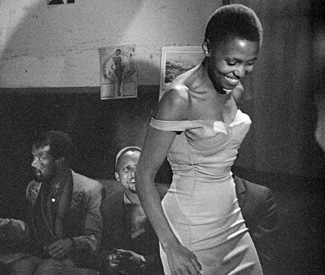
All show and almost no “tell,” Come Back, Africa pauses around the two-thirds point to let several men pass around a bottle, discussing the nature of and solutions to their oppression. They’re happily interrupted by the incongruity of a young woman in an elegant cocktail dress — no less than a then-unknown Miriam Makeba, who sings a couple of songs in her inimitable voice. When the film was finished, Rogosin bribed officials to get her out of the country, bankrolling his contracted “discovery’s” launch at the Venice Festival, and in the U.S. and England. But to his great disappointment, she was quickly taken under Harry Belafonte’s wing, dismissing her first benefactor as “not very nice” and “an amateur.” Thus a legend was born, with Rogosin pretty much cut out of the resume.

Come Back, Africa, too, would disappoint its maker in some respects. With a furious South African government swiftly condemning this portrait as “distorted,” his original plans for a trilogy became impossible. The film won a number of prizes — although unlike On the Bowery, it was pointedly not nominated for a Best Documentary Oscar — and would eventually be widely seen on European television. But it has still never been broadcast in the U.S., and despite Rogosin’s efforts — he went so far as to open NYC’s still-extant Bleeker Street Cinemas in 1960 to show it and other important new works — it collided with a thud against the overwhelming indifference of middle-class white audiences. They were barely starting to confront such thorny racial issues in their own backyard, much less in far-flung nations. Not shown in South Africa until the late 1980s, Come Back nonetheless proved a great influence on development of the whole continent’s indigenous cinematic voices.

A liberal shit-kicker to the end, Rogosin made other documentaries, was integral to the New American Cinema movement (alongside Jonas Mekas, Robert Downey Sr., Shirley Clark, and other experimental luminaries), founded distribution company Impact Films, and moved to England for a spell before dying in Los Angeles at the century’s turn. It’s a pity he didn’t live to see his two first features restored and rediscovered — though interviews late in life suggest he never let limited exposure dampen his activist zeal one whit.

COME BACK, AFRICA opens Fri/3 at the Roxie.

Hello, Carol!

1

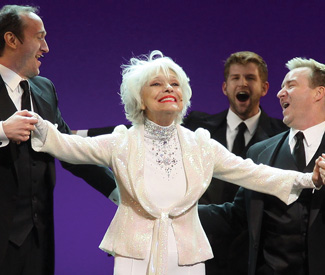
FILM It is close to impossible not to love Carol Channing; those who would protest otherwise are simply heartless. The only adequate response to her is unconditional surrender, as if standing before an oncoming cyclone filled with puppies.

With her saucer eyes topped with false lashes that could give Bette Davis’ a run for her money and a mouth that seems as if it could swallow the world, Channing is a living incarnation of a Muppet (to watch her duet with Miss Piggy just seems natural, somehow). And yet, despite her cartoonish physicality and exaggerated appearance, there is nothing false or put-on about Channing.

When I hear that voice — dripping with whiskey, smoke, and honey, begging to be imitated — the effect is instant happiness. Everything just feels right. As Roland Barthes writes in his essay “The Grain of the Voice,” I then must face the task of articulating “the impossible account of an individual thrill I constantly experience in listening to singing.”

Dori Bernstein’s sweet if worshipful documentary Carol Channing: Larger Than Life necessarily fails at that task, even as it proves the now 91-year-old Broadway legend more than lives up to the second half of the film’s title.

Now slightly stooped, her hair in a choppy gray bob, which she occasionally pulls into a Peggy Moffitt-esque topknot, and her lips a smear of Malibu pink, Channing is still ever the professional, hilariously impersonating a Russian theater troupe one moment and chatting with young dancers in Times Square the next.

The life Channing recounts is an abbreviated and selective version of the one detailed in her 2002 memoir Just Lucky I Guess: her childhood in San Francisco spent being the class clown and worshiping Ethel Waters; her first big Broadway break playing Lorelei Lee in Gentlemen Prefer Blondes; and her career-cementing role as Dolly Levi in Hello, Dolly! And many of the memoir’s same supporting characters, such as frequent TV variety show co-star Loni Anderson and Dolly composer Jerry Herman, also make appearances here.

What Bernstein’s documentary offers is the rare chance to witness the palpable impact Channing has made on others. In personal interactions, she gives her attention equally and wholly to anyone who seeks it (including the camera). Those who have worked with her — particularly the many gay chorus members interviewed here — speak of her as a mother rather than a diva.

The film’s most touching footage is of Channing with her late husband Harry Kullijian, who passed away last year. The two were childhood sweethearts who some 70 years later tied the knot (in Channing’s fourth go at marriage), and seeing them joke together and read aloud poetry passages they shared as love-struck teens is the very definition of adorable.

Curiously, Kullijian’s passing is not mentioned in the film, even as a postscript. You get the sense more generally that Bernstein tried to stay clear of reopening any old wounds with her subject. The awful tempestuousness of Channing’s second marriage to her publicist and manager Charles Lowe is referenced by others but not Channing, who speaks only in passing of the toll life on the road took on her relationship with her son from her first marriage.

Additionally, despite her fame, Channing has always had to share the larger cultural spotlight with Marilyn Monroe and Barbra Streisand, powerhouses in their own right who became associated with the roles she originally made famous on stage (Channing would have her Hollywood comeuppance in 1967 when she was nominated for a Best Supporting Actress Oscar for 1967’s Thoroughly Modern Millie). Larger Than Life attempts to provide a corrective to this, but its motivations for doing so are as transparent as they are understandable. This film is a mash note to Channing as much as it is a gift to her fans, who, rest assured, didn’t need any more reason to love her. *


CAROL CHANNING: LARGER THAN LIFE opens Fri/3 in Bay Area theaters.

The key is patients

14

HERBWISE “Never in a million years would I have chosen to do this,” wrote Randy Thompson’s mother in the September 1997 issue of Good Housekeeping. The title of Karen Thompson’s article was “I Broke the Law to Save My Son.” Her choice? To allow Randy to use marijuana to mitigate the gastrointestinal irritation, nausea, vomiting, and lack of appetite he suffered chronically from his Crohn’s Disease.

Two months after Karen’s article appeared, the magazine published letters it had received in response under the header “A Controversial Choice.” One respondent, a Crohn’s sufferer who opted to have her small bowels re-sectioned to mitigate her symptoms, claimed to be “disgusted” with the Thompsons: “It was the best decision I ever made. How foolish of Simon’s parents to not exhaust all medical possibilities before allowing him to smoke pot.”

Today Randy, undeterred by such suggestions, helps other cannabis users to find healthy ways to smoke. He is the sole proprietor of a San Jose vaporizer distribution company, Puff It Up (www.puffitup.com). Medical studies have suggested that using vaporizers dramatically cuts down the amount of tar ingested compared to smoking joints.

Johnson’s company is entirely staffed by patients — he has had his card since before Proposition 215 passed — and tries to stock the “little guys” of the vaporizer world, like San Diego’s Magic-Flight company. Surprisingly, Puff It Up doesn’t sell Volcano vaporizers, the most popular “vape” brand whose products you’ve probably seen filling massive plastic bags with smoke on a dorm room coffee table somewhere.

Randy says Volcanoes, which begin at $539 for a starter package, just aren’t practical. “Simplicity, that’s what we’re going for,” he says. Thompson’s favorite vaporizers — which he proceeded to pull out of his backpack by the handful at his Guardian interview on a sunny day on the Zeitgeist patio — are the kind of affordable, easy-to-use, portable tools you would expect people to use for self-administering medicine. Many of the models he brought go for under $200.

“We’re non-evil,” he says of Puff It Up’s small box approach. “We don’t like to think of ourselves as profit-driven, we’re just trying to get the word out that there’s a better way to smoke.”

Randy is still dealing with blowback from his decision to be involved with marijuana. Like many greater Bay Area dispensaries, Puff It Up received a letter from the Department of Justice a few months ago threatening punitive action if it did not stop selling vaporizers, which exist in a legal netherworld.

In the 1997 article, the Thompsons went by aliases. But in 2012, Randy is done with hiding. He thinks it’s important to stick his neck out for the medicine that he says has made his life better so that other people might have the same option.

In the struggle to make cannabis accessible to everyone who needs it, he thinks patients have a big role to play. Says Randy: “People need to stand up and say ‘I’m human too.'” 

Next week in Herbwise: We test out Randy Thompson’s favorite vaporizer — does the Magic Flight live up to its name?


Cheers, puppeteers!

1

Showcasing the boldly imaginative and innovative talents of the artisans at the Jim Henson Company, the 1982 fantasy film The Dark Crystal broke new ground when it came to visual special effects and believable creature creations.

The movie’s tale — evil Skeksis versus good Gelflings and Mystics, just tryin’ to restore balance and freedom to their world — captivated viewers’ imaginations upon its release, and has gone on to become a beloved part of many people’s childhood memories. And it’s still earning new fans: in honor of the film’s 30th anniversary, SF Sketchfest presents a special Crystal screening with guest Dave Goelz, who performed the puppetry for fan favorite Fizzgig, as well as the Skeksi Garthim Master SkekUng.

Goelz, who’ll introduce the film and share some rare, behind-the-scenes footage, is looking forward to marking the movie’s milestone with fans. “What I love about doing these events is that it reminds me of the quality of the things we were doing, and that they are enduring, and how much we enjoyed making them,” he says.

Having worked with Henson since 1973, Goelz was no stranger to busting through creative and logistical boundaries on film and television projects, but even he was uncertain for a time about Crystal‘s chances of success. “We all knew Jim as an incredible, indefatigable optimist. He was just so positive about everything, and he just believed that we could do anything — and he usually figured out a way to do it,” Goelz remembers.

“On the first day of shooting, though, we had to have the Skeksis file by the bedside of their dying emperor, and that was the very first shot that I was in. We were up on a two-foot riser, walking, and each Skeksis has two people inside, and then about four people down below, sort of duck walking on the floor, with each one holding a cable control.

Partway through the first shot I fell off the riser — it was dark, I couldn’t see where I was going. I remember thinking at that moment, ‘Jim’s optimism has really caught up with him this time. We’ll never get this thing shot!’ But of course, within two weeks we were ad-libbing in the characters.”

Goelz attributes the film’s success to the hard work of everyone involved, but points especially to Henson’s emotional and financial commitment to the quality of their projects.

“These things were developed and rehearsed for months, only Jim Henson would make that kind of investment,” Goelz says. “He was always like that. People who worked in the shop all those years tell me that he never came in and said, ‘You can’t buy that fabric for Miss Piggy. It’s $200 a yard!’ — he never held back on anything for the shop and the characters.”

In addition to the time, money, and effort spent on bringing the world of Crystal to life through advances in special effects technology, the crew also found simple ways to add depth to the film’s characters, as was the case with the lovable Fizzgig.

“The reason he’s convincing is because he’s used sparingly,” Goelz notes. “He’s a character who can’t really do much; he can move his paws and blink and open his mouth, so if you overexpose him you will realize that he’s limited. But the way he was conceived was to be used sparingly and that was useful.

Secondly, the way he traveled was by rolling [himself into a ball], which made it very easy for us to shoot him. We just rolled him across the shot, so that was extremely simple. One of the simplest things in the movie!”

Having worked with the Muppets for nearly 40 years (bringing life to much-loved characters like Gonzo and Bunsen Honeydew) and lending his talents to affiliated projects such as Labyrinth (1986), Fraggle Rock, and a host of other films and television shows, Goelz says he loves to see the impact of his efforts on fans.

“A lot of people who originally saw these projects [as children] are in their 30s now and have little kids, and they want to pass this along to their kids,” he reflects. “It’s very heartwarming to see there is a legacy.”

THE DARK CRYSTAL 30TH ANNIVERSARY CELEBRATION

Sat/4, 11 a.m., $10

Castro Theatre

429 Castro, SF

www.sfsketchfest.com

Bike lightly

1

DIY has long been an integral part of San Franciscan culture. Underground music venues, art cars, pop-up food trucks — San Franciscans have been crafting their own good times for years. And while the concept of creating and customizing your own bike isn’t new, a bike studio in the Tenderloin is putting a lightweight, environmentally-friendly spin on it.

Bamboo Bike Studio, started in 2009 by three Brooklyn-based bike obsessives, gives patrons the opportunity to build a safe, quality, visually-striking bike from the ground up by attending one of its weekend workshops. (Kits start at $459.) The shop uses bamboo — a plentiful, regenerative material — harvested from the Yucatan Peninsula.

While the concept of creating a bike from scratch may seem like a tall order, the friendly, committed staff makes the bike-building fun and fascinating. (For those without a lot of time to tinker, the studio also offers a steel frame option that only takes about four to six hours to complete.)

Worries about the legitimacy, safety, and durability of bamboo bikes can be assuaged by a quick test-drive and conversation with someone who has either built one or ridden one. The bikes come in a variety of different sizes and with a variety of fixtures and are exceptionally smooth and strong. They are also pretty light and easy to take care of, perfect for commuters. And if you ever have a problem with your bike, you can always drop into the studio and get it fixed.

“It was intimidating for me before I built them,” says BBS co-founder Justin Aguinaldo, a Mendocino County native who originally opened the shop in Brooklyn, but moved it here in 2009. “I can understand that. But actually, we are specifically looking to help people who are not already experienced builders because the empowerment from building your own things so exceeds the part of being afraid. It’s something that everyone can enjoy and benefit from, which is what we build our program around.

Aguinaldo, a longtime bike messenger, never seems far from two wheels. “I ride a bamboo bike mostly because it’s incredibly comfortable. I use other bikes, but I mostly ride bamboo. I don’t use it for racing or working, but just day-to-day and functionality-wise, it’s really enjoyable and reliable.”

When you walk into the Tenderloin BBS studio, it’s clear that the DIY ethos is as integral to the shop as the bikes themselves. From the homemade tool racks to the not-yet-completed shop sign that is being worked on by an employee, nearly everything (save for the foosball table) was built by the studio workers from scratch. As someone who struggles to tie their own shoes, just being in the place was inspiring, and the process of building my own bike was, well, enlightening.

“DIY has always really appealed to me,” studio worker Erik Castillo said. “You don’t have to go get a fancy bike and pay for the brand. You can get just as good a bike here — whether it’s the steel frame ones or the bamboo ones. The actual bamboo bike is just one of our ships that we use to get where we’re going.”

That’s what’s really interesting about the studio — that its goal is not even necessarily to get you on their bamboo wheels, but to spread bike culture in general. In 2010, the founding members of the studio even traveled to Ghana to help open up a bamboo bike factory to serve those who couldn’t afford expensive rides.

The shop is also committed to integrating into the Tenderloin, and building a inspiring, positive haven in a community that is short on such places. Spend a half an hour in the unpretentious studio, and you’re liable to meet a cast of characters including bike messengers, regular citizens working on their bikes, and Tenderloin neighbors.

“It’s not closed off to anyone,” Castillo explained. “It’s totally open to everyone. If you need help, we are here for you. But if you want to just hang out, you can do that too. Everyone is welcome.”

“If just owning a bamboo bike was the end goal, we’d just build them for you,” Aguinaldo told me. “For us, it’s about empowering more people and providing people with the value of creating your own thing. The bike isn’t the end goal. It’s about building it, riding it, learning from it — seeing how it affects everything else in life.” *

Bamboo Bike Studio 982 Post, SF. www.bamboobikestudio.com


Tycho

1

It felt like we were all on the verge at Tycho’s (www.tychomusic.com) December show at the Independent, the breaking point of something momentous, a perfect merging of visuals and sounds. In an effortlessly cool — though I’m sure highly engineered — production, Tycho, a.k.a graphic designer Scott Hansen, played synthesizers with live guitars and drums out front of a screen splashed with fuzzy orange surf images, rolling waves and crashing water.

It was the backdrop to the expressive and expansive Dive (Ghostly International), the first official release in years from the Sacramento native-longtime San Franciscan. And it was the ultimate sensory experience. Now on tour on the East Coast and in Europe, Tycho recently blogged, “I spent the last year locked in my basement working on the album so it’s been really refreshing to be out here performing it for people.”

Description of sound: Ambient / Psychedelic / Electronic.

Like most about the Bay Area music scene: Any show at the Independent.

What piece of music means the most to you and why: I couldn’t really pick one instrument in particular. I see the studio and all of the equipment in it as a single instrument, so I suppose that means the most.

Favorite local eatery and dish: Thai Time — Red Chicken Curry (or anything else there).

Who would you most like tour with: Midlake.

Bands on the Rise 2012

1

emilysavage@sfbg.com

MUSIC There’s no underlying theme running through the 12 acts profiled here other than geographic: they all reside somewhere in the Bay Area. Well, that and we think they’ll break huge this year. Or at least, deserve a larger audience in 2012. It’s not based on buzz or hype, I can assure you of that. It’s about their artistic output, innovation, and listenability, the grand scheme of the band’s lifespan (just how many EPs did they record?), and the current cultural zeitgeist as we see it.

Perhaps what links them is what divides them — their musical diversity. As opposed to recent years, we are not in 2012 overloaded with a single genre. That blanket, behemoth of fuzzed out garage rock, which at times felt overdone, overhyped, and overworked, is finally expanding. That’s not to say we aren’t fans of garage, it’s just a note that there’s so much more out there in our freaky little section of the West Coast. This year feels electric; it began with a refreshing mix of acts on the rise.

In the Bay Area blender there’s doomy metal, tropical synth pop, cloud rap, moombahton, dirty rock, and all the gratuitous additional descriptors you can stomach. In asking the chosen acts how they personally described their sound, I got back cerebral explanations such as “post-Apocalyptic-art-wave,” “zenith snowflake pop” and “an avalanche of barbed wire and rabid sharks.” I can’t stop listening.

Some of the bands and DJs have been haunting around Bay for nearly a decade, others picked up their instruments as a collective just last year. Some have amassed thousands of social media fans, a modern indicator of popularity if ever there was one, while others currently hover around 100 likes. Most have an exciting new release coming in the next twelve months, and all will likely be touring to a city near you.

It can be difficult to capture the essence of a living, breathing band, so we went straight to the source. I asked the tough questions — how would you describe your sound (as in, here’s a soapbox, let’s get it right this time) — and the headier ones, because everyone wants to know what musicians eat, right? Below, I’ve given you a brief wrap-up of who they are and why they should be on your radar in 2012. Following that you’ll see their answers to our quickie take off the Proust questionnaire.

>>DIRTY GHOSTS

>>DJ THEORY

>>METAL MOTHER

>>MAIN ATTRAKIONZ

>>SEVENTEEN EVERGREEN

>>JHAMEEL

>>TERRY MALTS

>>FUTURE TWIN

>>BLACK COBRA

>>SILVER SWANS

>>LE VICE

>>TYCHO


District lines: a community alternative

7

Early in April, a nine-member task force most San Franciscans have never heard of will draw lines that could change local politics for a decade. The Redistricting Task Force is using the 2010 U.S. Census data to adjust supervisorsial districts to reflect changes in the city’s population. Some shifts are dramatic — the area now covered by District 6 has some 25,000 new residents, and will have to shrink. Others will have to grow. And the way the new boundaries are set could affect the representation of ethnic groups, the political leanings of the board members, and the ability of progressives to pass legislation.

The task force has held a series of hearings on individual district lines. The S.F. Board of Realtors and other downtown groups are drawing their own maps. But almost nobody on the left has been looking at the city as a whole and how the different district lines can impact our ability to get six votes.

As campaign consultant David Looman puts it, “what downtown wants is clear — they want to quarantine all the progressives in districts five, six and nine, so they can control the rest.” What do the rest of us want?

The Guardian held a forum on the topic Jan 26, and about 70 people from across the wide rainbow that is the city’s progressive moment attended. The goal: To create a community alternative to what downtown, the Mayor’s Office, and possibly a majority of the task force members is suggesting.

>>VIEW THE MAP HERE

The map above represents a first draft. Fernando Marti, a community architect and housing activist, did the heavy lifting, looking for ways to keep ethnic communities, neighborhoods, and other so-called communities of interest together, while still avoiding the downtown quarantine.

It’s not an easy task, and there was a lot of discussion around some of the lines. Many of the people in the room were unhappy with the border between District 8 and District 6; in the next draft, that will probably be moved back from Valencia to Guerrero.

There was discussion about whether Japantown should be in District 1 or District 5, whether Portola should be in District 9 or split up, how the District 6 lines should be drawn, and much more.

It’s a work in progress — but we’re publishing it to get some feedback, to let people know that the process is going on, and to let progressive and independent neighborhood activists know that the task force decision, which can’t be appealed or overturned, is critical to the city’s future.

Transfer of power

4

yael@sfbg.com

Feb. 1 marks the first day that San Francisco and other California cities no longer have redevelopment as a tool for building affordable housing or dealing with urban blight, but questions remain about how the power and functions of the San Francisco Redevelopment Agency (SFRA) will now be used.

On Dec. 29, the California Supreme Court upheld the validity of Assembly Bill 26, which dissolved all redevelopment agencies throughout the state and redirected the property tax revenue they accumulated to prevent deep cuts to public schools.

Redevelopment agencies, established in California in 1948, were charged with revitalizing “blighted” areas of cities. There were 400 such agencies throughout California, funded by incremental increases in property taxes within a redevelopment zone. Agencies could borrow against that revenue source to subsidize development projects.

AB 26 mandated that all cities dissolve their redevelopment agencies by Feb. 1 and transfer assets to successor agencies meant to “expeditiously wind down the affairs of the dissolved redevelopment agencies,” according the bill’s text.

A resolution passed by the Board of Supervisors on Jan. 24 authorized the transfer of SFRA affordable housing assets to the Mayor’s Office of Housing (MOH) and its non-housing assets to the city’s Department of Administrative Services. It also created a board to oversee the implementation of the SFRA’s ongoing projects.

Now, San Francisco is faced with the task of continuing to fund affordable housing projects and other development without the SFRA, and the board’s resolution laid out some of the terms for how the city will do that, although much remains to be determined.

Mayor Ed Lee appointed all members of the oversight board, which includes Planning Director John Rahaim; MOH Director Olson Lee; Nadia Sesay, director of the Mayor’s Office of Public Finance; and Bob Muscat, director of International Federation of Professional and Technical Engineers, Local 21.

In recent weeks, some groups have raised concerns that these appointees are not representative of the communities impacted by the ongoing redevelopment projects that they will be entrusted with overseeing, and that too much power is concentrated in the Mayor’s Office.

“One of our biggest concerns is that the oversight body could be made much more accountable and democratic,” said Jeron Browne of People Organized to Win Employment Rights (POWER)-Bayview. Much of Bayview-Hunters Point is no longer under the authority of the Planning Commission or any regular zoning laws since it was declared a redevelopment project site in 2000.

Sup. Malia Cohen, who represents the area, added an amendment to the board’s resolution that would impose term limits on oversight board positions. “I understand that there are a number of concerns that have been raised about the composition of the board. However, given the short time frame and the technical nature of the board and its obligations, I’m very comfortable with these appointees that they will be able to make decisions necessary to make the projects move forward. Additionally, with the inclusion of staggering terms we will be able to ensure that there is ample opportunity to include representation from affected communities,” Cohen said at the meeting.

The board also passed an amendment to “clarify that the land use controls granted by the oversight board are consistent with previous land use authority granted by the Board of Supervisors and the redevelopment commission,” as a response to concerns that the oversight board will have too much power over land use in project areas.

Tiffany Bohee, interim director of the SFRA, said that the court’s ruling was the “least desirable possible outcome.” Bohee said the SFRA has spent recent weeks analyzing all enforceable obligations outlined by the ruling to make sure that the transition complies with the law and is as fair as possible to SFRA employees.

The positions that these 101 workers filled at the SFRA will no longer exist as of Feb. 1, and layoffs are underway. However, most will remain employed throughout a transition period that ends March 31, and Bohee said that many will find work in city agencies that will be charged with continuing the work of the SFRA, such as MOH and the Planning Department.

MOH was historically responsible for allocating federal housing grants to city agencies. In past decades, federal budget cuts have severely limited the grants to build affordable housing. Now, although MOH has some power over city housing policy and allocation of funds to build housing, many of those responsibilities had been transferred to the Planning Department — or, until recently, the Redevelopment Agency.

The Planning Department is governed by the Planning Commission with four mayor-appointed members and three members appointed by the Board of Supervisors. The Planning Department implements planning standards and signs off on structural changes to the city, ranging from homeowner requests to alter houses to developer requests to build high-rises.

In many ways, the Redevelopment Agency was redundant, shadowing work done by the Planning Department. When an area was designated an SFRA project area, the planning code and zoning restrictions no longer applied, and developers working in partnership with the city had the power to define new land-use regulations.

Many critics of the SFRA said that private developers were able to use this lack of regulation to take advantage of the significant amount of money reserved for the agency. Deepening this concern was the fact that the Redevelopment Commission, which oversaw the SFRA, was composed entirely of mayoral appointees, which some felt were less accountable to the public interest than the Planning Commission.

Some feel that the oversight board, composed entirely of mayoral appointees, will repeat the same lack of accountability to neighborhoods.

“The city is setting up a planning commission for the 1 percent. And the Planning Commission that we have is the for the 99 percent,” said Tom Radulovich, executive director of Livable City, which works on land use issues. He said that with the dissolution of the SFRA, the city has an opportunity to facilitate the construction of affordable housing in a more democratic fashion. His organization expressed concerns to the Board of Supervisors, cautioning that the Oversight Board should not have undue power over land-use in development project areas and that the new structure in city government for facilitating development projects should be created with the input of communities. The Board of Supervisors made clear Jan. 24 that the Oversight Board and its appointees are a temporary measure to comply with AB26 by the Feb. 1 deadline. As Sup. Christina Olague said, “I just want to assure the public that this isn’t the end-all, be-all of this discussion, that it will be ongoing, and we welcome any of your concerns at any time.”

After the tear gas clears

3

yael@sfbg.com

After a chaotic day of marches and confrontations between police and protesters Jan 28, I was arrested along with about 400 others who were trapped by police in front of the downtown Oakland YMCA. Seven of us were journalists.

The goal of the march was to take over an abandoned building — an the vacant Kaiser Convention Center, a city-owned building that’s been closed since 2005, was a prime target.

I have not yet been able to retrieve my property, including my recorder and notebook, which is being held by the Oakland Police Department. What follows is a pieced-together account and a perspective on what the events of Jan. 28.

I spend 20 hours behind bars, and missed the later parts of the action. But I was able to observe what happened in jail and make some sense of what happened.

Occupy people are constantly debating tactics and goals, and for many, the idea of occupying a vacant building made sense. When Occupy Oakland had a camp in Frank Ogawa Plaza, also known as Oscar Grant Plaza, and commonly shortened to OGP, it created a strong community. That community bridged divides between the homeless and the housed, between students and labor organizers, and between Oakland residents of different races, genders and levels of ability in an unprecedented fashion.

The camp had a kitchen that fed hundreds of people everyday and a network of shared tents and blankets which welcomed in hundreds who otherwise would have slept on the streets, often feeling isolated from other residents of their city and made to feel inferior.

The camp was repeatedly raided, Occupiers were tear gassed and shot with rubber bullets, and when OGP was cleared out, the community no longer had a home. And the police started that violence.

That was the practical reason for wanting to occupy a vacant building: to have a social center for Occupy Oakland.

Of course, there are other reasons. There’s the question that many squatters and homeless advocacy groups have been making for decades: why let buildings lie vacant while people freeze on the street?

Remember: The building that Occupy wanted to occupy is public property, and right now nobody is using if for anything.

In one exchange in jail, a guard asked a protester why the activists thought they had the right to take over a vacant building. “I mean, it’s not yours,” he insisted. The protester replied that many vacant buildings are government-owned and therefore public.

“So it’s the government’s,” the cop said.

“But I pay taxes,” the protester responded.

“Me too!” replied the cop. “It’s mine!”

“It’s both of ours,” smiled the protester. “It’s all of ours.”

That’s what made the convention center action such a clear and easy political decision.

A lot of people in Occupy would go further, saying that at a time of a severe housing crisis, it’s perfectly legitimate to take over privately owned buildings that are sitting there vacant. It’s part of the central argument of Occupy — that corporations and the rich unfairly own and continue to acquire much more wealth than the majority of people. For many people, owning a vacant building and doing nothing with it, while hundreds freeze on the streets, is a crime itself.


UP AGAINST THE COPS

Then there’s the question of the police — and violence.

The word “nonviolent” has a specific meaning in the history of political movements. Martin Luther King Jr. defined it in his essay “The Meaning of Non-Violence”: “If you are hit you must not hit back; you must rise to the heights of being able to accept blows without retaliating … But it also means that you are constantly moving to the point where you refuse to hate your enemy. You are constantly moving to the point where you love your enemy.”

It’s a philosophy but also, in political terms, a tactic.

Many of the people who make up Occupy Oakland get their start as activists organizing against police brutality in a city that has longstanding problems with violent and undisciplined officers.

Police Chief Howard Jordan said in a press release that “It became clear that the objective of this crowd was not to peacefully assemble and march, but to seek opportunity to further criminal acts, confront police, and repeatedly attempt to illegally occupy buildings.”

It was certainly clear that the intent of the crowd was to illegally occupy a building. And any honest assessment of Occupy Oakland would have to acknowledge that some members are not wedded to King-style nonviolent civil disobedience. (Neither, by the way, were a lot of the protest movements of the 1960s.) Many protesters wore masks and bandanas to disguise their identities and protect them from tear gas and pepper spray, and the march was led by protesters with makeshift shields, which suggests that they expected to be attacked. You could certainly argue that what those people were doing wasn’t confrontation; it was self-defense.

Frankly, it made sense to be prepared: In other Occupy Oakland actions, police have attacked with batons, tear gas, pepper spray, flash-bang grenades, and smoke bombs. And for quite a few Oakland residents, the police have always been seen as an outside force that can’t be trusted.

In fact, violence did break out. Many, including myself, have eyes still stinging from tear gas. I saw several wounds caused by rubber bullets shot at protesters. I spoke individually to at least a dozen people — one of them a pregnant woman — who were struck with police batons.

And protesters did not remain peaceful while this violence was being used against them.

Some picked up tear gas canisters and threw them back towards police; that much I saw. I also saw protesters throw empty plastic bottles at police.

According to the police, they also threw metal pipes, rocks and bricks. According to the protesters, they threw mainly empty plastic bottles and fruit at police. But as protesters often say of the police, “They’re the ones who showed up with the guns.” If the cops didn’t want violence, why unleash such an arsenal of weapons?

People got hurt, protesters and police alike. Several bystanders who had nothing to do with the situation were swept up in the mass arrest.

The city of Oakland, already in dire financial straits, likely spent hundreds of thousands of dollars reacting to the protests. Police claim that they were unable to sufficiently respond to violent crimes over the weekend, including five murders, because they were overwhelmed with Occupy troublemakers.

Of course, city officials were the ones who decided to arrest 400 people — with all the expense that involves.

There are, at this point, no reports of serious injuries to any police officers. However, at least a dozen protesters had welts on their faces or bodies from being beaten by clubs or shot with rubber bullets. One woman was shot in both arms with rubber bullet; one man was shot in the face with rubber bullets while holding a video camera to document the events. Several protesters were shoved to the ground and received wounds on their faces while being arrested. Police raised their rubber-bullet rifles to the faces of protesters throughout the day, threatening attacks. A rubber bullet to the face can cause brain damage and blindness.


DID IT HAVE TO HAPPEN?

How could this have been prevented?

Police say that “while peaceful forms of expression and free speech rights will be facilitated, acts of violence, trespassing, property destruction and overnight lodging will not be tolerated.” But 40 people were arrested during an ongoing Occupy Oakland vigil in the first weeks of January for having “illegal property” at OGP in what many saw as clearly a peaceful expression of First Amendment rights.

On KGO radio Jan. 29, Chief Jordan said that he has allowed Occupy Oakland to protest without a permit and would continue to do so, but those early January raids were ostensibly due to permit violations — violations of the terms of a permit that Occupy Oakland did in fact have.

There’s no question: The police response to Occupy Oakland over the past few months has caused some people in the movement to get more radical.

Many Occupy Oakland-affiliated medics condemned those who threw objects at police, saying that they provoked a backlash that caused more injuries. Many Oakland residents who might be in line with the socio-economic critique presented by the Occupy movement feel endangered and confused by marches that result in the massive use of police weapons in broad daylight. A lot of people would rather protest in a lot of ways that less resemble urban warfare.

On the other hand, there are also ways that Oakland officials could have prevented the consequences of weapons deployed and 400 arrested Jan. 28. They could, for example, have allowed protesters to occupy the vacant building.

When protesters seized a building Jan. 20 in San Francisco, police first attempted to prevent them. They lined up in front of the targeted building. They deployed pepper spray and struck several protesters with batons. When they were unsuccessful, and protesters entered the building from the back, they opted to block the surrounding streets and wait until the time seemed right to enter the situation and make arrests. Police spokesperson Carlos Manfredi told me that the cops were not going to rush into the situation and were trying to prevent injury and violence.

The Kaiser Convention Center has been vacant for years. The city of Oakland recently made plans to sell it to its Redevelopment Agency, but that plan fell into legal limbo when Gov. Jerry Brown signed AB26, a bill that dissolved all California redevelopment agencies.

At this point, nobody at Oakland City Hall has any plans whatsoever for the big, empty structure.

Why not allow Occupy to use the convention center? It’s not downtown, where Mayor Quan says businesses have been adversely affected by Occupy Oakland’s presence. It would give the movement a chance to stop focusing on trying to occupy spaces and start focusing on benefiting the community with food, shelter, and community programs that they provided when they had a camp. It would give the building tenants who could be held responsible for maintaining it. It might even help get Occupy Oakland and the Oakland Police Department out of the cycle of violence that they have been spiraling into for months.

Each time arrests occur, each time violence occurs, both sides blame the other. Both sides are correct that they were provoked. Both sides are correct that something that they think is worth defending was violated — for the cops, it’s the law. For the protesters, it’s the right of the people to assemble.

In fact, many Oakland residents have experienced violence at the hands of the Oakland Police Department for years before Occupy began. There was already a mass movement formed around the murder of Oscar Grant, and thousands of people fed up with police murders of unarmed, often black, suspects.

In recent decades, other radical groups, notably the Black Panthers, insisted that their community lacked basic needs because the city of Oakland refused to prioritize them. The Black Panther free breakfast program served food in a strikingly similar way to Occupy Oakland. Black Panthers were also notorious for carrying guns to defend themselves against police violence.

Occupy Oakland protesters (unlike Tea Party members) certainly don’t carry guns. But, more and more, they cry “fuck the pigs” as much as any Panther.

For much of the Occupy movement’s 99 percent, unjust actions by banks, corporations, and the government officials that they have often bought and paid for are the worst problems facing the United States today. For others, particularly the poor and people of color, these problems are magnified and exacerbated by the fact that they feel the threat of police harassment every day. For years, they’ve understood that police disproportionately do not investigate or solve crimes that happen to them and their families.


THE RADICALS AND THE BROADER MOVEMENT

The Oakland General Assembly Jan. 29 was the biggest it’s been in weeks. While there were still over 300 people in jail, 300 more came out to get involved with the meeting. That happened at the same time that many who felt that inexcusable violence and property destruction occurred Jan. 28 and concluded they could no longer have anything to do with Occupy Oakland.

It’s a challenge for the movement nationally, too: How do you accept and encourage the people whose legitimate anger at economic injustice and police abuse turns them toward more radical responses — and at the same time make room for a people who want nothing to do with the black bloc Fs, vandalism, and confrontation with the police?

There are tactical issues with the way the building occupation was planned. Many who were completely in line with the concept felt unsafe and uncomfortable with the secretive nature of the organizers who planned it. The location of the building targeted for occupation was kept secret for practical reasons; police could easily prevent a successful takeover. Supporters must often be led to the locations of planned takeovers without knowing where the action is and how they’ll get there. But how do you reconcile this with the transparency required when organizers are leading more than 1,000 people who want to use tactics they feel comfortable with and make their own choices?

Occupy Oakland is asking the people to imagine a world where property rights wouldn’t prevent them from doing all the good that they could do with a building like the Kaiser Convention Center. They must also ask themselves to imagine a world in which goals like a building occupation can be achieved in a way that everyone involved is able to consent to their involvement.

These debates continue to occur at Occupy Oakland. Some will leave the movement, some will join. Some will take the ideas and try to manifest them in new and different ways. Participants in Occupy Oakland desperately want basic needs of food and shelter met for their community members, and for the system that governs the city to do so in a way that allows people to thrive when it comes to health, education, and opportunities for creativity and growth. They think that they have the beginnings of a community and a process that can achieve those visions, better than the city government ever has, and they care more about achieving it than respecting the property rights of the owners of abandoned buildings.