Tim Redmond

The Chron’s bizarre attack on Milk Airport

78

It must have been hard for John Diaz, the Chron’s editorial page editor, to just come out and oppose the idea of renaming San Francisco International Airport for Harvey Milk. So instead he put out a tortured argument that goes like this:

It’s too easy to put things on the ballot in San Francisco. To wit:

San Francisco has a system that is ripe for abuse by politicians who want to call attention to themselves or want to try to acquire at the ballot box what they could not otherwise attain by working with their colleagues.

He actually quotes Lite Guv Gavin Newsom who says, apparently without blushing, that he went to “excrutiating lenghts” to avoid putting things on the ballot that he couldn’t get passed through the Board of Supervisors. Excuse me? Care Not Cash? WiFi?

More Diaz:

The renaming of SFO is an example of an issue that demands a thorough public airing: about its cost, about the implication for the airport’s global brand and about whether other San Franciscans should be considered. The regrettable upshot of the Harvey Milk San Francisco International Airport proposal is that it could devolve into a referendum on the late supervisor’s worthiness for such an honor.

Wait: You don’t think the supervisors will discuss this, that there won’t be public comment, that this proposed city charter amendment won’t go to committee for discussion? You don’t think that’s already happenning, or that a ballot campaign won’t involve all of those issues? That’s just silly.

Yeah, there have been things put on the ballot in the past without adequate hearings, but that’s certainly not the case here. This thing will be discussed and dissected and cost-analyzed and debated at great length. And in the end, it ought to go on the ballot. The Diaz argument is just an excuse to oppose something that’s hard to fight on the merits; if the supes had just gone ahead and done it on their own, we’d be hearing the opposite, that the voters need to weigh in.

And this?

There may be a time when an airport naming makes perfect sense, perhaps because of a San Franciscan’s contribution to the airport itself or aviation generally. Harvey Milk simply does not offer such a natural connection.

Please. John F. Kennedy may have sent a man to the moon, but had nothing substantive to do with New York City aviation. Ronald Reagan didn’t even fly into National Airport; Air Force One lands at Andrews Air Force Base. And his major contribution to civilian aviation was firing all the air traffic controllers and breaking their union.

Naming SFO after Milk would be a political statement on a grand scale. The City and County of San Francisco would be saying that a gay person deserves a monument of international scale, that Milk’s contributions to changing the world are something this city should treat as so special that we should tell the whole world, loudly and forever.

I’m all for it. But if you’re not, let’s at least debate it on the merits

Democratic Party tries to block non-Democrats

66

Once again, the San Francisco Democratic Party is considering ousting local Democratic clubs that endorse non-Democrats in nonpartisan races. It’s crazy, and it goes back to the Matt Gonzalez era, and I don’t understand why somebody keeps bringing it up. But there it is.

The local party operation, run by the Democratic County Central Committee, has to rewrite parts of its bylaws this year anyway, thanks to changes in state election law. (For one thing, terms on the DCCC will now run four years, not two, and elections will coincide only with presidential primaries.)

And among the proposed changes is an item to ban chartered Democratic clubs from endorsing, say, a candidate for San Francisco supervisor or school board who isn’t a registered Democrat.

Now: It’s always been pretty clear that if you’re a part of the Democratic Party, and your club has official party sanction, you shouldn’t be endorsing Republicans (or even Greens) over Democrats. So Dem clubs have to support Dems for president, Congress, etc. (Of course, with our top-two primaries it’s possible, if highly unlikely, that a race for state Assembly could now feature a pair of candidates neither of whom is a Democrat, which would make things sticky. And under the proposed bylaws, a Democratic Club could still chose one of them.)

But never mind that — the real issue is local government. Local races, by state law, are nonpartisan, and there ahve been plenty of progressive candidates who weren’t registered Dems. In fact, this all goes back to the anger the establishment ginned up after Matt Gonzalez, a Green, very nearly toppled Gavin Newsom for mayor — with the support of a lot of progressive Democrats. The Harvey Milk Club went with Gonzalez and some Newsomite tried to make an issue of the Club’s charter.

Jane Kim was a Green when she was first elected to the School Board. Ross Mirkarimi was elected supervisor as a Green. And while the Green Party is in something of a state of disarray right now, it could make a comeback. And perhaps more important, the fastest-growing group of voters is decline-to-state — and it’s pretty likely that we’ll see someone who isn’t a member of any party run for office in the next few years.

There’s a reason the state Constitution made local races nonpartisan — and there’s no reason Democrats can’t endorse the candidates they think are the best in those races, without regard to party affiliation. The Milk Club, not surprisingly, is strongly against this, and so am I. It comes up Dec. 23; let’s shoot it back down.


American Idol, Week One

2

We make it through these early parts, Vivian and I — the embarassing blooper reel is not the best part of a show that does, at times, actually discover talent — and at times tosses it away. But this is where you get the first clips of someone who’s going to be a household word in a few weeks, so we watch carefully.

Here’s what we now know:

Nicki Minaj is a hot mess who has a trumped-up but delicious cat fight going on with Maria Carey, who is a diva princess. Keith Urban is dull. Randy Jackson is still there, pretty much running the auditions now since nobody else seems to have a clue. Now that J-Lo — who was not only talented and well-dressed (mostly) but compassionate and funny — and Steven Tyler, who was rock-star-batshit crazy, have moved on, there’s really not a lot to the panel anymore. So: Nicki curses at Maria. Stay tuned.

Oh, and Nicki also asks all the guys if they’re single. While her tits are popping out of some hideous Hello Kitty thing or a fake motorcycle outfit. And she insults Justin Beiber, who isn’t worth it. Jesus, Simon, what have you created?

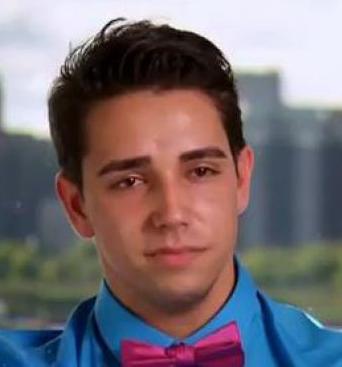
There are, as always, good singers in the group, and we will get to them all in due time. But I already have a fave: Lazaro Arbos, who hails from Cuba, has a bad speech impediment and as a kid stuttered so bad he could hardly talk. But man, he can sing. Bridge Over Troubled Waters. He couldn’t get the title out when he talked, but then the music just flowed. And he’s cute and wore a pink bow tie. Kid’s got a future.

The (bad) Warriors deal, by the numbers

36

Rudy Nothenberg, who ran Muni and the city’s water system, was chief administrative officer, negotiated the deal for the Giants ballpark, and served under six San Francisco mayors, stopped by the office last week to talk to us about the Warriors Arena. We’ve had our fights with Nothenberg (as we would with anyone who was that close to Willie Brown and Dianne Feinstein) but the guy knows more about City Hall, public works, private development, and infrastructure finance than almost anyone alive. So we were happy to hear what he had to say.

Let’s be clear, here: Nothenberg lives near where the arena is slated to be built, and, as he was quick to tell us, he doesn’t want it in his backyard. But he also presented a compelling case that San Francisco is getting ripped off. And he had a few pointed things to say about the lack of negotiating skills among the members of Mayor Ed Lee’s administration.

Back when Nothenberg was talking to the Giants about a stadium at Third and King — at that point a district of dilapidated and underused warehouses — always kept a card in his back pocket. “I always knew that if things didn’t work out and we didn’t build the stadium, that would be okay too,” he said. In other words: You can’t get a good deal if you’re not prepared to walk away. And when it comes to the Warriors proposal, the mayor has made it so clear that this is his legacy that the team knows the city will never walk away. So one side of the talks can demand pretty much anything, and the other side has no leverage.

Oh, and it doesn’t hurt that just about every development lawyer, political consultant, and lobbyist in town is already working on the project. “They have co-opted everyone,” Nothenberg — no stranger to the dark side of politics — told us.

The exact terms of the deal are still not public, which is a bit odd since the city has already started its environmental review. (Can you really do an environmental impact report on a project when you don’t know what the project actually is? Two difference state courts have come to opposite conclusions, so for now the answer is: maybe.)

But there’s enough information out there for Nothenberg to give us a basic rundown on the financing — and it doesn’t look good. “The Port is really not getting anything out of the deal,” he said. The city will get some increased sales and business taxes, and the Warriors will have to pay housing and transit fees. But there won’t be a lot of new property tax revenue, since that will all go to pay for the arena.

Here’s how Nothenberg laid out his analysis:

The Warriors have to spend $120 million to replace Piers 30-32. (Costs a lot to build such a huge structure over the water.) To make the team whole, the city will sell the Warriors a seawall lot on the other side of the Embarcadero for $30 million, then give the $30 million right back to the team. Then the city will set up an Infrastructure Finance District — the 2013 equivalent of a redevelopment agency — use the future tax increments to fund a $50 million bond. The Warriors get the bond money; the city pays it back. Oh, and then the city gives the team $30 million worth of rent credits, meaning the Warriors will probably never pay any rent at all for the use of that public property. And to make it sweeter, San Francisco will pay the Warriors 13 percent interest on the rent-credit money.

Meanwhile, the local taxpayers will have to come up with a huge amount of money to increase Muni capacity, since the existing transit can’t possibly handle the load of the new arena. Yes, the Warriors, like any developer, will have to pay a modest transit impact fee — “but it’s laughable to thing that this will ever cover the capital and operating costs,” Nothenberg said.

To summarize: The wealthy owners of a professional sports team will get free waterfront land to build an immensely valuable new arena. The city will pay to bring the fans there and get them home, deal with the traffic impacts — and get almost nothing in return.

Good one, Mr. Mayor.

Overturning Citizens United

25

Sen. Al Franken, who is wonderful, has moved beyond seeking more disclosure (which the Republicans won’t accept) and is now moving toward a Constitutional amendment to overturn Citizens United. He’s moving his petition everywhere, and it will get a lot of traction.

But as I’ve mentioned, overturning Citizens United isn’t that easy. It’s fine to say we want to do it, and an entirely different task to write the legislation and deal with all of the First Amendment ramifications. And it still won’t stop rich people from spending their own money in unlimited ways.

I don’t know; maybe we have to figure out some more creative solutions. Mandate that all candidates for president and US Senate accept only public financing and match all independent expenditure spending with more public money. And then go back to the “original intent” of the US Constitution: In 1800, each member of Congress represented about 12,000 people. That would work fine today — expand the size of the House of Representatives to guarantee that at no point does any member have to seek election from a district with more than, say, 50,000 people. That’s a number you can reach without big money (see: SF district elections). Do the same for every state Legislature. Yes, more money on government — but less money in politics. I’ll take the tradeoff.

PG&E: Profits over safety

6

You have to love the way the lawyer from TURN (The Utility Reform Network) put PG&E’s Vice President Jane Yura on the spot during hearings on the San Bruno pipeline disaster. There was lots of back and forth about the company’s ad campaign and whether PG&E had “lost its way,” which is what the Chron played up, but here’s the bigger issue, buried deep in the story:

 Long also asked Yura about PG&E’s reaction to the findings of a blue-ribbon panel that the utilities commission created to look into the disaster. The panel concluded that PG&E had been more concerned about profits than safety. “I would say I personally don’t know that we disagree or agree,” Yura said. “We have accepted it.”

I could go futher: PG&E was more concerned about executive compensation that safety, being as money that we earmarked for gas-line upgrades instead went to bonuses for the top people.

You wonder how long it’s going to take for people to realize that the needs of consumers, alternative energy, and safety are never going to be the priority for a private utility. Remember what happened when the state Legislature gave PG&E its way and deregulated electricity in CA? I do. I lived through the rolling blackouts, when Enron stole about $40 billion from California and the electricity grid almost collapsed.

That’s what happens when you worry more about profits (and pay) than public service.

LAnce Armstrong and the SF financier

1

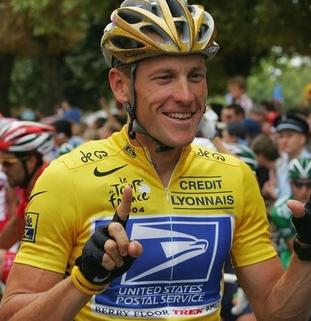
According to the Chron, the owner of the bicycle team that employed Lance Armstrong has been subpoenaed as part of the federal investigation into Lance Armstrong’s alleged doping. (Why is this a federal issue? Um, because some US Attorney wants to make headlines. And because the US Postal Service, which sponsored the team, was involved.)

Thomas Weisel, a legend of Silicon Valley, hasn’t said much publicly about the whole situation, although the Center for Investigative Reporting cites a lawsuit suggesting that he knew at least something nasty:

According to the Center for Investigative Reporting, testimony in an earlier arbitration case involving a dispute over Armstrong’s bonuses suggest Weisel was made aware by team members and doctors of doping concerns on three occasions, beginning in 1996 (before Armstrong joined the USPS team), all to no avail. After publicly expressing concerns about Armstrong in 2001, former team member Greg LeMond said he was told by Weisel, according to the arbitration documents, “What you’re saying about Lance isn’t good for you. You be careful.”

But Weisel was happy to talk to the San Francisco Business Times, which just posted a summary or an earlier interview. You have to be a subscriber to read the whole thing (and you know what? I pay for a subscription every year because there’s stuff in the BT that you never see anywhere else, particularly if you’re watching development issues). Here the gist:

Wiesel denies everything.

“I never had one discussion with one coach or one rider about doping,” he said. “And to my knowledge, the guys that were running my program – Mark Gorski (Postal general manager) and (operations director) Dan Osipow – they did not either. People say ‘Jesus, you had to know this was going on because everyone was doing it,’” Weisel said. “That’s not true. I never thought it was. I don’t think many cycling teams were deploying that practice. And we certainly had part of our rider contract where if a person tested positive, they were off the team. We were very explicit there.”

Okay then.

Bicycling is a lot more harsh than baseball — Barry Bonds might not get into the Hall of Fame (although if he does, so should Pete Rose), but he hasn’t been stripped of any of his batting titles and nobody’s talking about changing his stats. It all reminds me of a friend who played for the University of Miami back in the 1980s, when Suntan U won national football titles. “Everyone juiced,” he told me. “Everyone. You want to play, you juice. You want to get the the NFL, you juice.”

Cheating — except that everyone was doing it. Horribly unhealthy, but so is playing football at that level. When the rewards are so high, and the competition so intense, and winning is all that matters, people cheat. (See: Wall Street, where Weisel plays. See: Corporate America.)

Lance Armstrong is reportedly worth about $100 million. Bonds, about the same. Would they do it the same way again — or retire in a more relative obscurity with a lot less money?

And why are those the choices?


Texas and tax cuts suck; CA leads job growth

41

How many times have we heard that jobs are leaving California for Texas? How many times have big-business groups and the polticians who play to their needs said that lower taxes and corporate welfare make states more “competitive” and are good for the economy?

So look, for a moment, at California and Texas. Who has the lower taxes and the governor who will do whatever employers want? And who has the more robust job growth?

Just goes to show: Tax breaks do not a health economy make. What companies look for when the make location decisions is much more complicated. An educated labor force (which, by the way, means spending tax money on schools and colleges), access to transportation (again, a public-sector concern) and yes, a decent place where the executives want to live are bigger factors than things like the payroll tax.

That’s what studies have shown repeatedly over the years — and it’s playing out now in CA.

Editor’s notes

12

EDITOR’S NOTES The guy who runs the San Francisco Housing Authority is in pretty serious doo-doo: His agency has just been placed on the federal government’s “troubled” list, and he’s getting sued by his own lawyer, and he’s hiding from the press while tenants complain that they can’t get basic repairs.

Although Mayor Ed Lee has so far officially stuck by Henry Alvarez, he’s already backing off a bit, and it’s pretty likely Alvarez will be gone when his contract expires this summer. He may be gone even sooner than that; there’s a growing chorus of voices calling on the mayor to fire him.

So at some point we’ll get a new director, who will make a handsome salary (Alvarez gets $210,000 a year plus a car and seven weeks paid vacation) and live in a nice house and go into work every day to deal with problems that are pretty damn far from his or her life.

That’s always the case to some extent with the heads of agencies who deal with the poor, but it’s particularly dramatic when you talk about the Housing Authority. Public housing is never luxurious, but in San Francisco, it’s been riddled with problems for many years. And frankly, I’m much more concerned about the tenants than about Alvarez or his management style.

I get that the Housing Authority has financial problems. The federal government long ago abandoned any serious commitment to funding housing in American cities, and the authority only recently managed to pay off a multimillion-dollar judgment from a lawsuit filed by the families of a grandmother and five children killed in a fire on Housing Authority property.

Yet, tenant advocate continue to complain that it can be hard, even impossible to get a response from the agency. When critics complain, the agency goes after them: The Housing Rights Committee went after the Housing Authority over evictions, and wound up getting investigated by SFHA employees who wanted to gut their city funding. And while some say Alvarez is a hard-charging person who demands results (and thus pisses some people off), nobody has used the words open, accessible or compassionate to describe him.

I’ve got an idea for the next director (or for Alvarez, if he wants to stick around). Why not live in public housing?

Seriously: Why shouldn’t the person who controls the safety and welfare of tenants in more than 6,000 units spend a little time understanding what their lives are like? Why not spend, say, one night a week in one of those apartments?

In the old days, judges used to sentence slumlords to live in their own decrepit buildings, which seemed to work pretty well: Once the guy in charge has to deal with the rats and roaches and broken windows, he’s much more likely to expedite repairs.

But it wouldn’t have to be punitive — just a chance to get a first-hand look at how the agency policies are working on the ground. The city employee unions have had a lot of success asking members of the Board of Supervisors to do a union worker’s job for a day; the director of the San Francisco Housing Authority could certainly live like one of his tenants every now and then.

Think of it as a management tool: What better way to figure out whether his staff is doing the job than to look at the end product? Or figure it as a way to stop being an asshole and see what people who live on less than ten percent of his salary really think of his administration.


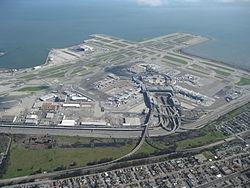
Harvey Milk airport!

83

First of all, it’s a great idea.

Major airports get named after people who have had a major impact on society (LaGuardia, Kennedy) or heros (Lt. Commander Edward O’Hare) and Harvey Milk was both. SFO is the gateway to the United States for millions of travelers, much as Kennedy is on the East Coast, and the idea that all of them would be potentially exposed to Milk’s life and legacy is wonderful.

Sup. Scott Wiener supports the idea, but says it will “spark a robust debate” about other people who have contributed to San Francisco, and I’ve heard the names Dianne Feinstein and Willie Brown mentioned. Both were bad mayors, both sold out the city to developers, both would be an embarassment — but that’s not the point. There are plenty of politicians like Feinstein and Brown in the world; there was only one Harvey Milk.

Thanks to Sup. Campos for the idea. I suspect it will get about 70 percent of the vote.

Jerrry Brown and UC

34

So the guv is going to start showing up at UC and CSU board meetings, where he will be able to sit next to his pal Gavin Newsom. And he’s going to tell the administrators that they have to start getting serious about cost-cutting — as if they haven’t whacked billions out of their budgets in the past few years.

I’m with Jerry on one thing: The Number One, absolute, top priority of the institutions of higher education in this state has to be avoiding hikes in tuition and fees. In fact, I’d put a five-year moratorium on anything that would increase costs for students. It’s already too expensive to go to a state school, middle-class parents are getting priced out, and kids are graduating with so much debt that they’re financially paralyzed for years.

The promise of an affordable, quality college education that Jerry’s dad created in this state is gone, and it’s not coming back until the price of a four-year degree comes back into synch with what Californians can pay. (Yes: UC is still a huge bargain compared to private schools. But you can go to college in Canada for half the price of UC, even if you’re an American. If you’re a Canadian citizen, you can go to really great colleges for almost nothing. That’s the way California used to be.

And no question: There’s bloat at UC. Administrators make too much money. I refuse to believe that you have to pay such giant salaries to attract people who can run the schools.

But that’s a small part of the overall UC and CSU budget. And Brown has to understand that higher education isn’t like most businesses. The productivity increases that corporate America (and that many other parts of state government) have seen in the digital era don’t translate directly to colleges. A company can lay off lots of staff that did things like answer phones and replace them with (annoying) voice-mail robots, and accountants can work faster and machines can make cars better than (expensive) labor forces did. But it still takes one full human being to teach English Lit, and he or she can still only teach a certain number of students, and grade a certain number of papers. And if all the smartest physicists and electrical engineers want to go to work for Oracle or Google, you have to pay more to get them to get a few to pursue careers in academia.

Brown’s proposal seems to be online classes, which would allow one prof to reach thousands of students, without anyone showing up in a classroom. Nice idea, but teaching isn’t just giving a lecture. Sure, some classes work fine on the web, but a lot don’t and never will.

Seriously, guv: Would you rather have this bloody fight that could damage your dad’s enduring legacy, or go along with an oil severance tax?


The Chamber of Commerce becomes even more irrelevant

19

It’s been years since anyone really took the San Francisco Chamber of Commerce seriously as a political force. The verdict from the techies came in long ago; they do their own thing with their own money. Small business never got much out of the Chamber, and most of those folks have their own organizations. Even the big-business agenda was taken over for a while by the Commitee on JOBS. Then there’s SFSOS, Plan C and a bunch of other pro-business and anti-regulation groups. Rose Pak and her allies have their own Chamber of Commerce. You rarely hear anyone at City Hall worried about what the Old Chamber says or is doing.

Steve Falk, the current director, has softened the Chamber’s image a bit and tried to be somewhat diplomatic. But now this organization is about to go backwards.

If what Matier and Ross report is accurate, a former City Hall aide, former failed candidate for supervisor, and current director of the Golden Gate Restaurant Association may be the new chamber director. Rob Black seems to have a line at the top job after Wade Rose, an executive with Catholic Healthcare West, dropped out of the running:

We’re told some of the chamber’s big dogs – like the brokerage house Charles Schwab and Pacific Gas and Electric Co. – weren’t all that enamored of the soft-glove approach that Rose was promising to bring to his dealings with the San Francisco Board of Supervisors.

That jobes with what I’ve been hearing from local politicos, who’ve been saying that there were two candidates for the job — one very good and one very bad. Looks like the very good candidate (good by Chamber standards, anyway) is gone.

I don’t know Rose, but I do know that even this more moderate board of supes isn’t likely to take direction from what many see as an antidiluvean organization, a moribund old white men’s club with a ridiculous out-of-date agenda. Putting a person in charge who actually sought to build bridges (and who, by the way, might not have gone all-out for the new CPMC hospital) might have edged the Chamber back toward some sort of relevance.

But no: If Black gets the job, prepare for the Chamber to stick to its old ways, whine about everything the board does that’s even remotely progressive, issue report cards that nobody cares about — and waste its members dues. Great move.


Much weirdness at the City College Board

44

And you thought the election of the new old Board of Supervisors president was odd. Check out what happened with the Community College Board: After weeks of telling everyone in sight how horrible it would be if any of the three old-timers who helped screw up the school (Natalie Berg, Lawrence Wong and Anita Grier) got elected board prez, current board president John Rizzo won another term — with the support of Berg, Wong, and Grier. And left some of his progressive allies either scratching their heads or fuming.

The backstory: A couple of weeks ago, Rizzo got word that prog colleague Chris Jackson was considering supporting Grier for the top post. That would have given Grier the four votes she needed, since Berg, Wong and her all vote together most of the time. And it would have screwed the progressives, who managed with considerable effort to hold onto a one-vote majority at a critical time in the board’s history, while the college is trying to win reaccreditation. Why bother to win at the polls if you’re just going to turn control over to the other side? I mean, the GOP doesn’t vote for Nancy Pelosi for speaker.

So Rizzo asked former sup. Aaron Peskin, who remains one of the town’s most savvy political operators, to help out. Peskin put an immense amount of time into working out the details and cutting through the various interest-group problems. (Example: By tradition, the top vote-getter becomes board president. That would be Steve Ngo. But the teacher’s union is mad at Ngo because he wants to put more money into the school’s reserves even if it means laying off teachers. So Jackson, a longtime labor guy, couldn’t vote for him. Jackson had already told Grier he’d vote for her, so he’d have to be convinced to withdraw that promise. And on and on.) In the end, after a lot of wrangling (while trying to avoid the fact that the Brown Act prohibits the four progressives from talking to each other outside of a public meeting) Peskin managed to find a solution: Four people were willing to vote for newcomer Rafael Mandelman. Okay, that works.

The vote was Jan. 10. The night before, Berg called Rizzo to say that she didn’t want Mandelman, but would agreed to support … Rizzo. Presumably (she won’t take my phone calls so I don’t know for sure) she had already talked to, or was about to talk to, Grier and Wong to seal the deal. That, of course, would be a direct Brown Act problem, but nobody seems to care about the state’s landmark open-government law anyway (witness the BOS leadership fight, where everyone was talking to everyone else behind the scenes).

So Rizzo agrees that would be dandy, never tells his colleagues on the left — and when the vote goes down, he gets nominated by and re-elected with the support of the people he’s been bad-mouthing all over town for the past couple of weeks. In the end, the progs saw the handwriting on the wall and went along and made it unanimous.

I called Rizzo after the vote and he told me that he hadn’t expected Berg’s offer, but that “it avoided a fight at the meeting, and that’s a good thing for the state accreditors. It shows the board isn’t divided.” Actually, the board IS divided, and Rizzo has been part of that divide, and if the special trustee hasn’t figured that out yet, he’s not terribly observant.

He told me he should have given his allies a heads-up, but “that would have violated the Brown Act.” (Clue phone: The whole deal that re-elected him was a blatant violation of the Brown Act.)

Mandelman just joined the board, and wasn’t pushing for the top job, although he’d agreed to do it. So he’s not that upset. But he was a bit bemused when I talked to him. “To have the two-week shitstorm stirred up by John, who then forms a partnership with the people he’s despising, and not to tell any of us, is wierd,” Mandelman said.

Peskin’s more direct. “Politics is all about keeping your word,” he told me. “This is exactly not how you do politics.”


The downside of Jerry Brown’s budget

9

The guv is quite proud of his new budget: He’s eliminated the chronic deficits, he’s giving some more money to the schools, and he’s vowing that the state will live “within its means.” Which sounds like no more taxes. And gee, just about everyone in Sacramento is singing Kumbaya; the praise is coming not just from Democrats but from Republicans.

But there’s a downside to the Brown budget: He has, to his credit, stopped the red ink, and he’s presenting things in a brilliant way that makes him look like the grownup the state has needed for many years — but he’s doing very little to replace the the money that services for the poor have lost in the past five years.

“At first blush, it has some good things,” Assemblymember Tom Ammiano told me. “But I don’t see restoration of the cuts for the disenfranchised.”

Ammiano is calling for closing Prop. 13 loopholes and passing an oil severance tax as part of the budget process. And with Democrats holding a two-thirds majority in both houses, those kinds of changes are possible. At the very least, it seems, the progressives ought to demand from Brown a plan to backfill what social service providers have lost. If it can’t all happen this year, it ought to be part of the future budget process.

State Sen. Mark Leno, who chairs the Senate Budget Commitee, was a bit more politic than Ammiano, but he also is concerned that the budget move the state forward:

“With the improvement of our fiscal outlook comes the opportunity to continue our work to restore California. While our recent efforts have focused largely on making cuts in the least harmful manner possible, we will now have more capacity to refine our work to improve essential programs and analyze the role of government and its effectiveness. I look forward to working with Governor Brown and my colleagues in the Legislature to evaluate this year’s budget to help ensure it is the best possible plan for a state on the mend.”

On the mend is right — because the state of California is in way worse shape than it was when Arnold Schwarzenegger took over and screwed things up, and the goal shoudn’t be to keep at a steady state that’s unacceptable. It ought to be returning California to its role as a leader in progressive policy. Sorry, Jerry: A balanced budget alone isn’t good enough.

Oh, and Californians United for a Reponsible Budget, which seeks to cut prison spending, points out that this budget is hardly tough on the bloated corrections budget:

The administration has deserted plans to shrink California’s over-sized prison population, ignoring clear messages from voters. The proposed budget increases prison spending $250 million including a $52 million General Fund increase, bringing the total Corrections budget over $11 billion. Despite the passage of Prop. 36 and continuing realignment,  It also projects an increase in the prison population by 2,262 people over the 2012 Budget Act projections. ”If the Governor believes that ‘we can’t pour more and more dollars down the rat hole of incarceration’ then why is he increasing spending on Corrections, planning for more prisoners rather than fewer and defying the demands of the Federal Court and the voters to further shrink the prison system?” asked Diana Zuñiga, Field Organizer for Californians United for a Responsible Budget.

It’s no surprise that the prison guards’ union is happy.

UPDATE: An analysis by Ammiano’s office shows a few other lowlights of the budget: It reduced AIDS Drug Assistance Program money by $16.9 million. It doesn’t restore any of the deep cuts to the state’s Welfare to Work Program. It cuts community college funding by tying state money to student completion, not student enrollment. It offers no additional funding for child care programs. It caps the number of courses students are allowed to take if they want to receive Cal Grants.

The Leg needs to take a hard look at this before it signs off on all these cuts.

The Guardian, the Examiner, and the Weekly

115

As you can all imagine, I’m getting calls and emails, so let me clear it up: Yes, San Francisco Newspaper Co. has bought SF Weekly.

Yes, Todd Vogt is the co-owner of the Examiner, Guardian and now Weekly, but for the record, I am the editor and publisher of the Guardian.

No, there are no plans to merge the two weeklies or consolidate them or combine the editorial staffs. We will continue to do our best to be the progressive voice of San Francisco; the Weekly, I assume, will continue to do its own different thing.

And no, this doesn’t mean that I’m going to suddenly be BFFs with Joe Eskenazi. We have our view of things; he has his. I fervently believe that we will continue to disagree, and the city will be served by the ongoing debate. (Unless Joe comes to his senses and realizes that I’m always right.)


Do we need more luxury condos?

0

There’s no shortage of high-end housing in San Francisco. If you can afford to pay $6,000 a month for your rent or mortgage, you’re going to find a nice place to live. And there’s no study anywhere in any corner of the City Planning Department suggesting that current San Francisco residents really want new luxury condos downtown.

In fact, all evidence suggests the contrary — the market for high-end downtown housing is new residents, people who are moving here to take tech jobs, empty nesters moving from the suburbs, or world travelers looking for a pied-a-terre in one of the greatest cities on Earth.

But when the City Planning Department analyzes a project like 75 Howard, that’s not part of the discussion.

The Dec. 12 preliminary environmental study on the “market-rate” (read: $1 million and up for waterfront views) project never addresses the question of what value this type of housing would bring to the city. Instead, it talks about projections from the Association of Bay Area Governments, which says that San Francisco will grow by 52,000 households by 2030.

So a project that’s creating fewer than 200 housing units, and creating a net of 77 jobs, isn’t big enough to be a factor in the future of either jobs or housing.

But in the process, the study makes a remarkable statement, one that underlines everything wrong with city planning policy. Buried on page 48 of a 151-page preliminary study is the following: “In addition, the demand for housing by the net increase in number of employees would be more than offset by the dwelling units that would be constructed on site under the proposed project or its variants.”

That sounds like bureaucratise, and it is, so allow me to translate: The project will create 186 housing units and 77 jobs. More housing than jobs; what’s there to worry about?

Well: The 77 employees at 75 Howard will work in the restaurants and stores, or in the garage under the building, or in maintenance. Not one of them will make even remotely enough money to afford to buy one of the condo units in the building.

So the project — like so much of the development that happens in San Francisco — will create jobs for people who can’t afford to live here, and housing for people who don’t currently work here. That imbalance is utterly unsustainable, spells disaster for the future of the city — and is pretty much hard-wired into current planning and housing policy.

War of the waterfront

40

tredmond@sfbg.com

There’s a blocky, unattractive building near the corner of Howard and Steuart streets, right off the Embarcadero, that’s used for the unappealing activity of parking cars. Nobody’s paid much attention to it for years, although weekend shoppers at the Ferry Building Farmers Market appreciate the fact that they can park their cars for just $6 on Saturday and Sunday mornings.

But now a developer has big plans for the 75 Howard Street site — and it’s about to become a critical front in a huge battle over the future of San Francisco’s waterfront.

Paramount Partners, a New York-based real-estate firm that also owns One Market Plaza, wants to tear down the eight-story garage and replace it with a 350-foot highrise tower that will hold 186 high-end condominiums. The new building would have ground-floor retail and restaurant space and a public plaza.

It would also exceed the current height limit in the area by 150 feet and could be the second luxury housing project along the Embarcadero that defies the city’s longtime policy of strictly limiting the height of buildings on the waterfront.

It comes at a time when the Golden State Warriors are seeking permission to build a sports arena on Piers 30 and 32, just a few hundred feet from 75 Howard.

Between the proposed 8 Washington condo project, the arena, and 75 Howard, the skyline and use of the central waterfront could change dramatically in the next few years. Add to that a $100 million makeover for Pier 70, the new Exploratorium building on Pier 15, and a new cruise ship terminal at Pier 27 — and that’s more development along the Bay than San Francisco has seen in decades.

And much of it is happening without a coherent overall plan.

There’s no city planning document that calls for radically upzoning the waterfront for luxury housing. There’s nothing that talks about large-scale sports facilities. These projects are driven by developers, not city planners — and when you put them all together, the cumulative impacts could be profound, and in some cases, alarming.

“There hasn’t been a comprehensive vision for the future of the waterfront,” Sup. David Chiu told me. “”I think we need to take a step back and look at what we really want to do.”

Or as Tom Radulovich, director of the advocacy group Livable City, put it, “We need to stop planning the waterfront one project at a time.”


Some of the first big development wars in San Francisco history involved tall buildings on the waterfront. After the Fontana Towers were built in 1965, walling off the end of the Van Ness corridor in a nasty replica of a Miami Beach hotel complex, residents of the northern part of the city began to rebel. A plan to put a 550-foot US Steel headquarters building on the waterfront galvanized the first anti-highrise campaigns, with dressmaker Alvin Duskin buying newspaper ads that warned, “Don’t let them bury your skyline under a wall of tombstones.”

Ultimately, the highrise revolt forced the city to downzone the waterfront area, where most buildings can’t exceed 60 or 80 feet. But repeatedly, developers have eyed this valuable turf and tried to get around the rules.

“It’s a generational battle,” former Sup. Aaron Peskin noted. “Every time the developers think another generation of San Franciscans has forgotten the past, they try to raise the height limit along the Embarcadero.”

The 8 Washington project was the latest attempt. Developer Simon Snellgrove wants to build 134 of the most expensive condominiums in San Francisco history on a slice of land owned in part by the Port of San Francisco, not far from the Ferry Building. The tallest of the structures would rise 136 feet, far above the 84-foot zoning limit for the site. Opponents argued that the city has no pressing need for ultra-luxury housing and that the proposal would create a “wall on the waterfront.”

Although the supervisors approved it on a 8-3 vote, foes gathered enough signatures to force a referendum, so the development can’t go forward until the voters have a chance to weigh in this coming November.

Meanwhile, the Paramount Group has filed plans for a much taller project at 75 Howard. It’s on the edge of downtown, but also along the Embarcadero south of Market, where many of the buildings are only a few stories high.

The project already faces opposition. “The serious concerns I had with 8 Washington are very similar with 75 Howard,” Chiu said. But the issues are much larger now that the Warriors have proposed an arena just across the street and a few blocks south.

“Because of the increase in traffic and other issues around the arena, I think 75 Howard has a higher bar to jump,” Sup. Jane Kim, who represents South of Market, told me.

Kim said she’s not opposed to the Warriors’ proposal and is still open to considering the highrise condos. But she, too, is concerned that all of this development is taking place without a coherent plan.

“It’s a good question to be asking,” she said. “We want some development along the waterfront, but the question is how much.”

Alex Clemens, who runs Barbary Coast Consulting, is representing the developer at 75 Howard. He argues that the current parking garage is neither environmentally appropriate nor the best use of space downtown.

“Paramount Group purchased the garage as part of a larger portfolio in 2007,” he told me by email. “Like any other downtown garage, it is very profitable — but Paramount believes an eight-story cube of parking facing the Embarcadero is not the best use of this incredible location.”

He added: “We believe removing eight above-ground layers of parked cars from the site, reducing traffic congestion, enlivening street life, and improving the pedestrian corridor are all benefits to the community that fit well with the city’s overall goals. (Of course, these are in addition to the myriad fees and tax revenues associated with the project.)”

But that, of course, assumes that the city wants, and needs, more luxury condominiums (see sidebar).


Among the biggest problems of this rush of waterfront development is the lack of public transit. The 75 Howard project is fairly close to the Embarcadero BART station, but when you take into account the Exploratorium, the arena, and Pier 70 — where a popular renovation project is slated to create new office, retail, and restaurant space — the potential for transit overload is serious.

The waterfront at this point is served primary by Muni’s F line — which, Radulovich points out, “is crowded, expensive, low-capacity, and not [Americans with Disabilities Act]-compliant.”

The T line brings in passengers from the southeast but, Radulovich said, “if you think we can serve all this new development with the existing transit, it’s not going to happen.”

Then there are the cars. The Embarcadero is practically a highway, and all the auto traffic makes it unsafe for bicycles. The Warriors arena will have to involve some parking (if nothing else, it will need a few hundred spaces for players, staff, and executives — and it’s highly unlikely people who buy million-dollar luxury boxes are going to take transit to the arena, so there will have to be parking for them, too. That’s hundreds of spaces and new cars — assuming not a single fan drives.

The 75 Howard project will eliminate parking spaces, but not vehicle traffic — there will still be close to 200 parking spaces.

And all of this is happening at the foot of the Bay Bridge, the constantly clogged artery to the East Bay. “Oh, and there’s a new community of 20,000 people planned right in the center of the bridge, on Treasure Island,” Peskin pointed out.

Is it possible to handle all of the people coming and going to the waterfront (particularly on days where there’s also a Giants game a few hundred yards south) entirely with mass transit? Maybe — “that’s the kind of problem we’d like to have to solve,” Radulovich said. Of course, the developers would have to kick in major resources to fund transit — “and,” he said, “we don’t even know what the bill would be, and we don’t have the political will to stick it to the developers.”

But a transit-only option for the waterfront is not going to happen — at the very least, thousands of Warriors fans are going to drive.

The overall problem here is that nobody has asked the hard questions: What do we want to do with San Francisco’s waterfront? The Port, which owns much of the land, is in a terrible bind — the City Charter defines the Port as an enterprise department, which has to pay for itself with revenue from its operations, which made sense when it was a working seaport.

But now the only assets are real estate — and developing that land, for good or for ill, seems the only way to address hundreds of millions of dollars in deferred maintenance and operating costs on the waterfront’s crumbling piers. And the City Planning Department, which oversees the land on the other side of the Embarcadero, is utterly driven by the desires of developers, who routinely get exemptions from the existing zoning. “There is no rule of law in the planning environment we live in,” Radulovich said. So the result is a series of projects, each considered on its own, that together threaten to turn this priceless civic asset into a wall of concrete.


Gascon, Adachi and conviction rates

25

Public Defender Jeff Adachi just released his annual report, and it’s impressive: According to the statistic his office complied, of the 60 felony trials handled by deputy public defenders, 62 percent resulted in acquittals or hung juries. That means that the office of District Attorney George Gascon has a trial conviction rate of just 38 percent when the DA’s office is up against the PD’s office.

That’s a pretty abyssmal conviction rate — and the DA’s office has a different spin. According to DA spokesperson Stephanie Ong Stillman, the overall conviction rate on felonies in 2012 was 67.7 percent. But that includes plea bargains, which officially count as a conviction; she didn’t dispute Adachi’s contention that public defenders win far more than half of their actual trials.

There are a couple of ways to interpret this. Not all criminal trials are handled by public defenders; the better-off defendants hire private counsel. And there’s an old assumtion in the world of criminal justice that rich people get better legal defense because they can hire high-priced private counsel.

But if the DA’s figure are accurate, it’s entirely possible — although nobody has the figures — that the San Francisco PD’s office actually does better in criminal trials than private law firms. Tamara Aparton, spokeperson for Adachi, said she has no data on that, but “I wouldn’t be surprised.”

And there’s no way to dispute the fact that low conviction rates indicate the DA is sending weak cases to trial. If criminal defendants are getting off more than half the time, either the cops are making very bad busts (true all too often) or the DA is trying cases that should have been settled.

New school lunches: “awesome.”

15

There’s still a lot of controversy around SFUSD’s new school lunch program and how much it’s actually going to cost. But the early reports from Aptos Middle School are very, very positive. I received a text from my son today that says: “Tell the School Board that the new lunches are awesome.”

Much better than the previous fare.

So there’s some good news. 

Corporations and carpools

60

I absolutely love this story: A Marin activist named Jonathan Frieman, who runs a small nonprofit corporation (the JoMiJo Foundation) was driving in the carpool lane on highway 101 in Marin when he was stopped by a cop and given a $478 ticket. Ah, but Frieman insists he wasn’t driving alone; beside him in the car were the articles of incorporation and other relevant corporate paperwork for his foundation — and in the United States, corporations are considered people. In fact, the California Vehicle Code refers to “natural persons or corporations.”

So Frieman is challening his ticket in traffic court, and is willing to spend his own money to appeal the case as far as he can. He wants to force the courts to decide: If a corporation is a person, then it gets to ride with a driver in the carpool lane, and his ticket has to be dismissed. If it’s not a person, then maybe it can’t make political contributions.In fact, if a corporation isn’t a person, a whole lot of evil stuff might come to an end.

Could a traffic fine be the ticket to that ruling? Who knows — and at the very least, Frieman is helping point up the absurdity of the current state of the law.

This is no fluke, by the way: Frieman, a longtime community activist, has been looking for ways to challenge corporate personhood for more than a decade. He’s convened legal scholars, looked for avenues to challenge the notion that corporations have the same rights as the rest of us — and along the way, came up with this idea.

It’s taken a while because the California Highway Patrol hasn’t been all that vigilant. “I’ve been driving up and down 101 in the carpool lane with my corporate papers for years,” Frieman told me. “I never got a ticket until October 2.”

His first hearing is in Marin’s traffic court in San Rafael on Jan. 7.


Why the GOP gets away with obstructing Congress

91

There’s an interesting piece on Calitics talking about what California can teach the nation in terms of ending Republican obstructionism. Robert Cruickshank, as usual, is right on target — and he points to the real problem in Washington. Republicans in the House no longer worry about losing their seats to Democrats; the GOP has been so good about gerrymandering that only maybe 30 or 40 seats in the entire nation are still competitive. What these increasingly right-wing loonies worry about is a primary challenge from an even loonier, even right-wingier candidate — so they refuse to vote for any taxes and they’re willing to bring down the entire economy if that’s what it takes.

The problem is it’s not as easy to fix nationally as it was in California. We’re talking long-term efforts to change governors and state Legislatures so they can rewrite Congressional districts (or create California-style independent redistricting, which I initially opposed but hasn’t turned out so bad). The Constitution mandages redistricting every ten years, but I don’t think there’s any rule saying you can’t draw new districts more often, or that you can’t create a new way of drawing them and put that in place right away. But again, that’s not immediate.

Meanwhile, Obama’s going to have to force as much as he can through a reluctant Congress and do as much as he can with executive orders.

The rent is too damn high

270

You look at numbers like this and you go: Whoa. The rent really, really is too damn high. Median rent in San Francisco is now over $3,000 a month. WHo can pay that? Seriously.

The federal government says your rent payment shouldn’t be more than a third of your income. That means to qualify for the median — not the highest, but the median — rent in this town, you need to be earning $9,000 a month, or $108,000 a year. That is NOT, by any standard, the median income in town.

So let’s say you spend half your income on rent. You still have to make $72,000 to afford the median apartment. Crazy stuff. And when local politicians say they support “rent control,” that’s nice but it’s not the point. Controlling rent at $3,000 a month doesn’t make the city affordable.

If rent controls applied to vacant apartments, then rents overall, across the city, would rise at the level of inflation — and people on fixed incomes (social security, disability, SSI) would be able to keep pace. You want to know why there are so many homeless people in this city? One reason: Two decades ago, SSI paid enough every month to cover the cost of an apartment and leave enough to buy clothes and eat. Now, it doesn’t pay enough for an SRO hotel, even if you don’t buy anything else.

So people wind up on the street.


No headbutting?

0

tredmond@sfbg.com

LIT/FILM The folding travel toothbrush is a central element in every Jack Reacher novel. It’s his only possession, the only thing the wandering ex-military cop takes with him when he throws away his old clothes and buys new ones, the only thing that ties him directly to his old life in the U.S. Army. It’s part of the Reacher formula, one that consistently works through 17 books by Lee Child.

It’s not in the Jack Reacher movie.

That was the first sign that one of the best trash-lit characters to come on the scene since John D. MacDonald invented Travis McGee hasn’t translated so well to the big screen. (McGee never did, either; the only McGee movies ever made were disasters, and MacDonald hated all of them.)

But the esoteric musings of McGee, on everything from Florida real-estate development to the demise of San Francisco, were the charm that held those modest plots together. Child, who has a background in television production, offers more action-packed stories with all the elements that ought to make a great movie.

Like MacDonald, though, Child goes a bit deeper than the traditional trashy thriller writer. His books have themes of violence and redemption, of freedom and responsibility, of wanderlust and homesickness that can’t just be shoehorned into a fast-paced screenplay with Tom Cruise. This may not be Shakespearean literature, but it isn’t Mission Impossible, either.

To make it more challenging, there are long periods of silence in the Reacher book, and those don’t work will in today’s mainstream cinema — but without them, the pacing is all wrong.

I showed up at the movie ready to be let down. The diminutive and emotional Cruise seemed all wrong as the tall, taciturn Reacher; I was hoping for a more Daniel Craig approach. Child, on the other hand, was totally down with the casting, so I was ready to give it a shot. (Or, as the book title from whence this flick emerged put it, One Shot.)

The book is a classic of the Reacher oevre, with a tiny bit of 2007’s Shooter mixed in. There’s a former Army sniper named James Barr (Joseph Sikora) who gets charged with an apparently random killing spree; the evidence is overwhelming, the cops have him nailed, and the execution-mad district attorney tells him if he doesn’t confess, he’s going to get the death penalty.

Barr refuses to talk; he just takes a legal pad and writes “Get Jack Reacher.” Which turns out to be tricky; Reacher has no address, no credit cards, no car, no driver’s license … nothing to pin him down. He’s almost impossible to find.

But he shows up on his own — not to help save Barr but to tell the cops that the guy once murdered a bunch of civilian contractors in Iraq. Reacher had him nailed, but the Army, for political reasons, let the case go. He’s ready to send the guy to the chair, if he doesn’t kill him with his own hands first.

But then the DA’s daughter, Helen Rodin (Rosamund Pike), who is representing Barr, convinces Reacher to take another look, and together they discover a fiendish plot involving an 80-year-old mob capo from the old Soviet Gulag.

Nice movie plot. And the film version doesn’t take too many liberties with the general idea of the book.

But there’s no headbutting, which is Reacher’s trademark fighting technique. And he never has sex with the female protagonist, which is disappointing.

That and the fact that the movie’s about 20 minutes too long — and the car chase scene alone is about five minutes too long (and car chases are not part of the Reacher mix) and there’s an embarassing scene where Cruise takes his shirt off just so we can see him with his shirt off left me wondering: did Lee Child really sign off on this screenplay?

So that’s the bad news. The good news is that the film is entertaining, Cruise does the best he can under the circumstances, and he delivers the key lines nicely. Pike does a fine job of being sexy without being movie-star beautiful. The fight scenes are lively and fun and not too overdone.

And Werner Herzog is just spectacular as the evil Zec, a man so tough that he chewed his fingers off in prison to avoid getting gangrene. Watching Herzog sneer and be scary, horrible, and fascinating at the same time is worth the price of admission.

No nudity. Five people beaten near death. Three cops cars destroyed. Sniper porn. Fight to the death in the pouring rain. Not a great tribute to a great character, but I’ll take it. *

JACK REACHER is now playing in Bay Area theaters.