Tim Redmond

White men behaving (very) badly

69

Could it be — the worst year ever?

I keep asking. And every time the Offies come around, I find myself boggled yet again. Our awards for the very worst — the dumbest, the most tasteless, the most truly offensive acts of the year past — keep sinking lower and lower.

But what can we do? There are still Republicans, and this year a lot of them ran for high office, and every single one made a fool of himself. There are still politicians who think you can run for San Francisco supervisor even if you live in Walnut Creek, and elected leaders who find the courage deep in themselves to prevent a bunch of old men from walking around with their sagging asses and limp dicks out.

There are still entertainers who punch psychics, and gun nuts who blame mass murder on TV sex, and … well, a whole lot of people who have made this a banner year for the Offies.


SUPPORT OUR BRAVE, HEROIC TROOPS! (EXCEPT THE MEN WHO FUCK MEN)

The audience at a Republican presidential primary debate booed a gay solider who called in from Iraq with a question about don’t ask, don’t tell.


FROM A GUY WHO HAD TO BUY OXYCONTINS AND VIAGRA ON THE STREET, THIS SORT OF THING IS AN OBVIOUS CONCERN

Rush Limbaugh attacked law student Sandra Fluke, calling her a “slut” and a “prostitute” because she testified that health-care plans should cover contraceptives.


THERE ARE MEN SO BRILLIANT THAT WE STAND IN AWE OF THEIR INTELLECT

Mitt Romney said he really liked Michigan because the trees were all the right height.


GIVING NEW MEANING TO THE 1 PERCENT

Herman Cain proclaimed that for every woman who claimed he sexually harassed her, there were a thousand others who didn’t.


IF WE WANTED A DRESS CODE ON AIRLINES, WE’D START WITH THOSE DREARY PILOT UNIFORMS

An American Airlines pilot kicked a woman off a flight for wearing a shirt that said “if I wanted the government in my womb I’d fuck a senator.”


PROBLEM IS, BUSH MADE THAT ONE A CABINET-LEVEL POSITION

Rick Perry proclaimed in a debate that he was going to do away with three agencies of the federal government, but after listing Commerce and Education, he couldn’t remember what the third one was, identifying it only as “oops.”


FOR SOMEONE WHOSE NAME MEANS ASS-CUM JUICE, THAT’S A REALLY PRETTY PICTURE

Rick Santorum said that he’d listened to John F. Kennedy’s speech on the separation of church and state and it made him want to throw up.


LOOK! UP AT THE RAMPARTS! THE MAN WITH THE HAIR!

Donald Trump, mistakenly believing Romney won the popular vote but lost the election, called the election “a sham and travesty” and called for “revolution.”


BUT HE COULD HELP THEM OUT WITH A FEW BINDERS FULL OF WOMEN

Romney insulted the British by saying the nation didn’t appear ready to host the Olympics.


FINE, JUST TAKE RICK PERRY WITH YOU

More than 50 thousand people signed a White House petition asking for permission for Texas to secede.


GUNS DON’T KILL PEOPLE, ATHEISM AND OVERSTIMULATED GLANDS DO. HAPPY FRIDAY, SHOOTERS!

On the same day that a gunman opened fire at a showing of the Dark Knight movie in Colorado, the National Rifle Association’s magazine sent out a tweet that read: “Good morning, shooters! Happy Friday.”

A Congressman from Texas, Louie Gohmert, argued that the Dark Knight shootings happened because of “ongoing attacks on Judeo-Christian beliefs.”

Mike Huckabee blamed the massacre in Newtown, CT on atheism. “We ask why there is violence in our schools, but we have systematically removed God from our schools,” Huckabee said on Fox News. “Should we be so surprised that schools would become a place of carnage?”

Timothy Bordnow at Tea Party nation said the shooting was caused by too much sexual stimulation in the media . “There is a reason why young people commit these sorts of crimes, and sex plays no small part. Their passions are eternally inflamed, and they wander the Earth with no outlet for their overstimulated glands.”

Megan McArdle, the Daily Beast writer, urged the victims of mass shootings to gang-rush the shooter so he wouldn’t kill as many people.

The head of the National Rifle Association said the only way to stop mass murders of school children is to post armed guards in every school.


WOW — THE DISTRICT 8 SUPERVISOR HAS BEEN OVERWHELMED BY A COUPLE OF OLD MEN’S FLACCID DICKS

Sup. Scott Wiener promoted a ban on public nudity in San Francisco.


WHEN YOU’RE A MAJOR LOSER, EVEN MONEY CAN’T BUY YOU LOVE

Michael Breyer, who has never been elected to anything, spent roughly $1 million trying to win a state Assembly seat as the candidate of “traditional San Francisco values,” and lost badly.


AND THESE PEOPLE ARE COOPERATING WITH HOMELAND SECURITY?

Confetti thrown in the Giants parade turned out to be lightly shredded internal police documents that included home addresses and social security numbers of officers.


GUESS IT’S OKAY TO PERJURE YOURSELF IF YOU’RE THE MAYOR

Mayor Ed Lee testified under oath that he’d never discussed the Ross Mirkarimi case with members of the board of Supervisors, although friends of Sup. Christina Olague said she’d been open about her talks with the mayor on the topic.


NOW, WHICH ONES ARE THE IRON MONSTERS OF DEATH?

A San Francisco bicyclist who was allegedly trying to beat a speed record crashed into and killed a 71-year-old man in the Castro.


UNFORTUNATELY, THERE’S NO MALPRACTICE STATUTE GOVERNING THAT AUGUST PROFESSION

Political consultant Enrique Pearce oversaw perhaps the worst district election campaign in history, helping Olague become the first incumbent ever to lose in ranked-choice voting in SF.


SOMEHOW, REPRESENTING WALNUT CREEK AT CITY HALL DIDN’T SEEM LIKE SUCH A GOOD IDEA

Union official Leon Chow dropped his challenge to Sup. John Avalos when the SF Appeal revealed that he didn’t live in District 11, or even in San Francisco.


WHEN MEN ARE JUST TOTAL DICKS: THE GOP REDEFINES RAPE

1. Divine providence rape (Rick Santorum): “The right approach is to accept this horribly created .. gift of life, accept what God is giving to you.”

2. Honest Rape (Ron Paul): “If it was an honest rape, that individual should go immediately to the emergency room.”

3. Forcible Rape (Paul Ryan): Federal law should prevent abortion except in the case of “forcible rape.”

4. Emergency Rape (Linda McMahon): “It was really an issue about a Catholic Church being forced to issue those pills if a person came in with an emergency rape.”

5. Legitimate Rape: (Todd Akin): “If it was a legitimate rape, the female body has ways to try to shut that whole thing down.”


CALL IT BIEBER RAGE; IT’S DANGEROUS SHIT

After a Justin Bieber concert, Lindsay Lohan punched a psychic in the face at a New York nightclub, then threw her personal assistant out of the car.


YEP, AND IT DOESN’T LOOK ANY BETTER THE SECOND TIME

Romney’s campaign manager said that his candidate would change his right-wing positions for the fall campaign: “It’s almost like an Etch-A-Sketch. You can kind of shake it up and we start all over again.”


AND IF HE GOES WITH THEM, IT WILL ALL BE WORTH WHILE

Newt Gingrich proposed sending 13,000 Americans to the Moon and creating a new state there.


AND WE ALL WONDER WHY THE MEDIA IS DOING SO SMASHINGLY WELL THESE DAYS

After Gabby Douglas became the first black woman to win the Olympic gold medal in all-around gymnastics, the news media reported on problems with her hair.


AND YOUR VIEW OF THE WORLD IS OVER, OVER, OVER, OVER

Justice Antonin Scalia, in defending his argument that sodomy is legally equivalent to murder, told law students at Princeton that the Constitution is not a living document, it’s “dead, dead, dead, dead.”


MAKES YOU WONDER ABOUT THE POOR SOUL WHO CAME IN AT 99

Kim Kardashian fell 90 places, to 98, on AskMen Magazine’s list of the worlds 100 most desirable women.


SADLY, “GOTTA CATCH ‘EM ALL” DOESN’T MAKE SUCH A GREAT CAMPAIGN SLOGAN

Herman Cain said his life’s philosophy came from a Pokemon song.


WE’RE GLAD THAT HIS FAITH HAS GIVEN HIM SUCH AN UPLIFTING ATTITUDE

Romney said he’s “not concerned about the very poor.”


HE WAS PROBABLY SHITFACED, TOO, BUT SINCE HE DOESN’T DRINK HE CAN’T REMEMBER THAT EITHER

Romney said he didn’t remember beating up a gay student at his prep school and cutting off his long hair.


IT’S A GOOD THING MONDAY NIGHT FOOTBALL ISN’T LOOKING FOR ANOTHER JOHN MADDEN

A full 78 percent of Americans thought Ryan Seacrest was doing a good job broadcasting from the Olympics, although most of them couldn’t figure out what he was actually doing.


HE ALSO TOLD US THAT TAX CUTS AND DEREGULATION WOULD IMPROVE THE ECONOMY, SO HE’S GOT A WINNING RECORD HERE

Karl Rove on election night kept insisting the Romney still had a chance to win.


TALK ABOUT A BLOWN COVER

David Petraus resigned as CIA director after an affair with a woman who was threatening another woman who might have had a thing for him.


TOO BAD — HE MIGHT HAVE HAD TO SEEK ASYLUM IN THE NEW REPUBLIC OF TEXAS

A petition to allow every American to punch Grover Norquist in the dick was removed from the White House website.


WE’RE WITH THE GOVERNMENT OF BELIZE; THIS MAN IS “BONKERS”

One-time software mogul John McAfee fled Belize claiming the cops would persecute him after he was sought for questioning in the shooting death of his neighbor — using a body double, faking a heart attack, pretending he was crazy, and winding up in Miami.


IT SUCKS TO BE STINKING RICH AND OWN FOUR HOUSES AND HAVE TO LIVE WITH REJECTION

Ann Romney was deeply depressed that her husband didn’t win the election, telling friends she though it was their fate to move into the White House.


AND WHEN ASKED IF SOMEONE THAT MORONIC COULD ACTUALLY RUN FOR PRESIDENT, HE SAID “I’M A REPUBLICAN, MAN”

Marco Rubio, when asked about the age of the Earth, said “I’m not a scientist, man.”


EASY — THE ONES WHO ARE GETTING PAID ARE THE ONES PRETENDING TO BE INTERESTED IN NASTY OLD FRENCHMEN

After Dominique Strauss-Kahn was held overnight in Lille to be questioned about possible connections between a prostitution ring and orgies he attended in Paris and Washington, his lawyer said: “I challenge you to distinguish a naked prostitute from any other woman.”


DUDE — THAT’S THE TERRITORY OF SERIOUS LOSERS

Vice-presidential candidate Paul Ryan lied about his time in the marathon.


GO AHEAD, CLINT — MAKE OUR DAY

Surprise guest speaker Clint Eastwood addressed GOP convention delegates for 12 minutes, during which he carried on an imagined dialogue with an empty chair he identified as President Obama.


AND YES, HE DID GET A FAIR AMOUNT OF THE STUPIDITY VOTE

Santorum told a gathering of conservatives in Washington, “We will never have the elite, smart people on our side.”
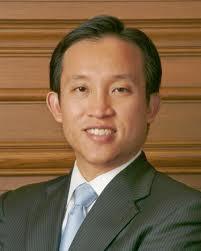
The new board president

204

The last time the San Francisco supervisors elected a new board president, the progressives got a swift kick in the ass. David Chiu, who had been elected to the top slot two years earlier with the unanimous support of progressives, disappointed some of his allies and wasn’t going to get their votes. But he wanted to keep his job, so he turned to the conservatives — and with the support of the folks on the right, he won another term. The he turned around and put the center-right folks in charge of some key committees. Price of the deal.

Now he’s looking for a third two-year term — but this time there aren’t any easy alliances. Several of his colleagues are also in the running, from across the political spectrum. And nobody right now has the magical six votes.

Scott Wiener on one side, David Campos on the other, Jane Kim closer to Chiu … somebody’s going to have to back down or cut a deal. And that’s where these things tend to get squirrly.

Me, I think Campos would be perfect for the job, not only because I agree with him most of the time but because he’s reliable, fair, and cares about public empowerment and input. That wouldn’t be to Chiu’s advantage — the two are likely to be facing off in a tough state Assembly contest when Tom Ammiano is termed out in two years, and the last thing Chiu would want is to have his rival in such a high-profile spot. So it’s not likely either of those two will be voting for the other.

I haven’t always agreed with Kim, but she’s more on the progressive side than not, and she’s really smart. You could see that as she took apart the city attorney’s arguments during the Ross Mirkarimi debate. Wiener has one of the most ambitious legislative agendas of any current board member and has proven to be an effective (sometimes dangerously effective) politician.

Wiener can probably get votes from the most conservative side, Mark Farrell and Carmen Chu, and might be able to line up, say, Malia Cohen and possibly even newcomer London Breed. But that’s not six — and that assumes that Chiu doesn’t make a play for those votes the way he did last time. Campos will get the progressives (John Avalos and likely Eric Mar), but that’s not six either. And with Kim and Chiu going after some of the same people, nobody’s going to come close in the first round.

That is, unless somebody cuts a series of backroom deals.

So my suggestion is this: Let’s demand that all of them tell us up front who they would put on which committees. Sure, it looks like pandering if Wiener promises Budget and Finance Chair to Cohen, who then votes for him — but that stuff is going to happen anyway, and I’d rather have it out in the open.


A moratorium on progress

30

My friend Johnny, who lives in Seattle, tells the story of the day years ago when he saw an older woman standing on a hillside near his house, watching while bulldozers knocked down trees and tore up part of the hill to put in a freeway extension. He was pretty new to town, so he asked the woman what was going on.

She shook her head, and with a bitter smile, said: “Progress.”

If you want to look at the environmental history of the United States, you can pretty much define most of our problems as an obsession with that sort of “progress.” In the postwar Bay Area, “progess” meant turning farmland and open space into suburban housing developments, building more freeways to connect the commuters to downtown San Francisco, and erecting tall buildings in the city to fill with workers from the burbs.

At the time, those crazy people who opposed that vision were told they were opponents of progress. Now, we celebrate what they’ve saved.

In other words, not all change is good, not all development is progress, and the march of capitalism doesn’t always take us in the right direction

So please, Chuck Nevius: You can oppose a one-year moratorium on Valencia Street restaurants if you want, but don’t give me crap like this:

The same transition seems to be happening along Valencia Street. My guess is they will learn the same lesson as Noe – you can’t put a moratorium on progress.

Is it progress to turn a diverse shopping district into a monocrop of one type of business? Or is it prudent to do what we pay city planners to do, and … plan? The restaurant limit in Noe Valley worked when it was instituted, a long time ago, when people who lived there wanted to keep shoe repair places and other community-serving merchants on 24th Street. When it was no longer needed or effective, it was repealed. All we’re talking about on Valencia is ONE YEAR, to give people a chance to think about the future of their neighborhood.

Progress. Bah humbug.


http://www.sfgate.com/bayarea/nevius/article/Valencia-restaurant-ban-not-the-answer-4133529.php

Was it a great year?

149

At noon Dec. 19, a group of about 50 housing activists led by the Housing Rights Committee gathered at 18th and Castro, next to the giant Shopping Season Tree, to discuss the wave of evictions tenants are facing at the end of 2012. Tommi Avicolli Mecca held up a list of 26 buildings that are currently being clear of tenants under the Ellis Act, a state law that allows landlords to evict all their tenants and sell the property as a single-family home or tenancies in common. With him was a long line of tenants who are facing holiday homelessness thanks to landlord greed.

“There are too many tenants being evicted to fit in front of the tree,” he said.

We heard story after story: A man living with AIDS facing the loss of his home after 17 years. A family being forced out after 18 years. Seniors, kids, disabled people … all of them almost certainly displaced from San Francisco.

“San Francisco is becoming a city of the rich, and we are being pushed aside,” said Lisa Thornton, who works at Rainbow Grocery and is losing her home.

“This,” Mecca said, “is an epidemic of evictions.”

And we all know why: As the second tech boom roars in to San Francisco, high-paid young workers are able to afford to buy TICs or single-family homes, and long-term rent-control-protected tenants simply can’t compete. It’s not a pretty pciture.

So I almost barfed when I say Randy Shaw’s glowing paen to Mayor Ed Lee. “San Francisco had one of its greatest years in 2012, as the city’s job growth and vibrancy outpaced nearly everywhere else,” he wrote.

Oh, gee, he says, there are some problems:

Few want San Francisco to become a city where only the rich and subsidized poor can live. But these same fears were felt in the 1980’s. When I was moving to San Francisco in 1979, the lines for vacant apartments were just as long and the competition for vacant units as fierce as what we read about in 2012. We couldn’t believe we had to pay $375 for a Mission one bedroom apartment, a rate that is less than half the cost of an SRO room without private bathroom today. San Francisco has long been an expensive city that keeps getting pricier.

So what — because we were worried about displacement in the 1980s means we shouldn’t be worried today? Those worries were real — gentrification of San Francisco neighborhoods has been rampant for decades. It’s changed the city, for the worse.

In the 1980s, Shaw was part of a broad coalition that fought to get rent control laws and eviction protections and limits on condo conversions. Now he’s acting as if none of that was worth the fight, as if protecting affordable housing wasn’t, and isn’t, the most critical issue in the city today.

A great year? Fantastic vibrancy and job growth? Not if you’re one of the growing numbers of people who are losing their homes to Ed Lee’s vision of economic development.


Editor’s notes

5

tredmond@sfbg.com

EDITORS NOTES The president promised “meaningful action,” but did not mention guns once in his response to the unthinkable killing spree in Newtown, Connecticut. The gun nut lobby argued that if the teachers at the school had been armed, one of them might have shot the killer — suggesting that we ought to devolve into the worst parodies of the Old West (where, in truth, many towns, like Dodge City, banned handguns altogether).

And there was the usual hand wringing by observers on all sides about how hard it is to get gun-control laws through Congress, how the Second Amendment has been interpreted, how gun-registration laws didn’t prevent Adam Lanza from killing his mother and stealing her (legally purchased and registered) .233 Bushmaster rifle.

It’s infuriating that this keep happening, and nobody seems to be able to gather the political courage to tell the truth: We are allowing tens of thousands of Americans (including some who are deeply disturbed and dangerous) to own weapons of mass destruction.

Seriously: We spent a trillion dollars and the lives of 4,488 US soldiers to wipe out suspected WMDs in Iraq. We talk over and over about how Iran must not be allowed to obtain a WMD; nuclear nonproliferation has always been a centerpiece of our foreign policy.

And nobody argues that nuclear bombs don’t kill people, or that the crazy dictator with a war wish will find other ways to inflict carnage.

There’s a difference. A crazy guy with a machete could have done some serious damage in the Sandy Hook elementary school — but he wouldn’t have killed 20 children and six adults. In fact, a madman with a pistol would have killed some people, but not as many — and some of those shot might have lived.

In this case, a rifle that belongs on a battlefield of war, with huge ammo cartridges, allowed Lanza to put multiple bullets into the tiny bodies of every one of his victims. Nobody had a chance.

You have to appreciate West Virginia Senator Joe Manchin, who is a devoted hunter and lifelong member of the National Rifle Association, who made the point nicely:

“I don’t know anybody that needs those multiple clips as far as ammunition in a gun. The most I’ve ever used in my rifle is three shells. Usually you get one shot, and every seldom ever two.”

Exactly. There is no need for anyone who wants a gun for self-defense, for sport, or for hunting to carry 30 rounds at a time. And if you think that your assault weapon is going to protect you when the black helicopters of the United Nations Storm Troopers arrive to force us into a World Government, you’re seriously delusional.

No: People buy these guns because they think it’s cool to have massive firepower. It’s fun shooting off a whole lot of rounds at a target. It’s also cool to have a car that goes 240 miles an hour and runs with open heads, and it’s fun to drive it drunk on city streets at high speeds. But we have decided as a society that we don’t think the potentially lethal impacts on others make it worth allowing those sorts of fun.

I get it — we’re not going to become Canada (too bad) or Western Europe. Americans like guns. Fine. We’re not going to eliminate standing armies all over the world, either. But we can stop the spread of weapons of mass destruction. Or at least we could try.

Calling these guns what they are

249

We spent a trillion dollars and almost 5,000 American lives trying to root out non-existent weapons of mass destruction in Iraq. We fret about Iran getting a WMD, and we worry that North Korea already has one. Nuclear nonproliferation has been a key part of US foreign policy since the end of World War II.

Nobody says that we should stop trying to control WMDs because a crazy ruler of a rogue state could declare war on someone else anyway. Nobody says that “nuclear bombs don’t kill people, people kill people.” Everyone agrees that there’s a difference between conventional weapons, which are bad, and WMDs, which are horrific.

So why can’t we make the same distinction with guns?

Seriously: I’m not saying that an assault rifle is a nuke, but in the world of domestic murder, it’s somewhat equivalent.

If Adam Lanza had entered the elementary school in Newtown, CT, with a run-of-the-mill rilfe or handgun, he might have shot half a dozen people. Maybe more if he could reload really fast. Some of them might have survived.

Instead, the 20 kids, six-year-old kids, were all shot multiple times, from a semiautomatic rifle that carried special deadly ammunition. None of them had a chance. In all, he killed 28 people before the cops could get there. That required a 30-shot clip and a gun that fired really fast. A gun that belongs on a battlefied. A gun his mother bought, legally, to fend off the apocalypse and the collapse of civil society.

There’s a difference between the guns Sen. Manchen uses for hunting (which carry at most three rounds) and these weapons of mass destruction. There’s no good use for a military-style assault rifle; you can’t hunt with it and if you think it’s really going to protect you against the end of civil society (or the black helicopters of the United Nations Army Of One World Government), you’re too looney to have a gun anyway.

I’m not big on guns anyway, as all of you who hate me know. But can we please at least agree: Standing armies and conventional warfare, which we’re not about to abolish soon, can do serious damage. Weapons of mass destruction do horrific damage. That’s why we treat them differently. Can’t we do the same for guns?


About that dog Charlie

91

Nothing like a dog story to captivate a city that has so much else going on. And while there are (sadly) dogs euthanized in this city fairly often, mostly because they’re unadoptable or found to be dangerous, the particulars of Charlie’s story — and the press attention it’s gotten — has turned this one incident into a world-wide campaign against the Canine Death Penalty.

You can’t call the City Attorney’s Office about it; the voice mail is full. You can’t call Animal Control and Welfare — the lines direct you to an email address. There are so many callers demanding a reprieve for the American Staffordshire Terrier (aka St. Francis Terrier, aka pit bull) that nobody at City Hall can handle them all.

Supporters have gathered more than 100,000 signatures on a petition to save him. He made the front page of the Examiner. And now, insiders tell me, the folks who run San Francisco are trying to find a clean way out.

Let’s face it: If the execution date goes forward, there will be TV trucks lined up all over, a doggie-death countdown, animal-rights protests — basically, a clusterfuck that will make the City of St. Francis look horrible.

In other words: If you kill the dog, it’s going to be a public-relations disaster.

But here’s the thing: City law gives Police Officer John Denny, of the department’s Vicious and Dangerous Dog Unit, full authority to order a critter euthanized. There is no appeal; his call is final. And he’s made his decision: Death for Charlie.

So Charlie’s owner, David Gizzarelli, has hired a lawyer and is fighting in court. The latest stay expires at the end of December. It’s a long shot that a judge will overrule Denny — but it’s entirely possible that somebody at City Hall will try to find a solution short of the Ultimate Penalty. There are all kinds of options — the dog could be taken away from Denny and adopted somewhere else. Denny could order that the dog be kept on leash at all times (an excellent idea anyway). It could be sent to a behavior-modification trainer.

Look: I’m not a big fan of pit bulls. They’re powerful animals who were bred to be dangerous. They can make fine pets, but I don’t think they should be allowed (in general) to run off leash in crowded areas. The city’s mandatory neuter law is a good thing, and helps, but still: Treat these often-adorable creatures as constant potential — potential — threats, and you’re going to be better off.

Yeah, the dog attacked a police horse. Lots of dogs who have never seen horses freak out around them; a good reason why the cops shouldn’t ride horses into an off-leash dog park.

I’m not a dog trainer or behaviorist, and I haven’t met this dog, but I’m generally against the death penalty, including for animals, if there’s any other feasible option. And whatever the outcome, I can tell you there are lot of other people in official SF who are sick of hearing about Charlie and would really, really like to find a way for it all to go away.

Look out for fracking (and how to stop it)

116

There’s enough oil (maybe) under Central California to make petro companies vastly rich, and to keep people driving around in their carbon-spewing private cars for many years to come. Only problem is you have to use hydrofracking to bust up the shale deposits to get at it. And that involves toxic chemicals and possible contamination of water supplies.

But never mind the environmental problems — the Obama administration just auctioned off drilling rights on 18,000 acres of land in Monterey, San Benito and Fresno counties, valuable public open space that’s now mostly used for agriculture.

That’s potentially a serious problem, and there’s a good piece that ran last year in the San Luis Obispo New Times that explains why. Nobody knows for sure what happens when you inject that much of a secret mix of chemicals into the ground below a water table that underlies prime ag land. But based on the entire history of human experience with chemicals and water, it can’t be good.

Food and Water Watch is trying to get the state Legislature to enact a moratorium on fracking in California — although that wouldn’t stop the feds, who can still do what they please with Bureau of Land Management property in this or any other state, from allowing Chevron and ExxonMobil to frack up a storm in this lease area. There’s a benefit concert Dec. 14, Friday night, to raise funds and awareness to stop fracking; it features a pedal-powered stage with Whiskerman and Shake Your Peace. Inner Mission, 2050 Bryant, SF. 8-11PM. $10.

It’s a start.


No surprise: Your garbage rates are going up 23 percent

78

As expected, Recology sent in its application for a rate increase Dec. 11, and most residential customers will see a hike of 23.5 percent, or about $6.50 a month. The hikes will be more complicated for commercial operations and apartment buildings, depending largely on how much waste those outfits can divert into recycling or compost.

The proposal would change the way rates are charged: Residential customers, who now pay a fee for the black cans holding landfill-bound garbage, will start paying a monthly $5 fee overall and $2 for compost and recycling.

The most dramatic increases will fall on large apartment buildings, which under the current rate structure are heavily subsidized, Eric Potashner, a spokesperson for Recology, told me. “We needed to restructure so the larger residential sector was paying fairly,” he said.

Most large landlords absorb the cost of garbage service as part of the rent they charge. So the new costs may not get passed on to existing tenants.

Recology is facing a mandate to eliminate all landfill waste by 2020 — and that’s a bit of a problem: For years, the company only charged for black bins, which, if all goes according to plan, will eventually go away altogether. “And the trucks, the fuel costs, the drivers are all color-blind,” Potashner said. “It costs the same to pick up the blue bins as the black bins.”

The rate application is complicated, and I haven’t been able to analyze every page. The city has hired an outside contractor to do exactly that, and the process takes months. The current proposal would take effect in June, 2013.

It’s a significant increase, although not as high as some had predicted — and not as high as 2001, when the company asked for almost 50 percent. Back then city staffers recommended the hike be cut almost in half, but then-Public Works Director Ed Lee gave Recology most of what it wanted.

Some of the money will go to cover additional costs Recology faces since the city has asked the company to pick up large refuse (you know, those old couches) that are left on the street.

But overall, according to Recology’s application, the higher rates cover “increased costs and lower than anticipated revenues” — in other words, the sucess of the recycling program has meant less income for the garbage company. Still, while Recology is a private company that doesn’t release financial information, there’s no indication that it’s actually running in the red.


San Francisco, Third World country

87

The model is pretty well established, and has proven exceptionally lucrative  for big US corporations like Bechtel and big US banks — and has been an utter disaster for dozens of developing countries: US banks loan money to countries that need infrastructure development — and that money comes right back to US corporations that charge phenomenal prices to build roads, dams, mining operations, whatever, with a nice cut off the top to whatever powerful people need to be bribed (all tax-deductable, of course). And the country that could never afford the loan to begin with impoverishes its people paying the note.

That’s how economic development worked for decades, with the International Monetary Fund and the World Bank leading the way.

Now the world has flipped — and the Chinese national development bank is loaning the money for a project in San Francisco, that will be constructed by China’s equivalent of Bechtel.

Yes, the Chinese Railway Construction Co. will have to adhere to San Francisco’s local-hire law and some of the construction jobs will go to San Franciscans. Obviously, the company will be under immense pressure to hire union workers and pay unions scale. But the profits will go right out of the country — and I bet the contractor will try to pre-fab as much as possible in China, where labor costs are far lower, and use Chinese nationals at deflated wages for as much of the construction as legally allowable.

What does all of this say? On a macro level, it says that the US is slipping as an economic power, which is no big news. But it also suggests that the Treasure Island and Bayview Hutners Point development projects are screwed up enough (and Lennar Corp. is screwed up enough) that no US lending institution wants anything to do with them. The only way these projects work for an investor is if the money comes right back as profits from a builder with close ties to the investor.

Doesn’t give you a whole lot of confidence.


Wrong side of history

1

tredmond@sfbg.com

In June, 2006, the august and powerful Association of Alternative Newsweeklies held its convention in Little Rock, Arkansas — and to the surprise of most of us, former President Bill Clinton agreed to come and speak. He even took questions.

I had one.

“Mr. President,” I said, “when Lyndon Johnson signed the Civil Rights Act, he knew it would cost his party votes in the South. But he did it anyway, because it was the right thing to do. Same-sex marriage is a civil-rights issue; why can’t Democrats like you stand up and support it?”

He ducked brilliantly, telling us all the great things he did for gay people (I know, Jim Hormel, ambassador to Luxembourg). He never answered the question.

That was how much of the Democratic Party leadership was acting in the days (and years) after Gavin Newsom set off a political bombshell in 2004 by legalizing same-sex marriage in San Francisco. Newsom got calls from a wide range of liberal party leaders begging him to reconsider. Even San Francisco Dems made statements that, in retrospect, are mortifying.

So as we prepare for the Supreme Court to decide if it’s on the right side of history, let us take a moment to reflect on all the Democrats who weren’t.

Leading the list is Sen. Dianne Feinstein, who now supports marriage equality but at the time proclaimed that it was “too much, too fast, too soon.” (In other words, just be patient, little gay ones, your time will come. Eventually.)

Even Rep. Barney Frank, the first openly gay member of Congress, said Newsom had broken the law and would only “feed the flames of fear.”

Rep. Nancy Pelosi for the first weeks of the city gay marriage celebrations stayed far, far away from the issue, although (after she realized how immensely popular the move was in her district) she broke down in late March 2004 and said she approved of Newsom’s actions.

Sen. John Kerry, during the 2004 presidential campaign, not only proclaimed that only a man and a woman could get married but said he would support state legislation banning same-sex nuptials. He didn’t publicly change his mind until 2011.

Barack Obama, as a candidate for president, never endorsed same-sex marriage and, according to some accounts, refused to have his picture taken with Newsom at a 2004 fundraiser in SF. In fact, during the 2008 Democratic primary, none of the major candidates endorsed same-sex marriage. Some of the commentary was laughable — then-Gov. Arnold Schwarzenegger proclaimed that “gay marriage is between a man and a woman,” and the Hartford Courant denounced Newsom for “turning City Hall into a wedding mill for homosexuals.” Chronicle columnist Debra Saunders, who said she supported same-sex marriage, said the mayor’s “lawlessness” was “just unbelievable.” But on a more sober note, there were, in February, 2004, exactly zero major national Democratic Party officials who came to Newsom’s support. Most of them ran for cover. And when the US Supreme Court decides, as it must, that marriage is a civil right for all, they’ll have a lot of explaining to do.

Editor’s notes

0

EDITOR’S NOTES The two prominent lawyers who helped bring same-sex marriage to the US Supreme Court, Theodore Olson and David Boies, started out their case with the notion that it would get to the highest court, and that the Court would find a fundamental Constitutional right to marriage equality.

They’re both brilliant litigators who have argued more than 50 cases before the Supreme Court — and they think they know something. I can’t get into either man’s brain, but what legal scholars around the country are saying is that the fate (for now) of same-sex marriage may come down to one person, Justice Anthony Kennedy. And they figure he’s going to be on the right side.

I wouldn’t be surprised — those two have been here before, parsed this court, and been right enough to give them the benefit of the doubt. In fact, although 30-some states still ban same-sex marriage, I think the members of the Court see the direction that history is going. It’s moving fast, too — in five years, the tide will have fully turned, and the Court doesn’t want to be horribly embarrassed.

Kennedy, of course, is often the swing vote on the divided court — and in two prior cases, he wrote the decision affirming gay rights.

Kennedy was appointed by Ronald Reagan, but what hasn’t been mentioned much in the press was that he was a second choice. Reagan wanted Robert Bork in that position — and if Bork had gotten the job, we wouldn’t be having this discussion. Bork is another Antonin Scalia and would have held down the right wing of the Court and ensured a 5-4 right-wing majority.

This goes back to 1987, ancient history for a lot of political people today. When Reagan, who mostly got his way, nominated Bork, an unheard-of coalition came together to oppose him. It seemed a long shot — it was rare for a Supreme Court nominee to get rejected. Some argued that it wouldn’t matter, anyway — if Bork lost, Reagan would nominate someone else just as bad.

But the opposition came together. The ACLU, which in its history had only opposed one other Supreme Court nominee, helped lead the way. Women’s groups around the country joined in, mostly because of Bork’s open hostility to abortion rights. The Guardian ran a front-page piece called “The case against Judge Bork.” It was a huge national issue.

Sen. Ted Kennedy led the Judiciary Committee opposition to Bork, and all of us were riveted to the proceedings, which aired on KPFA and NPR. Bork gave detailed answers to all the questions, explaining, for example, why he thought Roe v. Wade was “improperly decided.” In the end, his nomination was rejected, 58-42.

Reagan got the message. He nominated Anthony Kennedy — also a conservative, but not a Bork-style nut. And the course of legal history was changed.

So if the Court comes down 5-4 for same-sex marriage, and Kennedy is the fifth vote, we can all thank that massive mobilizing effort a quarter century ago that kept a young, healthy, wingnut who would still be there today from holding that critical seat.

IN OTHER NEWS: The mayor may think the scandal over Housing Authority Director Henry Alvarez is going to blow over, but he’s wrong. There are lots of problems in that agency. Among other things, as Citireport publisher Larry Bush has detailed over the past year, Alvarez used his official position (and city time) to go after a nonprofit, the Housing Rights Committee, that was advocating for public-housing tenants. Lee needs to distance himself from this guy, or he’s going to get dragged down with him.

Healthy school food delayed by bid protest

0

A proposal to bring fresh, healthy, locally produced food to San Francisco school kids ran into a roadblock when the losing bidder on the deal filed a protest, forcing the School Board to delay acton on the contract.

Revolution Foods of Oakland offered to supply fresh breakfast and lunch fare to the district, replacing the current vendor, Preferred Meal Systems, Inc., which ships in prepackaged, frozen entrees from Illinois.

According to SFUSD bid documents, Revolution’s price was $59,356 a day, and Preferred came in at $61,416. So not only was the local alternative better, it was cheaper.

Gentle Blythe, SFUSD spokesperson, could only say that a bid challenge had been filed, but since Preferred was the only other qualified bidder, it’s pretty clear what happened.

Once a bid challenge is filed, the district has to suspend board approval of the deal and respond to the challenge, which Blythe said should only take a week or so. “We’d like to have this back on the board agenda by the end of December,” she said, so fresh meals can start with the spring semester.

So maybe it’s only a minor setback; we can hope for the best.


Willie Brown is so full of shit on Prop. 13

43

The Chron’s conflict-laden columnist made an interesting admission Dec. 9: The multibillion-dollar tax loophole that allows corporations to avoid reassessments under Prop. 13 was all his fault:

 After voters approved Prop. 13 in 1978, capping property taxes for landowners, we had to sit down in the Legislature and figure out how to implement it. One of the biggest questions was how and when properties could be reassessed. We decided that should happen whenever a property was “transferred.” When you sold your home, it was transferred to someone else. The home was reassessed, and the taxes for the buyer were increased accordingly. What we did not realize was that corporations don’t actually transfer property – they transfer the stock in the company that owns the property. And Prop. 13 didn’t apply to stock.

Wait: In 1978, Brown (a lawyer) and the office of the Legislative Counsel and the rest of the lawyer-heavy Legislature didn’t know how corporations transfer property? It was all a big mistake? There were no corporate lobbyists in Sacramento trying to make sure that the loophole was created? Just the poor undereducated elected officials who got snookered by their own lack of information?

And remember: That was 1978. Brown was elected Speaker of the Assembly in 1980, and served for 14 years. Somewhere during that era, someone must have noticed what was going on (every county assessor in California did). There was ample opportunity to close that loophole, if the immensely powerful Speaker Brown had any desire to do so.

But somehow, it never happened. Funny thing, that.

So now Brown agrees that this problem should be fixed — but he says the person carrying the bill, Assemblymember Tom Ammiano, shouldn’t be doing the work because he’s too liberal and pro-tax. Which is either stupidity (and Brown’s many things, but normally stupid isn’t one of them) or he’s still bitter that Ammiano forced him into a mayoral runoff in 1999 and lead the rebellion that ousted all of the mayor’s loyal supervisors a year later. Vindictive? Yeah, we’ve heard that about Willie Brown.

“He doesn’t even understand the history of the bill,” Ammiano told me. “I introduced it last year and got it out of committee and to the floor, which was a miracle.” And now, with a two-thirds majority in both houses, the Democrats can approve it without the Republican minority veto.

“I have cosponsors and I’m going to get more,” Ammiano said. “We may be able to make it part of the budget process.”

And since local governments all over the state, and anyone who believes in tax fairness, is going to support this, I think it’s got a pretty good chance of getting to the desk of the governor.

Willie Brown, as is his practice, didn’t return my call seeking comment.


The Housing Authority mess

22

Mayor Ed Lee seems to think that the controversy over Housing Authority Director Henry Alvarez is just going to blow over, but he’s wrong. There’s too much here. And it’s not just about the lawsuits employees have filed or the sizable list of unhappy workers.

But before we get into any of that, I have to say: You can’t beat Willie Brown for putting it all in perspective. The former mayor announced in his Chron column Dec. 9 that the Housing Authority (including during his mayoral administration) has always been fundamentally screwed up:

What no one says publicly is that the tenants in public housing are never happy and that the Housing Authority workers usually aren’t all that interested in working. But as long as everyone gets something out of the deal, be it a public-housing unit for a relative or an absence of on-the-job oversight, everyone stays quiet.

So it’s basically structural corruption, all the time. Oh, and what a lovely thing to say about a large group of city employees who have the unenviable job of trying to keep substandard housing units in an underfunded agency somewhat habitable. Guess the problems aren’t at the top; it’s all lazy workers and uppity tenants.

The back story here has been well reported by Larry Bush as Citireport, who over the past year has outlined in detail how Alvarez tried to use his political clout to defund the Housing Rights Commitee, a nonprofit that helps public housing tenants. Turns out the HRC has been a bit of a pain for Alvarez because its staff is agressive about demanding that repairs are made on time and basic maintenance is done.

Alvarez went so far as to contact (presumably on city time) the Tides Foundation, which acts as HRC’s fiscal sponsor, demanding documents that aren’t public record (but that Tides provided anyway). In emails to the mayor’s housing advisor, Doug Shoemaker, Alvarez made clear that he wanted the city to cut of the $90,000 that HRC gets for code-enforcement work.

On April 7, Alvarez sent a rapid-fire series of questions and requests to Shoemaker at the Mayor’s Office of Housing, all apparently intended to uncover problems with the nonprofit and provide grounds for ending city funding. Shoemaker complied with the document requests while trying to cajole Alvarez away from a confrontation with HRC. “I realize that you don’t think I’m doing enough to keep HRC out of your hair,” Shoemaker wrote to Alvarez on April 7, “so I spent part of my evening last night getting the records request (from HRC) rescinded.”

So: The Housing Authority director thinks a widely-respected tenant rights group is “in his hair” and wants to cut off the group’s money because it’s doing its job of helping tenants deal with the HA bureacracy.

Oh, and it’s not as if HRC is making up the problems. Willie Brown can complain all he wants that the tenants are just annoying malcontents, but the record shows there are serious problems with the Housing Authority:

Hundreds of San Francisco families continue to live in tax-payer subsidized housing that fails minimum standards for health, safety, and sanitary conditions, according to recent inspections by the U.S. Department of Housing and Urban Development (HUD). San Francisco’s response is to defer compliance with housing codes “until replacement housing can be found.”

You want an idea of how serious? Check this out.

I’m glad Sup David Campos as asked for a compliance audit on the agency, because in the end, this is really about the tenants.

Oh, and just in case anyone has forgotten, this was the guy Willie Brown had running the Housing Authority.


Same-sex marriage: What they’re saying

4

Lots of statements getting issued on the Supreme Court’s decision, reflecting both the desire of many elected officials to weigh in on this momentus event and some interesting differences in tone.

Assembly Member Tom Ammiano:


“This doesn’t decide anything on its own, but it opens the door for the U.S. Supreme Court to acknowledge that people in every state of this union should be able to form marriage unions with the partner of their choosing and not be limited by outdated customs and laws.”

“It’s a bit disappointing that the Supreme Court isn’t already kicking Prop. 8 to the curb, but I’m hopeful that they will do that after hearing arguments. We can also hope that this court decides that it’s time to say, once and for all, that denying this right to same-sex couples is just as unconstitutional as denying marriage to mixed-race couples – a decision made decades ago.”

State Sen. Mark Leno:

“I am hopeful and encouraged about today’s decision from the U.S. Supreme Court to review the Proposition 8 case, which is one of the most significant equal rights issues to come before the court in many decades,” said Senator Leno. “For the past four years we have argued that Proposition 8 is not only unconstitutional, but that it also violates the basic principles of respect, dignity and validation that every American deserves. I am confident that the Supreme Court will reaffirm these fundamental freedoms and uphold that a person’s right to be treated equally does not vanish simply because of who they are or whom they love.


“The momentum for marriage equality has never been stronger in our country. We have support from President Obama, recent victories at the ballot box, and polls that show a majority of Americans are with us. In addition, federal courts continue to strike down laws that discriminate against lesbian, gay, bisexual and transgender people. I am convinced our triumphs will continue.”


Mayor Ed Lee:


“I am optimistic that the Supreme Court will reaffirm, as the Ninth Circuit Court did, that California’s Proposition 8 is unconstitutional.

“We remain as deeply committed today as we were nearly eight years ago when then Mayor Gavin Newsom jumpstarted one of the most important civil rights movements of our generation. I would like to thank City Attorney Dennis Herrera for his work on this important issue and bringing us to this point. I thank the legal team of Ted Olson and David Boies and the American Foundation for Equal Rights for defending equality in this legal pursuit. 

Same-sex marriage is legal, or will soon be, in nine states — Connecticut, Iowa, Maine, Maryland, Massachusetts, New Hampshire, New York, Vermont, Washington — and the District of Columbia. I look forward to the day when California joins this well-respected list.”


Lt. Gov. Gavin Newsom:


Today marks the beginning of the end for a California journey that started eight years ago when San Francisco issued same-sex marriage licenses. By agreeing to hear the Proposition 8  case the U.S. Supreme Court could end, once and for all, marriage inequity in California.

Forty-five years after the Supreme Court ruled that marriages between interracial couples were constitutional in Loving vs. Virginia, Justices can once again reaffirm the basic American principal of equality for all.

The singling out a class of Californians for discrimination violates the basic principles of who we are as a nation. It is important at this moment in time to recognize that individuals can be mightier together than apart, that there is strength in our diversity, power when we unite around our shared values and success when we advance together.

 Today’s announcement starts the clock towards the final decision for California. History will one day be divided into the time before marriage equality and the period that follows. And thankfully, we will be on the side of history worthy of being proud of.


Assembly Speaker John Perez:

“Today’s announcement that the Supreme Court will take up Hollingsworth v. Perry and the challenges to the Defense of Marriage Act is a reminder that the pathway to justice is long and difficult. The plaintiffs in the initial challenge to Proposition 8, Perry v. Schwarzenegger, presented a powerful and compelling argument that Proposition 8 is unconstitutional, which was eloquently recognized in Judge Vaughn Walker’s ruling in that case. I am very confident that the Supreme Court will rule in favor of our community in Hollingsworth v. Perry, as it is now known, and affirm that Proposition 8 is unconstitutional. But until that outcome is secured, our community must continue to fight for justice on every front, from working to secure the Employment Non-Discrimination Act to addressing the issues of homelessness among LGBT Youth.”

Rep. Nancy Pelosi:


With the Supreme Court’s decision, marriage equality will finally have its day in the highest court in the land. Americans will hear whether inequality and discrimination are consistent with the high standards and deepest values of our Constitution. We remain confident that the justices’ ruling will fall on the side of civil rights and discard DOMA and Prop 8 in the dustbin of history.

“From the start, Republicans have known that DOMA is unconstitutional, and that’s why Republicans have tried to pass legislation to prohibit judicial review of this disgraceful law. Speaker Boehner’s legal team repeatedly failed to convince the courts to keep denying basic rights to American families, all while wasting nearly $1.5 million in taxpayer funds. Now, the Supreme Court will decide whether Edie Windsor deserved to face a penalty of hundreds of thousands of dollars after her partner of four decades passed away. We believe Ms. Windsor and couples like hers will see justice done in this case.

“By taking up the Prop 8 case, the Supreme Court will have the opportunity to make a strong statement that laws, in California and nationwide, must not target the LGBT community unfairly and that families across our state and our country deserve fair and equal treatment under the law.

“We have now reached a landmark moment in the history of civil rights in our nation. Let’s end discrimination and ensure equality for all of America’s families. Let’s get this over with and on to the future!”

UPDATE:

Bay Guardian Controller Sandy Lange:

“Well, at least I don’t have to get married this weekend.”


The Supreme Court and same-sex marriage

114

Keep in mind that I’m not a lawyer and the news just broke. But it seems unlikely to me that the US Supreme Court would have taken up two key cases involving same-sex marraige just to rule narrowly on questions like standing. Which means at least four of the nine justices (and it could be a mix of liberal and conservative ones) think the Court should make a defining statement about marriage equality in the United States.

Courts are political. The Supreme Court is supremely political. That’s just reality. And ever since Lawrence v. Texas, the Court has been moving toward full acceptance of LGBT people:

The Supreme Court invalidated the Texas law but also went further by explicitly overruling Bowers – the significance of which was not lost on dissenting Justice Antonin Scalia, who presciently complained that the ruling “leaves on pretty shaky grounds state laws limiting marriage to opposite-sex couples.” Indeed it does.

And it’s hard to imagine that the Supreme Court could possibly, in 2012, make a broad statement against gay marriage. I just don’t see it happening. I think Scalia will fulminate, but a majority of the Court will rule in the spring that lesbian and gay people have a fundamental right to marry.

You read it here first.

UPDATE: HuffPo’s legal eagle disagrees with me, saying a pro-same-sex marriage ruling would be too “bold.” I think he’s wrong; the vast majority of Americans under 40 have no problem with same-sex marriage, and in a few years, anything other than a “bold” decision will look embarassingly dumb.

Why the anti-leaks bill is so scary

12

If a bill that is now before the US Senate were in place in 2005, none of us would know about the CIA’s secret offshore prisons. There’s a lot of other secret stuff that never would have made it into print, too.

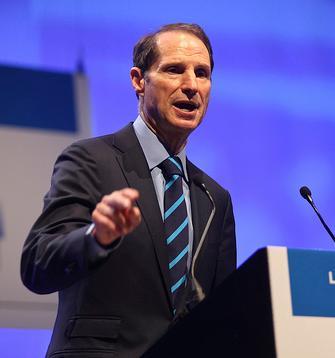
And the really scary thing is that Sen. Dianne Feinstein is pushing this, and only one member of the Senate Intelligence Committee, Ron Wyden (D-Oregon) voted against it — and if if weren’t for his single-handed moves to block the measure, it would probably already be law.

I think Len Downie has one of the best arguments against the measure:

The most troubling provision in the bill would prohibit all contact with the news media or “any person affiliated with the media” by any intelligence officials other than an agency’s director, deputy director or “specifically designated” public affairs officers — all of whom are political appointees. That could limit the flow of intelligence information to what political appointees decide to tell reporters, in “authorized leaks,” for political purposes. Reporters could be cut off from more knowledgeable and impartial career analysts, such as those who disclosed, in the run-up to the Iraq war, their doubts about Bush administration claims of Iraqi weapons of mass destruction. This prohibition “would make everyday reporting about everyday intelligence activities practically impossible,” Jack Goldsmith told me. “It would promote opportunistic spinning by the executive branch, which is already a problem.”

In other words, more official misinformation, more spinning that gets us into more wars — and now way to counter it.


Could we really fix Prop. 13?

17

Is it really possible? Could California be on the path to repair the damage of Prop. 13? Would Jerry go along?

You wouldn’t think so — it’s been talked about for so long and so little has happened. But it’s an all new year in Sacramento, and the era of Republican dominancy-by-minority is over (in fact, the era when Republicans will have any role at all in state government is pretty much over), and already, some changes are in the works.

Assemblymember Tom Ammiano notes:

 “Prop. 13 is not the untouchable third-rail anymore. It’s more like the bad guy with the mustache who has tied California to the rails with the fiscal train wreck coming.”

Ammiano is introducing legislation to change the way Prop. 13 is interpreted — to stop corporations for using loopholes to get around paying higher taxes after commercial property changes hands. But the polls now suggest the voters might be willing to do more — the Public Policy Institute suggests that a sizable majority of Californians would like to see a split-role measure approved. That alone would provide billions of dollars in revenue for public schools.

By a 57-36% margin, voters responded positively when asked this question: Under Proposition 13, residential and commercial property taxes are both strictly limited. What do you think about having commercial properties taxed according to their current market value? Do you favor or oppose this proposal? Democrats favor the idea 66-26% and independents like the prospect 58-36%. Even Republicans are evenly divided 47-48%. Voters aged 18-34, who represent the future, favor the idea 65-28% but the idea is also popular among the most reliable voters, those 55 and older, by 56-39%. Splitting the tax roll is a popular idea in every region of the state, among men and women equally and especially among Asians (65-26%) and Latinos (58-36%) but also among whites (56-38%).

Now: That’s before the commercial property industry and every major landowning corporation in the state pours about $50 million into a campaign to defeat any whisper of a split-roll. But we all know that big-money campaigns don’t always win in California — and right now, the guv is a pretty popular guy. So if he got behind a split-roll measure, and every progressive and labor group in the state (and most local elected officials) did, too, it would be at the very least a level playing field.

That, alone, would change California more than anything else the Legislature or the governor could do. It’s out there; it’s possible. I wouldn’t try in 2013, but 2014 is looking pretty good.


No surprise: The Chron hates Ammiano’s homeless bill

67

Why should I be surprised? Assemblymember Tom Ammiano tried to introduce a bill providing some basic human rights for homeless people, and the Chron lashes out with a nasty editorial that misses the entire point.

Ammiano’s AB 5 was crafted with the help of homeless advocacy groups, and it’s really not that radical a proposal. It would simply guarantee some basic human rights to people who don’t have a permanent place to live. It would, for example, forbid employment discrimination against homeless people in employment, public services and voting. It would enshrine in law the right of all people to use public space, including as a place to rest, and would establish that 24-hour access to bathrooms and showers is a basic human right.It would protect the rights of homeless children to attend school. It would guarantee homeless people cited under laws that could lead to criminal sanctions the right to a lawyer.

It would also bar local authorities from forcing people into shelters or other programs without their consent and would guarantee equal treatment from law-enforcement.

Oh, and it would prevent local laws that bar homeless people from occupying vehicles that are legally parked, and precent authorities from taking away the personal property of homeless people.

But to read the Chron’s editorial, you’d think the world was coming to an end:

A bill that asserts an individual’s right to urinate, sleep and panhandle wherever he wants is neither compassionate nor wise. To pass it would be to surrender our streets and parks to misery, chaos and squalor.

Misery, chaos and squalor? Whoa. As if the lives of homeless people are not already, in many cases, marked by those characteristics.

And really, the bill doesn’t talk about the right to “urinate wherever he wants;” it mandates that cities provide accessible bathroom facilities so people don’t have to urinate on the streets. “It’s not a good idea or even healthy to have a law that says you can piss or shit wherever you want,” Pauld Boden, director of the Western Regional Advocacy Project, told me. “So having 24-hour access to hygiene centers is a way better alternative.”

But of course, Boden said, opponents of the law “are going to try to make it all about urination and defecation. It’s a way to dehumanize people.”

I don’t understand what’s wrong with asserting that homeless people have the same human rights as the rest of us. If this undermines bad laws like sit-lie and care not cash, so be it; in a rich state, we can and should do better. (But even the Chron’s own reporter says the bill won’t undermine SF’s sit-lie law).

Ammiano’s moving forward with the bill, expecting amendments and open to discussion. But as far as the Chron’s editorial goes, he told me” “It reminds me of Robin Williams’ comment about a bad review he got ” ‘I was going to have a chicken shit on it, but that would be redundant.;”

UPDATE: If you want to see a comparison of the current anti-homeless laws to the “ugly laws,” the Jim Crow laws and a lot of other stuff we all now agree was wrong, check it out here (pdf)

What did the mayor know?

35

So let’s get this straight:

Three lawsuits have been filed against the head of the Housing Authority. Some 30 staffers have complained about Alvarez to senior mayoral staffers. The HA even hired former City Attorney Louise Renne to investigate problems with Alvarez.

And Mayor Lee says he wasn’t aware of the problems?

This is the kind of thing that used to happen under Willie Brown — the mayor would hire cronies for top dollar, and defend them and brush aside charges of misbehavior. And I hate to see the same style happening under Lee.

Clearly, the two are pals, and I understand the urge to stand by your friends in public life, and at this point, we just have allegations — maybe none of it is true, and maybe Renne will find that everything is just grand over at the Housing Authority. But the mayor ought to at least express concern.

And if this was all really happening without his knowledge, then his staff isn’t doing a very good job of keeping him informed.

Either way, not a good scene in Room 200.

Free Muni for youth a rare progressive victory

18

The left isn’t winning all that much these days, but Sup. David Campos had a huge victory with the passage of a plan to offer free Muni to some 40,000 low-income kids. The challenges aren’t over — it’s still not clear, for example, how the actual clipper cards will be distributed — but this is a big step forward.

And it didn’t come easily. Campos worked with a coalition of low-income advocates that refused to give up despite two years of setbacks.

“We were relentless, even when we lost,” Campos told me.

It’s no secret that I’ve supported this plan all along (I actually like free Muni for all youth). And I think we’ll get there. In the meantime, for low-income middle-school and high-school kids, most of whom don’t get school bus rides any more, this is a big deal. The price of taking Muni to school ($1 a day for youth fares) is a significant amount of money, particularly for families with several kids who are struggling to make rent and eat. Yeah, there are cheaper youth passes — but you have to go to a Muni office in the middle of the day and bring proof of your kid’s age and it’s a pain in the ass for working parents.

So now it’s up to the MTA to figure out how to make it easy for families, some of them with limited English proficiency and virtually no time to wait in lines at Muni offices, to take advantage of the program. “We’re going to spend a lot of time doing outreach,” Campos said. “We’re working with Muni and with community-based organizations. We’re going to make this as easy as possible.”

The obvious solution, in my mind, is to distribute the passes at public schools. The school district already has income information on the kids, through the free and reduced-price lunch program; in theory, all anyone would have to do is take that list, adjust it a bit (because the eligibility for lunches and Muni passes is a little different) and hand out the passes at middle-school and high-school campuses. (You’d miss low-income kids who go to parochial schools, and a few others, but SFUSD wouldn’t be the only provider, just the first.)

And it’s education-related, since most of these kids take Muni to and from school — or should.

Problem is, there are legal rules about the use of the lunch data (although there must be a way to get around it) and SFUSD doesn’t seem terribly interested. (More work, more hassles for an already overworked and underfunded district.) But you could station one Muni worker at each school to hand out the passes, right? Or Muni could use some of the outreach money to pay for the SFUSD staff time.

At any rate, those are details. The main point is that Campos and his allies managed to beat back the opposition and make this actually happen. Good job.

(Oh, and the same day, Sup. Jane Kim managed to get $1.7 million for the schools to help with graduation rates — without raiding the Rainy Day Fund. Two progressive wins and it’s only the 5th of December.)

Editor’s notes

0

tredmond@sfbg.com

EDITOR’S NOTES The San Francisco Local Agency Formation Commission is holding a hearing Dec. 7 on the Mayor’s Renewable Energy Task Force report. That may not sound like the most exciting moment in any of our lives — but it’s actually worth talking about, a lot. Because the city has a goal of reaching 100 percent renewable energy in just eight more years, and the task force think it can be done — and the report, while it has its moments, completely screws up the central tenet of any long-term renewables policy.

Background: Former Mayor Gavin Newsom, who was prone to making sweeping press statements about things he never really intended to do, proclaimed in 2010 that San Francisco would be free of all fossil fuel electricity in 10 years. Then he went on his merry way to the Lieutenant Governor’s Office.

It fell to his successor, Ed Lee, to figure out how to make this happen, so Lee appointed a task force to study the situation. A lot of the members were environmental activists; some were experts in solar energy. One, Ontario Smith, worked for Pacific Gas and Electric Co., hung up five minutes into the first phone-conference meeting, and took his name off the final report.

If you don’t think this is serious business, you haven’t been looking out the window this past week. Scientists are now saying that it’s already too late to prevent the surface temperature of the Earth from rising three degrees, which means volatile and dangerous weather patterns are going to be part of the future anyway, and things might get way, way worse. San Francisco’s energy policy isn’t going to prevent China from burning coal, but it’s a step — and a 100 percent renewable portfolio would be a signal to other cities (and countries) that this is economically and technically feasible.

The report has 39 recommendations, many of them simple, practical, and laudable. It talks (correctly) about the importance of distributed generation — that is, small-scale solar and other renewable systems on houses and commercial buildings. It gives a nod to CleanPowerSF, the city’s community-choice aggregation system.

And it never once mentions public power.

In fact, from the tone of the report, the city plans to get to 100 percent renewable generation with the support and assistance of PG&E.

Let me give you a ring on the clue phone, folks: It isn’t going to happen.

Private utilities don’t have any interest in distributed generation, because it, quite literally, destroys their business model. If I have solar panels on my roof that meet my family’s energy demands, I have no need for PG&E anymore (except to use the company’s grid as a storage battery system, but soon we won’t need that, either). The only functional path to 100 percent renewables in a dense city is small-scale generation — and PG&E stands directly in the way.

I’ve always been a proponent of public ownership of essential services — water, power, streets and roads, firefighting and police operations, broadband, etc. But when it comes to electricity, this is more than a financial and resource-control issue. I see no path to a carbon-free (and nuclear-free) future, in San Francisco or anywhere else, as long as private companies make profits generating power in one place, shipping it along their private lines, and selling it someplace else.

Public power is not sufficient to create Newsom’s energy dream — but it’s absolutely necessary. And I hope the members of LAFCO make that point — and suggest that the task force update its report to reflect economic and political reality.

Ethics Commission wants to hide its own flaws

3

The Ethics Commission has serious problems. A detailed report by Board of Supervisors Budget Analyst Harvey Rose, comparing SF’s ethics rules and enfocement to that of Los Angeles, found a long list of ways that this city is falling short. The supervisors asked the commission to have a robust discussion of the findings and propose reforms.

Now Friends of Ethics, made up of a number of former commissioners, activists, and campaign-finance watchdogs, says that the commission is trying to hold a quick hearing that will gloss over much of the criticism of the Rose report. The group wants the hearing delayed until there’s a lot more time to bring a lot more people into the process.

Here’s the letter FOE sent over:

To the Ethics Commission and Staff:

Friends of Ethics is writing with objections and protests regarding the upcoming “Interested Persons” meetings scheduled for December 4 and 10, 2012.

The Commission notified “Candidates, Treasurers and Interested Persons” of meetings “to discuss recommendations of the Budget Analyst report (also known as the Harvey Rose report) comparing programs of the San Francisco Ethics Commission with those of the Los Angeles Ethics Commission.”

The notice was dated November 28, providing only three business days before the first meeting will take place.

The Friends of Ethics bases its protest and objections on the following facts, and by this memo, formally requests that Ethics postpone these meetings until February.

     The proposed Interested Persons meetings do not mention inclusion of a representative from the Board Budget Analyst office to present their report and to discuss its findings. Without their direct involvement, as well as the invited presence of Supervisor Campos who requested the Rose report, the Interested Persons meeting will have only the staff’s views of the report as a basis for discussion. We believe this fails to provide the direct interaction and communication that should be part of this process.

    Ethics was requested by the Board of Supervisors to conduct robust and inclusive outreach to all participants in San Francisco’s political life. Ethics provided Friends of Ethics with the list used to contact Interested Persons about this meeting. We believe the list provided is not an adequate outreach, includes no community-based organizations active in electoral politics, any of the chartered Democratic clubs or other partisan political organizations, or special focus organizations active in San Francisco elections. We believe the lack of an inclusive outreach as evidenced by this list denies the Commission of a full discussion of the issues and is weighted toward the regulated community. We are puzzled by the fact that many people who do receive the Interested Persons notices are not on the list provided by Ethics, and seek a clarification on whether additional lists were used that were not disclosed to us. We also note that the late Joe Lynn, while the Campaign Finance Officer for Ethics, not only conducted extensive outreaches for IP meetings, including contacting past treasurers and press and posting notices on local political blogs and chat boards, but also later informed Director St. Croix in writing about those practices for the purpose of encouraging the continuation of such outreach.

    Ethics provided insufficient time for a review and analysis of recommendations that are significant and meaningful for the operation and success of the Ethics Commission mission. We believe that Ethics has done the bare minimum of notice of a public meeting and failed to take a serious approach to this important issue. Providing notice three days before the meeting, particularly in the holiday period between Thanksgiving and the first of December, means that no organization has an opportunity to place this issue on their agenda for a discussion or to endorse comments to be provided to the Ethics Commission.

    Ethics prepared an agenda that omitted significant and critically important comparisons between the Los Angeles and San Francisco Ethics Commissions that were included in the Rose report. While Ethics did list specific recommendations from the Rose report, the report itself detailed a number of additional differences that are significant to the San Francisco political community as we know it, and that should be part of a discussion of the Rose report.

Among the omitted points are:

    Los Angeles has a private right of action for citizens to act when Ethics does not; in Los Angeles this can include penalties under a civil action. San Francisco has no such provision. We believe this is essential to meaningfully empower citizens to directly seek compliance with our laws.

    Los Angeles requires disclosure of contributors of $100 or more to groups making “third party” expenditures. San Francisco does not require public disclosure of this money stream. Disclosure of donors to third party committees would add transparency, particularly if this has become a strategy to allow city contractors to influence elections.

    Los Angeles prohibits contributions from those seeking permits, while San Francisco does not. Friends of Ethics has determined that over 90 percent of all City Hall lobbying involves permit decisions.

    Los Angeles prohibits commissioners from fundraising for candidates, while San Francisco does not. This is the heart of pay-to-play politics that infects city appointments as commissioners are often the first stop for fundraising on behalf of city elected officials. We note a recent case where a city commissioner hosted a fundraiser that included contributions from city employees from the same department. The candidate returned the contributions, recognizing that commissioners are prohibited from seeking contributions from city employees. However, this demonstrates the potential abuse and underscores that Los Angeles’ policy is a stronger and more easily enforced prohibition. We recommend it.

    Los Angeles prohibits fundraising from city contractors and those seeking city actions. San Francisco allows contractors to fundraise and serve on candidate finance committees, although they may not contribute their own funds. Currently San Francisco also does not require candidates to disclose the names of their Finance Committee members. However, we strongly prefer closing the loophole, as Los Angeles has done, by prohibiting city contractors and permit seekers from fundraising.

    Los Angeles requires a more robust disclosure of “paid by” notification on telephone messages when 200 or more people are called. San Francisco sets the threshold at 500 people. Therefore, “paid by” calls to members of political clubs during the endorsement process would be missed under San Francisco’s standard but included under LA’s standard.

    Los Angeles provides a “Guide for Contributors” that educates donors and reduces confusion on such issues as aggregate contribution limits, prohibitions on officers of organizations receiving city funds, and so forth. This is done at minimal cost and made available on the Internet with no printing or mailing costs. San Francisco does not provide a Guide. Instead, the Ethics staff has recommended that the Commission rewrite the law to overturn specific prohibitions, stating that contributors are confused about the rules. The best approach is Los Angeles, where an educational outreach to contributors is part of their program. We note that San Francisco provides guides and outreach to most others involved in political activities, including committee treasurers, candidates and others but does not include an educational outreach to donors.

    Los Angeles prohibits political contributions from being made at City Hall or other city offices, including offices rented with city funds. San Francisco allows contributions to take place in the mayor’s own office, supervisor’s offices, at Redevelopment, Planning, Port or other offices – in short, anywhere that a donor chooses to make a contribution. We believe allowing contributions to be made in the workplace of city officials undermines public confidence and is inconsistent with other restrictions on the use of city resources for political purposes.

    Los Angeles has a more robust view of what constitutes lobbying and includes attorneys who offer strategic advice even if they do not directly contact a city official. San Francisco does not require registering or disclosing clients from such attorneys involved in orchestrating a favorable result for a paying client. Attorneys who serve as committee treasurers also do not face the same level of public disclosure as lobbyists.

We believe this list of omitted topics, coupled with the unacceptable short timeframe provided for analysis and review by the political community, and the failure to provide adequate outreach, raises serious concerns that Ethics is not engaged in a serious effort to obtain the public’s views on its operations and policies based on the Harvey Rose report.

We further note that Ethics has not provided a public schedule of when it will complete a summary of the Interested Persons meeting and comments, or a schedule for consideration by the full Commission of any recommendations.

In addition, Friends of Ethics requests that the San Francisco Ethics Commission audio record the IP meetings regarding the Rose report and post the recordings on its website, as is done by the Los Angeles City Ethics Commission.  In the past, the San Francisco Ethics Commission made audio recordings of its IP meetings, though they were not posted online.  The Commission’s Directors later discontinued the audio recording altogether, which may have been motivated by valuing the privacy of attendees over public transparency.  Given that the Rose report IP meetings are about comparing San Francisco’s good government laws with Los Angeles’ to consider adopting improvements offered by Los Angeles, Friends of Ethics believes that the first improvement that San Francisco should adopt is the Los Angele set of standard practices for conducting IP meetings.  When it comes to the development of good government law and policy, the public’s right to know is paramount.  Therefore, Friends of Ethics requests that all future IP meetings held by the San Francisco Ethics Commission be audio recorded and the recordings promptly posted online.”

Our reasons for requesting a specific timetable for next steps is based on our observation of lengthy delays in staff action on issues even when raised by the Commission itself. We believe the political community will be unlikely to participate in a process that has no specific and public timetable for action but that could take more than a year to reappear.

For example:

    In July 2011, the Ethics Commission requested that staff draft proposals to close the loophole that allows committees seeking to draft a candidate to fall outside the normal reporting and disclosure requirements. However, staff did not produce a proposal until November 2012, 16 months later, and did so without an Interested Persons meeting to discuss their proposal.

    Also at the July 2011 meeting, the Ethics Commission requested that staff examine the loophole that prevented the Commission from acting in cases of Official Misconduct by a commissioner. Ethics staff still has not produced a proposal to close that loophole.

    Also in 2011, a Superior Court judge suggested that San Francisco adopt a policy prohibiting commissioners from recommending a specific lobbyist to parties seeking a contract or other decision from that commission. Ethics has not prepared any response to that suggestion.

    In June 2012, Rules Committee Chair Jane Kim requested that the Ethics Commission provide some information on the city’s Ethics laws in languages other than English, noting that the rules are as important to donors and committees as they are to the public. The Ethics Commission has taken no steps, including in the election just concluded.

Given this record, we believe that any public process to examine the Harvey Rose Report and build new recommendations must include proposed timelines for action if there is to be public confidence that this process is meaningful.

We also strongly recommend that the Ethics Commission set aside time to allow a full discussion before the Commission itself. We believe that such a discussion should not place a two-minute limit on public members making comments.

For the above reasons and cited facts, Friends of Ethics requests that the Interested Persons meeting on the Harvey Rose Report be postponed until February when the political community will have an opportunity to evaluate the proposals and endorse changes, that the Commission immediately engage in a more robust outreach effort that extends beyond the list provided by Ethics to us, that the conversation be broadened to include all topics of comparison between Los Angeles and San Francisco, and that a proposed timeline for a record of the Interested Persons meeting and action by the Commission be provided.

We submit this protest respectfully and with support for the work of the Commission and specifically for the thorough review of any steps that can improve the Commission and public confidence in our political process.

Signed:

Eileen Hansen, former Ethics Commissioner
Bob Planthold, former Ethics Commissioner
Paul Melbostad, former Ethics Commissioner
Sharyn Saslafsky, former Ethics Commissioner
Bob Dockendorff, former Ethics Commissioner
Joe Julian, former Ethics Commissioner
Oliver Luby, former Ethics Commission staffer
Aaron Peskin, past President, Board of Supervisors
Charles Marsteller, former SF Coordinator, Common Cause
Karen Babbitt, community advocate
Marc Saloman, community advocate
Larry Bush, Publisher, CitiReport