Tim Redmond

Alameda County’s spy drone

32

We all knew it was coming, but the ACLU has the docs to prove it’s about to start happening here: The Alameda County Sheriff’s Office is trying to buy a drone aircraft in part to spy on people.

Now: Sheriff Gregory Ahern has insisted in public statements and in communications to the Board of Supervisors that he wants to use said drone only for search and rescue missions, disaster response, and checking out things like wildfires. But the ACLU and the Electronic Frontier Foundation have documents they obtained under the California Public Records Act that show the sheriff intends to use the drone for “intelligence and information sharing” — oh, and to prevent terrorism. Which he’s not going to do by flying over wildfires and looking for lost kids.

The documents, which will be released in full Dec. 4 at a press conference on the steps of the County Administration Building, include a grant application to the state’s Emergency Management Agency which outlines the proposed uses. “Clearly, if the sheriff’s certification to Cal-EMA is true, his office intends to use the drone for surveillance and intelligence gathering, a purpose not clearly disclosed to the Board,” staff attorney Linda Lye notes in a letter to the supervisors.

There’s an item on the Dec. 4 board agenda giving the sheriff the ability to apply for and receive grants for the drone, and the ACLU, for very good reasons, wants the item continued until there can be some more discussion on this.

Here’s the thing about law-enforcement tools: You give the cops a weapon, they’re going to use it. Give ’em Tasers, they’ll zap people. Give ’em a spy drone, they’ll spy on us.

Can you imagine having a spy drone circling overhead when Occupy groups were meeting to discuss actions and tactics? You want it flying near the offices of political groups that the sheriff may consider a threat to public safety? You want it equipped with cameras and listening devices?

The county supervisors at this point have no policy positions on how a drone can be used, because they haven’t had to address it yet. But here it is — the sheriff has already solicited bids from suppliers, and is itching to get that spy baby up in the air. This whole thing needs to slow down.

In fact, state Sen. Alex Padilla (D-Pacoima) just introduced a bill to regulate drones in the state. “I am concerned because domestic drones have the potential to be used for surreptitious surveillance activities that infringe upon fundamental constitutional rights.  We must ensure that there are clear guidelines in place that protect the rights of all Californians,” Padilla says in a press release I just got in my email box.

Maybe the sheriff should hold off spending any money on this thing until there are state guidelines in place. At the very least, the county supervisors should hold off giving him approval until they have rules of their own — rules that specifically ban the use of the drone for spying. (Oh, and the flight logs need to be public records, so we can see what’s really going on with the eye in the sky.)


The missing element of the Renewable Energy study

36

Since San Francisco’s Local Agency Formation Commission is meeting Dec. 7 to talk about renewable energy, I went and read the 100-page report of the Mayor’s Task Force on Renewable Energy, which offers 39 different suggestions for meeting the goal of 100 renewable electricity in the city by 2020.

That’s a pretty ambitious goal. The guy who set it, Gavin Newsom, loved lofty, ambitious projects, particularly when he was never going to be the one to carry them out. So too here: Newsom announced the city’s goal in 2010, shortly before he left for the Lieutenant Governor’s Office. Ed Le convened the task force earlier this year, and the members, most of whom have legitimate qualifications for the job, got right to work.

The most important conclusion of the report: Yes, it’s financially and technologically feasible to generate all of San Francisco’s electricity from reneweable sources, and we can get their in a short eight years. One key element: More distributed generation — that is, the city needs to create financial and regulatory incentives for people to put solar panels on their roofs. In San Francisco, with sun much of the year (and small houses), a rooftop solar installation can pretty much power the average single-family home and can pick up a fair share of the load of the typical four-unit building.

But while the report gives a shout-out to CleanPowerSF, which will soon be offering 100 percent renewable energy service (for a slightly higher price), and talks about the need for the city to build its own renewable generation facilities, which have to be a part of the plan. But it has a glaring omission — it doesn’t once mention public power.

Why is that an omission? Because San Francisco is never getting to 100 percent renewables while Pacific Gas & Electric Co. still controls the grid.

Right now, with today’s technology, you can’t get close to 100 percent without a significant amount of distributed generation. Lots and lots of people have to generate their own power — at which point, they no longer need PG&E (except that, by law, the grid is the default storage battery, but that’s going to change soon, too). In simple terms, distributed generation puts private utilities out of business. So they won’t ever go for it, and will — quietly, behind the scenes — so everything possible to keep if from happening.

Likewise demand management, something the Renewable Energy Task Force discusses at length. San Francisco already gets about 40 percent of its electricity from the Hetch Hethcy hydro project; If the city could reduce its energy use by 20 percent, that’s 20 percent we don’t have to generate. And reducing use is way cheaper than building new generation facilities.

But why would PG&E want to sell less electricity? There are all sorts of state laws mandating efficiency, but no PG&E CEO is going to make that a big push; it costs the company money. A PG&E that sells 20 percent less electricity is a smaller PG&E, with smaller staff, smaller revenue, and smaller profits. 

That’s why the only way the key components of distributed generation and demand management are ever going to work is if San Francisco gets rid of PG&E and sets up a municipal system. Around the country, the munis are leading the way in renewables, because they have no stockholders to satisfy.

At least that ought to be part of the report, no?


Wiener charges blogger with taking potty photo

81

I don’t even know what to do with this except report it and tell you some background. Because it’s just strange, all around.

Short story: Sup. Scott Wiener’s pressing criminal charges against a blogger who tried to take a photo of him peeing in the City Hall men’s room.

Michael Petrelis, the mad-man blogger who once called me for several days straight in the middle of the night to scream “your wife has syphillis!” into the phone, was at City Hall Oct. 26 with gay Honduran activist Erick Martinez. At some point, he decided to go into the public restroom on the second floor — and noticed that Sup. Scott Wiener was in there, using the urinal.

Petrelis has been fighting with Wiener over a lot of issues, including the nudity ban and Wiener’s efforts to remove benches from the plaza at 18th and Castro, and on the issues, he’s been right. He has a history of demanding accountability from the LGBT power structure, sometimes in ways that are not exactly polite — but he’s still a valuable gadfly, and I’ve gotten over the insanity of the late-night calls (more on that below).

But in this case, Wiener was just trying to take a piss — and Petrelis lifted his phone and tried to take a picture. Wiener’s wiener, I guess. Supervisor taking a leak. I don’t know exactly what he was going after, but the phone didn’t work right and he couldn’t get the photo until Wiener had buttoned up his pants and moved over to the sink, where he was going to brush his teeth.

Instead, he saw Petrelis and picked up the brush and toothpaste and left — but not before the intrepid blogger snapped a pic, which wound up on the Petrelis Files blog. It’s not a terribly attractive or terribly scandalous photo; guy with a toothbrush. Whatever.
But Wiener was, well, pissed — and I don’t blame him. We were always taught that you can take journalistic photos without the subject’s permission in a place where people have no expectation of privacy; if there’s any place in the world where a reasonable person would expect privacy, the bathroom would seem to quality.

Wiener called the cops — or in this case, the Sheriff’s Office, since that’s who patrols City Hall.

Wiener’s been complaining (for no reason, really) about the way the deputy sheriffs have responded to the protests over his nudity ban (come on — the nudists really aren’t a threat to anyone). But he asked for an investigation, filed a statement, and got the department to take it seriously enough to bring the matter to the district attorney for possible prosecution.

And the DA has filed charges.

Petrelis surrendered and was booked Nov. 29 on suspicion of violating Penal Code Section 647 (j) 1, which is typically used to prosecute peeping Toms: “Any person who looks through a hole or opening, into, or otherwise views, by means of any instrumentality, including, but not limited to, a periscope, telescope, binoculars, camera, motion picture camera, camcorder, or mobile phone, the interior of a bedroom, bathroom, changing room, fitting room, dressing room, or tanning booth, or the interior of any other area in which the occupant has a reasonable expectation of privacy, with the intent to invade the privacy of a person or persons inside.”

Bail was initially set at $25,000, which is astonishingly high for this level of crime, but Petrelis and his lawyer, Derek St. Pierre, got it reduced and Petrelis was cited and released on his own recognizance.

Wiener’s not talking; his office sent over a statement detailing the facts of the case and stating that Petrelis … has political disagreements with me, has a history of inappropriate and harassing behavior.” Both of those facts are undeniably true.

St. Pierre, though, thinks this is a huge waste of criminal justice resources. “I’m surprised that the D.A.’s Office decided to charge this case,” he told me. “I don’t see this as illegal conduct.”

In fact, he said, “the most concerning part of the case is that Wiener references that face that they have political disagreements. That suggests to me that political differences are driving the supervisor’s concerns.”

Maybe — or maybe he thinks his privacy really was invaded, and that Petrelis needs to be held accountable, too. As I said, I can’t blame him; Petrelis was acting like a total asshole. You can fight with Wiener, as I often do, and you can make speeches and denounce and interrupt meetings at City Hall and do all manner of impolite protests, but Jesus — the guy deserves the right to take a pee in peace.

That said, I have to wonder: Is this really worth turning into a criminal case? Did Wiener really have to take it that far? Petrelis, who loves attention, isn’t going to back down. “We will be fighting this case,” St. Pierre told me, starting with an arraignment hearing Dec. 5, at which I can pretty much guarantee the plea will be “not guilty.”

So we might have a full-blown trial here, and (as a fan of restorative justice) I’m not so sure that the criminal courts are the best way to resolve this. You’d think they could go to Community Boards. Wiener could agree to personally lower the rainbow flag to half-staff every now and then and Petrelis could agree to clean pigeon shit off some newsracks. Or something.

Because I don’t imagine that even Wiener wants to take the stand in a public trial and face cross-examination by Petrelis. The only winners at that spectacle would be the reporters.

PS: I don’t even remember exactly why Petrelis started the late-night calls to my home phone; it was around the same time he was calling lots of other people. I think he was mad that the Guardian ran (or didn’t run) some kind of ad around the doctor who was in charge of STD control at the Department of Public Health. I think there was some report about syphillis among gay men in SF that Petrelis didn’t like. I just remember that my son was two years old and sick and we were having a hell of time getting him to sleep and just when he would finally nod off the phone would ring and Petrelis would yell at me about syphillis. I’d hang up and he’d call back ten seconds later and yell again. I finally paid the phone company $2 a month to block his calls.

I was not among those who sought a restraining order or went to the police; that’s not my style. I was furious, but I knew it would pass, and eventually it did.

So will this, Scott.

Funding SFUSD’s graduation rescue

45

The San Francisco school district’s achievement gap exploded into the news when district officials learned that as many as 1,900 High School juniors — the vast majority of them students of color — aren’t on track to meet the new graduation standards.

It’s a crisis: The district several years ago mandated that every high school graduate complete the A to G classes required by the California State University system — essentially a requirement that every graduate be prepared for college. It was going to be a tough standard to meet — and that was before the state whacked $77 million out of the SFUSD budget.

Now, with the new standards on the books, the class of 2014 is nowhere near ready. The city’s laudatory 82 percent graduation rate is at risk — and more important, there’s a real possibility that hundreds of kids won’t get a high school diploma, which will severely damage their employment opportunities.

To make things worse, the district’s funding for after-school classes to help students who are behind catch up — known as “credit recovery” — is ending in December.

The statistics are alarming: More than 80 percent of African American kids and 70 percent of Latinos aren’t on track to graduate. And while Prop. 30 passed, preventing any more cuts, it doesn’t add to the district’s funding.

So Sup. Jane Kim is asking the city to pick up the $2.7 million tab for the credit recovery program, which makes perfect sense: If 1,900 kids don’t graduate from high school, the impacts on the city, from crime, unemployment, and social-service needs to homelessness, will vastly exceed that number. 

“It’s part of violence and crime prvention,” School Board member Sandra Fewer explained.

It’s also an issue of civic responsibility — we, as San Franciscans, can’t just let those kids fail. “Remember, these are the ones who stuck it out, who are really trying,” Kim told me. “They aren’t the drop-outs.”

There is, of course, the question of whether this is going to be an ongoing problem — what about the class of 2015? Fewer thinks the numbers will be a lot lower then: “”We’ve learned a lot,” she said. “We’ve had early warning indicators and I don’t think we’ll see these numbers again.”

Kim said that at first she thought the appropriation request would be noncontroversial — it is, after all, a fairly modest amount of money, and the city’s budget picture is improving. “We’re doing fairly well,” Kim said. “One of the promises of all this tech growth was that we’d get some more revenue, and I think we need to spread that wealth.”

But the Mayor’s Office and some of her colleagues weren’t ready to go along. So, as often happens in these situations, somebody found some fiscal magic — the Mayor’s Office folks “discovered” that the city had put an additional $1.5 million into the school district’s allocation from the Rainy Day Fund. Gee, maybe that could cover part of the cost.

Now it gets tricky.

The Rainy Day Fund, which Assemblymember Tom Ammiano created when he was supervisor, requires the city to set aside cash in flush years to use when times are tigher — and part of it goes to the school district. That money has been used in the past few years to prevent teacher layoffs. (Another whole crazy issue — the district has to issue layoff notices in the spring, and then rescind them, which sucks for everyone, but at least the Rainy Day Fund money has made most of the recissions possible).

So the teachers union isn’t thrilled with the idea of taking money that would prevent layoffs and using it for another worthy program. “We’re in support of the $2.7 million allocation,” union staffer Ken Tray told me. “We can’t fail these kids. But we’re afraid that the money that would go for this very good thing would lead to teacher layoffs.”

Sup. David Campos has concerns, too: “I think the Rainy Day Fund should stand on its own terms,” he said. “If any time something comes up we say let’s take it from the Rainy Day Fund, it can become a problem.”

He supports spending city money to help the students: “If it’s a crisis, we should handle it as a crisis.”

Which makes perfect sense to me. This IS a crisis, and Kim has properly identified a small amount of money for a one-time effort to address it, and in the end, her allocation would save the city way more than it costs. I can’t see why the mayor and the supervisors have to play games here; this is serious, serious stuff, and if the district thinks it can address it in a serious way for a modest amount of money at a time when the economy is picking up and the city budget is improving, why not just do it?

A developer’s wet dream

90

CORRECTION: This article has been updated to correct a statement from Sup. Scott Wiener about affordable housing.


tredmond@sfbg.com


Sup. Scott Wiener is proposing a dramatic overhaul of the city’s environmental review process that would limit the ability of citizen activists to appeal projects and could ease the path for major developments.


The new rules — some of which are fairly simple and routine, others more far-reaching — cover the city’s interpretation and implementation of the California Environmental Quality Act (CEQA), the state’s venerable land-use and environmental oversight law. The legislation is before the Planning Commission and could reach the supervisors in December.


According to city staff and outside analysts, the Wiener proposals would:


• Eliminate the public’s legal right to appeal a ruling by the Planning Commission if the Board of Supervisors has to approve any part of the project.


• Weaken the standard for environmental review by city planners.


• Weaken the public notice requirements for CEQA exemptions.


• Speed up the process for developments by compacting the time frame for CEQA appeals.


“Generally, the amendments decrease the opportunities for individuals and community groups with serious environmental concerns to provide input and assert influence on development projects as part of the CEQA process,” an analysis by Community Economic Development Clinic at Hastings College of the Law notes. “The amendments arguably would streamline the CEQA process for various projects, but at the cost of significantly curtailing public participation.”


Wiener told us that he wants to eliminate lengthy, sometimes unpredictable appeals. “The goal is to make sure we have a good CEQA process but also a more predictable process,” he said. “Right now it’s so chaotic and loose that we have unnecessary delays.”


Aaron Peskin, a former supervisor and neighborhood activist, calls the proposed legislation “a developer’s wet dream. It shuts off or makes impossible citizens’ ability to participate in the environmental review process.”


WHAT ARE THE ABUSES?


At issue is a critical part of city planning, mandated by state law and sharpened by years of court decisions. Before any project is approved, the city’s environmental review officer (ERO) must either determine that the proposal “could not have a significant impact on the environment” or is exempt by law from CEQA review. If not — if in fact the proposal could have an impact — then the project sponsor has to pay for a full environmental impact report.


If any member of the public thinks that the ERO’s decision is wrong — or believes that an EIR is inadequate — he or she can appeal to the Board of Supervisors. An appeal halts all work on the project until the supervisors resolve it.


If the board rejects the environmental review, it doesn’t kill the project — planners just have to go back and write, or rewrite, an EIR.


On a practical basis, appeals are relatively rare — the city, Peskin told us, makes tens of thousands of CEQA determinations every year, and at most a couple dozen get appealed. “I don’t understand what the abuses are,” Peskin said.


But in some cases, opponents of a project file a CEQA appeal after they’ve lost at all the policy bodies — and that, Wiener argues, just slows things down. “If you’re going to appeal, then appeal, but don’t wait around,” he said.


Wiener said his proposals would benefit not only private developers but also nonprofit affordable housing projects. “This will help prevent unnecessary challenges to affordable housing,” he told us.


But Calvin Welch, a member of the Council of Community Housing Organizations who has been working to build affordable housing for more than 30 years, told us he doesn’t see the problem. “CEQA never gets used to stop affordable housing,” he said. “It just doesn’t happen.”


CONSOLIDATED APPEALS


Perhaps the most profound change would eliminate any CEQA appeal for a project that has to go to the supervisors anyway. Wiener’s idea: if the board already has to sign off on, say, a zoning change or a special use district or any finances of a project, the environmental review can be done at the same time. “It’s as if there’s an automatic appeal,” he said.


But that conflicts with the concept of environmental review, critics say. No member of the public has the legal right to a sustainable or environmentally sound project; planning commissions, city councils, and county supervisors can, and often do, approve horrible projects.


But everyone has the right to a complete and fair environmental review. CEQA mandates that the decision-makers accept and acknowledge the consequences of their decisions — and if an EIR is flawed, those consequences can be understated.


Wiener would do away with the mandate that the supervisors hold a hearing, accept appeal briefs, and address CEQA questions as a distinct and separate part of a project approval. “The public would be denied the right to a hearing before the full elected body on the adequacy of an EIR or other CEQA determination,” a Planning Department staff analysis states. “And if a member of the public introduced new information at the committee hearing, there would be no way for the city to respond to or modify the environmental document.”


Among the projects that this provision would affect — where the public would lose the right to appeal an environmental determination: The America’s Cup, the Central Subway, the Parkmerced rebuild, the 8 Washington project, and the California Pacific Medical Center’s billion-dollar hospital proposal.


The proposal would also change the standard city planners apply when they review projects. The current rules require that the city show there is a “fair argument” that a project would have a significant environmental impact. The new language would mandate the staffers find “substantial evidence” that a full review is needed.


“It is likely more projects would require an EIR under the ‘fair argument’ standard and fewer projects would require an EIR under the ‘substantial evidence’ standard,” the Hastings analysis concludes.


And while the Board of Supervisors now has to certify that an environmental determination is accurate and correct, Wiener would change that to a determination that the city has made “an independent judgment” on the merits of the review. That, the Hastings lawyers state, “is a more discretionary standard that would be used to uphold an EIR certification decision even if the board determines that the conclusions and findings in the EIR are incorrect.”


MORE LAWSUITS?


A lot of the language in the complex package of CEQA changes involves public information and notice. Many of the lawyers and activists who have reviewed the legislation say it limits public notification of some CEQA determinations, particularly when the city concludes that a project is categorically exempt.


“If the ERO determines that a project is exempt from CEQA review, he may or may not be required to provide public notice of this determination,” the Hastings analysis states.


There’s no question that it would add to the complexity and burden of filing an appeal; and shorten the time frame for doing so — in a way that some say would actually encourage more lawsuits.


Kevin Bundy, a lawyer with the Center for Biological Diversity, argues that “The proposed amendments create a situation where appellants will be required to file litigation prior to the board’s decision on appeal.”


It’s a complicated situation, but in essence, the new Wiener rules would set the timeline for project approval at the first stage of policy decision — and if the supervisors overturned an environmental appeal, the clock for the project would be set back to that day.


That could upset the statutory timeline for CEQA lawsuits — and thus lead to more cases.


Wiener acknowledged that there were a lot of technical issues like that one that still need to be resolved. “We will be conferring with the people who have commented on the legislation and making the appropriate changes,” he said.


He added, however, that he sticks by the essential parts of his proposal despite the opposition: “There are a lot of CEQA lawyers out there,” he said. “And they aren’t always right.”

Cabs v. Lyft et. al. isn’t just about tech

65

Of course the Chron portrays it as “The latest battle pitting disruptive high-tech innovators against old-school industries and regulators,” because that makes for good copy. It also puts the taxicab industry and the people who oversee it in the position of being dinosaurs fighting against an inevitable new world.

But seriously: This has so little to do with smart phones and apps and GPS systems. Those are tools that anyone can use, and the local cab companies ought to and will soon anyway.

What it’s about is the notion that there are such things as public utilities that ought to be regulated in a way that protects the public.

San Francisco decided as a city many, many years ago that you can’t just stick a sign on your car, call yourself a taxi and start charging people for rides. That’s fairly standard practice in American cities, where cabs are considered part of the transportation system — and are a service that, without regulation, is ripe for consumer fraud and safety problems.

Not to make too broad a case, but in California, you can’t just hang out a sign and call yourself a contractor and start applying for building permits. You need a license. You can’t just open a bank and start making loans, at any interest rate you want. You can’t call yourself a dentist and start pulling teeth, either. There are good reasons for these rules. (I suppose some day someone will suggest that surgeons should be chosen not by the AMA or by state licensing boards but by Yelp; some guy cuts off the wrong part of the body or kills someone on the operating table? Hey, he won’t get a good rep on social media and his prices will have to come down. But I don’t think that’s such an excellent idea.)

Even conservatives agree that there needs to be some form of business regulation — and when it comes to cabs in a major urban center, those regulations need to include safety tests and standards on the vehicles, safety checks for drivers (a DUI in the past three years will make you ineligible to drive a cab in SF), a system to regulate fares (so tourists who don’t speak English or understand US currency don’t get cheated) and, perhaps most important, an oversight system that allows people to complain about incompetent or dangerous drivers — and have those complaints investigated and addressed by a government agency.

The battle between the new high(er)-tech faux cabs and the existing industry is also being portrayed as selfish, entitled drivers not wanting to give up their piece of the game:

SideCar’s Paul, a onetime congressional policy analyst, said the issue might eventually work its way up to the governor’s office, which oversees the commission. “The PUC has an existing set of rules that were written for an era when communication technology was literally just a landline telephone, and they’re trying to shoehorn them into this new world,” he said. SideCar is also using social media to drive support of an online petition to the PUC. Within 24 hours, the petition at Change.org had more than 5,000 signatures. “Change always threatens incumbents,” wrote Tim O’Reilly, a Sebastopol business owner. “But some incumbents find ways to get government on their side and try to restrict competition.”

But let’s have a little perspective here. We’re not talking about (unregulated) musicians complaining about MP3 downloads and song-sharing or old-school (unregulated) newspaper publishers complaining that Craigslist took all the classified ads. We’re talking about an industry that is part of a public infrastructure and needs to fall under direct government supervision.

There are good reasons why San Francisco limits the number of cabs on the streets — and it’s not just industry corruption and influence. Too many cabs chasing too little money leads to bad behavior — and to bad drivers. You can’t get someone to drive a cab for so little money that they can’t pay the rent, and the lower the pay, the lower the quality of the drivers. There are excellent cab drivers in this town who have been doing the job for 20 years or more and know every address, every shortcut, every trick to get you there … but there won’t be many more of them if it becomes a business only for the young and the desperate.

Now: The city ought to have a centralized computerized dispatch system, with GPS on all the cars and an app to get the one that’s clsoes to you (and even more important, give you honest, real-time information about when the ride will arrive). These are technological changes that are coming, and that the city can mandate.

But you can’t just let anyone with a smart phone be a cab driver. That’s not innovation against old-school; that’s just good common sense.


The nudists file suit

32

You all know the joke: What did the unsuccessful lawyer who joined a nudist colony never have? (A suit. LOL. Sort of.)

But a successful lawyer just filed a detailed suit trying to stop San Francisco from enforcing a ban on public nudity, and it makes a lot of interesting points. You can read the filing here (pdf). I’ll get beyond the fact that a legal argument over nudism uses the terms “prong” and “thrust” and “penal” all in a few short paragraphs, and get to the substance:

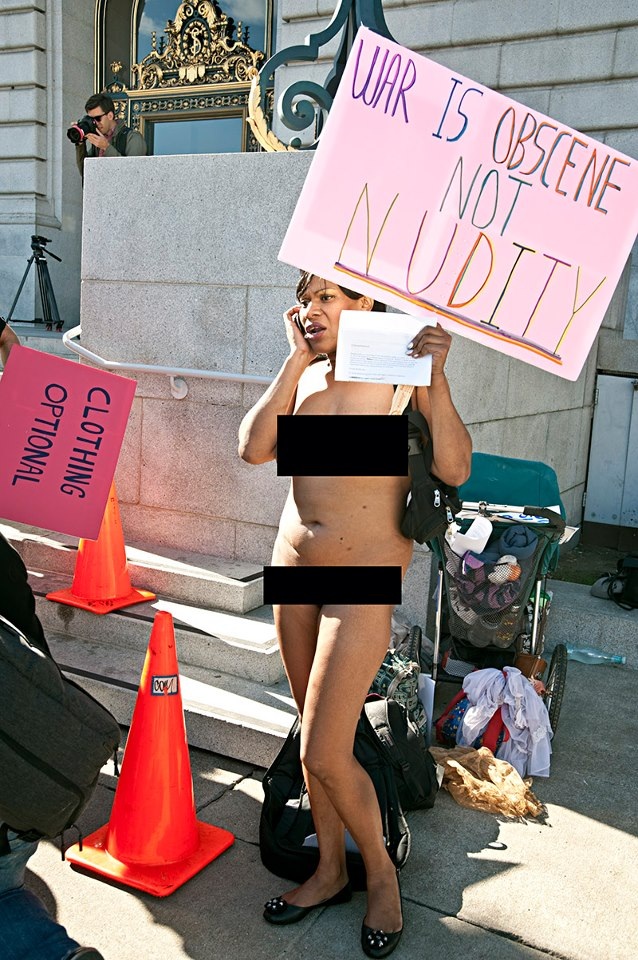
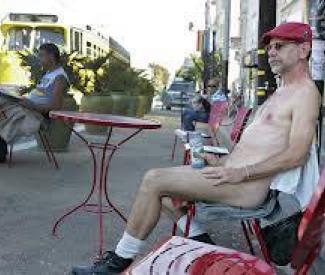
Attorney Christina DeEduoardo claims that her clients use nudity as a form of free speech and protest — and given who they are, it’s a pretty good argument. You’ve got a guy who ran as the nudist candidate for mayor and a woman who took her clothes off at a Board of Supervisors meeting for political reasons, and they contend that they have the right to appear naked in public.

The claim seeks a restraining order prohibiting the Board of Supervisors from enacting the law, but a federal judge already nixed that, according to City Attorney spokesperson Matt Dorsey. Instead, all parties have to wait unitl the supes approve the law, at which point this will become a motion for an injunction against the law taking effect.

So banning a handful of people, mostly older guys, from hanging out naked on Castro Street is going to become a legal battle that will cost the city a bunch of money. Unless sanity prevails and Sup. Scott Wiener, the city attorney and the nudists can reach a deal, which might be pretty simple:

It’s cool to get all nekkid (although it won’t be happening much in the next few months, way too cold). But maybe the Castro Guys can agree not to wear cockrings that attract attention to their dicks (and seem to be the proximate cause of all the fuss). Just be natural when you go au naturel, and we can all stop fighting over this.

You think?


Howard Wallace, LGBT icon, dies at 76

6

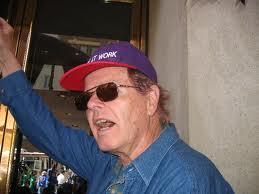
Howard Wallace, a longtime organizer who played a key role in bringing the LGBT movement and labor together in San Francisco, died Nov. 14. He was 76 and had been struggling with Alzhiemer’s disease.

Wallace grew up in Denver, and according to a biography by Andrej Koymasky, was forced to drop out of college when his father saw some United World Federalist literatature he’d brought home and told him to drop of of “commie” politics:

“He put a couple of checks on the dining-room table – the checks for next year’s tuition – and said, ‘Get out [of activism] and you can have those checks.’ I tore them up in his face, and that was the end of my college education.” 

Instead, he began a series of blue-collar jobs that brought him into labor organizing.

By the early 1970s he was in San Francisco, part of a generation of activists that included the late Hank Wilson and Assemblymember Tom Ammiano, who together helped form a group called Bay Area Gay Liberation.

“He made bridges,” Ammiano told me. “He came to BAGL and told us we had to support Cesar Chavez, and some of us were reluctant — you know, it was the Catholic Church, homophobia, all of that. But he convinced us to go on that march, and we were all glad we did.”

Wallace was a founder of the Lesbian-Gay Labor Alliance and later Pride at Work, and he was instrumental in bringing LGBT workers into the labor movement — and also bringing labor support to LGBT causes.

In 1974, Wallace worked with members of the Teamsters Union — not a group always known in those days known for enlightened attitudes towards gay people — on a boycott of Coors beer.  The teamsters were fighting bad labor practices at Coors, including a mandate that all employees take a lie-detector test that incuded the question “are you a homosexual?”

Working with both sides, Wallace got the LGBT community to sign on to the boycott, got Coors out of many of the bars in the Castro — and made lasting connections between local labor leaders and the LGBT community.

“He’s the one who brought Harvey Milk into the Coors boycott,” Ammiano recalled. “And he was never afraid to call out labor leaders when they were being homophobic.”

Like all great organizers, he could be persistent to the point where he was sometimes infuriating — but always, always pure of heart. “He was a character,” Ammiano said. “I never knew what color his hair would be, but I always knew what color his politics would be.”

Tommi Avicolli Mecca, a longtime activist and writer on LGBT history, said Wallace was “a giant among us. He was always there, for the rights of union members, the poor and working class, antiwar activists … you could always count on Howard to be there.”

Mecca noted that Wallace “saw the connections between the LBGT movement and disenfranchised people everywhere. He saw the queer struggle as part of a larger struggle for social and economic justice.”

He will be sorely missed, but as Mecca said, “we will always have his legacy; future generations can look back and understand what our movement was about.”

Said Ammiano: “I hope he and Hank Wilson are up there tipping a few back and talking about Lenin vs. Trotsky.”
 
A memorial is pending, and I’ll keep you posted as updates are available.

UPDATE NUMBER 1: State Sen. Mark Leno told me that Wallace “was not only a dear friend but a teacher. His values were strongly intact.” Leno recalled chairing the fundraising drive for the LGBT Center, a huge undertaking, and accepting a check from Coors for $5,000. “I though I had done due diligence, I knew the boycott was over, but Howard came to our board meeting and convinced us that the LGBT Center had to be above reproach.” 

(I’m sure Howard Wallace didn’t use those exact words).

“It was after that that we became good friends,” Leno said.

UPDATE NUMBER 2: From Gabriel Haaland, Pride at Work co-vice-president (SEIU< SF): I don’t know if most progressives know how much Howard gave to us all. I know there are so many who considered him a mentor and an inspiration. For those of you who don’t know him, Howard had a way of connecting the dots across so many issues. A legend and a hero for sure. A fearless warrior for justice, Howard was both passionate and gentle in his own way… He gave so much of himself and taught me so much in the rashness of my younger years. Even in death, he continues to inspire me to be better than I was before, more in integrity. I honor those who took such good care of him in the last year, like Kathy Lipscomb, Carl Finamore, Tab Buckner, Eileen Hansen, and Susan
Englander. I will miss him.

Oh well, Pelosi’s going to stick around

32

For a while there some of us thought that Rep. Nancy Pelosi, who failed to win back a house majority for the Democrats, might decide her time was up and step down as minority leader (which would probably have meant retiring from Congress). That would have set off one of the hottest political battles in town; just about everyone knows that Pelosi’s daughter is interested in the seat, but there’s no way she was going to get it without a fight. There are lots of ambitious people in this town who would jump at a once-in-a-lifetime chance at a Congressional seat, starting with possibly all of our current state Legislators and a few supervisors.

Would progressives and independents sick of the notion of a Pelosi family dynasty get behind one candidate (say, Mark Leno)? Would Scott Wiener, who Leno has supported and mentored all these years, run anyway, arguing for a younger candidate who could be around for long enough to get seniority? Would Leland Yee, who will be termed out and didn’t get elected mayor, jump in the race? Would Tom Ammiano, who doesn’t seem at all ready to retire?

Lots of crazy speculation — and now it appears we’ll have to wait two more years to go through it again. Because, barring a huge upset in the Democratic Caucus, Pelosi’s sticking around.

I’m not so thrilled about that — and I swear it has nothing (well, almost nothing) to do with the amazing story that a contested race would create for political reporters. It’s just that Pelosi’s been a big disappointment to San Francisco; she cares more about her national constituency that about her district, and her legacy achievement is the privatization of a national park.

It would be nice to get someone representing San Francisco who represented San Francisco values.

Oh well.

Diablo Canyon: What else do we need to know?

2

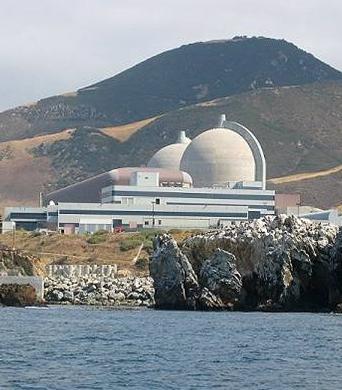
So PG&E wants to frighten, deafen, and kill a whole lot of marine mammals and fish by blasting sound waves at the Ocean floor — to discover exactly what? That there are, indeed, a lot of earthquake faults right near the Diablo Canyon nuke — and that a serious quake risks cracking the containment facility or toppling the whole thing into the sea, contaminaing much of the coast and poisoning a huge population area?

Don’t we already know that?

Don’t we already know that the plant was a terrible idea when it was built and is a worse one now?

It’s well established that a major strike-slip fault (the Hosgri) runs right offshore, and that another one (the Shoreline) is even closer. The whole Morro Bay area is riddled with faults. If one of them goes, it could cause others to go, and that could create a whole lot of shaking, quite possibly more than the aging plant could handle.

Nuclear power plants of Diablo’s vintage were designed to operate for maybe 40 years. PG&E wants to relicense it for another 25. Why not? The company paid about $7 billion to build the thing, and the longer it runs, the more money comes into the corporate coffers.

But one would think that, given what we now know about nuclear plant disasters, that the existence of such a precarious seismic zone so nearby would be ground to shut the thing down, or certainly to let its current license expire without renewal. I’m sure PG&E’s scientific study will show that there’s no danger to the public — that’s what every study the company has done on Diablo has shown — but really? Don’t we know better?

Shit happened

0

CASH FOR TRASH

Recology, the city’s garbage monopoly, has a problem: It charges residential customers only for the black cans full of unrecyclable material headed for the landfill — but thanks to city policy and environmental consciousness, there’s less and less traditional trash out there. Ultimately, the company wants to get rid of the big black cans altogether.

So a business model based on offering free recycling and compost doesn’t work any more — and everyone has known for some time that it had to change.

But there was no discussion of rate changes earlier this year; in fact, Recology folks said there were no plans for an immediate rate hike in the works. That’s because the June ballot included a measure that would have created competitive bidding for the city’s garbage contract — and the last thing Recology wanted was the threat of a rate hike to drive voters toward amending the 1932 City Charter provision that gives just one company complete control over the lucrative waste franchise.

Ah, but the June election is long over, and Recology beat back that effort — so the rate hike we all expected is now on the table.

On Sept. 11, Recology informed the city that it intends to apply for a new rate structure — and while the process is long and convoluted, we’ll see the details in a few weeks, and you can expect to start paying more for your service by next summer.

There’s no formal proposal yet — that will come in December. The director of the Department of Public Works has to approve it, and so does a Rate Board made up of the city administration, the controller and the head of the Public Utilities Commission. But both Recology and the city say there will be some significant changes in the way San Franciscans pay to have their refuse removed.

“We can’t focus our financial operations on a black can if we’re trying to get rid of it,” Recology spokesperson Eric Potashner told us.

Douglas Legg, the finance director at the Department of Public Works agrees. “As we’ve been pushing diversion, the blue and green cans have been pretty heavily subsidized.”

But shouldn’t good habits, like recycling, be subsidized? Should people who recycle and compost more be penalized? “That’s the challenge,” Potashner said.

And in the end, it’s going to be more than a shift in which bins cost how much. There’s no doubt that your bills will be rising, perhaps by a significant amount. “I assume it will go up,” Legg said. “There hasn’t been a cost-of-living increase since 2010.”

Which, of course, brings back the competitive bidding point. If others had a chance to make a play for the city contract, might rates be lower? Or might the city get more out of the deal?

Retired Judge Quentin Kopp, who helped spearhead the campaign for competitive bidding, thinks so. “If we had competitive bidding,” he told us, “these rate hikes would be more moderate.”

OPENING THE LAST CLOSET DOOR

While most everyone’s attention was focused on electoral politics in late October, Supervisors David Campos and Christina Olague were talking about a different level of political issue, one that’s still a huge taboo: Gay men in professional sports. At an Oct. 30 press conference, the two LGBT supes joined with representatives of The Last Closet, an SF-based campaign that’s trying to get gay professional athletes to come out.

It’s remarkable (or maybe, sadly, it isn’t) that in 2012, not one openly gay man has played in any of the Big Five pro sports (football, basketball, hockey, baseball and soccer). There are, everyone knows, plenty of gay athletes, and the NFL, NBA, NHL, MLB and various soccer associations all have gay players. Some of them have come out after they’ve retired. But on the field (or on the floor, or on the ice)? No way.

Why does anyone care? Because youth sports are still, even in this town, full of homophobic language and homophobic attitudes, and it’s hard to imagine what young LGBT football or basketball players have to endure. Even one gay player could make a world of difference.

“What I saw with the San Francisco Giants, all of the Latino players, was such a source of pride to Latino boys and girls,” Campos told us. “We can’t feel that in the LGBT community. We know there are gay baseball players, but the LGBT youth don’t have those role models to look up to.”

The Last Closet campaign emerged out of a documentary film project that sought to look at homophobia in pro sports. “It became clear that some members of the sports hierarchy were not going to make themselves available to speak about this taboo subject,” the group’s website notes.

In fact, Fawn Yacker, one of the project directors, told us that nobody in a senior position in any sports organization was willing to talk — and that’s turned the movie into a political campaign. “We want the fans to push the sports leaders to address this,” she said.

In fact, all The Last Closeters want right now is for the commissioners of the major sports leagues to make a statement that homophobia is unacceptable and that the leagues will do everything possible to make sure that out gay players are accepted. Seems like a pretty simply no-brainer — but so far, not one sports official has gone along.

It’s pretty crazy, considering that it’s almost inevitable that a few major sports athletes will come out in the next few years — and the leagues are going to look foolish if they pretend it’s not going to happen. Any bets on which sport is going to be the first? “I don’t know,” Yackey said. “I think it might be hockey.” 

Sorting out a strange election

120

steve@sfbg.com, tredmond@sfbg.com

The way the San Francisco Chronicle pundits put it, Mayor Ed Lee was the clear winner in a grand San Francisco election. “All his measures on the ballot won hands down,” noted Willie Brown, the high-paid lawyer and political operative who also functions as a Chron columnist. “It was a great day for Ed Lee,” proclaimed columnist C.W. Nevius.

Well, not really.

There are a lot of ways to explain and analyze the inconsistent results of one of the most heavily propagandized elections in recent San Francisco history. But no matter how you look at it, the election was at best a wash for the mayor. Indeed, we’d argue that voters rejected the basic premise of the mayor’s political agenda – that tax cuts and favors for big business are the best economic policy – despite record-breaking outside spending selling that agenda and targeting those who stood in its way.

Let’s take a look at the real facts:

• Every single initiative backed by the mayor, the ones he’s getting credit for – from the City College parcel tax to the housing fund to the business tax – was either a compromise with progressives or a measure that originated on the left. There was nothing the mayor pushed that had any significant progressive opposition; his wins were equally, if not more dramatically, wins for the left.

• Both people the mayor appointed to office were soundly rejected by the voters. Rodrigo Santos, his high-profile appointee to the troubled City College Board of Trustees, spent almost $200,000 and finished a distant sixth. Sup. Christina Olague lost to the candidate Lee had rejected for appointment, London Breed, in a complicated race where the mayor’s actual role was unclear (he never withdrew his endorsement of Olague even as his allies trashed her in nasty ways).

• A million-dollar effort funded by some of the mayor’s allies to oust Sup. Eric Mar was a spectacular failure, suggested some serious problems in the mayor’s political operation, and undermined his emphasis on “civility.”

• The voters made clear on every level that they believe higher taxes on the wealthy and closing tax loopholes on big business are the right approach to the economy and to funding government. From Prop. 30 to Prop. 39 to Prop. A to Prop. E, the message was pretty clear: The tax revolt that started in California in 1978 may be winding down, and the notion of making property owners and the wealthy pay for education and public services is no longer a radical idea.

Robert Cruikshank, who writes for the Calitics blog, argues that the November election signals a major sea change in California. “[The] vote to pass Prop 30 — by a larger margin than most observers expected — does more than just provide $6 billion of badly needed funding to the state’s public school,” he wrote. “It brings to a close a 34-year long tax revolt that came very close to destroying California’s middle class, locking its low income families into permanent poverty, and left the state on the edge of financial ruin.”

That sounds like a progressive message. The agenda put forward by the mayor’s closest allies, including right-wing billionaire Ron Conway, who played a heavy-handed role in this election, not only failed to carry the day; the big-money types may have overplayed their hand in a way that will shape the political narratives going forward.

A LOT OF CONSENSUS

Let’s start with the ballot measures (before we get to the huge and confusing mess that was D5).

Proposition A, the parcel tax for City College, didn’t come out of the Mayor’s Office at all; it came from a City College board whose direction the mayor tried to undermine with the appointment of Santos, a pro-development engineer so conservative that he actually endorsed the Republican opponent of Assembly member Tom Ammiano.

Lee didn’t even endorse Prop. A until a few weeks before the election, and played almost no role in raising money or campaigning for its passage (see “Words and deeds,” 9/11/12). Yet it got a higher percentage of the vote than any of the three measures that Lee actively campaigned for: Props. B, C, and E.

Then there’s Prop. C, the Housing Trust Fund. Lee’s office played a central role in drafting and promoting the measure -– but it wasn’t exactly a Lee initiative. Prop. C came out of the affordable housing community, and Lee, who has strong ties to that community, went along. There were tough negotiations -– the mayor wanted more guarantees and protections for private developers -– and the final product was much more what the progressives who have spent decades on the housing front wanted than what the mayor would have done on his own.

The way the mayor envisioned business-tax reform, the city would have eliminated the payroll tax, which tech firms hate, and replaced it with a gross-receipts tax -– and the result would have been revenue-neutral. It was only after Sup. John Avalos and the progressives demanded that the tax actually bring in more money that the outlines of Prop. E were drafted and it received strong support from groups across the ideological spectrum.

“You had a lot of consensus in the city about these ballot measures,” political consultant David Latterman, who usually works with downtown-backed campaigns, said at SPUR’s post-election round-up.

The supervisorial races were a different story, with unprecedented spending and nasty messaging aimed at tipping the balance in favor of real estate and development interests. Mayor Lee didn’t get directly involved in the District 1 race, but he was clearly not a supporter of incumbent Sup. Eric Mar.

The real-estate and tech folks who are allied with Lee spent more than $800,000 trying to oust Mar — and they failed miserably, with Mar winning by 15 points. While Mar did have the backing of Chinatown powerbroker Rose Pak, who raised money and helped organize ground troops to help, Mar’s victory was primarily the result of a massive outpouring of support from labor and progressive activists, many reacting to the over-the-top effort to oust him.

Mar, who voted to put Lee in office, won’t feel a bit indebted to the mayor for his survival against a huge money onslaught. But in District 5, the story was a whole lot more complicated, and impact more difficult to discern.

THE D5 MESS

Before we get into what happened in D5, let’s dispel some of the simplistic and self-serving stories that circulated in the wake of this election, the most prominent being that Olague’s loss -– the first time an incumbent was defeated in a ranked-choice election –- was payback for crossing Mayor Lee and voting to reinstatement Sheriff Ross Mirkarimi.

It’s certainly true that Lee’s allies went after Olague and supported London Breed, and that they tried to make an issue of domestic violence, but there was much, much more to this district election. Breed is an SF native with a compelling personal story who ran a strong campaign –- and that three strongest progressive candidates in the race each had major flaws that hurt their electability. By most accounts, the Olague campaign was a disaster until the very end. Equally important, the progressive community was divided over D5, leaving room for Breed to slip in.

“It’s hard to unravel what happened here,” Latterman said.

San Francisco Women for Responsibility and an Accountable Supervisor was an independent expenditure group fronted by domestic violence advocates and funded by more than $100,000 from the families of Conway and fellow right-wing billionaire Thomas Coates. It attacked Olague’s Mirkarimi vote as being soft on domestic violence — but it also did a last minute mailer criticizing Olague’s vote for CleanPowerSF, muddling its message of moral outrage.

On election night, Olague told us she believed her split with the Mayor’s Office really had more to do with CleanPowerSF –- which the board approved with a veto-proof majority over the objections of Lee and the business community –- and with her insisting on new revenue from Prop. E than it did with Mirkarimi, whose ouster she dismissed as “a power play” aimed at weakening progressives.

“They don’t want to say it, but it was the whole thing around CleanPowerSF. Do you think PG&E wanted to lose its monopoly?” she said.

Yet Olague said the blame from her loss was also shared by progressives, who were hard on her for supporting Lee, courting his appointment to the D5 seat, and for voting with him on 8 Washington luxury condo project and other high-profile issues. “The left and the right both came at me,” she told us. “From the beginning, people were hypercritical of me in ways that might not be completely fair.”

Fair or not, Olague’s divided loyalties hurt her campaign for the D5 seat, with most prominent progressives only getting behind her at the end of the race after concluding that John Rizzo’s lackluster campaign wasn’t going anywhere, and that Julian Davis, marred as he was by his mishandling of sexual impropriety accusations, couldn’t and shouldn’t win.

Olague told us she “can’t think of anything I would have done differently.” But she later mentioned that she should have raised the threats to renters earlier, worked more closely with other progressive candidates, and relied on grassroots activists more than political consultants connected to the Mayor’s Office.

“The left shouldn’t deal with consultants, we should use steering committees to drive the agenda,” Olague said, noting that her campaign finally found its footing in just the last couple weeks of the race.

Inside sources say Olague’s relations with Lee-connected campaign consultant Enrique Pearce soured months before the campaign finally sidelined him in the final weeks, the result of his wasteful spending on ineffective strategies and divided loyalties once a wedge began to develop between Olague and the Mayor’s Office.

Progressive endorsements were all over the map in the district: The Harvey Milk Club endorsed Davis then declined to withdraw that endorsement. The Tenants Union wasn’t with Olague. The Guardian endorsed Rizzo number one. And none of the leading progressive candidates had a credible ranked-choice voting strategy — Breed got nearly as many second-place votes from Davis and Rizzo supporters as Olague did.

Meanwhile, Breed had a high-profile falling out with Brown, her one-time political ally, after her profanity-laden criticism of Brown appeared in Fog City Journal and then the San Francisco Chronicle, causing US Sen. Dianne Feinstein to withdraw her endorsement of Breed. That incident and Olague’s ties to Lee, Brown, and Pak may have solidified perceptions of Breed’s independence among even progressive voters, which the late attacks on her support from landlords weren’t ever able to overcome.

Ironically, while Breed and some of her prominent supporters, including African American ministers in the district, weren’t happy when Lee bypassed her to appoint Olague, that may have been her key to victory. Latterman noted that while Olague was plagued by having to divide loyalties between Lee and her progressive district and make votes on tough issues like reinstating Mirkarimi –- a vote that could hurt the D5 supervisor in either direction -– Breed was free to run her race and reinforce her independence: “I think Supervisor Breed doesn’t win this race; challenger Breed did.”

But even if Breed lives up to progressive fears, the balance of power on the Board of Supervisors could be up in the air. District 7 soundly rejected Mike Garcia, the hand-picked successor of the conservative outgoing Sup. Sean Elsbernd.

At press time, progressive favorite Norman Yee seemed headed for victory, although FX Crowley was within about 30 votes, making this too close to call. But either way, the once-solid conservative seat will now be a swing vote on many issues, just as Breed will be in the once-solid progressive D5.

“The Board of Supervisors as a whole is becoming a helluva lot more interesting,” was how political consultant Alex Clemens put it at SPUR election wrap-up. “Determining what’s going to happen before it happens just got more difficult.”

GOBS OF MONEY

The other big story of this election was money, gobs of it, and how it can be spent effectively — or used to raise suspicions about hidden agendas.

Third-party spending on D1 loser David Lee’s behalf was $454,921, with another $219,039 to oppose Mar, pushing total spending to defeat Mar up over the $1 million mark, roughly doubling the previous record. Labor groups, meanwhile, spent $72,739 attacking Lee and $91,690 backing Mar. But many political analysts felt that lop-sided spending only served to turn off voters and reinforce the idea that powerful interests were trying to buy the seat.

In District 5, the landlords, Realtors, and tech moguls spent $177,556 in support of Breed, while labor spent $15,067 attacking her as a shill for the landlord lobby. The only other D5 candidate to attract significant spending by outside groups was Olague, who had $104,016 spent against her, mostly by the families of Conway and Coates, and $45,708 spent in support of her by SEIU 1021. Yet ultimately, none of these groups bought very much with their money. Conway, Salesforce CEO Marc Benioff, and San Francisco Association of Realtors each spent hundreds of thousands of dollars of their money, and the most obvious result was to convince San Franciscans that they’re working together to move an agenda in San Francisco. They may have the mayor on their side, but in a politically sophisticated city like San Francisco –- with its cost of living being driven up by the schemes of Lee, Conway, and the Realtors -– they seem to have a long way to go before they achieve they’re stated desire of destroying the progressive movement, particularly with its rising new leaders on the left, including Matt Haney and Sandra Fewer on the school board and Steven Ngo and Rafael Mandelman on the City College board. As Haney said on Election Night, “It was a good night for progressive San Francisco,” which stands for important egalitarian values. “We are the ones about equity and compassion. That’s what this city is about.”

District surprises

1

tredmond@sfbg.com

EDITOR’S NOTES The Wall Street Journal, which ought to focus on stellar reporting and skip the political analysis, stuck its haughty little nose into California last week, announcing that the Democratic supermajorities in the state Legislature spell doom for us all.

“Liberals,” the paper noted, “will pick up enough seats to secure a supermajority. Governor Jerry Brown then will be the only chaperone for the Liberals Gone Wild video that is Sacramento.”

I guess I go to the wrong parties, but I’ve never seen that movie. In fact, a lot of the Dems in Sacramento would have to cough and gasp a bit to call themselves “liberals,” and that’s on a good day. Frankly, the majority party in the Assembly and Senate tends to be relatively conservative, with many of its members afraid to so much as talk about, say, amending Prop. 13 or legalizing marijuana.

The bigger danger is that the Democrats from the more moderate districts will so fear that loss of their seats that they’ll want to be even more cautious about raising taxes than the Republicans.

See, I don’t think either party quite realizes what happened Nov. 6 in California, and what it means for the future.

This election wasn’t an anomaly. It wasn’t a miraculous twist of fate driven by high Obama turnout or by labor’s GOTV efforts to defeat Prop. 32. It was the inevitable result of two forces — the demographic changes in the electoral map of this state, and the utter, complete collapse of the California Republican Party. Neither one is about to change any time soon.

For decades, the GOP has focused on older, white, suburban voters, and there was a time when that strategy worked. But the future of the state is younger, non-white urban voters who are less frightened by crime, less xenophobic about immigration, less likely to have kids in private schools, and largely uninterested in the traditional Republican social issues.

Brian Leubitz, the insightful blogger at Calitics.com, notes that almost 30 percent of the people who went to the polls Nov. 6 were between 18 and 29 years old. “The California GOP, like the greater national party, has lost young voters,” he writes. “If it hopes to return to a semblance of a statewide party, it will need to moderate itself back into a party that accurately represents some portion of California’s electorate.”

How likely is that? Anyone want to bet that the GOP is going to reject the Howard Jarvis Taxpayers Association the right-wing radio guys in Los Angeles and start promoting immigration reform and an overhaul of Prop. 13? You’ll have to give me pretty long odds.

No: The era of Democratic supermajorities in the California Legislature is here to stay for a while, and the Dems might as well use it. No need to be afraid of a backlash; there’s nothing out there to lash back with. The only real danger is that Democrats and independents will be so disappointed in the Legislature’s failure to act on the huge issues facing the state that they’ll stay home in two years.

Why not talk about a split-role property tax program? Why not an oil-severance tax? Why not let local government raise local taxes without a two-thirds majority? The Wall Street Journal can whine all it wants, but it can’t change reality — right now, the Democrats are the only game in town.


Editor’s notes

0

tredmond@sfbg.com

EDITOR’S NOTES The Wall Street Journal, which ought to focus on stellar reporting and skip the political analysis, stuck its haughty little nose into California last week, announcing that the Democratic supermajorities in the state Legislature spell doom for us all.

“Liberals,” the paper noted, “will pick up enough seats to secure a supermajority. Governor Jerry Brown then will be the only chaperone for the Liberals Gone Wild video that is Sacramento.”

I guess I go to the wrong parties, but I’ve never seen that movie. In fact, a lot of the Dems in Sacramento would have to cough and gasp a bit to call themselves “liberals,” and that’s on a good day. Frankly, the majority party in the Assembly and Senate tends to be relatively conservative, with many of its members afraid to so much as talk about, say, amending Prop. 13 or legalizing marijuana.

The bigger danger is that the Democrats from the more moderate districts will so fear that loss of their seats that they’ll want to be even more cautious about raising taxes than the Republicans.

See, I don’t think either party quite realizes what happened Nov. 6 in California, and what it means for the future.

This election wasn’t an anomaly. It wasn’t a miraculous twist of fate driven by high Obama turnout or by labor’s GOTV efforts to defeat Prop. 32. It was the inevitable result of two forces — the demographic changes in the electoral map of this state, and the utter, complete collapse of the California Republican Party. Neither one is about to change any time soon.

For decades, the GOP has focused on older, white, suburban voters, and there was a time when that strategy worked. But the future of the state is younger, non-white urban voters who are less frightened by crime, less xenophobic about immigration, less likely to have kids in private schools, and largely uninterested in the traditional Republican social issues.

Brian Leubitz, the insightful blogger at Calitics.com, notes that almost 30 percent of the people who went to the polls Nov. 6 were between 18 and 29 years old. “The California GOP, like the greater national party, has lost young voters,” he writes. “If it hopes to return to a semblance of a statewide party, it will need to moderate itself back into a party that accurately represents some portion of California’s electorate.”

How likely is that? Anyone want to bet that the GOP is going to reject the Howard Jarvis Taxpayers Association the right-wing radio guys in Los Angeles and start promoting immigration reform and an overhaul of Prop. 13? You’ll have to give me pretty long odds.

No: The era of Democratic supermajorities in the California Legislature is here to stay for a while, and the Dems might as well use it. No need to be afraid of a backlash; there’s nothing out there to lash back with. The only real danger is that Democrats and independents will be so disappointed in the Legislature’s failure to act on the huge issues facing the state that they’ll stay home in two years.

Why not talk about a split-role property tax program? Why not an oil-severance tax? Why not let local government raise local taxes without a two-thirds majority? The Wall Street Journal can whine all it wants, but it can’t change reality — right now, the Democrats are the only game in town.


Nudists to sue over Wiener law

62

Sup. Scott Wiener’s ban on public nudity hasn’t even come to a vote at the full board, but the nudists who oppose it are already planning to sue. A group of five plaintiffs, including former mayoral candidate George Davis and Gypsy Taub, who disrobed at a hearing on the issue, are arguing that the city lacks the legal authority to enact the ban, which they call a violation of protected free speech.

Christina DeEduoardo, the group’s attorney, told me she plans to file this week in federal court in San Francisco. “We’re going to ask for a temporary restraining order to prevent the supervisors from enacting this law,” she explained.

It’s not easy to get a court to pre-emptively block a law that hasn’t been approved, but DeEduoardo said she’s going to argue that state law pre-empts San Francisco from taking this type of action. “When a municipality does something at odds with state law, there’s a reason to prevent it,” she said.

California law already regulates lewd behavior, and the state courts have consistently held that mere nudity is not a violation of that statute. “Nothing says the city has to power to regulate dress,” she argued. “It’s the equivalent of the Board of Supervisors saying that in October the only colors you can wear are black and orange.”

Even if the state doesn’t pre-empt San Francisco’s right to ban nudity, DeEduoardo said, there’s a First Amendment issue here: “This purports to ban all nude expression. My clients engage in nudity as speech. The law is way over-broad.” There’s even an equal-protection argument: Wiener’s legislation specifically exempts major city events, like Bay to Breakers and the Folsom Street Fair — but those things cost a lot of money. “So the city’s saying if you have the money for a permit, you can engage in nudity, but if you can’t afford that, and you just want to go au naturel, then you are a criminal.”

Matt Dorsey, spokesperson for the City Attorney’s Office, told me he doesn’t expect any sort of injunction. “State law is very clear that injunctions can’t be granted to prevent a legislative act,” he said.

If a federal judge won’t issue a restraining order, the nudists are going to sue to overturn the law the minute it passes. So there’s likely to be a long, expensive legal battle — and it seems so silly. Particularly since it’s getting chilly out and the rainy season is about to start, and Mother Nature will be dealing with the naked guys pretty quickly.

Out of the last closet

20

It got pretty well buried in the last-minute election madness, but Sups. David Campos and Christina Olague did a very cool thing Oct. 31 — they helped create some press, and some possible national buzz, for a small San Francisco organization that’s taking on a very big issue.

The Last Closet is trying to get someone — anyone — in the senior hierarchy of male professional sports to talk about homophobia and the fact that there are no out gay men in any of the five major pro sports (football, basketball, baseball, hockey and soccer). When Olague and Campos held a press conference to introduce a resolution endorsing the group’s aims, it got at least passing mention on sfgate. And that’s a start.

Everyone knows there are gay men in the NFL, and in the NBA, and in MLB, and on the ice playing professional hockey. Yet even in 2012, when retired tough-guy athletes can talk about homophobia and the need for equality, not one active player has come out of the closet.

Who cares? Well, if you’re a young LGBT person involved in sports, you care — and you care a lot. Middle-school and high-school locker rooms (male locker rooms, particularly) are still pretty homophobic places and can be scary for gay kids. And there’s nobody for them to see as a role model.

As Campos told me, “What I was with the San Francisco Giants, all the Latino players, was such a source of pride to Latino boys and girls. We can’t feel that in the LGBT community. We know there are gay baseball players, but the LGBT youth don’t have those rold models to look up to.”

Not that sports figures are great role models, but still: One badass NFL player — I envision a linebacker — comes out, and a generation of LGBT youth can say: He’s gay. He’s tougher than any of you assholes who are teasing me.

And it would change lives.

All the Last Closeters want right now is for the commissioners of the five major sports to speak out, to make a statement, to say that out gay players would be welcomed and protected in their leagues and that homophobia would not be tolerated. Doesn’t seem like much to ask.

And yet: Not one will do it.

Maybe Larry Baer can bring it up at the next owner’s meeting.


Get ready for a garbage rate hike

30

Recology, the San Francisco garbage monopoly, usually comes to the city to ask for a rate increase once every five years or so. It’s been almost seven since the last one — and it’s not as if the company’s costs have come down. Anyone who’s running big diesel trucks and paying for fuel has been hammered in the past year or two.

So why did the folks at Recology wait until this fall — Sept. 11 — to let the city know they want to change the way they charge for trash — and most likely rise rates at the same time?

Well, for one thing, there was a ballot measure back in June that would have broken up the lucrative monopoly and opened the waste-removal franchise to competitive bidding. That’s Recology’s worst nightmare. Since 1932, the company (through its predecessors) has had the exclusive right to pick up residential and commercial refuse in San Francisco; unlike virtually every other outfit that does this level of business with the city, the contract never comes up for renewal and nobody else ever gets to bid. There’s virtually no chance that anyone but Recology would ever win a bid for the deal anyway — we’re talking about a unionized, worker-owned local company, and all of the other big garbage outfits are nasty out-of-state operations with bad management and environmental records. But if there were other bidders, Recology might have to sweenten the city’s deal — keep the rates lower or give some more money to City Hall.

Ant any rate, the ballot measure went down under a flood of Recology money, and to nobody’s surprise the rate hike is now on the table.

Your rates won’t actually go up for a while — the process is long and complicated and both Recology and the Department of Public Works agree that the earliest any new pricing would go into effect would be next summer. We won’t actually see a firm proposal until December.

But already, the company’s talking about ending the current practice of charging for the black (garbage-to-the-landfill) cans and picking up recycling and compost free. The city and the company are both trying to reduce the amount of landfill material that gets discarded — and ultimately, everyone would like to eliminate the black cans altogether. But that, Recology spokesperson Eric Potashner told me, doesn’t work with the current business model: “We can’t rocus our financial operations on a black can if we’re trying to get rid of it.”

Which leads to a dilemma: If you want people to recycle and compost more, how do you get away with charging them more to do it? “That’s the challenge,” Potashner said.

Either way, the rates are going to go up. “There hasn’t been a cost-of-living increase since 2010,” Douglas Legg, finance director at DPW, told us. The increase might be fairly steep, too — after all, it’s been seven years since the last one.

All of which comes back to the competitive bidding question. If this weren’t a monopoly, and Recology had to compete for the contract every once in a while, “these rate hikes might be more moderate,” retired Judge Quentin Kopp, a longtime critic of the company, told us.

Is the tax revolt over?

46

The most optimistic piece I’ve read on the results of the November election is on Calitics, where Robert Cruikshank argues that the tax revolt that started with Prop. 13 in 1978 is finally over.

And while there is still a lot of work ahead to overturn the legal and constitutional legacies of the tax revolt, it no longer has political power. That in turn means the California Republican Party, and the California conservative movement, are as dead as Monty Python’s parrot.

That’s a pretty sweeping statement for a fairly modest tax package supported by the same governor who called himself a born-again tax-cutter in the wake of Prop. 13. But Cruikshank makes a good point:

This victory over the tax revolt happened because of years of progressive organizing against further tax cuts and for tax increases. Progressive voices and organizations completely rejected the post-1978 Democratic logic that the tax revolt had to be appeased. Instead, we insisted that the tax revolt had to be confronted and defeated. With Prop 30 that’s exactly what happened.

I know the Democrats in the Legislature are going to be nervous about more tax hikes, particularly since the two-thirds majority includes some folks from pretty conservative districts who are going to be scared of “overreaching.” But it’s not just about general tax hikes; we got one this year, and we may not get another. It’s about all of the long list of tax loopholes that art on the books that take a two-thirds majority to undo. It’s about a budget that includes addition as well as subtraction. And it’s about not being afraid to say that investment in the state has economic value.

Maybe the Dems don’t have to be afraid; maybe this two-thirds majority isn’t an anomaly and isn’t going to change. Maybe the state is getting so much more Democratic that supermajorities are the way of the future and people are sick of the GOP no-new-taxes nonsense. Maybe (as I’ve long said with same-sex marriage) it’s part of an inevitable demographic change:

Many of those angry white suburbanites convinced that people of color and their liberal allies were going to destroy their suburban paradise have left California, either by relocation or by the intervention of the Grim Reaper. In their place has grown up a native-born population that is diverse, that isn’t ideologically wedded to car-centric postwar suburbs, and that rejected the “I’ve got mine, screw you” mentality of Howard Jarvis.

In which case we really can start turning this state around.

What the fuck, Chuck: No, Ed Lee is not God

76

So who were the big winners in the election? You could argue Ron Conway; you could argue surprise D5 winner London Breed. But to say it was all about Ed Lee?

Actually, no.

Every one of the initiatives that Lee backed was also supported by the entire progressive leadership on the board and almost every progressive group in the city, and other than Prop. B, there was little in the way of funded or credible opposition. The Yes on C campaign was run by the affordable housing folks, not the mayor. The mayor didn’t even endorse Prop. A, the City College parcel tax, until late in the game.

Oh, and the mayor’s appointee to the Community College Board? Got clobbered. The guy the mayor wanted in District 7? Out of the running.

The real story here — aside from the supervisors races, where I don’t think any one operation or political alliance won overall — was the remarkable civic consensus on the ballot measures. If Ed Lee had been out of town all fall, they all still would have won.

I know Chuck thinks the mayor is the greatest ever, but in this case, his impact was at best a wash.


Demos control Sacramento. Completely.

51

The sleeper in this election is the apparent supermajority for the Democrats in both houses of the Legislature. This is huge news, if it holds; for the first time since the passage of Prop. 13 in 1978, which mandated a two-thirds vote to raise taxes, it’s actually possible to govern and set fiscal policy without the no-taxes-ever-no-way Republicans being obstructionist.

In fact, as the Chron points out, Republicans would be essentially irrelevant in Sacramento.

That doesn’t mean everything’s just fine and dandy in the Legislature — the moderate-to-conservative Dems are sometimes as bad as the Republicans. But it means that if the Democratic leadership can craft a sane budget plan that raises some taxes (beyond what Gov. Brown did with Prop. 30), there’s a chance it could actually pass and the state could get back on track.

Of course, that assumes the governor will be on board, and he may not. Brown promised that he would never raise taxes without a vote of the people, and he got his vote, and it was close, and I bet he says: no more. Which is a problem, because Prop. 30, while absolutely necessary to keep California from falling off a cliff, only stabilizes the state’s revenue situation. It does nothing to restore the billions in cuts that have been made in the past decade and doesn’t even begin to put the state in a position to invest in, say, new education initiatives.

This could be a profound moment, a chance to make the state great again (and in the process, prove what can happen if you get rid of the minority-rule that’s crippled the Legislature for decades). It’s too great an opportunity to miss.