Tim Redmond

Editor’s notes

97

tredmond@sfbg.com

EDITORS NOTES People who rent apartments aren’t second-class citizens. In fact, under San Francisco laws, they have (and ought to have) many of the same rights as the landed gentry.

If you rent a place in this city, and you pay the rent on time, and abide by the terms of the lease, you should be able to stay in your home (and yes, it IS your home) as long as you want. The rent can only go up by a modest amount every year.

Landlords know that when they enter into rental agreements. Accepting a tenant means acknowledging that the person may want to say in his or her apartment for years, maybe for life; the rent the landlord sets for that unit has to be adequate to cover a share of the mortgage, expected maintenance costs, and a reasonable return on the owner’s investment.

When you buy a piece of rental property in the city, you are told that tenants live there; you’re told what rent they pay, you’re informed that you can’t raise it much, and unless your utterly ignorant of local law, you realize that the tenants have, in effect, lifetime leases since you can only evict them for “just cause” — which does not include your desire to make more money.

If the numbers don’t pencil out under those conditions, they you shouldn’t buy the place.

That’s how a sane rental housing system ought to operate. Unfortunately, the state Legislature has undermined local rent-control laws with the Ellis Act, which allows landlords to evict all their tenants, cease renting altogether, and turn the place into condominiums. Or, since there are limits on condo conversions in this city, into tenancies in common, which are not limited at all.

Sup. Scott Wiener wants to make it easier to turn TICs into condos; he says the poor TIC owners are having a tough time and can get better mortgage rates if they rules are changed. I don’t feel bad for them; they knew the rules when they bought their TICs. They have no right to convert to condos; that’s a privilege granted to a limited number each year, by waiting list and lottery. Buy a TIC? You should assume it will remain your ownership model for a long, long time.

The city can’t stop the TIC conversions, but it can set ground rules — for example, local law mandates a payment to tenants who are evicted, which can reach $5,000. Sounds big — but it won’t even pay two months’ rent on a new place in this market.

SO let’s be fair here: If you want to evict a tenant, who has and ought to have the right to a stable place to live, you should pay enough to make that person whole. Calculate market rent on a similar place; subtract the current rent the tenant is paying, and cover the difference — for, let’s say, five years.

If that makes TICs too expensive, and thus lowers property values by making evictions difficult and keeping rents low, fine: Property values are too high in this town anyway. And if it means more stability for lower-income people at the expense of property owners … well, I can live with that.

Is City College’s main critic out of control?

28

The oversight board that’s demanding big, often unpopular changes at City College carries the name of the Accrediting Commission for Community and Junior Colleges of the Western Association of Schools and Colleges, and it’s approval is essential for any school that wants to get taken seriously. Without accreditation, there’s no state funding, students can’t get loans, diplomas don’t count for much — in other words, losing the ACCJA seal of approval is a death sentence.

You’d think a board so important and powerful would have a lot of oversight, be the subject of news stories, get monitored. But that’s not the case with ACCJC; nobody seems to know much about it, except that its board is a fairly obscure group of academics and administrators and its president used to run Berkeley City College and it’s stirred up a bit of anger in past years. The boss, Barbara Beno, seems to like chancellors and presidents a lot more than she likes governing boards — and, from the situation at City College, it’s clear that she’s a big fan of top-down decision-making and doesn’t approve of shared governance.

But there’s a fascinating report done by the former president of the California Federation of Teachers that looks at how ACCJC compares to regional accreditation boards in other parts of the country. Martin Hittelman, an emeritus professor of Mathematics, did a numerical analysis that suggests that ACCJC is a whole lot harsher on schools than its counterparts. Check out the chart below:


As Hittelman notes:

The vast majority of reasons dealt with the adequacy of procedures, reviews of programs, services, and operations as well as whether the college adequately used assessment tools such as student learning outcomes in the evaluation of faculty. Sanctions were rarely, if ever, based on the
actual quality and adequacy of instruction received by students.

He notes:

The ACCJC Commissioners are not representative of the diversity in the California community colleges. The large urban districts such as Los Angeles, San Francisco, San Diego, San Jose – Evergreen, and Long Beach are not represented on the Commission whereas Riverside City College
has two member of the Commission. The faculty of the California Community Colleges are represented by only four of the members of the Commission. The Commission also includes a number of members who were not well respected as administrators at their home campus

For example:

Dr. Sherrill Amador | Chair
Dr. Amador serves as a public member of the Commission. Dr. Amador began her service on the Commission July 1, 2004. She was a very unpopular college president at Palomar College where she received several votes of non-confidence.

Much of the report is academic (not surprisingly), but what I got out of it was that this particular agency, at this particular time, is demanding more from desperately underfunded schools than is normal, and is leaning distinctly toward the side of academia and politics that wants simple tests and hard data to quantify educational outcomes that aren’t always easy to quantify.

Not saying for one second that City College is free of problems. But it’s worth thinking about who the critics are and where they come from.

BTW, I contacted ACCJC for comment on the report, but haven’t heard back.


American Idol, Steven Tyler in Drag edition

0

This shit’s getting so strange that you start to wonder if singing alone is enough to keep the Idol franchise going. In Oklahoma City, (thankfully) the last stop before the real action begins in Hollywood, Nicki Minaj is wearing weird leggings, Mariah Carey has some sort of diamond suit on, and Steven Tyler has a dress and a wig.

Yeah, Steven’s back — not as a judge, but as a contestant, in a carefully staged hoax, in drag, wearing red lipstick and an outfit that your grandmother might have worn, and identifying himself as “Pepper.” He refused to sing. Nobody bought it. He flashed his ass at the judges as he left. Highlight of the auditions so far.

Here’s Viv’s recap: A young woman named Haley came with a dog puppet named Oscar. Oscar howled and yodeled. Haley sang in a kind of duet. The dog was a bit freaky; the judges liked her and sent her on to The Show. A crazy girl named Zoanette sang the national anthem and hit the notes so high that Keith fell off his chair. A 16-year-old named Kayden has cystic fibrosis and has to be on an oxygen machine but still managed to sing well enough to make it to Hollywood.

At some point, as the great Simon Cowell used to say, the people have to realize this is a singing contest. We shall see.  

Harvey Milk and Cesar Chavez

32

The Chron continues its jihad against Harvey Milk Airport today, arguing that the price tag airport administrators came up with — $4 million — makes the plan too expensive. Not that $4 million is a trivial amount of money, but please: Compared to the tax breaks, upzonings, and other giveaways the the city routinely hands over to big corporations, this is birdseed. That’s if we can trust the folks at SFO, who are opposed to the name change. And there’s no reason all that money has to be spent at once, the first day; change the name, then implement all the signage changes over a couple of years or so. Not really a big deal.

Assemblymember Tom Ammiano called this morning to remind us of a similar battle in 1994 over renaming Army Street after Cesar Chavez. The costs were wildly inflated. The Chron kept raising all sorts of problems. “It was like, ‘oh we should honor him, but we can’t change a name,’ Amminano said. “The same tired bullshit we’re hearing now.”

And the truth is, changing Army Street to Cesar Chavez Street was an appropriate step, no big deal — and in the end, everyone came around. Ten years from now, they’ll feel the same way about Harvey Milk International Airport.

PS: The issue here isn’t really renaming the airport against leaving it as SFO. I guarantee if this fails, at some point someone’s going to try to name it after Dianne Feinstein or Willie Brown — and the Chron probably won’t have the same issues. If the question is whether to name an airport after Brown (terrible mayor) Feinstein (terrible mayor) or Milk (international civil-rights icon) … well, that’s a no-brainer.

PS2: The B.A.R. came out against the name change in an odd editorial that suggested the battle would be divisive and “turn our friends against us.” That, as a sharp letter from Ammiano, Bevan Dufty, Carole Migden, Jose Cisneros, and Anne Kronenberg ponts out, is the same argument that the more conservative elements of the gay community used to try to talk Milk out of running for office.


http://www.ebar.com/openforum/letters/letter.php?sec=letters&id=372

More unregulated cabs on the street

17

So the state regulators have decided that it’s just fine for companies that pretend not to be taxi operators to operate taxis in San Francisco. That means Lyft and Uber can keep picking up passengers, charging them a “recommended donation” and avoiding the regulations that San Francisco wisely put in place to protect the public.

But the fact that the state thinks this is just fine and dandy, for now anyway, doesn’t mean San Francisco has to do the same. This city has the right to put rules in place for people conveying passengers within its 49 square miles — and those rules ought to apply to Lyft and Uber and Sidecar, too.

Cabs have to carry medallions, or permits. There are a limited number, and they can’t be owned by corporations, only by active cab drivers. You can buy one now — for about $200,000 — or you can get in line and wait, for about 15 years. If the city wants more cabs on the streets and likes the Lyft model, fine: The Municipal Transportation Agency can issue more permits, and if the venture capitalists backing Lyft want to pay for them, they can do so.

I’m not against Lyft or anyone else who has a good idea to serve the public in a way that isn’t being offered now, and I agree that this is the kick in the pants a slow-moving industry needs to develop (fairly simple) apps that allow people to figure out where the nearest cab is and when it’s coming.

But right now, we have an unregulated industry operating in competition with a heavily regulated industry, and it’s not fair. The City Attorney’s Office ought to look into this; the supervisors ought to investigate and force the newcomers to follow the rules. Sure: Lyft. But not this way.

Sunday parking, free — for some

84

If you drive your car Sunday morning to a restaurant for breakfast, or if you go to a Yoga class, or if you’re going to work or shopping, you have to plug the meters now, or you’ll get a pricey ticket. Almost 1,800 people got caught up in the new crackdown on Sunday parking.

Which is fine with me; I think people who drive should pay to park, and as long as you can stay a couple of hours, most of the meters in the city are a bargain.

But for some people, there are no Sunday meters, and no tickets. Those are the ones who don’t bother with the meters and just park in the middle of the street while they’re going to church.

I’ve been complaining about this for a long time, and nothing seems to change:

If you go to see the (secular) Mime Troupe in Dolores Park and you stick your car in the middle of the street, you get a ticket. If you drink at a (secular) bar or eat at a (secular) restaurant and you leave your car in the Valencia Street median, you get cited. You can’t double park while you run in for a (secular) cup of coffee at Muddy Waters.

And now everyone engaging in secular activities has to pay to park, and the people who go to church get to park in the middle of the street, illegally, free of charge, and with full impunity.

I called Paul Rose, the MTA spokesperson, and asked if this harsh crackdown on Sunday meters would also include a crackdown on people who park illegally in the middle of Valencia Street, but he hasn’t gotten back to me. I’ll let you know if he does.

Don’t just stand there — squat!

59

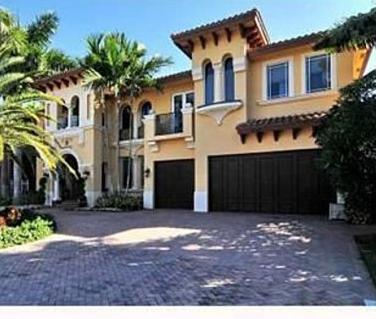
You know I love this story. I love it so much I am going to be following it for weeks, and I hope for years. A homeless guy takes over a $2 million mansion in Florida, which was sitting empty while Bank of America dicked around and never sold or rented it, and now the bank is going to have a tough time getting rid of him.

Did I say I love this story?

Check it out:

It only gets more complicated. By invoking an obscure but never rescinded nor revised Florida law, Barbosa is using “adverse possession” to justify his claim in the house, as it allows a person to move in and claim title of a property “if they can stay there seven years.” Florida has suffered more than one similar case. The Sun Sentinel makes reference to a “handful” of adverse possession claims making their way through the Palm Beach County Property Appraiser’s Office, but Barbosa’s stands out because the house he’s possessing (adversely) is so valuable. And though Barbosa is certainly eccentric, posting a sign that he is the “living beneficiary to the Divine Estate being superior of commerce and usury” on the front of the home, he isn’t stupid. He even contacted the Appraiser’s Office to alert them that his tenancy had begun, presumably as he intends to stay for the required seven years.

We haven’t had any good high-profile public squats like this in San Francisco in years. Back in the day, my old friend Paul Kangas and his brother John were the kings of squats; Paul found an empty house in the Sunset in the late 1970s, with the paint peeling and the shutters hanging off the windows, moved into it, fixed it up, had the water and power turned on in his name and lived there for years. He didn’t operate in secret or the middle of the night; he got the lock re-keyed, moved all his stuff in, and acted like he owned the place. He fixed it up nicely, took care of the yard — and the neighbors loved him. An empty eyesore was now a clean, inhabited house.

Paul was no fool; he had researched the place and found out that the owner had died without leaving direct descendants or a clear will, and for a long time, nobody in the city or the legal system could figure out who actually did own it. Paul needed a place to live; this one was going to be empty for a long time. Why not use it?

John did the same thing with an abandoned house in the Mission, except that to open the door, he had to climb in a window. Somebody saw him, called the cops …. and he was arrested for burglary (for taking the front door knob, which he was going to replace.) He took the case to trial, and it was spectacular: His lawyer, Jonathan McCurdy, called a bunch of city officials and asked them who John had stolen the door knob from; “who,” he kept asking, “actually owns this property?” The title was unclear; nobody could answer the question.

Then John took the stand and said he wasn’t a burglar at all; he was a squatter, who was planning to take over, fix up, and live in an abandoned house.

The jury took about an hour to come back with a verdict of not guilty.

There are plenty of pieces of property around the Bay Area that are owned by banks and sitting vacant. Some of them are becoming eyesores. Somebody ought to be living there.

As we used to say, Don’t just stand there — squat!


Today in gun deaths

28

I have friends in the Gun Left, and even a few in the Gun Right, who firmly believe that they have to have a large collection of dangerous weapons so that when the Forces of Repression or the International Socialist Order come marching up to their doors to lock them up in concentration camps, they can fight back for their freedom. Like this, I guess.

Only: The dozen or so rifles in your closet won’t do much good up against the US Army, if that’s who you fear — and if you fear the International Socialist Order, relax: You’ll get free health care.

But in the meantime, all these guns are doing an awful lot of killing. Teenage inauguration performer shot in Chicago. Five people shot at an office building in Phoenix. Urologist shot in California.

Of course, we all know that the only thing stopping a bad guy with a gun is a good guy with a gun, so: We need armed guards in every office building, and in every urologist’s office, and on the streets of Chicago. Wait — we already have cops in Chicago. And in Oakland. And still.


Nudity ban upheld, found to be stupid

27

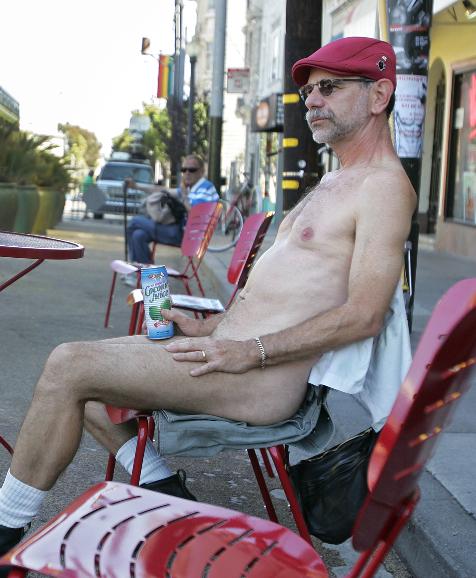
The City Attorney’s Office just announced that a federal court has upheld San Francisco’s ban on public nudity. From the press release:

The court found that the nudism advocates’ challenge to the ordinance based on the First Amendment lacked merit because “public nudity alone is not expression protected by the First Amendment,” and because the ordinance was “not substantially overbroad.”  Judge [Edward] Chen additionally rejected plaintiffs’ arguments that exemptions for such permitted events such as Bay to Breakers and the Folsom Street Fair violated constitutional Equal Protection guarantees, holding that plaintiffs failed to demonstrate that the exceptions lacked a rational basis.  Though the nudism advocates’ facial challenge to the ordinance was dismissed without leave to amend, the court left the door open for nudism advocates to amend their pleading with subsequent “as-applied” claims, provided they were able to do so.

So maybe this isn’t over yet.

The news comes just as the Atlantic chimed in on the city’s nudity ban, calling it pretty dumb:

In San Francisco next week, it will remain perfectly legal for a 50-year-old man to seduce an 18-year-old, impregnate her, ridicule her physical appearance until she is brought to tears, walk out on her, seek out her mother, seduce that mother for no other reason than to further hurt the jilted daughter, draw a graphic novel of the whole sordid chain of events, and publish in on the Internet. But it’ll be illegal for him to be naked outside. Does anyone think the resulting moral signal is desirable?

There’s a long discussion of Judeo-Christian values, the Bible, Adam and Eve, etc. But the conclusion really makes the point:

Americans are bombarded with images of semi-clothed people all the time. It just happens that they’re all beautiful actors and actresses, magazine cover girls, television underwear models, and porn stars. The average person sees lots of naked bodies, but very little real variety. While that may be more aesthetically pleasant, it skewers our notion of what a normal human body looks like. In an age of Victoria’s Secret in the mall, substantial nudity on primetime television, and ubiquitous YouPorn, a ban on nonsexual street nudity begins to seem absurd. Society needs some relatively unattractive people to be naked in public now more than ever before.

So there you have it. Legal, stupid.


Life after the death penalty

18

Tell me: Does any sane person really believe that the world would be a better and safer place if Rick Stevens had been executed by the state of California?

The guy was all fucked up on drugs when he shot three men. Horrible crime. He spent most of his adult life in prison. And now, at 72, he’s out on the streets — where the odds that he will ever hurt anyone again are infintessimally small.

Instead of spending millions and millions of dollars to kill him, the state gave him a life sentence, with the possibility of parole, which was finally granted. It’s hard to argue that justice wasn’t done.

This was the legacy of the Rose Bird Court, the most progressive Supreme Court in California history, from back when Jerry Brown was a young governor. Bird and her colleagues didn’t like the death penalty, and ultimately ruled that the state’s executiion process was unconstitutional. So people like Stevens got a second chance.

Not saying he should have gone free; nobody says that. But the state saved money, and saved a life, by failing to carry out the ultimate punishment. And I think we’re all better off for it.

Can Obama really unravel Reagan?

36

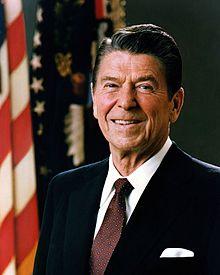
I like Robert Reich; he’s one of the smartest economic thinkers in the country and can explain everything that’s wrong with the economy in two minutes. And I really want to believe that he’s correct in his latest essay, and that President Obama really is poised to under the Reagan Revolution (or at least, the Reagan Republican Coalition).

I get it: The GOP is a fractured collection of groups that often have little in common (although the Democratic Party has some of the same problems). And the Reich message is hopeful:

Obama’s focus in his second inaugural — and, by inference, in his second term — on equal opportunity is hardly a radical agenda. But it aggravates all the tensions inside the GOP. And it leaves the GOP without an overriding target to maintain its fragile coalition. In hammering home the need for the rich to contribute a fair share in order to ensure equal opportunity, and for anyone in America — be they poor, black, gay, immigrant, women, or average working person — to be able to make the most of themselves, Obama advances the founding ideals of America in such way that the Republican Party is incapable of opposing yet also incapable of uniting behind.

All of that may be true — but it’s hard to understate the damage that Reagan did to America — and the amount of work and leadership it’s going to take to get us back to where we were as a nation before he and his ilk declared war on social programs, cities, and non-military government spending.

Before the Reagan Era, even Republicans accepted the concept that the very rich should be taxed at high rates; the marginal rates under Richard Nixon were at 70 percent. In the 1960s and 1970s, the federal government spent huge sums of money on cities. Before Reagan, economic equality was a value in this country. Now it’s not even on the agenda.

Obama’s second inaugural touched all the right notes. But he needs to do more than tinker around the edges of policy if he wants to have a Reagan-style impact on the country. And I don’t know if he’s up for it.

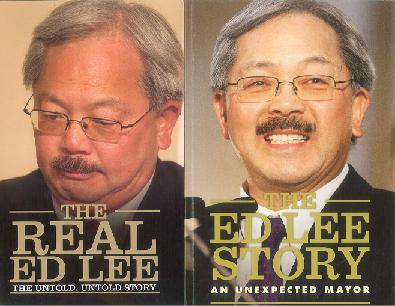
Ed Lee’s State of the City: What evictions? What displacement?

196

Mayor Ed Lee punctuated his State of the City speech with a nice little quip: “Every San Franciscan deserves a clean, safe place to call home.” I agree.

So why, in a speech lasting more than an hour, did the mayor not once mention that thousands of San Franciscans are facing the loss of their homes — and will be forced out of the city — because of the same policies that he’s proudly promoting?

These things are always self-congratualtory and full of the requisite bullshit. But Lee’s description of the State of the City was nothing more than a fantasy to the two-thirds of San Franciscans who live in rental housing, many of whom are living with an unacceptable level of insecurity. Much of the city’s rental stock — and the effectiveness of rent control — is at risk at speculators are buying up properties, tossing the tenants out with the Ellis Act, and converting them to tenancies in common. This is a massive civic crisis, brought on in part by the boom in tech jobs and the consequent boom in high-paid young people who want to live in a city that has virtually no vacant housing.

We saw this before, under Mayor Willie Brown; we called it the Economic Cleansing of San Francisco. It was awful, and it’s happening again.

But you wouldn’t know that to hear the mayor completely ignore the issue.

Oh, Lee gave it a toss-off line; gee, the rent is too high, but we can’t ignore the laws of supply and demand. Gee, we’re going to build 45,000 new housing units, and that will fix everything.

But Lee, of all people, ought to know that housing in San Francisco has never followed the laws of supply and demand. This is a highly irregular market, because demand is essentially unlimited. Housing fills us as fast as you build it. And none of the new housing that’s currently under construction or in the pipeline will be affordable to current SF residents who live in rent-controlled units and are at risk for eviction.

When you’re evicted under the Ellis Act in San Francisco today, to make room for someone with more money, you wind up having to leave the city. That’s the bottom line. And everywhere you turn, tenants are facing that ugly prospect.

The mayor spent much of his time talking about jobs. That’s fine; he’s proud that the unemployment rate in the city has fallen to 6.5 percent, but he insists he won’t rest until everyone has a job. Actually, most economists would say that’s impossible; capitalism, by its nature, exists with a structural unemployment rate that rarely falls below 4 percent. In fact, 4 percent is generally considered “full employment.”

More important, the overall rate is 6.5 percent, but it’s way higher for people without college degrees, for youth, and for African Americans. (It’s above 50 percent for transgender people.) The tech boom isn’t providing jobs for all of the unemployed current San Francisco residents; a lot of the jobs are going to people who don’t live here and are moving here for employment. They are putting pressure on the existing housing stock. That always leads to displacement.

None of this is to say that tech jobs are bad or that we shouldn’t have companies that pay high wages locate in San Francisco. What it means is that the city first has to protect its existing vulnerable populations — and that’s not happening.

I would encourage Mayor Lee to talk to the Housing Rights Committee, or the Tenderloin Housing Clinic, or any of the other tenant lawyers who are fighting desperately every day to state off evictions. He’d get a very different picture of the state of the city.

Gavin Newsom, author

16

Oh My Freakin God, the Gavster has a book and it’s called “Citizenville.” And it’s all about how government isn’t  a vending machine and we should look to the private sector to do everything much better with a lot of technology. I suspect there’s not a lot in the book about homelss policy or poverty or income inequality, since those can’t be solved with an app. Check out the trailer. Gack.


Poet laureate inauguration, Feb. 27

21

San Francisco’s new poet laureate, who also happens to be a Guardian columnist, gets officially inaugurated Jan. 27 — and while I have no idea what he’s going to say, I expect it will be lively. Murguia’s a political poet and has a lot to say about what’s happening and what’s happened to the Mission and the Latino community. He’s also, of course, an awesome writer, so expect a lyrical presentation. 1 pm to 3 pm, Koret Auditorium, SF public library.

Our freak of a governor

17

We all know this, but I have to say it again: Jerry Brown is one strange agent.

His State of the State address was blessedly short: Jer doesn’t waste a lot of time. In fact, a few minutes in, the crowd in the state Assembly chambers was applauding for the second or third time, and he told them to stop; “this is my longest speech and we’re not going to get out of here.” I clocked it, applause and all, at about 16 minutes.

But lordy, lordy, what a crazy amalgam of stuff he packed in. From Montaigne to the Little Engine that Could, the Ten Commandments to Pharoh’s dream about the seven cows, Franklin Roosevelt to Gaspar Portola … all over the map would be a gentle way of describing it.

And that was the political message, too: We can do great things, spend billions on a massive underground peripheral canal and high-speed rail — but we can’t backfill the cuts that are leaving tens of thousands in poverty because we have to live within our means. The mandate for renewable energy is great, but we shouldn’t just keep on passing laws:

Constantly expanding the coercive power of government by adding each year so many minute prescriptions to our already detailed and turgid legal system overshadows other aspects of public service. Individual creativity and direct leadership must also play a part. We do this, not by commanding thou shalt or thou shalt not through a new law but by tapping into the persuasive power that can inspire and organize people. Lay the Ten Commandments next to the California Education code and you will see how far we have diverged in approach and in content from that which forms the basis of our legal system.

Serious, Guv? “Constantly expanding the coervice power of government?” That’s channelling your inner Ronald Reagan, no? Oh, and weren’t you the mayor of Oakland who let the cops do pretty much anything they wanted in the name of public safety — and who is the darling and best pal of the prison guards union? Talk about the coercive power of government. And one of the bills you’ve never supported is Assemblymember Tom Ammiano’s effort to legalize marijuana — eliminating a particularly troubling “coercive power of government” — because you’re worried that we can’t compete with China if everybody’s stoned.

I like high-speed rail, and investing in education, and I agree that there’s too much emphasis on one-size-fits-all standardized tests and measurement tools in the public school system. The school funding formula is, generally, a good idea. And I am utterly on the side of our tightwad leader in the battle to keep tuition from rising at CSU and UC.

So on some of the substance, Brown’s speech made sense. But I’ve been a Jerry watcher for many, many years, and he never ceases to baffle me. I supose that’s part of his point.

Let’s remember: Brown grew up in a wealthy patrician family, and he’s never had to worry about working for a living or finding an affordable place to live. He’s way out of touch with what millions of Californians face every day — and that’s why it’s easy for him to sit up in Sacramento and talk about “living within our means.”

Why Mission Bay isn’t a train wreck

55

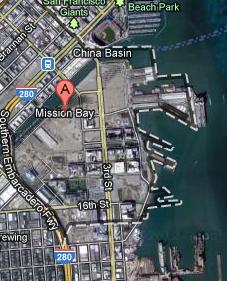
Now that the city planning director is comparing neighborhood activists to war mongers and meanies, it’s worth a moment to look back at how the city wound up with what the Chron is now calling a vibrant success of a medical-tech development at Mission Bay.

That site used to be a Southern Pacific railroad yard, but in the early 1980s, the old robber barons realized that a lot of their property had more value as real estate than as railroads. So SP decided to develop Mission Bay, eventually spinning off Catellus Corp. as the developer. The first plan was a disaster, a mix of highrise office buildings, hotels and a little bit of housing. Then-Mayor Art Agnos got it toned down a little, but the proposal he and Catellus put forward in the late 1980s was still a mess — more office space than housing, nowhere near enough in the way of community amenities, something an old-school builder with no concern for public process might have gotten away with in another city, but it wasn’t going to fly here. Of course, Catellus and the mayor both argued that this was the best deal the city could possibly get; more housing or different uses just wouldn’t pencil out.

Those same darn crazy activists that the planning director hates forced a public vote on the plan — and it was overwhelmingly rejected.The next day, Catellus came back to the table — and offered dramatic improvements in housing and amenities. In the end, UC decided to move into the site, building what I consider a hideously ugly campus with not a single decent piece of architecture — but without giant highrises and with at least some open space and community facilities. There’s actually a chance that this could become a viable neighborhood — thanks not to the developer, the mayor, or city planning, but to meddlesome neighborhood people.

Funny how that works.


Planning director insults neighborhood activists

153

John Rahaim, the director of city planning, is the featured speaker at a SPUR forum Jan. 29, and he’s got a very special title for his talk. It’s called “The Meanies and the War Mongers: Recent planning lessons from SF.” Here’s the description:

Land use planning in San Francisco is sometimes called a blood sport. John Rahaim, planning director, will discuss the last five years of planning in San Francisco during his tenure, and why that phrase is too weak. Rahaim will look at the accomplishments of planning in the city, the impacts from the last decade of neighborhood plans and the lessons from the war that will guide the Planning Department into the next decade.

Holy shit: Sounds to me like this guy, who gets very well compensated off the taxpayers’ dime, has just directly insulted generations of activists who have fought some really dumb development ideas and made this a more livable city. “War mongers?” “Meanies?”Is that the term he uses for people who try to get involved in the planning process? Here’s what he told me:

The purpose of the title was to be provocative.  I find it curious that you would make that assumption.  For now I will say that in my experience in SF, there are people on all sides of the development debates who would fit these descriptions.  Other than that, I invite you to the talk.

Okay, provocative is good, but seriously: He’s sounding as if these aren’t real issues that affect people’s lives, that land-use planning isn’t central to what we are as a city, and that people who don’t just shut up and go along with what he wants are troublemakers. Or as former Sup. Aaron Peskin, who has spent years as a neighborhood activists, notes: “He doesn’t want to admit that the best planning in this city is done by those neighborhood organizations and those activists who
challenge and shape literally every piece of planning that comes out of his office.”

Rahaim is supposed to be the guy who balances the various interest groups and tries to create acceptable solutions. “Whoever he’s referring to, it’s demeaning and unprofessional,” Peskin notes.

You can show up and ask Mr. Rahaim what he was talking about Tuesday, Jan. 29 at 6pm at the SPUR Center, 654 Mission. It’s free for SPUR members and costs $10 for everyone else. Worth every penny of it.


The roots of crime

31

The Chron has figured out how to solve Oakland’s crime problem, in one sentence.

Here it is:

Critics said police don’t address the roots of crime, which can be solved with greater social services and educational opportunities.

That is a thing of beauty, right there.

Reminds me of an old college friend who went and got himself a Ph.D in criminology, and when he was passing through town, we had drinks, and I asked him: What does a doctor of criminology do? His response: We study the causes of crime.

So I requested that he enlighten me with his academic wisdom; what, I said, are the causes of crime? He paused for a moment to gather his thoughts, then said:

“Poverty.”

That’s a lot of book-learning there. And now “critics” say that crime can be addressed by social services and educational opportunities. Remarkable.

An overwhelming majority of the Oakland City Council approved the deal to hire a consulting firm that will bring on William Bratton to help the cops get a handle on the horrible violent crime problem in the city. It’s worth noting, for the record, that Bratton got his fame (and, given his price tag, his apparent fortune) with programs like Stop and Frisk, which is still going on in New York even thought a judge agrees it’s unconstitutional. Oakland isn’t implementing Stop and Frisk, at least not now. but this sort of aggressive policing is Bratton’s M.O., so I don’t think the debate over the proper role of cops in the community is over.

And if you think Stop and Frisk is a dandy way to fight crime, check out this stunning video of what it’s done in New York:

Editor’s notes

3

EDITORIAL Airports are special. There are schools and roads and buildings — and rest stops on the New Jersey Turnpike — named after famous and not-so-famous people, but airports, particularly major international airports, are, in a word, monumental. Tens of millions of people, many of them immigrants, have come through Kennedy Airport in New York, a place named after an inspirational leader who was killed before his time. We’re not so enamored with Reagan National in Washington, but the guy was a hugely influential president of the United States. Lt. Colonel O’Hare was a war hero.

That’s why the idea of naming San Francisco International Airport after Harvey Milk is so wonderful — and entirely appropriate.

There are lots of politicians in the world, and there have been many civic leaders who have done great things in and for San Francisco. But Harvey Milk was different, and special.

Milk was the first openly person gay person elected to public office in a major American city. He was an inspiration to tens of thousands of people, and his speeches, his signature line — “you’ve gotta give them hope — and his role as an LGBT icon made a better life possible for generations of young people who faced, and often still face, oppression, discrimination and fear.

It’s important to remember that, although he only served 11 months in office, Milk changed San Francisco, changed America, and changed the world. His bold actions forced the nation to accept a marginalized community. He represented the best of San Francisco, the essential spirit of rebellion, the demand for justice and the passion for equality that defines this city in the world.

And the struggle he embodied isn’t even close to over: All over the world, LGBT people are beaten, denied basic rights, killed for who they are. And if San Francisco can’t make a giant global statement against that, nobody can.

The renaming of SFO wouldn’t just honor a local political figure. I would make an international statement. The airport is a major West Coast hub, and people from all over the globe pass through its gates. While many of them won’t care who the airport is named for, others will — and an appropriate display in the terminals would educate countless visitors, many from countries and cultures where LGBT people are still not accepted, about the role Milk played in changing society’s attitudes.

We don’t take lightly the naming of civic institutions. There’s too much opportunity for political mischief, for someone like former mayors Willie Brown or Dianne Feinstein — neither of whom changed the city in a positive way or made dramatic statements — to get honored. That’s one reason that the San Francisco Airports Commission has declined to name anything after anyone who is still alive.

Sup. David Campos, who is promoting this idea, has taken the right approach: A decision this serious ought to go before the voters. The supervisors should place his charter amendment on the ballot, and the people of San Francisco should tell the world that the legacy of Harvey Milk is alive — and out there, our front, for everyone to see.

The battle of Brotherhood Way

24

Brotherhood Way is a creature of another era. Tucked between the San Francisco Golf Club and ParkMerced, it was long known as Stanley Way. But in 1958, under Mayor George Christopher, the city, which owned all of the land on the south side of the street, turned that property over to a long list of religious institutions and renamed the street to reflect its role as a place for houses of worship. It’s now home to six churches or synagogues and nine religious schools. It has its own (religious) neighborhood association.

And this quiet little corner of the city has been the scene of a pitched battle over a plan to build 182 housing units on an empty patch of land on the north side of the street.

Opponents of the project say the area was set aside for educational and religious uses, not housing — and they argue that the expansion of ParkMerced will add too much congestion to the area. Supporters say the west side of town needs to acept more housing and more density.

It’s gotten ugly: At one point, the Archbishop himself ordered the pastor of St. Thomas More Catholic Church to quit agitating against the development. Sean Elsbernd, who represented the district for eight years, infuriated neighbors when he supported the project, and later apologized for his insensitivity to their concerns.

And seven years after the Planning Commission and the supervisors gave the project a green light, it still hasn’t broken ground.
Now the developers are ready to go — and the churches, aided by retired Judge Quentin Kopp, are trying once again to shut it down.

Kopp’s been arguing for some time now that the project needs to go back for a new permit because too much time has passed and nothing has happened. But he’s got another argument, too, and he brought it to the Board of Appeals Jan. 9. See, the original deal had a problem with transit access, since there isn’t enough Muni capacity along Brotherhood to handle 300 or so new residents. So the developer agreed to build two pedestrian walkways from the project up to Font Blvd. in Park Merced. But according to Kopp’s appeal, ParkMerced management never agreed to the easements that would be necessary to build a path through its property.

Instead, in 2008, Zoning Administrator Larry Badiner unilaterally changed the requirement, allowing for one footpath to the edge of Park Merced — with some vague agreement that later there might be an extension to the Muni stop. That, Kopp argues, should have triggered a new Conditional Use application and a new hearing. Oh, and in the meantime, ParkMerced has just moved to greatly expand the size of its complex, so maybe that should be considered, too.

The Board of Appeals rejected Kopp’s arguments, but he’s petitioning for a rehearing, in part because the board chair wasn’t present for meeting. Kopp argues that this is a quasi-judicial board — “and you don’t go before the Supreme Court with only eight of the nine members present.” Under city rules, though, four out of five is a quorum and able to hear the matter.

Kopp has another argument, too — one that’s unusual, perhaps unique: He claims none of the board members actually read his original appeal brief.

Kopp, see, asked during the hearing if all of the members had read the papers he submitted, and none of them responded affirmatively. “It is appearent and inferable that no members of the short-handed Board of Appeals had read Appelants’ brief before the hearing, or at all,” the motion for rehearing states. “The manifest failure of the four members present to real Appellants’ carefully-prepared brief constitute extraordinary circumstances and injustice.”

I’ve been able to reach two of the board members, Frank Fung and Darryl Honda, and both insist they read the brief. “I read every case in its entirely,” Fung said, “and so does everyone on this panel.” Honda, who is new to the board, also said he read the documents. “I bust out the highlighter pen and go through all of the briefs in every case,” he said.

So why didn’t they answer Kopp’s question? Well, Fung says, it took them all by surprise: “I don’t think any one has every asked that before.”

I’ll let you know if the petition for rehearing is accepted.

The Brit royals send their kids to war

24

I’m not a big supporter of our wars in Iraq and Afghanistan, and I’ve learned not to glorify military service, which often ends very badly, but I have to say: It’s always interested me that when Britain is at war, the kids of the royal family are sent to fight, too. It’s an ancient tradition, I guess, but it still goes on — and it’s very different from the United States. Here, people with names like Bush don’t go to Vietnam; they get a cush job with the National Guard. Or if their name is Cheney they’re just too busy. Any chance at all the the daughters of the president who sent thousands of others to die in the desert would be called to active duty? Nah; they’re out partying.

You think maybe presidents and members of Congress would feel a little differently about these pointless military engagements if their own kids were flying the planes?

The inauguration and the economic divide

112

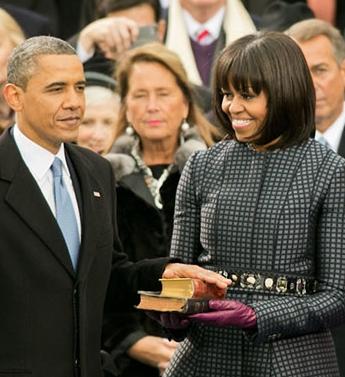
Second inaugration speeches are hard; you have to be political without sounding partisan, inspiring without being divisive — and promise change and progress even if you haven’t accomplished what you wanted in the first term. The Obama address surprised me: He went left, making clear that he wants economic and social equality to be his final legacy. It’s getting rave reviews in the lib-blogosphere, where it’s been described as the speech liberals have been begging him to give for years. You can’t argue with the content — he mentions gay rights, global climate change, equal pay, protecting social security, economic inequality, the need for collective effort … he even talks about reforming the tax code.

So now comes the hard part: The struggle for economic justice has to go beyond a compromise plan that limits higher tax rates to people earning more than $400,000 a year.

In fact, the best thing I read this weekend was a NY Times piece by Nobel-Prize-winning economist Joseph Stiglitz, who argues forcefully that continued economic inequality is prolonging the recession. It’s also destroying the nation’s future:

Our skyrocketing inequality — so contrary to our meritocratic ideal of America as a place where anyone with hard work and talent can “make it” — means that those who are born to parents of limited means are likely never to live up to their potential. Children in other rich countries like Canada, France, Germany and Sweden have a better chance of doing better than their parents did than American kids have. More than a fifth of our children live in poverty — the second worst of all the advanced economies, putting us behind countries like Bulgaria, Latvia and Greece. Our society is squandering its most valuable resource: our young.

Stiglitz says what few in Washington want to admit: We can’t get the economy going again without rebuilding the middle class, and we can’t do that without higher taxes on the rich and a lot more public investment in education. Oh, and all this talk of how it’s out of our control is bullshit:

There are all kinds of excuses for inequality. Some say it’s beyond our control, pointing to market forces like globalization, trade liberalization, the technological revolution, the “rise of the rest.” Others assert that doing anything about it would make us all worse off, by stifling our already sputtering economic engine. These are self-serving, ignorant falsehoods. Market forces don’t exist in a vacuum — we shape them. Other countries, like fast-growing Brazil, have shaped them in ways that have lowered inequality while creating more opportunity and higher growth. Countries far poorer than ours have decided that all young people should have access to food, education and health care so they can fulfill their aspirations.

Makes me think about some of what I hear out of San Francisco City Hall. Oh, we can’t do anything about economic inequality; that’s a national issue. Or maybe it’s a state issue. I bet there’s not an elected official in town today who woudn’t proclaim complete agreement with everything Obama just said — and there are very few of them who are trying to bring that message back home.

In San Francisco, we give tax breaks for businesses that create high-end jobs that drive poor people out of town. We happily seek development without considering the impact it will have on existing vulnerable populations. We even struggle over free Muni for low-income youth. We do nothing — nothing — to reclaim wealth from the 1 percent and put it into local housing, public education, and job-training that could make a dent in our local economic inequality.

Mr. Mayor: Are you even paying attention?