Tech

Lee must pay for his promises

19

EDITORIAL

Mayor Ed Lee has made a lot of promises to San Franciscans, but he has been unwilling to pay for them with money from the city or his wealthy backers, transforming these statements in hollow political platitudes — or, less charitably, calculated lies meant to mask the true state of the city.

Lee pledged to build 30,000 units of new housing — a third of it affordable to those with moderate incomes and below — by 2020. By that same year, Lee set the goal of increasing bicycling to 20 percent of all vehicle trips in the City. Lee also directed city departments to develop strategies for reducing pedestrian deaths by 50 percent by 2021. And so Muni’s aging fleet can keep up with population growth, Lee’s SF2030 Transportation Task Force said the transportation system needs a $10 billion capital investment over the next 15 years, a target Lee endorsed.

These were all admirable goals, and in each case, city agencies studied the problems and developed detailed strategies for getting there. And in each case, Mayor Lee chose to fund just small fractions of what the city would need to make his promises come true.

Actually, the housing problem is still being studied, but nobody thinks this goal will be met — as even the pro-development San Francisco Business Times said in a recent editorial — particularly given how the Mayor’s Office structured the business tax reform and Affordable Housing Fund ballot measures in 2012, with giveaways to developers and favored economic sectors, such as tech.

Lee’s WalkFirst program would need $240 million to meet his modest goals — far more to actually realize the VisionZero goal of eliminating all pedestrian deaths, which Lee said he supports — and the Mayor’s Office has only pledged $17 million in funding. The cycling goals would take more than $500 million, not the $30 million currently pledged. Even with approval of the two transportation ballot measure proposed for this fall, and those planned for future years, that only gets the city about a third of the way to meeting San Francisco’s future transportation needs.

Meanwhile, a downtown SF congestion pricing charge that has been studied using federal funds — which would reduce traffic and pedestrian deaths while raising $80 million annually — is being ignored by Lee, as is the once-promising idea of downtown transit assessment districts. Lee is refusing to seek the city’s share of the tremendous wealth now be generated in this city.

As a result, Lee is making promises that he knows he won’t deliver on. And last week, in the five-year budget projection his office is required to issue, we all saw the results of Lee’s economic policies: growing budget deficits for this booming city. Next year’s $67 million deficit is projected to balloon to $340 million by 2017-18. Mr. Mayor, “getting things done” requires more than just words, it requires the political courage to make your promises comes true.

Watchdogs in action

1

news@sfbg.com

The Society of Professional Journalists, Northern California, will honor the following James Madison Freedom of Information Award winners during a March 20 banquet. Details on their work and the dinner are available at www.spjnorcal.org.


VOICE FOR PRISONERS

Throughout his 29-year journalism career, Peter Sussman, a retired San Francisco Chronicle editor, advocated for greater media access to prisoners and fought to uphold the rights of inmate journalists. In the 1980s, federal prison officials cracked down on inmate Dannie “Red Hog” Martin for writing to Sussman to share what life was like behind bars.

The retaliation spurred an epic battle over free speech within prison walls, and Sussman responded by publishing Martin’s regular writings about prison life, and later co-authoring a book with him titled Committing Journalism: The Prison Writings of Red Hog.

In the mid-’90s, Sussman fought state prison officials’ restrictions on media interviews with prisoners. He also helped write and sponsor statewide legislation to overturn limits restricting media access to prisons. Sussman will receive the Norwin S. Yoffie Award for Career Achievement.


GUIDING ASPIRING JOURNALISTS

Beverly Kees Educator Award winner Rob Gunnison is a former instructor and administrator at UC Berkeley’s Graduate School of Journalism, where he arrived after spending 15 years covering government and politics in Sacramento for the San Francisco Chronicle.

As a longtime instructor of a course called “Reporting and Writing the News,” Gunnison has continued to educate hungry young journalists on how to seek public records and carry out investigative reporting projects.


EXPOSING ATROCITIES

Peter Buxton will be honored with the FOI Whistleblower/Source Award. In 1972, Buxton played a key role in alerting the press to the ongoing operation of the Tuskegee syphilis experiments, where African American sharecroppers were intentionally exposed to the disease, without treatment or their knowledge, so researchers could study its progression.

By the time the story was related to the press, 28 men had died of syphilis, and 100 others had died of related complications. That leak helped spur Congressional hearings on the practice beginning in 1973, ultimately spurring a complete overhaul of federal regulations. A class-action lawsuit was filed, resulting in a $10 million settlement.


EXPOSING BART’S SCHEME

Reporter Tom Vacar of KTVU pushed for records determining whether replacement drivers that BART was training to help break last year’s labor strike were qualified to safely operate the trains, eventually finding that they had been simply rubber-stamped by the California Public Utilities Commission.

Those findings proved gravely significant on Oct. 21 when two workers on the tracks were killed by a BART train operated at the time by an uncertified trainee, an accident still being investigated by the National Transportation Safety Board.


STANDING FOR SUNSHINE

California Sen. Leland Yee is once again being honored by SPJ Norcal for his work on sunshine issues, including last year criticizing Gov. Jerry Brown and other fellow Democrats who had sought to weaken the California Public Records Act, instead seeking to strengthen the ability of the courts to enforce the law.


FIGHTING THE CITY

Freelance journalist Richard Knee’s Distinguished Service Award caps a 12-year fight for open government in a city eager to stash its skeletons securely in closets.

Knee is a longtime member of the San Francisco’s Sunshine Ordinance Task Force, created in 1994 to safeguard the city’s Sunshine Ordinance, and he has fought to maintain its power and relevance.

Over the years, many city agencies have fought against the task force, from the City Attorney’s Office to a group of four supervisors who claimed the task force was wasting public money, a struggle that is still ongoing.


BADGES AND ACCOUNTABILITY

The Lake County News and its co-founders Elizabeth Larson and John Jensen will received a News Media Award for a protracted legal battle with local law enforcement for a simple journalistic right: interview access.

The scrappy local paper detailed allegations that Lake County Sheriff Frank Rivero and his deputies wrongfully detained suspects on trumped up charges, made threats, conducted warrantless home searches, and violated suspects’ civil rights.

Rivero’s office responded by blacklisting the paper from interviews, a fundamental building block of news coverage. The paper sued the Lake County Sheriff’s Department, eventually winning its battle to obtain the right to keep asking the sheriff the tough questions.


PROTECTING THEIR SOURCES

When Saratoga High School student Audrie Potts committed suicide in September 2012, her parents alleged she was pushed over the edge by cyber bullying over photos of Potts at a party. High school journalists Samuel Liu, Sabrina Chen, and Cristina Curcelli of The Saratoga Falcon scooped the sensational national media outlets that descended on the story, but they were subpoenaed by the Potts family to reveal their sources.

They refused, citing California’s shield law in a successful legal defense that strengthened the rights of student journalists. As Liu said, “We are not willing to destroy our journalistic integrity by giving up our confidential sources, we got this information on the condition of anonymity, from people that trusted us.”


BUYING FRIENDS AT CITY HALL

Bay Guardian News Editor Rebecca Bowe and Reporter Joe Fitzgerald Rodriguez are being honored with a Journalist Award for “Friends in the Shadows,” (10/8/13) our investigation of the shady ways that developers and other powerful players buy influence at City Hall.

“Their detailed and thorough account explored a trail of money through myriad city agencies and departments,” the awards committee wrote, noting how the paper “used public records, interviews and independent research to probe how developers, corporations and city contractors use indirect gifts to city agencies to buy influence.”


NEWS FROM INSIDE

For accomplishing “extraordinary journalism under extraordinary circumstances,” The San Quentin News is being honored with a News Media Award. It is California’s only inmate-produced newspaper, and one of the few in existence worldwide.

The San Quentin News publishes about 20 pages monthly, and has a press run of 11,500 for inmates, correctional officers, staff, and community members. It’s distributed to 17 other prisons throughout California.

Under the scrutiny of prison authorities, the inmate journalists and volunteers wound up covering a historic prison hunger strike, the overcrowding of the prison population, and the denial of compassionate release for a dying inmate, an octogenarian with a terminal illness.


EXPOSING TORTURERS

The Western Hemisphere Institute for Security Cooperation (WHINSEC), better known as the name it held prior to 2001, the School of the Americas, is a combat training school for Latin American soldiers and commanders, with many graduates going on to commit human rights atrocities.

School of the Americas Watch founder Judith Litesky, a former nun, and Theresa Cameranesi, filed a lawsuit in federal court in San Francisco seeking the list of those who had gone though courses that include counter insurgency techniques, sniper training, psychological warfare, military intelligence and interrogation tactics.

Last year, the pair won a significant victory when a federal judge in Oakland ruled that the government could not cite national security reasons in withholding the names. Although the case is ongoing, they are being honored with a Citizen Award.


FIGHTING CORPORATE SNOOPS

In 2008, journalists from The New York Times and BusinessWeek looked to Terry Gross of Gross Belsky Alonso for legal counsel in a case against Hewlett-Packard. In a staggering display of corporate snooping, the tech giant had illegally obtained private telephone records of the journalists, in an attempt to gain access to the identities of their sources.

Gross has also defended journalists against police in cases regarding media access for breaking-news events, and he’s helped to expand the rights of online journalists. This year, Gross will receive the FOI Legal Counsel Award.


BAD BRIDGE, GOOD JOURNALIST

Sacramento Bee Senior Investigative Reporter Charles Piller will be honored with a Journalist Award for exposing corrosion problems in the long delayed, cost-plagued eastern span of the San Francisco-Oakland Bay Bridge. His breaking story and subsequent follow-ups revealed Caltrans’ inadequate corrosion testing, as well as inadequate responses to bridge inspectors who for more than two years warned Caltrans of water leaks and corrosion — only to go unheeded.


SUNSHINE COLUMNIST

Editorial and Commentary Award winner Daniel Borenstein, who writes for the Bay Area News Group, issued a strong response to a legislative attack on California’s Public Records Act last year, ultimately helping to defeat proposed changes that would have gutted the law.

“Without the state Public Records Act, we would never know about the Oakley City Manager’s $366,500 taxpayer-funded mortgage scheme, the Washington Township hospital CEO’s $800,000-plus annual compensation or the retired San Ramon Valley fire chief’s $310,000 yearly pension,” Borenstein wrote in one of his columns. “We would be ignorant of broken bolts on the Bay Bridge, the cover-up of Moraga teachers sexually abusing students, a BART train operator who collected salary and benefits totaling $193,407, the former BART general manager who received $420,000 the year after she was fired or the Port of Oakland executives who spent $4,500 one night at a Texas strip club.”

Housing round-up: LGBT tenants, a singing protest, and a very sad mural

At today’s (Tue/11) Board of Supervisors meeting, Sup. David Campos is introducing legislation to encourage large-scale developers to protect the housing rights of the LGBT community.

Same-sex couples nationwide are more likely to experience discrimination in their search for senior housing, a study by the Washington, D.C. based Equal Rights Center found.

To investigate, testers posed as gay or straight couples with otherwise nearly identical credentials, then submitted inquiries on senior housing in 10 different states. They discovered that in 96 out of 200 tests, those posing as lesbian, gay or bisexual residents experienced at least one type of adverse, differential treatment.

Meanwhile, according to the National Center for Transgender Equality, one in five transgender U.S. residents has been refused a home or apartment, and more than one in ten has been evicted, because of their gender identity.

Federal law does not expressly prohibit discrimination based on sexual orientation or gender identity. California law does, as do laws in 19 other states. Given these gaps in legal protection, real-estate providers can adopt their own policies to prohibit LGBT discrimination.

Campos’ proposal would require large-scale developers who wish to build in San Francisco to prove their commitment to equal housing opportunities.

“We want to know whether a developer hoping to build in San Francisco is protecting LGBT housing rights when they own or manage housing in states where legal protections don’t exist,” Campos explained. “By collecting this information, we can highlight best practices and urge those who do not have these policies to do the right thing.”

Under the legislation, developers would indicate whether they have national policies prohibiting LGBT discrimination. The Human Rights Commission would compile those policies and present it annually to the Board of Supervisors.

Elsewhere on the housing front, POOR Magazine founder Lisa Gray-Garcia (aka “Tiny”) led a group of anti-eviction activists into City Hall this morning, where they broke into song to call attention to the eviction of a family from a public-housing unit in the Fillmore neighborhood. They linked the eviction with a broader trend of African American out-migration from San Francisco, and sang spirituals.

Gray-Garcia reported that the group, which she estimates at roughly 30 people, encountered resistance from the Sheriff’s deputies who provide security in City Hall. “They said we were an unlawful assembly because we were singing,” she said. So the protesters proceeded upstairs, whispering, to stand outside Mayor Ed Lee’s office. Then they broke into song again, she said.

“We’re talking about a family about to be evicted tomorrow, that’s how serious this is,” Gray-Garcia told us. She said she’d spoken to someone from the mayor’s office, Carl Nicita, who “to his credit, he listened to us and he said ‘I’m going to tell the mayor.’” (We’re working on finding out more about the eviction and how the city will respond.) 

As a final housing-related tidbit, head over to the Mission to check out the new Clarion Alley “Wall of Shame” mural, featuring a list of what the artists perceive to be the root forces of gentrification (Both Google buses and corporate giveaways to tech companies made the list).

Inscribed on some tombstones near the bottom: “So long San Francisco, As We Knew It. (Historic Counter-Culture & All.)”

On the flip side, the artists also included a list of solutions.

Bryan Augustus contributed to this report.

Wired measures tech bus trips in a day

34

The vaunted Google Bus pilot program is now in legal limbo as local activists appeal the deal to regulate the shiny behomoths, on environmental grounds. As we wait and see what the next step will be, one technology journalist decided to figure out for himself what the SFMTA says the pilot program aims to do: track the number of tech buses running around San Francisco.

Well, to be fair, Kevin Poulsen, investigations editor at Wired magazine, only tracked the buses flying by his home. But the process doesn’t seem too tough to replicate.

As he writes in his Wired post: 

“Last week, it occurred to me that I might start monitoring the local Wi-Fi environment to determine how often the Apple Bus really comes by. My wife guessed 10 times a day. I’d have said 20.”

So essentially, he used the Apple bus’ Wi-Fi, provided for their employees, to track movements of the bus. He didn’t make any bets on it, but if he had, it seems his wife would’ve lost. 

“After a week of reverse-wardriving, it appears the Apple Bus passes my house an average of 36 times a day, and is uncannily punctual, especially in the a.m., when the first bus reliably pops up on my Wi-Fi radar between 6:23:33 and 6:23:56 every morning.

The second bus passes four or five minutes later, the third 25-minutes after that, another at 6:58, give or take a minute. By 10 a.m. as many as 15 more Apple buses have passed. After that they become infrequent, and die out entirely a few minutes after 2:00 p.m., before they return in force at 5:00 p.m. — presumably taking Apple workers home. The last bus registers at about 10:15 at night.”

macadresses

The wifi trail shows how many times particular tech buses drove by this Wired journalist’s house.

Why care about tracking them in the first place? It’s about the impact of livability in the surrounding area, an idea that so far hasn’t been factored in to the $1 per stop, per day argument made by Mayor Ed Lee and the city.  Poulsen writes:

These buses are huge, intimidating, Greyhound-sized affairs, many of them double-deckers, that feel outsized on a relatively quiet street of single-family homes. I haven’t stockpiled much umbrage over them, but some of my neighbors who’ve lived here longer hate the buses. There’s something disconcerting about having your street turn into a major artery in the transportation infrastructure of a company 45 miles away, without so much as a mailer (“Hi! We’re Apple. We’ll be using your street for a while.”).

When the outrage over the $1 per stop, per day number spiked recently, a Google spokesperson said in a release, “San Francisco residents are rightly frustrated that we don’t pay more to use city bus stops. So we’ll continue to work with The City on these fees, and in the meantime will fund Muni passes for low-income students for the next two years.”

Until the SFMTA figures out ways to mitigate the impact of these buses, let’s hope more tech-inclined people track their impacts on the city. You can see the original Wired story here

Message to techies: Identify with your community, not just your industry

75

I appreciated the opportunity to address a couple hundred Yelp community managers from around the world today at the company’s San Francisco headquarters, and to deliver a message that those in the tech industry need to hear: “Be a part of your community, not just your company and industry.”

That idea obviously has a special resonance here in San Francisco, where the tensions between well-paid techies and activists concerned about increasing evictions, gentrification, and displacement have reached a fevered pitch. But it was a message that several people came up to me after the panel to say they appreciated, one that their industry would do well to heed.

Workers of all kinds have more in common with one another than any of us do with our corporate overlords and richest 1 percent of society. The young people at Yelp and other tech companies should want their cities to remain interesting, affordable, and diverse places. Ultimately, we’re all in this together, and we need to remember that cities are communities first, not simply places from which to extract wealth.

As we report in our latest issue, there have been nascent efforts to bridge the gap between tech workers and the rest of us, and I truly hope that some new leaders rise up in the tech world — workers, not just bosses and investors using manipulative media strategies — to challenge corporate power and the self-interest of venture capitalists and other tech titans. After all, the greatest promise of tech tools have always been their empowering, informing, and democratizing potential, not just their crassly commercial aspects.  

That said, my comments today were a small part of the discussion, in which I was the print representative on a media panel that included television (the hilarious Liam Mayclem, host of KPIX-TV’s “ Eye on the Bay”), radio (Joel Riddell, host of AM910’s “Dining Around with Joe Riddell”), and online (SFist Editor Brock Keeling).

We offered tips and answered questions about how best to pitch story ideas and get media coverage for their company and clients — and I was happy to offer my time and advice to fellow members of my community. 

Hacker pranks San Francisco FBI using Google Maps exploit

11

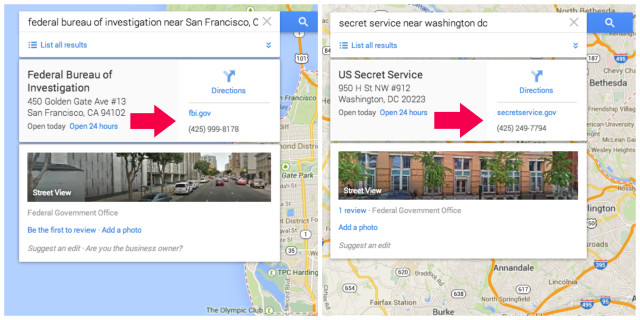
An ex-Marine turned hacker used his powers for good last week, exploiting a flaw in Google Maps to tap into phone calls from the FBI’s San Francisco field office and the Secret Service. 

The news of hacker Bryan Seely’s exploit was broken by local Seattle broadcast news with a more detailed follow up by tech blog Valleywag, which obtained phone calls to the FBI recorded by Seely. The exploit allowed the former Microsoft employee to modify the phone numbers for businesses listed on Google Maps. He changed the listed phone numbers to fake ones, which would intercept and record the call before being rerouted to the FBI, allowing him to record everything said between the two parties.


Seely told Valleywag:

Who is gonna think twice about what Google publishes on their maps? Everyone trusts Google implicitly and it’s completely unwarranted and it’s completely unsafe. I could make a duplicate of the White House and take every inbound phone call from the White House. I could do it for every Senator, every Congressman, every mayor, every governor—every Democratic, every Republican candidate. Every office.

Seely tried time and again to warn Google, he told Valleywag, but when they didn’t listen he decided to show them just how vulnerable this system was. 

Seely’s recording of an FBI phone call posted on SoundCloud airs the automated message system the San Francisco FBI plays. Afterwards, we’re able to listen in to the caller’s every word.

“Yes ma’am, I need to ask a question about an email I received, it’s concerning that y’all, the Federal Bureau of Investigations, claim I won a lottery through my email through another country,” the caller says to the FBI. He’s asking about a common Internet scam, phishing, and the second call Seely recorded from the Secret Service was just as innocent. 

Listen to the FBI call Seely recorded in the player above.

But not every call to the Secret Service or FBI is so innocuous. After the Secret Service took Seely into custody for his actions, they apparently called him a “hero.” 

The San Francisco FBI bureau’s spokesperson, Peter Lee, told the Guardian that he wasn’t aware of the scam, and could neither confirm or deny it. Sounds like super secret spy stuff to us. We directed him to the link, but he couldn’t confirm or deny that we sent him the link, either.

The national FBI spokesperson wasn’t aware of the issue, or at least, said she wasn’t. But the response from Google seems to be more telling — it contacted Seely to find a way around the exploits. But he didn’t appreciate their “attitude,” he told Valleywag.

In the meantime, Google’s map vulnerabilities apparently are lures for “entrepreneurs” who redirect calls from one small businesses to another, garnering millions in profits for the digital scammers in what amount to extortion fees, a tech consultant told Valleywag. 

While Google works on a fix, if you have to call the San Francisco bureau of the FBI, try looking up the number using the Yellow Pages. 

Read more at Valleywag, here

Google Glass Explorer opens up on bar fight, privacy

Last week, I interviewed a Google Glass “Explorer” for an article about Glass and privacy. It wasn’t Sarah Slocum.

“Explorer” is a Google term for people enrolled in a program to beta-test Glass, a wearable computer that can surf the Internet, livestream, geo-locate, and record through a computerized prism affixed to a set of eyeglasses.

There are at least 10,000 Explorers currently giving the $1,500 prototypes a test run, and more than 27,000 participating in a Google+ community about it. The Silicon Valley tech giant views its Explorers as inhabiting a “living laboratory,” and is actively seeking feedback on the gadgets’ use and functionality.

The Explorer I spoke with is Matt Hunt, and his recent removal from Oakland bar Telegraph for wearing Glass is chronicled in detail in this Medium story by journalist Susie Cagle. The writer discloses that her partner, Billy Agan, told Hunt to remove the Glass before he was kicked out.

Not yet available for retail, Glass has proven to be a lightning rod – particularly in bars, where people are more apt to feel that it is invasive. Some bar owners are concluding that the best approach is to ban Glass altogether, to avoid headaches. 

Unlike most new technology, this particular device has quickly come to be associated with class tension in the Bay Area, a region that is being radically altered by an economic shift fueled by an influx of tech workers. Glass has also caused people to fear surreptitious surveillance in an era when new revelations about secretive government spying programs are surfacing with every passing week. 

There are conflicting accounts of what unfolded when Hunt was booted from Telegraph after his confrontation with Agan. Hunt says he refused to remove the Glass because he didn’t think Agan had the authority to tell him to stop wearing it; bar owner John Mardikian says Hunt responded by defaming the bar on social media, which Hunt refutes (Hunt had previously been helping Mardikian with social media and IT work). Agan wasn’t available for comment. All told, the conflict appears to have produced two major outcomes: hurt feelings all around, and a ban on Glass at Telegraph.

“I don’t want it here, because it’s anti-community,” said Mardikian, who imposed the ban. “I want people to feel comfortable when they are here.”

Other bars have proactively banned glass too.

Conflict aside, Hunt did share a perspective on wearing Glass that might interest anyone who has wondered about it – whether from a standpoint of curiosity or suspicion. Because while some people are viscerally repelled by the gadget and may assume that it is recording (it might be, but you can tell by checking to see if the user’s eye is lit up), there’s also a low level of understanding about what the thing actually does.

Hunt told us he was excited about Glass before it came out, and saved up the $1,500 required to get it. “I’ve always been a techie,” he said. “I’m always about smart everything.” 

To wear Glass is to be an attention a magnet, he said. “There are some people who approach me about it who are very calm, and they are curious, and they ask me about it.”

But as evidenced by the drama that unfolded at Telegraph, wearing Glass can stir up trouble when people feel that their personal boundaries are being violated. “Something I hear all the time is, there’s a camera on your face, and therefore it’s in my face.” But he said that since he rarely ever uses the camera, that fear is unfounded – at least as it pertains to people who are encountering him wearing Glass.

Constant recording and even live streaming through Glass is technically possible. It’s also problematic with the current model, due to battery drain.

“If you were out and about, it would have to be tethered to your phone’s Internet connection,” he explained. “It uses a lot of data.” When content is captured through Glass, it is automatically backed up to the cloud, meaning it’s copied onto a server somewhere. That means people who are photographed can’t control what happens to their image, but it doesn’t mean it will be viewed publically or by anyone at all.

So, if he’s not constantly recording, what is Hunt doing when he’s looking at that little computerized prism?

As with a smartphone, he’ll read the news, and check email. There are other functions. “You can have things translated,” he said, like a menu or sign in a foreign language. “Based on your location, it will tell you what’s around you,” such as attractions. But a lot of times it just sits on his face, not doing anything in particular. “Just because you’re wearing it, doesn’t mean you’re using it.”

People who wear Glass can also take advantage of some bizarre “Glassware” apps, like this one, which can feed users hints on people they are encountering in real time.

Taking a picture with Glass involves either tapping the side of the device, or speaking “take a picture” out loud, Hunt explained. There is also an optional feature of winking to take a snapshot.

That may sound like a smooth spy maneuver, but Hunt said it’s actually rather awkward. “I don’t like it,” he said, “because you have to wink like ten times to make it work. It’s very dramatic winking.” Wearing a computer on your face and winking dramatically? Talk about socially awkward.

As for the privacy issue, Hunt said he thought bar owners had a right to ban Glass but believed it was short-sighted, because he thinks Glass will catch on. “Wearable technology is the technology of the future,” he told us with confidence. “What will you do when everyone is wearing it?”

And ironically given what happened at Telegraph, Hunt insisted during our phone interview that Glass users should not wear the device in places where it causes others to feel uncomfortable.

“I want privacy as much as you do,” he said. “And I feel terrible sometimes that people think the NSA is watching them through my eyes.”

Jason “Shake” Anderson is Oakland’s ‘Candidate X’

116

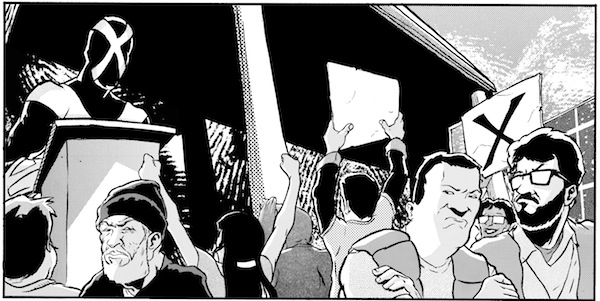
In our Jan. 1 issue, the Bay Guardian spun the tale of Candidate X, a fictional progressive mayoral candidate aiming to save San Francisco’s wonderfully weird soul using people power. The hope? To inspire a candidate to run in the City’s election in 2015 with strong progressive bona fides, and the values that inspired a nation during the rise of the populist Occupy movement.

Now a real life Candidate X has surfaced, but not in San Francisco — this X is challenging Jean Quan for her seat as Oakland’s mayor, using our Candidate X story to define, elevate, and amplify his candidacy. 

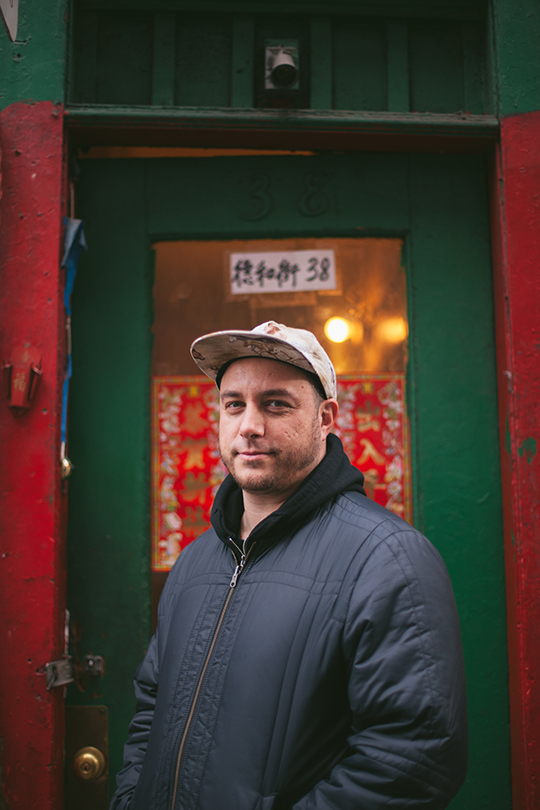
Meet Jason “Shake” Anderson, 38, a former Occupy Oakland spokesperson, veteran, and now Green party candidate for the Oakland mayor’s race. He hopes to take the lessons from Occupy to help reinvigorate the city he calls home. 

“It doesn’t get much news, but Occupy Oakland dropped crime in the city in that moment. It’s because people had places to sleep and places to eat. Those things drop crime,” he told the Guardian. “I’m not saying we camp again, but we need to find ways to do things like that. We have empty buildings, how about we give organizations who feed people on a daily basis a building that wasn’t being used to begin with?”

Anderson is an African American man, and although he feels black Oakland needs representation, he’s about bridging divides: “My attitude is we take care of our people first; not just black or brown people, but people.”

Thinking with people power is Anderson’s modus operandi. He noted that the Port of Oakland was severely disrupted by an Occupy takeover, showing the people have teeth. He doesn’t want to just fight people in power, but work hand in hand with them.

“I believe we can work with and not be separate from the power structure, and even the playing field,” he said. “A lot of people are mad at rich people, but I’m angry at disparate wealth. People are poorer and poorer, and they feel likes there’s no change in their course.”

Jason “Shake” Anderson talks music with “The Black Hour.”

That focus on building bridges and novel ideas to tackle everyday problems is what drew Anderson to our Candidate X feature back in January. He co-opted the imagery and message, distributing “Who is Candidate X?” flyers around San Francisco and Oakland. The front side features art from our Candidate X story, by the talented Sean Morgan, and the back features a brief description of Anderson’s candidacy as well as a QR code that links to a donation using Bitcoin. 


You see, Anderson is a bit of a tech head, with a belief that eventually Bitcoin will be one way to free people’s money from banks that don’t look out for the interest of people. And much like our fictional Candidate X, he thinks the tech movement and activist movements have much in common.

“Candidate X comes from the concept of the 99 percent, the leaderless movement of Occupy,” Anderson said. “This is not about me, I’m just a guy. But I’m supposed to represent you.”

candidatex4

Year of the Workhorse

57

Photos by Erin Conger

arts@sfbg.com

Patrick Brown, sound engineer and owner of the Mission’s Different Fur Studios, is a busy guy — both literally a man about town, as well as on the internets. I’ve started calling him the Santa Claus of social medias — always watchin’ his friends’ web behaviors, good, bad, whatever. He’s consistently first to like posts and favorite tweets, while simultaneously pulling off epic shifts in the studio.

But despite the screen-mediated chatter we had recently traded, I hadn’t actually seen the guy in months. I wanted to interview him: I hoped for secrets, opinions about the SF music biz, and other pertinent wizardry. With this in mind, I got an insider tip from his girlfriend: the promise of dim sum could usually lure him out of the studio.

Our “date” landed on Superbowl Sunday, and we happily avoided sports fans by venturing to Chinatown. Beneath red lanterns and pouring rain, we pulled up barstools at the Buddha Lounge and ordered Lucky beers, listening to “PYT” on the jukebox and watching a regular sway his hips in the doorway.

“Is that some kind of fat joke?” he asked, when I ‘fessed up to the social-media Santa nickname, as he nibbled on the bartender’s gift of microwave popcorn. It was Chinese New Year; a celebratory firecracker screeched in the street.

“I regularly spend 12 hours a day in a room. I can’t be out in the world, but I still want to exchange information out there,” he explained. Social media is his way of showing support while buried beneath work, he said. He links people to projects, and projects to people, patting the community on the back with likes and re-tweets.

In the seven years that he’s owned The Fur — he bought it from the previous owners in 2008, just four years after starting as an intern — it’s become increasingly important for him to extend his love of the music scene beyond the studio. This means showing face at venues, promoting bands, and partnering with brands that share like-minded intent.

“It’s important for people here to be building things versus bashing,” he says, noting the city’s current debate about tech and how it’s affecting the SF music scene. (Brown recently spoke to the issue while seated on a panel of music industry folks at The Chapel, seeming relatively unfazed by the complaints and quandaries.)

“This is all awfully familiar,” he says, recalling his experiences throughout the first dot-com boom — when, much like the current, monetarily-fueled tension, swarms of musicians and sound engineers left for the promised lands of LA and New York. The music biz ached with abandonment.

While things today may appear similar, he insists they’re not the same.

“The culture of San Francisco has changed, but it doesn’t mean the music business is suffering. It may mean musicians are suffering,” he says, adding that this city isn’t particularly fair to a lot of people and industries. “Sure, musicians should be able to make a living, but not everyone is gonna make it. It’s no different with sound engineers. Do you know how many interns I’ve fired? It’s really competitive out there.”

When Brown himself began as an intern at Different Fur in 2004, the SF scene was still recouping from tech deflation. Business was dry, and Brown saw opportunity in the quiet: space to learn, fuck up, and grow. It worked. He took over as studio manager three years later, and then in 2008 he bought the whole damn rig.

“I decided to stay and make my own shit,” he says. “And now I can do whatever I want. I know it sounds cliché, but it’s true.” At the time of our interview, the studio’s calendar was booked through May, sometimes double-booked. Does The Fur hog too much of his time? He scoffs.

“I didn’t pick a career where I would make a million dollars and I didn’t pick a 9-to-5,” he says. “I work long hours for crazy people — musicians — and in the process, I’ve become one of those crazy people.”

Brown’s career path followed a nomadic, diverse education: he studied architecture in Paris, English and psychology in New York, and advertising and film in SF. He repeatedly found himself failing, bored, and planning his escape to the next shiny curriculum.

By the time art school had begun to lose its appeal, he’d begun recording a few low-key recording projects with musician friends. The needle dropped: He did a year at SF State for Music Business, following it up with two years at Ex’pression College. He was hooked.

“People always ask me if listening to the same three-minute track for 12 hours on repeat drives me nuts,” he says, shaking his head, and takes a sip of round two: a pink Mai Tai. “I love it. It was my cue — that’s how I knew I actually wanted to be a sound engineer.”

The more diverse his repertoire can be, the better: A long list of recent projects includes an Armenian classical quartet, a dance hall remix, darkwave, and a Brazilian pop group. (“They all inform each other,” he says.) Brown is also a member of the Grammy board, plays host for the Converse Rubbertracks sessions, and occasionally makes music with his buddy Robert Pera as Woof Beats. He loves throwing events, like a recent listening party for the Grouch and Eligh. His latest addition is sound consulting for GitHub, a partnership aimed at creating fruitful connections between music and tech.

To put it lightly, he’s a workhorse. The horse is, of course, the latest Chinese zodiac sign to come into its 12-year rotation and, as a 1978 baby, Brown claims stallion status. The timing is right, too, since 2013 proved rough: Steve Brodsky, one of his closest friends and cohorts, passed away, and two much-loved Fur employees gave their notice. Brown’s mood shift was palpable, the year of grieving slowly eroding his usual sarcastic banter.

But the new year is freshly upon us and there’s already a notable difference in his mood. His hooves are shiny, so to speak — geared up for the gallop ahead.

“This year I want hang time with my girlfriend…I can’t sit in front of a console for 16 hours a day,” he says with conviction, then contradicts it all by admitting he also doesn’t want to work less. He laughs. “I’m not sure how it’s going to work exactly. All I know is that I’m in a better mood about it all.”

Bar none

2

SUPER EGO So a toothy blonde pretend social media exec, a blindingly sequined Latina drag queen, a huge rack of elk antlers with hot-pink panties on them, and a pair of Google Glasses walk into a “punk bar” …

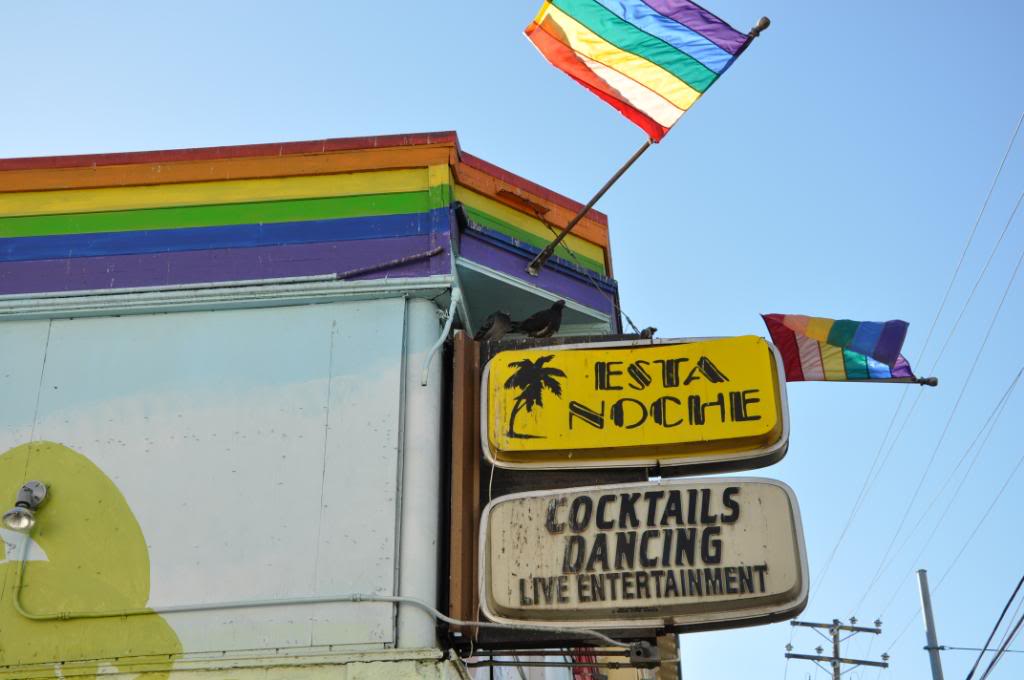
What the holy highballs is happening on our bar scene lately? Rowdy Mission hangout Pop’s Bar closed over the weekend. (Who got all those panties, I wonder?) Last week, 40-year-old Mission gay hangout Esta Noche announced it was shutting down (new owners and a hetero-craft cocktail concept). And then there was that oddball Google Glass kerfuffle at Molotov’s, wherein a social media starlet claims she was the victim of a tech hate crime when the patrons allegedly got in her privacy-violating face.

The Esta Noche situation hits close to my floppy liver’s home most, though. With the recent closures of Marlena’s, Deco, and Ginger’s Trois (and the Transfer, Mister Leeona’s, and practically every gay watering hole on Polk Street shuttering in the past decade), there are hardly any queer bars outside the Castro and SoMa left. Lady, can you pour a fierce cosmo out those Google Glasses of yours? Until then, I won’t have what she’s having. I need my queer space to get sozzled!


JAY TRIPWIRE

There are DJs to love, and then there are DJs to love. Fiercely intelligent yet laidback, shaggy in that classic rave-dude way, Vancouverite Jay Tripwire has been honing his deep, deep techno sound for more than two decades and 200 releases. Like every great DJ wizard, he transforms the records on his tables into other beasts entirely. You just hear differently after his masterly sets. At the Housepitality weekly, he’ll get a warm reception.

http://www.youtube.com/watch?v=0n7ahLdh8yM

Wed/5, 9pm, free before 11 with RSVP at www.housepitalitysf.com/rsvp, $10 after. F8, 1192 Folsom, SF.


BAREM

The splendid Direct to Earth and Public Works crews bring in Buenos Aires- and Berlin-based Mauricio Barembuem, aka Barem of Minus Records, for some good old fashioned Germano-Latin post-minimal techno swing. Bring a couple pairs of (cute) shoes, because he’ll wear your kitten heels right out.

Fri/7, 9pm-4am, $13–$20. Public Works, 161 Erie, SF. www.publicsf.com


HOUND SCALES

It’s a great weekend for hard-driving and esoteric techno in the Bay. It’s even getting into our more melodic parties, like the monthly Play It Cool, which is showcasing wiggy Brooklyn-based, SF-native “junta rave” purveyor Hound Scales of the Fifth Wall label. The speaker bins, they will explode I think. Jolly good show.

http://www.youtube.com/watch?v=vEr-zgTrh7Y

Fri/7, 10pm-3am, $10. Public Works, 161 Erie, SF. www.publicsf.com


DRINK

Hey, $35 all you can drink from dozens of local spirits concocters, brew houses, and wineries? Plus: cosmic tunes from Cosmic Amanda (she’s cosmic), tarot readings by the zebra-leotarded Dr. Zebrowski, and one last time to party in the glorious Old Mint building before it gets renovated into the SF History Museum? Why am I still asking questions? Our sister-paper SF Weekly’s Drink event is sloshy, superb.

Sat/8, 2pm-5pm, $35 advance. Old Mint, 88 Fifth St, SF. drink2014.strangertickets.com


FOUR TET

Please immediately check out the fantastic new Neneh Cherry album, produced by this wide-eared, super-innovative UK genius, who can jet from bright, ecstatic jazziness to haunting bass apocalypse in the blink of a strobe. A trippy treat in store, indeed.

Sat/8, 9pm, $30. Mezzanine, 444 Jessie, SF. www.mezzaninesf.com


POUND PUPPY

Go-go boys are probably my least favorite things at clubs. (We were mercifully mostly free of them until a few years ago: They were “an LA thing” then. Sock’s on the other cock now!). But apparently, once a month, if they are dressed up like leather-fetish puppies, dancing to cutting-edge tunes in cages at the gay biker bar, and being petted by the sexiest characters of the SF queer underground, I’m totally down. I still refuse to say “woof,” though. With DJs Taco Tuesday and Chip Mint, hosted by Blake and Jorge.

Sat/8, 9pm, $7. SF Eagle, 398 12th St, SF. www.sf-eagle.com


VOICES FROM THE LAKE

Hyper-atmospheric ambient techno delight from this duo, composed of acclaimed Italian players Donato Dozzy and Neel. Don’t worry, you’ll still end up dancing. With Jason Kendig, Christina Chartfield, Carlos Souffront, and MossMoss at the As You Like It party.

http://www.youtube.com/watch?v=ooxO0VaZt9M

Sat/8, 9pm-4am, $20–$25. Monarch, 101 Sixth St, SF. www.monarchsf.com


Crooked cops

2

steve@sfbg.com

It’s a bombshell police scandal befitting San Francisco’s restive mood, dropping at a time when simmering class tensions have been making national news, and one more example of how the poor are getting trammeled by those with power.

As politicians and tech titans were trying to make the gritty central city more welcoming to corporations and their workers three years ago, a half-dozen plain-clothed police officers were allegedly abusing poor people, illegally busting into their rooms, stealing anything that had value, forcing criminals to sell stolen drugs for them, and repeatedly telling lies in police reports.

When the targets of these abuses complained to the authorities, they were dismissed or ignored. Only when Public Defender Jeff Adachi and his investigators found and publicly revealed damning video surveillance from the targeted single-room occupancy hotels did federal authorities launch an investigation.

Adachi held press conferences in March and May of 2011 showing officers brutalizing SRO residents and leaving their rooms with laptops and other valuables that were never booked as evidence. When Greg Suhr was sworn in as police chief in April 2011, he put the officers on administrative duties, forced some to give up their weapons, changed department policies to deter cops from barging into people’s rooms without warrants or probable cause, and cooperated with the Federal Bureau of Investigation on the case.

That investigation resulted in federal grand jury indictments that were unsealed on Feb. 27, charging six SFPD cops with a variety of serious charges, including civil rights violations and conspiracies, theft, extortion, drug conspiracies, and falsification of records.

They are Officers Arshad Razzak, Richard Yick, and Raul Eric Elias, who worked in Southern Station, dealing with residents of SoMa SROs; and Sgt. Ian Furminger, Officer Edmond Robles, and Reynaldo Vargas (who Suhr says was dismissed from SFPD for unrelated reasons as the investigation got underway), who worked in Mission Station, where the drug conspiracy allegedly took place, on top of shakedowns in Mission District SROs.

All defendants are facing more than 20 years in prison (except Elias, who faces 10 years for civil rights conspiracy and one year for deprivation of rights under color of law). The Southern Station defendants are also facing $250,000 in fines. The Mission Station defendants face $1 million in fines on the drug conspiracy charges, which allegedly involved having informants sell a few pounds worth of marijuana seized by police.

Attorney Michael Rains, who represents Razzak and has been designated by the San Francisco Police Officers Association as a spokesperson for the others, told the Guardian that all the defendants had difficult undercover jobs in the murky world of informants and drug dealers.

“There was sloppiness in the reporting [in officials police reports], but sloppiness doesn’t rise to the level of criminal activity,” Rains told us, questioning the credibility of witnesses who have criminal records and the reliability and context of the video evidence.

But Suhr strongly condemned the behavior outlined in the criminal complaints, telling reporters that other SFPD officers connected to the case may still face disciplinary action and that, “My officers know I will not have dishonest cops among us.”

He called the indictments a serious blow to the SFPD, appearing to choke up with emotion.

“Our department is shaken,” Suhr, who has been with the SFPD more than 30 years, told reporters. “This is as serious a matter as I’ve ever encountered in the Police Department.”

Yet Suhr also distanced himself from scandal, telling reporters, “This conduct occurred before my time as chief.”

Most of the alleged crimes happened under former Police Chief and current District Attorney George Gascón shortly before he made that transition, one in which critics at the time raised concerns about whether he could be an effective watchdog of SFPD misconduct. That conflict of interest was what sent this case to the feds.

“It is extremely disappointing that the officers violated the trust of the community and tarnished the reputation of all the hard working men and women in uniform,” Gascón said in a press release.

During a brief press conference that afternoon, Gascón denied responsibility for the misconduct: “Anytime you have a large organization, you are going to have people who operate outside the boundaries of what is acceptable.”

Asked by the Guardian when he became aware of allegations that his officers were abusing SRO residents, he said, “We became aware at the same time everyone else did, when the videos came out.”

Gascón’s Press Secretary Alex Bastian cut the press availability off after 10 minutes so Gascón could prepare for his State of Public Safety speech that afternoon, but Bastian told the Guardian he would get answers to our questions about the office’s police accountability record.

“When appropriate, we ensure the integrity of the system is not compromised by referring cases to other prosecuting agencies. In the abundance of caution, when this case was brought to my attention, I referred the case to the federal authorities to safeguard a thorough investigation and guarantee maximum consequences,” Gascón said in a prepared response, while Bastian ignored our requests for more responsive answers to our questions.

But Adachi says these indictments are just the tip of the police misconduct iceberg, charging that police officers routinely lie in police reports and in court to justify illegal searches and other abuses of defendants who are poor or have drug problems, knowing that judges and juries tend to believe cops over criminals.

“The indictments today are a victory for ordinary San Franciscans,” Adachi told reporters, emphasizing that in addition to personally profiting from the shakedowns, these officers were also submitting false testimony in perhaps hundreds of cases, including about 100 that his office has gotten dismissed. “These allegations not only involve violations of the constitutional rights of our clients, but also lying on police records that were used to send individuals to prison based on the testimony of these officers.”

Residents and employees of the Henry Hotel, one of four SROs involved in this case, told the Guardian that the indictments are a rare repudiation of police mistreatment of SRO residents, which they say continues to the day.

“A lot of these people need help. They need guidance. They need a program. They need somebody to motivate them to go to their programs, not a fucking cop who keeps harassing them,” Jessie Demmings, a manager at the 132-room Henry Hotel on Sixth Street, told the Guardian. “They try to take that one step to go forward and then when you come outside you get greeted by a fucking cop having a bad day.”

Even though new SFPD policies prohibit officers from using passkeys to enter people’s rooms without a warrant, Demmings said it still happens. “The reason why we give the passkey is because they always threaten we’re gonna kick in the door, we gonna have a batting ram come and bust the door in,” he said.

Adachi cited his office’s long history of cases in which “officers were barging into rooms without warrants and they were lying about it in police reports.”

Cases of police abuse are handled by the city’s Office of Citizen Complaints, but its work is shrouded in secrecy, thanks to the California Peace Officers Bill of Rights, and officers rarely face serious consequences for their actions.

“We do have complaints with regard to the conduct within the SROs and we have made policy recommendations to the chief,” OCC Director Joyce Hicks told reporters at the SFPD press conference. She called the indictments “extra serious because it implicates the Fourth Amendment and people’s rights.”

Adachi said that after revealing the videos in 2011, he persuaded Mayor Ed Lee to fund two positions in his office investigating police misconduct, but the Mayor’s Office defunded those positions after a year and ignored Adachi’s calls to restore them (as well as Bay Guardian calls for comment on the issue).

“We felt like the public needs to know about this,” Adachi said of the behavior revealed by the federal investigation. “What happened today is significant, and I think it will have deterrent effect.”

Sabrina Rubakovic and Brian McMahon contributed to this report.

Nite Trax: Esta Noche to close, adios Esta Noche

11

Not even a guest starring role on Looking could save beloved Latino-oriented gay dive Esta Noche, alas! According to Eater SF, the Mission favorite is being sold by its owners reportedly willingly — to the team behind SoMa meat market Wish.

The new owners take over next week, but will keep things the same for a while, in order for everyone to have some time to say goodbye. (New Mission businesses, please take note: this is how you help avoid a PR nightmare.) Then get ready for more craft cocktails and loungey vibes, Missionites! Ugh.

I like the Wish kids, and I know that the Esta Noche tale is more complex than a simple eviction. Still, it’s heartbreaking to see a community mainstay — 40 years! — shutter, especially one that caters to a different crowd than Castro-roaming bachelorettes and tired Britney queens. Legendary comedy nights, hilarious performances, and, of course, the insane Miss Gay Primavera contest all played out on its stage. And where the hell can I hear Norteno music while cruising cute boys now?

With this coming hard on the heels of the 77 Geary building booting out its art galleries for tech companies, it has been suggested that the Guardian should start a column shaped like a tombstone, listing all the things we’re losing. But at least we’ll have craft cocktails! 

Muni fare shakedown

43

Update: Just a day after the release of this article, advocacy group POWER announced that Google pledged to pay for Free Muni For Youth for two years. “This validates both the success and necessity of the Free Muni for Youth program,”said Bob Allen, leader in the FreeMuni for Youth coalition, in a press release. “We need tech companies in San Francisco and throughout the region to work with the community to support more community-driven solutions to the displacement crisis.” 

The funding though is promised only for two years, and when that timeframe is up the question will still remain — will Muni’s operating budget pay for something Mayor Ed Lee could find funding for elsewhere? Additionally, Google hasn’t announced funding for free Muni for seniors or the disabled, another program up for consideration in the San Francisco Municipal Transportation Agency’s new budget. That may change if and when it is approved by the SFMTA for the next budget year. 

“I think it’s a positive step in the right direction,” Superivsor David Campos, the sponsor of Free Muni For Youth, told us. “But there are still questions about what it means in terms of the long term future of the program. It’s only a two year gift.” 

“We have asked for a meeting with Google and the mayor’s office and the coalition to talk about long term plans, to find out more information about what this means.” 

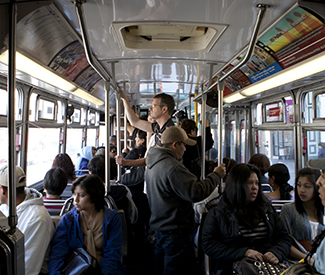
There’s a tie that binds all Muni riders. From the well-heeled Marina dwellers who ride the 45 Union to Bayview denizens who board the T-Third Sunnydale line, we’ve all heard the same words broadcast during sleepy morning commutes.

“Please pay your fare share.”

The play on words (also seen on Muni enforcement signage) would be cute if it didn’t perfectly represent how Muni riders may now be stiffed. A slew of new budget ideas hit the San Francisco Municipal Transportation Agency Board of Directors last week (Feb. 18), and who will pay for it all is an open question.

The first blow to riders is a proposed single-ride fare hike from the current $2 to $2.25.

Other proposals include expanding the Free Muni for Youth program, rolling out a new program offering free Muni for seniors and the disabled, and a fare hike to $6 for the historic F streetcar.

The odorous price jumps (and costly but promising giveaways) are moving forward against a backdrop of a Muni surplus of $22 million, which the board has until April to decide how to use, and a controversial decision by Mayor Ed Lee to make a U-turn on charging for parking on Sundays.

The meter decision would deprive Muni of millions of dollars.

“We’re not proposing anything here, just presenting what we can do,” SFMTA Director Ed Reiskin told the SFMTA board at City Hall last week.

There’s still time to change the SFMTA board’s mind on the proposals between now and final approval of the budget in April. But who will end up paying for a better Muni?


FARE HIKES NOT FOUGHT

In 2010, the SFMTA instituted a policy to raise Muni fares along with inflation and a number of other economic factors, essentially putting them on autopilot. The SFMTA board still has to approve the fee hikes, which may rise across the board.

fares One-time fares may jump to $2.25. Muni’s monthly passes would see an increase by $2 next year and more the following year. The “M” monthly pass will be $70 and the “A” pass (which allows Muni riders to ride BART inside San Francisco) will be $81.

Muni needs the money, Reiskin said.

“To not have (fares) escalate as fuel and health care costs increase, you can’t just leave one chunk of your revenues flat,” he told the Guardian. Muni’s operating budget will expand from $864 million this year to $958 million in 2016. “Salary and benefit growth is the biggest driver of that,” Reiskin said.

Mario Tanev, spokesperson for the San Francisco Transit Riders Union, said the hike was expected.

“We’re not necessarily against the inflation increase,” he said. “But though the parking fines SFMTA levies are inflation adjusted, other rates (against drivers) are not. There are many things in our society that disincentivize transit and incentivize driving.”

Drivers enjoy heavy subsidies to their lifestyle on the federal, state, and local levels, from parking lot construction, the cost of gasoline, and now it seems, renewed free Sunday parking meters. The new fare increases are hitting transit riders just as the mayor is poised to yank funding from Muni to put in the pockets of drivers.


PLAYING POLITICS

When the paid Sunday meter pilot began in early 2013, it was a rare flip in a city that often treats Muni like a piggy bank: money was floated from drivers and dropped onto the laps of transit.

A report from SFMTA issued December 2013 hailed it as a success for drivers as well: Finding parking spaces in commercial areas on Sundays became 15 percent easier, the study found, and the time an average driver spent circling for a space decreased by minutes.

Even some in the business community call it a success, since a higher parking turnover translates to more customers shopping.

Jim Lazarus, senior vice president of public policy at the Chamber of Commerce, is a supporter of the paid Sunday meters. “You can drive into merchant areas now where you couldn’t before,” he told us.

Eliminating Sunday meter fees would punch a $9.6 million hole in Muni’s budget next year, by SFMTA’s account.

The timing couldn’t be worse. On the flip side the Free Muni for Youth program, which targets low-income youth in San Francisco, may expand next year at an estimated cost of about $3.6 million, and a program to offer free Muni for the elderly and disabled would cost between $4 and $6 million — close to the same the same amount that would be lost by the meter giveback.


BOOSTING SAN FRANCISCO FAMILIES

“As an 18-year-old in high school it was a struggle to get to school, it was a struggle to find 75 cents or two dollars to get home,” Tina Sataraka, 19, told the SFMTA board last week. As a Balboa High School student, Sataraka had a 30-minute commute from the Bayview. She’s not alone.

A study by the San Francisco Budget & Legislative Analyst’s office found that 31,000 youth who faced similar financial hurdles had signed up for the Free Muni for Youth pilot program, a resounding success in a city where the youth population is dwindling. Authored by Sup. David Campos, the program may redefine “youth” to include 18-year-olds, who are often still in high school.

But initial grant funding for the program has dried up, so now Muni will foot the bill.

Not one to say “I told you so,” Sup. Scott Wiener said there were reasons for objecting to the program a year ago.

“My biggest, fundamental objection to the program was less that they were giving free fares to kids, and more that they were taking it out of Muni’s operating budget,” Wiener told us. “They need to find a way to pay for it, perhaps from the General Fund, and not just taking the easy and lazy way out.”

The Budget & Legislative Analyst recommended several options for alternative funding: special taxes on private shuttle buses (Google buses), or an increased vehicle license fee specially earmarked for the youth bus program. So far, Mayor Ed Lee hasn’t shown an interest.

“There haven’t been discussions of having the Board of Supervisors fund free Muni for youth,” Reiskin told us. The same goes for the mayor. And though Reiskin was cautious and political about the possibility of Sunday meters becoming free again, he didn’t sound happy about it.

“As for what’s behind [the mayor’s] call for free Sunday parking, that didn’t come from us,” Reiskin told us. “That came from him.”


NOVEMBER RISKS

Mayor Lee’s office didn’t answer our emails, but politicos, including Wiener and Chronicle bromance Matier and Ross, indicated the mayor may be reversing on Sunday parking meters to appease the driving voter electorate.

There are two measures up on the November ballot, and one is aimed right at drivers’ wallets.

The two measures, a $1 billion vehicle license fee hike, and a $500 million transportation bond, are both aimed at shoring up the SFMTA’s capital budget. An October poll paid for by the mayor showed 44 percent of San Franciscans in favor of a vehicle fee hike, and 50 percent against, according to the San Francisco Chronicle.

Reiskin said the loss of those two ballot measures would be crippling to Muni’s future.

“The improvements we’re trying to make to make Muni more reliable, more attractive, those won’t happen. This is our funding source for that,” he said.

The mayor is busy smoothing the potholes towards the bonds’ success in the November election, but it seems he’s willing to pile costs onto Muni and its riders to do it.

Correction 2/26: An editing error led to the erroneous calculation of Free Muni For Youth at near $9 million. Free Muni For Youth is only estimated to cost the SFMTA $3.6 million. It is the combination of Free Muni For Youth and free Muni for the disabled and elderly that equal about $9 million.