Stage

On the Cheap Listings

0

Submit items for the listings at listings@sfbg.com. For further information on how to submit items for the listings, see Picks.

WEDNESDAY 24

"A Passion for Waiting: Messianism, History, and the Jews" International House Auditorium, UC Berkeley, 2299 Piedmont, Berk. (510) 643-7413, www.grad.berkeley.edu/lectures. 4:10pm, free. Literary editor of The New Republic and author of Nuclear War Nuclear Peace, Against Identity, and Kaddish Leon Wieseltier will be delivering this lecture as part of the UC Berkeley Graduate School lecture series.

Sister Spit anthology release party City Lights, 261 Columbus, SF. (415) 362-8193, www.citylights.com. 7pm, free. Join author Michelle Tea at the City Lights bookstore in what promises to be an uproarious night celebrating the best of feminist, queer-centric writing. Occupying center stage at this event will be the debut of the anthology Sister Spit: Writing, Rants, and Reminiscence from the Road, a collection of poetry and narratives from Tea’s beloved spoken word tours.

Altered Barbies 50 Shotwell, SF. (415) 240-2202, www.alteredbarbie.com. Through Nov.18. Opening reception: 1-8pm, free. This year’s installment of the vaunted altered Barbies will be politically-themed (as is appropriate.) Babs for president? This exhibition invites participants to project their thoughts on cultural and social issues through the medium of unrealistically-proportioned plastic women, in an effort to facilitate community-building discourse.

FRIDAY 26

Vintage Poster Fair Conference Center Building A, Fort Mason Center, SF. (800) 856-8069, www.posterfair.com. Fri/26, 5-9pm; Sat/27, 10am-7pm; Sun/28, 10am-6pm, free–$15. The International Vintage Poster Fair makes a return to San Francisco this year, and taking center stage will be "Seven Deadly Sins," exhibit showcasing vintage posters from as far back as the 1890s.

"From Here" UGallery, 3367 20th St., SF. (415) 742-8417, www.ugallery.com. Through Dec/28. Opening reception: 6-9pm, free. A manifestation of the Bay Area’s rich diversity through art. Come witness Mexican artist Pablo Solares’s portraits of his fellow countrymen, Korean artist Michael Van farmland depictions, and the conceptual imagery of Lana Williams.

SATURDAY 27

Chinatown history presentation SFPL, 100 Larkin, SF. (415) 557-4277, www.sfpl.org. 11am-12:30pm, free. History buffs take careful note here. Acclaimed architect and Chinese American studies professor Philip Choy will be giving a talk about his newest book San Francisco Chinatown: A Guide to its History, which details the long and remarkable history of the city’s Chinatown.

CODAME Adore Space, 135 Dore, SF. www.codame.com. 8pm, free. It’s an art and tech mashup y’all! Started in 2010 by Bruno Fonzi CODAME seeks to combine the city’s passion for art and tech together in a multi-dimensional environment in the mediums of time and space. Complementing this art-tech amalgamation will be an indie gaming tournament, fire dancing, and, to go along with the holiday spirit, a Halloween costume contest.

Moon Goddess Exhibit Modern Eden, 403 Francisco, SF. (415) 956-3303, www.moderneden.com. Through Nov.11. Opening reception: 6-10pm, free. Come one, come all to worship the moon goddess in all her glory and supernatural mystique. This international exhibit showcases numerous artistic interpretations of what such a lunar deity would look like. And in case you were wondering, the next full moon will be on the 29th. Plan your visit accordingly.

Bay Area Science Fair Various times and locations. www.bayareascience.org. Through Nov.3. Eight days of scientific splendor and pageantry mark this mega-fest of scientific thinking. Learn about how science plays a crucial role in our everyday lives at a star party, a zombie edition of Cal Academy’s weekly Nightlife event, even a special Discovery Days at AT&T Park and Sonoma County Fairgrounds. There’s so much jam-packed into the affair that by its end, you’ll be qualified to apply to any of Cal or Stanford’s Ph.D science programs. (No guarantees.)

SUNDAY 28

Nerd Nite The Stork Club, 2330 Telegraph, Oakl. (510) 444-6174, www.nerdnite.com. 7pm, $8. Nerd alert! Nerd Nite will be making its way across the Bay to Oakland where it will be launching its first event in Oakland. Talks on the such as nerd favorites as Darwinian evolution and nanocrystals will be given to satisfy your geeky thirst.

TUESDAY 30

"Race and Religion at the Golden Gate" Pacific School of Religion Chapel, 1798 Scenic, Berk. (510) 849-8222, www.psr.edu. 6:30pm, free. An event tailored for the liberals major in all of us, acclaimed professors such as Hatem Bazian, Rudy Busto, Zayn Kassam, and more will be tackling the intricate intersection of race and religion with in the context of the Bay Area at this panel discussion.

Points of no return

2

cheryl@sfbg.com

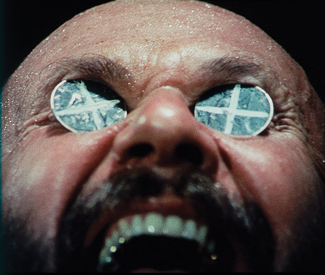
FILM Wake in Fright opens with a slow 360 degree pan across a dry, barren, isolated landscape. There are railroad tracks and two small structures, but the rest is filled with a whole lot of nothing.

This is Tiboonda, the tiny Australian town where Ted Kotcheff’s 1971 thriller begins. The descriptor “thriller” and the film’s title — not to mention its arrival in theaters under the genre-friendly Drafthouse Films banner — suggests that Wake in Fright is a horror movie, but if it’s Aussie Outback thrill-killing you seek, look elsewhere (starting with 2005’s Wolf Creek). Wake in Fright is more of a psychological thriller, of the escalating-dread-building-to-a-gut-ripping-climax variety. Not for nothing did chatty ol’ Martin Scorsese, a champion of the film since its 1971 Cannes debut, admit “It left me speechless.”

Pity poor teacher John Grant (Gary Bond), assigned to teach in Tiboonda’s one-room schoolhouse by the government he owes money to in return for his own education. Or don’t: Grant, primly dressed in coat and tie despite the scorching weather, can barely disguise his disgust over being plopped into such a backwater. When the six-week Christmas break rolls around, he’s on the first train out of town, heading for an overnight stop in mining town Bundanyabba before flying to Sydney, where cool waters and his sophisticated girlfriend await.

Of course, the best laid plans of desperate, sweaty men always go astray. Kotcheff — who is actually Canadian and whose best-known film is probably the first Rambo movie, 1982’s First Blood (or 1989’s Weekend at Bernie’s) — sets the tone early with that lonely 360 degree shot, but Grant’s misplacement becomes even more obvious once he starts encountering locals in “the Yabba.” Everyone, except for the odd woman working the front desk at his hotel (has anyone ever come so close to making out with an electric fan?), emits a strange combination of menacing and friendly.

First, there’s the cop (Chips Rafferty) who, five seconds after meeting him in the town’s raucous meeting hall, simply insists that Grant chug multiple beers with him. Boozing leads to a back-room gambling game — where, again, everybody acts like it’s no big deal that there’s an outsider, “the guy in the jacket,” in their midst. “One mere spin and you’re out of it,” reflects an oily man (Donald Pleasence) Grant meets in the chaos. Prescient words: when an unlucky coin toss means Grant’s lost all his money, he’s not only out of the game — he’s out of his Sydney trip, out of any other options, and on his way to going out of his mind.

But he doesn’t get there alone, and Wake in Fright amps up as Grant’s downward spiral begins. There’s beer — gallons and gallons of the stuff — off-roading at breakneck speeds, fistfights, further strange encounters with Pleasence’s character (who turns out to be the unabashedly alcoholic town doctor), and a grim-faced beauty (Sylvia Kay, married to Kotcheff at the time) who is not as out of place in the sticks as Grant first assumes. The film’s most brutal sequence involves kangaroo hunting — it’s so disturbing that it warrants a disclaimer as the end credits roll. But really, all of Wake in Fright is a nasty, grimy, hopeless misadventure, an exposing of the dark heart Grant didn’t realize he had, or was even capable of having. “I got involved,” is all he can say of the experience, though the audience might lean more toward “Uh, what the fuck just happened?”

Wake in Fright‘s return to theaters (and first-ever uncut appearance on US screens) after 41 years is the result of a negative-saved-at-the-last-minute miracle — the sort of tale that makes cinephiles both happy and nervous, wondering about all those films that didn’t get rescued before they went into the shredder. Anyway, be glad Wake in Fright is still with us; it competed at Cannes in 1971, and played there again in 2009 as a “Cannes Classic.” If you didn’t catch it at the 2010 San Francisco International Film Festival, here’s your chance to be freaked out by this newly-available classic.

ALL OUT OF BUBBLEGUM

Horror fans will recognize the name of Wake in Fright star Donald Pleasence from John Carpenter’s 1978 Halloween — ’tis the season, after all, and that film happens to be screening at the Balboa Theatre Oct. 30-31. But the Carpenter movie du jour is 1988’s dystopian-future drama/true story They Live, which comes out on Blu-ray Nov. 6 — never before has Rowdy Piper’s mullet looked so crisply feathered, nor Meg Foster’s eyes so eerily seafoam, nor the black-and-white matte paintings depicting Los Angeles’ subliminally-enhanced landscape (“MARRY AND REPRODUCE”) so stark and startling.

There are some recycled extras, including Carpenter and Piper’s audio commentary, trailers, and a vintage press-kit reel featuring wrestling superstar Piper reflecting on his leading-man debut (“Ain’t a lot of difference between John Nada and Roddy Piper”). But there’s new stuff, too: separate interviews with Foster, Carpenter (who scoffs when he’s asked if he was tempted to edit down the film’s epic, legendary fight scene: “Fuck no!”), and co-star Keith David, who hilariously reminisces how he had to un-learn stage diction when he was hired for his first Carpenter film, 1982’s The Thing — and devotees of that film will want to rewind multiple times, just to hear David jokingly enunciate “You believe any of this voodoo bullshit, Blair?” in near-Shakespearean tones.

For behind-the-scenes junkies, there’s a featurette on the film’s “sights and sounds,” highlighted by an interview with veteran stunt coordinator Jeff Imada, who breaks down that iconic fight scene and reveals he played most of the aliens in the film (including the “What’s wrong, baby?” guy at the end). Just about the only thing missing from this Blu-ray package (kudos for the ridiculous cover art, Shout! Factory)? A pair of sunglasses. 

Wake in Fright opens Fri/26 in Bay Area theaters. Halloween screening info at www.cinemasf.com. They Live Blu-ray info at www.shoutfactory.com


Twin stars

0

arts@sfbg.com

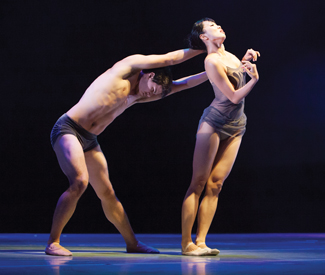
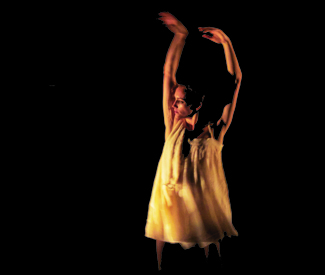
DANCE It doesn’t happen often, but when it does, it makes you wish that it could go on forever. Such was the case of a heartbreaking pas de deux toward the end of Alonzo King’s newest work, Constellation. Created by and for LINES Ballet’s senior ballerina Meredith Webster and Ricardo Zayas, and set to Handel’s plangent “Verdi prati,” the two dancers encircled each other, locked limbs, and pulled apart only to be drawn into each others’ spheres again. They struggled with each other and within themselves only to separate in the end. I kept thinking of Aristophanes’ definition of love as the attempt by the two halves of the original human, after having been split apart by a jealous God, to become one again.

Though this extraordinary duet was the high point of the evening-length work celebrating the company’s 30th anniversary, Constellation is a major achievement of King’s distinguished career of imaginative, thoughtful, and skilled dance making. The work abounds with mesmerizing small ensembles and rich imagery though the unisons for everyone are still problematic.

As is his want, King drew out of his dancers small-scale but resonating encounters that don’t necessarily add up — except in the way that a collector’s decisions impose coherence on treasures, whether they be Monets, pebbles, or martini shakers. Constellation, however, has more of a through line than I remember seeing in other King choreographies. Weaving through the piece was the figure of Webster, apparently on a search. She first appeared out of the dark, stepping through Jim Campbell’s curtain of light bulbs. Sitting on Ricardo Zayas’ foot, she valiantly tried to pull herself up on his leg; then, she broke up a duet between David Harvey and Michael Montgomery. In between she was carried and variously supported. Yet at the end, she was spent one, left on the floor. If Webster had a counterpart, it would be in the underused Keelan Whitmore, who often appeared an outside observer.

King plugged deeply into the individuality of these so different dancers who yet looked as if poured from one mold. The trio of Montgomery (who seems to have something of a comedian inside him), Zachary Tang, and Whitmore attacked a storm of staccato phrases as if they had hot coals under their feet. Though propelled by an impetus that seemed to suck Courtney Henry, Ashley Jackson, Yujin Kim, and Caroline Rocher upstage, their responses to the thrust could not have been more different.

In a hugely effective solo, Henry, dressed in a simple black leotard, stepped out of billowing fog (courtesy of lighting design Axel Morgenthaler), folding and stretching her limbs to the ends of the universe, until she gradually pulled the other dancers from the wings. In the many duets, the dancers seemed to morph into creatures sometimes outside themselves. At one point, I was pretty sure I had seen a multi-limbed something out of Hieronymus Bosch.

The first act ended with another stunner, a duet for LINES’ newest dancers, Kim and Tang. The exquisite Kim, long-limbed yet with a voracious appetite for space, slithered around Tang — muscular, yet highly expressive — and into his arms in what looked like a lover’s spat, perhaps inspired by Vivaldi’s “Sposa son disprezzata.”

Constellation is one of King’s most musically astute works. The collage of Baroque arias, Eastern chants, and original compositions worked exceptionally well. However, how Arvo Pärt’s over-exposed Für Alina made it into this distinguished selection remains something a puzzlement.

To have mezzo-soprano Maya Lahyani — in one of Colleen Quen’s theatrical concoctions and accompanied by her sensitive pianist Hadley McCarroll — perform was a special gift not just for the audience but also for the dancers, who responded with such hunger to the live music.

Constellation was inspired by Jim Campbell’s light sculpture Exploded Views, in which hundreds of flickering LED lights create a sense of stasis as well as life. Fascinating, it looked like television snow being animated by moving silhouettes. Unfortunately, Campbell’s translation of the concept to the stage didn’t quite work: black shapes, perhaps fluttering birds, behind the light curtain; rolling lit balls; light boards; and Wheelan wrapped in Joseph’s dreamcoat (of light bulbs). *

ALONZO KING LINES BALLET

Wed/24-Thu/25, 7:30pm; Fri/26-Sat/27, 8pm; Sun/28, 5pm, $30-65

Yerba Buena Center for the Arts Theater

700 Howard, SF

www.ybca.org


Intimate company

1

arts@sfbg.com

THEATER With the exception of an occasional Miss Julie, the plays of August Strindberg (and there are more than 60 of them) rarely find productions anymore. Yet the iconoclastic and prolific Swedish writer’s influence on modern drama — including such American playwrights as Eugene O’Neill, Tennessee Williams, and Edward Albee — is considered a given. This year marks 100 years since Strindberg’s death, and San Francisco’s Cutting Ball Theater has gone all out in satisfying a yen for a centennial embrace of this monumental (and definitely temperamental) artist who helped define the terms and concerns of modernism.

Capping a year of readings and discussions of the work and the man, Cutting Ball last week began an audacious program of five late “chamber plays,” to run in repertory through November 18. The project includes five new translations by Yale professor (and former American Conservatory Theater dramaturg) Paul Walsh, and the simultaneous publication of all five in a single volume by Exit Press.

Last week, The Ghost Sonata (1908) began stalking the stage of the Exit on Taylor as the opening gambit in Cutting Ball’s Strindberg Cycle. Its original premiere took place on a stage not too unlike this one, as artistic director Rob Melrose explains in a program note, being written (along with the other plays in the Cycle: Storm, Burned House, The Pelican, and The Black Glove) especially for the opening of Strindberg’s new Intimate Theater in Stockholm. This makes the chamber plays an especially apt choice for Cutting Ball’s stage. A pioneer of the chamber play form, Strindberg meant to foster an immersive experience for his audience with these deeply strange, poetical, dreamlike little plays he modeled on chamber music. The emphasis was thus on coziness, small casts in small houses, without the need for elaborate mise-en-scène. Moreover, a level of invention would dominate in these plays in which form would follow theme, rather than the other way around.

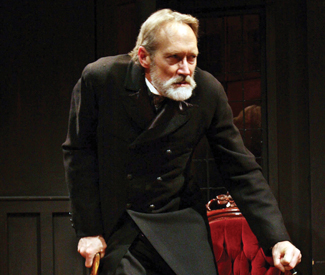
The Ghost Sonata is perhaps the best-known example among the playwright’s chamber works. It concerns a heroic and ambitious young poet named Arkenholz (Carl Holvick-Thomas) who, after saving some people from a burning building, finds himself seduced into the good graces of a fancy upper-class household of an aristo Colonel (Robert Parsons) by the machinations of a mysterious wheelchair-bound old man, Director Hummel (the formidable James Carpenter).

Hummel’s real motives become clearer as the play progresses through three short acts (the entire play runs only about 80 minutes without intermission). But the unfolding of all is like a dream, wherein Arkenholz confers unwittingly with the ghost of a Milkmaid (Ponder Goddard) that Hummel can’t see; pines for the beautiful girl (Caitlyn Louchard) in the fancy apartment building, confined to a sweet-smelling Hyacinth Room; and eventually finds his way into the social circle of the girl’s family, stunned old richies who are variously mad, morose, and generally not what they seem.

There’s an almost hilarious amount of exposition packed into the plot and its several reversals and revelations. But the chamber plays are works of a new era, and for a new era, and The Ghost Sonata — not unlike the naturalistic drama Ghosts by Strindberg’s hated contemporary and countryman Henrik Ibsen — seeks to cast a coruscating light on an older generation and its world, to expose and ridicule its corruption, bemoan its stultifying influence on the young, and generally bleed it out like a pus-filled old sore. As darkly shadowed as The Ghost Sonata is, its formal invention is full of air and light to remake the stage and the age.

That doesn’t mean it’s triumphal, or terribly optimistic. The uncertainties, ambiguities, and pitfalls of patrimony, a deep theme for Strindberg, snake through the surreal story like fissures in a crumbling wall. The Ghost Sonata has a quiet anguish running throughout — even in its touch of sardonic humor, as exemplified by the haughty butler, Bengtsson (played a little too broadly by David Sinaiko) — and it rages under all the delicate and sinister weirdness of its setting and action.

This trembling, contorted energy becomes incarnate, and altogether palpable, in Carpenter’s finely hewn and sensitive performance as Hummel, who even as a central demonic force is ultimately pathetic and even pitiable when his own reversal of fortune finally lands.

Carpenter is the best thing about this uneven if worthwhile production. If the play’s historical influence is one thing, its life on the stage is another, at least here. It does look very striking in the meticulous and persuasive design work of Michael Locher (set), York Kennedy (lighting), and Anna Oliver (costumes). The production also features a pervasive, ethereal score and soundscape by longtime Cutting Ball artistic associate Cliff Caruthers. The stage may be small, for instance, but Locher expertly creates a sense of a marble-cool expanse in which the play’s public street and inner chambers are seamlessly, miraculously evoked. A set of mobile dark-wood closets form a central edifice, first the outside wall of the apartment and then its inner parlor, with graceful economy. Oliver’s fine period costuming adds luxuriously to the dreamy world of the play, as does the vaguely macabre makeup on several characters.

Melrose, moreover, who helms each of the plays in the cycle, has assembled a strong cast, several of whom must carry the play with little or no dialogue and only minute gestures. But while individual performances show flashes of depth and charm, his actors rarely connect forcefully or convincingly. The ensemble may cohere further as the production continues in repertory. But it was plain enough on opening night that this vital element of so intimate and intense a play as this hovers somewhere just out of reach. *


“Strindberg Cycle: The Chamber Plays in Rep”

Through Nov. 18, $10-50 (festival pass, $75)

Exit on Taylor

277 Taylor, SF

www.cuttingball.com

Life-and-death decision

7

news@sfbg.com

Proposition 34, the initiative to end the death penalty in California, is trailing in the polls, but proponents are focusing on a surprisingly large voting block that could still put it over the top: undecided voters.

“Anything can happen on Election Day,” said Natasha Minsker, campaign manager for Yes on 34. “I think what this election comes down to is who’s able to reach the undecided voter.”

The Los Angeles Times reports the race is 38-51 against the measure, while the Field Poll survey has it at 42-45 against. Both polls report that 11-13 percent of voters were undecided, and a more recent poll conducted by SurveyUSA shows the undecided vote may have grown to 20 percent.

Those large numbers, with less than two weeks until the election, raise an interesting and troubling question: on a decision as serious as whether we allow the state to kill someone in our name — a practice that is as costly to state finances as it may be to our very souls — why have so many voters failed to form an opinion?

REACHING VOTERS

Leading the charge to win over these ambivalent voters is a coalition of justice organizations, supported by prominent individuals and groups such as the American Civil Liberties Union (ACLU) and Amnesty International.

The campaign has raised more than $6 million in less than a year, outspending the opposition 35-to-1. Minsker told us the campaign is focusing hard on undecided minority voters, devoting most of its resources to an area they believe will help them win.

“We have more of a focus on young Latino, Asian, and African American voters, specifically in LA County,” she said. “These are voters who, once they hear about the facts of the proposition, they vote for it.”

Prop. 34 would replace California’s death penalty with a maximum sentence of life in prison with no chance of parole. The proposition would also make convicted felons work to pay restitution to their victims’ families.

The Field Poll reports that of all the regions surveyed, Los Angeles County contains the highest percentage of undecided voters, at 17 percent. Once voters learn that executions don’t prevent murders (numerous studies show it doesn’t act as a deterrent to crime) or save money (life-in-prison is cheaper than housing someone on Death Row and hearing legal appeals), support for capital punishment falls.

The Field Poll reports that 15 percent of voters aged18-39 are undecided, while minority voters (Latino, Asian and African American) contain even higher rates of undecided voters, ranging from 16-19 percent, higher than undecided white voters, at 11 percent.

Unlike on many liberal-leaning campaigns, this one also has strong support from the Catholic Church.

“The energy the Catholic community has brought to the initiative has been fantastic,” Minsker said. “It is certainly one of the few issues to bring together the ACLU and the Catholic Church, but it’s just wonderful to see.”

But in order for the proposition to pass, undecided voters must decide soon.

Field Poll Director Mark Dicamillo said that at this stage in the contest, the team that is leading in the polls usually wins.

“In our experience, with [two] weeks left, undecided voters usually vote no, if they haven’t figured out where they stand yet,” he said.

But Jeanne Woodford, executive director of Death Penalty Focus, a nonprofit group dedicated to educating the public about capital punishment, says these undecided voters are taking their time to get the facts straight before they decide.

“I think that [undecided voters] are very thoughtful voters who are not going to vote on this issue from a moral perspective,” she said. “Those are voters who are going to want to know the facts.”

DECIDING ISSUES

With the election just around the corner, why are so many “thoughtful voters” still undecided about ending the death penalty?

UC Berkeley Public Policy Professor Bruce Cain attributes the undecided electorate to the state’s inconsistency toward capital punishment.

“Historically, the state of California has flipped on its [death penalty] policy,” he said. “My guess is that it is a little bit hard for voters to navigate through now.”

But at a time when California is in a fiscal crisis and federal judges have ordered the state to substantially reduce the population in its overcrowded prison system, Prop. 34 proponents have been making fiscal arguments more than moral ones.

According to the state’s Legislative Analyst’s Office, ending the Death Penalty would save taxpayers $130 million a year, and set aside a $100 million annual fund for law enforcement agencies to use in solving homicide and rape cases.

Prop 36, reform of the harsh Three Strikes and You’re Out law, is the other big sentencing reform initiative on the ballot. Prop 36 would save taxpayers about $100 million a year, yet it is a 3-1 favorite in the polls, a stark contrast to Prop 34.

“The death penalty has been overshadowed by the Three Strikes prop, and that’s possibly another aspect of the undecided voters,” Cain said. “But remember people that are undecided at the end are the people that only get information from their TV.”

That’s something that Yes on 34 is well aware of and about to address.

The campaign has reported spending more than $3 million since July producing television and cable ads, which are launching this week.

“You’ll be seeing TV and radio which will provide much more information to the public, and when they have that information, the facts speak for themselves,” Woodford said.

But No of 34 campaign has fear and emotional arguments on its side. Spokesperson Peter Demarco told us, “Prop 34 isn’t about saving money. It’s the centerpiece of the liberal ACLU’s agenda to weaken California’s public safety laws.”

Cain thinks Prop 34 has a chance, but the real test is yet to come.

“If indeed the no people plan to throw money into this and really land some hard-hitting emotional ads, then you could see voters being moved dramatically,” he said. “If people see these emotional ads and don’t move, then that tells you that the electorate has changed.”

LONG ROAD

Executions in California go back to its earliest settlements, and it was first authorized in the state’s penal code in 1872.

In 1972, the California Supreme Court ruled the death penalty cruel and unusual punishment in violation of the state’s constitution, commuting more than 100 death sentences to life in the prison without the possibility of parole.

Cain says that during the 1970s and ’80s, when California’s rising crime rate was making big news, the public began to embrace capital punishment.

“There were more violent murders, there was crack cocaine, there was a sense that people were going way over the line, and it was very much a moral issue,” he said.

In 1977, the California Legislature re-enacted the death penalty in first-degree murders only. In 1978, California voters broadened the number of crimes eligible for the death penalty. But polls show the pendulum swinging back.

“We haven’t seen a vote like this to abolish the death penalty in about 40 years,” said Richard Dieter, executive director of Death Penalty Information Center. “Just the fact that it’s happening is indicative to the growing skepticism toward the death penalty.”

The number of countries that have abolished the death penalty has doubled to more than 120 the past 25 years. In the US, Connecticut recently became the 17th state to abolish the death penalty, not including the District of Columbia. Will California be next?

“Ten years ago, it was 70-30 against ending the death penalty in California, but that’s changed and it’s closer now. The information is going to make a difference for undecided voters,” said Dieter.

Among that information, Minsker said, is the fact that “with the death penalty, we sometimes sentence innocent people.”

The University of Michigan Law School and the Center on Wrongful Convictions at Northwestern University School of Law reports that in the last 23 years, more than 2,000 people convicted of serious crimes were exonerated in the US.

The Innocence Project, which assists prisoners using DNA testing, found that 18 people previously sentenced to death in the US have been exonerated.

“We have learned that innocent people have been sentenced to death,” said Innocence Project Policy Director Stephen Saloom. “States are increasingly abolishing the death penalty because it’s just not worth it.” According to the Death Penalty Information Center, since 1978 California has executed 13 out of 725 death row inmates, costing California taxpayers $4 billion. “It’s not worth keeping this lengthy, costly process any longer,” Saloom said, “and I think people are more likely to see that it’s not a very good government program.”

Live Shots: Crystal Castles at the Fox

0

Arriving early to the Crystal Castles show Monday at the Fox Theater, discovering that one opener, HEALTH, had canceled its performance, and that the photo pit would be off limits for the other, Kontravoid, I was left with some unexpected time on my hands. Time that I spent trying to recall where I had seen the eerily familiar image hung over the stage, of a veiled figure cradling a fragile, vulnerable looking man in their arms.

Presented without context, it could be potentially tenderly romantic or gothically morbid, an ambiguity which seemed to typically invite the sort of let-me-Google-that mystery that recent bands have found so chic.*

But all that gets into a realm of meaning that is largely irrelevant here, because that’s not really what was on display at the Fox last night. Ask someone about a Crystal Castles show and they will mostly recount the spectacle. A woman walked out into the crowd supported by the hands of her fans, in a messianic rock move, or alternately crowd surfed in their arms.

All the while, she was performing with a near epileptic frenzy, mouth agape, spitting words that were largely drowned out by the barrage of beats produced onstage by her partner and a tour drummer. If singer Alice Glass were ever actually sent into a fit by the painful amount of strobes accompanying the show**, it is likely that her cries would go unnoticed.

The tradeoff with such pounding intensity is that there isn’t a whole lot of variety. The music drives and drives, largely due to the production of Ethan Kath, but rarely opens up (“Not in Love” a track featuring clear vocals from the Cure’s Robert Smith remains the exception in this regard) as Glass’s primary mode is a wrenching scream. New tracks, including one instrumental that had both of the main members at the controls, only seem to further the band’s hard, caustic edge.

I imagine that there are few casual Crystal Castles fans, and only two extreme ways to appreciate them: either in a drunken fury or with a finger twitching, phone tapping obsessiveness***. When I went home I immediately opened my laptop, to find that picture, and to look up the new songs.

* And perhaps Crystal Castles more than any other. It is after all – as anyone with a search engine could tell you – a band that emerged so rapidly from the internet underground that even the singer was late to find out about it.

** “Shoot between the beats,” the band’s handler told the photographers as he lead us to the side of the stage. “Otherwise you won’t get anything.” Quite helpful advice, really. He could be seen later in the show at the front of the pit, pulling Alice off of the audience, and he promised to give us a heads up if the singer was about to throw a mic stand in out general direction.

*** Remember watching Lost and then immediately going online to talk about the smoke monster or the map in the hatch? This is the musical equivalent of that.

Agnos and other progressives rally for Olague

72

A string of prominent local progressive leaders today offered their support to Sup. Christina Olague – including former Mayor Art Agnos, who announced his endorsement of her in the District 5 supervisorial race – in a rally on the steps of City Hall.

In the process, many voiced a need to broaden and redefine progressivism as valuing independence and diversity of perspective more than just stands on specific issues, traits they said Olague embodies. But more than anything, the rally seemed aimed to consolidating progressive support around Olague as the best hope to beat moderate London Breed in one of the city’s most progressive districts.

“District 5 is often referred to as the most progressive of San Francisco’s supervisorial districts. It includes a diversity of views and opinions on how to meet the challenges all our communities face,” Agnos said. “And it takes a supervisor who know how to listen, to hear and respect those differing views, while working for a resolution that moves us forward.”

Sup. David Campos made only a veiled, indirect reference to the problems some progressives (himself among them) have had with some of Olague’s stands since she was appointed to the job by Mayor Ed Lee, but he said, “Those of us who have worked with her know what’s in her heart…She has been the independent person we always knew she would be and I’m proud to stand with her today.”

Several speakers made reference to Olague’s working class roots, her perspective as a Latina and member of the LGBT community, and her history of progressive activism in San Francisco. Cleve Jones, Gabriel Haaland, Sandra Fewer, and Sup. Eric Mar were among those there to offer support.

“It was a big give by the Mayor’s Office to appoint someone who wasn’t always going to agree with him,” said Sup. Jane Kim, but that was about the only positive reference to the Mayor’s Office, which turned on Olague after she voted to reinstate Sheriff Ross Mirkarimi, setting the stage for her return to the progressive fold.

“To be a progressive is to share an ideology that understands and believes that the best decisions for our city require the participation of all of us, no matter who we are, where we live, or how big our checkbook is,” Agnos said. “As with so many who have endorsed her, that progressive label says she is a politician who understand this fundamental truth.”

SF Rising board member Alicia Garza kicked off the rally by saying, “We are here to set the record straight that the progressive movement is alive and well in San Francisco.” Later, she praise Olague’s history as a community organizer, saying that, “She understands deeply what it means to empower communities.”

Sup. John Avalos, another supervisor who hasn’t always agreed with Olague in the last nine months and just endorsed last week, commended her for the courage it takes to assert her values instead of simply supporting the mayor who appointed her. He said Olague recognizes that, “We live in a city of extremes, with extreme differences between the haves and have-nots.”

Another new progressive endorsement, coming in the wake of one-time progressive favorite Julian Davis’ troubles, was Quintin Mecke, who said he first worked with Olague on anti-gentrification issues 13 years ago. “I trusted her work then and I trust her work today,” he said. Activist Lisa Feldstein – like Mecke, a former D5 candidate – echoed the sentiment.

“I’m here because I really trust Christina and want to fight for her,” Feldstein said. “She comes from a place of integrity and compassion.”

When Olague finally took the podium, she said, “I am humbled by the heartfelt words of my colleagues.” She also tried to help define progressivism in San Francisco, said that it “isn’t about a cult of personality.”

Instead, she said it’s about working to building people’s capacity to create an inclusive and just city. “It’s about building a movement that can weather any storm,” Olague said, closing by saying she’ll ensure “the progressive voice is always strong in District 5 and I’ll keep working to make it heard until I’m blue in the face…I am the most progressive person in the race.”

Crucial sounds

0

MUSIC Can the declining sales from physical albums ever be replaced by digital music apps and services? Can an independent artist make a decent living from services such as Pandora radio, BAMM.TV, or SoundCloud? Will the starving musician finally get a good meal?

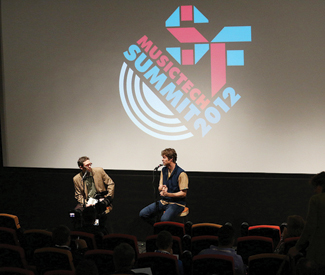
These questions may be answerless for now, but they maintained a heavy presence at the SF Musictech Summit hosted by the Hotel Kabuki — a semiannual conference dedicated to establishing a network among entrepreneurs, developers, record industry figures, and musicians in order to promote digital music business and find solutions for the issues plaguing the modern music industry.

Last week’s installment of the summit featured five talks — in panels with labels like “How Technology Destroyed the Music Industry” and “Artist Revenue Streams.”

It also brought some star power. Actor-musician Jared Leto’s interest with this budding industry brought him to the summit too. And despite the formal nature of the occasion, the 30 Seconds to Mars front person was besieged by attendees eager to get his take on the event, and his autograph. He told me that he’s “curious as to what solutions are being presented.”

But as the summit carried on, it became very became apparent that there are perhaps too many of these solutions being offered. In one of the early morning talks entitled “Artist Tools” moderator Hisham Dahud from Hypebot and Fame House kicked off the conversation by mentioning many of the new ways bands can distribute and promote their music and interact with their fans but also opined that “with new tools comes new responsibilities.”

http://www.youtube.com/watch?v=f7EaMxpKZZU

These new tools were well represented by David Dufresne of Bandzoogle, which designs web pages for bands, Matt Mason of file distributor BitTorrent, and David Haynes of the online audio platform SoundCloud. CEO of Global Digital Impact Taynah Reis and music industry veteran and Incubus manager Steve Rennie rounded out the panel.

During the discussion, Rennie’s stance was welcoming of the technological development, but later, when I asked him if the new digital music business could provide substantial income for the artist, he said, “I sure hope so. The fact is that more people are listening to music than ever but they are doing it different ways, including listening without buying…as people move to other formats like digital downloads and streaming services, we need more people to get comfortable with the idea that music has value and is worth paying for…We need to convince people that their favorite music is worth buying just as much as the beer they’ll spend $10 on at a concert or sporting event.”

The motivation and excitement to transform nearly every aspect of the music business was palpable at the summit. Elevator pitches were as ubiquitous as iPhones and Macbooks. However the fresh idealism was notably absent at the “Artist Revenue Streams” talk where musician Erin McKeown took center stage detailing the sobering situation independent musicians face, explaining that some obvious solutions aren’t so great

“Everyone keeps telling me to tour but the reality is that live performance revenue gets mostly eaten up by the costs and not to mention it’s also extremely taxing on my health”

But more importantly, McKeown emphatically addressed the one crucial issue that was sorely lacking attention throughout the conference: how are musicians suppose to keep up with and derive income from the rapidly evolving environment of music technology? Others on the panel brought up the fact that a lot of artists are unaware of nonprofits such as SoundExchange — an organization with the main goal of compensating artists for their royalties.

The Internet has been lauded as the great democratizer of this generation, and the adage was especially poignant for this specific realm of the digital world. Cellist and composer Zoë Keating, who spoke at the “Artists, Entrepreneurs & Technology,” panel expressed that digital music business caused her to be optimistic and it’s a more level playing field that’s “better for indie artists.” Keating has posted her 2011 income streams on her Tumblr to give her fans a glimpse of the financial situation her and other independent artists are grappling with.

No one seemed more interested in seeing the old music business vanquished than TuneCore founder (and former CEO) Jeff Price, who emphatically declared, “Artists never made any fucking money! What fucking world are you living in?!…The music industry is not collapsing, the traditional music industry is collapsing!” *


UP Festival will locate urban engineering ideas within the best of the SF arts scene

0

Technology-driven “tactical urbanism” will be on display Sat/20 at the Urban Prototyping (UP) Festival. Presented by the Gray Area Foundation for the Arts, the Intersection for the Arts, Rebar, and global design firm IDEO, the UP Festival will feature over 20 projects whose creators hope will be at the forefront of urban innovation. The various projects will be showcased on the streets and in parking lots in a three-block zone centered on the corner of 5th Street and Mission, and soundtracked by a rather stellar lineup of local theater, live music, and DJs. The festival promises to be an explosion of DIY tech meets DIY civic engagement meets SF art scene.

Each digitized urban mashup venture presented will essentially be a miniature replica of the desired development. The projects will include public urinals, reimagined urban gardens, and glowing crosswalks. In addition, one particular display that caught our eye entitled “Faces,” is a facial recognition plan that takes pictures of passing pedestrians and projects them on a nearby wall. Scary? Cool?

Hip-hop collective Felonius performs with theater group Campo Santo this weekend

Expect to see an array of some the best entertainment in the Bay, too. Hot Pocket, the Latin-funk ensemble comprised of Bayonics members will perform, along with Jazz Mafia and a host of other live music groups. Festival goers will get the privilege of a performance by Intersection for the Art’s resident theater company Campo Santo who collaborate on a piece with hip-hop collective Felonius. The GAFTA stage will host DJs from Haceteria’s Tristes Tropiques to Honey Sound System’s DJ P-Play, latter doing a set with visuals by Gabriel Dunne. Kicking off the festivities will be a live graffiti battle, for which artists like Ricardo “Apex” Richey and Jan Wayne Swayze will spray up works of art as you watch (don’t get too close unless you dig aerosol-head.)

UP Festival Expo

Sat/20, free

Mint and Hallidie Plazas

5th St. between Mission and Market, SF

sf.urbanprototyping.org

Living the dream of the 1840s

0

MUSIC There’s no better time for local composer Jake Heggie’s 2010 opera Moby-Dick to wash up on our shores, especially in terms of men’s fashion. Seriously — peacoats galore, henleys-and-suspenders perfection, button-up trousers, glorious galoshes, and perfectly nor’easter-tousled haircuts, not to mention a stubbly wealth of seafarin’ beards. The whole cast, outfitted by ace costume designer Jane Greenwood, might have dropped onto the stage from this fall’s All Saints Spitalfields lookbook. Forget the neoprene hoodies and double-breasted suitcoats of America’s Cup, here lies the real echo of San Francisco’s nautical past.

That echo emanates from Herman Melville’s water-logged epic of 1851, a massive compendium of American Romantic sensibility, arcane sea lore, fiery pagan-ecclesiastical poetry, and the archetypal thrashings of mad Ahab, captain of the Pequod, as he obsessively hunts his nemesis, the “great white fish” who nipped away with his left leg years ago, Moby-Dick. The book is also a full-throated exaltation of the culture of the North Atlantic whale trade, at its peak in the 1840s, and a furrowed-brow examination of humanity’s spooky morality, not to mention a rip-roaring, man’s-man adventure tale (complete enough homoerotic subtext to float a sperm whale).

Boiling all this down into an evening’s entertainment, even one as splashy and spectacle-drenched as opera can provide, is a bit like chasing a white whale itself. Fortunately, Heggie — who triumphed with 2002’s Dead Man Walking — and librettist Gene Scheer, along with a more-than-game San Francisco Opera cast and crew, dive right in.

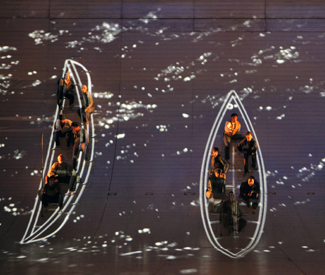
Moby-Dick immediately grabs attention and grounds itself in the Bay Area (the production debuted at the Dallas Opera) with an eye-popping display of one of our native crafts, digital sorcery. Projection designer Eliane J. McCarthy’s gorgeous 3-D renderings of star-maps and ships’ masts engulf the curtain as Heggie’s roiling, swooning overture guides us into the story. The rest of the production and staging throughout this two-and-a-half hour work, directed by Leonard Foglia with set design by Robert Brill, is equally jaw-dropping, with mobile scrims doublings as sail, a web of rigging filling the stage, and ingenious use of a humongous hull-shaped wall.

Another of Moby-Dick‘s riveting special effects: the SF Opera chorus, in fine and lusty voice, vocally painting in the details of the story. That story contrasts the touching friendship of greenhorn whaler Ishmael and harpooner Queequeg, cannibal prince of fictional South Sea isle Kokovoko, with the contentious relationship between the driven Ahab and his first mate, Starbuck, a homesick family man and devout Quaker who sees the Devil’s work in Ahab’s doomed quest. One of the most affecting characters is Pip, the impetuous and mentally unformed ship’s mascot, whose unhinged ramblings after he’s saved from drowning serve as warped prophecy as the opera progresses.

There’s so many meaty possibilities for a composer in this story, but if you’re expecting “yo-ho-ho and a bottle of rum” performed by full orchestra you’re barking up the wrong mizzenmast. To be sure, Heggie’s cinematic, neo-Romantic instincts — he prefers the term “theatrical,” and sometimes we do drift into Les Miz territory — make hay with sea storms, crashing waves, drunken brawls, and the melancholy feel of life adrift on the ocean. (A goofy-cute waltz comes on when the ship’s tipsy crew realize they’ll just have to partner up if they want to party, one of the few funny bits.) Heggie’s white whale is a shimmering arabesque, breaching a swirl of strings and cresting horns, at one momentous climax exploding into an off-kilter samba.

The score is mostly atmospheric, however, its foreboding drama cranked up to eleven throughout, with little standout melody or tonal attenuation to help the characters’ souls drop anchor. Despite a few memorable moments of soaring vocal lines — a duet in praise of Kokovoko’s Edenic promise by Queequeg (Jonathan Lemalu, imposing) and Ishmael (Stephen Costello, cubbishly adorable), sung from neighboring masts ; Starbuck’s ode to homelife back in Nantucket (performed by wonderfully powerful baritone Morgan Smith); the occasional cryptic outbursts of Pip (spry soprano Talise Trevigne, who does a bit of magic with a tambourine) — you’ll have to cling to the singers’ voices and acting technique if you want to keep emotionally afloat.

This becomes a problem with Jay Hunter Morris in the Ahab role. Although strongly voiced and valiantly game, he didn’t connect with me as a man who was truly obsessed, yet who retained enough charisma and cunning to draw the rest of the crew into his singular madness. His role struck me more as “friends’ crazy Tea Party dad” than “scarily fascinating apocalyptic cult leader.”

This could be a wrinkle of the libretto, which retains some of the original’s poetry and blasphemy — a pagan hymn here, an anti-religion diatribe there — but strains to convey an engaging dramatic arc for the characters. (It barely registers when all is lost for the Pequod.) In its earnest bluster, this presentation of the opera also skims over Melville’s haunting metaphysics, the eerie pull of nihilistic depths, the ecstatic fog of moral derangement, that preternatural whistle in fate’s vast gale. I disembarked from the rousing Moby-Dick dazzled and exhausted, though neither questing nor blubbering.

MOBY-DICK through Nov. 2, various times, $10–$340. War Memorial Opera House, 301 Van Ness, SF. www.sfopera.com


Live Shots: David Byrne and St. Vincent at the Orpheum

2

David Byrne opened his show with St. Vincent on Monday night by thanking the Orpheum for breaking its run of The Lion King for their performance. The David Byrne-St. Vincent show wasn’t too far off from the theater’s regular selection though. The eight piece brass band doing choreographed marching behind the duo had a theatrical effect, feeling somewhere between a Stop Making Sense-themed halftime show and an instrument-bearing ensemble in West Side Story.

The 60-year-old musical giant and 30-year-old indie star brought out a diverse crowd. Byrne was carrying on the legacy of art-school punk-turned-pop band, the Talking Heads, but some in the crowd seemed to be wondering “who is this pretty young talent helping espouse his eccentric philosophies?” The scalpers outside were only selling Byrne’s name on the tickets and there was an overabundant amount of “we love you David” cries from the audience.


You’d figure, though, that St. Vincent’s three studio albums of incredibly independent and experimental style, projects with diverse artists including Andrew Bird and Kid Cudi, and wide eyes on the cover of Spin magazine might have tipped these guys off as to who she is. Though St. Vincent did call Byrne at one point, “the resident preacher of the evening,” it was clear they were in equal limelight.

The two took turns performing songs from their collaboration, Love This Giant, as well as their own numbers, occasionally fitting their voices in for the harmony. The songs they picked from their respective catalogs carried themes from their joint album, including Byrne’s dilemma of trying to be human in modern America and St. Vincent’s struggles for freedom.

Though at times incredibly personal, the show had a broader message to its audience; one about people coming together despite their differences to figure out the strangeness of life. This was clearly illuminated in Byrne’s lines, “maybe someday we can stand together/ not afraid of what our eyes may see/ maybe someday I’ll understand it better/weird things inside of me.” Byrne even mimed some of these lyrics from “I Should Watch TV” so you couldn’t miss the point.

http://www.youtube.com/watch?v=DWZpX5dQYkA

Everything about the show fit together like the perfect duet: each one had a distinct personality when you tried to focus on them but usually they flowed together seamlessly. When St. Vincent dropped her voice to fit with Byrne on the album and they gave it the egocentric sounding title, Love This Giant, (a reference to Byrne) a lot of the indie fans might have panicked that she would be overshadowed, but in fact this created really great tension.

It allowed St. Vincent to show off her tough core, like when she stood alone, legs apart, rocking on guitar and belting a cry for help in the song “Marrow” from her album Actor. Meanwhile, the band kept the energy up by standing behind her in two opposing lines, bobbing like the Sharks and Jets preparing to rumble.

Surprisingly, the two didn’t use their collaboration to develop from each other musically in the experimental way that Byrne has worked with others, like with Brian Eno. Aside from the brass band, which functioned more as a fun, symbolic decision, we saw the two employing a lot of styles from their previous work. It seemed like they knew already what they wanted their relationship to be: two people standing together despite their differences. And they pulled it off well (thankfully, without a hint of sexual tension).

In this nature, the two swapped soul-sharing moments throughout the show. It began with St. Vincent’s cries for support among flashing lights and dramatic staging while Byrne’s numbers were much more casual, with the musicians lounging around the stage.

As St. Vincent stepped into a more confident role later in the evening, Byrne began to open up with his self-mocking, “Lazy.” By the end though, both performers emerged from their calls to action and got the house on its feet for a small dance party to a few Talking Heads and St. Vincent solo hits, a rare treat in the formal theater setting.


All photos by Bennett Cox.

Live Shots: ABADA-Capoeira’s “The Spirit of Brazil”

0

Sparking machetes. Lots of them, clanking against each other, as the dancers holding them ran in circles.

I’ll be honest, sitting in the front row was slightly intimidating, and also rather exhilarating! The ABADÁ-Capoeira dance troupe, plus special guests from as far Switzerland, filled the stage with pure energy, in rehearsal for the troupe’s “Spirit of Brazil” show, running Thu/18-Sun/20. 

One of the dances tells the story of an ancient church in Brazil, where people of all religions went to be blessed. It was a moody and beautiful piece. There’s live music, soulful singing by the musicians and the dancers, and, yes, seriously speedy dance moves involving very large, sharp knives. It’s primal, wild, and filled with history. Go see it — just make sure your eyebrows don’t get shaved off!

ABADÁ-Capoeira San Francisco’s “The Spirit of Brazil”
Thur/18-Sat/20, 7pm, $23
Sun, October 21, 3pm
ODC Theater
3153 17th St., SF
www.odcdance.org

Our Weekly Picks: October 17-23

0

WEDNESDAY 17

Bob Dylan

What does one need to know in order to decide whether or not to go to one of the upcoming Bay Area Bob Dylan concerts? What more can you say about a legendary singer-songwriter who has left an indelible mark on the fabric of American culture for 50 years — the man who earlier this year was given the Presidential Medal of Freedom for his contributions to this country via his more than 600 songs, including “The Times They Are A-Changin'” and “Blowin’ in the Wind?” All you need to know is that Dylan is in town, there are still tickets available, and you will never forgive yourself if you miss the opportunity to see this one of a kind icon. (Sean McCourt)

With Mark Knopfler

Wed/17-Thu/18, 7:30pm, $59.50–$125

Bill Graham Civic Auditorium

99 Grove, SF

www.apeconcerts.com


THURSDAY 18

Makers Nightlife

Do you need to have a reason to engineer cool robots and get generally crafty? If your answer is, “No, just do it!” you might like Maker Faire, a showcase of DIY creativity and cool technology. And there doesn’t seem to be a better place to see it than inside the living domes of the California Academy of Sciences. Many projects will be on display for you to ogle and nerd-out on, including pieces by Applied Kinetic Arts and a jukebox-style dancing robot. If the creativity gets you itching to work with your hands, the event will be ready with a craft table for making freak flags. Or you can just sit back and enjoy a live performance by the very cerebral, digital painter, J-Watt. Either way, it should be a fun night of quirkiness, creativity, and intellectual stimulation. (Molly Champlin)

6pm, $12

California Academy of Sciences

55 Music Concourse

(415) 379-8000

www.calacademy.org


FRIDAY 19

Jason Lytle of Grandaddy

It’s been a great year to be a Grandaddy fan. Not only did 2012 yield a handful of unexpected reunion shows for the Modesto space pop band (including an excellent Outside Lands night show at the Independent), but now frontperson Jason Lytle has just released Dept. of Disappearance, his second album of solo material. Just as on 2009’s Yours Truly, the Commuter, Lytle’s new batch of tracks maintains his knack for penning achingly beautiful songs full of swoon-worthy keyboard lines, touching lyrics, and warmly lush DIY production. (Landon Moblad)

With Sea Of Bees

8pm $20

Swedish American Hall

2174 Market, SF

(415) 861-5016

www.cafedunord.com


Stolen Babies and the Fuxedos

While there’s a good chance that you’ll be terrified, bemused, appalled, or amazed by the aggressively madcap triple-header of Darling Freakhead, the Fuxedos, and Stolen Babies, you most certainly will not be bored. What with the polymetric layers of Darling Freakhead’s nihilistic introspection, the twisted, sideshow extroversion of the Fuxedos’ leader, Danny Shorago, and the steampunkish dark carnival menace of Stolen Babies, plus plenty of puppet carnage, costume changes, and apocalyptic accordion interludes, this is one evening guaranteed to haunt your consciousness, as well as your eardrums, for a long time afterwards. (Nicole Gluckstern)

9pm, $12

Bottom of the Hill

1233 17th St., SF

(415) 621-4455

www.bottomofthehill.com


Tiger Army

Berkeley-spawned rocker band Tiger Army released its self-titled debut record 13 years ago this month — so it’s a fitting time to return to the Bay Area for two special shows, part of “Octoberflame,” a fifth annual run of gigs that take place around each Halloween. Here’s hoping the band kicks off with its classic intro of “Nightfall” and “Nocturnal,” a psychobilly-tinged combo from the early days that would set the standard for the group’s darkly melodic sound — it would be a most appropriate soundtrack for the season. (McCourt)

With the Goddamn Gallows, Death March (Fri.); Suedehead, God Module (Sat.).

Fri/19-Sat/20, 8:30pm, $23

Slim’s

333 11th St., SF

(415) 255-0333

www.slimspresents.com


SATURDAY 20

Trolley Dances

The idea started in San Diego, where streetcars actually are called trolleys. This hasn’t stopped the yearly version of San Francisco Trolley Dances to become a major hit among (some) tourists and (lots of) locals. Now in its ninth year, this mini-festival of public art has yet to run out of steam. More and more artists — and not only dancers — seem to be excited about the format. The offerings this time around include stilt walkers and circus artists, dance theater companies, carnival performers, and dancers from street to modern to African. You can do the whole tour on foot or on a bike if you are so inclined. For a map, consult the website. (Rita Felciano)

Sat/20-Sun/21, 11am- 2:45pm (every 45 min), free with Muni ticket

Starts at Mission and Fifth Street, SF

(415) 226-1139

www.epiphanydance.org


The Hula Show 2012

You might think about hula and imagine rapidly shaking grass skirts finishing off a day spent lounging on refreshingly warm, blue beaches. If you feel that Hawaiian vacation nostalgia hitting you, let Na Lei Hulu I Ka Wekiu transport you back. Evoking the slow pace of Hawaiian life, their dances allow you to luxuriate in each movement like a cool breeze rustling through palm trees. But it’s not all poi and roasted pig — the San Francisco-based troupe brings things up to the city pace by mixing traditional Hula with more contemporary music and styles to create a dynamic stage performance. Be prepared to open your eyes to Polynesian dance as an art form in a way you’ll never see at a tourist-attraction luau. (Champlin)

Through Oct. 28

Sat/20, 8pm; Sun/21, 3pm, $35-$45

Palace of Fine Arts Theater

3301 Lyon

(415) 392-4400

www.palaceoffinearts.org


Wax Idols

Wax Idols’ badass frontperson Heather Fedewa (who goes by the moniker “Hether Fortune”) has dubbed her refreshingly unique garage pop-punk-death rock genre “morbid classics” and cites Christian Death as a prominent artistic influence. This raucous Oakland-based quartet brings it on heavy, but its fun, sardonic tunes are quite accessible to the less-than-devout death rockers among us. Fortune’s songs focus on morbidity, love, and defiance, and the band’s sound oscillates between the sunny, upbeat punk of “Gold Sneakers” and the dark and raw introspection of “The Last Drop.” Wax Idols recently finished recording their second LP, so stay tuned! (Mia Sullivan)

With Wymond Miles, Evil Eyes

8pm, $10

Brick and Mortar

1710 Mission, SF

(415) 800-8782

www.brickandmortarmusic.com


Masquerotica

Those suffering post-Folsom exhibitionist blues need no longer wear overmuch clothing, for one night at least. Masquerotica takes over one of the largest venues in town — which, hooray, isn’t the hard to get to Cow Palace. The Concourse Exhibition Center is way closer to the center of town, way less mileage to truck your thigh highs and stripper-envy through. The bash promises a stadium-sized assortment of erotic artists, DJs, acrobats, and fetish designers vending their leather and lace wares. Rest assured that T&A won’t be the only stars present: Kink.com talent, contortionist Sylvia Currin, the ladies of Trannyshack, and lascivious visual artists will all be featured at the second year in a row of this no-streetwear-allowed blowout. (Caitlin Donohue)

8:30pm-3am, $55–$125

Concourse Exhibition Center

635 Eighth St., SF

www.masquerotica.com


SUNDAY 21

Kaki King

A talented guitarist who has done the indie-rock thing and just married her partner in New York last week (seriously California, get on it), don’t let Kaki King fool you; she’s not another Tegan and Sara. More about the music than the iconery, Kaki King is exploring life through her love of guitar and the result is genuinely heartfelt and evocative work. She began learning the instrument at the age of four but soon became more serious about drums. Luckily for us, she returned to guitar for her classical training in college. Percussive techniques remain a signature of her style though and are just one way she explores all that the instrument can do, including unique tunings and steel lap guitar. Her new album, Glow, is entirely instrumental and a little more experimental than previous work. She describes this step in a new direction as one of those things that you can’t believe you’ve made, like something bigger than you must have been helping out. (Champlin)

With Lady Lamb the Beekeeper

7pm, $20; 9pm, $15

Yoshi’s SF

1330 Fillmore, SF

(415) 655-5600

www.yoshis.com


MONDAY 22

Ultraísta

Few artists split the difference between alt and mainstream as convincingly as Radiohead/Beck/R.E.M. mega-producer Nigel Godrich. Yet, while he’s built a giant reputation as a behind-the-scenes figure, the guy’s true musical sensibility has always remained somewhat of a mystery. Until now, with the development of Ultraísta: a hypnotic, Afrobeaty, Krautified synth-pop band he can proudly call his own. Think of them as a 21st century equivalent to Garbage: another supergroup of sorts, featuring assertive female vocals, synth contributions from an elusive knob-twiddler for the stars (in their case, Nirvana producer Butch Vig), and deep, layered production that’s constantly busy but never muddy or overstuffed. On Ultraísta’s self-titled debut, Godrich’s angular, heavily syncopated King of Limbs aesthetic remains in full force; we’re just glad to hear him writing the hooks this time around. (Taylor Kaplan)

With Astronauts, etc.

8pm, $18

Independent

628 Divisadero, SF

(415) 771-1421

www.theindependentsf.com


TUESDAY 23

Dan Deacon

If there were anything that could top the hyperkinetic charm of a Dan Deacon album, it would likely be a Dan Deacon show. The Baltimore-based experimental electronic musician treats live performances as joyous, life-affirming events full of enthusiastic crowd participation, all spearheaded by Deacon himself. America, his newest LP, continues to evolve the more nuanced and fleshed out sound he first dabbled with on Bromst in 2009. As a result, this tour’s live shows will include a full backing ensemble to help recreate America‘s frenetic blend of electronic composition and live orchestration. (Moblad)

With Height with Friends, Chester Endersby Gwazda, Alan Resnick

8pm, $16

Great American Music Hall

859 O’Farrell, SF

(415) 885-0750

www.slimspresents.com

Stage Listings

0

Stage listings are compiled by Guardian staff. Performance times may change; call venues to confirm. Reviewers are Robert Avila, Rita Felciano, and Nicole Gluckstern. Submit items for the listings at listings@sfbg.com. For further information on how to submit items for the listings, see Picks.

THEATER

OPENING

And That’s What Little Girls Are Made Of Tides Theatre, 533 Sutter, SF; www.whatgirlsaremadeof.com. $20-30. Opens Thu/19, 8pm. Runs Thu-Sat, 8pm; Sun, 2pm. Through Nov 4. Jennifer Wilson’s multimedia play chronicles her attempts to break into the male-dominated world of venture capital funds.

Fat Pig Boxcar Theatre Studio, 125A Hyde, SF; www.brownpapertickets.com. $20. Opens Thu/18, 8pm. Runs Thu-Sat, 8pm. Through Nov 10. Theater Toda presents Neil LaBute’s dark comedy about a man who faces scrutiny from his friends when he falls for a plus-sized woman.

Fierce Love: Stories From Black Gay Life New Conservatory Theatre Center, 25 Van Ness, SF; www.nctcsf.org. $25-37. Previews Wed/17-Thu/18, 8pm. Opens Fri/19, 8pm. Runs Wed-Sat, 8pm; Sun, 2pm. Through Oct 28. Pomo Afro Homos performs a revival of of its 1991 hit about the struggles of African American gay men in America.

BAY AREA

Richard III Live Oak Theatre, 1301 Shattuck, Berk; www.aeofberkeley.org. $12-15. Opens Fri/19, 8pm. Runs Fri-Sat, 8pm. Through Nov 17. Actors Ensemble of Berkeley performs the Shakespeare classic.

Within the Wheel Live Oak Park, 1301 Shattuck, Berk; www.raggedwing.org. Free. Previews Wed/17, 6pm. Opens Thu/18, 6pm. Runs Thu-Sat, 6pm (last entry 7:30pm; special Halloween show Oct 31). Through Nov 3. Ragged Wing Ensemble presents an immersive performance experience inspired by the Tibetan Book of the Dead.

ONGOING

Bound By Blood Boxcar Theatre Playhouse, 505 Natoma, SF; www.ianiroproductions.com. $20. Thu-Sat, 8pm. Through Oct 27. Opening on the heels of ACT’s production of The Normal Heart, local theater-maker Eric Inman’s Bound By Blood also explores the devastating human fallout of the AIDS crisis as experienced by the two families — one of blood relations and one of chosen friends — of a young gay man, whose death affects them all. Appearing onstage both as a ghost and in a series of flashbacks, Justin Walker (played by Inman) deals with his fear of dying by ditching his meds in favor of drink, and his fear of coming out to his conservative family by postponing the inevitable until it’s too late, leaving his friends holding the burden of his inconvenient truth in their unwilling hands. Awkward moments abound as Justin’s buddies ponder the ethics of outing him posthumously, as his mother (Sally Hogarty) and sister (CC Sheldon) bicker incessantly and his erstwhile "beard" Alice (Abigail Edber) pluckily spearheads the funeral planning. This is Inman’s first full-length play, which helps to explain the often-clunky dialogue and under-developed characters that unfortunately obscure the play’s dramatic potential, but the ideals he champions within — tolerance, self-acceptance, integrity, loyalty, love — are ones well worth exploring, even imperfectly. (Gluckstern)

Elect to Laugh Marsh San Francisco, 1062 Valencia, SF; www.themarsh.org. Tue, 8pm. Through Nov 6. $15-50. Veteran political comedian Will Durst emphasizes he’s watching the news and keeping track of the presidential race "so you don’t have to." No kidding, it sounds like brutal work for anyone other than a professional comedian — for whom alone it must be Willy Wonka’s edible Eden of delicious material. Durst deserves thanks for ingesting this material and converting it into funny, but between the ingesting and out-jesting there’s the risk of turning too palatable what amounts to a deeply offensive excuse for a democratic process, as we once again hurtle and are herded toward another election-year November, with its attendant massive anticlimax and hangover already so close you can touch them. Durst knows his politics and comedy backwards and forwards, and the evolving show, which pops up at the Marsh every Tuesday in the run-up to election night, offers consistent laughs born on his breezy, infectious delivery. One just wishes there were some alternative political universe that also made itself known alongside the deft two-party sportscasting. (Avila)

The Fifth Element: Live! Dark Room Theater, 2263 Mission, SF; www.darkroomsf.com. Fri-Sat, 8pm. Through Oct 27. Comedic adaptation of the 1997 Luc Besson sci-fi epic.

Foodies! The Musical Shelton Theater, 533 Sutter, SF; www.foodiesthemusical.com. $30-34. Fri-Sat, 8pm (no show Nov 17). Open-ended. AWAT Productions presents Morris Bobrow’s musical comedy revue all about food.

Geezer Marsh San Francisco, 1062 Valencia, SF; www.themarsh.org. $30-100. Sat, 8pm; Sun, 7pm. Through Nov 18. Geoff Hoyle’s popular solo show about aging returns.

Love in the Time of Zombies Café Royale, 800 Post, SF; sftheaterpub.wordpress.com. Free ($5 donation suggested). Mon-Tue, 8pm. Through Oct 30. San Francisco Theater Pub performs Kirk Shimano’s "rom-zom-com."

Of Thee I Sing Eureka Theatre, 215 Jackson, SF; www.42ndstmoon.org. $25-75. Wed, 7pm; Thu-Fri, 8pm; Sat, 6pm; Sun, 3pm. Through Oct 21. 42nd Street Moon performs George and Ira Gershwin’s classic political satire.

The Real Americans Marsh San Francisco, 1062 Valencia, SF; www.themarsh.org. $25-50. Fri, 8pm; Sat, 8:30pm. Extended through Oct 27. Dan Hoyle’s hit show, inspired by the people and places he encountered during his 100-day road trip across America in 2009, continues.

Roseanne: Live! Rebel, 1760 Market, SF; www.brownpapertickets.com. $25. Wed, 7 and 9pm (no shows Oct 31). Through Nov 14. Lady Bear, Heklina, D’Arcy Drollinger, and more star in this tribute to the long-running sitcom.

The Scotland Company Exit Theatre, 156 Eddy, SF; www.thunderbirdtheatre.com. $15-25. Thu-Sat, 8pm; Sun, 3pm. Through Oct 27. Thunderbird Theatre Company performs Jake Rosenberg’s new comedy.

Shocktoberfest 13: The Bride of Death Hypnodrome, 575 10th St, SF; www.thrillpeddlers.com. $25-35. Thu-Sat, 8pm. Through Nov 17. Thrillpeddlers’ seasonal assortment of yeasty Grand Guignol playlets is a mixed bag of treats, but it all goes so nicely with the autumnal slink into early nights and dark cravings. Fredrick Whitney’s Coals of Fire is lightly amusing, if far from smoking, as a two-hander about a blind older matron (Leigh Crow) who discovers her young companion (Zelda Koznofski, alternating nights with Nancy French) has been secretly schtupping her husband. I’m a Mummy is a short, not very effective musical interlude by Douglas Byng, featuring the bright pair of Jim Jeske and Annie Larson as Mr. and Mrs., respectively. The titular feature, The Bride of Death, written by Michael Phillis and directed by Russell Blackwood, proves a worthy centerpiece, unfolding an intriguing, well-acted tale about a reporter (Phillis) and his photographer (Flynn DeMarco) arriving at a stormy castle to interview a strangely youthful Grand Guignol stage star (Bonni Suval) making her film debut. After another, this time more rousing musical number, Those Beautiful Ghouls (with music and lyrics by Scrumbly Koldewyn; directed and choreographed by D’Arcy Drollinger), comes the evening’s real high point, The Twisted Pair by Rob Keefe, acted to the bloody hilt by leads Blackwood and DeMarco as the titular duo of scientists driven mad by an experimental batch of ‘crazy’ glue. All of it comes capped, of course, by the company’s signature lights-out spook show. (Avila)

"Strindberg Cycle: The Chamber Plays in Rep" Exit on Taylor, 277 Taylor, SF; www.cuttingball.com. $10-50 (festival pass, $75). Previews Oct 25, 7:30pm and Oct 26, 8pm (part two); Nov 1, 7:30pm and Nov 2, 8pm (part three). Opens Thu/18, 7:30pm (part one); Oct 27, 8pm (part two); and Nov 3, 8pm (part three). Runs Thu, 7:30pm; Fri-Sat, 8pm (also Sat, 2pm); Sun, 5pm. Through Nov 18. Cutting Ball performs a festival of August Strindberg in three parts: The Ghost Sonata, The Pelican and The Black Glove, and Storm and Burned House.

The Waiting Period Marsh San Francisco, 1062 Valencia, SF; www.themarsh.org. $15-50. Thu-Fri, 8pm; Sat, 5pm. Extended through Oct 27. Brian Copeland (comedian, TV and radio personality, and creator-performer of the long-running solo play Not a Genuine Black Man) returns to the Marsh with a new solo, this one based on more recent and messier events` in Copeland’s life. The play concerns an episode of severe depression in which he considered suicide, going so far as to purchase a handgun — the title coming from the legally mandatory 10-day period between purchasing and picking up the weapon, which leaves time for reflections and circumstances that ultimately prevent Copeland from pulling the trigger. A grim subject, but Copeland (with co-developer and director David Ford) ensures there’s plenty of humor as well as frank sentiment along the way. The actor peoples the opening scene in the gun store with a comically if somewhat stereotypically rugged representative of the Second Amendment, for instance, as well as an equally familiar "doood" dude at the service counter. Afterward, we follow Copeland, a just barely coping dad, home to the house recently abandoned by his wife, and through the ordinary routines that become unbearable to the clinically depressed. Copeland also recreates interviews he’s made with other survivors of suicidal depression. Telling someone about such things is vital to preventing their worst outcomes, says Copeland, and telling his own story is meant to encourage others. It’s a worthy aim but only a fitfully engaging piece, since as drama it remains thin, standing at perhaps too respectful a distance from the convoluted torment and alienation at its center. (Avila)

BAY AREA

Acid Test: The Many Incarnations of Ram Dass Marsh Berkeley, 2120 Allston, Berk; www.themarsh.org. $15-50. Thu-Fri, 8pm; Sat, 5pm. Through Nov 24. Lynne Kaufman’s new play stars Warren David Keith as the noted spiritual figure.

Assassins Ashby Stage, 1901 Ashby, Berk; www.shotgunplayers.org. $20-30. Wed-Thu, 7pm; Fri-Sat, 8pm; Sun, 5pm. Through Nov 4. Shotgun Players interrupts this season of dreary electoral debates with an important announcement about the country you live in, as the sure and provocative 1990 musical by Stephen Sondheim (music and lyrics) and John Weidman (book) stitches together American history’s odd assortment of successful and failed presidential assassins to explore the darker recesses of the national mythos. Through an eclectic score of deft period-specific songs and the narrative framework of a feverish carnival shooting gallery — overseen by a nefarious proprietor (Jeff Garrett) — a pageant of kooks and rebels parades, beginning with pioneer assassin John Wilkes Booth (an aptly imposing Galen Murphy-Hoffman). He, in turn, acts as a sort of patron saint to those that follow in his footsteps — including Charles Guiteau (Steven Hess), Leon Czolgosz (Dan Saski), Giuseppe Zangara (Aleph Ayin), John Hinckley (Danny Cozart), Sam Byck (Ryan Drummond), Sara Jane Moore (Rebecca Castelli), Squeaky Fromme (Cody Metzger), and of course Lee Harvey Oswald (Kevin Singer, in a part that doubles with that of the Balladeer). Throughout, director Susannah Martin’s strong cast and musical director David Möschler’s lively eight-piece band insure a raucous, thoughtful, and intimate American fever dream. (Avila)

An Iliad Berkeley Repertory Theatre, Roda Theatre, 2015 Addison, Berk; www.berkeleyrep.org. $14.50-77. Opens Wed/17, 8pm. Runs Tue and Thu-Sat, 8pm (also Sat, 2pm); Wed and Sun, 7pm (also Sun, 2pm). Through Nov 11. Berkeley Rep performs Lisa Peterson and Denis O’Hare’s Homer-inspired tale.

The Kipling Hotel: True Misadventures of the Electric Pink ’80s Marsh Berkeley, 2120 Allston, Berk; www.themarsh.org. $20-50. Sat, 8:30pm; Sun, 7pm. Extended through Dec 16. This new autobiographical solo show by Don Reed, writer-performer of the fine and long-running East 14th, is another slice of the artist’s journey from 1970s Oakland ghetto to comedy-circuit respectability — here via a partial debate-scholarship to UCLA. The titular Los Angeles residency hotel was where Reed lived and worked for a time in the 1980s while attending university. It’s also a rich mine of memory and material for this physically protean and charismatic comic actor, who sails through two acts of often hilarious, sometimes touching vignettes loosely structured around his time on the hotel’s young wait staff, which catered to the needs of elderly patrons who might need conversation as much as breakfast. On opening night, the episodic narrative seemed to pass through several endings before settling on one whose tidy moral was delivered with too heavy a hand, but if the piece runs a little long, it’s only the last 20 minutes that noticeably meanders. And even with some awkward bumps along the way, it’s never a dull thing watching Reed work. (Avila)

Richard the First: Part One, Part Two, Part Three Berkeley City Club, 2315 Durant, Berk; www.centralworks.org. $14-25. Opens Thu/18, 8pm (part one); Fri/19, 8pm (part two); and Sat/20, 8pm (part three). Runs Thu-Sat, 8pm; Sun, 5pm (three-part marathon Sundays, Nov 11 and 18, 2, 5, 8pm). Through Nov 18. This Central Works Method Trilogy presents a rotating schedule of three plays by Gary Graves about the king known as "the Lionheart."

Sex, Slugs and Accordion Marsh Berkeley, 2120 Allston, Berk; www.themarsh.org. $10. Wed, 8pm. Through Nov 14. Jetty Swart, a.k.a. Jet Black Pearl, stars in this "wild and exotic evening of song."

33 Variations TheatreWorks at the Mountain View Center for the Performing Arts, 500 Castro, Mtn View; www.theatreworks.org. $23-73. Tue-Wed, 7:30pm; Thu-Sat, 8pm (also Sat, 2pm); Sun, 2 and 7pm. Through Oct 28. TheatreWorks performs Moisés Kaufman’s drama about a contemporary musicologist struggling to solve one of Beethoven’s greatest mysteries, and a connecting story about the composer himself.

Topdog/Underdog Marin Theatre Company, 397 Miller, Mill Valley; www.marintheatre.org. $36-57. Wed/17, 7:30pm; Thu/18-Sat/20, 8pm (also Sat/20, 2pm); Sun/21, 2 and 7pm. Marin Theatre Company performs Suzan-Lori Parks’ Pulitzer Prize winner about a contentious pair of brothers.

The World’s Funniest Bubble Show Marsh Berkeley, 2120 Allston, Berk; www.themarsh.org. $8-50. Sun, 11am; Nov 23-25, 11am. Through Nov 25. Louis "The Amazing Bubble Man" Pearl brings his lighter-than-air show back to the Marsh.

PERFORMANCE/DANCE

Alonzo King LINES Ballet Yerba Buena Center for the Arts Theater, 700 Howard, SF; www.ybca.org. Fri/19-Sat/20 and Oct 24-27, 8pm; Sun, 5pm. Through Oct 28. The company celebrates 30 years with its fall home season.

BATS Improv Bayfront Theater, B350 Fort Mason Center, SF; www.improv.org. Fri, 8pm, through Oct 26: "This Just In!," $20. Sat, 8pm, through Oct 27: "Improvised Horror Musical," $20.

"Comedy Bodega" Esta Noche Nightclub, 3079 16th St, SF; www.comedybodega.com. Thu, 8pm. Ongoing. No cover (one drink minumum). This week: Amy Miller, Kurt Weitzmann, Martini Paratore, and Jessica Sele.

"Comikaze Lounge" Café Royale, 800 Post, SF; www.comikazelounge.com. Wed/17, 8pm. Free. Stand-up with Casey Ley and more.

"Crooked Little Hearts" Dance Mission Theater, 3316 24th St, SF; www.brownpapertickets.com. Fri/19-Sat/20, 8pm. $20. The Ananta Project’s home season includes a world premiere that uses dance to explore the nuances of human intimacy.

"Gravity (and other large things)" NOHspace, 2840 Mariposa, SF; www.performancelab.org. Fri/19-Sat/20, 8pm; Sun/21, 4pm. $12-25. Right Brain Performancelab present this evening-length dance-theater piece.

"Halloween! The Ballad of Michele Myers" CounterPULSE, 1310 Mission, SF; michelemyers2012.eventbrite.com. Fri-Sun and Oct 31, 8pm. Through Oct 31. $25. Drag superstar Raya Light returns in the seasonally-appropriate horror musical.

"The Hula Show 2012" Palace of Fine Arts, 3301 Lyon, SF; www.naheihulu.org. Sat/20 and Oct 26-27, 8pm; Sun/21 and Oct 28, 8pm (children’s matinee Oct 28, noon). $35-90. Na Lei Hulu I Ka Wekiu performs its annual show, featuring a hula satirizing President Obama’s birth certificate controversy.

"Let Us Find the Words" Contemporary Jewish Museum, 736 Mission, SF; www.thecjm.org. Thu/18, 6:30pm; Fri.19, 1pm. Free with museum admission ($5-12). Actors Dominique Frot and Alexander Muheum present a dramatic reading of letters between poets Ingeborg Bachmann and Paul Celan.

"Perverts Put Out: The Election Erection Edition" Center for Sex and Culture, 1369 Mission, SF; www.sexandculture.org. Sat/20, 7:30. $10-20. Dr. Carol Queen and Simon Sheppard host performances by Jen Cross, Greta Cristina, Gina de Vries, and more.

"San Francisco Magic Parlor" Chancellor Hotel Union Square, 433 Powell, SF; www.sfmagicparlor.com. $40. Thu-Sat, 8pm. Ongoing. Magic vignettes with conjurer and storyteller Walt Anthony.

"San Francisco Trolley Dances 2012" 925 Mission, SF; www.epiphanydance.org. Sat/20-Sun/21, tours leave at 11am, 11:45am, 12:30pm, 1:15pm, 2pm, and 2:45pm. Free with Muni fare ($2). Climb aboard Muni for a unique performance experience at this annual event presented by Kim Epifano’s Epiphany Productions.

ShadowLight Theatre St. Cyprian’s Church, 2097 Turk, SF; www.noevalleymusicseries.com. Sat/20, 8pm. $15. Balinese shadow puppet theater with live gamelan accompaniment.

"Smack Dab" Magnet, 4122 18th St, SF; www.magnetsf.org. Wed/17, 8pm. Free. Open mic featuring local authors Belo Cipriani and Jim Provenzano.

"Times Bones" Kanbar Hall, Jewish Community Center of San Francisco, 3200 California, SF; www.mjdc.org. Thu/18-Sat/20, 8pm; Sun/21, 7pm. $18-31. Margaret Jenkins Dance Company previews a new work that will premiere in 2013.

Close encounters

0

arts@sfbg.com

DANCE The six dancers of Kunst-Stoff’s the moment you stood still…#7 moNOs (Oct. 13-14 at the Old Mint Museum) managed to do something that had previously seemed impossible: they created a playground out of the building’s crumbling courtyard, surely the city’s most oppressive, garrison-like structure. At 50 minutes this romp of stealing, sharing, and varying movement phrases ranged from athletic to balletic, virtuosic to pedestrian. It would have worn out its ability to snare you into its universe, had it not ended with artistic director Yannis Adoniou’s free-spirited and loose-limbed solo, sweetly underscored by Bruno Augusto on keyboard. It’s easy to forget that this entrepreneurial artist is also a fine dancer.

Kunst-Stoff is not so much a company as a place where artists come together to explore affinities and differences. moment, one of a series of such encounters, is the result of this sextet having bounced back and forth ideas of the most disparate nature. Together they came up with scenes which varied between silly and somber, camp and charming. There was as much room for a passing-a-ball game — including, of course, the ubiquitous audience volunteers — as crawls and rolls on the floor and leaps across space. Letting down your hair, as Katie Gaydos did in her initial diagonal, seemed to be the order of the afternoon.

Initially unrelated ideas began to coalesce into something like a patchwork of movement, with rather surprising resilience. A dancer morphed from lying down with beating legs into somersaults and yoga poses. Later, frisky pile-ups did not really look so harmless.

For all the frantic activity in which dancers did not only pick up and vary phrases from each other, but also exchanged clothes, moment did not lack the stillness alluded to by its title. Lindsey Renee Derry, who can scream with the best of them, stood in a relevé in which her toes surely were glued to the floor. Gaydos looked abandoned on top of a “monument” while Calvin Hilpert, holding a weight aloft as if it was about to drop on his head, was hilarious with a screechy Frank Sinatra imitation. moment‘s recurring refrain had the dancers sitting on a bench. We looked at them; sometimes they looked back at us.

Elsewhere on stage this past weekend: British choreographer Russell Maliphant introduced himself at Cal Performances with the theatrically spectacular Eonnagata in 2010. Now, courtesy of San Francisco Performances, he returned with AfterLight (Oct. 13-14, Yerba Buena Center for the Arts), inspired by Russian dancer and Ballets Russes choreographer Vaslav Nijinsky. A great dancer and even greater choreographer, Nijinsky was also schizophrenic and spent the second half of his life in mental institutions. His best-known surviving work Afternoon of a Faun thoroughly shocked audiences at its premiere in 1912.

On the basis of his concept Maliphant intermittently draws you into a murky atmosphere of, perhaps, madness. But as a dance you only want to watch AfterLight once; further exposure is unlikely to reveal hidden treasures.

In Michael Hull’s lighting design, AfterLight is literally dark; at times you can hardly make out the dancers in a couple of shifting spotlights or through a thick carpet of inchoate shapes. As a single-minded expression of a restless mind this worked; in terms of a time-based art, it lacked sustaining power.

AfterLight opened with a solo for Thomasin Gülgeç, spinning as if on a turntable while his arms reached into the darkness around him. At the end we returned to that solitary figure that, instead of opening his body to an enlarging consciousness, shuts down into solitary whirls. In part two, the white-clad Silvina Cortés and Gemma Nixon’s gentle liquidity could have come from Isadora Duncan dancers.

Maliphant’s choreography has no hard edges; its performers spiraled, curled, and spun from one evanescent moment to the next. Sometimes this felt like watching smoke, except that these dancers were anchored in a deep-grounded muscularity that allowed them to connect into an endless stream of rounded shapes. In the first pas de deux, Gülgeç and Nixon’s weighty folding over each other wonderfully recalled Leon Bakst’s illustrations of Scheherazade. Though conceptually intriguing, AfterLight turned out to be a one-shot deal; whether there is more meat to this choreographer remains to be seen.

Live Shots: Treasure Island Music Festival 2012

0

Music nerds talk lineups the way sports fans manage fantasy teams, particularly with festivals, where suddenly strategy becomes a part of catching a show. Treasure Island Music Festival, is sort of an exception, since in theory you can catch every single act, given the two alternating stages. At the same time, this means that unless you head to the silent disco or take a nap, one of those geeks will be standing behind you during a set, obsessively talking about how the lineup should be slotted differently.

Day 1
SF’s Dirty Ghosts had the challenging task of being a rock band opening the festival on the traditional hip-hop/electronic day. K. Flay followed, and told the crowd “I know it’s early, but we can still party,” and the local MC proceeded to give a hair tossing performance that had her drummer breaking a snare. It was a decent lead in for Oakland’s the Coup. Boots Riley has been off my radar for a bit, but it appears our ambassador of P-funked rap has been keeping more than his afro tight – pulling from now-more-appropriate-than-ever classics like “5 Million Ways to Kill a C.E.O” and the upcoming Sorry to Bother You.

At 2:31pm, a guy in a tie-dye Quicksilver shirt was vomiting near where Grimes was playing: the festival had started. Like Matthew Dear and Porter Robinson, Grimes is a returning acts from this year’s Noise Pop. Maybe it was just her bandmate’s flowing iridescent ponchos, but Grimes’ sound seemed lighter than at the Rickshaw Stop. I decided I preferred this side of Grimes, but the Euro bubblegum quality of the creepily infantile “Phone Sex” was pushing it. Matthew Dear seemed out of place in full sun on the Bridge Stage, fog machines pumping. His set was similar to what I heard at Public Works, but progressed slowly. Nearing the end of his set the band got into a groove with “You Put a Smell on Me” but it’ was a little late.

Toro y Moi sounded just like when I saw it a couple years back, but would probably have fit in better somewhere on Sunday. Near the end you could hear a DJ on the other stage playing snippets and raising the crowd, partly using soundcheck to hype for Public Enemy. When actually starting, Chuck D arrived on stage, introducing the whole support crew but saved Flavor Flav for last.

The hyperbolic performance took me back to a time before reality TV. Chuck D was outspoken (Fuck BET. Fuck urban radio. Fuck Viacom.) but used time well. Flavor was Flavor, and rambled for five minutes after his time is up. AraabMusik, waiting on the Tunnel Stage didn’t seem to mind: he gave an impressive, sample stuttering finger drumming MPC performance, after having a smoke with his crew.

At 6:01 I saw the guy who’d been throwing up earlier, walking arm in arm with a girl, both smiling and probably holding each other up.

Things started to blur, the time between switching stages seemed to decrease. Porter Robinson left no impression on me. Tycho sounded like a person making slow, thoughtful love to a synthesizer, but whereas it could have been a great lead-in to the xx, suffered from being between Robinson and a high energy performance from the Presets.

Speaking of which, I’ve had an aversion to the Presets (largely stemming from issues I have with Australian pop), but their performance, particularly “If I Know You” won me over. An awkward soundcheck delay for the following band, SBTRKT, meant the worst thing I could say about it is that it felt too short. Producer Aaron Jerome and singer Sampha played to their strengths, closing with “Wildfire” and having what seemed like the whole crowd leaning back and strutting like they were the sexiest, smoothest motherfuckers on the field.

Girl Talk opened with the awesome (and oft utilized) “International Player’s Anthem” by UGK before quickly triggering “Dancin’ in the Dark.” I hear the Boss at least once more before I leave twenty minutes later. I’m sure there was confetti.  

Day 2

Between openers Imperial Teen and Joanna Newsom, things were rather low-key, just all around relaxing, emotional, sunny music (including my returning favorites, Hospitality.) The crowd trickled in steadily and the field fills up with blankets faster than the day before. It’s a rather sedate afternoon, aside from one thing.

Who scheduled Ty Segall – noted garage thrasher, guitar mangler, and kick drum stomper – in that mid-afternoon slot? Love the dude, he sounded great, but he was not much appreciated outside the pit. The blanket crowd? It didn’t dig that. Particularly right between Youth Lagoon’s indie emo Bob Dylan and Gavin’s second cousin. That’s prime time nap time, especially when the first half of Joanna Newsom’s performance can’t be heard past the soundbooth. (Seriously, can Nap Time with Joanna Newsom be a real thing? On Nick Jr. after Yo Gabba Gabba?) The collective bombast of Los Campesinos picked things up – back to back with Segall would have been a hell of a way to wake up.

And bake up. Because Best Coast was playing with the sun going down. When this festival is at its best, the music and the environment seem to play into one another, and from there out, it basically went perfect. I haven’t seen the band since a sloppy show at Regency Ballroom with Wavves a few years back. The basic sound is still the same – beachy guitar pop with a stony edge – but has developed since then. Part of it’s lineup changes, as the new drummer is a lot tighter than before (and has easily the loudest snare of the weekend), part of it’s just improvement. Bethany Consentino apologized for singing a slow song, but there’ was no reason. She can definitely carry a ballad now.

Anticipation iwas high for Divine Fits, the “supergroup” featuring Dan Boeckner, Britt Daniels, and Sam Brown. Mainly I’m sure because a lot of fans were there for the Bay Area debut, but also because of the glorious, Hollywood matte painting skyline waiting for them behind the Tunnel Stage. As soon as they hit the chorus of “Baby Get Worse,” complete with the ’80s throwback keyboard, I was sold. Halfway through the set someone up front was apparently amped enough for Boeckner to ask, “Dude, are you on PCP?” Elsewhere in the crowd people pleasantly remarked, “Hey, this sounds like Spoon.”

Previously I’d thought the crowd seemed thicker due to all the blankets, but when I walked back towards the Bridge Stage, I realizes that simply way more people turned out for some combination of the last three bands.

M83 – returning to the Bay for the first time since their sold out Fillmore shows in the spring – opened with an alien, had lots of lasers, and played that one song. One thing I now know for sure: it is possible to play percussion while doing the running man.

The last act on the Tunnel Stage, Gossip was one of the only real surprises for me this festival. Punk diva Beth Ditto opened by welcoming the audience to comedy night, later commenting that the band hadn’t toured the US in three years, because the Euro is stronger. Crowded at the front of the stage were possibly the most intense fans I saw all weekend, clearly attached not only to Ditto’s vocal talent, but also her empowering, Aretha Franklin-esque sense of Pride. Pointing to the already crowded photo pit, Ditto said cruelly, “I wish there was a lot less space. And a lot more photographers.”

You couldn’t really have more photographers than there were in the pit at the end of the night for the xx, stopping in the Bay Area for the last festival date on their current tour, supporting the sophomore album Coexist.

It was clear that in their live performance the xx tries to capture the same sort of intimacy as their albums, with a stark and stripped down stage and singers Romy Madley Croft and Oliver Sim in the front. Either singer could do well alone, but together there’s an undeniable chemistry, like lovers in dialogue.

In their live show they definitely play into that, while producer Jamie XX stays literally more in the shadows; Sunday night he was up a level behind the pair, manning a series of controllers, cymbals, and drum pads to creates the fundamental beats that the guitars wash over. The resulting music takes its time – I’d call it shoegaze dance if that weren’t such an idiotic concept – and the xx did as well, opening with the enrapturing “Angels,” setting a sensual mood that stayed till then end.

Earlier Ditto had called them, obviously, the Sex Sex. Anyone who really felt that way – or just wanted to get to John Talabot and Jamie XX at Public Works – hopefully caught a cab, as the wait for shuttles off the island at the end of the night were upwards of an hour and a half. Note to self: work that factor into the TIMF strategy next year.

The Performant: Surrealistic mellow

0

Doing the Lobster Quadrille at The Mad Hatter’s Ball

A singular bit of whimsy, Lewis Carroll’s Wonderland may be one of the only childhood fantasias to be embraced equally by linguists, logicians, and users of psychedelic drugs. The setting of an unlikely hero’s quest undertaken by a pedantically logic-bound child, Wonderland’s curiously ordered chaos seems designed specifically to undermine any rote adherence to convention, even to those of storytelling.

In fact, one of the defining qualities of Alice in Wonderland and Through the Looking-Glass is that exactly none of the characters, including the protagonist, are particularly sympathetic, and Wonderland itself, unlike Oz, say, doesn’t have a lot to recommend it as a vacation spot save the prevalence of the aforementioned psychedelics. But as a cultural touchstone, Wonderland has proven to have some serious staying power, and continues to baffle and inspire children and adults who remember what it is to be a child, alike.


At Saturday’s Mad Hatter’s Ball—an offshoot of the Bay Area’s annual homage to Lewis Carroll and his strange creations, The Cheshire Rock Opera—a colorful array of musicians and masqueraders sauntered around the perimeter of Oakland’s 410 Ballroom, a weird little Wonderland all its own, tucked innocuously just off of Broadway. Including Red Queens, White Rabbits, Black Cards, and almost every color and character in between, their raucous cacophony appeared slightly muted, as if tinged with aural sepia. In fact, everything about the event emerged gently sepia-toned, serving as it did as a precursor to Sunday’s Steamstock festival, billed as a steampunk’d “Woodstock from an alternate past,” and featuring many of the bands playing the Ball.

The brainchild of Sean Lee aka One Man Banjo, the Ball opened with a brief set by the Mummy Dummies, one of Lee’s many side projects, setting the alt-Americana tone for the evening which included bursts of swamp rock (The Slow Poisoner), puckish honky-tonk piano-playing (Victoria Victrola), gypsy caravan cabaret (Vagabondage) and a healthy dose of ukulele-infused skiffle (5 Cent Coffee). In between guests, the anchoring group, Lee’s “Hatter’s Band” played selections of Carroll’s own nonsensical lyrics, including the aforementioned lobster quadrille and the inevitable sing-along “Soup of the Evening,” a Mock Turtle original set to an enticingly jaunty tune, inspiring even the timid to at least sway in time. Unlike the Cheshire Rock Opera, no jousting Jabberwocks appeared on the scene to do fearsome battle, but as herald to January’s event, the ball whetted our appetites for wonder, with a tantalizing amuse-bouche of crustacean ballet, (Mock) turtle soup, and jug (band) wine.

Das Racist’s Kool A.D. on hip-hop, baseball, and losing his virginity

0

Self-proclaimed, “second best rapper with glasses after E-40” and Bay Area native by way of Brooklyn Victor Vazquez aka KOOL A.D. of rap group Das Racist has had quite the prolific past year in the hip-hop industrial complex. 

He and his group Das Racist — featuring rapper Heems and hypeman Dapwell (Dap for short) — released their debut LP and critic darling Relax. Soon after that he released not one but two positively received mixtapes in the span of three months, The Palm Wine Drinkard and the Bay Area homage 51. Das Racist plays DNA Lounge this Fri/12. 

KOOL A.D. took time off from his 10-city tour with Das Racist, Leif, Safe, and Lakutis to rhapsodize with the Guardian about playing for the A’s, his punk band, and getting free weed.

San Francisco Bay Guardian Are you for the Giants/ 49ers or A’s/Raiders?

KOOL A.D. I don’t really care. But A’s.

SFBG If you played for the A’s what would be your stepping up to the plate song?

KAD [Long laugh] “Le Freak” by Chic.

SFBG Where in the Bay Area did you live when you were growing up?

KAD Potrero Hill, Hunter’s Point, Alameda, West Oakland.

SFBG I heard a rumor that you lost your virginity in the back of a fruit truck in Alameda? Can you confirm or deny this?

KAD I lost my virginity in the cab of the produce truck at Paul’s Produce (now called Dan’s Produce I think) where I used to work.

SFBG What are your favorite spots in the Bay to kick it at? What places do you take Heems and Dap?

KAD As a youngster, I went to punk shows in warehouses and houses, kicked it at Donut Shops, burger spots, and Mexican restaurants, dollar ten Chinese, drank and smoked weed in parks. Not particularly good at “recommending cool shit” to people.

SFBG The Guardian had a recent cover story entitled “Is Oakland Cooler Than San Francisco” What’s your take on that? As a Brooklyn resident do you think Oakland could be SF’s Brooklyn?

KAD I lived in both and love both and it always bugged me that SF fools don’t want to come to the East Bay and East Bay fools don’t want to go to SF. I think a large part is because BART closes too early. Never understood why BART couldn’t get it together to be 24 hours.

SFBG Who are some Bay Area rappers you’ve been into lately?

KAD Favorite people making music in the Bay are Amaze 88, Trackademicks, 1-O.A.K., The Coup, Main Attrakionz, Davinci, Young L, Lil B, Kreayshawn, Beed Weeda, Too Short, E-40, Droop-E, Issue, YG, Cuzzo Fly, Stone Vengeance, Las Malas Pulgas, Under 15 Seconds, Fracas, Fucktard,  Reivers, @AAANTWON, Nacho Picasso, Mike Baker, Safe.

http://www.youtube.com/watch?v=ZUxLlXikwZU

SFBG Finish this phrase: “Rap Game [blank].”

KAD Keith Morris.

SFBG Das Racist frequently asks fans to throw various objects on stage. What’s the most outlandish or weirdest thing any fan has ever thrown on stage?

KAD Hundreds of Soy Joy snack bars at a festival in Washington was pretty weird. Also hellof weed, cigarettes. One time in Oakland I asked for money and got like 30 bucks in small bills.

SFBG If presented with the opportunity to join the Illuminati, would you accept?

KAD Depends on what’s in it for me.

SFBG What are you currently working on?

KAD I got a lot of tracks recorded, want do a mixtape or two, maybe an album. I got a punk band called Party Animal putting out a record in December. Got rap mixtape called Peaceful Solutions with Seattle jazz man Kassa Overall. Co-writing for a project called Cult Days.

SFBG I see you’ve been tweeting a lot about Bud Light Platinum, are you fan? Would you and the crew let them use a DR song in a commercial?

KAD Never drank it. But yeah, it’s hard to turn down large sums of money.

SFBG What’s your take on the current state of the hyphy movement? Some say it’s peaked, do you agree or disagree?

KAD Hyphy is a feeling.


Das Racist With Le1f, Safe, and Lakutis

Fri/12, 10pm, $25

DNA Lounge

375 11 St., SF

www.dnalounge.com


Parsley, sage, rosemary, and timewarp

0

marke@sfbg.com

CULTURE For any of you (guilty!) who have a kneejerk gag-reflex reaction upon hearing the words “Renaissance Faire,” but can’t quite pinpoint the source of your disdain, author Rachel Lee Rubin breaks it down for you three ways: fear of men in tights, fear of voluptuous women squeezed into revealing outfits, and fear of being engulfed by nerd culture. That third category of Renaiphobia includes my own personal terror, being approached by a merry fool and loudly addressed in “castle talk,” that peculiar grammatical melange which embodieth the thithermost in Faire-y frippery. (I would also add another fear: that of hepatitis A, which my husband’s high school friend contracted from a woefully undercooked giant turkey leg.)

“Part of Renaissance Faire culture is inextricably intertwined with this adjacent culture of Renaissance Faire haters,” Rubin told me over the phone from her office in Cambridge, Mass. “I spent so much time among the trolls on Internet message boards, it really hurt my feelings!”

The fascinating, forthcoming Well-Met: Renaissance Faires and the American Counterculture (NYU Press, release date November 19), a study of the phenomenon and its political and cultural echoes by Rubin — a professor of American Studies at the University of Massachusetts, Boston — just might temper any Renaissance indigestion. Its deep and compelling tale of the Faire’s reach, much of it emanating from a specifically Californian aesthetic of soft-golden attitudes and ecstatic liberal expression, certainly had me revisiting some of my own preconceptions, even yearning to be part of the revelry. Somebody polish me a codpiece!

Next year will mark the 50th anniversary of the Faire. (This year’s monthlong Northern California Renaissance Faire in Hollister winds down Sat/13-Sun/14). Amazingly, Well-Met is the first comprehensive historical and anthropological study of the festival, although an official 50th jubilee commemorative album is set to be published next year (www.rpf50book.com).

The Faire’s tale begins with a young Laurel Canyon teacher’s quest to teach her charges at the local community center the history of theater, including the Italian Renaissance form of commedia dell’arte, the rowdy, harlequin-speckled, lute-sountracked populist traveling-theater tradition, a mixed-up version of which the Faire would soon become most identified with. But Phyllis Patterson’s idea of putting on a community festival, dubbed the Renaissance Pleasure Faire, soon became a flashpoint for several cultural and political currents of the time, not least the blacklisting of Hollywood professionals by the House Un-American Activities Committee (with all that out-of-work talent, the first Ren Faire served as both a showbiz bonanza and a backlash to Communist witch hunts); a turning away from mass-produced goods and the harmful effects of global commercialism (with an emphasis on handmade crafts and local community); and the incubation stage of the hippie, including the Faire’s soft-focus, wild-and-free English pastoral style of clothing, soon found donned by top pop minstrels, from the Byrds and the Monkees to the Beatles and the Isley Brothers.

“Even now, the spectre of the long-haired hippie looms in many older conservative minds. And he — it is always a he — belongs to the aesthetic of the Renaissance Faire, guitar in one hand, flower in the other,” Rubin told me.

Also involved in the Faire’s history was the reinvention of theater — the New Vaudeville, including such bigtimers as Firesign Theater, the Flying Karamazov Brothers, Pickle Family Circus, and Bill Irwin — plus the explosion of public community radio (LA’s KPFK and our own KPFA owe much of their golden years to the Faire), and a revisionist historical movement in education. Rubin traces the New Left political movement’s break with the Old Left to the Faire’s liberating effect. But mostly the Faire operated as America’s freak magnet, the most visible manifestation of the counterculture emerging from the conformist 1950s — and a safe space for outsiders of all types.

“Again and again, people told me how the Faire made them feel safe,” Rubin said. “Vietnam veterans told me it was only at Faire that they felt welcome back in the country. There was a huge gay and lesbian presence from the beginning, and the bawdiness encouraged there attracted different sexual expressions. Class difference, too, could be left behind. The costuming echoed that of the masquerade, where a certain amount of anonymity — a shedding of the self at the gates, which is a very important ritual at the Faire — opened up new possibilities.

“The central paradox of the Faire is that it allows you to be more yourself while being someone else.”

Another paradox is the overwhelming anachronism of the Faire — starting with those emblematic turkey legs and continuing through the revealing custom-made chain mail “wench wear” that’s lately become all the rage among female Faire regulars (“playtrons” in castle talk). Somehow, reimagining the historical past makes the Faire more authentic.

“The inspiration to write this book actually came when I took an English friend to one of the fairs,” Rubin said with a laugh. “He was horrified: ‘what have you done to my country’s history?’ And yes, it’s called the Renaissance Faire, but it’s really the idealization of probably 10 years of the whole historical period, in England, and only very select parts of that. But the central notion of the festival is play — even a play on the meaning of ‘renaissance’ itself. It’s almost like steampunk’s relationship with the Victorian era. Except that steampunk starts with one historical period and imagines the future, whereas the Renaissance Faire imagines the past.”

And of course the one constant of every historical endeavor is change. The Faire is now a national institution with a broader appeal than ever. After functioning as an artistic haven in the 1960s and a working class escape in the late ’70s and ’80s (the titillating “freakfest” alternative to Six Flags’ “redneck Disneyland”), it’s lately settled into the role of suburban theme party and gamer-nerd paradise. But that’s changing as well.

“The video game role-players are still there, but the faire doesn’t seem to resonate as much with the current tech crowd, which may be more attracted to material gain than fantasy escapism,” Rubin said. And many regular playtrons are dismayed at what they see as the Disneyfication of the Faire. “Even as a suburban and working class phenomenon, the Faire always functioned as an alternative narrative to everyday life. But now we’re seeing more ‘handmade crafts’ manufactured in China and attempts to corporatize the Faire on larger levels. There has always been an argument about authenticity among playtrons, but now there are more contemporary forces affecting the Faire.”

Yet the original spirit of transformation and togetherness persists. For Well-Met, Rubin visited dozens of Faires across the country, not only documenting several intriguing regional differences but also talking to dedicated playtrons about their personal experiences at the Faire. What emerges is a candid family portrait, full of self-aware whimsy, goofy charm, and awkward situations. (Rubin speaks with playtrons of color about the faire’s often ethnically challenged demographics and writes about the widening of the Faire’s aesthetics to include Islamic World elements, in acknowledgment of the actual Renaissance’s roots.)

Also persistent: the wilder, bawdy side, especially on the last day of many Faires, when parents are warned and much of the self-censorship vanishes, like mead from a sterling goblet gripped by hairy Hobbit knuckles. Profane insults and hilariously vulgarish displays fill the fairgrounds. Will that be the case on Sun/14 at the NorCal Ren Faire? Squeeze yourself into corset and tights and come findeth out.

NORTHERN CALIFORNIA RENAISSANCE FAIRE

Sat/13- Sun/14, $25–$35 (Kids under 12 free), 10am-6pm

Casa de Fruita

10031 Pacheco Pass Hwy, Hollister

www.norcalrenfaire.com

Keep digging

0

arts@sfbg.com

DANCE Once you have learned to ride a bike or tie your shoes, your body will recall the movements and their sequential logic for the rest of your life. It’s called muscle memory and dancers are fantastic at it.

Before videotape and dance notation, it was not uncommon to ask, say, former Martha Graham dancers about an old piece — only to hear them respond that they couldn’t recall it. But if you put them into a studio together, one of them would demonstrate a half-remembered gesture, another would place or correct it, and a third would bring up a sequence or antecedent. Four hours later, these women would have drawn out of their bodies a pretty good approximation of what had been thought to be a forgotten piece of choreography.

Morgan Thorson’s oddly titled and deeply flawed Spaceholder Festival (Oct. 5-7, ODC Theater) took a stab at examining the residue that life imprints on our bodies. Comparing the process of uncovering what is hidden to archeologists’ trying to make sense of what they unearth, Thorson partook in an actual dig and used that experience in her choreography. When it came to evaluating the results, she apparently felt that assigning artifacts to the highest bidder was an accurate reflection of reality. So the work’s middle section also included two dancers as auctioneers.

Spaceholder opened on a quasi-abstract note, evolved into a messy theatricality only to circle back on itself. Screeching machine sounds accompanied uniform dancers being spit out onto the stage as if by an assembly line. They dutifully followed each other, stepping into two against three or horizontal movement patterns. Strangest were their blank faces. They looked as if they were being pulled by something, perhaps an urge to catch what was just out of their reach.

Spreading across the stage, they moved in and out of sync with each other. Many small phrases — a scratch on a leg, a knee opening and closing, a skipping step — held promises that never were fulfilled. Some were clearly dance-derived; a fourth position and jetés, hip rolls, and toe walks were recognizable. But what to make of a wafting hand that approached like a butterfly trying to land? A woman resting on the floor on her side looked like an Odalisque, her smile an invitation to the rest of the group to join her. A finger pointing section, the result of a counting maneuver, evolved into a wheel with the arms being the spokes. Gestures might connect to each other with no apparent logic. With its neutral tone and the dance’s accompanying sense of accumulation for its own sake, it became about as involving as watching falling snow after a while. Yet simultaneously fascinating and frustrating was the clarity that these dancers brought to their tasks.

At one point, the dancers coalesced into a tight group with arms stretched up as they reached for each other’s fingers. That section later returned, except with the dancers passing pieces of foam around. One of them tried to press them into a single shape. The idea of retroactively deciphering meaning may avoid an obvious linear development, but it makes entering a piece very difficult — perhaps impossible, unless seeing it several times.

Part two opened with a promising twist. A dancer was ceremoniously carried in on a blanket and started to throw rubbish — old shoes, cans, rags, paper — around the stage as if the items were a goddess’ precious gifts. The stuff got kicked around, swept away, and finally ended up on a table, being sorted into what probably was meant to suggest legible patterns. The gathering and examination of this detritus and using some of it as props may have had its comic elements, but if so most of the humor escaped me. The remembered physicality of the table’s effect on the dancers, however, was a lovely touch.

Perhaps the evening’s most intriguing element came with Max Wirsing, the company’s lone male dancer, who donned silver sandals and paraded around while covered by a tablecloth. Later he repeated the gesture of closing the clasp around his ankle. It was clearly a movement that had entered his body. As for me, I was grateful when the last of this unearthed material — a single dancer — was blanketed by the dark falling onto the stage.