Stage

Grown up stuff: themes of rejection and reclamation at Portland’s TBA Festival

0

Now in its 11th year, Portland, Ore.’s Time-Based Art Festival is fall’s major performance festival to the north (almost simultaneous with REDCAT’s Radar LA, the major festival to the south). Mounted annually by the Portland Institute for Contemporary Art (PICA), TBA has become something of a pilgrimage site for Bay Area artists and audiences, judging by the number of familiar faces onstage and off both this year and last.

PICA’s artistic director, Angela Mattox, has something to do with this. As the former performing arts programmer at Yerba Buena Center for the Arts, Mattox (now in her second year at PICA) retains strong ties to Bay Area artists. Other likely factors include the relative proximity and general cultural appeal of Portland (an increasing refuge to artists and others pushed out of San Francisco by gentrification), not to mention the scandalous lack of any Bay Area performance festival of comparable scope.

The first week’s worth of work sampled at TBA this year (the festival ran from September 12 to 22) included a wide-ranging and astute blend of local, national, and international work. Among the higher-profile events was an evening of haute-cabaret, featuring Meow Meow and Thomas M. Lauderdale (the latter of Portland’s Pink Martini) backed by the Oregon Symphony. Set in the rococo Arlene Schnitzer Concert Hall, it offered a crowd-pleasing balance of the high-class and ribald, a tightrope walk that Meow Meow (stage name of celebrated Australian actress and cabaret star Melissa Madden Gray) pulled off with consummate skill and unflappable, zany charm.

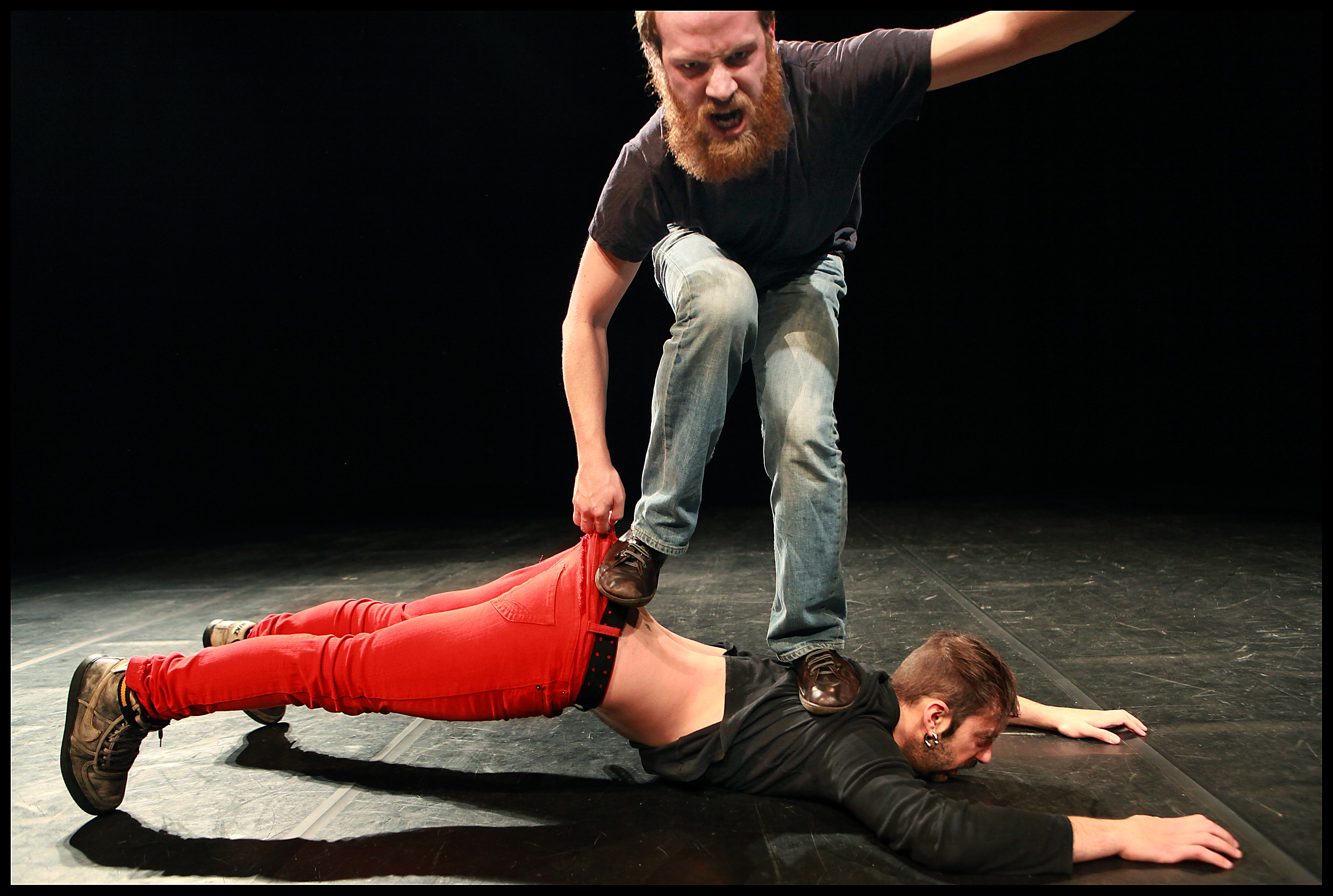
But the most impressive work featured far more modest production values. There was Still Standing You, for example, by Campo (i.e., Belgian artist-dancer Pieter Ampe and Portuguese artist-dancer Guilherme Garrido), a visceral and physically punishing duet exploring the fantasies, phantasms, and limits of masculinity and their own male heterosexual relationship, which enthralled a large audience for over an hour with little more than the clothes on, and subsequently off, their backs.

Ampe and Garrido, naked for most of the piece, square off in boyish and frankly hilarious postures of potency and aggression, brazenly manipulating each other’s genitals or folding their bodies into intimately abstract geometries. The latter moments, quiet and sure, were the most beautiful and thematically promising. But while the piece charms (especially through its teasing familiarity with the audience and the strength of the artists’ palpable bond), it ultimately remains a bit too comfortably within the gendered field it proposes to explore.

Two other standout pieces of a packed week both tackled time in the broadest and most intimate of senses. Nearly simultaneous with the 40th anniversary of September 11, 1973 — the date of the US-backed military coup that overthrew the country’s elected government and ushered in 17 years of bloody dictatorship under General Augusto Pinochet — TBA premiered Lola AriasThe Year I Was Born. Comprised of a motley cast of 11, mostly non-professional actors who were all children in the Pinochet era, this dynamic and rousing work of documentary theater (modeled on Arias’ earlier work with the children of the dictatorship in her native Argentina in the 1970s–80s) offers perspectives and opportunities that only time can bring — a generational assessment as family history and youthful rebellion.

On a protean set that makes choice use of the drab institutional furnishings of a public school class room, the performers conflate childhood memories (several of them as the children of families in exile) and the headlines of the day into an episodic narrative that frequently becomes a good-natured clash among peers of varying class and political backgrounds, half-invested and half-critical of their individual patrimonies and deeply skeptical of their collective one.

In its combination of distance and intimacy, and in its messy familial and social relationships, The Year I Was Born resists the grim binaries of the political crisis itself and its immediate aftermath, opening up a space for dialogue, humor, complexity, and conciliatory feeling, without the need for a simple moral or compromise. History rolls on, and the show — filled with laughter, surges of passion, and cool detachment — affirms both our agency and ambivalence about it all.

TBA also offered the world premiere of ADULT, a highly kinetic and wildly imaginative duet by well known San Francisco-based choreographers and performers Laura Arrington and Jesse Hewit. This complex, at times willfully obscure piece deserves a longer treatment elsewhere, but it was without doubt one of the more original and productively difficult, divisive pieces caught all week. Setting the audience in a corner of the cavernous Con Way warehouse (the hub of the festival this year) and looking outward into a vast, dimly lit and unadorned expanse, the first half of the piece plunges us into a viscerally dynamic exploration of fears around death and dying, only to turn things around in the second half — literally so, coaxing the audience with a tray of whiskey and breakfast cereals into helping reorder the seating to face a makeshift stage against the far wall.

The piece then proceeds in a gorgeously erratic and precise play with entropy and order, in which Arrington and Hewit alternately share space and cede ground to one another amid garish lighting and costumes and blurring lines in every direction — not least in the gendered dynamics of their intense, compassionate, and multifarious relationship. Through it all, a sideways glance at history and mortality (flagged at one point by canny evocation of W.H. Auden’s Musée des Beaux Arts) dissolves in halting, unexpected ways into a serene pause, a loving regard between two unstable bodies in ecstatic motion.

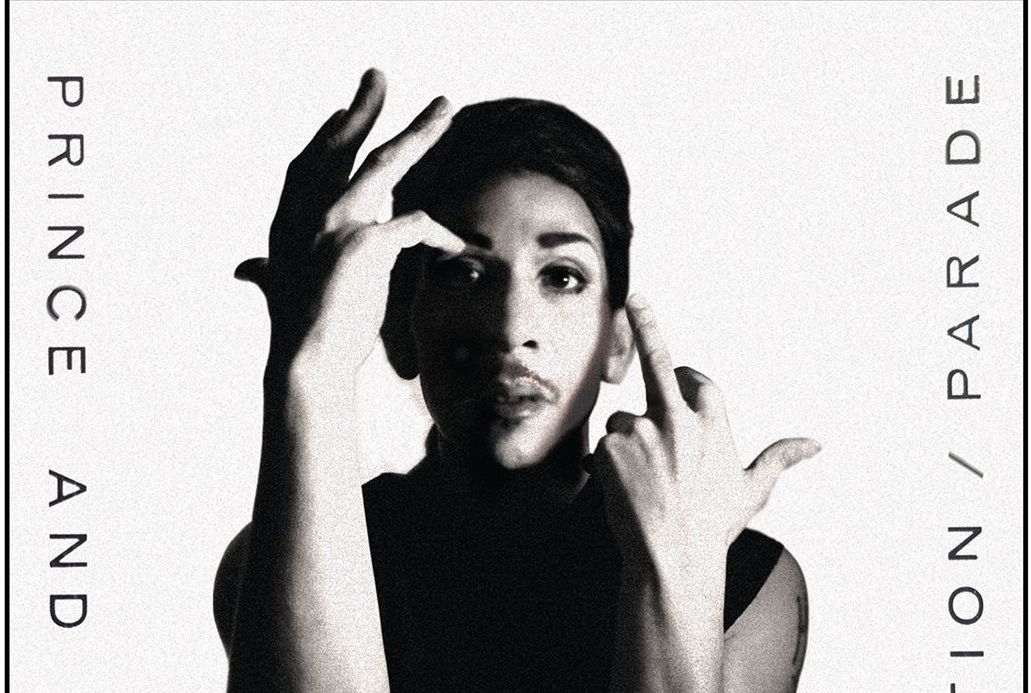
Holy Cherry Moons! SF Album Project joins Prince’s ‘Parade’ in full, fantastical drag

0

Things I know right now: I’m far from the only one who knows all the words to Yaz’s Upstairs at Eric’s, OK Computer is much better as a conceptual drag performance, and the 12-inch version of “Mountains” by Prince is one of the best extended jams ever committed to vinyl. 

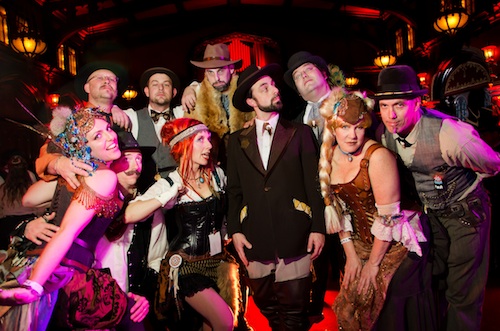
The third thing I know from being a record nerd (it’s also impossible to prove to you, since the Purple One spends all his time on Youtube yanking down his music). But the first two revelations came courtesy of the stunning San Francisco Album Project, a talented group of drag performers, stage technicians, theatrical personages, and tasteful club kids. Every two months they take on an entire album, presenting it as a stage extravaganza, embellished with special effects and original dialogue. It’s brilliantly nuts, and not the albums you’d expect at all from a bunch of colorful queens.

After conquering Yaz and Radiohead (standing room only, btw), the SFAP is about to scale the purple peak and slide under the cherry moon: The troupe will present Prince’s “Parade” — the soundtrack to his 1986 movie Under the Cherry Moon, including the original version of my beloved “Mountains” —  in its entirety on Sun/22 at the Chapel.

I asked Nathan Rapport and Bobby Barber, “album curators” of SFAP, to give me the lowdown on the project, and what to expect this Sunday:

http://www.youtube.com/watch?v=oemJ8eVneXo


SFBG SFAP seems like the kind of “eureka” idea that should have happened already, especially in SF — but no one really rubbed two drag sticks together to form a drag flame. How did the project come about?

Bobby Barber The San Francisco Album Project came about after about a year’s worth of on-and-off discussion between Nathan and myself about the state of the San Francisco drag scene. He and I both love what Trannyshack’s still achieving at the DNA Lounge – there are some sublime and thoroughly entertaining performances being created there to this day – but the venue and the interests of its audience don’t lend themselves very well to concepts and ideas that Heklina & Co. used to stage back when Trannyshack was at The Stud.

Some of our favorite shows ever at Trannyshack were evenings dedicated to an entire album (Fleetwood Mac’s Rumors, David Bowie’s Ziggy Stardust and the Spiders From Mars, Pink Floyd’s The Wall), and it always seemed an idea that had endless possibilities. It’s from that very concept created and shepherded by Heklina, Peaches Christ, and Vinsantos that Nathan and I are now attempting our variations on.
Since I work for Peaches Christ Productions, I knew I had the resources available to at least a fund a few initial shows, provided I could find an appropriate venue. As soon as we saw The Chapel, Nathan and I knew it had to be there; it’s perfect. We brought Precious Moments (Michael Soldier) on board because we knew we had to have not just a seasoned Old Guard Trannyshack performer as one of the producers, but also because Precious thought up one of the old album-centered shows at Trannyshack back when it was at The Stud (Rumors). Precious has been indispensable not just as one of the performers in the troupe, but also as a director of the shows.

http://vimeo.com/70395055

SFBG You really “go there” with these performances — special effects, drag-robot suicides, emotional resonance, all manner of stage trickery. What are you trying to achieve?

BB
First and foremost Nathan and myself want to honor what we think is incredible music. We want to give it an interpretation that it’s not often given.

Secondly, Precious, Nathan and I are attempting to create a “drag show” that is structured differently than most other shows around town. One could argue that the content of the San Francisco Album Project is the same as other shows, and it is in several ways. But we believe that by framing the show as a narrative, by not having an emcee, by not having dancing before or after the show, and by having our DJs spin music that creates the vibe of a ‘listening party’ rather than a club, we’re creating a frame that makes the experience of the performances feel more theatrically holistic than a traditional drag show.

Lastly, The San Francisco Album Project is an experiment on our part in the collaborative process. Nathan and I are very interested in the idea of artistic collaboration: whether it’s possible – why it works – why it doesn’t – what it means to different people. The performers themselves come to the table with their own idea for the song they’ve chosen. It’s up to Precious, Nathan and myself to weave these together and find a story within the group’s ideas. Also, how does a medium like drag performance operate or manifest under the pressure and/or freedom of collaboration…?

An album in and of itself is already a finished and finely tuned work of art, carefully molded by the original artist(s) who created it. What happens when a group of drag queens come in and deconstructs said album, this finished work of art, only for the purpose of re-presenting it as they see fit? Ultimately this is an act of spiritual reverence.

SFAP Unlike the Tranyshack albums you mention above, which were already not your usual drag fare, the albums you’re doing are even more unexpected. How are the albums chosen?

BB Nathan and I chose the first twelve albums ourselves over two months of back-and-forth arguing. By no means are the albums chosen our favorite albums of all time, but rather ones we find strike that perfect balance between intelligence, entertainment, popularity and drag potential. They are all iconic, but for different reasons. Some are albums that carry meaning across a large part of entire generation. Some are considered canonical, seminal, “the best the artist has done,” and those facts alone have led Nathan and I to choose certain titles.

Parade was decided for a few reasons. After doing Yaz’s Upstairs at Eric’s, and Radiohead’s OK Computer, Nathan and I knew we had to do an album that we think is an artist’s best, not the most well-known. Besides, Purple Rain is already done to perfection by Peaches Christ every other year,  and the songs on 1999 are too long for drag queens. Also, the real-life story behind the creation of Parade lends itself well to what The San Francisco Album Project is trying to achieve, or rather, is experimenting with. Prince’s collaboration with Wendy and Lisa reached its fever pitch with this album. Overworking, conflicting egos, frustrating machismo, and the tour which resulted from it brought about the end of their work together, thereby ending what I believe is one of the great partnerships in modern rock and roll, and forever destroying the glorious potential of what music Prince, and Wendy and Lisa might have continued creating together.

SFBG Can you share any exciting specifics about Sunday’s performance?

BB Well the show is built around the theme/story I just referenced: the relationship between Prince, Wendy and Lisa. It’s to be used as a frame around our fantasies in regards to the collaborative process. A myth has been created about their break-up, not just between Prince fans and the music press of the time, but now also on our stage. We’ve expanded notions of the obvious troubles that arose not just due to Prince’s fame and resulting ego, but also difficulties that could come about when men and women collaborate together, as well as straights and queers.

The narrative of the show is interspersed with ‘impressions’ on these themes, as some performers have come up with numbers that deviate from the direct story told on stage, instead having come up with their own musings in regards to these ‘troubles’ I mentioned above.

I can promise that the numbers run, at least, the same gamut of emotions that the album Parade does itself. I think we have a great sense of humor about it all, and I believe it’ll come across in Sunday’s show.

SFBG Can you tell us what album’s next?

BB Well not all the way down the line, but I can tell you that the next show is based around Roxy Music’s first self-titled album from 1972. It’s scheduled for Sunday, November 10th at The Chapel.

TIFF diary #2: dead cheerleaders + Tsai, Hong, and Breillat

4

Check out the first entry in Jesse Hawthorne Ficks’ Toronto International Film Festival diary here, and stay tuned for more tomorrow!

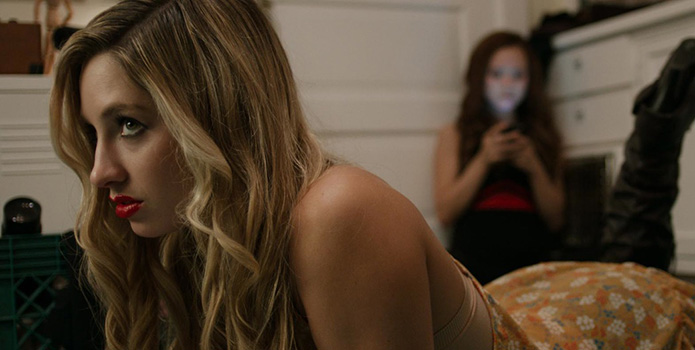
All Cheerleaders Die (USA) is the follow up to Lucky McKee’s attention-grabbing The Woman (2011), which stunned Sundance audiences with both its subversive take on gender issues and its violent brutality.

Taking a much lighter tone with co-director Chris Sivertson, Cheerleaders (an expanded remake of his 2001 short by the same name) nicely echoes the ironic horror-comedy vibe of Joss Whedon’s Cabin in the Woods (2012) while still managing to deliver a genre entry for text-crazed teenyboppers. Goths, jocks, some faux feminism, and a bevy of ass and crotch shots should make fans of Harmony Korine’s Spring Breakers quite satisfied.

http://www.youtube.com/watch?v=CMf-BBVRj9Q

In the 1990s, Tsai Ming-liang’s films were often mentioned alongside works by Hirokazu Kore-eda and Hou Hsiao-hsien. But two decades later, only Tsai has stayed the determined course of creating pure, contemplative cinema. Presenting his tenth feature (and showcasing yet again his alter ego, actor Lee Kang-sheng), Stray Dogs (Taiwan) is a breathtaking meditation on a homeless Taiwanese family, who are quietly doing what they can to get by.

With this film, Tsai has almost abandoned story completely, instead favoring long, drawn-out, surreal, one-shot sequences — next-level abstractness that will either send you running for the hills or leave you unblinkingly glued to the screen. Someone should program Stray Dogs with his 2012 short Sleepwalk, which followed a monk as he slowly walked through city streets. (Whether that would equal absolute transcendence or absolute boredom depends on the viewer, of course.)

While Hong Sang-soo’s Our Sunhi (South Korea) is not as monumentally enjoyable as last year’s In Another Country (2012), his new film does represent another solid entry for the director. I admire Hong’s ability to stay consistent with his philosophy on life: give a small group of people a lot of alcohol and let them share their innermost uncouth and irresponsible feelings. Of course, you could argue that he is just making the same film over and over. But if you take the time to notice the structural differences — as well as wonderful choices with his actors (Jung Yu-mi is quite enjoyable in this) — you’ll realize why critics love to favorably compare Hong to Woody Allen.

Watching director Catherine Breillat take the stage at TIFF to present her latest, Abuse of Weakness (France), was as powerful and moving as watching the film itself. After her 2004 stroke (and subsequent personal issues), Breillat decided to make an autobiographical narrative, casting the great Isabelle Huppert to interpret Breillat’s own confused choices.

Abuse of Weakness is perhaps one of the most interesting films about the life of an artist I have ever seen. As the Q&A was concluding, Breillat dropped a bottle of water that was given to her and explained “Even after all these years, you forget that you can’t feel anything in your arm.” And suddenly it was if you were right back in the film again.

The Performant: Vancouver Fringe-mania

0

Well, it’s been another fringe-ferrific whirlwind here at the Vancouver Fringe, but like all good things, it too has come to an end. The Boulder Fringe is still poised to begin this afternoon despite the flooding, but the East to West Coast circuit is now complete, and many career-fringe artists headed home, wherever that may be, to count their successes and tally their losses (often both).

For Naked Empire Bouffon Company the rewards of its five-week tour appear to be both tangible (a Critic’s Choice nomination and a “Talk of the Fringe” award in Vancouver, quotable reviews, and some modest profit), and ephemeral (connecting with other Fringe artists, experiencing new frontiers of audience reaction, generating excitement and controversy). But it’s been a lot of work to get that: months of rehearsal time, many long days of flyering in costume, hustling for audience and some small portion of recognition. But it’s the shows themselves that Fringe artists and audiences come together to experience, and it’s the shows that will hopefully stay with us long after the bone-wearying nature of the hustle fades from memory. Here’s a shortlist of some of the stand-outs from my second week at the Vancouver Fringe. Catch them elsewhere if you can.

Preacher Man Jesse LaVercombe’s solo show only lasts 25 minutes, and he’s confined to a chair the entire time, but there’s nothing static about his character Marcus, a convicted killer awaiting execution. “Do you know what it’s like to live a fulfilled life?” he taunts the oddience knowingly. “Probably not, because if you were living a fulfilled life you probably wouldn’t be attending funerals.” As his story unfolds, it’s a sad one of abuse and befuddlement, but Marcus still manages somehow to convince us he’s the happiest man in the room. LaVercombe also played an equally intense though much less “fulfilled” killer in the full-length Model Wanted, by Step Taylor, but it’s the charismatic Marcus who will haunt me for longer.

Eyes of the Enemy Speaking of haunting, this unsettling show gives its viewers what basically amounts to a crash course in “enhanced interrogation techniques” including stress positions, sleep deprivation, fingernail-removal, psychological manipulation, and finally waterboarding, as Chris W. Cook relentlessly torments Evan Hall, attempting, he claims, to stop a terrorist attack. Cook and Hall literally don’t pull punches in this harrowing reenactment of the grim realities of modern-day “information gathering,” and the message that this sort of treatment is not atypical is one that can’t be ignored.

6 Guitars Florida-native Chase Padgett looks like any ordinary guy with a guitar until he begins to seamlessly switch between six different musical styles — and the musicians who play them. There’s Tyrone, the bluesman who once tried to follow the Blind Lemon Jefferson formula by renaming himself Syphilis Mango Taft, and Wes the effete jazz player who states we probably don’t understand his music before grudgingly admitting that the best listeners of jazz can be those who don’t speak its language. Some of his characters are better developed than others, but it’s Padgett’s guitar playing that really stands out, connecting each disparate character and genre into a cohesive musical experience.

Threads Portland, Ore.’s Tonya Jone Miller reenacts the fall of Saigon with just a pair of suitcases and the power of her performance to convince us. She primarily portrays her mother, who traveled to Vietnam as an English teacher during a period of time when most Americans were trying to stay away far from it, as well as a slew of supporting characters who are part of her story — her students, her love interest, the doctors at the orphanage she volunteers at. Like all the best solo performers, Miller has a powerful charisma that keeps one riveted despite the bare stage and minimal tech, and her vivid story is lush with detail and energy.

Geeking out on Kathleen Hanna’s the Julie Ruin at Slim’s

0

After explaining that the next song would be about how there are thousands of feminists, all around the world, and driving home the obvious point — there is not one sole leader of the feminist movement — Kathleen Hanna giggled, hearing yet another shout-out from the audience. She jokingly replied, “OK, OK, but I am the number one feminist.”

It was this typical audience-artist interplay that brought the excitement of Hanna’s return to the stage, via new/old project the Julie Ruin at Slim’s last night.

Wearing a darling baby smock and her standard high brunette bun, Hanna bounced out on stage like she’d never left, chugging from a jug of water and robo-dancing during rare vocal lulls. In reality, the Bikini Kill and Le Tigre frontperson has been out of the bar-light for nearly a decade, struggling with neurological Lyme disease. Early in the Julie Ruin’s set, Hanna noted, “It’s been a long time since I’ve been on this stage, and there was a time when I thought I’d never return.”

The poppy set, performed by the five-piece joined by percussionist Fredo Ortiz, switched off, one for one, between lo-fi songs off 1997 self-titled solo record Julie Ruin (thickened up with additional instrumentaion), and new bolder, more fully realized the Julie Ruin collaboration, Run Fast (Dischord). The sold-out crowd, which was packed tightly into Slim’s, cheered for each song, hollering loving refrains toward Hanna at every possible chance. It felt like long-attached Bikini Kill and Le Tigre fans came out of the woodwork, cute haircuts in tact, but also a newer, younger batch of the Julie Ruin fans were sprinkled throughout.(Don’t worry, I picked up a tote bag at the merch table.)

The avid fans cheered hard for older songs off the ’97 solo record like “Radical or Pro-Parental” and doubly for newer danceable riot grrrl rock songs such as first Run Fast single “Oh C’mon” and “Girls Like Us.” There was a “Le Tigre cover” (Hanna’s words) of “Eau d’Bedroom Dancing” off Le Tigre’s self-titled 1999 debut. At one point, Hanna began singing the emotional cover of “Stay Monkey” from the first Julie Ruin album — someone in the audience requested it — but then admitted she’d forgotten the words, perhaps a symptom of the Lyme disease? (During our interview a few weeks back, she said she would often use the wrong words for things during the recording process for this new record, and the band would go with it in a stream-of-consciousness burst.)

Together, the relatively newly assembled band members of the Julie Ruin worked liked family, smiling, dancing, winking — which makes sense, given that Kathi Wilcox, Kenny Mellman, Carmine Covelli, and Sara Landeau are all musician-pals from Hanna’s past. Wilcox, of course, also being from Bikini Kill, among other bands.

Mellman took the lead on the one track in which he wrote the lyrics, “South Coast Plaza,” explaining that the song was about friends in SF (where he lived from 1987-1997) who made a pact to kill one another if one got sick, and it actually happened. He said he placed the friendship in Orange County though (hence, South Coast Plaza, a weirdly fancy mall at which I have spent many wasted teenage afternoons).

But Hanna was up front for most songs, as well she should be. The whole night felt like a bittersweet reunion, and perhaps it was, though Hanna stressed that we should look toward the future. Because for girls like us, there’s always a place in our hearts for a female-empowerment pop anthem.

Theater Listings: September 18 – 24, 2013

0

Stage listings are compiled by Guardian staff. Performance times may change; call venues to confirm. Reviewers are Robert Avila, Rita Felciano, and Nicole Gluckstern. Submit items for the listings at listings@sfbg.com.

THEATER

OPENING

Beautiful: The Carole King Musical Curran Theatre, 445 Geary, SF; www.shnsf.com. $55-210. Opens Tue/24, 8pm. Runs Tue-Sat, 8pm (also Sat and Oct 9 and 16, 2pm); Sun, 2 and 7:30pm (no evening show Oct 13 or 20). Through Oct 20. Pre-Broadway premiere of the musical about the legendary songwriter.

Geezer Marsh San Francisco, 1062 Valencia, SF; www.themarsh.org. $25-50. Opens Wed/18, 8pm. Runs Wed-Thu, 8pm; Sat, 8:30pm. Through Oct 26. Geoff Hoyle’s hit solo show, a comedic meditation on aging, returns to the Marsh.

To Sleep and Dream Z Below, 470 Florida, SF; www.therhino.org. $15-30. Previews Thu/19-Sat/21, 8pm; Sun/22, 7pm. Opens Sept 25, 8pm. Runs Wed-Sat, 8pm; Sept 29, 7pm; Oct 6, 3pm. Through Oct 6. Theatre Rhinoceros performs writer-director John Fisher’s North Bay-set drama about the challenges of love.

The World’s Funniest Bubble Show Marsh San Francisco, 1062 Valencia, SF; www.themarsh.org. $8-11. Opens Sun/22, 11am. Runs Sun, 11am. Through Oct 27. Soapy, kid-friendly antics with Louis Pearl, aka “The Amazing Bubble Man.”

BAY AREA

The Tempest Pear Avenue Theatre, 1220 Pear, Mtn View; www.thepear.org. $10-35. Previews Thu/12, 8pm. Opens Sat/13, 8pm. Runs Thu-Sat, 8pm; Sun, 2pm. Through Oct 6. Pear Avenue Theatre performs Shakespeare’s play in a new staging by director Jeanie K. Smith.

ONGOING

Acid Test: The Many Incarnations of Ram Dass Marsh San Francisco, 1062 Valencia, SF; www.themarsh.org. $15-50. Fri, 8pm; Sat, 8:30pm. Through Oct 12. Playwright Lynne Kaufman invites you to take a trip with Richard Alpert, a.k.a. Ram Dass (Warren David Keith)—one of the big wigs of the psychedelic revolution and (with his classic book, Be Here Now) contemporary Eastern-looking spirituality—as he recounts times high and low in this thoughtful, funny, and sometimes unexpected biographical rumination on the quest for truth and meaning in a seemingly random life. Directed by Joel Mullennix, the narrative begins with Ram Dass today, in his Hawaiian home and partly paralyzed from a stroke, but Keith (one of the Bay Area’s best stage actors, who is predictably sure and engagingly multilayered in the role) soon shakes off the stiff arm and strained speech and springs to his feet to continue the narrative as the ideal self perhaps only transcendental consciousness and theater allow. Nevertheless, Kaufman’s fun-loving and extroverted Alpert is no saint and no model of perfection, which is the refreshing truth explored in the play. He’s a seeker still, ever imperfect and trying for perfection, or at least the wisdom of acceptance. As the privileged queer child of a wealthy Jewish lawyer and industrialist, Alpert was both insider and outsider from the get-go, and that tension and ambiguity make for an interesting angle on his life, including the complexities of his relationships with a homophobic Leary, for instance, and his conservative but ultimately loving father. Perfection aside, the beauty in the subject and the play is the subtle, shrewd cherishing of what remains unfinished. Note: review from an earlier run of this show. (Avila)

Band Fags! New Conservatory Theatre Center, 25 Van Ness, SF; www.nctcsf.org. $25-45. Wed-Sat, 8pm; Sun, 2pm. Through Oct 13. New Conservatory Theatre Center performs the West Coast premiere of Frank Anthony Polito’s coming-of-age tale, set in 1980s Detroit.

“Bay One Acts Festival” Tides Theatre, 533 Sutter, SF; www.bayoneacts.org. $20-40. Programs One and Two run in repertory Wed-Sun, 8pm. Through Oct 5. The 2013 BOA fest presents the world premieres of 13 short plays in partnership with 13 Bay Area theater companies.

BoomerAging: From LSD to OMG Marsh San Francisco, 1062 Valencia, SF; www.themarsh.org. $15-50. Tue, 8pm. Extended through Oct 29. Will Durst’s hit solo show looks at baby boomers grappling with life in the 21st century.

Buried Child Magic Theatre, Fort Mason Center, Bldg D, Third Flr, SF; www.magictheatre.org. $20-60. Tue, 7pm; Wed-Sat, 8pm; Sun, 2:30. Through Oct 6. Magic Theatre performs a revival of Sam Shepard’s Pulitzer-winning classic.

Foodies! The Musical Shelton Theater, 533 Sutter, SF; www.foodiesthemusical.com. $32-34. Fri-Sat, 8pm. Open-ended. AWAT Productions presents Morris Bobrow’s musical comedy revue all about food.

The Golden Dragon ACT’s Costume Shop, 1117 Market, SF; www.doitliveproductions.com. $15. Thu-Sat, 9:30pm. Through Sept 28. Do It Live! Productions presents Roland Schimmelpfennig’s tragicomic take on globalization, set in and around an Asian restaurant.

Hedwig and the Angry Inch Boxcar Theatre, 505 Natoma, SF; www.boxcartheatre.org. $27-43. Thu-Sat, 8pm. Open-ended. John Cameron Mitchell’s cult musical comes to life with director Nick A. Olivero’s ever-rotating cast.

Macbeth Fort Point, end of Marine Dr, Presidio of San Francisco, SF; www.weplayers.org. $30-60. Thu-Sun, 6pm. Through Oct 6. We Players perform the Shakespeare classic amid Fort Point’s Civil War-era fortress.

“San Francisco Fringe Festival” Exit Theatreplex, 156 Eddy, SF; www.sffringe.org. $12.99 or less (passes, $45-75). Through Sat/21. The 22nd SF Fringe presents 36 shows that explore the boundaries of theater and performance.

1776 ACT’s Geary Theater, 415 Geary, SF; www.act-sf.org. $20-160. Opens Thu/19, 8pm. Runs Tue-Sat, 8pm (also Wed and Sat, 2pm; Tue/24, show at 7pm); Sun, 2pm. Through Oct 6. American Conservatory Theater performs the West Coast premiere of Frank Galati’s new staging of the patriotic musical.

Sex and the City: LIVE! Rebel, 1760 Market, SF; trannyshack.com/sexandthecity. $25. Wed, 7 and 9pm. Open-ended. It seems a no-brainer. Not just the HBO series itself — that’s definitely missing some gray matter — but putting it onstage as a drag show. Mais naturellement! Why was Sex and the City not conceived of as a drag show in the first place? Making the sordid not exactly palatable but somehow, I don’t know, friendlier (and the canned a little cannier), Velvet Rage Productions mounts two verbatim episodes from the widely adored cable show, with Trannyshack’s Heklina in a smashing portrayal of SJP’s Carrie; D’Arcy Drollinger stealing much of the show as ever-randy Samantha (already more or less a gay man trapped in a woman’s body); Lady Bear as an endearingly out-to-lunch Miranda; and ever assured, quick-witted Trixxie Carr as pent-up Charlotte. There’s also a solid and enjoyable supporting cast courtesy of Cookie Dough, Jordan Wheeler, and Leigh Crow (as Mr. Big). That’s some heavyweight talent trodding the straining boards of bar Rebel’s tiny stage. The show’s still two-dimensional, even in 3D, but noticeably bigger than your 50″ plasma flat panel. (Avila)

The Shakespeare Bug Stage Werx Theatre, 446 Valencia, SF; www.killingmylobster.com. $15-30. Thu-Sun, 8pm. Through Sept 29. Killing My Lobster in association with PlayGround perform Ken Slattery’s world-premiere comedy.

BAY AREA

After the Revolution Aurora Theatre, 2081 Addison, Berk; www.auroratheatre.org. $32-60. Tue, 7pm; Wed-Sat, 8pm; Sun, 2 and 7pm. Extended through Oct 6. Aurora Theatre opens its 22nd season with the Bay Area premiere of Amy Herzog’s family drama.

All’s Well That Ends Well Forest Meadows Amphitheater, 890 Bella, Dominican University of California, San Rafael; www.marinshakespeare.org. $20-37.50. Presented in repertory Fri-Sun through Sept 28; visit website for performance schedule. Marin Shakespeare Company continues its outdoor season with the Bard’s classic romance.

Bonnie and Clyde Ashby Stage, 1901 Ashby, Berk; www.shotgunplayers.org. $20-35. Wed-Thu, 7pm; Fri-Sat, 8pm; Sun, 5pm. Through Sept 29. Amorous outlaws and Depression-era rebels Bonnie Parker (Megan Trout) and Clyde Barrow (Joe Estlack) remain compelling as heroes and tragic figures in playwright Adam Peck’s 2010 retelling, but it’s their quieter, frailer, more delicate moments in Mark Jackson’s robust, at times transcendent staging that prove most memorable in this Shotgun Players production. It’s a sign of Jackson’s sure intelligence as a director that he can let a moment happen here wordlessly, without recourse to cut-and-dry cues of one sort or another, as happens near the outset of the evening as Barrow and Parker arrive on the run at an abandoned barn. We study them in such moments, and they breathe, like nowhere else. It’s here in this barn that they rest, woo, tussle, and tease for the next 80 enthralling minutes — interrupted only by Barrow’s moment-by-moment delivery to us of their final violent moments alive, channeling a fate awaiting them just down the road. Embodying the play’s only characters, Trout and Estlack are outstanding, dynamic and utterly persuasive. They’d be worth seeing even if the play and production were half as good as they are. Having “chosen to live lives less ordinary,” it turns out to be their palpable vulnerability and wide-ranging yet ordinary yearnings that make them exceptional creatures. (Avila)

Can You Dig It? Back Down East 14th — the 60s and Beyond Marsh Berkeley, 2120 Allston, Berk; www.themarsh.org. $15-50. Sat, 8:30pm; Sun, 7pm. Through Oct 27. Don Reed’s new show offers more stories from his colorful upbringing in East Oakland in the 1960s and ’70s. More hilarious and heartfelt depictions of his exceptional parents, independent siblings, and his mostly African American but ethnically mixed working-class community — punctuated with period pop, Motown, and funk classics, to which Reed shimmies and spins with effortless grace. And of course there’s more too of the expert physical comedy and charm that made long-running hits of Reed’s last two solo shows, East 14th and The Kipling Hotel (both launched, like this newest, at the Marsh). Can You Dig It? reaches, for the most part, into the “early” early years, Reed’s grammar-school days, before the events depicted in East 14th or Kipling Hotel came to pass. But in nearly two hours of material, not all of it of equal value or impact, there’s inevitably some overlap and indeed some recycling. Reed, who also directs the show, may start whittling it down as the run continues. But, as is, there are at least 20 unnecessary minutes diluting the overall impact of the piece, which is thin on plot already — much more a series of often very enjoyable vignettes and some painful but largely unexplored observations, wrapped up at the end in a sentimental moral that, while sincere, feels rushed and inadequate. (Avila)

A Comedy of Errors Forest Meadows Amphitheater, 890 Bella, Dominican University of California, San Rafael; www.marinshakespeare.org. $20-37.50. Presented in repertory Fri-Sun through Sept 29; visit website for performance schedule. Marin Shakespeare Company presents a cowboy-themed spin on the Bard’s classic.

Ella, the Musical Center REPertory Company, 1601 Civic, Walnut Creek; (925) 943-SHOW. $37-64. Wed, 7:30pm; Thu-Sat, 8pm (also Sept 28 and Oct 12, 2:30pm); Sun, 2:30pm. Through Oct 12. Yvette Cason portrays the legendary Ella Fitzgerald in this Center REP presentation.

Woman in Black — A Ghost Play Douglas Morrison Theatre, 22311 N. Third St, Hayward; www.dmtonline.org. $10-29. Fri-Sat and Sept 26, 8pm (also Sat/21, 2pm); Sun, 2pm. Through Sept 29. Douglas Morrison Theatre performs Stephen Mallatratt’s adaptation of Susan Hill’s spooky story.

PERFORMANCE/DANCE

“Broadway Bingo” Feinstein’s at the Nikko, Hotel Nikko, 222 Mason, SF; www.feinsteinssf.com. Wed, 7-9pm. Ongoing. Free. Countess Katya Smirnoff-Skyy and Joe Wicht host this Broadway-flavored night of games and performance.

Caroline Lugo and Carolé Acuña’s Ballet Flamenco Peña Pachamama, 1630 Powell, SF; www.carolinalugo.com. Sat/21, Oct 6, 12, 20, and 26, 6:15pm. $15-19. Flamenco performance by the mother-daughter dance company, featuring live musicians.

Megan Hilty Venetian Room, Fairmont San Francisco, 950 Mason, SF; www.bayareacabaret.org. Sun/21, 8pm. $95. The Broadway and television (Smash) star headlines Bay Area Cabaret’s tenth anniversary season opening gala.

“Mission Position Live” Cinecave, 1034 Valencia, SF; www.missionpositionlive.com. Thu, 8pm. Ongoing. $10. Stand-up comedy with rotating performers.

“Monkey Gone to Heaven” CounterPULSE, 1310 Mission, SF; www.counterpulse.org. Thu/19-Sat/21, 8pm; Sun/22, 7pm. $20. EmSpace Dance performs the world premiere of a dance-theater work inspired by the relationship between primates and prayer.

“Okeanos Intimate” Aquarium of the Bay, Pier 39, SF; www.capacitor.org. Sat, 7pm. Through Sept 28. $20-30 (free aquarium ticket with show ticket). Choreographer Jodi Lomask and her company, Capacitor, revive 2012’s Okeanos — a cirque-dance piece exploring the wonder and fragility of our innate connection to the world’s oceans — in a special “intimate” version designed for the mid-size theater at Pier 39’s Aquarium of the Bay. The show, developed in collaboration with scientists and engineers, comes preceded by a short talk by a guest expert — for a recent Saturday performance it was a down-to-earth and truly fascinating local ecological history lesson by the Bay Institute’s Marc Holmes. In addition to its Cirque du Soleil-like blend of quasi-representational modern dance and circus acrobatics — powered by a synth-heavy blend of atmospheric pop music — Okeanos makes use of some stunning underwater photography and an intermittent narrative that includes testimonials from the likes of marine biologist and filmmaker Dr. Tierney Thys. The performers, including contortionists, also interact with some original physical properties hanging from the flies — a swirling vortex and a spherical shell — as they wrap and warp their bodies in a kind of metamorphic homage to the capacity and resiliency of evolution, the varied ingenuity of all life forms. If the movement vocabulary can seem limited at times, and too derivative, the show also feels a little cramped on the Aquarium Theater stage, whose proscenium arrangement does the piece few favors aesthetically. Nevertheless, the family-oriented Okeanos Intimate spurs a conversation with the ocean that is nothing if not urgent. (Avila)

“San Francisco Magic Parlor” Chancellor Hotel Union Square, 433 Powell, SF; www.sfmagicparlor.com. Thu-Sat, 8pm. Ongoing. $40. Magic vignettes with conjurer and storyteller Walt Anthony.

“San Francisco Stand-Up Comedy Competition: Preliminary Round” Jewish Community Center of San Francisco, 3200 California, SF; www.jccsf.org. Sat/21, 8pm. $25-35. Stand-up comedians battle it out.

“Union Square Live” Union Square, between Post, Geary, Powell, and Stockton, SF; www.unionsquarelive.org. Through Oct 9. Free. Music, dance, circus arts, film, and more; dates and times vary, so check website for the latest.

“Vak: Song of Becoming” Yerba Buena Center for the Arts, 701 Mission, SF; www.ybca.org. Fri/20-Sat/21, 8pm. $20-35. Composer and vocalist Ann Dyer performs a work inspired by Indian goddess Vak, “who creates the world through sound vibration.” The work features choreography by Erika Chong Shuch.

“The Video Game Monologues” Cartoon Art Museum, 655 Mission, SF; www.cartoonart.org. Thu/19, 5-8pm. $5 (suggested donation). Get a sneak preview of the show that’s drawn from real stories of gamers and game characters.

Xitlalli Danza Azteca San Francisco Botanical Gardens, Golden Gate Park (near Ninth Ave at Lincoln), SF; www.sfbotanicalgarden.org. Sat/21, noon-2pm. Free. The group performs traditional ritual Aztec dances to celebrate the blooming of the SF Botanical Garden’s Mesoamerican Cloud Forest Garden.

BAY AREA

“Bay Area Flamenco Festival” La Peña Cultural Center, 3105 Shattuck, Berk; www.bayareaflamencofestival.com. Sun/21, 8pm. $30-50. Gypsy flamenco icon Concha Vargas headlines the first weekend of this eighth annual festival. *


Film Listings: September 18 – 24, 2013

0

Film listings are edited by Cheryl Eddy. Reviewers are Kimberly Chun, Dennis Harvey, Lynn Rapoport, Sam Stander, and Sara Maria Vizcarrondo. For rep house showtimes, see Rep Clock.

OPENING

Battle of the Year That’s “battle” as in “dance battle.” And yes, it’s in 3D. (1:49)

Blue Caprice See “Highway to Hell.” (1:34) Roxie.

C.O.G. The first feature adapted from David Sedaris’ writing, Kyle Patrick Alvarez’s film captures his acerbic autobiographical comedy while eventually revealing the misfit pain hidden behind that wit. Tightly wound David (Jonathan Groff), on the run from problematic family relations and his sexual identity, takes the bus from East Coast grad school to rural Oregon — his uninhibited fellow passengers providing the first of many mortifications here en route. Having decided that seasonal work as an apple picker will somehow be liberating, he’s viewed with suspicion by mostly Mexican co-workers and his crabby boss (Dean Stockwell). More fateful kinda-sorta friendships are forged with a sexy forklift operator (Corey Stoll) and a born-again war vet (Denis O’Hare). Under the latter’s volatile tutelage, David briefly becomes a C.O.G. — meaning “child of God.” Balancing the caustic, absurd, and bittersweet, gradually making us care about an amusingly dislikable, prickly protagonist, this is a refreshingly offbeat narrative that pulls off a lot of tricky, ambivalent mood shifts. (1:37) Elmwood, Smith Rafael, Sundance Kabuki. (Harvey)

Herb and Dorothy 50X50 Building upon her 2008 doc Herb and Dorothy, Megumi Sasaki revisits elderly Manhattan couple Herb and Dorothy Vogel, art-world legends for amassing a jaw-dropping collection of contemporary art despite holding modest jobs and living an otherwise low-key lifestyle. (Out of necessity, they favored smaller works on paper — and whatever they bought had to fit into their one-bedroom apartment.) Remarkably, in 1992, they donated the majority of their highly valuable collection to the National Gallery of Art, but it was so vast that most of it was put into storage rather than displayed. Sasaki’s camera picks back up with the couple (Herb now in a wheelchair, with Dorothy doing most of the talking) as they work with the National Gallery to select 50 museums nationwide, each of which will receive 50 pieces of the collection. Though the film chats with some of the Vogels’ favorite artists (Richard Tuttle, notably, was initially angered by the idea of the collection being broken up), its most compelling segments are those that focus on Vogel exhibitions in relatively far-flung places, Hawaii and North Dakota included. Of particular interest: scenes in which museums without modern-art traditions help skeptical patrons engage with the art — a towering challenge since much of it appears to be of the deceptively simple, “I-could-have-done-that” variety. (1:25) Elmwood, Roxie. (Eddy)

Ip Man: The Final Fight Yep, it’s yet another take on kung-fu icon Ip Man, whose real-life legacy as Wing Chun’s greatest ambassador (tl;dr, he taught Bruce Lee) has translated into pop-culture stardom, most recently with Donnie Yen’s Ip Man series and Wong Kar-wai’s still-in-theaters The Grandmaster. Final Fight is directed by the prolific Herman Yau, and though it lacks the slickness of Ip Man or the high-art trappings of The Grandmaster, it does have one heavy weapon: Hong Kong superstar Anthony Wong. A less-charismatic actor might get lost in Yau’s hectic take on Ip’s later years; it’s chockablock with plot threads (union strikes, police corruption, health woes, romantic drama, brawls with rival martial-arts schools, scar-faced gangsters …) that battle for supremacy. But that’s not a problem for Wong, who calmly rises above the chaos, infusing even corny one-liners (“You can’t buy kung fu like a bowl of rice!”) with gravitas. (1:42) (Eddy)

Mademoiselle C Fabien Constant’s portrait of French fashion editor-professional muse-stylish person Carine Roitfeld may be unabashedly fawning, but it does offer the rest of us slobs a peek into the glamorous life. The film begins as Roitfeld leaves her job at Vogue Paris; there’s passing mention of her subsequent feud with Condé Nast as she readies her own luxury magazine start-up, CR Fashion Book, but the only conflicts the film lingers on are 1) when a model cancels last-minute and 2) when Roitfeld goes double over budget on her first issue. (Looking at the lavish photo shoots in action, with big-name photogs and supermodels aplenty, it’s not hard to see why.) Mostly, though this is a fun ride-along with Roitfeld in action: hanging with “Karl” (Lagerfeld) and “Tom” (Ford); swooning over her first grandchild; sneaking a little cell phone footage inside the Met Ball; allowing celebs like Sarah Jessica Parker and designer Joseph Altuzarra to suck up to her, etc. There’s also a funny moment when her art-dealer son, Vladimir, recalls that he was never allowed to wear sweatpants as a kid — and her daughter, fashion-person Julia, remembers her mother’s horror when she dared to wear Doc Martens. (1:30) Sundance Kabuki. (Eddy)

Museum Hours See “The Observer.” (1:46) Opera Plaza.

My Lucky Star Aspiring cartoonist Sophie (Ziyi Zhang) puts her romantic fantasies into her artwork — the bright spot in an otherwise dull life working in a Beijing call center and being hassled about her perma-single status by her mother and catty friends. As luck would have it, Sophie wins a trip to Singapore right when dreamy secret agent David (Leehom Wang) is dispatched there to recover the stolen “Lucky Star Diamond;” it doesn’t take long before our klutzy goofball stumbles into exactly the kind of adventure she’s been dreaming about. Romancing the Stone (1984) this ain’t, but Zhang, so often cast in brooding parts, is adorable, and occasional animated sequences add further enhancement to the silly James Bond/Charlie’s Angels-lite action. (1:53) (Eddy)

Prisoners Canadian director Denis Villeneuve (2010’s Incendies) guides a big-name cast through this thriller about a father (Hugh Jackman) frantically searching for his missing daughter with the help of a cop (Jake Gyllenhaal). (2:33) Four Star, Marina.

Salinger Documentary about the reclusive author of Catcher in the Rye. (2:00) Presidio.

Thanks for Sharing Mark Ruffalo, Gwyneth Paltrow, and Tim Robbins star in this comedy about sex addicts from the co-writer of 2010’s The Kids Are All Right. (1:52)

Wadjda The first-ever feature directed by a female Saudi Arabian follows a young Saudi girl who dreams of buying a bicycle. (1:37) Opera Plaza.

You Will Be My Son Set at a Bordeaux vineyard that’s been in the same family for generations, Gilles Legrand’s drama hides delightfully trashy drama beneath its highbrow exterior. Patriarch Paul de Marseul (Niels Arestrup of 2009’s A Prophet) treats his only son, Martin (Lorànt Deutsch) with utter contempt — think the relationship between Tywin and Tyrion Lannister on Game of Thrones, only with even more petty digs and insults. Still hopeful that he’ll inherit the estate someday, despite Papa Jackass’ loud proclamations about his “lack of palate,” Martin sees his future prospects crumble when dapper Philippe (Nicolas Bridet) blows into town, having left his California gig as “Coppola’s head winemaker” to care for his dying father, Paul’s longtime second-in-command François (Patrick Chesnais). Things go from terrible to utterly shitty when Paul decides Philippe is the answer to his prayers (see: title). Melodrama is the only recourse here, and the film’s over-the-top last act delivers some gasp-inducing (or guffaw-inducing, your choice) twists. Heading up a classy cast, Arestrup manages to make what could’ve been a one-note character into a villain with seemingly endless layers, each more vile than the last. (1:41) Opera Plaza. (Eddy)

ONGOING

Adore This glossy soap opera from director Anne Fontaine (2009’s Coco Before Chanel) and scenarist Christopher Hampton, adapted from a Doris Lessing novella, has had its title changed from Two Mothers — perhaps because under that name it was pretty much the most howled-at movie at Sundance this year. Lil (Naomi Watts) and Roz (Robin Wright) are lifelong best friends whose hunky surfer sons Ian (Xavier Samuel) and Tom (James Frecheville) are likewise best mates. Widow Lil runs a gallery and Roz has a husband (Ben Mendelsohn), but mostly the two women seem to lay around sipping wine on the decks of their adjacent oceanfront homes in Western Australia’s Perth, watching their sinewy offspring frolic in the waves. This upscale-lifestyle-magazine vision of having it all — complete with middle-aged female protagonists who look spectacularly youthful without any apparent effort — finds trouble in paradise when the ladies realize that something, in fact, is missing. That something turns out to be each other’s sons, in their beds. After very little hand-wringing this is accepted as the way things are meant to be — a MILF fantasy viewed through the distaff eyes — despite some trouble down the road. This outlandish basic concept might have worked for Lessing, but Fontaine’s solemn, gauzily romantic take only slightly muffles its inherent absurdity. (Imagine how creepy this ersatz women-finding-fulfillment-at-midlife saga would be if it were two older men boning each others’ daughters.) Lord knows it isn’t often that mainstream movies (this hardly plays as “art house”) focus on women over 40, and the actors give it their all. But you’ll wish they’d given it to a better vehicle instead. (1:50) Sundance Kabuki. (Harvey)

Afternoon Delight It takes about five seconds to suss that Kathryn Hahn is going to give a spectacular performance in Jill Soloway’s charming seriocomedy. Figuring to re-ignite husband Jeff’s (Josh Radnor) flagging libido by taking them both to a strip club, Rachel (Hahn) decides to take on as a home- and moral-improvement project big-haired, barely-adult stripper McKenna (Juno Temple). When the latter’s car slash-home is towed, bored Silver Lake housewife and mother Rachel invites the street child into their home. Eventually she’s restless enough to start accompanying McKenna on the latter’s professional “dates.” Afternoon Delight is a better movie than you’d expect — not so much a typical raunchy comedy as a depthed dramedy with a raunchy hook. It’s a notable representation of no-shame sex workerdom. It’s also funny, cute, and eventually very touching. Especially memorable: a ladies’ round-table discussion about abortion that drifts every which way. (1:42) Sundance Kabuki. (Harvey)

Blue Jasmine The good news about Blue Jasmine isn’t that it’s set in San Francisco, but that it’s Woody Allen’s best movie in years. Although some familiar characteristics are duly present, it’s not quite like anything he’s done before, and carries its essentially dramatic weight more effectively than he’s managed in at least a couple decades. Not long ago Jasmine (a fearless Cate Blanchett) was the quintessential Manhattan hostess, but that glittering bubble has burst — exactly how revealed in flashbacks that spring surprises up to the script’s end. She crawls to the West Coast to “start over” in the sole place available where she won’t be mortified by the pity of erstwhile society friends. That would be the SF apartment of Ginger (Sally Hawkins), a fellow adoptive sister who was always looked down on by comparison to pretty, clever Jasmine. Theirs is an uneasy alliance — but Ginger’s too big-hearted to say no. It’s somewhat disappointing that Blue Jasmine doesn’t really do much with San Francisco. Really, the film could take place anywhere — although setting it in a non-picture-postcard SF does bolster the film’s unsettled, unpredictable air. Without being an outright villain, Jasmine is one of the least likable characters to carry a major US film since Noah Baumbach’s underrated Margot at the Wedding (2007); the general plot shell, moreover, is strongly redolent of A Streetcar Named Desire. But whatever inspiration Allen took from prior works, Blue Jasmine is still distinctively his own invention. It’s frequently funny in throwaway performance bits, yet disturbing, even devastating in cumulative impact. (1:38) Balboa, Clay, Metreon, 1000 Van Ness. (Harvey)

Closed Circuit (1:36) 1000 Van Ness, SF Center, Sundance Kabuki.

Elysium By the year 2154, the one percent will all have left Earth’s polluted surface for Elysium, a luxurious space station where everyone has access to high-tech machines that can heal any wound or illness in a matter of seconds. Among the grimy masses in burned-out Los Angeles, where everyone speaks a mixture of Spanish and English, factory worker Max (Matt Damon) is trying to put his car-thief past behind him — and maybe pursue something with the childhood sweetheart (Alice Braga) he’s recently reconnected with. Meanwhile, up on Elysium, icy Secretary of Defense Delacourt (Jodie Foster, speaking in French and Old Hollywood-accented English) rages against immigration, even planning a government takeover to prevent any more “illegals” from slipping aboard. Naturally, the fates of Max and Delacourt will soon intertwine, with “brain to brain data transfers,” bionic exo-skeletons, futuristic guns, life-or-death needs for Elysium’s medical miracles, and some colorful interference by a sword-wielding creeper of a sleeper agent (Sharlto Copley) along the way. In his first feature since 2009’s apartheid-themed District 9, South African writer-director Neill Blomkamp once again turns to obvious allegory to guide his plot. If Elysium‘s message is a bit heavy-handed, it’s well-intentioned, and doesn’t take away from impressive visuals (mercifully rendered in 2D) or Damon’s committed performance. (2:00) Metreon, 1000 Van Ness, Sundance Kabuki. (Eddy)

The Family It’s hard to begrudge an acting monolith like Robert De Niro from cashing out in his golden years and essentially going gently into that good night amid a volley of mild yuks. And when his mobster-in-witness-protection Giovanni Manzoni takes a film-club stage in his Normandy hideout to hold forth on the veracity of Goodfellas (1990), you yearn to be right there in the fictional audience, watching De Niro’s Brooklyn gangster take on his cinematic past. That’s the most memorable moment of this comedy about an organized criminal on the lam with his violent, conniving family unit. Director-cowriter Luc Besson aims to lightly demonstrate that you can extract a family from the mob but you can’t expunge the mob from the family. There’s a $20 million bounty on Giovanni’s head, and it’s up to his keeper Stansfield (Tommy Lee Jones) to keep him and his kin quiet and undercover. But the latter has his hands full with Gio penning his memoirs, wife Maggie (Michelle Pfeiffer) blowing up the local supermarket, daughter Belle (Dianna Agron, wrapped in bows like a soft-focus fantasy nymphet) given to punishing schoolyard transgressors with severe beatings, and son Warren (John D’Leo) working all the angles in class. Besson plays the Manzoni family’s violence for chuckles, while painting the mob family’s mayhem with more ominous colors, making for a tonal clash that’s as jarring as some of his edits. The pleasure here comes with watching the actors at play: much like his character, De Niro is on the run from his career-making albeit punishing past, though if he keeps finding refuge in subpar fare, one wonders if his “meh” fellas will eventually outweigh the Goodfellas. (1:51) Metreon, 1000 Van Ness, Presidio, Sundance Kabuki, Vogue. (Chun)

Fruitvale Station By now you’ve heard of Fruitvale Station, the debut feature from Oakland-born filmmaker Ryan Coogler. With a cast that includes Academy Award winner Octavia Spencer and rising star Michael B. Jordan (The Wire, Friday Night Lights), the film premiered at the 2013 Sundance Film Festival, winning both the Audience Award and the Grand Jury Prize en route to being scooped up for distribition by the Weinstein Company. A few months later, Coogler, a USC film school grad who just turned 27, won Best First Film at Cannes. Accolades are nice, especially when paired with a massive PR push from a studio known for bringing home little gold men. But particularly in the Bay Area, the true story behind Fruitvale Station eclipses even the most glowing pre-release hype. The film opens with real footage captured by cell phones the night 22-year-old Oscar Grant was shot in the back by BART police, a tragedy that inspired multiple protests and grabbed national headlines. With its grim ending already revealed, Fruitvale Station backtracks to chart Oscar’s final hours, with a deeper flashback or two fleshing out the troubled past he was trying to overcome. Mostly, though, Fruitvale Station is very much a day in the life, with Oscar (Jordan, in a nuanced performance) dropping off his girlfriend at work, picking up supplies for a birthday party, texting friends about New Year’s Eve plans, and deciding not to follow through on a drug sale. Inevitably, much of what transpires is weighted with extra meaning — Oscar’s mother (Spencer) advising him to “just take the train” to San Francisco that night; Oscar’s tender interactions with his young daughter; the death of a friendly stray dog, hit by a car as BART thunders overhead. It’s a powerful, stripped-down portrait that belies Coogler’s rookie-filmmaker status. (1:24) Four Star. (Eddy)

Getaway (1:29) SF Center.

The Grandmaster The Grandmaster is dramatic auteur Wong Kar-Wai’s take on the life of kung-fu legend Ip Man — famously Bruce Lee’s teacher, and already the subject of a series of Donnie Yen actioners. This episodic treatment is punctuated by great fights and great tragedies, depicting Ip’s life and the Second Sino-Japanese War in broad strokes of martial arts tradition and personal conviction. Wong’s angsty, hyper stylized visuals lend an unusual focus to the Yuen Woo-Ping-choreographed fight scenes, but a listless lack of narrative momentum prevents the dramatic segments from being truly engaging. Abrupt editing in this shorter American cut suggests some connective tissue may be missing from certain sequences. Tony Leung’s performance is quietly powerful, but also a familiar caricature from other Wong films; this time, instead of a frustrated writer, he is a frustrated martial artist. Ziyi Zhang’s turn as the driven, devastated child of the Northern Chinese Grandmaster provides a worthy counterpoint. Another Wong cliché: the two end up sadly reminiscing in dark bars, far from the rhythm and poetry of their martial pursuits. (1:48) Four Star, Metreon, 1000 Van Ness, Sundance Kabuki. (Stander)

In a World… (1:33) Sundance Kabuki.

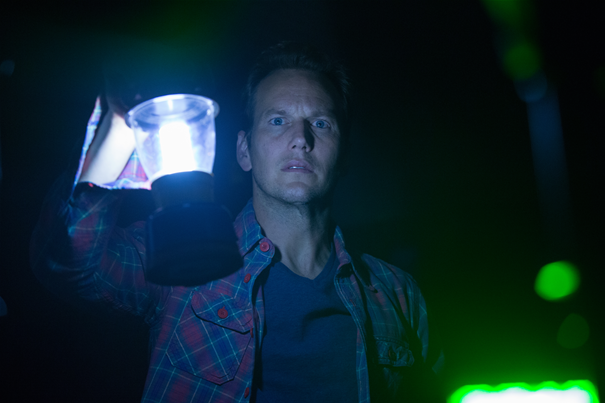
Insidious: Chapter 2 The bloodshot, terribly inflamed font of the opening title gives away director James Wan and co-writer and Saw series cohort Leigh Whannell’s intentions: welcome to their little love letter to Italian horror. The way an actor, carefully lit with ruby-red gels, is foregrounded amid jade greens and cobalt blues, the ghastly clown makeup, the silent movie glory of a gorgeous face frozen in terror, the fixation with 1981’s The Beyond — lovers of spaghetti shock will appreciate even a light application of these aspects, even if many others will be disappointed by this sequel riding a wee bit too closely on its financially successful predecessor’s coattails. Attempting to pick up exactly where 2011’s Insidious left off, Chapter 2 opens with a flashback to the childhood of demonically possessed Josh Lambert (Patrick Wilson), put into a trance by the young paranormal investigator Elise. Flash-forward to Elise’s corpse and the first of many terrified looks from Josh’s spouse Renai (Rose Byrne). She knows Josh killed Elise, but she can’t face reality — so instead she gets to face the forces of supernatural fantasy. Meanwhile Josh is busy forcing a fairy tale of normalcy down the rest of his family’s throats — all the while evoking a smooth-browed, unhinged caretaker of the Overlook Hotel. Subverting that fiction are son Dalton (Ty Simpkins), who’s fielding messages from the dead, and Josh’s mother Lorraine (Barbara Hershey), who sees apparitions in her creepy Victorian and looks for help in Elise’s old cohort Carl (Steve Coulter) and comic-relief ghost busters Specs (Whannell) and Tucker (Angus Sampson). Sure, there are a host of scares to be had, particularly those of the don’t-look-over-your-shoulder variety, but tribute or no, the derivativeness of the devices is dissatisfying. Those seeking wickedly imaginative death-dealing machinations, or even major shivers, will curse the feel-good PG-13 denouement. (1:30) Metreon, 1000 Van Ness. (Chun)

Instructions Not Included (1:55) Metreon.

Kick-Ass 2 Even an ass-kicking subversive take on superherodom runs the risk of getting its rump tested, toasted, roasted — and found wanting. Too bad the exhilaratingly smarty-pants, somewhat mean-spirited Kick-Ass (2010), the brighter spot in a year of superhero-questioning flicks (see also: Super), has gotten sucker-punched in all the most predictable ways in its latest incarnation. Dave, aka Kick-Ass (Aaron Taylor-Johnson), and Mindy, otherwise known as Hit-Girl (Chloë Grace Moretz), are only half-heartedly attempting to live normal lives: they’re training on the sly, mostly because Mindy’s new guardian, Detective Marcus Williams (Morris Chestnut), is determined to restore her childhood. Little does he realize that Mindy only comes alive when she pretends she’s battling ninjas at cheerleader tryouts — or is giving her skills a workout by unhanding, literally and gleefully, a robber. Kick-Ass is a little unnerved by her semi-psychotic enthusiasm for crushing bad guys, but he’s crushing, too, on Mindy, until Marcus catches her in the Hit-Girl act and grounds her in real life, where she has to deal with some really nasty characters: the most popular girls in school. So Kick-Ass hooks up with a motley team of would-be heroes inspired by his example, led Colonel Stars and Stripes (an almost unrecognizable Jim Carrey), while old frenemy Chris, aka Red Mist (Christopher Mintz-Plasse) begins to find his real calling — as a supervillain he dubs the Motherfucker — and starts to assemble his own gang of baddies. Unlike the first movie, which passed the whip-smart wisecracks around equally, Mintz-Plasse and enabler-bodyguard Javier (John Leguizamo) get most of the choice lines here. Otherwise, the vigilante action gets pretty grimly routine, in a roof-battling, punch-’em-up kind of way. A romance seems to be budding between our two young superfriends, but let’s skip part three — I’d rather read about it in the funny pages. (1:43) SF Center. (Chun)

Lee Daniels’ The Butler (1:53) Marina, 1000 Van Ness, SF Center, Sundance Kabuki.

The Mortal Instruments: City of Bones Adapted from the first volume of Cassandra Clare’s bestselling YA urban fantasy series, The Mortal Instruments: City of Bones follows young Clary Fray (Lily Collins) through her mother’s disappearance, the traumatic discovery of her supernatural heritage, and her induction into the violent demon-slaying world of Shadowhunters. This franchise-launching venture is unlikely to win any new converts with its flimsy acting, stilted humor, and clichéd action. It will probably also disappoint diehard fans, since it plays fast and loose with the mythology and plot of the novel, with crucial details and logical progressions left by the wayside for no clear reason. It’s never particularly awful — except for a few plot twists that fall wincingly, hilariously flat — but it’s hard to care about the perfectly coiffed, emotionally clueless protagonists. Fantastic character actors Jared Harris, Lena Headey, and Jonathan Rhys Meyers are all dismally underused, though at least Harris gets to exercise a bit of his vaguely irksome British charm. (2:00) SF Center. (Stander)

One Direction: This is Us Take them home? The girls shrieking at the opening minutes of One Direction: This Is Us are certainly raring to — though by the closing credits, they might feel as let down as a Zayn Malik fanatic who was convinced that he was definitely future husband material. Purporting to show us the real 1D, in 3D, no less, This Is Us instead vacillates like a boy band in search of critical credibility, playing at an “authorized” look behind the scenes while really preferring the safety of choreographed onstage moves by the self-confessed worst dancers in pop. So we get endless shots of Malik, Niall Horan, Liam Payne, Harry Styles, and Louis Tomlinson horsing around, hiding in trash bins, punking the road crew, jetting around the world, and accepting the adulation of innumerable screaming girls outside — interspersed with concert footage of the lads pouring their all into the poised and polished pop that has made them the greatest success story to come out of The X Factor. Too bad the music — including “What Makes You Beautiful” and “Live While We’re Young” — will bore anyone who’s not already a fan, while the 1D members’ well-filtered, featureless, and thoroughly innocuous on-screen personalities do little to dispel those yawns. Director Morgan Spurlock (2004’s Super Size Me) adds just a dollop of his own personality, in the way he fixates on the tearful fan response: he trots out an expert to talk about the chemical reaction coursing through the excitable listener’s system, and uses bits of animation to slightly puff up the boy’s live show. But generally as a co-producer, along with 1D mastermind Simon Cowell, Spurlock goes along with the pop whitewashing, sidestepping the touchy, newsy paths this biopic could have sallied down — for instance, Malik’s thoughts on being the only Muslim member of the biggest boy band in the world — and instead doing his best undermine that also-oh-so-hyped 3D format and make One Direction as tidily one dimensional as possible. (1:32) 1000 Van Ness. (Chun)

Our Nixon Cobbled together from previously unseen footage shot by some of Richard Nixon’s closest aides — the destined-for-infamy trio of H.R. Haldeman, John Ehrlichman, and Dwight Chapin — Penny Lane’s doc, which also uses Oval Office recordings and additional archival material (not to mention the best-ever use of Tracey Ullman’s 1983 pop confection “They Don’t Know”), offers a new perspective on Tricky Dick and White House life during his tumultuous reign. But while Our Nixon brings fresh perspective to notable moments like Nixon’s visit to China and Tricia Nixon’s lavish wedding, and peeks behind the public façade to reveal the “real” Nixon (hardly a spoiler: he’s shown to be bigoted and behind the times), the POTUS is just one of many figures in this inventive collage. The home movies themselves are the real stars here, filled with unguarded moments and shot for no reason other than personal documentation; as a result, and even taking Lane’s editing choices into account, Our Nixon feels thrillingly authentic. (1:25) Roxie. (Eddy)

Passion The notion of Brian De Palma directing a remake of Alain Corneau’s 2010 hit Love Crime suggested camp guilty pleasure at the very least. The original film was a clever if implausible psychological thriller in which a corporate boss (Kristin Scott Thomas) and junior-executive protegee (Ludivine Sagnier) come to fatal comeuppance blows over a particularly cruel abuse of power in the name of love. It was a stereotypical girlfight par excellance, dressed up via reasonably smart treatment. You’d expect De Palma to ramp up the lurid and tawdry-violent aspects to delightfully tasteless degrees — but what’s most depressing about Passion is that the life has gone out even from his love of violence and sexploitation. It’s a tepid movie, and not even a stylish one. In contrast to Scott Thomas’ formidible strength through-negativity, Rachel McAdams’ villain is just another yuppie princess with a snit fit in store. Sagnier might well be the Gallic answer to Chloe Sevigny, yet her waxy inexpressiveness is still better than another horribly awkward English language performance (see: last year’s Prometheus) by Swedish star Noomi Rapace. Passion (which notably took a full year to secure any US release after a festival debut) commits a sin that De Palma has seldom attained: it is just dull. It promises titillation, yet real people and real sex are so plastic and cartooned here they seem the last call of an old-school playboy horndog who can’t get it up anymore. (1:42) Smith Rafael. (Harvey)

Planes Dane Cook voices a crop duster determined to prove he can do more than he was built for in Planes, the first Disney spin-off from a Pixar property. (Prior to the film’s title we see “From The World of Cars,” an indicator the film is an extension of a known universe — but also not quite from it.) And indeed, Planes resembles one of Pixar’s straight-to-DVD releases as it struggles for liftoff. Dreaming of speed, Dusty Crophopper (Cook) trains for the Wings Around the World race with his fuel-truck friend, Chug (Brad Garrett). A legacy playing Brewster McCloud and Wilbur Wright makes Stacy Keach a pitchy choice for Skipper, Dusty’s reluctant ex-military mentor. Charming cast choices buoy Planes somewhat, but those actors are feathers in a cap that hardly supports them — you watch the film fully aware of its toy potential: the race is a geography game; the planes are hobby sets; the cars will wind up. The story, about overcoming limitations, is in step with high-value parables Pixar proffers, though it feels shallower than usual. Perhaps toys are all Disney wants — although when Ishani (a sultry Priyanka Chopra) regrets an integrity-compromising choice she made in the race, and her pink cockpit lowers its eyes, you can feel Pixar leaning in. (1:32) Metreon, 1000 Van Ness. (Vizcarrondo)

Populaire Perhaps if it weren’t set in the 1950s, this would be the fluorescent-lit story of a soul-sucking data entry job and the office drone who supplements it with a moonlighting gig. But it is the ’50s — a cheery, upbeat version of the era — and director Régis Roinsard’s Populaire reflects its shiny glamour onto the transformation of small-town girl Rose Pamphyle (Déborah François) from an incompetent but feisty secretary with mad hunting-and-pecking skills into a celebrated and adored speed-typing champion. Her daffy boss, Louis Échard (Romain Duris), is a handsome young insurance salesman who bullies her (very charmingly) into competing against a vast secretarial pool in a series of hectic, nail-biting tourneys, which treat typing as a sporting event for perhaps the first time in cinematic history. (See also: scenes of Rose cranking up her physical endurance with daily jogs and cross-training at the piano.) The glamour slips a touch when Populaire starts to delve into psychological motivations to rationalize some of Louis’s more caddish maneuvers. But meanwhile, back in the arena, bets are made, words-per-minute stats are quoted by screaming, tearful fans in the bleachers, hearts are won and bruised, a jazz band performs that classic tune “Les Secrétaires Cha Cha Cha,” and we find ourselves rooting passionately for Rose to best the reigning champ’s 512(!)-wpm record. (1:51) Smith Rafael. (Rapoport)

Riddick This is David Twohy’s third flick starring Vin Diesel as the titular misunderstood supercriminal. Aesthetically, it’s probably the most interesting of the lot, with a stylistic weirdness that evokes ’70s Eurocomix in the best way — a pleasing backdrop to what is essentially Diesel playing out the latest in a series of Dungeons & Dragons scenarios where he offers his wisecracking sci-fi take on Conan. Gone are the scares and stakes of Pitch Black (2000) or the cheeseball epic scale of The Chronicles of Riddick (2004); this is a no-nonsense action movie built on the premise that Riddick just can’t catch a break. He’s on the run again, targeted by two bands of ruthless mercenaries, on a planet threatened by an oncoming storm rather than Pitch Black‘s planet-wide night. One unfortunate element leaves a bitter taste: the lone female character in the movie, Dahl (Katee Sackhoff), is an underdeveloped cliché “Strong Female Character,” a violent, macho lesbian caricature who is the object of vile sexual aggression (sometimes played for laughs) from several other characters, including Riddick. (1:59) Metreon, 1000 Van Ness. (Stander)

Short Term 12 A favorite at multiple 2013 festivals (particularly SXSW, where it won multiple awards), Short Term 12 proves worthy of the hype, offering a gripping look at twentysomethings (led by Brie Larson, in a moving yet unshowy performance) who work with at-risk teens housed in a foster-care facility, where they’re cared for by a system that doesn’t always act with their best interests in mind. Though she’s a master of conflict resolution and tough love when it comes to her young chargers, Grace (Larson) hasn’t overcome her deeply troubled past, to the frustration of her devoted boyfriend and co-worker (John Gallagher, Jr.). The crazy everyday drama — kids mouthing off, attempting escape, etc. — is manageable enough, but two cases cut deep: Marcus (Keith Stanfield), an aspiring musician who grows increasingly anxious as his 18th birthday, when he’ll age out of foster care, approaches; and 16-year-old Jayden (Kaitlyn Dever), whose sullen attitude masks a dark home life that echoes Grace’s own experiences. Expanding his acclaimed 2008 short of the same name, writer-director Destin Daniel Cretton’s wrenchingly realistic tale achieves levels of emotional honesty not often captured by narrative cinema. He joins Fruitvale Station director Ryan Coogler as one of the year’s most exciting indie discoveries. (1:36) SF Center. (Eddy)

The Spectacular Now The title suggests a dreamy, fireworks-inflected celebration of life lived in the present tense, but in this depiction of a stalled-out high school senior’s last months of school, director James Ponsoldt (2012’s Smashed) opts for a more guarded, uneasy treatment. Charming, likable, underachieving, and bright enough to frustrate the adults in his corner, Sutter (Miles Teller, 2012’s Project X) has long since managed to turn aimlessness into a philosophical practice, having chosen the path of least resistance and alcohol-fueled unaccountability. His mother (Jennifer Jason Leigh), raising him solo since the departure of a father (Kyle Chandler) whose memories have acquired — for Sutter, at least — a blurry halo effect, describes him as full of both love and possible greatness, but he settles for the blessings of social fluidity and being an adept at the acquisition of beer for fellow underage drinkers. When he meets and becomes romantically involved with Aimee (Shailene Woodley), a sweet, unpolished classmate at the far reaches of his school’s social spectrum, it’s unclear whether the impact of their relationship will push him, or her, or both into a new trajectory, and the film tracks their progress with a watchful, solicitous eye. Adapted for the screen by Scott Neustadter and Michael H. Weber (2009’s 500 Days of Summer) from a novel by Tim Tharp, The Spectacular Now gives the quirky pop cuteness of Summer a wide berth, steering straight into the heart of awkward adolescent striving and mishap. (1:35) Balboa, Presidio, SF Center, Sundance Kabuki. (Rapoport)

This Is the End It’s a typical day in Los Angeles for Seth Rogen as This Is the End begins. Playing a version of himself, the comedian picks up pal and frequent co-star Jay Baruchel at the airport. Since Jay hates LA, Seth welcomes him with weed and candy, but all good vibes fizzle when Rogen suggests hitting up a party at James Franco’s new mansion. Wait, ugh, Franco? And Jonah Hill will be there? Nooo! Jay ain’t happy, but the revelry — chockablock with every Judd Apatow-blessed star in Hollywood, plus a few random inclusions (Rihanna?) — is great fun for the audience. And likewise for the actors: world, meet Michael Cera, naughty coke fiend. But stranger things are afoot in This Is the End. First, there’s a giant earthquake and a strange blue light that sucks passers-by into the sky. Then a fiery pit yawns in front of Casa Franco, gobbling up just about everyone in the cast who isn’t on the poster. Dudes! Is this the worst party ever — or the apocalypse? The film — co-written and directed by Rogen and longtime collaborator Evan Goldberg — relies heavily on Christian imagery to illustrate the endtimes; the fact that both men and much of their cast is Jewish, and therefore marked as doomed by Bible-thumpers, is part of the joke. But of course, This Is the End has a lot more to it than religious commentary; there’s also copious drug use, masturbation gags, urine-drinking, bromance, insult comedy, and all of the uber-meta in-jokes fans of its stars will appreciate. (1:46) Metreon, 1000 Van Ness, Presidio. (Eddy)

20 Feet From Stardom Singing the praises of those otherwise neglected backup vocalists who put the soul into that Wall of Sound, brought heft to “Young Americans,” and lent real fury to “Gimme Shelter,” 20 Feet From Stardom is doing the rock ‘n’ roll true believer’s good work. Director Morgan Neville follows a handful of mainly female, mostly African American backing vocal legends, charts their skewed career trajectories as they rake in major credits and keep working long after one-hit wonders are forgotten (the Waters family) but fail to make their name known to the public (Merry Clayton), grasp Grammy approval yet somehow fail to follow through (Lisa Fischer), and keep narrowly missing the prize (Judith Hill) as label recording budgets shrivel and the tastes, technology, and the industry shift. Neville gives these industry pros and soulful survivors in a rocked-out, sample-heavy, DIY world their due on many levels, covering the low-coverage minis, Concert for Bangladesh high points, gossipy rumors, and sheer love for the blend that those intertwined voices achieve. One wishes the director had done more than simply touch in the backup successes out there, like Luther Vandross, and dug deeper to break down the reasons Fischer succumbed to the sophomore slump. But one can’t deny the passion in the voices he’s chosen to follow — and the righteous belief the Neville clearly has in his subjects, especially when, like Hill, they are ready to pick themselves up and carry on after being told they’re not “the Voice.” (1:30) Smith Rafael. (Chun)

We’re the Millers After weekly doses on the flat-screen of Family Guy, Modern Family, and the like, it’s about time movieland’s family comedies got a little shot of subversion — the aim, it seems, of We’re the Millers. Scruffy dealer David (Jason Sudeikis) is shambling along — just a little wistful that he didn’t grow up and climb into the Suburban with the wife, two kids, and the steady 9-to-5 because he’s a bit lonely, much like the latchkey nerd Kenny (Will Poulter) who lives in his apartment building, and neighboring stripper Rose (Jennifer Aniston), who bites his head off at the mailbox. When David tries to be upstanding and help out crust punk runaway Casey (Emma Roberts), who’s getting roughed up for her iPhone, he instead falls prey to the robbers and sinks into a world of deep doo-doo with former college bud, and supplier of bud, Brad (Ed Helms). The only solution: play drug mule and transport a “smidge and a half” of weed across the Mexican-US border. David’s supposed cover: do the smuggling in an RV with a hired crew of randoms: Kenny, Casey, and Rose&sdquo; all posing as an ordinary family unit, the Millers. Yes, it’s that much of a stretch, but the smart-ass script is good for a few chortles, and the cast is game to go there with the incest, blow job, and wife-swapping jokes. Of course, no one ever states the obvious fact, all too apparent for Bay Area denizens, undermining the premise of We’re the Millers: who says dealers and strippers can’t be parents, decent or otherwise? We may not be the Millers, but we all know families aren’t what they used to be, if they ever really managed to hit those Leave It to Beaver standards. Fingers crossed for the cineplex — maybe movies are finally catching on. (1:49) 1000 Van Ness. (Chun)

The Wolverine James Mangold’s contribution to the X-Men film franchise sidesteps the dizzy ambition of 2009’s X-Men Origins: Wolverine and 2011’s X-Men: First Class, opting instead for a sleek, mostly smart genre piece. This movie takes its basics from the 1982 Wolverine series by Chris Claremont and Frank Miller, a stark dramatic comic, but can’t avoid the convoluted, bad sci-fi plot devices endemic to the X-Men films. The titular mutant with the healing factor and adamantium-laced skeleton travels to Tokyo, to say farewell to a dying man who he rescued at the bombing of Nagasaki. But the dying man’s sinister oncologist has other plans, sapping Wolverine of his healing powers as he faces off against ruthless yakuza and scads of ninjas. The movie’s finest moments come when Mangold pays attention to context, taking superhero or Western movie clichés and revamping them for the modern Tokyo setting, such as a thrilling duel on top of a speeding bullet train. Another highlight: Rila Fukushima’s refreshing turn as badass bodyguard Yukio. Oh, and stay for the credits. (2:06) Metreon. (Stander)

The World’s End The final film in Edgar Wright’s “Blood and Ice Cream Trilogy” finally arrives, and the TL:DR version is that while it’s not as good as 2004’s sublime zombie rom-com Shaun of the Dead, it’s better than 2007’s cops vs. serial killers yarn Hot Fuzz. That said, it’s still funnier than anything else in theaters lately. Simon Pegg returns to star and co-write (with Wright); this time, the script’s sinister bugaboo is an invasion of body snatchers — though (as usual) the conflict is really about the perils of refusing to actually become an adult, the even-greater perils of becoming a boring adult, and the importance of male friendships. Pegg plays rumpled fuck-up Gary, determined to reunite with the best friends he’s long since alienated for one more crack at their hometown’s “alcoholic mile,” a pub crawl that ends at the titular beer joint. The easy chemistry between Pegg and the rest of the cast (Nick Frost, Paddy Considine, Martin Freeman, and Eddie Marsan) elevates what’s essentially a predictable “one crazy night” tale, with a killer soundtrack of 1990s tunes, slang you’ll adopt for your own posse (“Let’s Boo-Boo!”), and enough hilarious fight scenes to challenge This is the End to a bro-down of apocalyptic proportions. (1:49) Metreon, 1000 Van Ness, Presidio. (Eddy)

You’re Next The hit of the 2011 Toronto Film Festival’s midnight section — and one that’s taken its sweet time getting to theaters — indie horror specialist (2010’s A Horrible Way to Die, 2007’s Pop Skull, 2012’s V/H/S) Adam Wingard’s feature isn’t really much more than a gussied-up slasher. But it’s got vigor, and violence, to spare. An already uncomfortable anniversary reunion for the wealthy Davison clan plus their children’s spouses gets a lot more so when dinner is interrupted by an arrow that sails through a window, right into someone’s flesh. Immediately a full on siege commences, with family members reacting with various degrees of panic, selfishness. and ingenuity, while an unknown number of animal-masked assailants prowl outside (and sometimes inside). Clearly fun for its all-star cast and crew of mumblecore-indie horror staples, yet preferring gallows’ humor to wink-wink camp, it’s a (very) bloody good ride. (1:36) SF Center. (Harvey) *


Primate urges

1

arts@sfbg.com

DANCE Because the Bay Area has a reputation for encouraging artistic exploration, audiences have come to expect the unexpected — including having a monkey wrench thrown at them. Case in point: Erin Mei-Ling Stuart and her cohorts, who for their newest dance theater work, Monkey Gone to Heaven, pulled together some rather odd strings. Still, in the end they managed to say something intriguing about humankind’s connections to our closest relatives below, and our aspirations to whatever is above. The piece, however, is so multifaceted that I found myself overwhelmed with the sheer quantity of references. Were there episodes involving such outcasts as the biblical Ham, Africa’s pre-human Lucy, and Nijinsky in his madness?

Yet Monkey also stands as an evenhanded, lighthearted revue that doesn’t take its subject matter too seriously. It looks honestly at fundamental questions about what makes us human and how to we relate to something beyond us. Whether that is something like an afterlife or just a better life during the here and now is, gratefully, left open.

The work acknowledges and celebrates the close relationship to our animal nature, which too often gets ignored or denigrated. For coherence, the 75-minute, loosely-constructed episodes rely less on logic than on an emotional fabric woven by the wit, charm, and goofiness of its six performers: El Beh, Jennifer Chien, Kat Cole, Michael Mohammed, Rowena Ritchie, and Christopher W. White.

But how do these troopers suggest deep connections between our arboreal neighbors, not to speak of something called the future and us? The piece starts with the performers traipsing onto the stage chanting the refrain of the Pixies’ “Monkey Gone to Heaven,” whose lyrics portray a modest creature’s ascent through environmental morass towards the divine. Cole then recalls how she folded herself against a plate-glass zoo window — behind which a gorilla responded in kind. It became a transcendent experience for the human, and perhaps, the beast. Chien, for her part, lets herself be hogtied and yanked around as a sign of submission to an authority.

White then excitedly bursts onto stage with a scientific discovery that he thinks connects prayers, primates, and humans. Dopamine, which works on primates as well, he says, activates the pleasure center, but the anticipation of dopamine also produces this optimistic response, much the way prayer does. Is this an “a-ha” moment?

The choreography seems to say so, cleverly obliterating distinctions between human and animal movements by creating one fluid stream into which everyone dips: dancers hop, crawl, and walk on all fours; they fold their arms, genuflect, cross themselves, and pick lice off each other. When they sit on their haunches and begin to gently sway you certainly can’t tell which is which. Richie looked particularly in betwixt.

At one point the performers lie on their backs, engaged in a lusty monkey chant. They fight and they screech, and Mohammed explains his way of praying: a robust purging of himself. When all the dancers, except for Beh, knelt facing upstage for a Zen meditation, they quickly began to “ape” each others’ gestures, thus breaking their the trance, leaving Beh on her own.

Prayers — sung and recited — involved being grateful for a father with Alzheimer’s who had died. (I’m pretty sure also I heard one about someone who had bestowed herpes on somebody, and one about a lost cat.) The mundane and the weighty, the rational and goofy received equal consideration. That made for much of Monkey’s charms.

One of Monkey’s dramatically strongest sections involves the humans’ loss of the tail — Sonsheree Giles’ costumes had pinned stubs of them to their costumes. Toward the end, Ritchie and Beh, each on a column on either side of the stage, engaged in a lyrical paean about the tail — so soft, so pliable, so lush, so ever available and so sensuous and sexually alluring. It began to sound uncannily like an ode to a paradise lost. *

MONKEY GONE TO HEAVEN

Thu/19-Sat/21, 8pm; Sun/22, 7pm, $20

CounterPULSE

1310 Mission, SF

www.counterpulse.org


Onstage proposal prompts group hug from Grouplove at the Indy

0

The last thing I expected to hear at a Grouplove concert was Skrillex and ASAP Rocky’s “Wild for the Night” but for some reason it seemed to be the perfect soundtrack to the band’s entrance. Dancing wildly and hyping the crowd to the beats and bleats of the track, the five musicians had whipped the sold-out Independent crowd into a high-energy frenzy before they played a single note.
 
After touring more or less constantly since its inception in 2009, Grouplove is a well-oiled machine on stage. Every member bounces around with frenetic energy, never standing still for a moment. Vocalist and keyboardist Hannah Hooper was all hair, headbanging, whipping around, and running in place in a leopard print unitard as frontperson Christian Zucconi (clad in a bathrobe and Grateful Dead tee) furiously strummed, jumped, and bumped into everyone around him. By comparison, bassist Sean Gadd, guitarist Andrew Wessen, and drummer Ryan Rabin almost seemed demure, despite their own dancing and roaming around the stage.

Even at its most energetic, however, I couldn’t shake the feeling that Grouplove was phoning it in. Being this well-oiled touring machine has detracted from the raw electricity of its early performances. Even the new material, which the band played much of, fell flat. No amount of jumping screaming, and running could hide the fact that the group, frankly, seemed tired.

Though Grouplove has a handful of really great, catchy tunes (especially 2011 single “Tongue Tied”) its strength has always been in its live presence. It’s not that its Saturday show at the Independent was bad — Grouplove has just set the bar incredibly high with its previous tours. Even in this slightly watered down form, however, one thing reads clear — the amorous bond that Grouplove is named for. The group is constantly interacting with each other, lighting up with smiles, leaning into each other, and feeding off of each other’s presence.

Grouplove has a miraculous and fateful backstory, starting with the chance meeting of Hooper and Zucconi in New York. Hooper, feeling an immediate bond, invited Zucconi to drop everything and join her on an artists’ residency later that week in Crete, where the pair met the three musicians who would ultimately make up the rest of Grouplove. Since that serendipitous meeting, the five relocated to LA and have rarely left each other’s sides. It is this genuine group love that makes the band’s joyful noise so infectious and endearing. Despite the flat, forced feeling of their set, it was clear that the band was happy to be there, and happy to be with each other.

During the encore, a few little miracles happened to turn the night’s energy around. First, a man proposed to his girlfriend onstage, prompting screams from the audience and a few tears, high fives, and a group hug from Grouplove. Second, members of Morning Benders (now POP ETC) and Waters joined Grouplove to play the POP ETC’s “I Woke Up Today.”

By the time the band got to its last song, the slow-building, hyper-catchy “Colours” the entire room had exploded with dancing, signing, and the kind of energy that got Grouplove its reputation for being an unmissable live band.

As the show closed, the previously silent Wessen leaned into the microphone and said, with heartwarming earnestness, “San Francisco, we love you so, so much. You have no idea.”

The Moondoggies croon sweetly at Brick and Mortar Music Hall

0

I’ve yet to be disappointed with a Brick and Mortar show, and the Moondoggies concert was no exception. When the Seattle rockers came on stage last Thursday night, they dove straightaway into bluesy rock songs.

Frontperson Kevin Murphy’s vocals were pleasant and warm, but they stood in contrast to his expression, which most of the time was apathetic.

The group’s seductive hooks, pulsing bass lines, and somewhat-ominous piano chords went over well with the crowd, people were swinging their hips, drinks in hand.

Bassist Bobby Terreberry, head bobbing, calmly plucked away, facing the side of the stage most of the set. And Jon Pontrello’s spastic, weaving dance moves with his guitar and tambourine proved a comic contrast next to Murphy’s uninvolved position behind the mic.

Drummer Carl Dahlen also brought some needed energy to the stage. Lost in the beats, Dahlen struck the set with an affable urgency, his fire-red hair swinging in his wake. And keyboardist Caleb Quick was anything but, taking his time to strike each chord with what looked to be a deep and somber intent.

No matter any critique you may have of the group, it’s impossible to say its lacking in fullness, in totality. When the vocals become hushed, the heedlessly playful guitar riffs meandered to new heights. When the percussion and bass toed the line of “background” music, the group’s harmonies became impressively bold.

The result was a striking sense of balance. The beauty was in their distinctions as performers: Murphy swaying and singing; impassively cool behind his caterpillar-like mustache, Terreberry zoning out to resilient bass lines, Pontrello a feisty hot mess.

Dahlen was buoyant behind the drum set and Quick gave the performance a tasteful poignance.

One highlight was “Midnight Owl,” off their latest album Adios, I’m a Ghost (Hardly Art, 2013), which came out of this August with plenty of critical praise. It was also where Murphy shone the brightest — or darkest.

Murphy crooned the soft chorus wearing a yearning expression while shuffling uncomfortably, “She’s a midnight owl, ain’t seen her yet/ She’s an early riser, ain’t gone to bed.”

Their set seemed to go buy too quick, always a sign of a good show.

For whom the bell rocked: Too much turned up

0

Three to five years ago, the most popular phrase at Rock the Bells was “Rest in peace J Dilla.” This year, it was “Let’s get turned up!” The difference between the two shout-outs exhibits the festival’s progression from underground/old-school hip-hop gathering to a way more genre-expansive festival.

This year included stalwart acts that you would have seen at Rock the Bells 2004, 2005, and 2007 such as the Wu Tang Clan, TechNine, and Deltron 3030. But rappers like Juicy J, Riff Raff, and Trinidad James would have been ridiculed for not being “real hip-hop” enough in past years. This year’s eclectic and diverse cast was a reassuring reminder that hip-hop is not dead and that the music coming out in 2013 is just as worthy as that of any other era.

More than 50 acts split between two days and divided onto three stages meant that I had lots of ground and music to cover despite only being one person. And due to the immense offering of music, there were bound to some distressing scheduling conflicts. The worst of all was Juicy J vs. Black Hippy vs. Deltron 3030 at 7:45pm.

Even more upsetting was the fact that there was no music playing between 7:15 and 7:45. I cannot fathom why the organizers would have absolutely no act performing for 30 minutes less than three hours before the end of the festival. Fortunately I was able to dash between the three stages where the three acts were performing.

Nearly every act, all weekend, encouraged the audience to get “turned up,” but Juicy J was the only rapper to get his crowd “turned up” without asking. Due to the scheduling conflict, Deltron accompanied by an orchestra played to a rather small but very impassioned group of fans. When I caught Black Hippy, Kendrick Lamar was in the midst of performing the hits from his acclaimed good kid m.A.A.d city and I only needed five minutes to understand why he proclaimed himself to be “King of New York.”

The E-40/Too $hort duet was lackluster due to their early time slot — a mind boggling 4:25pm slot — and because 40 didn’t show up on the stage till more than halfway through the set. Other bland performances included Joey Bada$$ who was very undeserving of his main stage slot, Immortal Technique who belongs in a museum of homophobia and sexism and not on a concert stage, and Action Bronson. Bronson, who normally is overflowing with personality, spent his entire set floating around on stage and basically talked his verses, the most exciting part of his set was the guest appearance of Riff Raff on “Bird on a Wire.”

For the most part, the rappers at the festival were generally excited to be presenting for an exclusively hip-hop head audience. Brooklyn outfit Flatbush Zombies exploded on stage with psychotic energy from start to finish. Odd Future mates Tyler the Creator and Earl Sweatshirt in each of their sets trolled the hell out of their fans, which made for an even more amped set. Pusha T gets immense credit for kicking off his set with his lively guest verse from “Don’t Like” and Clipse-favorite “Grindin,’” a successful attempt at keeping fans from drifting off to the other stages.

Trinidad James’s “I’m so happy to be here” schtick surprisingly made for a bouncy show. A$AP Mob and Black Hippy each tied for best overall group performance and both crews played like they owned the Shoreline Amphitheatre. Kid Cudi, who some hip-hop heads might have doubted as a viable headliner, possessed a contagious enthusiasm that the crowd inhaled like it was pot smoke.

As for the holograms, they get credit for their novelty and not much else. Both Eazy E and ODB were flickering in the beginning. The hologram as a medium could barely play surrogate for these two strong and influential personalities. I pray to god Mac Dre never gets subject to this. The hologram was a worthy endeavor in that it gave a sense to millenials what it was like to witness Eazy E and ODB, but fun time is over and it’s time to retire this gag before we jump the shark.
 
Awards
Least Surprising Cancellation: Chief Keef.
Best Surprise Guest: Tiny “Zeus” Lister aka Deebo from “Friday” showing up during Earl Sweatshirt, E-40/Too $hort, and TechN9ne’s sets.
Most “I’m old” Comment: RZA for “I know a lot of y’all grew up with iPads and iPhones, but I’mma show y’all how we used to do it back in the day”
Most Generous: Juicy J for throwing his sweat-soaked Gucci sports jacket into the crowd.
Most Unnecessary Stage Set-Up: Kid Cudi and his giant “Legends of the Hidden Temple” boulders.
Biggest Bay Area Panderer: Host Peter Rosenberg for constantly reminding people who live in the Bay Area that they are currently in the Bay Area.
Best Freestyler: Supernatural for the umpteenth time.

Stats
Number of times I heard the word “Twerk:” A shockingly low 2.
Number of times I heard the phrase “Turn Up” or any variation there of: ∞ [infinity]
iPad sightings: 6 (ugh)
Number of “Fuck the Police” chants: 7
Number of acts I heard lip-syncing: 4

Ki-ki-ki-ah-ah-ah: new movies for Friday the 13th

0

Naturally, there’s at least one horror movie, Insidious: Chapter 2,  opening in honor of Friday the 13th — two if you count Our Nixon — as well as a new series paying tribute to the singular Pier Paolo Pasolini (check out Dennis Harvey’s round-up here). Read on for more new reviews and one special holiday recommendation.

http://www.youtube.com/watch?v=rNk1YL9G2QA

And While We Were Here This second collaboration between writer-director Kat Coiro and actor Kate Bosworth is a far cry from 2011’s oops-a-baby comedy Life Happens — owing, perhaps, to that film’s co-scripter and co-star, Krysten Ritter. There’s no snarky, raunchy Ritter-ness in And While We Were Here, a drama about a brittle woman named Jane (Bosworth) whose marriage to a workaholic viola player (Iddo Goldberg) is more polite than passionate; their relationship has baggage that he’d prefer not to work through, despite the expanding tension between them. On a trip to Naples, Jane meets a free-spirited 19-year-old (Jamie Blackley) who sparks her interest; before long, it’s groove-reclaiming time. Alas, sun-dappled scenery can’t offset a familiar story — with themes heavily underlined by a subplot that has Jane listening to tapes of her grandmother (richly voiced by Claire Bloom) reminiscing about love and loss during wartime. Jane’s too self-centered to be particularly likable (to her husband, mid-argument: “You’re not curious about me!”), but Here deserves some backhanded props for gender-bending a tired plot device. Ready or not, the manic pixie dream boy has arrived. (1:23) (Cheryl Eddy)

http://www.youtube.com/watch?v=WMFan9K243w

The Family It’s hard to begrudge an acting monolith like Robert De Niro from cashing out in his golden years and essentially going gently into that good night amid a volley of mildish yuks. And when his mobster-in-witness-protection Giovanni Manzoni takes a film-club stage in his Normandy hideout to hold forth on the veracity of Goodfellas (1990), you yearn to be right there in the fictional audience, watching De Niro’s Brooklyn gangster take on his cinematic past. That’s the most memorable moment of this comedy about an organized criminal on the lam with his violent, conniving family unit. Director-cowriter Luc Besson aims to lightly demonstrate that you can extract a family from the mob but you can’t expunge the mob from the family. There’s a $20 million bounty on Giovanni’s head, and it’s up to his keeper Stansfield (Tommy Lee Jones) to keep him and his kin quiet and undercover. But the latter has his hands full with Gio penning his memoirs, wife Maggie (Michelle Pfeiffer) blowing up the local supermarket, daughter Belle (Dianna Agron, wrapped in bows like a soft-focus fantasy nymphet) given to punishing schoolyard transgressors with severe beatings, and son Warren (John D’Leo) working all the angles in class. Besson plays the Manzoni family’s violence for chuckles, while painting the mob family’s mayhem with more ominous colors, making for a tonal clash that’s as jarring as some of his edits. The pleasure here comes with watching the actors at play: much like his character, De Niro is on the run from his career-making albeit punishing past, though if he keeps finding refuge in subpar fare, one wonders if his “meh” fellas will eventually outweigh the Goodfellas. (1:51) (Kimberly Chun)

http://www.youtube.com/watch?v=YDSrN_yKYUc

Insidious: Chapter 2 Hot off this summer’s The Conjuring, horror director James Wan turns in a sequel to his 2011 hit, also about a family with big-time paranormal problems. (1:30)

http://www.youtube.com/watch?v=odTZDplswDg

Our Nixon Cobbled together from previously unseen footage shot by some of Richard Nixon’s closest aides — the destined-for-infamy trio of H.R. Haldeman, John Ehrlichman, and Dwight Chapin — Penny Lane’s doc, which also uses Oval Office recordings and additional archival material (not to mention the best-ever use of Tracey Ullman’s 1983 pop confection “They Don’t Know”), offers a new perspective on Tricky Dick and White House life during his tumultuous reign. But while Our Nixon brings fresh perspective to notable moments like Nixon’s visit to China and Tricia Nixon’s lavish wedding, and peeks behind the public façade to reveal the “real” Nixon (hardly a spoiler: he’s shown to be biogoted and behind the times), the POTUS is just one of many figures in this inventive collage. The home movies themselves are the real stars here, filled with unguarded moments and shot for no reason other than personal documentation; as a result, and even taking Lane’s editing choices into account, Our Nixon feels thrillingly authentic. (1:25) Roxie. (Cheryl Eddy)

Populaire Perhaps if it weren’t set in the 1950s, this would be the fluorescent-lit story of a soul-sucking data entry job and the office drone who supplements it with a moonlighting gig. But it is the ’50s — a cheery, upbeat version of the era — and director Régis Roinsard’s Populaire reflects its shiny glamour onto the transformation of small-town girl Rose Pamphyle (Déborah François) from an incompetent but feisty secretary with mad hunting-and-pecking skills into a celebrated and adored speed-typing champion. Her daffy boss, Louis Échard (Romain Duris), is a handsome young insurance salesman who bullies her (very charmingly) into competing against a vast secretarial pool in a series of hectic, nail-biting tourneys, which treat typing as a sporting event for perhaps the first time in cinematic history. (See also: scenes of Rose cranking up her physical endurance with daily jogs and cross-training at the piano.) The glamour slips a touch when Populaire starts to delve into psychological motivations to rationalize some of Louis’s more caddish maneuvers. But meanwhile, back in the arena, bets are made, words-per-minute stats are quoted by screaming, tearful fans in the bleachers, hearts are won and bruised, a jazz band performs that classic tune “Les Secrétaires Cha Cha Cha,” and we find ourselves rooting passionately for Rose to best the reigning champ’s 512(!)-wpm record. (1:51) (Lynn Rapoport)

And in honor of Friday the 13th, here’s Crispin Glover rocking out in 1984’s Friday the 13th: The Final Chapter, aka “the one with Corey Feldman,” the fourth (and despite the title, by no means final) entry in the series. RELAX, JIMBO!

Adam Ant glams up the Regency Ballroom, guitar in hand

0

Adam Ant isn’t just a stage name, it’s a mission statement. When Malcolm Mclaren of Sex Pistols fame swiped Adam’s band in the early 1980s to form Bow Wow Wow, it could have been a quick death for the ambitions of Stuart Leslie Goddard. But, as legend goes, a steadfast decision was made by Goddard in a North London mental hospital in the late 1970s. Dubbing himself Adam Ant, Goddard would do nothing less than become the biggest new wave sensation possible. He showed that determination, yet again, at his Regency Ballroom appearance this Thursday.

So when his Ant’s first band was stolen, way back when, he teamed up with guitarist Marco Pirroni and for the next decade produced worldwide hits like “Ant Music” and “Goody Two Shoes.” Then the 1990s hit and left the new romantic pioneer unemployed and only surfacing for tabloid pieces on mental health.

But even two decades off hasn’t slowed down Adam Ant. In 2010 he released Adam Ant Is The Blueblack Hussar in Marrying The Gunner’s Daughter without any of his previous writing partners and on his own label. He has been touring to promote the record ever since.

Though his new band, the Good, the Mad and the Lovely Posse, doesn’t have any of the horns or synthesizers of Ant’s ‘80s singles (a dramatic pause in “Desperate but not Serious” was added where previously a horn solo had been), the syncopated trading of beats between two drumsets was very much the center of attention at his SF show.

Unfortunately, the auxiliary drummer with the skin-tight dress and almost detrimental Peggy Bundy wig had her drumset mics practically muted. Her showmanship and knack for standing up to play big hits on songs like “Physical (You’re So)” was all that gave the crowd notice she was playing. Closer inspection showed the flurry of tribal counter-rhythms her sticks were weaving between the lead drummer’s rhythms, but one could only glean this visually, the sound never left the stage.

Without the synthesized new wave frills of his recorded singles, the Good, the Mad and the Lovely Posse turned decades-old glam hits into raw, almost New York Dolls-y rockers. Adam, traditionally a bassist and certainly more of a performer than a stage musician, had a guitar at hand for just about every song. He had the guitar on him for more of the set than his makeup or costume. In fact, more of his crowd was wearing the traditional new romantic makeup than his band members, who looked like Ant’s manager scraped them off the wall of a Motorhead show and gave them instruments.

While this comeback might never produce any singles, truly, seeing Adam Ant in 2013 was a perfect glimpse at a zenith of the former, pre-Internet, recording industry surviving on his own in a world where such concepts no longer exist.

The Selector: September 11-16, 2013

0

WEDNESDAY 11

Jimmy Cliff

At age 65, reggae legend Jimmy Cliff is experiencing perhaps one of the greatest bursts of artistic productivity in all of his five-decade-long and counting career. He’s inspired countless other musicians over the years, including Bay Area punk rocker Tim Armstrong of Rancid and Operation Ivy, who was brought aboard to produce and perform on Cliff’s newest album, last year’s excellent Rebirth. The record includes an outstanding cover of the Clash’s “Guns of Brixton,” which references Cliff’s movie and song “The Harder They Come” in its lyrics — bringing the music full circle, as it were. Don’t miss the Rock and Roll Hall of Famer when he hits the Fillmore stage tonight. (Sean McCourt)

8pm, $39.50

Fillmore

1805 Geary, SF

(415) 346-6000

www.thefillmore.com


Chris Hardwick

In addition to appearing in a vast array of television (hello, Singled Out), film, radio, and online productions over the past 20 or so years, Chris Hardwick helped found Nerdist Industries, which has grown from one podcast in 2010 into a vast cross-medium mecca for all that proudly embrace their inner geek. Hardwick comes to the city this weekend with his hilarious stand-up act, and based on his guest spots at recent Wootstock events, he’s sure to riff on both his Nerdist loves, as well other awkward yet uproariously comedic facets of life. (McCourt)

Wed/11-Thu/12, 8pm; Fri/13, 8 and 10:15pm; Sat/14, 7:30 and 9:45pm, $25

Cobb’s Comedy Club

915 Columbus, SF

(415) 928-4320

www.cobbscomedyclub.com


THURSDAY 12

Secrets like These

While Enrico Labayen is a respected choreographer on his own terms, he also has a curious and generous spirit, opening his Labayen Dance Company to other dance makers. For this program, jam-packed with two of his own world premieres in addition to rep work, he invited Anandha Ray to present her new Quimera Project for which she’ll bring a chorus of up to 30 tribal belly dancers. Additionally, two company members will debut pieces. Laura Bernasconi’s Nourishment and Hunger will draw on ballet, classical Indian Odissi, and acro-yoga. For his new Secrets Like These, Victor Talledos is creating a narrative to music by Diana Krall. Labayen’s small company also offers performance opportunities to dancers from around the world: Daiane Lopes da Silva (Brazil), Sandrine Cassini (France), Talledos (Mexico). (Rita Felciano)

Through Sat/14, 8pm; Sun/15, 3pm, $20–$25.

ODC Theater,

3153, 17th St, SF

(415) 853-9834

www.odctheater.org


The Singularity

Back in March, when San Francisco filmmaker Doug Wolens was promoting his DIY iTunes hit The Singularity, he explained the meaning of the title: “the point in time when computers become smarter than people.” Some, including futurist Ray Kurzweil (one of the experts interviewed here), say it’s an inevitability — a thought-provoking idea, to say the least. Chat with Wolens in person at tonight’s screening of The Singularity as part of the Yerba Buena Center for the Arts’ “Local Boy Makes Good: New Bay Area Film” series; he’ll also be in residence at the Castro Theatre next week with a trio of his films, rounded out by 2000 environmental-activist profile Butterfly and 1996’s toke-tastic doc Weed. (Cheryl Eddy)

7pm, $10

Yerba Buena Center for the Arts

701 Mission, SF

Also Mon/16, screenings begin at noon, $11

Castro Theatre

429 Castro, SF

thesingularityfilm.com/screenings


FRIDAY 13

“Too Much Light Makes the Baby Go Blind”

Thirty plays in 60 minutes — that might sound like too much even for the most attention span-challenged theatergoers among us. Fortunately, the raucous Neo-Futurists troupe has been putting on the surreal channel surf known as “Too Much Light Makes the Baby Go Blind” for 25 years in its hometown Chicago, and for 10 in New York — where it’s won a celebrity cult following — so it’s got this thing down to an almost metaphysical science. A night of semi-improv performance (a timer is set and the audience yells out the titles of the plays to be performed from a “menu”) that whiplashes from affecting dramatic to absurdist comedy, with plenty of good-natured silliness thrown in, TMLMTBGB is like a strobe of emotions and situations — plates, buckets, ice cubes, wigs, and stuffed animals usually go flying, as do many preconceived notions of what theater ought to be. (Marke B.)

Through Sept. 29, 8pm, $15

Boxcar Theatre

505 Natoma, SF

(415) 967-2227

www.boxcartheatre.org

sfneofuturists.com


Death in June

Extremely depressing neofolk band Death in June is stopping by San Francisco for its long-awaited US tour. Initially starting as a post-punk, industrial project in the 1980s, the band shunned pretty-boy rock ideals, often donning ghoulish masks and costumes on stage. Death in June has given influence to plenty of contemporary bands such as metal band Agalloch and darkwave horde Faun, but the band isn’t without controversy of its own. It’s been known for using a skull, the totenkopf, synonymous with the Nazi movement. Often criticized for using SS insignia, the band has derided any and all accusations of fascism and white supremacy, being active in the British ’80s anti-fascist movement and playing in concerts such as “Rock Against Racism.” So back to the music: the group released Snow Bunker Tapes, guitar-backed versions of Peaceful Snow, on Neuropa this year. Get sad, get creepy, and slump over to the Mezzanine. (Erin Dage)

120 Minutes with oOoOO, DJ Omar, CHAUNCEY_CC

9pm, $30

Mezzanine

444 Jessie, SF

(415) 625-8880

www.mezzaninesf.com


SATURDAY 14

Autumn Moon Festival

This widely-attended cultural festival is the gold star of Chinatown events, filling its chaotic streets with even more buzz than normal and thousands of additional of people. A myriad of crafts, art, live music, dancers in costume, drumming groups, and curious attendees congregate for a fun and lively weekend each year. The Moon Festival, traditionally celebrated when the moon is said to be at its fullest and brightest of the year, gives families the opportunity to get together while enjoying great food and participating in the Lion and Dragon dances, both of which you don’t want to miss if you plan on attending. The whole weekend is an explosion of color and the perfect chance to learn a little more about Chinese culture. (Hillary Smith)

Through Sun/15, 11am-6pm, free

California and Grant, SF

www.moonfestival.org


Atheist Film Festival

The Atheist Film Festival, now in its fifth year, is cheeky enough to refer to itself as “a film festival you can believe in” — which bodes well for the sort of programming one can expect. The fest packs a lot into a single day, including a world premiere (doc Hug an Atheist, about what it means to be an atheist in America today) and acclaimed narratives The Magdalene Sisters (2002) and Creation (2009). Plus, a trio of docs: fake-guru experiment Kumaré (2011); fundamentalism-in-public-schools exposé Sophia Investigates the Good News Club; and The Revisionaries, which won the Best Doc jury prize at the 2013 SF IndieFest. The power of film compels you! (Eddy)

Noon, $12 (festival pass, $45)

Roxie Theater

3117 16th St, SF

www.sfatheistfilmfestival.org


Magic Trick

If there’s anything supernatural about the band Magic Trick, it’s in frontperson Tim Cohen’s seeming ability to be in several places at once. Between the Fresh & Onlys, solo projects, and work with other bands, his prolificacy makes you wonder. But more than witchcraft, magic tricks usually involve sleight of hand. With Cohen’s signature deep voice and romantic songwriting, Magic Trick at times directly echoes the Fresh & Onlys. Don’t be fooled: With three added band members and a minimalism that makes the music more contemplative and a little stranger, Magic Trick surprises. See what tricks lie up the record sleeve on the band’s new album, The Glad Birth of Love, which the Chapel will celebrate on Saturday. (Laura Kerry)

With the Range of Light Wilderness, Pure Bliss, Cool Ghouls

9pm, $12

Chapel

777 Valencia, SF

(415) 551-5157

www.thechapelsf.com


Rock The Bells

The country’s pre-eminent hip-hop festival will coming to the Bay Area this Saturday and Sunday, bringing a large and diverse crew of rap acts. There’s something for every kind of hip-hop head at this festival. For fans of weird rap, there’s Danny Brown, for fans of ratchet rap, there’s Juicy J, for the homers, there’s a E-40-Too $hort duet and IamSu!, and for fans of hologram rap there will be performances from hologram Eazy-E and ODB. For those you taking Caltrain from the city, remember that the train only runs once a hour and takes more than a hour to get to Mountain View. (George McIntire)

Also Sun/15, 11am, $65–$239

Shoreline Amphitheater

One Amphitheatre Pkwy, Mountain View

(800) 745-3000

www.rockthebells.net


SUNDAY 15

Darwin Deez

Darwin Deez is known for nutty antics like bringing a head of cabbage out onto the stage (as a “symbol of frugalness”) and chucking it at the crowd to eat. And his wriggly, emo-pop second album Songs for Imaginative People proved that he hasn’t forgotten about his equally nutty fanbase. His half-joking-totally-serious approach to songwriting garners a very unique brand of follower, the kind of person who likes things weird. The tracks on Songs aren’t as easy to swallow as those on his debut, self-titled album Darwin Deez. Tracks swing by in a cacophony of synthy beats and buzzing electric riffs and Deez’s frequently deadpan voice undeniably weaves through them in a disjointed way — adding a disheveled tone to the album. But from the silly and unpredictable misfit whose greatest obsession may be breakfast food, who’d expect anything else? (Smith)

With Caged Animals, the Soonest

$15, 9pm

Bottom of the Hill

1233 17th St., SF

(415) 626-4455

www.bottomofthehill.com


MONDAY 16

John Williams

Composer John Williams has written the scores for some of the most beloved films of all time — pieces of music that has become so interwoven with the onscreen narratives that it’s almost impossible to imagine the movies without them — Star Wars, JAWS, Indiana Jones, Superman, E.T., Close Encounters of the Third Kind, Jurassic Park, and many, many more. Tonight is a rare chance to see the maestro live and in person, conducting the San Francisco Symphony and leading them through some of his greatest works. Friend and frequent collaborator director Steven Spielberg will also appear for part of the program as a special guest host. (McCourt)

8pm, $15–$152

Davies Symphony Hall

201 Van Ness Ave., SF

(415) 864-6000

www.sfsymphony.org


TUESDAY 17

The So So Glos

Did you want to spend a night pogo-ing around like the animal you are? The So So Glos, gritty DIY punks from Brooklyn, have just what the doctor ordered. Literally a band of brothers (the majority of the group is blood-related), the So So Glos lay testament to what hard work and determination can accomplish. Helping establish East Coast all-ages DIY venues such as Market Hotel and “Shea Stadium” (where the band also lives), the group is dedicated to keeping the proverbial DIY scene alive. Often compared to fellow Brooklynites Japanther, the So So Glos are hot off their newest release Blowout. The album has been described “in your face” and hi-fi! Also on the bill is unfortunately-named Diarrhea Planet, and Unstrung. Straight off Burger Records, the Tennessee-based Diarrhea Planet is Southern-fried Ramones worship while SF-based trio Unstrung goes for a more aggressive, punk route. (Dage)

9pm, $10

Brick and Mortar Music Hall

1710 Mission, SF

(415) 371-1631

www.brickandmortarmusic.com

Sammy Hagar runs through the hits at the America’s Cup Pavilion

6

Celebrating 40-plus years on the rock scene, Rock and Roll Hall of Famer Sammy Hagar hit the stage in San Francisco on Saturday night before a crowd of thousands of enthusiastic fans.
 
Playing the America’s Cup Pavilion, the Red Rocker blazed through a set spanning most of his career, starting out with Montrose songs, then on to his solo material, through his stint with Van Halen, and up through his current output.
 
Sporting his signature shaggy hair and shades look, Hagar kicked off his set with several tunes from his first successful band, the Bay Area-based Montrose, for whom he sang back in the early 1970s.
 
Taking to the stage with two of his former Montrose bandmates, Bill Church and Denny Carmassi, along Y&T guitarist Dave Meniketti, who was filling in for the late Ronnie Montrose, Hagar ran back and forth, pumping up the audience with classic cuts like “Rock Candy” and “Bad Motor Scooter.”
 
When his current backing group took over, Hagar wasted no time in getting to some of his early signature solo hits, running through “Red” and then “I Can’t Drive 55,” which got fans — many of whom looked to have been following him since the beginning — singing along and dancing around, much to the chagrin of the bouncers, who seemed intent on keeping people firmly planted in front of their assigned seats.
 
The seating situation was one of the drawbacks to the temporary venue, or at least how it was configured for this particular show; you could tell lots of fans wanted to dance around and let loose, which is hard to do when you’re surrounded a sea of metal folding chairs and security forces keeping a watchful eye on everything.
 
Otherwise, the outdoor amphitheater located along the city’s waterfront was an ideal location for the concert — it definitely helped that it was one of those great late summer/early fall days and nights in San Francisco, where the sun was out all day, and the fog held off rolling in until the show was nearly over.

Landmarks like the the Transamerica Pyramid and Coit Tower provided a stunning backdrop to watching Hagar traverse the stage, at times bounding around and encouraging the crowd the yell or sing along, at others picking up a guitar and reminding concertgoers that he is also a formidable six string slinger in addition to being one of the best known singers in the realm of classic rock.
 
And that voice still sounds as strong as ever, belting out more hits such as “There’s Only One Way To Rock,” “Why Can’t This Be Love,” and “Heavy Metal” among others.
 
Hagar’s old cohort in Van Halen, Michael Anthony, joined in on bass for several tunes, eliciting a roar of approval when he appeared on stage and bantered back and forth with Hagar, who plied him with a bottle of liquor and tried to convince him to move out of LA to join him here in the Bay Area.
 
While playing one of Van Halen’s hits, “Right Now,” a video montage appeared on a giant screen behind the band, culling parts of the vintage video clip and adding a few newer additions. One said, “Right Now…People are hungry in San Francisco,” with the words “You Can Help” and shared the website for the San Francisco Food Bank — keeping with the fact that Hagar himself had previously announced that he would donate money to a couple of local charities when he made this tour stop.
 
Although it seemed he needed no extra help in winning over the crowd’s admiration, Hagar also scored some hometown points when he took a moment to tell everyone how he had “moved to San Francisco back in 1968 with a suitcase, a guitar, and about $5 in my pocket — and I’ve lived here ever since!”
 
He then added that in recent interviews everyone has been asking him, “When are you going to retire?” 

“I tell them I retired when I moved here and started playing music!”


Self service

1

THEATER Sitting in the Exit Café with a can of Guinness and the San Francisco Fringe Festival program is one of life’s modest but absorbing pleasures. For those without much inside knowledge on the lineup (currently encompassing 36 companies and 158 performances), it’s a little like taking a vacation by pitching darts at a wall map. There were several immediate sub-themes to choose from for 2013. I could have picked shows with bananas in the title, for instance. But for whatever reason, I dived into the service and servitude sector.

Of course, the Fringe, now in its 22nd year, is a lottery-based operation, so it is fate’s fingers that pluck these patterns from the cultural whirl. At the same time, you don’t need the I Ching to know that serving the rich is about all that’s left of the economy for most of us, making it hardly surprising to find so many stories of bartenders, wait staff, sex workers, and mermaids-who-are-also-sex-workers floating in the pool.

Things began on a high note with Jill Vice’s witty and deft solo, The Tipped & the Tipsy, which brings the querulous regulars of a skid-row bar to life vividly and with real (quasi-Depression era) charm. Without set or costume changes, Vice (who developed the piece with Dave Dennison and David Ford) proves a protean physical performer, seamlessly inhabiting the oddball outcasts lined up before bartender Candy every day at Happy’s — names as loaded as the clientele. With a love of the underdog and strong writing and acting at its core, Tipsy breezes by, leaving a superlative buzz.

O Best Beloved isn’t about service work, but the theme still crops up in the opening story — “How the Camel Got Her Hump” — an unburdened beast (played by Sam Jackson) whose relaxed work ethic draws negative attention. It’s one of three scheduled children’s tales by Rudyard Kipling (adapted by actor Joan Howard and director Rebecca Longworth), delivered by a rowdy six-person cast of storytellers. This playful piece is somewhat hectic and a bit garbled (in speech that can get lost in the reverberations of the Exit’s main stage). But it’s colorfully worked up (in costuming and properties as well as performances) and no doubt ideal for families or those happy to revel in light insouciance and unyielding silliness.

Sean Andries and Siouxsie Q’s Fish-Girl, meanwhile, has limited charm as a carny fable of doomed love between a nerdy young man (Andries, who also directed) and the freak-show beauty (Q, in sequined tail and half-shell bra) he’s hooked on. Co-creator Siouxsie Q hosts “The Whorecast” podcast showcasing the voices of American sex workers, and the mermaid’s plight takes on literal and metaphoric overtones of sex work. But the bland love story at the center keeps things bathtub shallow, albeit buoyed by a few decent songs belted out by poised songwriter Siouxsie Q to her own accompaniment on the ukulele — that spinet of the well-bred mermaid.

Hard on Fish-Girl‘s floppy heel came The Women of Tu-Na House, completing the evening’s sub-sub-theme of the aquatic erotic. (For cross-referencing purposes: Another bartender’s tale, with fish tails too, stood out in the program but was not seen in time for review: Alexa Fitzpatrick’s sushi-restaurant confessional, Serving Bait to Rich People.) Nancy Eng’s solo is a smart, sassy, and blushingly frank account of the workers at an Asian massage parlor. Although Eng’s characters are not always readily distinct, she marshals an unexpected angle and winning élan in bringing this worthwhile story to life.

Not every show in the Fringe need conform to a surface or sub theme. Dark Porch Theatre’s StormStressLenz brings its own thematic taxonomy with it, in director Martin Schwartz’s uneven but intriguing, vivacious remixing of the work of Jakob Michael Reinhold Lenz (1751–1792), the Baltic German author of the proto-Romantic, anti-rational Sturm und Drang school of literature.

Schwartz’s Lenz remix comes across as an alternately cool and hyperactive investigation of the essence of melodrama, employing a fast-changing four-person ensemble (Nathan Tucker, Margery Fairchild, Ryan Hayes, Meg Hurtado) in a series of scenes shorn of their immediate context and aggregated under various section headings (“Love,” “Tricks,” “Sorrow,” etc.) — subheads called out by Schwartz, seated at a table to the left of the stage calmly scrutinizing the action, asking the lighting booth for the odd musical interlude (MC5 one minute, Brahms the next), and bouncing his palm lightly on a desk bell to trigger the beginning and the end of each scene. These range widely and wildly, making for a raucous but tonally patchy hour. The broadest and subtlest range of characters comes from Tucker and Fairchild, who between them suggest some of the darker elements otherwise left out of a largely comic romp. But if the show leaves one wanting more complexity and shading, its eccentric enterprise is still worth a stab, as they say.

Finally, San Francisco dancer and performance maker Cara Rose DeFabio’s admirable solo strikes its own idiosyncratic tone, or rather many of them, in another intriguing investigation, this time of the online afterlife to which we are all increasingly subject — whether willingly or not. After the Tone is a smart and provoking exploration of the intersections of grief, technology, memory, ideology, and individuality that uses DeFabio’s sly narrative persona, movement, video, and audio pastiche, and interactive audience participation (via those celebrated and hated cellphones) to productively turn over a subject too close to most of us to be clearly grasped otherwise. *

SAN FRANCISCO FRINGE FESTIVAL

Through Sept. 21, $12.99 or less

Exit Theatreplex

156 Eddy, SF

www.sffringe.org

For a longer version of this review, visit www.sfbg.com/pixel_vision.


The Selector

0

WEDNESDAY 9/11


Jimmy Cliff

At age 65, reggae legend Jimmy Cliff is experiencing perhaps one of the greatest bursts of artistic productivity in all of his five-decade-long and counting career. He’s inspired countless other musicians over the years, including Bay Area punk rocker Tim Armstrong of Rancid and Operation Ivy, who was brought aboard to produce and perform on Cliff’s newest album, last year’s excellent Rebirth. The record includes an outstanding cover of the Clash’s “Guns of Brixton,” which references Cliff’s movie and song “The Harder They Come” in its lyrics — bringing the music full circle, as it were. Don’t miss the Rock and Roll Hall of Famer when he hits the Fillmore stage tonight. (Sean McCourt)

8pm, $39.50

Fillmore

1805 Geary, SF

(415) 346-6000

www.thefillmore.com

WEDNESDAY 9/11


Chris Hardwick

In addition to appearing in a vast array of television (hello, Singled Out), film, radio, and online productions over the past 20 or so years, Chris Hardwick helped found Nerdist Industries, which has grown from one podcast in 2010 into a vast cross-medium mecca for all that proudly embrace their inner geek. Hardwick comes to the city this weekend with his hilarious stand-up act, and based on his guest spots at recent Wootstock events, he’s sure to riff on both his Nerdist loves, as well other awkward yet uproariously comedic facets of life. (McCourt)

Wed/11-Thu/12, 8pm; Fri/13, 8 and 10:15pm; Sat/14, 7:30 and 9:45pm, $25

Cobb’s Comedy Club

915 Columbus, SF

(415) 928-4320

www.cobbscomedyclub.com

THURSDAY 9/12


Secrets like These

While Enrico Labayen is a respected choreographer on his own terms, he also has a curious and generous spirit, opening his Labayen Dance Company to other dance makers. For this program, jam-packed with two of his own world premieres in addition to rep work, he invited Anandha Ray to present her new Quimera Project for which she’ll bring a chorus of up to 30 tribal belly dancers. Additionally, two company members will debut pieces. Laura Bernasconi’s Nourishment and Hunger will draw on ballet, classical Indian Odissi, and acro-yoga. For his new Secrets Like These, Victor Talledos is creating a narrative to music by Diana Krall. Labayen’s small company also offers performance opportunities to dancers from around the world: Daiane Lopes da Silva (Brazil), Sandrine Cassini (France), Talledos (Mexico). (Rita Felciano)

Through Sat/14, 8pm; Sun/15, 3pm, $20–$25.

ODC Theater,

3153, 17th St, SF

(415) 853-9834

www.odctheater.org

THURSDAY 9/12


The Singularity

Back in March, when San Francisco filmmaker Doug Wolens was promoting his DIY iTunes hit The Singularity, he explained the meaning of the title: “the point in time when computers become smarter than people.” Some, including futurist Ray Kurzweil (one of the experts interviewed here), say it’s an inevitability — a thought-provoking idea, to say the least. Chat with Wolens in person at tonight’s screening of The Singularity as part of the Yerba Buena Center for the Arts’ “Local Boy Makes Good: New Bay Area Film” series; he’ll also be in residence at the Castro Theatre next week with a trio of his films, rounded out by 2000 environmental-activist profile Butterfly and 1996’s toke-tastic doc Weed. (Cheryl Eddy)

7pm, $10

Yerba Buena Center for the Arts

701 Mission, SF

Also Mon/16, screenings begin at noon, $11

Castro Theatre

429 Castro, SF

thesingularityfilm.com/screenings

FRIDAY 9/13


“Too Much Light Makes the Baby Go Blind”

Thirty plays in 60 minutes — that might sound like too much even for the most attention span-challenged theatergoers among us. Fortunately, the raucous Neo-Futurists troupe has been putting on the surreal channel surf known as “Too Much Light Makes the Baby Go Blind” for 25 years in its hometown Chicago, and for 10 in New York — where it’s won a celebrity cult following — so it’s got this thing down to an almost metaphysical science. A night of semi-improv performance (a timer is set and the audience yells out the titles of the plays to be performed from a “menu”) that whiplashes from affecting dramatic to absurdist comedy, with plenty of good-natured silliness thrown in, TMLMTBGB is like a strobe of emotions and situations — plates, buckets, ice cubes, wigs, and stuffed animals usually go flying, as do many preconceived notions of what theater ought to be. (Marke B.)

Through Sept. 29, 8pm, $15

Boxcar Theatre

505 Natoma, SF

(415) 967-2227

www.boxcartheatre.org

sfneofuturists.com

FRIDAY 9/13


Death in June

Extremely depressing neofolk band Death in June is stopping by San Francisco for its long-awaited US tour. Initially starting as a post-punk, industrial project in the 1980s, the band shunned pretty-boy rock ideals, often donning ghoulish masks and costumes on stage. Death in June has given influence to plenty of contemporary bands such as metal band Agalloch and darkwave horde Faun, but the band isn’t without controversy of its own. It’s been known for using a skull, the totenkopf, synonymous with the Nazi movement. Often criticized for using SS insignia, the band has derided any and all accusations of fascism and white supremacy, being active in the British ’80s anti-fascist movement and playing in concerts such as “Rock Against Racism.” So back to the music: the group released Snow Bunker Tapes, guitar-backed versions of Peaceful Snow, on Neuropa this year. Get sad, get creepy, and slump over to the Mezzanine. (Erin Dage)

120 Minutes with oOoOO, DJ Omar, CHAUNCEY_CC

9pm, $30

Mezzanine

444 Jessie, SF

(415) 625-8880

www.mezzaninesf.com

SATURDAY 9/14


Autumn Moon Festival

This widely-attended cultural festival is the gold star of Chinatown events, filling its chaotic streets with even more buzz than normal and thousands of additional of people. A myriad of crafts, art, live music, dancers in costume, drumming groups, and curious attendees congregate for a fun and lively weekend each year. The Moon Festival, traditionally celebrated when the moon is said to be at its fullest and brightest of the year, gives families the opportunity to get together while enjoying great food and participating in the Lion and Dragon dances, both of which you don’t want to miss if you plan on attending. The whole weekend is an explosion of color and the perfect chance to learn a little more about Chinese culture. (Hillary Smith)

Through Sun/15, 11am-6pm, free

California and Grant, SF

www.moonfestival.org

SATURDAY 9/14


Atheist Film Festival

The Atheist Film Festival, now in its fifth year, is cheeky enough to refer to itself as “a film festival you can believe in” — which bodes well for the sort of programming one can expect. The fest packs a lot into a single day, including a world premiere (doc Hug an Atheist, about what it means to be an atheist in America today) and acclaimed narratives The Magdalene Sisters (2002) and Creation (2009). Plus, a trio of docs: fake-guru experiment Kumaré (2011); fundamentalism-in-public-schools exposé Sophia Investigates the Good News Club; and The Revisionaries, which won the Best Doc jury prize at the 2013 SF IndieFest. The power of film compels you! (Eddy)

Noon, $12 (festival pass, $45)

Roxie Theater

3117 16th St, SF

www.sfatheistfilmfestival.org

SATURDAY 9/14


Magic Trick

If there’s anything supernatural about the band Magic Trick, it’s in frontperson Tim Cohen’s seeming ability to be in several places at once. Between the Fresh & Onlys, solo projects, and work with other bands, his prolificacy makes you wonder. But more than witchcraft, magic tricks usually involve sleight of hand. With Cohen’s signature deep voice and romantic songwriting, Magic Trick at times directly echoes the Fresh & Onlys. Don’t be fooled: With three added band members and a minimalism that makes the music more contemplative and a little stranger, Magic Trick surprises. See what tricks lie up the record sleeve on the band’s new album, The Glad Birth of Love, which the Chapel will celebrate on Saturday. (Laura Kerry)

With the Range of Light Wilderness, Pure Bliss, Cool Ghouls

9pm, $12

Chapel

777 Valencia, SF

(415) 551-5157

www.thechapelsf.com

SATURDAY 9/14


Rock The Bells

The country’s pre-eminent hip-hop festival will coming to the Bay Area this Saturday and Sunday, bringing a large and diverse crew of rap acts. There’s something for every kind of hip-hop head at this festival. For fans of weird rap, there’s Danny Brown, for fans of ratchet rap, there’s Juicy J, for the homers, there’s a E-40-Too $hort duet and IamSu!, and for fans of hologram rap there will be performances from hologram Eazy-E and ODB. For those you taking Caltrain from the city, remember that the train only runs once a hour and takes more than a hour to get to Mountain View. (George McIntire)

Also Sun/15, 11am, $65–$239

Shoreline Amphitheater

One Amphitheatre Pkwy, Mountain View

(800) 745-3000

www.rockthebells.net

SUNDAY 9/15


Darwin Deez

Darwin Deez is known for nutty antics like bringing a head of cabbage out onto the stage (as a “symbol of frugalness”) and chucking it at the crowd to eat. And his wriggly, emo-pop second album Songs for Imaginative People proved that he hasn’t forgotten about his equally nutty fanbase. His half-joking-totally-serious approach to songwriting garners a very unique brand of follower, the kind of person who likes things weird. The tracks on Songs aren’t as easy to swallow as those on his debut, self-titled album Darwin Deez. Tracks swing by in a cacophony of synthy beats and buzzing electric riffs and Deez’s frequently deadpan voice undeniably weaves through them in a disjointed way — adding a disheveled tone to the album. But from the silly and unpredictable misfit whose greatest obsession may be breakfast food, who’d expect anything else? (Smith)

With Caged Animals, the Soonest

$15, 9pm

Bottom of the Hill

1233 17th St., SF

(415) 626-4455

www.bottomofthehill.com

MONDAY 9/16


John Williams

Composer John Williams has written the scores for some of the most beloved films of all time — pieces of music that has become so interwoven with the onscreen narratives that it’s almost impossible to imagine the movies without them — Star Wars, JAWS, Indiana Jones, Superman, E.T., Close Encounters of the Third Kind, Jurassic Park, and many, many more. Tonight is a rare chance to see the maestro live and in person, conducting the San Francisco Symphony and leading them through some of his greatest works. Friend and frequent collaborator director Steven Spielberg will also appear for part of the program as a special guest host. (McCourt)

8pm, $15–$152

Davies Symphony Hall

201 Van Ness Ave., SF

(415) 864-6000

www.sfsymphony.org

TUESDAY 9/17


The So So Glos

Did you want to spend a night pogo-ing around like the animal you are? The So So Glos, gritty DIY punks from Brooklyn, have just what the doctor ordered. Literally a band of brothers (the majority of the group is blood-related), the So So Glos lay testament to what hard work and determination can accomplish. Helping establish East Coast all-ages DIY venues such as Market Hotel and “Shea Stadium” (where the band also lives), the group is dedicated to keeping the proverbial DIY scene alive. Often compared to fellow Brooklynites Japanther, the So So Glos are hot off their newest release Blowout. The album has been described “in your face” and hi-fi! Also on the bill is unfortunately-named Diarrhea Planet, and Unstrung. Straight off Burger Records, the Tennessee-based Diarrhea Planet is Southern-fried Ramones worship while SF-based trio Unstrung goes for a more aggressive, punk route. (Dage)

9pm, $10

Brick and Mortar Music Hall

1710 Mission, SF

(415) 371-1631

www.brickandmortarmusic.com

Bugging out

0

MUSIC As Urinals folklore goes, the band was formed in 1978 by a group of five UCLA students looking to have a spot in their dorm talent show. Guitarist and vocalist John Talley-Jones recalls the band’s earnest beginnings as an experiment that evolved into something much more. “We were in film school, not approaching it as musicians, but as conceptual artists,” Talley-Jones says. “It was an experiment to see if you put five people with limited music in a room and see what they can do with one quasi guitarist. It was like an art project.”

And 35 years later — save for a decade-long hiatus and a few changes in the lineup — the Urinals are still at it. The group play’s Oakland record shop Stranded’s one-year anniversary party this weekend, and has a new full-length in the works for next year (label yet to be determined).

Coming forth in a time when virtuoso-like musicians were most valued, inexperience and ineptitude were the Urinals’ calling card — from music on down to the etching of a garbled face on its Sex E.P. (Happy Squid Records, 1980) and anthology Negative Capability…Check it Out! (Amphetamine Reptile Records, 1997).

“Carey Southall, a person I worked with at UCLA, drew the illustration using his non-dominant hand,” Talley-Jones says. “It was a metaphor for the Urinals — he was handicapped by not using his dominant hand [and] we were handicapped by our musical capabilities.”

And yet, it’s no question that the Urinals have been deemed influential by today’s music scene, with covers of “Black Hole” by lo-fi punk outfit Grass Widow, “Male Masturbation” covered by noisy punk group No Age, and “I’m a Bug” by hardcore punk group Ceremony. But if one takes notice of all these songs, they are all from early Urinals releases. And Talley-Jones is sure to take notice of this.

“When I think of the Urinals, I see a band that got together in ’78, and developed in the last 35 years,” Talley-Jones says. “Not many people have heard or recognized material past our first few releases.”

And just as people grow and develop, so did the Urinals. In their infancy, the Urinals were known for their raucous, simplistic sound. As the band members matured and learned how to play their instruments, the band reached its adolescent stage, becoming an admittedly post-punk outfit dubbed 100 Flowers for a brief stint during the ’80s and playing shows during the 2000s.

“I remember starting out with the Urinals, feeling that I had to carry on a certain stage persona, mine being theatrically psychotic” Talley-Jones says. “But as time wore on, I grew into my own. When I first started I would be anxious the entire day before the show. After the first few years, that disappeared.”

Though many elements have shifted with the band throughout the years, one thing remains pertinent: DIY ethics. In the age of virtuoso-like butt-rock, Talley-Jones and fellow band mates accepted the fact that two-chord songs seldom lasting more than a minute about just being a bug (“I’m a Bug”) or a hologram (“Hologram”), weren’t exactly a hot commodity. Known for putting out many of their releases on self-owned record label, Happy Squid Records, self-production was a necessity.

Talley-Jones recalls being approached by Vitus Matare, keyboardist for Los Angeles power punk outfit the Last, about recording the Urinals.

“Everything was starting from the ground up,” Talley-Jones says. “Of course Vitus Matare recorded us initially, but following that we taught ourselves how to write, play, and distribute. We had no misapprehension to ever be signed, because what we were doing was not marketable to the masses.”

That being said, the Urinals appreciate doing things on the cheap — that’s why the band is playing this free show with the original lineup (comprised of Talley-Jones, Kjehl Johansen, and Kevin Barrett), in honor of an East Bay record store.

URINALS

With Meg Baird, Ava Mendoza, Dominique Leon Sat/14, 3pm, free Stranded 6436 Telegraph, Oakl. (510) 858-5977 www.strandedinoakland.com


Self service: SF Fringe Festival tells it like it is

1

Note: this is an extended version of an article that appears in this week’s print version.

Sitting in the Exit Café with a can of Guinness and the San Francisco Fringe Festival program is one of life’s modest but absorbing pleasures. For those without much inside knowledge on the lineup (currently encompassing 36 companies and 158 performances), it’s a little like taking a vacation by pitching darts at a wall map. There were several immediate sub-themes to choose from for 2013. I could have picked shows with bananas in the title, for instance. But for whatever reason, I dived into the service and servitude sector.

Of course, the Fringe, now in its 22nd year, is a lottery-based operation, so it is fate’s fingers that pluck these patterns from the cultural whirl. At the same time, you don’t need the I Ching to know that serving the rich is about all that’s left of the economy for most of us, making it hardly surprising to find so many stories of bartenders, wait staff, sex workers, and mermaids-who-are-also-sex-workers floating in the pool.

Things began on a high note with Jill Vice’s witty and deft solo, The Tipped & the Tipsy, which brings the querulous regulars of a skid-row bar to life vividly and with real (quasi-Depression era) charm. Without set or costume changes, Vice (who developed the piece with Dave Dennison and David Ford) proves a protean physical performer, seamlessly inhabiting the oddball outcasts lined up before bartender Candy every day at Happy’s — names as loaded as the clientele.

After some hilarious expert summarizing of the dos and don’ts of bar culture, a story unfolds around a battered former boxer and his avuncular relationship with Candy, who tries to cut off his bar service in fear of his deteriorating health, much to the consternation and even greater fear of his barfly associates and the self-aggrandizing sleazeball owner, Rocco. With a love of the underdog and strong writing and acting at its core, Tipsy breezes by, leaving a superlative buzz.

This was largely squandered a half hour later in Sandra Brunell Neace’s Parly Girl, an uneven and unpersuasive testimonial by a New York City waitress with a bad attitude and a traumatic back story. Neace, whose incidental characters are weakly written and delivered, is best in fleeting moments of genuine reflection. But these are few, and the piece flags early on, only to be at best partially redeemed in a hasty turnaround of a conclusion.

Service work gives way to involuntary servitude, and the horrifying reality of child sex trafficking, in writer-performer and activist Regina Y. Evans’ 52 Letters (co-directed with Louel Senores). More than a global scourge, this is a local story, and Evans delivers it with burning compassion in a poetical voice ringing with the resiliency and freighted history of the African American spiritual. The emotional register varies little, which can weaken somewhat the force it justly means to convey. Nevertheless, Evans and her urgent message as a modern-day abolitionist leave one impressed and unsettled.

O Best Beloved isn’t about service work, but the theme still crops up in the opening story — “How the Camel Got Her Hump” — an unburdened beast (played by Sam Jackson) whose relaxed work ethic draws negative attention. It’s one of three scheduled children’s tales by Rudyard Kipling (adapted by actor Joan Howard and director Rebecca Longworth), delivered by a rowdy six-person cast of storytellers. This playful piece is somewhat hectic and a bit garbled (in speech that can get lost in the reverberations of the Exit’s main stage). But it’s colorfully worked up (in costuming and properties as well as performances) and no doubt ideal for families or those happy to revel in light insouciance and unyielding silliness.

Sean Andries and Siouxsie Q’s Fish-Girl, meanwhile, has limited charm as a carny fable of doomed love between a nerdy young man (Andries, who also directed) and the freak-show beauty (Q, in sequined tail and half-shell bra) he’s hooked on. Co-creator Siouxsie Q hosts “The Whorecast” podcast showcasing the voices of American sex workers, and the mermaid’s plight takes on literal and metaphoric overtones of sex work. But the bland love story at the center keeps things bathtub shallow, albeit buoyed by a few decent songs belted out by poised songwriter Siouxsie Q to her own accompaniment on the ukulele — that spinet of the well-bred mermaid.

Hard on Fish-Girl‘s floppy heel came The Women of Tu-Na House, completing the evening’s sub-sub-theme of the aquatic erotic. (For cross-referencing purposes, another bartender’s tale, with fish tails too, stood out in the program but was not seen in time for review: Alexa Fitzpatrick’s sushi-restaurant confessional, Serving Bait to Rich People.) Nancy Eng’s solo is a smart, sassy, and blushingly frank account of the workers at an Asian massage parlor. Although Eng’s characters are not always readily distinct, she marshals an unexpected angle and winning élan in bringing this worthwhile story to life.

Not every show in the Fringe need conform to a surface or sub theme. Dark Porch Theatre’s StormStressLenz brings its own thematic taxonomy with it, in director Martin Schwartz’s uneven but intriguing, vivacious remixing of the work of Jakob Michael Reinhold Lenz (1751–1792), the Baltic German author of the proto-Romantic, anti-rational Sturm und Drang school of literature.

Schwartz’s Lenz remix comes across as an alternately cool and hyperactive investigation of the essence of melodrama, employing a fast-changing four-person ensemble (Nathan Tucker, Margery Fairchild, Ryan Hayes, Meg Hurtado) in a series of scenes shorn of their immediate context and aggregated under various section headings (“Love,” “Tricks,” “Sorrow,” etc.) The subheads are called out by Schwartz, seated at a table to the left of the stage calmly scrutinizing the action, asking the lighting booth for the odd musical interlude (MC5 one minute, Brahms the next), and bouncing his palm lightly on a desk bell to trigger the beginning and the end of each scene. These range widely and wildly, making for a raucous but tonally patchy hour. The broadest and subtlest range of characters comes from Tucker and Fairchild, who between them suggest some of the darker elements otherwise left out of a largely comic romp. But if the show leaves one wanting more complexity and shading, its eccentric enterprise is still worth a stab, as they say.

Finally, San Francisco dancer and performance maker Cara Rose DeFabio’s admirable solo strikes its own idiosyncratic tone, or rather many of them, in another intriguing investigation, this time of the online afterlife to which we are all increasingly subject — whether willingly or not. After the Tone is a smart and provoking exploration of the intersections of grief, technology, memory, ideology, and individuality that uses DeFabio’s sly narrative persona, movement, video, and audio pastiche, and interactive audience participation (via those celebrated and hated cellphones) to productively turn over a subject too close to most of us to be clearly grasped otherwise.

SAN FRANCISCO FRINGE FESTIVAL
Through Sept. 21, $12.99 or less
Exit Theatreplex
156 Eddy, SF
www.sffringe.org

Stage listings

0

Stage listings are compiled by Guardian staff. Performance times may change; call venues to confirm. Reviewers are Robert Avila, Rita Felciano, and Nicole Gluckstern. Submit items for the listings at listings@sfbg.com.

THEATER

OPENING

Band Fags! New Conservatory Theatre Center, 25 Van Ness, SF; www.nctcsf.org. $25-45. Opens Fri/13, 8pm. Runs Wed-Sat, 8pm; Sun, 2pm. Through Oct 13. New Conservatory Theatre Center performs the West Coast premiere of Frank Anthony Polito’s coming-of-age tale, set in 1980s Detroit.

“Bay One Acts Festival” Tides Theatre, 533 Sutter, SF; www.bayoneacts.org. $20-40. Opens Sat/14, 8pm. Programs One and Two run in repertory Wed-Sun, 8pm. Through Oct 5. The 2013 BOA fest presents the world premieres of 13 short plays in partnership with 13 Bay Area theater companies.

Buried Child Magic Theatre, Fort Mason Center, Bldg D, Third Flr, SF; www.magictheatre.org. $20-60. Previews Wed/11-Sat/14, 8pm; Sun/15, 2:30pm; Mon/16, 7pm. Opens Tue/17, 8pm. Runs Tue, 7pm; Wed-Sat, 8pm; Sun, 2:30. Through Oct 6. Magic Theatre performs a revival of Sam Shepard’s Pulitzer-winning classic.

The Golden Dragon ACT’s Costume Shop, 1117 Market, SF; www.doitliveproductions.com. $15. Opens Fri/13, 9:30pm. Runs Thu-Sat, 9:30pm. Through Sept 28. Do It Live! Productions presents Roland Schimmelpfennig’s tragicomic take on globalization, set in and around an Asian restaurant.

1776 ACT’s Geary Theater, 415 Geary, SF; www.act-sf.org. $20-160. Previews Wed/11-Sat/14 and Tue/17, 8pm (also Sat/14, 2pm); Sun/15, 7pm. Opens Thu/19, 8pm. Runs Tue-Sat, 8pm (also Wed and Sat, 2pm; Sept 24, show at 7pm); Sun, 2pm. Through Oct 6. American Conservatory Theater performs the West Coast premiere of Frank Galati’s new staging of the patriotic musical.

The Shakespeare Bug Stage Werx Theatre, 446 Valencia, SF; www.killingmylobster.com. $15-30. Previews Thu/12-Fri/13, 8pm. Opens Sat/14, 8pm. Runs Thu-Sun, 8pm. Through Sept 29. Killing My Lobster in association with PlayGround perform Ken Slattery’s world-premiere comedy.

ONGOING

Acid Test: The Many Incarnations of Ram Dass Marsh San Francisco, 1062 Valencia, SF; www.themarsh.org. $15-50. Fri, 8pm; Sat, 8:30pm. Through Oct 12. Lynne Kaufman’s acclaimed play returns to the Marsh, with Warren David Keith reprising the titular role.

American Dream New Conservatory Theatre Center, 25 Van Ness, SF; www.nctcsf.org. $35-45. Wed/11-Sat/14, 8pm; Sun/15, 2pm. A recently divorced and recently out architect falls in love with his Spanish teacher — and tries to bring him from Mexico to California — in this world premiere by Brad Erickson at the New Conservatory Theatre Center.

BoomerAging: From LSD to OMG Marsh San Francisco, 1062 Valencia, SF; www.themarsh.org. $15-50. Tue, 8pm. Extended through Oct 29. Will Durst’s hit solo show looks at baby boomers grappling with life in the 21st century.

Foodies! The Musical Shelton Theater, 533 Sutter, SF; www.foodiesthemusical.com. $30-34. Fri-Sat, 8pm. Open-ended. AWAT Productions presents Morris Bobrow’s musical comedy revue all about food.

In Friendship: Stories By Zona Gale Z Below, 470 Florida, SF; www.zspace.org. $20-50. Wed/11-Thu/12, 7pm (also Wed/11, 3pm); Fri/13, 8pm. Word for Word performs Zona Gale’s “comedy of American manners.”

Hedwig and the Angry Inch Boxcar Theatre, 505 Natoma, SF; www.boxcartheatre.org. $27-43. Thu-Sat, 8pm. Open-ended. John Cameron Mitchell’s cult musical comes to life with director Nick A. Olivero’s ever-rotating cast.

Macbeth Fort Point, end of Marine Dr, Presidio of San Francisco, SF; www.weplayers.org. $30-60. Thu-Sun, 6pm. Through Oct 6. We Players perform the Shakespeare classic amid Fort Point’s Civil War-era fortress.

Macbeth Main Post Parade Ground Lawn, Presidio of San Francisco, SF; www.sfshakes.org. Free. Sat/14-Sun/15, 2pm. In its 31st season, Free Shakespeare in the Park also takes on one of the Bard’s major tragedies.

“San Francisco Fringe Festival” Exit Theatreplex, 156 Eddy, SF; www.sffringe.org. $12.99 or less (passes, $45-75). Through Sept 21. The 22nd SF Fringe presents 36 shows that explore the boundaries of theater and performance.

Sex and the City: LIVE! Rebel, 1760 Market, SF; trannyshack.com/sexandthecity. $25. Wed, 7 and 9pm. Open-ended. It seems a no-brainer. Not just the HBO series itself — that’s definitely missing some gray matter — but putting it onstage as a drag show. Mais naturellement! Why was Sex and the City not conceived of as a drag show in the first place? Making the sordid not exactly palatable but somehow, I don’t know, friendlier (and the canned a little cannier), Velvet Rage Productions mounts two verbatim episodes from the widely adored cable show, with Trannyshack’s Heklina in a smashing portrayal of SJP’s Carrie; D’Arcy Drollinger stealing much of the show as ever-randy Samantha (already more or less a gay man trapped in a woman’s body); Lady Bear as an endearingly out-to-lunch Miranda; and ever assured, quick-witted Trixxie Carr as pent-up Charlotte. There’s also a solid and enjoyable supporting cast courtesy of Cookie Dough, Jordan Wheeler, and Leigh Crow (as Mr. Big). That’s some heavyweight talent trodding the straining boards of bar Rebel’s tiny stage. The show’s still two-dimensional, even in 3D, but noticeably bigger than your 50″ plasma flat panel. (Avila)

BAY AREA

After the Revolution Aurora Theatre, 2081 Addison, Berk; www.auroratheatre.org. $32-60. Tue, 7pm; Wed-Sat, 8pm; Sun, 2 and 7pm. Extended through Oct 6. Aurora Theatre opens its 22nd season with the Bay Area premiere of Amy Herzog’s family drama.

Can You Dig It? Back Down East 14th — the 60s and Beyond Marsh Berkeley, 2120 Allston, Berk; www.themarsh.org. $15-50. Opens Sat/14, 8:30pm. Runs Sat, 8:30pm; Sun, 7pm. Through Oct 27. Don Reed’s new show offers more stories from his colorful upbringing in East Oakland in the 1960s and ’70s. More hilarious and heartfelt depictions of his exceptional parents, independent siblings, and his mostly African American but ethnically mixed working-class community — punctuated with period pop, Motown, and funk classics, to which Reed shimmies and spins with effortless grace. And of course there’s more too of the expert physical comedy and charm that made long-running hits of Reed’s last two solo shows, East 14th and The Kipling Hotel (both launched, like this newest, at the Marsh). Can You Dig It? reaches, for the most part, into the “early” early years, Reed’s grammar-school days, before the events depicted in East 14th or Kipling Hotel came to pass. But in nearly two hours of material, not all of it of equal value or impact, there’s inevitably some overlap and indeed some recycling. Reed, who also directs the show, may start whittling it down as the run continues. But, as is, there are at least 20 unnecessary minutes diluting the overall impact of the piece, which is thin on plot already — much more a series of often very enjoyable vignettes and some painful but largely unexplored observations, wrapped up at the end in a sentimental moral that, while sincere, feels rushed and inadequate. (Avila)

Ella, the Musical Center REPertory Company, 1601 Civic, Walnut Creek; (925) 943-SHOW. $37-64. Wed, 7:30pm; Thu-Sat, 8pm (also Sept 28 and Oct 12, 2:30pm); Sun, 2:30pm. Through Oct 12. Yvette Cason portrays the legendary Ella Fitzgerald in this Center REP presentation.

Good People Marin Theatre Company, 397 Miller, Mill Valley; www.marintheatre.org. $37-58. Wed/11, 7:30pm; Thu/12-Sat/14, 8pm (also Sat/14, 2pm); Sun/15, 2 and 7pm. Marin Theatre Company performs the Bay Area premiere of David Lindsay-Abaire’s Broadway triumph about class and poverty.

Orlando Live Oak Theatre, 1301 Shattuck, Berk; www.theatrefirst.com. $10-30. Thu/12-Sat/14, 8pm; Sun/15, 5pm. TheatreFIRST performs Sarah Ruhl’s gender-shifting comedy, which takes place over a span of 300 years.

PERFORMANCE/DANCE

“Broadway Bingo” Feinstein’s at the Nikko, Hotel Nikko, 222 Mason, SF; www.feinsteinssf.com. Wed, 7-9pm. Ongoing. Free. Countess Katya Smirnoff-Skyy and Joe Wicht host this Broadway-flavored night of games and performance.

Caroline Lugo and Carolé Acuña’s Ballet Flamenco Peña Pachamama, 1630 Powell, SF; www.carolinalugo.com. Sun/15, Sept 21, Oct 6, 12, 20, 26, 6:15pm. $15-19. Flamenco performance by the mother-daughter dance company, featuring live musicians.

“Dancing Poetry Festival” Florence Gould Theater, California Palace of the Legion of Honor, 100 34th Ave, F; (510) 235-0361. Sat/14, noon-4pm. $6-15. Now in its 20th year, this festival combines poetry and dance, with companies from across Northern California lending their talents.

“Faux Queen Pageant 2013: Sisters Grimm” Slim’s, 333 11th St, SF; www.slimspresents.com. Sat/14, 7pm. $20. “Drag Queens trapped in women’s bodies” compete for supremacy at this contest, a benefit for local charities including Mickaboo Companion Bird Rescue, SaveABunny, and Women Organized To Make Abuse Nonexistent, Inc.

“Here and Then” ODC Studio B, 351 Shotwell, SF; www.humanshakes.com. Sat/14-Sun/15, 8-9:30pm (no admission after 8:45pm). $17-20. Tim Rubel Human Shakes performs a dance installation dedicated to Harvey Milk and other human rights workers.

Kathleen Madigan Yoshi’s San Francisco, 1330 Fillmore, SF; www.yoshis.com. Sat/14, 8 and 10pm. $45. The comedian performs.

“Maestros of the Movies” Davies Symphony Hall, 201 Van Ness, SF; www.sfsymphony.org. Mon/16, 8pm. $15-152. John Williams conducts SF Symphony for this tribute to his iconic film scores. Frequent collaborator Steven Spielberg co-hosts the performance.

“A Match Made in Hell” Bindlestiff Studio, 185 Sixth St, SF; www.matchmadeinhellmusical.com. Fri/13-Sat/14, 8pm. $15-20. Max Weinbach’s original musical follows a couple brought together by the Devil.

“Mission Position Live” Cinecave, 1034 Valencia, SF; www.missionpositionlive.com. Thu, 8pm. Ongoing. $10. Stand-up comedy with rotating performers.

“Monkey Gone to Heaven” CounterPULSE, 1310 Mission, SF; www.counterpulse.org. Fri/13-Sat/14 and Sept 19-21, 8pm; Sun/15 and Sept 22, 7pm. $20. EmSpace Dance performs the world premiere of a dance-theater work inspired by the relationship between primates and prayer.

“Okeanos Intimate” Aquarium of the Bay, Pier 39, SF; www.capacitor.org. Sat, 7pm. Through Sept 28. $20-30 (free aquarium ticket with show ticket). Choreographer Jodi Lomask and her company, Capacitor, revive 2012’s Okeanos — a cirque-dance piece exploring the wonder and fragility of our innate connection to the world’s oceans — in a special “intimate” version designed for the mid-size theater at Pier 39’s Aquarium of the Bay. The show, developed in collaboration with scientists and engineers, comes preceded by a short talk by a guest expert — for a recent Saturday performance it was a down-to-earth and truly fascinating local ecological history lesson by the Bay Institute’s Marc Holmes. In addition to its Cirque du Soleil-like blend of quasi-representational modern dance and circus acrobatics — powered by a synth-heavy blend of atmospheric pop music — Okeanos makes use of some stunning underwater photography and an intermittent narrative that includes testimonials from the likes of marine biologist and filmmaker Dr. Tierney Thys. The performers, including contortionists, also interact with some original physical properties hanging from the flies — a swirling vortex and a spherical shell — as they wrap and warp their bodies in a kind of metamorphic homage to the capacity and resiliency of evolution, the varied ingenuity of all life forms. If the movement vocabulary can seem limited at times, and too derivative, the show also feels a little cramped on the Aquarium Theater stage, whose proscenium arrangement does the piece few favors aesthetically. Nevertheless, the family-oriented Okeanos Intimate spurs a conversation with the ocean that is nothing if not urgent. (Avila)

“Signaling Arcana” Z Space, 450 Florida, SF; www.cimimarie.com. Thu/11-Sat/14, 8pm (also Sat/14, 2pm); Sun/15, 5pm. $25. Cinematic shadow theater with 3D effects and original music from director-inventor Christine Marie and composter Dan Cantrell.

“Swingin’ Back Home” Feinstein’s at the Nikko, Hotel Nikko, 222 Mason, SF; www.ticketweb.com. Wed/11 and Fri/13, 8pm; Sat/14-Sun/15, 7pm. $30-65. Michael Feinstein performs his new tribute to popular songs. *


Film Listings

0

Film listings are edited by Cheryl Eddy. Reviewers are Kimberly Chun, Dennis Harvey, Lynn Rapoport, Sam Stander, and Sara Maria Vizcarrondo. For rep house showtimes, see Rep Clock.

OPENING

And While We Were Here This second collaboration between writer-director Kat Coiro and actor Kate Bosworth is a far cry from 2011’s oops-a-baby comedy Life Happens — owing, perhaps, to that film’s co-writer and co-star, Krysten Ritter. There’s no snarky, raunchy Ritter-ness in And While We Were Here, a drama about a brittle woman named Jane (Bosworth) whose marriage to a workaholic viola player (Iddo Goldberg) is more polite than passionate; their relationship has baggage that he’d prefer not to work through, despite the expanding tension between them. On a trip to Naples, Jane meets a free-spirited 19-year-old (Jamie Blackley) who sparks her interest; before long, it’s groove-reclaiming time. Alas, sun-dappled scenery can’t offset a familiar story — with themes heavily underlined by a subplot that has Jane listening to tapes of her grandmother (richly voiced by Claire Bloom) reminiscing about love and loss during wartime. Jane’s too self-centered to be particularly likable (to her husband, mid-argument: “You’re not curious about me!”), but Here deserves some backhanded props for gender-bending a tired plot device. Ready or not, the manic pixie dream boy has arrived. (1:23) Presidio. (Eddy)

The Family Luc Besson directs mob-comedy veterans Robert De Niro and Michelle Pfeiffer in this tale of a mafia family bumbling their way through their new, witness-protection-program lives. (1:51) Presidio, Shattuck, Vogue.

Insidious: Chapter 2 Hot off this summer’s The Conjuring, horror director James Wan turns in a sequel to his 2011 hit, also about a family with big-time paranormal problems. (1:30) California.

Our Nixon Cobbled together from previously unseen footage shot by some of Richard Nixon’s closest aides — the destined-for-infamy trio of H.R. Haldeman, John Ehrlichman, and Dwight Chapin — Penny Lane’s doc, which also uses Oval Office recordings and additional archival material (not to mention the best-ever use of Tracey Ullman’s 1983 pop confection “They Don’t Know”), offers a new perspective on Tricky Dick and White House life during his tumultuous reign. But while Our Nixon brings fresh perspective to notable moments like Nixon’s visit to China and Tricia Nixon’s lavish wedding, and peeks behind the public façade to reveal the “real” Nixon (hardly a spoiler: he’s shown to be bigoted and behind the times), the POTUS is just one of many figures in this inventive collage. The home movies themselves are the real stars here, filled with unguarded moments and shot for no reason other than personal documentation; as a result, and even taking Lane’s editing choices into account, Our Nixon feels thrillingly authentic. (1:25) Roxie. (Eddy)

Populaire Perhaps if it weren’t set in the 1950s, this would be the fluorescent-lit story of a soul-sucking data entry job and the office drone who supplements it with a moonlighting gig. But it is the ’50s — a cheery, upbeat version of the era — and director Régis Roinsard’s Populaire reflects its shiny glamour onto the transformation of small-town girl Rose Pamphyle (Déborah François) from an incompetent but feisty secretary with mad hunting-and-pecking skills into a celebrated and adored speed-typing champion. Her daffy boss, Louis Échard (Romain Duris), is a handsome young insurance salesman who bullies her (very charmingly) into competing against a vast secretarial pool in a series of hectic, nail-biting tourneys, which treat typing as a sporting event for perhaps the first time in cinematic history. (See also: scenes of Rose cranking up her physical endurance with daily jogs and cross-training at the piano.) The glamour slips a touch when Populaire starts to delve into psychological motivations to rationalize some of Louis’s more caddish maneuvers. But meanwhile, back in the arena, bets are made, words-per-minute stats are quoted by screaming, tearful fans in the bleachers, hearts are won and bruised, a jazz band performs that classic tune “Les Secrétaires Cha Cha Cha,” and we find ourselves rooting passionately for Rose to best the reigning champ’s 512(!)-wpm record. (1:51) Opera Plaza, Shattuck. (Rapoport)

ONGOING

Adore This glossy soap opera from director Anne Fontaine (2009’s Coco Before Chanel) and scenarist Christopher Hampton, adapted from a Doris Lessing novella, has had its title changed from Two Mothers — perhaps because under that name it was pretty much the most howled-at movie at Sundance this year. Lil (Naomi Watts) and Roz (Robin Wright) are lifelong best friends whose hunky surfer sons Ian (Xavier Samuel) and Tom (James Frecheville) are likewise best mates. Widow Lil runs a gallery and Roz has a husband (Ben Mendelsohn), but mostly the two women seem to lay around sipping wine on the decks of their adjacent oceanfront homes in Western Australia’s Perth, watching their sinewy offspring frolic in the waves. This upscale-lifestyle-magazine vision of having it all — complete with middle-aged female protagonists who look spectacularly youthful without any apparent effort — finds trouble in paradise when the ladies realize that something, in fact, is missing. That something turns out to be each other’s sons, in their beds. After very little hand-wringing this is accepted as the way things are meant to be — a MILF fantasy viewed through the distaff eyes — despite some trouble down the road. This outlandish basic concept might have worked for Lessing, but Fontaine’s solemn, gauzily romantic take only slightly muffles its inherent absurdity. (Imagine how creepy this ersatz women-finding-fulfillment-at-midlife saga would be if it were two older men boning each others’ daughters.) Lord knows it isn’t often that mainstream movies (this hardly plays as “art house”) focus on women over 40, and the actors give it their all. But you’ll wish they’d given it to a better vehicle instead. (1:50) Sundance Kabuki. (Harvey)

Afternoon Delight It takes about five seconds to suss that Kathryn Hahn is going to give a spectacular performance in Jill Soloway’s charming seriocomedy. Figuring to re-ignite husband Jeff’s (Josh Radnor) flagging libido by taking them both to a strip club, Rachel (Hahn) decides to take on as a home- and moral-improvement project big-haired, barely-adult stripper McKenna (Juno Temple). When the latter’s car slash-home is towed, bored Silver Lake housewife and mother Rachel invites the street child into their home. Eventually she’s restless enough to start accompanying McKenna on the latter’s professional “dates.” Afternoon Delight is a better movie than you’d expect — not so much a typical raunchy comedy as a depthed dramedy with a raunchy hook. It’s a notable representation of no-shame sex workerdom. It’s also funny, cute, and eventually very touching. Especially memorable: a ladies’ round-table discussion about abortion that drifts every which way. (1:42) Albany, Sundance Kabuki. (Harvey)

Ain’t Them Bodies Saints “This was in Texas,” reads the hand-lettered opening of Ain’t Them Bodies Saints. It’s a fittingly homespun beginning to a film that pays painstaking homage to bygone-era cinema. After its Sundance Film Festival premiere, writer-director David Lowery’s first high-profile release earned frequent comparisons to 1970s works by Robert Altman and Terrence Malick. That’s no accident; Saints openly feasts upon the decade’s intimate, sun-burnished neo-Westerns. Though Saints earned praise on the film-fest circuit for its craftsmanship, its big-name cast — Casey Affleck and Rooney Mara as lovers separated by his jail stint; Keith Carradine as a shopkeeper with a dark past; Ben Foster as a cop who pines for Mara’s character — is likely what will pique mainstream interest. But will pre-release hype translate to a Beasts of the Southern Wild-style breakthrough? Saints‘ storytelling keeps to a very deliberate pace, a quality owing to Lowery’s background as a film editor (most notable credit: Upstream Color), and Saints‘ dipped-in-amber, outlaw-chic mise-en-scène — 10-gallon hat tips to cinematographer Bradford Young, production designer Jade Healy, and composer Daniel Hart — is overtly antique-y. But its actors, particularly Affleck and Carradine, ground what could’ve been an overly constructed objet d’cinema in subtle, deep emotions. (1:45) Smith Rafael. (Eddy)

Austenland Jane (Keri Russell) is a Jane Austen fanatic who finds real-life modern romance highly lacking as compared to the fictive Regency Era variety — though having a life-sized cutout of Colin Firth as Mr. Darcy in her bedroom surely didn’t help recent relationships. After yet another breakup, she decides to live her fantasy by flying to England to vacation at the titular theme park-fantasy role play establishment, where guests and staff meticulously act out Austen-like scenarios of well-dressed upper class leisure and chaste courtship. Upon arriving, however, Jane discovers she’s very much a second-class citizen here, not having been able to afford the “platinum premium” package purchased by fellow guests. Thus cast by imperious proprietor Mrs. Wattlesbrook (Jane Seymour) as the unmarriageable “poor relation,” she gets more flirtatious vibes from the actor cast as sexy stable boy (Bret McKenzie) than the one playing a quasi-Darcy (JJ Feild), at least initially. Adapting Shannon Hale’s novel, Jerusha Hess (making her directorial bow after several collaborations with husband Jared Hess, of 2004’s Napoleon Dynamite) has delightfully kitsch set and costume designs and a generally sweet-natured tone somewhat let down by the very broad, uninspired humor. Even wonderful Jennifer Coolidge can’t much elevate the routine writing as a cheerfully vulgar Yank visitor. The rich potential to cleverly satirize all things Austen is missed. Still, the actors are charming and the progress lively enough to make Austenland harmless if flyweight fun. (1:37) Shattuck. (Harvey)

Blackfish The 911 call placed from SeaWorld Orlando on February 24, 2010 imparted a uniquely horrific emergency: “A whale has eaten one of the trainers.” That revelation opens Gabriela Cowperthwaite’s Blackfish, a powerful doc that offers a compelling argument against keeping orcas in captivity, much less making them do choreographed tricks in front of tourists at Shamu Stadium. Whale experts, former SeaWorld employees, and civilian eyewitnesses step forward to illuminate an industry that seemingly places a higher value on profits than it does on safety — skewed priorities that made headlines after veteran trainer Dawn Brancheau was killed by Tilikum, a massive bull who’d been involved in two prior deaths. Though SeaWorld refused to speak with Cowperthwaite on camera, they recently released a statement calling Blackfish “shamefully dishonest, deliberately misleading, and scientifically inaccurate” — read the filmmaker’s response to SeaWorld’s criticisms at film blog Indiewire, or better yet, see this important, eye-opening film yourself and draw your own conclusions. (1:30) Opera Plaza. (Eddy)

Blue Jasmine The good news about Blue Jasmine isn’t that it’s set in San Francisco, but that it’s Woody Allen’s best movie in years. Although some familiar characteristics are duly present, it’s not quite like anything he’s done before, and carries its essentially dramatic weight more effectively than he’s managed in at least a couple decades. Not long ago Jasmine (a fearless Cate Blanchett) was the quintessential Manhattan hostess, but that glittering bubble has burst — exactly how revealed in flashbacks that spring surprises up to the script’s end. She crawls to the West Coast to “start over” in the sole place available where she won’t be mortified by the pity of erstwhile society friends. That would be the SF apartment of Ginger (Sally Hawkins), a fellow adoptive sister who was always looked down on by comparison to pretty, clever Jasmine. Theirs is an uneasy alliance — but Ginger’s too big-hearted to say no. It’s somewhat disappointing that Blue Jasmine doesn’t really do much with San Francisco. Really, the film could take place anywhere — although setting it in a non-picture-postcard SF does bolster the film’s unsettled, unpredictable air. Without being an outright villain, Jasmine is one of the least likable characters to carry a major US film since Noah Baumbach’s underrated Margot at the Wedding (2007); the general plot shell, moreover, is strongly redolent of A Streetcar Named Desire. But whatever inspiration Allen took from prior works, Blue Jasmine is still distinctively his own invention. It’s frequently funny in throwaway performance bits, yet disturbing, even devastating in cumulative impact. (1:38) Albany, Balboa, Clay, Metreon, Piedmont, 1000 Van Ness. (Harvey)

Closed Circuit (1:36) 1000 Van Ness, Piedmont, SF Center, Shattuck, Sundance Kabuki.

Cutie and the Boxer Ushio “Gyu-Chan” Shinohara was a somewhat notorious artist in Japan’s fertile avant-garde scene of the 1960s. In 1969, he decided he needed a bigger stage, so he moved to New York. An early 1970s TV documentary excerpted here calls him perhaps “the most famous of the poor and struggling artists in the city,” noting that while his often outsized work gets a lot of attention, people seldom actually want to buy it. This is a situation that, we soon learn, hasn’t altered much since. Gyu-Chan was 41 when he met wife Noriko, a 19-year-old art student also from Japan. She was swept up in the “purity” of his art and lifestyle; within six months she was pregnant with their only child, Alex (also a talented visual artist). In hindsight, she flatly tells us “I should have married a guy who made a secure living and took responsibility for what he did.” We first meet the protagonists of Zachary Heinzerling’s doc on Gyu-Chan’s 80th birthday. It’s hardly a conventionally comfortable old age — in a tone so weary it can hardly be classified as nagging, Noriko reminds him that they’re late with the rent on their fairly large yet cluttered Brooklyn apartment-studio. It’s a classic dysfunctional-yet-still maintaining marital dynamic: the easygoing, charming, eternal bad boy herded about as successfully as a cat on a leash by the long-suffering wife. Meanwhile Noriko, who one senses has long resented living under the shadow of this larger-than-life figure, feels she’s finally escaped his influence in her own work. A quiet, almost meditative portrait of messy lives, Cutie and the Boxer doesn’t really answer the question of why these two remained together despite all (her) dissatisfaction. But you get the feeling Noriko, while hardly an emotional open book, loves her burdensome, unruly spouse more than she’d admit. Or at least she’s accepted the “struggle” of life with him as her own goading raison d’être. You know the saying: life is short, art is long. (1:22) Smith Rafael. (Harvey)

Elysium By the year 2154, the one percent will all have left Earth’s polluted surface for Elysium, a luxurious space station where everyone has access to high-tech machines that can heal any wound or illness in a matter of seconds. Among the grimy masses in burned-out Los Angeles, where everyone speaks a mixture of Spanish and English, factory worker Max (Matt Damon) is trying to put his car-thief past behind him — and maybe pursue something with the childhood sweetheart (Alice Braga) he’s recently reconnected with. Meanwhile, up on Elysium, icy Secretary of Defense Delacourt (Jodie Foster, speaking in French and Old Hollywood-accented English) rages against immigration, even planning a government takeover to prevent any more “illegals” from slipping aboard. Naturally, the fates of Max and Delacourt will soon intertwine, with “brain to brain data transfers,” bionic exo-skeletons, futuristic guns, life-or-death needs for Elysium’s medical miracles, and some colorful interference by a sword-wielding creeper of a sleeper agent (Sharlto Copley) along the way. In his first feature since 2009’s apartheid-themed District 9, South African writer-director Neill Blomkamp once again turns to obvious allegory to guide his plot. If Elysium‘s message is a bit heavy-handed, it’s well-intentioned, and doesn’t take away from impressive visuals (mercifully rendered in 2D) or Damon’s committed performance. (2:00) Metreon, 1000 Van Ness, Sundance Kabuki. (Eddy)

Fruitvale Station By now you’ve heard of Fruitvale Station, the debut feature from Oakland-born filmmaker Ryan Coogler. With a cast that includes Academy Award winner Octavia Spencer and rising star Michael B. Jordan (The Wire, Friday Night Lights), the film premiered at the 2013 Sundance Film Festival, winning both the Audience Award and the Grand Jury Prize en route to being scooped up for distribition by the Weinstein Company. A few months later, Coogler, a USC film school grad who just turned 27, won Best First Film at Cannes. Accolades are nice, especially when paired with a massive PR push from a studio known for bringing home little gold men. But particularly in the Bay Area, the true story behind Fruitvale Station eclipses even the most glowing pre-release hype. The film opens with real footage captured by cell phones the night 22-year-old Oscar Grant was shot in the back by BART police, a tragedy that inspired multiple protests and grabbed national headlines. With its grim ending already revealed, Fruitvale Station backtracks to chart Oscar’s final hours, with a deeper flashback or two fleshing out the troubled past he was trying to overcome. Mostly, though, Fruitvale Station is very much a day in the life, with Oscar (Jordan, in a nuanced performance) dropping off his girlfriend at work, picking up supplies for a birthday party, texting friends about New Year’s Eve plans, and deciding not to follow through on a drug sale. Inevitably, much of what transpires is weighted with extra meaning — Oscar’s mother (Spencer) advising him to “just take the train” to San Francisco that night; Oscar’s tender interactions with his young daughter; the death of a friendly stray dog, hit by a car as BART thunders overhead. It’s a powerful, stripped-down portrait that belies Coogler’s rookie-filmmaker status. (1:24) Four Star, Metreon, Shattuck. (Eddy)

Getaway (1:29) 1000 Van Ness, SF Center.

The Grandmaster The Grandmaster is dramatic auteur Wong Kar-Wai’s take on the life of kung-fu legend Ip Man — famously Bruce Lee’s teacher, and already the subject of a series of Donnie Yen actioners. This episodic treatment is punctuated by great fights and great tragedies, depicting Ip’s life and the Second Sino-Japanese War in broad strokes of martial arts tradition and personal conviction. Wong’s angsty, hyper stylized visuals lend an unusual focus to the Yuen Woo-Ping-choreographed fight scenes, but a listless lack of narrative momentum prevents the dramatic segments from being truly engaging. Abrupt editing in this shorter American cut suggests some connective tissue may be missing from certain sequences. Tony Leung’s performance is quietly powerful, but also a familiar caricature from other Wong films; this time, instead of a frustrated writer, he is a frustrated martial artist. Ziyi Zhang’s turn as the driven, devastated child of the Northern Chinese Grandmaster provides a worthy counterpoint. Another Wong cliché: the two end up sadly reminiscing in dark bars, far from the rhythm and poetry of their martial pursuits. (1:48) Four Star, Metreon, 1000 Van Ness, Sundance Kabuki. (Stander)

I Give It a Year This glossy feature writing-directing debut from longtime Sacha Baron Cohen collaborator Dan Mazer has been called the best British comedy in some time — but it turns out that statement must’ve been made by people who think the Hangover movies are what comedy should be like world-wide. Rose Byrne and Rafe Spall play mismatched newlyweds (she’s stiff-upper-lippy advertising executive, he’s a manboy prankster novelist) who worry their marriage won’t last, in part because everyone tells them so — including such authorities as her bitchy sister (Minnie Driver), his obnoxious best friend (Stephen Merchant), and their incredibly crass marriage counselor (Olivia Colman). Also, they’re each being distracted by more suitable partners: she by a suave visiting American CEO (Simon Baker), he by the ex-girlfriend he never formally broke up with (Anna Faris). This is one of those movies in which you’re supposed to root for a couple who in fact really don’t belong together, and most supporting characters are supposed to be funny because they’re hateful or rude. There’s plenty of the usual strained sexual humor, plus the now-de rigueur turn toward earnest schmaltz, and the inevitable soundtrack stuffed with innocuous covers of golden oldies. Some wince-inducing moments aside, it all goes down painlessly enough — and Mazer deserves major props for straying from convention at the end. Still, one hopes the future of British comedy isn’t more movies that might just as well have starred Vince Vaughn and Jennifer Aniston. (1:37) Opera Plaza. (Harvey)

In a World… (1:33) Shattuck, Sundance Kabuki.

Instructions Not Included (1:55) Metreon.

Kick-Ass 2 Even an ass-kicking subversive take on superherodom runs the risk of getting its rump tested, toasted, roasted — and found wanting. Too bad the exhilaratingly smarty-pants, somewhat mean-spirited Kick-Ass (2010), the brighter spot in a year of superhero-questioning flicks (see also: Super), has gotten sucker-punched in all the most predictable ways in its latest incarnation. Dave, aka Kick-Ass (Aaron Taylor-Johnson), and Mindy, otherwise known as Hit-Girl (Chloë Grace Moretz), are only half-heartedly attempting to live normal lives: they’re training on the sly, mostly because Mindy’s new guardian, Detective Marcus Williams (Morris Chestnut), is determined to restore her childhood. Little does he realize that Mindy only comes alive when she pretends she’s battling ninjas at cheerleader tryouts — or is giving her skills a workout by unhanding, literally and gleefully, a robber. Kick-Ass is a little unnerved by her semi-psychotic enthusiasm for crushing bad guys, but he’s crushing, too, on Mindy, until Marcus catches her in the Hit-Girl act and grounds her in real life, where she has to deal with some really nasty characters: the most popular girls in school. So Kick-Ass hooks up with a motley team of would-be heroes inspired by his example, led Colonel Stars and Stripes (an almost unrecognizable Jim Carrey), while old frenemy Chris, aka Red Mist (Christopher Mintz-Plasse) begins to find his real calling — as a supervillain he dubs the Motherfucker — and starts to assemble his own gang of baddies. Unlike the first movie, which passed the whip-smart wisecracks around equally, Mintz-Plasse and enabler-bodyguard Javier (John Leguizamo) get most of the choice lines here. Otherwise, the vigilante action gets pretty grimly routine, in a roof-battling, punch-’em-up kind of way. A romance seems to be budding between our two young superfriends, but let’s skip part three — I’d rather read about it in the funny pages. (1:43) 1000 Van Ness, SF Center. (Chun)

Lee Daniels’ The Butler (1:53) Marina, 1000 Van Ness, Opera Plaza, Piedmont, SF Center, Sundance Kabuki.

The Mortal Instruments: City of Bones Adapted from the first volume of Cassandra Clare’s bestselling YA urban fantasy series, The Mortal Instruments: City of Bones follows young Clary Fray (Lily Collins) through her mother’s disappearance, the traumatic discovery of her supernatural heritage, and her induction into the violent demon-slaying world of Shadowhunters. This franchise-launching venture is unlikely to win any new converts with its flimsy acting, stilted humor, and clichéd action. It will probably also disappoint diehard fans, since it plays fast and loose with the mythology and plot of the novel, with crucial details and logical progressions left by the wayside for no clear reason. It’s never particularly awful — except for a few plot twists that fall wincingly, hilariously flat — but it’s hard to care about the perfectly coiffed, emotionally clueless protagonists. Fantastic character actors Jared Harris, Lena Headey, and Jonathan Rhys Meyers are all dismally underused, though at least Harris gets to exercise a bit of his vaguely irksome British charm. (2:00) SF Center. (Stander)

One Direction: This is Us Take them home? The girls shrieking at the opening minutes of One Direction: This Is Us are certainly raring to — though by the closing credits, they might feel as let down as a Zayn Malik fanatic who was convinced that he was definitely future husband material. Purporting to show us the real 1D, in 3D, no less, This Is Us instead vacillates like a boy band in search of critical credibility, playing at an “authorized” look behind the scenes while really preferring the safety of choreographed onstage moves by the self-confessed worst dancers in pop. So we get endless shots of Malik, Niall Horan, Liam Payne, Harry Styles, and Louis Tomlinson horsing around, hiding in trash bins, punking the road crew, jetting around the world, and accepting the adulation of innumerable screaming girls outside — interspersed with concert footage of the lads pouring their all into the poised and polished pop that has made them the greatest success story to come out of The X Factor. Too bad the music — including “What Makes You Beautiful” and “Live While We’re Young” — will bore anyone who’s not already a fan, while the 1D members’ well-filtered, featureless, and thoroughly innocuous on-screen personalities do little to dispel those yawns. Director Morgan Spurlock (2004’s Super Size Me) adds just a dollop of his own personality, in the way he fixates on the tearful fan response: he trots out an expert to talk about the chemical reaction coursing through the excitable listener’s system, and uses bits of animation to slightly puff up the boy’s live show. But generally as a co-producer, along with 1D mastermind Simon Cowell, Spurlock goes along with the pop whitewashing, sidestepping the touchy, newsy paths this biopic could have sallied down — for instance, Malik’s thoughts on being the only Muslim member of the biggest boy band in the world — and instead doing his best undermine that also-oh-so-hyped 3D format and make One Direction as tidily one dimensional as possible. (1:32) Metreon, 1000 Van Ness. (Chun)

Pacific Rim The fine print insists this film’s title is actually Warner Bros. Pictures and Legendary Pictures Pacific Rim (no apostrophe, guys?), but that fussy studio demand flies in the face of Pacific Rim‘s pursuit of pure, dumb fun. One is tempted to picture director/co-writer Guillermo del Toro plotting out the battle scenes using action figures — Godzillas vs. Transformers is more or less what’s at play here, and play is the operative word. Sure, the end of the world seems certain, thanks to an invading race of giant “Kaiju” who’ve started to adapt to Earth’s decades-long countermeasures (giant robot suits, piloted by duos whose minds are psychically linked), but there’s far too much goofy glee here for any real panic to accumulate. Charlie Hunnam is agreeable as the wounded hunk who’s humankind’s best hope for salvation, partnered with a rookie (Rinko Kikuchi) who’s eager, for her own reasons, to kick monster butt. Unoriginal yet key supporting roles are filled by Idris Elba (solemn, ass-kicking commander); Charlie Day (goofy science type); and Ron Perlman (flashy-dressing, black-market-dealing Kaiju expert). Pacific Rim may not transcend action-movie clichés or break much new ground (drinking game idea: gulp every time there’s an obvious reference or homage, be it to Toho or Bruckheimer), but damn if it doesn’t pair perfectly with popcorn. (2:11) Metreon. (Eddy)

Passion The notion of Brian De Palma directing a remake of Alain Corneau’s 2010 hit Love Crime suggested camp guilty pleasure at the very least. The original film was a clever if implausible psychological thriller in which a corporate boss (Kristin Scott Thomas) and junior-executive protegee (Ludivine Sagnier) come to fatal comeuppance blows over a particularly cruel abuse of power in the name of love. It was a stereotypical girlfight par excellance, dressed up via reasonably smart treatment. You’d expect De Palma to ramp up the lurid and tawdry-violent aspects to delightfully tasteless degrees — but what’s most depressing about Passion is that the life has gone out even from his love of violence and sexploitation. It’s a tepid movie, and not even a stylish one. In contrast to Scott Thomas’ formidible strength through-negativity, Rachel McAdams’ villain is just another yuppie princess with a snit fit in store. Sagnier might well be the Gallic answer to Chloe Sevigny, yet her waxy inexpressiveness is still better than another horribly awkward English language performance (see: last year’s Prometheus) by Swedish star Noomi Rapace. Passion (which notably took a full year to secure any US release after a festival debut) commits a sin that De Palma has seldom attained: it is just dull. It promises titillation, yet real people and real sex are so plastic and cartooned here they seem the last call of an old-school playboy horndog who can’t get it up anymore. (1:42) Smith Rafael. (Harvey)

Planes Dane Cook voices a crop duster determined to prove he can do more than he was built for in Planes, the first Disney spin-off from a Pixar property. (Prior to the film’s title we see “From The World of Cars,” an indicator the film is an extension of a known universe — but also not quite from it.) And indeed, Planes resembles one of Pixar’s straight-to-DVD releases as it struggles for liftoff. Dreaming of speed, Dusty Crophopper (Cook) trains for the Wings Around the World race with his fuel-truck friend, Chug (Brad Garrett). A legacy playing Brewster McCloud and Wilbur Wright makes Stacy Keach a pitchy choice for Skipper, Dusty’s reluctant ex-military mentor. Charming cast choices buoy Planes somewhat, but those actors are feathers in a cap that hardly supports them — you watch the film fully aware of its toy potential: the race is a geography game; the planes are hobby sets; the cars will wind up. The story, about overcoming limitations, is in step with high-value parables Pixar proffers, though it feels shallower than usual. Perhaps toys are all Disney wants — although when Ishani (a sultry Priyanka Chopra) regrets an integrity-compromising choice she made in the race, and her pink cockpit lowers its eyes, you can feel Pixar leaning in. (1:32) Metreon, 1000 Van Ness. (Vizcarrondo)

Riddick This is David Twohy’s third flick starring Vin Diesel as the titular misunderstood supercriminal. Aesthetically, it’s probably the most interesting of the lot, with a stylistic weirdness that evokes ’70s Eurocomix in the best way — a pleasing backdrop to what is essentially Diesel playing out the latest in a series of Dungeons & Dragons scenarios where he offers his wisecracking sci-fi take on Conan. Gone are the scares and stakes of Pitch Black (2000) or the cheeseball epic scale of The Chronicles of Riddick (2004); this is a no-nonsense action movie built on the premise that Riddick just can’t catch a break. He’s on the run again, targeted by two bands of ruthless mercenaries, on a planet threatened by an oncoming storm rather than Pitch Black‘s planet-wide night. One unfortunate element leaves a bitter taste: the lone female character in the movie, Dahl (Katee Sackhoff), is an underdeveloped cliché “Strong Female Character,” a violent, macho lesbian caricature who is the object of vile sexual aggression (sometimes played for laughs) from several other characters, including Riddick. (1:59) Metreon, 1000 Van Ness. (Stander)

Short Term 12 A favorite at multiple 2013 festivals (particularly SXSW, where it won multiple awards), Short Term 12 proves worthy of the hype, offering a gripping look at twentysomethings (led by Brie Larson, in a moving yet unshowy performance) who work with at-risk teens housed in a foster-care facility, where they’re cared for by a system that doesn’t always act with their best interests in mind. Though she’s a master of conflict resolution and tough love when it comes to her young chargers, Grace (Larson) hasn’t overcome her deeply troubled past, to the frustration of her devoted boyfriend and co-worker (John Gallagher, Jr.). The crazy everyday drama — kids mouthing off, attempting escape, etc. — is manageable enough, but two cases cut deep: Marcus (Keith Stanfield), an aspiring musician who grows increasingly anxious as his 18th birthday, when he’ll age out of foster care, approaches; and 16-year-old Jayden (Kaitlyn Dever), whose sullen attitude masks a dark home life that echoes Grace’s own experiences. Expanding his acclaimed 2008 short of the same name, writer-director Destin Daniel Cretton’s wrenchingly realistic tale achieves levels of emotional honesty not often captured by narrative cinema. He joins Fruitvale Station director Ryan Coogler as one of the year’s most exciting indie discoveries. (1:36) California, SF Center. (Eddy)

The Spectacular Now The title suggests a dreamy, fireworks-inflected celebration of life lived in the present tense, but in this depiction of a stalled-out high school senior’s last months of school, director James Ponsoldt (2012’s Smashed) opts for a more guarded, uneasy treatment. Charming, likable, underachieving, and bright enough to frustrate the adults in his corner, Sutter (Miles Teller, 2012’s Project X) has long since managed to turn aimlessness into a philosophical practice, having chosen the path of least resistance and alcohol-fueled unaccountability. His mother (Jennifer Jason Leigh), raising him solo since the departure of a father (Kyle Chandler) whose memories have acquired — for Sutter, at least — a blurry halo effect, describes him as full of both love and possible greatness, but he settles for the blessings of social fluidity and being an adept at the acquisition of beer for fellow underage drinkers. When he meets and becomes romantically involved with Aimee (Shailene Woodley), a sweet, unpolished classmate at the far reaches of his school’s social spectrum, it’s unclear whether the impact of their relationship will push him, or her, or both into a new trajectory, and the film tracks their progress with a watchful, solicitous eye. Adapted for the screen by Scott Neustadter and Michael H. Weber (2009’s 500 Days of Summer) from a novel by Tim Tharp, The Spectacular Now gives the quirky pop cuteness of Summer a wide berth, steering straight into the heart of awkward adolescent striving and mishap. (1:35) Balboa, Marina, SF Center, Shattuck, Sundance Kabuki. (Rapoport)

This Is the End It’s a typical day in Los Angeles for Seth Rogen as This Is the End begins. Playing a version of himself, the comedian picks up pal and frequent co-star Jay Baruchel at the airport. Since Jay hates LA, Seth welcomes him with weed and candy, but all good vibes fizzle when Rogen suggests hitting up a party at James Franco’s new mansion. Wait, ugh, Franco? And Jonah Hill will be there? Nooo! Jay ain’t happy, but the revelry — chockablock with every Judd Apatow-blessed star in Hollywood, plus a few random inclusions (Rihanna?) — is great fun for the audience. And likewise for the actors: world, meet Michael Cera, naughty coke fiend. But stranger things are afoot in This Is the End. First, there’s a giant earthquake and a strange blue light that sucks passers-by into the sky. Then a fiery pit yawns in front of Casa Franco, gobbling up just about everyone in the cast who isn’t on the poster. Dudes! Is this the worst party ever — or the apocalypse? The film — co-written and directed by Rogen and longtime collaborator Evan Goldberg — relies heavily on Christian imagery to illustrate the endtimes; the fact that both men and much of their cast is Jewish, and therefore marked as doomed by Bible-thumpers, is part of the joke. But of course, This Is the End has a lot more to it than religious commentary; there’s also copious drug use, masturbation gags, urine-drinking, bromance, insult comedy, and all of the uber-meta in-jokes fans of its stars will appreciate. (1:46) Metreon, 1000 Van Ness, Presidio, Shattuck. (Eddy)

20 Feet From Stardom Singing the praises of those otherwise neglected backup vocalists who put the soul into that Wall of Sound, brought heft to “Young Americans,” and lent real fury to “Gimme Shelter,” 20 Feet From Stardom is doing the rock ‘n’ roll true believer’s good work. Director Morgan Neville follows a handful of mainly female, mostly African American backing vocal legends, charts their skewed career trajectories as they rake in major credits and keep working long after one-hit wonders are forgotten (the Waters family) but fail to make their name known to the public (Merry Clayton), grasp Grammy approval yet somehow fail to follow through (Lisa Fischer), and keep narrowly missing the prize (Judith Hill) as label recording budgets shrivel and the tastes, technology, and the industry shift. Neville gives these industry pros and soulful survivors in a rocked-out, sample-heavy, DIY world their due on many levels, covering the low-coverage minis, Concert for Bangladesh high points, gossipy rumors, and sheer love for the blend that those intertwined voices achieve. One wishes the director had done more than simply touch in the backup successes out there, like Luther Vandross, and dug deeper to break down the reasons Fischer succumbed to the sophomore slump. But one can’t deny the passion in the voices he’s chosen to follow — and the righteous belief the Neville clearly has in his subjects, especially when, like Hill, they are ready to pick themselves up and carry on after being told they’re not “the Voice.” (1:30) Shattuck, Smith Rafael. (Chun)

The Way, Way Back Duncan (Liam James) is 14, and if you remember being that age you remember the awkwardness, the ambivalence, and the confusion that went along with it. Duncan’s mother (Toni Collette) takes him along for an “important summer” with her jerky boyfriend, Trent (Steve Carell) — and despite being the least important guy at the summer cottage, Duncan’s only marginally sympathetic. Most every actor surrounding him plays against type (Rob Corddry is an unfunny, whipped husband; Allison Janney is a drunk, desperate divorcee), and since the cast is a cattle call for anyone with indie cred, you’ll wonder why they’re grouped for such a dull movie. Writer-directors Nat Faxon and Jim Rash previously wrote the Oscar-winning screenplay for 2011’s The Descendants, but The Way, Way Back doesn’t match that film’s caliber of intelligent, dry wit. Cast members take turns resuscitating the movie, but only Sam Rockwell saves the day, at least during the scenes he’s in. Playing another lovable loser, Rockwell’s Owen dropped out of life and into a pattern of house painting and water-park management in the fashion of a conscientious objector. Owen is antithetical to Trent’s crappy example of manhood, and raises his water wing to let Duncan in. The short stint Duncan has working at Water Wizz is a blossoming that leads to a minor romance (with AnnaSophia Robb) and a major confrontation with Trent, some of which is affecting, but none of which will help you remember the movie after credits roll. (1:42) California, Four Star, Presidio. (Vizcarrondo)

We’re the Millers After weekly doses on the flat-screen of Family Guy, Modern Family, and the like, it’s about time movieland’s family comedies got a little shot of subversion — the aim, it seems, of We’re the Millers. Scruffy dealer David (Jason Sudeikis) is shambling along — just a little wistful that he didn’t grow up and climb into the Suburban with the wife, two kids, and the steady 9-to-5 because he’s a bit lonely, much like the latchkey nerd Kenny (Will Poulter) who lives in his apartment building, and neighboring stripper Rose (Jennifer Aniston), who bites his head off at the mailbox. When David tries to be upstanding and help out crust punk runaway Casey (Emma Roberts), who’s getting roughed up for her iPhone, he instead falls prey to the robbers and sinks into a world of deep doo-doo with former college bud, and supplier of bud, Brad (Ed Helms). The only solution: play drug mule and transport a “smidge and a half” of weed across the Mexican-US border. David’s supposed cover: do the smuggling in an RV with a hired crew of randoms: Kenny, Casey, and Rose&sdquo; all posing as an ordinary family unit, the Millers. Yes, it’s that much of a stretch, but the smart-ass script is good for a few chortles, and the cast is game to go there with the incest, blow job, and wife-swapping jokes. Of course, no one ever states the obvious fact, all too apparent for Bay Area denizens, undermining the premise of We’re the Millers: who says dealers and strippers can’t be parents, decent or otherwise? We may not be the Millers, but we all know families aren’t what they used to be, if they ever really managed to hit those Leave It to Beaver standards. Fingers crossed for the cineplex — maybe movies are finally catching on. (1:49) Metreon, 1000 Van Ness, Presidio, Shattuck. (Chun)

The Wolverine James Mangold’s contribution to the X-Men film franchise sidesteps the dizzy ambition of 2009’s X-Men Origins: Wolverine and 2011’s X-Men: First Class, opting instead for a sleek, mostly smart genre piece. This movie takes its basics from the 1982 Wolverine series by Chris Claremont and Frank Miller, a stark dramatic comic, but can’t avoid the convoluted, bad sci-fi plot devices endemic to the X-Men films. The titular mutant with the healing factor and adamantium-laced skeleton travels to Tokyo, to say farewell to a dying man who he rescued at the bombing of Nagasaki. But the dying man’s sinister oncologist has other plans, sapping Wolverine of his healing powers as he faces off against ruthless yakuza and scads of ninjas. The movie’s finest moments come when Mangold pays attention to context, taking superhero or Western movie clichés and revamping them for the modern Tokyo setting, such as a thrilling duel on top of a speeding bullet train. Another highlight: Rila Fukushima’s refreshing turn as badass bodyguard Yukio. Oh, and stay for the credits. (2:06) Metreon. (Stander)

The World’s End The final film in Edgar Wright’s “Blood and Ice Cream Trilogy” finally arrives, and the TL:DR version is that while it’s not as good as 2004’s sublime zombie rom-com Shaun of the Dead, it’s better than 2007’s cops vs. serial killers yarn Hot Fuzz. That said, it’s still funnier than anything else in theaters lately. Simon Pegg returns to star and co-write (with Wright); this time, the script’s sinister bugaboo is an invasion of body snatchers — though (as usual) the conflict is really about the perils of refusing to actually become an adult, the even-greater perils of becoming a boring adult, and the importance of male friendships. Pegg plays rumpled fuck-up Gary, determined to reunite with the best friends he’s long since alienated for one more crack at their hometown’s “alcoholic mile,” a pub crawl that ends at the titular beer joint. The easy chemistry between Pegg and the rest of the cast (Nick Frost, Paddy Considine, Martin Freeman, and Eddie Marsan) elevates what’s essentially a predictable “one crazy night” tale, with a killer soundtrack of 1990s tunes, slang you’ll adopt for your own posse (“Let’s Boo-Boo!”), and enough hilarious fight scenes to challenge This is the End to a bro-down of apocalyptic proportions. (1:49) Metreon, 1000 Van Ness, Presidio. (Eddy)

You’re Next The hit of the 2011 Toronto Film Festival’s midnight section — and one that’s taken its sweet time getting to theaters — indie horror specialist (2010’s A Horrible Way to Die, 2007’s Pop Skull, 2012’s V/H/S) Adam Wingard’s feature isn’t really much more than a gussied-up slasher. But it’s got vigor, and violence, to spare. An already uncomfortable anniversary reunion for the wealthy Davison clan plus their children’s spouses gets a lot more so when dinner is interrupted by an arrow that sails through a window, right into someone’s flesh. Immediately a full on siege commences, with family members reacting with various degrees of panic, selfishness. and ingenuity, while an unknown number of animal-masked assailants prowl outside (and sometimes inside). Clearly fun for its all-star cast and crew of mumblecore-indie horror staples, yet preferring gallows’ humor to wink-wink camp, it’s a (very) bloody good ride. (1:36) Metreon, 1000 Van Ness. (Harvey) *