Scene

TIFF diary #6: For music lovers

1

Swedish auteur Lukas Moodysson is back and he may have just created one of the most riotous punk rock extravaganzas ever. We Are the Best! (Sweden/Denmark) played to packed houses throughout the entire Toronto International Film Festival, creating an astounding word of mouth buzz.

http://www.youtube.com/watch?v=TfPytPjV1xc

While the film takes place in the early 1980s,  I never felt like the movie was attempting to represent the entire era. In fact, Moodysson’s film (which is based on wife Coco Moodysson’s graphic novel) allows the all-grrrl band to blossom into real-life punk rockers. Evoking passionate punk portrayals like Times Square (1980) and Ladies & Gentleman, The Fabulous Stains (1981), which he was unaware of until I interviewed him, this coming of age drama seems to capture Stockholm circa 1982 in perfect detail.

The soundtrack was a major part of discussion during the Q&A, becoming the perfect entry point for those of us desiring an history lesson on the Swedish punk scene. But what I found most exciting about We Are the Best! is its approach to gender roles, as its young female characters attempt to cast aside pressures to look pretty. Either way, Moodysson has created a film just as enjoyable as his debut feature, 1998’s Show Me Love. It has the potential to become a worldwide hit in the same vein as Trainspotting (1996) and Run Lola Run (1999).

Elsewhere, Maneesh Sharma’s latest romantic comedy A Random Desi Romance (India) is cause for quite a celebration! This Hindi musical, which runs two and a half hours, feels like a major shift in the mainstream Bollywood system.

Not only are there no classic “hunk” characters, but stars Parineeti Chopra and Vaani Kapoor have quite progressive attitudes toward love and life that typically I have only seen in Indian films made outside the country. The leading male is no slouch either, played purposefully awkwardly by Sushant Singh Rajput. The characters are wrapped up in a surprisingly consistent story that critic Danny Bowes called “the best romantic comedy made anywhere in the world for 2013.”

Peter Hook of Joy Division and New Order altered the course of pop music, go see him live

9

Three decades after its initial release, New Order’s Power, Corruption, & Lies (1982) might sound deceptively ordinary. From the early ’90s successes of Happy Mondays and the Stone Roses, to more recent outfits like LCD Soundsystem and Cut Copy, it’s easy to take for granted just how completely the Manchester band’s hybrid of guitar rock and sequenced dance music has permeated the modern musical landscape. Yet, as bassist and co-songwriter Peter Hook would have you believe, that fateful LP was the moment that started it all.

“New Order [was] one of the first rock bands that used dance elements, and now everybody does it,” Hook tells the Bay Guardian over the phone from a hotel room in Vancouver.

In continuation of a recent tour that featured song-for-song replications of both Unknown Pleasures (1979) and Closer (1980) by Hook’s previous band, the equally revelatory post-punk outfit Joy Division, his current ensemble, Peter Hook & the Light, is set to grace the Mezzanine stage on Fri/27 with front-to-back covers of New Order’s first two LPs, 1981’s Movement, and of course, Power, Corruption, & Lies.

Citing fellow Manchester band Primal Scream’s recent tour of its seminal 1991 LP, Screamadelica as inspiration,Hook waxed enthusiastic about the potential of front-to-back interpretations of records in the live setting.

“The idea for playing the LPs in full — which these days is a very underrated art-form, especially amongst the young — came from [Primal Scream bandleader] Bobby Gillespie… [who] simply said the reason they were playing Screamadelica in full, was because he felt that over the path of his career, he had ignored songs that were fantastic, because they were of a different mood on the album than how they played them live,” Hook explains.

“It comes down to the fact that when you play an album live, it is more challenging to listen to than a greatest hits set. I must admit, like picking at a scab on your arm or on your knee, it appeals to you for an insane reason.”

However, while many musicians revisit their back-catalogues with the intention of embellishing or refining their past work, Hook seems intent on replicating his formative LPs as faithfully as possible, right down to the production sound of Factory Records legend Martin Hannett, whose esteemed work on Unknown Pleasures, Closer, and finally Movement, bridged Joy Division and New Order as significantly as any official member of either band.

“The interesting thing about the Joy Division recordings and the first New Order recording,” Hook contends, “is that Martin Hannett actually had a lot of input on the sound and the ambience and the feel, shall we say, of the music… I [strive to be] truthful to the way the records were put together, and the little tricks that Martin used, and the sound that Martin used to immortalize those records.”

Hannett’s radical use of reverb, echo, and empty space, equally suggestive of Lee “Scratch” Perry and Berlin-era David Bowie, saturated “I.C.B,” “Senses,” and other tracks on Movement with the same sense of brittle gloom that defined signature Joy Division cuts like “She’s Lost Control,” and “Disorder.” Yet, Joy Division bandleader Ian Curtis’ suicide in 1980 (whose death motivated bandmates Hook, Bernard Sumner, and Stephen Morris to reform under the New Order moniker) left the band in a state of crisis, unable to escape Curtis’ shadow, but desperate to move on.

Movement, to me, seems like a Joy Division musical record, with New Order vocals,” Hook observes. “There is a struggle on that record, between the two bands. Now unfortunately, the biggest struggle was with Martin Hannett, [who] was very badly affected by Ian’s death, and I think the music reminded him of what he’d lost… When we came to sing, he fucking hated it. It was a real frustration for him, to have this wonderful music, and yet these… in his words, these three idiots singing.” Hook laughs.

“Because it had coincided with a rather heavy drug addiction, it was a pretty bad time for Martin, and Bernard and I did make the conscious decision that we would have to get rid of him, or he was going to have to get out on his own. That was the feeling. But, because of those feelings, and because of Martin’s attitude, the vocals on Movement were really removed, and sound very shy, very reluctant, and very distant. And that’s one thing that’s very nice about playing the album now, is that finally, you’re able to relish the music, to give the vocal a bit of oomph that only 30 years’ experience can get you.”

Aching to start afresh, Hook, Sumner, and Morris fired Hannett, whose reputation began to wane once the Durutti Column, A Certain Ratio, and other bands on the Factory Records roster opted to self-produce as well. This shakeup, introduced on Power, Corruption, & Lies would result in New Order establishing its identity and purpose, as Sumner and Morris’ affinity for electronics and Hook’s penchant for rock conventions would coincide to irreversibly alter the course of pop music.

“There was a certain confidence in us [on Power, Corruption, & Lies.],” Hook says. “Bernard and Steven, in particular, threw themselves into the drum machines and the sequencers with great aplomb, and really did take it as far as they possibly could go. Them two were like kids in a toy shop. I can’t say that the approval was 100 percent on my part, because I preferred to be in a group that rocked…as opposed to waiting for the ‘click, click, click’ of the sequencers to begin. So, there was a battle between us all, but that battle actually resulted in you getting that perfect melding of rock and sequencers that now is taken for absolute granted in music.”

“Age of Consent,” “The Village,” and “Blue Monday,” (still the UK’s bestselling 12″ single of all time) rejected Hannett’s creative influence, with their seminal blend of candy pop hooks and the relentless drive of club music, while Sumner’s introduction as lead singer abandoned Curtis’ doomy, gloomy lyrics and vocal stylings in favor of a sunnier, more optimistic approach.

“The whole feel of life, after you got over the grief of Ian dying… the ’80s were much more optimistic, a much lighter period than the ’70s. And, I think you can hear that in our approach to the lyrics,” Hook says. “Other than that, Ian’s [voice] is a baritone, and it sort of leads to gravity, whereas Bernard is much more of an alto, which leads to levity.”

Livelier by nature than Joy Division, New Order’s records would find a devoted following of musicians, rock fans, and ravers alike. Yet, the band arguably made a deeper cultural impact with its creative and financial support of Factory Records’ Manchester nightclub, the Haçienda, and its subsequent curation of UK club culture.

“The Haçienda became, in itself, a marriage of rock, with very many live groups performing, and dance in the way that you started to see the rise of the DJ, and the rise of sequenced dance music. So, we were in the right place, in I suppose you have to say the right time,” Hook says. “People of Manchester responded very well. The gigs were very well attended. But, once ecstasy and acid house hit in ’87, you had a completely different complexion, and then the Haçienda became the most important place in Manchester.”

Inspired by New Order’s brand of sequenced pop, as well as the sexy, druggy hedonism of rave culture, bands like Primal Scream and Happy Mondays emerged in the late ’80s and early ’90s to form the Madchester scene, resulting in a more ecstatic synthesis of rock and electronic elements than ever before.

“Madchester was the bastard offspring, shall we say, of what do they call it… a one night stand New Order had with [club culture.] I just might put that in my book,” Hook says, with a hearty laugh.
After 25 years as a band, having continued its trajectory on records like 1985’s Lowlife and 1986’s Brotherhood (both of which Hook plans to tackle on his next tour), New Order’s balance of rock and electronic elements began to veer further into sequencer territory, resulting in personal and creative differences that would lead to the group’s disbandment in 2006. Tensions reached an all-time high, though, in 2011, when Sumner and Morris reunited under the New Order moniker, leaving Hook behind.

While he denied forming Peter Hook & the Light as a response to his bandmates’ betrayal, Hook was quick to criticize New-Order-circa-2013’s “greatest hits” treatment of the group’s back catalogue, scorning the new lineup with the dreaded “tribute band” tag, and making the case for his full-album method as a better approach.

“I think playing albums live brings with it its own set of difficulties,” Hook says. “In albums, you put light and shade quite a lot, and the mood is constructed like someone would construct a piece of art, like a painting, where you put shadows in the corner, and something bright in the middle. Whereas, when normal bands play, if we’re gonna reference it to, say, New Order, you just play the hits, so that you get a sugar high.

“If I just went onstage and played ‘Bizarre Love Triangle,’ ‘Krafty,’ ‘Round & Round,’ ‘True Faith,’ ‘Blue Monday,’ and ‘Temptation,’ everyone would just go mental at the start and mental at the end. But, I don’t think it would’ve satisfied me. I think I would’ve found that too easy.”

In opposition to nu-New Order’s mishmashed approach to the band’s repertoire, Peter Hook & the Light (whose lineup consists of Hook’s son, Jack Bates, on bass, in addition to several members of his retired Monaco project) seek to focus on one specified chunk of the discography at a time; Movement and Power, Corruption, & Lies arguably present the most revealing succession of albums in the New Order catalogue, offering Friday’s audience a glimpse into the creative and emotional process that transformed a sullen, introverted post-punk outfit into an effervescent explosion of guitars and sequencers.

“It actually appeals to me that we’re going through a list, ticking everything off,” Hook says. “Maybe Bernard’s aim is to throw legal letters at me, as my aim in life would be to play every track that I’d ever written and recorded, once, before I go and shuffle off this mortal coil.”

Peter Hook & the Light
With Slaves of Venus, DJ Omar
Fri/27, 9pm, $25
Mezzanine
444 Jessie, SF
(415) 625-8880
www.mezzaninesf.com

She has had it

0

marke@sfbg.com

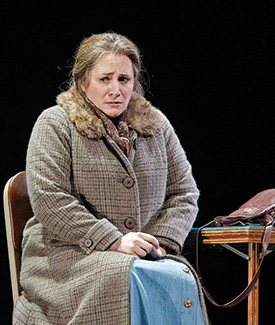
STAGE Oh, the drama. Three weeks before Dolores Claiborne — the 1992 Stephen King thriller transformed by composer Tobias Picker and librettist JD McClatchy into a two-and-a-half-hour opera — was set to premiere, mezzo-soprano Dolora Zadjic bowed out, citing knee problems. She was singing Dolores. Whoever could learn this exhausting part (Dolores is onstage almost every scene, singing up a storm) in 21 days?

By divine luck, gifted and game soprano Patricia Racette was here to perform in another SF Opera production, Arrigo Boito’s 1867 Mefistofele. (Don’t miss it: the 30-minute witches’ sabbath/orgy scene featuring an entire writhing, nude-suited chorus is glorious.) Racette burst unannounced into the packed press conference addressing her acceptance of the part, a tornado of scarves, with a loud, “Speak of the devil!” She had sung Picker’s music before, in previous operas An American Tragedy and Emmeline. She was quick to pick things up. And how different was a mezzo-soprano from a soprano, anyway?

As it turns out, quite a bit. Right off the bat, I will say the Sept. 18 premiere of the opera was energetic, disturbing, visually stunning, and, at several moments, ethereally beautiful. All your favorite lines are there (“I get to say ‘bitch’ and ‘shit’!” Racette exclaimed with glee at the presser), although the cuss words don’t make it to the supertitles, so delicate are we. The fantastic cast members sang for their lives, and conductor George Manahan led the orchestra nimbly through the thicket of Picker’s score, which held several delightful surprises, including eerie whistles and shivery cinematic effects. The staging was brilliant — using video projections and multiple-tier trickery, a series of sets within sets opened up, playing off the story’s flashback-filled timeline.

And Racette nails it, although she’s more comfortable in high dudgeon as vengeful fury than as stone-faced martyr. As King wrote it, this tragedy of a feisty Maine woman burdened with misfortune and accident is an affecting character study set in an atmosphere of uncanny dread and dark humor. Yet Picker and McClatchy have decided to focus on plot, rather than psychological complexity. There really isn’t too much plot here, though, so we get a lot of repetition. And what plot there is sometimes twists and shocks, but it’s not particularly expansive or enlightening. Feminist attitudes are struck, but everyone’s a feminist when it comes to a woman being beaten by an icky husband (macho, well-voiced Wayne Tiggs) who’s sexually molesting her sweet daughter (the wonderful Susannah Biller, who kills it in an unhinged aria). That molestation is strikingly staged, Dolores’ revenge is exacted during an eclipse, and there’s a bit of mystery about some money and another death, which is tidily cleared up.

But the real action’s in the vertiginous moods of the tale, and Picker’s score can’t seem to find them. Picker’s part of a generation of American composers that traffics unselfconsciously in cinematic horror, high camp, tacky Americana, and other contemporary modes, but that doesn’t mean he’s necessarily good at all of them. I think Dolores’ imperious, ill-fated employer, Vera Donovan (Elizabeth Futral, giving her all, singing “Sometimes being a bitch is all a woman has to hold on to”) is meant to be part Norma Desmond, part Nancy Reagan, but she ends up more kitsch than camp — mostly because she’s near-shrieking all the time.

Here’s the only real problem with a production that may have been colored by shaky nerves. Often there are three sopranos — Vera, Dolores, and the daughter, Selena — tearing up the stage. That could be awesome (who doesn’t love three anguished sopranos in an eclipse) but the vocal lines are so cartoonish at times that they seem more parody of opera-singing than a natural extension of the drama. Every exclamation is punctuated by high note after high note, like a DJ dropping all the builds and going directly for the breakdowns. Dolores Claiborne is juicy and in many ways a triumph. And it will surely draw new audiences to the opera (opening night was bursting with gothic youth). They’ll probably love it. But I’m afraid that their stereotypes about what opera sounds like might be confirmed.

DOLORES CLAIBORNE runs through Oct. 4. www.sfopera.com


Porn again

1

marke@sfbg.com

SEX + MUSIC What does Tumblr sound like? Is there an xTube channel on Pandora? Does Grindr have autoplay? (Perish the thought.) Already the gay porn soundtrack seems a relic of some ancient age, when people used pterodactyls to press “play” on the VCR, or put their real ages in their AOL chatroom handles. But even just a few years ago, during the increasingly desperate gasps of the dominant adult film studios, porn soundtracks were an essential part of big, expensive productions, and local background composers like JD Slater and Minor9 were taking experimental liberties.

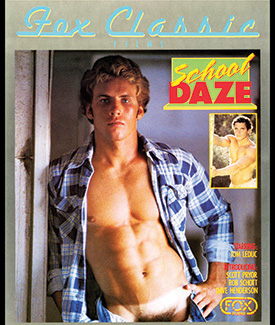
Now, we’re about to be treated to the Holy Grail of lost porn soundtracks, with the upcoming release of School Daze, a double-album collecting the skin flick work of SF electronic pioneer Patrick Cowley for Fox Studio, composed from 1973-1981. Cowley, who died of AIDS in 1982, is famous for his production work with disco diva Sylvester and epic Hi-NRG tracks like “Menergy” and “Megatron Man.” School Daze contains some pretty trippy stuff — in the buffed, blonde, hairless heyday of early ’80s gay porn like Muscle Up, you’d hardly expect to come across such expressionistic (yet still playful) compositions with titles like “Seven Sacred Pools,” “Zygote,” “Pagan Rhythms,” and “Tides of Man.”

School Daze is being released on HNYTRX, local DJ crew Honey Soundsystem’s label, on Oct. 19 — Cowley’s 63rd birthday — with a celebration at Honey’s weekly Sunday party, Oct. 20. (Details at www.megatronman.com). I talked to Honey members Josh Cheon and Jacob Sperber about the unearthed gems.

SF Bay Guardian OK, rumors have been flying about these tracks for years. How did you get you get your hands on them?

Josh Cheon In 2007, Honey Soundsystem was blessed to meet the former owner of Megatone Records [Cowley’s label], John Hedges. He was moving to Palm Springs and invited us over to his basement to collect over 2000 records from his collection. Among the archives we noticed three moldy boxes of quarter inch reel-to-reel tapes. Some of the tapes had unreleased music by Patrick Cowley. Inspired, we contacted Patrick’s friends and family to discover as much information as possible.

A few of Patrick’s friends asked if anyone had discovered the gay porn soundtracks Patrick had composed. Digging deeper, we unearthed John Coletti, the owner of famed vintage gay porn company Fox Studio in Los Angeles. John had heard about Patrick’s music from the legendary Sylvester and proposed he write music for his films. That was in 1981. Patrick jumped on this offer and sent reels of his college compositions from the ’70s to John in LA. We were able to locate Coletti in Los Angeles though an old address on a porn tape. In May 2013, I flew to LA to pick up the tapes from the Fox Studio storage garage and brought them back to San Francisco.

SFBG Why do you think Patrick went so moody and trippy with these compositions?

JC I think the ambience reflects the gay bathhouse scene of San Francisco during the late ’70s. Patrick frequented the bookstores in the Castro and the bathhouses of SOMA, a few blocks from his recording studio. He had the perfect setting to compose songs there. He also smoked a lot of pot and most of these songs could be stoner jams.

Jacob Sperber It can’t be denied that these compositions have that tripped-out sound that most San Franciscan musicians end up folding into their music. The jam bands that made this place famous and the microclimates of this city breed a noodle-y and melty sound in the musicians that live here. In conversations with people who worked with Patrick, we learned how much the session musicians and jazz artists in the Bay Area influenced the sounds of 12-inch disco here. Undoubtedly Patrick worked with a lot of these session musicians and took inspiration from them. There is a foggy melancholy to this city and it comes through in the music, with perhaps a premonition of the storm to come in the ’80s, when HIV first hit.

SFBG Have you had a chance to watch the actual movies these tracks went with? Are the soundtracks effective as porn music?

JC Yes, I own both movies that use Patrick’s music. This compilation features soundtrack music from two Fox Studio films Muscle Up and School Daze. The movies were originally shot on 16mm with no microphone so they were silent. Rather than overdub fake sex moans, John Coletti decided to use Cowley’s music as soundtracks. Coletti used a variable speed oscillator to adjust the pitch and speed of Patrick’s songs in-sync with the film scene. So yes, a lot of thought went into fitting each composition with the film scene, and it works wonderfully.

SFBG After spending so much time with this, what do you think about the sounds of porn today?

JS Honestly we don’t know many people who watch traditionally produced porn these days. Most of our friends either don’t want to pay for it, aren’t turned on by it, or are making their own at home. The new soundtrack to porn is sex. The raw grit of an iPhone microphone recording or even the silence of your laptop on mute, so that your roomies don’t know you’re jerking off, is way more of a turn-on these days.

Oakland’s Negative Standards support future punks

9

The band Negative Standards is essentially a crust art project.

While maintaining d-beat chords and sludge-like breakdowns, the Oakland-based group makes use of non-instrumental noise and videos created by the band’s bassist, Will, during shows.

And as a quartet that blends elements of crust, doom metal, and noise; Negative Standards sticks out like a sore thumb in the endless sea of fellow crusty brethren and fuzzy lo-fi that exists in the East Bay.

Anonymity is key for the band. Negative Standards sticks to Roman numerals in place of song titles and prefers not to have band members names attached to the project. While being interviewed, the guys chose to keep it on a first-name basis.

So, for housekeeping purposes, the band is as follows: Al on guitar, Will on bass/video, Max on drums and noise, and Will — who wasn’t interviewed — on vocals and non-instrumental noise.

According to Will, the choice to maintain anonymity is to let the music speak for itself.

“From the beginning, the idea was to present each recording as a coherent whole, rather than just a collection of unrelated songs, and doing it this way somewhat anonymizes the individual components,” Will says. “Another effect is that the lyrics, music and samples have to speak for themselves, not having been distilled into a name or a slogan.”

http://www.youtube.com/watch?v=RYApseTorGQ

The band makes the conscious decision to only play all-ages shows to battle the age-old problem of gentrification in the Bay Area.

Drummer and non-instrumental noise creator, Max, expands on this idea: “Gentrification and the attendant cultural colonialism of bars and ‘the underground’ is threatening the existence of DIY all ages spaces in the East Bay more with each passing year,” Max says. “It makes sense that, as a band, we would want to resist the destruction of the cultural environment that has made our existence possible.”

Guitarist Al recalls going to Berkeley’s world-famous all-ages punk venue, 924 Gilman when he was growing up. Al believes that without all-ages venues such as the Gilman, bands like theirs would not exist. Everybody has a starting point, and Al credits the Gilman as his.

“If it weren’t for this place, I wouldn’t know most any of my current good friends, let alone be in this band,” Al says. “I think it’s important to support the future punks instead of shutting them out because you want to drink.”

The band credits the Bay Area for having a thriving scene with the likes of fellow bands such as Noothgrush,Permanent Ruin, Ordstro and Vaccuum. But like most to all existing punk scenes, there exists various isms.

“Seeing the amount of misogyny, transphobia, and racism that goes totally unchecked within some corners of our supposedly ‘radical’ scene can be pretty disheartening, but there’s also some incredible people working against those normative tides,” says Will.

Negative Standards, however, is leaving the sub-cultural hub of Oakland to embark on a European tour, playing with the likes of European punks Bacchus and Throwers.

“Vendetta Records from Germany put out our LP and hooked us up with Timo from Alerta Antifacista Records, who busted his ass to put this tour together for us,” Al  says. “I’m incredibly excited. I’ve never travelled in Europe before and am looking forward to it greatly.”

http://www.youtube.com/watch?v=SnNPxLnRGVo

The band also has a split LP with doom band Whitehorse coming out on Vendetta Records in October.

Most of the band remains extremely cordial and modest, lauding other bands and the proverbial scene at large (for the most part). But as mentioned before, this band sticks out amongst others and Max is sure to break the tide.

“Fuck this false modesty,” Max says. “I defy you to name another local band that has both a totally gnarly wolf AND an outlandishly colored manatee on their van’s dashboard.”

You can catch this band at its upcoming going away show at the Oakland Metro. As the Oakland Metro site states, “no turds allowed.”

Negative Standards
With Ordstro, Sutekh Hexen, Filthchain, Xenotaph
Thu/26, 7pm, $7
Oakland Metro
630 3rd Street, Oakland
(510) 763-1146
www.oaklandmetro.org

Hit the lights

1

cheryl@sfbg.com

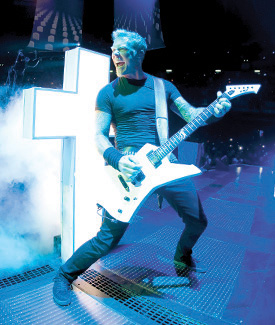
FILM The 3D IMAX concert film may be lurching toward cliché status, but at least Metallica: Through the Never has more bite to it than, say, this summer’s One Direction: This is Us.

Director Nimród Antal (2010’s Predators) weaves live footage of the Bay Area thrash veterans ripping through hits (“Enter Sandman,” “For Whom the Bell Tolls,” etc.) into a narrative (kinda) about one of the band’s roadies (The Place Beyond the Pines‘ Dane DeHaan). Sent on an errand, the hoodie-wearing hesher finds himself caught in a nightmarish landscape of violence, fire, hanging bodies, masked horsemen, crumbling buildings — more or less, the dude’s trapped in a heavy metal video, and not one blessed with particularly original imagery. Yet despite Never‘s deliberately baffling storyline, it’s also often very literal: a fight scene set to “Battery,” for example.

Lead guitarist Kirk Hammett — other members: singer-guitarist James Hetfield, bassist Robert Trujillo, and drummer Lars Ulrich — is the band’s resident movie fanatic; for proof, see Too Much Horror Business, the 2012 book chronicling his memorabilia collection. (Through the Never offers a larger-than-life chance to ogle his Boris Karloff guitar.) Though it contains unsettling elements, Hammett admits that Through the Never isn’t really a horror film.

“We needed to find a concept that fit all four of us as people, as well as Metallica as a band,” he says, holding forth a day after the movie’s Metreon premiere. “There were a lot of different concepts thrown at us. Most of them were science fiction — and while I’m a big sci-fi fan, I just don’t see Metallica making a sci-fi movie. But Nimród’s concept was loose enough that we were able put our own ideas and personalities, and the band personality, into it. Sure, it would’ve been great to have a scary, 60-foot troll tromping around with a Metallica shirt on. It would have been fun for me. But I don’t know if it would have been as much fun for the other guys!”

About that “loose concept” — though Hammett says the decision not to give DeHaan’s character any dialogue was so “anyone could understand [the film] anywhere in the world,” he admits that some viewers have been confused by the story.

However, “the great thing about this movie is that it’s open to interpretation,” he says. “It’s being told in a metaphoric fashion, which means that depending on who you are, and where you are in your life, you’re going to have a different interpretation of this movie. And that’s the beauty of it — it’s like Metallica lyrics. It acts almost as a mirror to what your own life perspective is. That is something that we wholeheartedly chase in all our creative endeavors — we want something that is not, ‘This is a square and that’s it.’ That’s boring! We want something like, ‘Is this a rectangle in a different dimension that has capabilities that we don’t even know about?’ It’s much more of an interesting approach, and I think it was the right one to take with this movie.”

Of course, this isn’t the first time Metallica has been the focus of a feature film — prior to Through the Never came searing, deeply personal 2004 documentary Metallica: Some Kind of Monster.

“Two different animals altogether,” Hammett says of the films. “Monster was a documentary about four people and their real struggles against adversity. This is more along the lines of pure entertainment, being able to put forth a concert scenario and tell a story at the same time. That was really unique and cool for us.” *


METALLICA: THROUGH THE NEVER opens Fri/27 in Bay Area theaters.

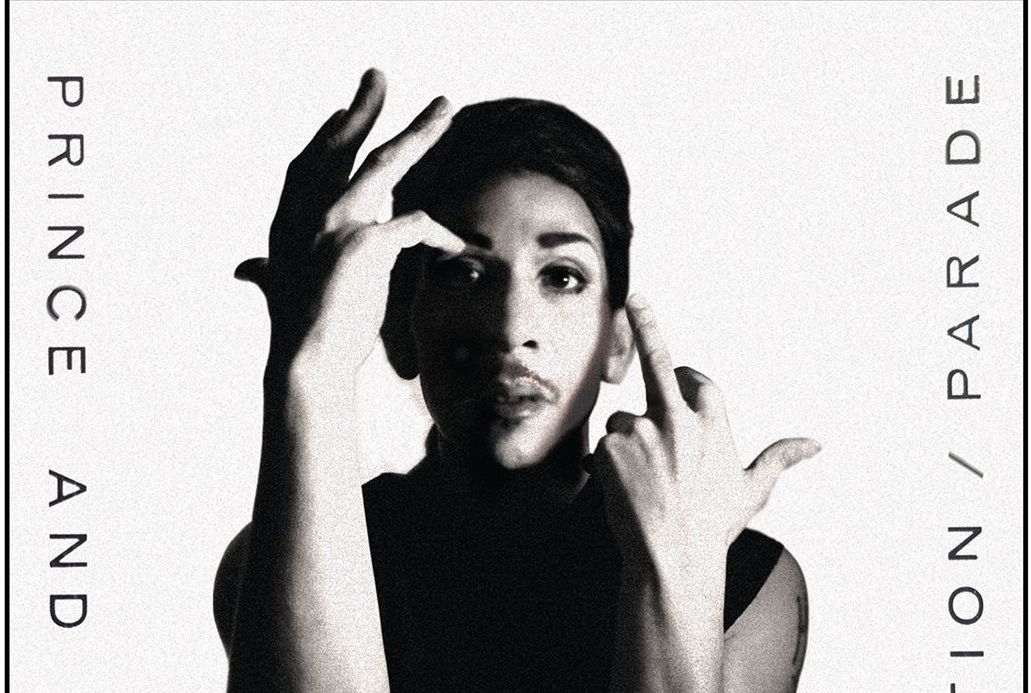
Holy Cherry Moons! SF Album Project joins Prince’s ‘Parade’ in full, fantastical drag

0

Things I know right now: I’m far from the only one who knows all the words to Yaz’s Upstairs at Eric’s, OK Computer is much better as a conceptual drag performance, and the 12-inch version of “Mountains” by Prince is one of the best extended jams ever committed to vinyl. 

The third thing I know from being a record nerd (it’s also impossible to prove to you, since the Purple One spends all his time on Youtube yanking down his music). But the first two revelations came courtesy of the stunning San Francisco Album Project, a talented group of drag performers, stage technicians, theatrical personages, and tasteful club kids. Every two months they take on an entire album, presenting it as a stage extravaganza, embellished with special effects and original dialogue. It’s brilliantly nuts, and not the albums you’d expect at all from a bunch of colorful queens.

After conquering Yaz and Radiohead (standing room only, btw), the SFAP is about to scale the purple peak and slide under the cherry moon: The troupe will present Prince’s “Parade” — the soundtrack to his 1986 movie Under the Cherry Moon, including the original version of my beloved “Mountains” —  in its entirety on Sun/22 at the Chapel.

I asked Nathan Rapport and Bobby Barber, “album curators” of SFAP, to give me the lowdown on the project, and what to expect this Sunday:

http://www.youtube.com/watch?v=oemJ8eVneXo


SFBG SFAP seems like the kind of “eureka” idea that should have happened already, especially in SF — but no one really rubbed two drag sticks together to form a drag flame. How did the project come about?

Bobby Barber The San Francisco Album Project came about after about a year’s worth of on-and-off discussion between Nathan and myself about the state of the San Francisco drag scene. He and I both love what Trannyshack’s still achieving at the DNA Lounge – there are some sublime and thoroughly entertaining performances being created there to this day – but the venue and the interests of its audience don’t lend themselves very well to concepts and ideas that Heklina & Co. used to stage back when Trannyshack was at The Stud.

Some of our favorite shows ever at Trannyshack were evenings dedicated to an entire album (Fleetwood Mac’s Rumors, David Bowie’s Ziggy Stardust and the Spiders From Mars, Pink Floyd’s The Wall), and it always seemed an idea that had endless possibilities. It’s from that very concept created and shepherded by Heklina, Peaches Christ, and Vinsantos that Nathan and I are now attempting our variations on.
Since I work for Peaches Christ Productions, I knew I had the resources available to at least a fund a few initial shows, provided I could find an appropriate venue. As soon as we saw The Chapel, Nathan and I knew it had to be there; it’s perfect. We brought Precious Moments (Michael Soldier) on board because we knew we had to have not just a seasoned Old Guard Trannyshack performer as one of the producers, but also because Precious thought up one of the old album-centered shows at Trannyshack back when it was at The Stud (Rumors). Precious has been indispensable not just as one of the performers in the troupe, but also as a director of the shows.

http://vimeo.com/70395055

SFBG You really “go there” with these performances — special effects, drag-robot suicides, emotional resonance, all manner of stage trickery. What are you trying to achieve?

BB
First and foremost Nathan and myself want to honor what we think is incredible music. We want to give it an interpretation that it’s not often given.

Secondly, Precious, Nathan and I are attempting to create a “drag show” that is structured differently than most other shows around town. One could argue that the content of the San Francisco Album Project is the same as other shows, and it is in several ways. But we believe that by framing the show as a narrative, by not having an emcee, by not having dancing before or after the show, and by having our DJs spin music that creates the vibe of a ‘listening party’ rather than a club, we’re creating a frame that makes the experience of the performances feel more theatrically holistic than a traditional drag show.

Lastly, The San Francisco Album Project is an experiment on our part in the collaborative process. Nathan and I are very interested in the idea of artistic collaboration: whether it’s possible – why it works – why it doesn’t – what it means to different people. The performers themselves come to the table with their own idea for the song they’ve chosen. It’s up to Precious, Nathan and myself to weave these together and find a story within the group’s ideas. Also, how does a medium like drag performance operate or manifest under the pressure and/or freedom of collaboration…?

An album in and of itself is already a finished and finely tuned work of art, carefully molded by the original artist(s) who created it. What happens when a group of drag queens come in and deconstructs said album, this finished work of art, only for the purpose of re-presenting it as they see fit? Ultimately this is an act of spiritual reverence.

SFAP Unlike the Tranyshack albums you mention above, which were already not your usual drag fare, the albums you’re doing are even more unexpected. How are the albums chosen?

BB Nathan and I chose the first twelve albums ourselves over two months of back-and-forth arguing. By no means are the albums chosen our favorite albums of all time, but rather ones we find strike that perfect balance between intelligence, entertainment, popularity and drag potential. They are all iconic, but for different reasons. Some are albums that carry meaning across a large part of entire generation. Some are considered canonical, seminal, “the best the artist has done,” and those facts alone have led Nathan and I to choose certain titles.

Parade was decided for a few reasons. After doing Yaz’s Upstairs at Eric’s, and Radiohead’s OK Computer, Nathan and I knew we had to do an album that we think is an artist’s best, not the most well-known. Besides, Purple Rain is already done to perfection by Peaches Christ every other year,  and the songs on 1999 are too long for drag queens. Also, the real-life story behind the creation of Parade lends itself well to what The San Francisco Album Project is trying to achieve, or rather, is experimenting with. Prince’s collaboration with Wendy and Lisa reached its fever pitch with this album. Overworking, conflicting egos, frustrating machismo, and the tour which resulted from it brought about the end of their work together, thereby ending what I believe is one of the great partnerships in modern rock and roll, and forever destroying the glorious potential of what music Prince, and Wendy and Lisa might have continued creating together.

SFBG Can you share any exciting specifics about Sunday’s performance?

BB Well the show is built around the theme/story I just referenced: the relationship between Prince, Wendy and Lisa. It’s to be used as a frame around our fantasies in regards to the collaborative process. A myth has been created about their break-up, not just between Prince fans and the music press of the time, but now also on our stage. We’ve expanded notions of the obvious troubles that arose not just due to Prince’s fame and resulting ego, but also difficulties that could come about when men and women collaborate together, as well as straights and queers.

The narrative of the show is interspersed with ‘impressions’ on these themes, as some performers have come up with numbers that deviate from the direct story told on stage, instead having come up with their own musings in regards to these ‘troubles’ I mentioned above.

I can promise that the numbers run, at least, the same gamut of emotions that the album Parade does itself. I think we have a great sense of humor about it all, and I believe it’ll come across in Sunday’s show.

SFBG Can you tell us what album’s next?

BB Well not all the way down the line, but I can tell you that the next show is based around Roxy Music’s first self-titled album from 1972. It’s scheduled for Sunday, November 10th at The Chapel.

Q&A: Blouse on the Dream Syndicate, forest life, and going synth-less

0

Blouse, may have ditched the synths and drum machines of its 2011 debut self-titled album with new Captured Tracks full-length, Imperium, but the sound remains as hazy and dreamy as ever. Now it’s just backed by rippling reverb and distortion.

The misty Portland, Ore. dreampop trio makes siren calls that would entice a shipwrecked sailor, floating endlessly in a gurgling oceanic abyss. See? Wistful. Check first single, “A Feeling Like This” or next track “No Shelter” for that particular mental imagery. It’s all there, the swashing of fuzz, the wide open minimalism à la xx, the delicate, teetering vocal tracks, and an uneasy feeling of isolation.

I asked Blouse frontperson Charlie Hilton about the band’s new album, the local Portland music scene, going synth-less, and the albums they bonded over:

http://www.youtube.com/watch?v=KlxjGFaQKu4

SFBG How did Blouse first come together?

CH Three years ago, I moved to Portland from LA and met Patrick in an intro design class at PSU. We became friends almost immediately and he started giving me rides home from school. We were always talking about music, about the bands we’d been involved in, about what we liked. Eventually we decided to play together in my living room a few nights a week.

I’d been writing since middle school, so I shared some of my recent work with him. We also worked on new songs, recording them on Garageband as we went, until his friend Jake heard the demos and thought we should all record together. Jake had produced some really great records, and he and Patrick had been in bands together in the past.

We felt a weird kind of urgency to do something together, so we went to a place called Jackpot Studios for two days, hung out, and worked on the songs. We decided on a band name, finished two tracks, and posted them on the Internet. It was only a couple of months later that we signed with Captured Tracks.
 
SFBG What songs or albums by other artists have you bonded over as a group?

CH The Dream Syndicate, Days of Wine and Roses. I had never met anyone who loved that record like I did, and then I saw it propped up at their house. It’s funny how that can make you trust a person.
 
SFBG Why the shift from synths to a more guitar-focused sound on new album, Imperium?

CH We like guitars a lot and it was fun to see what we sounded like without the synths, to see whether or not we could remain ourselves.

http://www.youtube.com/watch?v=MPOgGgDyNGo
 
SFBG Can you tell me about writing the song “No Shelter” off Imperium?

CH I was feeling really terrible at the time, for no reason. My husband and I had just bought a cabin in the mountains, and all I wanted to do was be there, away from everything and everybody. I was getting very addicted to this place in the forest, and I realized that I was using it to escape the dread inside me. Writing that song was just about coming to terms with that feeling, recognizing that it was there and that I couldn’t really get away from it.
 
SFBG What inspired first single “A Feeling Like This?”

CH A mushroom trip in a white room.
 
SFBG Do you feel part of a Portland music community? Who are your closest contemporaries music-wise, in Portland and beyond?

CH Yes. I have so many friends in bands that I love. Wampire, WL, Unknown Mortal Orchestra, Industrial Park, Hausu, Vice Device, Concrete Floor, Litanic Mask — just to name a few.
 
SFBG What’s the most common misconception about Blouse?

CH That we all live together in the warehouse where we record music. I don’t mind if people keep thinking that. It sounds fun. But no, we don’t really. There’s no shower.
 
SFBG Anything you’re looking forward to on this West Coast tour?

CH I’m from LA so I always love going home to play Part Time Punks. Michael Stock was my favorite DJ when I lived there, so it was an absolute pleasure to meet him and do a session with KXLU last year. We’ll be doing another one this time. I’m excited.

http://www.youtube.com/watch?v=vZq1xRzlCxg
 
SFBG Is there anything else you’d like people to know about your band?

CH We’re very Polish.

Blouse
With Social Studies, Feathers
Sat/21, 9:30pm, $12
Bottom of the Hill
1233 17th St, SF
(415) 626-4455
www.bottomofthehill.com

San Francisco Homebrewers Guild Q&A: A mashing good time

0

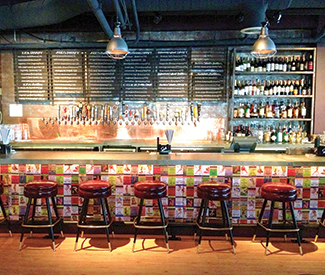
For this week’s cover story, I profiled one particular homebrewer — my husband — on his quest to DIY kegerator glory. But there’s more to this story — hundreds more, in fact. And the homebrewers of San Francisco congregate in the virtual San Francisco Homebrewers Guild (cute motto: “A mashing good time!). I chatted with the friendly and knowledgeable Kevin Inglin, who is the group’s VP (Chris Cohen is the group founder and president) about rising membership, local homebrewing trends, and helping people brew better beer:

SF Bay Guardian
How many active members are there in the San Francisco Homebrewers Guild?

Kevin Inglin We have about 140 dues-paying members in the SFHG ($45 annual membership gets them into monthly meetings for free — $5 for non-members — and allows them to enter our quarterly competitions for free, attend members-only events, and gets them discounts at local homebrew supply shops).

Our emailing list and Meetup group numbers are nearing 500. We have more than 130 people who are regularly “active” on our Meetup page (meaning they access the page for information at least bi-weekly), and we usually have 40-80 members who attend our monthly meetings and events.

SFBG How long has the group/guild been active? It combined with another group late last year, correct?

KI That’s correct. The current formation of the SFHG is really a combination of two groups. In October 2012 I took over as organizer of a Meetup group (of which I had been a member for about a year) called the SF Homebrew Club, which had formed online in December 2010. Chris Cohen started the SFHG in February 2012 and had held a couple of events throughout 2012. Upon taking over the Meetup group, I was pondering what type of homebrew club I thought we needed to be what my role would be as organizer and I came across what Chris was doing with SFHG.

I thought we had a lot of similar goals with regard to uniting and promoting the homebrewing community in the city, so I reached out to him and very quickly thereafter cross-promoted the November 2012 “SFHG Presidential Honey Ale Competition” — an event he already had in the works — to members of the Meetup group. In December of that same year, Chris then cross-promoted a Meetup group event — a North Bay Craft Brewery Tour I had been working on – to the members of the SFHG.

After those two very successful joint endeavors, we made it official in January 2013 when we merged the two groups, changed the Meetup group name to SFHG to ensure common branding, began having our regular monthly meetings, and proceeded to carry out numerous events throughout the year. We haven’t looked back since!

SFBG Any common homebrewing trends you’ve noticed among the group lately? Any ongoing trends or common issues that always arise among members?

KI I think the common trend in the homebrewing community is that every homebrewer at one time or another secretly desires to “go pro” — if they say they haven’t after someone has told them “that’s really great beer!” they’re probably lying!

Joking aside, I think the trend among homebrewers is creativity and reviving often “forgotten” styles or bringing a new twist to old classics. This creativity inevitably then emerges in the craft brewing scene as many craft brewers do indeed have homebrewing roots. People new to homebrewing then see what is happening in the craft brewing world and work to replicate those beers, so it’s somewhat of a circuitous path, but the two communities (homebrewing and craft brewing) tend to feed off one another.

In the past several years, we’ve seen the craft beer scene follow the homebrewing lead of running through big, high-alcohol “extreme” beers (e.g., big stouts and barleywines), and who can make the hoppiest IPA known to man. Now we see sour beers trending quite a bit in the craft brewing industry, which is at least in part due, in my opinion, to a trend of homebrewers seeking to make these challenging and very tasty beers for the past several years.

Our club is about to embark on a sour beer project with GigaYeast, a local, up-and-coming yeast provider that is gaining an increased market presence – we’re very excited about helping them gather data to tweak their sour yeasts and agents they’ll ultimately bring to market for use by other home and craft brewers.

SFBG Are most members brewing all-grain or extract? What is the experience level of most of the members?

KI We really run the gamut. We have several brewers who have been at it for a decade or more and a large group of people new to the hobby. With that mix of experience level, we have a corresponding mix of brewers who are all-grain and those using extracts. Being in an urban environment, some of our brewers are challenged with space and continue to use extracts for this reason, others have found ways to move to all-grain, but do so on a much smaller scale (1 to 3 gallon batches) than is most-often found in the hobby, where brewing 5 gallons at a time is the most common volume.

SFBG Have you noticed any uptick in membership in the past six months-few years?

KI Absolutely! Before we merged the SF Homebrew Club with SFHG, there were 287 members in the Meetup group, of which, just more than 30 were “active” members regularly using the site to gather and share information. We now have more than 460 members in the Meetup group, of which more than 130 are regularly “active” so that has definitely been very positive and consistent growth for the group over the past 11 months.

With the merger of the Meetup group into the SFHG proper, we’ve also seen a significant increase in paid memberships for SFHG (nearly double from last year), which has been essentially to the vitality of the group and allowing us to host so many events for members in the past year.

SFBG When did you personally start homebrewing?

KI I started in 1996 with an equipment and ingredient kit I bought from a display set up in the corner of a German bar. I had no group or resources to really tell me what to do, so I just read what I could and went for it. Those first batches weren’t too great, but I’d like to think now after all these years I’m able to produce beers a bit more palatable!

SFBG Anything else you would like to add about yourself or the group?

KI Running the SFHG has been a truly rewarding experience – it’s always great to help someone “get it” and see their joy when they make a beer far better than they ever thought they could based on information and tips they gathered from other club members. Having struggled somewhat on my own when I got started, it’s very enjoyable to help others avoid that isolation and be able to improve their brewing much more quickly based on the help and advice from others. That’s really the crux of our existence — help people brew better beer!

As for me personally, as an Army officer, I’ve moved around quite a bit over the years and homebrewed in Tennessee, Alabama (not realizing it wasn’t legal there at the time – thankfully it is now!), Hawaii, Virginia, Texas, Germany, and of course here in California.

It’s been a very enjoyable hobby and now that I’m set to retire from the Army in 2014, my wife and I have indeed decided to venture into the ranks of the professionals and open our own Nano Brewery here in the city. I’ll be attending a professional brewing course next year to augment my homebrewing experience and we’re in the throws of getting the business off the ground in the coming months. Wish us luck!

The Selector: Sept. 18-25, 2013

0

THURSDAY 19

“Dark Matters: The Films of William Friedkin”

The Pacific Film Archive’s “Dark Matters: The Films of William Friedkin” wraps up this week with a trio of movies and a pair of special events. Thus far, the series has included 1985’s To Live and Die in LA, 1971’s The French Connection, and 1970’s The Boys in the Band, but not — in an omission so obvious it’s clearly deliberate — 1973’s The Exorcist. Friedkin himself visits Berkeley tonight for a discussion with film critic Michael Guillen (following a showing of 1977 nail-biter Sorcerer); the director returns Sat/21 to sign copies of his new memoir, The Friedkin Connection, and will appear in person at screenings of 1980’s Cruising and 2011’s Killer Joe. (Cheryl Eddy)

Tonight, Sorcerer and discussion, 7pm

Sat/21, book signing, 6pm; Cruising, 6:30pm; Killer Joe, 8:50pm

$5.50–$9.50

Pacific Film Archive

2575 Bancroft, Berk.

bampfa.berkeley.edu


The Jill & Julia Show

Over a decade before Katy Perry released her vomitously bubblegum, gay-appropriating smash-hit single “I Kissed a Girl,” Jill Sobule released a single of the same name. Where Perry’s was vulgar and derivative, Sobule’s was honest, witty, and painfully poignant. Amusing and whimsical lyrics are a trademark of Sobule’s work, and her gift for words and humor are what make her a perfect match for Saturday Night Live veteran Julia Sweeney. Sweeney is most famous for her androgynous SNL character Pat and her biting one-woman monologues. Sweeney and Sobule met at a TED conference at the Monterey Bay Aquarium in 2006, and after professing their admiration for each other’s work, the women joined forces, resulting in the Jill & Julia Show, a touring production of Jill’s songs and Julia’s stories that is certain to leave you gasping for breath. (Haley Zaremba)

With Heather Combs

8pm, $20

Swedish American Hall

2170 Market, SF

(415) 861-5016

www.cafedunord.com


“Not Dead Yet: Movie and Music to End ALS”

The inspiring resilience of Richmond, Calif. native Jason Becker — a talented young guitarist destined for metal-god status until he was immobilized by Lou Gehrig’s Disease — was chronicled in 2012’s Jason Becker: Not Dead Yet, its cheeky title a reference to the fact that Becker, now 44, has long outlived the grim prognosis of doctors who predicted he’d be dead by 25. As the doc shows, Becker continues to communicate and even compose complex music via a remarkable system that interprets his eye movements. Head to Bimbo’s tonight for a screening of Jesse Vile’s film, plus a concert with Pearl (featuring Scott Ian of Anthrax) and Forrest Day. Becker will also attend the event, which doubles as a fundraiser for the Jason Becker Special Needs Trust and the ALS Therapy Development Institute. (Eddy)

7pm, $30-75

Bimbo’s 365 Club

1025 Columbus, SF

www.bimbos365club.com


Hard Skin

The person who booked this show is either a deviant mastermind or holding a great social experiment. In one corner, sits the headliner Hard Skin, a sophomoric English oi! band from the ’90s that boasts such classics as “A.C.A.C. (All Coppers are Cunts)” and “Oi Not Jobs.” In the other corner sits the second band on the bill, Replica, a nearly-all girl hardcore band from a decidedly younger generation that may agree with the anti-police sentiment but not the liberal use of the “c-word.” Though the bands may differ from each other, there’s no mistaking that Hard Skin and Replica both come from supportive underground scenes. Hard Skin’s debut release, 1998’s Hard Nuts and Hard Cunts, sold 100,000 copies and the folks from Replica have gained local support and hype for their self-titled EP released earlier this year on Prank Records. Come see the generational, gender, and genre divides intersect at Thee Parkside, and take notes.This should be a doozy. (Erin Dage)

With Replica, Glitz, Kicker

9pm, $10

Thee Parkside

1600 17th St, SF

(415) 252-1330

www.theeparkside.com


FRIDAY 20

Diaspora Tales #2: 1969

The late 1960s may be remembered more as a fight for freedom by African-American communities. But Asian-Americans were equally determined to demand equality. Both saxophonist-composer Francis Wong and choreographer-dancer Lenora Lee have use their artistic expression to convey the struggles that they have unearthed within their own families. Diaspora Tales #2: 1969, originally created for the 40th anniversary of UC Berkeley’s Third World Strike, is a multimedia performance work that commemorates the courage and sacrifices by those involved, Wong’s brother having been one of them. Kung Fu, both as martial arts and in its more lyrically expressive form, join jazz, funk, and rap to evoke both a period and a challenge that yet has to be completely overcome. Olivia Ting created Diaspora’s visual components. (Rita Felciano)

7:30pm, $7

Asian Improv aRts

Berkeley Art Museum and Pacific Film Archive

2626 Bancroft, Berk.

bampfa.berkeley.edu


“The Era is Now: Films of James T. Hong”

In 2000, experimental filmmaker James T. Hong’s scorching, Golden Gate Award-winning film Behold the Asian dubbed San Francisco “the white asshole paradise.” Though he now lives in Taiwan (for reasons that should be obvious), the former Mission District dweller — a man who fears no audience reaction — makes a rare return for a San Francisco Cinematheque-hosted screening of his latest work. New films enhancing what the SF Cinematheque dubs “a confrontationally intense body of work exploring racialism, philosophy, and revisionist approaches to history” include two from 2012, installation Apologies and The Turner Film Diaries; and this year’s Cutaways of Jiang Chun Gen — Forward and Back Again. (Eddy)

7:30pm, $5–$10

Artists’ Television Access

992 Valencia, SF

www.sfcinematheque.org


SATURDAY 21

Matias Aguayo

If you know this one-time minimalist-Closer Musik member from the all a capella cut-up jam “Rollerskate” or his wild Spanglish guest appearance on math-rockers Battles’s “Ice Cream,” you know that Aguayo’s voice is impossible to pin down. On The Visitor, his latest release on South American Kompakt offshoot Cómeme, Aguayo is as hard as ever to locate geographically, blurring Latin dialects and reverse engineering English lyrics over a mix of increasingly psychedelic rhythms that cut across (and veer from) generic dance and world music boundaries. With a new live show — expect lots of percussion and off-the-wall vocals on top of tracks —Aguayo could seem to be less on tour from another country, and more like a visitor from outer space. (Ryan Prendiville)

With Ghosts on Tape, Shawn Reynaldo, Rollie Fingers

10pm-3am, $10-15

Public Works

161 Erie, SF

(415) 932-0955

www.publicsf.com


Blouse

Portland, Oreg. trio, Blouse, may have ditched the synths and drum machines of its 2011 debut self-titled album with new Captured Tracks full-length, Imperium, but the sound remains as hazy and dreamy as ever. Now it’s just backed by rippling reverb and distortion. The misty dreampop band makes siren calls that would entice a shipwrecked sailor, floating endlessly in a gurgling oceanic abyss. See? Wistful. Check first single, “A Feeling Like This” or next track “No Shelter” for that particular mental imagery. It’s all there, the swashing of fuzz, the wide open minimalism à la xx, the delicate, teetering vocal tracks, and an uneasy feeling of isolation. (Emily Savage)

With Social Studies, Feathers

9:30pm, $12

Bottom of the Hill

1233 17 St, SF

(415) 626-4455

www.bottomofthehill.com


Wild Moth

There’s no question about it, there’s a lot of post-punk bands popping up in the Bay right now. For many of these bands, the term post-punk has been slapped on, but they don’t actually fit into these specific distinctions. You have a band that maintains a punk edge but is noisy and decidedly experimental at times? Definitely post-punk. That being said, San Francisco sweethearts Wild Moth have this whole “post-punk” thing down to an art. The band’s record release show for its newest album Over, Again on Asian Man Records is tonight. Joining the fun will be fellow post-punk bands Permanent Collection and No Tongue, as well as riot grrrl act Tenderbuttons. And accordingly, Wild Moth isn’t the only band on the bill with new stuff out. This summer Permanent Collection came out with its No Void EP and No Tongue dropped its newest EP, Body + Mind. As cliche as it sounds, support your local scene and pick up some new tunes! (Dage)

9pm, $6

Thee Parkside

1600 17th St, SF

(415) 252-1330

www.theeparkside.com


SUNDAY 22

Amanda Cohen

Author of Dirtcandy: The Cookbook, Amanda Cohen will discuss her unpredictable approach to cooking with vegetables (as a main dish) and tonight. The ambitious cook pairs unexpected flavors and presents them in a surprisingly harmonious way, and her cookbook is entirely in graphic novel form. Take her mushroom appetizer, a portabello mousse on truffled toast, drizzled with pear and fennel compote; or her Rosemary Eggplant Tiramisu, with rosemary cotton candy for example. Cohen was the first vegetarian chef on Iron Chef, and has been praised in the New Yorker and the New York Times among others. At Omnivore Books, she’ll discuss her journey, building a restaurant from the ground up to an always-crowded, original alternative restaurant in New York City. Stop by the store to meet Cohen and to pick up a copy of her comic cookbook. Also to possibly meet some fellow local veg-heads. (Hillary Smith)

With Grady Hendrix

3pm, free

Omnivore Books

3885a Cesar Chavez, SF

www.omnivorebooks.com


Dirty Beaches

Alex Zhang Hungtai, the musician behind the Dirty Beaches moniker, is an old soul. An eternal stranger in a strange land with a flair for eccentricity, Hungtai seems straight out of the beat generation. Taiwan-born and Montreal-based, he has lived in a veritable laundry list of cities around the world (including a stint in San Francisco) and through his music and touring schedule, Hungtai’s wanderlust shows no signs of slowing down. This restlessness is evident in Dirty Beaches’ music, a muddy, murky mix of doo-wopesque vocals and surf-tinged guitars that never quite rises to the surface. His simple guitar- and sample-based rock is beefed up on the road with a full band and a saxophone player. This tour promises to be especially interesting, with Hungtai possibly performing sitting down or with a cane after he jumped out of a second story window to make his flight back to North America, like Neal Cassady reincarnate. (Zaremba)

With SISU, Chasms

9pm, $12

Bottom of the Hill

1233 17th St, SF

(415) 626-4455

www.bottomofthehill.com


MONDAY 23

The Living Jarboe

Jarboe’s music is defined by the way she uses her powerful voice, a mutable, inventive instrument that haunts, terrifies, soothes and mourns. The former member of beloved post-punk outfit Swans has been prolific since the band’s break-up in 1997, perfecting her experimental art and collaborating widely across the musical spectrum, notably with Bay Area legends Neurosis. This appearance as the Living Jarboe enlists the help of a violinist and a guitarist to bring her seething, squalling, challenging songs to life. (Ben Richardson)

With Faun Fable, Amber Asylum

8pm, $15

Cafe Du Nord

2170 Market, SF

(415) 861-5016

www.cafedunord.com


The Selector: September 18 – 24, 2013

0

THURDAY 9/19


“Dark Matters: The Films of William Friedkin”

The Pacific Film Archive’s “Dark Matters: The Films of William Friedkin” wraps up this week with a trio of movies and a pair of special events. Thus far, the series has included 1985’s To Live and Die in LA, 1971’s The French Connection, and 1970’s The Boys in the Band, but not — in an omission so obvious it’s clearly deliberate — 1973’s The Exorcist. Friedkin himself visits Berkeley tonight for a discussion with film critic Michael Guillen (following a showing of 1977 nail-biter Sorcerer); the director returns Sat/21 to sign copies of his new memoir, The Friedkin Connection, and will appear in person at screenings of 1980’s Cruising and 2011’s Killer Joe. (Cheryl Eddy)

Tonight, Sorcerer and discussion, 7pm

Sat/21, book signing, 6pm; Cruising, 6:30pm; Killer Joe, 8:50pm

$5.50–$9.50

Pacific Film Archive

2575 Bancroft, Berk.

bampfa.berkeley.edu

THURDAY 9/19


The Jill & Julia Show

Over a decade before Katy Perry released her vomitously bubblegum, gay-appropriating smash-hit single “I Kissed a Girl,” Jill Sobule released a single of the same name. Where Perry’s was vulgar and derivative, Sobule’s was honest, witty, and painfully poignant. Amusing and whimsical lyrics are a trademark of Sobule’s work, and her gift for words and humor are what make her a perfect match for Saturday Night Live veteran Julia Sweeney. Sweeney is most famous for her androgynous SNL character Pat and her biting one-woman monologues. Sweeney and Sobule met at a TED conference at the Monterey Bay Aquarium in 2006, and after professing their admiration for each other’s work, the women joined forces, resulting in the Jill & Julia Show, a touring production of Jill’s songs and Julia’s stories that is certain to leave you gasping for breath. (Haley Zaremba)

With Heather Combs

8pm, $20

Swedish American Hall

2170 Market, SF

(415) 861-5016

www.cafedunord.com

THURDAY 9/19


“Not Dead Yet: Movie and Music to End ALS”

The inspiring resilience of Richmond, Calif. native Jason Becker — a talented young guitarist destined for metal-god status until he was immobilized by Lou Gehrig’s Disease — was chronicled in 2012’s Jason Becker: Not Dead Yet, its cheeky title a reference to the fact that Becker, now 44, has long outlived the grim prognosis of doctors who predicted he’d be dead by 25. As the doc shows, Becker continues to communicate and even compose complex music via a remarkable system that interprets his eye movements. Head to Bimbo’s tonight for a screening of Jesse Vile’s film, plus a concert with Pearl (featuring Scott Ian of Anthrax) and Forrest Day. Becker will also attend the event, which doubles as a fundraiser for the Jason Becker Special Needs Trust and the ALS Therapy Development Institute. (Eddy)

7pm, $30-75

Bimbo’s 365 Club

1025 Columbus, SF

www.bimbos365club.com

THURDAY 9/19


Hard Skin

The person who booked this show is either a deviant mastermind or holding a great social experiment. In one corner, sits the headliner Hard Skin, a sophomoric English oi! band from the ’90s that boasts such classics as “A.C.A.C. (All Coppers are Cunts)” and “Oi Not Jobs.” In the other corner sits the second band on the bill, Replica, a nearly-all girl hardcore band from a decidedly younger generation that may agree with the anti-police sentiment but not the liberal use of the “c-word.” Though the bands may differ from each other, there’s no mistaking that Hard Skin and Replica both come from supportive underground scenes. Hard Skin’s debut release, 1998’s Hard Nuts and Hard Cunts, sold 100,000 copies and the folks from Replica have gained local support and hype for their self-titled EP released earlier this year on Prank Records. Come see the generational, gender, and genre divides intersect at Thee Parkside, and take notes.This should be a doozy. (Erin Dage)

With Replica, Glitz, Kicker

9pm, $10

Thee Parkside

1600 17th St, SF

(415) 252-1330

www.theeparkside.com

FRIDAY 9/20


Diaspora Tales #2: 1969

The late 1960s may be remembered more as a fight for freedom by African-American communities. But Asian-Americans were equally determined to demand equality. Both saxophonist-composer Francis Wong and choreographer-dancer Lenora Lee have use their artistic expression to convey the struggles that they have unearthed within their own families. Diaspora Tales #2: 1969, originally created for the 40th anniversary of UC Berkeley’s Third World Strike, is a multimedia performance work that commemorates the courage and sacrifices by those involved, Wong’s brother having been one of them. Kung Fu, both as martial arts and in its more lyrically expressive form, join jazz, funk, and rap to evoke both a period and a challenge that yet has to be completely overcome. Olivia Ting created Diaspora’s visual components. (Rita Felciano)

7:30pm, $7

Asian Improv aRts

Berkeley Art Museum and Pacific Film Archive

2626 Bancroft, Berk.

bampfa.berkeley.edu

FRIDAY 9/20


“The Era is Now: Films of James T. Hong”

In 2000, experimental filmmaker James T. Hong’s scorching, Golden Gate Award-winning film Behold the Asian dubbed San Francisco “the white asshole paradise.” Though he now lives in Taiwan (for reasons that should be obvious), the former Mission District dweller — a man who fears no audience reaction — makes a rare return for a San Francisco Cinematheque-hosted screening of his latest work. New films enhancing what the SF Cinematheque dubs “a confrontationally intense body of work exploring racialism, philosophy, and revisionist approaches to history” include two from 2012, installation Apologies and The Turner Film Diaries; and this year’s Cutaways of Jiang Chun Gen — Forward and Back Again. (Eddy)

7:30pm, $5–$10

Artists’ Television Access

992 Valencia, SF

www.sfcinematheque.org

SATURDAY 9/21


Matias Aguayo

If you know this one-time minimalist-Closer Musik member from the all a capella cut-up jam “Rollerskate” or his wild Spanglish guest appearance on math-rockers Battles’s “Ice Cream,” you know that Aguayo’s voice is impossible to pin down. On The Visitor, his latest release on South American Kompakt offshoot Cómeme, Aguayo is as hard as ever to locate geographically, blurring Latin dialects and reverse engineering English lyrics over a mix of increasingly psychedelic rhythms that cut across (and veer from) generic dance and world music boundaries. With a new live show — expect lots of percussion and off-the-wall vocals on top of tracks —Aguayo could seem to be less on tour from another country, and more like a visitor from outer space. (Ryan Prendiville)

With Ghosts on Tape, Shawn Reynaldo, Rollie Fingers

10pm-3am, $10-15

Public Works

161 Erie, SF

(415) 932-0955

www.publicsf.com

SATURDAY 9/21


Blouse

Portland, Oreg. trio, Blouse, may have ditched the synths and drum machines of its 2011 debut self-titled album with new Captured Tracks full-length, Imperium, but the sound remains as hazy and dreamy as ever. Now it’s just backed by rippling reverb and distortion. The misty dreampop band makes siren calls that would entice a shipwrecked sailor, floating endlessly in a gurgling oceanic abyss. See? Wistful. Check first single, “A Feeling Like This” or next track “No Shelter” for that particular mental imagery. It’s all there, the swashing of fuzz, the wide open minimalism à la xx, the delicate, teetering vocal tracks, and an uneasy feeling of isolation. (Emily Savage)

With Social Studies, Feathers

9:30pm, $12

Bottom of the Hill

1233 17 St, SF

(415) 626-4455

www.bottomofthehill.com

SATURDAY 9/21


Wild Moth

There’s no question about it, there’s a lot of post-punk bands popping up in the Bay right now. For many of these bands, the term post-punk has been slapped on, but they don’t actually fit into these specific distinctions. You have a band that maintains a punk edge but is noisy and decidedly experimental at times? Definitely post-punk. That being said, San Francisco sweethearts Wild Moth have this whole “post-punk” thing down to an art. The band’s record release show for its newest album Over, Again on Asian Man Records is tonight. Joining the fun will be fellow post-punk bands Permanent Collection and No Tongue, as well as riot grrrl act Tenderbuttons. And accordingly, Wild Moth isn’t the only band on the bill with new stuff out. This summer Permanent Collection came out with its No Void EP and No Tongue dropped its newest EP, Body + Mind. As cliche as it sounds, support your local scene and pick up some new tunes! (Dage)

9pm, $6

Thee Parkside

1600 17th St, SF

(415) 252-1330

www.theeparkside.com

SUNDAY 9/22


Amanda Cohen

Author of Dirtcandy: The Cookbook, Amanda Cohen will discuss her unpredictable approach to cooking with vegetables (as a main dish) and tonight. The ambitious cook pairs unexpected flavors and presents them in a surprisingly harmonious way, and her cookbook is entirely in graphic novel form. Take her mushroom appetizer, a portabello mousse on truffled toast, drizzled with pear and fennel compote; or her Rosemary Eggplant Tiramisu, with rosemary cotton candy for example. Cohen was the first vegetarian chef on Iron Chef, and has been praised in the New Yorker and the New York Times among others. At Omnivore Books, she’ll discuss her journey, building a restaurant from the ground up to an always-crowded, original alternative restaurant in New York City. Stop by the store to meet Cohen and to pick up a copy of her comic cookbook. Also to possibly meet some fellow local veg-heads. (Hillary Smith)

With Grady Hendrix

3pm, free

Omnivore Books

3885a Cesar Chavez, SF

www.omnivorebooks.com

SUNDAY 9/22


Dirty Beaches

Alex Zhang Hungtai, the musician behind the Dirty Beaches moniker, is an old soul. An eternal stranger in a strange land with a flair for eccentricity, Hungtai seems straight out of the beat generation. Taiwan-born and Montreal-based, he has lived in a veritable laundry list of cities around the world (including a stint in San Francisco) and through his music and touring schedule, Hungtai’s wanderlust shows no signs of slowing down. This restlessness is evident in Dirty Beaches’ music, a muddy, murky mix of doo-wopesque vocals and surf-tinged guitars that never quite rises to the surface. His simple guitar- and sample-based rock is beefed up on the road with a full band and a saxophone player. This tour promises to be especially interesting, with Hungtai possibly performing sitting down or with a cane after he jumped out of a second story window to make his flight back to North America, like Neal Cassady reincarnate. (Zaremba)

With SISU, Chasms

9pm, $12

Bottom of the Hill

1233 17th St, SF

(415) 626-4455

www.bottomofthehill.com

MONDAY 9/23


The Living Jarboe

Jarboe’s music is defined by the way she uses her powerful voice, a mutable, inventive instrument that haunts, terrifies, soothes and mourns. The former member of beloved post-punk outfit Swans has been prolific since the band’s break-up in 1997, perfecting her experimental art and collaborating widely across the musical spectrum, notably with Bay Area legends Neurosis. This appearance as the Living Jarboe enlists the help of a violinist and a guitarist to bring her seething, squalling, challenging songs to life. (Ben Richardson) With Faun Fable, Amber Asylum

8pm, $15

Cafe Du Nord

2170 Market, SF

(415) 861-5016

www.cafedunord.com


The observer

0

cheryl@sfbg.com

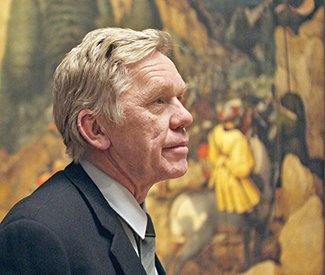
FILM Filmmaker Jem Cohen is known for his artful documentaries, including 2003 Fugazi portrait Instrument. His latest, Museum Hours, has many doc-like qualities, but it’s the closest he’s come to a narrative. Set in Vienna, it follows Canadian Anne (Mary Margaret O’Hara) as she arrives to care for a dying cousin. Adrift in an unfamiliar city, she meets Johann (Bobby Sommer), a guard at the stately Kunsthistorisches Museum. He offers to show her around and serve as translator, and a genuine friendship — based on a shared affection for art — is formed.

Like the artist Bruegel, whose paintings so fascinate his characters, Cohen focuses on the details of everyday life; his camera lingers as carefully on street scenes as it does on the museum’s priceless artifacts. I caught up with Cohen — a Persistence of Vision Award winner at this year’s SF International Film Festival — just before Museum Hours‘ theatrical release.

SF Bay Guardian Museum Hours shows some well-known landmarks, but it’s more focused on Vienna as a living, breathing city.

Jem Cohen I’m always fascinated by the city beneath the city, and particularly the city that is not made for tourists. Vienna is known for [the Vienna State Opera], and glorious views — and all of that is fine. I don’t have anything against it. But there are back streets, neighborhoods with immigrants in them, and places where people who don’t have a lot of money go. All of that is something that I wanted to bring to the surface, but in a natural way, because [Anne] is stuck there, wandering, and she doesn’t have a lot of dough.

SFBG Working in the Bruegel room, Johann muses that he always notices something new each time he looks at the paintings. Do you feel like that about Vienna?

JC I feel that way about every city! I feel that way about street photography, too. When you wander, if you just open your eyes and ears, then you will receive gifts. Things will come around the corner that you don’t expect. That’s eternally the hidden motor of my work.

SFBG What drew you to Bruegel?

JC Standing in front of his paintings, I felt this uncanny kinship that had a lot to do with my work as a street photographer. In particular, it’s this feeling of being in the random particle generator of life, and not knowing exactly where to look. It’s a very particular thing to have events going on all over the frame and you’re not told, “This is the one important thing.” You have an openness which allows you to constantly shift what is foreground and what is background, and try to make something out of that. I feel that’s part of the street photography tradition, and it’s part of what Bruegel was sort of miraculously doing in the 16th century.

SFBG Museum Hours contains an extended scene of a museum docent delivering a lecture about Bruegel to a tour group. Why did you include that?

JC I wasn’t making Museum Hours for any market. But if I had been, that scene would have been the kiss of death. Everyone would have said, “You’re out of your mind. You can’t just drop a 10-minute lecture in the middle of a movie and expect people to be OK with that.”

But the scene with the docent allows me to introduce a lot of things that are important to me, in terms of how I feel about art. It also suggests that the main characters of your movie are not the only human interaction that everybody needs to be focused on. Something else could happen; the guard could turn the corner and hear a guest lecturer, and become immersed in that.

SFBG I couldn’t tell if she actually was a lecturer, or an actor playing one.

JC One of the things that I most hoped to do in the film was to have people unsure of what is documentary material and what is not, and unsure of who is acting and who is not, and unsure of whether the movie is a city portait or a narrative about these strangers who meet. Or whether it’s really about Pieter Bruegel the Elder, or about museums as a possible crossroads.

That slippery quality is one of the most valuable things to me about this film, as well as [my film] Chain (2004), which also involved non-actors and actors, and having it be essentially an open question.

SFBG Museum Hours has quite a different tone than Chain. It’s a lot friendlier, for lack of a better word.

JC Chain is, in some regards, a horror film about a kind of depersonalization and homogenization of the world that’s insidious and, in its way, quite brutal. Museum Hours is a film that has, at its core, a belief in art as something that goes from past to future, and actually continues as a viable human communication. It’s also about friendship and the kindness of strangers.

I don’t see those two projects as antithetical; they’re just different facets of the same world. I don’t feel, as a filmmaker or as a person, that everything goes either light or dark. But I’m glad that I don’t always have to make movies that are angry, because Chain is an angry film. It had to be.

SFBG How did you cast your lead actors?

JC I had seen Mary Margaret O’Hara as a musician almost 25 years ago. I was just so taken by her presence that I had in the back of my mind that someday I would love to work with her on a film.

When I met Bobby, he was working as a driver and a waiter. I used him in one earlier project just to read some German text, and I loved the way he sounded. I also liked the fact that he had a lot of odd life experience that he could bring to the role.

SFBG They’re both credited with writing some of the dialogue, too.

JC It’s kind of a half-scripted movie. Sometimes, it’s actually one of them speaking lines that I had written, with the other one being completely free to respond. Again, I tried to make it unclear what lines are scripted and what lines are not — so that the film feels more like life to me.

I wanted to make a down-to-earth movie. I thought it would be lethal to deal with, basically, art, life, and death, and do it in a pretentious way. People have their range of passions, which can include Rembrandt and AC/DC. That’s fine! That’s the way I live.

SFBG I’d love to see Museum Hours in a double feature with The Mill and the Cross (2011). What did you think of that film?

JC I didn’t see it! I felt like I couldn’t see somebody else’s Bruegel movie while I was making my own. I will seek it out and watch it now, because I heard it’s quite lovely. It’s really nice to me that that so many people have responded to Bruegel over the years. I think there’s something very “of the people” about him that also intrigues those of us who work in cinema. *


MUSEUM HOURS opens Fri/20 in Bay Area theaters.

Put ’em in the glass

0

marke@sfbg.com

BEER + WINE You may be a growler geek, a craft connoisseur, an export expert, a noble hops know-it-all … but are you a real Beer Nerd? A new Trivial Pursuit-like game from local publishing powerhouse Chronicle Books (www.chroniclebooks.com) tests your brew knowledge — “brewledge”? — as you advance around a colorful board. But here’s the delicious twist: players can land on “blind taste test” squares and really show their hops IQ. It’s a drinking game where drinking can actually help you win. Truly, we live in an age of wonders.


BRING IT, MAKE IT, RIDE IT

Yes, yes, small-batch urban wineries are still all the rage, but how does one distinguish itself in the great grape landscape? Well, if you’re the folks behind Tank 18 (1345 Howard, SF. www.tank18.com), you make your own wine, yes, but you also open up your beautiful, rustic-modern space for big events and parties (including a cheeky, sexy one during Folsom Street Fair) with a full bar. You also hit a sweet green spot with a BYOB-like event every third Saturday called “Sustainable Bottling” — patrons bring in rinsed-out bottles of wine they’ve already enjoyed at home to exchange for discounted, full Tank 18 bottles. Starting at $7.99 per bottle, that’s an upcycle we’ll gladly uncork.

Then there’s the Dogpatch WineWorks (2455 Third St, SF. www.dogpatchwineworks.com), which opened last year in a huge 15,000-square-foot space, and follows in the footsteps of Potrero Hill fave Crushpad by inviting people to come make their own wine. Budding vintners get to choose their own vineyard and varietal adventure, and the Dogpatch experts guide everyone through the process in a casual environment. This is the kind of team-building corporate exercise we’d like to see replace trust falls and retreats.

Oh, and did you know that you can take a bike tour of SF’s urban wine scene and learn some of the awesome century-old history of local grape cultivation? Gears and Grapes (www.gearsandgrapes.com) offers a breezy $99 day-ride through the city’s hotspots, stopping for tastings along the way. “Over 100 wineries flourished in the places that new tech start-ups now thrive,” G&G informs us. Can we have those wineries back, please?


SPEAKEASY SMOKIN’

Speakeasy (1195 Evans, SF. www.goodbeer.com) just celebrated its sweet 16 with a huge block party in the Bayview outside its brewery. But if you missed it, never fear. You can visit Speakeasy’s lovely Tap Room (Tue-Thu, 3-8pm; Fri-Sat, 1-9pm; Sun, 1-6pm) for some primo tastes, possibly including some of the new brews debuted at the block party (Bourbon Barrel-Aged Scarface Imperial Stout, 2009 Old Godfather Barleywine). Here’s an extra tip — Sundays they invite some of the city’s yummiest BBQ in to soak up some of those suds. Upcoming Smokin’ Sundays feature Memphis Minnie’s on Oct. 13 and Baby Blues BBQ on Nov. 10.


OH YEAH, THAT THING

Just like the October appearance of seasonal craft beer favorites — Anchor Brewing’s deep, rich Big Leaf Maple, 21st Amendment’s nicely spiced Fireside Chat, and, on a broader scale, Shock Top’s Pumpkin Wheat — so we must tighten our lederhosen in preparation for Oktoberfest by the Bay (Sept. 20-22, Pier 48, SF. www.oktoberfestbythebay.com). In addition to the hordes of revelers, you can catch entertainment from the Chico Bavarian Band accompanied by traditional dancing from the Nature Friends Schuhplattler (despite the name, not a nude oompah-pah association, alas). Plus, of course, a million steins of Spaten bier. Expect an overload of dirndls. *


Heads Up: 7 must-see concerts this week

0

This week’s must-sees include a riot grrl legend with a shiny new project, a crew of gritty Brooklyn punks, an Oakland music fest (the Oakland Music Festival), a former Closer Musik member, and an experimental vocalist, formerly of Swans. Plus, Blouse, Dirty Beaches, and oh, so-much-more!

Here are your must-see shows: 

The So So Glos

“Did you want to spend a night pogo-ing around like the animal you are? The So So Glos, gritty DIY punks from Brooklyn, have just what the doctor ordered. Literally a band of brothers (the majority of the group is blood-related), the So So Glos lay testament to what hard work and determination can accomplish. Helping establish East Coast all-ages DIY venues such as Market Hotel and “Shea Stadium” (where the band also lives), the group is dedicated to keeping the proverbial DIY scene alive. Often compared to fellow Brooklynites Japanther, the So So Glos are hot off their newest release Blowout. Also on the bill is unfortunately-named Diarrhea Planet, and Unstrung. Straight off Burger Records, the Tennessee-based Diarrhea Planet is Southern-fried Ramones worship while SF-based trio Unstrung goes for a more aggressive, punk route.” — Erin Dage
Tue/17, 9pm, $10
Brick and Mortar Music Hall
1710 Mission, SF
(415) 371-1631
www.brickandmortarmusic.com
http://www.youtube.com/watch?v=Fr-swKOsEYw

The Julie Ruin
Before Le Tigre but after the demise of Bikini Kill, Kathleen Hanna created a mystical lo-fi electropop solo project called Julie Ruin. More than 15 years after that record and a whirlwind of life changes later (Le Tigre hiatus, Beastie Boy husband), Hanna and a newly assembled band of cohorts — Kathi Wilcox, Kenny Mellman, Carmine Covelli, Sara Landeau — reformed that project as the Julie Ruin. The Julie Ruin released its first group full-length, Run Fast, last week on Dischord. A dancey new wave record bursting with head-bopping beats, lightning bolt electric guitars, and empowering lyrics, it’s set to be another chant-along feminist anthem album.
With La Sera
Tue/17, 8pm, $18
Slim’s
333 11th St, SF
www.slimspresents.com
http://www.youtube.com/watch?v=hEltsPb8M6Q

Oakland Music Festival
The Oakland Music Festival is coming this weekend, which means live music, gourmet eats, and lots of beers, all in the name of celebrating the beloved East Bay city. Oakland hip-hop stalwarts the Coup headline along with Dam-Funk, Religious Girls, James & Evander, Bang Data, and more. Plus, expect craziness from the Trill Team 6 and Lights Down Low crews.
Sat/21, 11am-7:30pm, $25-$30
At the corner of 19th and Jefferson Streets, Oakl.
www.oaklandmusicfestival.com
http://www.youtube.com/watch?v=acT_PSAZ7BQ

Matias Aguayo
“If you know this one time minimalist-Closer Musik member from the all a capella cut-up jam “Rollerskate” or his wild Spanglish guest appearance on math-rockers Battles’s “Ice Cream,” you know that Aguayo’s voice is impossible to pin down. On The Visitor, his latest release on South American Kompakt offshoot Cómeme, Aguayo is as hard as ever to locate geographically, blurring Latin dialects and reverse engineering English lyrics over a mix of increasingly psychedelic rhythms that cut across (and veer from) generic dance and world music boundaries. With a new live show — expect lots of percussion and off-the-wall vocals on top of tracks — Aguayo could seem to be less on tour from another country, and more like a visitor from outer space.” — Ryan Prendiville
With Ghosts on Tape, Shawn Reynaldo, Rollie Fingers
Sat/21, 10pm-3am, $10-15
Public Works
161 Erie, SF
(415) 932-0955
www.publicsf.com
http://www.youtube.com/watch?v=JE12dG6i6i4

Blouse
Portland, Oreg. trio, Blouse, may have ditched the synths and drum machines of its 2011 debut self-titled album with new Captured Tracks full-length, Imperium, but the sound remains as hazy and dreamy as ever. Now it’s just backed by rippling reverb and distortion. The misty dreampop band makes siren calls that would entice a shipwrecked sailor, floating endlessly in a gurgling oceanic abyss. See? Wistful. Check first single, “A Feeling Like This” or next track “No Shelter” for that particular mental imagery. It’s all there, the swashing of fuzz, the wide open minimalism à la xx, the delicate, teetering vocal tracks, and an uneasy feeling of isolation.
With Social Studies, Feathers
Sat/21, 9:30pm, $12
Bottom of the Hill
1233 17 St, SF
(415) 626-4455
www.bottomofthehill.com
http://www.youtube.com/watch?v=KlxjGFaQKu4

Dirty Beaches
“Alex Zhang Hungtai, the musician behind the Dirty Beaches moniker, is an old soul. An eternal stranger in a strange land with a flair for eccentricity, Hungtai seems straight out of the beat generation. Taiwan-born and Montreal-based, he has lived in a veritable laundry list of cities around the world (including a stint in San Francisco) and through his music and touring schedule, Hungtai’s wanderlust shows no signs of slowing down. This restlessness is evident in Dirty Beaches’ music, a muddy, murky mix of doo-wopesque vocals and surf-tinged guitars that never quite rises to the surface. His simple guitar- and sample-based rock is beefed up on the road with a full band and a saxophone player. This tour promises to be especially interesting, with Hungtai possibly performing sitting down or with a cane after he jumped out of a second story window to make his flight back to North America, like Neal Cassady reincarnate.” — Haley Zaremba
With SISU, Chasms
Sun/22, 9pm, $12
Bottom of the Hill
1233 17th St, SF
(415) 626-4455
www.bottomofthehill.com
http://www.youtube.com/watch?v=WOZFVFF-ATw

The Living Jarboe
“Jarboe’s music is defined by the way she uses her powerful voice, a mutable, inventive instrument that haunts, terrifies, soothes and mourns. The former member of beloved post-punk outfit Swans has been prolific since the band’s break-up in 1997, perfecting her experimental art and collaborating widely across the musical spectrum, notably with Bay Area legends Neurosis. This appearance as the Living Jarboe enlists the help of a violinist and a guitarist to bring her seething, squalling, challenging songs to life.” — Ben Richardson
With Faun Fable, Amber Asylum
Mon/23, 8pm, $15
Cafe Du Nord
2170 Market, SF
(415) 861-5016
www.cafedunord.com
http://www.youtube.com/watch?v=sKEcbzKubME

The Selector: September 11-16, 2013

0

WEDNESDAY 11

Jimmy Cliff

At age 65, reggae legend Jimmy Cliff is experiencing perhaps one of the greatest bursts of artistic productivity in all of his five-decade-long and counting career. He’s inspired countless other musicians over the years, including Bay Area punk rocker Tim Armstrong of Rancid and Operation Ivy, who was brought aboard to produce and perform on Cliff’s newest album, last year’s excellent Rebirth. The record includes an outstanding cover of the Clash’s “Guns of Brixton,” which references Cliff’s movie and song “The Harder They Come” in its lyrics — bringing the music full circle, as it were. Don’t miss the Rock and Roll Hall of Famer when he hits the Fillmore stage tonight. (Sean McCourt)

8pm, $39.50

Fillmore

1805 Geary, SF

(415) 346-6000

www.thefillmore.com


Chris Hardwick

In addition to appearing in a vast array of television (hello, Singled Out), film, radio, and online productions over the past 20 or so years, Chris Hardwick helped found Nerdist Industries, which has grown from one podcast in 2010 into a vast cross-medium mecca for all that proudly embrace their inner geek. Hardwick comes to the city this weekend with his hilarious stand-up act, and based on his guest spots at recent Wootstock events, he’s sure to riff on both his Nerdist loves, as well other awkward yet uproariously comedic facets of life. (McCourt)

Wed/11-Thu/12, 8pm; Fri/13, 8 and 10:15pm; Sat/14, 7:30 and 9:45pm, $25

Cobb’s Comedy Club

915 Columbus, SF

(415) 928-4320

www.cobbscomedyclub.com


THURSDAY 12

Secrets like These

While Enrico Labayen is a respected choreographer on his own terms, he also has a curious and generous spirit, opening his Labayen Dance Company to other dance makers. For this program, jam-packed with two of his own world premieres in addition to rep work, he invited Anandha Ray to present her new Quimera Project for which she’ll bring a chorus of up to 30 tribal belly dancers. Additionally, two company members will debut pieces. Laura Bernasconi’s Nourishment and Hunger will draw on ballet, classical Indian Odissi, and acro-yoga. For his new Secrets Like These, Victor Talledos is creating a narrative to music by Diana Krall. Labayen’s small company also offers performance opportunities to dancers from around the world: Daiane Lopes da Silva (Brazil), Sandrine Cassini (France), Talledos (Mexico). (Rita Felciano)

Through Sat/14, 8pm; Sun/15, 3pm, $20–$25.

ODC Theater,

3153, 17th St, SF

(415) 853-9834

www.odctheater.org


The Singularity

Back in March, when San Francisco filmmaker Doug Wolens was promoting his DIY iTunes hit The Singularity, he explained the meaning of the title: “the point in time when computers become smarter than people.” Some, including futurist Ray Kurzweil (one of the experts interviewed here), say it’s an inevitability — a thought-provoking idea, to say the least. Chat with Wolens in person at tonight’s screening of The Singularity as part of the Yerba Buena Center for the Arts’ “Local Boy Makes Good: New Bay Area Film” series; he’ll also be in residence at the Castro Theatre next week with a trio of his films, rounded out by 2000 environmental-activist profile Butterfly and 1996’s toke-tastic doc Weed. (Cheryl Eddy)

7pm, $10

Yerba Buena Center for the Arts

701 Mission, SF

Also Mon/16, screenings begin at noon, $11

Castro Theatre

429 Castro, SF

thesingularityfilm.com/screenings


FRIDAY 13

“Too Much Light Makes the Baby Go Blind”

Thirty plays in 60 minutes — that might sound like too much even for the most attention span-challenged theatergoers among us. Fortunately, the raucous Neo-Futurists troupe has been putting on the surreal channel surf known as “Too Much Light Makes the Baby Go Blind” for 25 years in its hometown Chicago, and for 10 in New York — where it’s won a celebrity cult following — so it’s got this thing down to an almost metaphysical science. A night of semi-improv performance (a timer is set and the audience yells out the titles of the plays to be performed from a “menu”) that whiplashes from affecting dramatic to absurdist comedy, with plenty of good-natured silliness thrown in, TMLMTBGB is like a strobe of emotions and situations — plates, buckets, ice cubes, wigs, and stuffed animals usually go flying, as do many preconceived notions of what theater ought to be. (Marke B.)

Through Sept. 29, 8pm, $15

Boxcar Theatre

505 Natoma, SF

(415) 967-2227

www.boxcartheatre.org

sfneofuturists.com


Death in June

Extremely depressing neofolk band Death in June is stopping by San Francisco for its long-awaited US tour. Initially starting as a post-punk, industrial project in the 1980s, the band shunned pretty-boy rock ideals, often donning ghoulish masks and costumes on stage. Death in June has given influence to plenty of contemporary bands such as metal band Agalloch and darkwave horde Faun, but the band isn’t without controversy of its own. It’s been known for using a skull, the totenkopf, synonymous with the Nazi movement. Often criticized for using SS insignia, the band has derided any and all accusations of fascism and white supremacy, being active in the British ’80s anti-fascist movement and playing in concerts such as “Rock Against Racism.” So back to the music: the group released Snow Bunker Tapes, guitar-backed versions of Peaceful Snow, on Neuropa this year. Get sad, get creepy, and slump over to the Mezzanine. (Erin Dage)

120 Minutes with oOoOO, DJ Omar, CHAUNCEY_CC

9pm, $30

Mezzanine

444 Jessie, SF

(415) 625-8880

www.mezzaninesf.com


SATURDAY 14

Autumn Moon Festival

This widely-attended cultural festival is the gold star of Chinatown events, filling its chaotic streets with even more buzz than normal and thousands of additional of people. A myriad of crafts, art, live music, dancers in costume, drumming groups, and curious attendees congregate for a fun and lively weekend each year. The Moon Festival, traditionally celebrated when the moon is said to be at its fullest and brightest of the year, gives families the opportunity to get together while enjoying great food and participating in the Lion and Dragon dances, both of which you don’t want to miss if you plan on attending. The whole weekend is an explosion of color and the perfect chance to learn a little more about Chinese culture. (Hillary Smith)

Through Sun/15, 11am-6pm, free

California and Grant, SF

www.moonfestival.org


Atheist Film Festival

The Atheist Film Festival, now in its fifth year, is cheeky enough to refer to itself as “a film festival you can believe in” — which bodes well for the sort of programming one can expect. The fest packs a lot into a single day, including a world premiere (doc Hug an Atheist, about what it means to be an atheist in America today) and acclaimed narratives The Magdalene Sisters (2002) and Creation (2009). Plus, a trio of docs: fake-guru experiment Kumaré (2011); fundamentalism-in-public-schools exposé Sophia Investigates the Good News Club; and The Revisionaries, which won the Best Doc jury prize at the 2013 SF IndieFest. The power of film compels you! (Eddy)

Noon, $12 (festival pass, $45)

Roxie Theater

3117 16th St, SF

www.sfatheistfilmfestival.org


Magic Trick

If there’s anything supernatural about the band Magic Trick, it’s in frontperson Tim Cohen’s seeming ability to be in several places at once. Between the Fresh & Onlys, solo projects, and work with other bands, his prolificacy makes you wonder. But more than witchcraft, magic tricks usually involve sleight of hand. With Cohen’s signature deep voice and romantic songwriting, Magic Trick at times directly echoes the Fresh & Onlys. Don’t be fooled: With three added band members and a minimalism that makes the music more contemplative and a little stranger, Magic Trick surprises. See what tricks lie up the record sleeve on the band’s new album, The Glad Birth of Love, which the Chapel will celebrate on Saturday. (Laura Kerry)

With the Range of Light Wilderness, Pure Bliss, Cool Ghouls

9pm, $12

Chapel

777 Valencia, SF

(415) 551-5157

www.thechapelsf.com


Rock The Bells

The country’s pre-eminent hip-hop festival will coming to the Bay Area this Saturday and Sunday, bringing a large and diverse crew of rap acts. There’s something for every kind of hip-hop head at this festival. For fans of weird rap, there’s Danny Brown, for fans of ratchet rap, there’s Juicy J, for the homers, there’s a E-40-Too $hort duet and IamSu!, and for fans of hologram rap there will be performances from hologram Eazy-E and ODB. For those you taking Caltrain from the city, remember that the train only runs once a hour and takes more than a hour to get to Mountain View. (George McIntire)

Also Sun/15, 11am, $65–$239

Shoreline Amphitheater

One Amphitheatre Pkwy, Mountain View

(800) 745-3000

www.rockthebells.net


SUNDAY 15

Darwin Deez

Darwin Deez is known for nutty antics like bringing a head of cabbage out onto the stage (as a “symbol of frugalness”) and chucking it at the crowd to eat. And his wriggly, emo-pop second album Songs for Imaginative People proved that he hasn’t forgotten about his equally nutty fanbase. His half-joking-totally-serious approach to songwriting garners a very unique brand of follower, the kind of person who likes things weird. The tracks on Songs aren’t as easy to swallow as those on his debut, self-titled album Darwin Deez. Tracks swing by in a cacophony of synthy beats and buzzing electric riffs and Deez’s frequently deadpan voice undeniably weaves through them in a disjointed way — adding a disheveled tone to the album. But from the silly and unpredictable misfit whose greatest obsession may be breakfast food, who’d expect anything else? (Smith)

With Caged Animals, the Soonest

$15, 9pm

Bottom of the Hill

1233 17th St., SF

(415) 626-4455

www.bottomofthehill.com


MONDAY 16

John Williams

Composer John Williams has written the scores for some of the most beloved films of all time — pieces of music that has become so interwoven with the onscreen narratives that it’s almost impossible to imagine the movies without them — Star Wars, JAWS, Indiana Jones, Superman, E.T., Close Encounters of the Third Kind, Jurassic Park, and many, many more. Tonight is a rare chance to see the maestro live and in person, conducting the San Francisco Symphony and leading them through some of his greatest works. Friend and frequent collaborator director Steven Spielberg will also appear for part of the program as a special guest host. (McCourt)

8pm, $15–$152

Davies Symphony Hall

201 Van Ness Ave., SF

(415) 864-6000

www.sfsymphony.org


TUESDAY 17

The So So Glos

Did you want to spend a night pogo-ing around like the animal you are? The So So Glos, gritty DIY punks from Brooklyn, have just what the doctor ordered. Literally a band of brothers (the majority of the group is blood-related), the So So Glos lay testament to what hard work and determination can accomplish. Helping establish East Coast all-ages DIY venues such as Market Hotel and “Shea Stadium” (where the band also lives), the group is dedicated to keeping the proverbial DIY scene alive. Often compared to fellow Brooklynites Japanther, the So So Glos are hot off their newest release Blowout. The album has been described “in your face” and hi-fi! Also on the bill is unfortunately-named Diarrhea Planet, and Unstrung. Straight off Burger Records, the Tennessee-based Diarrhea Planet is Southern-fried Ramones worship while SF-based trio Unstrung goes for a more aggressive, punk route. (Dage)

9pm, $10

Brick and Mortar Music Hall

1710 Mission, SF

(415) 371-1631

www.brickandmortarmusic.com

Sammy Hagar runs through the hits at the America’s Cup Pavilion

6

Celebrating 40-plus years on the rock scene, Rock and Roll Hall of Famer Sammy Hagar hit the stage in San Francisco on Saturday night before a crowd of thousands of enthusiastic fans.
 
Playing the America’s Cup Pavilion, the Red Rocker blazed through a set spanning most of his career, starting out with Montrose songs, then on to his solo material, through his stint with Van Halen, and up through his current output.
 
Sporting his signature shaggy hair and shades look, Hagar kicked off his set with several tunes from his first successful band, the Bay Area-based Montrose, for whom he sang back in the early 1970s.
 
Taking to the stage with two of his former Montrose bandmates, Bill Church and Denny Carmassi, along Y&T guitarist Dave Meniketti, who was filling in for the late Ronnie Montrose, Hagar ran back and forth, pumping up the audience with classic cuts like “Rock Candy” and “Bad Motor Scooter.”
 
When his current backing group took over, Hagar wasted no time in getting to some of his early signature solo hits, running through “Red” and then “I Can’t Drive 55,” which got fans — many of whom looked to have been following him since the beginning — singing along and dancing around, much to the chagrin of the bouncers, who seemed intent on keeping people firmly planted in front of their assigned seats.
 
The seating situation was one of the drawbacks to the temporary venue, or at least how it was configured for this particular show; you could tell lots of fans wanted to dance around and let loose, which is hard to do when you’re surrounded a sea of metal folding chairs and security forces keeping a watchful eye on everything.
 
Otherwise, the outdoor amphitheater located along the city’s waterfront was an ideal location for the concert — it definitely helped that it was one of those great late summer/early fall days and nights in San Francisco, where the sun was out all day, and the fog held off rolling in until the show was nearly over.

Landmarks like the the Transamerica Pyramid and Coit Tower provided a stunning backdrop to watching Hagar traverse the stage, at times bounding around and encouraging the crowd the yell or sing along, at others picking up a guitar and reminding concertgoers that he is also a formidable six string slinger in addition to being one of the best known singers in the realm of classic rock.
 
And that voice still sounds as strong as ever, belting out more hits such as “There’s Only One Way To Rock,” “Why Can’t This Be Love,” and “Heavy Metal” among others.
 
Hagar’s old cohort in Van Halen, Michael Anthony, joined in on bass for several tunes, eliciting a roar of approval when he appeared on stage and bantered back and forth with Hagar, who plied him with a bottle of liquor and tried to convince him to move out of LA to join him here in the Bay Area.
 
While playing one of Van Halen’s hits, “Right Now,” a video montage appeared on a giant screen behind the band, culling parts of the vintage video clip and adding a few newer additions. One said, “Right Now…People are hungry in San Francisco,” with the words “You Can Help” and shared the website for the San Francisco Food Bank — keeping with the fact that Hagar himself had previously announced that he would donate money to a couple of local charities when he made this tour stop.
 
Although it seemed he needed no extra help in winning over the crowd’s admiration, Hagar also scored some hometown points when he took a moment to tell everyone how he had “moved to San Francisco back in 1968 with a suitcase, a guitar, and about $5 in my pocket — and I’ve lived here ever since!”
 
He then added that in recent interviews everyone has been asking him, “When are you going to retire?” 

“I tell them I retired when I moved here and started playing music!”


Self service

1

THEATER Sitting in the Exit Café with a can of Guinness and the San Francisco Fringe Festival program is one of life’s modest but absorbing pleasures. For those without much inside knowledge on the lineup (currently encompassing 36 companies and 158 performances), it’s a little like taking a vacation by pitching darts at a wall map. There were several immediate sub-themes to choose from for 2013. I could have picked shows with bananas in the title, for instance. But for whatever reason, I dived into the service and servitude sector.

Of course, the Fringe, now in its 22nd year, is a lottery-based operation, so it is fate’s fingers that pluck these patterns from the cultural whirl. At the same time, you don’t need the I Ching to know that serving the rich is about all that’s left of the economy for most of us, making it hardly surprising to find so many stories of bartenders, wait staff, sex workers, and mermaids-who-are-also-sex-workers floating in the pool.

Things began on a high note with Jill Vice’s witty and deft solo, The Tipped & the Tipsy, which brings the querulous regulars of a skid-row bar to life vividly and with real (quasi-Depression era) charm. Without set or costume changes, Vice (who developed the piece with Dave Dennison and David Ford) proves a protean physical performer, seamlessly inhabiting the oddball outcasts lined up before bartender Candy every day at Happy’s — names as loaded as the clientele. With a love of the underdog and strong writing and acting at its core, Tipsy breezes by, leaving a superlative buzz.

O Best Beloved isn’t about service work, but the theme still crops up in the opening story — “How the Camel Got Her Hump” — an unburdened beast (played by Sam Jackson) whose relaxed work ethic draws negative attention. It’s one of three scheduled children’s tales by Rudyard Kipling (adapted by actor Joan Howard and director Rebecca Longworth), delivered by a rowdy six-person cast of storytellers. This playful piece is somewhat hectic and a bit garbled (in speech that can get lost in the reverberations of the Exit’s main stage). But it’s colorfully worked up (in costuming and properties as well as performances) and no doubt ideal for families or those happy to revel in light insouciance and unyielding silliness.

Sean Andries and Siouxsie Q’s Fish-Girl, meanwhile, has limited charm as a carny fable of doomed love between a nerdy young man (Andries, who also directed) and the freak-show beauty (Q, in sequined tail and half-shell bra) he’s hooked on. Co-creator Siouxsie Q hosts “The Whorecast” podcast showcasing the voices of American sex workers, and the mermaid’s plight takes on literal and metaphoric overtones of sex work. But the bland love story at the center keeps things bathtub shallow, albeit buoyed by a few decent songs belted out by poised songwriter Siouxsie Q to her own accompaniment on the ukulele — that spinet of the well-bred mermaid.

Hard on Fish-Girl‘s floppy heel came The Women of Tu-Na House, completing the evening’s sub-sub-theme of the aquatic erotic. (For cross-referencing purposes: Another bartender’s tale, with fish tails too, stood out in the program but was not seen in time for review: Alexa Fitzpatrick’s sushi-restaurant confessional, Serving Bait to Rich People.) Nancy Eng’s solo is a smart, sassy, and blushingly frank account of the workers at an Asian massage parlor. Although Eng’s characters are not always readily distinct, she marshals an unexpected angle and winning élan in bringing this worthwhile story to life.

Not every show in the Fringe need conform to a surface or sub theme. Dark Porch Theatre’s StormStressLenz brings its own thematic taxonomy with it, in director Martin Schwartz’s uneven but intriguing, vivacious remixing of the work of Jakob Michael Reinhold Lenz (1751–1792), the Baltic German author of the proto-Romantic, anti-rational Sturm und Drang school of literature.

Schwartz’s Lenz remix comes across as an alternately cool and hyperactive investigation of the essence of melodrama, employing a fast-changing four-person ensemble (Nathan Tucker, Margery Fairchild, Ryan Hayes, Meg Hurtado) in a series of scenes shorn of their immediate context and aggregated under various section headings (“Love,” “Tricks,” “Sorrow,” etc.) — subheads called out by Schwartz, seated at a table to the left of the stage calmly scrutinizing the action, asking the lighting booth for the odd musical interlude (MC5 one minute, Brahms the next), and bouncing his palm lightly on a desk bell to trigger the beginning and the end of each scene. These range widely and wildly, making for a raucous but tonally patchy hour. The broadest and subtlest range of characters comes from Tucker and Fairchild, who between them suggest some of the darker elements otherwise left out of a largely comic romp. But if the show leaves one wanting more complexity and shading, its eccentric enterprise is still worth a stab, as they say.

Finally, San Francisco dancer and performance maker Cara Rose DeFabio’s admirable solo strikes its own idiosyncratic tone, or rather many of them, in another intriguing investigation, this time of the online afterlife to which we are all increasingly subject — whether willingly or not. After the Tone is a smart and provoking exploration of the intersections of grief, technology, memory, ideology, and individuality that uses DeFabio’s sly narrative persona, movement, video, and audio pastiche, and interactive audience participation (via those celebrated and hated cellphones) to productively turn over a subject too close to most of us to be clearly grasped otherwise. *

SAN FRANCISCO FRINGE FESTIVAL

Through Sept. 21, $12.99 or less

Exit Theatreplex

156 Eddy, SF

www.sffringe.org

For a longer version of this review, visit www.sfbg.com/pixel_vision.


The Selector

0

WEDNESDAY 9/11


Jimmy Cliff

At age 65, reggae legend Jimmy Cliff is experiencing perhaps one of the greatest bursts of artistic productivity in all of his five-decade-long and counting career. He’s inspired countless other musicians over the years, including Bay Area punk rocker Tim Armstrong of Rancid and Operation Ivy, who was brought aboard to produce and perform on Cliff’s newest album, last year’s excellent Rebirth. The record includes an outstanding cover of the Clash’s “Guns of Brixton,” which references Cliff’s movie and song “The Harder They Come” in its lyrics — bringing the music full circle, as it were. Don’t miss the Rock and Roll Hall of Famer when he hits the Fillmore stage tonight. (Sean McCourt)

8pm, $39.50

Fillmore

1805 Geary, SF

(415) 346-6000

www.thefillmore.com

WEDNESDAY 9/11


Chris Hardwick

In addition to appearing in a vast array of television (hello, Singled Out), film, radio, and online productions over the past 20 or so years, Chris Hardwick helped found Nerdist Industries, which has grown from one podcast in 2010 into a vast cross-medium mecca for all that proudly embrace their inner geek. Hardwick comes to the city this weekend with his hilarious stand-up act, and based on his guest spots at recent Wootstock events, he’s sure to riff on both his Nerdist loves, as well other awkward yet uproariously comedic facets of life. (McCourt)

Wed/11-Thu/12, 8pm; Fri/13, 8 and 10:15pm; Sat/14, 7:30 and 9:45pm, $25

Cobb’s Comedy Club

915 Columbus, SF

(415) 928-4320

www.cobbscomedyclub.com

THURSDAY 9/12


Secrets like These

While Enrico Labayen is a respected choreographer on his own terms, he also has a curious and generous spirit, opening his Labayen Dance Company to other dance makers. For this program, jam-packed with two of his own world premieres in addition to rep work, he invited Anandha Ray to present her new Quimera Project for which she’ll bring a chorus of up to 30 tribal belly dancers. Additionally, two company members will debut pieces. Laura Bernasconi’s Nourishment and Hunger will draw on ballet, classical Indian Odissi, and acro-yoga. For his new Secrets Like These, Victor Talledos is creating a narrative to music by Diana Krall. Labayen’s small company also offers performance opportunities to dancers from around the world: Daiane Lopes da Silva (Brazil), Sandrine Cassini (France), Talledos (Mexico). (Rita Felciano)

Through Sat/14, 8pm; Sun/15, 3pm, $20–$25.

ODC Theater,

3153, 17th St, SF

(415) 853-9834

www.odctheater.org

THURSDAY 9/12


The Singularity

Back in March, when San Francisco filmmaker Doug Wolens was promoting his DIY iTunes hit The Singularity, he explained the meaning of the title: “the point in time when computers become smarter than people.” Some, including futurist Ray Kurzweil (one of the experts interviewed here), say it’s an inevitability — a thought-provoking idea, to say the least. Chat with Wolens in person at tonight’s screening of The Singularity as part of the Yerba Buena Center for the Arts’ “Local Boy Makes Good: New Bay Area Film” series; he’ll also be in residence at the Castro Theatre next week with a trio of his films, rounded out by 2000 environmental-activist profile Butterfly and 1996’s toke-tastic doc Weed. (Cheryl Eddy)

7pm, $10

Yerba Buena Center for the Arts

701 Mission, SF

Also Mon/16, screenings begin at noon, $11

Castro Theatre

429 Castro, SF

thesingularityfilm.com/screenings

FRIDAY 9/13


“Too Much Light Makes the Baby Go Blind”

Thirty plays in 60 minutes — that might sound like too much even for the most attention span-challenged theatergoers among us. Fortunately, the raucous Neo-Futurists troupe has been putting on the surreal channel surf known as “Too Much Light Makes the Baby Go Blind” for 25 years in its hometown Chicago, and for 10 in New York — where it’s won a celebrity cult following — so it’s got this thing down to an almost metaphysical science. A night of semi-improv performance (a timer is set and the audience yells out the titles of the plays to be performed from a “menu”) that whiplashes from affecting dramatic to absurdist comedy, with plenty of good-natured silliness thrown in, TMLMTBGB is like a strobe of emotions and situations — plates, buckets, ice cubes, wigs, and stuffed animals usually go flying, as do many preconceived notions of what theater ought to be. (Marke B.)

Through Sept. 29, 8pm, $15

Boxcar Theatre

505 Natoma, SF

(415) 967-2227

www.boxcartheatre.org

sfneofuturists.com

FRIDAY 9/13


Death in June

Extremely depressing neofolk band Death in June is stopping by San Francisco for its long-awaited US tour. Initially starting as a post-punk, industrial project in the 1980s, the band shunned pretty-boy rock ideals, often donning ghoulish masks and costumes on stage. Death in June has given influence to plenty of contemporary bands such as metal band Agalloch and darkwave horde Faun, but the band isn’t without controversy of its own. It’s been known for using a skull, the totenkopf, synonymous with the Nazi movement. Often criticized for using SS insignia, the band has derided any and all accusations of fascism and white supremacy, being active in the British ’80s anti-fascist movement and playing in concerts such as “Rock Against Racism.” So back to the music: the group released Snow Bunker Tapes, guitar-backed versions of Peaceful Snow, on Neuropa this year. Get sad, get creepy, and slump over to the Mezzanine. (Erin Dage)

120 Minutes with oOoOO, DJ Omar, CHAUNCEY_CC

9pm, $30

Mezzanine

444 Jessie, SF

(415) 625-8880

www.mezzaninesf.com

SATURDAY 9/14


Autumn Moon Festival

This widely-attended cultural festival is the gold star of Chinatown events, filling its chaotic streets with even more buzz than normal and thousands of additional of people. A myriad of crafts, art, live music, dancers in costume, drumming groups, and curious attendees congregate for a fun and lively weekend each year. The Moon Festival, traditionally celebrated when the moon is said to be at its fullest and brightest of the year, gives families the opportunity to get together while enjoying great food and participating in the Lion and Dragon dances, both of which you don’t want to miss if you plan on attending. The whole weekend is an explosion of color and the perfect chance to learn a little more about Chinese culture. (Hillary Smith)

Through Sun/15, 11am-6pm, free

California and Grant, SF

www.moonfestival.org

SATURDAY 9/14


Atheist Film Festival

The Atheist Film Festival, now in its fifth year, is cheeky enough to refer to itself as “a film festival you can believe in” — which bodes well for the sort of programming one can expect. The fest packs a lot into a single day, including a world premiere (doc Hug an Atheist, about what it means to be an atheist in America today) and acclaimed narratives The Magdalene Sisters (2002) and Creation (2009). Plus, a trio of docs: fake-guru experiment Kumaré (2011); fundamentalism-in-public-schools exposé Sophia Investigates the Good News Club; and The Revisionaries, which won the Best Doc jury prize at the 2013 SF IndieFest. The power of film compels you! (Eddy)

Noon, $12 (festival pass, $45)

Roxie Theater

3117 16th St, SF

www.sfatheistfilmfestival.org

SATURDAY 9/14


Magic Trick

If there’s anything supernatural about the band Magic Trick, it’s in frontperson Tim Cohen’s seeming ability to be in several places at once. Between the Fresh & Onlys, solo projects, and work with other bands, his prolificacy makes you wonder. But more than witchcraft, magic tricks usually involve sleight of hand. With Cohen’s signature deep voice and romantic songwriting, Magic Trick at times directly echoes the Fresh & Onlys. Don’t be fooled: With three added band members and a minimalism that makes the music more contemplative and a little stranger, Magic Trick surprises. See what tricks lie up the record sleeve on the band’s new album, The Glad Birth of Love, which the Chapel will celebrate on Saturday. (Laura Kerry)

With the Range of Light Wilderness, Pure Bliss, Cool Ghouls

9pm, $12

Chapel

777 Valencia, SF

(415) 551-5157

www.thechapelsf.com

SATURDAY 9/14


Rock The Bells

The country’s pre-eminent hip-hop festival will coming to the Bay Area this Saturday and Sunday, bringing a large and diverse crew of rap acts. There’s something for every kind of hip-hop head at this festival. For fans of weird rap, there’s Danny Brown, for fans of ratchet rap, there’s Juicy J, for the homers, there’s a E-40-Too $hort duet and IamSu!, and for fans of hologram rap there will be performances from hologram Eazy-E and ODB. For those you taking Caltrain from the city, remember that the train only runs once a hour and takes more than a hour to get to Mountain View. (George McIntire)

Also Sun/15, 11am, $65–$239

Shoreline Amphitheater

One Amphitheatre Pkwy, Mountain View

(800) 745-3000

www.rockthebells.net

SUNDAY 9/15


Darwin Deez

Darwin Deez is known for nutty antics like bringing a head of cabbage out onto the stage (as a “symbol of frugalness”) and chucking it at the crowd to eat. And his wriggly, emo-pop second album Songs for Imaginative People proved that he hasn’t forgotten about his equally nutty fanbase. His half-joking-totally-serious approach to songwriting garners a very unique brand of follower, the kind of person who likes things weird. The tracks on Songs aren’t as easy to swallow as those on his debut, self-titled album Darwin Deez. Tracks swing by in a cacophony of synthy beats and buzzing electric riffs and Deez’s frequently deadpan voice undeniably weaves through them in a disjointed way — adding a disheveled tone to the album. But from the silly and unpredictable misfit whose greatest obsession may be breakfast food, who’d expect anything else? (Smith)

With Caged Animals, the Soonest

$15, 9pm

Bottom of the Hill

1233 17th St., SF

(415) 626-4455

www.bottomofthehill.com

MONDAY 9/16


John Williams

Composer John Williams has written the scores for some of the most beloved films of all time — pieces of music that has become so interwoven with the onscreen narratives that it’s almost impossible to imagine the movies without them — Star Wars, JAWS, Indiana Jones, Superman, E.T., Close Encounters of the Third Kind, Jurassic Park, and many, many more. Tonight is a rare chance to see the maestro live and in person, conducting the San Francisco Symphony and leading them through some of his greatest works. Friend and frequent collaborator director Steven Spielberg will also appear for part of the program as a special guest host. (McCourt)

8pm, $15–$152

Davies Symphony Hall

201 Van Ness Ave., SF

(415) 864-6000

www.sfsymphony.org

TUESDAY 9/17


The So So Glos

Did you want to spend a night pogo-ing around like the animal you are? The So So Glos, gritty DIY punks from Brooklyn, have just what the doctor ordered. Literally a band of brothers (the majority of the group is blood-related), the So So Glos lay testament to what hard work and determination can accomplish. Helping establish East Coast all-ages DIY venues such as Market Hotel and “Shea Stadium” (where the band also lives), the group is dedicated to keeping the proverbial DIY scene alive. Often compared to fellow Brooklynites Japanther, the So So Glos are hot off their newest release Blowout. The album has been described “in your face” and hi-fi! Also on the bill is unfortunately-named Diarrhea Planet, and Unstrung. Straight off Burger Records, the Tennessee-based Diarrhea Planet is Southern-fried Ramones worship while SF-based trio Unstrung goes for a more aggressive, punk route. (Dage)

9pm, $10

Brick and Mortar Music Hall

1710 Mission, SF

(415) 371-1631

www.brickandmortarmusic.com

Bugging out

0

MUSIC As Urinals folklore goes, the band was formed in 1978 by a group of five UCLA students looking to have a spot in their dorm talent show. Guitarist and vocalist John Talley-Jones recalls the band’s earnest beginnings as an experiment that evolved into something much more. “We were in film school, not approaching it as musicians, but as conceptual artists,” Talley-Jones says. “It was an experiment to see if you put five people with limited music in a room and see what they can do with one quasi guitarist. It was like an art project.”

And 35 years later — save for a decade-long hiatus and a few changes in the lineup — the Urinals are still at it. The group play’s Oakland record shop Stranded’s one-year anniversary party this weekend, and has a new full-length in the works for next year (label yet to be determined).

Coming forth in a time when virtuoso-like musicians were most valued, inexperience and ineptitude were the Urinals’ calling card — from music on down to the etching of a garbled face on its Sex E.P. (Happy Squid Records, 1980) and anthology Negative Capability…Check it Out! (Amphetamine Reptile Records, 1997).

“Carey Southall, a person I worked with at UCLA, drew the illustration using his non-dominant hand,” Talley-Jones says. “It was a metaphor for the Urinals — he was handicapped by not using his dominant hand [and] we were handicapped by our musical capabilities.”

And yet, it’s no question that the Urinals have been deemed influential by today’s music scene, with covers of “Black Hole” by lo-fi punk outfit Grass Widow, “Male Masturbation” covered by noisy punk group No Age, and “I’m a Bug” by hardcore punk group Ceremony. But if one takes notice of all these songs, they are all from early Urinals releases. And Talley-Jones is sure to take notice of this.

“When I think of the Urinals, I see a band that got together in ’78, and developed in the last 35 years,” Talley-Jones says. “Not many people have heard or recognized material past our first few releases.”

And just as people grow and develop, so did the Urinals. In their infancy, the Urinals were known for their raucous, simplistic sound. As the band members matured and learned how to play their instruments, the band reached its adolescent stage, becoming an admittedly post-punk outfit dubbed 100 Flowers for a brief stint during the ’80s and playing shows during the 2000s.

“I remember starting out with the Urinals, feeling that I had to carry on a certain stage persona, mine being theatrically psychotic” Talley-Jones says. “But as time wore on, I grew into my own. When I first started I would be anxious the entire day before the show. After the first few years, that disappeared.”

Though many elements have shifted with the band throughout the years, one thing remains pertinent: DIY ethics. In the age of virtuoso-like butt-rock, Talley-Jones and fellow band mates accepted the fact that two-chord songs seldom lasting more than a minute about just being a bug (“I’m a Bug”) or a hologram (“Hologram”), weren’t exactly a hot commodity. Known for putting out many of their releases on self-owned record label, Happy Squid Records, self-production was a necessity.

Talley-Jones recalls being approached by Vitus Matare, keyboardist for Los Angeles power punk outfit the Last, about recording the Urinals.

“Everything was starting from the ground up,” Talley-Jones says. “Of course Vitus Matare recorded us initially, but following that we taught ourselves how to write, play, and distribute. We had no misapprehension to ever be signed, because what we were doing was not marketable to the masses.”

That being said, the Urinals appreciate doing things on the cheap — that’s why the band is playing this free show with the original lineup (comprised of Talley-Jones, Kjehl Johansen, and Kevin Barrett), in honor of an East Bay record store.

URINALS

With Meg Baird, Ava Mendoza, Dominique Leon Sat/14, 3pm, free Stranded 6436 Telegraph, Oakl. (510) 858-5977 www.strandedinoakland.com


Self service: SF Fringe Festival tells it like it is

1

Note: this is an extended version of an article that appears in this week’s print version.

Sitting in the Exit Café with a can of Guinness and the San Francisco Fringe Festival program is one of life’s modest but absorbing pleasures. For those without much inside knowledge on the lineup (currently encompassing 36 companies and 158 performances), it’s a little like taking a vacation by pitching darts at a wall map. There were several immediate sub-themes to choose from for 2013. I could have picked shows with bananas in the title, for instance. But for whatever reason, I dived into the service and servitude sector.

Of course, the Fringe, now in its 22nd year, is a lottery-based operation, so it is fate’s fingers that pluck these patterns from the cultural whirl. At the same time, you don’t need the I Ching to know that serving the rich is about all that’s left of the economy for most of us, making it hardly surprising to find so many stories of bartenders, wait staff, sex workers, and mermaids-who-are-also-sex-workers floating in the pool.

Things began on a high note with Jill Vice’s witty and deft solo, The Tipped & the Tipsy, which brings the querulous regulars of a skid-row bar to life vividly and with real (quasi-Depression era) charm. Without set or costume changes, Vice (who developed the piece with Dave Dennison and David Ford) proves a protean physical performer, seamlessly inhabiting the oddball outcasts lined up before bartender Candy every day at Happy’s — names as loaded as the clientele.

After some hilarious expert summarizing of the dos and don’ts of bar culture, a story unfolds around a battered former boxer and his avuncular relationship with Candy, who tries to cut off his bar service in fear of his deteriorating health, much to the consternation and even greater fear of his barfly associates and the self-aggrandizing sleazeball owner, Rocco. With a love of the underdog and strong writing and acting at its core, Tipsy breezes by, leaving a superlative buzz.

This was largely squandered a half hour later in Sandra Brunell Neace’s Parly Girl, an uneven and unpersuasive testimonial by a New York City waitress with a bad attitude and a traumatic back story. Neace, whose incidental characters are weakly written and delivered, is best in fleeting moments of genuine reflection. But these are few, and the piece flags early on, only to be at best partially redeemed in a hasty turnaround of a conclusion.

Service work gives way to involuntary servitude, and the horrifying reality of child sex trafficking, in writer-performer and activist Regina Y. Evans’ 52 Letters (co-directed with Louel Senores). More than a global scourge, this is a local story, and Evans delivers it with burning compassion in a poetical voice ringing with the resiliency and freighted history of the African American spiritual. The emotional register varies little, which can weaken somewhat the force it justly means to convey. Nevertheless, Evans and her urgent message as a modern-day abolitionist leave one impressed and unsettled.

O Best Beloved isn’t about service work, but the theme still crops up in the opening story — “How the Camel Got Her Hump” — an unburdened beast (played by Sam Jackson) whose relaxed work ethic draws negative attention. It’s one of three scheduled children’s tales by Rudyard Kipling (adapted by actor Joan Howard and director Rebecca Longworth), delivered by a rowdy six-person cast of storytellers. This playful piece is somewhat hectic and a bit garbled (in speech that can get lost in the reverberations of the Exit’s main stage). But it’s colorfully worked up (in costuming and properties as well as performances) and no doubt ideal for families or those happy to revel in light insouciance and unyielding silliness.

Sean Andries and Siouxsie Q’s Fish-Girl, meanwhile, has limited charm as a carny fable of doomed love between a nerdy young man (Andries, who also directed) and the freak-show beauty (Q, in sequined tail and half-shell bra) he’s hooked on. Co-creator Siouxsie Q hosts “The Whorecast” podcast showcasing the voices of American sex workers, and the mermaid’s plight takes on literal and metaphoric overtones of sex work. But the bland love story at the center keeps things bathtub shallow, albeit buoyed by a few decent songs belted out by poised songwriter Siouxsie Q to her own accompaniment on the ukulele — that spinet of the well-bred mermaid.

Hard on Fish-Girl‘s floppy heel came The Women of Tu-Na House, completing the evening’s sub-sub-theme of the aquatic erotic. (For cross-referencing purposes, another bartender’s tale, with fish tails too, stood out in the program but was not seen in time for review: Alexa Fitzpatrick’s sushi-restaurant confessional, Serving Bait to Rich People.) Nancy Eng’s solo is a smart, sassy, and blushingly frank account of the workers at an Asian massage parlor. Although Eng’s characters are not always readily distinct, she marshals an unexpected angle and winning élan in bringing this worthwhile story to life.

Not every show in the Fringe need conform to a surface or sub theme. Dark Porch Theatre’s StormStressLenz brings its own thematic taxonomy with it, in director Martin Schwartz’s uneven but intriguing, vivacious remixing of the work of Jakob Michael Reinhold Lenz (1751–1792), the Baltic German author of the proto-Romantic, anti-rational Sturm und Drang school of literature.

Schwartz’s Lenz remix comes across as an alternately cool and hyperactive investigation of the essence of melodrama, employing a fast-changing four-person ensemble (Nathan Tucker, Margery Fairchild, Ryan Hayes, Meg Hurtado) in a series of scenes shorn of their immediate context and aggregated under various section headings (“Love,” “Tricks,” “Sorrow,” etc.) The subheads are called out by Schwartz, seated at a table to the left of the stage calmly scrutinizing the action, asking the lighting booth for the odd musical interlude (MC5 one minute, Brahms the next), and bouncing his palm lightly on a desk bell to trigger the beginning and the end of each scene. These range widely and wildly, making for a raucous but tonally patchy hour. The broadest and subtlest range of characters comes from Tucker and Fairchild, who between them suggest some of the darker elements otherwise left out of a largely comic romp. But if the show leaves one wanting more complexity and shading, its eccentric enterprise is still worth a stab, as they say.

Finally, San Francisco dancer and performance maker Cara Rose DeFabio’s admirable solo strikes its own idiosyncratic tone, or rather many of them, in another intriguing investigation, this time of the online afterlife to which we are all increasingly subject — whether willingly or not. After the Tone is a smart and provoking exploration of the intersections of grief, technology, memory, ideology, and individuality that uses DeFabio’s sly narrative persona, movement, video, and audio pastiche, and interactive audience participation (via those celebrated and hated cellphones) to productively turn over a subject too close to most of us to be clearly grasped otherwise.

SAN FRANCISCO FRINGE FESTIVAL
Through Sept. 21, $12.99 or less
Exit Theatreplex
156 Eddy, SF
www.sffringe.org

Film Listings

0

Film listings are edited by Cheryl Eddy. Reviewers are Kimberly Chun, Dennis Harvey, Lynn Rapoport, Sam Stander, and Sara Maria Vizcarrondo. For rep house showtimes, see Rep Clock.

OPENING

And While We Were Here This second collaboration between writer-director Kat Coiro and actor Kate Bosworth is a far cry from 2011’s oops-a-baby comedy Life Happens — owing, perhaps, to that film’s co-writer and co-star, Krysten Ritter. There’s no snarky, raunchy Ritter-ness in And While We Were Here, a drama about a brittle woman named Jane (Bosworth) whose marriage to a workaholic viola player (Iddo Goldberg) is more polite than passionate; their relationship has baggage that he’d prefer not to work through, despite the expanding tension between them. On a trip to Naples, Jane meets a free-spirited 19-year-old (Jamie Blackley) who sparks her interest; before long, it’s groove-reclaiming time. Alas, sun-dappled scenery can’t offset a familiar story — with themes heavily underlined by a subplot that has Jane listening to tapes of her grandmother (richly voiced by Claire Bloom) reminiscing about love and loss during wartime. Jane’s too self-centered to be particularly likable (to her husband, mid-argument: “You’re not curious about me!”), but Here deserves some backhanded props for gender-bending a tired plot device. Ready or not, the manic pixie dream boy has arrived. (1:23) Presidio. (Eddy)

The Family Luc Besson directs mob-comedy veterans Robert De Niro and Michelle Pfeiffer in this tale of a mafia family bumbling their way through their new, witness-protection-program lives. (1:51) Presidio, Shattuck, Vogue.

Insidious: Chapter 2 Hot off this summer’s The Conjuring, horror director James Wan turns in a sequel to his 2011 hit, also about a family with big-time paranormal problems. (1:30) California.

Our Nixon Cobbled together from previously unseen footage shot by some of Richard Nixon’s closest aides — the destined-for-infamy trio of H.R. Haldeman, John Ehrlichman, and Dwight Chapin — Penny Lane’s doc, which also uses Oval Office recordings and additional archival material (not to mention the best-ever use of Tracey Ullman’s 1983 pop confection “They Don’t Know”), offers a new perspective on Tricky Dick and White House life during his tumultuous reign. But while Our Nixon brings fresh perspective to notable moments like Nixon’s visit to China and Tricia Nixon’s lavish wedding, and peeks behind the public façade to reveal the “real” Nixon (hardly a spoiler: he’s shown to be bigoted and behind the times), the POTUS is just one of many figures in this inventive collage. The home movies themselves are the real stars here, filled with unguarded moments and shot for no reason other than personal documentation; as a result, and even taking Lane’s editing choices into account, Our Nixon feels thrillingly authentic. (1:25) Roxie. (Eddy)

Populaire Perhaps if it weren’t set in the 1950s, this would be the fluorescent-lit story of a soul-sucking data entry job and the office drone who supplements it with a moonlighting gig. But it is the ’50s — a cheery, upbeat version of the era — and director Régis Roinsard’s Populaire reflects its shiny glamour onto the transformation of small-town girl Rose Pamphyle (Déborah François) from an incompetent but feisty secretary with mad hunting-and-pecking skills into a celebrated and adored speed-typing champion. Her daffy boss, Louis Échard (Romain Duris), is a handsome young insurance salesman who bullies her (very charmingly) into competing against a vast secretarial pool in a series of hectic, nail-biting tourneys, which treat typing as a sporting event for perhaps the first time in cinematic history. (See also: scenes of Rose cranking up her physical endurance with daily jogs and cross-training at the piano.) The glamour slips a touch when Populaire starts to delve into psychological motivations to rationalize some of Louis’s more caddish maneuvers. But meanwhile, back in the arena, bets are made, words-per-minute stats are quoted by screaming, tearful fans in the bleachers, hearts are won and bruised, a jazz band performs that classic tune “Les Secrétaires Cha Cha Cha,” and we find ourselves rooting passionately for Rose to best the reigning champ’s 512(!)-wpm record. (1:51) Opera Plaza, Shattuck. (Rapoport)

ONGOING

Adore This glossy soap opera from director Anne Fontaine (2009’s Coco Before Chanel) and scenarist Christopher Hampton, adapted from a Doris Lessing novella, has had its title changed from Two Mothers — perhaps because under that name it was pretty much the most howled-at movie at Sundance this year. Lil (Naomi Watts) and Roz (Robin Wright) are lifelong best friends whose hunky surfer sons Ian (Xavier Samuel) and Tom (James Frecheville) are likewise best mates. Widow Lil runs a gallery and Roz has a husband (Ben Mendelsohn), but mostly the two women seem to lay around sipping wine on the decks of their adjacent oceanfront homes in Western Australia’s Perth, watching their sinewy offspring frolic in the waves. This upscale-lifestyle-magazine vision of having it all — complete with middle-aged female protagonists who look spectacularly youthful without any apparent effort — finds trouble in paradise when the ladies realize that something, in fact, is missing. That something turns out to be each other’s sons, in their beds. After very little hand-wringing this is accepted as the way things are meant to be — a MILF fantasy viewed through the distaff eyes — despite some trouble down the road. This outlandish basic concept might have worked for Lessing, but Fontaine’s solemn, gauzily romantic take only slightly muffles its inherent absurdity. (Imagine how creepy this ersatz women-finding-fulfillment-at-midlife saga would be if it were two older men boning each others’ daughters.) Lord knows it isn’t often that mainstream movies (this hardly plays as “art house”) focus on women over 40, and the actors give it their all. But you’ll wish they’d given it to a better vehicle instead. (1:50) Sundance Kabuki. (Harvey)

Afternoon Delight It takes about five seconds to suss that Kathryn Hahn is going to give a spectacular performance in Jill Soloway’s charming seriocomedy. Figuring to re-ignite husband Jeff’s (Josh Radnor) flagging libido by taking them both to a strip club, Rachel (Hahn) decides to take on as a home- and moral-improvement project big-haired, barely-adult stripper McKenna (Juno Temple). When the latter’s car slash-home is towed, bored Silver Lake housewife and mother Rachel invites the street child into their home. Eventually she’s restless enough to start accompanying McKenna on the latter’s professional “dates.” Afternoon Delight is a better movie than you’d expect — not so much a typical raunchy comedy as a depthed dramedy with a raunchy hook. It’s a notable representation of no-shame sex workerdom. It’s also funny, cute, and eventually very touching. Especially memorable: a ladies’ round-table discussion about abortion that drifts every which way. (1:42) Albany, Sundance Kabuki. (Harvey)

Ain’t Them Bodies Saints “This was in Texas,” reads the hand-lettered opening of Ain’t Them Bodies Saints. It’s a fittingly homespun beginning to a film that pays painstaking homage to bygone-era cinema. After its Sundance Film Festival premiere, writer-director David Lowery’s first high-profile release earned frequent comparisons to 1970s works by Robert Altman and Terrence Malick. That’s no accident; Saints openly feasts upon the decade’s intimate, sun-burnished neo-Westerns. Though Saints earned praise on the film-fest circuit for its craftsmanship, its big-name cast — Casey Affleck and Rooney Mara as lovers separated by his jail stint; Keith Carradine as a shopkeeper with a dark past; Ben Foster as a cop who pines for Mara’s character — is likely what will pique mainstream interest. But will pre-release hype translate to a Beasts of the Southern Wild-style breakthrough? Saints‘ storytelling keeps to a very deliberate pace, a quality owing to Lowery’s background as a film editor (most notable credit: Upstream Color), and Saints‘ dipped-in-amber, outlaw-chic mise-en-scène — 10-gallon hat tips to cinematographer Bradford Young, production designer Jade Healy, and composer Daniel Hart — is overtly antique-y. But its actors, particularly Affleck and Carradine, ground what could’ve been an overly constructed objet d’cinema in subtle, deep emotions. (1:45) Smith Rafael. (Eddy)

Austenland Jane (Keri Russell) is a Jane Austen fanatic who finds real-life modern romance highly lacking as compared to the fictive Regency Era variety — though having a life-sized cutout of Colin Firth as Mr. Darcy in her bedroom surely didn’t help recent relationships. After yet another breakup, she decides to live her fantasy by flying to England to vacation at the titular theme park-fantasy role play establishment, where guests and staff meticulously act out Austen-like scenarios of well-dressed upper class leisure and chaste courtship. Upon arriving, however, Jane discovers she’s very much a second-class citizen here, not having been able to afford the “platinum premium” package purchased by fellow guests. Thus cast by imperious proprietor Mrs. Wattlesbrook (Jane Seymour) as the unmarriageable “poor relation,” she gets more flirtatious vibes from the actor cast as sexy stable boy (Bret McKenzie) than the one playing a quasi-Darcy (JJ Feild), at least initially. Adapting Shannon Hale’s novel, Jerusha Hess (making her directorial bow after several collaborations with husband Jared Hess, of 2004’s Napoleon Dynamite) has delightfully kitsch set and costume designs and a generally sweet-natured tone somewhat let down by the very broad, uninspired humor. Even wonderful Jennifer Coolidge can’t much elevate the routine writing as a cheerfully vulgar Yank visitor. The rich potential to cleverly satirize all things Austen is missed. Still, the actors are charming and the progress lively enough to make Austenland harmless if flyweight fun. (1:37) Shattuck. (Harvey)

Blackfish The 911 call placed from SeaWorld Orlando on February 24, 2010 imparted a uniquely horrific emergency: “A whale has eaten one of the trainers.” That revelation opens Gabriela Cowperthwaite’s Blackfish, a powerful doc that offers a compelling argument against keeping orcas in captivity, much less making them do choreographed tricks in front of tourists at Shamu Stadium. Whale experts, former SeaWorld employees, and civilian eyewitnesses step forward to illuminate an industry that seemingly places a higher value on profits than it does on safety — skewed priorities that made headlines after veteran trainer Dawn Brancheau was killed by Tilikum, a massive bull who’d been involved in two prior deaths. Though SeaWorld refused to speak with Cowperthwaite on camera, they recently released a statement calling Blackfish “shamefully dishonest, deliberately misleading, and scientifically inaccurate” — read the filmmaker’s response to SeaWorld’s criticisms at film blog Indiewire, or better yet, see this important, eye-opening film yourself and draw your own conclusions. (1:30) Opera Plaza. (Eddy)

Blue Jasmine The good news about Blue Jasmine isn’t that it’s set in San Francisco, but that it’s Woody Allen’s best movie in years. Although some familiar characteristics are duly present, it’s not quite like anything he’s done before, and carries its essentially dramatic weight more effectively than he’s managed in at least a couple decades. Not long ago Jasmine (a fearless Cate Blanchett) was the quintessential Manhattan hostess, but that glittering bubble has burst — exactly how revealed in flashbacks that spring surprises up to the script’s end. She crawls to the West Coast to “start over” in the sole place available where she won’t be mortified by the pity of erstwhile society friends. That would be the SF apartment of Ginger (Sally Hawkins), a fellow adoptive sister who was always looked down on by comparison to pretty, clever Jasmine. Theirs is an uneasy alliance — but Ginger’s too big-hearted to say no. It’s somewhat disappointing that Blue Jasmine doesn’t really do much with San Francisco. Really, the film could take place anywhere — although setting it in a non-picture-postcard SF does bolster the film’s unsettled, unpredictable air. Without being an outright villain, Jasmine is one of the least likable characters to carry a major US film since Noah Baumbach’s underrated Margot at the Wedding (2007); the general plot shell, moreover, is strongly redolent of A Streetcar Named Desire. But whatever inspiration Allen took from prior works, Blue Jasmine is still distinctively his own invention. It’s frequently funny in throwaway performance bits, yet disturbing, even devastating in cumulative impact. (1:38) Albany, Balboa, Clay, Metreon, Piedmont, 1000 Van Ness. (Harvey)

Closed Circuit (1:36) 1000 Van Ness, Piedmont, SF Center, Shattuck, Sundance Kabuki.

Cutie and the Boxer Ushio “Gyu-Chan” Shinohara was a somewhat notorious artist in Japan’s fertile avant-garde scene of the 1960s. In 1969, he decided he needed a bigger stage, so he moved to New York. An early 1970s TV documentary excerpted here calls him perhaps “the most famous of the poor and struggling artists in the city,” noting that while his often outsized work gets a lot of attention, people seldom actually want to buy it. This is a situation that, we soon learn, hasn’t altered much since. Gyu-Chan was 41 when he met wife Noriko, a 19-year-old art student also from Japan. She was swept up in the “purity” of his art and lifestyle; within six months she was pregnant with their only child, Alex (also a talented visual artist). In hindsight, she flatly tells us “I should have married a guy who made a secure living and took responsibility for what he did.” We first meet the protagonists of Zachary Heinzerling’s doc on Gyu-Chan’s 80th birthday. It’s hardly a conventionally comfortable old age — in a tone so weary it can hardly be classified as nagging, Noriko reminds him that they’re late with the rent on their fairly large yet cluttered Brooklyn apartment-studio. It’s a classic dysfunctional-yet-still maintaining marital dynamic: the easygoing, charming, eternal bad boy herded about as successfully as a cat on a leash by the long-suffering wife. Meanwhile Noriko, who one senses has long resented living under the shadow of this larger-than-life figure, feels she’s finally escaped his influence in her own work. A quiet, almost meditative portrait of messy lives, Cutie and the Boxer doesn’t really answer the question of why these two remained together despite all (her) dissatisfaction. But you get the feeling Noriko, while hardly an emotional open book, loves her burdensome, unruly spouse more than she’d admit. Or at least she’s accepted the “struggle” of life with him as her own goading raison d’être. You know the saying: life is short, art is long. (1:22) Smith Rafael. (Harvey)

Elysium By the year 2154, the one percent will all have left Earth’s polluted surface for Elysium, a luxurious space station where everyone has access to high-tech machines that can heal any wound or illness in a matter of seconds. Among the grimy masses in burned-out Los Angeles, where everyone speaks a mixture of Spanish and English, factory worker Max (Matt Damon) is trying to put his car-thief past behind him — and maybe pursue something with the childhood sweetheart (Alice Braga) he’s recently reconnected with. Meanwhile, up on Elysium, icy Secretary of Defense Delacourt (Jodie Foster, speaking in French and Old Hollywood-accented English) rages against immigration, even planning a government takeover to prevent any more “illegals” from slipping aboard. Naturally, the fates of Max and Delacourt will soon intertwine, with “brain to brain data transfers,” bionic exo-skeletons, futuristic guns, life-or-death needs for Elysium’s medical miracles, and some colorful interference by a sword-wielding creeper of a sleeper agent (Sharlto Copley) along the way. In his first feature since 2009’s apartheid-themed District 9, South African writer-director Neill Blomkamp once again turns to obvious allegory to guide his plot. If Elysium‘s message is a bit heavy-handed, it’s well-intentioned, and doesn’t take away from impressive visuals (mercifully rendered in 2D) or Damon’s committed performance. (2:00) Metreon, 1000 Van Ness, Sundance Kabuki. (Eddy)

Fruitvale Station By now you’ve heard of Fruitvale Station, the debut feature from Oakland-born filmmaker Ryan Coogler. With a cast that includes Academy Award winner Octavia Spencer and rising star Michael B. Jordan (The Wire, Friday Night Lights), the film premiered at the 2013 Sundance Film Festival, winning both the Audience Award and the Grand Jury Prize en route to being scooped up for distribition by the Weinstein Company. A few months later, Coogler, a USC film school grad who just turned 27, won Best First Film at Cannes. Accolades are nice, especially when paired with a massive PR push from a studio known for bringing home little gold men. But particularly in the Bay Area, the true story behind Fruitvale Station eclipses even the most glowing pre-release hype. The film opens with real footage captured by cell phones the night 22-year-old Oscar Grant was shot in the back by BART police, a tragedy that inspired multiple protests and grabbed national headlines. With its grim ending already revealed, Fruitvale Station backtracks to chart Oscar’s final hours, with a deeper flashback or two fleshing out the troubled past he was trying to overcome. Mostly, though, Fruitvale Station is very much a day in the life, with Oscar (Jordan, in a nuanced performance) dropping off his girlfriend at work, picking up supplies for a birthday party, texting friends about New Year’s Eve plans, and deciding not to follow through on a drug sale. Inevitably, much of what transpires is weighted with extra meaning — Oscar’s mother (Spencer) advising him to “just take the train” to San Francisco that night; Oscar’s tender interactions with his young daughter; the death of a friendly stray dog, hit by a car as BART thunders overhead. It’s a powerful, stripped-down portrait that belies Coogler’s rookie-filmmaker status. (1:24) Four Star, Metreon, Shattuck. (Eddy)

Getaway (1:29) 1000 Van Ness, SF Center.

The Grandmaster The Grandmaster is dramatic auteur Wong Kar-Wai’s take on the life of kung-fu legend Ip Man — famously Bruce Lee’s teacher, and already the subject of a series of Donnie Yen actioners. This episodic treatment is punctuated by great fights and great tragedies, depicting Ip’s life and the Second Sino-Japanese War in broad strokes of martial arts tradition and personal conviction. Wong’s angsty, hyper stylized visuals lend an unusual focus to the Yuen Woo-Ping-choreographed fight scenes, but a listless lack of narrative momentum prevents the dramatic segments from being truly engaging. Abrupt editing in this shorter American cut suggests some connective tissue may be missing from certain sequences. Tony Leung’s performance is quietly powerful, but also a familiar caricature from other Wong films; this time, instead of a frustrated writer, he is a frustrated martial artist. Ziyi Zhang’s turn as the driven, devastated child of the Northern Chinese Grandmaster provides a worthy counterpoint. Another Wong cliché: the two end up sadly reminiscing in dark bars, far from the rhythm and poetry of their martial pursuits. (1:48) Four Star, Metreon, 1000 Van Ness, Sundance Kabuki. (Stander)

I Give It a Year This glossy feature writing-directing debut from longtime Sacha Baron Cohen collaborator Dan Mazer has been called the best British comedy in some time — but it turns out that statement must’ve been made by people who think the Hangover movies are what comedy should be like world-wide. Rose Byrne and Rafe Spall play mismatched newlyweds (she’s stiff-upper-lippy advertising executive, he’s a manboy prankster novelist) who worry their marriage won’t last, in part because everyone tells them so — including such authorities as her bitchy sister (Minnie Driver), his obnoxious best friend (Stephen Merchant), and their incredibly crass marriage counselor (Olivia Colman). Also, they’re each being distracted by more suitable partners: she by a suave visiting American CEO (Simon Baker), he by the ex-girlfriend he never formally broke up with (Anna Faris). This is one of those movies in which you’re supposed to root for a couple who in fact really don’t belong together, and most supporting characters are supposed to be funny because they’re hateful or rude. There’s plenty of the usual strained sexual humor, plus the now-de rigueur turn toward earnest schmaltz, and the inevitable soundtrack stuffed with innocuous covers of golden oldies. Some wince-inducing moments aside, it all goes down painlessly enough — and Mazer deserves major props for straying from convention at the end. Still, one hopes the future of British comedy isn’t more movies that might just as well have starred Vince Vaughn and Jennifer Aniston. (1:37) Opera Plaza. (Harvey)

In a World… (1:33) Shattuck, Sundance Kabuki.

Instructions Not Included (1:55) Metreon.

Kick-Ass 2 Even an ass-kicking subversive take on superherodom runs the risk of getting its rump tested, toasted, roasted — and found wanting. Too bad the exhilaratingly smarty-pants, somewhat mean-spirited Kick-Ass (2010), the brighter spot in a year of superhero-questioning flicks (see also: Super), has gotten sucker-punched in all the most predictable ways in its latest incarnation. Dave, aka Kick-Ass (Aaron Taylor-Johnson), and Mindy, otherwise known as Hit-Girl (Chloë Grace Moretz), are only half-heartedly attempting to live normal lives: they’re training on the sly, mostly because Mindy’s new guardian, Detective Marcus Williams (Morris Chestnut), is determined to restore her childhood. Little does he realize that Mindy only comes alive when she pretends she’s battling ninjas at cheerleader tryouts — or is giving her skills a workout by unhanding, literally and gleefully, a robber. Kick-Ass is a little unnerved by her semi-psychotic enthusiasm for crushing bad guys, but he’s crushing, too, on Mindy, until Marcus catches her in the Hit-Girl act and grounds her in real life, where she has to deal with some really nasty characters: the most popular girls in school. So Kick-Ass hooks up with a motley team of would-be heroes inspired by his example, led Colonel Stars and Stripes (an almost unrecognizable Jim Carrey), while old frenemy Chris, aka Red Mist (Christopher Mintz-Plasse) begins to find his real calling — as a supervillain he dubs the Motherfucker — and starts to assemble his own gang of baddies. Unlike the first movie, which passed the whip-smart wisecracks around equally, Mintz-Plasse and enabler-bodyguard Javier (John Leguizamo) get most of the choice lines here. Otherwise, the vigilante action gets pretty grimly routine, in a roof-battling, punch-’em-up kind of way. A romance seems to be budding between our two young superfriends, but let’s skip part three — I’d rather read about it in the funny pages. (1:43) 1000 Van Ness, SF Center. (Chun)

Lee Daniels’ The Butler (1:53) Marina, 1000 Van Ness, Opera Plaza, Piedmont, SF Center, Sundance Kabuki.

The Mortal Instruments: City of Bones Adapted from the first volume of Cassandra Clare’s bestselling YA urban fantasy series, The Mortal Instruments: City of Bones follows young Clary Fray (Lily Collins) through her mother’s disappearance, the traumatic discovery of her supernatural heritage, and her induction into the violent demon-slaying world of Shadowhunters. This franchise-launching venture is unlikely to win any new converts with its flimsy acting, stilted humor, and clichéd action. It will probably also disappoint diehard fans, since it plays fast and loose with the mythology and plot of the novel, with crucial details and logical progressions left by the wayside for no clear reason. It’s never particularly awful — except for a few plot twists that fall wincingly, hilariously flat — but it’s hard to care about the perfectly coiffed, emotionally clueless protagonists. Fantastic character actors Jared Harris, Lena Headey, and Jonathan Rhys Meyers are all dismally underused, though at least Harris gets to exercise a bit of his vaguely irksome British charm. (2:00) SF Center. (Stander)

One Direction: This is Us Take them home? The girls shrieking at the opening minutes of One Direction: This Is Us are certainly raring to — though by the closing credits, they might feel as let down as a Zayn Malik fanatic who was convinced that he was definitely future husband material. Purporting to show us the real 1D, in 3D, no less, This Is Us instead vacillates like a boy band in search of critical credibility, playing at an “authorized” look behind the scenes while really preferring the safety of choreographed onstage moves by the self-confessed worst dancers in pop. So we get endless shots of Malik, Niall Horan, Liam Payne, Harry Styles, and Louis Tomlinson horsing around, hiding in trash bins, punking the road crew, jetting around the world, and accepting the adulation of innumerable screaming girls outside — interspersed with concert footage of the lads pouring their all into the poised and polished pop that has made them the greatest success story to come out of The X Factor. Too bad the music — including “What Makes You Beautiful” and “Live While We’re Young” — will bore anyone who’s not already a fan, while the 1D members’ well-filtered, featureless, and thoroughly innocuous on-screen personalities do little to dispel those yawns. Director Morgan Spurlock (2004’s Super Size Me) adds just a dollop of his own personality, in the way he fixates on the tearful fan response: he trots out an expert to talk about the chemical reaction coursing through the excitable listener’s system, and uses bits of animation to slightly puff up the boy’s live show. But generally as a co-producer, along with 1D mastermind Simon Cowell, Spurlock goes along with the pop whitewashing, sidestepping the touchy, newsy paths this biopic could have sallied down — for instance, Malik’s thoughts on being the only Muslim member of the biggest boy band in the world — and instead doing his best undermine that also-oh-so-hyped 3D format and make One Direction as tidily one dimensional as possible. (1:32) Metreon, 1000 Van Ness. (Chun)

Pacific Rim The fine print insists this film’s title is actually Warner Bros. Pictures and Legendary Pictures Pacific Rim (no apostrophe, guys?), but that fussy studio demand flies in the face of Pacific Rim‘s pursuit of pure, dumb fun. One is tempted to picture director/co-writer Guillermo del Toro plotting out the battle scenes using action figures — Godzillas vs. Transformers is more or less what’s at play here, and play is the operative word. Sure, the end of the world seems certain, thanks to an invading race of giant “Kaiju” who’ve started to adapt to Earth’s decades-long countermeasures (giant robot suits, piloted by duos whose minds are psychically linked), but there’s far too much goofy glee here for any real panic to accumulate. Charlie Hunnam is agreeable as the wounded hunk who’s humankind’s best hope for salvation, partnered with a rookie (Rinko Kikuchi) who’s eager, for her own reasons, to kick monster butt. Unoriginal yet key supporting roles are filled by Idris Elba (solemn, ass-kicking commander); Charlie Day (goofy science type); and Ron Perlman (flashy-dressing, black-market-dealing Kaiju expert). Pacific Rim may not transcend action-movie clichés or break much new ground (drinking game idea: gulp every time there’s an obvious reference or homage, be it to Toho or Bruckheimer), but damn if it doesn’t pair perfectly with popcorn. (2:11) Metreon. (Eddy)

Passion The notion of Brian De Palma directing a remake of Alain Corneau’s 2010 hit Love Crime suggested camp guilty pleasure at the very least. The original film was a clever if implausible psychological thriller in which a corporate boss (Kristin Scott Thomas) and junior-executive protegee (Ludivine Sagnier) come to fatal comeuppance blows over a particularly cruel abuse of power in the name of love. It was a stereotypical girlfight par excellance, dressed up via reasonably smart treatment. You’d expect De Palma to ramp up the lurid and tawdry-violent aspects to delightfully tasteless degrees — but what’s most depressing about Passion is that the life has gone out even from his love of violence and sexploitation. It’s a tepid movie, and not even a stylish one. In contrast to Scott Thomas’ formidible strength through-negativity, Rachel McAdams’ villain is just another yuppie princess with a snit fit in store. Sagnier might well be the Gallic answer to Chloe Sevigny, yet her waxy inexpressiveness is still better than another horribly awkward English language performance (see: last year’s Prometheus) by Swedish star Noomi Rapace. Passion (which notably took a full year to secure any US release after a festival debut) commits a sin that De Palma has seldom attained: it is just dull. It promises titillation, yet real people and real sex are so plastic and cartooned here they seem the last call of an old-school playboy horndog who can’t get it up anymore. (1:42) Smith Rafael. (Harvey)

Planes Dane Cook voices a crop duster determined to prove he can do more than he was built for in Planes, the first Disney spin-off from a Pixar property. (Prior to the film’s title we see “From The World of Cars,” an indicator the film is an extension of a known universe — but also not quite from it.) And indeed, Planes resembles one of Pixar’s straight-to-DVD releases as it struggles for liftoff. Dreaming of speed, Dusty Crophopper (Cook) trains for the Wings Around the World race with his fuel-truck friend, Chug (Brad Garrett). A legacy playing Brewster McCloud and Wilbur Wright makes Stacy Keach a pitchy choice for Skipper, Dusty’s reluctant ex-military mentor. Charming cast choices buoy Planes somewhat, but those actors are feathers in a cap that hardly supports them — you watch the film fully aware of its toy potential: the race is a geography game; the planes are hobby sets; the cars will wind up. The story, about overcoming limitations, is in step with high-value parables Pixar proffers, though it feels shallower than usual. Perhaps toys are all Disney wants — although when Ishani (a sultry Priyanka Chopra) regrets an integrity-compromising choice she made in the race, and her pink cockpit lowers its eyes, you can feel Pixar leaning in. (1:32) Metreon, 1000 Van Ness. (Vizcarrondo)

Riddick This is David Twohy’s third flick starring Vin Diesel as the titular misunderstood supercriminal. Aesthetically, it’s probably the most interesting of the lot, with a stylistic weirdness that evokes ’70s Eurocomix in the best way — a pleasing backdrop to what is essentially Diesel playing out the latest in a series of Dungeons & Dragons scenarios where he offers his wisecracking sci-fi take on Conan. Gone are the scares and stakes of Pitch Black (2000) or the cheeseball epic scale of The Chronicles of Riddick (2004); this is a no-nonsense action movie built on the premise that Riddick just can’t catch a break. He’s on the run again, targeted by two bands of ruthless mercenaries, on a planet threatened by an oncoming storm rather than Pitch Black‘s planet-wide night. One unfortunate element leaves a bitter taste: the lone female character in the movie, Dahl (Katee Sackhoff), is an underdeveloped cliché “Strong Female Character,” a violent, macho lesbian caricature who is the object of vile sexual aggression (sometimes played for laughs) from several other characters, including Riddick. (1:59) Metreon, 1000 Van Ness. (Stander)

Short Term 12 A favorite at multiple 2013 festivals (particularly SXSW, where it won multiple awards), Short Term 12 proves worthy of the hype, offering a gripping look at twentysomethings (led by Brie Larson, in a moving yet unshowy performance) who work with at-risk teens housed in a foster-care facility, where they’re cared for by a system that doesn’t always act with their best interests in mind. Though she’s a master of conflict resolution and tough love when it comes to her young chargers, Grace (Larson) hasn’t overcome her deeply troubled past, to the frustration of her devoted boyfriend and co-worker (John Gallagher, Jr.). The crazy everyday drama — kids mouthing off, attempting escape, etc. — is manageable enough, but two cases cut deep: Marcus (Keith Stanfield), an aspiring musician who grows increasingly anxious as his 18th birthday, when he’ll age out of foster care, approaches; and 16-year-old Jayden (Kaitlyn Dever), whose sullen attitude masks a dark home life that echoes Grace’s own experiences. Expanding his acclaimed 2008 short of the same name, writer-director Destin Daniel Cretton’s wrenchingly realistic tale achieves levels of emotional honesty not often captured by narrative cinema. He joins Fruitvale Station director Ryan Coogler as one of the year’s most exciting indie discoveries. (1:36) California, SF Center. (Eddy)

The Spectacular Now The title suggests a dreamy, fireworks-inflected celebration of life lived in the present tense, but in this depiction of a stalled-out high school senior’s last months of school, director James Ponsoldt (2012’s Smashed) opts for a more guarded, uneasy treatment. Charming, likable, underachieving, and bright enough to frustrate the adults in his corner, Sutter (Miles Teller, 2012’s Project X) has long since managed to turn aimlessness into a philosophical practice, having chosen the path of least resistance and alcohol-fueled unaccountability. His mother (Jennifer Jason Leigh), raising him solo since the departure of a father (Kyle Chandler) whose memories have acquired — for Sutter, at least — a blurry halo effect, describes him as full of both love and possible greatness, but he settles for the blessings of social fluidity and being an adept at the acquisition of beer for fellow underage drinkers. When he meets and becomes romantically involved with Aimee (Shailene Woodley), a sweet, unpolished classmate at the far reaches of his school’s social spectrum, it’s unclear whether the impact of their relationship will push him, or her, or both into a new trajectory, and the film tracks their progress with a watchful, solicitous eye. Adapted for the screen by Scott Neustadter and Michael H. Weber (2009’s 500 Days of Summer) from a novel by Tim Tharp, The Spectacular Now gives the quirky pop cuteness of Summer a wide berth, steering straight into the heart of awkward adolescent striving and mishap. (1:35) Balboa, Marina, SF Center, Shattuck, Sundance Kabuki. (Rapoport)

This Is the End It’s a typical day in Los Angeles for Seth Rogen as This Is the End begins. Playing a version of himself, the comedian picks up pal and frequent co-star Jay Baruchel at the airport. Since Jay hates LA, Seth welcomes him with weed and candy, but all good vibes fizzle when Rogen suggests hitting up a party at James Franco’s new mansion. Wait, ugh, Franco? And Jonah Hill will be there? Nooo! Jay ain’t happy, but the revelry — chockablock with every Judd Apatow-blessed star in Hollywood, plus a few random inclusions (Rihanna?) — is great fun for the audience. And likewise for the actors: world, meet Michael Cera, naughty coke fiend. But stranger things are afoot in This Is the End. First, there’s a giant earthquake and a strange blue light that sucks passers-by into the sky. Then a fiery pit yawns in front of Casa Franco, gobbling up just about everyone in the cast who isn’t on the poster. Dudes! Is this the worst party ever — or the apocalypse? The film — co-written and directed by Rogen and longtime collaborator Evan Goldberg — relies heavily on Christian imagery to illustrate the endtimes; the fact that both men and much of their cast is Jewish, and therefore marked as doomed by Bible-thumpers, is part of the joke. But of course, This Is the End has a lot more to it than religious commentary; there’s also copious drug use, masturbation gags, urine-drinking, bromance, insult comedy, and all of the uber-meta in-jokes fans of its stars will appreciate. (1:46) Metreon, 1000 Van Ness, Presidio, Shattuck. (Eddy)

20 Feet From Stardom Singing the praises of those otherwise neglected backup vocalists who put the soul into that Wall of Sound, brought heft to “Young Americans,” and lent real fury to “Gimme Shelter,” 20 Feet From Stardom is doing the rock ‘n’ roll true believer’s good work. Director Morgan Neville follows a handful of mainly female, mostly African American backing vocal legends, charts their skewed career trajectories as they rake in major credits and keep working long after one-hit wonders are forgotten (the Waters family) but fail to make their name known to the public (Merry Clayton), grasp Grammy approval yet somehow fail to follow through (Lisa Fischer), and keep narrowly missing the prize (Judith Hill) as label recording budgets shrivel and the tastes, technology, and the industry shift. Neville gives these industry pros and soulful survivors in a rocked-out, sample-heavy, DIY world their due on many levels, covering the low-coverage minis, Concert for Bangladesh high points, gossipy rumors, and sheer love for the blend that those intertwined voices achieve. One wishes the director had done more than simply touch in the backup successes out there, like Luther Vandross, and dug deeper to break down the reasons Fischer succumbed to the sophomore slump. But one can’t deny the passion in the voices he’s chosen to follow — and the righteous belief the Neville clearly has in his subjects, especially when, like Hill, they are ready to pick themselves up and carry on after being told they’re not “the Voice.” (1:30) Shattuck, Smith Rafael. (Chun)

The Way, Way Back Duncan (Liam James) is 14, and if you remember being that age you remember the awkwardness, the ambivalence, and the confusion that went along with it. Duncan’s mother (Toni Collette) takes him along for an “important summer” with her jerky boyfriend, Trent (Steve Carell) — and despite being the least important guy at the summer cottage, Duncan’s only marginally sympathetic. Most every actor surrounding him plays against type (Rob Corddry is an unfunny, whipped husband; Allison Janney is a drunk, desperate divorcee), and since the cast is a cattle call for anyone with indie cred, you’ll wonder why they’re grouped for such a dull movie. Writer-directors Nat Faxon and Jim Rash previously wrote the Oscar-winning screenplay for 2011’s The Descendants, but The Way, Way Back doesn’t match that film’s caliber of intelligent, dry wit. Cast members take turns resuscitating the movie, but only Sam Rockwell saves the day, at least during the scenes he’s in. Playing another lovable loser, Rockwell’s Owen dropped out of life and into a pattern of house painting and water-park management in the fashion of a conscientious objector. Owen is antithetical to Trent’s crappy example of manhood, and raises his water wing to let Duncan in. The short stint Duncan has working at Water Wizz is a blossoming that leads to a minor romance (with AnnaSophia Robb) and a major confrontation with Trent, some of which is affecting, but none of which will help you remember the movie after credits roll. (1:42) California, Four Star, Presidio. (Vizcarrondo)

We’re the Millers After weekly doses on the flat-screen of Family Guy, Modern Family, and the like, it’s about time movieland’s family comedies got a little shot of subversion — the aim, it seems, of We’re the Millers. Scruffy dealer David (Jason Sudeikis) is shambling along — just a little wistful that he didn’t grow up and climb into the Suburban with the wife, two kids, and the steady 9-to-5 because he’s a bit lonely, much like the latchkey nerd Kenny (Will Poulter) who lives in his apartment building, and neighboring stripper Rose (Jennifer Aniston), who bites his head off at the mailbox. When David tries to be upstanding and help out crust punk runaway Casey (Emma Roberts), who’s getting roughed up for her iPhone, he instead falls prey to the robbers and sinks into a world of deep doo-doo with former college bud, and supplier of bud, Brad (Ed Helms). The only solution: play drug mule and transport a “smidge and a half” of weed across the Mexican-US border. David’s supposed cover: do the smuggling in an RV with a hired crew of randoms: Kenny, Casey, and Rose&sdquo; all posing as an ordinary family unit, the Millers. Yes, it’s that much of a stretch, but the smart-ass script is good for a few chortles, and the cast is game to go there with the incest, blow job, and wife-swapping jokes. Of course, no one ever states the obvious fact, all too apparent for Bay Area denizens, undermining the premise of We’re the Millers: who says dealers and strippers can’t be parents, decent or otherwise? We may not be the Millers, but we all know families aren’t what they used to be, if they ever really managed to hit those Leave It to Beaver standards. Fingers crossed for the cineplex — maybe movies are finally catching on. (1:49) Metreon, 1000 Van Ness, Presidio, Shattuck. (Chun)

The Wolverine James Mangold’s contribution to the X-Men film franchise sidesteps the dizzy ambition of 2009’s X-Men Origins: Wolverine and 2011’s X-Men: First Class, opting instead for a sleek, mostly smart genre piece. This movie takes its basics from the 1982 Wolverine series by Chris Claremont and Frank Miller, a stark dramatic comic, but can’t avoid the convoluted, bad sci-fi plot devices endemic to the X-Men films. The titular mutant with the healing factor and adamantium-laced skeleton travels to Tokyo, to say farewell to a dying man who he rescued at the bombing of Nagasaki. But the dying man’s sinister oncologist has other plans, sapping Wolverine of his healing powers as he faces off against ruthless yakuza and scads of ninjas. The movie’s finest moments come when Mangold pays attention to context, taking superhero or Western movie clichés and revamping them for the modern Tokyo setting, such as a thrilling duel on top of a speeding bullet train. Another highlight: Rila Fukushima’s refreshing turn as badass bodyguard Yukio. Oh, and stay for the credits. (2:06) Metreon. (Stander)

The World’s End The final film in Edgar Wright’s “Blood and Ice Cream Trilogy” finally arrives, and the TL:DR version is that while it’s not as good as 2004’s sublime zombie rom-com Shaun of the Dead, it’s better than 2007’s cops vs. serial killers yarn Hot Fuzz. That said, it’s still funnier than anything else in theaters lately. Simon Pegg returns to star and co-write (with Wright); this time, the script’s sinister bugaboo is an invasion of body snatchers — though (as usual) the conflict is really about the perils of refusing to actually become an adult, the even-greater perils of becoming a boring adult, and the importance of male friendships. Pegg plays rumpled fuck-up Gary, determined to reunite with the best friends he’s long since alienated for one more crack at their hometown’s “alcoholic mile,” a pub crawl that ends at the titular beer joint. The easy chemistry between Pegg and the rest of the cast (Nick Frost, Paddy Considine, Martin Freeman, and Eddie Marsan) elevates what’s essentially a predictable “one crazy night” tale, with a killer soundtrack of 1990s tunes, slang you’ll adopt for your own posse (“Let’s Boo-Boo!”), and enough hilarious fight scenes to challenge This is the End to a bro-down of apocalyptic proportions. (1:49) Metreon, 1000 Van Ness, Presidio. (Eddy)

You’re Next The hit of the 2011 Toronto Film Festival’s midnight section — and one that’s taken its sweet time getting to theaters — indie horror specialist (2010’s A Horrible Way to Die, 2007’s Pop Skull, 2012’s V/H/S) Adam Wingard’s feature isn’t really much more than a gussied-up slasher. But it’s got vigor, and violence, to spare. An already uncomfortable anniversary reunion for the wealthy Davison clan plus their children’s spouses gets a lot more so when dinner is interrupted by an arrow that sails through a window, right into someone’s flesh. Immediately a full on siege commences, with family members reacting with various degrees of panic, selfishness. and ingenuity, while an unknown number of animal-masked assailants prowl outside (and sometimes inside). Clearly fun for its all-star cast and crew of mumblecore-indie horror staples, yet preferring gallows’ humor to wink-wink camp, it’s a (very) bloody good ride. (1:36) Metreon, 1000 Van Ness. (Harvey) *