Scene

Where’s my car?

8

By Rebecca Bowe

rebecca@sfbg.com

There’s a great scene in The Big Lebowski that my friend reminded me of when I lamented that the San Francisco Police Department didn’t seem to care that my car had been stolen.

Of course they don’t, silly, this friend responded with a hearty laugh. It’s like when The Dude asks a Los Angeles cop whether there are any “leads” on the whereabouts of his stolen car (along with the briefcase full of money inside).

“I’ll just check with the boys down at the crime lab,” the cop responds, a grin spreading across his face. “They’ve got four more detectives working on the case. They’ve got us working in shifts!” Then he bursts into peals of laughter.

When a San Francisco police officer arrived to take a report three hours after my initial call reporting a stolen vehicle, he seemed sympathetic. And he was totally honest: “We’re not going to look for it,” he assured me. “But we’ll let you know if we find it.”

Fair enough, I thought. It was a Saturday night in San Francisco. The SFPD probably had bigger problems on its hands, like shootings or armed robberies or naked acrobats. Clearly, the last thing SFPD was going to focus on was ferreting out my poor little mid-’90s Honda Civic.

Car theft, it turns out, is extremely common in San Francisco. Crime stats provided by SFPD show that from March 1 to Aug. 31 of 2013, a grand total of 2,784 cars were either stolen or almost stolen in San Francisco (the stats include attempted theft). The Ingleside District was the most heavily impacted, while the Mission and the Bayview weren’t far behind.

Why do people drive off with other people’s cars? “Suspects that steal cars have used them for other crimes,” SFPD spokesperson Gordon Shyy explained. “There are also suspects that steal cars simply to ‘joy ride.'”

Another lesson learned the hard way: If you think your car will not be stolen just because it looks like crap, you are mistaken. Shyy said that, nationwide, Hondas made in the 1990s are the most stolen vehicles.

“The reason being that the ignition is worn out over time, and a shaved key or other similar apparatus can be used to start the vehicle easily,” he explained.

Becoming a victim of car theft was an eye-opening experience. For one, it appears that the closed circuit cameras blanketing my neighborhood were basically functioning as seagull perches, taken out of commission the day before for maintenance. So those expensive-looking security cameras served neither as a deterrent for car theft, nor a crime-fighting tool. At least I can rest easy in the knowledge that Big Brother has not, in fact, been recording my every movement.

SFPD stats show just 139 vehicles were stolen and recovered from March 1 to Aug. 31, roughly 5 percent of the total stolen (or almost stolen) in the same time frame. I got lucky, mine was recovered.

SFPD gave me just 20 minutes to retrieve it before calling for a tow truck, notifying me that my Honda had been located as I was on Muni. Looking for an exercise in futility? Promise that you’ll be somewhere in 20 minutes, and then rely on Muni to get there.

But here’s where faith in humanity was restored. Not only did the officers agree to accommodate me by staying put until I could get there, but a random fellow bus passenger — by the name of Carma (for real!) — offered me a lift.

And just as I got to the place where my Civic had been found, a neighbor who lived in an apartment just above the street popped his head out the window to ask if it was my car. I told him it was, and he said it had been sitting there abandoned for days, so he’d phoned the police. Lesson learned: Forget surveillance cameras. If your car gets stolen, just hope somebody out there is paying attention.

Grouplove talks Haight love, the Seesaw Tour, and spreading rumors

0

Grouplove’s existence is a strong argument for fate. In 2009, Hannah Hooper and Christian Zucconi met on the Lower East Side of Manhattan. Feeling an instant connection, Hooper invited Zucconi to an artist residency in Greece on the island of Crete, which she was heading to just a few days later, and he said yes. At this residency, in a remote mountain village, the pair formed a fast friendship with three other musicians. Within the year, Grouplove was formed.

Two years after that, the band exploded into the music scene with its cheekily titled, megacatchy album Never Trust a Happy Song. Touring constantly since its inception, Grouplove is still going at full sprint, with its second album, Spreading Rumors, coming out Sept. 17, accompanied by the ambitious Seesaw Tour, in which the band will spend two nights in every city at intimate venues, playing one electric and one acoustic show.

I caught up with Hooper during one of her rare moments of semi-downtime (if that’s what you call standing on a busy street corner waiting for Zucconi) to chat about hometown shows, Haight Street, and (group)love:
 
SF Bay Guardian I saw you play in San Francisco almost exactly two years ago to a nearly empty Bimbo’s, and it was an absolutely amazing show. There was this incredible energy and because there was a sparse audience, it felt truly special to be there. Now you’re playing to much bigger audiences and selling out two nights in a row in SF. How do you feel about this change in dynamics?
 
Hannah Hooper It’s really exciting! It’s kind of surreal in a lot of ways. When we get to play a show we’re excited no matter what, so the scale of it blows our minds. With the Seesaw Tour, we’re kind of underplaying and getting to actually see our fans again. And we’re playing the Independent, which is one of the first venues we played in SF.

We personally love playing any size, but there’s a level of intimacy that’s hard to capture [in a bigger venue]. It’s a very special thing. As a fan, I love to see high-energy bands in small venues. That’s what we want to do before we gear up to do a bigger tour.

http://www.youtube.com/watch?v=1x1wjGKHjBI
 
SFBG How did you come up with the idea for the Seesaw Tour? Why this format?
 
HH We were talking about bands. I love the Yeah Yeah Yeahs, I’m a big fan, but I’ve never had the opportunity to get close to them. I’m always in the back behind like thousands of people. I had this vision of how cool it would be to see them play one night electric and one night acoustic.
It will be a challenge for us because we’re definitively an electric band.
 
SFBG Grouplove has a very vigorous touring schedule. How do you keep from getting burned-out?
 
HH That’s a good question! We stopped to record our album that’s about to come out, which is really the first time we’ve stopped touring in three years. But recording is not that different from touring — we still are living in tight quarters and spending all our time together.

If you stay in motion you don’t notice how exhausted you are. Even when you’ve traveled halfway around the world and you’re like, “are we going to be able to do this?” When you get up on stage, you just respond to the audience. It’s a back and forth. When you see people there screaming your name, you just have to bring it. It’s so fulfilling to give all that you have every time you get on stage. We just get into a trance friendship mode.
 
SFBG Do you all really love each other as much as your name and your live show suggests?
 
HH We do! We really love each other. We have this ability to share this crazy experience together; we’re vulnerable and we’re funny together; we’re stronger together than we are separate. It really works.

There was a freedom when we first got together because we didn’t know each other. We all got to be exactly who we are. We met at a really special time and our friendship really shows that. We write a lot of songs on the road and we genuinely go out together…You have to want to make it work. This is our dream, this is what we want to do. It’s an outlook that we all quietly agreed to have.
 
SFBG There is a unique pressure associated with sophomore albums. Have you felt a need to prove that you’re not a one hit wonder with this record?
 
HH Coming from a painter background I didn’t really realize the “pressure of the second album.” We had this catalogue of songs we had written on the road and we basically drew straws to see which songs made the album. We’re really lucky. We make a point never to combine fear of success with making artwork and writing songs. There’s nothing you can do — you can’t predict whether people will like the songs. All you can really do is be genuine.

http://www.youtube.com/watch?v=VGvHnDeS12o
 
SFBG What does the title of the album Spreading Rumors mean?
 
HH We’re kind of bringing it back to the way that people used to talk about bands and spread the word before the Internet. Despite all of the Internet attention we got for [2011 single] “Tongue Tied,” people were also telling their friends about us and our live shows. The rumor that keeps spreading…we really are this crazy bunch of wild animals let loose.
 
SFBG Since you’re playing two nights in a row here, you’ll have some time to spend in the city. Any special SF plans?
 
HH Well, my brother, sister, mom, and dad live here. I grew up in Upper Haight. I really miss SF. I just like walking down Haight Street. Thrift stores in SF are the best. I can’t tell you how much I love San Francisco.

[Playing here is] like playing a hometown show which is always secretly the most nerve-wracking. It’s always funny to see people you’ve known your whole life in the audience. You really get a sense of how far we’ve come. I’ll probably get emotional up there.
 
SFBG Anything else you feel that people need to know about Grouplove? Any parting words?
 
HH [I’ve learned] through all this touring and meeting all these bands that everyone has their own flavor. We have love, heart, honesty, and passion. Our goal is to have people see that there’s no bullshit up there [on stage] and leave feeling happy. We’re not trying to be cool or sexy. We want to inspire kids to not to care what they look like or whether they’re cool and just be themselves.
 
Grouplove
With the Rubens
Sat/14, 9pm, $20
Independent
628 Divisadero, SF
(415) 771-1421
www.theindependentsf.com

Grouplove (acoustic)
Sun/15, 9pm, $22
Chapel
777 Valencia, SF
(415) 551-5157
www.thechapelsf.com

Live Shots: Asteroid #4 and the Richmond Sluts at Brick and Mortar Music Hall

0

By Brittany M. Powell

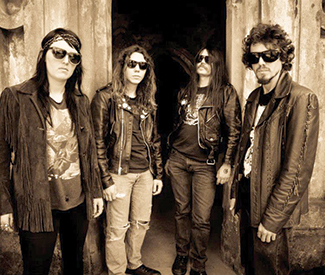
Brick and Mortar Music Hall may have had some noise complaint troubles with the San Francisco Sound Commission earlier this summer, but that hasn’t kept the venue or Kymberli Jenson, of Kymberli’s Music Box Presents, from putting on great shows.  Last Saturday’s bill included the Asteroid #4 and the Richmond Sluts. It was a handful of loud rock’n’roll bands that blasted us back through the decades with sounds echoing 1960s and ‘70s psychedelia and punk, but also hints of the late ‘90s and early 2000s , when these bands were fresh on the music scene. 

They’ve all been around the block, or as frontperson-guitarist Scott Vitt of the Asteroid #4 put it, these are all “old heads” and “mainstays” at this point.

The Asteroid #4, which recently transplanted to the Bay Area from Philadelphia, released its first EP in 1995.  Its music is a blend of classic psychedelic rock, with a little melodic folk and shoe gaze tremor, and strong influences from late ‘60s psych rock bands like Love, and early ‘90s British bands like Spacemen 3. 

When I asked Vitt how he felt living in California was influencing his band’s sound, he responded, “living and breathing the natural beauty, the mountains, the forests and, of course, the ocean, first-hand, I think it’ll be very evident on our next record that we’ve become a California band.”

And the group sounded plenty at home on Saturday night, as if the packed music hall was its own cozy living room. The set was vibrant and full of the precise kinds of melodies and riffs that can only come from a band that’s been playing together as long as it has — and is more than comfortable in its own skin. When asked about this, Vitt quoted Miles Davis, “you have to play a long time to be able to play like yourself.”

The Asteroid #4’s set included personal favorites, “Hold On,” which seems to have a Brian Jonestown Massacre influence, “The Unknown,” and “I Want to Touch You,” a Catharine Wheel cover.  For the final song, Joel Gion of BJM joined the band on stage for “Into the Meadow.”

After the Asteroid #4, the Richmond Sluts went on, which was an excellent transition into an upbeat set closing out the night.

The Richmond Sluts formed in 1998, in the Richmond District. Imagine the NY Dolls on LSD, with a little bit of the Cramps and the Rolling Stones thrown in to keep it both weird and glammy. I have vague memories of hearing this band play at a few parties back in the day, but I have to say I don’t remember it sounding nearly as tight as it did the other night.

Frontperson Shea Roberts also looks nothing like the Stiv Baters (of the Dead Boys) gaunt 20-year-old look-alike I remember either. While the Sluts don’t really have the same excuse for playing trashy, angsty, garage rock about sex, drugs, and rock’n’roll as their post-pubescent selves did back in the late ‘90s, it doesn’t really matter, cause their talent has matured enough to take the material to whole other level. 

Said Shea, “I know some of the lyrics are a little goofy sometimes and the stuff I’m writing now tends to be a bit more serious…but they were all sparked by some emotion I was feeling at the time and I’m OK with that.  Maybe we shouldn’t take ourselves so seriously.”

We shouldn’t.  Not when we can rock out to music like this to keep it in perspective. 

Their set included tracks like “Sweet Something,” “Sad City,” and “Paddy Wagon” off their 2001 self-titled release. Shea says that he hopes to keep playing with the new Sluts and that’s the plan “until it’s not fun anymore.”

Hormone replacement therapy and video games: Anna Anthropy talks Dy5phoria

2

Video games go to alien worlds all the time, but rarely have they explored a transgender person’s identity until Dys4ia. The 2012 Adobe Flash game traced designer Anna Anthropy’s hormone replacement therapy journey, guiding the player through trying on women’s clothing for the first time, dealing with the agony of shaving, and correcting all the people who call you “sir” instead of “ma’am.”

Anthropy was kind enough to let the Guardian interview her in her Oakland home, dodge her energetic cats, and record an audio interview where she walks us through her new game, Dy5phoria, the new chapter and pseudo-sequel to Dys4ia. You can also read a selection from the audio interview below. 

SF Bay Guardian How do you pronounce the new title? 

Anna Anthropy I’ve been calling it Dys-five-ia out loud, but it’s spelled like Dys4ia with a 5 instead of an S. 

SFBG You’re hitting steam now with added content, can you tell us what’s new?

AA Dys4ia is made up of four chapters which represent different times in my life when I was starting to go on hormone replacement therapy. Dy5phoria which will come with Dys4ia is a fifth chapter that follows what’s happened in my life since the place Dys4ia ended.

SFBG Not quite a sequel but downloadable content?

AA Like a fifth chapter, if you will. 

Listen to the full 26 minute interview in the Sound Cloud file above.

SFBG Can you talk about what seperated it from mainstream games?

AA Oh god I’m so sick of talking about Dys4ia, but I will! It’s essentially a collection of short fast scenes, kind of like Wario Ware, that represents the different facets of what happened to me in this part of my life. The frustrations of dealing with gatekeepers and being misgendered. It’s also about the moments of beauty and hope that reassure me that things maybe are getting closer to how I want them to be in my life.

SFBG What were those moments of hope?

AA One of the things that happens to me in Dys4ia is my tits get bigger, and that was nice.

One of the things in Dy5phoria that has changed is the ways I’ve externalized my femininity more and felt prettier and better about being a girl. It was important that mixed in the bullshit I put in the reasons about why this is important to me.

SFBG Can you talk about how Dy5phoria is different than what came before it?

AA In Dys4ia the avatars in the scenes are really inconsistent. Depending on the context I might be a blobby stick figure, or a shield, a razor, a little munchy thing depending on the experience. My body was going through flux at the time, it made sense for the game to represent that by not having a consistent avatar. In Dy5phoria all the levels have a consistent avatar that look like me and who I’ve become comfortable being.

There’s a different motif in the game, there’s some consistency now, some sort of permanence.

SFBG There’s an 8-bit retro style right? It’s like an NES game.

AA Kind of. I don’t want it to be Nintendo retro because I think thats twee and bad, I think that’s overused.

SFBG Omni retro?

AA Sure.

SFBG Tell me where you are in development and what you’re doing today.

AA My process for this game is that every day I sit down and do a single scene. The one I’m working on today is about painting my nails, and the ways I’ve found to externalize my femininity more. The level is just that: a hand with a nail polish brush. Its just that.You paint my nails, and then its over.

Nails painted in screenshot of Dy5phoria

SFBG Well thats the power of videogames right? You carry out the narrative act, as opposed to simply watching it. You mentioned the TSA level earlier. What happened to you and what’s the problem making that read well?

AA There’s a level in Dy5phoria when I was groped by the TSA at the airport. The way that big horrible scanning thing works is there’s a button with a female and a male button. I’ve had it go either way. This particular time I got scanned as male. On the screen parts of me came up as suspicious areas, and there on the screen there were squares around my tits.

My tits came up as an anomaly, and this guy (security) was obliged to grope my breasts. I’m attempting to translate this to a scene in Dy5phoria. I don’t think it’s reading as well as it could because it’s a bit too complicated. 

SFBG Do you think your game designer chops have improved since you did Dys4ia?

AA It’s more like my interests have changed. I’m a lot less interested in making digital games than I used to be. I’ve sort of been envisioning what a fifth chapter of Dys4ia would look like, but when the opportunity came I’m actually more interested in board games than sitting down and coding a game. This is the last game I want to code myself, but I kind of have to because Dys4ia is all mine, all my project. This is kind of a closing of the book for me, in a lot of ways. 

SFBG So you’ll never do digital games again?

AA It’s not that I won’t do digital games again, I’m actually announcing a new game at Indiecade. I just don’t want to do the programming myself. I’ve always learned the coding I needed to do, a mish mash. That’s why I work on Twine games because I don’t have to do any coding. Dy5phoria will be the last project I’ll code myself but it won’t be my last digital game.

SFBG You mentioned you’re sick of talking about Dys4ia, but when I was at GaymerX I met this gal who recently transitioned her gender and was working at your workshop there. She has so completely totally inspired by you. You should have seen her face.

AA I did in fact see her face, she came up to my autograph session, and told me the game was meaningful. Those comments make me feel really good. I’m sick of answering questions about Dys4ia but I’m not sick of hearing it means something to people. That’s why I do anything, I want to make things that will actually connect with people. She told me and other people have told me Dys4ia gave her the confidence to make the decision to start going on hormones.

Hormones have been positioned as the central experience of being trans, which I don’t think is good, because there are trans people who don’t go on hormones. But for those people that are thinking of going on hormones is I hoped Dys4ia would give some sense about what that would be like an the challenges and really really nice things of being on hormones would be like. If it has done that for people I feel accomplished in that regard. 

SFBG And it seems sometimes you’re at the center to this kind of very indie, very LGBT conscious, very different game movement that seems to be happening a lot here in the Bay Area and other places as well. Can you talk about what’s bringing the rise of that about?

AA I think what’s important to outsiders of the mainstream game industry that the industry is mostly pitching to straight cis males. I think what’s making it possible for people to participate are tools like Twine, a hypertext tool where only recently people started realizing they could use it to make games.

Because the tool is so simple if you’re capable of writing you’re capable of making a game with Twine. You can make almost journal style, personal games. There are a lot more autobiographical games coming out with this tool.

The industry is spending millions to make games, they don’t have the liberty to make something risky and personal and weird. If something takes a few hours to make or a few days or a week, you can make what you want.

These avenues of gaming that are barred to queer and marginalized people, people who are barred from making games in this sexist, cisnormative tech culture have found an avenue in making games in Twine and other free game tools. There are avenues for making games for people who the industry don’t think are its mainstream. 

D5phoria is due out on Steam in the fall. You can play the first in the series, Dys4ia, here

Mass. transit

1

arts@sfbg.com

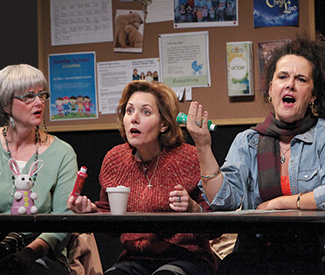
THEATER Marin Theatre Company’s season opener, David Lindsay-Abaire’s Good People, tackles issues of class and solidarity in the context of a small circle of South Boston peers. It’s an issue the play explores with some subtlety, if not always with the full weight of a historical moment as dire as any when it comes to the stratification of income, power, privilege, and status.

Margaret Walsh (Amy Resnick) is a scrappy, middle-aged single mom with a grown but severely impaired daughter. A quick but harried working-class woman (persuasively played with underdog vigor and a complex moral makeup by Resnick), Margaret is a high-school dropout confined to both menial jobs and her old Southie neighborhood — an Irish enclave ringed by creeping poverty and the cyclical violence and dysfunction that can cling to it.

Perennially late, Margie (as she’s usually called) is about to be sacked from yet another job, this one at the local dollar-store register, where her young manager, Stevie (Ben Euphrat), is the quietly striving, just-tolerant son of a deceased friend from the neighborhood.

Significantly, Stevie’s late mother lives on among her peers in the form of a beloved and oft-repeated anecdote, in which she attempts to cover up in the moment for a brazen act of grocery-store shoplifting. But the story, which Margie tries to leverage to advantage in her bid to keep her job, has a contested aspect: Was it Margie, working a register then too, who turned her in for it?

It turns out this question — with its suggestions of tenuous loyalty, honesty, and honor among Margie’s hard-bitten peer group — is just a warm-up for a larger moral contest looming ahead.

Soon Margie moves in with longtime friend Dottie (a comically boisterous and truculent Anne Darragh), but Dottie’s new position as fretful, bullying landlady is never far from their interactions. With encouragement from her pal Jean (a sure Jamie Jones), Margie — desperate to find work but too proud to return to the Gillette factory (perpetual employer of last resort) — seeks out an old classmate, Mike (an excellent, subtly shape-shifting Mark Anderson Phillips). He once briefly dated Margie in high school, before going off to college and medical school, ultimately escaping Southie for upper-middle-class Chestnut Hill.

It’s Margie and Mark’s reunion that provides the meat of the drama. Margie is a proud but desperate interloper in Mike’s now thoroughly bourgeois world, and needles him about his class pretensions as a method of maneuvering to some advantage in her quest for his help. She’s also haunted by an idea of what might have been her life if she had escaped Southie, like (or with) Mike. At the same time, in his new milieu, Mike draws heavily on a macho, street-smart, bootstraps image he has fashioned from his past — ostensibly to make up for a certain effete status vis-à-vis his wife, Kate (ZZ Moor in a bright, well-measured and quietly ferocious performance), the sophisticated, upper-middle-class African American daughter of Mike’s old boss and mentor.

Mike and Margie’s reunion, therefore, seesaws on a fulcrum of status, class advantage, street cred, and secrets. And if class tends to trump race in the play’s particular admixture of power, race remains a crucial part of the story — rushing back from Mike’s Southie past in a way that drives another wedge between the married couple’s already strained partnership.

Despite being initially top-heavy with self-conscious Boston accents, director Tracy Young’s admirable cast soon stretches out into some extended and nuanced scenes. Particularly impressive are Resnick, Phillips, and Moor who, in the second act’s opening sequence in Mike and Kate’s luxurious Chestnut Hill home, bring the play’s themes into full swing with slow-burning intensity.

Interestingly, opening night saw by far the biggest laugh go to a seemingly throwaway line. After Margie crashes an evening at Mike and Kate’s home, Mike idly asks his unwanted guest if she likes the wine his wife has offered her. “How the fuck should I know?” retorts Margie, not unkindly.

Wine, and especially the appreciation of wine, is of course heavily class-coded, and the whole scene is an understated class rumpus of sorts. But the rolling laughter this line provoked among the generally comfortable Marin County audience probably spoke to more than just knowingness on that score. It sounded like a genuine, joyful release — an acknowledgement, maybe, that class is a burdensome masquerade, and in its pretense and hidden anxieties it’s exhausting, including for those with passes and pretensions to a certain elevation on the ladder. Although that burden is incommensurate to the physically and psychically wrecking demands, degradations, and insecurities saddling those on the lower rungs, it’s in the “conceit” of class that the play opens common ground with the audience. *

GOOD PEOPLE

Through Sept. 15

Tue and Thu-Sat, 8pm (also Thu/5, 1pm; Sept 14, 2pm); Wed, 7:30pm; Sun, 2 and 7pm, $37-$58

Marin Theatre Company

397 Miller, Mill Valley

www.marintheatre.org


Art 111

2

arts@sfbg.com

NIGHTLIFE In 1993, before SOMA officially became one of San Francisco’s big art districts, 111 Minna Gallery opened for business on a quiet downtown backstreet. Eiming Jung, a young entrepreneurial student of rhetoric, had ambitious plans, “I had an idea for a rather unconventional gallery,” recalls Jung on the eve of 111 Minna’s 20th anniversary, “I wanted to support local artists but I also wanted to create an environment for the broader art community.”

The original gallery space had a bar serving wine and beer and a monthly schedule of exhibitions which attracted curious scenesters. By night, the gallery transformed into a much needed venue for the underground music scene, with raucous parties that fostered some of SF’s biggest talents. It was a crossover concept that breathed new life into San Francisco’s art agenda, perfect for showcasing more “urban” styles like those of soon-to-be-famous spray paint artists Doze Green and Chor Boogie, and members of the Mission School.

The expense of running an art gallery was daunting but Jung was innovative and diversified further, offering the space for one-off events: film screenings, award ceremonies, book signings, product launches, and even weddings.

In 2000, the next-door retail unit became available and Jung took the plunge, tripling the size of the gallery. The new space was renovated to include a fully licensed bar and a luxurious expanse of pristine white walls. Looking in through the gallery’s large shop windows on Second Street, passersby see the high-ceilinged gallery awash with natural light, patrons comfortably viewing the art, having meetings or working on their laptops while enjoying the gallery’s latest offering: Fourbarrel coffee and Josie of the Mill’s scrumptious hot toast.

“We thrive on creativity and work hard to create new possibilities for the space,” says Michelle Delaney, the gallery’s longtime manager, of 111’s latest rep as a laidback idea incubator for the downtown tech and business crowd.

A close collaboration with Last Gasp, the lauded local publishers of graphic art and comics, has been especially rewarding, bringing recognition and exposure to artforms marginalized in more conventional galleries. Legends were made here: During the first dot.com boom, the Wednesday night mixer, Qoöl, was the essential meeting-place for newcomers who networked and partied from happy hour until closing. Pumping underground techno tunes and attracting scrappy art world figures helped save the place from any dot-com tackiness.

The quintessential 111 Minna event is Sketch Tuesdays, a monthly happening since 2006: Artists come and make art in the gallery, finished pieces are pinned to a board and priced affordably from $5 to $30. Passing by tables cluttered with paints, inks, and brushes on a recent evening, one could hear experimental jazz from the turntablist mingle with the sociable clink of glasses and hum of conversation. On the board a little pen and ink study’s price tag read, “Yours for a whiskey on the rocks.” Perfectly cheeky, and epitomizing 111 Minna’s unpretentious ethos.

111 MINNA 20TH ANNIVERSARY SHOW AND PARTY with DJ Toph One and Hyper D Fri/6, 5pm-late, free. 111 Minna, SF. www.111minnagallery.com


Film Listings: September 4 – 10, 2013

0

Film listings are edited by Cheryl Eddy. Reviewers are Kimberly Chun, Dennis Harvey, Lynn Rapoport, Sam Stander, and Sara Maria Vizcarrondo. For rep house showtimes, see Rep Clock. Due to early Labor Day deadlines, theater information was incomplete at presstime.

OPENING

Adore This glossy soap opera from director Anne Fontaine (2009’s Coco Before Chanel) and scenarist Christopher Hampton, adapted from a Doris Lessing novella, has had its title changed from Two Mothers — perhaps because under that name it was pretty much the most howled-at movie at Sundance this year. Lil (Naomi Watts) and Roz (Robin Wright) are lifelong best friends whose hunky surfer sons Ian (Xavier Samuel) and Tom (James Frecheville) are likewise best mates. Widow Lil runs a gallery and Roz has a husband (Ben Mendelsohn), but mostly the two women seem to lay around sipping wine on the decks of their adjacent oceanfront homes in Western Australia’s Perth, watching their sinewy offspring frolic in the waves. This upscale-lifestyle-magazine vision of having it all — complete with middle-aged female protagonists who look spectacularly youthful without any apparent effort — finds trouble in paradise when the ladies realize that something, in fact, is missing. That something turns out to be each other’s sons, in their beds. After very little hand-wringing this is accepted as the way things are meant to be — a MILF fantasy viewed through the distaff eyes — despite some trouble down the road. This outlandish basic concept might have worked for Lessing, but Fontaine’s solemn, gauzily romantic take only slightly muffles its inherent absurdity. (Imagine how creepy this ersatz women-finding-fulfillment-at-midlife saga would be if it were two older men boning each others’ daughters.) Lord knows it isn’t often that mainstream movies (this hardly plays as “art house”) focus on women over 40, and the actors give it their all. But you’ll wish they’d given it to a better vehicle instead. (1:50) (Harvey)

Afternoon Delight It takes about five seconds to suss that Kathryn Hahn is going to give a spectacular performance in Jill Soloway’s charming seriocomedy. Figuring to re-ignite husband Jeff’s (Josh Radnor) flagging libido by taking them both to a strip club, Rachel (Hahn) decides to take on as a home- and moral-improvement project big-haired, barely-adult stripper McKenna (Juno Temple). When the latter’s car slash-home is towed, bored Silver Lake housewife and mother Rachel invites the street child into their home. Eventually she’s restless enough to start accompanying McKenna on the latter’s professional “dates.” Afternoon Delight is a better movie than you’d expect — not so much a typical raunchy comedy as a depthed dramedy with a raunchy hook. It’s a notable representation of no-shame sex workerdom. It’s also funny, cute, and eventually very touching. Especially memorable: a ladies’ round-table discussion about abortion that drifts every which way. (1:42) Shattuck. (Harvey)

Far Out Isn’t Far Enough: The Tomi Ungerer Story Fairy tales really do come true — even when they’re as strange as the one lived by Hans Christian Andersen Award-winning illustrator, writer, and activist Tomi Ungerer. As a child, he was torn between Nazi Germany and occupied France, growing up in the Alsace region; as an artist, Ungerer possesses a creative fire fueled by the trauma of war and a bisected identity — his native Strasbourg, as he paints it with archetypal vivid colors, “is the sphincter of France. When France has indigestion, we’re the first to feel it.” In keeping with that free spirit, director Brad Bernstein playfully, beautifully captures Ungerer’s early years, from the artist’s preteen renderings of Nazi horrors, to his formative artistic inspirations, to the outpouring that followed during NYC’s golden age of illustration. In Big Apple, children’s classics like Crictor (1958), Adelaide (1959), and The Three Robbers (1961) inspired colleagues like Maurice Sendak (here in one of his last interviews) and Jules Feiffer. No niche branding and self-censorship for Ungerer, who happily fed the mid-century’s appetite for his drawings; imbued his kids tales with absurdity, fear, and his lifelong fascination with death; and created powerful anti-war posters and iconic illustrations reflecting the struggles of the ’60s (and very adult “Fornicon” erotica as well). The latter finally ushered in a kind of closing chapter to Ungerer’s American success story, when word spread that the “kidso” favorite also did porno and his children’s books were blacklisted from libraries. Bernstein generally hastens through the decades of “exile” that followed — staying so far from some of Ungerer’s personal particulars that we never even get the name of his wife (or is it wives?) — but the time he takes to give the viewer a sense of the witty, quirk-riddled artist’s personality keeps a viewer riveted. (1:38) Opera Plaza, Shattuck. (Chun)

The Flu As a shipping crate stuffed with illegal immigrants creeps into a ritzy Seoul suburb, one poor soul within stifles a cough; before long, everyone’s dead — save a crusty-eyed youth who’s apparently resistant to the disease yet still capable of kick-starting a devastating epidemic. Can the headstrong doctor (Soo Ae) save her sassy tot (Park Min-ha) from certain, blood-spewing death? Will the cocky EMT (Jang Hyuk) be able to help her, and win her heart in the process? Will the muckety-mucks in power get their shit together in time to prevent mass panic and a global outbreak? Zzzzz. Save some gnarly third-act visuals (you won’t believe what the government does with the bodies of the afflicted), this disaster movie from writer-director Kim Sung-su fails to innovate on the template laid down by films like 2011’s Contagion or 1995’s Outbreak. Also, for all the gory drama, the central storyline (re: the sick kid and the nascent couple) is completely devoid of tension, trudging for two hours toward the most predictable ending imaginable. (2:00) (Eddy)

I Give It a Year This glossy feature writing-directing debut from longtime Sacha Baron Cohen collaborator Dan Mazer has been called the best British comedy in some time — but it turns out that statement must’ve been made by people who think the Hangover movies are what comedy should be like world-wide. Rose Byrne and Rafe Spall play mismatched newlyweds (she’s stiff-upper-lippy advertising executive, he’s a manboy prankster novelist) who worry their marriage won’t last, in part because everyone tells them so — including such authorities as her bitchy sister (Minnie Driver), his obnoxious best friend (Stephen Merchant), and their incredibly crass marriage counselor (Olivia Colman). Also, they’re each being distracted by more suitable partners: she by a suave visiting American CEO (Simon Baker), he by the ex-girlfriend he never formally broke up with (Anna Faris). This is one of those movies in which you’re supposed to root for a couple who in fact really don’t belong together, and most supporting characters are supposed to be funny because they’re hateful or rude. There’s plenty of the usual strained sexual humor, plus the now-de rigueur turn toward earnest schmaltz, and the inevitable soundtrack stuffed with innocuous covers of golden oldies. Some wince-inducing moments aside, it all goes down painlessly enough — and Mazer deserves major props for straying from convention at the end. Still, one hopes the future of British comedy isn’t more movies that might just as well have starred Vince Vaughn and Jennifer Aniston. (1:37) Opera Plaza, Shattuck. (Harvey)

Passion See “Blah Lust.” (1:42) Castro, Smith Rafael.

Riddick This time around, the escaped con with exceptional night vision (Vin Diesel) battles aliens and the lingering stink of 2004’s The Chronicles of Riddick. (1:59)

Spark: A Burning Man Story A few months after kicking off DocFest — and mere days after the flames of Burning Man ’13 were extinguished — doc Spark: A Burning Man Story opens for a theatrical run. With surprisingly open access to Burning Man’s inner-circle organizers, San Francisco filmmakers Steve Brown and Jessie Deeter chronicle the organization’s tumultuous 2012 season, a time when the group was forced to confront concerns both practical (a stressful ticket-sale snafu) and philosophical (why are they selling tickets in the first place?) Spark doesn’t shy away from showing the less-graceful aspects of Burning Man’s exponential growth and transformation, but at its core it’s a fairly starry-eyed celebration of the event’s allure, reinforced by subplots that focus on artists who view “the playa” as their muse. (1:30) (Eddy)

ONGOING

Ain’t Them Bodies Saints “This was in Texas,” reads the hand-lettered opening of Ain’t Them Bodies Saints. It’s a fittingly homespun beginning to a film that pays painstaking homage to bygone-era cinema. After its Sundance Film Festival premiere, writer-director David Lowery’s first high-profile release earned frequent comparisons to 1970s works by Robert Altman and Terrence Malick. That’s no accident; Saints openly feasts upon the decade’s intimate, sun-burnished neo-Westerns. Though Saints earned praise on the film-fest circuit for its craftsmanship, its big-name cast — Casey Affleck and Rooney Mara as lovers separated by his jail stint; Keith Carradine as a shopkeeper with a dark past; Ben Foster as a cop who pines for Mara’s character — is likely what will pique mainstream interest. But will pre-release hype translate to a Beasts of the Southern Wild-style breakthrough? Saints‘ storytelling keeps to a very deliberate pace, a quality owing to Lowery’s background as a film editor (most notable credit: Upstream Color), and Saints‘ dipped-in-amber, outlaw-chic mise-en-scène — 10-gallon hat tips to cinematographer Bradford Young, production designer Jade Healy, and composer Daniel Hart — is overtly antique-y. But its actors, particularly Affleck and Carradine, ground what could’ve been an overly constructed objet d’cinema in subtle, deep emotions. (1:45) Smith Rafael. (Eddy)

Austenland Jane (Keri Russell) is a Jane Austen fanatic who finds real-life modern romance highly lacking as compared to the fictive Regency Era variety — though having a life-sized cutout of Colin Firth as Mr. Darcy in her bedroom surely didn’t help recent relationships. After yet another breakup, she decides to live her fantasy by flying to England to vacation at the titular theme park-fantasy role play establishment, where guests and staff meticulously act out Austen-like scenarios of well-dressed upper class leisure and chaste courtship. Upon arriving, however, Jane discovers she’s very much a second-class citizen here, not having been able to afford the “platinum premium” package purchased by fellow guests. Thus cast by imperious proprietor Mrs. Wattlesbrook (Jane Seymour) as the unmarriageable “poor relation,” she gets more flirtatious vibes from the actor cast as sexy stable boy (Bret McKenzie) than the one playing a quasi-Darcy (JJ Feild), at least initially. Adapting Shannon Hale’s novel, Jerusha Hess (making her directorial bow after several collaborations with husband Jared Hess, of 2004’s Napoleon Dynamite) has delightfully kitsch set and costume designs and a generally sweet-natured tone somewhat let down by the very broad, uninspired humor. Even wonderful Jennifer Coolidge can’t much elevate the routine writing as a cheerfully vulgar Yank visitor. The rich potential to cleverly satirize all things Austen is missed. Still, the actors are charming and the progress lively enough to make Austenland harmless if flyweight fun. (1:37) Sundance Kabuki. (Harvey)

Blue Jasmine The good news about Blue Jasmine isn’t that it’s set in San Francisco, but that it’s Woody Allen’s best movie in years. Although some familiar characteristics are duly present, it’s not quite like anything he’s done before, and carries its essentially dramatic weight more effectively than he’s managed in at least a couple decades. Not long ago Jasmine (a fearless Cate Blanchett) was the quintessential Manhattan hostess, but that glittering bubble has burst — exactly how revealed in flashbacks that spring surprises up to the script’s end. She crawls to the West Coast to “start over” in the sole place available where she won’t be mortified by the pity of erstwhile society friends. That would be the SF apartment of Ginger (Sally Hawkins), a fellow adoptive sister who was always looked down on by comparison to pretty, clever Jasmine. Theirs is an uneasy alliance — but Ginger’s too big-hearted to say no. It’s somewhat disappointing that Blue Jasmine doesn’t really do much with San Francisco. Really, the film could take place anywhere — although setting it in a non-picture-postcard SF does bolster the film’s unsettled, unpredictable air. Without being an outright villain, Jasmine is one of the least likable characters to carry a major US film since Noah Baumbach’s underrated Margot at the Wedding (2007); the general plot shell, moreover, is strongly redolent of A Streetcar Named Desire. But whatever inspiration Allen took from prior works, Blue Jasmine is still distinctively his own invention. It’s frequently funny in throwaway performance bits, yet disturbing, even devastating in cumulative impact. (1:38) Metreon, 1000 Van Ness. (Harvey)

Closed Circuit (1:36) 1000 Van Ness, SF Center, Sundance Kabuki.

Cutie and the Boxer Ushio “Gyu-Chan” Shinohara was a somewhat notorious artist in Japan’s fertile avant-garde scene of the 1960s. In 1969, he decided he needed a bigger stage, so he moved to New York. An early 1970s TV documentary excerpted here calls him perhaps “the most famous of the poor and struggling artists in the city,” noting that while his often outsized work gets a lot of attention, people seldom actually want to buy it. This is a situation that, we soon learn, hasn’t altered much since. Gyu-Chan was 41 when he met wife Noriko, a 19-year-old art student also from Japan. She was swept up in the “purity” of his art and lifestyle; within six months she was pregnant with their only child, Alex (also a talented visual artist). In hindsight, she flatly tells us “I should have married a guy who made a secure living and took responsibility for what he did.” We first meet the protagonists of Zachary Heinzerling’s doc on Gyu-Chan’s 80th birthday. It’s hardly a conventionally comfortable old age — in a tone so weary it can hardly be classified as nagging, Noriko reminds him that they’re late with the rent on their fairly large yet cluttered Brooklyn apartment-studio. It’s a classic dysfunctional-yet-still maintaining marital dynamic: the easygoing, charming, eternal bad boy herded about as successfully as a cat on a leash by the long-suffering wife. Meanwhile Noriko, who one senses has long resented living under the shadow of this larger-than-life figure, feels she’s finally escaped his influence in her own work. A quiet, almost meditative portrait of messy lives, Cutie and the Boxer doesn’t really answer the question of why these two remained together despite all (her) dissatisfaction. But you get the feeling Noriko, while hardly an emotional open book, loves her burdensome, unruly spouse more than she’d admit. Or at least she’s accepted the “struggle” of life with him as her own goading raison d’être. You know the saying: life is short, art is long. (1:22) Opera Plaza. (Harvey)

Drinking Buddies Mumblecore grows up in this latest from actor-writer-director Joe Swanberg (currently starring in You’re Next), about brewery co-workers Kate (Olivia Wilde) and Luke (Jake Johnson), BFFs who’d obviously be the perfect couple if they weren’t already hooked up with significant others. At least, they are at the start of Drinking Buddies; the tension between them grows ever-more loaded when the messy, chaotic Kate is dumped by older boyfriend Chris (Ron Livingston) — a pairing we know is bound to fail when we spot him chiding her for neglecting to use a coaster. Luke’s long-term coupling with the slightly younger but way-more-mature Jill (Anna Kendrick) is more complicated; all signs indicate how lucky he is to have her. But the fact that they can only meander around marriage talk indicates that Luke isn’t ready to settle down — and though Jill may not realize it, Luke’s feelings for Kate are a big reason why. Working from a script outline but largely improvising all dialogue, Swanberg’s actors rise to the challenge, conveying the intricate shades of modern relationships. Their characters aren’t always likable, but they’re always believable. Also, fair warning: this movie will make you want to drink many, many beers. (1:30) Roxie. (Eddy)

Elysium By the year 2154, the one percent will all have left Earth’s polluted surface for Elysium, a luxurious space station where everyone has access to high-tech machines that can heal any wound or illness in a matter of seconds. Among the grimy masses in burned-out Los Angeles, where everyone speaks a mixture of Spanish and English, factory worker Max (Matt Damon) is trying to put his car-thief past behind him — and maybe pursue something with the childhood sweetheart (Alice Braga) he’s recently reconnected with. Meanwhile, up on Elysium, icy Secretary of Defense Delacourt (Jodie Foster, speaking in French and Old Hollywood-accented English) rages against immigration, even planning a government takeover to prevent any more “illegals” from slipping aboard. Naturally, the fates of Max and Delacourt will soon intertwine, with “brain to brain data transfers,” bionic exo-skeletons, futuristic guns, life-or-death needs for Elysium’s medical miracles, and some colorful interference by a sword-wielding creeper of a sleeper agent (Sharlto Copley) along the way. In his first feature since 2009’s apartheid-themed District 9, South African writer-director Neill Blomkamp once again turns to obvious allegory to guide his plot. If Elysium‘s message is a bit heavy-handed, it’s well-intentioned, and doesn’t take away from impressive visuals (mercifully rendered in 2D) or Damon’s committed performance. (2:00) Metreon, 1000 Van Ness, Sundance Kabuki. (Eddy)

Fruitvale Station By now you’ve heard of Fruitvale Station, the debut feature from Oakland-born filmmaker Ryan Coogler. With a cast that includes Academy Award winner Octavia Spencer and rising star Michael B. Jordan (The Wire, Friday Night Lights), the film premiered at the 2013 Sundance Film Festival, winning both the Audience Award and the Grand Jury Prize en route to being scooped up for distribition by the Weinstein Company. A few months later, Coogler, a USC film school grad who just turned 27, won Best First Film at Cannes. Accolades are nice, especially when paired with a massive PR push from a studio known for bringing home little gold men. But particularly in the Bay Area, the true story behind Fruitvale Station eclipses even the most glowing pre-release hype. The film opens with real footage captured by cell phones the night 22-year-old Oscar Grant was shot in the back by BART police, a tragedy that inspired multiple protests and grabbed national headlines. With its grim ending already revealed, Fruitvale Station backtracks to chart Oscar’s final hours, with a deeper flashback or two fleshing out the troubled past he was trying to overcome. Mostly, though, Fruitvale Station is very much a day in the life, with Oscar (Jordan, in a nuanced performance) dropping off his girlfriend at work, picking up supplies for a birthday party, texting friends about New Year’s Eve plans, and deciding not to follow through on a drug sale. Inevitably, much of what transpires is weighted with extra meaning — Oscar’s mother (Spencer) advising him to “just take the train” to San Francisco that night; Oscar’s tender interactions with his young daughter; the death of a friendly stray dog, hit by a car as BART thunders overhead. It’s a powerful, stripped-down portrait that belies Coogler’s rookie-filmmaker status. (1:24) Metreon. (Eddy)

Getaway (1:29) 1000 Van Ness, SF Center.

The Grandmaster The Grandmaster is dramatic auteur Wong Kar-Wai’s take on the life of kung-fu legend Ip Man — famously Bruce Lee’s teacher, and already the subject of a series of Donnie Yen actioners. This episodic treatment is punctuated by great fights and great tragedies, depicting Ip’s life and the Second Sino-Japanese War in broad strokes of martial arts tradition and personal conviction. Wong’s angsty, hyper stylized visuals lend an unusual focus to the Yuen Woo-Ping-choreographed fight scenes, but a listless lack of narrative momentum prevents the dramatic segments from being truly engaging. Abrupt editing in this shorter American cut suggests some connective tissue may be missing from certain sequences. Tony Leung’s performance is quietly powerful, but also a familiar caricature from other Wong films; this time, instead of a frustrated writer, he is a frustrated martial artist. Ziyi Zhang’s turn as the driven, devastated child of the Northern Chinese Grandmaster provides a worthy counterpoint. Another Wong cliché: the two end up sadly reminiscing in dark bars, far from the rhythm and poetry of their martial pursuits. (1:48) Metreon, 1000 Van Ness, Sundance Kabuki. (Stander)

Instructions Not Included (1:55) Metreon.

Jobs With the upcoming Aaron Sorkin adaptation of Walter Isaacson’s biography nipping at its heels, Jobs feels like a quickie — true to Silicon Valley form, someone realized that the first to ship can end up defining the market. But as this independent biopic goes for each easy cliché and facile cinematic device, you can practically hear Steve Jobs himself spinning in the ether somewhere. Ashton Kutcher as Jobs lectures us over and over again about the virtues of quality product, but little seemed to have penetrated director Joshua Michael Stern as he distracts with a schmaltzy score (he should have stuck to Bob Dylan, Joe Walsh, and era-defining AOR), and relies on corny slow-motion to dramatize the passing of a circuit board. The fact that Kutcher might be the best thing here — he clearly throws himself into impersonating the Apple icon, from his intense, upward-glancing glare to his hand gestures — says a bit about the film itself, as it coasts on its self-made man-captain of enterprise narrative arc. Dispensing with much about the man Jobs became outside of Apple, apart from a few nods to his unsavory neglect of friends and offspring, and simply never acknowledging his work at, say, Pixar, Jobs, in the end, comes off as a lengthy infomercial for the Cupertino heavyweight. (2:02) 1000 Van Ness, SF Center, Sundance Kabuki. (Chun)

Kick-Ass 2 Even an ass-kicking subversive take on superherodom runs the risk of getting its rump tested, toasted, roasted — and found wanting. Too bad the exhilaratingly smarty-pants, somewhat mean-spirited Kick-Ass (2010), the brighter spot in a year of superhero-questioning flicks (see also: Super), has gotten sucker-punched in all the most predictable ways in its latest incarnation. Dave, aka Kick-Ass (Aaron Taylor-Johnson), and Mindy, otherwise known as Hit-Girl (Chloë Grace Moretz), are only half-heartedly attempting to live normal lives: they’re training on the sly, mostly because Mindy’s new guardian, Detective Marcus Williams (Morris Chestnut), is determined to restore her childhood. Little does he realize that Mindy only comes alive when she pretends she’s battling ninjas at cheerleader tryouts — or is giving her skills a workout by unhanding, literally and gleefully, a robber. Kick-Ass is a little unnerved by her semi-psychotic enthusiasm for crushing bad guys, but he’s crushing, too, on Mindy, until Marcus catches her in the Hit-Girl act and grounds her in real life, where she has to deal with some really nasty characters: the most popular girls in school. So Kick-Ass hooks up with a motley team of would-be heroes inspired by his example, led Colonel Stars and Stripes (an almost unrecognizable Jim Carrey), while old frenemy Chris, aka Red Mist (Christopher Mintz-Plasse) begins to find his real calling — as a supervillain he dubs the Motherfucker — and starts to assemble his own gang of baddies. Unlike the first movie, which passed the whip-smart wisecracks around equally, Mintz-Plasse and enabler-bodyguard Javier (John Leguizamo) get most of the choice lines here. Otherwise, the vigilante action gets pretty grimly routine, in a roof-battling, punch-’em-up kind of way. A romance seems to be budding between our two young superfriends, but let’s skip part three — I’d rather read about it in the funny pages. (1:43) 1000 Van Ness, SF Center. (Chun)

Lee Daniels’ The Butler (1:53) 1000 Van Ness, SF Center, Sundance Kabuki.

Long Distance Revolutionary: A Journey with Mumia Abu-Jamal Or, almost everything you ever wanted to know about the guy who inspired all those “Free Mumia” rallies, though Abu-Jamal’s status as a cause célèbre has become somewhat less urgent since his death sentence — for killing a Philadelphia police officer in 1981 — was commuted to life without parole in 2012. Stephen Vittoria’s doc assembles an array of heavy hitters (Alice Walker, Giancarlo Esposito, Cornel West, Angela Davis, Emory Douglas) to discuss Abu-Jamal’s life, from his childhood in Philly’s housing projects, to his teenage political awakening with the Black Panthers, to his career as a popular radio journalist — aided equally by his passion for reporting and his mellifluous voice. Now, of course, he’s best-known for the influential, eloquent books he’s penned since his 1982 incarceration, and for the worldwide activists who’re either convinced of his innocence or believe he didn’t receive a fair trial (or both). All worthy of further investigation, but Long Distance Revolutionary is overlong, fawning, and relentlessly one-sided — ultimately, a tiresome combination. (2:00) Roxie. (Eddy)

The Mortal Instruments: City of Bones Adapted from the first volume of Cassandra Clare’s bestselling YA urban fantasy series, The Mortal Instruments: City of Bones follows young Clary Fray (Lily Collins) through her mother’s disappearance, the traumatic discovery of her supernatural heritage, and her induction into the violent demon-slaying world of Shadowhunters. This franchise-launching venture is unlikely to win any new converts with its flimsy acting, stilted humor, and clichéd action. It will probably also disappoint diehard fans, since it plays fast and loose with the mythology and plot of the novel, with crucial details and logical progressions left by the wayside for no clear reason. It’s never particularly awful — except for a few plot twists that fall wincingly, hilariously flat — but it’s hard to care about the perfectly coiffed, emotionally clueless protagonists. Fantastic character actors Jared Harris, Lena Headey, and Jonathan Rhys Meyers are all dismally underused, though at least Harris gets to exercise a bit of his vaguely irksome British charm. (2:00) 1000 Van Ness, SF Center. (Stander)

One Direction: This is Us Take them home? The girls shrieking at the opening minutes of One Direction: This Is Us are certainly raring to — though by the closing credits, they might feel as let down as a Zayn Malik fanatic who was convinced that he was definitely future husband material. Purporting to show us the real 1D, in 3D, no less, This Is Us instead vacillates like a boy band in search of critical credibility, playing at an “authorized” look behind the scenes while really preferring the safety of choreographed onstage moves by the self-confessed worst dancers in pop. So we get endless shots of Malik, Niall Horan, Liam Payne, Harry Styles, and Louis Tomlinson horsing around, hiding in trash bins, punking the road crew, jetting around the world, and accepting the adulation of innumerable screaming girls outside — interspersed with concert footage of the lads pouring their all into the poised and polished pop that has made them the greatest success story to come out of The X Factor. Too bad the music — including “What Makes You Beautiful” and “Live While We’re Young” — will bore anyone who’s not already a fan, while the 1D members’ well-filtered, featureless, and thoroughly innocuous on-screen personalities do little to dispel those yawns. Director Morgan Spurlock (2004’s Super Size Me) adds just a dollop of his own personality, in the way he fixates on the tearful fan response: he trots out an expert to talk about the chemical reaction coursing through the excitable listener’s system, and uses bits of animation to slightly puff up the boy’s live show. But generally as a co-producer, along with 1D mastermind Simon Cowell, Spurlock goes along with the pop whitewashing, sidestepping the touchy, newsy paths this biopic could have sallied down — for instance, Malik’s thoughts on being the only Muslim member of the biggest boy band in the world — and instead doing his best undermine that also-oh-so-hyped 3D format and make One Direction as tidily one dimensional as possible. (1:32) Metreon, 1000 Van Ness. (Chun)

Pacific Rim The fine print insists this film’s title is actually Warner Bros. Pictures and Legendary Pictures Pacific Rim (no apostrophe, guys?), but that fussy studio demand flies in the face of Pacific Rim‘s pursuit of pure, dumb fun. One is tempted to picture director/co-writer Guillermo del Toro plotting out the battle scenes using action figures — Godzillas vs. Transformers is more or less what’s at play here, and play is the operative word. Sure, the end of the world seems certain, thanks to an invading race of giant “Kaiju” who’ve started to adapt to Earth’s decades-long countermeasures (giant robot suits, piloted by duos whose minds are psychically linked), but there’s far too much goofy glee here for any real panic to accumulate. Charlie Hunnam is agreeable as the wounded hunk who’s humankind’s best hope for salvation, partnered with a rookie (Rinko Kikuchi) who’s eager, for her own reasons, to kick monster butt. Unoriginal yet key supporting roles are filled by Idris Elba (solemn, ass-kicking commander); Charlie Day (goofy science type); and Ron Perlman (flashy-dressing, black-market-dealing Kaiju expert). Pacific Rim may not transcend action-movie clichés or break much new ground (drinking game idea: gulp every time there’s an obvious reference or homage, be it to Toho or Bruckheimer), but damn if it doesn’t pair perfectly with popcorn. (2:11) Metreon. (Eddy)

The Patience Stone “You’re the one that’s wounded, yet I’m the one that’s suffering,” complains the good Afghan wife of Patience Stone in this theatrical yet charged adaptation of Atiq Rahimi’s best-selling novel, directed by the Kabul native himself. As The Patience Stone opens, a beautiful, nameless young woman (Golshifteh Farahani) is fighting to not only keep alive her comatose husband, a onetime Jihadist with a bullet lodged in his neck, but also simply survive on her own with little money and two small daughters and a war going off all around her. In a surprising turn, her once-heedless husband becomes her solace — her silent confidante and her so-called patience stone — as she talks about her fears, secrets, memories, and desires, the latter sparked by a meeting with a young soldier. Despite the mostly stagy treatment of the action, mainly isolated to a single room or house (although the guerilla-shot scenes on Kabul streets are rife with a feeling of real jeopardy), The Patience Stone achieves lift-off, thanks to the power of a once-silenced woman’s story and a heart-rending performance by Farahani, once a star and now banned in her native Iran. (1:42) Opera Plaza. (Chun)

Planes Dane Cook voices a crop duster determined to prove he can do more than he was built for in Planes, the first Disney spin-off from a Pixar property. (Prior to the film’s title we see “From The World of Cars,” an indicator the film is an extension of a known universe — but also not quite from it.) And indeed, Planes resembles one of Pixar’s straight-to-DVD releases as it struggles for liftoff. Dreaming of speed, Dusty Crophopper (Cook) trains for the Wings Around the World race with his fuel-truck friend, Chug (Brad Garrett). A legacy playing Brewster McCloud and Wilbur Wright makes Stacy Keach a pitchy choice for Skipper, Dusty’s reluctant ex-military mentor. Charming cast choices buoy Planes somewhat, but those actors are feathers in a cap that hardly supports them — you watch the film fully aware of its toy potential: the race is a geography game; the planes are hobby sets; the cars will wind up. The story, about overcoming limitations, is in step with high-value parables Pixar proffers, though it feels shallower than usual. Perhaps toys are all Disney wants — although when Ishani (a sultry Priyanka Chopra) regrets an integrity-compromising choice she made in the race, and her pink cockpit lowers its eyes, you can feel Pixar leaning in. (1:32) Metreon, 1000 Van Ness. (Vizcarrondo)

Short Term 12 A favorite at multiple 2013 festivals (particularly SXSW, where it won multiple awards), Short Term 12 proves worthy of the hype, offering a gripping look at twentysomethings (led by Brie Larson, in a moving yet unshowy performance) who work with at-risk teens housed in a foster-care facility, where they’re cared for by a system that doesn’t always act with their best interests in mind. Though she’s a master of conflict resolution and tough love when it comes to her young chargers, Grace (Larson) hasn’t overcome her deeply troubled past, to the frustration of her devoted boyfriend and co-worker (John Gallagher, Jr.). The crazy everyday drama — kids mouthing off, attempting escape, etc. — is manageable enough, but two cases cut deep: Marcus (Keith Stanfield), an aspiring musician who grows increasingly anxious as his 18th birthday, when he’ll age out of foster care, approaches; and 16-year-old Jayden (Kaitlyn Dever), whose sullen attitude masks a dark home life that echoes Grace’s own experiences. Expanding his acclaimed 2008 short of the same name, writer-director Destin Daniel Cretton’s wrenchingly realistic tale achieves levels of emotional honesty not often captured by narrative cinema. He joins Fruitvale Station director Ryan Coogler as one of the year’s most exciting indie discoveries. (1:36) Metreon. (Eddy)

The Spectacular Now The title suggests a dreamy, fireworks-inflected celebration of life lived in the present tense, but in this depiction of a stalled-out high school senior’s last months of school, director James Ponsoldt (2012’s Smashed) opts for a more guarded, uneasy treatment. Charming, likable, underachieving, and bright enough to frustrate the adults in his corner, Sutter (Miles Teller, 2012’s Project X) has long since managed to turn aimlessness into a philosophical practice, having chosen the path of least resistance and alcohol-fueled unaccountability. His mother (Jennifer Jason Leigh), raising him solo since the departure of a father (Kyle Chandler) whose memories have acquired — for Sutter, at least — a blurry halo effect, describes him as full of both love and possible greatness, but he settles for the blessings of social fluidity and being an adept at the acquisition of beer for fellow underage drinkers. When he meets and becomes romantically involved with Aimee (Shailene Woodley), a sweet, unpolished classmate at the far reaches of his school’s social spectrum, it’s unclear whether the impact of their relationship will push him, or her, or both into a new trajectory, and the film tracks their progress with a watchful, solicitous eye. Adapted for the screen by Scott Neustadter and Michael H. Weber (2009’s 500 Days of Summer) from a novel by Tim Tharp, The Spectacular Now gives the quirky pop cuteness of Summer a wide berth, steering straight into the heart of awkward adolescent striving and mishap. (1:35) SF Center, Sundance Kabuki. (Rapoport)

20 Feet From Stardom Singing the praises of those otherwise neglected backup vocalists who put the soul into that Wall of Sound, brought heft to “Young Americans,” and lent real fury to “Gimme Shelter,” 20 Feet From Stardom is doing the rock ‘n’ roll true believer’s good work. Director Morgan Neville follows a handful of mainly female, mostly African American backing vocal legends, charts their skewed career trajectories as they rake in major credits and keep working long after one-hit wonders are forgotten (the Waters family) but fail to make their name known to the public (Merry Clayton), grasp Grammy approval yet somehow fail to follow through (Lisa Fischer), and keep narrowly missing the prize (Judith Hill) as label recording budgets shrivel and the tastes, technology, and the industry shift. Neville gives these industry pros and soulful survivors in a rocked-out, sample-heavy, DIY world their due on many levels, covering the low-coverage minis, Concert for Bangladesh high points, gossipy rumors, and sheer love for the blend that those intertwined voices achieve. One wishes the director had done more than simply touch in the backup successes out there, like Luther Vandross, and dug deeper to break down the reasons Fischer succumbed to the sophomore slump. But one can’t deny the passion in the voices he’s chosen to follow — and the righteous belief the Neville clearly has in his subjects, especially when, like Hill, they are ready to pick themselves up and carry on after being told they’re not “the Voice.” (1:30) Smith Rafael. (Chun)

The Way, Way Back Duncan (Liam James) is 14, and if you remember being that age you remember the awkwardness, the ambivalence, and the confusion that went along with it. Duncan’s mother (Toni Collette) takes him along for an “important summer” with her jerky boyfriend, Trent (Steve Carell) — and despite being the least important guy at the summer cottage, Duncan’s only marginally sympathetic. Most every actor surrounding him plays against type (Rob Corddry is an unfunny, whipped husband; Allison Janney is a drunk, desperate divorcee), and since the cast is a cattle call for anyone with indie cred, you’ll wonder why they’re grouped for such a dull movie. Writer-directors Nat Faxon and Jim Rash previously wrote the Oscar-winning screenplay for 2011’s The Descendants, but The Way, Way Back doesn’t match that film’s caliber of intelligent, dry wit. Cast members take turns resuscitating the movie, but only Sam Rockwell saves the day, at least during the scenes he’s in. Playing another lovable loser, Rockwell’s Owen dropped out of life and into a pattern of house painting and water-park management in the fashion of a conscientious objector. Owen is antithetical to Trent’s crappy example of manhood, and raises his water wing to let Duncan in. The short stint Duncan has working at Water Wizz is a blossoming that leads to a minor romance (with AnnaSophia Robb) and a major confrontation with Trent, some of which is affecting, but none of which will help you remember the movie after credits roll. (1:42) Metreon. (Vizcarrondo)

We’re the Millers After weekly doses on the flat-screen of Family Guy, Modern Family, and the like, it’s about time movieland’s family comedies got a little shot of subversion — the aim, it seems, of We’re the Millers. Scruffy dealer David (Jason Sudeikis) is shambling along — just a little wistful that he didn’t grow up and climb into the Suburban with the wife, two kids, and the steady 9-to-5 because he’s a bit lonely, much like the latchkey nerd Kenny (Will Poulter) who lives in his apartment building, and neighboring stripper Rose (Jennifer Aniston), who bites his head off at the mailbox. When David tries to be upstanding and help out crust punk runaway Casey (Emma Roberts), who’s getting roughed up for her iPhone, he instead falls prey to the robbers and sinks into a world of deep doo-doo with former college bud, and supplier of bud, Brad (Ed Helms). The only solution: play drug mule and transport a “smidge and a half” of weed across the Mexican-US border. David’s supposed cover: do the smuggling in an RV with a hired crew of randoms: Kenny, Casey, and Rose&sdquo; all posing as an ordinary family unit, the Millers. Yes, it’s that much of a stretch, but the smart-ass script is good for a few chortles, and the cast is game to go there with the incest, blow job, and wife-swapping jokes. Of course, no one ever states the obvious fact, all too apparent for Bay Area denizens, undermining the premise of We’re the Millers: who says dealers and strippers can’t be parents, decent or otherwise? We may not be the Millers, but we all know families aren’t what they used to be, if they ever really managed to hit those Leave It to Beaver standards. Fingers crossed for the cineplex — maybe movies are finally catching on. (1:49) Metreon, 1000 Van Ness. (Chun)

The Wolverine James Mangold’s contribution to the X-Men film franchise sidesteps the dizzy ambition of 2009’s X-Men Origins: Wolverine and 2011’s X-Men: First Class, opting instead for a sleek, mostly smart genre piece. This movie takes its basics from the 1982 Wolverine series by Chris Claremont and Frank Miller, a stark dramatic comic, but can’t avoid the convoluted, bad sci-fi plot devices endemic to the X-Men films. The titular mutant with the healing factor and adamantium-laced skeleton travels to Tokyo, to say farewell to a dying man who he rescued at the bombing of Nagasaki. But the dying man’s sinister oncologist has other plans, sapping Wolverine of his healing powers as he faces off against ruthless yakuza and scads of ninjas. The movie’s finest moments come when Mangold pays attention to context, taking superhero or Western movie clichés and revamping them for the modern Tokyo setting, such as a thrilling duel on top of a speeding bullet train. Another highlight: Rila Fukushima’s refreshing turn as badass bodyguard Yukio. Oh, and stay for the credits. (2:06) Metreon, 1000 Van Ness. (Stander)

The World’s End The final film in Edgar Wright’s “Blood and Ice Cream Trilogy” finally arrives, and the TL:DR version is that while it’s not as good as 2004’s sublime zombie rom-com Shaun of the Dead, it’s better than 2007’s cops vs. serial killers yarn Hot Fuzz. That said, it’s still funnier than anything else in theaters lately. Simon Pegg returns to star and co-write (with Wright); this time, the script’s sinister bugaboo is an invasion of body snatchers — though (as usual) the conflict is really about the perils of refusing to actually become an adult, the even-greater perils of becoming a boring adult, and the importance of male friendships. Pegg plays rumpled fuck-up Gary, determined to reunite with the best friends he’s long since alienated for one more crack at their hometown’s “alcoholic mile,” a pub crawl that ends at the titular beer joint. The easy chemistry between Pegg and the rest of the cast (Nick Frost, Paddy Considine, Martin Freeman, and Eddie Marsan) elevates what’s essentially a predictable “one crazy night” tale, with a killer soundtrack of 1990s tunes, slang you’ll adopt for your own posse (“Let’s Boo-Boo!”), and enough hilarious fight scenes to challenge This is the End to a bro-down of apocalyptic proportions. (1:49) Metreon, 1000 Van Ness. (Eddy)

You’re Next The hit of the 2011 Toronto Film Festival’s midnight section — and one that’s taken its sweet time getting to theaters — indie horror specialist (2010’s A Horrible Way to Die, 2007’s Pop Skull, 2012’s V/H/S) Adam Wingard’s feature isn’t really much more than a gussied-up slasher. But it’s got vigor, and violence, to spare. An already uncomfortable anniversary reunion for the wealthy Davison clan plus their children’s spouses gets a lot more so when dinner is interrupted by an arrow that sails through a window, right into someone’s flesh. Immediately a full on siege commences, with family members reacting with various degrees of panic, selfishness. and ingenuity, while an unknown number of animal-masked assailants prowl outside (and sometimes inside). Clearly fun for its all-star cast and crew of mumblecore-indie horror staples, yet preferring gallows’ humor to wink-wink camp, it’s a (very) bloody good ride. (1:36) Metreon, 1000 Van Ness. (Harvey) *


 

Live Review: My Bloody Valentine’s SF show feels like something beamed in from another decade

17

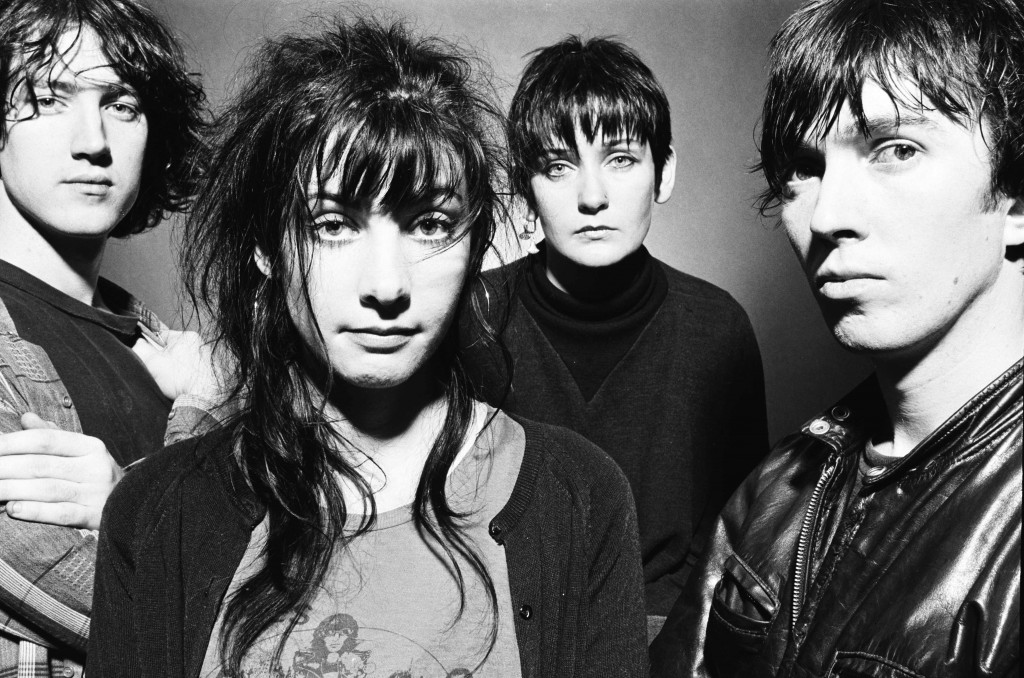
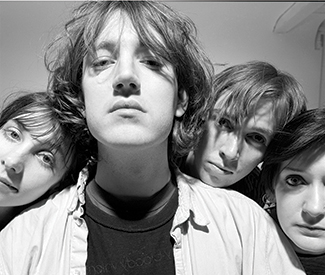
Swirling guitars… cooing vocals… that all-engulfing wall of noise. It’s difficult to describe My Bloody Valentine‘s sound without veering into borderline erotica, and understandably so; in the guitar rock landscape, few bands make music that’s so tactile and exhilarating.

For many of its devoted fans, the band’s seminal 1991 LP, Loveless, is inextricably tethered to private moments of introspection and sexuality. Its delicate balance between loud and quiet, menace and seduction, resulted in a sense of emotional ambiguity, allowing the listener to project their own perspectives and yearnings onto those immaculate pop songs.

Fresh off the heels of this year’s long-awaited Loveless followup, simply titled mbv, My Bloody Valentine stopped by SF this past Friday for its first Bay Area appearance since 2008, on its first tour in support of new material since the early ’90s.

By the looks of the crowd, the band’s overwhelming paralysis was in full force. As wary as I am of audiences too “cool” or self-conscious to dance at live shows, this crowd’s stillness felt wholly appropriate. The band’s output rarely feels conducive to dancing, or jamming out; it’s music to surrender to, and My Bloody Valentine had the crowd in the palm of its hand.

Given My Bloody Valentine’s inconsistent production sound, from the tinny Jesus-and-Mary-Chaininess of Isn’t Anything (1988), to the fuller, more tactile Loveless, to the thuddy brawn of mbv, one of the highlights of last Friday night’s show was hearing a career-spanning set of songs, all delivered with similar depth and richness. It was quite the thrill to hear older material, like “Feed Me With Your Kiss,” and “Only Shallow,” delivered with the generous low-end of MBV circa 2013.

As new songs like “only tomorrow” and “who sees you” suggest, the band’s dynamics have grown more boomy and forceful, yet alternately, groovier and more relaxed. Much of the credit goes to the rhythm section of Deb Googe and Colm Ó Cíosóig, who plucked and smacked their instruments ferociously, providing much of the backbone that defines My Bloody Valentine’s second wave. It all makes sense, considering Googe’s muscular bass-lines on this year’s excellent Primal Scream LP, More Light, and Ó Cíosóig’s recent move to the Bay Area, and subsequent role as drummer for his wife Hope Sandoval’s post-Mazzy Star project, the Warm Inventions.

Otherwise, it seems things haven’t changed much, and thankfully so. Ever the recluse, bandleader Kevin Shields stood calmly on stage left, away from the spotlights, equipped with some heavy-duty Marshall stacks, and an arsenal of guitars and pedals. Abusing the whammy bars on his Fender Jaguars and Jazzmasters, Shields delivered beautifully on the queasy tremolo of his signature “glide guitar” technique. Alternately, Bilinda Butcher occupied center stage, supplying the soft-as-snow vocals that contrast so harmoniously with Shields’ outpouring of sound and feeling.

“Honey Power,” “Come In Alone,” and “Soon,” were wonderfully performed, delivering especially well on the loud/quiet, sweet/snarly binaries of My Bloody Valentine’s sound, and those hugely dense progressions that create an itch with one chord, and scratch it with the next. There’s a reason why the band’s influence has gone so far beyond rock music, into electronic and industrial realms; the live renditions of these songs were a masterclass in My Bloody Valentine’s ability to warp genre boundaries with standard rock instrumentation.

Seeing “Cigarette In Your Bed” performed live was a treat, as it allowed Shields to bust out the acoustic guitar for once, while “new you” offered a glimpse of My Bloody Valentine in full-on pop mode. “wonder 2,” the band’s experiment with Jungle music, was suffocating in its blend of reverb-soaked drum’n’bass beats and jet-engine guitars, while “You Never Should” offered the same claustrophobia in a rock setting. Perhaps most impressively, though, was the noisy, chaotic “holocaust section” of the band’s infamous closer, “You Made Me Realize.” What started out as a cacophony of guitars, bass, and drums, slowly hypnotized the listener, gradually resembling a monolithic, industrial roar, like cruising the Transbay Tube with the windows down.

My Bloody Valentine is one of the last great rock bands of the album era, and as such, every gesture at Friday night’s show was a big one: from handing out free earplugs at the door, to the giant Marshall stacks onstage, to the band’s decision to book the overly big/beige/bloated Bill Graham Civic Auditorium. Much like mbv’s total disconnection from the modern musical landscape, the band’s live show felt like a concert-going experience beamed in from another decade.

The audience, consisting of everyone from metalheads, to ravers, to garden-variety hipsters, might’ve been a bit perplexing, but made total sense, given My Bloody Valentine’s inability to fit comfortably into any one scene. Given its dense, borderline-electronic chords, abrasive guitar squalls, and overriding sense of calm, the band’s sound offers practically any subcategory of listener something to cling onto, providing a gateway to new musical realms.

For those skeptical about My Bloody Valentine’s ability to recapture the singular wonder of Loveless after a two-decade hiatus, mbv was a wonderful surprise, in its insistence on picking up right where the band’s first era left off. Last weekend’s show felt like an extension of this “new” strategy, with the band’s four members commanding the stage as if the past 22 years never happened. Countless groups have tried their hand at pushing the shoegaze genre forward in the post-Loveless wake, but as Shields and Co. resoundingly proved on Friday night, My Bloody Valentine remains the undefeated champion of “swirling guitars.”

Film Listings: August 28 – September 3, 2013

0

Film listings are edited by Cheryl Eddy. Reviewers are Kimberly Chun, Dennis Harvey, Lynn Rapoport, Sam Stander, and Sara Maria Vizcarrondo. For rep house showtimes, see Rep Clock.

OPENING

Closed Circuit British thriller about a pair of lawyers (Eric Bana, Rebecca Hall) drawn into a possible government cover-up while investigating a London explosion. (1:36) Piedmont, Shattuck.

Drinking Buddies Mumblecore grows up in this latest from actor-writer-director Joe Swanberg (currently starring in You’re Next), about brewery co-workers Kate (Olivia Wilde) and Luke (Jake Johnson), BFFs who’d obviously be the perfect couple if they weren’t already hooked up with significant others. At least, they are at the start of Drinking Buddies; the tension between them grows ever-more loaded when the messy, chaotic Kate is dumped by older boyfriend Chris (Ron Livingston) — a pairing we know is bound to fail when we spot him chiding her for neglecting to use a coaster. Luke’s long-term coupling with the slightly younger but way-more-mature Jill (Anna Kendrick) is more complicated; all signs indicate how lucky he is to have her. But the fact that they can only meander around marriage talk indicates that Luke isn’t ready to settle down — and though Jill may not realize it, Luke’s feelings for Kate are a big reason why. Working from a script outline but largely improvising all dialogue, Swanberg’s actors rise to the challenge, conveying the intricate shades of modern relationships. Their characters aren’t always likable, but they’re always believable. Also, fair warning: this movie will make you want to drink many, many beers. (1:30) Roxie. (Eddy)

Getaway Ethan Hawke and Selena Gomez team up in a high-speed, high-stakes race to save Hawke’s kidnapped wife. Jon Voight co-stars as “Mysterious Voice,” so there’s that. (1:29)

The Grandmaster The Grandmaster is dramatic auteur Wong Kar-Wai’s take on the life of kung-fu legend Ip Man — famously Bruce Lee’s teacher, and already the subject of a series of Donnie Yen actioners. This episodic treatment is punctuated by great fights and great tragedies, depicting Ip’s life and the Second Sino-Japanese War in broad strokes of martial arts tradition and personal conviction. Wong’s angsty, hyper stylized visuals lend an unusual focus to the Yuen Woo-Ping-choreographed fight scenes, but a listless lack of narrative momentum prevents the dramatic segments from being truly engaging. Abrupt editing in this shorter American cut suggests some connective tissue may be missing from certain sequences. Tony Leung’s performance is quietly powerful, but also a familiar caricature from other Wong films; this time, instead of a frustrated writer, he is a frustrated martial artist. Ziyi Zhang’s turn as the driven, devastated child of the Northern Chinese Grandmaster provides a worthy counterpoint. Another Wong cliché: the two end up sadly reminiscing in dark bars, far from the rhythm and poetry of their martial pursuits. (1:48) Four Star. (Stander)

Instructions Not Included Mexican superstar Eugenio Derbez stars in this comedy about a ladies’ man who finds redemption when he’s suddenly tasked with being a single parent to his young daughter. (1:55)

One Direction: This is Us Take them home? The girls shrieking at the opening minutes of One Direction: This Is Us are certainly raring to — though by the closing credits, they might feel as let down as a Zayn Malik fanatic who was convinced that he was definitely future husband material. Purporting to show us the real 1D, in 3D, no less, This Is Us instead vacillates like a boy band in search of critical credibility, playing at an “authorized” look behind the scenes while really preferring the safety of choreographed onstage moves by the self-confessed worst dancers in pop. So we get endless shots of Malik, Niall Horan, Liam Payne, Harry Styles, and Louis Tomlinson horsing around, hiding in trash bins, punking the road crew, jetting around the world, and accepting the adulation of innumerable screaming girls outside — interspersed with concert footage of the lads pouring their all into the poised and polished pop that has made them the greatest success story to come out of The X Factor. Too bad the music — including “What Makes You Beautiful” and “Live While We’re Young” — will bore anyone who’s not already a fan, while the 1D members’ well-filtered, featureless, and thoroughly innocuous on-screen personalities do little to dispel those yawns. Director Morgan Spurlock (2004’s Super Size Me) adds just a dollop of his own personality, in the way he fixates on the tearful fan response: he trots out an expert to talk about the chemical reaction coursing through the excitable listener’s system, and uses bits of animation to slightly puff up the boy’s live show. But generally as a co-producer, along with 1D mastermind Simon Cowell, Spurlock goes along with the pop whitewashing, sidestepping the touchy, newsy paths this biopic could have sallied down — for instance, Malik’s thoughts on being the only Muslim member of the biggest boy band in the world — and instead doing his best undermine that also-oh-so-hyped 3D format and make One Direction as tidily one dimensional as possible. (1:32) (Chun)

The Patience Stone “You’re the one that’s wounded, yet I’m the one that’s suffering,” complains the good Afghan wife of Patience Stone in this theatrical yet charged adaptation of Atiq Rahimi’s best-selling novel, directed by the Kabul native himself. As The Patience Stone opens, a beautiful, nameless young woman (Golshifteh Farahani) is fighting to not only keep alive her comatose husband, a onetime Jihadist with a bullet lodged in his neck, but also simply survive on her own with little money and two small daughters and a war going off all around her. In a surprising turn, her once-heedless husband becomes her solace — her silent confidante and her so-called patience stone — as she talks about her fears, secrets, memories, and desires, the latter sparked by a meeting with a young soldier. Despite the mostly stagy treatment of the action, mainly isolated to a single room or house (although the guerilla-shot scenes on Kabul streets are rife with a feeling of real jeopardy), The Patience Stone achieves lift-off, thanks to the power of a once-silenced woman’s story and a heart-rending performance by Farahani, once a star and now banned in her native Iran. (1:42) Opera Plaza, Shattuck. (Chun)

Short Term 12 A favorite at multiple 2013 festivals (particularly SXSW, where it won multiple awards), Short Term 12 proves worthy of the hype, offering a gripping look at twentysomethings (led by Brie Larson, in a moving yet unshowy performance) who work with at-risk teens housed in a foster-care facility, where they’re cared for by a system that doesn’t always act with their best interests in mind. Though she’s a master of conflict resolution and tough love when it comes to her young chargers, Grace (Larson) hasn’t overcome her deeply troubled past, to the frustration of her devoted boyfriend and co-worker (John Gallagher, Jr.). The crazy everyday drama — kids mouthing off, attempting escape, etc. — is manageable enough, but two cases cut deep: Marcus (Keith Stanfield), an aspiring musician who grows increasingly anxious as his 18th birthday, when he’ll age out of foster care, approaches; and 16-year-old Jayden (Kaitlyn Dever), whose sullen attitude masks a dark home life that echoes Grace’s own experiences. Expanding his acclaimed 2008 short of the same name, writer-director Destin Daniel Cretton’s wrenchingly realistic tale achieves levels of emotional honesty not often captured by narrative cinema. He joins Fruitvale Station director Ryan Coogler as one of the year’s most exciting indie discoveries. (1:36) California, Metreon. (Eddy)

Thérèse Both Emma Bovary and Simone de Beauvoir would undoubtedly relate to this increasingly bored and twisted French woman of privilege stuck in the sticks in the ’20s, as rendered by novelist Francois Mauriac and compellingly translated to the screen by the late director Claude Miller. Forbiddingly cerebral and bookish yet also strangely passive and affectless, Thérèse (Audrey Tautou) looks like she has it all from a distance — she’s married to her best friend’s coarse, hunting-obsessed brother (Gilles Lellouche) though envious of her chum’s affair with a handsome and free-thinking Jewish student. Turns out she’s as trapped and close to death as the birds her spouse snares in their forest, and the suffocatingly provincial ways of family she’s married into lead her to undertake a dire course of action. Lellouche adds nuance to his rich lunk, but you can’t tear your eyes from Tautou. Turning her pinched frown right side up and hardening those unblinking button eyes, she plays well against type as a well-heeled, sleepwalking, possibly sociopathic sour grape, effectively conveying the mute unhappiness of a too-well-bred woman born too early and too blinkered to understand that she’s desperate for a new century’s freedoms. (1:50) Opera Plaza, Shattuck. (Chun)

ONGOING

The Act of Killing What does Anwar Congo — a man who has brutally strangled hundreds of people with piano wire — dream about? As Joshua Oppenheimer’s Indonesia-set documentary The Act of Killing discovers, there’s a thin line between a guilty conscience and a haunted psyche, especially for an admitted killer who’s never been held accountable for anything. In fact, Congo has lived as a hero in North Sumatra for decades — along with scores of others who participated in the country’s ruthless anti-communist purge in the mid-1960s. In order to capture this surreal state of affairs, Oppenheimer zeroes in on a few subjects — like the cheerful Congo, fond of flashy clothes, and the theatrical Herman Koto — and a method, spelled out by The Act of Killing‘s title card: “The killers proudly told us stories about what they did. To understand why, we asked them to create scenes in whatever ways they wished.” Because Congo and company are huge movie buffs, they chose to recreate their crimes with silver-screen flourish. There are costumes and gory make-up. There are props: a stuffed tiger, a dummy torso with a detachable head. There are dancing girls. Most importantly, however, there are mental consequences, primarily for Congo, whose emotional fragility escalates as the filming continues — resulting in an unforgettable, at-times mind-blowing viewing experience. (1:55) Smith Rafael. (Eddy)

Ain’t Them Bodies Saints “This was in Texas,” reads the hand-lettered opening of Ain’t Them Bodies Saints. It’s a fittingly homespun beginning to a film that pays painstaking homage to bygone-era cinema. After its Sundance Film Festival premiere, writer-director David Lowery’s first high-profile release earned frequent comparisons to 1970s works by Robert Altman and Terrence Malick. That’s no accident; Saints openly feasts upon the decade’s intimate, sun-burnished neo-Westerns. Though Saints earned praise on the film-fest circuit for its craftsmanship, its big-name cast — Casey Affleck and Rooney Mara as lovers separated by his jail stint; Keith Carradine as a shopkeeper with a dark past; Ben Foster as a cop who pines for Mara’s character — is likely what will pique mainstream interest. But will pre-release hype translate to a Beasts of the Southern Wild-style breakthrough? Saints‘ storytelling keeps to a very deliberate pace, a quality owing to Lowery’s background as a film editor (most notable credit: Upstream Color), and Saints‘ dipped-in-amber, outlaw-chic mise-en-scène — 10-gallon hat tips to cinematographer Bradford Young, production designer Jade Healy, and composer Daniel Hart — is overtly antique-y. But its actors, particularly Affleck and Carradine, ground what could’ve been an overly constructed objet d’cinema in subtle, deep emotions. (1:45) California, Smith Rafael, Sundance Kabuki. (Eddy)

Austenland Jane (Keri Russell) is a Jane Austen fanatic who finds real-life modern romance highly lacking as compared to the fictive Regency Era variety — though having a life-sized cutout of Colin Firth as Mr. Darcy in her bedroom surely didn’t help recent relationships. After yet another breakup, she decides to live her fantasy by flying to England to vacation at the titular theme park-fantasy role play establishment, where guests and staff meticulously act out Austen-like scenarios of well-dressed upper class leisure and chaste courtship. Upon arriving, however, Jane discovers she’s very much a second-class citizen here, not having been able to afford the “platinum premium” package purchased by fellow guests. Thus cast by imperious proprietor Mrs. Wattlesbrook (Jane Seymour) as the unmarriageable “poor relation,” she gets more flirtatious vibes from the actor cast as sexy stable boy (Bret McKenzie) than the one playing a quasi-Darcy (JJ Feild), at least initially. Adapting Shannon Hale’s novel, Jerusha Hess (making her directorial bow after several collaborations with husband Jared Hess, of 2004’s Napoleon Dynamite) has delightfully kitsch set and costume designs and a generally sweet-natured tone somewhat let down by the very broad, uninspired humor. Even wonderful Jennifer Coolidge can’t much elevate the routine writing as a cheerfully vulgar Yank visitor. The rich potential to cleverly satirize all things Austen is missed. Still, the actors are charming and the progress lively enough to make Austenland harmless if flyweight fun. (1:37) Albany, Sundance Kabuki. (Harvey)

Blackfish The 911 call placed from SeaWorld Orlando on February 24, 2010 imparted a uniquely horrific emergency: “A whale has eaten one of the trainers.” That revelation opens Gabriela Cowperthwaite’s Blackfish, a powerful doc that offers a compelling argument against keeping orcas in captivity, much less making them do choreographed tricks in front of tourists at Shamu Stadium. Whale experts, former SeaWorld employees, and civilian eyewitnesses step forward to illuminate an industry that seemingly places a higher value on profits than it does on safety — skewed priorities that made headlines after veteran trainer Dawn Brancheau was killed by Tilikum, a massive bull who’d been involved in two prior deaths. Though SeaWorld refused to speak with Cowperthwaite on camera, they recently released a statement calling Blackfish “shamefully dishonest, deliberately misleading, and scientifically inaccurate” — read the filmmaker’s response to SeaWorld’s criticisms at film blog Indiewire, or better yet, see this important, eye-opening film yourself and draw your own conclusions. (1:30) Opera Plaza. (Eddy)

Blue Jasmine The good news about Blue Jasmine isn’t that it’s set in San Francisco, but that it’s Woody Allen’s best movie in years. Although some familiar characteristics are duly present, it’s not quite like anything he’s done before, and carries its essentially dramatic weight more effectively than he’s managed in at least a couple decades. Not long ago Jasmine (a fearless Cate Blanchett) was the quintessential Manhattan hostess, but that glittering bubble has burst — exactly how revealed in flashbacks that spring surprises up to the script’s end. She crawls to the West Coast to “start over” in the sole place available where she won’t be mortified by the pity of erstwhile society friends. That would be the SF apartment of Ginger (Sally Hawkins), a fellow adoptive sister who was always looked down on by comparison to pretty, clever Jasmine. Theirs is an uneasy alliance — but Ginger’s too big-hearted to say no. It’s somewhat disappointing that Blue Jasmine doesn’t really do much with San Francisco. Really, the film could take place anywhere — although setting it in a non-picture-postcard SF does bolster the film’s unsettled, unpredictable air. Without being an outright villain, Jasmine is one of the least likable characters to carry a major US film since Noah Baumbach’s underrated Margot at the Wedding (2007); the general plot shell, moreover, is strongly redolent of A Streetcar Named Desire. But whatever inspiration Allen took from prior works, Blue Jasmine is still distinctively his own invention. It’s frequently funny in throwaway performance bits, yet disturbing, even devastating in cumulative impact. (1:38) Clay, Metreon, 1000 Van Ness. (Harvey)

The Conjuring Irony can be so overrated. Paying tribute to those dead-serious ’70s-era accounts of demonic possession — like 1973’s The Exorcist, which seemed all the scarier because it were based on supposedly real-life events — the sober Conjuring runs the risk of coming off as just more Catholic propaganda, as so many exorcism-is-the-cure creepers can be. But from the sound of the long-coming development of this project — producer Tony DeRosa-Grund had apparently been wanting to make the movie for more than a dozen years — 2004’s Saw and 2010’s Insidious director James Wan was merely applying the same careful dedication to this story’s unfolding as those that came before him, down to setting it in those groovy VW van-borne ’70s that saw more families torn apart by politics and cultural change than those ever-symbolic demonic forces. This time, the narrative framework is built around the paranormal investigators, clairvoyant Lorraine Warren (Vera Farmiga) and demonologist Ed Warren (Patrick Wilson), rather than the victims: the sprawling Perron family, which includes five daughters all ripe for possession or haunting, it seems. The tale of two families opens with the Warrens hard at work on looking into creepy dolls and violent possessions, as Carolyn (Lili Taylor) and Roger Perron (Ron Livingston) move into a freezing old Victorian farmhouse. A very eerie basement is revealed, and hide-and-seek games become increasingly creepy, as Carolyn finds unexplained bruises on her body, one girl is tugged by the foot in the night, and another takes on a new invisible pal. The slow, scary build is the achievement here, with Wan admirably handling the flow of the scares, which go from no-budg effects and implied presences that rely on the viewer’s imagination, to turns of the screws that will have audiences jumping in their seats. Even better are the performances by The Conjuring‘s dueling mothers, in the trenches of a genre that so often flirts with misogyny: each battling the specter of maternal filicide, Farmiga and Taylor infuse their parts with an empathetic warmth and wrenching intensity, turning this bewitched horror throwback into a kind of women’s story. (1:52) Metreon, 1000 Van Ness. (Chun)

Cutie and the Boxer Ushio “Gyu-Chan” Shinohara was a somewhat notorious artist in Japan’s fertile avant-garde scene of the 1960s. In 1969, he decided he needed a bigger stage, so he moved to New York. An early 1970s TV documentary excerpted here calls him perhaps “the most famous of the poor and struggling artists in the city,” noting that while his often outsized work gets a lot of attention, people seldom actually want to buy it. This is a situation that, we soon learn, hasn’t altered much since. Gyu-Chan was 41 when he met wife Noriko, a 19-year-old art student also from Japan. She was swept up in the “purity” of his art and lifestyle; within six months she was pregnant with their only child, Alex (also a talented visual artist). In hindsight, she flatly tells us “I should have married a guy who made a secure living and took responsibility for what he did.” We first meet the protagonists of Zachary Heinzerling’s doc on Gyu-Chan’s 80th birthday. It’s hardly a conventionally comfortable old age — in a tone so weary it can hardly be classified as nagging, Noriko reminds him that they’re late with the rent on their fairly large yet cluttered Brooklyn apartment-studio. It’s a classic dysfunctional-yet-still maintaining marital dynamic: the easygoing, charming, eternal bad boy herded about as successfully as a cat on a leash by the long-suffering wife. Meanwhile Noriko, who one senses has long resented living under the shadow of this larger-than-life figure, feels she’s finally escaped his influence in her own work. A quiet, almost meditative portrait of messy lives, Cutie and the Boxer doesn’t really answer the question of why these two remained together despite all (her) dissatisfaction. But you get the feeling Noriko, while hardly an emotional open book, loves her burdensome, unruly spouse more than she’d admit. Or at least she’s accepted the “struggle” of life with him as her own goading raison d’être. You know the saying: life is short, art is long. (1:22) Opera Plaza, Shattuck. (Harvey)

Elysium By the year 2154, the one percent will all have left Earth’s polluted surface for Elysium, a luxurious space station where everyone has access to high-tech machines that can heal any wound or illness in a matter of seconds. Among the grimy masses in burned-out Los Angeles, where everyone speaks a mixture of Spanish and English, factory worker Max (Matt Damon) is trying to put his car-thief past behind him — and maybe pursue something with the childhood sweetheart (Alice Braga) he’s recently reconnected with. Meanwhile, up on Elysium, icy Secretary of Defense Delacourt (Jodie Foster, speaking in French and Old Hollywood-accented English) rages against immigration, even planning a government takeover to prevent any more “illegals” from slipping aboard. Naturally, the fates of Max and Delacourt will soon intertwine, with “brain to brain data transfers,” bionic exo-skeletons, futuristic guns, life-or-death needs for Elysium’s medical miracles, and some colorful interference by a sword-wielding creeper of a sleeper agent (Sharlto Copley) along the way. In his first feature since 2009’s apartheid-themed District 9, South African writer-director Neill Blomkamp once again turns to obvious allegory to guide his plot. If Elysium‘s message is a bit heavy-handed, it’s well-intentioned, and doesn’t take away from impressive visuals (mercifully rendered in 2D) or Damon’s committed performance. (2:00) Balboa, Marina, Metreon, 1000 Van Ness, Sundance Kabuki. (Eddy)

Fruitvale Station By now you’ve heard of Fruitvale Station, the debut feature from Oakland-born filmmaker Ryan Coogler. With a cast that includes Academy Award winner Octavia Spencer and rising star Michael B. Jordan (The Wire, Friday Night Lights), the film premiered at the 2013 Sundance Film Festival, winning both the Audience Award and the Grand Jury Prize en route to being scooped up for distribition by the Weinstein Company. A few months later, Coogler, a USC film school grad who just turned 27, won Best First Film at Cannes. Accolades are nice, especially when paired with a massive PR push from a studio known for bringing home little gold men. But particularly in the Bay Area, the true story behind Fruitvale Station eclipses even the most glowing pre-release hype. The film opens with real footage captured by cell phones the night 22-year-old Oscar Grant was shot in the back by BART police, a tragedy that inspired multiple protests and grabbed national headlines. With its grim ending already revealed, Fruitvale Station backtracks to chart Oscar’s final hours, with a deeper flashback or two fleshing out the troubled past he was trying to overcome. Mostly, though, Fruitvale Station is very much a day in the life, with Oscar (Jordan, in a nuanced performance) dropping off his girlfriend at work, picking up supplies for a birthday party, texting friends about New Year’s Eve plans, and deciding not to follow through on a drug sale. Inevitably, much of what transpires is weighted with extra meaning — Oscar’s mother (Spencer) advising him to “just take the train” to San Francisco that night; Oscar’s tender interactions with his young daughter; the death of a friendly stray dog, hit by a car as BART thunders overhead. It’s a powerful, stripped-down portrait that belies Coogler’s rookie-filmmaker status. (1:24) Four Star, Metreon, 1000 Van Ness. (Eddy)

Hannah Arendt New German Cinema’s Margarethe von Trotta (1975’s The Lost Honor of Katharina Blum, 1986’s Rosa Luxemburg) delivers this surprisingly dull biopic about the great German-Jewish political theorist and the heated controversy around her New Yorker article (and subsequent book) about Israel’s 1961 trial of Nazi Adolph Eichmann. Played with dignified, slightly vulnerable countenance by the inimitable Barbara Sukowa, Arendt travels from her teaching job and cozy expat circles in New York to Jerusalem for the trial. There she comes face to face with the “banality of evil” in Eichmann, the petty careerist of the Holocaust, forcing her to “try and reconcile the shocking mediocrity of the man with his staggering deeds.” This led her to further insights into the nature of modern society, and triggered a storm of outrage and vitriol — in particular from the Commentary crowd of future neocons — all of which is clearly of relevance today, and the impetus for von Trotta’s revisiting this famous episode. But the film is too mannered, too slick, too formulaic —burdened by a television-friendly combination of posture and didacticism, and bon mots from famous and about famous figures in intellectual and literary history to avoid being leaden and tedious. A mainstream film, in other words, for a very unconventional personality and dissident intellectual. While not exactly evil, there’s something dispiriting in so much banality. (1:49) Opera Plaza, Smith Rafael. (Robert Avila)

The Heat First things first: I hated Bridesmaids (2011). Even the BFF love fest between Maya Rudolph and Kristen Wiig couldn’t wash away the bad taste of another wolf pack in girl’s clothing. Dragging and dropping women into dude-ly storylines is at best wonky and at worst degrading, but The Heat finds an alternate route. Its women are unlikable; you don’t root for them, and you’re not hoping they become princesses because such horrifying awkwardness can only be redeemed by a prince. In Bridesmaids and Heat director Paul Feig’s universe, friendship saves the day. Sandra Bullock is Murtaugh to Melissa McCarthy’s Riggs, with tidy Bullock angling for a promotion and McCarthy driving a busted hoopty through Boston like she’s in Grand Theft Auto. Circumstances conspire to bring them together on a case, in one of many elements lifted from traditional buddy-cop storylines. But! The jokes are constant, pelting, and whiz by like so much gunfire. In one running gag, a low-rung villain’s worst insult is telling the women they look old — but neither character is bothered by it. It’s refreshing to see embarrassment humor, so beloved by chick flicks, get taken down a peg by female leads who don’t particularly care what anyone thinks of them. (1:57) Castro. (Vizcarrondo)

The Hunt Mads Mikkelsen has the kind of face that is at once strikingly handsome and unconventional enough to get him typecast in villain roles. Like so many great foreign-accented actors, he got his big international break playing a bad guy in a James Bond film — as groin-torturing gambler Le Chiffre in 2006 franchise reviver Casino Royale. Currently, he’s creeping TV viewers out as a young Dr. Lecter on Hannibal. His ability to evoke both sympathy and a suspicion of otherness are particularly well deployed in Thomas Vinterberg’s very Danish The Hunt, which won Mikkelsen the Best Actor prize at Cannes last year. He plays Lucas, a lifelong small-town resident recently divorced from his son’s mother, and who currently works at the local kindergarten. One day one of his charges says something to the principal that suggests Lucas has exposed himself to her. Once the child’s misguided “confession” is made, Lucas’ boss immediately assumes the worst. She announces her assumptions at a parent-teachers meeting even before police can begin their investigation. By the time they have, the viral paranoia and suggestive “questioning” of other potential victims has created a full-on, massive pederasty scandal with no basis in truth whatsoever. The Hunt is a valuable depiction of child-abuse panic, in which there’s a collective jumping to drastic conclusions about one subject where everyone is judged guilty before being proven innocent. Its emotional engine is Lucas’ horror at the speed and extremity with which he’s ostracized by his own community — and its willingness to believe the worst about him on anecdotal evidence. Engrossing, nuanced, and twisty right up to the fade-out, The Hunt deftly questions one of our era’s defining public hysterias. (1:45) Smith Rafael. (Harvey)

In a World… (1:33) Sundance Kabuki.

Jobs With the upcoming Aaron Sorkin adaptation of Walter Isaacson’s biography nipping at its heels, Jobs feels like a quickie — true to Silicon Valley form, someone realized that the first to ship can end up defining the market. But as this independent biopic goes for each easy cliché and facile cinematic device, you can practically hear Steve Jobs himself spinning in the ether somewhere. Ashton Kutcher as Jobs lectures us over and over again about the virtues of quality product, but little seemed to have penetrated director Joshua Michael Stern as he distracts with a schmaltzy score (he should have stuck to Bob Dylan, Joe Walsh, and era-defining AOR), and relies on corny slow-motion to dramatize the passing of a circuit board. The fact that Kutcher might be the best thing here — he clearly throws himself into impersonating the Apple icon, from his intense, upward-glancing glare to his hand gestures — says a bit about the film itself, as it coasts on its self-made man-captain of enterprise narrative arc. Dispensing with much about the man Jobs became outside of Apple, apart from a few nods to his unsavory neglect of friends and offspring, and simply never acknowledging his work at, say, Pixar, Jobs, in the end, comes off as a lengthy infomercial for the Cupertino heavyweight. (2:02) 1000 Van Ness, Presidio, SF Center, Sundance Kabuki. (Chun)

Kick-Ass 2 Even an ass-kicking subversive take on superherodom runs the risk of getting its rump tested, toasted, roasted — and found wanting. Too bad the exhilaratingly smarty-pants, somewhat mean-spirited Kick-Ass (2010), the brighter spot in a year of superhero-questioning flicks (see also: Super), has gotten sucker-punched in all the most predictable ways in its latest incarnation. Dave, aka Kick-Ass (Aaron Taylor-Johnson), and Mindy, otherwise known as Hit-Girl (Chloë Grace Moretz), are only half-heartedly attempting to live normal lives: they’re training on the sly, mostly because Mindy’s new guardian, Detective Marcus Williams (Morris Chestnut), is determined to restore her childhood. Little does he realize that Mindy only comes alive when she pretends she’s battling ninjas at cheerleader tryouts — or is giving her skills a workout by unhanding, literally and gleefully, a robber. Kick-Ass is a little unnerved by her semi-psychotic enthusiasm for crushing bad guys, but he’s crushing, too, on Mindy, until Marcus catches her in the Hit-Girl act and grounds her in real life, where she has to deal with some really nasty characters: the most popular girls in school. So Kick-Ass hooks up with a motley team of would-be heroes inspired by his example, led Colonel Stars and Stripes (an almost unrecognizable Jim Carrey), while old frenemy Chris, aka Red Mist (Christopher Mintz-Plasse) begins to find his real calling — as a supervillain he dubs the Motherfucker — and starts to assemble his own gang of baddies. Unlike the first movie, which passed the whip-smart wisecracks around equally, Mintz-Plasse and enabler-bodyguard Javier (John Leguizamo) get most of the choice lines here. Otherwise, the vigilante action gets pretty grimly routine, in a roof-battling, punch-’em-up kind of way. A romance seems to be budding between our two young superfriends, but let’s skip part three — I’d rather read about it in the funny pages. (1:43) 1000 Van Ness, SF Center. (Chun)

Lee Daniels’ The Butler (1:53) Balboa, Marina, 1000 Van Ness, SF Center, Sundance Kabuki.

Long Distance Revolutionary: A Journey with Mumia Abu-Jamal Or, almost everything you ever wanted to know about the guy who inspired all those “Free Mumia” rallies, though Abu-Jamal’s status as a cause célèbre has become somewhat less urgent since his death sentence — for killing a Philadelphia police officer in 1981 — was commuted to life without parole in 2012. Stephen Vittoria’s doc assembles an array of heavy hitters (Alice Walker, Giancarlo Esposito, Cornel West, Angela Davis, Emory Douglas) to discuss Abu-Jamal’s life, from his childhood in Philly’s housing projects, to his teenage political awakening with the Black Panthers, to his career as a popular radio journalist — aided equally by his passion for reporting and his mellifluous voice. Now, of course, he’s best-known for the influential, eloquent books he’s penned since his 1982 incarceration, and for the worldwide activists who’re either convinced of his innocence or believe he didn’t receive a fair trial (or both). All worthy of further investigation, but Long Distance Revolutionary is overlong, fawning, and relentlessly one-sided — ultimately, a tiresome combination. (2:00) Roxie. (Eddy)

The Mortal Instruments: City of Bones Adapted from the first volume of Cassandra Clare’s bestselling YA urban fantasy series, The Mortal Instruments: City of Bones follows young Clary Fray (Lily Collins) through her mother’s disappearance, the traumatic discovery of her supernatural heritage, and her induction into the violent demon-slaying world of Shadowhunters. This franchise-launching venture is unlikely to win any new converts with its flimsy acting, stilted humor, and clichéd action. It will probably also disappoint diehard fans, since it plays fast and loose with the mythology and plot of the novel, with crucial details and logical progressions left by the wayside for no clear reason. It’s never particularly awful — except for a few plot twists that fall wincingly, hilariously flat — but it’s hard to care about the perfectly coiffed, emotionally clueless protagonists. Fantastic character actors Jared Harris, Lena Headey, and Jonathan Rhys Meyers are all dismally underused, though at least Harris gets to exercise a bit of his vaguely irksome British charm. (2:00) 1000 Van Ness, SF Center, Shattuck. (Stander)

Pacific Rim The fine print insists this film’s title is actually Warner Bros. Pictures and Legendary Pictures Pacific Rim (no apostrophe, guys?), but that fussy studio demand flies in the face of Pacific Rim‘s pursuit of pure, dumb fun. One is tempted to picture director/co-writer Guillermo del Toro plotting out the battle scenes using action figures — Godzillas vs. Transformers is more or less what’s at play here, and play is the operative word. Sure, the end of the world seems certain, thanks to an invading race of giant “Kaiju” who’ve started to adapt to Earth’s decades-long countermeasures (giant robot suits, piloted by duos whose minds are psychically linked), but there’s far too much goofy glee here for any real panic to accumulate. Charlie Hunnam is agreeable as the wounded hunk who’s humankind’s best hope for salvation, partnered with a rookie (Rinko Kikuchi) who’s eager, for her own reasons, to kick monster butt. Unoriginal yet key supporting roles are filled by Idris Elba (solemn, ass-kicking commander); Charlie Day (goofy science type); and Ron Perlman (flashy-dressing, black-market-dealing Kaiju expert). Pacific Rim may not transcend action-movie clichés or break much new ground (drinking game idea: gulp every time there’s an obvious reference or homage, be it to Toho or Bruckheimer), but damn if it doesn’t pair perfectly with popcorn. (2:11) Metreon. (Eddy)

Paranoia (1:46) Metreon, 1000 Van Ness.

Percy Jackson: Sea of Monsters (1:46) 1000 Van Ness, SF Center.

Planes Dane Cook voices a crop duster determined to prove he can do more than he was built for in Planes, the first Disney spin-off from a Pixar property. (Prior to the film’s title we see “From The World of Cars,” an indicator the film is an extension of a known universe — but also not quite from it.) And indeed, Planes resembles one of Pixar’s straight-to-DVD releases as it struggles for liftoff. Dreaming of speed, Dusty Crophopper (Cook) trains for the Wings Around the World race with his fuel-truck friend, Chug (Brad Garrett). A legacy playing Brewster McCloud and Wilbur Wright makes Stacy Keach a pitchy choice for Skipper, Dusty’s reluctant ex-military mentor. Charming cast choices buoy Planes somewhat, but those actors are feathers in a cap that hardly supports them — you watch the film fully aware of its toy potential: the race is a geography game; the planes are hobby sets; the cars will wind up. The story, about overcoming limitations, is in step with high-value parables Pixar proffers, though it feels shallower than usual. Perhaps toys are all Disney wants — although when Ishani (a sultry Priyanka Chopra) regrets an integrity-compromising choice she made in the race, and her pink cockpit lowers its eyes, you can feel Pixar leaning in. (1:32) Metreon, 1000 Van Ness, Presidio. (Vizcarrondo)

Red 2 Are blockbusters entitled to senior moments? Even the best can fail the test — and coast along on past glories on their way to picking up their checks — as Red 2 makes the fatal error of skimping on the grunt work of basic storytelling to simply take up where the first installment on these “retired, extremely dangerous” ex-black ops killers left off. Master hitman Frank (Bruce Willis) and his girlfriend Sarah (Mary-Louise Parker) are semi-contentedly nesting in suburbia when acid-damaged cohort Marvin (John Malkovich) warns them that they’re about to get dragged back into the life. Turns out the cold war isn’t quite as iced out as we all thought, and a portable nuclear device, the brainchild of a physicist (Anthony Hopkins) once in Frank and Marvin’s care, just might be in Moscow. Good-old-days-style high jinks ensue, along with the arrival of old chums like Victoria (Helen Mirren), former flames such as Katja (Catherine Zeta-Jones), and new-gen assassins like Han (Byung-hun Lee). Plus, jet-setting, and the deaths of many, many nameless soldiers, goons, and Iranian embassy staffers (almost all played for laughs, as cued by the comic book-y intertitles). A pity that the thrown-together-ish, throwback story line — somewhat reminiscent of those trashy, starry ’60s clusters, like the original 1960 Ocean’s Eleven — lazily relies on the assumption that we care a jot about the Frank and Sarah romance (the latter now an stereotypically whiny quasi-spouse) and that Frank can essentially talk any killer into joining him out of, er, professional courtesy or basic human decency. Wasting the thoroughbred cast on hand, particularly in the form of Mirren and Hopkins, one wishes the makers had only had the professional courtesy not to phone this effort in. (1:56) Metreon. (Chun)

The Smurfs 2 (1:45) Metreon.

The Spectacular Now The title suggests a dreamy, fireworks-inflected celebration of life lived in the present tense, but in this depiction of a stalled-out high school senior’s last months of school, director James Ponsoldt (2012’s Smashed) opts for a more guarded, uneasy treatment. Charming, likable, underachieving, and bright enough to frustrate the adults in his corner, Sutter (Miles Teller, 2012’s Project X) has long since managed to turn aimlessness into a philosophical practice, having chosen the path of least resistance and alcohol-fueled unaccountability. His mother (Jennifer Jason Leigh), raising him solo since the departure of a father (Kyle Chandler) whose memories have acquired — for Sutter, at least — a blurry halo effect, describes him as full of both love and possible greatness, but he settles for the blessings of social fluidity and being an adept at the acquisition of beer for fellow underage drinkers. When he meets and becomes romantically involved with Aimee (Shailene Woodley), a sweet, unpolished classmate at the far reaches of his school’s social spectrum, it’s unclear whether the impact of their relationship will push him, or her, or both into a new trajectory, and the film tracks their progress with a watchful, solicitous eye. Adapted for the screen by Scott Neustadter and Michael H. Weber (2009’s 500 Days of Summer) from a novel by Tim Tharp, The Spectacular Now gives the quirky pop cuteness of Summer a wide berth, steering straight into the heart of awkward adolescent striving and mishap. (1:35) SF Center, Sundance Kabuki. (Rapoport)

20 Feet From Stardom Singing the praises of those otherwise neglected backup vocalists who put the soul into that Wall of Sound, brought heft to “Young Americans,” and lent real fury to “Gimme Shelter,” 20 Feet From Stardom is doing the rock ‘n’ roll true believer’s good work. Director Morgan Neville follows a handful of mainly female, mostly African American backing vocal legends, charts their skewed career trajectories as they rake in major credits and keep working long after one-hit wonders are forgotten (the Waters family) but fail to make their name known to the public (Merry Clayton), grasp Grammy approval yet somehow fail to follow through (Lisa Fischer), and keep narrowly missing the prize (Judith Hill) as label recording budgets shrivel and the tastes, technology, and the industry shift. Neville gives these industry pros and soulful survivors in a rocked-out, sample-heavy, DIY world their due on many levels, covering the low-coverage minis, Concert for Bangladesh high points, gossipy rumors, and sheer love for the blend that those intertwined voices achieve. One wishes the director had done more than simply touch in the backup successes out there, like Luther Vandross, and dug deeper to break down the reasons Fischer succumbed to the sophomore slump. But one can’t deny the passion in the voices he’s chosen to follow — and the righteous belief the Neville clearly has in his subjects, especially when, like Hill, they are ready to pick themselves up and carry on after being told they’re not “the Voice.” (1:30) Smith Rafael. (Chun)

2 Guns Rob a bank of cartel cash, invade a naval base, and then throw down against government heavies — you gotta expect to find a few bullet-hole-sized gaps in the play-by-play of 2 Guns. The action flick is riddled with fun-sized pleasures — usually centered on the playful banter and effortless chemistry between stars Denzel Washington and Mark Wahlberg — and the clever knot of a narrative throws a twist or two in, before director Baltasar Kormákur (last year’s Wahlberg vehicle Contraband) simply surrenders to the tidal pull of action. After visiting Mexican mafia kingpin Papi (Edward James Olmos) and finding the head of their contact in a bag, Bobby (Washington) and Stig (Wahlberg) decide to hit Papi where he’ll feel it: the small border bank where his men have been making drops to safe deposit boxes. Much like Bobby and Stig’s breakfast-time diner gab fest, which seems to pick up where Vincent and Jules left off in Pulp Fiction (1994), as they trade barbs, truisms, and tells, there’s more going on than simply bank robbery foreplay. Both are involved for different reasons: Bobby is an undercover DEA agent, and Stig is a masquerading navy officer. When the payout is 10 times the expected size, not only do Papi, Bobby’s contact Deb (Paula Patton), and Stig’s superior Quince (James Marsden) come calling, but so does mystery man Earl (Bill Paxton), who seems to be obsessed with following the money. We know, sort of, what’s in it for Bobby — all fully identifiable charm, as befits Washington, who makes it rain charisma with the lightest of touches. But Stig? The others? The lure of a major payday is supposed to sweep away all other loyalties, except a little bromantic bonding between two rogue sharp shooters, saddled, unfortunately, with not the sharpest of story lines. (1:49) Metreon. (Chun)

The Way, Way Back Duncan (Liam James) is 14, and if you remember being that age you remember the awkwardness, the ambivalence, and the confusion that went along with it. Duncan’s mother (Toni Collette) takes him along for an “important summer” with her jerky boyfriend, Trent (Steve Carell) — and despite being the least important guy at the summer cottage, Duncan’s only marginally sympathetic. Most every actor surrounding him plays against type (Rob Corddry is an unfunny, whipped husband; Allison Janney is a drunk, desperate divorcee), and since the cast is a cattle call for anyone with indie cred, you’ll wonder why they’re grouped for such a dull movie. Writer-directors Nat Faxon and Jim Rash previously wrote the Oscar-winning screenplay for 2011’s The Descendants, but The Way, Way Back doesn’t match that film’s caliber of intelligent, dry wit. Cast members take turns resuscitating the movie, but only Sam Rockwell saves the day, at least during the scenes he’s in. Playing another lovable loser, Rockwell’s Owen dropped out of life and into a pattern of house painting and water-park management in the fashion of a conscientious objector. Owen is antithetical to Trent’s crappy example of manhood, and raises his water wing to let Duncan in. The short stint Duncan has working at Water Wizz is a blossoming that leads to a minor romance (with AnnaSophia Robb) and a major confrontation with Trent, some of which is affecting, but none of which will help you remember the movie after credits roll. (1:42) Four Star, Metreon, Presidio. (Vizcarrondo)

We’re the Millers After weekly doses on the flat-screen of Family Guy, Modern Family, and the like, it’s about time movieland’s family comedies got a little shot of subversion — the aim, it seems, of We’re the Millers. Scruffy dealer David (Jason Sudeikis) is shambling along — just a little wistful that he didn’t grow up and climb into the Suburban with the wife, two kids, and the steady 9-to-5 because he’s a bit lonely, much like the latchkey nerd Kenny (Will Poulter) who lives in his apartment building, and neighboring stripper Rose (Jennifer Aniston), who bites his head off at the mailbox. When David tries to be upstanding and help out crust punk runaway Casey (Emma Roberts), who’s getting roughed up for her iPhone, he instead falls prey to the robbers and sinks into a world of deep doo-doo with former college bud, and supplier of bud, Brad (Ed Helms). The only solution: play drug mule and transport a “smidge and a half” of weed across the Mexican-US border. David’s supposed cover: do the smuggling in an RV with a hired crew of randoms: Kenny, Casey, and Rose&sdquo; all posing as an ordinary family unit, the Millers. Yes, it’s that much of a stretch, but the smart-ass script is good for a few chortles, and the cast is game to go there with the incest, blow job, and wife-swapping jokes. Of course, no one ever states the obvious fact, all too apparent for Bay Area denizens, undermining the premise of We’re the Millers: who says dealers and strippers can’t be parents, decent or otherwise? We may not be the Millers, but we all know families aren’t what they used to be, if they ever really managed to hit those Leave It to Beaver standards. Fingers crossed for the cineplex — maybe movies are finally catching on. (1:49) Metreon, 1000 Van Ness, Presidio, Sundance Kabuki. (Chun)

The Wolverine James Mangold’s contribution to the X-Men film franchise sidesteps the dizzy ambition of 2009’s X-Men Origins: Wolverine and 2011’s X-Men: First Class, opting instead for a sleek, mostly smart genre piece. This movie takes its basics from the 1982 Wolverine series by Chris Claremont and Frank Miller, a stark dramatic comic, but can’t avoid the convoluted, bad sci-fi plot devices endemic to the X-Men films. The titular mutant with the healing factor and adamantium-laced skeleton travels to Tokyo, to say farewell to a dying man who he rescued at the bombing of Nagasaki. But the dying man’s sinister oncologist has other plans, sapping Wolverine of his healing powers as he faces off against ruthless yakuza and scads of ninjas. The movie’s finest moments come when Mangold pays attention to context, taking superhero or Western movie clichés and revamping them for the modern Tokyo setting, such as a thrilling duel on top of a speeding bullet train. Another highlight: Rila Fukushima’s refreshing turn as badass bodyguard Yukio. Oh, and stay for the credits. (2:06) Metreon, 1000 Van Ness. (Stander)

The World’s End The final film in Edgar Wright’s “Blood and Ice Cream Trilogy” finally arrives, and the TL:DR version is that while it’s not as good as 2004’s sublime zombie rom-com Shaun of the Dead, it’s better than 2007’s cops vs. serial killers yarn Hot Fuzz. That said, it’s still funnier than anything else in theaters lately. Simon Pegg returns to star and co-write (with Wright); this time, the script’s sinister bugaboo is an invasion of body snatchers — though (as usual) the conflict is really about the perils of refusing to actually become an adult, the even-greater perils of becoming a boring adult, and the importance of male friendships. Pegg plays rumpled fuck-up Gary, determined to reunite with the best friends he’s long since alienated for one more crack at their hometown’s “alcoholic mile,” a pub crawl that ends at the titular beer joint. The easy chemistry between Pegg and the rest of the cast (Nick Frost, Paddy Considine, Martin Freeman, and Eddie Marsan) elevates what’s essentially a predictable “one crazy night” tale, with a killer soundtrack of 1990s tunes, slang you’ll adopt for your own posse (“Let’s Boo-Boo!”), and enough hilarious fight scenes to challenge This is the End to a bro-down of apocalyptic proportions. (1:49) Metreon, 1000 Van Ness, Presidio, Vogue. (Eddy)

You’re Next The hit of the 2011 Toronto Film Festival’s midnight section — and one that’s taken its sweet time getting to theaters — indie horror specialist (2010’s A Horrible Way to Die, 2007’s Pop Skull, 2012’s V/H/S) Adam Wingard’s feature isn’t really much more than a gussied-up slasher. But it’s got vigor, and violence, to spare. An already uncomfortable anniversary reunion for the wealthy Davison clan plus their children’s spouses gets a lot more so when dinner is interrupted by an arrow that sails through a window, right into someone’s flesh. Immediately a full on siege commences, with family members reacting with various degrees of panic, selfishness. and ingenuity, while an unknown number of animal-masked assailants prowl outside (and sometimes inside). Clearly fun for its all-star cast and crew of mumblecore-indie horror staples, yet preferring gallows’ humor to wink-wink camp, it’s a (very) bloody good ride. (1:36) Metreon, 1000 Van Ness. (Harvey) *

 

Scenes from a marriage

4

FILM At least since Grey Gardens in 1975 provided a peek at mother-and daughter eccentrics living in squalor — distinguished from your average crazy cat ladies by being closely related to Jacqueline Kennedy Onassis — there’s been a documentary subgenre devoted to, well, weirdos. Errol Morris and Werner Herzog have devoted a sizable chunk of their output to them, those people who might make you nervous or annoyed if they lived next door but are fascinating to gawk at for 90 minutes or so. Like Cate Blanchett’s fictional wack job in Blue Jasmine, their dysfunctionality is entertaining at a safe distance.

The protagonists in Zachary Heinzerling’s Cutie and the Boxer aren’t nuts, but they’ve been together over four decades without their problems really changing or getting any better. Ushio “Gyu-Chan” Shinohara was a somewhat notorious artist in Japan’s fertile avant-garde scene of the 1960s — we see footage of him sporting a Mohawk early in that decade, non-conformity already in full flower. His “neo-Dadaist” work already consisted largely of grotesque pop-art sculptures made out of found junk and large-scale canvases that, in a variation on Pollock’s action painting, he executed by battering paint onto them with boxing gloves. (When he finishes one, he raises his aims in triumph, like Rocky Balboa.)

In 1969 this wild man decided he needed a bigger stage, so he moved to New York. An early 1970s TV documentary excerpted here calls him perhaps “the most famous of the poor and struggling artists in the city,” noting that while his often outsized work gets a lot of attention, people seldom actually want to buy it. This is a situation that, we soon learn, hasn’t altered much since.

Gyu-Chan was 41 when he met wife Noriko, a 19-year-old art student also from Japan. She was swept up in the “purity” of his art and lifestyle; within six months she was pregnant with their only child, Alex (also a talented visual artist). In hindsight, she flatly tells us “I should have married a guy who made a secure living and took responsibility for what he did.”

We first meet the duo on his 80th birthday. It’s hardly a conventionally comfortable old age — in a tone so weary it can hardly be classified as nagging, Noriko reminds him that they’re late with the rent on their fairly large yet cluttered Brooklyn apartment-studio, and the utilities are about to be cut off for lack of payment. You get the feeling all this is business-as usual, and that the cheerful, oblivious, still-energetic Ushio would’ve been out on the street years ago if not for her insistence that he actually make some money once in a while.

It’s a classic dysfunctional-yet-still maintaining marital dynamic: the easygoing, charming, eternal bad boy herded about as successfully as a cat on a leash by the long-suffering wife. He no longer drinks — having stopped on doctor’s orders just a few years ago — but he’s still a manboy making junk-art mock motorcycles and pounding large canvases … and not making much money. His reputation remains incongruously far greater than his means, even if we see a Guggenheim representative ponder making a purchase of one of his “historical” pieces.

Meanwhile Noriko, who one senses has long resented living under the shadow of this larger-than-life figure, feels she’s finally escaped his influence in her own work. (It doesn’t help that, when acknowledging that she’s his occasional, reluctant assistant, Gyu-Chan confides “The average one has to support the genius.”) She’s working on a series of narrative, cartoon-like drawings depicting the titular “Cutie” and “Bullie” — blatant stand-ins for herself and Ushio, chronicling her long saga of disillusionment as a classic “good girl” who married a bad boy, to the detriment of her own art and the child she had to raise with “drunk adults hanging around him all the time.” (It is one of the film’s frustrations that we never really get Alex’s perspective on this, though he’s clearly a wary veteran of his parents’ misbehaviors and judgments.)

If her husband is discomfited by this exposure of their private life — even when the “Cutie” series (which is turned into simple animation throughout the documentary) is exhibited in conjunction with his own latest gallery show — he doesn’t show it. But then, she does the fretting for both of them.

A quiet, almost meditative portrait of messy lives, Cutie and the Boxer doesn’t really answer the question of why these two remained together despite all (her) dissatisfaction. When he accepts an invitation to go to Japan — cramming a couple of small sculptures carelessly in his suitcase to sell while there — she says “suddenly the air clears” whenever he’s gone, and we see her lighten up considerably while showing a fellow Japanese expat friend her latest work. But you get the feeling Noriko, while hardly an emotional open book, loves her burdensome, unruly spouse more than she’d admit. Or at least she’s accepted the “struggle” of life with him as her own goading raison d’être. You know the saying: life is short, art is long. *


CUTIE AND THE BOXER opens Fri/23 in San Francisco.

Flyin’ high

0

cheryl@sfbg.com

MUSIC If you’ve been to a local metal show in recent months, chances are Ovvl was on the bill. If not, there was probably an Ovvl member standing next to you in the crowd. But hesher, stop now if you’ve been taking ’em for granted. With a new album and tours on the horizon, the four-piece is about to be mighty scarce around these parts.

For anyone echoing the band’s namesake and asking “Who?”, the first thing you need to know about Ovvl is that three-quarters of the band are related. Brothers Axell Baechle (at 18, he’s the youngest member by a decade; he plays guitar and sings), guitarist-vocalist K. Baechle, and drummer Clint Baechle were destined to play music together, though the band was only complete when bassist Melanie Burkett came aboard. Ahead of a busy day of filming its first video, then playing a show after, Ovvl paused to reflect on family bonding, Rush album art, and the action-packed months ahead.

SF Bay Guardian What makes brothers form a band?

Axell Baechle [K.] and I started playing music together when I was, like, 12, but it never really amounted to anything. A few years later, Clint had more time because he wasn’t playing in eight bands anymore.

Clint Baechle We were all at our parents’ house one Christmas. They had the songs written, so we recorded the original demo tape and released it. Lo and behold, people liked it. That lead to us getting the band together for real. Melanie saw us play our first show, when we didn’t even have a bass player.

Melanie Burkett I believe Axell was simultaneously smoking a joint and playing riffs in his boxers on top of a Marshall stack. And I was like, “Hey Clint, I want to be in your band, man.” I kept bugging him, until one day he was like, “We’re playing shows next month! Learn the songs! Let’s go!”

CB And there was no turning back.

SFBG How does being related affect the dynamic?

CB For us, it’s great. I’ve been playing music with [K.] since we were very young children. Axell came along musically after I’d moved out of our parents’ house, so we developed a musical relationship later. But what we have now is almost what you might call a telepathy. We finish each other’s riffs, finish each other’s sentences.

K. Baechle Finish each other’s beers …

AB Actually, just mostly that. There’s not really anything else.

MB After we had done a couple of tours, the boys started treating me like their sister. Growing up with two brothers, it was an easy role for me. Although we’re not blood related, we still argue like we are. [Laughs.]

SFBG Is the new album similar to your previous releases [including 2012’s self-released Owl]?

KB This second album’s more math-y. More intricate riffs, a little bit less diffuse.

AB It’s a bit more Maiden than Sabbath. Less jammy.

CB More complex. A little less swords-and-sorcery. We’ve been recording it over the past year with Kurt Schlegel at Lucky Cat Studios. Kurt does a lot of live sound [recording], so we have a really live-sounding record. The mixing is almost done and it sounds great — it should be out before the end of the year.

SFBG What’s the story behind the name?

AB I think it came from continuous viewing of the second Rush album cover.

CB [Agreeing.] Rush is the band that made owls badass for heavy metal. [As for the spelling,] we got a cease-and-desist order from an LA band called Owl, which was annoying to say the least. But we’ve been gradually phasing in an alternate spelling of our name, and we haven’t heard anything from that lawyer since then.

SFBG Where’s the tour going to take you?

MB Through the western United States for three weeks. Plus, Tijuana — it’s our first time in Mexico. But we’re really focused on going to Europe, which is slated to be a six-week tour. I think it will be a changing point in our career, getting a lot of new people into our music.

CB We self-released our first album, and I think we shipped more records to Europe than the US. We’re looking forward to playing for all these people who’ve been supporting us.

SFBG Do you have a preference between house shows and shows at established venues? [Visit www.owlbrotherhood.net for info on house shows, including a Fri/23 Oakland gig.]

KB My favorite is Bender’s — the best crowd.

CB In my opinion, nothing beats a great house show, though. Playing in somebody’s living room or basement. I’ll never get sick of it.

SFBG How does Ovvl fit into the Bay Area metal scene?

MB We fit into a few different genres. We’ve played shows with psychedelic, metal, punk, and rock bands, and those elements are within almost every Ovvl song. Most recently we played with Slough Feg, which was awesome — I think that was pretty much right on as far as matching genres go.

CB I think that the Bay Area has always had one of the best metal scenes in the world, and it’s cool just to be a part of it, even if it’s a small part. It’s a fun scene to be in, because there are cool bands and the people here are really into metal and they’re really into music.

SFBG Is there an Ovvl band philosophy?

CB Have a good time, all the time [laughs]. If it’s anything, it’s just ‘Do what we feel like doing.’ We play retro stoner metal right now, but if we felt like turning the band into a hip-hop crew, we would do that too. It’s not about doing a certain style — it’s about doing what’s fun for us and what we enjoy most. *

OVVL

With Crag Dweller

Sat/24, 9pm, $5

Bender’s Bar and Grill

806 S. Van Ness, SF

www.bendersbar.com


mbv4-ever

17

arts@sfbg.com

MUSIC This is the reunion for which we dared not hope. Until this year, My Bloody Valentine’s genre-defining masterstroke of the shoegaze movement, 1991’s Loveless, was the last we had heard from the Irish-English band, and as a result, it was canonized as one of those pristine, “perfect” albums, frozen in time and untainted by inferior follow-ups.

And then, this past Groundhog Day, the unthinkable happened: after an excruciating, 22-year wait, and countless broken promises, bandleader Kevin Shields casually posted a new record, mbv, on the web, In Rainbows style, surprising his diehard fans with the legendary third album they had been hopelessly fantasizing about only a week before.

This Friday, My Bloody Valentine will pay a visit to the Bill Graham Civic Auditorium for its first SF show since the release of mbv.

Headed up by Shields (the band’s mastermind, principal guitarist, and sometimes-vocalist), and backed by Bilinda Butcher on guitars and vocals, Deb Googe on bass, and Colm Ó Ciosóig on drums, My Bloody Valentine kicked off its career in 1983 as a rather inconsequential, punk-ish pop band, before moving on to bigger things.

The You Made Me Realize EP and the group’s first full-length, Isn’t Anything, (both released in 1988) showed great promise, layering Jesus and Mary Chain-ish guitar squalls atop tender pop songs, with androgynous, barely intelligible vocals submerged in the surrounding fuzz. Equally seductive and menacing, this was the sound of the shoegaze genre taking form.

The subsequent release of Loveless presented a vivid realization of Shields’ musical vision, full enough to put him in a state of creative paralysis for the next two decades, unsure of where to go next. The songs were more harmonious this time around, often reminiscent of Brian Wilson in their structures and chord progressions. Also, the guitar sound was more rounded and hypnotic than ever before; songs like “Loomer” and “Come In Alone” found Kevin Shields using his “glide guitar” method to great effect, constantly pushing and pulling on the tremolo arm of his Fender Jaguar for a woozy, undulating sound, inviting the listener to get blissfully lost in the midst of it all. Upon its release, and even to this day, Loveless presented some of the most tactile, emotionally complex guitar rock ever committed to tape.

With the exception of a cover for a Wire tribute album, some soundtrack work for Sofia Coppola’s Lost In Translation, the occasional collaboration with Primal Scream or Patti Smith, and a brief reunion tour in 2009, Shields and My Bloody Valentine remained stagnant from’91 to February of this year. Over the course of those two decades, Loveless has built the kind of reputation normally reserved for recordings of the Beatles era; even Phish’s Trey Anstasio has proclaimed it the greatest album of the ’90s. Loveless‘ seminal blend of pop purity and uncompromising noise has spawned a thousand imitators, but no worthy successor, rendering the release of mbv an uncommonly big deal in the music world, even in a year dominated by comeback efforts, from David Bowie to Boards of Canada.

Despite the skeptical fans, who doubted Shields’ ability to recapture his singular sound or take it into new realms, the response to mbv was resoundingly positive. Tracks like “who sees you” and “only tomorrow” found Shields and Co. approaching the monolithically woozy Loveless aesthetic with a fuller, beefier production sound. Halfway through the record, “new you” blindsided the listener as the cleanest, poppiest song of My Bloody Valentine’s career, seemingly lifted from a party scene in a ’90s teen movie. “in another way” found the band channeling the angular jolt of the Isn’t Anything era, while “wonder 2” suggested a new path forward, blending drum’n’bass-y electronics with Shield’s famed “jet-engine” guitar sound.

Part of mbv‘s appeal stems from its utter disregard for modern trends and developments in the music world. This isn’t the sound of My Bloody Valentine recalibrated for the new millennium; the entire album sounds like it could’ve been recorded and produced in ’96, and as a result, we listeners have no idea what was recorded in the mid-’90s, and what was made last year. The listening experience, especially in that first week after its release, was poignant and affecting, like reuniting with a friend you haven’t seen in two decades, and picking up right where you left off. Few records can make you feel 15 again the first time you press play, and mbv was one of them.

While the band’s recent live dates have incorporated new songs into the mix, many things have remained the same: namely, its infamous closer “You Made Me Realize,” the title track from its first great EP, with a 20-minute, endurance-testing wall of noise tacked on the end. The song’s live rendition has made ears bleed around the world, and remains a hallmark of My Bloody Valentine’s live shows.

Now, in 2013, it’s back, with a followup to Loveless in tow, befitting of that album’s legendary reputation. It’s been a long time coming, but My Bloody Valentine has reemerged to save rock ‘n’ roll all over again. Bring earplugs; it’ll get loud.

MY BLOODY VALENTINE

With Beachwood Sparks, Lumerians

Fri/23, 8pm, $45

Bill Graham Civic Auditorium

99 Grove, SF

(415) 624-8900

www.billgrahamcivicauditorium.com


Heads Up: 8 must-see concerts this week

2

The Internet never forgets. I realized this yet again today after discovering the complete 1979 BBC documentary, Who Is Poly Styrene, and with the more globally appealing announcement that it looks like JT and the rest of the ‘N Sync gang will perform at MTV’s Video Music Awards, Sunday. Oh and Cher has a new video, which is her first in 12 years! There may be hope for you yet, Gotye (the coffee shop I was at this morning played his hit, which reminded me of his existence.) 

Anyways, this week (and slightly beyond), the Bay Area will host both legendary and up-and-coming must-sees, with the Melvins, Black Sabbath, My Bloody Valentine topping the list, along with Deerhunter and No Age, and newbies the Parmesans, the She’s, and Ovvl. All acts to catch if you have the chance (and you do, see below).

Here are your must-see shows: 

The She’s
“If you walked anywhere in the downtown area during July, you’re probably already familiar with the She’s. The band was featured by the Converse Represent campaign, and its image, pushing a drum kit up one of SF’s trademarked hills, has been boldly splashed around the city. Converse chose well. The She’s embody all the youth, DIY attitude, and vintage pop that San Francisco loves. Their debut album, appropriately titled Then It Starts To Feel Like Summer, retrofits dreamy ’60s pop with a crackling teenage energy (these ladies are still in high school) and they’re finishing up a much-anticipated EP, tentatively titled We’re not Best Coast (But They’re Cool Too). The band, which has credited much of its success to the open and supportive SF music scene, is giving back tonight at Bottom of the Hill, where it’s headlining this Save KUSF Benefit.” — Haley Zaremba
With the Yes Go’s, False Priest
Tue/20, $10, 9pm
Bottom of the Hill
1233 17th St, SF
www.bottomofthehill.com

http://www.youtube.com/watch?v=LoRGt9PjXGA

The Melvins
“And they said a stoner metal cover of Roxy Music’s “In Every Dream Home a Heartache” couldn’t be done. Well, sludge metal veterans the Melvins are here to prove them wrong. The longstanding band is making a voyage to Slim’s to play its 2013 cover album, Everybody Loves Sausages. Get ready for things to get a little weird and campy, as a bunch of middle aged dudes play a diverse selection of tunes throughout the ages. Embarking on their 30th anniversary tour, the Melvins will be playing songs by artists such as freak folk band the Fugs, the dear and departed drag queen Divine (John Waters’ muse), Queen, David Bowie, and the Jam. In short: don’t miss this hit parade.” — Erin Dage
With Honky
Thu/22, 9pm, $22
Slim’s
333 11th St, SF
(415) 255-0333
www.slimspresents.com
http://www.youtube.com/watch?v=z1mi_zvk0yQ

No Age
The newest album from LA noise-punks No Age, An Object, seems almost restrained compared to the bombast of previous records like 2010’s Everything in Between. With An Object, there’s a sense of tense build-up without release, tightly coiled guitar lines over paranoid drumming, and faraway hollers on the Sub Pop record, which comes out Aug. 20. Like much arty post-punk, it makes you feel like you’re holding your breath for the entirety of the tracks, unable to unclench. Relax and settle in: the experiment of An Object is a success, and the album is worthy of passionate intake. Continuing down the experimental route, the duo takes its live show to a more unexpected location this time: the Berkeley Art Museum and Pacific Film Archive. And if you miss this stop, No Age will be back in Oakland Sept. 28 for the Station to Station fest at 16th St. Station.
With Devin Gary and Ross, Sun Foot
Fri/23, 7:30pm (doors at 5pm), $7
Berkeley Art Museum and Pacific Film Archive
2625 Durant, Berk.
www.bampfa.berkeley
http://www.youtube.com/watch?v=ZVb4QyF8fDY

My Bloody Valentine
“This is the reunion for which we dared not hope. Until this year, My Bloody Valentine’s genre-defining masterstroke of the shoegaze movement, 1991’s Loveless, was the last we had heard from the Irish-English band, and as a result, it was canonized as one of those pristine, “perfect” albums, frozen in time and untainted by inferior follow-ups. And then, this past Groundhog Day, the unthinkable happened: after an excruciating, 22-year wait, and countless broken promises, bandleader Kevin Shields casually posted a new record, mbv, on the web, In Rainbows style, surprising his diehard fans with the legendary third album they had been hopelessly fantasizing about only a week before. This Friday, My Bloody Valentine will pay a visit to the Bill Graham Civic Auditorium for their first SF show since the early ’90s.” — Taylor Kaplan
With Beachwood Sparks, Lumerians
Fri/23, 8pm, $45
Bill Graham Civic Auditorium
99 Grove, SF
(415) 624-8900
www.billgrahamcivicauditorium.com
http://www.youtube.com/watch?v=FyYMzEplnfU

The Parmesans
Local countrified indie-folksters the Parmesans released their full-length debut, Wolf Eggs, this week. The record’s full of swoony multipart harmonies, plucky instruments, and a chipper sense of hot-sauced humor. All of that is on fine display in track, “Load Up on Eggs and Bacon,” which begins with a solo voice, “when I wake up/I feel shaken” then layered barbershop quartet-style with additional harmonies, “load up on eggs and bacon,” and the sound of an egg cracking. Add to that the strings of guitars and mandolins and banjos, bellowing trumpet, and a light and tight rhythm section. Then bake on high.. (Savage)
With Before the Brave, Garden Party, Greg Downing
Fri/23, 9pm, $10
Thee Parkside
1600 17th St, SF
www.theeparkside.com
http://www.youtube.com/watch?v=0Srcmhe1ogg

Ovvl
“If you’ve been to a local metal show in recent months, chances are Ovvl was on the bill. If not, there was probably an Ovvl member standing next to you in the crowd. But, hesher, stop now if you’ve been taking ’em for granted. With a new album and tours on the horizon, the four-piece is about to be mighty scarce around these parts.” — Cheryl Eddy
With Crag Dweller
Sat/24, 9pm, $5
Bender’s Bar and Grill
806 S. Van Ness, SF
www.bendersbar.com
http://www.youtube.com/watch?v=V6Up1tS8fOs

Black Sabbath

Before reality television and famous flame-haired wives, even before that bloody bat-biting incident, Ozzy Osbourne was simply a wild-eyed young boy from a hardscrabble town who, together with guitarist Tony Iommi and drummer Bill Ward, formed the world’s first heavy metal group. This year, Black Sabbath released its first new album together in decades, 13, a lumbering return to form produced by Rick Ruben. With it came instantly timeless first single, “God is dead?” an eight-minute metal epic. Beyond all the hype, myth, and druggy tabloid brouhaha, a vital band still stands before us, wicked as it ever was, and willing to crowd-please with old tracks mixed in with the new. According to live reviews of this headlining non-fest tour, the band has been opening with “War Pigs.”
Mon/26, 7:30pm, $40–$149.50
Shoreline Amphitheatre
One Amphitheatre Parkway, Mountain View
www.livenation.com
http://www.youtube.com/watch?v=OhhOU5FUPBE

Deerhunter
“Many who have flirted with musical greatness have also teetered on the fine line between eccentricity and insanity, and Deerhunter frontperson Bradford Cox is no exception. While the Atlanta band’s garage rock albums continue to receive glowing reviews and growing numbers of dedicated fans, Cox’s mental (in)stability has also been featured center stage in the group’s evolution. His charming eccentricities — rambling and semi-incoherent stage banter — are shadowed with more off-putting stunts, as when Cox responded to a fan’s snarky request for “My Sharona” with an hour-long cover of the song in Minneapolis. A Deerhunter show is many things — insane, beautiful, confusing, and frequently very moving — but there is one thing it will never manage to be. Bradford Cox will never be boring.” — Haley Zaremba
With Lonnie Holley, Avey Tare’s Slasher Flicks
Mon/26, 8pm, $21
Great American Music Hall
859 O’Farrell, SF
(415) 885-0750
www.slimspresents.com
http://www.youtube.com/watch?v=G5RzpPrOd-4

The Selector: August 14 – 20, 2013

0


WEDNESDAY 14

SPF6

Long before SF became hospitable to starts-up and high tech biz, it fostered dance innovation. No one in the city boasts this continued support more so than the Garage, the place with the red door that welcomes all-comers. Some of those choreographers, however, have outgrown the Garage’s limited studio space. Hence, the yearly Summer Performance Festival (SPF), which throws the spotlight on those ready for the bigger world. Last year SPF moved to ODC Theater, which was a great decision. ODC offers a superb, professional, yet still intimate environment. The eight 2013 choreographers — selected from 120 — are BodiGram, Jenni Bregman, Aura Fischbeck, Gretchen Garnett, Angela Mazziota, Milissa Payne, Nine Shards, and VinnicombeWinkler. Their pieces range from solos to a dozen or more dancers; from 15 to 45 minutes; inspired by, among others, kids drawings and hot air balloons. (Rita Felciano)

Through Fri/16, 7pm and 9pm, (Sat/17, also 4pm; Sun/18, 2pm, 4pm, 7pm), $10–$20

3153 17th St, SF

(415) 863-9834

www.odcdance.org


Ivan & Alyosha

Seattle band Ivan & Alyosha creates a beautifully feel-good take on folk and indie rock. However, the group’s songs are more than just catchy tunes. The band, which was formed by Tim Wilson and Ryan Carbary, delves into darker patterns and themes on songs like “Don’t Wanna Die Anymore,” an indignant and resolute track with soft melodies that speaks of repentance and death. This balance of fast-paced, catchy, foot-stomping rhythms with earnest, ballad-like vocals gives listeners a wide variety of moods to choose from. One of its most buzz-worthy songs seems to say it all — the band is “Easy to Love.” And this summer, Ivan & Alyosha has been hitting the venues hard, touring on the latest, highly acclaimed album All the Times We’ve Had, with a stop in SF tonight. Come and see just how easy it is to love the rising band. (Hillary Smith)

With the Record Company 8pm, $15

Independent

628 Divisadero, SF

(415) 771-1421

www.theindependentsf.com


THURSDAY 15

Divisadero Art Walk

For better or worse (depends who you ask), Divisadero Street, between Geary and Haight, is undergoing a transformation. Some long-standing businesses (Blue Jay Café, Little Chihuahua, Fly Bar, the Page, NOPA) remain, while others have recently settled in that Alamo Square-ian, Panhandle-adjacent nook (Bi-Rite, Rare Device, the Mill, San Franpsycho). And yet, they all exist in basic brick-and-mortar harmony along Divis, and will showcase such familial spirits at the annual Divisadero Art Walk tonight. Journey down Divis to take in the basics: art shows, store discounts, food and drink, live music. Some offerings of note: Vinyl’s got Pizza Hacker craft pizza, the Page will have an extended happy hour till 9pm, and Madrone Art Bar hosts Fred Windisch’s surf photography from the 1960s, New Orleans piano music, and a free Night Fever Disco Party. Plus, the New Liberation Community Garden at 1100 Divisadero, a project of Neighbors Developing Divisadero and the New Liberation Church, will host SF Skate Club’s skate jam, a variety show, and jazz-inspired artwork. (Emily Savage)

5pm, free

Divisadero between Geary and Haight, SF

nddivis.org

Facebook: Divisadero Art Walk


“Neon Slime Double Feature!”

Everyone knows there’s beef between Los Angeles and San Francisco — and not just where baseball is concerned. But rivalries that run as deep as fault lines be damned: SoCal’s Cinefamily and our very own Roxie are making a star-spangled case for harmony — through movies! Trashy movies, no less! Cinefamily zips into town tonight carrying precious cargo: 35mm prints of 1984’s Angel (“honor student by day, Hollywood hooker by night!”) and 1982’s Vice Squad (two words: killer pimp), to be screened before San Francisco eyeballs hungry for garish, sleazy exploitation rarities. Together we can! (Cheryl Eddy)

Angel, 9:15pm; Vice Squad, 11pm, $12

Roxie Theater

3117 16th St, SF

www.roxie.com


Useless Children

Useless Children, a noisy hardcore act hailing from Australia, has made its way from down under to play with Seattle-based noise rock band Dream Decay, and North Bay stoner-garage act, the Vibrating Antennas. With its second album — 2012’s Post Ending // Pre-Completion — in tow, this will be Useless Children’s first time venturing into the US. The band, known for its chaotic sound, takes an artsy, more experimental approach to modern hardcore. And those supporters also pack a punch, both known for being rowdy and playing powerful live shows. If you like your music feedback-laden with murky distortion pedals, then this may be the show for you. Get ready for a night of violent noise rock in a bar. (Erin Dage)

8:30pm, $7

Hemlock Tavern

1131 Polk, SF

(415) 923-0923

www.hemlocktavern.com


Matatu Film Festival

The traveling Matatu Film Festival — named for a Swahili term that refers to ride-share taxis in Kenya and other East African countries — visits Oakland’s New Parkway Theater with films depicting “global journeys of humility, pride, resistance, and faith.” The fest opens tonight with Patricia Benoit’s story of Haitian immigrants in New York, Stones in the Sun (2012). It closes Sat/17 with Senegalese director Alain Gomis’ Tey (2012), about a man drifting through the last day of his life. (Both films are followed by tie-in music events at the nearby New Parish.) Among the other screenings: powerful docs God Loves Uganda and Stolen Seas (2012), well worth catching if you’ve missed them at previous local fests. (Eddy)

Through Sat/17

New Parkway Theater

474 24th St, Oakl

matatu.eventbrite.com


Best Coast

Under “biography” on Best Coast’s website, there is a single phrase: “Inspired by life and love and everything else.” Brief as it is, this little credo is really all one needs to know about Best Coast’s beach-bleached garage jangle. Frontperson Bethany Cosentino’s attention is sometimes attributed to her rock star boyfriend (Nathan Williams of Wavves) or her Internet-famous cat (the almighty Snacks) but after two successful albums — not to mention an unflaggingly devoted fan base —Best Coast’s catalog speaks for itself. The LA outfit’s simple, sunny pop songs are not particularly challenging, adventurous, or intellectual, but sometimes a hyper-listenable little slice of SoCal bliss is just what you need on a gray San Francisco day. (Haley Zaremba)

With Bleached

8pm, $25

Fillmore

1805 Geary, SF

(415) 346-6000

www.thefillmore.com


FRIDAY 16

Deadfest

Have you ever worried that you just didn’t have enough grindcore in your boring, monotonous life? For those who have had that terrifying thought, Oakland’s third annual Deadfest is the perfect remedy. Boasting headliners such as ’90s grindcore heroes Dropdead and sludge bands Noothgrush and Brainoil, this will be a weekend of hardcore not soon forgotten. In true grindcore tradition, there will be over a dozen bands in a short period of time each night on two stages. Get ready for an aural assault that will have your ears ringing for days. As the youngsters these days say: “See you in the pit!” Just a reminder: It’s best not to be 30 minutes late to this event, because you run the risk of missing two to three bands. (Dage)

Through Sat/17, 8pm, $15 per night

Oakland Metro Opera House

630 Third St, Oakl.

(510) 763-1146

www.oaklandmetro.org


SATURDAY 17

SF Street Food Fest

La Cocina’s annual San Francisco Food Street Festival gives locals the chance to sample cuisines from all over the world. Food trucks and booths line the streets at the festival in a pulsing, crowded mix of aromas and flavorful dishes like the Penang peanut tacos from Azalina’s, Peruvian ceviche from Cholo Soy, or beef pho rolls from Rice Paper Scissors. The Mozzeria stand can satisfy your cheese craving with the Margherita pizza — fresh mozzarella, pomodoro sauce, and basil. And if you desire a sweet and refreshing beverage, visit the Curry Up Now truck and try the Rose Lassi. The festival has an infinite amount of combinations, and it’s fun to try as many of them as your stomach, and wallet, will allow. Donations made at the festival support La Cocina’s business incubator program which aids early-stage entrepreneurs growing healthy, sustainable food businesses. (Smith)

11am-7pm, free

Folsom from 20th to 26th, SF

www.sfstreetfoodfest.com


“Eat a Bug! An Interactive Bug Cooking Workshop”

Oh sure, you call yourself a foodie. But would you dare snack on a scorpion or gnaw on a hairy tarantula leg? Test the limits of your taste buds (and earn some sweet bragging rights) with author David George Gordon, aka “The Bug Chef,” whose wholly unique Eat-a-Bug Cookbook contains such recipes as “Sheesh! Kabobs,” featuring “12 frozen katydids, locusts, or other suitably sized Orthoptera, thawed.” Gordon’s cooking demo is aimed at adventurous chefs of all ages — Fear Factor fans and planners of daring dinner parties alike. (Eddy)

1-3pm, $10-$20

San Francisco Botanical Garden

Golden Gate Park (near the corner of Ninth Ave and Lincoln), SF

www.sfbotanicalgardensociety.org


SUNDAY 18

San Francisco Mixtape Society: Camp

Bug juice and swimming holes, acoustic guitar strumming by the crackling fire and hand-braided friendship bracelets around your wrists, those sticky-sweet summer breezes whistling through the trees. Yes, the thought of summer camp tends to bring back warm and itchy memories for the lot of us who experienced such seasonal traditions in our youth (even for those who accidently went to Christian horse camp, but that’s another story). Put those nostalgic feelings to tape, or CD, or flash drive, then share them with that bright and bubbly SF Mixtape Society crowd tonight, at this newest installment of its quarterly gathering, centered around the theme of “Camp.” Maybe I’ll even make an accidently-religious-pony-camp mix to trade. Although, as the Mixtape Society smartly likes to keep its themes broad, the “Camp” distinction could lend itself to something else entirely, say, a campy Judy Garland track? As always, the meetup is open to all and free of charge, but you can only take a mix home if you bring your own to trade. Didn’t you ever learn the joy of sharing? (Savage)

4-6pm, free

Make-Out Room

3225 22nd St., SF

www.sfmixtapesociety.com


TUESDAY 20

The She’s

If you walked anywhere in the downtown area during July, you’re probably already familiar with the She’s. The band was featured by the Converse Represent campaign, and its image, pushing a drum kit up one of SF’s trademarked hills, has been boldly splashed around the city. Converse chose well. The She’s embody all the youth, DIY attitude, and vintage pop that San Francisco loves. Their debut album, appropriately titled Then It Starts To Feel Like Summer, retrofits dreamy ’60s pop with a crackling teenage energy (these ladies are still in high school) and they’re finishing up a much-anticipated EP, tentatively titled We’re not Best Coast (But They’re Cool Too). The band, which has credited much of its success to the open and supportive SF music scene, is giving back tonight at Bottom of the Hill, where it’s headlining this Save KUSF Benefit. (Zaremba)

With the Yes Go’s, False Priest

$10, 9pm

Bottom of the Hill

1233 17th St, SF

(415) 626-4455

www.bottomofthehill.com

Bomb the Music Industry!’s Jeff Rosenstock: Poster boy for manic depression in DIY rock’n’roll

0

To get a feel for why Jeff Rosenstock plays the way he does, you have to go back almost a decade to the sweaty, now-defunct scene in New Jersey and Long Island that caught the tail-end of the big ska-punk boom and the beginning of the emo explosion.

In the late ‘90s-early 2000s, word-of-mouth was still king in that local music scene. Many bands, like Rosenstock’s pre-Bomb the Music Industry! group, the Arrogant Sons of Bitches, entertained consistently at all-age, low-budget shows. It got to a point where kids in nearly every skank pit in the area knew the band’s songs by heart. They had no real radio play, and were seen mostly on shaky handheld video camera footage from Bloomfield Ave Cafe or the like, but still were on tour forever, had discernable sing-along singles, and (almost) released a split in Japan.

Personally, I remember coming home from their shows realizing I knew all the words to a song that wasn’t on any of the albums I owned. They had a frenetic, punkish wall-of-sound that required so many members that climbing on stage for a dive almost guaranteed you a chance to snag a microphone. Hell, they encouraged it.

http://www.youtube.com/watch?v=iKTqkrDYnwM

As Rosenstock recalls, the end of Arrogant Sons of Bitches was not easy. “We all just really wanted different things from life but were really steadfast on keeping this band together. It all ended in a big band fight. I just shouted ‘I don’t even want to press records! I’m sick of t-shirts and shit, I hate this!’ and [other band members] were like ‘but that’s what we should do because we’re a band!’”

So when ASOB did finally break up in 2005, Jeff immediately formed Bomb the Music Industry! Instead of pressing merch, he’d bring a printer to shows and encourage fans to attend with blank shirts. And he opened up Quote Unquote records to release his music for free online and host the music of his friends on a donation-based Paypal system.

The uncertainty surrounding his own abilities to breakthrough with this new collective — after 10 years in ASOB — enveloped the first few bedroom EPs that Rosenstock released as BTMI! These were snotty songs about losing a band and trying to self-righteously save one’s foothold in a music scene while battling depression. Many of the tracks had to do with still drunkenly chasing the dream of rock stardom over day jobs while his friends were either succeeding at their musical ends or working their own dead-end jobs.

Rosenstock took the manic, convoluted ska-punk sound of ASOB and flipped it new wave with intricately synthesized backing tracks layered thick over his guitar, horns, and vocals. Check out “It Ceases To Be ‘Whining’ If You Stop ‘Shitting Blood’” on 2006’s Album Without Band. According to the diary-like song explanations, which used to accompany Rosenstock’s releases, this one was “about all the pressures of being in a band that is about to break and feeling like if you DON’T break, you’re personally responsible for all of it. It’s also about the machine that a band creates when it decided to buy a van, sell merch, put out records, et cetera.”

The year 2005 also saw the beginning of BTMI! as a live band.

“I called up a few friends to see if they wanted to play [shows],” Rosenstock says. “ASOB, at some point, had 12 to 15 people in it —  we all grew up playing music together. It would have been pretty hard [not to play with] anybody from that band. Then everybody couldn’t go on tour for a while, that’s when I had those one-man tours. Anyone who showed up would go ‘oh, it’s just you and an iPod.’ I didn’t want to bum anyone out.”

http://www.youtube.com/watch?v=Ass-JUyWFfs

But bumming people out, especially through verbose confessions of desolation and broken friendships, is a core tenant of Rosenstock’s music.

The album Scrambles (2009) found Rosenstock in New York City, up to his eyeballs in debt and living in a van after grabbing an assortment of musicians and moving to Athens, Ga. to write a concept album chronicling the experience. The resulting album, Get Warmer, was the first BTMI! album recorded with a live band — not just Rosenstock on his computer.

Scrambles hits a high note with the piano-driven, almost Andrew WK-esque rocker “Fresh Attitude, Young Body.” With his voice cracking amid what sounds too resigned to be a full-on panic attack, Rosenstock shouts “You’re alone and you’re wet in a hospital bed and your family and friends will inherit your debt as you breathe from machines/Yeah, I know it sounds mean but you’re probably gonna die alone.”

BTMI!’s music is the nagging voice in the back of your head that just won’t allow you to forget your hangups and have a good time. People relate to Rosenstock and there is a slew of YouTube fan videos from around the world to prove it.

“I’m just like ‘holy shit, I can return the favor!’” Rosenstock tells me. “Because growing up, if I didn’t have Operation Ivy records, I would have gone completely insane. At the same time, it’s interesting because the songs I write go into a lot of stuff in my life but that doesn’t necessarily mean I’m good at talking about it. When people come up to me at shows I’m just like ‘okay, uh, cool!’”

His albums are like an ongoing journal, which chronicles his journey from teenage singer in a regionally successful ska-punk band to doing dishes in a car during New York winters, and taunting slumlords. “I ain’t giving you shit, I ain’t paying my rent til I got hot water and my toilet’s fixed. I don’t care. Try to kick me out if you want to” he says in a track off 2010’s Adults!!!: Smart!!! Shithammered!!! and Excited By Nothing!!!!!!!

http://www.youtube.com/watch?v=XQTJZ-Oix7k

“Maybe I’m just not that good at writing about other people. Maybe I’m just too self-centered to figure that out, I don’t know” he says. “I get stressed out about just about everything, [writing songs] is a way to help me vent about all the little minutiae that gets to you in your day.”

He adds, “I end up writing songs about really specific stuff. [But right now] I have my home situation on lock. It took a while. I wouldn’t happily go back to living out of a van with my girlfriend and staying at people’s houses every night, getting dressed in a van and trying to somehow work up the courage to go into a job interview when you look like shit, feel like shit, and smell terrible.”

When I ask about the recent breakup of Bomb the Music Industry!, Jeff says that what started as a collective gained enough momentum and support that members became irreplaceable. “Bomb has always taken up all my energy and all my focus. So to have that be a once a year kind of thing [to accommodate irreplaceable members moving out-of-country] didn’t really feel right.”

Jeff Rosenstock
With Sean Bonnette (Andrew Jackson Jihad), Dog Party, Hard Girls
Aug. 13, 9pm, $10
Bottom of the Hill
1233 17th Street SF
www.bottomofthehill.com

The Selector: August 7 -13, 2013

0

WEDNESDAY 7

White Fence

Listen to White Fence’s psych-folk track “To The Boy I Jumped In The Hemlock Alley,” off the spring-released full-length Cyclops Reap, and it may renew your faith in classic songwriting. Or at least make you feel like you’re listening to the Beatles for the first time on acid. The woozy tune has a consistently mellow flow sliced through with glistening pysch riffs that sound like a flaming saw singeing through campfire wood. The album picks up quicker elsewhere, in blistering, boiling Nuggets-fashion on electrifying “Pink Gorilla.” But this much is now expected from LA/SF songwriter-guitarist Tim Presley — he’s the main force of White Fence — a consistently compelling and inventive musician, and frequent collaborator with the likes of Ty Segall. The show tonight includes essential openers like local singer-songwriter Jessica Pratt and Foxygen’s Bob Dylan-esque singer Jonathan Rado performing his solo work, Law and Order. (Emily Savage)

8pm, $12

Rickshaw Stop

155 Fell, SF

(415) 861-2011

www.rickshawstop.com


THURSDAY 8

Goodnight, Texas

Having blown up in the past year, San Francisco’s Goodnight, Texas has gotten the opportunity to make its pleasantly earnest vocals, foot-stomping banjo riffs, and catchy melodies quite public. Frontperson Avi Vinocur conveys a nostalgic realness in his voice so immediate that it’s almost impossible not to get pulled away into one of the group’s old-time, dust-and-bones, gritty country blues stories. Something real and excitably beautiful translates in the group’s music. Listen to the pure vocals alongside pleasant acoustic melodies and simply try not to believe everything Vinocur is singing — it’s damn hard. (Smith)

With Fox and Woman,and Vandella

8pm, $10

Cafe Du Nord

2170 Market,SF

(415) 861-5016

www.cafedunord.com


casebolt and smith

Very charming, very chatty Los Angeles-based duet dance theater company casebolt and smith (comprised of Liz Casebolt and Joel Smith) visits San Francisco with O(h) — “a title that makes no sense,” the group muses in a YouTube clip of the work. Also contained therein: an energetic, rollin’-like-Ike-and-Tina riff on “Proud Mary;” a deadpan conversation about breakdancing (“I’ve taken, like, two classes”), underpants-clad flailing; and show-tune crooning, with a sudden nervous pause to wonder if the singer maybe should be singing in a lower register. In other words, it’s not your typical night of dance, but neither is it entirely goofy — all those self-deprecating jokes and pop-culture references are worked into a sly commentary on the dancemaking process. (Cheryl Eddy)

Through Sat/10, 8pm, $28

ODC Theater

3153 17th St, SF

www.odctheater.org


The Calamity Cubes

They’re an unexpected group, and the Calamity Cubes’ take on country music is unpredictable. Instead of the lonesome, lovesick ramblings of a cowboy, the group creates a vibe more like that of a cowpoke who just fell off his horse. They play harder than country, calling their style “thrashicana.” The twangy tugs of banjo, upright bass, and acoustic guitar teeter on bluegrass only to be played with such force and speed that punk wouldn’t be a far off description either. The trio may be rough around the edges, but its sound is anything but. Extremely versatile, the group’s tunes go from a basic country number with howling vocals to an electrified thrash of a song with energy that can’t be ignored. (Hillary Smith)

With the Goddamn Gallows, Kountry Kittens

9pm, $12

Bottom of the Hill

1233 17th St., SF

(415) 626-445

www.bottomofthehill.com


FRIDAY 9

Bay Area Deaf Dance Festival

Under the leadership of artistic director Antoine Hunter, who’s also among the performers with his Urban Jazz Dance Company, the first-ever Bay Area Deaf Dance Festival aims to “showcase the contributions of the deaf community to the arts, raise deaf awareness in non-deaf populations, and encourage artistic expression in Bay Area residents.” The three-day event features collaborations between deaf and hearing-impaired artists with hearing artists in both the performing and visual arts realms. Participants include Half-N-Half, composed of children of deaf adults who incorporate ASL storytelling into their act; Beethoven’s Nightmare, a musical group whose name pays tribute to the famously deaf composer; the National Deaf Dance Theater; the all-male, all-deaf troupe Wild Zappers; dance-physical theater group Lux Aeterna Dance Company, and more. (Eddy)

Through Sun/11, 7:30pm, $20

Dance Mission Theater

3316 24th St, SF

www.dancemission.com


Jessye Norman

The last time we saw grand opera diva Jessye Norman, she was typing out a French love letter on the SF Symphony stage in a stunning Issey Miyake gown, before tasting a fruit smoothie made by conductor Michael Tilson Thomas. It was all part of John Cage’s brilliantly random 1970 Song Books composition, which moved the crowd to tears of joy. A longtime traveler through many musical realms, the regal Norman is game for anything. This time with the Symphony she’ll be giving a recital of another songbook, the American one, with selections from Gershwin, Arlen, and Rodgers and Hammerstein. (She’ll be coming directly from Washington, DC, where she’ll take part in a 50th commemoration of the March on Washington by slipping into the shoes of the great Marian Anderson.) There won’t be any smoothies this time, but the music will be fresh and light. (Marke B.)

Fri/9, $15–$115

Davies Symphony Hall

201 Van Ness, SF.

(415) 864-6000

www.sfsymphony.org


Glass Candy

The synth-heavy, electro-punk group that is Glass Candy returns to San Francisco this weekend, fresh off a jarring slot at that oh-so-hip Pitchfork Music Festival. The broader crowds still, after all these years, seem not quite sure what to make of the amorphous, experimental, and ever-evolving duo. And that’s precisely what keeps it interesting. Producer Johnny Jewel (also of Chromatics, and co-owner of dance label Italians Do It Better) and casual, Nico-esque vocalist Ida No have been doing this whole Glass Candy gig since ’96, yet each tour, each new release (2003’s Love Love Love, 2007’s B/E/A/T/B/O/X) brings some different flavor of stimulating Italo-disco glitter cut with speed and Kraut. This is also why those who’ve fallen in line behind the duo have long been itching for a new record, the promised Body Work, which is purportedly coming out soon, after a teaser single of “Halloween” released on Oct. 31, 2011. (Savage)

With Omar Perez, Stanley Frank, Bus Station John

9pm, $20

Mezzanine

444 Jessie, SF

(415) 625-8800

www.mezzaninesf.com


SATURDAY 8/10

Pistahan Parade and Festival

The Bay Area is home to a robust Filipino American population, which means Filipino American Arts Exposition’s annual Pistahan Parade and Festival — now in its 20th year — offers authentic tastes, sounds, and sights for all who attend. Highlights include the energetic parade (today, 11am, begins at Civic Center and ends near Yerba Buena Gardens), which offers prizes for the best costume, best choreography, and best overall contingent. Plus: a Culinary Pavilion (whose adobo will conquer the competition? Who will gobble the most balut?); a Martial Arts Pavilion (with kids battling it out for stick-fighting supremacy); and a generous array of entertainment on multiple stages, including youth dance crews, traditional dance and music performances, comedian Rex Navarette, and a pair of reality stars (X Factor Philippines winner KZ Tandingan, and American Idol semi-finalist Jordan Segundo). (Eddy)

Through Sun/11, 11am-5pm, free

Yerba Buena Gardens

Mission at Third St, SF

www.pistahan.net


Cheech and Chong

“Dave’s not here man!” But the original dynamic duo of dope, Cheech and Chong, is indeed going to be in the city tonight to light up the comedy scene in the way that only it can do. Once again bringing their marijuana-laced humor and stoned stage show to their fans around the world, Cheech Marin and Tommy Chong may be older, but the humor of their act remains ageless. The two pontiffs of pot recently released an animated film, using clips from many of their records and skits — here’s your chance relive those classic bits live (and high) in person — get your tickets now before they all go up in smoke! (Sean McCourt)

7:30pm, $35–$79.50

America’s Cup Pavilion

Piers 27/29, SF

www.livenation.com


King Tuff

King Tuff, the man, the myth, the guy with the “sun medallion” is coming along with his pals and bandmates to play at Brick and Mortar Music Hall the day before his Outside Lands performance. Mixing glam and garage rock, King Tuff crafts music that makes you want to shuffle on the dance floor. He’s come into success with career milestones such as being added to the lineup at OSL — he’s usually known for playing smaller fests like Burger Record’s Burgerama

and 1-2-3-4 Go! Records’ Go! Go! Fest. The artist has also reached #8 in Billboard’s Heatseeker Albums with Was Dead, after its late May reissue on Burger Records. In short, come see this animal before it disappears into the vast expanse known as Golden Gate Park (for Outside Lands, duh)! (Erin Dage)

With the Men, Twin Peaks

10pm, $20

Brick and Mortar Music Hall

1710 Mission, SF

(415) 371-1631

www.brickandmortarmusic.com


SUNDAY 8/11

King Kong vs Godzilla

With Pacific Rim still hanging in there at the box office, what better time than now to revisit one of the original massive monster mash ups? As part of Will Viharo’s awesome “Thrillville” series of film events, August Ragone — award-winning author of Eiji Tsuburaya: Master of Monsters, which looked at the life of the Japanese special effects legend — will host King Kong vs Godzilla, the 1962 romp that pitted the two titanic creatures against each other in a no-holds-barred, city-smashing smackdown. Hear about the making of the movie, see behind the scenes photos, then grab some beers and get ready to rumble! (McCourt)

6pm, $6

New Parkway

474 24th St., Oakl.

www.thenewparkway.com


TUESDAY 8/13

Jeff Rosenstock (of Bomb the Music Industry!)

Blistering, honest punk rock from a man and his laptop: Jeff Rosenstock manages to take the stripped-down guitar and computer layout of a minimal Beck set and flip it on its ear with DIY punk rockness. Doing so, he creates unexpectedly intricate, yet rambling, song structures. Basically, he’s a room-galvanizing force of singalongs, like with the track “Amen” from his new album I Look Like Shit, which asks “So what’s the difference if the bombs fall from the sky? So what’s the difference if you like being alive?” Rosenstock, who previously sung about an unending purgatory of watered-down all-ages shows clashing with his dreams of maturing as a musician, will be playing with labelmates Dog Party, teenage sisters representing the age bracket of most of Rosenstock’s fans. Also that guy from Andrew Jackson Jihad whom everyone’s always talking about (Sean Bonnette) and Hard Girls, who write songs about the movie Major Payne. (Ilan Moskowitz)

8:30pm, $10

Bottom of the Hill

1233 17th Street, SF (415) 626-4455

www.bottomofthehill.com

Buuuurrrrp! Comedy Central’s “Drunk History” stumbles through San Francisco

1

Calling all boozehounds! Tomorrow night, Comedy Central’s popular Drunk History series takes on the great, liquid courage-infused city of San Francisco.

Host Derek Waters — a veteran guest of the San Francisco International Film Festival, with this past year’s “Inside the Drunken Mind of Derek Waters” and 2010’s “A Drunken Evening with Derek Waters” (sense the theme?) — guides this weekly stumble through history, which features sloshed, slurring storytellers narrating re-enactments of great (or not-so-great) moments in time.

For the San Francisco theme, we get the story of Mary Ellen Pleasant (played by Lisa Bonet), popularly known as “the Mother of Human Rights in California,” or — as storyteller Artemis Pebdani of It’s Always Sunny in Philadelphia calls her — “the head bitch in charge.” Later, Pebdani confuses Godfather of Soul James Brown with abolitionist John Brown, and tries to blame sudden fart noises on the chair she’s sitting in.

Moving on, actor Derrick Beckles spins the tale of Mark Twain (played by Eastbound & Down’s Steve Little), “master provocateur,” whose inflammatory San Francisco newspaper articles made him “straight-up America’s Most Wanted.” We learn how Twain came to write his breakthrough story, “The Celebrated Jumping Frog of Calaveras County” (apparently there was a laptop involved), with an assist from Waters playing a drunk as narrated by a drunk. Meta!

Finally, comedian Natasha Leggero breaks down the Patty Hearst saga, with the infamous heiress-kidnap victim-bank robber played by Kristen Wiig in a series of, uh, wigs. (Terry Crews cameos as a beefy SLA member. “Symbionese isn’t a word,” Leggero informs us. “They made it up.”) It’s a rambling tale, maybe the most rambling here, punctuated by a party scene where Waters does his first Jell-O shot, and a tequila-chugging Leggero drifts into her final thought: “[Patty Hearst] was really…attractive. [Long pause.] I have to get some water.”

Drunk History airs Tuesdays at 10pm on Comedy Central.

Fluffy Bunners: Filthy, funny Lady Bunny comes to SF

2

“Oh it’s hot and it’s sticky and it’s naaaaasty,” said drag goddess Lady Bunny of the current New York City summer weather. “And that’s just how I like it. The kind of men I like can’t afford to leave the City when it’s hot, so they just have to strip down and stay put, right where I can get at ’em.

“Let those other queens got to Provincetown or Fire Island or wherever. Lady Bunny’s got everything she needs right here: sweaty men and a big can of hairspray.”

Watch you don’t explode there, Bunion! We need you to make that flight to San Francisco to star at the weekly Some Thing party on Fri/2 (10pm-late, $8. The Stud, 399 Ninth St., SF.)

Speaking of which, does Miss Bun-Bun have to buy an extra seat on the plane for her trademark ginormous blonde wig? 

“No, just for my fat ass! And then I have to buy another seat for the scabies.”

But then her voice dropped into a more serious register — these were her wigs after all — and she said, “You know, it’s sometimes nervewracking to travel with my priceless hair sculptures. But I’ve just learned to stack them in a carry-on and then I just tease them when I bring them out. I don’t know how to do all the hot rollers and other things the queens all do.

“Marke, I’m just a tomboy with makeup and a poor taste in clothes.” 

Lady Bunny was off and running in her trademark perky Southern drawl from the second she picked up her landline for our chat. Landline? Please tell me at least she has a Princess Phone. “Oh no, just a regular old phone. I heard Carol Channing still had her landline and I just love her. Of course, mine has those big buttons for seniors.”

I’ve known Bunny since way back in her Wigstock days, when she hosted the huge outdoor drag festival that ruled the NYC gay scene for like 3000 years (1984-2005).

And it’s kind of wonderful, the way she moved to NYC from Atlanta on a wing and a prayer in the ’80s with RuPaul — and adorable DJ Larry Tee, who invented electroclash and has been seen here a bunch of times lately — and now, she’s a TV personality as Dean of Drag on RuPaul’s Drag U. show and celebrity judge on Drag Race, as well as remaining one of Ru’s besties. Clubkids: all grown up!

“I got on fabulously with every queen on Drag Race that I met — except one, who shall remain nameless, but I think everyone knows who she is,” drops Bunny casually. “I mean, I know nothing about reality TV. I grew up with Lucille Ball and Leave It To Beaver. But I do love a paycheck, so why not?”

As ever though, Bunny is appearing all over with her comedy parodies of hit songs, her filthy double-entendres — and now with a cute club-ready song of her own, “Take Me Up,” which showcases her more serious singing talents. In as much as Bunny can ever be serious.

Oh, wait on that — Lady Bunny does have a second reputation, beyond the wigs and parodies, as an outspoken political commentator. Her blog is usually aflame with her acerbic sentiments, some of which can cause even seasoned political observers to grasp their burning ears. (For her recent thoughts on SF, check this out.)

“How can I keep my mouth shut when there’s so many travesties, so much injustice going on. I mean, take that incident recently when Michelle Obama told the protesting lesbian to be quiet or leave that fundraiser — and it was like the whole gay community was saying, ‘Go Michelle!’ But that woman was raising attention about how we don’t have rights, how we still don’t have the same rights as everybody else. And the gay community was telling her to be quiet! These kinds of things enrage me, so I let it all out. Anger is a very potent emotion!”

Does she ever let it all out on stage? “Oh you know, people want the comedy, they want the parodies, and to be entertained. They don’t want some queen browbeating them about political stuff in the middle of their party.”

So what can we expect when she hits Some Thing on Friday? “I’m so excited to be back in SF — I’m an ooooooold friend of [Some Thing party founders] Glamamore and Juanita More. And I even patched things up regarding an old fight with Heklina. I’ll have to find something else to fight with her about now!

“But, you know, it’s just going to be me up there with my dirty jokes and my filthy mind and a little music — straight out of the gutter and on your face!”