Scene

Gimme 5: Must-see shows this week

0

We hear a certain sporting team lost a football match of sorts over the weekend — at least, this is what we understand to be the reason for the even-more-morose-than-usual drinking our friends seem to have been doing for the last 48 hours. If you want to try switching things up, may we suggest going to a venue where people are playing live music and drinking there instead, with other people, possibly while moving your feet? A handful of options:

Wed/22

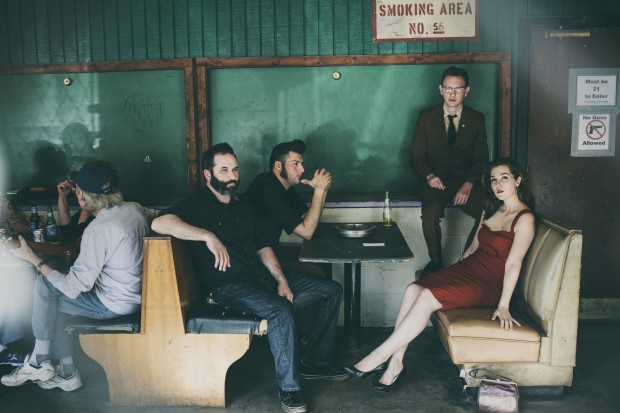
As the wild frontman for The Legendary Shack Shakers, Col. J.D. Wilkes brought together a wide array of blues-infused and swampy sounding rock n’ roll, earning them the admiration of fans and invitations to tour with noted performers such as Robert Plant. Wilkes — a bonafide Kentucky colonel, hence his title — formed The Dirt Daubers in 2009 with his wife, Jessica, and added guitarist Rod Hamdallah and drummer Preston Corn for the band’s most recent album, Wild Moon (Plowboy Records). Produced by iconic punk rocker Cheetah Chrome (The Dead Boys), the album finds them back in the vein of mixing traditional sounds with an infectious rock attitude and approach. — Sean McCourt
8pm, $10-$12
Rickshaw Stop
155 Fell, SF
(415) 861-2011
www.rickshawstop.com

Thu/23

What do you call the darlings of the San Francisco psych-rock scene when half the band migrates to Portland? Wooden Shjips is what you call ’em, and as much as it pains us to admit it, the move was just what the doctor ordered if the calm, confident, melodic landscapes of last fall’s Back to Land are any indication. The record is as dreamy yet cohesive as they’ve ever sounded, with acoustic guitar adding a new layer of warm haze, but there’s still plenty of distortion and unexpected riffs, and drawn-out organ licks that somehow bear no resemblance to anything you’ve ever heard in a rock song. You can pout that they left, but you’re not gonna not catch them on home turf.
With Carlton Melton and Golden Void
9pm, $14-$16
Chapel
777 Valencia, SF
(415) 551-5157
www.thechapelsf.com

Fri/24

Over three albums, Dent May has been a bit of a indie pop chameleon. Take the fabulous lounge kitsch of The Good Feeling Music Of Dent May & His Magnificent Ukulele. Or the drum machine disco revival on Do Things. And May’s latest, Warm Blanket, is predictably unpredictable: See the Bowie styled “Let’s Dance” intro that quickly upshifts into an afrobeat groove on “Let Them Talk.” Still, one thing May shares with his label bosses Animal Collective is a shared affinity for Brian Wilson, and it’s the biggest referent, with a track like “Corner Piece” sounding like it could have spun off of Pet Sounds, and it’s the perfect opportunity for May to get increasingly open-hearted and romantic.Ryan Prendiville
With Chris Cohen, Jack Name
9pm, $12
Slim’s
333 11th St., SF
(415) 255-0333
www.slimspresents.com

Sat/25

Nicki Bluhm has had a big few months. She’s been Bay Area Americana royalty for several years now, but when her self-titled album with the Gramblers dropped last August, it took the bluesy-folk songstress to a new level, adding appearances on Conan and the like to her staple appearances at Hardly Strictly Bluegrass and, you know, in viral videos covering Hall and Oates songs in a van. The band’s live show has only gotten tighter and somehow simutaneously more playful as a result. Bonus: Hometown openers Goodnight, Texas, who sing foot-stomping songs about Civil War-era romance and coal mine disasters with a musicianship and joyful sophistication that seem much older than their (20-something) years.
9pm, $25
Fillmore
1805 Geary, SF
(415) 346-3000
www.thefillmore.com

Also Sat/25

We’ve seen a major resurgence of UK-based R&B-circa-’89 over the past few years, but while songstresses like Jessie Ware tackle those Lisa Stansfield-ish stylings with showy emotivity, Canada’s Jessy Lanza takes a borderline-shoegaze approach to her vocals, filtering ambiguous yearnings and half-confessions through delay and echo until they’re just another instrument in the mix, as stark and percussive as they are ethereal and melodic. Released on the much-fetishized Hyperdub imprint, and produced/co-written by Junior Boys’ Jeremy Greenspan, Lanza’s icy, prickly, spacious debut LP, Pull My Hair Back (2013), updates a flashy throwback genre for introverted, LCD-immersed times, in which the people can’t quite be trusted to say what they mean, or vice versa. This Saturday’s Popscene-curated show marks Lanza’s second-ever West Coast appearance, and might elucidate a persona that, similarly to those of labelmates Hype Williams and Laurel Halo, remains well concealed. — Taylor Kaplan
With Running in the Fog
9pm, $10
Amnesia
853 Valencia, SF
(415) 970-0012
www.amnesiathebar.com

RIP Gary Arlington, underground comix hero (UPDATED)

5

UPDATE: This just in from Ron Turner: “Hello Friends.  There will be a memorial for Gary this coming Tuesday at 11 AM at 225 Berry St. off 4th, very near the Giants ballpark and the Cal Train station.  Hope to see you there.  It is a modern Senior Center where Gary made his home. Bring stories and memories to share.”

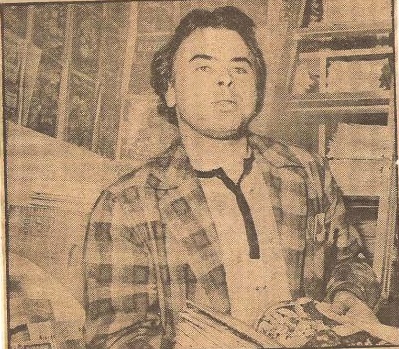
Just got word from Last Gasp Press founder Ron Turner that comics legend Gary Edson Arlington has passed away at age 75. In 1968, he opened what is considered the first comic book store in the United States, San Francisco Comic Book Company, which galvanized the hotbed Bay Area underground comix scene (and helped house his enormous collection, too).

As Art Spiegelman told the Chronicle in 2012, on the occasion of the publication of “I Am Not of this Planet,” a book of Arlington’s colorful artwork published by Last Gasp:

“San Francisco was the capitol of comix culture in the ’60s and early ’70s; and Gary Arlington’s hole-in-the-wall shop was, for me, the capitol of San Francisco.”

He was truly a fascinating character who supported local comics and art until the end, and influenced pop culture exponentially. 

Turner wrote:

“Gary died last night in San Francisco.  He had been living on his own in a nice subsidized  apartment near the ball park.  He had a motorized wheel chair and was out and about in SF.  He had heart and circulatory problems that led to several hospital stays during the last decade.  The comic community will remember Gary as founding the first comic book store in America, on 23rd st. in the Mission. I bought my first underground comic there in 1968.  It was a hangout for all the early underground comic artists and fans.  Services have not been announced as yet.”

We’ll update this post when we find out about services. Meanwhile, go out to your nearest comics bookstore and buy a bunch of indies in his honor!

Photo by Gabriela Hasbun:


One of Gary’s celebrated comics anthologies from 1983:

Clippings and artwork sourced from Larry Rippee and Molly Rea Art.

A first glance at ‘Looking’

20

Imagine a place where all the gay men are masculine, well-built, physically unselfconscious, and fashionably tousled; where young male artists and young male people of color mingle with young white male techies (yet are still happily banished to Oakland or work the door at Esta Noche); where having a “lazy eye” or being “slightly portly” renders you disqualified for relationships; where HIV, addiction, and politics barely exist; and where everyone is drenched in soft-spoken sophistication, vague existential ennui, and puppy-eyed cuteness.

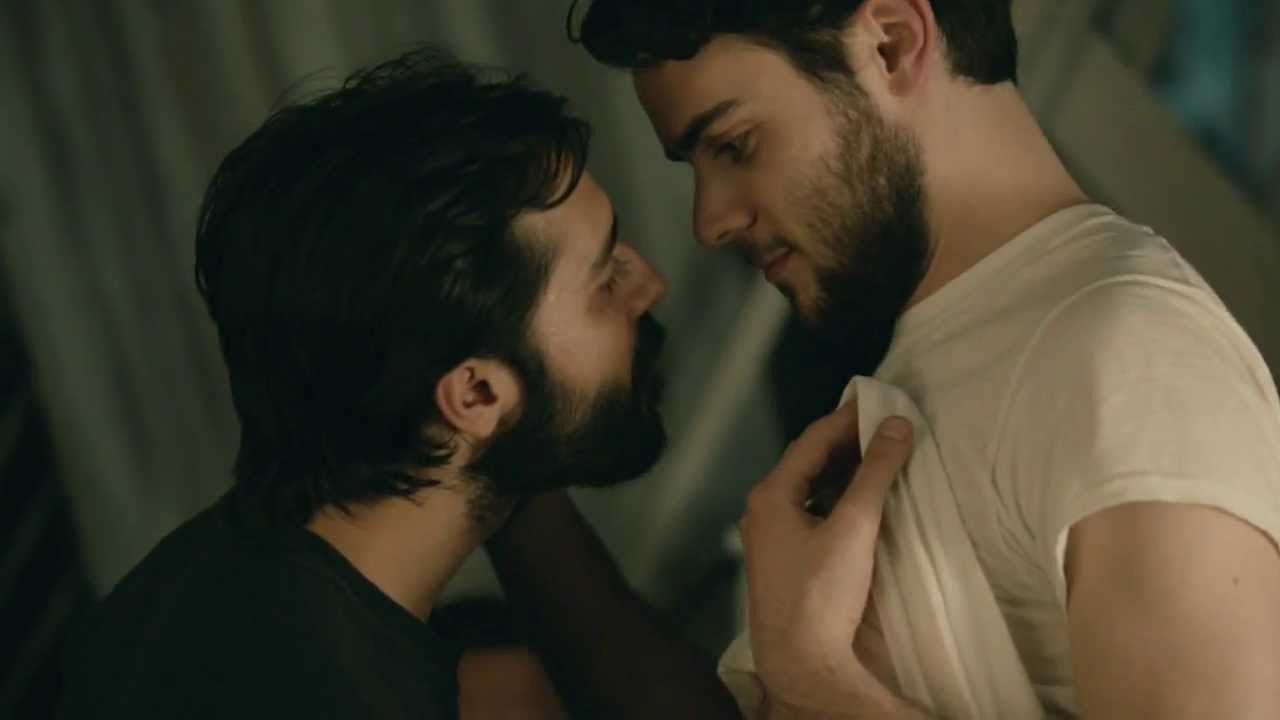
This isn’t quite San Francisco (yet), but it is the San Francisco of gorgeously produced, play-it-safe-so-far gay-themed HBO series Looking (it begins airing Jan. 19) — at least the first two episodes, which previewed tonight at the Castro Theater. It’s too early of course to pass any kind of judgment on the entire series, which in many ways may be an accurate reflection of current gay culture, and I maintain very high hopes, especially with such good actors, writers, and attention to detail involved.

But let me tell you: I have never wished more for a stereotypically sassy drag queen to stomp onscreen and break some shit in my life.

The dramatic comedy series so far is so polite, well-crafted, and unassuming that even though you gotta applaud the desire to produce a mainstream gay program whose mission is to avoid gay stereotypes — no flaming creatures here — the end result seems to be a warm apple pie with no teen dick stuck in it, let alone a Cockette. And while Looking is more representative when it comes to ethnicity than initially feared (two Latinos!), it doesn’t seem too keen on taking any risks when it comes to social issues or body types. There is nothing remotely “queer” about Looking so far. Sad trombone!

Hopefully, Looking isn’t shooting itself in the expensive workboots with its own good intentions: to present gay men as basically “normal.” Trouble is, normal gay men at this point on our yellow brick road toward complete assimilation are basically just straight people with an extra hot dog between them. It’s simply not enough anymore to have gay men do normal things — like experience typical relationship problems or worry about getting older — and consider it interesting just because they’re gay. There have to actually be interesting things. And so far the most interesting thing here, besides the yummy SF-centric particulars, might be the characters’ varying degrees of facial hair. (Is contemporary gay exceptionalism hiding behind its own beard?)

http://www.youtube.com/watch?v=wnGwmP8qg2c

Here are the dilemmas the three hunks we’re following on Looking face so far: the young, cute videogame designer keeps flubbing dates by saying the not-quite-right thing; the beautiful artist and his beautiful boyfriend just moved in together and one’s worried they’re not going out enough; and the smokin’ hot late-30ish career waiter is having mild symptoms of a midlife crisis and ambient ex-in-the-picture anxieties. Except for the primly presented three-way, a fumbling public hand job, and a brief Grindr hookup, we might as well be inside a Cathy cartoon. Seriously: one of the characters even ends up guiltily diving into a late-night bowl of naughty starch to eat his problems away. ACK.    

To be sure: this show is also in many ways a scruffy dream date, all scrubbed up for dinner at farmerbrown. Hot Chip and Hercules and Love Affair replace Britney and Rihanna at Castro bars. Characters who surely have never seen a real backroom before wave around coffee mugs from The Cock in NYC and other super-insidery gay culture totems. There has been no gym scene. And some of the lines are pretty funny, especially from the requisite saucy gal pal. San Francisco looks absolutely perfect, and well-wrought local details abound. The Brit director is Andrew Haigh, whose dreamy, oh-so-indie “gay boys on fixies” romance Weekend (2011) was like a cool, refreshing splash of the Smiths — or more like the Sundays, or, for the young’uns, James Blake — onto an overheated gay film scene that seemed skewed more towards Katy Perry.  

But transplanted to TV mode, the yearning hipster mumblecore aesthetic isn’t casting quite the same spell yet. 

Maybe I’m jaded/spoiled, but I remember the feeling of the top of my head being ripped off during the first episodes of the British Queer as Folk (still the high water mark of guilty-pleasure gay television) and parts of The L Word and Six Feet Under — that wondrous sense of audacity that fully dimensional queer people with epic faults, uncanny similarities, and infuriating differences were being flaunted in plain sight. Even the severely problematic American Queer As Folk and Will and Grace, with their flaming stereotypes and frustrating pop culture naivety, at least gave us some fascinating characters. I hated the fact that Middle America probably thought all gay men were like Jack, but I really couldn’t wait to hear what outrageous zinger would come flying out of his mouth next. 

There isn’t much of that so far on Looking, although it’s still holding my curiosity. (An after-screening Q&A with writer Michael Lannan indicated that there would be lesbian and trans characters as the series progressed, as well as some actual male nudity finally — come on, HBO). I realize that the show owes as much verisimilitude to the actual San Francisco gay scene as Queer as Folk USA owed to Pittsburgh. But for goddess’s sake, someone protest a condo eviction, somebody get blocked on Grindr for being too fem, someone eat a whole burrito drunk on a unicycle, somebody be nude or pagan or Asian, hopefully all three!

Again, this is just the start of a show whose initial demographic may quite possibly be a swath of gay men hoping for nothing more than to look hip and fit in. But if fitting in means blanding out, we might want to start Looking for something different.        

Art-ic blast

0

arts@sfbg.com

THEATER New York early last week was as cold as Muazzez. True, I’ve never been to Muazzez, but a reputable source called that asteroid “so cold it is a frozen bull roar,” which sounds about right.

“They lied to me about the reality of things here on Muazzez,” began said source, a nondescript speaker seated at a bare wood desk. “About the foundations of these, their basis, their fundament, the profound bottom of things.”

There’s a glass of water on the desk, some loose paper.

“I am an Abandoned Cigar Factory (or ACF),” he goes on to explain, “groaning in the dunes near the settlement of Culpepper.”

The unexpected narrator at the bare wood desk sat in a bare white room, with the incongruous name of the Chocolate Factory (in fact, a terrific theater in Long Island City). The play, called Muazzez, originated as a collection of short stories (all set on asteroids) by Mac Wellman, a writer better known as a playwright and a leading light of the American experimental scene (and a prolific one too, despite receiving few productions in the Bay Area).

Performed with a forthright, faintly odd, wholly captivating precision by longtime collaborator Steve Mellor, Muazzez (directed by Wellman) is an intoxicating and deceptively subdued flight of language and weirdness whose cumulative power, over the course of its brisk 40 minutes, is hard to describe and harder to shake off. Its surface meanings can seem strange, obscure, dryly amusing, even piffling — still, there are things shifting down below in some grim molten core. It was a feeling similar to that produced by one of James Tate’s poems.

Muazzez set the tone well. Expecting the unexpected became second nature over the course of last week’s sampling of shows from PS 122’s COIL (which presented Muazzez), as well as from the Public Theater’s Under the Radar, and Ben Pryor’s American Realness — all together just three (!) of the lively and significant New York festivals that now swirl each January around the annual meeting of the Association of Performing Arts Presenters (or “A-PAP,” as it’s usually pronounced).

Bees are in short supply these days, so better to say the presenting industry’s international confab is a kind of honey pot attracting bears in the performing arts world, by which we mean the artists wrapped in faux fur coats and puffy jackets against the bracing, angry wind and plummeting temperatures of last week’s “arctic blast” (itself just another signal from the larger natural order of things that humanity is wildly off course — or right on target, I guess, depending on your end goal.)

This context heightened the urgency folded into Muazzez‘s extraterrestrial transmission. And there were other, comparable transmissions, including one from the future, articulated in the person and voice of TV’s Captain Kirk. Co-presented by COIL and the New Ohio Theatre, An Evening with William Shatner Asterisk takes place on a stage inhabited by a central flat screen TV on wheels and two larger screens on either side. Onto the center screen comes the iconic image of TV’s starship commander and over-actor par excellence.

Suddenly he speaks — in a funny but vaguely disconcerting stagger of assembled speech bites, culled from the character’s entire lexicon, the actor’s “body” of work. The captain has been commandeered. Someone or something else from beyond (beyond this time and beyond language) is speaking to us through him. The transmission, spelled out on the far screens, comes in segments or “chapters,” and has a philosophical cast: a discussion of the differences between art and science. Its purpose, we are told, is to convey a message to us from the future, which alone knows where we are headed. The message itself (the beautifully written text is by Joe Diebes; the excellent audio-visual scheme by Rob Ramirez) is prefaced and forestalled, in a half-teasing fashion, by a discussion of some basic terms.

The performance’s sole human figure, meanwhile — other than two-dimensional James T. — is an expressionless Japanese woman (an imposingly restrained Mari Akita) who moves the wheeled screen slowly about the stage, illustrates a point or two with a few simple movements, and, in one deceptively incongruous moment, picks up a microphone to deliver (in subtitled Japanese) a monologue about coming to the United States and falling obsessively into the world of drag queens and female impersonation.

Hilarious yet eerie, playful yet purposeful, oblique yet precise, conceiver-director Phil Soltanoff’s An Evening with William Shatner Asterisk proved a dialectical delight; and in its teasing manner and final indirect plea for some small but profound transcendence, it was, pardon the expression, fascinating.

In another wonderfully estranging but altogether earthbound offering, COIL teamed up with American Realness and New York City Players (the latter seen at Yerba Buena Center for the Arts last February with its co-production of Early Plays by Eugene O’Neill) to co-present writer-director Tina Satter’s offbeat, sharp-footed House of Dance (in association with Satter’s own company, Half Straddle, and the Abrons Art Center).

Set in a small New England tap studio among four fractious, serious, and seriously oddball tap dance competitors (played with a combination of understated delivery and irresistible flair by Jess Barbagallo, Elizabeth DeMent, Jim Fletcher, and Paul Pontrelli), the 60-minute House of Dance trumps the hackneyed pomp of reality television with the heightened banality of its obscure, ego-invested lives — who do in fact dance the hell out of their tap shoes.

These startling moments evoked a real joy too, a flight from obscurity into a greatness no championship trophy could hope to convey — at once so light, so personal, yet communal, it made one realize this piece could only make sense as a live performance. And feel sorry for those people who did not venture out this night, but stayed indoors against the howling cold. *


Film Listings: January 15 – 21, 2014

0

Film listings are edited by Cheryl Eddy. Reviewers are Kimberly Chun, Dennis Harvey, Lynn Rapoport, Sam Stander, and Sara Maria Vizcarrondo. For rep house showtimes, see Rep Clock.

OPENING

Devil’s Due A newlywed couple find themselves dealing with a sudden, probably Satanic pregnancy in this found-footage flick from horror filmmaking collective Radio Silence (who directed the final segment — the Halloween party gone demonically awry — in 2012’s V/H/S). (1:29)

The Girls in the Band Judy Chaikin’s upbeat documentary is in step with the recent, not-unwelcome trend of bringing overlooked musicians into the spotlight (think last year’s Twenty Feet from Stardom and A Band Called Death). The Girls in the Band takes a chronological look at women in the big-band and jazz scenes, taking the 1958’s “A Great Day in Harlem” as a visual jumping-off point, sharing the stories of two (out of just three) women who posed amid that sea of male musicians. One is British pianist Marian McPartland, who’s extensively featured in interviews shot before her death last year; the other is gifted composer and arranger Mary Lou Williams, who died in 1981 but left behind a rich legacy that still inspires. Others featured in this doc (which culminates in a re-creation of that famous Harlem photo shoot — with all-female subjects this time) include saxophone- and trumpet-playing members of the multi-racial, all-female International Sweethearts of Rhythm, which toured the segregated south at great peril during the 1930s and was a favorite among African American servicemen during World War II. No matter her race, nearly every woman interviewed cites the raging sexism inherent in the music biz — but the film’s final third, which focuses on contemporary successes like Esperanza Spalding, suggests that stubborn roadblock is finally being chipped away. (1:26) Opera Plaza, Smith Rafael. (Eddy)

Jack Ryan: Shadow Recruit Kenneth Branagh directs Chris “Captain Kirk” Pine in this latest film focused on Tom Clancy’s iconic spy character. (1:45) Marina.

The Nut Job Animated comedy about squirrels starring the voices of Will Arnett, Liam Neeson, and Maya Rudolph. (1:26)

Ride Along Tim Story (2012’s Think Like a Man) directs Ice Cube and Kevin Hart in this buddy comedy about a cop who’s forced to team up with his future brother-in-law. (1:40)

The Square Like the single lit candle at the very start of The Square — a flicker of hope amid the darkness of Mubarak’s 30-year dictatorship — the initial street scenes of the leader’s Feb. 11, 2011, announcement that he was stepping down launch Jehane Noujaim’s documentary on a euphoric note. It’s a lot to take in: the evocative shots of Tahrir Square, the graffiti on the streets, the movement’s troubadours, and the faces of the activists she follows — the youthful Ahmed Hassan, British-reared Kite Runner (2007) actor-turned-citizen journalist Khalid Abdalla, and Muslim Brotherhood acolyte Magdy Ashour, among them. Yet that first glimmer of joy and unity among the diverse individuals who toppled a dictatorship was only the very beginning of a journey — which the Egyptian American Noujaim does a remarkable job documenting, in all its twists, turns, multiple protests, and voices. Unflinching albeit even-handed footage of the turnabouts, hypocrisies, and injustices committed by the Brotherhood, powers-that-be, the army, and the police during the many actions occurring between 2011 and the 2013 removal of Mohammed Morsi will stay with you, including the sight of a tank plowing down protestors with murderous force and soldiers firing live rounds at activists armed only with stones. “We found ourselves loving each other without realizing it,” says Hassan of those heady first days, and Noujaim brings you right there and to their aftermath, beautifully capturing ordinary people coming together, eating, joking, arguing, feeling empowered and discouraged, forming unlikely friendships, setting up makeshift hospitals on the street, and risking everything, in this powerful document of an unfolding real-life epic. (1:44) Roxie. (Chun)

ONGOING

American Hustle David O. Russell’s American Hustle is like a lot of things you’ve seen before — put in a blender, so the results are too smooth to feel blatantly derivative, though here and there you taste a little Boogie Nights (1997), Goodfellas (1990), or whatever. Loosely based on the Abscam FBI sting-scandal of the late 1970s and early ’80s (an opening title snarks “Some of this actually happened”), Hustle is a screwball crime caper almost entirely populated by petty schemers with big ideas almost certain to blow up in their faces. It’s love, or something, at first sight for Irving Rosenfeld (Christian Bale) and Sydney Prosser (Amy Adams), who meet at a Long Island party circa 1977 and instantly fall for each other — or rather for the idealized selves they’ve both strained to concoct. He’s a none-too-classy but savvy operator who’s built up a mini-empire of variably legal businesses; she’s a nobody from nowhere who crawled upward and gave herself a bombshell makeover. The hiccup in this slightly tacky yet perfect match is Irving’s neglected, crazy wife Rosalyn (Jennifer Lawrence), who’s not about to let him go. She’s their main problem until they meet Richie DiMaso (Bradley Cooper), an ambitious FBI agent who entraps the two while posing as a client. Their only way out of a long prison haul, he says, is to cooperate in an elaborate Atlantic City redevelopment scheme he’s concocted to bring down a slew of mafioso and presumably corrupt politicians, hustling a beloved Jersey mayor (Jeremy Renner) in the process. Russell’s filmmaking is at a peak of populist confidence it would have been hard to imagine before 2010’s The Fighter, and the casting here is perfect down to the smallest roles. But beyond all clever plotting, amusing period trappings, and general high energy, the film’s ace is its four leads, who ingeniously juggle the caricatured surfaces and pathetic depths of self-identified “winners” primarily driven by profound insecurity. (2:17) Four Star, Metreon, 1000 Van Ness, Presidio, Shattuck, Sundance Kabuki. (Harvey)

Anchorman 2: The Legend Continues Look, I fully understand that Anchorman 2: The Legend Continues — which follows the awkward lumberings of oafish anchor Ron Burgundy (Will Ferrell) and his equally uncouth team (Paul Rudd, Steve Carell, David Koechner) as they ditch San Diego in favor of New York’s first 24-hour news channel, circa 1980 — is not aimed at film critics. It’s silly, it’s tasteless, and it’s been crafted purely for Ferrell fans, a lowbrow army primed to gobble up this tale of Burgundy’s national TV rise and fall (and inevitable redemption), with a meandering storyline that includes chicken-fried bat, a pet shark, an ice-skating sequence, a musical number, epic amounts of polyester, lines (“by the bedpan of Gene Rayburn!”) that will become quoteable after multiple viewings, and the birth of infotainment as we know it. But what if a film critic happened to be a Ferrell fan, too? What if, days later, that film critic had a flashback to Anchorman 2‘s amplified news-crew gang war (no spoilers), and guffawed at the memory? I am fully aware that this ain’t a masterpiece. But I still laughed. A lot. (1:59) Metreon, 1000 Van Ness. (Eddy)

August: Osage County Considering the relative infrequency of theater-to-film translations today, it’s a bit of a surprise that Tracy Letts had two movies made from his plays before he even got to Broadway. Bug and Killer Joe proved a snug fit for director William Friedkin (in 2006 and 2011, respectively), but both plays were too outré for the kind of mainstream success accorded 2007’s August: Osage County, which won the Pulitzer, ran 18 months on Broadway, and toured the nation. As a result, August was destined — perhaps doomed — to be a big movie, the kind that shoehorns a distracting array of stars into an ensemble piece, playing jes’ plain folk. But what seemed bracingly rude as well as somewhat traditional under the proscenium lights just looks like a lot of reheated Country Gothic hash, and the possibility of profundity you might’ve been willing to consider before is now completely off the menu. If you haven’t seen August before (or even if you have), there may be sufficient fun watching stellar actors chew the scenery with varying degrees of panache — Meryl Streep (who else) as gorgon matriarch Violet Weston; Sam Shepard as her long-suffering spouse; Julia Roberts as pissed-off prodigal daughter Barbara (Julia Roberts), etc. You know the beats: Late-night confessions, drunken hijinks, disastrous dinners, secrets (infidelity, etc.) spilling out everywhere like loose change from moth-eaten trousers. The film’s success story, I suppose, is Roberts: She seems very comfortable with her character’s bitter anger, and the four-letter words tumble past those jumbo lips like familiar friends. On the downside, there’s Streep, who’s a wizard and a wonder as usual yet also in that mode supporting the naysayers’ view that such conspicuous technique prevents our getting lost in her characters. If Streep can do anything, then logic decrees that includes being miscast. (2:10) Albany, Balboa, Metreon, 1000 Van Ness, Presidio, Sundance Kabuki. (Harvey)

Blue is the Warmest Color The stars (Adèle Exarchopoulos and Léa Seydoux) say the director was brutal. The director says he wishes the film had never been released (but he might make a sequel). The graphic novelist is uncomfortable with the explicit 10-minute sex scene. And most of the state of Idaho will have to wait to see the film on Netflix. The noise of recrimination, the lesser murmur of backpedaling, and a difficult-to-argue NC-17 rating could make it harder, as French director Abdellatif Kechiche has predicted, to find a calm, neutral zone in which to watch Blue is the Warmest Color, his Palme d’Or–winning adaptation (with co-writer Ghalya Lacroix) of Julie Maroh’s 2010 graphic novel Le Blue Est une Couleur Chaude. But once you’ve committed to the three-hour runtime, it’s not too difficult to tune out all the extra noise and focus on a film that trains its mesmerized gaze on a young woman’s transforming experience of first love. (2:59) Opera Plaza. (Rapoport)

Blue Jasmine The good news about Blue Jasmine isn’t that it’s set in San Francisco, but that it’s Woody Allen’s best movie in years. Although some familiar characteristics are duly present, it’s not quite like anything he’s done before, and carries its essentially dramatic weight more effectively than he’s managed in at least a couple decades. Not long ago Jasmine (a fearless Cate Blanchett) was the quintessential Manhattan hostess, but that glittering bubble has burst — exactly how revealed in flashbacks that spring surprises up to the script’s end. She crawls to the West Coast to “start over” in the sole place available where she won’t be mortified by the pity of erstwhile society friends. That would be the SF apartment of Ginger (Sally Hawkins), a fellow adoptive sister who was always looked down on by comparison to pretty, clever Jasmine. Theirs is an uneasy alliance — but Ginger’s too big-hearted to say no. It’s somewhat disappointing that Blue Jasmine doesn’t really do much with San Francisco. Really, the film could take place anywhere — although setting it in a non-picture-postcard SF does bolster the film’s unsettled, unpredictable air. Without being an outright villain, Jasmine is one of the least likable characters to carry a major US film since Noah Baumbach’s underrated Margot at the Wedding (2007); the general plot shell, moreover, is strongly redolent of A Streetcar Named Desire. But whatever inspiration Allen took from prior works, Blue Jasmine is still distinctively his own invention. It’s frequently funny in throwaway performance bits, yet disturbing, even devastating in cumulative impact. (1:38) Opera Plaza. (Harvey)

Dallas Buyers Club Dallas Buyers Club is the first all-US feature from Jean-Marc Vallée. He first made a splash in 2005 with C.R.A.Z.Y., which seemed an archetype of the flashy, coming-of-age themed debut feature. Vallée has evolved beyond flashiness, or maybe since C.R.A.Z.Y. he just hasn’t had a subject that seemed to call for it. Which is not to say Dallas is entirely sober — its characters partake from the gamut of altering substances, over-the-counter and otherwise. But this is a movie about AIDS, so the purely recreational good times must eventually crash to an end. Which they do pretty quickly. We first meet Ron Woodroof (Matthew McConaughey) in 1986, a Texas good ol’ boy endlessly chasing skirts and partying nonstop. Not feeling quite right, he visits a doctor, who informs him that he is HIV-positive. His response is “I ain’t no faggot, motherfucker” — and increased partying that he barely survives. Afterward, he pulls himself together enough to research his options, and bribes a hospital attendant into raiding its trial supply of AZT for him. But Ron also discovers the hard way what many first-generation AIDS patients did — that AZT is itself toxic. He ends up in a Mexican clinic run by a disgraced American physician (Griffin Dunne) who recommends a regime consisting mostly of vitamins and herbal treatments. Ron realizes a commercial opportunity, and finds a business partner in willowy cross-dresser Rayon (Jared Leto). When the authorities keep cracking down on their trade, savvy Ron takes a cue from gay activists in Manhattan and creates a law evading “buyers club” in which members pay monthly dues rather than paying directly for pharmaceutical goods. It’s a tale that the scenarists (Craig Borten and Melisa Wallack) and director steep in deep Texan atmospherics, and while it takes itself seriously when and where it ought, Dallas Buyers Club is a movie whose frequent, entertaining jauntiness is based in that most American value: get-rich-quick entrepreneurship. (1:58) Embarcadero, Piedmont, Shattuck. (Harvey)

47 Ronin (2:00) Metreon, 1000 Van Ness.

Frozen (1:48) Metreon, 1000 Van Ness, Shattuck.

Gravity “Life in space is impossible,” begins Gravity, the latest from Alfonso Cuarón (2006’s Children of Men). Egghead Dr. Ryan Stone (Sandra Bullock) is well aware of her precarious situation after a mangled satellite slams into her ship, then proceeds to demolition-derby everything (including the International Space Station) in its path. It’s not long before she’s utterly, terrifyingly alone, and forced to unearth near-superhuman reserves of physical and mental strength to survive. Bullock’s performance would be enough to recommend Gravity, but there’s more to praise, like the film’s tense pacing, spare-yet-layered script (Cuarón co-wrote with his son, Jonás), and spectacular 3D photography — not to mention George Clooney’s warm supporting turn as a career astronaut who loves country music almost as much as he loves telling stories about his misadventures. (1:31) Metreon. (Eddy)

The Great Beauty The latest from Paolo Sorrentino (2008’s Il Divo) arrives as a high-profile contender for the Best Foreign Language Film Oscar, already annointed a masterpiece in some quarters, and duly announcing itself as such in nearly every grandiose, aesthetically engorged moment. Yes, it seems to say, you are in the presence of this auteur’s masterpiece. But it’s somebody else’s, too. The problem isn’t just that Fellini got there first, but that there’s room for doubt whether Sorrentino’s homage actually builds on or simply imitates its model. La Dolce Vita (1960) and 8 1/2 (1963) are themselves swaying, jerry-built monuments, exhileratingly messy and debatably profound. But nothing quite like them had been seen before, and they did define a time of cultural upheaval — when traditional ways of life were being plowed under by a loud, moneyed, heedless modernity that for a while chose Rome as its global capital. Sorrentino announces his intention to out-Fellini Fellini in an opening sequence so strenuously flamboyant it’s like a never-ending pirouette performed by a prima dancer with a hernia. There’s statuary, a women’s choral ensemble, an on-screen audience applauding the director’s baffled muse Toni Servillo, standing in for Marcello Mastroianni — all this and more in manic tracking shots and frantic intercutting, as if sheer speed alone could supply contemporary relevancy. Eventually The Great Beauty calms down a bit, but still its reason for being remains vague behind the heavy curtain of “style.” (2:22) Opera Plaza, Shattuck. (Harvey)

Her Morose and lonely after a failed marriage, Theodore (Joaquin Phoenix) drifts through an appealingly futuristic Los Angeles (more skyscrapers, less smog) to his job at a place so hipster-twee it probably will exist someday: beautifulhandwrittenletters.com, where he dictates flowery missives to a computer program that scrawls them onto paper for paying customers. Theodore’s scripting of dialogue between happy couples, as most of his clients seem to be, only enhances his sadness, though he’s got friends who care about him (in particular, Amy Adams as Amy, a frumpy college chum) and he appears to have zero money woes, since his letter-writing gig funds a fancy apartment equipped with a sweet video-game system. Anyway, women are what gives Theodore trouble — and maybe by extension, writer-director Spike Jonze? — so he seeks out the ultimate gal pal: Samantha, an operating system voiced by Scarlett Johansson in the year’s best disembodied performance. Thus begins a most unusual relationship, but not so unusual; Theodore’s friends don’t take any issue with the fact that his new love is a machine. Hey, in Her‘s world, everyone’s deeply involved with their chatty, helpful, caring, always-available OS — why wouldn’t Theo take it to the next level? Inevitably, of course, complications arise. If Her‘s romantic arc feels rather predictable, the film acquits itself in other ways, including boundlessly clever production-design touches that imagine a world with technology that’s (mostly) believably evolved from what exists today. Also, the pants they wear in the future? Must be seen to be believed. (2:00) 1000 Van Ness, Piedmont, Presidio, SF Center, Shattuck, Sundance Kabuki. (Eddy)

The Hobbit: The Desolation of Smaug Just when you’d managed to wipe 2012’s unwieldy The Hobbit: An Unexpected Journey from your mind, here comes its sequel — and it’s actually good! Yes, it’s too long (Peter Jackson wouldn’t have it any other way); arachnophobes (and maybe small children) will have trouble with the creepy, giant-spider battle; and Orlando Bloom, reprising his Lord of the Rings role as Legolas the elf, has been CG’d to the point of looking like he’s carved out of plastic. But there’s much more to enjoy this time around, with a quicker pace (no long, drawn-out dinner parties); winning performances by Martin Freeman (Bilbo), Ian McKellan (Gandalf); and Benedict Cumberbatch (as the petulent voice of Smaug the dragon); and more shape to the quest, as the crew of dwarves seeks to reclaim their homeland, and Gandalf pokes into a deeper evil that’s starting to overtake Middle-earth. (We all know how that ends.) In addition to Cumberbatch, the cast now includes Lost‘s Evangeline Lilly as elf Tauriel, who doesn’t appear in J.R.R. Tolkien’s original story, but whose lady-warrior presence is a welcome one; and Luke Evans as Bard, a human poised to play a key role in defeating Smaug in next year’s trilogy-ender, There and Back Again. (2:36) Metreon, 1000 Van Ness, Sundance Kabuki. (Eddy)

The Hunger Games: Catching Fire Before succumbing to the hot and heavy action inside the arena (intensely directed by Francis Lawrence) The Hunger Games: Catching Fire force-feeds you a world of heinous concept fashions that’d make Lady Gaga laugh. But that’s ok, because the second film about one girl’s epic struggle to change the world of Panem may be even more exciting than the first. Suzanne Collins’ YA novel The Hunger Games was an over-literal metaphor for junior high social survival and the glory of Catching Fire is that it depicts what comes after you reach the cool kids’ table. Katniss (Jennifer Lawrence) inspired so much hope among the 12 districts she now faces pressures from President Snow (a portentous Donald Sutherland) and the fanatical press of Capital City (Stanley Tucci with big teeth and Toby Jones with big hair). After she’s forced to fake a romance with Peeta (Josh Hutcherson), the two watch with horror as they’re faced with a new Hunger Game: for returning victors, many of whom are too old to run. Amanda Plummer and Jeffrey Wright are fun as brainy wackjobs and Jena Malone is hilariously Amazonian as a serial axe grinder still screaming like an eighth grader. Inside the arena, alliances and rivalries shift but the winner’s circle could survive to see another revolution; to save this city, they may have to burn it down. (2:26) Metreon, 1000 Van Ness, Shattuck, Sundance Kabuki. (Vizcarrondo)

I Am Divine Bringing joy to a lot of people during his too-brief life was Glenn Milstead, the subject of Jeffrey Schwarz’s I Am Divine. A picked-on sissy fat kid, he blossomed upon discovering Baltimore’s gay underground — and starring in neighbor John Waters’ underground movies, made by and for the local “freak” scene they hung out in. Yet even their early efforts found a following; when “Divine” appeared in SF to perform at one of the Cockettes’ midnight movie/theater happenings, he was greeted as a star. This was before his greatest roles for Waters, as the fearsome anti-heroines of Pink Flamingos (1972) and Female Trouble (1974), then the beleaguered hausfraus of Polyester (1981) and Hairspray (1988). Despite spending nearly his entire career in drag, he wanted to be thought of as a character actor, not a “transvestite” novelty. Sadly, he seemed on the verge of achieving that — having been signed to play an ongoing male role on Married … with Children — when he died of respiratory failure in 1988, at age 42. (1:25) Roxie. (Harvey)

Inside Llewyn Davis In the Coen Brothers’ latest, Oscar Isaac as the titular character is well on his way to becoming persona non grata in 1961 NYC — particularly in the Greenwich Village folk music scene he’s an ornery part of. He’s broke, running out of couches to crash on, has recorded a couple records that have gone nowhere, and now finds out he’s impregnated the wife (Carey Mulligan) and musical partner of one among the few friends (Justin Timberlake) he has left. She’s furious with herself over this predicament, but even more furious at him. This ambling, anecdotal tale finds Llewyn running into one exasperating hurdle after another as he burns his last remaining bridges, not just in Manhattan but on a road trip to Chicago undertaken with an overbearing jazz musician (John Goodman) and his enigmatic driver (Garrett Hedlund) to see a club impresario (F. Murray Abraham). This small, muted, droll Coens exercise is perfectly handled in terms of performance and atmosphere, with pleasures aplenty in its small plot surprises, myriad humorous idiosyncrasies, and T. Bone Burnett’s sweetened folk arrangements. But whether it actually has anything to say about its milieu (a hugely important Petri dish for later ’60s political and musical developments), or adds up to anything more profound than an beautifully executed shaggy-dog story, will be a matter of personal taste — or perhaps of multiple viewings. (1:45) Balboa, California, Embarcadero, 1000 Van Ness, Piedmont, Sundance Kabuki. (Harvey)

The Invisible Woman Charles Dickens was a regular scold of the British class system and its repercussions, particularly the gentry’s general acceptance that poverty was something the bottom rung of society was suited for, perhaps even deserved. Given how many in positions of power would have preferred such issues go ignored, it was all the more important their highest-profile advocate be of unimpeachable “moral character” — which in the Victorian era meant a very high standard of conduct indeed. So it remains remarkable that in long married middle-age he heedlessly risked scandal and possible career-ruin by taking on a much younger mistress. Both she and he eventually burned all their mutual correspondence, so Claire Tomalin’s biography The Invisible Woman is partly a speculative work. But it and now Ralph Fiennes’ film of the same name are fascinating glimpses into the clash between public life and private passion in that most judgmentally prudish of epochs. Framed by scenes of its still-secretive heroine several years after the central events, the movie introduces us to a Dickens (Fiennes) who at mid-career is already the most famous man in the UK. In his lesser-remembered capacity as a playwright and director, at age 45 (in 1857) he hired 18-year-old actress Nelly Ternan (Felicity Jones) for an ingénue role. He was instantly smitten; she was, at the least, awed by this great man’s attention. Their professional association permitted some further contact without generating much gossip. But eventually Dickens chafed at the restraints necessary to avoid scandal — no matter the consequences to himself, let alone his wife, his 10 (!) children, or Ternan herself. Fiennes, by all accounts an exceptional Shakespearean actor on stage, made a strong directorial debut in 2011 with that guy’s war play, Coriolanus — a movie that, like this one, wasn’t enough of a conventional prestige film or crowd-pleaser to surf the awards-season waves very long. But they’re both films of straightforward confidence, great intelligence, and unshowy good taste that extends to avoiding any vanity project whiff. (1:51) Embarcadero, Shattuck. (Harvey)

The Legend of Hercules What better reason to wield the blunt force of 3D than to highlight the muscle-bound glory of a legendary hero — and, of course, foreground his impressive six-pack abs and impudently jutting nipples. Lead Kellan Lutz nails the eye candy aspect in this sword ‘n’ sandals effort by Renny Harlin (aka the man who capsized Geena Davis’s career), though it’s hard to take him seriously when he looks less like the hirsute, leonine hero depicted in ancient artwork than an archetypal, thick-necked, clean-shaven, all-American handsome-jock star (Lutz’s resemblance to Tom Brady is uncanny). Still, glistening beefcake is a fact of life at toga parties, and it’s clearly a large part of the appeal in this corny popcorner about Greek mythology’s proto-superhero. The Legend of Hercules is kitted out to conquer teen date nights around the world, with a lot of bloodless PG-13 violence for the boys and flower-petal-filled nuzzle-fests between Herc and Hebe (Gaia Weiss) for the girls, along with the added twist that Hercules’s peace-loving mother Alcmene conceived him with Zeus — with Hera’s permission — in order to halt her power-mad brute of a spouse King Amphitryon (Scott Adkins). In any case Harlin and company can’t leave well enough alone and piledrive each action scene with way too much super-slo-mo, as if mainlining the Matrix films in the editing booth to guarantee the attention of critical overseas markets and future installments. And the cheesy badness of certain scenes, like Hercules twirling the broken stone walls he destroys like a pair of giant fuzzy dice, can’t be denied. We all know how rich and riveting Greek mythology is, and by Hera, if the original, complicated Heracles is ever truly encapsulated on film, I hope it’s by Lars von Trier or another moviemaker capable of adequately harnessing a bisexual demi-god of enormous appetites and heroism. (1:38) 1000 Van Ness, SF Center, Shattuck. (Chun)

Lone Survivor Peter Berg (2012’s Battleship, 2007’s The Kingdom) may officially be structuring his directing career around muscular tails of bad-assery. This true story follows a team of Navy SEALs on a mission to find a Taliban group leader in an Afghani mountain village. Before we meet the actors playing our real-life action heroes we see training footage of actual SEALs being put through their paces; it’s physical hardship structured to separate the tourists from the lifers. The only proven action star in the group is Mark Wahlberg — as Marcus Luttrell, who wrote the film’s source-material book. His funky bunch is made of heartthrobs and sensitive types: Taylor Kitsch (TV’s Friday Night Lights); Ben Foster, who last portrayed William S. Burroughs in 2013’s Kill Your Darlings but made his name as an officer breaking bad news gently to war widows in 2009’s The Messenger; and Emile Hirsch, who wandered into the wilderness in 2007’s Into the Wild. We know from the outset who the lone survivors won’t be, but the film still manages to convey tension and suspense, and its relentlessness is stunning. Foster throws himself off a cliff, bounces off rocks, and gets caught in a tree — then runs to his also-bloody brothers to report, “That sucked.” (Yesterday I got a paper cut and tweeted about it.) But the takeaway from this brutal battle between the Taliban and America’s Real Heroes is that the man who lived to tell the tale also offers an olive branch to the other side — this survivor had help from the non-Taliban locals, a last-act detail that makes Lone Survivor this Oscar season’s nugget of political kumbaya. (2:01) Metreon, 1000 Van Ness, Sundance Kabuki. (Vizcarrondo)

Nebraska Alexander Payne may be unique at this point in that he’s in a position of being able to make nothing but small, human, and humorous films with major-studio money on his own terms. It’s hazardous to make too much of a movie like Nebraska, because it is small — despite the wide Great Plains landscapes shot in a wide screen format — and shouldn’t be entered into with overinflated or otherwise wrong-headed expectations. Still, a certain gratitude is called for. Nebraska marks the first time Payne and his writing partner Jim Taylor weren’t involved in the script, and the first one since their 1996 Citizen Ruth that isn’t based on someone else’s novel. (Hitherto little-known Bob Nelson’s original screenplay apparently first came to Payne’s notice a decade ago, but getting put off in favor of other projects.) It could easily have been a novel, though, as the things it does very well (internal thought, sense of place, character nuance) and the things it doesn’t much bother with (plot, action, dialogue) are more in line with literary fiction than commercial cinema. Elderly Woody T. Grant (Bruce Dern) keeps being found grimly trudging through snow and whatnot on the outskirts of Billings, Mont., bound for Lincoln, Neb. Brain fuzzed by age and booze, he’s convinced he’s won a million dollars and needs to collect it him there, though eventually it’s clear that something bigger than reality — or senility, even — is compelling him to make this trek. Long-suffering younger son David (Will Forte) agrees to drive him in order to simply put the matter to rest. This fool’s mission acquires a whole extended family-full of other fools when father and son detour to the former’s podunk farming hometown. Nebraska has no moments so funny or dramatic they’d look outstanding in excerpt; low-key as they were, 2009’s Sideways and 2011’s The Descendants had bigger set pieces and narrative stakes. But like those movies, this one just ambles along until you realize you’re completely hooked, all positive emotional responses on full alert. (1:55) California, Embarcadero, Piedmont. (Harvey)

Paranormal Activity: The Marked Ones (1:24) Metreon, 1000 Van Ness.

The Past Splits in country, culture, and a harder-to-pinpoint sense of morality mark The Past, the latest film by Asghar Farhadi, the first Iranian moviemaker to win an Oscar (for 2011’s A Separation.) At the center of The Past‘s onion layers is a seemingly simple divorce of a binational couple, but that act becomes more complicated — and startlingly compelling — in Farhadi’s capable, caring hands. Ahmad (Ali Mosaffa) has returned to Paris from Tehran, where he’s been living for the past four years, at the request of French wife Marie (Bérénice Bejo of 2011’s The Artist). She wants to legalize their estrangement so she can marry her current boyfriend, Samir (Tahar Rahim of 2009’s A Prophet), whose wife is in a coma. But she isn’t beyond giving out mixed messages by urging Ahmad to stay with her, and her daughters by various fathers, rather than at a hotel — and begging him to talk to teen Lucie (Pauline Burlet), who seems to despise Samir. The warm, nurturing Ahmad falls into his old routine in Marie’s far-from-picturesque neighborhood, visiting a café owned by fellow Iranian immigrants and easily taking over childcare duties for the overwhelmed Marie, as he tries to find out what’s happening with Lucie, who’s holding onto a secret that could threaten Marie’s efforts to move on. The players here are all wonderful, in particular the sad-faced, humane Mosaffa. We never really find out what severed his relationship with Marie, but in the end, it doesn’t really matter. We care about, and end up fearing for, all of Farhadi’s everyday characters, who are observed with a tender and unsentimental understanding that US filmmakers could learn from. The effect, when he finally racks focus on the forgotten member of this triangle (or quadrilateral?), is heartbreaking. (2:10) Albany, Clay. (Chun)

Philomena Judi Dench gives this twist on a real-life scandal heart, soul, and a nuanced, everyday heft. Her ideal, ironic foil is Steve Coogan, playing an upper-crusty irreverent snob of an investigative journalist. Judging by her tidy exterior, Dench’s title character is a perfectly ordinary Irish working-class senior, but she’s haunted by the past, which comes tumbling out one day to her daughter: As an unwed teenager, she gave birth to a son at a convent. She was forced to work there, unpaid; as supposed penance, the baby was essentially sold to a rich American couple against her consent. Her yarn reaches disgraced reporter Martin Sixsmith (Coogan), who initially turns his nose up at the tale’s piddling “human interest” angle, but slowly gets drawn in by the unexpected twists and turns of the story — and likely the possibility of taking down some evil nuns — as well as seemingly naive Philomena herself, with her delight in trash culture, frank talk about sex, and simple desire to see her son and know that he thought, once in a while, of her. It turns out Philomena’s own sad narrative has as many improbable turnarounds as one of the cheesy romance novels she favors, and though this unexpected twosome’s quest for the truth is strenuously reworked to conform to the contours of buddy movie-road trip arc that we’re all too familiar with, director Stephen Frears’ warm, light-handed take on the gentle class struggles going on between the writer and his subject about who’s in control of the story makes up for Philomena‘s determined quest for mass appeal. (1:35) Embarcadero, Marina, Shattuck. (Chun)

Saving Mr. Banks Having promised his daughters that he would make a movie of their beloved Mary Poppins books, Walt Disney (Tom Hanks) has laid polite siege to author P.L. Travers (Emma Thompson) for over 20 years. Now, in the early 1960s, she has finally consented to discuss the matter in Los Angeles — albeit with great reluctance, and only because royalty payments have dried up to the point where she might have to sell her London home. Bristling at being called “Pam” and everything else in this sunny SoCal and relentlessly cheery Mouse House environ, the acidic English spinster regards her creation as sacred. The least proposed changes earn her horrified dismissal, and the very notion of having Mary and company “prancing and chirping” out songs amid cartoon elements is taken as blasphemy. This clash of titans could have made for a barbed comedy with satirical elements, but god forbid this actual Disney production should get so cheeky. Instead, we get the formulaically dramatized tale of a shrew duly tamed by all-American enterprise, with flashbacks to the inevitable past traumas (involving Colin Farrell as a beloved but alcoholic ne’er-do-well father) that require healing of Travers’ wounded inner child by the magic of the Magic Kingdom. If you thought 2004’s Finding Neverland was contrived feel-good stuff, you’ll really choke on the spoons full of sugar force-fed here. (2:06) 1000 Van Ness, Presidio, SF Center, Shattuck. (Harvey)

The Secret Life of Walter Mitty Walter Mitty (Ben Stiller) works at the Life magazine archives, where the world’s greatest photojournalists send him images of their extraordinary adventures. Walter lives vicariously. When he imagines his office crush (Kristen Wiig) trapped in a burning building, his inner superhero arrests his faculties and sends him flying through windows, racing up stairs to liberate children from their flaming homes. It’s all a fantasy, of course: the man works in a basement with pictures and George Bailey-styled dreams of travel, what does he have but his imagination to keep him warm? Turns out his workplace is planning to kill off its print edition and become LifeOnline — so facing the end of Life, and imminent quiet desperation, this office-mouse is tasked with delivering the last cover the magazine will ever have. But frame 25 on the contact sheet — the one the magazine’s star photog (Sean Penn) calls “The Quintessence of Life” — is blank. Instead of crying defeat, Walter goes on a hunt for the photographer, his avatar of rugged outdoorsmanship, and the realization of his dreams of adventure. It’s liberating to watch him take risks — Stiller says years of watching Danny Kaye movies (Kaye starred in the 1947 adaptation of James Thurber’s short story) inspired the awkwardly balletic gestures of roving, frightened, ultimately exuberant Walter. The film, which Stiller also directed, is ultimately a dreamy parable about getting caught up in imagination — or just confusing images for real life — both of which feel timely in a world where libraries are cyberplaces and you can play “tennis” in front of your couch. The kind of guy who thought the biggest threat was making the first move, Walter learns differently when he takes actual risks: there is magic in this. (2:05) 1000 Van Ness, SF Center. (Vizcarrondo)

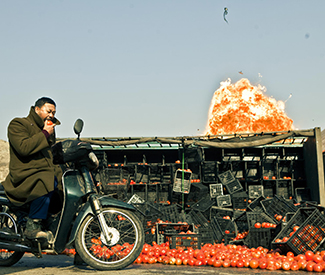
A Touch of Sin This bleak, gritty latest from Jia Zhangke (2004’s The World) is said to be based on actual incidents of violence in China. The writer-director also drew inspiration — as the title suggests — from King Hu’s martial arts epic A Touch of Zen (1971). And despite some scattered Buddhist references, sin — delivered in heavy doses, hardly just “a touch” — reigns over zen in the film’s four barely connected stories. Before the credits finish rolling, we’ve witnessed a stone-faced man in a Chicago Bulls beanie (Wang Baoqiang) respond to a trio of roadside muggers with a hail of bullets. Is he a vigilante, or did the robbers just mess with the wrong motorcyclist? Next, we visit “Black Gold Mountain,” site of a coal mine whose profits have been funneled into the pockets of its obscenely rich owner and the corrupt local village chief, who’s prone to put-downs like “You’ll be a loser all your life.” On the receiving end of that insult is worker Dahai (the magnetic Wu Jiang), a human pressure cooker of rage and resentment. Later, we pick up the thread of the man in the Bulls hat. He’s a migrant worker, traveling home to a mother who ignores him and a wife who insists “I don’t want your money.” Another fractured family appears in the film’s next chapter, as a woman (Zhao Tao, Jia’s wife and muse) gives her married boyfriend an ultimatum. As the man’s train rumbles away (A Touch of Sin’s characters are constantly in motion: trains, buses, motorcycles, riding in the backs of trucks, etc.), she travels to her job, working the front desk at “Nightcomer Sauna,” as unglamorous a joint as the name suggests. When a pair of wealthy customers decide she’s on the menu (“I’ll smother you with money, bitch!”), she’s forced to defend herself, with blood-drenched consequences. In the film’s final segment, we follow a young man drifting between jobs, finally settling into soul-stifling tech-gadget factory work. That his company housing is dubbed the “Oasis of Prosperity” would be funny, if it wasn’t so depressing. In A Touch of Sin‘s final scene, the film’s one potentially salvageable character passes by an opera being performed in the street. “Do you understand your sin?” the singer warbles. The character pauses, remembering what happened — and why it had to happen. So do we. And yes, we understand. (2:13) Roxie, Smith Rafael. (Eddy)

12 Years a Slave Pop culture’s engagement with slavery has always been uneasy. Landmark 1977 miniseries Roots set ratings records, but the prestigious production capped off a decade that had seen some more questionable endeavors, including 1975 exploitation flick Mandingo — often cited by Quentin Tarantino as one of his favorite films; it was a clear influence on his 2012 revenge fantasy Django Unchained, which approached its subject matter in a manner that paid homage to the Westerns it riffed on: with guns blazing. By contrast, Steve McQueen’s 12 Years a Slave is nuanced and steeped in realism. Though it does contain scenes of violence (deliberately captured in long takes by regular McQueen collaborator Sean Bobbitt, whose cinematography is one of the film’s many stylistic achievements), the film emphasizes the horrors of “the peculiar institution” by repeatedly showing how accepted and ingrained it was. Slave is based on the true story of Solomon Northup, an African American man who was sold into slavery in 1841 and survived to pen a wrenching account of his experiences. He’s portrayed here by the powerful Chiwetel Ejiofor. Other standout performances come courtesy of McQueen favorite Michael Fassbender (as Epps, a plantation owner who exacerbates what’s clearly an unwell mind with copious amounts of booze) and newcomer Lupita Nyong’o, as a slave who attracts Epps’ cruel attentions. (2:14) Embarcadero, Shattuck. (Eddy)

Walking With Dinosaurs Like hungry, fast-moving Chirostenotes, movieland has a habit of poaching from all comers, be it a toy, video game, or here, a hugely successful 1999 BBC documentary miniseries of the same name. This 3D hamburger version of the award-winning six-parter plays to dinos’ most avid audience, traditionally — kids — by anthropomorphizing runt Pachyrhinosaurus, otherwise known as Patchi (voiced by Justin Long), as the scrappy young hero of this adventure and dramatizing life-and-death migrations his herd undertakes each year as rites of passage. Framing the adventure is a present-day dig with archaeologist Zack (Karl Urban), his skeptical nephew (Charlie Rowe), and gung-ho niece (Angourie Rice). With a broken 70 million-year-old tooth in hand — and with help from prehistoric Alexomis bird Alex (John Leguizamo, who provides most of the levity), we learn about Patchi, his brother Scowler (Skyler Stone), and their herd of horned, thick-noised lizards as they make their way south for winter and back, encountering multiple dangers and predators, as well as let’s-make-a-family delights in the form of young female Juniper (Tiya Sircar) along with way. Count on the CGI to be seamless, the 3D to come in handy when it comes to incoming Quetzalcoatlus, and the choice of not having the lizards’ lips move as they speak to seem tasteful and wise — especially when it comes dubbing for a global audience. (1:27) Metreon. (Chun)

The Wolf of Wall Street Three hours long and breathless from start to finish, Martin Scorsese’s tale of greed, stock-market fraud, and epic drug consumption has a lot going on — and the whole thing hinges on a bravado, breakneck performance by latter-day Scorsese muse Leonardo DiCaprio. As real-life sleaze Jordan Belfort (upon whose memoir the film is based), he distills all of his golden DiCaprio-ness into a loathsome yet maddeningly likable character who figures out early in his career that being rich is way better than being poor, and that being fucked-up is, likewise, much preferable to being sober. The film also boasts keen supporting turns from Jonah Hill (as Belfort’s crass, corrupt second-in-command), Matthew McConaughey (who has what amounts to a cameo — albeit a supremely memorable one — as Belfort’s coke-worshiping mentor), Jean Dujardin (as a slick Swiss banker), and newcomer Margot Robbie (as Belfort’s cunning trophy wife). But this is primarily the Leo and Marty Show, and is easily their most entertaining episode to date. Still, don’t look for an Oscar sweep: Scorsese just hauled huge for 2011’s Hugo, and DiCaprio’s flashy turn will likely be passed over by voters more keen on honoring subtler work in a shorter film. (2:59) California, Marina, 1000 Van Ness, SF Center, Sundance Kabuki, Vogue. (Eddy) *


 

Film Listings: January 15 – 21, 2014

0

Film listings are edited by Cheryl Eddy. Reviewers are Kimberly Chun, Dennis Harvey, Lynn Rapoport, Sam Stander, and Sara Maria Vizcarrondo. For rep house showtimes, see Rep Clock.

OPENING

Devil’s Due A newlywed couple find themselves dealing with a sudden, probably Satanic pregnancy in this found-footage flick from horror filmmaking collective Radio Silence (who directed the final segment — the Halloween party gone demonically awry — in 2012’s V/H/S). (1:29)

The Girls in the Band Judy Chaikin’s upbeat documentary is in step with the recent, not-unwelcome trend of bringing overlooked musicians into the spotlight (think last year’s Twenty Feet from Stardom and A Band Called Death). The Girls in the Band takes a chronological look at women in the big-band and jazz scenes, taking the 1958’s “A Great Day in Harlem” as a visual jumping-off point, sharing the stories of two (out of just three) women who posed amid that sea of male musicians. One is British pianist Marian McPartland, who’s extensively featured in interviews shot before her death last year; the other is gifted composer and arranger Mary Lou Williams, who died in 1981 but left behind a rich legacy that still inspires. Others featured in this doc (which culminates in a re-creation of that famous Harlem photo shoot — with all-female subjects this time) include saxophone- and trumpet-playing members of the multi-racial, all-female International Sweethearts of Rhythm, which toured the segregated south at great peril during the 1930s and was a favorite among African American servicemen during World War II. No matter her race, nearly every woman interviewed cites the raging sexism inherent in the music biz — but the film’s final third, which focuses on contemporary successes like Esperanza Spalding, suggests that stubborn roadblock is finally being chipped away. (1:26) Opera Plaza, Smith Rafael. (Eddy)

Jack Ryan: Shadow Recruit Kenneth Branagh directs Chris “Captain Kirk” Pine in this latest film focused on Tom Clancy’s iconic spy character. (1:45) Marina.

The Nut Job Animated comedy about squirrels starring the voices of Will Arnett, Liam Neeson, and Maya Rudolph. (1:26)

Ride Along Tim Story (2012’s Think Like a Man) directs Ice Cube and Kevin Hart in this buddy comedy about a cop who’s forced to team up with his future brother-in-law. (1:40)

The Square Like the single lit candle at the very start of The Square — a flicker of hope amid the darkness of Mubarak’s 30-year dictatorship — the initial street scenes of the leader’s Feb. 11, 2011, announcement that he was stepping down launch Jehane Noujaim’s documentary on a euphoric note. It’s a lot to take in: the evocative shots of Tahrir Square, the graffiti on the streets, the movement’s troubadours, and the faces of the activists she follows — the youthful Ahmed Hassan, British-reared Kite Runner (2007) actor-turned-citizen journalist Khalid Abdalla, and Muslim Brotherhood acolyte Magdy Ashour, among them. Yet that first glimmer of joy and unity among the diverse individuals who toppled a dictatorship was only the very beginning of a journey — which the Egyptian American Noujaim does a remarkable job documenting, in all its twists, turns, multiple protests, and voices. Unflinching albeit even-handed footage of the turnabouts, hypocrisies, and injustices committed by the Brotherhood, powers-that-be, the army, and the police during the many actions occurring between 2011 and the 2013 removal of Mohammed Morsi will stay with you, including the sight of a tank plowing down protestors with murderous force and soldiers firing live rounds at activists armed only with stones. “We found ourselves loving each other without realizing it,” says Hassan of those heady first days, and Noujaim brings you right there and to their aftermath, beautifully capturing ordinary people coming together, eating, joking, arguing, feeling empowered and discouraged, forming unlikely friendships, setting up makeshift hospitals on the street, and risking everything, in this powerful document of an unfolding real-life epic. (1:44) Roxie. (Chun)

ONGOING

American Hustle David O. Russell’s American Hustle is like a lot of things you’ve seen before — put in a blender, so the results are too smooth to feel blatantly derivative, though here and there you taste a little Boogie Nights (1997), Goodfellas (1990), or whatever. Loosely based on the Abscam FBI sting-scandal of the late 1970s and early ’80s (an opening title snarks “Some of this actually happened”), Hustle is a screwball crime caper almost entirely populated by petty schemers with big ideas almost certain to blow up in their faces. It’s love, or something, at first sight for Irving Rosenfeld (Christian Bale) and Sydney Prosser (Amy Adams), who meet at a Long Island party circa 1977 and instantly fall for each other — or rather for the idealized selves they’ve both strained to concoct. He’s a none-too-classy but savvy operator who’s built up a mini-empire of variably legal businesses; she’s a nobody from nowhere who crawled upward and gave herself a bombshell makeover. The hiccup in this slightly tacky yet perfect match is Irving’s neglected, crazy wife Rosalyn (Jennifer Lawrence), who’s not about to let him go. She’s their main problem until they meet Richie DiMaso (Bradley Cooper), an ambitious FBI agent who entraps the two while posing as a client. Their only way out of a long prison haul, he says, is to cooperate in an elaborate Atlantic City redevelopment scheme he’s concocted to bring down a slew of mafioso and presumably corrupt politicians, hustling a beloved Jersey mayor (Jeremy Renner) in the process. Russell’s filmmaking is at a peak of populist confidence it would have been hard to imagine before 2010’s The Fighter, and the casting here is perfect down to the smallest roles. But beyond all clever plotting, amusing period trappings, and general high energy, the film’s ace is its four leads, who ingeniously juggle the caricatured surfaces and pathetic depths of self-identified “winners” primarily driven by profound insecurity. (2:17) Four Star, Metreon, 1000 Van Ness, Presidio, Shattuck, Sundance Kabuki. (Harvey)

Anchorman 2: The Legend Continues Look, I fully understand that Anchorman 2: The Legend Continues — which follows the awkward lumberings of oafish anchor Ron Burgundy (Will Ferrell) and his equally uncouth team (Paul Rudd, Steve Carell, David Koechner) as they ditch San Diego in favor of New York’s first 24-hour news channel, circa 1980 — is not aimed at film critics. It’s silly, it’s tasteless, and it’s been crafted purely for Ferrell fans, a lowbrow army primed to gobble up this tale of Burgundy’s national TV rise and fall (and inevitable redemption), with a meandering storyline that includes chicken-fried bat, a pet shark, an ice-skating sequence, a musical number, epic amounts of polyester, lines (“by the bedpan of Gene Rayburn!”) that will become quoteable after multiple viewings, and the birth of infotainment as we know it. But what if a film critic happened to be a Ferrell fan, too? What if, days later, that film critic had a flashback to Anchorman 2‘s amplified news-crew gang war (no spoilers), and guffawed at the memory? I am fully aware that this ain’t a masterpiece. But I still laughed. A lot. (1:59) Metreon, 1000 Van Ness. (Eddy)

August: Osage County Considering the relative infrequency of theater-to-film translations today, it’s a bit of a surprise that Tracy Letts had two movies made from his plays before he even got to Broadway. Bug and Killer Joe proved a snug fit for director William Friedkin (in 2006 and 2011, respectively), but both plays were too outré for the kind of mainstream success accorded 2007’s August: Osage County, which won the Pulitzer, ran 18 months on Broadway, and toured the nation. As a result, August was destined — perhaps doomed — to be a big movie, the kind that shoehorns a distracting array of stars into an ensemble piece, playing jes’ plain folk. But what seemed bracingly rude as well as somewhat traditional under the proscenium lights just looks like a lot of reheated Country Gothic hash, and the possibility of profundity you might’ve been willing to consider before is now completely off the menu. If you haven’t seen August before (or even if you have), there may be sufficient fun watching stellar actors chew the scenery with varying degrees of panache — Meryl Streep (who else) as gorgon matriarch Violet Weston; Sam Shepard as her long-suffering spouse; Julia Roberts as pissed-off prodigal daughter Barbara (Julia Roberts), etc. You know the beats: Late-night confessions, drunken hijinks, disastrous dinners, secrets (infidelity, etc.) spilling out everywhere like loose change from moth-eaten trousers. The film’s success story, I suppose, is Roberts: She seems very comfortable with her character’s bitter anger, and the four-letter words tumble past those jumbo lips like familiar friends. On the downside, there’s Streep, who’s a wizard and a wonder as usual yet also in that mode supporting the naysayers’ view that such conspicuous technique prevents our getting lost in her characters. If Streep can do anything, then logic decrees that includes being miscast. (2:10) Albany, Balboa, Metreon, 1000 Van Ness, Presidio, Sundance Kabuki. (Harvey)

Blue is the Warmest Color The stars (Adèle Exarchopoulos and Léa Seydoux) say the director was brutal. The director says he wishes the film had never been released (but he might make a sequel). The graphic novelist is uncomfortable with the explicit 10-minute sex scene. And most of the state of Idaho will have to wait to see the film on Netflix. The noise of recrimination, the lesser murmur of backpedaling, and a difficult-to-argue NC-17 rating could make it harder, as French director Abdellatif Kechiche has predicted, to find a calm, neutral zone in which to watch Blue is the Warmest Color, his Palme d’Or–winning adaptation (with co-writer Ghalya Lacroix) of Julie Maroh’s 2010 graphic novel Le Blue Est une Couleur Chaude. But once you’ve committed to the three-hour runtime, it’s not too difficult to tune out all the extra noise and focus on a film that trains its mesmerized gaze on a young woman’s transforming experience of first love. (2:59) Opera Plaza. (Rapoport)

Blue Jasmine The good news about Blue Jasmine isn’t that it’s set in San Francisco, but that it’s Woody Allen’s best movie in years. Although some familiar characteristics are duly present, it’s not quite like anything he’s done before, and carries its essentially dramatic weight more effectively than he’s managed in at least a couple decades. Not long ago Jasmine (a fearless Cate Blanchett) was the quintessential Manhattan hostess, but that glittering bubble has burst — exactly how revealed in flashbacks that spring surprises up to the script’s end. She crawls to the West Coast to “start over” in the sole place available where she won’t be mortified by the pity of erstwhile society friends. That would be the SF apartment of Ginger (Sally Hawkins), a fellow adoptive sister who was always looked down on by comparison to pretty, clever Jasmine. Theirs is an uneasy alliance — but Ginger’s too big-hearted to say no. It’s somewhat disappointing that Blue Jasmine doesn’t really do much with San Francisco. Really, the film could take place anywhere — although setting it in a non-picture-postcard SF does bolster the film’s unsettled, unpredictable air. Without being an outright villain, Jasmine is one of the least likable characters to carry a major US film since Noah Baumbach’s underrated Margot at the Wedding (2007); the general plot shell, moreover, is strongly redolent of A Streetcar Named Desire. But whatever inspiration Allen took from prior works, Blue Jasmine is still distinctively his own invention. It’s frequently funny in throwaway performance bits, yet disturbing, even devastating in cumulative impact. (1:38) Opera Plaza. (Harvey)

Dallas Buyers Club Dallas Buyers Club is the first all-US feature from Jean-Marc Vallée. He first made a splash in 2005 with C.R.A.Z.Y., which seemed an archetype of the flashy, coming-of-age themed debut feature. Vallée has evolved beyond flashiness, or maybe since C.R.A.Z.Y. he just hasn’t had a subject that seemed to call for it. Which is not to say Dallas is entirely sober — its characters partake from the gamut of altering substances, over-the-counter and otherwise. But this is a movie about AIDS, so the purely recreational good times must eventually crash to an end. Which they do pretty quickly. We first meet Ron Woodroof (Matthew McConaughey) in 1986, a Texas good ol’ boy endlessly chasing skirts and partying nonstop. Not feeling quite right, he visits a doctor, who informs him that he is HIV-positive. His response is “I ain’t no faggot, motherfucker” — and increased partying that he barely survives. Afterward, he pulls himself together enough to research his options, and bribes a hospital attendant into raiding its trial supply of AZT for him. But Ron also discovers the hard way what many first-generation AIDS patients did — that AZT is itself toxic. He ends up in a Mexican clinic run by a disgraced American physician (Griffin Dunne) who recommends a regime consisting mostly of vitamins and herbal treatments. Ron realizes a commercial opportunity, and finds a business partner in willowy cross-dresser Rayon (Jared Leto). When the authorities keep cracking down on their trade, savvy Ron takes a cue from gay activists in Manhattan and creates a law evading “buyers club” in which members pay monthly dues rather than paying directly for pharmaceutical goods. It’s a tale that the scenarists (Craig Borten and Melisa Wallack) and director steep in deep Texan atmospherics, and while it takes itself seriously when and where it ought, Dallas Buyers Club is a movie whose frequent, entertaining jauntiness is based in that most American value: get-rich-quick entrepreneurship. (1:58) Embarcadero, Piedmont, Shattuck. (Harvey)

47 Ronin (2:00) Metreon, 1000 Van Ness.

Frozen (1:48) Metreon, 1000 Van Ness, Shattuck.

Gravity “Life in space is impossible,” begins Gravity, the latest from Alfonso Cuarón (2006’s Children of Men). Egghead Dr. Ryan Stone (Sandra Bullock) is well aware of her precarious situation after a mangled satellite slams into her ship, then proceeds to demolition-derby everything (including the International Space Station) in its path. It’s not long before she’s utterly, terrifyingly alone, and forced to unearth near-superhuman reserves of physical and mental strength to survive. Bullock’s performance would be enough to recommend Gravity, but there’s more to praise, like the film’s tense pacing, spare-yet-layered script (Cuarón co-wrote with his son, Jonás), and spectacular 3D photography — not to mention George Clooney’s warm supporting turn as a career astronaut who loves country music almost as much as he loves telling stories about his misadventures. (1:31) Metreon. (Eddy)

The Great Beauty The latest from Paolo Sorrentino (2008’s Il Divo) arrives as a high-profile contender for the Best Foreign Language Film Oscar, already annointed a masterpiece in some quarters, and duly announcing itself as such in nearly every grandiose, aesthetically engorged moment. Yes, it seems to say, you are in the presence of this auteur’s masterpiece. But it’s somebody else’s, too. The problem isn’t just that Fellini got there first, but that there’s room for doubt whether Sorrentino’s homage actually builds on or simply imitates its model. La Dolce Vita (1960) and 8 1/2 (1963) are themselves swaying, jerry-built monuments, exhileratingly messy and debatably profound. But nothing quite like them had been seen before, and they did define a time of cultural upheaval — when traditional ways of life were being plowed under by a loud, moneyed, heedless modernity that for a while chose Rome as its global capital. Sorrentino announces his intention to out-Fellini Fellini in an opening sequence so strenuously flamboyant it’s like a never-ending pirouette performed by a prima dancer with a hernia. There’s statuary, a women’s choral ensemble, an on-screen audience applauding the director’s baffled muse Toni Servillo, standing in for Marcello Mastroianni — all this and more in manic tracking shots and frantic intercutting, as if sheer speed alone could supply contemporary relevancy. Eventually The Great Beauty calms down a bit, but still its reason for being remains vague behind the heavy curtain of “style.” (2:22) Opera Plaza, Shattuck. (Harvey)

Her Morose and lonely after a failed marriage, Theodore (Joaquin Phoenix) drifts through an appealingly futuristic Los Angeles (more skyscrapers, less smog) to his job at a place so hipster-twee it probably will exist someday: beautifulhandwrittenletters.com, where he dictates flowery missives to a computer program that scrawls them onto paper for paying customers. Theodore’s scripting of dialogue between happy couples, as most of his clients seem to be, only enhances his sadness, though he’s got friends who care about him (in particular, Amy Adams as Amy, a frumpy college chum) and he appears to have zero money woes, since his letter-writing gig funds a fancy apartment equipped with a sweet video-game system. Anyway, women are what gives Theodore trouble — and maybe by extension, writer-director Spike Jonze? — so he seeks out the ultimate gal pal: Samantha, an operating system voiced by Scarlett Johansson in the year’s best disembodied performance. Thus begins a most unusual relationship, but not so unusual; Theodore’s friends don’t take any issue with the fact that his new love is a machine. Hey, in Her‘s world, everyone’s deeply involved with their chatty, helpful, caring, always-available OS — why wouldn’t Theo take it to the next level? Inevitably, of course, complications arise. If Her‘s romantic arc feels rather predictable, the film acquits itself in other ways, including boundlessly clever production-design touches that imagine a world with technology that’s (mostly) believably evolved from what exists today. Also, the pants they wear in the future? Must be seen to be believed. (2:00) 1000 Van Ness, Piedmont, Presidio, SF Center, Shattuck, Sundance Kabuki. (Eddy)

The Hobbit: The Desolation of Smaug Just when you’d managed to wipe 2012’s unwieldy The Hobbit: An Unexpected Journey from your mind, here comes its sequel — and it’s actually good! Yes, it’s too long (Peter Jackson wouldn’t have it any other way); arachnophobes (and maybe small children) will have trouble with the creepy, giant-spider battle; and Orlando Bloom, reprising his Lord of the Rings role as Legolas the elf, has been CG’d to the point of looking like he’s carved out of plastic. But there’s much more to enjoy this time around, with a quicker pace (no long, drawn-out dinner parties); winning performances by Martin Freeman (Bilbo), Ian McKellan (Gandalf); and Benedict Cumberbatch (as the petulent voice of Smaug the dragon); and more shape to the quest, as the crew of dwarves seeks to reclaim their homeland, and Gandalf pokes into a deeper evil that’s starting to overtake Middle-earth. (We all know how that ends.) In addition to Cumberbatch, the cast now includes Lost‘s Evangeline Lilly as elf Tauriel, who doesn’t appear in J.R.R. Tolkien’s original story, but whose lady-warrior presence is a welcome one; and Luke Evans as Bard, a human poised to play a key role in defeating Smaug in next year’s trilogy-ender, There and Back Again. (2:36) Metreon, 1000 Van Ness, Sundance Kabuki. (Eddy)

The Hunger Games: Catching Fire Before succumbing to the hot and heavy action inside the arena (intensely directed by Francis Lawrence) The Hunger Games: Catching Fire force-feeds you a world of heinous concept fashions that’d make Lady Gaga laugh. But that’s ok, because the second film about one girl’s epic struggle to change the world of Panem may be even more exciting than the first. Suzanne Collins’ YA novel The Hunger Games was an over-literal metaphor for junior high social survival and the glory of Catching Fire is that it depicts what comes after you reach the cool kids’ table. Katniss (Jennifer Lawrence) inspired so much hope among the 12 districts she now faces pressures from President Snow (a portentous Donald Sutherland) and the fanatical press of Capital City (Stanley Tucci with big teeth and Toby Jones with big hair). After she’s forced to fake a romance with Peeta (Josh Hutcherson), the two watch with horror as they’re faced with a new Hunger Game: for returning victors, many of whom are too old to run. Amanda Plummer and Jeffrey Wright are fun as brainy wackjobs and Jena Malone is hilariously Amazonian as a serial axe grinder still screaming like an eighth grader. Inside the arena, alliances and rivalries shift but the winner’s circle could survive to see another revolution; to save this city, they may have to burn it down. (2:26) Metreon, 1000 Van Ness, Shattuck, Sundance Kabuki. (Vizcarrondo)

I Am Divine Bringing joy to a lot of people during his too-brief life was Glenn Milstead, the subject of Jeffrey Schwarz’s I Am Divine. A picked-on sissy fat kid, he blossomed upon discovering Baltimore’s gay underground — and starring in neighbor John Waters’ underground movies, made by and for the local “freak” scene they hung out in. Yet even their early efforts found a following; when “Divine” appeared in SF to perform at one of the Cockettes’ midnight movie/theater happenings, he was greeted as a star. This was before his greatest roles for Waters, as the fearsome anti-heroines of Pink Flamingos (1972) and Female Trouble (1974), then the beleaguered hausfraus of Polyester (1981) and Hairspray (1988). Despite spending nearly his entire career in drag, he wanted to be thought of as a character actor, not a “transvestite” novelty. Sadly, he seemed on the verge of achieving that — having been signed to play an ongoing male role on Married … with Children — when he died of respiratory failure in 1988, at age 42. (1:25) Roxie. (Harvey)

Inside Llewyn Davis In the Coen Brothers’ latest, Oscar Isaac as the titular character is well on his way to becoming persona non grata in 1961 NYC — particularly in the Greenwich Village folk music scene he’s an ornery part of. He’s broke, running out of couches to crash on, has recorded a couple records that have gone nowhere, and now finds out he’s impregnated the wife (Carey Mulligan) and musical partner of one among the few friends (Justin Timberlake) he has left. She’s furious with herself over this predicament, but even more furious at him. This ambling, anecdotal tale finds Llewyn running into one exasperating hurdle after another as he burns his last remaining bridges, not just in Manhattan but on a road trip to Chicago undertaken with an overbearing jazz musician (John Goodman) and his enigmatic driver (Garrett Hedlund) to see a club impresario (F. Murray Abraham). This small, muted, droll Coens exercise is perfectly handled in terms of performance and atmosphere, with pleasures aplenty in its small plot surprises, myriad humorous idiosyncrasies, and T. Bone Burnett’s sweetened folk arrangements. But whether it actually has anything to say about its milieu (a hugely important Petri dish for later ’60s political and musical developments), or adds up to anything more profound than an beautifully executed shaggy-dog story, will be a matter of personal taste — or perhaps of multiple viewings. (1:45) Balboa, California, Embarcadero, 1000 Van Ness, Piedmont, Sundance Kabuki. (Harvey)

The Invisible Woman Charles Dickens was a regular scold of the British class system and its repercussions, particularly the gentry’s general acceptance that poverty was something the bottom rung of society was suited for, perhaps even deserved. Given how many in positions of power would have preferred such issues go ignored, it was all the more important their highest-profile advocate be of unimpeachable “moral character” — which in the Victorian era meant a very high standard of conduct indeed. So it remains remarkable that in long married middle-age he heedlessly risked scandal and possible career-ruin by taking on a much younger mistress. Both she and he eventually burned all their mutual correspondence, so Claire Tomalin’s biography The Invisible Woman is partly a speculative work. But it and now Ralph Fiennes’ film of the same name are fascinating glimpses into the clash between public life and private passion in that most judgmentally prudish of epochs. Framed by scenes of its still-secretive heroine several years after the central events, the movie introduces us to a Dickens (Fiennes) who at mid-career is already the most famous man in the UK. In his lesser-remembered capacity as a playwright and director, at age 45 (in 1857) he hired 18-year-old actress Nelly Ternan (Felicity Jones) for an ingénue role. He was instantly smitten; she was, at the least, awed by this great man’s attention. Their professional association permitted some further contact without generating much gossip. But eventually Dickens chafed at the restraints necessary to avoid scandal — no matter the consequences to himself, let alone his wife, his 10 (!) children, or Ternan herself. Fiennes, by all accounts an exceptional Shakespearean actor on stage, made a strong directorial debut in 2011 with that guy’s war play, Coriolanus — a movie that, like this one, wasn’t enough of a conventional prestige film or crowd-pleaser to surf the awards-season waves very long. But they’re both films of straightforward confidence, great intelligence, and unshowy good taste that extends to avoiding any vanity project whiff. (1:51) Embarcadero, Shattuck. (Harvey)

The Legend of Hercules What better reason to wield the blunt force of 3D than to highlight the muscle-bound glory of a legendary hero — and, of course, foreground his impressive six-pack abs and impudently jutting nipples. Lead Kellan Lutz nails the eye candy aspect in this sword ‘n’ sandals effort by Renny Harlin (aka the man who capsized Geena Davis’s career), though it’s hard to take him seriously when he looks less like the hirsute, leonine hero depicted in ancient artwork than an archetypal, thick-necked, clean-shaven, all-American handsome-jock star (Lutz’s resemblance to Tom Brady is uncanny). Still, glistening beefcake is a fact of life at toga parties, and it’s clearly a large part of the appeal in this corny popcorner about Greek mythology’s proto-superhero. The Legend of Hercules is kitted out to conquer teen date nights around the world, with a lot of bloodless PG-13 violence for the boys and flower-petal-filled nuzzle-fests between Herc and Hebe (Gaia Weiss) for the girls, along with the added twist that Hercules’s peace-loving mother Alcmene conceived him with Zeus — with Hera’s permission — in order to halt her power-mad brute of a spouse King Amphitryon (Scott Adkins). In any case Harlin and company can’t leave well enough alone and piledrive each action scene with way too much super-slo-mo, as if mainlining the Matrix films in the editing booth to guarantee the attention of critical overseas markets and future installments. And the cheesy badness of certain scenes, like Hercules twirling the broken stone walls he destroys like a pair of giant fuzzy dice, can’t be denied. We all know how rich and riveting Greek mythology is, and by Hera, if the original, complicated Heracles is ever truly encapsulated on film, I hope it’s by Lars von Trier or another moviemaker capable of adequately harnessing a bisexual demi-god of enormous appetites and heroism. (1:38) 1000 Van Ness, SF Center, Shattuck. (Chun)

Lone Survivor Peter Berg (2012’s Battleship, 2007’s The Kingdom) may officially be structuring his directing career around muscular tails of bad-assery. This true story follows a team of Navy SEALs on a mission to find a Taliban group leader in an Afghani mountain village. Before we meet the actors playing our real-life action heroes we see training footage of actual SEALs being put through their paces; it’s physical hardship structured to separate the tourists from the lifers. The only proven action star in the group is Mark Wahlberg — as Marcus Luttrell, who wrote the film’s source-material book. His funky bunch is made of heartthrobs and sensitive types: Taylor Kitsch (TV’s Friday Night Lights); Ben Foster, who last portrayed William S. Burroughs in 2013’s Kill Your Darlings but made his name as an officer breaking bad news gently to war widows in 2009’s The Messenger; and Emile Hirsch, who wandered into the wilderness in 2007’s Into the Wild. We know from the outset who the lone survivors won’t be, but the film still manages to convey tension and suspense, and its relentlessness is stunning. Foster throws himself off a cliff, bounces off rocks, and gets caught in a tree — then runs to his also-bloody brothers to report, “That sucked.” (Yesterday I got a paper cut and tweeted about it.) But the takeaway from this brutal battle between the Taliban and America’s Real Heroes is that the man who lived to tell the tale also offers an olive branch to the other side — this survivor had help from the non-Taliban locals, a last-act detail that makes Lone Survivor this Oscar season’s nugget of political kumbaya. (2:01) Metreon, 1000 Van Ness, Sundance Kabuki. (Vizcarrondo)

Nebraska Alexander Payne may be unique at this point in that he’s in a position of being able to make nothing but small, human, and humorous films with major-studio money on his own terms. It’s hazardous to make too much of a movie like Nebraska, because it is small — despite the wide Great Plains landscapes shot in a wide screen format — and shouldn’t be entered into with overinflated or otherwise wrong-headed expectations. Still, a certain gratitude is called for. Nebraska marks the first time Payne and his writing partner Jim Taylor weren’t involved in the script, and the first one since their 1996 Citizen Ruth that isn’t based on someone else’s novel. (Hitherto little-known Bob Nelson’s original screenplay apparently first came to Payne’s notice a decade ago, but getting put off in favor of other projects.) It could easily have been a novel, though, as the things it does very well (internal thought, sense of place, character nuance) and the things it doesn’t much bother with (plot, action, dialogue) are more in line with literary fiction than commercial cinema. Elderly Woody T. Grant (Bruce Dern) keeps being found grimly trudging through snow and whatnot on the outskirts of Billings, Mont., bound for Lincoln, Neb. Brain fuzzed by age and booze, he’s convinced he’s won a million dollars and needs to collect it him there, though eventually it’s clear that something bigger than reality — or senility, even — is compelling him to make this trek. Long-suffering younger son David (Will Forte) agrees to drive him in order to simply put the matter to rest. This fool’s mission acquires a whole extended family-full of other fools when father and son detour to the former’s podunk farming hometown. Nebraska has no moments so funny or dramatic they’d look outstanding in excerpt; low-key as they were, 2009’s Sideways and 2011’s The Descendants had bigger set pieces and narrative stakes. But like those movies, this one just ambles along until you realize you’re completely hooked, all positive emotional responses on full alert. (1:55) California, Embarcadero, Piedmont. (Harvey)

Paranormal Activity: The Marked Ones (1:24) Metreon, 1000 Van Ness.

The Past Splits in country, culture, and a harder-to-pinpoint sense of morality mark The Past, the latest film by Asghar Farhadi, the first Iranian moviemaker to win an Oscar (for 2011’s A Separation.) At the center of The Past‘s onion layers is a seemingly simple divorce of a binational couple, but that act becomes more complicated — and startlingly compelling — in Farhadi’s capable, caring hands. Ahmad (Ali Mosaffa) has returned to Paris from Tehran, where he’s been living for the past four years, at the request of French wife Marie (Bérénice Bejo of 2011’s The Artist). She wants to legalize their estrangement so she can marry her current boyfriend, Samir (Tahar Rahim of 2009’s A Prophet), whose wife is in a coma. But she isn’t beyond giving out mixed messages by urging Ahmad to stay with her, and her daughters by various fathers, rather than at a hotel — and begging him to talk to teen Lucie (Pauline Burlet), who seems to despise Samir. The warm, nurturing Ahmad falls into his old routine in Marie’s far-from-picturesque neighborhood, visiting a café owned by fellow Iranian immigrants and easily taking over childcare duties for the overwhelmed Marie, as he tries to find out what’s happening with Lucie, who’s holding onto a secret that could threaten Marie’s efforts to move on. The players here are all wonderful, in particular the sad-faced, humane Mosaffa. We never really find out what severed his relationship with Marie, but in the end, it doesn’t really matter. We care about, and end up fearing for, all of Farhadi’s everyday characters, who are observed with a tender and unsentimental understanding that US filmmakers could learn from. The effect, when he finally racks focus on the forgotten member of this triangle (or quadrilateral?), is heartbreaking. (2:10) Albany, Clay. (Chun)

Philomena Judi Dench gives this twist on a real-life scandal heart, soul, and a nuanced, everyday heft. Her ideal, ironic foil is Steve Coogan, playing an upper-crusty irreverent snob of an investigative journalist. Judging by her tidy exterior, Dench’s title character is a perfectly ordinary Irish working-class senior, but she’s haunted by the past, which comes tumbling out one day to her daughter: As an unwed teenager, she gave birth to a son at a convent. She was forced to work there, unpaid; as supposed penance, the baby was essentially sold to a rich American couple against her consent. Her yarn reaches disgraced reporter Martin Sixsmith (Coogan), who initially turns his nose up at the tale’s piddling “human interest” angle, but slowly gets drawn in by the unexpected twists and turns of the story — and likely the possibility of taking down some evil nuns — as well as seemingly naive Philomena herself, with her delight in trash culture, frank talk about sex, and simple desire to see her son and know that he thought, once in a while, of her. It turns out Philomena’s own sad narrative has as many improbable turnarounds as one of the cheesy romance novels she favors, and though this unexpected twosome’s quest for the truth is strenuously reworked to conform to the contours of buddy movie-road trip arc that we’re all too familiar with, director Stephen Frears’ warm, light-handed take on the gentle class struggles going on between the writer and his subject about who’s in control of the story makes up for Philomena‘s determined quest for mass appeal. (1:35) Embarcadero, Marina, Shattuck. (Chun)

Saving Mr. Banks Having promised his daughters that he would make a movie of their beloved Mary Poppins books, Walt Disney (Tom Hanks) has laid polite siege to author P.L. Travers (Emma Thompson) for over 20 years. Now, in the early 1960s, she has finally consented to discuss the matter in Los Angeles — albeit with great reluctance, and only because royalty payments have dried up to the point where she might have to sell her London home. Bristling at being called “Pam” and everything else in this sunny SoCal and relentlessly cheery Mouse House environ, the acidic English spinster regards her creation as sacred. The least proposed changes earn her horrified dismissal, and the very notion of having Mary and company “prancing and chirping” out songs amid cartoon elements is taken as blasphemy. This clash of titans could have made for a barbed comedy with satirical elements, but god forbid this actual Disney production should get so cheeky. Instead, we get the formulaically dramatized tale of a shrew duly tamed by all-American enterprise, with flashbacks to the inevitable past traumas (involving Colin Farrell as a beloved but alcoholic ne’er-do-well father) that require healing of Travers’ wounded inner child by the magic of the Magic Kingdom. If you thought 2004’s Finding Neverland was contrived feel-good stuff, you’ll really choke on the spoons full of sugar force-fed here. (2:06) 1000 Van Ness, Presidio, SF Center, Shattuck. (Harvey)

The Secret Life of Walter Mitty Walter Mitty (Ben Stiller) works at the Life magazine archives, where the world’s greatest photojournalists send him images of their extraordinary adventures. Walter lives vicariously. When he imagines his office crush (Kristen Wiig) trapped in a burning building, his inner superhero arrests his faculties and sends him flying through windows, racing up stairs to liberate children from their flaming homes. It’s all a fantasy, of course: the man works in a basement with pictures and George Bailey-styled dreams of travel, what does he have but his imagination to keep him warm? Turns out his workplace is planning to kill off its print edition and become LifeOnline — so facing the end of Life, and imminent quiet desperation, this office-mouse is tasked with delivering the last cover the magazine will ever have. But frame 25 on the contact sheet — the one the magazine’s star photog (Sean Penn) calls “The Quintessence of Life” — is blank. Instead of crying defeat, Walter goes on a hunt for the photographer, his avatar of rugged outdoorsmanship, and the realization of his dreams of adventure. It’s liberating to watch him take risks — Stiller says years of watching Danny Kaye movies (Kaye starred in the 1947 adaptation of James Thurber’s short story) inspired the awkwardly balletic gestures of roving, frightened, ultimately exuberant Walter. The film, which Stiller also directed, is ultimately a dreamy parable about getting caught up in imagination — or just confusing images for real life — both of which feel timely in a world where libraries are cyberplaces and you can play “tennis” in front of your couch. The kind of guy who thought the biggest threat was making the first move, Walter learns differently when he takes actual risks: there is magic in this. (2:05) 1000 Van Ness, SF Center. (Vizcarrondo)

A Touch of Sin This bleak, gritty latest from Jia Zhangke (2004’s The World) is said to be based on actual incidents of violence in China. The writer-director also drew inspiration — as the title suggests — from King Hu’s martial arts epic A Touch of Zen (1971). And despite some scattered Buddhist references, sin — delivered in heavy doses, hardly just “a touch” — reigns over zen in the film’s four barely connected stories. Before the credits finish rolling, we’ve witnessed a stone-faced man in a Chicago Bulls beanie (Wang Baoqiang) respond to a trio of roadside muggers with a hail of bullets. Is he a vigilante, or did the robbers just mess with the wrong motorcyclist? Next, we visit “Black Gold Mountain,” site of a coal mine whose profits have been funneled into the pockets of its obscenely rich owner and the corrupt local village chief, who’s prone to put-downs like “You’ll be a loser all your life.” On the receiving end of that insult is worker Dahai (the magnetic Wu Jiang), a human pressure cooker of rage and resentment. Later, we pick up the thread of the man in the Bulls hat. He’s a migrant worker, traveling home to a mother who ignores him and a wife who insists “I don’t want your money.” Another fractured family appears in the film’s next chapter, as a woman (Zhao Tao, Jia’s wife and muse) gives her married boyfriend an ultimatum. As the man’s train rumbles away (A Touch of Sin’s characters are constantly in motion: trains, buses, motorcycles, riding in the backs of trucks, etc.), she travels to her job, working the front desk at “Nightcomer Sauna,” as unglamorous a joint as the name suggests. When a pair of wealthy customers decide she’s on the menu (“I’ll smother you with money, bitch!”), she’s forced to defend herself, with blood-drenched consequences. In the film’s final segment, we follow a young man drifting between jobs, finally settling into soul-stifling tech-gadget factory work. That his company housing is dubbed the “Oasis of Prosperity” would be funny, if it wasn’t so depressing. In A Touch of Sin‘s final scene, the film’s one potentially salvageable character passes by an opera being performed in the street. “Do you understand your sin?” the singer warbles. The character pauses, remembering what happened — and why it had to happen. So do we. And yes, we understand. (2:13) Roxie, Smith Rafael. (Eddy)

12 Years a Slave Pop culture’s engagement with slavery has always been uneasy. Landmark 1977 miniseries Roots set ratings records, but the prestigious production capped off a decade that had seen some more questionable endeavors, including 1975 exploitation flick Mandingo — often cited by Quentin Tarantino as one of his favorite films; it was a clear influence on his 2012 revenge fantasy Django Unchained, which approached its subject matter in a manner that paid homage to the Westerns it riffed on: with guns blazing. By contrast, Steve McQueen’s 12 Years a Slave is nuanced and steeped in realism. Though it does contain scenes of violence (deliberately captured in long takes by regular McQueen collaborator Sean Bobbitt, whose cinematography is one of the film’s many stylistic achievements), the film emphasizes the horrors of “the peculiar institution” by repeatedly showing how accepted and ingrained it was. Slave is based on the true story of Solomon Northup, an African American man who was sold into slavery in 1841 and survived to pen a wrenching account of his experiences. He’s portrayed here by the powerful Chiwetel Ejiofor. Other standout performances come courtesy of McQueen favorite Michael Fassbender (as Epps, a plantation owner who exacerbates what’s clearly an unwell mind with copious amounts of booze) and newcomer Lupita Nyong’o, as a slave who attracts Epps’ cruel attentions. (2:14) Embarcadero, Shattuck. (Eddy)

Walking With Dinosaurs Like hungry, fast-moving Chirostenotes, movieland has a habit of poaching from all comers, be it a toy, video game, or here, a hugely successful 1999 BBC documentary miniseries of the same name. This 3D hamburger version of the award-winning six-parter plays to dinos’ most avid audience, traditionally — kids — by anthropomorphizing runt Pachyrhinosaurus, otherwise known as Patchi (voiced by Justin Long), as the scrappy young hero of this adventure and dramatizing life-and-death migrations his herd undertakes each year as rites of passage. Framing the adventure is a present-day dig with archaeologist Zack (Karl Urban), his skeptical nephew (Charlie Rowe), and gung-ho niece (Angourie Rice). With a broken 70 million-year-old tooth in hand — and with help from prehistoric Alexomis bird Alex (John Leguizamo, who provides most of the levity), we learn about Patchi, his brother Scowler (Skyler Stone), and their herd of horned, thick-noised lizards as they make their way south for winter and back, encountering multiple dangers and predators, as well as let’s-make-a-family delights in the form of young female Juniper (Tiya Sircar) along with way. Count on the CGI to be seamless, the 3D to come in handy when it comes to incoming Quetzalcoatlus, and the choice of not having the lizards’ lips move as they speak to seem tasteful and wise — especially when it comes dubbing for a global audience. (1:27) Metreon. (Chun)

The Wolf of Wall Street Three hours long and breathless from start to finish, Martin Scorsese’s tale of greed, stock-market fraud, and epic drug consumption has a lot going on — and the whole thing hinges on a bravado, breakneck performance by latter-day Scorsese muse Leonardo DiCaprio. As real-life sleaze Jordan Belfort (upon whose memoir the film is based), he distills all of his golden DiCaprio-ness into a loathsome yet maddeningly likable character who figures out early in his career that being rich is way better than being poor, and that being fucked-up is, likewise, much preferable to being sober. The film also boasts keen supporting turns from Jonah Hill (as Belfort’s crass, corrupt second-in-command), Matthew McConaughey (who has what amounts to a cameo — albeit a supremely memorable one — as Belfort’s coke-worshiping mentor), Jean Dujardin (as a slick Swiss banker), and newcomer Margot Robbie (as Belfort’s cunning trophy wife). But this is primarily the Leo and Marty Show, and is easily their most entertaining episode to date. Still, don’t look for an Oscar sweep: Scorsese just hauled huge for 2011’s Hugo, and DiCaprio’s flashy turn will likely be passed over by voters more keen on honoring subtler work in a shorter film. (2:59) California, Marina, 1000 Van Ness, SF Center, Sundance Kabuki, Vogue. (Eddy) *

 

Soft eyes

2

cheryl@sfbg.com

FILM Chip Lord first came to public attention as a founding member of art collective Ant Farm (1968-78), which allowed him to explore his interest in alternative architecture via projects like the Cadillac Ranch installation in Amarillo, Texas. He later segued into teaching (at UC Santa Cruz) and video art, with works that include a long-running series examining city spaces. A San Francisco resident, he’ll be at the Exploratorium this week screening a trio of urban-themed works.

SF Bay Guardian Before we get into your Exploratorium screening, I wanted to ask about 2010’s Abscam (Framed), a re-creation of the 1981 FBI surveillance operation that exposed a government bribery scandal. Have you seen American Hustle, which dramatizes the same events?

Chip Lord I did! I enjoyed it. Obviously, it takes liberties with the truth of the Abscam events — but it was done in a very clever way.

SFBG Do you think it got the hotel-room surveillance scene right?

CL No, because when I did my re-enactment I went to the actual room where one of the FBI operations took place, at the Travelodge at [New York’s] Kennedy Airport. What was rather ironic was that the art on the wall was the US Capitol building — I think it had to have been added after the fact by an ironic hotel decorator.

SFBG As a nod to the Congressman who was busted there?

CL Yeah. [Laughs.] But I will say, in terms of the way [American Hustle depicted] the appearance of the video surveillance — that scene was very accurate.

SFBG You have three films screening at the Exploratorium, one of which, Venice Underwater, is making its local debut. You’ve been making city-centric films for over 20 years. What drew you to Venice, Italy, as your latest subject?

CL I had a residency in Venice at the Emily Harvey Foundation in 2008. I’d never been there before, and I was attracted to it as a city where there are no cars — and, of course, knowing that it’s a prime tourist destination. At the time, I didn’t have a high definition camera. I shot a lot of footage in standard definition video, and then I realized that I had to go back and reshoot some of it in HD.

It’s largely an observed film. It has some voice-over, but it’s very minimal. I wanted it to be in the style of Frederick Wiseman, which gives the viewer more responsibility in arriving at its meaning. Not being specifically guided as much.

SFBG When the voice-over happens, it’s like the viewer becomes a tourist for a few minutes. But most of the time, the viewer is observing the tourists. And there are so many of them!

CL The title refers metaphorically to the flood of tourists, which has gone up every year over the past 10 or 15 years. Meanwhile, the residential population is diminishing. Most of the people who work in the tourist industry don’t live in the city; they’re commuting in every day. And the city has been cooperative in allowing more and more buildings to be converted into hotels. It reaches a point at which you wonder: Is it becoming a Disneyland version of itself?

SFBG Did the sheer number of tourists allow you to blend in and film discreetly?

CL That was an advantage, especially on the Rialto Bridge, where everybody has a camera. You can be filming a subject, and they’re not aware of it because it’s just another camera. There’s one sequence with a Japanese couple, and I was kind of stalking them for awhile — intentionally trying to construct a sequence where you would see them wandering and taking pictures and interacting. I think that was a more substantive portrait of the tourist experience in a way.

They did become aware, but they didn’t say anything; a couple of shots, I couldn’t use because the young woman was looking at the camera and sort of giving me a dirty look. At that point, I stopped [filming them].

This type of shooting is a form of people-watching. If you introduce a camera into that equation, it’s very challenging. You want to get close to people, but without changing their normative behavior, and you don’t want to be invading somebody’s privacy. It’s a kind of complicated ethical situation.

SFBG Another film in the program is Une Ville de l’Avenir (2011), which uses clips from Jean-Luc Godard’s Alphaville (1965). This recontextualizing technique is one you’ve used previously. What do you think it helps achieve?

CL What’s wonderful about Godard’s film is that it’s set in the future and has a very archetypical sci-fi plot, with a Big Brother character. But he shot it in present-day Paris, which was a brilliant idea. He found very good locations. I love that film, but I thought, “Now we’re in the future that was imagined in that film, in a way. It would be interesting to go back and re-imagine some of the locations.” That’s the basic idea. I also book ended it as an airplane movie. So what you’re seeing of Alphaville, you’re seeing on an airplane.

I’m more interested in defining these kinds of public spaces than sticking to the narrative plot of his original film, although I did use music from Alphaville as well — such an evocative score.

SFBG Air travel is a recurring theme in your films, including the final Exploratorium film, In Transit (2011). Have you encountered any post-9/11 artistic challenges?

CL I’ve been told to stop filming many times. [Laughs.] I happened to make the unfortunate choice of spending some time at Kennedy Airport right after the “shoe bomber” had been apprehended. At that point, anybody who took out a camera in an airport was kind of suspect.

But from a larger perspective, air travel is an activity that has become so boring and routine — but it’s still kind of miraculous. I always try to get a window seat, because it can be just amazing to look out the window for an extended period of time. For In Transit, I wanted to capture both of those elements. *

“OFF THE SCREEN: CHIP LORD CITY FILMS”

Thu/16, 7pm, free with museum admission ($19-$25)

Exploratorium

Pier 15, SF

www.exploratorium.edu


Film Listings: January 8 – 14, 2014

0

Film listings are edited by Cheryl Eddy. Reviewers are Kimberly Chun, Dennis Harvey, Lynn Rapoport, Sam Stander, and Sara Maria Vizcarrondo. For rep house showtimes, see Rep Clock.

OPENING

August: Osage County Considering the relative infrequency of theater-to-film translations today, it’s a bit of a surprise that Tracy Letts had two movies made from his plays before he even got to Broadway. Bug and Killer Joe proved a snug fit for director William Friedkin (in 2006 and 2011, respectively), but both plays were too outré for the kind of mainstream success accorded 2007’s August: Osage County, which won the Pulitzer, ran 18 months on Broadway, and toured the nation. As a result, August was destined — perhaps doomed — to be a big movie, the kind that shoehorns a distracting array of stars into an ensemble piece, playing jes’ plain folk. But what seemed bracingly rude as well as somewhat traditional under the proscenium lights just looks like a lot of reheated Country Gothic hash, and the possibility of profundity you might’ve been willing to consider before is now completely off the menu. If you haven’t seen August before (or even if you have), there may be sufficient fun watching stellar actors chew the scenery with varying degrees of panache — Meryl Streep (who else) as gorgon matriarch Violet Weston; Sam Shepard as her long-suffering spouse; Julia Roberts as pissed-off prodigal daughter Barbara (Julia Roberts), etc. You know the beats: Late-night confessions, drunken hijinks, disastrous dinners, secrets (infidelity, etc.) spilling out everywhere like loose change from moth-eaten trousers. The film’s success story, I suppose, is Roberts: She seems very comfortable with her character’s bitter anger, and the four-letter words tumble past those jumbo lips like familiar friends. On the downside, there’s Streep, who’s a wizard and a wonder as usual yet also in that mode supporting the naysayers’ view that such conspicuous technique prevents our getting lost in her characters. If Streep can do anything, then logic decrees that includes being miscast. (2:10) Presidio. (Harvey)

The Invisible Woman See “A Tale of Two.” (1:51) Embarcadero.

The Legend of Hercules Renny Harlin rises from the dead to direct Twilight series hunk Kellan Lutz in this 3D, CG-laden retelling of you know which myth. (1:38)

Lone Survivor Peter Berg (2012’s Battleship, 2007’s The Kingdom) may officially be structuring his directing career around muscular tails of bad-assery. This true story follows a team of Navy SEALs on a mission to find a Taliban group leader in an Afghani mountain village. Before we meet the actors playing our real-life action heroes we see training footage of actual SEALs being put through their paces; it’s physical hardship structured to separate the tourists from the lifers. The only proven action star in the group is Mark Wahlberg — as Marcus Luttrell, who wrote the film’s source-material book. His funky bunch is made of heartthrobs and sensitive types: Taylor Kitsch (TV’s Friday Night Lights); Ben Foster, who last portrayed William S. Burroughs in 2013’s Kill Your Darlings but made his name as an officer breaking bad news gently to war widows in 2009’s The Messenger; and Emile Hirsch, who wandered into the wilderness in 2007’s Into the Wild. We know from the outset who the lone survivors won’t be, but the film still manages to convey tension and suspense, and its relentlessness is stunning. Foster throws himself off a cliff, bounces off rocks, and gets caught in a tree — then runs to his also-bloody brothers to report, “That sucked.” (Yesterday I got a paper cut and tweeted about it.) But the takeaway from this brutal battle between the Taliban and America’s Real Heroes is that the man who lived to tell the tale also offers an olive branch to the other side — this survivor had help from the non-Taliban locals, a last-act detail that makes Lone Survivor this Oscar season’s nugget of political kumbaya. (2:01) (Vizcarrondo)

Liv and Ingmar You wouldn’t expect anything less than soul-scorching intimacy from a documentary on the relationship of acting icon Liv Ullmann and moviemaking maestro Ingmar Bergman. And Dheeraj Akolkar satisfies with the help of plentiful clips from Bergman’s filmography, disarmingly frank interviews with Ullmann, behind-the-scenes footage, and grainy images of and excerpts from letters and memoirs by Bergman. Ullmann was the unforgettable face and inspiration for Persona (1966) and other Bergman classics; he was her director, mentor, and teacher; and they were brought together by film and remained drawn to each other despite the scandal of their respective spouses. Their at-first-happy then increasingly jealously-filled and isolated life is translated into intensely personal, searing visions like Shame (1968), which sparks at least one close-to-the-bone anecdote from Ullmann. She shows Akolkar photos of a bundled-up Bergman in a boat beside a vessel carrying an underdressed, freezing Ullmann and Max Von Sydow. “He was really angry that day,” she recounts. “You ask if he was ever cruel to me. This time, he was really cruel. I hated him so much and I was planning to leave him.” Some might criticize Akolkar for his loose hand with the couple’s story and his heavy reliance on invaluable Bergman works like 1973’s Scenes From a Marriage — no dates or clues to the films or productions used are given until the credits roll — but more irksome are the sentimental montages, “reenactments,” and score: one can picture Bergman convulsed in the beyond during the most saccharine moments. Liv and Ingmar‘s strength is the woman at its center. Revealing mementos from her “dearest Pingmar,” as well as unguarded glimpses into her heart, the almost achingly sincere Ullmann gets the last word here, as befits a survivor and an actress who never hesitated to let the camera see every emotion flitting across her lush features — making this doc less about Ingmar and the specifics of his career, and more about Liv and her still living, breathing emotional life. (1:23) Opera Plaza. (Chun)

ONGOING

American Hustle David O. Russell’s American Hustle is like a lot of things you’ve seen before — put in a blender, so the results are too smooth to feel blatantly derivative, though here and there you taste a little Boogie Nights (1997), Goodfellas (1990), or whatever. Loosely based on the Abscam FBI sting-scandal of the late 1970s and early ’80s (an opening title snarks “Some of this actually happened”), Hustle is a screwball crime caper almost entirely populated by petty schemers with big ideas almost certain to blow up in their faces. It’s love, or something, at first sight for Irving Rosenfeld (Christian Bale) and Sydney Prosser (Amy Adams), who meet at a Long Island party circa 1977 and instantly fall for each other — or rather for the idealized selves they’ve both strained to concoct. He’s a none-too-classy but savvy operator who’s built up a mini-empire of variably legal businesses; she’s a nobody from nowhere who crawled upward and gave herself a bombshell makeover. The hiccup in this slightly tacky yet perfect match is Irving’s neglected, crazy wife Rosalyn (Jennifer Lawrence), who’s not about to let him go. She’s their main problem until they meet Richie DiMaso (Bradley Cooper), an ambitious FBI agent who entraps the two while posing as a client. Their only way out of a long prison haul, he says, is to cooperate in an elaborate Atlantic City redevelopment scheme he’s concocted to bring down a slew of mafioso and presumably corrupt politicians, hustling a beloved Jersey mayor (Jeremy Renner) in the process. Russell’s filmmaking is at a peak of populist confidence it would have been hard to imagine before 2010’s The Fighter, and the casting here is perfect down to the smallest roles. But beyond all clever plotting, amusing period trappings, and general high energy, the film’s ace is its four leads, who ingeniously juggle the caricatured surfaces and pathetic depths of self-identified “winners” primarily driven by profound insecurity. (2:17) Four Star, Marina, Metreon, 1000 Van Ness, Presidio, Sundance Kabuki. (Harvey)

Anchorman 2: The Legend Continues Look, I fully understand that Anchorman 2: The Legend Continues — which follows the awkward lumberings of oafish anchor Ron Burgundy (Will Ferrell) and his equally uncouth team (Paul Rudd, Steve Carell, David Koechner) as they ditch San Diego in favor of New York’s first 24-hour news channel, circa 1980 — is not aimed at film critics. It’s silly, it’s tasteless, and it’s been crafted purely for Ferrell fans, a lowbrow army primed to gobble up this tale of Burgundy’s national TV rise and fall (and inevitable redemption), with a meandering storyline that includes chicken-fried bat, a pet shark, an ice-skating sequence, a musical number, epic amounts of polyester, lines (“by the bedpan of Gene Rayburn!”) that will become quoteable after multiple viewings, and the birth of infotainment as we know it. But what if a film critic happened to be a Ferrell fan, too? What if, days later, that film critic had a flashback to Anchorman 2‘s amplified news-crew gang war (no spoilers), and guffawed at the memory? I am fully aware that this ain’t a masterpiece. But I still laughed. A lot. (1:59) Four Star, Marina, Metreon, 1000 Van Ness. (Eddy)

Blue is the Warmest Color The stars (Adèle Exarchopoulos and Léa Seydoux) say the director was brutal. The director says he wishes the film had never been released (but he might make a sequel). The graphic novelist is uncomfortable with the explicit 10-minute sex scene. And most of the state of Idaho will have to wait to see the film on Netflix. The noise of recrimination, the lesser murmur of backpedaling, and a difficult-to-argue NC-17 rating could make it harder, as French director Abdellatif Kechiche has predicted, to find a calm, neutral zone in which to watch Blue is the Warmest Color, his Palme d’Or–winning adaptation (with co-writer Ghalya Lacroix) of Julie Maroh’s 2010 graphic novel Le Blue Est une Couleur Chaude. But once you’ve committed to the three-hour runtime, it’s not too difficult to tune out all the extra noise and focus on a film that trains its mesmerized gaze on a young woman’s transforming experience of first love. (2:59) Opera Plaza. (Rapoport)

Blue Jasmine The good news about Blue Jasmine isn’t that it’s set in San Francisco, but that it’s Woody Allen’s best movie in years. Although some familiar characteristics are duly present, it’s not quite like anything he’s done before, and carries its essentially dramatic weight more effectively than he’s managed in at least a couple decades. Not long ago Jasmine (a fearless Cate Blanchett) was the quintessential Manhattan hostess, but that glittering bubble has burst — exactly how revealed in flashbacks that spring surprises up to the script’s end. She crawls to the West Coast to “start over” in the sole place available where she won’t be mortified by the pity of erstwhile society friends. That would be the SF apartment of Ginger (Sally Hawkins), a fellow adoptive sister who was always looked down on by comparison to pretty, clever Jasmine. Theirs is an uneasy alliance — but Ginger’s too big-hearted to say no. It’s somewhat disappointing that Blue Jasmine doesn’t really do much with San Francisco. Really, the film could take place anywhere — although setting it in a non-picture-postcard SF does bolster the film’s unsettled, unpredictable air. Without being an outright villain, Jasmine is one of the least likable characters to carry a major US film since Noah Baumbach’s underrated Margot at the Wedding (2007); the general plot shell, moreover, is strongly redolent of A Streetcar Named Desire. But whatever inspiration Allen took from prior works, Blue Jasmine is still distinctively his own invention. It’s frequently funny in throwaway performance bits, yet disturbing, even devastating in cumulative impact. (1:38) Opera Plaza. (Harvey)

Dallas Buyers Club Dallas Buyers Club is the first all-US feature from Jean-Marc Vallée. He first made a splash in 2005 with C.R.A.Z.Y., which seemed an archetype of the flashy, coming-of-age themed debut feature. Vallée has evolved beyond flashiness, or maybe since C.R.A.Z.Y. he just hasn’t had a subject that seemed to call for it. Which is not to say Dallas is entirely sober — its characters partake from the gamut of altering substances, over-the-counter and otherwise. But this is a movie about AIDS, so the purely recreational good times must eventually crash to an end. Which they do pretty quickly. We first meet Ron Woodroof (Matthew McConaughey) in 1986, a Texas good ol’ boy endlessly chasing skirts and partying nonstop. Not feeling quite right, he visits a doctor, who informs him that he is HIV-positive. His response is “I ain’t no faggot, motherfucker” — and increased partying that he barely survives. Afterward, he pulls himself together enough to research his options, and bribes a hospital attendant into raiding its trial supply of AZT for him. But Ron also discovers the hard way what many first-generation AIDS patients did — that AZT is itself toxic. He ends up in a Mexican clinic run by a disgraced American physician (Griffin Dunne) who recommends a regime consisting mostly of vitamins and herbal treatments. Ron realizes a commercial opportunity, and finds a business partner in willowy cross-dresser Rayon (Jared Leto). When the authorities keep cracking down on their trade, savvy Ron takes a cue from gay activists in Manhattan and creates a law evading “buyers club” in which members pay monthly dues rather than paying directly for pharmaceutical goods. It’s a tale that the scenarists (Craig Borten and Melisa Wallack) and director steep in deep Texan atmospherics, and while it takes itself seriously when and where it ought, Dallas Buyers Club is a movie whose frequent, entertaining jauntiness is based in that most American value: get-rich-quick entrepreneurship. (1:58) Sundance Kabuki. (Harvey)

47 Ronin (2:00) Metreon, 1000 Van Ness.

Frozen (1:48) Metreon, 1000 Van Ness.

Gravity “Life in space is impossible,” begins Gravity, the latest from Alfonso Cuarón (2006’s Children of Men). Egghead Dr. Ryan Stone (Sandra Bullock) is well aware of her precarious situation after a mangled satellite slams into her ship, then proceeds to demolition-derby everything (including the International Space Station) in its path. It’s not long before she’s utterly, terrifyingly alone, and forced to unearth near-superhuman reserves of physical and mental strength to survive. Bullock’s performance would be enough to recommend Gravity, but there’s more to praise, like the film’s tense pacing, spare-yet-layered script (Cuarón co-wrote with his son, Jonás), and spectacular 3D photography — not to mention George Clooney’s warm supporting turn as a career astronaut who loves country music almost as much as he loves telling stories about his misadventures. (1:31) Metreon. (Eddy)

The Great Beauty The latest from Paolo Sorrentino (2008’s Il Divo) arrives as a high-profile contender for the Best Foreign Language Film Oscar, already annointed a masterpiece in some quarters, and duly announcing itself as such in nearly every grandiose, aesthetically engorged moment. Yes, it seems to say, you are in the presence of this auteur’s masterpiece. But it’s somebody else’s, too. The problem isn’t just that Fellini got there first, but that there’s room for doubt whether Sorrentino’s homage actually builds on or simply imitates its model. La Dolce Vita (1960) and 8 1/2 (1963) are themselves swaying, jerry-built monuments, exhileratingly messy and debatably profound. But nothing quite like them had been seen before, and they did define a time of cultural upheaval — when traditional ways of life were being plowed under by a loud, moneyed, heedless modernity that for a while chose Rome as its global capital. Sorrentino announces his intention to out-Fellini Fellini in an opening sequence so strenuously flamboyant it’s like a never-ending pirouette performed by a prima dancer with a hernia. There’s statuary, a women’s choral ensemble, an on-screen audience applauding the director’s baffled muse Toni Servillo, standing in for Marcello Mastroianni — all this and more in manic tracking shots and frantic intercutting, as if sheer speed alone could supply contemporary relevancy. Eventually The Great Beauty calms down a bit, but still its reason for being remains vague behind the heavy curtain of “style.” (2:22) Opera Plaza. (Harvey)

Grudge Match If the prospect of watching Rocky go glove-to-glove with Jake LaMotta sounds either tired or exploitive, Grudge Match wants to change your mind. A comedy that delivers a decent bout inside the ring and a worthwhile message about fulfilling your potential at every age, Grudge Match is 100 percent feel-good movie, 100 percent of the time. Yes, the publicity campaign contrived by Kevin Hart’s promoter character is embarrassing. Yes, Alan Arkin plays yet another foul-mouthed curmudgeon. And yes, the boxers have a torn family this match could heal (though fighting threatens to kill them both). But the takeaway is an all-ages lesson our elders are most qualified to teach: having guts is pretty glorious. And at 68 and 70, Sylvester Stallone and Robert De Niro seem delighted to lampoon past greatness. “Kid” (DeNiro) does a puppet show that’s less pathos-filled than the poetry he spouted in 1980’s Raging Bull; the training montages “Razor” (Stallone) slogs through naturally recall 1976’s Rocky. But Grudge Match is about today — not yesterday. Alongside Gravity and The Wolf of Wall Street, Grudge Match is yet another populist lovefest throwaway, but who cares? Few have cornered the market on audience affection like Stallone, and he’s helped De Niro find that love too. (1:53) Metreon. (Vizcarrondo)

Her Morose and lonely after a failed marriage, Theodore (Joaquin Phoenix) drifts through an appealingly futuristic Los Angeles (more skyscrapers, less smog) to his job at a place so hipster-twee it probably will exist someday: beautifulhandwrittenletters.com, where he dictates flowery missives to a computer program that scrawls them onto paper for paying customers. Theodore’s scripting of dialogue between happy couples, as most of his clients seem to be, only enhances his sadness, though he’s got friends who care about him (in particular, Amy Adams as Amy, a frumpy college chum) and he appears to have zero money woes, since his letter-writing gig funds a fancy apartment equipped with a sweet video-game system. Anyway, women are what gives Theodore trouble — and maybe by extension, writer-director Spike Jonze? — so he seeks out the ultimate gal pal: Samantha, an operating system voiced by Scarlett Johansson in the year’s best disembodied performance. Thus begins a most unusual relationship, but not so unusual; Theodore’s friends don’t take any issue with the fact that his new love is a machine. Hey, in Her‘s world, everyone’s deeply involved with their chatty, helpful, caring, always-available OS — why wouldn’t Theo take it to the next level? Inevitably, of course, complications arise. If Her‘s romantic arc feels rather predictable, the film acquits itself in other ways, including boundlessly clever production-design touches that imagine a world with technology that’s (mostly) believably evolved from what exists today. Also, the pants they wear in the future? Must be seen to be believed. (2:00) Presidio, SF Center. (Eddy)

The Hobbit: The Desolation of Smaug Just when you’d managed to wipe 2012’s unwieldy The Hobbit: An Unexpected Journey from your mind, here comes its sequel — and it’s actually good! Yes, it’s too long (Peter Jackson wouldn’t have it any other way); arachnophobes (and maybe small children) will have trouble with the creepy, giant-spider battle; and Orlando Bloom, reprising his Lord of the Rings role as Legolas the elf, has been CG’d to the point of looking like he’s carved out of plastic. But there’s much more to enjoy this time around, with a quicker pace (no long, drawn-out dinner parties); winning performances by Martin Freeman (Bilbo), Ian McKellan (Gandalf); and Benedict Cumberbatch (as the petulent voice of Smaug the dragon); and more shape to the quest, as the crew of dwarves seeks to reclaim their homeland, and Gandalf pokes into a deeper evil that’s starting to overtake Middle-earth. (We all know how that ends.) In addition to Cumberbatch, the cast now includes Lost‘s Evangeline Lilly as elf Tauriel, who doesn’t appear in J.R.R. Tolkien’s original story, but whose lady-warrior presence is a welcome one; and Luke Evans as Bard, a human poised to play a key role in defeating Smaug in next year’s trilogy-ender, There and Back Again. (2:36) Balboa, Metreon, 1000 Van Ness, Sundance Kabuki. (Eddy)

The Hunger Games: Catching Fire Before succumbing to the hot and heavy action inside the arena (intensely directed by Francis Lawrence) The Hunger Games: Catching Fire force-feeds you a world of heinous concept fashions that’d make Lady Gaga laugh. But that’s ok, because the second film about one girl’s epic struggle to change the world of Panem may be even more exciting than the first. Suzanne Collins’ YA novel The Hunger Games was an over-literal metaphor for junior high social survival and the glory of Catching Fire is that it depicts what comes after you reach the cool kids’ table. Katniss (Jennifer Lawrence) inspired so much hope among the 12 districts she now faces pressures from President Snow (a portentous Donald Sutherland) and the fanatical press of Capital City (Stanley Tucci with big teeth and Toby Jones with big hair). After she’s forced to fake a romance with Peeta (Josh Hutcherson), the two watch with horror as they’re faced with a new Hunger Game: for returning victors, many of whom are too old to run. Amanda Plummer and Jeffrey Wright are fun as brainy wackjobs and Jena Malone is hilariously Amazonian as a serial axe grinder still screaming like an eighth grader. Inside the arena, alliances and rivalries shift but the winner’s circle could survive to see another revolution; to save this city, they may have to burn it down. (2:26) Metreon, 1000 Van Ness, Sundance Kabuki. (Vizcarrondo)

I Am Divine Bringing joy to a lot of people during his too-brief life was Glenn Milstead, the subject of Jeffrey Schwarz’s I Am Divine. A picked-on sissy fat kid, he blossomed upon discovering Baltimore’s gay underground — and starring in neighbor John Waters’ underground movies, made by and for the local “freak” scene they hung out in. Yet even their early efforts found a following; when “Divine” appeared in SF to perform at one of the Cockettes’ midnight movie/theater happenings, he was greeted as a star. This was before his greatest roles for Waters, as the fearsome anti-heroines of Pink Flamingos (1972) and Female Trouble (1974), then the beleaguered hausfraus of Polyester (1981) and Hairspray (1988). Despite spending nearly his entire career in drag, he wanted to be thought of as a character actor, not a “transvestite” novelty. Sadly, he seemed on the verge of achieving that — having been signed to play an ongoing male role on Married … with Children — when he died of respiratory failure in 1988, at age 42. (1:25) Roxie. (Harvey)

Inside Llewyn Davis In the Coen Brothers’ latest, Oscar Isaac as the titular character is well on his way to becoming persona non grata in 1961 NYC — particularly in the Greenwich Village folk music scene he’s an ornery part of. He’s broke, running out of couches to crash on, has recorded a couple records that have gone nowhere, and now finds out he’s impregnated the wife (Carey Mulligan) and musical partner of one among the few friends (Justin Timberlake) he has left. She’s furious with herself over this predicament, but even more furious at him. This ambling, anecdotal tale finds Llewyn running into one exasperating hurdle after another as he burns his last remaining bridges, not just in Manhattan but on a road trip to Chicago undertaken with an overbearing jazz musician (John Goodman) and his enigmatic driver (Garrett Hedlund) to see a club impresario (F. Murray Abraham). This small, muted, droll Coens exercise is perfectly handled in terms of performance and atmosphere, with pleasures aplenty in its small plot surprises, myriad humorous idiosyncrasies, and T. Bone Burnett’s sweetened folk arrangements. But whether it actually has anything to say about its milieu (a hugely important Petri dish for later ’60s political and musical developments), or adds up to anything more profound than an beautifully executed shaggy-dog story, will be a matter of personal taste — or perhaps of multiple viewings. (1:45) Embarcadero, Sundance Kabuki. (Harvey)

Mandela: Long Walk to Freedom As tough as it is to separate the man from the monument, Idris Elba, Naomie Harris, director Justin Chadwick manage it in this cinematic rendering of Nelson Mandela’s autobiography — perfectly if unintentionally timed, all us cynics recognize, to coincide with the sad passing of the father of the modern South Africa. Chadwick starts slow, and somewhat chaotically, by quickly sketching out Mandela’s relatively wild youth, with plenty of women and clubbing and few specifics on particulars like, say, the fact that he established the first black law firm in South Africa. So when Mandela finally joins forces with the ANC, you wonder at his sudden radicalization — the context is taken for granted. Not so when Mandela is sentenced to life in prison and he turns into an international symbol of anti-apartheid injustice, and the white authorities turn desperately to him for ways to quell a country erupting in violence. Meanwhile wife Winnie (a surprisingly fiery Harris) gets her just share of screen time as Chadwick concentrates on the couple’s romance and marriage. She’s also offered ample reason for her promotion of violence in the struggle when she’s harassed by the police and put in solitary confinement for more than a year, for no cause. Here the Mandelas come to conveniently embody polar opposite approaches in the movement, and it works, as Chadwick attempts to show how political the personal became. When Mandela’s amazing story takes over, it blows away reservations and inconvenient codas, and remembers the leader at his most triumphant. As the film’s iconic lead character, Elba at first seems physically miscast, but nevertheless effortlessly projects Mandela’s authority, gravitas, and charisma. (2:26) 1000 Van Ness, SF Center. (Chun)

Nebraska Alexander Payne may be unique at this point in that he’s in a position of being able to make nothing but small, human, and humorous films with major-studio money on his own terms. It’s hazardous to make too much of a movie like Nebraska, because it is small — despite the wide Great Plains landscapes shot in a wide screen format — and shouldn’t be entered into with overinflated or otherwise wrong-headed expectations. Still, a certain gratitude is called for. Nebraska marks the first time Payne and his writing partner Jim Taylor weren’t involved in the script, and the first one since their 1996 Citizen Ruth that isn’t based on someone else’s novel. (Hitherto little-known Bob Nelson’s original screenplay apparently first came to Payne’s notice a decade ago, but getting put off in favor of other projects.) It could easily have been a novel, though, as the things it does very well (internal thought, sense of place, character nuance) and the things it doesn’t much bother with (plot, action, dialogue) are more in line with literary fiction than commercial cinema. Elderly Woody T. Grant (Bruce Dern) keeps being found grimly trudging through snow and whatnot on the outskirts of Billings, Mont., bound for Lincoln, Neb. Brain fuzzed by age and booze, he’s convinced he’s won a million dollars and needs to collect it him there, though eventually it’s clear that something bigger than reality — or senility, even — is compelling him to make this trek. Long-suffering younger son David (Will Forte) agrees to drive him in order to simply put the matter to rest. This fool’s mission acquires a whole extended family-full of other fools when father and son detour to the former’s podunk farming hometown. Nebraska has no moments so funny or dramatic they’d look outstanding in excerpt; low-key as they were, 2009’s Sideways and 2011’s The Descendants had bigger set pieces and narrative stakes. But like those movies, this one just ambles along until you realize you’re completely hooked, all positive emotional responses on full alert. (1:55) Embarcadero. (Harvey)

Paranormal Activity: The Marked Ones (1:24) Metreon, 1000 Van Ness.

The Past Splits in country, culture, and a harder-to-pinpoint sense of morality mark The Past, the latest film by Asghar Farhadi, the first Iranian moviemaker to win an Oscar (for 2011’s A Separation.) At the center of The Past‘s onion layers is a seemingly simple divorce of a binational couple, but that act becomes more complicated — and startlingly compelling — in Farhadi’s capable, caring hands. Ahmad (Ali Mosaffa) has returned to Paris from Tehran, where he’s been living for the past four years, at the request of French wife Marie (Bérénice Bejo of 2011’s The Artist). She wants to legalize their estrangement so she can marry her current boyfriend, Samir (Tahar Rahim of 2009’s A Prophet), whose wife is in a coma. But she isn’t beyond giving out mixed messages by urging Ahmad to stay with her, and her daughters by various fathers, rather than at a hotel — and begging him to talk to teen Lucie (Pauline Burlet), who seems to despise Samir. The warm, nurturing Ahmad falls into his old routine in Marie’s far-from-picturesque neighborhood, visiting a café owned by fellow Iranian immigrants and easily taking over childcare duties for the overwhelmed Marie, as he tries to find out what’s happening with Lucie, who’s holding onto a secret that could threaten Marie’s efforts to move on. The players here are all wonderful, in particular the sad-faced, humane Mosaffa. We never really find out what severed his relationship with Marie, but in the end, it doesn’t really matter. We care about, and end up fearing for, all of Farhadi’s everyday characters, who are observed with a tender and unsentimental understanding that US filmmakers could learn from. The effect, when he finally racks focus on the forgotten member of this triangle (or quadrilateral?), is heartbreaking. (2:10) Clay, Smith Rafael. (Chun)

Philomena Judi Dench gives this twist on a real-life scandal heart, soul, and a nuanced, everyday heft. Her ideal, ironic foil is Steve Coogan, playing an upper-crusty irreverent snob of an investigative journalist. Judging by her tidy exterior, Dench’s title character is a perfectly ordinary Irish working-class senior, but she’s haunted by the past, which comes tumbling out one day to her daughter: As an unwed teenager, she gave birth to a son at a convent. She was forced to work there, unpaid; as supposed penance, the baby was essentially sold to a rich American couple against her consent. Her yarn reaches disgraced reporter Martin Sixsmith (Coogan), who initially turns his nose up at the tale’s piddling “human interest” angle, but slowly gets drawn in by the unexpected twists and turns of the story — and likely the possibility of taking down some evil nuns — as well as seemingly naive Philomena herself, with her delight in trash culture, frank talk about sex, and simple desire to see her son and know that he thought, once in a while, of her. It turns out Philomena’s own sad narrative has as many improbable turnarounds as one of the cheesy romance novels she favors, and though this unexpected twosome’s quest for the truth is strenuously reworked to conform to the contours of buddy movie-road trip arc that we’re all too familiar with, director Stephen Frears’ warm, light-handed take on the gentle class struggles going on between the writer and his subject about who’s in control of the story makes up for Philomena‘s determined quest for mass appeal. (1:35) Embarcadero, Sundance Kabuki. (Chun)

Saving Mr. Banks Having promised his daughters that he would make a movie of their beloved Mary Poppins books, Walt Disney (Tom Hanks) has laid polite siege to author P.L. Travers (Emma Thompson) for over 20 years. Now, in the early 1960s, she has finally consented to discuss the matter in Los Angeles — albeit with great reluctance, and only because royalty payments have dried up to the point where she might have to sell her London home. Bristling at being called “Pam” and everything else in this sunny SoCal and relentlessly cheery Mouse House environ, the acidic English spinster regards her creation as sacred. The least proposed changes earn her horrified dismissal, and the very notion of having Mary and company “prancing and chirping” out songs amid cartoon elements is taken as blasphemy. This clash of titans could have made for a barbed comedy with satirical elements, but god forbid this actual Disney production should get so cheeky. Instead, we get the formulaically dramatized tale of a shrew duly tamed by all-American enterprise, with flashbacks to the inevitable past traumas (involving Colin Farrell as a beloved but alcoholic ne’er-do-well father) that require healing of Travers’ wounded inner child by the magic of the Magic Kingdom. If you thought 2004’s Finding Neverland was contrived feel-good stuff, you’ll really choke on the spoons full of sugar force-fed here. (2:06) Balboa, 1000 Van Ness, Presidio, SF Center. (Harvey)

The Secret Life of Walter Mitty Walter Mitty (Ben Stiller) works at the Life magazine archives, where the world’s greatest photojournalists send him images of their extraordinary adventures. Walter lives vicariously. When he imagines his office crush (Kristen Wiig) trapped in a burning building, his inner superhero arrests his faculties and sends him flying through windows, racing up stairs to liberate children from their flaming homes. It’s all a fantasy, of course: the man works in a basement with pictures and George Bailey-styled dreams of travel, what does he have but his imagination to keep him warm? Turns out his workplace is planning to kill off its print edition and become LifeOnline — so facing the end of Life, and imminent quiet desperation, this office-mouse is tasked with delivering the last cover the magazine will ever have. But frame 25 on the contact sheet — the one the magazine’s star photog (Sean Penn) calls “The Quintessence of Life” — is blank. Instead of crying defeat, Walter goes on a hunt for the photographer, his avatar of rugged outdoorsmanship, and the realization of his dreams of adventure. It’s liberating to watch him take risks — Stiller says years of watching Danny Kaye movies (Kaye starred in the 1947 adaptation of James Thurber’s short story) inspired the awkwardly balletic gestures of roving, frightened, ultimately exuberant Walter. The film, which Stiller also directed, is ultimately a dreamy parable about getting caught up in imagination — or just confusing images for real life — both of which feel timely in a world where libraries are cyberplaces and you can play “tennis” in front of your couch. The kind of guy who thought the biggest threat was making the first move, Walter learns differently when he takes actual risks: there is magic in this. (2:05) 1000 Van Ness, SF Center, Sundance Kabuki. (Vizcarrondo)

A Touch of Sin This bleak, gritty latest from Jia Zhangke (2004’s The World) is said to be based on actual incidents of violence in China. The writer-director also drew inspiration — as the title suggests — from King Hu’s martial arts epic A Touch of Zen (1971). And despite some scattered Buddhist references, sin — delivered in heavy doses, hardly just “a touch” — reigns over zen in the film’s four barely connected stories. Before the credits finish rolling, we’ve witnessed a stone-faced man in a Chicago Bulls beanie (Wang Baoqiang) respond to a trio of roadside muggers with a hail of bullets. Is he a vigilante, or did the robbers just mess with the wrong motorcyclist? Next, we visit “Black Gold Mountain,” site of a coal mine whose profits have been funneled into the pockets of its obscenely rich owner and the corrupt local village chief, who’s prone to put-downs like “You’ll be a loser all your life.” On the receiving end of that insult is worker Dahai (the magnetic Wu Jiang), a human pressure cooker of rage and resentment. Later, we pick up the thread of the man in the Bulls hat. He’s a migrant worker, traveling home to a mother who ignores him and a wife who insists “I don’t want your money.” Another fractured family appears in the film’s next chapter, as a woman (Zhao Tao, Jia’s wife and muse) gives her married boyfriend an ultimatum. As the man’s train rumbles away (A Touch of Sin’s characters are constantly in motion: trains, buses, motorcycles, riding in the backs of trucks, etc.), she travels to her job, working the front desk at “Nightcomer Sauna,” as unglamorous a joint as the name suggests. When a pair of wealthy customers decide she’s on the menu (“I’ll smother you with money, bitch!”), she’s forced to defend herself, with blood-drenched consequences. In the film’s final segment, we follow a young man drifting between jobs, finally settling into soul-stifling tech-gadget factory work. That his company housing is dubbed the “Oasis of Prosperity” would be funny, if it wasn’t so depressing. In A Touch of Sin‘s final scene, the film’s one potentially salvageable character passes by an opera being performed in the street. “Do you understand your sin?” the singer warbles. The character pauses, remembering what happened — and why it had to happen. So do we. And yes, we understand. (2:13) Roxie, Smith Rafael. (Eddy)

12 Years a Slave Pop culture’s engagement with slavery has always been uneasy. Landmark 1977 miniseries Roots set ratings records, but the prestigious production capped off a decade that had seen some more questionable endeavors, including 1975 exploitation flick Mandingo — often cited by Quentin Tarantino as one of his favorite films; it was a clear influence on his 2012 revenge fantasy Django Unchained, which approached its subject matter in a manner that paid homage to the Westerns it riffed on: with guns blazing. By contrast, Steve McQueen’s 12 Years a Slave is nuanced and steeped in realism. Though it does contain scenes of violence (deliberately captured in long takes by regular McQueen collaborator Sean Bobbitt, whose cinematography is one of the film’s many stylistic achievements), the film emphasizes the horrors of “the peculiar institution” by repeatedly showing how accepted and ingrained it was. Slave is based on the true story of Solomon Northup, an African American man who was sold into slavery in 1841 and survived to pen a wrenching account of his experiences. He’s portrayed here by the powerful Chiwetel Ejiofor. Other standout performances come courtesy of McQueen favorite Michael Fassbender (as Epps, a plantation owner who exacerbates what’s clearly an unwell mind with copious amounts of booze) and newcomer Lupita Nyong’o, as a slave who attracts Epps’ cruel attentions. (2:14) Embarcadero. (Eddy)

Walking With Dinosaurs Like hungry, fast-moving Chirostenotes, movieland has a habit of poaching from all comers, be it a toy, video game, or here, a hugely successful 1999 BBC documentary miniseries of the same name. This 3D hamburger version of the award-winning six-parter plays to dinos’ most avid audience, traditionally — kids — by anthropomorphizing runt Pachyrhinosaurus, otherwise known as Patchi (voiced by Justin Long), as the scrappy young hero of this adventure and dramatizing life-and-death migrations his herd undertakes each year as rites of passage. Framing the adventure is a present-day dig with archaeologist Zack (Karl Urban), his skeptical nephew (Charlie Rowe), and gung-ho niece (Angourie Rice). With a broken 70 million-year-old tooth in hand — and with help from prehistoric Alexomis bird Alex (John Leguizamo, who provides most of the levity), we learn about Patchi, his brother Scowler (Skyler Stone), and their herd of horned, thick-noised lizards as they make their way south for winter and back, encountering multiple dangers and predators, as well as let’s-make-a-family delights in the form of young female Juniper (Tiya Sircar) along with way. Count on the CGI to be seamless, the 3D to come in handy when it comes to incoming Quetzalcoatlus, and the choice of not having the lizards’ lips move as they speak to seem tasteful and wise — especially when it comes dubbing for a global audience. (1:27) Metreon. (Chun)

The Wolf of Wall Street Three hours long and breathless from start to finish, Martin Scorsese’s tale of greed, stock-market fraud, and epic drug consumption has a lot going on — and the whole thing hinges on a bravado, breakneck performance by latter-day Scorsese muse Leonardo DiCaprio. As real-life sleaze Jordan Belfort (upon whose memoir the film is based), he distills all of his golden DiCaprio-ness into a loathsome yet maddeningly likable character who figures out early in his career that being rich is way better than being poor, and that being fucked-up is, likewise, much preferable to being sober. The film also boasts keen supporting turns from Jonah Hill (as Belfort’s crass, corrupt second-in-command), Matthew McConaughey (who has what amounts to a cameo — albeit a supremely memorable one — as Belfort’s coke-worshiping mentor), Jean Dujardin (as a slick Swiss banker), and newcomer Margot Robbie (as Belfort’s cunning trophy wife). But this is primarily the Leo and Marty Show, and is easily their most entertaining episode to date. Still, don’t look for an Oscar sweep: Scorsese just hauled huge for 2011’s Hugo, and DiCaprio’s flashy turn will likely be passed over by voters more keen on honoring subtler work in a shorter film. (2:59) 1000 Van Ness, SF Center, Sundance Kabuki, Vogue. (Eddy) *

 

Down at the Rickshaw

0

arts@sfbg.com

TOFU AND WHISKEY The Rickshaw Stop has a pretty basic modus operandi: Shows should be fun and bands should be treated well. Hey, it’s a method that’s worked so far. San Francisco’s eclectic, two-story, rock-pop-dance venue on the edge of Hayes Valley opened in January 2004 — exactly 10 years back. The popular independent and locally owned venue has since hosted a slew of then-rising major acts across genres and weekly packed shows for all ages (depending on the night in question).

“God, there are so many great memories,” says longtime Rickshaw Stop talent buyer Dan Strachota.

MIA played the 400-person Rickshaw Stop many years back and climbed right up on the piano while performing. Once, Jens Lenkmen walked through an awestruck crowd and kept singing on his way to a couch, taking a load off mid-show. During a raucous, out-of-control Monotonix gig, a fan in a wheelchair crowd surfed through the Israeli punk trio’s San Francisco set. South Africa’s Die Antwoord brought clamoring crowds, as has DJ Funk at Blow Up, Jonathan Richman, Toro y Moi, Glass Candy, Jessie Ware, Grimes, Vampire Weekend, tUnE-yArDs, Sharon Jones, and Mayer Hawthorne. There was once an iTunes showcase that featured back-to-back sets, weirdly enough, by Jolie Holland, Sammy Hagar, and E-40.

And to think, during all those shows, at least one guy was likely trying to finagle his way into one of the actual rickshaws scattered around the venue. (The comedian Robin Williams once did it too, if you’re curious about random star power).

So in celebration of those 10 years of fun and mayhem, the Rickshaw Stop (155 Fell, SF; www.rickshawstop.com) is throwing a near week-long mini fest, inviting back old favorites including gifted rocker Mikal Cronin with fellow locals Cool Ghouls and Cocktails (Wed/8, 8pm, $17); dramatic, synth-popped Geographer (Thu/9, sold out); experimental pop duo YACHT (Fri/10, 9pm, $20); and queer dance party Cockblock (Sat/11, 10pm, $10). There’s also Leslie and the Lys with Double Duchess and DJ Kidd Sysko (Sun/12, 8pm, $16), which should be an extra-fun dance pop evening. (There was a show Jan. 7 as well, kicking off the fest, with the Spits, Violent Change, and Crez DeeDee.)

The venue is offering a weeklong pass for the event at $65, for those who know they’ll be showing up nightly. And it’ll be giving away free limited edition posters for all the individual shows during the fest.

“The idea behind the headliners was [that] we wanted bands that had all played the club before, that we loved both musically and as people, and that had gone on to play larger venues. For openers, I wanted to do what we always try to do — pick great, fun local bands that will fit nicely with the headliners,” says Strachota.

Strachota has been involved with the venue since day one, in one form or another — DJing the opening night celebration, then throwing a regular party dubbed Three Kinds of Stupid. He began booking some six months into the venue’s run. The western Massachusetts native moved to San Francisco in 1990 and worked previously as the music editor at SF Weekly and as a freelance music writer. But booking was something new when the Rickshaw first opened. “I liked the challenge of starting a club from scratch,” he says.

While the venue has had its fair share of hits, including breaking major acts and hosting ingenious yearly Noise Pop nights, there are also those rare times when it misses a chance at a touring act. It had a first shot at booking Lorde in SF but didn’t realize how quickly she’d blow up. It also, incredibly, never hosted Thee Oh Sees (and yes, it might be awhile now. See below).

Strachota notes his only other main frustration comes from “when no one shows up for a great band and you have no idea why.”

That said, he’s consistently amazed by the enthusiasm of audiences for the broad spectrum of acts they pack in. “We’re really proud of our diversity. That’s something I’ve always strived for. And our staff really clamors for. They don’t want the same thing every night.”

One random week at the club might play host to an up-and-coming rock ‘n’ roll band, a Nerd Nite talk or Moth StorySLAM, and a lesbian dance party. This week, however, will be an even glitzier lineup — a sort of best-of mix of the lively venue’s thrilling past decade.


GOODBYE DWYER

I’d be remiss if I didn’t note a certain pang of despair after learning in late December of John Dwyer’s SF abandonment. The Thee Oh Sees front person is much more than his current band (now on hiatus). He’s a San Francisco art punk-garage rock icon, having cutting his teeth in the late ’90s and early aughts in seminal SF bands Pink and Brown and the Coachwhips before achieving even more national acclaim with Thee Oh Sees. He screamed into megaphones and invited the crowds to circle in closer, closer even.

He was one of the last holdouts of a dwindling local DIY scene, and news of his departure for sunny LA sent shockwaves through the blogosphere. One friend posted: “Somewhere I read, ‘If John Dwyer leaves, you really know it’s an end of an era’ and well, it’s an end of an era.” SF Weekly was first to report the move, quoting Dwyer at the Great American Music Hall — “This will be the last Oh Sees show for a long while, so dig in” — and confirming with the band’s booking agent, Annie Southworth, that Thee Oh Sees would indeed be going on indefinite hiatus. In the meantime, hold your rockers closer tonight.


CHAIN & THE GANG AND THE SHIVAS

Speaking of art punk legends, Ian Svenonius’ Chain & the Gang is back! The DC group, led by the lithe former Make-Up, Nation of Ulysses, and Weird War front person has a sound that matches its moniker. It’s the shrieking, chain-dragging rock ‘n’ roll of weirdo outlaws (the Gang including organ, saxophone, and traditional guitar-drums-bass). Svenonius’ gang comes to SF with the Shivas, a quite young fellow K Records act that pays tribute to fuzzy ’60s dance rock and throws in some horror surf in all the wavy, beat-filled, harmonious ways you’d hope for. The Shivas released its debut LP, Whiteout, on K this past April. A few spins of the record are highly recommended before the show. It makes you want to make out on the beach at night. Thu/9, 7pm, $8. Make-Out Room, 3225 22nd St, SF; www.makeoutroom.com. *


Beathoven

0

marke@sfbg.com

SUPER EGO A couple of years ago, Muni put out a public safety campaign that showed this gorgeous woman in giant silver headphones texting ferociously right before she stepped into the path of an oncoming train. Tagline: “Do you want Beethoven to be the last thing you hear?

Which was a bit unintentionally hilarious because, yes, I do want Beethoven to be the last thing I hear, specifically the insanely great, otherworldly “late string quartets,” which would be a fine soundtrack with which to finally divest myself from this gorgeous, all-natural, all-me, not-silicone-at-all, nope-definitely-not, personal body.

But I’ll take any Beethoven at all, really — and local contemporary “laptop classical” composer Mason Bates is teaming up with the SF Symphony for a special treat: two nights of great Beethoven works paired with Bates’ electronica-obsessed orchestral pieces (Symphony No. 7 and The B-Sides Jan. 8-11, and Mass in C Major and Liquid Interface Jan. 15-18, www.sfsymphony.org).

If you’re unfamiliar with Bates, he uses digital and electronic instruments to bring lush, eerie dancefloor atmospherics and a leftfield backbeat to a full symphony and chorus setting. Adding Beethoven’s existential and ecstatic works to the mix might start some kind of weird fire.


AMBIVALENT

The Berlin-via-NYC favorite, a.k.a. Kevin McHugh, takes a heady, design-oriented approach to techno, reaching back into minimal to tease skeins of pulsing sonic ideas into a more visceral present. And you can dance to it. With Mossmoss, Brian Knarfield, Bob Five, and more.

Fri/10, 9pm-4am, $15. Monarch, 101 Sixth St., SF. www.monarchsf.com


HOT SINCE ’82

And he is hot! Out of the current crop of tech house pretty boys, Daley Padley of Leeds is also one of the sharpest, with a thoughtful sound that isn’t afraid to recall your champagne hangovers and long-lost puppy love dreams.

Fri/10, 9:30pm, $15-20. Audio Discotech, 316 11th St., SF. www.audiosf.com


MR. TIES

Have you heard this Berlin bearded queer techno wonder’s killer, slow-burn three-hour Boiler Room DJ set? Kind of all you need to hear. He’s coming in from his beloved Homopatik club to play Honey Soundsystem’s “Midi Slave” party, and it will get steamy.

Fri/10, 9pm-4am, $10–$15. F8, 1192 Folsom, SF. mrtieshoneysoundsystem.eventbrite.com


CIRCUIT SLAVE

Experimental psychedelic electronic music brings all the kids to the yard for a mini-festival of sorts. Headliners Circuit Slave slice punk angst through the wiring; duo Cry gets emotive with some 4AD-influenced eeriness, Bezier’s loops and arpeggios drive us back to analog days. With Redredred, PSSNGRS, and PowWow.

Sat/11, 9pm, $5, The Holdout, 2313 San Pablo Ave., Oakl. www.tinyurl.com/circuitslaveOAK


DJ DEEON

“Let me bang!” The legend of booty bass comes to the jackin’ Two Men Will Move You party for a night of low-low-low.

https://www.youtube.com/watch?v=hMtBpGqA1mU

Sat/11, 9pm, $8. Amnesia, 853 Valencia, SF.


KIM ANN FOXMAN

The NYC superfox of house grooves somes to the monthly Isis party, bringing with her a dose of classics with a devilishly danceable helping of transcendent 1980s and early ’90s sound-a-likes. Nice and funky, with a slow-motion vogue-ready twist. With Avalon Emerson, Hi Today, and Brittany B.

Sat/11, 9:30pm-3:30am, $10 advance. Public Works, 161 Erie, SF. www.publicsf.com


LESLIE AND THE LYS

Rickshaw Stop celebrates 10 years of rolling us out — wow, remember the insanely fun hipster-glitzy hardcore electro scene there? — with this appearance by the Iowan queen of hyper-ironic dance rap (she made it into art). Grab your gem sweater and let’s reach for the gold!

Sun/12, 8pm, $16, all ages. Rickshaw Stop, 155 Fell, SF. www.rickshawstop.com


Locals Only: Farallons

0

Locals Only is our weekly shout-out to the musicians who call the Bay Area home. Each week we spotlight an artist/band/music-maker with an upcoming show, album release, or general good news to share.To be considered, email esilvers@sfbg.com.

You know how people who’ve never been to California sometimes think the whole state is a Baywatch set? That we spend our winters in cut-offs and rollerskates, blasting Snoop Dogg while working on our tans?

To be fair, the past few weeks of Bay Area weather have made all of that pretty feasible, if you’re so inclined (thanks, global warming!). Regardless, being a beach bum in San Francisco has its own unique, fog-seeped aesthetic: I didn’t realize that putting on 15 layers to go to the beach wasn’t “normal” until I went away to college in San Diego. It’s only logical that we’d have a slightly different ocean-influenced soundtrack here, as well.

Enter Farallons, an SF five-piece whose dreamy blend of surf-pop and indie folk has been garnering buzz since their July 2013 debut EP, Outer Sun Sets. Singer-songwriters Andrew Brennan and Aubrey Trinnaman are at the helm with honeyed, seemingly effortless harmonies; there’s liberal use of synth and plenty of peppy surf-rock guitar, but there are dark moods here, too, and more than a little salt. Farallons will play at Amnesia every Tuesday in January, accompanied by a different opener each night. Ahead of the first show, Brennan shared a few thoughts on the Bay Area music scene and living at the beach.

SFBG How would you say living in SF — in particular, the Sunset — has shaped your music?

AB In two major ways. First, exposure to fantastic music being created by innovative artists. The musical community here really helps to facilitate an ongoing state of creativity and collaboration.  My friends are some of my absolute favorite musicians; I think it’s fair to say that I am some of my friends’ biggest fans.

Second, the place. The Pacific Ocean and Northern California environ have a huge influence on my spirit and creative output.  I live on the ocean and get to see the sun set every single day.  The ocean is presenting waves and winds that have traveled for thousands of miles across the biggest wilderness on our planet.  I can step out my front door and take all of that in in a breath of air or by getting into the ocean for a surf.  It’s magic here.  

SFBG You surf, and your music obviously has some surf-rock elements — does that just happen naturally? What’s your writing process like?

AB My music is heavily influenced by my sense of place.  This coastline and this ocean are incredibly powerful sources of identity for me, in both how I interact with them (whether it be through surfing or bicycling, etc.) and how they interact with me (weather patterns, growing seasons) and have no doubt influenced my creativity. So there’s an interplay between place, influence, and creativity, and many of my favorite artists also channel that interplay. Whether I’m influenced by peers or by my environment – it’s tough to pin down. It’s a cyclical process, and it’s self-reinforcing. I think that’s part of the reason there’s a coherence to the art coming out of this region. 

SFBG What are the band’s plans for this coming year?

After the January residency at Amnesia, we will be doing a quick California tour in late February that will bring us to Nevada City, Davis, San Francisco, Santa Cruz, and LA.  Then we’ll focus on getting back into the studio to begin work on our first full-length record, which I hope to have completed and released by 2015.  We’ll be launching a Kickstarter within the month to help fund the album.

SFBG Food-wise, what’s the best-kept secret in the Outer Sunset?

No-brainer: Brother’s Pizza on Taraval, right next to The Riptide.  The vegetarian Indian slice can’t be beat, and the folks that work there are super sweet.

Farallons
With Mariee Sioux and Soft Shells
Tues/7, 9:15pm, $7
Amnesia
853 Valencia, SF
www.amnesiathebar.com


Cage heat: salute the screen icon’s 50th bday!

0

Oscar-winning actor (for 1995’s Leaving Las Vegas), cultural curiosity (for his Superman and Elvis obsessions, tax troubles, hair, etc.), Coppola family member (Francis Ford is his uncle), meme generator, and cult icon Nicolas Cage is about to become a half-century man. And what better way to celebrate the 50th birthday of one of the most predictably unpredictable movie stars of all time than by checking out a pair of his movies?

Tomorrow (NC’s actual bday: Jan. 7), Midnites for Maniacs unspools a pair of Cage classics, starting with his breakout role as a totally tripandicular Hollywood punk mooning after the title character in 1983’s Valley Girl. This movie has it all: a killer soundtrack, terrible-amazing hair and fashions, the immortal EG Daily, and maybe the best prom scene in the 1980s teen-movie canon. We melt with you, Nic.

http://www.youtube.com/watch?v=VSX4YgdKKMk

Second half of the show is the brilliantly bizarre rom-com crime thriller 1987 Raising Arizona, which is not only one of Cage’s best films, but also a top-spot contender from directors the Coen Brothers. Insert your favorite quote here … “Son, you got a panty on your head.”

Also promised: “dozens of Cage trailers!”, so prime yourself for scenes of balls-to-the-wall insanity and greatness. Here’s hoping for high-pitched hilarity from Peggy Sue Got Married (1986); Cher getting feisty in Moonstruck (1987); snakeskin perfection in Wild at Heart; TCB-ing from 30,000 feet in Honeymoon in Vegas (1992) — and a healthy showing from his 1990s action classics (1996’s The Rock, 1997’s Face/Off and Con Air). I’ll even to go bat for National Treasure (2004) if that means extra clips from Adaptation (2002) and Bad Lieutenant: Port of Call New Orleans (2009). SHOOT HIM AGAIN…HIS SOUL IS STILL DANCING!

(Just let’s leave the 2006 Wicker Man remake out of it, OK?)

“Nicolas Cage’s 50th Birthday” Triple Bill
Fri/3, 7:20pm, Valley Girl; 9:20pm, Raising Arizona, $12
Castro Theatre
429 Castro, SF
www.midnitesformaniacs.com

Film Listings: Jan. 1-6, 2014

0

Film listings are edited by Cheryl Eddy. Reviewers are Kimberly Chun, Dennis Harvey, Lynn Rapoport, Sam Stander, and Sara Maria Vizcarrondo. For rep house showtimes, see Rep Clock. Due to holiday deadlines, theater information was incomplete at presstime.

OPENING

August: Osage County See “Bad Company.” (2:10)

Caught in the Web See “Breaking Points.” (2:01)

Paranormal Activity: The Marked Ones For those keeping score at home, this is the 756th Paranormal Activity movie. (1:24)

A Touch of Sin See “Breaking Points.” (2:13) Roxie, Smith Rafael.

ONGOING

American Hustle David O. Russell’s American Hustle is like a lot of things you’ve seen before — put in a blender, so the results are too smooth to feel blatantly derivative, though here and there you taste a little Boogie Nights (1997), Goodfellas (1990), or whatever. Loosely based on the Abscam FBI sting-scandal of the late 1970s and early ’80s (an opening title snarks “Some of this actually happened”), Hustle is a screwball crime caper almost entirely populated by petty schemers with big ideas almost certain to blow up in their faces. It’s love, or something, at first sight for Irving Rosenfeld (Christian Bale) and Sydney Prosser (Amy Adams), who meet at a Long Island party circa 1977 and instantly fall for each other — or rather for the idealized selves they’ve both strained to concoct. He’s a none-too-classy but savvy operator who’s built up a mini-empire of variably legal businesses; she’s a nobody from nowhere who crawled upward and gave herself a bombshell makeover. The hiccup in this slightly tacky yet perfect match is Irving’s neglected, crazy wife Rosalyn (Jennifer Lawrence), who’s not about to let him go. She’s their main problem until they meet Richie DiMaso (Bradley Cooper), an ambitious FBI agent who entraps the two while posing as a client. Their only way out of a long prison haul, he says, is to cooperate in an elaborate Atlantic City redevelopment scheme he’s concocted to bring down a slew of mafioso and presumably corrupt politicians, hustling a beloved Jersey mayor (Jeremy Renner) in the process. Russell’s filmmaking is at a peak of populist confidence it would have been hard to imagine before 2010’s The Fighter, and the casting here is perfect down to the smallest roles. But beyond all clever plotting, amusing period trappings, and general high energy, the film’s ace is its four leads, who ingeniously juggle the caricatured surfaces and pathetic depths of self-identified “winners” primarily driven by profound insecurity. (2:17) (Harvey)

Anchorman 2: The Legend Continues Look, I fully understand that Anchorman 2: The Legend Continues — which follows the awkward lumberings of oafish anchor Ron Burgundy (Will Ferrell) and his equally uncouth team (Paul Rudd, Steve Carell, David Koechner) as they ditch San Diego in favor of New York’s first 24-hour news channel, circa 1980 — is not aimed at film critics. It’s silly, it’s tasteless, and it’s been crafted purely for Ferrell fans, a lowbrow army primed to gobble up this tale of Burgundy’s national TV rise and fall (and inevitable redemption), with a meandering storyline that includes chicken-fried bat, a pet shark, an ice-skating sequence, a musical number, epic amounts of polyester, lines (“by the bedpan of Gene Rayburn!”) that will become quoteable after multiple viewings, and the birth of infotainment as we know it. But what if a film critic happened to be a Ferrell fan, too? What if, days later, that film critic had a flashback to Anchorman 2‘s amplified news-crew gang war (no spoilers), and guffawed at the memory? I am fully aware that this ain’t a masterpiece. But I still laughed. A lot. (1:59) (Eddy)

Blue is the Warmest Color The stars (Adèle Exarchopoulos and Léa Seydoux) say the director was brutal. The director says he wishes the film had never been released (but he might make a sequel). The graphic novelist is uncomfortable with the explicit 10-minute sex scene. And most of the state of Idaho will have to wait to see the film on Netflix. The noise of recrimination, the lesser murmur of backpedaling, and a difficult-to-argue NC-17 rating could make it harder, as French director Abdellatif Kechiche has predicted, to find a calm, neutral zone in which to watch Blue is the Warmest Color, his Palme d’Or–winning adaptation (with co-writer Ghalya Lacroix) of Julie Maroh’s 2010 graphic novel Le Blue Est une Couleur Chaude. But once you’ve committed to the three-hour runtime, it’s not too difficult to tune out all the extra noise and focus on a film that trains its mesmerized gaze on a young woman’s transforming experience of first love. (2:59) (Rapoport)

Blue Jasmine The good news about Blue Jasmine isn’t that it’s set in San Francisco, but that it’s Woody Allen’s best movie in years. Although some familiar characteristics are duly present, it’s not quite like anything he’s done before, and carries its essentially dramatic weight more effectively than he’s managed in at least a couple decades. Not long ago Jasmine (a fearless Cate Blanchett) was the quintessential Manhattan hostess, but that glittering bubble has burst — exactly how revealed in flashbacks that spring surprises up to the script’s end. She crawls to the West Coast to “start over” in the sole place available where she won’t be mortified by the pity of erstwhile society friends. That would be the SF apartment of Ginger (Sally Hawkins), a fellow adoptive sister who was always looked down on by comparison to pretty, clever Jasmine. Theirs is an uneasy alliance — but Ginger’s too big-hearted to say no. It’s somewhat disappointing that Blue Jasmine doesn’t really do much with San Francisco. Really, the film could take place anywhere — although setting it in a non-picture-postcard SF does bolster the film’s unsettled, unpredictable air. Without being an outright villain, Jasmine is one of the least likable characters to carry a major US film since Noah Baumbach’s underrated Margot at the Wedding (2007); the general plot shell, moreover, is strongly redolent of A Streetcar Named Desire. But whatever inspiration Allen took from prior works, Blue Jasmine is still distinctively his own invention. It’s frequently funny in throwaway performance bits, yet disturbing, even devastating in cumulative impact. (1:38) (Harvey)

Dallas Buyers Club Dallas Buyers Club is the first all-US feature from Jean-Marc Vallée. He first made a splash in 2005 with C.R.A.Z.Y., which seemed an archetype of the flashy, coming-of-age themed debut feature. Vallée has evolved beyond flashiness, or maybe since C.R.A.Z.Y. he just hasn’t had a subject that seemed to call for it. Which is not to say Dallas is entirely sober — its characters partake from the gamut of altering substances, over-the-counter and otherwise. But this is a movie about AIDS, so the purely recreational good times must eventually crash to an end. Which they do pretty quickly. We first meet Ron Woodroof (Matthew McConaughey) in 1986, a Texas good ol’ boy endlessly chasing skirts and partying nonstop. Not feeling quite right, he visits a doctor, who informs him that he is HIV-positive. His response is “I ain’t no faggot, motherfucker” — and increased partying that he barely survives. Afterward, he pulls himself together enough to research his options, and bribes a hospital attendant into raiding its trial supply of AZT for him. But Ron also discovers the hard way what many first-generation AIDS patients did — that AZT is itself toxic. He ends up in a Mexican clinic run by a disgraced American physician (Griffin Dunne) who recommends a regime consisting mostly of vitamins and herbal treatments. Ron realizes a commercial opportunity, and finds a business partner in willowy cross-dresser Rayon (Jared Leto). When the authorities keep cracking down on their trade, savvy Ron takes a cue from gay activists in Manhattan and creates a law evading “buyers club” in which members pay monthly dues rather than paying directly for pharmaceutical goods. It’s a tale that the scenarists (Craig Borten and Melisa Wallack) and director steep in deep Texan atmospherics, and while it takes itself seriously when and where it ought, Dallas Buyers Club is a movie whose frequent, entertaining jauntiness is based in that most American value: get-rich-quick entrepreneurship. (1:58) (Harvey)

47 Ronin (2:00)

Frozen (1:48)

Gravity “Life in space is impossible,” begins Gravity, the latest from Alfonso Cuarón (2006’s Children of Men). Egghead Dr. Ryan Stone (Sandra Bullock) is well aware of her precarious situation after a mangled satellite slams into her ship, then proceeds to demolition-derby everything (including the International Space Station) in its path. It’s not long before she’s utterly, terrifyingly alone, and forced to unearth near-superhuman reserves of physical and mental strength to survive. Bullock’s performance would be enough to recommend Gravity, but there’s more to praise, like the film’s tense pacing, spare-yet-layered script (Cuarón co-wrote with his son, Jonás), and spectacular 3D photography — not to mention George Clooney’s warm supporting turn as a career astronaut who loves country music almost as much as he loves telling stories about his misadventures. (1:31) (Eddy)

The Great Beauty The latest from Paolo Sorrentino (2008’s Il Divo) arrives as a high-profile contender for the Best Foreign Language Film Oscar, already annointed a masterpiece in some quarters, and duly announcing itself as such in nearly every grandiose, aesthetically engorged moment. Yes, it seems to say, you are in the presence of this auteur’s masterpiece. But it’s somebody else’s, too. The problem isn’t just that Fellini got there first, but that there’s room for doubt whether Sorrentino’s homage actually builds on or simply imitates its model. La Dolce Vita (1960) and 8 1/2 (1963) are themselves swaying, jerry-built monuments, exhileratingly messy and debatably profound. But nothing quite like them had been seen before, and they did define a time of cultural upheaval — when traditional ways of life were being plowed under by a loud, moneyed, heedless modernity that for a while chose Rome as its global capital. Sorrentino announces his intention to out-Fellini Fellini in an opening sequence so strenuously flamboyant it’s like a never-ending pirouette performed by a prima dancer with a hernia. There’s statuary, a women’s choral ensemble, an on-screen audience applauding the director’s baffled muse Toni Servillo, standing in for Marcello Mastroianni — all this and more in manic tracking shots and frantic intercutting, as if sheer speed alone could supply contemporary relevancy. Eventually The Great Beauty calms down a bit, but still its reason for being remains vague behind the heavy curtain of “style.” (2:22) (Harvey)

Grudge Match If the prospect of watching Rocky go glove-to-glove with Jake LaMotta sounds either tired or exploitive, Grudge Match wants to change your mind. A comedy that delivers a decent bout inside the ring and a worthwhile message about fulfilling your potential at every age, Grudge Match is 100 percent feel-good movie, 100 percent of the time. Yes, the publicity campaign contrived by Kevin Hart’s promoter character is embarrassing. Yes, Alan Arkin plays yet another foul-mouthed curmudgeon. And yes, the boxers have a torn family this match could heal (though fighting threatens to kill them both). But the takeaway is an all-ages lesson our elders are most qualified to teach: having guts is pretty glorious. And at 68 and 70, Sylvester Stallone and Robert De Niro seem delighted to lampoon past greatness. “Kid” (DeNiro) does a puppet show that’s less pathos-filled than the poetry he spouted in 1980’s Raging Bull; the training montages “Razor” (Stallone) slogs through naturally recall 1976’s Rocky. But Grudge Match is about today — not yesterday. Alongside Gravity and The Wolf of Wall Street, Grudge Match is yet another populist lovefest throwaway, but who cares? Few have cornered the market on audience affection like Stallone, and he’s helped De Niro find that love too. (1:53) (Vizcarrondo)

Her Morose and lonely after a failed marriage, Theodore (Joaquin Phoenix) drifts through an appealingly futuristic Los Angeles (more skyscrapers, less smog) to his job at a place so hipster-twee it probably will exist someday: beautifulhandwrittenletters.com, where he dictates flowery missives to a computer program that scrawls them onto paper for paying customers. Theodore’s scripting of dialogue between happy couples, as most of his clients seem to be, only enhances his sadness, though he’s got friends who care about him (in particular, Amy Adams as Amy, a frumpy college chum) and he appears to have zero money woes, since his letter-writing gig funds a fancy apartment equipped with a sweet video-game system. Anyway, women are what gives Theodore trouble — and maybe by extension, writer-director Spike Jonze? — so he seeks out the ultimate gal pal: Samantha, an operating system voiced by Scarlett Johansson in the year’s best disembodied performance. Thus begins a most unusual relationship, but not so unusual; Theodore’s friends don’t take any issue with the fact that his new love is a machine. Hey, in Her‘s world, everyone’s deeply involved with their chatty, helpful, caring, always-available OS — why wouldn’t Theo take it to the next level? Inevitably, of course, complications arise. If Her‘s romantic arc feels rather predictable, the film acquits itself in other ways, including boundlessly clever production-design touches that imagine a world with technology that’s (mostly) believably evolved from what exists today. Also, the pants they wear in the future? Must be seen to be believed. (2:00) (Eddy)

The Hobbit: The Desolation of Smaug Just when you’d managed to wipe 2012’s unwieldy The Hobbit: An Unexpected Journey from your mind, here comes its sequel — and it’s actually good! Yes, it’s too long (Peter Jackson wouldn’t have it any other way); arachnophobes (and maybe small children) will have trouble with the creepy, giant-spider battle; and Orlando Bloom, reprising his Lord of the Rings role as Legolas the elf, has been CG’d to the point of looking like he’s carved out of plastic. But there’s much more to enjoy this time around, with a quicker pace (no long, drawn-out dinner parties); winning performances by Martin Freeman (Bilbo), Ian McKellan (Gandalf); and Benedict Cumberbatch (as the petulent voice of Smaug the dragon); and more shape to the quest, as the crew of dwarves seeks to reclaim their homeland, and Gandalf pokes into a deeper evil that’s starting to overtake Middle-earth. (We all know how that ends.) In addition to Cumberbatch, the cast now includes Lost‘s Evangeline Lilly as elf Tauriel, who doesn’t appear in J.R.R. Tolkien’s original story, but whose lady-warrior presence is a welcome one; and Luke Evans as Bard, a human poised to play a key role in defeating Smaug in next year’s trilogy-ender, There and Back Again. (2:36) (Eddy)

The Hunger Games: Catching Fire Before succumbing to the hot and heavy action inside the arena (intensely directed by Francis Lawrence) The Hunger Games: Catching Fire force-feeds you a world of heinous concept fashions that’d make Lady Gaga laugh. But that’s ok, because the second film about one girl’s epic struggle to change the world of Panem may be even more exciting than the first. Suzanne Collins’ YA novel The Hunger Games was an over-literal metaphor for junior high social survival and the glory of Catching Fire is that it depicts what comes after you reach the cool kids’ table. Katniss (Jennifer Lawrence) inspired so much hope among the 12 districts she now faces pressures from President Snow (a portentous Donald Sutherland) and the fanatical press of Capital City (Stanley Tucci with big teeth and Toby Jones with big hair). After she’s forced to fake a romance with Peeta (Josh Hutcherson), the two watch with horror as they’re faced with a new Hunger Game: for returning victors, many of whom are too old to run. Amanda Plummer and Jeffrey Wright are fun as brainy wackjobs and Jena Malone is hilariously Amazonian as a serial axe grinder still screaming like an eighth grader. Inside the arena, alliances and rivalries shift but the winner’s circle could survive to see another revolution; to save this city, they may have to burn it down. (2:26) (Vizcarrondo)

I Am Divine Bringing joy to a lot of people during his too-brief life was Glenn Milstead, the subject of Jeffrey Schwarz’s I Am Divine. A picked-on sissy fat kid, he blossomed upon discovering Baltimore’s gay underground — and starring in neighbor John Waters’ underground movies, made by and for the local “freak” scene they hung out in. Yet even their early efforts found a following; when “Divine” appeared in SF to perform at one of the Cockettes’ midnight movie/theater happenings, he was greeted as a star. This was before his greatest roles for Waters, as the fearsome anti-heroines of Pink Flamingos (1972) and Female Trouble (1974), then the beleaguered hausfraus of Polyester (1981) and Hairspray (1988). Despite spending nearly his entire career in drag, he wanted to be thought of as a character actor, not a “transvestite” novelty. Sadly, he seemed on the verge of achieving that — having been signed to play an ongoing male role on Married … with Children — when he died of respiratory failure in 1988, at age 42. (1:25) Roxie. (Harvey)

Inside Llewyn Davis In the Coen Brothers’ latest, Oscar Isaac as the titular character is well on his way to becoming persona non grata in 1961 NYC — particularly in the Greenwich Village folk music scene he’s an ornery part of. He’s broke, running out of couches to crash on, has recorded a couple records that have gone nowhere, and now finds out he’s impregnated the wife (Carey Mulligan) and musical partner of one among the few friends (Justin Timberlake) he has left. She’s furious with herself over this predicament, but even more furious at him. This ambling, anecdotal tale finds Llewyn running into one exasperating hurdle after another as he burns his last remaining bridges, not just in Manhattan but on a road trip to Chicago undertaken with an overbearing jazz musician (John Goodman) and his enigmatic driver (Garrett Hedlund) to see a club impresario (F. Murray Abraham). This small, muted, droll Coens exercise is perfectly handled in terms of performance and atmosphere, with pleasures aplenty in its small plot surprises, myriad humorous idiosyncrasies, and T. Bone Burnett’s sweetened folk arrangements. But whether it actually has anything to say about its milieu (a hugely important Petri dish for later ’60s political and musical developments), or adds up to anything more profound than an beautifully executed shaggy-dog story, will be a matter of personal taste — or perhaps of multiple viewings. (1:45) (Harvey)

Mandela: Long Walk to Freedom As tough as it is to separate the man from the monument, Idris Elba, Naomie Harris, director Justin Chadwick manage it in this cinematic rendering of Nelson Mandela’s autobiography — perfectly if unintentionally timed, all us cynics recognize, to coincide with the sad passing of the father of the modern South Africa. Chadwick starts slow, and somewhat chaotically, by quickly sketching out Mandela’s relatively wild youth, with plenty of women and clubbing and few specifics on particulars like, say, the fact that he established the first black law firm in South Africa. So when Mandela finally joins forces with the ANC, you wonder at his sudden radicalization — the context is taken for granted. Not so when Mandela is sentenced to life in prison and he turns into an international symbol of anti-apartheid injustice, and the white authorities turn desperately to him for ways to quell a country erupting in violence. Meanwhile wife Winnie (a surprisingly fiery Harris) gets her just share of screen time as Chadwick concentrates on the couple’s romance and marriage. She’s also offered ample reason for her promotion of violence in the struggle when she’s harassed by the police and put in solitary confinement for more than a year, for no cause. Here the Mandelas come to conveniently embody polar opposite approaches in the movement, and it works, as Chadwick attempts to show how political the personal became. When Mandela’s amazing story takes over, it blows away reservations and inconvenient codas, and remembers the leader at his most triumphant. As the film’s iconic lead character, Elba at first seems physically miscast, but nevertheless effortlessly projects Mandela’s authority, gravitas, and charisma. (2:26) (Chun)

Nebraska Alexander Payne may be unique at this point in that he’s in a position of being able to make nothing but small, human, and humorous films with major-studio money on his own terms. It’s hazardous to make too much of a movie like Nebraska, because it is small — despite the wide Great Plains landscapes shot in a wide screen format — and shouldn’t be entered into with overinflated or otherwise wrong-headed expectations. Still, a certain gratitude is called for. Nebraska marks the first time Payne and his writing partner Jim Taylor weren’t involved in the script, and the first one since their 1996 Citizen Ruth that isn’t based on someone else’s novel. (Hitherto little-known Bob Nelson’s original screenplay apparently first came to Payne’s notice a decade ago, but getting put off in favor of other projects.) It could easily have been a novel, though, as the things it does very well (internal thought, sense of place, character nuance) and the things it doesn’t much bother with (plot, action, dialogue) are more in line with literary fiction than commercial cinema. Elderly Woody T. Grant (Bruce Dern) keeps being found grimly trudging through snow and whatnot on the outskirts of Billings, Mont., bound for Lincoln, Neb. Brain fuzzed by age and booze, he’s convinced he’s won a million dollars and needs to collect it him there, though eventually it’s clear that something bigger than reality — or senility, even — is compelling him to make this trek. Long-suffering younger son David (Will Forte) agrees to drive him in order to simply put the matter to rest. This fool’s mission acquires a whole extended family-full of other fools when father and son detour to the former’s podunk farming hometown. Nebraska has no moments so funny or dramatic they’d look outstanding in excerpt; low-key as they were, 2009’s Sideways and 2011’s The Descendants had bigger set pieces and narrative stakes. But like those movies, this one just ambles along until you realize you’re completely hooked, all positive emotional responses on full alert. (1:55) (Harvey)

Out of the Furnace Scott Cooper is best-known for directing Jeff Bridges to a long-overdue Oscar in 2009 country-music yarn Crazy Heart. Perhaps that’s why his follow-up contains so many stars: Christian Bale, Casey Affleck, Forest Whitaker, Willem Dafoe, Sam Shepard, Zoe Saldana, and Woody Harrelson. That cast is the main draw for Out of the Furnace, a glum fable of dying American dreams co-written by Cooper and Brad Inglesby. Furnace retains Crazy Heart‘s melodramatic tendencies and good ol’ boy milieu, though this time we’re deep in Pennsylvania’s Rust Belt, which manages to be even more depressing than Crazy Horse‘s honky-tonks. Cue gray skies, repeated shots of train tracks and smoke stacks, an emo banjo score, and dialogue that casually mentions that “the mill,” the only source of income for miles around, is about to close. Probably the nicest guy in town is Bale’s character, arrested early on for causing a fatal car accident thanks to his inability to turn down a drink offered by the town heavy (Dafoe). Post-prison, he discovers that his girlfriend (Saldana) has taken up with another man, and that his money-troubled Iraq-vet brother (Affleck) has been entering high-stakes pit fights. Really, this can’t end well for anyone. Adding to Out of the Furnace‘s bleak take on modern masculinity is Harrelson, stealing all his scenes with ease as a psychotically violent redneck. Mickey Knox lives! (1:56) (Eddy)

The Past Splits in country, culture, and a harder-to-pinpoint sense of morality mark The Past, the latest film by Asghar Farhadi, the first Iranian moviemaker to win an Oscar (for 2011’s A Separation.) At the center of The Past‘s onion layers is a seemingly simple divorce of a binational couple, but that act becomes more complicated — and startlingly compelling — in Farhadi’s capable, caring hands. Ahmad (Ali Mosaffa) has returned to Paris from Tehran, where he’s been living for the past four years, at the request of French wife Marie (Bérénice Bejo of 2011’s The Artist). She wants to legalize their estrangement so she can marry her current boyfriend, Samir (Tahar Rahim of 2009’s A Prophet), whose wife is in a coma. But she isn’t beyond giving out mixed messages by urging Ahmad to stay with her, and her daughters by various fathers, rather than at a hotel — and begging him to talk to teen Lucie (Pauline Burlet), who seems to despise Samir. The warm, nurturing Ahmad falls into his old routine in Marie’s far-from-picturesque neighborhood, visiting a café owned by fellow Iranian immigrants and easily taking over childcare duties for the overwhelmed Marie, as he tries to find out what’s happening with Lucie, who’s holding onto a secret that could threaten Marie’s efforts to move on. The players here are all wonderful, in particular the sad-faced, humane Mosaffa. We never really find out what severed his relationship with Marie, but in the end, it doesn’t really matter. We care about, and end up fearing for, all of Farhadi’s everyday characters, who are observed with a tender and unsentimental understanding that US filmmakers could learn from. The effect, when he finally racks focus on the forgotten member of this triangle (or quadrilateral?), is heartbreaking. (2:10) (Chun)

Philomena Judi Dench gives this twist on a real-life scandal heart, soul, and a nuanced, everyday heft. Her ideal, ironic foil is Steve Coogan, playing an upper-crusty irreverent snob of an investigative journalist. Judging by her tidy exterior, Dench’s title character is a perfectly ordinary Irish working-class senior, but she’s haunted by the past, which comes tumbling out one day to her daughter: As an unwed teenager, she gave birth to a son at a convent. She was forced to work there, unpaid; as supposed penance, the baby was essentially sold to a rich American couple against her consent. Her yarn reaches disgraced reporter Martin Sixsmith (Coogan), who initially turns his nose up at the tale’s piddling “human interest” angle, but slowly gets drawn in by the unexpected twists and turns of the story — and likely the possibility of taking down some evil nuns — as well as seemingly naive Philomena herself, with her delight in trash culture, frank talk about sex, and simple desire to see her son and know that he thought, once in a while, of her. It turns out Philomena’s own sad narrative has as many improbable turnarounds as one of the cheesy romance novels she favors, and though this unexpected twosome’s quest for the truth is strenuously reworked to conform to the contours of buddy movie-road trip arc that we’re all too familiar with, director Stephen Frears’ warm, light-handed take on the gentle class struggles going on between the writer and his subject about who’s in control of the story makes up for Philomena‘s determined quest for mass appeal. (1:35) (Chun)

Reaching for the Moon Brazilian director Bruno Barreto (1997’s Four Days in September) offers a moving account of the romantic relationship between the American poet Elizabeth Bishop (Miranda Otto) and the Brazilian architect Lota de Macedo Soares (Glória Pires), which spanned the 1950s and the better part of the ’60s. The pair meet under inauspicious circumstances: traveling to Brazil, Elizabeth visits her old Vassar friend Mary (Tracy Middendorf) at the gorgeous rural estate where she lives with Lota, a wealthy woman from one of Brazil’s prominent political families. Unfortunately for Mary, Lota’s regard for the timid, restrained Elizabeth moves along a precipitous arc from irritation to infatuation, her subsequent impetuous pursuit of her lover’s friend revealing a heartless egoism — as well as an attitude toward householding that blends a poly sensibility with a ruling-class sense of entitlement. The film tracks Elizabeth and Lota’s enduring affair during a period marked by professional triumphs, personal lows, and political turmoil, all of which take their toll on the relationship. (1:56) (Rapoport)

Saving Mr. Banks Having promised his daughters that he would make a movie of their beloved Mary Poppins books, Walt Disney (Tom Hanks) has laid polite siege to author P.L. Travers (Emma Thompson) for over 20 years. Now, in the early 1960s, she has finally consented to discuss the matter in Los Angeles — albeit with great reluctance, and only because royalty payments have dried up to the point where she might have to sell her London home. Bristling at being called “Pam” and everything else in this sunny SoCal and relentlessly cheery Mouse House environ, the acidic English spinster regards her creation as sacred. The least proposed changes earn her horrified dismissal, and the very notion of having Mary and company “prancing and chirping” out songs amid cartoon elements is taken as blasphemy. This clash of titans could have made for a barbed comedy with satirical elements, but god forbid this actual Disney production should get so cheeky. Instead, we get the formulaically dramatized tale of a shrew duly tamed by all-American enterprise, with flashbacks to the inevitable past traumas (involving Colin Farrell as a beloved but alcoholic ne’er-do-well father) that require healing of Travers’ wounded inner child by the magic of the Magic Kingdom. If you thought 2004’s Finding Neverland was contrived feel-good stuff, you’ll really choke on the spoons full of sugar force-fed here. (2:06) (Harvey)

The Secret Life of Walter Mitty Walter Mitty (Ben Stiller) works at the Life magazine archives, where the world’s greatest photojournalists send him images of their extraordinary adventures. Walter lives vicariously. When he imagines his office crush (Kristen Wiig) trapped in a burning building, his inner superhero arrests his faculties and sends him flying through windows, racing up stairs to liberate children from their flaming homes. It’s all a fantasy, of course: the man works in a basement with pictures and George Bailey-styled dreams of travel, what does he have but his imagination to keep him warm? Turns out his workplace is planning to kill off its print edition and become LifeOnline — so facing the end of Life, and imminent quiet desperation, this office-mouse is tasked with delivering the last cover the magazine will ever have. But frame 25 on the contact sheet — the one the magazine’s star photog (Sean Penn) calls “The Quintessence of Life” — is blank. Instead of crying defeat, Walter goes on a hunt for the photographer, his avatar of rugged outdoorsmanship, and the realization of his dreams of adventure. It’s liberating to watch him take risks — Stiller says years of watching Danny Kaye movies (Kaye starred in the 1947 adaptation of James Thurber’s short story) inspired the awkwardly balletic gestures of roving, frightened, ultimately exuberant Walter. The film, which Stiller also directed, is ultimately a dreamy parable about getting caught up in imagination — or just confusing images for real life — both of which feel timely in a world where libraries are cyberplaces and you can play “tennis” in front of your couch. The kind of guy who thought the biggest threat was making the first move, Walter learns differently when he takes actual risks: there is magic in this. (2:05) (Vizcarrondo)

12 Years a Slave Pop culture’s engagement with slavery has always been uneasy. Landmark 1977 miniseries Roots set ratings records, but the prestigious production capped off a decade that had seen some more questionable endeavors, including 1975 exploitation flick Mandingo — often cited by Quentin Tarantino as one of his favorite films; it was a clear influence on his 2012 revenge fantasy Django Unchained, which approached its subject matter in a manner that paid homage to the Westerns it riffed on: with guns blazing. By contrast, Steve McQueen’s 12 Years a Slave is nuanced and steeped in realism. Though it does contain scenes of violence (deliberately captured in long takes by regular McQueen collaborator Sean Bobbitt, whose cinematography is one of the film’s many stylistic achievements), the film emphasizes the horrors of “the peculiar institution” by repeatedly showing how accepted and ingrained it was. Slave is based on the true story of Solomon Northup, an African American man who was sold into slavery in 1841 and survived to pen a wrenching account of his experiences. He’s portrayed here by the powerful Chiwetel Ejiofor. Other standout performances come courtesy of McQueen favorite Michael Fassbender (as Epps, a plantation owner who exacerbates what’s clearly an unwell mind with copious amounts of booze) and newcomer Lupita Nyong’o, as a slave who attracts Epps’ cruel attentions. (2:14) (Eddy)

Tyler Perry’s A Madea Christmas (1:45)

Walking With Dinosaurs Like hungry, fast-moving Chirostenotes, movieland has a habit of poaching from all comers, be it a toy, video game, or here, a hugely successful 1999 BBC documentary miniseries of the same name. This 3D hamburger version of the award-winning six-parter plays to dinos’ most avid audience, traditionally — kids — by anthropomorphizing runt Pachyrhinosaurus, otherwise known as Patchi (voiced by Justin Long), as the scrappy young hero of this adventure and dramatizing life-and-death migrations his herd undertakes each year as rites of passage. Framing the adventure is a present-day dig with archaeologist Zack (Karl Urban), his skeptical nephew (Charlie Rowe), and gung-ho niece (Angourie Rice). With a broken 70 million-year-old tooth in hand — and with help from prehistoric Alexomis bird Alex (John Leguizamo, who provides most of the levity), we learn about Patchi, his brother Scowler (Skyler Stone), and their herd of horned, thick-noised lizards as they make their way south for winter and back, encountering multiple dangers and predators, as well as let’s-make-a-family delights in the form of young female Juniper (Tiya Sircar) along with way. Count on the CGI to be seamless, the 3D to come in handy when it comes to incoming Quetzalcoatlus, and the choice of not having the lizards’ lips move as they speak to seem tasteful and wise — especially when it comes dubbing for a global audience. (1:27) (Chun)

The Wolf of Wall Street Three hours long and breathless from start to finish, Martin Scorsese’s tale of greed, stock-market fraud, and epic drug consumption has a lot going on — and the whole thing hinges on a bravado, breakneck performance by latter-day Scorsese muse Leonardo DiCaprio. As real-life sleaze Jordan Belfort (upon whose memoir the film is based), he distills all of his golden DiCaprio-ness into a loathsome yet maddeningly likable character who figures out early in his career that being rich is way better than being poor, and that being fucked-up is, likewise, much preferable to being sober. The film also boasts keen supporting turns from Jonah Hill (as Belfort’s crass, corrupt second-in-command), Matthew McConaughey (who has what amounts to a cameo — albeit a supremely memorable one — as Belfort’s coke-worshiping mentor), Jean Dujardin (as a slick Swiss banker), and newcomer Margot Robbie (as Belfort’s cunning trophy wife). But this is primarily the Leo and Marty Show, and is easily their most entertaining episode to date. Still, don’t look for an Oscar sweep: Scorsese just hauled huge for 2011’s Hugo, and DiCaprio’s flashy turn will likely be passed over by voters more keen on honoring subtler work in a shorter film. (2:59) (Eddy) *


Stage Listings Jan. 1-6, 2014

0

Stage listings are compiled by Guardian staff. Performance times may change; call venues to confirm. Reviewers are Robert Avila, Rita Felciano, and Nicole Gluckstern. Submit items for the listings at listings@sfbg.com. For complete stage listings, see www.sfbg.com.

THEATER

OPENING

Major Barbara ACT’s Geary Theater, 415 Geary, SF; www.act-sf.org. $20-140. Previews Wed/8-Sat/11, 8pm; Sun/12, 7pm. Opens Jan 15, 8pm. Runs Tue-Sat, 8pm (Jan 21, show at 7pm; additional shows Jan 22 and 29, 2pm); Sun, 2pm. Through Feb 2. American Conservatory Theater performs a new production of George Bernard Shaw’s political comedy.

The Speakeasy Undisclosed location (ticket buyers receive a text with directions), SF; www.thespeakeasysf.com. $60-90 (add-ons: casino chips, $5; dance lessons, $10). Opens Fri/10, 7:40, 7:50, and 8pm admittance times. Runs Thu-Sat, 7:40, 7:50, and 8pm admittance times. Through March 15. Boxcar Theatre presents Nick A. Olivero’s recreation of a Prohibition-era saloon, resulting in an “immersive theatrical experience involving more than 35 actors, singers, and musicians.”

ONGOING

Amaluna Big Top at AT&T Park, Third Street at Terry A. Francois Blvd, SF; www.cirquedusoliel.com. $50-175. Wed/8-Sat/11, 8pm (also Thu/9-Sat/11, 4:30pm); Sun/12, 1, 4:30. Cirque de Soleil is back in town, this time bringing its Tempest-inspired Amaluna to the big top set up outside AT&T Park. Touted for being a celebration of “women [sic] power,” it seems initially odd that the design elements are so focused on the male peacock feather — all greens and blues and graceful, with curving “fronds” rising up from the stage. Jungle sounds chirp in the background as a bevy of Amazonian women in bejeweled headdresses and a mischievous lizard-man circulate the room until the show starts with the lovely abstraction of a floating red cloud of translucent fabric dancing in a single beam of light. The flimsy plotline is forgettable, a coming-of-age and courtship tale between the island’s young princess, Miranda (Iuliia Mykhailova) and a shipwrecked young Romeo (Evgeny Kurkin), though the parallel courtship between the two comic figures of Jeeves (Nathalie Claude) and Deeda (Shereen Hickman) provides a bit of levity and a novel use for footballs. The most realized character is probably Cali (Victor Kee), the half-lizard, whose prehensile tail and neon body paint give him an otherworldly allure, but it’s the aerialist goddesses and fierce embodiments of the storm that are most memorable from an acrobatic point-of-view, and Lara Jacobs’ unique balancing act from a meditative one. (Gluckstern)

Avenue Q New Conservatory Theatre Center, 25 Van Ness, SF; www.nctcsf.org. $25-45. Wed/8-Sat/11, 8pm; Sun/12, 2pm. New Conservatory Theatre Center performs the Tony-winning comedy.

The Book of Mormon Orpheum Theatre, 1192 Market, SF; www.shnsf.com. $60-120. Wed-Sat, 8pm (also Sat, 2pm); Sun, 1 and 6:30pm. Through Jan 19. When approaching the oeuvre of South Park creators Matt Stone and Trey Parker, it’s best to check your political correctness at the door. That’s certainly no less true of their 2011 Broadway musical The Book of Mormon, co-penned with Robert Lopez (of Avenue Q fame), despite the clean-scrubbed appearance of their fumbling albeit well-intentioned missionary protagonists. Sent to Uganda for two years, top mission pupil Elder Price (Nic Rouleau) and his clumsy but affable partner Elder Cunningham (A.J. Holmes) are faced with a village oppressed by a scenery-chewing warlord, a demoralized coterie of fellow missionaries who have yet to have a successful conversion, and their own fraught, odd-couple dynamic. Rouleau’s Price is an appropriate blend of smarm, charm, and secret self-doubt while Holmes excels in his portrayal of a perennial-loser-turned-prophet (his power ballad-esque solo in “Man Up” is one of the show’s best). Of their hosts, the wry Mafala (James Vincent Meredith) and his sweet but strong-willed daughter Nabulungi (Syesha Mercado) get the most stage time, but it’s the crude and caustic General (David Aron Damane) who grabs the most attention. The gleefully profane “Hasa Diga Eebowai,” a Forbidden Zone-style “Spooky Mormon Hell Dream”, and the deliriously blasphemous “Joseph Smith, American Moses,” round out the entertaining, and strangely informative, score. Though it’s (very) unlikely to convert you to the Church of Latter-Day Saints, there’s a good chance you’ll want to convert to the church of Parker and Stone, if you haven’t already. (Gluckstern)

Foodies! The Musical Shelton Theater, 533 Sutter, SF; www.foodiesthemusical.com. $32-34. Fri-Sat, 8pm. Open-ended. AWAT Productions presents Morris Bobrow’s musical comedy revue all about food.

The Oy of Sex Marsh San Francisco, 1062 Valencia, SF; www.themarsh.org. $20-100. Thu-Fri, 8pm; Sat, 8:30pm. Through Jan 18. Comedian Alicia Dattner performs her solo show, based on her stories from her own life and love addiction.

Road Show Eureka Theatre, 215 Jackson, SF; www.therhino.org. $15-30. Wed-Sat, 8pm; Sun, 3pm. Through Jan 19. Theatre Rhinoceros presents the Bay Area premiere of the Stephen Sondheim musical.

Storefront Church San Francisco Playhouse, 450 Post St, Second Flr, SF; www.sfplayhouse.org. $30-100. Wed/8-Thu/9, 7pm; Fri/10-Sat/11, 8pm (also Sat/11, 3pm). Weighty themes come leavened by sharp comedy and engaging characters in this 2012 play from New York’s John Patrick Shanley (Doubt), now enjoying a strong and lively Bay Area premiere at SF Playhouse in director Joy Carlin’s well cast production. Ethan, a gregarious retired accountant and professed secular Jew (a hilarious and endearing Ray Reinhardt) tries to get some relief for his Puerto Rican wife, Jessie (a bubbly Gloria Weinstock), who is perilously behind on her loan payments. But it’s like getting the proverbial blood from a stone during his meeting with her humorless and immobile — indeed, partly paralyzed — loan officer (a quietly shattered Rod Gnapp). Ethan appeals to morality; loan officer Reed sticks to the rules of the system. Enter Donaldo (an admirably sure yet understated Gabriel Marin), the Bronx’s upstanding borough president and the son of Jessie’s old friend. Donaldo has much bigger business with the bank underway (a proposed mall deal that will bring jobs, if at the expense of local character) and at first begs off — until he learns his mother has co-signed the loan. Soon, Donaldo is visiting the source of Jessie’s money problems: a somber Pentecostal preacher and Katrina-refugee named Chester (a gently solemn Carl Lumbly) who has installed a traffic-less church in the storefront below her apartment but remains himself paralyzed by depression and uncertainty. Donaldo, himself a preacher’s son, and Chester soon engage in a fiery and captivating debate that turns on the contradictions between moral conviction and worldly compromise. From there on, a fractured congregation of sorts begins to form around the preacher and Donaldo, including the unctuous yet aloof CEO of the bank (played with bounding confidence by a fine Derek Fischer). It all leads to a rousingly funny and tender scene that makes good on the season’s usual lip service to fraternal feeling and communal values. (Avila)

The Tempest Thick House, 1695 18th St, SF; www.doitliveproductions.com. $15. Thu and Sun, 7pm; Fri-Sat, 8pm. Through Jan 18. Do It Live! Productions performs the Shakespeare classic.

BAY AREA

Can You Dig It? Back Down East 14th — the 60s and Beyond Marsh Berkeley, 2120 Allston, Berk; www.themarsh.org. $20-35. Sat, 8:30pm; Sun, 7pm. Through Feb 2. Don Reed’s new show offers more stories from his colorful upbringing in East Oakland in the 1960s and ’70s. More hilarious and heartfelt depictions of his exceptional parents, independent siblings, and his mostly African American but ethnically mixed working-class community — punctuated with period pop, Motown, and funk classics, to which Reed shimmies and spins with effortless grace. And of course there’s more too of the expert physical comedy and charm that made long-running hits of Reed’s last two solo shows, East 14th and The Kipling Hotel (both launched, like this newest, at the Marsh). Can You Dig It? reaches, for the most part, into the “early” early years, Reed’s grammar-school days, before the events depicted in East 14th or Kipling Hotel came to pass. But in nearly two hours of material, not all of it of equal value or impact, there’s inevitably some overlap and indeed some recycling. Note: review from an earlier run of the show. (Avila)

Edward Gant’s Amazing Feats of Loneliness Ashby Stage, 1901 Ashby, Berk; www.shotgunplayers.org. $20-35. Wed/8-Thu/9, 7pm; Fri/10-Sat/11, 8pm. Shotgun Players performs Anthony Neilson’s comic romp set in “a sensual Edwardian world of top hats, fantastical puppets, and flash powder.”

Sherlock Holmes: The Broken Mirror Berkeley City Club, 2315 Durant, Berk; www.brownpapertickets.com. $20-28. Thu-Sat, 8pm; Sun, 3pm. Through Jan 26. Jeff Garrett portrays all the characters (Sherlock, Watson, Mrs. Hudson, Moriarty…) in this adaptation of William Gillette’s Holmes play.

Tristan & Yseult Berkeley Rep’s Roda Theatre, 2025 Addison, Berk; www.berkeleyrep.org. $17.50-81. Tue and Thu-Sat, 8pm (also Thu and Sat, 2pm; no matinee Jan 18); Wed and Sun, 7pm (also Sun, 2pm). Extended through Jan 18. Kneehigh presents an innovative take on the ancient love-triangle tale. *