Film listings are edited by Cheryl Eddy. Reviewers are Kimberly Chun, Dennis Harvey, Lynn Rapoport, and Sara Maria Vizcarrondo. For rep house showtimes, see Rep Clock.
SAN FRANCISCO SILENT FILM FESTIVAL
The San Francisco Silent Film Festival runs July 18-20 at the Castro Theatre, 429 Castro, SF. For tickets (most shows $15) and full schedule, see www.silentfilm.org. For commentary, see “Glamour Revival.”
OPENING
Big Star: Nothing Can Hurt Me The ultimate pop-rock cult band’s history is chronicled in Drew DeNicola and Olivia Mori’s documentary. Alex Chilton sold four million copies of 1967 Box Tops single “The Letter,” recorded when he was 15 years old. After years of relentless touring, he quit that unit and returned home just as fellow Memphis native and teenage musical prodigy Chris Bell was looking to accentuate his own as-yet-unnamed band. Big Star’s 1973 debut LP #1 Record, like subsequent years’ follow-ups Radio City and Third/Sister Lovers, got great reviews — but won no commercial success whatsoever, in part due to distribution woes, record-company politics, and so forth. The troubled Bell struggled to get a toehold on a solo career, while barely-more-together Chilton changed his style drastically once invigorated by the punk invasion. At the least the latter lived long enough to see Big Star get salvaged by an ever-growing worshipful cult that includes many musicians heard from here, including Robyn Hitchcock, Matthew Sweet, and Tav Falco, plus members of the Posies, Flaming Lips, Teenage Fanclub, Yo La Tengo, R.E.M., Mitch Easter, the dB’s, and Meat Puppets. Unfortunately the spoken input from Chilton and Bell is mostly limited to audio (didn’t anyone actually film interviews back then?) Still, this semi-tragic story of musical brilliance, commercial failure, and belated “legendary” beknighting is compelling — not to mention a must for anyone interested in the annals of power pop. Now, would somebody please make documentaries about Emitt Rhodes, Game Theory, and SF’s own Oranger? (1:53) Roxie. (Harvey)
The Conjuring Vera Farmiga and Patrick Wilson star as famed paranormal investigators Lorraine and Ed Warren, later made famous by a little thing called “Amityville.” Lili Taylor and Ron Livingston head up the haunted Rhode Island family they’re hired to help. (1:52)
Crystal Fairy Mysteriously given a tepid reception at Sundance this year, Chilean writer-director Sebastián Silva’s new film is — like his 2009 breakout The Maid — a wickedly funny portrait of repellent behavior that turns unexpectedly transcendent and emotionally generous in its last laps. Michael Cera plays a Yank youth living in Santiago for unspecified reasons, tolerated by flatmate Champa (José Miguel Silva) and his brothers even less explicably — as he’s selfish, neurotic, judgmental, hyper, hyper-annoying, and borderline-desperately in endless pursuit of mind-altering substances. At a party he meets a spacey New Age chick who calls herself Crystal Fairy (Gaby Hoffman). The next morning he’s horrified to discover he’d invited her on a road trip whose goal is to do drugs at an isolated ocean beach, but despite their own discomfort, Champa and company insist he honor his obligation. What ensues is near-plotless, yet always lively and eventually rather wonderful. If you have an allergy to Cera, beware — he plays a shallow (if possibly redeemable) American brat all too well here. But it would be a shame to miss a movie as spontaneous and surprising as this primarily English-language one, which underlines Silva’s stature as a talent likely well worth following for the long haul. (1:40) Opera Plaza, Shattuck. (Harvey)
Girl Most Likely Shari Springer Berman and Robert Pulcini (2003’s American Splendor) direct Kristen Wiig as a troubled playwright who’s forced to move in with her gambling-addict mother (Annette Bening). (1:43) Shattuck.
The Look of Love Though his name means little in the US, in the UK Paul Raymond was as famous as Hugh Hefner. Realizing early on that sex does indeed sell, he (played by Steve Coogan) began sticking half-naked girls in 1950s club revues, then once the Sexual Revolution arrived, helped pull down a prudish country’s censorship barriers with a variety of cheesy, nudie stage comedies, “members-only” clubs, and girly mags. En route he abandoned a first wife (Anna Friel) for a bombshell actress-model (Tamsin Egerton), all the while continuing to play the field mightily. Nothing — lawsuits, police raids, public denunciations of his smutmongering — seemed to give him pause, save the eventually tragic flailing about of a daughter (Imogen Poots) who was perhaps the only person he ever loved in more than a physical sense. This fourth collaboration between director Michael Winterbottom and actor Coogan is one of those biopics about a driven cipher; if we never quite learn what made Raymond tick, that may be because he was simply an unreflective man satisfied with a rich (he was for a time Britain’s wealthiest citizen), shallow, hedonistic life. But all that surface excess is very entertainingly brought to life in a movie that’s largely an ode to the tackiest decor, fashions, and music of a heady three-decade period. (1:41) Smith Rafael. (Harvey)
Only God Forgives Julian (Ryan Gosling) and Billy (Tom Burke) are American brothers who run a Bangkok boxing club as a front for their real business of drug dealing. When the latter kills a young prostitute for kicks, then is killed himself, this instigates a chain reaction bloodbath of retribution slayings. Their primary orchestrators: police chief Chang (Vithaya Pansingarm), who always has a samurai-type sword beneath his shirt, pressed against his spine, and incongruously sings the most saccharine songs to his cop subordinates at karaoke; and Crystal (Kristin Scott Thomas, doing a sort of Kabuki Cruella de Vil), who flies in to avenge her son’s death. (When told he’d raped and slaughtered a 16-year-old girl, she shrugs “I’m sure he had his reasons.”) Notoriously loathed at Cannes, this second collaboration between director-scenarist Nicolas Winding Refn and star-producer Gosling certainly isn’t for those who found their 2011 Drive insufferably pretentious and mannered. But that movie was downright gritty realism compared to this insanely stylized action abstraction, which blares its influences from Walter Hill and Michael Mann to Suzuki and Argento. The last-named particularly resonates in Suspira-level useage of garishly extreme lighting effects, much crazy wallpaper, and a great score by Cliff Martinez that duly references Goblin (among others). The performances push iconic-toughguy (and toughmutha) minimalism toward a breaking point; the ultraviolence renders a term like “gratuitous” superfluous. But there’s a macabre wit to all this shameless cineaste self-indulgence, and even haters won’t be able to deny that virtually every shot is knockout gorgeous. Haters gonna hate in the short term, but God is guaranteed a future of fervent cult adoration. (1:30) (Harvey)
An Oversimplification of Her Beauty Terence Nance’s original, imaginative feature is a freeform cinematic essay slash unrequited-love letter. He and Namik Minter play fictionalized versions of themselves — two young, African American aspiring filmmakers in Manhattan, their relationship hovering uneasily between “just friends” and something more. To woo her toward the latter, he makes an hour-long film called How Would You Feel?, and the movie incorporates that as well as following what happens after he’s shown it to Minter. En route, there’s a great deal of animation (in many different styles), endless ruminative narration, and … not much plot. The ephemeral structure and general naval-gazing can get tiresome, but Beauty‘s risk-taking plusses outweigh its uneven qualities. (1:24) Roxie. (Harvey)
Red 2 Sequel to the 2010 action hit starring Bruce Willis about a squad of “retired, extremely dangerous” secret agents. (1:56)
R.I.P.D. Jeff Bridges and Ryan Reynolds star as a pair of undead cops who police ghosts. (1:36)
Still Mine Canadian production Still Mine is based on the true story of Craig Morrison (James Cromwell), an elderly man whose decision to build a new house on his own land — using materials he’d harvested himself, and techniques taught to him by his shipwright father — doesn’t go over well with local bureaucrats, who point out he’s violating nearly every building code on the books. But Craig has a higher purpose than just challenging the system; he’s crafting the home for the comfort of his physically and mentally ailing wife of 61 years (Geneviève Bujold). It’s pretty clear from the opening courtroom scene how Still Mine will end; though it’s well-crafted — and boasts moving turns by Cromwell and Bujold — it ultimately can’t overcome its sentimental, TV-movie vibe. A heartfelt tale, nonetheless. (1:43) Opera Plaza. (Eddy)
Turbo It’s unclear whether the irony of coupling racing — long the purview of white southern NASCAR lovers — with an animated leap into “urban” South Central LA is lost on the makers of Turbo, but even if it is, they’re probably too busy dreaming of getting caught in the drift of Fast and Furious box office success to care much. After all, director David Soren, who came up with the original idea, digs into the main challenge — how does one make a snail’s life, before and after a certain magical makeover, at all visually compelling? — with a gusto that presumes that he’s fully aware of the delicious conundrums he’s set up for himself. Here, Theo (voiced by Ryan Reynolds) is your ordinary garden snail with big, big dreams — he wants to be a race car driver like ace Guy Gagne (Bill Hader). Those reveries threaten to distract him dangerously from his work at the plant, otherwise known as the tomato plant, in the garden where he and brother Chet (Paul Giamatti) live and toil. One day, however, Theo makes his way out of the garden and falls into the guts of a souped-up vehicle in the midst of a street race, gobbles a dose of nitrous oxide, and becomes a miraculous mini version of a high-powered race car. It takes a meeting with another dreamer, taco truck driver Tito (Michael Pena), for Theo, a.k.a. Turbo, to meet up with a crew of streetwise racing snails who overcome their physical limitations to get where they want to go (Samuel L. Jackson, Snoop Dogg, Maya Rudolph, Michael Bell). One viral video, several Snoop tracks, and one “Eye of the Tiger” remix later, the Indianapolis 500 is, amazingly, in Turbo’s headlights — though will Chet ever overcome his doubts and fears to get behind his bro? The hip-hop soundtrack, scrappy strip-mall setting, and voice cast go a long way to revving up and selling this Cinderella tall/small tale about the bottommost feeder in the food chain who dared to go big, and fast; chances are Turbo will cross over in more ways than one. (1:36) (Chun)
V/H/S/2 This surprisingly terrific sequel to last year’s just-OK indie horror omnibus rachets up the tension and energy in each of its four segments, again connected by a thread involving creepy “home videos” found in a seemingly abandoned house. Adam Wingard and Simon Barrett’s Phase 1 Clinical Trials is a straightforwardly scary tale in which the former stars as a wealthy slacker who finds himself victim to predatory ghosts after surgery changes his physiological makeup. Reunited Blair Witch Project (1999) alumni Eduardo Sanchez and Gregg Hale’s A Ride in the Park reinvigorates zombie clichés with gleefully funny bad taste. The most ambitious narrative, Timo Tjahjanto and Gareth Huw’s Safe Haven, wades into a Jonestown type cult and takes it a few steps beyond mere mass suicide. Finally, Hobo With a Shotgun (2011) auteur Jason Eisener’s Slumber Party Alien Abduction delivers on that title and then some, as hearty-partying teens and their spying little brothers face something a whole lot more malevolent than each others’ payback pranks. The found-footage conceit never gets old in this diverse and imaginative feature. Plus, kudos to any horror sequel that actually improves upon the original. V/H/S/3? Bring it on. (1:36) Clay. (Harvey)
ONGOING
Before Midnight Proving (again) that not all sequels are autonomic responses to a marketplace that rewards the overfamiliar, director Richard Linklater and his cowriters Julie Delpy and Ethan Hawke reconnect with the characters Céline and Jesse, whom we first encountered nearly 20 years ago on a train and trailed around Vienna for a night in Before Sunrise, then met again nine years later in Before Sunset. It’s been nine more years since we left them alone in a Paris apartment, Céline adorably dancing to Nina Simone and telling Jesse he’s going to miss his plane. And it looks like he did. The third film finds the two together, yes, and vacationing in Greece’s southern Peloponnese, where the expansive, meandering pace of their interactions — the only mode we’ve ever seen them in — is presented as an unaccustomed luxury amid a span of busy years filled with complications professional and personal. Over the course of a day and an evening, alone together and among friends, the two reveal both the quotidian intimacies of a shared life and the cracks and elisions in their love story. (1:48) Clay. (Rapoport)
The Bling Ring When it was revealed that high schoolers were behind a series of robberies targeting the lavish homes of Hollywood’s famous-for-being-famous types — most notably Paris Hilton — the fallout became fodder for gossip websites like TMZ.com, plus a memorable Vanity Fair article. The latter (recently expanded into a book by author Nancy Jo Sales) is the basis for Sofia Coppola’s new film, a fictionalized take on the crimes. Bored by upper-middle-class lives that leave them with lots of free time and habitually absent parents, a posse of SoCal teens (newcomers Katie Chang and Israel Broussard, and Harry Potter‘s all-grown-up Emma Watson, lead the charge) begin creepy-crawling the homes of Hilton and others, dovetailing their celebrity obsessions with a raging hunger for expensive shit. (Was ever a crime so victimless, one wonders, than a heist perpetrated at the expense of a starlet’s handbag collection, so vast she won’t even notice a few missing Birkins?) Flashing their ill-gotten new clothes, jewelry, and wads of cash in Facebook selfies, the burglars miss the most valuable lesson of all: that the friendships they share are fleeting and meaningless — kind of like fame, kind of like blowing (stolen) money on designer clothes that will soon be out of style. Ironically, with The Bling Ring, Coppola has delivered her least-vapid film since 1999’s The Virgin Suicides; it’s both candy-colored and canny, a cautionary tale that lingers just long enough on its scenes of youthful excess to let you know it’s in on the joke. (1:27) Metreon, Presidio. (Eddy)
Deceptive Practice: The Mysteries and Mentors of Ricky Jay David Mamet fans will recognize Ricky Jay from multiple appearances in the director’s work; he’s also been in films like Boogie Nights and Tomorrow Never Dies (both 1997). But Jay’s true passion is stage magic, specifically card and other sleight-of-hand tricks, performed with a skill so dazzling that it’s tempting to believe he really does have supernatural powers. He’s also a witty, self-deprecating, and sometimes “irascible” (to quote a word used in Molly Bernstein and Alan Edelstein’s doc) character — and has a vast, ever-expanding interest in magic history. Using first-hand interviews, TV and stage-show clips, and some wonderful vintage footage, Deceptive Practice traces Jay’s career (he was a child prodigy in the 1950s, thanks to his supportive grandfather), pausing along the way to pay tribute to the men who influenced him and, in many cases, taught him their top-secret techniques. Throughout, Jay is seen demonstrating his own mind-bending tricks — as “simple” as changing a card’s suit, as elaborate as making it sail across the room and plunge like a knife into a watermelon — although never, of course, revealing how he does it. (1:28) Opera Plaza. (Eddy)
Despicable Me 2 The laughs come quick and sweet now that Gru (Steve Carell) has abandoned his super-villainy to become a dad and “legitimate businessman” — though he still applies world-class gravitas to everyday events. (His daughter’s overproduced birthday party is a riot of medieval festoonage.) But like all the best reformed baddies, the Feds, or in this case the Anti-Villain League, recruit him to uncover the next international arch-nemesis. Now a spy, he gets a goofy but highly competent partner (Kristen Wiig) and a cupcake shop at the mall to facilitate sniffing out the criminal. This sequel surpasses the original in charm, cleverness, and general lovability, and it’s not just because they upped the number of minion-related gags, or because Wiig joined the cast; she ultimately gets the short end of the stick as the latecomer love-interest (her spy gadgets are also just so-so). However, Carell kills it as Gru 2 — his faux-Russian accent and awkward timing are more lived-in. Maybe the jokes are about more familiar stuff (like the niggling disappointments of family life) but they’re also sharper and more surprising. And though the minions seemed like one-trick ponies in the first film, those gibberish-talking jellybeans outdo themselves in the sequel’s climax. (1:38) Four Star, 1000 Van Ness, Presidio, SF Center, Sundance Kabuki. (Vizcarrondo)
Frances Ha Noah Baumbach isn’t exactly known for romance and bright-eyed optimism. Co-writing 2009’s Fantastic Mr. Fox with director Wes Anderson is maybe the closest to “whimsy” as he’s ever come; his own features (2010’s Greenberg, 2007’s Margot at the Wedding, 2005’s The Squid and the Whale, 1997’s Mr. Jealousy, and 1995’s Kicking and Screaming) tend to veer into grumpier, more intellectual realms. You might say his films are an acquired taste. But haters beware. Frances Ha — the black-and-white tale of a New York City hipster (Baumbach’s real-life squeeze, Greta Gerwig, who co-write the script with him) blundering her way into adulthood — is probably the least Baumbach-ian Baumbach movie ever. Owing stylistic debts to both vintage Woody Allen and the French New Wave, Frances Ha relies heavily on Gerwig’s adorable-disaster title character to propel its plot, which is little more than a timeline of Frances’ neverending micro-adventures: pursuing her nascent modern-dance career, bouncing from address to address, taking an impromptu trip to Paris, visiting her parents (portrayed by the Sacramento-raised Gerwig’s real-life parents), “breaking up” with her best friend. It’s so charming, poignant, and quotable (“Don’t treat me like a three-hour brunch friend!”) that even those who claim to be allergic to Baumbach just might find themselves succumbing to it. (1:26) Opera Plaza, Smith Rafael. (Eddy)
Fruitvale Station By now you’ve heard of Fruitvale Station, the debut feature from Oakland-born filmmaker Ryan Coogler. With a cast that includes Academy Award winner Octavia Spencer and rising star Michael B. Jordan (The Wire, Friday Night Lights), the film premiered at the 2013 Sundance Film Festival, winning both the Audience Award and the Grand Jury Prize en route to being scooped up for distribition by the Weinstein Company. A few months later, Coogler, a USC film school grad who just turned 27, won Best First Film at Cannes. Accolades are nice, especially when paired with a massive PR push from a studio known for bringing home little gold men. But particularly in the Bay Area, the true story behind Fruitvale Station eclipses even the most glowing pre-release hype. The film opens with real footage captured by cell phones the night 22-year-old Oscar Grant was shot in the back by BART police, a tragedy that inspired multiple protests and grabbed national headlines. With its grim ending already revealed, Fruitvale Station backtracks to chart Oscar’s final hours, with a deeper flashback or two fleshing out the troubled past he was trying to overcome. Mostly, though, Fruitvale Station is very much a day in the life, with Oscar (Jordan, in a nuanced performance) dropping off his girlfriend at work, picking up supplies for a birthday party, texting friends about New Year’s Eve plans, and deciding not to follow through on a drug sale. Inevitably, much of what transpires is weighted with extra meaning — Oscar’s mother (Spencer) advising him to “just take the train” to San Francisco that night; Oscar’s tender interactions with his young daughter; the death of a friendly stray dog, hit by a car as BART thunders overhead. It’s a powerful, stripped-down portrait that belies Coogler’s rookie-filmmaker status. (1:24) Metreon. (Eddy)
Grown Ups 2 When self-styled damaged-goods everyman Adam Sandler is not eking chortles at his brushes with a multicultural America, he often seems to exist simply to remind us that, though we may get older, we need never really mature. Deciding that that’ll work for now as an operating principle, Grown Ups 2 dispenses with anything resembling a story line and goes for a chaotic and crass, albeit loving, class-reunion-style party motif populated by a cast of innumerable SNL vets, as if hoping to take a chomp out of the American Pie franchise. Being that these are grown ups with almost unfailingly attractive spouses, the sex comedy is replaced by scatological humor, ranging from the fart to frat, which squeezes what it can out of suburbia while pitched squarely at the level of a 12-year-old (cue Sandler and company’s roughly junior-high-age spawn). Lenny (Sandler), Eric (Kevin James), Kurt (Chris Rock), and Higgy (David Spade) have convened for just another day in small town America — the low-level bickering with Lenny, Eric, and Kurt’s hot wives (who all seem to be wearing major cleavage buttresses) Roxie (Salma Hayek), Sally (Maria Bello), and Deanne (Maya Rudolph) is well at hand — and for no real good reason, the crowd decides to throw a huge ’80s party. Sure, some of the kids are starting to break rank and individuate, especially Higgy’s angry and oversized long-lost son (Alexander Ludwig). But nothing ever quite disturbs the Modern Family-style peace, despite the vaguely threatening presence of Lenny’s onetime nemesis (Stone Cold Steve Austin), menacing frat boys overseen by Taylor Lautner, nerd Wiley (Steve Buscemi), and goofily sexy car washing male cheerleaders led by Andy Samberg. Old-school notions of grown-up masculinity may be under siege, but Sandler is here to reassure all those Archie Bunker Jr.’s that it’ll be OK, as long as you can hang with the boys and come up with a new twist on a shart joke. (1:42) 1000 Van Ness, SF Center. (Chun)
The Heat First things first: I hated Bridesmaids (2011). Even the BFF love fest between Maya Rudolph and Kristen Wiig couldn’t wash away the bad taste of another wolf pack in girl’s clothing. Dragging and dropping women into dude-ly storylines is at best wonky and at worst degrading, but The Heat finds an alternate route. Its women are unlikable; you don’t root for them, and you’re not hoping they become princesses because such horrifying awkwardness can only be redeemed by a prince. In Bridesmaids and Heat director Paul Feig’s universe, friendship saves the day. Sandra Bullock is Murtaugh to Melissa McCarthy’s Riggs, with tidy Bullock angling for a promotion and McCarthy driving a busted hoopty through Boston like she’s in Grand Theft Auto. Circumstances conspire to bring them together on a case, in one of many elements lifted from traditional buddy-cop storylines. But! The jokes are constant, pelting, and whiz by like so much gunfire. In one running gag, a low-rung villain’s worst insult is telling the women they look old — but neither character is bothered by it. It’s refreshing to see embarrassment humor, so beloved by chick flicks, get taken down a peg by female leads who don’t particularly care what anyone thinks of them. (1:57) Marina, 1000 Van Ness, SF Center, Sundance Kabuki. (Vizcarrondo)
How to Make Money Selling Drugs Want to see a deeply thought-provoking, well-made documentary (with commentary by The Wire‘s David Simon, among others) about America’s War on Drugs? Seek out last year’s The House I Live In, and give Matthew Cooke’s more superficial distillation of the same subject (does David Simon ever turn down a talking-head request?) a pass. That’s not to say How to Make Money Selling Drugs is a total fail, but its slick production values and gimmicky premise (complete with video game style “levels” tracing the rise through the drug trade) wear thin after awhile. However, Drugs does offer a lively viewing experience, with an array of colorful characters — former dealers and law enforcement officers, with some celebrities sprinkled in — holding forth on, and sometimes bragging about, how drug empires are built and dismantled. Speaking of celebrities, the film’s biggest coup is an eerie interview with Eminem, in which he candidly discusses the depths of his prescription-drug addiction. It’s a rare moment of killer honesty amid Drugs‘ short-attention-span flash. (1:34) Roxie. (Eddy)
I’m So Excited I’m So Excited may be to Pedro Almodóvar what Hairspray (1988) was for director John Waters: a kind of low-intensity, high-fluff gateway drug for a filmmaker who’s otherwise an “acquired taste.” (Note: unlike Hairspray, this is not a family movie.) Almodóvar’s previous pictures were far more explicit about their obsessive thinking: mothers suffered (1999’s All About My Mother); sex was deadly (1990’s Tie Me Up! Tie Me Down!) and men were dishonorable (all of them). But in this drug and booze-addled flame-fest, Almodóvar takes one of his lesser themes (the joy of confinement) and transforms a flight from Madrid to Mexico into the funniest soap opera to ever feature cabaret and S&M talk. Early in the flight we learn the landing gear is shot; this means the flight’s dueling pilots have to find a place to host an emergency landing while Europe is on holiday. They anesthetize all of coach (um&ldots;metaphor, anyone?), leaving the rich to bellyache over their lost children, lost happiness, and stubborn virginity. Business class is full of drama queens so the flamboyantly gay attendants spike a cocktail with ecstasy (to make everyone get along) and an orgy ensues, complete with a seemingly victimless rape and multiple change-overs from hetero to homo. Almodóvar does have a knack for make-believe, but his biggest gift for fantasy happens in his stress-free transitions; oh, that coming out could be so liberating — but living in a Catholic country lousy with sexual disorientations, maybe the only place that can happen is at 30,000 feet. (1:35) SF Center. (Vizcarrondo)
Iron Man 3 Neither a sinister terrorist dubbed “the Mandarin” (Ben Kingsley) nor a spray-tanned mad scientist (Guy Pearce) are as formidable an enemy to Tony Stark (Robert Downey, Jr.) as Tony Stark himself, the mega-rich playboy last seen in 2012’s Avengers donning his Iron Man suit and thwarting alien destruction. It’s been rough since his big New York minute; he’s been suffering panic attacks and burying himself in his workshop, shutting out his live-in love (Gwyneth Paltrow) in favor of tinkering on an ever-expanding array of manned and un-manned supersuits. But duty, and personal growth, beckon when the above-mentioned villains start behaving very badly. With some help (but not much) from Don Cheadle’s War Machine — now known as “Iron Patriot” thanks to a much-mocked PR campaign — Stark does his saving-the-world routine again. If the plot fails to hit many fresh beats (a few delicious twists aside), the 3D special effects are suitably dazzling, the direction (by series newcomer Shane Black) is appropriately snappy, and Downey, Jr. again makes Stark one of the most charismatic superheros to ever grace the big screen. For now, at least, the continuing Avengers spin-off extravaganza seems justified. (2:06) Metreon. (Eddy)
Kevin Hart: Let Me Explain (1:15) Metreon, 1000 Van Ness.
The Lone Ranger The biggest strike against The Lone Ranger is one you’ll read about in every review: it’s just a teeny bit racist. Casting Johnny “my great-grandmother was maybe part Cherokee” Depp as a buffoonish Native American is very suspect, especially when casting of Depp is the only reason this Lone Ranger exists. Clearly, he really wanted to play Tonto, and Depp has a way of making his oversized performances the most important thing about whatever film he’s in. Were audiences really screaming out for The Lone Ranger, a rather literal big-screen take on a 1950s TV show with some heavily CG’d train chases added in? Could not $250 million, the film’s reported budget, have been better spent doing something … anything … else? Adding insult to injury, racism isn’t even The Lone Ranger‘s only problem. There’s also its bloated length; its score, which dares to introduce an Ennio Morricone homage into a film Sergio Leone wouldn’t line his gatto‘s litter box with; its waste of some great character actors (Barry Pepper, William Fichtner); its assumption that having random characters ask the Lone Ranger “What’s with the mask?” over and over is the funniest joke ever; and its failure to follow through on its few inventive elements — that herd of Monty Python-inspired rabbits, for example. The question must be posed: if the moral of The Lone Ranger is “greed is bad,” why did El Deppo sign onto this piece of crap in the first place? (2:29) Marina, Metreon, 1000 Van Ness, Sundance Kabuki. (Eddy)
Man of Steel As beloved as he is, Superman is a tough superhero to crack — or otherwise bend into anything resembling a modern character. Director Zack Snyder and writer David S. Goyer, working with producer Christopher Nolan on the initial story, do their best to nuance this reboot, which focuses primarily on Supe’s alien origins and takes its zoom-happy space battles from Battlestar Galactica. The story begins with Kal-El’s birth on a Krypton that’s rapidly going into the shitter: the exploited planet is about to explode and wayward General Zod (Michael Shannon) is staging a coup, killing Kal-El’s father, Jor-El (Russell Crowe), the Kryptonians’ lead scientist, and being conveniently put on ice in order to battle yet another day. That day comes as Kal-El, now a 20-something earthling named Clark Kent (Henry Cavill) — resigned to his status as an outsider, a role dreamed up by his protective adoptive dad (Kevin Costner) — has turned into a bit of a (dharma) bum, looking like a buff Jack Kerouac, working Deadliest Catch-style rigs, and rescuing people along the way to finding himself. Spunky Lois Lane (Amy Adams) is the key to his, erm, coming-out party, necessitated by a certain special someone looking to reboot the Kryptonian race on earth. The greatest danger here lies in the fact that all the leached-of-color quasi-sepia tone action can turn into a bit of a Kryptonian-US Army demolition derby, making for a mess of rubble and tricky-to-parse fight sequences that, of course, will satisfy the fanboys and -girls, but will likely glaze the eyes of many others. Nevertheless, the effort Snyder and crew pack into this lengthy artifact — with its chronology-scrambling flashbacks and multiple platforms for Shannon, Diane Lane, Christopher Meloni, Laurence Fishburne, and the like — pays off on the level of sheer scale, adding up to what feels like the best Superman on film or TV to date — though that bar seems pretty easy to leap over in a single bound. (2:23) Metreon, 1000 Van Ness. (Chun)
Monsters University Seven-year-old Mike Wazowski is even more adorable than grown-up, Billy-Crystal-voiced Mike Wazowski. It’s a pity, then, that one of the big lessons Monsters University teaches is that the essence of monster-identity is how scary one is. What Mike loses in frightfulness he forcefully recovers in spunk, and after a trip to the scare floor that briskly reminds us the premise of 2001’s Monsters, Inc., mini-Mike becomes the first ever career-driven Pixar character. (For this, I love him.) We all know he eventually becomes a superstar in this scare-powered retro-verse, but first he has to overcome frat boy-inflicted embarrassment and flunk out of school. The most noteworthy thing about Pixar’s first prequel is how very massively its characters fail — it’s a lovely tilt that suggest the greatness of tomorrow begins when you overcome the failures of today. The administrators of Monsters University (in particular Helen Mirren’s dragon-lady Dean) require formal perfection in the scares they grade, but in the world of actual scarers, oddness and difference actually become advantages. It’s all theory but no rulebook. And doesn’t that sound like a good lesson from the studio that once proudly said “story is king,” yet now scrambles to meet Disney’s once-a-year feature demands? Such rigidity comes at a price. (1:50) 1000 Van Ness, SF Center, Sundance Kabuki. (Vizcarrondo)
Now You See Me Cheese can be a tough factor to quantify, but you get close to the levels Now You See Me strives for when you picture the hopelessly goofy, tragically coiffed Doug Henning lisping, “It’s magic!” somewhere between Bob “Happy Little Tree” Ross and a rainbow sprinkled with Care Bears. Now You See Me, however, is much less likely to be dusted off and adored by a Bronies-style cult. Four seemingly savvy street and stage magicians (Jesse Eisenberg, Woody Harrelson, Isla Fisher, and Dave Franco) are brought together by tarot card invite by a mysterious host. What follows is a series of corny performances by the crew, now dubbed the Four Horseman, that are linked to a series of Robin Hood-like, or not, thefts. Nipping at their heels are a loudly flustered FBI agent (Mark Ruffalo, working an overcooked Columbo impression), a waifish Interpol detective (Mélanie Laurent, as if slouching through a Sorbonne semester), and a professional debunker (Morgan Freeman, maintaining amusement). In the course of the investigation, the Horsemen’s way-too-elaborate and far-from-apocalyptic illusions are taken apart and at least one vigorously theatrical fight scene takes place — all of which sounds more riveting than what actually transpires under the action-by-the-book watch of director Louis Leterrier, who never succeeds in making the smug, besuited puppets, I mean Horsemen, who strut around like they’re in Ocean’s Eighteen 4D, anything remotely resembling cool. Or even characters we might give a magical rabbit’s ass about. For all its seemingly knowing pokes at the truth behind the curtain, Now You See Me lacks much of the smarts and wit of loving deconstructionists like Penn and Teller —glimmers of which can only be made out in the smirk of Harrelson and the knowing twinkle of Freeman — or even the tacky machismo of Criss Angel, as well as a will to get to a truth behind the mystery. Or is the mystery behind the truth? (1:56) Metreon. (Chun)
One Track Heart: The Story of Krishna Das Born Jeffrey Kagel, “average neurotic Long Island kid,” the man now known as Grammy nominee Krishna Das underwent a spiritual transformation after trying acid, dropping out of college, meeting Be Here Now author Ram Dass, and becoming a follower of Hindu guru Neem Karoli Baba, a.k.a. Maharaj-ji. A rock ‘n’ roller who declined the chance to join the band that became Blue Oyster Cult, KD’s talents became entwined with his religion years after Maharaj-ji’s death — an emotionally devastating event that led to a brief but raging coke habit. He began performing kirtan, or call-and-response chants, at yoga studios, and (unwittingly or not) became part of a suddenly trendy movement to “make enlightenment accessible,” per the New York Times. Now he’s recorded multiple albums with Rick Rubin and tours the country, playing to rapt audiences at venues as big as the Warfield. Whether or not you can stomach New Age music or philosophy (or share the opinion that Krishna Das once overheard about himself: that he’s “an American burger with Indian ketchup”), Jeremy Frindel’s One Track Heart keeps its running time brief (just over an hour) and avoids deifying its subject — someone who clearly digs the spotlight, but who has also enough done soul-searching to keep his ego mostly in check and a higher power in mind. (1:12) Opera Plaza, Smith Rafael. (Eddy)
Pacific Rim The fine print insists this film’s title is actually Warner Bros. Pictures and Legendary Pictures Pacific Rim (no apostrophe, guys?), but that fussy studio demand flies in the face of Pacific Rim‘s pursuit of pure, dumb fun. One is tempted to picture director/co-writer Guillermo del Toro plotting out the battle scenes using action figures — Godzillas vs. Transformers is more or less what’s at play here, and play is the operative word. Sure, the end of the world seems certain, thanks to an invading race of giant “Kaiju” who’ve started to adapt to Earth’s decades-long countermeasures (giant robot suits, piloted by duos whose minds are psychically linked), but there’s far too much goofy glee here for any real panic to accumulate. Charlie Hunnam is agreeable as the wounded hunk who’s humankind’s best hope for salvation, partnered with a rookie (Rinko Kikuchi) who’s eager, for her own reasons, to kick monster butt. Unoriginal yet key supporting roles are filled by Idris Elba (solemn, ass-kicking commander); Charlie Day (goofy science type); and Ron Perlman (flashy-dressing, black-market-dealing Kaiju expert). Pacific Rim may not transcend action-movie clichés or break much new ground (drinking game idea: gulp every time there’s an obvious reference or homage, be it to Toho or Bruckheimer), but damn if it doesn’t pair perfectly with popcorn. (2:11) Balboa, Metreon, 1000 Van Ness. (Eddy)
Rebels with a Cause The huge string of parklands that have made Marin County a jewel of preserved California coastline might easily have become wall-to-wall development — just like the Peninsula — if not for the stubborn conservationists whose efforts are profiled in Nancy Kelly’s documentary. From Congressman Clem Miller — who died in a plane crash just after his Point Reyes National Seashore bill became a reality — to housewife Amy Meyer, who began championing the Golden Gate National Recreation Area because she “needed a project” to keep busy once her kids entered school, they’re testaments to the ability of citizen activism to arrest the seemingly unstoppable forces of money, power and political influence. Theirs is a hidden history of the Bay Area, and of what didn’t come to pass — numerous marinas, subdivisions, and other developments that would have made San Francisco and its surrounds into another Los Angeles. (1:12) Smith Rafael. (Harvey)
Star Trek Into Darkness Do you remember 1982? There are more than a few echoes of Star Trek II: The Wrath of Khan in J. J. Abrams’ second film retooling the classic sci-fi property’s characters and adventures. Darkness retains the 2009 cast, including standouts Zachary Quinto as Spock and Simon Pegg as comic-relief Scotty, and brings in Benedict “Sherlock” Cumberbatch to play the villain (I think you can guess which one). The plot mostly pinballs between revenge and preventing/circumventing the destruction of the USS Enterprise, with added post-9/11, post-Dark Knight (2008) terrorism connotations that are de rigueur for all superhero or fantasy-type blockbusters these days. But Darkness isn’t totally, uh, dark: there’s quite a bit of fan service at work here (speak Klingon? You’re in luck). Abrams knows what audiences want, and he’s more than happy to give it to ’em, sometimes opening up massive plot holes in the process — but never veering from his own Prime Directive: providing an enjoyable ride. (2:07) Metreon. (Eddy)
Storm Surfers 3D With 3D being slapped indiscriminately on too many interchangeable Hollywood flicks these days, it’s easy to forget that there are some subjects that practically beg for the format. Incredibly, it seems no one thought to make a 3D film about surfing, the sport and spectacle to which stereoscopic cinema is ideally suited. Christopher Nelius and Justin McMillan’s movie (actually the third Storm Surfers entry so far) follows best-friend Australian surfing legends Ross Clarke-Jones and Tom Carroll as, guided by surf forecaster Ben Matson, they race off on short notice to various locations where huge storm-fed waves can be expected. This is risky business, and there’s human interest in the two riders’ different ways of struggling with aging (they’re both nearing 50), possibly mortal danger, and family responsibilities. These way heavily on Carroll; nothing does on Clarke-Jones, who is your basic “fuck it, let’s go” thrill junkie. Their genial personalities help spark what’s otherwise a solid if unremarkable surfing doc — albeit one that does indeed look great in 3D. (1:35) Smith Rafael, Vogue. (Harvey)
This Is the End It’s a typical day in Los Angeles for Seth Rogen as This Is the End begins. Playing a version of himself, the comedian picks up pal and frequent co-star Jay Baruchel at the airport. Since Jay hates LA, Seth welcomes him with weed and candy, but all good vibes fizzle when Rogen suggests hitting up a party at James Franco’s new mansion. Wait, ugh, Franco? And Jonah Hill will be there? Nooo! Jay ain’t happy, but the revelry — chockablock with every Judd Apatow-blessed star in Hollywood, plus a few random inclusions (Rihanna?) — is great fun for the audience. And likewise for the actors: world, meet Michael Cera, naughty coke fiend. But stranger things are afoot in This Is the End. First, there’s a giant earthquake and a strange blue light that sucks passers-by into the sky. Then a fiery pit yawns in front of Casa Franco, gobbling up just about everyone in the cast who isn’t on the poster. Dudes! Is this the worst party ever — or the apocalypse? The film — co-written and directed by Rogen and longtime collaborator Evan Goldberg — relies heavily on Christian imagery to illustrate the endtimes; the fact that both men and much of their cast is Jewish, and therefore marked as doomed by Bible-thumpers, is part of the joke. But of course, This Is the End has a lot more to it than religious commentary; there’s also copious drug use, masturbation gags, urine-drinking, bromance, insult comedy, and all of the uber-meta in-jokes fans of its stars will appreciate. (1:46) Four Star, Metreon, 1000 Van Ness, Presidio. (Eddy)
20 Feet From Stardom Singing the praises of those otherwise neglected backup vocalists who put the soul into that Wall of Sound, brought heft to “Young Americans,” and lent real fury to “Gimme Shelter,” 20 Feet From Stardom is doing the rock ‘n’ roll true believer’s good work. Director Morgan Neville follows a handful of mainly female, mostly African American backing vocal legends, charts their skewed career trajectories as they rake in major credits and keep working long after one-hit wonders are forgotten (the Waters family) but fail to make their name known to the public (Merry Clayton), grasp Grammy approval yet somehow fail to follow through (Lisa Fischer), and keep narrowly missing the prize (Judith Hill) as label recording budgets shrivel and the tastes, technology, and the industry shift. Neville gives these industry pros and soulful survivors in a rocked-out, sample-heavy, DIY world their due on many levels, covering the low-coverage minis, Concert for Bangladesh high points, gossipy rumors, and sheer love for the blend that those intertwined voices achieve. One wishes the director had done more than simply touch in the backup successes out there, like Luther Vandross, and dug deeper to break down the reasons Fischer succumbed to the sophomore slump. But one can’t deny the passion in the voices he’s chosen to follow — and the righteous belief the Neville clearly has in his subjects, especially when, like Hill, they are ready to pick themselves up and carry on after being told they’re not “the Voice.” (1:30) Balboa, Metreon, Smith Rafael, Sundance Kabuki. (Chun)
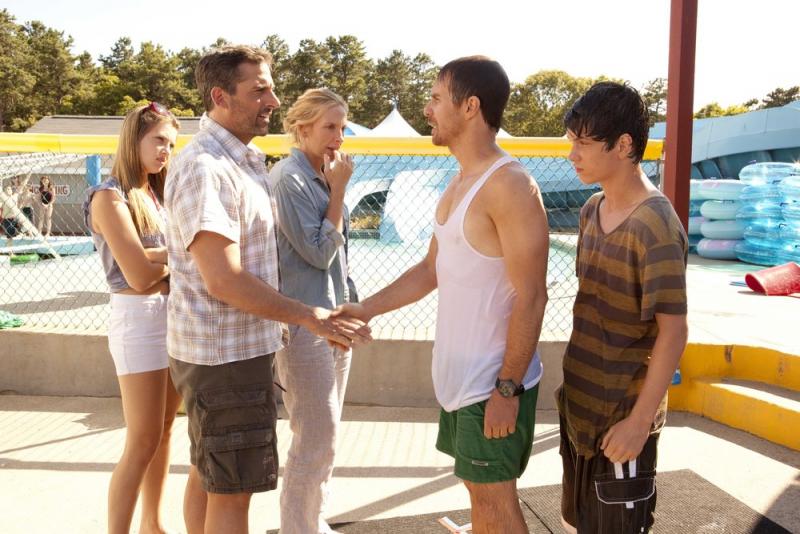
The Way, Way Back Duncan (Liam James) is 14, and if you remember being that age you remember the awkwardness, the ambivalence, and the confusion that went along with it. Duncan’s mother (Toni Collette) takes him along for an “important summer” with her jerky boyfriend, Trent (Steve Carell) — and despite being the least important guy at the summer cottage, Duncan’s only marginally sympathetic. Most every actor surrounding him plays against type (Rob Corddry is an unfunny, whipped husband; Allison Janney is a drunk, desperate divorcee), and since the cast is a cattle call for anyone with indie cred, you’ll wonder why they’re grouped for such a dull movie. Writer-directors Nat Faxon and Jim Rash previously wrote the Oscar-winning screenplay for 2011’s The Descendants, but The Way, Way Back doesn’t match that film’s caliber of intelligent, dry wit. Cast members take turns resuscitating the movie, but only Sam Rockwell saves the day, at least during the scenes he’s in. Playing another lovable loser, Rockwell’s Owen dropped out of life and into a pattern of house painting and water-park management in the fashion of a conscientious objector. Owen is antithetical to Trent’s crappy example of manhood, and raises his water wing to let Duncan in. The short stint Duncan has working at Water Wizz is a blossoming that leads to a minor romance (with AnnaSophia Robb) and a major confrontation with Trent, some of which is affecting, but none of which will help you remember the movie after credits roll. (1:42) Metreon, Sundance Kabuki. (Vizcarrondo)
White House Down Ah, the mid-1990s: a time when two big-budget movies on the same subject were regularly released within months of each other (1997’s Volcano and Dante’s Peak; 1998’s Armageddon and Deep Impact). When a director named Roland Emmerich ascended into the blockbuster pantheon with Independence Day (1996), a film that’s best-remembered for that iconic shot of the White House exploding under alien death rays. The intervening years have seen Emmerich plunge ever-deeper into various flavors of disaster, and White House Down — which reignites that ’90s copycat-rivalry thing by riding the fumes of March’s Olympus Has Fallen — finds its boogeyman in domestic terrorism. It beings on a triumphant day for President James Sawyer (Jamie Foxx), who has just ordered all US troops removed from the Middle East — angering some high-up men in his administration, as well as some ex-military goons with axes of their own to grind. When the White House is compromised, a wannabe Secret Service agent (Channing Tatum), at the Prez’s house for a tour with his precocious daughter, shoulders one-man-army duties. Rockets are launched; there’s a high-speed limo chase across the White House lawn; we learn the truth about Marilyn and JFK; and thanks to evil genius Skip Tyler (Jimmi Simpson), “the greatest hack the world has ever seen” is about to unleash World War III. Yep, that’s right: 17 years after ID4‘s Jeff Goldblum broke into the alien mainframe, thereby saving the White House-less planet, Emmerich has decided that hackers are actually bad guys. It goes with White House Down‘s warning that the enemy is no longer an external threat, but something lurking right under your nose. Better start working out, America — and working on your one-liners. (2:17) Metreon, 1000 Van Ness. (Eddy)
World War Z Or, Brad Pitt saves the world from undead beings with rotted brains but super-sharp hearing. Somehow, Max Brooks’ innovative multi-character book — written in the form of interviews with survivors of a recent zombie outbreak — becomes by-the-numbers action horror in the hands of director Marc Forster (2008’s Quantum of Solace, a.k.a. that Bond movie nobody remembers), complete with credit sequence filled with real news reports of environmental disasters, global unrest, and even a little shout-out to that guy who ate another guy’s face off last year in Florida. No bath-salt jokes here, though; instead, we have Pitt playing a verrrry serious former UN investigator — former, because he quit to spend more time with his family, a promise he actually considers keeping even when the survival of the world hinges, apparently, on his very specific expertise. He jets around the world (South Korea! Israel! Wales?) in search of a cure, but it’s obvious from the beginning — when he escapes immediate death in the initial rampage with his picture-perfect wife (Mireille Enos) and two daughters — that he’ll eventually suss out a planet-saving solution. (Sorry, but if that’s a spoiler you’ve never seen a movie before.) A few nifty setpieces can’t save World War Z from more or less embodying the descriptor “meh,” with its undynamic 3D, uninspiring CG, and cobbled-together script, complete with reassuring final voice-over. And one more thing: for the love of flesh-ripping gore, can we please make this the last PG-13 zombie movie? (1:56) 1000 Van Ness, Presidio, SF Center, Sundance Kabuki. (Eddy) *