Review

When bankers lie

3

By Darwin BondGraham

news@sfbg.com

Although few have ever heard of it, there’s probably no number more important to the global financial system than the London Interbank Offered Rate, or LIBOR. Defined precisely, LIBOR is a set of different interest rates that the world’s largest banks charge one another for cash loans denominated in US dollars.

Because of its centrality to the economic system, and the trust placed in it, LIBOR is used to calculate everything from consumer loans and home mortgages to exotic financial derivatives and investments. LIBOR makes the financial world go round, influencing the price of everything. Fortune 500 companies decide whether or not to invest billions in new factories and product lines based on LIBOR’s direction. Governments rethink their debt levels and spending when LIBOR ticks up and down.

It turns out, however, that LIBOR has been a lie, and that the world’s biggest banks rigged the rate to skim off billions of dollars in value from other corporations and the general public. In a devastating set of revelations that began to surface two years ago, the panel of the largest global banks that set the LIBOR rate conspired to manipulate it, to increase or decrease LIBOR, solely because a higher or lower quote on particular days would allow them to reap millions in instant profits.

US authorities working with regulators in the UK, Japan, Switzerland, and Singapore are currently investigating upwards of two dozen banks in what is probably the single biggest financial crime ever perpetrated. So far, employees of Barclay’s, UBS, and Credit Suisse have been fired, arrested, and charged. Many more criminal prosecutions are surely coming, but the real battle will be in the civil courts and the court of public opinion.

To date only a handful of civil lawsuits have been filed, the first shot fired by the city of Baltimore early last year. Last month, the County of San Mateo, city of Richmond, and the East Bay Municipal Utility District filed their own cases which were quickly consolidated into a growing class action to be heard in New York’s Southern District Federal Court.

Now San Francisco is set to enter the ring. On January 29, Supervisor John Avalos called for public hearings to review the impact of LIBOR manipulation on San Francisco’s finances, starting next week. While other cities and public agencies might be ahead in the federal courts, Avalos’s recommendation takes the investigation further, and in a different direction.

“We’re trying to assess how the LIBOR scandal affects San Francisco, and that’s what the hearing is about,” Avalos told the Guardian. “These banks rigged the financial markets for their own benefit and the global economy suffered as a result.”

While early indications are that San Francisco is better protected than many jurisdictions, Avalos said, “I think it’s important to stand with other cities and counties that are suffering.” Or as his legislative aide Jeremy Pollock told us, “When a major city like San Francisco calls for hearings, it’ll get a lot more attention. The hearing will be an educational process for everyone to understand how this complicated financial world really works.”

Former Supervisor Chris Daly, now the political director for Service Employees International Union Local 1021, which represents most city employees, said there’s a need to hold the banks publicly accountable. “These other jurisdictions that have filed suit haven’t had a big public process. We don’t want to see settlements for less in courtrooms. We want to see the full public exposure of the issue, and in terms of the cause of bank accountability, it is the better approach.”

Avalos has already met with the heads of different city departments and agencies in an effort to determine what kinds of losses the public might have sustained as a result of LIBOR rigging. Pollock said the city’s finance staff and attorneys are currently working closely with the city’s airport, retirement system, and Office of the Treasurer to gauge the size of the problem.

“LIBOR rigging may have impacted the payments under the airport’s swaps,” said Kevin Kone, who oversees capital finance for the San Francisco International Airport. The swaps Kone is referring to include seven interest rate swaps that the airport used to convert variable rate debts into fixed rates for half a billion of SFO’s bonds (see “The losing bets,” 2/28/12).

The swaps require SFO to pay a fixed rate of between 3.4 and 3.9 percent on its half-billion dollars in debt, while the banks pay about 60 percent of LIBOR. When SFO signed these swap contracts years ago, 60 percent of LIBOR was roughly equal to 3.4 percent, meaning the net payments between SFO and the banks basically canceled one another out. However, if LIBOR was later rigged downward by the banks, then the net interest rate payments would shift in favor of the banks, draining hundreds of thousands or even millions from SFO’s capital budget.

“As an example of the order of magnitude, if LIBOR were set artificially low by 0.25 percent for a full two years, the Airport would receive $900,000 less each year (for a total of $1.8 million) than it should from its swap counterparties,” explained Kone in an email.

The airport’s counterparties on its swaps included JP Morgan Chase, Merrill Lynch, and Goldman Sachs. JPMorgan Chase sits on the committee of banks that sets various LIBOR rates, as does Bank of America, which bought Merrill Lynch in 2008. Both JPMorgan Chase and Bank of America are named as conspirators in the LIBOR lawsuits pending in federal court. JPMorgan Chase and Bank of America are also the subject of federal criminal investigations concerning LIBOR rigging.

Other losses may have been suffered by the San Francisco Employees’ Retirement System which makes investments in derivative instruments that are linked to LIBOR. “The retirement board has been looking at this,” said Nadia Sesay, director of the Controller’s Office of Public Finance. “We know Retirement has exposure and they’re assessing their portfolios.”

According to the most recent audit of the Retirement System’s portfolio, SFERs holds two interest rate swaps on its books with a notional value of $15 million. In prior years, SFERs held other swaps. In 2010, the Retirement System’s audit showed three interest rate swaps with a total value of $41 million. Over the last two years these swaps drained $5.3 million from the pension system, and some of these losses might have been due to the downward manipulation of LIBOR. Also on the Retirement System’s books are other investments in bank loans, options, and other securities that might have been impacted by the LIBOR fraud.

Still more losses due to LIBOR-linked instruments on the city’s books will be investments held by the city treasury in pooled funds. Banks offer various investment products to local governments that need a temporary place to park millions or billions in cash; the returns on these investment are often pegged to LIBOR. Just as with the airport’s swaps with JPMorgan and Merrill Lynch subsidiary, often times these so-called “municipal derivatives” investments are sold to cities by the same global banks that sit on the British Banker’s Association panels that determine the various LIBOR rates.

That’s one of the most alarming things about the LIBOR scandal: how absurdly easy it was for just 16 banks to rig the entire world financial system in their favor for several years on end. LIBOR isn’t actually a market rate that is determined by the loans banks make to one another. Rather, it’s a rate the banks claim they would able to secure loans from their peers, and the final LIBOR numbers for any given day are determined not by some independent authority, but instead by the British Bankers Association’s panel members — the banks themselves.

“The problem is that there’s a clear conflict of interest,” explained Rosa Abrantes-Metz, an economist at the NYU Stern School of Business who has closely studied LIBOR and is an expert in financial markets and cartels. “Banks make proprietary trades on instruments related to LIBOR, so they do have an interest in moving LIBOR in their own favor.”

Abrantes-Metz is currently working as an expert in several LIBOR lawsuits. Among her recent research findings in studies that tracked LIBOR alongside other economic indicators is that all the conditions of a potential conspiracy are present, and empirical evidence points toward coordinated fraud. “The banks had, as we say, the means, motive, and opportunity,” concluded Abrantes-Metz.

Regardless of what San Francisco’s public hearings on LIBOR uncover, the road ahead will be long and complicated. When asked about the the expected flood of LIBOR litigation, Abrantes-Metz said it’s just getting started. “We’ve only had the settlements of three banks with the authorities [Barclays, UBS, and Credit Suisse]. I’ve read there are investigations of 14 of the 16 banks that were on the LIBOR panel. That’s just US Dollar LIBOR.”

“Then there’s Euroibor, and there’s 40 banks on that panel. Then there’s Tibor which some overlapping banks with Yen Libor banks,” said Abrantes-Metz, referring to other key global interest rates denominated in Euros and Yen. Like LIBOR, these lesser rates are used to calculate the values and obligations of trillions in securities and payments.

“Those are just the governmental investigations,” said Abrantes-Metz. “I’m sure as more evidence comes out of these settlements it will probably generate more private litigation. I think this is to go on for very many years.”

Meanwhile, a proposal that Avalos made in the fall of 2011 to have the city start a municipal bank is nearing completion of its legal analysis by the City Attorney’s Office. While it’s legally complicated and wouldn’t eliminate the local need for big banks, he said the LIBOR scandal reinforces the need for alternative lending institutions with great public accountability. “My goal is this year to have something on paper that will lead to a municipal bank,” Avalos told us. “These institutions are willing to rig the system, and we could protect ourselves more locally if we had a banking institution.”


Hearing called on America’s Cup “fundraising fiasco” as Mayor Lee talks about scaling back the event

20

Amid reports that San Francisco taxpayers could be on the hook for more than $20 million in America’s Cup expenses because of anemic fundraising efforts by the America’s Cup Organizing Committee, today Mayor Ed Lee talked about scaling back the event and offering public naming rights to wealthy donors and Sup. John Avalos called for a Board of Supervisors hearing to look into the matter.

Following his monthly question time appearance before the Board of Supervisors, Lee was questioned about the issue by reporters, and he downplayed the idea that the city will go into the hole for its overzealous sponsorship of billionaire Larry Ellison’s big boat race.

“We’re not in the hole, but we will be if we don’t raise enough money. And I don’t want the pressure on the General Fund, and that would end up being an obligation that we have. By the way, while I’m raising, or helping to raise, some $20 million to cover that, I’m also asking all departments now that we have a, relative to what was going to be a larger race, now we don’t have as many boats, the expenses might be off so we have to kind of update it and reduce it. So with the combination of reducing the expense side and then raising some money as we’re doing from the private sector, we’re getting some new traction,” Lee said.

“We still have plans to spend upwards of $30 million to cover all the expenses, and we’re hoping that gets down to much less than that. But my goal right now is to get reports from all the departments about how to reduce their spending on this. I’m still going to try to raise the $20 million with the help of Senator Feinstein, Nancy Pelosi, and Lt. Gov. Newsom,” Lee said.

He also alluded to public goodies that he may offer to wealthy potential donors, including making a passing reference that “we’ve created some ongoing legacies, naming rights in areas that haven’t been named yet, we’ve cleared that with the Port to make sure it’s a very attractive package for them.” But ultimately, he said that city taxpayers are on the hook to pay for the impacts of this race: “This is a financial obligation that we signed on.”

Earlier in the day, the Telegraph Hill Dwellers – which has been active since the America’s Cup was first proposed in trying to ensure the event makes financial sense for the city – sent a letter to the board calling for a hearing and highlighting the ethically dubious actions by city officials that got us into this mess.

That letter follows in its entirety:

February 12, 2013

Supervisor Carmen Chu, Chair

Supervisor David Campos

Supervisor Malia Cohen

Government Audit and Oversight Committee

San Francisco Board of Supervisors

1 Dr. Carlton B. Goodlett Place

San Francisco, CA 94102

Re: Request for Oversight Hearing on America’s Cup Organizing Committee “Fundraising Fiasco”

Dear Members of the Government Audit and Oversight Committee:

As a northern waterfront neighborhood leader who has supported bringing the America’s Cup to San Francisco since Day One, I feel compelled to urge you to take urgent action to begin to restore a profound breach of public trust while there is still time left to salvage this event. 

News reports this week revealed the stunning news that San Francisco taxpayers may have to pay upwards of $20 million to subsidize the America’s Cup[1] despite public commitments stating that the event would not be taxpayer-funded and a signed contract designed to make that happen.[2]  In light of such astonishing news this close to the race, I request that you schedule a public hearing now to get answers to this critical question: what happened and how can we fix it?

Specifically, I encourage you to solicit testimony and an appearance before the Committee from the two individuals most responsible for the current $20 million shortfall out of the $32 million in private fundraising that was committed to prevent the need for taxpayer subsidies:  America’s Cup Organizing Committee Executive Director Kyri McClellan and America’s Cup Organizing Committee Chair Mark Buell.  These are the two individuals whose primary job it has been for the past two years to ensure that the America’s Cup Organizing Committee complied with its fundraising obligations.  Both Ms. McClellan and Mr. Buell have made numerous public statements over the past two years aimed at rebuffing all concerns about their ability to raise the $32 million. 

For example:

1)  “I have every confidence we will meet our obligations,” – Kyri McClellan, 6/13/11[3]

2)  “Yep, we are not running behind in the least bit,” – Kyri McClellan, 9/19/11[4]

3)  “I am confident that all the money will be raised,” – Mark Buell, 1/6/12[5]

4) “I’m busting my ass raising (money) for it.” – Mark Buell, 2/7/12[6]

5)  “we are confident that the agreement we have with the (America’s Cup) Event Authority coupled with our continued fundraising successes will ensure we meet our obligations to the city.” – Mark Buell, 2/7/12[7]

6)  “There is definitely more heavy lifting to be done, but we think we’re well-positioned to do that,” – Kyri McClellan, 2/8/12[8]

The role that Ms. McClellan has played in creating what is being referred to as a “fundraising fiasco”[9] should particularly be evaluated in light of the two ethics laws that were waived by the San Francisco Ethics Commission at the urging of members of the Board of Supervisors to enable her to shift seats across the negotiating table from her previous job working as the Mayor’s America’s Cup deal negotiator on behalf of the City into her private role working for the America’s Cup Organizing Committee.[10]  The twin dangers of reduced accountability and lax scrutiny that stem from this kind of “revolving door” between government and the private sector are precisely what the ethics laws that were summarily waived were put in place to prevent.  The question now must be asked whether the decision to waive ethics rules to allow someone playing such a central role to shift sides deserves a significant part of blame for the problems that have begun to come to light.

As a long-time supporter of the America’s Cup, I hope you will take swift action to get answers and correct the course of the event before it is too late.  Thank you very much for your time and consideration. 

Sincerely,

Jon Golinger

President

Telegraph Hill Dwellers


[1] America’s Cup could cost S.F. millions, Matier & Ross, S.F. Chronicle 2/10/13

[2] “[T]he [America’s Cup Organizing] Committee will endeavor to raise up to $32 million over a three year period from private sources, to reimburse the City for a portion of the City’s costs (including, without limitation, costs associated with CEQA review), and lost revenues, and City expenditures required to meet its obligations under Sections 8 and 10 (including resources from the police, and public works departments, the Port, DPT and MTA). The Committee’s fundraising targets for the three year period are $12 million for year one, and $10 million for years two and three.” – Section 9.4, 34th America’s Cup Host and Venue Agreement, 12/14/10

[3] America’s Cup Fundraising is Floundering, NBC News, 6/13/11

[4] America’s Cup reach tax exempt status, KGO ABC News, 9/19/11

[5] America’s Cup organizers hit first fundraising goal, SF Chronicle, 1/6/12

[6] America’s Cup needs ‘significant additional fundraising,’ SF Chronicle, 2/7/12

[7]Significant’ fundraising needed for America’s Cup group, SF Business Times, 2/7/12

[8] Controller:  America’s Cup needs more fundraising to cover city costs, SF Examiner, 2/8/12

[9] City Pushes to Fill Fundraising Gap for America’s Cup, KTVU Ch. 2, 2/11/13

[10] “In order to accommodate McClellan, commissioners agreed to waive two post-employment restrictions for city officials.  The first is a yearlong post-employment communications ban, and the second prohibits former city employees from receiving compensation from city contractors for two years. . . . Asked what would happen if ACOC somehow failed to raise the agreed-upon funds, placing McClellan in the position of having to explain the shortfall or re-negotiate with her former coworkers, Ethics Commission Deputy Executive Director Mabel Ng allowed, ‘If something like that happened, there might be a conflict.’ And what justification was given for waiving the ban on former employees receiving compensation from city contractors? “For that one, in the law itself, it says the commission may waive it … if it would cause extreme hardship,” Ng explained. “There would be a hardship, because … this is a great opportunity for her, and there was a short timeline for her to do it.”  Pressed on that point, Ng confirmed that the “hardship” in this case was the possibility of being barred from a great job opportunity, not the threat of financial impact or job loss. The other issue, Ng said, was that without McClellan serving in that post, the committee’s fundraising effort might not be successful. “It just seemed like, you need to have somebody take charge,” she said. “The committee may suffer without her at the helm. If she were not able to do that, the committee — which plays a very crucial role in this — may not be able to meet its obligations.’” Mayoral staff member to direct America’s Cup Organizing Committee, SF Bay Guardian, 4/7/11


Suck on this: Guardian staff reviews aphrodisiac lollipops

0

Hey Valentines. Did you need a libido boost to buoy you through this week of boner-killing commercialized love-things? Meet Pandora’s Pops, then, a little venture headed up by Jena Chambers, a body worker who once ran a massage school and clinic in Asheville, North Carolina for six years. Chambers recently launched a Kickstarter to fund large-scale production of her pops, which are vegan, organic, herbal — all the things.

They also purport to give you feelings. Our focus was on Pandora’s aphrodisiac pops, since V-Day approaches and Chambers’ brand ambassador Mary Lollipoppins will be flitting about town distributing them. The line also includes mental stimulant pops, pops to help you quit smoking, pops to calm you down, and more.

How well do they work? The pops were thrust into the hands of Guardian staffers last weekend. Results are as follows: 

I’m going to give this one a solid “didn’t hurt.” Despite my bachelor’s degree in sociology I created a totally flawed sex pop experimental design: I ate my “Hot Professor” pop an hour before meeting a date for which no additional stimulant was needed. Did I giggle at his French dialetic thought jokes because of my pop’s unique herbal blend? Was Pandora responsible for the way I tolerated my companion’s meandering anecdotes or the effusiveness with which I cooed over his station wagon? Maybe? At any rate, unlike the other reviewers I thought my professor pop tasted dreamy (not too sweet, spicy, imparting the distinct sensation that I was eating something not free of nutritional value.) I’d do it again. Um, eat a Pandora Pop I mean. 

Maybe I’m biased because I met Chambers when she brought the pops by the office and she is adorable: 

See?

Anyway, onto the Guardian staff peanut gallery:

I had the “Nurse Ginger” pop, which tasted OK but mildly reminiscent of potpourri. It felt a bit tingly on the tongue, but didn’t seem to have any effect on my libido.

— Emily Savage, music editor

When I heard that Pandora’s Pops would “amplify [my] natural, magnetic pheromones,” I thought: goodie. I can smell even stronger. How sexy will that be? Will my partner even notice over the odor of the dog and the unwashed laundry and the teenagers who don’t seem to understand the meaning of “regular showers?” What the hell; can’t hurt.

Except that: Gross.

The website described my “Flight Attendant” lollipop as “cinammon and exotic/familiar spice.” Actually, tasted like stinky socks. And I can give you all a basic dating tip: Nobody wants to kiss you when your mouth tastes like stinky socks. Trust me — I tried.

— Tim Redmond, executive editor

To put it simply: whiskey trumps aphrodisiac lollipops. I took one lick of my “Juicy Rose” pop and and half expected to turn into a lovesick puppy –- heart-shaped pupils and all. Sadly it seems any potential fireworks were masked by the stronger effects of multiple whiskey sours. But not all was lost -– my heart-shaped treat was defeated by alcohol but it still worked great both as a breath mint and a conversation piece.

— Cortney Clift, editorial intern

So perhaps Pandora’s Pops were too delicately herbal to stoke the fires of hardened journalist-folks. Perhaps your sweetie is more easily-influenced? Or just really into sucking on hearts. 

SF IndieFest, and a whole lot more: new movies!

0

First things first: the San Francisco Independent Film Festival kicked off last night and runs through Feb. 21 at various venues (mostly the Roxie). Check out my interviews with local shorts directors here, and some top picks throughout the festival here.

Also this week: cult director Don Coscarelli’s John Dies at the End (my chat with Mr. Bubba Ho-Tep here), Amy Berg’s West Memphis Three doc, West of Memphis (check out Nicole Gluckstern’s review here), and the Vortex Room’s love-ly new series (Dennis Harvey’s take here).

What’s more, 1986 action classic Top Gun gets the 3D IMAX re-release treatment (because any list of things that are better when they’re bigger, louder, and more in-yo-face include Soviet MiGs, Tom Cruise’s teeth, and Kenny Loggins jams). Reviews of comedies Identity Thief and Shanghai Calling, plus Steven Soderbergh’s maybe-swan song Side Effects, below the jump.

Identity Thief America is made up of asshole winners and nice guy losers — or at least that’s the thesis of Identity Thief, a comedy about a crying-clown credit card bandit (Melissa McCarthy) and the sweet sucker (Jason Bateman) she lures into her web of chaos. Bateman plays Sandy, a typical middle-class dude with a wife, two kids, and a third on the way. He’s always struggling to break even and just when it seems like his ship’s come in, Diana (McCarthy) jacks his identity — a crime that requires just five minutes in a dark room with Sandy’s social security number. Suddenly, his good name is contaminated with her prior arrests, drug-dealer entanglements, and mounting debt; it’s like the capitalist version of VD.  But as the “kind of person who has no friends,” Diana is as tragic as she is comic, providing McCarthy an acting opportunity no one saw coming when she was dispensing romantic advice on Gilmore Girls. Director Seth Gordon (2011’s Horrible Bosses) treats this comedy like an action movie — as breakneck as slapstick gets — and he relies so heavily on discomfort humor that the film doesn’t just prompt laughs, it pokes you in the ribs until you laugh, man, LAUGH! While Identity Thief has a few complex moments about how defeating “sticking it to the man” can be (mostly because only middle men get hurt), it’s mostly as subtle as a pratfall and just as (un-)rewarding. (1:25) (Sara Maria Vizcarrondo)

Shanghai Calling Hotshot lawyer Sam Chao (Daniel Henney) is his NYC firm’s top choice to be their man in Shanghai — much to his chagrin, since he puts the American in Chinese American. But off to the bustling, rapidly-expanding city he goes, knowing exactly only one word of Chinese (“fart”), and a classic fish-out-of-water comedy follows. His first day on the job, he bungles a billion-dollar deal, and spends the rest of the movie trying to set things right for his prickly client (Alan Ruck) — with the help of his ambitious assistant (Zhu Zhu), a perky relocation expert (Eliza Coupe), a fried-chicken mogul who runs an American-style bar (Bill Paxton), and a reporter who goes by the improbable moniker of “Awesome Wang” (Geng Le). Along the way, of course, he does some personal soul-searching, realizing there’s more to life than fancy-restaurant reservations and a high-stakes career. Writer-director Daniel Hsia’s Shanghai Calling doesn’t break any new ground, but it’s an undeniably entertaining tale of culture clash, backed up by an appealing cast to boot. (1:40) (Cheryl Eddy)

http://www.youtube.com/watch?v=QGe2ZE0prGg

Side Effects Though on the surface Channing Tatum appears to be his current muse, Steven Soderbergh seems to have gotten his smart, topical groove back, the one that spurred him to kick off his feature filmmaking career with the on-point Sex, Lies, and Videotape (1989) and went missing with the fun, featherweight Ocean’s franchise. (Alas, he’s been making claims that Side Effects will be his last feature film.) Here, trendy designer antidepressants are the draw — mixed with the heady intoxicants of a murder mystery with a nice hard twist that would have intrigued either Hitchcock or Chabrol. As Side Effects opens, the waifish Emily Taylor (Rooney Mara), whose inside-trading hubby (Tatum) has just been released from prison, looks like a big-eyed little basket of nerves ready to combust — internally, it seems, when she drives her car into a wall. Therapist Jonathan Banks (Jude Law), who begins to treat her after her hospital stay, seems to care about her, but nevertheless reflexively prescribes the latest anti-anxiety med of the day, on the advice of her former doctor (Catherine Zeta-Jones). Where does his responsibility for Emily’s subsequent actions begin and end? Soderbergh and his very able cast fill out the issues admirably, with the urgency that was missing from the more clinical Contagion (2011) and the, ahem, meaty intelligence that was lacking in all but the more ingenious strip scenes of last year’s Magic Mike. (1:30) (Kimberly Chun)

Out of place

414

news@sfbg.com 

In his State of the City address last week, Mayor Ed Lee cheerfully characterized San Francisco as “the new gravitational center of Silicon Valley.” He touted tech-sector job creation. “We have truly become the innovation capital of the world,” Lee said, “home to 1,800 tech companies with more than 42,000 employees — and growing every day.”

From a purely economic standpoint, San Francisco is on a steady climb. But not all residents share the mayor’s rosy outlook. Shortly after Lee’s speech, renowned local author Rebecca Solnit published her own view of San Francisco’s condition in the London Review of Books. Zeroing in on the Google Bus as a symbol of the city’s housing affordability crisis, she linked the influx of high-salaried tech workers to soaring housing costs. With rents trending skyward, she pointed out, the dearth of affordable housing is escalating a shift in the city’s cultural fabric.

“All this is changing the character of what was once a great city of refuge for dissidents, queers, pacifists and experimentalists,” Solnit wrote. “It has become increasingly unaffordable over the past quarter-century, but still has a host of writers, artists, activists, environmentalists, eccentrics and others who don’t work sixty-hour weeks for corporations — though we may be a relic population.”

LIMITED OPTIONS

The issue of housing in San Francisco is highly emotional, and there is perhaps no greater flashpoint in the charged debate than Ellis Act evictions.

When the housing market bounces upward, Ellis Act evictions tend to hit long-term tenants whose monthly payments, protected by rent control, are a comparative bargain. Even if they’ve submitted every payment on time and upheld every lease obligation for 20 years, these renters can find themselves in the bind of being forced out.

And they don’t just lose their homes; often they lose their community. San Francisco has become so expensive that many Ellis Act victims are tossed out of this city for good.

Enacted in 1986, the state law allows a landlord to stop renting units, evict all tenants, and sell the building for another purpose. Originally construed as a way for landlords to “go out of business” and move into their properties, the Ellis Act instead gained notoriety as a driving force behind a wave of evictions that slammed San Francisco during the tech boom of the late 90s. Between 1986 and 1995, just 29 Ellis evictions were filed with the San Francisco Rent Board; in the 1999-2000 fiscal year alone, that number ballooned to a staggering 440.

Under the current tech heyday, there are indications that Ellis Act evictions are gaining fresh momentum. The San Francisco Rent Board recorded 81 this past fiscal year, more than double that of the previous year, and there appears to be an upward trend.

TIC CONTROVERSY

Buildings cleared via the Ellis Act are typically repackaged as tenancies-in-common (TIC), where several buyers jointly purchase a multi-unit residence and each occupy one unit. Realtors often market TICs as a path to homeownership for moderate-income individuals, creating an incentive for buyers to enter into risky, high-interest shared mortgages in hopes of later converting to condos with more attractive financing.

The divide between TIC owners and renters came into sharp focus at a contentious Jan. 28 hearing, when a Board of Supervisors committee met to consider legislation that would allow some 2,000 TIC units to immediately convert to condos without having to wait their turn in a requisite lottery system.

One TIC owner said he was financially burdened, but had only entered into the arrangement because “I wanted to stay here and raise my family, but we couldn’t afford a single family home.” Yet tenants brought their own set of concerns to the table, saying the temptation to create TICs was putting a major dent in the city’s finite stock of rent-controlled units — the single greatest source of affordable housing in San Francisco.

“My feeling is, let’s stop doing TICs,” Tommi Avicolli Mecca, a tenants right activist with the Housing Rights Committee, told the Guardian following the hearing. “The city has to just start making sure that the condos that are built are the kind of thing [TIC buyers] can afford. Instead, we cannibalize our rental stock? That’s a reasonable way? You evict one group of people to house another: How does that make sense?”

The grueling five-hour hearing illustrated the sad fact that San Franciscans in a slightly better economic position were being pitted against economically disadvantaged renters. The two groups were bitterly divided, and all seemed weary, furious, and frustrated by their housing situations.

The condo-conversion legislation, co-sponsored by Sups. Scott Wiener and Mark Farrell, did not move forward that day. Instead, Board President David Chiu made a motion to table the discussion until Feb. 25, to provide time for “an intensive negotiation process.” Chiu, who rents his home, added: “While I myself would like to become a homeowner someday … I do not support the legislation in its current form.”

Sup. Jane Kim sought to appeal to the tenants as well as the TIC owners. “It’s very tragic that we have set up a situation where [TICs and renters] are pitted against one another,” she said. She hinted at what a possible alternative to might look like. “We should be looking at a ban of scale,” she said. “If we allow 1,800 potential units to go thru this year, are we willing to do a freeze for the next 8 to 10 years?”

It’s unclear what will happen in the next few weeks, but if this legislation makes it back to the full board in some form, the swing votes are expected to be Sups. London Breed, Malia Cohen and Norman Yee.

CASH OR EVICTION?

New protections were enacted following the late-90s frenzy to discourage real-estate speculators from using the Ellis Act to turn a profit on the backs of vulnerable seniors or disabled tenants. Yet a new wave of investors has discovered they can persuade tenants to leave voluntarily, simply by offering buyouts while simultaneously wielding the threat of an Ellis Act eviction. “The process got more sophisticated,” explains San Francisco Rent Board Deputy Director Robert Collins.

Once a tenant has accepted a check in lieu of eviction, rent-controlled units can be converted to market rate, or refurbished and sold as pricey condos, without the legal hindrances of an eviction blemish. Buyouts aren’t recorded with the Rent Board, and the agency has no real guidance for residents faced with this particular dilemma. “We don’t have the true number on buyouts,” says Mecca. “We don’t know how many people have left due to intimidation.”

Identity-wise, renters impacted by the Ellis Act defy categorization. A contingent of monolingual Chinese residents rallied outside City Hall recently to oppose legislation they believed would give rise to evictions; in the Mission, many targeted tenants are Latinos who primarily speak Spanish. From working immigrants, to aging queer activists, to disabled seniors, to idealists banding together in collective houses, the affected tenants do have one thing in common. When landlords or real-estate speculators perceive that their homes are more valuable unoccupied, their lives are susceptible to being upended by forces beyond their control.

The upshot of San Francisco’s affordability crisis is a cultural blow for a city traditionally regarded as tolerant, forward thinking, and progressive. In the words of Rose Eger, a musician who faces an Ellis Act eviction from her apartment of 19 years, “it changes the face of who San Francisco is.

Out of the Castro

By Tim Redmond

You can’t get much more Castro than Jeremy Mykaels. The 62-year old moved to the neighborhood in the early 1970s, fleeing raids at gay bars in Denver. He played in a rock band, worked at the old Jaguar Books, watched the rise of Harvey Milk, saw the neighborhood transform and made it his home.

He’s lived in a modest apartment on Noe Street for 17 years, and for the past 11 has been living with AIDS. Rent control has made it possible for Mykaels, who survives on disability payments, to remain in this city, in his community, close to the doctors at Davis Hospital who, he believes, have saved his life.

And now he’s going to have to leave.

In the spring of 2011, his longtime landlords sold the building to a real-estate investment group based in Union City — and the new owners immediately sought to get rid of all the tenants. Two renters fled, knowing what was coming; Mykaels stuck around. In September of 2012, he was served with an eviction notice, filed under the state’s Ellis Act.

He’s a senior, he’s disabled, his friends are mostly dead and his life is in his community — but none of that matters. The Ellis Act has no exceptions.

Mykaels spent a fair amount of his life savings fixing up his place. The walls are beige, decorated with nice art. Dickens the cat, who is chocolate brown but looks black, wanders in and out of the small bedroom. Mykaels has been happy there and never wanted to leave; “this,” he told me, “is where I thought I would live the rest of my life.”

There’s no place in the Castro, or even the rest of the city, where he can afford to move. Small studios start at $2,500 a month, which would eat up all of his income. There is, quite literally, nowhere left for him to go.

“A lot of my friends have died, or moved to Palm Springs,” he said. “But this is where my doctors are and where I’m comfortable. I’m not going to find a support system like this anywhere else in the world.”

Mykaels is the face of San Francisco, 2013, a resident who is not part of the mayor’s grand vision for bringing development and high-paying jobs into the city. As far as City Hall is concerned, he’s collateral damage, someone whose life will have to be upended in the name of progress.

But Mykaels isn’t going easily. The former web designer has created a site — ellishurtsseniors.org — that lists not only his address (460 Noe) and the names of the new owners (Cuong Mai, William H. Young and John H. Du) but the addresses of dozens of other properties that are facing Ellis Act evictions. His message to potential buyers: Boycott.

“Do not buy properties where seniors or the disabled have been evicted for profit by real estate speculators using the Ellis Act,” the website states.

Mykaels is a demon researcher — his site is a guide to 31 properties with 94 units where seniors or disabled people are being evicted under the Ellis Act. In some cases, individuals or couples are filing the eviction papers, but at least 14 properties are owned by corporations or trusts.

Mai told me that he knew a disabled senior was living in the building when he and his two partners bought it, but he said his plan all along was to evict all the tenants and turn the three-unit place into a single-family house. He said he hasn’t decided yet whether to sell building; “I might decide to live there myself.” (Of course, if he wanted to live there himself, he wouldn’t need the Ellis Act.)

Mai said he “felt bad about the whole situation,” and he had offered to buy Mykaels out. The offer, however, wouldn’t have covered more than a few months of market rent anyplace else in the Castro.

By law, Mykaels can stay in his apartment until September. If he can’t stave off the eviction by then, San Francisco will lose another longtime member of the city community.


Dark days in the Inner Sunset

By Rebecca Bowe

The living room in Rose and Willie Eger’s Inner Sunset apartment is where Rose composes her songs and Willie unwinds after playing baseball in Golden Gate Park. Faded Beatles memorabilia and 45 records adorn the walls, and a prominently displayed poster of Jimi Hendrix looms above a row of guitar cases and an expansive record collection.

It’s a little worn and drafty, but the couple has called this 10th Ave. apartment home for 19 years. Now their lives are about to change. On Jan. 5, all the tenants in their eight-unit building received notice that an Ellis Act eviction proceeding had been filed against them.

“The music that I do is about social and political things,” explains Rose, dressed from head-to-toe in hot pink with a gray braid swinging down her back. Determined to derive inspiration from this whole eviction nightmare, she’s composing a song that plays with the phrase “tenants-in-common.”

Cindy Huff, the Egers’ upstairs neighbor, says she began worrying about the prospect of eviction when the property changed hands last summer. Realtor Elba Borgen, described as a “serial evictor” in online news stories because she’s used the Ellis Act to clear several other properties, purchased the apartment building last August, through a limited liability corporation. The notice of eviction landed in the mailbox less than six months later. (Borgen did not return Guardian calls seeking comment.)

“With the [average] rent being three times what most of us pay, there’s no way we can stay in the city,” Huff says. “The only option we would have is to move out of San Francisco.” She retired last year following a 33-year stint with UCSF’s human resources department. Now, facing the prospect of moving when she and her partner are on fixed incomes, she’s scouring job listings for part-time work.

The initial notice stated that every tenant had to vacate within 120 days, but several residents are working with advocates from the Housing Rights Committee in hopes of qualifying for extensions. Huff and the Egers are all in their fifties, but some tenants are seniors—including a 90-year-old Cuban woman who lives with her daughter, and has Alzheimer’s disease.

Willie works two days a week, and Rose is doing her best to get by with earnings from musical gigs. Both originally from New York City, they’ve lived in the city 35 years. When they first moved to the Sunset, it resembled something more like a working-class neighborhood, where families could raise kids. The recent tech boom has ushered in a transformation, one that Rose believes “changes the face of who San Francisco is.” Willie doesn’t mince words about the mess this eviction has landed them in. “I call it ‘Scam-Francisco,'” he says.

The trio recently joined tenant advocates in visiting Sup. Norman Yee, their district supervisor, to tell their stories. Yee, who is expected to be one of the swing votes on an upcoming debate about condo-conversion legislation vehemently opposed by tenant activists, reportedly listened politely but didn’t say much.

As for what the next few months have in store for the Egers? “I can’t really visualize the outcome,” Rose says. “I can only visualize the day-to-day fight. And that’s scary.”


Fighting for a home in the Mission

By Tim Redmond

Eleven years ago, Olga Pizarro fell in love with Ocean Beach. A native of Peru who was living in Canada, she visited the Bay Area, saw the water and decided she would never leave.

Fast forward to today and she’s built a home in the Mission, renting a small room in a basement flat on Folsom Street. The 55-year-old has lived in the building for eight years; polio has left her wearing a leg brace and she can’t climb stairs very well, but she still rides her bike to work at the Golden Gate Regional Center. She’s a sociologist by training; the walls in her room are lined with bookshelves, with hundreds of books in Spanish and English.

The place isn’t fancy, and it needs work, but it’s hard to find a ground-floor apartment in the Mission that’s affordable on a nonprofit worker’s salary. Since 2011, when she moved in, she and her three housemates have been protected by rent control. And Pizarro’s been happy; “I love the neighborhood,” she told me.

The letter warning of a pending eviction arrived Jan. 16. A new owner of the building wants to turn the place into tenancies in common and is prepared to throw everyone out under the Ellis Act. There’s no place else in town for Pizarro to go.

“I’ve looked and looked,” she said. “The cheapest places are $2,500 a month or more. Maybe I’ll have to move out of the city.”

Pizarro’s building is owned by Wai Ahead, LLC, a San Francisco partnership registered to Carol Wai and Sean Lundy. I couldn’t reach Wai or Lundy, but their attorney, Robert Sheppard, had plenty to say. “San Francisco is going the way of New York,” he told me. “Manhattan is full of co-ops that used to be rentals, and lower-income people are moving to Brooklyn and Queens. That’s happening here with Oakland and further out.” He argued that TICs, like co-ops, provide home-ownership opportunities for former renters.

Sheppard, who for years represented tenants in eviction cases, said the Ellis Act is law, and America is a capitalist country, and “as long as there is a private housing market, there will be shifts of people as the housing market shifts.” He agreed that it’s not good for lower-income people to lose their homes, but “the poor will always be hurt by a changing economy. It’s called evolution.”

Pizarro told me she’s shocked at how expensive housing has become in the Mission. “It’s gotten so gentrified,” she said. “People show up in their BMWs. It’s starting to feel very isolated.”

She’s fighting the eviction. “I didn’t intend it to be this way,” she explained. “I just want to live here.” Lacking any family in the area, the Mission has become her community — “and I’m frustrated by the violence of how expensive it is.”


Affordability goes out of style

By Rebecca Bowe

Hester Michael is a fashion designer, and her home doubles as a project space for creating patterns, sewing custom clothing, weaving cloth, and painting. She’s lived in her Outer Sunset two-bedroom unit for almost two decades, but now she faces an Ellis Act eviction. Michael says she initially received notice last June. The timing was awful -– that same month, her husband passed away after a long battle with terminal illness.

“I’ve been here 25 years. My friends are here, and my business. I don’t know where else to go, or what else to do,” she says. “I just couldn’t picture myself anywhere else.”

Michael rents the upstairs unit of a split single-family home, a kind of residence that normally isn’t protected by rent control. Yet she leased the property in 1994, getting in under the wire before that exemption took effect. Since she pays below-market-rate rent in a home that could be sold vacant for top dollar, a target was essentially inscribed on her back when the property changed hands in 2004. That’s about when her long battle with the landlords began, she says.

From the get-go, her landlords indicated that she should look for a new place, Michael says, yet she chose to remain. The years that followed brought things falling into disrepair, she says, and a string of events that caused her feel intimidated and to fear eviction. Finally, she consulted with tenant advocates and hired an attorney. A complaint filed in superior court alleges that the property owners “harassed and retaliated [Michael] when she complained about the defective and dangerous conditions …telling [her] to move out of the property if she did not like the dangerous conditions thereat … repeatedly making improper entries into [the] property, and wrongfully accusing [her] of causing problems.”

Records show that Angela Ng serves as attorney in fact for the property owner, Ringo Chung Wai Lee. Steven Adair MacDonald, an attorney who represents both landlords and tenants in San Francisco housing disputes, represents the owners. “An owner of a single family home where the rent is controlled and a fraction of market has virtually no other choice but to terminate the tenancy,” MacDonald said when the Guardian reached him by phone. “They’ve got to empty it, and the only way to empty it is the Ellis Act.”

While Michael received an extension that allows her to remain until June 5, she fears her custom sewing business, Hester’s Designs, will suffer if she has to move. There’s the issue of space. “I have so much stuff in this house,” she says. And most of her clients are currently located close by, so she doesn’t know where her business would come from if she had to relocate. “A lot of my clients don’t have cars,” she says, “so if I live in some suburb in the East Bay, forget it. I’ll lose my business.”

The prospect of eviction has created a major dilemma for Michael, who first moved to San Francisco in 1987. While moving to the East Bay seems untenable, she says renting in San Francisco feels out of reach. “People are renting out small, tiny bedrooms for the same price as I pay here,” she says. With a wry laugh, she adds: “I don’t think there’s any vacant apartments in San Francisco -– unless you’re a tech dude and make seven grand a month.”

Suhr apologizes for sparse spying report, pledges more info

0

Police Chief Greg Suhr has issued an apology for the sparse report on joint SFPD-FBI surveillance activities that his department gave last week, pledging to work with the activists who had criticized it as failing to comply with a city law adopted last year. But it remains to be seen whether the two sides will agree on the level of detail that would constitute meaningful civilian oversight of sensitive domestic spying operations.

“The report was accurate and complied with the ordinance, but briefer than what he had hoped for,” SFPD Sgt. Michael Andraychak told the Guardian this afternoon. “Chief Suhr has ensured compliance with the ordinance but did not have an opportunity to review the report prior to the presentation to the commission. The chief personally apologizes to those who attended the commission meeting for the brevity of the report and promised to have future reports more developed. The Chief’s Office is in the process of scheduling meetings with Nasrina Bargzie [of the Asian Law Caucus] to develop a report with more detail so those concerned and the public can be as informed as possible. Chief Suhr is committed to remain in compliance with the ordinance.”

While Bargzie said she welcomes the apology and pledge to be more forthcoming, “We disagree that the report that was issued was in compliance with the ordinance.” While that watered down version of a stronger ordinance that Mayor Ed Lee had vetoed was vague, Bargzie said that, “It does require that the commission be given enough information to provide oversight.”

In correspondence between Bargzie and Suhr over the last year, the Coalition insisted that the report include details on the number of investigations or assessments requested by the FBI, how many requests SFPD personnel refused, how disputes were resolved, and other information, which she said Suhr told her last year that he would provide.

But he seemed to dispute that in a Jan. 23 letter to her, writing, “I assured you that the Department’s JTTF report would include all public information required by the ordinance. I did not commit to provide all information requested in your letter dated June 8, 2012.”

Sup. Jane Kim, who sponsored both the stronger original legislation that Lee vetoed and the compromise measure that followed, expressed hope Suhr and the Coalition will find common ground. “The chief himself met with me and apologized for it,” she told us. “He acknowledged that it was not a good report and said he would work with the Coalition on this.”

She acknowledged that the ordinance itself doesn’t spell out the specificity that the Coalition is seeking. “In order for us to get the compromise, we had to work with the Mayor’s Office. It was watered down,” she said. Yet Kim said meaningful oversight is still what she expects to see: “We need a lot more specificity and the details the Coalition would like to see.”

Stallone, Walken, zombies, Oscar shorts, and more: new movies!

0

Yes you can find time to see a movie this otherwise football-y weekend. The ongoing Noir City and Sketchfest still have a lot of great upcoming programming, Sly Stallone is back in evocatively-titled action flick Bullet to the Head, a zombie finds love in Warm Bodies (review below), and all the Academy Award-nominated shorts are now available for big-screen viewing, for anyone who takes winning the office Oscar pool as seriously as … the Superbowl.

And speaking of the big game, the Roxie will be hosting its annual “Men in Tights” viewing party, a benefit for the theater and the upcoming SF IndieFest. So you can have your pigskin, and eat your popcorn too. GO NINERS!


“Oscar Nominated Short Films 2013: Animated” If you caught Wreck-It Ralph, nominated in the Best Animated Feature category, you’ve already seen John Kahrs’ Paperman, about a junior Mad Men type who bumbles through his pursuit of a lovely fellow office drone he spots on his commute. Or, if you saw Ice Age: Continental Drift, you’ve seen Maggie Simpson in The Longest Daycare, starring Homer and Marge’s wee one as she grapples with the social order at the Ayn Rand School for Tots. Among the stand-alones, Minkyu Lee’s Adam and Dog features a quick appearance by Eve, too, but the star is really the scrappy canine who gallops through prehistory playing the world’s first game of fetch with his hairy master. Two minutes is all PES (nom de screen of Adam Pesapane) needs to make Fresh Guacamole — which depicts grenades, dice, and other random objects as most unusual ingredients. The only non-US entry, UK director Timothy Reckart’s Head Over Heels, is about an elderly married couple whose relationship has deteriorated to the point where they (literally) no longer see eye to eye on anything. The program is rounded out by three more non-Oscar-nominated animated shorts: Britain’s The Gruffalo’s Child, featuring the voices of Helena Bonham Carter and Robbie Coltrane; French art-thief caper Dripped; and New Zealand’s sci-fi tale Abiogenesis. (1:28) (Cheryl Eddy)

http://www.youtube.com/watch?v=Z8SbmPhavhs

“Oscar Nominated Short Films 2013: Documentary” Selections include San Francisco filmmaker Sari Gilman’s poignant study of a Florida retirement community, Kings Point; Cynthia Wade’s Mondays at Racine, about a beauty salon that provides free services for women who have lost their hair to cancer treatments; Sean Fine and Andrea Nix’s Inocente, a profile of a young, homeless, aspiring artist; Redemption, Jon Alpert and Matthew O’Neill’s take on New York dumpster divers; and Open Heart, Keif Davidson’s look at Rwandan children who travel to Sudan for high-risk surgery. (3:29)

“Oscar Nominated Short Films 2013: Live Action” Selections include Bryan Buckley’s Asad, about a Somali boy who must choose between fishing and piracy; Sam French’s Buzkashi Boys, about two young friends coming of age in war-torn Kabul, Afghanistan; Shawn Christensen’s babysitting yarn Curfew; Tom Van Avermaet’s supernatural love story Death of a Shadow; and another (sort-of) love story, Canadian Yan England’s Henry. (1:54)

Sound City Dave Grohl adds “documentary director” to his ever-lengthening resume with this tribute to the SoCal recording studio, where the grimy, funky décor was offset by a row of platinum records lining its hallway, marking in-house triumphs by Fleetwood Mac, Tom Petty, Cheap Trick, Neil Young, and others (even, yep, Rick Springfield). Top acts and producers (many of whom appear in the doc to dish and reminisce) were lured in by a unique recording console, installed in the early 1970s, whose legend grew with every new hit it helped engineer. Despite its reputation as a hit factory — and the attraction of its laid-back vibe and staff — old-school Sound City began to struggle once the highly-polished sound of digital technology overtook the music industry. That is, until Grohl and Nirvana recorded Nevermind there, keeping the studio alive until the unstoppable march of Pro Tools hammered the final nails in. Or did it? Sound City‘s final third follows Grohl’s purchase of the studio’s iconic console (“A piece of rock ‘n’ roll history,” he proclaims, though he installs it in a swanky refurbished space) and the recording of an album featuring luminaries from the studio’s past … plus Paul McCartney. The resulting doc is nostalgic, sure, but insider-y enough to entertain fans of classic rock, or at least anyone who’s ever sneered at a drum machine. (1:46) Roxie. (Cheryl Eddy)

Stand Up Guys Call it oldster pop, call it geriatricore, just don’t call it late for its meds. With the oncoming boomer elder explosion, we can Depends — har-dee-har-har — on the fact that action-crime thrillers-slash-comedies like 2010’s Red, 2012’s Robot and Frank, and now Stand Up Guys are just the vanguard of an imminent barrage of grumpy old pros locking and loading, grousing about their angina, and delivering wisdom with a dose of hard-won levity. As handled by onetime teen-comedy character actor Fisher Stevens, Stand Up Guys is a warm, worthy addition to that soon-to-be-well-populated pantheon. It grows on you as you spend time with it — much like the two aging reprobates at its core, Val (Al Pacino) and Doc (Christopher Walken). Val, the proverbial stand-up guy who took the fall for the rest of his gang, has just completed a 25-year-plus stint in the pen. There to meet him is his only pal, and former partner in crime, Doc, who has been leading a humble life but has one last hit to commit for their old boss Claphands (Mark Margolis), who’s inexplicably named after a Tom Waits song. Sex, drugs, and some Viagra commercial-esque bluesy guitars are in order, but first Val and Doc must find their drive, in the form of their old driver buddy Hirsch (Alan Arkin), who they break out of a rest home, and, perhaps, their moral compass, which arrives with the discovery of a victim (Vanessa Ferlito) of baddies much less couth than themselves. The pleasure comes with following these stand-up guys as they make that leap from craven self-preservation to heroism, which might seem implausible to some. But to the cast’s, and Stevens’s, credit, they make it work — and even give the sentiment-washed finale a swashbuckling buddy-movie romanticism, the kind that a young Tarantino might dislike and an older Tarantino would be loathe to begrudge his lovable louses. (1:34) (Kimberly Chun)

http://www.youtube.com/watch?v=1FVyUL1Q06M

Warm Bodies A decade and a half of torrid, tormented vampire-human entanglements has left us accustomed to rooting for romances involving the undead and the still-alive. Some might argue, however, that no amount of pop-cultural prepping could be sufficient to get us behind a human-zombie love story for the ages. Is guzzling human blood really measurably less gross than making a meal of someone’s brains and other body parts? Somehow, yes. Recognizing this perceptual hurdle, writer-director Jonathan Levine (2011’s 50/50, 2008’s The Wackness) secures our sympathies at the outset of Warm Bodies by situating us inside the surprisingly active brain of the film’s zombie protagonist. Zombies, it turns out, have internal monologues. R (Nicholas Hoult) can only remember the first letter of his former name, but as he shambles and shuffles and slumps his way through the terminals of a postapocalyptic airport overrun by his fellow corpses (as they’re called by the film’s human population), he fills us in as best he can on the global catastrophe that’s occurred and his own ensuing existential crisis. By the time he meets not-so-cute with Julie (Teresa Palmer), a young woman whose father (John Malkovich) is commander-in-chief of the human survivors living in a walled-off city center, we’ve learned that he collects vinyl, that he has a zombie best friend, and that he doesn’t want to be like this. We may still be flinching at the thought of his and Julie’s first kiss, but we’re also kind of rooting for him. The plot gapes in places, where a tenuous logic gets trampled and gives way, but Levine’s script, adapted from a novel by Isaac Marion, is full of funny riffs on the zombie condition, which Hoult invests with a comic sweetness as his character staggers toward the land of the living. (1:37) (Lynn Rapoport)

The Performant: Sexcapades, no ice

0

“SPANK!” and “Sex and the City: Live!” heat things up a little

The Regency Ballroom is awash in estrogen and vodka martinis, overrun by neatly-coifed former sorority sisters sheathed in tasteful rayon suits and drop earrings. The few men in attendance fall into two distinct camps—balding bruisers wrestled into button-down shirts, and fidgety-looking younger men who know they have just been dragged into the theatrical equivalent of a chick flick. One only hopes that a reciprocal arrangement involving the Super Bowl or some racy bedroom activity was reached earlier on, the latter being the most appropriate to the occasion — an evening of E.L. James-inspired comedy, “SPANK! The Fifty Shades parody.”

Apparently not to be confused with “50 Shades! The Musical,” nor “Fifty Shades of Grey: a XXX Adaptation,” “Spank!” bills itself as a musical review, and features just three performers as writer E.B. Janet (Amanda Barker), “smoldering” anti-hero Hugh Hanson (Drew Moerlein) and the painfully two-dimensional ingénue Tasha Woode (Michelle Vezilj).

As Soft Cell blares from the Regency’s imposing bank of speakers stage fog begins to drift across the stage and Moerlein bursts through the giant red curtains, gyrating to the music with the practiced wink-and-nudge finesse of a Chippendale. Eventually the two others join him, Vezilj dancing, and Barker drinking Chardonnay from a giant wineglass, her constant companion. Barker is our narrator and guide into the world of grey we are about to descend into.

She’s also about the best thing in the play — with a flirty dirty attitude and brazen laugh, she controls the stage far better than the supposedly dominant Moerlein, whose “dark” character is likened multiple times to that of Batman, but whose goofy antics including a pitch-perfect Gilbert and Sullivan song, instead bring the Tick to mind. He does get a moment where he strips all the way down to his Wonderoos, by far the raciest vignette in the otherwise bare-bones, vanilla-beige show, which still appears to satisfy its target oddience, who laugh at all the appropriate moments and even inject their own humor into the event during the potentially-awkward participatory bits, ring-led by Vezilj. And isn’t it the potentially-awkward participatory bits what we remember most in life? In love?

Speaking of bits, fan favorite, live action glamour-com “Sex and the City: Live!” is staging a revival down at Rebel, with all-new episodes and plenty of costume changes for all you drag-fashionistas. Dragonistas.

Starring the redoubtable Heklina as Carrie, Lady Bear as Miranda, Trixie Carr as Charlotte, and D’Arcy Drollinger as the best-known cougar since Mrs. Robinson, Samantha, the “Sex” crew promises to be as racy and raucous (if not more so) as the televised version. “Airing” on hump day Wednesdays, at both 7 and 9 p.m. each performance features two episodes, highlighting themes of promiscuity, dirty talk, romantical quandaries, and expensive shoes, a campy cocktail of fun escapism to get you through the week. And for the risk-adverse, fear not, the only participation the “Sex” ladies demand of you is laughter. Now that’s hot!

Sex and the City: Live!, open-ended run
7 p.m. and 9 p.m.
Rebel
1760 Market, SF
$20
www.trannyshack.com

Stage Listings

0

Stage listings are compiled by Guardian staff. Performance times may change; call venues to confirm. Reviewers are Robert Avila, Rita Felciano, and Nicole Gluckstern. Submit items for the listings at listings@sfbg.com. For further information on how to submit items for the listings, see Picks.

THEATER

OPENING

Not a Genuine Black Man Marsh San Francisco, 1062 Valencia, SF; www.themarsh.org. $25-50. Opens Fri/1, 8pm. Runs Fri, 8pm; Sat, 5pm (Sat/2, show at 8pm). Through Feb 23. What, the unapologetically middle-class Brian Copeland asks, is the real meaning behind the phrase “a genuine black man”? By way of an answer, the stand-up comic and KGO radio host offers up a simultaneously funny and disarmingly frank story about growing up African American in the racist suburb that was San Leandro in the early 1970s. Letting his narrative bounce back and forth between his boyhood memories and a period of depression that overtook him as a parent in 1999 — and interlacing the autobiography with verbatim utterances from both sides of the fight his family joined to desegregate the city — Copeland brings admirable chops as a comedian to bear on some difficult and disturbing, if ultimately hopeful, material. Note: review from an earlier run of the same show. (Avila)

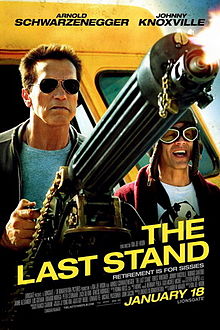
You Know When the Men Are Gone Z Space, 450 Florida, SF; www.zspace.org. $30-55. Previews Wed/30-Thu/31, 7pm; Fri/1, 8pm. Opens Sat/2, 8pm. Runs Wed-Thu, 7pm; Fri-Sat, 8pm; Sun, 3pm. Through Feb 24. Word for Word performs two short stories by Siobhan Fallon (the author, not the film actor): “The Last Stand” and “Gold Star.”

ONGOING

Cat on a Hot Tin Roof Buriel Clay Theater at the African American Art and Culture Complex, 762 Fulton, SF; www.african-americanshakes.org. $10-15. Sat, 8pm; Sun, 3pm. Through Feb 17. African-American Shakespeare Company performs Tennessee Williams’ Pulitzer-winning classic.

Dear Harvey New Conservatory Theatre Center, 25 Van Ness, SF; www.nctcsf.org. $25-45. Wed-Sat, 8pm; Sun, 2pm. Through Feb 24. New Conservatory Theatre Center performs Patricia Loughrey’s play about Harvey Milk, drawn from over 30 interviews.

Foodies! The Musical Shelton Theater, 533 Sutter, SF; www.foodiesthemusical.com. $30-34. Fri-Sat, 8pm. Open-ended. AWAT Productions presents Morris Bobrow’s musical comedy revue all about food.

4000 Miles Geary Theater, 415 Geary, SF; www.act-sf.org. $20-150. Wed-Sat, 8pm (also Sat, 2pm); Sun, 2 and 8pm; Tue, 7pm. Through Feb 10. ACT performs Amy Herzog’s comedy about growing up and growing old, and the moments in between.

Hedwig and the Angry Inch Boxcar Playhouse, 505 Natoma, SF; www.boxcartheatre.org. $25-40. Wed-Sat, 8pm (also Sat, 5pm). Through March 2. Hold onto your hairpiece, Boxcar Theatre is reprising their all-too short summer run of Hedwig and the Angry Inch, and just in case you think you saw it already, be forewarned — you ain’t seen nothing yet. Recast, redesigned, and re-vamped, this outcast-rock musical familiarly follows the misadventures of one Hedwig Robinson (né Hansel Schmidt) with glam, guts, and glitter. But unlike the movie version penned by and starring John Cameron Mitchell as the titular chanteuse, or other staged versions, director Nick A. Olivero splits the larger-than-life, would-be rock sensation into eight different characters, who are each given a solo turn as well as plenty of ensemble harmonizing during the course of the two hour-plus performance. The effect is often electric, and just as frequently hilarious, as when the four female actors playing the role stomp across the stage swinging imaginary dicks in the air to the lyric “six inches forward and five inches back, I got a, I got an angry inch!” Supported by a tight quartet of rock musicians led by Rachel Robinson, and the phenomenal Amy Lizardo as Hedwig’s beleaguered “man Friday” Yitzhak, Hedwig keeps on extending for what appears to be an indefinite run, employing the time-honored Thrillpeddlers’ tradition of rotating cast members and comeback performances, which means you could theoretically go multiple times and never see quite the same show twice. I certainly plan to. (Gluckstern)

The Little Foxes Tides Theatre, 533 Sutter, SF; www.tidestheatre.org. $20-38. Wed-Sat, 8pm. Through Feb 23. Tides Theatre Company performs a modern take on the Lillian Hellman classic.

Se Llama Cristina Magic Theatre, Fort Mason Center, Marina at Laguna, SF; www.magictheatre.org. $22-60. Opens Wed/30, 8pm. Runs Tue, 7pm; Wed-Sat, 8pm (also Sat/2 and Feb 13, 2:30pm); Sun, 2:30pm. Magic Theatre performs the world premiere of Octavio Solis’ multi-layered drama.

Manic Pixie Dream Girl ACT Costume Shop Theater, 1117 Market, SF; www.manicpixiedreamgirl.org. $25-35. Thu-Sun, 8pm. Through Feb 10. Billed as a “graphic-novel” play, first-time playwright Katie May’s Manic Pixie Dream Girl reaches out to a demographic frequently left out of the theatrical conversation — the geek chic, 20-something set. Marrying projected panels of black-and-white graphic novel-style drawings with dialogue and action provided by the actors onstage, this PlayGround co-production attempts to combine two very different mediums into a smooth narrative, a rocky but valiant effort. Much of the live action appears cartoonish rather than nuanced, and the two central protagonists — struggling painter and wannabe graphic novel artist Tallman (Joshua Roberts) and his new muse Lilly (Lyndsy Kail), a waifish mute with pockets full of candy wrappers chance-met in his neighborhood dive bar — are awkwardly incomplete ciphers. If you’re looking for the depth of detail and the visual impact of a Transmetropolitan or a Berlin, you won’t find it in MPDG, but what you will get is a glad eyeful of Rob Dario’s striking graphics, and some impeccable support acting courtesy of Lucas Hatton (who plays several welcome roles including a buttinsky, bro of a bartender and a “evil” real estate agent with all the charm and smarm of an overgrown frat boy), Liz Anderson’s bitch-queen supernova ex-girlfriend, and Michal Barrett Austin’s winsome cynicism as Tallman’s best buddy. (Gluckstern)

Princess Ivona Performance Art Institute, 75 Boardman, SF; www.thecollectedworks.org. $20-30. Thu-Sat, 8pm. Through Feb 9. The first play by the great Polish writer Witold Gombrowicz (1904-1969) receives its first professional Northern California production in this admittedly uneven, sometimes sluggish but always intelligent and frequently inspired staging by newcomers the Collected Works. Set in the foyer and back room of co-presenter Performing Art Institute’s spacious SOMA warehouse, the action — peppered throughout by old-time American ballads enchantingly rendered by musician-singer Meredith Axelrod — initially unfolds amid an audience milling around a pond. There a haughty prince (the sharp, charismatic Ryan Tacata) and his aristo pals make sport of the plebs until the Prince takes things too far by impetuously proposing marriage to a slow, anemic, deeply dull and disheveled young woman, the anti-heroine of the title (played with a moody lethargy and savage intelligence by Tonyanna Borkovi). As the audience and the characters, including the worried King (Barry Kendall) and Queen (Florentina Mocanu-Schendel), all retire to the court, the presence of Ivona becomes a catalyst for the unsettling of ill-feelings, bad memories, and ugly impulses formerly buried beneath a surface of the luxury, grandeur, and privilege of the beautiful people. The absurdity of their lives revealed, how will harmony be restored? Astutely staged by director and company-cofounder Michael Hunter, with excellent design support — including from costumer Latifa Medjdoub — this captivating play makes for a worthwhile outing and a very promising company debut. (Avila)

“Risk Is This…The Cutting Ball New Experimental Plays Festival” Exit on Taylor, 277 Taylor, SF; www.cuttingball.com. Free ($20 for reserved seating; $50 for five-play reserved seating festival pass). Through Feb 9. Three new works (by Sean San José, Dipika Guha, and Basil Kreimendahl) and two new “Risk Translations.”

Sex and the City: LIVE! Rebel, 1760 Market, SF; trannyshack.com/sexandthecity. $25. Wed, 7 and 9pm. Open-ended. Lady Bear, Trixie Carr, Heklina, and D’Arcy Drollinger star in this drag tribute to the long-running HBO show.

SF Sketchfest: The San Francisco Comedy Festival Various venues, SF; www.sfsketchfest.com. Ticket prices vary according to event. Through Feb 10. The popular fest returns for its 12th year, featuring an array of comedy programs including tributes to Portlandia, The Adventures of Pete and Pete, and Bruce Campbell; a series of Reggie Watts performances; film screenings; sketch and improv shows; and more.

The World’s Funniest Bubble Show Marsh San Francisco, 1062 Valencia, SF; www.themarsh.org. $8-50. Sun, 11am. Extended through March 17. The Amazing Bubble Man (a.k.a. Louis Pearl) continues his family-friendly bubble extravaganza.

BAY AREA

Acid Test: The Many Incarnations of Ram Dass Marsh Berkeley, 2120 Allston, Berk; www.themarsh.org. $15-50. Sat, 8pm; Sun, 5pm. Extended through Feb 17. Lynne Kaufman’s new play stars Warren David Keith as the noted spiritual figure.

Hippy Icon, Flower Geezer and Temple of Accumulated Error Marsh Berkeley, 2120 Allston, Berk; www.themarsh.org. $15-50. Fri, 8pm; Sat, 5pm; Sun, 2pm. Through Feb 10. Wavy Gravy holds forth on his legendary life and times.

Our Practical Heaven Aurora Theatre, 2081 Addison, Berk; www.auroratheatre.org. $32-60. Previews Wed/30, 8pm. Opens Thu/31, 8pm. Runs Tue and Sun, 7pm (also Sun, 2pm); Wed-Sat, 8pm. Through March 3. Aurora Theatre Company presents the world premiere of Anthony Clarvoe’s play about a family that gathers in a home they’ll soon lose due to a rising sea.

Somewhere Mountain View Center for the Performing Arts, 500 Castro, Mtn View; www.theatreworks.org. $23-73. Tue-Wed, 7:30pm; Thu-Sat, 8pm (also Sat, 2pm); Sun, 2 and 7pm. Through Feb 10. TheatreWorks performs Matthew Lopez’s play about a 1960s Puerto Rican family caught up in the filming of West Side Story.

Troublemaker, or the Freakin Kick-A Adventures of Bradley Boatwright Berkeley Repertory Theatre, Thrust Stage, 2025 Addison, Berk; www.berkeleyrep.org. $29-77. Wed/30 and Sun/3, 7pm (also Sun/3, 2pm); Thu/31-Sat/2, 8pm (also Sat/2, 2pm). Berkeley Rep presents the world premiere of a play — about a 12-year-old wannabe superhero — it commissioned from writer Dan LeFranc.

Waiting for Godot Marin Theatre Company, 397 Miller, Mill Valley; www.marintheatre.org. $36-52. Tue and Thu-Sat, 8pm (also Sat/2 and Feb 16, 2pm; Feb 7, 1pm); Wed, 7:30pm; Sun, 2 and 7pm. Through Feb 17. Marin Theatre Company performs Samuel Beckett’s modern classic.

The Wild Bride Berkeley Repertory Theatre, Roda Theatre, 2015 Addison, Berk; www.berkeleyrep.org. $35-89. Tue and Thu-Sat, 8pm (also Sat, 2pm); Wed and Sun, 7pm (also Sun, 2pm). Through Feb 17. Berkeley Rep performs a return engagement of Emma Rice’s grown-up fairy tale.

PERFORMANCE/DANCE

“Adult” CounterPULSE, 1310 Mission, SF; www.counterpulse.org. Fri/1-Sun/3, 8pm. $10-30. Performance duo Jarry (Jesse Hewit and Laura Arrington) present a new, two-act work.

“Cabaret Showcase Showdown, Year #4: Contest for Best Comedic Cabaret Act” Martuni’s, 4 Valencia, SF; (415) 241-0205. Sun/3, 7pm. With up-and-coming acts judged by Lisa Geduldig, Trauma Flintstone, and Katya Smirnoff-Skye, plus guest performer Darlene Popovic.

“David Mills is Smart Casual” Stage Werx, 446 Valencia, SF; www.thevisibletheater.org. Sun/3, 8pm. $12. the comedian performs.

“In a Room Full of Strangers” Garage, 715 Bryant, SF; www.brownpapertickets.com. Wed/30-Thu/31, 8pm. $10-20. Erik Wagner presents a new dance-theater work.

“In and Out of Shadow” Marsh, 1062 Valencia, SF; www.themarsh.org. Sat/2, 5pm; Sun/3, 3pm; Feb 8-9, 8pm (also Feb 9, 2pm); Feb 10 and 17, 3pm; Feb 16, 2pm. $12-35. Marsh Youth Theater’s teen troupe performs Gary Soto’s musical play, based on oral histories gathered by the young actors themselves.

“The One Year Anniversary and Sweetheart Edition of The News” SOMArts Cultural Center, 934 Brannan, SF; somarts.org/thenews. Tue/5, 7:30pm. $5. The new and experimental performance works series celebrates its first anniversary with hosts WithLove and Peter Max Lawrence, plus performers Peter Griggs with Aurora Switchblade, Lambert, Erin Malley, and more.

“San Francisco Magic Parlor” Chancellor Hotel Union Square, 433 Powell, SF; www.sfmagicparlor.com. Thu-Sat, 8pm. Ongoing. $40. Magic vignettes with conjurer and storyteller Walt Anthony.

“San Francisco Symphony Lunar New Year Concert and Celebration” Davies Symphony Hall, 201 Van Ness, SF; www.sfsymphony.org. Sat/2, 4pm. $25-72. Celebrate the Lunar New Year and Year of the Snake with pre-concert festivities (3pm) including lion dancing and children’s arts and crafts, followed by a performance of traditional Asian music and orchestral works composed by Asian and Asian American artists.

“[title of show]” Band Candy Theatre Company, 125A Hyde, SF; www.brownpapertickets.com. Fri/1-Sat/2, 8pm; Sun/3, 2pm. $18. Band Candy performs a musical about … two guys writing a musical.

Fairy tales, Noir City, insane drummers, and more! Yep, it’s movie time

0

An odd week of new releases, this: three disposible genre flicks (ensemble comedy Movie 43; Jason Statham ass-whupper Parker; and Jeremy-Renner-what-is-going-on-with-your-career-dude? puzzler Hansel & Gretel: Witch Hunters) — plus old-folks comedy Quartet (read Dennis Harvey’s take here, probably the only Quartet review on the planet to compare it to 1979’s Roller Boogie).

Your best bets are the two films reviewed after the jump (music doc Beware of Mr. Baker and South Korean import In Another Country), or buying a sheaf of tickets to the always-quality Noir City (now in its 11th year; runs through Feb.3 at the Castro).

Beware of Mr. Baker This mesmerizing bio-doc about volatile, wildly talented drummer Ginger Baker (Cream, Blind Faith) begins with the 70-something musician clocking director Jay Bulger in the face. After this opening, Bulger — who also wrote a deeply compelling article about Baker for Rolling Stone last year — wisely pulls himself out of the narrative, instead turning to a wealth of new interviews (with Baker, his trademark red locks faded to gray, and many of his musical and personal partners, including Eric Clapton and multiple ex-Mrs. Bakers), vintage performance footage, and artful animation to weave his tale. Baker’s colorfully-lived, improbably long life has been literally all over the map; he overcame a hardscrabble British childhood to find jazz and rock stardom, and along the way jammed with Fela Kuti in Nigeria (where he picked up his fierce love of polo), broke many hearts (his own kids’ among them) and lost multiple fortunes, spent a stint in the US, and eventually landed at his current farm in South Africa. Two constants: his musical genius, and his frustratingly jerky behavior — the consequence of a naturally prickly personality exacerbated by copious drug use and bitterness. A must-see for musicians and those who love them. (1:30) Roxie. (Cheryl Eddy)

http://www.youtube.com/watch?v=EA7H8NjNhC0

In Another Country This latest bit of gamesmanship from South Korea’s Hong Sang-soo (2000’s Virgin Stripped Bare by Her Bachelors) has Isabelle Huppert playing three Frenchwomen named Anne visiting the same Korean beachside community under different circumstances in three separate but wryly overlapping stories. In the first, she’s a film director whose presence induces inapt overtures from both her married colleague-host and a strapping young lifeguard. In the more farcical second, she’s a horny spouse herself, married to an absent Korean man; in the third, a woman whose husband has run away with a Korean woman. The same actors as well as variations on the same characters and situations appear in each section, their rejiggered intersections poking fun at Koreans’ attitudes toward foreigners, among other topics. Airy and amusing, In Another Country is a playful divertissement that’s shiny as a bubble, and leaves about as much of a permanent impression. (1:39) (Dennis Harvey)

SF Sketchfest founders reminisce (and look ahead) on the eve of their 12th event

0

The first SF Sketchfest, in 2002, was a good excuse to find a stage and some quality time for its organizers’ own sketch comedy troupe, Totally False People, but it has since become an annual comedy conclave of the first order. SF Sketchfest founders David Owen, Cole Stratton, and Janet Varney talk about the growth and philosophy of their annual comedy extravaganza and the humble beginnings that gave it rise.

San Francisco Bay Guardian Is SF Sketchfest a full time job by now?

David Owen Yeah, I think it is. It definitely gets more intense a few months out, but we’re always working on it, we’re always percolating ideas, as well as trying to do events throughout the year. We had a presence at Outside Lands this past year. We’re always trying to do stuff. But this time of year especially, from fall on, is beyond full-time for us.

SFBG Has it had to change a lot structurally as it has grown, or are you still pretty much running it as you always have?

Janet Varney We earned some pretty simple lessons along the way, including Cole, Dave, and I not driving every single headliner to and from the airport, and sell tickets at the box office, and sell our concessions, which is what we were doing the first few years.

DO The growth has been gradual. Over 12 years it’s been a little bit like a snowball, each year we add a little bit more. There are more performers, more shows, there’s more logistics, more general stuff to deal with. Twelve years in, it’s grown to a place none of us ever imagined. We never imagined we’d even get to the second or third year and have one Kid in the Hall, let alone have all the Kids in the Hall and all these comedy legends, who are our heroes. You said humble beginnings, that’s absolutely right. It was a local festival, just for us to perform at, and 12 years later we’re still surprised that it’s so many shows, with so many people that we like.

SFBG Have you gained a new perspective on comedy that you didn’t have before?

DO When we started, we were just fresh out of college and we wanted to write our stuff and perform it. Cole is still performing, he can speak to that, but from my point of view, just seeing it as a producer now, I think our first couple of years we thought, “Oh, there might be an audience in the Bay Area for this kind of comedy.” And now it’s clear that there is. There’s a big appetite for it, because we keep adding shows and people keep coming.

We’ve learned that laughter is important, that people really want to get out of the house, and in the dead of winter, to come to a comedy club or a theater and experience something with a group of people where they’re all laughing. There’s nothing else like that. I have to say that I’ve really learned that getting out and laughing is important for people. It’s a fun thing that people like to do. Hopefully we’re providing something that’s unique and different from other festivals or other shows.

JV We’re so proud of San Francisco and the way San Francisco receives the comedy we bring to the table. Cole and I live in Los Angeles now, Dave is still in the city, but we all have this fierce love of San Francisco. It’s such a wonderful way for us to interact with the people in the city that we love. We feel like they back us up every year by being the most savvy, enthusiastic, great, smart audiences. That’s why performers come back here year after year as well, they love performing for San Francisco audiences. The festival couldn’t be what it is if we didn’t have those kind of people, as Dave said, showing up to laugh together.

Cole Stratton What made our festival a little different form the start was, you know, we started as performers, we came at it from that vantage point — it’s about the comedy; it’s about making it as artist and performer friendly as we can. I think why a lot of people embraced it early on was that it wasn’t about doing work that there’s a lot of pressure on. It was come have fun with each other, try some stuff — let’s have fun and really celebrate comedy.

The audiences in the Bay Area totally get that too. There’s been this tremendous energy at all our shows. Everyone feels a part of something that’s really fun, unique, and different. That’s been the spirit of the festival year after year.
 
SFBG Is the social or political significance of comedy something you guys think about?

JV Absolutely. I think the three of us respond to comedians who are brave in that way. Who are willing to hold a mirror up, to what happens to us in society and what happens to us as humans, but who are willing to get really personal. We love silly comedy, comedy that isn’t necessarily about anything; we love the absurd, we love lighthearted, sort of childlike comedy. But we also respond really strongly to people who are unafraid to say, hey, this is me, are you like this? This is ridiculous.

Obviously those comedians become beloved because they are humbling themselves and they’re also reminding everybody in the audience that it’s ok to be a human being.

DO It can be cathartic, to come away from a show where someone has talked about mortality or heartbreak or environmental problems in the world — and all the things that trouble us — it can be cathartic to come from a comedy show and you’ve laughed about it, you’ve thought about it, you’ve learned a little bit about it. But I want to add that in our programming there isn’t an agenda — like, ok, we need to have ten socially conscious comedians, and we need to have five absurd ones.

Our only agenda is: Does it make the three of us laugh? That’s how we decide what’s going to be in the festival. We don’t spend a whole lot of time thinking about what’s going to make the most number of people laugh? We just hope people like our taste. Our taste, as Janet said, it really runs the gamut from infantile, silly, ridiculous stuff, stupid stuff, all the way up to really smart, socially aware, critical comedy. We like all of that stuff. As long as it’s funny. That’s what matters.

SFBG Are people approaching you more than the other way around at this point?

JV It’s still both. We’re very lucky because we’ve had wonderful experiences with people we sort of chased down and invited in the beginning. We have a lot of returning guests year after year that we’re still excited to welcome back, and audiences are excited about. People like David Wain, who want to come here year after year and are always thinking ahead as to what kind of new, interesting show they can bring to the table so that they’re keeping it fresh but still returning to the festival multiple times.

We still have our wish list. We still have our people that we like to chase down, and cross our fingers and hope for the best. The comedy community, luckily it can be kind of close. We’re really lucky in that we have this amazing pool of references. But we still write letters with our fingers crossed, and hope for the best, as much as people reach out to us and ask to come back, or we have agents calling us whereas before we might not get our phone calls returned.

SFBG The podcast has really become a major new platform for comedy, as the lineup this year reflects. Are you searching out new outlets as well as new shows?

DO The three of us all spend a lot of time scouting and looking around and trying to keep our finger on the pulse, just seeing as much as we can, whether it’s in person or online. We try to stay clicked in to what’s going on out there. But we’re also looking for something that’s new. What can we do that is a totally new format? We love standup and sketch and improv and film stuff, but we also like doing things like game shows, or live talk shows.

This year we have a walking tour of the Asian Art Museum led by Canadians, or we have a show that mixes comedians and musicians, or Reggie Watts with a dance troupe. We try to see how we can do something at this festival that you’re really not going to see anywhere else. Not just something that’s on tour or that you’ve seen on TV. What can we debut at the festival, premiere as a brand new idea or a brand new concept or format? Those are things we think about and try to pursue.

SFBG Is the tour of the Asian Art Museum by Canadians an example of an original idea?

DO That one, no. That was a show that existed in New York. They did it at the Metropolitan. They’re going to be doing it in San Francisco for the first time, but that specific show was not our idea. We do come up with concepts that we think might be good for somebody, and we’ll pitch them, and if the artist is into it then it might come to fruition.

[For example,] we’re doing a show called Yacht Rock Heroes. Mustache Harbor is this amazing San Francisco band that does covers of ’70s and ’80s soft rock classics, Toto and Hall & Oates and those kinds of things. We thought it would be fun to have comedians come out and cover the song with the band as kind of a mash up. Mustache Harbor liked the idea, and we found comedians who were into it, so we kind of put it together from there.

SFBG How did you all first meet?

DO Cole and I were in the same floor in the dorms at SF State as freshmen. He was on one side and I was on the other. Everyone else on the floor was either a jock or a party animal…

JV [Laughing] That’s the first time I’ve heard someone say “party animal” in a serious way. I just love that that happened.

DO Yeah. There was a nerd on one side, and a nerd on the other. We were both into comedy and movies and music. And everyone else was into, like, swimming.

CS I lived in the dorms for like a year or whatever. I remember it was time to push on when — there was one communal restroom and I had to walk all the way down to it in the middle of the night, and there was a party going on, and I looked down. Someone had thrown a starfish into the hall. Like pulled it out of an aquarium and threw it into the hall. I was like, “Ok, someone just murdered a starfish on my floor. I think it’s time to go anywhere else.”

DO And then we became roommates, and we were working at the same video store and were roommates for, god, how many years? Three or four years. Five maybe. And then Janet — Janet, where did we first meet, at the Castro Theatre?

JV Yeah, I think we met at the Talking Heads show, Stop Making Sense. It was the anniversary screening. Actually, we love this story because Dave and I met and  — Cole, you were there too, yeah? I don’t know why I only remember Dave. Cole, we met before this interview, right? We all went to an anniversary screening of Stop Making Sense with David Byrne in attendance. He actually was sitting right in front of us. We love that everything came full circle, and that we ended up doing a screening of True Stories at the Castro Theatre with David Byrne.

DO Cole and I had a mutual friend — this didn’t happen right away but not long after we all met, this guy wanted to start a sketch comedy group. We were all theater and film majors, and we were putting on plays or making little films. And this guy wanted to start in comedy. We were all into it. There was about maybe six or seven of us who started meeting up, trying to write sketches. One by one people sort of fell away, and then there was four, the three of us and Gabriel Diani. And that’s how Totally False People started.

SFBG Where was your first gig? Where would you perform at the beginning?

JV We started doing shorts at a couple of the comedy clubs, and I think, was Rooster T. Feathers the first gig?
 
CS That was the very first show, Rooster T. Feathers in, Sunnyvale? Yeah. Our thinking was let’s make sure we’re at least 45 minutes outside the city limits if it doesn’t go well.
 
JV We went up on a stand-up, kind of a showcase night. We did a few different shows there. On one occasion someone called and left a voicemail after we performed saying that they didn’t enjoy our, quote, play-acting. We were trying to do sketch on this standup comedy stage and apparently people did not know what to do with us. We were going up there with like costumes and wigs…

DO That was our first review: “Did not enjoy the play-acting.”

CS And we thought, let’s start a festival!
 
SF Sketchfest: The San Francisco Comedy Festival
Jan 24-Feb 10, prices vary
Various venues, SF
www.sfsketchfest.com

A shot of warmth

8

virginia@sfbg.com

APPETITE Let’s be clear: the Bon Vivants crew’s newly opened Trick Dog in the Mission — featuring a cocktail menu modeled after a Pantone swatch book — is the hot food and drink destination of the moment (see my early review on the Pixel Vision blog at SFBG.com). But slipping at the bar at these three restaurants, ranging from elegant to festive, offers some of SF’s best cocktails with incredible bites on a long winter’s eve.


RICH TABLE

It’s impossible to get a reservation at Rich Table, one of the most buzzed about restaurants in the country right now, but I find seats at the bar open up often on a Monday, and arriving when they open at 5:30pm is ideal.

With new bar manager Jason “Buffalo” LoGrasso (from Quince and Cotogna), already lovely cocktails expand from four-five offerings to seven on the regular and four on the dessert menu. After tasting every LoGrasso cocktail ($10), I’m in love with the Carnegie Martini. Inspiration is genius — a pastrami sandwich from Carnegie Deli, where my Dad took me for my first reuben as a teenager. LoGrasso combines elements of the ultimate sandwich into a clean, refreshing whole. Wisely using St. George’s Dry Rye Gin as a base, caraway comes in the form of Combier’s Doppelt Kummel Extra liqueur, an aromatic caraway liqueur redolent of cumin. LoGrasso adds drops of mustard oil and a pickle.

Other heights include a lively Shivered Timbers, red with pomegranate touched by ginger and cinnamon, evoking rhum agricole but using Smith & Cross Pot Still Rum. Top aperitif? Figaro Chain — bright, stimulating Swan’s Neck vodka, Averna, lemon, and ginger. Dessert cocktails shine, too. Rich Coffee is a harmonious blend of Fernet, Sightglass coffee, and pistachio cream. Carthusian Hot Cocoa sings with chocolate, Green Chartreuse, mint, and pineapple marshmallow.

Eat with: doughy, savory doughnuts ($7) topped with shaved dried porcini, the clincher being thick raclette dipping sauce. Amuse bouche “Dirty Hippie” elevates granola to gourmet with cool buttermilk panna cotta doused in pumpkin seeds, sprouts, and spices. Divine tajarin ($27) egg noodles (a Piedmont pasta style) in house cultured butter under shaved Perigord black truffles dissolve in the mouth. Sigh.

199 Gough, SF. (415) 355-9085, www.richtablesf.com


MICHAEL MINA

Carlo Splendorini has crafted some of the most elegant, balanced cocktails anywhere. In my travels sampling cocktails the world over, it’s rare to experience the precision and finesse Splendorini brings to drinks ($11-14). Prime example: the way barrel-aged Bols Genever and Beefeater Gin seamlessly weave with pine-y notes of Clear Creek Douglas Fir eau de vie, the earthiness of sencha green tea, brightened by tart yuzu, lemon, and grapefruit foam. This combination could easily go wrong, but it’s exquisitely layered. Similarly, Yamazaki 12-year Japanese whiskey, chamomile tea, and a spoonful of Yellow Chartreuse over a shiso leaf dramatically cast against a giant ice cube in a wine glass make a striking sipper.

Eat with: oysters brilliantly accented by drink sauces (Pimm’s Cup, Elderflower Fizz, Bloody Mary) instead of the usual mignonette, or a meaty Monterey bay abalone ($21) grilled over shiitakes, tokyo turnips, mirin-scented rice in a miso broth. A more affordable bar bite: Mina’s signature ahi tuna tartare starter ($19) doused in ancho chile, sesame oil, and mint is $10 during happy hour.

252 California St., SF. (415) 397-9222, www.michaelmina.net


HOG & ROCKS

With new chef Robin Song (formerly of Haven and Plum) on board, there are elevated touches to Hog & Rocks’ ever-approachable food, like a special of perch crudo ($14), delicate with nasturtium, puffed rice, minced Manila clams, and blood orange. This suits bar manager Michael Lazar’s robust yet refined cocktails just fine. Chef Song’s amuse bouche of buckwheat gougeres topped with warm, salty lardo is divine with Lazar’s Miller’s Meyer ($11), a vivid winter cocktail of Martin Miller’s Gin, Meyer lemon syrup, and herbaceous Elisir M.P. Roux liqueur lending whispers of anise, verbena, and lavender. My drink of choice is house Willett bourbon, a bracing 130 proof but cut with water. Rye spice and sweet corn notes meld perfectly in Lazar’s Old Fashioned with orange and Angostura bitters.

A refreshing Cider Press Buck ($11) showcases one of the most edible garnishes around: a spiced Arkansas black apple (preserved via Cryovac). This delicious garnish evolves with the seasons, atop Old Fitzgerald bourbon, lime, ginger, and Wandering Aengus dry pear cider, confirming the current cider craze. The Buck pairs with H&R’s always pleasurable ham platters ($16), now with Monte Nevado Jamon Serrano from Spain, Greci and Foizani Proscuitto from Italy, and a stunningly smoky ham exemplifying all I love best in Southern hams, Edwards Surryano from Virginia.

3431 19th St., SF. (415) 550-8627, www.hogandrocks.com

Subscribe to Virgina’s twice-monthly newsletter The Perfect Spot, www.theperfectspotsf.com


Arnold’s baaaack! Plus more new movies

1

Get to the theatah! California’s (thankfully, former) Governor returns to the multiplex to do what he does best: speak in one-liners and carry a big gun. My review of The Last Stand below the jump, along with short takes on the Mark Wahlberg-Russell Crowe crime drama Broken City, and more.

Also this week: Hellbound?, a doc about damnation at the Yerba Buena Center for the Arts (Dennis Harvey’s take here); the Mostly British Film Festival (my round-up here); and the Guillermo del Toro-endorsed horror flick Mama, starring Jessica “Zero Dark Oscar” Chastain. Plus, tonight, the original Django (1966) screens at the Castro! More here.

http://www.youtube.com/watch?v=tCYaWxHJ_BU

Broken City Catherine Zeta-Jones’ measured performance and killer wardrobe run away with this uneven political thriller about a made-up Manhattan with real(-ish) problems. Russell Crowe is only slightly improving his record post-Les Mis, as he plays another harried and morally confused agent “for the people.” Here, he’s Mayor Hostetler, a swaggering politico with fingers in New York’s real estate cookie jar and the sort of “get shit done” directive that results in bodies lying in NYC’s overfilled gutters. Good thing he has Mark Wahlberg in his back pocket, a cop who slipped a murder wrap and now scrapes the bottom for gigs as a private detective. Seven years ago Billy Taggart (Wahlberg) was seeking vigilante justice for the victim of a rape-murder in the city’s biggest ghetto. The victim became a household name but the killer was let off, leading to cries about the validity of NY’s justice system and to allusions to the Central Park Five. Broken City is less about a broken City and more about broken Men, and there are certain elements that seem too subtle for a story built on such bald-faced and predictable strategy. Between a script that’s struggling to demonstrate moral compromise and integrity, and direction (by Allen Hughes) that’s as sensitive to nuance as a border collie, it’s hard to find much beyond Zeta-Jones’ shoe stylings to admire. (1:49) (Sara Maria Vizcarrondo)

The Last Stand With gun control issues dominating the news, what better time to release a movie that lovingly glorifies the wonders of excessive firepower? Fortunately for star Arnold Schwarzenegger, making his return to leading-man status after that little fling with politics, The Last Stand is stupidly enjoyable enough to make any such PC-minded realizations relatively fleeing ones. When a Mexican drug lord (who also happens to be an expert race-car driver) escapes from federal custody and begins speeding home in a super-Corvette, the lead FBI agent (Forest Whitaker, slumming big-time) realizes his only hope is a teeny Arizona border town that happens to be overseen by Sheriff Schwarzenegger. (Other residents include a couple of hapless deputies; an Iraq war vet; and a gun nut played by a cartoonishly obnoxious Johnny Knoxville.) Can this ragtag crew hold off first the drug lord’s advance team (led by a swaggering Peter Stormare), and then the head baddie himself? Duh. The biggest surprise The Last Stand offers is that it’s actually pretty fun — no doubt thanks to the combo of Korean director Kim Jee-woon (2008’s eccentric The Good, The Bad, and the Weird; 2003’s spooky A Tale of Two Sisters) and the heft of Schwarzenegger’s still-potent charisma. (1:47) (Cheryl Eddy)

http://www.youtube.com/watch?v=a-NeApCGEDE

The Law in These Parts Ra’anan Alexandrowicz’s documentary is a rather extraordinary historical record: he interviews numerous retired Israeli judges and lawyers who shaped and enforced the country’s legal positions as occupiers of Palestinian land and “temporary guardians” of a Palestinian populace living under foreign occupation. The key word there is “temporary” — in using here a different (military rather than civil) justice from the one Israeli citizens experience, Israel has been able to exert the extraordinary powers of an invading force in wartime. But what is “temporary” about an occupation that’s now lasted nearly 45 years? How can the state justify (under Geneva Convention rules, for one thing) building permanent Jewish settlements that now house about half a million Israelis on land that is as yet not legally Israel’s? By constantly changing the terms and laws of occupation, they do just that. If many policies have been perhaps necessary to control terrorist attacks, one can argue that they and other policies have created the climate in which oppositional fervor and terroristic acts were bound to flourish. That, of course, is a political-ethical judgement far beyond the public purview of the judges and others here, whose dry legalese admits no personal culpability — and indeed sometimes seems almost absurdly divorced from real-world ethics and consequence, which of course serves an increasingly rigid governmental stance just fine. Without preaching, The Law in These Parts raises a number of discomfiting questions about bending law to suit an agenda that in any other context would seem frankly unlawful. (1:40) Roxie. (Dennis Harvey)

http://www.youtube.com/watch?v=BWleS2KfRY0

Let Fury Have the Hour Though its message — that creative expression is a powerful, meaningful way to fight oppression — is a valuable one, Antonino D’Ambrosio’s Let Fury Have the Hour covers turf well-trod for anyone who has ever seen a documentary about punk rock and social justice. (Especially when it contains usual suspects like Ian MacKaye, Shepard Fairey, and Billy Bragg waxing nostalgic about how nonconformist they were in the 1980s.) In truth, Fury is more collage than doc, pasting together talking-head interviews (also here: Chuck D, John Sayles, Van Jones, Tom Morello, Boots Riley, and Wayne Kramer, plus a few token women, chiefly Eve Ensler) with a mish-mash of sepia-toned stock footage that more or less thematically compliments what’s being discussed at the time. A more focused examination of D’Ambrosio’s thesis might have resulted in a more effective film — like, say, an in-depth look at how Sayles’ politically-themed films (here, he reads from the script for 1987’s Matewan in a frustratingly brief segment) are echoed in works by contemporary artists and citizen journalists, particularly now that the internet has opened up a global platform for protest films. Listen: I admire what the film is trying to do. I am OK with watching yet another doc that contains the phrase “Punk rock politicized me.” But with too much lip service and precious little depth, Fury‘s fury ends up feeling a bit diluted. (1:40) Balboa. (Cheryl Eddy)

http://www.youtube.com/watch?v=uyvfVyV1eq0

LUV Baltimore native Sheldon Candis drew from his own childhood for this coming-of-age tale, which takes place in a single day as 11-year-old “little man” Woody (Michael Rainey Jr.) tags along with his uncle, Vincent (Common), recently out of jail and rapidly heading back down the criminal path. With both parents out of the picture, Woody’s been raised by his grandmother (Lonette McKee), so he idolizes Vincent even though it’s soon clear the short-tempered man is no hero. Of course, things go horribly awry, bloody lessons are learned, tears are shed, etc. Despite the story’s autobiographical origins, the passable LUV suffers greatly by inviting comparisons to The Wire — the definitive docudrama examining drug crime in Baltimore. Most blatantly, sprinkled into an all-star cast (Dennis Haysbert, Danny Glover, Charles S. Dutton) are supporting characters played by Wire icons Michael K. “Omar” Williams (as a cop) and Anwan “Slim Charles” Glover (as a meaner Slim Charles, basically). Perhaps if you’ve never seen the show this wouldn’t be distracting — but if that’s the case, you should really be watching The Wire instead of LUV anyway. (1:34) (Cheryl Eddy)

http://www.youtube.com/watch?v=wk6IB_Kgl4E

The Rabbi’s Cat A rabbi, a Muslim musician, two Russians (a Jew and a boozy Christian), and two talking animals hop into an antique Citroën for a road trip across Africa. No, it’s not the set-up for a joke; it’s the premise for this charming animated film, adapted from Joann Sfar’s graphic novel (the author co-directs with Antoine Delesvaux). In 1930s Algiers, a rabbi’s pet cat suddenly develops the ability to talk — and read and write, by the way — and wastes no time in sharing opinions, particularly when it comes to religion (“God is just a comforting invention!”) When a crate full of Russian prayer books — and one handsome artist — arrives at the rabbi’s house, man and cat are drawn into the refugee’s search for an Ethiopian city populated by African Jews. Though it’s not suitable for younger kids (there’s kitty mating, and a few bursts of surprising violence) or diehard Tintin fans (thanks to a randomly cranky spoof of the character), The Rabbi’s Cat is a lushly illustrated, witty tale of cross-cultural clashes and connections. Rockin’ soundtrack, too. (1:29) (Cheryl Eddy)

The (bad) Warriors deal, by the numbers

36

Rudy Nothenberg, who ran Muni and the city’s water system, was chief administrative officer, negotiated the deal for the Giants ballpark, and served under six San Francisco mayors, stopped by the office last week to talk to us about the Warriors Arena. We’ve had our fights with Nothenberg (as we would with anyone who was that close to Willie Brown and Dianne Feinstein) but the guy knows more about City Hall, public works, private development, and infrastructure finance than almost anyone alive. So we were happy to hear what he had to say.

Let’s be clear, here: Nothenberg lives near where the arena is slated to be built, and, as he was quick to tell us, he doesn’t want it in his backyard. But he also presented a compelling case that San Francisco is getting ripped off. And he had a few pointed things to say about the lack of negotiating skills among the members of Mayor Ed Lee’s administration.

Back when Nothenberg was talking to the Giants about a stadium at Third and King — at that point a district of dilapidated and underused warehouses — always kept a card in his back pocket. “I always knew that if things didn’t work out and we didn’t build the stadium, that would be okay too,” he said. In other words: You can’t get a good deal if you’re not prepared to walk away. And when it comes to the Warriors proposal, the mayor has made it so clear that this is his legacy that the team knows the city will never walk away. So one side of the talks can demand pretty much anything, and the other side has no leverage.

Oh, and it doesn’t hurt that just about every development lawyer, political consultant, and lobbyist in town is already working on the project. “They have co-opted everyone,” Nothenberg — no stranger to the dark side of politics — told us.

The exact terms of the deal are still not public, which is a bit odd since the city has already started its environmental review. (Can you really do an environmental impact report on a project when you don’t know what the project actually is? Two difference state courts have come to opposite conclusions, so for now the answer is: maybe.)

But there’s enough information out there for Nothenberg to give us a basic rundown on the financing — and it doesn’t look good. “The Port is really not getting anything out of the deal,” he said. The city will get some increased sales and business taxes, and the Warriors will have to pay housing and transit fees. But there won’t be a lot of new property tax revenue, since that will all go to pay for the arena.

Here’s how Nothenberg laid out his analysis:

The Warriors have to spend $120 million to replace Piers 30-32. (Costs a lot to build such a huge structure over the water.) To make the team whole, the city will sell the Warriors a seawall lot on the other side of the Embarcadero for $30 million, then give the $30 million right back to the team. Then the city will set up an Infrastructure Finance District — the 2013 equivalent of a redevelopment agency — use the future tax increments to fund a $50 million bond. The Warriors get the bond money; the city pays it back. Oh, and then the city gives the team $30 million worth of rent credits, meaning the Warriors will probably never pay any rent at all for the use of that public property. And to make it sweeter, San Francisco will pay the Warriors 13 percent interest on the rent-credit money.

Meanwhile, the local taxpayers will have to come up with a huge amount of money to increase Muni capacity, since the existing transit can’t possibly handle the load of the new arena. Yes, the Warriors, like any developer, will have to pay a modest transit impact fee — “but it’s laughable to thing that this will ever cover the capital and operating costs,” Nothenberg said.

To summarize: The wealthy owners of a professional sports team will get free waterfront land to build an immensely valuable new arena. The city will pay to bring the fans there and get them home, deal with the traffic impacts — and get almost nothing in return.

Good one, Mr. Mayor.

Rep Clock

0

Schedules are for Wed/16-Tue/22 except where noted. Director and year are given when available. Double and triple features marked with a •. All times pm unless otherwise specified.

ARTISTS’ TELEVISION ACCESS 992 Valencia, SF; www.atasite.org. $5-10. "The Best of Periwinkle Cinema 2012: The Year in Review," Wed, 8. "OpenScreening," Thu, 8. For participation info, contact programming@atasite.org. Heritage (Giordano), plus shorts, Fri, 8. "A Benefit for Jay Korber," with films and live performances, Sat, 8.

BALBOA 3630 Balboa, SF; cinemasf.com/balboa. $7.50-10. Let Fury Have the Hour (D’Ambrosio, 2012), Jan 18-24, 3, 5, 7:15 (also Fri-Sat, 9:40).

CASTRO 429 Castro, SF; (415) 621-6120, www.castrotheatre.com. $8.50-11. •Holy Motors (Carax, 2012), Wed, 2:30, 7, and Being John Malkovich (Jonze, 1999), Wed-Thu, 4:45, 9:10. •Taxi Driver (Scorsese, 1976), Thu, 7, and Drive (Winding Refn, 2011), Thu, 9:10. •Thunderbirds Are Go (Lane, 1966), Fri, 7, and Team America: World Police (Parker, 2004), Fri, 8:50. Django (Corbucci, 1966), Fri, 11. "Pam Ann: Cockpit Live," Sat, 7:30. Tickets ($30-45) at www.biggaycomedy.com. •Tess (Polanski, 1979), Sun, 5, and Rosemary’s Baby (Polanski, 1968), Sun, 2:30, 8:15. •Wattstax (Stuart, 1973), Mon, 3, 7, and Something From Nothing: The Art of Rap (Ice-T and Baybutt, 2012), Mon, 4:55, 8:55. •Chasing Mavericks (Hanson and Apted, 2012), Tue, 7, and Bones Brigade (Peralta, 2012), Tue, 9:15.

CHRISTOPHER B. SMITH RAFAEL FILM CENTER 1118 Fourth St, San Rafael; (415) 454-1222, www.cafilm.org. $6.75-$10.25. My Worst Nightmare (Fontaine, 2012), call for dates and times. "For Your Consideration: A Selection of Oscar Submissions from Around the World:" Clandestine Childhood (Ávila, 2011), Wed, 6:30; Thu, 8:15; The Deep (Kormákur, 2012), Wed, 8:30; Kauwboy (Koole, 2012), Thu, 6:30. Amour (Haneke, 2012), Jan 18-24, call for times. The Rabbi’s Cat (Sfar and Delesvaux, 2011), Jan 18-24, call for times.

CLAY 2261 Fillmore, SF; www.landmarktheatres.com. $9-10. "Midnight Movies:" The Princess Bride (Reiner, 1987), Fri-Sat, midnight.

FIRST UNITED METHODIST CHURCH Nine Ross Valley, San Rafael; www.mitfamericas.org. $10-20. •Precious Knowledge (Palos, 2011), Sat, 5:15; Sin Pais (Rigby, 2010), Sat, 7; and Which Way Home (Cammisa, 2009), Sat, 8.

MECHANICS’ INSTITUTE 57 Post, SF; www.milibrary.org. $10. "Cinemalit: New Years Revolution Redux 3:" V for Vendetta (McTeigue, 2006), Fri, 6.

NEW PARKWAY 474 24th St, Oakl; www.thenewparkway.com. $6. "Documentary Film Series:" Chasing Ice (Orlowski, 2012), Tue, 7.

PACIFIC FILM ARCHIVE 2575 Bancroft, Berk; (510) 642-5249, bampfa.berkeley.edu. $5.50-9.50. "Alfred Hitchcock: The Shape of Suspense:" Rebecca (1940), Wed, 7; Young and Innocent (1937), Fri, 7; The Lady Vanishes (1938), Fri, 8:40. "The Hills Run Red: Italian Westerns, Leone, and Beyond:" A Bullet for the General (Damiani, 1966), Thu, 7; China 9, Liberty 37 (Hellman, 1978), Sat, 8:45. "Werner Schroeter: Magnificent Obsessions:" The Death of Maria Malibran (1972), Sat, 6:30; Willow Springs (1973), Tue, 7.

ROXIE 3117 and 3125 16th St, SF; (415) 863-1087, www.roxie.com. $6.50-11. Only the Young (Mims and Tippet, 2012), Wed-Thu, call for times. The Law in These Parts (Alexandrowicz, 2012), Jan 18-24, call for times.

VOGUE 3290 Sacramento, SF; www.mostlybritish.org. $12.50-35 (festival pass, $99). Mostly British Film Festival, new and classic films from the UK, Ireland, Australia, and South Africa, Jan 17-24.

YERBA BUENA CENTER FOR THE ARTS 701 Mission, SF; www.ybca.org. $8-10. Hellbound? (Miller, 2012), Thu-Sat, 7:30 (also Sat, 4); Sun, 2 and 4. Director in person at Thu/17 screenings.

Gangsters, death, and spaghetti westerns: must be another week of movies!

0

Well, they announced the Oscar nominations yesterday, and much-lauded import Amour is opening today (review below the jump), so if you’re curious about the hype and don’t mind having a downer of a Friday night … you’re set. Other films opening this week include the Robert Carlyle drama California Solo (Dennis Harvey’s review here), Marlon Wayans horror spoof A Haunted House, Ryan Gosling-in-a-fedora cop flick Gangster Squad, and (at the Roxie), teen-skater doc Only the Young.

Also! The Pacific Film Archive’s “The Hills Run Red: Italian Westerns, Leone, and Beyond” series starts this week. Plenty of good spaghetti western action to be had; check out my round-up here. Read on for more short takes on this week’s releases.

Amour Arriving in local theaters atop a tidal wave of critical hosannas, Amour now seeks to tempt popular acclaim — though actually liking this perfectly crafted, intensely depressing film (from Austrian director Michael Haneke) may be nigh impossible for most audience members. Eightysomething former music teachers Georges and Anne (the flawless Jean-Louis Trintignant and Emmanuelle Riva) are living out their days in their spacious Paris apartment, going to classical concerts and enjoying the comfort of their relationship. Early in the film, someone tries to break into their flat — and the rest of Amour unfolds with a series of invasions, with Anne’s declining health the most distressing, though there are also unwanted visits from the couple’s only daughter (an appropriately self-involved Isabelle Huppert), an inept nurse who disrespects Anne and curses out Georges, and even a rogue pigeon that wanders in more than once. As Anne fades into a hollow, twisted, babbling version of her former self, Georges also becomes hollow and twisted, taking care of her while grimly awaiting the inevitable. Of course, the movie’s called Amour, so there’s some tenderness involved. But if you seek heartwarming hope and last-act uplift, look anywhere but here. (2:07) (Cheryl Eddy)

Gangster Squad It’s 1949, and somewhere in the Hollywood hills, a man has been tied hand and foot to a pair of automobiles with the engines running. Coyotes pace in the background like patrons queuing up for a table at Flour + Water, and when dinner is served, the presentation isn’t very pretty. We’re barely five minutes into Ruben Fleischer’s Gangster Squad, and fair warning has been given of the bloodletting to come. None of it’s quite as visceral as the opening scene, but Fleischer (2009’s Zombieland) packs his tale of urban warfare with plenty of stylized slaughter to go along with the glamour shots of mob-run nightclubs, leggy pin-curled dames, and Ryan Gosling lounging at the bar cracking wise. At the center of all the gunplay and firebombing is what’s framed as a battle for the soul of Los Angeles, waged between transplanted Chicago mobster Mickey Cohen (Sean Penn) — who wields terms like “progress” and “manifest destiny” as a rationale for a continental turf war — and a police sergeant named John O’Mara (Josh Brolin), tasked with bringing down Cohen’s empire. The assignment requires working under cover so deep that only the police chief (Nick Nolte) and the handpicked members of O’Mara’s “gangster squad” — ncluding Gosling, a half-jaded charmer who poaches Cohen’s arm candy (Emma Stone) — know of its existence. This leaves plenty of room for improvisation, and the film pauses now and again to wonder about what happens when you pit brutal amorality against brutal morality, but it’s a rhetorical question, and no one shows much interest in it. Dragged down by talking points that someone clearly wanted wedged in (as well as by O’Mara’s ponderous voice-overs), the film does better when it abandons gravitas and refocuses on spinning its mythic tale of wilder times in the Golden State. (1:53) (Lynn Rapoport)

http://www.youtube.com/watch?v=AKooIgzaQMg

Only the Young First seen locally at the 2012 San Francisco International Film Festival, this documentary from Elizabeth Mims and Jason Tippet is styled like a narrative and often shot like a fine art photograph (or at least a particularly bitchin’ Instagram), with an unexpectedly groovy soundtrack. It follows a pair of high schoolers with ever-changing hairstyles in dried-up Santa Clarita, Calif. — a burg of abandoned mini-golf courses and squatter’s houses, and a place where the owner of the local skate shop seems equally obsessed with tacos and Jesus. It’s never clear where Garrison and Kevin fall on the religious spectrum — though “the church” has a looming importance, influencing relationships if not wardrobe choices — but one gets the feeling all they really care about is skateboarding, with their own friendship a close second. Less certain are Garrison’s feelings about punky, tough-yet-sweet gal pal Skye — especially when they begin spending time with new flames. Only the Young‘s seemingly random choice of subjects works to its advantage, capturing the kids’ unaffected, surprisingly honest point of view on subjects as varied as cars, dating, college, the economy, and Gandalf Halloween costumes. (1:10) Roxie. (Cheryl Eddy)

Despite settlement, Wells Fargo still in housing activists’ crosshairs

Federal regulators cut a deal with 10 major banks to “speed up housing relief,” major news outlets reported earlier this week – but to exactly no one’s surprise, the amount promised to struggling homeowners is a pittance compared with the overwhelming losses sustained during the foreclosure crisis. National consumer advocates criticized the deal as a lost opportunity to demand some accountability from Wall Street. In San Francisco, neighborhood activists with Occupy Bernal dismissed the agreement as falling short and vowed to continue campaigning against Wells Fargo, a primary mortgage lender based in San Francisco and one of the 10 financial institutions to sign on. 

The bank settlement replaced a mandatory, independent foreclosure review process that financial institutions were required to take on following revelations of widespread abuses, like robo-signing. Created to benefit homeowners who faced foreclosure in the wake of these shady lending practices, the program was ultimately chalked up as a failure for being too slow, costly and ineffective. Not only did it reach just a tiny fraction of those eligible to file claims, said Bruce Mirken of the Greenlining Institute, but “as of the end of the year, nobody had actually gotten any money.”

Instead of continuing down that fraught path, big lenders such as Bank of America, Wells Fargo, JPMorgan Chase and others agreed to shell out $8.5 billion to settle the claims. Under a process that remains far from clear, payments are supposed to be distributed among 3.8 million struggling households nationwide – some of whom went through foreclosure in 2009 and 2010, and others currently in danger of losing their homes.

Local housing activists were cynical. “Wells Fargo and the other big banks have agreed to paying principal reductions and affordable permanent loan modifications about 20 times. They haven’t done it yet, and they’re not going to do it unless we make ’em,” said Buck Bagot, a neighborhood activist who has been organizing around foreclosure issues with Occupy Bernal. In San Francisco alone, more than 1,200 foreclosed properties turned up in a quick search on Trulia.com – many listed at prices exceeding $500,000.

The situation is far worse in the East Bay. From 2006 to 2011, one out of every 14 Oakland households faced foreclosure and had their property reverted back to the bank, according to data compiled by the Urban Strategies Council, an Oakland-based nonprofit working on anti-poverty issues. East Oakland was hit hardest, with data visualizations showing between 165 and 409 properties per census tract that had reverted back to lenders in 2008. (You can view detailed geographic foreclosure data compiled by the Council here.)

“The amount of wealth that has been sucked out of communities is astonishing,” said Mirken, of the Greenlining Institute, a Berkeley-based research advocacy organization focused on economic justice. “It’s not at all clear that the $8.5 billion is at all in relation to the trillions in wealth that was drained from communities in the foreclosure crisis.” In California there are currently 208,435 foreclosed homes up for sale, according to data recently accessed on housing tracking site RealtyTrac, with average price listings of around $273,000. The amount that stands to be gained by selling off bank-owned properties exceeds the total settlement payout by many orders of magnitude. 

Mirken said he was glad the banks are promising at least some form of relief to struggling homeowners, even if it’s small potatoes. “I’m not dismissing this as nothing,” he said. “But it feels like the response has never matched the scale of the problem.”

Meanwhile, some nationwide consumer advocates blasted the deal. “The capped pool of cash payments is wholly inadequate in light of the scale of the harm,” said Alys Cohen, staff attorney for the National Consumer Law Center. “If the reviews had been done right the first time, banks would have been on the hook to pay far more to homeowners, even though the planned scheme fell far short of full compensation.”

Occupy Bernal staged a protest at the Bayview branch of Wells Fargo several weeks ago in an effort to draw attention to abusive lending practices that disproportionately affected African American, Asian and Latino homeowners. Bagot told the Guardian there are more to come. As for the bank settlement deal, he scoffed: “These governmental chickens live in the chicken coop that’s run by the fox.”

Feds downgrade troubled Housing Authority

9

The federal government has declared the San Francisco Housing Authority a “troubled” agency and dispatched agents to review the agency’s finances and management failures.

The team of experts from the Department of Housing and Urban Development arrived Jan. 7 and has begun poring over the SFHA’s books.

The federal decision came in an October 31 letter to the city’s Housing Authority Board, with a copy to Mayor Ed Lee.

“The Board of Commissioners of the San Francisco Housing Authority should take immediate action to identify the sources of the performance deficiencies and develop and implement a plan to recover” at an “acceptable level of performance,” wrote HUD in its letter.

The troubled ranking is further bad news for Executive Director Henry Alvarez, who was hired in 2008 to help steady the agency’s management. He has since faced allegations of mistreatment and discrimination by some of his top staff, including the agency’s lawyer. He is the target of three lawsuits by his staff.

In addition to the “troubled” status for public housing, SFHA already faced stepped up monitoring if its Section 8 program that provides rental assistance for program participants in privately owned units. The agency scored zero points in its section 8 program because it failed to submit its report.

San Francisco’s “troubled” status was due to low scores for management of the agency and its finances. On financials, SFHA scored five points out of a possible 30, and on management it scored 12 points out of a possible 25. On physical conditions, SFHA squeaked above the cut-off with 27 out of 40 points. The agency’s total score was 54 out of a possible 100.

The score was a drop from score of 75 the prior year. The SFHA explains the change as new scoring criteria by HUD. The looming issue is the lack of effective management at the agency’s top level.

The arrival of a HUD team this week for a week-long examination of the Housing Authority will produce a plan for the agency to correct its management and financial practices with a set of deadlines and specific actions. Failure to implement the plan can bring new consequences with even tighter oversight.

“HUD is at SFHA offices starting today,” said Bill Ford, SFHA attorney speaking for the agency on Monday. “They are reviewing the situation related to the Troubled status. That’s why they are here. They will help develop a plan to pull the agency out of Troubled status.”

The agency had managed to stay off the troubled list — a designation for those scoring under 60 out of 100 points–for the previous two years. A troubled status can make San Francisco ineligible to compete for special funding beyond what it receives by formula.

HUD scoring lags by several months after the agency’s year-end as local officials and federal officials go through appeals and responses before settling on a final outcome. The current troubled status is for the SFHA year that ended September 30, 2011.

SFHA scores for the year ending September 30, 2012 are tentatively estimated also to be in the troubled category or possibly a point or two higher to earn it a “substandard” ranking. Those results are expected shortly to be followed by additional appeals and reviews.

Some one out of 10 San Francisco households receive some form of federal housing aid, not including those who benefit from lower mortgage interest rates under FHA and other federal homeownership mortgage programs.

SFHA earned high marks in the credit market for its HOPESF program that aims to replace decrepit public housing and expand the number if units. That process involves to outside managers to develop and operate and does not rely on SFHA management.