Mayor

The funny money against Prop. B

19

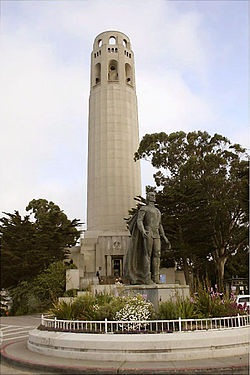
Credit where it’s due: My competitor and sometimes journalistic adversary Joe Eskenazi has a nice little piece on the weird money behind the campaign against Prop. B, a policy statement about the privatization of Coit Tower. He points out that such varied groups as the California Dental Association and the San Manuel Band of Mission Indians have coughed up money to protect the right of San Francisco officials to close Coit Tower to the public and rent it out for fancy corporate parties.

And how exactly did that happen?

Well, Eskenazi manages to tie Willie Brown into it. (He also calls this “Nimby against the Swells,” which isn’t quite fair — I don’t think the supporters of Prop. B are trying to keep anything out of their back yards. If anything, they want more noisy tourists and fewer quiet, subdued rich-people events. And I don’t think the “swells” are against it as much as the mayor, his Rec-Park director and big businesses that generally back the privatization of public resources.)

But there’s another interesting twist: I’m not sure the folks who gave to the Golden State Leadership Fund Political Action Committee, which is running a No on B independent expenditure, had any clue where their money was going.

Sure, the Chamber of Commerce and BOMA know what’s up, and it’s pretty clear why they like the idea of raising money for the parks by holding exclusive private events instead of by raising taxes. But the Indians? And the dentists? By what possible stretch do they care about a San Francisco ballot measure that has nothing to do with Native American rights or oral health?

Eskenazi may be right — maybe Brown called the Indians and asked, and they threw the money his way to help his buddy the mayor (while keeping the mayor’s fingers out of this particular political pie). But the Golden State Leadership PAC, through which all this money flowed, has been around for years and gives money to candidates all over the state. (It’s definately something of a slush fund for local races — files in the Secretary of State’s office show that in 2008, money from Pacific Gas and Electric Co. flowed in and out of the PAC as it ran a campaign against the San Francisco public-power measure, Prop. H. PAC money went to David Chiu, Phil Ting and Ed Lee for mayor.) It’s based in West Hollywood and the treasurer is a guy named William Molina.

I called the San Manuel Band of Mission Indians and the California Dental Association and asked them why there were helping fund a campaign against Prop. B in San Francisco. The press person at the dental group apparently had no idea what I was talking about and asked for more details about the contribution. I gave her the date and the PAC and I haven’t heard back.

The Indians didn’t seem to clear on Prop. B, either. Kenneth Shoji, a spokesperson for the group, told me by email:

The San Manuel Band of Mission Indians made a contribution of $25,000 to the Golden State Leadership Fund PAC with the expectation of helping to support candidate(s) for public office in the 2012 elections.  We do not control where or how the PAC might extend its support beyond that.

In other words: This Coit tower thing is news to us.

UPDATE: I got essentially the same message from the dentists. Alicia Malaby at the CDA writes:

 When an organization such as CalDPAC contributes to an independent expenditure committee, that committee may spend money on races and issues that CalDPAC supports, but may also spend money on other campaigns. CalDPAC does not control how those committees spend money, and in this case, CalDPAC has no interest in and no position on Proposition B.

UPDATE TWO: Ron Cottingham at PORAC just called me and said his group has no position on or interest in Prop. B. The money that went to the PAC was earmarked to support Rob Bonta for Assembly in the East Bay. Presumably the PAC folks keep track of such things.

Maybe not. Maybe Willie or someone else made a call. It happens all the time.  I mean, somebody clearly was raising money for this PAC, which right now isn’t doing a hell of a lot besides No on B in San Francisco. (Oh, I called Brown, too. He hasn’t called back. He never does. I still always try.)

Either way, it’s a classic San Francisco political story — and it reflects how muddy and corrupt local politics can still be, even in an era of electronic disclosure and ethics laws. Why, if the dentists and Indians don’t like Prop. B, didn’t they (or any of the others in the PAC) create a No on B committee, disclose who was behind it and let the voters know a little more about the real money trail? Why funnel all this cash through a little-known Southern California PAC?

And for that matter, why is there a sudden influx of late money in this race? Has the mayor and the Chamber types suddenly discovered that Prop. B might pass — and might set a precedent against future privatization efforts?

June 5 is Election Day. Vote early and often.


Vote yes on Prop A for competitive bidding for garbage and against Recology monopoly

12

As a reporter for the old Redwood City Tribune in 1965 or so, I got a call one day from the late  Luman Drake, then an indefatigable environmental activist in Brisbane.  “Bruce,” he said, “you are good at exposing scandals on the Peninsula, but you have missed the biggest scandal of them all. Garbage, garbage in the Bay off Brisbane, garbage alongside the Bay Shore going into San Francisco.”

He then outlined for me, his voice rising in anger, how the scavengers of an early era had muscled through a longtime contract to dump San Francisco’s garbage into the bay alongside the Bay Shore freeway.  And, he said, they are still doing it. Why can’t you fight it? I asked naively.

“Fight it, fight it,” he replied. “The scavengers are the most powerful political force in San Francisco and there’s not a goddamn thing we can do about it.” I checked out his story, then and through the years, and he was right.  Everyone driving in and out of San Francisco could watch with horror  for years as the scavengers kept dumping San Francisco garbage into a big chunk of the bay.  (Note the oral history from Drake and then Mayor Paul Goercke and others who fought the losing fight for years to kick out the scavengers from Brisbane.) http://legendarymarketingenius.com/oralhistorySBMW.html)

Five decades later, the scavengers are still a preeminent political power in San Francisco. The scavengers (now Recology) have operated since 1932 without competitive bidding, without regulation of its high residential and commercial rates, without a franchise fee, and without any real oversight. Finally, after all these years as king of the hill, Recology’s monopoly is being challenged by Proposition A, an initiative aimed at forcing Recology for the first time to undergo competitive bidding and thereby save city residents and businesses millions of dollars  in rates and service.

Let me say up front that I salute former State Senator and retired Judge Quentin Kopp and Tony Kelly, president of the Potrero Hill Boosters and the Guardian’s candidate for District l0 election (Potrero Hill/BayView/Hunters Point). They have taken this measure on when nobody else would, without much money or resources, and up against  a $l.5 million campaign by Recology and enormous, nasty political pressure.  I also salute those who publicly signed on to their brochure: Coalition for San Francisco Neighborhoods, San Francisco Tomorrow, SF Human Services Network, David Bisho,Walter Farrell, George Wooding, Irene Creps, Alexa Vuksich, the San Francisco Examiner, SF Appeal.com, and the Guardian. 

I was delighted to get a Yes on A brochure at my house in West Portal and find that Kopp and Kelly et al had money enough to make a strong statement in a strong  campaign mailer.  Kopp and Kelly persuasively summarized the key points for A and against more galloping  Recology monopoly in the brochure.  Meanwhile, the  Recology forces have been  using  gobs of money, a massive mail campaign, robot calls, and deploying the kind of political muscle their predecessors used to keep dumping garbage in the bay off Brisbane for decades. Since the Yes on A camp has trouble cutting through the cannonading and the flak, let me lay out the A  arguments verbatim from its brochure.

Question in the brochure:  “Why is Recology spending millions to buy this election? Recology has contributed $l,580,292.70 against Prop A. (Form 460 SF Ethics Commission.” Answer in the brochure;  “So they can raise your garbage rates after the election! ‘San Francisco Prepares For Recology to Raise Garbage Rates’ (Contract is Proof Recology Plans to Hike Garbage Rates Following Election’”) Then they laid out l0 reasons to vote Yes on A.

1. “71 Bay Area cities have competitive bidding or franchise agreements for garbage services. Because San Francisco doesn’t, residential trash collection rates have increased 136% in the last 11 years, with another massive increase coming after the election! We pay more than twice as much for garbage and recycling as San Jose, a city with twice the land and about 400,000 more people.

2. “The garbage collection/recycling monopoly now grosses about $220 million per year from the city’s residents and businesses, without any regulation of commercial rates.

3. “How did we end up paying so much? In 2001 the monopoly requested a 52% rate increase, Department of Public Works staff recommended 20% and the then DPW director (now Mayor) Ed Lee granted a 44 %rate increase. That’s why the Examiner said: ‘no-bid contracts generally make for dirty public policy, and this includes…The City’s garbage collection monopoly…’

4. “Don’t believe the monopoly’s 78% recycling rate claim backed only by its puppet city department. A former Recology recycling manager has testified under oath that fraudulent reporting, excessive state reimbursements and even kickbacks to and from Recology employees are behind this bogus claim.  Another ‘whistleblower’ has revealed that even sand removal from the Great Highway was included in this 78%.

5. “With a far smaller population, Oakland receives $24 million each year as a franchise fee, which supports city services and prevents other tax and fee increases.  San Francisco receives zilch from the monopoly holder in franchise fees for our General Fund.

6. “Proposition A is on the ballot through citizen/ratepayer time and effort, in the face of intimidation and harassment by the monopoly’s agents and its multi-million dollar campaign against it.

7. “Proposition A is simple: it authorizes the Director of Public Works and the Board of Supervisors’ Budget Analyst to prepare competitive bidding regulations for residential and commercial collection, recycling, and disposal, by modifying an outdated 1932 ordinance.

8. “Like all other competitive-bid city contracts, the winning garbage service bid will be ratified by the Board of Supervisors without any political tinkering.  The winning bid will contain the best deal for city ratepayers.

9. “If the monopoly is truly the corporation portrayed in its expensive campaign to defeat Prop A, it would easily win every bid.  As the Examiner stated last year, ‘…contracts won by competitive bidding are always better for the public in the long run.’

10. And then the list of endorsers ‘and tens of thousands of other ratepayers.’”

Kopp and Kelly et al are providing a major public service by challenging an arrogant monopoly of an essential public service and keeping alive the concept of competitive bidding on city contracts in San Francisco.   I drink to them from a pitcher of Potrero Hill martinis. Vote early and often for Prop A.  B3

Dick Meister: Two big tests for labor

1

By Dick Meister

 Dick Meister, former labor editor of the SF Chronicle and KQED-TV Newsroom, has covered labor and politics for more than a half-century. Contact him through his website, www.dickmeister.com, which includes more than 350 of his columns.

Helping get President Obama re-elected tops organized labor’s political agenda. But for now, unions are rightly focusing on special elections this month in Wisconsin and Arizona, where other labor-friendly Democrats are being challenged by labor foes.

Coming up first, on June 5, is the Wisconsin election to recall Republican Gov. Scott Walker, who’s been labor’s public enemy No. 1 for his blatant anti-union policies. He’s been acclaimed by anti-labor forces nationwide and as widely attacked by labor.

Both sides see the election as highly symbolic, a possible guide for those seeking to limit the union rights of public employees and other workers or, conversely, for those attempting to halt the spread of Walker-like attacks on collective bargaining in private and public employment alike.

There are many reasons for replacing Walker with his recall election opponent, Democratic Mayor Thomas Barrett of Milwaukee. The AFL-CIO has come up with about a dozen reasons, headed by Walker’s severe limiting of the bargaining  rights of Wisconsin’s 380,000 public employees – a key action that helped trigger what Obama has described as a national “assault on unions.”

The AFL-CIO also complains that Walker has:

*”Led Wisconsin to last place in the nation in job creation.”

*”Disenfranchised tens of thousands of young voters, senior citizens and minority voters with voter suppression and voter ID laws.”

*”Put the health care coverage of 17,000 people at risk with unfair budget cuts.”

*”Allowed the extremist, corporate-backed American Legislative Council to exercise extraordinary influence.”

*”Made wage discrimination easier by repealing Wisconsin’s Equal Pay enforcement law.”

*”Attacked public workers’ retirement security.”

*”Blocked the path of young workers to middle class jobs by repealing rules on state apprenticeship programs.”

*”Killed the creation of more than 15,000 jobs when he rejected $810 million in federal  funds to construct a passenger rail system between Milwaukee and Madison.”

*”Sponsored new tax breaks for the wealthy and corporations that will cost the state $2.4 billion over the next 10 years.”

*”Proposed cuts to the state’s earned income tax credit that will raise taxes on 145,000 low-income families with children.”

Despite all that – and more – polls show the recall vote could go either way, with lots of campaign funding for Walker flooding in from  corporations and other union opponents across the country.

Unions have lots of tough campaigning ahead, as they do in Arizona. There, on June 12, a special election will determine who will serve in the Congressional seat held for three terms by Democrat Gabrielle Giffords. She resigned in mid-term this year while still recovering from the serious wounds she suffered during a 2011 shooting in Tucson in which six people were killed.

Ron Barber, a Giffords’ staffer who was wounded in the Tucson attack, will challenge Republican Jesse Kelly in the race to elect a representative to serve the rest of Giffords’ term. Kelly, who ran a close losing race against Giffords in 2010 , opposes  much of what the AFL-CIO supports.

The labor federation is especially unhappy with Kelly’s support for GOP proposals in Congress “which would turn Medicare into a voucher system,” and for getting $68 million in federal stimulus funds for his family’s construction firm while at the same time attacking Obama for creating the stimulus program.

Apparently, says the AFL-CIO, “Kelly lining his own pockets with stimulus dollars is proper. Everything else is socialism.” The AFL-CIO is likewise unhappy with Kelly’s endorsement by organizations considered “extremist and racist” by civil rights groups.

Like labor, Barber is a strong supporter of Social Security and Medicare. But Kelly says that Social Security is a “giant Ponzi scheme” and that Medicare recipients are “on the public dole.”

He’s said health care is a “privilege” and so presumably should not be a government-guaranteed right, and claimed that “the highest quality and lowest cost can only be delivered without the government.”

Kelly wants to reduce the Federal Drug Administration “as much as humanly possible.” He’s also advocated an end to government food safety inspections, leaving individuals to do their own inspections rather than rely on “the nanny state” to do it for them.

No wonder labor is mounting major campaigns against Kelly in Arizona and Walker in Wisconsin. Labor victories are needed there to help protect unions, their members and many others from attempts to weaken the rights, protections and other essential aid provided through government.

Dick Meister, former labor editor of the SF Chronicle and KQED-TV Newsroom, has covered labor and politics for more than a half-century. Contact him through his website, www.dickmeister.com, which includes more than 350 of his columns.

City attorney responds on sunshine task force attacks

4


B3 note: Here are responses from City Attorney Dennis Herrera to Impertinent Questions from B3 on why the city attorney helped facilitate the supervisorial attack on the sunshine ordinance and task force (See previous B3 sunshine blogs).

Regarding recommended SOTF candidates

Section 67.30 (a) of the San Francisco Sunshine Ordinance provides that the Sunshine Ordinance Task Force’s eleven voting members be “appointed by the Board of Supervisors.”  That same section designates that a total of four members be appointed by the Board from names submitted for consideration by: the local chapter of the Society of Professional Journalists; the League of Women Voters; and New California Media.  I’m informed that when the Board’s Rules Committee conducted its hearing and interviewed SOTF applicants, only one person was recommended for each seat by these entities.  The Rules Committee then continued action on those seats until the entities submitted additional names.  Legally, there is nothing problematic about such a continuance.

Regarding designated seats

Section 67.30 (a) includes specific designations for each of the seats on the SOTF.  It additionally provides that one of those seats be a person with a disability, although it does not prescribe which of the 11 seats be designated to a person with a disability.  I’ll be honest here: I’m not aware of whether Mr. Todd has a disability or not.  But given that the Board still has to fill four remaining vacant SOTF seats, it will comply with the Sunshine Ordinance so long as one of the SOTF seats is timely filled by “a member of the public who is physically handicapped and who has demonstrated interest in citizen access and participation in local government.”

Regarding public comment

Public comment occurs in board committees.  Each SOTF applicant spoke at the Rules Committee, and members of the public had the opportunity there to offer their comments on all of the applicants.  Although the Rules Committee forwarded six recommendations out of committee, the record transmitted to the full Board included the entire file — including all the other applicants.  The City Attorney’s Office has long advised the Board of its authority to amend appointing motions, and to instead appoint someone else, so long as that appointee’s name and application was before the Rules committee, and so long as it was subject to public comment.  That was indeed the case here.  At the committee level, applicants speak; members of the public speak about the applicants; and then public comment is closed.  The committee then decides on its recommended appointments — but public comment is not reopened to comment on the committee’s choices.  

Regarding the role of the City Attorney

With respect to your question about why the City Attorney is “allowing” certain actions by clients, I should briefly address the role of the City Attorney under San Francisco Charter § 6.102.  Beyond the particular set of circumstances addressed in this email, most questions about what the City Attorney “allows” or “disallows” really misinterpret the office’s function.  In many contexts over many years, the office has reiterated that “[t]he City Attorney is not a policy maker.”  (See: http://www.sfcityattorney.org/modules/showdocument.aspx?documentid=953 )  The City Attorney’s Good Government Guide (pages 19-21) addresses at length the role the City Attorney plays in providing legal counsel to the City and its elected officers, commissions and employees (See: http://www.sfcityattorney.org/Modules/ShowDocument.aspx?documentid=686 )  

This office provides legal advice to clients, while also acknowledging that the policy-making authority of the Board and Mayor includes the prerogative to assess for itself the relative legal risks of its actions, understanding that this office will defend its actions “so long as there are legally tenable arguments to support doing so.”  In that sense, the role is no different from that of any lawyer providing advice to a client: attorneys counsel; but clients, ultimately, decide.

Best,
MATT DORSEY
Press Secretary to City Attorney Dennis Herrera

B3 comment: The city attorney has made the case for the task force to get independent legal advice and to bring in an independent attorney to represent the task force. More: It is yet another reason to have an independent attorney as a task force member who is strong enough to go up against the city attorney as appropriate on critical issues.   This was the original reason for SPJ, with its experience in public access and First Amendment issues and litigation, to nominate an experienced attorney. This was the first time the supervisors rejected the SPJ nominee (and nominees from other organizations as mandated by the charter)  without a proper explanation or apology or a nice word of thanks. .He helped Willie Brownism prevail for the first time with the sunshine ordinance and task force.

Oakland gets jilted

0

By Frank Artrage

news@sfbg.com

After a secret whirlwind courtship that lasted a mere five months, Mayor Ed Lee and the Golden State Warriors tied the knot May 22 at Piers 30-32, announcing their unexpected union at the site they intend to occupy with a new basketball arena by 2017.

The Warriors’ entrepreneurial new owners — Joe Lacob and Peter Guber — say they love this “iconic site” and promised to build a “spectacular sports and entertainment complex” that is “architecturally significant.”

But what about Oakland, the team’s unceremoniously jilted current homemaker? The perception from the East Bay is that Lacob and Guber were duplicitous and underhanded in their dealings with city officials that were desperately trying to retain the city’s three main sports franchises — the Oakland Athletics baseball club, the Oakland Raiders football team, and the Golden State Warriors basketballers — all of whom have recently signaled interest in moving.

Several sources told us that the Warriors’ new owners have been lying to Oakland officials about their intentions for months. For example, Oakland City Councilmember Larry Reid told me “that when our staff had conversations with the new owners, they always indicated they hadn’t yet come to a final decision.”

Reid told me what happened next. “I get a call Sunday night at 9:30 telling me about their move like a thief in the night.” Reid said. “It’s upsetting.”

On the fan site GoldenStWarriors, Lacob seemed to belittle Oakland. In an 18-minute video, Lacob predicts that Oakland will be left with only one sports team someday. “I think they’re challenged,” he said when asked what’s wrong with Oakland, adding the city is in “a difficult situation.”

Sports talk radio hosts, fan sites, and bloggers, however, seem to be evenly divided on the move. Even hardcore Oakland and Warriors blogger Ethan Sherwood Strauss prefers the San Francisco site. At his Warriorsworld site, Strauss wrote: “I’d never leave Oakland…. I have everything at arm’s length. There’s food from around the world, teeming farmers markets, lush green hills, Redwood trees, Mosswood Park, Grand Lake Theatre — this is all within two miles.”

But: “Guess which is the better place for the Golden State Warriors? It’s that west bay city national broadcasters keep showing during Warriors games while pretending Oakland doesn’t exist.”

Thus far, neither Oakland Mayor Jean Quan nor Mayor Lee have made any comments regarding the other side’s situation or whether their mutually reported “good relationship” has been strained. But it must be devastating to Quan, given all of her work and hoopla over her recent announcements surrounding her ambitious plans for the “Coliseum City” project.

Not unlike the Warriors’ “world class arena” planned for their new San Francisco home, Coliseum City, according to Quan, will be a “world-class sports and entertainment district.” Ryan Phillips, writing on the Oakland North blog in March, said that the project includes “building hotels, retail, office and residential space in the Coliseum complex…as well as building an Oakland Airport Business Park just across the freeway on the way to the airport. The business park will be developed to attract tech companies.”

Mayor Quan issued a press release following the Warriors’ bombshell to announce that she remains “bullish” on her Coliseum City project. Her new spin is that, “Coliseum City is a long-term development project that was never dependent on any one tenant. It was always a larger project than just one sports team.”

But if there’s even one team missing from the original trinity, then they have no choice but to lower their expectations and scale back their plans. Therefore, the Warriors’ move could trigger a complete unraveling of not only her recent plans to keep the Oakland A’s baseball team in Oakland, but also efforts to keep any team there.

For example, a case study published by the Airport Area Business Association (AABA) in conjunction with Coliseum City principal and manager Oakland-based JRDV Urban International, and students at UC Berkeley’s Haas School of Business found, The Coliseum complex presents a unique opportunity to prepare a pioneering business model that generates revenue for both public and private interests.”

Presciently, in the wake of this announced move by the Warriors and how that hurts Oakland, the study asked: “Are the withdrawal of redevelopment monies, the negative perception of Oakland (and especially Deep East Oakland) by investors and the soft commercial real estate market insurmountable? Can the City of Oakland and Alameda County garner the public support required to approve the necessary public financing and inspire investor confidence?”

Manning up, Councilmember Reid told me that Oakland bears some responsibility for this fiasco. “I’ve been agitating for 10 years to get this Coliseum project going. But let me tell you about two critical mistakes Oakland has made over the last decade,” he said. “One, Oakland has always taken the position that these teams had no place to go. Well, you see where that thinking got us today…Two, 10 years ago the decision was made to invest in the old [Oakland] Army Base. Yet, to this day, not one spade of dirt has been unearthed to symbolize any kind of progress is underway there. In fact, the whole project is at a standstill.”

Maybe, but Oakland and Warriors’ fans should not despair. It is not a done deal because a million things could go wrong. For example, this will be the fifth attempt to develop Piers 30-32 into something spectacular over the last several years.

Also, environmental groups and local activists are already squawking about the site. It has to pass a notoriously tough approval process of at least four major agencies. Financing might fall through, at least until Warriors ownership present to the press, government, and citizens some details: Tuesday’s press conference was basically a pep rally — the only thing missing were the pom-poms. Finally, Pier 30-32 and the site have yet to pass muster over the environmental and safety concerns and myriad other requirements of the California Environmental Quality Act (CEQA).

If any obstacle dooms the Warriors’ plans, Oakland’s Assistant City Administrator Fred Blackwell said they’d keep the door open for these prodigal owners: “And in the end, we will leave a space for the Warriors after they are exhausted from the CEQA litigation and cost increases required to be on the San Francisco Waterfront.”

“In a nutshell,” according to a City Hall press aide, Blackwell “means that waterfront development is expensive and requires an extensive and complex environmental review and permitting process involving review and approval by a number of local, state, and sometimes federal agencies.”

But what if it is a success? Oakland loses even more than just the Warriors. At least one politician pointed out, and I also heard this on 95.7 FM The Game, that what’s to stop circuses, ice shows, and major rock stars from ditching Oakland and following the Warriors to this splashy and scenic new entertainment venue?


Housing and highrise offices

0

EDITORIAL It's something of a civic shame that the only way San Francisco can build a new transit terminal is to sell a private developer the rights to stick a 1,070-foot highrise office tower on public land. In fact, it's a sad statement on the city, state, and local government: Once upon a time — and it wasn't the long ago — tax dollars collected through a progressive system paid for major infrastructure projects.

But there's no easy way to raise $4 billion in tax money for the Transbay Terminal — even though it ought to be seen as part of the high-speed rail project, and the federal and state government ought to be picking up the tab. So San Francisco ambles forward, selling land and lease rights to the highest bidder.

In this case, Gerald Hines of Houston won the right to build the largest highrise west of the Mississippi on property owned by the Transbay Joint Powers Authority. There are all sorts of drawbacks to the deal — among other things, it will cast shadows on a number of city parks, all the way to Portsmouth Square in Chinatown. Like any massive office complex, it will put pressure on Muni, on city streets, on police and fire and other city services — and no commercial office building ever pays its fair share of that burden. And since in this case the major recipient of the money from the project will be the TJPA, the city's General Fund will suffer.

Oh, and the building is ugly.

Meanwhile, city planners want to increase height limits all around the Transbay Terminal and allow hundreds of units of new (luxury) housing and more commercial office space. It's going to be a new highrise neighborhood, complete with a rooftop park and a few little patches of ground-level open space, which won't get a whole lot of sun, particularly in the morning and evening.

And at this point, there's been very little focus on what ought to be the defining issue of this and the other major developments on the city's planning horizon, and that's affordable housing.

This city has a terrible jobs-housing mix. The vast majority of the people who currently work in San Francisco can't afford to buy a house here, and many of them can only rent if they pay for more than the federal standard of one-third of their income for housing. So people who work in hotels and restaurants and city, state and federal offices and hospitals and even financial district companies wind up living far from the city and commuting. Nobody thinks that's a sound environmental policy.

And this kind of full-scale rezoning and development will only make it worse. According to the City Planning Department, the Hines project will pay about $27 million into the city's affordable housing fund, enough to pay for maybe 60 or 70 housing units. That won't even begin to cover the need created by the thousands of employees who will fill that tower. The market-rate housing on the site will almost certainly be beyond the reach of most San Franciscans, and probably many of the office workers who fill the Hines building. And only 35 percent of the new housing — at maximum — will be affordable.

San Francisco has to get a grip. The city can't keep allowing more high-end housing and highrise office space without a plan to meet its housing needs. We're glad to see the mayor talking about a $50 million a year fund, but that will barely meet existing needs; it can't possible keep pace with new development.

So before the supervisors rush ahead to approve this ambitious new downtown district, they need to ask Hines, and the TJPA, and any other developer who comes along, how it intends to meet the demonstrated need for affordable housing that these projects will create — and demand a much higher level of payment that what's currently on the city's books.

Sunshine eclipsed

1

As an advocate for the passage of the San Francisco Sunshine Ordinance in the early 1990s, I felt obligated to take my first and only City Hall position and serve as a founding member of the Sunshine Ordinance Task Force. I served for l0 years and helped with many other good members to build the task force into a strong and respected agency for helping citizens get access to records and meetings and hold city officials accountable for suppressing access and information.

The task force is the first and best local sunshine task force of its kind in the country, if not the world. It is the only place where citizens can file an access complaint without an attorney or a fee and force a city official, including the mayor, to come before the task force for questioning and a ruling on whether they had violated sunshine laws. The task force lacked enforcement powers, but it still annoyed city officials, including Mayor Willie Brown.

In fact, Brown spent a good deal of time trying to kick me off the task force. He used one jolly maneuver after another, even getting an agent to make a phony complaint against me for violating the ordinance with an email (The complaint went nowhere). I refused to budge and decided to stay on until Brown left office—on the principle that neither the mayor nor anybody else from City Hall could arbitrarily kick members off the task force.

That principle held until about 3pm last Thursday (May 17) at the meeting of the Board of Supervisors Rules Committee to appoint candidates to the task force. At that meeting, without proper notice, advance warning, explanation, apology, or even a nice word or two, the supervisors suddenly turned a normal drowsy committee meeting into an unprecedented bloodbath for the task force and its independence. Sup. Mark Farrell played the heavy, Jane Kim was the facilitating chair, and David Campos was the reluctant third party, working together to bring Willie Brownism back at the task force with a vengeance.

The committee rejected four qualified candidates from three organizations who are mandated by the Sunshine Ordinance to choose representatives for the task force because of the organizations’ special open government credentials. (Doug Comstock, editor of the West of Twin Peaks Observer; Attorney Ben Rosenfeld from the Northern California chapter of Society of Professional Journalists, sponsor of the ordinance; Allyson Washburn from the League of Women Voters and Suzanne Manneh from America New Media.)

The committee without blushing asked the organizations to come up with a “list of names,” a whiff of grapeshot aimed at members and organizations who had served the public well for years. Who wants to go before the supervisors on a list of names for a bout of public character assassination? Meanwhile, while knocking off the qualified, knowledgeable candidates, the committee approved four neophytes without experience and then unanimously appointed David Pilpel, a former task force member known for delaying meetings with bursts of nitpicking. He almost always comes down on the side of City Hall and against citizens with their complaints.

Farrell also tried to bounce Bruce Wolfe, an excellent member, but Kim and Campos supported him and his name was sent on to the full board for approval.

Then, when Wolfe’s name got to the board on May 22, it was a repeat of Willie Brownism and this time to the max. Sup. Scott Wiener moved to amend the motion and substituted Todd David. Farrell seconded. The vote was 6-5, meaning that Willie Brownism wiped the sunshine slate clean of anybody who would raise a pesky question of city officials and the City Attorney’s Office.

The infamous votes against Wolfe: Wiener (ah, yes, the heir of the Harvey Milk and Harry Britt seat in the Castro), Farrell (where is Janet Reilly when we need her?), Malia Cohen (who comes from the Potrero Hill/Bay View/Hunters Point district that needs all the sunshine it can get in facing an Oklahoma-style land rush of development), David Chiu (who was reportedly angry over the unanimous task force opinion finding he violated the Sunshine Ordinance with late submission of documents before the controversial vote to redevelop Parkmerced), Carmen Chu and Sean Elsbernd (neighborhood supes way out in West Portal and the Sunset who almost always vote the downtown line at City Hall). The good votes for Wolfe: John Avalos, Eric Mar, Cristina Olague, Jane Kim, and David Campos.

Campos told me that the organization candidates were “eminently qualified,” that they should have been appointed, and that he would fight for them. He advised the organizations to “stand by their candidates.” He is urging that the issue of organization candidates come back to the next Rules Committee.

Rick Knee, SPJ’s mandated journalist on the task force surveying the carnage, said the supervisors’ actions stem “partly from a desire by some supervisors to sabotage the task force and ordinance itself, and partly from a vendetta by certain supervisors after the task force found several months ago that the board violated local and state open meeting laws when it railroaded some last minute changes to a contract on the Parkmerced development project without allowing sufficient time for public review and comment.”

Knee is right, and it isn’t just Parkmerced, but all the high-stakes development deals flowing through City Hall these days, with their advocates preferring to cut backroom deals rather than being subjected to the full scrutiny of the public and the task force.

James Chaffee, a former chair of the task force, watched the board proceedings with outrage and fired off a letter to all supervisors later that day. He charged that the board in sacking Wolfe violated the Sunshine Ordinance on several counts. Among them: the board changed the committee recommendation on Wolfe without allowing public comment and it passed over Wolfe even though the ordinance requires at least one member of the task force to be “physically handicapped.” That was Wolfe.

Thus, Chaffee wrote, the orchestrated coup was “the perfect example of a failure to follow the sunshine ordinance that led to the sort of problem that it was intended to forestall, namely the supervisors taking an action without being informed of what they are doing.  If Scott Weiner and David Chiu and the rest of the crew did not consider the citizens the enemy and exercize judgment about whether they were complying with the spirit of open government rather than just shaving off the letter of the law as closely as possible, this could have been avoided.”

Chaffee said he couldn’t tell if David was physically handicapped but he said nothing in his application for the task force nor was any disability apparent from the video of the rules committee meeting.

Chaffee said David’s  application showed he  was “self-employed as an investor, obtained a BA from Stanford in 1993, has never attended a task force meeting, and left the statement of his qualifications blank.”

Chaffee said, “It’s easy to see why Scott Wiener likes him. He said it would be a long road before he would go against the city attorney’s office and when it came to constitutional law, he would place the city attorney’s opinion above his own because the city attorney is an ‘expert.'”

I sent Chaffee’s letter and my Bruce Blog post ( “The return of Willie Brown to the Sunshine Task Force,” 5/21) to City Attorney Dennis Herrera for comment: How can his office sit by while the letter and spirit of the sunshine laws are being violated in the move to sabotage the sunshine ordinance and task force? I also sent Chaffee’s letter, with the Bruce blog, to the supervisors with similar questions: Why  are you violating the sunshine laws to kick out the best candidates? For their answers (coming)  and the latest on this evolving controversy, follow along at  www.sfbg.com/bruce.

There you have it:  the state of sunshine and open government in city hall in San Francisco in May of 2012. Todd David over Bruce Wolfe. David  Pilpel uber alles.  Five inexperienced candidates over five experienced candidates. David Pilpel uber alles. A city attorney who rolls over and over and over again. And a whiff of grapeshot for the three organizations mandated by the charter to have represenatives on the task force  because of their open government and public access credentials (the Northern California chapter of the Society of Professional Journalists, the League of Women Voters, and America New Media.)  On guard,  b3


Sheriff’s wife talks to KGO-TV

28

KGO’s Dan Noyes flew to Caracas, Venezuela to interview the wife of embattled San Francisco Sheriff Ross Mirkarimi, and while her comments haven’t made anywhere near the media splash that most scraps of information on this sordid tale create, it’s very much worth watching the video. Check it out here.

Remember as you watch: Mirkarimi hasn’t been able to speak to his wife in months. The stay-away order prevents him from seeing her or phoning her or emailing her or contacting her in any way (except to coordinate his limited visits and skype calls with his son). It’s possible that the two of them came up with a joint story early on in the process, before the restraining order, but unless that happened, they’re both offering independent versions of the events.

And a lot of what Lopez says is consistent with a lot of what Mirkarimi says.

She tells Noyes that she was never afraid of her husband or fearful for their son. She says that she thought her neighbor, Ivory Madison, was an attorney and that the video — designed to be used in a possible future custody battle — would be confidential. (Madison’s lawyer disputes that.) She tells more or less the same tale of that New Year’s Eve that Mirkarimi does.

She also says there was no prior incidence of domestic violence — that her comments on the tape about “the second time” referred only to an earlier verbal argument about her travel to Venezuala.

Not defending Mirkarimi’s actions here (and no, trolls, I never have). Just saying that it’s important to hear his wife’s (presumably) unvarished version of events when we make judgments around whether he should keep his job. (The mayor never bothered to talk to Lopez before he filed official misconduct charges).

I don’t think the embattled sheriff was happy to hear his wife say that the couple may divorce, or that she may not return to San Francisco (the city, she says — justifiably — hasn’t been nice to her).

But I think the voice of Eliana Lopez has been missing too long in this whole political battle, and I’m glad to see she’s speaking out.

Hej, creativity! 4 bonkers Stockholm art projects

0

What creative forms would you expect at the near-ends of the earth? My recent trip to Stockholm, Sweden was weird in the way that travel usually is, more just-like-home moments than alien fears realized of winding up cold and frozen because I forget to transcribe the 17th letter in the name of the street I was staying on.

Honestly, I went for the close-to-the-North-Pole party (did you know you can swim just about anywhere in Stockholm? Sunrise after-afterparty dips abound), but surprise! I ran into artistic inspiration. That’s really having your herring burger and eating it too. Here’s four people and projects that really did it for me, Swedishly speaking.

Sweden has epic, resplendent design history that Ikea has made so common with its bastardized, disposable bedframes (I have a personal vendetta against a certain bedframe, pardon my vehemence.) Every time I walked into someone’s Stockholm apartment I felt like I’d happened onto what taste was like before the Martha Stewart magazine happened – colorful, but with the acknowledgment that life is better amid function and simple form. Things make sense here. Men and women get 16 months of paid leave from work when they have a baby. 

In contrast, the artists that most impressed me were all pretty bonkers. Call me contrary? 

THE SCANDAL 

I’ve been down this road before, but there was no way I would miss checking in with the now-infamous Makode Linde, baker of Racist Cakegate 2012, worldwide Internet meme, and Stockholm club kid forever, when I was in his hometown. (He also directs rad videos, like this one for ex-Lykke Li chorist and current hit single maker Zhala.)

I first ran into real-life Linde one blurry Sunday afternoon in Berlin at Berghain’s Panorama bar (the best place in the world for techno church hipster zombies.) In a sea of glassy eyes and black T-shirts, Linde had on a yellow plaid suit and a smile, which in my flair-adore book makes him artist enough to begin with. “Makode just gives it to you,” as a friend of mine put it regarding his penchant for exuberant party dress.

Linde invited me to his retrospective at Galleri Kleerup‘s new showroom just around the corner from the opera in old town Stockholm and I acquiesed, only to wind up there with all my luggage in tow en route to the flight that would take me away from Sweden. The only thing there to greet me was a sign saying “TILLBAKA 16:30.” I waited until 17:00 and no one was tillbaka and I had a flight to catch. So thank god for massive plate windows and Swedish acceptance of creepers smashing their nose to them, because otherwise I wouldn’t have been able to see the show. 

The Linde retrospective puts his howling cake performance in perspective. His famous cake-head (himself, actually poking his face through a hole in the cake-table) blackface makes since when, after viewing his body of work, you realize that he’s created an world that’s entirely blackface. Giraffes, Betty Boop, bunny rabbits, Jesus on the cross, a Chinese good luck cat, a taxidermied crow. On a stack of shipping pallets in the middle of the room sat a small, ready-to-offend army of these talismans, all from his “Afromantics” series. 

What are they warding off? Complacency, perhaps. In a country where the GDP continues to grow despite economic mushiness in other EU countries, it’s still totally cool among even young alternative types to refer to any illegal after-party venue in Stockholm as a “black club.” Stockholm’s not the whitest city I’ve ever been in (shout-out to my nonetheless beloved Portland!), but it’s pretty close — and casual racism still comes in a pretty raw form. 

Linde’s had some pretty heavy – and not at all misguided – accusations thrown at him. But standing in that pretty little cobblestone plaza in Stockholm, next to the Danish embassy in whose plate glass windows were displayed an immalculate and modest light pink ballerina gown from years past, I grokked him and his Rorschach test splotches of black faces with big red lips and wide white eyes.

I could understand how he was surprised when people said he couldn’t claim the African experience, because in some superficial ways he has to rep for it in this town.

THE INDIE ACTION-ADVENTURE-PRISON-BIKER-HAIR BAND QUEER FILM

There was only one room devoted to screening a single movie trailer, over and over again, at Konstfack, Sweden’s “second-best” (in the words of a friend) arts and design school. A few chairs sat complacently in front of a screen constantly counting down the seconds til the next screening of Dyke Hard

Could this film have been shot in San Francisco? Yes, and if director Bitte Andersen succeeds in getting her entry into the Frameline Film Festival it most certainly it will find a audience here. A wacky tale of dyke band gone wild, taking on the forces of evil in a world where Lycra makes some, if not all injustices better? It’s an SF no-brainer. Andersen, along with production team Alexi Carpentieri and Martin Borell, started the project as a series of trailers – a sci-fi movie, a prison movie, a biker flick, and a horror.

“I guess watching a very large amount of genre film for many years and being a queer woman inspired me to make some genre film that wouldn’t be alienating for myself and other queers and/or women,” Andersen told me. Eventually, she and her team decided to combine all the trailers into a single film, Dyke Hard.

Shooting is taking about a year (I narrowly missed being cast in a seminal scene in which the mayor – played by a prominent Stockholm queer club promoter – announces a venue conflict between a battle of the bands and a martial arts tournament. Sports fans and music fans attack each other, only to be reprimanded eloquently by a bighearted member of the protagonist band.) The Kickstarter for the project swings into gear next week, so holler at them if you want to ensure that we are indeed, dyked hard. 

DARK GLAMAZON

This is what public art looks like in Sweden: an emaciated giant propped up against (or propping up) the foyer of a luxury shopping mall. She’s got on platform lace-up Timberlands, a studded leather jacket, and of course: no pants. 

Her name is “Pretty Vacant,” and her name is Cajsa Von Zeipel, the artist that is. In person, Von Zeipel somehow succeeds in being more glamorous than her drugged-out fashion waifs. She moonlights in boyfriend Tobias Bernstrup‘s Italo disco act, standing behind a keyboard and a wind machine in a patent leather bustier, silky kimono, ass-length blonde hair, and vertiginous high heels that she pretty much never doesn’t wear.

The artist is from a tiny town of 3,000 in Sweden, where she told me for fun she tried out icecream as a beauty product (facials) and generally felt like the weirdest one in school. But if that was the case, then we’re talking a serious ugly duckling-swan situation.

Von Zeipel and Bernstrup’s shared studio feels like an ode to feminine beauty. He’s been known to perform in triple-breasted lingerie armor and is partial to equally dangerous heel heights.

And early awkwardness might also give a clue into Von Zeipel’s art. There are no creatures more high fashion than her sculptures, but at the same time there is a bite to them. Their faces are twisted, their height disorienting. Pretty beautiful, yes — but also pretty freaky.

FEMINIST BLING

Of late, much has been made of craftivism, a reaction to the diminution of women’s work and general aesthetic scorn for things that grandmas get up to around big round tables with their friends. The belittling depiction of craft has been addressed in a feminist takeback that’s seen the rise of knit graffiti, the resurfacing of Gee’s Bend quilts in fine art museums, and more. 

In Stockholm, queer feminist radio and TV host-DJ Kakan Hermansson is taking these lessons straight to the nail salon. Her graduate school exhibition at Konstfack is half video installation, half baroque still life – two-foot tall ceramic statues of fingers, capped with nail art erupting with My Little Ponys, Destiny’s Child collage, gems, sparkles, “GIRLS” spelled out in gold script. 

If you view the installation as I did through the fog of a mid-afternoon hangover and a bag of popcorn, Hermansson’s accompanying video is more than engaging — it’s important. Her mama bear voice soothes as hands (hers) confidently remove polish from, re-paint, and glitterize the paws of volunteers who spill personal trauma throughout their treatment. Sexual violence, drug dealing mishap, partnerships gone awry. This is a safe space, a place where women can go to recharge and strengthen bonds with each other. The ceramic statues call attention to the lushness that is art contained on the tips of our fingers, while the videos emphasize that not everything that goes on in beauty salons is superficial. 

Rep Clock May 23-29, 2012

0

Schedules are for Wed/23-Tue/29 except where noted. Director and year are given when available. Double and triple features are marked with a •. All times pm unless otherwise specified.

ARTISTS’ TELEVISION ACCESS 992 Valencia, SF; www.atasite.org. $6. “Other Cinema: New Experimental Works,” Sat, 8:30. “Colectivo Cinema Errante presents: Brazilian Voices of Cinema:” At Midnight I’ll Take Your Soul (Marins, 1964) with “Love from Mother Only” (Ramalho, 2003), Sun, 8.

BAY THEATER Aquarium of the Bay, Pier 39, Embarcadero at Beach, SF; www.aquariumofthebay.com. $10-20. “An Evening of Surfing Films,” hosted by Maverick’s surfer Grant Washburn, Thu, 6.

CASTRO 429 Castro, SF; (415) 621-6120, www.castrotheatre.com. $7.50-11. •Harold and Maude (Ashby, 1971), Wed, 3:05, 7, and Brewster McCloud (Altman, 1970), Wed, 4:55, 8:50. •Barfly (Schroeder, 1987), Thu, 7, and Road House (Harrington, 1989), Thu, 9. •Nightmare Alley (Goulding, 1947), Fri, 7, and The Warriors (Hill, 1979), Fri, 9:10. “Marx Brothers Mania:” •Monkey Business (1931), Sat, 2:30, 7:30; Horse Feathers (1932), Sat, 4, 8:50; and Animal Crackers (1930), Sat, 5:25. •Hugo (Scorsese, 2011), Mon-Tue, 7 (also Mon, 2:20), and The Adventures of Tintin (Spielberg, 2011), Mon-Tue, 9:25 (also Mon, 4:45).

CHRISTOPHER B. SMITH RAFAEL FILM CENTER 1118 Fourth St, San Rafael; (415) 454-1222, www.cafilm.org. $6.75-10.25. Bernie (Linklater, 2012), call for dates and times. Bully (Hirsch, 2012), call for dates and times. First Position (Kargman, 2011), call for dates and times. Marley (Macdonald, 2012), call for dates and times. Monsieur Lazhar (Falardeau, 2011), call for dates and times.

PACIFIC FILM ARCHIVE 2575 Bancroft, Berk; (510) 642-5249, bampfa.berkeley.edu. $5.50-9.50. No screenings scheduled; programming resumes June 8.

RICKSHAW STOP 155 Fell, SF; www.musicvideorace.com. $12. “Music Video Race,” featuring new videos and live music by local bands, Sat, 7:30.

ROXIE 3117 and 3125 16th St, SF; (415) 863-1087, www.roxie.com. $6.50-10. “I Wake Up Dreaming 2012: The French Have a Name for It!”: •He Walked By Night (Werker, 1948), Wed, 6:20, 9:45, and The Underworld Story (Endfield, 1950), Wed, 8; •Guns, Girls, and Gangsters (Cahn, 1959), Thu, 6:30, 9:45, and Inside Detroit (Sears, 1956), Thu, 8. Indie Game: The Movie (Pajot and Swirsky, 2012), May 18-24, 7, 9 (also Sat-Sun, 5). Keyhole (Maddin, 2012), May 25-31, 7:15, 9:15 (also Sat-Sun, 3:15, 5). “New Czech Film Films US Tour 2012:” Four Suns (Sláma, 2012), Tue, 6:30; Matchmaking Mayor (Hníková, 2011), Tue, 8:45.

SF FILM SOCIETY CINEMA 1746 Post, SF. $10-11. •Le Rayon Vert (Summer) (Rohmer, 1986), Wed-Thu, 2:15, 6:45, and Four Adventures of Reinette and Mirabelle (Rohmer, 1987), Wed-Thu, 4:30, 9. Once Upon a Time in Anatolia (Ceylan, 2011), May 25-31, 2, 5:30, 8:30.

TOP OF THE MARK InterContinental Mark Hopkins, One Nob Hill, SF; www.topofthemark.com. Free. “Summer Movie Nights:” Gone With the Wind: Part One (Fleming, 1939), Tue, 7:30. Wine tasting at 5:30.

YERBA BUENA CENTER FOR THE ARTS 701 Mission, SF; (415) 978-2787, www.ybca.org. $6-8. “War and Remembrance: The Films of Aleksei Guerman:” My Friend Ivan Lapshin (Guerman, 1984), Thu, 7:30; The Seventh Companion (Guerman and Aronov, 1967), Sat, 7:30; The Fall of Otrar (Amirkulov, 1991), Sun, 2.

Julian Davis announces for supervisor in the key battleground district for progressives (5)

29

Julian Davis, a widely known progressive activist and organizer in San Francisco since 2002, declared Tuesday  his intention to run for supervisor in District 5, the city’s most liberal district and a battleground district for progressives seeking to regain control of the Board of Supervisors.

He joins eight other challengers to Sup. Christina Olague, appointed by Mayor Ed Lee to replace former Sup. Ross Mirkarimi. He was considered by many to be  the board’s most reliable progressive. He succeeded Matt Gonzales, a strong progressive.  The battle will center on which candidate will be the most reliable progressive vote–Olague,  whose votes are being carefully watched by progressives, or by one of her challengers.

Davis, a Bay Area native,  is a graduate of Brown University and UC Hastings College of the Law, where he graduated magna cum laude. He has worked in government and non-profit and legal sectors on community development, civil rights, social justice, public power, and environmental causes. He has worked on several candidate and ballot measure campaigns including John Avalos for mayor (20ll), Jane Kim for supervisor (2010), Prop H (2008), Clean Energy Act.) He also led a succeesful campaign in 2007 to free journalist Josh Wolf from federal prison for refusing to reveal sources in a demonstration he was covering.

“I was drawn to San Francisco by the creative energy and culture of the city–by what makes this place so special,” Davis said. “Over the past l0 years, I’ve devoted myself to developing healthy communities. I’m running for supervisor to keep the city a vibrant home for the every day people that make San Francisco real.”  b3


To Yelp at City Hall

1

By Anne Stuhldreher

OPINION If you attended any of the oodles of mayoral debates during last fall’s election, you surely heard every candidate say two things: One, that they’d make city government more accountable to San Franciscans — and two, that they’d harness technology to make city services better.

Now that Mayor Ed Lee is settled into office, there’s an easy and affordable way he can make good on this promise. It would give a megaphone to San Franciscans fed up (or delighted) with city services, letting them tell City Hall — and each other — what is and isn’t working with their tax dollars. It would amplify consumer power, increasing the responsiveness the public sector the way it has the private one.

San Francisco should be the first city to list all municipal services on one of the existing user-review websites that thousands of San Franciscans already rely on to critique restaurants, drycleaners, and auto repair shops. City Hall leaders would encourage all San Franciscans to get online and post reviews, to tell them what happens when they apply for a business license or send their kids to a city camp. Yelp and Citysearch are two user review sites that San Franciscans use right now.

This wouldn’t have a big price tag. Lee would simply mandate that every city service include a prominent icon on its web site asking users to “rate them” on the site. At every window and desk where public servants serve San Franciscans, there’d be a sign encouraging the public to share their experience on the site. Reviews on user review sites aren’t a feedback form sent to nowhere. People’s comments are seen by everyone.

Such open feedback has spurred thousands of businesses—from restaurants and retailers to doctors and dentists — to be more customer-focused and make better decisions with scarce resources.

Public servants and elected politicians are extremely keyed into public sentiment. They just often lack ways to gauge it. Feedback from public reviews would give them a clear picture of what successes they can tout and what problems they need to fix so they can benefit the most people and voters.

Imagine if you could look at online reviews before you went to apply for this permit or pay that fee. People would have written about good and bad times of day to go. They would have written about how much time it takes. They also would have written about which staff were friendly and which were rude.

I know I’d use it. I’d want to see what parks people think are good for toddlers and which ones are better for bigger kids. And what other parents think of different schools, camps, and pools. I’d also use it let the City know when I’ve called 311 three times to get an obscenity painted over in Dolores Park (that my kids walk by every day) but nothing has happened.

For inspiration, city leaders could look to the Family Independence Initiative, a coalition of working-class families in the Bay Area who grew frustrated after bad experiences with local programs. Nothing changed when the parents approached program leaders. So they set up an online rating system so parents could compare notes on services like childcare, job training, or after school-programs.

As decisions are made to dice up the shrinking budget pie to best serve San Franciscans, City Hall needs to hear from San Franciscans. Most city residents don’t have a lobbyist at city hall, but they have a lot to say.

Anne Stuhldreher is a Senior Policy Fellow at the New America Foundation

The battle of 8 Washington

tredmond@sfbg.com

More than 100 people showed up May 15 to testify on a condominium development that involves only 134 units, but has become a symbol of the failure of San Francisco’s housing policy.

I didn’t count every single speaker, but it’s fair to say sentiment was about 2-1 against the 8 Washington project. Seniors, tenant advocates, and neighbors spoke of the excessive size and bulk of the complex, the precedent of upzoning the waterfront for the first time in half a century, the loss of the Golden Gateway Swim and Tennis Club — and, more important, the principle of using public land to build the most expensive condos in San Francisco history.

Ted Gullicksen, director of the San Francisco Tenants Union, calls it housing for the 1 percent, but it’s worse than that — it’s actually housing for the top half of the top half of the 1 percent, for the ultra-rich.

It is, even supervisors who voted in favor agreed, housing the city doesn’t need, catering to a population that doesn’t lack housing opportunities — and a project that puts the city even further out of compliance with its own affordable-housing goals.

And in the end, after more than seven hours of testimony, the board voted 8-3 in favor of the developer.

It was a defeat for progressive housing advocates and for Board President David Chiu — and it showed a schism on the board’s left flank that would have been unthinkable a few years ago. And it could also have significant implications for the fall supervisorial elections.

Sup. Jane Kim, usually an ally of Chiu, voted in favor of the project. Sup. Eric Mar, who almost always votes with the board’s left flank, supported it, too, as did Sup. Christina Olague, who is running for re-election in one of the city’s most progressive districts.

At the end of the night, only Sups. David Campos and John Avalos joined Chiu in attempting to derail 8 Washington.

The battle of 8 Washington isn’t over — the vote last week was to approve the environmental impact report and the conditional use permit, but the actual development agreement and rezoning of the site still requires board approval next month.

Both Mar and Olague said they were going to work with the developer to try to get the height and bulk of the 134-unit building reduced.

But a vote against the EIR or the CU would have killed the project, and the thumbs-up is a signal that opponents will have an upward struggle to change the minds of Olague, Kim, and Mar.


DEFINING VOTES

The 8 Washington project is one of a handful of defining votes that will happen over the next few months. The mayor’s proposal for a business tax reform that raises no new revenue, the budget, and the massive California Pacific Medical Center hospital project will force board members to take sides on controversial issues with heavy lobbying on both sides.

In fact, by some accounts, 8 Washington was a beneficiary of the much larger, more complicated — and frankly, more significant — CPMC development.

The building trades unions pushed furiously for 8 Washington, which isn’t surprising — the building trades tend to support almost anything that means jobs for their members and have often been in conflict with progressives over development. But the Hotel and Restaurant Employees Union joined the building trades and lined up the San Francisco Labor Council behind the deal.

And for progressive supervisors who are up for re-election and need union support — Olague and Mar, for example — defying the Labor Council on this one was tough. “Labor came out strong for this, and I respect that,” Olague told me. “That was a huge factor for me.”

She also said she’s not thrilled with the deal — “nobody’s jumping up and down. This was a hard one” — but she thinks she can get the developer to pay more fees, particularly for parking.

Kim isn’t facing re-election for another two years, and she told me her vote was all about the $11 million in affordable housing money that the developer will provide to the city. “I looked at the alternatives and I didn’t see anything that would provide any housing money at all,” she said. The money is enough to build perhaps 25 units of low- and moderate-income housing, and that’s a larger percentage than any other developer has offered, she said.

Which is true — although the available figures suggest that Simon Snellgrove, the lead project sponsor, could pay a lot more and still make a whopping profit. And the Council of Community Housing Organizations, which represents the city’s nonprofit affordable housing developers, didn’t support the deal and expressed serious reservations about it.

Several sources close to the lobbying effort told me that the message for the swing-vote supervisors was that labor wanted them to approve at least one of the two construction-job-creating developments. Opposing both CPMC and 8 Washington would have infuriated the unions, but by signing off on this one, the vulnerable supervisors might get a pass on turning down CMPC.

That’s an odd deal for labor, since CPMC is 10 times the size of 8 Washington and will involve far more jobs. But the nurses and operating engineers have been fighting with the health-care giant and there’s little chance that labor will close ranks behind the current hospital deal.

Labor excepted, the hearing was a classic of grassroots against astroturf. Some of the people who showed up and sat in the front row with pro-8 Washington stickers on later told us they had been paid $100 each to attend. Members of the San Francisco Planning and Urban Research Association, to which Snellgrove has donated substantial amounts of money in the past, showed up to promote the project.


BEHIND THE SCENES

But the real action was behind the scenes.

Among those pushing hard for the project were Chinese Chamber of Commerce consultant Rose Pak and community organizer David Ho.

Pak’s support comes after Snellgrove spent years courting the increasingly powerful Chinatown activist, who played a leading role in the effort that got Ed Lee into the Mayor’s Office. Snellgrove has traveled to China with her — and will no doubt be coughing up some money for Pak’s efforts to rebuild Chinese Hospital.

Ho was all over City Hall and was taking the point on the lobbying efforts. Right around midnight, when the final vote was approaching, he entered the board chamber and followed one of Kim’s aides, Matthias Mormino, to the rail where Mormino delivered some documents to the supervisor. Several people who observed the incident told us Ho appeared to be talking Kim in an animated fashion.

Kim told me she didn’t actually speak to Ho at that point, although she’d talked to him at other times about the project, and that “nothing he could have said would have changed anything I did at that point anyway.” Matier and Ross in the San Francisco Chronicle reported that Ho was heard outside afterward saying “don’t worry, she’s fine.”

Matier and Ross have twice mentioned that the project will benefit “Chinatown nonprofits,” but there’s nothing in any public development document to support that assertion.

Chiu told me that no Chinese community leaders called him to urge support for 8 Washington. The money that goes into the affordable housing fund could go to the Chinatown Community Development Corp., where Ho works, but it’s hardly automatic — that money will go into a city fund and can’t be earmarked for any neighborhood or organization.

CCDC director Norman Fong confirmed to me that CCDC wasn’t supporting the project. In fact, Cindy Wu, a CCDC staffer who serves on the city Planning Commission, voted against 8 Washington.

I couldn’t reach Ho to ask why he was working so hard on this deal. But one longtime political insider had a suggestion: “Sometimes it’s not about money, it’s about power. And if you want to have power, you need to win and prove you can win.”

Snellgrove will be sitting pretty if 8 Washington breaks ground. Since it’s a private deal (albeit in part on Port of San Francisco land) there’s no public record of how much money the developer stands to make. But Chiu pointed out during the meeting, and confirmed to me later by phone, that “there are only two data points we know.” One is that Snellgrow informed the Port that he expects to gross $470 million in revenue from selling the condos. The other is that construction costs are expected to come in at about $177 million. Even assuming $25 million in legal and other soft costs, that’s a huge profit margin.

And it suggests the he can well afford either to lower the heights — or, more important, to give the city a much sweeter benefits package. The affordable housing component could be tripled or quadrupled and Snellgrove’s development group would still realize far more return that even the most aggressive lenders demand.

Chiu said he’s disappointed but will continue working to improve the project. “While I was disappointed in the votes,” he said, “many of my colleagues expressed concerns about height, parking, and affordable housing fees that they can address in the upcoming project approvals.”

So what does this mean for the fall elections? It may not be a huge deal — the symbolism of 8 Washington is powerful, but if it’s built, it won’t, by itself, directly change the lives of people in Olague’s District 5 or Mar’s District 1. Certainly the vote on CPMC will have a larger, more lasting impact on the city. Labor’s support for Mar could be a huge factor, and his willingness to break with other progressives to give the building trades a favor could help him with money and organizing efforts. On the other hand, some of Olague’s opponents will use this to differentiate themselves from the incumbent. John Rizzo, who has been running in D5 for almost a year now, told me he strongly opposed 8 Washington. “It’s a clear-cut issue for me, the wrong project and a bad deal for the city.” London Breed, a challenger who is more conservative, told us: “I would not have supported this project,” she said, arguing that the zoning changes set a bad precedent for the waterfront. “There are so many reasons why it shouldn’t have happened,” she said. And while Mar is in a more centrist district, support from the left was critical in his last grassroots campaign. This won’t cost him votes against a more conservative opponent — but if it costs him enthusiasm, that could be just as bad.

The return of Willie Brownism to the sunshine task force

35

As an advocate for the passage of the  San Francisco sunshine ordinance and task force in the early 1990s, I felt obligated to take my first and only City Hall position and serve as a founding member of the task force. I served for l0 years and helped with many other good members to build the task force into a strong and respected agency  for helping citizens get access to records and meetings and hold city officials accountable for suppressing access.

The task force is the only place where citizens can file an access complaint without an attorney or a fee and force a city official, including the mayor, to come before the task force for questioning and a ruling on whether they had violated  sunshine laws, The task force lacked enforcement power, but it still annoyed of city officials, including Mayor Willie Brown.

In fact, Willie spent a good deal of time trying to kick me off the task force. He used one jolly  maneuver after another, even getting an agent to make a phony complaint against me for violating the ordinance with an email. (The complaint went nowhere.) I refused to budge and decided to stay on the task force until Willie left office—on the principle that that neither the mayor nor anybody else from City Hall could arbitrarily kick members off the task force. When Willie left office after two terms, I resigned with the hope that the Willie principle had been established.

The principle held, until last Thursday (May 17) when the board’s rules committee (Sup. Mark Farrell, Chair Jane Kim, and Sup. David Campos) brought Willie Brownism back to the task force with a vengeance. The committee moved to sabotage the task force by sacking or refusing to appoint four qualified candidates from three organizations who are mandated by the ordinance to choose representatives for the task force because of the organizations’ special open government  credentials. Their representatives served as experienced, knowledgeable members who were independent counters to nominees of supervisors who were often  promoting an anti-sunshine agenda. The committee asked the organizations to come up with more names. There was no explanation nor apology to the candidates nor to their organizations. It was a nasty slap at members and organizations that have served the task force well for years. And this arbitrary demand  will make  it virtually impossible for these organizations to come up with a “list of candidates” to run the supervisorial gauntlet.  Who wants to go before the supervisors on a list for a bout of public character assassination?

 Specifically, the committee:

+unanimously moved to sack the two incumbents (Allyson Washburn from the League of Women Voters) and Suzanne Manneh (California New Media.)  The League was mandated to name a representative because of its tradition and experience with good government and public access issues.  California New Media was mandated to name a member to insure there would always be a journalist of color on the task force.

+unanimously refused to seat two representatives from the Northern
California chapter of the Society of Professional Journalists, the sponsor of the ordinance with a long tradition in open government and First Amendment issues.  One SPJ  mandated  representative was for a journalist (Doug Comstock, editor of the West of Twin Peaks Observer, one of the best neighborhood papers in town and a former chair of the task force.) The second mandated seat was for an attorney (Ben Rosenfeld.)

+tried to knock out incumbent Bruce Wolfe on motion of Farrell, but Wolfe survived on a 2-l vote.   

+voted unanimously to approve David Pilpel, a former task force member who is known by observers for delaying meetings with is  bursts of lengthy nitpicking on almost every item.   He then usually votes against citizen complaints and for protecting  city officials on the basis of spotting   “onerous” burdens caused by the complaint

+voted unanimously for four new persons to the task force while sacking  and refusing to appoint able members with experience and expertise without a word of thanks. The four new members are “a “a bunch of neophytes,” according Rick Knee, outgoing SPJ member for 10 years.

Knee, a former task force chair surveying the carnage,  said that the committee’s actions stemmed “partly from a desire  by some supervisors to sabotage the task force and the ordinance itself, and partly from a vendetta by certain supervisors after the task force found several months ago that the board violated local and state open meeting laws when it railroaded some last minute changes to a contract on the Park Merced development project without allowing sufficient time for public service review and comment.” He noted that the developer “had slipped in a 14-page package of amendments at the llth hour”  to get board approval.

Knee said  that the rules committee is recommending sacking two incumbents and apparently hopes to sack two more. Farrell wanted to push out a fifth but was outvoted by Kim and Campos.  All five candidates, he said,  “have done excellent work, each brought a unique perspective and, while we had our share of disagreements among ourselves, all shared a passion for open government and for making sure that everyone who came before us got a fair hearing.”

Hanley Chan, an outgoing task force member,  backed up Knee’s point in an email. He  wrote that “I spoke with Sup. David Chiu and he told me that the rest of the supervisors will not appoint any incumbent, because we defied the city attorney’s opinion (the Park Merced  case). “”You should have made a right decision. I was told by the city attorney that it was legal, my aides explained it to the task force and you should have made a better judgment.'”  Chan said that the rules committee ouster move  was “retribution on how we voted that day.”  Chan said that “Bruce Wolfe and all the task force members made a wonderful argument and stuck to their guns.” The task force vote was a  unanimous 8-0 vote.The point: defy the supervisors and city attorney and the boys and girls in the back room and  get blasted off   the task force, bang, bang, bang, bang. 

The committee choreographed the move smoothly.  Farrell as the heavy  would make the move. Kim would agree and facilitate as chair. Campos would go along reluctantly. The deputy city attorney would be supine through the process  even though the supervisors were breaking precedent and misinterpreting the ordinance.  Sunshine candidates and advocates in the audience were furious and emails have been crackling back and forth ever since.

Campos later told me that he went along because he could see he didn’t have the votes. He said the organization’s candidates “were eminently qualified,” that they should have been appointed, and that he would fight for them. He said he would ask Kim’s office to set the issue for hearing at the next rules meeting or call for a special meeting. Kim did not return calls for comment.

I asked Campos what the organizations should do. “They should stand by their candidates,” he said.

I concur. The Society of Professional Journalists,  the League of Women Voters, and California New Media and their open government allies should stand by their candidates, lobby for them with the rules committee and the full board, and get out the word about this attempted coup in the most important court of all, the court of public opinion. Make this an election issue with all incumbents and candidates.  Let public officials know there are serious consequences to supporting Willie Brownism on the sunshine task force, the first and best local task force of its kind in the country if not the world.

The good news is that the rules committee has demonstrated, with its sneak attack,  the value of the task force for citizens and open government and why it is a San Francisco institution that needs to be saved and strengthened.  All of this  illustrates once again my  favorite axiom of mine. In San Francisco, the public is generally safe, except when the mayor is in his office and the supervisors are in session. b3


New JFK bike lanes are bad for everyone

154

Golden Gate Park visitors have had a couple months to get used to the confusing new lane configurations on JFK Drive – with bike lanes along the edges of the road and a row of parked cars in the middle – and I have yet to hear from anyone who likes this design. Nice try, San Francisco Municipal Transportation Agency, but this design isn’t working for any road users and should be scrapped.

The idea of using a row of parked cars to separate cyclists from motorists isn’t inherently bad, and it has worked well in some European cities. But the way this is designed, passengers exiting vehicles must cross the bike lane to get to the sidewalk, creating a conflict that isn’t good for either user. It was intended to create safer bikeways, but they actually feel more dangerous and uncertain now.

There are buffer zones where motorists aren’t supposed to park, but on busy days they do anyway, with little to fear from parking control officers who rarely venture into the park, often crowding into the bike lane. The design also accentuates the visual blight of automobiles in this beautiful park, with more lanes of cars dominating the viewscape in many spots.

And I’m not the only one who feels this way. After my cover story on urban cycling last week, I got a few notes critical of the new design, including an email from longtime local cyclist Thomas Kleinhenz, who wrote, “When the new Golden Gate Park bike lanes went in I scratched my head. Who dreamt this up. It helps no one. Cyclists now ride in a lane between the curb on the right and parked cars on the left. You have cyclists, roller-bladers, rental bikers, and children all stuck in the same lane with pedestrians trying to get to and from their cars.”

Kleinhenz cited state road design manuals discouraging this kind of design, claiming they may even be illegal. He continued, “When I’ve ridden it, I’ve had to dodge a child darting out from between the cars and a family of 5 who strolled across the bike lane confused about where to go. I’ve also been stuck behind Segways and rental bikers, forcing me and another rider to go out into the traffic lane just to top 5 mph. But of course the traffic lanes are now thinner to make room for the new bike lanes. So we’re left with one non-functional, unsafe lane and another mildly functional unsafe lane. Meanwhile cars have less room to maneuver, and people getting out of their parked cars are forced to try to avoid traffic on one side and cyclists on the other. While cyclists who don’t want to deal with the congestion in the bike lane now must be aware of having car doors opened into them in the now narrower traffic lane.”

His comments are typical of others that I’ve heard, including those from transportation engineers who are similarly baffled by the choices made here. The SFMTA deserves credit for trying something new, but I’ll give them even more credit if they just call this one a mistake and start over. And that is a possibility.

“We’re going to continue monitoring the JFK bikes lanes closely and we will consider potential adjustments to make them more intuitive and user-friendly,” SFMTA spokesperson Paul Rose told us, adding that the agency will analyze changes in traffic speed and volumes for both cyclists and motorists and parking volume, as well as surveying people’s perceptions of the project.

Hopefully some changes will be in the offing, but I think the project is an example of a bigger problem that I discussed in last week’s article, and that is political and civic leaders going with the easy bicycle infrastructure projects so they can claim lots of new mileage rather than the more politically difficult projects we actually need.

Last year on Bike to Work Day, newly minted Mayor Ed Lee announced two bike projects: the JFK lanes and new cycletracks on the dangerous few blocks on Fell and Oak streets to connect the Panhandle with the Wiggle, which has long been a high priority for cyclists as it completes a popular east-west bike corridor. Well, the former project got done and the latter got delayed when neighbors complained about the lost parking spots.

Now, because the SFMTA tried to accommodate motorists with too many new parking spots in Golden Gate Park – despite previous promises to decrease street parking in the park in exchange for building a massive underground parking lot – we’ve ended up with a messy design that only exacerbates conflicts between motorists, pedestrians, and cyclists. In their effort to please everyone, as is often the case, they have pleased nobody.

What small business owners care about

14

Since the mayor’s office still insists that any business-tax reform ought to be revenue-neutral, and since he and other continue to talk about the myth that a payroll tax hurts job growth, I found the latest Bank of America survey of local small business owners fascinating.

Here’s what the survey found: Small business owners are concerned about (1) the cost of healthcare (2) access to credit and (3) finding qualified employees. Local taxes aren’t even on the list.

Now, if you ask almost any business operator whether he or she would like to pay lower taxes, most will probably say, sure. And I agree that a gross receipts tax is a better way of spreading the burden around. But the notion that slightly raising business taxes would hinder job growth in any significant way isn’t supported by reality.

In fact, if you used higher taxes to improve the schools (and thus the education of the future workforce) it would do more to keep employers from leaving San Francisco than cutting taxes. If the state of California went to a single-payer health-care system — dramatically reducing the cost to employers — it would do more to attract jobs to this state than all the tax cuts in a Republican’s wet dreams.

And if Bank of America and Wells Fargo would start loaning money to small businesess, you’d see almost immediate job growth.

How’s that for a Small Business Week agenda?

Housing for the super rich approved, 8-3

111

The progressive movement and the battle for housing balance and economic justice in San Francisco got walloped May 15 when eight supervisors sided with a developer who wants to build condos for the massively rich on the waterfront.

I watched it all, minus a few minutes while I was putting the kids to bed, all seven and a half hours of testimony and discussion, winding up with a series of pro-developer voters a little after midnight. It was stunning: Opponents of the project came out in droves, many of them seniors, others tenant activists and neighbors. Former City Attorney Louise Renne, who is by no means an anti-development type or any sort of economic radical, led off the arguments in favor of scrapping the environmental impact report and denying the conditional use permit that are needed for 8 Washington to move forward. They brought up so many points that by the end there was nothing more to say: This meets no housing need in San Francisco, further screws up the city’s own mandates for a mix of affordable and market-rate housing, caters to the top half of the top half of the 1 percent, is too tall and bulky for the site, offers the city too little in community benefits and is one of the great development scams of our time.

Then the other side spoke — the city planners who defended the EIR and, briefly, developer Simon Snellgrove. His supporters lined up — and almost all of them talked about the same thing: Construction jobs. I get it, we need construction jobs — but is that a justification for such a bad project? As Sup. David Chiu pointed out, “apartment construction is booming.  There are 22,000 units under construction and 50,000 more in the pipeline.”

Both sides were organized, but only one paid people to show up: At least five people seated in the front row, wearing pro-8 Washington stickers, confirmed that they’d been paid $100 each — in cash — to show up. They didn’t even speak, leaving once they realized that they were misled about the project. One source heard a construction worker say he knew nothing about the project and had been bused in from Sacramento.

And after hearing all of that, the supervisors did what they clearly had decided to do long before a word of testimony was uttered.

The vote to overturn the EIR went like this: favoring the developer were Supervisors Mark Farrell, Jane Kim, Eric Mar, Christina Olague, Malia Cohen, Carmen Chu, Sean Elsbernd and Scott Wiener. Opposing the project were Chiu, John Avalos and David Campos.

Approving the conditional use went along the same voting lines. Chiu couldn’t even get a continuance after arguing that there was no report from the budget analyst and no financial information about whether this is a good deal for the city.

That’s the lineup: Eight votes for the 1 percent. Three votes for the rest of us. I haven’t seen anything this bad in years.

Some fascinating information came out of the discussion. Chiu made clear that the developer doesn’t need the height-limit increase to make a profit off the deal. He estimated that the total sales revenue from the project would be around $470 million and construction costs about $177 million. That’s a huge profit margin, even if you add in another $25 million for upfront soft costs.

Snellgrove’s lawyer, Mary Murphy, tried to duck the financial issues, talking around in circles. Evenutally Chiu got Snellgrove to respond, and he said the costs would be higher and his profit would only be about $80 million. “The capital markets require a high return on these projects,” he said.
Still: $80 million is a lot of money. And while Snellgrove and his allies love to talk about the $11 million in affordable housing money for the city, that’s about 2.3 percent of his total revenue. Which doesn’t sound quite as juicy.

Chiu raised another good question: “Should a condo that sells for $5 million pay the same affordable housing fees as one that sells for $500,000?”
Mar, who is usually a strong progressive, was the big surprise of the night, not only voting the wrong way but teeing up softball questions for the city planners to make the project sound better. It was as if he was reading from the developer’s talking points.

In the end, he said he saw “a lot of benefits from this project,” but promised to work with the developer to advocate for “less bulk and less height.” Olague said the same thing.

But even if it’s a little smaller, this will still be a completely misalignment of housing priorities, a project entirely for the very rich. That’s not going to change.

If anything, they should push for more affordable housing money — a whole lot more. Because what we’re getting is enough for maybe 25 or 30 units, which means 80 percent of the new housing related to this project will be for multimillionaires and 20 percent for everyone else. Keep that pattern going — and there are few signs that it’s about to change — and imagine what this city will be like in 20 years.

It’s not over, not yet: The actual development agreement and the height-limit changes still have to come to the board early in June. And if the mayor signs off on it, opponents are talking serious about a ballot referendum that would be before the voters in November — just when Olague, Mar, Avalos, Campos, and Chiu will be up for re-election.

SF needs healthy housing

My greatest frustration as a tenants’ rights and affordable-housing advocate in San Francisco is that, despite all the good efforts by a lot of good people, we never address the root cause of our housing crisis. We routinely enact laws and ballot initiatives, organize endless demonstrations and elect progressive politicians, but in the final analysis, these efforts are just a Band Aid on a bad system that leaves a lot of people without a roof over their heads.

A few years ago, Brian Basinger of the AIDS Housing Alliance and I pushed “no fast pass to eviction” legislation to stop the eviction of seniors and people with AIDS and other disabilities through the state Ellis Act.

Ellis allows a landlord to override just-cause eviction protections and evict all of the tenants in a building. It’s often used by speculators to flip properties — that is, buy them, evict the tenants, and create a tenancy-in-common (where there’s the same number of owners as there are apartments). The new owners apply for condo conversion so that, instead of sharing a percentage in the building, they actually own their own units.

No Fast Pass says that if someone uses Ellis to evict tenants, then the building can’t convert to condos for ten years. If any of those tenants are seniors or disabled, it can never be converted. The legislation helped. There was a drop in Ellis evictions. Unfortunately, landlords and speculators now employ intimidation, harassment and buy-outs to get rid of tenants, so that they don’t have to Ellis.

It’s time to get beyond Band-Aids. Housing should be a human right, guaranteed for all, as healthcare is in other nations.

When former Supervisor Tom Ammiano realized that 65,000 San Franciscans (15% of the population) were without health coverage, he (not former Mayor Gavin Newsom, who takes credit for it) introduced legislation to create what is now “Healthy San Francisco,” our city’s version of universal healthcare. It’s not perfect, but it tackles the problem the way it should be tackled: by making healthcare a human right and not a luxury.

The same needs to be done for housing.

As long as housing is a commodity, affordable only to those who have the dough, there will always be people left out in the cold — literally. Our city has more than 10,000 homeless people, not to mention scores of others living (through no choice of their own) in deplorable conditions. The city builds more market-rate housing than it needs, while units for those below 50 percent of the city’s median income fall far short of the demand.

A mandate to house everyone in the city has never been tried. I don’t have an exact plan, but a “Housing SF” (like Healthy SF) might be created by pooling together all of our housing resources and aggressively working to pull in more. If the proposed Housing Trust Fund happens, it should be initially used only for those who need it most — the homeless and the poor, remembering that shelters are not housing, even if they’re considered such under Care Not Cash.

Put a moratorium on market-rate housing. Turn all abandoned properties (both city and privately owned) into affordable units. Raise money by letting the big businesses (including the tech companies) cough up some dough. Use land trusts as much as possible to keep the new places affordable into perpetuity.

It’s time to dream big.

Tommi Avicolli Mecca, editor of Smash the Church, Smash the State: The Early Years of Gay Liberation, is a longtime affordable housing advocate.

Our 2012 Small Business Awards

5

WOMEN IN BUSINESS

KELLY MALONE, WORKSHOP AND INDIE MART

In a tech-obsessed society, our hands navigate today’s gleaming gadgets more often than those of yesteryear: a sewing machine, say, or a manual drill. DIY goddess Kelly Malone has spent years trying to change that — and in so doing has created a business that serves as a cultural touchstone for the budding Divisadero Street corridor.

Malone’s brick-and-mortar shop is named Workshop (1798 McAllister, SF. 415-874-9186. www.workshopsf.org), and it’s a place where aspiring crafters receive hours of instruction in oft-neglected skills like sewing, knitting, and terrarium-making — all while drinking Pabst Blue Ribbon and meeting new friends. After receiving an enthusiastic response from her Indie Mart (www.indie-mart.com), a handmade craft fair she started six years ago in the backyard of her Mission digs, Malone saw a need for a hub for would-be crafters.

“I wanted to create a space that was super ‘hit it and quit it,'” she says. “Where you could come in and take a class, but you didn’t necessarily need to become some expert knitter. A place for people to sit down and get their hands dirty, learn to make something, and get inspired.”

Malone started Workshop on scant funding. Instead of relying on bank loans, she looked to her immediate community for investors. “I’ve started every business without money, which has forced me to really put myself out there and grow my businesses by meeting people and being super-passionate about what I do,” she says.

Malone says having a big budget to open her businesses would have been fun, but saving her pennies and having flea markets and garage sales to pay for sewing machines gives her more street cred, DIY all the way.

And like our favorite kind of businesspeople, Malone hardly sees her enterprises as a sterile way to make a quick buck. “I’m never going to get rich off these businesses, but if I get to the point where I can have a couple people on staff like I do now, and have enough to pay bills and go get some beers, hey, that’s good enough for me.” (Mia Sullivan)

CHAIN ALTERNATIVE

SPORTS BASEMENT

Although based locally, Sports Basement (www.sportsbasement.com) is technically a chain, as it now boasts four locations: an 80,000 square-foot building at the old commissary in the Presidio, SoMa’s brick-and-wood location, a store in Sunnyvale that once mimicked the inside of a computer (look for the remaining “ESC” keyboard sign), and another nearing Mount Diablo in Walnut Creek. But beyond the fact that it offers the only real alternative to national conglomerates when it comes to one-stop athletic and outdoor gear, the retail company is fiercely dedicated to its Bay Area community. Plus, its cozy, with hand-painted cardboard signs detailing specials, comfy couches, and super-friendly staff.

Founder Eric Prosnitz came up with the Sports Basement idea in an effort to create a more personalized experience in an off-price retail outlet, something tailored more closely to Northern California’s environment. Products change every week, discounts rule, and employees are encouraged to treat customers as individuals with a continuum of outdoor lifestyle needs. And the Basement recognizes that it’s an expansive company with the power to affect various neighborhoods. Last year, its locations hosted more than 2,000 community groups at 7,000 events, averaging around four events per store per day. Ten-15% of the retail space serves as free community space. Examples: Walnut Creek holds a fundraiser in the form of a kid apparel fashion show, Sunnyvale hosts ASHA for India, an organization dedicated to providing education for underprivileged children in India; Bryant St. houses the AIDS Lifecycle organization, and Presidio is the meeting spot for Golden Gate Mother’s Group — just to mention a few.

Aaron Schweifler, Director of Operations at Sports Basement, says the staff is encouraged to be creatively autonomous, and hopes each store will provide a shopping experience that can “wow” local residents. We are wowed! (Soojin Chang)

TENANT ADVOCATE

GREG MARKOULIS, AMERICAN INDUSTRIAL CENTER

In 1975, Greg Markoulis of American Industrial Center (2345 Third St., SF. www.aicproperties.com) was scouring San Francisco to find a new home for his family’s 25-year-old shoe manufacturing company. When American Can Company, one of the city’s oldest and busiest industrial complexes, offered an attractive deal on a vacant Third Street building, Markoulis gladly took them up. The new abode reinvigorated the company, transforming it from a street corner location to a community space housing more than 285 businesses — now including graphic designers, commercial photographers, architects, light industrial manufacturers, a winery, a yoga center, a martial arts studio, and a medley of Web-based companies and art collectives. That expansive spirit soon spread, helping to reinvigorate the entire Dogpatch area, which had suffered a lengthy period of industrial decline.

Thirty-seven years later, AIC still keeps the family ethos alive. When making executive decisions, Greg Makoulis says the company’s priorities align much more with how relatives interact with one another rather than those of a typical business. “The ideas of the oldest generation with the most experience are considered first,” says Markoulis.

As this side of town is rapidly undergoing gentrification, he could very well have sold the building to a corporation. But he sees his tenants as valuable community members, not just paychecks. Markoulis thrives on finding working solutions to accommodate his tenants, and respects the fact that people’s needs are ever-changing. Markoulis describes AIC’s priority to be “giving everyone a stable place to operate in.”

In Markoulis’ experience, one of the biggest challenges that AIC has faced over the years has to do with the cost and time for newly opening businesses to acquire permits. He hopes to see changes in San Francisco’s building and planning department, because he thinks a faster turnaround would help foster employment opportunities. (Soojin Chang)

CULTURE CHAMPION

DON ALAN, HEMLOCK TAVERN AND CASANOVA LOUNGE

“I think the challenge for San Francisco is to take care of the venues that its got,” says Don Alan of the ever-shrinking live music scene here. Alan has contributed enormously to the preservation of live rock in the City by the Bay with his raucous Hemlock Tavern space in Polk Gulch (1131 Polk, SF. 415-923-0923, www.hemlocktavernsf.com) on the site of former gay bar the Giraffe. He’s also a preservationist of dive bar ambiance, opening Mission District favorite Casanova Lounge, full to the brim of attractive indie young ‘uns on the make.

Alan got his rock start in the on community radio in Madison, WI, soon coming to SF and opening storied live bluegrass and jazz cafe Radio Valencia. “We opened the Casanova while we still had Radio Valencia and we realized that a bar format would work better for live entertainment than a cafe format,” Alan says. “We opened the Hemlock in 2001 after we closed Radio Valencia. I was really excited about having a space like this. I was very interested in having a kind of old Wisconsin tavern feel because that’s where I grew up. It was perfect for me, finding a space that had a small venue so we didn’t have to be concerned about getting 200 people in every night, so we could book the kind of music that we wanted and to have a big enough bar to support that.”

“But basically this is a subsidized entertainment operation. The money is made at the Hemlock’s bar and the culture happens in the back room with the shows. The culture wouldn’t happen without this up here.” So go buy a beer or eight, already, and then take in one of those rarer-and-rarer raging shows. (Mirissa Neff)

EMPLOYEE-OWNED BUSINESS AWARD

MANDELA FOODS COOPERATIVE

“In high school, all I wanted was there to be a place to find fruits and vegetables,” says Mandela Foods Cooperative (1430 Seventh St., Oakl. 510-452-1133, www.mandelafoods.com) worker-owner James Berk. “I never thought I’d be the one that could provide that. It’s an interesting place to be in.”

Before the store opened, Berk’s native West Oakland was a food dessert. A dependence on convenience stores for nutrition was leading to rampant bad health in his community, so when the opportunity arose to be a part of a for-profit, organic-heavy grocery store in Mandela Marketplace, he took it. Responding to the neighborhood’s request, the shop employs and is owned by community residents. These worker-owners make all the shop’s decisions in group meetings, aiming for consensus when it comes to many essential issues.

Now, nearly three years after opening its doors, Mandela Foods Cooperative is a neighborhood staple. The majority of customers live within a radius of a few blocks and come to snap up bestselling items like orange juice, coconut water, and kale (a vegetable Berk said he had never heard of before working at the store.)

Ready-made food is also popular, from full plate meals to sandwiches that neighbors drop in to buy, despite a Subway next door. Though the shop’s focus continues to be on organic, naturally-produced foods, worker-owners see a need for a greater diversity of products: cheap staples alternating with more spendy products geared towards sustainable foodies. Business is stronger than ever right now, too — Berk says the small shop is on pace to break even this year.

So how is it banding with your neighbors to bring the rest of the block ingredients for a healthy diet? About as positive as you’d imagine it to be. “There’s a unity here that I’m not accustomed to,” says Berk. (Caitlin Donohue)

ARTHUR JACKSON DIVERSITY IN SMALL BUSINESS AWARD

CHERYL BURR, PINKIE’S BAKERY AND CITIZEN’S BAND

Cheryl Burr has no idea why her first bakery boss left her 16-year old self in charge of the pastries. “I would never have let a teenager do that at my business!” she chuckles. But really, the guy was showing prescience — Burr and business partner Chris Beerman, who originally shared space in a bakery-bento retail window in Potrero Hill, opened the doors of their Pinkie’s Bakery (1196 Folsom, SF. 415-556-4900, www.pinkiesbakerysf.com) in SoMa nearly three years ago and have been tickling sweet teeth with their skills there ever since.

“I’ve always been a super-strong personality,” Burr tells us, sitting in the sunny table area of Pinkie’s. Though the Asian American breadsmith built a respectable career in high-class kitchens around the city, there came a moment when she wanted to be able to execute her own vision. “I’ve gotten to this point in my career where I didn’t want to answer to anybody.”

So she took control of her own trajectory, renting space in a commercial kitchen, starting her own hustle. Burr supplied pies to wholesale accounts, mainly friends of friends she’d met through her years in the restaurant business. Her commercial space is part of a culinary reinvigoration of the neighborhood around Seventh Street and Folsom. Pinkie’s is a stone’s throw from Bloodhound Bar, Sightglass Coffee, Radius restaurant, Terroir wine bar and more. “There is definitely a sense of community and partnership around here,” says Burr, who will sometimes refer to the strip as “Folsoma.”

Pinkie’s is also a room away from Citizen’s Band, Beerman and Burr’s freshly-sourced diner. The same customers that come for Burr’s famous levain bread and apple butter morning buns can now also order a dinner of poutine with wild mushroom gravy and crispy pork belly right next door.

“We want to continue to refine what we’re doing here,” Burr says when asked about her future business plans. Did that young woman on her first baking job envision the success of her own bread basket? She smiles. “I’m not entirely sure what I envisioned, but it’s different.” (Caitlin Donohue)

GOLDEN SURVIVOR AWARD

PHIL’S ELECTRIC

During World War II, Phil Sidari was commissioned to make artificial limbs for disabled US veterans returning home. The shortage of finished goods during wartime also prompted Sidari to begin constructing small appliances out of spare parts. Thus, 61 years ago, Phil’s Electric (2701 Lombard, SF. 415-921-3776, www.philselectric.com) was born.

Sidari passed away at the ripe old age of 103, but his friends Vicki and Bob Evans took the reins in the 1970s when Phil decided to retire. Vicki says the store has gone through quite a few changes over the years, including a relocation 28 years ago from Fillmore Street to a quiet corner near the gates of the Presidio.

The shop is intimate, homey, and entirely a family affair. Bob and Vicki’s sons Tom and Ken help their parents run the business and provide excellent customer service to their patrons. Phil’s Electric specializes in the repair of vacuums and lamps but also sells coffee makers, blenders, vacuums, razors, and a host of other small electronic items.

Yet the rise of cheap, disposable electronics has made it difficult a business that’s founded on, well, fixing things. “In the past, almost everything got repaired, but that’s changing,” says Vicki. “For example, you can buy a Cuisinart coffeemaker that, after its warranty, there are no parts for it. So you throw it out. Whereas, say 12 years ago, we would have had a part for that and fixed it for you.”

Phil’s Electric also faces stiff competition from the Internet and larger stores. But it does have some advantages. “Internet companies are working out of a warehouse somewhere, so they don’t really have any commitment to the neighborhood or the city or the community,” Vicki says. And the unique thing about San Franciscans, according to Vicki, is our interest in supporting neighborhood businesses. “If we moved this to a suburban area, I don’t know if we’d have that many loyal customers.”

Vicki’s favorite part about the business? The human aspect and her autonomy. “You can interact with your customers and really try to be flexible and meet people’s needs.” (Mia Sullivan)

SMALL BUSINESS ADVOCATE

CALIFORNIA MUSIC AND CULTURE ASSOCIATION

Two years ago, during the climax of the police and regulatory crackdown on San Francisco nightlife that we dubbed the “War of Fun,” the California Music and Culture Association (www.cmacsf.org) was formed to advocate for all the club owners, promoters, DJs, and other creatures of the night who create our urban soundtrack and culture.

Since then, CMAC has become powerful advocate on behalf of nightlife, demonstrating an influence on Mayor Ed Lee and other city leaders and promoting an understanding at City Hall of the important role played by nightlife, which a recent Controller’s Office report found accounts for $4.2 billion in annual economic activity.

“As the recent Controller’s report demonstrated, the small businesses that make up the nightlife economy have a huge impact on the overall economy, and we’re happy the city is starting to realize this,” Alix Rosenthal, co-chair of the CMAC board, told us.

Now, with the help of newly hired Executive Director Laura Hahn, CMAC hopes to move from playing defense against crackdowns and punitive legislation to playing offense by expanding its membership and developing a proactive agenda that will help nightlife and its purveyors flourish.

“Now that we don’t have our back against the wall, we’re trying to expand,” Hahn told us. “We want to bring it to even smaller business owners like individual DJs, promoters, and individual musicians — the backbone of nightlife in San Francisco.”

But not matter what new realms CMAC gets into, small business advocacy will always be at the core of its mission. As Hahn said, “We want to focus on standing up for the little guys who don’t have people fighting for them in City Hall.” CMAC will host the 2012 San Francisco Nightlife Awards, Thursday, May 31 at Mezzanine, doing even more to bring local nightlife to the fore. (Steve Jones)

GOOD NEIGHBOR

SHANNON AMITIN, FARM:TABLE

“People always ask me if I ever consider expanding,” Shannon Amitin, owner of farm:table (754 Post, SF. 415-292-7089, www.farmtablesf.com) says over the phone, although I swear I can hear his eyes twinkling. “I usually laugh and say, ‘Yes, but only if I can find a much smaller space.'”

The joke — or rather the good fortune — here is that Amitin’s bustling Tenderloin cafe and restaurant squeaks just shy of 265 square feet, with a large communal table for sharing some of the best gourmet dishes in the area. Those dishes are delectably evanescent: the three-year-old resto’s changing daily menu is Tweeted each morning for your rising and shining appetite. Featured as I write this: polenta cake + yukon potato hash + soft egg, asiago + rooftop herb frittata.

“Rooftop”? Yep, farm:table harvests most of its herbs and many greens from its roof, adding a bit of green to the neighborhood. Coming soon, another bit of green in the form of a farm:table parklet, whose funding was secured via, what else, Kickstarter. Farm:table itself has become a community hub for nightlife characters, nonprofit advocates, and office workers.

And yes, there is delicious coffee. Amitin cut his teeth dripping cups of Blue Bottle behind the original’s counter, but became disillusioned when Blue Bottle tipped from a friendly experiment into a chain-aspirational juggernaut. “I saw what I didn’t want to do,” he says. “That’s what led me to something small and personal. I have really good people working for me, in a vibrant area, with a crowd that’s open to new flavors. I want to keep that magic.” (Marke B.)

READERS’ CHOICE

PINK BUNNY

It’s been open less than a year, yet Marina luxury erotic goods boutique Pink Bunny (1772 Union, SF. 415-441-7399, www.pinkbunny.biz) has hopped into our readers’ hearts — and possibly other parts as well. Founder and CEO Serene Martinez showcases quality adult toys from the likes of Jimmyjane and gorgeous lingerie in a lovely, well-curated space. Union Street, get kinky!


 

Sonic attack on the poor

3

news@sfbg.com

It was 11pm on Thursday, May 3, and the ballet was just letting out. Affluently dressed dance enthusiasts streamed arm in arm down Grove street towards the Civic Center BART station chatting about the evening performance. That night’s show of Don Quixote at War Memorial and Performing Arts Center was likely excellent judging by the theatergoers’ exuberance.

As they passed by the Bill Graham Civic Auditorium, a half-dozen homeless people seated along the route begged the procession for change. Across the street and a block down Grove, a few homeless individuals had bedded down for the night in front of the Main Library.

It is these encounters, normal to urban life, that are at the center of a controversial strategy by Another Planet Entertainment, which leases the auditorium from the city, to drive the homeless away. They hope that by blasting a late night sampling of industrial noise through the venue’s sound system between the hours of 11pm and 7am, making sleep nearly impossible, that the homeless will be discouraged from congregating there.

A women selling the Street Sheet newspaper on the corner sums up the social tension that invoked the strategy. “They’re doing it to keep the homeless from sleeping there. All these people don’t want to see the homeless when they come through here,” she said, gesturing to the now thin stream from the ballet.

She had heard the noise over the past few nights and described it as deafening. “The first time I heard it I thought the building was under construction, then I thought a motorcycle gang was coming through. It is so bad it makes the windows of the building shake.”

Another Planet had no comment on the racket and would not say if the strategy would continue. But in an interview with the San Francisco Chronicle, company founder Gregg Perloff said the venue has had “an enormous amount of complaints” from their patrons about the homeless.

Late at night, police are powerless to respond to such complaints. The city’s carefully crafted sit-lie ordinance, which bars people from assuming either of those postures on city sidewalks during the day, is lifted between the hours of 11pm and 7am to satisfy constitutional concerns that have overturned similar ordinances in other cities.

“This it the first time I’ve heard of a strategy like this used against the homeless,” Bob Offer-Westort, civil rights organizer with the Coalition on Homelessness, said of the noise. “It is really problematic for a business to say that people on public property not breaking the law are a public nuance. It is a intrusion of a private company on public space.”

Standing in front of the building late on a foggy night, it’s easy to see why the homeless would gravitate to here. The building’s huge awning, covering much of the broad sidewalk, must be the easiest place to stay dry outdoors for many blocks. And since the demolition of the city’s old central bus terminal last year, it is perhaps the largest dry public space in the city’s core.

But is this sonic attack even legal? That’s a question that the Mayor’s Office and the San Francisco Police Department, neither of which answered our repeated inquiries, don’t seem to want to address.

San Francisco’s noise ordinance is a weighty document. Most cities suffice with a paragraph or two to regulate noise, while San Francisco’s ordinance runs nine pages. Noise, or rather the relative lack of it, seems of great importance to the city. There is even a city committee on noise.

The reason for the seriousness the city gives the issue of controlling excess noise is expressed in the very first paragraph of the noise ordinance: “Persistent exposure to elevated levels of community noise is responsible for public health problems including, but not limited to: compromised speech, persistent annoyance, sleep disturbance, physiological and psychological stress, heart disease, high blood pressure, colitis, ulcers, depression, and feelings of helplessness.”

Many of the cities homeless already suffer acutely from conditions on this list. Asked how an already vulnerable population could be affected by random industrial noise known to (and in this case intended to) cause agitation, Offer-Westort said, “It’s crazy to try to create these conditions, they are quite literally trying to create a civil disturbance, and not on their own property, but in a public space.”

With the adverse effects of noise pollution well-outlined, the ordinance goes on to state, “In order to protect public health, it is hereby declared to be the policy of San Francisco to prohibit unwanted, excessive, and avoidable noise.”

The ordinance pays particularly attention to licensed entertainment venues like the Bill Graham auditorium: “No noise or music associated with a licensed Place of Entertainment shall exceed the low frequency ambient noise level defined in Section 2901(f) by more than 8 dBC.”

As a matter of comparison the difference between a whisper and a quiet conversation is roughly an eight decibel increase, a relatively narrow margin. It seems reasonable that if you’re standing outside a venue, and the music coming from inside sounds louder than the person talking next to you, the city’s noise ordinance has been exceeded.

So motorcycles, saws, and other industrial sounds that were described at the auditorium late at night would range around 100 decibels without being amplified. Amplify it enough to shake the window in the building, one can assume it’s louder than a power tool, louder by far than the noise ordinance permits.

Everyone who has ever held a loud late night event in the city know the consequences of breaking the noise ordinance. A knock on the door by the SFPD that comes with a ticket and the end of your gathering. Do it again in a year and the fines doubles.

The strategy at the auditorium seems to be having some effect, but where the homeless will be shuffled off to is anybody’s guess. The reality of the homelessness crisis is there is no place for the homeless to simply move off too. With their numbers in the thousands, only bold political action on behalf of the city’s leadership can solve the problem.

“The root of the problem is that people can’t afford rent. Everyone who rents in San Francisco knows that it is way too expensive to live in this city,” says Offer-Westort. “We stopped creating public housing. Housing has become a commodity, an investment rather then a home, and that has driven up prices.”

Passing back through the area later at night, the building was quiet for the moment. A tow truck was loading a car out front with a beeping alarm, a motorcycle roars by, a boombox is playing across Civic Center Plaza, a man is yelling around the corner only to be drown out by a broken wheeled shopping cart clanking by. If this is the normal late night quiet of the streets, it’s a wonder the homeless get a moments sleep at all. But the building itself remains quiet right now.

A lone homeless man has bedded down in front but has not yet fallen asleep. Young and dreadlocked, he tells me that he has been in town only two days and is unaware of the controversial blasts of noise.

“God I hope they don’t do that,” he said from his sleeping bag. “It’s supposed to rain tonight. Why would they do that? As long as you are up before sunrise and move on, who are you bothering?”

And here in front of the auditorium in the middle of the night, with the concert patrons at home getting a comfortable night’s sleep, the question seemed valid. “It’s mean spirited. I think that we as society agree noise should be maintained at a reasonable level to not bother your neighbors,” said Offer-Westort. “The fact that their neighbors are homeless doesn’t mean they are not part of society.”

Tax equity

3

steve@sfbg.com, yael@sfbg.com

A broad consensus in San Francisco supports reforming the city’s business-tax structure by replacing the payroll tax with a gross receipts tax through a November ballot measure. But the devil is in the details of how individual tax bills are affected, which has divided the business community and given a coalition of labor and progressives the opportunity to overcome the insistence by Mayor Ed Lee and other pro-business moderates that any change be revenue-neutral.

Service Employees International Union Local 1021, San Francisco’s biggest city employee union, last month launched a campaign demanding that the measure increase city revenue, setting a goal of at least $50 million, which represents the amount the city has lost annually since 2001 when 52 large downtown corporations sued to overturn the last gross receipts tax. The union is threatening to place a rival measure on the fall ballot.

“This call for it to be revenue-neutral didn’t make a lot of sense given all the reductions in city services in recent years,” said Chris Daly, the union’s interim political director. “It’s fair to at least get the money back that we lost in 2001.”

The union and the city recently agreed on a new contract that avoids more of the salary cuts that SEIU members have taken in recent years, but workers could still face layoffs under a new city budget that Lee is scheduled to introduce June 1. Lee, Board of Supervisors President David Chiu, and business leaders working on the tax-reform proposal have until June 12 to introduce their ballot measure.

But they don’t yet have an agreement on what the measure should look like — largely because the technology sector (led by billionaire venture capitalist Ron Conway, the biggest fundraiser for Lee’s mayoral campaign last year), the traditional businesses represented by the San Francisco Chamber of Commerce, and the small business community are pushing different interests and priorities.

“The technology industry has to realize they have a tax obligation like any member of the business community does,” Jim Lazarus, the Chamber’s vice president for public policy, told us.

Conway is reportedly using his influence on Lee to push for a model that keeps taxes low for tech companies — even if that comes at the expense of other economic sectors, such as commercial real estate and big construction firms, which will likely see their tax obligations increase. Yet some Chamber counter-proposals could end up costing small businesses more money, creating a puzzle that has yet to be worked out.

But one thing is clear: The business leaders don’t want to see overall city revenue increase. “If there’s anything that is unifying in the business community is that it’s revenue neutral,” small business advocate Scott Hauge told us. “We’re not going to increase revenues, that’s just a given, so if we have to do battle then so be it.”

SEIU and other members of progressive revenue coalition that has been strategizing in recent weeks are hoping to exploit the divisions in the business community and arrive at a compromise that increases revenue, and if not then they say they’re willing to go to the ballot with a rival measure.

“We’re working on trying to recover what we lost in the 2001 settlement and then some,” Sup. John Avalos, who has been working with the progressive coalition, told us. “We have to have something going to the ballot that is revenue generating.”


LABOR’S CAMPAIGN

For labor and progressives, this is an equity issue. Workers have been asked to give back money, year after year, despite the fact that big corporations have been doing well in recent years but haven’t contributed any of that wealth to the cash-strapped city. Labor leaders say that after they supported last year’s pension-reform measure, it’s time for the business community to support city services.

“When we talked about Prop C, we said if our members are doing this with our pensions now, we’ll see next year what businesses do with business tax,” said Larry Bradshaw, vice president of SEIU Local 1021. “Then we read about secret meetings where the labor movement was excluded from those talks.”

Anger over the “secret meetings” of business leaders that Lee assembled to craft the tax reform measure — meetings at which no labor leaders were included — helped inspire the fierce protest campaign that defined the SEIU’s recent contract negotiations.

In the first weeks of negotiations, workers were already up in arms. Protest marches at SF General Hospital and Laguna Honda Hospital brought hundreds of hospital workers to the streets. These hospitals serve some of the city’s poorest populations: Laguna Honda patients are mostly seniors on Medi-Cal and General is the main public hospital serving the city’s poor.

On April 5, city workers got creative with a street theater protest that involved six-story projections on the iconic Hobart Building. Protesters dressed as rich CEOs and handed out thank-you cards to commuters at the Montgomery transit station. SEIU’s “The City We Need, Not Downtown Greed” campaign included a website (www.neednotgreed.org), slick video, and direct mailers portraying CEOs as panhandlers on the street asking city residents, “Can you spare a tax break?”

The most dramatic civil disobedience came on April 18, when more than 1,000 workers rallied outside City Hall — along with several progressive supervisors — and then marched to Van Ness and Market. Protesters blocked the street, resulting in 23 arrests. At that point, increases in health care cuts and pay cuts to city workers were still on the table.

That was followed the next week by hundreds of workers staging noisy demonstrations in City Hall, and then again on May Day when SEIU workers were well represented in actions that took over parts of the Financial District.

In the end, the demands of union representatives were met in the contract agreement. Health care cost increases and pay cuts were eliminated, and a 3 percent pay raise will kick in during the two-year contract’s second year, a deal overwhelmingly approved by union members. Labor leaders hope to use that momentum to force a deal with the Mayor’s Office on the tax reform measure — which some sources say is possible. Otherwise, they say the campaign will continue.

“We may end up on the streets gathering signatures soon,” Daly said. “We need to figure it out in the next few weeks.”


THOSE DEVILISH DETAILS

The Controller’s Office released a report on May 10 that made the case for switching to a gross receipts tax and summed up the business community’s meetings, and the report was the subject of a joint statement put out by Lee and Chiu. “After months of thorough analysis, economic modeling and inclusive outreach to our City’s diverse business community, the City Controller and City Economist have produced a report that evaluates a gross receipts tax, a promising alternative to our current payroll tax, which punishes companies for growing and creating new jobs in our City'” the statement said. “Unlike our current payroll tax, a gross receipts tax would deliver stable and growing revenue to fund vital city services, while promoting job growth and continued economic recovery for San Francisco.”

Daly and Avalos say progressives agree that a gross receipts tax would probably be better than the payroll tax, and they say the controller’s report lays out a good analysis and framework for the discussions to come. But despite its detailed look at who the winners and losers in the tax reform might be, Daly said, “We haven’t seen an actual proposal yet.”

Lazarus made a similar statement: “Nobody likes the payroll tax, but the devil is in the details.”

But it’s clear some businesses those with high gross receipts but low payrolls — would pay more taxes. For example, the finance, insurance, and real estate sector now pays about 16 percent of the $410 million the city collects in payroll taxes. That would go up to about 21 percent under a gross receipts tax.

“Several industries that could face higher taxes under the proposal, such as commercial real estate, large retailers, and large construction firms, felt the increase was too sharp,” the report said under the heading of “Policy Issues Arising From Meetings with Businesses.”

The report highlighted how the change would broaden the tax base. Only about 7,500 businesses now pay the payroll tax (others are either too small or are exempt from local taxation, such as banks), whereas 33,500 companies would pay the gross receipts tax, which the report identified as another issue to be resolved.

“While some businesses appreciated the base-broadening aspect of the gross receipts proposal, others felt that too many small businesses were being brought into the Gross Receipts tax,” the report said. Hauge also told us that he fears a tax increase on commercial real estate firms could be passed on to small businesses in the form of higher rents. “I don’t want to see the business community split,” Hauge said, although it’s beginning to look like that might be unavoidable. The big question now is whether progressives and labor can find any allies in this messy situation, and whether they’ll be able to agree on a compromise measure that all sides say is preferable to competing measures.