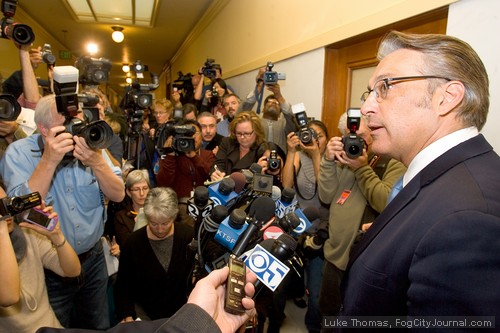
Mayor

Obama’s evolution

58

Other than a few Mitt Romney supporters, most of us view evolution as a wonderful biological mechanism to which we owe our supposed higher intelligence. So Obama’s “evolution” from a foe to a supporter of same-sex marriage deserves tremendous praise. But before we go all ga-ga over the president, let’s remember:

He didn’t evolve on his own. In this case, the evolution needed a push, from generations of LGBT activists and supporters, who put the issue in front of the world, made it a basic matter of civil and human rights, and forced Obama to realize that he could no longer duck and had to take a stand.

Remember FRD’s famous statement to activists? “Now you have to make me do it.” That’s what happened here. Obama made the political calculation, of course, and it’s a good one — energizing his base is more important than angering a bunch of people who weren’t going to vote for him anyway. But there’s more to it, and I think Paul Hogarth has the right line:

Biden’s statement may have been the final trigger, but the LGBT movement deserves the credit – despite the odds – to hold firm on getting the President to take this historic stance. And it’s a lesson that other progressive constituencies should take heart in, as we strive to make Barack Obama the President we hoped he would be.

Let’s also remember that this really started in San Francisco, with an act of what I like to call civic disobedience. At the time, a lot of critics said that Mayor Gavin Newsom was hurting the Democratic Party by making a move before the rest of the nation was ready for it. But what he did eight years ago was force the rest of the nation to get ready for it — and the subsequent legalization of gay unions in a growing number of states has shown America what the Boston Phoenix referred to as “the utter, mundane normality” of same-sex marriage.

We all knew this moment was coming. The demographics can’t be denied. Almost everyone younger than 30, and most people younger than 40, supports same-sex marriage. The country is changing — in this case, in a very positive way — and Obama was risking being on the wrong side of history. Even the Republicans seem to get that — they’re running away from this issue as fast as they can.

So now it’s likely that L.A. Mayor Antonio Villaraigosa will have his way and the Democratic Party platform will have a same-sex marriage component. Romney will be on the defensive on a key social issue – a huge change from the past. The Supreme Court will be more likely to uphold Judge Vaughn Walker’s decision on Prop. 8 (yes, the high court is political and changes with the norms of society, sometimes slowly, but the president’s statement will have a clear impact.)

So this is huge — not just because of the impact but because of what it says about the power of progressive movements. Now let’s make the president raise taxes on the rich.


Mayor Lee signs watered-down limits on SFPD spying

6

Flanked by members of Coalition for a Safe San Francisco, Police Chief Greg Suhr, and Sup. Jane Kim, Mayor Ed Lee today signed legislation that calls for San Francisco Police officers working with the FBI’s Joint Terrorism Task Force to respect privacy rights in the California Constitution and local laws and calling for annual reports on SFPD-FBI activities.

Coalition members trumpeted what they called “historic civil rights legislation,” but this watered-down version of legislation that Lee vetoed last month doesn’t offer the same guarantees and codification of privacy principles as the previous version, which was approved on a 6-5 vote of the Board of Supervisors, whereas this new version won unanimous approval.

Its endorsement by the most conservative supervisors – those most deferential to the SFPD, politicians who routinely vote against even the most innocuous progressive legislation – is a sure indicator that the legislation doesn’t really do much to clips the wings of the SFPD, which initiated this controversy with a secret 2007 agreement with the FBI that federalized local officers.

That was precisely the objection to the initial legislation that were offered by Lee and Suhr, that it codified local privacy protections with specific limits on SFPD officers engaging in surveillance on citizens who had broken no laws, and that it subjected any future agreements with the FBI to approval by the Police Commission. The new legislation is far more vague.

“It is a step in the right direction, there’s no doubt it’s progress, but whether it’s real progress depends on the implementation,” says John Crew, an expert on police practices with the American Civil Liberties Union-Northern California, which unearthed the 2007 secret memo.

Crew has worked on this issue for years and has been troubled by the FBI’s claims that local laws don’t apply to federalized agents, with the SFPD’s resistance to allowing specific limits to be codified in local law, and with the deferential position Lee has taken to the SFPD. Crew said the strongest part of the new ordinance is the explicit statement that local officers can’t ignore local and state laws, but the details of how that’s applied weren’t really addressed in this new version.

“The question now is will there be a vigilant, meaningful, and sustained effort to implement this law and will there be sufficient transparency,” Crew said.

Two of the strongest advocates for the new law, Nasrina Bargzie of the Asian Law Caucus and Zahra Billoo of CAIR-SFBA, say the compromise version addressed their main issues and is worth celebrating, but they agree with Crew that its strength will ultimately depend on how it is implemented.

“We don’t see this as the end. We need to make sure it is implemented properly,” Billoo said, calling it a “watered down version” of the stronger and more specific initial legislation.

For example, the legislation calls for annual reports on FBI-SFPD activities, but it doesn’t go into much detail on what those reports will include.

“Part of what we’re going to do is communicate with the stakeholders about what we expect those reports to look like,” said Nasrina Bargzie, a coalition member from the Asian Law Caucus, noting that they would like to base them on the work that has been done in Portland, Ore., which has been a leader on the issue. “It’s going to require us to watch those trouble spots during implementation.”

While the vetoed legislation would have given the Police Commission more authority over future SFPD-FBI agreements, the signed version simply calls for public hearing before the Police Commission when there are new agreements. “Ultimately, it will come down to political will at the Police Commission” to enforce privacy protections, Crew said.

He called San Francisco “one of the strongest communities of concern about civil rights in the country,” and as long as that remains the case then this legislation could be an important vehicle for protecting civil rights. But the real question is what happens when there’s another terrorist scare and the JTTP decides civil liberties are secondary to beliefs that the police state and its surveillance efforts needs to be beefed up. Or when the police state decides to simply refuse to disclose is activities.

Obama’s mistake

4

By Gabriel Haaland and Laura Thomas

Last month, Obama came out swinging against medical marijuana in an interview, defended his raids of law-abiding clubs, and is currently positioning himself to the right of former President George Bush — despite the fact that nearly 75 percent of Americans support legalized medical marijuana.

In Northern California, Melinda Haag, Obama’s US Attorney for the Northern District of California, is resolutely determined to shut down medical marijuana access. Her district starts in the Bay Area and runs up the California coast to the Oregon border. Ironically, her district may have the strongest support in the entire country for medical marijuana, from voters, law enforcement, elected officials, businesses, and community members. Why is she so obsessed with shutting down the clubs? She claims that it’s because she is protecting the children of California. Really. So the next time someone is dying of cancer and they don’t have legal access to medical marijuana, we will be sure to remember that the children of California are safe. And let’s be clear: She is going after regulated clubs and the idea of a regulated industry — regulations that communities, sheriffs, Boards of Supervisors, and health departments have built.

Haag is targeting community leaders, such as Richard Lee, the chief promoter of California’s effort to legalize marijuana, and Oaksterdam, the area where most of the medical dispensaries are in Oakland. She also shut down Mendocino’s ground-breaking regulation of marijuana growers — literally driving past illegal grows to one recently inspected and certified by Mendocino sheriff’s deputies. She subpoenaed Department of Public Health records used to issue licenses for dispensaries here. She is going after dispensaries in San Francisco that are in full compliance with local and state law, merely because they are within an arbitrary distance from a school or park, even if the park is unused, or the school opened after the dispensary did.

Her actions are not protecting children from the harms of marijuana. She states that dispensaries attract crime, which is not proven by any evidence. What does cause crime is the black market, especially the black market for marijuana imported from Mexico, where 50,000 people have been lost in prohibition-related violence. The less people can produce, purchase, and consume marijuana grown here in California, the worse things get for Mexico. She also seems oddly concerned about the evils of capitalism, worried that people may be making a living from the medical marijuana industry. While we may not be the biggest fans of capitalism, we don’t think closing small businesses (or even large ones) in these economic times is a great idea. Haag’s actions have put thousands out of work and eliminated tax revenues for localities and the state. She’s using taxpayer resources to make the local economy a little bit worse. Thanks.

In San Francisco, elected officials including the mayor, the Board of Supervisors, the district attorney, the city attorney, Assemblymember Tom Ammiano, State Senator Mark Leno, the Democratic County Central Committee, and most recently, Democratic Congressional Leader Nancy Pelosi, have all spoken out against Obama’s efforts to undermine legal, regulated medical marijuana in California. The San Francisco Chronicle has run not one, but two editorials in the last month on the topic, plus a column from conservative columnist Deb Saunders. There have been rallies, protests, petitions, meetings, and letters asking her to stop going after medical marijuana.

What will it take to get Obama to wake up to the fact that his effort are not supported by three quarters of the country and that, in particular, Melinda Haag is obsessed with shutting down any regulated medical marijuana business? She is making things worse: leaving patients to the black market to find their medication, undermining law enforcement efforts to work with medical marijuana producers, and exacerbating the violence in Mexico.

But instead of reining her in, Obama is doubling down one of the most popular causes in America.. Medical marijuana is far more popular in the U. S. right now than Congress, the president, or Republican candidate Mitt Romney. The most serious moment at the Correspondents Dinner in Washington, DC last week was when comedian Jimmy Kimmel asked Obama point-blank why he was going after medical marijuana. None of it makes much sense. How much evidence is needed to convince Obama and Haag that their actions are creating harm, not eliminating it? How much evidence is needed that this is not what the voters and taxpayers want? What kind of data do they need that regulation reduces crime? How many patients need to tell their stories? What will it take to change her actions?

And when will Obama wake up to the fact that he is making a huge mistake? 

Gabriel Haaland is a member of the San Francisco Democratic County Central Committee. Laura Thomas works with the Drug Policy Alliance.

20 percent by 2020

52

steve@sfbg.com

There’s no doubt that San Francisco is one of the best cities in the United States for bicyclists, a place where near universal support in City Hall has translated into regular cycling infrastructure improvements and pro-cyclist legislation, as a slew of activists and politicians will attest to on May 10 after dismounting from their Bike to Work Day morning rides.

But even the most bike-friendly U.S. cities — including Portland, Ore., Davis, Chicago, and New York City — are still on training wheels compared to our European counterparts, such as Amsterdam and Copenhagen, where around 30 percent of all vehicle trips are by bike. By comparison, even the best U.S. cities are still in the low single digits. [Correction: Davis, which stands alone among U.S. cities, is actually at about 15 percent bike mode share]

Board President David Chiu and other city officials proposed to aggressively address that gap two years ago after returning from a fact-finding trip to Europe that also included Ed Reiskin, executive director of the San Francisco Municipal Transportation Agency (SFMTA), the agency charged with implementing city policies that favor transit riders, cyclists, and pedestrians over motorists.

Chiu sponsored legislation setting the goal of having 20 percent of all vehicle trips in San Francisco be by bike by the year 2020 and calling for the SFMTA to do a study on how to meet that goal. It was overwhelmingly approved by the Board of Supervisors and signed by Mayor Ed Lee, who has regularly cited it and proclaimed his support for what it now official city policy.

But the city will fail to meet that goal, probably by a significant amount, unless there is a radical change on our roadways.

The latest SFMTA traffic survey, released in February, showed that bikes represent about 3.5 percent of vehicle trips, a 71 percent increase in five years. While the San Francisco Bicycle Coalition (SFBC) lauded that gain as “impressive,” it would mean a 571 percent increase in the next seven years to meet the 2020 goal.

The SFMTA study on how to meet the goal is long overdue, with sources telling us its potentially controversial conclusions have it mired by internal concerns and divisions. SFMTA spokesperson Paul Rose told us in March that it was coming out in April, and now he won’t say when to expect it and he won’t even make its authors available to answer our questions.

“We want to make sure everything is addressed before the plan is finalized,” he told us, acknowledging that it’s been a difficult process. “The challenge of reaching the goal is ambitious.”

Chiu acknowledges that the goal he set probably won’t be met and expressed frustration with the SFMTA. “I’m disappointed that two years after we set that goal, there is still no plan,” he told us, adding that to make major gains “will take leadership at the top” and a greater funding commitment to this cost-effective transportation option: “We’re spending budget dust on something that we say is a priority for the city.”

Reiskin also seemed to acknowledge the difficulty in meeting the goal when we asked him about it and he told us, “To get to 20 percent would be a quantum leap, no question, but the good news is there’s strong momentum in the right direction.”

Yet on Bike to Work Day, it’s worth exploring why we’re failing to meet our goal and how we might achieve it. What would have to happen, and what would it look like, to have 20 percent of traffic be people on bikes?


CLOSING THE GAP

SFBC Executive Director Leah Shahum said that all the group’s studies show safety concerns are by far the biggest barrier to getting more people on bikes. Most people are simply scared to share space with automobiles, so SFBC’s top priority has been creating more bikes lanes, particularly lanes that are physically separated from traffic, known as cycletracks, like those on a portion of Market Street.

“We’ve seen it time and again, when you build, they will come,” Shahum said. “People want to feel safe. They want dedicated space on the roadways.”

SFBC’s Connecting the City proposal calls for the creation of four crosstown colored cycletracks totaling 100 miles. Other bike activists emphasize the importance of projects that close key gaps in the current bike network, such as the dangerous section along Oak and Fell streets that separates the Panhandle from the Wiggle, scary spots that deter people from cycling.

That safety concern — and the possibilities for making cycling a more attractive option to more people — extends to neighborhood streets that don’t have bike lanes, where Shahum said measures to slow down automobile traffic and increase motorist awareness of cyclists would help. “What we’re talking about is a calmer, safer, greener, neighborhood-focused street,” she said.

Bike advocates say the goal is to make cycling a safe and attractive option for those 8 to 80 years old, a goal that will require extensive new bike infrastructure — not just new bike lanes, but also more dedicated bike parking — as well as education programs for all road users.

“What I hope is on the drawing board is infrastructure that will make more people feel safe riding, particularly women,” SFMTA board member Cheryl Brinkman, a regular cyclist, told us.

Shahum also praised the Bay Area Rapid Transit District’s new Bike Plan, which seeks to double the percentage of passengers who bike to stations (from 4 percent now up to 8 percent in 10 years), saying Muni should also take steps to better accommodate cyclists. And she praised the city’s bike-sharing program that will debut in August, making 1,000 bikes available to visitors.

But to realize the really big gains San Francisco would need to hit 20 percent by 2020 would take more than just steadily increasing the mileage of bike lanes, says Jason Henderson, a San Francisco State University geography professor who is writing a book on transportation politics. It would take a systemic, fundamental shift, one either deliberately chosen or forced on the city by dire circumstances.

“If gasoline goes to $10 per gallon, sure, we’ll get to 20 percent just because of austerity,” Henderson said. But unless energy prices experience that kind of sudden shock, which would idle cars and overwhelm public transit, thus forcing people onto bikes, getting to 20 percent would take smart planning and political will. In fact, it will require the city to stop catering to drivers and accommodating cars.

Henderson noted that bicycle mode share is as high as 10 percent in some eastern neighborhoods, such as the Mission District, Lower Haight, and in some neighborhoods near Civic Center. “In this part of the city, Muni is crowded and young people get tired of Muni being such a slow option,” Henderson said. “If you live within a certain radius of downtown, it’s easier to bike.”

To build on that, he said the city needs to limit the number of parking spaces built in residential projects in the city core even more than it does now, as well as adding substantially more affordable units. “The most bikeable parts of the city have massive rent increases,” he said. “We have to make sure affordable housing is wrapped around downtown.”

Henderson said city leaders need to show more courage in converting car lanes and street parking spaces into bike lanes, creating bike corridors that parallel those focused on cars or transit, and exempting most bike projects from the detailed environment review that slow their implementation. At the same time, he said the city needs to drastically expand Muni’s capacity to give people more options and compensate for bike improvements that may make driving slower.

“If you want 20 percent bike mode share, you need 30 percent on transit,” he said, noting that public transit ridership in San Francisco is now about 17 percent, far less than in the great bike cities of Amsterdam and Copenhagen, which made a commitment to reducing reliance on the automobile starting in the 1970s. “It’s like a puzzle.”


BARRIERS AND BACKLASH

The kind of active urban planning that Henderson advocates would be anathema to many San Franciscans, particularly people like Rob Anderson, the blogger and activist who sued San Francisco over the lack of studies supporting its Bike Plan and created a four-year court injunction against bike projects that just ended two years ago.

“The only way you could get to 20 percent is creating gridlock in San Francisco. I don’t think it’s going to happen. City Hall is adopting a slogan as transportation policy,” he told us. “It’s a statement of pro-bike, anti-car principle, but it’s not a realistic transportation policy.”

Anderson considers bicycles to be dangerous toys that will never be used by more than a small minority of city residents, believing the majority will always rely on automobiles and there will be a huge political backlash if the city continues to take space from cars for bikes or open space.

Many city officials and cycling advocates say making big gains means convincing people like Anderson that bicycles are not just a viable transportation option, but an important one to facilitate given global warming, oil wars, public health issues, and traffic congestion that will only worsen as the population increases.

“We need to help all San Franciscans see cycling as a legitimate transportation option,” Chiu said. Or as Shahum put it, “It’s prioritizing space for biking, walking, and transit over driving.”

Shahum said the city’s political leaders seem to get it, but she doesn’t feel the same sense of urgency from the city’s planners.

“I feel like the bureaucracy needs to get on board. We have strong political support and the public support is growing,” Shahum said. “We’ve set ambitious, worthwhile, and I think achievable goals, yet nobody is holding the city accountable….It can’t just be a political platitude, it needs to be an actual plan with measureables and people held accountable.”

She cited studies showing that the most bike-friendly cities in the U.S. are spending between $8 million and $40 million a year on bike infrastructure and education programs, “but San Francisco is spending more like $2-3 million, which is peanuts…San Francisco has got to start putting its money where its mouth is to improve biking numbers.”

It’s cheap and easy to stripe new bike lanes. “It’s one of the best investments we can make in terms of mode share,” Reiskin said. That makes cycling advocates question the city’s true commitment to goals like the 2020 policy. “We will need more investment,” Chiu said, “but compared to other modes of transportation, it is far cheaper per mile.”


POLITICAL WILL

So why then has San Francisco slipped back into a slow pace for doing bike projects following a year of rapid improvements after the bike injunction was lifted? And why does the city set arbitrary goals that it doesn’t know how to meet? The answer seems to lie at the intersection of the political and the practical.

“We need a more detailed and comprehensive strategy that says this is where we need to be in five years and this is how we get there,” Sup. David Campos, who chairs the San Francisco Transportation Authority, told us. “I feel like the commitment is there, but it’s a question of what resources you have to devote to that goal.”

But it’s also a question of how those resources are being used, and whether political leaders are grabbing at low-hanging fruit rather than making the tough choices to complete the city’s bike network and weather criticisms like those offered by Anderson.

It often seems as if SFMTA is still prioritizing political projects or experimenting in ways that waste time and money. For example, the most visible improvement to the bike network in the last year, and the one most often cited by Mayor Lee, is the new cycletracks on JFK Drive in Golden Gate Park. But they do little to make cycling more attractive and they may even exacerbate tensions between cyclists and drivers.

It was one of two major bike projects that Mayor Lee announced on Bike to Work Day last year, and it seemed to have more to do with politicians announcing more bike lane mileage that with actually improving the bike network.

The other project Lee announced, just a few blocks of bike lanes on Fell and Oak streets, really was a significant bike safety advance that SFBC has been seeking for several years. But Lee failed to live up to his pledge to install them by the end of 2011 after neighbors complained about the lost parking spots, and the project was pushed back to next year at the earliest.

“We’re talking about three blocks. It’s relatively small in scope but huge in impacts,” Shahum said of the project. “If the pace of change on these three blocks is replicated through the city, it’ll take hundreds of years to meet the [20 percent] goal.” But Lee Press Secretary Christine Falvey said: “The mayor is very much committed to the aggressive goals set to get to 20 percent by 2020 and the city is moving in the right direction. He has also always supported the Oak Fell project and we’re seeing progress.” Yes, but not the kind of progress the city would need to make to meet its own goal. “Chicago is really the leader right now,” Shahum said, noting Chicago Mayor Rahm Emanuel’s commitment to building 25 miles a year of new cycletracks and the city’s advocacy for getting more federal transportation money devoted to urban cycling improvements. “Where does San Francisco fit in this? Do we want to be at that level or not?”

Editorial: The Mirkarimi case is an abomination

97

Editor’s note: And so the man who became interim  mayor on a false pretext and then lied his way through an election for a full term amid a sleazy mass of campaign irregularities and violations, has suspended Sheriff Ross Mirkarimi without pay and is now using the full power of the city attorney’s office to continue the Mirkarimi crucifixion. Without pay? The usual City Hall/cop practice is to suspend or put a city official on administrative leave with pay. Even Willie Brown, former mayor, Chronicle columnist and PG@ES lobbyist, says Mirkarimi should not have been suspended without pay. B3

EDITORIAL There’s only one way to say this: The official misconduct case against Sheriff Ross Mirkarimi has become a one-sided star-chamber proceeding that violates all the basic rules of fairness, decency, and due process.

Over the past few weeks, Mayor Ed Lee, acting through the City Attorney’s Office, has been collecting evidence and issuing subpoenas to force witnesses (including some who have only a peripheral involvement in the matter) to give testimony. The mayor is acting as if he’s prosecuting a murder case instead of conducting a hearing on whether an elected official should be thrown out of office for a misdemeanor.

And Mirkarimi and his lawyers have absolutely no ability to respond.

That’s right: The mayor and the city attorney have subpoena power. The defense in this case doesn’t.

If this were a criminal proceeding, in a real court, Mirkarimi would have the same ability to compel testimony as the mayor. And under the rules of discovery, he’d have the right to see all of the evidence compiled against him.

But because this in front of an Ethics Commission that hasn’t even adopted evidentiary rules, one side has all the rights, and the other side has none. That puts Mirkarimi at a terribly unfair disadvantage. You can argue all day about Mirkarimi’s conduct, but people charged with the worst horrific crimes have more legal protections than he does.

The Ethics Commission needs to immediately adopt rules that level the playing field — and the city attorney should insist on it. If there are going to be witnesses — and clearly the mayor is planning to present them — then Mirkarimi’s lawyers must be allowed to review those statements in advance, as they would in any trial. All evidence against the sheriff should be turned over to the defense, well in advance of the hearing. Until that happens, the mayor and the city attorney should put the inquiry on hold.

Because right now, the process is an abomination.

GUEST OPINION: The politics of retribution

122

By Debra Walker and Krissy Keefer

We have been shocked and saddened by the perpetual attack on Ross Mikarimi and his family.

To Ross’s credit, he took responsibility in the criminal case he faced, and accepted a plea bargain to a non-domestic-violence misdemeanor that the district attorney concluded served the interests of justice.

He and his wife, Eliana Lopez, had resolved their dispute before the betrayed disclosure to the police and the media by the trained but unlicensed attorney that began the criminal case. The plea bargain was vetted and all legal ethicists consulted concluded that the plea bargain could not be the basis of any action against Ross for the now infamous term “official misconduct.” Ross was ordered into counseling.

Since the criminal case ended we have watched the mayor, domestic-violence advocates, and the majority of the print media, collectively pass judgment without connection to reality, with devastating consequences to Ross Mirkarimi, his family and the people of San Francisco.

Mayor Ed Lee suspended Ross without a hearing and without pay. In other words, the mayor acted against Ross without due process. City Attorney Dennis Herrera has merely repeated all of the unsubstantiated allegations from a newspaper opinion piece in the form of a pleading — and actually submitted this as fact, further embarrassing our city.

Barring further intervention by the courts, the Board of Supervisors and the Ethics Commission will now be forced to publicly weigh in on the concluded criminal case that occurred before Ross was in office.

Was the punishment laid out by the courts not enough? Are we going to all sit back and watch as San Francisco engages in a public political assassination of a progressive elected official? At what point does it stop? 

Clearly it hasn’t stopped with Ross. Now the mayor and the city attorney have begun the attack on his campaign manager and well-known City Hall aide Linette Peralta-Hayes. Who is next? It could be any of us, of you.

As close friends of Ross and Eliana, we can attest to the fact that this family has paid dearly for their now very public fight and we all should hope for a healing. It does not bring justice to any women’s issues to have such a public display of retribution and revenge. Blowing this out of proportion like this has been only sets the stage for the continued backlash against women’s real issues.

If there were not a complete attack on women’s rights at this time in our country, this might be easier to stomach. Not one thing about this has advanced the rights of women or the understanding of domestic violence. Instead, the criminal justice system has been manipulated to further a political agenda of removing an elected official from office.

We all make mistakes in life. There have been several recent occasions involving officials actually in office where their behavior was questioned.  One issues involved sexual contact with a subordinate, another involved domestic violence and others involved substance abuse. In not one of these instances has the person been removed office.

To remove Ross from office is political and nothing else.

People are purportedly so outraged on behalf of abused women everywhere. But where is the outrage about the coordinated attack on choice in our country or about the documented inhumanities perpetrated against women throughout the world, even today?  Or equal pay, or adequate healthcare? What about the families losing their homes to greedy banks? Nothing of substance gets done on these issues. Instead, attention is focused away from the important issues to the personal shortcomings of the politicians seeking to address those issues.

From the impeachment efforts against Clinton to the allegations against the Wikileaks activist, there are over-amped attacks aimed to politically destroy the target in the press.  “Due process” and “innocent until proven guilty” are essentially thrown out the pressroom window. 
In the name of domestic violence, the mayor and the city attorney have removed an elected official from office. Domestic violence advocates are being used to further an agenda that is hypocritical and ultimately will undermine and dis-empower us all.

Ross Mikirimi was the only progressive elected in the last election. Ross has always been an ideological feminist. The established power brokers in City Hall did not want Ross to be sheriff. They do not want someone who advocates for diversity. They do not want someone who supports the rights of the people to implement the Compassionate Use Act and maintain cannabis dispensaries. They do not want a sheriff who will stand up to the federal government.  They do not want a sheriff who will stand with the 99 percent.

San Francisco is a great city not because of intolerance but because of tolerance. The strength of the city came about because of respect for diversity and encouragement of diversity. Ross stands for those principles.

Ross made a mistake in his personal relationship. Eliana Lopez, his wife, has clearly forgiven him. Each of us should do the same. To do otherwise is to disrespect Lopez.

Are we going to trust City Hall to be the arbitrators of conduct?  And are we really going to sit by and watch as they systematically throw untrue, unfounded, unsubstantiated accusations at whomever they want? Really?

To use this incident as the basis for this coup is without precedent. City Hall’s actions are without basis in fact and without foundation in law.

We believe that the mayor, among others, is doing what he wants to under the guise of women’s rights. We do not want to be used in that way.

There is something very wrong with what is happening — and sadly if this public political assassination can happen to Ross and his family, it can and will happen to anyone of us. Ask Linette Peralta Hayes.
 
Krissy Keefer is artist director, Dance Mission Theater. Debra Walker, an artist, is political development chair of the California Democratic Party Women’s Caucus.

Sunday Streets coming to — and staying in — the Mission

2

Sunday Streets – the once-controversial closure of streets to automobiles so they can be fully used by pedestrians, cyclists, and skaters, temporarily expanding the amount of open space in San Francisco – has become a popular monthly event and it rotates among neighborhoods around the city. And as the organizers prepare for this Sunday’s event in the Mission, where its biggest and best incarnations are held, city officials today announced an expansion of the program: the Mission will now host Sunday Streets on the first weekend of each month through the summer.

“Sunday Streets really comes to life and realizes its full potential when it’s in the Mission,” Ed Reiskin, executive director of the San Francisco Municipal Transportation Agency, said this morning at a press conference on the steps of City Hall.

The business community initially resisted the idea when it was proposed five years ago by Mayor Gavin Newsom and its chief sponsor, the nonprofit Livable City, concerned that customers would have a hard time getting to stores. But just the opposite has proven true as the popular events fill the streets with thousands of people.

“When Sunday Streets started, I know there was a little apprehension, we even felt it in the Mission,” Sup. David Campos, who represents the Mission. “But the neighborhood has come together to embrace the project.”

Mayor Ed Lee called the expansion of Sunday Streets “a great pilot program for San Francisco” and said that it represents “our openness to learning to use our streets differently.”

San Francisco was the third city in the country to hold these street closures – known as cicolvias in Bogota, Columbia, which pioneered the concept – following Portland, Ore. (the first, and one that we covered) and New York City. This Sunday’s event runs from 11 am to 4 pm, mostly along Valencia and 24th streets.

Only real change can avert more conflict

44

This week’s May Day events brought together immigrant groups, labor unions, and activists with the Occupy movement to confront gross inequities in our economic and political systems. That’s a healthy democratic exercise, even if it sometimes provokes tense standoffs with police and property interests. But the day was marred by violence that didn’t need to happen, and that’s a dangerous situation that could only get worse.

The Oakland Police Department debuted new crowd control policies to manage marches of several thousand people, and there were some improvements over its previous “military-type responses” that have placed the OPD under the oversight of federal courts. For example, when the decision was made to clear Frank Ogawa Plaza around 8:30 p.m., police allowed escape routes (instead of using dangerous kettle-and-arrest tactics), clearly visible public information officers were available to answer questions, and people were allowed to return shortly thereafter.

“We’re not attempting to permanently clear the plaza, we just want things to settle down,” OPD spokesperson Robyn Clark told me at the scene.

But the OPD continues to provoke conflicts and mistrust with its confrontational tactics, even as it argues that such tactics are actually intended to improve its approach to handling large demonstrations. “Today’s strategy focused on swiftly addressing any criminal behavior that would damage property or jeopardize public or officer safety. Officers were able to identify specific individuals in the crowd committing unlawful acts and quickly arrest them so the demonstration could continue peacefully,” OPD wrote in press release late Tuesday night.

That sounds nice, but it’s only partially true, and the entire situation is a lot more complicated and volatile than that. Clark and witnesses told me at the scene that the dispersal order came after police charged into a crowd of several hundred, perhaps more than 1,000, to arrest someone with a stay-away order and were met with an angry reaction from the crowd.

What did they expect? The city decided to seek stay-away orders against many Occupy Oakland protesters – a barely constitutional act that only fans divisions between the city and protesters – and then to execute them at a time when elements of both sides were itching for a fight anyway. Perceptions become reality in a scene like that, which can quickly escalate out of control (which is what happened – almost all the property damage in Oakland occurred after the plaza was cleared by police).

“These pigs can’t wait to come in here and bust us up,” speaker Robbie Donohoe told the crowd shortly before the sound permit ended at 8 pm, warning people to leave soon is they didn’t want to assume the risk of a violent confrontation with police.

It wasn’t an unreasonable expectation after watching police decked out in riot gear, loaded down with tear gas canisters, and gathered around an armored vehicle with military-style LRAD sound weapon since mid-afternoon. Donohoe wasn’t advocating violence, but an important revolutionary and constitutional principle: the right to assemble and seek redress of our grievances.

“They didn’t have a permit in Egypt, they didn’t have a permit in Tunisia, and we don’t need a permit here! If you want to stay, you stay!” he said.

Many Americans share that viewpoint, and they’re frustrated that political corruption and economic exploitation have continued unabated since the Occupy Wall Street movement began almost eight months ago. And many young people – particularly the Black Bloc kids who show up with shields and weapons, ready to fight – are prepared to take those frustrations out in aggressive ways, as we saw Monday night during their rampage through the Mission District.

Witnesses and victims of that car- and storefront-smashing spree are understandably frustrated both with the perpetrators and the San Francisco Police Department, whose officers watched it happen and did nothing to stop it or apprehend those who did it. SFPD spokesperson Daryl Fong told us it just happened too quickly, with less than 20 officers on hand to deal with more than 150 vandals.

“Obviously, you have people with hammers, crowbars, and pipes engaged in this kind of act, with the number of officers involved, it was challenging and difficult to control,” he told us.

In both Oakland and San Francisco, the reasons for the escalation of violence were the same: police officer safety. That’s why OPD asserts the right to use overwhelming force against even the slightest provocation, and it’s why the SFPD says they could do nothing even when the Mission Police Station came under attack.

Now, I’m not going to second-guess these decisions by police, even though we should theoretically have more control over their actions than any of us do those of angry Black Bloc kids, although I do think both of these sides are looking for trouble and invested in the paradigm of violent conflict.

Rather, I think it’s time for our elected leaders, from Mayor Ed Lee to President Barack Obama, to stop giving lip service to supporting the goals and ideals of the Occupy movement and start taking concrete actions that will benefit the 99 percent and diffuse some of these tensions. This is dangerous game we’re all planning, and we’re teetering on the edge of real chaos that will be difficult to reel back in once it begins.

“We are not criminals. We are workers, we pay rent, we own homes,” Alicia Stanio, an immigrant and labor organizer for the Pacific Steel Casting Company, told a crowd of thousands that had gathered in San Antonio Park in Oakland, where three marches converged on their way to City Hall, carefully monitored by a phalanx of cops.

She and thousands like her didn’t march or speak or risk violence on May Day just because they like being in the streets. They’re desperate for change, real change, and it’s time that our leaders begin to deliver it before things really get out of hand in this country.


Shawn Gaynor contributed to this report.

City case speculates about Mirkarimi’s interference with investigation

111

The City Attorney’s Office laid out much of its case against suspended Sheriff Ross Mirkarimi yesterday when it released a list of witnesses and their expected testimony, as requested by the Ethics Commission, and it offers little support for the city’s accusation that Mirkarimi dissuaded witnesses or sought to destroy evidence of a crime, which are among the most serious allegations in the official misconduct case against him.

The longest and most significant section in the brief was the testimony of Ivory Madison, the neighbor who initiated the police investigation into whether Mirkarimi physically abused his wife, Eliana Lopez, during a Dec. 31 incident that she subsequent reported to Madison, who made a video of her story and a bruise on her arm.

It was the most detailed account yet of what happened from the perspective of Madison, who has refused media interviews, and it differs in some key areas from accounts that Mirkarimi gave to the Guardian and other media outlets.

For example, Mirkarimi said he grabbed his wife’s arm in the car during a heated argument and that tempers had cooled by the time they went inside. But Madison is expected to testify that, “Inside the house, Sheriff Mirkarimi pushed, pulled and grabbed Ms. Lopez, who was crying and screaming, as was their son. Ms. Lopez asked Sheriff Mirkarimi to stop, and said look what you’re doing to our son. Ms. Lopez then ran out of the house. While both inside and outside the house, Lopez was yelling, do you want me to call the police. When Ms. Lopez yelled about calling the police while outside, Sheriff Mirkarimi said no, come inside. Ms Lopez went back inside.”

It is unclear from the memo whether Madison was a direct witness to those events or whether they were relayed to her by Lopez, but it sounds like the latter given that the story is in a paragraph that began with the phrase “According to Ms. Lopez.” Since the incident, Lopez has consistently denied that Mirkarimi abused her and downplayed the conflict. The only other neighbor on the witness list, Callie Williams, wasn’t at home during the conflict, but she’s expected to testify that Lopez told her about that and an earlier instance of abuse and that “Sheriff Mirkarimi was scared that she was going to tell people what happened.”

While Madison’s expected testimony confirms Lopez’s account that the video was made to be used in the event of a child custody battle if the couple divorced, Madison’s account paints Lopez as actively worried about her safety: “Ms. Madison suggested calling the police. Ms. Lopez was afraid that the police would not believe her and would not protect her from Sheriff Mirkarimi, and was concerned about what the police could do to protect her.”

It also confirms what journalist Phil Bronstein, a friend Madison called for advice, told the Guardian about Madison’s initial call to police being a simple inquiry and that she didn’t intend to initiate a police investigation just yet. And it indicates that “Ms. Lopez was unhappy about the investigation. Ms. Lopez called Linnette Peralta Haynes (Sheriff Mirkarimi’s campaign manager in the November 2011 election) on her mobile phone. After speaking with Ms. Haynes, Ms. Lopez handed her phone to Ms. Madison. Ms. Haynes attempted to dissuade Ms. Madison from cooperating with the police and attempted to persuade Ms. Madison to lie to the police.”

Yet there is nothing in Madison’s expected testimony to indicate Mirkarimi was behind any of these efforts, and he denies it and says that he wasn’t even aware that Lopez had talked to Madison or made a video or that police had been called at that point. Peralta Haynes, who sources say is in the late stage of a difficult pregnancy, hasn’t cooperated with the investigation so it’s obviously speculative on the city’s part to indicate that she was acting as Mirkarimi’s “agent” in thwarting the investigation, as the city is claiming.

The only “evidence” that the city seems to offer in support of its accusation that Mirkarimi tried to thwart the criminal investigation comes from Madison’s husband, Abraham Mertens, who is expected to repeat the claim he first made in a controversial March 20 op-ed in the San Francisco Chronicle that, “During the time that SFPD inspectors were interviewing Ms. Madison on January 4, Mr. Mertens received a telephone call from Eliana Lopez urging him to make Ms. Madison stop talking to the police. Mr. Mertens heard Sheriff Mirkarimi’s voice in the background,” a more resolute version than Mertens had previously given when he wrote in the op-ed: “I recognized what I thought was Ross’ voice in the background.” Mertens also has not answered Guardian calls.

Mirkarimi categorically denies that he was present during that phone call and says that he was in meetings at City Hall and that he wasn’t aware that any of this was happening at the time. And he has denied urging Peralta Hayes to get involved, but her testimony could evolve into evidence if the city can show they talked before she spoke to Madison, but that’s still speculative. The city is seeking live testimony from Peralta Haynes about her communications with Mirkarimi on Jan. 4 and before.

During the recent Ethics Commission hearing on setting up procedures for the hearing, Mirkarimi attorney Shepherd Kopp noted that the city hadn’t done key interviews or collected physical evidence (such as phone records or the Lopez video) to support its charges against Mirkarimi before making its allegation, something that Deputy City Attorney Peter Keith didn’t dispute, noting that the the city had not yet received much of the evidence that it intends to present, such as the video.

The city appears to be banking on compelling incriminating testimony from Lopez and Mirkarimi, who they plan to treat as hostile witnesses. The other interesting name on the city’s witness list was Mayor Ed Lee, who the city is recommending give live testimony and who could also likely be subjected to a vigorous cross-examination that could have interesting political ramifications.

A teachable moment

2

caitlin@sfbg.com

HERBWISE On the occasion of leaving our gentle green bubble in the Bay, I often find myself in the position of explaining what it is I write about. Sometimes I am satisfied with focusing on my federally legal interests as the Guardian’s culture editor. But other times I am compelled to stretch the limits of my extended family’s imagination, which usually leads to some pretty interesting conversations.

I’m sure I’m not the only person interested in demystifying cannabis issues to their loved ones. Which is why I’m happy to introduce you to a 2011 documentary that might prove useful: Lynching Charlie Lynch, a DVD release you can find on Amazon or director Rick Ray’s website (www.rickrayfilms.com). The film even starts with a world history of cannabis usage: look guys, early Mormons used the stuff!

Charlie Lynch is a total goober (a word I use lovingly.) A suburbanite from Arroyo Grande, Calif., Lynch takes pleasure in winning stuffed animals from claw machines and rocking out to self-penned anti-drunk driving ballads in his DIY home studio. When he began medicating for his atrocious migraines with cannabis, Lynch decided to open a dispensary close to his home town, eventually starting one in 10,000-person Morro Bay. It was the only dispensary in San Luis Obispo County.

http://www.youtube.com/watch?v=ZzFsSx84EE4

Ray shows us Lynch’s adorably earnest and thorough process of setting up shop. Lynch goes so far as to call the DEA office, and is directed to four different numbers before an agent gruffly tells him that cities and counties are tasked with “dealing” with such enterprises. Thus enthused, Lynch obtains proper permitting from city and county administrations and holds a ribbon-cutting ceremony. The mayor and other city officials attend, the chamber of commerce is represented in cheerful photos from that day.

At this point one might pause the film and explain to friends and family that the California medical marijuana industry is not without its complicated issues, and that despite his phone calls, Lynch might have expected trouble from the federal government. But these caveats aside, what happens next is awful enough that “might-haves” and “could-dos” will probably dissipate from their minds.

A San Luis Obispo sheriff’s RV surveils patients and staff coming and going from Central Coast Compassionate Caregivers until sufficient evidence is gathered to obtain a federal search warrant. Your educational audience will cringe as law enforcement raids not just Lynch’s dispensary, but his home. He is taken into federal custody and released only when his family posts $400,000 in bail. There’s a media storm, the feds threaten his landlord, the business is ruined, and finally, Lynch puts his house — the same one where he once warbled cautionary notes to drunk drivers — on the market.

It is worthwhile to note that the Morro Bay raid occurred in 2007, and as an update to the fam you might want to mention the Oaksterdam debacle last month. (A scene from the Oakland cannabis school is included in Lynching Charles Lynch — prophetically, it is an in-class roleplay meant to teach students how to interact with federal agents.)

We say in the Bay Area that we are the epicenter of the cannabis movement, which in some senses may be true. But in some ways it’s not. Regardless of how conscious we are in Oakland, Marin, and San Jose of the hypocrisy of the federal government, national change is not going to take place until awareness of the issue is raised nationally.

Or maybe I’m just trying to justify that post-Lynching joint with my aunt in Maryland. Meh!

East Bay Endorsements for the June 5 election

0

There aren’t a lot of contested races in the Oakland/Berkeley area. Every member of the county Board of Supervisors is running essentially unopposed. When termed-out Assemblymember Sandra Swanson decided not to challenge state Senator Loni Hancock, the East Bay left avoided a bruising primary fight. In essence, voters will be addressing a series of no-contest primaries and two statewide ballot measures. So there’s not a lot to drive the voters to the polls.

But there are two important races — a contest for Swanson’s 18th Assembly seat and a rare election for an open seat on the Alameda County bench. Our recommendations follow.

STATE SENATOR, 9TH DISTRICT

LONI HANCOCK

Always solid on the issues, Hancock has taken a lead role in fighting bogus foreclosures and takes on the often-challenging job of killing bad bills as chair of the Public Safety Committee. She’s been a strong advocate for ending the death penalty.

STATE ASSEMBLY, 15TH DISTRICT

NANCY SKINNER

Another strong progressive, she’s currently pushing to preserve affordable education in the UC system. She’s also a leader in the campaign to tax online sales.

STATE ASSEMBLY, DISTRICT 18

ABEL GUILLEN

Several strong candidates are seeking this seat, which represents one of the most progressive districts in the state. Our choice is Abel Guillen, a member of the Peralta College Board. Guillen has a strong record in the progressive community and the support of the teacher’s and nurse’s unions. He’s a strong advocate for education and speaks about aggressively seeking new revenue (including a split-role modification of Prop. 13). We were a little concerned about his reluctance to support state Sen. Mark Leno’s efforts to allow local government more authority to raise revenue (Guillen’s worried about statewide equity) but on balance, he’s the best candidate.

We were also impressed with Rob Bonta, vice-mayor of Alameda, who is strong on transit issues and understands the needs of local government. But although he told us he would support repeal of the “three-strikes” law, he’s the candidate of law-enforcement and has the support of the Peace Officers Research Association of California, the dangerous statewide cop union that tries to block nearly every piece of progressive criminal-justice reform. He told us that in the past he’s supported the death penalty because “it’s the voters’ choice.” On the relatively simple question of legalizing pot, he said he “probably” would vote for it.

Thanks to the two-two primary system, it’s likely these two will be facing off again in November. Vote for Guillen.

SUPERIOR COURT, OFFICE NUMBER 20

TARA FLANAGAN

Three East Bay lawyers are running for this rare open seat. Our choice is Flanagan, whose progressive credentials and background make her the strongest candidate.

A former prosecutor in Los Angeles who now does civil litigation and family law, Flanagan is a supporter of open courtrooms and told us she would have no objections to cameras and tape recorders. She agreed that the administrative meetings of the county judges should be open to the public. She’s served as a temporary judge, so already has courtroom experience.

The Alameda bench is still mostly a boy’s club — only 30 percent of the judges are women, and a dismal 1.4 percent come from the LGBT community. Flanagan would bring some needed diversity to the court.

COUNTY SUPERVISOR, 5TH DISTRICT

KEITH CARSON

Incumbent Keith Carson has been a stalwart in the Oakland and Berkeley progressive communities for decades. He’s running unopposed.

SEIU makes noise in City Hall

13

SEIU Local 1021 workers say ‘’our message was heard” after about 300 marched into City Hall April 30. The city workers marched around the rotunda and then visited the offices of Sups Mar, Campos and Kim and Mayor Ed Lee, demanding that health care costs do not increase in ongoing contract negotiations with the city.

The city has already taken pay cuts that the union had been loudly protesting off the table. 

“We’re making progress, but not enough progress,” said Local 1021 field organizer Frank Martin del Campo.

He added that “this is the first time to my knowledge a union has militarized during the arbitration process since the process was established in San Francisco.”

The union had stated that they planned to demonstrate until 7:30pm, and then attempt to stay the night in a “Wisconsin-style takeover.” But by 6:30pm, the workers had exited City Hall.

“Our goal was to come and reclaim City Hall,” said Local 1021 vice president Larry Bradshaw. “If they wouldn’t let us in we’d occupy City Hall. They let us in.”

He added that “our members aren’t afraid to get arrested,” referencing an April 18 protest that resulted in 23 arrests.

He said that SEIU will not be on strike for May Day, but many members will be calling in sick and supporting janitors with SEIU Local 87 in their picket at Westfield Mall, scheduled for 11am.

Bradshaw, however, a paramedic. won’t be calling in sick. “I’ll be in arbitration,” he said.

The two defining votes of 2012

38

The Board of Supervisors will be facing two votes in the next couple of months that will define this board, establish the extent of the mayor’s political clout — and potentially play a decisive role in the political futures of several board members.

Oh: They’ll also have a lasting impact on the future of this city.

I’m talking about 8 Washington and CPMC — one of them the most important vote on housing policy to come along in years, the other a profound decision that will change the face of the city and alter the health-care infrastructure for decades to come.

Both projects have cleared the Planning Commission, as expected. Neither can go forward without approval from a majority of the supervisors. And there will be intense downtown lobbying on both of them.

The 8 Washington project would create what developer Simon Snellgrove calls the most expensive condos ever built in San Francisco. A piece of waterfront property would become a gated community for the very, very rich, many of whom won’t even live here most of the time. If it’s approved, the economy won’t collapse, neighborhoods won’t be destroyed — but it will make a powerful statement about the city’s housing policy. The message: We build housing for the 1 percent. We are a city that caters only to one very tiny group of people. We are willing to let the needs of the few drive our policy over the needs of the many.

Face it: There is no shortage of housing for the people who will buy Snellgrove’s condos. There’s a severe shortage of housing for most of the people who actually work in San Francisco. And the city’s housing policy is so scewed up that it’s making things worse. That’s the message of 8 Washington.

Then there’s CPMC. California Pacific Medical Center wants to put a snazzy state-of-the art new medical center on Van Ness, which is all well and good. But the giant nonprofit Sutter Health, which operates CPMC, has been openly hostile to some of the city’s demands (for housing, transit and other environmental mitigiation) and the proposal that Mayor Ed Lee has signed off on is way out of balance. There’s not anything even close to a reasonable link between jobs and housing — which will impact the entire city. You bring in a lot of new workers and don’t help build enough housing for them and everyone’s rent goes up.

CPMC also wants to radically downsize St. Luke’s Hospital, the only full-service facility on the south side of town except for the overcrowded and overloaded SF General. Health care for a sizable part of the city will suffer.

This is a very big deal, and the Chamber of Commerce is pushing hard for the supes to approve it. A lot of labor and the entire affordable housing community is against it.

So put those two votes in front of a board where the progressive majority has been very shaky of late — and where Lee will be working hard to line up six votes — and you’ve got potential political dynamite. Supervisor John Avalos told me he has serious concerns about both projects. Sup. David Campos told me he feels the same way. Sup Eric Mar is unlikely to vote for 8 Washington and unlikely to oppose the health-care workers and the progressive leaders who want to block the CPMC deal and make Sutter come back with a better offer, but some elements of labor are pushing hard for 8 Washington and Mar is up for re-election in one of the city’s swing districts.

Sup. David Chiu is against 8 Washington. I’ve called Sups. Jane Kim and Christina Olague (who was not a fan of the project when she was on the Planning Commission) but they haven’t gotten back to me. Olague is running for re-election this fall in the city’s most progressive district, one that’s right on the edge of the CPMC project site; Kim’s district is on the other edge.

You can’t really count to six on either of these projects without getting Chiu and/or Kim and/or Olague. Chiu has no progressive opposition, but if he supports the CPMC deal, someone may decide to challenge him. If Olague supports either project, it will give her opponents plenty of fodder for the fall campaign (John Rizzo, who is running against her, told me he opposes both). If Olague opposes the two projects, it’s going to be much harder for anyone to run against her from the left since she will have demonstrated that she can stand up the mayor on tough issues.

I’ll let you know if I hear more.


Burning Man on probation after busting its population cap

29

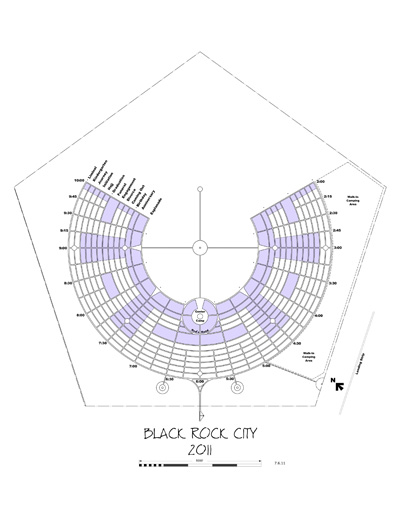
[UPDATED BELOW] Black Rock City LLC, the SF-based company that stages Burning Man in the Nevada desert, was placed on probation by the Bureau of Land Management after exceeding the 50,000-person population cap at last year’s event, jeopardizing its current efforts to get a five-year permit and adding a new pressure to an already difficult transition year.

“Probationary status limits the Bureau of Land Management to issuance of a one-year permit,” said Cory Roegner, who oversees the event from BLM’s Winnemucca office. His office put BRC on probation after it reported populations of 53,341 on Sept. 2 and 53,735 on Sept. 3, although BRC has appealed the ruling to the Interior Board of Land Appeals, which has not issued a ruling.

Representatives from that office and BRC have not yet returned Guardian calls for comment.

Roegner has been working on finalizing the Environmental Analysis of BRC’s proposal for a five-year permit that would allow the event to gradually increase from 58,000 to 70,000 participants. A draft report was released in March, and Roegner is now working on responses to the 40 comments that were received during the 30-day comment period, with the final report expected to be released the first week in June.

At that time, the BLM office would set the population limit for this year’s event and issue the permit. But if the BLM probation ruling isn’t overturned, that permit would be for just this year. And under BLM rules, if BRC violated its population cap again this year, it could be banned from holding events in the future.

“Population is a very important issue. That’s a big focus of the environmental analysis on which the permit is based,” he told us, referring to the 2006 study that placed the current 50,000 cap on population.

This places BRC in a precarious position given that it has already sold 57,000 tickets for this year’s event and will be giving away thousands more to staff, groups that have received art grants, and a host of other visitors and VIPs (last year, three members of the Board of Supervisors attended and Mayor Ed Lee is rumored to be mulling a trip this year).

Roegner and his boss at the BLM, Rolando Mendez, say it’s up to BRC to live by its permit. “Black Rock City LLC is free to sell as many tickets as they’re inclined to,” Mendez told us in February. “That’s a calculated business decision on their part, but I would expect Black Rock City LLC to live by the population cap that I set.”

In fact, despite the fact that tickets have already been sold, it’s possible that Burning Man won’t even get a permit this year, although that’s very unlikely and both BRC and BLM have said they have a good, cooperative working relationship. The environmental report studies alternatives that include no event, maintaining the current 50,000 population cap, and gradually increasing it to 70,000, with a 58,000 cap this year.

Roegner said the report (which you can read here in PDF form) and its comments identify traffic and transportation, air quality, and trash as key issues that could require additional mitigation measures, but he said it was still too early to determine exactly what that will mean for Burning Man and its participants.

Burning Man, which started on Baker Beach in 1986 and moved to the the Black Rock Desert in 1990, seems to be suffering from its own success. Last year, the event sold out for the first time and this year a new ticketing system proved problematic and sparked widespread criticism. But BRC officials have maintained that they’re addressing the problems and creating systems to ensure the long-term survival of the event and culture it has spawned.

4/46 UPDATE: BRC spokesperson Marian Goodell responded to our inquiries via text message, downplaying concerns over probation and the population issues. Initially, she wrote that probation “won’t effect 5-year permit process,” and when we noted that Roegner said it would limit BRC to a one-year permit, she wrote, “We are still continuing the 5-year permit process. The probation is under appeal.”

We asked how BRC plans to abide by this year’s population cap given that it has already sold or distributed more tickets than the number of people allowed by the permit, she wrote, “Easy. Usually at least 6,000 leave before we hit the peak. Sometimes more on dusty, wet or cold years.”

Yet Ron Cole, who lives on a ranch near the event site and made comments during the EA process, was critical of BRC for defying BLM controls and trying to substantially increase the size of Burning Man. “They should just give them a one-year permit and 50,000 cap,” he told us, citing the event’s impacts on air quality and limitations on getting people on and off the playa. He was dubious about BRC’s behavior this year: “You can sell tickets, bill credit cards, and you don’t even have a permit yet?”

Guardian endorsements for June 5 election

34

>>OUR ONE-PAGE “CLEAN SLATE” PRINTOUT GUIDE IS HERE. 

As usual, California is irrelevant to the presidential primaries, except as a cash machine. The Republican Party has long since chosen its nominee; the Democratic outcome was never in doubt. So the state holds a June 5 primary that, on a national level, matters to nobody.

It’s no surprise that pundits expect turnout will be abysmally low. Except in the few Congressional districts where a high-profile primary is underway, there’s almost no news media coverage of the election.

But that doesn’t mean there aren’t some important races and issues (including the future of San Francisco’s Democratic Party) — and the lower the turnout, the more likely the outcome will lean conservative. The ballot isn’t long; it only takes a few minutes to vote. Don’t stay home June 5.

Our recommendations follow.

PRESIDENT

BARACK OBAMA

Sigh. Remember the hope? Remember the joy? Remember the dancing in the streets of the Mission as a happy city realized that the era of George Bush and The Gang was over? Remember the end of the war, and health-care reform, and fair economic policies?

Yeah, we remember, too. And we remember coming back to our senses when we realized that the first people at the table for the health-policy talks were the insurance industry lobbyists. And when more and more drones killed more and more civilian in Afghanistan, and the wars didn’t end and the country got deeper and deeper into debt.

Oh, and when Obama bailed out Wall Street — and refused to spend enough money to help the rest of us. And when his U.S. attorney decided to crack down on medical marijuana.

We could go on.

There’s no question: The first term of President Barack Obama has been a deep disappointment. And while we wish that his new pledge to tax the millionaires represented a change in outlook, the reality is that it’s most likely an election-year response to the popularity of the Occupy movement.

Last fall, when a few of the most progressive Democrats began talking about the need to challenge Obama in a primary, we had the same quick emotional reaction as many San Franciscans: Time to hold the guy accountable. Some prominent left types have vowed not to give money to the Obama campaign.

But let’s get back to reality. The last time a liberal group challenged an incumbent in a Democratic presidential primary, Senator Ted Kennedy wounded President Jimmy Carter enough to ensure the election of Ronald Reagan — and the begin of the horrible decline in the economy of the United States. We’re mad at Obama, too — but we’re realists enough to know that there is a difference between moderate and terrible, and that’s the choice we’re facing today.

The Republican Party is now entirely the party of the far right, so out of touch with reality that even Reagan would be shunned as too liberal. Mitt Romney, once the relatively centrist governor of Massachusetts, has been driven by Newt Gingrich and Rick Santorum so deeply into crazyland that he’s never coming back. We appreciate Ron Paul’s attacks on military spending and the war on drugs, but he also opposes Medicare and Social Security and says that people who don’t have private health insurance should be allowed to die for lack of medical care.

No, this one’s easy. Obama has no opposition in the Democratic Primary, but for all our concerns about his policies, we have to start supporting his re-election now.

U.S. SENATE

DIANNE FEINSTEIN

The Republicans in Washington didn’t even bother to field a serious candidate against the immensely well-funded Feinstein, who is seeking a fourth term. She’s a moderate Democrat, at best, was weak-to-terrible on the war, is hawkish on Pentagon spending (particularly Star Wars and the B-1 bomber), has supported more North Coast logging, and attempts to meddle in local politics with ridiculous ideas like promoting unknown Michael Breyer for District Five supervisor. She supported the Obama health-care bill but isn’t a fan of single-payer, referring to supporters of Medicare for all as “the far left.”

But she’s strong on choice and is embarrassing the GOP with her push for reauthorization of an expanded Violence Against Women Act. She’ll win handily against two token Republicans.

U.S. CONGRESS, DISTRICT 2

NORMAN SOLOMON

The Second District is a sprawling region stretching from the Oregon border to the Golden Gate Bridge, from the coast in as far as Trinity County. It’s home to the Marin suburbs, Sonoma and Mendocino wine country, the rough and rural Del Norte and the emerald triangle. There’s little doubt that a Democrat will represent the overwhelmingly liberal area that was for almost three decades the province of Lynn Woolsey, one of the most progressive members in Congress. The top two contenders are Norman Solomon, an author, columnist and media advocate, and Jared Huffman, a moderate member of the state Assembly from Marin.

Solomon’s not just a decent candidate — he represents a new approach to politics. He’s an antiwar crusader, journalist, and outsider who has never held elective office — but knows more about the (often corrupt) workings of Washington and the policy issues facing the nation than many Beltway experts. He’s talking about taxing Wall Street to create jobs on Main Street, about downsizing the Pentagon and promoting universal health care. He’s a worthy successor to Woolsey, and he deserves the support of every independent and progressive voter in the district.

U.S. CONGRESS, DISTRICT 12

NANCY PELOSI

Nancy Pelosi long ago stopped representing San Francisco (see: same-sex marriage) and began representing the national Democratic party and her colleagues in the House. She will never live down the privatization of the Presidio or her early support for the Iraq war, but she’s become a decent ally for Obama and if the Democrats retake the House, she’ll be setting the agenda for his second term. If the GOP stays in control, this may well be her last term.

Green Party member Barry Hermanson is challenging her, and in the old system, he’d be on the November ballot as the Green candidate. With open primaries (which are a bad idea for a lot of reasons) Hermanson needs support to finish second and keep Pelosi on her toes as we head into the fall.

U.S. CONGRESS, DISTRICT 12

BARBARA LEE

This Berkeley and Oakland district is among the most left-leaning in the country, and its representative, Barbara Lee, is well suited to the job. Unlike Pelosi, Lee speaks for the voters of her district; she was the lone voice against the Middle East wars in the early days, and remains a staunch critic of these costly, bloody, open-ended foreign military entanglements. We’re happy to endorse her for another term.

U.S. CONGRESS, DISTRICT 13

JACKIE SPEIER

Speier’s more of a Peninsula moderate than a San Francisco progressive, but she’s been strong on consumer privacy and veterans issues and has taken the lead on tightening federal rules on gas pipelines after Pacific Gas and Electric Company killed eight of her constituents. She has no credible opposition.

STATE SENATE, DISTRICT 11

MARK LENO

Mark Leno started his political career as a moderate member of the Board of Supervisors from 1998 to 2002. His high-profile legislative races — against Harry Britt for the Assembly in 2002 and against Carole Migden for the Senate in 2008 — were some of the most bitterly contested in recent history. And we often disagree with his election time endorsements, which tend toward more downtown-friendly candidates.

But Leno has won us over, time and again, with his bold progressive leadership in Sacramento and with his trailblazing approach to public policy. He is an inspiring leader who has consistently made us proud during his time in the Legislature. Leno was an early leader on the same-sex marriage issue, twice getting the Legislature to legalize same-sex unions (vetoed both times by former Gov. Arnold Schwarzenegger). He has consistently supported a single-payer health care system and laid important groundwork that could eventually break the grip that insurance companies have on our health care system. And he has been a staunch defender of the medical marijuana patients and has repeatedly pushed to overturn the ban on industrial hemp production, work that could lead to an important new industry and further relaxation of this country wasteful war on drugs. We’re happy to endorse him for another term.

STATE ASSEMBLY, DISTRICT 17

TOM AMMIANO

Ammiano is a legendary San Francisco politician with solid progressive values, unmatched courage and integrity, and a history of diligently and diplomatically working through tough issues to create ground-breaking legislation. We not only offer him our most enthusiastic endorsement — we wish that we could clone him and run him for a variety of public offices. Since his early days as an ally of Harvey Milk on gay rights issues to his creation of San Francisco’s universal health care system as a supervisor to his latest efforts to defend the rights of medical marijuana users, prison inmates, and undocumented immigrants, Ammiano has been a tireless advocate for those who lack political and economic power. As chair of Assembly Public Safety Committee, Ammiano has blocked many of the most reactionary tough-on-crime measures that have pushed our prison system to the breaking point, creating a more enlightened approach to criminal justice issues. We’re happy to have Ammiano expressing San Francisco’s values in the Capitol.

STATE ASSEMBLY, DISTRICT 19

PHIL TING

Once it became abundantly clear that Assessor-Recorder Phil Ting wasn’t going to get elected mayor, he started to set his eyes on the state Assembly. It’s an unusual choice in some ways — Ting makes a nice salary in a job that he’s doing well and that’s essentially his for life. Why would he want to make half as much money up in Sacramento in a job that he’ll be forced by term limits to leave after six years?

Ting’s answer: he’s ready for something new. We fear that a vacancy in his office would allow Mayor Ed Lee to appoint someone with less interest in tax equity (prior to Ting, the city suffered mightily under a string of political appointees in the Assessor’s Office), but we’re pleased to endorse him for the District 19 slot.

Ting has gone beyond the traditional bureaucratic, make-no-waves approach of some of his predecessors. He’s aggressively sought to collect property taxes from big institutions that are trying to escape paying (the Catholic Church, for example) and has taken a lead role in fighting foreclosures. He commissioned, on his own initiative, a report showing that a large percentage of the foreclosures in San Francisco involved some degree of fraud or improper paperwork, and while the district attorney is so far sitting on his hands, other city officials are moving to address the issue.

His big issue is tax reform, and he’s been one the very few assessors in the state to talk openly about the need to replace Prop. 13 with a split-role system that prevents the owners of commercial property from paying an ever-declining share of the tax burden. He wants to change the way the Legislature interprets Prop. 13 to close some of the egregious loopholes. It’s one of the most important issues facing the state, and Ting will arrive in Sacramento already an expert.

Ting’s only (mildly) serious opponent is Michael Breyer, son of Supreme Court Justice Breyer and a newcomer to local politics. Breyer’s only visible support is from the Building Owners and Managers Association, which dislikes Ting’s position on Prop. 13. Vote for Ting.

DEMOCRATIC COUNTY CENTRAL COMMITTEE

You can say a lot of things about Aaron Peskin, the former supervisor and retiring chair of the city’s Democratic Party, but the guy was an organizer. Four years ago, he put together a slate of candidates that wrenched control of the local party from the folks who call themselves “moderates” but who, on critical economic issues, are really better defined as conservative. Since then, the County Central Committee, which sets policy for the local party, has given its powerful endorsement mostly to progressive candidates and has taken progressive stands on almost all the ballot issues.

But the conservatives are fighting back — and with Peskin not seeking another term and a strong slate put together by the mayor’s allies seeking revenge, it’s entirely possible that the left will lose the party this year.

But there’s hope — in part because, as his parting gift, Peskin helped change state law to make the committee better reflect the Democratic voting population of the city. This year, 14 candidates will be elected from the East side of town, and 10 from the West.

We’ve chosen to endorse a full slate in each Assembly district. Although there are some candidates on the slate who aren’t as reliable as we might like, 24 will be elected, and we’re picking the 24 best.

DISTRICT 17 (EAST SIDE)

John Avalos

David Campos

David Chiu

Petra DeJesus

Matt Dorsey

Chris Gembinsky

Gabriel Robert Haaland

Leslie Katz

Rafael Mandelman

Carole Migden

Justin Morgan

Leah Pimentel

Alix Rosenthal

Jamie Rafaela Wolfe


DISTRICT 19 (WEST SIDE)

Mike Alonso

Wendy Aragon

Kevin Bard

Chuck Chan

Kelly Dwyer

Peter Lauterborn

Hene Kelly

Eric Mar

Trevor McNeil

Arlo Hale Smith

State ballot measures

PROPOSITION 28

YES

LEGISLATIVE TERM LIMITS

Let us begin with a stipulation: We have always opposed legislative term limits, at every level of government. Term limits shift power to the executive branch, and, more insidiously, the lobbyists, who know the issues and the processes better than inexperienced legislators. The current system of term limits is a joke — a member of the state Assembly can serve only six years, which is barely enough time to learn the job, much less to handle the immense complexity of the state budget. Short-termers are more likely to seek quick fixes than structural reform. It’s one reason the state Legislatures is such a mess.

Prop. 28 won’t solve the problem entirely, but it’s a reasonable step. The measure would allow a legislator to serve a total of 12 years in office — in either the Assembly, the Senate, or a combination. So an Assembly member could serve six terms, a state Senator three terms. No more serving a stint in one house and then jumping to the other, since the term limits are cumulative, which is imperfect: A lot of members of the Assembly have gone on to notable Senate careers, and that shouldn’t be cut off.

Still, 12 years in the Assembly is enough time to become a professional at the job — and that’s a good thing. We don’t seek part-time brain surgeons and inexperienced airline pilots. Running California is complicated, and there’s nothing wrong with having people around who aren’t constantly learning on the job. Besides, these legislators still have to face elections; the voters can impose their own term limits, at any time.

Most of the good-government groups are supporting Prop. 28. Vote yes.

PROPOSITION 29

YES

CIGARETTE TAX FOR CANCER RESEARCH

Seriously: Can you walk into the ballot box and oppose higher taxes on cigarettes to fund cancer research? Of course not. All of the leading medical groups, cancer-research groups, cancer-treatment groups and smoking-cessation groups in the state support Prop. 29, which was written by the American Cancer Society and the American Heart Association.

We support it, too.

Yes, it’s a regressive tax — most smokers are in the lower-income brackets. Yes, it’s going to create a huge state fund making grants for research, and it will be hard to administer without some issues. But the barrage of ads opposing this are entirely funded by tobacco companies, which are worried about losing customers, particularly kids. A buck a pack may not dissuade adults who really want to smoke, but it’s enough to price a few more teens out of the market — and that’s only good news.

Don’t believe the big-tobacco hype. Vote yes on 29.

San Francisco ballot measures

PROPOSITION A

YES

GARBAGE CONTRACT

A tough one: Recology’s monopoly control over all aspects of San Francisco’s waste disposal system should have been put out to competitive bid a long time ago. That’s the only way for the city to ensure customers are getting the best possible rates and that the company is paying a fair franchise fee to the city. But the solution before us, Proposition A, is badly flawed public policy.

The measure would amend the 1932 ordinance that gave Recology’s predecessor companies — which were bought up and consolidated into a single behemoth corporation — indefinite control over the city’s $220 million waste stream. Residential rates are set by a Rate Board controlled mostly by the mayor, commercial rates are unregulated, and the company doesn’t even have a contract with the city.

Last year, when Recology won the city’s landfill contract — which was put out to bid as the current contract with Waste Management Inc. and its Altamont landfill was expiring — Recology completed its local monopoly. At the time, Budget Analyst Harvey Rose, Sup. David Campos, and other officials and activists called for updating the ordinance and putting the various contracts out to competitive bid.

That effort was stalled and nearly scuttled, at least in part because of the teams of lobbyists Recology hired to put pressure on City Hall, leading activists Tony Kelley and retired Judge Quentin Kopp to write this measure. They deserve credit for taking on the issue when nobody else would and for forcing everyone in the city to wake up and take notice of a scandalous 70-year-old deal.

We freely admit that the measure has some significant flaws that could hurt the city’s trash collection and recycling efforts. It would split waste collection up into five contracts, an inefficient approach that could put more garbage trucks on the roads. No single company could control all five contracts. Each of those contracts would be for just five years, which makes the complicated bidding process far too frequent, costing city resources and hindering the companies’ ability to make long-term infrastructure investments.

It would require Recology to sell its transfer station, potentially moving the waste-sorting facility to Port property along the Bay. Putting the transfer station in public hands makes sense; moving it to the waterfront might not.

On the scale of corrupt monopolies, Recology isn’t Pacific Gas and Electric Co. It’s a worker-owned company and has been willing to work in partnership with the city to create one of the best recycling and waste diversion programs in the country. For better or worse, Recology controls a well-developed waste management infrastructure that this city relies on, functioning almost like a city department.

Still, it’s unacceptable to have a single outfit, however laudatory, control such a massive part of the city’s infrastructure without a competitive bid, a franchise fee, or so much as a contract. In theory, the company could simply stop collecting trash in some parts of the city, and San Francisco could do nothing about it.

As a matter of public policy, Prop. A could have been better written and certainly could, and should, have been discussed with a much-wider group, including labor. As a matter of real politics, it’s a messy proposal that at least raises the critical question: Should Recology have a no-bid, no contract monopoly? The answer to that is no.

Prop. A will almost certainly go down to defeat; Kopp and Kelly are all alone, have no real campaign or committee and just about everyone else in town opposes it. Our endorsement is a matter of principle, a signal that this longtime garbage deal has to end. If Recology will work with the city to come up with a contract and a bid process, then Prop. A will have done its job. If not, something better will be on the ballot in the future.

For now, vote yes on A.

PROPOSITION B

YES

COIT TOWER POLICY

In theory, city department heads ought to be given fair leeway to allocate resources and run their operations. In practice, San Francisco’s Department of Recreation and Parks has been on a privatization spree, looking for ways to sell or rent public open space and facilities as a way to balance an admittedly tight budget. Prop. B seeks to slow that down a bit, by establishing as city policy the premise that Coit Tower shouldn’t be used as a cash cow to host private parties.

The tower is one of the city’s most important landmarks and a link to its radical history — murals painted during the Depression, under the Works Progress Administration, depict local labor struggles. They’re in a bit of disrepair –but that hasn’t stopped Rec-Park from trying to bring in money by renting out the place for high-end events. In fact, the tower has been closed down to the public in the past year to allow wealthy patrons to host private parties. And the city has more of that in mind.

If the mayor and his department heads were acting in good faith to preserve the city’s public spaces — by raising taxes on big business and wealthy individuals to pay for the commons, instead of raising fees on the rest of us to use what our tax dollars have already paid for — this sort of ballot measure wouldn’t be necessary.

As it is, Prop. B is a policy statement, not an ordinance or Charter amendment. It’s written fairly broadly and won’t prevent the occasional private party at Coit Tower or prevent Rec-Park from managing its budget. Vote yes.


Ethics Commission opens the long and complex case against Mirkarimi

26

Tonight’s first Ethics Commission hearing on the procedures and standards that will govern the official misconduct proceedings against suspended Sheriff Ross Mirkarimi showed just how complex, contentious, and drawn out this unprecedented process will be.

The commission made no decisions other than setting a schedule for both sides to submit a series of legal briefs and responses over the next five weeks, on which the five-member appointed body will begin making procedural decisions during a hearing set for May 29.

Deputy City Attorney Peter Keith, who is representing Mayor Ed Lee and leading the city’s prosecution, took an aggressive tack in criticizing Mirkarimi for refusing to be deposed by him and announcing Lee’s intention to add that unwillingness to cooperate to the formal charges against Mirkarimi.

But Mirkarimi’s attorney Shepherd Kopp called that threat “beyond the pale. We have a legitimate legal question we need straightened out and we won’t be bullied.” That issue involves what rights and obligations Mirkarimi has in this process, which the commission has yet to establish. 

Kopp complained that the mayor and City Attorney’s Office are usurping the commission’s charter-mandated role as the investigative body in official misconduct cases by issuing subpoenas for evidence and witnesses before the rules for the hearings have even been set or Mirkarimi has been presented with the evidence against him.

“Until we understand what the mayor’s evidence is, we have no way of preparing a defense,” Kopp said, adding that, “The charges were brought before the evidence was in the mayor’s possession.”

He called for the commission to take control of the investigation and establish discovery rules rather than letting the Mayor’s Office act on its own. “We feel like we have one hand tied behind our backs,” he said. “Whatever the rules are, they ought to apply to both sides.”

There’s very little that Kopp and Keith agree on at this point. Kopp wants the Ethics Commission vote to be unanimous if it recommends removal, as with juries on criminal cases, but Keith argues that a simple majority will do. The Board of Supervisors will make the final decision, with nine of 11 supervisors required to remove an official. Kopp says the standard of guilt should be “beyond a reasonable doubt,” but the city will likely argue for a lower standard, such as preponderance of evidence.

Kopp wants the commission to establish the standard that official misconduct must be related to the sheriff’s official duties and have occurred while he is in office, but Keith indicated that the events of Jan. 4, when the police began to investigate the domestic violence incident and before Mirkarimi was sworn in as sheriff, are an important part of their case.  

Keith noted that Mirkarimi could demand a closed door hearing, as the courts have agreed that law enforcement officers are entitled to, but Kopp told the commission, “We do not intend to insist these hearings should be private. We want them to be public.”

There were even internal differences within the city. Ethics Commission Executive Director John St. Croix last week wrote a memo recommending that testimony from witnesses be in written form, but the City Attorney’s Office today wrote a last-minute memo arguing the need for live testimony and cross-examination of witnesses.

“A live hearing is going to better serve the goals of the commission,” Keith argued, calling for it to be “something of a mini-trial.” Kopp agreed with that characterization, calling it “akin to a criminal proceeding,” and with the need to allow live testimony: “I think it will be unavoidable for at least a couple witnesses.”

Commission members asked a number of questions to both sides, but with such a broad range of issues still to be decided, they seemed to be only tentatively scratching the surface and unsure how to proceed. But there were a couple questions from Chair Benedict Hur that were illuminating.

“Does the mayor dispute that he has the burden of proof here?” Hur asked Keith, who replied, “No.”

Keith cited Mirkarimi and his wife, Eliana Lopez, as two witnesses who will likely be the subject of live testimony and vigorous cross-examination. But when Hur asked Kopp whether he would object to the commission compelling testimony from Lopez, he said that’s connected to a variety of outstanding procedural issues and he wouldn’t be able to answer “for quite some time.”

Indeed, both sides have indicated that they would need at least 30 days to prepare their cases once all the procedural and evidentiary issues are resolved, pushing the hearing back until at least July, although all sides say they want the matter resolved as quickly as possible.

“The longer this drags out, the person being most prejudiced is the sheriff,” said Commissioner Paul Renne, who was appointed by District Attorney George Gascon in February and who opened the hearing by admitting having given a $100 campaign donation to Chris Cunnie, who ran against Mirkarimi. Ironically, it was Renne who seemed most taken aback by Keith’s threat to add Mirkarimi’s refusal to cooperate with the city’s prosecution to the charges against him.

But Kopp said Mirkarimi will be happy to offer his testimony and comply with requests for documents once the commission establishes the rules and procedures and exerts its authority over the proceedings: “If you think he’s got to cooperate and turn it over, we’ll do it.”

The first city brief is due April 30, but the most illuminating deadline will likely be May 7 when the Mayor’s Office must submit its proposed list of witnesses and a summary of their expected testimony, which should be an early indicator of the strength of their case against Mirkarimi.

Dufty fights Mayor Lee’s dehumanization of homeless people

65

I’ve had some pretty sharp disagreements with Bevan Dufty, but in this case, he’s on the right track: Mayor Lee’s idea of launching an ad campaign to discourage contributions to panhandlanders is ugly, dehumanizing, and a civic disgrace.

Homeless people are people. They’re not animals at Yosemite (“please don’t feed the bears.”) They’re not some sort of public-relations problem for downtown hotels. They’re San Franciscans who for one reason or another have lost the ability to pay rent. That’s not a crime and it shouldn’t be the end of their humanity.

You want to stop agressive panhandling? It’s relatively easy. Increase general assistance grants and make sure that everyone in the city has enough money to eat and get a place to sleep. Oh, but that involves raising taxes — and it also requires a dramatic change in attitude at City Hall. A guaranteed minimum income wasn’t always considered a crazy radical idea; 40 years ago, it was part of the mainstream of American political thought. Now, anybody who isn’t working — for whatever reason — is considered drunk, lazy, a freeloader, a drag on all of the rest of us. Except that a lot of the rest of us are one paycheck away from the same fate.

I always give to panhandlers. I know some of them take the money and buy booze or drugs; I spend part of my money on such things, too, and I don’t even live on the street. If I did, I suspect the beer-and-bourbon portion of my net spending would increase significantly. I know some have substance-abuse problems; I suspect that the buck or two I hand over isn’t going to make that any better or worse, but it might very well keep someone in need of a drink or a fix decide it’s not necessary to rob a passer-by or break a car window to get the money.

Even the “agressive” panhandlers I encounter tend to calm down if you treat them politely. If I have no cash, I look them in the eye, say I’m sorry and would love to help but I can’t do it right now. In more than 30 years walking the streets of San Francisco, treating panhandlers like the human beings they are, I’ve never once had a problem. And I don’t expect to.

Let’s do an ad campaign to discouarge residents and tourists from continuing to allow their tax money to go for loopholes and benefits for large corporations. Don’t feed the rich; they’re already too fat. How about it, Ed?


Judge denies Mirkarimi motions; city process begins Monday

35

Superior Court Judge Harold Kahn today denied all motions by Sheriff Ross Mirkarimi’s legal team challenging his suspension without pay, city procedures, and the constitutionality of the city’s official misconduct charter language, saying it’s premature to conclude Mirkarimi isn’t being treated fairly.

“But the courthouse door remains open,” Kahn concluded, inviting Mirkarimi to return after the Ethics Commission establishes rules of procedure and evidence, which it will begin doing on Monday. Today’s rulings, and another yesterday, in which Kahn ruled against a motion to disqualify the City Attorney’s Office from overseeing the proceedings, clears the way for the Ethics Commission to consider recommending to the Board of Supervisors that Mirkarimi be removed from office.

Kahn also seemed to agree with Mirkarimi’s team that Mayor Ed Lee didn’t give him a fair hearing before suspending him or that he made an argument for suspending him without pay. But Kahn sided with the city on the legal question of whether Mirkarimi has a “property interest” in his salary, which would have triggered the right to a hearing before being suspended, making such procedural questions moot.

“If there was a property right, what the mayor stated would not be adequate due process,” Kahn said, referring to Lee’s affidavit describing their March 19 meeting, where Lee told Mirkarimi to resign or be suspended. Lee claims he gave Mirkarimi the opportunity to tell his side of the story, which Mirkarimi denies, saying the mayor had made up his mind and wasn’t interested in the real story. On the salary question, Deputy City Attorney Sherri Kaiser said Mirkarimi would be entitled to full back pay from his suspension period if the supervisors vote to keep him in office, arguing that he isn’t being harmed.

Mirkarimi was suspended based on language in the city charter that was adopted in 1996 – banning “conduct that falls below the standard of decency, good faith and right action impliedly required of all public officers” – that has never been reviewed by the courts and which Mirkarimi attorney David Waggoner contends is unconstitutionally vague.

But Kahn didn’t agree, saying, “The charter is not so clearly outside the bounds of California law that I should preempt the processes.”

Waggoner complained that the city procedures didn’t set rules of evidence or procedure or standards of guilt, making it difficult to prepare a defense, a point to which Kahn seemed sympathetic, noting the variety of legal standards for different types of cases, from “beyond reasonable doubt” to “a preponderance of evidence.”

“We don’t know which of any of those is going to apply here. Is that a problem?” Kahn asked Kaiser.

She said no, that Mirkarimi and his legal team could return to court for help “if the commissioners really mess up” in the work they’ll begin on Monday. “That summarizes my view. It is hypothetical to say the procedures are going to be unfair,” Kahn agreed. 

Addressing reporters after the hearing, Kaiser praised the judge’s rulings and offered a small window into what will likely transpire in the coming months: “Certainly, the sheriff is going to have to testify under oath and not just to the media.” (Waggoner told reporters “no comment” when asked whether Mirkarimi will indeed testify under oath).

Kaiser’s apparent dig at the various media interviews that Mirkarimi has just started to grant this week echoes statements that have come from District Attorney George Gascón, who has criticized Mirkarimi’s characterization of his guilty plea and the behaviors that constituted false imprisonment, calling the media accounts “disturbing and telling.”

But Mirkarimi shot back at Gascón today, noting that the two men “have had some very high-profile disagreements” when Gascón was police chief and Mirkarimi chaired the Board of Supervisors Public Safety Committee. They had high-profile clashes over requiring police to do foot patrols, the crime lab controversy, budget issues (including Mirkarimi’s unsuccessful efforts to find out how much Mayor Gavin Newsom’s police security detail was costing the city as he ran for governor), and Gascón’s controversial public statement equating people of Middle Eastern descent (such as Mirkarimi, who is Persian) with terrorists.

“It sometimes bubbles up in the course of these proceedings,” Mirkarimi said of Gascón’s alleged personal or political animosity toward him.

Asked for a response, District Attorney’s Office spokeperson Stephanie Ong Stillman wrote, ““It is the duty of the San Francisco District Attorney to uphold the law,
regardless of who violates it and without political motivation.  Ross Mirkarimi was afforded the same rights as any defendant. We treated his case no differently than any of the 776 domestic violence cases our office charged and reviewed last year.”

“This was such a wipeout psychologically”: Mirkarimi tells the story Lee didn’t want to hear

89

As Ross Mirkarimi and his legal team prepare for a trio of legal hearings that could determine the future of his career, the suspended sheriff sat down with the Guardian for nearly two hours in his first extended interview recounting what happened during that fateful New Year’s Eve conflict with his wife, their actions in its aftermath, and whether any of it should cost him his job.

As the story continues to unfold, and the facts come out, it’s becoming more and more clear that neither of two central players – Mirkarimi’s wife, Eliana Lopez, and the neighbor who called the police, Ivory Madison – had any idea how this would play out, or, apparently, any desire for the incident to bring down the elected sheriff.

Mirkarimi has been in a bind for much of the last four months: Because of a pending criminal case, he hasn’t been able to tell his side of the story. And since he pled guilty instead of going to trial, his version of events is only now beginning to trickle out.

And the interview made clear that the man who has in the past been accused of arrogance has lost a lot of his ego.

“This was such a wipeout psychologically,” Mirkarimi said. “It makes me immensely insecure and has left me in vulnerable state.”

He looks it – the elected sheriff’s face is drawn, almost haggard. His once-frequent smile and laughter is almost gone.

>>Read our full Mirkarimi coverage here.

He’s a politician who freely admits he had marital troubles, was in some ways a bad husband, treated his wife poorly and, in an incident sparked by his own anger, physically hurt her. He knows he’s let down his supporters and damaged his once-bright political future.

He’s struggling to keep his job, arguing that the incident has been blown out of proportion and inappropriately used to remove him from elected office, with Mayor Ed Lee showing a reckless disregard for the truth before making the rare decision to institute official misconduct proceedings.

And you don’t have to endorse Mirkarimi’s actions or even agree that he should stay in office to find indications that the mayor’s case against him is shaky and at times clearly unfair.

Judge Harold Kahn will hear arguments today [April 19] that the City Attorney’s Office should be barred for overseeing the official conduct proceedings, and the next day he will hear Mirkarimi’s main challenges to Lee’s actions, including the arguments that the city’s official misconduct statute is unconstitutionally broad and that Mirkarimi was denied due process before being suspended without pay.

Then, on April 23, the Ethics Commission will convene to discuss procedures for handling the case.

Some key issues that could affect the outcomes of the city and court processes involve what Mirkarimi actually did – as opposed to what others have suggested he did. The whole thing may hinge on whether the sheriff did anything to hinder the domestic violence investigation, what his plea deal to official misconduct entailed – and whether the mayor made efforts to differentiate between fact and rumor.  

But let’s start at the beginning, just before lunchtime on New Year’s Eve, with a story that Mirkarimi told in great detail as we peppered him with questions seeking details on what happened, what his motivations and thoughts were at critical junctures, and what it all meant.

Around 11:45 am on Dec. 31, Mirkarimi, Lopez, and their nearly three-year-old son, Theo, got into their red 1998 Dodge Caravan to go to lunch at Delfina Pizzeria. Just before leaving their house on Webster Street, the couple had started talking about how Lopez wanted to take Theo on a trip to her native Venezuela to visit her father, who is battling cancer.

“It was not an unfamiliar topic,” Mirkarimi said, recounting how it had become an issue of increasing concern by him after her three previous trips had each been extended. They had been having marital problems, and he told us he was concerned that she might not come back – or that Theo could be at risk of kidnapping.

“We didn’t have a plan and there was no permission,” Mirkarimi said, with “permission” meaning his written permission to take their son out of the country, which he had learned from a lawyer was required. “The body of our quarrel on Dec. 31 is we need a plan.”

But Lopez told him in the car than she had also talked to an attorney and she contested that it was as clear-cut as Mirkarimi claimed. He later learned that the “attorney” Lopez was referring to was their neighbor, Ivory Madison, a writer who had attended law school and noted her “legal training” on the www.redroom.com website she ran with her husband, lawyer Abraham Mertens. But Madison hadn’t taken the bar exam and wasn’t licensed to practice law in California.

“This was a sucker punch, it really walloped me,” Mirkarimi said of the news that Lopez was speaking with an attorney, and it made him angry. “I was acting inappropriately, I swore at my wife and said ‘where is this coming from?’ So I could have handled it better.”

“I decided, because we were quarreling, to make the unilateral decision against Eliana’s wishes to turn the car around,” he said.

This, he contends, was the act that constituted false imprisonment, the misdemeanor charge that he pled guilty to last month in exchange for prosecutors dropping misdemeanor charges of domestic violence, dissuading a witness, and child endangerment. Mirkarimi contends this was the only point in their conflict in which he restrained his wife’s freedom. Other reports suggest that he didn’t let her leave the house shortly after the conflict, which he denies.

Mirkarimi’s criminal attorney, Lidia Stiglich, told us false imprisonment is a very broad term, and because it was such low-level charge, there wasn’t a specific action it covered. In other words there’s nothing factual in the legal record or anywhere supporting the notion that Mirkarimi actually held his wife against her will.

“You don’t need to agree to a factual basis to plead to a misdemeanor,” Stiglich said, noting that Mirkarimi’s interpretation is reasonable, but prosecutors might mean something different by it. “We can agree to disagree,” she said, although she acknowledges that vagueness has opened him up to a variety of interpretations in the political arena.

In other words, the notion that a sheriff, who oversees the jails, has pled guilty of false imprisonment looks just terrible, and has been been played up in the press. But it’s not clear that he actually imprisoned anyone, beyond refusing to take his wife and son to lunch. It’s an oddity of law, and the nuance doesn’t play well in a scandal-crazed media.  

But back to the day of the incident.

“I was loud, I was gruff, I was just pissed off, and I am ashamed of my behavior,” Mirkarimi said. By the time they got back home, the sheriff-elect had calmed down, but Lopez was getting increasingly angry at being mistreated.

He said she quickly got out of the car and was brusquely trying to remove Theo, who was crying and upset over his parents’ conflict, from his car seat. “I got scared because Theo was in danger a little bit,” he said, his voice choking up and eyes filled with tears, saying that he reached back and grabbed Lopez’s right arm, with three fingers under her arm, while he was still seatbelted into the front seat.

“Eliana reacted like, get away from me, and she tugged her arm,” he said. “The incident was minutes.”

Inside the house, tensions quickly de-escalated, he said, and they didn’t discuss the conflict again that day. They went grocery shopping together, brought home takeout for dinner, and Lopez went out briefly that night while Mirkarimi stayed home with their son.

But the next morning, she showed him the bruise that had formed on her right bicep where he grabbed her. “She said, ‘Look,’ and it just crushed me,” Mirkarimi said, adding that he apologized for hurting her and that he agreed to go to couples counseling.

Lopez had been asking her husband to seek counseling for some time, he acknowledged, and he’d been putting it off. “I take full blame that that didn’t happen earlier,” he said.

Then, mid-morning, Lopez told him that she was going to talk with their neighbors, Madison and Mertens, who Mirkarimi considered “nice people. They were supporters during my race, but I didn’t know them that well.” He said that he didn’t think much of it or worry that she might talk about the previous day’s incident, although he said he did make the connection after she left that perhaps this was the “lawyer” Lopez has referred to the day before – something she later confirmed.

From Mirkarimi’s perspective, the next few days were uneventful. The family left for a long-planned vacation to Monterey the next day, staying at the Intercontinental Hotel and taking Theo to the Monterey Bay Aquarium. He said they talked “a little” about their New Year’s Eve conflict. “We were trying to gauge each other and our comfort level in talking about this,” he said. 

But Mirkarimi didn’t know about the storm that was brewing. He said he had no idea that Lopez had heeded Madison’s suggestion on Jan. 1 to make a video in which Lopez tearfully recounted the grabbing incident and displayed her bruise. Lopez, a former Venezuelan soap opera star, has consistently denied publicly that Mirkarimi ever abused her and has said, directly and through attorney Paula Canny, that the video was intended solely to be used in child custody proceedings if their marriage continued to devolve and that Lopez assumed she was getting legal advice and that the communications were private and subject to attorney-client privilege.

But Madison, who has not returned calls from the Guardian or other media outlets, wrestled with whether to go to the police and sought counsel on the question from several people, as information obtained by Mirkarimi’s team during discovery showed, including Phil Bronstein, the former editor for the Examiner and Chronicle who now chairs the board of the Center for Investigation and Bay Citizen.

Madison had two phone conversations with Bronstein, the veteran journalist told us. He said he knew Madison socially and “she gave me a brief narrative of the events.

“I said you should do whatever you think you should do to keep Eliana safe,” Bronstein told us.

Bronstein said he doesn’t know what happened between Mirkarimi and Lopez, but he understood from Madison that she was acting on behalf of Lopez, that the two women were communicating by text and e-mail, and that “I got the impression that Eliana was still trying to figure out what she wanted to do.”

“Eliana was continuing to e-mail with Ivory, saying he was being nicer now,” Bronstein said, but Madison was still concerned enough that she didn’t want to let the incident go, so Bronstein said she decided to call the San Francisco Police Department on Jan. 4 to get information on whether domestic violence incidents could be reported several days after they occurred, a decision he learned about after the fact.

“Ivory called the police hotline hypothetically to get information on when they can file,” Bronstein said, recounting a phone conversation they had on the afternoon of Jan. 4. But he said Madison was told by police that she could be charged with obstruction of justice for not reporting a crime – which isn’t exactly true under California law – and that SFPD had sent officers to her house to discuss the matter.

Shortly after that visit from police, Madison called Bronstein to tell him the story. “She was surprised that an inquiry had triggered a police investigation,” Bronstein said. Madison’s initial refusal to turn the videotape over to police, who needed a court order to seize it, is another indication that perhaps she didn’t want this case to explode the way it did.

In one version of events that Bronstein has discussed, Madison told him she wanted to help Lopez get in touch with three people who might be able to talk to Mirkarimi and convince him to seek counseling. Madison asked Bronstein if he had phone numbers for Aaron Peskin, Mike Hennessey and Art Agnos.

The odd thing about that is that Lopez already knew the three, and that their contact information was in the couple’s house.

But Mirkarimi had no idea any of this was going on, or even that his wife had discussed their conflict with Madison and made the videotape. “Everything happened on the 4th of January and literally I was the last one to know,” Mirkarimi told us.

Months later, Mertens wrote an op-ed for the Chronicle (“A neighbor’s side of Ross Mirkarimi case,” 3/20) in which he alleges Mirkarimi “paid a team of lawyers to relentlessly attempt to discredit, dissuade, and harm my wife,” although he didn’t return Guardian calls seeking comment or clarification of what he meant.

“The last time I spoke to Eliana was when she called me on Jan. 4. I recognized what I thought was Ross’ voice in the background as Eliana pressured me to destroy evidence and lie to the police. Then she repeatedly called Ivory, demanding that Ivory destroy the video, e-mail and texts from Eliana about the incident,” Mertens wrote. The allegation was parroted in the city’s official misconduct charges against Mirkarimi, which claim he “or his agents” sought to destroy evidence and obstruct the investigation.

But Mirkarimi and his lawyers say the charge is simply untrue. “The idea that he sought to get the videotape back or destroy it is nonsense,” Waggoner said, noting that Mirkarimi wasn’t even home as these events unfolded – on that fateful January day, he attended a ceremony marking the demolition of the old jail and then was in a long Budget Committee meeting, followed by a farewell celebration from the Local Agency Formation Commission. In other words, he couldn’t have been “in the background” during that call.

In fact, as far as we can tell, there is no evidence anywhere that Mirkarimi ever contacted Madison or Mertens. “I never talked to Ivory Madison and I never talked to her husband, Abraham Mertens, after any of this happened,” Mirkarimi said.

Mirkarimi said that Lopez first told him that she had told Madison about the grabbing incident by phone on the afternoon of Jan. 4, shortly after Madison told her in the street that she had called the police and they were on the way. Lopez didn’t know what to do and wanted to come meet her husband near City Hall. The officers that came tried to talk to Lopez, but she refused.

“She was panicked because she thought things were getting out of control with this neighbor and she asked for my recommendation,” Mirkarimi said, noting that Lopez literally ran from their home to City Hall and met Mirkarimi outside on Grove Street. It was then, he said, that Lopez first told Mirkarimi about making the videotape.

Mirkarimi said he greeted the news with stunned disbelief, and that his first instinct was to try to help his panic-stricken wife, but that he didn’t know what to do. “She was petrified about what was going on…She was frantic and I was getting frantic too,” he said. “I didn’t have a remedy, except oh my God, I think we need an attorney.”

They made a couple calls to find an attorney, and he said Lopez had the idea of having their friend, Linnette Peralta Haynes, a domestic violence advocate with the Our Family Coalition, reach out to Madison about why she had gone to police and what could be done at that point. “I had no idea what they were going to talk about,” Mirkarimi claims. Peralta Haynes didn’t return our calls and she is reportedly being sought as a witness by the City Attorney’s Office in the official misconduct proceedings.

Mirkarimi is adamant that he never did anything to gain possession of the videotape, dissuade his wife or any other witnesses from talking to police or prosecutors, or otherwise interfere with the investigation, even though Lopez was appealing to him to do something.

“She really wanted me to stop it, and I was like, dear, this bell has already rung and I don’t think we can unring it,” Mirkarimi said.

Lopez has said publicly that she felt betrayed by Madison, and Canny filed motions to suppress the video on the grounds of attorney-client privilege, conflicts that seem to have soured the relationship between the two women and fed feelings by Mertens that Madison was wronged for doing the right thing during the media circus that followed.

As a result, as part of Mirkarimi’s plea deal last month, the District Attorney’s Office insisted that Mirkarimi publicly apologize to Madison. It was an odd demand, since nobody (other than an op-ed writer in the Chron who gave no substantiation for his charges) had ever said that Mirkarimi had any contact at all with Madison.

DA’s spokesperson Stephanie Ong Stillman explained the insistence to us this way: “Ivory Madison’s actions were courageous. She found herself in a difficult situation trying to protect a friend who was in danger. In a surprising and disappointing turn, she was vilified for this act of courage. She suffered much unnecessary public scrutiny.”

Stillman wouldn’t deviate from that prepared statement when we asked specifically what Mirkarimi had done to Madison – or if there was any indication that the sheriff had ever done anything to “vilify” her – but she did said that the insistence on that direct apology was about encouraging witnesses of domestic violence, an underreported crime, to come forward. “We didn’t want other witnesses to be discouraged from reporting crimes after seeing what Ivory Madison went through,” she said.

Yet Stiglich said Canny’s motions and the divisions that developed between Lopez and Madison had nothing to do with Mirkarimi: “There were lot of actions taken by Eliana’s lawyers that caused a backlash that affected Ross.”

It’s not a minor issue: The allegation that Mirkarimi attempted to dissuade witnesses and used his official position to gain advantage is central to the mayor’s formal misconduct charges. But Mirkarimi and Stiglich maintain that there is nothing in the public record that supports the charge that he dissuaded witnesses or that he used his position as sheriff to gain advantage either before or after the incident.

“I was very surprised to see the allegation from the Mayor’s Office about dissuasion [of witnesses or interfering with the investigation] because there was no evidence of that,” Stiglich said. “He was the last person to know there was a video and that police were involved.”

It appears that Mirkarimi thought his guilty plea would end the case – and it was crafted not to give the mayor any grounds for removal. “I would not have entered a plea in a way that would inhibit my ability to be sheriff,” Mirkarimi said. “This was a very lucid conversation.”

In fact, he said, his instinct was to fight the charges all the way. “We were dying to go to trial,” Mirkarimi said.

But the cops and the DA’s Office did an excellent job of creating pre-trial publicity that made it almost impossible for Mirkarimi to get an impartial jury pool. Jury surveys showed that more than 70 percent of the potential jurors had already formed a negative opinion about Mirkarimi based on news coverage, he said.  

He has belatedly sought to address other oft-repeated misimpressions, disputing telling his wife that he would get custody because “I am a powerful man” (he says he told her the U.S. has powerful child custody laws) and saying journalists have distorted his comment that the conflict was “a private matter.”

In a charge that will be central to the upcoming legal battles, Mirkarimi and his attorneys say Mayor Lee wasn’t interested in hearing from Mirkarimi or discovering the truth about what happened before deciding to suspend Mirkarimi without pay and bring official misconduct charges against him. That, they say, denied the elected sheriff his due-process rights.

In his sworn affidavit in the case, Lee characterized his March 19 meeting with Mirkarimi – which he began by asking Mirkarimi to resign within 24 hours or be suspended – this way: “I explained to Sheriff Mirkarimi that I wanted to give him an opportunity to talk to me about this issue. It was a free flowing conversation with no time constraints. Sheriff Mirkarimi told me that he has not yet told his side of the story. I said, Okay, and waited for him to tell me his side of the story. He did not. Instead, after pausing, he asked me whether the suspension was based on his conduct as Sheriff. I responded that it was based on his conduct as a public official. I paused again and waited for Sheriff Mirkarimi to give me whatever information he thought important. He did not. Instead, Sheriff Mirkarimi asked me whether the suspension would be with or without pay. I told him it would be without pay. After giving him another chance to ask questions or give more information, I told Mr. Mirkarimi to consider my instruction to resign over the next 24 hours.”

But Mirkarimi said that narrative isn’t accurate or complete. He had sought to talk with Lee the previous week to explain what happened, but Lee refused. And when he showed up to talk to Lee on the March 19, he brought Sheriff’s Department legal counsel Freya Horne with him and asked that she be included in the conversation, but Lee refused, so there were no witnesses to the conversation.

“I went into that meeting with the express purpose to tell the mayor everything…As soon as I walk in the door, he gives me a little bit of preamble and then asks me to resign,”Mirkarimi said. “I said I’d really like you to talk to Eliana, can I give you her phone number? Nothing…I was asking questions and I wasn’t getting answers.”

Asked why he didn’t just start telling the full story, as Lee’s narrative indicates he was ready to hear, Mirkarimi insists that Lee simply informed him of the decision he had made and didn’t want to hear anything else. “He wanted the meeting to end after a minute, and I dragged it out by asking questions,” Mirkarimi said of the 15-minute meeting. Asked why he didn’t take a more forceful position, insisting on Horne being there or telling his full story, Mirkarimi said, “I’m the guy who’s trying to be contrite, not the one to walk in there with muscle.”

But now that those lines have been drawn, Mirkarimi says he intends to mount a vigorous defense, and he has some serious muscle on his legal team, including Waggoner and Shepard Kopp, who has worked on a variety of high profile cases.

Waggoner said the mayor’s affidavit, which he made under penalty of perjury, “is not truthful,” noting the inconsistency between telling Mirkarimi that he had made a decision to suspend him and saying he wanted to hear his side of story.

“That claim is undermined by his statements after when he describes how the meeting went down,” Waggoner said, saying he’s hopeful that the courts will agree that Lee acted inappropriately. “All that language undermines his initial claim that the purpose of the meeting was to gather information.”

That’s a central question: Did the mayor give the sheriff a chance to defend himself before making the highly unusual decision to suspend him? Or did Lee base that decision on evidence (like Mertens’ opinion piece) that lacked substantiation without giving Mirkarimi a chance to rebut it?

In other words, was Lee’s decision already made when he met with Mirkarimi? And if so, did the city’s chief executive deny another elected official the basic legal right to a fair hearing?

That’s what the courts will address.

Then if the case moves forward, the Ethics Commission will hold hearings –and again, Mirkarimi is at a disadvantage. The Mayor’s Office, through the city attorney, is already sending subpoenas to witnesses and preparing testimony. The defense can’t do that – because there are, at this point, no rules of evidence, no rights for the defense to compel testimony and, frankly, nothing for Mirkarimi’s lawyers to go on.

Four of the five members of the Ethics Commission are lawyers. At some point, they’re going to have to find a way to make this case comply to the rule of law.


Mirkarimi claims Lee didn’t care what really happened

129

UPDATED BELOW Did Mayor Ed Lee ask Ross Mirkarimi what really happened in the conflict with his wife before removing him as sheriff? That question is not only important to understanding Lee and whether he was interested in the truth, but it could also be central to next week’s court hearing on whether Mirkarimi was denied due process before being suspended without pay.

In an interview published today in the New York Times, and in statements made today to the Guardian, Mirkarimi maintains that he sought to tell Lee the full story but that the mayor wasn’t interested. “He was clear that he was not interested in events or details, which were represented by me, even when I encouraged him,” Mirkarimi told The Bay Citizen, whose content the Times runs. “It was more than one occasion I offered to tell him my side of the story. If I had, it could have dramatically changed the mayor’s understanding of the situation.”

Yet the affidavit by Lee that was submitted to the court this week – which is written under penalty of perjury – paints a very different picture: one of the two men sitting in uncomfortable silence rather than Mirkarimi seizing the chance to shape Lee’s understanding of the situation.

“I asked Sheriff Mirkarimi to meet with me, because I felt that I needed to hear from him and consider what he had to say,” Lee wrote of the March 19 meeting where he gave Mirkarimi 24 hours to resign or be suspended, noting that he had reviewed the court records and “it appeared to me that he had engaged in official misconduct.”

“I explained to Sheriff Mirkarimi that I wanted to give him an opportunity to talk to me about this issue. It was a free flowing conversation with no time constraints. Sheriff Mirkarimi told me that he has not yet told his side of the story. I said, Okay, and waited for him to tell me his side of the story. He did not. Instead, after pausing, he asked me whether the suspension was based on his conduct as Sheriff. I responded that it was based on his conduct as a public official. I paused again and waited for Sheriff Mirkarimi to give me whatever information he thought important. He did not. Instead, Sheriff Mirkarimi asked me whether the suspension would be with or without pay. I told him it would be without pay. After giving him another chance to ask questions or give more information, I told Mr. Mirkarimi to consider my instruction to resign over the next 24 hours,” Lee wrote.

In an exchange of text messages with the Guardian, Mirkarimi maintains that Lee wasn’t interested in hearing from him or his wife, Eliana Lopez, what happened during the New Year’s Eve altercation or in its aftermath.

“On more than one occasion I offered details to Lee. He was either mute or changed the subject. Think about it – why else would they have DHR Miki Callahan [the city’s deputy human resources director] try to depose me after I was suspended without pay – they shoot first, then realize they better ask questions,” Mirkarimi wrote.

We asked why he didn’t use the opportunity of his meeting with Lee to tell his story.

“As I said, I did try. More than once. He wasn’t interested. In fact I told him how painful it’s been to not have contact [with Lopez, whom the court has barred him from contacting] since January 13, and encouraged him to get an independent account from my wife, Eliana; offered her phone number. Lee didn’t take it,” Mirkarimi said.

Paula Canny, Lopez’s attorney, has also said that Lee never tried to reach her and didn’t seem interested in what really happened. But the city’s official misconduct complaint makes a number of unsubstantiated allegations about that incident and what happened since that Mirkarimi and Lopez deny.

For example, the complaint claims that Mirkarimi “or his agents” asked Ivory Madison, the neighbor who helped Lopez make a videotape of her showing a bruise on her arm inflicted by Mirkarimi, to “destroy evidence,” a charge her husband, Abraham Mertens, made in a Chronicle op-ed. But in her own subsequent op-ed, Lopez says that wasn’t true and that Mirkarimi wasn’t even aware of the existence of the tape until after Madison had called the police and told them about it.

In the Times article, Mirkarimi also disputed another key allegation from the formal charges against him: “Sheriff Mirkarimi misused his office, and the status and authority it carries, for personal advantage when he stated to Ms. Lopez that he could win custody of their child because he was very powerful.”

That allegation also came from Madison, who hasn’t responded to calls from the Guardian, the Times, or other media outlets. But Mirkarimi told the Times that what he really told his wife was that California has “powerful” child custody laws that would make it difficult for her to take their son back to Venezuela if they divorced.

“I never said, ever, that I’m a powerful person,” he said. “It’s not even my style. I was quoting in the context of what had been a very familiar and painful reminder that, six months earlier, Eliana had been out of the country with Theo for two and a half months. I was referencing family law.”

Other news broken in the Times story was Mirkarimi disputing that he called the case a “private matter, a family matter,” saying that statement that so outraged domestic violence groups was “distorted by the press.” The article also quotes journalist Phil Bronstein minimizing the phone conversation he had with Madison before she decided to report the Mirkarimi-Lopez incident to the police, saying he only helped Madison contact “three people who Ross was close to” for reasons that weren’t clear. Bronstein, who hasn’t returned our calls on the issue [SEE UPDATE BELOW], was on the witness list for Mirkarimi’s domestic violence trial before Mirkarimi pled guilty to the lesser charge of false imprisonment.

The City Attorney’s Office isn’t commenting on the case, and when we asked the mayor’s Press Secretary Christine Falvey why Lee didn’t seek an account of what happened from Lopez or Mirkarimi, she told us simply, “The Mayor met with Ross Mirkarimi twice to discuss this.”

In the city’s response to Mirkarimi’s lawsuit seeking reinstatement of his pay and position until the official conduct hearings are resolved, which will be heard in Superior Court on April 20, they claim, “The Mayor met personally with Petitioner to discuss his intentions and has repeatedly invited Petitioner to tell his side of the story, an invitation Petitioner has repeatedly declined. But even more fundamentally, the due process claim fails as a matter of law. The constitutional right to due process is triggered only when the government works a deprivation of a legally recognized liberty or property interest.”

The city says caselaw is clear that elected officials can’t claim their office belongs to them. “A public office is always a public trust,” the city argues. But Mirkarimi’s attorneys say all employees have a clear property interest in their salaries, and they say it was illegal, coercive, and unfair to deprive Mirkarimi of his while he goes through the months-long official misconduct process. Police officers are almost always paid during their suspensions.

UPDATE 4/16: The message that I left for Bronstein seeking to speak with him about his conversation with Madison was nearly two weeks ago, and he called to take issue with my statement that he didn’t call back and with my characterization that he “minimized” his conversation with Madison in the New York Times article, although he did characterize their conversation as brief and fairly insignificant.

“Ivory Madison called me to say there were three people that Ross trusts and Eliana might want to get ahold of them, do you have their contact information, and I said I could probably get it,” Bronstein told us, noting that he never contacted any of them on her behalf. Sources tell us the three people were Aaron Peskin, Art Agnos, and Michael Hennessey. “No one was contacted, no information was passed, that was the extent of the conversation.”

Bronstein left those comments in a voicemail. I’m still waiting to talk to him about whether the conversation included talk of the incident and whether police should be involved, and I’ll update this post when I hear back.