
Marijuana

Guardian endorsements for June 5 election

34

>>OUR ONE-PAGE “CLEAN SLATE” PRINTOUT GUIDE IS HERE. 

As usual, California is irrelevant to the presidential primaries, except as a cash machine. The Republican Party has long since chosen its nominee; the Democratic outcome was never in doubt. So the state holds a June 5 primary that, on a national level, matters to nobody.

It’s no surprise that pundits expect turnout will be abysmally low. Except in the few Congressional districts where a high-profile primary is underway, there’s almost no news media coverage of the election.

But that doesn’t mean there aren’t some important races and issues (including the future of San Francisco’s Democratic Party) — and the lower the turnout, the more likely the outcome will lean conservative. The ballot isn’t long; it only takes a few minutes to vote. Don’t stay home June 5.

Our recommendations follow.

PRESIDENT

BARACK OBAMA

Sigh. Remember the hope? Remember the joy? Remember the dancing in the streets of the Mission as a happy city realized that the era of George Bush and The Gang was over? Remember the end of the war, and health-care reform, and fair economic policies?

Yeah, we remember, too. And we remember coming back to our senses when we realized that the first people at the table for the health-policy talks were the insurance industry lobbyists. And when more and more drones killed more and more civilian in Afghanistan, and the wars didn’t end and the country got deeper and deeper into debt.

Oh, and when Obama bailed out Wall Street — and refused to spend enough money to help the rest of us. And when his U.S. attorney decided to crack down on medical marijuana.

We could go on.

There’s no question: The first term of President Barack Obama has been a deep disappointment. And while we wish that his new pledge to tax the millionaires represented a change in outlook, the reality is that it’s most likely an election-year response to the popularity of the Occupy movement.

Last fall, when a few of the most progressive Democrats began talking about the need to challenge Obama in a primary, we had the same quick emotional reaction as many San Franciscans: Time to hold the guy accountable. Some prominent left types have vowed not to give money to the Obama campaign.

But let’s get back to reality. The last time a liberal group challenged an incumbent in a Democratic presidential primary, Senator Ted Kennedy wounded President Jimmy Carter enough to ensure the election of Ronald Reagan — and the begin of the horrible decline in the economy of the United States. We’re mad at Obama, too — but we’re realists enough to know that there is a difference between moderate and terrible, and that’s the choice we’re facing today.

The Republican Party is now entirely the party of the far right, so out of touch with reality that even Reagan would be shunned as too liberal. Mitt Romney, once the relatively centrist governor of Massachusetts, has been driven by Newt Gingrich and Rick Santorum so deeply into crazyland that he’s never coming back. We appreciate Ron Paul’s attacks on military spending and the war on drugs, but he also opposes Medicare and Social Security and says that people who don’t have private health insurance should be allowed to die for lack of medical care.

No, this one’s easy. Obama has no opposition in the Democratic Primary, but for all our concerns about his policies, we have to start supporting his re-election now.

U.S. SENATE

DIANNE FEINSTEIN

The Republicans in Washington didn’t even bother to field a serious candidate against the immensely well-funded Feinstein, who is seeking a fourth term. She’s a moderate Democrat, at best, was weak-to-terrible on the war, is hawkish on Pentagon spending (particularly Star Wars and the B-1 bomber), has supported more North Coast logging, and attempts to meddle in local politics with ridiculous ideas like promoting unknown Michael Breyer for District Five supervisor. She supported the Obama health-care bill but isn’t a fan of single-payer, referring to supporters of Medicare for all as “the far left.”

But she’s strong on choice and is embarrassing the GOP with her push for reauthorization of an expanded Violence Against Women Act. She’ll win handily against two token Republicans.

U.S. CONGRESS, DISTRICT 2

NORMAN SOLOMON

The Second District is a sprawling region stretching from the Oregon border to the Golden Gate Bridge, from the coast in as far as Trinity County. It’s home to the Marin suburbs, Sonoma and Mendocino wine country, the rough and rural Del Norte and the emerald triangle. There’s little doubt that a Democrat will represent the overwhelmingly liberal area that was for almost three decades the province of Lynn Woolsey, one of the most progressive members in Congress. The top two contenders are Norman Solomon, an author, columnist and media advocate, and Jared Huffman, a moderate member of the state Assembly from Marin.

Solomon’s not just a decent candidate — he represents a new approach to politics. He’s an antiwar crusader, journalist, and outsider who has never held elective office — but knows more about the (often corrupt) workings of Washington and the policy issues facing the nation than many Beltway experts. He’s talking about taxing Wall Street to create jobs on Main Street, about downsizing the Pentagon and promoting universal health care. He’s a worthy successor to Woolsey, and he deserves the support of every independent and progressive voter in the district.

U.S. CONGRESS, DISTRICT 12

NANCY PELOSI

Nancy Pelosi long ago stopped representing San Francisco (see: same-sex marriage) and began representing the national Democratic party and her colleagues in the House. She will never live down the privatization of the Presidio or her early support for the Iraq war, but she’s become a decent ally for Obama and if the Democrats retake the House, she’ll be setting the agenda for his second term. If the GOP stays in control, this may well be her last term.

Green Party member Barry Hermanson is challenging her, and in the old system, he’d be on the November ballot as the Green candidate. With open primaries (which are a bad idea for a lot of reasons) Hermanson needs support to finish second and keep Pelosi on her toes as we head into the fall.

U.S. CONGRESS, DISTRICT 12

BARBARA LEE

This Berkeley and Oakland district is among the most left-leaning in the country, and its representative, Barbara Lee, is well suited to the job. Unlike Pelosi, Lee speaks for the voters of her district; she was the lone voice against the Middle East wars in the early days, and remains a staunch critic of these costly, bloody, open-ended foreign military entanglements. We’re happy to endorse her for another term.

U.S. CONGRESS, DISTRICT 13

JACKIE SPEIER

Speier’s more of a Peninsula moderate than a San Francisco progressive, but she’s been strong on consumer privacy and veterans issues and has taken the lead on tightening federal rules on gas pipelines after Pacific Gas and Electric Company killed eight of her constituents. She has no credible opposition.

STATE SENATE, DISTRICT 11

MARK LENO

Mark Leno started his political career as a moderate member of the Board of Supervisors from 1998 to 2002. His high-profile legislative races — against Harry Britt for the Assembly in 2002 and against Carole Migden for the Senate in 2008 — were some of the most bitterly contested in recent history. And we often disagree with his election time endorsements, which tend toward more downtown-friendly candidates.

But Leno has won us over, time and again, with his bold progressive leadership in Sacramento and with his trailblazing approach to public policy. He is an inspiring leader who has consistently made us proud during his time in the Legislature. Leno was an early leader on the same-sex marriage issue, twice getting the Legislature to legalize same-sex unions (vetoed both times by former Gov. Arnold Schwarzenegger). He has consistently supported a single-payer health care system and laid important groundwork that could eventually break the grip that insurance companies have on our health care system. And he has been a staunch defender of the medical marijuana patients and has repeatedly pushed to overturn the ban on industrial hemp production, work that could lead to an important new industry and further relaxation of this country wasteful war on drugs. We’re happy to endorse him for another term.

STATE ASSEMBLY, DISTRICT 17

TOM AMMIANO

Ammiano is a legendary San Francisco politician with solid progressive values, unmatched courage and integrity, and a history of diligently and diplomatically working through tough issues to create ground-breaking legislation. We not only offer him our most enthusiastic endorsement — we wish that we could clone him and run him for a variety of public offices. Since his early days as an ally of Harvey Milk on gay rights issues to his creation of San Francisco’s universal health care system as a supervisor to his latest efforts to defend the rights of medical marijuana users, prison inmates, and undocumented immigrants, Ammiano has been a tireless advocate for those who lack political and economic power. As chair of Assembly Public Safety Committee, Ammiano has blocked many of the most reactionary tough-on-crime measures that have pushed our prison system to the breaking point, creating a more enlightened approach to criminal justice issues. We’re happy to have Ammiano expressing San Francisco’s values in the Capitol.

STATE ASSEMBLY, DISTRICT 19

PHIL TING

Once it became abundantly clear that Assessor-Recorder Phil Ting wasn’t going to get elected mayor, he started to set his eyes on the state Assembly. It’s an unusual choice in some ways — Ting makes a nice salary in a job that he’s doing well and that’s essentially his for life. Why would he want to make half as much money up in Sacramento in a job that he’ll be forced by term limits to leave after six years?

Ting’s answer: he’s ready for something new. We fear that a vacancy in his office would allow Mayor Ed Lee to appoint someone with less interest in tax equity (prior to Ting, the city suffered mightily under a string of political appointees in the Assessor’s Office), but we’re pleased to endorse him for the District 19 slot.

Ting has gone beyond the traditional bureaucratic, make-no-waves approach of some of his predecessors. He’s aggressively sought to collect property taxes from big institutions that are trying to escape paying (the Catholic Church, for example) and has taken a lead role in fighting foreclosures. He commissioned, on his own initiative, a report showing that a large percentage of the foreclosures in San Francisco involved some degree of fraud or improper paperwork, and while the district attorney is so far sitting on his hands, other city officials are moving to address the issue.

His big issue is tax reform, and he’s been one the very few assessors in the state to talk openly about the need to replace Prop. 13 with a split-role system that prevents the owners of commercial property from paying an ever-declining share of the tax burden. He wants to change the way the Legislature interprets Prop. 13 to close some of the egregious loopholes. It’s one of the most important issues facing the state, and Ting will arrive in Sacramento already an expert.

Ting’s only (mildly) serious opponent is Michael Breyer, son of Supreme Court Justice Breyer and a newcomer to local politics. Breyer’s only visible support is from the Building Owners and Managers Association, which dislikes Ting’s position on Prop. 13. Vote for Ting.

DEMOCRATIC COUNTY CENTRAL COMMITTEE

You can say a lot of things about Aaron Peskin, the former supervisor and retiring chair of the city’s Democratic Party, but the guy was an organizer. Four years ago, he put together a slate of candidates that wrenched control of the local party from the folks who call themselves “moderates” but who, on critical economic issues, are really better defined as conservative. Since then, the County Central Committee, which sets policy for the local party, has given its powerful endorsement mostly to progressive candidates and has taken progressive stands on almost all the ballot issues.

But the conservatives are fighting back — and with Peskin not seeking another term and a strong slate put together by the mayor’s allies seeking revenge, it’s entirely possible that the left will lose the party this year.

But there’s hope — in part because, as his parting gift, Peskin helped change state law to make the committee better reflect the Democratic voting population of the city. This year, 14 candidates will be elected from the East side of town, and 10 from the West.

We’ve chosen to endorse a full slate in each Assembly district. Although there are some candidates on the slate who aren’t as reliable as we might like, 24 will be elected, and we’re picking the 24 best.

DISTRICT 17 (EAST SIDE)

John Avalos

David Campos

David Chiu

Petra DeJesus

Matt Dorsey

Chris Gembinsky

Gabriel Robert Haaland

Leslie Katz

Rafael Mandelman

Carole Migden

Justin Morgan

Leah Pimentel

Alix Rosenthal

Jamie Rafaela Wolfe


DISTRICT 19 (WEST SIDE)

Mike Alonso

Wendy Aragon

Kevin Bard

Chuck Chan

Kelly Dwyer

Peter Lauterborn

Hene Kelly

Eric Mar

Trevor McNeil

Arlo Hale Smith

State ballot measures

PROPOSITION 28

YES

LEGISLATIVE TERM LIMITS

Let us begin with a stipulation: We have always opposed legislative term limits, at every level of government. Term limits shift power to the executive branch, and, more insidiously, the lobbyists, who know the issues and the processes better than inexperienced legislators. The current system of term limits is a joke — a member of the state Assembly can serve only six years, which is barely enough time to learn the job, much less to handle the immense complexity of the state budget. Short-termers are more likely to seek quick fixes than structural reform. It’s one reason the state Legislatures is such a mess.

Prop. 28 won’t solve the problem entirely, but it’s a reasonable step. The measure would allow a legislator to serve a total of 12 years in office — in either the Assembly, the Senate, or a combination. So an Assembly member could serve six terms, a state Senator three terms. No more serving a stint in one house and then jumping to the other, since the term limits are cumulative, which is imperfect: A lot of members of the Assembly have gone on to notable Senate careers, and that shouldn’t be cut off.

Still, 12 years in the Assembly is enough time to become a professional at the job — and that’s a good thing. We don’t seek part-time brain surgeons and inexperienced airline pilots. Running California is complicated, and there’s nothing wrong with having people around who aren’t constantly learning on the job. Besides, these legislators still have to face elections; the voters can impose their own term limits, at any time.

Most of the good-government groups are supporting Prop. 28. Vote yes.

PROPOSITION 29

YES

CIGARETTE TAX FOR CANCER RESEARCH

Seriously: Can you walk into the ballot box and oppose higher taxes on cigarettes to fund cancer research? Of course not. All of the leading medical groups, cancer-research groups, cancer-treatment groups and smoking-cessation groups in the state support Prop. 29, which was written by the American Cancer Society and the American Heart Association.

We support it, too.

Yes, it’s a regressive tax — most smokers are in the lower-income brackets. Yes, it’s going to create a huge state fund making grants for research, and it will be hard to administer without some issues. But the barrage of ads opposing this are entirely funded by tobacco companies, which are worried about losing customers, particularly kids. A buck a pack may not dissuade adults who really want to smoke, but it’s enough to price a few more teens out of the market — and that’s only good news.

Don’t believe the big-tobacco hype. Vote yes on 29.

San Francisco ballot measures

PROPOSITION A

YES

GARBAGE CONTRACT

A tough one: Recology’s monopoly control over all aspects of San Francisco’s waste disposal system should have been put out to competitive bid a long time ago. That’s the only way for the city to ensure customers are getting the best possible rates and that the company is paying a fair franchise fee to the city. But the solution before us, Proposition A, is badly flawed public policy.

The measure would amend the 1932 ordinance that gave Recology’s predecessor companies — which were bought up and consolidated into a single behemoth corporation — indefinite control over the city’s $220 million waste stream. Residential rates are set by a Rate Board controlled mostly by the mayor, commercial rates are unregulated, and the company doesn’t even have a contract with the city.

Last year, when Recology won the city’s landfill contract — which was put out to bid as the current contract with Waste Management Inc. and its Altamont landfill was expiring — Recology completed its local monopoly. At the time, Budget Analyst Harvey Rose, Sup. David Campos, and other officials and activists called for updating the ordinance and putting the various contracts out to competitive bid.

That effort was stalled and nearly scuttled, at least in part because of the teams of lobbyists Recology hired to put pressure on City Hall, leading activists Tony Kelley and retired Judge Quentin Kopp to write this measure. They deserve credit for taking on the issue when nobody else would and for forcing everyone in the city to wake up and take notice of a scandalous 70-year-old deal.

We freely admit that the measure has some significant flaws that could hurt the city’s trash collection and recycling efforts. It would split waste collection up into five contracts, an inefficient approach that could put more garbage trucks on the roads. No single company could control all five contracts. Each of those contracts would be for just five years, which makes the complicated bidding process far too frequent, costing city resources and hindering the companies’ ability to make long-term infrastructure investments.

It would require Recology to sell its transfer station, potentially moving the waste-sorting facility to Port property along the Bay. Putting the transfer station in public hands makes sense; moving it to the waterfront might not.

On the scale of corrupt monopolies, Recology isn’t Pacific Gas and Electric Co. It’s a worker-owned company and has been willing to work in partnership with the city to create one of the best recycling and waste diversion programs in the country. For better or worse, Recology controls a well-developed waste management infrastructure that this city relies on, functioning almost like a city department.

Still, it’s unacceptable to have a single outfit, however laudatory, control such a massive part of the city’s infrastructure without a competitive bid, a franchise fee, or so much as a contract. In theory, the company could simply stop collecting trash in some parts of the city, and San Francisco could do nothing about it.

As a matter of public policy, Prop. A could have been better written and certainly could, and should, have been discussed with a much-wider group, including labor. As a matter of real politics, it’s a messy proposal that at least raises the critical question: Should Recology have a no-bid, no contract monopoly? The answer to that is no.

Prop. A will almost certainly go down to defeat; Kopp and Kelly are all alone, have no real campaign or committee and just about everyone else in town opposes it. Our endorsement is a matter of principle, a signal that this longtime garbage deal has to end. If Recology will work with the city to come up with a contract and a bid process, then Prop. A will have done its job. If not, something better will be on the ballot in the future.

For now, vote yes on A.

PROPOSITION B

YES

COIT TOWER POLICY

In theory, city department heads ought to be given fair leeway to allocate resources and run their operations. In practice, San Francisco’s Department of Recreation and Parks has been on a privatization spree, looking for ways to sell or rent public open space and facilities as a way to balance an admittedly tight budget. Prop. B seeks to slow that down a bit, by establishing as city policy the premise that Coit Tower shouldn’t be used as a cash cow to host private parties.

The tower is one of the city’s most important landmarks and a link to its radical history — murals painted during the Depression, under the Works Progress Administration, depict local labor struggles. They’re in a bit of disrepair –but that hasn’t stopped Rec-Park from trying to bring in money by renting out the place for high-end events. In fact, the tower has been closed down to the public in the past year to allow wealthy patrons to host private parties. And the city has more of that in mind.

If the mayor and his department heads were acting in good faith to preserve the city’s public spaces — by raising taxes on big business and wealthy individuals to pay for the commons, instead of raising fees on the rest of us to use what our tax dollars have already paid for — this sort of ballot measure wouldn’t be necessary.

As it is, Prop. B is a policy statement, not an ordinance or Charter amendment. It’s written fairly broadly and won’t prevent the occasional private party at Coit Tower or prevent Rec-Park from managing its budget. Vote yes.
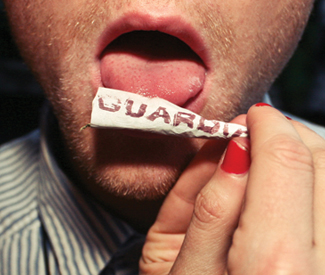

 

We had a party

2

caitlin@sfbg.com

HERBWISE As excited as I was for our Guardian Stoned Soul Picnic 420 party, not everyone in our office was convinced the afternoon at El Rio on Friday, April 20 would pass without incident.

“I’m a little bit worried about getting raided,” said my publisher Bruce Brugmann, towering over my cubicle earlier that day.

Well we weren’t, although swirling rumors of federal agents in the crowd did culminate in slight rudeness directed towards the buzzcutted and be-khakied among us. We celebrated 420 with a free, public party, no one got arrested, and we raised over a thousand dollars for marijuana patient advocacy — $1,092, drummed up through a raffle featuring prizes from all kind of local businesses and El Rio’s generous bar charity. Owner Dawn Richardson says the total was the most money for charity ever generated in the bar during that particular time period.

>>STAY TUNED FOR A STONED SOUL PICNIC PHOTO GALLERY SHOT BY NARK MAGAZINE

This had to be the weirdest party ever — reggae and soul music both, from Mr. Lucky of I&I Vibrations and Carnita of Hard French, respectively. Then there was the pickled apples and bacon lovingly stacked in Hot Bike’s grilled cheese sandwiches. The boys from Roughneck Skateboards self-started to create a limbo game made out of paper mache joints. And four stand-up comedians bravely assumed the stage towards the end of the afternoon. We even had free pastries.

There were old folks in motorized wheelchairs, tough guy stoners on the side, a ton of pretty people that showed up just to dance and be stoned on a sunny patio in 70-degree weather. If ere there was an advertisement for the broad swath of San Franciscans that support medical marijuana, this was it. And we did good — look Bruce, no handcuffs!

Alerts

0

WEDNESDAY 25

Court support for Oaksterdam arrestees Oakland federal courthouse, 1301 Clay, Oak, 9:30 am, free. About 60 percent of Californians support medical marijuana, and a similar percentage are likely quite pissed off following federal raids on Bay Area businesses that dispense medical cannabis as well as the trade school that launched careers in the growing industry, Oaksterdam University. When property was seized and medical marijuana defenders arrested last week, there was an uproar, and that uproar continues Wednesday, when a handful of those detained have a court date. Show up to held support those arrested and continue the fight for safe access.

SATURDAY 28

Learn the Art of Seeding San Francisco Public Library- Parkside Branch, 1200 Taraval, SF, www.feeltheearth.org, 3-4pm, free. Join Jonathan Silverman (aka Victory Farmer), director of Feel the Earth, for a workshop teaching kids how to plant seeds and keep them growing. Anyone three years old and above is welcome to connect with their plants and learn to cultivate them at this engaging workshop. They will probably get to leave with some brand new peas.

Walk Against Rape The Women’s Building, 3548 18th St, SF www.sfwar.org 11am, free or fundraising optional. Every two minutes, a sexual assault occurs in the United States. Women Against Rape have long provided a crisis hotline and other services for people dealing with sexual assault, as well as a safe space to share stories. April is sexual assault awareness month, and WAR will conclude it with the Walk Against Rape- continuing the struggle against sexual abuse of all kinds.

Green Action Walkathon McLaren Lodge, 501 Stanyan, SF www.greenaction.givezooks.com 10:30am, free or $15 for T-shirt towards fundraising. A beautiful walk through Golden Gate Park, for a good cause. Green Action is an organization dedicated to fighting localized environmental hazards. It’s stopped toxic waste dumping from Hunters Point to indigenous land in Ward Valley. Now, it invites you to “Join communities and individuals affected by environmental pollution in the march toward a healthy planet.”

TUESDAY 1 May Day Many locations. See www.strikemay1st.com for round-up of Bay Area events. This is going to be big. A call for a May Day general strike has resonated throughout the world, and in the Bay Area everyone from labor to Occupy groups plan to heed that call, hard. There will be a slew of events as organizers tell everyone: no work, no school, no shopping, no housework. Instead, take to the streets for everything from a family-friendly street festival to a marches throughout Oakland and San Francisco to what Occupy SF has announced as a “rebirth of the San Francisco commune.” Some groups will even kick off the day early, with an April 30 “ruckus street party” in Dolores Park and SEIU protest at City Hall. So call in sick- you might not be able to get to work anyway, as a group plans to occupy the Golden Gate Bridge that morning.

Oh high!

1

caitlin@sfbg.com

HERBWISE Say “cannabis,” not “weed.” Couch discussion in the language of medicine, not intoxication. There are a lot of rules when it comes to talking about marijuana — and the country’s most beloved cannabis publication breaks most of them.

That’s because at High Times magazine, the general take is that herb should be legal across the board, not just for consumption by the verifiably sick. “Until it’s legal for all adults, medical marijuana patients are going to be regarded as second class citizens,” said Elise McDonough, who besides having worked as a graphic designer with the magazine for 10 years is the author of the brand-new-for-420 Official High Times Cannabis Cookbook (Chronicle Books, 160pp, $18.95).

>>Join the Guardian and a stellar lineup this Friday 4/20 at El Rio for the Stoned Soul Picnic party!

In her Guardian phone interview, McDonough pointed out that eating may be the first way human beings consumed cannabis. She’s certainly done her part to give us options beyond the basic brownie — the book includes recipes for “psychedelic” spanikopita, tamales, cocktails, holiday feasts, and a host of canna-bases, from dosed butter to olive oil. McDonough wrote many, but also gets help from other High Times luminaries, like the dearly departed Chef Ra, who contributed to the rag’s recipe column for 15 years.

Interest, ahem, sparked? The following recipes from the book will make a stellar foundation for next week’s holiday festivities, medicinal or not. 


SIMPLE CANNABUTTER

Makes 1/2 cup

1/2 cup (1 stick) salted butter*

1/4 ounce cannabis buds, finely ground

*To make cannamargarine, simply substitute margarine for butter in this recipe

1. Melt the butter on low heat in a saucepan. Add the ground buds, and simmer on low heat for 45 minutes, stirring frequently.

2. Strain the butter into a glass dish with a tight-fitting lid. Push the back of a spoon against the plant matter and smash it against the strainer to squeeze out every drop of butter available. When you’re done, discard the plant matter.

3. Use your cannabutter immediately, or refrigerate or freeze until it is time to use. You can easily scale this recipe up for larger batches of cannabutter. One pound of butter (4 sticks) can absorb 1 ounce of cannabis, but you may want to simmer for up to 60 minutes.

Drizzle this cannabutter over freshly cooked pasta or popcorn for instant satisfaction. Reserve large batches in the fridge or freezer for use in recipes.


GREEN GANJA GARLIC SMASHED POTATOES

Stones 4

1 1/2 pounds potatoes, unpeeled and cut into chunks (Yukon Gold potatoes are great)

1 pound parsnips, peeled and cut into chunks

1 head garlic, cloves separated and peeled

1 1/2 tablespoons salt, plus more as needed

4 tablespoons Simple Cannabutter

Black pepper

1. Put the potatoes, parsnips, and garlic in a large pot and cover them with water. Bring to a boil over high heat and then add the salt. Reduce the heat to medium-low and simmer for about 15 minutes. The potatoes, parsnips and garlic should be tender and easy to smash. Drain the vegetables and reserve 1/2 cup of the cooking water.

2. In a small saucepan over medium heat, melt the cannabutter.

3. Return the vegetables to the pot or a large serving bowl, and begin to smash them with a potato masher, slowly adding the melted cannabutter a little at a time. Use spoonfuls of the reserved cooking water to thin the mixture if the smashed veggies are too thick. Season with black pepper and more salt and serve.


Why Wall Street loves the War on Drugs

46

The raid on Oaksterdam has just about everyone in local politics engaging in a little head-scratching: What possible reason would the Obama administration have to crack down on medical marijuana in an election year? How does it help the president, who will be facing an unsettled and angry electorate in a still-tough economy, to alienate the pot smoking liberals of the world, who were at one point among his most loyal constituents?

What a fucking idiot.

Here’s what make it worse: I don’t think anyone at Goldman Sachs talked to the White House about this, but the 1 percent clearly have a lot to gain from the drug war.

And it has nothing to do with drugs.

Let’s be logical here. There’s only one possible way to increase economic equality in this country, and it involves government intervention. With union membership at a fraction of what it once was, government is the only institution with the power these days to enforce income redistribution. The wealthy have to be forced to pay higher taxes, and that money has to be spent on public education, affordable housing, economic development, public-sector-driven job creation and other programs that are proven to narrow the wealth gap.

But that’s tricky, since the Right has done such an effective job (with the help of corrupt politicians of every stripe, including liberals) of making Americans mistrust government. How do you get people to vote for higher taxes when they think the money’s going to be wasted on pointless wars and crony contracts — and on sending federal agents to roust pot clubs?

The two factors that most accounted for the fall of economic liberalism in the 1960s were Vietnam and pot. My parents generation saw the government as the nation’s leaders who got us out of the Great Depression and won World War II. My generation saw government as the assholes who were sending us to die in Southeast Asia and putting us in jail for smoking weed. That’s why when Ronald Reagan announced that “government is not the solution, it’s the problem,” so many of my peers nodded (through the haze) and said: Right on.

There are more progressives in the Bay Area today who distrust and dislike the federal government than there were before the raids began. We’re going back to the days when “the feds” became a dirty word. And it’s undermining everything that Obama is tyring to do with the economy.

Yeah, Wall Street, which is trying to get rid of pesky regulations, loves this — if you hate the feds in Oaksterdam, it’s hard to love them at the IRS and Securities and Exchange Commission. That’s what the 1 percent relies on. And it’s working.


Oaksterdam University gets a Monday morning federal raid

31

Good morning cannabis patients. Hopefully you weren’t planning on attending horticulture classes at Oaksterdam University today. The cannabis school in the heart of downtown Oakland is being raided by IRS and the DEA with support from US Marshals right now. 

At this point, little is known about the motivations behind the raid. The Huffington Post reports that an IRS spokesperson could only say that the incursion was authorized by a federal search warrant. There are reports that Oaksterdam owner Richard Lee was also detained and then released early today. 

A throng of protesters have gathered around the taped-off entrance to Oaksterdam, holding signs, heckling official vehicles for lacking valid license plates. Andrew Deangelo, brother of founder of Harborside Health Center Steve Deangelo, pleaded with law enforcement guarding the doors to Oaksterdam to refuse similar assignments “to arrest sick and suffering people” in the future. The federal agents have so far removed documents, safes, and cannabis plants from Oaksterdam. 

Oaksterdam University was founded in 2007 by Richard Lee as a place where patients and caregivers could learn the necessary skills to grow quality cannabis. The syllabus now includes courses in cannabis politics, history, and the legal rights of patients. Lee was one of the primary forces behind the 2010 California ballot measure Proposition 19 that would have legalized marijuana for use across the board. One of the central figures in the cannabis community, this raid is a bold move in a creeping movement by the feds that is curtailing patient access of late. 

A call this morning to Anne Campbell Washington, Quan’s chief of staff, yielded little information regarding the city’s response. “We don’t have information on it yet, because it wasn’t our operation,” Washington said. 

The Guardian will have a reporter on the scene shortly, so check back here and in this week’s Herbwise print column for updates on the fate of the University. 

UPDATE: The LA Times has reported that Richard Lee’s house was also raided today. 

District attorney distances self from anti-cannabis memo, ‘unequivocally supports medical marijuana’

4

Don’t believe everything you read, especially when it comes out of the District Attorney’s office. D.A. George Gascon’s press representative Stephanie Ong Stillman says a memo covered in this week’s Herbwise column circulated earlier this month outlining the “continued illegality of selling marijuana” — even in state regulated cannabis dispensaries — was sent out without Gascon’s knowledge and “does not represent his views on medical marijuana.”

“He unequivocally supports medical marijuana,” Stillman told the Guardian on the phone this afternoon. “Prosecuting illegal marijuana sales is not a priority.”

This is — unequivocally — good news for San Francisco’s medical cannabis patients. The memo (signed by assistant district attorney John Ullom) stated that cannabis dispensaries were acting under protection of state law were perpetrating “a marijuana mega-myth.” According to the East Bay Express, it was released in response to indignation expressed by an unnamed dispensary’s deliveryperson was apprehended by law enforcement. 

But Stillman says the brief was written over three years ago, before Gascon was elected to office. Calling it “a template brief,” she says it’s not the first time the memo has been circulated in response to legal questions about cannabis — but that it has not been since Gascon has been in office, and will not be used again under his administration. 

But what of today’s headline of the SF Examiner, a quote presumably attributed to Gascon reading “all sales of marijuana are illegal”? 

“It’s a misquote,” says Stillman. “They’re going to print a correction.”

UPDATE: The Guardian just recieved a call from Gascon himself, who confirmed Stillman’s comments, saying “I’ve already taken steps to make sure that this will not happen again.” Can we just say we’re pleased as punch that he’s upholding the values that he shared with us in his Guardian endorsement interview last September?

UPDATE: Although felony charges against the deliveryperson who was initially apprehended have not been dropped, Gascon’s office has filed for a two-week continuance.

Our Weekly Picks: March 28-April 3

0

WEDNESDAY 28

“How to Drink Like a Locavore” Rents in the Mission and Noe Valley rose 10 percent in the last six months? Sea changes are afoot in this city (as always). But let’s make lemonade with the lemons of increasing preciousness — the monied have certainly provided a market for the Bay’s burgeoning local liquor scene. Community service for having snapped up the rental market? Today, for $25 anyone can sample pours from more than six distilleries in the tony climes of the Commonwealth Club — the ambrosial offerings of St. George’s Spirits, Anchor, and Distillery No. 209 included. Oh, and there’ll be an expert panel of hoochmakers to educate on what you’re sipping. Ask them if they need a roommate. (Caitlin Donohue)

6:30 p.m., $7–<\d>$25

595 Market, SF

(415) 597-6700

www.commonwealthclub.org


Sea of Bees

To call Julie Baenziger’s brand of sweet, haunting, exasperated vocals unique is an understatement. The Sea of Bees leader hails from California’s Central Valley and creates dreamy, blissful folk rock with a small group of co-conspirators. Sea of Bees’ debut album, Songs for the Ravens (2010), received critical acclaim and carries a fair bit of angst (with subtlety, mind you). Its forthcoming LP, Orangefarben, out this spring, includes “Gnomes,” a dynamic, surreal track released last summer on EP. Baenziger’s songs focus on love, sadness, hope, and intimacy, and her soulful style and live candor will draw you in.(Mia Sullivan)

With Radiation City, the Loom

8 p.m., $10

Rickshaw Stop

155 Fell, SF

(415) 861-2011

www.rickshawstop.com


THURSDAY 29

The Ferocious Few

Oh the Ferocious Few, how do we love thee, let me count the ways. That with just a guitar and drum kit you are nonetheless able to create a rock’n’roll ruckus any five-piece combo would be lucky to emulate (one). That Francisco Fernandez’s vocals, a honeyed firewater blaze, haunt every BART-station-street-corner-park-bench you’ve ever played (two). That every lyric you’ve penned about love lost slices right through the heart and straight for the jugular (three).That despite the massive setback of getting your gear stolen (since recovered), you still made it to SXSW with aplomb to spare (four). That you’re headlining a gig, indoors for a change, just before we went into major FF withdrawal (five). There are more reasons, but we’re out of word count. Just go. (Nicole Gluckstern)

With Zodiac Death Valley, B. Hamilton

8 p.m., $14

Great American Music Hall

859 O’Farrell, SF

(415) 885-0750

www.slimspresents.com


FRIDAY 30

“Dance Anywhere”

The world is in the toilet, and at times it feels like a giant cosmic hand is just about to flush us all. But a glimmer of hope for humanity lurks amid events like “Dance Anywhere,” which advises even the two-left-footed among us to pause and bust a joyful move in as part of a coordinated, global public art movement. Check the event’s website to line up your time zone (in San Francisco, it’s noon), and limber up for your solo macarena — or find your way to a free professional performance. Bay Area participants include Anne Bluethenthal Dance (at SFMOMA), Raisa Simpson and Push Dance Co. (at the Oakland Museum of California), and Alyce Finwall Dance Theatre (on 343 Sansome’s rooftop deck). In the words of Footloose: dance your ass off! (Eddy)

Noon, free

Various locations

www.danceanywhere.org


Kevin Brownlow

“The visual resources of the cinema have never been stretched further than in Napoléon vu par Abel Gance.” — that’s what Academy-honored film historian Kevin Brownlow had to say about the 1927 epic in his silent film tome The Parade’s Gone By… Now, his decades of restoration work on the film are culminating with screenings at the Paramount Theater in Oakland (the remaining two are Sat/31 and Sun/1; visit www.silentfilm.org for info). Brownlow will appear at UC Berkeley’s Pacific Film Archive to present “Abel Gance’s Napoléon, A Restoration Project Spanning a Lifetime,” a discussion of his work, sure to be an invaluable companion to the movie itself, which will feature scenes from the film and live piano accompaniment from Judith Rosenberg. (Sam Stander)

Book signing and reception, 5:30 p.m.; on Napoleon, 7:00 p.m., $5.50–<\d>$9.50

Pacific Film Archive

2575 Bancroft Way, Berk.

(510) 642-1412

bampfa.berkeley.edu


“Computer Face: A Show by Kirk Read”

Make way Wolf Blitzer, writer-performer-instigator Kirk Read, following the campaign trail as a sex worker like Mother Courage hauling her wares after the armies of Europe, offers his own take on the Republican primaries — among so much else — in his latest performance piece, now up through this weekend at the Garage. Read’s theater work is often grouped, not unreasonably, under performance art, queer cabaret, and such, but he has a quality that feels sui generis and shouldn’t be missed. Exuding a charming combination of practical, everyday groundedness and unmoored fancy, Read is a pure artist, and Rick Santorum’s hot wet nightmare. (Robert Avila)

Through Sat/31, $10–$20

Garage

975 Howard, SF

(415) 518-1517

www.975howard.com


Galactic

For those who aren’t really into jam, think of Galactic as an incarnate of Phish with brass instead of wah; but really, if you have a soul and like fun, you should probably acquaint yourself with Galactic, as it represents jazz-funk jam at its finest. The group’s live shows have been known to induce expressive dance as well as impressive marijuana intake. The pulsing and ecstatic Carnivale Electricos, which came out this past Mardi Gras, is an ode to carnivale in New Orleans (the band’s home city) and Brazil, where people take the responsibility of engaging in lustful debauchery on this crazy night quite seriously. (Sullivan)

With Soul Rebels Brass Band, Corey Henry

Fri/30-Sat/31, 9 p.m., $41.50

Fillmore

1805 Geary, SF

(415) 346-6000

www.thefillmore.com


Filastine

Could there be anything more emblematic of the “global economy” — its giddy consumerism, its nomadic promise, its horrid displacement — than the lowly shopping cart? Audio-visual percussionist Filastine makes the shopping cart central to his transnational electro bass music project, zinging, plucking, and kicking its ribs to turn a metaphor into a dance party of resistance. His amazing latest video, “Colony Collapse,” was filmed at several sites of ecological disaster, pairing with the sites’ residents to make a fractured song of despair and hope. His live stage show, this appearance opening for Bay Area electro-jazz-hop collective Beats Antique, couples virtuoso live drumming and electronic grooves with a visual spectacle that holds crowds spellbound, a neat complement to the mobile dance parties and sonic activism he’s renowned for leading, from Tokyo to Barcelona. (Marke B.)

With Beats Antique, the Loyd Family Players

8 p.m., $25

Fox Theater

1807 Telegraph, Oakl.

(510) 548-3010

www.thefoxoakland.com


SATURDAY 31

Pilot 60

ODC’s Pilot Program is giving young choreographers a leg up, so to speak. Having an idea about making a dance is easy. Shaping it so that it makes sense to the choreographer as well as to an audience is tough. Being in the same boat with others, however, helps. Just ask the dozens of choreographers who over the years (this is Pilot’s 60th incarnation) have gone through this well structured, proven way to nudge budding professionals to the spotlight. Alison Williams, Samantha Giron, Milissa Payne Bradley, David Schleiffers, Lisa Fagan and Claudia Anata Hubiak will be presenting works this time around. (Rita Felciano)

Sat/31-Sun/1, 8 p.m., $12

ODC Dance Commons, Studio B

351 Shotwell, SF

(415) 863-9834

www.odctheater.org


SUNDAY 1

“Memorabilia from the Ira and Leonore Gershwin Trust”

Know your Gershwins: Ira was the older brother (born 1896), but he outlived George (born 1898) by nearly 50 years. Together, they were a songwriting dream team ruling Broadway and American popular song — but even after George’s death, Ira continued writing lyrics for the stage and screen. He died in 1983; his widow, Leonore, died in 1991 after devoting her later years to preserving the legacy of the talented brothers. Fans won’t want to miss the exhibition of items from the Ira and Leonore Gershwin Trust (sheet music, concert posters, family photos, awards), as well as related events, including a talk by Ira’s nephew Mike Strunsky (Mon/2) and performances of The Man That Got Away: Ira After George (April 13-15). (Eddy)

Through June 15

Gallery hours Mon.-Thurs., 7 a.m.-10 p.m.; Fri.-Sun., 7 a.m.-8 p.m., free

Jewish Community Center of San Francisco

Katz Snyder Gallery

3200 California, SF

www.jccsf.org


“April Fools With Miss Coco Peru”

Tempting as it might be to play a trick on some poor fool today, firing the opening shot in a prank war is risky — payback is, after all, a notorious bitch. Instead of getting your April Fool’s Day guffaws at the expense at someone else, why not show your appreciation for a razor-sharp and unfailingly glamorous comedian? Miss Coco Peru, star of screens big (1999’s Trick) and small (“Wee Britain”-era Arrested Development) — and, of course, of stage (Ugly Coco) — performs her latest, There Comes a Time, a no-holds-barred monologue reflecting on her colorful life in the spotlight. Earlier in the day, Miss Peru will be on hand for a short Q&A after a screening of 2003’s Girls Will Be Girls, a campy cult comedy (tantalizingly described as “every novel Jacqueline Susann’s ever written”) with a sequel due out this year. (Eddy)

Screening, noon, $10

Performance, 7 and 9:30 p.m., $29.95

Victoria Theatre

2961 16th St., SF

(415) 863-0611

www.ticketfly.com


Chain & the Gang

You’re either with Ian Svenonius or you’re against him. The shamanic leader of Nation of Ulysses, Make-Up, and Weird War (all quality on their own, according to me) inspires fervor, mirrored weirdness, and the occasional eye-roll (hey, I’ve seen it). His most recent project Chain & the Gang (touring now in support new LP, In Cool Blood ) doesn’t get any less quirked, so if you’re not in line with Svenonius, you won’t find it as thrilling as the rest of us. With a muffled scream here, a tambourine shake there, and a buzzing chainsaw guitar slicing through it all, Chain & the Gang is a testament to Svenonius’s continuity, and his ongoing ability to scrap genres, culling the best bits of the past — Southern blues, working man shuffles, post-punk, and mod — for his own future perfect. (Emily Savage)

With Neonates, the Smell

9 p.m., $9–$12

Brick and Mortar Music Hall

1710 Mission, SF

(415) 800-8782

www.brickandmortarmusic.com


TUESDAY 3

Field Report

Chris Porterfield used to be a member of the now-defunct Wisconsin-based act DeYarmond Edison with Justin Vernon (Bon Iver) and the men of Megafaun (Brad Cook, Phil Cook, Joe Westerlund). He also made music under the Conrad Plymouth moniker for a while but recently debuted his new project, Field Report, at SXSW — a lush and poetic picture of longing, nostalgia, and hope. The retrospection and emotionality wrapped into Porterfield’s folksy, bluesy Americana is easily relatable and will make you want to melt into his world. Field Report’s debut album, which was recorded in Vernon’s studio and produced by Paul Koderie, is due out in July. (Sullivan)

With Megafaun

9 p.m., $12

Cafe Du Nord

2170 Market, SF

(415) 861-5016

www.cafedunord.com


The Guardian listings deadline is two weeks prior to our Wednesday publication date. To submit an item for consideration, please include the title of the event, a brief description of the event, date and time, venue name, street address (listing cross streets only isn’t sufficient), city, telephone number readers can call for more information, telephone number for media, and admission costs. Send information to Listings, the Guardian Building, 135 Mississippi St., SF, CA 94107; fax to (415) 487-2506; or e-mail (paste press release into e-mail body — no text attachments, please) to listings@sfbg.com. Digital photos may be submitted in jpeg format; the image must be at least 240 dpi and four inches by six inches in size. We regret we cannot accept listings over the phone.

Two incidents

0

caitlin@sfbg.com

UPDATE: The District Attorney’s office has retracted the memo detailed in this article, and told the Guardian that D.A. George Gascon “unequivocally supports medical marijuana.” Full story here

HERBWISE “If they can successfully take out San Francisco, then medical marijuana is gone,” said spokesperson of SF’s Medical Cannabis Task Force Stephanie Tucker. I had given Tucker a call because I was trying to salvage some meaning from last week.

It was a confusing one for followers of local cannabis news. News broke of the district attorney’s memo calling marijuana sales illegal (more on this later). They canceled Discovery Channel’s Weed Wars reality TV show. Thieves dressed as ninjas robbed a cannabis deliveryperson in West Covina, Calif. Anti-cannabis driving laws were proposed by Chino Assemblymember Norma Torres. In a long-awaited KQED interview with US Attorney Melinda Haag, Haag pegged the blame for the threatening letters she’s sent to the landlords of cannabis dispensaries on unsubstantiated crime spates such businesses invite to their communities. News reports circulated that Florida teen Trayvon Martin had been suspended from school for petty cannabis possession, as if that explained his murder at the hands of a racist crank. In the middle of it all, SF’s Department of Public Health launched a campaign against the sale of hash and medicated edibles — but only for nine hours.

Well then, that’s something. Of this last incident, at least, Tucker could offer some small clarification. On Tuesday, March 20, someone at the DPH sent out a memo outlining steps that could be taken to reduce the unspecified “potential hazards” of cannabis edibles. One of these counseled against selling products that “required concentrating cannabis active ingredients” — products like hash or kief, which is composed of sifted cannabis trichomes.

“Immediately after the advisory was issued, activists were alerted,” Tucker said. The curtailing of concentrated products and edibles especially worried patient advocates because many can’t — or choose not to — ingest marijuana by smoking it. After informal dialogue with the Department, the matter was squashed, the memo’s message retracted by the agency.

That responsiveness is heartening for those concerned with safe and easy cannabis access, though the thought that a city agency would harsh on medical marijuana particularly now, at a time of heightened scrutiny by the federal government, is disquieting. Or perhaps the agency saw the memo as a way to patrol commercialization and increased branding of edible products. In recent years, everything from chocolate-covered waffle tacos to peanut butter energy bars have been infused with cannabis for commercial sale. Ironically, this kind of increased professionalization has also led to tighter quality control testing in analytical labs around the Bay Area — hypothetically making those products safer.

At any rate, cannabis patients won that office memo battle. The same has yet to be determined in regards to another recent threat to patient rights: a 14-page review that district attorney George Gascon’s office produced this month calling out the “marijuana mega-myth.” Stoners will be surprised to learn Gascon used the colorful term (he also employs the use of “semantogenic shell game” to describe efforts to normalize sales, vivid!) in reference to the belief that dispensary sales of cannabis are legal.

What will this mean for the future of SF dispensaries? Without a doubt there will be many more angry phone calls from patients. But it’s already having legal ramifications. The memo was a response to an objection from a dispensary’s attorney who was perturbed by an incident in which the collective’s delivery driver was arrested by law enforcement en route to making a delivery. Gascon’s assertion that the entire business was illegal was surely not the reaction the attorney had hoped for.

In the SXSW green room

0

culture@sfbg.com

HERBWISE DIY pop star Lisa Dank doesn’t smoke marijuana to help with her art — smoking weed is her art. The Seattle singer-producer — known for her florid, handmade costumes and gonzo stage presence — crafts odes to cannabis (check out her aural fixation at www.soundcloud.com/lisa-dank), and has a day job at 4Evergreen Group, a patient network that supplies legal and educational resources to its members, as well as physician recommendations for medical marijuana.

Dank was headed down to South By Southwest to do shows at house parties and on the street with the aide of a PA system jacked into her car, but she managed to snag an artist wristband and also logged in hours in the green room chatting with performers about weed culture today. She’ll be publishing her findings in 4Evergreen Group’s new bi-monthly lifestyle magazine — but first, we got her to share her favorite snippets from South By.


TOP 11 MEDICAL MOMENTS FROM A POTSTAR AT SXSW

1. My Omicron hash oil vaporizer pen. Didn’t leave my side. Not even on the airplane. ‘Nuff said.

2. Austin loves pot. Especially at the Wells Fargo. Every time I went to withdraw cash, the point was brought up that I work in the medical marijuana industry. These boys couldn’t get enough! They sang the praise of medical pot (literally — shouting and fist-pumping.) They even brought out their camera-phones to show me the NORML cop car rolling around town.

3. MPP (Most Popular Piece): Quartz glass pieces are popular amongst locals and musicians for their affordability, cleanliness, and durability. Local glass pieces were a close second. Note: My all-star award goes to the editor of UC Berkeley’s student newspaper, who pulled out a gorgeous hand-blown, sandblasted Sherlock similar to the work of glass artist Snic. The editor had bought it at the smokeshop across the street from campus on Bancroft Way. We loaded bowl after bowl of Sour Diesel and Grape Ape six feet from Diplo in the VIP section of Speakeasy’s rooftop patio all Tuesday night, as Teki Latex and the Sound Pelligrino team did their thing.

4. Let’s just say Talib Kweli and his crew are fortunate that I have such a good weed connect in Texas.

5. Chali 2na smokes joints! Hemp extra-long! He had his own stash but took my number just in case. You can never have enough weed connects in Austin. He’s also a sweetheart because he let me use one of his papers.

6. Shiny Toy Guns does not smoke pot.

7. Bands on the run: Brick and Mortar (from New Jersey), Fox and the Law (Seattle), and The Sundresses (Cincinnati) stocked up on buds at home and drove slow all the way down to Austin.

8. Sub-pop recording artists Spoek Mathambo and Thee Satisfaction enjoyed the relief brought forth by the herb after a long walk and checking out Sub Pop’s great showcase at Red 7 on Friday night.

9. Strain trend: Sour Diesel. My guy had it. When he was out, the pedi-cab that I tried to buy from told me he had Sour Diesel too. Just hours later on the official SXSW artist’s deck-lounge at the Austin Convention Center, some locals pulled out two grams of S.D. to roll up in our blunt.

10. Underground future-super-producer Dubbel Dutch had a quandary for me: “I can’t smoke weed anymore! I used to smoke weed every day when I was younger, but now I take one hit and I’m done!”

I explained to him the brain schematics of cannabis, how we have cannabinoid receptors built into our brain but don’t produce cannabinoids endogenously. I hypothesized that his adult brain’s super-sensitivity to THC was due to his excess smoking during the formative years of his brain’s development. I told him he’d trained his brain to be extra-receptive to cannabinoids.

11. Smoking joints throughout my house party set. And for that I thank you, kids of Wilson House.

Power puff

0

HERBWISE I remember the first time I saw photographer Robyn Twomey‘s work — talk about simpatico. It was a huge print of a photo of an elderly woman sitting in front of a piano and a mirror with an immense Persian cat, lighting a joint firmly held between her lips. I’d never seen anything like it — documented in a gallery, that is.

In some version of my future life, I’d like to make a nest inside Twomey’s photographer bag and travel the country with her. Not that she’d need my services. Her shots speak loudly, from her descriptive portraits of T.I., Bill Gates, Rosie O’Donnell, to Attorney General Kamala Harris.

Small wonder that the smoke-filled photos of Harborside Health Center’s women patients (originally shot for a Fortune Magazine feature) are part of the Mission Cultural Center for Latino Arts’ new group exhibition “Solo Esas Mujeres”, which opens March 17. The show assembles the work of 14 female artists in an effort to reaffirm feminine power through its documentation.

So of all the females that Twomey’s captured throughout her career, why use the shots of these cannabis smokers for this particular exhibition? Perhaps these females — all of whom use the stuff for real serious medical conditions — have the most need of documentation. Easy access to medical marijuana is important, oh federal government of ours. Hey Robyn, any chance of getting Harris out to the Mission for the opening reception? I can help host.

“Solo Esas Mujeres” March 17 through May 5. Opening reception March 21, 6:30 p.m.-9:30 p.m., free. Mission Cultural Center for Latino Arts, 2868 Mission, SF. (415) 643-2785, www.missionculturalcenter.org


The patient that time forgot

0

caitlin@sfbg.com

HERBWISE I contact a lot of stoners throughout the course of writing Herbwise — activists, businessmen, artists — but none has had a more crisp-sounding receptionist answer the phone than Ft. Lauderdale stockbroker Irvin Rosenfeld, who is one of four citizens of the United States legally allowed to smoke marijuana by the federal government.

No really, he is.

In 1982, Rosenfeld hit upon a winning combination of perseverance, legal precedent, and audacity when he succeeded in suing the US government to prescribe him cannabis for his painful, bone growth-causing condition. After filing a civil suit that claimed weed was the only palliative that helped his intense physical discomfort, Rosenfeld became part of the FDA’s short-lived Investigational New Drug Program. Calling Rosenfeld, original patient Robert Randall, and the subsequent 11 others who qualified for the program participants in a clinical study was the only way the feds could justify supplying the weed.

In 1992, the program was terminated. But the 13 patients — only four survive today — continued to receive tins of pre-rolled joints, the cannabis for which is grown (shoddily) at a government-run farm near the University of Mississippi. Rosenfeld tells me the weed he smokes is “12 years old,” and so dry that he’s compelled to unroll the cigarettes, store with fresh lettuce for six to eight hours to rehydrate the bud, then re-roll before smoking.

He tokes nine ounces a months and, he says, never gets high. He tells all his clients about his prescription because, as he puts it “I don’t want them seeing, for example, this article and thinking ‘oh, he lost us that money because he was high off that marriage-ja-wanna.'”

I ask him if he’s surprised, 20 years since he won his legal battle, that patients like himself are still battling for access to the plant. He reels off a series of crucial court hearings that, to his disbelief, swung time and time again in the direction of continued Schedule I status for cannabis. Rosenfeld says has made it able for him to leave the house on a regular basis.

“As a stockbroker I look at it economically. I think about, if I didn’t have my medicine, where would I be today? I’d be homebound. Is it just me? Or maybe there’s other people sitting at home that could be productive members of society. It irritates me.”

Our conversation is over, but there’s time left for two plugs from Rosenfeld. One for his book, My Medicine: How I Convinced My Government to Provide My Marijuana and Helped Launch a National Movement (www.mymedicinethebook.com). Buy it?

The second is for himself. Anyone need a stockbroker with experience in battling the US government?

“The expertise I used to take on the federal government is the same expertise I use in my business,” Rosenfeld assures me before we hang up. “If you want that expertise, you should hire me as your broker. If you don’t, then have a good life.”

Cannabis’ unlikely new crusader: Pat Robertson?

20

File this one under #OKsure: Televangelist and all-around dubious individual Pat Robertson has come out in support of the decriminalization of marijuana.

Of course, it’s all the liberals’ fault. Robertson made the following comments on the March 1 episode of the 700 Club. (Many thanks to Tom Angell of Law Enforcement Against Prohibition for providing us with the link fest, lookit this hilarious retraction his network posted when Robertson made similar comments in December!)

Even though these prisoners may have been sentenced by some court for some offense, should they be behind bars? Here’s the thing, we have over 3,000 – the number must be much higher than that, but over 3,000 federal crimes.

And every time the liberals pass a bill, I don’t care what it involves! They stick criminal sanctions on it. They don’t feel that there’s any way that people are going to keep a wall unless they can put them in jail. And so we have the jails that are filled with people who are white collar criminals and I’ve became sort of a hero of the hippie culture I guess when I said I think we ought to decriminalize the possession of marijuana.

I just think it’s shocking how many of these young people wind up in prison and they get turned into hardcore criminals because they had a possession of a very small amount of controlled substance. I mean, the whole thing is crazy! And we’ve said, we’re conservatives, we’re tough on crime – that’s baloney! It’s costing us billions and billions of dollars.

Look at California. California is spending more money on prisons than it spends on schools! I mean there’s something wrong about the equation, there’s something wrong. 

Here’s the video itself (start at 20:40 and go until 29:25) — the comments precede a pretty interesting segment on how the NAACP, the Tea Party, and a group called Prison Fellowship, a faith-based counseling group for prisoners and families founded by a Watergate ex-con and one-time Nixon aide.

Despite his classist assertion that white collar criminals shouldn’t get jail time, we’re with ya, homeslice. Hero of the hippie culture, yes you are. 

And so, our nominally-progressive president now has a less tenable position on the War on Drugs than one of our country’s head crazies (who — let us not forget despite his newfound stoner ways — was the one who announced that Haiti was hit by those earthquakes in 2010 because it was “cursed” by a “pact to the devil.”)

Holler back, President Obama? Personally, we’d be happy if his attorneys would just stop shutting down our local dispensaries


Herbwise: Shambhala Healing Center next on the federal chopping block

1

When Al Shawa, founder of Shambhala Healing Center, was asked about what he was going to do now that the federal government is trying to shut down his business, he was (understandably) irresolute. 

“I have no idea. Who comes first, the chicken or the egg? Do I blame the federal government or the city? Somebody did me wrong.”

Shawa opened his medical cannabis dispensary one short year ago on Mission Street. He knew he was close to Jose Coronado Playground, but that’s why he underwent an 18-month permitting process with the city, which assured him that the playground’s clubhouse was not being used. In late February, his landlord received a letter from US attorney Melinda Haag that asserted illegal trafficking of drugs were taking place near a children’s playground. His landlord, Haag informed, risked criminal prosecution, imprisonment, fines, and civil forfeiture if Shawa’s business wasn’t out of the space in 40 days. Similar letters were sent out to roughly 12 dispensaries last autumn. Those dispensaries are now closed.

But on Saturday morning, Shawa seemed confused, and not entirely hopeless that his small business could be saved. He sat in his back office, a man trimming weed one room over. “I would hope the city would stand firm and protect these entities,” he said from behind his desk, next to a bank of security cameras. “I don’t understand where it stands on this – it should be taking a leading role.”

Posted: these signs now greet patients at the Shambhala Healing Center. Guardian photos by Caitlin Donohue

Though the SF Board of Supervisors passed a resolution in support of cannabis dispensaries’ right to operate without federal persecution last October, Mayor Ed Lee has yet to speak out on the federally-compelled closures, besides to comment that he’ll kow-tow to the authorities on the matter of marijuana’s medicinal efficacy. We asked Lee’s office for comment when the Department of Justice requested Department of Public Health records for 12 Bay Area dispensaries in February (a move that preceded the previous round of letters from Haag), to no avail. 

Shawa had previously operated a clothing store named Privilege at the address, but opened up Shambala when a fire damaged his inventory. Since opening, he said he’s become attached to many of the regular patients. “You feel like your responsible for their wellbeing,” he said, before talking about how his dispensary passed out 200 turkeys to the community on Thanksgiving, and gave the nearby Folsom Street firehouse $5,000 worth of toys to distribute during the holiday season. 

Throughout the recent travails of the medical cannabis industry, one of the more frustrating issues has been the seemingly random way businesses have been targeted by federal agencies. Shawa’s is a case in point. While he grapples with the notion of shutting his doors, the owner of a restaurant across the street, Gus Murad of Medjool Restaurant and Lounge, is applying for a permit to open a new dispensary on the same block (as reported by Mission Local). 

Lupe Ruiz, who has been floor manager at Shambala since the dispensary opened, seemed likewise shaken and frustrated with the city’s lack of response in the matter. 

“I’m kind of devastated,” she told me in between helping patients. “How do you allow someone to open and then when things get hot you don’t say anything about it?” She recalled a picnic in Dolores Park Shambala recently organized for its patients at which people played ball games and got to meet each other.

The dispensary does seem to be a gathering place of sorts – on the morning I interviewed Ruiz and Shawa, patients consulted budtenders about the right strain of cannabis for them, joking and friendly-like. Shawa says that more than one patient has teared up when he told them that the dispensary’s future was uncertain. 

“Who listens to these stories?” Ruiz concludes sadly, with a sentiment that the rest of the medical marijuana community can surely sympathize with. “People are not being heard.”

Dame good fun

0

arts@sfbg.com

FILM What with the internet, the paparazzi, Rupert Murdoch’s CIA-level spy techniques, and the general displacement of actual news by “celebrity news,” it’s pretty hard these days for a star of any sort to keep their debauchery private. Not like the good old days, when Hollywood carefully stage-managed publicity and only those who’d become a real liability risked having their peccadilloes exposed.

Such rare windfalls aside, the public were mostly restricted to watching beautiful people behave badly onscreen — a pastime that took a big blow once the censorious Production Code was instituted in 1934. Elliot Lavine’s latest Roxie retrospective of movies from that golden-shower period of post-silents, pre-Nannywood licentiousness — this time entitled “Hollywood Before the Code: Nasty-Ass Films for a Nasty-Ass World!” — provides plentiful early talkie titillation. Now that the bodies involved are long buried, we also know a few tales of their stars’ off-screen misadventures, too.

The week-long series of double bills sports its share of familiar titles, notably Howard Hawks’ terrific original Scarface (1934); Edgar G. Ulmer’s Karloff vs. Lugosi smackdown The Black Cat (1934); and the first, probably best version of H.G. Welles’ prescient biotech fable Island of Lost Souls (1932). There are women in prison (1931’s Ladies of the Big House), women in Faulkner (1933’s The Story of Temple Drake, a watered-down adaptation of W.F.’s then-notorious Sanctuary), women in everything else (1932’s Three On a Match, whose Depression-era Valley of the Dolls-esque trio includes a very young Bette Davis), and just plain Joan Blondell (1933’s Blondie Johnson).

http://www.youtube.com/watch?v=hzxnEDEY2Hs

It’s a few choice dames in lesser-remembered pictures that provide the biggest “nasty-ass” discoveries this go-round, however. March 4 offers a shocking double dose of pure white femininity finding themselves in, ahem, “Yellow Peril” — miscegenation being something Hollywood could only begin to embrace a few decades later. Frank Capra’s atypically erotic The Bitter Tea of General Yen, with Barbara Stanwyck alllllmost surrendering the white flag to a “charismatic Chinese warlord” (Swede Nils Asther, eyes narrowed), has become a minor classic since flopping in 1933.

No such luck for The Cheat (1931), a remake of Cecil B. DeMille’s 1915 shocker that was part of Paramount’s brief, failed attempt to make stage sensation Tallulah Bankhead a movie star. Her gambling-addicted socialite gets branded (literally) in lieu of repayment not by the original’s Far East businessman (dashing Sessue Hayakawa) but by a mere rich Caucasian perv with Sinophile pretensions (Irving Pichel). The big courtroom climax is a notable howler.

Bankhead remained a Broadway star and a popular “personality,” her throaty voice hinting at a semi-private life that included a great deal of bourbon, a fondness for unexpected nudity, and sexual appetites all along the Kinsey scale. After two decades off screen she arguably found her camp métier as a berserk Bible-clutching hag terrorizing Stefanie Powers in 1965’s Die! Die! My Darling.

Much less of a survivor was poor Clara Bow, who was beloved when she played the wild thing yet unduly punished when it turned out that role had relevance in real life. The quintessential flapper and “It Girl” (“it” meaning sex appeal) was never much of an actress, but an incandescent, live-wire screen presence.

Call Her Savage (1932) is a pre-Code jaw-dropper that was supposedly her personal favorite. Running an A-to-Z gamut of emotions (and hairstyles), her Texas heiress heroine Nasa “Dynamite” Springer is “never two minutes the same” — a nice way of saying she’s nuts. In 88 minutes she rides a horse like it’s something else, plays with her mastiff likewise, is near-raped by an estranged husband, turns streetwalker, causes a brawl in Greenwich Village café catering to “wild poets and anarchists,” gets in two catfights, hits the bottle, and finds peace upon discovering she’s a part Indian “half-breed,” which apparently explains all.

Emotionally unstable, due in part to a pretty horrific upbringing, Bow must have related. At the time she was enduring myriad problems, notably some embarrassing public revelations spilled by a blackmailing secretary. Savage would be her next-to-last film, after which she retired into a deep and troubled seclusion.

Heading thataway as well was Juanita Hansen, a silent star who’d gone down in flames a decade earlier thanks to a “Queen of Thrills” image that unfortunately she enacted a little too enthusiastically in real life. She quit cocaine, got hooked on morphine, quit that, and became an anti-drug crusader — but nothing re-ignited her career. Certainly not lone comeback vehicle Sensation Hunters, a 1933 Poverty Row exploiter in which she was fifth-billed as “Trixie Snell,” manager-slash-madam to a troupe of “Hot-Cha Girls” who kinda dance, kinda sing, but mostly roll customers at Panama City’s “Bull Ring Club.” It was a sad exit. Puffy and peroxided, Hansen is all too convincing as a woman with too many hard miles on her to go anywhere but further downhill.

Waaaay uptown — glittering Broadway via glossy Paramount — 1934’s Murder at the Vanities offered the last hurrah for pre-Code naughtiness. And what a hurrah: chorus girls in pasties and less (at one point they simply clutch boobs as if on a latter-day Vanity Fair cover); production numbers like “The Rape of the Rhapsody” (the “rape” being Duke Ellington’s “colored” jazz musicians and dancers invading a classical orchestra with something called “Ebony Rhapsody” — until a white gangster jokingly machine-guns them all down); plus sexual humor so blunt that Jack Oakie ends the film telling a giggly blonde “Come on, let’s do it,” meaning exactly what you think.

http://www.youtube.com/watch?v=xCoj855Vdo8

On the side of the angels — definitely for losers here — there are numerous horrible songs (excepting standard “Cocktails for Two”), gag-inducingly sweet romantic leads, and kitschy-great ideas like having stage impresario Earl Carroll’s patented “Most Beautiful Girls in the World” pose en masse as tropical waves and cosmetics products. Representing Satan and evening gown-wearing pot smokers everywhere is villainous Gertrude Michael, who infamously sings torch song “Sweet Marijuana.” Michael was an elegant stage and radio star whose own recreational taste leaned more toward cocktails for one. Indeed, she was fictionalized as the hard-drinking love object in one-time lover Paul Cain’s 1932 novel Fast One, an early classic of hard boiled American pulp.

Saving the sleaziest for last, the series will truly flabber your gast with its closer. Normally prim MGM found itself reviled in early 1932 with the fleeting release of Tod Browning’s Freaks (playing the Roxie March 3), a much-misunderstood, now celebrated fable starring actual circus sideshow performers. It was considered so grotesque and unsettling that Freaks was banned in many areas — Britain didn’t see it until 1963.

Yet there’s no evidence of any similar backlash to the infinitely scuzzier Kongo, unleashed by Metro a few months later. A remake of Browning’s 1928 Lon Chaney vehicle West of Zanzibar, it stars Walter Huston as wheelchair-bound “Deadlegs” Flint. He’s used cheap magic tricks to appoint himself fearsome white-man “god” amongst spear-carrying tribesmen in a “dunghill” African outpost, all part of an elaborate, insidious plan to wreak vengeance on the rival who stole his wife and health long ago.

What this revenge eventually encompasses reads like a list of nearly everything the Production Code would soon bar from the screen: depicted or suggested drug addiction, alcoholism, prostitution, rape, sadism, and a convent-bred ingénue (Virginia Bruce) recalling “hot hairy hands pawing and mauling” her unwilling virginal body. Not to mention human sacrifice and a unique substance abuse “cure” using leeches.

One can almost hear the censuring voice of Will Hays, the Code’s original enforcer, when one character tells Deadlegs “The swamp’s wholesome compared to you!” It would arguably be 40 years before MGM distributed another movie so flagrantly perverse — and even then the studio was so ashamed they put it (Paul Bartel’s 1972 Private Parts) out under a fake subsidiary’s auspices.


HOLLYWOOD BEFORE THE CODE: NASTY-ASS FILMS FOR A NASTY-ASS WORLD!

March 2-8, $11

Roxie Theater

3117 16th St., SF

www.roxie.com

Campaign cash roundup and questions about our sleeping watchdog

3

Oliver Luby – the last true public-spirited employee at the Ethics Commission (a campaign lapdog when it should be a watchdog) before being forced out in 2010 – has written an insightful and comprehensive analysis of spending by candidates and outside groups during last year’s election. It’s published by CitiReport.

Among his findings are that the largely unregulated spending by supposedly independent third-party groups totaled $3.6 million, with $1.4 million of that going to support Mayor Ed Lee, and much of it coming so late in the race that voters weren’t able to factor its sources into their decisions.

Those outside groups spent almost as much to elect Lee as the campaign itself raised, which was almost $1.6 million. When those two figures are combined, and one subtracts the $419,891 in independent expenditure (IE) spending in opposition to Lee, the appointed mayor and his supporters spent $33.87 for each first place vote he received, or about 2.5-times that of second-place finisher John Avalos, whose $757,327 in “supportive financing” works out to $13.25 per vote.

Luby has long called for Ethics to get tougher on violators of campaign finance law, playing whistleblower at several key points in his career, starting in 2004 when he and then-staffer Kevin DeLiban exposed notorious campaign attorney Jim Sutton’s alleged scheme to illegally launder unregulated funds being collected for then-Mayor Gavin Newsom’s inauguration into paying off some of his $550,000 campaign debt.

In his latest piece, Luby again calls out his old bosses at Ethics for ignoring local laws against maxing out donations to many candidates in order to buy influence at City Hall. Donors are limited to an “overall contribution limit” that equals the maximum individual donation of $500 times the number of offices open, which was three in this election. It allows the city recoup from the campaigns money collected in excess of that, which Luby said totals $29,111 in this election.

“The SF Ethics Commission does not enforce this law. Supervisor Scott Wiener wants to help them get rid of it,” Luby wrote. Ethics Commission Executive Director John St. Croix was out of the office and hasn’t returned a Guardian call for comment.

Among those whose excessive contributions would be diverted to city coffers are Planning Commissioner Michael Antonini (perhaps the city’s most powerful Republican), PR powerhouse Sam Singer, medical marijuana activist Kevin Reed, political fundraiser Wade Randlett, city staffer-turned-developer Michael Cohen, moderate Democrat Mary Jung, and Coalition for Responsible Growth (a pro-development group) President Rodrigo Santo. Not surprisingly, they all contributed to Lee, whose campaign would be on the hook for the most in givebacks, $7,725, followed by David Chiu’s mayoral campaign at $4,700.

Finally, for all their talk about fiscal responsibility, Lee and his supporters couldn’t seem to live within their means in this election. Lee’s campaign finished about $275,000 in debt, while two of the pro-Lee IEs also finished in the red: SF Neighbor Alliance ($11,338) and Progress for All ($35,890), the ethically challenged creators of the “Run Ed Run” campaign that purported to talk Lee out of his pledge not to run for a full term in the office he’d been appointed to.

These are just some of the findings in Luby’s voluminous reporting, so check it.

A taxing situation

1

HERBWISE It’s happening again. Last autumn when your favorite dispensary got shut down in the wake of receiving a threatening cease-and-desist letter from the Department of Justice — well there’s warning signs that the remaining 21 cannabis collectives in San Francisco won’t be 21 for much longer. The DOJ requested the Department of Public Health records for 12 dispensaries in January, a move that preceded its last round of forced dispensary shut-downs.

It’s a time of a lot of uncertainty for the medical marijuana (although you could make a compelling argument that it’s never been on completely solid footing). Various tactics are being taken to shore up its legality, including a passel of proposed ballot initiatives that have varying chances of presenting themselves to California voters in November, from bids to legalize weed entirely to proposals for a statewide regulatory body for the existing medical system. Hey, there’s even reality TV shows (the Discovery Channels Weed Wars, which focused on Oakland’s Harborside Health Center) out there on which earnest dispensary staffers let the United States public in on just how above-board working in a cannabis center can be.

Henry Wykowski is not a signature collector. Nor is he a television producer. Wykowski is actually a San Francisco-based trial attorney, one that specializes in the field of cannabis tax law. This fact makes him the perfect candidate for the endeavor he is currently embarking on: to kickstart a nationwide campaign to convince the federal government to change a part of the national tax code that disallows cannabis dispensaries from deducting business expenses on their taxes — a tactic recently harnessed by the IRS to demand $2.4 million from Harborside in “owed” taxes (Wykowski represented Californians Helping to Alleviate Medical Problems in a similar case in 2007, in which a court decided that business expenses were deductible for cannabis dispensaries except where they pertained to the actual dispensing of marijuana).

How does Wykowski hope to enthuse a nation over tax code quibbles? The Guardian contacted him via email to find out. His answers were somewhat tax lawyerly — which definitely doesn’t mean we don’t applaud his efforts. 

San Francisco Bay Guardian: What’s the goal of the 280E reform campaign?

Henry Wykowski: To have IRS Section 280E modified to exclude state authorized medical cannabis dispensaries. 280E was instituted to deprive drug dealers from being able to deduct their business expenses before any states passed laws authorizing the sale of medical marijuana. There are now 16 states and the District of Columbia that have authorized the use of medical marijuana. It was not intended to deprive dispensaries of the right to deduct ordinary and necessary expenses and should not be used to do so.

SFBG: How do you plan to make this campaign go forward?

HW: By letting people know that there is an organized effort to change this punitive provision and enlisting their support in doing so.

SFBG: Do you imagine it’ll be difficult to get people behind an imitative to change the tax code?

HW: No. The majority of people support the legalization of medical cannabis. Once the patients and other supporters learn that the unfair application of 280E could tax dispensaries out of business, the support will come. Right now most people aren’t aware of Section 280E or its potential consequences.

SFBG: How will you activate people that aren’t cannabis’ traditional base? Will you need to?

HW: By getting the message out. We welcome everyone’s support.

Find out more about Wykowski’s campaign at www.280ereform.org


Federal government sets its sights on 12 more SF dispensaries

19

Bad news for medical marijuana patients in the Bay Area: as reported by the SF Examiner, the DEA has requested records from the city’s Department of Public Health for 12 of San Francisco’s existing 21 cannabis dispensaries. This is the same move the DEA made before sending the threatening letters to five other cannabis collectives last fall. Those five dispensaries are now closed.

In fall of 2010, US Attorney Melinda Haag targeted five SF dispensaries in school zones with letters declaring them in violation of federal law. In the face of potential jail time for dispensary staff and even the landlords of the buildings that housed the dispensaries, they shut their doors. Now, more than 50 percent of the city’s dispensaries could have to follow suit. 

The really upsetting part about all of this? The sheer randomness of it all. In our recent Cannabis Issue, the Guardian interviewed Assemblymember Tom Ammiano, who said that in his meeting with Haag over the matter, the US Attorney said the orders to persue the dispensaries came from above. “She said she was only doing what the boss was telling her to do,” Ammiano told the Guardian. “We had a hard time with that.” The Obama Administration has been frustratingly opaque about the motives behind, and future plans for, persecuting an industry that Attorney General Eric Holder once called a “low priority” for federal law enforcement. 

The Guardian has sent an email to Mayor Ed Lee for his comments on the request for records, and will update this post when we hear back. Even then-Mayor Gavin Newsom, as the Examiner pointed out, sent a letter in 2008 to Congress to encourage it to act against the DEA’s attempts to intervene in California’s medical marijuana industry.

Assemblymember Ammiano and Senator Mark Leno are leading the efforts to establish a statewide regulatory board cannabis that would, among other things, demonstrate to the feds that the industry is being well-regulated in California. Americans for Safe Access and UFCW (the union representing cannabis workers in California) have also introduced a ballot initiative called the Medical Marijuana Regulation, Control, and Taxation Act that would establish a regulating board made of patients, government representatives, medical professionals, and cannabis industry folks. A poll conducted by Probolsky Research recently put voter support for that measure at 59.2 percent.  

But who knows if California voters will get a chance to regulate marijuana as they see fit. If these requests for records proceed as the last round of them did, SF could be down to nine dispensaries in a city with not only a large base of cannabis patients, but also a thriving cannabis culture. 

The dispensaries whose records were requested by the DEA were: 

Bay Area Safe Alternatives Collective

Emmalyn’s

Good Fellows Smoke Shop

Grass Roots

The Green Cross

Hope Net

Re-Leaf Herbal Center

SF Medical Cannabis Club

Shambala Healing Center

Valencia Street Caregivers

Vapor Room

Waterfall Wellness

Hippies do it better

0

caitlin@sfbg.com

HERBWISE I am not given overmuch to squealing over technology, particularly weed technology. Over the past few months I have sampled candy cane-flavored rolling papers, a cannabis aphrodisiac shot, the Ziggy Marley-endorsed Marijuana Man comic book.

Mind you, I’m not complaining. But –- minus perhaps Humboldt Hemp Wicks –- none of those products have found their way into my everyday retinue. Until, that is, the subject of last week’s Herbwise, Randy Thompson of the vaporizer website Puff it Up, introduced me to a singular machine.

The Magic-Flight Launch Box is a thing of beauty. A clean maple wood box barely larger than a matchbox, it makes the black plastic tabletop models I once associated with vaporizing look clunky, wasteful. Vaporizing, university studies show, cuts down on the lung-coating tar that results from pipes and joints. Plus, it imparts a much cleaner marijuana taste –- perfect for the scores of cannabis connoisseurs who are popping up across the Bay Area.

Operating the Launch Box is simple. Insert the glass mouthpiece into the small round hole, a battery (two lithium batt’s and a recharger come with the starter kit) into the large round hole, press down for about five seconds, and inhale. No wall jack, no noise, no black plastic. The back of the box is engraved with a manifesto on what love is.

Obviously, hippies made it. Namely, a one Forrest Landry, who in a recent phone interview with the Guardian explained that the Launch Box’s ingenious design is a reflection of a New Age philosophy he’s cultivated over decades.

“Understanding the nature of communication allows us to understand the nature of community,” Landry says. “The vaporizer as a device is a communication event. We’re helping people breathe easier because of what we do.” The Launch Box’s backside is engraved with Landry’s personal philosophy on love (precious!)

He says the internationality of the product extends to the mindset of the company’s staff, who convene in a workshop located just outside San Diego. “Working with these tools is a kind of meditation. Doing this kind of work allows for an expanded awareness. You’re not aware just of how the tool is cutting the wood.”

Once an East Coast software developer, Landry changed careers upon his migration to California (to follow a lady love, he tells me). “I was thinking about what community of folks I want in my life.”

The answer was cannabis folks –- or more accurately, herbal folks, since the Launch Box can be used to ingest other plants like St. John’s wort (a useful tool for fighting seasonal affective disorder) and tobacco. Magic-Flight plans to start selling its own herbal blends in the next few months that can be vaporized solo or with cannabis.

The last thing that Landry wants is for Magic-Flight to be considered an activist company –- but that’s not to say that there’s nothing the federal government can learn from his philosophy.

“We’re not trying to shift the laws or policies per se, but we’re promoting the idea that love is enabling choice. We’re hoping the government realizes that enabling choice is a good thing.”

The key is patients

14

HERBWISE “Never in a million years would I have chosen to do this,” wrote Randy Thompson’s mother in the September 1997 issue of Good Housekeeping. The title of Karen Thompson’s article was “I Broke the Law to Save My Son.” Her choice? To allow Randy to use marijuana to mitigate the gastrointestinal irritation, nausea, vomiting, and lack of appetite he suffered chronically from his Crohn’s Disease.

Two months after Karen’s article appeared, the magazine published letters it had received in response under the header “A Controversial Choice.” One respondent, a Crohn’s sufferer who opted to have her small bowels re-sectioned to mitigate her symptoms, claimed to be “disgusted” with the Thompsons: “It was the best decision I ever made. How foolish of Simon’s parents to not exhaust all medical possibilities before allowing him to smoke pot.”

Today Randy, undeterred by such suggestions, helps other cannabis users to find healthy ways to smoke. He is the sole proprietor of a San Jose vaporizer distribution company, Puff It Up (www.puffitup.com). Medical studies have suggested that using vaporizers dramatically cuts down the amount of tar ingested compared to smoking joints.

Johnson’s company is entirely staffed by patients — he has had his card since before Proposition 215 passed — and tries to stock the “little guys” of the vaporizer world, like San Diego’s Magic-Flight company. Surprisingly, Puff It Up doesn’t sell Volcano vaporizers, the most popular “vape” brand whose products you’ve probably seen filling massive plastic bags with smoke on a dorm room coffee table somewhere.

Randy says Volcanoes, which begin at $539 for a starter package, just aren’t practical. “Simplicity, that’s what we’re going for,” he says. Thompson’s favorite vaporizers — which he proceeded to pull out of his backpack by the handful at his Guardian interview on a sunny day on the Zeitgeist patio — are the kind of affordable, easy-to-use, portable tools you would expect people to use for self-administering medicine. Many of the models he brought go for under $200.

“We’re non-evil,” he says of Puff It Up’s small box approach. “We don’t like to think of ourselves as profit-driven, we’re just trying to get the word out that there’s a better way to smoke.”

Randy is still dealing with blowback from his decision to be involved with marijuana. Like many greater Bay Area dispensaries, Puff It Up received a letter from the Department of Justice a few months ago threatening punitive action if it did not stop selling vaporizers, which exist in a legal netherworld.

In the 1997 article, the Thompsons went by aliases. But in 2012, Randy is done with hiding. He thinks it’s important to stick his neck out for the medicine that he says has made his life better so that other people might have the same option.

In the struggle to make cannabis accessible to everyone who needs it, he thinks patients have a big role to play. Says Randy: “People need to stand up and say ‘I’m human too.'” 

Next week in Herbwise: We test out Randy Thompson’s favorite vaporizer — does the Magic Flight live up to its name?


Weed on wheels

9

steve@sfbg.com

CANNABIS CLUB GUIDE 2012 When we first created our detailed local Cannabis Club Guide two years ago — which you can find at www.sfbg.com/cannabisguide — it seemed as if the marijuana business had entered a golden age of openness and professionalism in San Francisco. But with a federal crackdown shuttering at least a half-dozen dispensaries in the Bay Area (Market Street Collective, Sanctuary, Mr. Nice Guy, Medithrive, Divinity Tree, Marin Alliance for Medical Marijuana) things have changed. Luckily for needy patients and stoners alike, San Francisco has always been a resourceful city, so those meddling feds have actually done very little to disrupt the free flow of the world’s best marijuana.

Even before the cannabis industry moved above ground and into brick-and-mortar storefronts, there were always pot delivery services here. Now they’re really proliferating, so we thought it was high time to add them to our guide. And once we delved into this realm, we found that it was every bit as civilized and professional as a visit to our friendly neighborhood dispensary — and perhaps even more convenient and cost-effective.

The process seems just as secure and legally compliant as it is at the clubs, with most reputable delivery services requiring that you become a member before accessing their products. That means sending them copies of your doctor’s recommendation and California ID, which can be even done from a photo on your smart phone. After the services verify you, you’re good to go.

We’re starting the guide with just a trio of the most high-profile delivery services, as well as a couple more dispensaries, but we’ll be adding to the online guide throughout the year, so check back frequently for more updates.


DELIVERIES


THE GREEN CROSS

This is one of San Francisco’s premier cannabis clubs, setting the standard for everyone else in terms of quality, professionalism, and advocacy for the industry. My sources had long been telling me that the Green Cross carries the best weed in the city — information validated by the long string of awards it accumulates at cannabis competitions. And founder Kevin Reed has been a passionate, high-profile leader in the community for years.

But I became even more impressed once I actually used the service. Its great website features the best descriptions of its nearly two dozen strains of lab-tested marijuana, including where and how it was grown, as well as products ranging from inexpensive pipes to eye drops. I settled on a $40 eighth of Blue Deliah, a sativa-dominant hybrid that looked both cheap and good.

Within about 30 minutes, the friendly delivery guy showed up at my apartment, handed me a white paper bag full of goodies, and charged me $35 with my new customer discount. Inside the bag, there was a grinder, a cool jar, rolling papers, a lighter and other Green Cross swag, a pot cookie, non-medicated munchies, an information packet, a receipt stuck to the inside of the bag — and a baggie of beautifully trimmed buds.

www.thegreencross.org

(415) 648-4420

Opened in 2004

Price: Low to average

Selection: Huge and high-quality

Delivery time: Super fast

Sketch factor: Very low

Access: Secure but easy to use


MEDITHRIVE

When Medithrive opened as a dispensary in my Mission District neighborhood, it became one of my favorite clubs, so I was disappointed to see it shut down by threats from the federal government late last year. But it immediately reinvented itself as a delivery-only club, and it still retains the friendly service and large selection that first endeared me to it.

“It’s definitely been a change for us, but if patients can handle the delivery thing, it ends up being better for everyone,” said the employee who took my order: the Apocalypse Medi-Mix, a mix of high-quality small buds (better for vaporizers) for $40 for four grams. And because I was a newbie to its delivery service, they threw in a free joint.

I called at 3 p.m. and was told to expect delivery between 4:15 p.m.-4:45 p.m. — and it actually showed up at 4 p.m. It wasn’t a problem because I was working at home all afternoon, but I can imagine such a long arrival window wouldn’t be ideal for some. And frankly, the buds were pretty dry, perhaps the result of not moving as much inventory as Medithrive is used to.

But on the whole, it’s still a solid dispensary and a very friendly staff that’s still worth using.

www.medithrive.com

(415) 562-MEDI

Opened in 2010

Price: Average with good deals

Selection: Large

Delivery time: Fast but uncertain

Sketch factor: Low

Access: Secure but easy to use


FOGGY DAZE DELIVERY

This place pops up prominently when people Google marijuana delivery services in San Francisco, but other parts of its operation don’t seem quite as tight as its search engine savvy. Even its readily available website, I learned while trying to order, has an outdated menu of available items. For what it actually offers, customers need to visit www.weedmaps.com, where the guy said the menu would quickly appear when I typed in “foggydaze,” but it didn’t.

Finally, I just asked him to recommend a good sativa strain, and he mentioned just two that they had in stock: Headband and Cheezle. Shooting in the dark, I went with an eighth of Cheezle for $45, and he offered me a new member gift of a joint or sample of equal or lesser priced weed. I opted for the joint because it just seemed easier at that point, particularly since my initial call went to voicemail and then I had to wait 45 minutes to get my information verified. An hour later (he said it would be 45 minutes), I had my weed.

Compared to the bad old days of ordering whatever my underground drug dealer had and jumping through whatever hoops he required, Foggy Daze is much better. But in the modern marijuana scene in this highly evolved city, Foggy Daze doesn’t quite measure up as is.

www.foggydazedelivery.com

(415) 200-7451

Price: Average

Selection: Small

Delivery time: OK, but slow on verification

Sketch factor: Medium

Access: Pretty good


DISPENSARIES


APOTHECARIUM

It was only a matter of time before someone had the idea to really emphasize excellent personal service with high-end products in an elegant environment — but the folks at Apothecarium have done it in a way that really sets them apart from the rest of the pack. This place is an experience more than just a place to score weed, much the same way adventurous bars like Alembic aren’t just about getting tipsy but appreciating just what a cocktail can become in the right hands.

Visitors to the Apothecarium are warmly greeted and seated in front of an extensive (and well-designed) menu, which an knowledgeable staffer patiently and enticingly walks you through, focusing exclusively on you and your needs. Once you finally find what you want, a large jar of your chosen buds emerge, and the employee uses long silver tweezers to place the prettiest ones on a display tray in front of you to inspect while he weighs out your choice of small or large buds with an air of showmanship.

2095 Market, SF.

(415) 500-2620

www.apothecariumsf.com

Buds weighed on purchase

Opened in 2011

Price: High to low (“compassionately priced” strains available)

Selection: Large, extremely informative menu available

Ambiance: Looks like a fancy hair salon, hardwood floors and patterned wallpaper

Smoke on site: No

Sketch factor: Low

Access/security: Secure but easy access


1944 OCEAN COLLECTIVE

Despite a somewhat forbidding waiting room, this neighborhood dispensary on a mellow stretch of Ingleside’s Ocean Avenue has a real family feel once you step onto the salesfloor.

I was in the market for edibles when I went to 1944, and chatted with the jocular sales staff about which available edible wouldn’t give me couch lock or paranoia — a fully-functioning treat, as it were. My budtender pointed me towards a sativa-based peanut butter cookie with high potency, and then made me feel OK about our difficulty making a decision. “We’re all stoners here,” he laughed.

Once you make your selection among the edibles, flowers, and tinctures on offer, head to the back of the low-glitz, comfortably appointed room to give your money at the cash register. Head back to the bud counter to pick up your selection — if you’re lucky you can grab a brownie bite, cup of tea, or apple from the buffet to assuage your munchies. There’s even a sign that announces the dispensary’s job counseling and resume writing classes. A somewhat cold exterior sure, but it belies a warm heart. (Reviewed by Caitlin Donohue)

1944 Ocean, SF.

(415) 239-4766

Buds weighed on purchase

Opened in 2004

Price: From cheap to high

Selection: Large

Ambiance: Comfortable seating, jovial staff, family feel

Smoke on site: No

Sketch factor: Forbidding waiting room, friendly inside

Access/security: Tight 

Find our full Cannabis Club Guide at www.sfbg.com/cannabisguide