Marijuana

Film Listings

0

Film listings are edited by Cheryl Eddy. Reviewers are Kimberly Chun, Max Goldberg, Dennis Harvey, and Lynn Rapoport. For rep house showtimes, see Rep Clock. For complete film listings, see www.sfbg.com.

OPENING

Ballplayer: Pelotero With upbeat music, slick editing, and narration by John Leguizamo, Ballplayer: Pelotero is an entertaining, enlightening investigation into exactly why the Dominican Republic produces so many baseball stars. Comparisons to acclaimed sports doc Hoop Dreams (1994) are apt, as filmmakers Ross Finkel, Trevor Martin, and Jonathan Paley travel to the DR to follow a pair of teenage baseball players dreaming of big-league stardom (and big-league paychecks). But the Hoop Dreams kids weren’t being confronted by the shady, sinister, bottom-line-obsessed recruiters working for Major League Baseball, which maintains a pee-wee farm system of sorts in the country to train young prospects — the best of whom are snapped up at the magic age of 16 for bargain-basement (relatively speaking) prices. And in this environment, questions about numbers reign supreme: how much with each kid be signed for? And, more intriguingly, is either kid lying about his true age? (1:12) SF Film Society Cinema. (Eddy)

Bonsái Awkward young love blooms in this Chilean import, a hit at the 2012 San Francisco International Film Festival. (1:35) SF Film Society Cinema.

Crazy Eyes Los Angeles thirtysomething Zach (Lukas Haas, playing a character apparently based on writer-director Adam Sherman — which, if true, yikes) doesn’t do anything but party from the minute he wakes up ’till the moment he passes out. Since he’s conveniently, inexplicably rich, he also has plenty of time to chase tail; occasionally, very occasionally, he’ll make time for his concerned parents and young son, the product of a failed marriage to a woman openly portrayed as a gold digger. Adding to this noxious brew is Rebecca (Madeline Zima), Zach’s vapid drinking buddy; she refuses to have sex with him, so he becomes obsessed with her — see, she’s the one thing the man who has everything can’t have. Deep, man. This is the cinematic equivalent of all that slurring, flailing, late-night drama that goes down outside your local dive bar, amplified to magnificently self-indulgent levels. (1:36) Lumiere, Shattuck. (Eddy)

Crazy Wisdom Not exactly your average Buddhist leader, Chogyam Trungpa was one part monk to two parts rock star. Recognized as a reincarnated master while still an infant, he left Tibet behind to flee Chinese government forces in 1960, eventually landing in the UK, where he founded its first Buddhist center. A decade later he’d move to the US, founding its first Buddhist university. Amidst all that achievement and enlightenment-spreading, however, he also found time to marry a 16-year-old upper-class Brit, have myriad affairs with students, partially paralyze himself driving a car into a shop front, frequently get drunk in public, and so forth — even though, incongruously, he frowned upon marijuana (and rock music). All this made sense in a tradition of Tibetan Buddhist “crazy wisdom” — or so his supporters would (and still) claim in his defense. Having left this life at age 48, his body exhausted by decades of hedonistic excess, he still has a powerful hold over diverse, multi-faith followers and acquaintances who recall his extraordinary spiritual-personal magnetism. Johanna Demetrakas’ entertaining documentary gathers up testimony from a gamut of them, including Ram Dass, Allen Ginsberg, Robert Thurman, and Anne Waldman. (1:26) Roxie. (Harvey)

The Do-Deca-Pentathlon An annual family gathering sets the stage for revival of the poisonously competitive rivalry between two thirty-something siblings. Mark (Steve Zissis) has a devoted wife (Jennifer Lafleur), a teenage son (Red Williams), a home, and steady job, but he can still be easily goaded into a frustrated rage by brother Jeremy (Mark Kelly), who has none of the above but still gloats over his alleged victory in an adolescent fraternal mini-Olympics two decades earlier. Their uncomfortable reunion provides an opportunity to settle that score once and for all — even if they must (not very successfully) try to hide this epic athletic rematch between nearly middle-aged schlubs from their disapproving relatives. Penned by the Duplass Brothers (2011’s Jeff, Who Lives at Home), and shot several years ago, this feels like a Will Ferrell-John C. Reilly (or whoever) comedy writ small, with the variously normal and silly competitive heats only mildly amusing, and the character drama only slightly more depthed than it would be in a more commercial, slapsticky vehicle. Plus, it’s hard to care much about whether the bros achieve reconciliation, since Jeremy is a little too effectively drawn as an annoying, bullying prick in the early going. There’s a clever idea at Pentathlon‘s center, but this just passably diverting feature doesn’t make all that much of it. (1:30) Sundance Kabuki. (Harvey)

“Family Screening: The Storytellers Show” A one-time-only engagement, this cosmopolitan, family-friendly compilation of short films is a mixed bag, both content and quality-wise. Certain selections — the beautifully, imaginatively animated, Storyteller (Kahanikar) of England; the live-action, Aussie Play Lunch — are inhibited by the heavy-handed drive to tell a linear story or push a message, while others (the Tim Burton-ish, Alan Rickman-narrated Boy in the Bubble) put forth compelling narratives, hindered by wishy-washy CGI. Strongest are the visually-driven films (the silent, mixed-media Paper Piano from Venezuela, in which a young girl crosses the “dangerous urban jungle” to get to her music lesson), and those whose stories flow naturally (the live-action, left-field documentary The Vacuum Kid, about a tweenage boy who enthusiastically collects vacuum cleaners). As a whole, “The Storytellers Show” is perfectly viable entertainment — but with competition like A Cat in Paris, it’s not compulsory viewing, either. (1:06) SF Film Society Cinema. (Taylor Kaplan)

Farewell, My Queen (Benoît Jacquot, France, 2012) Opening early on the morning of July 14, 1789, Farewell, My Queen depicts four days at the Palace of Versailles on the eve of the French Revolution, as witnessed by a young woman named Sidonie Laborde (Léa Seydoux) who serves as reader to Marie Antoinette (Diane Kruger). Sidonie displays a singular and romantic devotion to the queen, while the latter’s loyalties are split between a heedless amour propre and her grand passion for the Duchess de Polignac (Virginie Ledoyen). These domestic matters and other regal whims loom large in the tiny galaxy of the queen’s retinue, so that while elsewhere in the palace, in shadowy, candle-lit corridors, courtiers and their servants mingle to exchange news, rumor, panicky theories, and evacuation plans, in the queen’s quarters the task of embroidering a dahlia for a projected gown at times overshadows the storming of the Bastille and the much larger catastrophe on the horizon. (1:39) Embarcadero. (Rapoport)

Ice Age: Continental Drift This time with pirates. (1:27) Presidio.

Magic of Belle Isle Morgan Freeman and Virginia Madsen star in this Rob Reiner-directed drama about an alcoholic writer who gets a new lease on life after befriending the neighbors at his lakeside cabin. (1:49) Opera Plaza.

Patang (The Kite) Loving memories tethered to a place (Ahmedabad, India), moment (the city’s kite festival, the largest of its kind in the country), and season (according to the Hindu calendar, the event coincides with the day that wind direction shifts) beautifully suffuse this first feature film by director and co-writer Prashant Bhargava. Certainly Patang (The Kite) is the story of a family: Delhi businessman Jayesh (Mukund Shukla) has returned with his freewheeling, movie-camera-toting daughter Priya (Sugandha Garg) to his majestically ramshackle family home, where he supports his mother, sister-in-law (Seema Biswas of 1994’s Bandit Queen), and nephew Chakku (Nawazuddin Siddiqui). He’s come to indulge his childhood love of kite flying and to introduce Priya to Ahmedabad’s old-world sights and ways. Entangled among the strands of story are past resentments —harbored by Chakku against his paternalistic uncle — and new hopes, particularly in the form of a budding romance between Priya and Bobby (Aakash Maherya), the son of the kite shop owner. Above all — and as much a presence as any other — is the city, with its fleeting pleasures and memorable faces, captured with vérité verve and sensuous lyricism on small HD cameras by Bhargava and director of photography Shanker Raman. Their imagery imprints on a viewer like an early memory, darting to mind like those many bright kites dancing buoyantly in the city sky. (1:32) Metreon. (Chun)

Red Dog Already a monster hit in Australia, provenance of the Babe movies, this animal-centric charmer comes to the Bay Area as part of the Windrider Bay Area Film Forum in Atherton. It’s based on Louis de Bernières’ collection of tales (and tall tales) about a legendary canine that roamed the country’s Northwestern wilderness in the 1970s. Director Kriv Stenders centers his film in the mining burg that erected a statue to the animal after its death — an event that serves as the movie’s starting point, as the townspeople gather to toast Red Dog’s many contributions to the community (in addition to providing a much-needed source of amusement in a bleak, barren place, he also became a mascot for the local union, match-made multiple couples, prevented a suicide-by-shark attempt, and engaged in epic brawls with his arch-nemesis, Red Cat). It’s a shaggy, sentimental story elevated by some appealing human performances — Josh Lucas is the token American star, though Aussie film fans will recognize Noah Taylor and Keisha Castle-Hughes — and, of course, one very charismatic pooch. If you can’t make the trek down the peninsula for the screening, Red Dog will be available On Demand starting August 14; the DVD will be out September 4. (1:32) Menlo-Atherton Performing Arts Center. (Eddy)

ONGOING

Beasts of the Southern Wild Six months after winning the Grand Jury Prize at Sundance (and a Cannes Camera d’Or), Beasts of the Southern Wild proves capable of enduring a second or third viewing with its originality and strangeness fully intact. Magical realism is a primarily literary device that isn’t attempted very often in U.S. cinema, and succeeds very rarely. But this intersection between Faulkner and fairy tale, a fable about — improbably — Hurricane Katrina, is mysterious and unruly and enchanting. Benh Zeitlin’s film is wildly cinematic from the outset, as voiceover narration from six-year-old Hushpuppy (Quvenzhané Wallis) offers simple commentary on her rather fantastical life. She abides in the Bathtub, an imaginary chunk of bayou country south of New Orleans whose residents live closer to nature, amid the detritus of civilization. Seemingly everything is some alchemical combination of scrap heap, flesh, and soil. But not all is well: when “the storm” floods the land, the holdouts are forced at federal gunpoint to evacuate. With its elements of magic, mythological exodus, and evolutionary biology, Beasts goes way out on a conceptual limb; you could argue it achieves many (if not more) of the same goals Terrence Malick’s 2011 The Tree of Life did at a fraction of that film’s cost and length. (1:31) Bridge, California, Embarcadero, Smith Rafael. (Harvey)

Neil Young Journeys Interested in going back further with Neil Young, back beyond 1969’s Everybody Knows This Is Nowhere? With Neil Young: Heart of Gold (2006) and Neil Young Trunk Show (2009) under his belt, Jonathan Demme has clearly earned the trust of the singer-songwriter, who occasionally likes to flex his multi-hyphenate creative muscles as a director himself, working under the name Bernard Shakey. The music-loving filmmaker tails Young as he drives through his hometown of Omemee, Ontario, shares glimpses of his school, named after his newspaper-man father, his small-town streets, and his home, and then takes it back to the stage and performs at Toronto’s Massey Hall. The stories and sights will interest mostly Young fans — you definitely get a feel for Young’s roots, but the place and its tales won’t jump out dramatically; they merely visualize factoids one can cull from sources like James McDonough’s bio Shakey — but performance dominates this concert film. Playing solo on guitar, harmonica, and in at least one memorable instance, pipe organ (for a hammered-home “After the Gold Rush”), the songs range from the still-moving, sprawling “Ohio” to “Love and War” off 2010’s Le Noise. It’s all love here for the Young diehard, though for an insightful, passionate tour doc, one might look to Shakey’s own CSNY/ Deja Vu (2008) or, for the performer’s finest cinematic performances, to Rust Never Sleeps (1979) and The Last Waltz (1978). (1:27) SF Center, Shattuck. (Chun) *

 

Meanwhile, in Uruguay

1

caitlin@sfbg.com

HERBWISE Happy Independence Day hangover (yes, still)! I’ll leave aside all discussion regarding the wisdom of the mid-week holiday and head straight into the fact that I spent the evening of the Third of July very, very sadly.

It was for this reason: after work I tore over to my beloved neighborhood dispensary Shambhala Healing Center (www.shambhalasf.com), arriving ten minutes before closing time. It was closed. Peeved, I called in to lightly berate them for shuttering early.

But this was no early start to the staff’s holiday. Just hours after I posted last week’s Herbwise about the Vapor Room going kaput, I found out Shambhala’s brick and mortar location had shut its doors for the last time on June 30.

Now this should not have come as a surprise. I spent time with an indignant Shambhala founder Al Shawa in his dank-smelling dispensary backroom this spring, discussing the letter that US Attorney Melinda Haag sent to his landlord, proclaiming that his storefront was inappropriately close to a playground, and that this landlord faced decades of jail time if he wasn’t evicted (“Shambhala Healing Center next on the federal chopping block,” 3/5/12).

I should have been paying closer attention to Shawa’s predicament, especially since I buy my sativa from him. At least Shambhala will continue to deliver, a move that the last place I used to buy weed from in the Mission, Medithrive, also resorted to when it was forced to close in November. (For the Herbwise column on that mess see “For the kids?” 12/13/11)

For me, the Third of July was a moment when this to-do between the federal government and these local businesses (and more importantly, the patients that depend on cannabis to function) punched me in the gut. My plans for THC consumption over Independence Day had been foiled by the feds, and all at once the sheer idiocy of this whole cannabis crackdown was almost too much to bear. Work on real problems! Go!

(By the way, SF Chronicle columnists Philip Matier and Andrew Ross have it on good authority that Obama is coming back to town on July 23 for his seventh Bay Area fundraising trip this year, who is down for a protest?)

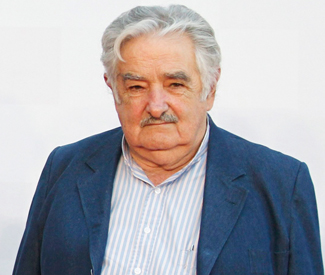
So this week, I’m giving it up for South America. Big ups to Uruguayan president Jose Mujica for proposing a plan to legalize marijuana so that adults could walk into government-run stores and buy weed. He presented it as an anti-crime measure, suggesting that the hundreds of millions of dollars spent on pot by consumers could be better funneled in the government’s pocket than those of illegal drug dealers.

President Mujica is blessed with one of his continent’s most stable countries — plus it’s tiny, at 3.3 million inhabitants — so his plan could prove more manageable to implement than elsewhere in South America. But he’s not the only leader south of Panama to call bullshit on this War on Drugs. This spring at the Summit of the Americas in Cartagena, Colombia, that country’s President Juan Manuel Santos called for an “in-depth discussion” on the War on Drugs’ utility, preferably one “without any biases or dogmas.” He suggested, as many have, that Prohibition has never worked before, and might not be working now.

Our president was there too. “Legalization is not the answer,” said Barack Obama to a conference full of Latin American leaders. Of those who remain focused on this issue, President Obama counseled perspective. He said that this kind of debate seemed “caught in a time warp, going back to the 1950s and gunboat diplomacy, and Yanquis, and the Cold War, and this, and that, and the other. That’s not the world we live in today.”

Anyways, I’m sure that when he gets here — July 23! — he’ll be looking for our opinion on the ways of the world. ¡Hasta pronto!


Faces of feminism

7

Is San Francisco still on the cutting edge of women’s issues? I recently spent a sunny Saturday morning buried in the radical archives of Bolerium Books (www.bolerium.com) — which is by the way, an amazing resource for anyone researching labor, African American, First Peoples, and queer history, among other things. Me, I was looking into our city’s rich history of feminist activism, inspiration for our upcoming Guardian “Bay Area Feminism Today” panel discussion. The event will unite amazing females from across the city who have but one thing in common: they’re pushing the envelope when it comes to the definition of what a “women’s issue” is, in a time when very few people claim feminism as their primary crusade. We’ll be talking more about their exciting projects –- but also touching on more universal issues. What is San Francisco’s role in fighting the nationwide attack on reproductive rights? How is our progressive community doing in terms of supporting women and maintaining a feminist perspective on issues?

Women’s work: it’s alive and kicking, and it deserves its moment in the spotlight. Meet our panelists here, in preparation for the real deal. 

THE GUARDIAN PRESENTS: “BAY AREA FEMINISM TODAY”

Wed/11 6-8pm, free

City College of San Francisco Mission campus

1125 Valencia, SF

www.sfbg.com/bayareafeminismtoday


STEPHANY ASHLEY

St. James Infirmary programs director, ex-president of Harvey Milk LGBT Democratic Club


For me, sex worker rights are a feminist issue because they are about body autonomy. As much as reproductive choice is a feminist issue, so too is the right to determine the ways in which we use our bodies, change our bodies, and take care of our bodies. When people are criminalized for their HIV status, denied access to hormones and safe gender transitions, or are afraid to carry condoms because it might lead to police harassment or arrest — these are all feminist issues. At St. James Infirmary (www.stjamesinfirmary.org), we provide healthcare and social services from a peer-based model, so community is really the central aspect of the project. I was excited to chair the Harvey Milk LGBT Democratic Club (www.milkclub.org) last year, because I wanted to keep raising sex workers rights issues as part of the LGBT agenda. At St. James, nearly 70 percent of our community members are LGBTQ, so it’s really critical that sex workers rights are treated as a queer issue, a feminist issue, and a labor issue.

CELESTE CHAN

Artist and founder of Queer Rebels

My partner KB Boyce and I started our production company Queer Rebels (www.queerrebels.com) to honor the feminist and queer of color artists and elders who paved the way. Our main project is “Queer Rebels of the Harlem Renaissance,” a performance extravaganza which took place June 28-30. Such an exciting time! The Harlem Renaissance legacy remains with us to this day. It was an explosion of art, intellect, and sexual liberation led by queer Black artists. I’m also a board member at Community United Against Violence (www.cuav.org). CUAV was formed in the wake of Harvey Milk’s assassination and the White Night riots, and does incredible work to address violence within and against the LGBTQ community. Another way I’m involved with women’s issues is through Femme Conference (www.femme2012.com). In a culture where femininity is both de-valued and the expected norm, Femme Con creates a vital feminist space — this year it takes place in Baltimore, Maryland.

EDAJ

DJ and promoter of queer nightlife

I work in nightlife to provide space for communities that often don’t have spaces to come together. For 15 years, I have been providing music for women as the resident DJ at Mango (every fourth Sunday at El Rio, www.elriosf.com). I also work to support my fellow LGBT veterans by promoting their visibility through my nightlife projects. Ex-Filipino Marine and two-spirit drag king Morningstar Vancil’s story has inspired me to work on creating a space that raises awareness about LGBT veterans, especially women living with disabilities. I also think it’s important to do outreach in the Black LGBT community to help strengthen support for organizations such as the Bayard Rustin LGBT Coalition (www.bayardrustincoalition.com), a group that is not only fighting for Black LGBT equality, but is focused on social change for all oppressed people. After 10 years of executive producing the Women’s Stage at SF Pride, I was honored as a grand marshal this year at an event hosted by the BRC and Soul of Pride. It was beautiful to see so many Black LGBT people dedicated to moving global equality forward. Although there is a need to reach out to everyone in the Black LGBT community, naturally my goal is to first focus on connecting more women, a group that has always been less visible.

JUANA FLORES

Co-director of Mujeres Unidas y Activas

My organization Mujeres Unidas y Activas (www.mujeresunidas.net) is based on a double mission: personal transformation and community power for social justice. MUA is a place where women arrive through different challenges in their lives. We try to provide emotional support and references so that they don’t feel like they’re alone, so that they have strength to begin the process of healing and making changes. Those can include issues of domestic violence, problems with teenage children, labor or housing issues — when they arrive at MUA they begin the process of developing their self esteem and becoming stronger. They also begin to participate in trainings and making changes in their community and to the system through civic and political participation. At MUA, women find a home. They feel comfortable because they’re always welcome. We’re developing strong leadership, leadership that is at the table when it comes to making decisions about our campaigns, like our letter of labor rights and the help we give to victims of domestic violence through our crisis line. Every day our members are developing their ability to be involved in the organization and community, and making changes in their personal and familial lives.

ALIX ROSENTHAL

Attorney and elected member of the SF Democratic County Central Committee

As an elected member of the SF DCCC (www.sfdemocrats.org), the governing body of the SF Democratic Party, I am working to involve the party in recruiting more women to run for political office locally. In the June 2012 election, I assembled a slate of the female candidates for DCCC — we called ourselves “Elect Women 2012.” It was a controversial effort, because it included both progressives and moderates. In the wake of a highly contentious and factional term on the DCCC, we hoped to prove that moderates and progressives can work together to re-energize Democrats in this important presidential election cycle. Running for office in San Francisco is a high stakes game; it is costly and requires an extensive political network. And so the DCCC is where many future candidates get their start — it is where they build the connections necessary to run for higher office, and where they hone their fundraising abilities. By recruiting and supporting women candidates for the DCCC, I am hoping to build a “farm team” of female candidates within the party. This year, I am proud that the seven women incumbents on the DCCC retained our seats in the June election, and that we achieved parity by electing four new women to the party’s governing board. I look forward to seeing what these women can accomplish together.

LAURA THOMAS

Deputy state director of Drug Policy Alliance

Ending the failed war on drugs is a women’s issue because women are far too often bearing the brunt of that failure, losing their freedom, children, economic independence, safety, health, and sometimes their lives as victims of the war on drugs. Women in prison in California can be shackled during childbirth, lose custody of their children because they use legal medical marijuana. They’re vulnerable to HIV and hepatitis C because they or their partners don’t have access to sterile syringes for injecting drugs. My major project for the Drug Policy Alliance (www.drugpolicy.org) is mobilizing San Francisco to show the rest of the world how effective progressive drug policy can be. I want to see San Francisco open the first supervised injection facility in the United States, to end new HIV and hepatitis C infections among people who use drugs. I want us to truly have effective, culturally appropriate substance use treatment for everyone who requests it. I want San Francisco to end the cycle of undercover drug buys-incarceration-recidivism. I want us to address the appalling racial disparities in who gets arrested, convicted, and incarcerated for drug offenses here. I want us to aggressively defend our ground-breaking, well-regulated medical cannabis dispensary system against all federal intervention. San Francisco is leading the way in the United States in addressing the harms of drug use and drug prohibition but we have a lot more we can do.

MIA TU MUTCH

Transgender activist and SF Youth Commission officer

I’ve worked for a plethora of LGBTQ organizations and have been on several national speaking tours. I currently serve as media and public relations officer of the San Francisco Youth Commission, and use my position to promote LGBTQ safety and overall health. I’ve partnered with several city departments in order to create a cultural competency video that will train all service providers on best practices for working with LGBTQ youth. As a vocal advocate against hate crimes and sexual assaults, I’m working with local groups to create a community patrol in the Mission to prevent violence against women and transgender people. I’m also the founder of Fundraising Everywhere for All Transitions: a Health Empowerment Revolution! (FEATHER), a collective aimed at making gender-affirming transitions more affordable for low income transgender people. I work to create avenues of equality for those who benefit the least from patriarchy by creating a culture of safety and support for people of all genders.

Cash your bowl

0

caitlin@sfbg.com

HERBWISE It’s time to get a Discover card. As of July 1, you can no longer use your Visa or Mastercard credit or debit card to buy medical marijuana. And of course, American Express cards have been out of the question since spring 2011. Electronic Merchant Systems, which handles card processing for most of the nation, sent out an announcement last month to its vendors, raising the stakes for dispensaries across the country that seem to be coming under a coordinated federal attack. Cash-only cannabis? That’s pretty bad, maybe just as bad as the next thing I have to tell you about…

MORE BAD NEWS

The Vapor Room is closing. Yes, the perennial Best of the Bay-winning, nine-year old Lower Haight dispensary-lounge (607 Haight, SF. www.vaporroom.com) will be closing its doors as of July 31, according to the nonprofit’s executive director Martin Olive. Olive told the Guardian in a phone interview that the dispensary learned an undisclosed amount of time ago that its landlord had received one of the doom-bearing letters now so familiar to San Francisco dispensaries from US Attorney Melinda Haag declaring that the dispensary was within 1,000 feet of Duboce Park. The city’s permitting laws, Olive told us, are concerned with how far cannabis clubs are from playgrounds, not park grounds. Vapor Room has a long-standing relationship with the Harvey Milk Rec Center that anchors the park — the nonprofit actually sponsors free yoga classes and health counseling that take place in the center itself. Olive wouldn’t confirm rumors that Vapor Room’s stock will continue to be available for delivery, but that’s the word on the street.

PLEASE NO MUNCHIES JOKES

The “bath salts” face-eater didn’t have any bath salts in his system. In fact, the only drug authorities uncovered through post-humous tests was cannabis.

UNDISCLOSED THING

As an events editor, organizations that don’t send us the vital information we need to cover their event are the bane of my existence. It is another thing entirely, however, when an organization requests that vital information be kept out of the newspaper. A sign of the times when it comes to cannabis journalism, I’m afraid. And as such: check out a happy hour benefit at El Rio for “an organization supporting low-income, AIDS-HIV, and cancer patients with free medicine.” Sigh. It’ll be running semi-concurrently with pop-up Mugsy Wine Bar’s hat-tip to Bastille Day (5:30pm-8:30pm). Drown your frustrations with some nice sparkling Blanc de Noir Cremant de Bourgnone, why don’t you.

Fri/13 4pm-6pm, free. El Rio, 3158 Mission, SF. www.elriosf.com

AND FINALLY

Search YouTube for “Conan O’Brien and Martha Stewart Get Crafty with Pot.” Discussion question: for all the weirdness that you just read, is marijuana becoming more or less accepted in mainstream culture?

Seeking local control

0

news@sfbg.com

As a potentially troublesome court decision threatens the existence of cannabis dispensaries in cities throughout California, San Francisco City Attorney Dennis Herrera submitted an amicus brief last week urging the California Supreme Court to reverse the decision.

In October, the state Court of Appeal ruled in the case of Pack v. City of Long Beach that city ordinances regulating medical cannabis dispensaries are preempted by federal law. Local jurisdictions across the state have adopted discretionary rules for permitting cannabis dispensaries that vary by jurisdiction. The court decision throws out local ordinances, making it illegal for cities and counties to develop regulations.

“The Court of Appeal’s decision strips cities of an essential tool for protecting public health and welfare,” reads Herrera’s amicus brief, which is joined by Santa Cruz Counsel Dana McRae. An amicus brief is commonly filed in an appeal concerning broad public interest by parties not directly involved the court proceedings.

The ruling could have drastic consequences for cannabis dispensaries and the clients they serve. Most cities in the state, including San Francisco, rely on local ordinances to regulate the medical marijuana industry. Herrera says cities will be forced to choose between banning cannabis dispensaries altogether or allowing their operation without local controls, such as San Francisco’s extensive regulations on where and how dispensaries can operate.

In the absence of local regulations, he argues that ” dispensaries and cultivation sites have the potential to generate serious impacts on surrounding communities, including electrical fires, criminal activity, hazards to children’s safety, pollution, harm to wildlife, traffic, noise and odors.”

The appellate court ruled local ordinances go beyond Prop. 215, the California voter-approved decriminalization of medical marijuana, and cross into the realm of actually legalizing it, conflicts with the federal Controlled Substance Act.

In the wake of the court’s decision, the impact was felt immediately. Across the state, cities suspended all new permit activity.

Since the decision was sent to the state Supreme Court in January, where it is currently under review, San Francisco resumed its permitting process. Not all cities resumed. Herrera noted that as many as 12 jurisdictions continue to suspend or severely limit new cannabis dispensary permits, including Santa Cruz.

Rory Bartle, a lawyer at Pier 5 law offices and medical marijuana advocate, says that if the decision isn’t overturned, the entire industry could be upended. However, Bartle says the ruling isn’t widely supported, many counties have filed amicus briefs, and in his opinion the ruling will be overturned.

It is hard to imagine Ryan Pack and Anthony Gale, plaintiffs in the Pack v. City of Long Beach case and members of a cannabis collective that was shut down because of local ordinances, realized the implication of challenging such regulations. Long Beach required a $14,000 non-refundable application fee and annual $10,000 fee.

“Long Beach has some crazy regulations designed to pull as much money as they can out of the medical marijuana industry,” says Bartle. “It’s stupid and unfair.”

In San Francisco, the fees for an application permit are $8,656 and another $4,019 for a license and re-inspection.

Announcing the weed winners of this weekend’s High Times Cannabis Cup

1

While thousands took to the streets this weekend to celebrate SF Pride, over in the East Bay an event was taking place that celebrated a freedom of a different sort. 

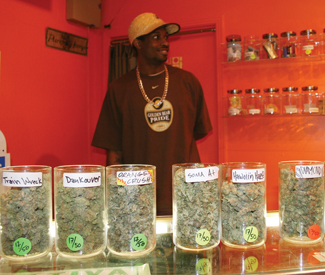
The third annual Bay Area High Times Cannabis Cup brought together marijuana connoisseurs from across the state to Richmond’s Craneway Pavilion. Although the main event was the judging of some of the kindest buds in the country, the exposition also featured a variety of glass water pipes, portable vaporizers, ice-cold cannabis beverages and miscellaneous cannabis accessories. Outside in the parking lot, a chain-link fence surrounded the Prop 215 area where vendors offered card-carrying cannabis patients tastes of an assortment of potent edibles, dabs of concentrate, and tokes of some of the best medical cannabis strains of sativa and indica the state has to offer.

As the sun lowered over the harbor on Sunday night, a soft amber light shining through the many windows of the pavilion, people gathered around the stage for the start of the awards ceremony. High Times staffers announced awards for best product, booth, glass, concentrate, edibles, hybrid, sativa and indica. After a long afternoon of ingesting cannabis products galore, the winners wound their way up to the stage to accept their honors from Miss High Times Emily Aryn (more on her majesty here). San Jose Patients Group took home first place among indicas for its Cordero Kush Platinum. Playbud Delivery Service received first place for best sativa, an honor claimed by its Premium Jack Herer. 

During the ceremony, a special lifetime achievement award was given to Oaksterdam University founder, Richard Lee. Considered the father of Prop 19, his cannabis university and his dispensary were raided by federal agents last April. For an update on where Lee and Oaksterdam are at now, read our interview with Lee and new Oaksterdam head Dale Sky Jones here

[from the High Times website]

BEST INDICA

1st Place – Cordero Kush Platinum, San Jose Patients Group

2nd Place – Master Yoda Kush, Kush connection

3rd Place – Cherry Cola, Sonoma County Collective

BEST SATIVA

1st Place – Premium Jack Herer, Playbud Delivery Service

2nd Place – Yogi Diesel, Elemental Wellness

3rd Place – XJ-13 Cracker Jack, Santa Cruz Mountain Natural

BEST HYBRID

1st Place – Larry OG Kush, The Cali Connection Seed Company

2nd Place – Ken’s Phantom, Granddaddy Purple Collective

3rd Place – OG Sky, Buddy’s Cannabis

CBD AWARDS

1st Place – MCU ATF Bubble, Hill Farms presents Master Control Unit

2nd Place – Lemon Remedy, Harborside Health Center of SJ

3rd Place – Harlequin, Buds and Roses Collective

BEST CONCENTRATE

1st Place – Hardcore OG Budder, Superior Extracts for West Coast Cures

2nd Place – OG Super Sexy Budder, LA Confidential Caregivers

3rd Place – Unfuckwitable OG Wax, Venice Medical Wax Centers

BEST NON-SOLVENT HASH

1st Place – Solvent-less BAMF Mix Hash, BAMF Extractions for Buds and Roses Collective

BEST EDIBLE

1st Place – Eleve Gourmet Veganic Medicated Truffles, Hills Farmacy

2nd Place – CannaChocolate 44/8mg THC/CBD, Tea House Collective

3rd Place – Spice Orange Drops, Greenway Compassionate Relief Inc.

BEST BOOTH

1st Place – Mamma P’s

2nd Place – Elemental Wellness

3rd Place – Cali Connection

BEST PRODUCT

1st Place – Mama P’s Grinder

2nd Place – KO Nail from KO Domeless Nail

3rd Place – The Grinder Card from V-Syndicate

BEST GLASS

1st Place – Hitman Glass

2nd Place – Pulse Glass

3rd Place – Dopeass Glass

Dueling pot protests precede rejection of a permit appeal

12

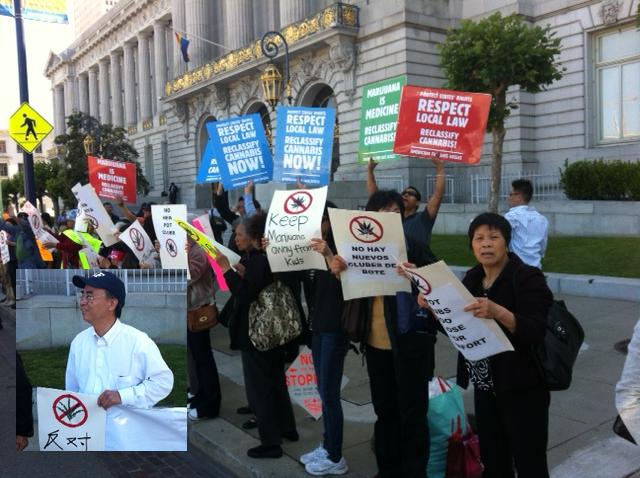
Dueling demonstrations in front of City Hall yesterday afternoon – with one side supporting medical marijuana dispensaries and the other protesting the city’s February approval of three new clubs in the Outer Mission/Excelsior area – preceded the Board of Permit Appeals decision to reject an appeal challenging Mission Organics.

That was the first of the three clubs to pull their building permits to open up shop in a part of the city that currently has no cannabis dispensaries. Yet a group of residents from the region – which includes District 11 supervisorial candidate Leon Chow – has been angrily agitating against the clubs and claiming they expose children to an illegal drug.

Bearing signs that included “Stay away from pot clubs” and “Keep the weeds away from kids” – most in both English and Chinese characters, with a smattering of Spanish translations – the predominantly Asian protesters squared off against a slightly larger crowd of medical marijuana supporters bearing signs that included “Respect Local Law” and “Marijuana is Medicine.” Together, it was a crowd of a couple hundred lining the sidewalk, drawing reactions from passing motorists.

Asked whether he would try to undermine the city’s system of regulating medical marijuana facilities if elected to the Board of Supervisors, Chow told us, “We’re opposing this, but I don’t think it would be my priority.”

Chow said he was “opposing high density,” noting that the Planning Commission approved three dispensaries in the area on Feb. 21, but he also raised concerns that the clubs make it easier for children to get marijuana, that they cater to healthy people just looking to get high, and that city regulations conflict with federal law.

“We don’t want healthy young people to be exposed to people coming out of medical marijuana clubs,” Chow told us. Asked whether he had similar concerns about bars and liquor stores, he said that he did but “there’s nothing I can do” to shut down existing businesses that sell alcohol.

“I don’t want there to be more liquor stores,” he said, although he assured us that, “I’m not a conservative, crazy, church-going Republican.”

Yet supporters of Mission Organics – whose workers will be represented by the United Food and Commercial Workers Union – did call Chow a hypocrite given that he works for SEIU-UHW. “So it’s a union representative opposing a union business,” said Matt Witemyre, an organizer with UFCW who was demonstrating in support of Mission Organics, which he said has agreed to a strict code of conduct that will make them good, responsible members of that community.

“The vast majority of the neighborhood is in support of the project,” Ariel Clark, an attorney representing Mission Organics, told us, characterizing protesters as a small yet vocal part of the neighborhood. The appeal was filed by Steve Currier, president of the Outer Mission Merchants and Residents Association.

Long after most of the protesters on both sides had gone home, the Board of Permit Appeals voted 3-1 to reject the appeal, clearing the way for Mission Organics to open on the 5200 block of Mission Street. But opponents have vowed to continue their fight and appeal the permits for the other two approved clubs – Tree-Med and The Green Cross, a venerable cannabis delivery service – when they apply for building permits.

After the raid

1

caitlin@sfbg.com

HERBWISE It is exceedingly difficult to get Oaksterdam University founder Richard Lee to talk about himself. I have him — the person who drove the Proposition 19 legalization campaign, whose house and cannabis trade school were raided by federal agents in April, who through his businesses’ success has helped revitalize and make safe a previously gloomy stretch of downtown Oakland — on the phone to talk about the lifetime achievement award he will be receiving from High Times at this week’s Cannabis Cup (Sat/23-Sun/24).

I want him to share his emotional journey since government agents poured into his home, what’s it’s like to be the public face of the flashpoint between California and national government over marijuana. High Times editorial director Malcolm MacKinnon calls Lee a “fearless trailblazer,” perhaps he’d like to make grand predictions about the future of pot? At least describe exactly what’s happening with Oaksterdam, post-raid. But Lee prefers to stress the latest poll numbers on legalization.

“All the national polls and the Colorado polls are going our way,” he says. “If you could get the word out about that, that’d be great.” FYI, on June 6 Rasmussen Reports found that 61 percent of Coloradoans support regulating cannabis like alcohol and cigarettes.

Lee has retired from university administration — he’s referred to as a professor emeritus, although he is still teaching classes in cannabis policy, history, and advocacy. In his “big Converse All-Stars” (as she calls them) now stands Dale Sky Jones. She once developed Oaksterdam’s curriculum and now joins a short list of female leaders in the marijuana industry as the university’s president.

“When the federal government came in, they took the curriculum, the computers — everything else that was the blood and breathe, heart and soul of the school short of the tables and chairs and teachers,” Jones says in a phone interview. Under her watch, the finances of “top-heavy” Oaksterdam’s gift shop, dispensary, and university have split and are now under separate ownership. Staff is attempting to rebuild curriculum from email records. 45 employees have lost their job because of the disruption in business affairs. “This was a violation on so many levels for the staff of Oaksterdam,” Jones says, sadly.

But life goes on. Lee says his “students are great, they have lots of energy and enthusiasm.” And the cultural contributions that the school and its founder have hardly been negated by federal intervention. “[Lee] brought the debate about marijuana policy reform to the kitchen table,” says Jones. “Before Prop. 19, the only time parents and kids had conversations around marijuana it was ‘where the hell did you find it? who are your jackass friends?’ It was always a negative discussion. This was the first time that families were able to discuss marijuana as a policy issue.”

This weekend’s Cannabis Cup will bring the pot world’s focus back here, as some of NorCal’s [author’s note: and hence, the world’s] best strains compete for the title of best indica, sativa, edibles, etc. Lee’s lifetime achievement award (presented at 7pm on Sun/24) will just confirm what we all already knew: even when it comes to activists, we grow things better out here.

HIGH TIMES CANNABIS CUP

Sat/23 noon-10pm, Sun/24 noon-9:30pm; one-day pass $40, two-day pass $65 advance, $80 at door

Craneway Pavilion

1414 Harbour Way, Richmond

www.medcancup.com

High Times magazine presents: Medical Cannabis Cup

0

The San Francisco Bay Area’s Third Annual Medical Cannabis Cup is the world’s ultimate marijuana awards and returns to California for High Times’ homegrown Medical Cannabis Cup competition. Richard Lee from Oaksterdam will be honoured with a special lifetime achievement award.

Ticket includes a Saturday night party with Del The Funky Homosapien, Smoke DZA and Harry Fraud Expansion Team Soundsystem, Task Rok, and Linus. Celebrate all weekend long with music, parties, cannabis competition, expo, seminars, activism and more! Get more info here.

To win a pair of tickets, email sfbgpromos@sfbg.com with your name and mailing address and several lucky winners will get two printable in their inbox!

Saturday, June 23-Sunday, June 24 @ Craneway Pavilion, 1414 Harbour Way South, Richmond | Free shuttle buses from Richmond BART


What $40 million buys

5

OPINION I am a diehard and devoted follower of the round-ball. Basketball. If the game did not exist, I wouldn’t spend a minute — hot or cold — planted in front of telly, save the half hour my kids and I watch the new Regular Show. I have no idea who wins the beauty contests or who is villain or hero on reality TV, couldn’t ID you the hit sitcom star of today, don’t know and don’t care.

For this reason, I am intimately aware of the massive anti-Prop 29 campaign waged by the tobacco companies (their target audience is male and of a certain age).

Prop. 29 narrowly lost last Tuesday, almost entirely due to the $40 million plus poured into its defeat from out of state interests, specifically RJ Reynolds.

Without that money, Prop. 29 passes easily, a no-brainer. A dollar-a-pack tax to raise $735 million a year for cancer research, with the secondary effect of smoking reduction (the costlier cigarettes are, the more likely one will quit — also, despite the misinformation, a raised tax on cigarettes doesn’t lead to bootlegging, as is Internet myth).

But at least a half dozen times per NBA playoff game, a grave looking woman in a medical outfit came on the air to warn us of the incipient dangers of this horrible idea — a new bureaucracy, new taxes (well, duh), money going out of state — relentless repetition of talking points ramrodded down the throats of the viewer.

I am told that Lance Armstrong made a pro-29 spot. Never saw it and now, I never will.

In most instances, I would have opposed Prop. 29 myself. I dislike sin taxes. I dislike the idea that one person’s poison is more pernicious than another when less than 15 percent of our state smokes and a much higher percentage is overweight. But the pounding of the tobacco industry — a far more diabolical and lethal group of parasites than even the lowliest dope dealer (but legal, of course and subsidized by the taxpayer) planted enough doubt in the minds of semi-interested sports fans to send a well-meaning and job creating piece of legislation onto the shoals of defeat.

This event, coupled with the Koch family’s purchase of the Wisconsin recall, signals the possible death knell for American democracy. The fact that money is speech and corporations are people has been codified into law doesn’t change the reality that said sentiment is gibberish intended to consolidate a permanent plutocrat class that, on any whim, can simply bury their opposition in an avalanche of half truths and outright lies.

If you own the megaphone, the transmitter, and the mouth, we are not equal — if you are heard and I am not, no one ever hears my side. And that’s where we’re going.

The saddest moment in all of this was taking a trip to a liquor store the other day with my kids to get some sodas and hearing the owner’s justification for supporting No on 29 — “this will wipe me out.” When I pointed out that maybe soon he could sell marijuana in the place of cigarettes when it becomes legal, he turned pale and exclaimed “I don’t want that shit in here”.

Marlboro’s and Jack Daniels, ok. The chronic, no.

And that’s the mindset in America’s most progressive state. I wasn’t made for these times at all.

Johnny Angel Wendell is a talk show host at KTLK-AM1150 and KFI-AM640 in Los Angeles and an American roots musician

Win tickets to Hempcon this weekend

0

Hempcon is a medical marijuana show catering to those who may be benefited from the medical use of marijuana. This will be one of the premiere events of the year with a huge amount of exhibits including medical marijuana dispensaries, collectives, care givers, evaluation services, legal services, educational institutes, equipment, accessories, and many more. Hempcon will be an educational event as well with a full weekend of seminars and presentations by industry leaders, advocates, and attorneys. Whether you are a patient or someone who wants to get educated more about medical marijuana, you have got to be there.

Supporters of the medical marijuana industry are urged to come out and participate in what is sure to be the best event of the year! Get more info here. To win tickets, email sfbgpromos@sfbg.com with your name and mailing address and several lucky winners will get a pair of tickets in the mail!

June 15-17 @ San Jose Convention Center 

Welcome back to SF President Obama! Now, say Supevisors, give us our marijuana

4

Not that it’s ever a good idea, but avoid driving downtown today like the plague — President Obama’s in town! And, (as reported by SFGate), SF supervisors want him to take a stance on pot. Sup. Christina Olague has penned a letter co-signed by Sups. David Campos, and Scott Weiner that is a solid finger-wag at the current federal administrations actions against the medical marijuana industry. Here’s the meat of it:


We believe strongly in addressing medical cannabis as a public health issue, and we will strive to fully implement state law by protecting not only our patients, but our property owners and dispensary operators as well. We want to work with President Obama on a public health solution for medical cannabis at the federal level, once he wins a second term. In the meantime, the Department of Justice must respect our laws and honor the President’s commitment on this issue. Honoring this commitment can start by taking no further action against the nine landlords of City-permitted facilities here in San Francisco.


Those “nine landlords” refer to the property owners of the five SF cannabis dispensaries that have already closed, and the additional four that are set to close this month. The federal government has sent threatening letters to dispensary landlords that posit extensive jail time and civil forfeiture for those landlords that continue to allow federally-illegal drug trafficking on their property. 

Kudos to the new Sup. Olague for taking a stand. Of course, the letter’s premise is that the Sups. are staunch supporters of Obama’s re-election, they’re just asking him to improve on this particular issue. It begs the question: why would he make capitulations to win support that is already in pocket?

Tickets are sold out for his lunch at the Julia Morgan Ballroom (465 California, between Montgomery and Sansome Streets), although his campaign website encourages you to get on the waiting list — be careful, general admission tickets start at $5,000. The President’s only other scheduled stop, says SFGate, is at a “small roundtable” at One Market Plaza. 

Afterwards, the President will head south to Los Angeles to attend the annual fundraising gala for the LGBT Leadership Council, where he will no doubt be greeted affectionately for his “I support gay marriage”isms of last month. 

In the air

3

caitlin@sfbg.com

HERBWISE It’s Sunday afternoon and the hosts of Mutiny Radio’s Cannabis Cuts: The Next Generation have effectively commandeered the smoking lounge at SoMa’s Igzactly 420. They are deep into solving the world’s problems.

The crusade may just involve a pictorial calendar featuring sexy men smoking marijuana — a project which hosts Vaperonica Dee and Merry Toppins staunchly resist any attempts to qualify as frivolous. It’s about achieving parity in cannabis imagery, they say — much like their weekly podcast of marijuana news, product reviews, music, and banter.

“If you look at all the ads [for cannabis businesses and products], it’s sexy nurses or girls holding cannabis leaves over their tits,” Dee says between Volcano puffs. The young radio vet didn’t find that image particularly representative of her experience with the medicine (both she and Toppins are medical marijuana patients), so she jumped at the chance to work with DJ Wiid on his marijuana variety show at Pirate Cat Radio.

Merry Toppins and Vaperonica Dee plot their takeover of cannabis media (that’s not their car.) Guardian photo by Caitlin Donohue

Dee stuck with the project through Pirate Cat’s transformation into Mutiny Radio, the shuttering of its cafe and demise of its infamous maple bacon lattes — “I was excited!” she says. “I wanted to be in radio, I didn’t give a shit about the cafe” — and the exodus of her male co-host.

And when DJ Wiid moved onto new projects, it left the door open for an idea that seems nearly revolutionary in an industry filled with men: a platform for women’s perspectives on the cannabis movement.

Toppins was a natural choice as on-air co-host for Dee. The two had met when chef Toppins appeared on Cuts to hype her marijuana-infused olive oil that she had entered into the High Times Cannabis Cup. Toppins’ ebullience is the perfect compliment to Dee’s well-informed on-air tone. They both have natural radio voices, impeccable banter rhythm. “It was so cool to see a chick doing the news on a weed show,” says Toppins of their initial meeting. “I knew right away I’d either be their intern or host my own radio show.”

Listeners are responding. Toppins volunteers the following stats: 5,000 Cannabis Cuts podcast downloads each week, each one yielding an average of an hour spent with the two-hour long show. And though the women express views that aren’t always in lockstep with the cannabis establishment (a February 14 edition of the show highlighted a disempowering experience with Americans for Safe Access activists at a City Hall hearing and the two are candid about the fact that not all their tokes are strictly medicinal), many of the community’s luminaries have lent their support. They count Proposition 215 co-author Dennis Peron and Cannabis Action Network co-founder Debby Goldsberry as personal friends, and have interviewed Peron on the show.

The enthusiasm that has come their way makes sense — the continued strength of activists to improve cannabis access depends on developing and raising awareness about diverse viewpoints within the movement.

“We’re changing the idea that there could be a profile of a standard cannabis activist,” says Dee, who wants the world to know that it’s not just the grey-ponytailed Deadheads who care about access to pot. “Plus, radio doesn’t have that many women involved in it, cannabis doesn’t have that many women involved in it — the two go together.” 

Cannabis Cuts: The Next Generation Live podcast every Tuesday, 4pm-6pm. www.mutinyradio.org. Also available on www.stitcher.com and www.medicinalmarijuananetwork.org


Wall down, joints up

0

The tallest structure in Germany is a sky needle with a majestic ball sitting well up its length. Due to some vagaries of the physics of light and the shiny, Epcot-like nature of this ball, Berlin's Fernsehturm (a.k.a., television tower) casts the shadow of a cross over the city, much to the consternation of its East German builders.

One wonders what they would think of the head shop nestled into the base of their show of socialist triumph. For the past 11 years Udopea has been here, currently occupying a space next to a bike rental shop and mere feet from a line where a million visitors cue every year to ascend into the Fernsehturm's observation decks and fancy restaurant.

But maybe this isn't such a weird thing. A cursory look at Udopea's window offerings reveal the standard wacky tourist fare: rainbow hair dyes, black-light bongs, bongs spotted with hippie daisies. I was in the market for cotton candy hair, so we stopped in — only to see my beloved California-made Magic Flight vaporizer (see Herbwise, "Hippies do it better," 2/8/12) vaporizer. It appears Udopea actually knows its cannabis.

Berlin is not the least tolerant place for marijuana in Europe. Head over to Görlitzer Park in the trendy Kreuzberg neighborhood and you can score baggies of dry cannabis in a flash. Marijuana is openly smoked in many of the town's world-famous, dirty-as-hell techno churches. But it's no cannabis culture capital. After all, this is a place where entering "marijuana" as a search term on the website of Berlin's reigning English-language culture magazine turns up only one result: an interview with Evidence, of LA underground hip-hoppers Dilated People. (He's making a pun off of "bagpipes.")

So those looking for a conversation about weed that goes deeper than "you want" and "how much" should drop through Udopea. In addition to klassy US products, you can find Germany's finest glass company Roor (www.roor.de). Glassblower Martin Birzle's brand inspires fierce adherents — you should have heard the Udopea sales assistant's roar of disbelief when I told him I was unfamiliar with the product. (Nationalists.)

Plus, stuff for growing so that you don't have to keep heading out to Görlitzer. The quantity of lights, fertilizers, and various other accoutrements that Udopea deals will actually sound the death knell for their most idiosyncratic of its five Germany-wide locations. More space is needed to properly stock the grow section, so the Berlin store is moving to a more spacious location in another neighborhood. Later, tourists.

Outer Mission opposition

1

steve@sfbg.com

HERBWISE Most medical marijuana dispensaries in San Francisco are clustered around the central part of the city, with the heaviest concentration in SoMa, leaving patients in many outlying parts of the city — such as the Outer Mission and Excelsior districts — with long journeys to visit a cannabis club.

That began to change in February when the Planning Commission approved permits for three new dispensaries to open in the Excelsior: venerable delivery service The Green Cross will open its first brick-and-mortar operation on the 4200 block of Mission, while Tree-Med and Mission Organics each won approval to locate on the 5200 block. All three clubs had been in development for years, delayed by a state case challenging new dispensaries that went all the way to the Supreme Court.

But Steve Currier, president of the Outer Mission Merchants and Residents Association, has appealed the building permit for the first of that trio of clubs to apply for one, Mission Organics, and he allegedly whipped up anti-pot hysteria in the neighborhood that included an April 21 protest march spanning the three dispensary sites.

David Goldman, a member of the city’s Medical Cannabis Task Force, said the Feb. 16 appeal hearing and April 21 demonstration — which he said also included supervisorial candidate Leon Chow — were marked by inaccurate statements that dispensaries attract crime and are harmful to children, even though all three dispensaries are more than 1,000 feet from schools.

“People who are ignorant assume we’re all a bunch of hoodlums or stoners looking to get high,” Goldman said. “We want them to realize that dispensaries don’t bring crime to neighborhood. If anything, it’s the opposite,” he said, citing the value of people, video cameras, and security guards on the street as a crime deterrent, particularly on blocks with vacant storefronts, as is the case with these blocks.

Neither Currier nor Chow returned Guardian calls or emails. Attorney Dorji Roberts, who represents Mission Organics owners Eugene Popok and Mike Mekk, said that he’s also had a hard time reaching project opponents to address their concerns before a Board of Permit Appeals hearing set for June 20.

“We’ve asked them for a meeting recently, but he won’t respond and he can’t articulate any real reasons why he has a problem with it,” Roberts said of Currier and his group.

Roberts said that Popok had attended meetings of the OMMRA to try to integrate into the group and address any concerns it might have, but they were surprised when the project got appealed after being approved 5-2 at the Planning Commission (Tree-Med’s vote was also 5-2, while The Green Cross won unanimous approval), where they saw their first hints of opposition.

“They’re saying it will be a density issue, even though no clubs are out there now,” Roberts said. “They say it will increase crime, which also isn’t true…It’s the same kind of fears and phobias that are offered by people who just don’t like [medical marijuana or its legality].”

Goldman, who had people monitoring the April 21 protest march, said the group would praise businesses along the way while condemning the dispensaries, as one point chanting, “Liquor stores, yes, pot stores, no,” a dichotomy he considers telling of the kind of moralism driving the appeal.

“Fundamentally,” he said, “it’s an attack on patients.”


Challenging the duopoly

4

By Adam Morris

news@sfbg.com

On May 12, the Green Party held a presidential debate between Massachusetts physician and longtime progressive activist Jill Stein and comedian turned TV star turned macadamia nut farmer Roseanne Barr. The debate was moderated by Rose Aguilar, host of KALW’s Your Call, and took place at San Francisco’s historic Victoria Theater.

Outside the theater before the event, a battalion of senior-citizen canvassers collected signatures to petition Gov. Jerry Brown to take up single-payer health care. Inside, the audience steadily grew to about 100 people, nearly filling the Victoria, but still was a grim turnout for what was once the Valhalla of progressive politics in America.

The audience was primarily gray; notably absent were the 20- and 30-something Occupiers, indebted students, and underemployed ranks of America’s youth, a political class actively courted by the Green Party and its candidates.

Barr read her opening remarks straight from her laptop computer, in a hurried monotone that nevertheless reached a crescendo as she called for “an end to the system of slavery, war, and usury” in America, and pledged to “make getting food to the hungry our final cause.” Ending hunger resurfaced later in the debate, when Barr observed that the military could be used to distribute food. She also claimed that “there would be no global warming” if humans chose to get their protein from nuts rather than eating animals. This would only happen, she charged, by getting Monsanto “off the necks of small farmers.”

Cribbing lines by turn from JFK and Jesus (via Lincoln), Barr continued, “I beseech the debt creators to ask not what this country can do for them, but what they can do for this country,” and asked America to give the 1 percent a chance to be our partners and not our adversaries, “for a house divided against itself cannot stand.”

Stein’s opening statement indicted the Obama administration for adopting the policies of the Bush administration and called for a Green New Deal to reform transportation, health care, and environmental standards. Throughout the night, Stein repeatedly invoked the power of grassroots social movements witnessed across the globe, asking the audience to help her and the Greens “go viral” with their message of environmental and social reform.

Both candidates demanded vengeance on Wall Street, with Stein calling for a breakup of the banks and the establishment of public banks. Barr said that current laws allowed for the prosecuting of what she called “the biggest heist in history,” which is how she referred to the “transfer of wealth upward” of the last decade. “Everything filthy and disgusting originates right there on Wall Street,” she said, “and we want our money back.”

On the military, Stein vowed to “bring our dollars home to stop being the exploiter of the world,” and to turn the bomber factories into windmill factories for green jobs. Barr warned against the militarization of the police and the dangers of what she called the “prison-military-industrial complex,” which she said will be “holding a gun on your neighbor while your neighbor does free labor for a corporation.” Barr’s condemnation of the prison complex continued into the debate on legalization of marijuana, which Barr said would thrust the “tip of the spear into the beast” of the incarceration industry.

Stein echoed Barr’s support of legalization, leaning on her authority as a physician to proclaim that “marijuana is dangerous because it is illegal, not illegal because it is dangerous.” As a doctor, Stein also called for a real health care system involving bikeable cities and reform of the FDA to replace the current “sick-care” system favored by the major parties. Barr said that she too would “lift the curse on single payer universal health care.”

The candidates also came out strong in their support of labor reform, slamming NAFTA and suppression of workers’ rights. Stein called for “fair trade” over “free trade,” faulting the Obama administration for its recent free trade deal with a “union-destroying country” like Colombia. Barr choked up when she told the audience that she is able to “represent the people from whom I came,” quickly adding “and I’ll fight hard too—I’ve got balls bigger than anybody.” Women’s rights also drew fiery proclamations from the candidates, with Stein vowing to “resurrect the Equal Rights Amendment,” and Barr stating flatly that “patriarchy needs to go.”

The signature issue of the Green Party—the environment—was a minor if constantly underlying thread to the discussion, emerging as a topic only later in the debate. While Stein repeated Barr’s jabs at Monsanto and pledged to “deny the Keystone Pipeline on Day 1,” Barr grew solemn, acknowledging the possibility that it might be too late to save the environment from impending catastrophes. We would need to learn, she said, to create “a new system that is not money dependent.”

Both candidates broke debate protocol on time limits and turns of speech, but the atmosphere was collegial and supportive, with Barr chiming in “yeahs” to many of Stein’s remarks. Each woman repeatedly said she “agreed completely” with what the other said. “Our greatest weapon,” Barr said, is to “resist the fear they force-feed us,” linking her remarks to Stein’s claim that “the politics of fear has brought us everything we were afraid of.”

Stein railed against a mainstream press that has effectively sequestered discussion of political alternatives. “We do not have a functioning press,” she told the audience, “We have an o-press. We have a re-press.” She repeated her call for Greens to mobilize online to get the word out about alternative party movements. Barr said that she was being very careful not to bring any discredit to the Green Party. Though biting and at times sarcastic, Barr said she her campaign was “dead serious. And the message is dead serious too.”

Obama: gay OK, pot not

0

steve@sfbg.com

HERBWISE President Barack Obama made big news last week when he became the first U.S. president to state his support for same-sex marriage, taking a states’ rights position on the issue and telling supporters “where states enact same-sex marriage, no federal act should invalidate them.” So why is his administration so aggressively going after medical marijuana providers that are fully compliant with state law?

As a presidential candidate, Obama said that his administration wouldn’t go after medical marijuana patients or suppliers that were in compliance with the laws in the 19 states where medical marijuana is legal or decriminalized, a position that his Department of Justice reinforced with a 2009 memo restating that position.

But then last year, the administration reversed course and began a multi-agency attack on the medical marijuana industry in California and other states, with the Drug Enforcement Administration raiding growers, dispensaries, and even Oaksterdam University; the Department of Justice and U.S. Attorneys’ Offices threatening owners of properties involved in medical marijuana with asset seizure; and the Internal Revenue Service adopting punitive policies aimed at shutting down dispensaries that are otherwise paying taxes and operating legally under state law.

Recently, Obama tried to explain his evolving stance on medical marijuana in a Rolling Stone interview: “What I specifically said was that we were not going to prioritize prosecutions of persons who are using medical marijuana. I never made a commitment that somehow we were going to give carte blanche to large-scale producers and operators of marijuana — and the reason is, because it’s against federal law. I can’t nullify congressional law.”

Yet statements like that only reinforce the idea that Obama has a double standard. After all, same-sex marriage is also against federal law, specifically the Defense of Marriage Act that President Bill Clinton signed in 1996. The Obama Administration last year refused to continue defending DOMA in the courts, whereas it has proactively and aggressively expanded enforcement of federal laws against pot.

When I asked Obama’s Press Office to address the contradiction, they referred to the Rolling Stone interview, provided a transcript of a press briefing from last week, and refused further comment.

Press Secretary Jay Carney spent much of that briefing discussing Obama’s “evolving” position on same-sex marriage, and said the president has always been supporter of states’ rights. “He vehemently disagrees with those who would act to deny Americans’ rights or act to take away rights that have been established in states. And that has been his position for quite a long time,” Carney said.

Assembly member Tom Ammiano, who has sponsored legislation to improve protections for those in the medical marijuana industry and criticized Obama’s crackdown on cannabis, said he was happy to hear Obama’s new stance on same-sex marriage. But he said that position of federal non-intervention in state and local jurisdictions isn’t being following with medical marijuana, or on immigration issues, where the federal government has circumvented local sanctuary city policies with its Secure Communities program targeting undocumented immigrants.

“Good move, Mr. President, now let’s work on that states rights issue,” Ammiano told us. “I don’t want to water down the significance of this, but I do want to treat it holistically.”

Ammiano praised House Minority Leader Nancy Pelosi for her May 3 public statement criticizing the federal raids on medical marijuana patients and suppliers, but he said federal leaders should act to remove marijuana from the list of Schedule 1 narcotics, a classification of dangerous drugs with no medical value.

“Pelosi was good to put that statement out, but now we need the next step of changing federal law,” Ammiano said.

David Goldman, a representative of Americans for Safe Access patient advocacy group who serves on the city’s Medical Cannabis Task Force, called Obama’s double-standard hypocritical: “If Obama is affirming federalism and states rights, then he’s inconsistent with state-regulated medical marijuana.”

But Goldman also said, “Why should we be surprised that politicians take contradictory positions on issues?”


The capital of cannabis?

4

HERBWISE A few days after House Minority Leader Nancy Pelosi finally voiced her displeasure that federal agencies were making moves to curtail medical marijuana access, I was touring the hallway outside her offices in Washington DC.

“Access to medicinal marijuana for individuals who are ill or enduring difficult and painful therapies is both a medical and a states’ rights issue,” said Pelosi in a statement released on May 2.

And though Pelosi was surely spurred to speak on behalf of her federally-beleaguered California, she gets good reminders of cannabis’ import in her adopted home in Washington. Here, the fight for medical marijuana is finally coming to a head: six cultivation centers have been given final approval and four preliminary approval to open.

“It seems likely that patients will have access to medicinal marijuana later this fall,” said DC councilperson David Catania. Catania is a primary figure responsible for penning DC’s cannabis regulations. He is also — in the words of one local cannabis activist who shall remain nameless — “a gay, Republican-leaning Independent corporate lawyer-type. He is both bright and brash, bordering on arrogant. He is so adamantly anti-California medical cannabis laws that most of the tight restrictions here are driven by his stark dislike for what California’s laws have become.”

Well! Since I was darting about our nation’s capital anyway, an interview seemed to be in order so that councilperson Catania could let us know just how DC regulations worked — and what is was like working on marijuana issues in an office situated less than a mile from the Capitol Building and a block or two from the White House. I spoke to him via email last week.

SFBG You played an integral role in setting up cannabis rules and regulations in DC. Were you drawing on things that work or didn’t work in any specific areas of the United States?

David Catania We set out to implement a well-regulated system that was still accessible for those who need the medication. As we are the nation’s capital, we knew the spotlight would be on the program. We set out to create a system that worked for patients in need and I believe we are well on our way to accomplishing that goal.

SFBG What would you like to see happen with dispensaries in DC?

DC The four dispensaries that have been given preliminary approval are in various neighborhoods throughout the District, each with its own needs and concerns. The District Department of Health is doing extensive community outreach and work to involve residents nearby both dispensaries and cultivation centers, to educate them on the program and ensure open lines of dialogue between cultivation center and dispensary owners and their neighbors. Ensuring that positive relationship between the various parties is going to be a vital component of the program’s success. [note: in DC, dispensaries have been regulated as separate from cultivation centers, which are allowed up to 95 plants per location, an amount which was designated as to avoid harsher punishment in the case of federal action.]

SFBG What is it like setting up regulations regarding a federally illegal substance here in the shadow of the White House?

DC It’s interesting. We were very intentional in how we established the program, as we realized we needed to be extra-sensitive to the fact that we are the home of the federal government.

Obama’s mistake

4

By Gabriel Haaland and Laura Thomas

Last month, Obama came out swinging against medical marijuana in an interview, defended his raids of law-abiding clubs, and is currently positioning himself to the right of former President George Bush — despite the fact that nearly 75 percent of Americans support legalized medical marijuana.

In Northern California, Melinda Haag, Obama’s US Attorney for the Northern District of California, is resolutely determined to shut down medical marijuana access. Her district starts in the Bay Area and runs up the California coast to the Oregon border. Ironically, her district may have the strongest support in the entire country for medical marijuana, from voters, law enforcement, elected officials, businesses, and community members. Why is she so obsessed with shutting down the clubs? She claims that it’s because she is protecting the children of California. Really. So the next time someone is dying of cancer and they don’t have legal access to medical marijuana, we will be sure to remember that the children of California are safe. And let’s be clear: She is going after regulated clubs and the idea of a regulated industry — regulations that communities, sheriffs, Boards of Supervisors, and health departments have built.

Haag is targeting community leaders, such as Richard Lee, the chief promoter of California’s effort to legalize marijuana, and Oaksterdam, the area where most of the medical dispensaries are in Oakland. She also shut down Mendocino’s ground-breaking regulation of marijuana growers — literally driving past illegal grows to one recently inspected and certified by Mendocino sheriff’s deputies. She subpoenaed Department of Public Health records used to issue licenses for dispensaries here. She is going after dispensaries in San Francisco that are in full compliance with local and state law, merely because they are within an arbitrary distance from a school or park, even if the park is unused, or the school opened after the dispensary did.

Her actions are not protecting children from the harms of marijuana. She states that dispensaries attract crime, which is not proven by any evidence. What does cause crime is the black market, especially the black market for marijuana imported from Mexico, where 50,000 people have been lost in prohibition-related violence. The less people can produce, purchase, and consume marijuana grown here in California, the worse things get for Mexico. She also seems oddly concerned about the evils of capitalism, worried that people may be making a living from the medical marijuana industry. While we may not be the biggest fans of capitalism, we don’t think closing small businesses (or even large ones) in these economic times is a great idea. Haag’s actions have put thousands out of work and eliminated tax revenues for localities and the state. She’s using taxpayer resources to make the local economy a little bit worse. Thanks.

In San Francisco, elected officials including the mayor, the Board of Supervisors, the district attorney, the city attorney, Assemblymember Tom Ammiano, State Senator Mark Leno, the Democratic County Central Committee, and most recently, Democratic Congressional Leader Nancy Pelosi, have all spoken out against Obama’s efforts to undermine legal, regulated medical marijuana in California. The San Francisco Chronicle has run not one, but two editorials in the last month on the topic, plus a column from conservative columnist Deb Saunders. There have been rallies, protests, petitions, meetings, and letters asking her to stop going after medical marijuana.

What will it take to get Obama to wake up to the fact that his effort are not supported by three quarters of the country and that, in particular, Melinda Haag is obsessed with shutting down any regulated medical marijuana business? She is making things worse: leaving patients to the black market to find their medication, undermining law enforcement efforts to work with medical marijuana producers, and exacerbating the violence in Mexico.

But instead of reining her in, Obama is doubling down one of the most popular causes in America.. Medical marijuana is far more popular in the U. S. right now than Congress, the president, or Republican candidate Mitt Romney. The most serious moment at the Correspondents Dinner in Washington, DC last week was when comedian Jimmy Kimmel asked Obama point-blank why he was going after medical marijuana. None of it makes much sense. How much evidence is needed to convince Obama and Haag that their actions are creating harm, not eliminating it? How much evidence is needed that this is not what the voters and taxpayers want? What kind of data do they need that regulation reduces crime? How many patients need to tell their stories? What will it take to change her actions?

And when will Obama wake up to the fact that he is making a huge mistake? 

Gabriel Haaland is a member of the San Francisco Democratic County Central Committee. Laura Thomas works with the Drug Policy Alliance.

A teachable moment

2

caitlin@sfbg.com

HERBWISE On the occasion of leaving our gentle green bubble in the Bay, I often find myself in the position of explaining what it is I write about. Sometimes I am satisfied with focusing on my federally legal interests as the Guardian’s culture editor. But other times I am compelled to stretch the limits of my extended family’s imagination, which usually leads to some pretty interesting conversations.

I’m sure I’m not the only person interested in demystifying cannabis issues to their loved ones. Which is why I’m happy to introduce you to a 2011 documentary that might prove useful: Lynching Charlie Lynch, a DVD release you can find on Amazon or director Rick Ray’s website (www.rickrayfilms.com). The film even starts with a world history of cannabis usage: look guys, early Mormons used the stuff!

Charlie Lynch is a total goober (a word I use lovingly.) A suburbanite from Arroyo Grande, Calif., Lynch takes pleasure in winning stuffed animals from claw machines and rocking out to self-penned anti-drunk driving ballads in his DIY home studio. When he began medicating for his atrocious migraines with cannabis, Lynch decided to open a dispensary close to his home town, eventually starting one in 10,000-person Morro Bay. It was the only dispensary in San Luis Obispo County.

http://www.youtube.com/watch?v=ZzFsSx84EE4

Ray shows us Lynch’s adorably earnest and thorough process of setting up shop. Lynch goes so far as to call the DEA office, and is directed to four different numbers before an agent gruffly tells him that cities and counties are tasked with “dealing” with such enterprises. Thus enthused, Lynch obtains proper permitting from city and county administrations and holds a ribbon-cutting ceremony. The mayor and other city officials attend, the chamber of commerce is represented in cheerful photos from that day.

At this point one might pause the film and explain to friends and family that the California medical marijuana industry is not without its complicated issues, and that despite his phone calls, Lynch might have expected trouble from the federal government. But these caveats aside, what happens next is awful enough that “might-haves” and “could-dos” will probably dissipate from their minds.

A San Luis Obispo sheriff’s RV surveils patients and staff coming and going from Central Coast Compassionate Caregivers until sufficient evidence is gathered to obtain a federal search warrant. Your educational audience will cringe as law enforcement raids not just Lynch’s dispensary, but his home. He is taken into federal custody and released only when his family posts $400,000 in bail. There’s a media storm, the feds threaten his landlord, the business is ruined, and finally, Lynch puts his house — the same one where he once warbled cautionary notes to drunk drivers — on the market.

It is worthwhile to note that the Morro Bay raid occurred in 2007, and as an update to the fam you might want to mention the Oaksterdam debacle last month. (A scene from the Oakland cannabis school is included in Lynching Charles Lynch — prophetically, it is an in-class roleplay meant to teach students how to interact with federal agents.)

We say in the Bay Area that we are the epicenter of the cannabis movement, which in some senses may be true. But in some ways it’s not. Regardless of how conscious we are in Oakland, Marin, and San Jose of the hypocrisy of the federal government, national change is not going to take place until awareness of the issue is raised nationally.

Or maybe I’m just trying to justify that post-Lynching joint with my aunt in Maryland. Meh!

Obama and state’s rights

8

So how many angry pot smokers (and how many of my libertarian-leaning blog trolls) are going to love this? The governors of four western states want to take control of federal land inside their borders, and they’re organizing to do it. Mostly a political stunt — the governors want to allow more mining, ranching, and drilling on public lands, and the feds are taking it a bit more slowly. And nothing new — we’ve had these western range wars for decades, and for decades Utah governors have insisted that the state ought to be making the decisions around the 66 percent of the total Utah land mass that’s owned by Washington.

There’s no doubt in my mind that the administration is doing the right thing by resisting — you can’t just take national parks and national forests and Bureau of Land Management land and turn it over to development-oriented states. Much of that was federal land before there were states. And it’s not as if the Interior Department is all pristine about it — there’s already far too much resource development on public property, and the public doesn’t get anywhere near enough money for it. Sometimes it’s so bad it’s nutty.

But Obama’s got a problem, and it’s called medical marijuana — and he’s doing the same dumb thing that presidents before him have done, and all it does is create allies for the far right. Hell, after the U.S. attorney started attacking dispensaries I was ready to seceed. Let’s take California and walk; we’re already the ninth largest economy in the world, and we pay far more in federal tax money than we get in federal benefits. The Sierra makes a pretty defensible permiter; who needs Washington?

Of course, I’m quite happy that Obama doesn’t want to let the nuts in Arizona and Alabama get away with their racist and oppressive anti-immigrant laws and I’m happy to argue (in those cases) that immigration is a federal issues and that states shouldn’t try to mess around with it.

Except that San Francisco is a sanctuary city, and we have our own policy, which is excellent and the feds should leave us alone. And when this city did same-sex marriage, in defiance of state law, that was one of the coolest things ever.

You see where I’m going here.

Both sides can raise this Constitutional stuff and argue state’s rights and a long list of other things, and any good law school professor can spend years talking and writing about the historical and legal issues. There are some things that should be left to the states, and some things that the federal government should do, and that is always evolving.

But really, a lot of this is about policy. Legal pot is a good thing. So is same-sex marraige. Crackdowns on immigration are bad. Drilling and mining on public land are a problem, whether it’s state land or federal land. Politics isn’t perfect, and I’m willing to take our victories where we can get them.

But when the president is inconsistent (he’s cracking down on medical marijuana in CA but not Colorado; he’s against the Arizona/Alabama laws but still his ICE trying to mess with SF’s Sanctuary City) and does things that make his allies and supporters (that’s us potheads) mad at him, then it’s easier for the governor of Utah to say the feds are on his land and should leave him alone. Just like the pot farms.