Marijuana

Legal, not legal

4

caitlin@sfbg.com

HERBWISE It’s been a weird year to start a marijuana column. Shortly after we started Herbwise, which was intended to be our weekly look at marijuana culture and events, politics reared its ugly head, rendering it necessary to go to hearings at the State Building, call up California Assembly members, and occasionally wade through seas of legalese. Such is the state of cannabis under ongoing federal prohibition, but it’s been a particularly dramatic year.

And in some moments, news and culture reporting melded together in the marijuana world. Take, for example, the case of Oakland’s Harborside Health Center, which is often called the largest dispensary in the world (it is certainly the largest in California). After years of painstakingly crafting a working relationship with city government, the business was heavily audited by the IRS. The federal agency decided Harborside — and 40 other California dispensaries — fell under the jurisdiction of Section 280E of the Internal Revenue Code, which denies the right for businesses involved in illegal drug trafficking to claim standard business expenditures. The collective now owes $2.4 million in back taxes, an amount that founder Steve DeAngelo asserts will bankrupt it if his business is forced to pay up.

Despite the ever-growing acceptance of the plant in the United States — a Gallup poll put the number at 50 percent in the fall of 2011 — medical marijuana is under attack by the federal government. Last fall, US Attorney for Northern California Melinda Haag sent out letters to the landlords of roughly a dozen Bay Area dispensaries threatening them with civil forfeiture, or possibly four decades in prison, if they failed to move this “trafficking” off their property within 45 days. The letters targeted dispensaries considered to be in a school zone.

Most left without a fight. In San Francisco, the Tenderloin’s Divinity Tree Patients Wellness Cooperative, the Market Street Collective on Upper Market, and the Mission District’s Medithrive and Mr. Nice Guy were among the businesses that shut their doors, some completely and some to transition into delivery-only services. [UPDATE: Attorney Matt Kumin tells the Guardian that Divinity Tree and Medithrive have filed a “coordinated federal lawsuit” through his office in protestation of the closures]

Fairfax’s sole dispensary, Marin Alliance for Medical Marijuana, was forced to close after 15 years of legal operation overseen by long-time cannabis activist Lynette Shaw. The 7,500-person Marin County berg’s town council passed a resolution supporting the Alliance, which served as a symbol of popular support for legal cannabis in a county beset with some of the highest breast cancer rates in the country.

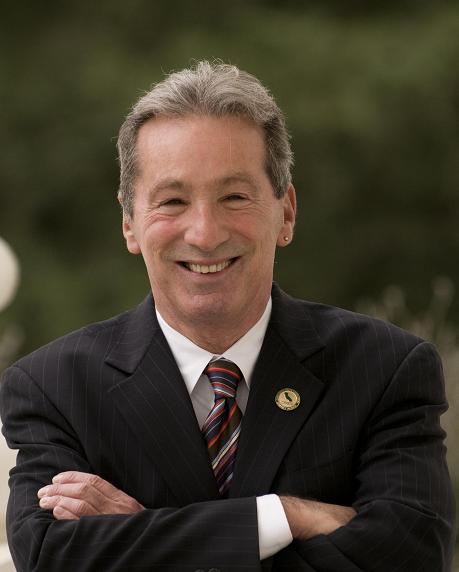
Assemblymember Tom Ammiano and Sen. Mark Leno have been the most outspoken California politicians in coming out against the federal government’s meddling with the state’s cannabis. At a press conference at San Francisco’s State Building in October 2011, Ammiano announced his frustration that the feds would “upset the will of the people” by curtailing safe patient access. Proud to be an elected gay official, he promised to continue to crusade for an issue that he says disproportionately affects the LGBTQ community.

One of the steps Ammiano took was to meet with Haag to discuss what could be done to assuage her concerns with the industry. “That was very, very disappointing,” Ammiano commented on this initial talk. In a recent phone interview with the Guardian, he remembered that Haag implied that the order was coming from above, from high up in the Obama Administration.

Ammiano doubts her assertion that she had little discretion in the matter. “She said she was only doing what the boss was telling her to do. We had a hard time with that.”

He does think that the Obama Administration is sending its attorneys mixed messages — case in point, US Attorney General Eric Holder’s repeated comments that federal interference in state-legal marijuana operations would be “a low priority.” Ammiano also makes the connection between the attacks on cannabis and the self-sustaining industries behind the War on Drugs. “The DEA, some of the diehards, this is like a jobs program for them,” he said.

His meeting with California Attorney General Kamala Harris went more smoothly. Ammiano says Harris, who voiced cautious support for the industry last fall, was eager for a more comprehensive regulatory system to be put into place, but she supported Proposition 215 — the 1996 measure that legalized medical marijuana in California — on principle.

Faced with an ambiguous future, medical cannabis’ proponents — politicians, activists, entrepreneurs, and patients — are putting forth plans for just such a system. This year will be the playing field for a passel of campaigns to take medical marijuana out of the under-supervised arena in which it’s found itself.

Three ballot initiative campaigns seek to address the issue. Two — Regulate Marijuana Like Wine and Repeal Prohibition — would legalize cannabis use for adults across the board. Another, which has perhaps the most likely chance to succeed in the $2 million process of getting onto the ballot, is being put forth by patient advocacy group Americans for Safe Access, the United Food and Commercial Workers (the union that represents many cannabis workers in California), and marijuana collectives. It’s called the Medical Marijuana Regulation, Control, and Taxation Act.

“We decided to focus on medical because we figured that taking that further step at this point is unwise given the federal government’s actions over the last months,” said attorney George Mull, who is part of the team that proposed the measure. If passed, the initiative would establish a 21-member state regulatory board comprised of doctors, industry folk, patients, activists, government officials, and others. A state supplemental tax on cannabis would be levied and local governments would be required to allow one dispensary per 50,000 residents. Ammiano said that he and Leno were also working on proposing legislation that would provide regulations.

But the future of medical marijuana in California remains somewhat cloudy. “I’m worried that even if we come up with the regulations, the feds will find something else,” said Ammiano. Complicating the matter, the California Supreme Court moved unanimously on Jan. 18 to review the power that cities and counties have to make their own laws concerning cannabis accessibility — plus, it plans to look at the old disconnect between state and federal law on the matter..

So much for the politics of marijuana in 2012. Away from the headlines, it’s plain to see that the plant is increasingly accepted in popular culture. On a local level, East Bay YouTube stoner Coral Reefer continues to tweet to thousands of followers every time she sparks a bowl, and on the national stage, Miley Cyrus admits to smoking “way too much fucking weed,” after seeing the birthday cake friends had gotten her. (It had Bob Marley’s face on it.)

On television, the United States is learning about Harborside’s travails — but not just from the news shows. Discovery Channel shot a season of reality TV following DeAngelo and his staff, telling the stories of patients and about the reality of running a dispensary for a show they entitled Weed Wars even before the final $20 million IRS ruling. As the collective is being persecuted by the feds, its fan base across the country grows.

Will Discovery Channel renew Weed Wars for a second season? Regardless of the network’s views on the protagonists’ profession, if the cameras are kept rolling they’re sure to capture another year of interesting times for California cannabis.


Chem Dawg to the rescue

17

caitlin@sfbg.com

HERBWISE The Kings of Destruction, more popularly known as KOD, were an hour and a half late for our interview. Being that the hip-hop-graff-clothing-medical-marijuana-advocacy collective is from the East Bay and we had arranged to meet at the Guardian Potrero Hill office, I figured I’d better look for them.

I didn’t have to go far: all five of the group’s members who had stopped by were sitting amid SF political activists in the Guardian conference room, mistakenly ensconced in a discussion of the new supervisoral district lines. They’d introduced themselves along with everyone else, but then faltered when the meeting’s facilitator asked to what he owed the pleasure of having Oakland residents at the table.

All good. Soon enough I have Dogz One, Lil’ Zane, Josh, Tase 1, and Don Juan assembled on the roof standing around a picnic table and talking about marijuana. They’ve brought some of their products for show ‘n’ tell; t-shirts emblazoned with characters culled from local marijuana strains. They’ve brought Grape Ape, a gorilla pulling on a joint with a purple berry-emblazoned baseball hat. Another shirt features Chem Dawg, a husky that figures in an upcoming KOD comic book in which the character (Dogz One is his alter-ego) will fight the government’s attempts to keep marijuana from the people. Pending designs include Girl Scouts Cookies, which will feature a woman wearing a midriff-bearing scout uniform in honor of the SF-specific strain rumored to smell of pastries (those buds available locally at the Green Door dispensary).

Kings of Destruction started out as a graffiti crew, and though members still throw up pieces on walls occasionally (“go down around the train tracks, you’ll see some things,” counsels Don Juan) now its focus is on — state — legal activities: music, clothing, and the catalyst for this interview, advocating for medical marijuana. Though I’m unable to hear samples of the tracks before press time, the group tells me members have been in the studio laying down tracks about their medicine, and they hope to join this spring’s Prohibition Tour (www.prohibitiontour.com), a California college event series that plans to raise awareness among students this spring with lectures and musical performances.

“Oakland has been on the forefront of the medical marijuana movement, so we’re trying to keep everything alive so that everyone can keep their medicine,” says Don Juan. Many in the group are patients and growers themselves who naturally find themselves in the activist role around friends and family who don’t use weed.

KOD sees marijuana as a healthy alternative to pharmaceuticals — many of which have adversely affected friends’ lives in their East Bay community. A prime example is bo, as the promethazine-codeine cough syrup that figures prominently in Bay Area hip-hop these days is popularly called. Compared to the dangers of that kind of drug, KOD members say, the federal government’s resistance to legalizing marijuana seems foolish. Not that there aren’t side effects of marijuana: “You might get a little hungry, might go to sleep,” says Don Juan. “You might just lay back instead of getting mad when somebody cusses you out,” adds Tase 1.

In closing, I ask KOD to tell me a story about the group and marijuana. They give each other looks and chuckle. Finally Tase 1 steps up to the plate. “One time, we were going to do something bad. And then we smoked some weed.” 

Find KOD clothing at www.kronicoverdose.com


Free to be you and me

0

caitlin@sfbg.com

FREE UNIVERSITY OF SAN FRANCISCO

Like many progressive organization, this year-old network of unpaid teachers and unpaying students has found new energy in Occupy’s protests. Unlike many, it’s not stumbling when it comes to the next step in the movement. FUSF has teamed with Occupiers to develop its upcoming round of five-week classes, which will start in February. At press time, courses included “Introduction to Political Economy,” a class on subversive writers, and Chuck Sperry’s “Occupy Art” guide to bringing down the system with propaganda design.

Spring term: Feb. 5-March 4. 10 a.m.-5:30 p.m. Viracocha, 998 Valencia, SF. www.freeuniversitysf.org

IMPACT BAY AREA

Some education strengthens your mind — some education strengthens your soul. Into the latter category falls self defense non-profit Impact Bay Area’s free-to-the-public “Introduction to Personal Safety” classes. Open to ages 12 and up at Sports Basements across the Bay Area, the course teaches you how to keep your eyes open when walking the neighborhoods, with the end goal of living life with less fear and more fun.

Next class: Feb. 8, 6-8 p.m. Register at www.eventbrite.com/event/2704831223. Sports Basement, 1590 Bryant, SF. www.impactbayarea.org

EAST BAY FREE SKOOL

Not to state the obvious, but we live in the Bay Area. Henceforth, we can stop looking at learning the Spanish language as an extracurricular activity, and more as something that we can do to bring our community closer together. That’s exactly the motivation behind the East Bay Free Skool’s Spanish-English Collective, an educational meet-up which unites bilingual teachers and students for some real pragmatic, communication-based learning. Free Skool is big on knowledge that brings the 99 percent together — check its website for other amazing free classes, from anti-gentrification workshops to herbal medicine primers.

Various venues, Bay Area. tiny.cc/ebfreeskool

CITY COLLEGE OF SAN FRANCISCO

At many of CCSF’s 10-plus campuses across the city, you can take courses absolutely free of charge — and sign up for them at any point in the semester. What can you learn? GED prep, introductory construction skills, economics, US contemporary writers, and tai chi, to name but a few of the offerings. How has this vast resource network escaped the chopping block in California’s beleaguered public school system? We almost don’t want to press the issues — let’s just sign up while these courses still exist.

Various campuses, SF. www.ccsf.edu

CW ANALYTICAL

You’ve planted your own garden, gotten your card, and are committed to heightening endocannabinoid levels in your medical marijuana patient family and friends — but do you really know what you’re doing making weed edibles? This marijuana laboratory offers intermittent classes for the cannabis food newbie or vet that teach about quality control, presentation, and applicable regulations.

Next class: “Labeling Your Medical Edible,” Jan. 19, noon. RSVP to reserve class space and to emily@cwanalytical.com. (510) 545-6984, www.cwanalytical.com


Stuck in reverse

18

Some days, you wake up, check the news, and wonder just what the hell happened to this country. And I’m not talking about that nutty right-wing view that we’ve strayed from the original vision laid out for us by the authors of the Constitution or the Bible. I have just the opposite view: I’m wondering why those people seem so intent on dragging us back into the bad old days of bygone centuries, when white male property owners ran things as they saw fit.

A dangerously intolerant religious fundamentalist who longs for the Puritan days, Rick Santorum, essentially tied for first place in the Iowa Republican presidential caucuses. And he was part of an entire field of candidates that wants to revoke women’s reproductive and LGBT rights, deny that industrialization has affected the environment and should be addressed, dismantle already decimated government agencies, simply let the strong exploit the weak, and hope that Jesus comes back to save us from ourselves. Their strange reverence for the Constitution apparently stems from wanting to drag us back into the 18th century.

And don’t even get me started on President Barack Obama and his worthless Democratic Party, which is only a bit better than the truly heinous Republicans. At least Obama says some of the right things – like wanting to raise taxes on millionaires, reverse Bush-era attacks on civil liberties, respect states’ medical marijuana laws, and use diplomacy rather than only bellicosity with concerning countries like Iran – even though he acts in contradiction of those statements, over and over again.

It’s no better in the Golden State, where the yestercentury crowd now wants to abandon plans for a high-speed rail system that has already been awarded $3.5 billion in federal transportation funding and for which California voters authorized another $10 billion in bond funding. Why? Because a panel headed by an Orange County douchebag says the business plan isn’t detailed enough and the money for the entire $100 billion buildout isn’t nailed down yet. Well guess what? California also doesn’t have a plan for when its highway and airport systems get overwhelmed by population growth over the next 20 years. And criticizing the viability of high-speed rail – something most other advanced countries figured out how to build decades ago – isn’t exactly going to help secure private equity commitments. It’s a super fast train, folks – not some scary satanic iron horse from the future – people will pay to ride it.

But the situation must be better here in liberal San Francisco, right? Wrong! Mayor Ed Lee, the San Francisco Chronicle, and all their business community allies continue to relentlessly push their belief that the main job of government is to create private sector jobs, even though most economists say a politician’s ability to do so is limited at best.

Lee is pushing for all city legislation to be measured by whether it creates private sector jobs, as if protecting the environment, preserving public sector jobs, or safeguarding the health, welfare, and workers’ rights of citizens weren’t also under the purview of local government. A Chronicle editorial today called Lee the most “realistic city leader in memory. He’s all about creating jobs, repaving streets, sprucing up faded Market Street and fixing Muni’s flaws,” the same goals the paper was focused on a century ago.

But the main trust of the editorial was calling for Lee to also focus on homelessness. Not poverty, mind you, but homelessness. “A decrease in jobless numbers is important, but so are fewer shopping carts pushed along sidewalks and a drop in the numbers of mentally ill in doorways and on park benches,” they wrote. In other words, they just don’t want to see poor people on the streets, because that newspaper and its fiscally conservative editorial writers and base of readers certainly haven’t been calling for a fairer distribution of this city’s wealth, or even higher taxes on the rich that might fund more subsidized housing programs or mental health treatment. I get the feeling they’d be content to just allow shanty towns on our southern border where our low-wage workers can live, just like the Third World cities that they seem to want to emulate.

Ugh, so depressing, so ridiculous, so regressive. I think I’m going back to bed now.

By the roots

0

caitlin@sfbg.com

HERBWISE Where (besides this column, of course) do you get the latest on marijuana? When it comes to distributing accurate information about buds, Steph Sherer, executive director of medical cannabis advocacy group Americans for Safe Access (ASA), makes no bones about her organization’s role. “Most of our members depend on us for news,” she told the Guardian in a recent phone interview.

Even when clashes between marijuana proponents and the government are brought to light — not always a given in this political climate — Sherer finds the one note handling of cannabis issues by the mainstream media troubling. “[Cannabis] gets thrown on [journalists covering] judicial beats instead of getting picked up by the human interest, or the health and science side of things,” she said.

ASA’s response to this dearth of useful reporting on cannabis was to develop a free iPhone application that serves as a media catch-all for medical marijuana advocates. At no cost, anyone concerned with losing their right to access their medicine safely — or who wants to learn the latest about the sticky green — can now download an interface that pulls together news updates, alerts for upcoming political actions, and materials that can add to one’s activism repertoire; things like phone numbers for legal counsel and advocacy training videos.

For Sherer, the app has the potential to empower the people in the crossfire of the ongoing clashes between the federal government and state-legal growing and retail facilities: patients. “We are creating a platform that empowers people to be their own advocate. The people who can advocate for this the best are the people who are affected.” 

ASA EXECUTIVE DIRECTOR STEPH SHERER’S TOP 6 CANNABIS STORIES YOU MIGHT HAVE MISSED IN 2011

1. In March, the National Cancer Institute recognized marijuana’s medical benefit, classifying it as a “complementary alternative medicine.” Days later, the reference was diluted on its website, per the recommendation of the National Institutes on Drug Abuse.

2. After Obama’s Justice Department fought their appeal, Californian breast cancer survivor Dr. Mollie Frye and her husband were sent to prison in April for five years because of their state-legal growing operation.

3. In October, California patient advocates sued the Obama Administration for violating the 10th Amendment by coercing and obstructing local and state officials, preventing them from implementing medical marijuana laws.

4. The governors of Washington State and Rhode Island petitioned the federal government to reschedule cannabis to allow for medical use.

5. In Connecticut and New Jersey, governors continue to move forward with cannabis access legislation despite threats from US Attorneys.

6. 63-year old Norman Smith uses cannabis to mitigate the symptoms of his inoperable liver cancer. Smith is being denied a transplant from Los Angeles’ Cedar Sinai Medical Center until he agrees to stop using cannabis.


What the new year brings

0

caitlin@sfbg.com

HERBWISE 2011 was a harsh year for medical marijuana. During its first half, the number of California dispensaries burgeoned. But a federal crackdown in September has left much of the industry shaking in its buds. By bombarding landlords with cease-and-desist letters threatening 40 years of jail time if they continue to let marijuana be sold on their property, the Department of Justice has effectively closed down walk-up operations for many smaller dispensaries.

But as we head into the year of the Mayan overhaul, one thing seems certain: advocates for safe and available access to medical cannabis aren’t going anywhere. How can they? Since Proposition 215 made it legal in 1996, 200,000 Californians have gotten physician recommendations to alleviate health concerns with marijuana. People use it for chronic pain, to make it through chemotherapy, for multiple sclerosis, severe anxiety.

“We can’t wait for the federal government to do the right thing in California,” said the state director of Americans for Safe Access Don Duncan. “As the state of California gets its marijuana house in order there will be less incentive for the feds to come in.”

Duncan and his organization were co-authors of the Medical Marijuana Regulation, Control, and Taxation Act — a unified voter initiative that was turned in to the California Secretary of State’s office last Wednesday, Dec. 21. Other contributors include NORML, the California Cannabis Association, the Humboldt Growers Associations, and the United Food and Commercial Workers — the union that now represents workers across the state, including Oaksterdam University employees.

“We’re hoping that this policy will reassure people that we can have a rational system,” continued Duncan in a phone interview with the Guardian. Duncan is convinced that the recent aggression by the Obama administration can be traced to people’s discomfort with the industry’s wild growth, and that a good faith effort to institute a comprehensive regulation system will assuage people’s confusion and fears about marijuana.

His initiative calls for the establishment of a centralized bureau of medical marijuana enforcement, to be comprised of 21 members from various state government offices, patients, advocates, a physician, a nurse, individuals from the marijuana research and policy fields and six people with experience in dispensary operations.

The bureau would be in charge of cannabis registration, industry regulations, and the use of funds that are generated by administrative fees. The initiative also calls for a sales tax of 2.5 percent on medical marijuana retail sales and states that cities — unless voters approve other guidelines — must follow a minimum zoning restriction of a dispensary for every 50,000 people.

In January, a campaign supporting the initiative will begin to drum up awareness. Backers are hoping that by instituting stricter and more consistent controls of dispensaries and growing operations, 2012 will look a lot brighter for the 200,000 Californians that have relied on their marijuana prescription to live their lives.

“I think this is really going to resonate with voters,” said Duncan. “We just need for officials to be able to step outside the controversy of it all.” It’s a hopeful stance. Let’s see how it holds up in the roiling of the upcoming election year.

A bad incentive for pot busts

3

The Bay Citizen ran, without comment or perspective, a Bay City News item Dec. 23 noting that the Hayward Police Department and other local law-enforcement agencies picked up some $1.2 million when the feds disbursed the money that was seized from a marijuana dispensary that was busted in 2006.

This is a dirty side of the drug war that doesn’t get enough discussion or attention: When the cops bust dealers who have cash (or even fancy cars) on hand, the money doesn’t go to the general fund of a city or to the federal treasury (to fund, perhaps, alternatives to incarceration, drug treatment or education). It goes directly to the police agencies that made the arrests.

That’s a huge incentive — a direct cash incentive — for police to focus on arresting drug dealers (in this case, an operation that was selling marijuana, which everyone with any sense knows ought to be legal anyway).

In an era of diminshed resources, if you’re a police chief and you have a choice — send your officers to raid a pot club, or send them onto the streets to try to prevent violent crimes — there’s a financial incentive to go after the pot club. That skews law-enforcement priorities in a bad way.

I’m hardly the first one to make this point, but it’s worth thinking about when we see this kind of story celebrating the “true holiday gift” of drug money.


Small town values

0

caitlin@sfbg.com

HERBWISE When we arranged to meet Fairfax (population 7,500) councilperson Larry Bragman, he suggested a rendezvous at “the coffeeshop.” When asked to be more specific, he clarified he meant Fairfax Coffee Roastery. “But you’ll see it, it’s right there.”

Bragman is a San Francisco-educated attorney who began coming to the small Marin County town decades ago. He’s been on town council — whose members pass around the title of mayor every year — since 2003. He was mayor in November, when the four-member council passed Resolution No. 11-58.

Bragman’s voice clogs a little with emotion when asked why the resolution was passed. “I don’t understand how you can justify a policy that denies help for patients that are going through that kind of hardship and suffering.”

The only medical marijuana dispensary in Fairfax, which is located in the county with the breast cancer rate in women is nearly 50 percent — closed its doors last weekend. The Department of Justice’s Melinda Haag sent a letter to the Marin Alliance for Medical Marijuana’s landlord, the likes of which are all too familiar to the medical cannabis industry nowadays.

The dispensary was located in a school zone. Landlord Fred Ezazi had 45 days to evict the dispensary, it said, or he would face up to 45 years in prison or civil forfeiture. (See 12/14/11’s Herbwise column “For the kids?” about an SF dispensary that received a similar notice)

“It feels like a violation,” says Bragman when asked how it feels to be a small town politician being railroaded by federal agencies. Resolution No. 11-58 supports the Alliance and other California dispensaries’ right to continue business. San Francisco’s Board of Supervisors passed a similar resolution in October.

Bragman insists that the policies his city developed to regulate the Alliance were exemplary. When the dispensary was founded by longtime marijuana activist Lynette Shaw shortly after Proposition 215 passed, Fairfax “had the foresight and courage to create the first use permit in the state of California [for a marijuana dispensary],” says Bragman. When called for comment, the city’s finance director Michael Vivrette said the Alliance was one of the top ten sales tax contributors in a town struggling with budgetary woes.

Later, we walk the three blocks to the Alliance, which is (was) located on a quiet street next to a Little League field in a non-descript office building. You have to walk up a flight of stairs and peer inside its windows to even know what it is.

A few despondent marijuana patients lingered in the waiting room, sadfaced and bewildered that the space would soon be gone. “I thought that a press blackout meant that we wouldn’t talk to press,” a woman spits at me when I ask the man at the front desk when they would be closing. It was hard to be frustrated with her truculence.

Bragman went so far as to call Haag to try to reason with her letter’s logic. “I said ‘you’re going to encourage the black market traffickers which we all know are a threat to the community. It’s unbelievable. It’s just so stupid.”

Correction: An earlier version of this article identified the Marin Alliance for Medical Marijuana as Marin County’s only cannabis dispensary. It is not, and we regret the error

Ammiano meets with U.S. attorney

59

Assemblymember Tom Ammiano finally got a meeting with the U.S. attorney for Northern California, Melinda Haag, Dec.13 to talk about the feds crackdown on medical marijuana — and he left disappointed that Haag didn’t seem to understand what a mess she’s making.

“The meeting didn’t result in any changes,” Ammiano told me. “But it was good that it happened. We cleared the air about the harm that’s being done.”

According to Ammiano’s aide Quintin Mecke, who was also in the meeting, Haag wasn’t at all clear about what she wanted — what, in other words, would end the crackdown. She talked a lot about “proximity to kids,” suggesting that dispensaries that are close to schools were a problem — although that’s a really bogus argument. I’ve been to a number of local dispensaries and my colleague Steve Jones has been to most of them, and every one requires a drivers license and a medical marijuana ID and they’re really serious about security. No high school kids are getting pot from the clubs.

Now: Pot use is up among high school kids nationally (which is another whole issue) but San Francisco Unified School District surveys show that drug use in general, and pot use in particular, is actually declining in this city. So a city that has a lot of pot clubs — highly regulated — is bucking the national trend on pot use among teens.

Ammiano wants to set strong state regulations for clubs, which most of the dispensary owners would welcome. But Haag wasn’t helpful with that, either — she said she wouldn’t make policy recommendations.

So there you have it — the U.S. Attorney is using demonstrably false allegations to pursue a program that she can’t defend — and she won’t help the Legislature find a solution. Thanks, President Obama.


Kids smoke pot, don’t drink

19

More American teens are smoking pot, and fewer are drinking alcohol, according to a new survey that’s at the very least interesting and could be a push for policymakers to start thinking about how we regulate marijuana.

As the father of two kids, I’d like to start off by stipulating: High schoolers are going to try to alter their consciousness. They’re also going to try to have sex. I did it, you did it, we all did it (well, we all drank and smoked pot. Some of us got laid and some of us didn’t, but speaking personally, I can say that for those who didn’t, it wasn’t for lack of trying).

My sainted mother used to tell my brother and me that she’d rather have us hang out in the basement with our friends than go out and drive somewhere at night, and she never adhered to the Catholic doctrine of pretending kids shouldn’t know about birth control. Her mantra: “As long as nobody gets pregnant or killed in a car accident, whatever you’re doing can’t be that bad.” Which isn’t such an awful parenting lesson.

And when it comes to getting pregnant or killed in a car accident, I’d say it’s probably better that kids smoke pot than drink. Not saying either one is a great choice for a 16-year-old, just saying that drunk driving, blackouts etc. are a product of alcohol and that the risks of really bad outcomes from smoking pot are a bit lower.

But there’s a larger point here, coming from the Marijuana Policy Project:

 “This report, once again, clearly demonstrates that our nation’s policymakers have their heads buried in the sand when it comes to addressing teen marijuana use,” said Rob Kampia, executive director of the Marijuana Policy Project.  “Political leaders have for decades refused to regulate marijuana in order to keep it out of the hands of drug dealers who aren’t required to check customer ID and have no qualms about selling marijuana to young people. The continued decline in teen tobacco and alcohol use is proof that sensible regulations, coupled with honest, and science-based public education can be effective in keeping substances away from young people. It’s time we acknowledge that our current marijuana laws have utterly failed to accomplish one of their primary objectives – to keep marijuana away from young people – and do the right thing by regulating marijuana, bringing its sale under the rule of law, and working to reduce the easy access to marijuana that our irrational system gives teenagers.”

Yep: Education and intelligent regulation works. When I was in High School, I was one of the very few kids that didn’t smoke cigarettes. Today, the number of teen smokers is much, much lower. And the new study says kids aren’t drinking as much — again, no doubt a result of health education and strict regulation.

So if harm reduction is the goal (and it ought to be), why aren’t we legalizing and regulating pot?


For the kids?

2

caitlin@sfbg.com

HERBWISE Mission District dispensary Medithrive has started doing home deliveries. Since Nov. 22 its medical marijuana patients can have buds, tinctures, Auntie Dolores’ brownie bits, and more delivered straight to their apartment doors.

So why are Medithrive customers and staff members peeved? Because the new feature isn’t an expansion in services — it’s a forced shift in the co-op’s business structure. The dispensary was compelled to close its doors on 1933 Mission Street after a Sept. 28 letter from Department of Justice attorney Melinda Haag threatened its landlord with jail time if Medithrive didn’t cease operations in the space within 45 days. (Full disclosure: Medithrive is a Guardian advertiser)

The feds’ given reason was Medithrive’s proximity to Marshall Elementary School, located a 745-foot walk (according to Google Maps) from the dispensary door.

But Marshall’s principal Peter Avila wasn’t consulted on the matter. When called for comment by the Guardian, he said that he had bigger safety concerns.

“Right next door to Medithrive is a liquor store,” Avila said, adding that there is also a methadone clinic across the street from his school. “We have to deal with people passed out on the property, people smoking — those are more the issues than people buying medical marijuana.”

The principal says he patrols Marshall’s immediate neighborhood three to four times a day, dealing with drug addicts, people with mental problems, and the Mission’s homeless population. He called the dispensary “discreet” and never saw any cannabis usage by dispensary patients. Indeed: “They looked pretty much like the people who were coming out of the Walgreens [down the street].” In the past, Medithrive has offered to sponsor health education at Marshall.

Regardless, the dispensary’s Mission Streets doors are shuttered now. On many days, a staff member stands outside, handing out flyers announcing the delivery service to customers unaware that walk-up sales have ceased.

“We’re actually not in such a unique position,” said Medithrive community outreach liaison Hunter Holliman. The Tenderloin’s Divinity Tree and the Mission’s Mr. Nice Guy dispensaries also closed their doors this autumn in light of similar school zone notifications sent to their landlords. The landlord of Marin County marijuana activist Lynnette Shaw, founder of Marin Alliance for Medical Marijuana, was also hit. Shaw intends to fight to stay open.

Holliman says the shift to delivery services has been unexpectedly popular with Medithrive’s customers and allows the dispensary to service patients unable to physically access the storefront location — but it’s not without its challenges. Operations have been transient since the co-op is unable to even stage deliveries from the space on Mission Street. The day that the Guardian called, a voicemail informed patients that due to high call volume they’d have to leave a message so that dispensary staff could call them back. Once contacted by a helpful “budtender,” it took a little over an hour for the order to arrive.

Although Medithrive let go of many employees in its initial closure, it’s hired nearly all back in the transition to the labor-intensive delivery services. The dispensary is still hoping to secure another brick and mortar location, but permitting for new dispensaries has stalled at the city level.

Even if the dispensary’s been booted from its space, at least Medithrive patients still have access to medical cannabis — for now. Holliman is convinced that Bay Area dispensaries haven’t seen the end of legal challenges. “I’m sure there’s more to come,” he said grimly. “The feds are really serious about this.” 

Medithrive’s delivery-only menu is available at www.medithrive.com

Get read!

0


ROCK AND ROLL ALWAYS FORGETS

By Chuck Eddy

Duke University Press

352 pp., paper, $24.95

Chuck Eddy glides through music criticism like a grumpy fanatic. Each article included in Rock and Roll Always Forgets — culled from Eddy’s vast back catalogue of music journalism articles, beginning with the early 1980s — is packed with cultural references, touchstones, facts, witty asides, a dash of snark, and acknowledgments of once-obscure acts. Yet, he approaches each band like he’s the first to have discovered it. He’s a musical anthropologist, but also, archeologist, digging up the remains of musicians past, lest we forget. Take a piece on a Marilyn Manson show, written in 1996. More than simply describing the stage and the crowd (which he does, expertly: “[they] wore too much black makeup, but they didn’t scare me — most seemed to be upper-middle-class Catholic school teens from the burbs…”). He wanders near profundity, dissecting Manson’s overall persona, his ticks, his own cultural references, and those who came before him, namely Alice Cooper, but a great many more. Most importantly, Eddy alludes to why that all matters in the least. (Emily Savage)


TROPIC OF CHAOS

By Christian Parenti

Nation Books

295 pp., hardcover, $25.99

Through historical research and on-the-ground reporting in Kenya, war-torn areas of Afghanistan, and other regions marked by intense conflict, Christian Parenti offers an unusual and compelling analysis of violence through the lens of the environment. Tropic of Chaos: Climate Change and the New Geography of Violence teases out the idea that increasingly unstable weather patterns stemming from climate change have fueled conflict throughout impoverished areas of the Global South. In the savannahs of northwest Kenya, for instance, deadly cattle raids have intensified as intertribal warfare heats up in the face of water scarcity. Recurring droughts and floods in Afghanistan have made it exceedingly difficult for farmers raise traditional crops, making them increasingly reliant drought-resistant poppy — the raw ingredient for heroin — for economic survival. Parenti also turns a sharp eye upon the repression, surveillance, and counterinsurgency that first-world nations have employed to combat growing violence in water-scarce, conflict-ridden regions, and calls for a more enlightened approach. (Rebecca Bowe)


CAFE LIFE SAN FRANCISCO

by Joe Wolff

Interlink Books

224 pp., paperback $20

Small quirks in this guide to the city’s cafes and coffeehouses — the sixth in a series that includes Sydney, New York, and Venice — will let you know its not strictly, strictly for locals. Java Beach is lumped in with more gearhead-oriented Mojo Bicycle Cafe and Ninth Avenue’s Arizmendi Bakery is filed under the catchall “Sunset District and vicinity.” The introduction’s discussion of “San Fran” versus “Frisco” versus “the City” is one that became boring long ago. But those things matter little. In-depth histories of some of your favorite cafes, from Java Beach to Philz’ to Caffé Baonecci are lucid looks at the facts and rewards of small entrepreneurship in the city. And Roger Paperno’s loving photography of velvet crema and foccacia sheets combines with words to create an ode to the city’s third spaces that any caffeine-laptop addict will appreciate in their stocking. (Caitlin Donohue)


LIONS OF THE WEST: HEROES AND VILLAINS OF THE WESTWARD EXPANSION

By Robert Morgan

Algonquin Books

497 pp., hardcover, $29.95

Biography can be the best history; stories of the people who changed the world (for better, and often for worse) are more compelling than turgid texts of dates and places. Lions of the West recounts the development of the American frontier from the end of the Revolutionary War to the Civil War era through the lives of 10 men. Yeah, all men. In fact, Morgan (by choice or by the longtime bias of American historians) makes it appear as if all of the great and evil deeds done as the nation moved Westward Ho were the province of the male of the species. At times, the profiles are a bit over the top (I don’t really care that much about Kit Carson’s personal life.) Overall, though, it’s a detailed, lively, and informative book that minces no words, especially when discussing the theft of much of the southwest from Mexico. San Franciscans will enjoy learning who Stockton, Sloat, Castro, Winfield, and a few other streets were named after. (Tim Redmond)


VHS: ABSURD, ODD, AND RIDICULOUS RELICS FROM THE VIDEOTAPE ERA

By Joe Pickett and Nick Prueher

Running Press

272 pp., paper, $14

Found Footage Festival founders and comedy writers Joe Pickett and Nick Prueher are apparently the Indiana Joneses of VHS, unearthing remarkable video package cover art that would otherwise be relegated to hoarder basements, bonfires, and anywhere else the worst (a.k.a., the best) videotapes go to die. I salute these dudes, even though the captions they tag each page with aren’t always funny or necessary. Truly, the covers (soft-focus and garish, tacky and baffling) speak for themselves, direct dispatches from ye olden days, long before YouTube brought WTF-ness to anyone with an Internet connection. You see, children, back in the 1980s or 90s, home viewers had to seek this shit out: instruction in squirrel-calling, chair-dancing, seduction, hairstyling (“What the Heck Am I Going to Do With My Hair?”), baby-proofing, spotting counterfeit Beanie Babies, etc. Straight-to-video masterpieces (F.A.R.T.: The Movie). Horrible exercise fads (“Bunnetics: The Buttocks Workout”). Well-meaning but also ghoulish-looking self-improvement vids (“Face Aerobics”). Every page is magical. Your mind will be blown. (Cheryl Eddy)


BI-RITE MARKET’S EAT GOOD FOOD

By Sam Mogannam and Dabney Gough

Ten Speed Press

297 pp., hardcover, $32.50

Bi-Rite Market is the ultimate neighborhood grocery. Shockingly small (with ambition to expand), it’s jam-packed with the best in organic produce, meats, cheeses, and artisan food products, much of it local. Now, Bi-Rite founder Mogannam has a new book loaded with recipes for such inviting delectables as white bean puree with prosciutto crespelle and strawberry rhubarb pie. But don’t relegate it to the cookbook category. Hewing to Bi-Rite’s mantra of creating community through food, the authors share extensive tips on shopping seasonally and locally for the healthiest and best-tasting products, no matter where you may live. You’ll learn what to look for at the grocery, storage and usage tips, and more. Well-illustrated sections feature produce (broken down by season), wine, beer, cheese, deli meats, butchery, baked goods, and even farmer profiles. Bonus: stay tuned for Sweet Cream and Sugar Cones, Bi-Rite’s ice cream and frozen treats recipe book from its renowned creamery, out this April. (No word yet on whether it’ll tell us how to beat the ever-present line outside.) (Virginia Miller)


DAMNED

By Chuck Palahniuk

Doubleday

247 pp., hardcover, $25

Welcome to Hell, as seen through the eyes of 13-year-old Madison Spencer, the daughter of a jet-setting yet eco-hyperconscious movie starlet and philanthropist. This is Dante’s Inferno meets The Breakfast Club, a film that overtly informs the plot and its main characters. As in Palahniuk’s breakout novel Fight Club, it’s hard distinguish between reality and perception as Maddy leads readers past the Vomit Pond, across Dandruff Desert, and right into Satan’s black Town Car. As she recalls her final weeks on earth, you’re pretty sure that she didn’t really die from a marijuana overdose. Clearly, things are not what they seem as the novel looses an American teenager’s perspective on modern life in both the underworld and earthly realm, with wry commentary on everything from pop culture and capitalist excess to the defeated religions whose fallen gods roam Hades. The gags alone — like the telemarketing and chatroom porn the damned deliver to Earth, and Hell’s endless loop of The English Patient — make this a tough book to put down, all the way to its slightly unsatisfying conclusion. (Steven T. Jones)


BEST AMERICAN COMICS 2011

edited by Alison Bechdel

Houghton Mifflin Harcourt,

352 pp., paperback $25

Chris Ware’s textbooky flowcharts; Angie Wang’s Technicolor, spiraling pistil-armed super-flower-heroine; Peter and Maria Hoy’s intricately plotted cause-and-effect grid art — the sixth year of this hardcover assemblage of the year in superlative strip art soars as a holiday gift for your fave comic nerd. Visual trickery and innovative page staging aside, many of the graphic narratives in this book hold up on plot alone. An excerpt from Kevin Mutch’s Fantastic Life effectively mines zombie philosophy, dating paranoia, and begging drinks off your service industry friends for comic gold. Many of the best pieces, perhaps indicative of the graphic novel mood these days, explore the darker side of the human psyche. But what graphic novel fan is unfamiliar with complicated? (Caitlin Donohue)


THE TIPSY VEGAN

By John Schlimm

Lifelong Books/Da Capo

164 pp., paper, $17

Every time I think we’re past the stereotype of the sullen, uptight vegan, I get another comment like, “Wait, don’t you only eat vegetables?” Why yes, I do eat plenty of veggies, but I also eat decadent dishes such as The Tipsy Vegan‘s Party Monster Pancakes, loaded with the sweet nectar of amaretto and drenched in syrup. This book is a carnivorous teetotaler’s nightmare, boasting 75 boozy recipes stuffed with everything from “beer to brandy” for the liquor-loving vegan cooks among us. It’s not, as I initially imagined, a book on vegan cocktails — that would be far too easy. Written by John Schlimm (Ultimate Beer Lover’s Cookbook), a member of “one of the oldest brewing families in the United States,” the book includes booze-infused treats for parties, brunch, and supper: fried avocados, slur-baaaaked peaches with Cointreau, “Bruschetta on a Bender” — all of which kind of sound like stoner food to me. An nice touch: glossy food porn shots on every page. (Emily Savage)


PROJECT DOG

By Kira Stackhouse

self-published

352 pp., hardcover, $34.99

Local photographer Kira Stackhouse experienced an inspiration so intense that she ditched her high-profile marketing job to pursue it: she would photograph specimens of the 50 most popular canine breeds officially registered with the American Kennel Club (“purebred dogs”) that had been purchased from professional breeders — and pair them with photos of the exact same kinds of dogs found in local dog rescues and shelters. The purpose was to start a dialogue about the effects of professional breeding and highlight the many kinds of dogs available for adoption (and also to change peoples’ perceptions about rescue dogs). But a major part of the story — and what makes this book so fantastic — is the wonderful doggy photography and sumptuous layout. Dogs are posed, or pose themselves, against iconic Bay Area backdrops, accompanied by often hilarious, always revealing, biographies and profiles. Project Dog became an online sensation: this book cements its reputation. Available at www.projectdog.net. (Marke B.)


LISTEN TO THIS

By Alex Ross

Picador

384 pp., paper, $18

In the expanded paperback edition of his absorbing and erudite collection of essays, Alex Ross of the New Yorker writes what could be called his mantra as critic: “I have always wanted to talk about classical music as if it were popular music, and popular music as if it were classical.” Ross listened exclusively to classical until he was 20, something he admits may sound “freakish.” But whether he’s describing Björk in her recording studio in Iceland, or composer John Luther Adams’ sound and light installation in Alaska, Ross draws from an immeasurable well of knowledge and plunges into his subject with gusto. He can find commonalities between Radiohead’s “Pyramid Song” and Stravinsky’s Firebird Suite, clear away the myths that have clouded both Franz Shubert and Bob Dylan, and thoroughly explain why OK Computer and John Cage’s 4’33” are equally astonishing. Informative, eye opening, Ross is every lover of music thrown harmoniously into one. (James H. Miller)


MY FAMILY TABLE

By John Besh

Andrews McMeel Publishing

272 pp., hardcover, $35

To know anything about New Orleans’ dining scene is to know John Besh. As one of Nola’s great chefs, he has a number of restaurants, including the acclaimed August, elevating local cuisine in forward-thinking ways. His original book My New Orleans is a striking post-Katrina tome to one of the greatest cities in the world and its vibrant culinary history. It’s a gorgeous coffee table volume packed with photos of the region’s people, places, and foods — more than 200 recipes from Mardi Gras specialties to gumbo, many with a contemporary twist. Besh just released, My Family Table, with welcoming, everyday recipes he cooks with his family that are healthy, fresh, simple, and heartwarming. Besh’s star power (Iron Chef champion and James Beard award-winner that he is) never dominates. Like New Orleans, it’s a visually beautiful book, but this time themed by “School Nights,” “Breakfast with my Boys,” and recipes like “Curried Anything” or “Creamy Any Vegetable Soup.” Closing with the key element of cooking, the communal, he writes: “If asked what my last meal would be, I’d reply, ‘Any Sunday supper at home, cooked with love, for people I love.'” (Virginia Miller)


FOUR SEASONS OF YOSEMITE: A PHOTOGRAPHER’S JOURNEY

By Mark Boster

Time Capsule Press

128 pages, hardcover, $34.95

John Muir would have loved this book, the spectacular result of a passionate love affair with Yosemite National Park involving all of the principals in this impressive project. Muir helped glorify and preserve Yosemite with his voice and pen. Robert Redford, who fell in love with Yosemite as an 11-year-old boy recovering from a mild case of polio, wrote an eloquent introduction to the book. Photojournalist, Mark Boster was smitten by the beauty and grandeur of the Yosemite when he first visited the park as a child with his family. He spent a year in the park detailing its seasonal changes in more than 100 magnificent pictures. “I felt the breezes, analyzed the light, listened to the sound of the rivers and falls, and tried to capture the images that moved me,” he writes in his introduction. Catherine Hamm’s delicate haiku add a poetic touch to many scenes. (The two principals who brought this project to life with loving care are Narda Zacchino, a former editor of LA Times and the Chronicle, and Dickson Louie, a former executive at both those papers. Zacchino serves as publisher and editor and Louie as president and CEO of Time Capsule Press, which specializes in creating books by using the archival content of newspapers and magazines.) Available at www.fourseasonsofyosemite.com (Bruce B. Brugmann)


THE PDT COCKTAIL BOOK

By Jim Meehan

Sterling Epicure

368 pp., hardcover, $24.95

Few bars have made as much impact on the New York cocktail (and thus the international) scene than PDT. Known as an early mover in the speakeasy trend, PDT revives classic recipes and invents new ones in the classic spirit. Bartender Jim Meehan put PDT on the map, and he’s since gone on to write about drink and educate bar managers and tenders everywhere. In the PDT Cocktail Book, he shares more than 300 cocktail recipes in a comprehensive collection inspired by classic tomes like The Savoy Cocktail Book. There are recipes from generations of hard-working bartenders, tips on glassware, bar tools, equipment, garnishes, techniques, a listing of seasonal ingredients, even a spirits primer. In keeping with PDT’s connection to neighboring Crif Dogs who serve creative dogs in the bar, there’s a section of hot dog recipes from big-name chefs who are regulars at the bar, including David Chang (Momofuku), Wylie Dufresne (WD-50), and Daniel Humm (Eleven Madison Park). From the comfort of home, cook up a Mason Dog fried in cornmeal and huitlacoche (corn smut/fungus, a Mexican specialty) to go with the Little Bit of Country cocktail, which mixes bourbon, maple, and jalapeño. (Virginia Miller)


EVERYTHING IS ITS OWN REWARD: AN ALL OVER COFFEE COLLECTION

By Paul Madonna

City Lights

240 pp., hardcover, $27.95

Like Ben Katchor’s classic “Julius Knipl, Real Estate Photographer,” local artist Paul Madonna’s “All Over Coffee” — published every Sunday in the Chronicle and on essential Web zine The Rumpus (www.therumpus.net) — draws me into a psychic space that is at once serene and troubled, surreal and hyperreal. The effect comes as much from the drawing style as the dreamlike non-narrative: both are direct descendants of Winsor McKay’s “Little Nemo.” Madonna gets an extra chills-up-the-spine boost from his illustrations of semi-familiar San Francisco architecture and intersections, lucid as etchings of bleached Kodachrome shots. For this second collection of the strip, he broadens his nib to include not only the City by the Bay, but Paris, Rome, Buenos Aires, and Tokyo. Overheard quotes, snatches of philosophical discourse, interior monologue snippets, existential doubts, random observations, and short stories are floated over the images to capture a peculiarly lovely eddies in the zeitgeist.


I DON’T WANT TO KILL YOU

By Dan Wells

Tor

320 pp., paperback, $11.95

Some of this is sick shit. You need a warped sense of humor and a love for random violence to enjoy the tale of a young man who lives with his mom in a mortuary and fights a demon made of black goo who takes over the minds and bodies of humans. But it’s a different type of thriller — complete with its own kinda sweet moments of teenage love and angst — and it’s packed with great detail. (Did you know that undertakers use Vaseline to fill up bullet holes? Cool.) John Wayne Cleaver, perfect name for a demon hunter, is a sociopath who is beastly to his mother and can’t get along with the other kids . Except for a super-hot chick who he thinks must be a demon, otherwise why would she like such a loser geek? The demon is nasty and gouges out eyes, cuts off tongues, sticks bodies on poles … you gotta check it out. (Tim Redmond)


RICE AND CURRY: SRI LANKAN HOME COOKING

S.H. Fernando, Jr.

Hippocrene Books

224 pp., paperback, $19.95

After a tongue-inflaming visit to the East Village’s fantastic Sigiri restaurant in NYC a couple weeks back, my interest in — and lust for — spicy Sri Lankan treats like kiri hodhi (coconut milk gravy), rossam (coriander-tamarind broth), kool (seafood soup), Jaffna goat curry, and ulundu vai (savory donuts) was, er, inflamed. Fortunately for me, author “Skiz” Fernando recently spent a year on the island rediscovering his roots and delving into the varied cuisine (later serving as a guide for that cheeky culinary colonist Anthony Bourdain). The punchy, informative Rice and Curry is the result, and includes nice introductions to Sri Lankan geography and history, as well as tips on what to stock in your cupboard to achieve the certain Sri Lankan “oomph” that sets the cuisine apart from Indian. A particular passage that profiles Leela, Fernando’s aunt’s ancient maid, offers some real insight into the island’s food tradition and customs — and yields a marvelous, corruscating crab curry from her hometown of Chilaw, just in time for Dungeness season. (Marke B.)


HEDY’S FOLLY: THE LIFE AND BREAKTHROUGH INVENTIONS OF HEDY LAMARR

By Richard Rhodes

Doubleday

261 pp., hardcover, $26.95

An author best-known for his 1986 Pulitzer-winning The Making of the Atomic Bomb, Richard Rhodes might seem like an unlikely biographer for movie stunner Hedy Lamarr, who lit up Golden Age films like Cecil B. DeMille’s 1949 epic Samson and Delilah. But her above-average qualities (she was called “the most beautiful woman in the world”) extended beyond the superficial. After escaping her gilded-cage marriage to an Austrian munitions magnate, Lamarr found success — and five more husbands — in Hollywood; between roles, she started inventing “to challenge and amuse herself.” During World War II, she got serious about her hobby. Showbiz circles led her to avant-garde musician George Antheil, renowned for his groundbreaking composition for 1924 short Ballet Mécanique. As Rhodes writes, “[Lamarr] began thinking about how to invent a remote-control torpedo to attack submarines just at the time she met Antheil, who knew quite a lot about how to synchronize player pianos.” Together, the “charming Austrian girl” and “the bad boy of music” worked on that torpedo, as well as “spread-spectrum radio,” an innovation that paved the way for contemporary wireless technology. Unlikely? Yes. Fascinating? Indeed. Never underestimate a beautiful woman — or a skilled writer’s ability to humanize complicated characters and bring drama to a tale loaded with tech-speak. (Cheryl Eddy)


COME, THIEF

By Jane Hirschfield

Knopf

98 pp., hardcover, $25

As it happens, one of Bay Area poet Jane Hirschfield’s passages currently adorns the famous Kahn and Keville auto repair shop’s marquee in the Tenderloin: “What some could not have escaped/ others will find by decision/ each we call fate.” Well, you could never blame her for not thinking big. As a well-known and approachable poet, she sports a blurb from O, The Oprah Magazine on this, her ninth collection, the first in six years since releasing her arresting After. And while her slightly witchy, be-scarved, grandiloquent persona screams marketable poetess, there’s some understated magic in her latest poems. These ones are full of plums and glass and vague Zen spells that give off, in their overall effect, an rueful, anticipatory sigh. Some childlike wonder seeps in: “Another year ends./ This one, I ate Kyoto pickles,” says “Washing Doorknobs,” my favorite from the collection. “But one thing you’ll never hear from a cat/ is Excuse me” goes “A Small-Sized Mystery.” Sometimes you can almost Hirschfield her straining for ambiguity, the poems’ heavy life lessons tearing through her delicate webs of observation. Still, each poem here showcases Hirschfield’s incisive power. (Marke B.)


PLENTY

By Yotam Ottolenghi

Chronicle Books

287 pp., hardcover, $35

Recently I returned to London, eating my way extensively through the city. One of my gustatory highlights was Yotam Ottolenghi’s beloved bakery and restaurant, Ottolenghi (with four locations). Not only were his baked goods otherworldly delights, his straightforward but elegant dishes using pristine ingredients were among the freshest and satisfying of my London travels. Plenty, his new cookbook, is a cleanly designed book with vivid photos of recipes like broccoli gorgonzola pie and mushroom herb polenta. Most impressive? Ottolenghi’s recipes are 100% vegetarian. The meat-free aspect is barely emphasized, and one feels no lack in the diverse range of flavors (with Middle Eastern influences) presented. Since 2006, Ottolenghi has penned the UK Guardian’s vegetarian column — and he’s not even a vegetarian! This speaks to how respected he’s become as a chef in his use of veggies and grains. Plenty shows this talent off, but most importantly delivers approachable, easy-to-replicate recipes to tickle our palates. (Virginia Miller)


HILLBILLY NATIONALISTS, URBAN RACE REBELS, AND BLACK POWER

By Amy Sonnie and James Tracy

Melville House

201 pp., paper, $16.95

Gazing back in time to the era when the Black Panthers were serving up free breakfast to low income youth and coming into the crosshairs of COINTELPRO, few may be aware that an interracial coalition of radical organizers included a contingent of poor white southerners bent on fighting capitalism in solidarity with communities of color. Written by a cofounder of the Center for Media Justice and a longtime San Francisco housing activist, this detailed bit of radical history spotlights the organizing efforts of poor whites, transplanted from rural Appalachia to the low-income Uptown neighborhood of Chicago, to build coalitions of poor people in solidarity with civil rights leaders. Groups like Jobs or Income Now (JOIN), the Young Patriots, and Rising Up Angry launched campaigns against neglectful landlords and cops who brutalized their youth. They represented the white arc of the multiracial Rainbow Coalition, initiated by the Black Panthers in Chicago as “a code word for class struggle.” Bizarre as it may seem, “It became common to see [Panther] Fred Hampton ‘give a typically awe-inspiring speech on revolutionary struggle, while white men wearing berets, sunglasses, and Confederate rebel flags sewn into their jackets helped provide security for him.'”

(Rebecca Bowe)


MR. KILL

By Martin Limon

Soho Press

376 pp., hardcover, $24

Korea in the 1970s. The United States has 50,000 troops in country, mostly near the Demilitarized Zone, and they don’t always behave. In general, the Korean authorities allow the military to police its own — but when a young Korean woman is brutally raped on a train to Seoul, and the assailant appears to be an American, all hell breaks loose. Martin Limon lived in Korea for ten years, and he does a (fairly) good job of presenting a portrait of the Cold War tensions between the two supposed allies. There’s a little bit of American bias — the author is former military himself — and his potrayal of Korean society isn’t as sensitive or oddly loving as John Burdett’s descriptions of Thailand in the Bankok 8 series. Limon’s great storytelling and his lively and compelling protagonists, Sergeants George Sureno and Ernie Bascom, pull readers past those issues. Perfect gift for someone who likes international crime thrillers. (Tim Redmond)


THE RECIPE PROJECT

By One Ring Zero

Black Balloon Publishing

116 pp., hardcover, $24.95

It’s part cookbook, part music journalism, part rock opus, and hell, part coffee table book. The Recipe Project (subhead “A Delectable Extravaganza of Food and Music”) is a concept spearheaded by New York-based gypsy-klezmer act One Ring Zero. The band’s co-founders, Michael Hearst and Joshua Camp, created songs using the recipes of well-known chefs (Mario Batali, Isa Chandra Moskowitz, Chris Cosentino) as the word-for-word lyrics. The meals themselves served as musical influence; each recipe inspired a different sound. While the songs are not likely ones you’d listen to say, on a long lonesome drive, they do have a glint of childlike glee. It’s conceptual. The true genius of this project is its overall cohesiveness. It’s an all-in-one package. Follow the recipe, listen to the song, get some interesting background factoids. The Recipe Project also includes full recipe playlists, articles by rock journalists, and some pretty interesting interviews with chefs. (Emily Savage)


CARY GRANT: DARK ANGEL

By Geoffrey Wansell

Arcade Publishing

192 pp., hardcover, $24.95

Back in print (it was originally released in 1996), this paen to the dapper star of North By Northwest (1959), An Affair to Remember (1957), Notorious (1946), His Girl Friday (1940), and approximately 10 zillion other classic films is somewhere between a biography and a coffee-table book. It’s worth picking up for the lavish black-and-white photos alone, illustrating the span of Cary Grant’s career with film stills, behind-the-scenes shots, and the occasional almost-candid image (did he ever take a bad picture)? The accompanying text is straightforward, but — as its title suggests — doesn’t shy away from Grant’s well-documented countercultural experiments. (“Grant became so enthusiastic about the value of LSD that he extolled its virtues during the shooting of his next picture.”) Nor does it gloss over Grant’s vices (he smoked 30 to 40 cigarettes a day) and sometimes troubled personal life (he was married five times). But the book’s chief focus is Grant’s brilliant career. As Stanley Donen, who directed him three times, remarks to author Geoffrey Wansell, “He’s thought of as a man who achieved a certain elegance and savoir faire. But in truth he was a fantastic actor.” (Cheryl Eddy)


NATURAL HISTORY OF SAN FRANCISCO BAY

By Ariel Rubissow Okamoto and Kathleen M. Wong

University of California Press

352 pp., paperback, $24.95

Drag queens, beat poets, burlesque dancers, hyphy rappers, dot com techies — the human species of the Bay Area have been well-documented, but information on the non-human dwellers of the bay itself has been left to scattered guidebooks, obscure blogs, and academic sources. Authors Rubissow Okamoto and Wong have collected a wealth of biological and environmental information in their book, published this November. The cross-country saga of the striped bass, the hidden beauty of eelgrass, the varied contentions of the California water wars are presented in highly readable, easily digestible sections. The emphasis here is on environmental impact and recent conservation developments — I did not know that it’s officially dangerous to eat more than one pound a month of fish from the bay! — and the history of decades of restoration triumphs and setbacks is related sleekly and straightforwardly. Absorbing all the information in this illuminating primer helped me appreciate the seething loveliness and churning forces that make up the place I call home. (Marke B.)


You grow, girl?

0

caitlin@sfbg.com

HERBWISE The average celebrity autobiography follows an arc of learning and growing. The earnestly-made mistake — whether in the form of childhood shenanigan or adult infidelity — and then the ensuing redemption. But rarely do book-sized treatises emerge from the decision to leave the celebrity fold for the greener fields of bud agriculture. Leave it to the girl from the Blair Witch Project to produce that one.

You know Heather Donahue’s snotface. Apparently too well, because as she writes in her new memoir Grow Girl: Once Upon a Time She Made The Blair Witch Project, Then She Went to Pot. Literally (Gotham Books, 286pp., paper, $26) — score nothing for succinct subtitles — too many people took the movie’s faux-reality premise seriously. Casting agents, it seems, couldn’t shake the feeling that this professional actress was merely a kid caught with a Camcorder when a malignant forest spirit got a bee in its bonnet.

But then she met a guy from Nuggettown (an actual place, renamed for anonymity). What ensued was a romance that left Donahue the proud renter of a secluded house in the wood and enough pot-growing equipment that she had to grow to stay afloat financially.

Such a pat story! Throughout Donahue’s at times overly flowery, but on the whole eminently readable narrative, the growth of her fellow (capital G) “Girls” mirrors her struggle against the confines of society — the larger, non-weed growing one but also more interestingly, the grower (capital C) Community of Nuggettown.

For not all is hunky-dory in the land of impressive tri-cone crystal formation. Women in Nuggettown are relegated to supporting roles — the kept “pot wife,” the “grow girl” that is often bossed about by her XY-chromosomed peers. On the cover of the book Donahue is clutching the top of a healthy bud plant to her naked breasts, a stereotypical male fantasy if there ever was one — but it’s ultimately all about empowerment. She blooms from a shattered ex-actress to a fuller human being, all under the Mondo Reflector she installs herself on the grow room ceiling.

One approach the medical marijuana movement might benefit from is humanizing its growers. Imagine a commercial like those for Florida oranges or California cheeses. A proud farmer fluffs up Mary Jane’s leafy bustle while a down-home voiceover plays in the background (“High CBD levels, if you want ’em. Donchaknow.”) Yes, your friendly medicine agriculturist is a person too, says Grow Girl. Possibly a person that reinforces gender stereotypes through a strict hippie code of conduct slash double standard, but a person with debts and passions and doubts nonetheless.

Donahue humanizes the cannabis industry. Some farmers, she writes, are making enough money to keep Nuggettown’s kayak store in business, but any conspicuous consumption masks the fact that it’s not really advisable for smalltown weed people to be saving their ducats in your run-of-the-mill local credit union. These are moms-and-pops, guys!

The book is slightly dated. The storyline ends in Nuggettown’s hope for a persecution-free Barack Obama presidency (Obama’s very promises rendered all the more poignant for today’s reader, informed of the President’s about-face on the issue of raiding state-legal growing facilities). For a brief moment, it seemed like cannabis would slough off the shackles of social stigma and claim to an honored position in our medical establishment.

That didn’t happen, of course — the feds raided Mendocino County’s Northstone Organics in October of this year, for chrissakes. But Mary Jane, still she rises, as does Donahue by book’s end, after agricultural disasters, horrendous break-ups, and shattered expectations.

So, Grow Girl is great if you like your marijuana stories imbued with a general sense of struggle. (And what other kind, really, exists these days?)

The Performant: Hamburger helpers

0

There’s certainly no shortage of live comedy in the Bay Area, but you have to hand it to Club Chuckles for keeping it weird. Avoiding line-ups packed with middle-aged men whining about their therapy bills, or cosmonaut princesses with pubic hair obsessions, Club Chuckles can often be found lurking in the rock-saturated shadows of the Hemlock Tavern’s back room performance space, infused with the kind of punk rock vibes you’ll never pick up at the buttoned-down, two-drink minimum comedy clubs. The sold out, eight-year anniversary show at the considerably swankier digs of the Verdi Club might have been better lit, but the rowdy element still prevailed, as an entire line-up devoted to the comedy of the awkward braved the hecklers to bring the laffs.

Imagine if you will an idiot savant of the yo-yo who turns out to just be an idiot, and you’ve got a good idea of what to expect when Kenny “K-Strass” Strasser takes the stage. The befuddled alter-ego of Mark Proksch, “K-strass” is a yo-yo wielding man-child out to save the environment from the ill-effects of too much toilet flushing. Determined to wow the crowd with one of his patented yo-yo tricks, The William Tell, Strasser put a bucket and an apple on the head of his first of two volunteers, who quipped, “is this like Guantanamo?” “I don’t know him,” Strasser responded immediately, nervously readying his yo-yo to fly, uncontrolled, in the general direction of the apple.

The most traditional comic of the evening, affable Duncan Trussell delivered a stand-up set filled with references to medical marijuana, tripping at Great America, and the embarrassment of being human. But then he veered into prop comedy territory with a long rambling story about his Wiccan parents and The Book of Shadows, which culminated in an impromptu séance and an appearance by ventriloquist dummy “L’il Hobo”. A classic, hinge-jawed variant, L’il Hobo became apparently possessed by Lucifer halfway through the otherwise standard dummy/ventriloquist act, culminating in an eerie duet of “Wish You Were Here,” and the devil’s gruff demand for worship.

Dressed like a turn-of-the-nineteenth-century butterfly collector, Tim Heidecker of Tim and Eric Awesome Show fame, launched into his bumbling act clutching a cheat sheet like a lifeline, dropping his punchlines as often as he dropped the mic. Declining to indulge in any of his recently released Herman Cain-inspired anthems (“Cainthology: Songs in the Key of Cain”), he instead turned his affection to Newt Gingrich’s presidential aspirations, and introduced an ambitious high-speed rail project dubbed “Zazz Rent-a-Train.” “Why own when you can rent?” intoned the movietone narrator of the video-screened infomercial on the rail project designed to connect all the continents by rail.

Kicking the emotionally tone-deaf dial to eleven, headliner Neil Hamburger emerged at last, his trademark greasy comb-over and bow-tie suggesting the desperation of the small-time Vaudeville circuit. “Get some drinks up here asshole,” he snarled at booker Anthony Bedard, before launching into a series of dead-weight knock-knock jokes, a lengthy segment focused on the dubious “talents” of Britney Spears, embittered rants against various oddience members (“laugh your fool head off…this is fun. Everyone else is having fun…with your girlfriend”), and “an award-winning tribute to ice cream” which segued into a ribald joke about Ben and Jerry’s and prostitutes.

Like Kenny “K-Strass” Strasser, the Hamburger character is a long-inhabited alter ego, whose public appearances often appear more painful for the character than for his cringing fans, who really ought to have some kind of convenient moniker by which to call themselves, like “Hamburger-heads,” or “total masochists.” And indeed, by the show’s end only the true total masochists remained, each empty seat in the rows attesting to that peculiar comedic format of anti-success that Hamburger wields so well.

Ongoing research

0

caitlin@sfbg.com

HERBWISE The Multidisciplinary Association for Psychedelic Studies (MAPS) is better known for its scientific research on hallucinogenic drugs than on marijuana. That’s because the federal government is holding, but it won’t share with the decades-old nonprofit.

“The National Institute of Drug Abuse is ‘the National Institute of Drug Abuse,'” said MAPS director of field development Brian Wallace in a recent phone interview with the Guardian. “It’s not ‘the National Institute of Drug Research’. Its members are focused on the abuse of drugs, not their potential applications.”

Wallace — who was in the midst of preparing for “Cartographie Psychedelica,” next week’s MAPS 25th Anniversary Conference in downtown Oakland — was speaking about the NIDA’s decades of refusal to sell clinical study-grade cannabis to his organization. MAPS’ mission is to learn more about the potential of psychedelics and marijuana in treating ailments that Western medicine has proven ineffective in mitigating.

“It’s a conflict of interest that they have the monopoly on that cannabis,” said Wallace, adding that a farm located on the outskirts of the University of Mississippi is the only enterprise legally permitted by the federal government to produce buds.

The continued rebuff means that studies that could potentially prove the medicinal properties of cannabis are impossible to conduct. Not that there aren’t better buds out there. “Any medical marijuana patient has access to better weed in California’s dispensaries,” says Wallace, noting that government-approved weed isn’t available with the same diversity of cannabinoid levels.

Ironically, MAPS has had more luck obtaining MDMA for its clinical studies than marijuana, which they hope someday to test in post-traumatic stress disorder among veterans.

But the group has had its share of victories to celebrate over the last few decades. Enter the anniversary conference, five days of lectures, workshops, and parties that will assemble drug experts to speak on the past, present, and future of drug research. The event will feature a banquet to honor the progenitors of holotropic breathwork, a self-healing technique that involves quickened breathing and music engineered to take listeners to another stage of consciousness. The conference’s “most festive occasion,” according to Wallace, will be Saturday, Dec. 10’s late-night “Medicine Ball,” featuring glitchy DJs like LA’s Sugarpill and Canadian soul vocalist Ill-Esha.

Of course, it won’t be all fun and games at the Oakland City Center Marriott. The days’ programs are filled with hallucinogenic and marijuana-themed lectures and workshops. Cannabis enthusiasts will be stoked on opportunities to learn about the cutting-edge of research theories, even if the government is being prohibitive about testing the theories out. A full day’s workshop on the science and politics of medical marijuana is planned featuring doctors and activists for Friday, Dec. 9. Those unwilling to sit through that many hours of dishing on dank can check out University of California San Francisco Osher Center’s Donald Abrams, who will be giving a run-down of the past two decades of medical marijuana research in a lecture on the afternoon of Saturday, Dec. 10.

Wallace hopes that the conference will provide a learning opportunity — even to those who are not died-in-the-wool drug users.

“We have people that come dressed in a suit and tie and we have people that come dressed in tie-dye,” he says of his organization’s reach. “The MAPS community is expanding and growing to be much more expansive, to the point that a veteran who is affected with PTSD will know about the work that we do.”

“CARTOGRAPHIE PSYCHEDELICA: MAPS 25TH ANNIVERSARY CONFERENCE”

Dec. 8-12, all access conference pass $310–$455

Medicine Ball Party

Dec. 10, 8 p.m., $25–$35

Oakland Marriott Civic Center

www.maps.org/25


Film Listings

0

Film listings are edited by Cheryl Eddy. Reviewers are Kimberly Chun, Max Goldberg, Dennis Harvey, Lynn Rapoport, and Matt Sussman. For rep house showtimes, see Rep Clock.

OPENING

Arthur Christmas Santa’s son (voiced by James McAvoy, who heads up an all-star, mostly-British cast) steps up to solve a North Pole crisis in this 3D animated tale. (1:37) Presidio, Shattuck.

Hugo Martin Scorsese directs this fanciful 3D tale of an orphan secretly living in a train station. (2:07) Shattuck, Sundance Kabuki.

The Muppets Of course The Muppets is a movie appropriate for small fry, with a furry cast (supplemented by human co-stars Jason Segel and Amy Adams) cracking wise and conveying broad themes about the importance of friendship, self-confidence, and keeping dreams alive despite sabotage attempts by sleazy oil tycoons (Chris Cooper, comically evil in the grand Muppet-villain tradition). But the true target seems to be adults who grew up watching The Muppet Show and the earliest Muppet movies (1999’s Muppets from Space doesn’t count); the “getting the gang back together” sequence takes up much of the film’s first half, followed by a familiar rendition of “let’s put on a show” in the second. Interwoven are constant reminders of how the Muppets’ brand of humor — including Fozzie Bear’s corny stand-up bits — is a comforting throwback to simpler times, even with a barrage of celeb cameos and contemporary gags (chickens clucking a Cee-Lo Green tune — I think you can guess which one). Co-writer Segal pays appropriate homage to the late Jim Henson’s merry creations, but it remains to be seen if The Muppets will usher in a new generation of fans, or simply serve as nostalgia fodder for grown-ups like, uh, me, who may or may not totally still own a copy of Miss Piggy’s Guide to Life. (1:38) Presidio. (Eddy)

My Week With Marilyn See “No Bombshell.” (1:36) Albany, Clay, Piedmont.

*Sigur Rós: Inni This ain’t your mom’s 3D IMAX arena-rocker exercise. The follow-up to 2007’s Heima, which set out to contextualize Sigur Rós in its native Iceland, Inni opens with a torrent of light and shadow that resolves into the image of frontperson Jónsi Birgisson on bowed guitar, a bright splinter on a stage otherwise drenched in black. The screen explodes with bleached-out light as Birgisson hits the high note, drummer Orri Pall Dyrason bashes his cymbal, and the combo picks up a symphonic head of noise. The still somewhat-mysterious ensemble that burst fully formed onto the international music scene along with the new millennium is seen here through the prism of live performance, worth catching on a big screen (Inní was also released this month on DVD along with a live double-CD). Director Vincent Morisset infuses the often-not-so-interesting genre of concert film with all the drama and unique strategies appropriate to a group that has charted its own indelible path from the start. Sigur Rós’ music may connect to that of Mogwai and other post-rock outfits, but those groups can only hope to score the moving-image counterpart that the Icelandic band finds here, its own variant of Inní‘s smoky, reflective black and white imagery, flickering in time to the beat, fading in and out of focus, and favoring off-center compositions. Undercutting the serious beauty onstage are clips of Sigur Rós’s slightly surreal reality of life on tour and snippets of archival footage from its first decade of life. (1:14) Roxie. (Chun)

*The Swell Season In 2008, musicians Glen Hansard (1991’s The Commitments, Irish band the Frames) and Markéta Irglová won an Oscar for the original song “Falling Slowly” from the folk rock musical Once, in which they star as a Dublin street busker and a young Czech immigrant who spend a week writing and recording songs that document their falling in love. The film boosted them into the public eye at hyperspeed, and they began to tour extensively, performing under the name the Swell Season. For three years following Once‘s debut, filmmakers Nick August-Perna, Chris Dapkins, and Carlo Mirabella-Davis followed the pair, who had become romantically involved, as they struggled to negotiate sudden fame, life on the road, and the stresses of time and change on their relationship. The beautifully filmed black-and-white documentary that resulted is a quiet affair whose visual intimacies and personal revelations are balanced by soft, muted monochromes that preserve some necessary degree of distance for Hansard and Irglová. Troubling issues are engaged in conversational tones, and the rest of the tale is told onstage amid Hansard’s gorgeous emotional storms and Irglová’s more spare but equally lovely compositions. The honesty is sometimes uncomfortable to witness, as two people accustomed to baring their souls in their songs agree to face the camera for a little while longer. (1:31) SFFS New People Cinema. (Rapoport)

*Tomboy In her second feature, French filmmaker Céline Sciamma (2007’s Water Lilies) depicts the brave and possibly perilous gender experimentations of a 10-year-old girl. Laure (Zoé Héran) moves with her family to a new town, falls in with the neighborhood gang during the summer vacation, and takes the stranger-comes-to-town opportunity to adopt a new, male persona, Mikael, a leap of faith we see her consider for a moment before jumping, eyes open. Watching Mikael quietly observe and then pick up the rough mannerisms and posturing of his new peers, while negotiating a shy romance with Lisa (Jeanne Disson), the sole female member of the gang, is to shift from amazement to amusement to anxiety and back again. As the children play games in the woods and roughhouse on a raft in the water and use a round of Truth or Dare to inspect their relationships to one another, all far from the eyes of the adults on the film’s periphery, Mikael takes greater and greater risks to inhabit an identity that he is constructing as he goes, and that is doomed to be demolished sooner, via accidental discovery, or later, when fall comes and the children march off to school together. All of this is superbly handled by Sciamma, who gently guides her largely nonprofessional young cast through the material without forcing them into a single precocious situation or speech. The result is a sweet, delicate story with a steady undercurrent of dread, as we wait for summer’s end and hope for the best and imagine the worst. (1:22) Embarcadero. (Rapoport)

ONGOING

*El Bulli: Cooking in Progress Oh to be a fly on the wall of El Bulli — back in 2008 and 2009, when director Gereon Wetzel turned his lens on the Spanish landmark, it was considered the best restaurant in the world. This elegantly wrought documentary, covering a year at the culinary destination (now closed), allows you to do just that. Wetzel opens on chef-owner Ferran Adrià shutting down his remarkable eatery for the winter and then drifting in and out of his staff’s Barcelona lab as they develop dishes for the forthcoming season. Head chef Oriol Castro and other trusted staffers treat ingredients with the detached methodicalness of scientists — a champignon mushroom, say, might be liquefied from its fried, raw, sous-vide-cooked states — and the mindful intuition of artists, taking notes on both MacBooks and paper, accompanied by drawings and much photo-snapping. Fortunately the respectful Wetzel doesn’t shy away from depicting the humdrum mechanics of running a restaurant, as Adrià is perpetually interrupted by his phone, must wrangle with fishmongers reluctant to disclose “secret” seasonal schedules, and slowly goes through the process of creating an oil cocktail and conceptualizing a ravioli whose pasta disappears when it hits the tongue, tasting everything as he goes. Energized by an alternately snappy and meditative percussive score, this look into the most influential avant-garde restaurant in the world is a lot like the concluding photographs of the many menu items we glimpse at their inception — a memorable, sublimely rendered document that leaves you hungry for more. (1:48) Opera Plaza. (Chun)

*The Descendants Like all of Alexander Payne’s films save 1996 debut Citizen Ruth, The Descendants is an adaptation, this time from Kaui Hart Hemmings’ excellent 2007 novel. Matt King (George Clooney) is a Honolulu lawyer burdened by various things, mostly a) being a haole (i.e. white) person nonetheless descended from Hawaiian royalty, rich in real estate most natives figure his kind stole from them; and b) being father to two children by a wife who’s been in a coma since a boating accident three weeks ago. Already having a hard time transitioning from workaholic to hands-on dad, Matt soon finds out this new role is permanent, like it or not — spouse Elizabeth (Patricia Hastie, just briefly seen animate) will not wake up. The Descendants covers the few days in which Matt has to share this news with Elizabeth’s loved ones, mostly notably Shailene Woodley and Amara Miller as disparately rebellious teen and 10-year-old daughters. Plus there’s the unpleasant discovery that the glam, sporty, demanding wife he’d increasingly seemed “not enough” for had indeed been looking elsewhere. When has George Clooney suggested insecurity enough to play a man afraid he’s too small in character for a larger-than-life spouse? But dressed here in oversized shorts and Hawaiian shirts, the usually suave performer looks shrunken and paunchy; his hooded eyes convey the stung joke’s-on-me viewpoint of someone who figures acknowledging depression would be an undeserved indulgence. Payne’s film can’t translate all the book’s rueful hilarity, fit in much marital backstory, or quite get across the evolving weirdness of Miller’s Scottie — though the young actors are all fine — but the film’s reined-in observations of odd yet relatable adult and family lives are all the more satisfying for lack of grandiose ambition. (1:55) California, Piedmont, SF Center, Sundance Kabuki. (Harvey)

Dragonslayer Dragonslayer tags along with Josh “Skreech” Sandoval, a Fullerton, Calif. skater celebrated for shredding pools and living a vagabond’s life. First-time director Tristan Patterson fronts with the kind of side-winding portraiture that prizes sensory impressions instead of back-story, but whittle away Dragonslayer‘s loose ends and you end up with an unremarkable lost generation romance, a Bonnie and Clyde with lower stakes. The film meets Skreech at 23: he’s turned his back on sponsorship gigs and a romance that produced a son (no trace of the mother here). In an arbitrarily defined chapter structure, Skreech investigates freshly abandoned pools, squats in a friend’s backyard, shows off his medical marijuana license, and cracks tallboys in Southern California’s magic light. He’s stunned by a pretty girl’s red lipstick and fades into a relationship with her (it takes a while before the movie treats her as anything more than scenery). He takes a few earnest stabs at fatherhood and rehearses his principles of no principles to the soundtrack’s well-stocked bangs. There are a few genuinely poignant moments — Skreech’s taking a call from his estranged mother in a bus full of punks — but in general Dragonslayer is too caught up in its own glossy reverie to register emergent emotions. Patterson’s tendency to use editing as dramatic shorthand is evident in an early sequence of Skreech muffing a skate contest abroad: repeated shots of Skreech wiping out are cut with the eventual winner’s triumphs and then back to our hero’s defeated expression. Arranged in the foregone style of reality television, the actual event is given no room to breathe. (1:14) Roxie. (Goldberg)

*Drive Such a lovely way to Drive, drunk on the sensual depths of a lush, saturated jewel tone palette and a dreamlike, almost luxurious pacing that gives off the steamy hothouse pop romanticism of ’80s-era Michael Mann and David Lynch — with the bracing, impactful flecks of threat and ultraviolence that might accompany a car chase, a moody noir, or both, as filtered through a first-wave music video. Drive comes dressed in the klassic komforts — from the Steve McQueen-esque stances and perfectly cut jackets of Ryan Gosling as the Driver Who Shall Remain Nameless to the foreboding lingering in the shadows and the wittily static, statuesque strippers that decorate the background. Gosling’s Driver is in line with Mann’s other upstanding working men who hew to an old-school moral code and are excellent at what they do, regardless of what side of the law they’re working: he likes to keep it clear and simple — his services as a wheelman boil down to five minutes, in and out — but matters get messy when he falls for sweet-faced neighbor Irene (Carey Mulligan), who lives down the hall with her small son, and her ex-con husband (Oscar Isaac) is dragged back into the game. Populated by pungent side players like Albert Brooks, Bryan Cranston, Ron Perlman, and Christina Hendricks, and scattered with readily embeddable moments like a life-changing elevator kiss that goes bloodily wrong-right, Drive turns into a real coming-out affair for both Danish director Nicolas Winding Refn (2008’s Bronson), who rises above any crisis of influence or confluence of genre to pick up the po-mo baton that Lynch left behind, and 2011’s MVP Ryan Gosling, who gets to flex his leading-man muscles in a truly cinematic role, an anti-hero and under-the-hood psychopath looking for the real hero within. (1:40) Lumiere. (Chun)

Happy Feet Two (1:40) Four Star, 1000 Van Ness, Presidio.

Le Havre Aki Kaurismäki’s second French-language film (following 1992’s La Vie de Boheme) offers commentary on modern immigration issues wrapped in the gauze of a feel good fairy tale and cozy French provincialism a la Marcel Pagnol. Worried about the health of his hospitalized wife (Kaurismäki regular Kati Outinen), veteran layabout and sometime shoe shiner Marcel (Andre Wilms) gets some welcome distraction in coming to the aid of Idrissa (Blondin Miguel), a young African illegally trying to make way to his mother in London while eluding the gendarmes. Marcel’s whole neighborhood of port-town busybodies and industrious émigrés eventually join in the cause, turning Le Havre into a sort of old-folks caper comedy with an incongruously sunny take on a rising European multiculturalism in which there are no real racist xenophobes, just grumps deserving comeuppance. Incongruous because Kaurismäki is, of course, the king of sardonically funny Finnish miserabilism — and while it’s charmed many on the festival circuit, this combination of his usual poker-faced style and feel-good storytelling formula may strike others as an oil-and-water mismatch. (1:43) Bridge. (Harvey)

Immortals Arrow time (comin’ at ya, in 3D), blood lust, fascinating fascinators, and endless seemingly-CGI-chiseled chests mark this rework of the Theseus myth. Tarsem Singh flattens out the original tale of crazy-busy hero who founded Athens yet seems determined to outdo the Lord of the Rings series with his striking art direction (so chic that at times you feel like you’re in a perfume ad rather than King Hyperion’s torture chamber). As you might expect from the man who made the dreamy, horse-slicing Cell (2000), Immortals is all sensation rather than sense. The proto-superhero here is a peasant (Henry Cavill), trained in secret by Zeus (John Hurt and Luke Evans) and toting a titanic chip on his shoulder when he runs into the power-mad Cretan King Hyperion (Mickey Rourke, struggling to gnash the sleek scenery beneath fleshy bulk and Red Lobster headgear). Hyperion aims to obtain the Epirus Bow — a bit like a magical, preindustrial rocket launcher — to free the Titans, set off a war between the gods, and destroy humanity (contrary to mythology, Hyperion is not a Titan — just another heavyweight grudge holder). To capture the bow, he must find the virgin oracle Phaedra (Freida Pinto), massacring his way through Theseus’ village and setting his worst weapon, the Beast, a.k.a. the Minotaur, on the hero. Saving graces amid the gory bluster, which still pays clear tribute to 1963’s Jason and the Argonauts, is the vein-bulging passion that Singh invests in the ordinarily perfunctory kill scenes, the avant-garde headdresses and costumes by Eiko Ishioka, and the occasional edits that turn on visual rhymes, such as the moment when the intricate mask of a felled minion melts into a seagoing vessel, which are liable to make the audience gasp, or laugh, out loud. (1:50) 1000 Van Ness. (Chun)

In Time Justin Timberlake moves from romantic comedy to social commentary to play Will Salas, a young man from the ghetto living one day at a time. Many 12-steppers may make this claim, but Salas literally is, because in his world, time actually is money and people pay, say, four minutes for a cup of coffee, a couple hours for a bus ride home from work, and years to travel into a time zone where people don’t run from place to place to stay ahead of death. In writer-director Andrew Niccol’s latest piece of speculative cinema, humans are born with a digitized timepiece installed in their forearm and a default sell-by date of 25 years, with one to grow on — though most end up selling theirs off fairly quickly while struggling to pay rent and put food on the table. Time zones have replaced area codes in defining social stature and signaling material wealth, alongside those pesky devices that give the phrase “internal clock” an ominous literality. Niccol also wrote and directed Gattaca (1997) and wrote The Truman Show (1998), two other films in which technological advances have facilitated a merciless, menacing brand of social engineering. In all three, what is most alarming is the through line between a dystopian society and our own, and what is most hopeful is the embattled protagonist’s promises that we don’t have to go down that road. Amanda Seyfried proves convincible as a bored heiress to eons, her father (Vincent Kartheiser) less amenable to Robin Hood-style time banditry. (1:55) 1000 Van Ness, Shattuck. (Rapoport)

*Into the Abyss: A Tale of Death, a Tale of Life How remarkable is it that, some 50-plus features along, filmmaker Werner Herzog would become the closest thing to a cinema’s conscience? This time the abyss is much closer to home than the Amazon rainforest or the Kuwaiti oil fields — it lies in the heart of Rick Perry country. What begins as an examination of capital punishment, introduced with an interview with Reverend Richard Lopez, who has accompanied Texas death row inmates to their end, becomes a seeming labyrinth of human tragedy. Coming into focus is the execution of Michael Perry, convicted as a teenager of the murder of a Conroe, Tex., woman, her son, and his friend — all for sake of a red Camaro. Herzog obtains an insightful interview with the inmate, just days before his execution, as well as his cohort Jason Burkett, police, an executioner, and the victims’ family members, in this haunting examination of crime, punishment, and a small town in Texas where so many appear to have gone wrong. So wrong that one might see Into the Abyss as more related to 1977’s Stroszek and its critical albeit compassionate take on American life, than Herzog’s last tone poem about the mysterious artists of 2010’s Cave of Forgotten Dreams (and it’s also obviously directly connected to next year’s TV documentary, Death Row). The layered tragedies and the strata of destroyed lives stays with you, as do the documentary’s difficult questions, Herzog’s gentle humanity as an interviewer, and the fascinating characters that don’t quite fit into a more traditional narrative — the Conroe bystander once stabbed with a screwdriver who learned to read in prison, and the dreamy woman impregnated by a killer whose entire doomed family appears to be incarcerated. (1:46) Embarcadero, Shattuck. (Chun)

J. Edgar The usual polished, sober understatement of Clint Eastwood’s directing style and the highlights-compiling CliffsNotes nature of Dustin Lance Black’s screenplay turn out to be interestingly wrong choices for this biopic about one of the last American century’s most divisive figures. Interesting in that they’re perhaps among the very few who would now dare viewing the late, longtime FBI chief with so much admiration tempered by awareness of his faults — rather than the other way around. After all, Hoover (played by Leonardo DiCaprio) strengthened his bureau in ways that, yes, often protected citizens and state, but at what cost? The D.C. native eventually took to frequently “bending” the law, witch-hunting dubious national enemies (he thought the Civil Rights movement our worst threat since the bomb-planting Bolshevik anarchists of half a century earlier), blackmailing personal ones, weakening individual rights against surveillance, hoarding power (he resented the White House’s superior authority), lying publicly, and doing just about anything to heighten his own fame. A movie that internalized and communicated his rising paranoid megalomania (ironically Hoover died during the presidency of Nixon, his equal in that regard) might have stood some chance of making us understand this contradiction-riddled cipher. But J. Edgar is doggedly neutral, almost colorless (literally so, in near-monochrome visual presentation), its weird appreciation of the subject’s perfectionism and stick-to-it-iveness shutting out almost any penetrating insight. (Plus there’s Eastwood’s own by-now-de rigueur soundtrack of quasi-jazz noodling to make what is vivid here seem more dull and polite.) The love that dare not speak its name — or, evidently, risk more than a rare peck on the cheek — between Hoover and right-hand-man/life companion Clyde Tolson (Armie Hammer, very good if poorly served by his old-age makeup) becomes both the most compelling and borderline-silly thing here, fueled by a nervous discretion that seems equal parts Black’s interest and Eastwood’s discomfort. While you might think the directors polar opposites in many ways, the movie J. Edgar ultimately recalls most is Oliver Stone’s 1995 Nixon: both ambitiously, rather sympathetically grapple with still-warm dead gorgons and lose, filmmaker and lead performance alike laboring admirably to intelligent yet curiously stilted effect. (2:17) Four Star, Marina, 1000 Van Ness, SF Center, Shattuck, Sundance Kabuki. (Harvey)

Jack and Jill (1:39) 1000 Van Ness, Shattuck.

*Like Crazy Jacob (Anton Yelchin) and Anna (Felicity Jones) meet near the end of college; after a magical date, they’re ferociously hooked on each other. Trouble is, she’s in Los Angeles on a soon-to-expire student visa — and when she impulsively overstays, then jets home to London for a visit months later, her re-entry to America is stopped cold at LAX. (True love’s no match for homeland security.) An on-and-off long-distance romance ensues, and becomes increasingly strained, even as their respective careers (he makes furniture, she’s a magazine staffer) flourish. Director and co-writer Drake Doremus (2010’s Douchebag) achieves a rare midpoint between gritty mumblecore and shiny Hollywood romance; the characters feel very real and the script ably captures the frustration that settles in when idealized fantasies give way to the messy workings of everyday life. There are some contrivances here — Anna’s love-token gift from Jacob, a bracelet engraved “Patience,” breaks when she’s with another guy — but for the most part, Like Crazy offers an honest portrait of heartbreak. (1:29) California, Piedmont, SF Center, Sundance Kabuki. (Eddy)

*Love Crime Early this year came the announcement that Brian De Palma was hot to do an English remake of Alain Corneau’s Love Crime. The results, should they come to fruition, may well prove a landmark in the annals of lurid guilty-pleasure trash. But with the original Love Crime finally making it to local theaters, it’s an opportune moment to be appalled in advance about what sleazy things could potentially be done to this neat, dry, fully clothed model of a modern Hitchcockian thriller. No doubt in France Love Crime looks pretty mainstream. But here its soon-to be-despoiled virtues of narrative intricacy and restraint are upscale pleasures. Ludivine Sagnier plays assistant to high-powered corporate executive Christine (Kristin Scott Thomas). The boss enjoys molding protégée Isabelle to her own image, making them a double team of carefully planned guile unafraid to use sex appeal as a business strategy. But Isabelle is expected to know her place — even when that place robs her of credit for her own ideas — and when she stages a small rebellion, Christine’s revenge is cruelly out of scale, a high-heeled boot brought down to squash an ant. Halfway through an act of vengeance occurs that is shocking and satisfying, even if it leaves the remainder of Corneau and Nathalie Carter’s clever screenplay deprived of the very thing that had made it such a sardonic delight so far. Though it’s no masterpiece, Love Crime closes the book on his Corneau’s career Corneau (he died at age 67 last August) not with a bang but with a crisp, satisfying snap. (1:46) Lumiere. (Harvey)

*Margin Call Think of Margin Call as a Mamet-like, fictitious insider jab at the financial crisis, a novelistic rejoinder to Oscar-winning doc Inside Job (2010). First-time feature director and writer J.C. Chandor shows a deft hand with complex, writerly material, creating a darting dance of smart dialogue and well-etched characters as he sidesteps the hazards of overtheatricality, a.k.a. the crushing, overbearing proscenium. The film opens on a familiar Great Recession scene: lay-off day at an investment bank, marked by HR functionaries calling workers one by one into fishbowl conference rooms. The first victim is the most critical — Eric Dale (Stanley Tucci), a risk-management staffer who has stumbled on an investment miscalculation that could potentially trigger a Wall Street collapse. On his way out, he passes a drive with his findings to one of his young protégés, Peter (Zachary Quinto), setting off a flash storm over the next 24 hours that will entangle his boss Sam (Kevin Spacey), who’s agonizing over his dying dog while putting up a go-big-or-go-home front; cynical trading manager Will (Paul Bettany); and the firm’s intimidating head (Jeremy Irons), who gets to utter the lines, “Explain to me as you would to a child. Or a Golden Retriever.” Such top-notch players get to really flex their skills here, equipped with Chandor’s spot-on script, which manages to convey the big issues, infuse the numbers with drama and the money managers with humanity, and never talk down to the audience. (1:45) Presidio, Sundance Kabuki. (Chun)

*Martha Marcy May Marlene If Winter’s Bone star Jennifer Lawrence was the breakout ingénue of 2010, look for Martha Marcy May Marlene‘s Elizabeth Olsen to take the 2011 title. Both films are backwoodsy and harrowing and offer juicy roles for their leading starlets — not to mention a pair of sinister supporting roles for the great John Harkes. Here, he’s a Manson-y figure who retains disturbing control over Olsen’s character even after the multi-monikered girl flees his back-to-the-land cult. Writer-director Sean Durkin goes for unflashy realism and mounds on the dread as the hollow-eyed Martha attempts to resume normal life, to the initial delight of her estranged, guilt-ridden older sister (Sarah Paulson). Soon, however, it becomes clear that Things Are Not Ok. You’d be forgiven for pooh-poohing Olsen from the get-go; lavish Sundance buzz and the fact that she’s Mary-Kate and Ashley’s sis have already landed her mountains of pre-release publicity. But her performance is unforgettable, and absolutely fearless. (1:41) Lumiere. (Eddy)

*Melancholia Lars von Trier is a filmmaker so fond of courting controversy it’s like he does it in spite of himself — his rambling comments about Hitler (“I’m a Nazi”) were enough to get him banned from the Cannes Film Festival earlier this year, where Melancholia had its debut (and star Kirsten Dunst won Best Actress). Oops. Maybe after the (here’s that word again) controversy that accompanied 2009’s Antichrist, von Trier felt like he needed a shocking context for his more mellow latest. Pity that, for Melancholia is one of his strongest, most thoughtful works to date. Split into two parts, the film follows first the opulent, disastrous, never-ending wedding reception of Justine (Dunst) and Michael (Alexander Skarsgard), held at a lavish estate owned by John (Kiefer Sutherland), the tweedy husband of Justine’s sister, Claire (Charlotte Gainsbourg). Amid the turmoil of arguments (John Hurt and Charlotte Rampling as Justine and Claire’s divorced parents), pushy guests (Stellan Skarsgard as Justine’s boss), livid wedding planner (Udo Kier, amazing), and hurt feelings (Michael is the least-wanted groom since Kris Humphries), it’s clear that something is wrong with Justine beyond just marital jitters. The film’s second half begins an unspecified amount of time later, as Claire talks her severely depressed, near-catatonic sister into moving into John’s mansion. As Justine mopes, it’s revealed that a small planet, Melancholia — glimpsed in Melancholia‘s Wagner-scored opening overture — is set to pass perilously close to Earth. John, an amateur astronomer, is thrilled; Claire, fearful for her young son’s future and goaded into high anxiety by internet doomsayers, is convinced the planets will collide, no matter what John says. Since Justine (apparently von Trier’s stand-in for himself) is convinced that the world’s an irredeemably evil place, she takes the news with a shrug. Von Trier’s vision of the apocalypse is somber and surprisingly poetic; Dunst and Gainsbourg do outstanding work as polar-opposite sisters whose very different reactions to impending disaster are equally extreme. (2:15) Albany, Embarcadero, Smith Rafael. (Eddy)

Midnight in Paris Owen Wilson plays Gil, a self-confessed “Hollywood hack” visiting the City of Light with his conservative future in-laws and crassly materialistic fiancée Inez (Rachel McAdams). A romantic obviously at odds with their selfish pragmatism (somehow he hasn’t realized that yet), he’s in love with Paris and particularly its fabled artistic past. Walking back to his hotel alone one night, he’s beckoned into an antique vehicle and finds himself transported to the 1920s, at every turn meeting the Fitzgeralds, Gertrude Stein (Kathy Bates), Dali (Adrien Brody), etc. He also meets Adriana (Marion Cotillard), a woman alluring enough to be fought over by Hemingway (Corey Stoll) and Picasso (Marcial di Fonzo Bo) — though she fancies aspiring literary novelist Gil. Woody Allen’s latest is a pleasant trifle, no more, no less. Its toying with a form of magical escapism from the dreary present recalls The Purple Rose of Cairo (1985), albeit without that film’s greater structural ingeniousness and considerable heart. None of the actors are at their best, though Cotillard is indeed beguiling and Wilson dithers charmingly as usual. Still — it’s pleasant. (1:34) Opera Plaza, Shattuck. (Harvey)

The Other F Word The 1980s U.S. hardcore punk scene was one refreshing bastion of opposition in the Reagan era of militaristic, monetary, and quasi-“family values” conformism. It was a fairly harmless outlet (if also a factory) for all that excess testosterone. Boys will be boys, etc. Sooner or later they’d have to grow the fuck up. Right? Well, punk became punk-pop, embraced by the musical product divisions of multinational corporations everywhere, and while the chords didn’t change much, the lyrics stopped being angry about political-economic injustice — now they were about dubious injustices like girl problems. How (let alone why) do you grow up when label execs and fans want you to stay the guy who causes shoulder dislocations worldwide? Illustrating one gun-to-head route toward responsible adulthood is Andrea Nevins’ The Other F Word, a fun if superficial new documentary in which the missing unmentionable is (gasp) fatherhood. Punks become dads! Like whoa! Break out the swear jar! Much of this is cute. But the notion that getting older and more sedate is any more revelatory in a 45-year-old man from a 20-year-old band than it is for the rest of us seems questionable. Our principal guide is very likeable Pennywise leader Jim Lindberg, seen getting less and less happy with his road-to-family-time ratio. Some other interviewees here look like parental recipes for future therapy; a deeper documentary might have probed that. But F Word seldom gets past the surface “shock” appeal of heavily tattooed, aging bad boys changing nappies and joining the PTA. It’s still stuck in a testosterone zone most of its subjects have at least learned to compartmentalize. (1:38) Lumiere, Shattuck. (Harvey)

Puss in Boots (1:45) 1000 Van Ness.

The Skin I Live In I’d like to think that Pedro Almodóvar is too far along in his frequently-celebrated career to be having a midlife crisis, but all the classic signs are on display in his flashy, disjointed new thriller. Still mourning the death of his burn victim wife and removed from his psychologically disturbed daughter, brilliant-but-ethically compromised plastic surgeon Robert (played with smoldering creepiness by former Almodóvar heartthrob Antonio Banderas) throws himself into developing a new injury-resistant form of prosthetic skin, testing it on his mysterious live-in guinea pig, Vera (the gorgeous Elena Anaya, whose every curve is on view thanks to an après-ski-ready body suit). Eventually, all hell breaks loose, as does Vera, whose back story, as we find out, owes equally to 1960’s Eyes Without a Face and perhaps one of the Saw films. And that’s not even the half of it — to fully recount every sharp turn, digression and MacGuffin thrown at us would take the entirety of this review. That’s not news for Almodóvar, though. Much like Rainer Werner Fassbinder before him, Almodóvar’s métier is melodrama, as refracted through a gay cinephile’s recuperative affections. His strength as a filmmaker is to keep us emotionally tethered to the story he’s telling, amidst all the allusions, sex changes and plot twists torn straight from a telenovela. The real shame of The Skin I Live In is that so much happens that you don’t actually have time to care much about any of it. Although its many surfaces are beautiful to behold (thanks largely to cinematographer José Luis Alcaine), The Skin I Live In ultimately lacks a key muscle: a heart. (1:57) Embarcadero, Shattuck. (Sussman)

Steve Jobs: The Lost Interview Is this a quickie cash-in following the tidal wave of appreciation following the death of Steve Jobs? Interviewer Robert Cringely made Triumph of the Nerds, a PBS miniseries about the birth of the personal computer industry, in 1995, and much of this lengthy talk with Jobs (his former employer) didn’t ultimately make the cut, although the Apple co-founder’s critique of Microsoft as lacking taste went down in history. The master tapes of this discussion were thought to be lost until the series editor unearthed an unedited copy of the entire interview in his London garage. This rush production isn’t quite unedited (at points Cringely steps in to contextualize) — and it was done more than 15 years ago, before Jobs sold NeXT to Apple and returned to the firm to shake the firmament with the iPod, iPhone, and iPad — but the interview and the answers Cringely fields are nevertheless fascinating, from the potentially silly question “are you a hippie or a nerd?” (“If I had to pick one of those two, I’m clearly a hippie,” Jobs responds with a sly look in his eye, “and all the people I worked with were clearly in that category, too”) to Jobs’ prophesies about the impact of the Web to musings like “I think everybody in this country should learn to program a computer, learn a computer language, because it teaches you how to think.” (1:00) Opera Plaza. (Chun)

Tower Heist The mildest of mysteries drift around the edges of Tower Heist — like, how plausible is Ben Stiller as the blue-collar manager of a tony uptown NYC residence? How is that Eddie Murphy’s face has grown smoother and more seamless with age? And how much heavy lifting goes into an audience member’s suspension of disbelief concerning a certain key theft, dangling umpteen floors above Thanksgiving parade, in the finale? Yet those questions might not to deter those eager to escape into this determinedly undemanding, faintly entertaining Robin Hood-style comedy-thriller. Josh Kovacs (Stiller) is the wildly competent manager of an upscale residence — toadying smoothly and making life run perfectly for his entitled employers — till Bernie Madoff-like penthouse dweller Arthur Shaw (Alan Alda) is arrested for big-time financial fraud, catching the pension fund of Josh’s staffers in his vortex. After a showy standoff gets the upstanding Josh fired, he assembles a crew of ex-employees Enrique (Michael Peña) and Charlie (Casey Affleck), maid Odessa (Gabourey Sidibe), and foreclosed former resident Mr. Fitzhugh (Matthew Broderick), as well as childhood friend, neighbor, and thief Slide (Murphy). Murphy gets to slink effortlessly through supposed comeback role — is he vital here? Not really. Nevertheless, a few twists and a good-hearted feel for the working-class 99 percent who got screwed by the financial sector make this likely the most likable movie Brett Ratner has made since 2006’s X-Men: The Last Stand — provided you can get over those dangles over the yawning gaps in logic. (1:45) 1000 Van Ness, Shattuck. (Chun)

Twilight Saga: Breaking Dawn — Part One Some may have found Robert Pattinson’s stalker-suitor Edward Cullen sufficiently creepy (fits of overprotective rage, flirtatious comments about his new girlfriend’s lip-smackingly narcotic blood) in 2008’s first installment of the Twilight franchise. And nothing much in 2009’s New Moon (suicide attempt) or 2010’s Eclipse (jealous fits, poor communication) strongly suggested he was LTR material, to say nothing of marriage for all eternity. But Twilight 3.5 is where things in the land of near-constant cloud cover and perpetually shirtless adolescent werewolves go seriously off the rails — starting with the post-graduation teen nuptials of bloodsucker Edward and his tasty-smelling human bride, Bella Swan (Kristen Stewart), and ramping up considerably when it turns out that Edward’s undead sperm are, inexplicably, still viable for baby-making. One of the film’s only sensible lines is uttered at the wedding by high school frenemy Jessica (Anna Kendrick), who snidely wonders whether Bella is starting to show. Of course not, in this Mormon-made tale, directed by Bill Condon (1998’s Gods and Monsters, 2004’s Kinsey). And while Bella’s dad, Charlie (Billy Burke), seems slightly more disgruntled than usual, no one other than lovesick werewolf Jacob Black (Taylor Lautner) seems to question the wisdom of this shotgun-free leap from high school to honeymoon. The latter, however, after a few awkward allusions to rough sex, is soon over, and Bella does indeed start showing. Suffice it to say, it’s not one of those pregnancies that make your skin glow and your hair more lustrous. What follows is like a PSA warning against vampire-bleeder cohabitation, and one wonders if even the staunchest members of Team Edward will flinch, or adjust their stance of dewy-eyed appreciation. (1:57) Marina, 1000 Van Ness, SF Center, Sundance Kabuki. (Rapoport)

A Very Harold and Kumar 3D Christmas Delivery of a mystery package to the crash pad Kumar (Kal Penn) no longer shares with now-married, successfully yuppiefied Harold (John Cho) forces the former to visit the latter in suburbia after a couple years’ bromantic lapse. Unfortunately Kumar’s unreconstructed stonerdom once again wreaks havoc with Harold’s well-laid plans, necessitating another serpentine quest, this time aimed toward an all-important replacement Xmas tree but continually waylaid by random stuff. Which this time includes pot (of course), an unidentified hallucinogen, ecstasy, a baby accidentally dosed on all the aforementioned, claymation, Ukrainian mobsters, several penises in peril, a “Wafflebot,” and a Radio City Music Hall-type stage holiday musical extravaganza starring who else but Neil Patrick Harris. Only in it for ten minutes or so, NPH manages to make his iffy material seem golden. But despite all CGI wrapping and self-aware 3D gratuitousness, this third Harold and Kumar adventure is by far the weakest. While the prior installments were hit/miss but anarchic, occasionally subversive, and always good-natured, Christmas substitutes actual race jokes for jokes about racism, amongst numerous errors on the side of simple crassness. There are some laughs, but you know creators Jon Hurwitz and Hayden Schlossberg are losing interest when the majority of their gags would work as well for Adam Sandler. Cho and Penn remain very likeable; this time, however, their movie isn’t. (1:30) 1000 Van Ness. (Harvey)

The Woman on the Sixth Floor There is a particular strain of populist European comedy in which stuffy northerners are loosened up by liberating exposure to those sensual, passionate, loud, all-embracing simple folk from the sunny south. The line between multicultural inclusion and condescension is a thin one these movies not infrequently cross. Set in 1960, Philippe Le Guay’s film has a bourgeoisie Paris couple hiring a new maid in the person of attractive young Maria (Natalia Verbeke). She joins a large group of Spanish women toiling for snobbish French gentry in the same building. Her presence has a leavening effect on investment counselor employer Jean-Louis (Fabrice Luchini), to the point where he actually troubles to improve the poorly housed maids’ lot. (Hitherto no one has cared that their shared toilet is broken.) But he also takes an inappropriate and (initially) unwanted romantic interest in this woman, lending a creepy edge to what’s intended as a feel-good romp. (For the record, Verbeke is about a quarter-century younger than Luchini — a difference one can’t imagine the film would ignore so completely if the genders were reversed.) Le Guay’s screenplay trades in easy stereotypes — the Spanish “help” are all big-hearted lovers of life, the Gallic upper-crusters (including Sandrine Kiberlain as J-L’s shallow, insecure wife) emotionally constipated, xenophobic boors — predictable conflicts and pat resolutions. As formulaic crowd-pleasers go, it could be worse. But don’t be fooled — if this were in English, there’d be no fawning mainstream reviews. In fact, it has been in English, more or less. And that ugly moment in cinematic history was called Spanglish (2004). (1:44) Opera Plaza, Shattuck. (Harvey)

*The Woodmans Francesca Woodman jumped off a building in 1981 when she was 22, despondent over the fact that her photographs hadn’t found a niche in New York’s competitive art world. She was no stranger to competition — she’d grown up with a parents who placed art-making above all other obligations. Fast-forward to the 21st century, and Francesca remains the most-acclaimed Woodman; her haunting black-and-white photos, often featuring the artist’s nude figure, have proven hugely influential in the realms of both fine art and fashion. She was, as the San Francisco Museum of Modern Art website says (an exhibit of her work opens Nov. 5), “ahead of her time.” Scott Willis’ documentary features extensive interviews with her parents, George and Betty, and to a lesser extent Francesca’s brother, Charles (also an artist); the film is both Woodman bio and incisive exploration of the family’s complex dynamics. Most fascinating is Charles, who remarks of his daughter’s posthumous success, “It’s frustrating when tragedy overshadows work.” But after her death, he took up photography, making images that resemble those Francesca left behind. (1:22) Roxie. (Eddy)

Young Goethe in Love You might be suspect North Face (2008) director Philipp Stölzl’s take on Germany’s most renowned writer is biting off of 1998’s Shakespeare in Love, but the filmmaker manages to rise above facile comparisons to deliver his own unique stab at re-creating the life and love of the 23-year-old polymath, long before he became an influential poet and cultural force. Stölzl and co-writers Christoph Müller and Alexander Dydyna spin off the autobiographical nature of what some consider the world’s first best-seller, 1774’s The Sorrows of Young Werther, though there were few sorrows at first for the young Johann Wolfgang von Goethe (Alexander Fehling) — a perpetually raging, playful party animal rather than the brooding forerunner of romanticism. Unable to move forward in his law studies and believed a wretched failure by his father (Henry Hübchen), Goethe is exiled to a job in a small-town court, beneath the thumb of the fiercely bourgeois court councilor Kestner (Moritz Bleibtreu). Embodying the charms of provincial life: Lotte Buff (Miriam Stein), the bright-eyed, artistic eldest daughter of a struggling widower. Naturally Goethe and Lotte end up caught in each other’s orbits, although rivals for affection and attention lie around each corner, as does a certain inevitable sense of despair. Charismatic lead actors and attention to period details — as well as an infectious joie de vivre — are certain to animate fans of historical romance. (1:42) Embarcadero, Shattuck. (Chun) 

 

Dear Obama

0

caitlin@sfbg.com

HERBWISE Dear Obama,

Hey, how are you? You haven’t responded to my tweets, so I though I’d get at you on here. We have some things to discuss.

In all of the hubbub surrounding Occupy, the nationally-coordinated strikes on encampments, the general unrest, and the inspirational organizing taking place during this dour period of history our country is now experiencing, you’ve made next to no response.

But your federal agencies have managed to find time in the middle of said havoc to attack marijuana dispensaries and grow-ops that are legal under state law. Last week, they raided (way too much of that word going around these days) 15 of them in Washington State.

Weird, why?

On a related note, we need to talk about Sativex. Oh what, you thought we didn’t know? Don’t make this turn into a Beyonce video.

Let me tell you what I’m for sure about, and then we can talk about what I don’t understand.

I know for sure that Sativex is a drug developed by British company GW Pharmaceuticals, which declined to answer any of my phone calls while researching this letter so it’s a little unclear where exactly the drug stands on its path to legality in the US (it’s already being prescribed in Europe and Canada). Sativex is used to treat multiple sclerosis spasticity, or muscle tightness. Currently, it is in Stage III trials in the United States for use in the treatment of cancer patients, trials that are being conducted by Otsuka Pharmaceuticals, the company handling the drug’s development in the US.

Sativex (and this really gets to the heart about why I’m writing to you via the Guardian cannabis column) is made from marijuana. It has been tinctured and refined into a mouth spray that contains both THC, and — unlike the synthetically engineered Marinol, which is currently being prescribed in the United States to deal with nausea and lack of appetite in cancer patients — cannabidiol, or CBD, the other cannabinoid in marijuana. It doesn’t work as fast as smoking the stuff though, in a doobie say, or bong.

But it is still cannabis albeit in an adulterated form and if things proceed as they have been, doctors will be able to legally prescribe it. Of course, it’ll be way more expensive than Humboldt’s finest — estimates for cost of treatment are pegged around $16 a day.

Now. The other day, as I wrote in this selfsame column (“Some joy in Mudville”, 10/16/11) I ran into a one Lynette Shaw, who runs the Marin Alliance for Medical Marijuana. She’s a patient herself and has been fighting for safe, comprehensive access to medical cannabis for over two decades. Her Fairfax dispensary, which sits on land the city specifically zoned for the purpose, is in danger of being closed because federal agents have threatened her landlord with jail time for allowing his property to host illegal drug trafficking.

Marin County, for whatever reason, has one of the highest incidents of breast cancer in the country. Is this where Sativex will be marketed?

We’ve all been wondering, Prez, why on Earth your administration would choose this moment in time to make moves on state-legal growing operations. We’ve been told that it’s election year maneuvering, but even that’s not cynical enough for me.

Here is what is not: you’ve received more than $1.6 million from the health sector — doctor’s associations, health insurance companies, pharmaceutical companies — since the beginning of the year. That’s more than any other candidate, in fact you edged out the next runner-up Mitt Romney by over $700,000. It would appear that Big Pharma has identified its horse in this race.

So that’s it on my end. From you, I’m just looking for some answers. Why processed drugs over plants? Why does cannabis have to be passed through a lab and profit the pharmaceutical industry to get fair clinical trial testing? Must all of our medicine be corporatized to be deemed beneficial to us?

My email’s up there.


Sincerely,

A Concerned Citizen

Some joy in Mudville

0

caitlin@sfbg.com

“I like the way you trim it/I got to bag it/Bag it up.” A ganja-fied version of Blackstreet’s “No Diggity” was playing over the speakers the night of Saturday, November 12 at 847 Lounge, an event space above the SoMa dispensary Green Door. The party’s mood was — yes — high as patients awaited the announcement of the winners in three categories of cannabis products at the Patient’s Choice awards ceremony, conversation with the activists and patients assembled in the room veered towards the serious.

Medical marijuana activist Mellody Gannon enjoyed the scene from a table in the center of the room: “As a patient, it’s really important right now that things like this are going on,” she said. Amid puzzling federal crackdowns, the future of her medicine is smoky. Recent pressure from the Department of Justice on landlords and banks has caused many dispensaries to consider shutting their doors (see “Feds crack down,” 10/12/11).

Which is why she was heartened to see cannabis connoisseurs coming together to celebrate the best of what California cannabis producers have to offer.

This year’s Patient’s Choice event was a much more intimate affair. Attendance was open to the public in 2010, but this year was limited to dispensary staff, activists, and the patients who had paid the $350 for a judge’s testing package. Judges had to sample over 30 strains (not to mention other products) in the 10 days leading up to Friday, when their votes were tallied and winners announced to stoned elation.

The event, sponsored by many of the city’s best-known dispensaries, was a fundraiser for Americans for Safe Access (ASA), an organization that promotes secure and available ways for prescribed patients to access medical marijuana.

Gannon, a patient since 1996, said that ASA’s advocacy is important — many times her doctors have turned up their nose at the medical efficacy of her marijuana prescription. “They tell you that you’re crazy or just a pothead,” she said.

After breaking a host of bones in a car accident, she relies on cannabis to mitigate chronic pain. “If they start closing these clubs, where are you going to go?” she asked.

Lynette Shaw sat nearby, smoking a strain home-grown buds she’s named Bonanza Jellybean. Shaw founded the Marin Alliance dispensary in Fairfax in 1997 after working on the Proposition 215 campaign the year before. She obtained special zoning from the city for the dispensary and insisted “we’ve done everything they told us to, even when the rules changed. We’re completely regulated to the satisfaction of the community.”

Nonetheless, one of the Department of Justice’s cease-and-desist letters landed in the mailbox of her landlord. Now unless something changes, Shaw’s dispensary — located in a county with one of the highest rates of breast cancer in the nation — will be out on the streets. Her landlord was threatened with 40 years in prison for renting to an illegal drug trafficker.

While others have pegged the Obama administration’s about-face on the tolerance of medical cannabis to election year grandstanding, Shaw thinks the persecution of state-legal marijuana operations like her own is a harbinger of much more dire civil rights violations.

“They’re trying to break the Constitution over marijuana. That’s why it’s important that we fight back now,” she said.

It was clear from the crowd at 847 Lounge that the medical marijuana movement wasn’t going to lose their meds without a fight. Perhaps strangely, the family producers that proudly hoisted their glass, Stanley Cup-looking trophies for best strain and other products still had an air of winning about them.

Let’s get lost

0

FILM Dragonslayer tags along with Josh “Skreech” Sandoval, a Fullerton, Calif. skater celebrated for shredding pools and living a vagabond’s life. First-time director Tristan Patterson fronts with the kind of side-winding portraiture that prizes sensory impressions instead of back-story, but whittle away Dragonslayer‘s loose ends and you end up with an unremarkable lost generation romance, a Bonnie and Clyde with lower stakes. If Dragonslayer‘s Sundance awards and Christine Vachon executive producer credit are any indication, Patterson’s combination of familiar character packaging and cool reality effects has already been a lucrative one.

The film meets Skreech at 23: he’s turned his back on sponsorship gigs and a romance that produced a son (no trace of the mother here). In an arbitrarily defined chapter structure, Skreech investigates freshly abandoned pools, squats in a friend’s backyard, shows off his medical marijuana license, and cracks tallboys in Southern California’s magic light. He’s stunned by a pretty girl’s red lipstick and fades into a relationship with her (it takes a while before the movie treats her as anything more than scenery). He takes a few earnest stabs at fatherhood and rehearses his principles of no principles to the soundtrack’s well-stocked bangs.

There are a few genuinely poignant moments — Skreech’s taking a call from his estranged mother in a bus full of punks — but in general Dragonslayer is too caught up in its own glossy reverie to register emergent emotions. Patterson’s tendency to use editing as dramatic shorthand is evident in an early sequence of Skreech muffing a skate contest abroad: repeated shots of Skreech wiping out are cut with the eventual winner’s triumphs and then back to our hero’s defeated expression. Arranged in the foregone style of reality television, the actual event is given no room to breathe. This kind of telescoping becomes even more calculating when Patterson treads into Skreech and Leslie’s garbled romance. Patterson seems eager to place the movie in the tradition arty wasted youth pics (take your pick), but Dragonslayer‘s riskless form makes like Real Skaters of Orange County.

Skreech’s interesting face is the only thing that counts. Like a punk Giacometti, he appears very differently from one angle to the next. His rotating hairstyles and t-shirts provide visual fizz, and he’s also good for sweetly stoned bits of dropout philosophy. With all that said, it’s difficult to imagine Patterson pulling off the same frictionless portraiture with one of the punks squatting in Oscar Grant Plaza — someone, that is, who would necessitate difficult editorial decisions. I didn’t love Matthew Porterfield’s 2010 Putty Hill — another portrait of lost youth with plenty of other elements in common — but its canny diffusion of grief and formally inscribed layers of knowledge make for an instructive comparison with Dragonslayer‘s shallow depths. The filmmaker’s hand is both invisible and inescapable in Dragonslayer, its main purpose to score the artistic equivalent of a contact high.

After inking Skreech with a tribute to his son, a tattooist speaks wistfully about how the young man’s wild style hearkens back to the days before skateboarding was another ESPN sport. For his own part, Skreech listens to the Germs when he’s cruising Fullerton with his infant son. There’s an interesting question of punk nostalgia lurking here, but Dragonslayer is too caught up banking a pretty picture to address it.

DRAGONSLAYER opens Fri/18 at the Roxie.

Uh oh … feds raid pot clubs in Seattle

10

The feds have launched a coordinated series of raids on medical marijuana dispensaries in the Pacific Northwest. The Stranger in Seattle has extensive coverage:

Federal agents and local law enforcement are executing a volley of raids on medical-marijuana disperses throughout Western Washington this afternoon, according to several sources, who say some of the proprietors are being handcuffed and taken away in squad cars. Thus far, we’ve received reports of busts in Olympia, Lacey, Tacoma, Puyallup, and Seattle.

The Cannabis Defense Coalition has posted a tally of 14 dispensaries raided today.

The raids are leaving patients empty handed and it’s not clear what comes next or whether any of the Western Washington clubs will survive.

This is very bad news, and you have to wonder:

The feds have threatened pot clubs across California and shut down at least two in San Francisco. They’re trying to shut down a lot more in the Seattle area. At least 14 mayors have been on a conference call to coordinate strategy against the Occupy movement. Are the feds involved in that, too?

Is November the month that governments across the country, working together, are going to strike back at medical pot and Occupy? What possible reason could the Obama administration have to do that, one year before an election that he won’t win without the support of the people who are getting arrested, evicted, abused and forced to lose their medical suppliers?

What the fuck is going on?


Welcome to Marijuanaland

1

steve@sfbg.com

HERBWISE Marijuana is California’s top cash crop, one that has had a major impact on the state, particularly since it was legalized for medical use in 1996. Nowhere is that impact felt more than in the global epicenter of pot production, the fabled Emerald Triangle — the rural northern counties of Humboldt, Menodocino, and Trinity — which has been transformed by the cannabis boom, in ways good and bad.

In his new book, Marijuanaland: Dispatches from an American War, author Jonah Raskin offers an insider’s look at the pot-fueled evolution of the people, politics, economics, and culture of the region. The fascinating journey — mixing personal stories with deep investigative reporting — begins in 1977 when Raskin harvested his lawyer/rancher father’s secret pot patch after he died from cancer and continues through last year’s defeat of Prop. 19, the measure that would have legalized even recreational marijuana use but which was opposed by many growers seeking to protect their market share.

Along the way, we meet a wide variety of cultivators, from back-to-the-land hippies to their entrepreneurial grandchildren, as well as the cops, community leaders, lawyers, journalists, and others touched by the marijuana trade — which in the Emerald Triangle, is pretty much everyone.

The book, published by High Times magazine, is certainly a celebration of the wonder weed and harsh condemnation of the federal government’s long-lingering war on it. Raskin — a Sonoma State University communications professor who has authored 14 books, including 2009’s Field Days about food politics — is revealingly honest about his love of marijuana and support for his fellow smokers.

“This book is in part a story about coming out of the marijuana closet,” Raskin told me. “I don’t want to out anyone but I will say this, that famous journalists who smoked marijuana stopped smoking it when they wrote and published books about marijuana so that when they were asked after publication ‘Do you smoke pot?’ they could honestly say, ‘No I do not.’ I don’t pressure anyone to come out. It’s an individual choice. But I do think that individuals and the whole society need to come out and come clean about marijuana. It has been a dirty little secret for far too long. I also wanted to prove that we are at a place in California where you can admit to smoking and not have adverse things happen to you.”

Yet Raskin also writes critically about the marijuana industry and the greed, secrecy, social problems, criminality, and economic homogenization that it has spawned in a part of California that once passionately eschewed some of these very forces. True, much of the problem stems from prohibition rather than pot production itself, but his warts-and-all approach is a refreshing perspective on an industry that tends be either demonized or glamorized — so much so that the book almost didn’t get published.

“I had to twist some arms and I had some inside help — the fact that High Times was willing to publish a book that didn’t paint an entirely rosy picture also shows that they have grown up and that they felt strongly enough about the book and themselves to publish it,” Raskin told me.

That kind of journalism — which sees marijuana as an important California industry, but one deserving of more scrutiny and sunshine — is also practiced by a pair of regional journalists included in the book: Anderson Valley Advertiser publisher Bruce Anderson and Arcata Eye editor Kevin Hoover. Along with Raskin — and perhaps us here at the Guardian — these journalists have helped create the beginnings of an honest public dialogue about this booming industry. And as Californians try to fend off the latest law enforcement assault (see “Feds crack down,” 10/11) and prepare another legalization push as soon as next year, Marijuanaland is an important contributor to that conversation.

Impertinent questions to Sup. Sean Elsbernd

9

 At Tuesday’s Board of Supervisors meeting, Sup. Sean Elsbernd voted against a sensible resolution supporting regulated and safe patient access to medical cannabis in San Francisco.

He was on the losing end of an an 8-3 vote, with Sups. Carmen Chiu and Mark Farrell also voting against.

I was curious why, in San Francisco in November of 2011, he would vote against what I and many others considered a sensible but restrained resolution supporting local small businesses that are regulated and paying taxes and about the only business showing growth in the city.

So I emailed him some Impertinent Questions:

“Why do you continue to support a federal crackdown on medical marijuana? Why do you do this as a purported advocate of small business and bringing in more tax revenue to the city?”

I  also asked Elbernd who he now supported for mayor, since the last time I heard from him he said he would support Mayor Ed Lee only if there were no other candidate who could beat State Sen. Leland Yee. He replied that had not endorsed a candidate for mayor, but if I contacted him after the election he would tell me who he voted for. “Rest assured,” he said, “the Bay Guardian endorsements will certainly influence my decision making process.”

On the marijuana issue, Elsbernd objected strenuously to my statement that he “supported the federal crackdown. Please send me the recording, clip, reporter’s notes, or any other documentation you have that demonstrates t hat I specifically said I supported the federal crackdown.”

Elsbernd asked if I was referring to his note vote on the resolution. (B3 answer: I was.)

“Are you erroneously extrapolating an opinion of mine based on my ‘no’ vote. Is that journalism or is that political spin? Would not a journalist simply ask the question like this, ‘Why did you vote no” on the resolution Making assumptions without any fact to back it up seems a bit irresponsible and lazy for a journalist. While you e-mail me under the guise of being a constituent, and your certainly live in District 7, we both know that this email discussion will be posted very soon on your Bay Guardian website (hello to all of who have time in your day to read Bruce’s blog) with additional edits and snide comments to which you will not me the opportunity to respond. (B3 comment: Elsbernd knows that I send him Impertinent Questions from time to time and that the Q and A will appear on my blog. And he knows he can answer in the blog comments or in a letter to the Guardian. To his credit, Elsbernd always answers me and I enjoy hearing from him. And I keep inviting him to talk things over at tapas night on Thursday night at the Que Syrah wine bar in West Portal in his district. I even offer to buy the first flight, but alas  he never shows.)

Elsbernd then says he will answer my real question. “Why did I vote ‘no’ on the resolution?

Did you read the entire resolution? (B3 answer: yes.) Did you agree with every ‘whereas’ clause and every ‘resolved’ clause? (B3 answer: Yes.) Elsbern continued, “I do not. In particular, I strenuously object to the ‘whereas’ clause on page l, line 12-16, which implies that all licensed medical cannabis dispensaries in San Francisco are ‘clearly acting in good faith,’ and that they ‘take every measure possible to be safe and professional members of the community.’

Elsbernd then gets specific: “I suggest you talk to your neighbors on the other side of Portola/Junipero Serra who live near the dispensary on Ocean Avenue and ask them if ‘every measure’ has been taken to to be safe and professional members of their community. I suggest you read the police reports in and around the area over the last five years and compare those same reports o before the opening of the dispensaries and ask whether or not ‘every measure possible’ has indeed been taken. If you take the time and do that work, I think you’ll understand, why, as the representative of those neighborhoods, I voted against that resolution. (B3 answer: I am always take note  when Elsbernd purports to represent his constituents in his district. But he could have amended the motion in committee (he was absent on the committee vote) or at the board. Instead, he used this single example to justify his opposition to a timely resolution putting the city squarely on record as being opposed to the ridiculous, expensive, job-killing, and tax-killing crackdown by the federal government on medical marijuana and its use in treating debilitating diseases and chronic pain in thousands of patients in San Francisco and throughout the state. The resolution also resolved that the supervisors “encourage the President and Congress of the United States to enact legislation requiring federal law enforcement to respect state medical cannabis laws.”)

Elsbernd also argued that the resolution called “for a massive tax reduction for all dispensaries in its resolved clause to support HR 1985, a bill by Rep.Stark granting a tax exemption for all such businesses? I know the Guardian typically opposes all business tax exemptions. Do you guys support this one.” (B3 answer: The Stark bill is not a a tax reduction bill. It is a bill aimed at reversing an IRS crackdown on many large dispensaries—including Harborside Health Center in Oakland, the largest in Northern California, that they cannot write off normal business expenses and must pay a 35 per cent levy on those claims going back for three years. Harborside’s Steve DeAngelo told the Guardian that this IRS attack would put Harborside—or any company with high overhead costs—out of business.  http://www.sfbg.com/2011/10/11/feds-crack-down

Stark’s bill would reverse that IRS decision and allow dispensaries to deduct expenses according to state law just like all other businesses in California.
http://americansforsafeaccess.org/downloads/Stark_bill_2011.pdf

And so my original Impertinent Question remains: why is Elsbernd (and Chiu and Farrell)  supporting in effect a federal crackdown aimed at killing off marijuana dispensaries and killing off a growing sector of small business and a valuable source of tax revenue? If he isn’t supporting the federal crackdown with this vote, what is his position on medical marijuana dispensaries?  Wine and tapas, Sean?  B3)