


After watching Mayor Ed Lee and his appointees subvert the launch of CleanPowerSF and support PG&E’s illegal monopoly control of local energy users — and PG&E’s regular attempts to greenwash its dirty power portfolio — artist Michael Ortlieb developed and submitted this editorial cartoon. Enjoy.
SFBG Blogs
SF supervisors approve policy of denying federal immigration hold requests
The San Francisco Board of Supervisors Chambers erupted in raucous celebration and chants of “Si se puede!” this afternoon as the board gave unanimous approval to a new city policy of refusing most detention hold requests from US Immigration and Customs Enforcement, which has used its controversial Secure Communities program to learn when undocumented immigrants end up in local jails and to have them held for deportation.
The legislation by Sup. John Avalos is intended to build trust between law enforcement and immigrants, which can be reluctant to report crimes such a domestic violence or buglaries for fear of deportation. “People who have to deal with the devastation that Secure Communities causes, they’re the ones who brought this forward,” Avalos said.
Those advocates had to wait a week for this momentus occasion because of amendments that were introduced last week, prompted by opposition to the measure by Mayor Ed Lee and Police Chief Greg Suhr, who expressed concern that it would shield violent felons from deportation.
Those amendments were introduced by Sup. Jane Kim, who had supported the original measure without them but sought to broaden support for the measure. Her amendments make exceptions for those convicted of violent felonies, sex trafficking, child molestation, and use of a gun in commission of a felony, although they call for police to consider factors such as a dependent child before allowing ICE to take custody of an undocumented immigrant.
Avalos opposed the amendments, saying “any carve-outs deter the victims of crimes from reaching out to law enforcement.” The amendments were also criticized by Sup. David Campos, who called them “counterproductive to public safety.” But both accepted them and called the measure an important victory.
“What’s happening in this chamber is a victory for the immigrant communities of San Francisco and all communities in San Francisco,” Campos said in English before repeating it in Spanish. “Let’s emphasize the common ground that we have found.”
The ordinance is set to receive final approval next week when it’s heard on second reading. Sheriff Ross Mirkarimi — who has supported the legislation since its inception and who will oversee its implementation in the jail — said his office had just received the latest amendments and is still reviewing them.
“It’s the unintended consequences that bring me here before you today,” Mirkarimi told his former colleagues at the board, saying he wants to make sure the new policy is clear enough so that even deputies working in the middle of the night would know how to handle ICE requests. “Changes in the legislation do pose some operational concerns.”
Mirkarimi had already instituted policies of resisting many federal immigration hold requests, joining with San Jose, Berkeley, and other cities who oppose the S-Comm program, and this ordinance broadened and codified those policies.
The legislation was strongly supported by the city’s Domestic Violence Consortium, representing an ironic turn of events when Mayor Lee — who waged a protracted and unsuccessful campaign to remove Sheriff Mirkarimi from office for grabbing his wife’s arm last year — threatened to veto it. Avalos also placed second in a crowded field of candidates when Lee was elected mayor in 2011.
It was Lee’s veto threat that ultimately weakened the legislation, a move opposed by activists who work on domestic violence issues. But Kim made clear that despite her amendments, she strongly opposes S-Comm and its local impacts.
“We believe the S-Comm program is deeply flawed,” Kim said, telling the story of a constituent who feared calling the police after their home had been burglarized. “No one should fear calling the police when they need help.”
TIFF diary #4: never sleep again
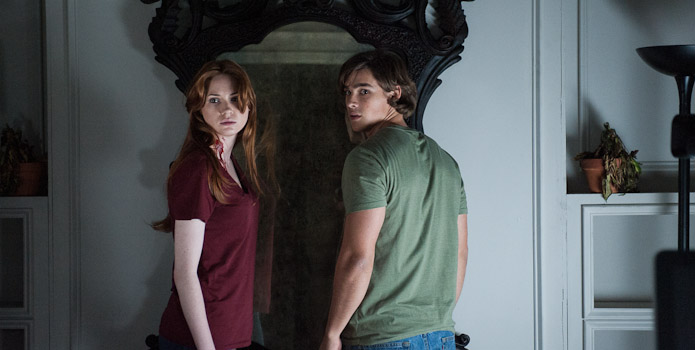
Jesse Hawthorne Ficks returns, and this time he’s got the genre goods! Check back for more of his 2013 Toronto International Film Festival coverage, coming soon!
Mike Flanagan’s evil–mirror flick Oculus (US) received first runner-up for “Best Midnight Movie,” which now seems appropriate since James Wan’s recent Insidious: Chapter 2 basically uses the same flashback structure (to much stronger effect.) Still, Flanagan (2011’s Absentia) is a young director worth keeping an eye on.
Eli Roth’s latest direct-to-streaming effort The Green Inferno (US) pays homage to Ruggero Deodato’s Cannibal Holocaust (1980) with some of the most deliciously disgusting violence seen onscreen in quite some time. Like Nicolás López’s Aftershock (2012), which Roth wrote, produced, and starred in, Inferno has a wonderful B-movie quality that will probably prevent it from achieving mainstream success. (Splatter fiends, however, are in for a treat.)
But it was Kim Ki-duk’s jaw-dropping, toe-squinching, stomach-churning Moebius (South Korea) that had me gasping for air throughout its entire 89 minutes. The film combines everything that you have learned to love about Kim Ki-duk’s style — ranging from his initial splash The Isle (2000) to Spring, Summer, Fall, Winter… and Spring (2003) and 3 Iron (2004) — and then doubles it. Whatever you do, DO NOT READ ANY SPOILING REVIEWS of this film. Know that if you are into transgressive art-horror films, this is the kind of movie to stay up late for.
Elsewhere, Koyaanisqatsi (1982) director Godfrey Reggio presented the world premiere of his newest experimental documentary Visitors (USA) — complete with a new score performed live by Philip Glass and the Toronto Symphony, and a Q&A mediated by Steven Soderbergh (who supposedly has watched Visitors six times already).
http://www.youtube.com/watch?v=o8gGZMiTL7w
However, the similarly bold Under the Skin (UK), from director Jonathan Glazer, baffled TIFF-goers so much that I heard close to half a dozen audience members complaining at how obtuse and confusing it was. One such remark (“The most expensive student film ever made!”) made me ponder the ever-widening gap between abstract visual filmmaking and mainstream “art” cinema.
Glazer’s previous works, the scrumptious Sexy Beast (2000) and the underrated Birth (2004), both seemed to satisfy even the most finicky film snob. So what is it about Under the Skin that is so intangible? (The fact that it’s been compared to Shane Carruth’s most recent visual poem Upstream Color could help designate which side of the argument you stand on.)
Even haters can’t argue with the stellar performance by star Scarlett Johansson. That said, while Johansson shared how difficult it was for her to overcome her anxiety about the film’s nude scenes, I was most intrigued by Glazer’s nervous behavior in the moments before the screening. He even felt it necessary to “help us,” and explained that the film aims to probe our world from a distant perspective.
I wonder if Yoko Ono’s 25-minute short Fly (1970) — which involves a naked woman and a very curious fly — seems even more relevant now, for it too attempted to expand the consciousness of its viewers. I will be very curious to see how Under the Skin fares commercially. If it connects with the right audience, it has the power to truly affect moviegoers, especially those looking for alternative types of moving images.
Oakland’s Negative Standards support future punks
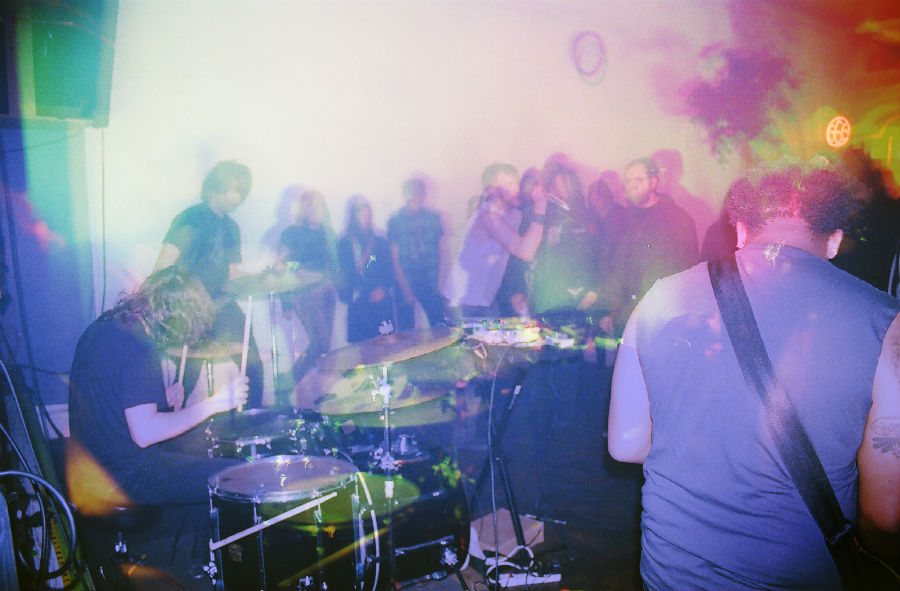
The band Negative Standards is essentially a crust art project.
While maintaining d-beat chords and sludge-like breakdowns, the Oakland-based group makes use of non-instrumental noise and videos created by the band’s bassist, Will, during shows.
And as a quartet that blends elements of crust, doom metal, and noise; Negative Standards sticks out like a sore thumb in the endless sea of fellow crusty brethren and fuzzy lo-fi that exists in the East Bay.
Anonymity is key for the band. Negative Standards sticks to Roman numerals in place of song titles and prefers not to have band members names attached to the project. While being interviewed, the guys chose to keep it on a first-name basis.
So, for housekeeping purposes, the band is as follows: Al on guitar, Will on bass/video, Max on drums and noise, and Will — who wasn’t interviewed — on vocals and non-instrumental noise.
According to Will, the choice to maintain anonymity is to let the music speak for itself.
“From the beginning, the idea was to present each recording as a coherent whole, rather than just a collection of unrelated songs, and doing it this way somewhat anonymizes the individual components,” Will says. “Another effect is that the lyrics, music and samples have to speak for themselves, not having been distilled into a name or a slogan.”
http://www.youtube.com/watch?v=RYApseTorGQ
The band makes the conscious decision to only play all-ages shows to battle the age-old problem of gentrification in the Bay Area.
Drummer and non-instrumental noise creator, Max, expands on this idea: “Gentrification and the attendant cultural colonialism of bars and ‘the underground’ is threatening the existence of DIY all ages spaces in the East Bay more with each passing year,” Max says. “It makes sense that, as a band, we would want to resist the destruction of the cultural environment that has made our existence possible.”
Guitarist Al recalls going to Berkeley’s world-famous all-ages punk venue, 924 Gilman when he was growing up. Al believes that without all-ages venues such as the Gilman, bands like theirs would not exist. Everybody has a starting point, and Al credits the Gilman as his.
“If it weren’t for this place, I wouldn’t know most any of my current good friends, let alone be in this band,” Al says. “I think it’s important to support the future punks instead of shutting them out because you want to drink.”
The band credits the Bay Area for having a thriving scene with the likes of fellow bands such as Noothgrush,Permanent Ruin, Ordstro and Vaccuum. But like most to all existing punk scenes, there exists various isms.
“Seeing the amount of misogyny, transphobia, and racism that goes totally unchecked within some corners of our supposedly ‘radical’ scene can be pretty disheartening, but there’s also some incredible people working against those normative tides,” says Will.
Negative Standards, however, is leaving the sub-cultural hub of Oakland to embark on a European tour, playing with the likes of European punks Bacchus and Throwers.
“Vendetta Records from Germany put out our LP and hooked us up with Timo from Alerta Antifacista Records, who busted his ass to put this tour together for us,” Al says. “I’m incredibly excited. I’ve never travelled in Europe before and am looking forward to it greatly.”
http://www.youtube.com/watch?v=SnNPxLnRGVo
The band also has a split LP with doom band Whitehorse coming out on Vendetta Records in October.
Most of the band remains extremely cordial and modest, lauding other bands and the proverbial scene at large (for the most part). But as mentioned before, this band sticks out amongst others and Max is sure to break the tide.
“Fuck this false modesty,” Max says. “I defy you to name another local band that has both a totally gnarly wolf AND an outlandishly colored manatee on their van’s dashboard.”
You can catch this band at its upcoming going away show at the Oakland Metro. As the Oakland Metro site states, “no turds allowed.”
Negative Standards
With Ordstro, Sutekh Hexen, Filthchain, Xenotaph
Thu/26, 7pm, $7
Oakland Metro
630 3rd Street, Oakland
(510) 763-1146
www.oaklandmetro.org
The Performant: For Those Who Have Rocked, We Salute You

Theater artists reflect on life on the road in this final dispatch from the 2013 fringe festival circuit.
One of the most interesting aspects of the North American fringe festival circuit is the way it makes touring with a piece of theater an accessible proposition to even typically penniless performers. It hearkens back to an era when dozens of theater companies sent themselves on cross-country tours in much the same manner as punk bands or circuses (the San Francisco Mime Troupe and the Independent Eye among them), a rite of literal passage that seems quite out of reach for most theater-makers today. This means that despite its traditional, lottery-based programming, a penchant for kingmaking still pervades the Fringe, and certain prolific artists can become as rock stars, circumventing the lottery odds by booking themselves into unofficial venues as in Edinburgh, capturing oddience attention from year to year.
One of the biggest “rock stars” of the Fringe is Canadian solo artist TJ Dawe, whose shows are both personal and cerebral, exploring themes such as bodily functions, the war of the genders, figures of influence, and more recently, the spiritual and medicinal implications of ayahuasca. He also directs and dramaturges for other artists, most notably perhaps for Charles Ross in his highly physical, fanboy homages One Man Star Wars Trilogy and the One Man Lord of the Rings Trilogy.
For a draw like Dawe, touring the circuit has its clear benefits. “I quit my day job in May 2001,” he explains in a recent email exchange. Still, success doesn’t come without hard work. Dawe estimates that he’s performed over 700 shows throughout the years, and due to his many collaborations with other Fringe artists, is often attached to multiple shows in one season, including a record six in 2008. But even with a modicum of off-season success (including a recent movie made of a play he co-wrote in 2003: The “F” Word), Dawe admits that Fringe stardom rarely translates to mainstream success.
“Life after the Fringe more often consists of people hanging up their Fringe capes and playing the game as actors, writers, and directors generally do: audition, submit scripts, network in the theater community, apply for grants, hope for the best.”
Artistically speaking, the circuit offers an attractive alternative. “Instead of waiting to get cast, you cast yourself. Instead of waiting to be programmed into a theater’s season, you program yourself into a tour. The tour kicks you into shape in terms of getting you coming back with something new. Pretty soon you’ve built up a body of work and developed your own voice as a writer and performer.”
For less-established artists, a way to maximize opportunity is to apply for a long-shot spot in the official CAFF touring lottery, the winners of which can build their tours around the host cities of their choice. Two of this year’s winners had San Francisco connections: clown conservatory alumnus, juggler Aji Slater and puppeteer Zeb L. West, a graduate of SF State. Both have generally positive things to say about the experience, though neither walked away with much in the way of profit (“We merely didn’t lose as much money as we could’ve,” quips Slater). But it was the artistic rewards of the Fringe that each prefers to speak to.
“One of the best things about the Fringe is being around so many creative, incredibly talented people,” Slater asserts. “I dare anyone in the arts to do a Fringe tour and not come back energized to create. Even if zero people had come to see our show, it would be incredibly successful for this jolt of excitement and passion for our craft.”
Via email, West succinctly echoes both Dawe’s passion for the independence afforded the Fringe artist as well as Slater’s enthusiasm for the energizing effects of the more communal aspects of the circuit.
“The Fringe is a great way to get your own weird and wonderful original work out to a broad audience,” he writes. “And if you have a good show, you can fund a tour doing your own stuff. That’s a unique thing at the do-it-yourself scale. The most rewarding part is easily the camaraderie that forms with other touring artists. It makes what might be a lonely job feel like a community of gypsy dream-chasing theater people!”
Put up your dukes: 40 years of SF’s Grand Ducal Council

The global gay charitable network (which started in SF) known as the Imperial Council has been in the news of late: Empress I, Jose Sarria, the Widow Norton, passed away earlier this month and was given a grand funeral at Grace Cathedral that was covered throughout the world.
Now the other major Court Council, the Grand Ducal Council of San Francisco, founded to have a bit more fun, is also getting some attention. On Sat/28 the SF Grand Ducal Council SF Grand Ducal Council will crown the newly elected monarchs for the 40th Reign. at an elaborate and festive coronation event, open to all. (Elections were held last Saturday, and we won’t know who won until the ceremony.)
The theme, chosen by outgoing monarchs Paloma Volare and Moses “Moe Jo” Garcia is “Dancing With the Czars at the Ice Castle.” I exchanged emails with Moe Jo about the theme, the Council, and the Grand Ducal mission:
SFBG Tell us a little about the Grand Ducal Council and what you do.
MOE JO The San Francisco Council of Grand Dukes and Grand Duchesses, Inc., also known as the San Francisco Ducal Council, was founded in 1972 to provide diverse areas of the San Francisco community with charitable and personal support, and has positively affected hundreds of people and groups that may be overlooked by other fundraising organizations. The Ducal Council receives no support from government resources, and depends on fundraisers such as this event (the coronation), and donations from individuals and business.
SFBG Do you feel like you and Paloma accomplished what you set out to do during your reign?
MOE JO Absolutely, when we first started this reign back in September 2012 we both wanted to reach out even more to parts of the community that previously we barely had touched. We had a plan to reach out to the Latino and Transgender communities, plus we wanted to educate the LGBT community even more on what the Grand Ducal Council of San Francisco is all about. I truly believe that we did accomplish those goals. Furthermore, we reached out to new people and as a result we have four or more new members that hold permanent titles (Royal Daddy’s Boy, Royal Baby Boy and Girl, Mr. Royal Bunny, etc.).
SFBG Can you tell me a bit about the Coronation? The theme intrigues me! What can we expect? Is there anything super-special for the 40th year?
MOE JO “Coronation XL (40): Dancing With the Czars at the Ice Castle” will be a celebration of what the Grand Ducal Council of San Francisco is all about… Diversity! We will be celebrating all cultures and different countries that we represent. The audience will be taken to a place where Royalty, fashion, and glamor will be showcased. There will be several surprises during coronation, and the only way anyone will experience them is if they attend this wondrous event!

SFBG Obviously the death of Jose, Empress I affected the Council. Will there be a special tribute?
MOE JO Most definitely, we will have a memorial at the entrance of the ballroom with an oversized picture and beautiful red roses surrounding it. We have also included a special page in our coronation book where we have placed individuals who we have lost in the past year to let them know that although they are gone, they will never be forgotten.
SFBG Will you miss wearing your crown and cape? Or do you get to keep them?
MOE JO Having a crown for the year was very nice. Although the crown was never the main point of the reign, it sure felt good to wear it from time to time. Unfortunately, we do not get to keep the crown: on the night of coronation, I will be crowning the new Grand Duke so the crown I wore this year I will be placing it on his head. I can honestly say I will not miss the crown, I did everything in my power to raise a lot of money and we raised over $53,000 for local charities. I worked hard and did all I could, and I am very proud of this great achievement… A crown? I am sure I will purchase one down the road… 🙂
Grand Ducal Coronation XL (40): Dancing With the Czars at the Ice Castle
Sat/28, 5pm, $40
Hotel Whitcomb
1231 Market, SF.
Special thanks to volunteer of the year Colby Michaels for helping with this interview.
Brown signs bike buffer law as SF wrestles with cyclist-motorist relations
It took three tries, but cycling advocates and California legislators were finally able to get Gov. Jerry Brown’s signature yesterday on a new law requiring motorists to give at least three feet of clearance when passing bicyclists.
We criticized Brown for vetoing a similar bill in 2011 when he raised concerns about slowing automobile traffic, and then he frustrated supporters of the bill last year when his veto-prompting issue was how the new bill encouraged motorists to cross a double-yellow line to pass cyclists when it was safe to do so.
This time, the compromise that won Brown over was a requirement that drivers slow down to a “reasonable and prudent” speed if they aren’t able to given cyclists a full three feet because of road conditions. That’s not ideal, but at least it’s finally becoming illegal for cars to zip closely past cyclists, a dangerous, unnerving, and unfortunately too common practice.
San Francisco has become an intriguing testing ground for cyclist-motorist relations as the number of people choosing to pedal to work, play, or on errands has exploded, based on both official stats and by simply observing Market Street at commute time, which is like a mini Critical Mass everyday, or the overflowing bike parking areas in downtown buildings.
The city is also now wrestling with anti-cyclists biases in law enforcement and among some political figures, which will be the subject of City Hall hearings next month. Certainly, there is bad behavior on the roads by both cyclists and motorists, and often times poor understanding by both about the rules of the road, particularly on those dangerous “right hook” turns when motorists cross a bike lane (motorists should signal, then pull all the way to the right when it’s their turn, and cyclists should pass on their left, taking the lane if necessary), which have resulted in at least two cyclist fatalities in SF this year.
This new law provides some much needed clarity and public awareness to an important public safety issue — and it should be just the beginning of creating new laws and public education campaigns to help promote safe cycling and raise driver awareness of the need to slow down, pay attention, and share the roads.
UPDATE: Dave Snyder, executive director of the California Bicycle Coalition, which worked on the new law, told us he expects more benefit from publicizing the new law than from police enforcing it.
“The main benefit is educational, just getting people who drive to give people on bikes plenty of space. I don’t expect much enforcement,” he told us. “There’s a heckuva lot more that we need to do to make California bicyclists safer.”
The main need he cited is more money for bike lanes, particularly those separated from automobile traffic: We ned funding to build bike networks so we dno’t need to worry about being passed at high speed.”
Evictions and gentrification fuel widespread concern in the Mission
A mix of neighborhood merchants, community activists and a couple City Hall staffers met for a community forum Sept. 23 on Mission gentrification, voicing anger and frustration about rising displacement in the face of soaring rents.
Arranged by organizer Andy Blue, the forum was hosted by Rose Aguilar of Your Call Radio and held at the Eric Quezada Center for Culture and Politics on Valencia Street.
The recent controversy stemming from a bid by high-end retailer Jack Spade to move into a 16th Street storefront catalyzed the discussion, but many addressed the overarching transformation of a neighborhood that has been flooded with high-salaried residents who can afford to pay top dollar.
Gabriel Medina, policy manager of the Mission Economic Development Agency, said he’s troubled by the displacement of Latino-owned businesses. About 80 percent of Latino-owned businesses are passed onto proprietors’ children, he said, representing critical assets in a pricey city like San Francisco. “It’s getting cheaper to be able to start a business than to buy a house,” he pointed out.
Erick Arguello of Calle 24 (formerly the Lower 24th Street Merchants and Neighbors Association) said he’d seen a similar trend along his strip of the Mission, where some Latino-owned businesses have managed to hold strong since they bought their properties years ago.
Nevertheless, Arguello said, the pressure is on. “There’s been an onslaught of realtors and prospectors on 24th Street,” he said. “They ask about the neighbor next door: Do you know when their lease goes to?”
Nor are businesses the only ones impacted. “We’re seeing a lot of evictions of residents along the corridor,” he noted. “The majority of them are Latino families.”

Laura Guzman, executive director of the Mission Neighborhood Resource Center, decried a lack of funding for affordable housing and dedicated units for the homeless and impoverished.
She said many individuals living on the streets in the Mission lack options, leading them to pass the time in the BART plaza. “Support the people in the plaza. They’re human beings,” Guzman said.
Nick Pagoulatos, a legislative aid to Sup. Eric Mar who was previously involved with mid-90s anti-gentrification campaigns in the Mission, said he himself wasn’t sure if he would be able to remain in the city.

“I’m a partner to a woman who was born in the Mission,” he said, acknowledging the deep ties her family has to the neighborhood. “We know that when we lose our housing” – it is likely a question of when, not if, Pagoulatos said – “we’re not going to be able to stay in the Mission. And we’re probably not going to be able to stay in San Francisco.”
Some activist efforts have emerged. A direct action group called Eviction Free San Francisco has staged protests outside the doors of real-estate speculators. At the upcoming Dia de los Muertos 2013 celebration, curator Martina Ayala said at the meeting, “We are building altars to remember the life that we once enjoyed.” La Llorona, a Dia de los Muertos exhibit that will be held at the Mission Cultural Center for Latino Arts, is subtitled “weeping for the life and death of the Mission District.”
A similar transformation happened 10 years ago when the first dot-com boom flooded the Mission with deep-pocketed residents, Pagoulatos noted. Back then, “there was an organized reaction,” he said. “To be honest with you, we fought the good fight, we were at it for a long time and we didn’t win.”
This time around, “Our level of disgust for what’s been going on has been numbed,” he said. But he called for reaching out to engage unlikely allies, and for tapping into collective anger about displacement to bring about change.
“Get pissed, folks,” Pagoulatos said. “Anger is a good thing, especially in the face of injustice.”
Heads Up: 7 must-see concerts this week

This week, two sparkly dark singer-songwriters you should already know and love will return to SF on separate voyages: Zola Jesus (Thu/26 at Palace of Fine Arts) and Chelsea Wolfe (OK, technically she’s here next Monday). If only Grimes* were dropping by in these next seven to eight days, we’d have a triumvirate of goths-who-wow-now.
But beyond the Zola Jesus/Chelsea Wolfe lovefest, there’s also a totally free (with RSVP and soul-offering) Nick Waterhouse show, plus Islands, Double Duchess with Magic Mouth, Teenage Bottlerocket with the Queers, British teen folk-rocker Jake Bugg, and more!
*It appears Grimes is mostly popping up in Europe and Mexico this season, alas.
Here are your must-see shows:
Islands
After the fall of cult lo-fi indie project the Unicorns came the continuation of that sound in the band Islands, formed in the mid-aughts. Both were the creation of prolific, Twitter-friendly singer-guitarist Nick Thorburn. But that’s all ancient history by now. Islands just released fifth album Ski Mask on Manque Music, another step in Thorburn’s sonic evolution. In a recent interview, Thorburn described the record as “A little harder, a little deeper, a little faster and a little darker.” In a recent Tweet, Thorburn lamented, “The moms has perfected the art of ‘brunch drunk,’” and listed his favorite Baldwins in descending order.
Tue/24, 9pm, $18
Chapel
777 Valencia, SF
www.thechapelsf.com
http://www.youtube.com/watch?v=xWVFrLvpvzg
Double Duchess
The best bet for your Wednesday night is a nervy all-night dance party with “high energy indie electro-hop” duo Double Duchess (Krylon Superstar and davO), soulful Portland rockers Magic Mouth — whose influences include THEESatisfaction, Gossip, and Erykah Badu — and Seattle electro-poppers Glitterbang. Go bang!
Wed/25, 8pm, $8
El Rio
3158 Mission, SF
www.elriosf.com
http://www.youtube.com/watch?v=awPpHIoCC3E
Zola Jesus
Darkly operatic singer-songwriter Zola Jesus is always a compelling force live, but this should be an extra-special showing. Not only is the Russian-American musician performing at the Palace of Fine Arts, but she’s bringing legendary Australian composer J.G. Thirwell (aka Foetus) and a string quartet. It’s the live incarnation of her most recent album, Versions, which is a collection of her songs arranged for a quartet by Thirwell, a departure for Jesus, who usually works in the synths and keyboards realm. The intensity of the strings live matched to Jesus’ striking, goth Kate Bushian vocals will likely make for a night of passionate high highs and moody, tearful lows (fans were actually moved to tears at the New York appearance).
Thu/26, 8pm, $25
Palace of Fine Arts
3301 Lyon, SF
www.palaceoffinearts.org
http://www.youtube.com/watch?v=sV9O17Fy7Wk
Nick Waterhouse
Rooky Ricardo’s-bred revivalist rock‘n’roller Nick Waterhouse is traveling back through the city from which he launched his solo musical career tonight. (The early rhythm & blues besotted singer-guitarist moved back down to Southern California a few years back.) And the bespectacled former SF-er will be joined on stage by currently local rockers Cool Ghouls. The whole thing is free as it’s one of those promotional events — this time for Vans — which means you must RSVP, and get there early to ensure entry. But hey, free show plus merch (stickers for our binders? One can hope!)
Fri/27, 8pm, free with RSVP at vans.com/RSVP
Slim’s
333 11th St, SF
www.slimspresents.com
http://www.youtube.com/watch?v=mJruQmdlU10
Teenage Bottlerocket and the Queers
“Joey Ramone? Dead. Dee Dee Ramone? Definitely dead. Johnny Ramone? So dead. Pop-punk that takes more than a couple pages out of the Ramones’ catchy, three-chord song book? Not so dead. That being said, most of the guys from the Ramones are dead, but its musical style lives on in many bands today such as pop-punk mainstays Teenage Bottlerocket and the Queers. Co-headlining a show at Bottom of the Hill, both bands have a lengthy catalog of snotty pop-punk anthems and cheesy love songs that are undeniably catchy. Also on the bill are Midwest pop-punks the Copyrights, who released an album of rarities and b-sides called Shit’s Fucked on It’s Alive Records earlier this year.” — Erin Dage
Sat/28, 9:30pm, $15
Bottom of the Hill
1233 17th St, SF
www.bottomofthehill.com
http://www.youtube.com/watch?v=EtGIVp91Zyg
Jake Bugg
“The year 2012 was a big one for Jake Bugg. At age 18, he could finally vote, enlist in the army, buy things over the telephone…and he had the No. 1 album in the UK. The Nottingham native has been writing songs on his acoustic guitar since age 12. Now, at the ripe old age of 19, Bugg is working on another album and is coming across the pond to share his thoughtful, catchy folk tunes with the colonies. Bugg has been called a new Bob Dylan, which may be a bit of a stretch (there can only be one) but the fact that the comparison has been made at all speaks volumes about his extraordinary talent. Plus, he’s feuding with One Direction. Two thumbs up.” — Haley Zaremba
With honeyhoney
Sun/29, 8pm, $15
Fillmore
1805 Geary, SF
(415) 346-6000
www.thefillmore.com
http://www.youtube.com/watch?v=fY0oPg1h8fQ
Chelsea Wolfe
There’s always been this animalistic thread woven throughout Chelsea Wolfe’s output, and Pain is Beauty is no exception. (Indeed, Wolfe described her newest LP as a “love-letter to nature.”) The LA-via-Sacramento artist’s powerful soprano hollers are matched to ethereal whispery echoes, maintaining a balance between lightness and darkness. Her previous release, 2012’s Unknown Rooms: A Collection of Acoustic Songs, was, obviously, acoustic, but the sparse record is still deeply unsettling. With Pain is Beauty, the singer-songwriter returns to a darker, grittier sound. And yet, there’s a more electronic twist on her early doomy experimental guitarwork (as with breakout 2011 record Apokalypsis), bursting with both synths and strings this time, without missing the black-hearted emotional core rooted in all living things.
Mon/30, 8pm, $15
Great American Music Hall
859 O’Farrell, SF
www.slimspresents.com
http://www.youtube.com/watch?v=yGCsZ0X9_8c
Fight to save City College grows teeth and bites back
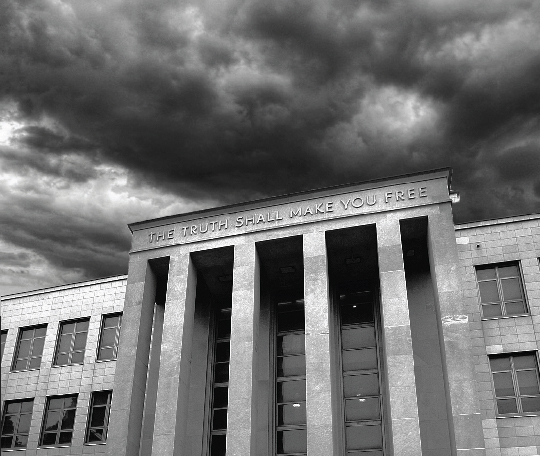
Saving City College of San Francisco became a bigger battle yesterday when the California Federation of Teachers announced a lawsuit in San Francisco Superior Court to keep CCSF open.
The suit is directed against the Accrediting Commission for Community and Junior Colleges, which pronounced the college’s death sentence July 3 by promising to revoke its accreditation in a year, without which a school cannot receive state funding and its students cannot get federal loans.
Now, the ACCJC finds itself the institution under investigation by the feds and even City Attorney Dennis Herrera, and the CFT lawsuit is the latest legal challenge to the accreditors.
The CFT charged the accrediting commission with using unfair and illegal business practices in its efforts to abolish City College. When asked for a statement about the impending lawsuit, ACCJC representative Tom Lane declined to comment.
“The ACCJC must be held accountable for their reckless, irresponsible and illegal actions,” CFT President Joshua Pechtalt explained at the Sept. 23 press conference held on the steps of City Hall, where the suit was announced. More importantly, Pechtalt said, winning this lawsuit could potentially stop the closure of CCSF.
A group of students, faculty, and elected officials stood with Pechtalt on the stone steps. One by one, they enumerated the improper activities that will be the basis of their lawsuit against the ACCJC: failing to adhere to its own policies and bylaws, violations of state and federal laws, and sanctioning CCSF without just cause.
Assemblymember Tom Ammiano said that the illegal behavior must stop here and now.
“The blatant lack of transparency, the loose interpretation of the rules, all seen through a lens of hubris and elitism, cannot continue,” he said. “San Francisco is our backyard and the college is our treasure.”
While Ammiano admitted that CCSF is not without its flaws and areas in need of improvement, he was quick to assert that closing the college was not the solution. “Stay out of our backyard unless you have something constructive to say,” he declared.
CCSF Student Trustee Shanell Williams assured the crowd that the lawsuit would be won. “The diverse population of the San Francisco Bay Area, including working families, single parents, new immigrants and others, depends greatly on this college being here,” she said. “If we lose City, we are going to be on our way to being an indentured, working class state.”
If the ACCJC succeeds in San Francisco, it will pave the way for identical treatment of other schools across the state, Williams said. Likewise, CCSF triumphing over the commission would be a victory for every community college in California.
Sup. David Campos also recognized the vital importance of CCSF’s continued existence. “We cannot have the American dream alive in San Francisco if City College closes,” he said. “This fight is about the soul of our city. ”
The US Department of Education has cited the ACCJC for failing to follow its own rules and procedures. A month ago, the Joint Legislative Audit Committee began investigating the commission. The following day, Herrera filed a lawsuit against the ACCJC, claiming it had illegally allowed its advocacy and political bias to prejudice its evaluation of college accreditation standards.
A new report released by the city’s Budget and Legislative Analyst on Sept. 16 detailed the economic impact to San Francisco if City College were to close. The report was requested by Supervisor Eric Mar. We’ve detailed some of the report’s findings in the infographic below.

Is the new iPhone fingerprint reader hacked yet?
Apparently, the answer is yes. Wired is reporting that a German hacker with the European organization Chaos Computer Club has found a way to fake out Apple’s brand new Touch ID fingerprint reader, rolled out as a security feature.
The hacker, who goes by Starbug, demonstrated that the phones can be hacked with replicas of real fingerprints constructed with pink latex milk or woodglue. It isn’t the first time CCC set out to prove the flaws in biometric security systems – a few years ago, the hackers published the image of a fingerprint belonging to a German interior minister who was strongly advocating for new electronic passports that would be linked to individuals’ fingerprints.
A few weeks ago, we reported that San Francisco District Attorney George Gascon and other law enforcement officials had banned together to call on smartphone manufacturers to implement new security features as a way to address growing theft of mobile devices. Apparently, the fingerprint ID systems don’t offer the level of security Apple was hoping for. The latest iPhones, which include fingerprint readers, were just released Sept. 20.
According to the SFPD, more than 50 percent of robberies occurring every day involve smartphones.
TIFF diary #3: Claire Denis, Jia Zhangke, and Wang Bing
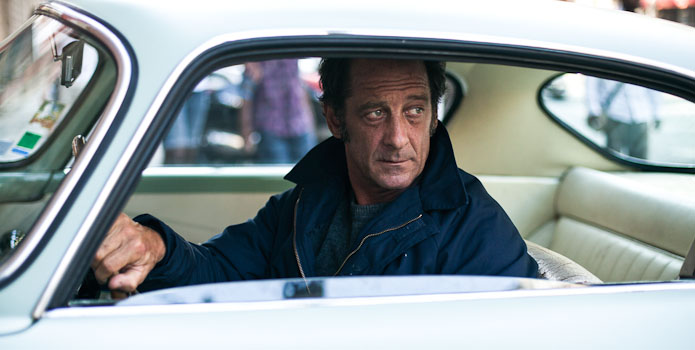
Jesse Hawthorne Ficks watched 33 films at the 2013 Toronto International Film Festival, and we’ll be sharing his impressions chunk by chunk. Stay tuned for more!
A Touch of Sin (China/Japan) is the latest thoughtful triumph for Jia Zhangke, the king of China’s sixth-generation filmmaking. This time around, his suffering, disaffected characters are entangled in an even more violent environment than in previous outings Unknown Pleasures (2002), The World (2004), and Still Life (2006).
http://www.youtube.com/watch?v=sUkFnXd0qHo
The film’s cyclical themes only become apparent as the viewer falls deeper and deeper into each character’s predicaments. This is a filmmaker at the top of his game. Thankfully, Japanese auteur Takeshi Kitano continues to produce his modern masterpieces.
With ‘Til Madness Do Us Part (Hong Kong/France/Japan), Wang Bing has produced yet another psychological tour de force that manages to slowly creep under your skin and attack your central nervous system. It’s a direct-cinema doc that places the viewer on one floor of an overcrowded asylum.
The film is oddly constructed, with purposeful editing that inspired some audience walkouts. The monotony of the patients’ lives becomes so recognizable that it might make you lose track of your own mind and body. While Madness is quite a bit shorter than Wang’s 2003 magnum opus West of the Tracks (which clocks in at nine hours), Madness’ nearly four-hour running time only amplifies the intentionally uncomfortable viewing experience. See this on a big screen at all costs.
Claire Denis is back with yet another stunning work of art. Bastards (France) finds Denis yet again exploring the conflict of isolation versus intimacy, enhanced by Agnès Godard’s scintillating cinematography and brooding tracks by Stuart A. Staples’ Tindersticks.
What makes Denis’ films so exciting is her steadfast storytelling. As with Beau Travail (1999) and The Intruder (2004), my interpretations of Bastards‘ events were redesigned at every turn, forcing me to become an even more active participant then when the film began. Vincent Lindon (of Emmanuel Carrère’s haunting 2005 La moustache) gives a memorably desperate performance as he dashes from one self-destructive disaster to the next, similar to Isabelle Huppert in White Material (2009). Underground filmmakers of the early 1960s may have called it “Baudelairean cinema,” but this just happens to be the way Claire Denis sees the world. And thank the film gods for that.
Grown up stuff: themes of rejection and reclamation at Portland’s TBA Festival

Now in its 11th year, Portland, Ore.’s Time-Based Art Festival is fall’s major performance festival to the north (almost simultaneous with REDCAT’s Radar LA, the major festival to the south). Mounted annually by the Portland Institute for Contemporary Art (PICA), TBA has become something of a pilgrimage site for Bay Area artists and audiences, judging by the number of familiar faces onstage and off both this year and last.
PICA’s artistic director, Angela Mattox, has something to do with this. As the former performing arts programmer at Yerba Buena Center for the Arts, Mattox (now in her second year at PICA) retains strong ties to Bay Area artists. Other likely factors include the relative proximity and general cultural appeal of Portland (an increasing refuge to artists and others pushed out of San Francisco by gentrification), not to mention the scandalous lack of any Bay Area performance festival of comparable scope.
The first week’s worth of work sampled at TBA this year (the festival ran from September 12 to 22) included a wide-ranging and astute blend of local, national, and international work. Among the higher-profile events was an evening of haute-cabaret, featuring Meow Meow and Thomas M. Lauderdale (the latter of Portland’s Pink Martini) backed by the Oregon Symphony. Set in the rococo Arlene Schnitzer Concert Hall, it offered a crowd-pleasing balance of the high-class and ribald, a tightrope walk that Meow Meow (stage name of celebrated Australian actress and cabaret star Melissa Madden Gray) pulled off with consummate skill and unflappable, zany charm.
But the most impressive work featured far more modest production values. There was Still Standing You, for example, by Campo (i.e., Belgian artist-dancer Pieter Ampe and Portuguese artist-dancer Guilherme Garrido), a visceral and physically punishing duet exploring the fantasies, phantasms, and limits of masculinity and their own male heterosexual relationship, which enthralled a large audience for over an hour with little more than the clothes on, and subsequently off, their backs.
Ampe and Garrido, naked for most of the piece, square off in boyish and frankly hilarious postures of potency and aggression, brazenly manipulating each other’s genitals or folding their bodies into intimately abstract geometries. The latter moments, quiet and sure, were the most beautiful and thematically promising. But while the piece charms (especially through its teasing familiarity with the audience and the strength of the artists’ palpable bond), it ultimately remains a bit too comfortably within the gendered field it proposes to explore.
Two other standout pieces of a packed week both tackled time in the broadest and most intimate of senses. Nearly simultaneous with the 40th anniversary of September 11, 1973 — the date of the US-backed military coup that overthrew the country’s elected government and ushered in 17 years of bloody dictatorship under General Augusto Pinochet — TBA premiered Lola Arias‘ The Year I Was Born. Comprised of a motley cast of 11, mostly non-professional actors who were all children in the Pinochet era, this dynamic and rousing work of documentary theater (modeled on Arias’ earlier work with the children of the dictatorship in her native Argentina in the 1970s–80s) offers perspectives and opportunities that only time can bring — a generational assessment as family history and youthful rebellion.
On a protean set that makes choice use of the drab institutional furnishings of a public school class room, the performers conflate childhood memories (several of them as the children of families in exile) and the headlines of the day into an episodic narrative that frequently becomes a good-natured clash among peers of varying class and political backgrounds, half-invested and half-critical of their individual patrimonies and deeply skeptical of their collective one.
In its combination of distance and intimacy, and in its messy familial and social relationships, The Year I Was Born resists the grim binaries of the political crisis itself and its immediate aftermath, opening up a space for dialogue, humor, complexity, and conciliatory feeling, without the need for a simple moral or compromise. History rolls on, and the show — filled with laughter, surges of passion, and cool detachment — affirms both our agency and ambivalence about it all.
TBA also offered the world premiere of ADULT, a highly kinetic and wildly imaginative duet by well known San Francisco-based choreographers and performers Laura Arrington and Jesse Hewit. This complex, at times willfully obscure piece deserves a longer treatment elsewhere, but it was without doubt one of the more original and productively difficult, divisive pieces caught all week. Setting the audience in a corner of the cavernous Con Way warehouse (the hub of the festival this year) and looking outward into a vast, dimly lit and unadorned expanse, the first half of the piece plunges us into a viscerally dynamic exploration of fears around death and dying, only to turn things around in the second half — literally so, coaxing the audience with a tray of whiskey and breakfast cereals into helping reorder the seating to face a makeshift stage against the far wall.
The piece then proceeds in a gorgeously erratic and precise play with entropy and order, in which Arrington and Hewit alternately share space and cede ground to one another amid garish lighting and costumes and blurring lines in every direction — not least in the gendered dynamics of their intense, compassionate, and multifarious relationship. Through it all, a sideways glance at history and mortality (flagged at one point by canny evocation of W.H. Auden’s Musée des Beaux Arts) dissolves in halting, unexpected ways into a serene pause, a loving regard between two unstable bodies in ecstatic motion.
This NSFW video will make you a Deviant
Folsom Street Fair is coming — and so are its parties. The kink-hippest one is Deviants, actually taking place inside the fair area itself (it’s a pop-up!) Here’s the awesome video, see you there.
Here, fishy fishy fishy.

Community forum planned on Mission gentrification
The recent debate about high-end retailer Jack Spade seeking to open up shop in the former location of Adobe Books has placed concerns about gentrification in San Francisco’s Mission District to the front burner yet again.
To spark a dialogue about an appropriate community response to the changing fabric of the neighborhood, community activists have organized a discussion forum scheduled for Monday, Sept. 23.
As rents soar, countless longtime businesses and residents are being priced out of the Mission. From the event description:
“How do we, as a community, feel about this? What can we learn from each other as we consider how to confront the issues of a changing neighborhood and city? Coming from our many perspectives, are there matters that some, most, or all of us can agree upon? … What urgent and long-term actions can we take to support existing local businesses and maintain the diversity and unique character of the Mission District? These are just a few of the questions we may discuss at this meeting.”
The meeting will be hosted at the Center for Political Education on Valencia Street, and participants will represent a host of local businesses and community organizations including Calle 24 SF, Eviction Free San Francisco, Encantada Gallery, the Mission Neighborhood Resource Center, PODER, Shaping San Francisco and the Valencia Corridor Merchants Association.
The discussion will be moderated by Rose Aguilar, host of Your Call on KALW.
The event will be held at 522 Valencia on Monday, Sept. 23 at 6pm and is free to attend.
SF State campus police arming themselves with Tasers (yes, before the SFPD)

Just because the SFPD can’t get Tasers doesn’t mean all the cops in San Francisco are missing out.
The San Francisco State University Police Department will soon arm themselves with conducted electrical weapons, known by the brand name Taser, following a statewide push from the California State University Chancellor’s Office to arm all of its campus police statewide with the weapons.
The university police started training with their new weapons Sept. 12, according to university spokesperson Ellen Griffin, but haven’t armed their 28 officers with them just yet. They still have to set rules for their use and the cabinet of SF State President Leslie Wong will soon meet to advise him in Taser policy. Details on what shape that policy will take are still hazy, the university told us.
“What I can say is that Dr. Wong is deeply committed to protecting the safety and welfare of our campus community,” said Shawn Whalen, a member of the president’s cabinet.
There is no statewide campus police policy for Taser use, according to California State University’s policy documents on weapons. A CSU spokesperson told us each campus makes its own rules for their local police force.
For the past decade the SFPD has tried at various times to have their officers armed with Tasers but have met loud opposition and are without them to this day, a topic we’ve covered before. One of the most vocal opponents of the weapons, Police Commissioner Angela Chan, is concerned that the Tasers can be fatal.
“Tasers can cause serious injury or death and have cost law enforcement that use them millions of dollars in lawsuits,” she told the Guardian. About 500 people have been killed by Tasers in the US since 2001 according to a report Amnesty International released last year.
In Cincinnati a student Tasered subsequently died. Taser advocates say deaths are prevented by Taser use, however.
Of those killed, Amnesty International said, 90 percent of the victims were unarmed.
Despite the statistics, Tasers are in widespread use around the country and in the California State University system.
Mike Uhlenkamp, spokesperson for the CSU chancellor’s office, said that 17 campus police forces were armed with Tasers, and now all 23 will have them, including SF State.
He was unable to say how much Taser use has cost the CSU system or provide statistics on their use. The most commonly bought Taser though, the X26, costs $1,000 a piece, according to Taser’s website.
He was also unable to cite a specific incident or incidents that prompted the need for Tasers on CSU campuses. SF State university police reported exactly eight crimes for the week of September 9-15, including petty theft, vandalism, and possession of marijuana.
Uhlenkamp did say however that “every officer gets rigorous training,” part of which is actually getting Tasered themselves.
“Every officer will have been on the other side of a Taser at some point,” he said.
The arguments Taser advocates make for having the weapons is that they can be used in lieu of a gun. Steve Tuttle, spokesperson for Taser, said that was the reason 17,000 law enforcement agencies use Tasers worldwide.
“I think its a loud minority that’s gotten their way in San Francisco,” Tuttle said. The idea that SFPD is the lone holdout had him saying that the “vocal minority” got their way.
But Chan said that’s a myth. Tasers are often used as a compliance weapon when an individual is passively resisting arrest or not responding to an officer’s commands, she said. “Unfortunately, this can lead to overuse and unnecessary use, especially on young people and people of color, as we’ve seen around the country, including on college campuses.”
She has reason to be concerned about the safety of the campus community. When activist squatters were arrested in May by SF State’s university police, allegations of excessive force streamed in.
The activists printed a zine documenting their experience. Melissa Nahlen, 25, reportedly wound up with “cuts near her eyes, a bruised and swollen lip, a swollen left hand … and cannot bend her neck downward due to being stomped on by the police.”
A campus police officer also sustained injuries, according to news reports.
Video of officers arresting activists in an SF State dorm. As SFSU police and SFPD were both present, it is unclear which officers are in the video.
Tasers are used to avoid just that kind of situation, Training Lieutenant Randall Gregson of the BART police department told us. Though policies differ from department to department, Gregson ran the Guardian through BART’s tactics in using Tasers to provide a glimpse in the things SFSU will need to consider.
BART police carry their Tasers on the “support” side of the belt, meaning the non-dominant side, he said. They also have a choice of carrying it in their duty belt on a thigh holster. “It’s an officer’s individual preference,” he said.
That preference is important, and sometimes could mean the difference between life and death.
When BART officer Johannes Mehserle reached for his Taser but mistakenly drew his gun and shot and killed Oscar Grant back in 2009, issues about where to holster officer weapons came to the fore.
Mehserle’s lawyer made a motion to admit BART’s holster policy as evidence in the case. From the text of the motion: “The changes in BART’s training and Taser policy – removing two dominant side belt configurations and requiring officers to draw the Taser with their weak hands – constitute highly relevant evidence of an acknowledgement by BART that the prior training and policy made an accident of the sort that occurred in this case more likely, and perhaps even highly likely.”
The evidence was admitted to ask, as the lawyer wrote, “How could a trained officer mistakenly pull and fire his gun if, as he claims, he intended to deploy his Taser?”
That’s the exact kind of incident SF State President Leslie Wong’s policy will address for his officers, and the lives of the students of San Francisco State University may depend on it.
Bad dads, hella docs, and more new movies!

One theme this week is “father figures” — some terrible (see Dennis Harvey’s review of Blue Caprice here, and review of You Will Be My Son below), some frantic (Prisoners), some ass-kicking (Ip Man: The Final Fight).
Elsewhere, check out Jem Cohen’s moving narrative (but also kinda doc-like) Museum Hours (my chat with Cohen here). More short reviews below!
http://www.youtube.com/watch?v=lWOSd-kX1oo
Battle of the Year That’s “battle” as in “dance battle.” And yes, it’s in 3D. (1:49)
C.O.G. The first feature adapted from David Sedaris’ writing, Kyle Patrick Alvarez’s film captures his acerbic autobiographical comedy while eventually revealing the misfit pain hidden behind that wit. Tightly wound David (Jonathan Groff), on the run from problematic family relations and his sexual identity, takes the bus from East Coast grad school to rural Oregon — his uninhibited fellow passengers providing the first of many mortifications here en route. Having decided that seasonal work as an apple picker will somehow be liberating, he’s viewed with suspicion by mostly Mexican co-workers and his crabby boss (Dean Stockwell). More fateful kinda-sorta friendships are forged with a sexy forklift operator (Corey Stoll) and a born-again war vet (Denis O’Hare). Under the latter’s volatile tutelage, David briefly becomes a C.O.G. — meaning “child of God.” Balancing the caustic, absurd, and bittersweet, gradually making us care about an amusingly dislikable, prickly protagonist, this is a refreshingly offbeat narrative that pulls off a lot of tricky, ambivalent mood shifts. (1:37) (Dennis Harvey)
http://www.youtube.com/watch?v=z5vctLV_W7k
Herb and Dorothy 50X50 Building upon her 2008 doc Herb and Dorothy, Megumi Sasaki revisits elderly Manhattan couple Herb and Dorothy Vogel, art-world legends for amassing a jaw-dropping collection of contemporary art despite holding modest jobs and living an otherwise low-key lifestyle. (Out of necessity, they favored smaller works on paper — and whatever they bought had to fit into their one-bedroom apartment.) Remarkably, in 1992, they donated the majority of their highly valuable collection to the National Gallery of Art, but it was so vast that most of it was put into storage rather than displayed. Sasaki’s camera picks back up with the couple (Herb now in a wheelchair, with Dorothy doing most of the talking) as they work with the National Gallery to select 50 museums nationwide, each of which will receive 50 pieces of the collection. Though the film chats with some of the Vogels’ favorite artists (Richard Tuttle, notably, was initially angered by the idea of the collection being broken up), its most compelling segments are those that focus on Vogel exhibitions in relatively far-flung places, Hawaii and North Dakota included. Of particular interest: scenes in which museums without modern-art traditions help skeptical patrons engage with the art — a towering challenge since much of it appears to be of the deceptively simple, “I-could-have-done-that” variety. (1:25) (Cheryl Eddy)
Ip Man: The Final Fight Yep, it’s yet another take on kung-fu icon Ip Man, whose real-life legacy as Wing Chun’s greatest ambassador (tl;dr, he taught Bruce Lee) has translated into pop-culture stardom, most recently with Donnie Yen’s Ip Man series and Wong Kar-wai’s still-in-theaters The Grandmaster. Final Fight is directed by the prolific Herman Yau, and though it lacks the slickness of Ip Man or the high-art trappings of The Grandmaster, it does have one heavy weapon: Hong Kong superstar Anthony Wong. A less-charismatic actor might get lost in Yau’s hectic take on Ip’s later years; it’s chockablock with plot threads (union strikes, police corruption, health woes, romantic drama, brawls with rival martial-arts schools, scar-faced gangsters …) that battle for supremacy. But that’s not a problem for Wong, who calmly rises above the chaos, infusing even corny one-liners (“You can’t buy kung fu like a bowl of rice!”) with gravitas. (1:42) (Cheryl Eddy)
http://www.youtube.com/watch?v=vGMdJVZUjFg
Mademoiselle C Fabien Constant’s portrait of French fashion editor-professional muse-stylish person Carine Roitfeld may be unabashedly fawning, but it does offer the rest of us slobs a peek into the glamorous life. The film begins as Roitfeld leaves her job at Vogue Paris; there’s passing mention of her subsequent feud with Condé Nast as she readies her own luxury magazine start-up, CR Fashion Book, but the only conflicts the film lingers on are 1) when a model cancels last-minute and 2) when Roitfeld goes double over budget on her first issue. (Looking at the lavish photo shoots in action, with big-name photogs and supermodels aplenty, it’s not hard to see why.) Mostly, though this is a fun ride-along with Roitfeld in action: hanging with “Karl” (Lagerfeld) and “Tom” (Ford); swooning over her first grandchild; sneaking a little cell phone footage inside the Met Ball; allowing celebs like Sarah Jessica Parker and designer Joseph Altuzarra to suck up to her, etc. There’s also a funny moment when her art-dealer son, Vladimir, recalls that he was never allowed to wear sweatpants as a kid — and her daughter, fashion-person Julia, remembers her mother’s horror when she dared to wear Doc Martens. (1:30) (Cheryl Eddy)
My Lucky Star Aspiring cartoonist Sophie (Ziyi Zhang) puts her romantic fantasies into her artwork — the bright spot in an otherwise dull life working in a Beijing call center and being hassled about her perma-single status by her mother and catty friends. As luck would have it, Sophie wins a trip to Singapore right when dreamy secret agent David (Leehom Wang) is dispatched there to recover the stolen “Lucky Star Diamond;” it doesn’t take long before our klutzy goofball stumbles into exactly the kind of adventure she’s been dreaming about. Romancing the Stone (1984) this ain’t, but Zhang, so often cast in brooding parts, is adorable, and occasional animated sequences add further enhancement to the silly James Bond/Charlie’s Angels-lite action. (1:53) (Cheryl Eddy)
http://www.youtube.com/watch?v=KWhS0xN3C0g
Prisoners Canadian director Denis Villeneuve (2010’s Incendies) guides a big-name cast through this thriller about a father (Hugh Jackman) frantically searching for his missing daughter with the help of a cop (Jake Gyllenhaal). (2:33)
http://www.youtube.com/watch?v=9_zcPBcXeo4
Salinger Documentary about the reclusive author of Catcher in the Rye. (2:00)
http://www.youtube.com/watch?v=cQcr66k-gAM
Thanks for Sharing Mark Ruffalo, Gwyneth Paltrow, and Tim Robbins star in this comedy about sex addicts from the co-writer of 2010’s The Kids Are All Right. (1:52)
Wadjda The first-ever feature directed by a female Saudi Arabian follows a young Saudi girl who dreams of buying a bicycle. (1:37)
http://www.youtube.com/watch?v=2QmBzl5RBik
You Will Be My Son Set at a Bordeaux vineyard that’s been in the same family for generations, Gilles Legrand’s drama hides delightfully trashy drama beneath its highbrow exterior. Patriarch Paul de Marseul (Niels Arestrup of 2009’s A Prophet) treats his only son, Martin (Lorànt Deutsch) with utter contempt — think the relationship between Tywin and Tyrion Lannister on Game of Thrones, only with even more petty digs and insults. Still hopeful that he’ll inherit the estate someday, despite Papa Jackass’ loud proclamations about his “lack of palate,” Martin sees his future prospects crumble when dapper Philippe (Nicolas Bridet) blows into town, having left his California gig as “Coppola’s head winemaker” to care for his dying father, Paul’s longtime second-in-command François (Patrick Chesnais). Things go from terrible to utterly shitty when Paul decides Philippe is the answer to his prayers (see: title). Melodrama is the only recourse here, and the film’s over-the-top last act delivers some gasp-inducing (or guffaw-inducing, your choice) twists. Heading up a classy cast, Arestrup manages to make what could’ve been a one-note character into a villain with seemingly endless layers, each more vile than the last. (1:41) (Cheryl Eddy)
Holy Cherry Moons! SF Album Project joins Prince’s ‘Parade’ in full, fantastical drag

Things I know right now: I’m far from the only one who knows all the words to Yaz’s Upstairs at Eric’s, OK Computer is much better as a conceptual drag performance, and the 12-inch version of “Mountains” by Prince is one of the best extended jams ever committed to vinyl.
The third thing I know from being a record nerd (it’s also impossible to prove to you, since the Purple One spends all his time on Youtube yanking down his music). But the first two revelations came courtesy of the stunning San Francisco Album Project, a talented group of drag performers, stage technicians, theatrical personages, and tasteful club kids. Every two months they take on an entire album, presenting it as a stage extravaganza, embellished with special effects and original dialogue. It’s brilliantly nuts, and not the albums you’d expect at all from a bunch of colorful queens.
After conquering Yaz and Radiohead (standing room only, btw), the SFAP is about to scale the purple peak and slide under the cherry moon: The troupe will present Prince’s “Parade” — the soundtrack to his 1986 movie Under the Cherry Moon, including the original version of my beloved “Mountains” — in its entirety on Sun/22 at the Chapel.
I asked Nathan Rapport and Bobby Barber, “album curators” of SFAP, to give me the lowdown on the project, and what to expect this Sunday:
http://www.youtube.com/watch?v=oemJ8eVneXo
SFBG SFAP seems like the kind of “eureka” idea that should have happened already, especially in SF — but no one really rubbed two drag sticks together to form a drag flame. How did the project come about?
Bobby Barber The San Francisco Album Project came about after about a year’s worth of on-and-off discussion between Nathan and myself about the state of the San Francisco drag scene. He and I both love what Trannyshack’s still achieving at the DNA Lounge – there are some sublime and thoroughly entertaining performances being created there to this day – but the venue and the interests of its audience don’t lend themselves very well to concepts and ideas that Heklina & Co. used to stage back when Trannyshack was at The Stud.
Some of our favorite shows ever at Trannyshack were evenings dedicated to an entire album (Fleetwood Mac’s Rumors, David Bowie’s Ziggy Stardust and the Spiders From Mars, Pink Floyd’s The Wall), and it always seemed an idea that had endless possibilities. It’s from that very concept created and shepherded by Heklina, Peaches Christ, and Vinsantos that Nathan and I are now attempting our variations on.
Since I work for Peaches Christ Productions, I knew I had the resources available to at least a fund a few initial shows, provided I could find an appropriate venue. As soon as we saw The Chapel, Nathan and I knew it had to be there; it’s perfect. We brought Precious Moments (Michael Soldier) on board because we knew we had to have not just a seasoned Old Guard Trannyshack performer as one of the producers, but also because Precious thought up one of the old album-centered shows at Trannyshack back when it was at The Stud (Rumors). Precious has been indispensable not just as one of the performers in the troupe, but also as a director of the shows.
http://vimeo.com/70395055
SFBG You really “go there” with these performances — special effects, drag-robot suicides, emotional resonance, all manner of stage trickery. What are you trying to achieve?
BB First and foremost Nathan and myself want to honor what we think is incredible music. We want to give it an interpretation that it’s not often given.
Secondly, Precious, Nathan and I are attempting to create a “drag show” that is structured differently than most other shows around town. One could argue that the content of the San Francisco Album Project is the same as other shows, and it is in several ways. But we believe that by framing the show as a narrative, by not having an emcee, by not having dancing before or after the show, and by having our DJs spin music that creates the vibe of a ‘listening party’ rather than a club, we’re creating a frame that makes the experience of the performances feel more theatrically holistic than a traditional drag show.
Lastly, The San Francisco Album Project is an experiment on our part in the collaborative process. Nathan and I are very interested in the idea of artistic collaboration: whether it’s possible – why it works – why it doesn’t – what it means to different people. The performers themselves come to the table with their own idea for the song they’ve chosen. It’s up to Precious, Nathan and myself to weave these together and find a story within the group’s ideas. Also, how does a medium like drag performance operate or manifest under the pressure and/or freedom of collaboration…?
An album in and of itself is already a finished and finely tuned work of art, carefully molded by the original artist(s) who created it. What happens when a group of drag queens come in and deconstructs said album, this finished work of art, only for the purpose of re-presenting it as they see fit? Ultimately this is an act of spiritual reverence.
SFAP Unlike the Tranyshack albums you mention above, which were already not your usual drag fare, the albums you’re doing are even more unexpected. How are the albums chosen?
BB Nathan and I chose the first twelve albums ourselves over two months of back-and-forth arguing. By no means are the albums chosen our favorite albums of all time, but rather ones we find strike that perfect balance between intelligence, entertainment, popularity and drag potential. They are all iconic, but for different reasons. Some are albums that carry meaning across a large part of entire generation. Some are considered canonical, seminal, “the best the artist has done,” and those facts alone have led Nathan and I to choose certain titles.
Parade was decided for a few reasons. After doing Yaz’s Upstairs at Eric’s, and Radiohead’s OK Computer, Nathan and I knew we had to do an album that we think is an artist’s best, not the most well-known. Besides, Purple Rain is already done to perfection by Peaches Christ every other year, and the songs on 1999 are too long for drag queens. Also, the real-life story behind the creation of Parade lends itself well to what The San Francisco Album Project is trying to achieve, or rather, is experimenting with. Prince’s collaboration with Wendy and Lisa reached its fever pitch with this album. Overworking, conflicting egos, frustrating machismo, and the tour which resulted from it brought about the end of their work together, thereby ending what I believe is one of the great partnerships in modern rock and roll, and forever destroying the glorious potential of what music Prince, and Wendy and Lisa might have continued creating together.
SFBG Can you share any exciting specifics about Sunday’s performance?
BB Well the show is built around the theme/story I just referenced: the relationship between Prince, Wendy and Lisa. It’s to be used as a frame around our fantasies in regards to the collaborative process. A myth has been created about their break-up, not just between Prince fans and the music press of the time, but now also on our stage. We’ve expanded notions of the obvious troubles that arose not just due to Prince’s fame and resulting ego, but also difficulties that could come about when men and women collaborate together, as well as straights and queers.
The narrative of the show is interspersed with ‘impressions’ on these themes, as some performers have come up with numbers that deviate from the direct story told on stage, instead having come up with their own musings in regards to these ‘troubles’ I mentioned above.
I can promise that the numbers run, at least, the same gamut of emotions that the album Parade does itself. I think we have a great sense of humor about it all, and I believe it’ll come across in Sunday’s show.
SFBG Can you tell us what album’s next?
BB Well not all the way down the line, but I can tell you that the next show is based around Roxy Music’s first self-titled album from 1972. It’s scheduled for Sunday, November 10th at The Chapel.

Breed ditches Twitter after being called out for caustic tweets, again [UPDATED]
Sup. London Breed appears to have abruptly deleted her Twitter account today after engaging in a clash of tweets with some local activists online. Breed had tweeted comments that were derogatory toward bicyclists and others, after earlier attempting to distinguish between her “private” comments and public role, but now she appears to have given up entirely.
This morning, Patrick Traughber sent Breed a tweet reading, “@LondonBreed In your opinion, what is the biggest obstacle to creating safer streets for bicycling?” To which Breed responded, “bad behavior of some bicyclist [sic].” Sources say caustic exchanges with other followers then ensued before Breed apparently deleted her feed.
Breed didn’t immediately respond to Guardian calls and emails, but the flip answer comes at a time when the Board of Supervisors plans to hold hearings about how the San Francisco Police Department handles bicyclist fatalities, which were recently triggered by the exposure of blame-the-victim police bias after a truck driver ran over a cyclist.
Breed’s tendency toward making caustic and impolitic comments has gotten her in trouble before, costing her endorsements during her supervisorial campaign last year and generating some criticism and unfavorable press coverage in June following another Twitter exchange.
“Why is @LondonBreed trying to water down legislation that protects renters in the TIC/condo conversion legislation at Land Use Committee?,” activist Cynthia Crew asked via Twitter on June 3. Breed responded with, “@cynthia_says #suchahater.”
Crews responded by asking Breed why she would “talk to your constituents like that,” called it “unprofessional.” To which Breed replied, “If you want a professional response email me at sfgov and stay off my personal twitter where I refuse to be professional.”
A few days later, SFist reported that Breed tweeted, “Apologies to those I have offended I was just having fun. Although boring I will stay politically correct. I have serious work to do.”
Apparently, Breed later abandoned her “boring” and “politically correct” Twitter policy, and now she seems to have also abandoned Twitter.
UPDATE: Breed responded to our inquiries with the following email:
“Thanks for contacting me Steve.
I suspended my account because I realized twitter can be extremely time consuming and it’s too hard to have nuanced policy discussions in 140 characters. I want to take some time to think about how I use this medium in the future.
With respect to the bike exchange, my record is clear! I have been a consistent and effective advocate for bike projects in our city. I got the Oak and Fell bike lanes implemented well ahead of schedule. I led the effort to fund the Masonic Blvd project which includes dedicated bike lanes and I’ve voted for every bike project that’s come before the Transportation Authority, including the popular bike share program just implemented in our city.
My point was not that I think bicyclists’ behavior should be an impediment to new projects. My point was bicyclists’ behavior is the complaint I hear most often from those who oppose the projects. So as a practical matter, those behavorial concerns–whether you think they’re accurate or inaccurate, right or wrong–make it harder to get new projects moving, harder to win public and political support. But that absolutely has not, and will not, stop me from fighting to win that support.
I’ve faced a lot of fire, a LOT of fire, over the Masonic blvd project and I’ve stood strong in my support. That’s my record. So it does bother me to see masonic supporters criticizing me over a twitter post. But it is my fault for being unclear about a complicated topic on an inappropriate medium. That is why I am taking a break from that medium.”
Q&A: Blouse on the Dream Syndicate, forest life, and going synth-less
Blouse, may have ditched the synths and drum machines of its 2011 debut self-titled album with new Captured Tracks full-length, Imperium, but the sound remains as hazy and dreamy as ever. Now it’s just backed by rippling reverb and distortion.
The misty Portland, Ore. dreampop trio makes siren calls that would entice a shipwrecked sailor, floating endlessly in a gurgling oceanic abyss. See? Wistful. Check first single, “A Feeling Like This” or next track “No Shelter” for that particular mental imagery. It’s all there, the swashing of fuzz, the wide open minimalism à la xx, the delicate, teetering vocal tracks, and an uneasy feeling of isolation.
I asked Blouse frontperson Charlie Hilton about the band’s new album, the local Portland music scene, going synth-less, and the albums they bonded over:
http://www.youtube.com/watch?v=KlxjGFaQKu4
SFBG How did Blouse first come together?
CH Three years ago, I moved to Portland from LA and met Patrick in an intro design class at PSU. We became friends almost immediately and he started giving me rides home from school. We were always talking about music, about the bands we’d been involved in, about what we liked. Eventually we decided to play together in my living room a few nights a week.
I’d been writing since middle school, so I shared some of my recent work with him. We also worked on new songs, recording them on Garageband as we went, until his friend Jake heard the demos and thought we should all record together. Jake had produced some really great records, and he and Patrick had been in bands together in the past.
We felt a weird kind of urgency to do something together, so we went to a place called Jackpot Studios for two days, hung out, and worked on the songs. We decided on a band name, finished two tracks, and posted them on the Internet. It was only a couple of months later that we signed with Captured Tracks.
SFBG What songs or albums by other artists have you bonded over as a group?
CH The Dream Syndicate, Days of Wine and Roses. I had never met anyone who loved that record like I did, and then I saw it propped up at their house. It’s funny how that can make you trust a person.
SFBG Why the shift from synths to a more guitar-focused sound on new album, Imperium?
CH We like guitars a lot and it was fun to see what we sounded like without the synths, to see whether or not we could remain ourselves.
http://www.youtube.com/watch?v=MPOgGgDyNGo
SFBG Can you tell me about writing the song “No Shelter” off Imperium?
CH I was feeling really terrible at the time, for no reason. My husband and I had just bought a cabin in the mountains, and all I wanted to do was be there, away from everything and everybody. I was getting very addicted to this place in the forest, and I realized that I was using it to escape the dread inside me. Writing that song was just about coming to terms with that feeling, recognizing that it was there and that I couldn’t really get away from it.
SFBG What inspired first single “A Feeling Like This?”
CH A mushroom trip in a white room.
SFBG Do you feel part of a Portland music community? Who are your closest contemporaries music-wise, in Portland and beyond?
CH Yes. I have so many friends in bands that I love. Wampire, WL, Unknown Mortal Orchestra, Industrial Park, Hausu, Vice Device, Concrete Floor, Litanic Mask — just to name a few.
SFBG What’s the most common misconception about Blouse?
CH That we all live together in the warehouse where we record music. I don’t mind if people keep thinking that. It sounds fun. But no, we don’t really. There’s no shower.
SFBG Anything you’re looking forward to on this West Coast tour?
CH I’m from LA so I always love going home to play Part Time Punks. Michael Stock was my favorite DJ when I lived there, so it was an absolute pleasure to meet him and do a session with KXLU last year. We’ll be doing another one this time. I’m excited.
http://www.youtube.com/watch?v=vZq1xRzlCxg
SFBG Is there anything else you’d like people to know about your band?
CH We’re very Polish.
Blouse
With Social Studies, Feathers
Sat/21, 9:30pm, $12
Bottom of the Hill
1233 17th St, SF
(415) 626-4455
www.bottomofthehill.com
TIFF diary #2: dead cheerleaders + Tsai, Hong, and Breillat

Check out the first entry in Jesse Hawthorne Ficks’ Toronto International Film Festival diary here, and stay tuned for more tomorrow!
All Cheerleaders Die (USA) is the follow up to Lucky McKee’s attention-grabbing The Woman (2011), which stunned Sundance audiences with both its subversive take on gender issues and its violent brutality.
Taking a much lighter tone with co-director Chris Sivertson, Cheerleaders (an expanded remake of his 2001 short by the same name) nicely echoes the ironic horror-comedy vibe of Joss Whedon’s Cabin in the Woods (2012) while still managing to deliver a genre entry for text-crazed teenyboppers. Goths, jocks, some faux feminism, and a bevy of ass and crotch shots should make fans of Harmony Korine’s Spring Breakers quite satisfied.
http://www.youtube.com/watch?v=CMf-BBVRj9Q
In the 1990s, Tsai Ming-liang’s films were often mentioned alongside works by Hirokazu Kore-eda and Hou Hsiao-hsien. But two decades later, only Tsai has stayed the determined course of creating pure, contemplative cinema. Presenting his tenth feature (and showcasing yet again his alter ego, actor Lee Kang-sheng), Stray Dogs (Taiwan) is a breathtaking meditation on a homeless Taiwanese family, who are quietly doing what they can to get by.
With this film, Tsai has almost abandoned story completely, instead favoring long, drawn-out, surreal, one-shot sequences — next-level abstractness that will either send you running for the hills or leave you unblinkingly glued to the screen. Someone should program Stray Dogs with his 2012 short Sleepwalk, which followed a monk as he slowly walked through city streets. (Whether that would equal absolute transcendence or absolute boredom depends on the viewer, of course.)
While Hong Sang-soo’s Our Sunhi (South Korea) is not as monumentally enjoyable as last year’s In Another Country (2012), his new film does represent another solid entry for the director. I admire Hong’s ability to stay consistent with his philosophy on life: give a small group of people a lot of alcohol and let them share their innermost uncouth and irresponsible feelings. Of course, you could argue that he is just making the same film over and over. But if you take the time to notice the structural differences — as well as wonderful choices with his actors (Jung Yu-mi is quite enjoyable in this) — you’ll realize why critics love to favorably compare Hong to Woody Allen.
Watching director Catherine Breillat take the stage at TIFF to present her latest, Abuse of Weakness (France), was as powerful and moving as watching the film itself. After her 2004 stroke (and subsequent personal issues), Breillat decided to make an autobiographical narrative, casting the great Isabelle Huppert to interpret Breillat’s own confused choices.
Abuse of Weakness is perhaps one of the most interesting films about the life of an artist I have ever seen. As the Q&A was concluding, Breillat dropped a bottle of water that was given to her and explained “Even after all these years, you forget that you can’t feel anything in your arm.” And suddenly it was if you were right back in the film again.
Bill on Brown’s desk to make two-tiered system of college tuition: for the rich, and the poor

It seems that one California politician is adapting an old adage for a modern era: If at first students protest and get pepper sprayed, try, try that legislation again.
AB 955 is a bill that would create a pilot program to raise community college tuition, allowing six allegedly overcrowded community colleges to charge the full cost of their classes during summer and winter sessions. A three-unit class would jump in cost from $138 to roughly $600, depending on the college involved. Authored by Assemblyman Das Williams (D- Santa Barbara), the bill now sits on Governor Jerry Brown’s desk awaiting his signature.
The colleges in the pilot are College of the Canyons, Crafton Hills College, Long Beach City College, Oxnard College, Pasadena City College and Solano Community College.
Local community college advocates said the pilot program could crack open the door to a future where two-tiered access to community college is the norm: The rich will be able to get classes, and the poor will be crowded out.
Those fears are prompting local San Francisco activists to join in the fray.
“AB 955 creates a system of haves and have nots,” said Shanell Williams, the student trustee of City College of San Francisco (no relation to Assemblyperson Williams). “Students that cannot afford to pay more will essentially be denied access,” she said.
Williams is a staunch advocate for education equality at City College, and led many of the rallies decrying the school’s loss of accreditation. She now plans to lead a rally against the bill here in San Francisco. But she’s not the only one who thinks this is a bad idea.
Santa Monica College tried to make a similar two-tiered system for tuition last year, offering classes that were previously closed due to lack of state funding by sticking the whole price of the class on students. Santa Monica College students were far from pleased.
Protests erupted, students were pepper sprayed, the incident became national news, and the idea was criticized across the board as class warfare.
The students’ outrage doesn’t just stem from raised tuition, but from a broken promise.
The idea of “open access” to classes is mandated by California’s educational master plan, which states that all students over the age of 18 should have access to community colleges and that tuition would be free. Part of the Donahoe Education Act of 1960, it was signed into law that year by Governor Edmund “Pat” Brown.
The Master Plan has eroded slowly since the 90s, and the once tuition-free UC and CSU systems now charge their students fees in excess of $3,000 a semester for full time enrollment — inflated prices which so far the community college system has resisted. Classes cost $46 per-unit at each of the 112 community colleges in California.
Assemblyman Williams justified his bill in an op-ed for The Daily Californian, saying the idea of open access has failed as the California community college system has already shut over 500,000 students from its doors, according to data from the state community college chancellor’s office.
“Yes, $600 is more expensive than $138, but only in the short term,” Williams wrote. “What’s the cost to a student forced by the current lack of classes to have to face one to four more years of living expenses to complete his or her education? It’s a lot more than $600.”
But Jessica Jones, two-year student body president of Santa Rosa Junior College, fears that the pilot program may just be the beginning.
“Who’s to say it won’t go like wildfire across the state?” she said in comments to the Guardian. Unlike the UC and CSU students, she fears the community college students she sees everyday would have more to lose when the fees are hiked. More often, she said, those students are “working many jobs, many have families, you’ll see less and less students able to take courses.”
It isn’t just activists who fear this will go statewide. The state chancellor of all 112 California Community Colleges, Brice Harris, has also publicly denounced the bill.
“The next time the budget goes in the tank they’ll tell (us), we can’t give it to you, tell your colleges to raise fees,” he said at a recent state meeting. “All of us who believe this is bad public policy for California are going to have to speak out forcefully with the (Brown) administration to make them understand what a huge policy change this is for the state of California,” he said.
Jessica Jones works with the Student Senate of California Community Colleges, and though their opinion is not uniform, many student leaders statewide are organizing actions against the fee hike pilot program. Crafton Hills College, Modesto Junior College, Pasadena City College, Long Beach City College, Santa Rosa Junior College and De Anza College will all have demonstrations or engage in write-in campaigns by the end of next week.
Williams, the City College Student Trustee is organizing a demonstration in San Francisco as well. The protest will be at Powell Street BART station on Tuesday, Sept. 24, at 6pm.
Is Art Torres helping PG&E, helping his son’s political career, or both?
As I’ve been reporting on how CleanPowerSF is being blocked by Mayor Ed Lee and his political appointees on the San Francisco Public Utilities Commission, one piece of the puzzle that I couldn’t quite figure out was why SFPUC President Art Torres took the position he did, offering little public explanation for his stance.
“His opposition to the rate vote was strange because he didn’t give clear reasons,” Eric Brooks, who has been led the grassroots campaign in support of CleanPowerSF, told us. Torres also hasn’t returned Guardian calls on the issue, and he refused a formal request from Sup. John Avalos to explain his position.
As a former state senator and longtime former chair of the California Democratic Party, Torres certainly has connections to Pacific Gas & Electric and the array of politicians that support it, include Willie Brown. But that just didn’t seem like enough for a senior statesman with a decent environmental record to sabotage San Francisco’s only plan for building renewable energy projects.
But some of my political sources have clued me into another possible motive, and it seems to make sense. Art Torres’ son is Joaquin Torres, who works in the Mayor’s Office and who Lee in February appointed to the Housing Commission, where Torres now serves as president.
And here’s the kicker: those sources also say that Joaquin Torres has already started running for the District 9 seat on the Board of Supervisors, which is now held by Sup. David Campos, who is running for Tom Ammiano’s seat in the California Assembly. And if Campos wins that race next year, Mayor Lee will get to fill it, possibly naming Torres to one of the most progressive seats in the city.
So dad gets to score political points with some powerful friends, and help launch his son’s political career in the process. These motives are beginning to add up.
Joaquin Torres is now deputy director of the San Francisco Office of Economic and Workforce Development, “where he leads Mayor Lee’s Invest In Neighborhoods Initiative to leverage City resources across city departments to maximize positive economic and social impact in low-moderate income neighborhoods and throughout San Francisco’s commercial corridors,” the Mayor’s Office wrote in February when Torres got appointed to the Housing Commission.
Sounds like the perfect job for someone being groomed for the Board of Supervisors, where he could have a serious impact on this city’s political dynamic, tipping policies in the neoliberal to moderate direction of expanding corporate welfare programs and speeding up gentrification.
Neither Torres has returned our calls, but I’ll update this post when and if they do. And while this is clearly just political speculation and conjecture, I have a feeling that I’m onto something here. So remember where you read it first.
TIFF diary: standouts from France, Nepal, and Japan
After 33 feature films at the 2013 Toronto International Film Festival, I can safely say that I am ecstatic about where cinema is heading this decade.
While many of the following films might not receive major releases, I have compiled a spoiler-free overview of films — presented here as a series of blog posts — to keep your eyes and ears out for in the coming months (and perhaps years) at your local theaters and online resources.
Stephanie Pray and Pacho Velez’s Manakamana (USA/Nepal) is produced by the team who delivered last year’s Leviathan and 2009’s Sweetgrass. So right away, you should know that you are watching a documentary that utilizes “direct cinema” (aka shot fly-on-the-wall style) to its fullest extent. This exquisite exercise, which follows 11 cable car rides (each an unedited 11 minutes long) through the mountains to a small village in Nepal, is easily one of the most breathtaking films of the year.
http://www.youtube.com/watch?v=l2dysc8Fo0A
Manakamana‘s structure allows audience members to either watch the intricacies of each rider, or to let their attention wander to the passing environment beyond. Like Sharon Lockhart’s Pine Flat (2006), the combination of both the personal and the external perspectives left me emotionally stunned. See this on a big screen at all costs.
Yet again, François Ozon has created a haunting thriller that should not be dismissed easily. Young and Beautiful (France) follows a 17-year-old girl in what sounds like an Eric Rohmer-esque portrait: four seasons, four songs. But while the rampant sexual excursions may get overlooked due to another French film this year (more on that in a later post), this tense tingler is much more diabolical than I was prepared for. It’s darkly reminiscent of Brian De Palma and David Lynch — so, in other words, don’t make any assumptions until the last frame is finished. Newcomer Marine Vacth delivers a fearless performance, but veteran Charlotte Rampling may have stolen the show with a role that calls to mind Under the Sand (2000) and Swimming Pool (2003).
Hirokazu Kore-eda deservedly won the Jury Prize at this year’s Cannes Film Festival for his heartbreaking Like Father, Like Son (Japan). Its exploration of how two sets of parents teach and motivate their offspring brought me to tears in Toronto. Director Kore-eda continues his streak of masterful, intimate, occasionally brutal studies of families: see also Nobody Knows (2004) and Still Walking (2008). Avoid any plot overviews — Like Father‘s dramatic shifts are best experienced without any prior knowledge of them. J-Pop star Masaharu Fukuyama leads an outstanding cast.
Check back soon for more from Jesse Hawthorne Ficks’ TIFF diary.