SFBG Blogs

Chain store ban and affordable groceries at issue in 555 Fulton debate UPDATED

77

UPDATED San Francisco’s resistance to formula retail stores will be put to the test tomorrow (Thu/3), when the San Francisco Planning Commission will vote on the 555 Fulton St. project.

The project — a five-story, 136-unit residential building with a ground-floor supermarket, complete with up to 275 total parking spaces— has been bobbing in purgatory since 2010, when developers were stalled by the withering economy.

But dried-up finances aren’t what’s now holding up the development of this project in an area governed by the Market and Octavia Better Neighborhood Plan and the Formula Retail Use Ordinance, both of which discourage national chains in favor of locally owned businesses.

Debate is centering on the question of whether the formula retail ban prevents an affordable grocery store from going in at the site, as the developer contends. The politics surrounding the project have gotten heated, with Hayes Valley Neighborhood Association supporting the ban on chain stores; the Mayor’s Office, Chinatown power broker Rose Pak, and Planning Director John Rahaim supporting the developer and project contractor Walter Wong; and Dist. 5 Sup. London Breed caught in the middle.

Last week, her legislative aide Vallie Brown told HVNA that Breed would support their request for a continuance at tomorrow’s meeting while they explore ways to attract an affordable local grocer, but Breed seems torn between what she told the New Yorker recently were desires to make affordable groceries available and prevent the boutiqueing of Hayes Valley, and her support for the formula retail ban.

“Breed said that despite the ban, she’s willing to allow a chain grocery store into the area to make it more affordable for residents,” reporter Lauren Smiley wrote in the article. The Guardian has been unable to reach Breed or Brown this week.

[UPDATE: Breed told the Guardian that her biggest concern is that the grocery store is affordable to the three low-income housing projects located right across the street, and she has yet to be convinced that can happen without breaking the formula retail ban at the site, despite working on the issue with both activists and the developer.

“It’s a challenge, I get that,” Breed told us. “I want the developer to operate with me in good faith and make a serious long-term commitment to me that this will be an affordable grocery store.”

But she doesn’t yet have that full commitment, and she says that she’s planning to honor her commitment to activists and ask that the formula retail waiver be delayed today even if the rest of the project goes through. “Ultimately, I asked them to be a good community partner,” she told us.]

For Hayes Valley, this has been a near decade-long process. In 2004, the Board of Supervisors first outlawed these generic retailers from opening up shop within the Hayes-Gough Neighborhood Commercial Transit (NCT) District when it passed Ordinance No. 62-04, classifying “formula retailers” and limiting their impact within unique neighborhoods. The ordinance keeps local businesses viable, keeping deep-pocketed corporations out.

The 555 Fulton project falls somewhere between the Hayes-Gough NCT and the Residential Transit Oriented District (RTO), and currently, a two-story, 19,620-square-foot office and industrial building with about 70 surface parking spots inhabits the address.

Both the neighborhood residents and the developers have historically felt that the property would make for an excellent grocery store. “What” has never been an issue with the property. “Who” on the other hand, has been the biggest issue.

In order for 555 Fulton to be developed by a “formula retail” outlet — which have been the only types of occupants the current developers believe to be able to pay the exorbitant established rent costs  — the property technically located in the Hayes-Gough NTC needs to be designated as a “Special Use District” (SUD).

An SUD adjusts the land use controls and height restrictions for a specific piece of property, in this case allowing for a “grocery store larger than 15,000 square feet of gross occupied floor area, as well as residential uses meeting a minimum density of one dwelling unit per 600 feet of lot area.” And up until April, the property was an SUD.

Back in 2008, 555 Fulton was granted its SUD by Section 249.35A of the Planning Code Section, which established the “Fulton Street Grocery Store Special Use District.” In 2010, the Planning Commission approved both a Conditional Use Authorization and a Planned Unit Development, allowing the developer of the subject property to build their mixed-use grocery store-residential building. Neither of these exceptions allowed for a “formula retail” outlet at the time, but interest still seemed solid.

Then everything stalled. And stalled. And stalled some more. Things have remained idle for so long that the five-year window given to the Fulton Street Grocery Store SUD expired this past April. Now, the developers are asking for five more years on the same Fulton Street Grocery Store SUD that was allowed to a different development group in 2008.

But it isn’t exactly the same request this time: Now the developers are trying to get an SUD without a provision on “formula retail” outlets, and both sides are expected to turn out big numbers on each side of the question at tomorrow’s hearing, which starts at noon in City Hall Room 400.


Alleged Silk Road owner busted in San Francisco

The government may have shut down, but that didn’t stop the feds from arresting Ross William Ulbricht, allegedly the owner of the Silk Road, an underground website that allows users to buy and sell drugs and other illicit items anonymously. The FBI also seized the equivalent of more than $3 million in Bitcoin, the cryptographic alternate currency used to make Silk Road transactions.

According to the Chronicle, Ulbrecht, who is 29 and lives in Hayes Valley, was arrested yesterday afternoon (Tue/1) at the Glen Park Library. He faces charges of narcotics trafficking conspiracy, computer hacking conspiracy and money laundering conspiracy. The FBI also alleges that he tried to hire a hit man to go after a Silk Road user who was threatening to release the identities of Silk Road users.

According to the complaint, Ulbricht operated under the alias “Dread Pirate Roberts.”

The complaint said the Silk Road had generated sales revenue totaling 9.5 million Bitcoins and collected commissions totaling 600,000 Bitcoins. “These figures are roughly equivalent today to approximately $1.2 billion in sales and approximately $80 million in commissions.”

Finally, this profile of the Dread Pirate Roberts published in Forbes provides some insight about the person behind the Silk Road. Apparently, he’s a rebel with a cause:

“Roberts also has a political agenda: He sees himself not just as an enabler of street-corner pushers but also as a radical libertarian revolutionary carving out an anarchic digital space beyond the reach of the taxation and regulatory powers of the state – Julian Assange with a hypodermic needle. ‘We can’t stay silent forever. We have an important message, and the time is ripe for the world to hear it,’ says Roberts. ‘What we’re doing isn’t about scoring drugs or ‘sticking it to the man.’ It’s about standing up for our rights as human beings and refusing to submit when we’ve done no wrong. Silk Road is a vehicle for that message,’ he writes to me from somewhere in the Internet’s encrypted void. ‘All else is secondary.’”

The Performant: I’m With the Banned

0

Since practically every single calendar day of the year has been appropriated by some cause or another (in this month alone we celebrated Labor Day, Patriot Day, National IPA Day, National Seat Check Day, World Rabies Day, and National Grandparents Day, to say nothing of Suicide Prevention Week, Constitution Week, and National Emergency Preparedness Week), it can be hard to keep them all straight. But one week that stands out, at least for myself is Banned Books Week (Sept 22-28), a 30 year-old tradition spearheaded by the American Library Association.

A celebration of free speech and the free exchange of ideas, especially in regards to minors and schoolchildren, Banned Books Week events range from readings to panel discussions to virtual “hangouts” across the nation. And lest you think that banned books are an anachronism of unenlightened school boards past, consider this list of the most challenged books of 2012, which includes such well-known works of obscenity such as Khaled Hosseini’s The Kite Runner, Toni Morrison’s Beloved, and the gleefully irreverent Captain Underpants series. Lists like these are practically an invitation to read, and the persistence of certain books such as Brave New World, The Chocolate War, and I Know Why the Caged Bird Sings on the list over the past 10 years only speak to their enduring ability to provoke, to embolden, and to inform.

Since the single best way to celebrate Banned Books Week is solitary in nature, I opted for the second-best way, which was to head over to the Emerald Tablet for their flagship reading series: “Under the Influence.” Not a celebration of Banned Books per se, what “Under the Influence” offers is a mash-up of influential works alongside works written that were somehow inspired by them. In last Friday’s edition, excerpts of Antoine de Saint-Exupéry, Paula Vogel, William S. Burroughs, and Maggie Nelson were presented side by side with essays, poems, and plays about deserts, identity, pending apocalypse, and fibromyalgia, speaking less perhaps to the manufactured exile created by banning books, but instead to literature’s overarching resilience and penchant for freedom.

Colleen Hubbard was first, and immediately won me over by reading an excerpt from Antoine de Saint-Exupéry’s Wind, Sand and Stars (Reynal and Hitchcock, 1939), and then an excerpt of her own writing about Denmark’s Råbjerg Mile, the largest Wanderdüne in Northern Europe. The next reader, Abe Becker, read an excerpt from Paula Vogel’s Desdemona (Dramatists Play Service, 1994) with a friend filling in the role of Desdemona while he took on Emilia, her maid. His work that was inspired by Vogel was also a play: a retelling of the play-outside-the-play in Shakespeare’s Taming of the Shrew, in which local drunk Christopher Sly is taken in by an aristocrat to be made sport of, performed by a cast of three volunteer readers.

Clint Flippen read excerpts from notable banned book Naked Lunch (Grove Press, 1962), by William S. Burroughs, then proceeded to read poems of his own that flirted with that enduring obsession we have with the apocalypse while likening the destruction of ant farms to that of destroying whole civilizations — certainly an accurate observation from the POV of the ants. Wrapping it up was Amy Berkowitz, who channeled Maggie Nelson, first in a few excerpts from her short prose meditations on a color, “Bluets” (Wave Books, 2009), and then delved into a piece of her own entitled “Tender Points,” about living with fibromyalgia.

Co-created-and-curated by local literary wrangler Evan Karp, the event’s comfy living room vibe was that of anything goes, and past readings have included influential works such as films, songs, and Shakespeare (see Becker) along with the usual prose. Last Friday of the month at 7:30, if you’d like to check it out. Snacks are provided, and donations cheerfully accepted.

“Under the Influence”
The Emerald Tablet
80 Fresno St, SF
(415) 500-2323
www.emtab.org

Honey Soundsystem ending Sunday parties: SF so over now :/

20

That sound you hear right now? Every cool gay and/or techno nerd in the city rending their exquisitely positioned garments. Honey Soundsystem has just announced via newsletter that Oct. 20 will see the end of its weekly Sunday party at Holy Cow, one of the best overall club nights in the world. 

“We started out wanting to make house and techno a regular thing for queens — and we did that and now it’s time to move on,” DJ P-Play of the collective told me. “We’re glad the party is so good right now, and we’re stopping it while it’s hot.

“We’re confident enough to move in a direction where people have to think again. Where we’re going with the music, together and individually, is too complicated for a weekly night.

“Now it’s up to the queens of SF to decide if they want to continue to keep this city interesting, or if they’re going to settle for the same top 40 bullshit.”

The importance of the five-year-old Honey Sundays can’t be overstated — starting with the fact that they filled the gaping hole in SF Sunday nightlife left by the End Up’s death spiral, and climaxing with an absolutely insane weekly lineup of challenging international underground artists, gay and straight, brought to a hungry, globally hooked-in audience here. Basically, you’re nothing if you don’t play Honey now.

The weekly family affair also introduced a new generation to the intellectual art of throwing a party: the soundsystem was unafraid to get hyperconceptual and subversively arty with its promotional material, themes, decor, and one-off locations. And the sheer diversity of the people behind the decks each week was almost single-handedly holding up SF’s rep as a cultural Mecca. (I’m kidding about SF being totally over — there are still some great parties. Look, though, we are getting a bit same-y in the nightlife department.) 

Honey Sundays took the effort. But yeah, maybe it’s time to move on. “Jason Kendig is being recognized on an international level,” P-Play says, rattling off the Honey members’ accomplishments. “Robot Hustle is touring live as Bezier. Josh Cheon runs one of the most respected labels in the world right now. And my work with Luther and as Jackie House is taking off.” (P-Play’s being modest — he was actually behind about five of the biggest and best Folsom parties this year.) He also compared the ending to the finale of Kontrol, SF’s mainstay techno party, some of whose promoters went on to become world-famous DJs. 

Plus Honey’s ending on a high note. “It’s an inevitable, poetic idea that we want to give back, give something really back,” P-Play said. “Our last night is the release party of our double album of Patrick Cowley’s lost gay porn soundtracks, School Daze, something we feel really completes a kind of journey for us. We’re going until 4am. It’s the day after what would have been our idol Cowley’s 63rd birthday — it won’t be sad, it will be a celebration.”

Breathe, queens, Honey’s not totally dispersing — they promise to be back soon with great things. And they’ll be teaming up with the No Way Back crew to bring in Norwegian heavy hitter Rodhad for Halloween, and then in November are doing something big for Bear Pride Weekend, which is an actual thing happening.

“We’re not giving people their weekly fix anymore, they’re going to have to stir the pot,” P-Play said.

And what of the poor souls who show up the Sunday after Honey’s ended? “They’re idiots,” P-Play declares. “They’re not our crowd, and not the people we want to play for anyway.”

Get the memo, honey. I’m gonna go cry now. Here’s the full release from Honey HQ:

Dear Honey Bee,

It is without regret we inform you that the next 3 Sundays will see the end of our 5 years as a weekly party.

In our 7 year history as a crew we tasked ourselves with reinventing queer nightlife for all our friends, allies and supporters. We have and will continue to bring the highest quality sounds from the underground and create a safe space for people of all walks to mingle, dance and be free.

But in order for us to grow even further, we need to shed our old skin to create a new one. The party itself – whether at the Holy Cow, the Paradise Lounge or those that can recall back to our days at The Transfer or the Mineshaft Basement Parties – has always been a party on the move. We will be going back to our roots, but with a more direct line to the future. This is not a disappearing act, this is taking ownership of the destinies of everyone who has participated, supported and danced at our parties. This farewell is quite temporary, for you will soon be transported back to our dance floor as though it were all a dream…

For the final Honey Soundsystem experience at Holy Cow on October 20th, 2013 we pay tribute to Patrick Cowley’s life in our third installment of Megatron Man to celebrate the release of the 2×12” “School Daze”! The release features soundtracks to John Coletti’s pornographic films from FOX Studio that were long forgotten but now resurrected for your listening pleasure. Restoring these tapes to our fans marks the full cycle of what Honey has strived to achieve – bringing you timeless sounds from all eras of dance music, grounded in foundations of queer history.

See you on the dancefloor,

Honey Soundsystem


SFPD targets bikes before hearing on its anti-cyclist bias

210

As it prepares for this Thursday’s Board of Supervisors hearing examining allegations that its officers are biased against bicyclists, the San Francisco Police Department has quietly started enforcement stings focused on cyclists riding the Wiggle, one of the city’s most popular and heavily traveled bike routes.

I was among a series of cyclists stopped by one of two motorcycle cops on Saturday night as they stood on Waller Street waiting for cyclists to make that left turn off of Steiner, the first in a series of five turns known as the Wiggle, a key bike route connecting the east and west sides of town.

The sting operation — a term that Officer R. Scott, who stopped me, denied, although that’s clearly what it was — was like shooting fish in a barrel for these guys, given that thousands of cyclists a day roll through the stop signs on the Wiggle on their way to work, school, or errands.

Since being pulled over, I’ve heard this was part of several recent enforcement actions targeting cyclists on the Wiggle, supposedly driven by neighborhood complaints. Although Scott took down my driver’s license information, entered my information into the system, and issued me a citation — lecturing me along the way, and getting an earful from me in response — he waited to the end to tell me it was only a warning (actually, it was his partner who said that he should give me a ticket rather than a warning because of how I was expressing myself, but Scott said it was too late).

I’ve asked the SFPD a series of questions about the reasons for and goals of this stepped-up enforcement against cyclists, as well as about the timing, stats, and other information. I’ll update this post if and when I get a response.

For conservative law-and-order types, it probably doesn’t seem like there’s much to discuss here. Cyclists run stop signs, that’s against the law, end of story. But if San Francisco is going to continue to encourage people to ride bikes — with all the societal benefits that brings — it needs to take a more realistic and progressive approach to this issue.   

The California Vehicle Code Section 22450(a), which I was accused of violating, doesn’t distinguish between cars and bikes when it states, “The driver of any vehicle approaching a stop sign at the entrance to, or within, an intersection shall stop at a limit line, if marked, otherwise before entering the crosswalk on the near side of the intersection.”

Unlike the traffic laws in Idaho, which do have different standards for bikes and cars and where my approach of yielding but not stopping would have been legal, California has traffic laws that are hopelessly mired in another age, before global warming, air pollution, traffic gridlock, skyrocketing automobile fatalities, and other factors caused society to rediscover and embrace bikes as a beneficial mode of everyday transportation.

And when state or federal laws have lagged behind public opinion and behaviors, San Francisco has often been at the forefront of radical reform, as we have done on immigration, marijuana, civil liberties, rent control, marriage equality, and other issues where we have refused to go along with an unjust or unrealistic status quo.

How we get around, and the right to be treated with dignity and respect for the reasonable choices that we make, belongs on that list. The number of cyclists on the streets of San Francisco has surged in recent years, and it’s the official policy of the city to favor that mode over the automobile and to work toward the goal of having 20 percent of all trips be by bicycle by the year 2020.

That probably won’t happen without many more bike lanes — and it definitely won’t happen if bicyclists are expected to stop at every stop sign. Momentum matters on bikes and they become a far less appealing mode of transportation if we’re forced to come to a complete stop at every intersection, an unrealistic approach that impedes the smooth flow of not just cyclists, but motorists, Muni, and pedestrians as well.

Sup. Jane Kim called the hearing on how the SFPD handles cyclists — which is scheduled for this Thurday at 10am before the board’s Neighborhood Services and Safety Committee — after the Guardian helped expose some truly appalling anti-cyclist bias by the SFPD.

San Francisco Bicycle Coalition Executive Director Leah Shahum said that cyclists will call for better training and investigations of traffic collisions involving bikes, as well as a shift in how the SFPD polices the streets. She said her message will be, “Focus limited traffic enforcement resources on known dangerous intersections and known dangerous behaviors.”

And she said the bicyclists on the Wiggle just don’t meet those criteria. “When you look at the data on the Wiggle, it’s not a high collision area,” Shahum said, confirming reports that the SFPD has done bicycle stings on the Wiggle on at least two days in the last week.

Shahum acknowledges that there are sometimes conflicts and that bicyclists aren’t angels, noting that the SFBC has recently done events on the Wiggle encouraging bicyclists to ride carefully and yield to pedestrians and motorists when they have the right-of-way.

But she that Police Chief Greg Suhr has repeatedly called for each police district to “focus on five,” using traffic data to target the five most dangerous intersections in each district. As she said, “We’re asking the police to live up to have they’ve said, over and over.”

As for changing state law to adopt Idaho’s bike standards, Shahum said that the difficult, multi-year effort just to get a weak bike buffer law recently signed into law shows that’s probably not realistic. But here in San Francisco, there’s much more we can do to encourage safer cycling and road sharing.

Problems arise from Due Process for All amendments

At today’s (Tue/1) meeting, the San Francisco Board of Supervisors is expected to grant final approval to Sup. John Avalos’ historic legislation, Due Process for All, which limits cooperation between local law enforcement and federal immigration authorities under the Secure Communities program (S-Comm). But now that amendments have been incorporated in an effort to fend off a mayoral veto, the San Francisco Sheriff’s Department has raised questions about whether the law can actually be implemented as written.

With the aim of reducing deportations and extending the Constitutional right to due process to all San Francisco residents, the legislation prohibits local law enforcement from complying with requests by Immigration and Customs Enforcement officials to detain individuals who are otherwise eligible for release from custody. The requests are made under S-Comm, an information-sharing program between ICE, the California Department of Justice and the FBI that allows authorities to check fingerprints against immigration databases.

ICE issues civil detainer requests, which aren’t mandatory, asking local agencies to hold individuals for up to 48 hours to make time for the detainee to be taken into immigration custody. While warrants must be supported by probable cause, there is no such requirement for a detainer request.

An earlier draft of Avalos’ legislation barred the Sheriff’s department from ever honoring such requests. But now that the legislation has been amended with “carve-outs” directing the sheriff to comply with the ICE requests in certain cases, Sheriff Assistant Legal Counsel Mark Nicco is uncertain about whether his staff will actually be able to do the things the law requires of them.

“I ask that there be a consult about operational concerns. It’s the unintended consequences which brings me here before you today,” Sheriff Ross Mirkarimi told supervisors at the Sept. 24 meeting.

“The sheriff does want to comply with the intent and details of this legislation,” Nicco told us. But as things stood late last week, there were “concerns about whether we’d be able to implement certain aspects.” Nicco said his office has been meeting with the City Attorney and Avalos since the Sept. 24 meeting, in an effort to iron out some of those problems. “We want guidance on what their intent is, and for them to understand our physical roadblocks and operational issues,” he said.

The amended legislation directs the sheriff’s department to detain someone in response to an ICE request in cases where that person has been “convicted of a violent felony in the seven years immediately prior.” But the definition states, oddly, “the date an individual is convicted starts from the date of release.”

That’s confusing, Nicco told us. For one thing, there’s a big difference between the date someone is convicted of a crime, and the date they’re released after having served time as punishment for that crime. Unless the person was arrested and held in San Francisco, Nicco said, “The date of release from a prior conviction is not something … we can easily determine.”

The second criteria for when a person can be detained for ICE presents another obstacle, Nicco said. According to the amended law, someone can be held if “a magistrate has determined that there is probable cause to believe the person is guilty of a violent felony and has ordered the individual to answer to the same.”

But Nicco said the Sheriff’s department has no ready access to this information. “We do not have access to whether a person has been held to answer a certain charge,” he explained. “We would have to go to Superior Court and request information.”

The carve-outs were added, in part, to garner enough votes for a veto-proof majority approval. Mayor Ed Lee had threatened to veto the law as it was previously written, and police chief Greg Suhr had expressed concerns that it would shield violent felons from deportation.

But those exceptions to the rule have resulted in a lack of clarity and obstacles to implementation, Nicco said. “If it were flat-out, no ICE detainers, it wouldn’t be an issue,” he noted.

A coalition of advocates from immigrant communities plans to attend the Tue/1 meeting to celebrate the final approval of the law, even though it is a compromised version.

“The amendments, unfortunately, do allow potentially unconstitutional immigration ‘holds’ under very limited circumstances,” advocates with the California Immigrant Policy Centered noted in a media advisory. “But the ordinance will protect most San Franciscans from the abusive requests.” 

TIFF diary #8: Rivers and Russell, ‘Blue,’ and a likely Oscar contender

0

More from the 2013 Toronto International Film Festival with Jesse Hawthorne Ficks.

A Spell to Ward Off the Darkness (Estonia/France) is the first collaboration between experimental filmmakers Ben Rivers and Ben Russell — and man oh man, was it music to my eyes. Structured into three segments (comparisons to Kelly Reichardt’s 2006 Old Joy are inevitable), this experimental documentary is uniquely personal, to the point of leaving many audience members at a loss for words, for better or worse.

http://www.youtube.com/watch?v=S9NA4R9-GH4

Showcasing Robert A.A. Lowe (also known as experimental musician Lichens) adds a curious ingredient to the mix, making this film a must-see for modern music aficionados. A big-screen viewing is essential, for the soundtrack and sound design alone.

It seems that the controversy behind the making of Cannes sensation Blue is the Warmest Color (France) has, thus far, overshadowed the film itself. There is a level of audacity coming from cinephiles these days that upsets me to no end. Case in point: while standing in line for Abdellatif Kechiche’s three hour-plus epic, two middle-aged women spoke in detail not only about the film’s improvised sex scenes, but specific controversial moments that they already knew were going to “make the film feel contrived.” (Apparently, overhearing spoilers from people who haven’t actually seen the film they’re spoiling is the new making-up-your-mind-about-a-film-before-you’ve-even-seen-it.)

Blue is the Warmest Color
will viscerally remind audiences of their own relationships — specifically if there’s been one they went “all in” on. The film’s two leads, Léa Seydoux and Adèle Exarchopoulos, who were awarded the Palme d’Or along with director Kechiche (a first for Cannes) for their daring and relentless performances. Like Derek Cianfrance’s Blue Valentine (2010), the feelings achieved during the film are much more important than any discussion about what happens in the film. These rare treats are about more than explicit sex — and watching them may help you with bigger questions like “where life has taken you” vs. “where you want to be.”

Speaking of spoilers: just because Steve McQueen’s 12 Years a Slave (UK) has been anointed an early Oscar favorite doesn’t mean you need to bust out your reactionary backlash grumblings just yet. In fact, I recommend you go see it as soon as possible to avoid learning too much about it in advance (it’s out locally Nov. 1 — same day as Blue is the Warmest Color, as it turns out).

Comparisons to other recent, similarly themed Oscar winners will understandably be made, but this is Steve McQueen and Chiwetel Ejiofor’s film. I was so engrossed in it that I didn’t even realize until later that the film’s composer — Hans Zimmer — was one of my favorites of all time. Go see it, wipe away the tears, start talking about it. And then go see it again.

Mayor Lee responds to political furor with more funding to fight evictions

136

We’re not sure whether it was the high-profile recent protests against the eviction of the Lee family, our well-read “City Hall must address rising rents” editorial or eviction and gentrification coverage last week, our earlier focus on record eviction rates, or just the growing view that City Hall is too friendly to landlords and neglectful of tenants, but the Mayor’s Office has finally awoken to the biggest issue facing this city.

With skyrocketing rents — and with increasingly common efforts by the landlords of rent-controlled apartments to take advantage of that market by forcing out their tenants — Mayor Lee this afternoon announced that he’s tripling funding to fight illegal Ellis Act evictions, making populist statements along the way.

Now, spending an additional $700,000 to fight greedy, deep-pocketed landlords is not exactly going to change the playing field, but it’s a nice gesture and an indicator that Mayor Lee is starting to notice the problem. Hopefully, with pressure by progressive politicians and activists, this will be just the first of many such actions.

His press releases follows in it entirety:

*** PRESS RELEASE ***

MAYOR LEE ANNOUNCES ADDITIONAL RESOURCES FOR EVICTION PREVENTION IN SAN FRANCISCO

San Francisco to increase resources to support residents and families affected by illegal Ellis Act evictions and releases Eviction Prevention Funding from Housing Trust Fund

San Francisco, CA—Mayor Edwin M. Lee announced San Francisco will triple the amount of funding to prevent illegal Ellis Act evictions and that the City will release $700,000 in funding for other eviction prevention services from the Housing Trust Fund.

“San Francisco must remain a viable place to live and work for people at all levels of the economic spectrum,” said Mayor Lee. “That’s why I am providing additional resources to stop unlawful evictions and provide tenant counseling for our residents, so that San Francisco remains a City for the 100 percent.”

The Human Services Agency (HSA) currently provides nearly $8 million in homeless prevention and eviction defense services, an increase of $1.3 million from last year’s budget. In this year’s budget, the City was providing nearly $125,000 to fund free legal advice and represent 55 San Francisco families who have been affected by illegal Ellis Act eviction threats. Today, Mayor Lee tripled the amount of funding with an additional $250,000, which will immediately be available to eligible organizations that provide Ellis Act prevention legal work and will help more families and people at all levels of the economic spectrum remain in San Francisco.

“Providing resources to stop unlawful evictions has proven to be one of the most effective strategies to prevent displacement and homelessness in our City,” said Trent Rhorer, Director of the San Francisco Human Services Agency. “This additional $250,000 will help keep San Francisco families in their homes.”

The Mayor’s Office of Housing will also provide $700,000, from the Affordable Housing Trust Fund, to fund tenant counseling services. This is a 63 percent increase in funding and brings the total amount to more than $2.3 million in eviction prevention services from the Mayor’s Office of Housing. These additional resources will be distributed to community based organizations specifically expanding legal representation for individuals facing eviction; rental assistance to individuals and families who are currently homeless or are struggling to keep their current rental housing; and to provide outreach to San Franciscans to better inform them about their legal rights.

The Mayor’s Office of Housing has prioritized eviction prevention services and funds activities including legal services, tenant counseling, rental assistance, move-in assistance, know your rights trainings, and other types of tenant support.  Services are offered through a diverse group of community based organizations that reach San Francisco’s many communities including seniors, people with disabilities, immigrants, the homeless and families.

The HSA will issue an ‘Invitation to Bid’ this week so eligible organizations can apply and use the HSA funding to expand their legal services in order for them to be available to vulnerable tenants within 30 days. It is anticipated that the additional HSA funds will help at least 150 households receive legal advice and representation.


Live Shots: Superhero Street Fair

9

Batman, super dog Rowdi, Supergirl, and Green Man were among the costumed characters photographer Amanda Rhoades caught at the Fourth Annual Superhero Street Fair last weekend in San Francisco.

All photos by Amanda Rhoades

NSFW shots from Folsom Street Fair 2013

3

On a bright and sweaty Sunday afternoon in San Francisco, photographer Amanda Rhoades caught all the seasoned practioners and curious amateurs, the live whippings and leather-wrapped beauties of this year’s Folsom Street Fair.

All photos by Amanda Rhoades.

Live Shots: Savages at the Independent

1

Walking into the Independent on Friday night, the first thing audience members saw were signs titled “A Note From Savages.” These postings read, “Our goal is to discover better ways of living and experiencing music. We believe that the use of phones to film and take pictures during a gig prevents all of us from totally immersing ourselves. Let’s make this evening special. Silence your phones.” It was just the first indication that this was going to be an exceptional night.

Just before Savages took the stage for the first of two sold-out shows, the energy in the room vibrated with a palpable hum, resonating above the droning ambient music pulsing from the speakers.

In nearly complete darkness, Savages quietly took their places on stage before launching into “I Am Here,” the killer second track off of their debut record Silence Yourself.

http://www.youtube.com/watch?v=FuIB8HEmnoY

Dressed in all black and barely lit by dim white lights, the four women of the London post-punk outfit bobbed and thrashed with a spectral intensity through the first three songs (also the first three songs off Silence Yourself) without saying a word or pausing for breath. Singer Jehnny Beth, howling like a deliciously demonic cross-pollination of Patti Smith and Nick Cave, dominated the stage in gold slingback stilettos, looking fiercely feminine bouncing around in a power stance.

The band’s performance style was stark and understated, but with a searing intensity that was breathtaking in its relentlessness. Beth spoke fewer than five times throughout the entire show, but the lack of filler just added to the force of the band’s immense presence. Savages have no weak links. Each woman is an incredible musician and performer. Even drummer Fay Milton, at the rear of the stage, demanded attention through her focused talent and tangible joy.

The audience stood in quiet reverence through the first half of the set, standing stationary and gaping with open mouths at the tour de force on stage. Finally, around the time that Savages played a cover of Suicide’s “Dream Baby Dream” people began to move around toward the front of the crowd, bouncing off of each other to the scorching rendition. Beth looked down upon the opening pit with glee, speaking for the first time in her thick French accent, “Here we are! I was waiting for you! Fucking awesome.”

Savages are a welcome reminder of the importance and potency of female bands. Just by virtue of their kicking-ass-and-taking-names existence, they stand for so much more. Rock and roll is still a boys’ club. There is a huge difference between bands that have a female singer or a female guitarist and bands that are fully female. Savages offer an empowering and much-needed message that women can rock, and not just in supporting roles.

Of course they are not the only women in rock, but seeing them dominating the stage and selling out performances is truly exciting. Just by being silently and consistently amazing at what they do, these four women are bringing a feminist lens to post-punk, and for that, my female-identifying compatriots and I are extremely grateful. Nothing is more affirming than seeing your own identity reflected in a sphere that it is usually shut out of.

“San Francisco, you deserve more” Beth wailed before bringing out an extra guitarist and a saxophone player. “We’re gonna play a song called ‘Fuckers.’ We’re gonna use it as a mantra. Some words do heal.” As the band began to churn out the opening chords, Beth continued, “these were words given to me by a friend. I’m gonna give it back to you and you’re gonna give it to a friend. Don’t let the fuckers get you down!”

After the final song, Silence Yourself sendoff “Marshal Dear,” the crowd was left speechless. The weight of the performance was a physical, tangible entity as people regrouped and began, reluctantly, to exit. Though starkly different than the crackling energy in the moments before the show, the moments after the show were just as dynamic, basking in the afterglow of an amazing performance and the discovery of an exceptional band.

TIFF diary #7: Southern gothics

0

Intrepid filmgoer Jesse Hawthorne Ficks’ reports from the 2013 Toronto International Film Festival continue this week. Stay tuned for more posts, including Jesse’s upcoming list of his top 12 films from the fest!

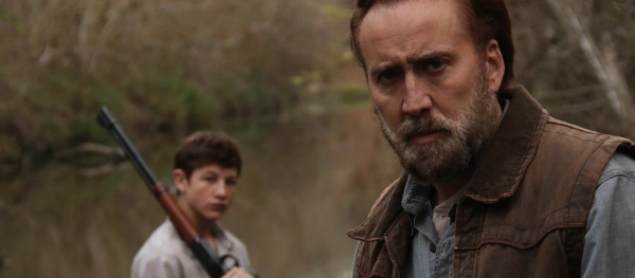
From director David Gordon Green, gothic Texan tale Joe gives Nicolas Cage a showy role, in the manner of Werner Herzog’s Bad Lieutenant: Port of Call — New Orleans (2009). Luckily Joe turns out to be a rambling bundle of fun,  thanks in no small part to Cage’s typically uneven (yet always hypnotic) performance. That said, the film earned some glaringly obvious comparisons to Jeff Nichols’ Mud (2012), including the casting of teen actor Tye Sheridan, who plays a similar role in both films.

http://www.youtube.com/watch?v=uIwzTUzmXto

Another gothic tale, this time from Virginia: it’s very important to keep your eyes glued to the screen throughout Jeremy Saulnier’s Blue Ruin. This modern-day Western captures the genre’s grittiest glory by way of contemporary conflicts, with a cast led by Macon Blair. His physical and emotional transformation is one that few performances this year will rival.

Director Saulnier now has two gritty little ditties to his name this year, following up his cinematography credit on I Used to Be Darker, which screened at Sundance in the NEXT category. Blue Ruin reminds me of what John Carpenter was doing 35 years ago with Assault on Precinct 13 (1976). His characters live and breathe and their driving motivations are the stuff that genre audiences can really dig their fingers into. Let’s hope Saulnier is able to make a few more low-budget films before Hollywood snatches him up to make a superhero blockbuster. (And I bet he’ll do a smash-up job if he does.)

Industrial hemp legalized in California

132

After being stuck in legislative limbo for 14 years, industrial hemp will soon be a legally sanctioned agricultural crop in the state of California.

The California Industrial Hemp Farming Act (SB 566) was signed into law on Wednesday by Gov. Jerry Brown, after years of deliberation dating back to 1999, a process that included multiple gubernatorial vetoes. The freshly signed law will allow approved California residents to grow hemp for industrial purposes by reclassifying the once-felonious plant as a “fiber or oilseed crop.”

SB 566, a bill championed since 2005 by Sen. Mark Leno (D), defines industrial hemp as the “nonpsychoactive types of the plant Cannabis saliva L. and the seed produced therefrom, having no more than 3/10 of 1 percent of tetrahydrocannabinol (THC) contained in the dried flowering tops.” 

In simpler terms: It doesn’t protect marijuana, but rather marijuana’s less mind-bending cousin, which is far more useful as a raw industrial material.

“We are very pleased to have the signature,” Sen. Leno told the Guardian. “It’s been a 10-year effort to get here. It’s a job still, but [the passing of SB 566] will help sustain family farms in California for the future and likely create more job opportunities. Hemp is a $500 million a year industry in California, and it’s growing at 10 percent annually.”

California now follows in the footsteps of nine other states and 30 other countries that have reclassified the innocuous plant as a crop with agricultural and commercial value. And it is quite valuable.

“This is a miracle plant that has served the planet earth well for, literally, millennia, and that we currently legally manufacture and sell thousands of hemp products including food, clothing, shelter, paper, fuel, all biodegradable products,” said Leno. “It’s renewable every 90 days, grows without herbicides, pesticides and fungicides, and needs less water than corn. It is the definition of sustainability.”

But the reputation of hemp hasn’t always had champions like Sen. Leno. Since the initial proposal of HR 32 back in 1999, the bill has been vetoed four times by three different governors. Former Gov. Arnold Schwarzenegger cited a “false sense of security” he feared would be cultivated amongst the growers of the crop, due to its illegality at a federal level.

Gov. Brown had previously shot down the proposed legislation in 2011, citing a gap in state and federal law as the reason. However, he did remark in his veto message at the time that “it is absurd that hemp is being imported into the state, but our farmers cannot grow it.”

And it would seem that Brown’s recognition of hemp’s merits finally outweighed his concern over the potential for California growers to face federal prosecution, which is a major relief for the architects of SB 566. Now Californians can stop relying on imported hemp from Mexico and Canada (among other places) and start legally manufacturing their own.

“We currently manufacture literally thousands of [hemp] products — legally — and sell them,” said Leno. “This is why this issue has been so nonsensical.”

The “nonsensical” issue has had deep roots, given hemp’s historically ambiguous federal standing. As Brown’s 2011 veto message noted, “federal law clearly establishes that all cannabis plants, including industrial hemp, are marijuana, which is a federally regulated controlled substance.”

But that isn’t a universally held assertion. Back in 1970, the Ninth Circuit Court of Appeals ruled that the federal Controlled Substances Act of 1970 “explicitly excludes nonpsychoactive hemp from the definition of marijuana,” a decision that the federal government never appealed. It’s a decision that Sen. Leno agrees with.

“We’ve always believed that there is no federal preemption, because we believe that that court case ruled that Congress had knowingly exempted industrial hemp from the Controlled Substances Act of 1970 –because it’s not a drug,” said Leno.

Now the state of California can do what more than 30 countries (including Canada, Great Britain, France, Germany and China) and nine states are already doing: Cultivating and processing a plant that many have touted as the “miracle plant.”

Now that SB 566 has passed, however, the looming question still remains as to how the federal government will respond. But Leno is confident that it will respect the will of California lawmakers.  

“I have great confidence in a recent statement by Attorney General Eric Holder,” said Leno. “He’s said that if a state puts into place a legal allowance and regulatory scheme, that the federal government would not interfere with marijuana. Now, we need clarification between hemp and marijuana, but there’s no sensical way that that could be interpreted that hemp is excluded, given that hemp’s not a drug.”

Either way, hemp is on the horizon here in California.

Race car drivers, rock stars, witches, flight attendants, and more: choose your Halloween costume from this week’s new movies!

0

For this week’s longer reviews, check out Dennis Harvey’s take on the doc Inequality for All, and my chat with Metallica guitarist Kirk Hammett in honor of the band’s new 3D IMAX concert film, Metallica: Through the Never. Read on for short takes galore!

http://www.youtube.com/watch?v=ZUiuzXP41aY

Baggage Claim Robin Thicke may be having the year of a lifetime, but spouse Paula Patton is clearly making a bid to leap those “Blurred Lines” between second banana-dom and Jennifer Aniston-esque leading lady fame with this buppie chick flick. How competitive is the game? Patton has a sporting chance: she’s certainly easy on the eyes and ordinarily a welcome warm and sensual presence as arm candy or best girlfriend — too bad her bid to beat the crowd with Baggage Claim feels way too blurry and busy to study for very long. The camera turns to Patton only to find a hot, slightly charming mess of mussed hair, frenetic movement, and much earnest emoting. I know the mode is single-lady desperation, but you’re trying too hard, Paula. At least the earnestness kind of works — semi-translating in Baggage Claim as a bumbling ineptitude that offsets Patton’s too-polished-and-perfect-to-be-real beauty. After all, we’re asked to believe that Patton’s flight attendant Montana can’t find a good man, no matter how hard she tries. That’s the first stretch of imagination, made more implausible by pals Sam (Adam Brody) and Janine (singer-songwriter Jill Scott), who decide to try to fix her up with her old high-flying frequent-flier beaus in the quest to find a mate in time for her — humiliation incoming — younger sister’s wedding. Among the suitors are suave hotelier Quinton (Djimon Hounsou), Republican candidate Langston (Taye Diggs), and hip-hop mogul Damon (Trey Songz), though everyone realizes early on that she just can’t notice the old bestie (Derek Luke) lodged right beneath her well-tilted nose. Coming to the conclusion that any sane single gal would at the end of this exercise, Patton does her darnedest to pour on the quirk and charm — and that in itself is as endearing as watching any beautiful woman bend over backwards, tumbling as she goes, to win an audience over. The strenuous effort, however, seems wasted when one considers the flimsy material, played for little more than feather-light amusement by director-writer David E. Talbert. (1:33) (Kimberly Chun)

http://www.youtube.com/watch?v=zzkAFDwllPQ

Cloudy With a Chance of Meatballs 2 The sequel to the 2009 animated hit based on the children’s best-seller promises the introduction of “mutant food beasts,” including “tacodiles” and “shrimpanzees.” (1:35)

http://www.youtube.com/watch?v=JuPXDuqicmo

Don Jon Shouldering the duties of writer, director, and star for the comedy Don Jon, Joseph Gordon-Levitt has also picked up a broad Jersey accent, the physique of a gym rat, and a grammar of meathead posturing — verbal, physical, and at times metaphysical. His character, Jon, is the reigning kingpin in a triad of nightclubbing douchebags who pass their evenings assessing their cocktail-sipping opposite numbers via a well-worn one-to-10 rating system. Sadly for pretty much everyone involved, Jon’s rote attempts to bed the high-scorers are spectacularly successful — the title refers to his prowess in the art of the random hookup — that is, until he meets an alluring “dime” named Barbara (Scarlett Johansson), who institutes a waiting period so foreign to Jon that it comes to feel a bit like that thing called love. Amid the well-earned laughs, there are several repulsive-looking flies in the ointment, but the most conspicuous is Jon’s stealthy addiction to Internet porn, which he watches at all hours of the day, but with a particularly ritualistic regularity after each night’s IRL conquest has fallen asleep. These circumstances entail a fair amount of screen time with Jon’s O face and, eventually, after a season of growth — during which he befriends an older woman named Esther (Julianne Moore) and learns about the existence of arty retro Swedish porn — his “Ohhh…” face. Driven by deft, tight editing, Don Jon comically and capably sketches a web of bad habits, and Gordon-Levitt steers us through a transformation without straining our capacity to recognize the character we met at the outset — which makes the clumsy over-enunciations that mar the ending all the more jarring. (1:30) (Lynn Rapoport)

http://www.youtube.com/watch?v=L1TDTv_tGd8

Enough Said Eva (Julia Louis-Dreyfus) is a divorced LA masseuse who sees naked bodies all day but has become pretty wary of wanting any in her bed at night. She reluctantly changes her mind upon meeting the also-divorced Albert (James Gandolfini), a television archivist who, also like her, is about to see his only child off to college. He’s no Adonis, but their relationship develops rapidly — the only speed bumps being provided by the many nit-picking advisors Eva has in her orbit, which exacerbate her natural tendency toward glass-half-empty neurosis. This latest and least feature from writer-director Nicole Holofcener is a sitcom-y thing of the type that expects us to find characters all the more adorable the more abrasive and self-centered they are. That goes for Louis-Dreyfus’ annoying heroine as well as such wasted talents as Toni Colette as her kvetching best friend and Catherine Keener as a new client turned new pal so bitchy it makes no sense Eva would desire her company. The only nice person here is Albert, whom the late Gandolfini makes a charming, low-key teddy bear in an atypical turn. The revelation of an unexpected past tie between his figure and Keener’s puts Eva in an ethically disastrous position she handles dismally. In fact, while it’s certainly not Holofcener’s intention, Eva’s behavior becomes so indefensible that Enough Said commits rom-com suicide: The longer it goes on, the more fervently you hope its leads will not end up together. (1:33) (Dennis Harvey)

Haute Cuisine Director and co-writer Christian Vincent’s unassuming ode to French food takes for granted that we’re here to learn about the life, joys, and preoccupations of a working female chef, regardless of politically correct concerns (dig that foie gras reference) or gossipy tendencies. Precisely encapsulating a very un-haute attitude that falls in line with its mild-mannered protagonist, Haute Cuisine breaks its cool only when the country’s head of state comes into view or a testosterone-y rival pulls a power play. As the movie opens, Hortense Laborie (Catherine Frot) is hard at work at a far humbler job — cooking fine food for the rough crowd of workers at the Alfred Faure base in Antarctica while dismissing the attentions of a visiting video crew. Flashback to the story they’re hot to uncover, as the country innkeeper, farmer, and cooking teacher is swept off her feet by none other President François Mitterrand, not for romance but to make home-cooked regional food for his personal meals. The halls of power — and Hortense’s passage through the labyrinthian bureaucracy and pecking order — threaten to blot out the identity of the little cook from the country, but she holds her own in her chaste relationship with Mitterrand as she coaxes him to let her source directly from farmers and producers. However, the mostly one-way, closed relationship between the two can’t last forever. Haute Cuisine doesn’t attempt to reinvent the wheel — much as Hortense would never claim to tweak her beloved St. Honoré —and it generally refrans from looking much deeper into its main character beyond what Frot offers in her acutely telling looks and her playful give-and-take with sous chef Nicholas (Arthur Dupont). But it does gently draw the food lover and the more oblivious eater alike into its spell, with a soupçon of tasteful, and tasty-looking, food porn and its obvious respect for chefs who are dedicated to giving pleasure to those they serve. (1:35) Opera Plaza. (Kimberly Chun)

http://www.youtube.com/watch?v=5fBkfXvhzTE

Inuk Though the Greenlandic-language Inuk takes its name from its troubled Inuit protagonist, ice is arguably its central character. And the lyrical sweep and striking beauty of the icy expanses in Uummannaq Bay and Nuuk, Greenland, threaten to upstage the adventure story at Inuk’s heart. Seeking refuge from his alcoholic mother and her abusive friends and escaping into hip-hop, the teenage Inuk (Gaaba Petersen) has been found battered and sleeping his car far too often, so he’s taken to a in the north by teacher and foster care worker Aviaaja (Rebekka Jorgensen) to learn about the old ways of hunters and an ancient wisdom that is melting away with the polar icecap. A journey by dogsled with local hunters turns into a rite of passage when bear hunter Ikuma (Ole Jørgen Hammeken) takes Inuk under his damaged wing and attempts to reconnect him to his heritage. “The ice is no place for attitude,” he declares, as Inuk makes foolish choices, kills his first seal, and learns the hard way about survival north of the Arctic Circle. You can practically feel the freezing cold seeping off the frames of this gorgeous-looking film — a tribute to director Mike Magidson and his crew’s skills, even when the overt snow-blinding symbolism blots out clarity and threatens to swallow up Inuk. (1:30) Roxie. (Chun)

http://www.youtube.com/watch?v=-hteIj01zyo

“Millie Perkins in the Exploitation Cinema of Matt Cimber”  Millie Perkins was a successful 20-year-old model with no acting experience when she made her film debut in 1959’s The Diary of Anne Frank, playing the title role. But her mainstream Hollywood career almost immediately foundered and soon she was playing much less angelic roles in B-movies — among them several subsequently cult-worshipped Monte Hellman films and the 1968 AIP counterculture-nightmare hit Wild in the Streets. In the mid-1970s she made two back-to-back movies for Italian exploitation maestro Matt Cimber (aka Thomas Vitale Ottaviano), who a decade earlier had briefly been married to Jayne Mansfield. The Film on Film Foundation is screening rare 35mm prints of both in this one-night tribute bill. The better known of the duo, The Witch Who Came From the Sea (1976), is a bizarre psychochiller in which Perkins gets one hell of a role as SoCal cocktail waitress Molly, who seems normal enough (if a tad taciturn) but is prone to irrational rages, blackouts, drinking binges, indiscriminate pill-popping, and … murder, though we (and she) aren’t always sure whether her crimes are real or delusional. While Witch has gained some critical appreciation in recent years, the prior year’s Lady Cocoa (also released, even more improbably, as Pop Goes the Weasel) remains obscure — a late addition to the early ’70s blaxploitation craze with “First Lady of Las Vegas” Lola Falana in a non-singing role as a tough jailbird who gets a 24-hour pass to testify against her evil thug ex-boyfriend — or at least try to, if his goons (including NFL Hall of Famer “Mean” Joe Greene) don’t snuff her first. Perkins has a supporting role as one half of an alleged honeymooning couple who aren’t quite as harmless as they seem. Perhaps overwhelmed by the challenge of topping these two films, Perkins was inactive for several years afterward, then found herself welcomed back to Hollywood via numerous roles in TV movies and big-screen ones, plus recurring roles on primetime soap Knots Landing and the 1990 miniseries Elvis (as the King’s mom). Roxie. (Dennis Harvey)

http://www.youtube.com/watch?v=1ZXDa0Y-dPA&noredirect=1

On the Job Filipino director Erik Matti’s gritty crime thriller has such a clever hook that Hollywood is already circling it for a remake. No shock there. It is surprising, however, that On the Job is based on true events, in which prisoners were temporarily sprung to work as hired guns for well-connected politicos. (Kinda genius, if you think about it.) The big-screen version has veteran inmate Tang (Joel Torre) dreading his imminent parole; he’d rather have the steady income from his grisly gig than be unable to provide for his wife and daughter. As he counts down to his release, he trains volatile Daniel (Gerald Anderson) to take his place. Poking around on the other side of the law are world-weary local cop Acosta (Joey Marquez) and hotshot federal agent Francis (Piolo Pascual), who reluctantly team up when a hit cuts close to home for both of them. The case is particularly stressful for Francis, whose well-connected father-in-law turns out to be wallowing in corruption. Taut, thrilling, atmospheric, and graphic, On the Job makes up for an occasionally confusing storyline by offering bang-up (literally) entertainment from start to finish. Groovy score, too. (2:00) Metreon. (Cheryl Eddy)

http://www.youtube.com/watch?v=99XxMLgE3AM

Out in the Dark Meeting in a Tel Aviv gay bar, Nimr (Nicholas Jacob) and Roy (Michael Aloni) are instantly smitten with each other, though there’s much dividing them. Roy is a Jewish lawyer working at his father’s high-end firm, while the former is a Palestinian graduate psychology student who’s lucky just to get a temporary travel pass so he can take one prestigious course at an Israeli university. Even this small liberty brings him trouble, as his increasingly fanatical older brother considers any contact with Israelis borderline traitorous to their homeland and to conservative Muslim values. Needless to say, Nimr is not “out” to his family — and even though Roy is, his parents’ “tolerance” proves superficial at best. The men’s relationship soon runs into considerable, even life-imperiling difficulty from various political, cultural, religious and personal conflicts. Director and co-writer Michael Mayer’s first feature isn’t the first screen love story between star-crossed Israelis and Palestinians (or even the first gay one). It can be a bit clumsy and melodramatic, but nonetheless there’s enough chemistry between the leads and earnest urgency behind the issues addressed to make this a fairly powerful story about different kinds of oppression. (1:36) Elmwood. (Dennis Harvey)

http://www.youtube.com/watch?v=L_u3FODrenM

Rush Ron Howard’s Formula One thriller Rush is a gripping bit of car porn, decked out with 1970s period details and goofily liberated camera moves to make sure you never forget how much happens under (and around, and on top of) the hood of these beastly vehicles. Real life drivers James Hunt and Niki Lauda (played by Chris Hemsworth and Daniel Brühl, respectively) had a wicked rivalry through the ’70s; these characters are so oppositional you’d think Shane Black wrote them. Lauda’s an impersonal, methodical pro, while Hunt’s an aggressive, undisciplined playboy — but he’s so popular he can sway a group of racers to risk their lives on a rainy track, even as Lauda objects. It’s a lovely sight: all the testosterone in the world packed into a room bound by windows, egos threatening to bust the glass with the rumble of their voices. I’m no fan of Ron Howard, but maybe the thrill of Grand Theft Auto is in Rush like a spirit animal. (The moments of rush are the greatest; when Lauda’s lady friend asks him to drive fast, he does, and it’s glorious.) Hunt says that “being a pro kills the sport” — but Howard, an overly schmaltzy director with no gift for logic and too much reliance on suspension of disbelief, doesn’t heed that warning. The laughable voiceovers that bookend the film threaten to sink some great stuff, but the magic of the track is vibrant, dangerous, and teeming with greatness. (2:03) (Sara Maria Vizcarrondo)

Sweat Lodge throws rocks, stays noisy

10

Here’s a brand new video from local “pow wow punk” band Sweat Lodge. Featuring the song “Throwing Rocks,” it shows the noisy psych band hanging out around San Francisco, playing music, drinking beers. All fun weekend activities! Sweat Lodge plays next Oct. 1 at Bottom of the Hill, with more early October opportunities to see the band live at the Hemlock and the Knockout.

Goodbye to a homebrewing legend: RIP Griz

4

For many Bay Area homebrewers, Richmond neighborhood shop San Francisco Brewcraft is the main brewing hub. It’s where newbies pick up their kits and learn to brew, and seasoned veterans return for more tips, recipes, and grains.

And the stern but friendly, no bullshit leader of that guild was Griz (aka Greg Miller), a homebrewing expert and beloved teacher. Griz, who long suffered from diabetes and last year was diagnosed with cancer, passed away in his sleep last Monday, Sept. 23.

He’s survived by his wife Barbara and his dog, Louie, along with the employees and friends of Brewcraft.

Fellow Brewcraft employee Andre Sanchez tells me, “People have been coming through [the store], it’s been a huge outpouring of condolences for Griz.”

Griz took over Brewcraft in the late ‘90s and has taught the free homebrewing class there ever since, until he got too sick to come in. “He’s taught not only amateur homebrewers who now have become semi-pro to pro brewers throughout the entire Bay Area, but this whole craft brewing explosion that happened in the mid-2000s, we felt it here in the shop of course and Griz was a big part of teaching a lot of the brewers that came through.”

Sanchez notes that the San Francisco Brewers Guild will be making special beers in honor of Griz — using old-school recipes — but the details are in the works as of press time.

And local homebrewers have also been coming in to Brewcraft with Griz’s old recipes in hand, to gather the materials to brew their own batches in honor of the legend.

The San Francisco Homebrewers Guild posted a tribute to Griz, whom they describe as a brewer-philosopher, and also included some of his best quotes (below):

“He left us not only with many great memories, but with loads of fantastic quotes about how you shouldn’t be ‘anal retentive’ when you brew (a little funnier than the old ‘don’t worry, relax, have a homebrew’ quote, if you ask me), ‘you can’t brew a lager,’ and how it was good and comforting to be connected to a craft that mankind had been undertaking for thousands of years, ‘but turn off your goddamn cell phone before you start because it’s a creative artistic endeavor…where you can iron yourself out.’”

Griz’s coworkers are working on plans for a celebration of his life. Bay Guardian readers will note a reference to Griz and Brewcraft in recent Beer & Wine cover story, “We Built a Monster Kegerator.”

Brewcraft is located at 1555 Clement, SF. For more information visit www.sfbrewcraft.com.

For a taste of what Griz was like, see the video below:

http://www.youtube.com/watch?v=UkAJU5USlWg

TIFF diary #6: For music lovers

1

Swedish auteur Lukas Moodysson is back and he may have just created one of the most riotous punk rock extravaganzas ever. We Are the Best! (Sweden/Denmark) played to packed houses throughout the entire Toronto International Film Festival, creating an astounding word of mouth buzz.

http://www.youtube.com/watch?v=TfPytPjV1xc

While the film takes place in the early 1980s,  I never felt like the movie was attempting to represent the entire era. In fact, Moodysson’s film (which is based on wife Coco Moodysson’s graphic novel) allows the all-grrrl band to blossom into real-life punk rockers. Evoking passionate punk portrayals like Times Square (1980) and Ladies & Gentleman, The Fabulous Stains (1981), which he was unaware of until I interviewed him, this coming of age drama seems to capture Stockholm circa 1982 in perfect detail.

The soundtrack was a major part of discussion during the Q&A, becoming the perfect entry point for those of us desiring an history lesson on the Swedish punk scene. But what I found most exciting about We Are the Best! is its approach to gender roles, as its young female characters attempt to cast aside pressures to look pretty. Either way, Moodysson has created a film just as enjoyable as his debut feature, 1998’s Show Me Love. It has the potential to become a worldwide hit in the same vein as Trainspotting (1996) and Run Lola Run (1999).

Elsewhere, Maneesh Sharma’s latest romantic comedy A Random Desi Romance (India) is cause for quite a celebration! This Hindi musical, which runs two and a half hours, feels like a major shift in the mainstream Bollywood system.

Not only are there no classic “hunk” characters, but stars Parineeti Chopra and Vaani Kapoor have quite progressive attitudes toward love and life that typically I have only seen in Indian films made outside the country. The leading male is no slouch either, played purposefully awkwardly by Sushant Singh Rajput. The characters are wrapped up in a surprisingly consistent story that critic Danny Bowes called “the best romantic comedy made anywhere in the world for 2013.”

After an exciting America’s Cup finish, San Francisco tallies its score

72

When Oracle Team USA completed a stunning comeback yesterday to retain the America’s Cup, winning eight consecutive races, it was indeed a big sporting moment. It even had us skeptics at the Bay Guardian, who had already expressed sympathies for the Kiwi team, anxiously following the action. But the question remains whether this overhyped sailing competition will be a win for the host city of San Francisco.

That verdict won’t come in until November when race organizers and city officials finish collecting and counting revenues and expenditures related to the regatta. But it’s certain to be better from a fiscal perspective than it looked like a week ago, when the New Zealand team seemed to be headed for a blowout victory.   

For Larry Ellison — Oracle co-founder, team owner, lead champion for the AC-72 cause and de facto face of the 34th America’s Cup — it must have felt like a disaster. His $100-plus million nautical investment was tanking, attendance and revenue figures were falling far short of expectations and the support he had from the local sailing community was quickly turning malignant after Oracle lost the day’s only race, falling to 1-8 and facing seven consecutive match-points. 

But then Oracle started winning. They figured out the tricky upwind legs that had plagued them for the first two weeks of racing. They replaced their fired tactician with four-time Olympic gold medal winner Ben Ainslie. They started beating the snot out of Team New Zealand and in the races they were losing, Mother Nature would toss them lifesavers disguised as strange patches of wind. 

After weeks of fumbling, it looked like the moles had found their own mallet and were whacking away at their tormentors, and they were doing so to the tune of an unprecedented winning streak. And with it, the America’s Cup image underwent a radical transformation; both in sport and in reception. 

The change in sport is simple — both teams have figured out how to race the 13-story tall sailboats through the unpredictable weather patterns and intense ebb tides —but the change in reception is anything but. As of last Wednesday, Pier 27 was dominated by Team New Zealand supporters. Nearly everyone in attendance was waving a New Zealand flag or wearing one, and the few Oracle fans left seemed to be nothing more than lost tourists who stumbled upon the international event.

But support for Oracle steadily grew during their winning streak — Americans do love a winner — and now it looks like support for the event has been as well, something that can be attributed both to Oracle’s winning streak and the necessity for Kiwi fans to finally go home after over a month of competition.

As four-time Cup attendee Sonny Shaw told the Guardian, “I  had to change my flight and pay a lot of money, about 400 US dollars at this stage, to stay till [Tuesday]. I was hoping it would be finished by Monday.” 

As it was every single Kiwi in the park. But the numbers are representative of this trend: As of Sept. 18, according to Cup organizers, the gates had drawn just 700,000 of the 2 million anticipated attendees. Ellison and his team had raised $16.5 million of the $20 million needed to offset the city’s costs (with a reported $14 million going toward the reimbursement), and broadcasts were drawing about 1 million viewers domestically, which meant that the Cup was failing to deliver on virtually all of its promises.  

But the extra race days have drummed up interest both in the competition and in the precariously perched Oracle Team USA. The crowds — by the end ostensibly split between Emirates and Oracle as each passing day thins out the Kiwi crowds — became far larger, more raucous and more star-spangled. 

The decks were packed, the cheers are both loud and informed, and the local venom present for the first week-and-a-half of racing is at a minimum. 

Even expectations might be met. The overall goal of 2 million attendees still seems downright impossible, but as of Monday evening, 926,000 official attendees had been counted, not including those who watched the race outside of officially designated areas (up 226,000 in less than a week, according to Cup officials). In addition to the attendance spike, the 6,500 jobs that were created for the event are still paying out and the extra time only increases the likelihood that the full $20 million bill the City was expected to foot will be offset by private funds.

It was a helluva ride, San Francisco. Was it worth it? We’ll see.

Peter Hook of Joy Division and New Order altered the course of pop music, go see him live

9

Three decades after its initial release, New Order’s Power, Corruption, & Lies (1982) might sound deceptively ordinary. From the early ’90s successes of Happy Mondays and the Stone Roses, to more recent outfits like LCD Soundsystem and Cut Copy, it’s easy to take for granted just how completely the Manchester band’s hybrid of guitar rock and sequenced dance music has permeated the modern musical landscape. Yet, as bassist and co-songwriter Peter Hook would have you believe, that fateful LP was the moment that started it all.

“New Order [was] one of the first rock bands that used dance elements, and now everybody does it,” Hook tells the Bay Guardian over the phone from a hotel room in Vancouver.

In continuation of a recent tour that featured song-for-song replications of both Unknown Pleasures (1979) and Closer (1980) by Hook’s previous band, the equally revelatory post-punk outfit Joy Division, his current ensemble, Peter Hook & the Light, is set to grace the Mezzanine stage on Fri/27 with front-to-back covers of New Order’s first two LPs, 1981’s Movement, and of course, Power, Corruption, & Lies.

Citing fellow Manchester band Primal Scream’s recent tour of its seminal 1991 LP, Screamadelica as inspiration,Hook waxed enthusiastic about the potential of front-to-back interpretations of records in the live setting.

“The idea for playing the LPs in full — which these days is a very underrated art-form, especially amongst the young — came from [Primal Scream bandleader] Bobby Gillespie… [who] simply said the reason they were playing Screamadelica in full, was because he felt that over the path of his career, he had ignored songs that were fantastic, because they were of a different mood on the album than how they played them live,” Hook explains.

“It comes down to the fact that when you play an album live, it is more challenging to listen to than a greatest hits set. I must admit, like picking at a scab on your arm or on your knee, it appeals to you for an insane reason.”

However, while many musicians revisit their back-catalogues with the intention of embellishing or refining their past work, Hook seems intent on replicating his formative LPs as faithfully as possible, right down to the production sound of Factory Records legend Martin Hannett, whose esteemed work on Unknown Pleasures, Closer, and finally Movement, bridged Joy Division and New Order as significantly as any official member of either band.

“The interesting thing about the Joy Division recordings and the first New Order recording,” Hook contends, “is that Martin Hannett actually had a lot of input on the sound and the ambience and the feel, shall we say, of the music… I [strive to be] truthful to the way the records were put together, and the little tricks that Martin used, and the sound that Martin used to immortalize those records.”

Hannett’s radical use of reverb, echo, and empty space, equally suggestive of Lee “Scratch” Perry and Berlin-era David Bowie, saturated “I.C.B,” “Senses,” and other tracks on Movement with the same sense of brittle gloom that defined signature Joy Division cuts like “She’s Lost Control,” and “Disorder.” Yet, Joy Division bandleader Ian Curtis’ suicide in 1980 (whose death motivated bandmates Hook, Bernard Sumner, and Stephen Morris to reform under the New Order moniker) left the band in a state of crisis, unable to escape Curtis’ shadow, but desperate to move on.

Movement, to me, seems like a Joy Division musical record, with New Order vocals,” Hook observes. “There is a struggle on that record, between the two bands. Now unfortunately, the biggest struggle was with Martin Hannett, [who] was very badly affected by Ian’s death, and I think the music reminded him of what he’d lost… When we came to sing, he fucking hated it. It was a real frustration for him, to have this wonderful music, and yet these… in his words, these three idiots singing.” Hook laughs.

“Because it had coincided with a rather heavy drug addiction, it was a pretty bad time for Martin, and Bernard and I did make the conscious decision that we would have to get rid of him, or he was going to have to get out on his own. That was the feeling. But, because of those feelings, and because of Martin’s attitude, the vocals on Movement were really removed, and sound very shy, very reluctant, and very distant. And that’s one thing that’s very nice about playing the album now, is that finally, you’re able to relish the music, to give the vocal a bit of oomph that only 30 years’ experience can get you.”

Aching to start afresh, Hook, Sumner, and Morris fired Hannett, whose reputation began to wane once the Durutti Column, A Certain Ratio, and other bands on the Factory Records roster opted to self-produce as well. This shakeup, introduced on Power, Corruption, & Lies would result in New Order establishing its identity and purpose, as Sumner and Morris’ affinity for electronics and Hook’s penchant for rock conventions would coincide to irreversibly alter the course of pop music.

“There was a certain confidence in us [on Power, Corruption, & Lies.],” Hook says. “Bernard and Steven, in particular, threw themselves into the drum machines and the sequencers with great aplomb, and really did take it as far as they possibly could go. Them two were like kids in a toy shop. I can’t say that the approval was 100 percent on my part, because I preferred to be in a group that rocked…as opposed to waiting for the ‘click, click, click’ of the sequencers to begin. So, there was a battle between us all, but that battle actually resulted in you getting that perfect melding of rock and sequencers that now is taken for absolute granted in music.”

“Age of Consent,” “The Village,” and “Blue Monday,” (still the UK’s bestselling 12″ single of all time) rejected Hannett’s creative influence, with their seminal blend of candy pop hooks and the relentless drive of club music, while Sumner’s introduction as lead singer abandoned Curtis’ doomy, gloomy lyrics and vocal stylings in favor of a sunnier, more optimistic approach.

“The whole feel of life, after you got over the grief of Ian dying… the ’80s were much more optimistic, a much lighter period than the ’70s. And, I think you can hear that in our approach to the lyrics,” Hook says. “Other than that, Ian’s [voice] is a baritone, and it sort of leads to gravity, whereas Bernard is much more of an alto, which leads to levity.”

Livelier by nature than Joy Division, New Order’s records would find a devoted following of musicians, rock fans, and ravers alike. Yet, the band arguably made a deeper cultural impact with its creative and financial support of Factory Records’ Manchester nightclub, the Haçienda, and its subsequent curation of UK club culture.

“The Haçienda became, in itself, a marriage of rock, with very many live groups performing, and dance in the way that you started to see the rise of the DJ, and the rise of sequenced dance music. So, we were in the right place, in I suppose you have to say the right time,” Hook says. “People of Manchester responded very well. The gigs were very well attended. But, once ecstasy and acid house hit in ’87, you had a completely different complexion, and then the Haçienda became the most important place in Manchester.”

Inspired by New Order’s brand of sequenced pop, as well as the sexy, druggy hedonism of rave culture, bands like Primal Scream and Happy Mondays emerged in the late ’80s and early ’90s to form the Madchester scene, resulting in a more ecstatic synthesis of rock and electronic elements than ever before.

“Madchester was the bastard offspring, shall we say, of what do they call it… a one night stand New Order had with [club culture.] I just might put that in my book,” Hook says, with a hearty laugh.
After 25 years as a band, having continued its trajectory on records like 1985’s Lowlife and 1986’s Brotherhood (both of which Hook plans to tackle on his next tour), New Order’s balance of rock and electronic elements began to veer further into sequencer territory, resulting in personal and creative differences that would lead to the group’s disbandment in 2006. Tensions reached an all-time high, though, in 2011, when Sumner and Morris reunited under the New Order moniker, leaving Hook behind.

While he denied forming Peter Hook & the Light as a response to his bandmates’ betrayal, Hook was quick to criticize New-Order-circa-2013’s “greatest hits” treatment of the group’s back catalogue, scorning the new lineup with the dreaded “tribute band” tag, and making the case for his full-album method as a better approach.

“I think playing albums live brings with it its own set of difficulties,” Hook says. “In albums, you put light and shade quite a lot, and the mood is constructed like someone would construct a piece of art, like a painting, where you put shadows in the corner, and something bright in the middle. Whereas, when normal bands play, if we’re gonna reference it to, say, New Order, you just play the hits, so that you get a sugar high.

“If I just went onstage and played ‘Bizarre Love Triangle,’ ‘Krafty,’ ‘Round & Round,’ ‘True Faith,’ ‘Blue Monday,’ and ‘Temptation,’ everyone would just go mental at the start and mental at the end. But, I don’t think it would’ve satisfied me. I think I would’ve found that too easy.”

In opposition to nu-New Order’s mishmashed approach to the band’s repertoire, Peter Hook & the Light (whose lineup consists of Hook’s son, Jack Bates, on bass, in addition to several members of his retired Monaco project) seek to focus on one specified chunk of the discography at a time; Movement and Power, Corruption, & Lies arguably present the most revealing succession of albums in the New Order catalogue, offering Friday’s audience a glimpse into the creative and emotional process that transformed a sullen, introverted post-punk outfit into an effervescent explosion of guitars and sequencers.

“It actually appeals to me that we’re going through a list, ticking everything off,” Hook says. “Maybe Bernard’s aim is to throw legal letters at me, as my aim in life would be to play every track that I’d ever written and recorded, once, before I go and shuffle off this mortal coil.”

Peter Hook & the Light
With Slaves of Venus, DJ Omar
Fri/27, 9pm, $25
Mezzanine
444 Jessie, SF
(415) 625-8880
www.mezzaninesf.com

New policies, and a court ruling, protect whales from ships in SF Bay and along the Pacific coast

55

Whales, dolphins, and marine mammals in the San Francisco Bay and along the California coast could be better protected by a federal court ruling on US Navy exercises and new policies being put in place to prevent whales from being struck by ships.

US District Court Judge Nandor Vadas issued a ruling late yesterday (Wed/25) finding that the National Marine Fisheries Service failed to protect thousands of whales, dolphins, sea lions, seals, and porpoises from Navy training exercises along the Pacific coast. It requires the agency to reconsider permits and whether they violated the Endangered Species Act.  

“This is a victory for dozens of protected species of marine mammals, including critically endangered Southern Resident orcas, blue whales, humpback whales, dolphins, and porpoises,” said Steve Mashuda, an Earthjustice attorney representing a coalition of conservation and Northern California Indian Tribes. 

Meanwhile, in an unrelated development, the issue of an increasing number of whales strikes in the bay has been getting some proactive attention from regulators, who have developed safer new shipping polices and a whale tracker application.  

The issue drew attention in 2010 when at least five whales that had been struck by ships beached themselves and died, that is thought to be only a small indicator of a much larger problem.

“According to experts, only about 10 percent of whales killed by strikes show up on beaches,” lead researcher Dr. Jamie Jahncke of Point Blue Conservation Society, which has been working with the Coast Guard on ways to make the bay safer for whales.

The Coast Guard implemented narrower and longer shipping lanes beginning June 1 in San Francisco Bay, as well as in Los Angeles and Long Beach, in an attempt to reduce the number of whale strikes in these regions. The Coast Guard has also begun directing ships to reduce their speed when entering and exiting the bay to no more than 10 knots.

The purpose of the change in the shipping lanes is to keep ships out of primary whale habitats and other areas where they are typically found. Jahncke believes these changes will reduce the interaction between whales and ships by 70 percent.

Both Jahncke and Melissa Pitkin, also of Point Blue, see these new policies as a good thing.

Jahncke called the changes “very positive” and added they are good “for human safety and benefit wildlife as well.”

Pitkin says the Coast Guard “has been a great participant” and part of a “great collaborative effort” to make waters like San Francisco Bay safer for the whales.

While the new shipping lanes keep ships out of areas in which whales are most commonly found, the animals do not confine themselves to only those parts of the bay. Researchers go out on the bay to collect information on where the whales go and congregate, but they are only out there three to five weeks out of the year.

This is why, Jahncke says, they “need additional help… [and] eyes out on the water.”

Researchers have been seeking ways to further reduce the chances of ships striking whales in San Francisco Bay. They have recently decided to enlist the public’s help with the implementation of the new Whale Spotter app, which will allow anyone out on the water to report where they see whales.

The hope is that whale watchers, recreational fishers, and others will use the app to report any whale sightings. Point Blue will then be able to use the information provided via the app to “make maps and represent the data in a way NOAA can use it,” says Jahncke.

Pitkin further addresses the purpose of this app.

“The goal is to get information available in real-time to mariners about where whale concentrations are so they know” how to alter their course or speed.

The app is not the only way members of the public can join in the efforts to protect local whales. Point Blue is seeking financial contributions to aid their effort to raise funds for the app and ongoing marine research. People can visit www.prbo.org/ to make a donation.

Meanwhile, the federal courts are now asking the US Navy and the agencies that permits its navel exercises to also take heed of their impacts to aquatic ecosystems.

“NMFS must now employ the best science and require the Navy to take reasonable and effective actions to avoid and minimize harm from its training activities,” Mashuda said.

The Navy uses a vast area of the West Coast, stretching from Northern California to the Canadian border, for training. Activities include anti-submarine warfare exercises involving tracking aircraft and sonar; surface-to-air gunnery and missile exercises; air-to-surface bombing exercises; and extensive testing for several new weapons systems.

In 2010 and 2012, NMFS authorized the Navy to harm or “take” marine mammals and other sealife through 2015.  The permits allow the Navy to conduct increased training exercises that can harm marine mammals and disrupt their migration, nursing, breeding, or feeding, primarily as a result of harassment through exposure to the use of sonar.

New science from 2010 and 2011 shows that whales and other marine mammals are far more sensitive to sonar and other noise than previously thought.  In permitting the Navy’s activities, NMFS ignored this new information.  The Court found that the agency violated its legal duty to use this “best available data” when evaluating impacts to endangered whales and other marine life.

Here, piggies: Quick ‘n dirty Folsom party guide

0

Folsom season has started and already many can’t sit still — mostly because of the welts on their tuckuses. But they can still dance! Even the ones suspended in cellophane cocoons. Here’s a quick rundown of recommended parties at which to whip it good. (Everybody loves a link dump! Especially when I’m this hungover. )


THURSDAY

>>THE TUBESTEAK CONNECTION: The original down and dirty Tenderloin bathhouse disco revival weekly party at Aunt Charlie’s Lounge — courtesy of DJ Bus Station John — is always a special place at Folsom. 10pm-2am, $5. 

>>TOUCH OUR JUNK: All the cool kids are getting together at fabulously sleazy Tenderloin gay strip club Nob Hill Theater for a fun little romp. 8:30-11pm, $7.

>>CUB CAMP: I hung out with the nasty Torontonian cuties throwing this party at the Lookout last night, and they are truly nasty and truly cute! 10pm-2am, $7.

>>TWIN PEAKS PARTY: Just throwing this in as a wild card — but they are turning the Showdown bar into a Twin Peaks set and an Angelo Badalamenti band is playing, with free pie. Lynchy! 10pm, free I think.


FRIDAY

>>STEAM: Awfully cute DJ Harry Cross from Chicago turns out this fun, charitable, and, yes, steamy wet towel-themed party at Powerhouse. Some hot straight boys! 9pm-2am, $8.

>>BEARRACUDA: Ugh, bears! I love ’em, even though they’re the popular kids. And I actually have a great rip-roarin time at this huge party at Public Works. 9pm-4am, $20 advance.

>>PEGASUS 3: The city’s neatest menswear store, Sui Generis, is having its annual mixer, sure to be a hot beard-a-palooza. 7-10pm, free.

>>HYSL: “Handle Your Shit Lady!” Scandalous-sounding party at the Lookout with Two Dudes in Love DJing. 9pm-2am, $3.

>>SOME THING MANLY: The great Drag Queen of Soul, Juanita More, pays thribute to James Brown, Elvis, and other manly musical men at this awesome art-drag dance party. With 1000 other queens at the Stud. 10pm-4am, $8. 


SATURDAY

>>LUTHER: Great techno party from the infamous entity known as Luther, sure to sizzle your cockles, and those of hundreds of other cool sexies. 10pm-4am, $15-$20. 

>>DARK ROOM: Dark electronic body music and a cast of future-goth performers (including electro punky High Functioning Flesh) make this the dress-up party dungeon you’re looking for. 9:30pm-2am, $7.

>>RAIME: Dark UK electronic duo will beat you into submission with an audio-visual experience to die for, at Balancoire. 10pm-2am, $15. 

>>INFAMOUS UNIFORM PARTY: The dykealicious Lexington Club orders you to dress up and have hot grrrls. 9pm-2am, free.


SUNDAY

>>DEVIANTSHard-driving Russian techno hottie DJ Boris headlines this, THE party for hip Folsom people into music and sweaty dancing — not just strutting and preening. Two venues, large outdoor space, soul grooves from Hard French, plus a ton more dirty stuff, of course. Of course! 4:30pm-2am, $25-$35.

>>GLORY HOLE: During Folsom Street Fair and after, large and lovely space Tank 18 is hosting a wild party with DJs from lovely disco-revival party Go Bang! and more (including my hot friend Juan — someone pick him up already!). Full bar! 1-10pm, $5. 


TIFF diary #5: Reichardt, Turturro, and Pawlikowski

0

The surprise crowd-pleaser of TIFF 2013 was John Turturro’s Fading Gigolo (US). Showcasing Woody Allen in a rare acting-only role, this surprisingly romantic tale about a man in his mid-50s (played by writer-director Turturro) is as charmingly hilarious as it is deftly dramatic.

http://www.youtube.com/watch?v=cqGDBnYU6rA

The inspired casting choice gives the 78-year-old director (whose own classic works were clearly an influence on Turturro) one of the funniest roles of the year. Amid a notable supporting cast (Sharon Stone, Sofia Vergara, and Liev Schreiber), it’s Vanessa Paradis (Patrice Leconte’s 1999 The Girl on the Bridge) who will truly make your heart skip a beat. Turturro’s refreshing blend of classical romance, modern art, and Jewish culture feels completely out-of-step with most movies being made these days — making it a film I could have easily watched again as soon as it was over.   

Kelly Reichardt’s Night Moves (US) starts out wonderfully strong, with an intense plot-driven premise led by the always hypnotic Peter Sarsgaard. Note I said “plot-driven.” Visually-oriented dramas like Old Joy (2006), Wendy and Lucy (2008), and Meek’s Cutoff (2010) are Reichardt and screenwriter Jon Raymond’s signature, and with those films they’ve set the bar sky-high. Night Moves‘ more traditional structure may mean it has mainstream potential; the film has already drawn comparisons to Zal Batmanglij’s recent The East.

Though I tried to set any reservations aside (is Jesse Eisenberg really ready to carry a film like this?), I found myself wishing that Reichardt hadn’t deviated from the style of her previous films. Fortunately, Pawel Pawlikowski’s Ida (Poland) filled the void. The film picked up TIFF’s International Federation of Film Critics (FIPRESCI) award for Special Presentations, and rightfully so.

The director of the memorable My Summer of Love (2004) roots his latest in a formalistic aesthetic, complete with a 1.37 aspect ratio and a profoundly striking black and white palette. While dreary in its location, this character study of a woman in search of her own identity is anything but colorless. As I’ve warned with other films in my TIFF diary — stay away from plot overviews of this film. Just know that Ida has the power to affect you. If you see it playing at a film festival near you, buy your tickets in advance. This is the quiet jewel of 2013.

Last days at the Albany Bulb

2

To supplement Carly Nairn’s excellent story about the Albany Bulb, whose inhabitants face imminent eviction from this strange, artsy shoreline park, photographer Tim Daw offers this gallery of images that he captured there last weekend. Check em out.