


The New York Times has a great story reporting out how Twitter and its creation myth were hatched in San Francisco. And these are the people that the city’s neoliberal politicians are giving $22 million in corporate welfare to?!?! We can think of some more worthy sources in The City.
SFBG Blogs
Anti-eviction rally in the Mission tomorrow supporting the Mission and Rene Yanez
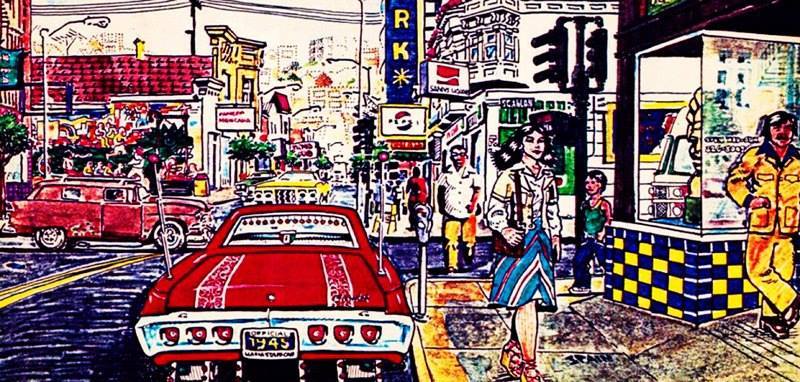
Tomorrow (Sat/12 at 2pm) advocates and defenders of working class San Francisco will march to protest a rash of recent Mission evictions, including the potential ouster of artists and activists Rene Yañez and Yolanda Lopez from their Mission district home.
The organizers want the mayor to declare a state of emergency in the city as the recent Ellis Act evictions have intensified — 125 Ellis Act eviction notices have been filed this year, with the most recent numbers going to the end of August, according to the SF Rent Board. But 175 requests for Ellis Act evictions were filed, meaning 70 percent of Ellis evictions were upheld. The march follows recent wins against gentrification, including blocking a Jack Spade store from opening in the Mission.
Organizer Roberto Y. Hernandez said that since he announced the march he’s been getting calls of support from all over the city, but most notably in Chinatown, the Bayview, and the Castro.
“I heard horror stories of what’s happening to the gay community in the Castro,” he said. “This doesn’t just affect the Mission, this affects the whole city.”
Each of those evictions represents a person or family whose ouster from their apartments may mean ouster from San Francisco altogether. Ellis evictions gained more notoriety this year, first with the plight of the Lee family and now the ouster of Mission artists Yañez and Lopez.
Yañez is widely credited with bringing the celebration of Day of the Dead to the city. He co-founded the Mission’s Galeria de la Raza and practiced art in his home of the Bay Area since the 60s. Now, while suffering from cancer, the 71 year old is being forced from the neighborhood he helped to shape. Lopez, his former wife, is an artist with deep roots in the Chicano/a movements of the ‘60s, and is facing eviction as well.
After 35 years in their home, the artists face the same plight as the Lee’s and even San Francisco’s local nonprofits — ouster in the face of the tech boom’s ever rising rents.
Rene Yañez’s son Rio is an established artist in his own right and rents a unit in the same building. Rio faces the same Ellis Act eviction as his father.
In an open letter to Yañez and the community, artist Guillermo Gómez-Peña wrote, “Rene, you are my artistic godfather and needless to say, you are an icon; the artistic Capo of the Bay Area Chicano movement…Our city has become a bohemian theme park for consumer fools with the latest gadgets in hand, but what happens when there are no more bohemians left?”
Juan Gonzalez, the founding publisher of the Mission’s local newspaper, El Tecolote, said that Yañez’s ouster from the neighborhood is part of a larger context.
“He’s a leading force, someone who puts his energy in making the city aware that Latinos are here and here to stay,” he said. And of the Mission’s slow but brutal gentrification, “It’s not right. There’s always going to be change, but to see this lost — I think the city as a whole will lose. I’m waiting for the city leaders, beyond our supervisors, to use their powers to stop what’s happening.”
One opportunity to call for change will happen tomorrow.
Honoring Rene Yanez/Yolanda Lopez at @sfbos, great artists facing an #EllisAct eviction after 35 yrs in the Mission. pic.twitter.com/ss8s7mcpi1
— David Campos (@DavidCamposSF) October 1, 2013
The march for Yañez and Yolanda Lopez, “Our Mission: No Eviction,” will hit the streets Saturday, Oct. 12 at 2pm at the Brava Theater, which is on 24th Street between Hampshire and York. The march will move towards Mission where they’ll hold a rally at the 24th street BART station.
“The mayor was involved in the I-Hotel movement back in the day, when they evicted my Asian brothers and sisters,” Hernandez said. “We’ve got to wake him up. I’m giving him the benefit of the doubt, but now he’s gotta move, he’s gotta do something.”
Later this month the Brava Theater will have a benefit for the family, and you can learn more about it here.
Fighting climate change, with crowd funding and Google Hangouts
A young San Francisco couple, Ryan Kushner and Amanda Ravenhill, are trying out a new approach to climate change activism that they hope will ultimately reach thousands of people via online videos and interactive web-based trainings.
Called Hero Hatchery, the ambitious project launched earlier this week. Celebrity-status environmentalists such as Bill McKibben, head of 350.org, and Tim DeChristopher, who made headlines for throwing a monkey wrench into a Bureau of Land Management auction, will lead free weekly online trainings on climate change, administered via Google Hangout, as part of the effort.
Concurrently with the massive open online training, they’re hoping to generate wind in the sails of a queer climate activist, Lauren Wood, who worked alongside other climate activists to start an organization called Peaceful Uprising in Southern Utah and has been designated as a Hero Hatchery fellow. When not working as a restaurant server to make ends meet, Wood spends her days organizing against the expansion of mining operations in Southern Utah. She got started through support work for DeChristopher, who spent two years in prison for derailing a federal land auction by bidding on parcels that were about to be opened up to mining.
An underlying goal of Hero Hatchery, Kushner said in a recent phone interview, is to reframe a debate that’s all-too-often controlled by PR strategists hired by corporate oil and gas interests. To this end, the plan is to use crowd funding to generate enough money for the fellowship, and to hire their very own professional-grade PR machine.
Kushner and Ravenhill met at the Presidio Graduate School, a San Francisco institution, where they earned MBAs in sustainable business. They traveled to Washington, D.C. last year and got arrested at the Keystone XL pipeline protests outside the White House, alongside activists from 350.org.
Their approach to activism seems to be less about staying at a public hearing till the wee hours to try and halt a mining permit from being issued, and more about using laptops to generate a buzz that can be converted into a form of popular pressure. There are thousands of environmental organizations doing grassroots organizing nationwide; rather than honing in on a specific issue, the Hero Hatchery team seeks to position itself as a kind of megaphone to amplify existing work. Kushner likes to use the word “elevate” when describing how Hero Hatchery will lend assistance to Wood, whom he hopes will be the first of many fellows.
Wood is the daughter of two river guides, and grew up rafting in Southern Utah, where she spent five years as a river guide in her own right. Now, her organization is focused on challenging open pit mining operations that have broken ground at PR Springs on the Tavaputs Plateau, which sits near the top of the drainage to the Green and Colorado river systems.
“The Green River and the Colorado River: they’re the front lines,” she told us, speaking by phone from Salt Lake City, where she was born and raised. Her connection to the rivers brought “this climate change problem into my heart and my gut,” she said.
She said she’d seen river-rafting companies that could no longer operate because the water is running so low, due to drought conditions. Mining operations will only consume more water, making the problem worse.
But as a Hero Hatchery fellow, Wood has bigger plans than just telling the story of what’s happening in her own backyard. She wants to get the word out about a wide variety of campaigns focused on climate change as a way to help support a more cohesive national climate movement.
“I think what I’m most excited about with this project is acting as the veins in a body, and acting as the interconnection between people who want to get involved and don’t know how,” she said. “This movement is increasingly interconnected. I want to be able to go around the country and talk to different communities about what it’s going to take to build a national movement.”
Machete rages, Tom Hanks sails, and Romeo and Juliet (spoiler alert!) die in the end: new movies!

First things first: do not pass go or collect your turkey leg until you’ve seen Escape From Tomorrow, the shot-secretly-at-Disney sci-fi drama that will, in fact, blow your mind. Dennis Harvey’s review here. (Speaking of mind-blowing, have you seen Gravity yet? If not, why are you still reading this? Why aren’t you rushing to the theater RIGHT NOW?)
Elsewhere this week: two powerful tales of survival are told in doc The Summit and Paul Greengrass’ Captain Phillips, which stars Tom Hanks and will make you glad your job doesn’t require you to traverse pirate-infested shipping lanes. My reviews of both here.
We’ve also got the latest exploitation-fan catnip from Robert Rodriguez, Machete Kills, starring Danny Trejo (fantasy role-swap: Danny Trejo as Captain Phillips), a comedy in which Amy Poehler plays Adam Scott’s stepmother, a Twilight-informed Shakespeare flick, and more. Read on!
http://www.youtube.com/watch?v=axFqZUkO5tw
A.C.O.D. When happy-go-lucky Trey (Clark Duke) announces rather suddenly that he’s getting married, cranky older bro Carter (Adam Scott), the Adult Child of Divorce of the title, is tasked with making peace between his parents (Richard Jenkins and Catherine O’Hara). Trouble is, they haaaate each other (Jenkins: “If I ever see that woman, I’m gonna kick her in the balls”) — or so Carter thinks, until he discovers (to his horror) that there’s long-dormant passion lurking beneath all the insults. He also discovers that he was part of a book about kids of divorce written by a nutty PhD (Jane Lynch), and is drawn into her follow-up project — through which he meets fellow A.C.O.D Michelle (Jessica Alba, trying way too hard as a bad girl), a foil to his level-headed girlfriend (Mary Elizabeth Winstead). As the life he’s carefully constructed crumbles around him, Carter has to figure out what really matters, blah blah. Stu Zicherman’s comedy (co-scripted with Ben Karlin; both men are TV veterans) breaks no new ground in the dysfunctional-family genre — but it does boast a cast jammed with likable actors, nimble enough to sprinkle their characters’ sitcom-y conflicts with funny moments. Amy Poehler — Scott’s Parks and Recreation boo — is a particular highlight as Carter’s rich-bitch stepmother, aka “the Cuntessa.” (1:27) (Cheryl Eddy)
American Jerusalem: Jews and the Making of San Francisco Documentary about the Jewish experience in San Francisco. (:57) Vogue.
The Inevitable Defeat of Mister and Pete Jennifer Hudson, Jordin Sparks, and Anthony Mackie play the grown-ups and assorted parental figures in this drama about two young boys coming of age in New York City. George Tillman, Jr. (2009’s Notorious; 2000’s Men of Honor) directs. (2:00)
http://www.youtube.com/watch?v=-sjnoJE30LM
Machete Kills Herewith we have the first sequel to a film (2010’s Machete) spawned from a fake trailer (that appeared in 2007’s Grindhouse). Danny Trejo’s titular killer has been tasked by the POTUS (Charlie Sheen, cheekily billed by his birth name, Carlos Estevez) to take down a Mexican madman (Demian Bechir) who’s an enemy of both his country’s drug cartels and the good ol’ USA. But it’s soon revealed (can you have plot spoilers in a virtually plotless film?) that the real villain is weapons designer Voz (Mel Gibson), a space-obsessed nutcase who’d fit right into an Austin Powers movie. The rest of Machete Kills, which aims only to entertain (with less social commentary than the first film), plays like James Bond lite, albeit with a higher, bloodier body count, and with famous-face cameos and jokey soft-core innuendos coming as fast and furious as the bullets do. As always, Trejo keeps a straight face, but he’s clearly in on the joke with director Robert Rodriguez, who’d be a fool not to continue to have his exploitation cake and eat it too, so long as these films — easy on the eyes, knowingly dumb, and purely fun-seeking — remain successful. (1:47) (Cheryl Eddy)
http://www.youtube.com/watch?v=EF7IPYNElKA
Mother of George Fashion photographer and music video director Andrew Dosunmu’s second feature opens with one of the most rapturous setpieces in recent cinematic memory: a wedding ceremony and banquet in Brooklyn’s Nigerian expat community so sensuously rich it washes over the viewer like a scented bath. Afterward, restauranteur Adoydele (Isaach De Bankole) and his younger immigrant bride Adenike (Danai Gurira) live in a connubial bliss increasingly compromised by the pressure on her to bear children. When that doesn’t happen, it could be either party’s biological “fault;” but tradition and an imperious mother-in-law (Bukky Ajayi) place blame firmly on Adenike’s shoulders, till the latter considers a desperate, secret solution to the problem. Like Dosunmu and his cinematographer Bradford Young’s 2011 prior feature Restless City, this followup is so aesthetically transfixing (not least its Afropop soundtrack) you can easily forgive its lack of equally powerful narrative impact. Someday they’ll make a movie that works on both levels — but meanwhile, Mother of George is gorgeous enough to reward simply as an object of sumptuous beauty. (1:47) Opera Plaza, Shattuck. (Harvey)
http://www.youtube.com/watch?v=auGUm2r0cLs
Muscle Shoals Hard on the heels of Dave Grohl’s Sound City comes another documentary about a legendary American recording studio. Located in the titular podunk Northern Alabama burg, Fame Studio drew an extraordinary lineup of musicians and producers to make fabled hits from the early 1960s through the early ’80s. Among them: Percy Sledge’s “When a Man Loves a Woman,” a slew of peak era Aretha Franklin smashes, the Rolling Stones’ “Brown Sugar,” and those cornerstones of Southern rock, Lynyrd Skynyrd’s “Freebird” and “Sweet Home Alabama.” Tales of how particular tracks came about are entertaining, especially when related by the still-lively likes of Etta James, Wilson Pickett, and Keith Richards. (Richards is a hoot, while surprisingly Mick Jagger doesn’t have much to say.) Director Greg Camalier’s feature can be too worshipful and digressive at times, and he’s skittish about probing fallouts between Fame’s founder Rick Hall and some long-term collaborators (notably the local in-house session musicians known as the Swampers who were themselves a big lure for many artists, and who left Fame to start their own successful studio). Still, there’s enough fascinating material here — also including a lot of archival footage — that any music fan whose memory or interest stretches back a few decades will find much to enjoy. (1:51) (Dennis Harvey)
http://www.youtube.com/watch?v=mu-lMzHSNNk
Romeo and Juliet Every director sees the star-crossed lovers differently: Zefferelli’s apporach was sensuous, while Luhrmann’s was hip. Carlo Carlei, director of the British-Swiss-Italian production hitting theaters this week, is so hamstrung by the soapy mechanics of the Twilight series and the firmament of high school productions he fails to add much vision — what he does instead is pander to tweens as much as possible. Which means tweens might like it. Hailee Steinfeld makes Juliet’s foolishness seem like the behavior of a highly functional teenager, while Douglas Booth’s chiseled Romeo can’t help resembling a cheerful Robert Pattinson. Juliet’s maid has never been more memorable than Leslie Mansfield and Paul Giamatti is occasionally not self-consciously Paul Giamatti as the cunning friar. Yet the syrupy score is miserably persistent, and the sword fights are abundant and laughable. Tybalt (Gossip Girl’s Ed Westwick) leads a group that walks in slo-mo, hats flopping behind them. Carlei wrongheadedly stages the double suicide to resemble Michelangelo’s Pietà, but Romeo and Juliet aren’t martyrs for our fantasies, they’re the Adam and Eve of young love. Cinematic adaptations should remind you they’re original, but this Romeo and Juliet simply doesn’t know how. (1:58) (Sara Maria Vizcarrondo)
San Francisco agency agrees to legalize mid-Maket units slated for eviction
Moving can be a huge, stressful, harrowing ordeal. But now, some 300 tenants living at 1049 and 1067 Market Street might be spared from having to relocate thanks to organized resistance from tenants’ rights activists and the intervention of local elected officials to halt an eviction from going forward.
It’s the second major grassroots victory this week.
Building code violations made the housing units at those properties technically illegal, and the tenants were served with 60-day eviction notices last month. The property owner, John Gall, had taken out permits to convert some of the units into office space.
In response, tenant activists with the Housing Rights Committee and the Tenderloin Housing Clinic came to the tenants’ assistance and started a drumbeat on the pending mass eviction, which would have amounted to the largest since the I-Hotel in the 1970s. “We’ve worked really hard to get the city to do something aggressive,” housing activist Tommi Avicolli Mecca told the Guardian.
Before long, District 6 Sup. Jane Kim took up the cause. On Oct. 10, Kim phoned the Guardian to relate a surprising development.
Yesterday, the Department of Building Inspection “called and let us know they have found a pathway to legalization” for the units, Kim said. As long as some safety upgrades are made, DBI has agreed to exercise its discretion and waive code requirements that would necessitate renovations that aren’t feasible.
Once she got word that DBI would legalize the units, Kim phoned the property owner. “I did ask him to withdraw the notices of eviction,” she said. So far, Gall has made no guarantees that he would do so, but Kim said he’d agreed to “work toward a resolution over the next two weeks.” She said her office met with about 60 affected tenants on Oct. 9.
Kim said Mayor Ed Lee’s office also reached out to Gall to ask him to withdraw the notices of eviction.
“The ideal case scenario is to keep as many tenants in place as possible,” Kim said. “It could have really caused a lot of instability.”
The threat of that mass eviction would have impacted primarily students and artists living a stone’s throw from Twitter’s new mid-Market headquarters.
Two years ago, Mayor Ed Lee and other policymakers created a payroll tax break as an incentive to attract flourishing tech companies into the mid-Market area, a neighborhood that for years was marked by blight and some of the highest concentration of poverty citywide. As the Guardian recently reported, the corporate welfare stemming from these policies has soared, while the influx of tech startups and venture capital firms is transforming the neighborhood.
But the rising demand for commercial office space has brought the consequence of evictions, affecting not only residents but nonprofit organizations.
An important hearing was held at the Budget and Finance Committee yesterday about rising rents placing unbearable pressure on nonprofit organizations, many of which are located in mid-Market. Some cannot possibly run their operations anywhere else and continue to serve their clientele. Arts organizations are facing similar challenges affording rent in the increasingly pricey area.
“It’s turning from blighted to the hottest real-estate in town … and the unintended consequences are that people are being evicted from their homes and nonprofits are being evicted,” said Brad Erickson, executive director of Theatre Bay Area, who attended yesterday’s hearing. “It’s more than anybody can keep up with.”
He said Kim had been receptive to community concerns. Other supervisors have sought to address the issue too. At Tuesday’s Board meeting, Sup. David Campos noted, “Ellis Act evictions in San Francisco have reached a crisis level. I want to talk about a couple of things that we are doing to respond to the crisis.”
He said the Budget and Legislative Analyst would soon be issuing a report at his behest outlining the cumulative impact of Ellis Act evictions. He also noted that he’d been working with tenants’ rights advocates to design a way for the San Francisco Rent Board to better investigate tenant complaints alleging harassment by landlords. Campos also alluded to legislation that was in the works to address widespread real-estate speculation. “Unless we deal with speculation,” Campos said, “this crisis is not going to end.”
But in the case of 1049 and 1067 Market Street, at least, the tenants may soon be able to breathe a sigh of relief. “We’re hoping that this is a glimmer of good news,” Kim said.
Activists score big victory as Jack Spade gives up on the Mission
Score one for people power. Anti-gentrification activists in the Mission scored a major victory last night in their months-long battle to keep Jack Spade, an upscale men’s clothing chain, from opening a store on 16th Street — first by winning over the Board of Appeals, then by convincing the company to just give up.
So Jack Spade won’t be opening in the site of the old Adobe Book Store location near Valencia Street, an outcome engineered by the grassroots activism of the Stop Jack Spade Coalition, Valencia Corridor Merchants Association, and progressive politicians who supported the cause.
At issue at last night’s packed hearing was an appeal of the Planning Department’s ruling that Jack Spade didn’t fall under formula retail rules because it had one short of the 11 stores needed to meet the definition, even though it’s an expanding part of 5th and Pacific Co. and a brother brand to Kate Spade, which has dozens of stores around the country.
Activists considered it a long shot given the supermajority needed to overrule the decision and force a conditional use permit hearing before the store could open, particularly after falling short with the board in August. But this time, the activists won, with the board voting 4-1 to set a full rehearing for Dec. 11.
As representatives of the corporation left the hearing, they told a few activists and business owners that they “were done.” And when the Guardian reached 5th and Pacific CEO Bill McComb by email today, he confirmed that the company is giving up on this controversial location, where activists were concerned its deep-pocketed presence would accelerate gentrification of the neighborhood.
“[We’re] not going to war with the neighbors. We like those people and their neighborhood and we are not fighting the issue. There are many a fine location for Jack Spade. Peace to the city!” McComb wrote to us.
It was a thrilling surprise for the activists that have been organizing against the project for months, and it was reminiscent of the successful 2009 effort to stop American Apparel from opening up shop on Valencia, involving some of the same activists and organizing tactics.
“We’re very pleased about last night,” said Andy Blue, an activist working with local merchants. “We saw a significant shift in momentum and a tremendous community showing. It was clearly a victory for the neighborhood.”
It was a big turnaround from just a few weeks ago, when it looked like Jack Spade had won, and a sign of the rising importance of gentrification issues to San Franciscans who face rising residential and commercial rents fueled by the latest dot-com boom and Mayor Ed Lee’s corporate welfare policies.
“Six months ago, a lot of people in San Francisco felt powerless with the rapid displacement of residents,” said Blue. “It was like, ‘What can we do, you know?'”
But then, as Blue said, “the resistance started boiling up.”
The local merchants decided to appeal the Planning Department decision that would have allowed Jack Spade to simply open its doors with no public hearing. “So many people who were being affected by it started sharing their stories, and things started happening. People had had enough,” said Blue. “The San Francisco that we love is this diverse, unique place and we were watching it transform into something totally different.”
Simply getting to yesterday’s hearing was a huge step for the activist population standing up against the retailer, Blue said. But after the rehearing request was granted, the local merchants still needed to prove that “manifest injustice” had taken place during Jack Spade’s permit acquisition process if the merchants wanted the actual rehearing.
This presented a problem to the VCMA and others. To prove “manifest injustice” had taken place during the permit application process, the merchants needed to prove that Jack Spade not only applied for their permits under a dubious guise, but that they were well aware of just how dubious it was. To be manifestly unjust, the unfairness must be “direct, obvious and observable,” a list that isn’t always easy to satisfy.
While the two sides can’t seem to come to a consensus on how much the rent will actually increase in the surrounding area due to Jack Spade’s arrival, this controversy arose at a time when neighborhoods throughout the city have been rising up against gentrification.
And this may not be the last time that this company is in the crosshairs of that concern. Asked whether its decision applies to the whole city or just this one location, McComb told us, “Just that spot. We have many brand fans in SF.”
Boiler Room is coming to SF
Boiler Room (aka the world’s leading underground music show) is coming to San Francisco for the first time. That SF Boiler Room event, which will be beamed to laptops and cellphones worldwide, is the official Treasure Island Music Festival after party. It features a DJ set from legendary DJ-producer-MC Madlib and super secret special guests.
You have to RSVP here to get the secret location. But we do know it’ll be Oct. 19 from 10pm-4am.
Boiler Room has hosted webstreaming live sets by up-and-coming DJs and hip-hop artists for years now. It began in London, focused on underground dance music, but has since exploded far beyond those bounds. Recent Boiler Room artists include Chvrches in London, Truss in Amsterdam, Femme En Fourrure in Helsinki, Jerome LOL in LA, and Marcel Dettmann in Berlin.
Earlier this year, Boiler Room founder and CEO Blaise Bellville told Billboard, “Especially in the UK, everyone knows what Boiler Room is…It’s become an absolute essential for any artist to promote — any artist in the credible music world, whether they’re aspiring pop musicians, or whether they want to stay underground. Everyone has to play at Boiler Room because it offers more license than any other live or archive platform there is.”
Check some popular previous Boiler Room episodes below:
http://www.youtube.com/watch?v=7sev7kbnOVA
http://www.youtube.com/watch?v=gp7l3PDws-M
http://www.youtube.com/watch?v=Q692lHFaLVM
“You’ve got to be inside the action:” Paul Greengrass discusses filmmaking and ‘Captain Phillips’

Paul Greengrass‘ latest action film, Captain Phillips, stars Tom Hanks as an American cargo-ship captain taken hostage by Somali pirates. This based-on-true-events tale also stars newcomer Barkhad Abdi as pirate leader Muse. It opens tomorrow — but today, read on for more intel from my recent interview with Greengrass when he stopped by San Francisco to promote the film.
(Note: this interview was conducted as part of a “roundtable” that featured other journalists.)
Paul Greengrass, who is known for his use of handheld camera (or “shaky cam”) in films like 2004’s The Bourne Supremacy, 2007’s The Bourne Ultimatum, and 2006’s Flight 93, discusses handheld cameras, which leads into an overview of his own philosophy of filmmaking — and praise for Hanks’ towering lead performance.
“If you try and make films in an authentic way — if you’re on a ship, ships rock around. And they’re small spaces. If you’ve ever been on a lifeboat, Jesus Christ. I mean, it’s like the worst Disney ride you could possibly imagine. So how do you shoot on a lifeboat, and keep it steady? It’s impossible. It’s not like I’m sitting there, going like that [mimes shaking a camera]. In fact, all of the time, I’m saying, ‘Keep it steady!’
If you want to be in a real space, and you want the images that you’re capturing to authentically arise out of the environment you’re shooting in — so, if you’re running it’s going to feel like what it feels to run. If you’re in a lifeboat, it’s gonna feel like you’re [at sea]. It’s a fundamental tenant of cinematic simplicity. I think shaky-cam is ineffective when [filmmakers use it] when they don’t need to do it, and it’s just some kind of stylistic tic that in a general sense is meant to mean immediacy when it actually doesn’t. It’s like a fashion accessory. But actually you’re not developing moments. You’re not capturing detail. It’s just a jarring mess.
The faster-moving your sequence, the more intensely complicated and simultaneous your action is, the more imperative it is upon you as a director to render detail. Detail is what gives you acceleration. It’s when you are able to show an audience detail — it’s like hop scotching, when you’re moving from step to step to step, but sure-footedly, with each footfall landing on significant detail that each leads to the next, to the next, so you get a sense of acceleration and focus. Whereas that [mimes shaking a camera] gives you lack of focus, because it’s generalized. What is that motion? Who’s doing what? You’ve got to be inside the action and your filmmaking must unlock the inner dynamics in a way that’s clear.
That takes a number of things: an intense amount of planning, absolute attention to detail while you’re shooting, moment by moment, that you’ve got this moment and you’ve got this particular piece. It requires a supremely rigorous process of editing. And last, but most importantly, you’ve always got to [know that] what all this action, whatever it’s conveying is, it’s got to convey character. And the character’s got to involve your point of view.
That’s abstract, but what I mean is, when you’re a young filmmaker — unless you’re a genius, and there are some filmmakers who are just geniuses, though they’re few and far between — you want to be a craftsman. You want to learn your craft and develop a point of view, because point of view has to do with your experiences in life, and your sense of maturity, and the inner confidence that comes slowly. It’s hard-won. You’ve gotta say, ‘What is the song that only I can sing? What is the film that only I can make? Why is that? What is it that I want to say?’ Crucially, you have to find what it is that you don’t know, that the film is going to be an exploration of.
So if you take [Captain Phillips], for instance, you’ve got a very simple, unbelievably dramatic but stark, simple story. It takes place on the high seas on the far-flung edge of the global economy, which is what the shipping lanes are. Four desperate young men, armed to the teeth, attacking a US-flagged container ship, taking the captain and a bunch of his guys hostage on the bridge while the rest of the crew hide. They manage to take one of the kidnappers hostage themselves and they do an exchange, but the pirates double-cross them and take the captain. They make for Somalia, but before they get to Somalia, the US Navy intercepts them. That’s the story! It’s almost old-fashioned in its simplicity. Staggeringly stark.
What does it mean? I don’t know. But that’s why we made the film. If we render this with as much authenticity as we can, we’ll find out what it means. That’s your point of view. And all of that maelstrom of action in the film gets you to that final scene in the infirmary, because only then do you see the fragility of humanity. I think that’s the brilliance of Tom Hanks in this film, because he takes you on that journey every step of the way. And you end up in that little tiny room, and what you see is, and what you feel — I think you feel it with him, because it’s quite an emotional moment.
That’s what you couldn’t have found out [about Phillips’ story] from the news, because you’re looking at it from the outside. You could only find it by being in it. It’s what gives you a deep engagement with the character, and I think — and I’m being biased — it’s one of those great, great performances. Because this man of few words, working man — my father was a merchant marine, which is one of the reasons I made this film; I know what those guys are like — goes through this extraordinary experience, and the audience goes along with him.”
CAPTAIN PHILLIPS opens Fri/11 in Bay Area theaters.
Activists try again to stop Jack Spade
The fight to keep suspected formula retailer Jack Spade out of the Mission resumes this evening (Wed/9) when The Stop Jack Spade Coalition lays out it’s case against the men’s clothing chain before the Board of Appeals in an attempt to force the business to go through a conditional use permit hearing. [UPDATE: Activists say they won a big victory last night, not just winning that vote but maybe convincing Jack Spade to withdraw its application completely. We’re working on confirming things now and we’ll have more details soon.]
The new push against Jack Spade comes less than two months after an original appeal found the retailer not to be in violation of the neighborhood’s formula retail ban, with the opposition campaign getting written support of Sups. Eric Mar, John Avalos, and David Campos. They join a growing list of those opposed to the retailer, one that currently features former Board of Supervisors presidents Matt Gonzalez and Aaron Peskin and Assemblymember Tom Ammiano.
If the coalition is granted a rehearing, it will be the second time an appeal is heard on the matter. On Aug. 21, the Board of Appeals ruled against the retailer in a 3-2 majority decision, but the decision still lacked the four votes required to revoke the building permits.
Jack Spade — currently slated to rent the former Adobe Bookshop storefront at 3166 16th Street — was originally granted its business and building permits sans conditional use hearing, an act that was supposed to be unheard of for a prospective national retailer inside a neighborhood with a formula retail ban.
The 2004 formula retail ordinance requires a businesses to get a conditional use permit before moving into certain San Francisco neighborhoods if they meet the “formula retail” criteria. Part of that criteria states that a store can have no more than 11 “retail sales establishments located in the United States.” Jack Spade, pre-Mission store, has just 10 unique stores, which allowed them to circumvent the hearing process.
But according to 5th & Pacific’s public records, the holding company (formerly known as Liz Claiborne) that owns Jack Spade, the high-end men’s clothing store is not an independent business but rather a sub-brand of Kate Spade; a women’s clothing store with 94 locations in the United States alone.
The coalition opposing Jack Spade’s now-imminent Mission migration is using this piece of information as Exhibit A in their fight against the retailer. The coalition is claiming that by not acknowledging the fact that Jack Spade itself was part of a far larger corporation, the retailer violated the formula retail ban by claiming “independent business” status.
As the move-in date for the Mission’s unwanted addition grows near, the coalition has taken up the cause once again, mustering support from nearly every constituency available.
It will be bringing its revamped case to the Board of Appeals, this time with testimony seemingly focused on the misleading nature of Jack Spade’s classification as an “independent business.” That should prove to be an effective move for the coalition, because Jack Spade isn’t an independent business, and they don’t try to classify themselves as such outside of San Francisco.
In fact, according to 5th & Pacific’s 10-K filings with the SEC, the “Kate Spade brand offers fashion accessories for women under the Kate Spade and Kate Spade Saturday trademarks, and for men under the Jack Spade trademark.” The two brands even share the same CEO: Craig Leavitt. Declaring that the two companies are independent of each other based on product offering is like saying beef and milk are independent of other because they come from different parts of the cow.
Now, armed with an updated defense, the Coalition is taking a second stab at the appellate process, one they feel good about. In a letter to the Board, executive director of the Valencia Corridor Merchant Association (VCMA) Luis Granados said, “If the findings section were fully taken into account [last time], we believe the Board will see that Jack Spade is formula retail, as set forth under the law.”
Or as Gonzalez wrote in a letter to the Board of Appeals: “Issues of corporate ownership and/or corporate structure have been a matter of debate in previous hearings regarding Jack/Kate Spade’s permits. While nowhere in the planning code does it require the consideration of corporate ownership/structure, neither does the ordinance forbid a consideration of corporate ownership/structure. Indeed, in order to fulfill the clear intent of the law in a common sense manner, it will be necessary, in some cases, to consider corporate ownership/structure.
I urge you to grant the VCMA’s request for a rehearing of Jack/Kate Spade’s permits in order to prevent manifest injustice.”
And considering the momentum that the anti-Jack Spade movement is now gaining, the optimism isn’t unreasonable.
Activist Andy Blue, who helped organize the protest, acknowledged the high bar needed to overrule the flawed ruling by the Planning Department, telling us, “We’re cautiously optimistic, but it’s a long shot.”
Hardly Strictly Bluegrass: A rookie recap
By Kaylen Baker
“This,” said a friend, turning and surveying a backlit crowd, bopping and blazing under an unlikely October sun, “is the real San Francisco.”
I’m new to this city, and its croaking cables, faddish food trends, steep hills, all-aboard attitude, and free bluegrass festival have captivated me.
I was stuck in the largest forested mob I’d ever seen, between the nubby hills that form Hellman’s Hollow. To my left a drunk woman shouted into her cell on the shoulders of a drunk man, to my right a bare-chested beer-bellied man flapped his arms above his head, and ahead, the String Cheese Incident spread a bluesy beach jam over this valley of ears.
Back up to day one of Hardly Strictly Bluegrass.
The air smelled rich, sweet; Napa was burning, wafting blue oak and pine smoke into the ripe pungency of weed and optimism and sunscreen. I joined friends at the Banjo stage, where they had set up beach chairs and a folding cooler-come-table. Plastic wine glasses were drained and refilled.
Seldom Scene stood 15 feet away. Dudley Connell rounded off “Muddy Waters” with a long sustained “Eeeeeeeeeeeeeeeee!” just as a skein of geese zigzagged overhead.
http://www.youtube.com/watch?v=Nk9vhhGyRyo
“This is really good bluegrass,” someone near me said, as the 42-year-old band began “Darling Corey.” Melding guitar, mandolin, banjo, bass, and dobro, the musicians read each others’ minds. “It’s like soul music from the mountains,” someone else said. “It’s very spiritual.”
Lou Reid had a voice slipperier than a slide on a string. “Pretty woman have gone to my head,” he sang. I could hear a river in the strings, and I felt a vastness, a simple kind of longing. There’s something curiously curing about hearing lovesick, lonely bluegrass — strictly bluegrass — in an open field.
Hardly came later, at the Arrow stage. Father John Misty’s soulful, sexy voice sprawled out over a younger crowd. The artist (formerly known as Fleet Foxes’ J.Tillman) sat alone with his guitar, legs crossed, sandal-footed, behind a giant cut-out iPhone. Words from a new song — “policy and families, the golden era of TV”— made the crowd laugh.
As Tillman sang, a kid ran onstage, tackled shortly by security. “Yeah!” Tillman said, “I support your freedom.” Let loose, the kid made yet another ill-fated run. Still playing, Tillman called, “Let’s all settle down, it’s just acoustic guitar.”
Despite the laughs, something cutting emerged below Tillman’s smooth, ironic voice. He was a dark joker, righteously pissed when the crowd missed jokes, too busy snapping Instagram photos on real iPhones.
The most ironic part about Tillman wasn’t his commentary on our disengaged generation, but that by not singing about his broken heart or yellow bird (see Conor Oberst over at the Rooster stage), he became even more of an emotional presence onstage.
Finishing a song with absolutely no ado, Tillman added, “Thank you, good night,” and walked away.
By late afternoon the heat rolled away and the smell of caramel corn drifted through the moist grass. I grabbed an under-spiced falafel and people-watched — bearded, feathered, tattooed, uninhibited, high, dripping youth, as well as T-shirted, dancing, drinking, laid-back old timers. They drifted towards stages where hidden musicians tuned up for the night’s last show.
Bonnie Raitt’s voice magnetized the dense crowd, and I only managed to jot “soft, lovely, and worn, like an old velvet dress,” before I was pulled in myself. Listening to “I Can’t Make You Love Me,” I had to assume there would be something seriously wrong with the world if someone didn’t love this graceful, wise redhead.
http://www.youtube.com/watch?v=qpnZCcRafkc
I missed Saturday’s concert due to work; Sunday was madness. I descended the hills into a writhing mass of bodies. Somewhere east, a deep twang grew out of the Devil Makes Three, who made a hell of a lot of moody noise playing “Graveyard.”
Giant noodles, flags, pineapples, aliens, and a unicorn bobbed above a crowd so thick that people climbed trees to see above a dirty breeze. Along the way I lost my friends and met up with new ones. By the time Pete Bernhard belted “Black Irish,” I couldn’t agree more: “I don’t want this night to ever turn into day.”
By evening, every band become a mush of wailing fiddles.
Last up, the String Cheese Incident (SCI). The psychedelic, peppy mood swings didn’t really do enough for me, when suddenly, a song started up unlike anything I’d ever heard, tribal and springy and sobbing. It was “BollyMunster.” Michael Kang’s western violin swerved and ducked between epic eastern Bollywood electronics. It sounded like it was coming from our own primeval selves.
As the sunset turned majestic, SCI pronounced Hardly Strictly “one of the most beautiful places we’ve ever played.” I agreed, and then I was dancing, because “Rosie” had a beat that made me jump and holler.
Live Shots: Prepping for the Dirtbag Challenge!
A look behind the scenes of the recently released Dirtbag by Vargas Films, and a sneak peak at the bikes being built for this year’s Dirtbag Challenge. Check out the full article on the Challenge, coming up Sun/13, here.
UPDATE: Check out Sam Devine’s report back and photos from Dirtbag 2013 here!
Government shutdown puts thousands of SF veterans’ benefits at risk

More than 7,000 employees in Veterans Benefits Administration offices nationwide were furloughed today (Tues/8), the newest casualty of the federal government shutdown.
As the Republicans in Washington hold the nation hostage over President Obama’s Affordable Care Act, federal employees are leaving their offices in droves. Now the veterans who rely on the federal government for healthcare and education checks have nothing to do but wait on word of their uncertain futures.
The furlough of veterans benefits workers comes at an especially awful time as they struggle to meet an enormous backlog of health benefit claims, revealed this year by the Berkeley-based Center for Investigative Reporting.
“VA’s ability to make significant progress reducing the disability claims backlog is hampered without the increased productivity gained from overtime for claims processors,” the Veterans Benefits Administration said in a statement released today. The agency has reduced the disability claims backlog by more than 190,000 claims over the last six months, it wrote.
But even worse, it said that if the government shutdown persists into late October there would be no funding available to supply veterans with their November support checks — money many rely on for rent and food.
“In the event of a prolonged shutdown, claims processing and payments in these programs would be suspended when available funding is exhausted,” the office wrote in a release.
San Francisco has veterans of many stripes who depend on federal benefits: Students paying tuition, ex-soldiers getting housing benefits, the disabled seeking health care, all would be left without support.
The loss can be felt keenly at City College of San Francisco, where the employees of its pioneering Veterans’ Resource Center wait in fear of Nov. 1.
“With the government shutdown we’re going to have a massive amount of people coming in asking questions,” said Adam Harris, a student worker at CCSF’s Veterans’ Resource Center. The 25-year-old is a veteran himself, and served in the Navy for six years as a petty officer second class in Iraq, Afghanistan, and Guantanamo Bay.
“If people aren’t paid on the first when they’re expected to you get a wave of people asking ‘where’s my money at?’” he said. The GI Bill pays for full tuition for student veterans who have completed their service, and those still serving. But it’s not just tuition.
“It’s pretty much a living allowance,” he said. In addition to tuition the the GI Bill pays for housing, food and living expenses. City College of San Francisco alone has over 1,200 student veterans according to their own data, many of whom attend full time.
The state community college chancellor’s office, which oversees California’s 112 community colleges, said the loss of benefits would be dire for its student veterans.
“Should this come about, our student veterans would be left without education benefits and basic housing allowances,” said Paul Feist, a spokesperson for the Community College Chancellor’s office. “It’s probably safe to assume that many student veterans would be forced to drop out of school should this occur.”
They noted that the VA’s educational benefits hotline is inaccessible during the government shutdown, cutting off a vital counseling service as student veterans navigate their tuition payments.
The CA Community College Chancellor’s Office most recent data shows that as of the 2011-12 school year, there were over 44,000 community college student veterans receiving benefits statewide, many of whom are in the Bay Area. All would be affected.
Rachel Maddow announcing the shutdown of veteran benefits offices, which give advice and aid for veterans seeking help with their education, lhousing and health benefits.
Student at the state level colleges will fare no better, though, and there are just over 700 student veterans at San Francisco State University, according to their website. The head of SFSU’s veterans center, Rogelio Manaois, said that his office was sending regular updates to SFSU students and that they were prepared for the possible delay of benefits.
Notably not all veterans depend on the GI Bill to live. Some vets the Guardian spoke to at City College said that they had part time jobs and would not be in hardship if there were a drop in payments. Also, the VA Medical Center in the Outer Richmond announced on its website that it will not be affected by the government shutdown. Not all veterans are in the same boat, however.
Bobby Hollingsworth served as a Criminal Investigations Divisions investigator in the US Army from 1999 to 2010. Though he’s now a graduate of SFSU, he and his family depend on disability payments from the VA to live.
Hollingsworth injured his his leg in basic training, and the repeated stress through the years required multiple surgeries that he never fully recovered from. His disability payments also cover PTSD, as through his decade of service he spent over a year listening to the explosions of mortar shells peppering his Containerized Housing Unit in Iraq.
He remembers those days vividly.
“I heard commotion and opened my door and looked up and to the side of our CHU’s. The sky was lit up like a scene in Star Wars” he said. “We got hit with seven mortars that night and a few airmen were rushed to the hospital with unknown injuries. We just never really followed up on those things. At the time maybe we thought best not to know.”
To say he earned his benefits is an understatement, he said, and the same goes for all of his fellow Veterans.
As a documentary filmmaker, he is investigating other Veterans who have been denied their education benefits. Now the government shutdown may delay Hollingsworth’s payments as well.
His wife depends on them for college, he said, and without his disability payments he may be unable to make his first mortgage payment on their new house. His wife and four-year-old son will be fine for now, he said, but if the payments are delayed for long he’ll be worried.
“I can hold out for a month because of emergency savings and the food bank,” he said. “But by December, it will be a nightmare.”
Yesterday the VA posted their “Veterans Field Guide to Government Shutdown,” which can be read here.
Cyclists testify to SFPD bias as supervisors call for reforms
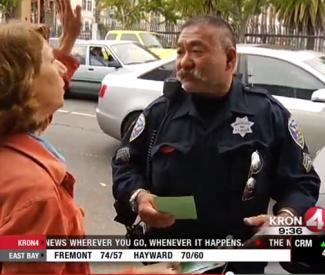
The cyclists of San Francisco were angry. Sup. Jane Kim was skeptical. Sup. Scott Wiener was unconvinced. Sup. Eric Mar said bikers were “pissed.” Deputy Chief of Police Mike Biel said he was too, but his anger could have just as easily been attributed to the 35 minutes he spent at the stand, acting as a whipping post for frustrations with the SFPD, as it could be to the department’s mistreatment of San Francisco cyclists.
Either way, the cyclists ruled the day.
During Thursday’s (10/3) Board of Supervisors Neighborhood Services and Safety Committee, Sup. David Campos called for a joint Board of Supervisors-Police Commission hearing regarding SFPD investigation protocol for bike accidents, but no immediate timetable has been set for the matter.
Without Police Chief Greg Suhr in attendance — his chiefly presence was required “reading to the children,” as Biel noted multiple times — Biel was left to stand solo in front of both frustrated supervisors and an incensed public.
At one point, following a particularly ambiguous response from Biel regarding accident checklists, Wiener asked bluntly, “Do you think there’s enough traffic cops in San Francisco? I don’t see bike cops, personally.”
To which Biel responded, “I’d like to see more.”
In fact, there was little defense on the part of Biel — and by extension, the Police Department — when it came to the seemingly lax (at best, malicious at worst) approach the SFPD has taken toward bike accidents in the past four years.
He even echoed Mar’s “pissed” comment, saying, “I was pissed too,” in regards to both what Mar called the “supposed investigation” of the Aug. 14 death of 24-year-old Amelie Le Moullac and the flippant attitude some in the department had taken towards cyclists in the days and weeks following. But he also stated that he didn’t think there was a negative bias in the SFPD.
The board’s decision to continue the conversation was bolstered by nearly 40 often-horrific testimonials regarding police treatment of cyclists in the City. And nearly all the stories could make the average person cring with the frustration, anger, and outrage they had the power to illicit.
Leah Shahum, executive director for the San Francisco Bike Coalition, told a story of a woman who was unable to make it to the hearing due to the injuries sustained in an April accident.
The woman, whom she didn’t identify, was biking in Golden Gate Park with her husband and son — the son was on the back of the woman’s bike — when she was hit from behind by a car, while she was stopped in the designated bike lane.
Witnesses stated that the driver was at fault. Her husband said the same thing. The police insisted on questioning the two of them more about their helmet usage — “which they were wearing,” according to Shahum — than they did about the actual events of the accident. Incidentally, adults aren’t required to wear bike helmets in California.
Robin Levitt, a Hayes Valley resident, talked about the strange “culture of blaming the victim” that has seemingly been propagated in the City, and how “in Germany, it’s immediately assumed that the vehicle is at fault, so drivers are safer.”
(And for what it’s worth, when Biel denied that same sentiment’s existence earlier with the committee, supervisors didn’t seem too convinced either. Mar even asked Biel, “Is there a bias or blame-the-victim attitude in the San Francisco Police Department?” which Biel promptly denied.)
And then there was Edward Hasbrouk, a former professional cyclist who has “never owned a motor vehicle.” He was biking home from work one evening when his progress in a Valencia Street bike line was impeded by a double-parked car in line for a valet service.
(Wiener has called for increased police enforcement of laws against double-parking. During today’s (Tues/8) Board of Supervisors meeting, he asked Mayor Ed Lee to support the effort, noting that SFPD rarely issues tickets to double-parkers despite “its impacts on traffic, Muni, cycling, and pedestrians.”)
Hasbrouk said that after a somewhat heated back-and-forth between the valet drivers, he flagged down a police officer to help him resolve the dispute, but the officer instead made Hasbrouk “carry [his] bicycle to the sidewalk.” Hasbrouk then said, “What would I have to do to get you to ticket these cars double-parked?” That comment got him arrested for felony vandalism, according to Hasbrouk. Expunging the arrest cost him nearly $3,000 and a night in jail.
But given the SFPD’s lack of pragmatism when it comes to investigating these accidents (for instance, Biel said SFPD doesn’t require a continuing education for officers assigned to traffic enforcement, despite what Shahum says are complex issues surrounding a rapidly growing population of cyclists), and it’s boorish behavior following the Le Moullac tragedy in August, it’s high time for change.
And a joint hearing could be just the place to start.
BART negotiations continue as unions withhold strike threat UPDATED
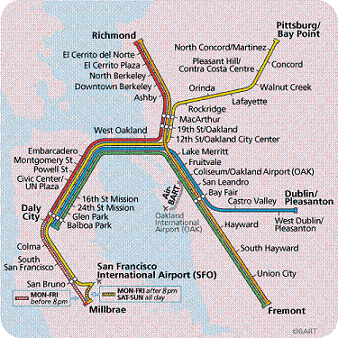
With the 60-day cooling off period ordered by Gov. Jerry Brown coming to an end on Thursday, raising the specter of another Bay Area Rapid Transit shutdown, BART’s two main unions announced yesterday that they were holding off on calling a strike for now. [UPDATE 10/11: BART unions today issued a 72-hour strike notice, meaning they could strike on Monday].
“We’ve listened to the public and we share their concern about a disruption in service at the end of the cooling-off period. We do not want to strike. That is why we’re not giving a 72-hour notice at this time, because we want to leave every opportunity open to try to get this deal done. Of course we are keeping all options on the table,” Service Employee International Union Local 1021 and Amalgamated Transit Union Local 1555 said in a joint statement.
Some media reports indicate that there has finally been some progress in the long-stalled negotiations, with a framework on pensions being agreed to, although the two sides still seem far apart on wages, benefits, and the length of the contract.
The unions cast it this way: “To this point of doing everything possible to avoid a strike: over the past 10 days, the unions have moved publicly three times, to BART’s zero times. If this were a score in the baseball playoffs – we, the Oakland A’s would be three and they, the Detroit Tigers would be zero.
“At this point, if there is a disruption in service at the end of the cooling-off period, it will be for one reason and for one reason alone: our elected BART leadership has not shown leadership.”
BART Board President Tom Radulovich disputed that the concessions have been one-sided, but he said that, “They continue to want to negotiate in the media and we’re not really down with that.”
Asked to characterized where things stand and the prospects for resolving the impasse without another strike, Radulovich said, “We’re still cranking away and trying to get it done…It’s really not up to us whether there’s a strike or not. We just have to get this done.”
Meanwhile, while conservatives clamor to use the situation to get the Democrat-controlled Legislature to ban unions from striking (good luck with that one), Sup. John Avalos held a hearing yesterday at City Hall to examine some of the larger issues at play in the impasse, such as retirement security, that the Guardian covered in our July 9 issue.
Asked how the hearing went, Avalos told the Guardian, “We talked a lot about how BART has been villifying workers in the court of public opinion in an effort to weaken workers’ bargaining power.”
The Performant: Up, up and away
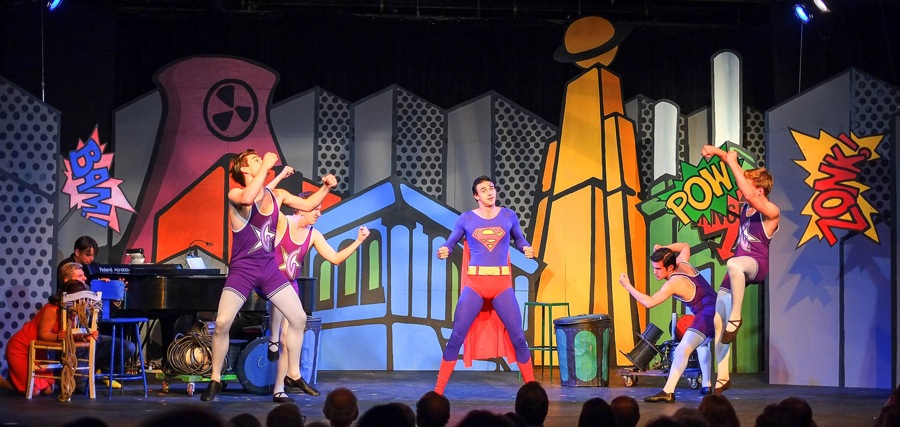
It’s a Bird…It’s a Plane…It’s Superman flies again.
It’s been 75 years since Jerry Siegel and Joe Schuster began developing their most enduring creation, Superman, a character who would go on to change the shape of pop culture forever. The first bona-fide comic book superhero, the spandex-clad refugee from outer space inspired whole universes of imitators, each more improbable and yet strangely influential than the next, and our collective fascination for the modern pantheons of nigh-invincible beings remains virtually unabated, as one glance at a list of blockbuster movies starring caped crusaders and misunderstood mutants can attest.
While superheroes might mean big business in the movies, aside from the infamous (albeit income-generating) debacle that is Spider-Man: Turn Off the Dark, they’ve only rarely ventured to Broadway, and here again, was Superman the pioneer. A (very) minor Broadway hit in its day, the goofy 60s-era It’s a Bird…It’s a Plane…It’s Superman channels the campy vibe of Adam West’s Batman and the relentless cheeriness of an Archie comic. Newly revived by 42nd Street Moon in honor of Superman’s 75th anniversary on earth, the musical is as clean-scrubbed as the titular role, whom mere mortals sometimes exasperatedly refer to as an overgrown “Boy Scout,” recalling times of more innocent entertainment if not actual innocence.
42nd Street Moon embraces this innocence with playful flair. The costume palette (designed by Felicia Lilienthal) appears to have been lifted straight from Warren Beatty’s 1990 Dick Tracy film, and the cartoon-panel backdrop (courtesy of Alvin Shiu) from a book of Lichtenstein prints. At strategic moments, giant word balloons and cardboard computers crowd the stage, and our hero frequently demonstrates his flying “prowess” by leaping clumsily into the wings. Even the villains turn out to be, if not exactly sympathetic, good comic relief, and their sinister goal is not so much to take over the planet so much as to take Superman, representative of perfection, down a notch, the preferred pastime of the small-minded.
Probably best not to dwell on the outdated gender roles that punctuate much of the action, a regrettable by-product of those “innocent” times, but at least the primary criminal mastermind of the show is not only female but also a mad scientist, Dr. Agnes Sedgwick (Darlene Popovic), proving, however thinly, that there is more to the double-chromosomed life than pining for the unattainable as does Lois Lane (Jen Brooks) or soothing the inflated egos of megalomaniacal employers as does glamorous office flirt, Sydney (Safiya Fredericks).
Lucas Coleman as Clark Kent/Superman plays his dual characters with an eager beaver likability, and a humanizing streak of self-doubt that ties both of his identities together just as surely as the single spit curl that dangles across his brow. His arch-nemesis Max Mencken (Brent Schindele) practically steals the show on the strength of his bright yellow loafers and hoofing technique alone, but his last moment of would-be glory is appropriately deflated (kids, crime doesn’t pay, and neither does petty spite!) and it’s all’s-well-that-ends-well for our underrooed protagonist, his best girl, and even for the second-tier criminal element, the hilariously inept Grimaldi family, who make tracks back to the Mamma-land before you can say arrivederci. Sure you could tap into a similar zeitgeist with a stack of Silver-age comics, but comics won’t sing to you. That’s a unique angle that 42nd Street Moon has totally got covered.
It’s a Bird…It’s a Plane…It’s Superman
Through Oct. 20, $25-$75
Eureka Theatre
215 Jackson, SF
www.42ndstmoon.org
Heads Up: 6 must-see concerts this week
Have you recovered from Hardly Strictly Bluegrass/the Castro Street Fair yet? Can you believe how hot and sticky San Francisco was last weekend? Do you need more salted caramel liquid nitrogen ice cream? These are all rhetorical questions. It’s time to move on, because this week Fuck Buttons are in town, as are the Babies, King Khan and the Shrines, rapper Le1f (at a arcade themed dance party, no less), and Andrew W.K. singing classic Ramones songs with drummer Marky Ramone.
So, you know, even though the last few days were brilliantly sunny and full of fun performances and big, imporant moments, there’s some cool stuff coming your way tonight, tomorrow, and this weekend, as well. Live in the now, friends.
Here are your must-see shows:
The Babies
“The Babies have been pegged as a super-band of sorts from the start, with Cassie Ramone from Vivian Girls on guitar and Kevin Morby from Woods on bass. In their latest release, 2012’s Our House on the Hill, the Babies strive to break free from their lo-fi attachments in previous bands and experiment more with country, blues, and folk elements. The Babies aren’t a side project, as much as an entirely new entity with something different to offer. San Francisco’s Tony Molina, hardcore frontperson turned “punky” indie act also plays this show. His newest record, Dissed and Dismissed, released by Melters this year, is impressive. Loaded with undeniably catchy, fuzzy tunes, the album at times harkens back to an era when bands like Guided by Voices and Pavement were king. Get some drinks and get fuzzed out in more ways than one at the Hemlock Tavern tonight.” — Erin Dage
With Alex Bleeker and the Freaks
Tue/8, 8:30pm, $8
Hemlock Tavern
1131 Polk, SF
(415) 923-0923
www.hemlocktavern.com
http://www.youtube.com/watch?v=ntvvJJ8dUBU
Fuck Buttons
Avant-garde British electronic noisemakers Fuck Buttons haven’t released an album since 2009’s searing Tarot Sport, but that doesn’t mean they’ve been forgotten: Two of the band’s tracks played during the 2012 London Olympics opening ceremonies (“Olympians” and the awesome “Surf Solar”). And this month’s Slow Focus (ATP Recordings), the band’s third album, proves it’s still quite hard to ignore. Slow Focus is a jumbly, forceful mix of the elements: doomy vocals, beeping synths, keys, analog drumming, moody droning, zips, zaps, and bleeps. First single “The Red Wing” sounds like an alien spaceship anxiously hovering above the forest before cautiously zooming in for a landing. And there’s a contest with that song: build, glitter, or decorate a gold cube like the artwork for “The Red Wing” and tweet/Facebook a photo to @FuckButtons with the hashtag #slowfocus for a chance to win tickets to your local show.
Wed/9, 9pm, $20
Independent
628 Divisadero, SF
www.independentsf.com
http://www.youtube.com/watch?v=CVzdi22Bi0I
Stereo with Le1f
“Albany Bowl plays the same mix every Wednesday night. Somewhere between Calvin Harris with Rihanna and the Biebs, a familiar saxblat beat begins. “I love this song,” I tell my friends, before realizing I’ve been fooled again: It’s not actually the playfully sinister “Wut” by motormouthed rapper Le1f, but a popular knockoff. I should just get used to it. Because while some people will know what it is/what is up, there’s also that larger contingent that is painfully oblivious to basic shit. (Some stores exist that sell used clothes for less money?) Catch Le1f — who just released his Tree House mixtape — with fellow Tumblr spawn, including “Wut” producer Matrixxman, at this 3D visual (first 100 people get glasses) and arcade themed dance party.” — Ryan Prendiville
With Lakutis and WolfBitch
Thu/10, 9pm, $15 presale
Mighty
119 Utah, SF
(415) 762-0151
www.mighty119.com
http://www.youtube.com/watch?v=6herO1dIc4s
Marky Ramone’s Blitzkrieg with Andrew W.K.
“On Saturday night, Ramones fans can expect a 30+ song set, borrowing from each of the Ramones’ albums, from the 1976 self-titled debut, to 1995’s farewell effort, ¡Adios Amigos!. Upon Andrew W.K.’s request, Marky Ramone agreed to include a rendition of “Bonzo Goes to Bitburg,” from 1986’s Animal Boy, a song W.K. heard in a NYC record store as a teenager, in the moment that cemented his Ramones fandom. (For the full feature on Andrew W.K. and Marky Ramone, see this week’s paper) — Taylor Kaplan
With FIGO, The Meat Sluts
Sat/12, 9pm, $25
Independent
628 Divisadero, SF
www.theindependentsf.com
http://www.youtube.com/watch?v=ZgfxzHyZt1o
Play it Cool with Lovefingers
“When I’m not taking my own advice, Derek Opperman’s list of top 5 parties over at SF Weekly is always my go-to for planning a night or weekend out. Likewise, if I miss a DJ that I wanted to see (or that I did see, but have no recollection), I always check out his “Lost in the Night” blog the morning after, for a more clear-headed account. It follows that I’m looking forward to hearing what Opperman and company bring to their Play it Cool parties. This inaugural event upstairs at Balançoire (formerly 12 Galaxies) features LA’s left-field disco head Andrew Hogge, aka Lovefingers aka half of the Stallions, the person behind E.S.P. Institute label and the beloved but now defunct lovefingers.org.” — Prendiville
Sat/12, 9pm, $5 (free before 10)
Balançoire
2565 Mission, SF
(415) 920-0577
www.balancoiresf.com
http://www.youtube.com/watch?v=DglcKqN8VFM
King Khan and the Shrines
“Huzzah! King Khan and the Shrines have finally recorded a new album! After six years of silence, these psychedelic soul-punk weirdos are back and showing their softer side with Idle No More. The new album is informed not by Khan’s typical crass humor and brash antics, but with a new sense of introspection. In the years he’s been gone, Khan has dealt with the tragedy of losing a few close friends and has coped by spending time in psych wards as well as Buddhist monasteries. As the next step of the healing process, Khan has returned to music, his original source of salvation. While his live show is not quite as insane (or nude) as it was in his youth (he’s now 36 years old) he’s still a helluva performer, and we couldn’t be happier to have him back in the spotlight.” — Haley Zaremba
With Hellshovel, Slipping Into Darkness
Sun/13, 8pm, $16
Slim’s
333 11th St, SF
(415) 255-0333
www.slimspresents.com
http://www.youtube.com/watch?v=xtZccp4vtLQ
Ain’t nobody who can sing — or bring the progressive fire — like Billy Bragg
During his set yesterday at the Hardly Strictly Bluegrass Festival, iconic British singer/songwriter Billy Bragg said he doesn’t understand why he was booked for an event devoted to Americana, although he did note that it was Brits like the Beatles and Rolling Stones that first popularized African American roots music for white Americans.
Yet in the spirit of legendary American folk singer Woody Guthrie, whose songs Bragg covered with Wilco on the amazing Mermaid Avenue albums, Bragg yesterday unleashed a righteous lefty diatribe against US political powers who were willing to shut down the government and default on its debts rather than offer universal healthcare to its citizens.
“Health care is the Jim Crow issue of the 21st Century,” Bragg said, also calling healthcare reform the “civil rights issue of this time” and calling for “free health care for every American.”
After closing his set with a rousing rendition of Guthrie’s “All you Fascists Bound to Lose,” he implored the young audience to rise up and “just get true.” Apparently his messages resonated with both the audience and organizers, who allowed him back on stage for an encore and some more fearless truth-talking.
“Socialism is organized compassion,” Bragg said, urging Americans to drop their irrational fears of socialized medicine (not to mention the far more insurance-based Obamacare), before playing his anthem, “There is Power in a Union.”
Bragg closed by saying that our enemy in this struggle isn’t the right-wing crazies shutting down our government, it is our own apprehensions about what can be done in this country, and the fear of advocating for what needs to be done.
“The enemy is cynism,” Bragg said, “and the only antidote to your cyncism is your activism.”
I and others left the show with our political fires stirred, as Sup. John Avalos also confirmed when I ran into him after the show, traipsing through the woods of Golden Gate Park toward the next stage. And I thought about what Hardly Strictly founder Warren Hellmen told me about this festival and form of music when I interviewed him for a profile that ran as a Guardian cover story in 2007.
“I feel very strongly that an important part of our culture is built on the type of music and type of performance that goes on at Hardly Strictly Bluegrass,” Hellman told me. From parables set to music to songs of struggle and the old union standards, “that kind of music is the conscience of our country.”
He considered bluegrass a vital and historically important form of political communication, more so than many of the upscale art forms that he and other rich people have tended to sponsor in San Francisco.
“I’m glad that we have first-rate opera, but it’s equally important that we foster the kind of music, lyrics, etc., that support all this,” he said. “Somebody once said that most of the great Western philosophy is buried in the words of country songs. And that’s closer to the truth than most people think. A big passion of mine is to try to help — and people have defined it too narrowly — the kinds of music that I think have a hell of a lot to do with the good parts of our society.”
And that was something that it took a fiery Brit to remind of us of this weekend.
Chess-in defies SFPD crackdown
By Christina Aanestad
More than 50 people crowded Market Street with tables, chairs, chess and other board games Sunday for a “Chess-in,” a response to the San Francisco Police Department’s closure of a decades-long San Francisco tradition of sidewalk chess.
“We had no say in the decision,” said Marvin Boykins, a 35 year veteran chess player.
Last month, police ended the open and public chess games at Fifth and Market Streets, citing crime as the reason. A nearby shopkeeper, who declined to provide their name, told the Guardian that drug dealers sometimes use the chess tables to conceal their business dealings. There’s no doubt crime occurs around the neighborhood, which marks the intersection of the Tenderloin and SoMa. Just three doors down from the chess games, a woman stood in the doorway of a closed business holding a crack pipe. Nevertheless, chess players like Boykins say crime happens in all neighborhoods—and it’s no reason for the police to stop a decades-old tradition.
“SFPD made a very grave mistake in their administrative capacity not acknowledging the true problem—that we have nothing to do with nor do we condone [crime],” he said.
Other shopkeepers, like Phil Gatdula, manager of sustainable soul food restaurant Farmer Brown on Market Street, said he enjoyed the chess players, who encompass people from all walks of life including business owners, youth, and elders.
Many attendees of the Chess-in voiced concerns about gentrification in the city, pointing to sidewalk chess as its latest casualty. Activists with the Coalition on Homelessness said blaming the removal on crime is merely a cover for an underlying agenda.
“To suggest that a long-time community of elder chess players engaging in a fun, public event is creating a public safety issue is a thinly veiled move to push poor people from public space,” said Jennifer Friedenbach, Executive Director of the Coalition On Homelessness.
Just days after the police kicked the chess players off Market Street, a new rent-a-bike station with gleaming identical bikes took their place. Bay Area Bike Share is a newly launched program that rents out bicycles, with nearly three dozen locations in San Francisco. Having opened in August, it’s a partnership with San Francisco, San Mateo, and Santa Clara Valley transportation authorities, offering “access to shared bicycles 24 hours a day, 7 days a week, for use in the cities of San Francisco, Redwood City, Palo Alto, Mountain View and San Jose,” according to the company’s website.
Lisa Alatorre, another staff member with the Coalition on Homelessness, sees the chess crackdown as part of a larger plan to appeal to techies and tourists in the area. It’s also no coincidence that a new shopping mall and condo development are going in right across the street from where chess players gathered for decades before the recent displacement, she said.
Josh Shadlen, 28, moved to San Francisco a few years ago as part of the second dot-com wave. Despite working within the tech industry that critics like Alatorre say is the cause of high rents in San Francisco, Shadlen spent his day sitting on the sidewalk, playing chess in the sun to support reclaiming public space. He said that while 90 percent of his colleagues don’t care about impacts they are having on the local community, he does.

Josh Shadlen, a tech dude who’s siding with the chess players.
“It seemed basically like an attack on the residents of this neighborhood and part of a plan to turn this neighborhood into fancy office buildings where maybe I might work at some point, but I don’t want that to happen here or anywhere,” he said.
Shadlen said the police should do a better job at policing rather than throwing out chess players.
Organizers like Alatorre say it’s unlikely chess will return to Fifth and Market Streets. For now, the players have moved to Yerba Buena Park. Alatorre and others are still hopeful that things could change—but they believe the political will doesn’t exist among current members of the Board of Supervisors. Asked whether she thought people would continue to gather at Fifth and Market streets to play chess next Sunday, she said, “I hope so.”
555 Fulton project moves forward with exemption to formula retail ban

The San Francisco Planning Commission yesterday approved a plan to build a mixed-use five-story building on the hotly debated 555 Fulton St. property. The plan includes a grocery store measuring 32,400 square feet in addition to 139 apartments and townhouses that would be built above and around the designated shopping area.
It wasn’t a unanimous vote, but the Western Addition is inching toward the affordable grocery store that many in the neighborhood says it desperately needs. The 4-2 vote to exempt the project from the area’s formula retail ban — Commissioners Kathrin Moore and Hisashi Sugaya voted for a continuation instead — was reached after nearly two and a half hours of deliberation, presentations, and local testimonials.
The commission’s decision moves on to the Board of Supervisors, where the discussion of affordable food and whether that can only be provided by a national supermarket chain will likely continue.
In May of 2010, the Planning Commission approved a similar project to the one currently proposed: The then-developers had secured a Special Use District (SUD) called the Fulton Grocery Store SUD back in 2008 —a distinction which lifted the restriction on large-footprint retail outlets in the Hayes-Gough Neighborhood Commercial Transit District — as well as a Conditional Use Agreement (CUA) that lifted the ban on “formula retail outlets” only for the proposed tenant of the specific unit.
But the developers could finance the project and its entitlements expired on April 3, 2013. Renewing the SUD and CUA were key to yesterday’s discussion. Without the SUD, the neighborhood’s current zoning policy would state that the grocery store’s footprint alone would be too large to permit. But with the SUD, the developer is not just obliged but rather forced to seek a tenant that will build a grocery store “larger than 15,000 square feet.” That means that the outlet would finally be the full-service grocery store the neighborhood has called for.
The SUD, however, isn’t the contested item. Both the Western Addition residents and the members of the Hayes Valley Neighborhood Association (HVNA) and the Hayes Valley Merchant’s Association (HVMA) agree that a grocery store at 555 Fulton is ultimately a good thing, but that is where the similarities end.
The HVNA/HVMA want to uphold the Hayes-Gough NCT’s outright ban on formula retail that’s been in effect since 2004, a move that would effectively force the developer into trying to find an independently owned suitor for the 32,400 square foot space, claiming that “independent” and “affordable” aren’t mutually exclusive.
The residents of the Western Addition want a store that falls under the “formula retail” umbrella, citing fair hiring practices and affordability of goods often found at those outlets among other reasons for the preference.
According to developer representative Jessica Zhou, however, of the City’s 31 independent grocery stores, just two measured over 15,000 square feet (the minimum size allowed in the SUD), and of those two, exactly zero had expressed interest in the location.
On the other hand, according to Zhou, a tidy list of “formula” stores have expressed interest in the site, among them Grocery Outlet and The Nugget, which means that the HVNA/HVMA are now holding out for something that isn’t even on a theoretical horizon.
Commissioner Richard Hillis agreed, and he even joked about his own troubles with the affordability at independent grocery stores, a joke that Zhou’s statistics supported, citing a study that found the average shopper in California saves 35 percent more money when shopping at a formula retail grocery outlet over of an independent one.
The public support might have been strong, but the project hasn’t been approved yet. Even with the support of the Planning Commission, the Western Addition neighborhood and the developers, nothing can happen until the Board of Supervisors approves the same plan, and that means that both sides have time.
“We believe that this project will help two-fold: One, economically [by providing] jobs and opportunities for our young residents — individuals from the neighborhood — but also, it will provide access for our seniors to have the opportunity to walk to the store and get out of their homes and be able to be a part of the community,” said Gary Banks, a Fillmore resident.
Or as Dirk Butler said, ” The reality is an affordable grocery store is the best fit for our community. We have seniors, low-income immigrants that are within a half a mile of a grocery store that they have to trek in order to buy groceries for their family. This is a good move.”
Airbnb makes small admission on tax issue, saying its hosts should pay

Under pressure in San Francisco and New York City for violating local tenant and land use laws and refusing to pay local taxes, Airbnb has finally acknowledged that transient occupany taxes apply to the room rentals it facilitates. But the company still hasn’t taken any public steps to collect the tax, nor has it admitted that it shares this tax debt with its hosts.
“Our hosts are not hotels, but we believe that it makes sense for our community to pay occupancy tax, with limited exemptions for those who earn under certain thresholds,” CEO Brian Chesky wrote on the Airbnb blog yesterday, addressing the post to New York City and not San Francisco, where it is headquartered and where we have shown the company is shirking an annual tax debt of nearly $2 million.
Contacted by the Guardian, a company spokesperson extended the pledge to San Francisco, writing, “Yesterday, our CEO Brian Chesky announced that we believe it makes sense for our community of hosts to pay occupancy tax to the cities in which they live, with exceptions under certain thresholds, and we are eager to discuss how this might be made possible. We have been in substantive discussions with Board President David Chiu on these issues for some time, and we’d like to thank him for the open dialogue that helped lead to today’s announcement. We look forward to continuing our work with him and others in San Francisco to set forth clear, fair laws that allow regular people to rent out their own homes, while giving back to the city that makes it possible.”
As the Guardian has repeatedly reported, most recently in our Aug. 6 cover story “Into Thin Air,” the San Francisco Treasurer/Tax Collectors Office has ruled that the city’s TOT of about 15 percent applies to Airbnb guests, and that Airbnb shares that joint tax liability with its hosts.
The ability of individual hosts to receive business licenses for renting out rooms and to collect and remit the TOT is complicated by the fact that such rentals violate land use, tenant, and other city laws — and Chiu has been developing legislation that would legalize and regulate the stays.
Airbnb could easily collect the TOT on each San Francisco transaction, as some of its online competitors have already been doing, but it has so far refused to do so. And when the Guardian asked Airbnb whether it now plans to do so, the company ignored the question.
In fact, Airbnb’s public statements and private communications indicate its intention to pass the buck to its hosts rather than collect and pay the taxes itself, and several hosts who commented on Chesky’s blog post expressed hopes they would get more support from the company on the myriad issues that complicate its simplistic business model.
Nonetheless, Chiu took the Airbnb’s statement yesterday as a positive sign, telling us, “I am pleased to hear that Airbnb has acknowledged the need for their users to pay the occupancy tax. This policy was developed as a result of discussions that I’ve led in the past year to regulate and tax shareable housing activity in San Francisco. While we continue to negotiate with shareable housing companies, housing advocates, and the Mayor’s Office to find sensible solutions, I am confident that we will be able to move forward on a regulatory framework that provides flexibility to residents, protects our affordable housing stock and collects the fair share of taxes for the City. I look forward to introducing legislation in the coming months.”
‘Gravity,’ Mill Valley, and everything else: new movies

The 36th Mill Valley Film Festival opened last night and runs through Oct. 13, filling the North Bay’s travel-worthy venues (the Christopher B. Smith Rafael Film Center is the main one) with must-see films. Check out our recs here, and read on for short takes on Hollywood’s offerings, including the season’s must-see sci-fi film.
http://www.youtube.com/watch?v=m8Gi-ow4hr0
Blind Detective Johnnie To’s latest makes its local debut as part of the San Francisco Film Society’s “Hong Kong Cinema” series, hot on the heels of his Drug War, which had a theatrical run earlier this year. Blind Detective shares Drug War’s crime theme and moody palette, but it also has — whimsy alert! — an accordion-inflected score. The cute quotient is further upped by Andy Lau and Sammi Cheng, who’ve been frequently paired in To’s lighter fare (perhaps most memorably in 2001’s Love on a Diet, which attired its attractive stars in fat suits). Lau plays a former cop who left the force after losing his vision, yet continues to solve crimes (in pursuit of reward money) using, among other unorthodox methods, his superior sense of smell. Cheng plays a scrappy policewoman who admires his investigative skills and asks him to track down a long-lost childhood friend. He agrees, but not before slyly tricking her into helping him pursue lucrative paydays on unrelated cases. Lau’s wannabe-Sherlock antics and Cheng’s lovelorn flailings wear thin after two-plus hours, but Blind Detective still manages to entertain despite its odd blend of broad comedy and serial-killer thrills. (2:10) Vogue. (Cheryl Eddy)
http://www.youtube.com/watch?v=OiTiKOy59o4
Gravity “Life in space is impossible,” begins Gravity, the latest from Alfonso Cuarón (2006’s Children of Men). Egghead Dr. Ryan Stone (Sandra Bullock) is well aware of her precarious situation after a mangled satellite slams into her ship, then proceeds to demolition-derby everything (including the International Space Station) in its path. It’s not long before she’s utterly, terrifyingly alone, and forced to unearth near-superhuman reserves of physical and mental strength to survive. Bullock’s performance would be enough to recommend Gravity, but there’s more to praise, like the film’s tense pacing, spare-yet-layered script (Cuarón co-wrote with his son, Jonás), and spectacular 3D photography — not to mention George Clooney’s warm supporting turn as a career astronaut who loves country music almost as much as he loves telling stories about his misadventures. (1:31) (Cheryl Eddy)
http://www.youtube.com/watch?v=ZnJIA7oqqcM
The Institute In 2008, mysterious flyers began popping up around San Francisco that touted esoteric inventions such as “Poliwater” and the “Vital-Orbit Human Force Field” and included a phone number for the curiously-monikered Jejuene Institute. On the other side of the phone line, a recording would direct callers to a Financial District office building where they would undergo a mysterious induction process, embarking on an epic, multi-stage, years-long alternate reality game, designed primarily to reveal the magic in the mundane. In Spencer McCall’s documentary The Institute, viewers are introduced to the game in much the same way as prospective inductees, with few clues as to what lies in store ahead. A handful of seemingly random interviewees offer a play-by-play recap of their own experiences exploring rival game entities the Jejune Institute and Elsewhere Public Works Agency — while video footage of them dancing in the streets, warding off ninjas, befriending Sasquatches, spelunking sewers, and haunting iconic Bay Area edifices gives the viewer a taste of the wonders that lay in store for the intrepid few (out of 10,000 inductees) who made it all the way to the end of the storyline. Frustratingly, however, at least for this former inductee, McCall’s documentary focuses on fleshing out the fictions of the game, barely scratching the surface of what must surely be an even more intriguing set of facts. How did a group of scrappy East Bay artists manage to commandeer an office in the Financial District for so long in the first place? Who were the artists behind the art? And where am I supposed to cash in these wooden “hobo coins” now? (1:32) New Parkway, Roxie. (Nicole Gluckstern)
http://www.youtube.com/watch?v=SgPjt_BRLvY
Parkland Timed to tie in with the 50th anniversary of the JFK assassination, writer-director Peter Landesman’s sprawling ensemble drama takes that tragedy as its starting point and spirals outward, highlighting ordinary folks who were caught up in the drama’s aftermath by virtue of their jobs or circumstance. There’s a lot going on here, with a huge cast of mostly-recognizable faces (Billy Bob Thornton as Secret Service Agent Forest Sorrells; Paul Giamatti as amateur filmmaker Abraham Zapruder; Ron Livingston as an FBI agent; hey, there’s Oscar winner Marcia Gay Harden in two scenes as a stern nurse!), but the events depicted are so familiar that the plot never becomes confusing. Landesman — who favors scenes of breakneck-paced action punctuated by solemn moments of emotion — might’ve done better to narrow his focus a bit, perhaps keeping just to the law-enforcement characters or to Lee Harvey Oswald’s family (James Badge Dale plays his shell-shocked brother, while Jackie Weaver hams it up as his eccentric mother). But paired with 2006’s Bobby, Parkland — named for the hospital where both JFK and Oswald died — named for the hospital where both JFK and Oswald died — could make for an interesting, speculative-history double-feature for Camelot buffs. That said, Oliver Stone fans take note: Parkland is strictly Team Lone Gunman. (1:33) (Cheryl Eddy)
http://www.youtube.com/watch?v=L2INdFpHPpQ
Runner Runner Launching his tale with a ripped-from-the-headlines montage of news reports and concerned-anchor sound bites, director Brad Furman (2011’s The Lincoln Lawyer) attempts to argue his online-gambling action thriller’s topicality, but not even Anderson Cooper can make a persuasive case for Runner Runner’s cultural relevance. Justin Timberlake plays Richie Furst, a post-2008 Wall Street casualty turned Princeton master’s candidate, who is putting himself through his finance program via the morally threadbare freelance gig of introducing his fellow students to Internet gambling. Perhaps in the service of supplying our unsympathetic protagonist with a psychological root, we are given a knocked-together scene reuniting Richie with his estranged gambling addict dad (John Heard). By the time we’ve digested this, plus the image of Justin Timberlake in the guise of a grad student with a TAship, Richie has blown through all his savings and, in a bewildering turn of events, made his way into the orbit of Ben Affleck’s Ivan Block, a shady online-gambling mogul taking shelter from an FBI investigation in Costa Rica, along with his lovely adjutant, Rebecca (Gemma Arterton). Richie’s rise through the ranks of Ivan’s dodgy empire is somewhat mysterious, partly a function of the plot and partly a function of the plot being piecemeal and incoherent. The dialogue and the deliveries are also unconvincing, possibly because we’re dealing with a pack of con artists and possibly because the players were dumbfounded by the script, which is clotted with lines we’ve heard before, from other brash FBI agents, other sketchily drawn temptresses, other derelict, regretful fathers, and other unscrupulous kingpins. (1:31) (Lynn Rapoport)
http://www.youtube.com/watch?v=KXKogr0O-Zc
We Are What We Are The title of Jim Mickle’s latest film sums up the attitude of the Parker family: We Are What We Are. We eat people. Our human-flesh cravings go back generations. Over the years, our dietary habits have become our religion. And that’s just the way it is — until teen sisters Iris (Ambyr Childers) and Rose (Julia Garner) start to have some doubts. As We Are (a remake of Mexican director Jorge Michel Grau’s 2010 film) begins, the girls’ mother has suddenly died amid a punishing rainstorm — and their grief-stricken Dad (Bill Sage) has become awfully twitchy. As the local police, a suspicious doctor (Michael Parks), and a curious neighbor (Kelly McGillis) begin to poke into their business, the Parkers prep for “Lambs Day,” a feast that most definitely involves whoever is chained up in the basement. Though not all of the dots connect in the Parkers’ elaborate backstory (how do Mom and Dad have an obscure variation on mad-cow disease if they’re only eating man-meat once a year?), We Are still offers a refreshing change from indie horror’s most recent common denominators — no found-footage tricks here. The last-act dinner scene is required viewing for any self-respecting cannibal-flick connoisseur. Check out my interview with director Mickle here. (1:45) (Cheryl Eddy)
http://www.youtube.com/watch?v=Rwr-U1z1F60
When Comedy Went to School This scattershot documentary by Ron Frank and Mevlut Akkaya is about two big subjects — the Catskill Mountains resorts that launched a couple generations of beloved Jewish entertainers, and mid-to-late 20th century Jewish comedians in general. There’s a lot of overlap between them, but the directors (and writer Lawrence Richards) can’t seem to find any organizing focus, so their film wanders all over the place, from the roles of resort social directors and busboys to clips from History of the World Part I (1981) and Fiddler on the Roof (1971) to the entirely irrelevant likes of Larry King. That said, there’s entertaining vintage performance footage (of Totie Fields, Woody Allen, etc.) and interview input from the still-kicking likes of Sid Ceasar, Jackie Mason, Mort Sahl, Jerry Stiller, and Jerry Lewis. For some this will be a welcome if not particularly well crafted nostalgic wallow. For others, though, the pandering tone set by one Lisa Dawn Miller’s (wife of Sandy Hackett, who’s son of Buddy) cringe-worthy opening rendition of “Make ‘Em Laugh” — to say nothing of her “Send in the Clowns” at the close — will sum up the pedestrian mindset that makes this doc a missed opportunity. (1:23) (Dennis Harvey)
Party Radar: Tiara Sensation Pageant, Body and Soul, Peter Kruder, Castro Street Fair, Octo Octa, more

According to recent findings, it would take 4.85×10(15) years to teleport a complete human at 30GHz. That’s 350,000 times longer than the universe has existed. And almost as long as the clothes check line at the Powerhouse.
How will I ever get to all these parties???
Darn you, science. I’m guessing I’ll still at least have one or two out of body experiences at the following, howevs.
If you’re any kind of dance maven, you’d know Brit Sam Watts’ 2011 hit “Criticize” in three notes, probably — but I adore his remix work and DJ prowess. Hit him up at the neat, super-affordable-for-this-kind-of-talent weekly Base party, which seems to have reemerged after a little hiatus.
Thu/3, 10pm, $5-$10. Vessel, 85 Campton Pl., SF. www.vesselsf.com
All the glorious queens forever! This beloved little underground drag tradition, brought to us by the creators of the great Some Thing party every Friday at the Stud, is going BIGTIME. This year it’s being held at the De Young Museum’s fun Friday evenings (there will be kids there! and a bar!) Of course, it’s a freakishly lovely runway pageant for freakishly freakish queens — and I’ll be one of the celebrity judges, so you know it will be, er, drinky. My fellow judges, far more legendary than I could ever be, are Candis Cayne, Gina La Divina, Lil Miss Hot Mess, and Honey Mahogany. Expect a raucous, wiggy crowd.
Fri/4, 6pm-10pm, FREEEEE. de Young Museum, 50 Hagiwara tea Garden, Golden Gate Park, SF. Info here
Three of the world’s greatest house (and Latin, and electrofunk, and disco, and soul) DJs return to resurrect the feeling of their NYC party — wihch changed my life, and the lives of pretty much everyone else on the scene 10 years ago. Golly, I love them! Welcome back, Francois, Joe, and Danny.
Fri/4, 10pm-late, $25. Mighty, 119 Utah, SF. www.mighty119.com
One half of infamous Austrian sophiticated house duo Kruder and Dorfmeister, Peter headlines the giant Public Works third anniversary. But wait there’s so much more! Also there: Christian Martin, Jackie House, Afrolicious, J-Boogie, Josh Vincent and a hot-hot crowd. Here’s one of my favorite remixes of all time, btw:
Sat/5, 8:30pm-3:30am, $10. Public Works, 161 Erie, SF. www.publicsf.com
100% Silk label cutie blends dreamy classic house sounds with effusive but totally danceable concepts at the ever-awesome Push The Feeling party. (Love the track “His Kiss” of his lovely Between Two Selves LP.) He’ll be joined by Matrixxman (who made me dance till I cried at the deviants party last week) and Yr Skull and Epicsauce DJs. Good times.
http://www.youtube.com/watch?v=6Cz6PkRs4QM
Sat/5, 9pm, $5 advance. UndergroundSF, 424 Haight, SF. octoocta.eventbrite.com
Balls are all the rage! This one, MCed by Sister Roma and Pat N Leather and DJed by Guy Ruben, raises money for a possible HIV vaccine — and of course will be loaded with colorful characters.It has an “animal” theme!
Sat/5, 7pm-10pm, $40. Beatbox, 314 11th St, SF. itrulycare.com/events/endhiv-sf-drag-ball
This 40th edition of the fair has an INSANE nightlife focus: Peaches (yes that Peaches) is doing a Sylvester tribute! There is a Legends dance stage featuring David Harness, Pete Avila, Rolo, Blackstone, and Page Hodel. And Cookie Dough will bring her kookielicious Monster Show drag party as well. It’ll be nuts + dancing + cute.OH! And don’t miss one of the best things ever that happens in SF — the two-step line–dance stage behind Castro Theatre.
Sun/5, 11am-6pm, donatiion requested. 18th Street and Castro, SF. www.castrostreetfair.org
TIFF diary #9: this is ‘The End’

Every time I told people that Lav Diaz’s Norte, the End of History (Philippines) was my favorite film of this year’s Toronto International Film Festival, I would watch their eyes glaze over and their body start shifting as if to say, “Yes … but what else?”
Perhaps the title suggests something long, slow-moving, and attempting to end their history? Perhaps they had only heard about its four-hour running time? While all of the previous statements are probably true, what I want to stress is that this film about a group of existentialist 20-somethings encapsulates why I fell in love with cinema in the first place.
There are no movie stars in the cast, and no way to quickly sum up the plot. Due to the film’s running time, the viewer physically experiences what the film’s conflicted main character Fabian is struggling with. While many TIFF audiences seemed to complain and make snarky one-liners after pretty much all of the star-studded premieres that I attended, that wasn’t the case here; Norte mesmerizes with its inventiveness and harrowing character arcs.
And yet it seems people are refusing to make the time to experience it. Neil Young of the Hollywood Reporter wrote “Diaz is apparently incapable of conveying the passage of time, instead [he] must simply inflict it.”
Personally, I learned volumes from this film, about the state of present-day rural Philippines; about Dostoevsky, Diaz’s favorite writer; about the 1890s Philippine Revolution against the Spanish. I tend to become emotionally wrecked when I watch a Diaz film; in Norte, Sid Lucero’s portrayal of a law school drop-out brought up some very deep, dark personal feelings.
But most importantly, Lav Diaz creates cinema that gets me up early in the morning. So please, Mr. Diaz: keep “inflicting” me.
Ficks’ Picks: Top 12 of TIFF 2013
1. Lav Diaz’s Norte, the End of History (Philippines)
2. Pawel Pawlikowski’s Ida (Poland)
3. Steve McQueen’s 12 Years a Slave (UK)
4. Kim Ki-duk’s Moebius (South Korea)
5. Stephanie Pray/Pacho Velez’s Manakamana (USA/Nepal)
6. Tsai Ming-liang’s Stray Dogs (Taiwan)
7. John Turturro’s Fading Gigolo (USA).
8. Hirokazu Kore-eda’s Like Father, Like Son (Japan)
9. Jeremy Saulnier’s Blue Ruin (USA)
10. Abdellatif Kechiche’s Blue is the Warmest Color (France)
11. Claire Denis’ Bastards (France)
12. Ben Rivers/Ben Russell’s A Spell to Ward Off the Darkness (Estonia/France)