Print sections as they appeared in the early 2010s

To find articles by keyword or author, you may want to use our Search function.

Print Sections

Bowled over

3

le.chicken.farmer@gmail.com

CHEAP EATS It started when our friend Stringbean texted that their mom and pop were going to New Orleans, where should they tell them to eat? Hedgehog was preparing a long, thorough, annotated email response while I texted back one word: Bacchanal. And then we both looked at each other and started to cry.

The two weeks leading up to the Super Bowl were tough — even tougher than the two days after. I actually listen to sports talk radio, see, on my way to and from work, and all anyone was talking about, even more than football, see, was po’ boys, etouffe, jambalaya, and gumbo.

And even when they weren’t, they were talking about Hurricanes and Pimm’s Cups and how many everybody had and then-what-happened. Until I even started to miss that side of it — which I never much participated in anyway.

Almost by accident, on Super Bowl Sunday morning, we had brunch at the Front Porch, and I’m trying not to say “new favorite restaurant” anymore; but sweet baby Jesus the shrimp and grits!

Poor Hedgehog is still kicking herself for going with chicken and waffles. Chawing on her fingers, rending her garments, and thrashing in her sleep . . . you would think she called for a fade route on fourth-and-goal at the five, or something.

“We get to go back,” I keep telling her, over me-made chicken and other anti-depressants. “Possibly as soon as next weekend!”

But I do see her point. It was one of the wonkiest mal-orders in Meal History. She’s gluten-free, and so are shrimp and grits. Whereas waffles are not. San Francisco A.G. (Anno Gravy’s) is not a fried chickeny town. It’s just not, and probably never will be. I can go on and on: she wasn’t hungry. We’d just had breakfast and were going after brunch to Binko’s Super Bowl party, where there would be giant vats of chili gurgling on the stove.

She even asked me if she should order the chicken and waffles and do you know what I said? I said, “No!”

But she audibilized at the line-of-scrimmage and the rest is mystery.

Possibly she was distracted by the radiance of our brunching companion, Lalalala “Happy” Valentina, one of my favorite people to sit around a campfire with, although we haven’t sat around one for several years. Her dad played pro baseball. Made it briefly to the majors, I forget who with, and Hedgehog gets flustered around the progeny of ex-major-league-baseball players.

So there was that.

Luckily, I kept my own wits about me and ordered what Hedgehog should have ordered: shrimp and grits. So good. So so so so . . . whereas the fried chicken was just so so. I mean, sustainable, free-range, vegetarian, home-schooled chicken, no doubt, but that is exactly why we will never be a fried chickeny town. We care too much.

Even I do.

But at least it was fried to-order. You know because they warn you it takes 25 minutes. Fine. Hedgehog and Happy had a lot to talk about. For a long time they’ve both been on the nuts-and-boltsy end of making TV and picters, and both have big, good, sometimes somewhat similar ideas about writing and producing. One gets the feeling if they put their big good heads together, either amazing things or lawsuits will happen.

I’m telling you: best shrimp and grits I’ve had this side of Luke. Fluffy and flavorful, with a poached egg nestled into the top of it. As you read this, I’m realizing just now, writing it, Hedgehog will be eating at Luke without me. It’s already in our calendar: Happy Valentine’s Day, dang it. She’ll be in New Orleans, working for a week, and I’ll be here haunting the Front Porch.

Beignets, fried okra, gumbo, red beans and rice, even po’ boys . . . all of it’s at least a little overpriced, but what I love is the atmosphere is down-to-earth. The front porch itself. The checkered floor, wooden tables, what Happy’s li’l son calls “the chocolate bar ceiling” . . . Wait, there’s nothing down-to-earth about a chocolate bar ceiling. Or any other kind, come to think of it.

I just can’t believe it took me this long to get there.

THE FRONT PORCH

Dinner: Mon.-Sat., 5:30-10:30pm; Sun., 5-10pm; Brunch: Sat.-Sun., 10am-2:30pm

65A 29th St., SF

(415) 695-7800

AE/D/MC/V

Full bar


Latin highs

0

virginia@sfbg.com

APPETITE Nothing replaces actually experiencing a cuisine served in its place of origin, but regional dinners are one way of traveling vicariously (and, perhaps, with less of a carbon footprint).

Occasionally, you get more than a meal, as with a January 23 dinner at Oakland’s Latin American haven, Bocanova (www.bocanova.com), which hosts the monthly Rick’s Supper Club, highlighting South American cuisine. As a lucky few dug into wild shrimp and lobster ceviche or smoky, steamed mussels, dinner sponsor LAN Airlines surprised attendees with free round trip tickets to fly to any South American destination… a freak out “Oprah moment.” In lieu of that kind of bell and whistle, here are two restaurants fiercely dedicated to uncovering the subtlety of their chosen cuisine.


OLIVETO

Every year I’d anticipate legendary Whole Hog dinners at Oakland’s temple to regional Italian cuisine, Oliveto, which recently celebrated its 25th anniversary. I dropped off after chef of 15 years, Paul Canales departed — he just opened buzzed-about restaurant-bar-music venue Duende. But I returned this year to the warm and stylish upstairs restaurant (there’s a more casual cafe downstairs). Just over a year ago, young chef Jonah Rhodehamel took over. With consummate host-proprietors Bob and Maggie Klein thankfully still running the restaurant, Oliveto maintains its purpose as a culinary community stalwart akin to Chez Panisse (community journal, whole-animal history, food activism), with regional Italian focus and themed dinners.

Rhodehamel honors Oliveto history while unafraid to experiment. Pastas ($15-18), which remain the highlight, might be a traditionally-influenced spaghettini neri of squid ink pasta, shrimp, and chili pepper, but he’ll add chocolate to tomato-braised oxtail corzetti, use red winter wheat in penne alla Bolognese, or infuse Floriani Red Flint corn polenta under duck giblet ragu with intense lavender vanilla notes. The fritto misto ($13) stands out from what is often merely a pile of fried food. Rhodehamel fries up the unusual: scungil (whelk), herring, blood orange, and shirako (cod milt, ahem, I mean, sperm).

The only lackluster starter was miniscule pan-fried frog’s legs ($14) with a parsley sformatino (like savory panna cotta). Charcoal-grilled meats are impeccable: buttery, crispy pork porterhouse ($30) sits amidst cannellini beans and braised chard, while rare Piedmontese ribeye ($36) is crispy on the exterior, radiant pink inside, next to creamed spinach and Yukon Gold potatoes. Espresso chocolate stracciatella ice cream ($8) is a lush, caffeine finish, though after trying all recent desserts, I’d also take fluffy ricotta cheesecake ($8) with candied kumquats.

5655 College Ave., Oakl. (510) 547-5356, www.oliveto.com


GITANE

Since opening in 2008, Gitane is easily one of our sexiest restaurants. Ducking into an alley, down a couple steps into the lush reds, tapestries, and chandelier glow of a tiny, two level space… so begins your seduction by a lover who knows how. Executive chef Bridget Batson has been here since the beginning. In November, the restaurant shifted directions with the addition her husband, co-executive chef Patrick Kelly (of La Folie and Napa’s Angèle), and chef de cuisine David Martinez.

Staying true to the meaning of gitane — gypsy woman — the new menu wanders gypsy-like through Southern Spain, changing cities (Andalusia, Sevilla, Valencia) every few weeks. In keeping with the celebratory setting, the appropriately deemed “passport” tasting menu is $65 for five courses (wine pairings from new wine director, Sarah Knoefler, $45), available in the intimate upstairs dining room. Bar and alley/patio seating offers an a la carte menu ($12-36) or bar bites.

Though they’ve combined Spanish and Moroccan influence since day one, Bridget and Patrick’s recent Spain travels allow them to now dig deeper into regional Spanish cuisine. The first regional focus was Valencia. The tasting menu began with a salad of baby beets, fuyu persimmon, Marcona almonds, citrus, nasturtium paired with honeysuckle notes of a Musva Moscatel from Valencia. Moving on, Dungeness crab and cuttlefish were touched with sea urchin vinaigrette and pineapple. A delight of fatty Iberico pork cheeks, Matsutake mushroom and raw Nantucket Bay scallops sat in a brilliant golden raisin-saffron-mushroom coulis. Fourth course: pan-roasted duck breast in tempranillo chili puree accented by oloroso sherry-compressed pears (yes!) The finish? A winning pumpkin creme caramel.

An à la carte meal yielded an over-salted but beautifully seared scallop with crispy sweetbreads ($16). I preferred crisped, roasted artichokes piled with sunchokes and Manchego cheese ($13), or an entree of rabbit (conejo) two ways ($32): roasted saddle and a dreamy riletta, accompanied by braised snails and caramelized squash. Ramon Garcia remains Bar Manager, still serving refreshing cocktails ($12) like an elegantly smoky Chimenea: mezcal, rye, allspice dram, maple syrup, orange bitters.

6 Claude Lane, SF. (415) 788-6686, www.gitanerestaurant.com

Subscribe to Virginia’s twice-monthly newsletter The Perfect Spot, www.theperfectspotsf.com


On the Rise: The Seshen

0

If Erykah Badu, Little Dragon, and Beach House, met-cute and made jazzy, passionate pop music together, the resulting mix might sound something like a song by the Seshen (as those are its main influences). The seven-piece Oakland band is known for its blend of sounds and regions, with robust musicianship by bassist Aki Ehara, drummer Chris Thalmann, percussionist Mirza Kopelman, Kumar Butler on samples, and Mahesh Rao on keys, filled out by fierce vocalists Lalin St. Juste and Akasha Orr. Though mostly, at this point, it’s known for a little track called “Oblivion.”

The electronic pop song, off the band’s self-titled 2012 debut LP, employs the consistent Seshen method, a live rock band set-up with deeply soulful singing, cosmic hip-hop beats, and densely layered effects and samples.

Most recently, the Seshen remixed fellow On the Risers Trails and Ways’ “Border Crosser.” Next up, the band will drop “Turn,” the first single off its upcoming EP, due later this year.

Description of sound: Our sound utilizes electronic textures and layers that seek to blur the distinction between the abstract and the familiar while incorporating influences from a variety of genres.

http://www.youtube.com/watch?v=gOkubxzD4gY

What piece of music means a lot to you: There’s seven of us so there are many pieces of music that have moved us, some of which include: Mama’s Gun (Erykah Badu), Voodoo (D’Angelo), Pink Moon (Nick Drake) and the works of Radiohead, Stevie Wonder, James Blake, Bob Marley, and Broadcast, to name a few.

Favorite local eatery and dish: Too hard to narrow it down to one!! We love Souley Vegan in Oakland, Pancho Villa in the Mission, and Zachary’s Pizza (spinach and mushroom deep dish pizza).

Who would you most like to tour with: Little Dragon or Animal Collective would be amazing but more immediately it’d be fun to tour with some of the other Bay Area bands we love like Bells Atlas or DRMS.

The Seshen with Guy Fox, Ash Reiter. Feb. 22, 9pm, $10. Rickshaw Stop, 155 Fell, SF. www.rickshawstop.com, www.theseshen.com

On the Rise: Space Ghost

1

Space Ghost’s textured, sample-based electronic compositions might sound like fat rain drops dribbling over tight beats, as is the case with “SD”, or like the remnants of a soulful club hit stretched over hollow wooden percussion in newly uploaded tracks like one-minute-long “King City.”

He is ambient music-maker/Oakland producer Sudi Wachspress — not the masked Hanna-Barbera character — who pieces together tracks using sounds found on the Internet and arranges them in Ableton. The Ukiah native, born in ’91, says he also has a Zoom H4 audio recorder, which he’s used for field recordings in the past, an Alesis Micron, and a vintage Korg Mono/Poly, which he’s currently learning to incorporate into his music. He also occasionally works with his own recorded voice.

His music is, for the most part, simply created in his bedroom then uploaded to Soundcloud, sometimes unfinished, often with a raw murmur, always intriguing. He’s also put out a few actual records, including 2012’s You’re There, and he’s one of the hosts of Sick Sad World, with fellow DJs Mike Melero and Albert Luera. He described the monthly party — which has seen Le1f, Friendzone, and Main Attrakionz — in another publication as “a grimey warehouse Oakland rap-bass-dance party.”

Description of sound: Ambient/electronic/hip-hop based/instrumental/meditative.

What you like most about the Bay Area music scene: I don’t really think there is a specific electronic music scene in the Bay Area like the way Chicago has house music, Detroit with house and techno, LA with beats. And because of that I think the Bay Area is a really good place to be, for electronic music, because I feel like I stand out more at shows. I can play songs at shows that are completely rinsed in other places, but it could be some people’s first time hearing that song in the crowd. Also, at Sick Sad World, we have been pushing different bass heavy genres of electronic music in our sets, as well as including old and current rap, creating a sort of mixture of sounds at our shows. And because there is a lot of ground to be explored in electronic stuff around here, I think we are in the right place at the right time.

What piece of music means a lot to you: “Left Side Drive” by Boards of Canada. That was the first song I heard by them, second to “Roygbiv,” and it’s kind of unexplainable how it made me feel. I had never really heard much electronic music before then, and that song was just so deep. It just had this slow lagging hip-hop beat but was super grainy and had sounds I had never heard. All the sounds flow around each other so fluently and then at the end it enters 30 seconds of just pure angelic-like chords.

Favorite local eatery and dish: I’m super into nachos. I went to this place in Emeryville the other day called “Los Cantaros Taqueria,” and they have real good nachos and horchata.

Who would you most like to tour with: I think it would be tight to tour with the other guys on Astro Nautico, the label I released my last album on.

soundcloud.com/space-ghost-1

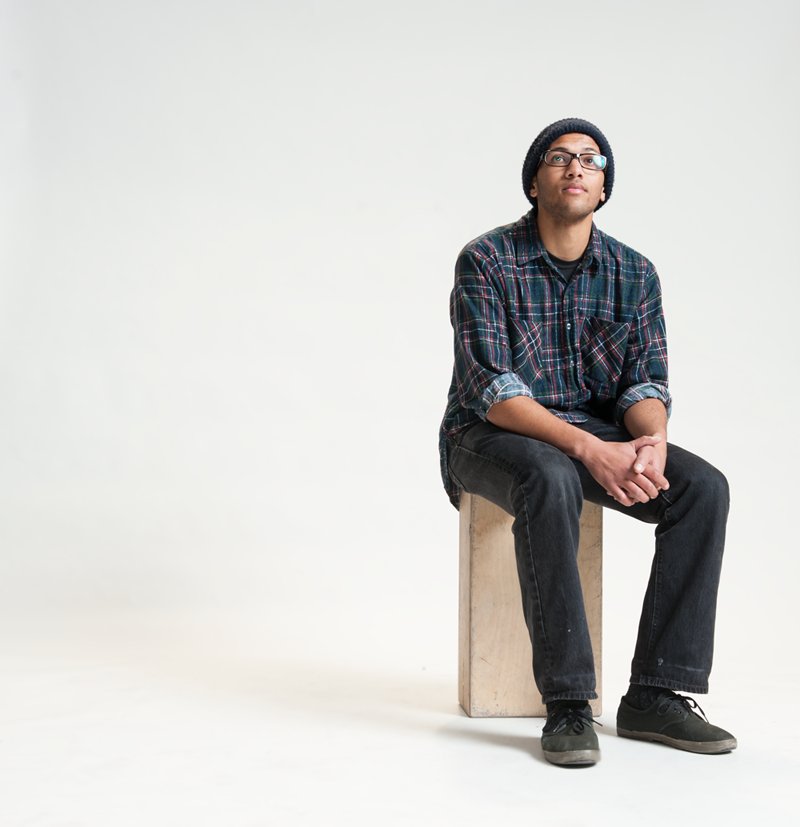
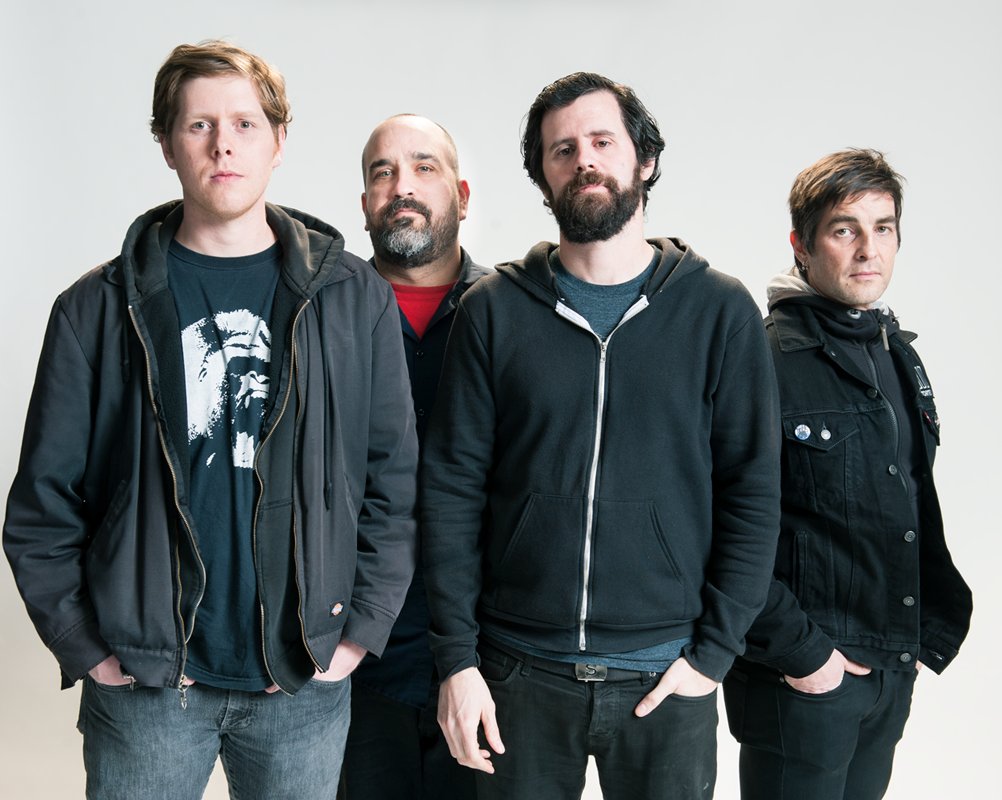
On the Rise: Kowloon Walled City

2

The line to get in to Kowloon Walled City’s album release show with Golden Void at the Hemlock in early January snaked around the building and into the alleyway. It was undeniably packed, and entirely sold out, with hordes of black-hoodied fans still waiting outside in the rain. A relatively uncommon sight for a night with a few local acts at the divey Tendernob venue.

Plus, Kowloon Walled City has been around for awhile. It was born in 2005, released a handful of LPs, briefly toured with Sleep, and has gained a steady, dedicated following. Yet it took December 2012’s ominous, muscular Container Ships for people to stand up and take notice — and that’s expanded to beyond the Bay Area’s incestuous metal scene. (Though don’t call the noisey rock band straight-forward metal, vocalist-guitarist Scott Evans once told the Guardian; just because it’s heavy, doesn’t make it metal.)

The new album is a thick slab of sludgy hard rock, with, yes, some elements of metal, doomy down-tuned guitars, Evans’ forceful howl, heavy drumming, and inevitable comparisons to the likes of Isis and Unsane. Yet, it’s not like the current musicians of Kowloon Walled City — Evans, Jeff Fagundes, Jon Howell, Ian Miller — are in it to break big; they’re all longtime local players, lovers of the art of creating loud music, especially Evans, who’s also known as the inventive sound engineer at Oakland’s Sharkbite Studios.

Description of sound: Post-partum.

http://www.youtube.com/watch?v=L93-wAvwPPY

What you like most about the Bay Area music scene: All music scenes are beautiful. OK, the truth is I love music in the Bay Area, both as a musician and as a recording guy. There are so many great people and bands and venues and it’s great.

Favorite local eatery and dish: Tu Lan tofu pile, RIP.

Who would you most like to tour with: All tours are beautiful.

www.inthewalledcity.com

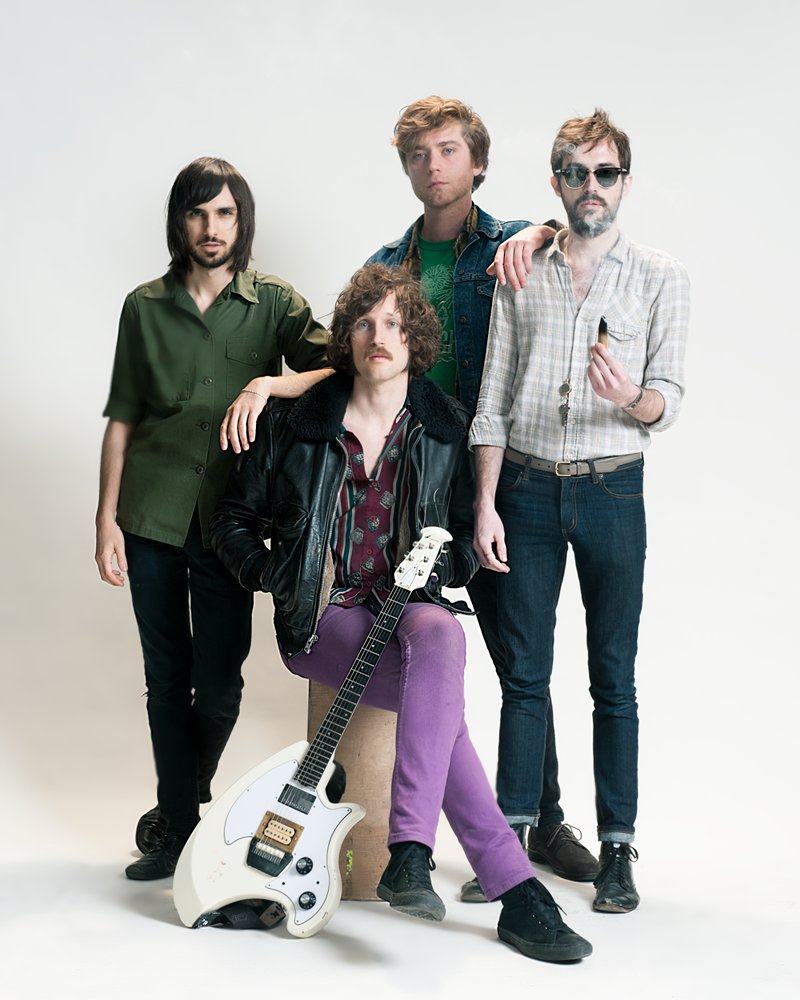
On the Rise: Warm Soda

0

The people were itching to be pumped for whatever Warm Soda was going to be. After producer-musician Matthew Melton’s beloved garage pop outfit Bare Wires dismantled ceremoniously early last year, he announced the name Warm Soda, and we collectively gripped our seats. Thankfully, there was no cause for disappointment.

This time around, Melton, who also co-runs studio-label Fuzz City, teamed up with bassist Chase Oren, guitarist Rob Good, and drummer Ian McBrayer. Similar to the band’s first single album cover (for the song “Reaction”) Warm Soda is like the sonic version of an early ’80s bombshell in skintight Gloria Vanderbilt jeans, sucking down a can of Coca-Cola through a straw, and hitting up the jukebox for early T-Rex, Cheap Trick, and glammy garage acts in that oeuvre. Or as Melton describes Warm Soda’s vision — “lo-fi glam garage pop.”

Sugary and syrupy, with fizzy pop hooks and pump-up drum hits, Warm Soda’s full-length debut, Someone For You, is out now on local Castle Face Records, and sweetly picks up where “Reaction” left off. Lucky we didn’t have to wait long for another Melton classic. As Castle Face describes it, “a lean, mean gang of masterful power pop tunes with just the right blend of studio sweetness, teenage angst, and gritty bubblegum. All killer, no filler.”

Description of sound: “Lo-Fi Glam Garage Pop.”

What you like most about the Bay Area music scene: There’s never a dull moment in the Bay Area — always something cool to check out. A brand new act will pop up as soon as you think you’re clued in on everything that’s happening.

What piece of music means a lot to you: Slade, Slade in Flame — “The Citizen Kane of Rock Musicals” — 1975 essential film (and album) about the perils of being in a traveling rock band. This hilarious movie is a must-see for anyone in a band, and the album Slade composed to “score” the film is a UK glitter rock classic.

Favorite local eatery and dish: Taqueria Cancun (19th and Mission), veggie burrito (no cheese, no sour cream) with extra green sauce!

Who would you most like to tour with: Part Time.

Warm Soda record release party with Bad Vibez, Cocktails. Feb. 23, 9pm. Night Light, 311 Broadway, Oakl. www.thenightlightoakland.com. www.warmsoda.org.

Warm Soda at Noise Pop with Free Energy, In the Valley Below, Miner. Feb. 28, 8pm, $14. Brick and Mortar Music Hall, 1710 Mission, SF. www.brickandmortarmusichall.com

On the Rise: Trails and Ways

1

This is the year we’ll finally get to spend some QT with Trilingual, which will technically be Trails and Ways’ debut LP. Though there’s still no release date or label, it will be coming out in 2013. It seems like we’ve been hearing about this much-anticipated release for ages, given all the buzzy blog love thrust on the Oakland indie-pop quartet.

And when I say anticipated, I mean it. Trails and Ways even made it on Hype Machine’s list of the “Most Blogged About Artists of 2012,” partially due to chatter about Trilingual, but likely more to the ingenious covers of Miike Snow, M83, and the like by guitarist-synth master Hannah Van Loon, rhythm guitarist Keith Brower Brown, bassist Emma Oppen, and drummer Ian Quirk.

The band is savvy, and knows how to keep up the momentum for its own projects. It’s posted dreamy official videos for tracks off the upcoming record, including “MTN Tune” and “Border Crosser.” And since December 2012, Trails and Ways have been slowly releasing songs for a remix EP, including one for “Border Crosser” by another On the Rise 2013 act: the Seshen.

Of course there’s more to T&W than a media-hold; the root reason for the frenzy is the music itself. Along with tropical synths, technical guitarwork, and Afro-pop inspired rat-a-tat drums, there’s the four glorious female-male multi-part harmonies that warm and come together like a picturesque sunrise on any given white sand beach (with or without tequila). It’s snark-proof, globally inspired pop, with hints of Brazilian tones, Spanish language snippets, and the occasional whistle, or group ooh-ooh.

Description of sound: You say bossa nova dream pop, I say Brazilian shoegaze.

What you like most about the Bay Area music scene: Our friends Bells Atlas, Astronauts Etc., the Bilinda Butchers, Waterstrider, the Seshen, and the widespread non-commercial ethos of groove.

What piece of music means a lot to you: Pat Metheny Group ft. David Bowie, “This Is Not America”; This song sounds like the boundary waters of dream pop and smooth jazz and it was my favorite song from my dad’s whole CD collection and I think I learned how to use a stereo by hitting repeat for this song.

Favorite local eatery and dish: Oasis Food Market falafel sandwich.

Who would you most like to tour with: tUnE-yArDs.

www.trailsandways.com

On the Rise: Holly Herndon

0

Using just her laptop and live vocal processing, Holly Herndon creates alternate universes. The PhD student at Stanford’s Center for Computer Research in Music and Acoustics manipulates programs into heart-racing, thumping, brain dripping compositions that methodically carry the listener away, then jerk it back with startling shots of noise. The best case example of this is “Movement,” the title track off last fall’s experimental RVNG Intl. release.

Like the others, the song surprises with impact, despite Herndon’s hushed, layered vocals trailing off into an unseen world. While it’s robotically tied to electronics, the track has a base in the natural, which makes sense for a former choir girl from Johnson City, Tennessee who spent her summers in the Berlin club scene. It’s the two halves of her worlds coming together.

She just got back from a brief European tour — which included a stop in underground music mecca, the Boiler Room — and is planning a new single for a spring release. For it, she says she’s “inspired to get more abstract while remaining approachable,” which sounds like a worthy challenge. There also will be a collaboration with Hieroglyphic Being this year, another with Reza Negarestani and Mat Dryhurst that will unfold in an art institution, a few remixes, and her doctoral exams. And likely plenty more media gushing if these first few months have been good indicators of the future.

Description of sound: I make computer music with a focus on live vocal processing and physical sound.

What you like most about the Bay Area music scene: We are literally at the end of the world, and the lack of attention focused here allows for artists to develop their own identities outside of hype bubbles.

What piece of music means a lot to you: I got deep with Trevor Wishart’s “Globalia” last summer and still cannot get over how well his concept of exploring (and collapsing) the diversity of language is executed. It is a gorgeous piece.

Favorite local eatery and dish: Bagel and latte at Java Supreme on Guerrero and 19th; I am there every day and the owners are wonderful.

Who would you most like to tour with: Mat Dryhurst, he is my life and creative partner and touring alone is exhausting.

Holly Herndon at Future|Perfect with Nguzunguzu, DJs Marco de la Vega, Loric Sih. Thu/14, 9pm, $10–$15. Public Works, 161 Erie, SF. www.publicsf.com, hollyherndon.tumblr.com

Psychic Dream Astrology: February 13-19, 2013

0

ARIES

March 21-April 19

The worst thing you can do this week is to react aggressively to your troubles. You are not going to help anything by attacking your problems or treating others as opponents. Clear your head and deal with your feelings before you unconsciously channel them at others and make things worse.

TAURUS

April 20-May 20

It’s time to let go, Taurus. Things are going your way, and it would be easy for you to leave well enough alone, but that’s not the best course of action. Take responsibility for what you know and take some risks. Be authentic in all you do, even if that threatens to overturn your freshly organized applecart.

GEMINI

May 21-June 21

You can’t control the world or your prospects. All you can reign supreme over is how you respond and manage your fears, hopes and actions. Try to regard the things that’re making you feel stuck as mere blips in the choose-your-own-adventure story that is your life this week, Twin Star.

CANCER

June 22-July 22

In order to move beyond your blocks you need to go through a tunnel lined with your own crap to get to the other side. Most of the time we get half way through, say "this stinks!" and high tail it the way we came. Bear through the painful parts so you can get somewhere healthier and happier, Cancer.

LEO

July 23-Aug. 22

Sometimes you must take risks in the name of love. If you are willing to be a little choosy you can have a rich and rewarding personal life. This is the week to use all the tools in your box to help you figure out what can bring you fun versus what connections will birth real and lasting joy. Go for gold, Leo.

VIRGO

Aug. 23-Sept. 22

Oh indecision, you fickle friend! This week you just don’t know. Nothing can be done about it; it’s not a problem to be fixed. Let things develop before you make decisions that you’ll regret later, Virgo. The best you can do with your present uncertainties is to be interested in them without rushing to conclusions.

LIBRA

Sept. 23-Oct. 22

You don’t have to go through the rough stuff alone, but you do need to decide what you need for yourself, outside of other peoples influence. Ask for help if you need it but don’t be lazy, Libra. Figure out what you can grow into versus what you won’t be able to tolerate in the long term.

SCORPIO

Oct. 23-Nov. 21

You need a crises to kick-start the kind of emotional transformation that will allow you to change what needs changing. Look at your oldest and deepest habits around sabotaging love, Scorpio. You want to be happy and connected; invest in uprooting the habits that inhibit you from flowing with your hearts desires.

SAGITTARIUS

Nov. 22-Dec. 21

It’s hard to pick a path when so many seem like they’d be good options, but that’s exactly what you must do. Trust your instincts as you choose who and what you can devote your energies to, Sag. You are going to get returns on what you put time and care into, so don’t splinter your attention this week.

CAPRICORN

Dec. 22-Jan. 19

You may wonder if spread your wings and fly like the graceful bird that you are, will your wings turn out to be made of lead? You may go splat like so many fly’s on the windshield of life before you, Cap, but it’s better to try and fail than to decide that you’re not built for soaring or the wind is against you.

AQUARIUS

Jan. 20-Feb. 18

This week you need to stay away from figuring out whose fault things are or picking apart dynamics between you and others. The problems you have are giving you the resistance that builds muscle; they can make you stronger. What seems like a biggest suck-fest may turn out to be a blessing in disguise.

PISCES

Feb. 19-March 20

This week it’s wise to sit on your feelings, especially the bummer ones, because what they are trying to tell you will be easy to misinterpret. Let things develop and try not to sway them too far in any direction. You may need to change how you participate, or you may need to change you; let time tell, Pisces.

Jessica Lanyadoo has been a Psychic Dreamer for 18 years. Check out her website at www.lovelanyadoo.com to contact her for an astrology or intuitive reading.

Film Listings

0

Film listings are edited by Cheryl Eddy. Reviewers are Kimberly Chun, Dennis Harvey, Lynn Rapoport, and Sara Maria Vizcarrondo. For rep house showtimes, see Rep Clock.

OPENING

Beautiful Creatures In the tiny South Carolina town of Gatlin, a teenage boy named Ethan Wate (Alden Ehrenreich) finds himself dreaming about a girl he’s never met (Alice Englert), until she shows up at school one day with an oddly behaving tattoo on her wrist and the power to disrupt local weather patterns when she loses her temper. Thus begins Richard LaGravenese’s adaptation of the first installment in Kami Garcia and Margaret Stohl’s four-book YA series the Caster Chronicles. The girl of Ethan’s dreams, Lena Duchannes, is the youngest member of a reclusive local family long suspected by the town’s inhabitants of performing witchcraft and otherwise being in league with Satan. They’re at least half right, though Lena and her relatives (among them Jeremy Irons, Emma Thompson, and Emmy Rossum) prefer the term caster to witch, a slur inflicted on them by mortals. As for the diabolical part, casters are, it seems, slaves to essentialism: their coming-of-age rite at age 16 entails learning whether their true nature will turn them toward the forces of darkness or light. Lena’s special birthday, as it happens, is coming up, a circumstance complicating the romance that sparks between her and Ethan. Though the altitude is lower, and the sweeping pans of coniferous forests have been replaced by claustrophobic shots of swampland and live oaks draped with Spanish moss, comparisons to the Twilight franchise are inevitable. But while we’re not unfamiliar with the arc of a human teenage protagonist who is drawn into the orbit of an alluring supernatural and finds life forever changed, Beautiful Creatures‘ young lovers are more relatable, less annoying and creepy, and smaller targets for an SNL spoof. (2:04) Shattuck. (Rapoport)

Escape from Planet Earth Kid-friendly animated tale about adventurous blue aliens, starring the voices of Brendan Fraser, Jessica Alba, and William Shatner. (1:35) Shattuck.

56 Up The world may be going to shit, but some things can be relied upon, like Michael Apted’s beloved series that’s traced the lives of 14 disparate Brits every seven years since original BBC documentary 7 Up in 1964. More happily still, this latest installment finds nearly all the participants shuffling toward the end of middle-age in more settled and contented form than ever before. There are exceptions: Jackie is surrounded by health and financial woes; special-needs librarian Lynn has been hit hard by the economic downturn; everybody’s favorite undiagnosed mental case, the formerly homeless Neil, is never going to fully comfortable in his own skin or in too close proximity to others. But for the most part, life is good. Back after 28 years is Peter, who’d quit being filmed when his anti-Thatcher comments provoked “malicious” responses, even if he’s returned mostly to promote his successful folk trio the Good Intentions. Particularly admirable and evidently fulfilling is the path that’s been taken by Symon, the only person of color here. Raised in government care, he and his wife have by now fostered 65 children — with near-infinite love and generosity, from all appearances. If you’re new to the Up series, you’ll be best off doing a Netflix retrospective as preparation for this chapter, starting with 28 Up. (2:24) California, Embarcadero, Smith Rafael. (Harvey)

A Glimpse Inside the Mind of Charles Swan III Roman Coppola’s comedy stars Charlie Sheen as a 1970s ladies man trying to get his life together. (1:25)

A Good Day to Die Hard Jai Courtney (TV’s Spartacus) joins the long-running action series as the CIA agent son of Jack McClane (Bruce Willis). (1:37) Presidio.

Safe Haven Over a decade and a half, as one Nicholas Sparks novel after another has hit the shelves and inexorably been adapted for the big screen, we’ve come to expect a certain kind of end product: a romantic drama that manages, in its treacly messaging and relentless arc toward emotional resonance, to give us second thoughts about the redemptive power of love. The latest, Safe Haven, directed by Lasse Hallström (2011’s Salmon Fishing in the Yemen, 1993’s What’s Eating Gilbert Grape), follows the formula fairly dutifully. Julianne Hough (2012’s Rock of Ages) plays Katie, a Boston woman on the run from the kind of terrifying event that causes a person to dye their hair platinum blond and board a Greyhound in the middle of the night, a trauma whose details are doled out to us in a series of flashbacks. Winding up in a small coastal town in North Carolina, she meets handsome widower and father of two Alex (Josh Duhamel), who runs the local general store and takes a shine to the unfriendly new girl. Viewers of last year’s Sparks adaptation The Lucky One will find some familiar elements (the healing balm of a good man’s love, cloying usage of the paranormal), as will viewers of 1991’s Sleeping with the Enemy, another film that presents the fantasy of a fresh start in Smalltown, U.S.A. (1:55) Presidio. (Rapoport)

“Silent Winter” The San Francisco Silent Film Festival programs a day of vintage delights, including films starring Mary Pickford and Buster Keaton, with live musical accompaniment. See story at www.sfbg.com. Castro.

Yossi A decade after Yossi (Ohad Knoller) lost his secret lover Jagger in a night raid during their Israeli Army service, the former is no longer a strapping, macho figure but a prematurely middle-aged sad sack. He works to the point of exhaustion as a Tel Aviv cardiologist, and his home life is pathetically lonely — an attempt to step out of the closet with an internet hookup turns out so humiliatingly that it seems he might as well shut the door on love for keeps. But forced to take a vacation, he finds some measure of hope in a chance encounter with four young soldiers who remind him of himself and still-mourned Jagger back when — except times have changed, and the gay identity he still hides even from closest colleagues doesn’t phase them in the least. Eytan Fox’s 2002 breakthrough Yossi & Jagger (originally made for Israeli TV) was sexy, then tragic, then stinging — consistently surprising and nuanced, with a memorably bitter resolution of social injustice. A sequel was theoretically a good idea, but the choices Fox has made for it (and for Yossi) are at once depressing and pat. It’s one thing that our hero has turned into such a piteous loser — these things happen, though the original edition didn’t seem like he’d give up so easily — quite another that his salvation comes in an all-too-convenient, movie wish-fulfillment form. As a stand-alone, melancholic character-study drama, Fox’s latest has its points. As a follow-up to what’s still his best film, however, it’s a bit more deflating and deflated than necessary. (1:24) California, Embarcadero. (Harvey)

ONGOING

Amour Arriving in local theaters atop a tidal wave of critical hosannas, Amour now seeks to tempt popular acclaim — though actually liking this perfectly crafted, intensely depressing film (from Austrian director Michael Haneke) may be nigh impossible for most audience members. Eightysomething former music teachers Georges and Anne (the flawless Jean-Louis Trintignant and Emmanuelle Riva) are living out their days in their spacious Paris apartment, going to classical concerts and enjoying the comfort of their relationship. Early in the film, someone tries to break into their flat — and the rest of Amour unfolds with a series of invasions, with Anne’s declining health the most distressing, though there are also unwanted visits from the couple’s only daughter (an appropriately self-involved Isabelle Huppert), an inept nurse who disrespects Anne and curses out Georges, and even a rogue pigeon that wanders in more than once. As Anne fades into a hollow, twisted, babbling version of her former self, Georges also becomes hollow and twisted, taking care of her while grimly awaiting the inevitable. Of course, the movie’s called Amour, so there’s some tenderness involved. But if you seek heartwarming hope and last-act uplift, look anywhere but here. (2:07) Clay, Smith Rafael. (Eddy)

Argo If you didn’t know the particulars of the 1979 Iranian Revolution, you won’t be an expert after Argo, but the film does a good job of capturing America’s fearful reaction to the events that followed it — particularly the hostage crisis at the US embassy in Tehran. Argo zeroes in on the fate of six embassy staffers who managed to escape the building and flee to the home of the sympathetic Canadian ambassador (Victor Garber). Back in Washington, short-tempered CIA agents (including a top-notch Bryan Cranston) cast about for ways to rescue them. Enter Tony Mendez (Ben Affleck, who also directs), exfil specialist and father to a youngster wrapped up in the era’s sci-fi craze. While watching 1973’s Battle for the Planet of the Apes, Tony comes up with what Cranston’s character calls “the best bad idea we have:” the CIA will fund a phony Canadian movie production (corny, intergalactic, and titled Argo) and pretend the six are part of the crew, visiting Iran for a few days on a location shoot. Tony will sneak in, deliver the necessary fake-ID documents, and escort them out. Neither his superiors, nor the six in hiding, have much faith in the idea. (“Is this the part where we say, ‘It’s so crazy it just might work?'” someone asks, beating the cliché to the punch.) Argo never lets you forget that lives are at stake; every painstakingly forged form, every bluff past a checkpoint official increases the anxiety (to the point of being laid on a bit thick by the end). But though Affleck builds the needed suspense with gusto, Argo comes alive in its Hollywood scenes. As the show-biz veterans who mull over Tony’s plan with a mix of Tinseltown cynicism and patiotic duty, John Goodman and Alan Arkin practically burst with in-joke brio. I could have watched an entire movie just about those two. (2:00) Balboa, Embarcadero, Sundance Kabuki. (Eddy)

Beasts of the Southern Wild A year after winning the Grand Jury Prize at Sundance (and a Cannes Camera d’Or), Beasts of the Southern Wild proves capable of enduring a second or third viewing with its originality and strangeness fully intact. Magical realism is a primarily literary device that isn’t attempted very often in U.S. cinema, and succeeds very rarely. But this intersection between Faulkner and fairy tale, a fable about — improbably — Hurricane Katrina, is mysterious and unruly and enchanting. Benh Zeitlin’s film is wildly cinematic from the outset, as voiceover narration from six-year-old Hushpuppy (Quvenzhané Wallis) offers simple commentary on her rather fantastical life. She abides in the Bathtub, an imaginary chunk of bayou country south of New Orleans whose residents live closer to nature, amid the detritus of civilization. Seemingly everything is some alchemical combination of scrap heap, flesh, and soil. But not all is well: when “the storm” floods the land, the holdouts are forced at federal gunpoint to evacuate. With its elements of magic, mythological exodus, and evolutionary biology, Beasts goes way out on a conceptual limb; you could argue it achieves many (if not more) of the same goals Terrence Malick’s 2011 The Tree of Life did at a fraction of that film’s cost and length. (1:31) Opera Plaza. (Harvey)

Bullet to the Head Not to be mistaken for the John Woo passion play, this head wound of a revenge flick instead pits a hired assassin (Sylvester Stallone) against an outsider cop (Sung Kang), the corroded action star who emerged from the thicket of ’70s Italian American iconic actors against a smooth-faced Asian American indie actor associated with the Fast and Furious franchise. Sly’s James Bonomo and his partner have been set up by a set of tepid bad guys (Oz fave Adewale Akinnuoye-Agbaje, here sleep-raging his way through Bullet; a very unpumped Christian Slater; and Jason Momoa, who glowers like he’s still playing a warlord on Game of Thrones). So Bonomo and Kang’s Taylor Kwon — the former’s got the brawn, the latter’s got the smartphone with access to criminal databases — must reluctantly team up to mete out some kind of justice. Yawn. The uninspired oh-so-gritty camera effects don’t help matters when it comes to staving off the sleepies induced by this tired enterprise — director Walter Hill certainly seems to have succumbed to the big snooze. The only real fun to be gleaned here is in watching your random, uh, ax fight and studying the Stallone’s weirdly crumbling yet inert rubble of face, which almost seems to scream to us about — yo, not Adrian, but the ravages of age, surgery, and excess. (1:32) Metreon, 1000 Van Ness. (Chun)

Django Unchained Quentin Tarantino’s spaghetti western homage features a cameo by the original Django (Franco Nero, star of the 1966 film), and solid performances by a meticulously assembled cast, including Jamie Foxx as the titular former slave who becomes a badass bounty hunter under the tutelage of Dr. Schultz (Christoph Waltz). Waltz, who won an Oscar for playing the evil yet befuddlingly delightful Nazi Hans Landa in Tarantino’s 2009 Inglourious Basterds, is just as memorable (and here, you can feel good about liking him) as a quick-witted, quick-drawing wayward German dentist. There are no Nazis in Django, of course, but Tarantino’s taboo du jour (slavery) more than supplies motivation for the filmmaker’s favorite theme (revenge). Once Django joins forces with Schultz, the natural-born partners hatch a scheme to rescue Django’s still-enslaved wife, Broomhilda (Kerry Washington), whose German-language skills are as unlikely as they are convenient. Along the way (and it’s a long way; the movie runs 165 minutes), they encounter a cruel plantation owner (Leonardo DiCaprio), whose main passion is the offensive, shocking “sport” of “Mandingo fighting,” and his right-hand man, played by Tarantino muse Samuel L. Jackson in a transcendently scandalous performance. And amid all the violence and racist language and Foxx vengeance-making, there are many moments of screaming hilarity, as when a character with the Old South 101 name of Big Daddy (Don Johnson) argues with the posse he’s rounded up over the proper construction of vigilante hoods. It’s a classic Tarantino moment: pausing the action so characters can blather on about something trivial before an epic scene of violence. Mr. Pink would approve. (2:45) Metreon, 1000 Van Ness, Sundance Kabuki. (Eddy)

Gangster Squad It’s 1949, and somewhere in the Hollywood hills, a man has been tied hand and foot to a pair of automobiles with the engines running. Coyotes pace in the background like patrons queuing up for a table at Flour + Water, and when dinner is served, the presentation isn’t very pretty. We’re barely five minutes into Ruben Fleischer’s Gangster Squad, and fair warning has been given of the bloodletting to come. None of it’s quite as visceral as the opening scene, but Fleischer (2009’s Zombieland) packs his tale of urban warfare with plenty of stylized slaughter to go along with the glamour shots of mob-run nightclubs, leggy pin-curled dames, and Ryan Gosling lounging at the bar cracking wise. At the center of all the gunplay and firebombing is what’s framed as a battle for the soul of Los Angeles, waged between transplanted Chicago mobster Mickey Cohen (Sean Penn) — who wields terms like “progress” and “manifest destiny” as a rationale for a continental turf war — and a police sergeant named John O’Mara (Josh Brolin), tasked with bringing down Cohen’s empire. The assignment requires working under cover so deep that only the police chief (Nick Nolte) and the handpicked members of O’Mara’s “gangster squad” — ncluding Gosling, a half-jaded charmer who poaches Cohen’s arm candy (Emma Stone) — know of its existence. This leaves plenty of room for improvisation, and the film pauses now and again to wonder about what happens when you pit brutal amorality against brutal morality, but it’s a rhetorical question, and no one shows much interest in it. Dragged down by talking points that someone clearly wanted wedged in (as well as by O’Mara’s ponderous voice-overs), the film does better when it abandons gravitas and refocuses on spinning its mythic tale of wilder times in the Golden State. (1:53) Metreon, 1000 Van Ness. (Rapoport)

Hansel & Gretel: Witch Hunters So here’s something you may not have been wondering: what exactly happened to Hansel and Gretel after they killed the gingerbread-house witch and made their way to freedom? Did they really live happily ever after? Did they land in the foster care system? Did they enter adulthood bearing the deep psychic wounds a person might well suffer after shoving a living creature into an oven and listening to her agonized howls as she burned alive? Or did they realize they’d discovered their life’s vocation without even having to complete the Myers-Briggs test? Shutting his eyes and pointing at random, director and screenplay cowriter Tommy Wirkola (2009’s Dead Snow) chooses the latter scenario, keeping his eyes closed to stab out some weak dialogue and half a plot for a script that leans heavily on the power of 3D technology to send eviscerated-witch guts and other biological shrapnel flying toward the eyeballs of audience members. Hansel (why, Jeremy Renner?) and Gretel (Gemma Arterton) have grown up to share the intense sibling bond and wandering ways you might expect from a brother and sister abandoned at a tender age to starve and be rent limb from limb by wild animals. They’ve also taken full advantage of a niche witch-slaying market in and around the gloomy forest where they made their first kill. When they’re hired to track down a particularly loathsome practitioner of the dark arts (Famke Janssen) who’s been snatching up local children, multidimensional mayhem ensues. Arterton’s Gretel is pretty much a badass and the brains of the operation, while Renner’s Hansel is more of a strong, silent, and occasionally shit-faced type. Neither makes for a particularly memorable protagonist, but that flat look on their faces could just be disappointment or boredom with the material. (1:41) Metreon, 1000 Van Ness. (Rapoport)

The Hobbit: An Unexpected Journey Make no mistake: the Lord of the Rings trilogy represented an incredible filmmaking achievement, with well-deserved Oscars handed down after the third installment in 2003. If director Peter Jackson wanted to go one more round with J.R.R. Tolkien’s beloved characters for a Hobbit movie, who was gonna stop him? Not so fast. This return to Middle-earth (in 3D this time) represents not one but three films — which would be self-indulgent enough even if part one didn’t unspool at just under three hours, and even if Jackson hadn’t decided to shoot at 48 frames per second. (I can’t even begin to explain what that means from a technical standpoint, but suffice to say there’s a certain amount of cinematic lushness lost when everything is rendered in insanely crystal-clear hi-def.) Journey begins as Bilbo Baggins (a game, funny Martin Freeman) reluctantly joins Gandalf (a weary-seeming Ian McKellan) and a gang of dwarves on their quest to reclaim their stolen homeland and treasure, batting Orcs, goblins, Gollum (Andy Serkis), and other beasties along the way. Fan-pandering happens (with characters like Cate Blanchett’s icy Galadriel popping in to remind you how much you loved LOTR), and the story moves at a brisk enough pace, but Journey never transcends what came before — or in the chronology of the story, what comes after. I’m not quite ready to declare this Jackson’s Phantom Menace (1999), but it’s not an unfair comparison to make, either. (2:50) Metreon. (Eddy)

Identity Thief America is made up of asshole winners and nice guy losers — or at least that’s the thesis of Identity Thief, a comedy about a crying-clown credit card bandit (Melissa McCarthy) and the sweet sucker (Jason Bateman) she lures into her web of chaos. Bateman plays Sandy, a typical middle-class dude with a wife, two kids, and a third on the way. He’s always struggling to break even and just when it seems like his ship’s come in, Diana (McCarthy) jacks his identity — a crime that requires just five minutes in a dark room with Sandy’s social security number. Suddenly, his good name is contaminated with her prior arrests, drug-dealer entanglements, and mounting debt; it’s like the capitalist version of VD. But as the “kind of person who has no friends,” Diana is as tragic as she is comic, providing McCarthy an acting opportunity no one saw coming when she was dispensing romantic advice on The Gilmore Girls. Director Seth Gordon (2011’s Horrible Bosses) treats this comedy like an action movie — as breakneck as slapstick gets — and he relies so heavily on discomfort humor that the film doesn’t just prompt laughs, it pokes you in the ribs until you laugh, man, LAUGH! While Identity Thief has a few complex moments about how defeating “sticking it to the man” can be (mostly because only middle men get hurt), it’s mostly as subtle as a pratfall and just as (un-)rewarding. (1:25) Four Star, Marina, 1000 Van Ness, SF Center, Sundance Kabuki. (Vizcarrondo)

The Impossible Spanish director Juan Antonio Bayona (2007’s The Orphanage) directs The Impossible, a relatively modestly-budgeted take on the 2004 Indian Ocean tsunami, based on the real story of a Spanish family who experienced the disaster. Here, the family (Naomi Watts, Ewan McGregor, three young sons) is British, on a Christmas vacation from dad’s high-stress job in Japan. Beachy bliss is soon ruined by that terrible series of waves; they hit early in the film, and Bayona offers a devastatingly realistic depiction of what being caught in a tsunami must feel like: roaring, debris-filled water threatening death by drowning, impalement, or skull-crushing. And then, the anguish of surfacing, alive but injured, stranded, and miles from the nearest doctor, not knowing if your family members have perished. Without giving anything away (no more than the film’s suggestive title, anyway), once the survivors are established (and the film’s strongest performer, Watts, is relegated to hospital-bed scenes) The Impossible finds its way inevitably to melodrama, and triumph-of-the-human-spirit theatrics. As the family’s oldest son, 16-year-old Tom Holland is effective as a kid who reacts exactly right to crisis, morphing from sulky teen to thoughtful hero — but the film is too narrowly focused on its tourist characters, with native Thais mostly relegated to background action. It’s a disconnect that’s not quite offensive, but is still off-putting. (1:54) Balboa, Metreon. (Eddy)

Jack Reacher (2:10) Metreon.

Life of Pi Several filmmakers including Alfonso Cuarón, Jean-Pierre Jeunet, and M. Night Shyamalan had a crack at Yann Martel’s “unfilmable” novel over the last decade, without success. That turns out to have been a very good thing, since Ang Lee and scenarist David Magee have made probably the best movie possible from the material — arguably even an improvement on it. Framed as the adult protagonist’s (Irrfan Khan) lengthy reminiscence to an interested writer (Rafe Spall) it chronicles his youthful experience accompanying his family and animals from their just shuttered zoo on a cargo ship voyage from India to Canada. But a storm capsizes the vessel, stranding teenaged Pi (Suraj Sharma) on a lifeboat with a mini menagerie — albeit one swiftly reduced by the food chain in action to one Richard Parker, a whimsically named Bengal tiger. This uneasy forced cohabitation between Hindu vegetarian and instinctual carnivore is an object lesson in survival as well as a fable about the existence of God, among other things. Shot in 3D, the movie has plenty of enchanted, original imagery, though its outstanding technical accomplishment may lie more in the application of CGI (rather than stereoscopic photography) to something reasonably intelligent for a change. First-time actor Sharma is a natural, while his costar gives the most remarkable performance by a wild animal this side of Joaquin Phoenix in The Master. It’s not a perfect film, but it’s a charmed, lovely experience. (2:00) 1000 Van Ness, SF Center. (Harvey)

Lincoln Distinguished subject matter and an A+ production team (Steven Spielberg directing, Daniel Day-Lewis starring, Tony Kushner adapting Doris Kearns Goodwin, John Williams scoring every emotion juuust so) mean Lincoln delivers about what you’d expect: a compelling (if verbose), emotionally resonant (and somehow suspenseful) dramatization of President Lincoln’s push to get the 13th amendment passed before the start of his second term. America’s neck-deep in the Civil War, and Congress, though now without Southern representation, is profoundly divided on the issue of abolition. Spielberg recreates 1865 Washington as a vibrant, exciting place, albeit one filled with so many recognizable stars it’s almost distracting wondering who’ll pop up in the next scene: Jared Harris as Ulysses S. Grant! Joseph Gordon-Levitt as Robert Lincoln! Lena Dunham’s shirtless boyfriend on Girls (Adam Driver) as a soldier! Most notable among the huge cast are John Hawkes, Tim Blake Nelson, and a daffy James Spader as a trio of lobbyists; Sally Field as the troubled First Lady; and likely Oscar contenders Tommy Lee Jones (as winningly cranky Rep. Thaddeus Stevens) and Day-Lewis, who does a reliably great job of disappearing into his iconic role. (2:30) Balboa, Metreon, 1000 Van Ness. (Eddy)

Mama From bin Laden to wild babes in woods, Jessica Chastain can’t seem to grab a break. Equipped with just the bare outlines of a character, however, she’s one of the few pleasures in this missed-opportunity of a grim, ghostly fairy tale. Expanding his short of the same name, director Andres Muschietti kicks off his yarn on a sadly familiar note in these days of seemingly escalating gun violence: little sisters Victoria and Lily have disappeared from their home, shortly after their desperate father (Game of Thrones‘ Nikolaj Coster-Waldau) has gone on a shooting spree. They repair to an abandoned cabin scattered with mid-century modern furniture. Five years on, the girls’ scruffy artist uncle Lucas (also Coster-Waldau) is still searching for them, supported by his punk rock girlfriend Annabel (Chastain). The little girls lost are finally found by trackers — and they appear to be hopelessly feral, with the angelic-looking Victoria (Megan Charpentier), acting as the ringleader and the younger, bedraggled Lily (Maya Dawe) given to sleeping under beds and eating on all fours next to the dog bowl. The arty couple take them in and move into a “test house” provided by the sisters’ enthralled therapist (Daniel Kash), obviously psyched to study not one but two Kaspar Hausers. The traumatized kids are clearly haunted by their experience — in more ways than one — as inexplicable bumps go off, night and day, and Misfits t-shirt-clad Annabel discovers the real meaning of goth while getting in touch with her seemingly deeply buried maternal urges. Unfortunately, despite possessing the raw material for a truly scary outing that plunges to the core of our primal instincts (what’s scarier than an unsocialized kid that’s capable of anything?) and showing off Muschietti’s occasional instances of cinematic flair (as when multiple rooms are shown using split-screens), Mama ends up running away from the filmmaker and is finally simply spoiled by its mawkishly sentimental finale. It doesn’t help that the inadequate script sports logic holes that a mama could drive a truck though. (1:40) Metreon. (Chun)

Les Misérables There is a not-insignificant portion of the population who already knows all the words to all the songs of this musical-theater warhorse, around since the 1980s and honored here with a lavish production by Tom Hooper (2010’s The King’s Speech). As other reviews have pointed out, this version only tangentially concerns Victor Hugo’s French Revolution tale; its true raison d’être is swooning over the sight of its big-name cast crooning those famous tunes. Vocals were recorded live on-set, with microphones digitally removed in post-production — but despite this technical achievement, there’s a certain inorganic quality to the proceedings. Like The King’s Speech, the whole affair feels spliced together in the Oscar-creation lab. The hardworking Hugh Jackman deserves the nomination he’ll inevitably get; jury’s still out on Anne Hathaway’s blubbery, “I cut my hair for real, I am so brave!” performance. (2:37) SF Center. (Eddy)

Movie 43 (1:37) Metreon.

“Oscar Nominated Short Films 2013: Animated” If you caught Wreck-It Ralph, nominated in the Best Animated Feature category, you’ve already seen John Kahrs’ Paperman, about a junior Mad Men type who bumbles through his pursuit of a lovely fellow office drone he spots on his commute. Or, if you saw Ice Age: Continental Drift, you’ve seen Maggie Simpson in The Longest Daycare, starring Homer and Marge’s wee one as she grapples with the social order at the Ayn Rand School for Tots. Among the stand-alones, Minkyu Lee’s Adam and Dog features a quick appearance by Eve, too, but the star is really the scrappy canine who gallops through prehistory playing the world’s first game of fetch with his hairy master. Two minutes is all PES (nom de screen of Adam Pesapane) needs to make Fresh Guacamole — which depicts grenades, dice, and other random objects as most unusual ingredients. The only non-US entry, UK director Timothy Reckart’s Head Over Heels, is about an elderly married couple whose relationship has deteriorated to the point where they (literally) no longer see eye to eye on anything. The program is rounded out by three more non-Oscar-nominated animated shorts: Britain’s The Gruffalo’s Child, featuring the voices of Helena Bonham Carter and Robbie Coltrane; French art-thief caper Dripped; and New Zealand’s sci-fi tale Abiogenesis. (1:28) Embarcadero. (Eddy)

“Oscar Nominated Short Films 2013: Documentary” (3:29) Opera Plaza.

“Oscar Nominated Short Films 2013: Live Action” (1:54) Embarcadero.

Parker (1:58) Metreon.

Quartet Every year there’s at least one: the adorable-old-cootfest, usually British, that proves harmless and reassuring and lightly tear/laughter producing enough to convince a certain demographic that it’s safe to go to the movies again. The last months have seen two, both starring Maggie Smith (who’s also queen of that audience’s home viewing via Downton Abbey). Last year’s The Best Exotic Marigold Hotel, in which Smith played a bitchy old spinster appalled to find herself in India, has already filled the slot. It was formulaic, cute, and sentimental, yes, but it also practiced more restraint than one expected. Now here’s Quartet, which is basically the same flower arrangement with quite a bit more dust on it. Smith plays a bitchy old spinster appalled to find herself forced into spending her twilight years at a home for the elderly. It’s not just any such home, however, but Beecham House, whose residents are retired professional musicians. Gingerly peeking out from her room after a few days’ retreat from public gaze, Smith’s Jean Horton — a famed English soprano — spies a roomful of codgers rolling their hips to Afropop in a dance class. “This is not a retirement home — this is a madhouse!” she pronounces. Oh, the shitty lines that lazy writers have long depended on Smith to make sparkle. Quartet is full of such bunk, adapted with loving fidelity, no doubt, from his own 1999 play by Ronald Harwood, who as a scenarist has done some good adaptations of other people’s work (2002’s The Pianist). But as a generator of original material for about a half-century, he’s mostly proven that it is possible to prosper that long while being in entirely the wrong half-century. Making his directorial debut: 75-year-old Dustin Hoffman, which ought to have yielded a more interesting final product. But with its workmanlike gloss and head-on take on the script’s very predictable beats, Quartet could as well have been directed by any BBC veteran of no particular distinction. (1:38) Embarcadero, Smith Rafael. (Harvey)

Rust and Bone Unlike her Dark Knight Rises co-star Anne Hathaway, Rust and Bone star Marion Cotillard never seems like she’s trying too hard to be sexy, or edgy, or whatever (plus, she already has an Oscar, so the pressure’s off). Here, she’s a whale trainer at a SeaWorld-type park who loses her legs in an accident, which complicates (but ultimately strengthens) her relationship with Ali (Belgian actor Matthias Schoenaerts, so tremendous in 2011’s Bullhead), a single dad trying to make a name for himself as a boxer. Jacques Audiard’s follow-up to 2009’s A Prophet gets a bit overwrought by its last act, but there’s an emotional authenticity in the performances that makes even a ridiculous twist (like, the kind that’ll make you exclaim “Are you fucking kidding me?”) feel almost well-earned. (2:00) Opera Plaza. (Eddy)

The Sessions Polio has long since paralyzed the body of Berkeley poet Mark O’Brien (John Hawkes) from the neck down. Of course his mind is free to roam — but it often roams south of the personal equator, where he hasn’t had the same opportunities as able-bodied people. Thus he enlists the services of Cheryl (Helen Hunt), a professional sex surrogate, to lose his virginity at last. Based on the real-life figures’ experiences, this drama by Australian polio survivor Ben Lewin was a big hit at Sundance this year (then titled The Surrogate), and it’s not hard to see why: this is one of those rare inspirational feel-good stories that doesn’t pander and earns its tears with honest emotional toil. Hawkes is always arresting, but Hunt hasn’t been this good in a long time, and William H. Macy is pure pleasure as a sympathetic priest put in numerous awkward positions with the Lord by Mark’s very down-to-earth questions and confessions. (1:35) Opera Plaza. (Harvey)

Side Effects Though on the surface Channing Tatum appears to be his current muse, Steven Soderbergh seems to have gotten his smart, topical groove back, the one that spurred him to kick off his feature filmmaking career with the on-point Sex, Lies, and Videotape (1989) and went missing with the fun, featherweight Ocean’s franchise. (Alas, he’s been making claims that Side Effects will be his last feature film.) Here, trendy designer antidepressants are the draw — mixed with the heady intoxicants of a murder mystery with a nice hard twist that would have intrigued either Hitchcock or Chabrol. As Side Effects opens, the waifish Emily Taylor (Rooney Mara), whose inside-trading hubby (Tatum) has just been released from prison, looks like a big-eyed little basket of nerves ready to combust — internally, it seems, when she drives her car into a wall. Therapist Jonathan Banks (Jude Law), who begins to treat her after her hospital stay, seems to care about her, but nevertheless reflexively prescribes the latest anti-anxiety med of the day, on the advice of her former doctor (Catherine Zeta-Jones). Where does his responsibility for Emily’s subsequent actions begin and end? Soderbergh and his very able cast fill out the issues admirably, with the urgency that was missing from the more clinical Contagion (2011) and the, ahem, meaty intelligence that was lacking in all but the more ingenious strip scenes of last year’s Magic Mike. (1:30) Metreon, 1000 Van Ness, Presidio, Sundance Kabuki. (Chun)

Silver Linings Playbook After guiding two actors to Best Supporting Oscars in 2010’s The Fighter, director David O. Russell returns (adapting his script from Matthew Quick’s novel) with another darkly comedic film about a complicated family that will probably earn some gold of its own. Though he’s obviously not ready to face the outside world, Pat (Bradley Cooper) checks out of the state institution he’s been court-ordered to spend eight months in after displaying some serious anger-management issues. He moves home with his football-obsessed father (Robert De Niro) and worrywart mother (Jacki Weaver of 2010’s Animal Kingdom), where he plunges into a plan to win back his estranged wife. Cooper plays Pat as a man vibrating with troubled energy — always in danger of flying into a rage, even as he pursues his forced-upbeat “silver linings” philosophy. But the movie belongs to Jennifer Lawrence, who proves the chops she showcased (pre-Hunger Games megafame) in 2010’s Winter’s Bone were no fluke. As the damaged-but-determined Tiffany, she’s the left-field element that jolts Pat out of his crazytown funk; she’s also the only reason Playbook‘s dance-competition subplot doesn’t feel eye-rollingly clichéd. The film’s not perfect, but Lawrence’s layered performance — emotional, demanding, bitchy, tough-yet-secretly-tender — damn near is. (2:01) Four Star, 1000 Van Ness, Presidio, SF Center, Sundance Kabuki, Vogue. (Eddy)

Skyfall Top marks to Adele, who delivers a magnificent title song to cap off Skyfall‘s thrilling pre-credits chase scene. Unfortunate, then, that the film that follows squanders its initial promise. After a bomb attack on MI6, the clock is running out for Bond (Daniel Craig) and M (Judi Dench), accused of Cold War irrelevancy in a 21st century full of malevolent, stateless computer hackers. The audience, too, will yearn for a return to simpler times; dialogue about “firewalls” and “obfuscated code” never fails to sound faintly ridiculous, despite the efforts Ben Whishaw as the youthful new head of Q branch. Javier Bardem is creative and creepy as keyboard-tapping villain Raoul Silva, but would have done better with a megalomaniac scheme to take over the world. Instead, a small-potatoes revenge plot limps to a dull conclusion in the middle of nowhere. Skyfall never decides whether it prefers action, bon mots, and in-jokes to ponderous mythologizing and ripped-from-the-headlines speechifying — the result is a unsatisfying, uneven mixture. (2:23) Metreon. (Ben Richardson)

Stand Up Guys Call it oldster pop, call it geriatricore, just don’t call it late for its meds. With the oncoming boomer elder explosion, we can Depends — har-dee-har-har — on the fact that action-crime thrillers-slash-comedies like 2010’s Red, 2012’s Robot and Frank, and now Stand Up Guys are just the vanguard of an imminent barrage of grumpy old pros locking and loading, grousing about their angina, and delivering wisdom with a dose of hard-won levity. As handled by onetime teen-comedy character actor Fisher Stevens, Stand Up Guys is a warm, worthy addition to that soon-to-be-well-populated pantheon. It grows on you as you spend time with it — much like the two aging reprobates at its core, Val (Al Pacino) and Doc (Christopher Walken). Val, the proverbial stand-up guy who took the fall for the rest of his gang, has just completed a 25-year-plus stint in the pen. There to meet him is his only pal, and former partner in crime, Doc, who has been leading a humble life but has one last hit to commit for their old boss Claphands (Mark Margolis), who’s inexplicably named after a Tom Waits song. Sex, drugs, and some Viagra commercial-esque bluesy guitars are in order, but first Val and Doc must find their drive, in the form of their old driver buddy Hirsch (Alan Arkin), who they break out of a rest home, and, perhaps, their moral compass, which arrives with the discovery of a victim (Vanessa Ferlito) of baddies much less couth than themselves. The pleasure comes with following these stand-up guys as they make that leap from craven self-preservation to heroism, which might seem implausible to some. But to the cast’s, and Stevens’s, credit, they make it work — and even give the sentiment-washed finale a swashbuckling buddy-movie romanticism, the kind that a young Tarantino might dislike and an older Tarantino would be loathe to begrudge his lovable louses. (1:34) 1000 Van Ness, SF Center, Sundance Kabuki. (Chun)

Top Gun 3D (1:50) 1000 Van Ness.

Warm Bodies A decade and a half of torrid, tormented vampire-human entanglements has left us accustomed to rooting for romances involving the undead and the still-alive. Some might argue, however, that no amount of pop-cultural prepping could be sufficient to get us behind a human-zombie love story for the ages. Is guzzling human blood really measurably less gross than making a meal of someone’s brains and other body parts? Somehow, yes. Recognizing this perceptual hurdle, writer-director Jonathan Levine (2011’s 50/50, 2008’s The Wackness) secures our sympathies at the outset of Warm Bodies by situating us inside the surprisingly active brain of the film’s zombie protagonist. Zombies, it turns out, have internal monologues. R (Nicholas Hoult) can only remember the first letter of his former name, but as he shambles and shuffles and slumps his way through the terminals of a postapocalyptic airport overrun by his fellow corpses (as they’re called by the film’s human population), he fills us in as best he can on the global catastrophe that’s occurred and his own ensuing existential crisis. By the time he meets not-so-cute with Julie (Teresa Palmer), a young woman whose father (John Malkovich) is commander-in-chief of the human survivors living in a walled-off city center, we’ve learned that he collects vinyl, that he has a zombie best friend, and that he doesn’t want to be like this. We may still be flinching at the thought of his and Julie’s first kiss, but we’re also kind of rooting for him. The plot gapes in places, where a tenuous logic gets trampled and gives way, but Levine’s script, adapted from a novel by Isaac Marion, is full of funny riffs on the zombie condition, which Hoult invests with a comic sweetness as his character staggers toward the land of the living. (1:37) 1000 Van Ness, SF Center, Sundance Kabuki. (Rapoport)

West of Memphis At this point, it’s hard to imagine a present-day murder trial more painstakingly documented than that of the so-called West Memphis Three. West of Memphis can be considered a crash course for those who somehow missed the Bruce Sinofsky and Joe Berlinger-directed Paradise Lost trilogy; it’s an evenly-paced montage of talking heads, archival trial footage, and interviews with investigators and legal experts, with additional focus on the relationship between former death row inmate Damien Echols and his wife Lorri Davis. (The other two accused men do appear in the film, but Echols is the focal point.) The doc traces the entire case, from the initial news reports of the disappearance of eight-year-olds Christopher Byers, Michael Moore, and Steve Branch, to the supporter-funded, post-conviction investigation and appeals process still unfolding today. Over the years, Echols’ defense team had gradually amassed testimony from a slew of high-powered experts, which not only pointed away from the West Memphis Three, but also suggested new suspects. Despite this seemingly compelling material, Echols’ appeal hit a wall in 2008, when then-Circuit Court judge David Burnett, who had presided over the original trials, denied a new hearing, citing “inconclusive” evidence. At that point, Peter Jackson and Fran Walsh, who had privately bankrolled much of the investigation leading to the DNA appeal, decided produce a doc; Amy Berg (2006’s Deliver Us from Evil) was tapped to direct. Whether or not this film advances the legal process any further remains to be seen, but it does offer a telling portrait of a deeply-flawed criminal justice system at work. (2:26) Shattuck. (Nicole Gluckstern)

Zero Dark Thirty The extent to which torture was actually used in the hunt for Osama Bin Ladin may never be known, though popular opinion will surely be shaped by this film, as it’s produced with the same kind of “realness” that made Kathryn Bigelow’s previous film, the Oscar-winning The Hurt Locker (2008), so potent. Zero Dark Thirty incorporates torture early in its chronology — which begins in 2003, after a brief opening that captures the terror of September 11, 2001 using only 911 phone calls — but the practice is discarded after 2008, a sea-change year marked by the sight of Obama on TV insisting that “America does not torture.” (The “any more” goes unspoken.) Most of Zero Dark Thirty is set in Pakistan and/or “CIA black sites” in undisclosed locations; it’s a suspenseful procedural that manages to make well-documented events (the July 2005 London bombings; the September 2008 Islamabad Marriott Hotel bombing) seem shocking and unexpected. Even the raid on Bin Ladin’s HQ is nail-bitingly intense. The film immerses the viewer in the clandestine world, tossing out abbreviations (“KSM” for al-Qaeda bigwig Khalid Sheikh Mohammed) and jargon (“tradecraft”) without pausing for a breath. It is thrilling, emotional, engrossing — the smartest, most tightly-constructed action film of the year. At the center of it all: a character allegedly based on a real person whose actual identity is kept top-secret by necessity. She’s interpreted here in the form of a steely CIA operative named Maya, played to likely Oscar-winning perfection by Jessica Chastain. No matter the film’s divisive subject matter, there’s no denying that this is a powerful performance. “Washington says she’s a killer,” a character remarks after meeting this seemingly delicate creature, and he’s proven right long before Bin Ladin goes down. Some critics have argued that character is underdeveloped, but anyone who says that isn’t watching closely enough. Maya may not be given a traditional backstory, but there’s plenty of interior life there, and it comes through in quick, vulnerable flashes — leading up to the payoff of the film’s devastating final shot. (2:39) Marina, 1000 Van Ness, SF Center, Sundance Kabuki. (Eddy)

On the Cheap Listings

0

Submit items for the listings at listings@sfbg.com. For further information on how to submit items for listings, see Picks.

WEDNESDAY 13

“Art, Money Politics: Making it as an Artist” Pro Arts, 150 Frank H. Ogawa Plaza, Oakl. www.proartsgallery.org. 6pm, free. Supporting yourself as an artist can be hard. Head over to this panel discussion and get some advice from digital artist Camille Utterback, multimedia artist and designer Favianna Rodriguez, and muralist Eduardo Pineda. They’ll share tips on how to make a living in a creative field, bring your hope, dreams, and of course, questions.

“Waypost: Unconventional Travel Stories” Stanza Coffee Bar, 3126 16th St., SF. www.meetup.com/traveltalks. 7-8:30pm, free. A blacked-out Vegas weekend can be a good time but if you’re looking to go somewhere that stimulates a… different side of your spirit on your next vacation you might find the inspiration you’ve been looking for at this series of storytellers reflecting on the meaningful swirls of journeys they’ve taken. If you can’t make it to the event in person, no sweat — you can still participate via Google Hangout.

THURSDAY 14

One Billion Rising performance ritual Presbyterian Church, 2619 Broadway, Oakl. www.bayarearising.org. 7-8:30pm, $10-100 donation suggested. Free for youth under 17. Dedicate your Valentine’s Day to a good cause this year at this fundraiser for International Development Exchange (IDEX), an organization working to empower impoverished women across the globe. The evening will be a mix of spirituality, politics, and performances (flash mob, anyone?) from local groups such as Youth Speaks and Mission Dance Brigade.

Dogpatch Wine Works date night Dogpatch Wine Works, 2455 Third St., SF. www.dogpatchwineworks.com. 6-8pm, $40. Few things spell out romance quite like wine and chocolate. Stroll around Dogpatch Wine Works’ tasting room sipping on some vino and snacking on locally-crafted Recchiuti chocolate. After your palette is satisfied you can tour the 15,000-square foot working winery.

“Returning Cupid’s Fire” Cartoon Art Museum, 655 Mission, SF. www.cartoonart.org. 7-9pm, $10. Valentine-less and planning on having a night in with Ben and Jerry? Change of plans. San Francisco comedians Ivan Hernandez, Colleen Watson, and Mike Capozzola feel your pain and will be performing anti-Valentine’s Day themed stand-up routines tonight. Refreshments will be served.

Tout Sweet Pâtisserie tasting Tout Sweet Pâtisserie in Macy’s Union Square, 170 O’Farrell, third floor, SF. (415) 385-1679, www.toutsweetsf.com. 7-8:30pm, $55 per person. Reservations recommended. Yigit Pura, chef and owner of this sweet shop, is celebrating V-Day with a three-course dessert menu featuring a rotating selection of seasonal offerings, each paired with local artisanal wine and beer. If you already have some sweet Valentine’s Day plans don’t fret, Pura has more tastings scheduled for March 14 and April 11.

Hella Vegan Eats V-Day pop-up dinner Dear Mom, 2700 16th St., SF. www.dearmomsf.com. 5pm-midnight, free. The Oakland–based traveling food vendor will be in the city to once again take over Mission bar Dear Mom. We are hoping their doughnut burger with secret sauce will be on tonight’s menu <3 <3

Valentine’s Day at the Armory The Armory, 1800 Mission, SF. tickets.armorystudios.com. 7:30 and 9:30, $55. Start the evening off on the upper floor of the Kink.com porn palace, then head to a workshop led by porn starlet Rain DeGrey that focuses on teaching couples how to make fantasies reality. Afterward, enjoy specialty cocktails and aphrodisiac-themed appetizers at the luxe Armory Club across the street.

FRIDAY 15

SFIndieFest Roller Disco Party Women’s Building, 3543 18th St., SF. www.sfindie.com. 8pm-midnight, $10. Grab your striped socks and short-shorts because the ’70s are back tonight at this fundraiser for film festival organization SF IndieFest. If your skating skills are rusty, don’t sweat. Prizes will be awarded for best costumes, not for slickest moves.

46th California International Antiquarian Book Fair Concourse Exhibition Center, 635 Eighth St., SF. www.sfbookfair.com. Through February 17. 3-8pm, $25 for a weekend pass, $15 for a Saturday and Sunday pass. The world’s largest rare book fair returns to San Francisco this weekend. You will find one-of-a-kind pieces such as sketches by John Lennon, the first edition of the Federalist Papers, and a Mark Twain autographed manuscript. Before you try to snatch up a John Lennon original, be warned — treasures as fine as these can cost you a pretty penny (up to $362,000 to be exact).

SATURDAY 16

“Opera on Tap” Café Royale, 800 Post, SF. www.caferoyale-sf.com. 8pm, free. Nonprofit organization Opera on Tap wants to prove that opera can be awesome — and not just for those who can afford the cushiony box seats. In Café Royale’s intimate and relaxed space, this group will bust out some popular and some more esoteric pieces for an all-new kind of operatic experience.

Family Lunar New Year Celebration San Francisco Botanical Garden, SF. www.sfbotanicalgarden.org. 9-11:30am, free. In celebration of the Year of the Snake and the abundance of magnolias blooming in the gardens, lion and folk dancers will be performing today. While watching the SF Sunset Recreation Center Dance Troupe bust some moves you can pot a plant or make lanterns using magnolia petals.

SUNDAY 17

Urban bicycling workshop San Francisco Jewish Community Center, 3200 California, SF. www.sfbike.org. 10am-2pm, free. RSVP required. The San Francisco Bike Collation wants you to bike and bike safe — which is why it offers a range of course on everything from urban cycling to how to bike safely with your family. Today’s topic: traffic 101. Beginners welcome, and participants don’t need to bring a bike (though one may be helpful after the class when it comes to putting your newfound knowledge into action.)

TUESDAY 19

Literary salon with Rosie Schaap and Robin Ekiss Tosca Café, 242 Columbus, SF. www.toscacafesf.com. 7-8pm, $5-10 donation suggested. In Rosie Schaap’s memoir Drinking with Men she shares her unending quest for the perfect local haunt, which took her everywhere from LA to Dublin to Manhattan. Robin Ekiss writes the “Drink” column for the NY Times, and is the founder of the Ladies Liquor Union, the first fully female intemperance league for ladies who love books and booze. If you too consider yourself a cocktail connoisseur with a literary edge, head over Tosca Café to hear what the two have to say at this Litquake event.


Union divisions

28

steve@sfbg.com

Service Employees International Union Local 1021 strenuously resists the wage and benefit givebacks regularly demanded in recent years by employers, including the city of San Francisco, which is now trying to slash the salaries for more than 40 city job classifications.

At the same time, Local 1021 is asking its own employees for benefit givebacks during new contract negotiations, a move that their own union is blasting as hypocritical.

That has squeezed Local 1021 President Roxanne Sanchez and her leadership team into a difficult position. They must fend off a revolt from staff that is turning vitriolic, without offending members who are in some cases worse off than the SEIU employees who represent them — all without weakening the union’s position at the bargaining tables with employers that relentlessly work to undermine the labor movement.

And they have to do it in the middle of an internal union election that they need to win to stay in power.

“The irony here is SEIU works assiduously to avoid takeaways in their contracts with employers and here they want givebacks from their own sweatshop-type working conditions,” says Libby Sayre, area director for Communications Workers of America Local 9404, which has represented SEIU Local 1021 employees since an internal reorganization in 2007. “It’s time for them to put some of their union principles into play.”

Local 1021 is proposing to increase how much employees pay for one of their health plans, eliminate the 401(k) pension match, and change some work rules, while keeping salaries where they’ve been stuck for many years. Employees say the givebacks total $416,000, and they’re coming even as the union maintains healthy reserves of about $11 million (the union says that level is now closer to $9 million).

“These are proposals they wouldn’t accept from an employer and they’re trying to impose them on their own employees,” Sayre told us. “It’s not justifiable. It’s not like this is a union in collapse.”

Yet Sanchez and her team, including Political Director Chris Daly, say the internal revolt led by a small number of disgruntled employees misrepresents how good the workers actually have it, particularly compared to members who have endured severe layoffs and salary and benefit cuts in recent years. Employees have another generous pension on top of the 401(k) (paying 2.5 percent of final salary per year worked), employer-paid health benefits (costs would go up for the PacificCare plan, but not Kaiser), normal step salary increases, and bonuses in lieu of raises in each of the last two years.

“Our staff has not given up anything,” Sanchez said. “They saw us cut the board’s budget by several hundred thousand dollars before we asked for anything.”

She said that with dues revenue falling along with membership numbers, and pension and health care costs rising steeply, the union can’t afford to keep dipping into its reserve funds, as it has in each of the last two years.

“We’re asking them to give modestly to their health care costs, and that we don’t pay for that second pension,” Sanchez said. “We are not balancing the budget on their backs, like what gets done with us.”

While both Daly and Sanchez admit the local has healthy reserve funds for its budget level, they say that’s necessary for the union to project strength, whether it be threatening a strike at the bargaining table or taking on ballot measures that would cripple the labor movement, such as last year’s Prop. 32, which the local dug into its reserve funds to fight.

“If we didn’t have healthy reserves, we’d be coming at them for more [givebacks] and doing layoffs,” Sanchez said.

While Sanchez said she resents being compared to the employers that her union battles, her rhetoric about the need for fiscal discipline is echoed by city officials who say they are already being generous with workers and they can’t afford to continue paying salaries that are so far beyond market rates.

“The city has to look at all the costs and be fiscally responsible and prudent,” said Susan Gard, a spokesperson for the city’s Department of Human Resources. “We don’t have the luxury of just looking at what’s best for employees.”

As allowed by the two-year contract Local 1021 reached with the city last year, DHR did a study comparing local salaries with eight other jurisdictions, finding that positions such as social workers, clerks, secretaries, custodians, and nursing assistants were between 16 and 48 percent above the Bay Area average. So the city is seeking to lower the salaries in 43 job classifications (applied to new hires only) and raise them for four classifications. The proposal will go before an arbitrator for a decision early next month.

Gard said the increases take into account San Francisco’s high cost of living and historic desire for pay equity, so most increases are less than half of the pay differentials the survey revealed. “They would all still be above market rates,” she said.

But Local 1021 officials say most of these positions had their salaries deliberately increased back in the 1980s and 1990s as part of an official city policy promoting pay equity for jobs often held by women and minorities. Even though that provision was removed from the official City Charter in 1996, they say it remains an important city policy.

“The city is rolling back decades of historic work on pay equity in this city,” Daly said. “We were concerned about equal treatment of workers who were disproportionately women and people of color.”

To highlight that pay equity issue, Local 1021 is planning a rally on Feb. 14 at noon outside DHR offices at 1 South Van Ness Avenue. Gard denies that the DHR proposal rolls back pay equity advances: “The city is committed to that principal, equal pay for equal work, and we don’t think our proposal erodes that.”

Sanchez said Local 1021 employees are undermining the union’s position in fights like this one, but they say the local needs to recognize and reward their work rather than justifying givebacks by comparing employees to members. “We don’t want to play the ‘our benefits are better than X-group’ games,” Nick Peraino, a 1021 researcher and CWA steward, told us. “We work very hard on behalf of the membership.”

Sayer accused Local 1021 leaders of arrogance and told us, “There is an attitude problem on the bargaining team and a reality problem on the part of the local,” a tone that that Sanchez sometimes mirrored when talking about the CWA campaign against her leadership.

Yet such vitriolic rhetoric may have as much to do with internal union politics as it does a true impasse. The leaders of the revolt by SEIU employees recently tried to decertify CWA and go with more forceful representation, a vote they lost badly but which may have spurred CWA to toughen its approach. Similarly, after SEIU members have accepted some bad contracts in recent years, some members may resent the organizers. Sanchez stressed how Local 1021 is member-led and responsive to the needs of workers, despite the current conflict.

“We want to make this organization good and strong,” Sanchez said, “and you can’t do that if you’re screwing over someone.”

Time out by the Bay

5

OPINION Pretend that you and your best friends are entrusted — temporarily — with responsibility to run a big city. The energy of its people, the diversity of its residential neighborhoods, and its natural beauty have made this a successful city. The centerpiece of its natural beauty is its front yard, a body of sparking water called “The Bay.” You are entrusted with keeping the Bay accessible and visible to the people — all of whom own it.

One day developers come along and say that they want to build an entertainment complex on public property, right on this Bay. It will be a big, 14-story structure. It will bring in some 2 million patrons for more than 200 entertainment events each year. And, the developers go on, it will be in the middle of a residential community, mess up traffic and block physical and visual access to the Bay. Furthermore they tell you, we will need you to violate all the controls you have painfully placed on building heights and uses on the waterfront. And, by the way, they will need a subsidy of $120 million in public money.

Lastly they tell you, they will play 41 professional basketball games in the building. This will double or triple the value of their franchise — but unfortunately requires that they significantly increase the ticket price for their fans.

As a good manager you might ask what the landlord, the Port — which holds the land as a public trust — will get in return for its $120 million subsidy and for the use of public property. You are astonished to learn that, for the next many decades, the Port receives not a penny. Knowing the environmental damages, the impact on transportation in your city and being concerned about maintaining livable neighborhoods, you might then say: “Hold on — this is a bad deal. Is there not a better, less costly, less destructive, less divisive location in our city?”

You might say that — but SF’s city management has not. There has been no effort whatsoever to find a more appropriate location, one less destructive to San Francisco’s environmental values, that would require less than a $120 million subsidy.

And time has virtually run out to ask the basic question of whether the proposed site on Pier 30/32 is an appropriate site for this entertainment complex. The city is rushing headlong into making this deal. The Board of Supervisors does have final authority, but when it gets there, so much time and effort will have been spent that the likelihood of it being stopped is virtually zero.

You, the pretend manager, would surely call a time out. You would put together city officials and representatives of the city’s neighborhoods with the developer and require that they, together, come up with a site that all could gladly support. That might be what you’d do -– but it is not what is happening in the real world of City Hall.

It’s time for people like you, and others like you, to demand that the real city officials call a temporary halt to their juggernaut and provide a process that would first answer the basic question of whether Pier 30/32 is an appropriate site for this entertainment complex or whether alternative sites would not better serve the city and its Bay.

Rudy Nothenberg has held senior positions in the administrations of six San Francisco mayors.

Editor’s notes

37

tredmond@sfbg.com

EDITORS NOTES This is how dysfunctional the San Francisco housing market has become:

The Chron reported in late January that young people who are just arriving in San Francisco are paying exorbitant rents for tiny spaces — $500 for a laundry room, $600 for an upper bunk — and often living in substandard conditions.

And on Feb. 11, The New York Times reported that a significant number of high-end condos in that city were vacant almost all the time, owned by the uber-rich who used them as pieds a terre — something that’s going on increasingly in San Francisco.

The Times notes:

“The higher up you go in price, the higher the concentration is likely to be of owners who spend only a few months, a few weeks or even just a few days each year in their apartments. This very costly form of desolation means that some of the city’s most expensive residential buildings stand mostly dark, lonesome and empty on the inside.”

I called Brad Paul, a former deputy mayor for housing and a longtime expert on development in San Francisco and read him that quote. “As my nine-year-old son would say, ‘You think?'” he said. My kids would be shorter: “Duh.”

The more housing you build that only multimillionaires can afford, the more likely your serving a population that has three or four other houses and just wants this one for the couple of weeks a year that they jet into San Francisco.

Planning Commission member Katherine Moore has mused about the problem in public, noting that in her Nob Hill neighborhood, there are more and more dark apartments.

Who cares? Everyone should — for a couple of reasons. For one, empty neighborhoods are no good for small businesses. They’re also not as safe. And it just seems so ass-backward: A city that can’t provide decent affordable housing for current residents, much less for the next generation of immigrants who keep the place lively, is giving up valuable land to build housing for people who aren’t going to live here at all.

That’s what the fight over the new condo projects on the waterfront, 8 Washington and 75 Howard, ought to be about.

At the very least, the city ought to get some data here. It’s not that hard — just check property records against the tax documents filed for homeownership exemptions. As Sup. David Chiu told me, “It would be good for us to know if San Francisco’s high-end condos are actually being used.”

Maybe we should find that out before we build any more. You think?


Milk’s real legacy

11

OPINION Ever since Supervisor David Campos announced his proposal to add Harvey Milk’s name to SFO, there’s been an unending string of criticism — mostly from one source — that has an eerily familiar ring to it.

We heard it years ago when we tried to change the name of Douglas School in the Castro to Harvey Milk Civil Rights Academy. Believe it or not, it took seven years before the School Board finally voted for the name change — and there was still bitterness. This was a school in Harvey’s neighborhood that Harvey personally helped when he was alive.

And of course Harvey heard it himself, when he was constantly told not to rock the boat, not to make waves, not to be so out about being gay. Why? Because it would be divisive, alarm our friends, empower the gay community’s enemies, and set the movement back. And forty years later, people are still saying that.

It’s not just Harvey Milk. When we went to change the name of Army Street to Cesar Chavez, the same cast of characters voiced the same empty complaints, and it wasn’t until a vote of the people that it was finally settled.

Now we come to Campos’s courageous proposal to add Harvey’s name to San Francisco International Airport. For the city that wildly celebrated gay marriages at City Hall (another event that naysayers were quick to criticize), the city that is the emotional heart of the gay civil rights movement, and the city in which Harvey Milk lived, rose to prominence, and died — this should be a no-brainer. People say this is divisive? In fact, it should be an issue that unites us.

Yes, it will cost the airport some money to change its signage. But this can be done over time, through attrition, and can be far less than the estimates. (Which still only amount to one-half of one percent of the airport’s annual budget.)

But by far the most pernicious charge against the proposal is that it would tarnish Harvey’s legacy if it loses. Let me tell you — a little adversity never scared off Harvey Milk. He knew how to take a punch. And he knew how to move the civil rights agenda forward through provocative proposals.

For example, did you know before this that 80 airports in the United States are named after individuals, and not one is gay? How long are we going to be second-class citizens?

I commend Supervisor Campos for having the guts to put this proposal forward. That’s the real legacy of Harvey Milk: a city with openly gay elected officials who are willing to put their own careers on the line to challenge the status quo. Harvey would be proud.

And, as the powers that be sanctimoniously intone that we shouldn’t name the airport after any individual, our great city itself is named after St. Francis.

If being named after an inspiring individual is good enough for our city, it’s good enough for our airport.

Assemblymember Tom Ammiano represents the 17th District.


My campy Valentine

0

FILM Love is the drug, or so sang somebody once. Yet violent conflict has always been a more predominatingly addicting factor in movies — which is why it seems both natural and despairing that the Vortex Room‘s “For Your Vortex Only” celebration of “Love…Vortex Style” (please guys, only one title per series), every Thursday in February, features eight vintage movies in which “love” is less a matter of romantic fulfillment than a titular selling point.

Which is not to say the Vortex programmers have not ranged far and extra wide to find 16mm prints (when available) of the most obscure and eccentric among odes to St. Valentine, though several weren’t remotely obscure at the time. That would include the kick-off double bill, which starts off with 1979’s Love at First Bite — a post-Young Frankenstein knockoff farce whose selling point was aging Old Hollywood himbo George Hamilton as a Count Dracula exported via coffin-encased necessity to disco-era Manhattan. He’s funny; Richard Benjamin as Jewish-shrink Van Helsing is funnier. Not so much: the tiresome racial stereotypes or clutter of TV sitcom faces.

That movie was a sleeper hit. A shameful semi-success, by contrast, was its Vortex co-feature The Love Machine (1971) — second adaptation of a Jacqueline Susann bestseller after 1967 camp classic Valley of the Dolls, and by far the best. Of course it’s still a glossy, ridiculous swamp of lurid melodrama and degraded “name” actors. John Phillip Law (1968’s Barbarella and Skidoo) probably locked himself out of the mainstream stardom by playing Susann’s soulless, indiscriminately sexually satisfying TV-executive climber. He’s actually very good — more than one can say for the fellow thespians (notably Dyan Cannon, Robert Ryan, Jackie Cooper, and David Hemmings as a particularly mean homosexual caricature) in what was only director Jack Haley Jr.’s second stab at narrative directing before he turned exclusively to celebrating his son-of-Tin-Man Old Hollywood heritage via documentaries like 1974’s That’s Entertainment!

Actual Valentine’s Day programming at the Vortex is certifiably insane: 1935’s Mad Love has Peter Lorre as a mad scientist in the daddy of all severed-transplanted-hands-of-a-murderer thrillers; while 1987’s Love is a Dog From Hell, a.k.a. Crazy Love, channels the Skid Row poetics of Charles Bukowski into a dazzling Belgian demonstration of art house bravado. It’s fatiguingly great.

https://www.youtube.com/watch?v=eTd3B0NXf44

The last two Vortex Thursdays in February wade into genuinely forgotten cinematic chapters. Least (forgotten, but also worthy) among them is The Love-Ins, an inadvertently hilarious 1967 highlight in hippiesploitation with Peyton Place regular Susan Oliver and future Hawaii Five-O star James MacArthur as vulnerable university students roped into the dangerous radicalism of a Timothy Leary-like prof (Richard Todd). When she’s dosed on acid, the ensuing polite Alice in Wonderland “freak-out” ballet is perhaps Hollywood’s dumbest counterculture indictment ever.

Yea more obscure are this amorous series’ final selections. The Love War (1970) is a TV movie sci-fi with Lloyd Bridges and Angie Dickinson as combatants on an interplanetary-games war using Earth as its playing field. It’s gimmicky but stupid alongside the next year’s Quest for Love, a clever parallel-time fantasy perhaps beyond the capabilities of director Ralph Thomas (1974’s It’s Not the Size That Counts) and star Joan Collins (whose earnest efforts suggest she never had a naturalistic acting moment in her life).

Unavailable for preview was that Quest‘s Vortex co-feature Love Slaves of the Amazon, a 1957 Universal International exploitation film of which surely more should be known, if only to preserve our fragile balance between the sexes against so much perverted input. Including, of course, camp retrospectives like the Vortex’s. *

“FOR YOUR VORTEX ONLY: THURSDAY FILM CULT PRESENTS LOVE … VORTEX STYLE”

Thu/7, Feb 14, 21, and 28, 9 and 11pm, $10

Vortex Room

1082 Howard, SF

Facebook: The Vortex Room