Print sections as they appeared in the early 2010s

To find articles by keyword or author, you may want to use our Search function.

Print Sections

Pros and cons(oles)

2

arts@sfbg.com

GAMER The next generation of game consoles is officially in stores and consumers demand to know — definitively — which is the superior console. Is it the PlayStation 4 or the Xbox One?

Unfortunately, the comparison isn’t that simple. Although both are sleek, state-of-the-art devices that play video games, we’re talking about two machines with different aims. Sony hopes the PS4 will lure back gamers that it disenfranchised with the expensive, non-intuitive and difficult-to-love PlayStation 3 by making things simple, fun, and focused on playing and sharing games. Microsoft is high on the success of the Xbox 360 and looking to dominate home media on all fronts, creating in the Xbox One an all-in-one device that allows you to control your TV, movies, and other digital downloads.

Strictly speaking, if you want to just play games and have an experience that is the same but prettier, Sony has your interests at heart. It’s the more powerful machine, current games look a bit better, and navigating the PS4 generally is an all-around smooth experience. Upon booting the system up, you’re greeted with soothing music and a fairly straightforward, simple interface. I was able to find all my games, apps, and settings within seconds, rather than minutes. The new DualShock 4 controller has a touch pad and a light bar for motion gaming (provided you have a PlayStation camera) and it performs these new functions with a minimum of hassle.

The most “next gen” aspect of the PS4 is the share button. A new button on the DualShock 4 is dedicated to sharing your experiences with friends, whether what’s being shared is video clips or actual streams of gameplay that can be viewed on another PlayStation, computer, or phone. Game streams and Let’s Plays have become their own genre on YouTube, and, by giving people that experience on day one (Xbox One’s streaming services are set to launch next year), Sony has a real upper hand on conquering the online gaming community that enjoys watching other people play games.

The PS4 is a machine that plays games, plain and simple, and right now the games it plays are only so-so. You’ve got a new Killzone, Shadow Fall; first-party beat ’em up Knack; and a few multi-platform — and cross-generationtitles that are likely to do well, but the must-have next-gen gaming experience just isn’t here yet.

The Xbox One is not nearly as intuitive as the PS4 and your first few hours with the machine will require patience and a bit of learning. Applications and settings are hidden in sub-menus and the revelatory Kinect voice commands are exhilarating when they work and aggravating when they inevitably do not. Growing pains were inevitable; Microsoft is attempting things that have never been done on a gaming machine before — like the ability to route your cable box into the Xbox One and change channels with your voice — and, if their history of iteration is to be trusted, it’s likely that the issues with organization and un-matched voice commands will melt away sooner rather than later.

Xbox’s launch games are favorable only in comparison with the PS4’s meager lineup. Forza Motorsport 5 is a wonderful showcase for what the Xbox One is capable of, and the best buy on either console so far, but the other exclusives are essentially limited to Dead Rising 3 and Ryse: Son of Rome, which are fun in spurts but offer nothing you haven’t hacked or slashed before.

Which leaves the question, what do you want from your “next-gen” console? If you’re in the market for a new device, you’re not wrong to expect improved graphics or increased resolution and frame rate. You want games to look better. And that’s at least partially there if you want it, but it doesn’t seem to be the current focus for either machine. Even on the PS4, the visual leap we’re seeing right now isn’t worth the $400 asking price, and the lower-spec’d Xbox One is tagged at a whopping $500 for a system bundled with Kinect.

In spite of all the internet furor spouted by gamers in the past few months about sub-standard resolution and graphics, perhaps Microsoft and Sony both realize the real coup is getting people who aren’t gamers to buy these consoles. In that area, Xbox One’s ambition to do more than play games is a risky pursuit, but one that could make all the difference for consumers who have only a passing interest in traditional gaming.

Time will tell which console resonates more with the public and some day financial reports aplenty will give us a definitive resolution on which console is more successful. But calling this a “console war” is more than a little sensational. Both the PlayStation 4 and the Xbox One currently offer incrementally better experiences than their previous-gen counterparts, and the world of popular consumer electronics has proven a little better is often just enough. *


Riot acts

0

arts@sfbg.com

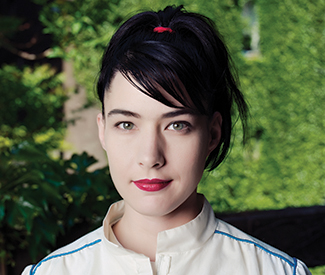
FILM It was strange when Kathleen Hanna — riot grrrl activist, iconic Bikini Kill battle cry leader, electro-popping Le Tigre singer — went silent.

Though she was not entirely absent from the public eye, she did not make any new music or tour for nearly a decade. Beat down by a mysterious illness, she seemingly tumbled into hardcore self-preservation mode, contributing her personal files of zines, show flyers, and lyrics to the “Riot Grrrl Collection” at New York University’s Fales Library.

This archival material would prove key to Sini Anderson’s new documentary about Hanna, The Punk Singer. The film includes many lesser-seen clips from the early days of Bikini Kill, the band’s tours through Europe, and rare early moments with Hanna’s husband, Beastie Boy Adam Horovitz.

“There’s some unfortunate and there’s some fortunate in this,” says Anderson, speaking to me in a hotel in San Francisco ahead of the film’s Bay Area premiere at the Oakland Underground Film Festival in September. “The unfortunate is that Kathleen started getting incredibly sick, and she was getting worse and worse. [But then] she decided to pull all her materials together and start archiving them. So she had a few interns and for a couple of years they just pulled all this stuff from all over the place, so by the time we started the film project, a lot of this was in one place.”

Anderson is a Portland, Ore.-based feminist artist who co-founded Sister Spit while living in SF and has worked in film for a decade, though this is her first documentary. She suggested the idea to Hanna while Le Tigre was making 2011 doc Who Took The Bomp? Le Tigre on Tour. While Hanna became the reluctant face of the riot grrrl movement in the ’90s, she’d never granted the media access to her whole story, at least partially because she didn’t want to be misunderstood.

“She had been out of music for six years at that point, and in [the realms of feminism and politics], there just didn’t seem to be any kind of action going on. Things seemed complacent,” Anderson says. “I said, ‘Kathleen, people need to hear your story, and they need to hear it now.'”

Using archival footage and present-day interviews, the doc covers Hanna’s childhood, the beginning of the riot grrrl movement, Le Tigre, and the resurrection of her post-Bikini Kill solo project, the Julie Ruin. Anderson interviewed Hanna in a series of intimate, enlightening sit-downs at her lake house, which are delicately spliced throughout the film between older clips and interviews with Hanna’s contemporaries: Bikini Kill’s Tobi Vail, Billy Karren, and Kathi Wilcox (now of the Julie Ruin); Kim Gordon; Joan Jett; Carrie Brownstein and Corin Tucker; and teenage Rookie Magazine editor Tavi Gevinson, who wears the colorful “Feminist” sweater gifted to her by Hanna.

The main bulk of filming was done over the course of a year — and it was a momentous one. Countless doctors had misdiagnosed Hanna by the time Anderson began filming, without an end in sight. Halfway through filming, she finally had a name for her illness: late-stage neurological Lyme disease. When she began treatments, filmmaker and subject decided not to shy away from the vulnerability of moments like Hanna taking her meds and experiencing their uncomfortable after-effects.

“Once she started treatment, it was a roller coaster — she got worse, and then she got better, then she got worse. We had to plan the interviews around when she was up for it,” — explains Anderson, who, incredibly, was also diagnosed with Lyme disease during filming, from an unrelated incident. “I really believe there’s so much power and strength in that vulnerability. It really is important for other women to see that we can tell our truth, we can let people see what’s going on — that doesn’t make us weak, that makes us stronger.” Anderson is now working on another documentary specifically about Lyme disease.

During filming for The Punk Singer, Hanna decided to put together the Julie Ruin, her first new musical act since the end of Le Tigre. This year, the band released its full-length, Run Fast, on Dischord Records.

“She says it really eloquently in the film: when she realized that she may never again be able to do this thing she loves, she realized she wanted it more than ever,” Anderson says.

For the director, one of the biggest moments during filming came from this realization. Hanna sits by her fireplace, surprising herself as she talks about why she quit music — why it was easier to just say she’d already said everything she’d needed to sing. She didn’t want to admit to anyone, including herself, that she was quitting because she was sick. In the doc, Hanna seems taken aback and tears up a bit, but gives the go-ahead to keep filming.

The Punk Singer‘s other epiphany comes at the very end, on the last day of filming, in what became the last scene of the film. Hanna asks, “What is my story? I have no idea,” and begins mentioning moments from her life. “I thought, who is going to believe me? Other women will believe me.”

Says Anderson, “It was about being believed, and being heard, and having her truth be validated. That’s [her] story.” *


THE PUNK SINGER opens Fri/6 in San Francisco.

School gaze

0

cheryl@sfbg.com

FILM At Berkeley, the latest documentary from the great Frederick Wiseman, runs 244 minutes — a time commitment intimidating enough to deter any casual viewer. But viewers intrigued by Wiseman’s long tradition of filming institutions (a small sampling: 1968’s High School; 1973’s Juvenile Court; 1985’s Racetrack; 2011’s Crazy Horse — the latter about a Parisian nude-dancing establishment) with fly-on-the-wall curiosity will want to carve out an afternoon for At Berkeley, as will those interested in 21st century educational issues, California’s financial crisis, and the care and maintenance of UC Berkeley’s free-spirited image, among other topics.

UC Berkeley students and grads also seem like a built-in audience, which means the film’s local screenings are likely to be more populated than they would be elsewhere. Folks who attended while Wiseman was filming (he shot 250 hours of footage over 12 weeks in what appears to be mid- to late-2011) might even catch a glimpse of themselves in crowd scenes and shots of casual moments on campus, which comprise the smallest portion of At Berkeley‘s divided interests. But the local-color moments do much to flesh out what’s not seen in the classroom and administrative-meeting sequences: the fading-hippie glow of Telegraph Avenue; two men with impressive yo-yo skills; a student tussling with his bicycle; a couple napping on a grassy expanse.

http://www.youtube.com/watch?v=3L2_yLBrQsM

We’re also shown what goes into the maintenance of that postcard-perfect campus. Berkeley’s landscaping starts looking especially impressive when — during a retreat of school bigwigs that Wiseman had apparent free rein to shoot — one administrator points out that budget cuts mean the school employs just one person to mow all of its lawns. “Well, he’s doing a good job!” interjects Robert J. Birgeneau, chancellor of the school 2004-2013. At the time of filming, UC Berkeley was weathering a series of painful fee increases, staff furloughs and layoffs, and widespread budget cutbacks, with Birgeneau serving as its pragmatic, stern-yet-sympathetic eye of the storm.

Birgeneau, like everyone else in the film (including probably the most recognizable figure: former Clinton cabinet member Robert Reich, now a Berkeley prof), is never identified by name. At first, this feels disorienting; most docs strive to hook the viewer with first-act exposition, but At Berkeley simply plunges in with a woman (a teacher? a student?) regaling (a class? an extracurricular club?) with a myth about Berkeley’s origins (spoiler alert: it wasn’t founded by gamblers) that leads into a broader rumination on what the school represents. “A sense of imagination, of diversity,” she says. “An ideal.”

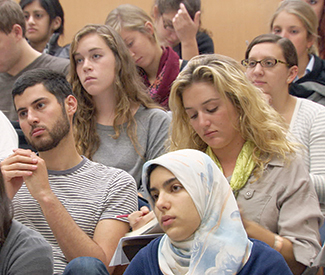
Before long, it’s obvious that we don’t need to know the back stories of everyone who appears in the film. This portrait of UC Berkeley — as a complex place, not without unrest, but also not without spontaneous a capella performances — emerges with all of its subjects sharing equal footing, their experiences and points of view presented with equal interest. Some of the most compelling scenes take place in classrooms, with remarkably articulate students (though, yes, Wiseman’s camera does catch a few looking sleepy and bored) discussing subjects as wildly diverse as poverty in America, advancements in robotics, Thoreau, and racism. There are also fascinating snippets of lectures, including an amusing, anecdote-heavy treatise from Reich on the importance of self-evaluation.

“The film has to work on both a literal level and a metaphoric, or abstract, level,” Wiseman writes in his At Berkeley director’s note. Filmgoers grasping for a through line will pick up on the financial stress that permeates every corner of the school. A student who describes herself as middle-class weeps at the financial burden she’s imposing on her parents. A professor advises a pair of eager students that their engineering dreams will require raising funds from government entities. Another professor expresses her concerns that increasing student fees will encourage new grads to seek out big paychecks to pay off their debts, rather than lower-paying jobs that might be more socially conscious.

The unrest percolating throughout the film culminates in coverage of a late-2011 Occupy Cal demonstration, in which the main campus library is overtaken by passionate protestors. The focus shifts away from the chanting students to UC Berkeley’s behind-the-scenes response, or rather, the phone calls and meetings that decide what the response should be (a “generic acknowledgement” is met by jeers from the protestors; a heavy police presence is suggested, but not visually documented).

In the library, a young man grasps the bullhorn and advises his fellow students that they need to organize their guiding principles more efficiently — an observation echoed later by Birgeneau. Unlike the headline-grabbing demonstrations that fill UC Berkeley’s storied past — its rabble-rousing legacy gets surprisingly few mentions here — there’s no underlying philosophy, he points out. A few moments later, we’re in a classroom, listening to students grumble about how the protests disrupted their midterms.

As its fourth hour draws to a close, At Berkeley‘s final sequence leaps from a discussion of one of John Donne’s sexier poems into a science class discussing interplanetary space travel. Sure, it’s possible, the affably geeky instructor says — but the practical concerns (like building a vessel with incredibly robust power sources that could sustain life for generations upon generations) tend to get in the way of one’s brilliant ideas and imagination. Here Wiseman’s affection for metaphor is made abundantly clear. *


AT BERKELEY opens Fri/6 in Bay Area theaters.

Suspending judgment

40

joe@sfbg.com

The Guardian is publishing only the first names of minors and their relatives named in this story, to protect their privacy.

In San Francisco public schools students can be sent home for talking back to a teacher, wearing a hat indoors, or sporting sagging pants. These infractions sound like the daily life of a kid, but the state calls them “willful defiance,” a category of suspensions that are nebulous to define at best.

Like the old saying about pornography, teachers say they know it when they see it, but students and parents alike are now calling foul on the practice.

The suspensions are so abundant in the San Francisco Unified School District that a movement has risen up against it. Sending kids home not only is an ineffective punishment, opponents say, it also can lead youth into the criminal justice system.

Now San Francisco Board of Education Commissioner Matt Haney is proposing a resolution that would ban willful defiance suspensions in San Francisco schools altogether.

“There will still be situations where we need to send a student home, but willful defiance will not be one of those reasons,” he told the Guardian. “Change is hard, complicated, and messy. But we can no longer deal with discipline or interactions with our students in that sort of way.”

He plans to introduce the resolution at the Dec. 10 Board of Education meeting, and if it passes, he said full implementation may take until the next school year.

There’s a fight to ban willful defiance suspensions statewide as well, but so far it’s been stymied. Just last month, Gov. Jerry Brown vetoed Assembly Bill 420, a bill mirroring aspects of Haney’s proposal. Those advocating for such a ban say it’s an issue of racial justice.

San Francisco’s African American and Latino students together suffer 80 percent of willful defiance suspensions, according to SFUSD data. The nonprofit student group Coleman Advocates for Children and Youth decried this statistic as an injustice, supporting the ban.

The San Francisco Board of Education took tentative steps to reduce suspensions as a whole in 2010, voting to introduce a new disciplinary system called Restorative Practices district wide. It’s complex, but basically asks students to talk things out in what are called “restorative circles” that include everyone involved in an incident, like a fight.

It’s also about changing the culture around discipline. It encourages teachers and students to establish a rapport, turning around the way some schools have practiced authority for decades.

At the time, there was hope. Fast forward three years, and that hope has dwindled.

Early evidence shows that Restorative Practices work better than suspensions, and prevent behavioral problems down the road, too. But out of SFUSD’s more than 100 schools, less than half of them started to implement the new reform.

Few schools have fully integrated the change, officials told us. Haney’s resolution addresses this with a mandate: SFUSD must implement Restorative Practices throughout the San Francisco school district.

The program is important, proponents say, because the majority of the 55,000 students a year moving through San Francisco schools still face school discipline that can set them way back in school and later may lead to incarceration. And suspensions can be levied for the smallest of infractions.

Cupcakes and justice

Xochitl is a 15-year-old SFUSD sophomore with long brown hair. She watches the TV show Supernatural (Dean is cuter than Sam) and yearns to one day live with her relatives in Nicaragua. Years ago on her middle school playground, she once faced a hungry child’s ultimate temptation: Free cupcakes.

The baked goods sat in a box on the cement by the playground, unattended. The frosting sat un-licked, the wrappers unwrapped.

She and her friend looked around, searching for a possible pastry owner nearby. Runners circled around the track in the distance, but no one else was around. The cupcakes met a satisfying fate inside Xochitl’s belly. The next morning went decidedly downhill.

As she walked into school, the counselor told her to go home: she was suspended.

“The cupcakes belonged to this girl because it was her birthday,” Xochitl said, something she found out only once she was being punished. “They went straight to suspension, they didn’t even let me speak.”

Restorative practices would have sat her with the birthday girl to explain her mistake and apologize. Maybe she would’ve bought the girl new cupcakes. That wasn’t what happened.

Suspended, Xochitl spent the day at her grandparents’ house. Not every suspended student has a safe place to go. Some turn to the streets.

stats

In October a group of mostly black young students marched to the Board of Education to protest willful defiance suspensions. The group, 100 Percent College Prep Institute, formed in the ashes of violence.

“I drive a school bus for a living, and I had a boy on my bus who was not bad, but not good,” said 100 Percent College Prep Institute co-founder Jackie Cohen, speaking with the Guardian as she marched with her students. “When we got back from Christmas break, he wasn’t back on the bus. Turns out he decided to ‘live that life.’ Three days later, I found he was shot and killed.”

In some communities the jaws of crime and drugs are forever nipping at their children’s heels. A child inside school is safe. Suspensions throw the most vulnerable students into the wild.

“Preventing crime in San Francisco begins with keeping children in the classroom,” SFPD Chief Greg Suhr wrote in a letter to the SF Examiner last year. “Proactive policies, such as the ‘restorative practices’ implemented by the SFUSD, emphasize the importance of building positive relationships while holding kids accountable for their actions.”

Black students make up about 10 percent of SFUSD’s population, but they represented 46 percent of SFUSD’s total suspensions in 2012, according to SFUSD data. Latino students represented about 30 percent of suspensions.

The racial disparity of suspensions mirror the disparity of incarceration. A study by nonprofit group The Advancement Project found that in 2002, African American youths made up 16 percent of the juvenile population but were 43 percent of juvenile arrests.

Xochitl sees that with her own eyes every day.

“Some kids turn to the streets, you know. I’ve seen people younger than me go to jail,” Xochitl said. “I was on Instagram and saw a friend locked up. I knew that girl, she’s in my PE class.”

It’s one of our country’s many shameful open secrets. Nearly half of all adult men in the United States serving life sentences are African Americans, and one in six is Latino, according to data from the nonprofit group the Sentencing Project.

Fathers and sons, mothers and daughters, all trapped in a cycle of poverty to prisons that for some starts at school.

“As a school district, when that’s staring us in the face, we can’t not do something about it,” Haney said.

Sometimes it begins when students are still learning their ABC’s.

Bruises inside and out

Restorative Practices are implemented from kindergarten to high school.

“If [students] don’t have a sense of belonging… that’s going to prevent schools from addressing behavior,” Kerry Berkowitz, the district’s program administrator of Restorative Practices, told us. The seeds of mistrust are planted when students are young.

Desamuel could not yet spell the world “police” when he first met them.

He was five years old, and as kindergartners sometimes do, he threw a temper tantrum. In the school’s desperation to contain him, officials called the SFPD.

“The police only came one time,” Desamuel, now seven, told the Guardian. Sitting in his San Francisco home with his uncle Lionel, Desamuel sounded ashamed. “But I didn’t go to jail because they only put kids in jail for being bad, like kids taking guns to school.”

The memory angers Desamuel’s uncle, who feels restorative practices would have prevented the misunderstanding. His home is a testament to bridge building.

Lionel, his brothers and mother all pitch in to take care of Desamuel while the boy’s father makes what he calls “a transition.” The home is large by San Francisco standards. Drawings of Spiderman and Batman line the wall, equal in number only to the portraits of their family, most of whom live in the city. There’s a lot of care in Desamuel’s life. That hasn’t stopped his tantrums, though.

The family tried to get him therapy, psychological analysis, anything to help. But as any parent can tell you, sometimes a child just needs love.

Lionel struggled with the school’s administration, and asked them to try less punitive ways of handling his nephew. “I told them to just hug the boy. Their response was ‘it’s hard to hug someone swinging at you.'”

The last time Desamuel fought a student he was tackled to the ground by a school security guard. The now-second grader came home with a bruise on his face.

“When I was bad I hurted the children. I wasn’t supposed to get up, and couldn’t get up off the ground. He took me by the arms and legs,” Desamuel said.

The problem with outsize use of suspensions and punitive action, Berkowitz said, is that it breeds a fear of school that shouldn’t exist. Desamuel is no different.

“I got sent to the office and I had to go to the principal’s office and they talked about me being bad,” Desamuel said. “I think because I make too much trouble I have a lot of problems and they don’t want me to be there.”

Cat Reyes is a history teacher who is now a Restorative Practices coach at Mission High School. She said transformation in behavior is the whole point.

She told the Guardian about a student recorded a fight on film. The two fighting teenagers tried to let the incident go, but with the video online for all to see their pride came between them. If the school suspended the girl who recorded the fight there may never have been resolution. The wounds would fester.

But now the girl will join a restorative circle and explain her actions to those involved in the fight, and their parents. That’s far more daunting to kids than simply going home for a day, Reyes said. It doesn’t just stop at the talk though. “On one end she has to say sorry,” Reyes said. “But now she may go to the media center and create a [movie] about it on our closed circuit TV. The consequence fits the crime.”

As students talk out their differences enemies can become friends, she said. After all, the goal is to correct bad behavior and break destructive cycles. Yet less than half of the schools in SFUSD are employing Restorative Practices.

Slowly but surely

One of the biggest critiques of Restorative Practices is that it removes consequences. That’s the wrong way to look at it, Berkowitz said: “When people say consequences, they mean punishment. We want to work with students to find root causes.”

The numbers back her up: 2,700 SFUSD staff members have trained in Restorative Practices, according to data provided by the district. This consequently led to a strong reduction in suspensions, the district says, from more than 3,000 in 2009 to about 1,800 last year.

SFUSD recognized a good thing when it saw it, growing the Restorative Practices budget from $650,000 in 2009 to $900,000 in 2013.

But only about 25 schools started measurable implementation, Berkowitz said. She put it plainly, saying the program is in its infancy. “Are they ‘there’ yet?” she said. “No.”

“Our team is pretty maxed out,” she said. “To really bring this to scale and implement Restorative Practices, there’d need to be a lot of discussions around that.”

Asked how much she’d need to fully fund the program across all schools, she was evasive. Haney was more direct. When asked if his resolution tied funding to the mandate of implementing Restorative Practices district-wide, he admitted that a funding source hadn’t yet been identified.

“Mostly we hear there needs to be more: more support, more social workers, more people in schools to make this functional,” he said. “It’s a longer term challenge.”

That solution may emerge as the resolution goes through the approval process, but the program faces other problems besides funding.

Teachers have depended on suspensions as a tool for years. Money is one thing, but changing educators’ minds about discipline is another.

The “R” word

Martin Luther King Jr. fought for the integration of schools, but in a speech about Vietnam he said something that could apply to the SFUSD today.

“Life and history give eloquent testimony to the fact that conflicts are never resolved without trustful give and take on both sides,” the southern preacher said in one of his last speeches before his death.

There is one issue simmering under this entire debate, festering, unspoken. Why are black and Latino students suspended more than other groups? Is this system inherently racist?

It’s a tough question. Teachers are notoriously underpaid, overworked, under supported, and asked to enforce the newest policies at the drop of a hat. The teachers the Guardian spoke to all described a packed year filled with new methods to learn, all with a common purpose — a love of their profession and a love of their students.

“There’s a hesitancy to talk about race with this,” said Kevin Boggess, civic engagement leader for Coleman Advocates, the group leading the charge for the willful defiance ban.

Nevertheless the question of racism permeates the discussion. Xochitl felt persecuted as one of the few Latinas in a mostly Asian middle school.

In the case of Desamuel, the young black child who had the police called on him at age five, his uncle stressed the need for culturally aware teaching. Lionel said Desamuel was well-behaved when he had an authoritative, elderly black female teacher, but acted up in the hands of substitutes who weren’t black and whom he characterized as “young and new” to teaching. Then again, the principal who called the police to handle Desamuel was herself black.

Norm “Math” Mattox is a former James Lick Middle School math and science teacher, and he said from his perspective as an African American he’s seen the issues Haney’s resolution addresses clear as day.

“My sense is that teachers might be blowing the alarm a little bit too soon as far as their brown and black students are concerned, especially the boys. They don’t know how to manage them,” he said. In his experience, misbehaving children are sent out of the room too soon.

In the short term, suspensions are an expedient tool, but punishment without communication does long lasting damage. “The dynamic between teacher and student did not get resolved inside of the class,” he said.

One SFUSD school tackled the specter of racism head on. Mission High School is at the vanguard of what its principal calls “anti-racist teaching.”

Mission High has a higher African American student college placement rate than many SFUSD schools, a group that struggles to perform elsewhere. And as a designated “newcomer pathway” for new immigrants, the school has 40 percent English language learners.

Mission High’s principal, Eric Guthertz, is energized by the challenge. He revamped the way the school teaches to address race and ethnicity directly.

The geometry teachers use Bayview district planning data to illustrate mathematical lessons, and teachers look at grades by ethnicity and address disparities directly.

Guthertz credited Restorative Practices with lowering the school’s suspensions. SFUSD data shows Mission High’s steady suspension decline, with a 14 percent suspension rate in 2009, before the program started, and down to a 0.4 percent suspension rate by 2012.

missionprincipal

Mission High School Principal Eric Guthertz. Guardian photo by Brittany M. Powell

“We’ve deeply embraced Restorative Practices,” he said.

Next week San Francisco will see if the Board of Education will take the same leap Gutherz did. As he is quick to point out, shifting the culture at Mission High School took years.

The Guardian contacted members of the school board, but did not hear back from them before press time to see how they may vote.

Either way, it’s time for SFUSD to change its ways, Haney said. But no matter what side of the matter you fall on, he said, it’s important to remember one thing.

“Everyone involved in this conversation wants to do better by these students,” he said.

The San Francisco Board of Education will vote on the ban of willful defiance suspensions and full implementation of Restorative Practices at their Dec. 10 meeting.

Development must protect the arts

139

By Stephanie Weisman

OPINION Recently, the Bay Guardian ran an article critical of The Marsh theater’s position on the condo development proposed for 1050 Valencia St. (see “Street Fight: Driving us crazy,” 11/12). It incorrectly claimed that we oppose the project. Thank you, Guardian, for now giving us the opportunity to set the record straight.

The Marsh does not oppose a proposal to develop condominiums and commercial space next door to us at 1050 Valencia St. Rather, we are trying to get conditions attached to the project’s building permit — for both during and after construction — that reflect that this developer chose to build up against a world-renowned, community-based theater. We believe it is reasonable to expect the developer to be a good neighbor.

For almost 25 years, The Marsh has developed solo performances, presenting nearly 700 performances annually with 400 in our Mission location alone. We also offer solo performance workshops and year-round after-school classes and camps for youth where no child — toddler through teen — is turned away because of lack of money. We foster risk-taking and diverse artists from novices to those with worldwide acclaim, giving voice to the vital stories of our times.

The construction plans for 1050 Valencia directly affect our theater space and our ability to continue to host live performance. As currently designed, the plans for both construction and occupancy could mean noise that would drown out unamplified solo performance. The project will also reduce theater lighting and ventilation.

We’ve seen the history of new affluent residents in fancy SoMa live/work lofts who didn’t like living next to the loud music and milling crowds they chose to move near. These wealthy newcomers could afford to hire lawyers and fight expensive legal battles, and they successfully closed down entertainment venues that had defined SoMa for decades. We seek conditions to prevent this from happening to us.

We are requesting the large open deck adjacent to our building be moved behind a sound barrier. We are concerned that when residents have a party or open their windows with music blaring, the sound will disrupt our performances. This endangers our existence. We are also asking for conditions prohibiting the commercial space next to us from having live entertainment that would impact our performances.

Without specific legally enforceable conditions attached to the permits, we have no recourse if the developer or subsequent property owners lack good faith. To date, based on developer Mark Rutherford’s treatment of us, we have no reason to believe in his good faith. San Francisco’s development history shows that only legally enforceable conditions really protect the public interest over the “lifetime” of a building’s construction and use.

The Marsh is a metaphor for the current displacement of people and culture in the Mission District. Miraculously, we were able to purchase our building in 1996, a market low, with the support of our artists, patrons, board, and forward-looking foundation and nonprofit and commercial loan entities. Otherwise, The Marsh would not exist today. We would never have been able to afford today’s market-rate rent.

We are now a safe house for artists to develop their work at our space, for the children who take our affordable classes, and the audiences who attend our critically-acclaimed shows. But we are not indestructible. If protective conditions are not written into the building permit, and we end up with disrupted programs and performances, we will not survive artistically or financially.

Will The Marsh go the way of our neighbors? Will we be developed into a bunch of two-bedroom condos selling for $1.75-2.25 million, like the ones at 19th and Valencia? With maybe two below-market rate units set aside, as planned for 1050 Valencia, where “below market” could mean $1 million. But where will the artists go? Where will young aspiring performers go? The audiences?

Please join us and stand up for The Marsh at the Board of Appeals Hearing, City Hall, Dec. 11, 5pm.

Stephanie Weisman is the founder and artistic director of The Marsh


A new holiday tradition: workers’ rights

9

The holiday season has officially started, and if you’re any kind of American, you know what that means. Hordes of wild-eyed shoppers have descended upon us.

If early morning stampedes at chain retailers and other hallmarks of the Black Friday phenomenon seem like a peculiar tradition, recent offshoots of the trend may prove even more bizarre. One is business’ attempt to claim other Thanksgiving week calendar slots as holiday-shopping bonanzas in their own right. Cyber Monday is the busiest online shopping day of the year, we’re told, while a growing number of intrepid early-birds skipped out on Turkey Day altogether to go bargain hunting on the woefully titled “Brown Thursday.”

Then there are the growing ranks of cynics who’ve found creative ways to critique in-your-face consumerism as a cultural deficiency, a sort of anti-Black Friday tradition. There’s Buy Nothing Day, an alt standby appealing to the conscience of the thoughtful consumer.

The web-based Black Friday Death Count (www.blackfridaydeathcount.com), documenting six years of violent incidents stemming from holiday shopping frenzies, reads like a stark condemnation of petty greed. Viral YouTube videos of squabbling gift buyers, meanwhile, suggest that a mass audience of Internet viewers is reaching for the popcorn and taking it all in, perhaps with the glee of blood-sport spectators.

Yet a different aspect of Black Friday 2013 deserves a second look. This year, low-wage employees who generally make Black Friday profits possible got louder in their demands for better working conditions.

Look at Walmart. It’s the nation’s largest employer, but its employees earn notoriously low wages — a fact highlighted by Black Friday protests staged outside Walmart stores nationwide, including in the Bay Area. For low-wage retail workers who can barely make ends meet let alone leave gift-wrapped digital devices under the tree, momentum seems to be building. The National Labor Relations Board recently announced its intention to pursue complaints against Walmart for illegally threatening and firing employees who participated in last year’s Black Friday protests.

Further up the supply chain, the Port of Oakland saw a work stoppage from a group of truckers last week who have fallen into dire straits financially. Classified as owner-operators instead of employees and therefore unable to unionize, many face potential job loss because they can’t afford engine retrofits needed to comply with new environmental regulations. The timing of their quasi-strike, just as container ships were coming into port with cargo destined for Black Friday sales shelves, was no coincidence.

All of which begs the question: If Black Friday, Cyber Monday, and Buy Nothing Day can all be incorporated as modern American traditions that directly follow Thanksgiving, why not claim a slice of the pie as well for workers putting themselves at risk in the name of better conditions? If these struggles are effective, it will be one more thing to give thanks for.


Alerts: December 4 – 10, 2013

0

WEDNESDAY 4

Fight Richmond evictions Richmond Recreation Center, 251 18th Ave, SF. 7pm, free. The San Francisco Alliance of Californians for Community Empowerment (ACCE), the Housing Rights Committee, and Senior & Disability Action will host this forum to discuss strategies to fix the city’s affordable housing crisis, particularly as it affects in the Richmond District. Sup. Eric Mar is expected to attend.


THURSDAY 5


Celebrate the Holidays! (With Less Stuff) Berkeley Fellowship of Unitarian Universalists Hall, 1924 Cedar, Berk. 7-10pm, $5-10 suggested donation. Join Transition Berkeley, Sticky Art Lab and Berkeley Fellowship of Unitarian Univeralists for a screening of Annie Leonard’s famous animated documentary, “The Story of Stuff,” about the environmental and social problems created by our excessive consumption patterns. The night will also feature a screening of “The Story of Solutions,” showcasing creative responses to these problems. The night will also feature talks by Allison Cook, from The Story of Stuff Project, and Rachel Knudson from Sticky Art Lab on University Avenue, who’ll speak about this innovative new center for art and creative reuse.


FRIDAY 6


Book reading on migrant journeys Modern Times, 2919 24th St, SF. 7pm, free. El Salvadoran journalist Óscar Martínez, winner of Mexico’s Fernando Benítez National Journalism Prize and the José Simeón Cañas Central American University Human Rights Prize, will appear at Modern Times bookstore for a reading from his new book, The Beast: Riding the Rails and Dodging Narcos on the Migrant Trail, published by Verso Books. The writer spent two years riding freight trains between Central America and the Southern US border, and documented accounts of a mass kidnapping and other harrowing stories.  

Meet CCSF’s new chancellor Saint Philip Church, 725 Diamond, SF. 7:30pm, free. The Noe Valley Democratic Club, San Francisco for Democracy, and the Upper Noe Neighbors will host the new Chancellor of City College of San Francisco, Dr. Arthur Tyler, for a conversation with community members. Join in to listen to his remarks and participate in a question and answer session. MONDAY 9  

Talk with Chelsea Manning’s lawyer Humanist Hall, 390 27th St., Oakl. www.couragetoresist.org 6:30-8:30pm, $5-10 suggested donation. David Coombs, the attorney of Chelsea Manning, formerly Private Bradley Manning of the US Army, will speak about Manning’s status following her sentencing in August 2013. The whistleblower, who published classified information about US military activity in Iraq and Afghanistan on the website WikiLeaks in 2010, leaked the largest set of classified documents in US history. Coombs will discuss what’s being done to support the prisoner of conscience since she was sentenced to 35 years in prison for her actions, which were charged as violations of the Espionage Act and other offenses.

Last stand at the Bulb

8

news@sfbg.com

As the squatter residents of Albany Bulb make one final push against being evicted from their home in a former landfill, the city of Albany is pushing forward with its plan to change the untamed space into a waterfront state park (see “Battle of the bulb,” Sept. 24).

The first signs of the transition came on Nov. 22, when a temporary shelter was set up for residents whose camps would be cleared. The shelter came after a disappointing week in court left the 50 to 60 residents of the Bulb without the stay-away order their advocates had sought, which they intended to use to keep the city and police at bay during the winter.

On Nov. 18, the residents and their attorneys received word that the stay-away order was denied by U.S. District Judge Charles Breyer. After the decision and an Albany City Council meeting later that evening, campers and area activists set up a permanent settlement against the eviction after marching through the streets of Albany.

Barricades made of rocks were set up at the Bulb to resist police getting into the camps. However, the rain that followed for a few nights inhibited their efforts, according to activists involved in the action. And the police, using a backhoe, destroyed the rock barricades. The city of Albany, according to a press release, is calling the transition “ACT” which includes, “Assistance to homeless, including housing-centered outreach, transitional services, support, and shelter; Cleanup and maintenance of the Bulb; and Transfer of the Bulb to McLaughlin Eastshore State Park.” “As part of the City Council’s Strategic Planning Process conducted in 2012, the City Council identified key goals for the City,” Albany City Clerk Nicole Almaguer wrote in an email to the Guardian. “One of which is to ‘Maximize Park and Open Space’ including developing a plan to transition the Bulb into Eastshore State Park, and to improve accessibility for general public use of all of the Albany Bulb as a waterfront park.” Almaguer stated that part of the plan included a temporary shelter and support services, which started this summer and is headed by Berkeley Food and Housing Project. The BFHP also provides case management for the Albany campers interested in securing housing outside of the Bulb.

While the city has provided a housing subsidy program to help Bulb residents with rent, a portion of it will also need to be covered by the tenant. Many of the Bulb residents are only supported through government programs such as SSI, and cannot afford housing costs.

In addition, most residents, and their attorney Osha Neumann, who is also a longtime contributor to art at the Bulb, say that the city does not have any affordable housing in which the residents can transition into. Managed by Operation Dignity, a nonprofit designed to help homeless veterans, the transitional shelter is set up by Golden Gate Fields racetrack near the entryway into the Bulb.

“I was out… talking to people and was overwhelmed by the fragility and vulnerability of many of them, as well as their strengths,” Neumann said of the residents in an email to the Guardian. “The portables are awful. You look at the Bulb and all the life and beauty that’s out there, and then you look at those anonymous utilitarian boxes, and really you expect it all to be stuffed into those containers? 22 men in one, eight women in the other? It’s all really appalling.” According to the shelter’s posted rules, the doors for the shelter open at 5:30pm and close at 8:30am. Showers may be taken 8:30-9:30pm, and breakfast is served 7-8am. The sexes are separated, and pets must stay in kennels outside of the shelter. There are also no “in and out privileges” and if a person doesn’t return by 8pm they are not admitted into the shelter. No one stayed in the shelter the first three nights it was available, according to city reports. Amber Lynn Whitson, a Bulb resident, said that access to the shelter is difficult for people, and doesn’t address the need for people with disabilities to access a bed during the day. “At least two individuals were turned away at the door to the shelter, due to their names not being on ‘the list’, she said in an email. “Both were told that they could stay in the shelter, despite their names not currently being on ‘the list,’ but only after getting ‘a voucher’ from BFHP.” The transitional shelter came to the residents’ lives after Breyer rejected the campers’ request for an injunction to block the eviction with a temporary restraining order. A lawsuit also filed by the residents against the eviction remains open, according to Neumann.

Based on information obtained in court documents, $570,000 was allocated to remove the Bulb residents, based on a Albany City Council decision made on Oct. 21, with $171,000 spent on the cleanup of the campsites and the remainder spent on the two portable trailers with bunk beds to serve as transitional housing for six months. As of now, the shelter’s efficacy to get the campers off the Bulb, as well as the residents’ efforts to resist the transition, remains unclear.


BULB ART TO BE CLEARED

The Albany Bulb, a wild shoreline space near Golden Gate Fields and a former landfill for BART construction and other industries, is well known for its art. Now that a transitional shelter looms over the entrance as part of the city’s plan to remove the residents from the Bulb, campers, activists, and artists came together this past weekend for a festival of resistance against the eviction.

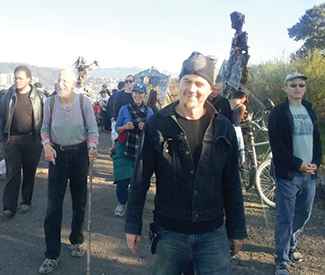
The rubble and sculpture filled space will soon be transformed into part of the Eastshore State Park system. The event drew around 60 people, according to resident Amber Whitson. She led an art walk on Nov. 29, giving the history of the art at the Bulb and explaining why it’s important to preserve it as a cultural resource.

“Some things should remain sacred, and Sniff paintings are out on the Albany Bulb,” she said, referencing works by a group of Oakland-based artists.

Other prominent Bulb artists, such as Osha Neumann and Jason DeAntonis, who built massive sculptures made of found wood and parts along the shoreline, were on hand to speak about their contributions and the personal significance the Bulb holds for them.

While residents have come and gone throughout the years, the art has remained a constant draw. Graffiti artists practice their craft, and sculptors work undisturbed, using debris that is scattered around. Even some of the campers’ shelters, makeshift shanties of concrete, wood and tarp, could be considered artistic.

Once the transition of the Bulb from untamed outcrop to a state park of well-kept trails is further along, the city plans to remove most of the art currently installed there.

The campers and activists organized the art walk as part of a three-day festival of trainings, workshops, and music, to enjoy the space, but also to educate residents and others about how the space could be kept in its current state. “I know that organizing is continuing, and again, the shape it takes will depend on how the city goes about the planned evictions,” said Neumann in an email to the Guardian.

For now though, the art stands, in between garbage, rubble, trees and shrubs, a constant reminder that artists and Bulb dwellers are still around.

Rep Clock: November 27 – December 3, 2013

0

Schedules are for Wed/27-Tue/3 except where noted. Director and year are given when available. Double and triple features marked with a •. All times pm unless otherwise specified.

“ANOTHER HOLE IN THE HEAD FILM FESTIVAL” Balboa Theater, 3630 Balboa, SF; New People Cinema, 1746 Post, SF; www.sfindie.com. $12. Now in its 10th year, the festival highlights indie horror, sci-fi, and fantasy films, Nov 29-Dec 19.

ATA GALLERY 992 Valencia, SF; www.atasite.org. $4-10. “Other Cinema:” “Synth Britannia,” videos by Gary Numan, Human League, and others, plus live performances, Sat, 8:30.

BALBOA THEATRE 3630 Balboa, SF; cinemasf.com/balboa. $10. “Popcorn Palace:” Hugo (Scorsese, 2011), Sat, 10am. Matinee for kids.

BAY MODEL 2100 Bridgeway, Sausalito; www.tiburonfilmfestival.com. Free. Circus Dreams (Taylor, 2011) Tue, 6.

CASTRO 429 Castro, SF; (415) 621-6120, www.castrotheatre.com. $8.50-12. •Band of Outsiders (Godard, 1964), Wed, 7, and Buffalo ’66 (Gallo, 1997), Wed, 9:20. The Sound of Music (Wise, 1965), Nov 29-Dec 8, 7 (no evening show Sun/1; also Sat-Sun 1pm; no shows Mon/2-Tue/3 or Dec 6). Presented sing-along style; tickets ($10-15) at www.ticketweb.com. We Were Here (Weissman and Weber, 2011), Sun, 7. Screening in honor of World AIDS Day, with David Weissman and cast members in person.

CHRISTOPHER B. SMITH RAFAEL FILM CENTER 1118 Fourth St, San Rafael; (415) 454-1222, www.cafilm.org. $6.50-$10.75. The Armstrong Lie (Gibney, 2013), call for dates and times. Blue is the Warmest Color (Kechiche, 2013), call for dates and times. Running from Crazy (Kopple, 2013), call for dates and times. The Great Beauty (Sorrentino, 2013), Nov 29-Dec 5, call for times.

CLAY 2261 Fillmore, SF; www.landmarktheatres.com. $10. “Midnight Movies:” The Rocky Horror Picture Show (Sharman, 1975), Sat, midnight.

NEW PARKWAY 474 24th St, Oakl; www.thenewparkway.com. Free. Keep the Promise: The Global Fight Against AIDS (Fockele and Smolowitz, 2013), Sun, 2.

PACIFIC FILM ARCHIVE 2575 Bancroft, Berk; (510) 642-5249, bampfa.berkeley.edu. $5.50-9.50. “Beauty and Sacrifice: Images of Women in Chinese Cinema:” Center Stage (Kwan, 1992), Fri, 7; In the Mood for Love (Wong, 2000), Sat, 6:30. “Love Is Colder Than Death: The Cinema of Rainer Werner Fassbinder:” Mother Küsters Goes to Heaven (1975), Sat, 8:30. “The Resolution Starts Now: 4K Restorations from Sony Pictures:” Lawrence of Arabia (Lean, 1962), Sun, 3.

ROXIE 3117 and 3125 16th St, SF; (415) 863-1087, www.roxie.com. $6.50-11. Is the Man Who Is Tall Happy? (Gondry, 2013), Nov 29-Dec 5, call for times. Keep the Promise: The Global Fight Against AIDS (Fockele and Smolowitz, 2013), Sun, 7.

YERBA BUENA CENTER FOR THE ARTS 701 Mission, SF; www.ybca.org. $8-10. San Francisco Cinematheque presents: anders, Molussien (Rey, 2012), Fri, 7:30. With Nicolas Rey in person. “Films by Fassbinder:” Martha (1974), Sun, 2. *


Film Listings: November 27 – December 3, 2013

0

Tough snowman Marshmallow is among the cast of characters in Disney’s new animated musical, Frozen, out Wed/27.

PHOTO COURTESY OF DISNEY

Film listings are edited by Cheryl Eddy. Reviewers are Kimberly Chun, Dennis Harvey, Lynn Rapoport, Sam Stander, and Sara Maria Vizcarrondo. For rep house showtimes, see Rep Clock.

OPENING

Black Nativity You have to hand it to director-writer Kasi Lemmons (2001’s The Caveman’s Valentine) for even attempting an adaptation of Langston Hughes’ Black Nativity. The idea of recasting the original play’s straightforward hybrid of the nativity tale, gospel, and African folk traditions in contemporary Harlem as a spiffed-up urban street opera feels inspired, especially when the otherwise-familiar narrative is supercharged with emotion, thanks to Oakland-native music producer and co-composer Raphael Saadiq. The songs and their delivery make those moments when the cast members burst into song seem like the most natural thing in the world. The child rhapsodized about here is — wink, nudge — Langston (Jacob Latimore), who’s getting evicted along with his single mom, Naima (Jennifer Hudson). In an act of self-disgust, or grudging respect, she sends her feisty tween to stay with his estranged grandparents in NYC. Reverend Cornell (Forest Whitaker) and Aretha Cobbs (Angela Bassett) turn out to be proud pillars of their community, with deep connections to the Civil Rights movement, which Langston discovers when the stern Rev shows the boy his most prized possession: an engraved pocket watch given to him by Martin Luther King Jr. Alas, if Lemmons simply stuck to her present-day rework — and refrained from the self-consciously stagy Christmas dream sequences, which actually seem to hew closer to the original Black Nativity, break the momentum, and cue this operetta’s complete break with reality — this version would have fared much better than it does. Still, Black Nativity isn’t without its moments. Whitaker, playing against type and tasked with the heaviest acting effort, and particularly Bassett, who channels a fiery spirit via her upstanding matron to provide much-needed warmth, are mesmerizing, and though Mary J. Blige and Nas are unfortunately given little to do, Hudson pulls her weight, if not with acting, then with her sheer skill at conveying heartbreak amid the melismas. (1:33) (Chun)

Frozen The voices of Kristen Bell, Idina Menzel, and Jonathan Groff star in Disney’s animated musical inspired by Hans Christian Andersen’s The Snow Queen. (1:48) Cerrito, Four Star, Presidio, Shattuck, Vogue.

The Great Beauty See “La Ho-Hum Vita.” (2:22) Opera Plaza, Shattuck, Smith Rafael.

Homefront It’s not clear if Jason Statham’s undercover DEA agent is retired, but after a major meth bust he loses his scraggly mop of hair and put-on accent to enter seclusion in a town “not far from Appalachia.” He’s taught his daughter well, but when she defends herself against a school bully, the family incurs the wrath of the local tweaker-tiger mom (Kate Bosworth). Tiger Mom’s brother is the local meth lord, Gator (James Franco). He’s in cahoots with the Sheriff (Clancy Brown) and aspires to the heights of the biker badass Agent Statham put away, so he causes trouble for Statham’s family. Winona Ryder, looking more like Cher’s kid than she did in 1990’s Mermaids, is the “meth-whore” who starts a bustling lab with her business-savvy BF, and while she’s hardly out-performing any of the cast, she’s definitely the film’s best character. This mess of wonky editing and absurd send-ups totally delivers on gags and explosions, and when Franco sees his future he looks at it like a CEO applying at Starbucks. His face says “What the hell happened?” but his mouth yells, regrettably, “Are you retarded?” (1:40) (Vizcarrondo)

Is the Man Who is Tall Happy? “I’m a leetle nervous,” French-accented Michel Gondry admits as he begins interviewing linguist and activist Noam Chomsky. Their chats make up this doc, aptly dubbed “an animated conversation” as it’s brought to life by the director’s whimsical animated drawings. The rambling convo (sometimes a lively back-and-forth, sometimes just Chomsky’s gravely voice pondering a topic at length) winds from autobiographical material — Chomsky’s earliest memory (a stubborn-baby moment in which he absolutely refused to eat oatmeal); his childhood ambitions of being a taxidermist (“Don’t ask me why! I guess I liked the word?”) — to more philosophical and intellectual topics. Is the Man Who is Tall Happy? might seem an offbeat choice for Gondry, but does he ever make any other kind of choice? This is, after all, the filmmaker who has maintained an edgy reputation throughout his varied career, from highlights (Björk’s “Human Behavior” video; 2005’s Eternal Sunshine of the Spotless Mind) to head-scratchers (2011 Seth Rogen superhero comedy The Green Hornet). (1:28) Roxie.

Oldboy In 2003, South Korean director Park Chan-wook released a modern masterpiece of harsh, misanthropic revenge cinema with Oldboy, a twisty and visually stylish adaptation of a Japanese manga. Ten years later, Spike Lee and screenwriter Mark Protosevich have delivered a recombinatory remake of the Korean film. It’s neither satisfying nor particularly infuriating — it plays with the elements of Park’s intensely memorable movie, alluding to scenes and images without always exactly reproducing them, and it makes a valiant effort to restore suspense to a story whose gut-wrenching twist has been slightly softened by a decade. But it’s much less visually engaging, replacing Park’s sinister playfulness with a blander, more direct action palette. Josh Brolin’s Joe Doucett is brooding and brutal, but not as sickly compelling as Choi Min-sik’s wild-eyed Oh Dae-su; Elizabeth Olsen is emotionally powerful as his helper and lover; and Sharlto Copley offers a bizarre, rather gross caricature as the scheming antagonist. (2:00) (Stander)

Philomena Stephen Frears directs Steve Coogan (who co-wrote the script) and Judi Dench in this drama about a journalist who helps an elderly woman find the son she was forced to give up for adoption 50 years earlier. (1:35) Albany, Embarcadero.

ONGOING

About Time Richard Curtis, the man behind 2003’s Love Actually, must be enjoying his days in England, rolling in large piles of money. Coinciding with the 10-year anniversary of that twee cinematic love fest comes Curtis’ latest ode to joy, About Time. The film begins in Cornwall at an idyllic stone beach house, as Tim (Domhnall Gleeson) describes his family members (Bill Nighy is dad; Richard Cordery is the crazy uncle) and their pleasures (tea on the beach, ping pong). Despite beachside bliss, Tim is lovelorn and ready to begin a career as a barrister (which feels as out of the blue as the coming first act break). Oh! And as it happens, the men in Tim’s family can travel back in time. There are no clear rules, though births and deaths are like no-trespass signs on the imaginary timeline. When he meets Mary (Rachel McAdams), he falls in love, but if he paves over his own evening by bouncing back and spending that night elsewhere, he loses the path he’s worn into the map and has to fix it. Again and again. Despite potential repetition, About Time moves smoothly, sweetly, slowly along, giving its audience time enough to feel for the characters, and then feel for the characters again, and then keep crying just because the ball’s already in motion. It’s the most nest-like catharsis any British film ever built. (2:03) Marina, 1000 Van Ness, Shattuck. (Vizcarrondo)

All Is Lost As other reviewers have pointed out, All Is Lost‘s nearly dialogue-free script (OK, there is one really, really well-placed “Fuuuuuck!”) is about as far from J.C. Chandor’s Oscar-nominated script for 2011’s Margin Call as possible. Props to the filmmaker, then, for crafting as much pulse-pounding magic out of austerity as he did with that multi-character gabfest. Here, Robert Redford plays “Our Man,” a solo sailor whose race to survive begins along with the film, as his boat collides with a hunk of Indian Ocean detritus. Before long, he’s completely adrift, yet determined to outwit the forces of nature that seem intent on bringing him down. The 77-year-old Redford turns in a surprisingly physical performance that’s sure to be remembered as a late-career highlight. (1:46) Elmwood, Opera Plaza, SF Center. (Eddy)

The Armstrong Lie “This is a story about power, not doping,” a talking head points out in Alex Gibney’s latest doc, The Armstrong Lie. Gibney, an Oscar winner for 2007’s Taxi to the Dark Side, set out to make something more along the lines of The Armstrong Return, shadowing Lance Armstrong as he prepped for his 2009 Tour de France comeback. He envisioned crafting a “feel-good movie,” especially when Armstrong notched an impressive third-place finish — a feat intended to silence those performance-enhancing drug rumors once and for all. In the end, it only amplified the skepticism that loomed over his accomplishments. And as the evidence against Armstrong mounted, Gibney scrapped his original concept and went in a decidedly darker direction. Armstrong’s critics, interviewed for Lie, admit they spotted the acclaimed documentarian among Armstrong’s Tour de France entourage and feared he was “buying into the bullshit.” Among these voices are Armstrong’s former US Postal Service teammate, Frankie Andreu, and his wife, Betsy, who’d been excoriated by their former good friend and his supporters for speaking out against him. A feel-good movie, this is not. And ultimately, Gibney’s film probes deeper than Armstrong’s flaws; it’s careful to point out that drug use is widespread among professional cyclists, who are surrounded by an insular, high-stakes culture that encourages it. The sports world lives and dies by the next world record or superhuman achievement. Is it any wonder that elite athletes seek out that extra competitive edge? And that Armstrong, in fully-inflated ego mode, would believe he had the power to rearrange reality to keep his victories intact? (2:03) Smith Rafael. (Eddy)

The Best Man Holiday (2:00) Metreon, 1000 Van Ness.

The Book Thief One of those novels that seems to have been categorized as “young adult” more for reasons of marketing than anything else, Markus Zusak’s international best seller gets an effective screen adaptation from director Brian Percival and scenarist Michael Petroni. Liesl (Sophie Nelisse) is an illiterate orphan — for all practical purposes, that is, given the likely fate of her left-leaning parents in a just-pre-World War II Nazi Germany — deposited by authorities on the doorstep of the middle-aged, childless Hubermanns in 1938. Rosa (Emily Watson) is a ceaseless nag and worrywart, even if her bark is worse than her bite; kindly housepainter Hans (Geoffrey Rush), who’s lost work by refusing to join “the Party,” makes a game of teacher Liesl how to read. Her subsequent fascination with books attracts the notice of the local Burgermeister’s wife (Barbara Auer), who under the nose of her stern husband lets the girl peruse tomes from her manse’s extensive library. But that secret is trivial compared to the Hubermanns’ hiding of Max Vandenburg (Ben Schnetzer), son of Jewish comrade who’d saved Hans’ life in the prior world war. When war breaks out anew, this harboring of a fugitive becomes even more dangerous, something Liesl can’t share even with her best friend Rudy (Nico Liersch). While some of the book’s subplots and secondary characters are sacrificed for the sake of expediency, the filmmakers have crafted a potent, intelligent drama whose judicious understatement extends to the subtlest (and first non-Spielberg) score John Williams has written in years. Rush, Watson, and newcomer Schnetzer are particularly good in the well-chosen cast. (2:11) Metreon, Shattuck, Sundance Kabuki. (Harvey)

Blue is the Warmest Color The stars (Adèle Exarchopoulos and Léa Seydoux) say the director was brutal. The director says he wishes the film had never been released (but he might make a sequel). The graphic novelist is uncomfortable with the explicit 10-minute sex scene. And most of the state of Idaho will have to wait to see the film on Netflix. The noise of recrimination, the lesser murmur of backpedaling, and a difficult-to-argue NC-17 rating could make it harder, as French director Abdellatif Kechiche has predicted, to find a calm, neutral zone in which to watch Blue is the Warmest Color, his Palme d’Or–winning adaptation (with co-writer Ghalya Lacroix) of Julie Maroh’s 2010 graphic novel Le Blue Est une Couleur Chaude. But once you’ve committed to the three-hour runtime, it’s not too difficult to tune out all the extra noise and focus on a film that trains its mesmerized gaze on a young woman’s transforming experience of first love. (2:59) Clay, Shattuck, Smith Rafael. (Rapoport)

Blue Jasmine The good news about Blue Jasmine isn’t that it’s set in San Francisco, but that it’s Woody Allen’s best movie in years. Although some familiar characteristics are duly present, it’s not quite like anything he’s done before, and carries its essentially dramatic weight more effectively than he’s managed in at least a couple decades. Not long ago Jasmine (a fearless Cate Blanchett) was the quintessential Manhattan hostess, but that glittering bubble has burst — exactly how revealed in flashbacks that spring surprises up to the script’s end. She crawls to the West Coast to “start over” in the sole place available where she won’t be mortified by the pity of erstwhile society friends. That would be the SF apartment of Ginger (Sally Hawkins), a fellow adoptive sister who was always looked down on by comparison to pretty, clever Jasmine. Theirs is an uneasy alliance — but Ginger’s too big-hearted to say no. It’s somewhat disappointing that Blue Jasmine doesn’t really do much with San Francisco. Really, the film could take place anywhere — although setting it in a non-picture-postcard SF does bolster the film’s unsettled, unpredictable air. Without being an outright villain, Jasmine is one of the least likable characters to carry a major US film since Noah Baumbach’s underrated Margot at the Wedding (2007); the general plot shell, moreover, is strongly redolent of A Streetcar Named Desire. But whatever inspiration Allen took from prior works, Blue Jasmine is still distinctively his own invention. It’s frequently funny in throwaway performance bits, yet disturbing, even devastating in cumulative impact. (1:38) Opera Plaza, Vogue. (Harvey)

Captain Phillips In 2009, Captain Richard Phillips was taken hostage by Somali pirates who’d hijacked the Kenya-bound Maersk Alabama. His subsequent rescue by Navy SEALs came after a standoff that ended in the death of three pirates; a fourth, Abduwali Abdukhadir Muse, surrendered and is serving a hefty term in federal prison. A year later, Phillips penned a book about his ordeal, and Hollywood pounced. Tom Hanks is perfectly cast as Phillips, an everyman who runs a tight ship but displays an admirable ability to improvise under pressure — and, once rescued, finally allows that pressure to diffuse in a scene of memorably raw catharsis. Newcomer Barkhad Abdi, cast from an open call among Minneapolis’ large Somali community, plays Muse; his character development goes deep enough to emphasize that piracy is one of few grim career options for Somali youths. But the real star here is probably director Paul Greengrass, who adds this suspenseful high-seas tale to his slate of intelligent, doc-inspired thrillers (2006’s United 93, 2007’s The Bourne Ultimatum). Suffice to say fans of the reigning king of fast-paced, handheld-camera action will not be disappointed. (2:14) Elmwood, 1000 Van Ness, SF Center, Sundance Kabuki. (Eddy)

Cloudy With a Chance of Meatballs 2 (1:35) SF Center.

The Counselor The reviews are in, and it’s clear Ridley Scott has made the most polarizing film of the season. Most of The Counselor‘s detractors blame Cormac McCarthy’s screenplay, the acclaimed author’s first that isn’t drawn from a prexisting novel. To date, the best film made from a McCarthy tale is 2007’s No Country for Old Men, and The Counselor trawls in similar border-noir genre trappings in its tale of a sleek, greedy lawyer (Michael Fassbender) who gets in way over his head after a drug deal (entered into with slippery compadres played by Brad Pitt and Javier Bardem) goes wrong. Yes, there are some problems here, with very few unexpected twists in a downbeat story that’s laden with overlong monologues, most of them delivered by random characters that appear, talk, and are never seen again. But some of those speeches are doozies — and haters are overlooking The Counselor‘s sleazy pleasures (many of which are supplied by Cameron Diaz’s fierce, feline femme fatale) and attention to grimy detail. One suspects cult appreciation awaits. (1:57) Metreon. (Eddy)

Dallas Buyers Club Dallas Buyers Club is the first all-US feature from Jean-Marc Vallée. He first made a splash in 2005 with C.R.A.Z.Y., which seemed an archetype of the flashy, coming-of-age themed debut feature. Vallée has evolved beyond flashiness, or maybe since C.R.A.Z.Y. he just hasn’t had a subject that seemed to call for it. Which is not to say Dallas is entirely sober — its characters partake from the gamut of altering substances, over-the-counter and otherwise. But this is a movie about AIDS, so the purely recreational good times must eventually crash to an end. Which they do pretty quickly. We first meet Ron Woodroof (Matthew McConaughey) in 1986, a Texas good ol’ boy endlessly chasing skirts and partying nonstop. Not feeling quite right, he visits a doctor, who informs him that he is HIV-positive. His response is “I ain’t no faggot, motherfucker” — and increased partying that he barely survives. Afterward, he pulls himself together enough to research his options, and bribes a hospital attendant into raiding its trial supply of AZT for him. But Ron also discovers the hard way what many first-generation AIDS patients did — that AZT is itself toxic. He ends up in a Mexican clinic run by a disgraced American physician (Griffin Dunne) who recommends a regime consisting mostly of vitamins and herbal treatments. Ron realizes a commercial opportunity, and finds a business partner in willowy cross-dresser Rayon (Jared Leto). When the authorities keep cracking down on their trade, savvy Ron takes a cue from gay activists in Manhattan and creates a law evading “buyers club” in which members pay monthly dues rather than paying directly for pharmaceutical goods. It’s a tale that the scenarists (Craig Borten and Melisa Wallack) and director steep in deep Texan atmospherics, and while it takes itself seriously when and where it ought, Dallas Buyers Club is a movie whose frequent, entertaining jauntiness is based in that most American value: get-rich-quick entrepreneurship. (1:58) California, Embarcadero, 1000 Van Ness, Piedmont, Sundance Kabuki. (Harvey)

Delivery Man Twenty years ago David Wozniak (Vince Vaughn) “put love in a cup” 600-plus times to finance a family trip to Italy. His mother was sick, his father couldn’t afford it, and with time running out, David embarked on a harebrained scheme to make (a lot of) “it” happen. The sperm bank that paid him $23K for his “seed” overused it, and 18 years later he has 533 kids, 143 of which are on a hunt to find their biological father, “Starbuck.” (This also the name of the 2011 Canadian comedy on which Delivery Man is based.) With a premise this quirky you’ll have a hard time finding something to hate, even if this is technically a film about runaway jizz. This heartwarming Thanksgiving release isn’t really appropriate for youngsters (unless you’re been trying to find a entrée to explain sperm banks) but the way Delivery Man deals with the seemingly limitless generosity contained in each of us is both touching and inspiring. Maybe David’s contribution to “Starbuck’s Kids” doesn’t obligate him to reveal his identity, but he’s desperately attached, and goes embarrassingly far outside his comfort zone to interact. The kids’ emotional stake in this is murky, but the way their search for identity finds a voice in tune with the current tech-confident yet socially-confused younger generation could make Delivery Man relevant to more generations than X or Y. (1:45) Elmwood, Four Star, 1000 Van Ness, Presidio, SF Center. (Vizcarrondo)

Ender’s Game Those entering Ender’s Game in search of homophobic threads or politically unsavory themes will likely be frustrated. After all, Orson Scott Card — once a board member of the National Organization for Marriage, and here serving as a producer intent on preserving the 1985 novel that netted him acclaim — has revisited what was initially a short story multiple times over the years, tweaking it to reflect a new political climate, to ready it for new expedient uses. Who knows — the times are a-changin’ fast enough, with the outcry of LGBT activists and the growing acceptance of gay military members, to hope that a gay character might enter the mix someday. Of course, sexuality of all sorts is kept firmly in check in the Ender‘s world. Earth has been invaded by an insect-like species called the Formics, and the planet unifies to serve up its best and brightest (and, it’s implied, most ruthless) young minds, sharpened on first-person-shooters and tactical games, to the cause of defeating the alien “other.” Andrew “Ender” Wiggin (Asa Butterfield) is the knowing hybrid of his sociopath brother Peter (Jimmy Pinchak) and compassionate sister Valentine (Abigail Breslin) — of the trinity, he’s “the One,” as Han Solo, I mean, Harrison Ford, cadet talent-spotter and trainer Colonel Graff, puts it. Ender impresses the leather off the hardened old war horse, though the Colonel’s psychologically more equipped cohort Major Anderson (Viola Davis) suspects there’s more going on within their chosen leader. Director-screenwriter Gavin Hood demonstrates his allegiance to Card’s vision, valorizing the discipline and teamwork instilled by military school with the grim purpose and dead serious pleasure one might take in studying a well-oiled machine, while Ender is sharpened and employed as a stunningly effective tool in a war he never truly conceived of. This game has a bit more in common with the recent Wii-meets-Rock ‘Em Sock ‘Em Godzillas of Pacific Rim than the winking, acidic satire of Starship Troopers (1997), echoing a drone-driven War on Terror that has a way of detaching even the most evolved fighter from the consequences of his or her actions. The question is how to undo, or rewrite, the damage done. (1:54) 1000 Van Ness, SF Center. (Chun)

Free Birds (1:31) Metreon.

Gravity “Life in space is impossible,” begins Gravity, the latest from Alfonso Cuarón (2006’s Children of Men). Egghead Dr. Ryan Stone (Sandra Bullock) is well aware of her precarious situation after a mangled satellite slams into her ship, then proceeds to demolition-derby everything (including the International Space Station) in its path. It’s not long before she’s utterly, terrifyingly alone, and forced to unearth near-superhuman reserves of physical and mental strength to survive. Bullock’s performance would be enough to recommend Gravity, but there’s more to praise, like the film’s tense pacing, spare-yet-layered script (Cuarón co-wrote with his son, Jonás), and spectacular 3D photography — not to mention George Clooney’s warm supporting turn as a career astronaut who loves country music almost as much as he loves telling stories about his misadventures. (1:31) Metreon, 1000 Van Ness, Sundance Kabuki. (Eddy)

The Hunger Games: Catching Fire Before succumbing to the hot and heavy action inside the arena (intensely directed by Francis Lawrence) The Hunger Games: Catching Fire force-feeds you a world of heinous concept fashions that’d make Lady Gaga laugh. But that’s ok, because the second film about one girl’s epic struggle to change the world of Panem may be even more exciting than the first. Suzanne Collins’ YA novel The Hunger Games was an over-literal metaphor for junior high social survival and the glory of Catching Fire is that it depicts what comes after you reach the cool kids’ table. Katniss (Jennifer Lawrence) inspired so much hope among the 12 districts she now faces pressures from President Snow (a portentous Donald Sutherland) and the fanatical press of Capital City (Stanley Tucci with big teeth and Toby Jones with big hair). After she’s forced to fake a romance with Peeta (Josh Hutcherson), the two watch with horror as they’re faced with a new Hunger Game: for returning victors, many of whom are too old to run. Amanda Plummer and Jeffrey Wright are fun as brainy wackjobs and Jena Malone is hilariously Amazonian as a serial axe grinder still screaming like an eighth grader. Inside the arena, alliances and rivalries shift but the winner’s circle could survive to see another revolution; to save this city, they may have to burn it down. (2:26) Balboa, California, Cerrito, Marina, Metreon, 1000 Van Ness, Presidio, Shattuck, Sundance Kabuki. (Vizcarrondo)

Jackass Presents: Bad Grandpa (1:32) Metreon.

Kill Your Darlings Relieved to escape his Jersey home, dominated by the miseries of an oft-institutionalized mother (Jennifer Jason Leigh) and long-suffering father (David Cross), Allen Ginsberg (Daniel Radcliffe) enters Columbia University in 1944 as a freshman already interested in the new and avant-garde. He’s thus immediately enchanted by bad-boy fellow student Lucien Carr (Dane DeHaan), a veteran of numerous prestigious schools and well on the road to getting kicked out of this one. Charismatic and reckless, Carr has a circle of fellow eccentrics buzzing around him, including dyspeptic William S. Burroughs (Ben Foster) and merchant marine wild child Jack Kerouac (Jack Huston). Variably included in or ostracized from this training ground for future Beat luminaries is the older David Kammerer (Michael C. Hall), a disgraced former academic who’d known Carr since the latter was 14, and followed him around with pathetic, enamored devotion. It’s this last figure’s apparent murder by Carr that provides the bookending crux of John Krokidas’ impressive first feature, a tragedy whose motivations and means remain disputed. Partly blessed by being about a (comparatively) lesser-known chapter in an overexposed, much-mythologized history, Kill Your Darlings is easily one of the best dramatizations yet of Beat lore, with excellent performances all around. (Yes, Harry Potter actually does pass quite well as a somewhat cuter junior Ginsberg.) It’s sad if somewhat inevitable that the most intriguing figure here — Hall’s hapless, lovelorn stalker-slash-victim — is the one that remains least knowable to both the film and to the ages. (1:40) SF Center. (Harvey)

Last Vegas This buddy film may look like a Bucket List-Hangover hybrid, but it’s got a lot more Spring Breakers in it than you expect — who beats Vegas for most bikinis per capita? Four old friends reunite for a wedding in Vegas, where they drink, gamble, and are confused for legendary men. Morgan Freeman sneaks out of his son’s house to go. Kevin Kline’s wife gave him a hall pass to regain his lost sense of fun. Kline and Freeman trick Robert De Niro into going — he’s got a grudge against Michael Douglas, so why celebrate that jerk’s nuptials to a 30-year-old? The conflicts are mostly safe and insubstantial, but the in-joke here is that all of these acting legends are confused for legends by their accidentally obtained VIP host (Romany Malco). These guys have earned their stature, so what gives? When De Niro flings fists you shudder inside remembering Jake LaMotta. Kline’s velvety comic delivery is just as swaggery as it was during his 80s era collaborations with Lawrence Kasdan. Douglas is “not as charming as he thinks he is,” yet again, and voice-of-God Freeman faces a conflict specific to paternal protective urges. Yes, Last Vegas jokes about the ravages of age and prescribes tenacity for all that ails us, but I want a cast this great celebrated at least as obviously as The Expendables films. Confuse these guys for better? Show me who. (1:44) Elmwood, Marina, Metreon, 1000 Van Ness. (Vizcarrondo)

Nebraska Alexander Payne may be unique at this point in that he’s in a position of being able to make nothing but small, human, and humorous films with major-studio money on his own terms. It’s hazardous to make too much of a movie like Nebraska, because it is small — despite the wide Great Plains landscapes shot in a wide screen format — and shouldn’t be entered into with overinflated or otherwise wrong-headed expectations. Still, a certain gratitude is called for. Nebraska marks the first time Payne and his writing partner Jim Taylor weren’t involved in the script, and the first one since their 1996 Citizen Ruth that isn’t based on someone else’s novel. (Hitherto little-known Bob Nelson’s original screenplay apparently first came to Payne’s notice a decade ago, but getting put off in favor of other projects.) It could easily have been a novel, though, as the things it does very well (internal thought, sense of place, character nuance) and the things it doesn’t much bother with (plot, action, dialogue) are more in line with literary fiction than commercial cinema. Elderly Woody T. Grant (Bruce Dern) keeps being found grimly trudging through snow and whatnot on the outskirts of Billings, Mont., bound for Lincoln, Neb. Brain fuzzed by age and booze, he’s convinced he’s won a million dollars and needs to collect it him there, though eventually it’s clear that something bigger than reality — or senility, even — is compelling him to make this trek. Long-suffering younger son David (Will Forte) agrees to drive him in order to simply put the matter to rest. This fool’s mission acquires a whole extended family-full of other fools when father and son detour to the former’s podunk farming hometown. Nebraska has no moments so funny or dramatic they’d look outstanding in excerpt; low-key as they were, 2009’s Sideways and 2011’s The Descendants had bigger set pieces and narrative stakes. But like those movies, this one just ambles along until you realize you’re completely hooked, all positive emotional responses on full alert. (1:55) Albany, Embarcadero, Piedmont. (Harvey)

Running From Crazy Can one ever escape one’s toxic genetic legacy, especially when one’s makeup, and even one’s genius, is so entangled with mental illness, the shadow of substance abuse, and a kind of burden of history? Actor, author, healthy-living proponent, and now suicide prevention activist Mariel Hemingway seems cut out to try, as, eh, earnestly as she can, to offer up hope. Part of that involves opening the door to documentarian Barbara Kopple, in this look at the 20th century’s most infamous literary suicide, Mariel’s grandfather Ernest Hemingway, and just one of his familial threads, one full of lives cut deliberately short. For Running From Crazy, Kopple generally keeps the focus on Mariel, who displays all the disarming groundedness and humility of the youngest care-taking, “good” child. Her father, Ernest’s eldest son, Jack, regularly indulged in “wine time” with his ailing wife and, according to Mariel, had a pitch-black side of his own. But we don’t look to closely at him as the filmmaker favors the present, preferring to watch Mariel mountain climb and bicker with her stuntman boyfriend, meet up with her eldest sister Muffet, and ‘fess up about the depression that runs through the Hemingway line to her own daughters. Little is made of Mariel’s own artistic contributions in acting, though Kopple’s work is aided immeasurably by the footage Mariel’s rival middle sister Margaux shot for a documentary she planned to do on Ernest. Once the highest paid model in the world, Margaux leaves the viewer with a vivid impression of her brash, raw, eccentric, and endearingly goofy spirit — she’s courageous in her own way as she sips vino with her parents and older sister and tears up during a Spanish bull fight. Are these just first world problems for scions who never hesitated to trade on their name? Kopple is more interested in the humans behind the gloss of fame, spectacle and sensation — the women left in the wake of a literary patriarch’s monumental brand of masculinity and misogyny. And you feel like you get that here, plainly and honestly, in a way that even Papa might appreciate. (1:40) Smith Rafael. (Chun)

Thor: The Dark World Since any tentacle of Marvel’s Avengers universe now comes equipped with its own money-printing factory, it’s likely we’ll keep seeing sequels and spin-offs for approximately the next 100 years. With its by-the-numbers plot and “Yeah, seen that before” 3D effects, Thor: The Dark World is forced to rely heavily on the charisma of its leads — Chris Hemsworth as the titular hammer-swinger; Tom Hiddleston as his brooding brother Loki — to hold audience interest. Fortunately, these two (along with Anthony Hopkins, Natalie Portman, Idris Elba, and the rest of the supporting cast, most of whom return from the first film) appear to be having a blast under the direction of Alan Taylor, a TV veteran whose credits include multiple Game of Thrones eps. Not that any Avengers flick carries much heft, but especially here, jokey asides far outweigh any moments of actual drama (the plot, about an alien race led by Christopher Eccleston in “dark elf” drag intent on capturing an ancient weapon with the power to destroy all the realms, etc. etc., matters very little). Fanboys and -girls, this one’s for you … and only you. (2:00) Balboa, Metreon, 1000 Van Ness, Sundance Kabuki. (Eddy)

12 Years a Slave Pop culture’s engagement with slavery has always been uneasy. Landmark 1977 miniseries Roots set ratings records, but the prestigious production capped off a decade that had seen some more questionable endeavors, including 1975 exploitation flick Mandingo — often cited by Quentin Tarantino as one of his favorite films; it was a clear influence on his 2012 revenge fantasy Django Unchained, which approached its subject matter in a manner that paid homage to the Westerns it riffed on: with guns blazing. By contrast, Steve McQueen’s 12 Years a Slave is nuanced and steeped in realism. Though it does contain scenes of violence (deliberately captured in long takes by regular McQueen collaborator Sean Bobbitt, whose cinematography is one of the film’s many stylistic achievements), the film emphasizes the horrors of “the peculiar institution” by repeatedly showing how accepted and ingrained it was. Slave is based on the true story of Solomon Northup, an African American man who was sold into slavery in 1841 and survived to pen a wrenching account of his experiences. He’s portrayed here by the powerful Chiwetel Ejiofor. Other standout performances come courtesy of McQueen favorite Michael Fassbender (as Epps, a plantation owner who exacerbates what’s clearly an unwell mind with copious amounts of booze) and newcomer Lupita Nyong’o, as a slave who attracts Epps’ cruel attentions. (2:14) California, Embarcadero, 1000 Van Ness, Piedmont, Presidio, Sundance Kabuki. (Eddy) *


Psychic Dream Astrology: Nov 27-Dec 3, 2013

0

ARIES

March 21-April 19

The movie is not yet over, the fat lady has not yet sung. This week you shouldn’t assume that you know what will happen in your relationships, as they’re story is being co-created by you and the people you’re involved with, right now. Participate in a way you can feel good about, regardless of what anyone else does.


TAURUS

April 20-May 20

Don’t let your belief in scarcity rule your thinking this week! If you trust that you’re OK, that no matter what happens you can deal with it (even if you don’t wanna), then the way you handle your options shifts. You need to have faith in yourself in order to make decisions that are truly right for you, Taurus.


GEMINI

May 21-June 21

Where are you at in the foundation-laying process, Twin Star? Instead of lamenting the progress you haven’t made, try taking stock of what you have achieved so far! You are solidly on your way to someplace better, but if you don’t celebrate or at least acknowledge your accomplishments, then that totally sucks for you.


CANCER

June 22-July 22

At the end of the day, you’ve got to be loyal to yourself above all others.  Sometimes that’s going to mean that you say ‘no’ to them, or that you disappoint them, but if you are doing in it efforts to say ‘yes’ to yourself, then it’s the right thing to do this week. Kindness and niceness do not always look the same.


LEO

July 23-Aug. 22

Don’t write anything in stone this week, Leo. You do not have all the information you need, so you’d be wise to put off any major decisions or wild proclamations. Be the Jessica Fletcher of your own life; ask questions, watch carefully and don’t make too many assumptions. The easy answer is not always the truth.


VIRGO

Aug. 23-Sept. 22

When life hands you lemons you can make lemonade, but sometimes the lemons are so damn bitter that there’s not enough sugar in the world to make it drinkable! This week you don’t need to make the best of things, Virgo. You can feel whatever you’re feeling, just don’t try to force your bitter lemons on those around you.


LIBRA

Sept. 23-Oct. 22

“Honesty is the best policy,” they say, but sometimes it’s hard to be honest with your self. Strive to get real about what you’re thinking and feeling, Libra. The only way to be free of your compulsions and fears is to face them. Accepting yourself is the first step to changing what’s not working for you.


SCORPIO

Oct. 23-Nov. 21

It’s time to let go, Scorpio. Things aren’t as you’d like them to be, and you know what needs to change. Take stock of what’s not working so that you can innovate the shifts you need in your life that will bring about improvements. Don’t fear the growing pains of transition; you’re totally ready.


SAGITTARIUS

Nov. 22-Dec. 21

Reach out to your peeps this week, Sag. You need some perspective, and you’re unlikely to get it by obsessing over things on your own. Let your support network have your back as you engage in a much-needed wrestling match with your many minds. If you can’t be real with the ones you love you’re doing something wrong.


CAPRICORN

Dec. 22-Jan. 19

Salvation comes this week through your willingness to stay emotionally present through what may be some hard conversations. Whether you need to sit yourself down to have a heart to heart or you need to do that with someone else, show up with an open mind and your emotional integrity at the fore.  


AQUARIUS

Jan. 20-Feb. 18

Don’t try to solve the world’s problems this week, Aquarius. You may feel spurred on by your anxieties to focus on the future when what you really should be doing is coping with your present. Reconnect with your own vitality and strength, and let yourself figure out tomorrow’s problems tomorrow.


PISCES

Feb. 19-March 20

Self-fulfilling prophecies are easy to concoct, but you shouldn’t be looking for proof of how crappy things are, Pisces! You can be honest and direct without dropping an anvil. Diplomacy doesn’t have to water you down. Don’t pick fights with people that have more power than you this week.

Want more in-depth, intuitive or astrological advice from Jessica? Schedule a one-one-one reading that can be done in person or by phone. Visit www.lovelanyadoo.com 

Music Listigs, November 27-December 3, 2013

0

WEDNESDAY 27

ROCK

Bottom of the Hill: 1233 17th St., San Francisco. BFF.fm Launch Party, w/ The Happy Hollows, Deep Dimension, Kitten Grenade, DJ Jackson Sandland, 9 p.m., $10.

Brick & Mortar Music Hall: 1710 Mission, San Francisco. Solwave, Vanaprasta, Coo Coo Birds, 9 p.m., $10-$12.

Hotel Utah: 500 Fourth St., San Francisco. The Straight Ups, The Real Deal, 9 p.m., $6.

The Independent: 628 Divisadero, San Francisco. The Limousines, Mona, Dresses, 8 p.m., $15.

The Knockout: 3223 Mission, San Francisco. Unruly Things, Not Sure. Not Yet, Oceanography, 9:30 p.m., $6.

Slim’s: 333 11th St., San Francisco. Morbid Angel (playing Covenant), Rude, Blasphemous Creation, 9 p.m., $28.

Sub-Mission Art Space (Balazo 18 Gallery): 2183 Mission, San Francisco. Don’t Be a Hero, Parkside, The Truth Is …, The Temps, The Fourth & King, 8 p.m., $5-$8.

DANCE

Audio Discotech: 316 11th St., San Francisco. “Trancegiving,” w/ Kristina Sky, Mitka, SNR, Ryan Mendoza, 9:30 p.m., $10 advance.

BeatBox: 314 11th St., San Francisco. “Bassgiving,” w/ Dulce Vita, Simple Greene, Influence, Dr. Whiskers, Skywise, 9 p.m., $5-$10.

Bruno’s: 2389 Mission, San Francisco. “Black Wednesday: Pre-Thanksgiving Bash,” w/ DJs Miles Medina, Yo Yolie, Charly Fusion, Marv, and EMT, 9 p.m., $10 (free with RSVP).

Cafe Du Nord: 2170 Market, San Francisco. “Dark Sparkle,” w/ DJ Sage & Miz Margo, 10 p.m., $5.

The Cafe: 2369 Market, San Francisco. “Sugar: Thanksgiving Eve,” 9 p.m.

Cat Club: 1190 Folsom, San Francisco. “Bondage A Go Go,” w/ DJs Damon, Tomas Diablo, & guests, 9:30 p.m., $5-$10.

Club X: 715 Harrison, San Francisco. “Electro Pop Rocks,” 18+ dance night with Vaski & Schoolboy, 9 p.m., $10-$20.

Edinburgh Castle: 950 Geary, San Francisco. “1964,” w/ DJ Matt B & guests, Second and Fourth Wednesday of every month, 10 p.m., $2.

Elbo Room: 647 Valencia, San Francisco. “Bodyshock,” w/ Lust for Youth, Hive Mind, plus DJs Justin, Crackwhore, and Blk Rainbow, 9 p.m., $7.

The EndUp: 401 Sixth St., San Francisco. “Tainted Techno Trance,” 10 p.m.

F8: 1192 Folsom St., San Francisco. “Housepitality: Pre-Turkey Day Special,” w/ Tyree Cooper, Matrixxman, Vin Sol, Bai-ee, J.P. Soul, 9 p.m., $5-$10.

Harlot: 46 Minna, San Francisco. “Qoöl,” 5 p.m.

Infusion Lounge: 124 Ellis, San Francisco. “Indulgence,” 10 p.m.

Lookout: 3600 16th St., San Francisco. “What?,” w/ resident DJ Tisdale and guests, 7 p.m., free.

Madrone Art Bar: 500 Divisadero, San Francisco. “Rock the Spot,” 9 p.m., free.

MatrixFillmore: 3138 Fillmore, San Francisco. “Reload,” w/ DJ Big Bad Bruce, 10 p.m., free.

Mezzanine: 444 Jessie, San Francisco. “Lights Down Low,” w/ Azari & III (DJ set), Myles Cooper, Split, Richie Panic, Sleazemore, 9 p.m., $17.

Monarch: 101 6th St., San Francisco. “Fullyloaded: A Pre-Thanksgiving Get Down,” w/ Ardalan, Galen, Solar, DJ M3, DJ Omar, Mozhgan, Cole, 9 p.m., $5-$10.

Public Works: 161 Erie, San Francisco. 4 All Tour, w/ Nadastrom, Salva, Sinden, Deejay Theory (in the main room), 9 p.m., $12-$15.

Q Bar: 456 Castro, San Francisco. “Booty Call,” w/ Juanita More, Joshua J, guests, 9 p.m., $3.

Ruby Skye: 420 Mason, San Francisco. Cosmic Gate, 9 p.m., $25-$35 advance.

Supperclub San Francisco: 657 Harrison, San Francisco. “Foam for the Holidays,” w/ DJs Chris White & Jimmy Bell, 10 p.m., $15-$20.

HIP-HOP

Manor West: 750 Harrison, San Francisco. “Black Wednesday: Pre-Thanksgiving Event,” w/ DJs J. Espinosa, J-Trip, and Acme, 10 p.m.

Skylark Bar: 3089 16th St., San Francisco. “Mixtape Wednesday,” w/ resident DJs Strategy, Junot, Herb Digs, & guests, 9 p.m., $5.

Slate Bar: 2925 16th St., San Francisco. “Special Blend,” w/ DJs Max Kane, Roman Nunez, LazyBoy, and Mr. Murdock, 9 p.m., free.

ACOUSTIC

Bazaar Cafe: 5927 California, San Francisco. Bryce Wilson, 7 p.m.

Cafe Divine: 1600 Stockton, San Francisco. Craig Ventresco & Meredith Axelrod, 7 p.m., free.

Club Deluxe: 1511 Haight, San Francisco. Happy Hour Bluegrass, 6:30 p.m., free.

Johnny Foley’s Irish House: 243 O’Farrell St., San Francisco. Terry Savastano, Every other Wednesday, 9 p.m., free.

Milk Bar: 1840 Haight, San Francisco. KnightressM1, Rabbit Quinn, Yonat Mayer, 8:30 p.m., $7.

Plough & Stars: 116 Clement, San Francisco. The Toast Inspectors, Last Wednesday of every month, 9 p.m.

JAZZ

Amnesia: 853 Valencia, San Francisco. Gaucho, Eric Garland’s Jazz Session, The Amnesiacs, 7 p.m., free.

Burritt Room: 417 Stockton St., San Francisco. Terry Disley’s Rocking Jazz Trio, 6 p.m., free.

Jazz Bistro at Les Joulins: 44 Ellis, San Francisco. Charles Unger Experience, 7:30 p.m., free.

Le Colonial: 20 Cosmo, San Francisco. The Cosmo Alleycats featuring Ms. Emily Wade Adams, 7 p.m., free.

Martuni’s: 4 Valencia, San Francisco. Tom Shaw Trio, Last Wednesday of every month, 7 p.m., $7.

Savanna Jazz Club: 2937 Mission, San Francisco. “Cat’s Corner,” 9 p.m., $10.

Sheba Piano Lounge: 1419 Fillmore, San Francisco. Steve Snelling, 8 p.m.

Top of the Mark: One Nob Hill, 999 California, San Francisco. Ricardo Scales, Wednesdays, 6:30-11:30 p.m., $5.

Zingari: 501 Post, San Francisco. Anya Malkiel, 7:30 p.m., free.

INTERNATIONAL

Bissap Baobab: 3372 19th St., San Francisco. Timba Dance Party, w/ DJ WaltDigz, 10 p.m., $5.

Cafe Cocomo: 650 Indiana, San Francisco. “Bachatalicious,” w/ DJs Good Sho & Rodney, 7 p.m., $5-$10; Fifth Annual Pre-Thanksgiving Party, w/ Julio Bravo y Su Orquesta Salsabor, plus DJs Super Chino, MGD, Flako, and Mambo, 9 p.m.

Make-Out Room: 3225 22nd St., San Francisco. “International Freakout A Go-Go,” w/ DJs Ben Bracken, Moon Bowl, and Bobby Ganush, 10 p.m., free.

The Rite Spot Cafe: 2099 Folsom, San Francisco. Redwood Tango Ensemble, 8:30 p.m., free.

Yoshi’s San Francisco: 1330 Fillmore, San Francisco. International String Trio, 8 p.m., $17-$21.

BLUES

Biscuits and Blues: 401 Mason, San Francisco. HowellDevine, 7:30 & 9:30 p.m., $15.

The Saloon: 1232 Grant, San Francisco. Craig Horton, 9:30 p.m.

SOUL

The Royal Cuckoo: 3202 Mission, San Francisco. Freddie Hughes & Chris Burns, 7:30 p.m., free.


THURSDAY 28

DANCE

Aunt Charlie’s Lounge: 133 Turk, San Francisco. “Tubesteak Connection,” w/ DJ Bus Station John, 9 p.m., $5-$7.

The Cafe: 2369 Market, San Francisco. “¡Pan Dulce!,” 9 p.m., $5.

Cat Club: 1190 Folsom, San Francisco. “Throwback Thursdays,” ‘80s night with DJs Damon, Steve Washington, Dangerous Dan, and guests, 9 p.m., $6 (free before 9:30 p.m.).

The Cellar: 685 Sutter, San Francisco. “XO,” w/ DJs Astro & Rose, 10 p.m., $5.

Elbo Room: 647 Valencia, San Francisco. “Afrolicious,” w/ DJs Pleasuremaker, Señor Oz, and live guests, 9:30 p.m., $5-$8.

Madrone Art Bar: 500 Divisadero, San Francisco. “Night Fever,” 9 p.m., $5 after 10 p.m.

Q Bar: 456 Castro, San Francisco. “Throwback Thursday,” w/ DJ Jay-R, 9 p.m., free.

Raven: 1151 Folsom St., San Francisco. “1999,” w/ VJ Mark Andrus, 8 p.m., free.

Ruby Skye: 420 Mason, San Francisco. Morgan Page, Beltek, Topher Jones, 9 p.m.

Underground SF: 424 Haight, San Francisco. “Bubble,” 10 p.m., free.

HIP-HOP

Eastside West: 3154 Fillmore, San Francisco. “Throwback Thursdays,” w/ DJ Madison, 9 p.m., free.

The EndUp: 401 Sixth St., San Francisco. “Cypher,” w/ resident DJ Big Von, 10 p.m., $5-$10.

John Colins: 138 Minna, San Francisco. “#Quattro,” w/ DJ Dino, Fourth Thursday of every month, 9 p.m.

Mezzanine: 444 Jessie, San Francisco. “Cream of Beat: Reunion Party 2013, Part 2,” w/ Masta Ace, Spice 1, Mind Motion, DJ Ivan, Rolo 1-3, Dark Money, DJ Apollo, DJ Fuze, Big Von, Scotty Foxx, 9 p.m., $20-$60.

Skylark Bar: 3089 16th St., San Francisco. “Peaches,” w/lady DJs DeeAndroid, Lady Fingaz, That Girl, Umami, Inkfat, and Andre, 10 p.m., free.

JAZZ

Bottle Cap: 1707 Powell, San Francisco. The North Beach Sound with Ned Boynton, Jordan Samuels, and Tom Vickers, 7 p.m., free.

The Royal Cuckoo: 3202 Mission, San Francisco. Charlie Siebert & Chris Siebert, 7:30 p.m., free.

Savanna Jazz Club: 2937 Mission, San Francisco. Savanna Jazz Jam with Eddy Ramirez, 7:30 p.m., $5.

Top of the Mark: One Nob Hill, 999 California, San Francisco. Thanksgiving Brunch & Dinner Buffet with Michael Athans & Ricardo Scales, 11 a.m.-8 p.m., $59-$109.

Zingari: 501 Post, San Francisco. Brenda Reed, 7:30 p.m., free.

BLUES

The Saloon: 1232 Grant, San Francisco. T-Wrex & The Primitive Rhythm, 4 p.m.; Chris Cobb, 9:30 p.m.

COUNTRY

The Parlor: 2801 Leavenworth, San Francisco. “Twang Honky Tonk & Country Jamboree,” w/ DJ Little Red Rodeo, 7 p.m., free.


FRIDAY 29

ROCK

50 Mason Social House: 50 Mason, San Francisco. The Ever After, Bellygunner, Felsen, State to State, The Palace Ballroom, 8 p.m., $10.

Bottom of the Hill: 1233 17th St., San Francisco. Ancient Mariner, Crüella, Mexican Steel, 9:30 p.m., $10.

The Chapel: 777 Valencia St., San Francisco. I Need You Bad: The Live Show, w/ Little Wings, Chris Cohen, The Memories, Fronds, DJ Sonny Smith, 8 p.m., $12-$15.

Hemlock Tavern: 1131 Polk, San Francisco. Life Stinks, Quaaludes, Dancer, 9:30 p.m., $5.

Hotel Utah: 500 Fourth St., San Francisco. Ocelot, Skinny Guns, Mr. Turkey, RDR, 9 p.m., $8.

Slim’s: 333 11th St., San Francisco. Less Than Jake, Anti-Flag, Masked Intruder, Get Dead, 7:30 p.m., $26.

DANCE

1015 Folsom: 1015 Folsom St., San Francisco. Official Pretty Lights After-Party featuring Cut Chemist, Eliot Lipp, N.A.S.A., Marvel Years, Beni Haze, Bogl vs. Dials, Little John, Balance, 10 p.m., $20-$25.

Audio Discotech: 316 11th St., San Francisco. “The Pilgrim Party: Post-Thanksgiving Bash,” w/ Jessie Andrews, 10 p.m., $10 advance.

BeatBox: 314 11th St., San Francisco. “Hummer,” w/ DJs Mark Loque & Robert Jeffrey, 9 p.m., $7-$10.

Cafe Flore: 2298 Market, San Francisco. “Kinky Beats,” w/ DJ Sergio, 10 p.m., free.

The Cafe: 2369 Market, San Francisco. “Boy Bar,” w/ DJ Matt Consola, 9 p.m., $5.

Cat Club: 1190 Folsom, San Francisco. “Dancing Ghosts: 4AD vs. Mute Records,” w/ DJs Xander, Miz Margo, Orko, and Sage, 9:30 p.m., $7 ($3 before 10 p.m.).

The Cellar: 685 Sutter, San Francisco. “F.T.S.: For the Story,” 10 p.m.

DNA Lounge: 375 11th St., San Francisco. “Trap & Bass,” 18+ dance party with Butch Clancy, UltraViolet, Napsty, 9 p.m., $10-$20.

The EndUp: 401 Sixth St., San Francisco. “Fever,” 10 p.m., free before midnight.

The Grand Nightclub: 520 4th St., San Francisco. “We Rock Fridays,” 9:30 p.m.

The Independent: 628 Divisadero, San Francisco. Jon Hopkins, Clark, Nathan Fake, 9 p.m., $18-$20.

Infusion Lounge: 124 Ellis, San Francisco. “Escape Fridays,” 10 p.m., $20.

John Colins: 138 Minna, San Francisco. “Funky Friday,” w/ DJs Teeko & Julicio, 10 p.m., $5.

Lookout: 3600 16th St., San Francisco. “HYSL,” 9 p.m., $3.

Madrone Art Bar: 500 Divisadero, San Francisco. Groove Merchant Records Night, w/ DJs Cool Chris, Jerry Nice, Vinnie Esparza, and Jon Blunk, 9:30 p.m., $5.

Manor West: 750 Harrison, San Francisco. “Fortune Fridays,” 10 p.m., free before 11 p.m. with RSVP.

MatrixFillmore: 3138 Fillmore, San Francisco. “F-Style Fridays,” w/ DJ Jared-F, 9 p.m.

Mezzanine: 444 Jessie, San Francisco. Nightmares on Wax, 9 p.m., $20.

Mighty: 119 Utah, San Francisco. “Tribal Funk: 20-Year Family Reunion,” w/ Donald Glaude, Stacey Pullen, John Howard, Jenö, Tony, Rooz, Sharon Buck, Seven, Sean Murray, Dan Suda, George Didescu, 9 p.m., $15-$25.

Monarch: 101 6th St., San Francisco. “Lazy Days,” w/ Fred Everything, Paolo Rocco, Joey Alaniz, 9:30 p.m., $12-$15.

OMG: 43 6th St., San Francisco. “Release,” 9 p.m., free before 11 p.m.

Public Works: 161 Erie, San Francisco. “Mixologi Presents: Remember the Soundtrack,” w/ DJs Mackswell, Timoteo Gigante, and Wonway Posibul, 10 p.m., $10-$20.

Q Bar: 456 Castro, San Francisco. “Pump: Worq It Out Fridays,” w/ resident DJ Christopher B, 9 p.m., $3.

Ruby Skye: 420 Mason, San Francisco. Shogun, 9 p.m., $20 advance.

Supperclub San Francisco: 657 Harrison, San Francisco. “Black (Out) Friday,” w/ DJs Tall Sasha, Taj, Vodka Soda, and Volkan, 10 p.m.

Temple: 540 Howard, San Francisco. Ronn Carroll, Ben Tom, DJ Midnight SF, Monika Santucci, Philip Adrian, Goldroy, Mikey Tan, Kepik, DJ Caprise, 10 p.m., $15.

Underground SF: 424 Haight, San Francisco. “Bionic,” 10 p.m., $5.

Vessel: 85 Campton, San Francisco. Sound It Out, Tigran, Key Method, 10 p.m., $10-$30.

Wish: 1539 Folsom, San Francisco. “Bridge the Gap,” w/ resident DJ Don Kainoa, Fridays, 6-10 p.m., free.

HIP-HOP

Elbo Room: 647 Valencia, San Francisco. Brand Nubian, Pep Love, BPos, L*Roneous, 9 p.m., $20-$25.

EZ5: 682 Commercial, San Francisco. “Decompression,” Fridays, 5-9 p.m.

ACOUSTIC

Cafe Du Nord: 2170 Market, San Francisco. Turkey Trot 2013: 39th Annual Americana Music Feast, w/ Coffin Hunter, James Nash & The Nomads, The Highway Poets, Secret Town, 8:30 p.m., $13-$15.

Milk Bar: 1840 Haight, San Francisco. Thee Hobo Gobbelins, 5 Cent Coffee, Vagabondage, Victoria & The Vaudevillians, 8 p.m., $10.

Plough & Stars: 116 Clement, San Francisco. Benjamin Brown, 9 p.m.

The Sports Basement: 610 Old Mason, San Francisco. “Breakfast with Enzo,” w/ Enzo Garcia, 10 a.m., $5.

JAZZ

Beach Chalet Brewery & Restaurant: 1000 Great Highway, San Francisco. Johnny Smith, 8 p.m., free.

Biscuits and Blues: 401 Mason, San Francisco. Lavay Smith & Her Red Hot Skillet Lickers, 7:30 & 10 p.m., $20.

Cafe Claude: 7 Claude, San Francisco. Vijay Anderson Quartet, 7:30 p.m., free.

Cliff House: 1090 Point Lobos, San Francisco. David Costa, 7 p.m.

Jazz Bistro at Les Joulins: 44 Ellis, San Francisco. Charles Unger Experience, 7:30 p.m., free.

The Palace Hotel: 2 New Montgomery, San Francisco. The Klipptones, 8 p.m., free.

Pier 23 Cafe: Pier 23, San Francisco. Jack Dorsey & Shan Kenner, 8 p.m., free.

Sheba Piano Lounge: 1419 Fillmore, San Francisco. David Jeffrey Jazz Fourtet, 9 p.m.

Top of the Mark: One Nob Hill, 999 California, San Francisco. Black Market Jazz Orchestra, 9 p.m., $10.

Zingari: 501 Post, San Francisco. Joyce Grant, 8 p.m., free.

INTERNATIONAL

Bissap Baobab: 3372 19th St., San Francisco. “Paris-Dakar African Mix Coupe Decale,” 10 p.m., $5.

Cafe Cocomo: 650 Indiana, San Francisco. Taste Fridays, featuring local cuisine tastings, salsa bands, dance lessons, and more, 7:30 p.m., $15 (free entry to patio).

Cigar Bar & Grill: 850 Montgomery, San Francisco. Montuno Swing, 8 p.m.

Pachamama Restaurant: 1630 Powell, San Francisco. Cuban Night with Fito Reinoso, 7:30 & 9:15 p.m., $15-$18.

Red Poppy Art House: 2698 Folsom, San Francisco. Poppy Benefit Dance Party with DJs Boludo y Gurilla, 7 p.m., $5-$20.

Roccapulco Supper Club: 3140 Mission, San Francisco. Leo Dan, Raul Acosta y Oro Solido, 8 p.m., $55 advance.

REGGAE

Gestalt Haus: 3159 16th St., San Francisco. “Music Like Dirt,” 7:30 p.m., free.

Neck of the Woods: 406 Clement St., San Francisco. “Let’s Do It Again: Give Thanks Edition,” w/ Bayonics, Da Mainland, Arden Park Roots, Flex, DJs D Locc1 & Irie Hustle (on the upstairs stage), 9 p.m., $10-$12.

BLUES

Brava Theater Center: 2781 24th St., San Francisco. Second Annual Native American Day “Red ‘n’ Blues” Concert, Benefit for AIM-West featuring Dr. T & The Blues Criminals, Twice as Good, The Bobby Young Project, and Daniel Rodriguez, 6:30 p.m., $12.

Lou’s Fish Shack: 300 Jefferson St., San Francisco. Willie G, 7:30 p.m.

The Saloon: 1232 Grant, San Francisco. Jan Fanucchi, Last Friday of every month, 4 p.m.; Mari Mack & Livin’ Like Kings, 9:30 p.m.

FUNK

Boom Boom Room: 1601 Fillmore, San Francisco. Katdelic, Sal’s Greenhouse, DJ Be Smiley, 9:30 p.m., $12-$15.

Brick & Mortar Music Hall: 1710 Mission, San Francisco. Second Annual Black Fridye Fashion Show, w/ music by Papa Mali, Bobby Vega, Matt Hubbard, Robbie Kidd, and Trees of Mystery, 7:30 p.m., $30.

Make-Out Room: 3225 22nd St., San Francisco. “Loose Joints,” w/ DJs Centipede, Damon Bell, & Tom Thump, 10 p.m., $5.

SOUL

Balancoire: 2565 Mission St., San Francisco. “Soul Circuit,” Cosmic Entertainment networking mixer with Danny A. Thomas, DJ Therd Mic, Uncle Jess, more, 8 p.m., $8-$12.

DNA Lounge: 375 11th St., San Francisco. “Cosmic Love,” w/ Guthrie Galileo, Cloudship, The Beggars Who Give, Drii, Soul Spectrum, DJ Booda, Brsmsn, Illamayne, Bläp Dëli, Lifted Aquatic, 9 p.m., $10-$12.

Edinburgh Castle: 950 Geary, San Francisco. “Soul Crush,” w/ DJ Serious Leisure, 10 p.m., free.

The Royal Cuckoo: 3202 Mission, San Francisco. Freddie Hughes & Chris Burns, 7:30 p.m., free.


SATURDAY 30

ROCK

Bender’s: 806 S. Van Ness, San Francisco. Swamphammer, 10 p.m., $5.

Brick & Mortar Music Hall: 1710 Mission, San Francisco. Down Dirty Shake, Down & Outlaws, The Electric Magpie, DJs Joel Gion & Darragh Skelton, 9 p.m., $8.

Hemlock Tavern: 1131 Polk, San Francisco. Mammatus, The Broads, 9:30 p.m., $8.

The Independent: 628 Divisadero, San Francisco. Tea Leaf Green, Loyal Scam, 9 p.m., $20-$50.

Slim’s: 333 11th St., San Francisco. Red Fang, The Shrine, Indian Handcrafts, 8:30 p.m., $16.

Thee Parkside: 1600 17th St., San Francisco. Church of Misery, Saviours, Wizard Rifle, Disastroid, 9 p.m., $17.

DANCE

Audio Discotech: 316 11th St., San Francisco. “Modular,” w/ Agoria, Christian Mora, Pedro Arbulu, MFYRS, 9:30 p.m., $10 advance.

BeatBox: 314 11th St., San Francisco. “Industry,” w/ DJ Morabito, 10 p.m., $20.

Cafe Du Nord: 2170 Market, San Francisco. “Dark Room 2.0,” w/ DJ Jimmy Swear, San Cha, Vain Hein, Lady Bear, DJ Le Perv, more, 9:30 p.m., $9.

Cafe Flore: 2298 Market, San Francisco. “Bistrotheque,” w/ DJ Ken Vulsion, 8 p.m., free.

Cat Club: 1190 Folsom, San Francisco. “Right?!?!: The ‘90s Video Dance Party – Biggie vs. Tupac,” w/ Miles the DJ, Marco De La Vega, Porter, Tomas Diablo, Devon, Mr. Washington, Myster C, 9:30 p.m., $7-$10.

The Center S.F.: 546 Fillmore, San Francisco. “LoveTech: Integration,” w/ The Flashbulb, Moldover, Bartel, Hopscotch, Rich DDT, Janaka Selekta, Biomigrant, Colfax, Sabotage, more, 7 p.m., $12-$15 advance.

DNA Lounge: 375 11th St., San Francisco. “Bootie S.F.,” w/ Entyme, MyKill, Kendell & Clee, Brass Tax DJs, 9 p.m., $10-$15.

S.F. Eagle: 398 12th St., San Francisco. “Love Fur,” w/ DJ Gordon John, 9 p.m., $8.

Elbo Room: 647 Valencia, San Francisco. “Sweater Funk,” w/ XL Middleton & Moniquea, resident DJs, 10 p.m., $5-$10.

F8: 1192 Folsom St., San Francisco. “Icee Hot,” w/ Ben UFO, Avalon Emerson, Austin Cesear, Shawn Reynaldo, Ghosts on Tape, Rollie Fingers, 10 p.m., $5 before 11 p.m.

Harlot: 46 Minna, San Francisco. “Konnekted,” w/ Nick Warren, J. Remy, Zita Molnar, Rafael Vanoni, 9 p.m., $10-$25 advance.

Lookout: 3600 16th St., San Francisco. “Bounce!,” 9 p.m., $3.

Madrone Art Bar: 500 Divisadero, San Francisco. “The No Theme Super Dance Jam,” w/ DJs Sonny Phono, Facemelter, and Precious Cargo, 9 p.m., $5 after 10 p.m.

Mezzanine: 444 Jessie, San Francisco. Official Pretty Lights After-Party featuring Break Science, Tech Minds, Matt Haze, 10 p.m., $15.

Monarch: 101 6th St., San Francisco. “Funksgiving,” w/ Fort Knox 5, Pumpkin, Motion Potion, 10 p.m., $10-$15.

Public Works: 161 Erie, San Francisco. Seth Troxler, Felix Dickinson, Galen, Solar, Anthony Mansfield, Rich Korach, Dax Lee, 9 p.m., $18 advance.

Rickshaw Stop: 155 Fell, San Francisco. Planet Booty, NVO, 8th Grader, 9 p.m., $10.

Ruby Skye: 420 Mason, San Francisco. Manufactured Superstars, 9 p.m., $20-$30 advance.

Temple: 540 Howard, San Francisco. Festiva, Kid Alien, DJ Oons, Lel_Lion, Leon Gotham, Michael Milano, Mackwell, 10 p.m., $20.

Vessel: 85 Campton, San Francisco. Sex Panther, 10 p.m., $10-$30.

HIP-HOP

John Colins: 138 Minna, San Francisco. “Jungle Boogie,” w/ DJ Zita & Ill Equipt, 10 p.m., free.

The Knockout: 3223 Mission, San Francisco. “Basstown,” 10 p.m.

Project One: 251 Rhode Island, San Francisco. Native Tongues Appreciation Night, w/ DJs Platurn, J-Boogie, Cutso, and King Most, 9 p.m., $10.

Yoshi’s San Francisco: 1330 Fillmore, San Francisco. “The Ol’ Skool House Party,” w/ Naughty by Nature, plus DJs Pos Red, Supreme, and C.J. Flash (in Yoshi’s lounge), 10:30 p.m., $20-$30.

ACOUSTIC

Atlas Cafe: 3049 20th St., San Francisco. Craig Ventresco & Meredith Axelrod, Saturdays, 4-6 p.m., free.

Bazaar Cafe: 5927 California, San Francisco. Shannon Bryant, 7 p.m.

The Chapel: 777 Valencia St., San Francisco. Kacey Johansing, Sera Cahoone, 9 p.m., $12-$15.

Exit Theatre: 156 Eddy, San Francisco. “Songwriter Saturdays,” hosted by Melissa Lyn, Last Saturday of every month, 8:30 p.m., free/donation.

Hotel Utah: 500 Fourth St., San Francisco. Jonny Kaplan & The Lazy Stars, Broken Rodeo, Dear County, 9 p.m., $8-$10.

The Riptide: 3639 Taraval, San Francisco. The Parmesans, 9:30 p.m., free.

JAZZ

Cafe Claude: 7 Claude, San Francisco. Alex Conde Trio, 7:30 p.m., free.

Jazz Bistro at Les Joulins: 44 Ellis, San Francisco. Bill “Doc” Webster & Jazz Nostalgia, 7:30 p.m., free.

The Rite Spot Cafe: 2099 Folsom, San Francisco. Mr. Lucky & The Cocktail Party, 9 p.m., free.

The Royal Cuckoo: 3202 Mission, San Francisco. Jules Broussard, Danny Armstrong, and Chris Siebert, 7:30 p.m., free.

Savanna Jazz Club: 2937 Mission, San Francisco. Bryan Girard/Wayne Fettig Quartet, 7:30 p.m., $10.

Sheba Piano Lounge: 1419 Fillmore, San Francisco. The Robert Stewart Experience, 9 p.m.

St. Cyprian’s Episcopal Church: 2097 Turk, San Francisco. Spider Saloff: “The Memory of All That: Celebrating 115 Years of George Gershwin,” 8 p.m., $20-$23.

Zingari: 501 Post, San Francisco. Anne O’Brien, Last Saturday of every month, 8 p.m., free.

INTERNATIONAL

1015 Folsom: 1015 Folsom St., San Francisco. “Pura,” 9 p.m., $20.

Amnesia: 853 Valencia, San Francisco. Eva Salina, Zina Bozzay, Heather Domhoff, The Glasses, 6 p.m., $8-$10.

Bissap Baobab: 3372 19th St., San Francisco. “Paris-Dakar African Mix Coupe Decale,” 10 p.m., $5.

Cafe Cocomo: 650 Indiana, San Francisco. Mazacote, DJ EMV, 8 p.m., $15.

Cigar Bar & Grill: 850 Montgomery, San Francisco. Danilo y Universal, 8 p.m.

Make-Out Room: 3225 22nd St., San Francisco. “El SuperRitmo,” w/ DJs Roger Mas & El Kool Kyle, 10 p.m., $5.

Mighty: 119 Utah, San Francisco. Yas, Dirtyhertz, Mehrbod, Dadmehr, Dr. T, 10 p.m., $30 advance.

Pachamama Restaurant: 1630 Powell, San Francisco. Peña Eddy Navia & Pachamama Band, 8 p.m., free.

Roccapulco Supper Club: 3140 Mission, San Francisco. The Latin Kings All Stars, 9:30 p.m., $35-$40.

REGGAE

Pier 23 Cafe: Pier 23, San Francisco. Native Elements, Last Saturday of every month, 10 p.m., $10-$15.

BLUES

Biscuits and Blues: 401 Mason, San Francisco. Earl Thomas & The Blues Ambassadors, Last Saturday of every month, 7:30 & 10 p.m., $24.

Lou’s Fish Shack: 300 Jefferson St., San Francisco. Eldon Brown, 7:30 p.m.

Plough & Stars: 116 Clement, San Francisco. The Rattlecans, 9 p.m.

The Saloon: 1232 Grant, San Francisco. Kathy Tejcka, 4 p.m.; Nancy Wright, 9:30 p.m.

FUNK

Boom Boom Room: 1601 Fillmore, San Francisco. Tie Dye Panty Party with Papa Mali & The AllStar Band, 9:30 p.m., $15 advance.

SOUL

Yoshi’s San Francisco: 1330 Fillmore, San Francisco. Bobby V, 8 & 10 p.m., $22-$46.


SUNDAY 1

DANCE

The Cellar: 685 Sutter, San Francisco. “Replay Sundays,” 9 p.m., free.

The Edge: 4149 18th St., San Francisco. “’80s at 8,” w/ DJ MC2, 8 p.m.

Elbo Room: 647 Valencia, San Francisco. “Dub Mission,” w/ DJ Sep & Deejay Theory, 9 p.m., $6 (free before 9:30 p.m.).

The EndUp: 401 Sixth St., San Francisco. “T.Dance,” 6 a.m.-6 p.m.; “Sunday Sessions,” 8 p.m.; “BoomBox,” First Sunday of every month, 8 p.m.

F8: 1192 Folsom St., San Francisco. “Stamina Sundays,” w/ DJs Lukeino, Jamal, and guests, 10 p.m., free.

The Knockout: 3223 Mission, San Francisco. “Sweater Funk,” 10 p.m., free.

Lookout: 3600 16th St., San Francisco. “Jock,” Sundays, 3-8 p.m., $2.

MatrixFillmore: 3138 Fillmore, San Francisco. “Bounce,” w/ DJ Just, 10 p.m.

Otis: 25 Maiden, San Francisco. “What’s the Werd?,” w/ resident DJs Nick Williams, Kevin Knapp, Maxwell Dub, and guests, 9 p.m., $5 (free before 11 p.m.).

The Parlor: 2801 Leavenworth, San Francisco. DJ Marc deVasconcelos, 10 p.m., free.

Q Bar: 456 Castro, San Francisco. “Gigante,” 8 p.m., free.

The Stud: 399 Ninth St., San Francisco. “No Parking on the Dancefloor,” w/ resident DJs Dutchboy & Gehno Aviance, 11 p.m., $5.

HIP-HOP

Boom Boom Room: 1601 Fillmore, San Francisco. “Return of the Cypher,” 9:30 p.m., free.

El Rio: 3158 Mission, San Francisco. “Swagger Like Us,” First Sunday of every month, 3 p.m.; OneWerd, Task1ne, Joe Mousepad, 8 p.m., $5.

Mezzanine: 444 Jessie, San Francisco. Pusha T, Rico Dolla, DJs Ruby Red-I & Ant One, 8 p.m., $22.50.

Skylark Bar: 3089 16th St., San Francisco. “Shooz,” w/ DJ Raymundo & guests, First Sunday of every month, 10 p.m., free.

ACOUSTIC

Bazaar Cafe: 5927 California, San Francisco. Fourth Annual Mary Elizabeth Beckman Memorial Concert, 7 p.m.

The Independent: 628 Divisadero, San Francisco. Trevor Hall, Nahko, Dustin Thomas, 8 p.m., $20.

The Lucky Horseshoe: 453 Cortland, San Francisco. Sunday Bluegrass Jam, 4 p.m., free; Foggy Window String Band, 8 p.m.

Madrone Art Bar: 500 Divisadero, San Francisco. “Spike’s Mic Night,” Sundays, 4-8 p.m., free.

Neck of the Woods: 406 Clement St., San Francisco. “iPlay,” open mic with featured weekly artists, 6:30 p.m., free.

St. Luke’s Episcopal Church: 1755 Clay, San Francisco. “Sunday Night Mic,” w/ Roem Baur, 5 p.m., free.

JAZZ

Amnesia: 853 Valencia, San Francisco. Kally Price Old Blues & Jazz Band, First Sunday of every month, 9 p.m., $7-$10.

Biscuits and Blues: 401 Mason, San Francisco. Lloyd Gregory, 7 & 9:30 p.m., $15.

The Chapel: 777 Valencia St., San Francisco. Share the Music, Benefit for Bread & Roses with Marco Benevento & Friends, Megan Slankard with the Novelists, and vinyl DJ selections by Folk Yeah’s Britt Govea., 8 p.m., $20-$100.

Hotel Utah: 500 Fourth St., San Francisco. E. Doctor Smith, Flotation Device, Ian Robertson, 8 p.m., $12.

Jazz Bistro at Les Joulins: 44 Ellis, San Francisco. Bill “Doc” Webster & Jazz Nostalgia, 7:30 p.m., free.

Madrone Art Bar: 500 Divisadero, San Francisco. “Sunday Sessions,” 10 p.m., free.

Revolution Cafe: 3248 22nd St., San Francisco. Jazz Revolution, 4 p.m., free/donation.

The Royal Cuckoo: 3202 Mission, San Francisco. Lavay Smith & Chris Siebert, 7:30 p.m., free.

Zingari: 501 Post, San Francisco. Brenda Reed, 7:30 p.m., free.

INTERNATIONAL

Atmosphere: 447 Broadway, San Francisco. “Hot Bachata Nights,” w/ DJ El Guapo, 5:30 p.m., $10 ($18-$25 with dance lessons).

Balancoire: 2565 Mission St., San Francisco. “Tardeadas Tropicales,” 3 p.m.

Bissap Baobab: 3372 19th St., San Francisco. “Brazil & Beyond,” 6:30 p.m., free.

Salle Pianos & Events: 1632 Market St., San Francisco. Klezmer Brunch with Kugelplex, Hanukkah celebration with a menu including latkes, bagels, matzoh ball soup, and more., 1-3 p.m., $10-$20.

Thirsty Bear Brewing Company: 661 Howard, San Francisco. “The Flamenco Room,” 7:30 & 8:30 p.m.

BLUES

Revolution Cafe: 3248 22nd St., San Francisco. HowellDevine, 8:30 p.m., free/donation.

The Saloon: 1232 Grant, San Francisco. Blues Power, 4 p.m.

Sheba Piano Lounge: 1419 Fillmore, San Francisco. Bohemian Knuckleboogie, 8 p.m., free.

Swig: 571 Geary, San Francisco. Sunday Blues Jam with Ed Ivey, 9 p.m.

COUNTRY

The Riptide: 3639 Taraval, San Francisco. “The Hootenanny West Side Revue,” First Sunday of every month, 7:30 p.m., free.

SOUL

Delirium Cocktails: 3139 16th St., San Francisco. “Heart & Soul,” w/ DJ Lovely Lesage, 10 p.m., free.

Yoshi’s San Francisco: 1330 Fillmore, San Francisco. Ray Charles Project Christmas Show, 7 p.m., $19.


MONDAY 2

ROCK

Elbo Room: 647 Valencia, San Francisco. Billy Cramer & Share the Land, Red Light Radical, Letters from Readers, 9 p.m., $5.

Rickshaw Stop: 155 Fell, San Francisco. Waxahatchee, Swearin’, Joyride, Crabapple, 8 p.m., $10-$12.

DANCE

DNA Lounge: 375 11th St., San Francisco. “Death Guild,” 18+ dance party with DJs Decay, Joe Radio, Melting Girl, & guests, 9:30 p.m., $3-$5.

Q Bar: 456 Castro, San Francisco. “Wanted,” w/ DJs Key&Kite and Richie Panic, 9 p.m., free.

Underground SF: 424 Haight, San Francisco. “Vienetta Discotheque,” w/ DJs Stanley Frank and Robert Jeffrey, 10 p.m., free.

ACOUSTIC

Amnesia: 853 Valencia, San Francisco. Front Country, The Blackberry Bushes, 9 p.m., free.

The Chieftain: 198 Fifth St., San Francisco. The Wrenboys, 7 p.m., free.

Fiddler’s Green: 1333 Columbus, San Francisco. Terry Savastano, 9:30 p.m., free/donation.

Hotel Utah: 500 Fourth St., San Francisco. Open mic with Brendan Getzell, 8 p.m., free.

Osteria: 3277 Sacramento, San Francisco. “Acoustic Bistro,” 7 p.m., free.

The Saloon: 1232 Grant, San Francisco. Peter Lindman, 4 p.m.

JAZZ

Cafe Divine: 1600 Stockton, San Francisco. Rob Reich, First and Third Monday of every month, 7 p.m.

Jazz Bistro at Les Joulins: 44 Ellis, San Francisco. Eugene Pliner Quartet with Tod Dickow, 7:30 p.m., free.

Le Colonial: 20 Cosmo, San Francisco. Le Jazz Hot, 7 p.m., free.

Make-Out Room: 3225 22nd St., San Francisco. “The Monday Makeout,” 8 p.m., free.

Sheba Piano Lounge: 1419 Fillmore, San Francisco. City Jazz Instrumental Jam Session, 8 p.m.

The Union Room at Biscuits and Blues: 401 Mason, San Francisco. The Session: A Monday Night Jazz Series, pro jazz jam with Mike Olmos, 7:30 p.m., $12.

Zingari: 501 Post, San Francisco. Nora Maki, 7:30 p.m., free.

REGGAE

Skylark Bar: 3089 16th St., San Francisco. “Skylarking,” w/ I&I Vibration, 10 p.m., free.

BLUES

The Saloon: 1232 Grant, San Francisco. The Bachelors, 9:30 p.m.

SOUL

Madrone Art Bar: 500 Divisadero, San Francisco. “M.O.M. (Motown on Mondays),” w/ DJ Gordo Cabeza & Timoteo Gigante, 8 p.m., free.


TUESDAY 3

ROCK

Bottom of the Hill: 1233 17th St., San Francisco. Jail Weddings, The Dandy Lions, Bones of a Feather, 9 p.m., $8.

Brick & Mortar Music Hall: 1710 Mission, San Francisco. “Wood Shoppe,” w/ The She’s, Dream Boys, Wiles, 9 p.m., free.

El Rio: 3158 Mission, San Francisco. Happy Fangs, GoldBoot, Faux Canada, 7 p.m., $5.

Hotel Utah: 500 Fourth St., San Francisco. Leonhardt, The Vans, Sweetwater Black, Machine, 8 p.m., $7.

The Knockout: 3223 Mission, San Francisco. The Secret Secretaries, The Rinds, Pogo Ono, DJ Chad Stab, 9:30 p.m., $6.

Rickshaw Stop: 155 Fell, San Francisco. Cate Le Bon, Kevin Morby, 8 p.m., $10.

DANCE

Aunt Charlie’s Lounge: 133 Turk, San Francisco. “High Fantasy,” w/ DJ Viv, Myles Cooper, & guests, 10 p.m., $2.

Laszlo: 2532 Mission, San Francisco. “Beards of a Feather,” Enjoy classy house records, obscuro disco, and laid-back late-’80s jams with DJ Ash Williams and guests, First Tuesday of every month, 9 p.m., free.

Monarch: 101 6th St., San Francisco. “Soundpieces,” 10 p.m., free-$10.

Q Bar: 456 Castro, San Francisco. “Switch,” w/ DJs Jenna Riot & Andre, 9 p.m., $3.

Underground SF: 424 Haight, San Francisco. “Shelter,” 10 p.m., free.

Wish: 1539 Folsom, San Francisco. “Tight,” w/ resident DJs Michael May & Lito, 8 p.m., free.

ACOUSTIC

Bazaar Cafe: 5927 California, San Francisco. Songwriter in Residence: Kate Kilbane, 7 p.m. Starts . continues through 1.

JAZZ

Beach Chalet Brewery & Restaurant: 1000 Great Highway, San Francisco. Gerry Grosz Jazz Jam, 7 p.m.

Blush! Wine Bar: 476 Castro, San Francisco. Kally Price & Rob Reich, 7 p.m., free.

Burritt Room: 417 Stockton St., San Francisco. Terry Disley’s Rocking Jazz Trio, 6 p.m., free.

Cafe Divine: 1600 Stockton, San Francisco. Chris Amberger, 7 p.m.

Jazz Bistro at Les Joulins: 44 Ellis, San Francisco. Clifford Lamb, Mel Butts, and Friends, 7:30 p.m., free.

Le Colonial: 20 Cosmo, San Francisco. Lavay Smith & Her Red Hot Skillet Lickers, 7 p.m.

Revolution Cafe: 3248 22nd St., San Francisco. West Side Jazz Club, 5 p.m., free; Conscious Contact, First Tuesday of every month, 8 p.m., free.

Verdi Club: 2424 Mariposa, San Francisco. “Tuesday Night Jump,” w/ Stompy Jones, 9 p.m., $10-$12.

Yoshi’s San Francisco: 1330 Fillmore, San Francisco. Tommy Igoe Big Band, 8 p.m., $22.

Zingari: 501 Post, San Francisco. Linda Kosut, 7:30 p.m., free.

INTERNATIONAL

Cafe Cocomo: 650 Indiana, San Francisco. “Descarga S.F.,” w/ DJs Hong & Good Sho, 8 p.m., $12.

The Cosmo Bar & Lounge: 440 Broadway, San Francisco. “Conga Tuesdays,” 8 p.m., $7-$10.

F8: 1192 Folsom St., San Francisco. “Underground Nomads,” w/ rotating resident DJs Amar, Sep, and Dulce Vita, plus guests, 9 p.m., $5 (free before 9:30 p.m.).

REGGAE

The Independent: 628 Divisadero, San Francisco. Groundation, Pure Roots, 9 p.m., $25.

Milk Bar: 1840 Haight, San Francisco. “Bless Up,” w/ Jah Warrior Shelter Hi-Fi, 10 p.m.

BLUES

The Saloon: 1232 Grant, San Francisco. Lisa Kindred, First Tuesday of every month, 9:30 p.m., free.

FUNK

Biscuits and Blues: 401 Mason, San Francisco. Fat Tuesday Band, 7:30 & 9:30 p.m., $15.

Madrone Art Bar: 500 Divisadero, San Francisco. “Boogaloo Tuesday,” w/ Oscar Myers & Steppin’, 9:30 p.m., free.

SOUL

Boom Boom Room: 1601 Fillmore, San Francisco. The JRo Project, First Tuesday of every month, 9:30 p.m., $5.

Make-Out Room: 3225 22nd St., San Francisco. “Lost & Found,” w/ DJs Primo, Lucky, and guests, 9:30 p.m., free. 2


On the veg

1

arts@sfbg.com

LIT The first thing you need to know about Isa Chandra Moskowitz is that she’s a punky legend in the global vegan community. She started the DIY Post Punk Kitchen public access show in Brooklyn and (perhaps more importantly) created the vegan hub website of the same name exactly 10 years ago. While maintaining PPK she has authored or co-authored eight popular cookbooks, right up to this fall’s unfussy workday vegan cookbook, Isa Does It: Amazingly Easy, Wildly Delicious Vegan Recipes for Every Day of the Week (Little Brown, 320 pp., $30).

The second thing you need to know is that many people mispronounce her name (it’s “EE-sah” not “EYE -sah”), though it doesn’t seem to bother her much. I find myself profusely apologizing for flubbing her name when she picks up the phone — especially since I’ve been following her work, and making her delicious dishes, for the better part of a decade. I should know better.

From a hotel room in Minneapolis while on her book tour, the soft-spoken Omaha-based chef shrugs off the faux pas and we quickly get to work pinpointing her favorite recipes from Isa Does It: anything that’s creamy cashew cheese-based like the alfredo and the mac’n’cheese, along with a kale-lentil-quinoa stew, which she describes as the “classic vegan recipe” that she makes herself more than once a week, mixing up the spices as she goes.

She spouts an important note about preparation, something which is thoroughly dissected in the early sections of Isa Does It, with tofu butchery, and handy pantry tips for making cooking after work more streamlined: “I always have kale in the fridge; I always have lentils and quinoa in the pantry.”

There are also the recipes from Isa Does It that are featured in her newest video series, Make It Vegan, which has Moskowitz whipping up the Meaty Bean Chili and Cornbread, and the Nirvana Enchilada Casserole (“I like a lot of onions in this, and a lot of jalapeno; a lot of everything, really”) to the tune of “Salt” by Kelley Deal. The casserole is part of the “Sunday Night Supper” section of the book — a few more ambitious recipes, like many from her previous cookbooks such as Veganomicon (a must-have for any vegan), Appetite for Reduction, or Vegan Brunch.

That enchilada casserole is next on my list of Isa Does It dishes to tackle. I’ve so far tried the flavorful Tempeh Giardino, Kale Salad with Butternut Squash and Lentils, and the Cast Iron Stir-Fry With Avocado, Basil & Peanuts, which is a light yet super filling weekday stir fry. The avocado really gives it a fresh kick. I’m also now officially obsessed with cashew cheese, and have cashews soaking at all times, just like the author.

Moskowitz has been working on this particular cookbook for the past two years, concocting recipes in her Omaha home — the Brooklyn native moved there three years ago, mainly because she wanted a garden but also thanks to the local music scene. Her inspirations come from her pantry — “I have Brussels sprouts and sweet potatoes, what can I make with that? — and sometimes she’s inspired to veganize something she saw on the Food Network. “Like, there might be some secret Guy Fieri recipes in there that I veganized.”

Like her previous cookbooks, each of the recipes went through rigorous testing. “I have like, 30 testers. One of the biggest things for people was ‘would you make this on a week night?'” Moskowitz explains. She asks each tester to make the meal and answers a series of questions. For this particular book, she wanted everything to be accessible as possible, so another important question was: Were any of the ingredients hard to find?

“I live in Omaha now — I’m in the middle of the country — and that really changed my views on what people have access to. So I just wanted it to be really accessible ingredients,” she says. “Another reason I wanted to write this book is because I was cooking more than ever because there were not that many places to go out to eat.”

It’s another world away from Brooklyn, where meat-free restaurants and offerings dot the streets, and markets have aisles full of items clearly marked “vegan.”

While there are meat-and-dairy free offerings at local sushi spots and coffee shops (and Whole Foods Markets) there’s no dedicated vegan restaurant in Omaha — yet.

When we spoke, Moskowitz had recently been handed the keys to her first restaurant, which will open in spring 2014. Attached to a bar owned by the members of Saddle Creek band Cursive, Moskowitz’s spot will serve a revolving menu of vegan comfort foods, all made from scratch. “All the mayo is from scratch, I’m going to make my own cheese, [there will] even be house-made sodas, and kombucha on tap.”

Although there have been some rumblings about Moskowitz’s restaurant for some time, she gives the Guardian an exclusive: The name of her new restaurant will be Modern Love. 

www.theppk.com


This stuff’ll kill ya

0

cheryl@sfbg.com

FILM Clad only in a dingy T-shirt and tighty-whities, with an overgrown beard and a hollow look of defeat in his eyes, shut-in Ian (Adrian DiGiovanni) spends his days channel-surfing and plotting ways to commit suicide. When his beloved vintage TV (“His name was Kent,” he tells the camera, in the first of many direct addresses) fizzles, smokes, and goes dark, he finally takes action.

But after he’s lurched off the couch and dumped enough household chemicals into his bathtub to kill several hundred depressed agoraphobics, he falls and hits his head. When he wakes up some time later, groggy and bleeding from the mouth, he realizes his grimy bathroom has a new inhabitant: a talking pile of mold that immediately starts spouting Tony Robbins-like encouragement at our sad-sack hero.

A lot happens in the opening act of first-time feature director Don Thacker’s Motivational Growth. Delightfully, and sometimes gruesomely, the rest of the film keeps pace, even though we never leave Ian’s apartment. Unwelcome visitors (a wacked-out TV repairman; a snarky delivery girl; Ian’s angry landlord) and a series of surreal hallucinations, in which Ian imagines he’s appearing in the shows he used to watch on Kent’s screen (the best one: an alien buddy-cop drama that looks straight outta Troma), are troubling — though the pretty neighbor he glimpses through his apartment peephole offers brief moments of relief.

But Ian’s main focus, of course, is Motivational Growth‘s title character (voiced with purring bravado by the great Jeffrey Combs). The mold — it insists on referring to itself in the third person — looks like a Krofft Superstar Hour prop that fell into a sewage tank; it has barely-discernable features beyond an expressive mouth that never stops talking (and “when the mold talks, you listen,” it says, sternly). Though the mold encourages Ian — who hasn’t left his apartment in over a year, to tidy up and set a course for “Successville” — there’s also something undeniably sinister about Ian’s increasingly bossy new buddy.

With its pleasingly retro vibe, including a bleep-blorp video game-y soundtrack, Motivational Growth is quirky without getting in your face about it — though it may inspire you to rush home and scrub every inch of your bathroom. It’s a high point in the 10th annual Another Hole in the Head Film Festival, produced by SF IndieFest and stuffed tighter than a turducken with indie horror, sci-fi, and fantasy flicks.

The fest offers a sprinkling of classics (for all you Room 237 obsessives out there, it features screenings of both 1980’s The Shining and projection-booth stunt “The Shining Forwards and Backwards” — talk about a labyrinth). But mostly, it’s a showcase of new films that might be having their only local theatrical screenings, including several intriguing imports.

Billed as the Philippines’ first-ever indie zombie movie, T.A. Aderto’s The Grave Bandits has a few major flaws, including an overload of bodily-function jokes and some of the worst mad-scientist acting ever captured on film. But its young leads — particularly Marti Sandino San Juan as the slingshot-wielding Peewee — and some gushing gore effects mitigate most of The Grave Bandits‘ more unfortunate elements.

The premise: Two scrappy ragamuffins (Peewee and his slightly older buddy, played by Ronald Pacifico) make their living robbing corpses, a survival strategy that makes them unpopular enough to be chased by angry mobs. They’re able to steal a small boat and escape to one of the country’s tiny islands — unluckily, it happens to be the same place a gang of pirates acted the wrong way around a giant gemstone tainted by “an alien virus, dormant for over 100 years.” Ergo, a new angry mob to evade — one made up of flesh-ripping zombies.

Elsewhere among the international selections is French Canadian filmmaker Renaud Gauthier’s Discopath. The writer-director is clearly a fan of cult-horror nasties — 1980’s Maniac and 1979’s Don’t Go in the House, and to a lesser extent 1977’s Suspiria, seem to have influenced this stylish, self-assured creepfest. After witnessing a terrible tragedy as a child, shy loner Duane (Jeremie Earp) can’t stand music, particularly that newfangled genre called disco. For whatever reason, he agrees to go to a dance club with a girl he’s just met — with disastrously bloody results. Fast-forward a few years, and he’s fled New York City for Montreal. Living under a fake name, he’s working as a handyman at a Catholic girl’s school and wearing hearing aids that mute out the dreaded sound of music (insert your own “Disco sucks!” joke here).

But once a psychopath, always a psychopath, and heads soon start rolling (and spinning on turntables, in fact). If Discopath‘s plot is familiar to the point of homage, its synth-scored commitment to detail reaches exceptional heights: period-perfect clothes, cars, tabloid newspapers, décor (including a giant remote control that Motivational Growth‘s Ian would covet), and carefully-calibrated amounts of garbage scattered on NYC’s Me Decade sidewalks. *

ANOTHER HOLE IN THE HEAD FILM FESTIVAL

Nov 29-Dec 12, $12

Balboa Theater, 3630 Balboa, SF

New People Cinema, 1746 Post, SF

www.sfindie.com


La ho-hum vita

1

arts@sfbg.com

FILM Paolo Sorrentino has only been directing features for 12 years, so perhaps it’s premature to expect a masterpiece from him — although he probably doesn’t think so. Amid generally tepid post-millennium Italian cinema, he’s been consistently ambitious and bold, from 2001’s One Man Up onward. That facility has won a lot of acclaim (most notably for 2008’s Il Divo), but also attracted a certain amount of skepticism: Is he more style than substance? What does he have to say?

The Great Beauty, aka La Grande Bellezza, arrives as a high-profile contender for the Best Foreign Language Film Oscar, already anointed a masterpiece in some quarters, and duly announcing itself as such in nearly every grandiose, aesthetically engorged moment. Yes, it seems to say, you are in the presence of this auteur’s masterpiece. But it’s somebody else’s, too. The problem isn’t just that Fellini got there first, but that there’s room for doubt whether Sorrentino’s homage actually builds on or simply imitates its model.

La Dolce Vita (1960) and 8 1/2 (1963) are themselves swaying, jerry-built monuments, exhilaratingly messy and debatably profound rather than “perfect” works of art. But nothing quite like them had been seen before, and they did define a time of cultural upheaval — when traditional ways of life were being plowed under by a loud, moneyed, heedless modernity that for a while chose Rome as its global capital. The mood there was giddy and alienating, magnetizing celebrities (especially as the Italian film industry found itself hosting myriad international productions), virtually creating “paparazzi” — a term introduced in 1960 by Fellini to describe the ambushing photographers buzzing like flies around movie stars and pop idols.

The films were so striking and influential that even (or most of all) Fellini himself couldn’t escape them. For the most part his later works were increasingly pale imitations, risking self-parody even as other artists waxed “Fellini-esque” on their own terms.

Sorrentino announces his intention to out-Fellini Fellini in an opening sequence so strenuously flamboyant it’s like a never-ending pirouette performed by a prima dancer with a hernia. There’s statuary, a women’s choral ensemble, an on-screen audience applauding the director’s baffled muse Toni Servillo, standing in for Marcello Mastroianni — all this and more in manic tracking shots and frantic intercutting, as if sheer speed alone could supply contemporary relevancy. Eventually The Great Beauty calms down a bit, but still its reason for being remains vague behind the heavy curtain of “style.”

Servillo’s dapper Jep Gambardella is turning 65, a never-married playboy who once wrote a well-regarded novel, then ever since has done nothing but interview other famous people and stay at the center of the Eternal City’s uppermost social whirl. Somehow he’s remained rich and famous himself, bearing the bored-with-it-all air that precludes discussion of what (if anything) he ever did to become either. He’s still invited everywhere, still occasionally beds the requisite younger women attracted by power. But it’s all getting old — not that Jep seems like someone to whom it was ever new, or who’d be able to find fulfillment elsewhere now that he’s drunk his fill of privileged excess.

As if to externalize the emptiness he feels, Beauty‘s Rome is all exquisitely framed but (aside from several lavish-party set pieces) underpopulated elegant rooms and grand exteriors. Has he simply forgotten the city’s teeming everyday life, or has Sorrentino? The supporting cast of available (albeit troubled) women, backbiting colleagues, and miscellaneous grotesques are right out of the Fellini handbook of “fabulous” faces. Yet when Jep (let alone the director) was coming of age, the “dolce vita” had already ended, degenerating into the political chaos of the 1970s, the tacky coke binges of the ’80s, then the crass, tawdry conspicuous consumption of Berlusconi and company — a decadence no longer divine but merely depressing. So why does this hangdog-faced protagonist’s world seem so little changed from the ones Mastroianni inhabited half a century ago?

Even the “shocking” novelties Jep is unimpressed by feel old-hat: a child artist whose violent tantrums create Pollock-like action paintings; a Marina Abramovic-type performance artist who solemnly bangs her head against a pillar for suitably worshipful patrons. We grok his superiority to such nonsense, but just what does he have to offer that’s any better? In a notably cruel sequence, Jep demolishes the pride of a prolific, idealistic female writer, calling her a fraud in both private life (she’s married to a closeted homosexual) and artistic endeavors (she’s acclaimed only by fellow Communist Party sympathizers). His smug satisfaction in doing so seems to be shared by the film itself. Yet when the film finally gets around to offering up what Jep can grasp as a core redemptive truth, it’s ye olden mother/whore equation: a sequence cutting between a 104-year-old Mother Teresa-like “modern saint” crawling up a staircase to a Madonna painting, and a flashback to the moment when his first love exposed her boobs to Young Jep. Seriously, 142 minutes of pretentious bravado leads to that?

Servillo is a chameleon, far more than Mastroianni was, but the latter had a soulfulness both contemporary actor and film sorely lack. (Admittedly, some of the latter’s layers may be inaccessible for foreign viewers, just as the equally over-amped but more focused Il Divo required familiarity with the never-ending scandalousness of Italy’s political circus to be fully grasped.) As for Sorrentino, he’s such a natural filmmaker on the surface that at times even the most skeptical will be seduced into The Great Beauty‘s sweeping gestures. But for all their panache, it’s reasonable to worry the movie’s “statement” may be no more than (to quote Jep’s favorite all-purpose dismissal) “Blah, blah, blah.” *


THE GREAT BEAUTY opens Fri/29 in Bay Area theaters.

Meat is murder

1

arts@sfbg.com

TOFU AND WHISKEY Of course Morrissey would name his long-awaited memoir Autobiography (Putnam Adult, 464 pp., $30). The legendarily morose British pop singer and former Smiths leader has always seemed a bit larger than life.

The book already came out in the UK (and France) in October and was a huge sensation, topping best-seller lists, but US audiences have been forced to wait for the precious tome, twiddling their thumbs for its arrival, much like the infrequent uncancelled Morrissey live performance. The hardcover finally arrives stateside Dec. 3.

That said, the book on the life of the “Meat is Murder” singer-activist is worth the twiddling, if only for morbid curiosity. It’s lengthy, uncanny, and packed with daggering insults toward other musicians (Johnny Marr), ex-presidents and royals (George W., Sarah Ferguson), and himself, along with drawn-out sections on his favorite poets, court cases, and desire to die. It covers his life from birth to present day.

People go crazy over Morrissey — there’s even a Mozipedia book, published in 2010, so clearly the desire to hear it all in his own voice is there. I’ll claim to be a Morrissey novice, comparatively. At least, I’ve never worn a bedazzled jean jacket to a fever-pitched Moz convention, so some revelations in the book were still eye-opening, though needing to be extracted from verbose prose.

The long-time vegetarian, proudly outspoken against the meat industry, writes instead mostly about his suicidal depressive past and his dreary youth — and he finally speaks to those rumors of his sexuality. Yup, he loved a man named Jake Owen Walters. Though he later released this statement about those sections of the book: “Unfortunately, I am not homosexual. In technical fact, I am humansexual. I am attracted to humans. But, of course … not many.”

So Steven Patrick Morrissey, as he was known at birth, recounts a dark and uncomfortable childhood in Manchester, much of which was spun into early Smiths songs. But if we’re comparing horrific childhoods, another recent memoir might outweigh every aspect of Morrissey’s sad complaints: that of D.H. Peligro, whose own bio, Dreadnaught: King of Afropunk (Rare Bird Books, 280 pp., $13) came out in October.

Peligro — the complex, wild-man drummer of SF’s Dead Kennedys, as well as (briefly) Red Hot Chili Peppers, and guitarist in his own band, Peligro — grew up “dirt poor” in St. Louis, Mo., where he was born in 1959. (He literally eats dirt as a punishment in one section.) Like Moz, he now eats a veg-heavy diet. “All that food we had growing up in the ghetto was poison, drained of any nutritional value. Being forced to eat that food was one of the reasons that later in life, even when I was strung out on heroin, I remained a fanatic vegan,” he writes.

While the book opens with an extremely upsetting and grotesque strung-out hospital stay in a room with “puke green walls,” one of many incidents for the drug-addicted musician, it quickly falls backward in time to his beginnings as a “Satan’s Child,” the name by which he was known as around town. He never met his father, was mercilessly beat by his oft-drunk stepfather, and lived in a hotbed of violence and racial segregation in his early years.

And yet, despite all this, growing up in St. Louis also greatly influenced Peligro’s interest in music, and fostered a space in which to learn rhythm and blues. His beloved Uncle Sam Carr, who introduced him to musical instruments, was the son of blues guitarist Robert Nighthawk (who supposedly was the first to play slide guitar). Peligro recalls playing Carr some Dead Kennedys music years later and Carr “really listening” and nodding his head along to the noisy, Jello Biafra-led punk band.

Written in a poetic and reflective yet conversational style, Peligro’s tale stands out above most fast-living memoirs. The stories are vivid and disturbing, and the experiences run the gamut from the epicenters of Southern blues, to the influential early SF punk scene, to the costumed LA rock ‘n’ roll lifestyle. And yet, Dreadnaught still follows much of the standard course for the musician’s book tale: grew up poor, found shining beacon influencer, rose above, partied too hard, came down, and reflected.

And while there have been countless rocker memoirs in the past, only a small handful are worth your time — and there’s no time like now: It’s Thanksgiving week, and you’re likely itching for some quiet downtime, away from TVs filled with screeching sportscasters and your aunt asking you (if you’re in line with Moz and Peligro’s dietary habits) one more time: “Just how do you get protein?”

The top of any list should be Patti Smith‘s 2010 Just Kids. It’s eloquent and nonetheless gritty, with sinuous stories tumbling from her recollections and minute details beautifully recounted. The end made me ugly-cry crocodile tears while on Muni.

Like Smith, some musicians take the more introspective approach to their writing, revealing inner strength through the written word. For more of that nature, see Ronnie Spector‘s 1990 memoir, Be My Baby: How I Survived Mascara, Miniskirts, and Madness; or Bob Dylan‘s 2004 Bob Dylan: Chronicles, Volume One.

And then there’s Pamela Des Barres‘ groupie classic I’m With the Band. Oh, the torrid, gushy love tales within that book, of Ms. Pamela’s exploits with famous rock ‘n’ rollers from the 1960s right on up through the decades. Many years ago, over breakfast at a diner in Haight-Ashbury, Des Barres told me: “As far as wanting to meet the guys, I just couldn’t sit in my room and get all horny over Mick Jagger … it was just inside me to see where all that amazing stuff was coming from, that music.” If you’re in the mood for more scandalous tales of sex, drugs, and rock ‘n’ roll, these memoirs come highly recommended as well: Slash‘s Slash or Keith RichardsLife.

If you’re looking for an ironic, jokey, or food-based story, there’s Ian SvenoniusSupernatural Strategies for Making a Rock ‘N’ Roll Group, which I reviewed in an earlier column — noting that the book holds séances with dead rock stars to glean important information for the reader — and Cookin’ with Coolio: 5 Star Meals at a 1 Star Price, which includes a section called “How Coolio Became the King of Kitchen Pimps.” (Hint: his mom.)

Or there’s this year’s insta-classic “cookbook” — which really came as a download with the B.O.A.T.S 2 #Metime albumCooking With Two Chainz. It includes cooking tips like, “Put on your Versace apron.”


LIFE STINKS

Here’s all I know about Life Stinks: The band has a great name, was described as “brutal and mysterious” after SXSW last year; and makes throwback snotty punk songs. It also just released a self-titled debut LP on S.S. records. Listen to “Cemeteries” off said album for more reasons to see the live show. That’s all you need to know. This album release gig is the Friday after Thanksgiving; you’ll be stuffed, sick of family, and most definitely ready to shake along. Plus, one of the openers is messy and awesome high-pitched SF band Quaaludes — they sound like ’77 punk on helium meets ’92 riot grrrl, which is perfect. With Dancer. Fri/29, 9:30pm, $5. Hemlock Tavern, 1131 Polk, SF; www.hemlocktavern.com.


BREAD & ROSES BENEFIT

I was discussing the upcoming Kathleen Hanna doc The Punk Singer with a musician pal, and we got on the topic of the very real healing power of music. While Hanna is certainly not playing this event (sorry), that power translates broadly. Bread & Roses is a Northern California-based organization that knows this well, producing hundreds of free shows a year at hospitals, nursing homes, shelters, and treatment centers. This benefit is full-circle, benefiting the org so it can put on more shows, and offering up live local talent for you: sparkly piano rocker Marco Benevento (of Tea Leaf Green), acoustic folk singer-songwriter Megan Slankard, along with her band, the Novelists, and (((folkYEAH!))) Presents DJ Britt Govea. Sun/1, 8pm, $20–<\d>$50, Chapel, 777 Valencia, SF. www.breadandroses.org. *

From the ground up

0

arts@sfbg.com

DANCE Conceptual French choreographer Jérôme Bel thrives on conversation. Sometimes, he participates directly, as he did in Pichet Klunchun and Myself, in which he and Thai dancer Klunchun talked on stage. Performed at Yerba Buena Center for the Arts in 2009, the piece enchanted me with its daring theatricality and enraged me with its faux naïveté. Pichet was both sturdy like a rock and evanescent like a passing thought.

Bel has made it his task to ask questions and shake up concepts around performance. It’s the lingua franca in today’s academia, but Bel is an artist. After stripping away the hoopla around art making, what are we left with? What do we as an audience expect? What is a performer, both from our and his or her perspective? Is there room for virtuosity, or is that something to hide behind? Marcel Duchamp asked similar questions in the visual art realm 100 years ago; choreographer Pina Bausch engaged with them for most of her career.

Two performances during Stanford University’s current Festival Jérôme Bel opened a perspective on the way Bel deals with his dissecting knife — with utter skill, and yet also with a smile and an easy mind. Bel may not like creating steps for his performers because he wants to see the moving body stripped down to its laconic essence. Yet he is one hell of a choreographer.

As a backbone and a trajectory for his The Show Must Go On (presented at Stanford’s Memorial Auditorium Nov. 13), Bel — actually, his assistants — chose 20 non-dancers, plus a few professionals to spice up the mix. They gave them a series of Bel-chosen popular music selections on which to develop movement material; the songs often skirted that tenuous line between sentiment and sentimental.

The dancers carried themselves anonymously, looking as they would if you were to encounter them on the street. But at the musical cue, they jumped into action with individualized physical responses. Yet the parameters were as tightly set as anything you might want to see on a ballet stage. These performers may have appeared untrained, but they had 55 hours of rehearsal to look as ordinary as they did.

Much of Show’s appeal arose from its simple, even simpleminded sense of humor of acting out song lyrics — normally, an absolute taboo in dance. For “Let the Sunshine In,” the stage lights came up; for “La Vie en Rose,” the audience was bathed in rose hues; during “Private Dancer,” the DJ jumped into the limelight. You could feel the audience gradually relax into the setup. (I fully expected some to join in on “Macarena.“) But they needed more time. When the volume of “The Sound of Silence” repeatedly dropped off, the audience’s humming filled in the gap; they had entered the performance. Toward the end, each dancer expressed a piece of individually chosen music, heard over a headset. In the back, a group belted out “We Are the World,” while downstage, French-born Muriel Maffre croaked out a hoarse “Born in the USA” and Jesselito Bie moaned “Oops … I Did It Again.” Perhaps most surprising was that for all its easy viewing and entertainment values, The Show Must Go On rode on an undercurrent of wistfulness and melancholy.

On Nov. 18, the festival moved to the beautifully appointed Bing Concert Hall. It was not a good decision. Sitting toward the front center, I had to strain to hear former Merce Cunningham dancer Cédric Andrieux’s contemplation on both the man and the dancer called Cédric Andrieux. After the performance, I spoke with other audience members and learned that they’d also had difficulty following the dancer. Cédric Andrieux is an intimate show; it belonged into a more supportive environment.

Performances exist in time, and Andrieux (with Bel?) controlled every last second of his: the way he made eye contact with us and paced his narration; the time he took to change clothes or reenact a painful modeling gig. His life, loves, and professional stories became part of him, whether he danced excerpts from Cunningham or contrasting ones by Trisha Brown. He complained about the tediousness of a Cunningham class, yet he looked gorgeous in the exercise. His regret about “not ever getting it right” — which eventually he admitted to having figured out — was contradicted by what he showed. Awkwardness and difficulties are as part of art as they are of life. I think most artists know that; Andrieux showed it. *

PICHET KLUNCHUN AND MYSELF (A FILM)

Mon/2, 7:30pm, $10-20

Bing Concert Hall

Stanford University, Palo Alto

live.standford.edu

THE THINGS I HAVE DONE WITH DANCE: A CONVERSATION WITH JÉRÔME BEL

Tue/3, 11am, free

Pigott Theatre, Memorial Hall

Stanford University, Palo Alto

events.stanford.edu