Print sections as they appeared in the early 2010s

To find articles by keyword or author, you may want to use our Search function.

Print Sections

Rattlin’ bones and sugar plums

0

arts@sfbg.com

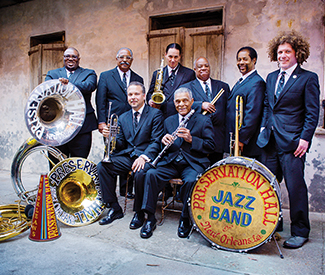
TOFU AND WHISKEY The tuba comes quickly, bubbling over excitedly at the start of the wildly entertaining “That’s It!” — the title track off the Preservation Hall Jazz Band’s first record of all original compositions. The vivacious New Orleans jazz album, released earlier this year, was a long time coming. The Preservation Hall Jazz Band has been a staple of Louisiana for 50 years, and in its different variations has released more than 20 previous albums of covers, tributes, and reworked classics.

And there’s a reason the tuba stands out: It’s tooted by creative director Ben Jaffe, whose father and mother, Allan and Sandra Jaffe, created the revolutionary Preservation Hall jazz venue in the French Quarter in 1961. Allan organized the first incarnation of the Preservation Hall Jazz Band in 1963 and was the group’s first tuba player. Ben and his brother grew up around the corner from the venue and spent most of their time there, hanging out at the venue with the greats. “We literally grew up at the Preservation Hall at the feet of these pioneers of New Orleans jazz,” Ben tells me from his current home (he still lives just minutes from the hall). He seems still in awe of it all, genuinely impressed and appreciative of his past with the venue.

He took over the group and the venue in the early ’90s after graduating from college (Allan passed away in ’87). Along with managing the day-to-day operations of the hectic venue, he also plays tuba along with bass, and produces the band’s albums. This newest release was co-produced by Jim James from My Morning Jacket. The core group of eight musicians recorded That’s It! last year, blasting out Dixieland and New Orleans jazz tracks like spooky “Rattlin’ Bones” and slowing down for twinkly songs like “Sugar Plum” on percussion, banjo, piano, trumpets, tenor sax, clarinet, tubas, and the like. “All combined, out of eight guys, we probably play something like 300 instruments.”

The band will play select tracks off its original record this weekend at the Davies Symphony Hall, but there’ll be another tradition taking over most of that performance: peppy, jazzy holiday selections. The band’s on-and-off again (but mostly annual) Creole Christmas touring show lands in SF Sun/15 (Davies Symphony Hall, 201 Van Ness, SF. www.sfsymphony.org).

The selections will include songs culled from the band’s storied past repertoire, holiday classics, and ditties that have a special meaning to the outsized group. The band’s “spry, charming” 81-year-old clarinet player, Charlie Gabriel, suggested one of the songs, “We Wish You,” which he heard in church as a young boy. The rest of the song list is under wraps for now, but don’t expect a gaudy Xmas spectacular.

“We’re not bringing the Rockettes, and we don’t have a light show. It’s really going to be an intimate evening of music,” says Jaffe.

But he knows the drill for upping the holiday charm, having performed a variation of Creole Christmas for the better part of a decade. Plus, he’s crazy for the holiday season — he loves to decorate and celebrates both Christmas and Chanukah.

“These Creole Christmas shows started at Preservation Hall and that’s when we decided it was something we should take on the road,” says Jaffe. “New Orleans music is a reflection of our community, and we have such a wonderful community of musicians and artists in New Orleans. Every time we play a concert, it feels like a family gathering.” And when they’re home from the road — they tour most of the year — the members of the Preservation Hall Jazz Band play the venue that bears their name two to three times as week.

They’ve long been the buzzing heart of venue, and the holidays are just another reason to celebrate with wailing horns.

When the boys were younger, Allan used to bring Ben and his brother around to different churches, senior homes, banks, and restaurants to perform live holiday songs, instead of sending out gift cards. “I still do it,” says Jaffe. “I wake up early on Christmas morning and go out with my horn and walk around the French Quarter to really remind me of my childhood.”

He adds, “Any reason to have a party in New Orleans, you know? If the wind blows we’re going to have a parade.”


COCKTAILS AND HAPPY DIVING

San Francisco’s Happy Diving has that mid-’90s Weezer thing going for it, certainly, but there’s a fuzzier, punkier edge than anything off Pinkterton, like a lazier Rivers Cuomo on a slacker punk bender. The band plays this weekend with fellow Bay Area pack Cocktails, which features members of Dirty Cupcakes. It describes its sound as “slop-punk” but sounds closer to power pop on tracks like “No Blondes (in California)” off this year’s Father/Daughter Records-released debut EP, which Matthew Melton of Warm Soda recorded. Also cool to note: The opener for this grand occasion is Blood Sister’s first show. Thu/12, 8pm, $5. Knockout, 3223 Mission, SF. www.theknockoutsf.com.


THE WEIRDOS

Early LA punks the Weirdos (first active in that gritty hotspot ’76-’81) matched swagger to wit, chugging along thundering guitars and those gravelly, growly, depths-of-hell vocals and song titles like “We Got the Neutron Bomb.” They played with all the bands you might expect, given the time and place: Germs, Dead Boys, Middle Class. And more so, the legacy of the band and its ilk clearly influenced later SoCal bratty punks and snarling weirdos alike. And now, after a few revivals an oh-so-many decades later, that band of Weirdos is back again, arriving at Thee Parkside with VKTMS and the Re-Volts. Sat/14, 9pm, $18. Thee Parkside, 333 11th St, SF. www.theeparkside.com.


SARAH JAFFE

No relation to those Preservation Hall Jaffes we met earlier in Tofu and Whiskey (that I know of), Sarah Jaffe is indeed her own lady. Yet the Texas-bred singer-songwriter, who’s collaborated with Eminem, has the delicate whisper of Cat Power and the wild-woman howls of Fiona Apple. That’s just a longwinded way of saying her vocals are lovely and textured and worthy of live listening. She’ll make you feel something deep on songs like “Satire,” off 2012 release, The Body Wins. With Midlake. Mon/16, 7:30pm, $14. Bottom of the Hill, 1233 17th St, SF. www.bottomofthehill.com.


PERE UBU

Experimental Cleveland post-everything art rock group Pere Ubu only has one original member. That person, warbly singer David Thomas, gives the band its backbone of avant-garde oddness. Thomas’ vocals and the band’s echoing, effects-heavy guitars make Pere Ubu sound at once like it’s hovering in outer space and being shot down into the deep, dark, muddled waters of unexplored oceans. It’s always a trip, either way. Tue/17, 8pm, $16. Slim’s, 333 11th St, SF. www.slimspresents.com *

Play on

0

arts@sfbg.com

YEAR IN GAMER The year 2013 has been a triumphant, confident peak in a particularly long generation of gaming, and as we gather around various top ten lists to send off the Xbox 360 and PlayStation 3 in style, let it be remembered that the pair received a more-than-decent eulogy. Most of the year’s accolades will likely fall upon three games, and while all involve guns, shooting and explosions, the refinements of those mechanics demonstrate the medium is unquestionably evolving.

Following a massive plague that wipes out much of the US, Naughty Dog’s The Last of Us is a survival horror/third-person shooter involving an unlikely pair of survivors, Joel and Ellie. “Zombies” and “stealth combat” seem to be two ever-present gameplay types, but here they are conduits into a lengthy and subtly-developing relationship between these protagonists. Playing this game won’t change your mind about what it means to shoot a guy a bunch of times, but the human moments between the battles are some of the strongest the medium has seen.

>>Check out our indie game picks of 2013 here. 

BioShock Infinite (Irrational Games/2K Australia) also offers a memorable experience — even if at first you don’t fully understand what you’re playing. Set in an alternate 1912 America, Infinite initially plays out like gumshoe pulp fiction, as private eye Booker DeWitt blasts through a city in the sky in search of a missing girl — but the game concludes with a twist that will have you playing it again to see all the ways in which you were duped. A storytelling exercise in the guise of a first-person shooter, Infinite might be more fun to think about than to play…but boy is it fun to think about.

You’re aware Grand Theft Auto V  (Rockstar North) careened onto shelves this year? Admittedly, the series hasn’t changed much — it’s still an excuse to play the bad guy, this time in a faux-LA setting. But left to your own devices, and given the keys to the most detailed and straight-up “fun” cities the Grand Theft Auto series has seen, how will you spend your time? For every criminal option there’s an equally enticing civilian activity, and taking the experience online allows for fascinating commingling among fellow tourists of the criminal lifestyle.

Beyond the big three … Assassin’s Creed IV: Black Flag  (Ubisoft Montreal) shrugged off last year’s messy entry by casting the player as a pirate on the high seas. Like Grand Theft Auto, freedom is key to this series’ success and ACIV wastes no time loosing you upon small islands, lush jungles, and 18th-century port towns in your very own, customizable privateer vessel.

Who doesn’t like Ghibli movies? Ni no Kuni: Wrath of the White Witch is a Ghibli movie you can play. Featuring cut-scenes direct from the Japanese animation studio and stirring music from frequent Ghibli composer Joe Hisaishi, Ni no Kuni is more than a little “grindy,” but it offers a truer sense of childlike wonder than any other title this year.

Lucas Pope’s Papers, Please is often decidedly not-fun. As an immigration agent for a fictional communist country, you decide who enters and who is denied. Managing applicant’s passports and entry tickets is just the beginning of the frustration, and the real bite is in juggling doing the right thing against feeding your family. No matter which decision you make, you’ll probably feel a bit icky about it — a genuinely exciting feat for an industry that traditionally triumphs fun above all.

Sometimes it’s best to go in not knowing anything about a game. In the Fullbright Company’s first-person mystery Gone Home, a young woman returns to her childhood home to find no one there to greet her. The mystery of her family’s disappearance draws you through the old house, where you discover the private histories and desires of her loved ones through the bits and bobs they’ve left behind. *


Don’t shoot!

0

joe@sfbg.com

YEAR IN GAMER This list is for all the gamers sick of blasting your last alien, zombie, or oppositional soldier of the moment (Nazis, Soviets, snore). That’s it. Done! As indie games grow in popularity, games that eschew the “shoot everything” mentality are becoming easier to find. Get your joystick thumbs ready and enjoy this list of 2013’s “top games where you don’t shoot things.”


PLANT CAT: FIRST BLOSSOM

There are treasures to be found, and Quince the Plant Cat will snag them all with his ability to create ridiculously long vines that curve and bend off cliffs and walls. It’s a game as cute as Kirby’s Dream Land, with a heavy Game Boy esthetic, a nod to the annual Game Boy Jam coding contest the game was made for. A side scrolling adventure à la Mario, the game (and soundtrack) is pure retro goodness. Though mouse and insect enemies abound, Plant Cat deals with them by feeding them vines, leading one to wonder if maybe all the evil Goombas in Mario are just hungry. flashygoodness.com/games/plant-cat


NIHILUMBRA

You are Born, a scrap of darkness that separated from “the Void” and formed sentience. Now the Void wants you back. Nihilumbra is a deeply atmospheric, side-scrolling puzzle game; playing as Born you discover different colors, which you magically paint around levels in order to escape the Void’s teeming, mysterious black mass. Colors help you escape the traps of the world: Blue is ice, speeding your runs; brown sticks enemies (and puzzle objects) in their places; red burns things away; and green turns surfaces into trampolines.

Throughout your travels, the Void questions your right to live, and solving the mystery of your existence is half the fun. Nihilumbra is a heady game that first debuted on iOS and Android last year, but only recently was released on the computer — with vocal performances and HD graphics. Now available on Steam and as a web browser demo online, Nihilumbra will have you hooked. www.nihilumbra.com


DUMB WAYS TO DIE

Quick! Clean the puke! Bat the piranhas away from the guy dancing underwater! Dumb Ways to Die is a hyperactive mobile game tasking the player with protecting cute jellybean creatures from eminent death in new ways every 10 seconds or so. Failure to save the adorable smiling beans leads to all manner of hilarious deaths: bears chomping half their bodies off, trains flattening them into bean paste, pythons biting them in the eyeball, etc. It surprised the bejesus out of me to find out this was a Public Service Announcement game made by Melbourne, Australia’s Metro Trains network. The lesson? Rail safety. Why can’t more municipalities create games revolving around cute bean people? San Francisco, get on it! www.dumbwaystodie.com


WAKING MARS

Waking Mars is one of those games that makes you want to explore its every nook and cranny. The year is 2097, and playing as Dr. Liang, an astronaut and research scientist, you land on Mars and discover a cave under ancient ruins. That’s when you meet Martian life for the first time, only the aliens aren’t monsters — they’re plants. The game quickly becomes part exploration, part horticulture simulator. Armed only with a jetpack and his science skills, Dr. Liang must experiment with and breed the “Zoa” to help solve the mystery of how the red planet turned to dust. Waking Mars is the very opposite of shooter games, as growing ecosystems and creating life are the axis of gameplay (instead of, ya know, killin’ stuff). Technically speaking, this game squeaked onto Steam in December 2012, but it’s still notable enough to include here. tigerstylegames.com/wakingmars *


Gore to the world

1

cheryl@sfbg.com

FILM Consider the giants of ho-ho-horror. Bob Clark’s Black Christmas (1974) boasted an above-average cast (Olivia Hussey, Margot Kidder, Keir Dullea, John Saxon). Christmas Evil (1980) was dubbed “the greatest Christmas movie ever made” by no less an authority than John Waters, who recorded an audio commentary for its 2006 special-edition DVD.

And then there’s Silent Night, Deadly Night (1984), which borrows several of Christmas Evil‘s plot points: a kid suffering mental damage from a Santa-related trauma grows up, unwisely takes a job working with toys, become obsessed with the concepts of “naughty” and “nice,” and eventually snaps. Christmas Evil may have the better last shot (you’ll believe a van can fly!), but Silent Night, Deadly Night is not without its sleazy charms.

Directed by Charles Sellier Jr. — best-known for creating TV’s The Life and Times of Grizzly Adams, he later segued into Christian-themed entertainment — Silent Night, Deadly Night contains scream queen Linnea Quigley, a year before her signature role as the naked, grave-dancing “Trash” in Return of the Living Dead. Though she’s only onscreen for a few minutes, her death scene (shrieking, flailing, topless, wearing jorts, piercing antlers) is Z-grade slasher gold.

Beyond Quigley’s rack (and the other boobs showcased eagerly and gratuitously herein) and some gorgeous Utah location shots, Silent Night, Deadly Night‘s memorable moments come courtesy of its creepy soundtrack. The Internet proves that least one dance remix exists of “Santa’s Watching,” a nightmarish ditty which reprises throughout the film. In the film’s opening credits, it’s a sing-songy lullaby; it plays in full-cheese form on a car radio shortly before unfortunate tot Billy Chapman sees his parents slaughtered by a baddie in a Kris Kringle costume; and it’s sung drunkenly by grown-up Billy’s co-workers at the toy store where he works.

And Santa is, indeed, watching. Early on, wee Billy’s catatonic grandfather snaps to when nobody’s looking, which is one of the film’s few genuinely frightening bits. “Christmas Eve is the scariest damn night of the year!” he croaks with cruel glee. “If you see Santa Claus tonight, you better run for your life!” Point taken, Gramps.

A few years later, Billy and baby brother Ricky are marking time at a Catholic orphanage. Billy’s still traumatized by what he witnessed (exhibit A: he punches the benevolent Santa that comes to visit the kids on Christmas), but the bitchy Mother Superior believes her punishments will set the naughty (ahem) boy right. When the film jumps ahead a few more years, Billy (played as an adult by Robert Brian Wilson) is a strapping lad employed at a dingy toy shop. He’s happy for the first time, therefore we get a peppy montage (more original music!) that spirals into darkness as soon as we realize what month it is.

Guess who’s pressed into Santa-clad service, with predictably messy results? (Not Billy’s boss, who kicks off the store’s after-hours party by announcing “Time to get shitfaced!”) Like Christmas Evil, Silent Night, Deadly Night is novel amid the 1980s slasher wave in that it follows the killer’s story, rather than empowering whatever Jamie Lee Curtis character is left standing at the end. Frankly, by the last reel, it’s a relief when put-upon weirdo Billy goes full psycho, meting out punishment among the naughty (and sparing the very few he deems “nice”).

And what about little Ricky? Oh, he survives to cause his own jingle-bell rampage in the sublimely campy, meme-spawning Silent Night, Deadly Night Part 2 (1987) and the less-notable Silent Night, Deadly Night 3: Better Watch Out! (1989). The series continued with the Clint Howard-starring, witch-themed Silent Night, Deadly Night 4 (1990); and Silent Night, Deadly Night 5: The Toy Maker (1991), featuring Hollywood legend Mickey Rooney as the titular craftsman. Spoiler alert: He’s evil. Just like Santa. *

FANGORIA PRESENTS: SILENT NIGHT, DEADLY NIGHT

Sat/14, 10pm, $10

Balboa Theatre

3630 Balboa, SF

cinemasf.com/balboa


3-2-1 contact

0

arts@sfbg.com

FILM El Cajon — between balmy coastal San Diego and arid desert mountains to the east — is just the sort of place where the dream of California living came true for a lot of industrious working-class people in the post-World War II boom years. It’s also where their boomer children and generation-next grandkids are currently seeing that dream slowly expire.

It exploded in the original golden age of suburban planning, by 1960 going from podunk burg to major ‘burb with 25 times the population it had had two decades earlier. Such rapid growth is seldom pretty, and today El Cajon mostly looks like a rusty old conglomeration of strip malls, ranch-style homes, and motel-like apartment complexes that probably were a little tacky to begin with. It’s certainly not the first place that might come to mind when pondering where groundwork might be laid for the coming landing of space vessels from the 32 worlds of the Interplanetary Confederation, who will arrive at last to save we holdout “Eartheans” from our endless cycles of self-destruction.

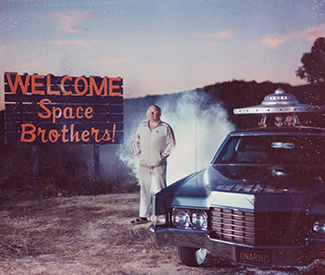
But that is exactly what El Cajon has been for nearly a half century, since Norman and Ruth Norman settled upon this place to headquarter their Unarius Academy of Science. While the Normans are long gone — from this crude mortal plane of existence, at least — their philosophy (or “UFO religion,” as some put it) lives on in a center that still ministers to and teaches an increasingly elderly community of devotees.

It also attracts a certain number of gawkers, as Unarius (Universal Articulate Interdimensional Understanding of Science) has accidentally generated its own spin-off “cult” of worshippers at the altar of camp. In the 1980s, public access stations across the nation began airing the nonprofit organization’s self-produced films and videos portraying aspects of their mythology, notably the many past incarnations of Uriel née Ruth Norman — female, male, and otherwise. (These include myriad famed emperors, prophets, geniuses, and the Statue of Liberty.) Enacted by Unarius “students” in elaborate costumes with fanciful sets and FX, these are among the most flabbergastingly wonderful “home movies” ever made — crazy narratives with the aging Ruth decked out in enough wigs, chiffon, costume jewelry, and miscellaneous spangles to float an entire convention of drag queens. If you visit the El Cajon facility, expect its keepers to be polite but wary: They’re happy to spread the gospel, but know you’re probably there for the kitsch value.

Everybody can be happy with Bill Perrine’s Children of the Stars, the centerpiece of Other Cinema’s latest “Incredibly Strange Religion” program at Artists’ Television Access this Saturday. It has scads of footage from such Unarius superproductions as A Visit to the Underground City of Mars, which if you haven’t seen such before will make you want to immediately track down their complete original versions. But it also cannily limits itself almost exclusively to interviews only with the remaining faithful. They unfailingly seem very nice, ordinary, good-humored, and not prone to hyperbole (let alone insanity), even as they testify to the occasional outlandish doctrine or personal experience.

Born at the turn of the last century, Ruth Nields was a restless, lively soul who went through a number of professions (and several husbands) before 1954, when she met electrical engineer Ernest Norman, whose past lives apparently included that of Jesus Christ. He passed away in 1971, at which point the church these “two great beings of celestial consciousness” had established started heading in (even) more fanciful directions, to the dismay of some earlier converts but the delight of many new ones. Ruth assumed the primary identity of Uriel, “Queen of Archangels,” a fourth dimension channeler who’d already materialized on as Yuda of Yu, Poseid of Atlantis, Peter the Great, Quetzalcoatl, Zoroaster, King Arthur, and JFK.

Several such lives, and prophesies of imminent extraterrestrial arrivals, were elaborately portrayed in such sci-fi spectaculars as The Arrival and Roots of the Earthmen. There were also historical epics, including one in which Norman — as a Scarlett O’Hara-like belle of the Old South — cavorts on a plantation, surrounded by what appear to be many enthusiastic young white gay men in blackface drag gushing about how beautiful and kind she is. These extravaganzas endeared Unarius to a larger audience via cable airings, though eventually shrinking inspiration or funding curtailed their production.

Unarius hardly lacked drama in its daily operations. A student turned “sub-channeler” named Louis Spiegel was cast as official “fallen angel,” a Lucifer whose bitchy ways and power plays irked many until Uriel pronounced him “totally healed” in 1984, at which point he abruptly turned into “the sweetest man.” Others jostled for the Queen’s favor, recalling their envy and arrogance now as lingering repercussions of past lives in which some presided over Uriel’s beheading in ancient Egypt or led Jews to Nazi gas chambers. Everyone was woven into the ever-evolving narrative, which sometimes closely resembled popular fantasy series like Star Trek or Star Wars. (Perrine cleverly uses old sci-fi clips to illustrate Unarius concepts.)

Ruth Norman died in 1993. The last announced date for the “Space Brothers” to visit, 2001, came and went because clearly Eartheans weren’t ready in the wake of 9/11. But Unarius survives, despite its mythology of negative energy phenomena over millennia remaining a small beacon of utopian benevolence in a world of gloating religious apocalypticists. El Cajon may turn out to be the very portal to paradise yet. *

CHILDREN OF THE STARS

Sat/14, 8:30pm, $6.66

Artists’ Television Access

To have and to hold

1

arts@sfbg.com

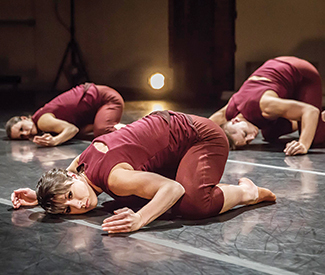
DANCE RAWdance packed enough movement material into its new Mine to tempt lesser choreographers to dilute it into a much longer work than this quintet’s 55 minutes. But that’s not who Wendy Rein and Ryan T. Smith are. Here joined by Kerre Demme, Aaron Perlstein, and Laura Sharp, the duo created choreography pared down to its essence where every head turn, every lurch, every stabbing leg counts. The work has nothing to with excavating minerals; it has everything to do with possession — what we have or want control over, be it property, physical space, or other people.

Pre-performance images suggested a bunch of people tied up in hanging ropes. Thankfully, none of that materialized. Instead of ropes — they did enter as one of very few props — scenic designer Sean Riley used strands of string for what looked like a three-dimensional map in which multiple roads coalesced into a single point. They reminded me a little of those air routes maps you look at in in-flight magazines when you have run of others things to do. Hanging from the Joe Goode Annex’s high ceiling, Riley’s rope sculpture was airy and light, yet thanks to the weights attached had a downward pull.

Mine turned out to be an intricately structured, excellently performed essay on some of our less noble instincts. Slowly, it began to appear that the idea of “mine” dehumanizes us instead of enriching us. The work started on a pure dance level with images gradually emerging to become more explicit, until a final one was so literal that I wasn’t sure whether it had not gone over the top.

As the audience walked in, Perlstein found a spot for himself. Ever so slowly the other dancers joined him in a pedestrian lineup that quickly scattered into similar but individual expressions. But common moves began to look less innocent as people moved into each other’s space. Did Sharp stumble over a prone Perlstein or did she kick him because he was in her way? A push-up position for two became one for four until the dancers waddled along like some multi-limbed creature. Sinewy and so tightly focused on each other that they looked like one evolving organism, Rein and Smith in a duet looked both delicate and unbreakable. Yet they also had the shifting wariness of boxers about them.

Anxiousness and indifference seeped into Mine like dripping fog. At one point the dancers pounced to the floor and recovered, opening their arms and looking upward as if expecting some relief. At another, like soldiers going to battle, they walked bent over but fiercely yanked their knees to their chests as if to protect them. Holding flashlights in the dark, the men impassively observed the women writhing in some kind of agony. Then it was their turn to watch Perlstein’s simple touch trying to calm a fiercely shaking Smith; it elicited rage. This was one of the few spots in Mine when you could sense a gesture emanating from personal motivation. Perlstein, previously, had shaped a piece of rope into a circle around Smith’s solo. I couldn’t decide whether he was trying to expand or limit a space for the dance.

When three wire baskets descended from the ceiling to encase dancers’ heads, I thought of those dreadful headgears that slaves were forced to wear. Here they turned the dancers into automatons, who on each quarter turn executed identical patterns of small steps. Joel St. Julien’s score — excellent throughout — began to sound as if coming from below water.

In Mines fiercest section, dancers hurled themselves against the theater’s wall, where they stayed as if glued until an intruder yanked or scraped them off, forcing him or herself into the space. It was brutal because it looked so impersonal; it seemed just something that was. Sort of like Lord of the Flies for grown-ups.

But perhaps my favorite moment was also one of its simplest. Sharp danced a limb-slashing solo center space. Her colleagues watched from the corner of the square. Slowly, almost ceremoniously they moved in, shrinking Sharp’s space with every step they took. You could just feel the air constricting around her.

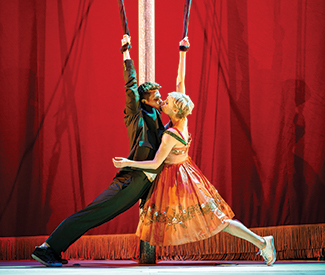
So what about that last image? It did involve a rope; it also reminded me of a Roman chariot. *

MINE

Wed/11-Sun/15, 8pm, $21-25

Joe Goode Annex

401 Alabama, SF

www.rawdance.org


Investors needed to save Marcus Books

4

Marcus Book Store continues to be threatened with the loss of its Fillmore Street location — but if an ambitious campaign to raise $1 million by Feb. 28 succeeds, the institution can stay where it is.

At a Dec. 5 press conference, attorney Julian Davis announced that the bookstore proprietors and the San Francisco Community Land Trust had reached an agreement with the current property owners, Nishan and Suhaila Sweis, enabling the land trust to purchase the property for $2.6 million.

If the money is raised, the property will be transferred to the trust, which will preserve the bookstore as a permanent tenant while preserving the upstairs flats as affordable housing. “This is an opportunity,” Davis told reporters. If the campaign succeeds, “That is going to be a rare victory for retaining cultural diversity in San Francisco.”

Marcus Book Store has been facing eviction since earlier this year, when the building was sold to the Sweis family in a bankruptcy sale. But after a wide range of community supporters mobilized to halt the eviction, “We felt that the best solution was really to just come to the table. We saw that their property meant so much,” Sweis said.

Raising $1 million in less than three months is a tall order, but the land trust is driving the campaign with a new, web-based fundraising tool.

Called FundRise, it’s similar to a real-estate investment version of the microloan website Kiva.org. It offers some intriguing potential for re-shaping the way real-estate investment happens in practice.

Taking advantage of new federal financial regulations, it opens the doors for a broader subset of individuals to invest, creating new opportunities for community residents to pool resources toward ownership of significant buildings or critical housing.

“The idea that you could invest in a Japanese company but you can’t invest across the street made no sense,” said Ben Miller, who started FundRise three years ago with his brother, Daniel, in Washington, D.C. “I think it’s a revolution in how a city can develop.”

In the campaign to save Marcus Books, any “accredited investor” may provide a loan in the amount they choose and expect an annual return of four percent.

“We are the first nonprofit affordable housing developer to use this platform,” said Tracy Parent of the Land Trust, adding that the plan is to look to “investors across San Francisco and the nation to achieve this fundraising goal.”

Under federal guidelines, investors are considered “accredited” if they have assets totaling more than $1 million, or an annual income of $200,000 a year or higher. Nevertheless, said Parent, the Land Trust is exploring ways to incorporate contributions from anyone who wants to donate.

Ever since the prospect of losing Marcus Bookstore surfaced this past spring, neighbors and supporters from the surrounding community have pitched in to help preserve the cultural institution. It is the oldest African American owned bookstore in the nation, housed in an historic building where, decades ago when it was Jimbo’s Bop City jazz club, luminaries from Dizzy Gillespie to Charlie Parker held late-night jam sessions.

Karen Johnson, a co-owner of the bookstore, remembers when her parents, Raye and Julian Richardson first discovered the building, which had been sitting vacant. “When I found out it was the Bop City building, I figured it was waiting for us,” she said.

Karen Kai is a community member who helped round up supporters for the months long campaign to save the bookstore. When news that the store could be evicted started to spread, “there was such an outpouring,” she said. “People said, we can’t lose this. Because if we lose this, we lose a little piece of our soul.”

Oakland fast food workers fight for $15

2

It was a bad day for Big Macs, but a good day for workers.

Joining a nationwide day of action, a wave of over 100 protesters crowded into an Oakland McDonald’s on Jackson Street, urging fast food workers to join in the strike. Four employees participated, while others briefly joined the march outside.

Similar strikes were held in 100 cities nationwide, with workers in Detroit, New York City and more rallying to demand a livable wage of $15 an hour.

The national actions were led by labor unions, including Service Employees International Union, but locally it was led by men like Jose Martinez, a KFC worker who led a strike at that fast food establishment some time back. “It’s a movement for all fast food workers to come together and fight for our rights,” he said.

Oakland rapper, performer and music producer Boots Riley turned out in support of the fast food workers’ movement. “Fighting to raise wages of anyone helps everyone. A high tide raises all boats,” he told the Guardian. “You help make that profit, your labor is worth more than minimum wage.”

Inside, the fast food joint was bursting at the seams. “Markeisha! Markeisha! Markeisha!” the protesters screamed, bursting into cheers as the five-foot tall girl hobbled around the counter to join the strike. Markeisha, who did not want her last name used, said she tore her ACL a week ago tripping over one of her children’s toys. She can’t afford not to be at work though, and worked the register from a chair.

We asked if she was afraid to be on strike. “Afraid? Kind of,” she said. If she lost her job, “I wouldn’t have a way to pay my bills and support her family.” She felt it was an important thing to do, because she isn’t earning a living wage. After three years of employment, she’s finally making 50 cents more per hour because she’s training to be a shift manager, and can now expect an hourly wage of $8.50.

A statement on McDonald’s website noted, “Our owner-operators are committed to providing our employees with opportunities to succeed. We offer employees advancement opportunities, competitive pay and benefits.”

One worker the Bay Guardian interviewed described having to visit food banks to get enough food, despite working full time.

McDonald’s’ official statement also noted: “The events taking place are not strikes. Outside groups are traveling to McDonald’s and other outlets to stage rallies.” But four workers did join the Oakland McDonald’s protesters to participate in the nationwide strike, and together they poured into the adjoining parking lot, dancing and chanting.

The protest was organized as a coalition between a number of groups, including the ReFund & ReBuild Oakland Community-Labor Coalition, ACCE, EBASE, the East Bay Organizing Committee, UNITE-HERE Local 2850, OUR WALMART, SEIU 1021, and SEIU ULTCW.

Mandela’s greatest legacy

2


By Roni Krouzman

Since my teenage years, I have looked to the anti-apartheid movement as clear evidence that humanity — when it comes together and stands bravely and prays with its heart and sings with its soul — can overcome the greatest oppression. This alone would be reason enough to revere, mourn and celebrate one of this liberation struggle’s great leaders, the late Nelson Mandela.

But there was something even more remarkable about Mandela, and that was his capacity to stand for justice with such clarity and strength, while also holding so firmly that retribution against those who did him and his people wrong was not the answer.

Even when he gained the upper hand, this man who had been imprisoned for so long, leading a people who had been brutalized for so long, stood as strongly for peace as he did for freedom and justice.

As apartheid fell, South Africa could easily have slipped into civil war. But it did not. Instead of pursuing vengeance against their former oppressors, under Mandela’s leadership and other brave leaders like him, the country instituted ground breaking Truth and Reconciliation Commissions that had those responsible for apartheid and its enforcement own up to their wrong doings without being brutalized in return.

For Mandela, this choice grew from a deeply personal revelation: “As I walked out the door toward the gate that would lead to my freedom, I knew if I didn’t leave my bitterness and hatred behind, I’d still be in prison,” the great freedom fighter famously said upon his release.

In its report on Mandela just hours after he passed, the BBC quoted F.W. de Klerk, South Africa’s last white president, as saying Mandela had “a remarkable lack of bitterness.” Mandela’s greatest legacy, de Klerk said, “is that we are basically at peace with each other notwithstanding our great diversity.”

Justice without vengeance. What a poignant and at one point unimaginable legacy to leave his nation and all of humanity. And it is the paradigm shift we so desperately need and I hope will one day soon learn to embody: how to stand strongly, fiercely even, for what is right — to defend without wavering against those who would attack people and the Earth — and at the same time to see the humanity in all people and to welcome everyone back into the village, even when they have done wrong.

It takes a great, great heart to do that. And only that can bring the deep and lasting healing and transformation we need.

Thank you and blessings Madiba, you have shown us what is possible for humanity. We will miss you.

Roni Krouzman is a consultant who coaches workplace leaders in fostering healthy relationships with colleagues and employees. His articles and essays on social movements have appeared in numerous print and online publications, as well as four anthologies.


Laboring for better health care

2

Gardening, plumbing, construction, janitorial work and washing dishes: the jobs day laborers perform for San Franciscans are done with their bodies. Their physical fitness is their gateway to work.

It’s that physicality they risk on the job every day. Undocumented Latino laborers have a hard time reaching options for medical care though, even in a sanctuary city like San Francisco.

To be clear, San Francisco has gone far and beyond many cities to provide medical care. The city’s Healthy San Francisco program, UCSF, and a smattering of nonprofits all provide medical care to undocumented immigrants, which often includes day laborers.

The problem is not a matter of options, but a matter of trust.

James Quesada, an anthropology professor at San Francisco State University who studied health care options for day laborers, said even when options are available, many day laborers actively avoid them.

The specter of deportation is always lurking, he said, stopping many from seeking clinics in the first place.

“Despite the fact that we’re a sanctuary city, there’s always that fear and threat that someone could come at any time,” Quesada said. “There are do-gooding public health services for them, public health contracted satellite clinics and the like. But one of the hardest things is to really convince them that they’re not in peril by going.”

At the U-Haul rental facility near Bryant street, laborers stand in pairs waiting for potential customers to drive by. When a customer comes into sight, they’ll start toward the passing car in huffing sprints. Their work is unpredictable and never guaranteed.

One man the Guardian spoke to, Gonzalo Moran, 62, cited one health care center as a timely godsend: the Mission Neighborhood Health Clinic. The wait there is only half an hour, he said, and in an emergency they make referrals to SF General Hospital.

But heading to SF General for care can carry a high price tag in both time and money, and results are not guaranteed.

“One day I had a toothache, I went to the emergency [room], was there from about four o’clock in the morning to four o’clock in the afternoon,” Moran said. “I told them I was homeless, that I didn’t have no income, I have no immigration papers or nothing. A nurse came to check on me, my tooth. They just gave me a prescription for Tylenol, but then a month later they sent me a bill for $300. For Tylenol.”

Moran isn’t necessarily out on the streets, but crashes regularly at different places. Whenever he tried to get a credit score the bill would come up in searches.

The hit wasn’t only monetary. The day he spent at the hospital was a day he could have worked.

Moran’s story reflects findings made by Quesada in his research. Though many providers claim to help the undocumented, the level of service can depend on just which doctor or nurse you happen to get that day. Service and safety are uneven, and there’s no way to keep track of it all.

“It’s a patch quilt, a moving target,” he said.

Moran told his story with strong English skills gained through City College classes, but he’s had the time to learn — the El Salvador native landed in the United States in 1976 to earn money for his family. Others Quesada talked to were not as lucky.

In his research on undocumented day laborers and health care, he found many who avoided clinics and hospitals for fear of being deported. Quesada found the laborers in the streets, and spent time in clinics and hospitals to find what kept them away from medical care. What he found was fear.

Some men would jump even at the sight of a rent-a-cop security guard, he said.

In an academic paper he published on the subject, Quesada related the story of Juan, a day laborer in his 50s who suffered terrible tooth pain. He refused to seek help.

“Look Jim, if I show up at the clinic [nearby public clinic] I cannot be sure I won’t be arrested and taken away. You know, it is more dangerous now. I can never be sure when it is safe to go [get medical attention]. But, you know what it is, I do not want to be like those others [Latinos] who have “no shame” [sin verguenzas] and want what they want for nothing. If I can I will pay my way, and if I can’t, I can’t. I’ll withstand the pain and take care of it myself, even if I have to pull them [his teeth] out myself. “

Juan would medicate the gaps in his teeth with Tequila soaked cotton balls, and aspirin.

Quesada tried to get him help, but Juan had to cancel dental appointments repeatedly when jobs became available. Day laborers never know when the next opportunity may drive up to them.

This is what pushes Quesada and others to push for a merging of social work and health care. Some facilities in San Francisco have already moved that way, as hospitals like UCSF visit churches and community centers on weekends to reach out to undocumented people in need of medical attention. Still, there’s room for change.

“Doctors shouldn’t have be social workers, but social workers should be there in the room,” Quesada said, saying that would go a long way towards helping undocumented workers find the help they need. But despite a lack of options, they carry on.

“They’re valiantly making a go of it, and don’t want to dwell on the negative,” he said. “They don’t want to be seen as fighting for basic human rights, as not fully human.”

The man we met outside the U-Haul on Bryant, Gonzalo Moran, has three trade school certificates, one of them in floor tiling. But he longed for one thing: time to attend school so he could get ahead.

“I go to school all the time, you know, if I have it,” he said. “But it’s hard, we’re always getting a lower wage.” And it’s a barrier. A barrier to health, a barrier to education, and a barrier to a better life.


On the migrant trail

0

P>From 2007 to 2010, Salvadoran journalist Óscar Martínez made six different excursions on The Beast, a rusted freight train that carries Central American migrants throughout Mexico on their journey to the Southern U.S. border. His vivid, eye-opening account is now available in English, in a recently published edition titled The Beast: Riding the Rails and Dodging Narcos on the Migrant Trail, by Verso Books.

The Beast documents the lives and stories of some of the thousands of migrants who make the perilous trip annually. Whether they are heading north to flee violence in their home countries, or simply in pursuit of una vida mejor (a better life), the migrants who embark on this journey expose themselves to untold risk. The trail leads them isolated Mexican territories where the rule of law holds little sway, and bandits affiliated with drug cartels lie in wait of vulnerable targets.

Some of the figures are appalling: An estimated 20,000 of the quarter million Central Americans who journey along the migrant trail annually are kidnapped along the way. Rape is so commonplace in some areas that coyotes aiding women who venture north frequently give them condoms, with instructions to tell their attackers to use them. “They tell them, trying to fight isn’t an option. Not in that jungle,” Martínez said during a recent book reading at Modern Times, relating what he’d learned from migrants while riding The Beast.

Even more alarming is that the everyday violence afflicted against migrants received scant press attention until Martínez highlighted it. And there are dishearteningly few examples of prosecution targeting those who prey on migrants.

More impressive than the considerable risk Martínez took on to get the story was the level of depth and understanding with which he portrayed the migrants he encountered. He did this by getting to know them, spending hours in their presence, and relating to them by learning the slang used on the migrant trail.

Sometimes he would invent a character in order to slip past gatekeepers who sought to keep journalists out. He pretended to be a john when venturing into a brothel in Chiapas, to get the stories of the women profiled in a chapter titled “The Invisible Slaves.”

“Sometimes, you drink a beer and have a conversation, not an interview,” Martínez said during a book reading at San Francisco’s Modern Times Bookstore Collective. “The migrants, they are very kind to talk to me,” he added. “If you’re on the most dangerous trip of your life, why are you going to talk to a guy who asks you stupid questions for hours?”

Martínez produced the series for El Faro, an online publication based in El Salvador that seeks to produce in-depth, long form reporting.

He initially published a compilation of his experiences dodging narcos and killers on the train in a book titled Los migrantes que no importan [The migrants who don’t matter] in 2010. The Beast was named one of the best books of 2013 by the Financial Times, and has earned praise from the New Yorker.

“We spent a lot of time with the migrants beforehand,” he explained when asked how he gained the trust of the people he wrote about. “The project allowed us to do that. We had the time. That’s impossible to do with the rhythms of conventional journalism.”

Since El Faro is funded through private contributions and grants from foundations, it’s geared toward generating the sort of in-depth, well-researched, carefully crafted journalism that has the power to bring about real change.

“To understand, you need time,” Martínez said. It was only after six harrowing journeys, he said, before “I understood the train.”

Now he is working on a project with El Faro called Sala Negra, investigating gang-related violence in Central America. It’s a dangerous occupation, but Martínez believes he is fulfilling his obligation as a member of the press by bearing witness to the violence taking place in Central America. “Not talking about organized crime is not an option,” he said. “Organized crime is a part of the society.” 


All together now

2

news@sfbg.com

The latest attempt to legalize marijuana in California took one step forward last week when a group of advocates filed a ballot initiative with the office of the Secretary of State.

Titled California’s Marijuana Control, Legalization and Revenue Act of 2014 (MCLR), the new marijuana legalization proposal is being floated by Americans for Policy Reform (AFPR). For the past year, the organization has made the draft initiative open to the public as an editable Google Doc for anyone to read, comment on, and even modify.

The next step is for the Secretary of State to evaluate the initiative and compose a title and summary. Only after that process, which could take up to two months, will the AFPR be free to begin collecting the 500,000 signatures it must amass in order to get the marijuana legalization act on the 2014 ballot.

Such a task may sound daunting, but AFPR members have already done some of the heavy lifting, having spent the past year soliciting thousands of individual Californians’ input and support. The policy reform group even postponed an earlier submission target date to allow time for a statewide tour to gauge public opinion one last time before formally filing the proposed legislation. The initiative began as a grassroots, “open source” document to legalize cannabis for medical, industrial and adult social use.

“About a year ago, we held a cannabis conference in San Jose where we presented a document that was two paragraphs long and basically said, ‘Marijuana should be legal and nobody should be sent to jail,'” recounts AFPR member Dave Hodges. “Then we put that document into a Google Doc and just started promoting it, telling everybody, ‘If there’s anything in it that you don’t like, get in there — and change it yourself.'”

Hodges opened San Jose’s first medical cannabis club in 2009, but wasn’t drawn to the forefront in the fight for legalization until the death of a good friend a year and a half ago. His friend suffered from a condition caused by daily consumption of alcohol.

“About two weeks before he passed away, we were smoking a joint and the fucker had the balls to tell me: ‘If this shit were legal, I would have never drank alcohol.’ This is something I’ve believed in a lot, in general — but that was probably the thing that made me really get into it and not let go.”

The AFPR has gone to great lengths to garner broad support and lay the groundwork for a strong coalition once the signature gathering process begins. In the past year, the policy reform group has reached out to attorneys, activists, and other members of the community, trying to include as many Californians as possible in shaping the MCLR initiative. They’ve also issued press releases and blasted the word out on social media.

The editable Google Doc upon which the proposal is based has been circulated to thousands of people, via e-mail lists. When someone posted a link to the document on the popular website Boing Boing, more than 1,000 people logged into it within 48 hours.

Hodges has personally sat down to meet face-to-face with more than 100 different people. Over time, the two-paragraph long Google Doc grew to a length of 24 pages.

“The process of creating it was a little bit of a nightmare,” Hodges chuckles. “I’ve probably read that 24 pages a thousand times,” a feat he admits could not have been accomplished without copious amounts of marijuana.

Nonetheless, he agrees with fellow proponent Bob Bowerman, who said, “This is the best cannabis initiative ever put together for California. It follows federal guidelines and regulates cannabis in a way that makes sense.” Bowerman added, “It corrects the other legal mistakes.”

The open-source style in which MCLR was created might have been headache inducing, but its proponents believe it will prove to be the key to the initiative’s success on the 2014 ballot — in contrast with previous failed efforts at legalization.

As Hodges states, “In the case of Prop 19 in 2010, the message that was circulating — and the reason that it failed — was that everybody was saying, ‘It’s a bad law, but vote for it anyways,’ because everybody just wanted to see legalization happen. In 2012, we had nine different initiatives all competing to be on the ballot, because everybody had their own view of how this had to happen and nobody was really trying to get everybody to work together. And then none of them ended up on the ballot.”

These defeats in 2010 and 2012 led Hodges and his associates to the conclusion that the essential problem with legalization efforts was internal division across the movement, caused by respective groups disagreeing on language and prioritizing different aspects of the issue.

“When you do this process and combine so many perspectives, you see a lot of things that you wouldn’t otherwise,” Hodges explains. “And if there are any critics who come out and say this is a bad law, well, we’ve taken over a year to reach out to everybody. Anybody who hasn’t responded doesn’t really have an excuse at this point.”

While the original document put forth by the AFPR a year ago stated simply that Californians should be free to smoke marijuana, its final form is a detailed set of regulations on how the drug ought to be sold, provided, and regulated. It also outlines new protections against issues, such as federal regulation, still complicating the movement toward legalization. The need for such a precise, comprehensive initiative was underscored by a recent California Supreme Court ruling, determining that individual cities are allowed to ban medical marijuana dispensaries, despite provisions established by Prop 215 in 1996 and reinforced by SB-420 in 2003 clearing the way for their operation.

“There were a lot of lessons to be learned from that Supreme Court ruling,” Hodges says. “We learned that if we want this structured properly, we need to spell it out in very fine detail, to make sure that legally the courts can’t come back and do something like this again.”

He went on to explain the essence of the MCLR initiative. “The core of what we’ve done is create a bipartisan, independent cannabis commission that’s going to regulate this, set up further detailed regulations, and adjust for anything in the future,” he said. “Everything else is more basic structures around protections and limitations for businesses that could exist, and protections for the people who are currently using it.”

Some of those “basic structures” proved especially important to the co-collaborators. They include enforcing laws against driving under the influence by testing a driver’s impairment rather than testing the amount of THC in their bloodstream; prohibiting employers from firing employees simply for testing positive for marijuana; disregarding, in custody battles, whether one of the parents smokes; and establishing independent financial and insurance cooperatives for the cannabis and hemp industries, so that banking and insurance transactions may be done apart from the federal framework.

“Those are the little things that we would not have thought of, unless we’d been reaching out to individuals,” Hodges states. “So it really is a much stronger document because we’ve been so open about it.”

Once the document had been collaboratively shaped and vetted, AFPR took it to an attorney, who drafted it as legislation in preparation for submission to the Secretary of State.

As the final, amended version of the MCLR initiative undergoes evaluation by the office of the Secretary of State, the greatest obstacle now facing AFPR is the task of raising the $2 million needed to gather signatures for the petition. Without that funding, the measure won’t appear on the 2014 ballot, regardless of all the effort and collaboration already invested. The organization has been cultivating relationships with prospective sponsors, but collecting that large of a sum will not be easy.

Still, the initiative’s proponents remain confident. According to the most recent survey data released by AFPR, 64 percent of California voters want to legalize marijuana in 2014. This support follows a broader trend: Results of a recent Gallup poll show that for the first time since Americans were first polled on their attitudes toward marijuana in 1969, a clear majority of Americans — 58 percent — say it should be legalized.

“The time is now,” declared John Lee, another proponent. “The voters are ready, and we can get it done.”

What getting it done will ultimately mean, in practice, is anyone’s guess.

“We’re talking about a lot of saved money as far as people going to jail, better use of resources, and a new stream of revenue for the state,” Hodges predicts. “There’s obviously gonna be some sort of liquor-store type models. But I’ve heard of everything from marijuana-friendly bed and breakfasts, to high-end bars that will have girls going around like cigarette girls used to, but with different types of pre-rolled joints.”

Taking it all in, he concluded, “The possibilities are pretty endless. But if this initiative passes, we will set a standard for the rest of the country.”


Fieldwork

4

marke@sfbg.com

After two more hours of hiking, we stop in a dry creek. One of the younger men enlists help pulling large cactus spines from one of his legs. We sit in a circle sharing food. The tastes link us to loved ones and Oaxaca…

After we have hiked again through blisters for many miles and I have shared all my ibuprofren with the others, we stop to rest. We fall asleep, using torn-open plastic trash bags as blankets. Our coyote leaves to talk to his contact on a nearby Native American reservation about giving us a ride past the second boarder checkpoint to Phoenix….

Suddenly, our guide runs back, speaking quickly in Triqui. Two Border Patrol agents — one black and one white — appear running through the trees, jump down in our creek bed, and point guns at us.

— Seth M. Holmes, Fresh Fruit, Broken Bodies

According to the US Public Health Service, there are, on average, an estimated 3.5 million migrant farmworkers in the United States, the majority of whom are undocumented immigrants. At harvest season, most of them perform the backbreaking work of picking our fruits and vegetables for an average $12,500 annually; at other times, they share slum-like apartments or live out of cars looking for odd jobs — 68 percent of them wondering if they should return home to Mexico and risk another border crossing to the US when picking time rolls around again. Only 5 percent of migrant workers have health insurance, and what happens to the rest if they get injured or fall ill doing the work the rest of us won’t is an eye-opening American tragedy.

To many Americans, this cheap, legally and socially vulnerable population is a faceless brown mass in the fields somewhere, maybe receiving a noble thought at Cesar Chavez Day or inducing the occasional twinge of guilt in the produce aisle, if thought of at all. But a provocative, important new book by UC Berkeley Assistant Professor of Public Health and Medical Anthropology Seth M. Holmes, Fresh Fruit, Broken Bodies: Migrant Farmworkers in the United States (University of California Press), which is picking up awards and has been featured on mainstream news outlets, is helping to re-personalize migrant farmworkers and move their health care situation into the media spotlight.

As the US finally addresses the facts that it spends the most money on health care for the worst outcomes, that a huge chunk of its population has no health care at all (and is severely underpaid for its work), and that we’re dependent on undocumented immigrants to harvest our produce and keep food costs down, we’re only just starting to realize the irony in giving the people who devastate their bodies to provide our healthiest foods perhaps the lousiest health care deal of all.


COMPLEX VOICES

Part heart-pounding adventure tale, part deep ethnograhic study, part urgent plea for reform, Fresh Fruit starts off with Holmes embedded in an ill-fated group of border-crossers from the mountains of Oaxaca: he gets arrested, they get deported after a harrowing stay in a detention center. Holmes then writes about his 18 months spent picking fruit alongside hundreds of others at a large family-owned farm in Skagit Valley, Wash., living in a closet with a dozen farmworkers in a rundown apartment while they look for work on the off-season, returning to Mexico to spend time with workers and their families, and shadowing the medical professionals in the publicly and privately funded clinics that serve migrant populations. Throughout, Holmes saw people “give premature birth, develop injured knees and backs, suffer from extreme stress, experience symptoms of pesticide poisoning, and even have farm trucks run over and crush their legs,” as he told Farmworker Justice magazine.

Holmes, a medical doctor as well as a doctor of anthropology — the book resulted from his thesis work — brings an enlightening complexity to the issue of migrant workers. (Including the label “migrant worker” itself, which, he notes piercingly at the end of the book, has been ossified with classist and racial overtones. If this group of people were flying over every summer from Europe or Hong Kong to secure investments on Wall Street, they would be called “international businesspeople.”)

He’s especially concerned not just with the grueling minutae of trying to receive treatment for the aches and pains that come with stooping to pick strawberries 12 hours a day, struggling to meet ambitious quotas in order to get paid very little, but also the larger, physically devastating effects of the structural violence visited upon a whole population by neoliberal economic policies that continue to widen the global income gap and entrench the wealthy in power. His “participant observation” method of studying migrant farmworkers means he writes about his own experiences in the field, and he brings his sophisticated anthropological knowledge to bear on the way contemporary society ensures that migrant farmworkers stay on the bottom rung of the economic ladder, building on the work of Pierre Bordieu, Philippe Bourgois, and others who’ve studied power relationships and structural violence in terms of workers’ health.

But, although there are scholarly footnotes and personal interjections, Holmes avoids an icky “anthropological tourism” vibe by providing the workers themselves with room to tell their histories, talk about their bodies, and react to the way they’re treated. People like Abelino, who falls victim to a series of misunderstandings over his severely injured knee, or Crescencio, who suffers acute headaches whenever he’s called racist names or ordered around degradingly, but is labeled a potential domestic abuser by one caregiver and resorts to drinking up to 24 beers per night to soothe his pain. We also hear from Marcelina, who talks to a Skagit Valley community gathering about low wages and high quotas.

And Holmes lets the owners and operators on all levels of Skagit’s Tanaka Brothers Farm — a pseudonym to protect his sources — speak as well, about the need for cheap labor in an increasingly competitive global agribusiness environment, among other concerns. (One especially interesting tidbit: organic distributors pressured Tanaka Brothers Farms to sign a machine-pick contract, which relegates farmworkers to the pesticide-ridden fields, despite the growing market for organic produce.) The Japanese-descended Tanaka family is deeply embedded in the Skagit Valley community, with roots stretching back before the Japanese internment period. The farm has seen different waves of migrant workers from poor white to Asian to Mexican. The Valley community itself has a fascinating relationship with the migrant community, emerging from it while reacting to it, developing its own social hierarchy as each generation “graduates” from farmworker to resident.


ANOTHER GENERATION

A lot has changed from Chavez’s day. For one thing, the previous generation of field workers, mostly from Guadalajara and northern Mexico or from Central America, has gained a toehold on American society — like the Asian workers that preceded them, many Hispanic workers’ children, placed in American schools, have grown up, providing their parents with a path to citizenship or work visas that allow them access to better jobs.

Today, a lot of workers are not mestizo Mexican, but of indigenous Mixtec descent, from increasingly violent mountain villages of Oaxaca in southern Mexico like San Miguel and San Pedro. Bloody land disputes, ethnic tension, the collapse of the local agriculture market that was exacerbated by the North American Free Trade Agreement in the 1990s and continued through the recent global recession, and the rowdy and malevolent presence of US-funded anti-drug military forces (strange since no major drug cartels operate there) have isolated this area, forcing its men, women, and children to look for work in America.

Triqui, not Spanish, is their native language — just one of the major hurdles when it comes to delivering healthcare to this population. Another hurdle comes with the specific cultural record of Triqui and general Mexican healthcare. Many Triqui workers rely on native healers, even in American farmworker camps, whose methods of consulting cards and drawing evil spirits from bodies using oils surely provide some psychosomatic respite. But reliance on native healers — out of a combination of tradition, availability, and fear of discovery or of health institutions in general — often prevents workers with deeper problems from receiving a wider range of appropriate treatments. Self-medication through alcohol is common (Holmes observed no drug use), and in one case a man named Bernardo took to the habit mashing his abdomen with soda bottles to ease a chronic stomache ache.

The migratory nature of these workers — and their shifting relationship to the law — all but insures disruptions in preventative and prescriptive care, lack of access to medications, frustratingly spotty medical records, and the inability to form a valuable personal bond with a trusted physician. But the major hurdle is that the system put in place by the government to serve migrant populations hasn’t been revisited since 1962, when a wave of media concern spotlighted the plight of migrant workers — most of whom, at that time, were white Oakies descended from the great Dustbowl diaspora of the ’30s and ’40s. The system has been only slightly adapted and enlarged since then, with dozens of clinics and organizations competing for limited grants, and nonprofits charging as little as they can (often still a steep fee on a farmworkers’ wage).

The picture Holmes paints of the clinics he visits and the doctors, nurses, and caseworkers he encounters is a mostly warm one — most health workers are hard-working and well-intentioned, stymied by cultural and linguistic differences, lack of funds and proper medical records, and racist attitudes from the surrounding communities. Some are prone to misinterpretation, and there are a couple outbursts of frustration that borders on stereotyping.

Still, most migrant worker health care providers are dedicated to their patients’ welfare. As one doctor, a mountaineer who serves the Tanaka Brothers Farm workers, put it: “It’s a very difficult problem. We have a bad situation where citizens cannot really afford health care. And the migrant workers, I truly believe they should have at least the same access as the others. I mean, this work that they are doing is something that nobody else is willing to do. That’s the truth. That’s probably the only reason why we are able to go to the supermarket and buy fruit for a fair price. So this is a group of people that really deserves our attention.”

That group will most likely be left out of the Affordable Care Act’s initial implementation, with possible implications for other, growing fields of migrant work, like software coding or childcare. Holmes’ book will hopefully inspire other investigations into this critical area of the nation’s health care gap — and concerted action to bridge it.

Tech leaders must engage their critics

33

EDITORIAL It’s time for San Franciscans to have a public conversation about who we are, what we value, and where we’re headed. In the increasingly charged and polarized political climate surrounding economic displacement, the rising populist furor needs to be honestly and seriously addressed by this city’s major stakeholders.

Whether or not the technology industry that is overheating the city’s economy is to blame for the current eviction crisis and hyper-gentrification, it’s undeniable that industry and it’s leaders need to help solve this problem. They are rolling in money in right now, including tens of millions of dollars in city tax breaks, and they need to offer more than token gestures to help offset their impacts.

As we were finalizing stories for this issue on Dec. 9, the Guardian newsroom was roiled by our rollercoaster coverage of a protest blockade against a Google bus, which has become a symbol for the insulated and out-of-touch nouveau-riche techies in the emerging narrative of two San Franciscos.

Our video of an apparent Google-buser shouting at protesters “if you can’t afford it, it’s time for you to leave” went viral and burned up the Internet (and our servers) even as we discovered and reported that he was actually a protester doing some impromptu street theater.

But there was a reason why his comments resonated, and it’s the same reason why The New York Times and other major media outlets have been doing a series of stories on San Francisco and the problems we’re having balancing economic development with economic security, diversity, infrastructure needs, and other urban imperatives.

Rents have increased more than 20 percent this year, the glut of new housing coming online now is mostly unaffordable to current residents, even that new construction has done little to slow real estate speculators from cannibalizing rent-controlled apartments, and the only end in sight to this trend is a bursting of the dot-com bubble, which would cause its own hardships.

We need this city’s political leaders to convene a summit meeting on this problem, and Mayor Ed Lee and his neoliberal allies need to bring tech leaders to the table and impress upon them that they must engage with their critics in a meaningful way and be prepared to share some of their wealth with San Franciscans. Not only is the future of the city at stake, so is its present, because the housing justice movement won’t be ignored any longer. The good news is that San Francisco has a golden opportunity to test whether democracy can help solve the worst aspects of modern capitalism, offering an example to others if we succeed. But if our political leaders don’t create good faith avenues for meaningful reforms, San Francisco may offer a far messier and more contentious lesson.

Alerts: December 11 – 17, 2013

0

WEDNESDAY 11

No End In Sight: Artist talk and performance SOMArts Cultural Center, 934 Brannan, SF. www.somarts.org/noend. 7-9pm, free. Justin Hoover, curator of SOMArts exhibition All Good Things… will join featured artists in conversation on time-based art, hitting on themes like community engagement, the life cycle of a sculpture, and upcycling in contemporary art. The evening will include a reveal of Kristin Cammermeyer’s evolving sculptural installation, shown for the first time in full 360-degree fashion, and a performance by Jeremiah Barber, who will create a levitation that floats in the eyes of the audience, something like a gorgeously articulated sunspot.


League of Pissed Off Voters holiday party The Hot Spot, 1414 Market, SF.

tinyurl.com/pissedparty 6:30pm-8:30pm, free. Come have a few drinks with the League Gather round for a toast to 2013, a chat about what fun 2014 may bring, and a celebration of the league’s tenth anniversary!


THURSDAY 12


Ohlone short films New Nothing Cinema, 16 Sherman, SF. 8pm, free. This screening, part of the Incite/Insight Film Series, will feature a collection of short films on the return of Ohlone people to their ancestral lands — the peninsula where San Francisco now sits. You’ll hear the Ohlone’s own voices—in a sunrise healing ceremony at Yosemite Slough, and in asking San Francisco city supervisors for recognition at City Hall—as well as those evoked by the land and history. The story of the Ohlone will be brought right up to the present with a series of short films documenting the latest visits of the Costanoan Rumsen Carmel Ohlone as part of their 4-cycle effort of inclusion, and truth and reconciliation.

Eric Quezada PRESENTE! Mission Neighborhood Centers, Inc., 362 Capp, SF. 6-9pm, $5–$20 donation. center@politicaleducation.org. Friends of Eric Quezada and the Center for Political Education invite you to a community celebration of this beloved community activist’s life, on the occasion of his 48th birthday and the 15th anniversary of The Center for Political Education. Celebrate his contributions to SF-based struggles for social and economic justice, which continue to resonate. Featuring speakers, music and a left memorabilia auction, with light refreshments provided by Sun Rise Restaurant. All proceeds will benefit the Center for Political Education.

SUNDAY 15

A life in struggle: celebrating Elizabeth “Betita” Martinez Galeria de la Raza, SF 2pm, free. A celebration of the life and political activism of Elizabeth “Betita” Sutherland Martínez. On the occasion of Betita’s 88th birthday, Social Justice Journal is releasing a special issue featuring some of Betita’s unpublished works and more. The Dec. 15 celebration and fundraiser will feature readings by some of the contributors to the issue, alongside music, slideshows, and refreshments. Seating will be limited. RSVP at galeriadelaraza.org.

Psychic Dream Astrology: December 4-10, 2013

0

ARIES

March 21-April 19

Now is not the time to force your will on others, Aries, even if you truly believe it’s for their own good. You can be honest and direct about your opinions but it’s essential that you leave others alone after you’ve said your piece. Let people and situations reveal themselves to you, even if you don’t like what you see.

­TAURUS

April 20-May 20

You are not in control of your situation, Taurus, and that sucks. The best you can do is to adapt and remain flexible this week. If you participate in fights all you’ll do is drum up more drama. Things may change on their own, but only if you give them enough space to do so. Protect yourself without engaging in BS.

GEMINI

May 21-June 21

There’s a good way to channel your anger, and then there’s a more stupid way, and I’m sure you know the difference. This week let your passions compel you to do bigger and better things than you’ve been doing, and to invigorate your life. You’re going in the right direction so don’t screw it up, Twin Star.

CANCER

June 22-July 22

You can do everything perfectly and that doesn’t mean that you’ll get what you want. Don’t assume that things are what they seem! You may be suffering what appear to be disappointments, but they’re only hiccups. You’re on the right path and any setbacks you suffer this week are likely to have a larger purpose.

LEO

July 23-Aug. 22

What’s the rush, Leo? When you don’t have all the information you need, the best you can do is to wait things out and go on a fact-finding mission. Don’t let your circumstances rush you into a decision that you’re not ready to make this week. Investigate, ruminate, and gestate, for best results.

VIRGO

Aug. 23-Sept. 22

As the world around you changes you have to change with it, or be changed by it, Virgo. The point is that there’s no avoiding the natural progression of things, even when it feels helluv unnatural. Lick your wounds and strive to make the best of it. You only stand to gain by being a part of things this week.

LIBRA

Sept. 23-Oct. 22

The blocks between you and your goals may seem insurmountable, but they’re not. More importantly, feeling crappy does not give you license to throw your ego around and in the face of others. Use your ego as a motivational force and move beyond where you feel stuck this week, Libra.

SCORPIO

Oct. 23-Nov. 21

Strive towards balance, Scorpio. Make enough space for your feelings that you are authentically in touch with them, but don’t slip into feeling sorry for yourself or isolation. The more flexible you can be with yourself, the better equipped you’ll be for handling whatever your life throws at you.

SAGITTARIUS

Nov. 22-Dec. 21

Everything has its place, even if you can’t find it right now, Sag. Check in with yourself to see what parts of your life feel well situated, and what feels off. You need to take stock of your life. Endeavor to really appreciate the good that’s flowing before you can take care of anything else this week.

CAPRICORN

Dec. 22-Jan. 19

You are being tested in your ability to appraise your options, Capricorn. You can choose something that appeases your vanity, or something that enlivens your personal life this week. Here’s a helpful hint; in the labyrinth of life, it’s always wisest to take the path that will bring you someplace new.

AQUARIUS

Jan. 20-Feb. 18

You need a time out, Aquarius. There’s no rule saying that you need to participate when you don’t feel like it. All you need to do is honor your commitments and avoid creating additional troubles that you’ll later want to avoid. Unplug and rejuvenate before you make mountains outta molehills, pal.

PISCES

Feb. 19-March 20

It’s hard to know what’s right to do, and it’s even harder to know it when you are off your game. This week you need to stop second-guessing yourself; you don’t need to get it “right”, you only need to act with integrity. If you walk your talk and don’t let fear drive you, and you’ll get where you need to be.

Want more in-depth, intuitive or astrological advice from Jessica? Schedule a one-one-one reading that can be done in person or by phone. Visit www.lovelanyadoo.com

Music Listings: December 4-10, 2013

0

WEDNESDAY 4
ROCK
Bottom of the Hill: 1233 17th St., San Francisco. Odd Owl, James Leste, Andrew Blair & Graham Patzner, Ghost Parade, 9 p.m., $8.
El Rio: 3158 Mission, San Francisco. Alabaster & The Original Bastards, Devon McClive & Sons, Tall Fires, 8 p.m., $10.
Hemlock Tavern: 1131 Polk, San Francisco. Sea Knight, Moon Honey, Build Them to Break, 8:30 p.m., $6.
Milk Bar: 1840 Haight, San Francisco. Vandella, Lee Gallagher & the Hallelujah, Fritz Montana, 8:30 p.m., $5.
Rickshaw Stop: 155 Fell, San Francisco. Crash Kings, The Struts, King Washington, 8 p.m., $10.
DANCE
The Cafe: 2369 Market, San Francisco. “Sticky Wednesdays,” w/ DJ Mark Andrus, 8 p.m., free.
Cat Club: 1190 Folsom, San Francisco. “Bondage A Go Go,” w/ DJs Damon, Tomas Diablo, & guests, 9:30 p.m., $5-$10.
Club X: 715 Harrison, San Francisco. “Electro Pop Rocks,” 18+ dance night with Terravita, 9 p.m.
The EndUp: 401 Sixth St., San Francisco. “Tainted Techno Trance,” 10 p.m.
F8: 1192 Folsom St., San Francisco. “Housepitality,” 9 p.m., $5-$10.
Harlot: 46 Minna, San Francisco. “Qoöl,” 5 p.m.
Infusion Lounge: 124 Ellis, San Francisco. “Indulgence,” 10 p.m.
Lookout: 3600 16th St., San Francisco. “What?,” w/ resident DJ Tisdale and guests, 7 p.m., free.
Madrone Art Bar: 500 Divisadero, San Francisco. “Rock the Spot,” 9 p.m., free.
MatrixFillmore: 3138 Fillmore, San Francisco. “Reload,” w/ DJ Big Bad Bruce, 10 p.m., free.
Q Bar: 456 Castro, San Francisco. “Booty Call,” w/ Juanita More, Joshua J, guests, 9 p.m., $3.
HIP-HOP
Skylark Bar: 3089 16th St., San Francisco. “Mixtape Wednesday,” w/ resident DJs Strategy, Junot, Herb Digs, & guests, 9 p.m., $5.
ACOUSTIC
Bazaar Cafe: 5927 California, San Francisco. Kapali Long, 7 p.m.
Cafe Divine: 1600 Stockton, San Francisco. Craig Ventresco & Meredith Axelrod, 7 p.m., free.
Cafe Du Nord: 2170 Market, San Francisco. The Gundersen Family Holiday Special featuring Le Wrens, 8 p.m., $10-$12.
The Chapel: 777 Valencia St., San Francisco. Brendan Canning, Holly Miranda, 8 p.m., $15.
Club Deluxe: 1511 Haight, San Francisco. Happy Hour Bluegrass, 6:30 p.m., free.
Fiddler’s Green: 1333 Columbus, San Francisco. Terry Savastano, Every other Wednesday, 9:30 p.m., free/donation.
Hotel Utah: 500 Fourth St., San Francisco. Jamie Kent, Cyndi Harvell, 8 p.m., $10.
Plough & Stars: 116 Clement, San Francisco. Jeanie & Chuck’s Bluegrass Country Jam, First Wednesday of every month, 9 p.m., free.
JAZZ
Amnesia: 853 Valencia, San Francisco. Gaucho, Eric Garland’s Jazz Session, The Amnesiacs, 7 p.m., free.
Burritt Room: 417 Stockton St., San Francisco. Terry Disley’s Rocking Jazz Trio, 6 p.m., free.
Jazz Bistro at Les Joulins: 44 Ellis, San Francisco. Charles Unger Experience, 7:30 p.m., free.
Revolution Cafe: 3248 22nd St., San Francisco. Michael Parsons Trio, Every other Wednesday, 8:30 p.m., free/donation.
Savanna Jazz Club: 2937 Mission, San Francisco. “Cat’s Corner,” 9 p.m., $10.
Top of the Mark: One Nob Hill, 999 California, San Francisco. Ricardo Scales, Wednesdays, 6:30-11:30 p.m., $5.
Yoshi’s San Francisco: 1330 Fillmore, San Francisco. The Wee Trio, 8 p.m., $17-$21.
Zingari: 501 Post, San Francisco. Anne O’Brien, First Wednesday of every month, 7:30 p.m., free.
INTERNATIONAL
Bissap Baobab: 3372 19th St., San Francisco. Timba Dance Party, w/ DJ WaltDigz, 10 p.m., $5.
Boom Boom Room: 1601 Fillmore, San Francisco. Cha-Ching, First Wednesday of every month, 9 p.m., $5.
Cafe Cocomo: 650 Indiana, San Francisco. “Bachatalicious,” w/ DJs Good Sho & Rodney, 7 p.m., $5-$10.
Pachamama Restaurant: 1630 Powell, San Francisco. Aguabella, 8 p.m., $10-$12.
Pier 23 Cafe: Pier 23, San Francisco. David Correa & Cascada, 6 p.m., free.
BLUES
Biscuits and Blues: 401 Mason, San Francisco. Chris Cain, 7:30 & 9:30 p.m., $20.
SOUL
Lexington Club: 3464 19th St., San Francisco. “Secret Lovers,” w/ DJs Ponyboy, Lil MC, Katie Duck, and Durt, First Wednesday of every month, 9 p.m., free.

THURSDAY 5
ROCK
Brick & Mortar Music Hall: 1710 Mission, San Francisco. Guy Fox, Bonnie & The Bang Bang, Growwler, Benefit show for Public Arts Workshop., 9 p.m., $7-$10.
The Chapel: 777 Valencia St., San Francisco. Escondido, Young Moon, 8 p.m., $12-$15.
S.F. Eagle: 398 12th St., San Francisco. The Intelligence, Dylan Shearer, 9 p.m.
Hemlock Tavern: 1131 Polk, San Francisco. The New Mummies, Books on Fate, Kristian Rodriguez, 8:30 p.m., $5.
The Independent: 628 Divisadero, San Francisco. The Long Winters, Sean Nelson, 8 p.m., $15.
The Knockout: 3223 Mission, San Francisco. Cash Pony, Surplus 1980, BreakArts, 9 p.m.
Mezzanine: 444 Jessie, San Francisco. “Club NSSN,” w/ Portugal. The Man, Chvrches, NoNoNo, The Colourist, Aaron Axelsen, Miles the DJ, 7:30 p.m., $30.
Milk Bar: 1840 Haight, San Francisco. Li Xi, Little Sister, Momotaro, Mashi Mashi, 8:30 p.m., $5.
Red Devil Lounge: 1695 Polk, San Francisco. Dishwalla, Oceanroyal, 9 p.m., $15-$20.
Rickshaw Stop: 155 Fell, San Francisco. Penguin Prison (DJ set), Double Duchess, The Frail, DJ Nick Williams, 9 p.m., $15.
Thee Parkside: 1600 17th St., San Francisco. Rock Bottom, Chrome Eagle, Sweet Chariot, Cop Out, 9 p.m., $5.
DANCE
1015 Folsom: 1015 Folsom St., San Francisco. “A Light in the Attic,” w/ Kaminanda, Kalya Scintilla, Birds of Paradies, Alia, Kitty-D, VNDMG, Balance, Boats, more, 10 p.m., $10 advance.
Abbey Tavern: 4100 Geary, San Francisco. DJ Schrobi-Girl, 10 p.m., free.
Audio Discotech: 316 11th St., San Francisco. “Phonic,” w/ Designer Drugs, Non Sequitur, 9:30 p.m., $10 advance.
Aunt Charlie’s Lounge: 133 Turk, San Francisco. “Tubesteak Connection,” w/ DJ Bus Station John, 9 p.m., $5-$7.
Cafe Du Nord: 2170 Market, San Francisco. Hi Fashion, Bright Light Bright Light, 8 p.m., $10-$12.
The Cafe: 2369 Market, San Francisco. “¡Pan Dulce!,” 9 p.m., $5.
Cat Club: 1190 Folsom, San Francisco. “Throwback Thursdays,” ‘80s night with DJs Damon, Steve Washington, Dangerous Dan, and guests, 9 p.m., $6 (free before 9:30 p.m.).
The Cellar: 685 Sutter, San Francisco. “XO,” w/ DJs Astro & Rose, 10 p.m., $5.
Club X: 715 Harrison, San Francisco. “The Crib,” 9:30 p.m., $10, 18+.
Elbo Room: 647 Valencia, San Francisco. “Afrolicious,” w/ DJs Pleasuremaker, Señor Oz, and live guests, 9:30 p.m., $5-$8.
Infusion Lounge: 124 Ellis, San Francisco. “I Love Thursdays,” 10 p.m., $10.
Lookout: 3600 16th St., San Francisco. “Fluff: A Queer Night of House,” w/ DJs Sissyslap & Dr. Sleep, First Thursday of every month, 9 p.m., $3.
Madrone Art Bar: 500 Divisadero, San Francisco. “Night Fever,” 9 p.m., $5 after 10 p.m.
Pork Store Cafe: 3122 16th St., San Francisco. “Back & Forth,” w/ Ryury & Mr. Rise, 10 p.m., free.
Public Works: 161 Erie, San Francisco. “Black Magic Disko,” w/ Trickski, Shiny Objects, Trev Campbell, Hi-Tem (in the OddJob Loft), 9 p.m., $10-$15.
Q Bar: 456 Castro, San Francisco. “Throwback Thursday,” w/ DJ Jay-R, 9 p.m., free.
Raven: 1151 Folsom St., San Francisco. “1999,” w/ VJ Mark Andrus, 8 p.m., free.
The Tunnel Top: 601 Bush, San Francisco. “Tunneltop,” DJs Avalon and Derek ease you into the weekend with a cool and relaxed selection of tunes spun on vinyl, 10 p.m., free.
Underground SF: 424 Haight, San Francisco. “Bubble,” 10 p.m., free.
Vessel: 85 Campton, San Francisco. “Base,” w/ Tone of Arc, Ean Golden, 10 p.m., $5-$10.
HIP-HOP
Eastside West: 3154 Fillmore, San Francisco. “Throwback Thursdays,” w/ DJ Madison, 9 p.m., free.
The EndUp: 401 Sixth St., San Francisco. “Cypher,” w/ resident DJ Big Von, 10 p.m., $5-$10.
John Colins: 138 Minna, San Francisco. “The Premiere,” video hip-hop party with VDJ T.D. Camp, First Thursday of every month, 9 p.m., $5.
Skylark Bar: 3089 16th St., San Francisco. “Peaches,” w/lady DJs DeeAndroid, Lady Fingaz, That Girl, Umami, Inkfat, and Andre, 10 p.m., free.
Yoshi’s San Francisco: 1330 Fillmore, San Francisco. KRS-One, Duckwrth, 10:30 p.m., $25.
ACOUSTIC
Amnesia: 853 Valencia, San Francisco. Misisipi Mike & The Midnight Gamblers, Mipso, 9 p.m., $7.
Bazaar Cafe: 5927 California, San Francisco. Acoustic Open Mic, 7 p.m.
Hotel Utah: 500 Fourth St., San Francisco. Highway Hymns, Willy Tea Taylor, Jason Eady, 9 p.m., $10.
The Lost Church: 65 Capp St., San Francisco. Mr. Andrew, J.J. Schultz, 8 p.m., $10.
Musicians Union Local 6: 116 Ninth St., San Francisco. San Francisco Singer-Songwriters’ Workshop, hosted by Robin Yukiko, First Thursday of every month, 6:30 p.m., $25 (free for AFM members).
Plough & Stars: 116 Clement, San Francisco. The Shannon Céilí Band, First Thursday of every month, 9 p.m., free.
Slim’s: 333 11th St., San Francisco. Gaby Moreno, David Garza, Cazadero, Irene Diaz, 8 p.m., $15.
Swedish American Hall: 2174 Market, San Francisco. Kaki King, Jerome Holloway, 8 p.m., $15-$17.
JAZZ
Blush! Wine Bar: 476 Castro, San Francisco. Doug Martin’s Avatar Ensemble, 7:30 p.m., free.
Bottle Cap: 1707 Powell, San Francisco. The North Beach Sound with Ned Boynton, Jordan Samuels, and Tom Vickers, 7 p.m., free.
Cigar Bar & Grill: 850 Montgomery, San Francisco. Jimmy Grant Quartet, First Thursday of every month, 8 p.m., free.
Jazz Bistro at Les Joulins: 44 Ellis, San Francisco. Eugene Pliner Quartet with Tod Dickow, First and Third Thursday of every month, 7:30 p.m., free.
Pier 23 Cafe: Pier 23, San Francisco. Dick Fregulia Band, 7 p.m., free.
Savanna Jazz Club: 2937 Mission, San Francisco. Savanna Jazz Jam with Eddy Ramirez, 7:30 p.m., $5.
Top of the Mark: One Nob Hill, 999 California, San Francisco. Stompy Jones, 7:30 p.m., $10.
Yoshi’s San Francisco: 1330 Fillmore, San Francisco. NaJe, in Yoshi’s lounge, First Thursday of every month, 6:30 p.m., free; Aga Zaryan: “Remembering Nina & Abbey,” 8 p.m., $19-$25.
Zingari: 501 Post, San Francisco. Barbara Ochoa, 7:30 p.m., free.
INTERNATIONAL
Bissap Baobab: 3372 19th St., San Francisco. “Pa’Lante!,” w/ Juan G, El Kool Kyle, Mr. Lucky, 10 p.m., $5.
Pachamama Restaurant: 1630 Powell, San Francisco. “Jueves Flamencos,” 8 p.m., free.
Red Poppy Art House: 2698 Folsom, San Francisco. The Nightingale Trio, Tre Sisters, 7:30 p.m., $10-$15.
Sheba Piano Lounge: 1419 Fillmore, San Francisco. Gary Flores & Descarga Caliente, 8 p.m.
Verdi Club: 2424 Mariposa, San Francisco. The Verdi Club Milonga, w/ Christy Coté, DJ Emilio Flores, guests, 9 p.m., $10-$15.
REGGAE
Neck of the Woods: 406 Clement St., San Francisco. Natural Vibrations, Native Elements, on the upstairs stage, 9 p.m., $15-$20.
Pissed Off Pete’s: 4528 Mission St., San Francisco. Reggae Thursdays, w/ resident DJ Jah Yzer, 9 p.m., free.
BLUES
50 Mason Social House: 50 Mason, San Francisco. Bill Phillippe, 5:30 p.m., free.
Biscuits and Blues: 401 Mason, San Francisco. Greg Nagy, 8 & 10 p.m., $18.
The Saloon: 1232 Grant, San Francisco. Chris Ford, First Thursday of every month, 4 p.m.
COUNTRY
The Parlor: 2801 Leavenworth, San Francisco. “Twang Honky Tonk & Country Jamboree,” w/ DJ Little Red Rodeo, 7 p.m., free.
EXPERIMENTAL
The Luggage Store: 1007 Market, San Francisco. Cartoon Justice, The Pascucci-Oppenheim Duo, Cloud Shepherd, 8 p.m., $6-$10.
SOUL
Boom Boom Room: 1601 Fillmore, San Francisco. West Grand Boulevard, 9:30 p.m., $5.

FRIDAY 6
ROCK
50 Mason Social House: 50 Mason, San Francisco. Turn Me On Dead, Staring@Stars, Mary Jones’ Lights, Ultra Violent Rays, Waiting Room, 8 p.m.
Amoeba Music: 1855 Haight, San Francisco. Toad the Wet Sprocket, 6 p.m., free.
The Chapel: 777 Valencia St., San Francisco. Patterson Hood, 9 p.m., $22-$25.
DNA Lounge: 375 11th St., San Francisco. Everything Goes Cold, Sorrow Church, Roadside Memorial, DJ Decay, Crashfaster, 9 p.m., $8-$13.
El Rio: 3158 Mission, San Francisco. Friday Live: Boats!, DJ Emotions, 10 p.m., free.
Hemlock Tavern: 1131 Polk, San Francisco. Steel Cranes, Oceanography, Turtle Rising, 9:30 p.m., $6.
Milk Bar: 1840 Haight, San Francisco. High Cliffs, The Wave Commission, Little Smoke, 9 p.m., $8.
Slim’s: 333 11th St., San Francisco. The Aquabats, Kepi Ghoulie, Mike Park, 8 p.m., $20.
Yoshi’s San Francisco: 1330 Fillmore, San Francisco. The Tubes, 10:30 p.m., $29-$33.
DANCE
1015 Folsom: 1015 Folsom St., San Francisco. Oliver, Classixx, Shy Girls, Lando Kal, Richie Panic, J-Boogie, DeeJay Theory, Justin Milla, Shawn Steele, 10 p.m., $17.50 advance.
Amnesia: 853 Valencia, San Francisco. “Brass Tax,” w/ resident DJs JoeJoe, Ding Dong, Ernie Trevino, Mace, First Friday of every month, 10 p.m., $5.
Audio Discotech: 316 11th St., San Francisco. Nitin, Silky, J. Remy, 9:30 p.m., $10 advance.
Cafe Flore: 2298 Market, San Francisco. “Kinky Beats,” w/ DJ Sergio, 10 p.m., free.
The Cafe: 2369 Market, San Francisco. “Boy Bar,” w/ DJ Matt Consola, 9 p.m., $5.
Cat Club: 1190 Folsom, San Francisco. “Strangelove: Germany Calling,” w/ DJs Tomas Diablo, Joe Radio, Xander, and Unit 77, 9:30 p.m., $7 ($3 before 10 p.m.).
The Cellar: 685 Sutter, San Francisco. “F.T.S.: For the Story,” 10 p.m.
The EndUp: 401 Sixth St., San Francisco. “Fever,” 10 p.m., free before midnight.
The Grand Nightclub: 520 4th St., San Francisco. “We Rock Fridays,” 9:30 p.m.
Infusion Lounge: 124 Ellis, San Francisco. “Escape Fridays,” 10 p.m., $20.
Lookout: 3600 16th St., San Francisco. “HYSL,” 9 p.m., $3.
Madrone Art Bar: 500 Divisadero, San Francisco. “Dirty Rotten Dance Party,” w/ Kap10 Harris, Shane King, guests, First Friday of every month, 9 p.m., $5.
Manor West: 750 Harrison, San Francisco. “Fortune Fridays,” 10 p.m., free before 11 p.m. with RSVP.
MatrixFillmore: 3138 Fillmore, San Francisco. “F-Style Fridays,” w/ DJ Jared-F, 9 p.m.
Mighty: 119 Utah, San Francisco. “Throwback,” Mighty 10-year anniversary party with DJ Rooz, Tyrel Williams, Miguel Solari, Jayvi Velasco, Lance DeSardi, DJ Gunz, Ren the Vinyl Archaeologist, 9 p.m., free before midnight with RSVP.
Monarch: 101 6th St., San Francisco. “As You Like It,” w/ George FitzGerald, J.Phlip, Galen, Bells & Whistles, 9 p.m., $15-$20 advance.
OMG: 43 6th St., San Francisco. “Release,” 9 p.m., free before 11 p.m.
Powerhouse: 1347 Folsom, San Francisco. “Nasty,” First Friday of every month, 10 p.m., $5.
Public Works: 161 Erie, San Francisco. “Haçeteria,” w/ Cherushii, Glenn Jackson, Ben Deploy, Jason P, Smac, Tristes Tropiques, and Nihar, 9 p.m., $5-$10.
Q Bar: 456 Castro, San Francisco. “Pump: Worq It Out Fridays,” w/ resident DJ Christopher B, 9 p.m., $3.
Rickshaw Stop: 155 Fell, San Francisco. Trapeze X, Featuring music by DJs Delachaux, The Klown, and The Speakeasy Syndicate, plus burlesque by Vienna La Rouge, Kara La Fleur, Fou Fou Ha, and Ze SexBombe Danzeurs., 9 p.m., $10-$15.
Underground SF: 424 Haight, San Francisco. “Bionic,” 10 p.m., $5.
Wish: 1539 Folsom, San Francisco. “Bridge the Gap,” w/ resident DJ Don Kainoa, Fridays, 6-10 p.m., free; “Depth,” w/ resident DJs Sharon Buck & Greg Yuen, First Friday of every month, 10 p.m., free.
HIP-HOP
Brick & Mortar Music Hall: 1710 Mission, San Francisco. Nate the Great, The Kid Rated R, Supreme, plus DJs West Kraven, Beatknoxx, and Okeefe, 9 p.m., $10.
Elbo Room: 647 Valencia, San Francisco. “Swagger Like Us,” w/ Cakes Da Killa, Queens D. Light, plus DJs Lady Ryan, DavO, and Boyfriend, 10 p.m., $8.
EZ5: 682 Commercial, San Francisco. “Decompression,” Fridays, 5-9 p.m.
F8: 1192 Folsom St., San Francisco. “Some Type of Way,” w/ MicahTron, Nanosaur, Sean G, Kool Karlo, Roost Uno, 9 p.m., $9.99 (free before 11 p.m.).
Nickies: 466 Haight, San Francisco. “First Fridays,” w/ The Whooligan & Dion Decibels, First Friday of every month, 11 p.m., free.
Public Works: 161 Erie, San Francisco. Big K.R.I.T. (DJ set), DJ D-Sharp, 9 p.m., $10 advance.
Slate Bar: 2925 16th St., San Francisco. “Remix,” w/ Lando 1, 9:30 p.m.
ACOUSTIC
Atlas Cafe: 3049 20th St., San Francisco. Zach Hing, 7:30 p.m., free.
Dolores Park Cafe: 501 Dolores, San Francisco. StringQuake, 7:30 p.m.
Hotel Utah: 500 Fourth St., San Francisco. Danielia Cotton, RonDre., Venetia Pristavec, Johnny Marnell, 9 p.m., $8-$10.
Plough & Stars: 116 Clement, San Francisco. Avery County, 9 p.m.
The Sports Basement: 610 Old Mason, San Francisco. “Breakfast with Enzo,” w/ Enzo Garcia, 10 a.m., $5.
St. Cyprian’s Episcopal Church: 2097 Turk, San Francisco. First Fridays Song Circle, First Friday of every month, 7 p.m., $5-$10; Alasdair Fraser & Natalie Haas, 8 p.m., $19-$22.
Yoshi’s San Francisco: 1330 Fillmore, San Francisco. An Acoustic Evening with Al Stewart, 8 p.m., $24-$28.
JAZZ
Beach Chalet Brewery & Restaurant: 1000 Great Highway, San Francisco. Johnny Smith, 8 p.m., free.
Bird & Beckett: 653 Chenery, San Francisco. Don Prell’s SeaBop Ensemble, First Friday of every month, 5:30 p.m., free.
Cafe Royale: 800 Post, San Francisco. Wrapped in Plastic, First Friday of every month, 9 p.m.
Center for New Music: 55 Taylor St., San Francisco. Festivus 2013: Night One, w/ Rent Romus’ Life’s Blood, Adam Shulman & Katy Stephan, The Klaxon Mutant Allstars, Patrick Cress’ Telepathy, 7 p.m., $8-$10.
Cliff House: 1090 Point Lobos, San Francisco. John Kalleen Group, 7 p.m.
Jazz Bistro at Les Joulins: 44 Ellis, San Francisco. Charles Unger Experience, 7:30 p.m., free.
The Palace Hotel: 2 New Montgomery, San Francisco. The Klipptones, 8 p.m., free.
Savanna Jazz Club: 2937 Mission, San Francisco. Savanna Jazz Trio, 7 p.m., $8.
SFJAZZ Center: 205 Franklin St., San Francisco. Giulia Valle, 7 & 8:30 p.m., $15-$20.
Top of the Mark: One Nob Hill, 999 California, San Francisco. Black Market Jazz Orchestra, 9 p.m., $10.
Zingari: 501 Post, San Francisco. Joyce Grant, 8 p.m., free.
INTERNATIONAL
Bissap Baobab: 3372 19th St., San Francisco. “Paris-Dakar African Mix Coupe Decale,” 10 p.m., $5.
Cafe Cocomo: 650 Indiana, San Francisco. Taste Fridays, featuring local cuisine tastings, salsa bands, dance lessons, and more, 7:30 p.m., $15 (free entry to patio).
Croatian American Cultural Center: 60 Onondaga, San Francisco. “Beyond the Borders,” w/ Galbeno Band, 8 p.m., $15.
Pachamama Restaurant: 1630 Powell, San Francisco. Cuban Night with Fito Reinoso, 7:30 & 9:15 p.m., $15-$18.
Red Poppy Art House: 2698 Folsom, San Francisco. Camille Mai Trio, Blind Willies, 7:30 p.m., $10-$20.
REGGAE
Gestalt Haus: 3159 16th St., San Francisco. “Music Like Dirt,” 7:30 p.m., free.
Showdown: 10 Sixth St., San Francisco. “How the West Was Won,” w/ Nowtime Sound, First Friday of every month, 10 p.m., free.
BLUES
Biscuits and Blues: 401 Mason, San Francisco. Greg Nagy, 8 & 10 p.m., $20.
Tupelo: 1337 Green St., San Francisco. Jinx Jones & The KingTones, First Friday of every month, 9 p.m.
COUNTRY
Thee Parkside: 1600 17th St., San Francisco. Eddie Spaghetti, The Gravel Spreaders, Benjamin Brown, 9 p.m., $10.
FUNK
Amnesia: 853 Valencia, San Francisco. Swoop Unit, First Friday of every month, 6 p.m., $3-$5.
The Independent: 628 Divisadero, San Francisco. Dragon Smoke (featuring Stanton Moore, Ivan Neville, Eric Lindell, and Robert Mercurio), Mike Dillon, DJ Matt Haze, 9 p.m., $35.
Make-Out Room: 3225 22nd St., San Francisco. “Loose Joints,” w/ DJs Centipede, Damon Bell, & Tom Thump, 10 p.m., $5.
SOUL
Edinburgh Castle: 950 Geary, San Francisco. “Soul Crush,” w/ DJ Serious Leisure, 10 p.m., free.
The Knockout: 3223 Mission, San Francisco. “Oldies Night,” w/ DJs Primo, Daniel, Lost Cat, friends, First Friday of every month, 10 p.m., $5.

SATURDAY 7
ROCK
50 Mason Social House: 50 Mason, San Francisco. Chronic Town, Gang of Forty, 9:30 p.m., $6.
Bender’s: 806 S. Van Ness, San Francisco. Swiftumz, Violent Change, Tony Molina, 10 p.m., $5.
Boom Boom Room: 1601 Fillmore, San Francisco. Roem & The Revival, Kingsborough, Steven Roth Band, 9:30 p.m., $10.
Bottom of the Hill: 1233 17th St., San Francisco. The Flatliners, Living with Lions, Culture Abuse, 9:30 p.m., $12-$15.
Cafe Du Nord: 2170 Market, San Francisco. The Hundred Days, Dangermaker, Bang Bang, Aaron Cuadra, 9 p.m., $8-$10.
El Rio: 3158 Mission, San Francisco. Vulturegeist, Secrets of the Sky, Broken Cities, 9 p.m., $6-$10.
Hemlock Tavern: 1131 Polk, San Francisco. Primitive Hearts, Big Tits, Adam Widener, The Shanghais, 9 p.m., $6.
Hotel Utah: 500 Fourth St., San Francisco. That Ghost, Golden Drugs, Dante Elephante, Crime Novels, 9 p.m., $8.
The Lost Church: 65 Capp St., San Francisco. Castles in Spain, The Unfortunate Bastard, Stella Royale, 8 p.m., $10.
Make-Out Room: 3225 22nd St., San Francisco. Benefit for Alan Forbes with Harderships, Hot Lunch, The Freeks, Ethan Miller, DJ Jello Biafra, 5 p.m., $10.
Milk Bar: 1840 Haight, San Francisco. The Bad Jones, Super Adventure Club, The Stages of Sleep, 9 p.m., $10.
Neck of the Woods: 406 Clement St., San Francisco. People Get Ready, The Trims, Conquistador, on the downstairs stage, 9 p.m., $12.
Slim’s: 333 11th St., San Francisco. The Mowgli’s, Blondfire, Hunter Hunted, 8 p.m., $16.
DANCE
Audio Discotech: 316 11th St., San Francisco. Bixel Boys, Tropicool, 9:30 p.m., $10 advance.
Cafe Flore: 2298 Market, San Francisco. “Bistrotheque,” w/ DJ Ken Vulsion, 8 p.m., free.
Cat Club: 1190 Folsom, San Francisco. “Leisure,” w/ DJs Aaron, Omar, & Jetset James, First Saturday of every month, 10 p.m., $7.
DNA Lounge: 375 11th St., San Francisco. Bootie S.F.: Hubba Hubba Revue Holiday Show, 9 p.m., $10-$15.
The EndUp: 401 Sixth St., San Francisco. “Play: 1-Year Anniversary Party,” w/ Danny Howells & Nikita, 10 p.m., $15-$20.
Harlot: 46 Minna, San Francisco. Lauren Lane, Bones, Troy Kurtz, Shae B, Burn Unit, 9 p.m., $10.
Infusion Lounge: 124 Ellis, San Francisco. “Volume,” First Saturday of every month, 10 p.m., $10-$20.
The Knockout: 3223 Mission, San Francisco. “Debaser,” w/ resident DJs EmDee, Jamie Jams, and Stab Master Arson, First Saturday of every month, 10 p.m., $5 (free before 11 p.m. if wearing flannel).
Lookout: 3600 16th St., San Francisco. “Bounce!,” 9 p.m., $3.
Madrone Art Bar: 500 Divisadero, San Francisco. “The Prince & Michael Experience,” w/ DJs Dave Paul & Jeff Harris, First Saturday of every month, 9 p.m., $5.
Mezzanine: 444 Jessie, San Francisco. “Wonder-Full S.F. X,” w/ DJ Spinna, Proof, Hakobo, King Most, 9 p.m., $25-$35.
Mighty: 119 Utah, San Francisco. Mighty 10-Year Anniversary, w/ 2manydjs, Eug, 9 p.m., $25 advance.
Monarch: 101 6th St., San Francisco. “Lights Down Low,” w/ Deniz Kurtel, Pictureplane, Tyrel Williams, Richie Panic, Marco de la Vega, 10 p.m., $15-$20.
Public Works: 161 Erie, San Francisco. Distrikt: Holidaze – The Koktail Edition, With DJ Kramer, John Early, and more., 9 p.m., $10-$15.
Q Bar: 456 Castro, San Francisco. “Homo Erectus,” w/ DJs MyKill & Dcnstrct, First Saturday of every month, 9 p.m., $5.
Ruby Skye: 420 Mason, San Francisco. Project 46, Carl Kennedy, 9 p.m., $20 advance.
The Stud: 399 Ninth St., San Francisco. “Go Bang!: Celebrating Five Years of Atomic Dancefloor Disco Action,” w/ DJs Ken Vulsion, Nicky B, Steve Fabus, and Sergio Fedasz, 9 p.m., $7 (free before 10 p.m.).
Temple: 540 Howard, San Francisco. D:Fuse, Tall Sasha, Vodka Soda, Ks Thant, Self Destrukt, Mr. Kitt, Jai Unda, Babymuah, 10 p.m., $20.
Underground SF: 424 Haight, San Francisco. “Push the Feeling,” w/ residents Yr Skull & Epicsauce DJs, First Saturday of every month, 9 p.m.
Vessel: 85 Campton, San Francisco. “Swank,” w/ Pheeko Dubfunk, DJ Nile, Lorentzo, 10 p.m., $10-$30.
HIP-HOP
John Colins: 138 Minna, San Francisco. “N.E.W.: Never Ending Weekend,” w/ DJ Jerry Ross, First Saturday of every month, 9 p.m., free before 11 p.m.
Slate Bar: 2925 16th St., San Francisco. “Touchy Feely,” w/ The Wild N Krazy Kids, First Saturday of every month, 10 p.m., $5 (free before 11 p.m.).
ACOUSTIC
Amoeba Music: 1855 Haight, San Francisco. Lissie, 3 p.m., free.
Atlas Cafe: 3049 20th St., San Francisco. Craig Ventresco & Meredith Axelrod, Saturdays, 4-6 p.m., free.
Bazaar Cafe: 5927 California, San Francisco. Jamie Purnell, 7 p.m.
Great Star Theater: 630 Jackson, San Francisco. One Man Band Extravaganza, w/ Jordan B. Wilson, 1 Man Banjo, Shovelman, The Slow Poisoner, Cello Joe, 8 p.m., $5.
The Independent: 628 Divisadero, San Francisco. Lissie, Kopecky Family Band, 9 p.m., $18-$20.
Plough & Stars: 116 Clement, San Francisco. “Americana Jukebox,” w/ The Naked Bootleggers, Kemo Sabe, 9 p.m., $6-$10.
Revolution Cafe: 3248 22nd St., San Francisco. Seth Augustus, First Saturday of every month, 9 p.m., free/donation.
The Riptide: 3639 Taraval, San Francisco. The Low Rollers, 9:30 p.m., free.
Swedish American Hall: 2174 Market, San Francisco. Pomplamoose, Steve Poltz, Griffin House, 8 p.m., $20-$25.
JAZZ
Amnesia: 853 Valencia, San Francisco. Broken Shadows Family Band, 6 p.m.
Center for New Music: 55 Taylor St., San Francisco. Festivus 2013: Night Two, w/ John Shiurba’s 5×5, Lisa Mezzacappa’s Bait & Switch, Noah Phillips, Michael Coleman’s Enjoyer, 7 p.m., $8-$10.
Jazz Bistro at Les Joulins: 44 Ellis, San Francisco. Bill “Doc” Webster & Jazz Nostalgia, 7:30 p.m., free.
Savanna Jazz Club: 2937 Mission, San Francisco. Savanna Jazz Trio, 7 p.m., $8.
SFJAZZ Center: 205 Franklin St., San Francisco. Giulia Valle, 7 & 8:30 p.m., $15-$20.
Sheba Piano Lounge: 1419 Fillmore, San Francisco. The Robert Stewart Experience, 9 p.m.
Yoshi’s San Francisco: 1330 Fillmore, San Francisco. Mike Stern Band featuring Randy Brecker, Anthony Jackson, and Keith Carlock, 8 & 10 p.m., $22-$28.
Zingari: 501 Post, San Francisco. Lisa Lindsley, 8 p.m., free.
INTERNATIONAL
1015 Folsom: 1015 Folsom St., San Francisco. “Pura,” 9 p.m., $20.
Amnesia: 853 Valencia, San Francisco. Fanfare Zambaleta, Broken Shadows Family Band, 9 p.m.
Bissap Baobab: 3372 19th St., San Francisco. “Paris-Dakar African Mix Coupe Decale,” 10 p.m., $5.
Make-Out Room: 3225 22nd St., San Francisco. “El SuperRitmo,” w/ DJs Roger Mas & El Kool Kyle, 10 p.m., $5.
Old First Presbyterian Church: 1751 Sacramento, San Francisco. Veretski Pass, 8 p.m., $14-$17.
Pachamama Restaurant: 1630 Powell, San Francisco. Peña Eddy Navia & Pachamama Band, 8 p.m., free.
Roccapulco Supper Club: 3140 Mission, San Francisco. Jowell & Randy, 8 p.m., $40 advance.
Space 550: 550 Barneveld, San Francisco. “Club Fuego,” 9:30 p.m.
REGGAE
Red Devil Lounge: 1695 Polk, San Francisco. One Drop, Midnight Raid, Dewey & The Peoples, 9 p.m., $10.
BLUES
Biscuits and Blues: 401 Mason, San Francisco. Karen Lovely, 7:30 & 10 p.m., $22.
AMERICANA
Plough & Stars: 116 Clement, San Francisco. “Americana Jukebox,” First Saturday of every month, 9 p.m., $6-$10.
FREE
Pier 23 Cafe: Pier 23, San Francisco. Danilo y Universal, 8 p.m., free.
SOUL
Brick & Mortar Music Hall: 1710 Mission, San Francisco. Kendra Morris, Binky Griptite, Jordan & The Ritual, DJ heyLove, 9 p.m., $12-$15.
El Rio: 3158 Mission, San Francisco. “Hard French,” w/ DJs Carnita & Brown Amy, First Saturday of every month, 2 p.m., $7.
Elbo Room: 647 Valencia, San Francisco. “Saturday Night Soul Party,” w/ DJs Lucky, Phengren Oswald, & Paul Paul, First Saturday of every month, 10 p.m., $10 ($5 in formal attire).

SUNDAY 8
ROCK
Brick & Mortar Music Hall: 1710 Mission, San Francisco. Rio Rio, Coo Coo Birds, Mission Bells, Koruscant Weekend, Jared Cohen & The Future Proof, 7 p.m., $10.
El Rio: 3158 Mission, San Francisco. Benefit for San Francisco Community Land Trust with Future Twin, Annie Girl & The Flight, Baby Alpaca, 8 p.m., $10-$15 suggested donation.
Thee Parkside: 1600 17th St., San Francisco. My Jerusalem, Know Secrets, High Water, 8 p.m., $10.
DANCE
The Cellar: 685 Sutter, San Francisco. “Replay Sundays,” 9 p.m., free.
The Edge: 4149 18th St., San Francisco. “’80s at 8,” w/ DJ MC2, 8 p.m.
Elbo Room: 647 Valencia, San Francisco. “Dub Mission,” w/ King I-Vier, DJ Sep, Maneesh the Twister, 9 p.m., $6 (free before 9:30 p.m.).
The EndUp: 401 Sixth St., San Francisco. “T.Dance,” 6 a.m.-6 p.m.; “Sunday Sessions,” 8 p.m.; “The Rhythm Room,” Second Sunday of every month, 8 p.m.
F8: 1192 Folsom St., San Francisco. “Stamina Sundays,” w/ DJs Lukeino, Jamal, and guests, 10 p.m., free.
The Knockout: 3223 Mission, San Francisco. “Sweater Funk,” 10 p.m., free.
Lookout: 3600 16th St., San Francisco. “Jock,” Sundays, 3-8 p.m., $2.
MatrixFillmore: 3138 Fillmore, San Francisco. “Bounce,” w/ DJ Just, 10 p.m.
Otis: 25 Maiden, San Francisco. “What’s the Werd?,” w/ resident DJs Nick Williams, Kevin Knapp, Maxwell Dub, and guests, 9 p.m., $5 (free before 11 p.m.).
The Parlor: 2801 Leavenworth, San Francisco. DJ Marc deVasconcelos, 10 p.m., free.
Q Bar: 456 Castro, San Francisco. “Gigante,” 8 p.m., free.
The Stud: 399 Ninth St., San Francisco. “No Parking on the Dancefloor,” w/ resident DJs Dutchboy & Gehno Aviance, 11 p.m., $5.
HIP-HOP
Boom Boom Room: 1601 Fillmore, San Francisco. “Return of the Cypher,” 9:30 p.m., free.
ACOUSTIC
Cafe Du Nord: 2170 Market, San Francisco. Ed Kowalczyk, Callaghan, 8 p.m., $30-$35.
Hotel Utah: 500 Fourth St., San Francisco. Rust & Whiskey, Pirate Radio, The Tough Brothers, 8 p.m., $6.
The Lucky Horseshoe: 453 Cortland, San Francisco. Sunday Bluegrass Jam, 4 p.m., free.
Madrone Art Bar: 500 Divisadero, San Francisco. “Spike’s Mic Night,” Sundays, 4-8 p.m., free.
Make-Out Room: 3225 22nd St., San Francisco. Carolyn Mark, Peter Case with Deep Ellum, Happy Family Singers, 7:30 p.m.
Neck of the Woods: 406 Clement St., San Francisco. “iPlay,” open mic with featured weekly artists, 6:30 p.m., free.
Plough & Stars: 116 Clement, San Francisco. Dave Cory & Friends, 9 p.m.
St. Luke’s Episcopal Church: 1755 Clay, San Francisco. “Sunday Night Mic,” w/ Roem Baur, 5 p.m., free.
JAZZ
Chez Hanny: 1300 Silver, San Francisco. Noel Jewkes Quintet featuring Steve Heckman, 4 p.m., $20 suggested donation.
Jazz Bistro at Les Joulins: 44 Ellis, San Francisco. Bill “Doc” Webster & Jazz Nostalgia, 7:30 p.m., free.
Madrone Art Bar: 500 Divisadero, San Francisco. “Sunday Sessions,” 10 p.m., free.
Martuni’s: 4 Valencia, San Francisco. Madame Jo Trio, second Sunday of every month, 4-6 p.m., free.
Revolution Cafe: 3248 22nd St., San Francisco. Jazz Revolution, 4 p.m., free/donation.
The Royal Cuckoo: 3202 Mission, San Francisco. Lavay Smith & Chris Siebert, 7:30 p.m., free.
SFJAZZ Center: 205 Franklin St., San Francisco. SFJAZZ High School All-Stars Orchestra & Combo, 2 p.m., $5-$20.
Yoshi’s San Francisco: 1330 Fillmore, San Francisco. Mike Stern Band featuring Randy Brecker, Anthony Jackson, and Keith Carlock, 7 & 9 p.m., $20-$25.
Zingari: 501 Post, San Francisco. Brenda Reed, 7:30 p.m., free.
INTERNATIONAL
Atmosphere: 447 Broadway, San Francisco. “Hot Bachata Nights,” w/ DJ El Guapo, 5:30 p.m., $10 ($18-$25 with dance lessons).
Balancoire: 2565 Mission St., San Francisco. “Tardeadas Tropicales,” 3 p.m.
Bissap Baobab: 3372 19th St., San Francisco. “Brazil & Beyond,” 6:30 p.m., free.
El Rio: 3158 Mission, San Francisco. “Salsa Sundays,” Second and Fourth Sunday of every month, 3 p.m., $8-$10.
New Dehli Restaurant: 160 Ellis St., San Francisco. Bollywood Dance Party, Benefit for the Tenderloin After-School Program with DJ Amar, Dholrhythms dance troupe, Indian food buffet, and more., 6-9 p.m., $50 suggested donation.
Pachamama Restaurant: 1630 Powell, San Francisco. Georges Lammam Ensemble, 8 p.m.
Thirsty Bear Brewing Company: 661 Howard, San Francisco. “The Flamenco Room,” 7:30 & 8:30 p.m.
REGGAE
The Independent: 628 Divisadero, San Francisco. Black Uhuru, Mike Pinto, Revival Sound System, 9 p.m., $25.
BLUES
Revolution Cafe: 3248 22nd St., San Francisco. HowellDevine, 8:30 p.m., free/donation.
The Saloon: 1232 Grant, San Francisco. Blues Power, 4 p.m.
Sheba Piano Lounge: 1419 Fillmore, San Francisco. Bohemian Knuckleboogie, 8 p.m., free.
Swig: 571 Geary, San Francisco. Sunday Blues Jam with Ed Ivey, 9 p.m.
COUNTRY
The Riptide: 3639 Taraval, San Francisco. Joe Goldmark & The Seducers, Second Sunday of every month, 7:30 p.m., free.
EXPERIMENTAL
Musicians Union Local 6: 116 Ninth St., San Francisco. Daniel Pearce/Teddy Rankin-Parker Duo, Lasqo/Adams/Bennett, 7:30 p.m., $8-$10.
SOUL
Delirium Cocktails: 3139 16th St., San Francisco. “Heart & Soul,” w/ DJ Lovely Lesage, 10 p.m., free.
Rickshaw Stop: 155 Fell, San Francisco. Gavin Turek, Midtown Social, DJ Carnita, 8 p.m., $10-$12.

MONDAY 9
ROCK
The Chapel: 777 Valencia St., San Francisco. Basia Bulat, Haunted Summer, 9 p.m., $13-$15.
Elbo Room: 647 Valencia, San Francisco. Capsula, City of Women, 9 p.m., $8.
The Independent: 628 Divisadero, San Francisco. American Authors, The Royal Concept, Misterwives, 8 p.m., $13-$15.
The Knockout: 3223 Mission, San Francisco. Wooden Indian Burial Ground, 9 p.m., $5.
DANCE
DNA Lounge: 375 11th St., San Francisco. “Death Guild,” 18+ dance party with DJs Decay, Joe Radio, Melting Girl, & guests, 9:30 p.m., $3-$5.
Q Bar: 456 Castro, San Francisco. “Wanted,” w/ DJs Key&Kite and Richie Panic, 9 p.m., free.
Underground SF: 424 Haight, San Francisco. “Vienetta Discotheque,” w/ DJs Stanley Frank and Robert Jeffrey, 10 p.m., free.
ACOUSTIC
Amnesia: 853 Valencia, San Francisco. The Pick Bluegrass Jam, Second Monday of every month, 6 p.m., free; Toshio Hirano, Second Monday of every month, 9 p.m., free.
Cafe Du Nord: 2170 Market, San Francisco. Hayden, DonCat, 8 p.m., $15.
The Chieftain: 198 Fifth St., San Francisco. The Wrenboys, 7 p.m., free.
Fiddler’s Green: 1333 Columbus, San Francisco. Terry Savastano, 9:30 p.m., free/donation.
Hotel Utah: 500 Fourth St., San Francisco. Open mic with Brendan Getzell, 8 p.m., free.
The Lost Church: 65 Capp St., San Francisco. The Royal Oui, Big Eagle, 8 p.m., $10.
Osteria: 3277 Sacramento, San Francisco. “Acoustic Bistro,” 7 p.m., free.
The Saloon: 1232 Grant, San Francisco. Peter Lindman, 4 p.m.
JAZZ
Jazz Bistro at Les Joulins: 44 Ellis, San Francisco. Eugene Pliner Quartet with Tod Dickow, 7:30 p.m., free.
Le Colonial: 20 Cosmo, San Francisco. Le Jazz Hot, 7 p.m., free.
Pier 23 Cafe: Pier 23, San Francisco. Terry Timberlake, 6 p.m., free.
SFJAZZ Center: 205 Franklin St., San Francisco. Monday Night Band Showcase with Adam Theis, 7:30 p.m., free.
Sheba Piano Lounge: 1419 Fillmore, San Francisco. City Jazz Instrumental Jam Session, 8 p.m.
The Union Room at Biscuits and Blues: 401 Mason, San Francisco. The Session: A Monday Night Jazz Series, pro jazz jam with Mike Olmos, 7:30 p.m., $12.
Zingari: 501 Post, San Francisco. Kitt Weagant, 7:30 p.m., free.
REGGAE
Skylark Bar: 3089 16th St., San Francisco. “Skylarking,” w/ I&I Vibration, 10 p.m., free.
BLUES
The Saloon: 1232 Grant, San Francisco. The Bachelors, 9:30 p.m.
SOUL
Madrone Art Bar: 500 Divisadero, San Francisco. “M.O.M. (Motown on Mondays),” w/ DJ Gordo Cabeza & Timoteo Gigante, 8 p.m., free.

TUESDAY 10
ROCK
Hemlock Tavern: 1131 Polk, San Francisco. 3 Leafs, American Cream, 8:30 p.m., $5.
Hotel Utah: 500 Fourth St., San Francisco. Va Va Blume, Watch for Rocks, Worth, 8 p.m., $8.
The Knockout: 3223 Mission, San Francisco. Tender Buttons, Scraper, Silver Shadows, DJ Grody Cody, 9:30 p.m., $7.
DANCE
Aunt Charlie’s Lounge: 133 Turk, San Francisco. “High Fantasy,” w/ DJ Viv, Myles Cooper, & guests, 10 p.m., $2.
Harlot: 46 Minna, San Francisco. “Tutu Tuesday,” w/ resident DJ Atish, Second Tuesday of every month, 9 p.m., $7 ($2 in a tutu before 11 p.m.).
Monarch: 101 6th St., San Francisco. “Soundpieces,” 10 p.m., free-$10.
Q Bar: 456 Castro, San Francisco. “Switch,” w/ DJs Jenna Riot & Andre, 9 p.m., $3.
Underground SF: 424 Haight, San Francisco. “Shelter,” 10 p.m., free.
Wish: 1539 Folsom, San Francisco. “Tight,” w/ resident DJs Michael May & Lito, 8 p.m., free.
HIP-HOP
Brick & Mortar Music Hall: 1710 Mission, San Francisco. “The Show: Holiday Edition,” w/ Smoovie Baby, Show Banga, Troy, Symba, Deltrice, Lyrical Tone, Tonka Boy Dre, more, 8:30 p.m., $10-$15.
Double Dutch: 3192 16th St., San Francisco. “Takin’ It Back Tuesdays,” w/ DJs Mr. Murdock & Roman Nunez, Second Tuesday of every month, 10 p.m., free.
ACOUSTIC
Bazaar Cafe: 5927 California, San Francisco. Songwriter in Residence: Kate Kilbane, 7 p.m. continues through Dec. 31.
Cafe Du Nord: 2170 Market, San Francisco. Erin McKeown & Her Anti-Holiday Spectacular, 9 p.m., $18-$20.
The Chapel: 777 Valencia St., San Francisco. Aiofe O’Donovan, Evie Ladin, 8 p.m., $12-$15.
The Independent: 628 Divisadero, San Francisco. The Lone Bellow, Ivan & Alyosha, 8 p.m., sold out.
Plough & Stars: 116 Clement, San Francisco. Seisiún with Barry O’Connell & Vinnie Cronin, 9 p.m.
JAZZ
Beach Chalet Brewery & Restaurant: 1000 Great Highway, San Francisco. Gerry Grosz Jazz Jam, 7 p.m.
Blush! Wine Bar: 476 Castro, San Francisco. Kally Price & Rob Reich, 7 p.m., free.
Burritt Room: 417 Stockton St., San Francisco. Terry Disley’s Rocking Jazz Trio, 6 p.m., free.
Cafe Divine: 1600 Stockton, San Francisco. Chris Amberger, 7 p.m.
Jazz Bistro at Les Joulins: 44 Ellis, San Francisco. Clifford Lamb, Mel Butts, and Friends, 7:30 p.m., free.
Le Colonial: 20 Cosmo, San Francisco. Lavay Smith & Her Red Hot Skillet Lickers, 7 p.m.
Revolution Cafe: 3248 22nd St., San Francisco. West Side Jazz Club, 5 p.m., free.
Verdi Club: 2424 Mariposa, San Francisco. “Tuesday Night Jump,” w/ Stompy Jones, 9 p.m., $10-$12; “Tuesday Night Jump,” w/ Johnny Boyd, Stompy Jones, Victor & Penny, 9 p.m., $15.
Yoshi’s San Francisco: 1330 Fillmore, San Francisco. Tommy Igoe Big Band, 8 p.m., $22.
Zingari: 501 Post, San Francisco. Amanda King, 7:30 p.m., free.
INTERNATIONAL
Cafe Cocomo: 650 Indiana, San Francisco. “Descarga S.F.,” w/ DJs Hong & Good Sho, 8 p.m., $12.
The Cosmo Bar & Lounge: 440 Broadway, San Francisco. “Conga Tuesdays,” 8 p.m., $7-$10.
F8: 1192 Folsom St., San Francisco. “Underground Nomads,” w/ rotating resident DJs Amar, Sep, and Dulce Vita, plus guests, 9 p.m., $5 (free before 9:30 p.m.).
REGGAE
Milk Bar: 1840 Haight, San Francisco. “Bless Up,” w/ Jah Warrior Shelter Hi-Fi, 10 p.m.
FUNK
Madrone Art Bar: 500 Divisadero, San Francisco. “Boogaloo Tuesday,” w/ Oscar Myers & Steppin’, 9:30 p.m., free.
SOUL
Boom Boom Room: 1601 Fillmore, San Francisco. Soul Mechanix, 9:30 p.m., free.
Make-Out Room: 3225 22nd St., San Francisco. “Lost & Found,” w/ DJs Primo, Lucky, and guests, 9:30 p.m., free. 2


Eat your heart out

0

arts@sfbg.com

THEATER Crowd-pleasing can sometimes sound like a put-down — hey, sometimes it is — but it becomes a virtue in Kneehigh’s Tristan & Yseult. The Cornwall-based company (already known locally for Brief Encounter at ACT in 2009 and The Wild Bride at Berkeley Rep last winter) has returned to Berkeley Rep with a remounting of its 2003 hit. And it proves as accomplished and intelligent as it is shamelessly entertaining.

Adapted and directed by Kneehigh’s joint artistic director Emma Rice from the triangular love story of Tristan, Yseult, and Mark (a medieval courtly love tale that may well have been the inspiration for the fraught triangle of Lancelot, Guinevere, and Arthur as well as numerous works of art on down, including one of Wagner’s operas), this rousing and continually resourceful production (written by Carl Grose and Anna Maria Murphy) uses the multiple versions of the legend as an excuse for a music-fueled formal mélange of influences and references that plumb the wider seas of love in all its forms.

The basic storyline is as follows: Cornwall’s wise King Mark (Kneehigh’s founder and joint artistic director Mike Shepherd) defeats an invasion by Irish interloper Morholt (Craig Johnson) with the help of a mysterious French-speaking knight, Tristan (a dashing Andrew Durand). Charmed by the young man, Mark sends Tristan to find Morholt’s sister, Yseult (a smoldering, violin-wielding Patrycja Kujawska), so that the king might marry her and make amends with Ireland. But Tristan has sustained critical wounds in the battle that leave him fading away on a faraway shore, until he is nursed back to health by a smitten healer — the aforementioned Yseult, naturally. Their mutual attraction turns to discord when Yseult learns she’s just fallen for the man who murdered her beloved brother. But a little love potion, and equal parts sweet wine, solve that issue soon enough.

No longer a virgin, however, Yseult must substitute on the royal wedding night her hymen-ready servant Brangian (Craig Johnson again, hilarious and surprisingly sympathetic in drab drag and sparkling comic timing). The ruse works, and Mark remains happily ignorant of Tristan and Yseult’s liaison until the king’s obsequious servant, Frocin (Giles King), offers proof of the lovers’ deceit and Mark has them (and the nosey, needy Frocin) banished. Too in love with both of them to have them killed yet still too hurt to forgive them, Mark leaves his dagger near where he finds the lovers sleeping in the forest. They awake soon after and reflect on the hurt they’ve caused. They decide to part ways, Tristan taking to the sea and Yseult returning to Mark, whom she has grown to love (if in a mellower way). But the lovers promise to be there for each other when needed.

Years later, as Tristan lies dying from his old wound beside his unloved wife — significantly, also named Yseult but known to the chorus as Whitehands, our mysterious narrator (Carly Bawden) — he asks if the ship sailing into port has a white or black sail (the former means Yseult is aboard, the latter that she is not coming). Consumed with hurt and jealousy, the second Yseult answers negatively, with tragic consequences all around.

That may sound like too much information, but the joy of the production rests in the telling (and the deft performances doing the telling) more than in the tale itself. This is best left a surprise. Suffice to say that the production, set on Berkeley Rep’s large Roda stage with full use of the aisles and other parts of the house, takes supreme advantage of an open aesthetic in which the presence of the audience and the mechanics of the staging are both readily acknowledged and built upon.

Indeed, Rice’s direction is so skillful and subtle that objects, characters, and actions can seem to pop out of nowhere despite an aesthetic that largely does away with hidden stagecraft, preferring to revel in what it reveals — as when, for example, the two lovers down their love potion and sweet wine and drink themselves silly, literally feet-off-the-floor high, dangling from aerial bands hoisted by members of the chorus of the unloved. (The latter is a comical Python-esque troupe of “lovespotters” dressed as proverbial birdwatchers or trainspotters in matching rain ponchos and wool headgear). Meanwhile, a live band (under musical director Ian Ross) casts a deliciously forlorn nightclub atmosphere throughout, including pre-curtain and entr’acte.

That sad-sack chorus, and various supporting characters who get their due here, also flags the thematic breadth of the play: Tristan & Yseult is about love in all its elusiveness and inconstant variety; love that alternately supports and belies the romantic ideal represented by the title characters. At the same time, the serious charm offensive underway points to another, complimentary end: the successful wooing of an audience through the sheer bliss of theatrical virtuosity. *

TRISTAN & YSEULT

Through Jan 6, $17.50-$81

Berkeley Rep’s Roda Theatre

2025 Addison, Berk

www.berkeleyrep.org

Rep Clock: December 4 – 10, 2013

0

Schedules are for Wed/4-Tue/10 except where noted. Director and year are given when available. Double and triple features marked with a •. All times pm unless otherwise specified.

ALBANY 1115 Solano, Albany; www.landmarktheatres.com. $7. “Family Series:” The Muppet Movie (Frawley, 1979), Sat-Sun, 10:30am.

“ANOTHER HOLE IN THE HEAD FILM FESTIVAL” Balboa Theater, 3630 Balboa, SF; New People Cinema, 1746 Post, SF; www.sfindie.com. $12. Now in its 10th year, the festival highlights indie horror, sci-fi, and fantasy films, through Dec 19.

ATA GALLERY 992 Valencia, SF; www.atasite.org. $4-10. “OpenScreening,” Thu, 8. For more info, contact programming@atasite.org. “Other Cinema,” animated works by Martha Coburn, Jeremy Rouke, Janie Geiser, and others, Sat, 8:30.

BALBOA THEATRE 3630 Balboa, SF; cinemasf.com/balboa. $10. Art Gods: An Oral History of the Tower Records Art Department (Taylor, 2013), Fri-Sat, 10. “Popcorn Palace:” The Polar Express (Zemeckis, 2005), Sat, 10am. Matinee for kids.

BERKELEY FELLOWSHIP OF UNITARIAN UNIVERSALISTS’ HALL 1924 Cedar, Berk; www.bfuu.org. $5-10. “Screening the Green:” The Story of Stuff (Fox, 2007), and The Story of Solutions (2013), Thu, 7.

BINDLESTIFF STUDIO 185 Sixth St, SF; www.facinesf.com. $10-20. “FACINE bente: Filipino American Cine Festival,” 33 feature length films and short works from the Philippines and the Filipino Diaspora, Dec 9-14. Proceeds benefit Typhoon Haiyan relief operations in the Philippines.

CASTRO 429 Castro, SF; (415) 621-6120, www.castrotheatre.com. $8.50-12. The Sound of Music (Wise, 1965), Wed-Thu and Sat-Sun, 7 (also Sat-Sun, 1pm). Presented sing-along style; tickets ($10-15) at www.ticketweb.com. “Good Vibrations Quickies: Erotic Short Film Competition,” Fri, 7 (pre-party); 8 (screening). These events, $10; visit www.brownpapertickets.com for advance tickets. I Am Divine (Schawarz, 2013), Mon, 7, 9. Gravity (Cuarón, 2013), Dec 10-11, 7, 9:15 (also Dec 11, 2:30, 4:45).

CHRISTOPHER B. SMITH RAFAEL FILM CENTER 1118 Fourth St, San Rafael; (415) 454-1222, www.cafilm.org. $6.50-$10.75. The Armstrong Lie (Gibney, 2013), call for dates and times. Blue is the Warmest Color (Kechiche, 2013), call for dates and times. The Great Beauty (Sorrentino, 2013), call for dates and times. Richard II, Royal Shakespeare Company production starring David Tennant, Thu, 7; Sun, 1. Walking the Camino: Six Ways to Santiago (Smith, 2013), Dec 6-12, call for times. Sweet Dreams (Fruchtman and Fruchtman, 2012), Sun, 7. Filmmakers Lisa and Rob Fruchtman in person; this event, $12.

CLAY 2261 Fillmore, SF; www.landmarktheatres.com. $10. “Midnight Movies:” Labyrinth (Henson, 1986), Fri-Sat, midnight.

DAVIES SYMPHONY HALL 201 Van Ness, SF; www.sfsymphony.org. $25-80. “A Symphonic Night at the Movies:” Singin’ in the Rain (Donen and Kelly, 1952), Fri-Sat, 7:30.

MECHANICS’ INSTITUTE 57 Post, SF; milibrary.org/events. $10. “CinemaLit Film Series: Dark Star: The Films of Barbara Stanwyck:” Remember the Night (Leisen, 1940), Fri, 6.

NEW PARKWAY 474 24th St, Oakl; www.thenewparkway.com. “Courtney Trouble’s Queer Porn Movie Party,” Thu, 7. This event, $10. “First Friday Shorts,” films by and about Bay Area Girls Rock Camp, Fri, 6. This event, free.

PACIFIC FILM ARCHIVE 2575 Bancroft, Berk; (510) 642-5249, bampfa.berkeley.edu. $5.50-9.50. “The Resolution Starts Now: 4K Restorations from Sony Pictures:” “Grover Crisp: The Resolution Starts Now,” followed by Bonjour Tristesse (Preminger, 1958), Thu, 7; Alamo Bay (Malle, 1985), Sat, 6:30; Taxi Driver (Scorsese, 1976), Sat, 9; The Arch (Tang, 1969), Sun, 3; Picnic (Logan, 1956), Sun, 5:15. “Love Is Colder Than Death: The Cinema of Rainer Werner Fassbinder:” Why Does Herr R. Run Amok? (Fengler and Fassbinder, 1969), Fri, 7; Despair (1977), Fri, 8:50.

ROXIE 3117 and 3125 16th St, SF; (415) 863-1087, www.roxie.com. $6.50-11. Is the Man Who Is Tall Happy? (Gondry, 2013), Wed, 7:15, 9:15; Thu, 9:15. A Journey to Planet Sanity (Freeman, 2012), Wed, 7. This event, $12. Muscle Shoals (Camalier, 2013), Wed-Thu, 9. “Frameline Encore:” Seventh-Gay Adventists (Akers and Eyer, 2012), Thu, 7. This event, free. •Amal’s Garden (Shihab, 2012), and My Father Looks Like Abdel Nasser (Kassem, 2012), Thu, 7. At Berkeley (Wiseman, 2013), Dec 6-12, 6:45 (also Sat-Sun, 2). The Punk Singer (Anderson, 2013), Dec 6-12, 7, 8:45.

SOCIAL STUDY 1795 Geary, SF; www.socialstudysf.com. Free. Impresa! (Woldu, 2013), Tue, 6:30.

TEMESCAL ART CENTER 511 48th St, Oakl; www.shapeshifterscinema.com. Free. Intertidal, performance-based work by media artist Alex MacKenzie, inspired by the tidal zones and marine life of Western Canada, Sun, 8.

YERBA BUENA CENTER FOR THE ARTS 701 Mission, SF; www.ybca.org. $8-10. “X: The History of a Film Rating:” Bad Timing: A Sensual Obsession (Roeg, 1980), Thu, 7:30. “Films by Fassbinder:” Querelle (1982), Sun, 2. *


Theater Listings: December 4 – 10, 2013

0

Stage listings are compiled by Guardian staff. Performance times may change; call venues to confirm. Reviewers are Robert Avila, Rita Felciano, and Nicole Gluckstern. Submit items for the listings at listings@sfbg.com.

THEATER

OPENING

Avenue Q New Conservatory Theatre Center, 25 Van Ness, SF; www.nctcsf.org. $25-45. Previews Fri/6-Sat/7 and Dec 13, 8pm; Sun/8, 2pm. Opens Dec 14, 8pm. Runs Wed-Sat, 8pm; Sun, 2pm. Through Jan 12. New Conservatory Theatre Center performs the Tony-winning comedy.

A Christmas Carol Geary Theater, 415 Geary, SF; www.act-sf.org. $20-95. Opens Fri/6, 7pm. Runs Wed-Sat, 7pm (no evening shows Dec 24, 26, or 28; also Sat/7, Dec 11, 14, 21, 23, 2pm; Dec 24 and 26-28, 1pm; Dec 27 evening show at 5:30pm); Sun, 5:30pm (also Sun/8, Dec 15, and 22, 1pm). Through Dec 28. American Conservatory Theater mounts its annual production of the Dickens classic, with James Carpenter as Scrooge and Ken Ruta as Jacob Marley’s ghost.

Cinderella Buriel Clay Theater, African American Art and Culture Complex, 762 Fulton, SF; www.african-americanskaes.org. $12.50-50. Opens Sat/7, 3pm. Runs Sat, 8pm (also Dec 21, 3pm); Sun, 3pm. Through Dec 22. African-American Shakespeare Company presents this fairy-tale production for the holidays.

The Golden Girls: The XMAS Episodes Victoria Theatre, 2961 16th, SF; www.trannyshack.com. $30. Opens Thu/5, 8pm. Runs Thu-Sat, 8pm; Sun, 7pm. Through Dec 22. Inspired by the classic sitcom, Miami’s feisty seniors (portrayed by Heklina, Cookie Dough, Matthew Martin, and Pollo Del Mar) return to spread holiday cheer and cheesecake.

BAY AREA

Edward Gant’s Amazing Feats of Loneliness Ashby Stage, 1901 Ashby, Berk; www.shotgunplayers.org. $20-35. Previews Thu/5 and Dec 11-12, 7pm; Fri/6-Sat/7, 8pm; Sun/8, 5pm. Opens Dec 13, 8pm. Runs Wed-Thu, 7pm; Fri-Sat, 8pm; Sun, 5pm. Through Jan 11. Shotgun Players performs Anthony Neilson’s comic romp set in “a sensual Edwardian world of top hats, fantastical puppets, and flash powder.”

Little Women Lucie Stern Theatre, 1305 Middlefield, Palo Alto; www.theatreworks.org. $19-79. Previews Wed/4-Fri/6, 8pm. Opens Sat/7, 2 and 8pm. Runs Tue-Wed and Dec 30, 7:30pm (no shows Dec 24-25; Dec 31, show at 2pm only; no show Jan 1); Thu-Sat, 8pm (also Sat and Dec 26 and Jan 4, 2pm); Sun, 2 and 7pm. Through Jan 4. TheatreWorks performs the musical adaptation of the Louisa May Alcott tale.

Mame Hillbarn Theatre, 1285 East Hillsdale, Foster City; www.hillbarntheatre.org. $19-40. Previews Thu/5, 8pm. Opens Fri/6, 8pm. Runs Thu-Sat, 8pm (also Dec 14 and 21, 2pm); Sun, 2pm. Through Dec 22. Hillbarn Theatre performs Jerry Herman’s classic musical.

ONGOING

Amaluna Big Top at AT&T Park, Third Street at Terry A. Francois Blvd, SF; www.cirquedusoliel.com. $50-175. Check website for schedule, including special holiday showtimes. Through Jan 12. Cirque de Soleil is back in town, this time bringing its Tempest-inspired Amaluna to the big top set up outside AT&T Park. Touted for being a celebration of “women [sic] power,” it seems initially odd that the design elements are so focused on the male peacock feather — all greens and blues and graceful, with curving “fronds” rising up from the stage. Jungle sounds chirp in the background as a bevy of Amazonian women in bejeweled headdresses and a mischievous lizard-man circulate the room until the show starts with the lovely abstraction of a floating red cloud of translucent fabric dancing in a single beam of light. The flimsy plotline is forgettable, a coming-of-age and courtship tale between the island’s young princess, Miranda (Iuliia Mykhailova) and a shipwrecked young Romeo (Evgeny Kurkin), though the parallel courtship between the two comic figures of Jeeves (Nathalie Claude) and Deeda (Shereen Hickman) provides a bit of levity and a novel use for footballs. The most realized character is probably Cali (Victor Kee), the half-lizard, whose prehensile tail and neon body paint give him an otherworldly allure, but it’s the aerialist goddesses and fierce embodiments of the storm that are most memorable from an acrobatic point-of-view, and Lara Jacobs’ unique balancing act from a meditative one. (Gluckstern)

Arlington Magic Theatre, Fort Mason Center, 2 Marina, Bldg D, Third Flr, SF; www.magictheatre.org. $20-60. Wed/4-Sat/7, 8pm (also Wed/4, 2:30pm); Sun/8, 2:30pm. Magic Theatre performs Victor Lodato and Polly Pen’s world-premiere musical.

The Barbary Coast Revue Stud Bar, 399 Ninth St, SF; eventbrite.com/org/4730361353. $10-40. Wed, 9pm. Through Dec 18. Blake Wiers’ new “live history musical experience” features Mark Twain as a tour guide through San Francisco’s wild past.

The Book of Mormon Orpheum Theatre, 1192 Market, SF; www.shnsf.com. $60-120. Wed-Sat, 8pm (also Sat, 2pm); Sun, 1 and 6:30pm. Through Jan 19. When approaching the oeuvre of South Park creators Matt Stone and Trey Parker, it’s best to check your political correctness at the door. That’s certainly no less true of their 2011 Broadway musical The Book of Mormon, co-penned with Robert Lopez (of Avenue Q fame), despite the clean-scrubbed appearance of their fumbling albeit well-intentioned missionary protagonists. Sent to Uganda for two years, top mission pupil Elder Price (Nic Rouleau) and his clumsy but affable partner Elder Cunningham (A.J. Holmes) are faced with a village oppressed by a scenery-chewing warlord, a demoralized coterie of fellow missionaries who have yet to have a successful conversion, and their own fraught, odd-couple dynamic. Rouleau’s Price is an appropriate blend of smarm, charm, and secret self-doubt while Holmes excels in his portrayal of a perennial-loser-turned-prophet (his power ballad-esque solo in “Man Up” is one of the show’s best). Of their hosts, the wry Mafala (James Vincent Meredith) and his sweet but strong-willed daughter Nabulungi (Syesha Mercado) get the most stage time, but it’s the crude and caustic General (David Aron Damane) who grabs the most attention. The gleefully profane “Hasa Diga Eebowai,” a Forbidden Zone-style “Spooky Mormon Hell Dream”, and the deliriously blasphemous “Joseph Smith, American Moses,” round out the entertaining, and strangely informative, score. Though it’s (very) unlikely to convert you to the Church of Latter-Day Saints, there’s a good chance you’ll want to convert to the church of Parker and Stone, if you haven’t already. (Gluckstern)

BoomerAging: From LSD to OMG Marsh San Francisco, 1062 Valencia, SF; www.themarsh.org. $15-50. Tue, 8pm. Extended through Dec 17. Will Durst’s hit solo show looks at baby boomers grappling with life in the 21st century.

Foodies! The Musical Shelton Theater, 533 Sutter, SF; www.foodiesthemusical.com. $32-34. Fri-Sat, 8pm. Open-ended. AWAT Productions presents Morris Bobrow’s musical comedy revue all about food.

The Gershwins’ Porgy and Bess Golden Gate Theatre, One Taylor, SF; www.shnsf.com. $60-210. Wed/4-Sat/7, 8pm (also Sat/7, 2pm); Sun/8, 2pm. The Tony-winning Broadway revival launches its national tour in San Francisco.

Hedwig and the Angry Inch Boxcar Theatre, 505 Natoma, SF; www.boxcartheatre.org. $27-43. Thu-Sat, 8pm. Open-ended. John Cameron Mitchell’s cult musical comes to life with director Nick A. Olivero’s ever-rotating cast.

Ideation Tides Theater, 533 Sutter, SF; www.sfplayhouse.org. $10-20. Fri/6-Sat/7, 8pm (also Sat/7, 3pm). Next up in the San Francisco Playhouse “Sandbox Series” is this dark comedy from Aaron Loeb.

The Jewelry Box: A Genuine Christmas Story The Marsh San Francisco, 1062 Valencia, SF; www.themarsh.org. $15-40. Fri, 8pm; Sat, 5pm. Through Dec 28. Brian Copeland performs the world premiere of his new, holiday-themed work, an Oakland-set autobiographical tale that’s a prequel to his popular Not a Genuine Black Man.

My Beautiful Launderette New Conservatory Theatre Center, 25 Van Ness, SF; www.nctcsf.org. $25-45. Wed-Sat, 8pm; Sun, 2pm. Through Dec 22. New Conservatory Theatre Center performs Andy Gram and Roger Parsley’s adaptation of Hanif Kureishi’s award-winning screenplay.

The Oy of Sex Marsh San Francisco, 1062 Valencia, SF; www.themarsh.org. $20-100. Thu-Fri, 8pm; Sat, 8:30pm. Through Jan 18. Comedian Alicia Dattner performs her solo show, based on her stories from her own life and love addiction.

Peter/Wendy Gough Street Playhouse, 1620 Gough, SF; www.custommade.org. $15-33. Thu-Sat, 8pm; Sun, 7pm. Through Dec 15. J.M. Barrie’s familiar and much-revisited children’s story, about a boy who refuses to grow up, has always had its darker aspects, including the violent streak in its hero, forever-child Peter (Sam Bertken). Unfortunately, any underlying social or psychological complexity in the story — originally published in 1902 in The Little White Bird — is of no consequence in adapter-director Jeremy Bloom’s relentlessly cheerful and quickly monotonous retelling. The production, which narrates and acts out the story in somewhat condensed form, says it’s designed for adults of all ages and children over 12, but it seems pitched to an audience much younger still. Custom Made Theater’s lackluster staging does little to make the time go faster. There’s a mischievous energy in Bertken’s Peter and a bright intelligence in Anya Kazimierski’s Tinker Bell that together produce the play’s only emotional heat, but it’s fleeting. As Wendy, Elissa Beth Stebbins is generally solid but too mild to elicit much sympathy for her unrequited affections for Peter. Clad exclusively in striped jammies, the uneven ensemble (which also includes Terry Bamberger, Jessica Rudholm, Kim Saunders, and Jeunee Simon in multiple roles) rarely encourages focus on the finer points of character and plot, which anyway come with a soporific dose of trifling detail amid generally awkward physical choreography. Indeed, any “happy thoughts” one walks in with would risk vanishing entirely, were it not that the cast harvests them immediately and writes them down for future reference on the stage floor. (Avila)

Snoopy!!! Eureka Theatre, 215 Jackson, SF; www.42ndstmoon.org. $25-75. Wed-Thu, 7pm; Fri, 8pm; Sat, 6pm (family/student matinee Sat/7, 1pm); Sun, 3pm. Through Dec 15. 42nd Street Moon performs the sequel to You’re a Good Man, Charlie Brown.

Urge For Going Z Below, 470 Florida, SF; www.goldenthread.org. $10-45. Thu/5-Sat/7, 8pm; Sun/8, 3pm. Jamila (Camila Betancourt Ascencio) is a bright student desperate to pass her college entrance examination — an unexceptional proposition in many places, but Jamila is a Palestinian raised in a Lebanese refugee camp. For her, even the right to take such an exam is in no way guaranteed and must be fought for. That Jamila’s struggles don’t end at the front door of her crowded home provides the basis for the drama in Mona Mansour’s 2011 play, Urge for Going, now receiving an uneven but sometimes moving West Coast premiere from Golden Thread (which last year produced The Letter, a short play co-written by Mansour, as part of its ReOrient Festival). Amid the makeshift walls, mismatched furniture, and exposed wiring of Kate Boyd’s evocative scenic design, Jamila lives with her austere father (Terry Lamb), a onetime literature scholar with a passion for Wordsworth; her supportive mother (Tara Blau); her father’s effusive loose-canon of a brother (Julian Lopez-Morillas); her mother’s brother (Munaf Alsafi); and her own big-hearted but haunted older brother (Wiley Naman Strasser), a once brilliant math student who suffered brain damage at the hands of a Lebanese soldier. But front and center is her father, whose barely cloaked disappointment and despair turn to recalcitrance and outright antagonism in the face of Jamila’s too-pointed desire to flee this hobbled world of exile for a wider world of possibilities. Directed by Evren Odcikin, the play’s sentimental naturalism (broken through at times by didactic direct address to the audience by the entire cast) makes what follows both too predictable and somewhat artificial. At the same time, Mansour carefully and revealingly couches her story in the political and existential limbo of multiple generations of Palestinian refugees in Lebanon, deprived for over half a century of basic rights amid cramped poverty and deprivation. (Avila)

BAY AREA

A Bright New Boise Aurora Theatre, 2081 Addison, Berk; www.auroratheatre.org. $32-50. Wed/4-Sat/7, 8pm; Sun/8, 2 and 7pm. Faith can be a touchy subject among true believers and skeptics alike, and as long as the topic of religion is avoided (as it often is) you might not even know that your bus driver is Buddhist, or your checkout clerk born again. In Samuel D. Hunter’s A Bright New Boise, now playing at Berkeley’s Aurora Theatre, the line blurs between public face and private faith, as mysterious stranger Will (Robert Parsons) rolls into Boise and takes up employment at the Hobby Lobby, ostensibly to reconnect to his long-lost, given-up-for-adoption son, Alex (Daniel Petzhold). But when Will is revealed to be a former member of a disgraced Evangelical sect from “up North,” his sudden reappearance in Alex’ life appears to be motivated not by a long-standing remorse, but by a recent unmooring. Under Tom Ross’ direction, the other characters — a foul-mouthed store manager (Gwen Loeb), a painfully shy stock clerk (Megan Trout), and a confrontational sales associate (Patrick Russell) — appear similarly unmoored, careening into each other like jittery, neurotic pinballs, with about as much consideration. Only Parsons’ Will appears calm and deliberate in his actions, until he startlingly demonstrates otherwise. It’s an abrupt end to both the play and Will’s charade of normalcy, and neither Hunter nor Ross seem to know how to build up to his eventual fall naturally, ultimately allowing him to be defined only by his fanaticism rather than his humanity. (Gluckstern)

Can You Dig It? Back Down East 14th — the 60s and Beyond Marsh Berkeley, 2120 Allston, Berk; www.themarsh.org. $15-50. Sat, 8:30pm; Sun, 7pm. Extended through Dec 15. Don Reed’s new show offers more stories from his colorful upbringing in East Oakland in the 1960s and ’70s. More hilarious and heartfelt depictions of his exceptional parents, independent siblings, and his mostly African American but ethnically mixed working-class community — punctuated with period pop, Motown, and funk classics, to which Reed shimmies and spins with effortless grace. And of course there’s more too of the expert physical comedy and charm that made long-running hits of Reed’s last two solo shows, East 14th and The Kipling Hotel (both launched, like this newest, at the Marsh). Can You Dig It? reaches, for the most part, into the “early” early years, Reed’s grammar-school days, before the events depicted in East 14th or Kipling Hotel came to pass. But in nearly two hours of material, not all of it of equal value or impact, there’s inevitably some overlap and indeed some recycling. Reed, who also directs the show, may start whittling it down as the run continues. But, as is, there are at least 20 unnecessary minutes diluting the overall impact of the piece, which is thin on plot already — much more a series of often very enjoyable vignettes and some painful but largely unexplored observations, wrapped up at the end in a sentimental moral that, while sincere, feels rushed and inadequate. (Avila)

Harvey Barn Theatre, 30 Sir Francis Drake, Ross; www.rossvalleyplayers.com. $10-22. Thu, 7:30pm; Fri-Sat, 8pm; Sun, 2pm. Through Dec 15. Ross Valley Players perform the Pulitzer-winning play by Mary Chase.

A Little Princess Julia Morgan Theater, 2640 College, Berk; www.berkeleyplayhouse.org. $17-60. Thu/5-Fri/6, 7pm; Sat/7, 1 and 6pm; Sun/8, noon and 5pm. Berkeley Playhouse opens its sixth season with Brian Crawley and Andrew Lippa’s musical adaptation of the Frances Hodgson Burnett story.

110 in the Shade Douglas Morrison Theatre, 22311 N. Third St, Hayward; www.dmtonline.org. $10-29. Thu/5-Sat/7, 8pm (also Sat/7, 2pm); Sun/8, 2pm. Douglas Morrison Theatre performs N. Richard Nash’s romantic musical, adapted from his classic play The Rainmaker.

The Pianist of Willesden Lane Berkeley Repertory Theatre, Thrust Theatre, 2015 Addison, Berk; www.berkeleyrep.org. $29-89. Tue and Thu-Sat, 8pm (also Thu/5 and Sat, 2pm; no shows Dec 24 or 31); Wed and Sun, 7pm (also Sun, 2pm; matinees only Dec 15, 22, and Jan 5; no show Dec 25). Extended through Jan 5. Mona Golabek stars in this solo performance inspired by her mother, a Jewish pianist whose dreams and life were threatened by the Nazi regime.

Troilus and Cressida La Val’s Subterranean, 1834 Euclid, Berk; www.impacttheatre.com. $10-25. Thu-Sat, 8pm; Sun, 7pm. Through Dec 15. One of Shakespeare’s more difficult and under-produced plays, Troilus and Cressida does wax in popularity during protracted times of war, so it’s about the right time for Impact Theatre to tackle it. Set during the seventh year of the Trojan War, the players are all either soldiers or spoils of war, and both morale and morals are at a low ebb. So-called heroes hide in their tents, the fair Helen (Julie Kuwabara) is a callow bawd, and everyone just wants the war to be over. Troilus (Eric Kerr), a Trojan, and Cressida (Sarah Coykendall), a Greek, meet-cute thanks to the machinations of the flamboyant Pandarus (Shawn J. West), only to be quickly separated by circumstances beyond their control, and thrust abruptly to the sidelines of their own tragedy, their eventual betrayal of each other lost within the greater treacheries of the battlefield. It’s a problematic script, not least of all because the only truly moral character is the very innocent, very mad Cassandra (Akemi Okamura), whose prophecies are written off as mere ravings, subtly mirrored by the nihilistic fool, Thersites (Miyaka Cochrane), who delivers his frontline ravings as prophecies. Director Melissa Hillman makes some bold choices, however, including casting Lauren Spencer as the level-headed Ulysses, and father-son team Jon Nagel and Jonah McClellan as Aeneas and Antenor, turning the walk-on role of a pawn into a tragic symbol of war’s all too-human cost. (Gluckstern)

PERFORMANCE/DANCE

“Broadway Bingo” Feinstein’s at the Nikko, Hotel Nikko, 222 Mason, SF; www.feinsteinssf.com. Wed, 7-9pm. Ongoing. Free. Countess Katya Smirnoff-Skyy and Joe Wicht host this Broadway-flavored night of games and performance.

“Buddy Club Children’s Shows” Randall Museum Theater, 199 Museum Wy, SF; www.thebuddyclub.com. Sun, 11am-noon. $8. “The Bubble Lady!” performs.

“Comedy Bottle with Kurtis Matthews” Purple Onion at Kells, 530 Jackson, SF; www.purpleonionatkells.com. Fri/6-Sat/7, 7pm. $15. Stand-up comedy.

“Comedy Returns to El Rio!” 3158 Mission, SF; www.brownpapertickets.com. Mon/9, 8pm. $7-20. Stand-up with Marga Gomez, Sammy Obeid, Bob McIntyre, Kevin Young, and Lisa Geduldig.

CounterPULSE 1310 Mission, SF; www.counterpulse.org. Wed/4, 8pm: Risa Jaroslow’s NYC and the Bay: Dancers and Dances from Then and There and Here and Now, free. Fri/6-Sat/7, 8pm: Keith Hennessy, Hana Lee Erdman, and Jassem Hindi’s ALMOST, Enemy in the Figure, and These children singing in stones, $15-20. Dec 12-15, 8pm: Mica Sigourney, John Foster Cartwright, and Maryam Rostami’s Nicole Kidman is Fucking Gorgeous, $20.

“Dolores: The Temporary Life of a 220-Year-Old Bionic Woman” Stage Werx Theater, 446 Valencia, SF; www.stagewerx.org. Dec 10-11, 7:30pm. $15-20. On a bare floor, physical theater maker Carolina Duncan, as her Colombian grandmother, pops opens her cranium like a steamer trunk and retrieves the scrapbook of a boundless life. Here memory and imagination exist in equal measures, as Duncan traces key moments and fleeting images from an arc of days defined by family, romance, and at least one titanic battle between an Amazonian dinosaur and a new secret-agent boyfriend. Combining mime, scattered dialogue, physical comedy, and a live soundscape, this loving and whimsical homage comes gracefully delivered and almost always vividly expressed. All the while, Duncan (a graduate of SF’s Clown Conservatory and James Donlon and Leonard Pitt’s Flying Actor Studio) exudes an infectious enthusiasm for her subject, who proves as alive in a passing but concrete image of first childhood steps as she does in her final outing, a prolonged spacewalk into the familiar and unknown. Note: review from an earlier run of this show. (Avila)

“Encuentro de Canto Popular” Brava Theater Center, 2781 24th St, SF; accionlatina.org/Encuentro2013. Sat/7, 7pm. $19. Music festival dedicated to the nuevo canción movement; this year’s theme, “Pasado y Futuro,” pays tribute to artists who have passed away, as well as artists on the rise.

“Fiesta Navidena” Peña Pachamama, 1630 Powell, SF; www.carolinalugo.com. Sat/7, Dec 15, 21-22, and 27-28, 6:15pm. $15-21. Carolina Lugo and Carolé Acuña’s Ballet Flamenco performs a holiday show.

“Get Your Life Unity Mini Ball” Dance Mission Theater, 3316 24th St, SF; www.dancemission.com. Sat/7, 7pm. $10. Dancing, vogueing, and other aspects of ballroom culture take the stage.

“Glide Annual Holiday Festival: Celebrate50” War Memorial Opera House, 301 Van Ness, SF; www.glide.org. Wed/4, 7pm. $65-250. Maya Angelou, Judith Hill, Tom Johnston, and other luminaries lead this evening honoring Janice Mirikitani and Rev. Cecil Williams’ 50 years at Tenderloin community beacon Glide.

“Hand to Mouth Comedy” Dark Room, 2263 Mission, SF; www.handtomouthcomedy.com. Fri/6, 10pm. $8. Comedians Kellan Erksine, Kelly Anneken, Jules Posner, and others join host Trevor Hill in presenting all-new material on one specific topic: “fantasy.”

“Hysterical Historical San Francisco, Holiday Edition” Shelton Theater, 533 Sutter, SF; www.sheltontheater.org. Sun, 7pm. Through Dec 29. $30-40. Comic Kurt Weitzman performs.

“I Eat People Like YOU For Breakfast!” Marsh, 1062 Valencia, SF; www.themarsh.org. Wed/4, 7:30pm. $10-15. Comedian Steven Alan Green performs his solo show inspired by Jerry Lewis.

“The Jewish Nutcracker” Theater at Children’s Creativity Museum, 221 Fourth St, SF; www.jewishnutcracker.com. Fri/6-Sun/8, 2pm (also Fri/6-Sat/7, 6:30pm). $18-32. The Hanukkah story is interpreted via authentic cultural dance from Spain, India, China, Russia, and more.

“Mark Foehringer’s Nutcracker Sweets” Southside Theater, Fort Mason Center, Marina at Laguna, SF; www.brownpapertickets.com. Sat/7-Sun/8, Dec 14-15, Dec 20-24, 11am and 2pm (also Dec 14-15 and Dec 21-22, 4pm). $18-28. Contemporary ballet company Mark Foehringer Dance Project SF performs its fifth annual production of this Nutcracker-inspired work aimed at families with young children.

“The Metrics of Intimacy” Garage, 715 Bryant, SF; www.brownpapertickets.com. Wed/4-Thu/5, 8pm. $10-20. Contemporary dance performers Hope Mohr and Christian Burns collaborate with visual designer David Szlasa.

“Mine” Joe Goode Annex, 401 Alabama, SF; www.rawdance.org. Fri/6-Sun/8 and Dec 11-15, 8pm. $21-25. RAWdance performs a world premiere by company founders Ryan T. Smith and Wendy Rein.

“Okeanos Intimate” Aquarium of the Bay, Pier 39, SF; www.capacitor.org. Sat, 8pm. $20-30 (free aquarium ticket with show ticket). Extended through Dec 28. Choreographer Jodi Lomask and her company, Capacitor, revive 2012’s Okeanos — a cirque-dance piece exploring the wonder and fragility of our innate connection to the world’s oceans — in a special “intimate” version designed for the mid-size theater at Pier 39’s Aquarium of the Bay. The show, developed in collaboration with scientists and engineers, comes preceded by a short talk by a guest expert — for a recent Saturday performance it was a down-to-earth and truly fascinating local ecological history lesson by the Bay Institute’s Marc Holmes. In addition to its Cirque du Soleil-like blend of quasi-representational modern dance and circus acrobatics — powered by a synth-heavy blend of atmospheric pop music — Okeanos makes use of some stunning underwater photography and an intermittent narrative that includes testimonials from the likes of marine biologist and filmmaker Dr. Tierney Thys. The performers, including contortionists, also interact with some original physical properties hanging from the flies — a swirling vortex and a spherical shell — as they wrap and warp their bodies in a kind of metamorphic homage to the capacity and resiliency of evolution, the varied ingenuity of all life forms. If the movement vocabulary can seem limited at times, and too derivative, the show also feels a little cramped on the Aquarium Theater stage, whose proscenium arrangement does the piece few favors aesthetically. Nevertheless, the family-oriented Okeanos Intimate spurs a conversation with the ocean that is nothing if not urgent. (Avila)

“One Man Band Extravaganza” Great Star Theater, 636 Jackson, SF; www.jordanbwilson.com. Sat/7, 8pm. $5. One-man bands, including Jordan B. Wilson, One Man Banjo, Shovelman, Slow Poisoner, and Cello Joe, perform.

“La Posarela” Brava Theater Center, 2781 24th St, SF; www.sfcmc.org. Sun/8, 1 and 5pm. $7. Community Music Center presents a Mexican Christmas musical tailored to the Mission.

“Point Break Live!” DNA Lounge, 373 11th St, SF; www.dnalounge.com. Fri/6 and Jan 3, Feb 7, March 7, and April 4, 7:30 and 11pm. $25-50. Dude, Point Break Live! is like dropping into a monster wave, or holding up a bank, like, just a pure adrenaline rush, man. Ahem. Sorry, but I really can’t help but channel Keanu Reeves and his Johnny Utah character when thinking about the awesomely bad 1991 movie Point Break or its equally yummily cheesy stage adaptation. And if you do an even better Keanu impression than me — the trick is in the vacant stare and stoner drawl — then you can play his starring role amid a cast of solid actors, reading from cue cards from a hilarious production assistant in order to more closely approximate Keanu’s acting ability. This play is just so much fun, even better now at DNA Lounge than it was a couple years ago at CELLspace. But definitely buy the poncho pack and wear it, because the blood, spit, and surf spray really do make this a fully immersive experience. (Steven T. Jones)

“A Renaissance Christmas” St. Gregory of Nyssa Episcopal, 500 De Haro, SF; www.baychoralguild.org. Sat/7, 8pm. $5-25. Bay Choral Guild performs “familiar and unusual” Advent, Christmas, and Epiphany music.

“San Francisco Magic Parlor” Chancellor Hotel Union Square, 433 Powell, SF; www.sfmagicparlor.com. Thu-Sat, 8pm. Ongoing. $40. Magic vignettes with conjurer and storyteller Walt Anthony.

“she’s near she’s now she’s nowhere” Margaret Jenkins’ Dance Lab, 301 Eighth St, Studio 200, SF; www.funschdance.org. Thu/5, 7pm. Free. Also Fri/6, 8pm and Sat/7, 2pm, free, Studio LP, ODC Theater, 3153 17th St, SF; and Sun/8, 3pm, Feintech Studio, ODC Dance Commons, 351 Shotwell, SF. Christy Funsch’s trio/quintet “reveals the impact of a mover on spaces by playing with her presence and absence from them.”

“Shine! Our Brightest Holiday Show Ever!” War Memorial Opera House, 301 Van Ness, SF; www.sfgmc.org. Fri/6, 8pm. $25-75. The San Francisco Gay Men’s Chorus performs season favorites and “outrageous surprises.”

“Soul+Mates” Z Space, 450 Florida, SF; www.zspace.org. Wed/4-Sat/7, 8pm (also Sat/7, 2pm). $22-25. Printz Dance Project presents the world premiere of an immersive dance performance, photography exhibit, and short film exploring the concept of soul mates.

“The Velveteen Rabbit” Yerba Buena Center for the Arts, Lam Research Theater, 700 Howard, SF; www.odcdance.org. Thu/5-Fri/6 and Dec 12-13, 11am; Sat/7 and Dec 15, 1 and 4pm; Sun/8 and Dec 15, 2pm. $20-75. ODC/Dance performs its popular holiday show, directed with fresh perspective this year by ODC founder Brenda Way.

“Zambomba Gitana!” Brava Theater Center, 2781 24th St, SF; www.bayareaflamenco.org. Fri/6, 8pm. $25-65. Also Sat/7, 8pm, $25-45, La Peña Cultural Center, 3105 Shattuck, Berk; and Sun/8, 6pm, $25-45, Kuumbwa Jazz Center, 320 Cedar, Santa Cruz. Traditional flamenco holiday celebration, with artists from Jerez de la Frontera, Spain.

BAY AREA

“Buddy Club Children’s Shows” JCC of the East Bay Theater, 1414 Walnut, Berk; www.thebuddyclub.com. Sun/8, 11am-noon. $8. Comedy improv with Kenn Adams Adventure Theater. Also Sun/8, 11am-12:30pm, $8, Kanbar Center for the Performing Arts Theater, 200 North San Pedro, San Rafael; www.thebuddyclub.com. The Juggling Genius, Daniel DaVinci, performs.

“Following the Wrong God Home” Osher Studio in the Arts Passage of Berkeley Central, 2055 Center, Berk; www.brownpapertickets.com. Sat/7 and Dec 16, 8pm; Sun/8, 5pm. $15-25. Company 212 presents a physical theater piece choreographed and directed by MaryBeth Cavanaugh that imagines six Shakespeare characters on alternate journeys beyond the plays they appear in.

“Noel, Noel” First Congregational Church, 2345 Channing, Berk; www.cityboxoffice.com. Fri/6, 8pm. $18-65. The San Francisco Girls Chorus performs “Carol of the Bells” and other holiday favorites.

“Oakland Interfaith Gospel Choir 28th Annual Holiday Concert” Paramount Theatre, 2025 Broadway, Oakl; www.oigc.com. Sat/7, 7:30pm. $12-42. The choir performs its popular annual concert, led by director Terrance Kelly and featuring guests Tuck and Patti, and Imani Ya Watume Liturgical Dance Company.

“Once Upon a Christmas” Lesher Center for the Arts, Hoffman Theatre, 1601 Civic, Walnut Creek; www.leshercenter.org. Fri/6-Sat/7, 7:30pm (Sat/7, 2pm). $20-25. Lareen Fender’s Ballet Joyeux performs.

“The Shout: Life’s True Stories” Grand Lake Coffee House, 440 Grand, Oakl; www.theshoutstorytelling.com. Mon/9, 7:30pm. $5-20. Live storytelling event featuring 10-minute true tales.

“XXmas: The Christmas Ballet, 2013 Edition” Mountain View Center for the Performing Arts, 500 Castro, Mtn View; www.smuinballet.org. Dec 11-14, 8pm (also Dec 14, 2pm); Dec 15, 2pm, $49-65. Also Dec 18-28, $24-64, Yerba Buena Center for the Arts, Lam Research Theater, 700 Howard, SF. Smuin Ballet’s annual holiday show boasts festive ballet, tap, and swing-dance numbers. *


Film Listings: December 4 – 10, 2013

0

Film listings are edited by Cheryl Eddy. Reviewers are Kimberly Chun, Dennis Harvey, Lynn Rapoport, Sam Stander, and Sara Maria Vizcarrondo. For rep house showtimes, see Rep Clock.

OPENING

Art Gods: An Oral History of the Tower Records Art Department Bay Area filmmaker Strephon Taylor (2012’s The Complete Bob Wilkins Creature Features) turns his lens on Tower Records circa its 1980s heyday, when the hard-partying bros of the store’s in-house art department crafted displays for the hottest new album releases. Taylor, himself a veteran of the crew, gathers its founding members to reminisce, including original store artist Steve Pollutro, who made eye-catching magic using everyday supplies (posters, foam board, X-Acto knives, spray paint, etc.) and spawned an art style that invaded record stores worldwide. An odd length at just over an hour, Art Gods could have been trimmed of some of its superfluous anecdotes (a story about Pollutro’s failed attempts to enter the UK to help Tower set up its London branch drags on forever) and presented as a more fine-tuned shorter doc — or made more substantial by widening its interview pool beyond nostalgic former artists. (1:12) Balboa. (Eddy)

At Berkeley See “School Gaze.” (4:04) Roxie.

Bettie Page Reveals All Mark Mori’s affectionate Bettie Page Reveals All is narrated in the form of a rambling, chuckle-punctuated interview with the late pin-up icon herself. (We never actually see her except in archival film and images.) Even die-hards who already know the story behind the legend — a rough childhood, several unsuccessful marriages, mental-health issues — will likely learn some new tidbits. (A friend recalls watching 2005’s unauthorized biopic The Notorious Bettie Page with its subject, who hollered her opinion — “Lies! Lies!” — throughout.) Associates like Hugh Hefner and Dita Von Teese drop by to praise Page’s talents and legacy, but there’s no greater proof of lasting glamour than Page’s famous photographs, which she clearly loved posing for, and never regretted, even after embracing Christianity later in life. (1:41) Shattuck. (Eddy)

Out of the Furnace Christian Bale, Casey Affleck, and Woody Harrelson star in this crime drama from Crazy Heart (2009) director Scott Cooper. (1:56) Shattuck.

The Punk Singer See “Riot Acts.” (1:56) Roxie.

Sweet Dreams When the all-female drum troupe at the center of Sweet Dreams performs — and we hear some of the players’ stories about their battles to emerge from the enormity of the Rwandan genocide — we fully understand why Oscar-winning editor Lisa Fruchtman and her brother, documentary director Rob Fruchtman, gravitated toward this story. Ingoma Nshya is rooted in a tradition that was once reserved for men, and is composed of the orphans, widows, wives, and offspring of both the victims and perpetrators of the genocide. Music seems to be one of the sole sources of creative expression and healing for them, until founder and theater director Kiki Katese convinces the hipster owners of Brooklyn’s Blue Marble Ice Cream to start a collective with the women to open the country’s first ice cream shop. The Fruchtmans touch on the horrors of the past but devote most of the drama to the quietly emotional as well as physically tangible issues of opening the store and actually going about making its soft-serve treats. With that focus, Sweet Dreams sometimes seems to overlook the obvious — the ever-lingering specter of violence and trauma, the unanswered questions of justice, and the women’s daily struggle to coexist — and those with a journalistic, or even musically ethnographic, mindset, will be frustrated by some of the absences, like the lack of information about the performances and music itself. That’s not to say Sweet Dreams‘ story isn’t worth telling — or relishing. (1:23) Shattuck, Smith Rafael. (Chun)

Walking the Camino: Six Ways to Santiago This documentary follows six modern-day pilgrims as they embark on a journey across Spain. (1:24) Balboa.

ONGOING

About Time Richard Curtis, the man behind 2003’s Love Actually, must be enjoying his days in England, rolling in large piles of money. Coinciding with the 10-year anniversary of that twee cinematic love fest comes Curtis’ latest ode to joy, About Time. The film begins in Cornwall at an idyllic stone beach house, as Tim (Domhnall Gleeson) describes his family members (Bill Nighy is dad; Richard Cordery is the crazy uncle) and their pleasures (tea on the beach, ping pong). Despite beachside bliss, Tim is lovelorn and ready to begin a career as a barrister (which feels as out of the blue as the coming first act break). Oh! And as it happens, the men in Tim’s family can travel back in time. There are no clear rules, though births and deaths are like no-trespass signs on the imaginary timeline. When he meets Mary (Rachel McAdams), he falls in love, but if he paves over his own evening by bouncing back and spending that night elsewhere, he loses the path he’s worn into the map and has to fix it. Again and again. Despite potential repetition, About Time moves smoothly, sweetly, slowly along, giving its audience time enough to feel for the characters, and then feel for the characters again, and then keep crying just because the ball’s already in motion. It’s the most nest-like catharsis any British film ever built. (2:03) SF Center. (Vizcarrondo)

All Is Lost As other reviewers have pointed out, All Is Lost‘s nearly dialogue-free script (OK, there is one really, really well-placed “Fuuuuuck!”) is about as far from J.C. Chandor’s Oscar-nominated script for 2011’s Margin Call as possible. Props to the filmmaker, then, for crafting as much pulse-pounding magic out of austerity as he did with that multi-character gabfest. Here, Robert Redford plays “Our Man,” a solo sailor whose race to survive begins along with the film, as his boat collides with a hunk of Indian Ocean detritus. Before long, he’s completely adrift, yet determined to outwit the forces of nature that seem intent on bringing him down. The 77-year-old Redford turns in a surprisingly physical performance that’s sure to be remembered as a late-career highlight. (1:46) Opera Plaza, SF Center. (Eddy)

The Armstrong Lie “This is a story about power, not doping,” a talking head points out in Alex Gibney’s latest doc, The Armstrong Lie. Gibney, an Oscar winner for 2007’s Taxi to the Dark Side, set out to make something more along the lines of The Armstrong Return, shadowing Lance Armstrong as he prepped for his 2009 Tour de France comeback. He envisioned crafting a “feel-good movie,” especially when Armstrong notched an impressive third-place finish — a feat intended to silence those performance-enhancing drug rumors once and for all. In the end, it only amplified the skepticism that loomed over his accomplishments. And as the evidence against Armstrong mounted, Gibney scrapped his original concept and went in a decidedly darker direction. Armstrong’s critics, interviewed for Lie, admit they spotted the acclaimed documentarian among Armstrong’s Tour de France entourage and feared he was “buying into the bullshit.” Among these voices are Armstrong’s former US Postal Service teammate, Frankie Andreu, and his wife, Betsy, who’d been excoriated by their former good friend and his supporters for speaking out against him. A feel-good movie, this is not. And ultimately, Gibney’s film probes deeper than Armstrong’s flaws; it’s careful to point out that drug use is widespread among professional cyclists, who are surrounded by an insular, high-stakes culture that encourages it. The sports world lives and dies by the next world record or superhuman achievement. Is it any wonder that elite athletes seek out that extra competitive edge? And that Armstrong, in fully-inflated ego mode, would believe he had the power to rearrange reality to keep his victories intact? (2:03) Smith Rafael. (Eddy)

The Best Man Holiday (2:00) Metreon.

Black Nativity You have to hand it to director-writer Kasi Lemmons (2001’s The Caveman’s Valentine) for even attempting an adaptation of Langston Hughes’ Black Nativity. The idea of recasting the original play’s straightforward hybrid of the nativity tale, gospel, and African folk traditions in contemporary Harlem as a spiffed-up urban street opera feels inspired, especially when the otherwise-familiar narrative is supercharged with emotion, thanks to Oakland-native music producer and co-composer Raphael Saadiq. The songs and their delivery make those moments when the cast members burst into song seem like the most natural thing in the world. The child rhapsodized about here is — wink, nudge — Langston (Jacob Latimore), who’s getting evicted along with his single mom, Naima (Jennifer Hudson). In an act of self-disgust, or grudging respect, she sends her feisty tween to stay with his estranged grandparents in NYC. Reverend Cornell (Forest Whitaker) and Aretha Cobbs (Angela Bassett) turn out to be proud pillars of their community, with deep connections to the Civil Rights movement, which Langston discovers when the stern Rev shows the boy his most prized possession: an engraved pocket watch given to him by Martin Luther King Jr. Alas, if Lemmons simply stuck to her present-day rework — and refrained from the self-consciously stagy Christmas dream sequences, which actually seem to hew closer to the original Black Nativity, break the momentum, and cue this operetta’s complete break with reality — this version would have fared much better than it does. Still, Black Nativity isn’t without its moments. Whitaker, playing against type and tasked with the heaviest acting effort, and particularly Bassett, who channels a fiery spirit via her upstanding matron to provide much-needed warmth, are mesmerizing, and though Mary J. Blige and Nas are unfortunately given little to do, Hudson pulls her weight, if not with acting, then with her sheer skill at conveying heartbreak amid the melismas. (1:33) Metreon, 1000 Van Ness. (Chun)

The Book Thief One of those novels that seems to have been categorized as “young adult” more for reasons of marketing than anything else, Markus Zusak’s international best seller gets an effective screen adaptation from director Brian Percival and scenarist Michael Petroni. Liesl (Sophie Nelisse) is an illiterate orphan — for all practical purposes, that is, given the likely fate of her left-leaning parents in a just-pre-World War II Nazi Germany — deposited by authorities on the doorstep of the middle-aged, childless Hubermanns in 1938. Rosa (Emily Watson) is a ceaseless nag and worrywart, even if her bark is worse than her bite; kindly housepainter Hans (Geoffrey Rush), who’s lost work by refusing to join “the Party,” makes a game of teacher Liesl how to read. Her subsequent fascination with books attracts the notice of the local Burgermeister’s wife (Barbara Auer), who under the nose of her stern husband lets the girl peruse tomes from her manse’s extensive library. But that secret is trivial compared to the Hubermanns’ hiding of Max Vandenburg (Ben Schnetzer), son of Jewish comrade who’d saved Hans’ life in the prior world war. When war breaks out anew, this harboring of a fugitive becomes even more dangerous, something Liesl can’t share even with her best friend Rudy (Nico Liersch). While some of the book’s subplots and secondary characters are sacrificed for the sake of expediency, the filmmakers have crafted a potent, intelligent drama whose judicious understatement extends to the subtlest (and first non-Spielberg) score John Williams has written in years. Rush, Watson, and newcomer Schnetzer are particularly good in the well-chosen cast. (2:11) Metreon, 1000 Van Ness, Sundance Kabuki. (Harvey)

Blue is the Warmest Color The stars (Adèle Exarchopoulos and Léa Seydoux) say the director was brutal. The director says he wishes the film had never been released (but he might make a sequel). The graphic novelist is uncomfortable with the explicit 10-minute sex scene. And most of the state of Idaho will have to wait to see the film on Netflix. The noise of recrimination, the lesser murmur of backpedaling, and a difficult-to-argue NC-17 rating could make it harder, as French director Abdellatif Kechiche has predicted, to find a calm, neutral zone in which to watch Blue is the Warmest Color, his Palme d’Or–winning adaptation (with co-writer Ghalya Lacroix) of Julie Maroh’s 2010 graphic novel Le Blue Est une Couleur Chaude. But once you’ve committed to the three-hour runtime, it’s not too difficult to tune out all the extra noise and focus on a film that trains its mesmerized gaze on a young woman’s transforming experience of first love. (2:59) Clay, Smith Rafael. (Rapoport)

Blue Jasmine The good news about Blue Jasmine isn’t that it’s set in San Francisco, but that it’s Woody Allen’s best movie in years. Although some familiar characteristics are duly present, it’s not quite like anything he’s done before, and carries its essentially dramatic weight more effectively than he’s managed in at least a couple decades. Not long ago Jasmine (a fearless Cate Blanchett) was the quintessential Manhattan hostess, but that glittering bubble has burst — exactly how revealed in flashbacks that spring surprises up to the script’s end. She crawls to the West Coast to “start over” in the sole place available where she won’t be mortified by the pity of erstwhile society friends. That would be the SF apartment of Ginger (Sally Hawkins), a fellow adoptive sister who was always looked down on by comparison to pretty, clever Jasmine. Theirs is an uneasy alliance — but Ginger’s too big-hearted to say no. It’s somewhat disappointing that Blue Jasmine doesn’t really do much with San Francisco. Really, the film could take place anywhere — although setting it in a non-picture-postcard SF does bolster the film’s unsettled, unpredictable air. Without being an outright villain, Jasmine is one of the least likable characters to carry a major US film since Noah Baumbach’s underrated Margot at the Wedding (2007); the general plot shell, moreover, is strongly redolent of A Streetcar Named Desire. But whatever inspiration Allen took from prior works, Blue Jasmine is still distinctively his own invention. It’s frequently funny in throwaway performance bits, yet disturbing, even devastating in cumulative impact. (1:38) Opera Plaza. (Harvey)

Captain Phillips In 2009, Captain Richard Phillips was taken hostage by Somali pirates who’d hijacked the Kenya-bound Maersk Alabama. His subsequent rescue by Navy SEALs came after a standoff that ended in the death of three pirates; a fourth, Abduwali Abdukhadir Muse, surrendered and is serving a hefty term in federal prison. A year later, Phillips penned a book about his ordeal, and Hollywood pounced. Tom Hanks is perfectly cast as Phillips, an everyman who runs a tight ship but displays an admirable ability to improvise under pressure — and, once rescued, finally allows that pressure to diffuse in a scene of memorably raw catharsis. Newcomer Barkhad Abdi, cast from an open call among Minneapolis’ large Somali community, plays Muse; his character development goes deep enough to emphasize that piracy is one of few grim career options for Somali youths. But the real star here is probably director Paul Greengrass, who adds this suspenseful high-seas tale to his slate of intelligent, doc-inspired thrillers (2006’s United 93, 2007’s The Bourne Ultimatum). Suffice to say fans of the reigning king of fast-paced, handheld-camera action will not be disappointed. (2:14) SF Center, Sundance Kabuki. (Eddy)

Cloudy With a Chance of Meatballs 2 (1:35) SF Center.

Dallas Buyers Club Dallas Buyers Club is the first all-US feature from Jean-Marc Vallée. He first made a splash in 2005 with C.R.A.Z.Y., which seemed an archetype of the flashy, coming-of-age themed debut feature. Vallée has evolved beyond flashiness, or maybe since C.R.A.Z.Y. he just hasn’t had a subject that seemed to call for it. Which is not to say Dallas is entirely sober — its characters partake from the gamut of altering substances, over-the-counter and otherwise. But this is a movie about AIDS, so the purely recreational good times must eventually crash to an end. Which they do pretty quickly. We first meet Ron Woodroof (Matthew McConaughey) in 1986, a Texas good ol’ boy endlessly chasing skirts and partying nonstop. Not feeling quite right, he visits a doctor, who informs him that he is HIV-positive. His response is “I ain’t no faggot, motherfucker” — and increased partying that he barely survives. Afterward, he pulls himself together enough to research his options, and bribes a hospital attendant into raiding its trial supply of AZT for him. But Ron also discovers the hard way what many first-generation AIDS patients did — that AZT is itself toxic. He ends up in a Mexican clinic run by a disgraced American physician (Griffin Dunne) who recommends a regime consisting mostly of vitamins and herbal treatments. Ron realizes a commercial opportunity, and finds a business partner in willowy cross-dresser Rayon (Jared Leto). When the authorities keep cracking down on their trade, savvy Ron takes a cue from gay activists in Manhattan and creates a law evading “buyers club” in which members pay monthly dues rather than paying directly for pharmaceutical goods. It’s a tale that the scenarists (Craig Borten and Melisa Wallack) and director steep in deep Texan atmospherics, and while it takes itself seriously when and where it ought, Dallas Buyers Club is a movie whose frequent, entertaining jauntiness is based in that most American value: get-rich-quick entrepreneurship. (1:58) Embarcadero, 1000 Van Ness, Sundance Kabuki. (Harvey)

Delivery Man Twenty years ago David Wozniak (Vince Vaughn) “put love in a cup” 600-plus times to finance a family trip to Italy. His mother was sick, his father couldn’t afford it, and with time running out, David embarked on a harebrained scheme to make (a lot of) “it” happen. The sperm bank that paid him $23K for his “seed” overused it, and 18 years later he has 533 kids, 143 of which are on a hunt to find their biological father, “Starbuck.” (This also the name of the 2011 Canadian comedy on which Delivery Man is based.) With a premise this quirky you’ll have a hard time finding something to hate, even if this is technically a film about runaway jizz. This heartwarming Thanksgiving release isn’t really appropriate for youngsters (unless you’re been trying to find a entrée to explain sperm banks) but the way Delivery Man deals with the seemingly limitless generosity contained in each of us is both touching and inspiring. Maybe David’s contribution to “Starbuck’s Kids” doesn’t obligate him to reveal his identity, but he’s desperately attached, and goes embarrassingly far outside his comfort zone to interact. The kids’ emotional stake in this is murky, but the way their search for identity finds a voice in tune with the current tech-confident yet socially-confused younger generation could make Delivery Man relevant to more generations than X or Y. (1:45) 1000 Van Ness, SF Center. (Vizcarrondo)

Ender’s Game Those entering Ender’s Game in search of homophobic threads or politically unsavory themes will likely be frustrated. After all, Orson Scott Card — once a board member of the National Organization for Marriage, and here serving as a producer intent on preserving the 1985 novel that netted him acclaim — has revisited what was initially a short story multiple times over the years, tweaking it to reflect a new political climate, to ready it for new expedient uses. Who knows — the times are a-changin’ fast enough, with the outcry of LGBT activists and the growing acceptance of gay military members, to hope that a gay character might enter the mix someday. Of course, sexuality of all sorts is kept firmly in check in the Ender‘s world. Earth has been invaded by an insect-like species called the Formics, and the planet unifies to serve up its best and brightest (and, it’s implied, most ruthless) young minds, sharpened on first-person-shooters and tactical games, to the cause of defeating the alien “other.” Andrew “Ender” Wiggin (Asa Butterfield) is the knowing hybrid of his sociopath brother Peter (Jimmy Pinchak) and compassionate sister Valentine (Abigail Breslin) — of the trinity, he’s “the One,” as Han Solo, I mean, Harrison Ford, cadet talent-spotter and trainer Colonel Graff, puts it. Ender impresses the leather off the hardened old war horse, though the Colonel’s psychologically more equipped cohort Major Anderson (Viola Davis) suspects there’s more going on within their chosen leader. Director-screenwriter Gavin Hood demonstrates his allegiance to Card’s vision, valorizing the discipline and teamwork instilled by military school with the grim purpose and dead serious pleasure one might take in studying a well-oiled machine, while Ender is sharpened and employed as a stunningly effective tool in a war he never truly conceived of. This game has a bit more in common with the recent Wii-meets-Rock ‘Em Sock ‘Em Godzillas of Pacific Rim than the winking, acidic satire of Starship Troopers (1997), echoing a drone-driven War on Terror that has a way of detaching even the most evolved fighter from the consequences of his or her actions. The question is how to undo, or rewrite, the damage done. (1:54) 1000 Van Ness, SF Center. (Chun)

Free Birds (1:31) Metreon.

Frozen (1:48) Metreon, 1000 Van Ness, Vogue.

Gravity “Life in space is impossible,” begins Gravity, the latest from Alfonso Cuarón (2006’s Children of Men). Egghead Dr. Ryan Stone (Sandra Bullock) is well aware of her precarious situation after a mangled satellite slams into her ship, then proceeds to demolition-derby everything (including the International Space Station) in its path. It’s not long before she’s utterly, terrifyingly alone, and forced to unearth near-superhuman reserves of physical and mental strength to survive. Bullock’s performance would be enough to recommend Gravity, but there’s more to praise, like the film’s tense pacing, spare-yet-layered script (Cuarón co-wrote with his son, Jonás), and spectacular 3D photography — not to mention George Clooney’s warm supporting turn as a career astronaut who loves country music almost as much as he loves telling stories about his misadventures. (1:31) Metreon. (Eddy)

The Great Beauty The latest from Paolo Sorrentino (2008’s Il Divo) arrives as a high-profile contender for the Best Foreign Language Film Oscar, already annointed a masterpiece in some quarters, and duly announcing itself as such in nearly every grandiose, aesthetically engorged moment. Yes, it seems to say, you are in the presence of this auteur’s masterpiece. But it’s somebody else’s, too. The problem isn’t just that Fellini got there first, but that there’s room for doubt whether Sorrentino’s homage actually builds on or simply imitates its model. La Dolce Vita (1960) and 8 1/2 (1963) are themselves swaying, jerry-built monuments, exhileratingly messy and debatably profound. But nothing quite like them had been seen before, and they did define a time of cultural upheaval — when traditional ways of life were being plowed under by a loud, moneyed, heedless modernity that for a while chose Rome as its global capital. Sorrentino announces his intention to out-Fellini Fellini in an opening sequence so strenuously flamboyant it’s like a never-ending pirouette performed by a prima dancer with a hernia. There’s statuary, a women’s choral ensemble, an on-screen audience applauding the director’s baffled muse Toni Servillo, standing in for Marcello Mastroianni — all this and more in manic tracking shots and frantic intercutting, as if sheer speed alone could supply contemporary relevancy. Eventually The Great Beauty calms down a bit, but still its reason for being remains vague behind the heavy curtain of “style.” (2:22) Opera Plaza, Smith Rafael. (Harvey)

Homefront It’s not clear if Jason Statham’s undercover DEA agent is retired, but after a major meth bust he loses his scraggly mop of hair and put-on accent to enter seclusion in a town “not far from Appalachia.” He’s taught his daughter well, but when she defends herself against a school bully, the family incurs the wrath of the local tweaker-tiger mom (Kate Bosworth). Tiger Mom’s brother is the local meth lord, Gator (James Franco). He’s in cahoots with the Sheriff (Clancy Brown) and aspires to the heights of the biker badass Agent Statham put away, so he causes trouble for Statham’s family. Winona Ryder, looking more like Cher’s kid than she did in 1990’s Mermaids, is the “meth-whore” who starts a bustling lab with her business-savvy BF, and while she’s hardly out-performing any of the cast, she’s definitely the film’s best character. This mess of wonky editing and absurd send-ups totally delivers on gags and explosions, and when Franco sees his future he looks at it like a CEO applying at Starbucks. His face says “What the hell happened?” but his mouth yells, regrettably, “Are you retarded?” (1:40) 1000 Van Ness, SF Center. (Vizcarrondo)

The Hunger Games: Catching Fire Before succumbing to the hot and heavy action inside the arena (intensely directed by Francis Lawrence) The Hunger Games: Catching Fire force-feeds you a world of heinous concept fashions that’d make Lady Gaga laugh. But that’s ok, because the second film about one girl’s epic struggle to change the world of Panem may be even more exciting than the first. Suzanne Collins’ YA novel The Hunger Games was an over-literal metaphor for junior high social survival and the glory of Catching Fire is that it depicts what comes after you reach the cool kids’ table. Katniss (Jennifer Lawrence) inspired so much hope among the 12 districts she now faces pressures from President Snow (a portentous Donald Sutherland) and the fanatical press of Capital City (Stanley Tucci with big teeth and Toby Jones with big hair). After she’s forced to fake a romance with Peeta (Josh Hutcherson), the two watch with horror as they’re faced with a new Hunger Game: for returning victors, many of whom are too old to run. Amanda Plummer and Jeffrey Wright are fun as brainy wackjobs and Jena Malone is hilariously Amazonian as a serial axe grinder still screaming like an eighth grader. Inside the arena, alliances and rivalries shift but the winner’s circle could survive to see another revolution; to save this city, they may have to burn it down. (2:26) Balboa, Metreon, 1000 Van Ness, Sundance Kabuki. (Vizcarrondo)

Is the Man Who is Tall Happy? “I’m a leetle nervous,” French-accented Michel Gondry admits as he begins interviewing linguist and activist Noam Chomsky. Their chats make up this doc, aptly dubbed “an animated conversation” as it’s brought to life by the director’s whimsical animated drawings. The rambling convo (sometimes a lively back-and-forth, sometimes just Chomsky’s gravely voice pondering a topic at length) winds from autobiographical material — Chomsky’s earliest memory (a stubborn-baby moment in which he absolutely refused to eat oatmeal); his childhood ambitions of being a taxidermist (“Don’t ask me why! I guess I liked the word?”) — to more philosophical and intellectual topics. Is the Man Who is Tall Happy? might seem an offbeat choice for Gondry, but does he ever make any other kind of choice? This is, after all, the filmmaker who has maintained an edgy reputation throughout his varied career, from highlights (Björk’s “Human Behavior” video; 2005’s Eternal Sunshine of the Spotless Mind) to head-scratchers (2011 Seth Rogen superhero comedy The Green Hornet). (1:28) Roxie. (Eddy)

Jackass Presents: Bad Grandpa (1:32) Metreon.

Last Vegas This buddy film may look like a Bucket List-Hangover hybrid, but it’s got a lot more Spring Breakers in it than you expect — who beats Vegas for most bikinis per capita? Four old friends reunite for a wedding in Vegas, where they drink, gamble, and are confused for legendary men. Morgan Freeman sneaks out of his son’s house to go. Kevin Kline’s wife gave him a hall pass to regain his lost sense of fun. Kline and Freeman trick Robert De Niro into going — he’s got a grudge against Michael Douglas, so why celebrate that jerk’s nuptials to a 30-year-old? The conflicts are mostly safe and insubstantial, but the in-joke here is that all of these acting legends are confused for legends by their accidentally obtained VIP host (Romany Malco). These guys have earned their stature, so what gives? When De Niro flings fists you shudder inside remembering Jake LaMotta. Kline’s velvety comic delivery is just as swaggery as it was during his 80s era collaborations with Lawrence Kasdan. Douglas is “not as charming as he thinks he is,” yet again, and voice-of-God Freeman faces a conflict specific to paternal protective urges. Yes, Last Vegas jokes about the ravages of age and prescribes tenacity for all that ails us, but I want a cast this great celebrated at least as obviously as The Expendables films. Confuse these guys for better? Show me who. (1:44) Metreon. (Vizcarrondo)

Nebraska Alexander Payne may be unique at this point in that he’s in a position of being able to make nothing but small, human, and humorous films with major-studio money on his own terms. It’s hazardous to make too much of a movie like Nebraska, because it is small — despite the wide Great Plains landscapes shot in a wide screen format — and shouldn’t be entered into with overinflated or otherwise wrong-headed expectations. Still, a certain gratitude is called for. Nebraska marks the first time Payne and his writing partner Jim Taylor weren’t involved in the script, and the first one since their 1996 Citizen Ruth that isn’t based on someone else’s novel. (Hitherto little-known Bob Nelson’s original screenplay apparently first came to Payne’s notice a decade ago, but getting put off in favor of other projects.) It could easily have been a novel, though, as the things it does very well (internal thought, sense of place, character nuance) and the things it doesn’t much bother with (plot, action, dialogue) are more in line with literary fiction than commercial cinema. Elderly Woody T. Grant (Bruce Dern) keeps being found grimly trudging through snow and whatnot on the outskirts of Billings, Mont., bound for Lincoln, Neb. Brain fuzzed by age and booze, he’s convinced he’s won a million dollars and needs to collect it him there, though eventually it’s clear that something bigger than reality — or senility, even — is compelling him to make this trek. Long-suffering younger son David (Will Forte) agrees to drive him in order to simply put the matter to rest. This fool’s mission acquires a whole extended family-full of other fools when father and son detour to the former’s podunk farming hometown. Nebraska has no moments so funny or dramatic they’d look outstanding in excerpt; low-key as they were, 2009’s Sideways and 2011’s The Descendants had bigger set pieces and narrative stakes. But like those movies, this one just ambles along until you realize you’re completely hooked, all positive emotional responses on full alert. (1:55) Embarcadero. (Harvey)

Oldboy In 2003, South Korean director Park Chan-wook released a modern masterpiece of harsh, misanthropic revenge cinema with Oldboy, a twisty and visually stylish adaptation of a Japanese manga. Ten years later, Spike Lee and screenwriter Mark Protosevich have delivered a recombinatory remake of the Korean film. It’s neither satisfying nor particularly infuriating — it plays with the elements of Park’s intensely memorable movie, alluding to scenes and images without always exactly reproducing them, and it makes a valiant effort to restore suspense to a story whose gut-wrenching twist has been slightly softened by a decade. But it’s much less visually engaging, replacing Park’s sinister playfulness with a blander, more direct action palette. Josh Brolin’s Joe Doucett is brooding and brutal, but not as sickly compelling as Choi Min-sik’s wild-eyed Oh Dae-su; Elizabeth Olsen is emotionally powerful as his helper and lover; and Sharlto Copley offers a bizarre, rather gross caricature as the scheming antagonist. (2:00) 1000 Van Ness, SF Center, Sundance Kabuki. (Stander)

Philomena Judi Dench gives this twist on a real-life scandal heart, soul, and a nuanced, everyday heft. Her ideal, ironic foil is Steve Coogan, playing an upper-crusty irreverent snob of an investigative journalist. Judging by her tidy exterior, Dench’s title character is a perfectly ordinary Irish working-class senior, but she’s haunted by the past, which comes tumbling out one day to her daughter: As an unwed teenager, she gave birth to a son at a convent. She was forced to work there, unpaid; as supposed penance, the baby was essentially sold to a rich American couple against her consent. Her yarn reaches disgraced reporter Martin Sixsmith (Coogan), who initially turns his nose up at the tale’s piddling “human interest” angle, but slowly gets drawn in by the unexpected twists and turns of the story — and likely the possibility of taking down some evil nuns — as well as seemingly naive Philomena herself, with her delight in trash culture, frank talk about sex, and simple desire to see her son and know that he thought, once in a while, of her. It turns out Philomena’s own sad narrative has as many improbable turnarounds as one of the cheesy romance novels she favors, and though this unexpected twosome’s quest for the truth is strenuously reworked to conform to the contours of buddy movie-road trip arc that we’re all too familiar with, director Stephen Frears’ warm, light-handed take on the gentle class struggles going on between the writer and his subject about who’s in control of the story makes up for Philomena‘s determined quest for mass appeal. (1:35) Embarcadero, 1000 Van Ness, Sundance Kabuki. (Chun)

Thor: The Dark World Since any tentacle of Marvel’s Avengers universe now comes equipped with its own money-printing factory, it’s likely we’ll keep seeing sequels and spin-offs for approximately the next 100 years. With its by-the-numbers plot and “Yeah, seen that before” 3D effects, Thor: The Dark World is forced to rely heavily on the charisma of its leads — Chris Hemsworth as the titular hammer-swinger; Tom Hiddleston as his brooding brother Loki — to hold audience interest. Fortunately, these two (along with Anthony Hopkins, Natalie Portman, Idris Elba, and the rest of the supporting cast, most of whom return from the first film) appear to be having a blast under the direction of Alan Taylor, a TV veteran whose credits include multiple Game of Thrones eps. Not that any Avengers flick carries much heft, but especially here, jokey asides far outweigh any moments of actual drama (the plot, about an alien race led by Christopher Eccleston in “dark elf” drag intent on capturing an ancient weapon with the power to destroy all the realms, etc. etc., matters very little). Fanboys and -girls, this one’s for you … and only you. (2:00) Metreon. (Eddy)

12 Years a Slave Pop culture’s engagement with slavery has always been uneasy. Landmark 1977 miniseries Roots set ratings records, but the prestigious production capped off a decade that had seen some more questionable endeavors, including 1975 exploitation flick Mandingo — often cited by Quentin Tarantino as one of his favorite films; it was a clear influence on his 2012 revenge fantasy Django Unchained, which approached its subject matter in a manner that paid homage to the Westerns it riffed on: with guns blazing. By contrast, Steve McQueen’s 12 Years a Slave is nuanced and steeped in realism. Though it does contain scenes of violence (deliberately captured in long takes by regular McQueen collaborator Sean Bobbitt, whose cinematography is one of the film’s many stylistic achievements), the film emphasizes the horrors of “the peculiar institution” by repeatedly showing how accepted and ingrained it was. Slave is based on the true story of Solomon Northup, an African American man who was sold into slavery in 1841 and survived to pen a wrenching account of his experiences. He’s portrayed here by the powerful Chiwetel Ejiofor. Other standout performances come courtesy of McQueen favorite Michael Fassbender (as Epps, a plantation owner who exacerbates what’s clearly an unwell mind with copious amounts of booze) and newcomer Lupita Nyong’o, as a slave who attracts Epps’ cruel attentions. (2:14) Embarcadero, 1000 Van Ness, Sundance Kabuki. (Eddy) *


Reassemblage

0

arts@sfbg.com

MUSIC Fans of the Dismemberment Plan may have found initial listens to Uncanney Valley (Partisan Records), the group’s new post-breakup album and first original material in a dozen years, a little jarring. For a band that built its reputation upon jittery post-punk freakouts and raw, cathartic lyrical output, the more streamlined approach could take a little getting used to.

But from the nervous angst of 1999’s Emergency & I, to the more somber and reflective comedown of 2001’s Change, the four-piece has always managed to hold a mirror to the time and place its members were in at the time. Now, they’re in (or approaching) their 40s, and are spread all over the East Coast with marriages and full-time jobs occupying their time. The new material is a flawed but ultimately rewarding reflection of the Dismemberment Plan, now.

Formed in 1993 and steeped in the Washington, DC post-hardcore and art-punk traditions of bands like Fugazi and Jawbox, the Dismemberment Plan’s success came slowly but surely over the following decade. The band’s signatures — including its inventive rhythm section (propelled by the manic drumming of Joe Easley), injection of synthesizers, and erratically sharp vocals of frontperson Travis Morrison — came into perfect alignment on Emergency & I, one of the finest indie rock albums of the 1990s. When the band called it quits soon after touring to support its follow-up, Change, it all felt a little premature — though there certainly weren’t any expectations by fans or the band itself for an eventual reunion. That all changed in 2010, when the group got back together for a brief tour to commemorate Barsuk Record’s reissue of Emergency & I.

Though the band had previously reunited for a couple of one-off shows in 2007, something about the lead-up and aftermath of this tour was different.

“In rehearsals we started jamming more and more, and we really liked what we were coming up with,” Morrison said. “That led us to continue getting together to play when we didn’t have any shows booked, where we’d have to be rehearsing old songs, making sure we know them and stuff like that. So that was the impetus.”

That this led not only to more touring, but also to an album full of new material was extra surprising, considering Morrison, after a couple of post-Plan solo albums, claimed to have “retired” from music in 2009. With a move to New York City, a full-time gig at the Huffington Post, the co-founding of a music start-up (called Shoutabl), and a marriage all coming within the past five or so years, some time off from music definitely made sense, though Morrison has obviously since backed off of the finality that retirement represents.

“I just wanted to take a year off after moving to New York where I didn’t have any shows, didn’t have any bands, no records coming out … I just wanted to live,” he said. “I wanted a sabbatical — but ‘retired’ is so much more fun to say than sabbatical.”

For all of its shimmery pop leanings and at times perhaps overly-comfortable grooves, Uncanney Valley isn’t without many of the strengths and idiosyncrasies that make the Dismemberment Plan the Dismemberment Plan. Synths are expertly layered throughout, Easley’s drumming and Eric Axelson’s bass playing are as locked in as ever, and Morrison can still surprise you with odd little one-liners that wind up rattling around in your head for days. Lyrically, the album is all over the map and ventures into a lot of uncharted territory for the band: the sacrifices of fatherhood (“Daddy Was A Real Good Dancer”); the comfort found in long-term, post-infatuation relationships (“Lookin'”); the anxiety and loneliness of moving to a new city (“Invisible”). This is grown-up shit, being explored admirably. Still, you have to wonder how this will juxtapose in a live setting with all the older material, which feels like a lifetime away from where the band is now. Morrison for one, isn’t worried.

“There aren’t too many of our older songs that are solely based on adolescence or adolescent issues,” he said. “There are very few songs where we accused someone of not understanding us, which is a very young thing to do. I think there’s a lot of philosophical distance or perspective, where when I sing those songs now, I think, ‘Wow, we must have been little old men when we were like 23.’ The fact that there aren’t many accusatory songs makes it easier to convey the older stuff now at 40 years old.”

Whether Uncanney Valley represents an official final chapter in the Dismemberment Plan’s career or the first in a series of new band happenings remains to be seen. The group is taking it all one day at a time, and Morrison certainly wouldn’t want it any other way.

“Someone told me once that Bill Murray tells everyone that he’s retired, but then just comes out of retirement whenever there’s something exciting or interesting to do and I really like that attitude,” he said. “So whatever Bill Murray does, I do.” *

DISMEMBERMENT PLAN

Tue/10, 8pm, $28

Fillmore

1805 Geary, SF

www.thefillmore.com