

After three years of delays and broken promises, the fate of a dangerous but vital bike route in San Francisco will be decided on Oct. 16. Oak and Fell streets, one of the few major east-west byways in the city, carries tens of thousands of cars each day, according to the San Francisco Municipal Transportation Agency. Right now, there is no bike lane on Oak, and the stripes on Fell are only two feet wide with no buffer, putting cyclists inches from heavy traffic.
But all that could change. If the transit agency gives it the green light, the perilous Oak-Fell corridor between Scott and Baker will gain needed concrete barriers and wider bike lanes, according to SFMTA spokesperson Paul Rose and bike advocates.
“This has been a long push,” said Leah Shahum, president of the San Francisco Bicycle Coalition, a vocal advocate of the project.
If passed, separated bikeways, crosswalk enhancements, traffic signal timing changes, and parking mitigation measures would be installed by the end of 2012, Rose said, and construction of bulbouts and a concrete bikeway barrier would be put in by the summer of 2013.
The project has met repeated delays, despite Mayor Ed Lee’s promise that it would be done by the end of 2011.
A section of the major bike route “The Wiggle,” its the only game in town if you’re a cyclist who wants to cross the city from east to west. But not everyone favors the fix.
Blogger and anti-bike activist Rob Anderson, who sued San Francisco for not performing proper studies on bike lane projects in 2005, calls it a slap in the face to people who must drive to work.
“It shows no sympathy or understanding for working people in the neighborhood,” Anderson said. He bemoaned the loss of parking as particularly harmful to residents in the area, which would lose 35 parking spaces, according to SFMTA data. “It’s all about making cyclists comfortable.”
Shahum agrees with Anderson on that point, arguing that’s the best way to encourage more people to get on a bike. “Poll after poll, survey after survey say that the biggest deterrent to biking is safety,” Shahum said. Its not just about the accidents, it’s also about people perceptions.
If the bike lanes were more safe, more cyclists would ride them, Shahum said. This would pave the way towards San Francisco’s goal of increasing bike ridership to 20 percent of trips made in San Francisco by the year 2020, which is enshrined in legislation passed by the Board of Supervisors two years ago. Currently, about 3.5 percent of bike commutes in the city are by bicycle, a 71 percent increase from 2005, according to the city’s “2012 State of Cycling Report.”
One San Francisco politician says that the city wasn’t pedaling fast enough on the redesign. District 5 candidate Christina Olague sent a letter to the SFMTA two weeks ago urging the transit agency to pick up the pace and break ground by year’s end. That may have been a factor in SFBC’s subsequent decision to give Olague it’s top endorsement, with Julian Davis gets its number two spot.
Shahum said the SFBC plans to turn out its members on Oct. 16 to ensure passage of a project it has sought for years: “We can breathe when it’s over.”
- No categories
Politics Blog
Separated bikeways on Oak and Fell finally up for approval
Why the debate will be meaningless
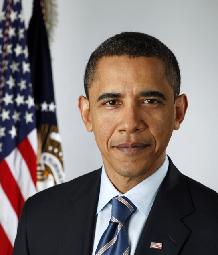
Other than not making any stupid mistakes, the presidential candidates have one goal for the Oct. 3: “debate” — and it’s the reason not much of substance is going to come out of either one’s mouth.
See, this isn’t a national campaign at this point; it’s all about winning over a few hundred thousand undecided voters in about nine states. Which means that Romney and Obama are going to be talking to a few hundred thousand people mostly in Pennsylvania, Florida, and Ohio.
And who, exactly, are “undecided voters” at this point? Who, after everthing that’s been said and done in a campaign that features two very different candidates with completely different visions for the country, still can make up his or her mind?
Think about that. Think about what kind of a cautious, all-things-to-all-people, America-is-great-if-we-all-work-together kind of message Obama and Romney have to craft to reach the tiny and politically bizarre group that could still change this election. That’s what you’re going to see on the TV screen.
Oh, you’ll see Romney try to knock Obama off balance with some sort of attack or quip or zinger. Not likely to work. You’ll see Obama try to be as presidential as possible, and Romney trying to look august and presidential, too. A lot of it’s visuals.
But really, there won’t be much “debate,” since both candidates have memorized canned responses to every possible question.
It’s a show for a micro-audience. Just remember that when you tune in.
Nancy Pelosi is a zombie

I never knew that the house minority leader had a hidden zombie estate up in Napa Valley where a bunch of poorly made-up zombies who don’t even know how to be zombies try to kill Goldman Sachs, or maybe the Constitution, or maybe just a little lamb who looks kinda like a goat. They’ve got a pretty boss knife and they speak in Ancient Zombie or something; anyway, there are subtitles.
It’s all part of an ad by John Dennis, who is running against Pelosi and has zero chance to beat her, so he’s doing the weird demon-sheep thing (what is it about barnyard animals and politics? Do I need to ask?)and trying to get some attention.
So ok, he got my attention. Except that it’s a really bad zombie ad. As Cheryl Eddy, our resident expert on all things zombie and horror, explained to me, “if those were real zombies they would have already eaten his brain.” He’s not so fearsome, Mr. Dennis; he has no anti-zombie weapons. He never would have made it out of that Pelosi bunker alive.
And Zombies don’t kill sheep, anyway, not usually.
So get a zombie clue, John Dennis. And if you’re going to attack Nancy Pelosi, you need better makeup.
Bad and good news from the Guv
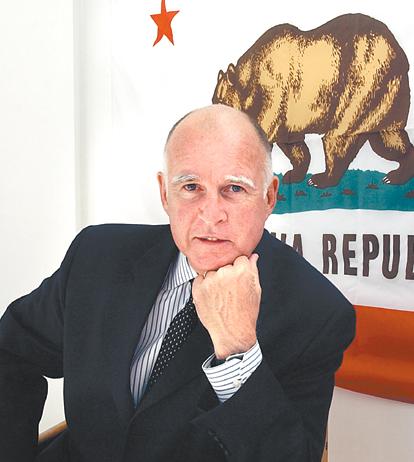
First, the bad news: Jerry Brown has vetoed a couple of important bills by Assemblymember Tom Ammiano, showing that he’s still a strange and unpredictable guy. He rejected a measure that would have provided some basic labor protections to domestic workers and another that would have opened up state prisons to a modicum of media access. His message on domestic workers was confusing (gee, maybe it would cost more to make sure people get meal breaks); on the media access, it was just bizarre:
“Giving criminals celebrity status through repeated appearances on television will glorify their crimes and hurt victims and their families,” Brown wrote in his veto message for Assembly Bill 1270.
What? The notion that the press might be able to interview prisoners about conditions behind bars in an agency that consumes more than $10 billion a year in state funds will “glorify crimes?” Sorry, but Jerry is out of his mind.
From Ammiano’s press release:
“Press access isn’t just to sell newspapers. It’s a way for the public to know that the prisons it pays for are well-run,” Ammiano said. “The CDCR’s unwillingness to be transparent is part of what has led to court orders on prison health care and overcrowding. We should know when the California prisons aren’t being well run before it goes to court. I invite the Governor to visit the SHU [special housing unit/solitary confinement] to see for himself why media access is so important.”
Same goes for the TRUST Act, which had the support of a lot of local police chiefs, the mayor of Los Angeles and Assembly Minority Leader Nancy Pelosi.
On the other hand, Brown did sign a bill by Sen. Mark Leno that could turn out to be the best budget news San Francisco’s had in years. SB 1492 would allow the Board of Supervisors and the voters to reinstate, just in this city, the vehicle license fee that former Governor Arnold Schwarzenegger cut, to such disastrous effect, when he first took office. If the supervisors put it on the ballot and the voters approve, a two percent hike in the car tax could raise $70 million a year for the city — more than triple the amount that the mayor has agreed to raise in his weak gross receipts tax proposal.
That law goes on the books Jan. 1 — and the supes should immediately take up the challenge and approve the VLF hike for the next even-year ballot, November 2014.
Then the Guv vetoed Leno bills protecting cell phone users from warrantless searches and alloing the state to recognize more than two people as parents of a child.
Sen. Leland Yee’s bill allowing juveniles who were sentenced to life without parole to get a second chance made it passed Brown’s desk.
So what do we make of the governor? About the usual — he’s random.
Workers celebrate launch of wage theft task force
San Francisco’s wage theft task force, approved in June, had its first meeting today.
The wage theft task force formed to strengthen the city response to workers exploited by wage theft, which can include non-payment of the minimum wage or of hours worked, non-payment of overtime, illegal deductions from worker paychecks, or failure to pay a worker at all.
The group is made up of workers’ rights advocates and government leaders at labor law enforcement agencies, as well as workers and employers. They plan to meet monthly and to release a report in one year with recommendations to the Board of Supervisors for legislation to continue to combat wage theft.
They were also joined by Dolores Huerta at an announcement today celebrating the first meeting. Huerta co-founded the United Farm Workers with César Chávez and has led a life dedicated to ending exploitation of workers. Wage theft, she said, “is not something that only affects workers.”
It hurts employers, she said, by putting “honest employers at a disadvantage.” And “the government loses too,” in the form of dollars lost for social security, unemployment insurance, and other government services funded by taxes on wages paid to employees.
Many workers are reluctant to speak out when they are denied pay, fearing retaliation or losing their jobs.
“When you are living paycheck to paycheck, if you lose your job, your whole family is going to suffer,” said Huerta.
Despite these obstacles, workers have come forward for years to expose the widespread problem.
One such worker, Afredil Colindies, was present at today’s announcement. “I was working seven days a week with no breaks. Sometimes I would get paid, sometimes I would go through extended periods without getting paid,” said Colindies. “When the café where he worked went out of busines, he said, “I still had unpaid wages.”
“The reason we in City Hall finally realized how big a problem this is, is that they had the courage to come forward” said Sup. Campos who helped create the task force alongside Sup. Eric Mar.
“Although the governor has vetoed the domestic workers bill of rights, we are still moving forward for workers here in San Francisco” said Mar.
About 50 workers were in the room celebrating the launch of the task force, the result of years of work from groups like the Progressive Workers Alliance- a coalition of the Chinese Progressiave Association, Young Workers United, the Filipino Community Center and others. The room broke into an energetic chant of “si se puede,” the rallying cry of United Farm Workers, as the announcement ended.
“What starts in San Francisco goes through California, then all across the country” said Huerta.
SFBC keeps its distance from Critical Mass anniversary ride
Today’s 20th anniversary Critical Mass ride has received overwhelming media coverage in the last few days, including a surprisingly laudatory editorial in yesterday’s Examiner, so people are expecting the ride to be huge. But the talk of last night’s CM20 birthday celebration at CELLspace was about Quintin Mecke’s widely circulated letter blasting the San Francisco Bicycle Coalition for refusing to even put the event on its calendar or in its newsletter.
By contrast, even the San Francisco Planning & Urban Research Association (SPUR) – founded and funded by downtown players with little love for Critical Mass – listed today’s “special anniversary ride” and related events throughout the week in its calendar and on its newsletter, recognizing this “monthly bicycling event that began in San Francisco and inspired similar events throughout the world.”
As I wrote in this week’s cover story, SFBC and Critical Mass grew up together on a similar, symbiotic trajectory, effectively working an outside/insider strategy (think MLK/Malcolm X) that has won cyclists a recognized spot on the roadways. But SFBC always warily kept its distance from Critical Mass, worried about offending politicians, the mainstream media, or the driving public.
That’s an understandable strategy, given the persistent resentment many feel toward Critical Mass. But when considered in combination with SFBC’s increasingly corporate culture and sponsorships and its controversial recent decision to allegedly overrule its member vote in its District 5 supervisorial endorsements, SFBC is in danger of losing the allegiance of much of the cycling community (which remains a minority of road users, and thereby political outsiders almost by definition).
David Snyder — SFBC’s executive director through its biggest growth period, SPUR’s former transportation policy director, and currently the executive director of the California Bicycle Coalition — is reluctant to wade into the current controversy, but he does acknowledge the important role Critical Mass played in winning political acceptance for cyclists in San Francisco.
“In the mid-’90s, when the San Francisco Bicycle Coalition was a couple thousand members, the brouhaha around Critical Mass [particularly the crackdown in ’97] increased our membership by 50 percent at one point,” Snyder told us. “At that time, we benefitted hugely form the attention Critical Mass paid to safe streets for bicycles. And I don’t think we need Critical Mass to do that anymore…The Bicycle Coalition’s goal these days isn’t to develop an awareness of unsafe streets, it’s to develop a bold agenda to fix them.”
I spoke with Mecke, who finished second in the 2007 mayor’s race, at last night’s event, and he was frustrated by his follow-up conversations with SFBC leaders, who seem to have taken a very defensive posture instead of welcoming this interesting conversation. I called SFBC Executive Director Leah Shahum to discuss these issues, and I’m waiting to hear back from her and I’ll update this post when I do.
But in the meantime, to feed the discussion, here’s the full text of Mecke’s letter, followed by another letter to SFBC on the endorsement issue:
Dear Bike Coalition:
Sadly, I can’t say I was surprised when I read this week’s SFBC Newsletter and found absolutely zero mention of the 20th Anniversary of Critical Mass. According to your own newsletter, apparently the only thing happening in the San Francisco bike world that is worthy of your 12,000 members knowing about on Friday, Sept. 28 is SFBC’s Valet Bike Parking at the DeYoung Museum. Seriously?
This is the San Francisco Bike Coalition and you couldn’t even bring yourselves to stick a small mention of Critical Mass in your newsletter or on your website (or god forbid you actually celebrate/acknowledge CM and show some pride), a cycling event created here in San Francisco which has spread across the globe to multiple continents since its inception & inspired thousands of cyclists to take to the street? It’s truly amazing that Critical Mass was on the cover of the Guardian this week and even SF Funcheap listed the event but SFBC wouldn’t even put a mention at the bottom in the “Upcoming Events” section, hidden away amongst all the SFBC sponsored events? Not even a listing of the critical mass website or the community events going on all week long? Your website lists the celebration of the 15th anniversary of TransForm but not Critical Mass?
Wow. I’m truly speechless. How embarrassing but more to the point, how sad. Are you afraid of offending Chuck Nevius or Mayor Lee? I don’t know how, why or what SFBC has become as an organization at this point but it’s disappointing as a long time cyclist to see the city’s only (?) organized bike advocacy organization which continually touts how many members you have to not even show the smallest amount of solidarity to your fellow cyclists and to the city’s own cycling history. That being the case, history will march on without you.
Contrary to our “biking” Supervisor David Chiu’s comments in today’s Chronicle (I always enjoy politicians running from anything deemed controversial), it’s actually SFBC that is simply one tiny part of a much larger movement made up of a variety of cyclists from all walks of life whose decision twenty years ago to ride freely in the street once a month for just a few short hours has laid the groundwork for cycling reforms, political action and transformative experiences across the country and the world.
What a shame that instead of celebrating all parts of the cycling community, SFBC has decided to distance itself from the historic roots of its own community in the name of moderation, families on bikes and political expediency.
Enjoy Bike Valet night at the DeYoung Museum, it sounds like an awesome event.
thanks,
Quintin
Dear Leah:
My name is Gus Feldman. I am an avid bicyclist, a Bike Coalition member, and the President of the District 8 Democrats.
I’m in receipt of a letter from you, dated September 12, 2012, requesting that I renew my SFBC membership. I am writing to inform you that I will only renew my membership if the SFBC Board of Directors publicly releases the results of the SFBC member vote for the District 5 supervisor race.
While it is clear that the membership vote is one of several factors used by the SFBC Board of Directors to determine endorsements, the refusal of the Board to grant SFBC members the ability to see the results of their votes demonstrates an unacceptable degree of secrecy. By withholding this information, the Board is publicly stripping SFBC members of all agency in the endorsement process.
If in fact the popular suspicion is true – that Julian Davis won the most votes from SFBC members, but the Board decided to grant Christina Olague the top endorsement in the interests of expediting the construction of separated bike lanes on Oak & Fell streets – we would greatly appreciate the Board publicly declaring and explaining the decision. Such a decision is certainly logical, as the Oak/Fell bikes lanes are a key priority for many SFBC members. The fact that the Board has elected to conceal the vote results, as opposed to explaining to SFBC members why and how Olague received the number one endorsement, is highly insulting as it insinuates that the Board does not have faith in SFBC members’ capacity to understand the rationale by which the Board arrived at their determinations.
Please understand that if the Board elects to depart from the current practice of concealing the vote results, and transitions to one of transparency, I will promptly renew my membership.
Respectfully,
Gus Feldman
Bloomberg calls SF #1, but it sees the pitfall that Lee is missing

Mayor Ed Lee just sent out a press release touting the fact that Bloomberg BusinessWeek named San Francisco the best city in the country, lauding us more for our scenic beauty and plethora of restaurants and cultural offerings than for Lee’s relentless focus on using his office to facilitate private sector job creation, particularly in the tech sector.
In fact, it’s notable that even this business magazine sees Lee’s approach as more of a liability than an asset: “Not everything is golden in San Francisco, of course. An influx of young techies has driven up living costs. (Average rent for a studio apartment is $2,075, according to research firm RealFacts.) As the city has grown wealthier, it has lost some of its legendary grit.”
The Guardian has been discussing the dangers of devoting too many city resources to pumping up this latest tech bubble at least since the Twitter and Zynga tax breaks that Lee pushed shortly after coming into office, a warning that San Francisco magazine last week started to echo in an article by Salon founder and Season of the Witch author David Talbot, which he discussed on KQED’s Forum this week.
For those beginning to call for a more balanced approach – something we urgently need if we are to remain the kind of attractive and diverse city that is the envy of magazine writers and observers of all kinds – the signs of our excess are everywhere, from the rapidly gentrifying Valencia Street corridor to Salesforce last week taking over Civic Center Plaza for a private party as our ignored poor looked on.
Unfortunately, Lee and his pro-growth allies (including a few sometimes-progressives on the Board of Supervisors) seem to have missed that coverage and that part of the Bloomberg article, because he’s been full steam ahead in moving the agenda of his main financial benefactor Ron Conway, the venture capitalist behind many of the tech companies that are profiting from Lee’s policies, along with this city’s commercial landlords, at the expense of the rest of us.
“It’s certainly an honor for San Francisco to be named ‘America’s Best City,’ and it’s great to get recognition for the good work San Franciscans have done,” Mayor Lee said in his press release. “San Francisco is committed to being the best place to live, work and visit, and there is nowhere else on earth where you will find the economic opportunities and world-class events found in our great City.”
Spoken as someone who hasn’t been trying to live here at just above the median income of less, which is most San Franciscans, the people who aren’t getting much help from City Hall these days.
Why do people have a problem with bikes?

I’ve always been perplexed at all negativity that gets directed at bicyclists in general, and those who ride on Critical Mass in particular. The people from around the world that I’ve met this week as I worked on our cover story about the 20th anniversary of Critical Mass have been some of the nicest and most positive and life-affirming people I’ve met in a long time, the exact opposite of the sometimes-voiced stereotype that they’re entitled or angry.
So I was interested to read a pair of dueling online posts this week analyzing why motorists and other non-cyclists feel such disproportionate and inexplicable anger and resentment toward a whole class of people who have made a transportation choice that helps everyone, reducing traffic congestion and transit costs while helping protect the environment and reduce dependence on oil.
Their answers range from the affect heuristic, which is the idea that emotional triggers like seeing a cyclist almost get splattered affect our perceptions far more than our reason, to the resentment many drivers feel about being stuck in traffic while cyclists zip past them and just the basic sense of how foreign and strange cycling seems to many who don’t do it.
Some of those arguments ring more true to me than others, but I think the entire discussion is a fascinating one to have in the days leading up to this Friday’s 20th anniversary Critical Mass ride, which will feature a rainbow of nationalities, ideologies, ethnic and class backgrounds, and other traits – their only real commonality being an affinity for bikes.
“I just really like to ride. It’s a meditative thing for me. All my epiphanies come to me on a bike,” Alix Avelen, a 25-year-old woman who just moved to San Francisco from Toronto, bike touring the final leg from Vancouver starting in July, told me during Sunday’s Art Bike/Freak Bike Ride, part of the CM20 celebration.
It was her very first Critical Mass, although she’s been a regular urban cyclist for the last six years, and she believes that it’s important to have events, communities, and cultural happenings that promote cycling: “It just makes sense in cities.”
“We’re going to end up riding bikes because oil is getting more expensive and the streets are becoming more crowded,” rRez, a San Francisco native and longtime supporter of the city’s cycling community, told me on that ride. “Things are changing partly because we want them to change and partly because the old world is not sustainable.”
We can continue to cling to the old ways in the face of evidence that neither local roads nor our taxed planet can accommodate an indefinitely growing number of cars. Or we can encourage more people to try riding bikes, and give us the infrastructure we need to do it safely, rather than seeing us as a hostile force trying to take over your roads.
Even grungy looking anarchists like Justin Hood of the Black Label Bike Club offer surprisingly clear-eyed assessments of the role of bikes and Critical Mass. “The point of Critical Mas is just to go out and ride your bike. It’s not supposed to be about confronting drivers and smashing cars,” Hood said, admitting that there are times and places for such aggressive resistance, just not during this ride. “The point of Critical Mass is that if there’s enough of us, we are traffic. And this Critical Mass coming up is going to be gigantic!”
Or if you’d rather talk than ride, there are some opportunities for that this week as well, including the Shift Happens: Critical Mass at 20 book release party and discussion at 5:45 this afternoon at the Main Library; and the International Critical Mass Symposium from 5-8pm on Saturday at the California Institute of Integral Studies.
Perjury charges don’t look so good for the mayor
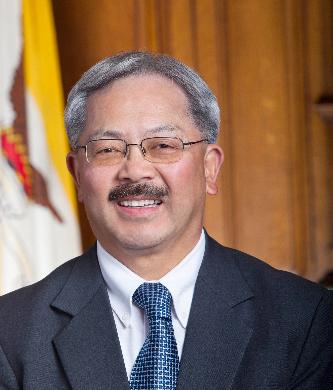
The Chron doesn’t think it’s important, but there’s some serious evidence in today’s Ex that the mayor wasn’t entirely forthcoming when he testified before the Ethics Commission. The declarations from Debra Walker and Aaron Peskin are attached at the end of the story; they’re worth reading.
Walker is very straightforward: She says she’s friends with Sheriff Ross Mirkarimi and his wife, Eliana Lopez. She’s also been close friends with Sup. Christina Olague:
Ms. Olague and I often got together for coffee or movies, and we talked often about land-use issues. I wrote a letter of support for Ms. Olague to Mayor Lee, asking him to appoint her as supervisor. At her request, I loaned her a painting to hang in her office when she took office.
All of that is consistent with what I’ve heard about their friendship, and it doesn’t sound like Walker was ever out to get Olague or to put her in a bad situation.
Then Walker explains that during the week of March 6, she was talking to Olague and complained about the Mirkarimi case. “She said the mayor had asked her about the case when they were talking about other issues, and had asked her for her thoughts.”
The declaration goes on a bit, with plenty of backup to the idea that Olague and Lee had discussed how to deal with the sheriff. Which doesn’t surprise me — I have heard from other prominent people in the city that Lee reached out to them for advice on whether to suspend Mirkarimi.
But it’s a problem for two reasons. One is that Olague, sitting as a judge in this case, isn’t supposed to have talked to anyone else about it — certainly not the prosecuting authority, the mayor.
The other is that Lee denied under oath that he had talked to any of the supervisors about the case.
Debra Walker isn’t a fan of Ed Lee, but she would have had to go to considerable lengths to create this level of fiction. It rings honest to me, particularly when she notes that “on June 29, 2012, at 2:10 pm, I received a phone message from Supervisor Olague saying ‘Debra, the converstaion never happened.'”
Look: This is a sworn statement, made under penalty of perjury. So either Walker’s lying and guilty of perjury, or the mayor is. Which seems more likely?
Ditto for the Peskin declaration, which includes dates, times, places, and specific messages. Again: Did Peskin go out of his way to perjury himself — or did the mayor fail to tell the truth on the stand?
This is now part of the case, like it or not: The credibility of the mayor is one of the issues at hand — and more important, if Lee talked to Olague he probably talked to others. Who would then have to recuse themselves.
Mission residents connect at community meeting
Police hosted a Mission community meeting yesterday in response to the Sept. 16 death of Jesus Solis, 20, who was shot at Treat Ave and 26th St. But before the meeting could take place on its scheduled date, another shooting took place; police officers shot Oscar Barceñas, 22, Sept. 20. Barceñas has survived his injuries.
The second shooting sparked two nights of late-night demonstrations during which protesters broke the windows of banks and a local business and painted “killers” on the Mission police station.
At last night’s meeting, Police Chief Greg Suhr, district Captain Robert Moser, and district Sup. David Campos spoke to a group of more than 100, then listened as the group asked questions, commented on their experiences and made suggestions. Ricardo Garcia-Acosta, regional director of the Community Response Network, took a seat next to the city officials about halfway through the meeting to address the community as well.
Suhr said that Barceñas may have been planning to act in revenge for the death of Solis.
Many at the meeting spoke of their mourning process for Solis, known as Chuy. He had been working, employed with help from the office of Sup. David Campos, before he was killed last week.
“This individual was trying go change his life. He was going to work, we was trying to turn his life around,” Campos said during the meeting.
Long-time Mission resident Roberto Hernandez said that he has been to 50 meetings after deaths of people in the community.
“I’ve buried too many kids in this barrio,” said Hernandez.
How to help?
Some residents at the meeting called for increased police presence, and one requested mounted police at Garfield Park. Others, such as Yaron Milgram, owner of two upscale restaurants in the 24th street area, expressed a desire to be more involved in the community.
“I know that there’s been a lot of change, and I know I’m considered part of that change,” said Milgram.
Many at the meeting had suggestions of how other residents could help.
Some advocated getting to know neighbors.
“For some of you hear who are quick to call the cops, when’s the last time you went outside and said how, how are you guys doing? What are your names?” said Garcia-Acosta.
“It really hurts when you hear people ask for these youth to be pushed out of the neighbrohood,” said Susana Rojas, director of the Mission Clubhouse. “Never forget they’re somebody’s son, they’re somebody’s brother, they might be somebody’s dad.”
She said that, if residents didn’t want to talk to the kids themselves, “talk to the people that are working with them” to learn more about them. She recommended donating to local community centers like the Mission Boys and Girls Club and the Good Samaritan Family Resource Center, where the meeting was held.
“A lot of the people I work with, they’re angry,” said Jae Maldonado, Community School Coordinator at Buena Vista/ Horace Mann. “The community is changing at a pace they don’t have any control over.”
Maldonado suggested that local business owners play an active role in getting resources and jobs to youth, offering Mission Pie as an example of a company that employs local youth and helps prepare employees for careers in catering or baking.
One resident, Anabelle Bolaños, decided to help set up a police and community meeting in Spanish, which she hopes can take place monthly. According to staff at the Mission Police Department, the first such meeting is tentatively scheduled to take place at some point in November. Tonight, police will host their regular community meeting at Mission Police Station meeting, which occur the last Tuesday of every month at 6pm.
Rojas also announced a “peace march,” to leave Thursday from 24th and Mission at 4pm.
Ballot-access crew hit with huge legal fees
Six activists are being hit with overwhelming legal fees after their attempt to reverse California’s new election process was blocked by a wealthy Republican.
Richard Winger, the San Francisco-based editor of Ballot Access News, and five others went to court in 2010 to block the open-primary system, which mandates that the top two finishers in any primary battle move on to the November election. The plaintiffs argued that the provisions were bad for third parties.
The lawsuit named Secretary of State Debra Bowen, but Charles Munger Jr., the chairman of the Santa Clara County Republican Central Committee, won the right to intervene in the case on behalf of the top-two system. He hired the powerhouse law firm Nielsen Merksamer, and Winger’s case, Field v. Bowen, went down to defeat.
Now Munger has convinced the court to award his law firm $243,000 in fees — money that the small band of activists can’t possibly pay.
“The fees are contrary to law and precedent,” Winger told us.
Winger, whose annual income was $6,000 for the last two years in a row, says he lives mostly off his savings, doesn’t have a pension and only receives $180 in social security each month.
Since $240,000 is an impossible sum that would wipe out the public-spirited activists — and means nothing to Munger — you have to wonder: What is this really about?
“Sometimes lawyers are really competitive. It’s like a sport to them. They just want to win,” says Winger.
From the outside, the fee request seems like a classic case of schoolyard bullying. In fact, it’s a prime example of what the legal community appropriately calls a S.L.A.P.P. lawsuit (strategic lawsuit against public participation). Such cases are meant to intimidate one party with legal fees until they abandon the case, something the plaintiffs haven’t done quite yet.
Political insiders are wondering why Secretary of State Debra Bowen hasn’t done more on behalf of the plaintiffs. “She’s leaving these people hanging out to dry,” says Steven Hill, the former director of the Political Reform Program of the New American Foundation. “The ironic thing is that you have a secretary of state who calls herself a progressive, but her name is on a lawsuit that’s being used by Nielsen Merksamer to slap down a public interest lawsuit brought by her own supporters.”
Adding to the irony of Bowen’s lack of involvement is that the very political process that Winger and others were trying to stop is what drove her out of her 2011 congressional bid in California’s 36th district.
That special election — forced after incumbent Jane Harman resigned — was also a test run of the new top-two open primary system.
Bowen’s opponent, liberal centrist Janice Hahn, saw a way to squeeze her out of the race by leveraging the potential candidacy of another leftist liberal, Marcy Winograd. Hahn’s tactics succeeded as Bowen and Winograd essentially split the left-liberal vote, allowing Hahn to reap the primary benefits and move into the general election where she won with ease against Republican Craig Huey.
Nonetheless, Bowen is failing to speak up on the matter. After multiple requests for an interview, Bowen’s press secretary, Shannan Velayas said in an email: “The Secretary of State’s office does not comment on pending litigation.”
The strange deal behind the SF Weekly sale
We all knew something like this was coming. Village Voice Media, owner of SF Weekly and 12 other alternative papers, has been looking for a way out of a seemingly intractable bind for some time now.
See, the sex ads the VVM sells on its Backpage web site have created a huge stir. After NY Times columnist Nicholas Kristof started a moral crusade to rid the world of the demonic prostitution ads, a lot of national and local advertisers decided they didn’t want to be affiliated with VVM, so they pulled millions of dollars worth of print advertising. Then Goldman Sachs dumped its ownership stake. And since some of the VVM papers were already doing poorly, the cascade of bad news was a real threat to the chain’s bottom line — and possibly its future. VVM was already underwater on its bank loans, and the Bank of Montreal had in effect foreclosed and taken control of the company’s finances.
Oh, but there’s nothing that could be done about Backpage, since (according to Reuters) it pulls in about $3 million a month in sex-ad revenue. That money was paying the bankers off and keeping the whole operation afloat.
So what is a poor predatory chain to do? Can’t live with Backpage; can’t live without it.
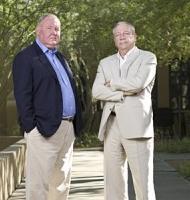
It doesn’t take a rocket scientist to figure out what Mike Lacey and Jim Larkin have been thinking about: If Backpage were just conveniently put into a separate company, then everyone would have plausible deniability. So suddenly Village Voice Media becomes Voice Media Holdings, under new management — that is, the same management that’s always been there, except for Lacey and Larkin, who now own Backpage. The headlines blare: SF Weekly has been sold! No more evil Backpage! Come on back, noble advertisers!
But let’s remember: Lacey and Larkin are Village Voice Media. They built the company and hand-picked the senior management. I know how hard it is for an owner to give up his newspaper; these guys are control freaks and there’s no way they were walking away totally from VVM.
Scott Tobias, the new CEO, isn’t responding to my messages. Neither is Lacey. But let’s take a look at the essential element here: How did Tobias and his team come up with the cash to buy VVM — which isn’t worth what it was five years ago, but is still a significant media property? How did they actually “buy” it when the Bank of Montreal owns most of VVM and would want to be paid back some $70 million in outstanding loans? How would they find private financing for a company that couldn’t pay its bills without the Backpage revenue that will suddenly be going away?
Tobias told Reuters that “some private investors” were found, and maybe so, but I bet it’s this simple: The deal was financed with the Bank of Lacey and the Larkin National Trust. Those two almost certainly still hold the note on the company, and thus are still in a way the owners, and will probably still play a management role — if only because their money (and whatever deal they wheedled out of the Bank of Montreal) is still in the game.
So yes, you can say that SF Weekly and its brother and sister papers have been “sold.” But unless Nick Kristof and the advertisers who cut off the dollars are pretty damn dumb, they’ll take a hard look at this and say: Really?
The gloves are coming off in competitive D5
Candidates in the District 5 supervisorial race – where one recent poll showed almost half of voters undecided about a field of imperfect candidates seeking to represent the city’s most progressive district – have been sharpening their attacks on one another, learning lessons about hardball politics, and fighting over key endorsements.
Christina Olague, the incumbent appointed by Mayor Ed Lee earlier this year, has been taking flak in recent debates from competitors who are highlighting the schism between her progressive history and her more conservative recent votes and alliances. That gulf was what caused Matt Gonzalez to pull his endorsement of Olague this summer and give it to Julian Davis.
London Breed has now suffered a similar setback when US Sen. Dianne Feinstein revoked her endorsement following colorful comments Breed made to the Fog City Journal, which were repeated in the San Francisco Chronicle, blasting her one-time political patron Willie Brown. Breed, whose politics have been to the right of the district, seemed to be trying to assert her independence and win over progressive voters who have different worldviews than her more conservative endorsers.
But she may have gone a bit too far when she told Fog City Journal’s Luke Thomas: “You think I give a fuck about a Willie Brown at the end of the day when it comes to my community and the shit that people like Rose Pak and Willie Brown continue to do and try to control things. They don’t fucking control me – you go ask them why wouldn’t you support London because she don’t do what the hell I tell her to do. I don’t do what no motherfucking body tells me to do.”
Shortly thereafter, Breed said she got a call from Feinstein’s people withdrawing the endorsement. “There were just some concerns about the kind of language I used in the article,” Breed told us.
Sources say Brown has been in payback mode ever since, urging Feinstein and others to stop supporting Breed and switch to Olague. Neither Brown nor Feinstein returned our calls. On the record, Breed was contrite when we spoke with her and reluctant to say anything bad about Brown or Feinstein, except to offer us the vague, “There are a lot of people who respect and like me, and they don’t like what they see happening.”
Breed went after Olague hard during a Sept. 18 debate sponsored by the Haight-Ashbury Neighborhood Council and other groups, blasting Olague for her ties to Brown, Lee, and Chinatown power broker Rose Pak, claiming Olague is too beholden to that crew and D5 needs a more independent supervisor.
Asked to respond to the attack during the debate, Olague said, “I won’t dignify that with a response.” But it seems clear to anyone watching the race that Olague has been getting lots of support from Lee, Pak, and Brown and the political consultants who do their bidding, David Ho and Enrique Pearce, which is one reason many progressives have been withholding their support.
The Breed campaign this week trumpeted its endorsement by three prominent progressive activists: Debra Walker, Roma Guy, and Alix Rosenthal. But it has been Davis that has captured the endorsements of the most progressive individuals and organizations, including a big one this week: the Harvey Milk LGBT Democratic Club, which gave Davis is sole endorsement even though he’s straight and Olague is from the LGBT community.
Davis also snagged the number one endorsement of the San Francisco Tenants Union, a big one for D5, as well as the sole endorsements of Gonzalez, former Democratic Party Chair Aaron Peskin, and Sup. John Avalos. Assembly member Tom Ammiano also endorsed the Davis campaign, adding that to Ammiano’s earlier endorsement of John Rizzo, the other solid progressive in the race. Rizzo also got the Sierra Club and the number one ranking by San Francisco Tomorrow.
But Olague is enjoying quite a bit of union support, including snagging the sole endorsement of the San Francisco Labor Council, whose members in the trades like her controversial vote on the 8 Washington project more than progressives or her competitors, who all opposed the deal. Olague was also endorsed by the United Educators of San Francisco and California Nurses Association.
The biggest union of city workers, SEIU Local 1021, gave its unranked endorsements to Davis, Olague, and Rizzo, as did Sup. David Campos. Sup. Jane Kim – who has also occasionally parted ways with progressives after Ho and Pearce ran her campaign against Walker – gave Olague an early endorsement, but late this week also extended an endorsement to Davis.
“As someone who has championed rank-choice voting, it is important for me that progressives are thoughtful about how we strategize for victory. I have known Julian Davis a long time, and I believe that he would be a strong leader that fights for progressive values that District 5 cares about, including sustainable streets and livable neighborhoods,” Kim said in a statement given to the Davis campaign.
Another important endorsement in D5 is that of the San Francisco Bicycle Coalition, which carried a faint whiff of controversy this year. The group gave Olague its number one endorsement and Davis its number two, but some SFBC members have secretly complained to us that the fix was in and that Davis actually got more votes from SFBC members, which most people thought was how its endorsements are decided.
SFBC Executive Director Leah Shahum told us she wouldn’t reveal who got the most member votes, but she did say that the SFBC Board of Directors actually decides the endorsements based on several factors. “The member vote is one of the factors the board took into consideration,” she said, listing a candidate’s record, relationship with SFBC, personal history, and other factors. “Nothing special was done in that vote, by any means.”
SFBC has been playing nice with Mayor Lee in the last couple years, despite his broken promise of getting the critical yet controversial Fell/Oak separated bike lanes approved by the SFMTA, which he first said would be done by the end of 2011, then by the end of 2012, but which lately seemed to be dragging into 2013.
At SFBC’s urging, Olague recently wrote a pair of letters to the SFMTA urging quicker action on the project, and it seems to have worked: Shahum said a vote on that project has now been scheduled for Oct. 16, and she’s hopeful that it might now be underway by the end of the year after all. As she said, “We’re thrilled.”
BTW, in case you’re curious, the Guardian’s endorsements come out on Oct. 3.
The rich, the poor and the state of SF

The latest Forbes 400 is out, the list of the richest Americans, and a record number (according to my annual record-keeping) now live in San Francisco. This is a city with 18 people on the top-billionaires list — and since the list cuts off at $1.1 billion, there are a lot of really, really rich San Franciscans who didn’t quite make it this year. School Board candidate Sam Rodriguez told us his research shows that there are 80,000 millionaires in the city, meaning one in ten San Franciscans is worth a cool mil, and while some of that is just homeowners who bought 20 years ago and now have property worth $1 million — and I haven’t verified his data anyway — it’s hard to argue that this is anything but a very wealthy city.
(It also has, according to Forbes, the second-hippest neighborhood in the nation, and that would be the Mission, which is reaching that fully-gentrified stage where nobody young can afford to live there anymore so it won’t be hip much longer.)
The list comes out at the same time that figures show nearly 7 million Californians are living in poverty, and household income for most people has been stagnant — at best — for more than a decade.
It was a great year for the top 400, though — their median income was up rather dramatically. It seems that, whatever Mitt Romney may say in public or in private, the Obama administration hasn’t been bad at all for the 1 percent.
I keep asking, and I know it’s tiresome, but: Why, in a city with 18 billionaires, do we still have to clear out homeless encampments?
Why are the public schools holding (literally) bake sales to buy paper and pencils? Why have we cut the number of acute psychiatric care beds at SF General from 40 to 10? If San Francisco can’t even talk about taxing the billionaires, is there any hope for the rest of the country?
FYI, here’s The SF 18 (complied by Anna Sterling):
1
Riley Bechtel
$2.9 B
Chairman and CEO, Bechtel Corp.
2
Stephen Bechtel, Jr.
$2.9 B
Former Chairman, Bechtel Corp.
3
Doris Fisher
$2.9 B
Cofounder, Gap
4
Dustin Moskovitz
$2.7 B
CEO, Asana
5
Ray Dolby
$2.4 B
Founder and director emeritus, Dolby Laboratories
6
John Fisher
$2.3 B
President, Pisces, Inc.
7
William Randolph Hearst, III
$2.3 B
Source of Wealth: Hearst Corp
8
Marc Benioff
$2.2 B
Chairman and CEO, Salesforce.com
9
James Coulter
$2.1 B
Source of Wealth: Leveraged buyouts, Self-made
10
Gordon Getty
$2 B
President and Chairman, Ann & Gordon Getty Foundation
11
Phoebe Hearst Cooke
$1.9 B
Source of Wealth: Hearst Corp
12
Michael Moritz
$1.9 B
Partner, Sequoia Capital
13
John Pritzker
$1.8 B
Source of Wealth: Hotels, investments
14
Robert Fisher
$1.7 B
Director, Gap
15
William Fisher
$1.7 B
Director, Gap
16
Peter Thiel
$1.4 B
Partner, Founders Fund
17
Thomas Steyer
$1.3 B
Founder & Co-Senior Managing Partner, Farallon Capital Management
18
Jack Dorsey
$1.1 B
CEO, Square, Inc.
Supervisors set Oct. 9 to decide Mirkarimi’s fate
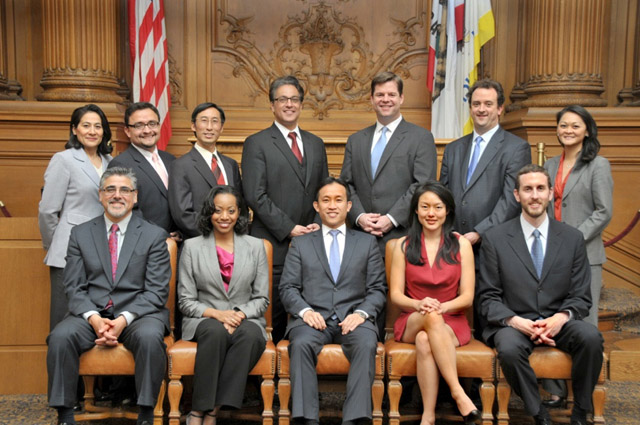
The San Francisco Board of Supervisors officially received the official misconduct case against suspended Sheriff Ross Mirkarimi yesterday, starting the clock on the 30-day deadline that the City Charter provides for that body to take action. Board President David Chiu announced a special meeting to consider the case on Oct. 9 at 2pm.
“The last day the Board of Supervisors can act on this is Oct. 17,” Chiu told his colleagues yesterday, reiterating the schedule the board had previous agreed to: a 10-minute presentation by the Ethics Commission, 20 minutes by representatives of Mayor Ed Lee (who brought the case), 20 minutes by Mirkarimi’s side, a five-minute rebuttal by Lee, public comment (which could last for hours), and then deliberation by supervisors.
In addition, attorneys for both sides have until Sept. 25 to submit any legal briefs they want the supervisors to consider, and Mirkarimi’s attorneys are expected to raise objections to an Ethics Commission summary they considered “one-sided,” as well as getting into the issue of whether Lee committed perjury during his sworn testimony in June.
It takes at least nine of the 11 supervisors to remove Mirkarimi, and there is an open question about whether some supervisors should recuse themselves from voting because of conflicts-of-interest, which would essentially count the same as a vote in Mirkarimi’s favor.
Lee was asked on the witness stand whether he spoke with any supervisors about removing Mirkarimi, which he denied. But Building Inspection Commissioner Debra Walker said her longtime friend and political ally Sup. Christina Olague told her Lee had sought her input on the decision. Confronted by journalists, Olague denied the charge but said, “I may have to recuse myself from voting on this.”
Lee was also asked whether he tried to get Mirkarimi a city job in exchange for his resignation, which Lee denied, but former Sup. Aaron Peskin has said that permit expediter and Lee ally Walter Wong (who has refused to answer questions from the media) extended that offer through him, which Mirkarimi didn’t accept. The Ethics Commission refused to consider the perjury allegations, calling them beyond its purview, but Mirkarimi attorney David Waggoner said he plans to submit sworn declarations by Peskin and Walker to the supervisors.
Another possible recusal from the vote would be Sup. Eric Mar, who just happened to be called as a juror in Mirkarimi’s criminal case before it was settled with a plea bargain. There have also been rumors that Board President David Chiu spoke with Lee about Mirkarimi at some point. Last month, Waggoner told the board that he wanted each supervisor to declare whether they have spoken with anyone about Mirkarimi, but their team is proceeding cautiously and wary of offending the supervisors who will now decide the fate of their former colleague.
“We’re going to respectfully ask each member of the board to state under oath who they’ve talked to about the case,” Waggoner told us.
Normally, jurors would be extensively questioned during the voir dire process, and those who had served on an elected body with a defendant for years would almost certainly be removed from the jury pool, which seems to have been the case with Mar’s disqualification on the criminal case. But that’s just one more example of how this unprecedented process is anything but normal, with city officials basically making up the rules as they go along.
Mirkarimi’s wife and alleged victim, Eliana Lopez, has consistently maintained that she was never abused, except by city officials who have sabotaged and humiliated her family and taken away its livelihood. She told the Guardian that the thin charges in this case shouldn’t warrant the removal of an elected official: “You can have different opinions about Ross’s behavior, and people can have different opinions about that, but the people of San Francisco should decide who represents them.”
Lopez said she’s been dismissed and mistreated by Lee, the Ethics Commission, and domestic violence advocates: “These self-appointed white women that are part of the Domestic Violence Consortium are doing everything they can to attack me and insult me while claiming to help me, and never once reaching out to me.”
But she said that she’s hopeful the supervisors will resist political pressure during an emotionally charged election season and do the right thing: “What we need from the supervisors is brave and honest supervisors. The people of San Francisco need that.”
Cup-of-tea diplomacy

In the spring of 2008, I was invited to give a briefing on human rights to a Bush-appointed US ambassador scheduled to be posted to the Middle East. But the ambassador had little interest in talking about human rights.
“What I want to know is this,” he said. “Is Islam the problem here? Is Islam retarding progress—economically, socially, politically?”
I tried to steer the meeting back to human rights but the ambassador kept persisting. “I mean you’re a Muslim…so do you think Islam is standing in the way?”
I had participated in enough of these discussions to know that in agreeing to meet, both us were checking off boxes: He could say he was listening to the concerns of a human rights advocate; I was able to say I relayed the concerns of my employer, Amnesty International, to a US ambassador.
Most of the ambassadors I met were like this: They thought it neither important nor virtuous to understand—let alone to love—the people of the Middle East. The role of the ambassador, they reminded me, was not to listen to people’s ideals and hopes but rather to convey to people America’s ideals and hopes for them.
When I learned of the killing of the US Ambassador to Libya Christopher Stevens last week, I mourned the sad irony that a US diplomat who wore his love for the Middle East and North Africa on his sleeve would be killed serving the very people who inspired him.
In a YouTube video posted soon after his murder, Ambassador Stevens is seen standing in front of the Lincoln Memorial in Washington DC, the cherry blossoms in full bloom behind him, introducing himself to the Libyan people.
“As-salaam alaikum,” he begins using the traditional Islamic greeting that means “Peace be upon you.” He looks happy, giddy almost.
“Growing up in California, I didn’t know much about the Arab world,” he says. “Then after graduating from the University of California at Berkeley, I traveled to North Africa as a Peace Corps Volunteer.” He taught for two years in the mountains of Morocco and “grew to love this part of the world.”
Colleagues and friends who knew him spoke about his passion for listening. French writer Bernard-Henri Levy admired his “great capacity to listen and his strategy to speak last.” Elizabeth Dibble, his colleague at the State Department, spoke about Stevens’ unique diplomatic style.
“It takes a lot of tea,” she said. “You don’t rush into talking points, you develop a relationship and a personal connection, and a series of connections becomes a network.”
In a moving tribute published on CNN’s website, his friend Judith Drotar spoke about Steven’s remarkable judicious restraint. “What really made Chris exceptional to me, however, was his ability to distance himself,” she writes. “Not the aloof kind of distancing that you might expect from someone in his position, but the kind where one puts emotion and ego aside in order to truly listen, to understand, and then to find a way to build bridges.”
But in the aftermath of Stevens’ death, we are tearing down those very bridges that he worked so hard to build.
The cover of this week’s Newsweek features a close up photo of two bearded, turban clad Muslim men, clutching an Egyptian flag, shouting to the camera under a headline that reads, “Muslim Rage: How I survived it and how we can end it.”
In the article, Ayaan Hirsi Ali writes, “In the age of globalization and mass immigration, such intolerance has crossed borders and become the defining characteristic of Islam.”
Stevens would be ashamed. He worked his whole life to add nuance to our understanding of the Middle East and North Africa. To suggest that one film—or the religion of Islam—alone caused the violence that swept across 16 countries is as incomplete as suggesting that the LA riots of 1992 were sparked only by the Rodney King verdict.
But it’s easy to blame the protests that erupted in 16 Muslim majority countries as a reaction to a film. It is more difficult to examine the policies of our government that have sparked this resentment.
A week before Stevens died, the US fired two drone strikes 80 miles southeast of Sanaa, Yemen. One hit an Al Qaeda operative; the other missed its target, hitting a commuter mini-bus. Fourteen were killed, including three women and a child.
Mansoor al-Maweri was nearby when the attack happened. “You want us to stay quiet while our wives and brothers are being killed for no reason,” he said. “This attack is the real terrorism.” Hundreds of angry people took to the street. Few cameras were there to beam these protests to television sets in America.
It is attacks like this, as well as the film, that sparked the current outcry. The tragedy is that Stevens would have understood this perhaps more than any other diplomat. Sometimes the explanations are painful; sometimes we do not know what is happening; and sometimes the best course of action for the United States is to pour a cup of tea and listen.
Zahir Janmohamed recently completed a fellowship at the San Francisco Writers’ Grotto and is writing a book about Juhapura, the largest ghetto of Muslims in India
City College has too many teachers. Damn.

So the state auditors have determined that City College is in serious financial trouble, which we knew, and has ascertained the reason: There are too many teachers, and they get paid too well.
Damn. That sounds like a terrible situation. Too many teachers! Horrors! Let’s fire some of them today!
Seriously: I know the district has problems, and I know that a lot of people inside the district feel that department heads have too much power, and there’s an awful lot of political patronage going around. It’s been a nightmare for more than a decade, with too many incompetent and corrupt people controlling the College Board, protecting their allies in administration, and treating the place as a personal fiefdom.
I think things have gotten a little better since the ascension of a more progressive majority on the board and the departure of Chancellor Phil Day and his crooked crew, but it’s still a mess.
But isn’t it a sad statement on San Francisco, and California, and the United States today that an auditor could look at a college that serves working-class and poor kids, immigrants, people who need jobs skills, and a broad, diverse community and say: You have too many teachers? Isn’t is sad that the auditors, in a city that has about the highest cost of living in the Western United States, think teachers — teachers — are getting paid too much money?
Makes you want to throw up.
Yeah, let’s get the City College house in order, and recognize that expenses have to meet revenues, and make the tough decisions. But along the way, let’s ask ourselves: Is this what we really want?
Historic, veto-proof vote launches CleanPowerSF
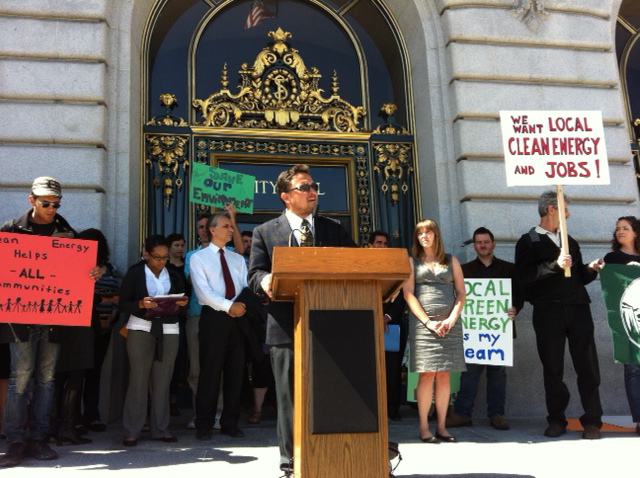
The San Francisco Board of Supervisors today cast an historic vote that was more than a decade in the making, approving the CleanPowerSF program – which challenges PG&E’s monopoly by offering 100 percent renewable energy directly to city residents – on an 8-3 vote that would be enough to override an implied veto threat by Mayor Ed Lee.
The outcome was far from certain throughout the two-hour hearing as conservative Sups. Mark Farrell and Carmen Chu led efforts to undermine the program, which was the final work product of retiring San Francisco Public Utilities Commission Executive Director Ed Harrington, who previously served as the city’s controller for 17 years.
The pair of supervisors offered a series of amendments challenging the state requirement that city residents must proactively opt-out of such community choice aggregation (CCA) programs if they want to remain with PG&E, offering convoluted language that would have required people to opt-in to the program before its launch, and requiring that the $13 million in reserve funds from the SFPUC be covered entirely by CleanPowerSF customers, which could increase its rates.
“It looks like the amendments would be harmful to the success of the program,” Sup. Eric Mar observed, prompting Farrell and Chu to flash broad conspiratorial smiles at one another.
Sup. Scott Wiener, who was undecided and considered a key swing vote in reaching a veto-proof majority, said he also had concerns about the opt-out requirement and wanted to better understand how the amendments would work and whether they were legal. “For me, I’m not interested in putting any poison pills in here,” he said.
Wiener posed questions about the amendments to Farrell and to Harrington, who said it was possible for the SFPUC to have CleanPowerSF customers repay the initial allocation of reserve funds over time but that he wasn’t sure how the opt-in change would work without sabotaging the program.
“It harms the ability to have an intelligent conversation with people,” Harrington said, noting that rates are based on the number of customers in the program, so it would be nearly impossible to survey everyone’s potential interest without being able to tell them how their bills would be affected.
As it is, the SFPUC has already done extensive surveys of which neighborhoods and demographics are likely to be interested in taking part in CleanPowerSF, initially paying about $10 more per month for 100 percent renewable energy (PG&E’s portfolio includes less than 30 percent renewable). “We’ve done extensive surveys already,” Harrington said. Based on that research, the city is initially rolling out the program to less than a third of city residents, who will be repeatedly notified about how to opt-out, anticipating about 90,000 customers remain in the initial program.
The program has been repeatedly tweaked over the last eight years that it’s been in development, during which time Marin County launched a successful version of the CCA concept that was developed in San Francisco by legislators Tom Ammiano, Carole Migden, and Mark Leno.
“I feel pretty comfortable trusting Ed Harrington on whether the numbers add up,” said the measure’s chief sponsor, Sup. David Campos, arguing against the Farrell/Chu amendments, later adding, “With Ed Harrington leading this charge, this is as good as it gets. If you don’t like CCA under Ed Harrington, you’re not going to like CCA.”
Farrell claimed to support CCA in concept, but he strenuously objected to the opt-out requirements that Migden included in the enabling state legislation, which she had argued was the only way to make CCAs viable against PG&E’s proven willingness to spend tens of millions of dollars to sabotage would-be competitors.
“It’s the wrong way to legislate, the opt-out. It smells of coercion,” Farrell said. Campos countered that, “The best thing we can give the consumers in San Francisco is a choice, a meaningful choice.”
Wiener ultimately made a motion to delay the item by a week, something Mayor Lee yesterday told the Chronicle he wanted, in order to further study the opt-out issue, telling Farrell that his amendment “feels a little seat of the pants to me.”
Campos and other progressive supervisors who were supporting CleanPowerSF argued against the continuance, noting that it has been years in development and sitting in board committees since January, while the Farrell/Chu amendments weren’t offered until this meeting had already begun.
“This is not going to change because we wait a week to make a decision,” Campos said. “The terms of this deal are not going to change.”
The motion for a continuance failed on a 4-7 vote, with Wiener joined by Farrell, Chu, and Sup. Sean Elsbernd (who offered no comments throughout the hearing).
Then, as the vote on the Farrell/Chu opt-in amendment came up for vote, Wiener said, “I don’t feel comfortable voting for amendments that I don’t know what they’ll do,” and it failed on a 3-8 vote.
Sup. Malia Cohen had earlier indicated a willingness to support the other Farrell/Chu amendment: saddling CleanPowerSF customers with paying the SFPUC back for reserve fund costs – which Harrington indicated could be dragged out over many years to minimize the impact on rates, and which might not be necessary at all if the initial program exceeds expectations.
That amendment was then approved on an 8-3 vote, with Sups. Jane Kim, Christina Olague, and John Avalos opposed. Another set of amendments that would keep low-income city residents out of the initial rollout and take other steps to reduce their rates if they opted in – which was developed by Kim, Cohen, and Sup. Eric Mar – was unanimously approved by the board.
Then it was time for the big vote on creating the CleanPowerSF program, approving the contract with Shell Energy Northern California to administer it, and authorizing the initial $19.5 million expenditure. Would there be eight votes to override a veto by Mayor Lee, who has been under pressure by PG&E and their downtown allies to kill the program?
“To be perfectly candid, I struggled mightily with this contract,” Wiener said, reiterating his concern about its opt-in requirement, noting that the measure wasn’t perfect, even though it was significantly improved from earlier versions. It sounded as if he were about to vote against it.
“What we have the opportunity to do is move forward with clean power,” Wiener said, noting that even Marin County supervisors who initially opposed its CCA have come around to supporting it. “This is something I believe we should try.”
And with that, the board voted 8-3 to launch the program in mid-2013, with Chu, Farrell, and Elsbernd opposed.
Campos said he was “pleasantly surprised” by the vote, while key supporters say they are cautiously hopeful it will stand up during next week’s final supervisorial approval on second reading and in a veto override vote, if that becomes necessary. Campos said he was thankful for the work of Harrington, who got a standing ovation after the vote as the board recognized him for his long service to the city.
Earlier in the meeting, Harrington told supervisors that while the program isn’t perfect, and it contains some risks that he considers reasonable, there is no other way the city has identified to meet ambitious greenhouse gas reduction goals it has set for itself over the last decade. It is city policy to reduce emissions by 25 percent below 1990 levels by 2017 and 80 percent below those levels by 2050.
“This program before you has the only chance of reaching those goals. There’s nothing else,” Harrington said. He also said “it’s an incredibly efficient way to spend money,” noting that the city has spent $90 million on solar and other renewable energy projects that power fewer than 7,000 homes, whereas this $19.5 million will power 90,000 households, possibly without ever tapping into that $13 million reserve fund set aside to cover any losses by Shell, which will buy renewable energy, a role the city hopes to eliminate as it develops its own projects.
Harrington said the ultimate goal of CleanPowerSF is to develop a large enough customer base that the city could use revenue bonds to finance a wide variety of renewable energy projects – many using solar arrays along city-owned property connected to its water system stretching all the way to Hetch Hetchy Valley – that would pay for themselves.
“The real issue is can you build a facility that will have this rate structure support it?” Harrington said.
That’s the real power and potential of CleanPowerSF – finally taking action to address global warming, which will have a huge impact on San Francisco and future generations – as supporters noted in a rally outside City Hall before the meeting. Sen. Mark Leno said that he doesn’t usually weigh in on proposals before the board, but that, “This is an exceptional time and this is an exceptional vote. This is the time that we need to address our inconvenient truth.”
Endorsement interviews: Shamman Walton for School Board
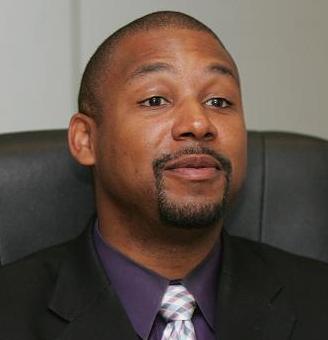
Shamann Walton, who runs a youth development program, told us what most candidates tell us — that the schools don’t have enough money. But he’s also suggesting solutions, ones that don’t require the kind of dramatic change in Sacramento that is years away. He talks about leverage federal vocational training funds, about pushing to get more General Fund money for the San Francisco schools, about demanding that developers set aside some money for public education. Walter has plenty of experience in education — he taught at a public school in Solano County, worked with at-risk kids and has helped the SFUSD with support and transition programs.
Walton said he would have voted against skipping seniority for the so-called Superintendent’s Zone schools; when it comes to layoffs, he said, “you have to let the teachers and the union decide that.” You can listen to the full interview after the jump.
Endorsement interviews: Rachel Norton for School Board
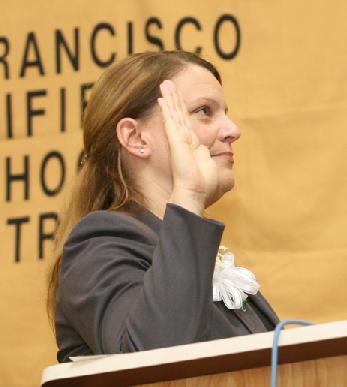
Rachel Norton, one of three incumbents seeking re-election to the San Francisco School Board, sees herself as an advocate for parents, particularly parents of special-ed kids. She told us she was proud of the dramatic gains the district has made in some of the lowest-achieving schools and said that in her time on the board, the district has done a remarkable job of managing its budget. She wants to make school food a major priority in the next four years and will be pushing the idea of building a central kitchen so food can be prepared locally instead of shipped in from the midwest.
She also explained her vote to defy the teachers union and protect junior teachers at 14 schools from layoffs.
You can hear the entire interview after the jump.
How Jerry Brown got us here
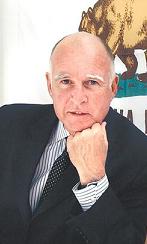
Jerry Roberts, who has long been among the best political reporters in California, has a nice, detailed piece on CalBuzz about Jerry Brown’s history and legacy — and how California got into the mess that the Guv is trying to get us out of. (It’s a nice complement to this Chron interview, in which Ol’ Jer takes us back to his seminary days and tells us how much he loves austerity: “I took vows of poverty, chastity and obedience. I am ready, OK?”
Jesus, Guv — we all know you’re cheap, but “obedience” really isn’t part of your personality. And chastity? For real?
But let’s get back to austerity. Brown is clearly hanging his governorship on Prop. 30, his tax measure, and is happily warning us all that things will really, really suck if it doesn’t pass. Roberts does a good job explaining how Prop. 13 — which a much-younger Jerry opposed before he supported it — laid the groundwork for the state’s endless budget mess be capping local property taxes and giving the state Legislature control over how much money flows to cities and counties.
The one missing element: Arnold Schwarzenegger.
The state budget was never simple, and California schools in particular never recovered from Prop. 13, but Schwarzenegger instantly made things much worse the day he took office in 2003 when he terminated much of the Vehicle License Fee, costing state and local government about $4 billion a year. Schwarzenegger derided the fee as a “car tax,” but it’s actually a fee that keeps counties from assessing cars as personal property. Either way, that’s a huge chunk of money, and while it was popular, it played into the idea that we can have something for nothing — similar to the Bush tax cuts.
So I guess all we can do is quote Jerry:
There is a lot of magical thinking in Washington and in Sacramento and, maybe, I might even say, Western civilization,” he said. “We had it easy and now the moment of truth is upon us. … We’ve got to pay for what we want. And if we don’t want to pay, then we have to deprive ourselves of that which we would like, and it’s very hard to get people to make that choice.”
Opinion: Let reporters into prisons
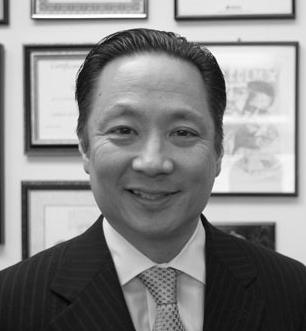
As a young public defender, I represented an innocent man who was convicted of
murder.
John Tennison was serving a sentence of 25 years to life when, in 1997, I
contacted a 20/20 news producer, who agreed to feature the case.
Tennison had already lost seven years of his freedom. A national broadcast
exposing concealed evidence, perjury and misconduct by police and prosecutors in
the case could reverse his fate and reunite him with his family.
But when prison officials denied the television crew an interview with my
client, producers were forced to withdraw. No interview meant no story.
Tennison was eventually exonerated, but it took 14 years. Fortunately, a
reporter from the SF Bay Guardian named Adam Clay Thompson accompanied me during
a prison interview as my paralegal and was able to meet and interview Tennison.
He wrote a cover story that exposed the injustice of Tennison’s case and
started the ball rolling towards his eventual exoneration. I am convinced that
if media access were granted in this case, it would have restored his freedom
years earlier.
For the past 15 years, California’s prisons have operated in a virtual media
blackout. With the flick of his pen, Governor Jerry Brown has the opportunity to
turn on the light.
Now on his desk is AB 1270, also known as the Prison Media Access Bill. The
bill, authored by Assemblyman Tom Ammiano, would restore the press’ ability to
conduct pre-arranged, face-to-face interviews with specific prison inmates.
Currently, reporters may interview inmates who are hand-picked by prison
officials. They are not allowed follow-up contact, making it impossible to know
whether a prisoner has suffered retaliation as a result of the interview.
It wasn’t always this way. During Brown’s first stint as governor, the press was
free to fulfill its watchdog role in California prisons.
In 1996, prison officials clamped down on press access under the guise of
discouraging tabloid media from making celebrities of notorious killers. In the
process, it also made it far harder to expose systematic abuse, fiscal
mismanagement and unsafe conditions for guards and inmates alike.
It was under this information shut-out that inhumane conditions were allowed to
fester to the point that the Supreme Court intervened in 2011, ordering the
release of 46,000 inmates.
It was nearly a century ago that US Supreme Court Justice Louis Brandeis wrote
that sunlight is the best disinfectant. It remains no less true today.
Government accountability is impossible without media access. The 2011-2012
state budget allocates $9.2 billion in taxpayer money to the CaliforniaDepartment of Corrections and
Rehabilitation, yet public information is limited by CDCR’s current restrictive
media policies.
Taxpayers deserve to know where their money is going. Like John Tennison,
innocent men and women languishing in California’s prisons deserve to tell their
stories.
Jeff Adachi is San Francisco’s public defender.
Happy Birthday Occupy
Occupy celebrates its one-year anniversary Monday, and many of the groups who have gotten involved over the past year will be going all out. These groups’ goals– including ending unjust foreclosures, fighting displacement of queer people and homeless people, and taking back power from banks and the one percent– are a lot to achieve in one year. But they’ve made great stride. They’ll celebrate, and commit to another year of action, on Monday.
Occupy Bernal, Occupy Noe and Alliance of Californians for Community Empowerment will put the pressure on banks that continue to foreclose on San Franciscans despite widespread evidence of fraud and a city resolution calling for a moratorium on foreclosures. At noon, they will hold a rally highlighting the ways that the foreclosure crisis disproportionately affects seniors, veterans and disabled people- find them at 401 Van Ness. At 3pm they will rally One Market Plaza, the officers of Fortress Investment Group board co-chair Peter Briger, infamous amongst the “foreclosure fighters” for his role in selling off distressed home mortgage debt.
In the Castro, Community Not Commodity, the coalition that formed around an Occupride march protesting the corporate takeover of the Gay Pride Parade and continues to fight “increased rent, foreclosures and evictions, and the displacement of queer and homeless youth.” They will meet up at 2pm at 18th and Castro for a speak-out, followed by a march on the banks at 3 and a sit-in protesting sit-lie at Harvey Milk Plaza.
Also at 2pm, Occupy Oakland is throwing a street party. They’ll converge at Embarcadero and Market at Justin Herman Plaza (renamed Bradley Manning Plaza by the people from Occupy San Francisco, whose encampment stood there for three months last fall.) Organizers advise: stay tuned for Oct. 10, the one-year anniversary of Occupy Oakland.
But Occupy San Francisco didn’t start at Justin Herman Plaza. It started Sept. 17, 2011 at 555 California, outside the building that houses the Bank of America west coast headquarters along with Goldman Sachs offices. It’s there that everyone will converge at 5pm for a raucous casserole-style march with the Brass Liberation Orchestra, followed by guerilla movie screenings, food to share, and a debt burning: “bring dept papers (BYOD) to burn symbolically,” say organizers.
Can’t wait for tomorrow? Occupy SF hosts a day of poetry and speakers at Justin Herman Plaza today. The Human Be In, the unpermitted music and skillshare festival that brought hundreds to play music, teach workshops, and “transform space” in a dusty spot near Ocean Beach yesterday continues through tonight. Occupy Bay Area United is also throwing a rally and teach–in focused on corporate greed starting outside 555 California at 7pm.
Occupy is dead! Long live Occupy!