• No categories

Politics Blog

Chiu and Herrera roll up their sleeves for spring cleaning in City Hall

For some time now, oft-labeled “power brokers” with undue influence in San Francisco city government have taken heat for failing to register as lobbyists. At the same time, politically connected insiders are often criticized for manipulating the permitting process for major real estate developments far outside the public gaze.

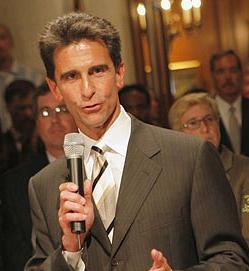
It’s said that sunshine is the best disinfectant. Yesterday, City Attorney Dennis Herrera and Board of Supervisors President David Chiu introduced a package of reforms designed to shed more light on lobbyists’ practices.

The new set of rules would tighten up lobbying regulations, create new disclosure rules for developers and their lobbyists, create more oversight around city contracting and grant-making, and require the publication of a guide for campaign donors spelling out Ethics laws regarding campaign contributions.

“We’re not demanding of anybody else anything different than we would demand of ourselves,” Herrera said, adding that he and Chiu had been working on drafting the proposal for months.

Chiu and Herrera both vied for the city’s highest office in competition with Mayor Ed Lee in 2011. Since beginning his term as mayor, Lee has drawn sharp criticism for his cozy relationships with former San Francisco Mayor Willie Brown, Chinatown consultant Rose Pak and a handful of others who are not registered as lobbyists.

Without mentioning anyone by name, Chiu noted, “I do think there are individuals who have not registered as lobbyists who probably should.”

The proposed rules would broaden the definition of “lobbyist” under the city’s Ethics regulations. The new definition would include “any individual who makes contact with” an elected official on behalf of an employer or anyone else paying them “for lobbyist services.” If someone makes $1,000 or more per month for lobbying, that person would be considered a lobbyist under the law.

The new legislation would also create new disclosure requirements for “permit expediters,” who work on behalf of developers to hasten the permitting process for major real estate construction. They would have to register with the city’s Ethics Commission and file regular reports about their contacts with city officials. Developers with major planning projects in the pipeline would also have to disclose donations of $5,000 or more to city-based nonprofits.

Chiu noted that he and Herrera had consulted with Friends of Ethics, a group of government accountability advocates that’s been pushing for Ethics reform, for help drafting the proposal.

Chiu and Herrera also acknowledged that better enforcement of existing laws was needed in addition to the proposed legislative reforms. “Our city could be more proactive in enforcing our Ethics laws to the fullest,” Chiu said. “Not just the letter of the law, but the spirit of the law.”


Newsom calls for marijuana legalization

8

For all his flaws, Gavin Newsom has never shied away from taking a stand or showing leadership on emerging issues, particularly when the politicians are lagging behind public opinion. As mayor, he did it on same-sex marriage, temporary public art, and taking street some space from cars. And today, as the state’s lieutenant governor, he is calling for an end to marijuana prohibition.

“It is time for California to decriminalize, tax and regulate marijuana and decide who sells it, who can buy it legally, and for how much. When California became the first state to approve medical marijuana, we led the nation on progressive drug policies, and now it is time to lead again,” Newsom wrote in a Huffington Post column that was posted last night.

Newsom recites a case for legalization that the public has long supported, particularly here in California, citing how damaging and expensive it is to wage “war” on a substance that most Californians know is less harmful than alcohol or tobacco, peppering his column with compelling stats like this: “The U.S. leads the world in the incarceration of its citizens, with less than 5 percent of the world’s population but almost 25 percent of the world’s incarcerated population.”

The Drug Policy Alliance amplified Newsom’s column with a press release today, calling for other politicians to follow his lead and finally remove marijuana from its federal listing as a Schedule One narcotic, “where is current sits alongside heroin,” as Newsom noted. He closes by writing: “There is no reason why California cannot set the example for the nation in responding to drugs in a rational and sensible way. It is time to be bold enough to consider the science and the examples set forth by other states and nations. The time has come to decriminalize, tax and regulate marijuana — anything less is not enough.”

Drug Policy Alliance Executive Director Ethan Nadelmann praised the stand, writing, “What I find remarkable is that not one sitting governor or U.S. senator has spoken out in favor of legalizing marijuana notwithstanding the fact that a majority of Americans now support that approach. But I am confident that it’s only a matter of time until elected officials follow in Gavin Newsom’s bold footsteps as they did with marriage equality.”

Indeed, when Newsom unilaterally began issuing marriage licenses to same-sex couples in 2004, it was opposed by then-House Speaker Nancy Pelosi, US Senator Dianne Feinstein (in fact, all but two US Senators), and the official platforms of both major parties. Today, after a rapid upwelling of political support, it is supported by President Obama and half of the US Senate and it may be on the verge of being legalized by the US Supreme Court (we find out next month). Newsom showed foresight on that issue, and he’s doing so again with marijuana.

Washington and Colorado voters legalized recreational uses of marijuana last year, and they are well on their way to reviving their economies promoting what is already California’s top cash crop, despite its strained legal status. In fact, we also got a press release today from Gaynell Rogers, who handles public relations for Harborside Health Center, the Oakland medical marijuana dispensary that is currently waging an expensive fight for its life after a federal raid.

“Investors Gather to Fund the Most Promising Marijuana Companies in Seattle,” was the headline of a press release about an April 29 event where 40 wealthy investors will “hear pitches from the top entrepreneurs in the hot, new legal cannabis industry,” an event hosted by ArcView Investor Network, which includes many tech entrepreneurs and investors.

“Cannabis is the next great American industry,” said ArcView co-founder and CEO Troy Dayton. “Now that a majority support legalization, a geyser is about to go off. The question is: which companies will be seated on top of it? That is what’s being decided at this investor event.”

Similarly, as California wrestles with tight budgets and a overcrowded prison system, can we really afford to continue wasting money and lives criminalizing such an industry that already is already an important part of the state’s economy? Newsom says no, and so do we.

Miranda rights in Boston

25

It’s the age-old dilemma, the stuff of dozens of thrillers and action movies: You’ve captured a guy who knows exactly where a bomb has been planted, and it’s going to explode in 30 minutes and kill thousands of people. Do you bother to read him his Miranda rights and encourage him to speak to an attorney before he answers any questions?

In the movies, no: You shoot him in the knee, or break his fingers one by one, or waterboard him until he talks, and then with seconds to spare, you rappel down the side of a giant building, crash through the glass door, and disarm the bomb. No sweat.
In real life, it’s a bit more tricky — particularly when the suspect, an American citizen, hasn’t even been arrested yet, but can’t go anywhere because he has a bullet hole in his throat.

I can get the initial instinct: When FBI agents grabbed 19-year-old Dzhokhar Tsarnaev, they wanted to be sure he didn’t know of any other devices that were about to go off. If they’d refused to read him the Miranda warning and even used “enhanced interrogation techniques” and he’d said: “Hey, OK, I give up, there’s another bomb about to go off,” and they’d found it and saved lives, well…we’d have some Zero Dark Thirty debates, but at least there would have been a point.

In this case, it appears he has said no such thing, and no other bombs connected to him have gone off. There may be evidence that later emerges showing that the normally illegal interrogation saved lives, but so far, it looks as if all the feds have done is compiled information they can try to use against him in court.

Which is a problem.

It’s really, really hard to be even remotely sympathetic here — the guy (allegedly) killed three people, including an eight-year-old, and wounded many more, including a lot of amputations. He terrorized the Boston Marathon. I’m not even remorely suggesting that he get any special treatment. If he’s guilty — and the evidence at this point is pretty solid — then he’s going away for life. (Unless the federal prosecutors foolishly seek the death penalty, which would turn him into a martyr.)

But you can’t just decide that this guy is a bad guy and so the Miranda rule doesn’t matter. There are all sorts of really horrible criminals arrested in the United States, and they all have the right to remain silent, to avoid self-incrimination, and to have an attorney present before they say anything.

There’s a whole cottage industry of cops and prosecutors finding ways to avoid the Miranda warnings, which is not only unConstitutional but somewhat nutty, because Miranda almost never hurts a criminal investigation or prosecution. The Boston Bomber’s case won’t rest on what he told investigators from his hospital bed. In fact, I tend to agree with what law professor David Harris says:

The Obama administration’s interpretation of the public safety exception is suspect; its announcement that no Miranda rights would be given was transparently political, aimed at avoiding criticism from conservative quarters. Worst of all, the administration seemed to be telling the public that Miranda warnings are just petty rules — another instance of hyper-technical laws that get in the way of real justice. This is dead wrong, and it shows grave disrespect for the rule of law and the Constitution — the very things that make our country great.
 

I would guess that now that Tsarnaev has a lawyer, he’s hearing the grim reality of his situation: Unless there’s something we really don’t know, and he’s got some astonishing claim of innocence, (“my brother made me do it” won’t work) he’s never going to get out of prison, and everything that the legal team does from this point on is about saving his life. He’ll wind up, most likely, pleading guilty to a crime that gives him life without parole, if prosecutors drop the death penalty.

We’ll never know exactly what happened when the FBI gave Tsarnaev a pencil and paper and asked for written answers to interrogation, because that evidence likely won’t be made public. But I suspect that the first thing the agents asked was whether there were any more bombs, and once they got that answer, they should have stopped and issued the Constitutional warnings. Which they almost certainly didn’t.

I know this is speculative, but it’s the reason the Miranda rules are in place. Because we shouldn’t have to speculate on this stuff; we should know that the federal government doesn’t think the “Miranda warnings are just petty rules.”

Wells Fargo foreclosure fighters: They’re baaaack!

See an update at the end of this article.

 A group of activists focused on organizing against Bay Area foreclosures will return to Wells Fargo’s San Francisco headquarters today for a protest timed to coincide with the banking giant’s shareholders’ meeting – even though the meeting was moved to Salt Lake City, Utah this year. (Perhaps the change of scenery had something to do with what happened last year, or the year before?)

Unfazed, the Alliance of Californians for Community Empowerment has sent some homeowners who are facing bank foreclosure on a road trip to Utah to bring their message to CEO John Stumpf in person, according to ACCE organizer Erin Franey.

Meanwhile, in San Francisco, activists focused on fighting foreclosure will congregate outside the bank’s Mongtomery Street headquarters. “Wells is foreclosing on more homeowners in California than any other bank,” says Franey, adding that there are currently 11,000 California homes in the foreclosure pipeline.

In attendance at this afternoon’s San Francisco rally will be Bernetta Adolf, a cancer survivor in her late 60s who has also struggled with blindness, a particularly challenging disability that forced her to retire from her city job as a Muni driver.

Adolf is locked in a battle with Wells Fargo over the foreclosure of her home in San Francisco’s Oceanview-Merced-Ingleside neighborhood. The trouble started when she borrowed against the home she’s lived in 20 years, to fund her son’s college education.

“It turns out the loan to provide for my son’s future was designed to ruin my own,” Adolf wrote in an online statement. “It was predatory, calculated to strip my equity and set me up for failure. When I tried to work with Wells to fix the loan, they offered a modification so small it didn’t make any difference. Then they started trying to take my house. The stress hastened my blindness and continues to aggravate my health problems.”

UPDATE: Wells Fargo spokesperson Ruben Pulido contacted us in response to this article and requested that we post a statement in response:

“Our foreclosure rate in 2012 fourth quarter was just 1.04 percent in California—less than half our national rate (2.1 percent) during that period.

Over the past four years, Wells Fargo has helped more than 850,000 customers nationwide with loan modifications, and has helped customers through $6.6 billion in principal forgiveness; the majority of that principal forgiveness has gone to borrowers in California.

When customers with financial challenges choose to work with us, we help 7 of 10 avoid foreclosure. Over the last 6 months, customers who completed a foreclosure were, on average, 19 months past due on their payments.”

You want to live in Manhattan? Move there.

192

I feel like I’ve been having this discussion for 30 years, and it still keeps coming back. The latest installment (thanks to sfist for the link) is a Slate article by Matthew Yglesias arguing that San Francisco could solve its housing crisis by becoming as dense as Manhattan. Lots of highrise condos and apartments in places like the Mission. A total of 3.2 million residents.

Obviously, a totally different city:

Obviously that would have a transformative effect on Oakland as well in various regards. It’s obviously not “politically realistic” to imagine San Francisco rezoning to allow that kind of density. But uniquely among American cities, I completely believe that 3.2 million people would want to live in a hypothetical much-more-crowded version of the city if they were allowed to. You’d need to build another heavy rail line or three and do some better dedicated bus lanes, but it’d be affordable with a much larger tax base.

Here’s the problem. Two problems, really.

1. That level of density hasn’t exactly made Manhattan affordable. (Although if you want to move there, it’s probably cheaper than SF at this point). There’s been a huge surge in housing construction in NYC, and housing prices are still way too high. The housing market in San Francisco is so unusual that demand is essentially infinite; you can’t build your way out of this.

2. There are already 800,000 people living here, and most of us don’t want to live in Manhattan.

One of the reasons San Francisco is so attractive is that it’s still a human-scale city. I’ve spent a lot of time in Manhattan, and the rush is pretty cool, and some urbanists say that’s how we’re all going to have to live in the future — packed into tall buildings in dense cities — but that’s not how I want to live. I know I sound old and I’m becoming a curmudgeon and one of those “you should have seen us in the old days” people, but I like the fact that there are no highrises in the Mission. 

Yeah, San Francisco is going to have to grow in population. There are ways to do that — to make dense neighborhoods that are still very livable. See: North Beach. But San Franciscans have generally taken the position that we don’t want to be Manhattan. We want to be San Francisco.

Now: My vision is not in synch with how housing is allocated in a hyper-capitalist system. Me, I think housing should be treated as a human right and regulated like a public utility. Landlords should be allowed a “reasonable return on investment” but not the greatest profit the market will bear. Homeowners should see their property appreciate at a reasonable level, but not at a speculative level. Housing shouldn’t be bought and sold as a commodity. And it should be allocated by seniority — that is, the people who have been a part of a community for the longest get the better housing.

That’s how you avoid the demand-exceeds-supply issue (and again, in this city, there will always be more demand than supply.) I know that’s commie shit, but that’s the way it is.

Still, whatever the economic or policy arguments, you can’t force that level of density onto this city. Because before you make those kinds of plans, you have to check with the people who live here.

I wrote this mostly to give the trolls some red meat, since they don’t seem to be agitated enough lately. Go to it, Adam Smith.

Property resistance in the Bay and beyond

In 2004, Hannah Dobbz climbed up the drainpipe of an abandoned building in Emeryville and disappeared through a broken window. Outside, her friends waited with blankets, pillows, and food. Making her way down to the first floor, she unsecured the plywood door and let them in.

Dobbz had stayed in squats before—in the East Bay, and in Europe. But now she was finally “bottom-lining” her own. The property, an abandoned boat and turbine warehouse they called the Power Machine, was in legal limbo. The city of Emeryville had claimed eminent domain over the building, but settlement proceedings would continue for the next two years.

In the meantime, Dobbz and her friends made the Power Machine their home. They fixed up the building and collected bikes, books, and art supplies. They threw loud parties. Located under a bridge and next to the railroad, no one seemed to care—not even the landlord, who stumbled upon Dobbz during her second week of residency.

Dobbz’s experience, along with those of other East Bay squatters, became the subject of her film, “Shelter: A Squatumentary” (Kill Normal Productions: 2008). In 2007, she left the Bay Area and moved to Buffalo, but continued to advocate for the practice of seizing abandoned spaces, dubbed “property resistance.” Now, she has published a book on squatting.

The book, Nine-Tenths of the Law: Property and Resistance in the United States (AK Press: 2013), is both a guide for squatters and a history of land occupation movements. It delves into the philosophical justifications for squatting, and challenges the assumptions behind the economic forces of the housing market. For Dobbz, squatting is a tactic: it reasserts that shelter is everybody’s basic human right, not just the privilege of those who can afford it.

“One of those things that I’m hoping to do is rethink how we view property, to try and shift the emphasis from housing as a market value, to more of a use value,” said Dobbz.

Nor could the timing be much better, since recent events seem to have rekindled property resistance activism in the Bay Area. In 2011, the Occupy Oakland movement created a dialogue around public space and private ownership. Now, with the tech boom driving the cost of living ever higher, that dialogue has been infused with newfound urgency. 

Steve Dicaprio is the CEO and founder of Land Action, an organization that offers support and legal information to land occupiers. As Occupy Oakland unfolded, he began to research property foreclosures. He wanted to know which sites could be most easily occupied and defended from a legal standpoint. According to Dicaprio, organizers of Occupy Oakland soon began to consider the occupation of foreclosed homes as an alternative to demonstrations in Oscar Grant/Frank Ogawa Plaza.

The goal of Dobbz, Dicarprio, and other activists is to foster a discussion around property. The focus needs to be on stewardship, not ownership, said Dobbz.

Both Dobbz and Dicaprio will be speaking at Looking Glass Arts on Friday, April 19th, at 6 p.m. Tickets are $20, with proceeds going to Land Action. A free event will also take place the following night at 7:30 p.m. at the squatter residence Hotmess/RCA Compound (656 West MacArthur Blvd.), with a dance party to follow.

In the meantime, you can read an excerpt of the book here.

Covering the Boston bombing

21

Ever since the horrible, awful bombing at the Boston Marathon, I’ve been doing what every crazy newshound does and spending far too much time on the Internet trying to get the latest scrap of information. This morning, none of us could drag ourselves away from the developing story.

And I have to say: There are thousands of web sites covering this, mostly be aggregating other people’s content. But the real work of finding and reporting news has been done by the old-fashioned traditional mainstream media that we all so freely dismiss as dinosaurs.  The New York Times and The Boston Globe have done an exceptional job, as has the Associated Press. That’s in large part because they still employ significant numbers of staff reporters, with the experience and contacts to accurately cover this kind of story.

The MSM screws up a lot, and allows politicians to avoid accountability, and has all sorts of biases. But nobody else has the ability to cover a tragedy and disaster like this.

Of course, not all is perfect. The New York Daily News and CNN have screwed up badly. The rightwingosphere is so obsessed with Muslim Terrorists that it’s seeing them everywhere, creating them out of paranoid visions if necessary.

But if there weren’t newspapers and broadcast outlets with old-fashioned reporting staff, we’d be far less informed and more reliant on official law-enforcement sources. The old business model is falling apart, but there’s still a need for actual news outlets.

And for my money, the absolute best source of accurate, fair, complete, and insightful coverage has been that very, very old medium — raido — and that old goverment-funded institution, NPR.

Something to think about when a real major news event happens.

Bay Area groups critical of immigration reform proposal

Olga Miranda, secretary treasurer of the San Francisco Labor Council and president of SEIU Local 87, did not mince words when sharing her initial reaction to the proposed federal immigration reform bill, which was unveiled April 16 by a bipartisan group of senators.

“If it was myself and our members at the bargaining table, we would walk away,” Miranda said. “This proposal is nothing more than an offense to the community.”

Miranda was speaking at an April 17 press conference held by the San Francisco Bay Coalition for Immigrant Justice, staged at the Asian Law Caucus’ San Francisco headquarters. While many speakers said they welcomed the immigration reform bill as an important “starting point,” all were clear that they saw serious flaws in the proposal and planned to spend the next several months pushing for improvements.

“We applaud the inclusion of a path to citizenship in the bipartisan legislation for millions of undocumented people currently living as second class citizens,” said Francisco Ugarte, senior immigration attorney at Dolores Street Community Services. “However, there are problems with the bill, which creates long waiting periods to adjust, excessive fines and unclear language and employment requirements.”

In a statement, coalition members described the bill’s proposed path to citizenship as “long and onerous” due to provisions such as a decade-long wait for a green card, and ineligibility for any undocumented immigrants who arrived in the U.S. after 2011.

Concerns were raised that families would continue to be separated, a frequent consequence of deportation. “The bill, as it is, does not put an end to the deportations,” said Cinthya Muñoz of Causa Justa / Just Cause. “In California, close to 94,000 people were deported” last year, she added. “As Californians, our representatives need to stand strong to call for an end to deportations before negotiations continue.”

Miranda was critical of a proposal to require the use of the federal E-Verify system. “Forcing employers to check all workers’ immigration status against flawed databases like E-Verify reduces the power of all workers,” she said. “And it would threaten the jobs and privacy of many citizens and work-authorized immigrants.”

Anoop Prasad of the Asian Law Caucus criticized proposed changes to the existing process for legal, family-based immigration, saying the elimination of visas for entire groups of family members would particularly impact Asian communities, such as those residing in San Francisco’s Chinatown. The overwhelming majority of Chinatown residents came to the U.S. as sons and daughters or siblings of employment-based immigrants, he explained, but under the proposed rules, meeting the qualifications for a visa would be more difficult due to a the elimination of certain family immigration categories.

Instead of placing emphasis on the presence of a family member in the U.S., a proposed “merit based” visa would be scored on factors like higher education, English proficiency, and employment, Prasad added. But activists also raised concerns that requirements for English language proficiency would inevitably exclude many monolingual immigrants.

Amos Lim, representing Out 4 Immigration, said LGBT couples would face particular challenges too, because no specific language was included to allow same-sex partners the same immigration privileges as heterosexual married couples. “Immigration law in this country has always been about excluding people,” Lim told the Guardian. “We need to make sure that we are included.”

The coalition is planning a May 1 march and rally in San Francisco to call for improvements to the immigration reform bill. It will begin at 24th and Mission at 3pm and proceed to Civic Center for a 5pm rally.

Follow @byRebeccaBowe

“Street Fight” examines the politics of mobility in San Francisco

16

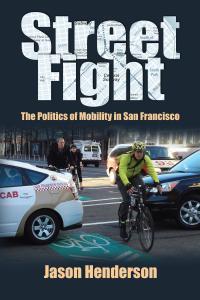
Ideology plays a bigger role in shaping San Francisco than most people realize, as we’ve discussed in this space before. Nowhere is that more true than in the politics of land use and transportation, as my friend Jason Henderson, a San Francisco State University geography professor, discusses in his insightful new book, Street Fight: The Politics of Mobility in San Francisco.

He’ll be discussing his work this Friday, April 19, from 7-9pm during a book launch party hosted by Green Arcade Bookstore across the street at the upstairs loft space of McRoskey Mattress, 1687 Market. Or if you miss that but want to join the discussion, you can catch Henderson’s forum on May 15 at SFSU or what will surely be other local events on this pivotal topic.

Henderson chronicles the seminal events in San Francisco’s history with “automobility” and related transportation issues, from the freeway revolts of the late ’50s through 2000 to today’s continuing political struggles over parking, bicycles, livability, gentrification, and the form, function, and financing of Muni.

Yet the lens that Henderson brings to understanding all of these issues and struggles is ideology, which he breaks down into three major categories: progressive, neoliberal, and conservative. Whether we realize it or not, we can all be fairly easily placed in one of those three categories when it comes to how we think about automobility, or the primacy of cars in modern life.

“A progressive framework conceptualizes mobility as a systemic problem that requires deep social commitment and responsibility. How we get there matters. It posits that there can be too much mobility, as exemplified by high levels of [Vehicle Miles Traveled] in the United States, and that excessive mobility results in both environmental degradation and major social inequality at a local, state, and global scale. The main problem, obviously, is that automobility is part of a wider, systemic moral and social problem of over-consumption and disproportionate materialism,” Henderson writes, sounding themes that I echoed in this week’s cover story.

On the other end of the ideological spectrum are those with conservative views on mobility, who see driving as a basic right, which is the dominant mindset on the west side of supposedly liberal San Francisco. “Unlike progressives, conservatives do not think about responsibility as relating to broader systems such as the economic structure of society. Instead, they think in terms of direct causation and of each individual being responsible for the consequences of his or her actions. For example, poverty is a result of individual shortcomings caused by personal and moral characteristics, not of structural themes like socioeconomic forces beyond an individual’s control. Getting to work on time and providing one’s daily needs are not collective concerns but the responsibility of the individual,” he writes.

Of course, these conservatives still rely on government to build and maintain their transportation infrastructure, which they believe should be centered around cars. “Government should guarantee and accommodate automobility, not seek to discourage it or make it more expensive. Government-sponsored road building and other explicit policies that encourage motoring reflect an optimal use of government to stabilize conservative social relations centered on automobility,” Henderson write of the conservative mindset.

Between those two poles are the neoliberals, who have come to dominate City Hall, particularly in the last few years with the ascendancy of Mayor Ed Lee, Board President David Chiu, and Sup. Scott Wiener, who has taken the lead role on transportation issues. Neoliberals rely on market-based solutions to almost any problem, and they end up partnering with either conservatives or progressives in the politics of mobility depending on the issue.

“Neoliberals, consistent with the broader agenda of the privatization of space and market-based pricing of public access to space, envision a mobility system shaped by pricing and markets rather than by regulation and collective action. Unlike progressives, neoliberals feel the built environment must be allowed to develop with the efficacy of the market. Movement, paid for by the individual user, should be unrestrained. Yet such efficacy can include a commodification of nonmovement or slower movement or the package of quality-of-life goods surrounding the ‘walkability’ and ‘livability’ of the city, a package reserved for those who can afford to enter. To that end, neoliberal mobility includes the aggressive use of government to both enhance mobility and rein it in, but only inasmuch as government policy helps realize the goals of profit and facilitating economic growth and development,” Henderson writes.

It’s fascinating to explore how these three distinct mindsets have shaped San Francisco in recent decades, and how they interact today to create the city that we’ll be moving through in the future.

Is there hope for California?

47

Nothing cheers up an old tax-and-spend liberal than word that two major new sources of state revenue — enough to begin closing the gap in education funding — are at least on the table in Sacramento.

At the state Democratic Convention April 13, delegates approved a resolution calling for a split-roll property-tax system, removing commercial property from the protection of Prop. 13. There’s a group called Evolve working on this statewide, and Assemblymember Tom Ammiano has a bill that would end a loophole that allows corporations to buy and sell property without reassessment.

And now there’s also a campaign gearing up to establish an oil severance tax — something that every other oil-producing state already has. As oil and gas companies try to create a new oil rush in California, fracking their way to billions, the public ought to get a little something. After all, the oil below the ground belongs, in a sense, to all of us, not just to the companies that can stick a pipe into it.

Meanwhile, organized labor is attacking the Enterprise Zone Tax Credit, which is basically a corporate giveaway.

Not all of this is going to happen this year. Even with the overwhelming Democratic majorities in both houses, tax reform is tough; there are armies of lobbyists who will fight it all the way. And any ballot measure would need serious deep-pocket funding, since the California Chamber of Commerce, the real-estate industry and Big Oil would pour tens of millions in to defeating it.

Still: You have to start somewhere, and five years ago, none of this would have even been under discussion. So maybe there’s hope for California after all.


The Chron gets the condo deal wrong

23

It’s kind of a surprise that the Chron actually likes the (possible) condo conversion deal. That paper typically opposes anything that is good for tenants and supports anything that the landlords like. But it’s annoying that the editorial writers made it sound as if Sups. Scott Wiener and Mark Farrell engineered this whole thing. You need to get beyond the silly paywall to read the full editorial, so I’ll reproduce the key part here:

This week a deal may be struck to end the stalemate. A plan by Supervisors Mark Farrell and Scott Wiener will give owners of tenancies in common the chance to convert under a one-time deal. The yearly lottery will be suspended, the apartment owners will pay from $4,000 to $20,000 each into a subsidized housing fund, and those in the conversion pipeline can go forward. It’s essentially a one-time offer with the lottery system swinging back in place in 10 years.

Actually, Farrell and Wiener weren’t the ones who came up with the proposal that might make this legislation possible. That work was done by tenant and housing advocates — Sarah Shortt of the Housing Rights Committee, Ted Gullkicksen of the Tenants Union, Peter Cohen from the Council of Community Housing Organizations, Gen Fujioka of CCDC — and Sups. Norman Yee, Jane Kim, and David Chiu. The landlord group Plan C didn’t make any effort to negotiate anything in good faith, so the tenant and housing people went and put this together on their own.

It was never included in the Wiener/Farrell bill; if anything, it was prepared as a hostile amendment. Realizing that, with Yee on the side of the tenants, there wouldn’t be six votes for their original plan, Wiener and Farrell had no choice but to accept the tenant alternative.

A lot of hard work, and a lot of give-and-take was involved — but the credit for that goes first and foremost to the activists who fought the original Wiener-Farrell proposal. Let’s be fair here.

Is there such a thing as “green” fracking?

Michael Klein is an unlikely oil industry executive. He’s also an unlikely environmental activist. For many years, the affluent San Franciscan was a major donor and chair of the board of the Rainforest Action Network, an environmental organization famous for its aggressive agitation targeting timber giants, coal companies, air polluters, and the dirty energy financiers of Wall Street.

But he’s stepped down from that role, and has since helped form a company called Hydrozonix, which might be called a “green” fracking enterprise.

Hydrozonix provides water treatment systems for the oil and gas exploration industry, and seeks to eliminate the use of two particularly nasty fracking-fluid chemicals known as biocides and scale inhibitors. It also gives companies a way to treat and recycle wastewater fluid. The company just completed its first year of operations, Klein told us, with 12 systems reportedly up and running in Texas oil fields.

Does this mean a die-hard environmentalist has crossed over to the dark side? “It was never an easy decision,” Klein told us. “I never thought I would tell anybody that I’m in the oil business.”

He hasn’t exactly turned into a climate change denier.

“I believe we have to stop using carbon based fuels as soon as possible,” Klein says without hesitation, “and find the political will to put a price on carbon.” He also supports a temporary moratorium on fracking. But he claims he’s only trying to make fracking “dramatically safer” in the interim, because “until we stop subsidizing [fossil fuels], the alternatives are at a severe disadvantage.”

Since entering the biz, however, Klein’s no longer convinced by arguments made by proponents of a permanent ban on fracking in California, which revolve around health and safety concerns. “I’ve come to the conclusion that if best practices are used, it’s … considerably safer than deepwater drilling,” he told the Guardian. “I do believe it can be done without concerns about contaminating aquifers or poisoning everyone.”

For a more on fracking in California, pick up a copy of this week’s Green Issue or read it here.

Follow @byRebeccaBowe

CEQA change moves faster in SF than Sacto

13

So the Guv says he doesn’t think he’s going to be able to gut CEQA this year. I think he’s right: The party he supposedly leads (but doesn’t tend to follow him) won’t go for it, any more than the party Obama leads will got for cuts to Social Security.

It’s partly that both are hard-fought pieces of progressive history. The late 1960s and early 1970s were a good time for the environmental movement — Congress passed both the National Environmental Policy Act and the Endangered Species Act, and Nixon signed both. The California Legislature passed CEQA in 1970, and Gov. Reagan signed it. Back then, even Republicans thought it was a good thing to be on the side of protecting the planet.

But there’s more — and it’s interesting that the state Leg, typically not known as a bastion of progressive thought, is better on this issue than San Francisco, where some sort of changes to CEQA are almost inevitable.

Some background:

What NEPA and CEQA did, first and foremost, was eliminate the problem of “standing” that had plagued environmental lawyers for years. If I couldn’t prove that a horrible development project on the San Francisco waterfront would personally injure me (which would typically mean I had to own adjacent property), I had no right to go to court to oppose it. CEQA mandates a valid, complete environmental review of any major project, which gives anyone the right to sue; I may not be able to describe specific financial damages from a project, but as a citizen, I have a legal right to an adequate Environmental Impact Report.

Likewise, anyone can appeal a development in San Francisco to the Board of Supervisors on the grounds that the EIR was inadequate.

CEQA review slows down projects and costs money. If you “streamline” the process, you make life easier for developers. But there’s a hefty price to pay — because while Sup. Scott Wiener talks about homeowners fixing rotting handrails, very few CEQA suits or appeals are ever filed over that kind of thing. Yeah, there are exceptions; year, one lone bike-hater slowed down the city’s bicycle plan. Yeah, NIMBYs will sometimes slow down affordable housing projects.

But most major CEQA lawsuits and appeals are over big projects, ones that, in San Francisco, tend to slide through the official approval process no matter how horrible they are. Mayors of this city for most of the past half-century have liked developers; mayors appoint the majority of the Planning Commission, and they appoint commissioners who like developers. There’s big money in San Francisco real-estate development, and the savvy builders spread enough of it around that they typically get their way.

CEQA gives the rest of us a way to fight back. Most of the time, it doesn’t work: A CEQA appeal, for example, didn’t stop the atrocious 8 Washington project. CEQA hasn’t stopped developers from building about 50 million square feet of office space in the city since the 1970s. CEQA didn’t stop that hideous Rincon Hill tower. Oh, and it hasn’t stopped a single affordable housing project.

In a city where developers rule and bad decisions are made all the time, for all the wrong reasons, you have to look at tradeoffs. Is it worth accepting a delay in the bike plan and the Dolores Park plan because lone nuts are using CEQA — if that means we can force big commerical projects to mitigate some of the damage their doing? CEQA isn’t perfect, but “reforming” it to make appeals harder is, on balance, a bad idea.

Have at me, trolls. I am a backward-thinking luddite who hates success and never wants anything in the city to change. I am an old curmudgeon. I am whatever you come up with next.

Or maybe I’ve just lived here long enough to see that much of what passes for “progress” in this town does more damage than good.


Warriors Arena proposal rouses supporters and opponents

72

UPDATED Rival teams have formed in the last week to support and oppose the proposed Warriors Arena at Piers 30-32 as the California Legislature considers a new bill to approve the project, a new design is about to be released, and a trio of San Francisco agencies prepares to hold informational hearings.

Fresh off the collapse of two of the city’s biggest development deals, Mayor Ed Lee and his allies are pushing hard to lock in what he hopes will be his “legacy project.” A new group of local business leaders calling itself Warriors on the Waterfront held a rally on the steps of City Hall today, emphasizing the project’s job creation, community partnerships, and revitalization of a dilapidated stretch of waterfront.

That launch event followed last week’s creation of the San Francisco Waterfront Alliance, made up mostly of area residents and environmental organizations that oppose the project, including the Sierra Club and Save the Bay. The group today released a press release and artist’s rendering of how the 13-story arena and two condo towers may block views of the bay.

Last week, SFWA put out a press release criticizing Assembly Bill 1273 by Assembly member Phil Ting, claiming it would allow the project to avoid scrutiny by the Bay Conservation and Development Commission, which oversees and issues permits for waterfront projects. “One of the primary reasons we have regulatory agencies like the BCDC is so that local jurisdictions don’t run roughshod over the Bay and the waterfront,” group President Gayle Cahill said in the release. “The San Francisco Waterfront Alliance strongly believes that BCDC should retain its jurisdiction in this project to ensure independent oversight for the Bay and for all of us.”

Yet Ting and supporters of the project say the legislation doesn’t change BCDC’s oversight of the project, pointing to language that explicitly acknowledges the agency’s authority. While the legislation would remove the need for the three-member State Lands Commission to approve the project, proponents said approval by the full Legislature is a higher bar that ensures more public scrutiny and accountability.

“It does not waive BCDC. It goes through the same BCDC process,” Ting told us. “By going through the Legislature, you do have more hearings and public process. The idea was to make this more thoroughly vetted.”

The Port’s Brad Benson told us that State Lands staff is also still actively scrutinizing the project. “We’ve been working closely with State Land and BCDC staff to incorporate their concerns,” Benson said. For example, the arena configuration has already been moved closer to shore than originally proposed because of BCDC concerns about maritime access to a deep-water berth at the site.

In addition to approval by the Legislature and BCDC, the project must also be approved by the Port Commission and Board of Supervisors. The latest design for the project is scheduled to be released on May 6 and will be discussed by the Board of Supervisors Land Use and Economic Development Committee that day, said Gloria Chan of the Mayor’s Office of Economic and Workforce Development. The Planning Commission will then hold an informational hearing on the new design May 9, following by a May 14 hearing before the Port Commission. 

The project is proposed to include a 17,500-seat arena that would host more than 200 Warriors games, concerts, and other events per year, starting in 2017, on 13 acres of rebuilt piers. The adjacent, 2.3-acre Seawall Lot 330 would include up to 130 new condos, a hotel of up to 250 rooms, and 34,000 square feet of restaurants and retail space.

The whole project would include just 830-930 parking spaces, making its still-unfolding transportation plan key to the project’s approval. Opponents of the project also criticize the project’s height and its financing package and say this intensive development isn’t consistent with city plans or state laws that protect waterfront lands for maritime and public uses.

“We told the mayor before it was even announced that it is not a legal use of the pier,” Save the Bay Executive Director David Lewis told the Guardian. “There’s no reason that an arena has to be out on the water on a crumbling pier.”

Yet proponents tout the project’s economic benefits to the city and the need for an arena that size to host concerts and conventions, beyond the prestige of luring the Warriors away from Oakland and back to its original home city. “It will be privately financed and turn a crumbling pier and unsafe parking lot into a state-of-the-art venue that generates new revenue for the region and provides a spectacular new facility for the Bay Area’s NBA team.”Jim Wunderman, CEO of the Bay Area Council and an honorary co-chair of Warriors on the Waterfront, said in the press release.

UPDATE: Rudy Nothenberg, who served five SF mayors financing big civic projects and helped found SF Waterfront Alliance, disputes several assertions made by project proponents. “The first version of [AB 1273] unquestionably moved BCDC out of the way,” he said, claiming that bill language was altered after input from BCDC and the consultant to the Assembly Natural Resources Committee. BCDC has not yet returned a call from the Guardian on the issue. Nothenberg also says AB 1273 turns the deliberate fact-finding process required for the State Lands Commission to make its public trust determination into a political process that is a less thorough vetting of the project.

He also took issue with the statements by Wunderman and others that this is a privately funded project, noting that taxpayers will be paying $120 million to rebuild these piers and will give up future property taxes on the site, which will be diverted by a special tax district to help repay the bonds. Nothenberg told us, “Their continued assertion that there is no public money involved in blatantly untrue.”


Boston, a day later

18

It’s hard to know what to say about the Boston Marathon bombings. Except that I don’t believe the guy on the roof did it, and I don’t believe the government did it to get its hand down our pants, and nobody has any idea if some organized domestic or foreign terrorist group was responsible or if it was a lone nut. Whoever it was, the person doesn’t seem to have been overly sophisticated in the making of explosive devices; this one was pretty crude. Or maybe the bombmaker knew exactly what he (could be she, but there aren’t many female mad bombers) was doing, and wanted to look like an amateur.

We do know this wasn’t a suicide bomber. The perp wanted to get away.

I suspect we will find him soon enough. There are so many agencies and people looking for the bomber; unless this was the work of someone who remotely triggered the bombs by cell phone from somewhere far, far away, there’s not going to be anywhere to hide. Also: So many cameras everywhere these days. The bomber — or the person who placed the bombs — is on film in downtown Boston. Almost certainly.

As we did after 9/11, we will probably over-react. New invasive rules on transport systems, more spying, more surveillance …. all things that wouldn’t have prevented a single angry bomber from carrying out the attacks. People who are opposed to gun control will say: See! Gun-control laws won’t stop pressure-cooker bombs!

There will be increased security at public sports events. I don’t know how they’re going to deal with Bay to Breakers, which not only winds through the city, past lots of places where bombs could be hidden, but also involves thousands of trash cans and porta-potties. You can’t get rid of those; the people who live along the course would be livid when their front yards and driveways became trash heaps and pissoirs. Searches will be more serious at AT&T park, which means lines will be longer. We can live with that. 

If you want some perspective on what it feels like to be terrorized, check out my old friend Don Ray’s blog on “the sitting duck syndrome.” He notes:

The bombs that exploded at the finish line of the Boston Marathon have created the same response in people across the United States. The repeated blasts (repeated and repeated and repeated on television) have communicated with the primitive, “I have to survive” reptilian brains of millions of people. It has put them on notice that, “It could happen here. Today. Tomorrow. Even right now.” Welcome to the world of terrorism. It’s very effective. People in other parts of the world already know about this. So in the coming weeks and months, some of us will feel the need to carry weapons or to avoid crowds completely. Others of us will look at the violence that’s happening in distant parts of the world and maybe begin to become a little bit empathic. Maybe — just maybe — some of us will equate U.S. drones and missiles and bombs with the sitting duck, unexpected violence that is the intended byproduct of terrorists.

Not to get all foreign-policy preachy here, but that’s something to think about.

Faux cabs: A tourism industry perspective

21

I got a fascinating letter from a person who’s worked in the tourism business in San Francisco for many years, and he’s very worried about the impact of the faux cabs on the city’s biggest industry. Here’s his note:

I’m a concerned representative of the tourism industry who read your article, “The cost of fake cabs,” with great alarm.  In fact, I think you should have mentioned more on how it could affect tourism beyond that just “inexperienced drivers aren’t good for the city’s reputation.”  I’ve been the Chief Concierge of a major Union Square-area hotel for the last 11 years, and if even half of what you say is true, then I fear there could be even greater damage than what your article portends.

According to the last statistic I read from the SFCVB, San Francisco welcomed 16.5 million visitors to the city in 2012, and although many of them may be “tech savvy,”  they often do not bring their smart and cell phones with them because it cost to much to use outside their own countries.  Therefore, they are just as dependent on our taxis as those seniors and disabled San Franciscans you wrote would be disenfranchised.  if, as your article infers, companies like Lyft and Sidecar (Et Al) continue their dominating trajectory over our traditional taxi industry, I worry how the millions of visitors who come to the city will be affected.

Unlike the aforementioned vulnerable San Franciscans who at least are somewhat familiar with the city, many of these visitors often have never been here before, so they have no knowledge of alternative ways of getting around and know only a taxi as a means of transportation.

Again if, as your article infers, this trend means a “race to the bottom” of qualified drivers, I fear the detrimental affect would greatly damage our city’s number on industry – tourism.  I know first had how sites like TripAdvisor can enhance or diminish a hotel’s reputation, imagine what would happen if that were expanded tenfold and millions of visitors who could have negative taxi experiences damage the image of the city on line.  It’s not beyond the realm of reason to imagine if one of these under-regulated and under-taxed companies didn’t like tourist A or tourist B for some reason, and then disseminates that information to the other companies; essentially blackballing said tourist completely.

As much concern as I have for those of our most vulnerable citizens who are already suffering the deleterious effects as these companies proliferate, I fear that our city’s greatest industry would be harmed in ways not yet imagined.  We really have no idea yet what the future is, and I fear those who can can do something about it are doubling down on an untested concept with possible disastrous effects.

Thank you for this opportunity to share my observations.

Peter Nasatir

Proposal would halt condo conversions for ten years

San Francisco Supervisors Norman Yee, Jane Kim and Board President David Chiu gathered with a cluster of tenant advocates at City Hall April 15 to unveil a proposal billed as a more equitable alternative to a highly controversial condominium conversion legislation that’s fueled a months-long battle over affordable housing.

Crafted with the input of tenant advocates, the new plan seeks to amend controversial legislation proposed earlier this year by Sups. Scott Wiener and Mark Farrell to allow a backlog of approximately 2,000 housing units to convert immediately from jointly held tenancies-in-common (TICs) to condos.

The proposal would effectively shut down the city’s condo conversion lottery for a minimum of 10 years, a measure aimed toward ending the cycle of real estate speculation that tenant advocates say has given rise to a spike in evictions in San Francisco’s supercharged housing market.

The proposal would still allow a current backlog of TICs to convert to condos without having to wait in a lottery system created to limit the number of units lost from the city’s rental housing stock. The board’s Land Use and Economic Development Committee, which is currently in session, will take up the legislation and proposed amendments later this afternoon.

The 10-year suspension on condo conversions would allow time for permanently affordable units to be built in place of the rental units that would be lost in the one-time conversion, proponents of the alternative legislation said. “If more affordable housing isn’t produced, then units don’t get to convert,” Housing Rights Committee executive director Sara Shortt told the Guardian. 

Chiu stressed that the proposal was crafted to “ensure that as we expedite condo conversions … we protect tenants by suspending the lottery for at least 10 years.”

The 10-year minimum suspension is based on current regulations capping condo conversions at 200 per year. It would last a decade because an estimated 2,000 units would be converted, but could last longer than that.

“For example, if 2,200 units are converted,” Chiu explained, “the suspension would last for 11 years.”

Meanwhile, the proposal would require the conversions that would be intially allowed to be staggered over the course of three years.

The plan “puts the Board of Supervisors on record that we strongly believe in preserving our affordable housing stock,” said Sup. Yee, adding that the package of amendments seeks to “address the risk of speculation that will ensue with a large number of TICs being converted to condominiums.”

The Wiener-Farrell proposal spurred a months-long opposition campaign led by tenant advocates, who said it would permanently remove affordable rental units from the city’s housing stock and incentivize evictions of long-term tenants at a time when Ellis Act evictions are already on the rise. 

“Condo conversions are the number one reason why people are being evicted from the city,” San Francisco Tenants Union executive director Ted Gullicksen said at the April 15 rally and press conference.

Wiener and Farrell’s proposal was presented as a way to remedy TIC owners’ complaints that onerous shared mortgages had left them financially strapped.

But Sup. David Campos, who also appeared at the rally, commented that the real challenge “is for the renters who are finding it very hard to live in San Francisco.”

Campos seemed dubious that a one-time condo conversion should be allowed to move forward at all. “If anything, I think we should be doing more to protect tenants,” he said. “My hope is … if it’s something we cannot live with as a community, we will make sure it dies,” he added, referring to the original condo conversion proposal. 

In an earlier attempt to strike a compromise between TIC owners and tenant advocates, “negotiations broke down quickly,” Shortt said in an interview. At the rally, she said this alternative was “drafted in a way that’s not trying to meet any political agendas.”

For many elderly and low-income tenants who have few options if they are faced with eviction, “there is no price tag that you can put on their units,” said Matt McFarland, a staff attorney at the Tenderloin Housing Clinic, who spoke at the rally. “Their most valuable possession is the long-term rent control on their property. For these tenants, it’s basically a death sentence when you get these eviction notices.”

Treasure Island: Is this the end?

30

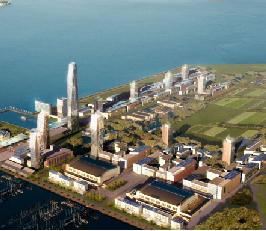
So Mayor Lee goes to China with plans to celebrate the signing of a deal that would bring $1.7 billion in Chinese investment into the lagging Treasure Island redevelopment project, and instead the whole thing falls apart. Not good for the cross-Bay rivalry: Gov. Brown, a former mayor of Oakland, landed $1.8 billion in Chinese money for his city’s big project, while Lee lost out.

But there’s a bigger problem. It’s hard to see how anyone would want to invest in Treasure Island right now, when:

The island is sinking,

The Bay is rising,

There’s only one way on or off the island, and it’s already so crowded that a modest event like the Treasure Island Flea Market ties up traffic in both directions for hours, and

The place is radioactive.

Matt Smith and Katherine Mieszkowski of the Bay Citizen did what the Navy and the city of San Francisco refused to do. They went out with a couple of red buckets, dug up some soil and had it tested for Cesium-137. Bingo: The place suffers from far worse contamination that anyone was letting on. And there might be even more:

Until the early 1990s, the Navy operated atomic warfare training academies on Treasure Island, using instruction materials and devices that included radioactive plutonium, cesium, tritium, cadmium, strontium, krypton and cobalt. These supplies were stored at various locations around the former base, including supply depots, classrooms and vaults, and in and around a mocked-up atomic warfare training ship – the USS Pandemonium. CIR’s samples were taken from under a palm tree 50 feet from a classroom building where cesium-137 was kept, according to military archives. A 1974 radiation safety audit identified cesium samples used and stored there with radioactivity several times the amount necessary to injure or kill someone who mishandled them. In 1993, shipping manifests from the same building showed even greater amounts of cesium-137 taken away from the same site that year.

Now some experts say that development plans need to be put on hold while the entire place is checked out more carefully:

“The fact that there is a level above standards is a clear mandate for further study and assessment of the extent of contamination and its origin,” Beyea wrote in an email, adding that more systematic testing is particularly important given that public play areas are planned nearby. “Building a playfield is not an appropriate plan at this time,” he wrote, “given the tendency for little children to put things in their mouths.”

Would you loan a couple billion dollars for a development project on that site?

In theory, of course, the Navy is responsible for the cleanup. In practice? Good luck with that. The Pentagon is blaming the sequester for forced budget cuts in everything including the Blue Angels; you think anyone’s going to write a very big check any time soon for a very complex environmental clean-up job on an artificial island that will soon be underwater?

I used to think the best thing to do with Treasure Island was to leave as much open space as possible for soccer and baseball fields, then slowly let it sink back into the Bay. Now apparently it’s a bad idea even to have kids playing there.

And what about the people who already have moved into housing at TI? Anyone going to test their soil?

Anyone want to take bets on whether anything much is ever going to be built there?

When conservatives love Leno

11

State Sen. Mark Leno is used to facing opposition. His efforts to regulate chemicals, end gender discrimination in insurance, and force cell-phone makers to come clean about radiation levels put him up against some of the most powerful interest groups in the state. He’s fought with Republicans over state spending and taxes.

He’s not used to getting support from right-wing media.

Yet that’s what’s happening now: In an odd political reversal, Leno’s (eminently reasonable) bill to allow cities to explore extending drinking hours is getting flak from progressive groups like Alcohol Justice — and support from the Orange County Register and Fox News.

The Register, which hates all forms of regulation, ran an editorial endorsing Leno’s bill on the grounds that it makes perfect sense for a world where people no longer always work 9-5. (Oh, and it makes sense because there are two many damn laws anyway and we should let people drink when they want.)

Neil Cavuto of Fox News interviewed Leno recently, and his only complaint about the bill was that the procedure for actually getting a late-hours license would be so complicated that even hearing about it was driving him to drink.

That’s the thing: Leno’s bill doesn’t force anyone to do anything. It just sets up a long, complicated process that might, in the end, after extensive public input on the state and local level, allow a couple of bars in a few limited areas (in cities that want to pursue this) to stay open until 4am, as bars in many civilized states already do.

So while Bruce Livingston, who is a decent guy and usually works on good issues, is running around the state trying to get progressives to oppose the Leno bill, the conservatives who usually vote against everything Leno does might wind up on board.

And wouldn’t that be an odd way to get a good bill passed?


Ron Lanza, queer impressario, dies at 78

24

Ron Lanza, a pioneer in San Francisco’s gay rights movement and an impressario who promoted queer arts through the worst of the AIDS crisis, has died after a long battle with colon cancer. He was 78.

Lanza, a Brooklyn native, was one of the leaders of Bay Area Gay Liberation in the 1970s, and, along with Assemblymember Tom Ammiano and the late activists Hank Wilson and Howard Wallace, was instrumental in building the LGBT movement in San Francisco.

He was the owner and operator of the Valencia Rose Café and later Josie’s Cabaret and Juice Joint, two groundbreaking queer performance venues that helpled launch the careers of  Whoopie Goldberg, Marga Gomez, and Margaret Cho.

“His vision came from looking at people and saying, ‘you have talent, you ought to try this,’ ” Ammiano, who performed as a comedian at Valencia Rose, told me.

“He was a giant in this city,” Tommi Avicolli Mecca, a performer and housing activist and the author of a book on the history of gay liberation, noted. “He created the foundation for what we now know as queer arts in San Francisco. He was really one of a kind.”

Lanza with Dennis Peron and Tom Ammiano

Marke B., our managing editor and a longtime follower of queer culture, put it this way:

“He dedicated his life to promoting theater and arts in San Francisco — even if it sometimes meant playing hardball, but always with that super-charming, goofball smile. Every single drag queen, performance artist, comedian, and actor in the city owes Ron a memorial smoothie — the Valencia Rose and Josie’s Cabaret kept performing arts alive in this town through the worst years of AIDS and political artphobia.”

Lanza, a Navy veteran, arrived in San Francisco in the 1970s, and worked for a while as a teacher in Walnut Creek. “When he came out, he risked being fired, so he quite before they could fire him,” Ammiano said.

With Wilson, Lanza took over the Ambassador Hotel, a Tenderloin SRO with a large number of gay and transgender tenants. In the 1980s, the two helped create what would become the Tenderloin AIDS Resource Center.

Lanza never liked the headlines; while his compatriots entered politics, ran for office, and organized on the streets, he stayed in the background, providing the cultural, moral, and financial support.

When Ammiano challenged then-Mayor Willie Brown in a legendary 1999 write-in campaign, Josie’s Cabaret and Juice Joint became the campaign headquarters. “He was so supportive,” Ammiano said. “He was a real San Francisco lefty. He only cared about money if he had to pay the bills.”

Gabriel Haaland, who helped run the Ammiano write-in, told me that “San Francisco is dimished. It’s such a heavy loss. There are people who are just magical, bright lights in the world, and he was one of them.”

Lanza was diagnosed with colon cancer in his 40s, but survived — in part, probably, thanks to adopting a healthy lifestyle. “He didn’t smoke, he was a vegetarian, and back then we teased him about it,” Ammiano said.

But the cancer came back in his later years, and he quietly underwent a series of operations. “He called me a few weeks ago and said he was dying,” Ammiano said. “He wanted to have a good-bye dinner.”

A huge dog-lover, Lanza could often be seen running down Dolores Street with two or three rescue animals. One of his last wishes was for a trip East to leave the dogs with a relative. He’d been driving a limo for income, and one of his wealthy clients paid for the ticket.

“He was always handsome, always loyal,” Ammiano recalled. “There were times you wanted to kill him, but the love was always there.”

A memorial is pending.

Dealing with the faux cabs

95

Lots of comments on my article outlining the problems with the fake cabs that are riding around town without medallions or proper screening. The main complaint the trolls have appears to be their dislike of cab drivers and the difficulty of getting a cab in some places and at certain times. I’ve never had a bad experience with an SF cab driver in 30 years of living here and taking cabs, but I’m sure there are others who have; no industry is perfect.

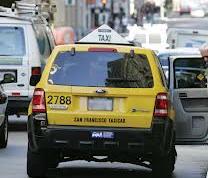
My main concern is that the cab interlopers are lying and cheating — insisting that they don’t have to follow the same rules as everyone else. Somebody in one of the comments said that there’s nothing wrong with “ride shares,” and it’s true that everyone from Craigslist to Caltrans has some verison of a ride board, and it’s not uncommon for casual carpools to share gas costs.

But that’s not what Lyft and Uber etc. are doing. They’re private businesses, set up with venture capital backers, with the aim of making a profit by ferrying passengers around cities. That’s the definition of a taxicab business. If these were just casual shared rides, there would be no business model and they wouldn’t have investors.

I’ll tell you how we can settle the issue quickly. How about all of us who need a ride around town contact Lyft, get a lift, and then voluntarily pay nothing. Or just offer the price of gas — $4.50 a gallon, most of these cars get 25 miles to the gallon, most rides around town are five miles or less, so that would be 90 cents.

Passengers get profiles on the system, just like drivers. Anyone who does that will quickly find it impossible to get rides. Which will demonstrate that this isn’t ride-sharing, it’s commerce. And while I’m all in favor of competition, everyone should play by the same rules.


Checks from mayor’s mysterious breakfast companions mysteriously absent

In less than three months, custom made super yachts will zip around the San Francisco Bay in the ultimate competition for the prized America’s Cup. But San Francisco could wind up spending millions more than originally expected to host this prestigious sailing regatta.

At a March 13 committee hearing at the Board of Supervisors, America’s Cup Organizing Committee CEO Kyri McClellan reported that Mayor Ed Lee was investing an “incredible amount of energy” into helping ACOC with fundraising efforts to avert a city funding shortfall. He was even said to be hosting “breakfasts with CEOs” to solicit funding, McClellan said.

Who are the CEOs? Nobody will say.

How much has each of them pledged to give? Nobody will say.

When the Guardian submitted these questions to Lee, McClellan, and Stefanie Roumeliotes – whose SGR Consulting firm was wheeled in at the last minute to organize fundraising events – none answered directly.

McClellan responded on April 9 with a copy of a letter she sent to Mayor Lee and Board President David Chiu on the day of the hearing, which she indicated was “the most recent update on fundraising.” Roumeliotes, for her part, told the Guardian flat out to stop calling, because her firm was not going to answer any questions.

So far, it appears that none of the mayor’s fundraising meetings, which took place from January 25 to March 4, resulted in his unnamed breakfast companions writing out actual donation checks.

Had they contributed funding, the donation amounts would have been reflected in “behested payment” forms filed with the San Francisco Ethics Commission, required under state law to be submitted 30 days after a contribution is made.

Elected officials are “supposed to file behested payment [forms] for … legislative, governmental or charitable purposes,” Ethics Commission chief John St. Croix told the Guardian, so donations relating to the America’s Cup would fall squarely into this category. Those forms are supposed to filed internally by department, then sent onto Ethics. So far, none have been recorded.

“If there are such forms that the mayor filled out,” St. Croix told the Guardian, “they’re not getting forwarded.”

Meanwhile, McClellan’s March 13 letter suggests that recent fundraising efforts have yielded only $1.4 million – which won’t actually be in hand till next year. That’s a far cry from the estimated $15.6 million funding gap race organizers say is needed to cover San Francisco’s estimated $22.5 million billionaires’ boat race tab. As the fundraising arm of the race organizing committee, ACOC promised in an initial agreement that it would “endeavor to raise” the amount needed to defray city costs. Thus far, it’s paid $6.8 million.

In her letter to Lee and Chiu, McClellan suggested that roughly $13 million of that $15.6 million shortfall would be accounted for in “forecast General Fund revenues.” That translates to additional money harvested from visitors’ pockets via sales and hotel taxes, with some payroll taxes and parking fees sprinkled in, all associated with the America’s Cup events. Little-guy money.

And thanks to the little guys, ACOC’s new fundraising goal is much more attainable. “The SFACOC continues to endeavor to raise the funds,” McClellan wrote. “At a minimum that is $2,670,851 of which we already have $1,400,000 in existing pledges that are to be received by January 2014.”


ABC shows more concern about expanding police video surveillance than Mayor Lee

15

The SFPD has quietly expanded its reach and authority to obtain video surveillance from in and around bars, clubs, and markets through a condition it has begun recommending on new liquor licenses, as I reported in today’s issue, effectively bypassing controls on city-operated surveillance cameras established through extensive public hearings in 2005.

But the Mayor’s Office doesn’t seem concerned about the new trend, echoing SFPD’s point that it is the California Department of Alcoholic Beverage Control that decides whether to heed the SFPD’s request to include the video surveillance condition. “There is no new policy. SFPD makes recommendations as far as I know, not requirements,” Mayoral Press Secretary Christine Falvey wrote to me in an email responses to our questions.

Certainly, everyone from bar owners to the ACLU to Sups. Scott Wiener and David Campos – who have called a hearing on the policy for later this month – consider it a new policy, or at least one that the public has just learned of after it was adopted internally right after the idea was shot down in public hearings in 2011.

ABC spokesperson John Carr had told me the department “routinely denied requests for conditions by SFPD per section 23800(e) of the Californian Business and Professions Code, occasionally these denials include the surveillance condition,” but he wasn’t able to provide me any examples of that happening by press time.

But today, he was able to find one. On Oct. 3, 2012, ABC rejected the SFPD’s request for video surveillance at Bush Market at 820 Bush on a quiet residential block of Nob Hill, noting that state law requires such requests be supported by “substantial evidence” that problems exist at the site that would be mitigated by the condition.

“I regret to inform you that the Department is unable to impose conditions pursuant to your request because no evidence was provided to establish that a problem exists at the premises or in it immediate vicinity,” ABC District Administrator Justin Gebb wrote in what was essentially a form letter.

Carr shared an identical letter that the ABC sent to the SFPD denying some of its requested conditions for another liquor license transfer on Feb. 12, this one for the Space 550 event venue at 550 Barneveld Ave. But in that case, the ABC decided to support the SFPD’s request for video surveillance “that is able to view the inside and outside of the premises” and which must be given to the cops “upon demand.”

As I wrote in this week’s paper, the ACLU considers that kind of extrajudicial expansion of the SFPD’s ability to require and obtain video surveillance to be unconstitutional, and we furnished a copy of the article and the issues it raised to try to get a more substantial comment from the Mayor’s Office, which seems to be less concerned with the civil rights of San Franciscans than the bureaucrats in Sacramento are.

“Balancing public safety with vibrant cultural and nightlife activities is a concern of mayor. He expects the Police Department to work in partnership with the neighborhood and its businesses to lawfully collect evidence that can help keep the public safe and neighborhoods active,” Falvey wrote.

So I had a few follow-up questions, for which I’m still awaiting answers, and I’ll update this post if and when I get them: “The ACLU’s position is that this is not a lawful way to collect evidence, and that it violates the state constitution’s privacy protections and the rules San Francisco established in 2005 regulating when and how the SFPD may request and use video surveillance. Does the mayor reject those concerns and has he sought any legal advice to support his position? In the absence of any judicial review, shouldn’t the city have some guidelines and policies governing this expansion of SFPD’s video surveillance authority? Does the mayor believe the 2005 guidelines should no longer apply? And does the mayor agree with Sups. Wiener and Campos that it would be appropriate to have a public hearing on this issue, particularly given the strong public opposition to requiring expanded video surveillance by bars two years ago?”