Bay Guardian Archives

Reel-ality

3

cheryl@sfbg.com

SFIFF “I’m the wrong kind of person to be really big and famous,” Elliott Smith admits in Heaven Adores You, Nickolas Rossi’s moving portrait of the late indie musician, who went from regional star to superstar after his Oscar nomination for 1997’s Good Will Hunting. “It was fun … for a day,” Smith reflects — and anyone who saw Smith’s hushed Academy Awards performance, on a night that also included Celine Dion’s chest-thumping rendition of “My Heart Will Go On,” has likely never forgotten it.

But Heaven isn’t overly concerned with Smith’s sudden celebrity and mysterious end (in 2003, he was found with two apparently self-inflicted stab wounds to the chest, but his death was ruled “undetermined,” rather than a suicide). Instead, it’s an artfully crafted study of a unique talent, avoiding music doc clichés in favor of more creative choices, like illustrating college-radio interviews — far more revealing than anything Smith would share with journos seeking Oscar sound bites — with gorgeously composed shots of Smith’s beloved Portland, Ore. Heaven widens to contextualize Smith’s importance within the 1990s Portland scene, with former members of his pre-solo band, Heatmiser, and fellow musician and longtime girlfriend Joanna Bolme among the interviewees. (Unfortunately absent: Hunting director Gus Van Sant.) But Smith’s soulful, eerily timeless songs (described here as “little pictures made of words”) remain Heaven‘s focus — appropriate, since they were always Smith’s focus, too.

A less-tragic tale of reluctant fame unfolds in Jody Shapiro’s Burt’s Buzz, which opens as its subject, Burt’s Bees co-founder Burt Shavitz, arrives in Taiwan to what can only be described as a hero’s welcome. Given the fact that Burt’s Bees products crowd drugstore shelves as ubiquitously as Neutrogena and Cover Girl, you’d be forgiven for assuming THE Burt lives the lavish life of a lip-balm magnate. Which is not the case, since the aging Shavitz prefers an exceedingly spartan life in rural Maine, with a woodstove providing heat and a begrudging acceptance of running water. “A good day is when no one shows up, and you don’t have to go anywhere,” Shavitz opines.

Not that he has any choice. When Burt’s Bees went from homespun to corporate, all the dough went to Shavitz’s former business (and romantic) partner Roxanne Quimby, who’d bought him out when their relationship went sour; most of Shavitz’s income seems to stem from making personal appearances for a company he no longer has much else to do with. (Quimby’s upbeat son is interviewed in her stead, though we do glimpse her in excerpts from a TV program entitled How I Made My Millions.) Still, Shavitz — knowing that Burt’s Bees is stuck with him forever, since his name and bearded visage decorate the brand’s folksy packaging — remains remarkably blasé about his financial situation. He’s not into material possessions, though he’s comfortable enough to have a “majordomo” help him with his affairs, and is enough of a diva to demand rice milk rather than the soy milk proffered by his eager-to-please Taiwanese hosts.

Shapiro’s documentary is a bit overlong (do we really need to see ol’ Burt Skyping with his dog?), but it wisely highlights the most interesting element of Shavitz’s story, which is not “Did he get ripped off?” or “Look at this crazy hippie!” but “Is this guy more self-aware than he’s letting on?” Though his assistant insists “He’s like Colonel Sanders, and he simply does not understand that,” it’s never entirely clear — though Shavitz’s own assertion that “No one has ever accused me of being ambitious” certainly has the ring of truth, rather than bitterness, to it.

Elsewhere in SFIFF’s documentary programming, two films take contrasting approaches to the artistic process. Of local interest, Jeremy Ambers’ Impossible Light, a close-up look at the Bay Lights — the high-tech art installation that illuminates the western span of the Bay Bridge — smartly runs a lean 71 minutes. First, we meet project founder Ben Davis, who had a brain wave one sunny day while idly staring at the bridge, which he’d always appreciated despite its ugly-stepsister status next to the glamorous Golden Gate. After artist and LED wizard Leo Villareal joins up, the ball really gets rolling, and Light tags along as a dedicated group of big thinkers form alliances with Caltrans engineers and other hands-on types who believe in Davis’ “impossible idea.” Nobody who sees this film about what became a truly collaborative process — Bridge workers scale the towers, tinkering with laptops! Creative types scramble to raise eight million bucks from private donors! — will ever take the intricately twinkling end result for granted.

The opposite of straightforward: The Seventh Walk, inspired by the nature-themed art of Indian painter Paramjit Singh. Director Amit Dutta brings Singh’s work to life with his questing camera, floating through the Kangra Valley’s leafy forests and across streams as water rushes, birds squawk, and insects hiss on the soundtrack. We also see Singh himself, dabbing his textured, abstract work onto canvases as the movie around him becomes more surreal. Occasional poetry fragments appear on screen to make the waking-dream vibe even more immersive: “Deep in the forest, the musk deer frantically pursues its own fragrance: laughter!”

Despite its title, it takes awhile for laughter to enter Happiness, Thomas Balmès’ tale of Peyangki, a restless nine-year-old monk living in remote Bhutan — the last pocket of the country, which prizes its “gross national happiness,” to get electricity. Stunningly composed shots (those mountains!) showcase a simple, deeply traditional lifestyle that’s about to completely change, for better and probably worse — ominously, everyone’s conversations already revolve around television. When Peyangki gets the chance to travel to the capital city, he’s fascinated by everything: mannequins, crutches, packaged snacks, aquarium fish, and, at last, TV, where the first thing he glimpses is Wrestlemania (and he’s on to it immediately: “Is it real?”), and you can practically see the innocence melting away.

http://www.youtube.com/watch?v=HA7FKRygwLc

A more conventionally-structured doc comes from Stanley Nelson, no stranger to powerful material with previous films like 2011’s Freedom Riders, 2006’s Jonestown: The Life and Death of People’s Temple, and 2003’s The Murder of Emmett Till. Nelson returns to the civil rights movement for Freedom Summer, which mixes archival material and contemporary interviews to detail the youth-propelled African American voter drive amid menacing intolerance in 1964 Mississippi.

News reports about the disappearances of workers James Chaney, Andrew Goodman, and Michael Schwerner — “Mickey” to wife Rita, as eloquent and composed today as she is in 1964 footage — weave throughout the film, with the discovery of their bodies recalled by folk legend Pete Seeger, who learned about it while performing on a Mississippi stage. While the events detailed in Freedom Summer have been covered by numerous other documentaries, Nelson’s impressive array of talking heads (not identified by name, though many are recognizable) brings a personal, eyewitness touch to this history lesson. *


The 57th San Francisco International Film Festival runs April 24-May 8. Screening venues include the Castro Theatre, 429 Castro, SF; New People Cinema, 1746 Post, SF; Pacific Film Archive, 2575 Bancroft, Berk; and Sundance Kabuki Cinemas, 1881 Post, SF. For tickets (most shows $15) and complete schedule, visit festival.sffs.org.


New direction

0

cheryl@sfbg.com

SFIFF First things first: Brand-new San Francisco Film Society Executive Director Noah Cowan’s two favorite movies are 1942 Preston Sturges screwball comedy The Palm Beach Story and 1974 disaster drama The Towering Inferno. Appropriately, our first meeting takes place in downtown San Francisco, where that fictional world’s tallest building (containing Steve McQueen, Paul Newman, Faye Dunaway, Fred Astaire, and O.J. Simpson, among others) went up in flames.

Cowan is very freshly transplanted from his native Toronto, where he worked for years in various roles at the Toronto International Film Festival; his career highlights also include co-founding Cowboy Pictures and the Global Film Initiative. He’s so new in town that his 12-year-old greyhound, Ruckus, has yet to make the move (“He’s gonna come down in the fall, because it’s been so busy, and I’m traveling a lot this summer”); he’s barely had time to find an apartment (home is now the Inner Sunset) and get his bearings.

But the San Francisco International Film Festival, now in its 57th year, waits for no man — not even this man, SFFS’ fourth executive director after the deaths of Graham Leggat in 2011 and Bingham Ray in 2012, and the brief tenure of Ted Hope, who began a new job at Fandor earlier this year. As the fest ramps up to its opening this week, the energetic Cowan — a huge San Francisco fan — gives the impression of someone who plans on going the distance.

SF Bay Guardian So, you started in early March, and the festival begins April 24. You’re plunging right into it!

Noah Cowan Yeah! But I think it’s better that way, because I’m experiencing the key event of the organization. I was able to help out at the very last minute on a few of the bigger films, but [starting right before SFIFF] allowed me to see the tail end of the programming process, and start thinking about ways we want to move things in the future.

SFBG How does this job differ from what you were doing previously?

NC My role in Toronto was really as an artistic leader, as opposed to an executive leader. Obviously there’s artistic-leadership aspects of my current job, but I have the benefit here of three really capable artistic heads: [director of programming] Rachel Rosen, who runs the festival and our other film screening programs; [Filmmaker360 director] Michelle Turnure-Salleo, who runs the filmmaker services and filmmaking area; and Joanne Parsont, who is a gifted director of education. I’m more strategic guidance and day-to-day administration, really learning how to run and expand and change the business.

In my career, I’ve gone back and forth between these two tendencies. I really feel now that I want to be back in the executive director’s seat. I was co-president of my own business for almost 10 years, and I’ve really missed that — the ability to mentor staff and to shape the overall tone of an institution. San Francisco provides unusually interesting opportunities for making a new kind of institution. It’s just a place that loves invention, and the people, including our board, have a real can-do attitude about change. For me, it’s a dream come true! I just need to get through the festival [laughs] to get a breath.

There are certain holdovers from my role in Toronto, where we built a crazy big building, [the TIFF Bell Lightbox, which opened in 2010]. There’s nothing else like it in the world of film, and I had the great honor and privilege of being able to oversee the artistic life of that building. Maybe some things that we did there aren’t going to translate here, but some of them will. We engaged in a lot of pilots in education and film-community outreach that taught me some valuable lessons about how those can and can’t work, and what’s changed about education now that we’re in the digital world.

In addition, I’ve learned the pros and cons of having your own theater space. While I’m highly optimistic that we’ll have alliances in the future where we’ll be able to have a year-round screening presence, I’m going to be pretty cautious about how we go about that from a business perspective.

SFBG SFFS already has several special presentations and mini-festivals throughout the year (Taiwan Film Days, French Cinema Now, etc.) When you say “year-round,” do you mean an increase in programming? Weekly screenings?

NC What would exactly happen in that theater is still a question. Maybe it’s just these small festivals that we have. I think there’s something about being associated with a permanent space, even if you don’t own it, that is really important for a film institution — to really be anchored. Film is kind of a retail business in a funny way, and while festivals are the Black Friday of film going, you need to have a sustainable relationship with your audience to be able to grow it, and to have them trust you to follow different pathways.

SFBG Fortunately, like Toronto, San Francisco has a built-in audience of film fanatics.

NC It’s interesting here — it’s more diffuse environment. While there are a lot of film festivals in Toronto, there are a million in San Francisco and in the Bay Area in general, and there’s positives and negatives about that. When I have a second, after our festival, I’m looking forward to reaching out and understanding the needs of other film organizations in the city, and how we might be able to help. So far, this has felt like a city that really welcomes collaboration, so I hope we’ll be able to have some really exciting conversations.

SFBG What are you most excited about at this year’s SFIFF?

NC I really like this festival. There are a number of terrific films. I really like Rachel Rosen’s taste! Very much like the Toronto festival, the San Francisco festival is really focused on audiences: what kind of audiences are going to be interested in what kinds of films, and in general, an eye to audience enjoyment in the selections, even for films that are on the difficult side. There’s a thoughtfulness to the kinds of responses that the programmers would like to elicit, which really fits in with my own philosophies of why film festivals and film organizations are generally on the planet.

In terms of individual films, there are some films that I’ve championed before that are here, like Roberto Minervini’s Stop the Pounding Heart, or James Franco’s Child of God, which I was the programmer of this past year in Toronto. I’m happy to see them again! And then there’s some new work, particularly in the documentary area, that really impresses me — films like Art and Craft and Burt’s Buzz, which are really strong and really accessible.

And then, of the many elements that drew me to San Francisco, probably the biggest one was the incredible work that we’re doing in making films. So I’ll be paying very special attention to the San Francisco Film Society-supported films — we have seven films that we’ve supported, strictly church and state in terms of being selected for the festival, that are going to be here because they’re just the best films of the year, particularly from an American independent perspective. I’m just so delighted that we can have these deep, family associations with films like Hellion, Little Accidents, and Manos Sucias. These are all films of really high caliber that are going to be among the most talked-about films of the year. *


The 57th San Francisco International Film Festival runs April 24-May 8. Screening venues include the Castro Theatre, 429 Castro, SF; New People Cinema, 1746 Post, SF; Pacific Film Archive, 2575 Bancroft, Berk; and Sundance Kabuki Cinemas, 1881 Post, SF. For tickets (most shows $15) and complete schedule, visit festival.sffs.org.

Ketchup

0

marke@sfbg.com

SUPER EGO Whoever decided to pack Disclosure (charging $50 for a DJ set!), the adorable Martinez Brothers, Easter with the Sisters of Perpetual Indulgence, 420 in the Park, two insane undergrounds, and 200 bottomless mimosa brunches into one blurred weekend deserves to be packed into a giant pastel plastic egg and rolled down Mt. Tam. My head feels like a gargantuan green Bunnyzilla hopped upon a ketchup packet, not cute. So here are some brief items of interest before I lay down for just a minute.

Stylish Portrero-ish club and gallery Project One is no more. Longtime party people Sean and Isabel Manchester of Wish, Mighty, and Chambers have snatched it up, rejiggered it with a chic vibe, programmed lots of Bay-favorite DJs, and christened it Mercer (251 Rhode Island, SF. www.mercer-sf.com), a lounge and “micro-club” named for the famous street in their beloved native Soho, NYC. The space is still bumping the Turbosound system inherited from 222 Hyde (RIP) Check it out.

Time to cue up — the 2014 DMC San Francisco Regional DJ Battle and Scratch Competition (Sat/26, noon-7pm, $15 advance, $20. Mighty, 119 Utah, SF. www.mighty119.com) will fill Mighty all day long with epic pyrotechnics. The Bay Area holds intimate acquaintance with the all-powerful DMC World DJ Championship title: We’ve won it several times in the past 30 years — once, in fact, with this year’s host, DJ Apollo. This is the first time in three decades that there will be “test run” of a separate scratch competition (scratching was introduced to the DMC in 1986), so I’m itching to see who steps up.

Two new killer fancy cocktails for your face. SF’s been exploding with mezcal bars and

classic Negroni cocktails — combine the two for a knockout mescal Negroni ($11) at the awesome Lolo (3230 22nd St, SF. www.lolosf.com). And, at my new favorite Thai spot, downtown’s Kin Khao (55 Cyril Magnin, SF. www.kinkhao.com), grab the zesty, incredible Kathoey Collins, a.k.a. the “ladyboy” ($12). Flavored with traditional Thai blue flowers, it changes color before your very eyes to a lovely lavender, “for something you don’t quite expect,” says jovial owner Pim Techamuanvivit.


SHLOHMO

Aw, known this LA bass-head darling since he was a wee glitcher, chopping up slabs of raw atmosphere and layering on pretty discombobulations. Now he and his sound are all blown up, coming straight from Coachella for two days at Great American. With Purple, Jim-E Stack, and Chad Salty.

Wed/23 and Thur/24, 8pm doors, 9pm show, $20–$25. Great American Music Hall, 859 O’Farrell, SF. www.gamh.com


#TURNUP

We love our hometown queer hip-hop heroes and their party crowd of radiant children. Rump-pumping duo Double Duchess will take the floor at this throwdown, with Guardian cover star Micahtron motormouthing on the mic.

Fri/25, 10pm, $10. Elbo Room, 647 Valencia, SF. www.elbo.com


FEATHERS AND FEDORAS

The Guardian’s hosting a roaring ’20s evening knees up at the de Young Museum, grab your favorite flapper and hightail it over. With live Parisian speakeasy band Trio Zincalo, Decobelles dance troupe, our very own astrologer Jessica Lanyadoo giving live readings, a full bar, and oodles more.

Fri/25, 6pm-8:30pm, free. De Young Museum, 50 Hagiwara Tea Garden Dr., Golden Gate Park, SF. www.tinyurl.com/SFBGfeathers


EDU IMBERNON

So excited to hear Edu again. Valencian hero of Spanish techno, he added some much-needed swing to the Berlin sound of the late 2000s with the classic “”El Baile Alema” (along with another Spanish favorite, Coyu). He easily slips crowds under his spell.

Sat/26, 10pm-late, $10. Audio, 316 11th St., SF. www.audiosf.com


6TH BOROUGH PROJECT

Craig Smith and Graeme Clark (a.k.a. The Revenge) are quality re-edit hypnotists from the UK, introducing new audiences to very deep soulful disco, Latin funk, and deliciously strange grooves via their quick-handed cut-and-pastes.

Sat/26, 9:30pm-3am, $10–$15. Monarch, 101 Sixth St, SF. www.monarchsf.com


FELIX DA HOUSECAT

The sweet, eccentric Chicagoan may still be revered here mostly for his sassy electroclash output in the early 2000s, but he really does have banging house running through his veins. With the funky pastiche-master Todd Edwards and Australian Tornado Wallace (whose beard rivals our own Jason Kendig’s).

https://www.youtube.com/watch?v=IzR0q1jvstg

Sat/26, 9pm-late, $15–$20. Mezzanine, 444 Jessie, SF. www.mezzaninesf.com


JUS’ DANCE

Kenny Dope and Mr. V’s beloved NYC party debuts in SF — and will surely show us some masters at work, bopping from soulful house to disco classics, funky hip-hop to Latin jazz and beyond.

Sat/26, 10pm-late, $15–$20. Mighty, 119 Utah, SF. www.mighty119.com


Where there’s smoke

0

news@sfbg.com

It was April 20 in Golden Gate Park, the fabled 4/20 in the parlance of pot smokers, and we found Nick and Chris standing under the shade of a tree with a cluster of friends, including Geoff, the proud owner of a five-foot bong.

Nick had done several hits through the supersized smoking device that day. Beside him, Chris took hits from his own handheld bong. “I’m feeling good,” Nick reported. “But I’m also kinda hungry. I could go for some Chinese food. Ohh, and some Sapporo!”

Administering a hit of marijuana through such unwieldy paraphernalia is quite the operation, requiring one person to stand and hold one end, another to light the marijuana once it’s packed into the bowl, and a third to inhale the five-foot column of milky smoke that rises through the chamber. The smokers on the receiving end contorted their faces as they inhaled, inevitably coughing and laughing as they breathed out, seemingly amazed by the experience. The college-age friends were in 420-induced bliss.

The annual 420 celebration in Golden Gate Park is unpermitted, with no official organizers, yet thousands of festivalgoers nevertheless flock to it year after year. It’s a quintessentially San Francisco experience: Young and old congregate for a collective daylong smoke-out, bringing drums, dogs, grills, shade structures, hand-blown glass, tie-dyed tapestries, Hacky Sacks, sound systems, and other picnic paraphernalia along with them.

The area around Hippie Hill — at the eastern end of the park, near Kezar Stadium — was a jumble of humanity crammed elbow to elbow, reeking of pot smoke. The crowd reflected a wide range of ethnicities and brought out many displaying an outlandish sense of fashion, sporting shiny plastic marijuana-leaf necklaces, sleeve tattoos, piercings, face paint, and piles upon piles of dreadlocked hair.

San Francisco maintains an iconic status as a weed-friendly city. While 420 in Golden Gate Park is a lighthearted scene that’s also proved irksome for city agencies plagued by leftover trash and traffic jams, serious year-round marijuana advocacy efforts continue to mark the Bay Area as a hotbed for drug policy reform and thriving, legitimate pot-based entrepreneurship.


GREEN BEACON

The movement to legalize marijuana for medical purposes started in San Francisco, the lovechild of the city’s hippie movement and its caregiving response to the AIDS epidemic. It was Dennis Peron and other activists here who wrote Proposition 215, the statewide legalization measure that California voters approved in 1996.

A decade ago, the San Francisco Board of Supervisors approved a comprehensive set of regulations for its two dozen or so medical marijuana dispensaries, guidelines that have proven to work well and be a model for other jurisdictions to follow, elevating pot purveyors into accepted members of the business community (see “Marijuana goes mainstream,” 1/27/10).

Some have even begun to regard the Bay Area as a model for how to implement a sensible approach to regulating marijuana. On April 16, US Rep. Dina Titus (D-Las Vegas) traveled to San Francisco on a fact-finding mission after Clark County, Nevada legalized medical marijuana, with Las Vegas and other Nevada cities expected to follow shortly.

“I want the state to learn from someone who’s done it right,” Titus told the Guardian as she toured The Apothecarium on Market Street, an elegant dispensary reputed to be one of San Francisco’s finest.

In addition to helping guide Nevada’s implementation of medical marijuana legalization, Titus said she’s working on federal legislation that would better protect small businesses involved with a marijuana industry that is growing rapidly in the US, thanks to Colorado and Washington taking the next step and legalizing even recreational uses of marijuana.

For example, Titus wants to make sure marijuana businesses have full access to banking services, something that the US Department of Justice has occasionally interfered with. As Titus told us, “The federal government shouldn’t be wasting time and going after people who are abiding their state laws.”


BLISS AND BOUNDARIES

Back at 420 on Hippie Hill, Amber and Charlie lounged on a blanket with Gizmo, an affectionate pooch they’d adopted from “this guy who lives in a tree house” in Santa Cruz. The young couple, ages 18 and 20 respectively, had hitchhiked to California from Washington. Yes, “we may have done some weed,” Charlie said before letting out a peal of laughter.

“It’s been pretty awesome,” Amber said. “Literally, there was smoke coming from everywhere,” the moment 4:20pm arrived. As far as the eye could see, she said, the scene was nothing but “people smoking weed. It was crazy.”

Lilian was at the park with a friend, wearing a crown of daisies she’d woven with flowers plucked from nearby the park entrance. “All day we’ve been doing joints and blunts and pipes,” she explained. “We haven’t had any bong hits yet, but we had a couple vape hits, because they were like giving free test trials here at the park. So we were like, alright, why not?”

Lilian exulted the “positive vibes” of the event, but it wasn’t all weed and roses. A short while later, reports of gunfire sent police cars racing into the park with sirens wailing. While police later reported that they never found evidence of anyone actually discharging a weapon, two different individuals were arrested on charges of possessing a firearm.

Emergency personnel responded to four medical calls, police reported the following day, including one person who had a seizure, someone who suffered an abrasion at Haight and Ashbury streets, and two underaged individuals who experienced problems after becoming overly intoxicated. For a crowd of thousands pushed the boundaries of indulgence, quite a small number suffered harm.

Eight other arrests stemmed from charges of selling marijuana or possessing it for sale, possession or sale of opiates, one warrant arrest, and another on charges of “malicious mischief,” according to police.

A few days before the unpermitted gathering, city officials held a press conference announcing a “comprehensive plan” to crack down on the anticipated debauchery, which included not only the Golden Gate Park marijuana celebration but the “Hunky Jesus” competition, a countercultural hallmark held annually on Easter Sunday in Dolores Park.

“Last year we had a lot of challenges,” said Sup. London Breed, whose District 5 encompasses Golden Gate Park. “We need to make the city and streets safe this year. We want people to come and enjoy San Francisco, but we also want them to respect San Francisco.”

Thus, city agencies ramped up deployment of both plainclothes and uniformed police officers, and sent out more parking and traffic control officers.

The previous year, when massive amounts of debris had been left strewn throughout the park, it took 25 city employees over 12 hours to clean up five tons of trash left by intoxicated visitors, said Phil Ginsburg, general manager of the city’s Recreation and Parks Department. The Department of Public Works’ tab for cleanup exceeded $10,000.

But the main draw of the event, in true San Francisco fashion, was behavior Police Chief Greg Suhr hinted in advance would essentially be tolerated. “The sale of marijuana is still a felony,” Suhr emphasized, “but I don’t think [the SFPD is] naive enough to believe that we can stop people from smoking on 4/20.”


CANNABIS AS MEDICINE

Advocates for legalizing even recreational use of marijuana had hoped to make the November ballot this year, but the campaign’s signature-gathering effort has sputtered out.

Sponsored by the California Cannabis Hemp Initiative, the legalization measure was named for Jack Herer, a renowned cannabis advocate who passed away in 2010. The campaign is now ramping up for another try in 2016, when some advocates hope the presidential election will drive younger voters to the polls.

But while efforts to legalize weed in California for recreational use falter for now, the legitimate use of cannabis for medicinal purposes has giving rise to healthy businesses and research on health benefits. At the April 16 event at the Apothecarium, Titus had lots of questions for Allie Butler, an expert in marijuana who has a master’s degree in public health and told Titus, “I want to do cannabis research for the rest of my life.”

Butler introduced Titus to the various strains of marijuana, explaining what ailments each is good for. The CaliWidow can be a cure for headaches, she explained, and Blue Dream is “good for nausea. We prescribe that for cancer patients all day.” She indicated another strain, saying, “this is the Jack Herer, it’s my mom’s favorite.” Fancy, knowledgeable, and above ground, this isn’t your mom’s marijuana business anymore.

Politics over policy

97

Joe@sfbg.com

Paid Sunday parking meters were unanimously repealed by the San Francisco Municipal Transportation Agency Board of Directors on April 15.

Sunday meters will be free starting July 1, a losing proposition for many, including seniors and people with disabilities who advocated for free Muni passes at the same SFMTA meeting.

There’s a dire need. Betty Trainer, board president of Seniors & Disability Action, relayed a senior’s story printed on one of 500 cards collected by her advocacy group.

“I’m often cold and can’t walk like I used to,” Trainer read aloud. “Most days I’m stuck in my room on my own. Help me out. No one should be a recluse for lack of money.”

In increasingly expensive San Francisco, seniors and people with disabilities often can’t afford to take a bus. They asked the SFMTA board to grant them mobility, but were denied.

Tom Nolan, president of the SFMTA Board of Directors, said it would be a matter of “when, not if” the board would revisit funding free Muni for elderly and disabled passengers, and would likely take up the question again in January.

Yet many who spoke out at the meeting hammered home the point that paid Sunday meters could have easily covered the cost of such a program.

Meanwhile, a SFMTA study found that paid Sunday meters also made life easier for drivers and business proprietors. So why would the SFMTA board vote down a measure with so many benefits?

Ultimately, the decision on Sunday meters stemmed from political pressure from the Mayor’s Office. The vote reflects decision-making not predicated on whether the policy worked or not, but whether it could be sacrificed to gain political leverage.


GOOD FOR EVERYBODY

The SFMTA’s December 2013 “Evaluation of Sunday Parking Management” study may not sound like entertaining bedtime reading, but the report identifies surprising biggest winner of the paid Sunday meter program: drivers.

“It is now easier to find parking spaces in commercial and mixed use areas on Sundays,” the report begins. Between 2012 and 2013, the average parking availability on Sunday doubled during metered hours, increasing from 15 percent to 31 percent. Parking search times were lowered as well.

Sunday drivers in 2012 spent an average of 14 minutes circling for a spot; in 2013, the average was dramatically reduced to four minutes.

That created a ripple effect benefiting businesses too, as higher turnover meant more customers cycling through parking spaces, something the business advocates have pointed out.

“You can drive into merchant areas now where you couldn’t before,” Jim Lazarus, senior vice president of public policy at the San Francisco Chamber of Commerce, told us in an interview for a previous story.

Paid Sunday meters also provided sorely needed funding for Muni.

The SFMTA’s most recent budget projection anticipated that paid Sunday meters would yield as much as $11 million. The already approved Free Muni for Youth program and the stalled free Muni for seniors and people with disabilities program would cost Muni about $9 million, all told.

That nearly direct cost correlation could be the reason why the free Muni issue got wrapped into arguments against repealing paid Sunday meters.

“To some people $23 may not be much, but to [seniors], every penny counts,” Pei Juan Zheng, vice president of the Community Tenants Association, told the board. She spoke in Cantonese, through a interpreter. “I know some senior couples who can only afford one Muni pass and share it, taking turns to go on doctor’s visits.”

meterbigSo paid parking meters benefit many diverse constituents, and even SFMTA Executive Director Ed Reiskin publicly favored them. Making Sunday meters free again wasn’t Reiskin’s idea, he told us back in February.


That order came straight from Mayor Ed Lee.


POLITICAL MINDS

Lee’s statement to the press the day after the meters were repealed said it all.

“Repealing Sunday parking meters is about making San Francisco a little more affordable for our families and residents on Sunday, plain and simple,” Lee wrote. “Instead of nickel and diming our residents at the meter on Sunday, let’s work together to support comprehensive transportation funding measures this year and in the future that will invest in our City’s transportation system for pedestrians, bicyclists, transit riders and drivers alike.”

Lee’s reasoning doesn’t address Sunday meters as policy, but as political fallout.

Two initiatives seeking funds for Muni are headed for the November ballot. In public statements, Lee repeatedly expressed fear that keeping in place Sunday meter fees, which generate revenue for Muni, would dissuade car-bound voters from supporting more funding for Muni at the polls.

The SFMTA board didn’t even pretend to vote against the measure for its policy merits, instead vocalizing what insiders already knew: Mayor Lee wanted the paid meters killed.

“We need to take a step back and make sure we win in November,” said Joel Ramos, an SFMTA director, moments before the vote.

“I know Mayor Lee has some of the best political minds in his office,” Cheryl Brinkman, another SFMTA director, chimed in. “Lee is certain this will help us in November and help us with our ballot measures.”

It seems these “best political minds” had greater sway in the end than SFMTA’s own policy reports on funding and benefits brought by Sunday meters.


VOTING FOR THE MAYOR

The SFMTA Board of Directors is appointed solely by the mayor. Efforts in 2010 to reform the body to be a mix of appointments from the Board of Supervisors and the Mayor’s Office went nowhere.

So as things stand, SFMTA directors’ chances of reappointment depend upon the will of the mayor.

After the SFMTA board voted on Sunday meters, we phoned Brinkman to ask if Lee’s appointment power swayed her vote on paid Sunday meters. She dismissed the idea, saying, “I have really strong confidence in this MTA board.”

But Brinkman did say she was told by the Mayor’s Office, though not the mayor himself, that Lee wanted to “kind of give people a break.”

Past SFMTA directors have run afoul of the mayor’s wishes on parking meter issues before. In 2010, StreetsBlog SF wrote how then-SFMTA director Bruce Oka was called into then-Mayor Gavin Newsom’s office for a stern scolding after he publicly backed extending paid parking meter hours.

“I don’t know if you’ve heard this about the Mayor’s Office, but they tend to be a little aggressive when they want people to be in line with the mayor,” Oka told StreetsBlog SF.

Notably, Lee opted to not reappoint Oka, instead appointing Cristina Rubke, whose sole political experience beforehand was advocating in public comment for the America’s Cup, according to SF Weekly. Oka was unavailable for comment for this story.

It’s not an unreasonable reach to say Oka’s frequent outspoken opposition to the positions of sitting mayors may have cost him his reappointment.

And Oka’s story raises another question: Does the SFMTA genuflect to the wishes of the Mayor’s Office? A look at past SFMTA board votes shows members’ startling consensus with the mayor, and with each other, for an ostensibly political board.

On smaller projects where one may expect political agreement, it’s there: The SFMTA board voted unanimously in 2011 to convert a portion of Haight Street for two-bus lanes, and in 2012 the board voted unanimously to approve Oak and Fell streets bike lanes.

But the board votes unanimously on more politically divisive matters too. Earlier this year, the commuter shuttle pilot program was greeted with controversy centered on Google buses. The packed SFMTA board meeting was perhaps one of the most contentious in recent memory, with those delivering public comment split between favoring the pilot program, or not.

But despite the fractious debate, the board voted unanimously to enact the commuter shuttle pilot program, a project the mayor had publicly championed.

“I don’t want to give anyone the impression that this mayor pressures the MTA board,” Brinkman told us. “This mayor,” she said, “really doesn’t.”

Before the vote, directors Ramos and Brinkman both acknowledged paid Sunday meters offer many benefits for drivers, but said the SFMTA failed to make the political argument for those benefits.

“We need to regroup and better explain parking management,” Brinkman told us in a phone interview. “Not just to the people who park but the Board of Supervisors, and even up to the Mayor’s Office.”

But even the directors who spoke favorably about paid Sunday meters voted to repeal them.

Hours after the public comment session finally wound to an end, it was time for SFMTA board members to vote on Sunday meters. Rather than discussing pros and cons, they swiftly rejected the program. And, in a move that should surprise no one, they voted unanimously.

SFBG Wrap, April 16-23

0

BART FINED FOR WORKERS’ DEATHS

The California Occupational Safety and Health Administration has fined Bay Area Rapid Transit for three “willful/serious” safety violations in connection with the death of two transit workers last October, saying BART is at fault due to a lack of safety measures.

“Safety standards are designed to save lives,” acting Cal/OSHA chief Juliann Sum said in a statement, “and they were not followed.”

The transit workers were killed in the final days of the BART strike. The accident claimed the lives of Christopher Sheppard, a BART manager and member of the AFSCME union, and Larry Daniels, a contractor, who had been inspecting a “dip in the rail” before they were hit by an oncoming train.

The workers were required to go through what’s called a Simple Approval process to get permission to work on the track, but the OSHA citation seized on that process as a dangerous underlying factor in the fatal accident.

“Employer’s control method, namely the ‘Simple Approval’ procedure, does not safeguard personnel working on tracks during railcar movement,” the citation reads. “The employer allowed workers to conduct work on the railway tracks where trains were traveling. The employees had no warning that a train moving at more than 65 miles-per-hour was … approaching the location where they were working.”

BART General Manager Grace Crunican quickly issued a statement. “Passenger and employee safety is our top priority at BART,” Crunican said. “BART has fundamentally upgraded its safety procedures with the implementation of an enhanced wayside safety program and a proposed budget investment of over $5 million.” She added that Cal/OSHA considered the safety violations to be “abated” in light of these changes, “meaning that none … pose continuing safety hazards.”

Simple Approval has since been terminated, BART spokesperson Alicia Trost told the Guardian. “BART permanently eliminated Simple Approval immediately following the tragic deaths,” she said. “We are also implementing the extra layers of protection for track workers.”

Notably, the two workers were killed during BART management’s attempt to train managers to operate trains during the strike, according to the National Transportation Safety Board, which continues to investigate the incident. (Joe Fitzgerald Rodriguez)

SORRY STATE OF PUBLIC HOUSING

Sup. London Breed has proposed setting aside city funding to renovate vacant and dilapidated public housing units, in an effort to quickly make housing available for homeless families in the face of a dire shortage.

At the April 15 Board of Supervisor’s meeting, Breed cited an anticipated budget surplus and called for the Controller and City Attorney to begin drafting a supplemental budgetary appropriation of $2.6 million, for renovating 172 San Francisco Housing Authority units sitting vacant.

“There are over 40 public housing developments in San Francisco, and given the decades of mismanagement and financial neglect that public housing has endured, many units are currently not available for San Franciscans to live in,” Breed said. “As we grapple with an unprecedented affordability crisis and an acute shortage of housing, particularly affordable housing, these fallow public housing units represent one of our best and cheapest opportunities to make housing available now.” Breed, who represents District 5, previously lived in San Francisco public housing.

The Housing Authority receives its funding through the federal government, but spokesperson Rose Marie Dennis said those federal dollars don’t stretch far enough for the agency to perform routine restoration of vacant units. “We have to work with the resources that we have,” she said.

According to an analysis by Budget & Legislative Analyst Harvey Rose, the city has lost $6.3 million in rent that could have been collected had its empty public housing units been occupied.

The day after Breed floated her proposal for a budgetary supplemental, tragedy struck at Sunnydale, the Housing Authority’s largest housing development, when a deadly fire claimed the lives of a 32-year-old resident and her 3-year-old son. The cause of the fire is under investigation, but a San Francisco Chronicle report noted that the Housing Authority had planned to rebuild Sunnydale for years due to its poor condition.

The following day, April 17, Mayor Ed Lee announced that emergency funding of $5.4 million had been identified through the Mayor’s Office of Housing and Community Development, to address serious deferred maintenance needs — such as busted elevators in apartment complexes where disabled seniors rely on wheelchairs and canes to get around. (Rebecca Bowe)

SUPES OUTFOX LANDLORDS

When the San Francisco Board of Supervisors gave final approval April 15 for legislation to substantially increase landlord payments to tenants in the case of Ellis Act evictions, it reflected a key change designed to counter a recent eviction push by landlords.

Winning approval on a 9-2 vote, with Sups. Mark Farrell and Katy Tang opposed, the legislation increases the current required relocation payments of $5,265 per person or $15,795 per unit (plus an additional $3,510 for those with disabilities or over age 62) up to the equivalent of two years’ rent for a comparable unit. That translates to tens of thousands of dollars.

For example, the Controller’s Office calculates that a family evicted from a two-bedroom apartment in the Mission District rented at $909 per month would be entitled to $44,833 in relocation payment.

The legislation was originally scheduled to go into effect 120 days after passage, in order to give city officials enough time to implement it. But when sponsoring Sup. David Campos heard landlords were rushing to evict tenants prior to the fee increase, he checked in with the City Attorney’s Office and other departments to see whether they could be ready sooner. After getting the green light, Campos amended the measure to go into effect 30 days after it’s enacted into law.

The question now is whether Mayor Ed Lee, who has not taken a position on the legislation, will act quickly to sign it. He was initially given 10 days to decide. Since a veto-proof majority approved the legislation, the mayor’s decision is to either grant approval or stall the inevitable, triggering more evictions at lower levels of relocation assistance. (Steven T. Jones)

POLICE TAPES BROUGHT TO LIGHT

Police radio dispatch records from March 21, the night 28-year-old Alejandro Nieto was gunned down in Bernal Heights Park by San Francisco Police Department officers, had been impossible to obtain despite requests from journalists, attorneys, and community members who had ties to Nieto.

Then, incredibly — thanks to a combination of tenacious reporting and the website Broadcastify.com — the radio dispatch audio popped up in a news report on KQED’s website.

Originally captured in real-time by a website works like an automatic police scanner and preserves all files, the recordings offer a rare, behind-the-scenes glimpse of what occurred in the moments leading up to the highly controversial officer-involved shooting.

The SFPD’s account of the incident is that officers opened fire in defense of their own lives because Nieto pointed a Taser at them, causing them to believe he was tracking them with a firearm.

But the audio files that have now surfaced reflect no mention of a suspect brandishing a weapon.

The first mention of a “221” — police code for person with a gun — is to relate a 911 caller’s description of a Latino male suspect, who has “got a gun on his hip, and is pacing back and forth on the north side of the park near a chain-linked fence.” Just before the shooting, a voice can be heard saying over the radio, “There’s a guy in a red shirt, way up the hill, walking toward you guys.” Several seconds later, another voice calmly states, “I got a guy right here.”

Twenty-six seconds after that, a person can be heard shouting, “Shots fired! Shots fired!”

“What’s very telling is that none of the people are saying, the guy had a gun, he pointed it at us,” said attorney Adante Pointer of the law office of John Burris, which is preparing to file a complaint on behalf of Nieto’s family against the SFPD. “It begs the question, did [Nieto] do what they said he did?”

“If this was a righteous shooting,” Pointer added, “then [SFPD] … shouldn’t have any fear of public scrutiny.”

Friends and supporters of Nieto have led marches to protest the shooting and set up a website for ongoing events, justice4alexnieto.org. (Rebecca Bowe)


Alerts: April 23 – 29, 2014

0

WEDNESDAY 23


SF Public Defender’s Justice Summit

Koret Auditorium, San Francisco Public Library. www.tinyurl.com/justsummit. 30 Grove, SF. 9am-3pm, free. The Jury Is Out: The San Francisco Public Defender’s Justice Summit is a free public event exploring today’s most compelling criminal justice issues. Speakers will include San Francisco Public Defender Jeff Adachi, Nell Bernstein, author of Alone in the World: Children of the Incarcerated, Quentin Kopp, retired judge and former San Francisco supervisor, and more. The keynote speaker will be Gloria Killian, who was unjustly convicted of masterminding the 1981 robbery and murder of an elderly man and exonerated in 2002. Today, Killian is an attorney and the author of Full Circle: A True Story of Murder, Lies and Vindication.


THURSDAY 24


Forum on economic inequality

Unitarian Universalist Center, 1187 Franklin, SF. 7-9pm, free. San Francisco now ranks as the second most economically unequal city in the country. Tech companies get tax incentives. Rents rocket. So what’s next? Join Tim Redmond, editor of 48 Hills and past editor of the San Francisco Bay Guardian, to discuss this critical question.


Postal workers against privatization

Staples, 1700 Van Ness Avenue, SF. 10am-4pm.free. www.stopstaples.com. U.S. Postal Service workers unite again in an effort to combat the growing tide of privatization. The U.S. Postal Service and office-supply retail chain Staples have cut a deal that will replace some full-service post offices with smaller centers inside Staples stores — not staffed by USPS employees. Thus, postal service union members are organizing a national day of action targeting Staples stores nationwide.


FRIDAY 25


Poetry against displacement

Manilatown Heritage Foundation, 868 Kearny, SF. manilatown-heritage-foundation.org. 6-8pm, $5. In the spirit of activists Al Robles and Bill Sorro, the Manilatown Heritage Foundation invites you the community to join poets and musicians as they speak out against eviction and displacement in San Francisco. This event will honor tenants who are fighting eviction in San Francisco with poetry and music. Poets/Performers include: Alejandro Murguia, Avotcja, Caroline Calderon, Luta Candelaria, Luis J. Rodriguez, Jorge Argueta, Oscar Penaranda, Lou Syquia, James Tracy, Rupert Estanislao, Michael Warr, Po’ Poets of POOR Magazine, Marvin K. White, Neeli Cherkovski, Alan Kaufman, Genny Lim, Pete Yamamoto, Jack Hirschman, Agneta Falk, Pearl Ubungen, E Bone 415, Tommi Avicolli Mecca, and more.


SATURDAY 26


California on fire: climate chaos, inequality, urban transformation

McCone Hall, UC Berkeley campus, Berk. Californiastudiesassociation.berkeley.edu. 9am-5:30pm, free. Registration required. This daylong annual conference of the California Studies Association will examine fire from a wide variety of perspectives. How is it linked to climate change? Insurance policies? Real-estate prices? Join a wide array of academic experts for what promises to be a day of fascinating discussion.


SUNDAY 27


People’s Park 45th Anniversary

Celebration People’s Park, 2556 Haste, Berk. noon-6pm, free. Join the celebration of People’s Park’s 45th anniversary with live music, speakers, dancing, drumming, free food courtesy of Food Not Bombs and more — all in honor of one of the world’s most unique social experiments.

Left out

37

steve@sfbg.com

It’s never been easy for progressives to mount a serious campaign for the California governor’s office. The high water mark was in 1934 when famous author/activist Upton Sinclair ran on his End Poverty In California platform and got nearly 38 percent of the vote despite being shut out by the major newspapers at the time.

That campaign was cited by both of this year’s leading leftist challengers to Gov. Jerry Brown — Green Party candidate Luis Rodriguez and Peace and Freedom Party candidate Cindy Sheehan — who say the goal of ending poverty is more important than ever, but who are also having a hard time getting media coverage for that message.

The latest Field Poll from April 9 shows Brown with a 40-point lead on his closest challenger, conservative Republican Tim Donnelly (57 to 17 percent, with 20 percent undecided). Republicans Andrew Blount and Neel Kashkari were at 3 and 2 percent, respectively, while Rodriguez and Sheehan are among the 11 also-rans who shared the support of 1 percent of the California electorate.

Perhaps that’s to be expected given that Brown is a Democrat who pulled the state back from the edge of the fiscal abyss largely by backing the Prop. 30 tax package in 2012, with most of the new revenue coming from increased income taxes on the rich. But to hear Rodriguez and Sheehan tell it, Brown is just another agent of the status quo at a time when the growing gap between rich and poor is the state’s most pressing problem.

“We have to put all our resources into ending poverty,” Rodriguez told us.

The campaigns that Rodriguez and Sheehan are running seem indicative of the state of progressive politics in California these days, with good work being done on individual issues by an array of groups, but little coordination among them or serious work on the kind of organizing and coalition-building needed to win statewide office.

There is still hope, particularly given California’s open primary system, where all Rodriguez or Sheehan need to do is beat the top Republican challenger in June in order to face Brown in a two-person race in November — an outcome that would definitely elevate their progressive message.

“One of our sayings is ‘second place wins the race,'” Sheehan told the Guardian.

But at this point, that seems unlikely, a longshot that points to the need for progressive-minded Californians to rebuild the movement and win over new generations of voters, particularly the young people disconnected from electoral politics and largely behind by the economic system.


REACHING VOTERS

When we asked Sheehan how her campaign was going, she replied, “It’s going.” When we pushed for a bit more, she told us, “It’s very, very grassroots and we’ve been trying to get the word out.”

And by “very, very grassroots,” Sheehan seems to mean that it’s not going very well, in terms of fundraising, volunteer support, media exposure, or any of the things a campaign needs to be successful. It’s been a disappointment for a woman who started her public political life as a media darling.

The year after Sheehan’s son Casey died fighting the Iraq War in 2004, she set up an encampment outside then-President George W. Bush’s ranch in Crawford, Texas, instantly becoming a high-profile anti-war activist just as public opinion was turning strongly against the war.

Sheehan parlayed that fame into international activism for peace and other progressive causes, writing a pair of autobiographical/political books, and mounting a primary challenge against then-Speaker of the House Nancy Pelosi in 2008, finishing in second place with about 16 percent of the vote. Sheehan was also the running mate of presidential candidate Roseanne Barr in 2012, although their Peace and Freedom Party ticket didn’t appear on the ballot in most states.

But these days, Sheehan has found it tougher to recapture the media spotlight she once enjoyed, causing her to sometimes bristle with frustration and a sense of entitlement, as she did with us at the Guardian for failing to help her amplify her message before now.

“Who came in 2nd against Pelosi? Who received well into ‘double digits?’ The campaign can’t get steam if ‘lefties’ put the same criteria as the [San Francisco] Chronicle for example for coverage. If I were truly in this for my ‘ego’ I would have quit a long time ago. You write, I campaign all over the world for the things I care about,” Sheehan wrote in a testy April 3 email exchange with me after a supporter seeking our coverage sent her a message in which I questioned the prospects of her campaign.

But getting progressive support in a race against Pelosi in San Francisco clearly isn’t the same thing as having a progressive campaign gain traction with a statewide audience, particularly because Sheehan doesn’t have many prominent endorsers or organizational allies.

By contrast, Rodriguez seems to be outhustling Sheehan, racing up and the down the state to promote his candidacy and work on rebuilding the progressive movement, with an emphasis on reaching communities of color who feel estranged from politics.

“People like me and others on the left need to step up if we’re not going to just accept the control of the two-party system. We have to fight for that democratic reality, we have to make it real,” Rodriguez told us. “You can’t just say vote, vote, vote. You have to give them something to vote for.”


ON THE ISSUES

Rodriguez is the author of 15 books, including poetry, journalism, novels, and a controversial memoir on gang life, Always Running, winning major writing awards for his work. He lives in the Los Angeles area, where he’s been active in community-building in both the arts and political realms.

Rodriguez is running on a platform that brings together environmental, social justice, and anti-poverty issues, areas addressed separately by progressive groups who have made only halting progress on each, “which is why we need to make them inseparable.”

While he said Brown has improved the “terrible situation he inherited from Schwarzenegger,” Rodriguez said that the fortunes of the average Californian haven’t turned around.

“People are hurting in the state of California. I think Brown has to answer for that,” Rodriguez said, noting that people are frustrated with the economic system and looking for solutions. “I don’t think Gov. Brown has a plan for it. In fact, I think he’s making it worse.”

Sheehan is critical of Brown for his opposition to full marijuana legalization, his resistance to prison reform, for allowing fracking, and for doing little to challenge the consolidation of wealth.

“My main issue is always, of course, peace and justice. But a corollary of that is for the resources of this state to be more fairly distributed to help people’s lives,” Sheehan said, calling that economic justice stand an outgrowth of her anti-war activism. “Since my son was killed, I’ve been starting to connect the dots about the empire we live under.”

When she studied California history at UCLA, Sheehan said, “I was inspired by Upton Sinclair and his End Poverty In California campaign in the ’30s.” She reminisces about the California of her childhood, when college education was free and the social safety net was intact, keeping people from economic desperation.

“It’s been done before and we can do it again,” Sheehan said. “I love this state, I love its potential, and I miss the way it was when I was growing up.”


OBSTACLES TO OVERCOME

Money is a challenge for statewide candidates given the size of California, which has at least a half-dozen major media markets that all need to be tapped repeatedly to reach voters throughout the state.

“I won’t take any corporate dollars and only people with money get heard,” Rodriguez told us.

But he says California has a large and growing number of voters who don’t identify with either major party, as well as a huge number of Latino voters who have yet to really make their voices heard at election time.

“I’m really banking on the people that nobody is counting,” Rodriguez said. “This is the time when people need to come together. We have to unite on these central things.”

That’s always a tough task for third-party candidates. Sheehan has a paltry list of endorsers, owing partly to the left-leaning organizations like labor unions staying with Brown, even though Sheehan claims many of their members support her.

“The rank and file is supportive of our message, but the leadership is still tied in with the Democratic Party,” Sheehan told us. “This state is deeply controlled by the Democratic Party, even more than it was a few years ago.”

But Sheehan considers herself a strong and seasoned candidate. “I’ve run for Congress, I’ve run for vice president, and I think that politics should be local,” Sheehan told us, saying her main strength would be, “I would work with people to create a better state, not against people.”

It was a theme she returned to a few times in our conversation, her main selling point. “It’s about inspiring a movement,” Sheehan said. “My biggest gift is getting out there and talking to people.” But if her strengths are indeed inspiring a movement, working with allies, and building coalitions, then why isn’t her campaign doing those things? Sheehan admits that it’s been difficult, telling us, “I found it easier in San Francisco to get the word out.”

Hold BART accountable for deaths

1

EDITORIAL

Bay Area Rapid Transit made a deadly miscalculation last year — one that built on years of reckless decisions to value efficiency over safety — and nobody was ever held accountable. That’s not acceptable for a public agency, and it’s time for the people who made these decisions and the elected officials who enabled them to come clean and make amends.

Last year’s contentious contract negotiations between BART management and employees was marked by an ugly union-bashing media strategy and dangerous brinksmanship that forced two strikes. During the second strike in October, two BART workers were killed by a train operated by someone management was training to run replacement service to break the unions.

Whether that driver’s inexperience directly caused the deaths is still being investigated by the National Transportation Safety Board, but we do know that this tragedy was a direct result of the “simple approval process” that made these workers responsible for their own safety even though they couldn’t see or hear a train coming with enough time to safely get out of the way.

California’s Division of Occupational Safety and Health has been battling with BART for years to change this dangerous procedure that had killed workers before, but BART chose to aggressively litigate the mandate at every turn instead doing the right thing, finally acceding after these latest avoidable deaths.

DOSH last week concluded its investigation of the October deaths, finding BART guilty of “willful/serious” safety violations and leveling the maximum fine allowed by law, a mere $210,000. Civil wrongful death settlements are likely to reach into the millions of dollars, and the NTSB could soon bring more punishment down on BART.

But real accountability begins at home. This reckless management strategy should be an issue in every one of this year’s reelection races for BART’s Board of Directors, each of whom are culpable and none of whom have challenged the decisions by General Manager Grace Crunican and Assistant Manager of Operations Paul Oversier in any serious public way.

This arrogant agency has abused the public trust and been hostile to reasonable public oversight, whether that involves its trigger-happy Police Department or its callous disregard for the safety of workers and riders, something its unions have been calling out for many years.

The California Assembly Committee on Labor and Employment unveiled damning evidence of BART’s lax safety culture during a hearing in November, and it’s time for the Legislature to follow up and give DOSH the authority and funding it needs to hold BART and other serial safety violators accountable.

Voters should also consider replacing current elected directors this fall (we’ll offer our endorsements then), giving special consideration to those who want to clean house and change a management culture that is hostile to safety and its workers.

Waterfront height-limit proponents praise Warriors arena move

46

In another waterfront win, the Golden State Warriors have backed off their original arena site to another spot by the bay. 

Multiple news outlets are reporting the proposed Warriors arena is moving from its contentious and hotly debated waterfront location at Piers 30-32 to what is now the home of Salesforce, in Mission Bay, a move praised by opponents of height-exceeding waterfront devleopment.

The story was first reported by Joe Eskenazi of the SF Weekly, and within the hour the Chronicle and San Francisco Business Times reported the move as well. 

The Warriors’ original proposed arena site drew almost as much fire as the 8 Washington luxury condo waterfront project, which was overwhelmingly rejected by voters last November. Those against 8 Washington, and against the original Warriors site, argued that voters should have the right to weigh in on projects that exceed height limits on the waterfront.

Advocates against both waterfront projects praised the Warriors’ move.

“The Warriors have shifted to a smarter alternative because the people, not just the politicians, became involved in the process,” said former mayor Art Agnos, in a press statement. “Passing Prop. B is the next step to ensure that every other waterfront developer understands that the voice of the voters matters.”

Becky Evans, Sierra Club Bay Chapter Chair, evoked the imagery used to garner opposition to 8 Washington in her praise of the move. “We thank the Warriors,” she said, “for abandoning their wall on the waterfront.”

Yet the bid to protect the public’s views the bay doesn’t end at the Warriors’ arena

Yes on B is a June ballot initiative which would require waterfront projects exceeding height limits to seek voter approval. And importantly, the Warriors’ arena is only one of three height-limit exceeding properties currently proposed for the waterfront. Two additional projects are a large housing and retail site proposed by the San Francisco Giants at Pier 48/Seawall Lot 337 and a mixed use office, residential, and retail project by Forest City at Pier 70. 

The reasons behind the Warriors’ arena move are still as of yet unclear, and we were unable to reach Warriors spokespeople before press time. Sources close to the project however indicated the motivation behind the move is likely the obvious one: they didn’t want to deal with the headache of fighting the opposition.

Salesforce recently announced a move to the new Transbay Tower in 2017, potentially leaving their site in Mission Bay vacant. The Warriors’ arena move to the old Salesforce site represents a compromise it appears Mayor Ed Lee is happy to accept.

I couldn’t be more thrilled to welcome the Golden State Warriors back home to San Francisco with a brand-new, privately-financed arena in Mission Bay,” Lee wrote in a statement earlier today. “The new Mission Bay arena will generate new jobs and millions of dollars in new tax revenue for our City.”

Jon Golinger, Campaign Co-Chair of No Wall on the Waterfront, viewed the news as a victory.

“When the public gets involved with deciding the future of our waterfront we get better results,” he wrote in a press statement. “Passing Prop B is the only way to be sure that other crazy Port Commission schemes like the Giants’ plans to build 380 foot tall towers for luxury condos on waterfront open space, zoned for a public park, also gets the public scrutiny needed to turn them into sensible projects worthy of our unique waterfront.”

Motörhead delivers a classic ear-beating at the Warfield

1

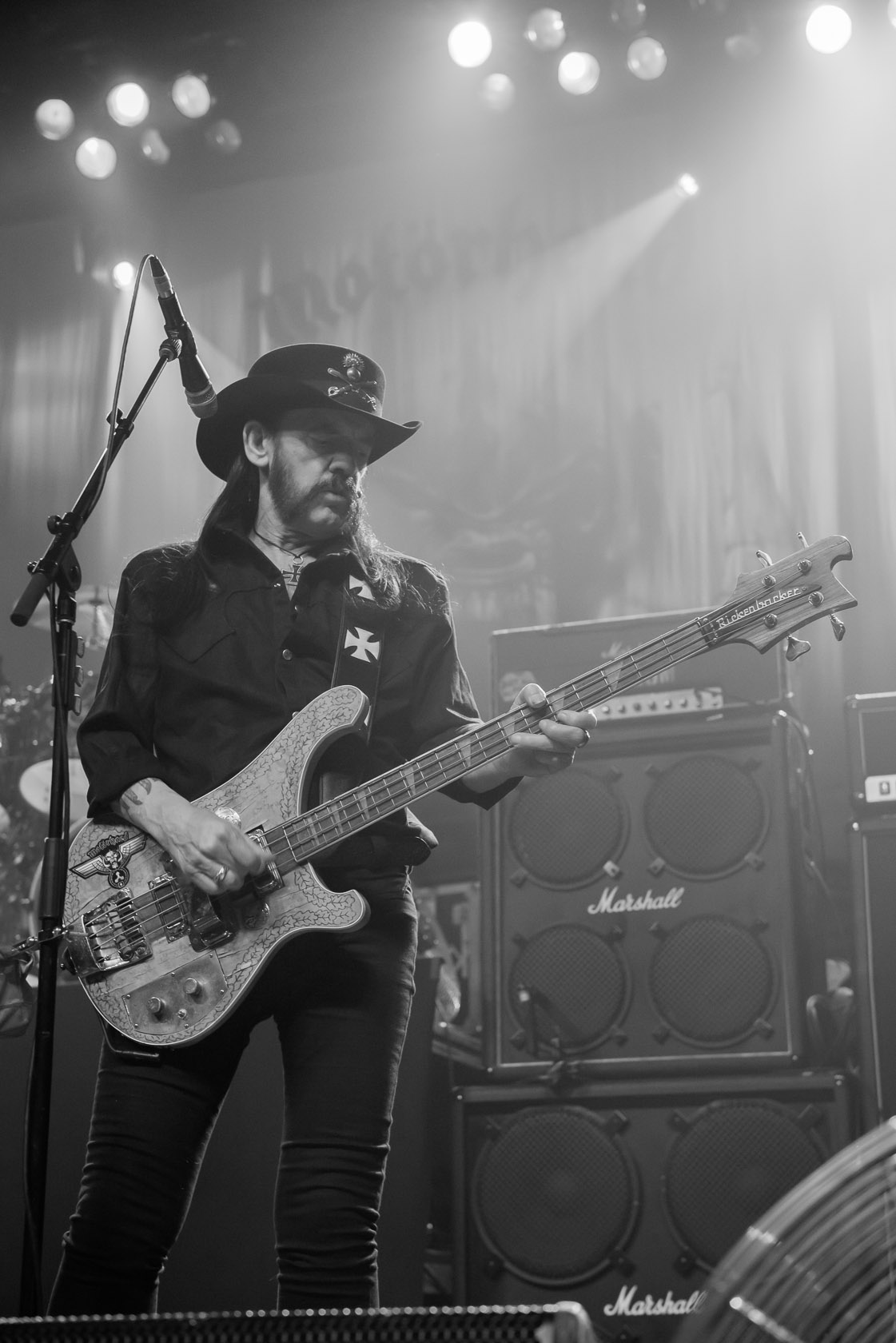
There’s something special about seeing the name Motörhead, umlaut and all, mounted on that grand Market Street marquee, next to a strip club and at the intersection of one of San Francisco’s seediest streets. If you know anything about the band, its history, and iconic frontman Lemmy Kilmister, it just feels right.

The black-clad masses had congregated outside the historic Warfield Theater well before showtime and the mood was noticeably high, as show-goers were surely thankful for either a first chance, another chance, but hopefully not last chance to see and hear the true king of metal live and in-person.

The room was about half-full for opener Graveyard’s set and those in attendance were engaged and impressed.  The Swedish ’70s revival rockers played a solid set consisting mostly of songs from their first two albums, peppered with a few from Lights Out, their third and decidedly less metal offering. Motörhead’s Phil Campbell would later describe them as “the only good thing to come out of Sweden.”

graveyard
Graveyard. All photos by Brittany Powell.

As the main event neared, the room packed up quickly and the mood felt like what one might expect at an appearance of the Pope at a monster truck rally, with the latter being a bit closer to the beating that our ears were about to take.

With the predictability of the tides, the loudest band in the world emerged and delivered the standard greeting:

“We are Motörhead, and we play rock and roll.”

They immediately lunged into “Damage Case,” Lemmy’s head craned upward towards his trademark high mic, where it would remain for most of the show.  He doesn’t move around much these days, but did he ever?  Nonetheless, at 68, his gravelly snarl is still a force to be reckoned with. The floor got rowdy pretty quick and security could be seen ushering, quite roughly, more than a handful of audience members off the floor and presumably out the door. This is the effect that Motörhead has on people, and it has some significance at the Warfield, which used to have seats that went all the way to the front, until the first three rows were ripped out in 1984 at — you guessed it — a Motörhead show. 

motorhead
Motörhead

After the second number, “Stay Clean,” Lemmy took a moment to address the dipshit (or dipshits) in the crowd who were hurling water bottles at the stage. “Please don’t throw shit at us and we won’t throw anything at you,” he said in a polite deadpan, before Campbell threatened  to walk off if it continued. One final item, a pink lighter, whose hurler Campbell called “a real star,” hit the stage — and the barrage was finished, probably thanks to crowd or security intervention, or perhaps a combination of both. 

Despite the disrespect, Lemmy twice told the crowd that we were the best on the tour and that “Coachella definitely isn’t giving [us] any competition.”  Maybe he was just being nice, but I believed him.  

motorhead

The remainder of the show went smoothly enough, with the band playing most of the live favorites punctuated by Campbell’s glowing (like, actually glowing) guitar solo and Mikkey Dee’s bombastic, elevated drum solo, bookended by blasts of smoke, both of which felt a little dated, but this is real rock ‘n’ roll ,and modern-day gimmicks  weren’t needed. The guys didn’t waste much time between songs, except for the occasional intro, and a moment to dedicate “Just ‘Cos You Got the Power” to the “politicians who are stealing all of our money.” 

motorhead

The regular set ended with “Ace of Spades,” during which nobody missed their chance to scream “That’s the way I like it baby, I don’t want to live forever,” all the while probably wishing that Lemmy would live forever, so they would’t have to wonder how long it might be before they’re reminiscing about the times when rock gods still walked the earth. 

SETLIST
Damage Case
Stay Clean
Metropolis
Over the Top
The Chase is Better Than the Catch
Rock It
Lost Woman Blues
Doctor Rock
Just ‘Cos You Got the Power
Going to Brazil
Killed By Death
Ace of Spades
Overkill

Hunky Jesus, Foxy Mary, and Easter bonnets to make your eggs spin

1

The Sisters of Perpetual Indulgence held their 35th anniversary Easter party — an “Emerald Jubilee” — at Golden Gate Park’s Hellman Hollow on Sunday. The annual event once again featured an Easter bonnet competition and a Hunky Jesus contest, plus a brand-new Foxy Mary pageant. Several Pope lookalikes graced the crowd, and a Little Bo Peep burlesque show rounded out the scheduled entertainment.

All photos by Amanda Rhoades.

Moscow weather report

0

THEATER Moscow’s temperatures had been climbing up to 70 degrees just a week before my arrival, but by the first of April, it had slipped back into the 30s and 40s, collecting snow on the ground and clouds overhead in a gloomy replay of winter. In a novel this would have looked like a cheap literary device: nature manifesting a political climate that had also grown decidedly chillier. But with Russia’s recent reabsorption of Crimea, and talk everywhere of a new Cold War, it was pretty apt nonetheless.

At the same time, theatrical fires were burning brightly in the weeklong Russia Case, an annual mini-festival spotlighting (for an international audience of presenters, journalists, and others) exceptional theatrical work from the much larger national Golden Mask Festival, with some additional offerings thrown in for good measure.

Curated by Kristina Matvienko, theater critic and member of the Golden Mask board of experts, this year’s Russia Case included 20 productions, in addition to other public events, such as an absorbing tour of Moscow’s famed Taganka Theatre, the country’s center of theatrical innovation and radicalism in the 1960s–70s under founding director and actor Yuri Lyubimov. It’s now celebrating its 50th year with a special jubilee program of exhibitions, projects, and new work headed by a group of young theater artists, managers, and critics commissioned by the city’s Culture Committee and Cultural Minister Sergei Kapkov.

Things began auspiciously with a sparkling new piece by famed director Kama Ginkas at Moscow TYuZ (pronounced “tooz” and standing for Young Generation Theater), the theater led by his wife, Henrietta Yanovskaya, also an acclaimed director with a production in the festival. Lady Macbeth of Our District, based on a short story by 19th-century Russian writer Nikolai Leskov that was also adapted into an opera by Shostakovich, concerns the ebullient young wife of a village merchant whose lust for life entangles her with a brash laborer with tragic results. Staged with muscular precision and effortless invention — including a shrewd use of winter coats as malleable second-skins and visceral bursts of song and energetic movement — this excellent ensemble piece, led by the vibrant Elizaveta Boyarskaya in the title role, cut right through the serious jetlag of the hour.

Among other highlights was a new work by internationally renowned director Dmitry Krymov (whose In Paris premiered locally at the Berkeley Rep in 2012). The captivating Honoré de Balzac: Notes About Berdichev derives its title from a line in Three Sisters, and this inspired riff on Chekhov’s characters sneaks in a fitting depth of thought and emotion beneath its macabre comical surface. With the consummate attention to design and ensemble playing that Krymov and his collaborators have rightly become known for, the production unfolds as a kind of Grand Guignol spectacle, holding up a funhouse mirror to the iconic figures of Chekhov’s oeuvre in order to see them afresh as the pitiful, horrifying, hilarious, and beautiful creations they are. The production then shifts into a prolonged denouement in which the actors remove their elaborate makeup and converse and play with one another in a wistful and teasing middle ground between art and life that speaks quietly of that communion that is the essence of theater.

Equally effective was a timely adaptation of a Rainer Werner Fassbinder film at the vibrant Gogol-Centre, a new and leading venue with four resident companies and a popular youthful following. Fear, adapted by young playwright Lyubov Strizhak from Fassbinder’s Ali: Fear Eats the Soul, is one in a trilogy of works by Latvian director Vladislav Nastavshev that adapt famous films (the others being Visconti’s Rocco and His Brothers and Lars Von Trier’s The Idiots, each in some way dealing with the negotiation of borders and the plight of outsiders). The story concerns the socially unsanctioned love affair between a young Tajik migrant worker and an elderly Moscow widow. Unfolding with a bold, forceful grace on a spare arena-style stage that made dynamic use of a set of white plastic tables, this well acted and moving piece was also among the most overtly political, dealing head-on with the rising xenophobia that has plagued Russia in general and Moscow in particular in recent years. (The one other piece in the program with comparable political punch came from the tiny but intrepid Theater.doc, an independent documentary theater, run by Elena Gremina. Documentary theater is the mode of choice for much political work on Moscow stages, and perhaps not surprisingly Fear‘s playwright Strizhak is well associated with the form.)

In all, I took in half of the total program of the Russia Case, in a packed week of theater and discussion, as part of a group of Americans traveling under the auspices of the Center for International Theatre Development. Needless to say, politics were in the air throughout, and not only because of recent events in Ukraine. The theater in Russia is far more culturally important and influential than theater tends to be here. And while not overtly political in what it stages (except in some notable instances like those just mentioned), it remains a site of many progressive and antiauthoritarian voices as well as big personalities and vested interests. Even the Taganka jubilee was marked by internal turmoil and public scandal, stemming in part from Lyubimov’s contentious public departure from the theater in 2011 but sparked by a historical exhibition on the walls of the theater that provoked defacement from outraged members of the company.

More broadly and urgently, however, the Russians and their international guests mulled over the future of theater in a country drifting rapidly toward ultranationalist extremes. All seemed to agree that whatever happens, this year’s Russia Case will likely not look like next year’s, and that artists and audiences are in for a wild ride.


Record Store Day: Where to get your (musical) high tomorrow

0

You did it! It’s Friday!

This weekend will see a convergence of two holidays that, come to think of it, overlap rather nicely given their impact on chocolate sales. Whether you’re celebrating the resurrection of Christ by donning an elaborate hat for church or the recent renewal of your medical marijuana card by finding new and creative ways to mainline THC (word to the wise: be careful in public this year), Sunday, April 20 is shaping up to be a fine day for people-watching in this city.

But hey, fellow music nerds: We all know both of those pale in comparison to what’s going down on Saturday. Yes, like the first esoteric, vinyl-collection obsessed, possibly slightly-condescending-at-times robin of Spring, Record Store Day is upon us once again. Tomorrow, Sat/19, will be a pretty good day to visit just about any (actual, brick-and-mortar, non-Internet-based) record store in the Bay Area. Now in its seventh year, the holiday — which, its website notes, was kicked off in 2008 at San Francisco’s Rasputin, by none other than the boys from Metallica — is celebrated at stores on every continent except Antarctica.

No need to pack your bags though: Here’s what’s going down at a few Bay Area establishments that sell music in all its excellent tangible, physical forms.

From the Mission’s Aquarius Records, owner (and Minor Forest drummer) Andee Connors wrote us the following when we asked what he was stoked on this year:

1. A Minor Forest, Flemish Altruism / Inindependence, 4 LP reissue on Thrill Jockey, both albums from this nineties math/post/noise rock band [acknowledgement of personal bias here]

1. The Ghostbusters‘ glow-in-the dark 10″

3. Ron Jeremy, Understanding and Appreciating Classical Music With Ron Jeremy, 7″ (only a 7″??)

4. Cardinal 2/t LP, vinyl reissue of this seminal baroque indie-pop classic

5. Scharpling & Wurster, Rock, Rot & Rule LP, vinyl reissue of maybe the funniest record ever, especially for music nerds

I think our customers are probably excited for those, but they’re / we’re also looking forward to the Heatmiser (Elliott Smith’s old band) LP reissues, the four soundtrack LPs on Death Waltz, Pussy Galore reissue, Rodion G.A. reissue, the Space Project compilation…also, we have a new release from local band Twin Trilogy, featuring Sean Smith, the first in a series, ONLY available at aQ on RSD, and on Sunday, Twin Trilogy will be playing a special in-store at aQ. Record store day part 2!!! [Ed. note: Should pair well with your other Sunday celebrations].

ron

Across the Bay at Oakland’s 1-2-3-4 Go!, a full-day party will kick off when the store opens at 8am. “Last year people started lining up around 4:30am, to give you a heads-up if you plan on coming for the opening,” advised owner Steve Stevenson, adding that they’ll have coffee from SubRosa and donuts from Pepples (while supplies last) for those of you who line up early.

Giveaway: A test pressing of the Green Day Demolicious 2xLP, autographed by Berkeley boy Billie Joe Armstrong. The first 100 people in line will get a raffle ticket; once the 100th person has handed in their ticket, the drawing will commence.

James Williamson of The Stooges will be doing a signing and chatting with fans from 10am to 11ish. (Ed. note: !!!!)

Hella Vegan Eats will be on hand making breakfast and lunch throughout the day. “Not free, but well worth it even if you’re not vegan,” says Steve. They’ll also have a couple of kegs from Linden Street Brewery for over-21 folks, for free, after noon.

Bands: Ghoul will be playing a very special “surf” set from their RSD Hang Ten 10″ out on Tank Crimes at 3pm, with Occultist opening. 

gd

An entirely non-comprehensive list of what’s happening at other stores:

Amoeba Berkeley — In-store DJ sets from Jonah Nice and DJ Inti; 20 percent off all turntables, posters, and some other accessories; giveaways TBA.

Amoeba SF — Same sales as above, plus live silk-screening from 11am to 2pm with special RSD 2014 designs, one by Zach of Saintseneca; t-shirts and totes available for purchase, with all proceeds going to the San Francisco Rock Project. Plus a full day of guest DJs, including folks like Andy Cabic of Vetiver and Ezana Edwards and Ryan Grubbs from Blood Sister.

Rasputin Berkeley: Free acoustic show by Phillip Phillips.

Groove Merchant Records (Haight): Cool Chris’ hand-picked “batch of 300+ Rock, Soul, Jazz, Italo Disco, and Post-Punk records (LP’s, 12”s, & 7”s),” selected especially for RSD.

And now a word from your Record Store Day 2014 ambassador, Public Enemy’s Chuck D, whose duties coincide with an RSD reissue of a very fine 1988 album. Happy crate-digging!

City College special trustee restores public comments, meetings

8

Protests against City College of San Francisco’s leadership trumpeted grave concerns in the college community over the lack of public voice at the school. Now, some of those concerns have been resolved, and the beleagured CCSF is taking baby steps towards restoring democracy.

Special Trustee Robert Agrella announced via mass email today the return of public comment to City College board meetings, and, well, actual meetings. Local college officials praised the move as a step in the right direction.

“Perhaps the restoration of some level of openness will make people feel their voices are being heard,” said Fred Teti, the college’s Academic Senate president. The school’s senate only yesterday passed a resolution urging Agrella to restore public comment, Teti said, and with good reason.

Though the mention of board meetings may be elicit a shrug or a snooze for some, for City College students the right to speak out publicly to school leaders was important enough to be jailed over. Only last month, hundreds of student and faculty protesters stormed the school’s administrative building, and in the violent clash with SFPD and City College Police, one student was pepper-sprayed and another punched in the face.

Both were jailed afterward, and one of the students said all he wanted was a dialogue.

“We just want to have a conversation with Bob Agrella,” Dimitrious Phillou said in a video interview with the college’s newspaper, The Guardsman. “It’d be nice if he would talk to us, like a real human.”

And changes to City College are coming spitfire-fast. After they got word from their accreditors that they may close in July of this year, the school has scrambled to reshape classes offered at the school to meet the requirements, and vision, of their accreditors. Agrella was appointed by the state to take the place of the college’s duly-elected Board of Trustees — and therein lies the issue.

Not everyone agreed with the board, and many members through the years have been accused of laziness, incompetence, and worse. But at the very least, the college community had a monthly opportunity at public meetings to tell the board what was right and what was wrong, leading to many decisive turnarounds: budgets amended, classes saved, services restored or cut.

It was an imperfect process, but at least a forum existed to give the public the right to address their officials in full view of the public. Under Agrella, no such forum existed.

Student and faculty shout “let them speak!” at a City College board meeting.

When Agrella took over the powers of the board, the idea was to expedite decision-making in order to save the college. But this meant an end to the meetings. Though he posts the agendas for his decisions online, he held no public meetings, and only solicited “public comment” via email, which many rightly noted were not public at all.

Apparently these meetings are happening in the special trustee’s head,” Alisa Messer, the City College faculty union president told the Guardian in our story, “Democracy for None [3/18].” “No one agrees that [email] comment is public.”

That will change April 24. Agrella will hear public comments at 4pm at City College’s main campus in the Multi Use Building, Room 140. Unlike meetings of City College’s full board, Agrella’s public comment session will not be televised or audio recorded. When we asked why, college spokesperson Peter Anning said he would look into it. 

Anning added that Agrella did issue one warning. He was very clear that this was going to follow board policy which will require civil discourse,” Anning said in a phone interview. “That’s been an experience in the past, where people have gotten belligerent. He said he won’t tolerate that.” 

California Community College Chancellor’s Office spokesperson Larry Kamer said Agrella’s decision to restore public comment was a practical one.

I think Bob is a problem solver, he’s a practical guy,” Kamer said. “If there was concern and discontent about public comment, I think he just wanted to deal with it before it became a problem.”

Messer applauded the decision as a step in the right direction, but cautioned that it was a small step in terms of restoring City College’s democracy. 

“Of course, at any moment Dr. Agrella could — and should — restore actual board meetings,” she told us. “He could even include the voice of the voters by convening our publicly elected Board of Trustees.”

The Board of Supervisors unanimously passed a resolution last month urging Agrella to do exactly that. 

The resolution sends a very clear message about the importance of restoring democratic decision making at City College,” Sup. David Campos told the SF Examiner.

But, as Teti told the Guardian, sometimes you need to recognize that victories come incrementally. 

Thinking Agrella would restore the Board of Trustees, video airing of public comment and full meetings all at once is perhaps a stretch, he said, “That’s the pie in the sky idea.”


Tale of two tech titans

19

San Francisco Magazine just published an intriguing interview with Salesforce CEO Marc Benioff, and Benioff’s attitude and approach to San Francisco seems to be a striking contrast to the city’s other top tech titan, venture capitalist Ron Conway, who we profiled over a year ago.

While Conway burst onto the political scene a few years ago with a pledge to destroy the progressive movement in San Francisco, sponsoring Mayor Ed Lee and his allies as the main vehicle for those ambitions, Benioff is a San Francisco native who seems to understand this city’s values and accept the responsibilities that come with great wealth and power.

“I say, if you want to be in this city and take advantage of all this great infrastructure—our mass transit, our schools, our hospitals, the safety and stability that we have—then also give back. These are the table stakes for doing business here. This is not a new idea,” Benioff told San Francisco Magazine Editor Jon Steinberg in this extended Q&A.

The news peg for the article was a new Benioff initiative in which he’s asking local tech companies to contribute $500,000 each to Tipping Point Community, which funds local community service programs, an effort that Benioff calls SF Gives.

“The first person I called was Ron Conway. I said, ‘Ron, what we’re going to do is get companies to give $500,000, and I’m going to raise $10 million, and we are going to give back to S.F. en masse with money from organizations, not just individuals.’ He said, ‘This is never gonna work. I run sf.citi [a political advocacy group for 500 local tech companies], and people won’t even pay their dues. You’re not going to raise millions of dollars,’” Benioff told the magazine.

The difference is that Conway is pushing an aggressive political agenda, seeking business tax breaks and special treatment from City Hall for the companies he’s invested in while being tone-deaf to the political backlash it’s causing in San Francisco, one that Benioff acknowledges and says the industry must address.

“Because this is not about any political agenda. It’s not. It’s about pure-play philanthropy: giving back to nonprofits and NGOs that can make a difference in S.F,” was how Benioff answered the question about why companies are more willing to donate to SF Gives than sf.citi.

As we documented in our profile of Conway, this guy is a old school conservative with a history of right-wing politics who conveniently dropped his Republican Party affiliation when he arrived in San Francisco pushing an aggressive pro-business agenda.

As we wrote in our article about an event seven years ago when Conway burst onto the scene and declared his intentions: “’This guy stood up and said that we have to take the city back from the progressives,’ [former Mayor Art] Agnos told us. ‘I barely knew who he was. I’ve been in San Francisco since 1966, and here he comes telling us what to do.;”

To understand this tale of two tech titans, contrast that approach with this comment from Benioff: “It’s a city of innovation, of flamboyance, of transformation, and during boom times, S.F. always changes and evolves. But tied into that has always been generosity: the Haas family, the Hellmans, the Fishers, the Shorensteins. During every one of these boom times, the people who benefited the most were also giving back the most. But this time around, we haven’t been able to talk about a broad philanthropic effort to couple with the growth. So this seemed like a great opportunity.”

Police radio dispatch from Alejandro Nieto shooting raises new questions

Police radio dispatch records from March 21, the night Alejandro Nieto was gunned down in Bernal Heights Park by San Francisco Police Department officers, had been withheld from the public, journalists, and attorneys – until San Francisco reporter Alex Emslie obtained copies of those records via Broadcastify.com and published them on KQED’s website.

The radio dispatch files offer a rare, behind-the-scenes glimpse of what occurred in the moments leading up to the officer-involved shooting, which has generated tremendous controversy in recent weeks.

Friends and supporters of Nieto have led marches to protest the shooting and are planning ongoing events to keep the pressure on. The SFPD’s account of the incident is that officers opened fire in defense of their own lives because Nieto pointed a Taser at them, causing them to believe he was tracking them with a firearm.

We’ll turn to the audio in a moment, but first, a key point. In an interview following a town hall meeting held by the San Francisco Police Department on March 25, the Bay Guardian asked Police Chief Greg Suhr: “Can you say more about the behavior that was actually reported in the 911 calls?”

Suhr responded, “The information that we had at the time was that he was behaving in an aggressive manner.”

Yet the audio files that have now surfaced reflect no mention of aggressive behavior, nor of a suspect brandishing a weapon.

Here are excerpts of the full sound file, originally posted to KQED’s website:

The first mention of the 221 – police code for person with a gun – is to relate a 911 caller’s description of a Latino male suspect, who has “got a gun on his hip, and is pacing back and forth on the north side of the park near a chain-linked fence.” The next description that comes over the dispatch radio, also apparently related from a caller who was in the park, is that “he is eating chips, or sunflower seeds.”

Several minutes later (here’s the full audio recording), officers can be heard communicating with one another after they have arrived at the park.

First, a voice reports that the “subject is walking down the hill.” Then, 39 seconds later, someone can be heard saying, “He is walking inside the park.”

Six seconds after that, someone says, “There’s a guy in a red shirt, way up the hill, walking toward you guys.”

Several seconds later, a voice calmly states, “I got a guy right here.”

Twenty-six seconds after that, a person can be heard shouting, “Shots fired! Shots fired!”

“What’s very telling is that none of the people are saying, the guy had a gun, he pointed it at us,” said attorney Adante Pointer of the Law Offices of John Burris, which is preparing to file a complaint on behalf of Nieto’s family against the SFPD. “It begs the question, did [Nieto] do what they said he did?”

Pointer added that the sound files still don’t offer a complete picture of what transpired. “There is more than one radio channel,” he pointed out, and added that his firm hopes to obtain other relevant documentation through a process of discovery, once a lawsuit has been filed.

“If this was a righteous shooting,” Pointer said, “then [SFPD] shouldn’t have any fear of being transparent. They shouldn’t have any fear of public scrutiny.”

At an April 14 press conference, Burris discussed the difficulty his office had encountered in its initial attempts to obtain recordings of police radio communications.

Guardian video by Rebecca Bowe

As it turns out, those files were indeed preserved – by a third party. Broadcastify.com, a San Antonio-based company founded by an IT professional who previously worked for IBM, broadcasts live audio transmitted by public agencies picked up by radio scanners, and maintains a publicly available database of sound files.

We attempted to reach San Francisco Police Department’s media relations team this afternoon to discuss these audio files. However, we were informed that all of the public information officers were gone for the day, and unavailable to speak with the press.

Q&A: Queer Rebels on accessibility, representation, and the challenges queer people of color still face

1

It’s not that Modern Family and your Gender Studies reading list aren’t doing anything for queer and trans representation — but there are still stories to be told, and ears to be reached.

Since 2008, it has been the mission of Queer Rebels founders Celeste Chan and KB Boyce to bring the art, history, and stories of queer and trans people of color to stages and screens, where it can be shared and celebrated. This weekend, Queer Rebels return with Liberating Legacies, a free, all-ages, multi-ethnic, multi-genre show at the San Francisco Public Library [Sun/20]. As the show date approaches, we caught up with Queer Rebels via email to get an idea of what to expect from Liberating Legacies, and the importance of accessibility to the arts.

San Francisco Bay Guardian What was the planning process for Liberating Legacies? What is different or new about this show compared to other Queer Rebels performances?

Queer Rebels Liberating Legacies celebrates the vibrant visions of queer/trans artists of color today. It is multi-ethnic, offering a sampling of all our different programs — from experimental film to SPIRIT: Queer Asian, Arab, and Pacific Islander Artivism, to our popular Queer Harlem Renaissance show. We’re so thrilled that Liberating Legacies is free, all ages, and multi-ethnic. We’ve wanted to do this for a while.

SFBG What is the importance of making a show like Liberating Legacies free and all ages?

QR We’re so excited to partner with the SF Public Library to provide access through this great venue. Our mission is to showcase queer and trans artists of color, connect generations, and honor our histories with art for the future. In keeping with our mission, we really want to reach youth and elders, and anyone barred access to art due to economic stress. Art has long been a tool for resistance in communities of color. It is the passing on of histories, and cultural reclamation. We do this to energize our community through the arts, to create our own culture, and to inspire hope. Art can create the world anew.

SFBG What are the current issues of accessibility in terms of art and representation of QTPOC communities? It’s a popular opinion that media and popular entertainment have become more progressive and inclusive, but what’s still missing?

QR It is true, we’re in a different place than we were 10, 20, or 30 years ago, when queer/trans of color representation was a real rarity. Now we have role models like Janet Mock and Laverne Cox, but we still have RuPaul’s DragRace using slurs like “she-male,” and disrespecting trans women. Queer/trans youth of color face racial violence and homophobia. Approximately 40 percent of homeless youth are LGBT, LGBT people of color face multiple barriers or forms of oppression, and LGBT elders of color face isolation. So we still have a lot of work to do. We want art that speaks to these realities, created by our communities. There needs to be space for all of us. Beyond positive representation, we need to see queer and trans people of color in all of our complexities and diverse histories!

SFBG What can we look forward to seeing at Liberating Legacies? What would you tell someone who has never been to a QR show to expect from your performances?

QR We’re bringing diverse arty interpretations to Liberating Legacies. From “tropical Sci-Fi” to transgressive torch singers; Afrocentric literary duets to pop music manifestos; experimental film, world class Blues — and beyond! We’ve got something for everyone, and it is free, vibrant, and alive — very much of this moment! We pay homage to our ancestors and march boldly into the future. Artist MA Brooks once told us, “you two embody your mission statement.” It really resonates now. We are a multi-generational, Queer Black and Asian artist and activist couple. Queer Rebels is our lovechild: beautiful and rebellious, aesthetic and experimental, born from our experiences as people of color in punk and DIY scenes, and created with riotously gay love and joy.
 
Liberating Legacies
Sun/20, 2pm, free
San Francisco Public Library, Koret Auditorium
100 Larkin, SF
 (415) 581-3500
www.queerrebels.com

BART fined $210,000 for accident killing two workers

18

The California Occupational Safety and Health Administration is fining Bay Area Rapid Transit $210,000 for three “willful/serious” safety violations connected to the death of two transit workers, citing a lack of safety measures at BART as the fault of their deaths. BART was fined maximum amounts allowed for the offenses, officials said. 

“Employers have a responsibility to ensure worker safety,” acting Cal/OSHA Chief Juliann Sum said in a statement. “Safety standards are designed to save lives and they were not followed.”

Two transit workers were killed October last year during the final days of the BART strike. As we reported then, Christopher Sheppard, a BART manager and member of the AFSCME union, and Larry Daniels, a contractor, were inspecting a “dip in the rail” before they were hit by an oncoming train. The two workers were required to go through what’s called a Simple Approval process to get permission to work on the track.

It’s that Simple Approval process that came under fire in the citation.

“Employer’s control method, namely the ‘Simple Approval’ procedure, does not safeguard personnel working on tracks during railcar movement,” the citation reads. “The employer allowed workers to conduct work on the railway tracks where trains were travelling in excess of sixty-five (65) miles-per-hour.”

“The employees had no warning that a train moving at more than 65 miles-per-hour was on the C1 railway track approaching the location where they were working.”

BART General Manager Grace Crunican quickly issued a statement.

“Passenger and employee safety is our top priority at BART.  BART has fundamentally upgraded its safety procedures with the implementation of an enhanced wayside safety program and a proposed budget investment of over $5 million in additional resources to bolster BART’s safety performance,” she said. “Cal/OSHA has informed BART these changes correct the concerns which are at the heart of their citations, designating the issues as ‘abated,’ meaning that none are continuing violations or pose continuing safety hazards.”

The statement goes on to say that BART meets CPUC safety standards, though as we’ve seen with PG&E (San Bruno) and Uber (the New Year’s Eve death of Sofia Liu), those standards have been demonstrated to be at times, lax. 

The three violations were deemed “abated” within the citaiton. The citation tasked BART with reassigning job assignments of untrained personell, not allowing unqualified workers near energized equipment and facilities, and “controls to safeguard personell during railcar movement shall be instituted.”

Simple Approval has since been terminated, BART Spokesperson Alicia Trost told the Guardian.

BART permanantly eliminated Simple Approval immediately following the tragic deaths,” she said. “We now require work orders for anyone who goes wayside.  We are also implementing the extra layers of protection for track workers.”

Notably, the two workers were killed as BART management attempted to train managers to operate trains during the strike, according to the National Transportation Safety Board, who is investigating the incident.

lighting

Left, a dimly lit BART tunnel. Right, an oncoming train. BART has been cited for safety issues by CAL/OSHA before, including lighting issues which some say led to the death of another BART worker years ago.

The citation specifically lambasts flimsy safety process of Simple Approval, the process workers formerly used to keep the Operations Control Center “aware of the presence of personnel in a specified location in the trackway,” according to BART training manuals. When workers are preparing to work on a track, they recited the simple approval to the Operations Control Center, also known as central control. It works like signing a waiver, saying that you understand the rules of safety, and more importantly, that you can work on the track without diverting trains. 

This isn’t the first time BART has run afoul of CAL/OSHA citations, they’ve racked up over 20 in the past years. A hearing held shortly after the two workers’ death also brought many of these problems to light.

Shortly after the accident, Saul Almanza, a longtime BART safety trainer, told us the section of track the two workers died on crested the hill a little bit.” Having a sight line is important, he said, because you can’t use your ears to hear a train coming.

“It’s like a jet flying over you, you don’t hear it until it’s past you,” he explained. “I always teach in my class: ‘You don’t listen for trains, you look for trains.’”

Below we’ve embedded the citations issued to BART.

Bay Area Rapid Transit (BART) citations for death of two workers from CAL/OSHA by FitztheReporter

Plan would renovate vacant public housing units for homeless people

Sup. London Breed has proposed setting aside city funding to renovate vacant and dilapidated San Francisco Public Housing units, in an effort to quickly make housing available for homeless families in the face of a dire shortage.

At the San Francisco Board of Supervisor’s meeting on April 15, Breed called for the city controller and city attorney to begin drafting a supplemental appropriation of $2.6 million, to be put toward renovating 172 public housing units that are currently sitting vacant and in disrepair. 

Tragedy struck at Sunnydale, the Housing Authority’s largest housing development, today [Wed/16] when a 32-year-old woman and her 3-year-old son were killed in a blaze that started early this morning. The cause of the fire is under investigation, but a report in SFGate noted that the Housing Authority has planned on rebuilding Sunnydale for years due to its poor condition.

“There are over 40 public housing developments in San Francisco, and given the decades of mismanagement and financial neglect that public housing has endured, many units are currently not available for San Franciscans to live in,” Breed said. “As we grapple with an unprecedented affordability crisis and an acute shortage of housing, particularly affordable housing, these fallow public housing units represent one of our best and cheapest opportunities to make housing available now.”

Breed, who represents District 5, previously lived in San Francisco public housing. “Living in public housing for over half of my life has given me a perspective unlike, I think, anybody else that I know, to understand exactly what we need to do as a city to make a difference in the lives of those constituents,” she said.

She mentioned that between 25 and 50 homeless families stay in a church every night that has been converted to a shelter in her district – but there are no showers there, “only a few toilets and sinks that those families can use.” 

As the Guardian has previously reported, homeless people enrolled in public services frequently discover that very little permanent housing is available – even though the Department of Public Health, the Human Services Agency, and the San Francisco Housing Authority all oversee programs that were created to assist individuals who are in need of housing.

As things stand, about 175 homeless families remain on a wait-list for housing, homeless czar Bevan Dufty told the Bay Guardian in a recent interview. And more than 300 other homeless individuals have applied for housing assistance through the Department of Public Health’s Direct Access to Housing program, which provides subsidized housing in SROs and apartments.

The San Francisco Housing Authority receives its funding not through the city, but through U.S. Housing and Urban Development, a federal agency. However, Housing Authority spokesperson Rose Marie Dennis said federal funding doesn’t stretch far enough for the agency to perform routine restoration of vacant units that have fallen into disrepair. “We have to work with the resources that we have,” she said.

According to an analysis by Budget & Legislative Analyst Harvey Rose, the city has lost $6.3 million in rent that could have been collected had empty Housing Authority units been occupied.

“From our perspective, we share the supervisor’s commitment to prioritizing the housing of the homeless,” Dennis said, adding that the Housing Authority would be “very grateful” for any support the city would lend toward renovation.

Gene Gibson, a HUD spokesperson, said that it was too early to comment specifically on Breed’s proposal since it was still in the early stages of being drafted. But in general, “If a community comes up with an innovative approach … I don’t think HUD would have any problem with it.”

City unveils plan to get tough at 4/20 gatherings

City officials today announced a “comprehensive plan” to crack down on unpermitted 420 events at Golden Gate Park this Sun/20, saying it was necessary because last year’s debauchery got out of hand. That means more police, both in uniform and plainclothes, will be in the park for the greatest marijuana celebration of the year.

“Last year [on 4/20] we had a lot of challenges,” said Sup. London Breed, who is spearheading this year’s efforts since the park falls in her district. “We need to make the city and streets safe this year. We want people to come and enjoy San Francisco, but we also want them to respect San Francisco.”

The problems Breed was alluding to included underage drinking, traffic congestion, and massive amounts of trash left in the park, especially in the area known as Hippie Hill.

Last year, it took 25 city employees over 12 hours to clean up the five tons of trash left by intoxicated visitors, according to Phil Ginsburg, general manager of San Francisco Recreation and Parks. And because 420 activities are unsanctioned and without an official sponsor, the burden to pay for the cleanup falls upon the city. In 2013, the Department of Public Works spent more than $10,000 to restore Golden Gate Park.

In anticipation of an even larger crowd this year, for both 420 and Easter events happening in the park, the city is gearing up to deal with people and traffic. In addition to deploying additional law enforcement in plainclothes and uniform, officials also plan to ramp up parking control, utilize additional bus services, and employ city workers to direct traffic.

A press release issued by Breed’s office indicated that police would take “a strict enforcement approach to all code violations.”

But speaking at the press conference, San Francisco Police Chief Greg Suhr said officers will have zero tolerance for violations such as underage drinking, open containers, selling drugs, unlicensed vendors, and even walking while texting. Noticeably absent from the list of offenses he mentioned was actually smoking marijuana.

“The sale of marijuana is still a felony,” Suhr emphasized, “but I don’t think [the SFPD is] naive enough to believe that we can stop people from smoking on 4/20.”

Captain Gregory Corrales confirmed that maintaining safety is the station’s top priority. Last year there was only one violent incident and eight arrests for selling drugs, but there were zero citations for possession of marijuana.

Pot smoking, which has long been tolerated, if not embraced, in our progressive enclave, was officially deprioritized as a crime by the Board of Supervisors in 2006, barring incidents that involved driving under the influence, minors, or violence. Breed noted that while she does not “condone illegal activities,” she admits that this aspect of the 420 celebration is difficult to control.

So please, stoners of San Francisco, follow the cardinal rule of nature lovers by packing out whatever you pack in. And above all, have a safe and merry holiday.

Happy hump day music news!

0

Hiatus, schmiatus: Thee Oh Sees have been added to an already-dreamy Burger Boogaloo lineup. Catch ’em alongside OFF!, Shannon and the Clams, Nobunny, Terry Malts, and of course the inimitable Miss Ronnie Spector herself, July 5-6 at Mosswood Park in Oakland.

Who needs Coachella anyway? In between their two weekend stints at that shitshow of a music festival down south, Waxahatchee is playing a free show at UC Berkeley’s Sproul Plaza today at 5pm. Are you in Berkeley? It’s goddamn beautiful out. You should go.

Start your itinerizing: Outsidelands just announced each day’s lineup and put single-day tickets on sale. Are you in more of a Kanye-Disclosure-Warpaint-Mikal Cronin kind of mood? Or a Tom Petty-Tycho-Big Freedia head space? These are the tough questions.

Cocktails grow up: Don’t worry, one of SF’s favorite fuzz-power-pop bands hasn’t gone and gotten lame, though. This new track, “Tough Love,” off Adult Life, suggests the five-piece has gotten a little tighter and just a little slicker, in a good way. That record won’t be out until June 17, but you can probably hear a lot of it at the Rickshaw Stop this Fri/18, when they open at the EP release party for The She’s.

“My brain is a little addled in terms of my long-term memory.” That’s Courtney Love, in an excellent oral history of Hole’s Live Through This, in honor of the album’s 20th anniversary. No matter what you think of her or her Dave Grohl reconciliation or her mediocre missing airplane-finding skills, this album is still gorgeous and important and yes I will fight you about that.

Also, this interview.

Supervisors outfox landlords on eviction compensation measure UPDATED

76

When the San Francisco Board of Supervisors gave final approval yesterday [Tues/15] to legislation that would substantially increase the payments landlords are required to give tenants they evict using the Ellis Act, the supervisors made a key change designed to counter a recent eviction push by landlords.

The legislation, approved on a 9-2 vote with Sups. Mark Farrell and Katy Tang opposed, increases the current required relocation payments of $5,265 per person or $15,795 per unit (plus an additional $3,510 for those with disabilities or over age 62) up to the equivilent of two years rent for a comparable unit, which means tens of thousands of dollars.

For example, the Controller’s Office calculates that a family evicted from a two-bedroom apartment in the Mission District where they pay $909 per month would be entitled to $44,833 in relocation costs.

The legislation was originally scheduled to go into effect 120 days after passage in order to give city officials enough time to implement it. But after sponsoring Sup. David Campos heard that landlords were rushing to evict tenants before those fees went up, he checked in with the City Attorney’s Office and other departments to see whether they could be ready sooner. And after getting the greenlight, he amended  the measure yesterday to go into effect 30 days after it’s enacted into law.

The question now is whether Mayor Ed Lee, who has not taken a position on the legislation, will act quickly to sign it. He has 10 days to decide, and given that the legislation was approved by a veto-proof majority, the question is really whether the mayor will support stalling the inevitable, thus encouraging more evictions at lower levels of relocation assistance.

But Mayor Lee has publicly touted his concerns about the eviction epidemic and support for Sen. Mark Leno’s Ellis Act reform legislation, SB1439. So I’m sure Lee is warming up his pen and preparing to sign the measure as I write this, right? We’ve got a message into his office with that question and I’ll update this post when we hear back.

UPDATE 4/18: Christine Falvey, the mayor’s press secretary, just finally responded to our inquiry and said, “The Mayor is reviewing and considering this legislation. I will keep you updated.” Apparently, he doesn’t feel the same sense of urgency that supporters of the measure feel. 

UPDATE 5/6: Mayor Lee waited 10 days and then allowed the measure to become law without his signature.