

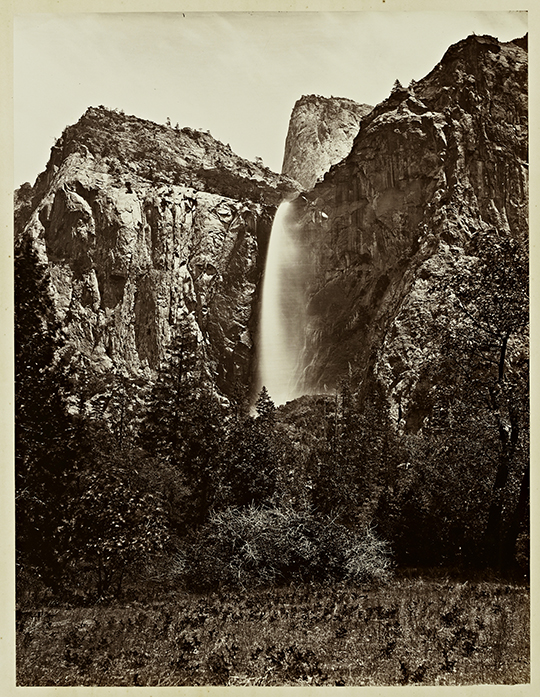
Long before Teddy Roosevelt and Ansel Adams swooned at the beauty of the place, ex-49er and early photographer Carleton Watkins (1829-1916) captured monumental Yosemite Valley for the public’s eyes. His stunning 1860s wet-plate negative photos — on view at Stanford’s Cantor Arts Gallery April 23-Aug. 17 (328 Lomita Way, Stanford, museum.stanford.edu) — convinced Abraham Lincoln to support the Yosemite Valley Grant Act, the land-preservation precedent for the National Park System. Watkins set up a shop on Montgomery Street in San Francisco, but it and most of his work were destroyed in the Great Quake of 1906.
Bay Guardian Archives
Shot of Coachella

In case you were on some kind of self-imposed social media hiatus last weekend (early, tech-centered Lent ritual?), you’re probably aware of a little music festival called Coachella that comes around this time of year like a bass-thumping, hashtag-happy harbinger of Spring.
The festival’s first weekend (Fri/11 through Sun/13) wasn’t short on memorable moments: Solange bringing big sister Beyonce onstage for a choreographed dance routine on Saturday; Arcade Fire’s Win Butler putting the festival grounds’ VIP section and increasingly moneyed atmosphere on blast — before being joined by Debbie Harry, Pharrell and his hat seemingly welcoming the years 1998 through 2002 onstage on Sunday, by way of guests Gwen Stefani, Nelly, and Snoop Dogg. Then again, we hear OutKast’s reunion was met with an underwhelming response from the audience — we’ll have to wait for BottleRock Napa in May to find out for ourselves if that’s on them, or had more to do with an overheated, EDM-leaning crowd.
As is often the case with big festivals like this one, a lot of the best sets came from smaller acts whose names you’re not likely to see in the tabloids anytime soon. We sent photographer Eric Lynch to capture some impressions of everyone’s favorite hot, dusty, celebrity-filled, dance-until-you-can’t-feel-your-feet-oh-wait-maybe-that’s-the-drugs party, and boy did he deliver. Check ’em out, and feel free to send us your own snaps and stories if you’ve got something cool to share: esilvers@sfbg.com.
A few last thoughts from Coachella
Words and photos by Eric Lynch.
If Friday was about jorts and flower crowns and Saturday was about sandstorms and solid “lesser” acts, then Sunday was about Coachella babies and big performers who totally brought it.
Arcade Fire played to their 80,000 lost souls with a world of possibilities ahead of them, introducing one of their tour de forces, “There’s a lot of kind of like fake VIP room bullshit happening at this festival and I just want to say that sometimes people dream of getting in places like that and it super sucks in there so don’t worry about it. This song’s called ‘The Suburbs’…”

Debbie Harry and Regina Chassagne sang “Heart of Glass” then Harry stood there looking shell-shocked and awkward during Chassagne’s “Sprawl II.”
There is an obvious predecessor to Pharrell’s (stupid) Vivienne Westwood hat — you know, the hat that contained all his friends that showed up to bounce around the stage with him on Saturday: Nelly, Diddy, Busta, Snoop, Gwen, et al. Beck’s hat is senior.
Much to the glee of the crowd, Beck took us on a mind-journey in his Hyundai during “Debra,” giving shout-outs to SoCal cities along the way. Tongue-in-cheek, sure, but the masses loved it as they “stepped inside the passenger door.” He played, along with his son Cosimo on tambourine, until the Golden Voice clock-watchers turned out the power.

AlunaGeorge gave a great performance, despite an outfit that included comfortable/restaurant worker-appropriate shoes. Shape-Ups? Troubling opening with an overwhelming bass line (she opened with “Attracting Flies”) but she adjusted very well.

DARKSIDE: Probably the best performance of the weekend. Nicolas Jaar (who played a solo DJ set on Friday in the Yuma tent) and Dave Harrington consecutively constructed and destroyed throughout their set. Plus Nicolas Jaar is dreamy.

Despite Neutral Milk Hotel’s lo-fi output, devoted fans worshipped every spangle-jangled second. Sing-alongs aplenty and clapping 30-somethings and mid-life couples with one and a half babies.
The 1975 brought fun and a bit of realness to the festival early on Sunday. Hot skinny slim-mustachioed gay boys and white jeans with matching boat shoes-sporting straight feys regaled.
Ty Segall gave the longest and loudest sound check in the history of outdoor festivals. They know we’re standing ring here, right?! The band’s energy was palpable.

CHVRCHES apologized for having to wear sunglasses because “we’re really not from here.” But their performance was anything but apologetic. Polished and clean.

Future Islands: I thought Black Flag front man Henry Rollins had been reincarnated as a less punk, more enraged white guy, mugging for the crowd, bleating and blathering with testosterone force.
Warpaint had the most crowded photographer’s pit. Full of 20-something bloggers and middle-aged stock photogs. The ladies did not disappoint.

As a photographer, I’m always hoping for a performance and a persona like Solange. She can just electrify with her presence. Not knowing at the time who she was, I actually snapped some great shots of her last year at Coachella, while watching the Jesse Ware performance — simply because I could not take my eye off of her adorable sundress covered in bright yellow lemons. This year onstage, she teased and taunted us in an orange shorts suit. At one point she jokingly admonished the YouTube videographer to get out of her crotch as she writhed and pined in front of his lens. Something for the gays, the girls and the bros! Yes, and big sis Beyonce showed up, duh.

Overall: Blood Orange, Holy Ghost, Warpaint, The Knife, Solange, DARKSIDE, the 1975 and Arcade Fire were absolute standouts.
SFMTA repeals paid Sunday parking meters, loses $9.8 million
San Francisco transit riders won some and lost some today [Tue/15] at the San Francisco Municipal Transportation Agency’s Board of Directors meeting. The board voted to repeal Sunday parking meters, effective July 1. It also asked SFMTA Director Ed Reiskin to add 18-year-olds into the Free Muni for Youth program, which will take effect Nov. 1.
But a proposal for free Muni for seniors and the disabled hit a snag, and the board decided it would evaluate their budget in January 2015 to identify available funding for the program. Until then, the program is in limbo.
“I think free Muni for seniors and people with disabilities is a great need, it’s a moral imperative,” said Tom Nolan, chairman of the SFMTA board. “It’s not a question if these things will happen, it’s when.”
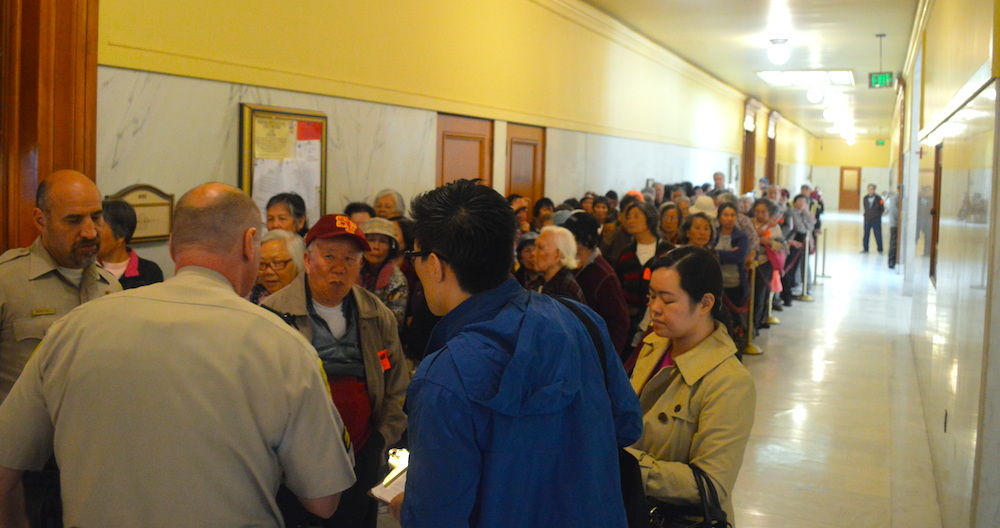
Nearly 100 of advocates for the Free Muni For Youth and Free Muni for Seniors and the Disabled programs packed into the small board chamber at City Hall Tuesday. Some came in wheelchairs, others walked in carefully with canes, and small children bounded into the chamber playfully. At least 100 more people waited outside the doors of the chamber in line to speak. All came with a purpose: to tell the SFMTA that free Muni would help them live in a city increasingly inhospitable to poor and middle class San Franciscans.
“To some people $23 may not be much, but to (seniors), every penny counts,” Pei Juan Zheng, vice president of the Community Tenants Association told the board at public comment. She spoke in Cantonese, and was later translated by a woman at her side. “I know some senior couples who can only afford one Muni pass and share it, taking turns to go on doctor’s visits.”
Many public commenters reminded the board that free Muni for the disabled and seniors could be paid for by paid Sunday parking meters, which the SFMTA ultimately decided to repeal. The SFMTA’s budget proposal estimates free Muni for seniors and the disabled to cost about $4 million annually. Conversely, repealing paid parking meters is estimated to cost Muni $9.8 million annually. SFMTA spokesperson Paul Rose said the loss could actually be as high as $11 million.
The reason for repealing the paid parking meters was made clear as day: Mayor Ed Lee and the SFMTA board are tip-toeing around car-driving voters, afraid several ballot measures to fund Muni this November will tank. To that end, they’re willing to appease drivers however they can.
“It’s clear we don’t have support for (paid Sunday meters),” board member Joel Ramos said after the vote. “We have failed, frankly, to convince the great majority of people. Read [San Francisco Chronicle columnists] Matier & Ross and see the sentiment out there, it’s a negative one.”
For his part, Mayor Lee was pleased the board enacted his repeal proposal. His statement to the press released shortly after the vote laid clear his need to appease car-driving voters.
“Repealing Sunday parking meters is about making San Francisco a little more affordable for our families and residents on Sunday, plain and simple,” he wrote in his statement. “Instead of nickel and diming our residents at the meter on Sunday, let’s work together to support comprehensive transportation funding measures this year and in the future that will invest in our City’s transportation system for pedestrians, bicyclists, transit riders and drivers alike.”
Just two weeks ago, Reiskin suggested reducing enforcement of Sunday meters, perhaps in efforts to find a compromise. He has repeatedly publicly stated his support for paid Sunday meters. Apparently he was outnumbered.
There are silver linings. In January the SFMTA board will mull a 7 percent transit service increase for 2016, additional funding for cleaning Muni’s fleet, and providing free Muni for low and moderate income seniors and disabled. The wait is due to the uncertainty of June contract negotiations with Muni workers, as well as the impending Muni funding ballot measures in November. If all goes well, the board said, funding may be identified for all of those projects. Until then, the loss of paid Sunday meters means Muni is out $9.8 million a year out of its $677 million budget.
The repeal of the paid markers doesn’t just hit transit riders though. Local businesses may also lose out.
Back in our story “Muni Fare Shakedown [2/25],” Jim Lazarus, senior vice president of public policy at the business-friendly San Francisco Chamber of Commerce, told us he is a supporter of the paid Sunday meters. “You can drive into merchant areas now where you couldn’t before,” he told us.
Near the end of public comment, Cynthia Crews of the League of Pissed Off Voters put the board’s vote into context.
“The MTA’s purpose is to manage the effing streets, not do the mayor’s bidding,” she told the board. “This is a $9 million giveaway no one is asking for but Ed Lee.“
“This,” she said, “sucks.”
Tweets from the SFMTA board of directors meeting
SFMTA mtg when 2-year budget could be passed is so full even media having trouble getting in http://t.co/8OZuZdPjXM pic.twitter.com/tNnRTsmNFS
— Jessica Kwong (@JessicaGKwong) April 15, 2014
Everyone’s favorite @sfchronicle curmudgeon @cwnevius is locked out of the SFMTA board meeting too. pic.twitter.com/PxyuqaQEDj
— Joe Fitz Rodriguez (@FitzTheReporter) April 15, 2014
Policy wonk/advocate spotting! At the @sfmta_muni board meeting: Tom Radulovich, Tony Robles, Dan Weaver, and interest groups abound.
— Joe Fitz Rodriguez (@FitzTheReporter) April 15, 2014
At @sfmta_muni meeting, SFUSD disability education program “The Arc” rep: “We want to make sure you know we exist” asks for free #muni
— Joe Fitz Rodriguez (@FitzTheReporter) April 15, 2014
Mario Tanev of the @SFTRU to the @sfmta_muni board on Sunday meters: “your own study shows meters are beneficial to businesses and shoppers”
— Joe Fitz Rodriguez (@FitzTheReporter) April 15, 2014
Poet and activist Tony Robles is up, speaking to @sfmta_muni: “Many seniors are outright targeted for eviction…”
— Joe Fitz Rodriguez (@FitzTheReporter) April 15, 2014
Tony Robles to @sfmta_muni “bottom line is, living in San Francisco is not cheap for seniors. Seniors, quite frankly, need a break.” #Muni
— Joe Fitz Rodriguez (@FitzTheReporter) April 15, 2014
These advocates from POWER said they were “surprised we had to be here again” to advocate for free #muni for youth. pic.twitter.com/EnuzNCR6Ip
— Joe Fitz Rodriguez (@FitzTheReporter) April 15, 2014
Supervisor @ericmar415 to SFMTA board: “baby boomers like you will be seniors soon. They struggle with isolation.” pic.twitter.com/RZc7x3F7Eb
— Joe Fitz Rodriguez (@FitzTheReporter) April 15, 2014
The broadcast news folks are here. Are they confused or deeply concentrating? @KTVU w/ #Muni spokesperson Paul Rose. pic.twitter.com/dP0tIJ0kxJ
— Joe Fitz Rodriguez (@FitzTheReporter) April 15, 2014
Chinatown Community Development Center, Aaron Dong days “we don’t spend enough on pedestrian safety, that’s a fact.” pic.twitter.com/b1JNQ0Xds7
— Joe Fitz Rodriguez (@FitzTheReporter) April 15, 2014
@FitzTheReporter The “best political minds” doing the political calculus that “no one likes meters” must not have double-checked their math.
— Michael Rhodes (@Perambulations) April 16, 2014
A little help

culture@sfbg.com
THE WEEKNIGHTER We were all there for Kelly Malone. It was the opening for an art show she’d done, as well as a fundraiser to help her kick cancer’s ass. At least I think that’s what it was. I don’t fully recall, to tell you the truth. Most of 2011 was a blurry, self-congratulatory, victory lap for me. I had done what I set out to do, create and host a TV show based on the Broke-Ass Stuart brand I’d been hustling for a million years.
I was having a moment and it seemed a lot of other makers, doers, and shakers, who’d been creating in San Francisco for a long time, were having one, too. At least on a professional level. On a personal level, a lot of us were not so successful; Kelly was still sick, I was in a half decade long relationship that was dissolving, and other people around us were falling prey to drug addiction and suicide. Every coin has two sides.
Mini Bar (837 Divisadero, SF. 415-525-3565) was packed that night and everyone was there. This was before the mass exodus of artists had begun in earnest, before the evictions and the shakedowns, before the sad headlines and the sadder stories. Mini Bar lives up to its name, and the lot of us who were crammed into that tiny and narrow space were sweatily and unintentionally bumping and grinding in order to get a drink. “This is really good,” I told Kelly, not meaning her cancer of course, but meaning the turnout and the support from the community that had grown around her. She understood what I meant. “I know! This is amazing!” she told me before swerving away to talk to somebody who was eyeing a piece of her work.
Divisadero has changed a lot in recent years and at the time, Mini Bar was a fairly recent but very welcome addition to the neighborhood. Part of the joint’s charm is that nearly every time I go there a different artist is being featured. On weeknights it isn’t too crowded so you can walk in, peruse the wall hangings, and then actually find a seat at either the bar or one of the small tables. And usually on these nights you can also find some of the neighborhood regulars who pop in to wet their whistles on whatever the featured cocktail is that week.

But this wasn’t a regular night. This was something special. It was a gathering of the tribes in order to support one of our own. Since it opened, Mini Bar has been a hub for people who do cool shit. Maybe it’s because the owners purposefully set that vibe, or maybe it’s because Mini Bar arrived at just the right moment in that space between what Divis was and what it was becoming.
Or then again maybe it’s just because I’m only there when I’m drunk.
Kelly sold a lot of art that night, and the money raised otherwise throughout the evening also went towards her mounting medical bills. Most of us realized then and there that what we were doing was the definition of being part of a community. We’d all always figure out ways to help out when the going got fucked. Or at least for as long as we were all able to stick around.
Stuart Schuffman aka Broke-Ass Stuart is a travel writer, poet, and TV host. You can find his online shenanigans at www.brokeassstuart.com
Lotsa Matzoh

MIDDAY MADNESS
Just when you think the brunch at Slow Club (2501 Mariposa, SF. www.slowclub.com) couldn’t possibly rock any more than it already does, the perennial hotspot makes the move to offer it all week long. Really? For reals! You can have a fried egg sandwich for lunch, and you don’t have to wait until the weekend for bourbon French toast. Available Mon–Fri 11:30am–2:30pm, and of course Sat–Sun 10am–2:30pm.
A nice addition to the lunch scene: the lunch at A16 (2355 Chestnut, SF. www.a16sf.com) in the Marina. You can now come by Wed–Sun 11:30am–2:30pm and feast on delicious pizzas, pastas, and small plates. It’s also worth checking out the $20 tasting menu, perfect for a leisurely lunch. Because leisurely lunches are the best.
Downtown workers no longer have to wait until the end of the day to check out recent fave-rave Trou Normand (140 New Montgomery, SF. www.trounormandsf.com), which has now added lunch service during the week, Mon–Fri 11am–2:30pm. You’ll find sandwiches, an awesome charcuterie plate, and more (like, uh, cocktails!).
And just in case the prices at downtown’s Hakkasan (One Kearny Place, SF. www.hakkasan.com/sanfrancisco) have always been a bit out of reach (or just too much, period), it’s added a menu of affordable lunch dishes for $5.50 each. We’re talking stir-fry roasted duck with chile in Szechuan sauce, pork and shrimp dumplings, and Teochew John Dory congee — eight dishes in all. And it’s hard to beat the location, it’s so beautiful.
DON’T PASS THIS OVER
Local restaurants and businesses are rolling out special Passover menus and more. (Passover goes through Tuesday, April 22.)
Guest chef Joyce Goldstein will be in the house (working alongside chef Staffan Terje) at Perbacco (230 California, SF. www.perbaccosf.com) for its annual Italian Passover dinner — the sixth — although this year the menu is featured for two days: Wednesday, April 16, and Thursday, April 17. There will be a four-course menu (with so many choices!) for $52 per person, with dishes like fegato di anatra alle uova sode (that would be chopped duck liver, Italian style) and stufato d’agnello (lamb stew with green garlic).
Delfina (3621 18th St., SF. www.delfinasf.com) is known for its matzoh balls with a walnut inside, which you’ll find on the menu along with other Passover-inspired items, like an edible Seder plate, salt cod croquettes, brisket, and more (through April 21). Kosher wine (the good kind!) and beer from He’Brew will keep you in good spirits.
Lastly, you can order some Passover goodies (and Easter treats too!) at Marla Bakery Kitchen Communal (613 York, SF. www.marlabakery.com). TCHO chocolate–dipped housemade matzoh, yes please! Pre-order on its site.
THANK YOU EASTER BUNNY, BWOK BWOK
Easter Sunday is coming April 20 — here are some hopping places to brunch.
For some wine-soaked fun, check out the BITE ME Easter brunch 11am–3pm (by Sean Lackey) at vino destination Tank 18 (1345 Howard, SF. www.tank18.com). It’s one of the best deals in town: for $29, you get Four Barrel coffee, popovers and honey butter, shaved melon and tarragon foam, frisée and asparagus salad with poached egg and uni vinaigrette, spicy pickled fennel and cauliflower, slow-roasted lamb with couscous, and a seasonal dessert. Whooosh! For another $20, you can add on wine pairings (hic). And no, with those prices, gratuity is not included. Get tickets at www.tinyurl.com/easterbiteme.
Cotogna (490 Pacific, SF. www.cotognasf.com) will be hosting a special Easter brunch 11:30am–2pm, serving some traditional Italian dishes (or you can come for Easter supper, served in the evening for $65).
Foreign Cinema (2534 Mission, SF. www.foreigncinema.com) is a classic spot for a swell brunch, and Easter will ramp things up with a $65 prix-fixe menu — three courses — and a children’s menu for $20. Something for the kids!
Marcia Gagliardi is the founder of the weekly tablehopper e-column; subscribe for more at www.tablehopper.com. Get her app: Tablehopper’s Top Late-Night Eats. On Twitter: @tablehopper.
This Week’s Picks: April 16 – 22, 2014
WEDNESDAY 16
Fourth Annual Spring Book Sale
Got a spare couple of bucks? Stock up on a year’s worth of reading! Fort Mason Center and Friends of the San Francisco Public Library are hosting one of the city’s largest book sales this week. Some 250,000 books ranging from classic prose to contemporary reads can be purchased for just a few bucks: $3 hard-covers, $2 paperbacks, and $1 DVDs, CDs, and books on tape. Dig through thousands of new and used books and you’ll find some truly awesome treasures. Imagine the wise words of Tolstoy, poignant social commentary of Austen, and lively stories by Twain, all under one roof. Surely you can scavenge for a copy of the Twilight series too, if that’s your thing. (Laura B. Childs)
Through April 20, 10am-6pm, free
Fort Mason Center, Festival Pavilion
2 Marina Blvd., SF
(415) 345 7500
THURSDAY 17
The 1975
It’s not often that high school bands make it much further than senior prom, but the four members of The 1975 met when they were just hitting puberty. Ten years later, the British foursome released its self-titled album that debuted at the top of the UK Albums Chart — ahead of Nine Inch Nails’ comeback album nonetheless. The band struggled for years to find a label that understood its unique sound and identity. Self-proclaimed fans of ’80s pop and experimental music, The 1975 combines musical influences spanning several generations, resulting in an alternative rock sound with honeyed vocals, synth-pop beats, and gritty lyrics about modern youth. (Childs)
8pm, $25
The Fillmore
1805 Geary Blvd., SF
(415) 346 6000
‘Sorcerer’
William Friedkin’s thriller Sorcerer (1977) is a classic example of a movie that was sneered at upon its release — it had a troubled production with a runaway budget, and the bad fortune to open opposite eternal crowd-pleaser Star Wars — but is now considered a bona fide cult classic. This Georges Arnaud adaptation (previously tapped by Henri-Georges Clouzot for 1953’s The Wages of Fear) follows a group of reckless ne’er-do-wells (including 1970s icon Roy Scheider) as they truck nitroglycerine across perilous South American backroads. Here’s your chance to catch it on the Castro’s huge screen in digitally-remastered form — and yep, that includes Tangerine Dream’s memorable score. (Cheryl Eddy)
7pm, $11
Castro Theatre
429 Castro, SF
Queens of the Stone Age
This isn’t exactly a great moment for straight-up hard rock, so it’s a particularly good time for a fresh flurry of activity from Palm Desert’s finest. Like Clockwork, QOTSA’s first new disc since 2007 — a period marked by one former member’s death and leader Josh Homme’s near-miss after a botched operation, among other things — has been considered one of their best, coming complete with contributions from frequent collaborators Dave Grohl and Mark Lanegan, as well as guests including Trent Reznor and the unlikely Elton John. Who knows who might show up for this latest tour, which features yet another new incarnation of the core band lineup. For stylistic and gender contrast, trance-ier LA psych-rock quartet Warpaint open. (Dennis Harvey)
7:30pm, $45
Bill Graham Civic Auditorium
99 Grove, SF
(415) 974-4060
www.billgrahamcivicauditorium.com
FRIDAY 18
An Evening With Bob Saget
Alamo Square’s famous Painted Ladies may be the most well-known Full House relic San Francisco has to offer, but for one magical evening, they might just be upstaged — by the unpredictable, sleazy, somehow both repellent and strangely alluring comedic stylings of Danny Tanner himself, aka Bob Saget. It’s been years since the comedian shed his family-friendly veneer, so if you haven’t seen him since he was narrating stupid pet tricks on America’s Funniest Home Videos, don’t expect too many heartwarming, PG-rated anecdotes — a point he apparently delights in driving home: The book he’s promoting on this tour is called Dirty Daddy: The Chronicles of a Family Man Turned Filthy Comedian. Nothing like adults-only night at the JCC. (Emma Silvers)
7pm, $25-$35
JCC of San Francisco
3200 California St, SF
Tankcrimes Brainsqueeze
How’s your head, hesher? Finally recovered from October 2010 and the first Tankcrimes Brainsqueeze? Get ready to sacrifice your skull yet again, for Oakland’s Tankcrimes Records is back with another round of mind-melting (the press release actually says “face-raping”) music. And since this weekend includes the High Holy Day of 4/20, anything can and will happen — and you won’t remember any of it. Tonight and tomorrow at the Oakland Metro, bands include Ghoul, Cannabis Corpse, and Final Conflict (Fri/18), and Municipal Waste, Negative Approach, and Fucked Up (Sat/19). Sun/20, head to Eli’s Mile High Club for a show headlined by the almighty Brainoil. Nice knowing ya! (Cheryl Eddy)
7pm, $24
Oakland Metro
630 Third St, Oakl.
SATURDAY 19
UnderCover Presents: Graceland
Nearly three decades after its release, there’s no denying the influence of Paul Simon’s most widely-loved album, a work that brought the sounds of South Africa to audiences around the world — and influence is what UnderCover is all about. For the past five years, the collective has been curating ambitious shows in which local musicians celebrate a classic album by re-interpreting, arranging, and performing it live — one song per artist — in a showcase of some of the Bay Area’s best talent. This rendition, featuring a diverse lineup of John Vanderslice, Diana Gameros, Afrofunk Experience, DRMS, Bill Baird, the Pacific Boychoir, and many others, got Paul Simon fans almost too excited: Its debut weekend, at the JCC, sold out, so organizers added tonight’s East Bay encore. Lucky for you. (Emma Silvers)
7pm, $26
Freight & Salvage
2020 Addison St, Berk.
(510) 644-2020
RAWdance
You lose some, you gain some. With RAWdance relocating the 15th incarnation of their Concept series, the dancers don’t have to worry about hitting their head on the ceiling, or knocking over a viewer in a misjudged stride. Audience members, for their part, may no longer have to move the chairs for different seating arrangements but then with RAWdance you never know. The change to Joe Goode’s Annex allows for aerial dancing, a popular discipline in these parts, and you may even find a parking space. Performing this time will be Flyaway Productions, Christian Burns, Risa Jaroslow & Dancers, Erik Wagner / Crawl Space, Lindsey Renee Derry / L I n s d a n s, and RAWdance. Most importantly, the free popcorn will still be on the menu. (Rita Felciano)
April 18, 8pm; April 19, 3pm and 8pm, pay what you can
Joe Goode Annex
401 Alabama St, SF
(415) 686-0728
SUNDAY 20
Liberating Legacies
Pillars of the queer community Celeste Chan and KB Boyce bring their latest Queer Rebels production, Liberating Legacies, to a free, all ages platform. It’s easy to praise popular media for its increase in queer representation, but queer and trans people of color are still often absent from the arts and entertainment that is most accessible. As ever, Queer Rebels are striving to shine the spotlight on those underrepresented artists and stories. Liberating Legacies will feature performers young and old, locally and internationally known, with a variety of talents including music, poetry, film and more. From globally known blues singer Earl Thomas, to Bay Area favorites and Queer Rebels alumni Jezebel Delilah X, Joshua Merchant, and Star Amerasu, Liberating Legacies stands to be a powerful gathering of talent. (Kirstie Haruta)
2pm, free
San Francisco Public Library, Koret Auditorium
100 Larkin, SF
(415) 581-3500
Jack Kerouac School of Disembodied Poetics 40th Anniversary Party
Forty years ago, two poets founded The Jack Kerouac School of Disembodied Poetics as part of Chögyam Tungpa Ribpoche’s 100-year experiment. Allen Ginsberg and Anne Waldman envisioned a school dedicated to cultivating an innovative and contemplative approach to literary writing. The Jack Kerouac School is part of the Buddhist-inspired Naropa University, nestled deep in the Rocky Mountains, and the school’s name and curriculum pay tribute to the iconic novelist and poet best known as the face of the Beat Generation. So of course City Lights is throwing a party for the experimental college’s 40th birthday! The independent bookstore will host an evening of readings by JKS faculty and other special guests.
5pm, free
City Lights Bookstore
261 Columbus, SF
(415) 362 8193
MONDAY 21
David Crosby
If you missed rock icon David Crosby’s February shows at Great American Music Hall, don’t worry — he did too. Touring in support of Croz, his first solo album in more than 20 years, Crosby suffered tour-interruptus: emergency cardiac catheterization on Feb. 14. Crosby’s bona fides include founding membership in the Byrds and, of course, Crosby, Stills, Nash & Young, both gigs earned him entry to the Rock & Roll Hall of Fame. His medical resume is also packed: liver transplant (1994, paid for by Phil Collins), alcohol and drug addictions, and type 2 diabetes, in addition to his recent “life-saving” heart procedures. But the legendary 72-year-old singer seems to have more lives than an alley full of cats. Back on the road, Crosby has said, “It seems I am once again a very lucky man.” (Kyle Patrick O’Brien)
8pm, $60
Great American Music Hall
859 O’Farrell St, SF
(415) 885-0750
The Men
Calling all people who read Michael Azerrad’s Our Band Could Be Your Life: Scenes from the American Indie Underground, 1981-1991 and loved it: The Men are coming to San Francisco. Playing alongside ’80s SST worshippers Gun Outfit and sludgy rockers CCR Headcleaner, the band is unquestionably influenced by the likes of Meat Puppets and Husker Du at times. But as The Men have progressed more in recent years, they have become a quintessential rock band, taking nods to Neil Young and Big Star (the cover of their latest album, Tomorrow’s Hits, even appears to be an homage to Alex Chilton’s most widely known band). That said, if you would like to see if the spirit of aggressive indie rock is alive and well — this is the event for you. (Erin Dage)
With Gun Outfit, CCR Headcleaner
8pm, $12 Rickshaw Stop
155 Fell, SF
(415) 861-2011
The Guardian listings deadline is two weeks prior to our Wednesday publication date. To submit an item for consideration, please include the title of the event, a brief description of the event, date and time, venue name, street address (listing cross streets only isn’t sufficient), city, telephone number readers can call for more information, telephone number for media, and admission costs. Send information to Listings, the Guardian, 225 Bush, 17th Flr., SF, CA 94105; or e-mail (paste press release into e-mail body — no attachments, please) to listings@sfbg.com. Digital photos may be submitted in jpeg format; the image must be at least 240 dpi and four inches by six inches in size. We regret we cannot accept listings over the phone.
Rep Clock: April 16 – 22, 2014
Schedules are for Wed/16-Tue/22 except where noted. Director and year are given when available. Double and triple features marked with a •. All times pm unless otherwise specified.
ARTISTS’ TELEVISION ACCESS 992 Valencia, SF; www.atasite.org. $6-10. “Periwinkle Cinema: Bits and Pieces,” short films, Wed, 8. “Sista Sinema”: The New Black (Richen, 2013), Fri, 8. Other Cinema: “Erik Davis’ Rick Griffin and the Flying Eyeball,” Sat, 8:30. “Landscapes/Durations/Distances: Films of Lois Patiño,” Sun, 7:30.
BALBOA THEATRE 3630 Balboa, SF; cinemasf.com/balboa. $10. “Popcorn Palace:” Mysterious Island (Endfield, 1961), Sat, 10am. Matinee for kids.
BERKELEY FELLOWSHIP OF UNITARIAN UNIVERSALISTS 1924 Cedar, Berk; www.bfuu.org. $5-10 (no one turned away). “Save the Post Office presents Films from the 1930s: The New Deal in Action, Pt. 1,” Fri, 7:30.
CASTRO 429 Castro, SF; (415) 621-6120, www.castrotheatre.com. $8.50-11. •Je t’aime je t’aime (Resnais, 1968), Wed, 7, and The Great Beauty (Sorrentino, 2013), Wed, 8:45. •Sorcerer (Friedkin, 1977), Thu, 7, and Midnight Express (Parker, 1978), Thu, 9:15. “Midnites for Maniacs: Kill or Be Killed:” •The Running Man (Glaser, 1987), Fri, 7:20, and Battle Royale (Fukasaku, 2000), Fri, 9:20. This double bill, $12. •The Killing (Kubrick, 1956), Sat, 7, and The Getaway (Peckinpah, 1972), Sat, 8:40. Frozen (Buck and Lee, 2013), Sat-Sun, 1 (also Sun, 5). Presented sing-along style; advance tickets ($10-16) at www.ticketweb.com.
CHRISTOPHER B. SMITH RAFAEL FILM CENTER 1118 Fourth St, San Rafael; (415) 454-1222, www.cafilm.org. $6.50-$10.75. times. Alan Partridge (Lowney, 2013), April 18-24, call for times. Gospel (Leivick and Ritzenberg, 1983), Sun, 7.
CLAY 2261 Fillmore, SF; www.landmarktheatres.com. $10. “Midnight Movies:” The Big Lebowski (Coen and Coen, 1998), Fri-Sat, midnight.
KORET AUDITORIUM SF Public Library, 100 Larkin, SF; www.sfgreenfilmfest.org. Free. Watershed: Exploring a New Water Ethic for the New West (Decena, 2012), Tue, 6.
MECHANICS’ INSTITUTE 57 Post, SF; milibrary.org/events. $10. “CinemaLit Film Series: Remembering Philip Seymour Hoffman:” Before the Devil Knows You’re Dead (Lumet, 2007), Fri, 6.
MISSION CULTURAL CENTER FOR LATINO ARTS 2868 Mission, SF; www.missionculturalcenter.org. Free. “Carmen for Families: The Movie!,” screening of SF Opera’s “Opera-In-An-Hour” series, Sat, 1 and 3.
PACIFIC FILM ARCHIVE 2575 Bancroft, Berk; (510) 642-5249, bampfa.berkeley.edu. $5.50-9.50. “Film 50: History of Cinema:” Contempt (Godard, 1963), Wed, 3:10. “Diamonds of the Night: Jan Nemec:” Toyen (2005), Wed, 7; Martyrs of Love (1967), Fri, 7. “Jokers Wild: American Comedy, 1960-1989:” Planes, Trains, and Automobiles (Hughes, 1987), Thu, 7; Beetlejuice (Burton, 1988), Fri, 8:30. “The Brilliance of Satyajit Ray:” The Middleman (1975), Sat, 6. “Jean-Luc Godard: Expect Everything from Cinema:” Weekend (1967), Sat, 8:30. “Documentary Voices:” Leviathan (Castaing-Taylor and Paravel, 2012), Tue, 7.
RHYTHMIX CULTURAL WORKS 2513 Blanding, Alameda; www.rhythmix.org. Free. Gasland Part II (Fox, 2013), Thu, 8.
ROXIE 3117 and 3125 16th St, SF; (415) 863-1087, www.roxie.com. $6.50-11. “Arab Shorts #2,” Wed, 7. “Neighborhood Nightz:” A Fragile Trust: Plagiarism, Power, and Jayson Blair at the New York Times (Grant, 2013), Thu, 7. Faust (Sokurov, 2011), April 18-24, 6:30, 9:15 (also Sat-Sun, 3:30). Harry Potter and the Philosopher’s Stone (Columbus, 2001), Sun, 4:20. Special 4/20 screening for audiences 18 and over only.
TANNERY 708 Gilman, Berk; berkeleyundergroundfilms.blogspot.com. Donations accepted. “Berkeley Underground Film Society:” “LOOP Presents: Old School New Light:” •“Nutritional Quackery” (1961) and “Ruth Stout’s Garden” (1976), Sat, 7:30; Picnic on the Grass (Renoir, 1959), Sun, 7:30.
VICTORIA THEATRE 2961 16th St, SF; www.brownpapertickets.com. $15-35. Jesus Christ Superstar (Jewison, 1973), presented sing-along style, Fri, 7. With the second annual Chunky Jesus Contest. Proceeds benefit the San Francisco Trans March.
VORTEX ROOM 1082 Howard, SF; Facebook: The Vortex Room. $10. “Night of the Vortex Room”: •Night of the Living Dead (Romero, 1968), Thu, 9, and Night of the Creeps (Dekker, 1968), Thu, 11.
YERBA BUENA CENTER FOR THE ARTS 701 Mission, SF; www.ybca.org. $8-10. “Human Rights Watch Film Festival 2014:” Rafea: Solar Mama (Noujaim and Eldaief, 2012), Thu, 7:30; Tall As the Baobab Tree (Teicher, 2012), Sun, 2. *
Psychic Dream Astrology: April 16 – 22, 2014
April 16-22, 2014
ARIES
March 21-April 19
Don’t try to create stability this week, because it’s not in the stars for you. You’re not in control, things aren’t stable, and it’s unclear what’ll happen next. So go with the flow, no matter how frightening it is. Participate in ways that are creative even when it’s tempting to hide or act out.
TAURUS
April 20-May 20
You don’t get to know the outcome of all life’s dynamics as a condition of whether or not you’ll participate, I’m afraid. Uncertainty and risk are just part of the game, Taurus. Decide on the boundaries of what you can do and feel good about before you venture off into the great unknown this week.
GEMINI
May 21-June 21
Focus on the energy with which you do things, Twin Star. Your life doesn’t need to be perfect and your path doesn’t need to be neatly laid out in front of you. The most important thing this week is to make sure you resonate with your choices, and that you feel stoked about where you’re headed. The rest will work itself out in time.
CANCER
June 22-July 22
It’s time to let go, Moonchild. Major change is brewing and you will achieve nothing by trying to keep it at bay. Let your past offer you wise counsel as you respond to all this instability. Stay emotionally present and responsive without getting swallowed whole by your feelings. Take it one day at a time.
LEO
July 23-Aug. 22
Take cues from what’s not working, Leo. If there’s no flow in the direction you’re going, don’t be so stubborn as to try to force it. You are capable of creating meaningful improvements in your life, but you’ll have to sift through some mental muck to get there. Follow the energy wherever it takes you this week.
VIRGO
Aug. 23-Sept. 22
Major change is shaking you up and the worst thing you could do is let it get you all jumpy. It won’t help you to be so reactive that you lose sight of your intentions, Virgo. Deal with how unsettled you feel separately from the tangible problems on your plate. Time and reflection will smooth out many of this week’s wrinkles.
LIBRA
Sept. 23-Oct. 22
Connect with the people who love you, Libra. This week is all about mending and strengthening bridges. Invest in the people whom you trust and most want in your inner circle, and not just the folks who are easy or socially relevant to you. Prize intimacy over getting along, even if that complicates things.
SCORPIO
Oct. 23-Nov. 21
Just because life is rough doesn’t mean that it’s bad. We need a homeopathic amount of darkness to gives us perspective on how wonderful the sunshine is. Investigate how much of the hard stuff you need to keep you appreciating the good, and try to have compassion and patience with yourself this week.
SAGITTARIUS
Nov. 22-Dec. 21
The healthiest and most effective approach to take in all matters is to stay centered in your emotional wisdom. Attempt to create internal balance, even if everyone around you is super chaotic. Embody kindness and tolerance this week. Your gut instincts paired with receptivity will bring you gold, Sag.
CAPRICORN
Dec. 22-Jan. 19
You are pregnant with potential, Capricorn. There are so many ways things could go, why assume they’ll go poorly? There’s a huge difference between having problems and being scared that there will one day maybe be problems. Don’t confuse your shaky self-esteem with your lot in life this week.
AQUARIUS
Jan. 20-Feb. 18
It’s not what you thought it would be, Aquarius. You’re in a great place, full of potential and creativity, so why focus on what you don’t have? This week is calling you to go with the flow. Don’t resist what you’re being shown and don’t try to force your will on others. Learn from what’s in front of you, pal.
PISCES
Feb. 19-March 20
Having limits is a healthy thing that doesn’t have to be a cause for the sads, Pisces. Don’t wait for shit to hit the fan before you let people know what you need this week. If you stop participating in what brings you down, you’ll be moving on up! Focus your energies on the people and things that bring you joy.
Want more in-depth, intuitive or astrological advice from Jessica? Schedule a one-on-one reading that can be done in person or by phone. Visit www.lovelanyadoo.com
Theater Listings: April 16 – 22, 2014
Stage listings are compiled by Guardian staff. Performance times may change; call venues to confirm. Reviewers are Robert Avila, Rita Felciano, and Nicole Gluckstern. Submit items for the listings at listings@sfbg.com.
THEATER
OPENING
The Provoked Wife Fort Mason Center, Southside Theater, SF; www.generationtheatre.com. $15-35. Opens Thu/17, 8pm. Runs Thu-Sat, 8pm; Sun, 3pm. Through May 4. Generation Theatre performs Sir John Vanbrugh’s Restoration comedy.
Sleeping Cutie: A Fractured Fairy Tale Musical Thick House, 1695 18th St, SF; sleepingcutiemusical.tix.com. $30-40. Previews Thu/17-Fri/18, 8pm. Opens Sat/19, 8pm. Runs Thu-Sat, 8pm; Sun, 2pm. Though May 11. Off a Cliff Productions and PlayGround present Diane Sampson and Doug Katsaros’ world-premiere musical.
BAY AREA
The Letters Harry’s UpStage, Aurora Theatre Company, 2081 Addison, Berk; www.auroratheatre.org. $28-32. Previews Thu/17-Sat/19 and April 23, 8pm; Sun/20, 2pm. Opens April 24, 8pm. Runs Wed-Sat, 8pm; Sun, 2pm. Through May 25. Aurora Theatre Company showcases its new second-stage performance space with John W. Lowell’s suspenseful thriller.
ONGOING
Bauer San Francisco Playhouse, 450 Post, SF; www.sfplayhouse.org. Wed/16-Thu/17, 7pm; Fri/18-Sat/19, 8pm (also Sat/19, 3pm). SF Playhouse presents the world premiere of San Francisco playwright Lauren Gunderson’s latest, a fictionalized encounter between three real-life characters, at the center of which is Rudolf Bauer (a commanding Ronald Guttman), the early and influential German abstract painter. Bauer was among the artists displayed in Hitler’s notorious degenerate art show of 1937, and was incarcerated by the Nazis before managing to emigrate to New York on the eve of World War II with the help of onetime muse and lifelong confidante and (later) antagonist Hilla Rebay (Stacy Ross). Rebay brokered a deal with Solomon Guggenheim to house Bauer’s work in its own lavish museum, but Bauer, who married his onetime maid Louise (Susi Damilano) in the meantime, eventually stopped painting altogether in protest against the contract he signed, which relegated all his future output exclusively to Guggenheim. The play takes place in the early 1950s in Bauer’s New Jersey studio, where Louise has cunningly arranged a meeting between her dying husband and his estranged partner Hilla, with hopes a reconciliation can get him painting again and heal old wounds. Needless to say, things don’t go exactly as hoped as sparks fly and old grudges resound, amid a general argument about the commodification of art and accommodations to power. Director Bill English gets sure performances from his cast, with the best scenes (also the best written) being those between Guttman, looking a little like a late-middle-period Peter O’Toole in dignified bohemian attire and long hair, and Ross, channeling a savvy and proud matron with just the hint of a broken heart. But as a play, Bauer recalls the Rothko bio-drama Red of a few years ago, another neat and tidy melodrama — which in this case (as in Red) is less like art, let alone life, than the subject would seem to warrant. (Avila)
E-i-E-i-OY! In Bed with the Farmer’s Daughter NOHSpace, 2840 Mariposa, SF; www.vivienstraus.com. $20. Fri-Sat, 8pm. Through May 10. Vivien Straus performs her autobiographical solo show.
Every Five Minutes Magic Theatre, Fort Mason Center, Marina at Laguna, SF; www.magictheatre.org. $20-60. Fri/18-Sat/19, 8pm; Sun/20, 2:30pm. Scottish playwright Linda McLean has had a couple of successful productions in the Bay Area of late. The most recent was Shotgun Players’ staging of strangers, babies. Before that, Magic Theater introduced her to Bay Area audiences with another satisfyingly compact, mysterious little drama called Any Given Day. Both plays had a strong “Royal Court” feel — those tight, clever, harrowing plays written in a clipped, poetical-vernacular that reveal the dreadful or uncanny amid the mundane. Older practitioners like Caryl Churchill or Harold Pinter certainly come to mind, but they are reminiscent too of the 1990s In-Your-Face genre of contemporary British playwriting. Magic now offers a world premiere by McLean, Every Five Minutes, helmed by artistic director Loretta Greco, but this rather tortured drama about a (literally) tortured man (Rod Gnapp) with PTSD reuniting with his family and friends falls considerably short of the other two works. Hopping manically from one point in time to another, and sometimes overlapping more than one moment, the story unfolds as an awkward dinner party between Mo (Gnapp), wife Sara (Mia Tagano), and friends Ben (Sean San José) and Rachel (Carrie Paff). Still deeply traumatized and generally bemused, Mo’s delusions and fantasies quickly take over the stage (augmented by Hana S. Kim’s elaborate video design projected across a large concave back wall), including a couple of menacing clowns, Bozo (Patrick Alparone) and Harpo (Jomar Tagatac), who clearly represent his former captors. Memories of Ben and Rachel’s baby girl, Molly (Shawna Michelle James), emerge as the lifeline that kept Mo together while away, a vision of absolute beauty and innocence that must be reconciled with the grown up teen at some point. Other than that, not much happens beyond awkward social moments, violent fits of memory, and the surreal landscape of an addled and troubled mind — until, that is, an understated resolution in the retreat into daily frivolities that doesn’t quite feel authentic. (Avila)
Feisty Old Jew Marsh San Francisco Main Stage, 1062 Valencia, SF; www.themarsh.org. $25-100. Sat, 8pm; Sun, 7pm. Extended through May 4. Charlie Varon performs his latest solo show, a fictional comedy about “a 20th century man living in a 21st century city.”
Foodies! The Musical Shelton Theater, 533 Sutter, SF; www.foodiesthemusical.com. $32-34. Fri-Sat, 8pm. Open-ended. AWAT Productions presents Morris Bobrow’s musical comedy revue all about food.
Painting the Clouds With Sunshine Eureka Theatre, 215 Jackson, SF; www.42ndStMoon.org. $25-75. Wed/16-Thu/17, 7pm; Fri/18, 8pm; Sat/19, 6pm; Sun/20, 3pm. Through April 20. 42nd Street Moon performs a world premiere, a first for the company: Greg MacKellan and Mark D. Kaufmann’s tribute to songs from 1930s movie musicals.
Pearls Over Shanghai Hypnodrome Theatre, 575 10th St, SF; www.thrillpeddlers.com. $30-35. Thu-Sat, 8pm. Through May 31. Five years ago, Thrillpeddlers breathed new life into a glitter-dusted piece of Sixties flotsam, beautifully reimagining the Cockettes’ raunchy mock-operetta Pearls Over Shanghai (in collaboration with several surviving members of San Francisco’s storied acid-drag troupe) and running it for a whopping 22 months. Written by Cockette Link Martin as a carefree interpretation of a 1926 Broadway play, the baldly stereotyped Shanghai Gesture, it was the perfectly lurid vehicle for irreverence in all directions. It’s back in this revival, once again helmed by artistic director Russell Blackwood with musical direction by Cockette and local favorite Scrumbly Koldewyn. But despite the frisson of featuring some original-original cast members—including “Sweet Pam” Tent (who with Koldewyn also contributes some new dialogue) and Rumi Missabu (regally reprising the role of Madam Gin Sling) — there’s less fire the second time around as the production straddles the line between carefully slick and appropriately sloppy. Nevertheless, there are some fine musical numbers and moments throughout. Among these, Zelda Koznofsky, Birdie-Bob Watt, and Jesse Cortez consistently hit high notes as the singing Andrews Sisters-like trio of Americans thrown into white slavery; Bonni Suval’s Lottie Wu is a fierce vixen; and Noah Haydon (as the sultry Petrushka) is a class act. Koldewyn’s musical direction and piano accompaniment, meanwhile, provide strong and sure momentum as well as exquisite atmosphere. (Avila)
The Scion Marsh San Francisco, 1062 Valencia, SF; www.themarsh.org. $15-60. Thu/17-Fri/18, 8pm. In his latest solo show, Brian Copeland (Not a Genuine Black Man; The Waiting Period) explores an infamous crime in his hometown of San Leandro: the 2000 murder of three government meat inspectors by Stuart Alexander, owner of the Santos Linguisa Factory. The story is personal history for Copeland, at least indirectly, as the successful comedian and TV host recounts growing up nearby under the common stricture that “rules are rules,” despite evidence all around that equity, fairness, and justice are in fact deeply skewed by privilege. Developed with director David Ford, the multiple-character monologue (delivered with fitful humor on a bare-bones stage with supportive sound design by David Hines) contrasts Copeland’s own youthful experiences as a target of racial profiling with the way wealthy and white neighbor Stuart Alexander, a serial bully and thug, consistently evaded punishment and even police attention along his path to becoming the “Sausage King,” a mayoral candidate, and a multiple murderer (Alexander died in 2005 at San Quentin). The story takes some meandering turns in making its points, and not all of Copeland’s characterizations are equally compelling. The subject matter is timely enough, however, though ironically it is government that seems to set itself further than ever above the law as much as wealthy individuals or the bogus “legal persons” of the corporate world. The results of such concentrated power are indeed unhealthy, and literally so — Copeland’s grandmother (one of his more persuasive characterizations) harbors a deep distrust of processed food that is nothing if not prescient — but The Scion’s tale of two San Leandrans leaves one hungry for more complexity. (Avila)
Shit & Champagne Rebel, 1772 Market, SF; shitandchampagne.eventbrite.com. $25. Fri-Sat, 8pm. Open-ended. D’Arcy Drollinger is Champagne White, bodacious blond innocent with a wicked left hook in this cross-dressing ’70s-style white-sploitation flick, played out live on Rebel’s intimate but action-packed barroom stage. Written by Drollinger and co-directed with Laurie Bushman (with high-flying choreography by John Paolillo, Drollinger, and Matthew Martin), this high-octane camp send-up of a favored formula comes dependably stocked with stock characters and delightfully protracted by a convoluted plot (involving, among other things, a certain street drug that’s triggered an epidemic of poopy pants) — all of it played to the hilt by an excellent cast that includes Martin as Dixie Stampede, an evil corporate dominatrix at the head of some sinister front for world domination called Mal*Wart; Alex Brown as Detective Jack Hammer, rough-hewn cop on the case and ambivalent love interest; Rotimi Agbabiaka as Sergio, gay Puerto Rican impresario and confidante; Steven Lemay as Brandy, high-end calf model and Champagne’s (much) beloved roommate; and Nancy French as Rod, Champagne’s doomed fiancé. Sprawling often literally across two buxom acts, the show maintains admirable consistency: The energy never flags and the brow stays decidedly low. (Avila)
The Speakeasy Undisclosed location (ticket buyers receive a text with directions), SF; www.thespeakeasysf.com. $70 (gambling chips, $5-10 extra; after-hours admission, $10). Thu-Sat, 7:40, 7:50, and 8pm admittance times. Extended through May 24. Boxcar Theater’s most ambitious project to date is also one of the more involved and impressively orchestrated theatrical experiences on any Bay Area stage just now. An immersive time-tripping environmental work, The Speakeasy takes place in an “undisclosed location” (in fact, a wonderfully redesigned version of the company’s Hyde Street theater complex) amid a period-specific cocktail lounge, cabaret, and gambling den inhabited by dozens of Prohibition-era characters and scenarios that unfold around an audience ultimately invited to wander around at will. At one level, this is an invitation to pure dress-up social entertainment. But there are artistic aims here too. Intentionally designed (by co-director and creator Nick A. Olivero with co-director Peter Ruocco) as a fractured super-narrative — in which audiences perceive snatches of overheard stories rather than complete arcs, and can follow those of their own choosing — there’s a way the piece becomes specifically and ever more subtly about time itself. This is most pointedly demonstrated in the opening vignettes in the cocktail lounge, where even the ticking of Joe’s Clock Shop (the “cover” storefront for the illicit 1920s den inside) can be heard underscoring conversations (deeply ironic in historical hindsight) about war, loss, and regained hope for the future. For a San Francisco currently gripped by a kind of historical double-recurrence of the roaring Twenties and dire Thirties at once, The Speakeasy is not a bad place to sit and ponder the simulacra of our elusive moment. (Avila)
“Standing On Ceremony: The Gay Marriage Plays” New Conservatory Theatre Center, 25 Van Ness, SF; www.nctcsf.org. $25-45. Wed-Sat, 8pm; Sun, 2pm. Through April 27. New Conservatory Theatre Center performs short plays about marriage equality by Mo Gaffney, Neil LaBute, Wendy MacLeod, Paul Rudnick, and others.
Tipped & Tipsy Marsh Studio Theater, 1062 Valencia, SF; www.themarsh.org. $20-50. Sat, 5pm; Sun, 7pm. Extended through May 17. Last fall’s San Francisco Fringe Festival began on a high note with Jill Vice’s witty and deft solo, Tipped & Tipsy, and the Best of Fringe winner is now enjoying another round at solo theater outpost the Marsh. Without set or costume changes, Vice (who developed the piece with Dave Dennison and David Ford) brings the querulous regulars of a skid-row bar to life both vividly and with real quasi–Depression-Era charm. She’s a protean physical performer, seamlessly inhabiting the series of oddball outcasts lined up each day at Happy’s before bartender Candy — two names as loaded as the clientele. After some hilarious expert summarizing of the do’s and don’ts of bar culture, a story unfolds around a battered former boxer and his avuncular relationship with Candy, who tries to cut him off in light of his clearly deteriorating health. Her stance causes much consternation, and even fear, in his barfly associates, while provoking a dangerous showdown with the bar’s self-aggrandizing sleaze-ball owner, Rico. With a love of the underdog and strong writing and acting at its core, Tipsy breezes by, leaving a superlative buzz. (Avila)
The World’s Funniest Bubble Show Marsh San Francisco, 1062 Valencia, SF; www.themarsh.org. $8-11. Sun, 11am. Extended through May 25. The popular, kid-friendly show by Louis Pearl (aka “The Amazing Bubble Man”) returns to the Marsh.
BAY AREA
Accidental Death of an Anarchist Berkeley Repertory Theatre, Roda Theatre, 2015 Addison, Berk; www.berkeleyrep.org. $29-99. Thu/17 and Sat/19, 2 and 8pm; Sun/20, 2 and 7pm. Berkeley Rep presents comic actor Steven Epp in Dario Fo’s explosive political farce, directed by Christopher Bayes.
The Coast of Utopia Ashby Stage, 1901 Ashby, Berk; www.shotgunplayers.org. $20-35 (three-show marathon days, $100-125). Part One: Voyage runs through Thu/17; Part Two: Shipwreck runs through Sat/19; Part Three: Salvage runs through April 27. Three-play marathon April 26. Through April 27. Check website for showtime info. Shotgun Players performs Tom Stoppard’s epic The Coast of Utopia trilogy, with all three plays performed in repertory.
East 14th Marsh Berkeley, 2120 Allston, Berk; www.themarsh.org. $20-50. Fri, 8pm; Sat, 8:30pm. Through April 26. Don Reed’s hit autobiographical solo show returns to the Marsh Berkeley.
Fences Marin Theatre Company, 397 Miller, Mill Valley; www.marintheatre.org. $37-58. Tue and Thu-Sat, 8pm (also Sat/19, May 3, and May 10, 2pm; April 24, 1pm); Wed, 7:30pm; Sun, 2 and 7pm. Through May 11. Marin Theatre Company performs August Wilson’s Pulitzer- and Tony-winning drama, with an all-star cast of Bay Area talent: Carl Lumbly, Steven Anthony Jones, and Margo Hall.
Geezer Marsh Berkeley, 2120 Allston, Berk; www.themarsh.org. $25-50. Thu, 8pm; Sat, 5pm. Through April 26. Geoff Hoyle moves his hit comedy about aging to the East Bay.
The Hound of the Baskervilles Mountain View Center for the Performing Arts, 500 Castro, SF; www.theatreworks.org. $19-73. Tue-Wed, 7:30pm; Thu-Sat, 8pm (also Sat, 2pm); Sun, 2 and 7pm. Through April 27. TheatreWorks performs Stephen Canny and John Nicholson’s comedic send-up of Sherlock Holmes.
Johnny Guitar, the Musical Masquers Playhouse, 105 Park Place, Point Richmond; www.masquers.org. $22. Fri-Sat, 8pm; Sun, 2pm. Through April 26. Masquers Playhouse performs the off-Broadway hit based on the campy Joan Crawford Western.
Sleuth Center REPertory Company, 1601 Civic, Walnut Creek; www.centerrep.org. $33-54. Wed, 7:30pm; Thu-Sat, 8pm (also April 26, 2:30pm); Sun, 2:30pm. Through April 26. Center REPertory Company performs Anthony Shaffer’s classic, Tony-winning thriller.
Smash Dragon Theatre, 2120 Broadway, Redwood City; www.dragonproductions.net. $30. Thu-Sat, 8pm; Sun, 2pm. Through May 4. Dragon Theatre performs Jeffrey Hatcher’s political comedy.
Tribes Berkeley Repertory Theatre, Roda Theatre, 2015 Addison, Berk; www.berkeleyrep.org. $29-99. Opens Wed/16, 8pm. Runs Tue and Thu-Sat, 8pm (also Sat, 2pm); Wed and Sun, 7pm (also Sun, 2pm; no 2pm show May 18). Through May 18. Berkeley Rep performs Nina Raine’s family drama about a young deaf man who comes of age.
The 25th Annual Putnam County Spelling Bee Julia Morgan Theater, 2640 College, Berk; www.berkeleyplayhouse.org. $18-60. Fri, April 24, and May 1, 7pm; Sat, 1 and 6pm; Sun, noon and 5pm. Through May 4. Berkeley Playhouse performs the Tony-winning musical comedy.
Vampire Lesbians of Sodom and Sleeping Beauty or Coma Live Oaks Theater, 1301 Shattuck, Berk; www.viragotheatre.org. $28. Thu/17-Sat/19, 8pm. Virago Theatre Company performs Charles Busch’s outrageous double bill.
Wittenberg Aurora Theatre, 2081 Addison, Berk; www.auroratheatre.org. $32-60. Tue, 7pm; Wed-Sat, 8pm; Sun, 2 and 7pm. Through May 4. Aurora Theatre Company performs David Davalos’ comedy about reason versus faith.
PERFORMANCE/DANCE
“Bad Girlz of Comedy” Club OMG, 43 Sixth St, SF; facebook.com/hellagaycomedyshow. Fri/18, 8pm. $10. Hella Gay Comedy presents Pearl Louise, Emily Epstein White, Clara Bijl, Allison Mick, and others.
BATS Improv Bayfront Theater, B350 Fort Mason Center, SF; www.improv.org. $20. “Super Scene,” Fri, 8pm. Through April 25. “Spring Musical,” Sat, 8pm. Through April 26.
Caroline Lugo and Carolé Acuña’s Ballet Flamenco Peña Pachamama, 1630 Powell, SF; www.carolinalugo.com. Sat/19, April 30, May 4, 10-11, 17, and 25, 6:15pm. $15-19. Flamenco performance by the mother-daughter dance company, featuring live musicians.
“Comedy Returns to El Rio” El Rio, 3158 Mission, SF; www.elriosf.com. Thu/17, 8pm. $7-20. With Shazia Mirza, Carla Clayy, Victor Escobedo, Belo Cipriani, and Lisa Geduldig.
“The Comikaze Lounge” Café Royale, 800 Post, SF; www.stefanisilvermancomedy.com. Wed/16, 8pm. Free. With Trevor Hill, Kate Willett, Stefani Silverman, Dan Mires, and others.
“An Evening with Bob Saget” Kanbar Hall, JCCSF, 3200 California, SF; www.jccsf.org. Fri/18, 7pm. $30-45. The comedian and sitcom star performs.
Feinstein’s at the Nikko 222 Mason, SF; www.feinsteinssf.com. This week: “Sierra Boggess: Awakening,” Thu/17-Fri/18, 8pm; Sat/19, 7pm, $40-55.
“foolsFURY: Factory Parts III” ACT’s Costume Shop, 1119 Market, SF; www.foolsfury.org. Thu/17-Sat/19, 8pm; Sun/20, 7pm. $15 (two-night pass, $20). New works in progress by cutting-edge theater ensembles.
“Joshua Light Show with Moon Duo” Exploratorium, Pier 15/17, SF; www.exploratorium.edu. Thu/17, 7pm. $10-15. Site-specific performance with live music.
“Liberating Legacies” San Francisco Public Library, Koret Auditorium, 100 Larkin, SF; facebook.com/ORProductions. Sun/20, 2-4pm. Free. Queer Rebels presents this showcase of music and performance work by queer and trans people of color.
“Magic at the Rex” Hotel Rex, 562 Sutter, SF; www.magicattherex.com. Sat, 8pm. Ongoing. $25. Magic and mystery with Adam Sachs and mentalist Sebastian Boswell III.
“Max and Nicky 2” Bindlestiff Studio, 185 Sixth St, SF; maxandnicky2.bpt.me. Sat/19, 8pm. $10-20. A musical and comedy variety show with Max and Nicky Weinbach.
“ODC presents SCUBA” ODC Dance Commons Studio B, 351 Shotwell, SF; www.odctheater.org. Sat/19-Sun/20, 8pm. $20. The national touring network for dance returns for a local show. Performers include Nichole Canuso, Elia Mrak, SuperGroup, and NAKA Dance Theater.
“Orquesta Aragón: A Cuban Musical Celebration” McKenna Hall, SF State University, 1600 Holloway, SF; www.sfiaf.org. Sun/20, 6pm. $40-60. The legendary Cuban music ensemble performs, with the Afro-Cuban Ensemble of SFSU and the City College of San Francisco Charanga Orchestra.
“RAWdance presents the CONCEPT Series: 15” Joe Goode Annex, 401 Alabama, SF; www.rawdance.org. Fri/18-Sat/19, 8pm (also Sat/19, 3pm). Pay what you can. Intimate salon of contemporary dance with Jo Kreiter’s Flyaway Productions, Risa Jaroslaw, Erin Wagner/Crawl Space, and others.
“San Francisco Comedy College” Purple Onion at Kells, 530 Jackson, SF; www.purpleonionatkells.com. $5-10. “New Talent Show,” Wed-Thu, 7. Ongoing. “The Cellar Dwellers,” stand-up comedy, Wed-Thu, 8:15pm and Fri-Sat, 7:30pm. Ongoing.
“Smoke” Shelton Theater, 533 Sutter, SF; www.sheltontheater.org. Fri/18-Sat/19 and April 25-26, 8pm. $38. Lori Rivera performs Joe Ortiz’s solo cabaret show about two different women.
“Speechless” Public Works, 161 Erie, SF; www.speechlesslive.com. Thu/17, 7:30pm. $20. Improvised PowerPoint presentations equal laughs at this ongoing performance series.
Terminator Too: Judgment Play DNA Lounge, 373 11th St, SF; www.dnalounge.com. May 1, 9pm. $25-50. The creators of Point Break Live! take on James Cameron’s 1991 sci-fi classic, with an audience member picked on the night of the show to embody Schwarzenegger’s iconic role.
BAY AREA
“CubaCaribe Festival of Dance and Music” Laney College Theater, 900 Fallon, Oakl; www.brownpapertickets.com. Thu/17-Sat/19, 8pm. $27. “Week Two: Alayo, Aguas, and Arenas” with Alayo Dance Company, Aguas da Bahia, and Arenas Dance Company.
“MarshJam Improv Comedy Show” Marsh Berkeley, 2120 Allston, Berk; www.themarsh.org. Fri, 8pm. Ongoing. $10. Improv comedy with local legends and drop-in guests.
“The Vagina Monologues Oakland” Uptown, 1928 Telegraph, Oakl; tvmoakland.bpt.me. Wed/16-Thu/17, 8pm. $10-25. Proceeds from this production of Eve Ensler’s play benefit the California Coalition for Women Prisoners. *
Lucifer is such a drag
steve@sfbg.com
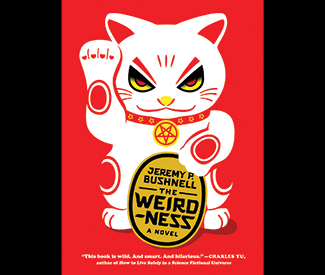
LIT In this workaday world we live in, it’s good to inject a little weirdness. Mix in moments of the metaphysical and dabs of the divine into our banal, everyday existence. And you can start by grabbing a copy of The Weirdness (Melville House, 288 pp., $16.95) and letting novelist Jeremy P. Bushnell do it for you.
The Faustian premise is a familiar one, with Lucifer showing up in hapless aspiring writer Billy Ridgeway’s living room with that timeless offer of earthly greatness in exchange eternal servitude. Or something like that, because Billy is skeptical and won’t sit through the Devil’s PowerPoint presentation (yes, this is Faust in the Information Age) even though it comes with really great coffee.
From there, the journey begins, a slow buildup of character development to what becomes a wild ride navigating the battlefield between the Adversarial Manifestation and the human forces secretly arrayed against him, à la Harry Potter. But the real appeal of The Weirdness isn’t the plot, as fun and fantastical as it may be.
No, the moments when I found myself enjoying this novel the most, the times when I laughed or smiled to myself with appreciation at the strength of the writing by this debut novelist, was when we peeked inside Billy’s mind as the weirdness was unfolding around him.
Self-absorbed and filled with doubt, preoccupied with petty gripes and grievances, obsessing about that last tiff with his girlfriend, and wondering whether he’s doing it right, the world inside Billy’s mind is a comically hilarious counterpoint to the epic clash of good and evil that is unfolding around him. I wasn’t sure whether I wanted to slap the kid and give him a big hug, but either way it was the stuff that really elevated this novel.
In many ways, this is an illuminating parable for these times, particularly among the young technology and finance workers here in San Francisco, who obsess about the latest deal or app or foodie delight, oblivious to the epic struggles around them except for when those strange societies of passionate warriors confront them, when Billy and those who want nothing more than their own personal success and happiness are made aware that there are larger struggles going on in the world.
And then, Billy is mostly just irritated by the inconvenience of it all. When members of the Right-Hand Path try to help Billy break free from the clutches of the devil, he just won’t be told what to do or trouble himself with taking a stand, even though the secret cabal is based on the set of his favorite sci-fi television show, Argentium Astrum.
After all, these nerdy do-gooders took his cell phone and won’t give it back, so Billy thinks that maybe he’s better off working with Lucifer, who is at least offering to get his novel published, even though his own father turns out to be a top tier warrior against Satan, which causes poor Billy to feel more betrayed than loved or saved.
Don’t worry, Billy is a piece of work, but he grows on you, even if you want to smack his whiny ass at times and maybe find yourself hoping the ever-charming Lucifer wins and subjects this kid to eternal hellfire. But by time Krishna shows up to save the day, you’ll just wish you had more of this delightful novel still left to read. *
East Bay Beats

esilvers@sfbg.com
LEFT OF THE DIAL Dayvid Michael, a West Oakland native and member of the CaliMade hip-hop crew, clearly has some mixed feelings about his debut record, Frienemy.
“I mean, I wrote those songs when I was 18,” says the rapper, drinking boba milk tea during an interview in downtown Oakland. “I’m still proud of them, but I’ve learned so much since then.”
That album dropped the last week of December 2012 — which means Michael’s reminiscing at the ripe old age of 21. But, to be fair, the past couple years have been big ones for someone who calls himself a “reluctant rapper” (until about age 17, he mostly wanted to sing and play guitar).
With CaliMade, a loose collective of Oakland-born guys who’ve been friends from elementary school, as well as other young DJs and producers, he performed at Hiero Day, steps away from Bay Area hip-hop legends. He’s guested on a few songs by Iamsu, a rapper whom, Michael rightly notes, you will hear if you put on 106.1 KMEL for more than 15 minutes right now; CaliMade is now working closely with the (slightly) elder rapper’s own crew, the HBK Gang. And 2014’s shaping up to be a big one: He just got done recording a new project with Azure, an Oakland rapper poised for big things in his own right as well as being Iamsu’s DJ, and Clyde Shankle, another member of CaliMade. Michael’s also working on his sophomore solo album, which will be out by the end of the year.
In other words, he’s an Oakland kid to keep your eye on — which makes him a perfect selection for Oakland Drops Beats, a new free, all-ages, quarterly music festival that features some 30-plus East Bay artists, spread out over 10 different stages and venues in downtown Oakland; the kickoff festival is April 19.
Its lineup is, in and of itself, a testament to the range of music coming out of Oakland right now: From the jazz-hip-hop blend of the Kev Choice Ensemble to the underrated indie rock of Oakland mainstays B. Hamilton to the funk-soul dance party music of Sal’s Greenhouse — not to mention a distinctly family-friendly vibe courtesy of Bay Area Girls Rock Camp and the presence of Youth Radio — the music “crawl,” as organizers are billing it, aims to serve as both a celebration of the city’s established artists and a new platform through which up-and-coming musicians can get some stage time.
Inspired by the Venice Music Crawl in LA, musician-organizer-founder Angelica Tavella first began reaching out to Oakland event producers over the summer, with the idea in mind that there are lots of community organizers and promoters “already doing cool stuff in other parts of Oakland, but really doing their own thing,” she says.
“This was, here’s a space where we could all do that together, for a couple hours, on this one day. And I really had in mind that it should be downtown Oakland — specifically not in Uptown, which already has the Art Murmur…there are a lot of great small shop owners, a lot of great energy, and cool new things going on downtown. But there aren’t a lot of venues for something like a public music performance to happen.”
Tavella was quickly overwhelmed by the level of interest and enthusiasm from business owners and event producers — especially considering that the festival is all volunteer-run for now (including pro bono performances by musicians). The goal for the next one, which will take place in the last week of July or the first week of August, is to fundraise enough to pay musicians for their performances, while keeping admission free to the public.
Eventually, Tavella hopes to have the free daytime performances segue into a nighttime music crawl that would bring business to the venues in downtown Oakland. And with more and more musicians and artists getting priced out of San Francisco and heading East, organizers shouldn’t have too hard a time finding fresh talent to fill a bill every three months.
Dayvid Michael will be performing in the afternoon with the CaliMade crew at Le Qui Vive, a gallery at 15th and Webster. He feels at home there — it’s one of the first venues where CaliMade began performing a few years ago, and he says the folks behind it are part of the community that makes him feel so lucky to be calling Oakland home.
“When people from outside the Bay Area think about the Bay Area, they think of two things — we’re hyphy, we know how to have fun; and also the diversity of the city,” says Michael, who also does graphics work for Youth Radio (he basically “hung around” until they let him). “I feel like as representatives, the HBK Gang and Cali Made can fulfill both of those perceptions. And my personal goal is to show the world that we’re more than just party music. We can do that too — but we want to offer more than that.”
“This place is so rich in culture, intelligence, legacy. I love it here,” he says, and thinks for a minute. “If Oakland had waterfalls, I would never go anywhere else.” Fair enough.
Oakland Drops Beats
Sat/19, 2pm (all day), free
10 venues between Broadway and Harrison/14th and 19th St, Oak.
www.oaklanddropsbeats.com
ONLY YOU CAN SAVE COLLEGE RADIO
Talk about “left of the dial.” If you’ve only been in the city a couple years, you might not be aware that there was a time when KUSF — that’s the student-run radio station of the University of San Francisco — wasn’t in exile. It’s been over three years since the university sold the station (which had been broadcasting since 1963 at 90.3 FM) without public input or comment, for $3.75 million, to the Classical Public Radio Network, aka CPRN, via a complex three-way deal between the University of Southern California, that station, and the corporate broadcasting giant Entercom.
Since that time, KUSF DJs and friends of the station have been operating the station online, 24 hours a day, from the Lightrail Studios, growing a registered nonprofit arm with a new name: San Francisco Community Radio. All the while, those who love the station have been embroiled in — to use the technical legal terminology — a bureaucratic shitshow, as they try to prove that the sale was illegal. They’ve had some small successes in proving certain aspects of the transaction were unlawful, and currently have an appeal before the FCC.
Then, at the end of 2013, the FCC began issuing low-power FM licenses for the first time in about a decade. KUSF-In-Exile has an application in for 102.5 — but they’re up against at least seven other groups, including, as KUSF members understand it, a mega-church. The central goal, say organizers, is simply to get back on the (non-internet based) airwaves, one way or another. But “It’s a lot of hurry up and wait,” says SFCR board member and treasurer Damin Esper of the situation. “Which, obviously, isn’t very satisfying to us or to our supporters.”
In the meantime, the station has been throwing fundraiser shows to help pay for ongoing legal fees, and the one this April 20, naturally, is the third incarnation of their annual stoner-rama affair. Oakland punks Violence Creeps, who’ll be opening for the current incarnation of Black Flag at Brick & Mortar in May, will be headlining, alongside psych-rockers Mondo Drag and plenty of other wild, weird, woolly favorites; visuals, should you happen to have ingested anything that would make you want to look at cool visuals, will be provided by veteran stock-footage auteurs Oddball Films. All of the funds raised will go to SFCR’s legal fight; there will also be members on hand to talk volunteer opportunities — college radio-loving grantwriters, are you out there?
When it comes to the original sale, Esper says, “It’s clear that laws were broken. It could be found to be illegal in court…but one of the reasons the big guys always win in situations like this is it’s hard to keep people engaged, reminded of the situation. This is bigger than just KUSF. This is happening all over the country. College radio is under attack.”
https://www.youtube.com/watch?v=a0MiS923Jfo
SFCR’s Blown-Out, Blowout Benefit III
Sun/20, 8pm, $7
Thee Parkside 1600 17th St, SF
www.theeparkside.com
Oh, one last thing: There’s also a little event called Record Store Day coming up, so get out that piggy bank — this is what people mean when they talk about having an “emergency fund,” right? Anyway: So much going on, so little space. Check the Bay Guardian’s Noise blog this week for special in-store events and one-day-only releases.
Save the world, work less

steve@sfbg.com
Save the world, work less. That dual proposition should have universal appeal in any sane society. And those two ideas are inextricably linked by the realities of global climate change because there is a direct connection between economic activity and greenhouse gas emissions.
Simply put, every hour of work we do cooks the planet and its sensitive ecosystems a little bit more, and going home to relax and enjoy some leisure time is like taking this boiling pot of water off the burner.
Most of us burn energy getting to and from work, stocking and powering our offices, and performing the myriad tasks that translate into digits on our paychecks. The challenge of working less is a societal one, not an individual mandate: How can we allow people to work less and still meet their basic needs?
This goal of slowing down and spending less time at work — as radical as it may sound — was at the center of mainstream American political discourse for much of our history, considered by thinkers of all ideological stripes to be the natural endpoint of technological development. It was mostly forgotten here in the 1940s, strangely so, even as worker productivity increased dramatically.
But it’s worth remembering now that we understand the environmental consequences of our growth-based economic system. Our current approach isn’t good for the health of the planet and its creatures, and it’s not good for the happiness and productivity of overworked Americans, so perhaps it’s time to revisit this once-popular idea.
Last year, there was a brief burst of national media coverage around this “save the world, work less” idea, triggered by a report by the Washington DC-based Center for Economic and Policy Research, entitled “Reduced Work Hours as a Means of Slowing Climate Change.”
“As productivity grows in high-income, as well as developing countries, social choices will be made as to how much of the productivity gains will be taken in the form of higher consumption levels versus fewer work hours,” author David Rosnick wrote in the introduction.
He notes that per capita work hours were reduced by 50 percent in recent decades in Europe compared to US workers who spend as much time as ever on the job, despite being a world leader in developing technologies that make us more productive. Working more means consuming more, on and off the job.
“This choice between fewer work hours versus increased consumption has significant implications for the rate of climate change,” the report said before going on to study various climate change and economic growth models.
It isn’t just global warming that working less will help address, but a whole range of related environmental problems: loss of biodiversity and natural habitat; rapid depletion of important natural resources, from fossil fuel to fresh water; and the pollution of our environment with harmful chemicals and obsolete gadgets.
Every day that the global workforce is on the job, those problems all get worse, mitigated only slightly by the handful of occupations devoted to cleaning up those messes. The Rosnick report contemplates only a slight reduction in working hours, gradually shaving a few hours off the week and offering a little more vacation time.
“The paper estimates the impact on climate change of reducing work hours over the rest of the century by an annual average of 0.5 percent. It finds that such a change in work hours would eliminate about one-quarter to one-half of the global warming that is not already locked in (i.e. warming that would be caused by 1990 levels of greenhouse gas concentrations already in the atmosphere),” the report concludes.
What I’m talking about is something more radical, a change that meets the daunting and unaddressed challenge that climate change is presenting. Let’s start the discussion in the range of a full day off to cutting our work hours in half — and eliminating half of the wasteful, exploitive, demeaning, make-work jobs that this economy-on-steroids is creating for us, and forcing us to take if we want to meet our basic needs.
Taking even a day back for ourselves and our environment will seem like crazy-talk to many readers, even though our bosses would still command more days each week than we would. But the idea that our machines and other innovations would lead us to work far less than we do now — and that this would be a natural and widely accepted and expected part of economic evolution — has a long and esteemed philosophical history.
Perhaps this forgotten goal is one worth remembering at this critical moment in our economic and environmental development.
HISTORY LESSON
Author and historian Chris Carlsson has been beating the “work less” drum in San Francisco since Jimmy Carter was president, when he and his fellow anti-capitalist activists decried the dawning of an age of aggressive business deregulation that continues to this day.
They responded with creative political theater and protests on the streets of the Financial District, and with the founding of a magazine called Processed World, highlighting how new information technologies were making corporations more powerful than ever without improving the lives of workers.
“What do we actually do all day and why? That’s the most basic question that you’d think we’d be talking about all the time,” Carlsson told us. “We live in an incredibly powerful and overarching propaganda society that tells you to get your joy from work.”
But Carlsson isn’t buying it, noting that huge swaths of the economy are based on exploiting people or the planet, or just creating unproductive economic churn that wastes energy for its own sake. After all, the Gross Domestic Product measures everything, the good, the bad, and the ugly.
“The logic of growth that underlies this society is fundamentally flawed,” Carlsson said. “It’s the logic of the cancer cell — it makes no sense.”
What makes more sense is to be smart about how we’re using our energy, to create an economy that economizes instead of just consuming everything in its path. He said that we should ask, “What work do we need to do and to what end?”
We used to ask such questions in this country. There was a time when working less was the goal of our technological development.
“Throughout the 19th century, and well into the 20th, the reduction of worktime was one of the nation’s most pressing issues,” professor Juliet B. Schor wrote in her seminal 1991 book The Overworked American: The Unexpected Decline of Leisure. “Through the Depression, hours remained a major social preoccupation. Today these debates and conflicts are long forgotten.”
Work hours were steadily reduced as these debates raged, and it was widely assumed that even greater reductions in work hours was all but inevitable. “By today, it was estimated that we could have either a 22-hour week, a six-month workyear, or a standard retirement age of 38,” Schor wrote, citing a 1958 study and testimony to Congress in 1967.
But that didn’t happen. Instead, declining work hours leveled off in the late 1940s even as worker productivity grew rapidly, increasing an average of 3 percent per year 1948-1968. Then, in the 1970s, workers in the US began to work steadily more hours each week while their European counterparts moved in the opposite direction.
“People tend to think the way things are is the way it’s always been,” Carlsson said. “Once upon a time, they thought technology would produce more leisure time, but that didn’t happen.”
Writer David Spencer took on the topic in a widely shared essay published in The Guardian UK in February entitled “Why work more? We should be working less for a better quality of life: Our society tolerates long working hours for some and zero hours for others. This doesn’t make sense.”
He cites practical benefits of working less, from reducing unemployment to increasing the productivity and happiness of workers, and cites a long and varied philosophical history supporting this forgotten goal, including opposing economists John Maynard Keynes and Karl Marx.
Keynes called less work the “ultimate solution” to unemployment and he “also saw merit in using productivity gains to reduce work time and famously looked forward to a time (around 2030) when people would be required to work 15 hours a week. Working less was part of Keynes’s vision of a ‘good society,'” Spencer wrote.
“Marx importantly thought that under communism work in the ‘realm of necessity’ could be fulfilling as it would elicit and harness the creativity of workers. Whatever irksome work remained in realm of necessity could be lessened by the harnessing of technology,” Spencer wrote.
He also cited Bertrand Russell’s acclaimed 1932 essay, “In Praise of Idleness,” in which the famed mathematician reasoned that working a four-hour day would cure many societal ills. “I think that there is far too much work done in the world, that immense harm is caused by the belief that work is virtuous, and that what needs to be preached in modern industrial countries is quite different from what always has been preached,” Russell wrote.
Spencer concluded his article by writing, “Ultimately, the reduction in working time is about creating more opportunities for people to realize their potential in all manner of activities including within the work sphere. Working less, in short, is about allowing us to live more.”
JOBS VS. WORK
Schor’s research has shown how long working hours — and the uneven distribution of those hours among workers — has hampered our economy, hurt our environment, and undermined human happiness.
“We have an increasingly poorly functioning economy and a catastrophic environmental situation,” Schor told us in a phone interview from her office at Boston College, explaining how the increasingly dire climate change scenarios add urgency to talking about how we’re working.
Schor has studied the problem with other researchers, with some of her work forming the basis for Rosnick’s work, including the 2012 paper Schor authored with University of Alabama Professor Kyle Knight entitled “Could working less reduce pressures on the environment?” The short answer is yes.
“As humanity’s overshoot of environmental limits become increasingly manifest and its consequences become clearer, more attention is being paid to the idea of supplanting the pervasive growth paradigm of contemporary societies,” the report says.
The United States seems to be a case study for what’s wrong.
“There’s quite a bit of evidence that countries with high annual work hours have much higher carbon emissions and carbon footprints,” Schor told us, noting that the latter category also takes into account the impacts of the products and services we use. And it isn’t just the energy we expend at work, but how we live our stressed-out personal lives.
“If households have less time due to hours of work, they do things in a more carbon-intensive way,” Schor said, with her research finding those who work long hours often tend to drive cars by themselves more often (after all, carpooling or public transportation take time and planning) and eat more processed foods.
Other countries have found ways of breaking this vicious cycle. A generation ago, Schor said, the Netherlands began a policy of converting many government jobs to 80 percent hours, giving employees an extra day off each week, and encouraging many private sector employers to do the same. The result was happier employees and a stronger economy.
“The Netherlands had tremendous success with their program and they’ve ended up with the highest labor productivity in Europe, and one of the happiest populations,” Schor told us. “Working hours is a triple dividend policy change.”
By that she means that reducing per capita work hours simultaneously lowers the unemployment rate by making more jobs available, helps address global warming and other environmental challenges, and allows people to lead happier lives, with more time for family, leisure, and activities of their choosing.
Ironically, a big reason why it’s been so difficult for the climate change movement to gain traction is that we’re all spending too much time and energy on making a living to have the bandwidth needed to sustain a serious and sustained political uprising.
When I presented this article’s thesis to Bill McKibben, the author and activist whose 350.org movement is desperately trying to prevent carbon concentrations in the atmosphere from passing critical levels, he said, “If people figure out ways to work less at their jobs, I hope they’ll spend some of their time on our too-often neglected work as citizens. In particular, we need a hell of a lot of people willing to devote some time to breaking the power of the fossil fuel industry.”

That’s the vicious circle we now find ourselves in. There is so much work to do in addressing huge challenges such as global warming and transitioning to more sustainable economic and energy systems, but we’re working harder than ever just to meet our basic needs — usually in ways that exacerbate these challenges.
“I don’t have time for a job, I have too much work to do,” is the dilemma facing Carlsson and others who seek to devote themselves to making the world a better place for all living things.
To get our heads around the problem, we need to overcome the mistaken belief that all jobs and economic activity are good, a core tenet of Mayor Ed Lee’s economic development policies and his relentless “jobs agenda” boosterism and business tax cuts. Not only has the approach triggered the gentrification and displacement that have roiled the city’s political landscape in the last year, but it relies on a faulty and overly simplistic assumption: All jobs are good for society, regardless of their pay or impact on people and the planet.
Lee’s mantra is just the latest riff on the fabled Protestant work ethic, which US conservatives and neoliberals since the Reagan Era have used to dismantle the US welfare system, pushing the idea that it’s better for a single mother to flip our hamburgers or scrub our floors than to get the assistance she needs to stay home and take care of her own home and children.
“There is a belief that work is the best form of welfare and that those who are able to work ought to work. This particular focus on work has come at the expense of another, far more radical policy goal, that of creating ‘less work,'” Spencer wrote in his Guardian essay. “Yet…the pursuit of less work could provide a better standard of life, including a better quality of work life.”
And it may also help save us from environmental catastrophe.
GLOBAL TIPPING POINT
The Intergovernmental Panel on Climate Change, the top research body on the issue recognized by the United Nations, recently released its fifth report summarizing and analyzing the science and policies around climate change, striking a more urgent tone than in previous reports.
On April 13 at a climate conference in Berlin, the panel released a new report noting that greenhouse gas emissions are rising faster than ever and urgent action is needed in the next decade to avert a serious crisis.
“We cannot afford to lose another decade,” Ottmar Edenhofer, a German economist and co-chairman of the committee that wrote the report, told The New York Times. “If we lose another decade, it becomes extremely costly to achieve climate stabilization.”
After the panel released an earlier section of the report on March 31, it wrote in a public statement: “The report concludes that responding to climate change involves making choices about risks in a changing world. The nature of the risks of climate change is increasingly clear, though climate change will also continue to produce surprises.”
The known impacts will be displaced populations in poor countries inundated by rising seas, significant changes to life-supporting ecosystems (such as less precipitation in California and other regions, creating possible fresh water shortages), food shortages from loss of agricultural land, and more extreme weather events.
What we don’t yet know, these “surprises,” could be even scarier because this is such uncharted territory. Never before have human activities had such an impact on the natural world and its delicate balances, such as in how energy circulates through the world’s oceans and what it means to disrupt half of the planet’s surface area.
Researchers have warned that we could be approaching a “global tipping point,” in which the impact of climate change affects other systems in the natural world and threatens to spiral out of control toward another mass extinction. And a new report funded partially by the National Science Foundation and NASA’s Goodard Space Center combines the environmental data with growing inequities in the distribution of wealth to warn that modern society as we know it could collapse.
“The fall of the Roman Empire, and the equally (if not more) advanced Han, Mauryan, and Gupta Empires, as well as so many advanced Mesopotamian Empires, are all testimony to the fact that advanced, sophisticated, complex, and creative civilizations can be both fragile and impermanent,” the report warned.
It cites two critical features that have triggered most major societal collapses in past, both of which are increasingly pervasive problems today: “the stretching of resources due to the strain placed on the ecological carrying capacity”; and “the economic stratification of society into Elites [rich] and Masses (or ‘Commoners’),” which makes it more difficult to deal with problems that arise.
Both of these problems would be addressed by doing less overall work, and distributing the work and the rewards for that work more evenly.
SYSTEMIC PROBLEM
Carol Zabin — research director for the Center for Labor Research and Education at UC Berkeley, who has studied the relation between jobs and climate change — has some doubts about the strategy of addressing global warming by reducing economic output and working less.
“Economic activity which uses energy is not immediately correlated with work hours,” she told us, noting that some labor-saving industrial processes use more energy than human-powered alternatives. And she also said that, “some leisure activities could be consumptive activities that are just as bad or worse than work.”
She does concede that there is a direct connection between energy use and climate change, and that most economic activity uses energy. Zabin also said there was a clear and measurable reduction in greenhouse gas emissions during the Great Recession that began with the 2008 economic crash, when economic growth stalled and unemployment was high.
“When we’re in recessions and output and consumption slow, we see a reduction in impact on the climate,” Zabin said, although she added, “They’re correlated, but they’re not causal.”
Other studies have made direct connections between work and energy use, at least when averaged out across the population, studies that Rosnick cited in his study. “Recent work estimated that a 1 percent increase in annual hours per employee is associated with a 1.5 percent increase in carbon footprint,” it said, citing the 2012 Knight study.
Zabin’s main stumbling block was a political one, rooted in the assumption that American-style capitalism, based on conspicuous consumption, would continue more or less as is. “Politically, reducing economic growth is really, really unviable,” she told us, noting how that would hurt the working class.
But again, doesn’t that just assume that the pain of an economic slowdown couldn’t be more broadly shared, with the rich absorbing more of the impact than they have so far? Can’t we move to an economic system that is more sustainable and more equitable?
“It seems a little utopian when we have a problem we need to address by reducing energy use,” Zabin said before finally taking that next logical step: “If we had socialism and central planning, we could shut the whole thing down a notch.”
Instead, we have capitalism, and she said, “we have a climate problem that is probably not going to be solved anyway.”
So we have capitalism and unchecked global warming, or we can have a more sustainable system and socialism. Hmm, which one should we pick? European leaders have already started opting for the latter option, slowing down their economic output, reducing work hours, and substantially lowering the continent’s carbon footprint.
That brings us back to the basic question set forth in the Rosnick study: As productivity increases, should those gains go to increase the wages of workers or to reduce their hours? From the perspective of global warming, the answer is clearly the latter. But that question is complicated in US these days by the bosses, investors, and corporations keeping the productivity gains for themselves.
“It is worth noting that the pursuit of reduced work hours as a policy alternative would be much more difficult in an economy where inequality is high and/or growing. In the United States, for example, just under two-thirds of all income gains from 1973-2007 went to the top 1 percent of households. In that type of economy, the majority of workers would have to take an absolute reduction in their living standards in order to work less. The analysis of this paper assumes that the gains from productivity growth will be more broadly shared in the future, as they have been in the past,” the study concludes.
So it appears we have some work to do, and that starts with making a connection between Earth Day and May Day.
EARTH DAY TO MAY DAY
The Global Climate Convergence (www.globalclimateconvergence.org) grew out of a Jan. 18 conference in Chicago that brought together a variety of progressive, environmental, and social justice groups to work together on combating climate change. They’re planning “10 days to change course,” a burst of political organizing and activism between Earth Day and May Day, highlighting the connection between empowering workers and saving the planet.
“It provides coordinated action and collaboration across fronts of struggle and national borders to harness the transformative power we already possess as a thousand separate movements. These grassroots justice movements are sweeping the globe, rising up against the global assault on our shared economy, ecology, peace and democracy. The accelerating climate disaster, which threatens to unravel civilization as soon as 2050, intensifies all of these struggles and creates new urgency for collaboration and unified action. Earth Day to May Day 2014 (April 22 — May 1) will be the first in a series of expanding annual actions,” the group announced.
San Mateo resident Ragina Johnson, who is coordinating events in the Bay Area, told us May Day, the international workers’ rights holiday, grew out of the struggle for the eight-hour workday in the United States, so it’s appropriate to use the occasion to call for society to slow down and balance the demands of capital with the needs of the people and the planet.
“What we’re seeing now is an enormous opportunity to link up these movements,” she told us. “It has really put us on the forefront of building a new progressive left in this country that takes on these issues.”
In San Francisco, she said the tech industry is a ripe target for activism.
“Technology has many employees working 60 hours a week, and what is the technology going to? It’s going to bottom line profits instead of reducing people’s work hours,” she said.
That’s something the researchers have found as well.
“Right now, the problem is workers aren’t getting any of those productivity gains, it’s all going to capital,” Schor told us. “People don’t see the connection between the maldistribution of hours and high unemployment.”
She said the solution should involve “policies that make it easier to work shorter hours and still meet people’s basic needs, and health insurance reform is one of those.”
Yet even the suggestion that reducing work hours might be a worthy societal goal makes the head of conservatives explode. When the San Francisco Chronicle published an article about how “working a bit less” could help many people qualify for healthcare subsidies under the Affordable Care Act (“Lower 2014 income can net huge health care subsidy,” 10/12/13), the right-wing blogosphere went nuts decrying what one site called the “toxic essence of the welfare state.”
Chronicle columnist Debra Saunders parroted the criticism in her Feb. 7 column. “The CBO had determined that ‘workers will choose to supply less labor — given the new taxes and other incentives they will face and the financial benefits some will receive.’ To many Democrats, apparently, that’s all good,” she wrote of Congressional Budget Office predictions that Obamacare could help reduce hours worked.
Not too many Democratic politicians have embraced the idea of working less, but maybe they should if we’re really going to attack climate change and other environmental challenges. Capitalism has given us great abundance, more than we need and more than we can safely sustain, so let’s talk about slowing things down.
“There’s a huge amount of work going on in society that nobody wants to do and nobody should do,” Carlsson said, imagining a world where economic desperation didn’t dictate the work we do. “Most of us would be free to do what we want to do, and most of us would do useful things.”
And what about those who would choose idleness and sloth? So what? At this point, Mother Earth would happily trade her legions of crazed workaholics for a healthy population of slackers, those content to work and consume less.
Maybe someday we’ll even look back and wonder why we ever considered greed and overwork to be virtues, rather than valuing a more healthy balance between our jobs and our personal lives, our bosses and our families, ourselves and the natural world that sustains us.
Based on Earth

rebecca@sfbg.com
BASED ON EARTH San Francisco is often celebrated as one of the greenest cities in America. It’s known for an eco-conscious citizenry and legislative hallmarks that banned plastic bags, made composting commonplace, and got everyone buying into the idea that mindful city dwellers would someday send no waste to the landfill.
Earthlings lucky enough to reside in the Bay Area live amid some of the most breathtaking natural landscapes in the nation. People here have made entire careers out of pushing for energy-efficient technologies, shoring up wildlife protections, advocating for sustainable transportation, promoting environmental justice, fighting the oil industry, or leading kids on nature trips.
Nevertheless, with very few exceptions, local media often fails to dedicate space to environmental coverage. While we stay glued to topsy-turvy political battles and boom-and-bust economic cycles, nature hums away somewhere in the background, walled off from our frenzied lives.
Think of this monthly column as one tiny gesture to bridge that gap. Although it might seem abstract at times, the environmental challenges facing our society — climate change, drought, water degradation, air pollution, deforestation, mass extinction, ocean acidification — threaten very real consequences for our lives. They carry even heavier implications for generations that haven’t yet arrived. So in honor of Earth Day, here are some tidbits (plus events!) dedicated to the planet that’s keeping us alive.
THINKING AHEAD TO 2050
Earlier this month, the Bay Area Air Quality Management District — tasked with the serious business of protecting air quality in the nine-county Bay Area — announced that it had approved a new regional climate action plan that gazes far into the future.
It grew out the district’s move last November to approve a Climate Protection Resolution. That document established a goal of dramatically reducing greenhouse gas emissions, to 80 percent below 1990 levels, by 2050. Think about that for a minute — in 2050, babies born in 2014 will be celebrating their 36th birthdays.
Among other things, the plan calls for monitoring greenhouse gas emissions such as methane and carbon dioxide, developing a “regional climate action strategy” to get other local entities on board with meeting this sweeping emissions reduction goal, and tasking the district’s advisory council with investigating how plans for the region’s energy future jive with the carbon reduction target.
The long-term goal matches what was set out in an executive order by Gov. Jerry Brown, and complements planning efforts already underway at state, regional, and local levels.
“Climate change poses one of the greatest air quality challenges of our era,” Jack Broadbent, the district’s executive officer, said when the plan was announced. And that’s just the climate change impact that’s within the district’s purview, unlike sea-level rise and other bedeviling challenges.
INTO THE DEEP
Elsa Hammond is not your typical boating enthusiast. The Bristol, England resident has been engaging in intense training in preparation for her upcoming solo voyage, which will take her across the Pacific Ocean from Monterey to Hawaii in a 24-foot, solar-powered vessel. She’ll make the journey under her own power, by rowing.
“It’s kind of an extreme form of sustainable transportation,” Hammond said in a recent Skype interview, as we chatted about her underlying environmental mission. Hammond’s journey will send her skirting around the edge of the vast spiral of debris known as the Pacific Gyre, or the Great Pacific Garbage Patch.
She’ll use the solo row as a fund-raiser for Plastic Ocean Foundation, a UK charity working to tackle the problem of plastics pollution. She also plans to collect ocean-water samples that will be turned over to scientists for micro-plastics research.
Hammond will leave Monterey on June 7, and the adventure will take her into the deep blue of the Pacific for an estimated 2,400 miles. She figures the toughest part will be “getting used to a really harsh and difficult environment.”
Planning for this trip involves preparing for seasickness; individually pre-wrapping calorie-packed meals; getting comfortable with the idea of strapping into a harness and holing up in the boat’s tiny cabin should stormy weather cause the vessel to capsize; learning navigation by sea; and familiarizing herself with the solar-powered GPS and other essential on-board technologies.

Hammond plans to live-tweet the experience, using a satellite phone. That relates to her solo journey’s second theme: Promoting gender equality and female empowerment. To support her efforts, “People can nominate an inspirational woman of their choice,” and donors can specify which mile of the 2,400-mile row will be dedicated to their selected heroine.
Hammond will name-drop them on Twitter as she completes each appointed mile. “All the way around the boat will be the names of these women,” she noted, a kind of protection for her daring three-month challenge.
To learn more, visit www.elsahammond.com.
RADIOACTIVE RESISTANCE
On the 11th day of every month since an earthquake triggered Japan’s Fukushima Dai-ichi nuclear power plant meltdown in March 2011, Berkeley resident Chizu Hamada has led a cohort of anti-nuclear activists to San Francisco’s Japanese Consulate. Time after time, they show up to deliver correspondence directed to the Japanese Prime Minister, relating to the ongoing impacts of the nuclear disaster.
Called No Nukes Action, her group includes Japanese activists who’ve closely followed the ongoing developments of remediation, radiation testing, health impacts, and governmental initiatives to re-start nuclear reactors across Japan. Their letters ask pointed questions of the Japanese government, and call for a shift away from reliance on nuclear power.
But while a previous consul was more sympathetic to their cause, showing up each month to receive the letter in person (his wife was rumored to be from Fukushima), Hamada reports that a staffing change has left them out in the cold.
When Hamada and a group of about 25 arrived at the new Japanese Consulate location at 275 Battery St. on April 11, there was no one to greet them and accept the letter. One of the group members ventured beyond the front lobby to hand-deliver it, only to be threatened with arrest for trespassing.
“She wanted to give the letter, that is it,” Hamada wrote in an email. “We wonder why they are afraid of receiving the letter. Japanese officials have the duty to receive the letter from a citizen.”
Meanwhile, an ongoing effort to employ citizen scientists for a crowdsourcing effort to test for low-level radiation along the West Coast has produced some interesting preliminary results. Created by research scientist Ken Buesseler of Woods Hole Oceanographic Institution to test for long-term impacts from Fukushima, the ambitious project aims to measure whether low-level radiation has reached North America’s western shores. Samples from Point Reyes, La Jolla, and two Washington locations “show no detectable Fukushima cesium,” according to results posted Jan. 28.
However, “the results provide a key baseline from the West Coast prior to the arrival of the Fukushima plume,” according to an update on the project website, ourradioactiveocean.org. “Models of ocean currents and cesium transport predict that the plume will arrive along the northern sections of the North American Pacific Coast (Alaska and northern British Columbia) sometime in the spring of 2014 and will arrive along the Washington, Oregon, and California coastline over the coming one to two years. … We expect levels of cesium-134 to become detectable in coming months.”
CELEBRATE EARTH DAY
Get some fresh air and do your part at these planetary happenings.
Earth Day San Francisco Action Parade and Rally Sat/19, 11am-3:30pm, free. This march for climate justice will start from Justin Herman Plaza and end at UN Plaza with a 1pm rally, featuring talks by Bill McKibben, author and founder of 350.org, and other notable environmentalists. Join by bike, on foot, or with some other form of carbon-free transportation. For more information, visit 350bayarea.org.
Earth Day Festival Sat/19, UN Plaza, 10am-6pm, free. This daylong festival will feature live musical performances, talks by renowned environmentalists including Bill McKibben, Leila Salazar-Lopez of Amazon Watch, Green Festivals director Kevin Danaher, Cal Academy of Sciences Director of Sciences and Sustainability Margaret Lowman, and more. Also check out green exhibitors, eco-fashion shows, organic cooking demos, information on green jobs, an electric vehicle showcase, and green D.I.Y. workshops. For more, visit earthdaysf.org.
People’s Earth Day Sat/26, Bayview Hunters Point, SF. 11am, free. Join Greenaction, the Huntersview Mothers and Fathers Committee, residents, cancer survivors and grassroots groups from Bayview Hunters Point and other low-income communities impacted by pollution for the People’s Earth Day: Environmental Justice Walk Against Cancer and Pollution. Meet at 10:30am in front of Martin Luther King Jr. Park, in the 5700 block of Third Street at Carroll.
Oakland Earth Day Sat/26, various locations, Oakland. Free. More than 3,000 volunteers will to help clean and green over 90 locations throughout Oakland. The first 2,000 Oakland Earth Day volunteers will receive a complimentary reusable bag, snacks from Cliff Bar and Numi Tea, and a Chinook Book smart phone app with coupons for green products and service from East Bay businesses. For more, visit tinyurl.com/oakday14.
Rebecca Bowe is the Bay Guardian’s news editor. Send environmental news items to rebecca@sfbg.com.
Revisionist future

news@sfbg.com
Acidified oceans. Dirty air. Superstorms. Food shortages. Mass migration. War. The International Panel on Climate Change last week released the final installment of its latest authoritative report on the catastrophic effects of global climate change.
In no uncertain terms, the report states, it is urgent that steps be taken to mitigate the worst impacts. The world’s cities are the most at risk — yet hold the greatest potential for turning the tide, IPCC scientists noted. Making cities greener is one of the most effective ways to minimize climate change.
But as experts turn to cities in hopes of reducing greenhouse gas emissions, newly released documents suggest that officials in San Francisco Mayor Ed Lee’s office ordered the most effective strategies for achieving clean energy goals to be removed from the city’s plan for combating climate change.
CHANGE OF PLANS
The city’s Climate Action Strategy sets out the overarching goal of reducing greenhouse gas emissions to 80 percent below 1990 levels by 2050, a yardstick consistent with state and regional goals. For 10 years, the San Francisco Public Utilities Commission worked on a program that would have given city residents and businesses more access to renewable energy sources to help meet that emissions reduction target.
CleanPowerSF, a municipal power program that would replace Pacific Gas & Electric power for San Francisco customers, would provide electricity from 100 percent, California-certified renewable sources such as solar, wind, small hydro, and other green energy sources.
The Climate Action Strategy calls creation of a renewable energy portfolio a critical strategy for meeting the goal — and that’s precisely what CleanPowerSF set out to achieve. Over the course of a decade, millions of dollars were invested and untold staff hours devoted to creating the program.
Yet at the direction of Roger Kim, the mayor’s senior advisor on the environment, the city’s Department of the Environment removed the Climate Action Strategy’s reference to CleanPowerSF before the document was released to the public. The Department of the Environment was also directed to remove reference to PG&E’s 100 percent Green Power Option, a program floated as an alternative to CleanPowerSF.

In a Sept. 30 memo to Kim, obtained via a public records request, former Department of Environment Director Melanie Nutter wrote, “At the request of the Mayor’s Office, mention of PG&E’s 100% Green Power Option and SFPUC’s CleanPowerSF program were removed from the Energy Chapter and replaced with the overarching goal of 100% renewable electricity (pgs 16,17).”
Nutter recently stepped down as the director of the agency.
The timing of Nutter’s memo is significant. Just weeks earlier, the SFPUC — whose five-member governing board is appointed by the mayor — refused to approve a not-to-exceed rate that would have allowed CleanPowerSF to move forward as planned. Instead of expressing opposition to the rate itself, commissioners expressed their overall opposition to CleanPowerSF before voting it down.
Lee had criticized the cost and mechanisms of CleanPowerSF, without proposing an alternative (see “Power struggle,” 9/17/13). His real motivations for deleting these two strategies from the city’s Climate Action Strategy report remain unclear, but Lee has long supported PG&E, which stands to lose customers if CleanPowerSF is successful.
NO REAL ANSWER
Both CleanPowerSF and PG&E’s green option were held up as pathways toward a greener future in the Climate Action Strategy until the Mayor’s Office intervened, leaving no city mechanisms for most San Franciscans to choose renewable energy sources.
“PG&E’s proposed green option and CleanPowerSF could operate in parallel,” Nutter wrote in a memo drafted a couple years ago. “CleanPowerSF is likely to have a much greater environmental benefit due to the size of the customer base that would be served, the program’s objective to create a market for local renewable power, and the amount of greenhouse gas reductions achieved.”
So why then were both of these efforts eliminated from the report at the last minute, after being incorporated by experts in the field? Lee Communications Director Christine Falvey did not provide an answer to this specific Guardian question about the removal decision despite being asked several times.
When the Guardian asked Mayor Lee in March why CleanPowerSF was removed from the report, Lee responded, “I don’t think I have a real answer for that.”
Also unanswered is the question of how the city will meet its greenhouse gas emission reductions target. A quarter of the city’s greenhouse gas emissions derive from residential and commercial electricity, according to the Climate Action Strategy.

Electricity provided by PG&E is only 50 percent emission-free, with nuclear energy as the company’s most significant carbon-free power source. SFPUC projections have shown that CleanPowerSF could reduce citywide greenhouse gas emissions by 25 percent by 2030.
Another quarter of our emissions come from natural gas usage, and 40 percent of total emissions are belched into the air by automobiles. Lee wants to encourage more electric vehicles, but that won’t help much if they’re powered by a dirty power portfolio.
Whereas CleanPowerSF represented a carefully crafted plan for hitting these long-term targets, Lee’s most recent comments on how these important goals will be reached seem vague at best.
“I think we take all our deliberations on climate action seriously,” Lee told the Guardian in March, “and I do think that our focus now has been on energy efficiencies. We are also trying now to beef up the GoSolar program to be sure to catch whatever the state is willing to do, because Governor [Jerry] Brown has been trying to tap where there can be more examples of that.”
“The Mayor is open to exploring all avenues that might be available to achieve our energy goals,” Falvey told us. “In fact, it will take a variety of strategies working in concert to achieve them, including increasing the energy efficiency of buildings to reduce the total power load, developing in-city renewables, and options for increasing the provision of renewable power at a utility-scale.”
Those last two goals are precisely what CleanPowerSF would have done. Critics have decried Lee’s move as harmful and politically motivated. “What Mayor Lee has succeeded in doing is to rip the guts out of the new Climate Action Strategy,” John Rizzo wrote in a recent Sierra Club newsletter, “rendering it as meaningless as the missed greenhouse-gas reduction targets from 2012.”
LOOKING AHEAD
At the Board of Supervisors’ mayor question time in March, Sup. John Avalos asked Lee to direct the Department of Environment to return CleanPowerSF to the Climate Action Strategy and commit to launching the program in 2014.

Lee answered that he could not, saying the program was too problematic and the SFPUC has too many infrastructure repair needs. The SFPUC has pulled its staff from the project to redirect that work into energy infrastructure improvements.
Some are still holding out hope that CleanPowerSF could move forward. San Francisco’s Local Agency Formation Commission is set to begin researching what CleanPowerSF “would look like and to address other concerns that the Mayor and SFPUC Commissioners have raised,” LAFCo’s Senior Program Officer Jason Fried said.
Proponents are also investigating ways to launch the program independently of the mayor and the SFPUC, by partnering with Marin County’s version of the program.
“There is talk about joining the Marin Joint Powers Authority,” Fried said, “but we will exhaust every option to run our own program. We want the PUC and mayor on board.”
While the mayor and the commissioners charged with overseeing the SFPUC seem content to let CleanPowerSF fade into memory, Avalos is not willing to let it go without a fight.
“We’re facing the greatest crisis for this city, and our government pulls back on how to achieve this,” Avalos said at a March 31 Board of Supervisors committee hearing on the Climate Action Strategy. “If we want to be a great city, it’s up to us to generate the political will to implement these strategies.”
Joe Fitzgerald Rodriguez contributed to this report.
Earth reads
WEST OF EDEN: COMMUNES AND UTOPIA IN NORTHERN CALIFORNIA (PM PRESS, 2012, $24.95)
Edited by Iain Boal, Janfrie Stone, Michael Watts, and Cal Winslow, this fresh history of radical communitarians and their cultural impact includes essays that encompass the San Francisco Mime Troupe, the Alcatraz occupation, and the Black Panthers, as well as famed (and doomed) communes like the Albion Nation along the Mendocino coast and Morning Star in Sonoma. There’s an emphasis on storytelling, roots activism, and personal relation to the earth here, as well as a bracing re-evaluation of what it meant to “get away from it all” and live free in the ’60s and ’70s.
THE SIXTH EXTINCTION: AN UNNATURAL HISTORY BY ELIZABETH KOLBERT (HENRY HOLT, 2014, $28)
Environmental staff writer at The New Yorker and author of the essential Field Notes from a Catastrophe, Kolbert turns an epochal eye toward our environmental fate. Proposing that, after the five major extinctions that have occurred in the history of life, the sixth one is us, her book guides us through the devastating effect we’re having on most of the planet’s species — and provides startling examples of animals almost gone, like the Panamanian golden frog and the great auk. After reading this, you will never snort ground-up black rhino horn as a party drug again.
THE BAY AREA FORAGER BY MIA ANDLER AND KEVIN FEINSTEIN (FORAGING SOCIETY PRESS, 2011, $24.95)
Miner’s Lettuce! Prickly Pear! Sour Clover! Blue Dicks! Where to find them, how to find them, when to use them, and how to eat them — all is revealed (along with some kick-ass recipes) in this wonderfully illustrated tome.
IN THE SIERRA: MOUNTAIN WRITINGS BY KENNETH REXROTH, EDITED BY KIM STANLEY ROBINSON (NEW DIRECTIONS, 2012 EDITION, $16.95)
Beloved San Francisco poet Rexroth (1905-1982) brought his cosmic playfulness and sly, erotic wit to his encounters with nature. Snow-freckled granite, wrinkled tableland, peaks like refrigerated teeth, “the ventriloquial belling of an owl” mingling with nighttime waterfalls: Rexroth maps out a familiarly strange mountainscape with an ethereal astrolabe. Selected prose writings, including those from his columns in the Bay Guardian and the Examiner, take on winter camping, the history of the Sierra Club, and proper furniture for horses.
CLIMATE CHANGE: WHAT IT MEANS FOR US, OUR CHILDREN, AND OUR GRANDCHILDREN (MIT PRESS, 2014, $22.95)
The folksy title of this MIT Press title may belie the eagerness of top scientists to reach everyday people before it’s too late. Edited by law professor and writer Joseph F.C. DiMento and energy specialist Pamela Doughman, the essays in Climate Change lays out up-to-the-minute information on the impending and present impact of our activities in practical terms of housing prices, taxes, and other relatable measurements in non-technical language.
A CALIFORNIA BESTIARY (HEYDAY, 2010, $12.95)
The pairing of writer Rebecca Solnit and muralist Mona Caron would cause major excitement even if it involved a book on differential equations. Here, however, is a gem-like compendium of iconic Golden State natives like the Chinook salmon, California condor, desert tortoise, and Mission butterfly. All seen through two of most important artists’ eyes. (Marke B.)
All titles available at Green Arcade Books (1680 Market, SF. www.thegreenarcade.com).
Blood lush

cheryl@sfbg.com
FILM It’s difficult to think of an American filmmaker who has so consistently conveyed a sense of cool more than Jim Jarmusch. Since his cinematic emergence — minimalistic, black-and-white early efforts Stranger than Paradise (1984) and Down By Law (1986) helped launch the era’s culture-changing indie film movement — he’s never been pretentious or tempted by a big paycheck to direct something that doesn’t adhere to his unique artistic vision. This vision tends to include characters who are highly intelligent loners; scenes of driving, especially at night; unexpected yet perfect soundtrack choices (Screamin’ Jay Hawkins!); and casting international actors (Roberto Benigni) in their first notable stateside roles, as well as musicians (Tom Waits, the RZA).
Jarmusch has subverted genre films before — you don’t have to dig deep to find fierce defenders of 1995 Western Dead Man or 1999 gangster tale Ghost Dog: The Way of the Samurai — but his latest, Only Lovers Left Alive, is poised to be his biggest commercial hit to date. That’s not merely because it’s a vampire film, though this concession to trendiness will certainly work in its favor, as will the casting of high-profile Avengers (2012) star Tom Hiddleston. But this is still a Jarmusch vampire movie, and though it may be more accessible than some of the director’s more existential entries, it’s still wonderfully weird, witty, and — natch — drenched in cool.
The opening credits deploy a gothic, blood red font across a night sky — a winking nod to the aesthetics of Hammer classics like Horror of Dracula (1958). Then, the camera begins to rotate, filming a record as it plays, and symbolizing the eternal life of the two figures who’ve entered the frame: gloomy Adam (Hiddleston, rocking a bedhead version of Loki’s dark ‘do), who lurks not in a crumbling Transylvanian castle, but a crumbling Detroit mansion, and exuberant Eve (Tilda Swinton, so pale she seems to glow), who dwells amid piles of books in Tangier.
These two — are they the first couple in history, or just named for them? — live apart, partially due to the hassle of traveling when one can’t be in the sun (red-eye flights are a must). Yet they remain entangled in spirit, a phenomenon referenced amid much talk of what Einstein called “spooky action at a distance.” Adam spends his nights stroking his rare-instrument collection and composing dirges he’s reluctantly been sharing, despite his distrust of the “rock ‘n’ roll kids” who like to ring his doorbell. In centuries past, he hung out with Byron and Shelley, but believes today’s humans are “zombies” who live in fear of their own imaginations. (Never before has anyone pronounced “YouTube” with such sneering disdain.) Basically, he’s over it — going so far as to enlist Ian (Anton Yelchin), the one Detroit scenester he trusts, to track down a very special type of bullet. Made of wood. You know where this is going.
Over the phone from Morocco (she uses an iPhone; he uses electronics wizardry to rig calls through his old-school TV), Eve senses something’s not right, so she mobilizes for a long-overdue visit. Their reunion is glorious, complete with cruises around Detroit’s decaying landscape, with an in-jokey pause outside the childhood home of Jack White, who appeared in Jarmusch’s 2003 Coffee and Cigarettes and no doubt inspired Adam’s character.
Since, lest we forget, these romantic, sunglass-clad hipsters are also ancient vampires, the acquisition of blood untainted by modern illnesses is shown to be a continuous concern. Murder is not ideal, especially when one is highly invested in keeping an extremely low profile, so Adam has a deal worked out with a nervous local doctor, hilariously played by Jeffrey Wright; Eve gets “the good stuff” from her Tangier hook-up, fellow undead-ite Christopher Marlowe (Jarmusch regular John Hurt). The drug-addiction metaphor, a frequent vampire-tale device, is made overtly obvious; sips of blood inspire ecstatic swoons, and a dwindling supply is seen as justification for reckless behavior.
Unlike those old Hammer films, there’s no stake-wielding Van Helsing type pursuing these creatures of the night. Unlike the Twilight films, there’s no rival supernatural faction, either. If there’s a villain, it’s actual and emotional vampire Ava (Mia Wasikowska), Eve’s bad-penny sibling, who swoops in during a full moon for a most unwelcome visit. She’s been bumming around LA (“Ugh, zombie central,” groans Adam), but misses her sister — and as exaggeratedly obnoxious as this character is, living forever while everyone else ages and dies around you would get lonely. Plus, it’s Jarmusch’s way of making sure things don’t get too serious. Sure, some vampires are soulful, existentially tortured musical geniuses — but some of ’em are shallow, impulsive brats who just wanna have fun. It takes all kinds.
Only Lovers Left Alive‘s biggest antagonist is simply the outside world, with its epidemics of dull minds and blood-borne diseases. “The vampire is a resonant metaphor,” Jarmusch writes in the film’s press notes. “Adam and Eve are metaphors for the present state of human life.” But the takeaway isn’t dour in the slightest, for this is also a gorgeously filmed (by frequent François Ozon collaborator Yorick Le Saux), sharply realized dark comedy. The delight Jarmusch takes in tweaking the vampire mythos — sunlight most certainly kills, but garlic is “a superstition” — is just as enjoyable as his interest in exploring the agony, ecstasy, and uneventful lulls of immortality. *
ONLY LOVERS LEFT ALIVE opens Fri/18 in San Francisco.
Devil’s advocate

arts@sfbg.com
FILM It’s taken nearly three years for Aleksandr Sokurov’s Faust to get to the Bay Area. That seems apt for what was surely, in 2011, the least popular recipient of the Venice Film Festival’s Golden Lion in decades. Jury chief Darren Aronofsky (whose own epic about God and man’s purpose and such, Noah, is stone sober by contrast) called it the kind of movie that “changes you forever after you see it.” Others — especially those who expect some resemblance to the “tragedy by Johann Wolfgang von Goethe” the film claims to be based on, perhaps its first insidious joke — registered reactions in the general realm of “WTF?”
But mostly, this Faust simply hasn’t been seen very much, an odd fate for a fairly expensive art movie that purportedly Putin himself hoped would demonstrate the glory of modern Russian culture to the world. (Even if it is a German-language period piece shot in the Czech Republic.)
One can only imagine Vladimir’s subsequent dismay, and possible avowals to never again back auteurs without the surnames Bondarchuk or Mikhalkov — men who can be counted on to grunt out macho, patriotic cine-blintzes that in proud testament to national nepotism invariably get chosen as Russia’s official Oscar contenders. (Nikita Mikhalkov’s massive 2011 bust Burnt by the Sun 2: Citadel nudged out Faust for that honor, prompting international hilarity.)
What can Sokurov be counted on for? He is a weirdo. Even his popular triumphs — 1997’s rhapsodic Mother and Son; 2002’s extraordinary 300-years-of-history-in-one-traveling-shot Russian Ark — are very rarefied stuff, disinterested in conventional narrative or making their meanings too clear. In production scale, Faust is Sokurov’s biggest project, which hardly stops it also being possibly his most perverse. Whose idea was it to give this guy millions of euros in anticipation of something beautiful, accessible, or at least non-maddening? Surely a few heads rolled at the Russian Cinema Fund, Golden Lion or no.
But whatever bureaucrats’ loss is our gain … finally. Faust is compellingly, often hypnotically dreamlike and grotesque, a film not quite like any other. It rings bells redolent of certain classic 1970s Herzog features, and of course Sokurov’s own prior ones (as well as those by his late mentor Tarkovsky). But it has a stoned strangeness all its own. It’s not 140 minutes you should enter lightly, because you are going to exit it headily, drunk off the kind of questionable homebrew elixir that has a worm floating in it.
Bruno Delbonnel’s camera dives headlong from celestial clouds into a clammy mittle-Yurropeon town in which the thin margin between pissy bourgeoisie and dirty swine is none too subtly delineated when a funeral march collides with a cartful of porkers. Starving — for love, for lunch, for any sign that God isn’t just a nagging personal delusion — is Professor Faust (the marvelously plastic Johannes Zeiler), whom we meet dissecting a corpse in his filthy studio. Asked by bonkers assistant Wagner (Georg Friedrich) where the soul dwells, he shrugs “There’s only rubbish in here,” yanking out the most gratuitous onscreen innards since Andy Warhol’s Frankenstein (1973). Impoverished and hungry, the questionably good doctor is an easy mark for Mephistophelean moneylender Mauricius Muller (physical theater specialist Anton Adasinsky), an insinuating snake who claims the soul is “no heavier than a coin,” and will happily relieve Faust of his in return for some slippery satisfactions.
Their endless day together encompasses a rowdy inn, the vaguely unsavory pursuit of dewy Margarete (Isolda Dychauk), and finally a sort of death in a volcanic landscape that’s like the setting for a creation myth — one encompassing both the religion Faust resists and the science he practices merely as “something to do to fill the void,” comparing it to his inamorata’s knitting.
There’s also the revelation of a naked Muller at the baths as some sort of a-human, asexual fleshy lump, with useless penis-tail on his backside; the unrecognizable fleeting specter of Hanna Schygulla as Frau Muller; a monkey on the moon glimpsed through telescope; poor Wagner revealing the “homunculus” he’s bred from “oils of asparagus and dandelion mixed with hyena’s liver,” a pathetic tiny monster as doomed as the Eraserhead (1977) baby.
Faust completes Sokurov’s tetralogy on power and corruption, which otherwise consisted of druggy fantasias about real historical leaders: 1999’s Moloch about Hitler, which showed once at the San Francisco International Film Festival; 2001’s Taurus (Stalin), which hardly played anywhere; and 2005’s stilted The Sun (Emperor Hirohito), which rather inexplicably played everywhere. Coming complete with the director’s trademark distortion effects (in both color tinting and image aspect), Faust has a soft, queasy, pickled feel, like a disquieting dream too fascinating to wake yourself from. Andrey Sigle’s orchestral score rolls beneath dislocating visuals, a constant wave assuring no one aboard gains their sea legs.
For all actual mention of the soul in a script devised with prior collaborators Yuri Arabov and Marina Koreneva, this is a less “spiritual” film than many Sokurov has managed before. God (or whomever) knows you are likelier to sense his very Russian mysticism as a redemptive force in Mother and Son, not to mention 2007’s Alexandra or such Soviet-era cries in the dark as Days of Eclipse (1988) or The Second Circle (1990). Faust is beautiful in its distinctive aesthetics, even if its view of human existence is philosophically, ornately ugly. It’s also antic in the semi-subterranean way you might expect from a once frequently-banned artist raised in Siberia. Nearly a decade ago he said this project would be “a very colorful, elegant picture with a lot of Strauss music and a smell of chocolate.” Always with the jokes, that Sokurov. *
FAUST opens Fri/18 at the Roxie Theater.
Like brothers do
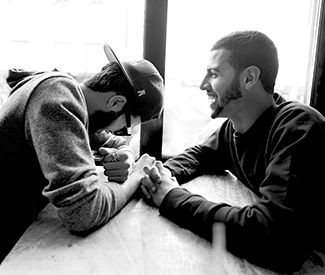
SUPER EGO I’ve been a huge, squealing, panty-tossing fan of the Bronx-born Martinez Brothers since they were 14 and 17. Don’t call NAMBLA: If you’ve ever seen Chris and Steve work their supreme magic on the turntables, you know these two bopping, smiling dudes have wise old souls and an infectious spirit of musical joy.
When the brothers burst onto the scene, a new generation was rediscovering disco and house via the Internet: here, suddenly, like Athena springing from Zeus’s brow, appeared two vinyl wunderkinder versed fluently, it seemed, in Warehouse, Loft, and Paradise Garage — thanks, in part, to their club-hopping dad. Now they’re barely in their 20s, have gone through their globetrotting headliner and Ibiza-residency phases, tuned their style to a deeper post-minimal vibe (including some ace hip-hop), and started digging more extensively into their roots.
“You know, we just want to play good music, to treat music as an adventure again for everybody, not play to any tired expectations,” Chris told me over the phone as he headed from the brothers’ studio in Queens back to his house. “But we also want to bring our cultural background into it, keep repping where we and the music are from.”
To that end, the brothers have launched their own label Cuttin Headz, and paired with Detroit’s Seth Troxler for another label, Tuskegee, devoted to releasing dance music from black and Latino origin.
Cuttin’ Headz (the name’s cribbed from an ODB Wu-Tang demo) “is all about freedom for us,” Chris said. “We put so much care into each release, and now we’re taking that to a new level, learning some new skills to put it all in place.” As for Tuskegee, it’s bringing a necessary corrective to the pale, pale dance scene, as well as unearthing some surprising roots.
“Our point of view right now is coming from that moment in the ’90s right before house music became taboo to young kids into hip-hop. We want to bring the ‘urban environment’ feel back into house, real deep house and real techno that feels like the city.”
Meanwhile, they’re hitting Coachella before making it up here. “San Francisco has such a place in my heart,” Chris gushed. “We wish we were there back in the day when SF was so crazy, but luckily there’s still remnants of that spirit to be found. Hang in there, we love you!”
AS YOU LIKE IT WITH THE MARTINEZ BROTHERS Fri/18, 9pm-4am, $20–$25. Monarch, 101 Sixth St, SF. www.monarchsf.com
GUY GERBER
My favorite “emotive techno” Israeli wizard returns to up things to another level with his stylish musical chops. Prepare for liftoff. At the Base party.
Thu/17, 10pm, $10. Vessel, 85 Campton Pl., SF. www.vesselsf.com
MINILOGUE
Excellently deep electronic grooves with an intelligent, psychedelic glow from this Swedish duo. This party’s being put on by the Symbiosis folks, so there’ll be a little burner fairy dust in the air.
Thu/17, 10pm-4am, $20. Mighty, 119 Utah, SF. www.mighty119.com
INC.
Another brother act, Andrew and Daniel Aged from LA come on like “Black-winged angels of nu-R&B” and head up an evening of pretty darkness at the fantastic 120 Minutes monthly. With Brogan Bentley, S4NtA_MU3rTE, and Chauncey_CC. Fri/18, 10pm, $15 advance. Elbo Room, 647 Valencia, SF. www.elbo.com
FLIGHT FACILITIES
Looking back, 2009 was a year of epic (as in actually epic) house records. The dancefloor-devastating treatment these two remixing Australians visited upon the Lowbrows’ “Dream in the Desert” was a high point. They make their own lovely, hugely popular tunes as well.
Fri/18, 9pm, $20. Mezzanine, 444 Jessie, SF. www.mezzaninesf.com
NINA KRAVIZ
No matter where you fall in the polarizing debate about what she represents in terms of the current state of DJ stardom, Russia’s Nina Kraviz is defintely kinda weird and also definitely kinda magic. And she will make you dance.
Sat/19, 9pm-3am, $25 advance. Harlot, 46 Minna, SF. www.harlotsf.com
Think again
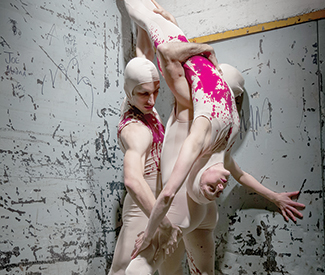
arts@sfbg.com
DANCE With three world premieres in its recent Spring Home Season performances, Hope Mohr Dance gave the audiences pieces that were both opaque and transparent. They were opaque because their physical imagery contained narrative traces that resonated beyond the stage, but was often equally focused on a gesture’s physicality in the moment. They were transparent because of the clarity and intensity that these fabulous dancers brought to their tasks. Their presence burnt itself into your retina and your soul. Any way you want to take this, Hope Mohr Dance is a head trip these days.
For Route 20, Connie Strayer put Jeremy Bannon-Neches, James Graham, and Tegan Schwab into off-white, hooded unitards. It made the dancers look like robotic extraterrestrials, except that the red streaks on their bodies suggested freshly spilled blood. Given enough time, designer David Szlasa’s dripping block of ice, which encased some dark mystery, might have revealed its secrets.
While the body suits encouraged seeing the dancers as gender-neutral — a hopeless task as far as I am concerned — the choreography treated the three performers as equals. The tension, such as it was, seemed to be based more on an inherent lack of stability within the triangle than on any specific movement patterns. It allowed for a constant flow of interactions without much emotional baggage. Abrupt turns, collapsing torsos, and dancers jumping on each other and being carried aloft felt neutral. The music’s brilliant pointillism seemed to encourage the lack of a clear trajectory in favor of an intense presence. And yet there were moments — the ice melting? — when Mohr’s neutral beings became more individualized. When Schwab streaked between the two men, was she breaking something up? When two dancers held on to each other at arms’ length, was one of them looking into a mirror? Repeatedly, a nuzzling gesture suggested skin-on-skin contact.
There are moments in ridetherhythm, a sextet for which theater director Mark Jackson signed on as dramaturge, when the work approached pure music in the way fractured language rose into a chorus to retreat again into individual voices. Fragments of text flew from dancer to dancer, and countdown patterns became threatening even as they tried to impose a sense of order. It’s rare that dancers become truly expert at delivering words and movement; Mohr’s troupe was first-rate in both.
The choreographer went for inspiration to Anne Carson’s Antigonick, the poet’s translation of Sophocles’ play, and to Todd Haynes’ 1995 Safe, in which Julianne Moore plays a housewife trapped in a poisonous environment. Katharine Hawthorne, in a beautifully subtle performance that ebbed and swelled, was the woman who went her own way despite the fact that she lived in a man’s world. When she fell, Schwab threw herself on top of her, in what was perhaps the work’s single most touching moment. The narrative emerged only in bits and pieces, but Mohr’s ability to suggest a pervading doom, despite Evan Johnson’s soothsaying along the lines of “everything is all right, we are safe,” and “he’s a jolly good fellow,” was impressive. In one spot, the group’s search for an oasis of safety was almost comical, and when the dancers kneeled you didn’t know whether they did so in despair or with hope.
I never could figure out the work’s connection between Hegel, Beckett, and Sophocles. But then Megan Brian, a character in high heels and sunglasses who tried to bring order into the chaotic proceedings by obsessively writing down whatever she saw — not unlike some dance critics — finally threw in the towel. ridetherhythm clearly warrants repeated viewing.
Exuberant and yet ever so controlled, Notes Toward a Supreme Fiction was a two-way street in terms of improvisation. Here the musicians — Michael Coleman on keyboard, Henry Hung on trumpet, Tommy Folen on bass, and Gerald Patrick Korte on percussion — responded as much to the dancers as the other way around. For this choreography the excellent Lindsey Renee Derry, Roche Janken, and David Schleiffers joined Bannon-Neches, Graham, and Schwab, who also individualized the dancers with color-saturated tank tops.
Schwab and Hung engaged each other in a playful duet, while Folen’s bass sent Bannon-Neches into spasmodic travels. Graham at one point strode upstage with every part of his torso alive to the music. I don’t know whether his greeting of dancers was a spur of the moment idea but it felt right on.
While some sections — unisons for instance — served as time markers and probably were planned, a duet between Schwab and Janken, for instance, could have been improvised. It was important that spontaneity blossomed within given parameters, sometimes determined by simple commands like “stop” and “go.” With Szlasa favoring slightly dimmed houselights, thus suggesting the breaking of the fourth wall, Notes came to look like a spacious and airy informal get-together. I kept thinking of watching outdoor ice skaters on a sunny afternoon. *
Wind it up
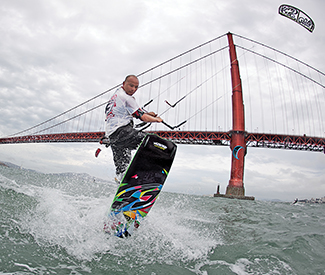
arts@sfbg.com
CULTURE They’re out there in the water at Ocean Beach and Crissy Field, whipping by the toll plaza, sailing giant kites like crescent moons. Those freaky, flying water monkeys — soaring around the bay via kites strong enough to tow cars — are kitesurfers, also called kiteboarders.
Thanks to its ideal mix of geography and weather, the Bay Area is a phenomenal place for the increasingly popular sport. “It’s a world-class kiteboarding destination,” says Jeff Kafka, owner of Burlingame kiteboarding school Wind Over Water. “You might have to wear a wetsuit most of the time, but we have some of the best wind in the world.”
Kitesurfing is a combination of sailing, surfing, and power kiting, in which a large kite is used to pull a rider on any and all types of boards (surfboards, wakeboards) with and without foot straps. The kites range in size from as small as a kitchen table to as big as a bus; smaller kites are used in heavier winds, while bigger kites are used in lighter winds. The most common size is probably 12 meters (about as big as an average parking spot). Almost all kitesurfing kites have inflatable frames that keep them from sinking in the event of a crash.
Most kites have four lines that run to a control bar — letting the rider steer — which is hooked to a body harness that takes most of the pull. Quick release systems have evolved to help reduce the kite’s speed and even disconnect the rigging in the blink of an eye, drastically improving the safety of the sport. Contrast this to the sport’s early-1980s origins, when brothers Bruno and Dominique Legaignoux launched the first water kites off the Atlantic coast of France. In those days, a hunting knife strapped to one’s leg was considered a quick release system.
“A lot of people were getting hurt back then and we needed a safer way to continue the sport,” says Sandy Parker of the Kitopia School of Kiteboarding, in the Sacramento Delta. “That was part of the reason for forming the school.”
While the Bay Area is a hotbed for the sport, there are International Kiteboarding Organization-certified schools all over the world equipped with jet skis and radio helmets, ready to get newbies into the water as safely as possible. Traditionally, students are started with “trainer” kites — two-lined kites with little more power than a toy stunt kite.
“The trainer kite’s a good practice kite,” says Kafka. “You can send somebody off and they can mess around with very little instruction.”
But as safety systems and kites have advanced, some schools have begun putting large, powerful kites in people’s hands sooner.
“I don’t really recommend any trainer kite usage prior to coming out,” says John von Tesmar, with Treasure Island’s KiteTheBay. (His jet boat is named, appropriately, Windseeker.) “I hook the kite to the boat and, right then, you can get someone’s virgin hands on the bar.”
Either way, the next step is learning the safety systems, and how to independently steer a full-size kite. After that comes water maneuvers and then board start, when the student hopefully gets up and riding. This usually takes about four to six hours and is generally broken into two sessions. With lessons averaging around $100 per hour, a lot of people — especially experienced surfers and snowboarders — try to avoid taking lessons.
“Saying that you’re accomplished at boardsports but have zero kite experience is akin to saying you’re excellent at hitting a ball with a mallet but don’t know how to ride a horse, and now you want to play polo,” says Rebbecca Geffert of Boardsports School, which operates around the Bay Area. (Full disclosure: I am an IKO-certified kitesurfing instructor and teach at Boardsports.) “The kite is the horse. It’s all about kite control. Board skills are secondary.”
Adds Royce Vaughn of Emeryville’s KGB Kitesurfing, “At the end of the day, there are a lot of variables in kiteboarding. It’s not just as easy as learning how to fly a kite and jumpin’ on a board. There’s a lot of safety involved.”
Though lessons can be a bit steep, most shops give a discount on gear to students. Some will even throw in free lessons if you buy a complete set-up. And being involved with a school opens up a worldwide network of education, socializing, and employment. There’s more than one globe-trotting telecommuter out there who supplements his or her traveling expenses by teaching kitesurfing. Or perhaps you want to get into snowkiting or racing. The sport is full of possibilities.
“Once you get the basic mechanics, it’s just where you want to take it, what board you want to ride on, what types of tricks you want to do, or if you don’t want to do any tricks at all,” says Kafka. “Maybe you just want to have a nice afternoon ridin’ along in the bay.” *
International Kiteboarding Organization
Boardsports School
KiteTheBay
KGB Kiteboarding
Kitopia
Live 2 Kite
SFBG Wrap, April 9-16
Who is Raymond “Shrimp Boy” Chow? In the 137-page federal complaint detailing charges that led to the high-profile arrest of Sen. Leland Yee, Chow, and 24 others two weeks ago (see “Crime and politics,” April 1), Chow is described as the powerful “Dragonhead” of an ancient Chinese organized crime syndicate, “overseeing a vast criminal enterprise involved in drugs, guns, prostitution, protection rackets, moving stolen booze and cigarettes, and money laundering,” as we reported at the time.
Not so, famed defense attorney Tony Serra told a crowd of reporters at Pier 5 Law Offices in San Francisco’s North Beach, where he and fellow attorneys were joined by supporters wearing red tees bearing the slogan “Free Shrimp Boy” last week.
Attorneys Serra and Curtis Briggs described a five-year federal operation to target Chow and ensnare him in wrongdoing, insisting he had wanted no part in criminal activity. Serra said agents had “stuffed money into his pocket” despite his protests, and noted that his legal team was representing Chow pro bono because he has no money. (Rebecca Bowe)
AIRBNB COMES CLEAN
Airbnb came clean last week, sending out new terms of service drafted April 7 that customers must agree to before conducting further business starting April 30. The new agreements seem intended to address longstanding issues in San Francisco that the Guardian first raised in May 2012 (“The problem with the sharing economy,” 5/1/12), and have been recently joined by other journalists in spelling out and highlighting.
In the opening of its new Terms of Service, Airbnb wrote (in all caps): “IN PARTICULAR, HOSTS SHOULD UNDERSTAND HOW THE LAWS WORK IN THEIR RESPECTIVE CITIES. SOME CITIES HAVE LAWS THAT RESTRICT THEIR ABILITY TO HOST PAYING GUESTS FOR SHORT PERIODS. THESE LAWS ARE OFTEN PART OF A CITY’S ZONING OR ADMINISTRATIVE CODES. IN MANY CITIES, HOSTS MUST REGISTER, GET A PERMIT, OR OBTAIN A LICENSE BEFORE LISTING A PROPERTY OR ACCEPTING GUESTS. CERTAIN TYPES OF SHORT-TERM BOOKINGS MAY BE PROHIBITED ALTOGETHER. LOCAL GOVERNMENTS VARY GREATLY IN HOW THEY ENFORCE THESE LAWS. PENALTIES MAY INCLUDE FINES OR OTHER ENFORCEMENT. HOSTS SHOULD REVIEW LOCAL LAWS BEFORE LISTING A SPACE ON AIRBNB.”
It seems like a good first step. Next we’ll see whether the company follows through with paying its local taxes and working with the city on legislation to legalize more of its business model in San Francisco. (Steven T. Jones)
NEW RIDESHARE REGULATIONS PROPOSED
Rideshare companies must provide their drivers with insurance. That was the gist of a public letter released last week by the California Insurance Commission, addressed to the California Public Utilities Commission, which regulates transportation network companies such as Uber, Lyft, and Sidecar.
“While smart phone technology is bringing new business opportunities to the marketplace and new transportation choices for consumers, our investigative hearing revealed serious insurance gaps in the current business model of Transportation Network Companies such as Uber, Lyft and Sidecar,” Insurance Commissioner David Jones wrote in a statement to press. “As long as TNCs are encouraging non-professional drivers to use their personal vehicles to drive passengers for a profit, a risk which personal automobile insurance simply does not cover, TNCs should bear the burden of making sure that insurance is provided. Our recommendations will ensure there is insurance protection for passengers, drivers and pedestrians.”
Whether the TNCs should provide insurance has been the subject of intense debate in state and local governments over the past year. The recommendations to the CPUC come specifically out of a hearing on TNC insurance that Jones held March 21. The Guardian also wrote an editorial, “Sharing economy should share its wealth,” calling for rideshares to provide insurance, not only because it’s unfair competition (insurance costs money to provide, a burden taxi companies carry but not TNCs), but because people and TNC drivers in accidents were left for broke, lacking inadequate insurance. (Joe Fitzgerald Rodriguez)
ELLIS ACT REFORM ADVANCES
Sen. Mark Leno’s Senate Bill 1439 — which would protect rent-controlled housing in San Francisco by amending the Ellis Act, including making property owners wait at least five years after buying a property to evict tenants under the act — cleared its first legislative hurdle last week.
The Senate Transportation and Housing Committee passed the measure on a 6-4 vote, and it heads to the Senate Judiciary Committee next. The bill has strong support in San Francisco, from progressive constituencies through Mayor Ed Lee to support by leaders in the business community and tech world.
Yet the measure faces a tough road in Sacramento, where the landlord lobby and other conservative interests oppose it. “A bill that could strip San Francisco landlords of their freedom to leave the rental housing business heads to a key Senate committee next month,” the California Apartment Association wrote last month in an alert to its members.
But as Tenants Together demonstrated in a recent study of how the Ellis Act has been used in San Francisco since its passage in 1985, a legislative reaction to a California Supreme Court case upholding rent control laws, the legislation has largely been a tool used by real estate speculators to clear rent-controlled buildings of tenants. The study found that 51 percent of Ellis Act evictions took place within a year of the property being purchased, 68 percent within the first five years, and 30 percent of Ellis Act evictions were from serial evictors, often by businesses specializing in flipping properties for profit.
“California’s Ellis Act was specifically designed to allow legitimate landlords a way out of the rental business, but in San Francisco this state law is being abused by speculators who never intend to be landlords,” Leno said today in a prepared statement. “As a result, longtime tenants, many of them seniors, disabled people, and low-income families, are being uprooted from their homes and communities. The five-year holding period in my bill would prevent these devastating evictions from forever changing the face of our diverse city.” (Steven T. Jones)
FROM GOOGLE BUS TO GOOGLER’S HOME
The morning of April 11 kicked off with yet another Google bus blockade in San Francisco’s Mission District, only this time housing activists said a Google employee is directly to blame for displacing residents.
The blockade, which took place at 18th and Dolores streets, was short-lived but featured speeches by tenants facing eviction, as well as a giant cardboard cutout depicting 812 Guerrero, a seven-unit building where tenants are facing eviction under the Ellis Act.
The property owner is Jack Halprin, a lawyer who is the head of eDiscovery, Enterprise for Google. He moved into one of the units after purchasing the building two years ago and served eviction notices on Feb. 26, according to tenant Claudia Triado, a third grade teacher at Fairmount Elementary in San Francisco who lives there with her 2-year-old son.
The Bay Guardian left a voice message for Halprin requesting comment, but got no reply
After the bus blockade, activists proceeded to 812 Guerrero and staged a short rally on the front steps.
Evan Wolkenstein, who teaches Jewish literature at the Jewish Community High School of the Bay, said he’s lived at 812 Guerrero for eight years. Other tenants facing eviction from the property include an artist and a disabled person, he added. During the Google bus blockade, minutes before police officers arrived to clear a path for the bus by urging protesters onto the sidewalk, Wolkenstein gave a speech about the overall impact the tech sector is having on San Francisco. (Rebecca Bowe)