Bay Guardian Archives

Psychic Dream Astrology: June 25 – July 1, 2014

0

June 25-27, 2014

Mercury is Retrograde all week but fear not! It goes direct Aug. 2.

ARIES

March 21-April 19

You are right where you need to be, Aries. This is an excellent time for beginnings and laying the foundation for exactly what you want. The key is not to require it come in any special packaging. Being on the right road does not ensure everything is hunky-dory, only that your pains are worth it.

TAURUS

April 20-May 20

You don’t have to do it all right away. This week it’s important that you ask for support when you need it. This is not only helpful in a material sort of way, but can also aid you in being able to better collaborate with others. The more open you are, the more good can come through this week.

GEMINI

May 21-June 21

It’s all about the people in your life this week, Twin Star. Your relationships need care and attention from you, and that may just translate to some uncomfortable talks that feel a little unsafe. It’s OK to make yourself vulnerable in the hopes of deepening your connections, and this is the time to try.

CANCER

June 22-July 22

You need new tools for coping with your frayed nerves. As you wrestle with your anxieties here’s a simple tip to help you emerge victorious over them: when you feel nervous is not the time to figure things out. Get yourself to a place of calm before you get to problem solving for best results.

LEO

July 23-Aug. 22

This is the time to take chances, Leo. The trick is to use your power and insights to work in conjunction with others instead of around them. If you take the time to assess how things are developing for you and how others are reacting this will slow things down, but it’s worth it. Find a strategy that serves the whole.

VIRGO

Aug. 23-Sept. 22

It’s easy for you to obsess on every detail of what is and isn’t happening, but it’s a total waste of energy. Check in with your gut instincts this week so that you can bypass the doomsday tendencies in your thinking. If you don’t know how things are going to turn out, why not imagine best-case scenarios?

LIBRA

Sept. 23-Oct. 22

Accept how stressful the unknown can be so you don’t get too discouraged by it. Take your time so you can manage the inevitable upsets of change in development in stride. Have hope, dear Libra, but keep that balloon tethered to the earth. You’re on the right path, but that doesn’t mean it’ll be easy.

SCORPIO

Oct. 23-Nov. 21

Love and intimacy are the way. The stars want you to have love, so try to be open to it for reals this week. You’re such an openhearted person who is also totally shut off in self-protection from others, and it can be a confusing combination. Avail yourself to people and situations you believe will support you, pal.

SAGITTARIUS

Nov. 22-Dec. 21

You have got to execute your ambitions in this here material world with finesse. There is no time to waste on sloppiness, so pay attention to three major things this week: your intention, your situation, and your actions. Make sure they are properly aligned to avoid unnecessary problems.

CAPRICORN

Dec. 22-Jan. 19

Be open-minded, Capricorn. You’re in the throws of a deep and intense internal transition, and if you’re not willing to see things differently you’ll be missing out on important opportunities. This is not the time to take on more stuff: Find creative ways of dealing with what you’ve got.

AQUARIUS

Jan. 20-Feb. 18

You’re at a kind of crossroads, so this is not a time for conventional assessments or linear thinking. You can’t know everything, or understand the singular truth out of all situations. There are things that must be felt out with your guts, and your irrational instincts. Trust yourself, Aquarius.

PISCES

Feb. 19-March 20

When you get something truly good that you super-crazy want, it should be all rainbows and puppies, but it’s often not. Now that you have what you fancy you may find yourself obsessing on what you don’t have or could lose. Stay in the present and be grateful as an antidote to your fears this week.

Want more in-depth, intuitive or astrological advice from Jessica? Schedule a one-on-one reading that can be done in person or by phone. Visit www.lovelanyadoo.com


Summer spins

0

BORIS

NOISE

(SARGENT HOUSE)

Boris have been dabbling so much in pop lately it’s tempting to look at the band’s latest album, Noise, as a return to their sludge-metal glory days. There are only eight songs, its title is appropriately hostile, and the dark gray cover looks formidable compared to the white-hued, glamorous art on the last few Boris records. But remember: This album is called Noise. Not Metal, not Amps Up To 11. Not even Heavy Rocks, the name given to two of Boris’s most metallic albums. Noise.

And noise is what it offers. These songs are loud, but not in a metallic way — the guitars don’t confront or cut into the red, preferring to simply churn away in the background. Yet this is the only thing really connecting these songs. Noise veers from J-pop to shoegaze to something fairly close to metal, charting a path that ends up sounding more like overly ambitious hardcore punk. Accordingly, it suffers from an identity crisis. As another chapter in the capricious experimental period the band’s been stuck in for the last half-decade, Noise is an interesting curiosity. But if you choose to view it as a return to form, you’re likely to come out of your listening experience very depressed.


LANA DEL REY

ULTRAVIOLENCE

(INTERSCOPE/POLYDOR)

Lana Del Rey embodies the trashiest, most cartoonish version of American iconography. Her music reeks of Gatsby, guns, Hollywood, star-spangled banners, Marilyn Monroe, and just about every other cartoon of superficial American glamour. It thus makes sense on paper that she should pair up with producer Dan Auerbach for her second album, Ultraviolence; his band the Black Keys excavates a different patch of the same oilfield, dredging up Route 66 rock reveries rather than Pepsi-Cola pop mythology.

But their respective worlds don’t collide as often as they should on this album. When Auerbach’s bluesy licks bubble up from the background, it’s intensely satisfying, putting Del Rey’s mythology in the context of his own and casting her as another great American cliché: a rock star. But for the most part, Auerbach leaves Del Rey to languish in a bath of reverb. There’s no subtlety to this production: It’s as if Auerbach cranked up a crude GarageBand “reverb” setting on all the master tracks and declared them finished. Del Rey’s persona is as monolithic as the Empire State Building — but obscured behind all the production fog, you might as well be looking at Big Ben.


WHITE LUNG

DEEP FANTASY

(DOMINO)

Mish Way has a lot of good things to say. She’s one of America’s most engaging music critics, incorporating her personal experience into her pieces without making them too subjective to interest readers. Much of her writing is filtered through a feminist lens, something far too rare in rock criticism — especially as the misogyny of yesteryear’s rock becomes increasingly stale and obvious. She extends a lot of these sentiments to her gig as the singer of punk band White Lung, whose third album Deep Fantasy addresses sexual assault, body image, and abusive relationships. Apparently. You’d have a hard time doing much more than guessing what these songs were about without the help of a lyric sheet, because most of Way’s lyrics are incomprehensible. I’d be okay with this if not for how pristine everything else sounds. The guitars and drums are punchy and full, but Way’s vocals are so quiet in the mix that her shouting seems less of a deluge of expression as a desperate attempt just to be heard. This music should confront the listener — but ultimately, the listener ends up having to confront the music just to understand what Way is on about.

Dirty, sweet, and far from down low

0

esilvers@sfbg.com

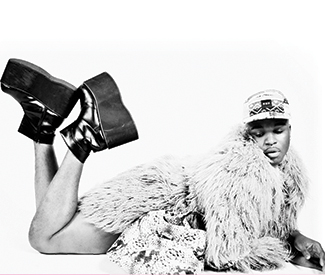
LEFT OF THE DIAL/QUEER ISSUE Take the sexual braggadocio of Lil Kim, the rapid-fire flow of Twista, and a fashion sense that combines Nicki Minaj with, depending on the day, Bjork, Ma$e, or, say, the board game Candyland, and you have a close approximation of Cakes da Killa. The Brooklyn-based, baby-faced musician is both a rising star and, unfortunately, something of an oddity, just by virtue of being a gay man and a rapper.

His participation in one of the most homophobic quadrants of pop culture as an out gay guy aside, however, Cakes — born Rashard Bradshaw — doesn’t see what’s so shocking about some of his lyrics, even when he’s rapping matter-of-factly about how he’s going to fuck your boyfriend (actual song title: “Fuck Ya Boifriend”).

After making a name for himself with two mix tapes in 2011 and 2013 (Easy Bake Oven and The Eulogy, respectively, with the latter receiving a positive mention from Pitchfork), his latest EP, Hunger Pangs, reveals a darker, harder sound. He’s still X-rated and super funny, but he also sounds like he’s ready to fight.

We caught up over the phone ahead of Cakes’ appearance at Public Works Sat/28, as part of the club’s “House of Babes” Dyke March after-party.

SF Bay Guardian You grew up in Jersey. How did you start rapping?

Cakes da Killa I always wrote when I was young, whether it was poetry or something else. But I started rapping as a joke in high school, because I saw a bunch of straight guys doing it and getting lots of attention. And me being an attention whore, it was “I can do that.” In college I started making videos of me rapping over instrumentals on YouTube, and after people saw those videos I started getting asked to record on projects.

SFBG How did the straight guys respond to it when you were younger? Did you get any backlash for being an out gay kid, trying to get into something that’s so associated with straight, heteronormative culture, or did they just notice how good you were? 

CK You know, they noticed. I came out in the third grade, and I’ve always been the gay boy that was so comfortable in myself I didn’t make straight people insecure or uncomfortable. I think I’m still that way.

SFBG The mixtape before this, when you started getting noticed, was called The Eulogy. Why’s that?

CK Honestly, I thought it was going to be my last project. I just didn’t see the longevity in rapping — it’s weird to think of yourself as a rapper, because I’m so not that. Not even just because I’m gay, but also I don’t have a rapper’s ego.

SFBG I think maybe the ego comes after you make a ton of money? 

CK Yeah, but then my friends would all hate me. I just want to do it until it’s not fun anymore. So far, though, it’s still fun.

SFBG You’re so young, though. You’re, what, 22? Didn’t you just graduate from college? 

CK I’m 23. And in gay years. We age like dinosaurs, so I’m basically a fossil. I graduated last May, and I moved out of my mother’s house. I’m living in Bushwick now; I’m a fully realized member of society.

SFBG You have a pretty big fan base in Europe. Where have you toured? How are audiences over there different from stateside? 

CK I’ve been to Europe three times on kind of mini-tours. Mostly Berlin, Paris. I’ve been to Australia twice too. I think I have a bigger fan base overseas because it’s just harder to break [out] in the States; the way the music business works, it’s just harder to get attention here.

When I do a show overseas, I think the main difference is Europeans think, “If we’re gonna pay five euros to see you, you better be on stage for two hours.” In the States we pay way more to see someone for a few minutes, then it’s back to the bar, or a DJ or something…we have ADD here. When I tour overseas, I have to some cardio before the show.

SFBG You’re known for some pretty filthy lyrics. Does that come naturally to you? 

CK You know, I didn’t realize the fact of me being filthy until people started saying that — it’s just that the things I talk about aren’t talked about. I grew up with my mom, and I came out in the third grade; we talked about sex pretty openly in my house. When I make a song about giving blowjobs, I’m not thinking “Let’s make a song about giving blowjobs.” This isn’t breaking news. Everyone likes blowjobs. It’s just not really filthy to me; people have sex. I am conscious now though of, you know, not becoming “the blowjob rapper.”

SFBG Do you see homophobia in the rap world getting better? What is it going to take for the culture to change? 

CK I think it’s going to take an openly gay person who can really sell in the black media, do a world tour. But people that run black media right now clearly don’t see it as a marketable thing. And it’s all about money. That’s the fucked up thing about the situation, it’s not about how talented the person is, it’s ‘How can we sell this situation?’ And if you’re not marketable and a bunch of people can’t make money off you, you’re just gonna be, you know, living in Bushwick.

SFBG Musically, do you see yourself heading in any particular direction with Hunger Pangs?

CK Yeah, if I compare myself to the boy who was rapping in high school in the cafeteria, I’m definitely not the same person. I make music off of touring, experiencing things. I’m having a butch moment right now. And for my next project, I think I’m making more depressing songs.

SFBG Did that come out of anything in particular? 

CK Living life. Dealing with dumb boys. Instead of being all sad about it, I’m like, let’s write an album about it. At least make some money!

CAKES DA KILLA

With Junglepussy and Lisa Delux

The House of Babes Presents the Dyke March After-Party

Public Works

161 Erie, SF

www.publicsf.com

Events: June 25 – July 1, 2014

0

Listings are compiled by Guardian staff. Submit items for the listings at listings@sfbg.com. For further information on how to submit items for the listings, see Selector.

WEDNESDAY 25

Damien Echols and Lorri Davis Book Passage, 1 Ferry Bldg, SF; www.bookpassage.com. 6pm, free. The husband-and-wife authors discuss Yours for Eternity, a collection of letters they exchanged while Echols, a member of the West Memphis Three who was freed in 2011, was imprisoned on Arkansas’ Death Row.

Joyce Goldstein Mechanics’ Institute, 57 Post, Rm 406, SF; www.milibrary.org. 6pm, $15. The chef and cookbook author discusses Inside the California Food Revolution: Thirty Years That Changed Our Culinary Consciousness.

THURSDAY 26

Joshua Weil City Lights Bookstore, 261 Columbus, SF; www.citylights.com. 7pm, free. The author reads from The Great Glass Sea.

FRIDAY 27

Ken LaZebnik University Press Books, 2430 Bancroft, Berk; http://universitypressbooks.indiebound.com. 6pm, free. The veteran film and TV writer shares his new book of essays, Hollywood Digs: An Archaeology of Shadows.

“MarinScapes Fine Art Exhibit and Sale” Historic Escalle Winery, 771 Magnolia, Larkspur; www.buckelew.org/marinscapes. Today, 5:30-8pm; Sat/28-Sun/29, noon-6pm. $15. Buckelew Programs (including Family Service Agency of Marin and Helen Vine Recovery Center) benefits from this showcase of work by 30 artists and photographers whose work is inspired by Marin County. Author Anne Lamott gives a talk Sat/28, 12:30pm.

“Pancakes and Booze Art Show” 111 Minna Gallery, 111 Minna, SF; www.pancakesandbooze.com. 8pm-2am, $5. Also Sat/28. Over 100 emerging artists showcase their wares at this party, which also features live body painting, live music, live art battles, and an all-you-can-eat pancake bar.

SATURDAY 28

Jennifer Coburn and Cindy Arora Book Passage, 1 Ferry Bldg, SF; www.bookpassage.com. 4pm, free. The authors discuss We’ll Always Have Paris and Heartbreak Cake.

“Hand to Mouth/Words Spoken Out #67” Rebound Bookstore, 1611 Fourth St, San Rafael; www.reboundbookstore.com. 4-6pm, donation requested. Poet Gerald Nicosia reads with special guests.

Art Peterson Book Passage, 1 Ferry Bldg, SF; www.bookpassage.com. 2pm, free. The author discusses his San Francisco tale, Why Is That Bridge Orange?

El Tecolote benefit Cesar’s Latin Palace, 826 26th St, SF; www.accionlatina.org. 9pm-2am, $10. Raise money for Mission district bilingual newspaper El Tecolote at this dance party, featuring music by Cesar’s Latin All-Stars and Bahia Son.

SUNDAY 29

“Reimagining Progress: The Power of Word” David Brower Center, Goldman Theater, 2150 Allston, Berk; www.browercenter.org. 5:30pm, free. Fourteen acclaimed poets, including Patricia Smith and Josh Healey, read works addressing “environmental health, social justice, and the notion of progress.”

“We Shape Our City” Old Mint, 88 Fifth St, SF; www.sfhistory.org. 1-4pm, $5-10. Ongoing every Sunday. The San Francisco Museum and Historical Society hosts docent-led tours of the historic landmark, as well as showcasing a number of exhibits, including photographic explorations of various SF neighborhoods and the new “We Shape Our City,” dedicated to local innovators.

MONDAY 30

Bill Hillman and Tim Kinsella Books Inc., 601 Van Ness, SF; www.booksinc.net. 7pm, free. The authors read from The Old Neighborhood and Let Go and Go on and on.

TUESDAY 1

LaborFest Art Show ILWU Local 34 Hall, 801 Second St, SF; www.laborfest.net. Today through July 12, (4-6pm weekdays; noon-4pm, Sat-Sun). Free. LaborFest honors the 100th year commemoration of the Ludlow mining strike in Colorado with this art exhibit themed around “Extraction.” Artists include Philippe Barmoud, Sherri Craven, Mike Conner, Peter Hudson, and others. *


Film Listings: June 25 – July 1, 2014

0

Film listings are edited by Cheryl Eddy. Reviewers are Kimberly Chun, Dennis Harvey, Lynn Rapoport, and Sara Maria Vizcarrondo. For rep house showtimes, see Rep Clock. For complete film listings, see www.sfbg.com.

FRAMELINE

Frameline 38, the San Francisco International LGBT Film Festival, runs through June 29 at the Castro Theatre, 429 Castro, SF; Roxie Theater, 3117 16th St, SF; Victoria Theatre, 2961 16th St, SF; and Rialto Cinemas Elmwood, 2966 College, Berk. For tickets (most shows $10-15) and schedule, visit www.frameline.org.

OPENING

Breathing Earth: Susumu Shingu’s Dream Japanese artist Susumu Shingu has built his career through his concerted engagement with the natural world. The wise and eternally smiling 75-year-old creates angular and often gargantuan mobiles that harness the power of wind and water to gyrate in ever-changing directions. In Breathing Earth, German director Thomas Riedelsheimer crafts a deliberately paced rumination on Shingu’s life philosophy that, while devoid of the frenetic facts, figures, and trite biographical rehashes that punctuate hyper-informative pop-docs, uses a beautifully simplistic narrative arc to illuminates Shingu’s attempt to create a hilly, open-air collection of windmills. The sculptor’s impassioned narration and charming conversations with potential landlords and investors (who usually entirely miss the point of his mission to raise environmental consciousness through aesthetic beauty) make Shingu impossible not to fall in love with — he is laid-back, funny, and astonishingly youthful. Riedelsheimer’s camera is similarly relaxed, gliding sumptuously over the green and wild landscapes on which Shingu installs his works. Despite his meditative tempo, Riedelsheimer manages to explore a remarkably wide scope; Shingu’s late-life marriage to a fellow sculptor, his appeals to both Japanese and German schoolchildren to care for the earth and help to avoid environmental disasters, and his intricate technical processes all receive intimate and inspiring sections. (1:37) Roxie, Smith Rafael. (David Kurlander)

Citizen Koch After quietly influencing conservative ideology, legislation, and elections for decades, the billionaire industrialist Koch brothers have found themselves becoming high-profile figures — much to their dismay, no doubt. The relative invisibility they hitherto enjoyed greatly abetted their impact in myriad arenas of public policy and “popular” conservative movements. Look behind any number of recent red-vs.-blue flashpoint issues and you can find their fingerprints: Notably state-level union busting; “smaller government” (i.e. incredible shrinking social services); seeding allegedly grassroots organizations like the Tea Party; furthering the Corporations = People thing (see: Citizens United); and generally helping the rich like themselves get richer while fostering working-class outrage at everybody else. This documentary by Trouble the Water (2008) co-directors Carl Deal and Tia Lessen touches on all those matters, while also focusing on Wisconsin as a test laboratory for the brothers’ Machiavellian think-tank maneuvers, following a Louisiana GOP candidate on the campaign trail (one he’s marginalized on for opposing corporate influence peddling), and more. Any one of these topics could support a feature of their own (and most already have). Citizen Koch‘s problem is that it tries to encompass too much of its subjects’ long reach, while (despite the title) leaving those subjects themselves underexplored. (It also suffers from being a movie completed at least 18 months ago, a lifetime in current US political terms.) For the reasonably well-informed this documentary will cover a lot of familiar ground—which is not to say that ground isn’t still interesting, or that the added human interest elements don’t compel. But the film covers so much ground it ends up feeling overstuffed and unfocused. (1:26) Opera Plaza, Shattuck. (Harvey)

Coherence See “Vortex Room.” (1:29) Presidio.

Korengal This companion piece to 2010’s Oscar-nominated Restrepo — one of the best docs about modern-day warfare to date, offering unfiltered access to an Army platoon stationed in Afghanistan’s Korengal Valley — uses previously unseen footage shot during the year filmmakers Sebastian Junger and Tim Hetherington spent shadowing their subjects. Korengal is structured as a more introspective work, with musings on what it feels like to be a soldier in the Korengal, surrounded by rough (yet strikingly beautiful) terrain populated by farmers who may or may not be Taliban sympathizers, not to mention unpredictable, heavily armed opponents referred to simply as “the enemy.” Interviews reveal sadness, boredom, a deep sense of brotherhood, and the frustrating feeling of going from “100 miles an hour to a dead halt” after the surreal exhilaration of a firefight. Korengal also functions as a tribute to Hetherington, who was killed in 2011 while on assignment in Libya. Not only does his death add a layer of poignant subtext, it also suggests why Junger felt moved to revisit this story. That said, though Korengal‘s footage is several years old, its themes remain distressingly timely. (1:24) Opera Plaza, Shattuck. (Eddy)

Snowpiercer Eighteen years after an attempt to reverse global warming has gone wildly awry — freezing all life into extinction — the only known survivors are on a one-of-a-kind perpetual-motion train that circles the Earth annually, has its own self-contained ecosystem, and can smash through whatever ice buildup has blocked its tracks since the last go-round. It’s also a microcosm of civilization’s worst class-economic-racial patterns over history, with the much-abused “tail” passengers living in squalor under the thumb of brutal military police. Unseen at the train’s front is its mysterious inventor, Wilford, whose minions enforce “Eternal Order Prescribed by the Sacred Engine.” Curtis (Chris Evans) is default leader of the proletariat’s latest revolt, in which they attempt to force their way forward though the prison section (where they free Song Kang-ho and Go Ah-sung as the train’s original lock designer and his psychic daughter) on to the wonders of the first class compartments, and beyond. This first (mostly) English-language feature by South Korean Bong Joon-ho (2006’s The Host, 2009’s Mother), based on a 1982 French graphic novel, starts out as a sort of locomotive, claustrophobic Mad Max (1979) variation. But it gets wilder and more satirical as it goes along, goosed by Tilda Swinton’s grotesquely comic Minister Mason, and Alison Pill as a teacher propagandist in a particularly hilarious set piece. In case the metaphor hasn’t already hit you on the head, one character explains “The train is the world, we the humanity.” But Snowpiercer‘s sociopolitical critique is as effective as it is blunt, because Bong handles everything here — visceral action, absurdist humor, narrative left-turns, neatly etched character archetypes, et al. — with style, confidence, and wit. Some of the FX may not be quite as seamless as it would have been in a $200 million Hollywood studio production, and fanboys will no doubt nitpick like nitwits at various “credibility gaps.” (As if this movie ever asks to be taken literally.) But by current, or any, sci-fi action blockbuster standards, this is a giddily unpredictable, risk-taking joy. (2:07) (Harvey)

Third Person A screenwriter, Paul Haggis, pens a script in which a novelist (Liam Neeson) sits alone in a smoke-filled hotel room in Paris struggling over a manuscript about a novelist who can only feel emotions through his characters. What that psychic state would actually look like remains unclear — when the woman (Olivia Wilde) he’s left his wife (Kim Basinger) for shows up, their playful, painful, fraught interactions reveal a man with above-average emotional reserves. Meanwhile, in another hotel in another city, Rome, a sleazy fashion industry spy (Adrien Brody) finds his life turned sideways by a seemingly chance encounter in a bar with a beautiful Romanian woman (Moran Atias) in dire need of money. And in a third hotel, in Manhattan, a young woman (Mila Kunis) cleans up the suites she used to stay in when she was married to a renowned painter (James Franco), with whom she has a son she may or may not have harmed in some terrible way. The film broadly hints at connections between these three sets of lives — in each, the loss or endangerment of a child produces an unrelenting ripple effect; speaking of which, objects unnaturally submerged in water present an ominous visual motif. If the movie poster doesn’t give the game away as you’re walking into the theater, the signposts erected by Haggis ensure that you won’t be in the dark for long. Learning how these characters relate to one another, however, puts considerable drag on the fabric of the plot, exposing the threadbare places, and where Haggis offers his tortured characters redemption, it comes at the cost of good storytelling. (2:17) Shattuck. (Rapoport)

Transformers: Age of Extinction Mark Wahlberg and the Dinobots star in the latest installment of Michael Bay’s action sci-fi series. (2:30) Presidio.

Under the Electric Sky Hey, raver! This 3D concert film enables you to experience the Electric Daisy Carnival without punching any holes in your brain. (1:25)

Violette Taking on another “difficult” woman artist after the excellent 2008 Séraphine (about the folk-art painter), Martin Provost here portrays the unhappy life of Violette Leduc (Emmanuelle Devos), whose fiction and autobiographical writings eventually made her a significant figure in postwar French literature. We first meet her waiting out the war with gay author Maurice Sachs (Olivier Py), one of many unrequited loves, then surviving via the black market trade before she’s “discovered” by such groundbreaking, already-established talents as Jean Genet (Jacques Bonnaffé) and Simone de Beauvoir (Sandrine Kiberlain). It is the latter, a loyal supporter who nonetheless retains a chilly emotional distance, who becomes bisexual Violette’s principal obsession over the coming 20 years or so. Devos does her best to portray “a neurotic crazy washed-up old bag” with an “ugly mug” — hardly! — who is perpetually broke, depressed, and awkward, thanks no doubt in part to her mean witch of a mother (Catherine Hiegel). “Screaming and sobbing won’t get you anywhere,” Simone at one point tells her, and indeed Leduc is a bit of a pill. For the most part lacking the visual splendors of Séraphine (this character’s environs weren’t so pastoral), Violette is finely acted and crafted but, like its heroine, hard to love. (2:18) Albany, Embarcadero. (Harvey)

ONGOING

Belle The child of a British naval officer and a Caribbean slave, Belle (Gugu Mbatha-Raw) is deposited on the doorstep — well, the estate grounds — of her father’s relatives in 1769 England after her mother dies. Soon she’s entirely orphaned, which makes her a wealthy heiress and aristocratic title holder at the same time that she is something less than human in the eyes of her adopted society. For Belle is black (or more properly, mixed-race), and thus a useless curiosity at best as a well-bred noblewoman of the “wrong” racial makeup. Based on a murky actual historical chapter, Amma Asante’s film is that rare sumptuous costume drama which actually has something on its mind beyond romance and royalty. Not least among its pleasures are a fine supporting cast including Tom Wilkinson, Miranda Richardson, Penelope Wilton, and Emily Watson. (1:45) Embarcadero, Piedmont, Shattuck. (Harvey)

A Coffee in Berlin How do you say “mumblecore” in German? Jan Ole Gerster’s debut feature has certain arty pretensions — it’s shot in black-and-white, and scored with peppy jazz — but it’s more or less a rambling day in the life of law school dropout Niko (Tom Schilling). It happens to be the very day Niko’s golf-loving father decides to stop funding his shiftless son’s slacker lifestyle, though that crisis (which, you know, Lena Dunham built an entire HBO comedy around) receives nearly equal heft as a cutesy ongoing gimmick that sees Niko incapable of getting a cup of coffee anywhere in Berlin. Hipster ennui can be compelling if it has some underlying energy and purpose (see: 2013’s Frances Ha, to which this film has been compared), but A Coffee in Berlin comes up short on both. That said, it does offer an intriguing portrayal of Berlin — a city whose modern-chic façade barely contains the history that haunts it — and some of its supporting characters, particularly Friederike Kempter as a former schoolmate of Niko’s who has outgrown him emotionally by about one thousand percent, provide pleasant enough distractions. (1:28) Opera Plaza, Shattuck. (Eddy)

The Fault in Our Stars I confess: I’m no card-carrying, vlog-flogging Nerdfighter in author John Green’s teen-geek army. But one can admire the passion — and teary romanticism — of the writer, readers, and the breakthrough novel that started it all. Much has been made over the cinematic tweaks to the best-selling YA book, but those seem like small beefs: OK, male romantic lead Gus’s (Ansel Elgort) perhaps-understandable brattiness seems to have been toned down a touch, but we’ll all get the somewhat-subversive push and pull of Green’s love story centered on two cancer-stricken innocents. Sixteen-year-old Hazel (a radiant Shailene Woodley) has been battling cancer almost all her life, fighting back from the brink, and now making her way every day with an oxygen tank and her devoted parents (Laura Dern, Sam Trammel) by her side. Her mordant wit, skeptical attitude, and smarts attract Gus, a handsome teen with a prosthetic leg, at a cancer support group, and the two embark on what seems like the most normal thing in the world — sweet, sweet love — albeit cut with the poignancy of almost-certain doom. Would the girl who calls herself a grenade dare to care for someone she will likely hurt? That’s the real question on her mind when the two reach out to the solitary author (Willem Dafoe) of their favorite book, An Imperial Affliction. The journey the two make leaves them both open to more hurt than either ever imagined, and though a good part of Fault‘s denouement boils down to a major puddle cuddle — with solid performances by all, but particularly Dern and Woodley — even a cynic is likely to get a bit misty as the kids endure all the stages of loss. And learning. (2:05) Balboa, 1000 Van Ness, Presidio, SF Center. (Chun)

Gore Vidal: The United States of Amnesia Nicholas Wrathall’s highly entertaining documentary pays tribute to one of the 20th century’s most brilliant, original, and cranky thinkers, with extensive input from the man himself before his death in 2012 at age 86. The emphasis here is less on Vidal’s life as a literary lion and often glittering celebrity social life than on his parallel career as a harsh scold of US social injustices and political corruption. (Needless to say, recent history only sharpened his tongue in that department, with George W. Bush dismissed as “a goddamn fool,” and earlier statements such as “This is a country of the rich, for the rich and by the rich” seeming more apt than ever.) He’s a wellspring of wisdoms both blunt and witty, sometimes surprising, as in his hindsight doubts about the virtues of JFK (a personal friend) as a president. We get plenty of colorful archival clips in which he’s seen verbally jousting with such famous foes as William F. Buckley and Norman Mailer, invariably reducing them to stammering fury while remaining exasperatingly unruffled. His “out” homosexuality and outré views on sexuality in general (at odds with an increasingly assimilationist gay community) kept him controversial even among many liberals, while conservatives were further irked by his rock-solid family connections to the ruling elite. In our era of scripted political rhetoric and pandering anti-intellectualism, it’s a joy merely to spend an hour and half in the company of someone so brilliantly articulate on seemingly any topic — but particularly on the perpetually self-mythologizing, money-worshipping state of our Union. (1:29) Opera Plaza. (Harvey)

The Grand Seduction Canadian actor-director Don McKellar (1998’s Last Night) remakes 2003 Quebecois comedy Seducing Doctor Lewis, about a depressed community searching for the town doctor they’ll need before a factory will agree to set up shop and bring much-needed jobs to the area. Canada is still the setting here, with the harbor’s name — Tickle Head — telegraphing with zero subtlety that whimsy lies ahead. A series of events involving a Tickle Head-based TSA agent, a bag of cocaine, and a harried young doctor (Taylor Kitsch) trying to avoid jail time signals hope for the hamlet, and de facto town leader Murray (Brendan Gleeson) snaps into action. The seduction of “Dr. Paul,” who agrees to one month of service not knowing the town is desperate to keep him, is part Northern Exposure culture clash, part Jenga-like stack of lies, as the townspeople pretend to love cricket (Paul’s a fanatic) and act like his favorite lamb dish is the specialty at the local café. The wonderfully wry Gleeson is the best thing about this deeply predictable tale, which errs too often on the side of cute (little old ladies at the switchboard listening in on Paul’s phone-sex with his girlfriend!) rather than clever, as when an unsightly structure in the center of town is explained away with a fake “World Heritage House” plaque. Still, the scenery is lovely, and “cute” doesn’t necessarily mean “not entertaining.” (1:52) Albany, Embarcadero. (Eddy)

Ida The bomb drops within the first ten minutes: after being gently forced to reconnect with her only living relative before taking her vows, novice nun Anna (Agata Trzebuchowska) learns that her name is actually Ida, and that she’s Jewish. Her mother’s sister, Wanda (Agneta Kulesza) — a Communist Party judge haunted by a turbulent past she copes with via heavy drinking, among other vices — also crisply relays that Ida’s parents were killed during the Nazi occupation, and after some hesitation agrees to accompany the sheltered young woman to find out how they died, and where their bodies were buried. Drawing great depth from understated storytelling and gorgeous, black-and-white cinematography, Pawel Pawilowski’s well-crafted drama offers a bleak if realistic (and never melodramatic) look at 1960s Poland, with two polar-opposite characters coming to form a bond as their layers of painful loss rise to the surface. (1:20) Albany, Clay, Piedmont. (Eddy)

Ivory Tower The latest “issue doc” to come down the pipeline is this very timely and incisive look at the cost of higher education from director Andrew Rossi (2011’s Page One: Inside the New York Times). Rossi is a Yale and Harvard Law grad, and he begins his film in the hallowed halls of the latter to frame the question: In the era of skyrocketing tuition, and with the student loan debt hovering at a trillion bucks, is college still worth it? The answer is left open-ended, though with the very strong suggestion that nontraditional education (including community colleges, online learning, and the Silicon Valley-spawned “uncollege” movement) is certainly something worth exploring, particularly for the non-wealthy. Along the way, we do see some positive tales (a kid from the mean streets of Cleveland gets a full-ride scholarship to Harvard; students at rural Deep Springs College follow philosophy discussions with farm work; African American women at Spelman College thrive in an empowering environment), but there’s a fair amount of cynicism here, too, with a hard look at how certain state schools are wooing deep-pocketed out-of-staters with fancy athletic stadiums, luxurious amenities, and a willingness to embrace, however unofficially, their hard-partying reputations. Segments following a student protest at New York’s Cooper Union, a formerly free school forced to consider collecting tuition after a string of financial troubles, echo Frederick Wiseman’s epic At Berkeley (2013), a thematically similar if stylistically very different work. (1:37) California. (Eddy)

Jersey Boys The musical that turned the back story of Frankie Valli and the Four Seasons — the 1960s hit making machines behind upbeat doo-wop ditties like “Sherry,” “Big Girls Don’t Cry,” “Walk Like a Man,” and a zillion more; you will recognize all of them — into Broadway gold ascends to the big screen thanks to director Clint Eastwood, a seemingly odd choice until you consider Eastwood’s own well-documented love of music. Jersey Boys weaves a predictable tale of show biz dreams realized and then nearly dashed, with a gangster element that allows for some Goodfellas-lite action (a pre-fame Joe Pesci is a character here; he was actually from the same ‘hood, and was instrumental in the group’s formation). With songs recorded live on-set, à la 2012’s Les Misérables, there’s some spark to the musical numbers, but Eastwood’s direction is more solid than spontaneous, with zero surprises (even the big finale, clearly an attempt at a fizzy, feel-good farewell, seems familiar). Still, the cast — including Tony winner John Lloyd Young as Valli, and Christopher Walken as a sympathetic mobster — is likable, with Young in particular turning in a textured performance that speaks to his years of experience with the role. For an interview with cast members Young, Michael Lomenda (who plays original Four Season Nick Massi), and Erich Bergen (as Bob Gaudio, the member who wrote most of the group’s hits), visit www.sfbg.com/pixel_vision. (2:14) Four Star, Marina, 1000 Van Ness, SF Center, Shattuck, Sundance Kabuki, Vogue. (Eddy)

Obvious Child We first encounter the protagonist of writer-director Gillian Robespierre’s funny, original film — a Brooklyn-dwelling twentysomething named Donna (Jenny Slate), who works at a lefty secondhand bookstore and makes regular (if unpaid) appearances at a local comedy night — onstage mining such underdiscussed topics as the effects of vaginal discharge on your garden-variety pair of underwear. This proves a natural segue to other hefty nuggets of embarrassment gold concerning her love life, to the dismay of boyfriend Ryan (Paul Briganti), auditing from the back of the club. He pretty much deserves it, however, for what he’s about to do, which is break up with her in a nasty, well-populated unisex bathroom, taking time to repeatedly glance at the texts coming through on his phone from Donna’s good friend, with whom he’s sleeping. So when Donna, mid-drowning of sorrows, meets a nice-looking fellow named Max (Jake Lacy) at the bar, his post-fraternity-presidency aesthetic seems unlikely to deter her from a one-night stand. The ensuing trashed make-out dance-off in Max’s apartment to the Paul Simon song of the title is both comic and adorable. The fractured recap of the evening’s condom-free horizontal events that occurs inside Donna’s brain three weeks later, as she hunkers down with her best friend, Nellie (Gaby Hoffmann), in the bookstore’s bathroom after peeing on a stick, is equally hilarious — and unwanted-pregnancy jokes aren’t that easy to pull off. Robespierre’s treatment of this extended windup and of Donna’s decision to have an abortion is a witty, warmhearted retort to 2007’s Knocked Up, a couple generations’ worth of Hollywood rom-com writers, and an entertainment industry that continues to perform its sweaty contortions of storytelling in the gutless cause of avoiding the A-word. (1:15) California, Embarcadero, Piedmont, Sundance Kabuki. (Rapoport)

Ping Pong Summer Eighties teen flicks of the My Bodyguard (1980), smart-dweebs-beat-the-bullies ilk are paid homage in Michael Tully’s deadpan satire, which is closer in spirit to the Comedy of Lameness school whose patron saint is Napoleon Dynamite. Radley (Marcello Conte) is an average teen so excited to be spending the summer of 1985 in Ocean City, Md. with his family that he renames himself “Rad Miracle.” He acquires a new best friend in Teddy (Myles Massey), who as the whitest black kid imaginable might make even Rad look cool by comparison. However, they are both dismayed to discover the local center for video gaming and everything else they like is ruled by bigger, older, cuter, and snottier douchebag Lyle Ace (Joseph McCaughtry) and his sidekick. Only kicking Lyle’s ass at ping pong — with some help from a local weirdo (a miscast Susan Sarandon, apparently here because she’s an off screen ping pong enthusiast) — can save Rad’s wounded dignity, and the summer in general. A big step up from Tully’s odd but pointless prior Septien (2011), this has all the right stuff (including a soundtrack packed with the likes of the Fat Boys, Mary Jane Girls, New Edition, Whodini, and Night Ranger) to hilariously parody the era’s inanities. But it’s just mildly amusing — a droll attitude with lots of period detail but not much bite. (1:32) Roxie. (Harvey)

The Rover Future days have never seemed quite so bleak as they are depicted in the wild, wild Aussie west of The Rover — rendered by Animal Kingdom (2010) director David Michod, who co-wrote The Rover with Joel Edgerton. Let’s just say we’re probably not going to see any primo Burner ensembles inspired by this post-apocalyptic yarn: Michod ventures to a plausible future only a decade out, after a global economic collapse, and breaks down the brooding road trip to its hard-boiled bones, setting it in a beauteous, lawless, and unceasingly violent outback. A heist gone wrong leads a small gang of robbers to steal the car belonging to monosyllabic, ruthless mystery man Eric (Guy Pearce). The latter wants his boxy little sedan back, badly, and, in the cat and mouse game that ensues, seems willing to die for the trouble. Meanwhile, one of the gang of thieves — the slow, dreamy Rey (Robert Pattinson), who has been left to die of a gunshot wound in the dirt — turns out to be more of a survivor than anyone imagined when he tracks down the tracker hunting for his brother and cohorts. Michod seems most interested in examining and turning over the ties that bind, in a mean time, an eminently absurdist moment, when everything else has fallen away in the face of sheer survival. Cineastes, however, will appreciate the elemental, existential pleasures of this dog-eat-dog Down Under out-Western, not the least of which include the performances. Pearce’s rework of the Man With No Name exudes intention in the very forward thrust of his stance, and Pattinson breaks his cool — and the confines of typecasting — as a blubbering, babbling, thin-skinned man-child. Clad in the mystic expanses of the South Australia desert, which tip a hat to John Ford Westerns as well as scorched-earth-of-the-mind movies such as El Topo (1970) and Paris, Texas (1984), The Rover is taken to the level of tone poem by the shuddering, moaning cellos of Antony Partos’s impressive, atonal electroacoustic score. (1:42) Metreon, Shattuck. (Chun)

The Signal Sharing its title with a 2007 film — also a thriller about a mysterious transmission that wreaks havoc in the lives of its protagonists — this offbeat feature from co-writer and director William Eubank belies its creator’s deep affection for, and knowledge of, the sci-fi genre. Number one thing The Signal is not is predictable, but its twists feel organic even as the story takes one hairpin turn after another. MIT buddies Nic (Brenton Thwaites) and Jonah (Beau Knapp) are driving Nic’s girlfriend, Haley (Olivia Cooke), cross-country to California. Complicating the drama of the young couple’s imminent separation is Nic’s deteriorating physical condition (it’s never explained, but the former runner apparently has MS or some other neurological disease). The road trip turns dark when the trio (who also happen to be hackers) realize an Internet troll they’ve tangled with in the past is stalking them. After a brief detour into found-footage horror — fooled ya, Eubank seems to be saying; this ain’t that kind of movie at all! — the kids find themselves embroiled in ever-more-terrifying realities. To give away more would ruin the fun of being shocked for yourself, but think Twilight Zone meets Area 51 meets a certain futuristic trilogy starring Laurence Fishburne, who turns up here to play a very important role in Nic and company’s waking nightmare. (1:37) Metreon. (Eddy) *


Events: June 25 – July 1, 2014

0

Listings are compiled by Guardian staff. Submit items for the listings at listings@sfbg.com. For further information on how to submit items for the listings, see Selector.

WEDNESDAY 25

Damien Echols and Lorri Davis Book Passage, 1 Ferry Bldg, SF; www.bookpassage.com. 6pm, free. The husband-and-wife authors discuss Yours for Eternity, a collection of letters they exchanged while Echols, a member of the West Memphis Three who was freed in 2011, was imprisoned on Arkansas’ Death Row.

Joyce Goldstein Mechanics’ Institute, 57 Post, Rm 406, SF; www.milibrary.org. 6pm, $15. The chef and cookbook author discusses Inside the California Food Revolution: Thirty Years That Changed Our Culinary Consciousness.

THURSDAY 26

Joshua Weil City Lights Bookstore, 261 Columbus, SF; www.citylights.com. 7pm, free. The author reads from The Great Glass Sea.

FRIDAY 27

Ken LaZebnik University Press Books, 2430 Bancroft, Berk; http://universitypressbooks.indiebound.com. 6pm, free. The veteran film and TV writer shares his new book of essays, Hollywood Digs: An Archaeology of Shadows.

“MarinScapes Fine Art Exhibit and Sale” Historic Escalle Winery, 771 Magnolia, Larkspur; www.buckelew.org/marinscapes. Today, 5:30-8pm; Sat/28-Sun/29, noon-6pm. $15. Buckelew Programs (including Family Service Agency of Marin and Helen Vine Recovery Center) benefits from this showcase of work by 30 artists and photographers whose work is inspired by Marin County. Author Anne Lamott gives a talk Sat/28, 12:30pm.

“Pancakes and Booze Art Show” 111 Minna Gallery, 111 Minna, SF; www.pancakesandbooze.com. 8pm-2am, $5. Also Sat/28. Over 100 emerging artists showcase their wares at this party, which also features live body painting, live music, live art battles, and an all-you-can-eat pancake bar.

SATURDAY 28

Jennifer Coburn and Cindy Arora Book Passage, 1 Ferry Bldg, SF; www.bookpassage.com. 4pm, free. The authors discuss We’ll Always Have Paris and Heartbreak Cake.

“Hand to Mouth/Words Spoken Out #67” Rebound Bookstore, 1611 Fourth St, San Rafael; www.reboundbookstore.com. 4-6pm, donation requested. Poet Gerald Nicosia reads with special guests.

Art Peterson Book Passage, 1 Ferry Bldg, SF; www.bookpassage.com. 2pm, free. The author discusses his San Francisco tale, Why Is That Bridge Orange?

El Tecolote benefit Cesar’s Latin Palace, 826 26th St, SF; www.accionlatina.org. 9pm-2am, $10. Raise money for Mission district bilingual newspaper El Tecolote at this dance party, featuring music by Cesar’s Latin All-Stars and Bahia Son.

SUNDAY 29

“Reimagining Progress: The Power of Word” David Brower Center, Goldman Theater, 2150 Allston, Berk; www.browercenter.org. 5:30pm, free. Fourteen acclaimed poets, including Patricia Smith and Josh Healey, read works addressing “environmental health, social justice, and the notion of progress.”

“We Shape Our City” Old Mint, 88 Fifth St, SF; www.sfhistory.org. 1-4pm, $5-10. Ongoing every Sunday. The San Francisco Museum and Historical Society hosts docent-led tours of the historic landmark, as well as showcasing a number of exhibits, including photographic explorations of various SF neighborhoods and the new “We Shape Our City,” dedicated to local innovators.

MONDAY 30

Bill Hillman and Tim Kinsella Books Inc., 601 Van Ness, SF; www.booksinc.net. 7pm, free. The authors read from The Old Neighborhood and Let Go and Go on and on.

TUESDAY 1

LaborFest Art Show ILWU Local 34 Hall, 801 Second St, SF; www.laborfest.net. Today through July 12, (4-6pm weekdays; noon-4pm, Sat-Sun). Free. LaborFest honors the 100th year commemoration of the Ludlow mining strike in Colorado with this art exhibit themed around “Extraction.” Artists include Philippe Barmoud, Sherri Craven, Mike Conner, Peter Hudson, and others. *


Vortex room

1

cheryl@sfbg.com

FILM Coherence begins with an important phone conversation that’s cut off by a crappy connection — just as the phone’s owner, Em (Emily Foxler), realizes its screen has spontaneously cracked. It’s the first eerie moment in a film set at a seemingly normal dinner party among four couples: insecure ballet dancer Em and boyfriend Kevin (Maury Sterling), who are teetering on the verge of either taking the next step in their relationship, or breaking up; new-agey older married couple Beth (Elizabeth Gracen) and Hugh (Hugo Armstrong); the casually dating Amir (Alex Manugian) and Laurie (Lauren Maher); and hosts Lee (Lorene Scafaria), a techie, and her actor husband, Mike (Nicholas Brendon).

About five minutes into the movie, chatter turns to the comet that’s about to pass overhead — a casual conversation topic that soon becomes an invasive presence. Phones don’t work, and the power shuts off — except for that one house a few blocks over that’s mysteriously illuminated. Tension among the group spikes as various members go to investigate and discover that the comet has some serious fucking-with-reality powers. Spooky, pleasingly mind-bending, and highly creative (the whole thing takes place almost entirely within a single room), Coherence only gets more satisfying with multiple viewings. It’s the directorial debut of James Ward Byrkit, a Hollywood veteran who wrote Oscar-winning animated film Rango (2011) and worked on multiple Pirates of the Caribbean movies. Once my brain had time to untangle a bit, we talked Coherence.

SF Bay Guardian You’re known for your work on Rango and the Pirates movies. What drew you to Coherence, which is a completely different type of film?

James Ward Byrkit I actually have a background of working on much more intimate projects — but all these years, because of my drawing abilities, I ended up working on these huge blockbuster films, which I love, and I love those directors, and I love big crews. But I was really craving getting back to the purity of working closely with actors, and concentrating on storytelling and characters. Especially after Rango — which was super-fun, but it was years of manipulating every pixel of every frame — I wanted to get back into something much more improvisational and grounded in bare-bones filmmaking.

SFBG How did you cast your actors?

JWB They were friends of mine — I knew them all, but they didn’t know each other. I cast people that felt like they would be friends, or partners. They met each other for the first time five minutes before we started shooting, and they had to jump right into it. The whole thing was an improvisational experiment.

I’ve always wanted to try something that did not rely on a script, because everything in Hollywood is all about the script, and that’s the only priority; that’s one way to do it, but it’s not the only way to do it. I wanted to get rid of the script so I could get those naturalistic performances. I wanted eight people talking, and overlapping, and having natural speech patterns. The only way you can do that, really, is to get rid of the script and allow them to be in the moment.

SFBG The dialogue may be improvised, but the story is intricately plotted. How did you approach that without a script?

JWB It took a year of just pounding out the story — the twist and turns and the puzzle of it all, figuring out the clues and the structure. I had a very clear, very solid outline that was just for me, though I made it with my co-writer, Alex Manugian, who plays Amir in the film.

When we actually shot it, before they would show up each day, I gave each actor a note card of their character’s motivations, or back story. Little bits and pieces that they could use that night. But they wouldn’t know what any other character got, so it was all a surprise to them how everybody else reacted. And none of them knew how it was going to end.

SFBG Did the actors help create their characters?

JWB I kind of gave them a general background of what their character was, and what their history was, and what their problems were. Basically everybody is in secret conflict with themselves, or with each other. That’s the whole movie: These people who, in the first 10 minutes, they just look like they’re having a party — but there’s all this unspoken conflict going on either between each other or with themselves.

SFBG Can you talk about the unusual editing choice you made, to have scenes abruptly cutting to black?

JWB Part of it was a rhythmic theme, and part of it was a clue. For the people who watch the film multiple times, there’s definitely a pattern of cutting to black that starts to inform what’s going on, which I’m not going to give away [laughs]. Going into black is such an important theme. The lights go out, they’re plunged into blackness. There’s an even darker space when they go outside. And then, the blackness between characters. So when we tried it as an editorial thing, it was so effective that we committed to it and it ended up being something that took many, many, many weeks to perfect. And it still baffles some people, obviously, because it’s so jarring.

SFBG Coherence is a relationship drama, but it’s also a sci-fi film. What inspired you to include those elements?

JWB Well, we basically didn’t have any money [laughs]. I had a camera, some actors that I knew, and a living room — and that’s it. So how do we make a living room more interesting? It got us thinking about Twilight Zone episodes, and how those are often set in very mundane, normal places, and yet there’s this bigger feeling to them because there’s a cosmic story, or a slightly supernatural element that has permeated their reality. And that got me really excited, to think of a fractured reality, and therefore the living room became much bigger.

SFBG Sci-fi without special effects is kind of a genre on the rise.

JWB I love it. My biggest hope is that someday [Coherence] could be on a double or triple feature with Primer (2004) or Timecrimes (2007), or another super low-budget homemade movie. It’s a really exciting realm to be in. I think people went down the wrong road when they started assuming science fiction meant only big visual effects.

SFBG And wait, did you say you filmed it in your living room?

JWB Yeah! We didn’t have any money to rent another house. It was very challenging because my wife was nine months pregnant and she was planning on having a home birth. She said, “You’re gonna have a film shoot in our house weeks before I’m due? That’s the craziest thing I’ve ever heard!” I said, “I’m sorry, honey, but if I don’t do it now, we can’t really do it after the baby comes.” And she said, “All right. You have five nights.” We shot five nights, and then a week later, Emily [Foxler] came back to do some pickups around my house, walking around the neighborhood in the darkness. We ended that shoot at one o’clock in the morning; two hours later my wife went into labor. *

COHERENCE opens Fri/27 at the Presidio. For additional theaters, check http://coherencethemovie.com.

Proud of the whistleblowers

3

rebecca@sfbg.com

A lot has happened since June 2013, when famed Pentagon Papers whistleblower Daniel Ellsberg, then 82, donned a pink feather boa to lead an energized San Francisco Pride Parade contingent on behalf of US Army private Bradley Manning, who couldn’t attend due to being held in federal custody.

Manning, a whistleblower who stood accused of leaking classified US documents, was celebrated as a queer hero by the more than 1,000 parade participants. They hailed the young private’s courageous decision to share US military secrets with WikiLeaks in a bid to expose human rights atrocities committed during the Iraq War.

The Bradley Manning Contingent had been ignited by the drama following Manning’s nomination as a grand marshal for Pride, then crowned grand marshal in an erroneous public statement, an announcement that was then emphatically revoked by the San Francisco Pride Board of Directors.

The messy, embarrassing incident made international headlines and sent a torrent of criticism raining down upon Pride. Progressives sharply condemned the board as spineless for being afraid to stand with a celebrated queer whistleblower whose act of self-sacrifice could alter the course of history.

In late August 2013, Manning announced that she identified as female and would be known as Chelsea Manning from that day forward. The announcement was concurrent with her sentencing to 35 years in prison for leaking classified US government documents.

The whistleblower’s name and gender identity aren’t the only things to change since last year: Chelsea Manning has been named an honorary grand marshal for the 2014 Pride celebration.

“The 2013 SF Pride Board’s controversial decision to revoke her status as Grand Marshal fueled an international controversy and created intense strife within the local LGBT and progressive communities,” a statement on Pride’s website explains. “In January, in the spirit of community healing, and at the behest of SF Pride’s membership, the newly elected SF Pride Board of Directors reinstated Manning’s status as an honorary Grand Marshal for the 2014 Celebration and Parade.”

The other game-changing subplot of this continuing whistleblower saga, of course, began to unfold just weeks before the 2013 Pride celebration, when former National Security Agency contractor Edward Snowden came forward to explain that he’d leaked secret NSA documents to expose a sweeping dragnet surveillance program intercepting millions of Americans’ digital communications, because he believed it posed a threat to democracy and personal freedom.

Snowden first unmasked himself as an NSA whistleblower in a statement filmed in a hotel room in Hong Kong; he’s now in Russia, where he’s been temporarily granted asylum. Ellsberg recently joined an advisory board to the newly formed, Berlin-based Courage Foundation, which has set up a legal defense fund for Snowden. Manning continues to serve out her prison sentence, while Julian Assange, founder and publisher of WikiLeaks (which exposed Manning’s leaks to a global audience) marked his second anniversary of being confined within the walls of the Ecuadoran Embassy in London on June 19.

Meanwhile Glenn Greenwald, whom Snowden selected as the recipient of his revelatory NSA files, has just embarked on a US book tour.

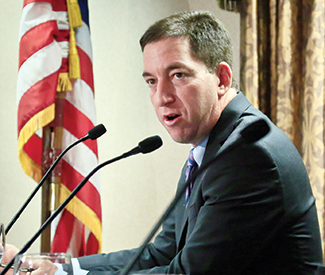
“The last year has been a bit intense,” Greenwald told a sold-out audience at San Francisco’s Nourse Theater on June 18, shortly after his arrival onstage was greeted with a standing ovation. His newly released book, No Place To Hide, provides an overview of what’s transpired in the movement against government surveillance since Snowden first approached him with leaked NSA documents.

“The surveillance state is aimed not at terrorists,” Greenwald said, “but at entire citizenries, without any shred of evidence of wrongdoing. The debate that has been triggered is about more than just surveillance,” he added, spurring dialogue on several overarching issues, “including the value of privacy.”

Greenwald named two troubling outcomes to emerge from the exposure of government secrets: First, the whistleblowers had been tarnished in the press as freakish or crazy as a way to diminish the gravity of the information they’ve revealed; secondly, the government’s practice of conducting massive electronic surveillance raises questions about how far press freedom can possibly extend in the digital age.

The author and constitutional lawyer then engaged in some myth-busting against the narratives that had been put forward concerning Snowden — claims that the security analyst is “a fame-seeking narcissist” or a spy.

“When I asked him over and over again why [he did it] … He told me it was the pain of having to live the rest of his life knowing he’d done nothing about this,” Greenwald said.

He added that he found the actions of those who sought to condemn Snowden to be very telling. “It is not simply a bunch of hacks or loyalists. The people who have decided that there must be some hidden secret motive … are doing that because they really can’t believe that a person can take an action … out of political conviction,” he said. “There’s a belief by the people who are soulless and have no convictions that everyone else is playing by the same rules.”

Nor was this treatment of being raked over the coals unique to Snowden. Manning was maligned in the press as suffering from a “gender disorder,” Greenwald pointed out, rather than being accepted as a transgender person.

And in the case of Assange, Greenwald shared an illuminating anecdote: “The Iraq War logs showed extreme atrocities,” he pointed out, but The New York Times granted this story just as prominent front-page treatment as “a profile of the quirky personality attributes of Julian Assange.” This article painted the WikiLeaks founder as bizarre and freakish, Greenwald explained, containing the “shocking revelation that Julian Assange’s socks were actually dirty.”

Meanwhile, on the morning of Greenwald’s San Francisco speech, Assange made a virtual public appearance in his own right. In a conference call with the Bay Guardian and other media outlets held from within the walls of the Ecuadorian embassy in London, the WikiLeaks publisher discussed his bizarre situation and took questions from the press.

Assange has been granted asylum in Ecuador and is staying in an apartment inside the Ecuadoran Embassy in London, but if he sets foot outside the building, he will be immediately taken into custody by British security forces. More than $10 million has reportedly been spent on having officers stand guard outside the embassy, where they harass his guests as they come and go — but the British security apparatus is only one of several complicated problems facing Assange. His other adversaries include the governments of Sweden and the United States, both of which want to put him on trial.

In Sweden, prosecutors are waiting to try him on allegations of sexual misconduct — but “If he goes to Sweden, it will more than likely mean a one-way ticket to the United States,” his attorney Michael Ratner made plain in the press call.

In the US, WikiLeaks continues to be the subject of a criminal investigation by the Justice Department, which Assange described as the longest ever directed against a publisher.

“It is against the stated principles of the US, and I believe the values of its people, to have a four-year criminal investigation against a publisher,” Assange said. He added that the government’s targeting of WikiLeaks for publishing classified documents could have ramifications for any members of the press who seek to dig deeper than just reporting “the contents of a press conference,” as he put it. And with the rise of digital media, “All publishers will shortly be Internet-based publishers,” he added.

Journalists peppered Assange with questions, and evidently some couldn’t resist the temptation of infotainment. Had he been tuning into the World Cup? One wanted to know.

“I have been watching the World Cup,” Assange replied, “although the reception in this building is quite difficult.”

And who, pray tell, is he rooting for? “Ecuador undoubtedly deserves to win,” Assange said. “But I think there’s such prestige riding on the issue for Brazil that they are the most likely victors.”

Spotlight on transgender issues

0

Trans March, SF’s largest transgender pride event, is happening Fri/27, starting in Dolores Park. This year’s march will kick off with a Youth and Elder Brunch starting at noon and a stage show 3-6pm before beginning the march. It will conclude at the 100 block of Turk Street, where a San Francisco street will finally be named after a trans: pioneering drag performer and trans woman Vicki Marlane. The afterparty will benefit the Transgender Gender Variant, Intersex Justice Project.

To celebrate Trans March’s success in its 11th year, we spoke with SF Trans March Co-Chair Jamie Rafaela Wolfe to find out how Trans March, trans issues, and trans rights have changed since the march began in 2004.

Although the Trans March website states that it originated from an anonymous email regarding the murder and trial of Gwen Araujo, Wolfe informed us that the march mostly started when a group of activists decided they needed to be heard. That first march was only a few hundred people. This year, they’re expecting around 7,000.

Just as the march has grown, awareness of trans issues has also grown. Wolfe told us that “11 years ago, you never heard the word ‘transgender,'” and when one did, it was often used in discriminatory ways. But now, trans people have more opportunities and discrimination has subsided. As proof of the changing views toward trans issues and people, Miss Major — the SF Pride Grand Marshal — is a well-known author and Orange is the New Black’s trans actress Laverne Cox was featured on the cover of the June 9 issue of Time magazine next to the headline: “The Transgender Tipping Point: America’s next civil rights frontier.”

Although a lot has changed for the better in the last 11 years, there’s always more that can be done. Wolfe suggests that the most important thing to work on now is workforce development. “We need people to get jobs. We need people to get education.” As a part of education, Wolfe stresses working with trans youth to get them in safe environments where they can be their “authentic selves.”

Pride and prejudice

7

joe@sfbg.com

As Pride celebrations across the country unfurl their rainbow flags this month, teacher tenure in California suffered a stunning blow from a Los Angeles Superior Court, undermining protections that have shielded the LGBT community from discrimination.

Although the decision will likely be appealed, Judge Rolf M. Treu’s ruling galvanized teachers unions and evoked memories of conservative attacks on gay teachers in the 1970s, including the unsuccessful Briggs Initiative that was a rallying point for then-Sup. Harvey Milk and a new generation of LGBT political leaders.

“To jeopardize any of the protections we have now, it’s a thinly veiled attempt to demoralize teachers, and it’s an attack on public education,” Assemblymember Tom Ammiano, the San Francisco Democrat who began his political career as an openly gay teacher campaigning against the Briggs Initiative, told the Guardian.

LGBT rights and teacher tenure may seem to have little in common, but a peek at the movers and shakers in the LGBT and teachers’ rights movements show an interconnected relationship of protections and the players who fight for them. Loss of tenure can threaten the protection of minority groups, academic freedom, and unpopular political speech, despite employment rights gained in recent years.

“We’ve beaten back that thinking,” Ammiano said, “but it’s still lurking.”

In California, K-12 teachers are shielded by legal protections often referred to commonly as tenure. Permanent status is the backbone of these protections, offering an arbitration process for teachers who administrators intend to fire. Also struck down by the judge was the First In, First Out law, which protects veteran teachers from layoffs by letting go of recent hires first.

In his ruling, Treu said these policies created an environment where students were burdened by ineffective teachers who were difficult to fire, disproportionately detracting from minority students’ education quality in the most troubled schools.

“The evidence is compelling,” the judge wrote in his ruling, “indeed, it shocks the conscience.”

Many education advocates vehemently disagreed with that ruling, and the veracity of the evidence will be further weighed in upcoming appeals. But along the way to pursuing equality for students, the equality of teachers may find itself eroded by an unlikely new hero of the LGBT movement: A conservative attorney who fought against marriage discrimination, but also litigated against the legacy of an LGBT legend.


HERO OF MARRIAGE EQUALITY

The morning last year when the US Supreme Court ruled to overturn California’s ban on same-sex marriage, Proposition 8, San Franciscans gathered inside City Hall by the grand staircase. Men held men, women held women, and families held the their children tight.

When the court’s decision finally hit the news, the outcry of happiness and surprise at City Hall was deafening. The expressions on the faces of those there was that of joy with many understandably streaked by tears. Attorney Theodore Olson helped litigate against Prop. 8 and won, and as he fought for gay rights, his face was often streaked with tears as well, LGBT rights activist Cleve Jones told us.

“There was a part of that trial when the plaintiffs Kris Perry and Sandy Stier described their love for each other,” Jones said. “I was sitting with their family in [US District Court Judge] Vaughn Walker’s court. When we broke, Ted Olson went to embrace them and there were tears on his face.”

But Olson is not a poster child for most politics considered the realm of liberals and Democrats. Olson and fellow Prop. 8 litigator Attorney David Boies were on opposing sides of the Bush v. Gore case that Olson won, handing George W. Bush the presidency in 2000. Olson was then appointed solicitor general of the United States, often leading conservative causes.


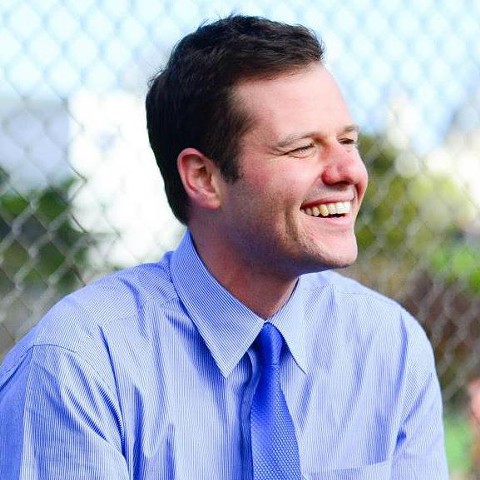
Olson and Boies will talk about their new book Redeeming the Dream: The Case for Marriage Equality at the LGBT center on June 25 (joined by Supervisor Scott Wiener), but Olson gave us a glimmer of those motivations.

Olson, a Los Altos native who attended UC Berkeley School of Law, told the Guardian in a phone interview that his stand on gay rights was based on conservative principles: “I think of conservatives as including people who are libertarians and respect individual liberty.”


A trailer for “The Case Against 8,” which features Ted Olson heavily.

He said the right to marry the person of one’s choosing should be an individual right that government has no business banning. That belief in individual liberty is at the core of his political principles. “It affects me in absolutely the deepest personal way,” he told us.

Whatever his ideological motivations, Olson became a hero in the LGBT community. But this year, he was one of the attorneys who convinced Judge Treu of the evils of teacher tenure. In the trial, Olson claimed one Oakland teacher was harming elementary students’ educational outcomes: “The principal couldn’t remove that teacher. These stories are so awful, sometimes you feel people are exaggerating.”

Yet the problems afflicting Oakland schools and its children, the unions argued, are not due to teacher tenure. In a city with high violence rates, students’ broken homes, low teacher pay, and difficult working conditions, critics say Olson oversimplified and misrepresented a complex problem.

“We all know there are problems in our schools,” Jones, who works with unions, told us. “But there’s never of course discussion about poverty, or students growing up in single families, or class sizes.”

These were all arguments the union made against Olson, unsuccessfully. The decision to remove protections for teachers may send ripples into other states and spur increased attacks on teacher protections.

And unlike California, which has strong anti-discrimination protections, that campaign may allow teachers of other states to be fired or dismissed for coming out of the closet, an issue that helped elevate Harvey Milk into such an iconic leader.


ECHOES OF BRIGGS

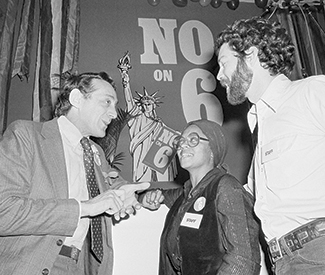
Jones and Ammiano fought alongside Milk against Proposition 6 in 1978, known as the Briggs Initiative, which would have made it illegal for openly gay people to teach. Then-Sen. John Briggs and his allies associated gay teachers with child molesters and frequently said they may influence children to become gay.

“I was born of heterosexual parents, taught by heterosexual teachers in a fiercely heterosexual society,” Milk said in a speech at the time. “Then why am I homosexual if I’m affected by role models? I should’ve been a heterosexual. And no offense meant, but if teachers are going to affect you as role models, there’d be a lot of nuns running around the streets today.”

This fight may be history, but Ammiano said such biases are still with us today, such as with how some see the transgender community. “We’re holding people at bay around LGB issues, but the T part now is the crossroads for the right wing [activists] who are rolling back protections,” he said.

Only 30 US states offer employment protections for sexual orientation, and some of those only cover government employees, according to a study by Center for American Progress. Only 23 states protect against firing for gender identity.

Vulnerable teachers lacking protections granted by tenure or equal employment laws are still being fired in California and across the country. In April, a transgender Texas substitute teacher was fired for making children “uncomfortable,” according to news reports. In Glendora, California, a teacher was fired from a religious private school after a photo of he and his husband kissing on their wedding day made the local newspaper.

This month, President Barack Obama announced an Executive Order mandating federal contractors enact policies protecting workers from dismissal due to sexual orientation or gender identity. Many speculate this was announced to press Congress to pass the Employment Non-Discrimination Act, which would protect private employees from discrimination based on gender or sexual orientation.

briggs

“This is only round one,” stated Senator John Briggs to the press about the defeat of Proposition 6, Nov. 7, 1978, at a Costa Mesa hotel. Proposition 6, called the Briggs Initiative, prohibits gay teachers from working in California public schools. AP file photo by Doug Pizac

But ENDA has stalled for years, despite the best efforts of advocacy groups nationwide. And as the country awaits equality, many teachers’ last hope against unlawful dismissal is tenure. In fact, tenure laws were first drafted after the Red Scare and Sen. Joseph McCarthy’s witch-hunt for communists, California Federation of Teachers spokesperson Fred Glass told us.

Yet Olson recoils at linking LGBT rights to teacher protections. “I support wholly protections for people for who they are, for heaven’s sakes,” he told us, mentioning that Milk “was very much an inspiration and very important to us.”

And Jones still thinks of Olson as a hero, saying that life and politics are complex.

“Irony abounds,” Jones said. “I don’t square it. You can’t square it. It’s there. But my respect for Ted Olson is based on his very genuine support for our community on the issue of marriage. For LGBT people to win equalit,y it’s important there’s a national consensus, it can’t just be from the left. Ted Olson was incredibly important with that effort and will be remembered generations for now. You don’t have to like everything about Ted Olson or President Obama to acknowledge they had a profound effect.”

Alerts: June 25 – July 1, 2014

0

THURSDAY 26


Climate Forum: Confronting Oil, Coal and Gas, Direct Action Movements at the Point of Extraction

The Eric Quezada Center for Culture and Politics, 518 Valencia, SF. tinyurl.com/oilcoalforum. 6:45pm, donation requested. The oil and natural gas extraction process known as hydraulic fracturing (“fracking”) has become one of the most pressing issues in the Bay Area and California. It is a major cause of water and air pollution and is highly resource-intensive. Nevertheless there is low awareness about its harmful effects, and state policies still allow its proliferation. This panel will discuss fracking and other hazardous resource extraction processes in the U.S. and educate participants in the first steps for taking action.


Plastic Paradise: Film and discussion

Ecology Center, 2530 San Pablo, Berk. (510) 548-2220, tinyurl.com/plasticfreejuly. 7-9pm, free. Plastic Paradise is a new documentary about the Great Pacific Garbage Patch. This event helps prepare for Plastic-Free July—an annual event originating in Australia—that aims to educate the public about how much plastic we use, and explains how we can eliminate as much as possible from our lives. The film screening will be followed with a discussion led by Beth Terry, author of Plastic-Free: How I Kicked the Plastic Habit and How You Can Too. Sponsored by Green Sangha, the City of Berkley, and My Plastic-Free Life.

FRIDAY 27


Trans March youth and elder brunch

Dolores Park, 19th and Dolores, SF. tinyurl.com/transmarchbrunch. 12-3pm, free. Right before the Trans March, this brunch gives LGBTQ youth and elders the opportunity to learn from each other. There will be food, games, icebreakers, an art station, face painting and more. The sober event is designed for self-identified LGBTQ people, ages 24 and under. Hosted by LYRIC, OpenHouse and Trans March.

Sunday 29


Meeting: Syria — Eyewitness Report

Niebyl-Proctor Marxist Library, 6501 Telegraph Ave, Oakl. http://tinyurl.com/pjkvv5f 10:30-12:30pm, free. Rick Sterling, a founding member of the Syria Solidarity Movement, spent two weeks in Syria as part of a peace and reconciliation delegation, and he returns to discuss the conflict there and why it matters to progressives in the United States. For a firsthand account of the hostilities in the region—at no cost—be sure to stop by the Niebyl-Proctor library early to ensure you get a seat.


Trying to have hope

44

OPINION I get it, as Harvey Milk famously said: “You gotta give them hope.” But how do you do that when the LGBT community you love so much is being priced and evicted out of the city?

When immigrants, people of color, artists, the poor and working-class, people with AIDS, seniors, persons with disabilities, and so many others are being pushed out — like you, Harvey, were forced out of your camera store and apartment on Castro Street when your rent was tripled. Just before an assassin’s bullet took you from us, you were preparing an anti-speculation tax to deal with the rising rents and displacement caused by speculators and real estate investors.

We tried to curb their dirty work via a state bill limiting use of the Ellis Act, but Democrats buckled in to pressure from the real estate industry that owns them. Shame on Democratic House Speaker Toni Atkins from San Diego, an out lesbian, whose inaction on the bill helped kill it.

Our only hope is the anti-speculation tax on the November ballot. Brian Basinger of the AIDS Housing Alliance is calling it the Harvey Milk Anti-Speculation Tax.

The stakes are high right now. Our housing crisis is destroying our community. According to the Anti-Eviction Mapping Project, which tracks displacement throughout the city, District 8 (which includes the Castro) has the highest rate of Ellis Act and Owner Move-In evictions, almost 2,000 units emptied since 1997. That doesn’t include buyouts and threats of evictions, de facto evictions that have pushed out many more, most of them tenants with AIDS. Far too many people with AIDS are homeless in a city that used to be called the “model of caring.”

The motive for these evictions is obvious. A two-bedroom across the street from my Castro apartment rents for $4,200. An apartment above the new Whole Foods at Sanchez and Market can cost you as much as $8,000. A month! I don’t want to upset you, Harvey, so I won’t tell you how high commercial rents are, and how poorly neighborhood businesses are faring these days.

The economic disparity has never been greater. Two Williams Institute studies show that our community is as poor as, and in some instances poorer than, other communities. In our city’s latest homeless count, 29 percent of respondents identified as LGBT and an additional 3 percent as transgender. Other reports say that 40 percent of the city’s homeless youth are queer.

Forget Altoona, that homeless queer kid in the Haight or Castro needs a sense of hope. We have a sit/lie law similar to the one you opposed that prevents these kids from getting subsidized housing if they have an unpaid citation. They sleep in the park because they’re not safe in the shelters. Sadly, Human Rights Campaign and Equality California have never made them — or the poor — a priority.

Cranes and rainbow flags may be all the rage in Upper Market these days, but what’s being built will not be affordable to homeless, poor, or working class (even some middle-class) people. The Castro has only one affordable housing project in the pipeline: 110 units for LGBT seniors at 55 Laguna. Our D8 supervisor and City Hall have let us down big time.

Harvey, I want to think that 10 years from now, our community will still have the Castro as a refuge. I want to believe that poverty, homelessness, and hunger will be greatly reduced. That we can stop the evictions. That we can give young people a piece of the dream. That we can provide seniors a secure place to spend their final days. That we can have elected officials who truly represent us, as you did.

I really want to have hope.

Tommi Avicolli Mecca, a longtime queer and housing rights activist (and an organizer of the first Philadelphia Pride march in 1972), is a grand marshal of this year’s Pride Parade.

Sex behind bars

7

Kink.com’s pre-Pride party “Pride at the Armory: Prison of Love” on Sat/28 promises to create the “world’s largest megaclub prison yard” as a backdrop for the festivities. However, this party is doing more than raising the roof — it’s raising concerns about incarceration rates and prison assaults of LGBTQ peoples. Critics argue that the party fetishizes sexual assault in prisons.

The argument is that the Prison of Love theme is turning sexual assault in prisons into a commodity. With tickets ranging from $50 to $175, there’s definitely something being sold. Since the party can be seen as selling BDSM and prison fantasies, critics worry that it condones prison rape and makes it seem sexy. That’s causing an uproar in the LGBTQ community, especially since statistics show that being LGBTQ is a main risk factor of prison rape.

According to the National Center for Transgender Equality, transgender adult inmates are sexually abused 13 times more often than other inmates and nearly 1 in 6 transgender people have been incarcerated at some point in their lives. The US Department of Justice reports that juvenile LGBTQ prisoners report sexual assault 12 times more often than straight youths. And that’s just what’s reported.

The BoycottSFPride letter posted on Tumblr criticizes the party’s theme and states that one of the main issues with the party is the way it’s marketed. The letter argues that “the party…fetishizes prison sexual assault, a form of violence that primarily affects low-income people of color, particularly LGBTQ people.” But what about sexual fetishes and preferences on a personal level? “While it is certainly appropriate for individuals to participate in scenes, or even larger events that explore prison fetishes, throwing a major event billed as the city’s largest Pride party is inappropriate.”

The Transgender Gender Variant, Intersex Justice Project also posted an open letter in response to the event. The letter is, most notably, signed by this year’s SF Pride Grand Marshal, Miss Major. The letter states that it’s not the kinkiness of the party that’s an issue — it’s the theme. “It’s not that we don’t love sex, sex parties, sex workers, and kink. It’s that we love it as much as we love justice, and are appalled by the casual use of the Prison Industrial Complex.”

(A protest march to the Armory during the party is planned by Gay Shame and others, Sat/28, 10pm, starting from the 16th St. BART station. More details at www.gayshamesf.org.)

Kink.com CEO Peter Acworth told the Guardian that his company tries to draw the line between reality and fantasy, sexual justice issues and sexual fantasies. He points out the structural differences between fantasy and reality and, in our interview, pointed out that BDSM has parameters to ensure that it’s consensual: “The notion of consent is central in BDSM—that is, no one is held against their will, everything must be negotiated, there are safe words. None of that exists in actual prison.”

In regards to the marketing issue, Acworth said that Kink is contractually bound to the theme and it’s too late to order new costumes, sets, and props. The closest Acworth gets to saying whether or not the theme is appropriate is this statement: “Had I thought that a prison fantasy party would detract from the very serious issue of the prison industrial complex in this country, I would have insisted on another theme.”

Acworth said that he was particularly chagrined by the protest because “the LGBTQ communities are strongly represented and cherished at the core of Kink.com.” That point was echoed by Andrew Harvill, the main coordinator of the party. Not only does Harvill identify with the LGBTQ community, he worked with prisoners and Death Row inmates as a missionary in Georgia. When asked about his feelings on the theme, Harvill described the prison as a backdrop to the party, as scenery that’s no different from that of the Netflix series Orange is the New Black or gay bars such as Cell Block in Pennsylvania. Harvill also stressed that there are two parts to the theme: “Our detractors skip over the whole love part of the theme. Everyone just wants to talk about one part of a two-part theme.”

We talked to Courtney Trouble, a local indie pornographer, about sexual fantasies involving transgressive realms such as rape, which she said can be useful and enjoyable. Trouble points out that “millions of people in this world are survivors of abuse, and those of them with kinks or fetishes may find solace in their BDSM practice.”

She said an abuse survivor could queer something that happened to them in order to gain control of the situation, but sexual fantasies aren’t limited to victims. “It may be that the person is attracted to the edge, pushing their own boundaries into unsafe space in order to disconnect from the real world and heighten their focus on sexual pleasure.”

So how can the issues with the theme be fixed? Acworth promises that Kink is changing the invitation to add links to highlight the political issue and remove words like “incarceration” and “arrested.” Regarding the economic aspects of the event, Acworth says that Kink is “happy to talk with any groups about ways we can help support them.” Trouble suggests creating a space that allows attendees to define the surroundings themselves. “That way, those queers with prison fantasies could play out their desires in a safe space, while also making space for people who may actually be quite triggered by sexual prison fantasy, but still want to participate in a kinky pride play space. “

Although the party’s theme is controversial, it’s at least opening the discussion around the incarceration rate and prison-related violence toward LGBTQ people. The BoycottSFPride letter provides great facts about sexual assault in prisons and the party invitation will soon help educate as well. Harvill stated that “the point of the party is to have fun, more than it is intended to raise consciousness of a political issue.”

Now, maybe it will do both.

SF school board to consider minimum wage proposal tonight amid union battles UPDATED

25

Update [6/25]: The minimum wage proposal won, and is now part of SFUSD’s approved budget. “There will be a larger conversation in August when I introduce the new minimum wage policy,” Matt Haney, of the Board of Education said. Read the article to get some context on SFUSD’s minimum wage struggles.

Hundreds of San Francisco Unified School District employees stand to finally be paid San Francisco’s minimum wage, in a new proposal expected for tonight’s Board of Education meeting.

Matt Haney, a board commissioner, plans to propose requiring SFUSD to pay San Francisco’s minimum wage. He said it’s a practical move that also carries a message.

“It’s a relatively small amount of people, but a dollar fifty or two dollars more an hour is not pocket change for them,” he told the Guardian. “It’s really a step towards aligning the school district towards paying everyone a living wage.”

As a state entity, the SFUSD need only adhere to the state minimum wage of $9 an hour, which will be the state’s new minimum wage starting July 1. For now, San Francisco’s minimum wage is $10.74 an hour, though that may change under a new November ballot measure to as much as $15 an hour by 2018.

Haney is considering introducing a new resolution in August to match the City’s $15 minimum wage hike, as well.

Over 800 SFUSD workers earn below San Francisco’s minimum wage. These employees are mostly unrepresented by unions, Haney told us, and though they serve in a variety of positions, most are yard monitors who oversee recess in the city’s over 100 schools.

Haney’s minimum wage proposal is part of the overall SFUSD proposed 2014-15 budget, which the school board will vote on tonight. As Governor Jerry Brown’s new funding mechanism, the Local Control Funding Formula, drives extra dollars into disadvantaged school districts, the unions and schools are expected to put on the pressure for the district to offer raises for teachers and paraprofessionals.

“There should be some fireworks, I imagine,” Haney said.

Negotiations between the school district and the unions are at a standstill, sources tell us. The district said it is proposing a 8.5 percent increase over three years, which amounts to an approximate $1.83 an hour raise for paraprofessionals. This offer infuriated the United Educators of San Francisco, who allege that is still not a living wage.

“They’re coming to us and saying ‘this is almost the best we can offer,'” Dennis Kelly, president of UESF told the Guardian. “What the hell does that mean?”

Paraprofessionals often work in special education or early childhood education, and some are security aides. There are between 1,350 and 1,500 of those employees at any given time in the district, Kelly told us, noting they’re also a group made up largely of minorities and women.

In a statement to the press, SFUSD Superintendent Richard Carranza said the district made the best offer it could under the circumstances.

“We are committed to providing salary increases this year and in the future as long as the revenues from the state continue to grow,” Carranza wrote. “Unfortunately the state’s forecast for school budgets just got a lot worse. Governor Brown just said that he is now expecting districts to pay a bill, in the amount of several billion dollars, to cover the State’s unfunded pension liabilities as soon as next school year and every year after for the foreseeable future. This expenditure will spend a significant amount of the very same revenues we are counting on to provide services for our students and salary increases for our employees.”

As the district struggles with its bills, the paraprofessionals are facing the very real rising costs of living in San Francisco. The average pay for a paraprofessional is $25,000, Kelly told us, adding “you’re employing 1,000 of these people at poverty wages.”

The UESF will take a vote to authorize a strike vote in August, and the negotiations between the UESF and the school district is expected to be mediated soon.

In the meantime, for 800 or so employees at least, Haney’s minimum wage increase should bring some much-needed good news to a school district beleaguered with money woes. Though the raise would only bump employees a dollar fifty or two dollars an hour more, Haney said, “it’s a symbolic in some ways, but important.”

And as a school district that mostly serves poor and disadvantaged students, Haney added, “if anyone should know about poverty in schools, it’s us.”

Correction: An earlier version of this story inaccuately cited the district’s wage offer. The Guardian apologizes for the error.

Here’s an intriguing idea for Piers 30-32

Earlier this year, the Golden State Warriors abandoned its bid to construct a basketball arena and performance venue at Piers 30-32 along San Francisco’s waterfront, a proposal Mayor Ed Lee once championed as his “legacy project.”

The Warriors moved its ambitious project to a site in Mission Bay, to the great relief of a group of waterfront activists who viewed it as an inappropriate choice for the unique and historic 7.5-mile stretch of city waterfront that falls under the jurisdiction of the Port of San Francisco.

Nevertheless, that shift did send the Port back to the drawing board with the problem it’s encountered numerous times before: What to do with Piers 30-32, which span a 13-acre slab of crumbling concrete currently in use as a parking lot just a stone’s throw from the Bay Bridge.

In a recent Bay Guardian editorial, we called for a public process to consider the future use of that waterfront pier. Could it be turned into open space? Removed? Converted to a different use?

Turns out, others have been contemplating the same question. The San Francisco Civil Grand Jury, a volunteer body tasked with investigating civic matters, introduced a new idea when it issued a report on the operations of the Port of San Francisco.

Titled, “The Port of San Francisco: Caught Between Public Trust and Private Dollars,” the Civil Grand Jury report raised a few incisive questions, going so far as to suggest that the Port operates with undue influence from the Mayor’s Office, and that its governing commission ought to be restructured to resolve that. We are going to drill down more on these issues in a different post, after we’ve had a chance to interview a spokesperson from the Port.

But for now, here’s the Civil Grand Jury’s line on Piers 30-32: Why not look into using it as the site of a marine research institute?

From the report:

“Our suggestion is to investigate the possibility of building a Marine Research Institute on the pier. The project lead could be an educational institution such as Woods Hole Oceanographic Institution or Scripps Institute of Oceanography (UC San Diego), a conservation group such as Cousteau Society, Greenpeace, or Ocean Conservancy, or even  government based groups such as National Oceanic and Atmospheric Administration (NOAA) or United Nations Educational, Scientific and Cultural Organization (UNESCO).

“With close proximity to the Gulf of the Farallones, Cordell Bank, and Monterey Bay National Marine Sanctuaries to the west and the Sacramento-San Joaquin Delta to the east, a San Francisco Bay location presents a unique opportunity for marine and estuary study.

“The Cordell Bank and Gulf of the Farallones Sanctuaries today cover about 1800 square miles, but the proposed addition by NOAA will add an additional 2,000 square miles extending north.

“Funding could be derived not only from the sources mentioned above, but it may be possible to get donations from charitable foundations, such as Ford Foundation or Paul Getty Trust, and supplement large contributions by forming a coalition of the dozens of smaller advocacy and conservation groups—a form of crowd-funding on a large scale.”

A waterfront research institute that could aid scientists in studying the effects of climate change on ocean ecosystems? It couldn’t be farther from the sexy, spaceship-shaped sports arena previously proposed for that waterfront site. But it might not be such a bad idea.

Guardianistas hit the high notes on our latest edition of Alternative Ink

17

Last night’s Alternative Ink, the biweekly show that we at the Bay Guardian do on BFF.fm, may have been our best show yet. In addition to featuring great music exclusively by queer artists, we covered a lot of editorial ground, from chain stores and the Guardian’s impending move into the Westfied Mall to new developments on Google buses and Sunday meters to teacher tenure, Pride, and PG&E’s scary pipelines (when our audio mysteriously cut out for little while … hmm)  to whistleblowers and World Cup mania. So give it a listen here.  

City Attorney throws a monkey wrench into parking-space auction app

An iPhone app that lets users auction off their parking spots might sound like a novel idea, especially in a parking-deprived city like San Francisco. Unfortunately for Paolo Dobrowolny, co-founder and CEO of the MonkeyParking app that does exactly that, the practice is also illegal.

The app violates a key provision of San Francisco’s Police Code, which states that drivers who “enter into a lease, rental agreements or contract of any kind” for public parking spots can face penalties of up to $300, according to City Attorney Dennis Herrera, who has issued a cease-and-desist demand against MonkeyParking.

“Technology has given rise to many laudable innovations in how we live and work – and Monkey Parking is not one of them,” Herrera said in a statement. “It’s illegal, it puts drivers on the hook for $300 fines, and it creates a predatory private market for public parking spaces that San Franciscans will not tolerate.”

That’s not how Dobrowolny sees it. Though he’s still working with his legal team to address Herrera’s concerns, the MonkeyParking CEO said he fundamentally disagrees with Herrera’s stance.

“As a general principle we believe that a new company providing value to people should be regulated and not banned,” Dobrowolny wrote in an email. “Regulation is fundamental in driving innovation, while banning is just stopping it.”

Herrera imposed a July 11 deadline to cease operations in his letter to MonkeyParking, but the app may not even last that long. By violating San Francisco’s Police Code, it’s already landed in hot water when it comes to Apple’s guidelines for app developers, which state: “Apps must comply with all legal requirements in any location where they are made available to users.” Herrera copied Apple’s legal department onto the letter, so there’s a possibility MonkeyParking could be removed as a result.

The use of parking apps like MonkeyParking also brings up the potentially dangerous matter of cell phone use within a moving vehicle, an issue that wasn’t lost on Herrera. In his letter to Dobrowolny, Herrera wrote that MonkeyParking is “facilitating and encouraging drivers to use cellphones and other wireless communication devices in a manner that distracts them, posing a safety hazard to the public and violating state laws that prohibit using cellphones and such other devices while driving.”

But since the app already appears to be in violation of the local police code and the App Store guidelines, this is simply icing on the cake.

“Worst of all, [MonkeyParking] encourages drivers to use their mobile devices unsafely – to engage in online bidding wars while driving,” Herrera said. “People are free to rent out their own private driveways and garage spaces should they choose to do so. But we will not abide businesses that hold hostage on-street public parking spots for their own private profit.”

MonkeyParking isn’t alone in its apparent violation of city rules. Sweetch and ParkModo are two other iPhone apps that provide allegedly illegal monetization of parking spots in the city, and Herrera’s office is cracking down on them as well.

Sweetch is similar to MonkeyParking, though it charges a flat fee of $5 per parking spot instead of the bidding system. ParkModo, which has yet to officially launch, will reportedly employ drivers for $13 an hour to occupy public parking spots in the Mission, according to Herrera’s statement.