Bay Guardian Archives

Will proposal to sell Hetch Hetchy power overshadow CleanPowerSF?

Supervisors Scott Wiener and London Breed have proposed an ordinance to allow the San Francisco Public Utilities Power Commission’s Power Enterprise to sell hydroelectric energy from the Hetch Hetchy dam to retail customers — particularly large real estate developments. Sup. Wiener and Breed say the ordinance would both generate revenue for the PUC and further the city’s overall goal of achieving a 100 percent greenhouse-gas free power mix. 

But how well does it fit into the city’s other clean energy goals? Some advocates of an existing citywide green energy plan worry that this new effort could cause a far more ambitious program to fall by the wayside.

For more than a decade, city government has been working toward implementing a clean energy plan through CleanPower SF, which aims to meet the city’s goal of 100 percent clean energy by allowing all San Francisco residents the choice of switching to a green power mix through the city-administered program, instead of remaining with PG&E. But CleanPower SF hangs in limbo, largely due to opposition from the SFPUC board, appointed by Mayor Ed Lee–whose regular meetings with PG&E officials have raised eyebrows.

The legislation proposing to broaden the sale of SFPUC’s hydroelectric power supply seeks to tackle some of the problems CleanPower SF might have addressed had it not been stalled. A press statement from Wiener noted that it aims to help build a large enough customer base for the SFPUC to generate sufficient revenues to maintain city infrastructure, as well as meeting the city’s overall target of 100 percent clean energy by 2030.

“My concern is that the Mayor’s office will say it’s something that will supplement CPSF [CleanPowerSF] and say that’s enough,” said Jason Fried, Executive Officer of the Local Agency Formation Commission. “I want to make it clear that it [proposed ordinance] is really meant to compliment CleanPower SF.”

But just exactly how—and how much—the proposal would complement CleanPower SF is still up for debate. Fried said Wiener’s new proposal complements CleanPower SF because it ultimately gives people more choices. “I don’t know how you can argue with giving people more choices,” he said.

But the legislation is targeted at large, private developments, rather than renewable energy options for community members. Which is why Fried emphasized that proposed ordinance shouldn’t been seen as a replacement to the city’s existing Community Choice Aggregation (CCA) program, CleanPower SF.

Eric Brooks, a long-time advocate of CleanPower SF, insists the legislation would complement CleanPowerSF only if, “CleanPowerSF was given first right to purchase Hetch Hetchy power from the PUC.” This would allow the ordinance to focus on community members rather than just large, private developments, he said.

“Being able to balance different types of power like solar, wind and hydro, and being able to furnish consistent hydro power during high usage together would also help keep rates lower so that the CleanPowerSF can deliver power at lower prices,” he added.

Officials from the Sierra Club echoed Brooks, saying that the Sierra Club “supports the legislation in concept,” but requests that the legislation incorporate the ability for CleanPower SF to purchase Hetch Hetchy power from the PUC Power Enterprise.  “You have to look at it as peeling customers away from PG&E,” said John Rizzo, Sierra Club’s political chair. “The more you do that, the greener we can become.”

Although Brooks said he plans to meet with Sup. Wiener regarding how the ordinance could work in tandem with CleanPower SF, officials from Sup. Wiener’s office indicated that the ordinance is inherently separate from CleanPower SF. “[The ordinance] doesn’t further or hinder CPSF [Clean Power SF],” said Andres Power, Wiener’s legislative aide, who was involved in drafting the legislation. “It’s neutral from that perspective.”

Responding to questions about the legislation’s relationship with Clean Power SF (and whether or not collaboration might be a good strategy), Jeff Cretan, another of Sup. Wiener’s legislative aides, said, “Innovative solutions can come from multiple directions.” He further explained that, if passed, the legislation “could prove how other clean power initiatives can be successful.”

Oakland joins other Bay Area cities in seeking higher minimum wages

4

San Francisco isn’t the only Bay Area city looking to bump up its minimum wage rate. Alameda County today [Fri/27] certified a ballot measure that would raise minimum wage in Oakland to $12.25 and provide workers with paid sick days, affecting over 50,000 employees.

The initiative is the result of an effort by Lift Up Oakland, a coalition of workers, business owners, and a collection of nonprofits and local restaurateurs [Correction: The Oakland Metropolitan Chamber of Commerce is not supporting the measure, as we previously reported]. Having passed muster with the Alameda County Registrar of Voters, the measure must be placed on the November ballot by the Oakland City Council.

According to the Lift Up Oakland website, the initiative specifically “sets a base of five or nine paid sick days provided by the businesses, depending on their size” and “requires that the service fees hospitality employers charge go to the workers who provide the services,” in addition to setting a $12.25 minimum wage that includes a provision for annual cost-of-living increases.

Supporters of the measure believe it addresses an issue that has plagued Oakland workers for awhile now.

“Income inequality in Oakland is a crisis. Workers need relief,” said Lift Up Oakland President Gary Jimenez in a statement. “Our proposal will help low-wage workers make ends meet. Some business organizations are trying to push a watered-down proposal, but people need to be able to put food on the table today.”

Economists at UC Berkeley and experts from the Institute for Women’s Policy Research have found that the measure would have numerous important benefits for the Oakland community, according to a statement from Rise Up Oakland. Aside from giving $120 million to workers around the city, the initiative would benefit communities of color and have no foreseeable negative impact on employment. The measure is also wide-reaching—over a quarter of Oakland workers would see their pay increase.

But perhaps even more telling that the economists’ study is the strong support for the initiative shown by Oakland residents. About 45 different organizations and 253 volunteers helped to gather 33,682 voter signatures to put the measure on the November ballot, which goes to show how widely popular it is throughout the city.

Oakland and San Francisco aren’t the only cities looking to improve conditions for low-wage workers. According to Shum Preston of Service Employees International Union Local 1021, there is a strategy in place to expand the proposal to other cities around the Bay Area in what Preston calls a “regional referendum.”

Those other cities are already making progress. Earlier this month, for example, the Richmond City Council agreed to implement a $13 minimum wage by 2018, though certain businesses are exempt from that particular measure. The City Council in Berkeley recently passed the first reading of a similar ordinance, which calls for a $12.53 minimum wage by 2016, and Preston says SEIU is also in contact with activists from Concord, Hayward and Fremont.

With so many major cities on board to improve pay conditions, the message is clear. “Ultimately this is about human dignity,” said Burger King security guard John Jones. “We need more money for our people and we need it yesterday.”

A great week for (indie) sci-fi and docs: new movies!

0

This week, Frameline continues (our coverage here!), plus offbeat sci-fi winners Coherence and Snowpiercer are well worth seeking out … especially if you’re not in the mood for more giant robot smash-ups from the Michael Bay factory. Plus: new docs and more! Read on.

Breathing Earth: Susumu Shingu’s Dream Japanese artist Susumu Shingu has built his career through his concerted engagement with the natural world. The wise and eternally smiling 75-year-old creates angular and often gargantuan mobiles that harness the power of wind and water to gyrate in ever-changing directions. In Breathing Earth, German director Thomas Riedelsheimer crafts a deliberately paced rumination on Shingu’s life philosophy that, while devoid of the frenetic facts, figures, and trite biographical rehashes that punctuate hyper-informative pop-docs, uses a beautifully simplistic narrative arc to illuminates Shingu’s attempt to create a hilly, open-air collection of windmills. The sculptor’s impassioned narration and charming conversations with potential landlords and investors (who usually entirely miss the point of his mission to raise environmental consciousness through aesthetic beauty) make Shingu impossible not to fall in love with — he is laid-back, funny, and astonishingly youthful. Riedelsheimer’s camera is similarly relaxed, gliding sumptuously over the green and wild landscapes on which Shingu installs his works. Despite his meditative tempo, Riedelsheimer manages to explore a remarkably wide scope; Shingu’s late-life marriage to a fellow sculptor, his appeals to both Japanese and German schoolchildren to care for the earth and help to avoid environmental disasters, and his intricate technical processes all receive intimate and inspiring sections. (1:37) (David Kurlander)

Citizen Koch After quietly influencing conservative ideology, legislation, and elections for decades, the billionaire industrialist Koch brothers have found themselves becoming high-profile figures — much to their dismay, no doubt. The relative invisibility they hitherto enjoyed greatly abetted their impact in myriad arenas of public policy and “popular” conservative movements. Look behind any number of recent red-vs.-blue flashpoint issues and you can find their fingerprints: Notably state-level union busting; “smaller government” (i.e. incredible shrinking social services); seeding allegedly grassroots organizations like the Tea Party; furthering the Corporations = People thing (see: Citizens United); and generally helping the rich like themselves get richer while fostering working-class outrage at everybody else. This documentary by Trouble the Water (2008) co-directors Carl Deal and Tia Lessen touches on all those matters, while also focusing on Wisconsin as a test laboratory for the brothers’ Machiavellian think-tank maneuvers, following a Lousiana GOP candidate on the campaign trail (one he’s marginalized on for opposing corporate influence peddling), and more. Any one of these topics could support a feature of their own (and most already have). Citizen Koch’s problem is that it tries to encompass too much of its subjects’ long reach, while (despite the title) leaving those subjects themselves underexplored. (It also suffers from being a movie completed at least 18 months ago, a lifetime in current US political terms.) For the reasonably well-informed this documentary will cover a lot of familiar ground—which is not to say that ground isn’t still interesting, or that the added human interest elements don’t compel. But the film covers so much ground it ends up feeling overstuffed and unfocused. (1:26) (Dennis Harvey) 

Coherence See “Vortex Room.” (1:29)

Korengal This companion piece to 2010’s Oscar-nominated Restrepo — one of the best docs about modern-day warfare to date, offering unfiltered access to an Army platoon stationed in Afghanistan’s Korengal Valley — uses previously unseen footage shot during the year filmmakers Sebastian Junger and Tim Hetherington spent shadowing their subjects. Korengal is structured as a more introspective work, with musings on what it feels like to be a soldier in the Korengal, surrounded by rough (yet strikingly beautiful) terrain populated by farmers who may or may not be Taliban sympathizers, not to mention unpredictable, heavily armed opponents referred to simply as “the enemy.” Interviews reveal sadness, boredom, a deep sense of brotherhood, and the frustrating feeling of going from “100 miles an hour to a dead halt” after the surreal exhilaration of a firefight. Korengal also functions as a tribute to Hetherington, who was killed in 2011 while on assignment in Libya. Not only does his death add a layer of poignant subtext, it also suggests why Junger felt moved to revisit this story. That said, though Korengal‘s footage is several years old, its themes remain distressingly timely. (1:24) (Cheryl Eddy)

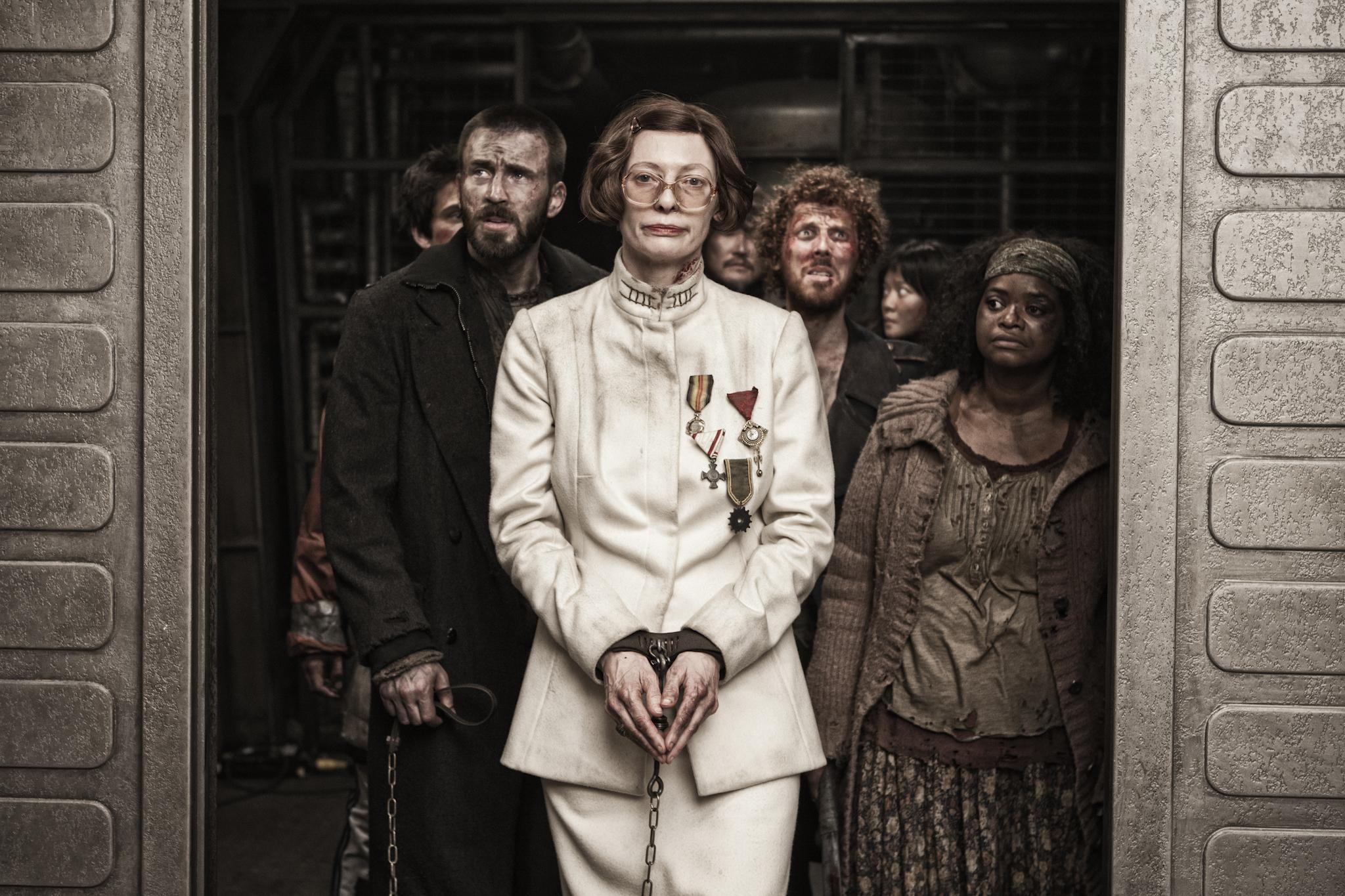
Snowpiercer Eighteen years after an attempt to reverse global warming has gone wildly awry — freezing all life into extinction — the only known survivors are on a one-of-a-kind perpetual-motion train that circles the Earth annually, has its own self-contained ecosystem, and can smash through whatever ice buildup has blocked its tracks since the last go-round. It’s also a microcosm of civilization’s worst class-economic-racial patterns over history, with the much-abused “tail” passengers living in squalor under the thumb of brutal military police. Unseen at the train’s front is its mysterious inventor, Wilford, whose minions enforce “Eternal Order Prescribed by the Sacred Engine.” Curtis (Chris Evans) is default leader of the proletariat’s latest revolt, in which they attempt to force their way forward though the prison section (where they free Song Kang-ho and Go Ah-sung as the train’s original lock designer and his psychic daughter) on to the wonders of the first class compartments, and beyond. This first (mostly) English-language feature by South Korean Bong Joon-ho (2006’s The Host, 2009’s Mother), based on a 1982 French graphic novel, starts out as a sort of locomotive, claustrophobic Mad Max (1979) variation. But it gets wilder and more satirical as it goes along, goosed by Tilda Swinton’s grotesquely comic Minister Mason, and Alison Pill as a teacher propagandist in a particularly hilarious setpiece. In case the metaphor hasn’t already hit you on the head, one character explains “The train is the world, we the humanity.” But Snowpiercer’s sociopolitical critique is as effective as it is blunt, because Bong handles everything here — visceral action, absurdist humor, narrative left-turns, neatly etched character archetypes, et al. — with style, confidence, and wit. Some of the FX may not be quite as seamless as it would have been in a $200 million Hollywood studio production, and fanboys will no doubt nitpick like nitwits at various “credibility gaps.” (As if this movie ever asks to be taken literally.) But by current, or any, sci-fi action blockbuster standards, this is a giddily unpredictable, risk-taking joy. (2:07) (Dennis Harvey)

Third Person A screenwriter, Paul Haggis, pens a script in which a novelist (Liam Neeson) sits alone in a smoke-filled hotel room in Paris struggling over a manuscript about a novelist who can only feel emotions through his characters. What that psychic state would actually look like remains unclear — when the woman (Olivia Wilde) he’s left his wife (Kim Basinger) for shows up, their playful, painful, fraught interactions reveal a man with above-average emotional reserves. Meanwhile, in another hotel in another city, Rome, a sleazy fashion industry spy (Adrien Brody) finds his life turned sideways by a seemingly chance encounter in a bar with a beautiful Romanian woman (Moran Atias) in dire need of money. And in a third hotel, in Manhattan, a young woman (Mila Kunis) cleans up the suites she used to stay in when she was married to a renowned painter (James Franco), with whom she has a son she may or may not have harmed in some terrible way. The film broadly hints at connections between these three sets of lives — in each, the loss or endangerment of a child produces an unrelenting ripple effect; speaking of which, objects unnaturally submerged in water present an ominous visual motif. If the movie poster doesn’t give the game away as you’re walking into the theater, the signposts erected by Haggis ensure that you won’t be in the dark for long. Learning how these characters relate to one another, however, puts considerable drag on the fabric of the plot, exposing the threadbare places, and where Haggis offers his tortured characters redemption, it comes at the cost of good storytelling. (2:17) (Lynn Rapoport)

Transformers: Age of Extinction In Michael Bay’s fourth Transformers installment a villainous Black Ops leader (Kelsey Grammer) allies with a snarky Steve-Jobs-alike (Stanley Tucci) to build Transformers de coeur: designer impostor robot-cars they hope will reinvent the face of war. In IMAX 3D, “TransFOURmers” is packed with relentless rock-‘em-sock-‘em action, spectacular property destruction, and about as much sense as a bucket of worms. After 60 minutes, you think you’re getting more than your money’s worth. At 90 minutes, you’re tired. At two hours, confusion sets in: If Autobots get stronger together how could Optimus be in so much trouble? Who is the bounty hunting Terminator lookalike? HOW MUCH MORE COULD THERE BE? And then … the action shifts to China, Optimus rides a Dinobot, and chaos reigns. I’ve always liked the working-class poetry of the Transformers themselves — the leader is a trucker and the cast is stacked with ambulances, tanks, and the metal workforce that preserves American lives. If that’s not traditional hero worship, I don’t know what is. But Age of Extinction is the soulless designer imposter it lampoons — the whole sequel-snarking ordeal makes you long for Buzz Lightyear, who saw a thousand Buzz Lightyears on a store shelf and survived that existential crisis heroically — while also riding a dinosaur and fighting Frasier. This Transformers movie (sadly, it won’t be the final one) starts with a thesis: Mark Wahlberg walks through an abandoned movie theater and a Wilford Brimley twin (Ron Shedd) bellows: “Movies today! Sequels! Remakes! Crap!” Age of Extinction follows that moment with nearly three hours of evidence that the cause of extinction is redundancy. (2:30) (Sara Maria Vizcarrondo)

Under the Electric Sky Hey, raver! This 3D concert film enables you to experience the Electric Daisy Carnival without punching any holes in your brain. Or, y’know, dying. (1:25)

Violette Taking on another “difficult” woman artist after the excellent 2008 Séraphine (about the folk-art painter), Martin Provost here portrays the unhappy life of Violette Leduc (Emmanuelle Devos), whose fiction and autobiographical writings eventually made her a significant figure in postwar French literature. We first meet her waiting out the war with gay author Maurice Sachs (Olivier Py), one of many unrequited loves, then surviving via the black market trade before she’s “discovered” by such groundbreaking, already-established talents as Jean Genet (Jacques Bonnaffé) and Simone de Beauvoir (Sandrine Kiberlain). It is the latter, a loyal supporter who nonetheless retains a chilly emotional distance, who becomes bisexual Violette’s principal obsession over the coming 20 years or so. Devos does her best to portray “a neurotic crazy washed-up old bag” with an “ugly mug” — hardly! — who is perpetually broke, depressed, and awkward, thanks no doubt in part to her mean witch of a mother (Catherine Hiegel). “Screaming and sobbing won’t get you anywhere,” Simone at one point tells her, and indeed Leduc is a bit of a pill. For the most part lacking the visual splendors of Séraphine (this character’s environs weren’t so pastoral), Violette is finely acted and crafted but, like its heroine, hard to love. (2:18) (Dennis Harvey)

Jury find SF officer used excessive force in beating a restrained arrestee

28

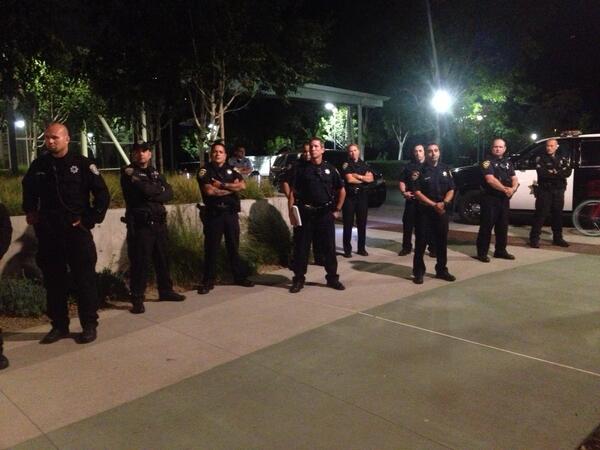
A jury last week unanimously convicted a San Francisco police officer of using excessive and unnecessary force, although the San Francisco Police Department cleared the officer in an internal investigation and kept him on the streets.

In Magistrate Maria-Elena James’ courtroom, the jury voted 8-0 that Police Officer Matthew Sullivan used excessive force against plaintiff Eduardo Alegrett on February 7, 2012.  Alegrett’s lawyer, Panos Lagos, told the Guardian that Alegrett was suffering a “mental crisis” when he allegedly battered a woman at 88 Perry Place.

Police arrived to arrest him and called for backup when Alegrett pretended to have a gun, a bust that Lago said was appropriate, although he disagrees with what happened next. Sullivan arrived at the scene, ordered Alegrett to get on his stomach, then repeatedly hit him in the head while Alegrett was already restrained by two officers. Lagos told us that Sullivan acted too quickly for the other officers to stop him—administering “10 strikes within two seconds.”

A SFPD spokesperson told us that Sullivan is still on street duty. When we asked if they were imposing any disciplinary actions, we were told the information was not available to the public, although the spokesperson did say the SFPD’s “investigation revealed there were no wrongdoing…and there’s no reason to penalize someone that didn’t do anything wrong.”

According to Lagos, the Bane Act and Alegrett’s Fourth Amendment rights were violated in the incident. The Bane Act, one of California’s civil and criminal laws related to hate crimes, “provides protection from interference by threats, intimidation, or coercion or for attempts to interfere with someone’s state or federal statutory or constitutional rights.”   

Alegrett was awarded $3,200 compensation for his injuries, and his legal fees will be covered. Sullivan will also be required to pay a fine, which will be determined at a later trial.

“It’s very unusual to have this trial decision,” said Lagos.

Quantitative information regarding police brutality cases is limited. A 2013 San Francisco Office of Citizen Complaints report shows that out of 727 complaints, only 43 were sustained. Out of the 43 sustained, over half were for neglect of duty, 24 percent for unwarranted action, 10 percent for “conduct reflecting discredit represented,” and 7 percent for unnecessary force.

The National Institute of Justice says “police officers should use only the amount of force necessary to control an incident, effect an arrest, or protect themselves or others from harm or death.” However, there are no universal rules regulating the amount of force allowed, and officers must refer to their specific agency for force guidelines. The NIJ’s website also says that “excessive use of force is rare.”

Lagos said that the OCC  told Alegrett, when he first filed his complaint, that the case wouldn’t go to court because they saw no evidence of excessive force. We asked Lagos why this incident report managed to do what others didn’t.

“Video evidence is what made this trial different.” Two tenants, unknown to the police officers, filmed the incident on their phones.

Lagos said that the outcome of the trial should encourage police to enforce the established rules on officers’ use of force, specifically rules regarding mental breakdowns: “The SFPD has a practice of failing to train officers to recognize citizens with mental or emotional breakdowns.”

Heavy metal time machine: “Dio: Live in London, Hammersmith Apollo 1993”

3

December 12, 1993: Mariah Carey, Janet Jackson, and Whitney Houston were owning the American airwaves, but over in London’s Hammersmith Apollo, a different soaring voice — one that veered more toward doom than bubblegum — was showing how it’s really done. Dio: Live in London Hammersmith Apollo 1993 (Eagle Rock Entertainment) captures Ronnie James Dio (with band: drummer Vinny Appice, bassist Jeff Pilson, guitarist Tracy G, and keyboard player Scott Warren … yep, instrumental solos abound) at his peak-wizard powers. 

The setlist is, naturally, packed with jams that were new at the time (the tour was in support of the band’s Strange Highways album), as well as plenty of songs spanning Dio’s career as solo artist and frontman of various bands: “Holy Diver,” “Stand Up and Shout,” “Heaven and Hell,” “Rainbow in the Dark,” “Man on the Silver Mountain,” “We Rock” and “The Mob Rules” (“of course, that one from the Sabs,” he points out).

The set is stripped-down — aside from the amps (SO MANY AMPS … eight Marshall stacks), it’s just dudes in black wielding instruments (and flowing hair), and youuuuu know who holding it down center-stage, wearing a subdued cross necklace but occasionally flashing the devil-horns hand gesture he’s credited with inventing, or at least introducing into heavy-metal culture. 

The DVD insert contains a short essay sharing band members’ memories of Dio, who died in 2010 (Warren recalls they had the same favorite meal: curry), and of the 1993 gig (moments before they took the stage, Warren says, “You could hear a pin drop, except for Ronnie’s occasional gentle throat clear, and the clicking of his cough drop”).

DVD extras include the 20-minute featurette “Hangin’ With the Band,” a backstage glimpse at Dio (yes! chomping a cough drop!) and company as they load in from a tour bus parked on the rainy London street outside the venue, go through sound check, prep backstage, unwind post-concert, etc. It’s a pretty PG-rated affair — no debauchery (just beer and Gatorade), no Spinal Tap-style revelations, and certainly no Satanic rituals (though a hair dryer does get sacrificed, in honor of the tour ending). It’s just a bunch of self-described “mellow” guys who are super-stoked to be playing music together.

“I look forward to playing with this band every night,” Dio enthuses as he’s getting stage make-up applied (foundation, mascara, and just a swipe of eyeliner). “After doing it for 3,000 years, as I have, it’s kind of special to be able to still enjoy it as much. More, really.”

A benefit series aims to keep the unique Meridian Gallery afloat

0

In 2001, interns at Powell Street’s Meridian Gallery planned and painted a 13×48 foot mural on the wall of the SRO Hartland Hotel, a few blocks away in the Tenderloin. The mural, a colorful and sunny street scene showcasing the multiculturalism of the neighborhood, was revered by residents and and left untouched for 10 years until it was vandalized by graffiti. In response, former interns who had worked on the project came back together and, alongside the current kids in the program, repainted the piece. The artists’ lasting willingness to help Meridian in times of need reemerges in a broader sense this week, which marks the climax of the gallery’s June Benefit Series (tonight’s entry: “16 Years of Meridian Music,” a diverse program of new music). 

Meridian Gallery, whose name comes from its mission to focus on hemispheric and cross-cultural interactions, is facing eviction. As rent around Union Square has skyrocketed, from $400 per square foot in 2007 to up to $3,000 today (according to retail consultant Helen Bulwik, quoted in a KQED report), many galleries have been forced to close their doors. The stately Perine Mansion, the three-story French Second Empire brick building where Meridian makes its home, is an especially attractive and lucrative piece of property. Instead of throwing in the towel, Anne Brodzsky, the dynamic co-founder of the gallery who has overseen its operations for over 25 years, has reached out to her friends. 

The original eviction notice was handed down in April. Some close to the gallery are convinced that despite any efforts, the rent will be impossible to pay. Others, Brodzky chief among them, think that the response to the bad news suggests a potential long-term rally from Meridian. Her optimism is fueled by two forces. First, on May 13, the SF Board of Supervisors beefed up affordability programs, including supplemental displacement funds and health benefits, for struggling art non-profits in the city. “I’m amazed by how they’ve managed to come together to help arts programs,” Brodzky exclaimed. 

More effective and instantly helpful than any bureaucratic assistance, however, have been the programs put together by artists affiliated with Meridian. Around the time of the Supervisors’ decision, Brodzky asked her gallery-mates if they were willing to stage an auction. The response was staggering; over 60 artists put up works. More astonishing to Brodzky, though, was the kind of excitement many of the participants exhibited for further events. “Bob Marsh, among many others, approached me and asked if they could stage fundraisers.” 

 Tonight, Marsh is one of the main attractions at the “16 Years of Meridian Music” showcase. An avant-garde visual artist and musician, Marsh discovered Meridian shortly after his arrival in San Francisco 14 years ago. “I started visiting galleries and found that Meridian had a wonderful monthly music series,” he says.

Marsh was inspired by the political sharpness of the organization. “I thought early on, ‘They’re not purveyors of bourgeois wallpaper,’ like so many galleries can be.” For Marsh’s offering, “The Visitor,” he’ll don his Sonic Suit #9, a wearable sculpture made from empty water bottles and other modern detritus, and engage in narrative movement to a musical accompaniment.

“He’s a visitor from another dimension,” Marsh says. “He arrives here, looks around, and has different reactions to the confusing environment that is our world.” Marsh debuted the ever-changing character at the Meridian and feels that its a fitting tribute to the openness and experimentation that the gallery fosters. 

Despite his excitement about the benefit, Marsh turns somber when discussing its necessity. “They have given so much with such passion,” he says. “It’s sad to see them persecuted by blind greed … I don’t think its personal, but everyone just wants a lot of money. Everybody thinks that’s some kind of virtue.”

Neither Brodzky, Marsh, nor other performers and Meridian affiliates with whom I talked  were quick to link the gallery’s financial troubles to a larger ill in San Francisco. They seemingly eschew that brand of macrocosmic victimhood and instead zoom in on what they can do to stay open, one step at a time. Their optimism may be healthier, but it does not mask the sad fact that rising rents are making grassroots galleries a thing of the past. If the artists continue to come together with the intensity of the mural renovation, auction, and benefit series, however, Meridian may just buck the trend.  


16 Years of Meridian Music: Composers in Performance

With Bob Marsh, Andrea Williams, Bryan Day, Phillip Greenlief and Jon Raskin’s 1+1, David Samas, Tom Bickley, and the Cornelius Cardew Choir

Thu/26, 7-10pm, $35

Meridian Gallery

535 Powell, SF

meridiangallery.org


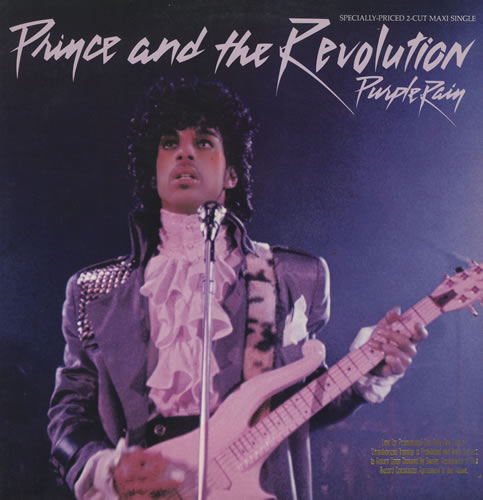
‘Purple Rain’ at 30

1

Just over a year ago, Adam Tod Brown wrote a great article for Cracked called “4 Classic Albums That Get More Praise Than They Deserve.” Though it contained as much Yoko Ono-bashing as you’d expect from a website as frequently fratty as Cracked, it made a great argument for Ringo’s self-titled as the best solo ’70s Beatles album and contributed substantially to the recent critical revival of Neil Young’s On The Beach. The thing that interested me most, however, was Brown’s citation of Prince’s Purple Rain as a “flawless album” that gets as much press as it deserves, “no matter how many other great Prince albums there are.”

I instantly disagreed with the implication that his 1984 soundtrack to the film of the same name was Prince’s greatest album, but his article didn’t elicit a cynical “nahh” from me as much as a bolt of surprise. Sure, Purple Rain is the Prince album random people on the street will be most likely to name. But I’d been raised alongside 1999 and Sign O’ The Times as well — albums that both get well-deserved five-star ratings  but still don’t place quite as highly on critical lists as Purple Rain. I always presumed these albums were just as famous, and I wasn’t sure why this meek 9-track album was getting all the praise.

I still agree it’s not Prince’s best. But it’s his most solid — meaning the fewest indulgences, the highest masterpiece-to-crap ratio, the most content per its running time. Dirty Mind is two-thirds as long and lacks a single bad song, but its structure is a bit uneven; in my opinion, this adds to its carefree appeal, but it’s still an imperfection. Meanwhile, 1999 contains some of the most ambitious and daring pop music made during the 1980s, but a lot of its songs are about twice as long as they need to be — though not necessarily as they should be.

Purple Rain takes everything Prince does best and puts it together into a cohesive whole that’s easy to listen to front to back. All of the contradictions in Prince’s personality show up here side by side.  We see the conflicted Christian Prince (“Let’s Go Crazy”) alongside the hypersexual Prince (“Darling Nikki”), then the pop-visionary Prince (“When Doves Cry”) alongside the pop-conservative Prince (“Take Me With U”). There’s Prince the introverted studio whiz (“I Would Die 4 U,” “Computer Blue”) and Prince as the all-devouring, mic stand-humping frontman (“Baby I’m A Star”).

prince

And then there’s “The Beautiful Ones,” the ultimate workout for what might be the best vocal sound in all of music — Prince’s scream, a throat-shredding release of ecstasy that its owner wields with the same control of any of the many instruments he’s mastered. It’s as simultaneously sexy and disturbing as…well, Prince’s whole persona. It’s the thing that cemented my obsession with Prince, and only on Purple Rain does it have its own song.

Elsewhere on the album we see Prince fleshing out some of his later obsessions. “I Would Die 4 U” and “Purple Rain” both find Prince using his trademark Linn LM-1 drum machine to create that very ’80s sense of retro-futuristic isolation exemplified by Blade Runner; Sign O’ The Times would expand on this mood for the duration of a 78-minute opus. Because of how much of Prince’s personality we get on this album, it’s tempting to single Purple Rain out as the best introduction to Prince.

But it’s also the one least likely to blow a newcomer’s mind. As bold and stylistically diverse an album as it is, it’s one of the least interesting of Prince’s major albums, and the least representative of his aesthetic. It’s his least eccentric major album, its most meticulously produced, and the most in line with the “rock” ideal — perhaps a reason why the guitar-obsessed Rolling Stone staffers praised it and continue to praise it so much more highly than anything else in the man’s oeuvre.

If you took out the vocals and the awesomely detuned synth, there wouldn’t be much in “Let’s Go Crazy” to signify it as a Prince song. The production is too meticulous, too arena-rock to really be representative of the eccentricity that makes Prince so endlessly fascinating. “Purple Rain” suffers from the opposite problem. There are a million slow-burning ballads like it, and that plaintive Linn drum is the only thing really tying it to his aesthetic.

This is Prince working in a pop setting. It is worth remembering Purple Rain is first and foremost the soundtrack to a film, and much like the Beatles’ film albums, it’s an artist being as creative as possible within the medium of a stocking-stuffer item designed chiefly to promote another work of art and make some extra cash from it. Prince is one of those artists who usually scores hits on his own terms, who makes no compromises but just happens to make audacious music that people really like. Here, it’s the other way around — the desire to make something people will like is the box in which Prince’s creativity freely bounces around.

It is perhaps for this reason that “Take Me With U” is the most effective song here. Prince’s co-star Apollonia guests on this song; her vocals fit so well into the song that her presence merges with that of Prince until it’s unclear whose song it really is. Prince takes into account all the hallmarks of a great lovebird duet — playfulness, chemistry, and above all else, romance. This song isn’t explicitly sexual, but it’s incredibly sensual. Both vocal performances are bursting with excitement beneath the functional cool required of pop vocals, and by the time they reach the ecstatic bridge (“I don’t care if we spend the night in your mansion”), they’re barely able to control themselves.  It’s brilliant.

Yesterday was the 30th anniversary of Purple Rain, and in mentioning this, most news outlets have inevitably mentioned the massive amount of praise this album has received. As such, people who have not previously heard Prince will be drawn to that album. But as undeniably fantastic as it is, I’d maintain that Purple Rain is not the album most likely to convince a newcomer of Prince’s genius — Sign O’ The Times is more eclectic, 1999 more diverse, Dirty Mind more did-he-just-say-that sexual, The Black Album more bizarre. If you know Prince first and foremost as that skinny pop star with the high voice and need convincing of his genius, any of those albums would work better.

Which is not to say you should overlook Purple Rain by any means. Though I would argue it’s not his most essential work, it’s the album that does the best job of proving he’s capable of just about anything.

https://www.youtube.com/watch?v=r-ShT9k4lzM

[Ed. note: Prince makes it notoriously difficult to find his music online, so here’s a recent interview instead. But really, if you don’t own a Prince album by now, there are worse things you could spend money on.]

Comedy without limits means ‘No Happy Endings’ for SF’s Granny Cart Gangstas

0

Sexy granny panties? Up-and-coming San Francisco comedy troupe Granny Cart Gangstas recently proved this isn’t an oxymoron. Taking a cue from the Kids in the Hall — one of member Ava Tong’s biggest inspirations — who were once photographed wearing bras over suits, the troupe decided to do something similar (one member flaunted a pair of leopard-print granny panties) for a photo shoot ahead of its Sat/28 show, “No Happy Endings,” at SF’s Little Boxes Theater. 

Founding members Tong and Aureen Almario dreamed about creating their own comedy troupe since 2006. The two met at San Francisco State University, where Tong was Almario’s teaching assistant in an Asian American studies class. “Then she ended up being one of my friends’ girlfriends and I was like ‘Oh … hey!’ and I saw her at Bindlestiff [Studio] and it was like … ‘Can’t get away from you, Aureen!’” The two finally created the troupe in 2011, with five total members, and continued to expand by inviting women associated with Bindlestiff that they worked well with. 

The name of the comedy troupe, Granny Cart Gangstas, juxtaposes two contrasting concepts. Tong said Almario, who came up with the name, was inspired by the pedestrian lifestyle of granny-cart owners in the midst of the hustle and bustle of certain SF neighborhoods. “That’s like, ‘I don’t care. I’m going to do my thing and I don’t care what anyone else thinks,’” Tong explained. 

Lauren Garcia, who joined the troupe last October, expanded on the name’s connotations. “If you have a granny cart, you know, you can’t politely, say, go through the bus or the street, and go ‘Excuse me, excuse me.’” (Tong interjected, “You’re just unapologetic.”) Garcia continued, “You just run over those people’s feet.”

When it comes to the troupe’s material, this mindset is always relevant. Its material is solely comprised of things that make its own members laugh. And even though members grapple with worries that no one else will find certain things funny, they’ll keep them in anyway.

“No Happy Endings” opens with a piece that pays homage to grannies — one of the first pieces where the members assume the role of grannies. “You’ve got to respect grannies,” Garcia said. “They’re grannies — they’ve been through shit.” In the sketch, the troupe members are nursing home residents (sans granny carts, unfortunately), comatose as a nurse administers their daily medicine. Before the nurse leaves, she switches on a radio, which starts playing classical music. But one of the grannies won’t have that and slowly trudges to the radio — with the assistance of her walker — and changes the music to something more modern: Beyoncé’s “Grown Woman.” Instantly rejuvenated, the grannies begin to dance. 

The troupe returns to this scene later to close the show. “Grown Woman” is still playing. “We actually bust out into our younger selves and we do a short synchronized dance,” Tong said, “kind of saying that every granny is young inside them. They have that young person that lived there before.” Combined with the young souls’ dance, Beyoncé’s lyrics “I’m a grown woman / I can do whatever I want” only serve to further drive this message home.

“I feel like so many people forget that older people were young once and they are people — they’re not the sacks that people treat them as,” Garcia said. As a nurse, she said she constantly witnesses incidents of verbal elder abuse where nurses and other people in the hospital condescendingly speak to elderly patients. 

Besides the geriatric piece, the group likes to write about womanhood. For their first show, “Rise of the Red Dawn,” the group performed a sketch titled “Look At This Betch.” “We’re making fun of the idea that women sometimes … have this competition with each other,” Garcia said. “They’re cutthroat and catty and will cut other women to get ahead when they should be helping other women. They know what it’s like to be a woman in this world.”

However, Tong said the group noticed that much of the last show focused on the negative aspects of womanhood. To depict women in a more positive light, it included a sketch titled “Vag Save” in the upcoming show, which also includes films and stand-up. Garcia introduced “Vag Save” to me through a mock movie trailer voiceover: “Save your best friend’s vagina. Coming soon, this Saturday, June 28, we will be saving … your vaginas.”

The sketch follows a group of women at a club banding together to protect each other from the unwelcome advances of creepy men. “Not everybody sees that world,” Tong said. “Guys definitely don’t know when other guys are being creepy — or when they’re being creepy — and this is how women see it.”

The troupe is entirely comprised of women of color. Members write cultural references sparingly — one of the lines in sketch “Spanx” plays with how similar the word “backpack” and the Tagalog word for “vagina” (pekpek) sound: “Reach into my pekpek” — because they don’t want to alienate any audience members. Sometimes they’ll include references if a character has an accent (the references are usually improv ad libs), but they stray from writing references that aren’t obvious or explained. 

At the same time, Tong and Garcia appreciate San Francisco’s diversity and open-mindedness. “I think we take advantage of that,” Tong said. “We almost take it for granted. We don’t think about having to be sensitive.” The two joked that they might have things thrown at them on stage or their citizenship papers checked in more conservative states. Most of the members are Bay Area natives, but live in cities as spread apart as Walnut Creek, San Francisco, and Hayward, which Tong admitted makes getting together for rehearsal tough.

Inspiration can hit the troupe at any time — sources range from people, such as Beyoncé, or the minutiae of daily life, such as putting in a Diva Cup. (A Diva Cup is an eco-friendly alternative to a tampon. Garcia shared some tips from a YouTube how-to video she watched, where an upside-down wine glass served as a model vagina: improper nail length can quickly make the experience unpleasant and one of the tricky things is “getting it into a little ball and making sure it goes in before it pops open … because then that’s painful and you don’t want to do that, let me tell you.” Tong was a little hesitant about this sketch idea.) Throughout the interview, Tong and Garcia effortlessly bounced new ideas off each other, assuring me they could even parody the interview we were having. “You’ll be in this,” Garcia told me. “Come watch our stuff; you’ll see yourself.”

Six days before the show, at least one troupe member’s grandmother was confirmed to attend “No Happy Endings.” Garcia’s mother purchased tickets for several family members — before her daughter explained that the not-so-family-friendly show was “mature, sexual, and raunchy.” Garcia complained that her grandmother would simply have to sit through performances such as “Octopussy,” where she sings “I’ve tried everything / You could possibly do / When you’re in bed with two / Wheelbarrow, doggy style / Missionary, 69 / It feels so fine / But he can’t make me cum.”

“We’ll apologize later if you need us to,” Tong reassured Garcia. 

Emphasis on “need.” After all, a true granny cart gangsta is never apologetic if they can help it. 

Granny Cart Gangstas’ “No Happy Endings”

Sat/28, 8pm, $15

Little Boxes Theater

1661 Tennessee, SF

(415) 603-0061

www.littleboxestheater.wordpress.com

Nob Hill neighbors seek to block mental-health clinic relocation

A San Francisco mental-health clinic that has been in operation since 1975 is in danger of shutting down if it can’t find a new place to operate. But its possible relocation to medical offices on Hyde Street, subject to city approval, has prompted neighbors to organize in opposition.

Cindy Gyori, executive director of Hyde Street Community Services, has been scrambling to find a new home for her organization since being hit with the news of a pending rent increase. Its Tenderloin Mental Health Clinic serves about 1,200 clients per year, making it the third-largest outpatient clinic in the city.

Rent in its current space, on Golden Gate Avenue in the Tenderloin, is about to increase to almost double, Gyori said. Larkin Street Youth Services, another service provider in the process of consolidating to a single location, is lined up to rent the entire building. That means the clinic must relocate by Sept. 15, Gyori said.

When she first began the search, “It was impossible to find an adequate space,” she explained. Several possibilities would have required months of renovation, impossible to accomplish given the time constraint. But 815 Hyde Street, a medical office building connected to St. Francis Memorial Hospital, seemed viable. “We’ve really been focusing on moving there,” she said. Negotiations have been underway for several months.

The clinic serves individuals dealing with mental illness, past exposure to trauma, or substance abuse problems, making it just the sort of facility that’s needed to stabilize a population that’s at risk of homelessness, or in recovery from life on the streets.

But neighborhood resistance to the clinic’s planned move is proving to be problematic. “We’re getting pushback from some individuals in the community, who are concerned about our clients, and their behavior, and whether it would be disruptive to the community,” she said. The new facility would be at the Nob Hill intersection of Hyde and Bush streets. A boutique hotel is located nearby, and the area is regularly saturated with tourists.

Hyde Street Community Services is contracted with the San Francisco Department of Public Health to provide care for Central City residents. That means the Health Commission must sign off on any relocation proposal. But at a June 17 committee meeting, health commissioners opted to delay approval in the face of vociferous neighborhood opposition. They directed the nonprofit to hold community meetings about the planned relocation, tabling the vote till July 15.

Robert Garcia, president of Save Our Streets, is organizing neighborhood opposition. “This area, lower Nob Hill, is an historic hotel and apartment district,” he said in an interview. “There are a lot of tourists here.”

He described Save Our Streets as a “not-for-profit neighborhood group” that for years has engaged in “fighting crime, and [fighting] a lot of prostitution.” He added, “We live here. This is our neighborhood. We’re not asking for anything, just trying to protect what belongs to us – and that’s our neighborhood.”

“We just don’t need any more problems here,” Garcia went on. “When they’re bringing in people with behavioral problems, that says something.”

The delay has left Gyori in a bit of limbo. “The time crunch is really problematic,” she said, emphasizing that if the move to 815 Hyde Street does not go as planned, and the clinic cannot find any other options, then it could be forced to shut its doors.

“We want to respond to the community as best we can,” she added. “People said they were afraid they would see streams of shopping carts headed up Hyde Street,” she noted, but sees this notion as a misinformed reaction to the people who congregate on the sidewalk on Golden Gate. “We have to convince the neighborhood people that the people on the street in the Tenderloin aren’t the same as our clients,” she said. “The number one complaint from our clients, mostly, is that they have to run the gauntlet to get through the door,” she added. 

The first of the community meetings will be held tomorrow, June 26, at the Hotel Carlton, 1075 Sutter, from 6:30 to 8pm.

Grand Jury warns SF to prepare for rising seas

19

Following its recent report criticizing the Port of San Francisco for being unduly influenced by wealthy developers and their allies in the Mayor’s Office, the San Francisco Civil Grand Jury today released its second report of the current session, calling on the city to do more to prepare for the impacts of global warming.

“Rising Sea Levels…At our Doorstep” assessed recognition and preparedness in a city where projections by the San Francisco Bay Conservation and Development Commission show San Francisco International Airport, Treasure Island, and parts of Mission Bay and Hunters Point inundated by water by the end of the century. The report found that while most city departments and private developers were aware of and planning adaptive responses to the problem, far more needs to be done — including adoption of less intensive development strategies for flood-prone areas, such as Mission Bay.  

“We are currently at the cusp of the future in terms of sustainability. It took the Loma Prieta earthquake to awaken San Francisco to the necessity of intensified seismic retrofitting. Let’s not wait for a major flooding disaster, like Hurricane Sandy on the east coast, to start addressing the serious threat of rising sea levels. The threat is real; the time to act is now,” the grand jury wrote. “For a start, San Francisco should, among other things, adopt a citywide comprehensive plan for adaptation to rising sea levels and amend the City’s Planning and Building Codes to include provisions addressing the impacts of sea level rise.”

The report urged city leaders to accelerate plans to implement recommendations of the Ocean Beach Master Plan, which among other things called for rerouting Highway 1 in sections where the coastline is now receding and creations of tidelands on the southern part of Ocean Beach.  

2014 CGJ Report Rising Sea Levels by Joe Fitzgerald Rodriguez

Your latest SF gentrification soundtrack: Cold Beat, Thee Oh Sees, Violent Change, and more

3

Is San Francisco doomed?  The legendary SF punk band Crime said so 35 years ago on their album San Francisco’s Doomed. Yet with tech money flowing into San Francisco and musicians being priced out of the city, the phrase has taken on a new resonance among those musicians who have stayed in town.

There’s been no shortage of music and other art forms lamenting the sea change in our dear city: Earlier this month, Katie Day drew accolades and vitriol with “San Francisco (Before the West Falls),” and tonight [Wed/25], cabaret singer-songwriter Candace Roberts will celebrate the debut of her theatrical “Not My City Anymore” with a party at the Gold Dust Lounge (where the music video was shot).

Stepping up to the plate for the indie/garage/punk kids is Hannah Lew, currently of Cold Beat, formerly of Grass Widow, and most recently the curator of a compilation whose name differs from Crime’s album by one contraction: San Francisco Is Doomed.  Released on Lew’s Crime On The Moon label, the compilation features 13 songs by either former or current San Francisco bands and artists, from Thee Oh Sees to Erase Errata to Violent Change, all of them dealing with the tech boom’s effect on the city and its music scene.

Lew has lived in the city since 1989, and was a first-hand witness to the ascent of the city’s garage-rock scene to international prominence as a member of Grass Widow. Though she plans to stay in the city, it’s increasingly difficult for musicians in San Francisco to keep up with increased prices. Most of the artists on the compilation have since moved.

“People are moving here to make money now,” Lew said. “It’s never really been like that before — not since the Gold Rush. Because of that there’s a lot of foodie culture…things catered to people with a lot of money. I think that creates a cultural divide.”

The compilation isn’t an act of war against the “techies,” though; according to Lew, some of the artists on the compilation actually work in the tech industry. It’s not a benefit album either. It’s simply a snapshot of the time and place in which SF musicians currently exist. 

For now, Lew and Cold Beat are still headquartered and playing shows in the city — the compilation seems timed nicely to coincide with the release of the band’s latest, Over Me, which will be out July 8 (a music video for the first single just premiered over at NPR). But it’s hard to say the band is part of a “scene” anymore. Bay Area scenes have come and gone, of course, from psychedelic rock to ’80s thrash metal, and, as others have noted, it’s increasingly apparent that the garage-rock movement is at the end of its lifespan. The question of whether or not San Francisco’s music scene is truly doomed relies on a different equation — whether musicians are willing to move into San Francisco. And according to Lew, it’s not exactly an attractive option for most.

“I can’t really imagine people moving here for a thriving music scene without the rent prices going way down,” she said. “Usually the towns with a thriving music scenes are affordable to live in. But it’s hard to even find an affordable practice space in San Francisco these days.”

“There’s nothing we can do about it,” she added. “[San Francisco] is becoming more of a fancy town. But we just want to talk about it and hopefully provide another voice in that conversation.”
 
San Francisco Is Doomed Record Release

With Cold Beat, Synethic ID, Violent Change, Caged Animal

July 1, 9pm, free

Brick and Mortar Music Hall

1710 Mission, SF

www.brickandmortarmusic.com


Stamps of approval

0

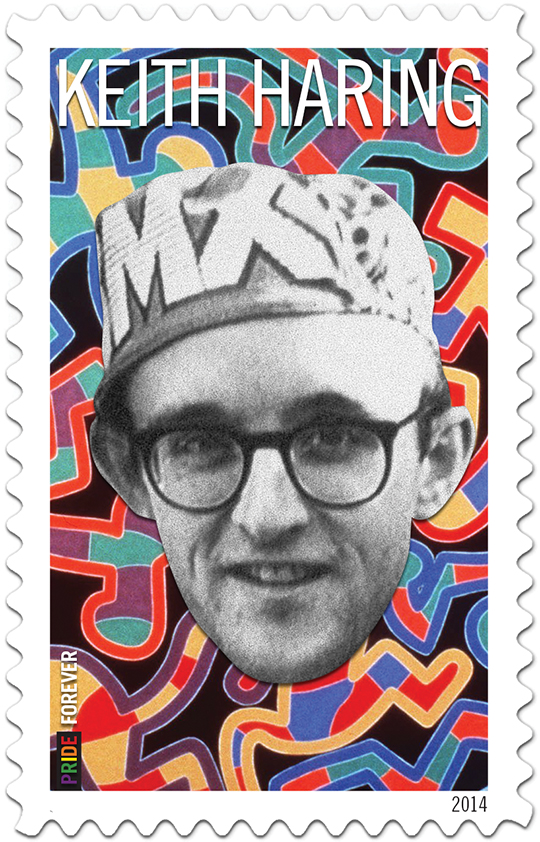
On May 22, the US Postal Service released the groundbreaking Harvey Milk stamp. Earlier this month we asked our readers, “Which US queer icon should next appear on a postage stamp?” We received a flood of answers, and while we have our own dream mail models — Sylvia Rivera, Barbara Gittings, Jose “Empress I” Sarria, Thom Gunn, Vicki Marlane — we chose the most popular readers’ picks for a little “Forever” fantasy fulfillment. (Maybe some of these won’t end up as fantasies after all!)

ID, please

0

QUEER ISSUE “One night my wife and I were having a conversation with our friend from Brazil about the bear community, and she had no idea what we were talking about. She said there are no words for identities like bears, cubs, or otters in Brazil — and I realized that the queer community has all of these amazing identities that don’t fall within the traditional LGBT umbrella. I got the idea to photograph my community and share with the world who they are and how they identify. I want to destroy the traditional understanding of what LGBT looks like. The Bay Area is a kick ass place to do just that.”

Since Sarah Deragon launched the Identity Project (www.identityprojectsf.com) in January of this year — using funds she raised on IndieGoGo — she’s captured dozens of community members in vibrant, sharply focused black-and-white protraits. Each portrait is labeled with an “identity,” expressed in the the subject’s own terms. It’s a heady mix of the familiar and the unique, containing lovely twists like “Three Spirit,” “Sober Celibate Daddy-Father Punk,” and “Xicanita y Cubanita.”

A portraitist by trade (www.portraitstothepeople.com), Deragon will be taking the Identity Project on the road this summer to Portland, Chicago, Columbus, New York, Austin — prospective participants can apply at the Identity Project site.

“I am totally inspired by the ways in which folks choose to identify and how they engage with and take care of their communities,” Deragon says. “I am out in my photography business and that means the world to me. I can be my full self in the Bay Area and I know how lucky I am to say that. It is pretty amazing that a portrait photography business can support two people in San Francisco with the rents as crazy as they are.”

As a self-identified queer femme, Deragon says her own community plays a crucial role. “Most of all, I want to give a shout out to the femme community because they have everything to do with the person that I am today!”


The Guardian Hot Pink List 2014

0

Every year, we single out members of the LGBT community for special appreciation — activists, performers, artists, or just plain cool peeps who rocked out socks off.

CHECK OUT OUR 2014 HOT PINK LIST HERE.

Pride on fire!

0

 There is way too much to do this year, as always. Don’t be scared! Dive right into the party and performance bounty that is Pride.

CLICK HERE TO SEE OUR FULL PRIDE GUIDE.

On the hoof

0

culture@sfbg.com

THE WEEKNIGHTER Roughly a decade ago a guy named Ken came into the restaurant I was working at in North Beach. He was new to SF so I convinced him to buy my zine Broke-Ass Stuart’s Guide to Living Cheaply in San Francisco. Thinking it was a good idea, he tried to drink at every bar in the zine in a single night. That was, in fact, a terrible idea and he ended up blacking out and getting kicked out of a few of them. But what he woke up with the next day, besides a horrific hangover, was a brilliant idea: the Broke-Ass Stuart Pub Crawl. And it was through this act of genius that Ken and I became good friends.

The idea was simple; get a big vehicle, fill it with lots of rowdy, drunk people, and cruise around SF descending on bars like a Mongol horde. Ken and his peeps worked at the corporate offices of multibillion dollar companies so they could afford one of those boozy trollies that you see around. Considering no one I knew had any money, I rented a big yellow school bus and filled it with my fellow broke folk, then the trolley and the bus caravanned around town causing mayhem.

As you can tell already, Ken is a man of vision and he said to me at one of our drunken stops, “There’s something I need to do. You know The Black Horse London Pub (1514 Union, SF. 415-928-2414)? It’s the smallest bar in San Francisco. I want to break the record for how many people have fit in there at one time. This is important shit, man.” I could tell Ken was serious, but there was no way both the bus people and the trolley people could all fit into the Black Horse. We decided it was best if the trolley people did Ken’s mission from god by themselves. Afterwards they would meet us at the next stop.

The Black Horse London Pub really is the smallest bar in San Francisco. It’s only 136 square feet, so all it has room for is seven seats, a little bit of standing room, a bar, and a bathtub full of beer. In fact, all it serves is beer. It also has “ten commandments” that include things like women having priority over the seating, kisses being the only thing allowed to be thrown in the bar, and not using your phone. It’s a good place for a party of two — and a terrible place for a party trolley.

“We did it!” Ken told me as he met us at the next bar, “We broke the record!” Honestly, I don’t know if there even was a record before that night, but there certainly was now. Ken was beaming and I was proud of him. He set out to achieve something and he accomplished it with flying colors. Fucking tenacity…or at least, fucking booznacity.

Since then we’ve done the pub crawl six times and Ken has even managed to beat his previous record. Of course nobody is ever sober enough to remember what the record is. Maybe I’ll pop into The Black Horse, ask the owner James if he knows the record, and tell him I’m thinking about planning another pub crawl soon. Hopefully he won’t make an 11th commandment forbidding them.

Stuart Schuffman aka Broke-Ass Stuart is a travel writer, poet, and TV host. You can find his online shenanigans at www.brokeassstuart.com


This Week’s Picks: June 25 – July 1, 2014

0

WEDNESDAY 25


‘Football Under Cover’

Unofficial festivities for World Cup fans whose allegiances lie with Die Mannschaft (rather than with The Yanks) begin the night before the Germany-USA match. Don’t expect the Goethe-Institut San Francisco’s screening of 2008’s Football Under Cover to include any headbutts directed toward German athletes. The documentary follows the first match between the Iranian women’s soccer team and a German women’s club team. In spite of cultural differences, the two teams are united by a universal love for soccer — or in that part of the world, football. In that mindset, it doesn’t matter which team wins Thursday’s match&ldots;right? Thomas Müller will be noticeably absent tonight to convince you otherwise. (Amy Char)

6:30 pm, $5

Goethe-Institut San Francisco

530 Bush, SF

(415) 263-8760

www.goethe.de


‘Yours For Eternity’ with Damien Echols and Lorri Davis

In 1996, Lorri Davis attended a early screening of Paradise Lost, the first in what would become a trilogy of documentaries about the West Memphis Three. Haunted by the film, she dashed off a letter to Damien Echols, who’d been sentenced to death for a brutal crime all evidence suggested he did not commit. They soon became passionate pen pals, and she left her successful career in NYC to devote herself to proving his innocence. Echols penned best-selling memoir Life After Death after the WM3 were released in 2011; now comes the intimate Yours For Eternity, a collection of missives Davis and Echols exchanged over 16 years. The WM3 tale is well-known, but this angle is not, and it makes for one of the most unusual and genuine love stories you’ll ever read. (Cheryl Eddy)

6pm, free

Book Passage

1 Ferry Bldg, SF

www.bookpassage.com 


Also Thu/26, 7pm, free

Copperfield’s Books

850 Fourth St, San Rafael

www.copperfieldsbooks.com


Zvuloon Dub System

Despite hailing from Tel Aviv rather than Kingston, Zvuloon Dub System is committed to the sound of classic roots reggae. The band’s two albums, 2012’s Freedom Time and this year’s Anbessa Dub, eschew the tight production sheen of contemporary reggae artists like Rebelution in favor of a spacious sound evoking the classic soundboard wizardry of Lee “Scratch” Perry and King Tubby. Yet Zvuloon is hardly conservative. Anbessa Dub finds the group collaborating with Ethiopian-Jewish artists, wrapping the sounds of modern Ethiopian music in a dense cloak of dub. Though some of the sounds on Anbessa Dub might sound alien to Western ears —particularly set against the more familiar sounds of reggae — the melange of styles and sounds rapidly starts to make a whole lot of sense. (Daniel Bromfield)

9pm, $15

Brick & Mortar

1710 Mission, SF

(415) 800-8782

www.brickandmortarmusic.com


THURSDAY 26


Kit Hinrichs

Five years removed from the founding of his independent graphic design outlet, former Pentagram partner Kit Hinrichs is still going strong. His recent work includes crafting new brand identities and aesthetics for the University of San Francisco, the Golden Gate Bridge’s 75th anniversary, and the Walt Disney Family Museum. Add that to visual consultancy work with the San Francisco Zoo, the California Academy of Sciences, and a bevy of other local institutions, and one begins to understand the extensive cultural influence that Hinrichs wields in the city. He takes to the stage of the Contemporary Jewish Museum to discuss the legacy of Paul Rand, the late Modernist designer responsible for the ABC, IBM, and UPS logos. Hinrich’s lecture, which is part of San Francisco Design Week, will focus on Rand’s uncanny ability to adapt to trends over the course of his half-century career. (David Kurlander)

6:30pm, $10

Contemporary Jewish Museum

736 Mission, SF

(415) 655-7881

www.thecjm.org


FRIDAY 27


Daria Kaufman farewell show

When she graduated from Mills in 2008, Daria Kaufman decided to stick around. The Bay Area seemed a good place for the kind of choreography she had in mind — interdisciplinary, flexibly structured, collaborative, site-specific. Now she is going to another, reportedly hot city for experimental dance on the western edge of another continent, Lisbon. The upcoming concert is summing up and looking forward. The reprise of Product examines the type of job that used to be routinely offered to women grads: marketing assistant. (The other was editorial assistant). She is also taking with her two world premieres, a solo for herself, Restless Myth, and an ensemble piece, In Her Tower, for longtime collaborators and colleagues Bianca Brzezinski, Rebecca Chun, Aura Fischbeck, and Karla Quintero. (Rita Felciano)

Also June 28, both 8pm, $20

Joe Goode Annex

401 Alabama, SF

www.inhertower.brownpapertickets.com


‘What Stays’

Home is where the art is in this site-specific dance-theater piece presented by Right Brain Performancelab and Dance Up-Close/East Bay — a final iteration of Right Brain Performancelab’s What Stays, which explores the subjects of home and the passage of time in a literal and metaphorical treatment that has the audience moving about Berkeley’s Shawl-Anderson Dance Center (once a craftsman house, now a series of spacious studios). Performers include Right Brain’s John Baumann and Jennifer Gwirtz along with Lisa Claybaugh, Laura Marsh, and Jennifer Minore. David Samas accompanies on instruments of his own invention, performing original compositions by Dave Rodgers. (Robert Avila)

Also June 28, both at 8pm, and June 29, 5pm, $20-25

Shawl-Anderson Dance Center

2704 Alcatraz at College, Berk.

www.whatstays.brownpapertickets.com


SATURDAY 28


No Happy Endings

Even without the guarantee of any happy endings, Granny Cart Gangstas’ one-night-only comedy show promises to deliver. Feeling uncertain? The “granny cart” will steer you in the right direction. In fact, the members of this women-of-color comedy troupe have even reclaimed the very notion of strolling in San Francisco’s streets with one of those recognizable carts. It’s commendable —”gangsta,” even — in their eyes. The group will also wheel in other stereotypes, such as glorified consumerism and sexist media depictions, to satirize during tonight’s show, promising a night full of laughs, regardless of your gender. (Amy Char)

8pm, $15

Little Boxes Theater

1661 Tennessee, SF

(415) 603-0061

www.littleboxestheater.wordpress.com


Dave and Phil Alvin

Hailing from the working class town of Downey, California, brothers Dave and Phil Alvin grew up absorbing a host of varied musical influences, among them old-school blues. Forming scorching roots-rockers extraordinaire The Blasters in 1979, the siblings eventually went their separate ways when Dave left the band in 1986 — until now, that is. Following a health scare for Phil two years ago, the duo has gotten back together and returned to one of their first musical loves, paying tribute to bluesman Big Bill Broonzy on their excellent new LP, the aptly titled Common Ground (Yep Roc). This is a family reunion you won’t want to miss. (Sean McCourt)

8pm, $22

Great American Music Hall

859 O’Farrell, SF

(415) 885-0750

www.slimspresents.com

The British Invasion

Dust off your best mod outfit and head over to this Inner Richmond haunt for The British Invasion, a night of tunes and dance from Anglophilic local bands. Topping the bill is Chick Jagger, an energetic, female-fronted Rolling Stones tribute band. Known for an oeuvre-spanning set that includes tracks as disparate as “It’s All Over Now” and “Beast of Burden” — not to mention a delightfully gimmicky “Moves Like Jagger”), the group’s Stones scholarship and appreciation is palpable. Also performing are The Landbirds, who are first and foremost a Beatles cover group but may also offer hits from The Kinks, the Who, and the Yardbirds (from whom they take their name). Dancer Rasa Vitalia offers a choreographed set of additional upbeat British classics. The nostalgia and pastiche will be flowing along with the drinks late into the evening. (David Kurlander)

8:30pm, $10

Neck of the Woods

406 Clement, SF

(415) 857-2725


www.neckofthewoodssf.com


SUNDAY 29

Roxie Kids

By now, even childless people are sick of Frozen and every song that filled last year’s Disney sensation. Take a break from Elsa and company and introduce the kids to Papa Panda and his wee son, stars of Panda! Go, Panda!, an early entry in Hayao Miyazaki’s filmography (he wrote the 1972 film, which came out over 10 years before Studio Ghibli was founded). This gentle adventure — about a young girl who befriends the roly-poly zoo escapees — kicks off the Roxie’s “Reel Kids” Japanese animation summer series, a co-presentation with CAAM. Future entries include Miyazaki’s directorial debut, The Castle of Cagliostro (1979), in July; and four episodes of Osamu Tezuka’s classic manga series Astro Boy in August. (Eddy)

Also July 27 and Aug 24

2pm, free for kids under 12 (adults, $7.50)

Roxie Theater

3117 16th St, SF

www.roxie.com


Sharon Van Etten

Less than a month removed from the release of her acclaimed fourth album Are We There, Sharon Van Etten is already on a summer-long world tour. The new album, on which she is also the lead producer, sounds remarkably live — extended jams and minimal overdubs make the songs feel kinetic and ready for the stage. The Brooklyn-based folk-rocker sticks mostly with her favorite subject, the torture and confusion of love and relationships, but couples her angst with hilarious and confrontational lyrics like “I washed your dishes, then I shit in your bathroom.” Van Etten is looking increasingly consistent and prolific, as the shockwaves from her gorgeous and hyped 2012 album Tramp had barely settled before talk of Are We There began. Add constant touring, including a summer 2013 stint with Nick Cave and the Bad Seeds, and Van Etten begins to look almost supernatural in her output. (Kurlander)

8pm, $20

Independent

628 Divisadero, SF

(415) 771-1421

www.theindependentsf.com


MONDAY 30


Future

One of modern hip-hop’s greatest eccentrics, Future takes the Auto-Tuned rapper-turned-singer template established by T-Pain and Lil Wayne in the aughts and runs wild with it. While those artists use the oft-derided vocal software to make their voices slippery and smooth, Future wails, growls, and shrieks maniacally, leaving the Auto-Tune to bubble up over his voice like a pie crust. By all logic, such an unhinged artist should be an underground curiosity. But he’s a rising star, with names as prestigious as Pharrell, Kanye, and Andre 3000 gracing his new album Honest. Even if you still blast “Death of Auto-Tune” in your car every day, there’s no denying Future is — and will likely continue to be — one of the most interesting figures in contemporary hip-hop. (Bromfield)

8pm, $30

Regency Ballroom

1300 Van Ness, SF

(415) 673-5716

www.theregencyballroom.com


The Guardian listings deadline is two weeks prior to our Wednesday publication date. To submit an item for consideration, please include the title of the event, a brief description of the event, date and time, venue name, street address (listing cross streets only isn’t sufficient), city, telephone number readers can call for more information, telephone number for media, and admission costs. Send information to Listings, the Guardian, 225 Bush, 17th Flr., SF, CA 94105; or e-mail (paste press release into e-mail body — no attachments, please) to listings@sfbg.com. Digital photos may be submitted in jpeg format; the image must be at least 240 dpi and four inches by six inches in size. We regret we cannot accept listings over the phone.


Rep Clock: June 25 – July 1, 2014

0

Schedules are for Wed/25-Tue/1 except where noted. Director and year are given when available. Double and triple features marked with a •. All times pm unless otherwise specified.

ANSWER COALITION 2969 Mission, SF; www.answersf.org. $5-10 donation. Two Spirits (Nibley, 2009), Wed, 7.

ARTISTS’ TELEVISION ACCESS 992 Valencia, SF; www.atasite.org. $7-10. “Rotterdam VHS Festival,” short videos, Thu, 8. “Mission Eye and Ear #5,” new music/sound and film/video collaborations by Dominique Leone and Brenda Contreras, Kyle Bruckmann and John Slattery, and Gino Robair and Bryan Boyce, Fri, 8.

BERKELEY FELLOWSHIP OF UNITARIAN UNIVERSALISTS 1924 Bonita, Berk; www.bfuu.org. $10 suggested donation. Born This Way (Tullmann and Kadlec, 2012), Sat, 7:30.

CASTRO 429 Castro, SF; (415) 621-6120, www.castrotheatre.com. $8.50-11. Frameline 38: SF International LGBT Film Festival, June 19-29. For tickets and schedule, visit www.frameline.org.

COURTHOUSE SQUARE 2200 Broadway, Redwood City; www.redwoodcity.org. Free. Frozen (Buck and Lee, 2013), Thu, 8:45. Presented sing-along style.

JACK LONDON FERRY LAWN Clay and Water, Oakl; www.jacklondonsquare.com. Free. “Waterfront Flicks:” The Secret Life of Walter Mitty, Thu, sundown.

PACIFIC FILM ARCHIVE 2575 Bancroft, Berk; (510) 642-5249, bampfa.berkeley.edu. $5.50-9.50. “Martin Scorsese Presents Masterpieces of Polish Cinema:” Mother Joan of the Angels (Kawalerowicz, 1961), Wed, 7; Innocent Sorcerers (Wajda, 1960), Fri, 7. “Kenji Mizoguchi: A Cinema of Totality:” The Story of the Last Chrysanthemums (1939), Thu, 7; The 47 Ronin, Parts I and II (1941/42), Sat, 6. “Rude Awakening: American Comedy, 1990-2010:” Waiting for Guffman (Guest, 1996), Fri, 8:50; Groundhog Day (Ramis, 1993), Sun, 6. “Picture This: Classic Children’s Books on Film:” “Take Aways,” short films, Sun, 3:30.

ROXIE 3117 and 3125 16th St, SF; (415) 863-1087, www.roxie.com. $6.50-11. Frameline 38: SF International LGBT Film Festival, Wed-Sun. For tickets and schedule, visit www.frameline.org. Ping Pong Summer (Tully, 2014), Wed-Thu, 6:30, 8:20. Breathing Earth: Susumu Shingu’s Dream (Riedelsheimer, 2013), Fri-Sat, 6, 8; June 29-July 3, 7, 9. “Roxie Kids:” Panda! Go, Panda! (Takahata, 1972), Sun, 2.

SMITH RAFAEL FILM CENTER 1118 Fourth St, San Rafael; (415) 454-1222, www.cafilm.org. $6.50-$10.75. Breathing Earth: Susumu Shingu’s Dream (Riedelsheimer, 2013), June 27-July 3, call for times.

YERBA BUENA CENTER FOR THE ARTS 701 Mission, SF; www.ybca.org. $8-10. Thy Womb (Mendoza, 2012), Thu and Sat, 7:30; Sun, 2. *


Fuck Buttons on their wildly visual live show, the writing process, and bringing “fuck” to the world stage

0

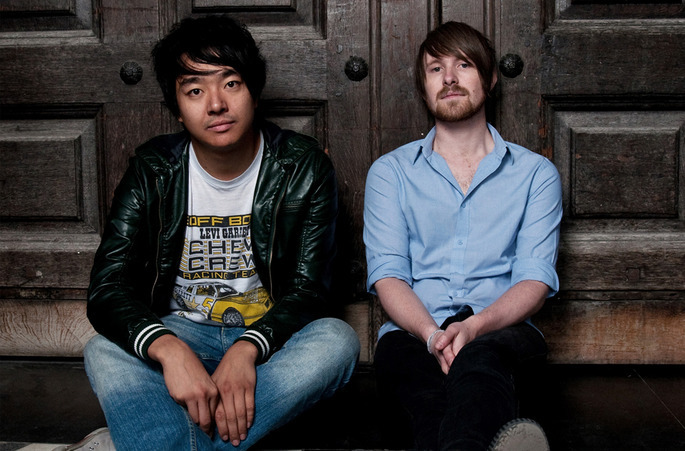
“I think I’ve heard of them before,” is the kind of spineless response you’ll never hear if you ask someone about Fuck Buttons.  If you’ve heard them, you’ll most definitely will remember.  With music that elicits feelings of wonder and rebellion, intense live shows, and of course an, err — catchy name, Benjamin John Power and Andrew Hung leave a lasting impression.

If you didn’t catch them when they played at The Independent last October, chances are you heard Fuck Buttons in 2012 when the band received arguably the most widespread kind of exposure — their tracks “Surf Solar” and “Olympians” were featured separately during the London Summer Olympics opening ceremony. Their self-produced third effort, Soft Focus, has earned the band a multitude of accolades, including an 8.7 and Best New Music honor from persnickety Pitchfork, as well as the #3 Dance Album Of The Year 2013 from Rolling Stone.

I got the opportunity to chat with Fuck Button Benjamin John Power about the process behind the band’s unique live performance set-up, as well as the AV show they’re bringing to the US for the first time.  The English experimental-electro duo are currently in the middle of a monthlong tour, coming back to The Independent this Fri/27.

San Francisco Bay Guardian So you just played North By Northeast. Taking some time off on the West Coast right now?

Benjamin John Power Yeah, that’s right.  Andy had to go home to a wedding so there is a slight break in the tour, but it’s cool.

SFBG I’m sure the time off to before the shows next week is welcomed.

BJP I get a week off in LA and my wife is coming out to join me for the time off. It’s nice to take a breather.

SFBG NXNE has such a diverse lineup, between all the acts and comedians.

BJP NXNE was great. Quick turnaround, but a really amazing crowd. I didn’t get a chance to see anyone else on the lineup, but I wish I could have seen Tim Hecker.

SFBG It’s funny you mention him. You’re familiar with Steve Hauschildt, yes?

BJP Yep, from Emeralds? I’m a fan.

SFBG I liken his and Tim Hecker’s music to your solo project, Blanck Mass. They form a genre I refer to as “lunar planning music.”

BJP Oh yeah? That’s a nice term.

SFBG I mean that in the best way possible.

BJP It is welcomed — fear not.

SFBG You recently played a show with Mount Kimbie that involved some some special visuals.  Can the stateside crowd expect anything like that?

BJP Yes, 100 percent. We have brought our full AV show with us this time — for the first time in the USA — so that’s totally in the cards. We wanted to make sure that the visual aspect wasn’t just a bunch of video loops, as a separate focus.  The visuals are interactive and in real time, so it’s a more interesting show and it’s working out really well.

SFBG Sounds great. I saw you last year at Primavera Sound, and your music translates really well on stage.

BJP Thank you. The live show and the recorded output go hand in hand, so when we write, we write in exactly the same way that we do when we play live — across the table from each other, with all the gadgets in front of us — so it translates easily into the live performance.

SFBG You also produced the last album (Soft Focus) yourselves — have other people been contacting you regarding production work?

BJP Yeah, a few people have.  We like to keep ourselves busy, and I think from working on the last record primarily by ourselves we have picked up some pretty helpful production tricks.

SFBG Last question — do you feel the word “fuck” is losing its potency?

BJP I don’t really think too much about the word fuck losing its potency. If anything, it probably makes my life easier, haha.

SFBG I can see that.  Being featured in the Olympics, you guys are like ambassadors of “fuck.”  Bringing “fuck” to the world stage.

BJP Yeah! Well, in those instances, everybody just seems to go with “F Buttons.” It’s really fine. What’s in a name anyway?

FUCK BUTTONS
With Total Life
6/27, 9pm, $20
The Independent
628 Divisadero, SF
www.theindependentsf.com