Arts & Culture

Arts & Culture

On the Cheap Listings

0

Submit items for the listings at listings@sfbg.com. For further information on how to submit items for the listings, see Picks.

THURSDAY 8

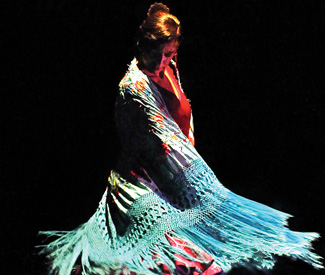
Drag Queens on Ice Union Square Ice Rink, 333 Post, SF. www.unionsquareicerink.com. 8-9:30 p.m., $10. Mutha Chucka, Anna Conda, Lil’ Hot Mess and other dazzlingly-named lovelies gleefully speed and twirl through the Union Square ice skater crowd.

Archie Green: the Making of a Working-Class Hero talk Green Arcade, 1680 Market, SF. 7 p.m., free. Historian Sean Burns captured foundational labor activist Archie Green’s story over years of interviews and conversations. Now he shares how Green became a tireless and radical advocate for the preservation of American folklore.


FRIDAY 9

Winter Wunderkammer holiday art sale The Lab, 2948 16th St., SF. www.thelab.org. 6-11 p.m. Also Sat/10, 11 a.m.-4 p.m., free. For the 15th year, the Lab hosts a jewel of a holiday sale where it’s possible to spend anything from one buckaroo to 50. Up for grabs: small-format work by local artists.

OCCUPY! screening Artists’ Television Access, 992 Valencia, SF. www.atasite.org. 6:30 p.m., donation requested. ATA hosts a multimedia collage of the Occupy movement. Poetry, videos, history, aerial maps, and performance art relating to the massive protest are on the docket; all donations directly benefit Occupy San Francisco.

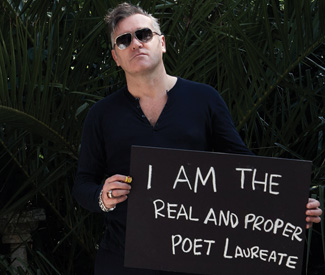
Luke Warm Water and Jim Barnard poetry reading Nefeli Caffe, 1854 Euclid, Berk. (510) 841-6374. 7 p.m., free. Stirring poets Luke Warm Water (a virtuoso of spoken word hailing from Rapid City, South Dakota) and Jim Barnard (cofounder of Berkeley’s Poetry Express readings) join forces for a colorful finger-snapper.


SATURDAY 10

End of Semester show Mission Cultural Center for Latino Arts, 2868 Mission, SF. www.missionculturalcenter.org. 2-5 p.m., $5. Mission Cultural Center showcases the multitudinous and fine community talents it has worked to cultivate this semester, from Afro-Peruvian dancers to Samba Jam Brazilian percussion artists.

Writers with Drinks Make Out Room, 3225 22nd St., SF. www.makeoutroom.com. 7:30-9:30 p.m., $5-10 sliding scale. Gail Carriger, Sean Baby, Mike Jung, and Diana Salier have between them a prestigious prize for young adult lit, a balls-out comic strip, MTV appearances, and a new poetry chapbook on heartache and Wikipedia. The Center for Sex and Culture reaps the proceeds from this all-star reading.

Vagabond Indie Craft Fair Urban Bazaar, 1371 9th Ave., SF. www.vagabondsf.wordpress.com. 12:30-6 p.m., free. Independent artisans and the SF Etsy street team unite amongst Urban Bazaar’s backyard succulents for a small-scale, high-quality local craft fair.

1901 Maritime Christmas Hyde Street Pier, SF. www.nps.gov/safr. 6-9 p.m., free with reservation to (415) 447-5000. If the idea of riding the waves circa 1900 brings to mind scurvy and mishaps with icebergs, you’ve got it wrong. The National Park Service trots out costumed actors and historic ships for a warm, watery Christmas performance by lamplight.

East Bay Alternative Press Book Fair Berkeley City College, 2050 Center, Berk. www.berkeleycitycollege.edu. 10 a.m.-4 p.m., free. Local independent writers, publishers, zinesters and craftspeople flood downtown Berkeley to showcase boundlessly-inventive bookworks.


SUNDAY 11

Christine Schmidt book signing Museum Store, SFMOMA, 151 Third St., SF. www.sfmoma.org. 2 p.m., free. Christine Schmidt, the artist behind Yellow Owl Workshop and those ubiquitous, beautifully-printed California poppy postcard sets, demonstrates a project and signs her recent how-to printmaking book meant for, she says, those with “low budgets and high ambition.”


MONDAY 12

Occupy Phoenix Books readings Phoenix Books, 3957 24th St., SF. www.dogearedbooks.com. 6:30 p.m., free. Young ‘uns from 826 Valencia join Denise Sullivan, author of Keep on Pushing: Black Power Music from Blues to Hip Hop for a night of Occupy-oriented readings. Accompanying the shindig is local Americana act McCabe and Mrs. Miller.

You grow, girl?

0

caitlin@sfbg.com

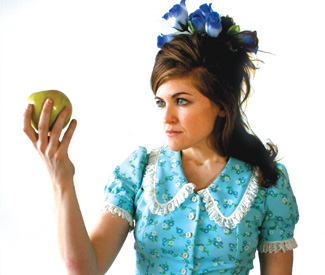
HERBWISE The average celebrity autobiography follows an arc of learning and growing. The earnestly-made mistake — whether in the form of childhood shenanigan or adult infidelity — and then the ensuing redemption. But rarely do book-sized treatises emerge from the decision to leave the celebrity fold for the greener fields of bud agriculture. Leave it to the girl from the Blair Witch Project to produce that one.

You know Heather Donahue’s snotface. Apparently too well, because as she writes in her new memoir Grow Girl: Once Upon a Time She Made The Blair Witch Project, Then She Went to Pot. Literally (Gotham Books, 286pp., paper, $26) — score nothing for succinct subtitles — too many people took the movie’s faux-reality premise seriously. Casting agents, it seems, couldn’t shake the feeling that this professional actress was merely a kid caught with a Camcorder when a malignant forest spirit got a bee in its bonnet.

But then she met a guy from Nuggettown (an actual place, renamed for anonymity). What ensued was a romance that left Donahue the proud renter of a secluded house in the wood and enough pot-growing equipment that she had to grow to stay afloat financially.

Such a pat story! Throughout Donahue’s at times overly flowery, but on the whole eminently readable narrative, the growth of her fellow (capital G) “Girls” mirrors her struggle against the confines of society — the larger, non-weed growing one but also more interestingly, the grower (capital C) Community of Nuggettown.

For not all is hunky-dory in the land of impressive tri-cone crystal formation. Women in Nuggettown are relegated to supporting roles — the kept “pot wife,” the “grow girl” that is often bossed about by her XY-chromosomed peers. On the cover of the book Donahue is clutching the top of a healthy bud plant to her naked breasts, a stereotypical male fantasy if there ever was one — but it’s ultimately all about empowerment. She blooms from a shattered ex-actress to a fuller human being, all under the Mondo Reflector she installs herself on the grow room ceiling.

One approach the medical marijuana movement might benefit from is humanizing its growers. Imagine a commercial like those for Florida oranges or California cheeses. A proud farmer fluffs up Mary Jane’s leafy bustle while a down-home voiceover plays in the background (“High CBD levels, if you want ’em. Donchaknow.”) Yes, your friendly medicine agriculturist is a person too, says Grow Girl. Possibly a person that reinforces gender stereotypes through a strict hippie code of conduct slash double standard, but a person with debts and passions and doubts nonetheless.

Donahue humanizes the cannabis industry. Some farmers, she writes, are making enough money to keep Nuggettown’s kayak store in business, but any conspicuous consumption masks the fact that it’s not really advisable for smalltown weed people to be saving their ducats in your run-of-the-mill local credit union. These are moms-and-pops, guys!

The book is slightly dated. The storyline ends in Nuggettown’s hope for a persecution-free Barack Obama presidency (Obama’s very promises rendered all the more poignant for today’s reader, informed of the President’s about-face on the issue of raiding state-legal growing facilities). For a brief moment, it seemed like cannabis would slough off the shackles of social stigma and claim to an honored position in our medical establishment.

That didn’t happen, of course — the feds raided Mendocino County’s Northstone Organics in October of this year, for chrissakes. But Mary Jane, still she rises, as does Donahue by book’s end, after agricultural disasters, horrendous break-ups, and shattered expectations.

So, Grow Girl is great if you like your marijuana stories imbued with a general sense of struggle. (And what other kind, really, exists these days?)

Silence is golden

0

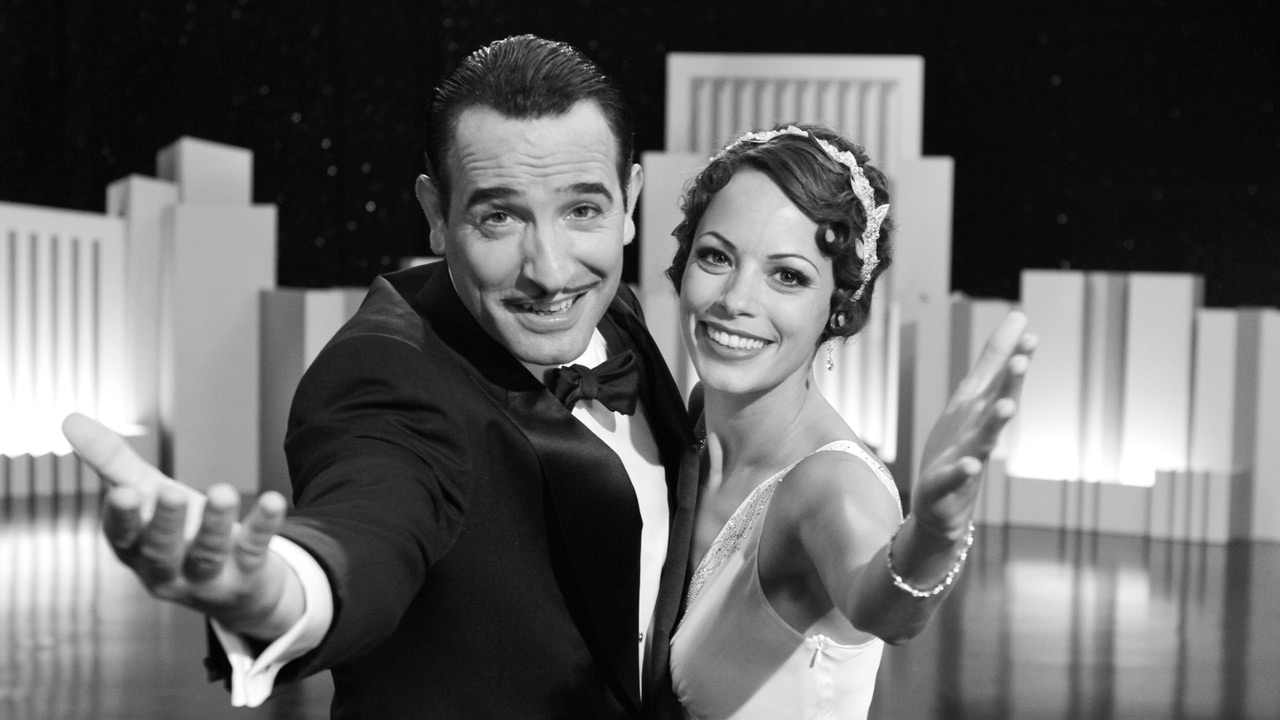
FILM With the charisma-oozing agility of Douglas Fairbanks swashbuckling his way past opponents and the supreme confidence of Rudolph Valentino leaning, mid-swoon, into a maiden, French director-writer Michel Hazanavicius hits a sweet spot, or beauty mark of sorts, with his radiant new film The Artist.

In a feat worthy of Fairbanks or Errol Flynn, Hazanavicius juggles a marvelously layered love story between a man and a woman, tensions between the silents and the talkies, and a movie buff’s appreciation of the power of film — embodied in particular by early Hollywood’s union of European artistry and American commerce. Dashing silent film star George Valentin (Jean Dujardin, who channels Fairbanks, Flynn, and William Powell — and won this year’s Cannes best actor prize) is at the height of his career, adorable Jack Russell by his side, until the talkies threaten to relegate him to yesterday’s news. The talent nurtured in the thick of the studio system yearns for real power, telling the newspapers, “I’m not a puppet anymore — I’m an artist,” and finances and directs his own melodrama, while his youthful protégé Peppy Miller (Bérénice Béjo) becomes a yakky flapper age’s new It Girl.

Both a crowd-pleasing entertainment and a loving précis on early film history à la Martin Scorsese’s Hugo, The Artist never checks its brains at the door, remaining self-aware of its own conceit and its forebears, yet unashamed to touch the audience, without an ounce of cynicism. And if you blink, you might miss the allusion to The Artist‘s backstory: in the opening film-within-a-film, Valentin dons a mask and a top hat in a swift tip of the topper to iconic French villain-antihero Fantômas, which provided the initial inspiration for producer Thomas Langmann to approach Hazanavicius.

Langmann wanted the director to do a remake of the 1960s Fantômas movies starring Jean Marais. “I said, ‘No, I can’t do that. It doesn’t interest me,'” recalls the director on a recent visit to San Francisco. Langmann, however, insisted on a movie with the director, who had made the Bond-parody OSS 117 series with Dujardin. “So I said, OK, I’ll do your Fantômas — not your high-tech one, but the 1905 one, the real one, and I’ll do it in black-and-white, and silent.”

In the end, Langmann gave the go-ahead for a silent movie untethered to the Fantômas franchise — “I knew when we met that he was crazy enough to follow me and to support me,” quips Hazanavicius — and with the Valentin character on his mind and two scripts on hand, one for The Artist as it stands and one for the adventure comedy that materializes as the initial film-within-a-film, the director made the silent he had dreamed of, shooting at Hollywood locales such as the Paramount Studio and Mary Pickford’s mansion and utilizing far-from-analog technology when needed (for example, the Hollywood sign is transformed into its original “Hollywoodland” state digitally, and the film’s luminous black-and-white was rendered using 500 ASA color film to get a grainier look).

One of the keys to casting the period spell was keeping everything simple, rather than highlighting obvious tropes. “I put a lot of things out of the frame, always,” Hazanavicius explains, “because when there are too many things, it’s just too much. You show the audience, ‘Look it’s the ’20s! It’s so ’20s! Did you not know we were in the ’20s?’ Sometimes you have to just show a white wall, and that’s enough. The audience is there to believe, so the more you let them believe, the better it is.”

Likewise the lightest touch was required with the actors, who worried about replicating the silent era’s performances and were tasked with conveying everything with the briefest flicker of emotion dancing across the face, or body language (which Béjo memorably plays with in a scene when she mimes an embrace with her would-be heartthrob’s jacket). “I know it was stressful for the actors in the beginning because they wanted to know if I asked for something very special, but I didn’t,” says the director. “They don’t play silent, really — they play ’20s, and I think it’s different. We think [silent film players] overact not because the movies are silent but because the codes of the ’20s are very different from the codes of acting today.

“So what I said to [Dujardin] was very simple: ‘Don’t be upset with the silent thing,'” Hazanavicius continues. “‘You don’t have anything special to do. You have to do what you usually do — you come with your face, your body, your smile, your charm, and you embody the character, and you respect the situation, and everything will be fine.'” Also fueling the feel was the fact that The Artist was shot at 22 frames a second, rather than the standard 24. “It gave us a very small acceleration in the gesture so the way they move is a little bit too fast, so that gives a flavor of the ’20s,” adds the filmmaker.

For Hazanavicius, the draw to make a silent was multipronged. “I wanted to share my experience as an audience member because I love the way the story is told to you in a silent movie,” he says. “There’s a lot of room for you. You can make your own movie. You participate in the storytelling process. I really like it because you’re very close to the story — it’s your voices, your dialogue, your sound design — you’re part of the process, so I really love that.”

Another enticement was the formal challenge of not only assembling the narrative about early film stars, which incidentally echoes that of John Gilbert and Greta Garbo, but shooting in a silent style, playing with era’s visual codes. To that end, Hazanavicius and leading lady (and romantic partner) Béjo did enormous amounts of research, poring through the period’s films and actors and directors’ biographies. “I hope my future movies will be better thanks to this one,” says the director.

“When I wrote the script, I sent it to the script supervisor, and she said to me, ‘You really want to, I don’t know how to say, show off!'” he remembers. “‘You really want to be remarked [upon].’ I said, ‘Yes!’ I think we all want to be remarked [upon]. I don’t want to make a discreet movie that nobody wants to see.”

Sounds like the words of a real artist.


THE ARTIST opens Fri/2 in San Francisco.

Psychic Dream Astrology

0

Nove. 30-Dec. 6, 2011

Mercury is retrograde! When in doubt, talk it out.

ARIES

March 21-April 19

There’s such a thing as too much forethought. Seek the magical and creative space where the middle ground is not a compromise but instead a moderate expression of where you’re at. Things need to develop, so try and buy some time without overthinking the details as you do.

TAURUS

April 20-May 20

If you let your ego get in the way you’ll embark upon the wrong road, creating more trouble than it’s worth. Take a risk and act in spite of your fears this week. They may be convincing, so this’ll be hard to pull off! Deal with what’s on your plate and don’t add anything more until you do.

GEMINI

May 21-June 21

You are meant to look back on the past three years to see the role that your personal relationships have played in your life, Gemini. Have you been happy with your connections? Is it time for an overhaul? And is the way you have been acting in concert with how you want to be? Assess and assimilate this week.

CANCER

June 22-July 22

You are pushing it, Moon Maid, and you’re setting yourself up for an unnecessary fall. Instead of overdoing things and overwhelming your delicate senses, try enjoying the moment that you’re in for a minute more. Let things settle before you strike out this week.

LEO

July 23-Aug. 22

Love and pleasure can be like fluff in your life or lead towards amazing depth. This week challenge yourself to grow through your passions. This will require that you choose to pursue the things or people that benefit your long-term interests, not just the ones that feel good in the now, Leo.

VIRGO

Aug. 23-Sept. 22

Trust in the developments of your life even if they look scary, Virgo. The universe wants you to relinquish your controlling hand over things without going limp in the pursuit of your goals. Participate without pushing this week as your life hands you circumstances you don’t quite understand yet.

LIBRA

Sept. 23-Oct. 22

Frustration and worry can inhibit you from seeing clearly, Libra. Gestate on your options and opportunities before you make a move, as you are unlikely to be seeing the whole picture this week. Accept whatever your circumstances are before you figure out what should come next.

SCORPIO

Oct. 23-Nov. 21

Your best course of action this week is to parse out what is, versus what feels as your emotions are coloring your response to things. Your feelings are real and super-valid, but not part of the larger shared experience. Address the needs of your heart and your circumstances separately, Scorpio.

SAGITTARIUS

Nov. 22-Dec. 21

Don’t create the very things you are trying to avoid by being a spazzy worrywart, Sagittarius. You need a time out, (remember that you’re supposed to take a minute per year you’re alive!). Calm yourself down so you don’t make a mess of things out of reckless impulse.

CAPRICORN

Dec. 22-Jan. 19

When you have healthy boundaries you will sometimes disappoint people, or come across as selfish to folks who don’t have any themselves. Deepen your relationship to interpersonal responsibility this week, and look beyond the surface of your connections with others.

AQUARIUS

Jan. 20-Feb. 18

In the wise words of Mr. Sammy Davis Jr., “if you’re gonna go away baby, don’t go away mad”. Let go without bitterness, or you’re not really releasing anything, pal. Take responsibility for your choices this week and tend to the needs of your heart by doing what you need, even if it’s not what you want.

PISCES

Feb. 19-March 20

Don’t try to control the outcome of stuff, just your participation in it, okay Pisces? You can affect things without forcing them this week. Don’t be disheartened, though! Live by your highest standards, even if that’s the harder choice as you do what’s right for you, not what you’re “supposed” to do.

Jessica Lanyadoo has been a Psychic Dreamer for 17 years. Check out her website at www.lovelanyadoo.com or contact her for an astrology or intuitive reading at (415) 336-8354 or dreamyastrology@gmail.com

Rep Clock

0

Schedules are for Wed/30-Tues/6 except where noted. Director and year are given when available. Double and triple features are marked with a •. All times p.m. unless otherwise specified.

ARTISTS’ TELEVISION ACCESS 992 Valencia, SF; www.atasite.org. $6-10. “Frequency Structures: Works with Sound and Film,” featuring Paul Clipson and John Davis, Madison Brookshire and Tashi Wada, and John Davis and Ben Bracken, Fri, 8. “Other Cinema:” Films about Muzak by Dale Hoyt and others, Sat, 8:30.

BALBOA 3630 Balboa, SF; www.brownpapertickets.com. $17.50-20. “Opera and Ballet at the Balboa Theatre:” Sleeping Beauty, performed by the Bolshoi Ballet, Sat/3-Sun/4, 10am; Dec 7, 7:30.

CASTRO 429 Castro, SF; (415) 621-6120, www.castrotheatre.com. $7.50-10. The Sound of Music (Wise, 1965), Wed-Sun, 7 (also Sat-Sun, 1). Presented sing-along style; this event, $10-15.

CHRISTOPHER B. SMITH RAFAEL FILM CENTER 1118 Fourth St, San Rafael; (415) 454-1222, www.cafilm.org. $6.75-10.25. “The Films of John Korty:” Alex and the Gypsy (1976), Thurs, 7; Farewell to Manzanar (1976), Sun, 1; Twice Upon a Time (1983), Sun, 7. Seducing Charlie Barker (Glazer, 2010), Fri-Sat, call for times. Eames: The Architect and the Painter (Cohn and Jersey, 2011), Sun, 4:15.

DE ANZA COLLEGE 21250 Stevens Creek, Cupertino; (415) 810-2892. “De Anza Experimental Film Exhibition,” Fri, 7:30.

“OCEAN AVENUE FILM FESTIVAL” 1649 Ocean, SF; artsconn@comcast.net. $5-10. Short films in all genres. Sat, 6-9.

PACIFIC FILM ARCHIVE 2575 Bancroft, Berk; (510) 642-5249, bampfa.berkeley.edu. $5.50-9.50. “Alternative Visions:” “Flotsam and Jetsam: The Spray of History,” films by Lewis Klahr, Wed, 7:30. “Kino-Eye: The Revolutionary Cinema of Dziga Vertov:” The Fall of the Romanov Dynasty (Shub, 1927), Thurs, 7. “Afterimage: The Films of Nicolás Pereda:” Together (2009), Fri, 7; Perpetuum Mobile (2010), Fri, 8:45; Summer of Goliath (2010), Sat, 6:30; All Things Were Now Overtaken By Silence (2010), Sun, 3; Where Are Their Stories? (2007), Sun, 5. “Southern (Dis)comfort: The American South in Cinema:” Baby Doll (Kazan, 1956), Sat, 9.

ROXIE 3117 and 3125 16th St, SF; (415) 863-1087, www.roxie.com. $5-9.75. Sigur Rós: Inni (Morisset, 2011), Wed-Thurs, 7, 8:30. “World AIDS Day:” “Still Around,” short films, Thurs, 7; Sex in an Epidemic (Carlomusto, 2010), Thurs, 8:45. These screenings, $12; a portion of proceeds benefits the UCSF Health Project. House of Boys (Schlim, 2010), Dec 2-8, 7, 9:15 (also Sat/3-Sun/4, 2:30, 4:30). Star Udo Kier in person Fri/2. “Midnites for Maniacs: More Fun Than Games, A Tribute to Greydon Clark:” •Hi-Riders (1978), Fri, 7:30; Joysticks (1983), Fri, 9:20; Wacko (1981), Fri, 11:15. All three films, $12. “An Evening With Amy Sedaris,” Sun, 7:30. This event, a benefit for the Roxie, $100. “Christmas in Acidland! Presented by Johnny Legend:” “Christmas in Acidland (Part One),” Yuletide TV insanity, Mon, 6, 9:15; “Christmas Noir,” classic original TV episodes, Mon, 7:30; “Christmas in Acidland (Part Two),” more “in-Santa-ty” from TV, Tues, 6, 9:30; Christmas in Hell (Cardona, 1959), Tues, 7:15.

SFFS | NEW PEOPLE CINEMA 1746 Post, SF; www.sffs.org. $10-15. The Swell Season (August-Perna, Mirabella-Davis, and Dapkins, 2011), Wed-Thurs, 1, 5, 7, 9. “The Dardy Family Home Movies By Stephen Sondheim By Erin Markey,” Fri/2-Sat/3 and Dec 9-10, 8; Sun/4 and Dec 11, 6. The City Dark (Cheney, 2011), Tues, 3, 5, 7, 9.

YERBA BUENA CENTER FOR THE ARTS 701 Mission, SF; (415) 978-2787, www.ybca.org. $6-10. “From Muppets to Metal: Music Movies:” Chico and Rita (Trueba, Mariscal, and Errando, 2010), Thurs, 7:30; Coleman-Rollins-Kirk-Cage (Fontaine, 1966-68), Sun, 2. San Francisco Cinematheque presents: “Lewis Klahr’s Prolix Satori,” Fri 7:30.

Clark shadows

0

TRASH If you were around in the waning days of drive-ins and urban grindhouses, the heydays of video stores and 1980s late-night cable, or were a Mystery Science Theatre 3000 fan, the name Greydon Clark might ring a faint bell — maybe even a warning bell.

For 25 years Clark was a prolific independent director, writer, producer, and even bit-part actor in the realm of low-budget exploitation movies designed for quick playoff in second-run theaters, graveyard-shift broadcast slots, and on rental shelves. Most were retreads of well-worn genre trends, a couple outright imitations of recent hits; they rarely hit the radar of mainstream critics, let alone awards-giving bodies — not even the Golden Raspberries. Though his last two features were futuristic adventures, Clark himself was relegated to cinema’s past by the turn of the millennium, having “aged out” in a business where an obsession with youth trickles down even to the least prestigious off-camera creative roles.

Now just short of 70, Clark is still around, selling memorabilia on his website, appearing at fan conventions, and the like. This Friday he’ll be at the Roxie for a Midnites for Maniacs tribute triple-bill featuring rare 35mm screenings of features long out of circulation.

First up is 1978’s Hi-Riders, a hybridization of then-current Smokey and the Bandit (1977) knockoffs and the earlier biker-flick vogue that’s one of his most enjoyable films. Frequent Clark collaborator Darby Hinton and busy stunt performer (through 1997’s Titanic) Diane Peterson are the nominal stars of a raucous action cheapie that pits muscle-car aficionados against each other, then against trigger-happy yokels ordered to kill by a vengeful fat cat who proclaims “Animals like that should be exterminated!” Acting pitched at a 10 on the hysteria scale, skinny dipping, and good crashes involving an actual bitchin’ Camaro ensue.

This is followed by Joysticks (1983), a prior Midnites for Maniacs midnight selection that remains a giddy high-lowlight in the short-lived 80s subgenre of movies about videogaming. How can it miss, with Porky’s-style gags, a hero named McDorfus, secondary “punk” villain King Vidiot (played by Napoleon Dynamite’s future Uncle Rico), and a theme song Tipper Gore might have taken exception to (“Jerk it left, jerk it right, shoot it hard, shoot it straight, video to the maaaaaax!!!”)?

Last and quite possibly least is 1982’s Wacko, one of several Airplane!-like slasher spoofs at the time. Its genial flailing about in search of laughs ropes in several of Clark’s favorite falling stars (Joe Don Baker, Stella Stevens, George Kennedy) and one future celebrity (pre-“Dice Man” Andrew Clay, as Fonz-y high school stud Tony Schlongini). If you were 10 years old (or 15 and stoned) in 1982, this was probably the funniest thing ever. So regress already.

But this selection offers just the tip of the native Michigander’s celluloid iceberg. Driving west on a whim in the 1960s, Clark managed to score work as both an actor and scenarist with Z-budget multihyphenate role model Al Adamson, including the incredible Satan’s Sadists (1969) and incredibler Dracula vs. Frankenstein (1971).

Those experiences empowered him to direct, co-write, and act in 1973’s The Bad Bunch (Kiss The Establishment Goodbye was one of several alternative titles), a drama of Vietnam War-era racial tensions that was shot in Watts for less than $15,000. It was clumsily crafted and crudely melodramatic, but serious-minded enough — despite gratuitous boobs and opening song “Honky Mutha Nigga Lover” — to set him on a more determinedly commercial, costs recouping path from then on.

Thus 1976’s Black Shampoo, an outrageous blaxploitation cash-in on Warren Beatty’s heterosexual hairdresser lothario hit, followed quickly by the unforgettably named (if otherwise forgettable) Satan’s Cheerleaders (1977), tentacled-alien-Frisbee-creature horror Without Warning (1980, with a very young David Caruso as one victim), and so forth. They inevitably featured once-hot, now economically-priced Hollywood names of a certain age (Clu Gulager, Jack Palance, Yvonne De Carlo etc.), attractive youngers mostly never to be heard from again, and Clark regulars like actress spouse Jacqueline Cole. (The fact that so many of his actors and crew came back for more suggests that he’s a pleasant guy to work for.)

Some of these movies actually require the MST3K treatment they got (i.e. 1985 Joe Don vs. Mafia shoot ’em up Final Justice) to be watchable. Some, like 1990 psychological thriller Out of Sight, Out of Her Mind or 1980 sci-fi fantasy The Return (a rare upgrade to then-current B-level stars in Cybill Shepard and Jan-Michael Vincent), didn’t get it and aren’t.

But others are inspirationally silly, with enough hints to make it clear that their creator was in on the joke. Probably the most widely seen of his films is acknowledged camp classic The Forbidden Dance, one of two lambada movies released on the same day in 1990. It stars former Miss USA and future Mulholland Drive (2001) enigma Laura Harring as an Amazonian tribal princess who comes to Beverly Hills (accompanied by “witch doctor” Sid Haig) to attract attention to rainforest destruction via the healing power of public ass-grinding. All this and an ozone depletion message make it Clark’s Inconvenient Truth, just as The Bad Bunch was his Crash.

Less socially conscious but equally nuts are Uninvited (1988), in which a yacht full of the expected veteran actors and hot young ‘uns are terrorized by a mutant lab-experiment cat puppet; and Russian Holiday (1992), a daft espionage thriller with Susan Blakely as a tourist haplessly playing Nancy Drew amidst Moscow neck-snappings.

Then there’s 1989’s Skinheads: The Second Coming of Hate. Its hilarious racist, sexist, swastika-emblazoned goon squad makes the mistake of pursuing clean-cut “good” kids into the wilderness lair of survivalist Chuck Connors, who fought in World War II and knows just what to do with a buncha neo-Nazi scum. It’s pretty much the Reefer Madness of Reagan-era fascist punk gang movies (1982’s Class of 1984, 1984’s Savage Streets, etc.) — a category that surely calls for its own Midnites for Maniacs tribute.


“MORE FUN THAN GAMES! A TRIBUTE TO GREYDON CLARK”

Fri/2, triple-feature starts at 7 p.m., $12

Roxie Theater

3117 16th St., SF

(415) 863-1087 www.midnitesformaniacs.com

Astral projections

0

arts@sfbg.com

THEATER A savage and seductive performer with a potent skill set, Erin Markey has been busy these last several years conquering New York’s downtown performance scene. But she’s no stranger to San Francisco. The rising 30-year-old performance artist, actor, and playwright credits visits to the Bay Area with some formative experiences, including her introduction to pole dancing — subject of her acclaimed one-woman play, Puppy Love: A Stripper’s Tail — and the invention of her drag persona, Hardy Dardy, the Michigan patriarch of her new multimedia, multi-character musical solo show, The Dardy Family Home Movies by Stephen Sondheim by Erin Markey. So it’s fitting as well as plain badass that the new piece receives its world premiere here, this week, under the auspices of the San Francisco Film Society’s KinoTek program.

Why SFFS? Markey was last out in San Francisco in 2009, on a bill with Beth Lisick and Tara Jepsen, when Film Society programmer Sean Uyehara saw her and was floored. “I thought, ‘This woman is going to be famous,'” remembers Uyehara, who describes Markey’s ferocious ability to woo and alarm and audience at almost the same moment. He stayed in touch. Later, Markey’s proposed Dardy Family piece, which avails itself of several screens for live camera feeds and pre-recorded video projections, made it a candidate for KinoTek, Uyehara’s bailiwick — though he admits it’s the most theater-like piece SFFS has taken onboard since initiating the cross-platform programming stream in the mid-aughts.

“We’re presenting a play, essentially,” says Uyehara, adding, “It’s based around this idea of home movies and how these home movies interact with a ‘normal’ Midwestern family. So I could see the potential for a hybrid program developed out of that.”

Markey, reared in the South and Midwest, studied theater and gender studies at the University of Michigan, where renowned NEA Four performance artist and faculty member Holly Hughes became a critical influence. Today she enjoys a growing reputation as an intensely charismatic shape-shifter in the queer performance and cabaret scenes, and a sharp and daring actor at large (her turn in an intimate, site-specific production of Green Eyes, a violent and erotic Tennessee Williams one-act, won her raves at last January’s Under the Radar Festival, in a production now headed to Boston.) I spoke with Markey by phone from New York about the background to The Dardy Family Home Movies.

San Francisco Bay Guardian You’ve said you became a stripper to save money to move to New York, but were inspired by the pole dancers you’d first seen in SF. It almost sounds like a post-graduate program for you in performance. Was it a big adjustment?  

Erin Markey It was a big adjustment. The dynamics between the girls that work there are really complicated. I knew I was leaving, so I had a different relationship to it than most. But it was hugely influential. It’s such an isolated, specific, weird context, with arbitrary sets of rules that you can only figure out by doing it wrong. It was almost the perfect thing to do for somebody who was studying queer studies and theater practice as well. It was constantly surprising me, and defying everything that I was reading about, in terms of feminism. Because there are camps — people being pro-porn or anti-porn, for example.

But it’s just so complicated. There’s almost nothing else to do but make creative work around it, just to reflect and acknowledge how complicated it is. I think it does that work much more service than being just “for” or “against.” The experience really changed my relationship to storytelling. Performing there feels really similar to performing for any crowd. But in that context you never know what exploitation means, if you’re being exploited or if you’re exploiting them because you’re affecting this interest. It feels similar to acting and doing cabaret and stuff like that. So I tried to tease out what felt the most sincere, even if it was really absurdist and ridiculous — that feels most sincere sometimes. Those just go in and out: being really absurd and being hard and real.

SFBG Can you explain who the Dardys are?

EM Actually, maybe 10 years ago, I don’t remember when, but in San Francisco I went to a drag king competition. There was a workshop, and I took it. We were all making drag king characters. I used to sing a little song in my head all the time, like a gibberish song: “hardee, dardee, hardee, har …” So I just decided to name my guy Hardy Dardy. He ended up being my go-to drag persona. He’s actually been in almost every show I’ve ever made on some level, even if he wasn’t named as Hardy Dardy. He was in Puppy Love, and he was in a show that I made about being my sister’s maid of honor.

He had his own show called The Curse, which was talk-show style. During that show, I ended up having to flesh out more of his life. His wife was first introduced in Puppy Love, actually. He mentions briefly that he went to the strip club when he got upset one day. So Molly became his wife, and I became very interested in her. She’s definitely not my mom, but she could be very good friends with her. I started making the Dardy Family Home Movies based on Molly’s experience mostly — her dealing with her kids leaving home, and having to re-understand her entire identity. I watched my mom go through that. All she wanted to do was be a good stay-at-home mom. It’s not like other professions where the older you get supposedly the higher up you get in the ranks, and the more you become what you wanted to be in the first place. You prepare these children to leave and be good people, and then they leave.

SFBG It’s sort of built-in obsolescence.

EM I thought about that a lot when I thought about the women at the strip club — how they depreciate in value over time, because youth is a really important part of making money in that context. It seems like this dark cloud hanging over these women’s heads. As an actor, I know what the value of being young is in this industry. It hangs over our heads as well. This show [includes] the conversation between Molly and her daughter, Kelly — who’s “a lot like me,” heh, heh — and who’s ultimately talking about being a performer. These things I’m talking about aren’t crazy explicit [in the show] necessarily. It’s a family of characters that I’ve been developing over years. But in the subtext of everything, this stuff is definitely there. 

THE DARDY FAMILY HOME MOVIES BY STEPHEN SONDHEIM BY ERIN MARKEY

Through Dec. 11

Fri.-Sat., 8 p.m.; Sun., 6 p.m., $15

SFFS New People Cinema

1746 Post, SF

www.sffs.org

Stage Listings

0

Stage listings are compiled by Guardian staff. Performance times may change; call venues to confirm. Reviewers are Robert Avila, Rita Felciano, and Nicole Gluckstern. Submit items for the listings at listings@sfbg.com. For further information on how to submit items for the listings, see Picks.

THEATER

OPENING

Cinderella Buriel Clay Theater, African American Art and Culture Complex, 762 Fulton, SF; 1-800-838-3006, www.african-americanshakes.org. $10-35. Opens Fri/2, 8pm. Runs Fri-Sat, 8pm (also Sat/3 and Dec 10, 3pm); Sun, 3pm. Through Dec 18. African-American Shakespeare Company opens its season with a re-telling of the fairy tale set in the bayous of Louisiana.

The Golden Girls: The Christmas Episodes Victoria Theatre 2961 16th St, SF; www.trannyshack.com. $30. Opens Thurs/1, 8pm. Runs Thurs-Sat, 8pm. Through Dec 23. Heklina, Cookie Dough, Matthew Martin, and Pollo Del Mar star in this drag-tastic holiday tribute to the classic sitcom.

Dr. Strangelove: LIVE Dark Room, 2263 Mission, SF; www.darkroomsf.com. $20. Opens Thurs/1, 8pm. Runs Thurs-Sat, 8pm. Through Dec 17. Stage adaptation of Stanley Kubrick’s classic cold war comedy.

Ladies in Waiting Exit Stage Left, 156 Eddy, SF; www.horrorunspeakable.com. $20. Opens Thurs/1, 8pm. Runs Thurs-Sat, 8pm. Through Dec 17. No Nude Men Productions presents three one-acts by Alison Luterman, Claire Rice, and Hilde Susan Jaegtnes.

The Last Five Years Boxcar Playhouse, 505 Natoma, SF; www.brownpapertickets.com. $20-35. Previews Fri/2, 8pm. Opens Sat/3, 8pm. Runs Thurs-Sat, 8pm; Sun, 2pm. Through Dec 18. Poor Man’s Players performs Jason Robert Brown’s relationship drama as its inaugural production.

Mommy Queerest Bindlestiff Studio, 185 Sixth St, SF; www.brownpapertickets.com. $15-25. Opens Thurs/1, 8pm. Runs Thurs-Sat, 8pm. Through Dec 17. Kat Evasco performs her autobiographical show about being the lesbian daughter of a lesbian mother.

Three Sisters Eureka Theatre, 215 Jackson, SF; (415) 255-8207, www.42ndstmoon.org. $20-50. Previews Wed/30, 7pm; Thurs/1-Fri/2, 8pm. Opens Sat/3, 6pm. Runs Wed, 7pm; Thurs-Fri, 8pm; Sat, 6pm (also Dec 10, 1pm); Sun, 3pm. Through Dec 18. 42nd Street Moon performs Jerome Kern and Oscar Hammerstein II’s World War I-set musical.

The Treasure of the Himawari Shrine: Another Mr. YooWho Adventure NOHspace, 2840 Mariposa, SF; 1-800-838-3006, www.brownpapertickets.com. $5-18. Previews Thurs/1, 7pm. Opens Fri/2, 7pm. Runs Fri-Sat, 7pm; Sun, 3pm. Through Dec 18. Master clown Moshe Cohen’s creation Mr. YooWho returns with a Japan-set adventure.

Xanadu New Conservatory Theatre Center, 25 Van Ness, SF; (415) 861-8972, www.nctcsf.org. $25-45. Previews Fri/2-Sat/3 and Dec 7-9, 8pm; Sun/4, 2pm. Opens Dec 10, 8pm. Through Jan 15. New Conservatory Theatre Center performs the retro roller-skating musical.

BAY AREA

God’s Plot Ashby Stage, 1901 Ashby, Berk; (510) 841-6500, www.shotgunplayers.org. $18-27. Previews Thurs/1, 7pm; Fri/2, 8pm. Opens Sat/3, 8pm. Runs Thurs, 7pm; Fri-Sat, 8pm; Sun, 5pm (starting Dec 15, also runs Wed, 7pm). Through Jan 15. Writer-director Mark Jackson’s historical drama, set in 1665 Virginia, closes out Shotgun Players’ 20th anniversary season.

The Secret Garden TheatreWorks at Lucie Stern Theatre, 1305 Middlefield, Palo Alto; (650) 463-1960, www.theatreworks.org. $19-72. Previews Wed/30, 7:30pm; Thurs/1-Fri/2, 8pm. Opens Sat/3, 2 and 8pm. Runs Tues-Wed, 7:30pm; Thurs-Sat, 8pm (also Sat, 2pm; Dec 24, shows at 1 and 6pm); Sun, 2 and 7pm. Through Dec 31. TheatreWorks performs the Tony Award-winning musical adaptaion of Frances Hodgson Burnett’s novel.

The Wild Bride Berkeley Repertory Theatre, Roda Theatre, 2015 Addison, Berk; (510) 647-2949, www.berkeleyrep.org. $14.50-73. Previews Fri/2-Sat/3 and Tues/6, 8pm; Sun/5, 7pm. Opens Wed/7, 8pm. Runs Tues, Thurs-Sat, 8pm (also Thurs and Sat, 2pm; no matinees Dec 8 or 15); Wed and Sun, 7pm (also Sun, 2pm; no matinee Jan 1). Through Jan 1. Britain’s Kneehigh Theatre Company returns to Berkeley Rep with the American premiere of Emma Rice’s grown-up fairy tale.

ONGOING

Absolutely San Francisco Alcove Theater, 414 Mason, Ste 502, SF; (415) 992-8168, www.thealcovetheater.com. $32-50. Schedule varies, through Dec 29. Not Quite Opera Productions presents Anne Nygren Doherty’s musical about San Francisco, with five characters all portrayed by Mary Gibboney.

Annapurna Magic Theatre, Bldg D, Fort Mason Center, Marina at Laguna, SF; (415) 441-8822, www.magictheatre.org. $20-60. Wed/30-Sat/3, 8pm (also Sat/3, 2:30pm); Sun/4, 2:30pm. Magic Theatre artistic director Loretta Greco helms this new two-hander by playwright Sharr White about a dying man named Ulysses (Rod Gnapp) who gets an unexpected visit by his ex-wife, Emma (Denise Cormier), who took their young son and left him some 20 years earlier when he was still an alcoholic. Ulysses, a once respected poet living a reclusive life in his trailer home (a cluttered stick-figure set by Andrew Boyce) in a tiny Colorado town, is now dry of drink and published verse — and normally naked too (at the moment Emma shows up he happens to be frying some sausages, so he’s got a little apron on as well as an oxygen tube for his dire emphysema). But he has continued to write unanswered letters to his son and composed over years an epic work comparing love to the alluring but deadly mountaintop that gives the play its title. For her part, Emma has left her second husband in another middle-of-the-night flight, but her reasons are a little different this time. We sense she never got over Ulysses either, but there’s a nagging urgency to her arrival too related to their now grown-up son, which is gradually revealed in the course of their sometimes too glib or forced interactions. There’s more than a whiff of Sam Shepard about this lonely cowboy poet and his estrangement, but the story is not nearly as compelling or suspenseful as a Shepard play, in part because characters and plot are not very believable and the story is bluntly sentimental to boot. (Avila)

*Fela! Curran Theatre, 445 Geary, SF; www.shnsf.com. $31-200. Wed-Sat, 8pm (also Wed and Sat, 2pm); Sun, 2pm. Through Dec 11. Director-choreographer Bill T. Jones’s highly successful Off-Broadway to Broadway musical (with book by Jones and Jim Lewis; additional lyrics by Lewis; and additional music by Aaron Johnson and Jordan McLean) proves worth the hype. With a prodigious performance at the center of it all by Sahr Ngaujah (rotating in the title role with Adesola Osakalumi), this is less a biography than euphoric and vehement musical party, sermon, and political rally at once. At the same time, enough of the career and times of Fela Anikulapo-Kuti (1938–1997) come through — amid a gorgeous video-enhanced street-art design scheme, and ecstatic live music and choreography deployed with contagious bravado — that there is no missing the contemporary relevance in the Nigerian Afrobeat legend and popular activist-outlaw who stood up for a devastated population against the Western imperialism and international corporate tyranny fronted by Nigeria’s oil-trading military regime. The only thing that would make this show better would be seeing it down at an Occupy encampment. (Avila)

*The Kipling Hotel: True Misadventures of the Electric Pink ’80s Marsh San Francisco, 1062 Valencia, SF; (415) 282-3055, www.themarsh.org. $15-50. Sat, 8:30pm; Sun, 7pm. Extended through Dec 18. This new autobiographical solo show by Don Reed, writer-performer of the fine and long-running East 14th, is another slice of the artist’s journey from 1970s Oakland ghetto to comedy-circuit respectability — here via a partial debate-scholarship to UCLA. The titular Los Angeles residency hotel was where Reed lived and worked for a time in the 1980s while attending university. It’s also a rich mine of memory and material for this physically protean and charismatic comic actor, who sails through two acts of often hilarious, sometimes touching vignettes loosely structured around his time on the hotel’s young wait staff, which catered to the needs of elderly patrons who might need conversation as much as breakfast. On opening night, the episodic narrative seemed to pass through several endings before settling on one whose tidy moral was delivered with too heavy a hand, but if the piece runs a little long, it’s only the last 20 minutes that noticeably meanders. And even with some awkward bumps along the way, it’s never a dull thing watching Reed work. (Avila)

Language Rooms Thick House, 1695 18th St, SF; www.brownpapertickets.com. $20-28. Thurs-Sat, 8pm; Sun, 7pm. Extended through Dec 11. The immigrant experience has some familiar familial dynamics across the board. Parents, for instance, can easily discover their Americanized children becoming embarrassed by the older generation’s “foreign” ways. Allegiances potentially strain much further, however, when the immigrant story gets entwined with a little narrative called the “war on terror.” That’s the volatile mixture at the center of Yussef El Guindi’s Language Rooms, a somewhat uneven but ultimately worthwhile new play that leverages absurdist comedy to interrogate the perversion of basic human sympathies post-9/11. Seattle-based playwright El Guindi (whose other Bay Area productions include Back of the Throat and the hilarious Jihad Jones and the Kalashnikov Babes) well knows that the transformation of nightmare into bureaucratic routine is a reality sometimes best broached in a comic vein. (Avila)

Not Getting Any Younger Marsh San Francisco, Studio Theater, 1062 Valencia, SF; (415) 826-5750, www.themarsh.org. $15-50. Thurs-Fri, 8pm; Sat, 8:30pm; Sun, 3pm. Extended through Dec 17. Marga Gomez is back at the Marsh, a couple of too-brief decades after inaugurating the theater’s new stage with her first solo show — an apt setting, in other words, for the writer-performer’s latest monologue, a reflection on the inevitable process of aging for a Latina lesbian comedian and artist who still hangs at Starbucks and can’t be trusted with the details of her own Wikipedia entry. If the thought of someone as perennially irreverent, insouciant, and appealingly immature as Gomez makes you depressed, the show is, strangely enough, the best antidote. (Avila)

*On the Air Pier 29 on the Embarcadero (at Battery), SF; (415) 438-2668, love.zinzanni.org. $117 and up (includes dinner). Showtimes vary, through Dec 31. Teatro ZinZanni’s final production at its longtime nest on Pier 29 is a nostalgia-infused banquet of bits structured around an old-time radio variety show, featuring headliners Geoff Hoyle (Geezer) and blues singer Duffy Bishop. If you haven’t seen juggling on the radio, for instance, it’s pretty awesome, especially with a performer like Bernard Hazens, whose footing atop a precarious tower of tubes and cubes is already cringingly extraordinary. But all the performers are dependably first-rate, including Andrea Conway’s comic chandelier lunacy, aerialist and enchanting space alien Elena Gatilova’s gorgeous “circeaux” act, graceful hand-balancer Christopher Phi, class-act tapper Wayne Doba, and radio MC Mat Plendl’s raucously tweeny hula-hooping. Add some sultry blues numbers by raunchy belter Bishop, Hoyle’s masterful characterizations (including some wonderful shtick-within-a-shtick as one-liner maestro “Red Bottoms”), a few classic commercials, and a healthy dose of audience participation and you start to feel nicely satiated and ready for a good cigar. Smoothly helmed by ZinZanni creative director Norm Langill, On the Air signals off-the-air for the popular dinner circus — until it can secure a new patch of local real estate for its antique spiegeltent — so tune in while you may. (Avila)

*Period of Adjustment SF Playhouse, 533 Sutter, SF; (415) 677-9596, www.sfplayhouse.org. $20-50. Tues-Thurs, 7pm (also Dec 21-22, 2pm); Fri-Sat, 9pm (also Sat, 3pm; no show Dec 24). Through Jan 14. A nervous young man with an unaccountable tremor, George Haverstick (a compellingly manic Patrick Alparone) has waited until his honeymoon to finally call on his old Korean War buddy, Ralph (a stout but tender Johnny Moreno) — only to drop his new bride, Isabel (the terrifically quick and sympathetic MacKenzie Meehan), at the doorstep and hurry away. As it happens, Ralph’s wife of five years, Dorothea (an appealing Maggie Mason), has just quit him and taken their young son with her, turning the family Christmas tree and its uncollected gifts into a forlorn monument to a broken home — which, incidentally, has a tremor of its own, having been built atop a vast cavern. Tennessee Williams calls his 1960 play “a serious comedy,” which is about right, since although things end on a warm and cozy note, the painful crises of two couples and the lost natures of two veterans — buried alive in two suburbs each called “High Point” — are the stuff of real distress. SF Playhouse artistic director Bill English gets moving but clear-eyed, unsentimental performances from his strong cast — bolstered by Jean Forsman and Joe Madero as Dorothea’s parents—whose principals do measured justice to the complex sexual and psychological tensions woven throughout. If not one of Williams’s great plays, this is an engaging and surprisingly memorable one just the same, with the playwright’s distinctive blend of the metaphorical and concrete. As a rare snowfall blankets this Memphis Christmas Eve, 1958, something dark and brooding lingers in the storybook cheer. (Avila)

Savage in Limbo Actors Theatre of San Francisco, 855 Bush, SF; (415) 345-1287, www.actorstheatresf.org. $26-38. Wed/30-Sat/3, 8pm. Actors Theatre of San Francisco performs John Patrick Shanley’s edgy comedy.

SexRev: The José Sarria Experience CounterPULSE, 1310 Mission, SF; (415) 552-4100, www.therhino.org. $10-25. Fri/2-Sat/3, 8pm (also Sat/3, 10:30pm); Sun/4, 3pm. Theatre Rhinoceros performs John Fisher’s musical celebration of America’s first queer activist — a hit for the company in 2010.

A Tale of Two Genres SF Playhouse, 533 Sutter, SF; (415) 869-5384, www.un-scripted.com. $10-20. Thurs-Sat and Dec 20-21, 8pm (also Sat, 3pm). Through Dec 21. Un-Scripted Theater Company presents an improvised musical inspired by Charles Dickens.

The Temperamentals New Conservatory Theatre Center, 25 Van Ness, SF; (415) 861-8972, www.nctcsf.org. $25-45. Wed-Sat, 8pm; Sun, 2pm. Through Dec 18. New Conservatory Theatre Center performs Jon Marans’ drama about gay rights during the McCarthy era.

Totem Grand Chapiteau, AT&T Park, Parking Lot A, 74 Mission Rock, SF; cirquedusoleil.com/totem. $58-248.50. Tues-Sun, schedule varies. Extended through Dec 18. Cirque Du Soleil returns with its latest big-top production.

*Working for the Mouse Exit Theatre, 156 Eddy, SF; www.brownpapertickets.com. $22. Thurs-Sat, 8pm. Through Dec 17. It might not come as a surprise to hear that even “the happiest place on earth” has a dark side, but hearing Trevor Allen describe it during this reprise of 2002’s Working for the Mouse will put a smile on your face as big as Mickey’s. With a burst of youthful energy, Allen bounds onto the tiny stage of Impact Theatre to confess his one-time aspiration to never grow up — a desire which made auditioning for the role of Peter Pan at Disneyland a sensible career move. But in order to break into the big time of “charactering,” one must pay some heavy, plush-covered dues. As Allen creeps up the costumed hierarchy one iconic cartoon figure at a time, he finds himself unwittingly enmeshed in a world full of backroom politics, union-busting, drug addled surfer dudes with peaches-and-cream complexions, sexual tension, showboating, job suspension, Make-A-Wish Foundation heartbreak, hash brownies, rabbit vomit, and accidental decapitation. Smoothly paced and astutely crafted, Mouse will either shatter your blissful ignorance or confirm your worst suspicions about the corporate Disney machine, but either way, it will probably make you treat any “Casual Seasonal Pageant Helpers” you see running around in their sweaty character suits with a whole lot more empathy. (Note: review from the show’s recent run at La Val’s Subterranean in Berkeley.) (Gluckstern)

BAY AREA

Annie Berkeley Playhouse, Julia Morgan Center for the Arts, 2640 College, Berk; (510) 845-8542, www.berkeleyplayhouse.org. $17-35. Thurs/1-Sat/3, 7pm; Sun/4, noon and 5pm. Berkeley Playhouse performs the classic musical.

Rambo: The Missing Years Cabaret at Marsh Berkeley, 2120 Allston, Berk; (415) 282-3055, www.themarsh.org. $15-50. Thurs-Fri, 7pm; Sat, 8:30pm. Through Dec 10. Howard “Hanoi Howie” Petrick presents his solo show about being an anti-war demonstrator — while also serving in the Army.

The Soldier’s Tale Aurora Theatre, 2081 Addison, Berk; (510) 843-4822, www.auroratheatre.org. $10-55. Tues, 7pm; Wed-Sat, 8pm; Sun, 2 and 7pm. Through Dec 18. Aurora Theatre presents a re-imagined version of Igor Stravinsky’s 1918 musical by Tom Ross and Muriel Maffre.

The World’s Funniest Bubble Show Marsh Berkeley, TheaterStage, 2120 Allston, Berk; (415) 826-5750, www.themarsh.org. $8-50. Sun and Dec 26-30, 11am (no show Dec 25). Through Dec 31. Louis “The Amazing Bubble Man” Pearl returns with this kid-friendly, bubble-tastic comedy.

PERFORMANCE/DANCE

“Camino Real” Exit on Taylor, 277 Taylor, SF; (415) 419-3584, www.cuttingball.com. Sun, 1pm. Free. Cutting Ball Theater’s “Hidden Classics Reading Series” takes on Tennessee Williams.

“Cut the Crap! With Semi-Motivational Guru, Clam Lynch” Dark Room, 2263 Mission, SF; www.darkroomsf.com. Fri/2, Dec 16, Jan 6, Jan 13, 10:30pm. $15. Get motivated with self-help-guru-satirizing comedian Clam Lynch.

“An Evening With Amy Sedaris” Roxie, 3117 16th St, SF; (415) 431-3611. Sun, 7:30. $100. One more reason to love Amy Sedaris: she’s performing to benefit the Roxie Theater.

“Help Is On the Way for the Holidays X” Marines Memorial Theatre, 600 Sutter, SF; (415) 273-1620, www.helpisontheway.org. Mon, 7:30pm. $40-100. AIDS benefit concert and gala with Mary Wilson, Sheryl Lee Ralph, Sally Struthers, and other stars.

Kunst-Stoff Kunst-Stoff Arts, One Grove, SF; www.kunst-stoff.org. Thurs-Sat, 8:30pm. Through Dec 10. $15. The contemporary dance company performs its home season, divided into three programs featuring guests and multiple premieres.

“Left Coast Leaning” Yerba Buena Center for the Arts, 701 Mission, SF; (415) 978-2787, www.ybca.org. Thurs-Sat, 8pm. $15. YBCA and Youth Speaks’ Living Word Project present this performance festival, featuring slam poet Rafael Casal, tap dancer Jason Samuels Smith, and others.

“Make Drag Not War 3” Dance Mission Theater, 3316 24th St, SF; www.veteranartists.org. Sun, 8pm. $5-20. Veteran Artists and Iraq Veterans Against the War present this benefit pairing drag queens with recent military veterans to tell their stories through drag performances.

Mark Foehringer Dance Project | SF Children’s Creativity Museum, 221 Fourth St, SF; www.brownpapertickets.com. Sat-Sun, 11am, 2pm, 4pm; Dec 20-23, 11am and 2pm. Through Dec 23. $20-35. The contemporary ballet company performs Mark Foehringer’s Nutcracker Sweets.

ODC/Dance Novellus Theater, Yerba Buena Center for the Arts, 700 Howard, SF; (415) 978-2787, www.odcdance.org. Thurs/1-Fri/2 and Dec 8-9, 11am; Sat/3 and Dec 10, 1 and 4pm; Sun/4 and Dec 11, 2pm. $15-45. The company presents the 25th anniversary of KT Nelson’s The Velveteen Rabbit.

“Picklewater Clown Cabaret Adult Xmas Pageant” Stage Werx, 446 Valencia, SF; www.picklewater.com. Mon, 7 and 9pm. $15. A variety show that celebrates all the winter holidays in one.

Printz Dance Project Z Space, Theater Artaud, 450 Florida, SF; www.brownpapertickets.com. Wed-Sat, 8pm. $22-25. The company performs its evening-length dance performance Hover Space. 2


Film Listings

0

Film listings are edited by Cheryl Eddy. Reviewers are Kimberly Chun, Max Goldberg, Dennis Harvey, Lynn Rapoport, and Matt Sussman. For rep house showtimes, see Rep Clock.

OPENING

Answers to Nothing The first scene is of Dane Cook getting a blow job. If you don’t run screaming from the room after that, you’ll be mildly rewarded by this ensemble drama tracing the lives of several Los Angeles residents trapped in various states of quiet desperation. At least director and co-writer Matthew Leutwyler (2010’s The River Why) has the sense to cast Cook (2007’s Good Luck Chuck) as a character you’re supposed to hate; he’s a therapist who’s cheating on his trying-to-get-pregnant wife (Elizabeth Mitchell) with a hipster singer (Aja Volkman) inexplicably hung up on a married dude who treats her like an afterthought. Barbara Hershey has a few understated scenes as Cook’s lonely mother; Julie Benz plays his sister-in-law, a no-nonsense detective investigating the disappearance of a young girl. Probably the most unexpected plot thread — in a film that remains more or less identical to all others cast in the Crash (2004) mode — follows a guilt-ridden woman (Miranda Bailey) determined to help her paralyzed brother complete a marathon. These characters could’ve been the whole movie, no blow job required. (2:03) (Eddy)

*The Artist See “Silence Is Golden.” (1:40) Embarcadero.

*”Christmas in Acidland” Psychedelic it may not be, but the Roxie’s two days of Yuletide weirdness curated by Johnny Legend offers plenty of seasonal nostalgia heavily seasoned by kitsch. The two titular programs compile Xmas-themed errata including animation shorts, musical interludes (Liberace, Ricky Nelson, a tranquilized-looking Rosemary Clooney, a bizarrely maudlin song from none other than Joan Rivers, a “Little Drummer Boy” duet from the mutually nonplussed Bing Crosby and David Bowie), Bob Hope cracking wise on Elvis and gay cowboys, Howdy Doody visiting Santa’s workshop, and greetings from the Reagans — Ron, Nancy, and future turncoat Patty. A “Christmas Noir” program features dramatic miniatures including Dragnet forced at gunpoint to be heartwarming, and Harpo Marx’s only dramatic role as a deaf-mute mime who witnesses a mob hit while performing in a department store window display. Last but far from least there’s the 1959 Mexican family spectacular Santa Claus, which in its English-language version played for years at U.S. kiddie matinees and on TV. One could make the case for a certain lysergic tenor to this wacko color fantasy that starts with a ballet for leaping devils in hell and seldom reduces the insanity level thereafter. Old St. Nick here has competition from one of Satan’s horned, red-jumpsuited minions in determining the naughtiness or niceness of several Mexico City children. (Though there are also “It’s a Small World”-style production numbers representing Xmas spirit in other cultures, including “the Orient” and “even Russia.”) The film’s equal-opportunity jumble of mythologies also has room for Vulcan, Merlin, and a “magic parasol.” A fairly elaborate production for Mexican exploitation king René Cardona (1969’s Night of the Bloody Apes), it’s warped the holiday realities of many a child over the last 50-plus years, and remains an uncontrolled substance of dubiously wholesome oddity still. Roxie. (Harvey) 2Eames: The Architect and the Painter Mad Men would boast considerably fewer sublime lines without the design impact of postwar masters Charles and Ray Eames. Touching on only the edges of the wide net cast by the couple and the talented designers at their Venice, Calif., studio, Eames attempts to sum up the genius behind the mid-century modern objets that brought a sophisticated new breed of beauty and glamour to an American middle class. Narrated by James Franco and chock-full of interviews with everyone from grandson Eames Demetrios to director Paul Schrader, this debut feature documentary by Jason Cohn opens on the then-married would-be architect Charles and sidetracked painter Ray meeting and swooning at the Cranbook Academy of Art in Michigan, all while working with Eero Saarinen on a prize-winning molded-wood chair for a MOMA competition. Their personal and design lives would remain intertwined forever more — through their landmark furniture designs (who doesn’t drool for that iconic Eames lounge and ottoman, one of many pieces still in production today); their whimsical, curious, and at-times-brilliant films; their exuberant propaganda for the US government and assorted corporations; and even those Mad Men-like indiscretions by the handsome Charles (Cohn drops one bombshell of an interview with a girlfriend). Throughout, in a way that faintly reflects the industrial design work at Apple today, the Eameses made selling out look good — even fun. One only wishes Cohn, who seems to get lost in the output, delved further into the specific furniture designs and films themselves (only 1968’s Powers of Ten is given adequate play), but perhaps that’s all fated to be sketched out for a sequel on the powers of two. (1:24) Balboa, Smith Rafael. (Chun)

House of Boys Amsterdam, 1984: a hot young thing named Frank (Layke Anderson) stumbles out of a rainstorm and into the House of Boys, an only-in-the-movies establishment with a cabaret stage downstairs and a boarding house of sorts for taut-torso’d dancers upstairs. At its helm are Cher … er, Madame (Udo Kier, dazzling in drag), who tut-tuts and dispenses world-weary advice, and earthy mother figure Emma (Eleanor David). As Frank finds himself onstage and off — he’s run away from a middle-class home with a father who insists he remove the “I Heart Boys” bumper sticker from his car — he falls in love with go-go star Jake (Benn Northover). But by the film’s third act, House of Boys’ dance-club melodrama has given way to a far less glitter-infused look at the frightening early days of the AIDS epidemic, with Stephen Fry playing a kindly doctor who snarls when he sees Ronald Reagan on TV. Director and co-writer Jean-Claude Schlim’s film shifts wildly in tone, dips its toes in narrative cheese, and contains lines like “You didn’t have sex — you made love” and “Don’t dream your life, live your dreams!”, but it’s vividly atmospheric throughout, and unexpectedly heartfelt at the finish. Star Udo Kier appears in person at Fri/2 screenings. (1:53) Roxie. (Eddy)

*The Man Nobody Knew: In Search of My Father, CIA Spymaster William Colby A man who dove straight from college into intelligence work — joining the CIA after World War II, and working against communism in Italy (successfully) and Vietnam (not so much) — William Colby became head of the CIA amid the organization’s most tumultuous years; he was called before an angry Congress multiple times in the mid-1970s to answer questions about the agency’s top-secret “Family Jewels” documents, among other cover-ups. This documentary, made by his son, Carl, combines archival footage with contemporary insights from politicians (Donald Rumsfeld, James Schlesinger) and journalists (Bob Woodward, Seymour Hersh), as well as Colby’s first wife (and Carl’s mother) Barbara Heinzen. The Man Nobody Knew is an apt title; in the beginning, at least, William Colby was perfectly suited for covert work — able to square his Roman Catholic beliefs with the shifty moral ground that comes with, say, allegedly ordering assassinations. But he was so closed-off in other aspects that his own son remembers him as a total enigma. Colby’s mysterious death, officially due to a boating accident, adds one more unknowable layer to the film, which intriguingly frames a controversial segment of American history through a very personal lens. (1:44) Lumiere, Shattuck. (Eddy)

*Seducing Charlie Barker Veteran local theater director Amy Glazer’s second feature is, like her first, adapted from a play she’d already done on stage — this one by Theresa Rebeck, retitled from its less descriptive original The Scene. Charlie (Stephen Turner Barker) is an actor whose career might have already peaked; tired of his sloth while she slaves in a TV casting gig she hates, wife of 14 years Stella (Daphne Zuniga) insists he hit up a long-ago pal turned sleazy but successful producer for a job. At the party he’s forced to attend for that purpose, however, Charlie gets sidelined — from his task, his art, his marriage — by Clea (Heather Gordon), a new arrival in Manhattan who has a hard body, bottomless ambition, no inhibitions, and no scruples. She’s a monster who might leave him picked clean as carrion in a vulture cage by the time they’re done. The narrative is a little over-crammed and a little underballasted to be fully credible. But Rebeck writes knockout dialogue for the numerous scorched earth confrontations here, and Glazer’s actors do a terrific job fleshing out characters that might read a bit schematic on the page. The results are imperfect but pack considerable juicy dramatic punch. (1:29) Opera Plaza, Smith Rafael. (Harvey)

*Shame It’s been a big 2011 for Michael Fassbender, with Jane Eyre, X-Men: First Class, Shame, and the upcoming A Dangerous Method raising his profile from art-house standout to legit movie star (of the “movie stars who can also act” variety). Shame may only reach one-zillionth of X-Men‘s audience due to its NC-17 rating, but this re-teaming with Hunger (2008) director Steve McQueen is Fassbender’s highest achievement to date. He plays Brandon, a New Yorker whose life is tightly calibrated to enable a raging sex addiction within an otherwise sterile existence, including an undefined corporate job and a spartan (yet expensive-looking) apartment. When brash, needy, messy younger sister Cissy (Carey Mulligan, speaking of actors having banner years) shows up, yakking her life all over his, chaos results. Shame is a movie that unfolds in subtle details and oversized actions, with artful direction despite its oft-salacious content. If scattered moments seem forced (loopy Cissy’s sudden transformation, for one scene, into a classy jazz singer), the emotions — particularly the titular one — never feel less than real and raw. (1:39) Embarcadero. (Eddy)

ONGOING

Anonymous Hark, what bosom through yonder bodice heaves? If you like your Shakespearean capers OTT and chock-full of fleshy drama, political intrigue, and groundling sensation, then Anonymous will enthrall (and if the lurid storyline doesn’t hold, the acting should). Writer John Orloff spins his story off one popular theory of Shakespeare authorship — that Edward de Vere, the 17th Earl of Oxford, was the true pen behind the works attributed to William Shakespeare of Stratford-upon-Avon. Our modern-day narrator (Derek Jacobi) foregrounds the fictitious nature of the proceedings, pulling back the curtain on Ben Jonson (Sebastian Armesto) staging his unruly comedies for the mob, much to the amusement of a mysterious aging dandy of a visitor: the Earl of Oxford (Rhys Ifans). Hungry for the glory that has always slipped through his pretty fingers, the Earl yearns to have his works staged for audiences beyond those in court, where Queen Elizabeth I (Vanessa Redgrave as the elder regent, daughter Joely Richardson as the lusty young royal) dotes on them, and out of the reach of his puritan father-in-law Robert Cecil (David Thewlis), Elizabeth’s close advisor, and he devises a plan for Jonson to stage them under his own name. But much more is triggered by the productions, uncovering secret trysts, hunchback stratagems, and more royal bastards than you can shake a scepter at. Director Roland Emmerich invests the production with the requisite high drama — and camp — to match the material, as well as pleasing layers of grime and toxic-looking Elizabethan makeup for both the ladies and the dudes who look like ladies (the crowd-surfing, however, strikes the off-key grunge-era note). And if the inherent elitism of the tale — could only a nobleman have written those remarkable plays and sonnets? — offends, fortunately the cast members are more than mere players. Ifans invests his decadent Earl with the jaded gaze and smudgy guyliner of a fading rock star, and Redgrave plays her Elizabeth like a deranged, gulled grotesque. (2:10) Four Star. (Chun)

Arthur Christmas (1:37) 1000 Van Ness, Presidio, Shattuck.

*The Descendants Like all of Alexander Payne’s films save 1996 debut Citizen Ruth, The Descendants is an adaptation, this time from Kaui Hart Hemmings’ excellent 2007 novel. Matt King (George Clooney) is a Honolulu lawyer burdened by various things, mostly a) being a haole (i.e. white) person nonetheless descended from Hawaiian royalty, rich in real estate most natives figure his kind stole from them; and b) being father to two children by a wife who’s been in a coma since a boating accident three weeks ago. Already having a hard time transitioning from workaholic to hands-on dad, Matt soon finds out this new role is permanent, like it or not — spouse Elizabeth (Patricia Hastie, just briefly seen animate) will not wake up. The Descendants covers the few days in which Matt has to share this news with Elizabeth’s loved ones, mostly notably Shailene Woodley and Amara Miller as disparately rebellious teen and 10-year-old daughters. Plus there’s the unpleasant discovery that the glam, sporty, demanding wife he’d increasingly seemed “not enough” for had indeed been looking elsewhere. When has George Clooney suggested insecurity enough to play a man afraid he’s too small in character for a larger-than-life spouse? But dressed here in oversized shorts and Hawaiian shirts, the usually suave performer looks shrunken and paunchy; his hooded eyes convey the stung joke’s-on-me viewpoint of someone who figures acknowledging depression would be an undeserved indulgence. Payne’s film can’t translate all the book’s rueful hilarity, fit in much marital backstory, or quite get across the evolving weirdness of Miller’s Scottie — though the young actors are all fine — but the film’s reined-in observations of odd yet relatable adult and family lives are all the more satisfying for lack of grandiose ambition. (1:55) California, 1000 Van Ness, Piedmont, SF Center, Sundance Kabuki. (Harvey)

*Drive Such a lovely way to Drive, drunk on the sensual depths of a lush, saturated jewel tone palette and a dreamlike, almost luxurious pacing that gives off the steamy hothouse pop romanticism of ’80s-era Michael Mann and David Lynch — with the bracing, impactful flecks of threat and ultraviolence that might accompany a car chase, a moody noir, or both, as filtered through a first-wave music video. Drive comes dressed in the klassic komforts — from the Steve McQueen-esque stances and perfectly cut jackets of Ryan Gosling as the Driver Who Shall Remain Nameless to the foreboding lingering in the shadows and the wittily static, statuesque strippers that decorate the background. Gosling’s Driver is in line with Mann’s other upstanding working men who hew to an old-school moral code and are excellent at what they do, regardless of what side of the law they’re working: he likes to keep it clear and simple — his services as a wheelman boil down to five minutes, in and out — but matters get messy when he falls for sweet-faced neighbor Irene (Carey Mulligan), who lives down the hall with her small son, and her ex-con husband (Oscar Isaac) is dragged back into the game. Populated by pungent side players like Albert Brooks, Bryan Cranston, Ron Perlman, and Christina Hendricks, and scattered with readily embeddable moments like a life-changing elevator kiss that goes bloodily wrong-right, Drive turns into a real coming-out affair for both Danish director Nicolas Winding Refn (2008’s Bronson), who rises above any crisis of influence or confluence of genre to pick up the po-mo baton that Lynch left behind, and 2011’s MVP Ryan Gosling, who gets to flex his leading-man muscles in a truly cinematic role, an anti-hero and under-the-hood psychopath looking for the real hero within. (1:40) Lumiere. (Chun)

Happy Feet Two (1:40) 1000 Van Ness.

Le Havre Aki Kaurismäki’s second French-language film (following 1992’s La Vie de Boheme) offers commentary on modern immigration issues wrapped in the gauze of a feel good fairy tale and cozy French provincialism a la Marcel Pagnol. Worried about the health of his hospitalized wife (Kaurismäki regular Kati Outinen), veteran layabout and sometime shoe shiner Marcel (Andre Wilms) gets some welcome distraction in coming to the aid of Idrissa (Blondin Miguel), a young African illegally trying to make way to his mother in London while eluding the gendarmes. Marcel’s whole neighborhood of port-town busybodies and industrious émigrés eventually join in the cause, turning Le Havre into a sort of old-folks caper comedy with an incongruously sunny take on a rising European multiculturalism in which there are no real racist xenophobes, just grumps deserving comeuppance. Incongruous because Kaurismäki is, of course, the king of sardonically funny Finnish miserabilism — and while it’s charmed many on the festival circuit, this combination of his usual poker-faced style and feel-good storytelling formula may strike others as an oil-and-water mismatch. (1:43) Opera Plaza. (Harvey)

Hugo Hugo turns on an obviously genius conceit: Martin Scorsese, working with 3D, CGI, and a host of other gimmicky effects, creates a children’s fable that ultimately concerns one of early film’s pioneering special-effects fantasists. That enthusiasm for moviemaking magic, transferred across more than a century of film history, was catching, judging from Scorsese’s fizzy, exhilarating, almost-nauseating vault through an oh-so-faux Parisian train station and his carefully layered vortex of picture planes as Hugo Cabret (Asa Butterfield), an intrepid engineering genius of an urchin, scrambles across catwalk above a buzzing station and a hotheaded station inspector (Sacha Baron Cohen). Despite the special effects fireworks going off all around him, Hugo has it rough: after the passing of his beloved father (Jude Law), he has been stuck with an nasty drunk of a caretaker uncle (Ray Winstone), who leaves his duties of clock upkeep at a Paris train station to his charge. Hugo must steal croissants to survive and mechanical toy parts to work on the elaborate, enigmatic automaton he was repairing with his father, until he’s caught by the fierce toy seller (Ben Kingsley) with a mysterious lousy mood and a cute, bright ward, Isabelle (Chloe Grace Moretz). Although the surprisingly dark-ish Hugo gives Scorsese a chance to dabble a new technological toolbox — and the chance to wax pedantically, if passionately, about the importance of film archival studies — the effort never quite despite transcends its self-conscious dazzle, lagging pacing, diffuse narrative, and simplistic screenplay by John Logan, based on Brian Selznick’s book. Even the actorly heavy lifting provided by assets like Kingsley and Moretz and the backloaded love for the fantastic proponents at the dawn of filmmaking fail to help matters. Scorsese attempts to steal a little of the latters’ zeal, but one can only imagine what those wizards would do with motion-capture animation or a blockbuster-sized server farm. (2:07) 1000 Van Ness, Shattuck, Sundance Kabuki. (Chun)

Immortals Arrow time (comin’ at ya, in 3D), blood lust, fascinating fascinators, and endless seemingly-CGI-chiseled chests mark this rework of the Theseus myth. Tarsem Singh flattens out the original tale of crazy-busy hero who founded Athens yet seems determined to outdo the Lord of the Rings series with his striking art direction (so chic that at times you feel like you’re in a perfume ad rather than King Hyperion’s torture chamber). As you might expect from the man who made the dreamy, horse-slicing Cell (2000), Immortals is all sensation rather than sense. The proto-superhero here is a peasant (Henry Cavill), trained in secret by Zeus (John Hurt and Luke Evans) and toting a titanic chip on his shoulder when he runs into the power-mad Cretan King Hyperion (Mickey Rourke, struggling to gnash the sleek scenery beneath fleshy bulk and Red Lobster headgear). Hyperion aims to obtain the Epirus Bow — a bit like a magical, preindustrial rocket launcher — to free the Titans, set off a war between the gods, and destroy humanity (contrary to mythology, Hyperion is not a Titan — just another heavyweight grudge holder). To capture the bow, he must find the virgin oracle Phaedra (Freida Pinto), massacring his way through Theseus’ village and setting his worst weapon, the Beast, a.k.a. the Minotaur, on the hero. Saving graces amid the gory bluster, which still pays clear tribute to 1963’s Jason and the Argonauts, is the vein-bulging passion that Singh invests in the ordinarily perfunctory kill scenes, the avant-garde headdresses and costumes by Eiko Ishioka, and the occasional edits that turn on visual rhymes, such as the moment when the intricate mask of a felled minion melts into a seagoing vessel, which are liable to make the audience gasp, or laugh, out loud. (1:50) 1000 Van Ness. (Chun)

In Time Justin Timberlake moves from romantic comedy to social commentary to play Will Salas, a young man from the ghetto living one day at a time. Many 12-steppers may make this claim, but Salas literally is, because in his world, time actually is money and people pay, say, four minutes for a cup of coffee, a couple hours for a bus ride home from work, and years to travel into a time zone where people don’t run from place to place to stay ahead of death. In writer-director Andrew Niccol’s latest piece of speculative cinema, humans are born with a digitized timepiece installed in their forearm and a default sell-by date of 25 years, with one to grow on — though most end up selling theirs off fairly quickly while struggling to pay rent and put food on the table. Time zones have replaced area codes in defining social stature and signaling material wealth, alongside those pesky devices that give the phrase “internal clock” an ominous literality. Niccol also wrote and directed Gattaca (1997) and wrote The Truman Show (1998), two other films in which technological advances have facilitated a merciless, menacing brand of social engineering. In all three, what is most alarming is the through line between a dystopian society and our own, and what is most hopeful is the embattled protagonist’s promises that we don’t have to go down that road. Amanda Seyfried proves convincible as a bored heiress to eons, her father (Vincent Kartheiser) less amenable to Robin Hood-style time banditry. (1:55) Four Star, Shattuck. (Rapoport)

*Into the Abyss: A Tale of Death, a Tale of Life How remarkable is it that, some 50-plus features along, filmmaker Werner Herzog would become the closest thing to a cinema’s conscience? This time the abyss is much closer to home than the Amazon rainforest or the Kuwaiti oil fields — it lies in the heart of Rick Perry country. What begins as an examination of capital punishment, introduced with an interview with Reverend Richard Lopez, who has accompanied Texas death row inmates to their end, becomes a seeming labyrinth of human tragedy. Coming into focus is the execution of Michael Perry, convicted as a teenager of the murder of a Conroe, Tex., woman, her son, and his friend — all for sake of a red Camaro. Herzog obtains an insightful interview with the inmate, just days before his execution, as well as his cohort Jason Burkett, police, an executioner, and the victims’ family members, in this haunting examination of crime, punishment, and a small town in Texas where so many appear to have gone wrong. So wrong that one might see Into the Abyss as more related to 1977’s Stroszek and its critical albeit compassionate take on American life, than Herzog’s last tone poem about the mysterious artists of 2010’s Cave of Forgotten Dreams (and it’s also obviously directly connected to next year’s TV documentary, Death Row). The layered tragedies and the strata of destroyed lives stays with you, as do the documentary’s difficult questions, Herzog’s gentle humanity as an interviewer, and the fascinating characters that don’t quite fit into a more traditional narrative — the Conroe bystander once stabbed with a screwdriver who learned to read in prison, and the dreamy woman impregnated by a killer whose entire doomed family appears to be incarcerated. (1:46) Opera Plaza, Shattuck. (Chun)

J. Edgar The usual polished, sober understatement of Clint Eastwood’s directing style and the highlights-compiling CliffsNotes nature of Dustin Lance Black’s screenplay turn out to be interestingly wrong choices for this biopic about one of the last American century’s most divisive figures. Interesting in that they’re perhaps among the very few who would now dare viewing the late, longtime FBI chief with so much admiration tempered by awareness of his faults — rather than the other way around. After all, Hoover (played by Leonardo DiCaprio) strengthened his bureau in ways that, yes, often protected citizens and state, but at what cost? The D.C. native eventually took to frequently “bending” the law, witch-hunting dubious national enemies (he thought the Civil Rights movement our worst threat since the bomb-planting Bolshevik anarchists of half a century earlier), blackmailing personal ones, weakening individual rights against surveillance, hoarding power (he resented the White House’s superior authority), lying publicly, and doing just about anything to heighten his own fame. A movie that internalized and communicated his rising paranoid megalomania (ironically Hoover died during the presidency of Nixon, his equal in that regard) might have stood some chance of making us understand this contradiction-riddled cipher. But J. Edgar is doggedly neutral, almost colorless (literally so, in near-monochrome visual presentation), its weird appreciation of the subject’s perfectionism and stick-to-it-iveness shutting out almost any penetrating insight. (Plus there’s Eastwood’s own by-now-de rigueur soundtrack of quasi-jazz noodling to make what is vivid here seem more dull and polite.) The love that dare not speak its name — or, evidently, risk more than a rare peck on the cheek — between Hoover and right-hand-man/life companion Clyde Tolson (Armie Hammer, very good if poorly served by his old-age makeup) becomes both the most compelling and borderline-silly thing here, fueled by a nervous discretion that seems equal parts Black’s interest and Eastwood’s discomfort. While you might think the directors polar opposites in many ways, the movie J. Edgar ultimately recalls most is Oliver Stone’s 1995 Nixon: both ambitiously, rather sympathetically grapple with still-warm dead gorgons and lose, filmmaker and lead performance alike laboring admirably to intelligent yet curiously stilted effect. (2:17) Marina, 1000 Van Ness, SF Center, Shattuck, Sundance Kabuki. (Harvey)

*Like Crazy Jacob (Anton Yelchin) and Anna (Felicity Jones) meet near the end of college; after a magical date, they’re ferociously hooked on each other. Trouble is, she’s in Los Angeles on a soon-to-expire student visa — and when she impulsively overstays, then jets home to London for a visit months later, her re-entry to America is stopped cold at LAX. (True love’s no match for homeland security.) An on-and-off long-distance romance ensues, and becomes increasingly strained, even as their respective careers (he makes furniture, she’s a magazine staffer) flourish. Director and co-writer Drake Doremus (2010’s Douchebag) achieves a rare midpoint between gritty mumblecore and shiny Hollywood romance; the characters feel very real and the script ably captures the frustration that settles in when idealized fantasies give way to the messy workings of everyday life. There are some contrivances here — Anna’s love-token gift from Jacob, a bracelet engraved “Patience,” breaks when she’s with another guy — but for the most part, Like Crazy offers an honest portrait of heartbreak. (1:29) California, Piedmont, SF Center, Sundance Kabuki. (Eddy)

*Margin Call Think of Margin Call as a Mamet-like, fictitious insider jab at the financial crisis, a novelistic rejoinder to Oscar-winning doc Inside Job (2010). First-time feature director and writer J.C. Chandor shows a deft hand with complex, writerly material, creating a darting dance of smart dialogue and well-etched characters as he sidesteps the hazards of overtheatricality, a.k.a. the crushing, overbearing proscenium. The film opens on a familiar Great Recession scene: lay-off day at an investment bank, marked by HR functionaries calling workers one by one into fishbowl conference rooms. The first victim is the most critical — Eric Dale (Stanley Tucci), a risk-management staffer who has stumbled on an investment miscalculation that could potentially trigger a Wall Street collapse. On his way out, he passes a drive with his findings to one of his young protégés, Peter (Zachary Quinto), setting off a flash storm over the next 24 hours that will entangle his boss Sam (Kevin Spacey), who’s agonizing over his dying dog while putting up a go-big-or-go-home front; cynical trading manager Will (Paul Bettany); and the firm’s intimidating head (Jeremy Irons), who gets to utter the lines, “Explain to me as you would to a child. Or a Golden Retriever.” Such top-notch players get to really flex their skills here, equipped with Chandor’s spot-on script, which manages to convey the big issues, infuse the numbers with drama and the money managers with humanity, and never talk down to the audience. (1:45) Presidio, Sundance Kabuki. (Chun)

*Melancholia Lars von Trier is a filmmaker so fond of courting controversy it’s like he does it in spite of himself — his rambling comments about Hitler (“I’m a Nazi”) were enough to get him banned from the Cannes Film Festival earlier this year, where Melancholia had its debut (and star Kirsten Dunst won Best Actress). Oops. Maybe after the (here’s that word again) controversy that accompanied 2009’s Antichrist, von Trier felt like he needed a shocking context for his more mellow latest. Pity that, for Melancholia is one of his strongest, most thoughtful works to date. Split into two parts, the film follows first the opulent, disastrous, never-ending wedding reception of Justine (Dunst) and Michael (Alexander Skarsgard), held at a lavish estate owned by John (Kiefer Sutherland), the tweedy husband of Justine’s sister, Claire (Charlotte Gainsbourg). Amid the turmoil of arguments (John Hurt and Charlotte Rampling as Justine and Claire’s divorced parents), pushy guests (Stellan Skarsgard as Justine’s boss), livid wedding planner (Udo Kier, amazing), and hurt feelings (Michael is the least-wanted groom since Kris Humphries), it’s clear that something is wrong with Justine beyond just marital jitters. The film’s second half begins an unspecified amount of time later, as Claire talks her severely depressed, near-catatonic sister into moving into John’s mansion. As Justine mopes, it’s revealed that a small planet, Melancholia — glimpsed in Melancholia‘s Wagner-scored opening overture — is set to pass perilously close to Earth. John, an amateur astronomer, is thrilled; Claire, fearful for her young son’s future and goaded into high anxiety by internet doomsayers, is convinced the planets will collide, no matter what John says. Since Justine (apparently von Trier’s stand-in for himself) is convinced that the world’s an irredeemably evil place, she takes the news with a shrug. Von Trier’s vision of the apocalypse is somber and surprisingly poetic; Dunst and Gainsbourg do outstanding work as polar-opposite sisters whose very different reactions to impending disaster are equally extreme. (2:15) Albany, Bridge. (Eddy)

Midnight in Paris Owen Wilson plays Gil, a self-confessed “Hollywood hack” visiting the City of Light with his conservative future in-laws and crassly materialistic fiancée Inez (Rachel McAdams). A romantic obviously at odds with their selfish pragmatism (somehow he hasn’t realized that yet), he’s in love with Paris and particularly its fabled artistic past. Walking back to his hotel alone one night, he’s beckoned into an antique vehicle and finds himself transported to the 1920s, at every turn meeting the Fitzgeralds, Gertrude Stein (Kathy Bates), Dali (Adrien Brody), etc. He also meets Adriana (Marion Cotillard), a woman alluring enough to be fought over by Hemingway (Corey Stoll) and Picasso (Marcial di Fonzo Bo) — though she fancies aspiring literary novelist Gil. Woody Allen’s latest is a pleasant trifle, no more, no less. Its toying with a form of magical escapism from the dreary present recalls The Purple Rose of Cairo (1985), albeit without that film’s greater structural ingeniousness and considerable heart. None of the actors are at their best, though Cotillard is indeed beguiling and Wilson dithers charmingly as usual. Still — it’s pleasant. (1:34) Opera Plaza, Shattuck. (Harvey)

The Muppets Of course The Muppets is a movie appropriate for small fry, with a furry cast (supplemented by human co-stars Jason Segel and Amy Adams) cracking wise and conveying broad themes about the importance of friendship, self-confidence, and keeping dreams alive despite sabotage attempts by sleazy oil tycoons (Chris Cooper, comically evil in the grand Muppet-villain tradition). But the true target seems to be adults who grew up watching The Muppet Show and the earliest Muppet movies (1999’s Muppets from Space doesn’t count); the “getting the gang back together” sequence takes up much of the film’s first half, followed by a familiar rendition of “let’s put on a show” in the second. Interwoven are constant reminders of how the Muppets’ brand of humor — including Fozzie Bear’s corny stand-up bits — is a comforting throwback to simpler times, even with a barrage of celeb cameos and contemporary gags (chickens clucking a Cee-Lo Green tune — I think you can guess which one). Co-writer Segal pays appropriate homage to the late Jim Henson’s merry creations, but it remains to be seen if The Muppets will usher in a new generation of fans, or simply serve as nostalgia fodder for grown-ups like, uh, me, who may or may not totally still own a copy of Miss Piggy’s Guide to Life. (1:38) Balboa, 1000 Van Ness, Presidio. (Eddy)

My Week With Marilyn Statuette-clutching odds are high for Michelle Williams, as her impersonation of a famous dead celebrity is “well-rounded” in the sense that we get to see her drunk, disorderly, depressed, and so forth. Her Marilyn Monroe is a conscientious performance. But when the movie isn’t rolling in the expected pathos, it’s having other characters point out how instinctive and “magical” Monroe is onscreen — and Williams doesn’t have that in her. Who could? Williams is remarkable playing figures so ordinary you might look right through them on the street, in Wendy and Lucy (2008), Blue Valentine (2010), etc. But as Monroe, all she can do is play the little-lost girl behind the sizzle. Without the sizzle. Which is, admittedly, exactly what My Week — based on a dubious true story — asks of her. It is true that in 1956 the Hollywood icon traveled to England to co-star with director Sir Laurence Olivier (Kenneth Branagh) in a fluff romance, The Prince and the Showgirl; and that she drove him crazy with her tardiness, mood swings, and crises. It’s debatable whether she really got so chummy with young production gofer Colin Clark, our wistful guide down memory lane. He’s played with simpering wide-eyed adoration by Eddie Redmayne, and his suitably same-aged secondary romantic interest (Emma Watson) is even duller. This conceit could have made for a sly semi-factual comedy of egos, neurosis, and miscommunication. But in a rare big-screen foray, U.K. TV staples director Simon Curtis and scenarist Adrian Hodges play it all with formulaic earnestness — Marilyn is the wounded angel who turns a starstruck boy into a brokenhearted but wiser man as the inevitable atrocious score orders our eyes to mist over. (1:36) Albany, Clay, 1000 Van Ness, Piedmont. (Harvey)

Puss in Boots (1:45) 1000 Van Ness, Presidio.

*Sigur Rós: Inni This ain’t your mom’s 3D IMAX arena-rocker exercise. The follow-up to 2007’s Heima, which set out to contextualize Sigur Rós in its native Iceland, Inni opens with a torrent of light and shadow that resolves into the image of frontperson Jónsi Birgisson on bowed guitar, a bright splinter on a stage otherwise drenched in black. The screen explodes with bleached-out light as Birgisson hits the high note, drummer Orri Pall Dyrason bashes his cymbal, and the combo picks up a symphonic head of noise. The still somewhat-mysterious ensemble that burst fully formed onto the international music scene along with the new millennium is seen here through the prism of live performance, worth catching on a big screen (Inní was also released this month on DVD along with a live double-CD). Director Vincent Morisset infuses the often-not-so-interesting genre of concert film with all the drama and unique strategies appropriate to a group that has charted its own indelible path from the start. Sigur Rós’ music may connect to that of Mogwai and other post-rock outfits, but those groups can only hope to score the moving-image counterpart that the Icelandic band finds here, its own variant of Inní‘s smoky, reflective black and white imagery, flickering in time to the beat, fading in and out of focus, and favoring off-center compositions. Undercutting the serious beauty onstage are clips of Sigur Rós’s slightly surreal reality of life on tour and snippets of archival footage from its first decade of life. (1:14) Roxie. (Chun)

The Skin I Live In I’d like to think that Pedro Almodóvar is too far along in his frequently-celebrated career to be having a midlife crisis, but all the classic signs are on display in his flashy, disjointed new thriller. Still mourning the death of his burn victim wife and removed from his psychologically disturbed daughter, brilliant-but-ethically compromised plastic surgeon Robert (played with smoldering creepiness by former Almodóvar heartthrob Antonio Banderas) throws himself into developing a new injury-resistant form of prosthetic skin, testing it on his mysterious live-in guinea pig, Vera (the gorgeous Elena Anaya, whose every curve is on view thanks to an après-ski-ready body suit). Eventually, all hell breaks loose, as does Vera, whose back story, as we find out, owes equally to 1960’s Eyes Without a Face and perhaps one of the Saw films. And that’s not even the half of it — to fully recount every sharp turn, digression and MacGuffin thrown at us would take the entirety of this review. That’s not news for Almodóvar, though. Much like Rainer Werner Fassbinder before him, Almodóvar’s métier is melodrama, as refracted through a gay cinephile’s recuperative affections. His strength as a filmmaker is to keep us emotionally tethered to the story he’s telling, amidst all the allusions, sex changes and plot twists torn straight from a telenovela. The real shame of The Skin I Live In is that so much happens that you don’t actually have time to care much about any of it. Although its many surfaces are beautiful to behold (thanks largely to cinematographer José Luis Alcaine), The Skin I Live In ultimately lacks a key muscle: a heart. (1:57) Lumiere, Shattuck. (Sussman)

*Sutro’s: The Palace at Land’s End Filmmaker Tom Wyrsch (2008’s Watch Horror Films, Keep America Strong and 2009’s Remembering Playland) explores the unique and fascinating history behind San Francisco’s Sutro Baths in his latest project, an enjoyable documentary that covers the stories behind Adolph Sutro, the construction of his swimming pools, and the amazingly diverse, and somewhat strange collection of other attractions that entertained generations of locals that came to Land’s End for amusement. Told through interviews with local historians and residents, the narrative is illustrated with a host of rarely-seen historic photographs, archival film footage, contemporary video, and images of old documents, advertisements and newspapers. The film should appeal not only to older viewers who fondly remember going to Sutro’s as children, and sadly recall it burning down in 1966, but also younger audiences who have wandered through the ruins below the Cliff House and wondered what once stood there. (1:24) Balboa. (Sean McCourt)

*The Swell Season In 2008, musicians Glen Hansard (1991’s The Commitments, Irish band the Frames) and Markéta Irglová won an Oscar for the original song “Falling Slowly” from the folk rock musical Once, in which they star as a Dublin street busker and a young Czech immigrant who spend a week writing and recording songs that document their falling in love. The film boosted them into the public eye at hyperspeed, and they began to tour extensively, performing under the name the Swell Season. For three years following Once‘s debut, filmmakers Nick August-Perna, Chris Dapkins, and Carlo Mirabella-Davis followed the pair, who had become romantically involved, as they struggled to negotiate sudden fame, life on the road, and the stresses of time and change on their relationship. The beautifully filmed black-and-white documentary that resulted is a quiet affair whose visual intimacies and personal revelations are balanced by soft, muted monochromes that preserve some necessary degree of distance for Hansard and Irglová. Troubling issues are engaged in conversational tones, and the rest of the tale is told onstage amid Hansard’s gorgeous emotional storms and Irglová’s more spare but equally lovely compositions. The honesty is sometimes uncomfortable to witness, as two people accustomed to baring their souls in their songs agree to face the camera for a little while longer. (1:31) SFFS New People Cinema. (Rapoport)

*Tomboy In her second feature, French filmmaker Céline Sciamma (2007’s Water Lilies) depicts the brave and possibly perilous gender experimentations of a 10-year-old girl. Laure (Zoé Héran) moves with her family to a new town, falls in with the neighborhood gang during the summer vacation, and takes the stranger-comes-to-town opportunity to adopt a new, male persona, Mikael, a leap of faith we see her consider for a moment before jumping, eyes open. Watching Mikael quietly observe and then pick up the rough mannerisms and posturing of his new peers, while negotiating a shy romance with Lisa (Jeanne Disson), the sole female member of the gang, is to shift from amazement to amusement to anxiety and back again. As the children play games in the woods and roughhouse on a raft in the water and use a round of Truth or Dare to inspect their relationships to one another, all far from the eyes of the adults on the film’s periphery, Mikael takes greater and greater risks to inhabit an identity that he is constructing as he goes, and that is doomed to be demolished sooner, via accidental discovery, or later, when fall comes and the children march off to school together. All of this is superbly handled by Sciamma, who gently guides her largely nonprofessional young cast through the material without forcing them into a single precocious situation or speech. The result is a sweet, delicate story with a steady undercurrent of dread, as we wait for summer’s end and hope for the best and imagine the worst. (1:22) Opera Plaza, Shattuck. (Rapoport)

Tower Heist The mildest of mysteries drift around the edges of Tower Heist — like, how plausible is Ben Stiller as the blue-collar manager of a tony uptown NYC residence? How is that Eddie Murphy’s face has grown smoother and more seamless with age? And how much heavy lifting goes into an audience member’s suspension of disbelief concerning a certain key theft, dangling umpteen floors above Thanksgiving parade, in the finale? Yet those questions might not to deter those eager to escape into this determinedly undemanding, faintly entertaining Robin Hood-style comedy-thriller. Josh Kovacs (Stiller) is the wildly competent manager of an upscale residence — toadying smoothly and making life run perfectly for his entitled employers — till Bernie Madoff-like penthouse dweller Arthur Shaw (Alan Alda) is arrested for big-time financial fraud, catching the pension fund of Josh’s staffers in his vortex. After a showy standoff gets the upstanding Josh fired, he assembles a crew of ex-employees Enrique (Michael Peña) and Charlie (Casey Affleck), maid Odessa (Gabourey Sidibe), and foreclosed former resident Mr. Fitzhugh (Matthew Broderick), as well as childhood friend, neighbor, and thief Slide (Murphy). Murphy gets to slink effortlessly through supposed comeback role — is he vital here? Not really. Nevertheless, a few twists and a good-hearted feel for the working-class 99 percent who got screwed by the financial sector make this likely the most likable movie Brett Ratner has made since 2006’s X-Men: The Last Stand — provided you can get over those dangles over the yawning gaps in logic. (1:45) 1000 Van Ness, Shattuck. (Chun)

Twilight Saga: Breaking Dawn — Part One Some may have found Robert Pattinson’s stalker-suitor Edward Cullen sufficiently creepy (fits of overprotective rage, flirtatious comments about his new girlfriend’s lip-smackingly narcotic blood) in 2008’s first installment of the Twilight franchise. And nothing much in 2009’s New Moon (suicide attempt) or 2010’s Eclipse (jealous fits, poor communication) strongly suggested he was LTR material, to say nothing of marriage for all eternity. But Twilight 3.5 is where things in the land of near-constant cloud cover and perpetually shirtless adolescent werewolves go seriously off the rails — starting with the post-graduation teen nuptials of bloodsucker Edward and his tasty-smelling human bride, Bella Swan (Kristen Stewart), and ramping up considerably when it turns out that Edward’s undead sperm are, inexplicably, still viable for baby-making. One of the film’s only sensible lines is uttered at the wedding by high school frenemy Jessica (Anna Kendrick), who snidely wonders whether Bella is starting to show. Of course not, in this Mormon-made tale, directed by Bill Condon (1998’s Gods and Monsters, 2004’s Kinsey). And while Bella’s dad, Charlie (Billy Burke), seems slightly more disgruntled than usual, no one other than lovesick werewolf Jacob Black (Taylor Lautner) seems to question the wisdom of this shotgun-free leap from high school to honeymoon. The latter, however, after a few awkward allusions to rough sex, is soon over, and Bella does indeed start showing. Suffice it to say, it’s not one of those pregnancies that make your skin glow and your hair more lustrous. What follows is like a PSA warning against vampire-bleeder cohabitation, and one wonders if even the staunchest members of Team Edward will flinch, or adjust their stance of dewy-eyed appreciation. (1:57) Marina, 1000 Van Ness, SF Center, Sundance Kabuki. (Rapoport)

Young Goethe in Love You might be suspect North Face (2008) director Philipp Stölzl’s take on Germany’s most renowned writer is biting off of 1998’s Shakespeare in Love, but the filmmaker manages to rise above facile comparisons to deliver his own unique stab at re-creating the life and love of the 23-year-old polymath, long before he became an influential poet and cultural force. Stölzl and co-writers Christoph Müller and Alexander Dydyna spin off the autobiographical nature of what some consider the world’s first best-seller, 1774’s The Sorrows of Young Werther, though there were few sorrows at first for the young Johann Wolfgang von Goethe (Alexander Fehling) — a perpetually raging, playful party animal rather than the brooding forerunner of romanticism. Unable to move forward in his law studies and believed a wretched failure by his father (Henry Hübchen), Goethe is exiled to a job in a small-town court, beneath the thumb of the fiercely bourgeois court councilor Kestner (Moritz Bleibtreu). Embodying the charms of provincial life: Lotte Buff (Miriam Stein), the bright-eyed, artistic eldest daughter of a struggling widower. Naturally Goethe and Lotte end up caught in each other’s orbits, although rivals for affection and attention lie around each corner, as does a certain inevitable sense of despair. Charismatic lead actors and attention to period details — as well as an infectious joie de vivre — are certain to animate fans of historical romance. (1:42) Opera Plaza, Shattuck. (Chun)


The ones you love

1

arts@sfbg.com

MUSIC There are certain people in your life that you will always forgive. No matter how noxious or unreasonable their actions, you’ll always find the silver lining, like a delusional Sam Spade. They could be responsible for defiling a gaggle of farm animals, and you’d convince yourself that the roosters were asking for it.

Generally, you are either bonded to these people by blood or have been friends with them for years. However, if you are tragic enough, sometimes this extends to people that you have never met. These are not symbiotic relationships. They don’t care about you, but for whatever reason, you care enough about them to defend them to the death. It’s called being a fanatic.

In April of 2009, I made an absurd decision. When roughly 60% of your monthly income goes into paying for your crappy apartment, spending $100 dollars on a concert ticket — ANY concert ticket — is an impossibility. If Jesus Christ and Alexander the Great were in town performing In The Aeroplane Over the Sea in its entirety for a hundred bones, I’d probably settle for watching the clips on YouTube. But this was different. The Moz was in town, and I had to go. Even if it meant eating nothing but ramen for the next 47 days, I had to go see him.

Those who had tickets to that Oakland show know what happened next. The day before the gig, Morrissey canceled, claiming that he had returned to England because he had been “sickened” at the smell of barbecue at his recent Coachella performance. As absurd as that excuse was, it turns out that it wasn’t even true. He was photographed hanging out at the DNA Lounge the night of the scheduled gig. Reports later surfaced that he really bagged the show because the Fox Theater wasn’t close to sold out. Maybe it was because tickets were 100 FUCKING DOLLARS a pop. I don’t know. I’m not a concert promoter.

As angry as I should have been about this, I wasn’t. In fact, I kind of understood. This is Morrissey. As he’s said a million times over, he’s not sorry. And, you know what? He shouldn’t be. How dare the brutes at Coachella infect his air with the smell of murder? How dare the unwashed masses criticize where the great Mozilla spends his evenings? He will play for us when he’s damn well ready.

And ready he is (we hope). And like a battered wife, here I am again, prepared to make the exact same absurd decision. Maybe he’ll break my heart again, but I’m willing to take that risk just to see the frontperson from my favorite ever band roll through a couple of his old classics (even if it’s just a couple). Why? It’s because I am a fanatic. And I’m not sorry either.

MORRISSEY

Thurs/1, 8 p.m., sold out

Fox Theater,

1807 Telegraph, Oakl.

(510) 302-2277

www.thefoxoakland.com

Carved up

0

emilysavage@sfbg.com

MUSIC Mexican garage punk act Le Butcherettes has been making a clamorous bang touring ’round the world — that noise thanks in no small part to wild ringleader, Teri Gender Bender. Back in early fall, Bender was expertly matched to fellow wild child, Iggy Pop, in a tour that seemed destined to rule. Tragedy struck when Pop was injured during a live show, and the future of the tour was unclear. Fast-forward three months and the rescheduled shows are finally here, going down at the Warfield. Before the tour, I spoke with the enigmatic Bender — a feminist, a performance artist, and most importantly, a rock’n’roll force to be reckoned with.

SFBG What was the reaction when you heard you’d be opening for Iggy Pop?  

Teri Gender Bender All three of us absolutely fell apart with joy. It’s a dream come true for sure, still pinching myself that it can’t be real.  

SFBG Any particularly memorable moments from the tours with Dead Weather, Yeah Yeah Yeahs, or Deftones?

TGB Getting to play in Mexico very early on in this band with Yeah Yeah Yeahs and Dead Weather were such mind blowing experiences. I was only 19 and they were our first big shows. It was a great [yet] nerve racking experience and a real eye opener. We did the Deftones tour with our new lineup, Gabe Serbian who is now the drummer, and Jonathan Hischke who plays bass — I did not have a bass player in the early days of the band. We had a lot of good times and weird times — it’s always strange to play first in front of people who really are there to see the headline band so it’s very hard work to get them to open their ears and minds to a band they have no idea about.

We had a lot of fun also with the Dillinger Escape Plan who were also on the tour. Both Gabe and Jonathan were friends with all of them from their days in their old bands the Locust and Flying Luttenbachers, they all had toured together before. It was also a great honor when Chino invited me to sing with him during their song “Knife Party” each night during the Deftones set. Overall we just feel really fortunate to be able to play with and for all kinds of people, not just one genre.

SFBG How did Serbian end up joining the band?

TGB Gabe joined in December of 2010, I met him through my manager Cathy who has known him for a while and suggested that I try jamming with him. We clicked immediately and that was that. She also introduced me to Jonathan, who lives at her house and was also friends with Gabe, he had just finished his touring with Broken Bells and said he would love to jam with us and again it just felt great. Our first real shows as the band we are were this year’s SXSW, which we all had a blast playing.

SFBG What music did you grow up listening to?

TGB I am not too proud to say I was all about Spice Girls, when I was really You Go Girl power. But I grew up with the music of my father who was all about classic rock and bands like the Beatles played constantly in our house when I was young. However, I will say that definitely the Spice Girls were not Gabe and Jon’s first CDs.

SFBG What inspires your lyrics?

TGB My sadness. Loss, expectations, deceptions, women’s rights.

SFBG Does the live show still include food, blood, and/or animals?

TGB The live show does not have any of those things now, when I first started the band I used many things like blood and meat as metaphors and symbolism — the meat represented how I felt women were treated, but I grew to realize that people don’t see or necessarily understand that was the message meant by the blood and meat but instead took away a whole different meaning and it became bigger than the music and more the talking point of our show from media — it was not meant as some kind of gimmick, so as soon as [I] felt like that was what it was becoming, I stopped because that was not ever the intention.

It came from a place of rage and I channeled those emotions into the music now versus having anything that could be called antics. The only thing left from that period is my bloody apron which really is the notion of the housewife stereotype rebellion. That will go away soon now too as it is also becoming a focus that does not really have the same importance or message once it is co-opted into an icon of the band. 


LE BUTCHERETTES

With Iggy Pop

Sun/4 and Tues/6, 8 p.m., $47

(415) 345-0900

www.thewarfieldtheatre.com

How does it make you feel?

0

arts@sfbg.com

MUSIC Africa Hitech makes intoxicating music. Programmed polyrhythms snake over punchy bass lines. Synthetic chord progressions crescendo and fall, disrupted by surges of 808 kicks, constellations of snares, outbursts of electric energy.

All the while, an offbeat rhythm assaults the interweaving drum patterns, unsettling any steady flow that might have taken shape. This tension pulls the music forward, destining outwards, while the bass anchors the body, whether on the dance floor or just mesmerized inwardly, a head in the groove.

The sound builds in momentum, in suspense, but with subtle patience, producing a great gathering of intensity — which if you happen to hear on the right sound system — exceeds its limit, and disorients, overwhelms, destructs, rejuvenates. It’s the Dionysian rave rewired for our times.

“We grew up in that whole bass line culture in the UK with dub, reggae, soul, and everything that’s come about after it and around it,” says Steve Spacek, who together with Mark Pritchard makes the duo Africa Hitech. “We try to tap into that amazing feeling of the frequency in the club when everyone’s getting down together on one vibe, one of the best feelings imaginable.”

Seasoned producers-vocalists Spacek and Pritchard have pursued this utopian vision of sound in their latest project. In the past couple years, Africa Hitech has released three EPs, including this month’s Do U Really Wanna Fight on Warp, and dropped a brilliant record earlier this spring, 93 Million Miles. The songs navigate two topological poles: the cosmic and the streets. While “The Sound of Tomorrow” and “Light the Way” evoke otherworldliness, the ecstatic openness of galactic space channeled by the likes of George Clinton’s Mothership and Sun Ra’s Arkestra, “Blen” and “Gangslap” gurgle in the enclosed terrain of frenetic polypercussion and dread inducing low end. Their vocals wreak both havoc and bliss on language: soulful croons give away to disembodied vocoder chants; or, Spacek unleashes a growling patois, and sample cuts dissipate in mutilated mantras, reconfigured on a stuttering trigger pad: “Out/ Out/ Out/ Out in the streets/ Out in the streets/ They call it murrderrrrr.”

“We’re trying to preserve the Jamaican sound system in the music we make,” says Spacek. “There’s all these so-called different genres, but we just see them as all just one family. In the end they’re just different tempos and sensibilities of the same rhythm.”

That rhythm, the swing, carries traces of its past. Its body has been dispersed across the Atlantic: marked by violence, labor, hybridization, creative upheavals and reversals, restless paths of migration and commerce, moments of resistance and dreams of redemption. In these diasporic unfoldings, the swing has evolved, adapted, mutated. Those struck by the rhythm have both reinvented its prosthetic origins and conjured alternative prophecies, sometimes in folkloric traditions, sometimes in the margins, on the limits of popular music or in the neglected underbellies of familiar acoustic space. Recall the recent ancestry. Mystic purveyors of dub armed the bass line in a highly weaponized electronic form; techno rebels programmed the soul of the machine with analog drum machines, keyboards, and sequencers; hip-hop and jungle collagists digitized the beat through cut and paste sample techniques, effect, and manipulation. Today, footwork, dubstep, funky, and all their kin tap into the same alchemy, spread spontaneously through the planetary dissolution wrought by cyberspace. Africa Hitech picks up here.

For Spacek and Pritchard, sonic oscillations between the cosmic and street, inner and outer, traces of the past and hyper-tech future, collapse in the simple and pure feeling of the intoxicating bass line. “We’re not trying to make music that’s deep and meaningful. We’re trying to make music that feels good … the kind of feeling that you can’t escape, and you don’t want to, you get lost in it,” says Spacek, the words now rushing out. “The bass becomes so immense that it’s literally rattling your ribcage. Some call it spiritual. It resonates. It makes sense, intuitively. But there’s some kind of emotion in there that we don’t quite understand. To some degree, we don’t want to understand it, maybe we can’t. We just want to feel it.”

AFRICA HITECH

With Jonwayne, Kush Arora, DJ Dials

Thurs/1, 10 p.m.

Public Works

161 Erie, SF (415) 932-0955

www.publicsf.com

Ongoing research

0

caitlin@sfbg.com

HERBWISE The Multidisciplinary Association for Psychedelic Studies (MAPS) is better known for its scientific research on hallucinogenic drugs than on marijuana. That’s because the federal government is holding, but it won’t share with the decades-old nonprofit.

“The National Institute of Drug Abuse is ‘the National Institute of Drug Abuse,'” said MAPS director of field development Brian Wallace in a recent phone interview with the Guardian. “It’s not ‘the National Institute of Drug Research’. Its members are focused on the abuse of drugs, not their potential applications.”

Wallace — who was in the midst of preparing for “Cartographie Psychedelica,” next week’s MAPS 25th Anniversary Conference in downtown Oakland — was speaking about the NIDA’s decades of refusal to sell clinical study-grade cannabis to his organization. MAPS’ mission is to learn more about the potential of psychedelics and marijuana in treating ailments that Western medicine has proven ineffective in mitigating.

“It’s a conflict of interest that they have the monopoly on that cannabis,” said Wallace, adding that a farm located on the outskirts of the University of Mississippi is the only enterprise legally permitted by the federal government to produce buds.

The continued rebuff means that studies that could potentially prove the medicinal properties of cannabis are impossible to conduct. Not that there aren’t better buds out there. “Any medical marijuana patient has access to better weed in California’s dispensaries,” says Wallace, noting that government-approved weed isn’t available with the same diversity of cannabinoid levels.

Ironically, MAPS has had more luck obtaining MDMA for its clinical studies than marijuana, which they hope someday to test in post-traumatic stress disorder among veterans.

But the group has had its share of victories to celebrate over the last few decades. Enter the anniversary conference, five days of lectures, workshops, and parties that will assemble drug experts to speak on the past, present, and future of drug research. The event will feature a banquet to honor the progenitors of holotropic breathwork, a self-healing technique that involves quickened breathing and music engineered to take listeners to another stage of consciousness. The conference’s “most festive occasion,” according to Wallace, will be Saturday, Dec. 10’s late-night “Medicine Ball,” featuring glitchy DJs like LA’s Sugarpill and Canadian soul vocalist Ill-Esha.

Of course, it won’t be all fun and games at the Oakland City Center Marriott. The days’ programs are filled with hallucinogenic and marijuana-themed lectures and workshops. Cannabis enthusiasts will be stoked on opportunities to learn about the cutting-edge of research theories, even if the government is being prohibitive about testing the theories out. A full day’s workshop on the science and politics of medical marijuana is planned featuring doctors and activists for Friday, Dec. 9. Those unwilling to sit through that many hours of dishing on dank can check out University of California San Francisco Osher Center’s Donald Abrams, who will be giving a run-down of the past two decades of medical marijuana research in a lecture on the afternoon of Saturday, Dec. 10.

Wallace hopes that the conference will provide a learning opportunity — even to those who are not died-in-the-wool drug users.

“We have people that come dressed in a suit and tie and we have people that come dressed in tie-dye,” he says of his organization’s reach. “The MAPS community is expanding and growing to be much more expansive, to the point that a veteran who is affected with PTSD will know about the work that we do.”

“CARTOGRAPHIE PSYCHEDELICA: MAPS 25TH ANNIVERSARY CONFERENCE”

Dec. 8-12, all access conference pass $310–$455

Medicine Ball Party

Dec. 10, 8 p.m., $25–$35

Oakland Marriott Civic Center

www.maps.org/25


Dead horses and fool’s gold

1

arts@sfbg.com

HAIRY EYEBALL What more can art tell us about our culture’s conflicted relationship to celebrity, let alone its own conflicted relationship with celebrity? Not much, I suspect.

Kim Kardashian needs Barbara Kruger, who collaborated with the self-branding phenom on a now infamous cover portrait for W magazine’s 2010 art issue, like a fish needs a bicycle. And Warhol’s silk-screened Marilyns, or even Jeff Koons’ ceramic tribute to the King of Pop and his pet primate, seem positively quaint next to the hollow extravagance of Siren (2008), Marc Quinn’s life size statue of a yoga-posing Kate Moss cast in solid gold. I’m sure, though, that Kruger and Quinn appreciated the press their pieces netted them.

So, kudos to Bay Area artist Ray Beldner for attempting to scout some new routes through well-trod terrain. His two series of portraits at Catharine Clark Gallery are as much about the processes used to create them as they are the famous (and sometimes infamous) faces they depict. The results are decidedly mixed.

For the ghostly digital portraits in the first series, “101 Portraits,” Beldner overlaid the first 101 results that came up in a Google image search for a given subject, resulting in a hazy composite of that person’s publicly circulated image at a particular moment in time that reveals little of their actual likeness.

Some subjects are recognizable by a certain feature (Sarah Palin’s trademark up-do, Barack Obama’s prominent ears), whereas others (Michael Jackson, Britney Spears) are nearly unidentifiable, eraser-marks of their former selves.

The portraits invite allegorical speculation. Is the recognizability of Palin and Obama’s outlines a testament to the consistency of image in politics? Does the illegible smudginess of Jackson and Spears offer a formal comment on their respective falls from grace? But why over think things? Beldner’s composites are at their most intriguing when viewed as useless data sets; palimpsestic reminders that for all of the algorithms Google has churning out its top results, the internet is still something of an impenetrable jungle.

Gimmickry gets the better of Beldner’s other series, “Drawn by the hand of…,” hung in the gallery’s rear space. Wearing silicone gloves made from casts of other people’s hands, Beldner applied colored ink directly to paper. The resulting ventriloquized finger-paintings — whose sparse, monochromatic figurations recall Raymond Pettibon — are too stylistically uniform to say much about the potential affective affinities between the hand used and the person depicted.

Rather, the paintings come off as obvious and sometimes ghoulish sight gags: Jackson (again) was drawn using the hand of a young boy; for Jaycee Lee Dugard’s kidnapper Phillip Garrido, Beldner used the hand of a young girl. If the gesture seems familiar, it’s because it’s old news: another Young British Artist alum of Quinn’s, Marcus Harvey, caused much pearl-clutching with his 1995 portrait of British child murderer Myra Hindley, created by applying gray and black acrylic paint using a plaster cast of a child’s open palm.


ROCK TUMBLER


Leslie Shows’ large-scale mixed media portraits of the many faces of two pyrite chunks are the formidable and beguiling standouts of “Split Array,” her first solo exhibit at Haines Gallery. Despite Shows’ subject matter — fool’s gold — there is no joking around here. The pyrite portraits are the 2006 SECA Award recipient’s most technically finessed exploration of the parallels between geologic formation and the material process of painting to date.

Shows has worked layers of Plexiglas, colored ink, Mylar, crushed glass, metal dust, and mirrored shards onto thin, reflective aluminum panels (which she also engraves) to create trompe l’oeil effects that give her compositions dimensional heft despite their bas relief-like surfaces. When viewed head-on, a silvery pyramid-shaped outcrop seems to emerge from the upper left section of Face K (2011), pulling away from its striated Plexiglas backing. Similarly, Face P (2011) seems to extend infinitely back into the upper right hand corner of its aluminum “canvas” even as bloodied streaks (ink stains, perhaps?) in the lower half foreground the entire composition’s flatness.

However dazzling, the pyrite portraits are not merely the sum of such special effects. A deeper kind of alchemy is going on here beyond Shows’ transformation of industrial materials into representations of a mineral which is, by and large, useless to industry. I’m still trying to put my finger on it. Robert Smithson’s dictum “Nature is never finished” comes to mind as a signpost, although I’m guessing he would’ve had beef with the Faces series.

In Smithson’s gallery installations, the mirrors placed to infinitely reflect piles of shells or dirt were reminders of these natural components’ infinite variety and unknowable totality. Nature could be brought into the white cube but the white cube would never fully exhaust it. Show’s pyrite faces — with their man-made materials and Cubist collapsing of multiple perspectives — arrive at a similar conclusion, but through overt representation rather than presentation. To attempt the latter would risk evoking a naive transcendentalism which in this day and age could amount to a fool’s errand.

RAY BELDNER: PORTRAITS

Through Dec. 23

Catharine Clark Gallery

150 Minna, SF

(415) 399-1439

www.cclarkgallery.com

LESLIE SHOWS: SPLIT ARRAY

Through Dec. 24

Haines Gallery

49 Geary, Fifth Flr., SF

(415) 397-8114

www.hainesgallery.com

Swing, shift

0

arts@sfbg.com

DANCE Have you ever climbed a steep mountain but were unsure that your lungs or legs would hold up to get you to the top? Or felt a relationship slip through your fingers before you were barely aware of what happened? How about feeling your feet firmly planted, only to land suddenly on your behind? The performers in Stacey Printz’s new Hover Space, her most ambitious project yet, are finding out that their dance floor is putting the lie to such basic concepts as grounding, balance, gravity, or momentum. The space moves up and down and tilts at precarious angles, and yet the dancers appear to have the times of their lives.

At a late rehearsal in Z Space at Theater Artaud for the upcoming Hover Space, they giggle and struggle, accommodate and resist the demands of this unstable environment. The 75-minute work may be physically challenging, but thematically Printz believes that it rests on a solid, if volatile, base.

“How do long-term relationships sustain themselves?” the dancer, choreographer, wife, and mother asked herself. “What does it look like in a place of contentment when you have peace and support, though you have learned to listen and compromise?” For Printz it means being feeling grounded, and therefore being secure enough to take larger risks, “do crazier things” and expand into more new worlds. For some people that solidity comes through relationships, she says; others find it in themselves though “this space cannot be static because the moment you lose the ebb and flow, it’s dead.”

It’s good reasoning from a dancer-choreographer who has always refused to be pinned down. Still an awesomely strong performer, Printz draws on jazz, modern, some ethnic forms, and hip-hop, disciplines in which she has both trained and performed. If the term “fusion” didn’t suggest borrowing, perhaps even an essential lack of artistic independence, she wouldn’t mind the description. “But this is who I am,” she says. “This is how I push myself the most.”

Having a foot in several worlds has given Printz access to a creative freedom that informs the choreography for her own company but which is most strongly seen in her own dancing. For instance, last October’s WestWave Dance Festival piece If You Knew — a duet with beatboxer-musician Tommy Shepherd — was a fulminating explosion of rhythm and motion, with the two of them challenging each other to an ever-higher degree of virtuosity. But she has also challenged her own (and other) dancers to step beyond their own comfort levels. In the 2009 spitfire Cross Talk, the members of the National Folk Theatre of Ireland loosened up their torsos while Printz’s barefoot dancers shone in pristinely precise footwork.

In addition to choreographing for her own 11-year old company, Printz regularly collaborates with Marc Bamuthi Joseph on his multi-genre theater pieces. “I have known him for a long time, and I know how his body moves, so I can give him what he needs within a specific context,” she explains. But working with Bamuthi gives Printz what few choreographers working on someone else’s show get: time and respect. “He is brilliant and has the resources and a big umbrella under which we all can work together for months,” she says.

She also learned that “if you bring in collaborators, let them do what they do best.” Bamuthi lets her make her own gifts to his projects.

Printz’s primary collaborators for Hover Space are her 12 dancers, the largest group she has ever worked with locally. The choreography of a dozen or so distinct episodes includes looks at the relationships of three very different couples. While she often uses pre-recorded music, for her first evening-length piece Printz has invited DJ-composer Kraddy (a.k.a. Matthew Kratz) to join the team. Designer Sean Riley suspended the 12×15 movable platform from Z Space’s ceiling. David Szlaza created the lights; Catherine Myre signed on for the costumes.

HOVER SPACE

Wed/30-Sat/3, 8 p.m., $22–<\d>$25

Z Space at Theater Artaud

450 Florida, SF www.brownpapertickets.com

It’s all in the angle

0

caitlin@sfbg.com

SEX “It’s hard when you’re making out with a babe and it’s really hot and you realize you’ve been videotaping a wall for two minutes.”

No one ever said that making self-filmed feminist porn was easy. But for local self-proclaimed “slut kitten” Maxine Holloway, it’s an important — and incredibly arousing — process. Holloway is the newest webmistress on Femina Potens gallery founder and sex activist Madison Young’s Feminist Porn Network. Holloway’s sub-site Woman’s POV (www.thewomanspov.com) is perhaps the first to feature only shoots which are filmed by the actors themselves — the letters in the title standing in for “point of view,” of course.

Hence, her phone interview with the Guardian last week had turned to tricky camera angles. It can be incredibly difficult to film your own orgasm, Holloway says. But she’s learned a lot since her first POV scene (in case you were wondering, it involved a passel of “Italian babes” and a hotel room). The key, she says, lies in reconfiguring the way you look at having sex on camera — which inevitably involves spending a lot more time in your viewfinder.

Which is not necessarily a bad thing. “You see things that you wouldn’t normally have the time to focus on,” Holloway explains. “Twitching fingers, a hand on a thigh that looks amazing.”

And she’s hoping that fingers will walk to the site to check out its clothes-on segments, also. “We have these really sexy, amazing, vivacious women on our website, and I want people to lust and jerk off to them. But I also want them to hear what they have to say.” Woman’s POV has posted interviews with Kink.com fetish model Eden Alexander on what it’s like to work in the porn industry. Holloway has penned educational letters to the syphilis infection (Hitler, Van Gogh, Beethoven, and Lincoln, it says, were all rumored to be victims of the STI), and conducted an interview with erotic comedian and dandigrrl AfroDisiac.

“We’re showing the wholeness of what makes women attractive,” she says. “It’s not just their breasts or how they fuck, it’s what’s on their minds.” Bay Area women will have a chance to be featured on the site at Mission Control’s monthly queer sex-dance party Velvet on Fri/2 — Holloway and Young will be trucking out a dirty videobooth for self-filmed couplings (or singlings), not to mention conducting a workshop on the empowering and relationship-boosting aspects of filming your hook-ups with a partner. It will be a “fun and safe place for people to explore their exhibitionism on camera,” promises Holloway.

This kind of multi-lateral approach to sexuality is just what Young intended when she started her first website, Madison Bound, in 2005. Although she was already a successful sex performer who had been curating sex-art shows at Femina Potens for five years — having recently pulled together “White Picket Fences”, a multi-disciplinary look at what family and future mean to local queer artists and sex workers — she found the web to be a particularly useful tool when it came to advocating alternative sexualities.

“The Internet has the capacity to reach a lot more people,” she told the Guardian on a recent afternoon in the large, white Mission-Bernal Heights studio that is serving as the Femina Potens office space while the gallery is between brick and mortar locations. “I’m a girl from Southern Ohio and I’m always thinking about the girl from back there.” Despite her central role in a burgeoning alt sex community here in the Bay Area, she feels a responsibility to make images of queer sex available for Middle America. “You’re just not going to have this stuff happen in front of you in Iowa.” Other subsites on the Feminist Porn Network include Perversions of Lesbian Lust, a slutty take on lesbian pop novels, and Femifist, a site devoted to the much-maligned practice of fisting.

Young has known Holloway for years — Holloway has hosted many of Femina Potens’ “Other View” panel discussions on BDSM, consent, and the anti-rape movement — and over the past two has watched her develop a distinctive voice when it comes to directing porn. “I wanted Woman’s POV to be a place where she could explore that voice,” she says. “It’s super empowering for [the webmistresses and actors] because they’re able to find out what they think is hot. Women aren’t usually put in that position to be able to find what turns them on. People are like ‘oh my god that’s hot. Oh my god that’s me!'”

That kind of discovery, Holloway says, isn’t just sexy — it strikes back at the disempowering way that society treats sex workers. She mentions that she sees the site as an important step in the sex workers’ rights movement. When asked to elaborate, she says that the movement’s about “the ability to support yourself safely and creatively.” In other words, it’s not enough to have a safe working environment for adult film actors — although that’s important too. It’s important that sex workers have the opportunity to portray the kind of intimacy that turns them on. What better way to do that than hand them the camera? 

VELVET

Fri/2 8 p.m.-2 a.m., $20 free membership required

Mission Control

Private location, see website for details

www.missioncontrolsf.org

www.womanspov.com 


The message of 1968

4

By J.H. Tompkins

LIT On October 16, 1968, in Mexico City, American Olympic sprinters Tommie Smith and John Carlos electrified the world by accepting their medals with heads down and gloved fists thrust proudly in the air. Their defiance provided a fitting end for a year that began with Czechoslovakia’s Prague Spring and America’s military humiliation during the Tet Offensive in Vietnam, and saw the assassination of Dr. Martin Luther King Jr. and its explosive aftermath, the general strike in France, the riveting presence and influence of the Black Panther Party, mushrooming opposition to the draft, and rioting in Chicago during the Democratic Convention.

Like Mohammed Ali, who in 1967 went to prison rather than fight in Vietnam, Smith and Carlos wrote an important page in American history. Like Ali, they have remained true to the principles they embodied years ago. Now, 43 years down the road, it’s hard to find anyone to speak against what they did.

But at the time, precisely because their enemy was weakened by exposure and their supporters inspired, they faced a blistering backlash. They were banished from Olympic Village, and sent back to the United States. Their crime? Smith and Carlos were allegedly guilty of tarnishing the spirit of an Olympic games that were supposed to be above and beyond politics.

Author-columnist-cultural critic Dave Zirin, who with Carlos has just published “The John Carlos Story: The Sports Moment That Changed the World,” has more than a few things to say about the sanctity of sports and the way political context shapes athletes as well as the games they play. These days, a conversation with Zirin has a special quality: not only has he written a book that sheds new light on an important, long-ago event, the present moment is energized by political turmoil that brings to mind the 1960s.

“I was an absolute sports junkie in the ’90s, when I was in college,” Zirin told me in a recent interview. “I memorized stats, followed every sport, it was my oxygen. I didn’t follow politics, much less politics in sports, until something happened that stopped me cold: In 1996 [Denver Nuggets guard] Mahmoud Abdul Rauf made a decision not to stand during the National Anthem. He was asked whether he understood that the flag was a symbol of freedom and equality throughout the world, and he said it may be to some, but to others it’s a symbol of oppression and tyranny. This was before the spread of the Internet, and Rauf’s stand was only covered by the mainstream media. They crushed him.”

Zirin realized then that there was an aspect of sports history he hadn’t concerned himself with, “the place where social justice and sports intersect,” as he put it. It has shaped the work he’s done since.

Among many other things, Zirin writes a column, “Edge of Sports” for the Sports Illustrated Website, has a weekly radio show called “Edge of Sports Radio” on XM, and contributes regularly to The Nation and SLAM Magazine. Along with “The John Carlos Story,” he was written books including “What’s My Name, Fool? Sports and Resistance in the United States,” “Welcome to the Terrordome: The Pain, Politics, and Promise of Sports,” and “A People’s History of Sports in the United States.”

As Zirin and Carlos point out in the book, the futures of both runners were shaped by what they did in Mexico City. They struggled to find jobs, stability, and peace of mind. Still, Zirin writes “Unlike other 1960s iconography — Woodstock, Abbie Hoffman, Richard Nixon — the moment doesn’t feel musty. It still packs a wallop.”

It resonates because the injustices they protested are still rife in America, and because the arena in which they took their stand — sports — creates common ground for so many people.

“I don’t think there’s any place where the contradictions in American society are on such sharp display as in sports,” Zirin told me. “Think back to African American boxing champions Jack Johnson and Joe Louis. Neither made explicit political statements, but they had representative political power, representing power and pride in the context of racism and white supremacy. They weren’t just entertainers but in fact their presence, the inspiration they provided, was a threat to the established order of things.”

In sports today, there’s no doubt that athletes, in particular African American athletes, play a similar role. NBA hall of famer Charles Barkley once objected — perhaps with his tongue somewhat in his cheek — to the idea that he was a role model. Zirin laughed at the mention of this, saying, “Yeah, and the sky isn’t blue. You don’t chose to be a role model, you are one. It’s an objective thing. And if people are going to be role models, like it or not, then we all have to examine what they’re modeling. If you believe that the fact that a player can dunk makes him a great person, that says one thing. If having a sense of purpose in politics is important, then that says something very different.”

When Zirin and Carlos planned their book, both agreed that they weren’t interested in producing a sports memoir. “We didn’t want to say ‘look at me, genuflect at my athletic greatness.’ We wanted to say that not everyone can run at a world-class speed, but anyone can live a life dedicated to a sense of purpose.”

That approach runs head-on into a mainstream media that has made a point of emphasizing how “today’s pampered athletes,” as the media often put it, want nothing more than a fat pay check. There’s truth in this perspective — although it should be noted that both the NFL and NBA have experienced lockouts this year and that the same media outlets rarely describe the fabulously wealthy owners of professional franchises as pampered billionaires.

“I wrote an article,” he explained, called “‘NBA Players: Welcome to the 99%.’ Despite their money and privilege, they found themselves in a position where they were facing arrogant billionaires asking for a bailout because they made a lot of bad business decisions as NBA owners. It’s just like Wall Street bankers want American working people to cover all their bad bets. Will their proposed savings go back to fans? I don’t think so, they’ll just get a bigger slice of the pie.”

Besides, Zirin pointed out that there’s a lot more to the story that rarely reaches the public. Professional sports will publicly punish athletes who are caught crossing certain lines. But when it comes to speaking to the politics of injustice, the leagues try to deal with transgressions behind the scenes.

“There’s a ton of corporate and financial pressure on these athletes,” he says. “And these players talk to each other about guys like Craig Hodges [a guard on three Chicago Bulls championship teams], who in 1992 passed a note to Bush Sr. about Iraq War I when the Bulls visited the White House. He was drummed out of the league for that and these stories are passed down almost like scare stories. At the end of the day, we have to remember what Carlos and Smith did was in the context of global revolt and crisis. It was a symbol of the moment and a perfect merging of movements and moments. We can’t forget that.”

Although Zirin makes a point in his work to include athletes of all nationalities and sexual preferences, he has particular insights into the role African American athletes play in American culture.

“John Thompson says that Black athletes have the blessing of the burden of representation,” he noted. “It’s a burden because if one athlete does something, then it’s an issue for all Black athletes to deal with, for instance Michael Vick’s involvement with dog fighting. It’s not Peyton Manning’s problem that Chris Herron [a white one-time basketball standout from the mid-2000s] got on drugs. It works in a different way for Black athletes. The blessing part is the you’re part of a tradition, you stand on the shoulders of men and women like Jim Brown, Bill Russell, Wyomia Tyus, and Mohammed Ali, and you have an ownership of that tradition. It’s true that Steve Nash and all athletes are part of the tradition, but it runs more seamlessly through the African American community.”

These days, the sports world is talking about another scandal, this time the ugly situation at Penn State. Zirin discusses those problems in the context of a bankrupt culture, where the NCAA — the self-proclaimed moral arbiter of college sports — refuses to speak to hypocrisy that links all the problems in order to ensure its own survival.

Sooner or later, he said, the NCAA will either sink beneath its own corrupt weight, or athletes — who because of the professionalization of youth sports know each other in many cases from their early teens — band together and demand some compensation for the money that they generate. College presidents are the loudest complainers and the most important enablers.”

Rep Clock

0

Schedules are for Wed/23-Tues/29 except where noted. Director and year are given when available. Double and triple features are marked with a •. All times p.m. unless otherwise specified.

ARTISTS’ TELEVISION ACCESS 992 Valencia, SF; www.atasite.org. $6. “Other Cinema:” The Price of Sex (Chakarova, 2011), Sat, 8:30.

CASTRO 429 Castro, SF; (415) 621-6120, www.castrotheatre.com. $7.50-10. “Woody Wednesdays:” •Stardust Memories (Allen, 1980), Wed, 3:15, 7, and Vicky Christina Barcelona (Allen, 2008), Wed, 5, 8:45. The Sound of Music (Wise, 1965), Nov 25-Dec 4, 7 (also Fri/25 and Sat-Sun, 1). Presented sing-along style; this event, $10-15.

CHRISTOPHER B. SMITH RAFAEL FILM CENTER 1118 Fourth St, San Rafael; (415) 454-1222, www.cafilm.org. $6.75-10.25. Melancholia (von Trier, 2011), Wed-Thurs, call for times. “The Films of John Korty:” The Autobiography of Miss Jane Pittman (1974), Sun, 1 (free admission); “A Variety of Shorts,” Sun, 7.

PACIFIC FILM ARCHIVE 2575 Bancroft, Berk; (510) 642-5249, bampfa.berkeley.edu. $5.50-9.50. “Southern (Dis)Comfort: The American South in Film:” The Beguiled (Siegel, 1971), Sat, 6; Hurry Sundown (Preminger, 1967), Sun, 3. “Jeanne Moreau: Enduring Allure:” La notte (Antonioni, 1961), Sat, 8:10; Diary of a Chambermaid (Buñuel, 1964), Sun, 6. “Kino-Eye: The Revolutionary Cinema of Dziga Vertov:” Three Heroines (1938), Tues, 7.

ROXIE 3117 and 3125 16th St, SF; (415) 863-1087, www.roxie.com. $5-9.75. Dragonslayer (Patterson, 2011), Wed-Thurs, 8:15, 9:40. Public Speaking (Scorsese, 2010), Wed-Thurs, 6:30. The Woodmans (Willis, 2010), Wed-Thurs, 7, 9. “Loads of Curt McDowell,” Sat-Mon, call for times. “It’s the Paul Meinberg Show!”, Tues, 7. Sigur Rós: Inni (Morisset, 2011), Nov 25-Dec 1, 7, 8:30 (also Sat-Sun, 3, 5).

Ezio come, Ezio go

0

ASSASSIN’S CREED: REVELATIONS

(Ubisoft Montreal/Ubisoft) Xbox 360, PS3, PC

GAMER Historical fiction tale and science fiction soap opera about a man who relives his ancestors’ memories through a special machine, Assassin’s Creed is a satisfying fusion of the stealth and platforming techniques pioneered by publisher Ubisoft with its Prince of Persia and Splinter Cell franchises. And each year fans cringe at the prospect that the ambitious saga is spreading its potential thin with an annual release model.

The fourth entry in as many years, Revelations has players catching up with Italian assassin Ezio Auditore. Now a much older gentleman, Ezio arrives in 16th century Istanbul in search of physical recordings of the memories of the life of Altair, the first game’s protagonist. As Ezio uncovers Altair’s memories, there’s a bit of Inception going on: you’re reliving the memories of a man reliving the memories of another man. But, in choosing to address the existing mysteries of the series rather than create new ones, Revelations manages to close Ezio’s story with grace, and legitimize Altair’s brief presence in the series.

By the fourth game, hand-holding tutorials should no longer be necessary, but Revelations is eager to introduce new gameplay elements, at the expense of the open-world exploration and colorful characters that make the series intriguing.

Topping the list of new gameplay features are bomb-crafting and a tower-defense mini-game that tasks Ezio with controlling armies of assassins against waves of attacking Templars. The tower defense is fun enough, and makes sense thematically, but it feels like a different game and the pressure to constantly protect your assassin dens is frustrating. Likewise, the constrictive spotlight on bomb-crafting is surprising considering how much less practical bombs are than sneaking and platforming.

Failed though these features are, the core of Revelations holds a technically brilliant game, and Ezio’s story is told with some nuance — an all too undervalued commodity in the game industry. If there’s a crack in the story execution it lies with present-day descendant Desmond, who is comatose and silent throughout most of the game. Collecting Animus fragments in Constantinople opens first-person puzzle levels for Desmond, which are unwieldy and — again — out of place, but at least offer a unique way to relive Desmond’s pre-Animus life.

Last year’s Assassin’s Creed: Brotherhood might have been cosmetically similar to its predecessors, but it was also a showpiece for the marriage of storytelling and gameplay. Revelations’ clumsy new ideas make it a trickier sell and, ultimately, skipping it won’t make a lot of difference story-wise. If you’re invested in the travails of Ezio, the few answers in Revelations make it a must-play, but it’s the first game in the Creed series to feel inessential.

Homeland insecurity

0

arts@sfbg.com

THEATER The immigrant experience has some familiar familial dynamics across the board. Parents, for instance, can easily discover their Americanized children becoming embarrassed by the older generation’s “foreign” ways. Un-hip parents are the bane of any child’s existence, but dad walking around the mall in a gallibaya doesn’t make it any easier (as hip as that may sound to you or me). Allegiances potentially strain much further, however, when the immigrant story gets entwined with a little narrative called the “war on terror.”

That’s the volatile mixture at the center of Yussef El Guindi’s Language Rooms, a somewhat uneven but ultimately worthwhile new play that leverages absurdist comedy to interrogate the perversion of basic human sympathies post-9/11. Seattle-based playwright El Guindi (whose other Bay Area productions include Back of the Throat and the hilarious Jihad Jones and the Kalashnikov Babes) well knows that the transformation of nightmare into bureaucratic routine is a reality sometimes best broached in a comic vein, since comedy has such a ready taste for the contortions of Orwellian doublethink.

Set in 2005 (when Guantanamo and CIA “black sites” were still a Bush thing, not an enduring bipartisan shame), the play, directed by Evren Odcikin for co-producers Golden Thread and Asian American Theater Company, takes inspiration from the 2003 case of James J. Yee, the Muslim Chinese American and US Army chaplain accused (but never convicted) of espionage while ministering to Guantanamo detainees.

El Guindi centers the action on a bad day in the otherwise workaday life of Ahmed (James Asher), a second-generation Arab American working as a translator and interrogator for an unnamed department in the vast multi-agency American security state. It’s not a glamorous job. The workplace is comprised of bland rooms (courtesy of scenic designer Mikiko Uesugi): white panel walls and mismatched furniture dingy under fluorescent tubes, a metal filing cabinet in the corner, some hulking box cloaked by a sheet, and a metal rolling tray piled with the ordinarily harmless contents of your average utility drawer. The only relief to the eye comes from a plastic container of honey shaped like a bear, which sits merrily beside the other clutter atop a small wooden desk.

In a rude awakening from his somnambulant occupation, Ahmed has learned from colleague Nasser (William Dao) — the only other Muslim working in their unit — that he’s under suspicion for his failure to adequately meld with his American fellows. This suspicion apparently rests on Ahmed’s noted reluctance toward public showering as well as his failure to show up at a recent Super Bowl party. Ahmed, playing ingenuously to the cameras he knows are fixed in every corner of every room, is taken aback and increasingly worried. When he’s called into a meeting with his boss, Kevin (a winningly subtle Mujahid Abdul-Rashid), the older African American man seems to be both interrogating Ahmed and trying to relate to his nervous subordinate with a paternal regard — assuring him he’s experienced divided loyalties himself during his teeth-cutting days as a COINTELPRO provocateur among black nationalists.

Ahmed, desperate to prove himself red-white-and-blue, finally gets his chance when he’s handed a new prisoner to interrogate — a man who turns out to be his estranged father (played with agile charm by Terry Lamb). If the set-up initially feels a little neat, it’s at this stage that the play gets really interesting and the dialogue most subtle, as father and son act as mutual confessors amid the distorting input from surrogate father (and stand-in for the nation state) Kevin. As the play’s title suggests, the freighted specificity of language is at the center of it all — a theme never more poignantly conveyed than when Ahmed’s father recounts the first English words he taught Ahmed years earlier, when America was still a hopeful dream a father was instilling in his son.

Ahmed has made good on that dream, while also perverting it out of recognition. “Better to ride the lion than be eaten by it,” offers his father encouragingly. But a moment later his father is turning over in his hands the tools of Ahmed’s trade with wonder and disgust. “It is not for you to get me out of here,” his father decides. “It is for me to get you out.” *

LANGUAGE ROOMS

Through Dec. 11

Thurs.-Sat., 8 p.m. (no show Thurs/24); Sun, 7 p.m., $20-$28

Thick House

1695 18th St., SF

www.brownpapertickets.com