Cheryl Eddy

American horror story

1

cheryl@sfbg.com

FILM “Go look in the refrigerator.” Normally, that’s not a particularly sinister phrase. But if the fridge in question happens to be sitting in Jeffrey Dahmer’s Milwaukee kitchen, circa 1991, it contains the following: a box of Arm & Hammer, condiments (mustard, ketchup, steak sauce), and a freshly severed human head.

With details like that, there’s no wonder the Dahmer case continues to fascinate, 22 years after his capture (and 19 years after he was bludgeoned to death by a fellow inmate). Chris James Thompson’s The Jeffrey Dahmer Files, a documentary with narrative re-enactments, is savvy to the fact that lurid outrageousness never gets old. It also plays off the contrast between Dahmer’s gruesome crimes and his seemingly mild-mannered personality.

And thankfully, these aren’t cheesy, America’s Most Wanted-style re-enactments. We see Jeffrey (Andrew Swant) going about a mix of mundane and fraught-with-meaning tasks: being fitted for new glasses, eating a hamburger, shopping for 10-gallon drums, and buying way more bleach than one man could possibly ever need. We never see him kill, though we do witness him entering a hotel with another young man — and leaving with a suspiciously heavy suitcase. Swant isn’t a dead ringer for Dahmer, but he has the same “serial killers look like everybody else” quality. It’s unsettling, and goes a long way toward explaining why, as real-life Dahmer neighbor Pamela Bass recalls here, the Jeff she knew (“kinda friendly, but introverted,” Bass says) hardly seemed like a murdering cannibal.

https://www.youtube.com/watch?v=hSzeu6ohgeA

But Wisconsin’s most passionate body-part hoarder (since Ed Gein, anyway) was 100 percent authentic, a fact made abundantly clear to the homicide detective assigned to the case, Pat Kennedy (who made that stomach-turning fridge peek), and medical examiner Dr. Jeffrey Jentzen, tasked with identifying Dahmer’s torn-asunder victims. “We were dismantling someone’s museum,” Jentzen remembers of the crime scene, a tidy one-bedroom in a rough part of town where, months earlier, flippant cops had ushered a dazed teenager back into Dahmer’s clutches, believing his tale that the younger man had stormed out after a domestic spat. Oops.

Since Dahmer is dead and his crimes have been well-documented — in books by Dahmer’s father and others, true-crime specials, and the 2002 narrative film that gave future Oscar nominee Jeremy Renner his breakout role — The Jeffrey Dahmer Files does well to concentrate on people whose lives have been forever changed by the case, two because of their jobs and one due to an unfortunate coincidence. Though Kennedy and Jentzen offer compelling interviews, Bass’ participation is key; unlike the two men, who’ve no doubt told their stories dozens of times before, her emotions still feel raw.

She speaks about getting to know her across-the-hall neighbor — he stood out for being the only white guy living in the Oxford Apartments, a fact made more notable when it was revealed he killed mostly men of color, many of whom were also gay. (As his victims’ families would no doubt agree, if Dahmer’d had a taste for rich white girls, his story would certainly have played out differently.)

Not only did Bass have to deal with the revelation that she’d been living next to a killer (“I remember a stench, an odor”), she found herself surrounded by a media circus, harassed by gawkers, and blamed by strangers for “not doing anything.” Even after she’d moved — the entire apartment building was torn down — the stigma of having been Dahmer’s neighbor lingered.

Kind of like the killer’s own notoriety. Speaking of, the Akron, Ohio house where Jeffrey Dahmer grew up (and committed his first murder) has been on the market for six months. Refrigerator included.

THE JEFFREY DAHMER FILES

March 1-7

Roxie Theater

3117 16th St, SF
www.roxie.com


Countdown to the Oscars! Plus: Cinequest and new flicks

0

Important: the Oscar broadcast starts at 4pm on Sunday on ABC. If tradition holds, the ceremony won’t actually begin until a little later, but if you want to soak up the full awkwardness of the red carpet, with its “Who are you wearing?” and its reporters mistaking Denzel Washington’s daughter for his wife (true story), you will want to tune in on time. (If you’re a true fiend, E! starts their red-carpet coverage at 2:30pm.)

As far as Oscar winners go, I thought I had it figured out, but really … it’s anyone’s game, unless your name is Daniel Day-Lewis. Fingers crossed for local filmmaker Sari Gilman to win Best Documentary Short for her Kings’ Point.

This week, I took a look at San Jose’s Cinequest festival (zombie lovers, get on this one!) Among the new releases, the Rock goes undercover for the DEA to clear his son’s name in Snitch, and Keri Russell battles supernatural suburban invaders in Dark Skies. Reviews below the jump of mystical drama Bless Me, Ultima; Oscar-nominated doc The Gatekeepers; and Werner Herzog’s latest doc, Happy People: A Year in the Taiga.

http://www.youtube.com/watch?v=1yg9kkqCul0

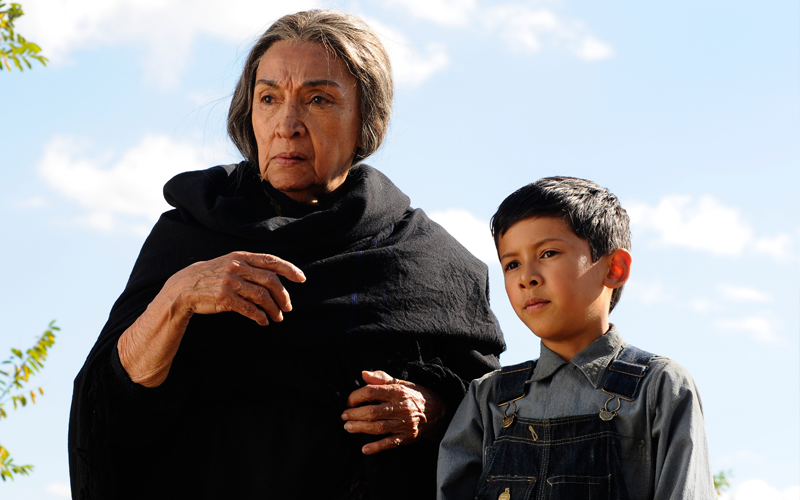
Bless Me, Ultima A mysticism that melds the Latin American shamanism with old-world Catholicism suffuses this bildungsroman of a memory movie, warmly rendered by director Carl Franklin, perhaps best known for his noirish tendencies in Devil in a Blue Dress (1995) and One False Move (1992). Here, working with Rudolfo Anaya’s landmark Chicano novel and material steeped in curandera, or shamanistic, folkways, he continues to exhibit that close attention to detail and the emotional truth of his characters that he brought to his more sensational genre work. This is a smaller, yet no less powerful, story: Antonio (Luke Ganalon) is the youngest son of a vaquero father (Benito Martinez) and a mother (Dolores Heredia) who hails from a farming family — yet perhaps his most important connection is with the woman who midwifed him, Ultima (Miriam Colon), who is taken in by his family out of respect for her deep folk magic and knowledge as a healer. Under Ultima’s close tutelage — while faithfully attending church and working his uncles’ fields — Antonio learns about life and the earth’s bounty, dangers, and cycles, particularly when one of his uncles falls prey to wicked brujas who practice blood sacrifice and Ultima is called in to help him. All of which makes for emotionally resonant storytelling that imparts the impact of Anaya’s tale and his reverence for spiritual practice — of all sorts — and our planet’s power and magic. (1:46)  (Kimberly Chun)    

The Gatekeepers Coming hard on the heels of The Law in These Parts, which gave a dispassionate forum to the lawmakers who’ve shaped — some might say in pretzel form — the military legal system that’s been applied by Israelis to Palestinians for decades, Dror Moreh’s documentary provides another key insiders’ viewpoint on that endless occupation. His interviewees are six former heads of the Shin Bet, Israel’s secret service. Their top-secret decisions shaped the nation’s attempts to control terrorist sects and attacks, as seen in a nearly half-century parade of news clips showing violence and negotiation on both sides. Unlike the subjects of Law, who spoke a cool, often evasive legalese to avoid any awkward ethical issues, these men are at times frankly — and surprisingly — doubtful about the wisdom of some individual decisions, let alone about the seemingly ever-receding prospect of a diplomatic peace. They even advocate for a two-state solution, an idea the government they served no longer seems seriously interested in advancing. The Gatekeepers is an important document that offers recent history examined head-on by the hitherto generally close-mouthed people who were in a prime position to direct its course. (1:37) (Dennis Harvey)

http://www.youtube.com/watch?v=V1pOjj49d9Y

Happy People: A Year in the Taiga The ever-intrepid Werner Herzog, with co-director Dmitry Vasyukov, pursues his fascination with extreme landscapes by chronicling a year deep within the Siberian Taiga. True to form, he doesn’t spend much time in the 300-inhabitant town nestled amid “endless wilderness,” accessible only by helicopter or boat (and only during the warmer seasons); instead, he seeks the most isolated environment possible, venturing into the frozen forest with fur trappers who augment their passed-down-over-generations job skills with the occasional modern assist (chainsaws and snowmobiles are key). Gorgeous cinematography and a curious, respectful tone elevate Happy People from mere ethnographic-film status, though that’s essentially what it is, as it records the men carving canoes, bear-proofing their cabins, interacting with their dogs, and generally being incredibly self-reliant amid some of the most rugged conditions imaginable. And since it’s Herzog, you know there’ll be a few gently bizarre moments, as when a politician’s summer campaign cruise brings a musical revue to town, or the director himself refers to “vodka — vicious as jet fuel” in his trademark droll voice over. (1:34) (Cheryl Eddy)

Go South

0

cheryl@sfbg.com

FILM San Francisco is a town of many film festivals: SF IndieFest wraps up Thu/21, and the Center for Asian American Media Festival (formerly the San Francisco International Asian American Film Festival) kicks off March 14. Lest you suffer fest withdrawal, the gap between is filled nearly end-to-end by Cinequest — San Jose’s 23rd annual salute to cinema that has a Silicon Valley-appropriate focus on technological innovations.

One example of that focus: Sony-sponsored 4K digital screenings of Taxi Driver (1976), Dr. Strangelove (1964), and Lawrence of Arabia (1962). While there’s no replacing the experience of seeing these classics projected on film, these restorations promise to render even Travis Bickle’s grimy apartment in eye-poppingly sharp relief. (“You talkin’ to me, or you checkin’ out my dirty dishes?”)

If the idea of burning highway miles to see movies you’ve already snagged on Blu-ray doesn’t appeal, Cinequest has corralled a genuine Hollywood icon for its Maverick Spirit Award: Harrison Ford. He’ll attend in person to discuss his career and, no doubt, field many a question about his rumored involvement in the upcoming Star Wars sequel-reboot-spinoff-thing — to be directed by J.J. Abrams, a past Maverick recipient himself. Other 2013 Maverick winners include Salman Rushdie, who’ll receive his award after the closing-night screening of Deepa Mehta’s Midnight’s Children, based on Rushdie’s 1981 Booker Prize-winning novel; and Chuck Palahniuk, who’ll be honored after a screening of a short film he scripted, Romance (one theme: Britney Spears), among others.

Cinequest’s largest component is, of course, its actual film programming, with a wide array of shorts, narratives, and docs. The fest kicks off with Sally Potter’s downbeat coming-of-age tale Ginger & Rosa. It’s the 1960s, nuclear war is a real possibility, and nuclear-family war is an absolute certainty, at least in the London house occupied by Ginger (Elle Fanning), her emotionally wounded mother (Mad Men‘s Christina Hendricks), and her narcissistic-intellectual father (Alessandro Nivola). Ginger’s teenage rebellion quickly morphs into angst when her BFF Rosa (Beautiful Creatures‘ Alice Englert) wedges her sexed-up neediness between Ginger’s parents. Hendricks (playing the accordion — just like Joan!) and Annette Bening (as an American activist who encourages Ginger’s political-protest leanings) are strong, but Fanning’s powerhouse performance is the main focus — though even she’s occasionally overshadowed by her artificially scarlet hair.

Horror fans: the number one reason to haul your carcass to Cinequest is Year of the Living Dead, a ghoulishly delightful look back at the making of 1968’s Night of the Living Dead. Rob Kuhns’ doc skews more cultural-legacy than fanboy, deploying a variety of talking heads (critics Mark Harris and Elvis Mitchell, Walking Dead producer Gale Anne Hurd, filmmaker Larry Fessenden) to explain why Night — offering just as much social commentary as any film from the Vietnam and Civil Rights era, except with way more squishy entrails — endures on so many levels. The best part, though, is the extended interview with George A. Romero, grinning and chuckling his way through anecdotes and on-set memories. On directing his amateur actors: “Just do your best zombie, man!”

Also highly enjoyable is Tom Bean and Luke Poling’s Plimpton! Starring George Plimpton as Himself, an affectionate portrait of the longtime Paris Review editor and “professional collector of experiences” who wrote books, articles, and made TV specials about his delight in being “the universal amateur.” His endeavors included playing football with the Detroit Lions, hockey with the Boston Bruins, and the triangle with the New York Philharmonic, among even more unusual pursuits. Some called him a dilettante (to his face while he was alive, and in this doc, too), but most of the friends, colleagues, and family members here recall Plimpton — born to an upper-crust New York family, he was friends with the Kennedys and worshipped Hemingway — as an irrepressible adventurer who more or less tailored a journalism career around his talents and personality.

Less upbeat but just as fascinating is Clayton Brown and Monica Long Ross’ The Believers, which starts in 1989 as University of Utah scientists Martin Fleischmann and Stanley Pons hold a press conference to announce they’ve discovered cold fusion — a way to make clean, cheap, plentiful power by fusing atoms instead of splitting them. But the initial excitement over their announcement soon gave way to skepticism and widespread dissent; eventually, their careers were in ruins, and by 1996, cold fusion was reduced to being a plot device for Keanu Reeves in Chain Reaction.

With new input from nearly everyone who was involved in the controversy (save the intensely private Pons, who’s seen in archival footage), The Believers captures cold fusion’s slow and spectacular fall from favor, while giving equal screen time to visionaries who believe it may still be possible. More importantly, its broader message explores what happens — or more pointedly, what doesn’t happen — when a radical idea appears, seemingly out of nowhere, to challenge an established way of thinking.

CINEQUEST

Feb. 26-March 10, $5-$50

Various venues, San Jose

www.cinequest.org


No talking

0

arts@sfbg.com

FILM The 2013 San Francisco Silent Film Festival isn’t until July, but the fest’s Silent Winter offshoot offers a day packed full of classic delights to tide over its legions of fans until summer. The Castro Theatre plays host to four features and one shorts program, all of which boast live musical accompaniment.

Silent Winter’s earliest (1916) and latest films (1927) are both buoyed by charismatic leading ladies: Marguerite Clark, in J. Searle Dawley’s Snow White, and Mary Pickford in Sam Taylor’s My Best Girl. Clark, who found early fame as a Broadway star, was already in her 30s by the time film acting became a viable career option. No matter — she’s believably girlish as the princess with “skin white as snow,” hated by her jealous stepmother, whose own beauty comes courtesy of witchcraft. (Dig the proto-Witchiepoo who helps the conniving queen in her various evil schemes, and her giant kitty helper, too.) A teenage Walt Disney saw the film in 1917 and made animation history with the same story 20 years later — though his heroine lacks Clark’s easy effervescence.

Pickford’s own joie de vivre has been exhaustively documented, but she’s particularly charming in My Best Girl, a late-career film that marked her final silent film, as well as her only onscreen pairing with the man who’d become her third husband, Buddy Rogers (in a marriage that would last from 1937 until her death in 1979). Watching My Best Girl is an excellent reminder that the romantic comedy structure still used with great frequency today — boy meets girl, boy loses girl, boy wins girl back just in time for a happy ending — is very much an old-school invention. Here, Pickford plays sassy shopgirl Maggie, who has no idea her cute new co-worker, Joe (Rogers), is actually the store owner’s son pulling an Undercover Boss.

Though My Best Girl is ostensibly a comedy, Pickford’s standout scenes are the film’s most melodramatic: first, when she conveys equal parts mortification and heartbreak when she realizes who her new crush really is, and later, when she pretends to be a gold-digging jazz baby to chase him away, believing he’s too good for her. Sob. Suck it, Reese, Julia, and whoever else — Mary (who was actually Canadian) is America’s sweetheart forever.

Buster Keaton, another actor (and director) much-beloved by silent film fans, is spotlighted in “Think Slow, Act Fast,” a program of three early shorts. The Scarecrow (1920), about a pair of farm hands battling over the farmer’s comely daughter, features a winning turn by one of Hollywood’s first canine stars — Luke, a pit bull owned by Keaton mentor Fatty Arbuckle. One Week (1920) follows a hapless newlywed couple as they attempt to assemble their pre-fab house; it’s a set-up that offers ample opportunity to showcase Keaton’s physical-comedy gifts. Third entry The Play House (1921) opens with what was a dazzling special-effects achievement at the time, as multiple Keatons play all of the parts in a minstrel show (yes, there’s blackface). After this Keaton-opoly is revealed to be a backstage dream, the rest of the short follows the comedian as he woos a twin he can’t quite tell apart from her sister — pausing here and there to crash different shows, including one where he impersonates a monkey.

Rounding out Silent Winter are a freshly restored Douglas Fairbanks classic, Raoul Walsh’s high-flying fantasy The Thief of Bagdad (1924); and Nosferatu (1922) director F.W. Murnau’s take on Faust (1926), his final German film.

SILENT WINTER

Sat/16, $5–<\d>$15

Castro Theatre

429 Castro, SF

www.silentfilm.org

Silents are golden

0

The 2013 San Francisco Silent Film Festival isn’t until July, but the fest’s Silent Winter offshoot offers a day packed full of classic delights to tide over its legions of fans until summer. Sat/16, Castro Theatre plays host to four features and one shorts program, all of which boast live musical accompaniment.

Silent Winter’s earliest (1916) and latest films (1927) are both buoyed by charismatic leading ladies: Marguerite Clark, in J. Searle Dawley’s Snow White, and Mary Pickford in Sam Taylor’s My Best Girl. Clark, who found early fame as a Broadway star, was already in her 30s by the time film acting became a viable career option. No matter — she’s believably girlish as the princess with “skin white as snow,” hated by her jealous stepmother, whose own beauty comes courtesy of witchcraft. (Dig the proto-Witchiepoo who helps the conniving queen in her various evil schemes, and her giant kitty helper, too.) A teenage Walt Disney saw the film in 1917 and made animation history with the same story 20 years later — though his version of the fairy-tale heroine lacks Clark’s easy effervescence.

Pickford’s own joie de vivre has been exhaustively documented, but she’s particularly charming in My Best Girl, a later-career film that marked her final silent film, as well as her only onscreen pairing with the man who’d become her third husband, Buddy Rogers (in a marriage that would last from 1937 until her death in 1979). Watching My Best Girl is an excellent reminder that the romantic comedy structure still used with great frequency today — boy meets girl, boy loses girl, boy wins girl back just in time for a happy ending — is very much an old-school invention. Here, Pickford plays sassy shopgirl Maggie, who has no idea her cute new co-worker, Joe (Rogers), is actually the store owner’s son pulling an Undercover Boss.

Though My Best Girl is ostensibly a comedy, Pickford’s standout scenes are the film’s most melodramatic: first, when she conveys equal parts mortification and heartbreak when she realizes who her new crush really is, and later, when she pretends to be a gold-digging jazz baby to chase him away, believing he’s too good for her. Sob. Suck it, Reese, Julia, and whoever else — Mary (who was actually Canadian) is America’s sweetheart forever.

Buster Keaton, another actor (and director) much-beloved by silent film fans, is spotlighted in “Think Slow, Act Fast,” a program of three early shorts. The Scarecrow (1920), about a pair of farm hands battling over the farmer’s comely daughter, features a winning turn by one of Hollywood’s first canine stars — Luke, a pit bull owned by Keaton mentor Fatty Arbuckle. One Week (1920) follows a hapless newlywed couple as they attempt to assemble their pre-fab house; it’s a set-up that offers ample opportunity to showcase Keaton’s physical-comedy gifts. Third entry The Play House (1921) opens with what was a dazzling special-effects achivement at the time, as multiple Keatons play all of the parts in a minstrel show (yes, there’s blackface). After this Keaton-opoly is revealed to be a backstage dream, the rest of the short follows the comedian as he woos a twin he can’t quite tell apart from her sister — pausing here and there to crash different shows, including one where he impersonates a monkey.

Rounding out Silent Winter are a freshly restored Douglas Fairbanks classic, Raoul Walsh’s high-flying fantasy The Thief of Bagdad (1924); and Nosferatu (1922) director F.W. Murnau’s take on Faust (1926), his final German film.<0x00A0><cs:5>2<cs:>

SILENT WINTER
Sat/16, $5–$15
Castro Theatre
429 Castro, SF
www.silentfilm.org

SF IndieFest, and a whole lot more: new movies!

0

First things first: the San Francisco Independent Film Festival kicked off last night and runs through Feb. 21 at various venues (mostly the Roxie). Check out my interviews with local shorts directors here, and some top picks throughout the festival here.

Also this week: cult director Don Coscarelli’s John Dies at the End (my chat with Mr. Bubba Ho-Tep here), Amy Berg’s West Memphis Three doc, West of Memphis (check out Nicole Gluckstern’s review here), and the Vortex Room’s love-ly new series (Dennis Harvey’s take here).

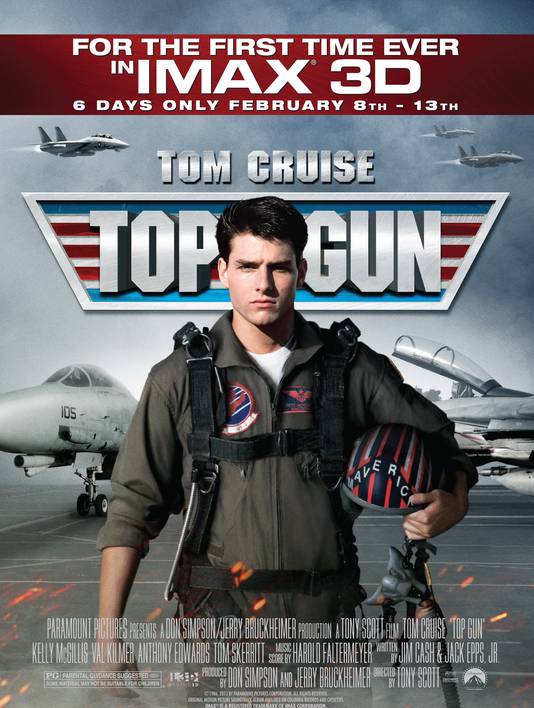
What’s more, 1986 action classic Top Gun gets the 3D IMAX re-release treatment (because any list of things that are better when they’re bigger, louder, and more in-yo-face include Soviet MiGs, Tom Cruise’s teeth, and Kenny Loggins jams). Reviews of comedies Identity Thief and Shanghai Calling, plus Steven Soderbergh’s maybe-swan song Side Effects, below the jump.

Identity Thief America is made up of asshole winners and nice guy losers — or at least that’s the thesis of Identity Thief, a comedy about a crying-clown credit card bandit (Melissa McCarthy) and the sweet sucker (Jason Bateman) she lures into her web of chaos. Bateman plays Sandy, a typical middle-class dude with a wife, two kids, and a third on the way. He’s always struggling to break even and just when it seems like his ship’s come in, Diana (McCarthy) jacks his identity — a crime that requires just five minutes in a dark room with Sandy’s social security number. Suddenly, his good name is contaminated with her prior arrests, drug-dealer entanglements, and mounting debt; it’s like the capitalist version of VD.  But as the “kind of person who has no friends,” Diana is as tragic as she is comic, providing McCarthy an acting opportunity no one saw coming when she was dispensing romantic advice on Gilmore Girls. Director Seth Gordon (2011’s Horrible Bosses) treats this comedy like an action movie — as breakneck as slapstick gets — and he relies so heavily on discomfort humor that the film doesn’t just prompt laughs, it pokes you in the ribs until you laugh, man, LAUGH! While Identity Thief has a few complex moments about how defeating “sticking it to the man” can be (mostly because only middle men get hurt), it’s mostly as subtle as a pratfall and just as (un-)rewarding. (1:25) (Sara Maria Vizcarrondo)

Shanghai Calling Hotshot lawyer Sam Chao (Daniel Henney) is his NYC firm’s top choice to be their man in Shanghai — much to his chagrin, since he puts the American in Chinese American. But off to the bustling, rapidly-expanding city he goes, knowing exactly only one word of Chinese (“fart”), and a classic fish-out-of-water comedy follows. His first day on the job, he bungles a billion-dollar deal, and spends the rest of the movie trying to set things right for his prickly client (Alan Ruck) — with the help of his ambitious assistant (Zhu Zhu), a perky relocation expert (Eliza Coupe), a fried-chicken mogul who runs an American-style bar (Bill Paxton), and a reporter who goes by the improbable moniker of “Awesome Wang” (Geng Le). Along the way, of course, he does some personal soul-searching, realizing there’s more to life than fancy-restaurant reservations and a high-stakes career. Writer-director Daniel Hsia’s Shanghai Calling doesn’t break any new ground, but it’s an undeniably entertaining tale of culture clash, backed up by an appealing cast to boot. (1:40) (Cheryl Eddy)

http://www.youtube.com/watch?v=QGe2ZE0prGg

Side Effects Though on the surface Channing Tatum appears to be his current muse, Steven Soderbergh seems to have gotten his smart, topical groove back, the one that spurred him to kick off his feature filmmaking career with the on-point Sex, Lies, and Videotape (1989) and went missing with the fun, featherweight Ocean’s franchise. (Alas, he’s been making claims that Side Effects will be his last feature film.) Here, trendy designer antidepressants are the draw — mixed with the heady intoxicants of a murder mystery with a nice hard twist that would have intrigued either Hitchcock or Chabrol. As Side Effects opens, the waifish Emily Taylor (Rooney Mara), whose inside-trading hubby (Tatum) has just been released from prison, looks like a big-eyed little basket of nerves ready to combust — internally, it seems, when she drives her car into a wall. Therapist Jonathan Banks (Jude Law), who begins to treat her after her hospital stay, seems to care about her, but nevertheless reflexively prescribes the latest anti-anxiety med of the day, on the advice of her former doctor (Catherine Zeta-Jones). Where does his responsibility for Emily’s subsequent actions begin and end? Soderbergh and his very able cast fill out the issues admirably, with the urgency that was missing from the more clinical Contagion (2011) and the, ahem, meaty intelligence that was lacking in all but the more ingenious strip scenes of last year’s Magic Mike. (1:30) (Kimberly Chun)

Six pack

0

Antiviral (Brandon Cronenberg, Canada, 2012) Yes, that Cronenberg. The spawn of veteran filmmaker David makes an auspicious feature debut with this, uh, Cronenberg-esque body-horror tale. In the stark, gloomy near-future, celebrity worship has become so out of control that healthy people visit special clinics to be injected with diseases gathered from superstars. When he’s not offering “biological communion” via shared flu germs plucked from blonde goddess Hannah Geist (Sarah Gadon of Cronenberg Sr.’s 2012 Cosmopolis), medical technician Syd (Friday Night Lights’ Caleb Landry Jones) is working black-market deals on the side, peddling illnesses to a sketchy broker who works out of a butcher shop that sells steaks grown from celebrity muscle cells. And if that sounds gross, just know that as Antiviral‘s clever, sci-fi noir plot twists itself into ever-darker (and gorier) contortions, there’s plenty more stomach-turning mad science ahead. You done good, son. Sat/9, 7:15pm; Tue/12, 9:30pm, Roxie.

Berberian Sound Studio (Peter Strickland, UK, 2012) It’s the 1970s, and frumpy British sound designer Gilderoy (a flawless Toby Jones) has, somewhat inexplicably, been hired by a flamboyant Italian filmmaker to work on his latest lurid genre piece, The Equestrian Vortex — about a girl who realizes her riding academy is haunted by witches. Any resemblance to 1977’s Suspiria is entirely intentional, as writer-director Peter Strickland crafts a meta-horror film that’s both tribute to Argento and co. and a freaky number all its own, as Gilderoy begins to realize that the “vortex” he’s dealing with isn’t merely confined to the screen. Fans of vintage Euro horror will appreciate the behind-the-scenes peek at the era’s filmmaking process, as well as Strickland’s obvious affection for one of cinema’s most oddly addictive genres. Bonus points for the Goblin reference. Fri/8, 9:30pm; Feb. 13, 7:15pm, Roxie.

Bound By Flesh (Leslie Zemeckis, US, 2012) Following up her 2010 burlesque doc Behind the Burly Q, Leslie Zemeckis (wife of Robert, director of 2012’s Flight) tackles another subject sprinkled with the tarnished glitter of a bygone era: conjoined twins Violet and Daisy Hilton, vaudeville and film (1932’s Freaks) stars who were exploited from birth by a series of shady guardians. When they finally earned their freedom in a landmark emancipation trial, their triumph was short-lived; not only were they ill-equipped to negotiate the perils of show biz on their own, they also suffered from grown-up-child-star syndrome, having tasted a level of fame early in life that they’d never reach again, though not for lack of trying. And, of course, they were conjoined twins — so amplify every possible life obstacle by about a million. Though Bound By Flesh suffers a bit from its limited source materials — be prepared to see the same photos of the Hiltons used over and over throughout the film — it nonetheless tells a tragic, fascinating, and utterly unique tale. Feb. 16, 5pm; Feb/ 17, 2:45pm, Roxie.

Iceberg Slim: Portrait of a Pimp (Jorge Hinojosa, US, 2012) Ice-T presents this study of a man (real name: Robert Beck) whose early years dabbling in “the second oldest profession” led him first to prison, and then — rather improbably — to the top of best-seller lists, as books like Pimp: The Story of My Life and Trick Baby (which became a 1972 blaxsploitation film) achieved cult status. Though the film’s first 30 minutes lay on the hero worship a bit thick (yeah, pimps are cool cats as far as movies and hip-hop’s concerned, but the real Beck is described as someone who “got a thrill out of degrading women”), the author’s talkative first wife and three daughters soon appear to offer some perspective. Archival interviews with Beck, and a detailed examination of his publisher, Holloway House (which employed only whites but specialized in African American literature), only add to this vivid biography. Sat/9, 5pm; Mon/11, 7:15pm, Roxie.

The Life and Times of Paul the Psychic Octopus (Alexandre Philippe, US, 2012) Eight correct predictions, eight tentacled arms, millions of enraptured cephalopod admirers: who could forget Paul, whose apparent ESP earned him nearly as much vuvuzela-blaring fanfare as the 2010 World Cup itself? This “fairytale” from the director of 2010’s The People vs. George Lucas begins with Paul’s death — he was young for an oracle, but old for an octopus, explains an employee at Sea Life Oberhausen, Paul’s German home. The doc then doubles back to examine how a publicity stunt involving acrylic boxes with taped-on flags and food tucked inside, plus one hungry octopus, could incite a global frenzy: epic lines at the aquarium, scrambling bookmakers, a full-scale media blitz, death threats, a rich Russian offering to buy Paul for a cool million Euros, an “Ask the Octopus” app, YouTube tributes, and more. At 90 minutes the doc stretches a little thin (fellow psychic animal Punxsutawney Phil even puts in an appearance), but this is fun stuff nonetheless. Sat/9, 2:45pm; Sun/10, 5pm, Roxie.

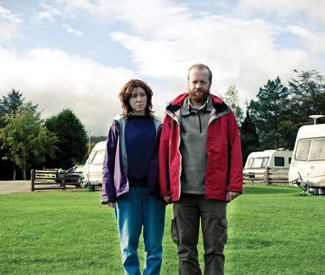
Sightseers (Ben Wheatley, UK, 2012) Ooh, yes, it’s the US premiere of the latest from rising star Ben Wheatley, who exceeds even 2011’s very fine hitman-goes-bananas Kill List with the sick and hilarious Sightseers. Awkward, nerdy couple Tina and Chris (Alice Lowe and Steve Oram, comedians who wrote the script with Amy Jump) pile into an RV and burn rubber toward some of Britain’s lesser-known attractions: Crich Tramway Village, the Cumberland Pencil Museum, etc. But it’s clear from the start that all’s not well in this relationship, and it doesn’t take long before their “erotic odyssey” also includes screaming fights, dognapping, and multiple homicides. So wrong, and yet so right — the evocative Sightseers manages to invent, and perfect, its own genre: the serial-killer road-tip rom-com. Sat/9 and Mon/11, 9:30pm, Roxie. (Cheryl Eddy) *

SAN FRANCISCO INDEPENDENT FILM FESTIVAL

Feb 7-21, most shows $12

Roxie Theater

3117 16th St, SF

www.sfindie.com

Muppets, manholes, and mayhem

0

cheryl@sfbg.com

FILM Vincent Gargiulo is originally from Stockton and lives in San Francisco, but I spoke with him over the phone from Duluth, Minn., where he’s about to start filming his latest project, Duluth is Horrible. “So far, it’s actually lovely,” he admits. “But Duluth is Lovely, nobody wants to watch that movie.”

The title came to him in a dream — he’d never been to Duluth before — but he decided to take the inspiration and run with it. “I came up with a bunch of little stories, semi-based on my life, and decided to set it in Duluth and use that title, and here I am,” he says, noting that he’s casting locals to act in the project. “A lot of people have been supportive, and a lot have not been. But I’m just hanging out with the supportive ones.”

Before his Great Lakes odyssey, Gargiulo was best-known for a pair of videos that brought him a certain amount of notoriety: “David’s Pizza Commercial” (which has over half a million views on YouTube) and “Taste the Biscuit,” which caught comedian George Lopez’s eye and became a running joke on Lopez Tonight. Both clips are excerpts from longer Gargiulo projects; the pizza ad was part of a 1980s TV parody, KNFR From 7:00-7:30.

“I needed some local commercials, and I came up with this pizza song. I thought, ‘I should just give it to a random pizza place,’ so I gave it to David’s Pizza in Stockton — they got a commercial without them knowing about it,” he says. “I thought if anything from that film would have viral potential, it would be that, because the song’s pretty catchy. So I just put it out there, and sure enough, it did. I mean, I like all attention I can get, but I don’t necessarily seek it out. It was funny because a lot of people were interviewing David — he was on talk shows and stuff, and it was fun to watch. And they don’t even mention me at all.”

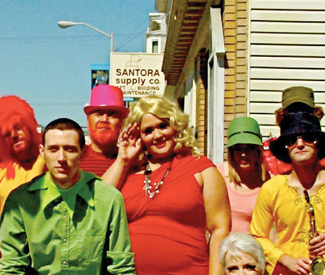
The San Francisco Independent Film Festival’s local-shorts focus, “Cults, Manholes, and Slide Rail Riders,” contains seven entries, but only one that features humans playing puppets. That’d be Gargiulo’s The Muppetless Movie, a fake movie trailer that pays earnest homage to the Muppets as only a true fan with a crazy idea can. The casting is impeccable: the director busts out a killer Kermit impression, and there’s dead-on Statler and Waldorf banter and an uncannily perfect Gonzo.

“I am a huge Muppets fan,” Gargiulo admits. “The new Muppet movie was coming out at that time, and I was afraid it was gonna suck. So I thought, ‘I’ll make my own Muppet movie, just to be on the safe side.’ Originally I was going to use puppets, but there’s probably more legal issues there. So I decided to have humans do it instead.”

Just about the only thing Manhole 452 has in common with Muppetless is that it’s another standout in “Cults, Manholes, and Slide Rail Riders.” Jeanne C. Finley and John Muse’s eerie short is narrated by an unseen commuter as he nervously rides the 38 Geary downtown from the Richmond. His paranoia: exploding manholes. As the film progresses, his fears are backed up by found footage depicting actual manhole explosions. His unease become ours, as we start to realize he’s onto something real and terrifying.

Muse and Finley have been working together since 1988; for the past several years, it’s been a cross-country collaboration, since Muse teaches at Haverford College in Pennsylvania, and Finley teaches at California College of the Arts in SF. Manhole 452 originally appeared as part of a 2011 installation at Patricia Sweetow Gallery, whose Geary Street location provided early inspiration.

“My antenna was up, as was John’s, around the question of manhole covers,” Finley recalls. “We did a lot of research, and it became really evident that they blow all the time. For example, three days before our show opened, a manhole blew right in front of the gallery. So we were aware of this phenomenon — and then San Bruno happened. A horrible, horrible tragedy.”

Finley decided to count all of Geary Street’s manhole covers. “A lot of weird things have happened on Geary Street,” Finley says. (Manhole 452 specifically points out the former location of Jim Jones’ Peoples Temple.) “It’s a really interesting San Francisco street, and a pretty ugly street, too.”

Soon after, the pair wrote a script based on actual stories that they’d dug up, interwoven with a character they imagined as their narrator: a man who’d had a manhole blow under his car while he was driving down Geary, forcing him to take the bus — and to question the stability of his surroundings.

“A lot of our work deals with inexplicable, unpredictable random events and the relationship of personal will to those random events: how do you confront an event of that nature, and move through it? And as you move on, how do you take it with you?” Finley explains.

Adds Muse, “We tend to try and make free-floating anxieties explicit and real, and give them shape. In this case, it’s the street: the street is a surface, it’s a membrane, it’s porous and delicate. At any moment that membrane could be torn away, and the fragility of everything is suddenly exposed. We thought about that metaphor a lot — the surface of the street as barely protecting us from what’s underneath.” *

“CULTS, MANHOLES, AND SLIDE RAIL RIDERS”

Feb. 17, 2:45pm; Feb. 19, 7:15pm, $12

Roxie Theater

3117 16th St, SF
www.sfindie.com

Weird tales

0

cheryl@sfbg.com

FILM It was a particular thrill to talk to Don Coscarelli on Jan. 8 — Elvis’ birthday. He is, after all, the guy who made 2002’s Bubba Ho-Tep, which imagined an elderly version of the King fighting the evil mummy that’s menacing his nursing home. Coscarelli’s other credits include 1979’s Phantasm (and its 1988, ’94, and ’98 sequels), 1982’s The Beastmaster, and his latest: supernatural noir buddy comedy John Dies at the End, based on David Wong’s comedy-horror novel.

San Francisco Bay Guardian I’m a big fan of Bubba Ho-Tep. I read that you met [John Dies star] Paul Giamatti because he was also a fan of that film.

Don Coscarelli Absolutely true. About five or six years ago, I received an email from Eli Roth, who was over in Eastern Europe working on one of the Hostel movies. He’d had a meal with Paul while they were there, and Eli sent me this email right away: “All Paul could talk about was Bubba Ho-Tep!” I thought he was just exaggerating, but it was true — Paul really liked the movie a lot, which was really rewarding to hear.

When we first met, I was trying to put together a sequel to Bubba Ho-Tep, and I had this idea that Paul could play Elvis’ manager, Colonel Tom Parker. The Bubba project didn’t end up coming together, but when I came across the David Wong book, I pitched it to him and he really liked the idea. So he helped as both executive producer and by playing the role of Arnie in the movie.

https://www.youtube.com/watch?v=Vy83MPk7Wpg

SFBG Besides Giamatti, the cast is mostly up-and-comers — plus Glynn Turman, who played the mayor on The Wire. Are you a Wire fan?

DC A huge Wire fan. I’m toying with the thought of starting from scratch and watching it from the beginning again.

SFBG How did you cast the dog, Bark Lee?

DC Here’s the thing with dogs: many years ago when I was a young lad, I made this movie called The Beastmaster (1982), and I learned not to expect much from animals. [Their performances] all have to be done in terms of editing and just lots of shooting. But this dog — and his real name is Bark Lee — I’d known for awhile, because [his owner is] a good friend who was one of the co-producers on the movie, Brad Baruh. So I thought, “Why couldn’t Brad’s dog just play the role?” Brad started training him on his own, and it worked out great. He did very well.

SFBG How did the special effects in John Dies break down, in terms of props versus CGI?

DC I never really quantified which is which. We probably bit off more than we could chew in terms of too many digital effects. But, look — they’re all just tools, and you just have to find the right one for the right thing. Sometimes, combining the two can be so much better than either of them.

The meat monster sequence [in John Dies] was always a challenge. In pre-production, I was trying to figure out how to do it. I consulted a lot of friends and effects folks, and was thinking at one time of making it a 3D construct. But then it had to interact with the actors, and throw out a sausage link and grab ’em by the neck, and I just didn’t see how that would work in CG.

Robert Kurtzman, who is one of the guys from K.N.B. EFX Group, had also done the Bubba Ho-Tep monster. He did an illustration where we could do it as a man in a suit, so we did it that way — and the suit is a total work of art. When it was finished, we added some highlights with CG, where we animated the little trout that runs up the back of the meat monster as he’s coming together. I think that added a level of bizarreness to it that took the edge off it just being only rubber.

SFBG John Dies has a lot going on: gore, surreal humor, buddy comedy elements, and even some film noir flair. How did you get the tone just right?

DC It’s all a function of the editing process. Going into it I had a lot of ideas about what the tone would be, but when you’re filming it’s hard to really keep track of that. With this screenplay, there was always the opportunity for it to go off the rails. It takes so many liberties and it’s so out there.

Luckily I had enough time where I was able to bracket the performances. I could do a subtle one, I could do a moderate one, and I could do an over-the-top one. Editing’s really like writing with visuals — you can watch the previous scene and watch the succeeding scene and then tailor it so that you’ve got some sort of tone and flow. But it always was a challenge.

SFBG Any chance you’ll ever make that Bubba Ho-Tep sequel?

DC Elvis is eternal. He will outlive all of us! It’s something I would like to do. It felt like it was gonna happen, about three or four years ago, and then it just fell apart. But I still would love to do it one day, and I’ve got a lot of great ideas.

One of the best things about Bubba was that we had a load of fun thinking up sequels. You can just take Bubba and put a monster after it, and you’d have a sequel. You’re talking about weird ones like Bubba Blob, and of course there was always Bubba Sasquatch, which would have been great. Because, you know, Elvis in the woods fighting a tribe of Bigfoot … now that would be cool! 

JOHN DIES AT THE END opens Fri/8 in Bay Area theaters.

Stallone, Walken, zombies, Oscar shorts, and more: new movies!

0

Yes you can find time to see a movie this otherwise football-y weekend. The ongoing Noir City and Sketchfest still have a lot of great upcoming programming, Sly Stallone is back in evocatively-titled action flick Bullet to the Head, a zombie finds love in Warm Bodies (review below), and all the Academy Award-nominated shorts are now available for big-screen viewing, for anyone who takes winning the office Oscar pool as seriously as … the Superbowl.

And speaking of the big game, the Roxie will be hosting its annual “Men in Tights” viewing party, a benefit for the theater and the upcoming SF IndieFest. So you can have your pigskin, and eat your popcorn too. GO NINERS!


“Oscar Nominated Short Films 2013: Animated” If you caught Wreck-It Ralph, nominated in the Best Animated Feature category, you’ve already seen John Kahrs’ Paperman, about a junior Mad Men type who bumbles through his pursuit of a lovely fellow office drone he spots on his commute. Or, if you saw Ice Age: Continental Drift, you’ve seen Maggie Simpson in The Longest Daycare, starring Homer and Marge’s wee one as she grapples with the social order at the Ayn Rand School for Tots. Among the stand-alones, Minkyu Lee’s Adam and Dog features a quick appearance by Eve, too, but the star is really the scrappy canine who gallops through prehistory playing the world’s first game of fetch with his hairy master. Two minutes is all PES (nom de screen of Adam Pesapane) needs to make Fresh Guacamole — which depicts grenades, dice, and other random objects as most unusual ingredients. The only non-US entry, UK director Timothy Reckart’s Head Over Heels, is about an elderly married couple whose relationship has deteriorated to the point where they (literally) no longer see eye to eye on anything. The program is rounded out by three more non-Oscar-nominated animated shorts: Britain’s The Gruffalo’s Child, featuring the voices of Helena Bonham Carter and Robbie Coltrane; French art-thief caper Dripped; and New Zealand’s sci-fi tale Abiogenesis. (1:28) (Cheryl Eddy)

http://www.youtube.com/watch?v=Z8SbmPhavhs

“Oscar Nominated Short Films 2013: Documentary” Selections include San Francisco filmmaker Sari Gilman’s poignant study of a Florida retirement community, Kings Point; Cynthia Wade’s Mondays at Racine, about a beauty salon that provides free services for women who have lost their hair to cancer treatments; Sean Fine and Andrea Nix’s Inocente, a profile of a young, homeless, aspiring artist; Redemption, Jon Alpert and Matthew O’Neill’s take on New York dumpster divers; and Open Heart, Keif Davidson’s look at Rwandan children who travel to Sudan for high-risk surgery. (3:29)

“Oscar Nominated Short Films 2013: Live Action” Selections include Bryan Buckley’s Asad, about a Somali boy who must choose between fishing and piracy; Sam French’s Buzkashi Boys, about two young friends coming of age in war-torn Kabul, Afghanistan; Shawn Christensen’s babysitting yarn Curfew; Tom Van Avermaet’s supernatural love story Death of a Shadow; and another (sort-of) love story, Canadian Yan England’s Henry. (1:54)

Sound City Dave Grohl adds “documentary director” to his ever-lengthening resume with this tribute to the SoCal recording studio, where the grimy, funky décor was offset by a row of platinum records lining its hallway, marking in-house triumphs by Fleetwood Mac, Tom Petty, Cheap Trick, Neil Young, and others (even, yep, Rick Springfield). Top acts and producers (many of whom appear in the doc to dish and reminisce) were lured in by a unique recording console, installed in the early 1970s, whose legend grew with every new hit it helped engineer. Despite its reputation as a hit factory — and the attraction of its laid-back vibe and staff — old-school Sound City began to struggle once the highly-polished sound of digital technology overtook the music industry. That is, until Grohl and Nirvana recorded Nevermind there, keeping the studio alive until the unstoppable march of Pro Tools hammered the final nails in. Or did it? Sound City‘s final third follows Grohl’s purchase of the studio’s iconic console (“A piece of rock ‘n’ roll history,” he proclaims, though he installs it in a swanky refurbished space) and the recording of an album featuring luminaries from the studio’s past … plus Paul McCartney. The resulting doc is nostalgic, sure, but insider-y enough to entertain fans of classic rock, or at least anyone who’s ever sneered at a drum machine. (1:46) Roxie. (Cheryl Eddy)

Stand Up Guys Call it oldster pop, call it geriatricore, just don’t call it late for its meds. With the oncoming boomer elder explosion, we can Depends — har-dee-har-har — on the fact that action-crime thrillers-slash-comedies like 2010’s Red, 2012’s Robot and Frank, and now Stand Up Guys are just the vanguard of an imminent barrage of grumpy old pros locking and loading, grousing about their angina, and delivering wisdom with a dose of hard-won levity. As handled by onetime teen-comedy character actor Fisher Stevens, Stand Up Guys is a warm, worthy addition to that soon-to-be-well-populated pantheon. It grows on you as you spend time with it — much like the two aging reprobates at its core, Val (Al Pacino) and Doc (Christopher Walken). Val, the proverbial stand-up guy who took the fall for the rest of his gang, has just completed a 25-year-plus stint in the pen. There to meet him is his only pal, and former partner in crime, Doc, who has been leading a humble life but has one last hit to commit for their old boss Claphands (Mark Margolis), who’s inexplicably named after a Tom Waits song. Sex, drugs, and some Viagra commercial-esque bluesy guitars are in order, but first Val and Doc must find their drive, in the form of their old driver buddy Hirsch (Alan Arkin), who they break out of a rest home, and, perhaps, their moral compass, which arrives with the discovery of a victim (Vanessa Ferlito) of baddies much less couth than themselves. The pleasure comes with following these stand-up guys as they make that leap from craven self-preservation to heroism, which might seem implausible to some. But to the cast’s, and Stevens’s, credit, they make it work — and even give the sentiment-washed finale a swashbuckling buddy-movie romanticism, the kind that a young Tarantino might dislike and an older Tarantino would be loathe to begrudge his lovable louses. (1:34) (Kimberly Chun)

http://www.youtube.com/watch?v=1FVyUL1Q06M

Warm Bodies A decade and a half of torrid, tormented vampire-human entanglements has left us accustomed to rooting for romances involving the undead and the still-alive. Some might argue, however, that no amount of pop-cultural prepping could be sufficient to get us behind a human-zombie love story for the ages. Is guzzling human blood really measurably less gross than making a meal of someone’s brains and other body parts? Somehow, yes. Recognizing this perceptual hurdle, writer-director Jonathan Levine (2011’s 50/50, 2008’s The Wackness) secures our sympathies at the outset of Warm Bodies by situating us inside the surprisingly active brain of the film’s zombie protagonist. Zombies, it turns out, have internal monologues. R (Nicholas Hoult) can only remember the first letter of his former name, but as he shambles and shuffles and slumps his way through the terminals of a postapocalyptic airport overrun by his fellow corpses (as they’re called by the film’s human population), he fills us in as best he can on the global catastrophe that’s occurred and his own ensuing existential crisis. By the time he meets not-so-cute with Julie (Teresa Palmer), a young woman whose father (John Malkovich) is commander-in-chief of the human survivors living in a walled-off city center, we’ve learned that he collects vinyl, that he has a zombie best friend, and that he doesn’t want to be like this. We may still be flinching at the thought of his and Julie’s first kiss, but we’re also kind of rooting for him. The plot gapes in places, where a tenuous logic gets trampled and gives way, but Levine’s script, adapted from a novel by Isaac Marion, is full of funny riffs on the zombie condition, which Hoult invests with a comic sweetness as his character staggers toward the land of the living. (1:37) (Lynn Rapoport)

Rep Clock

0

Schedules are for Wed/30-Tue/5 except where noted. Director and year are given when available. Double and triple features marked with a •. All times pm unless otherwise specified.

BAY MODEL 2100 Bridgeway, Sausalito; www.tiburonfilmfestival.com. Free. "Tiburon Film Society:" Banganà (Sincich, 2012), Tue, 6.

CASTRO 429 Castro, SF; (415) 621-6120, www.castrotheatre.com. $8.50-11. Noir City: The 11th Annual San Francisco Film Noir Festival: •The Sniper (Dmytryk, 1952), Wed, 1:30, 7, and Experiment in Terror (Edwards, 1962), Wed, 3:30, 9; •The Other Woman (Haas, 1954), Thu, 7:30, and The Come-On (Birdwell, 1956), Thu, 9:15; •Man in the Dark (Landers, 1953), Fri, 7:30, and Inferno (Ward Baker, 1953), Fri, 9; •Street of Chance (Hively, 1942), Sat, 1, 6; The Chase (Ripley, 1946), Sat, 2:35, 7:30; and The Window (Tetzlaff, 1949), Sat, 4:20, 9:15; •Smooth as Silk (Barton, 1946), Sun, 12:30; Mary Ryan, Detective (Berlin, 1949), Sun, 1:50; Strange Impersonation (Mann, 1946), Sun, 3:20; and Fly By Night (Siodmak, 1942), Sun, 4:45; •Night Editor (Levin, 1946), Sun, 7:30, and High Tide (Reinhardt, 1947), Sun, 9. More info at www.noircity.com; advance tickets ($10-15) at www.brownpapertickets.com.

CHRISTOPHER B. SMITH RAFAEL FILM CENTER 1118 Fourth St, San Rafael; (415) 454-1222, www.cafilm.org. $6.75-$10.25. Amour (Haneke, 2012), call for dates and times. Quartet (Hoffman, 2012), call for dates and times. The Rabbi’s Cat (Sfar and Delesvaux, 2011), call for dates and times. Sparrows (Beaudine, 1926), Thu, 7. With live piano accompaniment and introduction by Mary Pickford expert Christel Schmidt. This event, $12. "World Ballet on the Big Screen:" "An Evening With Sol León and Paul Lightfoot from the Netherlands Dance Theater," Sun and Tue, 6:30. This event, $15.

CLAY 2261 Fillmore, SF; www.landmarktheatres.com. $9-10. "Midnight Movies:" Night of the Living Dead (Romero, 1968), Sat, midnight. With host Miss Misery.

MECHANICS’ INSTITUTE 57 Post, SF; (415) 393-0100, milibrary.org/events. $10 (reservations required as seating is limited). "CinemaLit Film Series: Hollywood Dames: In the Name of Love:" Letter from an Unknown Woman (Ophüls, 1948), Fri, 6.

NEW PARKWAY 474 24th St, Oakl; www.thenewparkway.com. Free. "Documentary Film Series:" The Loving Story (Buirski, 2011), Tue, 7.

PACIFIC FILM ARCHIVE 2575 Bancroft, Berk; (510) 642-5249, bampfa.berkeley.edu. $5.50-9.50. "Film 50: History of Cinema: The Cinematic City:" Metropolis (Lang, 1926), Wed, 3:10. With lecture by Marilyn Fabe; advance tickets (special pricing: $5.50-$11.50) recommended as programs often sell out. "Alfred Hitchcock: The Shape of Suspense:" North by Northwest (1959), Wed, 7; Suspicion (1941), Fri, 9. "Campus Connections: Playwright-Director Stan Lai:" The Peach Blossom Land (1992), Thu, 7. "The Sounds of Silence:" Silence (Collins, 2012), Fri, 7; "A Kind of Hush: Experimental Works," Sun, 5. "Screenagers: 15th Annual Bay Area High School Film and Video Festival," Sat, 3. "On Location in Silent Cinema:" Études sur Paris (Sauvage, 1928), Sat, 6. "African Film Festival 2013:" How to Steal 2 Million (Vundla, 2011), Sat, 8:20; Our Beloved Sudan (Elsanhouri, 2011), Sun, 2:30; Broken Stones (Felin, 2012), Tue, 7.

ROXIE 3117 and 3125 16th St, SF; (415) 863-1087, www.roxie.com. $6.50-11. Beware of Mr. Baker (Bulger, 2012), Wed-Thu, 7, 9. Yes, We’re Open (Wong, 2012), Wed, 7:15. First Generation (Fenderson and Fenderson, 2011), Thu, 7. Presented by ScholarMatch with a post-screening discussion moderated by Dave Eggers. Sound City (Grohl, 2012), Jan 31-Feb 6, call for times. Dorothy Vernon of Haddon Hall (Neilan, 1924), Fri, 7:15. With introduction by Mary Pickford expert Christel Schmidt. "SF Sketchfest:" The Bitter Buddha (Feinartz, 2012), Sat, 1, with subject Eddie Pepitone in person, Sat, 1; "The Benson Movie Interruption:" The Notebook (Cassavetes, 2004), Sat, 4:20; "On Cinema with Tim Heidecker and Gregg Turkington:" Beyond the Doors (Buchanan, 1984), Sat, 7; "Olde English: The Exquisite Corpse Project with Colin Mahan in ‘Preview: The Movie!’," Sat, 10; American Splendor (Springer Berman and Pulcini, 2003), Tue, 9. More info and advance tickets (these events, $15-20) at www.sfsketchfest.com. "Superbowl XLVII: Men in Tights," Sun, 3. Superbowl viewing party; $10 donation to benefit SF IndieFest and the Roxie. "A Tribute to Arch Hall, Jr:" The Choppers (Jason, 1961), Mon, 6:30; The Sadist (Landis, 1963), Mon, 8; Wild Guitar (Steckler, 1962), Mon, 9:45. Hosted by Johnny Legend.

SUNDANCE KABUKI 1881 Post, SF; www.sundancecinemas.com. $15. "Sundance Film Festival USA:" In a World… (Bell, 2012), Thu, 7:15. With director Lake Bell in person.

YERBA BUENA CENTER FOR THE ARTS 701 Mission, SF; www.ybca.org. $8-10. "The Wooster Group On Screen:" Rumstick Road (1977), Sun, 2.

Fairy tales, Noir City, insane drummers, and more! Yep, it’s movie time

0

An odd week of new releases, this: three disposible genre flicks (ensemble comedy Movie 43; Jason Statham ass-whupper Parker; and Jeremy-Renner-what-is-going-on-with-your-career-dude? puzzler Hansel & Gretel: Witch Hunters) — plus old-folks comedy Quartet (read Dennis Harvey’s take here, probably the only Quartet review on the planet to compare it to 1979’s Roller Boogie).

Your best bets are the two films reviewed after the jump (music doc Beware of Mr. Baker and South Korean import In Another Country), or buying a sheaf of tickets to the always-quality Noir City (now in its 11th year; runs through Feb.3 at the Castro).

Beware of Mr. Baker This mesmerizing bio-doc about volatile, wildly talented drummer Ginger Baker (Cream, Blind Faith) begins with the 70-something musician clocking director Jay Bulger in the face. After this opening, Bulger — who also wrote a deeply compelling article about Baker for Rolling Stone last year — wisely pulls himself out of the narrative, instead turning to a wealth of new interviews (with Baker, his trademark red locks faded to gray, and many of his musical and personal partners, including Eric Clapton and multiple ex-Mrs. Bakers), vintage performance footage, and artful animation to weave his tale. Baker’s colorfully-lived, improbably long life has been literally all over the map; he overcame a hardscrabble British childhood to find jazz and rock stardom, and along the way jammed with Fela Kuti in Nigeria (where he picked up his fierce love of polo), broke many hearts (his own kids’ among them) and lost multiple fortunes, spent a stint in the US, and eventually landed at his current farm in South Africa. Two constants: his musical genius, and his frustratingly jerky behavior — the consequence of a naturally prickly personality exacerbated by copious drug use and bitterness. A must-see for musicians and those who love them. (1:30) Roxie. (Cheryl Eddy)

http://www.youtube.com/watch?v=EA7H8NjNhC0

In Another Country This latest bit of gamesmanship from South Korea’s Hong Sang-soo (2000’s Virgin Stripped Bare by Her Bachelors) has Isabelle Huppert playing three Frenchwomen named Anne visiting the same Korean beachside community under different circumstances in three separate but wryly overlapping stories. In the first, she’s a film director whose presence induces inapt overtures from both her married colleague-host and a strapping young lifeguard. In the more farcical second, she’s a horny spouse herself, married to an absent Korean man; in the third, a woman whose husband has run away with a Korean woman. The same actors as well as variations on the same characters and situations appear in each section, their rejiggered intersections poking fun at Koreans’ attitudes toward foreigners, among other topics. Airy and amusing, In Another Country is a playful divertissement that’s shiny as a bubble, and leaves about as much of a permanent impression. (1:39) (Dennis Harvey)

Film Listings

0

Film listings are edited by Cheryl Eddy. Reviewers are Kimberly Chun, Dennis Harvey, Lynn Rapoport, and Sara Maria Vizcarrondo. For rep house showtimes, see Rep Clock. For complete film listings, see www.sfbg.com.

OPENING

Beware of Mr. Baker This mesmerizing bio-doc about volatile, wildly talented drummer Ginger Baker (Cream, Blind Faith) begins with the 70-something musician clocking director Jay Bulger in the face. After this opening, Bulger — who also wrote a deeply compelling article about Baker for Rolling Stone last year — wisely pulls himself out of the narrative, instead turning to a wealth of new interviews (with Baker, his trademark red locks faded to gray, and many of his musical and personal partners, including Eric Clapton and multiple ex-Mrs. Bakers), vintage performance footage, and artful animation to weave his tale. Baker’s colorfully-lived, improbably long life has been literally all over the map; he overcame a hardscrabble British childhood to find jazz and rock stardom, and along the way jammed with Fela Kuti in Nigeria (where he picked up his fierce love of polo), broke many hearts (his own kids’ among them) and lost multiple fortunes, spent a stint in the US, and eventually landed at his current farm in South Africa. Two constants: his musical genius, and his frustratingly jerky behavior — the consequence of a naturally prickly personality exacerbated by copious drug use and bitterness. A must-see for musicians and those who love them. (1:30) Roxie. (Eddy)

Hansel & Gretel: Witch Hunters Jeremy Renner and Gemma Arterton star in this fairy-tale action film directed by Tommy Wirkola (2009’s Dead Snow). (1:41) California.

In Another Country This latest bit of gamesmanship from South Korea’s Hong Sang-soo (2000’s Virgin Stripped Bare by Her Bachelors) has Isabelle Huppert playing three Frenchwomen named Anne visiting the same Korean beachside community under different circumstances in three separate but wryly overlapping stories. In the first, she’s a film director whose presence induces inapt overtures from both her married colleague-host and a strapping young lifeguard. In the more farcical second, she’s a horny spouse herself, married to an absent Korean man; in the third, a woman whose husband has run away with a Korean woman. The same actors as well as variations on the same characters and situations appear in each section, their rejiggered intersections poking fun at Koreans’ attitudes toward foreigners, among other topics. Airy and amusing, In Another Country is a playful divertissement that’s shiny as a bubble, and leaves about as much of a permanent impression. (1:39) (Harvey)

Movie 43 An A-list ensemble cast (Hugh Jackman, Halle Berry, Kate Winslet) and multiple directors (Peter Farrelly, James Gunn, Bob Odenkirk) combine their star power for this 12-chapter comedy film. (1:37)

Parker "Jason Statham" is pretty much a distinct genre at this point, yeah? (1:58) Shattuck.

Quartet See "Smith Happens." (1:38) Embarcadero.

ONGOING

Amour Arriving in local theaters atop a tidal wave of critical hosannas, Amour now seeks to tempt popular acclaim — though actually liking this perfectly crafted, intensely depressing film (from Austrian director Michael Haneke) may be nigh impossible for most audience members. Eightysomething former music teachers Georges and Anne (the flawless Jean-Louis Trintignant and Emmanuelle Riva) are living out their days in their spacious Paris apartment, going to classical concerts and enjoying the comfort of their relationship. Early in the film, someone tries to break into their flat — and the rest of Amour unfolds with a series of invasions, with Anne’s declining health the most distressing, though there are also unwanted visits from the couple’s only daughter (an appropriately self-involved Isabelle Huppert), an inept nurse who disrespects Anne and curses out Georges, and even a rogue pigeon that wanders in more than once. As Anne fades into a hollow, twisted, babbling version of her former self, Georges also becomes hollow and twisted, taking care of her while grimly awaiting the inevitable. Of course, the movie’s called Amour, so there’s some tenderness involved. But if you seek heartwarming hope and last-act uplift, look anywhere but here. (2:07) Smith Rafael. (Eddy)

Broken City Catherine Zeta-Jones’ measured performance and killer wardrobe run away with this uneven political thriller about a made-up Manhattan with real(-ish) problems. Russell Crowe is only slightly improving his record post-Les Mis, as he plays another harried and morally confused agent "for the people." Here, he’s Mayor Hostetler, a swaggering politico with fingers in New York’s real estate cookie jar and the sort of "get shit done" directive that results in bodies lying in NYC’s overfilled gutters. Good thing he has Mark Wahlberg in his back pocket, a cop who slipped a murder wrap and now scrapes the bottom for gigs as a private detective. Seven years ago Billy Taggart (Wahlberg) was seeking vigilante justice for the victim of a rape-murder in the city’s biggest ghetto. The victim became a household name but the killer was let off, leading to cries about the validity of NY’s justice system and to allusions to the Central Park Five. Broken City is less about a broken City and more about broken Men, and there are certain elements that seem too subtle for a story built on such bald-faced and predictable strategy. Between a script that’s struggling to demonstrate moral compromise and integrity, and direction (by Allen Hughes) that’s as sensitive to nuance as a border collie, it’s hard to find much beyond Zeta-Jones’ shoe stylings to admire. (1:49) 1000 Van Ness, SF Center. (Vizcarrondo)

Gangster Squad It’s 1949, and somewhere in the Hollywood hills, a man has been tied hand and foot to a pair of automobiles with the engines running. Coyotes pace in the background like patrons queuing up for a table at Flour + Water, and when dinner is served, the presentation isn’t very pretty. We’re barely five minutes into Ruben Fleischer’s Gangster Squad, and fair warning has been given of the bloodletting to come. None of it’s quite as visceral as the opening scene, but Fleischer (2009’s Zombieland) packs his tale of urban warfare with plenty of stylized slaughter to go along with the glamour shots of mob-run nightclubs, leggy pin-curled dames, and Ryan Gosling lounging at the bar cracking wise. At the center of all the gunplay and firebombing is what’s framed as a battle for the soul of Los Angeles, waged between transplanted Chicago mobster Mickey Cohen (Sean Penn) — who wields terms like "progress" and "manifest destiny" as a rationale for a continental turf war — and a police sergeant named John O’Mara (Josh Brolin), tasked with bringing down Cohen’s empire. The assignment requires working under cover so deep that only the police chief (Nick Nolte) and the handpicked members of O’Mara’s "gangster squad" — ncluding Gosling, a half-jaded charmer who poaches Cohen’s arm candy (Emma Stone) — know of its existence. This leaves plenty of room for improvisation, and the film pauses now and again to wonder about what happens when you pit brutal amorality against brutal morality, but it’s a rhetorical question, and no one shows much interest in it. Dragged down by talking points that someone clearly wanted wedged in (as well as by O’Mara’s ponderous voice-overs), the film does better when it abandons gravitas and refocuses on spinning its mythic tale of wilder times in the Golden State. (1:53) Metreon, 1000 Van Ness. (Rapoport)

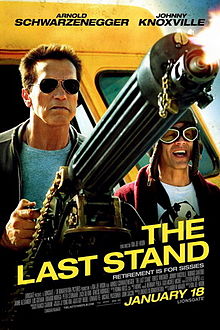
The Last Stand With gun control issues dominating the news, what better time to release a movie that lovingly glorifies the wonders of excessive firepower? Fortunately for star Arnold Schwarzenegger, making his return to leading-man status after that little fling with politics, The Last Stand is stupidly enjoyable enough to make any such PC-minded realizations relatively fleeing ones. When a Mexican drug lord (who also happens to be an expert race-car driver) escapes from federal custody and begins speeding home in a super-Corvette, the lead FBI agent (Forest Whitaker, slumming big-time) realizes his only hope is a teeny Arizona border town that happens to be overseen by Sheriff Schwarzenegger. (Other residents include a couple of hapless deputies; an Iraq war vet; and a gun nut played by a cartoonishly obnoxious Johnny Knoxville.) Can this ragtag crew hold off first the drug lord’s advance team (led by a swaggering Peter Stormare), and then the head baddie himself? Duh. The biggest surprise The Last Stand offers is that it’s actually pretty fun — no doubt thanks to the combo of Korean director Kim Jee-woon (2008’s eccentric The Good, The Bad, and the Weird; 2003’s spooky A Tale of Two Sisters) and the heft of Schwarzenegger’s still-potent charisma. (1:47) Metreon, 1000 Van Ness. (Eddy)

The Law in These Parts Ra’anan Alexandrowicz’s documentary is a rather extraordinary historical record: he interviews numerous retired Israeli judges and lawyers who shaped and enforced the country’s legal positions as occupiers of Palestinian land and "temporary guardians" of a Palestinian populace living under foreign occupation. The key word there is "temporary" — in using here a different (military rather than civil) justice from the one Israeli citizens experience, Israel has been able to exert the extraordinary powers of an invading force in wartime. But what is "temporary" about an occupation that’s now lasted nearly 45 years? How can the state justify (under Geneva Convention rules, for one thing) building permanent Jewish settlements that now house about half a million Israelis on land that is as yet not legally Israel’s? By constantly changing the terms and laws of occupation, they do just that. If many policies have been perhaps necessary to control terrorist attacks, one can argue that they and other policies have created the climate in which oppositional fervor and terroristic acts were bound to flourish. That, of course, is a political-ethical judgement far beyond the public purview of the judges and others here, whose dry legalese admits no personal culpability — and indeed sometimes seems almost absurdly divorced from real-world ethics and consequence, which of course serves an increasingly rigid governmental stance just fine. Without preaching, The Law in These Parts raises a number of discomfiting questions about bending law to suit an agenda that in any other context would seem frankly unlawful. (1:40) Roxie. (Harvey)

Mama From bin Laden to wild babes in woods, Jessica Chastain can’t seem to grab a break. Equipped with just the bare outlines of a character, however, she’s one of the few pleasures in this missed-opportunity of a grim, ghostly fairy tale. Expanding his short of the same name, director Andres Muschietti kicks off his yarn on a sadly familiar note in these days of seemingly escalating gun violence: little sisters Victoria and Lily have disappeared from their home, shortly after their desperate father (Game of Thrones‘ Nikolaj Coster-Waldau) has gone on a shooting spree. They repair to an abandoned cabin scattered with mid-century modern furniture. Five years on, the girls’ scruffy artist uncle Lucas (also Coster-Waldau) is still searching for them, supported by his punk rock girlfriend Annabel (Chastain). The little girls lost are finally found by trackers — and they appear to be hopelessly feral, with the angelic-looking Victoria (Megan Charpentier), acting as the ringleader and the younger, bedraggled Lily (Maya Dawe) given to sleeping under beds and eating on all fours next to the dog bowl. The arty couple take them in and move into a "test house" provided by the sisters’ enthralled therapist (Daniel Kash), obviously psyched to study not one but two Kaspar Hausers. The traumatized kids are clearly haunted by their experience — in more ways than one — as inexplicable bumps go off, night and day, and Misfits t-shirt-clad Annabel discovers the real meaning of goth while getting in touch with her seemingly deeply buried maternal urges. Unfortunately, despite possessing the raw material for a truly scary outing that plunges to the core of our primal instincts (what’s scarier than an unsocialized kid that’s capable of anything?) and showing off Muschietti’s occasional instances of cinematic flair (as when multiple rooms are shown using split-screens), Mama ends up running away from the filmmaker and is finally simply spoiled by its mawkishly sentimental finale. It doesn’t help that the inadequate script sports logic holes that a mama could drive a truck though. (1:40) Metreon, 1000 Van Ness. (Chun)

Old joy — and pain

1

cheryl@sfbg.com

FILM Film editor Sari Gilman — her resume includes 2007’s Ghosts of Abu Ghraib and 2002’s Blue Vinyl — made her directorial debut with the 30-minute documentary Kings Point, a bittersweet exploration of a Florida retirement community. The film first screened locally as part of the 2012 San Francisco Jewish Film Festival, and will air on HBO in March. In the meantime, it’s been nominated for an Oscar for Best Documentary Short. I caught up with Gilman to talk about her film — and little gold men.

San Francisco Bay Guardian Congratulations on your nomination! You knew your film was on the shortlist, but were you surprised when you made the final cut?

Sari Gilman Thank you! You know, I had no idea. I have worked very hard in my life to try not to predict the future. [Laughs.] I was very happy when I found out, but I don’t think it would have destroyed me if it hadn’t happened. Obviously, though, it’s a total thrill and a complete honor, and more than I ever expected when I started making this movie.

SFBG Do you get to, like, walk the red carpet?

SG I do! I gotta get a dress! I mean, not that anyone’s going to care who I’m wearing, but for me, it’ll be fun.

SFBG What’s your connection to Kings Point, the place, and what made you want to create a documentary about it?

SG My grandmother moved to the community in 1978, when I was about nine years old. I visited her there many times a year for 30 years. About 15 years in, I was starting to get involved in storytelling and still photography, and I was always really fascinated with the place on a couple of different levels: socially, it sort of seemed like it was a summer camp for old people, and then visually — it’s 7500 identical one- and two-bedroom condominium units, spread out over miles. So there’s a lot of architectural homogeneity. These long hallways that look exactly the same, with these palm-tree shadows on them. It seemed like a natural place to start exploring.

SFBG Since you knew the residents already, was it easier to get them to open up in interviews?

SG I think so. None of the subjects in the final film were people that I knew personally before I started making it, but some of them did know my grandmother, and they all knew me as the granddaughter of someone who lived there. I think that’s what made it easy for them to talk to me. I also shared a lot with them about my grandmother’s experience and my experience there, so the interviews weren’t so much interviews as they were conversations. Obviously, we cut my voice out in most cases, but I think that I was able to get the kind of candid stories that I got because I was on the other end of the camera talking to them.

SFBG Though you’ve worked extensively as an editor on other people’s films, you didn’t edit Kings Point. Why was that?

SG As an editor, I knew how badly I needed an editor. I know that directors need to have a collaborator to provide perspective, and look at the footage with a little more of an objective eye. I got incredibly lucky in that I was able to hire Jeffrey Friedman [co-director, with Rob Epstein, of 2010’s Howl and 1995’s The Celluloid Closet, among others], who is a local luminary and an amazing filmmaker who edits occasionally. He was actually my mentor when I was learning how to edit in the 1990s in San Francisco, so working with him on my first film was a really great experience.

SFBG The tone of the film is unique in the way that it balances light-hearted moments with the sort of sad undertone that runs throughout.

SG That was the biggest challenge. I knew there was going to be sadness and darkness, and humor and lightness, and I had a sense of what I wanted that to be, but I knew from the beginning that it would be hard to achieve. Jeffrey and I spent a lot of time achieving the tone. It was kind of like salt and sugar — “A little sprinkle here, oh, now it’s too dark, let’s add more of the other.” The feeling that I wanted to evoke, more than anything, was that certain feeling that I had when I was visiting there.

SFBG Had you always intended for Kings Point to be a short film?

SG No, I actually intended it to be a feature. It was in the cutting room that we decided to make it a short. A large part of that was because of the tone, actually — we had enough story to keep it going, but the tone of those stories were shifting the film in a direction that I wasn’t comfortable with. It was a little more of that “cute old person” movie. Kitschy, kind of, “Look at the old people doing belly dancing,” or whatever.

I was extremely sensitive to the fact that most people, when they heard about the film, would think that’s what they were going to be seeing. I was a little crazy-determined not to make that movie, because that wasn’t what my experience was. That’s not what I saw. In cutting it down, we got rid of a lot of the lighter stuff, which is what helped us achieve the tone that we did.

SFBG There have been several films with themes about aging lately: Amour, Quartet, and The Best Exotic Marigold Hotel (all 2012) come to mind. Why do you think that is?

SG Oh, I definitely want to see Amour. I think it’s a moment whose time has come. As a population, the baby boomers have now started to retire, and in the next 20 years, we are going to see a major shift in the demographics of this country. There will be many, many more elderly than there are now. I think that people are starting to think about aging issues in a new way.

I truly hope Kings Point will encourage people to have those kinds of discussions. Nobody likes to grow old or think about what’s going to happen, but the truth is that we kind of need to. There’s a bit of a denial about the realities of aging; there’s so much emphasis placed on being independent, self-reliant, and remaining active. On the cover of AARP Magazine, you always see pictures of, like, 75-year-olds on bicycles riding to the beach. And that’s great, and everyone wants that to be their experience, but not everyone is so lucky. *

www.kingspointmovie.com

Arnold’s baaaack! Plus more new movies

1

Get to the theatah! California’s (thankfully, former) Governor returns to the multiplex to do what he does best: speak in one-liners and carry a big gun. My review of The Last Stand below the jump, along with short takes on the Mark Wahlberg-Russell Crowe crime drama Broken City, and more.

Also this week: Hellbound?, a doc about damnation at the Yerba Buena Center for the Arts (Dennis Harvey’s take here); the Mostly British Film Festival (my round-up here); and the Guillermo del Toro-endorsed horror flick Mama, starring Jessica “Zero Dark Oscar” Chastain. Plus, tonight, the original Django (1966) screens at the Castro! More here.

http://www.youtube.com/watch?v=tCYaWxHJ_BU

Broken City Catherine Zeta-Jones’ measured performance and killer wardrobe run away with this uneven political thriller about a made-up Manhattan with real(-ish) problems. Russell Crowe is only slightly improving his record post-Les Mis, as he plays another harried and morally confused agent “for the people.” Here, he’s Mayor Hostetler, a swaggering politico with fingers in New York’s real estate cookie jar and the sort of “get shit done” directive that results in bodies lying in NYC’s overfilled gutters. Good thing he has Mark Wahlberg in his back pocket, a cop who slipped a murder wrap and now scrapes the bottom for gigs as a private detective. Seven years ago Billy Taggart (Wahlberg) was seeking vigilante justice for the victim of a rape-murder in the city’s biggest ghetto. The victim became a household name but the killer was let off, leading to cries about the validity of NY’s justice system and to allusions to the Central Park Five. Broken City is less about a broken City and more about broken Men, and there are certain elements that seem too subtle for a story built on such bald-faced and predictable strategy. Between a script that’s struggling to demonstrate moral compromise and integrity, and direction (by Allen Hughes) that’s as sensitive to nuance as a border collie, it’s hard to find much beyond Zeta-Jones’ shoe stylings to admire. (1:49) (Sara Maria Vizcarrondo)

The Last Stand With gun control issues dominating the news, what better time to release a movie that lovingly glorifies the wonders of excessive firepower? Fortunately for star Arnold Schwarzenegger, making his return to leading-man status after that little fling with politics, The Last Stand is stupidly enjoyable enough to make any such PC-minded realizations relatively fleeing ones. When a Mexican drug lord (who also happens to be an expert race-car driver) escapes from federal custody and begins speeding home in a super-Corvette, the lead FBI agent (Forest Whitaker, slumming big-time) realizes his only hope is a teeny Arizona border town that happens to be overseen by Sheriff Schwarzenegger. (Other residents include a couple of hapless deputies; an Iraq war vet; and a gun nut played by a cartoonishly obnoxious Johnny Knoxville.) Can this ragtag crew hold off first the drug lord’s advance team (led by a swaggering Peter Stormare), and then the head baddie himself? Duh. The biggest surprise The Last Stand offers is that it’s actually pretty fun — no doubt thanks to the combo of Korean director Kim Jee-woon (2008’s eccentric The Good, The Bad, and the Weird; 2003’s spooky A Tale of Two Sisters) and the heft of Schwarzenegger’s still-potent charisma. (1:47) (Cheryl Eddy)

http://www.youtube.com/watch?v=a-NeApCGEDE

The Law in These Parts Ra’anan Alexandrowicz’s documentary is a rather extraordinary historical record: he interviews numerous retired Israeli judges and lawyers who shaped and enforced the country’s legal positions as occupiers of Palestinian land and “temporary guardians” of a Palestinian populace living under foreign occupation. The key word there is “temporary” — in using here a different (military rather than civil) justice from the one Israeli citizens experience, Israel has been able to exert the extraordinary powers of an invading force in wartime. But what is “temporary” about an occupation that’s now lasted nearly 45 years? How can the state justify (under Geneva Convention rules, for one thing) building permanent Jewish settlements that now house about half a million Israelis on land that is as yet not legally Israel’s? By constantly changing the terms and laws of occupation, they do just that. If many policies have been perhaps necessary to control terrorist attacks, one can argue that they and other policies have created the climate in which oppositional fervor and terroristic acts were bound to flourish. That, of course, is a political-ethical judgement far beyond the public purview of the judges and others here, whose dry legalese admits no personal culpability — and indeed sometimes seems almost absurdly divorced from real-world ethics and consequence, which of course serves an increasingly rigid governmental stance just fine. Without preaching, The Law in These Parts raises a number of discomfiting questions about bending law to suit an agenda that in any other context would seem frankly unlawful. (1:40) Roxie. (Dennis Harvey)

http://www.youtube.com/watch?v=BWleS2KfRY0

Let Fury Have the Hour Though its message — that creative expression is a powerful, meaningful way to fight oppression — is a valuable one, Antonino D’Ambrosio’s Let Fury Have the Hour covers turf well-trod for anyone who has ever seen a documentary about punk rock and social justice. (Especially when it contains usual suspects like Ian MacKaye, Shepard Fairey, and Billy Bragg waxing nostalgic about how nonconformist they were in the 1980s.) In truth, Fury is more collage than doc, pasting together talking-head interviews (also here: Chuck D, John Sayles, Van Jones, Tom Morello, Boots Riley, and Wayne Kramer, plus a few token women, chiefly Eve Ensler) with a mish-mash of sepia-toned stock footage that more or less thematically compliments what’s being discussed at the time. A more focused examination of D’Ambrosio’s thesis might have resulted in a more effective film — like, say, an in-depth look at how Sayles’ politically-themed films (here, he reads from the script for 1987’s Matewan in a frustratingly brief segment) are echoed in works by contemporary artists and citizen journalists, particularly now that the internet has opened up a global platform for protest films. Listen: I admire what the film is trying to do. I am OK with watching yet another doc that contains the phrase “Punk rock politicized me.” But with too much lip service and precious little depth, Fury‘s fury ends up feeling a bit diluted. (1:40) Balboa. (Cheryl Eddy)

http://www.youtube.com/watch?v=uyvfVyV1eq0

LUV Baltimore native Sheldon Candis drew from his own childhood for this coming-of-age tale, which takes place in a single day as 11-year-old “little man” Woody (Michael Rainey Jr.) tags along with his uncle, Vincent (Common), recently out of jail and rapidly heading back down the criminal path. With both parents out of the picture, Woody’s been raised by his grandmother (Lonette McKee), so he idolizes Vincent even though it’s soon clear the short-tempered man is no hero. Of course, things go horribly awry, bloody lessons are learned, tears are shed, etc. Despite the story’s autobiographical origins, the passable LUV suffers greatly by inviting comparisons to The Wire — the definitive docudrama examining drug crime in Baltimore. Most blatantly, sprinkled into an all-star cast (Dennis Haysbert, Danny Glover, Charles S. Dutton) are supporting characters played by Wire icons Michael K. “Omar” Williams (as a cop) and Anwan “Slim Charles” Glover (as a meaner Slim Charles, basically). Perhaps if you’ve never seen the show this wouldn’t be distracting — but if that’s the case, you should really be watching The Wire instead of LUV anyway. (1:34) (Cheryl Eddy)

http://www.youtube.com/watch?v=wk6IB_Kgl4E

The Rabbi’s Cat A rabbi, a Muslim musician, two Russians (a Jew and a boozy Christian), and two talking animals hop into an antique Citroën for a road trip across Africa. No, it’s not the set-up for a joke; it’s the premise for this charming animated film, adapted from Joann Sfar’s graphic novel (the author co-directs with Antoine Delesvaux). In 1930s Algiers, a rabbi’s pet cat suddenly develops the ability to talk — and read and write, by the way — and wastes no time in sharing opinions, particularly when it comes to religion (“God is just a comforting invention!”) When a crate full of Russian prayer books — and one handsome artist — arrives at the rabbi’s house, man and cat are drawn into the refugee’s search for an Ethiopian city populated by African Jews. Though it’s not suitable for younger kids (there’s kitty mating, and a few bursts of surprising violence) or diehard Tintin fans (thanks to a randomly cranky spoof of the character), The Rabbi’s Cat is a lushly illustrated, witty tale of cross-cultural clashes and connections. Rockin’ soundtrack, too. (1:29) (Cheryl Eddy)

Hardly strictly British

0

cheryl@sfbg.com

FILM “In Somalia there are no such things as kid actors and stage moms,” explains the trailer for Asad, an 18-minute film about a Somali boy forced to choose between fishing and piracy. “There are just survivors telling a story.”

Critically acclaimed, winner of much festival love, and just nominated for a Live Action Short Film Oscar, Asad is one of many stories filling the Mostly British Film Festival, a week-long spotlight of works from the UK, Ireland, Australia, and South Africa. Some of these tales are less-than-inspiring — like the Downton Abbey-biting Cheerful Weather for the Wedding, based on a 1932 novella, though its period setting is mostly conveyed cinematically by some fetching gowns and hairstyles. As uncertain bride Dolly (Felicity Jones) guzzles rum in her bedroom, her boisterous, moneyed family (headed by Downton‘s Elizabeth McGovern) makes nice through gritted teeth while waiting for her to emerge in her wedding dress.

The tension cranks to 11 when Dolly’s rather recent ex (Luke Treadaway) shows up for the ceremony. We see their relationship unfold in golden flashbacks, and though it’s clear they deserve each other — neither character is particularly likable, for one thing — a reunion between the two is clearly not in the cards; heavy symbolism like the pair finding a rotting fox carcass on one of their summer jaunts makes this all too clear.

Fear not, though — a far more satisfying doomed romance, if such a thing is possible, unfolds in Jump, a Northern Ireland-set crime thriller whose jumbled-up chronology is contained within a single night. Though his script (co-written with Steve Brookes) gets a bit coincidence-heavy by the end, director Kieron J. Walsh brings a crackling energy to this tale of Greta (Nichola Burley, from last year’s Wuthering Heights), a gangster’s daughter who decides to end it all on New Year’s Eve. Teetering on a bridge rail, dressed as an angel (cough), she meets a man (Martin McCann) who convinces her not to take the plunge.

Once they discover a connection (long story short: they both hate her dad), they decide to rip off her father’s club and blow town. Elsewhere in time, dad’s goons (one rabid, one reluctant) chase down the missing money, while Greta’s two friends (one of whom is costumed as a slutty Mary Poppins) bumble through New Year’s and somehow get involved in the events described above. Everyone’s life is a mess (typical NYE: someone’s sobbing on the sidewalk, someone’s in jail), but all the loose ends are tied up by act three. As Greta points out in her fantastic accent, “Nothing’s real. It’s like a fillum.”

Other new films: opening-night pick Hunky Dory, starring Minnie Driver (who’ll appear in person) as an inspirational music teacher; Her Master’s Voice, a documentary about “world famous British ventriloquist Nina Conti,” who also directs; The Sapphires, about a 1960s girl group determined to find fame beyond the Australian Outback; Michael Apted’s 56 Up, the latest in his long-running doc series; Ken Loach’s love-beyond-borders tale Ae Fond Kiss; and the closing-night film, James Marsh’s IRA drama Shadow Dancer, starring Clive Owen and rising talent Andrea Riseborough.

Classic films also have their place at Mostly British. Fans of James Mason take note, as both Carol Reed’s 1947 noir Odd Man Out (starring Mason as an imperiled IRA agent) and Sidney Lumet’s 1966 espionage drama The Deadly Affair will screen. The latter features a sweet Quincy Jones bossa nova score — so incongruous to the setting and action it’s both distracting and awesome — and a blustering turn by Mason as a spy whose job woes are eclipsed only by the anguish he feels over his cheatin’ wife. All kinds of juicy Cold War intrigue in this one: code names, suspicious deaths, mysterious postcards, and bag-switching plots, plus stellar supporting turns by Harry Andrews as a tough guy (who also loves bunnies), and fading sexpot Simone Signoret as a secretive Holocaust survivor.

Another pair of oldies well worth revisiting, or seeing for the first time, are included in Mostly British’s David Lean double feature, which also happens to be a double feature for star Celia Johnson. In 1944 family drama This Happy Breed — as plot-twisty, character-stuffed, and entertaining as a soap opera, and shot in color to boot — she’s the brow-furrowed matriarch of a working-class family that tumbles through the decades between World Wars I and II. In 1945’s lusciously black-and-white Brief Encounter, she’s a lonely housewife who rediscovers desire after a chance meeting with an also-married doctor (Trevor Howard). Speaking of doomed romances, Johnson’s Oscar-nominated performance is a major reason why this film has become such a classic of that genre. *

MOSTLY BRITISH FILM FESTIVAL

Jan. 17-24, $12.50-$35 (festival pass, $99)

Vogue Theatre

3290 Sacramento, SF

www.mostlybritish.org


Rep Clock

0

Schedules are for Wed/16-Tue/22 except where noted. Director and year are given when available. Double and triple features marked with a •. All times pm unless otherwise specified.

ARTISTS’ TELEVISION ACCESS 992 Valencia, SF; www.atasite.org. $5-10. "The Best of Periwinkle Cinema 2012: The Year in Review," Wed, 8. "OpenScreening," Thu, 8. For participation info, contact programming@atasite.org. Heritage (Giordano), plus shorts, Fri, 8. "A Benefit for Jay Korber," with films and live performances, Sat, 8.

BALBOA 3630 Balboa, SF; cinemasf.com/balboa. $7.50-10. Let Fury Have the Hour (D’Ambrosio, 2012), Jan 18-24, 3, 5, 7:15 (also Fri-Sat, 9:40).

CASTRO 429 Castro, SF; (415) 621-6120, www.castrotheatre.com. $8.50-11. •Holy Motors (Carax, 2012), Wed, 2:30, 7, and Being John Malkovich (Jonze, 1999), Wed-Thu, 4:45, 9:10. •Taxi Driver (Scorsese, 1976), Thu, 7, and Drive (Winding Refn, 2011), Thu, 9:10. •Thunderbirds Are Go (Lane, 1966), Fri, 7, and Team America: World Police (Parker, 2004), Fri, 8:50. Django (Corbucci, 1966), Fri, 11. "Pam Ann: Cockpit Live," Sat, 7:30. Tickets ($30-45) at www.biggaycomedy.com. •Tess (Polanski, 1979), Sun, 5, and Rosemary’s Baby (Polanski, 1968), Sun, 2:30, 8:15. •Wattstax (Stuart, 1973), Mon, 3, 7, and Something From Nothing: The Art of Rap (Ice-T and Baybutt, 2012), Mon, 4:55, 8:55. •Chasing Mavericks (Hanson and Apted, 2012), Tue, 7, and Bones Brigade (Peralta, 2012), Tue, 9:15.

CHRISTOPHER B. SMITH RAFAEL FILM CENTER 1118 Fourth St, San Rafael; (415) 454-1222, www.cafilm.org. $6.75-$10.25. My Worst Nightmare (Fontaine, 2012), call for dates and times. "For Your Consideration: A Selection of Oscar Submissions from Around the World:" Clandestine Childhood (Ávila, 2011), Wed, 6:30; Thu, 8:15; The Deep (Kormákur, 2012), Wed, 8:30; Kauwboy (Koole, 2012), Thu, 6:30. Amour (Haneke, 2012), Jan 18-24, call for times. The Rabbi’s Cat (Sfar and Delesvaux, 2011), Jan 18-24, call for times.

CLAY 2261 Fillmore, SF; www.landmarktheatres.com. $9-10. "Midnight Movies:" The Princess Bride (Reiner, 1987), Fri-Sat, midnight.

FIRST UNITED METHODIST CHURCH Nine Ross Valley, San Rafael; www.mitfamericas.org. $10-20. •Precious Knowledge (Palos, 2011), Sat, 5:15; Sin Pais (Rigby, 2010), Sat, 7; and Which Way Home (Cammisa, 2009), Sat, 8.

MECHANICS’ INSTITUTE 57 Post, SF; www.milibrary.org. $10. "Cinemalit: New Years Revolution Redux 3:" V for Vendetta (McTeigue, 2006), Fri, 6.

NEW PARKWAY 474 24th St, Oakl; www.thenewparkway.com. $6. "Documentary Film Series:" Chasing Ice (Orlowski, 2012), Tue, 7.

PACIFIC FILM ARCHIVE 2575 Bancroft, Berk; (510) 642-5249, bampfa.berkeley.edu. $5.50-9.50. "Alfred Hitchcock: The Shape of Suspense:" Rebecca (1940), Wed, 7; Young and Innocent (1937), Fri, 7; The Lady Vanishes (1938), Fri, 8:40. "The Hills Run Red: Italian Westerns, Leone, and Beyond:" A Bullet for the General (Damiani, 1966), Thu, 7; China 9, Liberty 37 (Hellman, 1978), Sat, 8:45. "Werner Schroeter: Magnificent Obsessions:" The Death of Maria Malibran (1972), Sat, 6:30; Willow Springs (1973), Tue, 7.

ROXIE 3117 and 3125 16th St, SF; (415) 863-1087, www.roxie.com. $6.50-11. Only the Young (Mims and Tippet, 2012), Wed-Thu, call for times. The Law in These Parts (Alexandrowicz, 2012), Jan 18-24, call for times.

VOGUE 3290 Sacramento, SF; www.mostlybritish.org. $12.50-35 (festival pass, $99). Mostly British Film Festival, new and classic films from the UK, Ireland, Australia, and South Africa, Jan 17-24.

YERBA BUENA CENTER FOR THE ARTS 701 Mission, SF; www.ybca.org. $8-10. Hellbound? (Miller, 2012), Thu-Sat, 7:30 (also Sat, 4); Sun, 2 and 4. Director in person at Thu/17 screenings.