Wiener

Condo conversion legislation on hold for now

Following a contentious five-hour hearing, a committee of the Board of Supervisors postponed voting on a controversial housing proposal, and agreed to revisit the issue on Feb. 25. Over the next few weeks, opposing sides are expected to negotiate a possible alternative.

Authored by Sups. Scott Wiener and Mark Farrell, the proposed condo conversion impact fee would have allowed as many as 2,000 tenancy-in-common (TIC) units to be immediately converted to condos for a fee, allowing owners to bypass a housing lottery system that places an annual cap on conversions.

While TIC owners voiced frustration about the backlogged lottery system, tenants expressed fears that the legislation could give rise to a wave of Ellis Act evictions if landlords or speculators interpreted it as a signal that lucrative condo conversion would be easier to achieve.

Prior to the hearing, a group of tenants gathered in front of City Hall in a show of opposition to the condo-conversion legislation, waving signs that read, “Stop the Attack on Rent Control.”

“The reality is, if this legislation passes, there will be more evictions in San Francisco,” said Tommi Avicolli Mecca of the Housing Rights Committee, who spoke at the rally.

Tenant advocates worry that the legislation would result in a permanent loss of affordable, rent-controlled units from the city’s housing stock, at a time when rents are soaring. When landlords rent out their condos or TICs in San Francisco, there’s a key difference: TICs are covered by rent control, but condos are exempt.

“I’ve been evicted three times,” one woman said while addressing members of the Land Use & Economic Development Committee. “I know so many people who have gotten evicted. I don’t know anyone who’s won their case against eviction.”

During the hearing, Farrell adopted a defensive tone against critics who’d described the proposal as an attack on rent control. “The tactics that these opponents have deployed is out of line,” he said. To assuage concerns, he noted that he and Wiener had included a provision guaranteeing lifetime leases for existing tenants in units that qualified for condo conversion under the program.

But Sup. Jane Kim drilled down on this detail, questioning whether such an agreement would be legally enforceable in the long run. In response, a representative from the City Attorney’s office said he thought the provision was on solid legal ground, but noted that the specific matter “has not been litigated before,” meaning there is still a question as to whether it could withstand a court challenge. When Kim asked if any funding was set aside to enforce these lifetime leases, the response was “no.”

Board President David Chiu proposed holding off on a vote for several weeks. “I do not support the legislation in its current form,” he said. If the current generation of TIC owners were allowed to convert this time, he explained, the next generation’s frustrations with the housing lottery would only “lead us back to an identical debate in a short period of time.”

Kim echoed this point. “My concern was that … folks were looking at this legislation as an ice-break for more condo conversion,” she said just after a public comment session that lasted several hours. And she acknowledged that there is a larger problem to consider. “It’s very tragic that we have set up a situation where [TICs and renters] are pitted against one another,” she said.

TIC legislation is a rent control issue

177

OPINION If legislation introduced by Supervisors Scott Wiener and Mark Farrell passes the Board of Supervisors next month, up to 2,000 tenancies in common will be allowed to bypass the lottery process and convert to condominiums.

Add those to the nearly 6,000 conversions that have occurred from 2001-2011 (according to stats from the Department of Public Works), and you have a sizable chunk of rent-controlled units that will have been yanked from our housing stock in the past decade or so in a city that can’t afford to lose rental units, especially those that preserve affordability while tenants live in them. TICs are still under rent control; condos lose it when they’re sold.

Which makes the Wiener and Farrell legislation a rent-control issue. Not to mention a really bad idea at a really bad moment in time.

San Francisco’s perennial housing crisis can’t possibly get worse. Rents are the highest in the country — and still rising. The average rent in the city these days is $3,000. The vacancy rate is low.

Ellis Act evictions, a tool for creating TICs by allowing a landlord or speculator to circumvent just-cause eviction protections, are on the upswing. They’re not as high as they were at the height of the dot-com boom of the late 90s, but, considering that these days many landlords and speculators threaten tenants with Ellis or buy them out rather than do the dirty deed, the number of folks displaced for TICs is higher than what is recorded at the Rent Board. Some tenants have actually received letters from new landlords with two checkboxes — one for Ellis and the other for a buyout. Take your pick, which way do you want to be tossed out and possibly left homeless?

The folks being displaced are from every district and represent the diversity about which we always brag: longterm, generally low-income seniors, disabled people, people with AIDS, families, and people of color. And they’re less likely to find other apartments they can afford.

Wiener claims that buildings where there are evictions will not be eligible for conversion, but many of the TICs currently in the lottery, which will be eligible for conversion under the Wiener/Farrell legislation, were created by evictions. Almost 20 percent of the units in the pipeline were formed before legislation was put into place to restrict conversions if tenants are ousted. How many of the other 80 percent are the result of threats and buyouts, de facto evictions? Or were entered into the lottery even when they shouldn’t have been?

Brian Basinger, founder of the AIDS Housing Alliance, was evicted from his apartment for a TIC, yet his place was converted to a condo, despite the fact that he’s a protected tenant.

Allowing as many as 2,000 conversions not only diminishes the rent-controlled housing stock, but it also jacks up rents. Not to mention it gives speculators incentive to do more Ellis evictions or buyouts — after all, though Wiener and Farrell say this is a one-time only deal, once Pandora’s box is opened, it’s going to be hard to keep it shut. I think landlords and speculators know that.

The Housing Element of the City’s General Plan, adopted in 2009, instructs officials to “preserve rental units, especially rent controlled units, to meet the City’s affordable housing needs.”

This legislation won’t preserve rent-controlled units. It’s a bad fit for our city.

Tommi Avicolli Mecca, who’s worked for the Housing Rights Committee for 13 years, is a longtime queer tenants right/affordable housing advocate.

Chiu’s committee assignments keep the moderates in charge

42

A week after engineering his unanimous re-election to an unprecedented third consecutive term as president of the Board of Supervisors, David Chiu today announced his assignments to board committees, placing fiscal conservatives into two of the most powerful posts and making himself a key swing vote on the Land Use Committee.

“I believe these committee assignments reflect a balanced approach and the diverse interests and talent of the supervisors,” Chiu said just after 4pm during the Roll Call portion of today’s meeting.

But some progressive activists were immediately grousing about some of the selections, which seem to reflect Chiu’s neoliberal approach to governance, preventing progressives from doing much to challenge development interests or the appointment of Establishment insiders to city commissions.

The Land Use Committee is perhaps the most powerful and impactful, particularly as the Warriors arena and other controversial waterfront developments and the CPMC hospital deal come to the board. Scott Wiener – a moderate who is already perhaps the most prolific supervisor – gains far more power as he is named to chair that committee. It is balanced out by Chiu and Sup. Jane Kim, both of whom have some progressive impulses on land use issues but also personal ambitions and a penchant for cutting deals. Developers have to be happy about this lineup.

Sup. Mark Farrell was named chair of the Budget Committee, succeeding Sup. Carmen Chu – a pair that are indisputably the most conservative supervisors on the board. While progressive Sups. Eric Mar and John Avalos will help balance out the permanent committee, their influence will be offset by the temporary members added during budget season: Sups. London Breed and Wiener.

That roster essentially puts Breed in the swing vote role, which should immediately give her some clout. Chiu’s defenders note that Budget’s balance of power is essentially status quo (with Breed now in the same swing vote role that Sup. Malia Cohen played) – and that the committee’s work last year was supported by labor and business interests alike.

Chiu is proposing to combine the Public Safety and City Operations & Neighborhood Services committees, naming Sup. David Campos as chair, Mar as vice-chair, and new Sup. Norman Yee as its third member. Yee, who nominated Chiu for president last week, was also rewarded with a chair on the Rules Committee – controlling appointments, it arguably the board’s third most influential committee after Land Use and Budget – with that committee filled out by Breed and Sup. Malia Cohen.

Speculation that Cohen and Kim would be rewarded for withdrawing their nominations as president before the vote last week don’t seem to have materialized in these appointments. Cohen was also named to the Government Operations Committee, along with Campos, which Sup. Carmen Chu will chair. That doesn’t give Cohen, who told us that she wanted to be on Land Use, much power.

Similarly, Kim was named chair of the City & School District Committee – nice, but not exactly a political launching pad – and Kim’s only real power on Land Use will come when Chiu is opposing some project, as he did with the controversial 8 Washington project that Kim and seven of her colleagues supported.

Aaron Peskin, Chiu’s predecessor as board president, said that he vaguely saw some semblance of Chiu’s claimed strategy of having conservative committee chairs balanced out by liberal majorities (although even that depends on how you define your terms). Yet Peskin questions that approach, and sees committees unlikely to really gel around good decisions or policies.

“It’s a recipe for dysfunction,” Peskin told us. “But it certainly will be fun to watch.”

Bizarro mainstream SF sweeps Grindr’s “Best of 2012” — pukes us in the mouth a little

14

Dear gay hookup app Grindr,

Maybe it’s just an indication of the type of homosexual who uses your service, and who deigns to participate in surveys like your new “Best of 2012” attempt to broaden your reach into hyperlocalism (soooo 2k9, btw). Or maybe its merely very telling of how you’ve lost any edginess to rivals like Scruff — which, judging from a Scruff glance, is very sad indeed.

But thanks for the violent retch and terrified giggle yesterday when you unveiled the reader-selected wieners  winners of your besties awards. You somehow managed to record every crap gay mainstream stereotype of San Francisco you could, sorry. Also, craaaazy. Scott Wiener as “best community advocate”? Is Pottery Barn a community? 

Anyway, San Francisco itself won every local category of the national survey. Also telling! What uncruisable gym queen with expensive hair is sitting in Badlands right now, possibly Scott Wiener’s best friend, refreshing Grindr and voting wildly? Can someone call their alcoholic Rihanna fan roommate in embroidered jeans and wraparound Gucci shades and find out?

Below is the list of top vote-getters, with commentary

National winners   

    Gay icon of the year: Anderson Cooper
    Straight ally of the year: Barack Obama
     Best TV show: “Modern Family”
    Best TV host: Ellen DeGeneres
    Best source for gossip: TMZ
    TIE for best comedian: Kathy Griffin and Margaret Cho
    Best athlete: Orlando Cruz
    Movie of the year: “Magic Mike”
    Song of the year: “Call Me Maybe” by Carly Rae Jepsen
    Gadget of the year: iPhone 5

Every one of these things is the exact color of water, but somehow boringer.


Grindr users picked these local landmarks to come out on top:

Gym with the hottest guys:

    Fitness SF (San Francisco)

It’s not the winner per se that horrifies — FitnessSF came into being when it cast off the shackles of its homophobic Gold’s Gym franchise early last year. It’s the category itself. Claim that shallowness!

Best place to get a haircut:

    Salon Baobao (San Francisco)

Waxing available!

Best place to take a first date:

    Castro (San Francisco)

… to steal their wallet and leave them there.

Best Sunday funday:

    Jock Sundays at the Lookout (San Francisco)

Cute but meh.

Favorite gay bar/club:

    Badlands (San Francisco)

Fuck noooooo.

Favorite bartender:

     Mike at Lookout (San Francisco)

If they mean our cute and dear friend Michael — we wholeheartedly agree with Grindr on this point. He’s a great argument for why you should just stick to bars for your pickups, maybe.  

Best gay night/party:

    Beatbox (San Francisco)

This is neither a night nor a party.

Best DJ:

    Haute Toddy (San Francisco)

OK they could have done a lot worse than this completely inoffensive fingerful of vanilla frosting.

Fiercest drag queen/nightlife personality:

    Pollo Del Mar (San Francisco)

If anyone deserves the incredibly contemporary gay slang term “fiercest,” it is Pollo for sure.

Local hero/community advocate of the year:

    Scott Wiener (San Francisco)

According to our new sister paper SF Weekly, Wiener said this win finally “put to rest the issue of whether the nudity ban was a gay thing.” That was never the issue. But Scott is the mayor of Grindr!

Best local gay news outlet:

    The Bay Area Reporter (San Francisco)

I am so surprised that GLOSS Magazine did not win this!!!


Eh, maybe we’re not so surprised by this list after all

Harvey Milk airport!

83

First of all, it’s a great idea.

Major airports get named after people who have had a major impact on society (LaGuardia, Kennedy) or heros (Lt. Commander Edward O’Hare) and Harvey Milk was both. SFO is the gateway to the United States for millions of travelers, much as Kennedy is on the East Coast, and the idea that all of them would be potentially exposed to Milk’s life and legacy is wonderful.

Sup. Scott Wiener supports the idea, but says it will “spark a robust debate” about other people who have contributed to San Francisco, and I’ve heard the names Dianne Feinstein and Willie Brown mentioned. Both were bad mayors, both sold out the city to developers, both would be an embarassment — but that’s not the point. There are plenty of politicians like Feinstein and Brown in the world; there was only one Harvey Milk.

Thanks to Sup. Campos for the idea. I suspect it will get about 70 percent of the vote.

SFBOS grab bag: Diva Breed, Yee’s jig, delayed Chiu, and more

10

Now that the dust has settled from this week’s San Francisco Board of Supervisors inauguration and presidential vote, I thought I’d return to a few random gems that were still stuck in my notebook, waiting to see the light of day.

Under the heading of There’s a New Diva under the Dome, new D5 Sup. London Breed didn’t wait for the official noon inauguration prescribed by the City Charter to take her oath of office, instead holding a packed event at 10am in the North Light Court, where her oath was administered by a key supporter, Attorney General Kamala Harris.

“I held a swearing in earlier to be able to have a large crowd of supporters,” was how Breed explained it to her colleagues later, and it’s certainly true that attendance at the official event was limited by the size of the room. But it’s equally true that gathering a who’s who list of local power brokers to applaud Breed’s ascendance as a key swing vote sends the signal that she expects to be at the table when the big deals get cut.

President David Chiu, who is also no stranger to political power plays, sounded a tone of humble leadership after maneuvering himself with closed-door negotiations into an unprecedented third consecutive term as president, noting that there is still much more work to do.

In fact, Chiu said he was almost late for Breed’s event because, “my bike light got stolen, the Muni bus was late, and then I had a hard time catching a cab.”

Sup. Eric Mar revisited his reelection race last year with a huge understatement – “In my campaign, I had to do a little more work than my colleagues did.” – noting that he and his supporters overcame an unprecedented $1 million in spending against them: “We sent a strong message that the Richmond District is not for sale and never will be.”

Sup. John Avalos gave credit for his surprisingly easy reelection campaign to a unlikely but deserving source: journalist Chris Roberts, who uncovered evidence that Avalos challenger Leon Chow didn’t really live in the district, which he reported in SF Appeal, forcing Chow to withdraw from the race. Avalos called Roberts “an honorary member of our campaign.”

Meetings like this are often just dripping in sanctimony, and this one was no exception, so it was nice to see a moment of genuine child-like exuberance from new D7 Sup. Norman Yee, who at 63 is about twice as old as most of his colleagues. As he thanked supporters and laid out his goals, Yee suddenly seemed overcome by this opportunity, smiling broadly, doing a little jig, and declaring, “Darn, I’m excited!”

I was less impressed by the rambling mini-lecture that Cohen gave on the topic of leadership before she withdrew her nomination as president. “That’s what leadership is about, stepping forward, outside your comfort zone, and doing things,” said the supervisor with a scant legislative record as she quit the race for president before her colleagues were even given the chance to vote on what she said was the importance of having a women of color in charge. “Every person here has that leadership quality within them.”

From both supervisors and the general public, there were also a number of statements made about the history of the board presidency that were not quite right, particularly as it pertained to Cohen and Jane Kim nominating one another for president and the issue women of color being nominated for that slot.

So, for the record, the last time a woman of color (former D10 Sup. Sophie Maxwell) was nominated for board president was 10 years ago. The last time a woman served as president was Barbara Kaufman (1997-99). And the last time there was a woman of color serving as president was Doris Ward, who served from 1991 to mid-1992 when she left to become Assessor. Also, the last three-term president was John Molinari, who served from 1979-83 and ’85-’87.

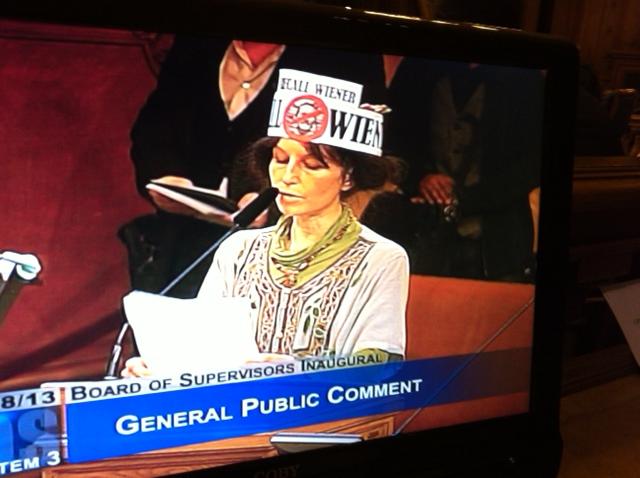
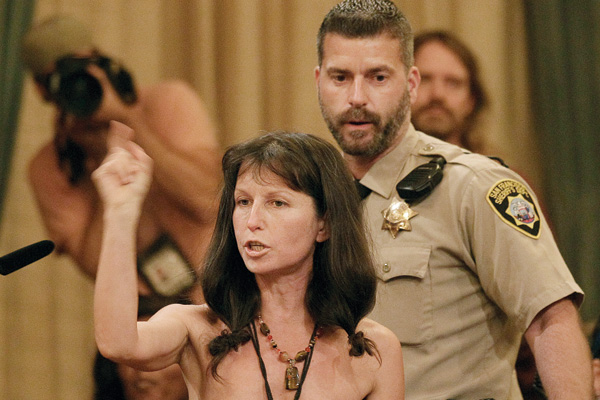
The most colorful moment in public comment was when nudism activist Gypsy Taub came clad in homemade hat that urged people to oppose and recall Sup. Scott Wiener. But because Wiener had already said he wouldn’t accept a nomination as president, she turned her criticism on Chiu, who was also slammed by another leftist speaker who told supervisors, “If you can’t prevent David Chiu from being president, we deserve to be slaves.”

Finally, the meeting included an unremarkable speech by Mayor Ed Lee, who pledged to work with each supervisor and offered this unsupported claim, “We continue to make sure this city is successful for everyone.”

Disappearing poles

5

steve@sfbg.com

Political dynamics on the Board of Supervisors moved into uncertain new territory this week with the inauguration of two new members -– London Breed and Norman Yee –- who break the mold in representing districts that have long been predictable embodiments of opposite ideological poles.

Breed and Yee are both native San Franciscans with deep roots in their respective districts, which they tapped to win hotly contested races against challengers who seemed more closely aligned with the progressive politics of Dist. 5 and the fiscally conservative bent of Dist. 7. Both tell the Guardian that they represent a new approach to politics that is less about ideology and more about compromise and representing the varied concerns of their diverse constituencies.

“I don’t see everything as a compromise, but I want to be sure we find compromises where we can and don’t let personalities get in the way,” said Yee, whose background working in education and facilitating deals as a school board member belies District 7’s history of being represented by firebrand opponents of the progressive movement.

Some of the strongest champions of the pro-tenant, anti-corporate progressive agenda have come from the Haight and Dist. 5, a role that Breed has no intention of playing. “When you talk about the progressives of San Francisco, I don’t know that I fit in that category,” Breed told us. “I’m a consensus builder. I want to get along with people to get what I want.”

Yet what Breed says she wants are housing policies that protect renters and prevent the exodus of African-Americans, and development standards that preserve the traditional character of neighborhoods against corporate homogenization. “I don’t see the difference between my causes and progressive causes,” she said, claiming a strong independence from some of the monied interests that supported her campaign.

We spoke a few days before the Jan. 8 vote for board president (which was scheduled after Guardian press time, and which you can read about at the SFBG.com Politics blog). Neither Yee nor Breed would tip their hands about who they planned to support -– the first potential indication of their willingness to buck their districts’ ideological leanings.

Breed had raised some progressive eyebrows by telling the Guardian and others that she admired moderate Sup. Scott Wiener and would support him for president, but she had backtracked on that by the time we spoke on Jan. 5, telling us, “I’m going into this with an open mind.

“I’m waiting on my colleagues to decide who has the most votes,” Breed said, ing a candid take on valuing compromise over conflict. “I really would like to see us walk into this all together.”

Yee had similar comments. “They’re all competent people and can be leaders, it just depends on where they want to lead us,” he said. “I value people who can work with anyone and see themselves as facilitators more than as dictators.”

Both Breed and Yee come from humble roots that they say give them a good understanding of the needs of the city’s have-nots. Breed was raised in the public housing projects of the Western Addition, an experience that makes her want to solve the current dysfunction in the San Francisco Housing Authority.

“I can’t tell you what needs to be done, but I can tell you something is wrong,” Breed told us. “My goal is to get to the bottom of it and be extremely aggressive about it.”

Yee grew up in Chinatown, his father an immigrant who worked as a janitor, his mother a garment worker. They later lived in the Sunset and the Richmond, and Yee moved into his district’s Westwood Park neighborhood 26 years ago.

When Yee was eight years old, the family saved enough money to open a grocery store at 15th and Noe, and he said that he basically ran the store in his teen years while his father continued working another job.

That was where Yee developed his deep appreciation for the role that small, neighborhood-serving businesses play in San Francisco. In an era before credit cards, he would offer credit lines to local customers struggling to make ends meet; that experience showed him how stores like his family’s were essential parts of the city’s social and economic fabric.

“That’s why I value small businesses,” Yee said, calling that his top focus as a supervisor. “They’re going to have a bigger voice now.”

Yee draws a clear distinction between the interests of small business and that of the larger corporations that dominate the powerful San Francisco Chamber of Commerce. Asked where he might have placed on the Chamber’s recent scorecard ranking supervisors’ votes — where Yee’s predecessor, Sean Elsbernd, got the highest marks — Yee said, “Probably not on their A list. They are just one entity in San Francisco and I’m not going to be judged just by them.”

At 63 years old, Yee is by far the oldest member of the youngest Board of Supervisors in recent memory, while Breed, at 38, is closer to the current average. Yee hopes his age and experience will help him forge compromises among all the supervisors.

“People draw their lines, but I try to listen to people and see where their lines are,” Yee said. “It’s a balancing act, but at the same time, there’s things I’ve been working on all my life, like education and safety net issues, and this district does care about those things. At the same time, they care about their homes. Are these issues in conflict? I don’t think they have to be.”

Behind today’s unanimous vote for Chiu

37

For all the high-minded talk about diversity and working together on behalf of the public – and the relentless praising of their political colleagues and supporters – today’s unanimous re-election of David Chiu as president of the Board of Supervisors once again demonstrated that much of the people’s business is done behind closed doors.

As most of the supervisors acknowledged publicly or in comments to the Guardian, in recent days there was a flurry of meetings about the president vote among the supervisors, despite the prohibition in the state’s Brown Act against “seriatim meetings,” in which elected officials have serial meetings with each other until an quorum of supervisors has illegally discussed some topic.

How else could Malia Cohen, Jane Kim, and Scott Wiener – all hopefuls for the president’s seat who withdrew themselves from consideration before a vote was cast – have all known that Chiu had the votes he needed to win an unprecedented third consecutive term? But they did know, as they all told the Guardian.

“The reality was the support wasn’t there,” Cohen told reporters after the vote when asked why she withdrew her nomination just before the supervisors were about to vote, just after Kim had done the same thing, leaving Chiu as the sole nominee.

I asked whether she was promised anything in return for withdrawing from consideration, and Cohen said, “There’s always negotiations involved in everything, from committee assignments to appointment to regional bodies…The full story will come out later.”

Cohen even obliquely suggested that Chiu – who is known to have his sights set on Tom Ammiano’s Assembly seat, which comes open in two years – may not serve his full two years as president and that was part of the backroom discussions. In the more immediate future, Cohen said she wants to serve on the Land Use Committee, so don’t be surprised if Chiu appoints her as chair of that powerful body.

“It may seem like a small setback today, but it sets the stage for greater conversations going forward,” Cohen said of her decision to voluntarily step down.

Kim also told reporters that she knew Chiu had the votes – saying “we know there was broad support for David for another term” – and that the decision that she and Cohen made to nominate one another was mostly symbolic, intended to make a point about the need for women of color to be in leadership positions: “I thought it was important that we put the dialogue out there.”

Kim said she really appreciated the opportunity to speak with more fellow supervisors privately in the last few days than she had before. “All of this was last minute. There were really only discussions in the last three days,” Kim told me. “I got a good sense of people’s policies and priorities.” As for Kim’s priorities, she said she wants to serve on the Budget Committee, so don’t be surprised when Chiu names her as chair.

Wiener also told me that he realized a couple days ago that he didn’t have the votes but that Chiu did. “It would have been an honor to serve as board president, but it wasn’t in the cards,” Wiener said.

Some of what the cards showed was made clear as the nominations for president opened today and new Dist. 7 Sup. Norman Yee spoke first and nominated Chiu, thus making it clear that Kim probably didn’t have the six votes she needed. As former Sup. Chris Daly, a veteran vote counter, told me, “Norman Yee and Eric Mar could have made Jane Kim board president. They were the deciding bloc, but it would taken both of them.”

Yet Mar told us that he was caught off guard by how the voting unfolded today. “I was surprised that people dropped out before the vote,” he told me.

Yet he acknowledged that it was perhaps a smart move by the progressive supervisors, who voted against Chiu two years ago and were punished with bad committee assignments, to instead get behind Chiu now and hand him a unanimous victory.

“I think that was the hope when people dropped out. It would have been hard if they didn’t, but these negotiations [with Chiu over committee assignments] will go on over the next few days,” Mar said, noting that he will push for strong representation by supporters of labor and other progressive constituencies on key committees.

Asked about his negotiations with fellow supervisors, Chiu would only say, “My conversation with everyone was very consistent.” As for his pending decision on committee assignments, he told me, “We have a board that is very diverse and we’ll have committees that reflect that.”

During his speech in Board Chambers, Chiu talked about running the board in a way that would let each supervisor have her/his moments in the spotlight to provide leadership on issues they care about, comparing it to the San Francisco Giants and the contributions that so many players made to their World Series sweep.

“They took turns making the big plays,” Chiu said, going on to tick off the list of how he’ll help his colleagues shine. “Whether it’s Sup. Mar advocating for a healthy environment, Sup. Farrell addressing out looming health care costs, whether it’s Sup. Chu disciplining our budget, Sup. Breed getting the jobs that young people need, Sup. Kim making sure that all our kids graduate, Sup. Yee making sure that small businesses succeed, Sup. Wiener fighting for better transportation options, Sup. Campos fighting against wage theft, or Sup. Cohen curbing gun violence, and Sup. Avalos delivering on local hire, by the end of our season, if we’re going to help each other succeed in getting these things done, we are all going to win.”

Lamebows 2013

0

marke@sfbg.com

POODLES ON PARADE Marriage, the military, nudity bans, Bravo TV: queople, why must we torture ourselves! It’s true that we are everywhere, lurking even in the aeries of stupid-headedness. But queen, please, put down that can of mentally challenged and back slowly away in your new cha-cha heels. Here I am once again to call my people out for their foibles of faggotry with the annual Lamebow Awards. Even in a banner year for LGBT wins, we still clutched a Gucci full of dumb.

The cliches write themselves: My Dearest Scott Wiener, I write this not as someone who disagrees profoundly with your “moderate” politics or your collection of Banana Republic v-neck sweaters. I write this because, this year, a supervisor named Wiener, representing the Castro, got so obsessed with a few naked guys that he rammed through a nudity ban (oh, and a bunch of other awful stuff, too) that made national news. I have to talk to my relatives back East about all this. My great-aunt-in-law almost choked to death on her turkey from laughter. Please stop.

Not helping: Mountain-out-of-molehill blogger Michael Petrelis in turn became obsessed with Wiener’s penis, attempting to snap a pic of the Supes’ member at a City Hall urinal. Not making this up. Nor this: it took too long for Petrelis’ camera from the ’90s to warm up, so he only managed a shot of Wiener brushing his teeth, post-pee. Petrelis is being sued by Wiener.

Seriously not helping though: In August, 28-year-old Floyd Corkins II, a former LGBT center volunteer, attempted to storm the Washington, DC headquarters of the Family Research Council (recently and correctly categorized as a hate group by the Southern Poverty Law Center), shooting a security guard.

You just helped, actually: We never knew we should be boycotting Sodastream products because they are manufactured in illegal Israeli settlements on Palestinian land. But thanks to a widely viewed YouTube video — in which it appears a peaceful Code Pink protest inside Sodastream-carrying Cliff’s Variety in the Castro is violently broken up by hysterically screaming Cliff’s employees — we know! Troll is successful.

The fact is, you’re late: “The fact is, I’m gay,” Anderson Cooper wrote to blogger Andrew Sullivan by way of coming out. Anderson Cooper is the Clay Aiken of our generation.

The fact is you’re veeery late: As her 50th birthday approached, Kristy McNichol came out. “She hopes that coming out can help kids who need support,” said her publicist. There are no kids who know who Kristy McNichol is.

And you’re just trapped in a closet full of spray-on hair forever now: Many, many of John Travolta‘s male masseurs “opened up” about his happy endings. His response? A horrifying Christmas album reunion with Olivia Newton John full of the most awkward sexual metaphors ever. Greased lightning!

Freedom to fly, to fail: Director Lena Wachowski came out beautifully, vocally, and powerfully as a transgender person with deep thoughts about the nature of sexual identity. Too bad Cloud Atlas had me rolling my eyes to the high heavens.

Hide your buns, hide your wings: Reviving his meme career somewhat, Antoine Dodson said she was gonna eat Chik-fil-A anyway. Well-played.

I’m sorry: Castigating Log Cabin Republicans is easier than finding Anderson Cooper on Grindr, but watching them bend over backwards to justify supporting the Tea Party party when even our president had “evolved” on gay marriage was a real hoot. Especially because they had to say “fiscal” so many times.

All of us: While we were all arguing over gay shit (as usual), a young musical genius named Frank Ocean quietly erased the goalposts and went public with his generation’s sublime, amorphous “meh” about sexual labels. Let’s catch up.


White men behaving (very) badly

69

Could it be — the worst year ever?

I keep asking. And every time the Offies come around, I find myself boggled yet again. Our awards for the very worst — the dumbest, the most tasteless, the most truly offensive acts of the year past — keep sinking lower and lower.

But what can we do? There are still Republicans, and this year a lot of them ran for high office, and every single one made a fool of himself. There are still politicians who think you can run for San Francisco supervisor even if you live in Walnut Creek, and elected leaders who find the courage deep in themselves to prevent a bunch of old men from walking around with their sagging asses and limp dicks out.

There are still entertainers who punch psychics, and gun nuts who blame mass murder on TV sex, and … well, a whole lot of people who have made this a banner year for the Offies.


SUPPORT OUR BRAVE, HEROIC TROOPS! (EXCEPT THE MEN WHO FUCK MEN)

The audience at a Republican presidential primary debate booed a gay solider who called in from Iraq with a question about don’t ask, don’t tell.


FROM A GUY WHO HAD TO BUY OXYCONTINS AND VIAGRA ON THE STREET, THIS SORT OF THING IS AN OBVIOUS CONCERN

Rush Limbaugh attacked law student Sandra Fluke, calling her a “slut” and a “prostitute” because she testified that health-care plans should cover contraceptives.


THERE ARE MEN SO BRILLIANT THAT WE STAND IN AWE OF THEIR INTELLECT

Mitt Romney said he really liked Michigan because the trees were all the right height.


GIVING NEW MEANING TO THE 1 PERCENT

Herman Cain proclaimed that for every woman who claimed he sexually harassed her, there were a thousand others who didn’t.


IF WE WANTED A DRESS CODE ON AIRLINES, WE’D START WITH THOSE DREARY PILOT UNIFORMS

An American Airlines pilot kicked a woman off a flight for wearing a shirt that said “if I wanted the government in my womb I’d fuck a senator.”


PROBLEM IS, BUSH MADE THAT ONE A CABINET-LEVEL POSITION

Rick Perry proclaimed in a debate that he was going to do away with three agencies of the federal government, but after listing Commerce and Education, he couldn’t remember what the third one was, identifying it only as “oops.”


FOR SOMEONE WHOSE NAME MEANS ASS-CUM JUICE, THAT’S A REALLY PRETTY PICTURE

Rick Santorum said that he’d listened to John F. Kennedy’s speech on the separation of church and state and it made him want to throw up.


LOOK! UP AT THE RAMPARTS! THE MAN WITH THE HAIR!

Donald Trump, mistakenly believing Romney won the popular vote but lost the election, called the election “a sham and travesty” and called for “revolution.”


BUT HE COULD HELP THEM OUT WITH A FEW BINDERS FULL OF WOMEN

Romney insulted the British by saying the nation didn’t appear ready to host the Olympics.


FINE, JUST TAKE RICK PERRY WITH YOU

More than 50 thousand people signed a White House petition asking for permission for Texas to secede.


GUNS DON’T KILL PEOPLE, ATHEISM AND OVERSTIMULATED GLANDS DO. HAPPY FRIDAY, SHOOTERS!

On the same day that a gunman opened fire at a showing of the Dark Knight movie in Colorado, the National Rifle Association’s magazine sent out a tweet that read: “Good morning, shooters! Happy Friday.”

A Congressman from Texas, Louie Gohmert, argued that the Dark Knight shootings happened because of “ongoing attacks on Judeo-Christian beliefs.”

Mike Huckabee blamed the massacre in Newtown, CT on atheism. “We ask why there is violence in our schools, but we have systematically removed God from our schools,” Huckabee said on Fox News. “Should we be so surprised that schools would become a place of carnage?”

Timothy Bordnow at Tea Party nation said the shooting was caused by too much sexual stimulation in the media . “There is a reason why young people commit these sorts of crimes, and sex plays no small part. Their passions are eternally inflamed, and they wander the Earth with no outlet for their overstimulated glands.”

Megan McArdle, the Daily Beast writer, urged the victims of mass shootings to gang-rush the shooter so he wouldn’t kill as many people.

The head of the National Rifle Association said the only way to stop mass murders of school children is to post armed guards in every school.


WOW — THE DISTRICT 8 SUPERVISOR HAS BEEN OVERWHELMED BY A COUPLE OF OLD MEN’S FLACCID DICKS

Sup. Scott Wiener promoted a ban on public nudity in San Francisco.


WHEN YOU’RE A MAJOR LOSER, EVEN MONEY CAN’T BUY YOU LOVE

Michael Breyer, who has never been elected to anything, spent roughly $1 million trying to win a state Assembly seat as the candidate of “traditional San Francisco values,” and lost badly.


AND THESE PEOPLE ARE COOPERATING WITH HOMELAND SECURITY?

Confetti thrown in the Giants parade turned out to be lightly shredded internal police documents that included home addresses and social security numbers of officers.


GUESS IT’S OKAY TO PERJURE YOURSELF IF YOU’RE THE MAYOR

Mayor Ed Lee testified under oath that he’d never discussed the Ross Mirkarimi case with members of the board of Supervisors, although friends of Sup. Christina Olague said she’d been open about her talks with the mayor on the topic.


NOW, WHICH ONES ARE THE IRON MONSTERS OF DEATH?

A San Francisco bicyclist who was allegedly trying to beat a speed record crashed into and killed a 71-year-old man in the Castro.


UNFORTUNATELY, THERE’S NO MALPRACTICE STATUTE GOVERNING THAT AUGUST PROFESSION

Political consultant Enrique Pearce oversaw perhaps the worst district election campaign in history, helping Olague become the first incumbent ever to lose in ranked-choice voting in SF.


SOMEHOW, REPRESENTING WALNUT CREEK AT CITY HALL DIDN’T SEEM LIKE SUCH A GOOD IDEA

Union official Leon Chow dropped his challenge to Sup. John Avalos when the SF Appeal revealed that he didn’t live in District 11, or even in San Francisco.


WHEN MEN ARE JUST TOTAL DICKS: THE GOP REDEFINES RAPE

1. Divine providence rape (Rick Santorum): “The right approach is to accept this horribly created .. gift of life, accept what God is giving to you.”

2. Honest Rape (Ron Paul): “If it was an honest rape, that individual should go immediately to the emergency room.”

3. Forcible Rape (Paul Ryan): Federal law should prevent abortion except in the case of “forcible rape.”

4. Emergency Rape (Linda McMahon): “It was really an issue about a Catholic Church being forced to issue those pills if a person came in with an emergency rape.”

5. Legitimate Rape: (Todd Akin): “If it was a legitimate rape, the female body has ways to try to shut that whole thing down.”


CALL IT BIEBER RAGE; IT’S DANGEROUS SHIT

After a Justin Bieber concert, Lindsay Lohan punched a psychic in the face at a New York nightclub, then threw her personal assistant out of the car.


YEP, AND IT DOESN’T LOOK ANY BETTER THE SECOND TIME

Romney’s campaign manager said that his candidate would change his right-wing positions for the fall campaign: “It’s almost like an Etch-A-Sketch. You can kind of shake it up and we start all over again.”


AND IF HE GOES WITH THEM, IT WILL ALL BE WORTH WHILE

Newt Gingrich proposed sending 13,000 Americans to the Moon and creating a new state there.


AND WE ALL WONDER WHY THE MEDIA IS DOING SO SMASHINGLY WELL THESE DAYS

After Gabby Douglas became the first black woman to win the Olympic gold medal in all-around gymnastics, the news media reported on problems with her hair.


AND YOUR VIEW OF THE WORLD IS OVER, OVER, OVER, OVER

Justice Antonin Scalia, in defending his argument that sodomy is legally equivalent to murder, told law students at Princeton that the Constitution is not a living document, it’s “dead, dead, dead, dead.”


MAKES YOU WONDER ABOUT THE POOR SOUL WHO CAME IN AT 99

Kim Kardashian fell 90 places, to 98, on AskMen Magazine’s list of the worlds 100 most desirable women.


SADLY, “GOTTA CATCH ‘EM ALL” DOESN’T MAKE SUCH A GREAT CAMPAIGN SLOGAN

Herman Cain said his life’s philosophy came from a Pokemon song.


WE’RE GLAD THAT HIS FAITH HAS GIVEN HIM SUCH AN UPLIFTING ATTITUDE

Romney said he’s “not concerned about the very poor.”


HE WAS PROBABLY SHITFACED, TOO, BUT SINCE HE DOESN’T DRINK HE CAN’T REMEMBER THAT EITHER

Romney said he didn’t remember beating up a gay student at his prep school and cutting off his long hair.


IT’S A GOOD THING MONDAY NIGHT FOOTBALL ISN’T LOOKING FOR ANOTHER JOHN MADDEN

A full 78 percent of Americans thought Ryan Seacrest was doing a good job broadcasting from the Olympics, although most of them couldn’t figure out what he was actually doing.


HE ALSO TOLD US THAT TAX CUTS AND DEREGULATION WOULD IMPROVE THE ECONOMY, SO HE’S GOT A WINNING RECORD HERE

Karl Rove on election night kept insisting the Romney still had a chance to win.


TALK ABOUT A BLOWN COVER

David Petraus resigned as CIA director after an affair with a woman who was threatening another woman who might have had a thing for him.


TOO BAD — HE MIGHT HAVE HAD TO SEEK ASYLUM IN THE NEW REPUBLIC OF TEXAS

A petition to allow every American to punch Grover Norquist in the dick was removed from the White House website.


WE’RE WITH THE GOVERNMENT OF BELIZE; THIS MAN IS “BONKERS”

One-time software mogul John McAfee fled Belize claiming the cops would persecute him after he was sought for questioning in the shooting death of his neighbor — using a body double, faking a heart attack, pretending he was crazy, and winding up in Miami.


IT SUCKS TO BE STINKING RICH AND OWN FOUR HOUSES AND HAVE TO LIVE WITH REJECTION

Ann Romney was deeply depressed that her husband didn’t win the election, telling friends she though it was their fate to move into the White House.


AND WHEN ASKED IF SOMEONE THAT MORONIC COULD ACTUALLY RUN FOR PRESIDENT, HE SAID “I’M A REPUBLICAN, MAN”

Marco Rubio, when asked about the age of the Earth, said “I’m not a scientist, man.”


EASY — THE ONES WHO ARE GETTING PAID ARE THE ONES PRETENDING TO BE INTERESTED IN NASTY OLD FRENCHMEN

After Dominique Strauss-Kahn was held overnight in Lille to be questioned about possible connections between a prostitution ring and orgies he attended in Paris and Washington, his lawyer said: “I challenge you to distinguish a naked prostitute from any other woman.”


DUDE — THAT’S THE TERRITORY OF SERIOUS LOSERS

Vice-presidential candidate Paul Ryan lied about his time in the marathon.


GO AHEAD, CLINT — MAKE OUR DAY

Surprise guest speaker Clint Eastwood addressed GOP convention delegates for 12 minutes, during which he carried on an imagined dialogue with an empty chair he identified as President Obama.


AND YES, HE DID GET A FAIR AMOUNT OF THE STUPIDITY VOTE

Santorum told a gathering of conservatives in Washington, “We will never have the elite, smart people on our side.”

The next board president

9

EDITORIAL The president of the Board of Supervisors does more than bang the gavel at meetings, tell people to put their clothes back on, and run for higher office. It’s a powerful position largely because the president makes appointments — to the Planning Commission, the Police Commission — and unilaterally decides who serves on which board committees.

Two years ago, Sup. David Chiu, who won the top post in 2009 with progressive support, wanted re-election, and the left wasn’t siding with him anymore. So he cut a deal with the conservative members, appointing the right-wing of the board to plum committee posts — and making life harder for progressives who wanted to pass Legislation or prevent bad developments from happening.

He clearly likes the job and would love to hold it for a third term. But that won’t be easy — Sup. Scott Wiener, who is to the right of Chiu on many issues, is also interested, as is Sup. Jane Kim, who has always been close to Chiu, and Sup. David Campos, who is one of the leading progressives. None of the candidates can count to six right now, so somebody’s going to have to back down or make a deal.

And before that happens, the candidates ought to tell us something about what they plan to do.

Chiu’s 2011 committee appointments were a bit of a shocker, although, in retrospect, the horse trading shouldn’t have surprised anyone. In fact, after he made his decisions, and put Carmen Chu, one of the most conservative supervisors, in charge of the Budget and Finance Committee and put the conservative Scott Wiener and the moderate Malia Cohen on Land Use and Economic Development, and put conservative Sean Elsbernd in charge of two committees, he told us that he felt he had no choice. If the progressives had voted for him, he wouldn’t have had to reward the conservatives.

This time around, with two new supervisors taking office (a more centrist Norman Yee replacing Elsbernd and a more moderate London Breed replacing Christina Olague) everything is up in the air. The progressives still have a solid three votes, and can sometimes count on Jane Kim and Chiu. That’s not enough to elect a president, but it’s coming pretty close.

Based on experience, skills, and temperament, our first choice for board president is Campos, who would be fair to everyone, approachable, and a voice for open government and community participation. But if Campos can’t get six votes, he and his progressive colleagues should ask anyone who want their support to be open about what he or she plans to do.

Who will be on the budget committee? Rules? Land Use? Where will he or she look for candidates for commissions? We know it would look unsightly if, say, Chiu named in advance his preferences for key committees — and then those people voted for him. But the reality is, those discussions are happening anyway, those deals being cut — and it’s happening behind closed doors, where the public (and the other supervisors) can’t watch.

Let’s bring all of the discussions into the sunshine, and have an open debate about the next board president.


The new board president

204

The last time the San Francisco supervisors elected a new board president, the progressives got a swift kick in the ass. David Chiu, who had been elected to the top slot two years earlier with the unanimous support of progressives, disappointed some of his allies and wasn’t going to get their votes. But he wanted to keep his job, so he turned to the conservatives — and with the support of the folks on the right, he won another term. The he turned around and put the center-right folks in charge of some key committees. Price of the deal.

Now he’s looking for a third two-year term — but this time there aren’t any easy alliances. Several of his colleagues are also in the running, from across the political spectrum. And nobody right now has the magical six votes.

Scott Wiener on one side, David Campos on the other, Jane Kim closer to Chiu … somebody’s going to have to back down or cut a deal. And that’s where these things tend to get squirrly.

Me, I think Campos would be perfect for the job, not only because I agree with him most of the time but because he’s reliable, fair, and cares about public empowerment and input. That wouldn’t be to Chiu’s advantage — the two are likely to be facing off in a tough state Assembly contest when Tom Ammiano is termed out in two years, and the last thing Chiu would want is to have his rival in such a high-profile spot. So it’s not likely either of those two will be voting for the other.

I haven’t always agreed with Kim, but she’s more on the progressive side than not, and she’s really smart. You could see that as she took apart the city attorney’s arguments during the Ross Mirkarimi debate. Wiener has one of the most ambitious legislative agendas of any current board member and has proven to be an effective (sometimes dangerously effective) politician.

Wiener can probably get votes from the most conservative side, Mark Farrell and Carmen Chu, and might be able to line up, say, Malia Cohen and possibly even newcomer London Breed. But that’s not six — and that assumes that Chiu doesn’t make a play for those votes the way he did last time. Campos will get the progressives (John Avalos and likely Eric Mar), but that’s not six either. And with Kim and Chiu going after some of the same people, nobody’s going to come close in the first round.

That is, unless somebody cuts a series of backroom deals.

So my suggestion is this: Let’s demand that all of them tell us up front who they would put on which committees. Sure, it looks like pandering if Wiener promises Budget and Finance Chair to Cohen, who then votes for him — but that stuff is going to happen anyway, and I’d rather have it out in the open.


The Muni vs. housing clash

73

OPINION Two votes at the Board of Supervisors and the Municipal Transportation Agency Dec. 4 laid out a stark contrast between two different approaches to transportation advocacy — one based on a sense of justice and the idea that public transit is an issue of equity, and another based on the self interest and transactional politics of a cash-strapped transportation agency and its dedicated allies.

After years of work, organizing transit riders and talking to policy makers from the local to the regional levels, a scrappy group of transit justice advocates, many of them young, most of them people of color, got the Municipal Transportation Agency board to approve a $1.6 million plan to fund free Muni passes for low-income youth. It sent a strong message that a new kind of transportation advocacy has arrived, one that puts race, class, and environment at the center.

Meanwhile, a separate vote was taking place at the Board of Supervisors that seemed to pit community organizations, nonprofit service providers, and affordable housing developers on opposite sides of the fence from what has become a mainstream transportation and bicycle advocacy community.

We should have been on the same side. But a last-minute maneuver by Sup. Scott Wiener to add to the MTA’s strained budget (a worthy goal) by expanding the 30-year Transportation Impact Development Fee (TIDF) to include nonprofits that provide critical services in our neighborhoods backfired and sent his amendments out the door in a 9-2 vote.

Many transportation and bicycle advocates seemed incredulous that the rest of the world did not accept their arguments.

I consider many of these transportation advocates friends and acquaintances whom I have known and worked with for years. But rather than seeing themselves as part of a greater social justice movement rooted in the communities who are most affected, some of these advocates have become increasingly narrow in their scope, single-minded in their pursuit of funding for bike lanes and bulbouts, as well as rapid transit projects serving downtown commuters.

Real-world politics requires that activists, organizers, and policy advocates be flexible and willing to figure out how to work with others very unlike themselves. Recently an organization I work for was able to work in a broad coalition, convened by the mayor, to develop and campaign for a Housing Trust Fund to create a permanent source of funding for affordable housing, as a direct response to the State of California taking away the city’s housing budget when it dissolved the redevelopment agencies. We walked into the room knowing that we would have to make tough decisions, and have to take those back to our allies in the progressive movement.

But we also walked in with non-negotiables. We were not going to entertain any attempt at weakening rent control by tying the Housing Trust Fund to lifting the condo conversion lottery. We would not support a set-aside without increasing city revenue to support not just our housing trust fund but also critical health and social services. We do not screw over our broader movement for pure self-interest.

We stand at a crossroads, and we could very well end up with two different transportation advocacy communities, both talking about the same thing, but with very little to say to each other. As the old mineworker’s song used to say, it’s time to decide: “Which side are you on?”

Fernando Martí works at the San Francisco Information Clearinghouse

Meet your weiner: Sammy Davis reps the Bay in national dachshund races

5

December 27th, friends. That is the day that Sammy Davis competes for our honor. Davis is a weiner dog, winner of this year’s regional Wienerschnitzel Wiener Nationals (which took place during half-time of a Warriors game on November 24th, in case you missed it.) We scored an interview with his owner Sabrina Seiden, who along with partner Patrick Major is currently rubbing Davis’ tiny shoulders in preparation for December 27th’s Holiday Bowl in San Diego, where their pup — the 2007 national champ, fancy! — will expend every drop of energy in his wirey little body in pursuit of bringing home the top honor for the Bay. 

San Francisco Bay Guardian: What kind of wiener is Sammy Davis? How did you know he was a winner?

Sabrina Seiden: Sammy Davis is a Double Dapple black and tan Tweenie. Tweenie means he is in between a standard and mini size. We knew he was a winner when we picked him because of his determination and alpha personality.

SFBG: How did you guys prepare for the race? Give me your game day routine.

SS: Certain secrets cannot be revealed, but we’re willing to let you in on a few tips. To train for the Wienerschnitzel Wiener Nationals, Patrick does a series of conditioning activities with Sammy Davis, which includes practicing running out of his kennel using his favorite squeaky ball as bait. The week of the race, we stop training to build up his energy and eagerness to see his toy ball again. On game day we make sure he eats two hours before the race and we have motivational talks with Sammy Davis to get him pumped up. As soon as we dress him in his Wienerschnitzel Wiener Nationals race vest he’s ready to go!

SFBG: Narrate the race itself for us.

SS: I hold Sammy Davis while Patrick waits at the finish line with the squeaky ball. Now remember, it’s been a week since Sammy Davis has seen his favorite toy so he’s more than eager to dash down the race track. During the qualifying heat, Sammy Davis was really squirmy and focused on Patrick and his ball. I could barely hold him and thought he would jump out of my arms. When I placed him in the Wienerschnitzel Wiener National starting gates, he was determined to get to his ball once again. I leaned down and told him “go, go, go!” and he shot out and won his heat. Patrick noticed that the other dogs hadn’t even left the box and Sammy Davis was already three quarters of the way down the track.

Winning form: Sammy Davis on his November 30th gameday

During the final race we were both worried he wouldn’t run because it was so loud in the stadium, and he was shaking. Sammy Davis doesn’t like loud noises and tends to want to run and hide. We gave him our pep talk to keep him focused. I put him in the Wienerschnitzel starting gates earlier than usual to make him feel more secure and help settle his nerves. When Patrick watched him down at the other end of the track Sammy Davis had a determined look, which gave Patrick reassurance that he was going to be the champion!

Now it’s times to train for the Wienerschnitzel Wiener National Finals in San Diego! This is Sammy Davis’ second trip to Southern California. Warm weather and the $1,000 grand prize will be the perfect way to ring in the New Year.

SFBG: Where does Sammy hope to go with his career? What does success look like for him?

SS: Success to Sammy Davis is making people happy. Sammy Davis is an example of how dogs can help their owners overcome tough times with the comfort of their unconditional love. Patrick was sick for a long time and Sammy Davis’ companionship was key to his recovery. Sammy Davis and Patrick are a winning team on and off the Wienerschnitzel race tracks.

Patrick Major and Sabrina Seiden (right) with a boatload of cash and their intrepid canine Sammy Davis

SFBG: Does Sammy Davis eat wieners?

SS: Sammy Davis is on a strict dog food-only diet, but he does love to steal bagels with cream cheese when he can.

SFBG: What does he think of Scott Weiner’s recent nudity ban?

SS: We’re so proud of Sammy Davis’ accomplishments at the Wienerschnitzel Wiener Nationals and think a little exposure of our winning wiener doesn’t hurt anybody.

Final step?

4

steve@sfbg.com

President Barack Obama is fond of reciting the Martin Luther King Jr. quote, “The arc of history is long, but it bends toward justice.” On the issue of marriage equality, that arc looks more like a zig-zagging path that began when San Francisco unilaterally began issuing marriage license to same-sex couples just before Valentines Day in 2004 and ending — its backers hope — in June 2013 with the US Supreme Court affirming the basic constitutional right of everyone to marry whomever they want and to have those marriages treated equally under the law.

“We’ve seen the ups and the downs, the highs and the lows,” said City Attorney Dennis Herrera, who has watched court injunctions blocking marriages by the city, the California Supreme Court ruling that the ban on same-sex marriage violated the state constitution, the 2008 vote amending the constitution through Proposition. 8, and the Ninth Circuit Court ruling that the measure violated federal equal protection standards.

Yet few officials or legal experts are willing to predict with any certainty that this long and winding road will end with a definitive conclusion in June. In fact, Herrera and other same-sex marriage supporters expressed disappointment Dec. 7 when the Supreme Court announced it had decided to review the Ninth Circuit Court ruling that Proposition 8 was unconstitutional.

Letting the ruling in Perry v. Brown stand would have re-legalized same-sex marriages in California, which would have joined the nine other states and the District of Columbia as places where it’s legal for gays and lesbians to get hitched. Yet in taking the case — along with U.S. v. Windsor, which challenges the Defense of Marriage Act and its prohibition on recognizing the inheritance law and tax code rights of same-sex spouses — the court could issue a landmark civil rights ruling striking down all laws that discriminate against same-sex couples.

That’s the hope of California Attorney General Kamala Harris. “Are we a country that is true to its word and true to its spirit, or not?” was how Harris framed the question at a Dec. 7 press conference with Herrera. She focused on the basic equal protection argument and the need to “stand for the principle that we are equal and we will be treated that way.”

Herrera, who had just gotten off a conference call with lead attorneys Theodore Olson and David Boies and the rest of the advocates who are defending same-sex marriage, told reporters that the main goal was a broad ruling: “Ted Olson has made it clear he’s going to make a very broad argument.” Yet the Supreme Court could also issue a narrow ruling, extending the twisty path of this issue.

As for reading the tea leaves, Deputy City Attorney Terry Stewart, who has litigated the city’s position since the beginning, said she doesn’t think anyone knows how this case is going to be resolved — not even the Supreme Court justices themselves. “I don’t think they know, to be honest with you,” Stewart said when asked whether taking the Perry and DOMA cases indicate a willingness to finally settle the broad question of whether same-sex couples should be treated equally to heterosexual couples.

She noted that the Supreme Court waited until the last minute — its decision had initially been expected on Nov. 30 — to decide to take the cases: “They took a long time, so clearly they’re wrestling with it.”

Like many observers, Harris speculated that Justice Kennedy is the likely swing vote if the court reaches a 5-4 ruling on the issue, and some have speculated that Chief Justice Roberts could also be a surprisingly liberal vote on the issue, as he was earlier this year in upholding Obamacare. And the advocates say their optimism is reinforced by the long and meticulous case for marriage equality that advocates put together in the courtroom of federal Judge Vaughn Walker, whose 2010 ruling the Ninth Circuit upheld.

“We worked really hard to put in the best possible case,” Stewart said, while Herrera said, “I can think of no better case to take up than this case…The confidence level of all of us is high.”

Yet even if it turns out that there are a few more turns to navigate before justice prevails on what Harris called “the civil rights struggle of our time,” the advocates are pledging to win marriage equality in California next year, even if that means going back to the ballot. “We’re going to win this fight one way or another,” Sup. Scott Wiener said at the press conference, with Sup. David Campos later adding, “the question is whether the Supreme Court chooses to be on the right side or history or the wrong side of history.” It was a theme that Lt. Gov. Gavin Newsom — who started us down this path with his unilateral decision as mayor to issue marriage licenses to same-sex couples — echoed in public statement he released: “Today’s announcement starts the clock towards the final decision for California. History will one day be divided into the time before marriage equality and the period that follows. And thankfully, we will be on the side of history worthy of being proud of.”

Herrera and other officials disappointed but hopeful as Supreme Court takes marriage equality case

7

City Attorney Dennis Herrera, Deputy City Attorney Theresa Stewart, California Attorney General Kamala Harris, and other officials who held a press conference at City Hall today admitted they were disappointed that the US Supreme Court has decided to review the Ninth Circuit Court ruling that Proposition 8, the 2008 measure banning same-sex marriage in California, was unconstitutional.

“But we can’t let that obscure the tremendous progress that we’ve made in California on marriage equality,” said Herrera, who has been at the center of a struggle that began in 2004 when then-Mayor Gavin Newsom decided the city should begin unilaterally issuing marriage licenses to same-sex couples, in defiance of state and federal law.

“I’d be lying if I didn’t say I was a little disappointed,” said Stewart, who has been the city’s main litigator on the issue as it moved through court injunctions blocking marriages by the city, the California Supreme Court ruling the ban on same-sex marriage violated the state constitution, the vote amending the constitution through Prop. 8, and the Ninth Circuit ruling Prop. 8 violated federal equal protection standards.

Herrera and Stewart both expressed confidence that the Prop. 8 case that the Supreme Court will review, Perry v. Brown, was put together in a solid, meticulous way that will make it difficult for the US Supreme Court to disagree with the Ninth Circuit conclusion. “We worked really hard to put in the best possible case,” Stewart said, while Herrera said, “I can think of no better case to take up than this case…The confidence level of all of us is high.”

They also expressed hopes that the strategy of lead attorney Theodore Olsen to make broad arguments that any legal distinctions denying rights to homosexuals are unconstitutional – as opposed to the city’s more narrow approach that Prop. 8 doesn’t pass legal muster, which Herrera called “complementary” to Olsen’s approach – would be successful in making this case a definitive civil rights victory.

“Are we a country that is true to its word and true to its spirit, or not?” is how Harris framed the question, focusing on the basic equal protection argument and the need to “stand for the principle that we are equal and we will be treated that way.”

She and others called this “the civil rights struggle of our time,” and they pledged to win this issue now, no matter what. “I am optimistic that we’re going to win at the Supreme Court,” Sup. Scott Wiener said, pledging to win the right to marry at the ballot box even if the court doesn’t affirm that right. “We’re going to win this fight one way or another.”

Sup. David Campos, who is also gay, agreed that same-sex marriage will again be legal in California and “the question is whether the Supreme Court chooses to be on the right side or history or the wrong side of history.”

San Francisco’s slippery slope is chafing

71

By Nato Green

This week, the San Francisco Board of Supervisors passed a ban on public nudity on a party line vote. By “party line,” I mean the Supes voting against nudity are the ones who never go to parties with lines of coke or conga lines. I’m not saying every single one of the progressive supervisors could be found in the naked suntan lotion massage yurt at Burning Man, just that it’s conceivable.

The ban was proposed by District 8 Supervisor Scott Wiener, and supported by the “moderates,” who are Very Serious about sensible governance. First of all, anyone who ever made fun of Supervisor Eric Mar’s happy meal ban owes him an apology. Second, obviously all other problems in the City have been solved, which has freed up the Supes to kowtow to the whims of the gayeoisie.

People are worried about the effects of aggressive nudity on children, but fortunately we’ve gentrified all the families out of the City. Now we’ll have to export nudists to Solano County if we want kids subjected to them. At any rate, during a nippy San Francisco winter it’s vitally important for children to learn about shrinkage.

Nudity doesn’t necessarily harm children. I grew up in San Francisco. In the ’70s. Naked people were everywhere, bare and unshaven. I didn’t see a fully-clothed adult until I was nine. I didn’t see nakedness as sexual, so much as simply covered in naked. Partly because then, as now, the specific naked people were not easy on the eyes. Not to promote normative body images, but if Christina Hendricks and Ryan Gosling showed up naked, the ensuing celebration by all sexualities would make the Giants Victory Parade look like a tupperware party.

Worst of all, nudity was banned in the Castro. If there’s one neighborhood that arguably draws its spirit from the brandishing of genitalia, it’s the Castro. Harvey Milk did not march so his grandchildren could sequester the penis. It’s almost as if the City wanted to abolish hippies sitting on the sidewalk in the Haight-Ashbury. (Damn you, sit/lie.)

If we’re going to ban sitting on the sidewalk in the Haight and nudity in the Castro, here are more options for possible legislation to achieve the goal of draining our neighborhoods of their distinguishing features.

We should also ban:

  1. Bernal Heights—dykes with dogs.

  2. Mission—fixed-gear bicycles, ironic mustaches, and salvadoreños.

  3. Marina—entitlement.

  4. Richmond—Irish pubs with actual Irish people.

  5. Noe Valley—strollers and handmade baby food.

  6. Western Addition—Black people. Whoops. Too late.

Comedian Nato Green (writer for “Totally Biased with W. Kamau Bell” on FX) headlines the San Francisco Punchline December 19 and 20. Tweet him @natogreen

Left-right punch knocks out increased development fees for Muni

148

A new and unusual coalition of nonprofit, religious, and corporate interests today killed a legislative effort to get more money for Muni through the Transit Impact Development Fee, which was going through its process of being reauthorized every five years and came to the Board of Supervisors today.

The San Francisco Municipal Transportation Agency was hoping to get millions of dollars more per year from the fee to help cover the increasing costs of Muni service, so the city last year commissioned a study establishing a nexus between new development projects and their impact on the public transit system as a way to set the fees developers would pay.

Using that study, Sup. Scott Wiener sponsored legislation that increased the cost per square foot of development for some business types – mostly notably hospitals, big retail and entertainment complexes, and Cultural/Institution/Education facilities – and ended the categorical exemption for nonprofit organizations.

Those who could be impacted by the increased fees banded together into an organization calling itself NOTT (Non-profits Opposed to the Transit Tax), a group that included the city’s major health care providers, religious institutions, and influential nonprofits such as Council of Community Housing Organizations and Chinatown Community Development Center.

“We are gravely concerned that elements of the forthcoming Transportation Sustainability Program (TSP), especially elimination of the non-profit fee exemption, have been selectively imbedded in the TIDF update legislation. Elimination of the non-profit exemption has not been considered through a thorough and transparent process and is not good public policy,” SF Chamber of Commerce President Steve Falk wrote in Nov. 27 letter to supervisors on behalf of the organization.

In the face of opposition from both downtown and progressive groups, and hoping to get SFMTA more money for its next budget cycle, Wiener appealed for support to sustainable transportation activists, who had mixed feelings on the legislation for reasons ranging from its exemption of parking garages and development in Mission Bay to its inclusion of organizations serving low-income communities.

So Sup. Sean Elsbernd – who spoke on behalf of Catholic schools and churches – was able to amend the legislation back to the status quo on a 9-2 vote, with only Wiener and Sup. Carmen Chu opposed (Sup. Christina Olague, who co-sponsored the measure with Wiener, even failed to support it in the end).

While that ends this effort for now, it is really only the first round of efforts that are just getting underway to find more funding for Muni, which is underfunded and at capacity on many lines, and implement the TSP when it is unveiled next year.

Wiener charges blogger with taking potty photo

81

I don’t even know what to do with this except report it and tell you some background. Because it’s just strange, all around.

Short story: Sup. Scott Wiener’s pressing criminal charges against a blogger who tried to take a photo of him peeing in the City Hall men’s room.

Michael Petrelis, the mad-man blogger who once called me for several days straight in the middle of the night to scream “your wife has syphillis!” into the phone, was at City Hall Oct. 26 with gay Honduran activist Erick Martinez. At some point, he decided to go into the public restroom on the second floor — and noticed that Sup. Scott Wiener was in there, using the urinal.

Petrelis has been fighting with Wiener over a lot of issues, including the nudity ban and Wiener’s efforts to remove benches from the plaza at 18th and Castro, and on the issues, he’s been right. He has a history of demanding accountability from the LGBT power structure, sometimes in ways that are not exactly polite — but he’s still a valuable gadfly, and I’ve gotten over the insanity of the late-night calls (more on that below).

But in this case, Wiener was just trying to take a piss — and Petrelis lifted his phone and tried to take a picture. Wiener’s wiener, I guess. Supervisor taking a leak. I don’t know exactly what he was going after, but the phone didn’t work right and he couldn’t get the photo until Wiener had buttoned up his pants and moved over to the sink, where he was going to brush his teeth.

Instead, he saw Petrelis and picked up the brush and toothpaste and left — but not before the intrepid blogger snapped a pic, which wound up on the Petrelis Files blog. It’s not a terribly attractive or terribly scandalous photo; guy with a toothbrush. Whatever.
But Wiener was, well, pissed — and I don’t blame him. We were always taught that you can take journalistic photos without the subject’s permission in a place where people have no expectation of privacy; if there’s any place in the world where a reasonable person would expect privacy, the bathroom would seem to quality.

Wiener called the cops — or in this case, the Sheriff’s Office, since that’s who patrols City Hall.

Wiener’s been complaining (for no reason, really) about the way the deputy sheriffs have responded to the protests over his nudity ban (come on — the nudists really aren’t a threat to anyone). But he asked for an investigation, filed a statement, and got the department to take it seriously enough to bring the matter to the district attorney for possible prosecution.

And the DA has filed charges.

Petrelis surrendered and was booked Nov. 29 on suspicion of violating Penal Code Section 647 (j) 1, which is typically used to prosecute peeping Toms: “Any person who looks through a hole or opening, into, or otherwise views, by means of any instrumentality, including, but not limited to, a periscope, telescope, binoculars, camera, motion picture camera, camcorder, or mobile phone, the interior of a bedroom, bathroom, changing room, fitting room, dressing room, or tanning booth, or the interior of any other area in which the occupant has a reasonable expectation of privacy, with the intent to invade the privacy of a person or persons inside.”

Bail was initially set at $25,000, which is astonishingly high for this level of crime, but Petrelis and his lawyer, Derek St. Pierre, got it reduced and Petrelis was cited and released on his own recognizance.

Wiener’s not talking; his office sent over a statement detailing the facts of the case and stating that Petrelis … has political disagreements with me, has a history of inappropriate and harassing behavior.” Both of those facts are undeniably true.

St. Pierre, though, thinks this is a huge waste of criminal justice resources. “I’m surprised that the D.A.’s Office decided to charge this case,” he told me. “I don’t see this as illegal conduct.”

In fact, he said, “the most concerning part of the case is that Wiener references that face that they have political disagreements. That suggests to me that political differences are driving the supervisor’s concerns.”

Maybe — or maybe he thinks his privacy really was invaded, and that Petrelis needs to be held accountable, too. As I said, I can’t blame him; Petrelis was acting like a total asshole. You can fight with Wiener, as I often do, and you can make speeches and denounce and interrupt meetings at City Hall and do all manner of impolite protests, but Jesus — the guy deserves the right to take a pee in peace.

That said, I have to wonder: Is this really worth turning into a criminal case? Did Wiener really have to take it that far? Petrelis, who loves attention, isn’t going to back down. “We will be fighting this case,” St. Pierre told me, starting with an arraignment hearing Dec. 5, at which I can pretty much guarantee the plea will be “not guilty.”

So we might have a full-blown trial here, and (as a fan of restorative justice) I’m not so sure that the criminal courts are the best way to resolve this. You’d think they could go to Community Boards. Wiener could agree to personally lower the rainbow flag to half-staff every now and then and Petrelis could agree to clean pigeon shit off some newsracks. Or something.

Because I don’t imagine that even Wiener wants to take the stand in a public trial and face cross-examination by Petrelis. The only winners at that spectacle would be the reporters.

PS: I don’t even remember exactly why Petrelis started the late-night calls to my home phone; it was around the same time he was calling lots of other people. I think he was mad that the Guardian ran (or didn’t run) some kind of ad around the doctor who was in charge of STD control at the Department of Public Health. I think there was some report about syphillis among gay men in SF that Petrelis didn’t like. I just remember that my son was two years old and sick and we were having a hell of time getting him to sleep and just when he would finally nod off the phone would ring and Petrelis would yell at me about syphillis. I’d hang up and he’d call back ten seconds later and yell again. I finally paid the phone company $2 a month to block his calls.

I was not among those who sought a restraining order or went to the police; that’s not my style. I was furious, but I knew it would pass, and eventually it did.

So will this, Scott.

Our Weekly Picks: November 21-27

0

WEDNESDAY 21

Major Powers and the Lo-Fi Symphony

With manic energy and exploratory style, Major Powers and the Lo-Fi Symphony, has garnered a set of reviews likening the band to rock legends, including one extolling on its resurrection of the rock opera genre. With musician blood (Kevin and Dylan Gautschi, sons of Pamela Wood, bass player for Bay Area rock legends Leila and the Snakes) and years of practice (band leader Nicholas Jarvis Powers is a self-taught pianist and songwriter since the age of eight) this trio is well qualified for the praise. And true to the reviews, its intricate arrangements, harmonies, and general flair for the dramatic often channel the spirit of Queen’s Freddie Mercury. As MPATLFS is opening for the upbeat, danceable rock of Solwave, this show should be a great way to kick off your Thanksgiving weekend. (Molly Champlin)

With Solwave, Ressurection Men

$10, 8:30pm

Café Du Nord

2170 Market, SF

(415) 861-5016

www.cafedunord.com


Eats Everything

While Eats Everything may seem to have come out of nowhere in 2011 with the release of attention-seeking track “Entrance Song,” that’s a narrative that ignores the fact that Daniel Pearce had been plugging away as a DJ for quite some time. You can hear it in his omnivorous house sound, in which each bubbly two-step and jungle bounce seems to have carefully digested two decades of electronic music. Since his “debut” Eats Everything has released tracks for SF’s Dirtybird as well as high profile mixes for Resident Advisor and the BBC (which identified Eats Everything as a premiere artist in the rising, resurrected, heavy-heavy bass sound of Bristol, UK).(Ryan Prendiville)

With Ryan Crosson, Bill Patrick, KMLN, Little John, Rich Korach, Dax

9:30pm, $10–$15

Public Works

161 Erie, SF

(415) 932-0955

www.publicsf.com


Indigenous People’s Thanksgiving Sunrise Gathering.

In 1969, the Indians of All Tribes group staged an occupation of Alcatraz Island. After the prison closed, 79 America Indians successfully occupied the island for 19 days, demanding that the government return the land to American Indians with sufficient funding to build a university and cultural center. On the holiday that glosses over the bloodshed of Native American and colonial relations, this celebration should be a positive event that gives thanks to Mother Earth, but also recognizes the inequalities that are present in our society. All are welcome to hear the Native speakers talk about remembrance, gratitude, and the fight for equality. There will be performances by All Nations Singers and traditional Aztec, Pomo, and Pacific Island dance groups. Like the end of a vigil or celebration of new beginnings, the event will take place at sunrise, which should be a beautiful sight from the middle of the bay. (Champlin)

4:45am, $14

Alcatraz Island (Pier 33)

1398 Embarcadero, SF

(415) 641-4482

www.treatycouncil.org


“The JFK Assassination 49 Years Later”

Another murdered president is getting all the headlines lately, thanks to a splashy new Spielberg film — but the puzzle of John F. Kennedy’s untimely death, dramatized by Oliver Stone’s 1991 JFK, remains fascinating both onscreen and off for historians and (conspiracy) theorists. After you’re stuffed with Thanksgiving treats, waddle over to the Roxie for an epic discussion of all things Dealey Plaza and beyond. The evening is anchored by a JFK screening and features enough special guests to fill a presidential limousine, including CIA agent (and Watergate figure) E. Howard Hunt’s eldest son, Saint John Hunt, and Judyth Vary Baker, author of Me and Lee: How I Came to Know, Love, and Lose Lee Harvey Oswald. (Cheryl Eddy)

4:45pm, $10

Roxie Theater

3117 16th St., SF

jasondove.com/jfk/JFKEVENT.html


Henry Rollins

Ah, Thanksgiving. The one time a year you get to set aside all your stress, take the day off, and spend some good quality time with Henry Rollins. Tell your aunties you won’t be bringing the stuffing — you have bigger, less smothering fish to fry. Rollins won’t make you chop anything, take family photos, or leave greasy lipstick marks on your cheek, no — the former Black Flag frontperson is beginning a three-day residency at Yoshi’s to dish up his own smart, searing brand of political commentary and stories from his recent developing world travels. On the road since January of this year, Rollins has taken his Long March tour through nearly every state and dozens of countries before bringing it home to his final destination — California. You’ll laugh, you’ll cry, and you won’t have to help clean up. (Haley Zaremba)

Also Fri/23, Sun/25

7:30pm, $30

Yoshi’s

1330 Fillmore, SF

(415) 655-5600

www.yoshis.com


FRIDAY 23

Delicate Steve

If Vampire Weekend met at Humboldt State instead of Columbia, it might have ended up with a band more like Delicate Steve. Co-opting Afrobeat rhythms, and West African guitar licks a la Tinariwen, and pushing them into jammy, loosely psychedelic territory, the NYC ensemble’s sophomore full-length, Positive Force, hovers continuously between indie rock and white-dude world music, while shrewdly avoiding the pitfalls of both musical traditions. Makes sense, then, that David Byrne signed the band to his Luaka Bop label last year. (Taylor Kaplan)

With Dana Buoy, Raleigh Moncrief

8pm, $12

Rickshaw Stop

155 Fell, SF

(415) 861-2011

www.rickshawstop.com


Kill Paris

This again; it always seem to end up in a club the day after Thanksgiving. The combination of dealing with bigot relatives and overeating (in that order) inevitably leading to the need to burn some calories. (I guess a gym would work as well, but those don’t have booze.) The consistently solid Opulent Temple DJs at the bottom of this eclectic lineup will definitely put down some solid house sets, but also worth checking out is Kill Paris, an EDM up-and-comer with a near fetish for funky ’80s soul and ’90s R&B. Expect to hear Prince, Montell Jordan, and Blackstreet reworked with the sounds of French electro, dubstep, and the fringes of LA’s beat scene. (Prendiville)

With Big Chocolate, Jelo, Opulent Temple DJs (Tekfreaks, Dutch, Dex Stakker, and more)

10pm, $15–$30

1015 Folsom, SF

(415) 431-1200

www.1015.com


SATURDAY 24

Wienerschnitzel wiener dog regional races

Could it be that we have found the true sport of kings? What, pray tell, could be more noble than stockily limbed canines, running as fast as their angular, low-rise bodies can take them across the lacquered floor of a professional basketball arena? Save your horses and greyhounds, for true athletic prowess we will take the Wienerschnitzel weiner dog races. Today’s winner will receive $250 and more importantly (because what the hell is a dog going to do with $250?), a trip to San Diego to compete against the country’s fastest daschunds. (Caitlin Donohue)

Check-in 11:30am, preliminaries noon, free registration

Finals during Warriors game half-time, admission to game $22–$475

Oracle Arena

7000 Coliseum Way, Oakl.

www.wienerschnitzel.com


Richard Cheese and Lounge Against the Machine

There is nothing that Richard Cheese can’t turn into a vocal pop standard, loungifying rock’n’roll, hip-hop, top 40s hits, and everything in between. Previous covers include Nine Inch Nails’ “Closer” and Def Leppard’s “Pour Some Sugar on Me” like you’ve never heard them before (or will again.) The Los Angeles-based cover band and comedic ensemble make a welcome caricature of Las Vegas lounge entertainment, often decked out in tiger striped tuxedos with oversized microphones, and pairing elegant, smooth jazz stylings with blue language and lewd humor. The group has recorded an impressive 10 albums in its 12 years of swank existence. Grab a martini, sit back, and enjoy the ridiculous show. (Zaremba)

With Project: Pimento

9pm, $45

Bimbo’s 365

1025 Columbus, SF

(415) 474-0365

www.bimbos365club.com


MONDAY 26

Zak Kyes

The documentary Helvetica proved that graphic design can be as relevant to your life as the question of whether you should buy Mac or PC. Designer, Zak Kyes will have plenty to say about the unsung importance of things such as font choice and negative space in his lecture at California College of the Arts. In addition, he will discuss how his work has been opening creative avenues between publishing, presentation, architecture, and installation. His collaborations and work across multiple fields won him the prestigious Inform award in 2012, and his resulting exhibition, Zak Kyes Working With… , has been featured in the Museum for Contemporary Art Leipzig, the Graham Foundation in Chicago, and the Architectural Association in London. In our information age, graphic design is useful to anyone who works on a computer, and what better way to learn more about it than from someone who clearly knows his stuff? (Champlin)

Free, 7pm

Graduate Center, CCA San Francisco Campus

1111 Eighth St., SF

(415) 551-9216

www.cca.edu


Dethklok

You may be scratching your head, wondering how a cartoon band could headline a real venue. But hey, the Gorillaz did it, and anything pop can do metal can do harder. Dethklok, the band at the center of Adult Swim’s Metalocalypse, has made a habit of touring alongside genuine, esteemed metal bands, providing some humor to an otherwise dark genre. On tour, the men behind the music get to show their faces, performing fan favorites from the show interspersed by comedy sketches poking fun at moshing, headbanging, and the metal community at large. Turns out, metalheads can take a joke. Though the actual fans don’t have to sign “pain waivers” to see Dethklok like they do on Metalocalypse, they probably would if it was requested of them. Brutal. (Zaremba)

With Machine Head, All That Remain, The Black Dahlia Murder

6:30pm, $25

Fox Theater

1807 Telegraph, Oakland

(510) 302-2250

www.thefoxoakland.com


TUESDAY 27

Alice Cooper

Unlike a certain other Republican rocker that has been making headlines as of late, you can ignore Alice Cooper’s quiet politics and still thoroughly enjoy the output of his very loud 40-plus music career — a career that has influenced untold numbers of other shock rock bands and secured him a spot in the Rock and Roll Hall of Fame last year. From writing anthems such as “I’m Eighteen” and “School’s Out” to bringing wild, vaudeville-style theatrics and horror movie imagery to his stage show, Cooper—who hits the city tonight on his “Raise The Dead Tour” — remains one of the greatest icons in the pantheon of rock. (Sean McCourt)

8pm, $37.50–$57.50

Warfield

982 Market, SF

www.thewarfieldtheatre.com

The Guardian listings deadline is two weeks prior to our Wednesday publication date. To submit an item for consideration, please include the title of the event, a brief description of the event, date and time, venue name, street address (listing cross streets only isn’t sufficient), city, telephone number readers can call for more information, telephone number for media, and admission costs. Send information to Listings, the Guardian, 225 Bush, 17th Flr., SF, CA 94105; or e-mail (paste press release into e-mail body — no attachments, please) to listings@sfbg.com. Digital photos may be submitted in jpeg format; the image must be at least 240 dpi and four inches by six inches in size. We regret we cannot accept listings over the phone.

A developer’s wet dream

90

CORRECTION: This article has been updated to correct a statement from Sup. Scott Wiener about affordable housing.


tredmond@sfbg.com


Sup. Scott Wiener is proposing a dramatic overhaul of the city’s environmental review process that would limit the ability of citizen activists to appeal projects and could ease the path for major developments.


The new rules — some of which are fairly simple and routine, others more far-reaching — cover the city’s interpretation and implementation of the California Environmental Quality Act (CEQA), the state’s venerable land-use and environmental oversight law. The legislation is before the Planning Commission and could reach the supervisors in December.


According to city staff and outside analysts, the Wiener proposals would:


• Eliminate the public’s legal right to appeal a ruling by the Planning Commission if the Board of Supervisors has to approve any part of the project.


• Weaken the standard for environmental review by city planners.


• Weaken the public notice requirements for CEQA exemptions.


• Speed up the process for developments by compacting the time frame for CEQA appeals.


“Generally, the amendments decrease the opportunities for individuals and community groups with serious environmental concerns to provide input and assert influence on development projects as part of the CEQA process,” an analysis by Community Economic Development Clinic at Hastings College of the Law notes. “The amendments arguably would streamline the CEQA process for various projects, but at the cost of significantly curtailing public participation.”


Wiener told us that he wants to eliminate lengthy, sometimes unpredictable appeals. “The goal is to make sure we have a good CEQA process but also a more predictable process,” he said. “Right now it’s so chaotic and loose that we have unnecessary delays.”


Aaron Peskin, a former supervisor and neighborhood activist, calls the proposed legislation “a developer’s wet dream. It shuts off or makes impossible citizens’ ability to participate in the environmental review process.”


WHAT ARE THE ABUSES?


At issue is a critical part of city planning, mandated by state law and sharpened by years of court decisions. Before any project is approved, the city’s environmental review officer (ERO) must either determine that the proposal “could not have a significant impact on the environment” or is exempt by law from CEQA review. If not — if in fact the proposal could have an impact — then the project sponsor has to pay for a full environmental impact report.


If any member of the public thinks that the ERO’s decision is wrong — or believes that an EIR is inadequate — he or she can appeal to the Board of Supervisors. An appeal halts all work on the project until the supervisors resolve it.


If the board rejects the environmental review, it doesn’t kill the project — planners just have to go back and write, or rewrite, an EIR.


On a practical basis, appeals are relatively rare — the city, Peskin told us, makes tens of thousands of CEQA determinations every year, and at most a couple dozen get appealed. “I don’t understand what the abuses are,” Peskin said.


But in some cases, opponents of a project file a CEQA appeal after they’ve lost at all the policy bodies — and that, Wiener argues, just slows things down. “If you’re going to appeal, then appeal, but don’t wait around,” he said.


Wiener said his proposals would benefit not only private developers but also nonprofit affordable housing projects. “This will help prevent unnecessary challenges to affordable housing,” he told us.


But Calvin Welch, a member of the Council of Community Housing Organizations who has been working to build affordable housing for more than 30 years, told us he doesn’t see the problem. “CEQA never gets used to stop affordable housing,” he said. “It just doesn’t happen.”


CONSOLIDATED APPEALS


Perhaps the most profound change would eliminate any CEQA appeal for a project that has to go to the supervisors anyway. Wiener’s idea: if the board already has to sign off on, say, a zoning change or a special use district or any finances of a project, the environmental review can be done at the same time. “It’s as if there’s an automatic appeal,” he said.


But that conflicts with the concept of environmental review, critics say. No member of the public has the legal right to a sustainable or environmentally sound project; planning commissions, city councils, and county supervisors can, and often do, approve horrible projects.


But everyone has the right to a complete and fair environmental review. CEQA mandates that the decision-makers accept and acknowledge the consequences of their decisions — and if an EIR is flawed, those consequences can be understated.


Wiener would do away with the mandate that the supervisors hold a hearing, accept appeal briefs, and address CEQA questions as a distinct and separate part of a project approval. “The public would be denied the right to a hearing before the full elected body on the adequacy of an EIR or other CEQA determination,” a Planning Department staff analysis states. “And if a member of the public introduced new information at the committee hearing, there would be no way for the city to respond to or modify the environmental document.”


Among the projects that this provision would affect — where the public would lose the right to appeal an environmental determination: The America’s Cup, the Central Subway, the Parkmerced rebuild, the 8 Washington project, and the California Pacific Medical Center’s billion-dollar hospital proposal.


The proposal would also change the standard city planners apply when they review projects. The current rules require that the city show there is a “fair argument” that a project would have a significant environmental impact. The new language would mandate the staffers find “substantial evidence” that a full review is needed.


“It is likely more projects would require an EIR under the ‘fair argument’ standard and fewer projects would require an EIR under the ‘substantial evidence’ standard,” the Hastings analysis concludes.


And while the Board of Supervisors now has to certify that an environmental determination is accurate and correct, Wiener would change that to a determination that the city has made “an independent judgment” on the merits of the review. That, the Hastings lawyers state, “is a more discretionary standard that would be used to uphold an EIR certification decision even if the board determines that the conclusions and findings in the EIR are incorrect.”


MORE LAWSUITS?


A lot of the language in the complex package of CEQA changes involves public information and notice. Many of the lawyers and activists who have reviewed the legislation say it limits public notification of some CEQA determinations, particularly when the city concludes that a project is categorically exempt.


“If the ERO determines that a project is exempt from CEQA review, he may or may not be required to provide public notice of this determination,” the Hastings analysis states.


There’s no question that it would add to the complexity and burden of filing an appeal; and shorten the time frame for doing so — in a way that some say would actually encourage more lawsuits.


Kevin Bundy, a lawyer with the Center for Biological Diversity, argues that “The proposed amendments create a situation where appellants will be required to file litigation prior to the board’s decision on appeal.”


It’s a complicated situation, but in essence, the new Wiener rules would set the timeline for project approval at the first stage of policy decision — and if the supervisors overturned an environmental appeal, the clock for the project would be set back to that day.


That could upset the statutory timeline for CEQA lawsuits — and thus lead to more cases.


Wiener acknowledged that there were a lot of technical issues like that one that still need to be resolved. “We will be conferring with the people who have commented on the legislation and making the appropriate changes,” he said.


He added, however, that he sticks by the essential parts of his proposal despite the opposition: “There are a lot of CEQA lawyers out there,” he said. “And they aren’t always right.”

Supervisors approve nudity ban on close vote

139

Over the objections of progressive supervisors and under threats of a lawsuit from nudists and civil liberties advocates, the San Francisco Board of Supervisors today voted 6-5 to outlaw public nudity in the city. Supervisors voting against the ban were David Campos, Christina Olague, John Avalos, Eric Mar, and Jane Kim.

Sup. Scott Wiener, who sponsored the measure, cast it as a last resort to deal with what has become daily displays of nudity in the Castro district he represents (and most recently around City Hall as his legislation was being considering in committees), noting that, “Public nudity is part of San Francisco and is appropriate in some circumstances.” His legislation makes exceptions for permitted events such as the Folsom Street Fair and Bay-to-Breakers.

But Wiener said that “public nudity can go too far,” as he says it has over the last two years in the Castro’s Jane Warner Plaza, and that “freedom of expression and acceptance does not mean you can do whatever you want.”

Campos echoed some of the legal concerns that critics of the legislation have raised, noting that, “As a lawyer, I do worry about when you ban specific conduct and then you have exceptions to that.” He also questioned whether Wiener has done enough to try to mediate the increasingly divisive conflict he’s been having with the nudist community and whether this was an appropriate use of scarce police resources.

“I don’t believe we’re at the point of saying this becomes a priority over violent crime,” Campos said, noting that he’s been unable to get more police foot patrols to deal with a recent spate of violent crimes in the Mission, which shares a police station with the Castro.

Avalos said it was absurd to focus city resources on this victimless issue when the city is wrestling with far more serious problems, such as poverty and violence, and he played a clip from the film Catch 22 where a soldier goes naked to a ceremony to highlight that absurdity. “I will refuse to put on this fig leaf, I just can’t do it,” Avalos said.

Mar said he sympathized with Wiener’s concerns, but agreed with Campos that Wiener could have done more to mediate this situation before both sides dug in: “I really don’t think we need citywide legislation, particularly overbroad legislation, to deal with a problem isolated to one neighborhood.”

Wiener seemed stung by the comments and said he could cite example of each supervisor pushing resolutions or ordinances that dealt with similarly trivial issues, comparing it to refusing to deal with a constituent’s pothole complaint until that supervisor fixed Muni and solved the city’s housing problem. But Campos pushed back, calling the comparison ridiculous and saying there was no reason for a citywide ban to deal with such an isolated issue.

Nudists at the hearing reacted angrily to the approval and started to disrobe before President David Chiu ordered deputies to intervene and abruptly recessed the hearing. Now, it will likely be up to the courts to decide whether Wiener’s concerns about weiners can withstand legal scrutiny.