War

Last train

steve@sfbg.com

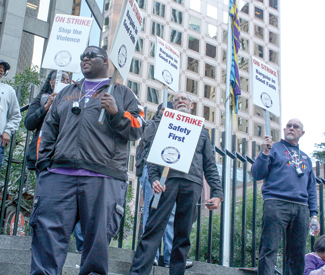
Last week’s four-day strike by Bay Area Rapid Transit workers dominated the news and made headlines around the country, marking the latest battleground in a national war between public employee unions and the austerity agenda pushed by conservatives and neoliberals.

Of course, that wasn’t how the conflict was framed by BART, most journalists, or even the two BART unions involved, all of whom dutifully reported the details of each sides’ offers and counter-offers, the competing “safety” narratives (new security procedures demands by unions versus spending more on capital improvements than raises), and the strike’s impact on commuters and the local economy.

But once this long-simmering labor standoff seized the attention of a public heavily reliant on BART, fueling the popular anger and resentment increasingly directed at public employee unions in recent years, familiar basic storylines emerged.

At that point, the Bay Area could have been placed in Wisconsin, Ohio, Michigan, or Illinois — the most recent high-profile labor union battlegrounds, with their narratives of greedy public employees clinging to their fully funded pensions and higher than average salaries while the rest of us suffer through this stubbornly lingering hangover from the Great Recession.

Around water coolers and online message boards, there were common refrains: How dare those unions demand the raises that the rest of us are being denied! Pensions? Who has fully funded pensions anymore? Why can’t they just be more realistic?

When Bay Area residents were finally forced to find other ways of getting around, within a transportation system that is already at the breaking point during peak hours thanks to years of austerity budgets and under-investment in basic infrastructure, those seething resentments exploded into outright anger.

And those political dynamics could only get worse in a month. The BART strike could resume full strength on a non-holiday workweek if the two sides aren’t able to come to an agreement before the recently extended contract expires.

This is the Bay Area’s most visible and impactful labor standoff, and it could prove to be a pivotal one for the modern American labor movement.


BART AS BELLWETHER

Chris Daly was a clarion voice for progressive values while serving on the San Francisco Board of Supervisors from 2000-2010. Now, as political director of Service Employee International Union Local 1021, one of the BART unions, he says this standoff is about more than just the issues being discussed at the bargaining table.

“The terms and conditions of workers in the public sector is a buoy for other workers,” Daly told us, explaining how everyone’s wages and benefits tend to follow the gains and setbacks negotiated by unions. “The right understands this, which is why the right has been mercilessly attacking public sector workers.”

Ken Jacobs, chair of the UC Berkeley Labor Center, confirmed that union contracts affect the overall labor market. “When unions improve wages and benefits, it does have a ripple effect,” Jacobs said. He agreed that the outcome at BART could be a bellwether for the question, “As the economy comes back, how much will workers share in that prosperity?”

Demonizing public sector workers as greedy or lazy also serves to undercut the entire labor movement, Daly said, considering that public employees make up a far higher percentage of union members than their private sector counterparts. And during election time, it is union money and ground troops that typically contest wealthy individuals and corporations’ efforts to maintain or expand power.

“Labor is one of the main checks on unbridled corporate power, and public sector unions are the backbone of labor,” Daly told us.

So in that context, BART’s battle is about more than just the wages and benefits of train drivers and station agents, with their average base salary of $62,000, just barely above the area median income, and their demand for raises after accepting wage freezes in recent years.

Daly sees this as part of a much broader political standoff, and he said there are indications that BART management also sees it that way, starting with the $399,000 the transit agency is paying its lead negotiator Thomas Hock, a veteran of union-busting standoffs around the country.

“He has a history of bargaining toward strikes, with the goal of breaking unions,” Daly said, noting that Hock’s opening offer would have taken money from BART employees, with new pension and healthcare contributions outweighing raises. “It was a takeaway proposal when you add it up, while they have a $100 million surplus in their budget and the cost of living in the Bay Area is shooting up.”

But BART spokesperson Rick Rice told us that Hock is simply trying to get the best deal possible for this taxpayer-funded agency, and he denied there is any intention to break the union or connection to some larger anti-worker agenda.

“There is definitely a need to start funding the capital needs of the district,” Rice told us. “I don’t see that we’re pushing an austerity agenda as much as a realistic agenda.”


AUSTERITY AND EXPANSION

But Daly said the very idea that austerity measures are “realistic” excuses the banks and other powerful players whose reckless pursuit of profits caused the financial meltdown of 2008. The underlying expectation is that workers should continue to pay for that debacle, rather than bouncing back with the rebounding economy.

“They get in this austerity mindset, and we see it in every contract we’re negotiating,” Daly said, noting that capital needs and benefits have always needed funding, despite their elevation now as immediate imperatives. “You have good people with good intentions like [BART Board President] Tom Radulovich pushing this austerity mindset.”

Radulovich, a longtime progressive activist, told us he agrees with some of how Daly is framing the standoff, but not all of it. He said that BART is being squeezed into its position by unique factors.

Radulovich said that healthcare and pension costs really are rising faster then ever, creating a challenge in maintaining those benefit levels. And he said that Hock isn’t simply carrying out some larger anti-union agenda. “He’s negotiating what the district wants him to negotiate,” he said.

Radulovich said that while BART’s workers may deserve raises, most of BART’s revenues come from fares. “So it’s taking from workers to give to other workers,” Radulovich said. “It’s a little more complicated because it is a public agency and Chris is aware of that.”

Yet Radulovich acknowledged that BART has opted to pursue an aggressive expansion policy that is diverting both capital and operating expenditures into new lines — such as the East Contra Costa, Oakland Airport, and Warm Springs extensions now underway — rather than setting some of that money aside for workers.

“And for a lot of those, we were being cheered on by the [San Francisco] Labor Council, one of many ironies,” said Radulovich, who favors infill projects over new extensions. “These are some of the conversations I’ve had with labor leaders in the last few weeks, how we think strategically about these things.”

But if BART wanted to defeat the union, it may have miscalculated the level of worker discontent with austerity measures.

“What they didn’t plan on is some high-level Bay Area political pressure,” Daly said, referring to the local uproar over the strike that led Gov. Jerry Brown to send in the state’s two top mediators, who made progress and created a one month cooling off period before the strike can resume.


RETIREMENT SECURITY

One of the hardest issues to overcome in the court of public opinion may be the fully funded pensions of BART employees. “Times are changing, costs are escalating rapidly, and we’re asking for a modest contribution,” Rice said of BART’s demand that employees help fund their pensions.

Daly acknowledges the resentments about the pension issue, even though it was essentially a trap set for public employee unions back in the 1980s, when BART and other public agencies were the ones offering to pay for employee pensions in lieu of raises.

But rather than resenting public employees for having pensions, he said the public should be asking why most workers don’t have retirement security and how to fix that problem.

“At what point do we organize and demand retirement security for all workers?” Daly said, noting that SEIU is now leading that fight on behalf of all workers, not just its members. “What we ought to be talking about is how we restore the social contract.”

Jacobs confirmed that SEIU has indeed been pushing the retirement security issue at the state and federal levels. And it’s a crucial issue, he said, noting that just 45 percent of workers have pensions and that the average retirement savings is just $12,000.

“The retirement problem we have is not the pension crisis, it is the lack of pensions crisis,” Jacobs said.

That’s one reason that he said this standoff has implications that extend far beyond the Bay Area.

“The fight goes beyond these particular workers,” Jacobs said. “It’s an important set of negotiations and an important strike in terms of looking at what happens in this country as the economy improves.”

Daly agrees there’s a lot at stake, for more than just his members.

“Losing on this means we’d be hard pressed to win elsewhere, anytime,” Daly said. “It is important symbolically, and it is important to the strength and morale of the movement.”


Dick Meister: Celebrating July Fourth with the enemy

1

By Dick Meister
Dick Meister is a veteran Guardian columnist and freelance writer.

The Fourth of July, as we all know, is Independence Day. Hurray for George
Washington and the revolutionaries, down with King George and the British.
That sort of thing.

But have you ever wondered what it’s like on the other side? Have you ever
celebrated the Fourth across the border in Canada, in that territory settled
by pro-British “Loyalists” who fled the United States after the
Revolutionary War? It is a most peculiar experience for one accustomed to
the American way of viewing the events of 1776.

My wife Gerry and I observed the Fourth on the other side a few years back
— in Fredericton, the beautiful little capital of New Brunswick, named in
honor of King George’s second son, Frederic. Going into Fredericton meant
going into the camp of a former enemy — a friend now, but a former enemy
who openly hails the “Loyalists” who fought for them against us. I mean
people who opposed our revolution and never even said they were sorry.

Our first stop was the hallowed Loyalist Cemetery near the banks of the
Saint John River at the far end of Waterloo Row, burial ground of
Fredericton’s revered founders — anti-American tories, the lot of them. We
trudged down a muddy path to a ring of trees around a swampy grass clearing
in which the tory heroes lay, prepared to utter a revolutionary sentiment or
two over them in honor of the holiday.

We managed to get a quick look at a couple of thin, well-worn, tottering
slate headstones — but that was all. Before we could even open our mouths,
they struck — angry swarms of dread North woods mosquitoes. Backwards we
dashed. Quickly. Very quickly. We slapped at each other as we squished
awkwardly over the wet ground, batting mosquitoes off hair, face, neck,
arms, clothes. Much buzzing. Much stinging. They were everywhere. The
tories’ revenge. For days afterward, we bore the swollen red marks of the
Loyalists.

More insults were to come, in the Legislative Assembly chambers downtown.
The chambers are elegant: ornately carved desks, elaborately patterned silk
wall covering, thick crimson carpeting. But look up on the walls, in the
places of honor on either side of the Speaker’s chair. To the left there’s a
portrait of George III, the very monarch we made a revolution against, to
the right a portrait of his queen, Charlotte — and both painted by no less
a master than Joshua Reynolds.

George is in fact treated much better in New Brunswick than he generally is
in Great Britain. Historians there ridicule him for being a bit of a loon
and for such loony acts as overtaxing the American colonists and
overreacting to their protests by then waging war against them. In
Fredericton, they think George did the right thing.

In the United States, of course, we celebrate the end of colonialism. But in
Fredericton they seem to yearn for its return. Union Jacks fly from staffs
all over town and portraits of Queen Elizabeth and her consort hang in
government and private buildings everywhere. Ceremonial guards outside City
Hall wear the white pith helmets, long crimson jackets and black uniform
trousers of the British colonial soldier.

Just behind City Hall stand the restored quarters of the British garrison
that was stationed in the city for more than a century, one of the buildings
now housing a museum full of anti-revolutionary twaddle. Captions below
portraits of leading Loyalists praise them for “faith, courage, sacrifices”
against Yankees, who are for the most part described as violent, crude, rude
and vulgar. Here, too, a portrait of George III hangs in a place of honor.
Among the Loyalists singled out is that other fine fellow, Benedict Arnold,
who lived in New Brunswick before slinking off to Mother England in 1791. At
least the museum keepers have the decency to own up to Arnold’s “reputation
for crookedness.”

Loyalists also are favorites in New Brunswick’s neighboring province of Nova
Scotia, particularly in the capital of Halifax. There, the American
revolutionaries are portrayed as bad guys who would have made Nova Scotia a
U.S. colony if the British hadn’t beefed up their garrison on Citadel Hill,
a massive fortress that towers high above the city, guarding every access,
be it by land or by sea.

The champion Loyalist stronghold is the New Brunswick city of Saint John.
“Loyalist City,” it’s called. It has a Loyalist Burial Ground, naturally,
but also a Loyalist Trail, Loyalist Apartments, Loyalist Coin & Collectibles
shop, Loyalist Pub and, among many other things loyalistic, Loyalist Days,
an annual week-long festival honoring Saint John’s founders. At a high point
in the festival 100 or so appropriately costumed Loyalists — “His Majesty’s
Loyal Troops” — fend off a brigade of actors portraying American rebels
attempting to “capture” Saint John.

The latter-day Loyalists claimed to like us nevertheless. In Fredericton,
for instance, a half-dozen U.S. flags fluttered smartly outside the Lord
Beaverbrook Hotel, the city’s finest, and the marquee proclaimed, “We Salute
our American Friends. Happy 4th of July.”

Sure thing. But watch out for the mosquitoes.

Dick Meister is a veteran Guardian columnist and freelance writer.

(Bruce B. Brugmann, or B3 as he signs his emails and blogs, is the editor at large of the Bay Guardian and former editor and co-founder and co-publisher with his wife Jean Dibble, 1966-2012. He can be reached at the Bruce blog at sfbg.com.)


)
       

The Fourth of July: Remembering the good old days in Rock Rapids, Iowa, circa 1940s to 1950s

0

By Bruce B. Brugmann

(Note: In July of 1972, when the Bay Guardian was short a Fourth of July story, I sat down and cranked out this one for the front page on my trusty Royal Typewriter. I now reprint it each year on the Bruce blog, with some San Francisco updates and postscripts.)

Back where I come from, a small town beneath a tall standpipe in northwestern Iowa, the Fourth of July was the best day of a long, hot summer.

The Fourth came after YMCA camp and Scout camp and church camp, but before the older boys had to worry about getting into shape for football. It was welcome relief from the scalding, 100-degree heat in a town without a swimming pool and whose swimming holes at Scout Island were usually dried up by early July. But best of all, it had the kind of excitement that began building weeks in advance.

The calm of the summer dawn and the cooing of the mourning doves on the telephone wires would be broken early on July Fourth: The Creglow boys would be up by 7 a.m. and out on the lawn shooting off their arsenal of firecrackers. They were older and had somehow sent their agents by car across the state line and into South Dakota where, not far above the highway curves of Larchwood, you could legally buy fireworks at roadside stands.

Ted Fisch, Jim Ramsey, Wiener Winters, the Cook boys, Hermie Casjens, Jerry Prahl, Elmer Menage, and the rest of the neighborhood gang would race out of  their houses to catch the action. Some had cajoled firecrackers from their parents or bartered from the older boys in the neighborhood: some torpedoes (the kind you smashed against the sidewalk); lots of 2 and 3-inchers, occasionally the granddaddy of them all, the cherry bomb (the really explosive firecracker, stubby, cherry red, with a wick sticking up menacingly from its middle; the kind of firecracker you’d gladly trade away your best set of Submariner comics for.)

Ah, the cherry bomb. It was a microcosm of excitement and mischief and good fun. Bob Creglow, the most resourceful of the Creglow boys, would take a cherry bomb, set it beneath a tin can on a porch, light the fuse, then head for the lilac bushes behind the barn.

“The trick,” he would say, imparting wisdom of the highest order, “is to place the can on a wood porch with a wood roof. Then it will hit the top of the porch, bang, then the bottom of the porch, bang. That’s how you get the biggest clatter.”

So I trudged off to the Linkenheil house, the nearest front porch suitable for cherry bombing, to try my hand at small-town demolition. Bang went the firecracker. Bang went the can on the roof. Bang went the can on the floor. Bang went the screen door as Karl Linkenheil roared out in a sweat, and I lit out for the lilacs behind the barn with my dog, Oscar.

It was glorious stuff – not to be outdone for years, I found out later, until the Halloween eve in high school when Dave Dietz, Ted Fisch, Ken Roach, Bob Babl, and rest of the Hermie Casjens gang and I made the big time and twice pushed a boxcar loaded with lumber across Main Street and blocked it for hours. But that’s another story for my coming Halloween blog.

Shooting off fireworks was, of course, illegal in Rock Rapids, but Chief of Police Del Woodburn and later Elmer “Shene” Sheneberger used to lay low on the Fourth. I don’t recall ever seeing them about in our neighborhood and I don’t think they ever arrested anybody, although each year the Lyon County  Reporter would carry vague warnings about everybody cooperating to have “a safe and sane Fourth of July.”

Perhaps it was just too dangerous for them to start making firecracker arrests on the Fourth – on the same principle, I guess, that it was dangerous to do too much about the swashbuckling on Halloween or start running down dogs without leashes (Mayor Earl Fisher used to run on the platform that, as long as he was in office, no dog in town would have to be leashed. The neighborhood consensus was that Fisher’s dog, a big, boisterous boxer, was one of the few that ought to be leashed).

We handled the cherry bombs and other fireworks in our possession with extreme care and cultivation; I can’t remember a single mishap. Yet, even then, the handwriting was on the wall. There was talk of cutting off the fireworks supply in South Dakota because it was dangerous for young boys. Pretty soon, they did cut off the cherry bomb traffic and about all that was left, when I came back from college and the Roger boys had replaced the Creglow boys next door, was little stuff appropriately called ladyfingers.

Fireworks are dangerous, our parents would say, and each year they would dust off the old chestnut about the drugstore in Spencer that had a big stock of fireworks and they caught fire one night and much of the downtown went up in a spectacular shower of roman candles and sparkling fountains.

The story was hard to pin down, and seemed to get more gruesome every year – but, we were told, this was why Iowa banned fireworks years before, why they were so dangerous and why little boys shouldn’t be setting them off. The story, of course, never made quite the intended impression; we just wished we’d been on the scene.  My grandfather was the town druggist (Brugmann’s Drugstore, “Where drugs and gold are fairly sold, since 1902″) and he said he knew the Spencer druggist personally. Fireworks put him out of business and into the poorhouse, he’d say, and walk away shaking his head.

In any event, firecrackers weren’t much of an issue past noon – the Fourth celebration at the fairgrounds was getting underway and there was too much else to do. Appropriately, the celebration was sponsored by the Rex Strait post of the American Legion (Strait, so the story went, was the first boy from Rock Rapids to die on foreign soil during World War I); the legionnaires were a bunch of good guys from the cleaners and the feed store and the bank who sponsored the American Legion baseball team each summer.

There was always a big carnival, with a ferris wheel somewhere in the center for the kids, a bingo stand for the elders, a booth where the ladies from the Methodist Church sold homemade baked goods, sometimes a hootchy dancer or two, and a couple of dank watering holes beneath the grandstand where the VFW and the Legion sold Grainbelt and Hamms beer  at 30¢ a bottle to anybody who looked of age.

Later on, when the farmboys came in from George and Alvord, there was lots of pushing and shoving, and a fist fight or two.

In front of the grandstand, out in the dust and the sun, would come a succession of shows that made the summer rounds of the little towns. One year it would be Joey Chitwood and his daredevil drivers. (The announcer always fascinated me: “Here he comes, folks, rounding the far turn…he is doing a great job out there tonight…let’s give him a big, big hand as he pulls up in front on the grandstand…”)

Another year it would be harness racing and Mr. Hardy, our local trainer from Doon, would be in his moment of glory. Another year it was tag team wrestling and a couple of barrel-chested goons from Omaha, playing the mean heavies and rabbit-punching their opponents from the back, would provoke roars of disgust from the grandstand. ( The biggest barrel-chest would lean back on the ropes, looking menacingly at the crowd and yell, “ Aw, you dumb farmers. What the hell do you know anyway? I can beat the hell out of any of you.”   And the crowd  would roar back in glee.)

One year, Cedric Adams, the Herb Caen of Minneapolis Star-Tribune, would tour the provinces as the emcee of local  variety shows. “It’s great to be in Rock Rapids,” he would say expansively, “because it’s always been known as the ‘Gateway to Magnolia.” (Magnolia, he didn’t need to say, was a little town just over the state line in Minnesota which was known throughout the territory for its liquor-by-the-drink roadhouses. It was also Cedric Adams’ hometown: his “Sackamenna,” as Caen would say.  Adams kissed each girl (soundly) who came on the platform to perform and, at the end, hushed the crowd for his radio broadcast to the big city “direct from the stage of the Lyon County Fairgrounds in Rock Rapids, Iowa.”

For a couple of years, when Rock Rapids had a “town team,” and a couple of imported left-handed pitchers named Peewee Wenger and Karl Kletschke, we would have some rousing baseball games with the best semi-pro team around, Larchwood and its gang of Snyder brothers: Barney the eldest at shortstop, Jimmy the youngest at third base, John in center field, Paul in left field, another Snyder behind the plate and a couple on the bench. They were as tough as they came in Iowa baseball.

I can remember it as if it were yesterday at Candlestick, the 1948 game with the Snyders of Larchwood. Peewee Wenger, a gawky, 17-year-old kid right off a high school team, was pitching for Rock Rapids and holding down the Snyder artillery in splendid fashion. Inning after inning he went on, nursing a small lead, mastering one tough Larchwood batter after another, with a blistering fastball and a curve that sliced wickedly into the bat handles of the right-handed Larchwood line-up.

Then the cagey Barney Snyder laid a slow bunt down the third base line. Wenger stumbled, lurched, almost fell getting to the ball, then toppled off balance again, stood helplessly holding the ball. He couldn’t make the throw to first. Barney was safe, cocky and firing insults like machine gun bullets at Peewee from first base.

Peewee, visibly shaken, went back to the mound. He pitched, the next Larchwood batter bunted, this time down the first base line. Peewee lurched for the ball, but couldn’t come up with it. A couple more bunts, a shot through the pitcher’s mound, more bunts and Peewee was out. He could pitch, but, alas, he was too clumsy to field. In came Bill Jammer, now in his late 30’s, but in his day the man who beat the University of Iowa while pitching at a small college called Simpson.

Now he was pitching on guts and beer, a combination good enough for many teams and on good days even good enough  to take on the Snyders. Jammer did well for a couple of innings, then he let two men on base, then came a close call at the plate. Jammer got mad. Both teams were off the bench and onto the field and, as Fred Roach wrote in the Reporter, “fisticuffs erupted at home plate.” When the dust cleared, Jammer had a broken jaw, and for the next two weeks had to drink his soup through a straw at the Joy Lunch cafe, John Snyder, it was said later, came all the way in from center field to throw the punch, but nobody knew for sure and he stayed in the game. I can’t remember the score or who won the game, but I remember it as the best Fourth ever.

At dusk, the people moved out on their porches or put up folding chairs on their lawns. Those who didn’t have a good view drove out to the New Addition or parked out near Mark Curtis’ place or along the river roads that snaked out to the five-mile bridge and Virgil Hasche’s farm.

A hush came over the town. Fireflies started flickering in the river bottom and, along about 8:30, the first puff of smoke rose above the fairgrounds and an aerial bomb whistled into the heavens. BOOM! And the town shook as if hit by a clap of thunder.

Then the three-tiered sky bombs – pink, yellow, white, puff, puff, puff. The Niagara Falls and a gush of white sparks.

Then, in sudden fury, a dazzling display of sizzling comets and aerial bombs and star clusters that arched high, hung for a full breath and descended in a cascade of sparks that floated harmlessly over the meadows and cornfields. At the end, the flag – red, white and blue – would burst forth on the ground as the All-American finale in the darkest of the dark summer nights. On cue, the cheers rolled out from the grandstand and the cars honked from the high ground and the people trundled up their lawn chairs and everybody headed for home.

Well, I live in San Francisco now, and I drive to Daly City with my son, Danny, to buy some anemic stuff in gaudy yellow and blue wrapping and I try unsuccessfully each year to get through the fog or the traffic to see the fireworks at Candlestick. But I feel better knowing that, back where I come from, everybody in town will be on their porches and on the backroads on the evening of the Fourth to watch the fireworks and that, somewhere in town, a little boy will put a big firecracker under a tin can on a wood porch, then light out for the lilacs behind the barn.

P.S. Our family moved in l965 from Daly City to a house in the West Portal area of San Francisco. There are, I assure you, few visible fireworks in that neighborhood. However, down at the bottom of Potrero Hill, the professional and amateur action is spectacular on the evening of the Fourth of July.

From any Potrero Hill height, you can see the fireworks in several directions: the waterfront fireworks in the city, fireworks on the Marin side of the Golden Gate bridge, fireworks at several points in the East Bay, fireworks along the Peninsula coast line.

And for the amateur action, parents with kids, kids of all ages, spectators in cars and on foot, congregate after dusk along Terry Francois Boulevard in San Francisco along the shoreline between the Giants ballpark and the  Mission Rock restaurant.

The action is informal but fiery, fast, and furious: cherry bombs, clusters, spinning wheels, high flying arcs, whizzers of all shapes and sizes. The cops are quite civilized and gingerly patrol the perimeter but don’t bother anybody. I go every year. I think it’s the best show in town. B3.

Hungry for reform

16

news@sfbg.com

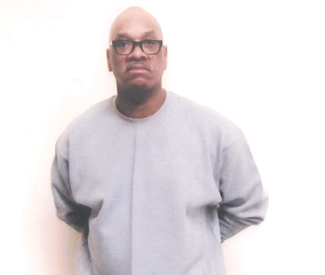
Sitawa Jamaa is among the thousands of California inmates who, two years ago this summer, took part in the largest prison hunger strike in US history to protest harsh conditions and their invisibility to those outside prison walls.

Now, Jamaa and other prisoners are about to launch another hunger strike to highlight the system’s unfulfilled promises and the persistence of inhumane conditions.

The California Department of Corrections and Rehabilitation (CDCR) counted 6,000 prisoners throughout the state who refused food over several weeks in July 2011. During a follow-up strike that September, the number of prisoners missing meals swelled to 12,000, according to the federal receiver who was appointed by the courts to oversee reforms in the system. At least one inmate starved to death.

As one of four inmates who call themselves the Short Corridor Collective, Jamaa was a key organizer of the hunger strike. The group of inmates drafted a list of core demands calling for the strike when they weren’t met.

That was no easy task for Jamaa, who has spent most of the last 28 years alone in a windowless, 8-by-10 foot concrete cell in Pelican Bay State Prison, a supermax facility not far from the Oregon border, where some 1,200 men are held in similar conditions.

Inmates held in solitary confinement (in government lingo: “Segregated Housing Units”, or “SHU” for short) aren’t supposed to communicate with each other, verbally or through the mail. But they were able to organize with the help of their lawyers, who they are allowed to communicate with, and prison reform advocates outside.

Jamaa and other inmates are planning to launch a second hunger strike on July 8. The Short Corridor Collective has drafted a list of 45 demands, reflecting concerns ranging from inadequate health care to extreme solitary confinement—conditions that prison advocates characterize as cruel and unusual punishment.

The list is an extension of the five initial demands that Pelican Bay inmates presented in 2011 before initiating a hunger strike. Most of those demands were never met, or they were met only with lip service, leading prisoners back to where they started.


CONFINEMENT AS TORTURE

High on the list are concerns about conditions in the SHU, the amount of time prisoners can be made to spend in isolation, and the public’s inability to monitor the situation.

“I feel dead. It’s been 13 years since I have shaken someone’s hand and I fear I’ll forget the feel of human contact,” Pelican Bay prisoner Luis Esquivel told attorneys with the Center for Constitutional Rights in an interview.

Along with Jamaa and others, Esquivel is a plaintiff in a lawsuit against the state of California that would effectively cap the time someone can spend in solitary confinement to 10 years.

“The hunger strike is an extreme act,” says Terry Kupers, a Piedmont-based psychology professor and clinical psychiatrist who has testified before the California State Assembly on long-term solitary confinement. “It’s very dangerous, and you can die. So when a group of prisoners go on hunger strike, it means they’ve exhausted all ways of expressing themselves and having their demands considered. And that’s very much the case here—some of these guys have been in SHU for 30 or 40 years.”

Kupers believes solitary confinement in California prisons violates the 8th Amendment’s prohibition on cruel and unusual punishment, a view echoed by activists who’ve launched a statewide effort called the Stop the Torture Campaign.

United Nations Special Rapporteur Juan Méndez, an expert on torture, has called for a ban on solitary confinement where inmates are kept in isolation for 22 hours a day or more, saying the practice should only be used in very exceptional circumstances and for short time periods.

The CDCR has made some concessions and reforms since the 2011 hunger strikes, but critical issues have gone unaddressed. In Pelican Bay’s SHU, the men are now allowed beanie caps for when it gets cold. They can now have wall calendars to track time and bring a human touch to their surroundings.

Some prisoners have received exercise equipment, such as a handball or pull-up bar. Each year, they now have permission to have one photograph of themselves taken to send to family members, and prison administrators have signaled that they are looking into extending Pelican Bay’s visitation hours.

But more pressing issues have yet to be resolved, so the prisoners who drafted the 45 demands are resorting to starvation once again, despite official statements that it will do little to improve their conditions.

“Negotiation is something the department does not do,” says Terry Thornton, a spokesperson for CDCR. But the department has met periodically with a mediation team, consisting of lawyers and prison activists, who have communicated the inmates’ concerns and gone over their demands with prison authorities.


RESISTING REFORM

In 2002, the state of California was sued, and lost, in an 8th Amendment class-action lawsuit: Plata v. Davis. The federal judge overseeing the case called the medical treatment in California prisons “horrifying,” sinking “below gross negligence to outright cruelty,” ordering improved treatment and reductions in severe prison overcrowding.

A court-appointed doctor found that out of 193 deaths over the course of one year, 34 were “probably preventable,” but medical staff gave “well below even minimal standards of care.” Eleven years later, the state is still under federal receivership, until it can show that conditions have actually improved.

Court-appointed consultant Dr. Raymond Patterson wrote his 14th annual assessment report last April, blaming high suicide rates behind bars on a lack of “adequate assessment, treatment or intervention.” After it was released, he quit the post in frustration, writing: “It has become apparent that continued repetition of these recommendations would be a further waste of time and effort.”

So inmates are taking in upon themselves to accomplish what the courts and consultants have failed to do: reform conditions in the prisons.

As happened in 2011, in spite of what is planned to be a peaceful protest, prisons housing strikers will be, according to Thornton, on “modified program” (or “lockdown,” as prisoners call it). Generally, that means inmates aren’t allowed to leave their cells, even to shower.

New regulations created after the 2011 strikes call for no visits for striking prisoners, and for their canteen food to be confiscated. In addition, “inmate(s) identified as strike leaders, instrumental in organizing, planning, and perpetuating a hunger strike, shall be isolated from non-participating inmates.”

Since March of this year, the Guantanamo Bay prisoner hunger strike has made news around the world for highlighting alleged violations of international law. There, when a striker goes below 85 percent Ideal Body Weight, regulations dictate that he or she be shackled to a chair, fitted with a mask, and have tubes inserted through their nostrils into their stomachs for up to two hours at a time.

That didn’t happen in California back during the 2011 strikes, but the Division of Correctional Health Care Services devotes five pages of its policy handbook to outlining specific instructions for dealing with hunger strikers, including transfers to prison medical facilities where they could potentially be force-fed, another practice the UN regards as torture.

Prisoners and activists believe the policy was instituted as preemptive attack on the upcoming hunger strike. “We are concerned that, under the pretext of ‘welfare’ checks, prisoners are being harassed, targeted, and deprived of sleep as the date of planned hunger strikes and work stoppages approaches,” said Isaac Ontiveros of the Prisoner Hunger Strike Solidarity group. “Whatever the case, new CDCR Secretary Jeffery Beard has an opportunity to avoid the strike and begin to undo the indescribable harm that the California prison system has caused.”


DANGEROUS ASSOCIATIONS

Problems associated with solitary confinement are closely connected to CDCR’s most commonly used tool for sending prisoners like Jamaa into the SHU: the controversial “gang validation” process.

Once an inmate is listed in prison records as a gang member, he or she loses multiple rights on the assumption that they’re a threat to the order of the prison. With no disciplinary write-ups since 1995, Jamaa would have been eligible for parole in 2004, except for the gang validation that led to his indefinite SHU sentence.

Getting pegged as a member of a gang can happen easily. Guards can write prisoners up for anything from the possession of artwork deemed to be gang-related, to information obtained from confidential informants whose claims prisoners often aren’t allowed to refute and whose identities remain unknown to the targeted prisoners.

Last year, in the wake of hunger strikes, CDCR announced a “complex retooling” of the gang validation practices. The so-called Step Down process, created in conjunction with the Department of Homeland Security, is meant to transition inmates out of gangs over the course of four years, with privileges gained over that time.

It might be the most significant of the reforms that followed the last hunger strike, but prisoners and their advocates criticize it as too lengthy of a process, subject to the arbitrary whims of the correctional officers overseeing a given prisoner. In fact, they say it may widen the definition of who counts as a gang member.

Manuel Sanchez, who is participating in the Step Down program at Corcoran State Prison, wrote in a letter that he is “seriously considering returning to SHU, where I’d be less harassed and I’d get more yard access more consistently.”

Compounding the problems in the prisons is a lack of transparency and public accountability.

“It’s like mentioning July 8 is anathema,” says San Francisco Bay View Editor Mary Ratcliff, whose African American-focused newspaper has been a CDCR censorship target.

From January to April of this year, Ratcliff said papers were being returned from Pelican Bay undelivered because they included articles about the hunger strikes, representing “material inciting participation in a mass disturbance,” and “a serious threat to the safety and security” of the prison, according to CDCR Administrator R.K. Swift.

“I think it’s remarkable that hunger strikes are considered a ‘disturbance,'” says Ratcliff. “A disturbance is supposed to mean a fight—something that threatens people. A hunger strike is a threat to no one except the people who are participating in it.”

Just as inmates can’t get news from the outside, they are also walled off from journalists who might cover them and the conditions they live in.

Since 1996, the CDCR has limited reporters to only interviewing prisoners they’ve selected. Last September, Governor Jerry Brown vetoed legislation that would have opened up media access to the prisons. “Giving criminals celebrity status through repeated appearances on television will glorify their crimes and hurt victims and their families,” he wrote, citing the media spectacle around Charles Manson.

But activists say the nearly $2 million Brown received from the California Correctional Peace Officers Association (CCPOA) during his successful bid for governor in 2010 had more to do with it than infamous serial killers.

Assembly member Tom Ammiano, who authored the most recent bill, stressed that “Press access isn’t just to sell newspapers. It’s a way for the public to know that the prisons it pays for are well-run. I invite the governor to visit the SHU to see for himself why media access is so important.”


DRASTIC MEASURES

Last time around, Jamaa lost 19 pounds. Deprived of sunlight, the Oakland-born man has developed melanin and vitamin D deficiencies that have lightened his normally dark brown skin. He suffers stomach problems and swollen thyroid glands that he didn’t have before prison. Starvation is a possibly lethal proposition. “Make no mistake, none of us wants to die. But we are prepared to, if that’s what it takes to force a real reform,” he and other strike leaders wrote in a statement last December. Jamaa’s sister, Marie Levin, who has organized monthly vigils for the strikers at Oakland’s monthly First Fridays/Art Murmur event, is worried about how her brother’s body will cope this time around. “It’s something that we as family members don’t want them to have to experience again,” she notes with anxiety. Yet both the prisoners and their advocates on the outside say they can’t simply let dehumanizing conditions in California’s prison system continue indefinitely. “I think things have changed, but not substantially in terms of actual conditions,” Kupers argues. “What is changed is the CDCR had to recognize the strikers, and conceded some of the things. And subsequently, the various prisoner groups have come together and made a commitment not to have violence between groups inside the prisons. This is huge advancement.” But unless all 45 demands are met, they say the strike will commence July 8. For now, Jamaa and others are readying their bodies for hunger, for a cause they believe goes far beyond prison walls. “Know this,” he wrote from SHU, words that needed to be smuggled out through unconventional means to get around an official wall of silence. “I am a … Prisoner of War, and I serve the interest of all people.”

Buddy cops, a one-man army, a boozy doc, and more: new movies!

0

This week: two music docs, a buddy-cop movie starring Sandra Bullock and Melissa McCarthy, and America’s Sweetmeat Channing Tatum saves the White House and, ergo, the world. Plus, more! Read on for takes from our critics.

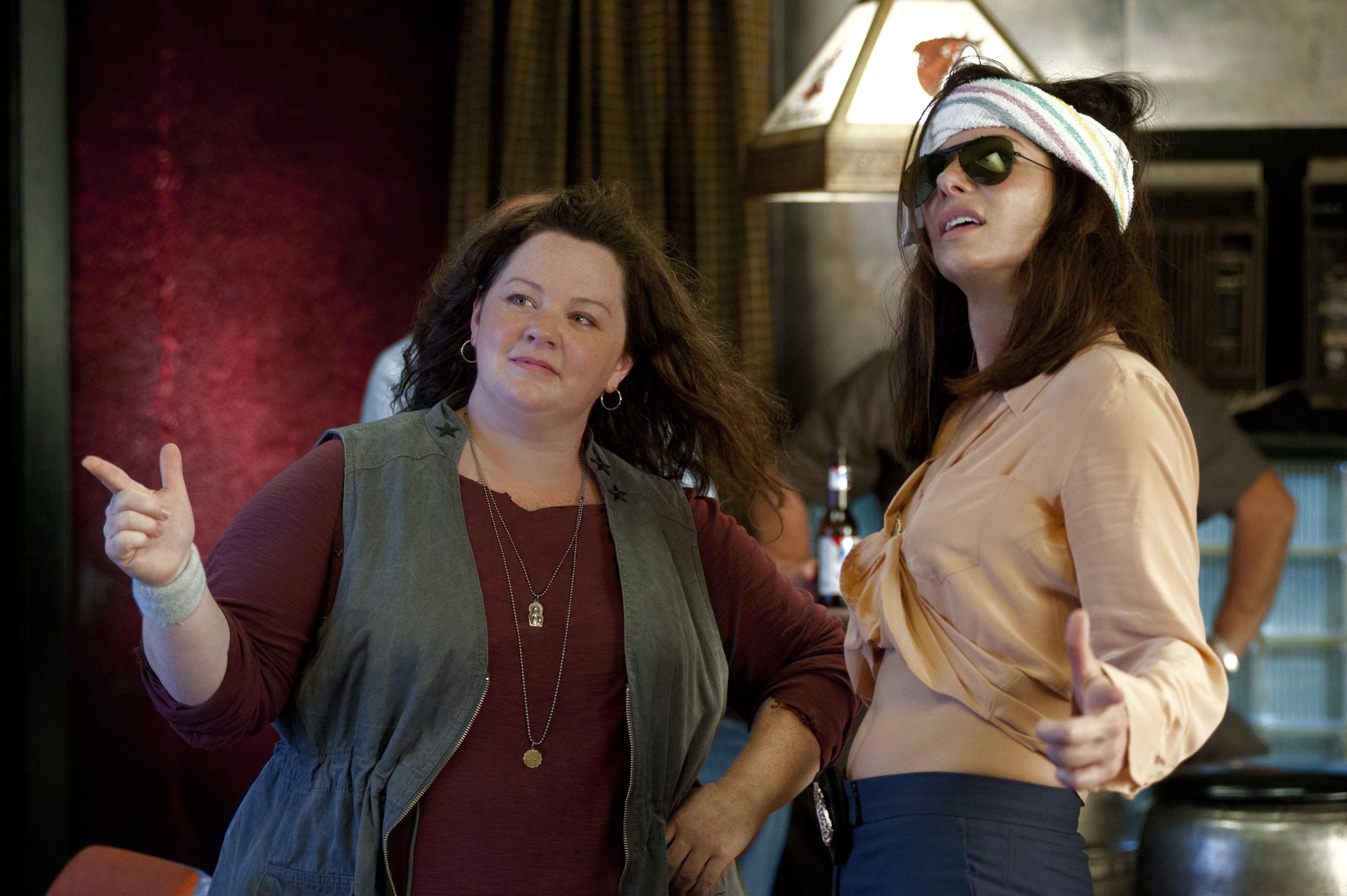
The Heat First things first: I hated Bridesmaids (2011). Even the BFF love fest between Maya Rudolph and Kristen Wiig couldn’t wash away the bad taste of another wolf pack in girl’s clothing. Dragging and dropping women into dude-ly storylines is at best wonky and at worst degrading, but The Heat finds an alternate route. Its women are unlikable; you don’t root for them, and you’re not hoping they become princesses because such horrifying awkwardness can only be redeemed by a prince. In Bridesmaids and Heat director Paul Feig’s universe, friendship saves the day. Sandra Bullock is Murtaugh to Melissa McCarthy’s Riggs, with tidy Bullock angling for a promotion and McCarthy driving a busted hoopty through Boston like she’s in Grand Theft Auto. Circumstances conspire to bring them together on a case, in one of many elements lifted from traditional buddy-cop storylines. But! The jokes are constant, pelting, and whiz by like so much gunfire. In one running gag, a low-rung villain’s worst insult is telling the women they look old — but neither character is bothered by it. It’s refreshing to see embarrassment humor, so beloved by chick flicks, get taken down a peg by female leads who don’t particularly care what anyone thinks of them. (1:57) (Sara Maria Vizcarrondo)

http://www.youtube.com/watch?v=3HUwmDqi2kA

Hey Bartender Hey, have you heard of this trendy thing called craft cocktails? Be warned, sophisticated San Francisco drinkers: Douglas Tirola’s upbeat documentary mentions our fair city in passing only a handful of times; instead, it concentrates on New York City’s relatively recent “cocktail revolution,” interviewing movers and (literal) shakers on the scene while giving a brief history of cocktails in America (again, with an emphasis on NYC). Hey Bartender‘s focal points are well-chosen studies in contrast: ex-Marine Scott — tattooed and scrupulously mustached — who’s working his way up the ranks at hipster lounge Employees Only; and middle-aged Steve, who runs a struggling blue-collar bar just outside the city and is slowly coming around to the idea of adding fancier drinks to his menu. Though dive-bar denizens may roll their eyes at some of Hey Bartender‘s more pretentious trappings (the movie doesn’t mention it, but drinks at Employees Only are in the $15-16 range), it does make the case that today’s superstar “mixologists” deserve just as much recognition as superstar restaurateurs. And the film has a point: can a Top Chef spinoff for bartenders be that far off? (1:32) Roxie. (Cheryl Eddy)

http://www.youtube.com/watch?v=rwDzRzqFaIE

Laurence Anyways Xavier Dolan’s latest is yet another gorgeously-designed love story; it fits perfectly alongside his extremely personal I Killed My Mother (2009) and the devastating Heartbeats (2010). Although some critics have suggested that this young director needs to hire an editor (Laurence Anyways clocks in at two hours and 48 minutes), I would argue that this epic, gender-bending love story needed to take its stylized time to achieve what most films never do: humanize a transgendered lead character. Melvil Poupaud (Raúl Ruiz’s favorite ingénue) is stunning as Laurence; as his longtime lover, Fred, Suzanne Clément performs with a guttural passion that should keep audiences glued to the screen. For those willing to accept a decade’s worth of hypnotic set and costume designs (the film spans 1989-1999); cryptic character development; a crew of campy castaways; and an electric, eclectic soundtrack (Depeche Mode, Celine Dion), Laurence Anyways is well worthy of its epic running time. Could this be the film that elevates Canada’s best-kept secret to being the leader of a post-gender film movement that’s just about to explode? (2:48) Metreon. (Jesse Hawthorne Ficks)

The Secret Disco Revolution Jamie Kaster’s Canadian documentary chronicles the rise and fall of the 70s booty shaking phenomenon — though what with the subsequent developments of house music, rave culture, et al., you might say disco never really went away. It’s got a goldmine of kitschy vintage clips, and plenty of enjoyable interviews with the scene’s erstwhile stars (Thelma Houston, “KC” Casey, etc.), producers, and observers. (The weirdest are scenes with the Village People, who today are staples on the corporate-party circuit and seem bizarrely eager to deny they were ever a subversively gay act.) Unfortunately, Kaster also burdens the film with sometimes overreaching arguments for disco’s sociopolitical radicalism, as mostly articulated by academic Alice Echols. And there’s a labored staged thread in which an arch narrator informs of us the behind-the-scenes mechanizations of three fictive “masterminds” (played by actors) who propagated disco to liberate gays, women and ethnic minorities. It’s a whimsical conceit that falls completely flat. As a result, there’s plenty of fun to be had here, but the conceptual missteps make this less than the definite disco doc it aims to be. (1:25) (Dennis Harvey)

20 Feet From Stardom Singing the praises of those otherwise neglected backup vocalists who put the soul into that Wall of Sound, brought heft to “Young Americans,” and lent real fury to “Gimme Shelter,” 20 Feet From Stardom is doing the rock ‘n’ roll true believer’s good work. Director Morgan Neville follows a handful of mainly female, mostly African American backing vocal legends, charts their skewed career trajectories as they rake in major credits and keep working long after one-hit wonders are forgotten (the Waters family) but fail to make their name known to the public (Merry Clayton), grasp Grammy approval yet somehow fail to follow through (Lisa Fischer), and keep narrowly missing the prize (Judith Hill) as label recording budgets shrivel and the tastes, technology, and the industry shift. Neville gives these industry pros and soulful survivors in a rocked-out, sample-heavy, DIY world their due on many levels, covering the low-coverage minis, Concert for Bangladesh high points, gossipy rumors, and sheer love for the blend that those intertwined voices achieve. One wishes the director had done more than simply touch in the backup successes out there, like Luther Vandross, and dug deeper to break down the reasons Fischer succumbed to the sophomore slump. But one can’t deny the passion in the voices he’s chosen to follow — and the righteous belief the Neville clearly has in his subjects, especially when, like Hill, they are ready to pick themselves up and carry on after being told they’re not “the Voice.” (1:30) (Kimberly Chun)

Unfinished Song A grumpy widower (Terrence Stamp) learns to enjoy life again by joining an unconventional choir group. Vanessa Redgrave, Gemma Arterton, and Christopher Eccleston round out the cast. (1:36)

http://www.youtube.com/watch?v=Wa5aasz5VXg

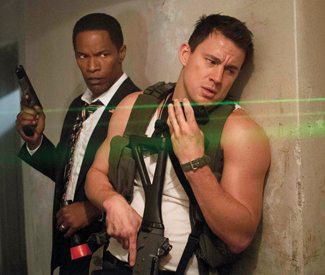
White House Down Ah, the mid-1990s: a time when two big-budget movies on the same subject were regularly released within months of each other (1997’s Volcano and Dante’s Peak; 1998’s Armageddon and Deep Impact). When a director named Roland Emmerich ascended into the blockbuster pantheon with Independence Day (1996), a film that’s best-remembered for that iconic shot of the White House exploding under alien death rays. The intervening years have seen Emmerich plunge ever-deeper into various flavors of disaster, and White House Down — which reignites that ’90s copycat-rivalry thing by riding the fumes of March’s Olympus Has Fallen — finds its boogeyman in domestic terrorism. It beings on a triumphant day for President James Sawyer (Jamie Foxx), who has just ordered all US troops removed from the Middle East — angering some high-up men in his administration, as well as some ex-military goons with axes of their own to grind. When the White House is compromised, a wannabe Secret Service agent (Channing Tatum), at the Prez’s house for a tour with his precocious daughter, shoulders one-man-army duties. Rockets are launched; there’s a high-speed limo chase across the White House lawn; we learn the truth about Marilyn and JFK; and thanks to evil genius Skip Tyler (Jimmi Simpson), “the greatest hack the world has ever seen” is about to unleash World War III. Yep, that’s right: 17 years after ID4‘s Jeff Goldblum broke into the alien mainframe, thereby saving the White House-less planet, Emmerich has decided that hackers are actually bad guys. It goes with White House Down‘s warning that the enemy is no longer an external threat, but something lurking right under your nose. Better start working out, America — and working on your one-liners. (2:17) (Cheryl Eddy)

Solomon: David Brooks, Tom Friedman, Bill Keller wish Snowden had just followed orders

27

Norman Solomon is co-founder of RootsAction.org and founding director of the Institute for Public Accuracy. His books include “War Made Easy: How Presidents and Pundits Keep Spinning Us to Death.”

Edward Snowden’s disclosures, the New York Times reported on Sunday, “have renewed a longstanding concern: that young Internet aficionados whose skills the agencies need for counterterrorism and cyberdefense sometimes bring an anti-authority spirit that does not fit the security bureaucracy.

Agencies like the NSA and CIA — and private contractors like Booz Allen — can’t be sure that all employees will obey the rules without interference from their own idealism. This is a basic dilemma for the warfare/surveillance state, which must hire and retain a huge pool of young talent to service the digital innards of a growing Big Brother.

With private firms scrambling to recruit workers for top-secret government contracts, the current situation was foreshadowed by novelist John Hersey in his 1960 book The Child Buyer. When the vice president of a contractor named United Lymphomilloid, “in charge of materials procurement,” goes shopping for a very bright ten-year-old, he explains that “my duties have an extremely high national-defense rating.” And he adds: “When a commodity that you need falls in short supply, you have to get out and hustle. I buy brains.”

That’s what Booz Allen and similar outfits do. They buy brains. And obedience.

But despite the best efforts of those contractors and government agencies, the brains still belong to people. And, as the Times put it, an “anti-authority spirit” might not fit “the security bureaucracy.”

In the long run, Edward Snowden didn’t fit. Neither did Bradley Manning. They both had brains that seemed useful to authority. But they also had principles and decided to act on them.

Like the NSA and its contractors, the U.S. military is in constant need of personnel. “According to his superiors . . . Manning was not working out as a soldier, and they discussed keeping him back when his unit was deployed to Iraq,” biographer Chase Madar writes in The Passion of Bradley Manning. “However, in the fall of 2009, the occupation was desperate for intelligence analysts with computer skills, and Private Bradley Manning, his superiors hurriedly concluded, showed signs of improvement as a workable soldier. This is how, on October 10, 2009, Private First Class Bradley Manning was deployed . . . to Iraq as an intelligence analyst.”

In their own ways, with very different backgrounds and circumstances, Bradley Manning and Edward Snowden have confounded the best-laid plans of the warfare/surveillance state. They worked for “the security bureaucracy,” but as time went on they found a higher calling than just following orders. They leaked information that we all have a right to know.

This month, not only with words but also with actions, Edward Snowden is transcending the moral limits of authority and insisting that we can fully defend the Bill of Rights, emphatically including the Fourth Amendment.

What a contrast with New York Times columnists David Brooks, Thomas Friedman and Bill Keller, who have responded to Snowden’s revelations by siding with the violators of civil liberties at the top of the U.S. government.

Brooks denounced Snowden as “a traitor” during a June 14 appearance on the PBS NewsHour, saying indignantly: “He betrayed his oath, which was given to him and which he took implicitly and explicitly. He betrayed his company, the people who gave him a job, the people who trusted him. . . . He betrayed the democratic process. It’s not up to a lone 29-year-old to decide what’s private and public. We have — actually have procedures for that set down in the Constitution and established by tradition.”

Enthralled with lockstep compliance, Brooks preached the conformist gospel: “When you work for an institution, any institution, a company, a faculty, you don’t get to violate the rules of that institution and decide for your own self what you’re going to do in a unilateral way that no one else can reverse. And that’s exactly what he did. So he betrayed the trust of the institution. He betrayed what creates a government, which is being a civil servant, being a servant to a larger cause, and not going off on some unilateral thing because it makes you feel grandiose.”

In sync with such bombast, Tom Friedman and former Times executive editor Bill Keller have promoted a notably gutless argument for embracing the NSA’s newly revealed surveillance programs. Friedman wrote (on June 12) and Keller agreed (June 17) that our government is correct to curtail privacy rights against surveillance — because if we fully retained those rights and then a big terrorist attack happened, the damage to civil liberties would be worse.

What a contrast between big-name journalists craven enough to toss the Fourth Amendment overboard and whistleblowers courageous enough to risk their lives for civil liberties.

Norman Solomon is co-founder of RootsAction.org and founding director of the Institute for Public Accuracy. His books include “War Made Easy: How Presidents and Pundits Keep Spinning Us to Death.”

Disillusionment, “Everyman,” and Netroots Nation

For nearly the entire Caltrain ride to down San Jose last Thursday morning, my thoughts were fully consumed by the subject of liberal disillusionment and cynicism. I pondered the question, “How much progress have the things that liberals care about made since the start of the new millennium?”

The issue of gay rights was the only glimmer of hope I could conjure up. Since 2000, income inequality has increased astronomically, the military-industrial complex grows unabated, the drug war continues to destroy millions of lives, women are having to protest the same idiotic conservatives policies their mothers protested, we are realizing the tangible repercussions of climate change, the Citizens United ruling and Republicans have become the John Birch Party and Democrats, by and large, have become identical to the Republicans of 30 years ago.

And while it may be true that progressives were responsible for electing the first black president, the Obama Administration has, for the most part, ignored, shunned, and at times insulted progressives. If Obama governed like a progressive, he would have jailed Wall Street executives for their roles in the financial crisis and HSBC bankers for laundering terrorist and drug cartel money, he would have rejected the Keystone pipeline in resounding fashion, he would have fought harder for a public option, he would have ended or at least decreased the surveillance state, and he wouldn’t be prosecuting medical pot dispensaries with extreme vigor.

Like a lot of the other media there, I came in search of demoralized liberals and to see if the Democratic Party leaders and other notable figures in attendance would feel the brunt of this dismay.

Unsurprisingly, the boogeyman of John Boehner, the Koch Brothers, and other rightwing caricatures were paraded out in order to stomp out any reservations you may have had about the president. One of the most notable lines of the conference was Howard Dean’s unfunny salvo of how the president isn’t perfect, “but it sure beats having Bain Capital, oops, I mean Mitt Romney in the White House!”

When our Rep. Nancy Pelosi was booed for saying that Edward Snowden should be prosecuted for his leaks, she tried shouting over the jeers by repeatedly saying that Obama’s second term was not Bush’s fourth. Then she tried to calm the crowd down (in a twist of irony, a man named Marc Peckel was kicked out for voicing objection to a police state), saying she welcomed the booing and debate about privacy. But would we be having this debate now, if it weren’t for Snowden’s leaks?

I attempted to ask Rep. Pelosi some follow-up questions as she exited the building (flanked by numerous aides and security) but oddly enough, my shouts of “I’m with the San Francisco Bay Guardian!” didn’t faze her one bit.

From the dozens of interviews I conducted with a wide range of attendees, the overall consensus seemed to be that Obama, his administration and other Democratic Party leaders are still on their side – though a good number of my interviewees expressed profound disappointment that the president hasn’t been liberal enough. One healthcare organizer from Chicago said he was immensely dissatisfied by Obamacare, but believes that it’s right the step toward implementing universal healthcare.

Obama’s most visible critic for the three days was a man who goes by the name Stan Everyman, who came on behalf of the San Jose Peace & Justice Center and carried a sign everywhere he went that read “OBAMA=CHENEY”. Everyman, who fervently believes that “Netroots is firmly under control of the Democratic party,” saw the conference as an opportunity to connect with other progressives who have gripes with Obama. The majority of reactions to his sign were positive, he said, but he did wind up engaging in some mild confrontations with what he calls “Democrat loyalists.” He was aghast when he encountered someone who came to Netroots on behalf of a liberal dating service, saying, “she didn’t mind if her emails and calls were tapped and didn’t care if there were helicopters hovering over her house as long as it caught the terrorists.” and when it did elicit a reaction, did nothing more than get a thumbs up or an eye-roll.

Meanwhile, some Democratic figures urged progressives to pressure elected leaders as much as possible. Keith Ellison, a Minnesota representative and co-chair of the progressive caucus, stated: “If people who came before us got discouraged because things were hard, we’d still have slavery, have no right to collective bargaining, the air quality would be horrible. The problem isn’t that you’re not involved and you didn’t get what you wanted, the problem is that you got to stay involved.”

When I countered that a big reason behind liberal disillusionment was that our own guy didn’t come through for us, Ellison’s responded, “Let me say this, never ever organize around a personality – even if it’s an awesome personality like Obama’s. Organize around the principles that guide you. Somewhere along the way we stopped saying ‘yes we can’ and started saying ‘yes he can,’ and when he didn’t do certain things we want, we got discouraged. What personality does the Tea Party coalesce around? None! They coalesce around, ‘we hate government, we love guns’ and ‘if you’re not quite like us, you’re not all right.’ So the progressive movement should coalesce around generosity, inclusion, fairness, sustainability, and leaders need to live up to that, and if they do, they’re good, and if they don’t, they’re not. But it shouldn’t be a personality-driven thing.”

If you want change, you have to keep on keeping on, no matter. Sure, town halls, letter campaigns, and protests are great ways to engage your politicians and in democracy, but when you got to go to work or tend to your family, six-figure lobbyists walk through the halls of Congress retracting whatever impact the people’s efforts made. Politicians want us to give them the political will to do what’s right even though we elected them to do what’s right. I don’t naively believe politicians are perfect and that they’re our friends and that we can sit back and relax after we pull the voting lever. However I do have a problem with “I’ll fight for you!” during the campaign season and “Fight for me!” during the legislative sessions. The latter due to this being a non-election year, was the unofficial theme of Netroots Nation 2013, which also possessed a palpable feeling that the reason why many of the big names showed up was to throw the progressive wing a bone and quell whatever qualms they have.

I do admit that Netroots, in the past, has resulted in a concrete impact (namely, helping to get Obama elected and being instrumental in manufacturing a 21st century online campaign apparatus). However, the chances that it will be able to pull Hillary Clinton—who’s just as hawkish as Dianne Feinstein— to the left beyond the duration of the conference are lower than the probability of Obama appointing Angela Davis as his Chief of Staff. A piece on Salon.com a couple days ago reported that progressives are open to a Clinton run, which should come as no surprise to given how good the left is at reconciling their beliefs with that of their leaders.

So between now and NN14 (which is in Detroit), when the Democratic Leadership will come begging for the left’s help to return the Speakership crown back to Pelosi, pretty much everything the left holds dear will wallow in purgatory or regress to hell. But cheer up: At least Bain Capital isn’t president!

Flagging

0

cheryl@sfbg.com

FILM Ah, the mid-1990s: a time when two big-budget movies on the same subject were regularly released within months of each other (1997’s Volcano and Dante’s Peak; 1998’s Armageddon and Deep Impact). When a director named Roland Emmerich ascended into the blockbuster pantheon with Independence Day (1996), a film that’s best-remembered for transforming Will Smith into an action star — and for that iconic shot of the White House exploding under alien death rays.

The intervening years have seen Emmerich plunge ever-deeper into various flavors of disaster: giant lizard (1998’s Godzilla); Mel Gibson (2000’s The Patriot); global warming (2004’s The Day After Tomorrow); the apocalypse (2009’s 2012). White House Down — which reignites that ’90s copycat-rivalry thing by riding the fumes of March’s Olympus Has Fallen — finds its boogeyman in terrorism. Specifically, domestic terrorism, with another 1996 classic, Michael Bay’s The Rock, offering certain inspiration in the villain department. Ex-military goons with axes to grind storming a national landmark? Right this way, please.

It’s a triumphant day for President James Sawyer (Jamie Foxx), who has just ordered all US troops removed from the Middle East. While ID4‘s President Bill Pullman was a Gulf War veteran, Sawyer is portrayed as more of an anti-violence, increase-the-peace type. But wait! Who are those shifty-eyed fellows skulking around the White House theater room, tinkering with the First Lady’s prized surround-sound system? They don’t look ready to make nice.

Into this mix must enter an Everyman. Beefy nugget Channing Tatum plays John Cale, wannabe Secret Service agent. Trouble is, his former college classmate (and fling? It’s never certain, but every woman Cale interacts with seems to have slept with him), high-ranking Agent Finnerty (Maggie Gyllenhaal), doesn’t think he has what it takes. According to the deep truths of his personnel file, Cale — a Capitol policeman tasked with guarding the Speaker of the House (Richard Jenkins) — “has a problem with authority,” despite his seemingly sincere desire to become an astronaut … er, wait, that was Will Smith’s cocky pilot in ID4.

At any rate, there is (as always) a family to impress; in Cale’s case, it’s a plucky daughter (Joey King), always on the lookout for new fodder for her YouTube channel. What better way to win over a kid who blurts out “Wikileaks” with as much excitement as other 11-year-olds say “One Direction” than to take her on a tour of the White House?

That’s the set-up. The remainder of the film encompasses Cale’s sweaty, sardonic one-man-army maneuverings (in John McClane’s undershirt, no less), to keep both Sawyer — a POTUS so cool he pauses mid-ambush to change into Air Jordans — and Li’l Miss Citizen Journalist safe. Meanwhile, rockets are launched; there’s a high-speed limo chase across the White House lawn; we learn the truth about Marilyn and JFK; The Wire‘s Lance Reddick shows up to turn his McNulty-honed glare onto Gyllenhaal; some high-ranking government dudes reveal their sinister true colors; and thanks to evil genius Skip Tyler (Jimmi Simpson), “the greatest hack the world has ever seen” is about to unleash World War III.

Yep, that’s right: 17 years after Independence Day‘s Jeff Goldblum broke into the alien mainframe, thereby saving the White House-less planet, Emmerich has decided that hackers are actually bad guys. It goes with White House Down‘s warning that the enemy is no longer an external threat, but something lurking right under your nose. Better start working out, America — and working on your one-liners.

WHITE HOUSE DOWN opens Fri/28 in Bay Area theaters.

On the cheap

0

ONGOING

Shakespeare in the Park Various Bay Area venues; www.sfshakes.org. June 29-Sept. 22, free. One of the reasons you live in the Bay Area: to enjoy the works of the Bard in a peaceful park setting. This year, Kenneth Kelleher directs the suspenseful, plot-driven Macbeth.

WEDNESDAY 26

Indie Oasis Madrone Art Bar, 500 Divisadero, SF; www.madroneartbar.com. 9pm-2am, free. Join in at this fundraiser for SF Pride and get your Pride weekend started early — sans Katy Perry and top 40s pop — by dancing all night to your favorite indie music brought to you by DJs DIX, Blondie K, and subOctave, collaborating with local beat producers, musicians, MCs, and vocalists.

From Badlands to Alcatraz San Francisco Public Library, 1616 20th St., SF. www.sfpl.org. 6pm, free. This movie screening of From Badlands to Alcatraz chronicles the heroic effort of Oglala Lakota people from the Pine Ridge Indian Reservation in South Dakota who swam to SF in an effort to reclaim their health and spiritual power. A Q&A is to follow with director and producer Nancy Iverson.

THURSDAY 27

“The Biggest Quake: New Thinking on the San Francisco AIDS Epidemic” Subterranean Art House, 2179 Bancroft, Berk; www.subterraneanarthouse.org. 8:30pm, free. Part of the National Queer Arts Festival, this performance, curated by Kirk Read, brings together artists from various backgrounds — Mark Abramson, Justin Chin, Brontez Purnell, KM Soehnlein, and Ed Wolf — to read essays and present performance works.

FRIDAY 28

Simon Van Booy Booksmith, 1644 Haight, SF; www.booksmith.com. 6:30-9:30pm, free. The award-winning author discusses his new novel, The Illusion of Separateness, about one man’s act of mercy in the fields of France during World War II.

SATURDAY 29

Bluxome Street Winery Meet Market 53 Bluxome, SF; www.bluxomewinery.com. Noon-5pm, free. This indoor farmer’s market features local produce, artisan goods, and top culinary purveyors. Returning this month: Juco Sweets’ to-die-for handmade salted caramels made in micro batches with local and organic ingredients. Come for the drinks and stay for the sweets.

Kala Raksha lecture and trunk show Krimsa Gallery, 2190 Union, SF; www.krimsa.com. 1:30-4pm, $5–<\d>$10. Meet Judy Frater, co-founder of Kala Raksha, which promotes traditional crafts and markets the work of local artisans to certify the maker’s unique collection and further the concept of intellectual property.

San Francisco Pride Various venues; www.sfpride.org. You know what’s up: tons of queer parties, exhibits, and readings celebrating the largest LGBT gathering in the nation.

Score Pop Up Swap Motley Goods, 1564 Market, SF; www.scoreswap.eventbrite.com. 1-4pm, $5. Who doesn’t love shopping and free beer? Bring your old clothes, shoes, bags, and accessories, and donate $5 to an organization at the door. Once you’re inside, you can drop off your used items and look for new-to-you goodies. Not only will you get a huge bang for your buck, but there will be live screen-printing, a photo booth, music by DJs King Most and Freddy Anzures, food, and free beer.

SUNDAY 30

“Lep-Esto: Estonian Dance Festival” Yerba Buena Garders, Mission between Third St. and Fourth St., SF. www.ybgfestival.org. 12:30pm, free. Lively, traditional Estonian folk dance presented by groups from across the US and beyond as part of the ongoing Yerba Buena Gardens Festival.

Solomon: The pursuit of Edward Snowden: Washington in a rage, striving to run the world

18


By Norman Solomon


Norman Solomon is co-founder of RootsAction.org and founding director of the Institute for Public Accuracy. His books include “War Made Easy: How Presidents and Pundits Keep Spinning Us to Death.”

Rarely has any American provoked such fury in Washington’s high places. So far, Edward Snowden has outsmarted the smartest guys in the echo chamber — and he has proceeded with the kind of moral clarity that U.S. officials seem to find unfathomable.

Bipartisan condemnations of Snowden are escalating from Capitol Hill and the Obama administration. More of the NSA’s massive surveillance program is now visible in the light of day — which is exactly what it can’t stand.

The central issue is our dire shortage of democracy. How can we have real consent of the governed when the government is entrenched with extreme secrecy, surveillance and contempt for privacy?

The same government that continues to expand its invasive dragnet of surveillance, all over the United States and the rest of the world, is now asserting its prerogative to drag Snowden back to the USA from anywhere on the planet. It’s not only about punishing him and discouraging other potential whistleblowers. Top U.S. officials are also determined to — quite literally — silence Snowden’s voice, as Bradley Manning’s voice has been nearly silenced behind prison walls.

The sunshine of information, the beacon of principled risk-takers, the illumination of government actions that can’t stand the light of day — these correctives are anathema to U.S. authorities who insist that really informative whistleblowers belong in solitary confinement. A big problem for those authorities is that so many people crave the sunny beacons of illumination.

On Sunday night, more than 15,000 Americans took action to send a clear message to the White House. The subject line said “Mr. President, hands off Edward Snowden,” and the email message read: “I urge you in the strongest terms to do nothing to interfere with the travels or political asylum process of Edward Snowden. The U.S. government must not engage in abduction or any other form of foul play against Mr. Snowden.”

As the Obama White House weighs its options, the limits are practical and political. Surveillance and military capacities are inseparable, and they’re certainly huge, but constraints may cause major frustration. Sunday on CNN, anchor Don Lemon cited the fabled Navy Seals and said such commandos ought to be able to capture Snowden, pronto.

The state of surveillance and perpetual war are one and the same. The U.S. government’s rationale for pervasive snooping is the “war on terror,” the warfare state under whatever name.

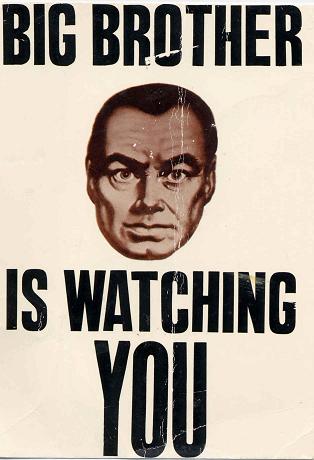
Too rarely mentioned is the combination of nonviolence and idealism that has been integral to the courageous whistleblowing by Edward Snowden and Bradley Manning. Right now, one is on a perilous journey across the globe in search of political asylum, while the other is locked up in a prison and confined to a military trial excluding the human dimensions of the case. At a time of Big Brother and endless war, Snowden and Manning have bravely insisted that a truly better world is possible.

Meanwhile, top policymakers in Washington seem bent on running as much of the world as possible. Their pursuit of Edward Snowden has evolved into a frenzied rage.

Those at the top of the U.S. government insist that Edward Snowden and Bradley Manning have betrayed it. But that’s backward. Putting its money on vast secrecy and military violence instead of democracy, the government has betrayed Snowden and Manning and the rest of us.

Trying to put a stop to all that secrecy and violence, we have no assurance of success. But continuing to try is a prerequisite for realistic hope.

A few months before the invasion of Iraq, looking out at Baghdad from an upper story of a hotel, I thought of something Albert Camus once wrote. “And henceforth, the only honorable course will be to stake everything on a formidable gamble: that words are more powerful than munitions.”

Edward Snowden’s honorable course has led him to this historic moment. The U.S. government is eager to pay him back with retribution and solitary. But many people in the United States and around the world are responding with love and solidarity.
 
Norman Solomon is co-founder of RootsAction.org and founding director of the Institute for Public Accuracy. His books include “War Made Easy: How Presidents and Pundits Keep Spinning Us to Death.”

(Bruce B. Brugmann, who signs his blogs and emails b3, is the editor at large of the Bay Guardian.  He is the former editor and co-founder and co-publisher of the Bay Guardian, 1966-2012. He can be reached at bruce@sfbg.com)

Protesters to be awarded $1 million settlement in mass arrest lawsuit

A federal judge has granted preliminary approval for a settlement of more than $1 million to a group of 150 activists who were mass arrested in Oakland three years ago. The National Lawyers Guild filed the federal class action civil-rights suit on behalf of the protesters, who in some cases were held for more than 24 hours despite never facing formal charges.

The mass arrest took place on Nov. 5, 2010, when activists marched in opposition to the light sentence handed down to Johannes Mehserle, the former BART officer who was tried for murder after he shot and killed unarmed BART passenger Oscar Grant.

After winding through the streets in downtown Oakland, protesters took a turn toward Fruitvale Station, where Grant was fatally shot. But instead, police in riot gear forced them into a residential neighborhood where they were kettled in and mass-arrested for unlawful assembly.

There’s a process for making mass arrests that is clearly laid out in OPD’s crowd control policy, “to comply with California law and the U.S. constitution. That would involve giving a warning, and then allowing people to disperse,” Rachel Lederman of the NLG points out. “This was a perfectly legal demonstration,” and with the exception of one or two individuals who vandalized bus windows during the march, the vast majority of protesters did not engage in illegal activity.

Instead of being cited and released, or simply allowed to disperse once police declared the march to be “unlawful,” the 150 demonstrators who were penned in by police were sent through a long and uncomfortable booking process, Lederman said. They were left sitting on the street, then loaded onto buses and vans where they were made to wait, still handcuffed, for up to 6 hours in some cases. (Note: This reporter was kettled in along with protesters initially but then allowed to leave when police created an exit for members of the media. From there, all reporters were sent to an area cordoned off by police tape, where it was difficult to observe the arrests. So reporters were essentially given the choice between being sent to jail, which would have made it difficult to file a timely story, or being roped off in an area far from where police activity could be observed. But that’s a different story.)

The Alameda County Sheriff’s Department then sent demonstrators through a lengthy jail booking process, even though in similar circumstances, arrestees have typically been cited and released. They were placed in overcrowded, temporary holding cells with no beds and no chairs. “People needed medical attention that they didn’t get,” Lederman said. “No food was provided for more than twelve hours after our initial detention,” noted plaintiff Katie Loncke. “There was no room to lie down. I sat up against a wall for the entire night.”

Lederman said she expects protesters who were part of the class action suit to receive somewhere around $4,500 each in settlement payments. In addition to the monetary payment, the settlement agreement reaffirms and reincorporates OPD’s crowd control policy for up to seven years.

That policy dates back to 2004, when the NLG and the American Civil Liberties Union jointly drafted the regulations in the wake of an anti-war demonstration where police fired rubber bullets into the crowd, resulting in serious injuries and intense scrutiny on the police department’s practices.

While OPD complied with the crowd control policy in the first years after it was implemented, Lederman said, there were relatively few mass mobilizations in the streets of Oakland until those mounted in response to the Oscar Grant shooting. Those street demonstrations were followed by 2011 mass marches organized in conjunction with the Occupy movement.

“Our primary goal, and our clients’ primary goal, was to stop” unlawful police practices that violated OPD’s crowd control policy, Lederman said, “so that people can be freer to organize on the streets.”

More to grow on

1

Pit Stop (Yen Tan, US) One of the very best narrative features at Sundance this year, Yen Tan’s drama nonetheless completely flew under the radar of media attention. It’s a beautifully low-key tale of two 40-ish gay men in a Texas small town. Neither are closeted, but they aren’t exactly fulfilled, either, both being in awkward domestic situations. Gabe (Bill Heck) is still living with angry ex-wife Shannon (Amy Seimetz) for the sake of their six year-old daughter. Ernesto (Marcus DeAnda) still shares his apartment with younger, slackerish ex-BF Luis (Alfredo Maduro), who keeps dragging his feet about actually moving out. Everyone is dissatisfied, but not quite willing to risk making a leap into unfamiliar territory. We know Gabe and Ernesto are fated to meet, yet it’s Tan’s terrifically nuanced portrayal of the relationships they must exit first that dominates almost the entire feature. Pit Stop is the kind of slow burner that sneaks up on you, surprising with the force of well-earned climactic joy after so much concise observation of credibly ordinary, troubled lives. Fri/21, 4pm, Castro; June 27, 7pm, Elmwood. (Dennis Harvey)

http://www.youtube.com/watch?v=0rhaXvoGf0s

Free Fall (Stephan Lacant, Germany) A young German police cadet, Marc (Hanno Koffler), finds himself disturbingly drawn to a fellow cadet, Kay (Max Riemelt), during a weekend of training exercises — a regimen that proves to be not quite enough of an outlet to diffuse the erotic tension between them. Back home, though, are Marc’s very pregnant girlfriend, Bettina (Katharina Schüttler), and a circle of friends and family who expect him to continue along his current track of shacking up, forming a family, and demonstrating his loyalty to the macho brotherhood of his colleagues on the force. When Kay transfers into the department, his presence exerts a pressure on Marc that threatens to derail him. Director Stephan Lacant’s film, co-written with Karsten Dahlem, movingly depicts the painful breakdown of a man ruled by impulses he’s unable to face up to, and the consequences that come of remaining paralyzed in an impossible state. Fri/21, 6:30pm, Castro; Mon/24, 9:30pm, Elmwood. (Lynn Rapoport)

C.O.G. (Kyle Patrick Alvarez, US) The first feature adapted from David Sedaris’ writing, Kyle Patrick Alvarez’s film captures his acerbic autobiographical comedy while eventually revealing the misfit pain hidden behind that wit. Tightly wound David (Jonathan Groff), on the run from problematic family relations and his sexual identity, takes the bus from East Coast grad school to rural Oregon — his uninhibited fellow passengers providing the first of many mortifications here en route. Having decided that seasonal work as an apple picker will somehow be liberating, he’s viewed with suspicion by mostly Mexican co-workers and his crabby boss (Dean Stockwell). More fateful kinda-sorta friendships are forged with a sexy forklift operator (Corey Stoll) and a born-again war vet (Denis O’Hare). Under the latter’s volatile tutelage, David briefly becomes a C.O.G. — meaning “child of God.” Balancing the caustic, absurd, and bittersweet, gradually making us care about an amusingly dislikable, prickly protagonist, this is a refreshingly offbeat narrative that pulls off a lot of tricky, ambivalent mood shifts. Sat/22, 9:15pm, Castro. (Harvey)

Bwakaw (Jun Robles Lana, Philippines, 2012) Grumpy old man in the rural Philippines — OK, Jun Robles Lana’s seriocomedy isn’t going to top many lists as the sexiest movie at Frameline. But it’s one of the most deeply satisfying films at this year’s festival. Six-decade Filipino cinema veteran Eddie Garcia plays Rene, a crusty loner who lives alone and works without pay (he’s officially retired) at the local post office just to have something to do. He has cranky relationships — “friendships” would be a stretch — with the area priest, a widowed neighbor, and two over-the-top queens who run a hair salon. His closest bonds are to a rest-home denizen now too senile to remember who he is, and to the stray mutt who’s sort of his dog — though not so much that he’ll actually let it in the house. After decades in denial, Rene finally accepted his homosexuality at age 60, when “my time was [already] passed.” But he gets an unanticipated new surge of hope, possibly misdirected, upon befriending rough-hewn younger bicycle-taxi driver Sol (Rez Cortez). With its leisurely pace and seemingly stereotypical characters who turn out to be much more complex than they initially appear, Bwakaw is a disarmingly modest movie that gradually reveals a rather beautiful soul. Sun/23, 5:45pm, Victoria. (Harvey)

The Out List (Timothy Greenfield-Sanders, US) Documentarian Timothy Greenfield-Sanders, whose previous projects have focused on prominent African Americans and Latinos, supermodels, and porn stars, turns his lens on the LGBTs for a survey film set to air on HBO this month. While there’s no sign of the radical faeries or the poly queers with negative interest in the marriage equality battle, Greenfield-Sanders has gathered a decently varied collection of 16 LGBT individuals, mostly but not only celebrities, whose common thread is having gone public. Milk screenwriter Dustin Lance Black and ex-NFLer Wade Davis describe their time in the closet and their coming-out episodes, while Hollywood stars Neil Patrick Harris and Cynthia Nixon comment on strategies for getting work and fighting the good fight (which for the latter includes closeting her bisexuality). Only an hour long, The Out List merely skims the surface of its subjects’ experiences, but we do get some sense of their scope, which includes finding family in NYC’s ballroom scene, getting elected as a lesbian Democratic sheriff in Dallas County, Texas, and learning to view one’s orientation as a gift from god. Tue/25, 4:30pm, Castro. (Rapoport)

Beyond the Walls (David Lambert, Belgium/Canada/France, 2012) Aptly compared in the Frameline catalog to such intelligent recent gay relationship studies as Weekend (2011) and Keep the Lights On (2012), David Lambert’s finely crafted debut feature charts its protagonists through an unpredictable, rocky romance. Paolo (Matila Malliarakis) is living with an older woman when he meets bartender-musician Ilir (Guillaume Gouix), who’s amused by the young blonde’s drunken antics while wary of the mutual attraction between them. When immature, puppyish Paolo gets thrown out by his exasperated girlfriend, he lands on Ilir’s doorstep as an uninvited instant-boyfriend, and despite some initial grumbling, that’s pretty much how it works out. Yet an unfortunate turn of events forces a long, involuntary separation between the two that their coupledom might not survive. While it requires a certain suspension of disbelief that focused, self-confident Ilir would fall for the flighty, needy Paolo, the eventual complexity of their relationship makes for a powerful cumulative impact. June 27, 9:30pm, Castro. (Harvey)

Reaching for the Moon (Bruno Barreto, Brazil) Brazilian director Bruno Barreto (1997’s Four Days in September) offers a moving account of the romantic relationship between the American poet Elizabeth Bishop (Miranda Otto) and the Brazilian architect Lota de Macedo Soares (Glória Pires), which spanned the 1950s and the better part of the ’60s. The pair meet under inauspicious circumstances: traveling to Brazil, Elizabeth visits her old Vassar friend Mary (Tracy Middendorf) at the gorgeous rural estate where she lives with Lota, a wealthy woman from one of Brazil’s prominent political families. Unfortunately for Mary, Lota’s regard for the timid, restrained Elizabeth moves along a precipitous arc from irritation to infatuation, her subsequent impetuous pursuit of her lover’s friend revealing a heartless egoism — as well as an attitude toward householding that blends a poly sensibility with a ruling-class sense of entitlement. The film tracks Elizabeth and Lota’s enduring affair during a period marked by professional triumphs, personal lows, and political turmoil, all of which take their toll on the relationship. June 28, 6:45pm, Castro. (Rapoport)

Out Here: A Queer Farmer Film Project (Jonah Mossberg, US) Jonah Mossberg’s documentary crosses the country seeking out the perspectives of LGBT farmers, visiting some 30 farms before narrowing the focus to seven disparate subjects growing food in settings that range from a community garden in West Philadelphia to a farmstead in rural Alabama (or what one participant calls “the toenail of the Appalachians”). An allegiance to organics and other sustainable practices establishes some common ground. However, asked to encapsulate how queerness impacts her farming life, a woman raising crops and chickens in the Bronx’s Garden of Happiness observes, “I don’t think the land asks that question — if you’re gay or straight,” while others tease queerness out of acts like turning to permaculture and draw connections between heteronormativity and industrial agriculture. Look for fermentation guru Sandor Katz at Tennessee’s Little Short Mountain Farm, and stay seated for the longish closing credits interspersed with earnest (and otherwise) discussions of which veggie wins the title of queerest piece of produce. June 29, 1:30pm, Victoria. (Rapoport)

Young and Wild (Marialy Rivas, 2012) Structured around the anonymous and oft-graphic blog posts of a Chilean teenager, director-cowriter Marialy Rivas’s inventive, engaging film depicts a young woman’s navigation — both solitary and very, very public — of her sexual and romantic impulses as they clash with a rigid upbringing of spiritual indoctrination. Raised in an evangelical Christian household, Daniela (Alicia Rodríguez) bluntly documents, under the screen name Young and Wild, a period of upset and exploration during which she is outed as a fornicator and expelled from school, threatened by her hard-edged mother (Aline Küppenheim) with missionary exile, and faced with the sorrow of watching a beloved aunt (Ingrid Isensee) battle cancer. As Daniela begins a relationship with a young man (Felipe Pinto), begins a relationship with a young woman (María Gracia Omegna), and records the proceedings with a complicated mixture of comic insights, lyrical observations, and obscenities, her introspections play with the device of the straightforward voice-over—broadcast to untold numbers of unknown peers who avidly follow and comment on her adventures and misadventures. June 29, 8:30pm, Roxie. (Rapoport)

Frameline37 runs June 20-30 at the Castro Theatre, 429 Castro, SF; Roxie Theater, 3117 16th St, SF; Victoria Theatre, 2961 16th St, SF; and Rialto Cinemas Elmwood, 2966 College, Berk. For tickets (most shows $12) and complete schedule, visit www.frameline.org.

Lives less ordinary

0

arts@sfbg.com

FRAMELINE Each year Frameline’s program vividly reflects issues that of late have seemed most urgent in the LGBT community — for many years, for instance, there was an understandably overwhelming amount of films about AIDS. Most recently, the fights for gay marriage and trans rights have dominated many a dramatic and documentary selection.

It is sometimes nice, therefore, in the fray of pressing public debate and community activism to escape topicality and sink into the achievements and personalities of more distant queer-history eras. Several documentaries at Frameline37 offer just that, as they chronicle the lives and times of five extraordinary men (albeit one normally found in a dress and fright wig).

The most San Francisco-centric of them is Stephen Silha, Eric Slade, and Dawn Logsdon’s Big Joy: The Adventures of James Broughton, about “a golden secret of West Coast bohemia.” The late James Broughton was a poet, prankster, and experimental filmmaker who began making films in the late 1940s “to see what my dreams really looked like.” A significant figure in the pre-Beat San Francisco renaissance of avant-garde art, he won a prize at Cannes for 1953’s typically playful, hedonistic The Pleasure Garden, but declined the commercial directing career offered him — in fact he didn’t make another movie for 15 years, when free-love hymn The Bed became a counterculture smash.

Broughton married and had three children (including one with not-yet-famous local film critic Pauline Kael), but at age 61 found his soulmate in 26-year-old fellow director Joel Singer, thereafter devoting his life and work to celebrations of gay male sexuality. (Interviewed here, his ex-wife Susanna calls this turn of events “a very unwelcome incident from which I never recovered.”) The documentary provides a treasure trove of excerpts from a now little-seen body of cinematic work, as well as much archival footage of SF over the decades.

Bringing joy to a lot of people during his too-brief life was Glenn Milstead, the subject of Jeffrey Schwarz’s I Am Divine. A picked-on sissy fat kid, he blossomed upon discovering Baltimore’s gay underground — and starring in neighbor John Waters’ underground movies, made by and for the local “freak” scene they hung out in.

Yet even their early efforts found a following; when “Divine” appeared in SF to perform at one of the Cockettes’ midnight movie/theater happenings, he was greeted as a star. This was before his greatest roles for Waters, as the fearsome anti-heroines of Pink Flamingos (1972) and Female Trouble (1974), then the beleaguered hausfraus of Polyester (1981) and Hairspray (1988). Despite spending nearly his entire career in drag, he wanted to be thought of as a character actor, not a “transvestite” novelty. Sadly, he seemed on the verge of achieving that — having been signed to play an ongoing male role on Married … with Children — when he died of respiratory failure in 1988, at age 42.

A different kind of tragedy is chronicled in Clare Beaven and Nic Stacey’s British Codebreaker, about Alan Turing — perhaps the most brilliant mathematician of his era, who basically came up with the essential concept of the modern-day computer (in 1936!) He played a huge role in breaking the Nazi’s secret Enigma code, thus aiding an Allied victory. But instead of being treated as a national hero, he was convicted of “gross indecency” (i.e. gay sex) in 1952 and hounded by police until he committed suicide two years later. Half conventional documentary and half reenactment drama (with Ed Stoppard, playwright Tom’s son, as Turing), Codebreaker illustrates the cruel price even an upper-class genius could pay for his or her sexuality in the days before Gay Lib.

Two literary lions are remembered in the last of these historical bio-docs. Daniel Young’s Swiss Paul Bowles: The Cage Door is Always Open recalls the curious life of a successful American composer turned famous expat novelist. He and wife Jane Bowles moved to post-World War II Tangiers, where they entertained a parade of visiting artists — and, by all accounts, a succession of same-sex lovers. Clips from Bernardo Bertolucci’s underrated adaptation of Bowles’ literary masterwork The Sheltering Sky (1990) are here alongside input from acquaintances and observers including John Waters and Gore Vidal.

http://www.youtube.com/watch?v=INW6i6K1NmQ

The latter is the whole focus in Nicholas Wrathall’s Gore Vidal: The United States of Amnesia, and what could be better than that? Perhaps undervalued as a frequently very fine novelist because he was so prolific (and popular), he’s considered here primarily as a public intellectual — a term that seems positively antiquated in our climate of pundits and ranters — and fierce lifelong critic of American hypocrisy in all its forms, especially the political. He was a scold (or a “correctionist,” as he put it), albeit of the wittiest, most clear-headed and informed type. Among myriad highlights here are seeing him on TV reduce friend-rival Norman Mailer to sputtering fury, shred the insufferable right-wing toady William F. Buckley, and make poor Jerry Brown squirm under his effortless tongue-lashing.

Endlessly quotable (“We’ve had bad Presidents in the past but we’ve never had a goddam fool,” he said of George W. Bush), obstinately “out” from an early age if never very PC in his views (“Sex destroys relationships … I’m devoted to promiscuity”), Vidal is aptly appreciated here as “a thorn in the American Establishment, of which by birth he is a charter member.” There will never be anyone quite like him — but we sure could use some who are at least in the general ballpark. *

FRAMELINE37

June 20-30, various venues

www.frameline.org

Alerts

0


Wednesday 19

Discussion: Latinos and the criminal justice system Eric Quezada Center, 518 Valencia, SF. www.sflatinodemclub.com. 7-8pm, free. Join SF Public Defender Jeff Adachi, Sheriff Ross Mirkarimi, Criminal Justice Network for youth program manager Roselyn Berry, and Haywood Burns of the Institute for Juvenile Justice, Fairness and Equity for a frank discussion on how the Latino community is affected by systemic aspects of the criminal justice system. The discussion will cover immigrant offenders, the city’s Sanctuary City policy, restorative justice, and juvenile crime. Moderated by Mike Alonso. Sponsored by the SF Latino Democratic Club.

Author Jonathan Alter on Obama — and his enemies St. John’s Presbyterian Church, 2727 College, Berk. $12 advance. www.brownpapertickets.com, (800) 838-3006 This event features the author of The Center Holds: Obama and His Enemies, a book that portrays the president at an historic moment. Alter offers “fresh details about the Koch brothers, Grover Norquist, and the online haters who suffer from ‘Obama Derangement Syndrome,'” according to the KPFA announcement. “He portrays the Obama analytics geeks working out of ‘The Cave’ and the man who secretly videotaped Mitt Romney’s infamous comments on the ’47 percent.'” This is a benefit for KPFA.


Thursday 20

Screening of ‘War on Whistleblowers: Free Press & the National Security State’ Berkeley Fellowship of Unitarian Universalists’ Hall, 1924 Cedar, Berk. http://www.bfuu.org. 7-9pm, $5–$10 suggested donation. A timely screening of a documentary featuring four stories of whistleblowers who took action because they wanted to expose government corruption, misconduct or wrongdoing. Sponsored by the BFUU Social Justice Ctee as part of our Conscientious Projector Series for the 99% For more, visit www.waronwhistleblowers.com


Panel sees Orwellian overtones in NSA spying scandal

1

It is now public knowledge that the NSA has been spying on us (unless you’ve been living under a rock and, lucky for you, exempt from digital surveillance) thanks to the information leaked by Edward Snowden last week.

In the wake of this scandal, people crowded into St. John’s Presbyterian Church in Berkeley on Tuesday, June 11, to participate in a panel discussion titled “Our Vanishing Civil Liberties,” centered around the intricacies of government intrusion and spying in the age of the War on Terror.

Among the panel members were Daniel Ellsberg, famed leaker of the Pentagon papers; Birgitta Jónsdóttir, member of the Icelandic Parliament; Normon Solomon, activist and author; and Nadia Kayyali, a legal fellow with the Bill of Rights Defense Committee.

As Kayyali noted, we now know about the NSA’s capability of obtaining the metadata for all domestic phone calls in the United States, which can include the call length, who you’re calling and in some cases the location of the phone calls.

So is Snowden a patriot or a traitor? For the panel members, the answer was obviously in support of the former. However, for California’s own US Sen. Dianne Feinstein, whose name the crowd constantly met with a crescendo of hissing, Snowden is a criminal, guilty of treason.

Solomon rallied against officials like Feinstein, who he believes should not be entrusted with the protection of our privacy. “What we discover is that the leaders in Congress, the leaders in the White House, the leaders in the courts unfortunately as well cannot be trusted with our lives and that includes our civil liberties,” he said.  

Ellsberg spoke of the comparisons between Snowden and Bradley Manning, an ex-U.S. soldier arrested in 2010 for leaking classified information to WikiLeaks, noting that Manning’s leaks dealt solely with issues “over there,” specifically in Iraq and Afghanistan, while Snowden’s case is inherently more domestic.

“The American people, like other humans, are unfortunately not that concerned about what is done to people over there,” said Ellsberg. “Especially when their leaders tell them that it is necessary to their safety. What strikes me about Snowden is that it affects us, you, everybody.”

However, the repercussions of Snowden’s leak are not solely rooted in America. Jónsdóttir informed the crowd that many European Union countries are concerned with the extended power of the NSA. 

“Our leaders in the many different countries in Europe are so worried about this probing into the privacy of citizens of the EU that they are thinking of building a fortress around Europe to protect us against the surveillance and the invasion of our privacy from the United States,” said Jónsdóttir.

Our challenge now, as Ellsberg stated, is escaping the abyss of unchecked government surveillance. But can we do it? For this question, Ellsberg didn’t have an answer.

The panel raised intertwining issues of government overreach and public apathy, painting the picture of a United States embodying the Orwellian dystopia of 1984 combined with Aldous Huxley’s portrait of apathetic hedonism in Brave New World.

However, Kayyali appeared optimistic for the future, calling upon education and public discussion as the only potential to escape from the intrusive acts of the NSA.

“Never stop educating yourself,” Kayyali told the crowd. “Take everything that you’ve learned here tonight and share it with those around you. The only way we are going to see any change is if we have an educated populace, something that we are severely lacking right now.”

Without action, Ellsberg warned of the potential for a country in which privacy is nonexistent, or what he colloquially refers to as, “The United Stasi of America.”

In her closing statement, Jónsdóttir offered this coda in the form of a poem: Now is the time to yield to the call of growth, to the call of action. You are the change makers. Sleepers of all ages, wake up now.”

Holding out for a hero…or an antihero…or the Antichrist: this week’s new movies!

0

Already in theaters, Seth Rogen and his bro posse take on doomsday in This Is the End. I got the chance to talk with Mr. Rogen, his co-director and co-writer Evan Goldberg, and co-star Craig Robinson when they visited San Francisco a few days back. (Fun fact: Rogen really does laugh like that in real life.) Check the interview here!

In rep news, this weekend at the Castro Theatre heralds the San Francisco Silent Film Festival‘s “Hitchcock 9” event, spotlighting nine silent films by the guy who would later claim the title “Master of Suspense,” direct some of the greatest thrillers of all time, etc. You can’t go wrong with any of the films, but just for kicks, here’s my take on the series here. And at the Yerba Buena Center for the Arts, Austrian director Ulrich Seidl’s dark Paradise Trilogy continues its bummer-summer run this weekend; Dennis Harvey breaks ’em down here.

Plus! That Superman movie you’ve been hearing a thing or two about, and the rest of the week’s new offerings, after the jump.

http://www.youtube.com/watch?v=Sq6ffF8QLsQ

Becoming Traviata Philippe Béziat’s backstage doc offers an absorbing look at a particularly innovative production of Verdi’s La Traviata, directed by Jean-François Sivadier and starring the luminous Natalie Dessay (currently appearing in SF Opera‘s production of Tales of Hoffman). Béziat eschews narration or interviews; instead, his camera simply tracks artists at work, moving from rehearsal room to stage as Sivadier and Dessay (along with her co-stars) block scenes, make suggestions, practice gestures, and engage in the hit-and-miss experimentation that defines the creative process. The film is edited so that La Traviata progresses chronologically, with the earliest scenes unfolding on a spartan set (Dessay’s practice attire: yoga clothes), and the tragic climax taking place onstage, with an orchestra in the pit and sparkly make-up in full effect. Dessay will appear in person at San Francisco screenings Sat/15 at 7pm and Sun/16 at 2pm. (1:53) (Cheryl Eddy)

http://www.youtube.com/watch?v=CWnrk35qYMs

Dirty Wars Subtitled “the world is a battlefield,” this doc follows author and Nation magazine writer Jeremy Scahill as he probes the disturbing underbelly of America’s ongoing counterterrorism campaign. After he gets wind of a deadly nighttime raid on a home in rural Afghanistan, Scahill does his best to investigate what really happened, though what he hears from eyewitnesses doesn’t line up with the military explanation — and nobody from the official side of things cares to discuss it any further, thank you very much. With its talk of cover-ups and covert military units, and interviewees who appear in silhouette with their voices disguised, Dirty Wars plays like a thriller until Osama bin Laden’s death shifts certain (but not all) elements of the story Scahill’s chasing into the mainstream-news spotlight. The journalist makes valid points about how an utter lack of accountability or regard for consequences (that will reverberate for generations to come) means the “war on terror” will never end, but Dirty Wars suffers a bit from too much voice-over. Even the film’s gorgeous cinematography — director Rick Rowley won a prize for it at Sundance earlier this year — can’t alleviate the sensation that Dirty Wars is mostly an illustrated-lecture version of Scahill’s source-material book. Still, it’s a compelling lecture. (1:26) (Cheryl Eddy)

The Guillotines Why yes, that is Jimmy Wang Yu, director and star of 1976 cult classic Master of the Flying Guillotine, in a small but pivotal role commanding a team of assassins who specialize in dispatching heads with airborne versions of you-know-which weapon. Unfortunately, this latest from Andrew Lau (best-known stateside for 2002’s Infernal Affairs, remade into Martin Scorsese’s 2006 Oscar-winner The Departed) doesn’t have nearly as much fun as it should; dudes be chopping heads off in a flurry of CG’d-up steampunky whirlygigs, but The Guillotines‘ tone is possibly even more deadly, as in deadly serious. When a rebellious prophet-folk hero known as Wolf (Xiaoming Huang) runs afoul of the Emperor’s top-secret Guillotine brotherhood, led in the field by Leng (Ethan Juan), the squad travels in disguise to a rural, smallpox-afflicted village to track him down. Along for the journey is the Emperor’s top operative, ruthless Agent Du (Shawn Yue), a boyhood friend of Leng’s. Leng and Du share a dark secret: the Guillotines have been deemed expendable — yep, in the Stallone sense — and the Emperor has decided to kill them off and replace them with armies toting guns and cannons in the name of progress. Lau is no stranger to tales of men grappling with betrayals, misplaced loyalties, and hidden personal agendas — and as historical martial-arts fantasies go, The Guillotines has higher production values than most, with sweeping, luscious photography. Too bad all the action scenes are punctuated by episodes of moody brooding — replete with slo-mo gazing off into the distance, dramatically falling tears, solemn heart-to-hearts, swelling strings, and the occasional howl of anguish. (1:53) (Cheryl Eddy)

http://www.youtube.com/watch?v=T6DJcgm3wNY

Man of Steel As beloved as he is, Superman is a tough superhero to crack — or otherwise bend into anything resembling a modern character. Director Zack Snyder and writer David S. Goyer, working with producer Christopher Nolan on the initial story, do their best to nuance this reboot, which focuses primarily on Supe’s alien origins and takes its zoom-happy space battles from Battlestar Galactica. The story begins with Kal-El’s birth on a Krypton that’s rapidly going into the shitter: the exploited planet is about to explode and wayward General Zod (Michael Shannon) is staging a coup, killing Kal-El’s father, Jor-El (Russell Crowe), the Kryptonians’ lead scientist, and being conveniently put on ice in order to battle yet another day. That day comes as Kal-El, now a 20-something earthling named Clark Kent (Henry Cavill) — resigned to his status as an outsider, a role dreamed up by his protective adoptive dad (Kevin Costner) — has turned into a bit of a (dharma) bum, looking like a buff Jack Kerouac, working Deadliest Catch-style rigs, and rescuing people along the way to finding himself. Spunky Lois Lane (Amy Adams) is the key to his, erm, coming-out party, necessitated by a certain special someone looking to reboot the Kryptonian race on earth. The greatest danger here lies in the fact that all the leached-of-color quasi-sepia tone action can turn into a bit of a Kryptonian-US Army demolition derby, making for a mess of rubble and tricky-to-parse fight sequences that, of course, will satisfy the fanboys and -girls, but will likely glaze the eyes of many others. Nevertheless, the effort Snyder and crew pack into this lengthy artifact — with its chronology-scrambling flashbacks and multiple platforms for Shannon, Diane Lane, Christopher Meloni, Laurence Fishburne, and the like — pays off on the level of sheer scale, adding up to what feels like the best Superman on film or TV to date — though that bar seems pretty easy to leap over in a single bound. (2:23) (Kimberly Chun)

http://www.youtube.com/watch?v=4V1E2IgXeuI

Pandora’s Promise Filmmaker Robert Stone has traveled far from his first film, 1988’s Oscar-nominated anti-nuke Radio Bikini, to today, with the release of Pandora’s Promise, a detailed and guaranteed-to-be-controversial examination of nuclear power and the environmentalists who have transitioned from fervently anti- to pro-nuclear. Interviewing activists and authors like Stewart Brand, Gwyneth Cravens, Mark Lynas, and Michael Shellenberger, among others, Stone eloquently visualizes all angles of their discussion with media, industrial, and newly shot footage, starting with a visit to the largest nuclear disaster of recent years, Fukushima, which he visits with the hazmat-suited environmental activist and journalist Lynas and continuing to Chernobyl and its current denizens. Couching the debate in cultural and political context going back to World War II, Stone builds a case for nuclear energy as a viable method to provide clean, safe power for planet in the throes of climate change that will nonetheless need double or triple the current amount of energy by 2050, as billions in the developing world emerge from poverty. In a practical sense, as The Death of Environmentalism author Shellenberger asserts, “The idea that we’re going to replace oil and coal with solar and wind and nothing else is a hallucinatory delusion.” Stone and his subjects put together an enticing argument to turn to nuclear as a way forward from coal, made compelling by the idea that designs for safer alternative reactors that produce less waste are out there. (1:27) (Kimberly Chun)