War

Alerts: August 21 – 27, 2013

0

WEDNESDAY 21

Breaking News: The future of open news and local storytelling Hub Media Lab, The San Francisco Chronicle Building, 925 Mission, SF. Hubmedialabsf.com. 6:30pm, $15. Local news outlets and mobile app founders will discuss the future of news distribution in the Bay Area in the context of maintaining an informed citizenry. Panelists will include Lydia Chavez, Founder of Mission Local; Laura Ramos, Executive Producer of The Bold Italic; Michael Coren, Co-founder of Publet and Burt Herman, Co-Founder of Storify.

FRIDAY 23

Egypt: A revolution in crisis 2969 Mission, SF. www.answersf.org. 7pm, $5–$10. Since the Egyptian Revolution began in January 2011, hundreds have been killed and thousands more wounded. The Egyptian military seized power on July 3, following massive protests against the government of Mohammad Morsi. What do these developments mean for the future of Egypt and the broader region? What is the role of the U.S.? Panelists include Omar Ali, an Egyptian-American activist with ANSWER, and Mazda Majidi, co-author of Socialists & War.

SATURDAY 24

Women’s Rights Day: A tribute to immigrant women New Valencia Hall, 747 Polk, SF. www.radicalwomen.org. 7:30-9:30pm, $3. This tribute to immigrant women will feature a screening of the documentary “Rape in the Fields,” unmasking the sexual violence against female agricultural workers. Hear from guest speaker, former farm worker and Los Angeles Radical Women member Yolanda Alaniz, co-author of Viva La Raza: A History of Chicano Identity and Resistance. Arrive at 6:30pm for dinner, which will be available for a donation of $8.50.


Rally for civil rights Steps of San Francisco City Hall, SF. bayardrustincoalition.com. 3:30-5:30pm, free. The Bayard Rustin LGBT Coalition is organizing this civil rights rally to commemorate the 50th anniversary of the 1963 March on Washington for Jobs and Freedom, where Dr. Martin Luther King delivered his famed “I have a dream” speech. The event will also honor the memory of Bayard Rustin, a gay man who was a prominent strategist of this historic event.

Heads Up: 8 must-see concerts this week

2

The Internet never forgets. I realized this yet again today after discovering the complete 1979 BBC documentary, Who Is Poly Styrene, and with the more globally appealing announcement that it looks like JT and the rest of the ‘N Sync gang will perform at MTV’s Video Music Awards, Sunday. Oh and Cher has a new video, which is her first in 12 years! There may be hope for you yet, Gotye (the coffee shop I was at this morning played his hit, which reminded me of his existence.) 

Anyways, this week (and slightly beyond), the Bay Area will host both legendary and up-and-coming must-sees, with the Melvins, Black Sabbath, My Bloody Valentine topping the list, along with Deerhunter and No Age, and newbies the Parmesans, the She’s, and Ovvl. All acts to catch if you have the chance (and you do, see below).

Here are your must-see shows: 

The She’s
“If you walked anywhere in the downtown area during July, you’re probably already familiar with the She’s. The band was featured by the Converse Represent campaign, and its image, pushing a drum kit up one of SF’s trademarked hills, has been boldly splashed around the city. Converse chose well. The She’s embody all the youth, DIY attitude, and vintage pop that San Francisco loves. Their debut album, appropriately titled Then It Starts To Feel Like Summer, retrofits dreamy ’60s pop with a crackling teenage energy (these ladies are still in high school) and they’re finishing up a much-anticipated EP, tentatively titled We’re not Best Coast (But They’re Cool Too). The band, which has credited much of its success to the open and supportive SF music scene, is giving back tonight at Bottom of the Hill, where it’s headlining this Save KUSF Benefit.” — Haley Zaremba
With the Yes Go’s, False Priest
Tue/20, $10, 9pm
Bottom of the Hill
1233 17th St, SF
www.bottomofthehill.com

http://www.youtube.com/watch?v=LoRGt9PjXGA

The Melvins
“And they said a stoner metal cover of Roxy Music’s “In Every Dream Home a Heartache” couldn’t be done. Well, sludge metal veterans the Melvins are here to prove them wrong. The longstanding band is making a voyage to Slim’s to play its 2013 cover album, Everybody Loves Sausages. Get ready for things to get a little weird and campy, as a bunch of middle aged dudes play a diverse selection of tunes throughout the ages. Embarking on their 30th anniversary tour, the Melvins will be playing songs by artists such as freak folk band the Fugs, the dear and departed drag queen Divine (John Waters’ muse), Queen, David Bowie, and the Jam. In short: don’t miss this hit parade.” — Erin Dage
With Honky
Thu/22, 9pm, $22
Slim’s
333 11th St, SF
(415) 255-0333
www.slimspresents.com
http://www.youtube.com/watch?v=z1mi_zvk0yQ

No Age
The newest album from LA noise-punks No Age, An Object, seems almost restrained compared to the bombast of previous records like 2010’s Everything in Between. With An Object, there’s a sense of tense build-up without release, tightly coiled guitar lines over paranoid drumming, and faraway hollers on the Sub Pop record, which comes out Aug. 20. Like much arty post-punk, it makes you feel like you’re holding your breath for the entirety of the tracks, unable to unclench. Relax and settle in: the experiment of An Object is a success, and the album is worthy of passionate intake. Continuing down the experimental route, the duo takes its live show to a more unexpected location this time: the Berkeley Art Museum and Pacific Film Archive. And if you miss this stop, No Age will be back in Oakland Sept. 28 for the Station to Station fest at 16th St. Station.
With Devin Gary and Ross, Sun Foot
Fri/23, 7:30pm (doors at 5pm), $7
Berkeley Art Museum and Pacific Film Archive
2625 Durant, Berk.
www.bampfa.berkeley
http://www.youtube.com/watch?v=ZVb4QyF8fDY

My Bloody Valentine
“This is the reunion for which we dared not hope. Until this year, My Bloody Valentine’s genre-defining masterstroke of the shoegaze movement, 1991’s Loveless, was the last we had heard from the Irish-English band, and as a result, it was canonized as one of those pristine, “perfect” albums, frozen in time and untainted by inferior follow-ups. And then, this past Groundhog Day, the unthinkable happened: after an excruciating, 22-year wait, and countless broken promises, bandleader Kevin Shields casually posted a new record, mbv, on the web, In Rainbows style, surprising his diehard fans with the legendary third album they had been hopelessly fantasizing about only a week before. This Friday, My Bloody Valentine will pay a visit to the Bill Graham Civic Auditorium for their first SF show since the early ’90s.” — Taylor Kaplan
With Beachwood Sparks, Lumerians
Fri/23, 8pm, $45
Bill Graham Civic Auditorium
99 Grove, SF
(415) 624-8900
www.billgrahamcivicauditorium.com
http://www.youtube.com/watch?v=FyYMzEplnfU

The Parmesans
Local countrified indie-folksters the Parmesans released their full-length debut, Wolf Eggs, this week. The record’s full of swoony multipart harmonies, plucky instruments, and a chipper sense of hot-sauced humor. All of that is on fine display in track, “Load Up on Eggs and Bacon,” which begins with a solo voice, “when I wake up/I feel shaken” then layered barbershop quartet-style with additional harmonies, “load up on eggs and bacon,” and the sound of an egg cracking. Add to that the strings of guitars and mandolins and banjos, bellowing trumpet, and a light and tight rhythm section. Then bake on high.. (Savage)
With Before the Brave, Garden Party, Greg Downing
Fri/23, 9pm, $10
Thee Parkside
1600 17th St, SF
www.theeparkside.com
http://www.youtube.com/watch?v=0Srcmhe1ogg

Ovvl
“If you’ve been to a local metal show in recent months, chances are Ovvl was on the bill. If not, there was probably an Ovvl member standing next to you in the crowd. But, hesher, stop now if you’ve been taking ’em for granted. With a new album and tours on the horizon, the four-piece is about to be mighty scarce around these parts.” — Cheryl Eddy
With Crag Dweller
Sat/24, 9pm, $5
Bender’s Bar and Grill
806 S. Van Ness, SF
www.bendersbar.com
http://www.youtube.com/watch?v=V6Up1tS8fOs

Black Sabbath

Before reality television and famous flame-haired wives, even before that bloody bat-biting incident, Ozzy Osbourne was simply a wild-eyed young boy from a hardscrabble town who, together with guitarist Tony Iommi and drummer Bill Ward, formed the world’s first heavy metal group. This year, Black Sabbath released its first new album together in decades, 13, a lumbering return to form produced by Rick Ruben. With it came instantly timeless first single, “God is dead?” an eight-minute metal epic. Beyond all the hype, myth, and druggy tabloid brouhaha, a vital band still stands before us, wicked as it ever was, and willing to crowd-please with old tracks mixed in with the new. According to live reviews of this headlining non-fest tour, the band has been opening with “War Pigs.”
Mon/26, 7:30pm, $40–$149.50
Shoreline Amphitheatre
One Amphitheatre Parkway, Mountain View
www.livenation.com
http://www.youtube.com/watch?v=OhhOU5FUPBE

Deerhunter
“Many who have flirted with musical greatness have also teetered on the fine line between eccentricity and insanity, and Deerhunter frontperson Bradford Cox is no exception. While the Atlanta band’s garage rock albums continue to receive glowing reviews and growing numbers of dedicated fans, Cox’s mental (in)stability has also been featured center stage in the group’s evolution. His charming eccentricities — rambling and semi-incoherent stage banter — are shadowed with more off-putting stunts, as when Cox responded to a fan’s snarky request for “My Sharona” with an hour-long cover of the song in Minneapolis. A Deerhunter show is many things — insane, beautiful, confusing, and frequently very moving — but there is one thing it will never manage to be. Bradford Cox will never be boring.” — Haley Zaremba
With Lonnie Holley, Avey Tare’s Slasher Flicks
Mon/26, 8pm, $21
Great American Music Hall
859 O’Farrell, SF
(415) 885-0750
www.slimspresents.com
http://www.youtube.com/watch?v=G5RzpPrOd-4

Never enough hours in the weekend to see all these NEW MOVIES

0

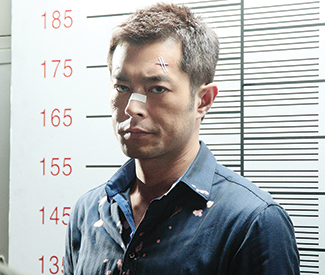
Quite a few openings this week, although it seems like 10-plus new movies is becoming the norm these days. (At least there’s no big film festival to distract you from the regular ol’ cinema at the moment.) In the spirit of efficiency I did a combo-platter review of sci-fi chiller Europa Report; Johnnie To’s latest, Drug War; Tenebre, a 1982 Dario Argento giallo that’s screening at the Roxie tonight; and doc Adjust Your Tracking: The Untold Story of the VHS Collector, which plays the Balboa. Also at length, Dennis Harvey takes a look at Shirley Clarke’s freshly restored 1967 doc Portrait of Jason, also screening at the Roxie.

Ain’t enough for you? Read on for Kick-Ass 2, Jobs, and more on the week’s fresh crop of flicks.

http://www.youtube.com/watch?v=X7MdQjqRjyw

The Artist and the Model The horror of the blank page, the raw sensuality of marble, and the fresh-meat attraction of a new model — just a few of the starting points for this thoughtful narrative about an elderly sculptor finding and shaping his possibly finest and final muse. Bedraggled and homeless beauty Mercè (Aida Folch) washes up in a small French town in the waning days of World War II and is taken in by a kindly woman (Claudia Cardinale), who seems intent on pleasantly pimping her out as a nude model to her artist husband (Jean Rochefort). As his former model, she knows Mercè has the type of body he likes — and that she’s capable of restoring his powers, in more ways than one, if you know what I mean. Yet this film by Fernando Trueba (1992’s Belle Époque) isn’t that kind of movie, with those kinds of models, especially when Mercè turns out to have more on her mind than mere pleasure. Done up in a lustrous, sunlit black and white that recalls 1957’s Wild Strawberries, The Artist and the Model instead offers a steady, respectful, and loving peek into a process, and unique relationship, with just a touch of poetry. (1:41) (Kimberly Chun)

http://www.youtube.com/watch?v=0O7b4nTRy2A

Blue Exorcist: The Movie Though it’s spawned from Kazue Kato’s manga-turned-TV-series, familiarity with the source material is not necessary to enjoy Blue Exorcist: The Movie‘s supernatural charms. Set in True Cross Academy Town — named for the Hogwarts-ish school of exorcism at its center — the film opens with a folk tale about an adorable demon that wrecked an entire town by turning all of its inhabitants into lazy slackers. The creature was eventually captured, but nobody knows where it’s been hiding — until boyish exorcist-in-training Rin, half-demon himself, encounters a suspiciously adorable critter while chasing yet another demon, this one huge and prone to damaging city blocks (and cracking open things that should remain sealed in the process). Trouble ahead! Blue Exorcist does contain some yep-this-is-anime moments (there’s a powerful female exorcist … who wears a tiny bikini top that barely contains her enormous bazongas), but it’s mostly fun fantasy, with a sly sense of humor (“Let’s put a beatdown on these Tokyo demons!”) and some endearingly flawed heroes. (1:28) Four Star. (Cheryl Eddy)

http://www.youtube.com/watch?v=BpFNTvA93iY

In a World… Lake Bell (Childrens Hospital, How to Make It in America) writes, directs, and stars in this comedy about a women who sets her sights on a career in movie-trailer voiceovers. (1:33)

http://www.youtube.com/watch?v=3tDHH1eXKmA

Jobs With the upcoming Aaron Sorkin adaptation of Walter Isaacson’s biography nipping at its heels, Jobs feels like a quickie — true to Silicon Valley form, someone realized that the first to ship can end up defining the market. But as this independent biopic goes for each easy cliché and facile cinematic device, you can practically hear Steve Jobs himself spinning in the ether somewhere. Ashton Kutcher as Jobs lectures us over and over again about the virtues of quality product, but little seemed to have penetrated director Joshua Michael Stern as he distracts with a schmaltzy score (he should have stuck to Bob Dylan, Joe Walsh, and era-defining AOR), and relies on corny slow-motion to dramatize the passing of a circuit board. The fact that Kutcher might be the best thing here — he clearly throws himself into impersonating the Apple icon, from his intense, upward-glancing glare to his hand gestures — says a bit about the film itself, as it coasts on its self-made man-captain of enterprise narrative arc. Dispensing with much about the man Jobs became outside of Apple, apart from a few nods to his unsavory neglect of friends and offspring, and simply never acknowledging his work at, say, Pixar, Jobs, in the end, comes off as a lengthy infomercial for the Cupertino heavyweight. (2:02) (Kimberly Chun)

Kick-Ass 2 Even an ass-kicking subversive take on superherodom runs the risk of getting its rump tested, toasted, roasted — and found wanting. Too bad the exhilaratingly smarty-pants, somewhat mean-spirited Kick-Ass (2010), the brighter spot in a year of superhero-questioning flicks (see also: Super), has gotten sucker-punched in all the most predictable ways in its latest incarnation. Dave, aka Kick-Ass (Aaron Taylor-Johnson), and Mindy, otherwise known as Hit-Girl (Chloë Grace Moretz), are only half-heartedly attempting to live normal lives: they’re training on the sly, mostly because Mindy’s new guardian, Detective Marcus Williams (Morris Chestnut), is determined to restore her childhood. Little does he realize that Mindy only comes alive when she pretends she’s battling ninjas at cheerleader tryouts — or is giving her skills a workout by unhanding, literally and gleefully, a robber. Kick-Ass is a little unnerved by her semi-psychotic enthusiasm for crushing bad guys, but he’s crushing, too, on Mindy, until Marcus catches her in the Hit-Girl act and grounds her in real life, where she has to deal with some really nasty characters: the most popular girls in school. So Kick-Ass hooks up with a motley team of would-be heroes inspired by his example, led Colonel Stars and Stripes (an almost unrecognizable Jim Carrey), while old frenemy Chris, aka Red Mist (Christopher Mintz-Plasse) begins to find his real calling — as a supervillain he dubs the Motherfucker — and starts to assemble his own gang of baddies. Unlike the first movie, which passed the whip-smart wisecracks around equally, Mintz-Plasse and enabler-bodyguard Javier (John Leguizamo) get most of the choice lines here. Otherwise, the vigilante action gets pretty grimly routine, in a roof-battling, punch-’em-up kind of way. A romance seems to be budding between our two young superfriends, but let’s skip part three — I’d rather read about it in the funny pages. (1:43) (Kimberly Chun)

http://www.youtube.com/watch?v=9uBXH_DLxsU

Lee Daniels’ The Butler Forest Whitaker stars as the White House’s longtime butler in this based-on-a-true-story tale, with the added bonus of some creative POTUS casting (John Cusack as Richard Nixon; Alan Rickman as Ronald Reagan; Robin Williams as Dwight Eisenhower). (1:53)

http://www.youtube.com/watch?v=3-mO5AMZDMo

Paranoia A young go-getter (Liam Hemsworth) gets drawn into the world of corporate espionage thanks to a feud between evil tech billionaires (Harrison Ford and Gary Oldman). (1:46)

Elaborating tradition

2

THEATER The idea of traditional dance as somehow frozen in time or resistant to modernity is a canard that received a thorough going-over at last weekend’s Performing Diaspora Symposium, which kicks off the Performing Diaspora series at CounterPULSE.

Attending to tradition while moving freely beyond it remains a hallmark of the artists gathered in the annual series. Joti Singh is a good example. Dancer-choreographer Singh — whose Red, Saffron and Green premieres this weekend — grew up in the American South with parents who hailed from northern India. One way she absorbed her family’s Indian culture was through training in Punjabi dances that, as an adult, she began blending with West African styles.

Singh’s Red, Saffron and Green is a celebratory accounting of the Gandar party, founded in 1913 San Francisco by Punjabi activists organizing on behalf of Indian independence from Great Britain. Singh’s own great-grandfather served for a time as the party’s president. Her innovative blend of performance styles thus could be considered a natural vehicle for a story that is transnational, local, and familial at once — indeed a historically astute expression of the elaborate nature of diasporic identity and of the personal as political.

The CounterPULSE series expresses an ongoing commitment to ethnic and traditional forms as a vital area of innovation and conversation in the larger world of dance. Its title, meanwhile, flags two overlapping impulses in presenting the broad range of work: the desire to highlight diasporic communities as important producers of performance; and a focus on dance as a channel of expression, investigation, and community-building for diasporic cultures, whether those cultures are borne by first-generation immigrants or their American-reared great-grandchildren.

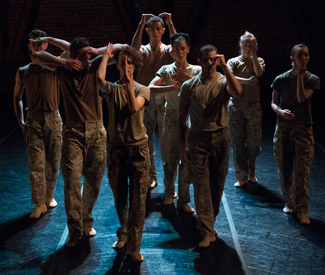
Animating the daylong symposium (available as a podcast on the CounterPULSE website) were three panels featuring distinguished guests and at least one artist from the series — the absorbing Congolese dance-theater performer and choreographer Byb Chanel Bibene, who spoke to the harrowing experience, and body memory, of civil war that informs his Taboos and Heroes (running this weekend) in the first panel’s exploration of diasporic dance derived from the experience of genocide and war.

On the same panel, Cambodian dancer-choreographer Chey Chankethya spoke to the “silence” confronting the children of genocide survivors, and the physicalizing of that unspoken trauma in the body. Jazz tap dancer and vocal improviser Germaine Ingram spoke as an African American concerned with the legacy of slavery and dispossession, adding that it is the space for expression in even the most oppressive conditions that exercises her creative imagination. “I consider my work not so much about trauma as agency,” she emphasized.

The following two panels covered the challenges of “representing Africa” in the changing heterodox world of Bay Area African dance — which generated some lively and straightforward talk during the audience Q&A — and the presentation of sacred dance as performance for general audiences.

There were also bursts of live performance and music (in particular, from Ingram and master drummer and Bay Area legend CK Ladzekpo, of UC Berkeley and the Ghana National Dance Ensemble, who joined the panel on “Spirit Moves: Sacred Dance Onstage”). Meanwhile, Singh led an interactive “experiential lecture/demonstration” on Punjabi Bhangra dance that had the audience up and on the dancefloor, moving in ecstatic unison for the better part of an hour.

In all, the event generated a lot of productive questions and considerable momentum for the fifth annual Performing Diaspora series (this year curated by Roko Kawai, Lily Kharrazi, and Umi Vaughan), which features work-in-progress showings from six individual artists over two weeks. The varied stories and distinctive aesthetic styles on display amount to a unique tribute to the cultural persistence and improvisation that make up life in the diaspora. *

PERFORMING DIASPORA

Through Aug. 25

Thu-Sun, 8pm, $22-$32

CounterPULSE

1310 Mission, SF

counterpulse.org/performing-diaspora


Theater Listings: August 14 – 20, 2013

0

Stage listings are compiled by Guardian staff. Performance times may change; call venues to confirm. Reviewers are Robert Avila, Rita Felciano, and Nicole Gluckstern. Submit items for the listings at listings@sfbg.com.

THEATER

OPENING

In Friendship: Stories By Zona Gale Z Below, 470 Florida, SF; www.zspace.org. $20-50. Previews Wed/14-Thu/15, 7pm; Fri/16, 8pm. Opens Sat/17, 8pm. Runs Wed-Thu, 7pm; Fri-Sat, 8pm; Sun, 3pm. Through Sept 8. Word for Word performs Zona Gale’s “comedy of American manners.”

BAY AREA

All’s Well That Ends Well Forest Meadows Amphitheater, 890 Bella, Dominican University of California, San Rafael; www.marinshakespeare.org. $20-37.50. Previews Fri/16, 8pm. Opens Aug 24, 8pm. Presented in repertory Fri-Sun through Sept 28; visit website for performance schedule. Marin Shakespeare Company continues its outdoor season with the Bard’s classic romance.

Lady Windermere’s Fan Bruns Amphitheater, 100 California Shakespeare Theater Way, Orinda; www.calshakes.org. $35-62. Previews Wed/14-Fri/16, 8pm. Opens Sat/17, 8pm. Runs Tue-Thu, 7:30pm; Fri-Sat, 8pm (also Sept 7, 2pm); Sun, 4pm. Through Sept 8. California Shakespeare Theater performs Oscar Wilde’s comedy.

Orlando Live Oak Theatre, 1301 Shattuck, Berk; www.theatrefirst.com. $10-30. Previews Thu/15, 8pm. Opens Fri/16, 8pm. Runs Thu-Sat, 8pm; Sun, 5pm. Through Sept 15. TheatreFIRST performs Sarah Ruhl’s gender-shifting comedy, which takes place over a span of 300 years.

ONGOING

Can You Dig It? Back Down East 14th — the 60s and Beyond Marsh San Francisco, 1062 Valencia, SF; www.themarsh.org. $15-50. Sat, 8:30pm; Sun, 7pm. Through Aug 25. Don Reed’s new show offers more stories from his colorful upbringing in East Oakland in the 1960s and ’70s. More hilarious and heartfelt depictions of his exceptional parents, independent siblings, and his mostly African American but ethnically mixed working-class community — punctuated with period pop, Motown, and funk classics, to which Reed shimmies and spins with effortless grace. And of course there’s more too of the expert physical comedy and charm that made long-running hits of Reed’s last two solo shows, East 14th and The Kipling Hotel (both launched, like this newest, at the Marsh). Can You Dig It? reaches, for the most part, into the “early” early years, Reed’s grammar-school days, before the events depicted in East 14th or Kipling Hotel came to pass. But in nearly two hours of material, not all of it of equal value or impact, there’s inevitably some overlap and indeed some recycling. Reed, who also directs the show, may start whittling it down as the run continues. But, as is, there are at least 20 unnecessary minutes diluting the overall impact of the piece, which is thin on plot already — much more a series of often very enjoyable vignettes and some painful but largely unexplored observations, wrapped up at the end in a sentimental moral that, while sincere, feels rushed and inadequate. (Avila)

Foodies! The Musical Shelton Theater, 533 Sutter, SF; www.foodiesthemusical.com. $30-34. Fri-Sat, 8pm. Open-ended. AWAT Productions presents Morris Bobrow’s musical comedy revue all about food.

God of Carnage Shelton Theater, 533 Sutter, SF; www.sheltontheater.com. $26-38. Thu-Sat, 8pm. Through Sept 7. Shelton Theater performs Yasmina Reza’s award-winning play about class and parenting.

Gold Rush! The Un-Scripted Barbary Coast Musical Un-Scripted Theater Company, 533 Sutter, Second Flr, SF; www.un-scripted.com. $10-20. Thu-Sat, 8pm. Through Aug 24. The Un-Scripted Theater Company performs an improvised musical about gold-rush era San Francisco.

Gorgeous Hussy: An Interview With Joan Crawford Exit Theatre, 156 Eddy, SF; www.wilywestproductions.com. $15-35. Thu/15-Fri/16, 8pm. Running in repertory with Lawfully Wedded (below), this world premiere by Morgan Ludlow imagines a young writer’s encounter with the legendary movie star.

Hedwig and the Angry Inch Boxcar Theatre, 505 Natoma, SF; www.boxcartheatre.org. $27-43. Thu-Sat, 8pm. Open-ended. John Cameron Mitchell’s cult musical comes to life with director Nick A. Olivero’s ever-rotating cast.

How to Make Your Bitterness Work for You Stage Werx Theatre, 446 Valencia, SF; www.stagewerx.org. $15-25. Mon-Tue, 8pm. Through Aug 27. Kent Underwood is a motivational speaker and self-help expert with some obvious baggage of his own in this solo play from former comedy writer and stand-up comedian Fred Raker (It Could Have Been a Wonderful Life). The premise, similar to that of Kurt Bodden’s Steve Seabrook: Better Than You (ongoing at the Marsh), has the audience overlapping with participants in an Underwood seminar. Underwood, however, two years on the seminar circuit and still unable to get his book published, deviates from the script to answer texts related to a possible career breakthrough. Meanwhile, with the aid of some bullet points and illustrative slides, he explains the premise of said manuscript, “How to Make Your Bitterness Work For You,” as the sad truth of his own underdog status emerges between the laugh lines. But where Bodden is careful to make his Seabrook a somewhat believable character despite the absurdity of it all (or rather, while firmly embracing the absurdity of the self-help industry itself), Raker and director Kimberly Richards put much more space between the playwright/performer and his character, which turns out to be a less effective strategy. Verisimilitude might not have mattered much if the comic material were stronger. Unfortunately, despite the occasional zinger, much of the humor is weak or corny and the narrative (interrupted at regular intervals by an artificial tone representing the arrival of a fresh text message) too contrived to sell us on the larger story. (Avila)

Keith Moon: The Real Me Eureka Theatre, 215 Jackson, SF; www.brownpapertickets.com. $40. Thu/15-Sat/17, 8pm; Sun/18, 7pm. Was Keith Moon the greatest rock ‘n’ roll drummer ever? Veteran solo performer and drum stylist Mick Berry doesn’t exactly come out and say so, but his biographical play about Moon definitely makes a good case for the possibility. Keith Moon: The Real Me, written and performed by Berry, kicks off with a literal bang, a hi-octane cover of “Baba O’Riley,” featuring Berry’s exuberantly crashing cymbals layered over the iconic, rapid-fire synth riff that runs throughout the song. Though the characters of the play are all portrayed by Berry — with references to all the requisite sex, drugs, and self-destruction thrown into the mix — a full band stands at the ready behind two transparent screens to flesh out the show’s strongest element: the rock-and-roll. In order to channel Moon’s full-throttle drumming, Berry enlisted the assistance of Frank Simes, the music director of the Who’s 2012-2013 tour, while to channel Moon’s freewheeling but insecure personality, he enlisted local director Bobby Weinapple. The script itself is still ragged, and a couple of key moments, particularly when Moon’s car is attacked in early 1970, are presented in such a way that the context comes later, which is confusing if you don’t already know the history of the incident. But if you don’t mind a bit of chat with your rock concert, you’ll probably find this fusion of the two intriguing. Just remember, when the nice concessions people offer you complimentary earplugs, take them. (Gluckstern)

Lawfully Wedded: Plays About Marriage Exit Theatre, 156 Eddy, SF; www.wilywestproductions.com. $15-35. Sat/17, 8pm. Running in repertory with Gorgeous Hussy (above), this world premiere “collage of scenes and stories” by Morgan Ludlow, Kirk Shimano, and Alina Trowbridge takes on marriage equality.

Marius Southside Theatre, Fort Mason Center, Bldg D, SF; www.generationtheatre.com. $20-35. Thu-Sat, 8pm; Sun, 3pm. Through Aug 25. GenerationTheatre performs R. David Valayre’s new English translation of Marcel Pagnol’s classic about a man who dreams of traveling the seas.

Sex and the City: LIVE! Rebel, 1760 Market, SF; trannyshack.com/sexandthecity. $25. Wed, 7 and 9pm. Open-ended. It seems a no-brainer. Not just the HBO series itself — that’s definitely missing some gray matter — but putting it onstage as a drag show. Mais naturellement! Why was Sex and the City not conceived of as a drag show in the first place? Making the sordid not exactly palatable but somehow, I don’t know, friendlier (and the canned a little cannier), Velvet Rage Productions mounts two verbatim episodes from the widely adored cable show, with Trannyshack’s Heklina in a smashing portrayal of SJP’s Carrie; D’Arcy Drollinger stealing much of the show as ever-randy Samantha (already more or less a gay man trapped in a woman’s body); Lady Bear as an endearingly out-to-lunch Miranda; and ever assured, quick-witted Trixxie Carr as pent-up Charlotte. There’s also a solid and enjoyable supporting cast courtesy of Cookie Dough, Jordan Wheeler, and Leigh Crow (as Mr. Big). That’s some heavyweight talent trodding the straining boards of bar Rebel’s tiny stage. The show’s still two-dimensional, even in 3D, but noticeably bigger than your 50″ plasma flat panel. Update: new episodes began May 15. (Avila)

So You Can Hear Me Marsh San Francisco, 1062 Valencia, SF; www.themarsh.org. $15-50. Fri, 8pm; Sat, 5pm. Extended through Aug 24. A 23-year-old with no experience, just high spirits and big ideals, gets a job in the South Bronx teaching special ed classes and quickly finds herself in over her head. Safiya Martinez, herself a bright young woman from the projects, delivers this inspired accounting of her time not long ago in perhaps the most neglected sector of the public school system — a 60-minute solo play that makes up for its slim plot with a set of deft, powerful, lovingly crafted characterizations. These complex portraits, alternately hysterical and startling, offer their own moving ruminations on a violent but also vibrant stratum of American society, deeply fractured by pervasive poverty and injustice and yet full of restive young personalities too easily dismissed, ignored, or crudely caricatured elsewhere. An effervescent, big-hearted, and very talented performer, Martinez boasts a bounding personality and contagious passion for her former students (as complicated as that relationship was), and makes this deeply felt tribute all the more memorable. (Avila)

Steve Seabrook: Better Than You Marsh San Francisco, 1062 Valencia, SF; www.themarsh.org. $15-50. Sat, 8:30pm. Extended through Aug 24. Self-awareness, self-actualization, self-aggrandizement — for these things we turn to the professionals: the self-empowerment coaches, the self-help authors and motivational speakers. What’s the good of having a “self” unless someone shows you how to use it? Writer-performer Kurt Bodden’s Steve Seabrook wants to sell you on a better you, but his “Better Than You” weekend seminar (and tie-in book series, assorted CDs, and other paraphernalia) belies a certain divided loyalty in its own self-flattering title. The bitter fruit of the personal growth industry may sound overly ripe for the picking, but Bodden’s deftly executed “seminar” and its behind-the-scenes reveals, directed by Mark Kenward, explore the terrain with panache, cool wit, and shrewd characterization. As both writer and performer, Bodden keeps his Steve Seabrook just this side of overly sensational or maudlin, a believable figure, finally, whose all-too-ordinary life ends up something of a modest model of its own. (Avila)

Stories High XII: The Soma Edition Bindlestiff Studio, 185 Sixth St, SF; www.bindlestiffstudio.org. $10-20. Thu/15-Sat/17, 8pm. Four mini-plays about “living, working, playing, and struggling” in SoMa, written by Dianne Aquino Chui, Paolo Salazar, Cristal Fiel, and Conrad Panganiban.

Sweet Bird of Youth Tides Theatre, 533 Sutter, Second Flr, SF; www.tidestheatre.org. $20-40. Wed-Sat, 8pm. Through Aug 24. Tides Theatre performs Tennessee Williams’ Gulf Coast-set drama about an improbable couple.

BAY AREA

A Comedy of Errors Forest Meadows Amphitheater, 890 Bella, Dominican University of California, San Rafael; www.marinshakespeare.org. $20-37.50. Presented in repertory Fri-Sun through Sept 29; visit website for performance schedule. Marin Shakespeare Company presents a cowboy-themed spin on the Bard’s classic.

No Man’s Land Berkeley Repertory Theatre, Roda Theatre, 2015 Addison, Berk; www.berkeleyrep.org. $35-135. Tue and Thu-Sat, 8pm (also Thu and Sat, 2pm; no matinee Aug 29); Wed, 7pm (also Aug 28, 2pm); Sun/18 and Aug 25, 2pm. Through Aug 31. Acting legends and erstwhile X-Men Patrick Stewart and Ian McKellen star in this pre-Broadway engagement of Harold Pinter’s play.

Oil and Water This week: San Lorenzo Park, Dakota at Ocean, Santa Cruz; www.sfmt.org. Free (donations accepted). Sat/17-Sun/18, 3pm (music at 2:30pm). Through Sept 2 at NorCal parks. It’s a rough year for mimes, or at any rate for the San Francisco Mime Troupe who, after presenting 53 seasons of free theater in the parks of San Francisco (and elsewhere), faced a financial crisis in April that threatened to shut down this season before it even started. The resultant show, funded by an influx of last-minute donations, is one cut considerably closer to the bone than in previous years. With a cast of just four actors and two musicians, plus a stage considerably less ornate then usual, even the play has shrunk in scale, from one two-hour musical to two loosely-connected one-acts riffing on general environmentalist themes. In Deal With the Devil, a surprisingly sympathetic (not to mention downright hawt) Devil (Velina Brown) shows up to help an uncertain president (Rotimi Agbabiaka) regain his conscience and win back his soul, while in Crude Intentions adorable, progressive, same-sex couple Gracie (Velina Brown) and Tomasa (Lisa Hori-Garcia) wind up catering a “benefit” shindig for the Keystone XL Pipeline giving them the opportunity to perpetrate a little guerrilla direct action on a bombastic David Koch (Hugo E Carbajal) with a “mole de petróleo” and a smartphone. Throughout, the performers remain upbeat if somewhat over-extended as they sing, dance, and slapstick their way to the sobering conclusion that the time to turn things around in the battles over global environmental protection is now — or never. (Gluckstern)

Sea of Reeds Ashby Stage, 1901 Ashby, Berk; www.shotgunplayers.org. $20-35. Wed/14-Thu/15, 7pm; Fri/16-Sat/17, 8pm; Sun/18, 5pm. The stage comes unusually populated in this latest from well-known Bay Area monologist and red-diaper baby Josh Kornbluth: a four-piece musical ensemble (El Beh, Jonathan Kepke, Olive Mitra, and Eli Wirtschafter) sits stage right, a standing table with some reed-making equipment appears stage left. Front and center is Kornbluth and his oboe, before him a music stand and behind him three “reeds”—freestanding concave walls of a bamboo-hue (designed by Nina Ball). But there’s more: Kornbluth’s physical trainer (Beth Wilmurt), bounding up from her seat in the first row to lend Kornbluth support or, more productively, prod him in the right direction as he takes the long road home to setting up a promised recital of Bach’s Cantata No. 82. That set up hinges on his recent bar mitzvah, at 52, in Israel, and its unexpected connections between his life-long oboe playing, his Communist upbringing in New York, his mixed marriage, his conversations with a local rabbi, and the Book of Exodus (specifically, Moses’s trail-blazing for the Israelites across the Red Sea, a.k.a., the Sea of Reeds). Although the introduction of supporting characters, musicians, and a musical score (by Marco D’Ambrosio) breaks new ground for the longtime soloist, Sea of Reeds is classic — indeed classical (thanks to a final few tenuous bars from the promised Bach cantata) — Kornbluth. Directed by longtime creative partner David Dower, the show features the boyish comedic persona, the intricate storytelling, and the biographical referents that have given him a loyal following over the years. Diehard fans aside, the show’s cheesy, somewhat self-regarding conceit of staging “spontaneous” interactions between Kornbluth and his trainer may not work with everyone. Perhaps more challenging, though, is the persistence of a less than fully examined disjunction between the political values of his parents and his own political and ethical evolution — a disjunction highlighted here in the narrative’s fraught Middle Eastern setting and its vague navigation between the violence of religious zealotry and a plea for tolerance. (Avila)

The Wiz Julia Morgan Theater, 2640 College, Berk; www.berkeleyplayhouse.org. $17-60. Wed-Thu and Sat, 7pm (also Sat, 2pm); Sun, noon and 5pm. Through Aug 25. The first time I saw the movie version of The Wiz with Diana Ross, Michael Jackson, Richard Pryor, and Lena Horne (among others) it pretty much blew my young, Wizard of Oz-loving mind, swapping funky R&B for syrupy ballads, sophisticated silver pumps in place of the familiar sequined red ones, and mean city streets and subways in place of the more bucolic surroundings of the 1939 Victor Fleming film. Unfortunately, from a certain perspective, the 1970s feel just about as dated today as the 1930s, and consequently The Wiz doesn’t seem quite as innovative as it once did. And while there are some nods to the political climate of today made by the creative team behind the Berkeley Playhouse’s production (such as a pair of almost randomly-wielded rainbow flags, and a handful of t-shirts printed with peace-and-love messages), they mostly steer clear of making any kind of overt statements, even in regards to the all black casting (now thoroughly integrated). Similarly, many of the trappings of the “seventies” have also been axed in favor of more fanciful, almost cartoonish, costuming and choreography. It’s long for a children’s musical, clocking in at around two-and-a-half hours, but that seems no deterrent to the plucky Wiz Kidz youth ensemble who tread the floorboards as a pack of munchkins, a band of sweatshop laborers, and a groovy bunch of glammed-up citizens of the Emerald City. Grown-up voices of special note belong to Taylor Jones as Dorothy, Nicole Julien as Aunt Em/Glinda, Amy Lizardo as Addaperle, Reggie D. White as Tin Man, and Sarah Mitchell as Evillene. (Gluckstern)

PERFORMANCE/DANCE

“Amplitude II” Yerba Buena Center for the Arts, 701 Mission, SF; www.ybca.org. Fri/16, 7-9pm. Free with gallery admission ($8-10). Novelist Laleh Khadivi, scholar Paula Moya, and others lead this event in which audience members are invited to read excerpts from novels recommended by participating artists. There will also be an expanded cinema performance by Michelle Dizon (2012’s Perpetual Peace).

BATS Improv Bayfront Theater, B350 Fort Mason, SF; www.improv.org. Fri-Sat, 8pm. Through Aug 31. $20. The company’s 19th annual Summer Improv Festival continues with “Spontaneous Broadway” (Fri/16); “SF vs. LA Theatresports” (Sat/17); “Duoprov Championship” (Aug 23-24); and “Choose Your Own Adventure” (Aug 30-31).

Kurt Braunohler Verdi Club, 2424 Mariposa, SF; kurttub.eventbrite.com. Fri/16, 8pm. $18. The comedian release his new album, How Do I Land?, with fellow performers Laura Kightlinger, the Business, and a special musical guest.

Caroline Lugo and Carolé Acuña’s Ballet Flamenco Peña Pachamama, 1630 Powell, SF; www.carolinalugo.com. Sat/17 and Aug 25, 6:15pm. $15-19. Flamenco performance by the mother-daughter dance company, featuring live musicians.

“Help Is On the Way 19” Palace of Fine Arts, 3301 Lyon, SF; www.helpisontheway.org. Sun/18, 7:30pm (silent auction and VIP party, 5pm; pre-show gala reception, 6-7:30pm; post-show party, 10-11:45pm). $65-125. Alex Newell (Glee) and Judy Garland impersonator Jim Bailey headline this benefit for the Richmond/Ermet AIDS Foundation.

“Iolanthe” Yerba Buena Center for the Arts, Lam Research Theater, 700 Howard, SF; www.ybca.org. Fri/16-Sat/17, 8pm (also Sat/17, 2pm); Sun/18, 2pm. $15-59. Lamplighters Music Theatre performs Gilbert and Sullivan’s classic musical comedy.

“Merola Grand Finale” War Memorial Opera House, 301 Van Ness, SF; www.merola.org. Sat/17, 7:30pm. $25-45. Future opera headliners perform.

“Mission Position Live” Cinecave, 1034 Valencia, SF; www.missionpositionlive.com. Thu, 8pm. Ongoing. $10. Stand-up comedy with rotating performers.

“Okeanos Intimate” Aquarium of the Bay, Pier 39, SF; www.capacitor.org. Sat, 7pm. Through Sept 28. $20-30 (free aquarium ticket with show ticket). Dance-circus company Capacitor presents a family-friendly series of performances inspired by the ocean. Each show features a pre-performance talk by a marine biologist or oceanographer.

“Performing Diaspora Festival” CounterPULSE, 1310 Mission, SF; www.counterpulse.org. Thu-Sun, 8pm. Through Aug 25. $20-30 sliding scale. This week: Byb Chanel Bibene, Joti Singh, and Jia Wu; next week: Jewlia Eisenberg, Muisi-kongo Malongo, and Nadhi Thekkek.

“RAWdance presents the Concept Series: 14” 66 Sanchez Studio, 66 Sanchez, SF; www.rawdance.org. Sat/17-Sun/18, 8pm (also Sun/18, 3pm). Pay what you can. Intimate salon of contemporary dance with Nina Haft and Company, Stranger Lover Dreamer, Post: Ballet, the Anata Project, Fog Beast, and RAWdance. Plus popcorn!

“San Francisco Drag King Contest” Space 550, 550 Barneveld, SF; www.sfdragkingcontest.com. Sat/17, 10pm. $15-35. The 18th rendition of this popular contest, hosted by Sister Roma and Fudgie Frottage, benefits Pets Are Wonderful Support; a dance party with guest DJs follows.

“San Francisco Magic Parlor” Chancellor Hotel Union Square, 433 Powell, SF; www.sfmagicparlor.com. Thu-Sat, 8pm. Ongoing. $40. Magic vignettes with conjurer and storyteller Walt Anthony.

San Francisco Opera Sigmund Stern Grove, 19th Ave at Sloat, SF; www.sterngrove.org. Sun/18, 2pm. Free. As part of the Stern Grove Festival, SF Opera performs an outdoor concert featuring the works of Verdi, Wagner, and Benjamin Britten.

“San Francisco Son Jarocho Festival” Yerba Buena Gardens, Mission at Third, SF; www.brava.org. Thu/15, 12:30-1:30pm, free. Son de Madera performs. Additional events at Brava Theater Center, 2781 24th St, SF; www.brava.org. Thu/15, 7pm: screening of documentary Soneros del Tesechoacan ($5); Fri/16, 8pm: Los Soneros del Tesechoacan perform with Cambalache ($18-35); Sat/17, 8pm: Son de Madera play a concert with Dia Pa’ Son ($18-35); and Sun/18, times and prices vary: workshops, master classes, and more.

“SPF6” ODC Theater, 3153 17th St, SF; www.odcdance.org. Wed/14-Sun/18, 7pm (also Wed/14-Sat/17, 9pm; Sat/17-Sun/18, 4pm; Sun/18, 2pm). $10-20. SAFEhouse, which fosters new performing artists through residencies and other programs, presents its sixth annual Summer Performance Festival.

“Union Square Live” Union Square, between Post, Geary, Powell, and Stockton, SF; www.unionsquarelive.org. Through Oct 9. Free. Music, dance, circus arts, film, and more; dates and times vary, so check website for the latest.

Yerba Buena Gardens Festival Mission at Third St, SF; www.ybgf.org. Free. This week: “Brazil in the Gardens” (Sat/18, 1-2:30pm); “Poetry Tuesday at Jessie Square” (Tue/20, 12:30-1:30pm).

BAY AREA

“My Own Fairytale” Marsh Berkeley, 2120 Allston, Berk; www.themarsh.org. Fri-Sat, 8pm. Through Aug 24. $15-30. Leslie Noel presents a workshop performance of her new musical about heartbreak, love, and betrayal.

“Legally Blonde: The Musical” Valley Center for the Arts, Regent’s Theater, Holy Names University, 3500 Mountain Blvd, Oakl; www.stagedoorconservatory.org. Fri/16-Sat/17, 7:30pm; Sun/18, 2pm. $15-35. Stage Door Conservatory performs the musical based on the Reese Witherspoon comedy.

“The Peace Project; Shaking & Shocking” Laney College Theater, 900 Fallon, Oakl; www.dnaga.org. Fri/16-Sat/17, 8pm; Sun/18, 5pm. $15-20. dNaga in partnership with PDActive and Danspace presents Claudine Naganuma’s work about the ways in which patients manage Parkinson’s Disease.

“TheatreWorks New Works Festival” Lucie Stern Theatre, 1305 Middlefield, Palo Alto; www.theatreworks.org. Wed-Sun, showtimes vary. $19 (festival pass, $65). TheatreWorks performs its 12th annual fest, with a line-up that includes a new comedy from Pulitzer winner Beth Henley. *


Film Listings: August 14 – 20, 2013

0

Film listings are edited by Cheryl Eddy. Reviewers are Kimberly Chun, Dennis Harvey, Lynn Rapoport, and Sara Maria Vizcarrondo. For rep house showtimes, see Rep Clock.

OPENING

Adjust Your Tracking: The Untold Story of the VHS Collector See “Midsummer Mayhem.” (1:24) Balboa.

The Artist and the Model The horror of the blank page, the raw sensuality of marble, and the fresh-meat attraction of a new model — just a few of the starting points for this thoughtful narrative about an elderly sculptor finding and shaping his possibly finest and final muse. Bedraggled and homeless beauty Mercè (Aida Folch) washes up in a small French town in the waning days of World War II and is taken in by a kindly woman (Claudia Cardinale), who seems intent on pleasantly pimping her out as a nude model to her artist husband (Jean Rochefort). As his former model, she knows Mercè has the type of body he likes — and that she’s capable of restoring his powers, in more ways than one, if you know what I mean. Yet this film by Fernando Trueba (1992’s Belle Époque) isn’t that kind of movie, with those kinds of models, especially when Mercè turns out to have more on her mind than mere pleasure. Done up in a lustrous, sunlit black and white that recalls 1957’s Wild Strawberries, The Artist and the Model instead offers a steady, respectful, and loving peek into a process, and unique relationship, with just a touch of poetry. (1:41) Opera Plaza. (Chun)

Blue Exorcist: The Movie Though it’s spawned from Kazue Kato’s manga-turned-TV-series, familiarity with the source material is not necessary to enjoy Blue Exorcist: The Movie‘s supernatural charms. Set in True Cross Academy Town — named for the Hogwarts-ish school of exorcism at its center — the film opens with a folk tale about an adorable demon that wrecked an entire town by turning all of its inhabitants into lazy slackers. The creature was eventually captured, but nobody knows where it’s been hiding — until boyish exorcist-in-training Rin, half-demon himself, encounters a suspiciously adorable critter while chasing yet another demon, this one huge and prone to damaging city blocks (and cracking open things that should remain sealed in the process). Trouble ahead! Blue Exorcist does contain some yep-this-is-anime moments (there’s a powerful female exorcist … who wears a tiny bikini top that barely contains her enormous bazongas), but it’s mostly fun fantasy, with a sly sense of humor (“Let’s put a beatdown on these Tokyo demons!”) and some endearingly flawed heroes. (1:28) Four Star. (Eddy)

Drug War See “Midsummer Mayhem.” (1:45) Four Star, Metreon.

Europa Report See “Midsummer Mayhem.” (1:30) Opera Plaza, Shattuck.

In a World… Lake Bell (Childrens Hospital, How to Make It in America) writes, directs, and stars in this comedy about a women who sets her sights on a career in movie-trailer voiceovers. (1:33) Shattuck.

Jobs Yep, it’s that biopic, in which Ashton Kutcher portrays Apple CEO Steve Jobs. (2:02) Presidio.

Kick-Ass 2 Hit-Girl (Chloë Grace Moritz) and company return in this sequel to the 2010 superhero hit. (1:43) California.

Lee Daniels’ The Butler Forest Whitaker stars as the White House’s longtime butler in this based-on-a-true-story tale, with the added bonus of some creative POTUS casting (John Cusack as Richard Nixon; Alan Rickman as Ronald Reagan; Robin Williams as Dwight Eisenhower). (1:53) Balboa, Marina, Piedmont.

Paranoia A young go-getter (Liam Hemsworth) gets drawn into the world of corporate espionage thanks to a feud between evil tech billionaires (Harrison Ford and Gary Oldman). (1:46)

Portrait of Jason See “Real to Reel.” (1:47) Roxie.

ONGOING

The Act of Killing What does Anwar Congo — a man who has brutally strangled hundreds of people with piano wire — dream about? As Joshua Oppenheimer’s Indonesia-set documentary The Act of Killing discovers, there’s a thin line between a guilty conscience and a haunted psyche, especially for an admitted killer who’s never been held accountable for anything. In fact, Congo has lived as a hero in North Sumatra for decades — along with scores of others who participated in the country’s ruthless anti-communist purge in the mid-1960s. In order to capture this surreal state of affairs, Oppenheimer zeroes in on a few subjects — like the cheerful Congo, fond of flashy clothes, and the theatrical Herman Koto — and a method, spelled out by The Act of Killing‘s title card: “The killers proudly told us stories about what they did. To understand why, we asked them to create scenes in whatever ways they wished.” Because Congo and company are huge movie buffs, they chose to recreate their crimes with silver-screen flourish. There are costumes and gory make-up. There are props: a stuffed tiger, a dummy torso with a detachable head. There are dancing girls. Most importantly, however, there are mental consequences, primarily for Congo, whose emotional fragility escalates as the filming continues — resulting in an unforgettable, at-times mind-blowing viewing experience. (1:55) Opera Plaza, Shattuck, Smith Rafael. (Eddy)

The Attack After an explosion in Tel Aviv kills 17, respected surgeon Amin Jaafari (Ali Suliman of 2005’s Paradise Now) — an Palestinian with Israeli citizenship, who deflects moments like a bleeding man on his operating table gasping, “I want another doctor!” with a certain amount of practiced detachment — is called to ID a body nestled in the morgue of his hospital. It’s his wife, Siham (Reymonde Amsellem, seen in flashbacks) — the apparent suicide bomber. Amin can’t believe it, but Israeli officers sure do, and the doctor is interrogated for hours about his wife’s alleged terrorist leanings and her suspicious behavior in the days leading up to the attack. When Siham’s involvement in the bombing is confirmed, Amin visits family in the West Bank, intent on discovering more about her secret fundamentalism and answering one simple question: “Why?” Emotions and tension run high as he digs into a world that’s been carefully constructed to keep unsympathetic parties from obtaining access. Lebanese-born director Ziad Doueiri, directing from a script he co-wrote from the 2008 novel by Yasmina Khadra (former Algerian army major Mohammed Moulessehoul, who wrote under his wife’s name to evade military censorship), delivers a suspenseful tale that offers new perspective on the Palestine-Israel divide. (1:42) Shattuck. (Eddy)

Blackfish The 911 call placed from SeaWorld Orlando on February 24, 2010 imparted a uniquely horrific emergency: “A whale has eaten one of the trainers.” That revelation opens Gabriela Cowperthwaite’s Blackfish, a powerful doc that offers a compelling argument against keeping orcas in captivity, much less making them do choreographed tricks in front of tourists at Shamu Stadium. Whale experts, former SeaWorld employees, and civilian eyewitnesses step forward to illuminate an industry that seemingly places a higher value on profits than it does on safety — skewed priorities that made headlines after veteran trainer Dawn Brancheau was killed by Tilikum, a massive bull who’d been involved in two prior deaths. Though SeaWorld refused to speak with Cowperthwaite on camera, they recently released a statement calling Blackfish “shamefully dishonest, deliberately misleading, and scientifically inaccurate” — read the filmmaker’s response to SeaWorld’s criticisms at film blog Indiewire, or better yet, see this important, eye-opening film yourself and draw your own conclusions. (1:30) SF Center, Shattuck. (Eddy)

Blue Jasmine The good news about Blue Jasmine isn’t that it’s set in San Francisco, but that it’s Woody Allen’s best movie in years. Although some familiar characteristics are duly present, it’s not quite like anything he’s done before, and carries its essentially dramatic weight more effectively than he’s managed in at least a couple decades. Not long ago Jasmine (a fearless Cate Blanchett) was the quintessential Manhattan hostess, but that glittering bubble has burst — exactly how revealed in flashbacks that spring surprises up to the script’s end. She crawls to the West Coast to “start over” in the sole place available where she won’t be mortified by the pity of erstwhile society friends. That would be the SF apartment of Ginger (Sally Hawkins), a fellow adoptive sister who was always looked down on by comparison to pretty, clever Jasmine. Theirs is an uneasy alliance — but Ginger’s too big-hearted to say no. It’s somewhat disappointing that Blue Jasmine doesn’t really do much with San Francisco. Really, the film could take place anywhere — although setting it in a non-picture-postcard SF does bolster the film’s unsettled, unpredictable air. Without being an outright villain, Jasmine is one of the least likable characters to carry a major US film since Noah Baumbach’s underrated Margot at the Wedding (2007); the general plot shell, moreover, is strongly redolent of A Streetcar Named Desire. But whatever inspiration Allen took from prior works, Blue Jasmine is still distinctively his own invention. It’s frequently funny in throwaway performance bits, yet disturbing, even devastating in cumulative impact. (1:38) Albany, Clay, Metreon, Piedmont. (Harvey)

The Canyons Now that “train wreck” is an official celebrity category popular media ignore at their peril, certain people and projects are deemed doomed automatically. Lindsay Lohan can’t redeem herself — she’d lose her entertainment value by regaining any respect. Ergo, The Canyons was earmarked as a disaster from the outset. How could it be otherwise, with the former Disney luminary co-starring opposite porn superstar James Deen in an envelope-pushing screenplay from literary bad boy Bret Eaton Ellis (Less Than Zero, American Psycho)? Lohan’s widely reported difficulty on set only heightened a sense that The Canyons would be a pretentious, full-frontal crapfest. But The Canyons isn’t exactly bad. Instead, it’s a middling exercise in upscale erotic-thrillerdom, beautifully crafted (on a Kickstarter dime), clever yet superficial in terms of psychological depth. Ellis trades on his usual themes of corrosive privilege, sex, and violence to deliver a rather simplistic if sardonic lesson in Hollywood amorality that director Paul Schrader angles toward credibility, turning the film into a stern, chilly, minimalist exercise in psychological suspense. A little underwhelming at first (in part because Lohan’s performance is little wobbly, Deen’s a tad one-note), it actually improves with repeat viewings. (1:40) Roxie. (Harvey)

The Conjuring Irony can be so overrated. Paying tribute to those dead-serious ’70s-era accounts of demonic possession — like 1973’s The Exorcist, which seemed all the scarier because it were based on supposedly real-life events — the sober Conjuring runs the risk of coming off as just more Catholic propaganda, as so many exorcism-is-the-cure creepers can be. But from the sound of the long-coming development of this project — producer Tony DeRosa-Grund had apparently been wanting to make the movie for more than a dozen years — 2004’s Saw and 2010’s Insidious director James Wan was merely applying the same careful dedication to this story’s unfolding as those that came before him, down to setting it in those groovy VW van-borne ’70s that saw more families torn apart by politics and cultural change than those ever-symbolic demonic forces. This time, the narrative framework is built around the paranormal investigators, clairvoyant Lorraine Warren (Vera Farmiga) and demonologist Ed Warren (Patrick Wilson), rather than the victims: the sprawling Perron family, which includes five daughters all ripe for possession or haunting, it seems. The tale of two families opens with the Warrens hard at work on looking into creepy dolls and violent possessions, as Carolyn (Lili Taylor) and Roger Perron (Ron Livingston) move into a freezing old Victorian farmhouse. A very eerie basement is revealed, and hide-and-seek games become increasingly creepy, as Carolyn finds unexplained bruises on her body, one girl is tugged by the foot in the night, and another takes on a new invisible pal. The slow, scary build is the achievement here, with Wan admirably handling the flow of the scares, which go from no-budg effects and implied presences that rely on the viewer’s imagination, to turns of the screws that will have audiences jumping in their seats. Even better are the performances by The Conjuring‘s dueling mothers, in the trenches of a genre that so often flirts with misogyny: each battling the specter of maternal filicide, Farmiga and Taylor infuse their parts with an empathetic warmth and wrenching intensity, turning this bewitched horror throwback into a kind of women’s story. (1:52) 1000 Van Ness, SF Center. (Chun)

Despicable Me 2 The laughs come quick and sweet now that Gru (Steve Carell) has abandoned his super-villainy to become a dad and “legitimate businessman” — though he still applies world-class gravitas to everyday events. (His daughter’s overproduced birthday party is a riot of medieval festoonage.) But like all the best reformed baddies, the Feds, or in this case the Anti-Villain League, recruit him to uncover the next international arch-nemesis. Now a spy, he gets a goofy but highly competent partner (Kristen Wiig) and a cupcake shop at the mall to facilitate sniffing out the criminal. This sequel surpasses the original in charm, cleverness, and general lovability, and it’s not just because they upped the number of minion-related gags, or because Wiig joined the cast; she ultimately gets the short end of the stick as the latecomer love-interest (her spy gadgets are also just so-so). However, Carell kills it as Gru 2 — his faux-Russian accent and awkward timing are more lived-in. Maybe the jokes are about more familiar stuff (like the niggling disappointments of family life) but they’re also sharper and more surprising. And though the minions seemed like one-trick ponies in the first film, those gibberish-talking jellybeans outdo themselves in the sequel’s climax. (1:38) 1000 Van Ness, SF Center, Shattuck. (Vizcarrondo)

Elysium By the year 2154, the one percent will all have left Earth’s polluted surface for Elysium, a luxurious space station where everyone has access to high-tech machines that can heal any wound or illness in a matter of seconds. Among the grimy masses in burned-out Los Angeles, where everyone speaks a mixture of Spanish and English, factory worker Max (Matt Damon) is trying to put his car-thief past behind him — and maybe pursue something with the childhood sweetheart (Alice Braga) he’s recently reconnected with. Meanwhile, up on Elysium, icy Secretary of Defense Delacourt (Jodie Foster, speaking in French and Old Hollywood-accented English) rages against immigration, even planning a government takeover to prevent any more “illegals” from slipping aboard. Naturally, the fates of Max and Delacourt will soon intertwine, with “brain to brain data transfers,” bionic exo-skeletons, futuristic guns, life-or-death needs for Elysium’s medical miracles, and some colorful interference by a sword-wielding creeper of a sleeper agent (Sharlto Copley) along the way. In his first feature since 2009’s apartheid-themed District 9, South African writer-director Neill Blomkamp once again turns to obvious allegory to guide his plot. If Elysium‘s message is a bit heavy-handed, it’s well-intentioned, and doesn’t take away from impressive visuals (mercifully rendered in 2D) or Damon’s committed performance. (2:00) Balboa, Marina, Metreon, 1000 Van Ness, Sundance Kabuki. (Eddy)

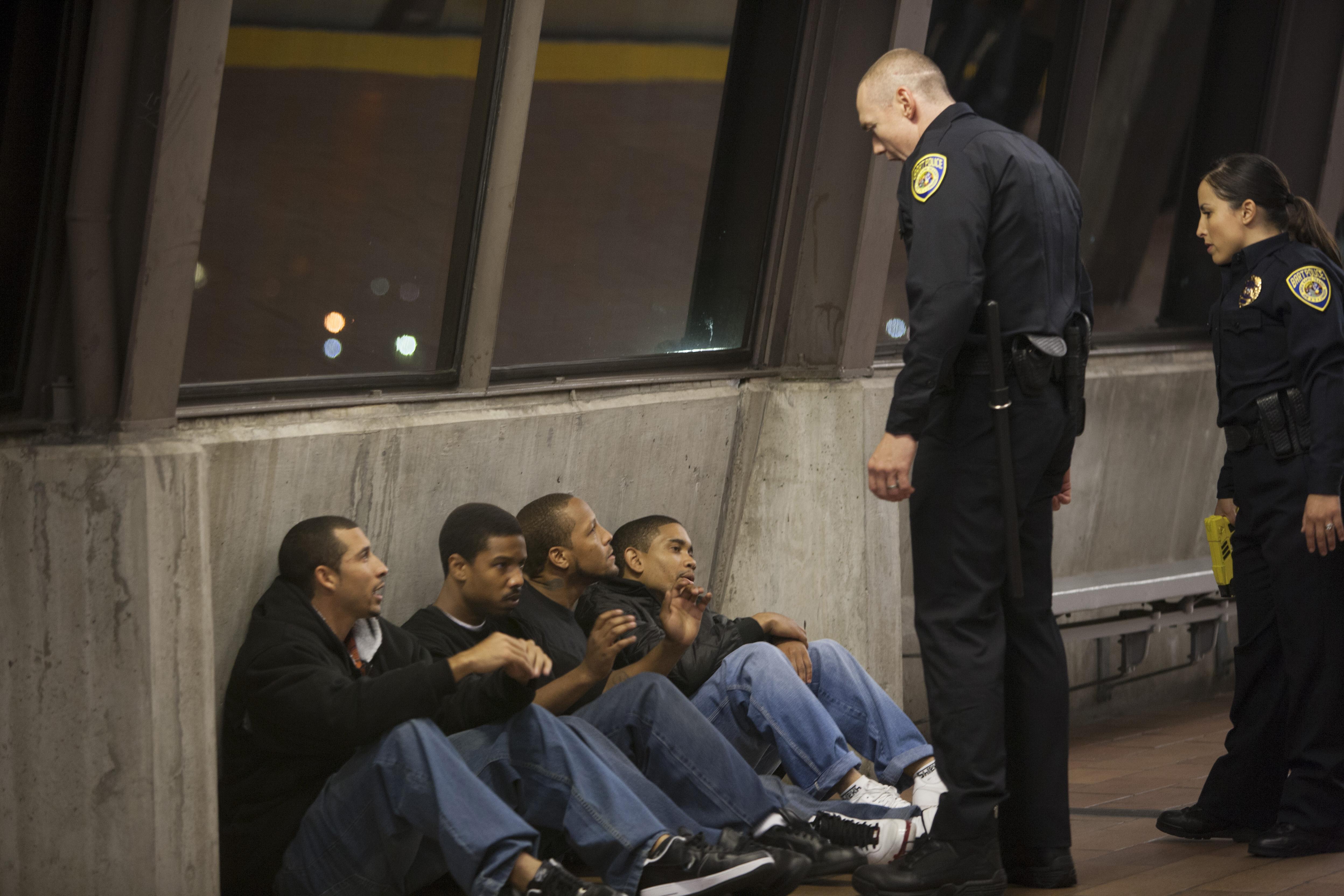
Fruitvale Station By now you’ve heard of Fruitvale Station, the debut feature from Oakland-born filmmaker Ryan Coogler. With a cast that includes Academy Award winner Octavia Spencer and rising star Michael B. Jordan (The Wire, Friday Night Lights), the film premiered at the 2013 Sundance Film Festival, winning both the Audience Award and the Grand Jury Prize en route to being scooped up for distribition by the Weinstein Company. A few months later, Coogler, a USC film school grad who just turned 27, won Best First Film at Cannes. Accolades are nice, especially when paired with a massive PR push from a studio known for bringing home little gold men. But particularly in the Bay Area, the true story behind Fruitvale Station eclipses even the most glowing pre-release hype. The film opens with real footage captured by cell phones the night 22-year-old Oscar Grant was shot in the back by BART police, a tragedy that inspired multiple protests and grabbed national headlines. With its grim ending already revealed, Fruitvale Station backtracks to chart Oscar’s final hours, with a deeper flashback or two fleshing out the troubled past he was trying to overcome. Mostly, though, Fruitvale Station is very much a day in the life, with Oscar (Jordan, in a nuanced performance) dropping off his girlfriend at work, picking up supplies for a birthday party, texting friends about New Year’s Eve plans, and deciding not to follow through on a drug sale. Inevitably, much of what transpires is weighted with extra meaning — Oscar’s mother (Spencer) advising him to “just take the train” to San Francisco that night; Oscar’s tender interactions with his young daughter; the death of a friendly stray dog, hit by a car as BART thunders overhead. It’s a powerful, stripped-down portrait that belies Coogler’s rookie-filmmaker status. (1:24) California, Metreon, 1000 Van Ness, Presidio, Sundance Kabuki. (Eddy)

Hannah Arendt New German Cinema’s Margarethe von Trotta (1975’s The Lost Honor of Katharina Blum, 1986’s Rosa Luxemburg) delivers this surprisingly dull biopic about the great German-Jewish political theorist and the heated controversy around her New Yorker article (and subsequent book) about Israel’s 1961 trial of Nazi Adolph Eichmann. Played with dignified, slightly vulnerable countenance by the inimitable Barbara Sukowa, Arendt travels from her teaching job and cozy expat circles in New York to Jerusalem for the trial. There she comes face to face with the “banality of evil” in Eichmann, the petty careerist of the Holocaust, forcing her to “try and reconcile the shocking mediocrity of the man with his staggering deeds.” This led her to further insights into the nature of modern society, and triggered a storm of outrage and vitriol — in particular from the Commentary crowd of future neocons — all of which is clearly of relevance today, and the impetus for von Trotta’s revisiting this famous episode. But the film is too mannered, too slick, too formulaic —burdened by a television-friendly combination of posture and didacticism, and bon mots from famous and about famous figures in intellectual and literary history to avoid being leaden and tedious. A mainstream film, in other words, for a very unconventional personality and dissident intellectual. While not exactly evil, there’s something dispiriting in so much banality. (1:49) Opera Plaza, Shattuck, Smith Rafael. (Robert Avila)

The Heat First things first: I hated Bridesmaids (2011). Even the BFF love fest between Maya Rudolph and Kristen Wiig couldn’t wash away the bad taste of another wolf pack in girl’s clothing. Dragging and dropping women into dude-ly storylines is at best wonky and at worst degrading, but The Heat finds an alternate route. Its women are unlikable; you don’t root for them, and you’re not hoping they become princesses because such horrifying awkwardness can only be redeemed by a prince. In Bridesmaids and Heat director Paul Feig’s universe, friendship saves the day. Sandra Bullock is Murtaugh to Melissa McCarthy’s Riggs, with tidy Bullock angling for a promotion and McCarthy driving a busted hoopty through Boston like she’s in Grand Theft Auto. Circumstances conspire to bring them together on a case, in one of many elements lifted from traditional buddy-cop storylines. But! The jokes are constant, pelting, and whiz by like so much gunfire. In one running gag, a low-rung villain’s worst insult is telling the women they look old — but neither character is bothered by it. It’s refreshing to see embarrassment humor, so beloved by chick flicks, get taken down a peg by female leads who don’t particularly care what anyone thinks of them. (1:57) SF Center. (Vizcarrondo)

The Hunt Mads Mikkelsen has the kind of face that is at once strikingly handsome and unconventional enough to get him typecast in villain roles. Like so many great foreign-accented actors, he got his big international break playing a bad guy in a James Bond film — as groin-torturing gambler Le Chiffre in 2006 franchise reviver Casino Royale. Currently, he’s creeping TV viewers out as a young Dr. Lecter on Hannibal. His ability to evoke both sympathy and a suspicion of otherness are particularly well deployed in Thomas Vinterberg’s very Danish The Hunt, which won Mikkelsen the Best Actor prize at Cannes last year. He plays Lucas, a lifelong small-town resident recently divorced from his son’s mother, and who currently works at the local kindergarten. One day one of his charges says something to the principal that suggests Lucas has exposed himself to her. Once the child’s misguided “confession” is made, Lucas’ boss immediately assumes the worst. She announces her assumptions at a parent-teachers meeting even before police can begin their investigation. By the time they have, the viral paranoia and suggestive “questioning” of other potential victims has created a full-on, massive pederasty scandal with no basis in truth whatsoever. The Hunt is a valuable depiction of child-abuse panic, in which there’s a collective jumping to drastic conclusions about one subject where everyone is judged guilty before being proven innocent. Its emotional engine is Lucas’ horror at the speed and extremity with which he’s ostracized by his own community — and its willingness to believe the worst about him on anecdotal evidence. Engrossing, nuanced, and twisty right up to the fade-out, The Hunt deftly questions one of our era’s defining public hysterias. (1:45) Smith Rafael. (Harvey)

Kid-Thing At last year’s Sundance Festival, Beasts of the Southern Wild rode its deserved attention all the way to the Oscars. Yet another, in some ways eerily similar Southern-wild-child tale — this latest by the Zellner Brothers, two things that are actually good about today’s Texas — was almost completely ignored. A pity, because it, too, is rather bizarre and inspired. Ten-year-old Annie (Sydney Aguirre) is a little terror running amok in the backwoods with scant-to-zero supervision by an airhead father (Nathan Zellner) much more interested in hanging with his equally dim sometime-demolition-derby-driver pal Caleb (David Zellner). Furious at a neglect she probably can’t even pinpoint as such, Annie acts out in all kinds of ways — from minor vandalism and crank calls to scaring local kids who don’t want to play with her anyway. Her clashing desire for company and resistance toward any authority reach a crisis when one day she hears a voice crying for help in the woods — an elderly woman (voiced by Susan Tyrell) has apparently fallen in a deep hole can’t get herself out of. The latter’s increasingly desperate pleas that Annie get outside assistance trigger mixed emotions in a child who’s at once sympathetic yet suspicious, because nothing in her own experience has taught her to trust adults making demands. This could have been played for grim tragic realism, but the Zellners still inject a large strain of absurdist humor even as they make Annie’s troubled psychology disturbingly vivid — greatly assisted by one helluva performance from wee Miss Aguirre (who could no doubt bring the wrath of God if circumstances necessitated). Though no one seems to be paying attention in commercial terms, these filmmakers are true originals who keep growing artistically in intriguing ways. Kid-Thing‘s belated week-long booking is one of those times when you just have to thank Zoroaster for a venue like the Roxie that’s willing to go out on a limb because a movie is just so damn interesting without necessarily being pleasant. (1:22) Roxie. (Harvey)

Lovelace We first meet Linda Boreman (Amanda Seyfried) in 1970 as a slightly prudish 21-year-old living under the thumb of her strict Catholic parents (Robert Patrick, Sharon Stone) in suburban Florida. Then she meets Chuck Traynor (Peter Sarsgaard), a titty-bar owner and all-around swinging dude who turns her on to all kinds of stuff —including the how-not-to-gag-while-giving-a-b.j. trick that would rocket her to fame two years later. The vehicle for that was Deep Throat, a crudely made XXX feature that arrived at just the right time to ignite the “porn chic” vogue and break down censorship laws. (It grossed as much as $600 million, all of which disappeared into the pockets of mob financiers.) Halfway through Rob Epstein and Jeffrey Friedman’s film, “Linda Lovelace” is basking in the glow of celebrity at a private screening orchestrated by Hugh Hefner (James Franco). At that point, however, the movie rewinds to present the dark underside of the Traynors’ marriage, in which (according to Linda several years later) she was regularly beaten, pimped, and kept a virtual prisoner. This second narrative feature from the Oscar-winning local documentarians is a much more straightforward biopic than 2010’s Howl. Andy Bellin’s script pretty much hews to the version of events put forward by the subject’s 1980 book Ordeal — an account still disputed in parts by some former associates. After a first section that’s a savvy, lively recreation of the Me Decade’s dawn (with particular attention to the era’s garish fashions and décor), film’s latter half turns into a somewhat one-note, familiar saga of domestic abuse, escape and recovery, albeit with a few very powerful scenes. The directors have assembled a great cast, with Juno Temple, Chris Noth, Hank Azaria, Wes Bentley, Eric Roberts, Bobby Cannavale, and Chloe Sevigny all turning up (sometimes unrecognizably) in supporting roles. For a different, fully contextualized take on a watershed moment in American cultural (and sexual) history, check out Fenton Bailey and Randy Barbato’s excellent 2005 documentary Inside Deep Throat. (1:32) Metreon. (Harvey)

Monsters University Seven-year-old Mike Wazowski is even more adorable than grown-up, Billy-Crystal-voiced Mike Wazowski. It’s a pity, then, that one of the big lessons Monsters University teaches is that the essence of monster-identity is how scary one is. What Mike loses in frightfulness he forcefully recovers in spunk, and after a trip to the scare floor that briskly reminds us the premise of 2001’s Monsters, Inc., mini-Mike becomes the first ever career-driven Pixar character. (For this, I love him.) We all know he eventually becomes a superstar in this scare-powered retro-verse, but first he has to overcome frat boy-inflicted embarrassment and flunk out of school. The most noteworthy thing about Pixar’s first prequel is how very massively its characters fail — it’s a lovely tilt that suggest the greatness of tomorrow begins when you overcome the failures of today. The administrators of Monsters University (in particular Helen Mirren’s dragon-lady Dean) require formal perfection in the scares they grade, but in the world of actual scarers, oddness and difference actually become advantages. It’s all theory but no rulebook. And doesn’t that sound like a good lesson from the studio that once proudly said “story is king,” yet now scrambles to meet Disney’s once-a-year feature demands? Such rigidity comes at a price. (1:50) SF Center. (Vizcarrondo)

Pacific Rim The fine print insists this film’s title is actually Warner Bros. Pictures and Legendary Pictures Pacific Rim (no apostrophe, guys?), but that fussy studio demand flies in the face of Pacific Rim‘s pursuit of pure, dumb fun. One is tempted to picture director/co-writer Guillermo del Toro plotting out the battle scenes using action figures — Godzillas vs. Transformers is more or less what’s at play here, and play is the operative word. Sure, the end of the world seems certain, thanks to an invading race of giant “Kaiju” who’ve started to adapt to Earth’s decades-long countermeasures (giant robot suits, piloted by duos whose minds are psychically linked), but there’s far too much goofy glee here for any real panic to accumulate. Charlie Hunnam is agreeable as the wounded hunk who’s humankind’s best hope for salvation, partnered with a rookie (Rinko Kikuchi) who’s eager, for her own reasons, to kick monster butt. Unoriginal yet key supporting roles are filled by Idris Elba (solemn, ass-kicking commander); Charlie Day (goofy science type); and Ron Perlman (flashy-dressing, black-market-dealing Kaiju expert). Pacific Rim may not transcend action-movie clichés or break much new ground (drinking game idea: gulp every time there’s an obvious reference or homage, be it to Toho or Bruckheimer), but damn if it doesn’t pair perfectly with popcorn. (2:11) Metreon, 1000 Van Ness. (Eddy)

Percy Jackson: Sea of Monsters (1:46) 1000 Van Ness, SF Center.

Planes Dane Cook voices a crop duster determined to prove he can do more than he was built for in Planes, the first Disney spin-off from a Pixar property. (Prior to the film’s title we see “From The World of Cars,” an indicator the film is an extension of a known universe — but also not quite from it.) And indeed, Planes resembles one of Pixar’s straight-to-DVD releases as it struggles for liftoff. Dreaming of speed, Dusty Crophopper (Cook) trains for the Wings Around the World race with his fuel-truck friend, Chug (Brad Garrett). A legacy playing Brewster McCloud and Wilbur Wright makes Stacy Keach a pitchy choice for Skipper, Dusty’s reluctant ex-military mentor. Charming cast choices buoy Planes somewhat, but those actors are feathers in a cap that hardly supports them — you watch the film fully aware of its toy potential: the race is a geography game; the planes are hobby sets; the cars will wind up. The story, about overcoming limitations, is in step with high-value parables Pixar proffers, though it feels shallower than usual. Perhaps toys are all Disney wants — although when Ishani (a sultry Priyanka Chopra) regrets an integrity-compromising choice she made in the race, and her pink cockpit lowers its eyes, you can feel Pixar leaning in. (1:32) Metreon, 1000 Van Ness, Shattuck. (Vizcarrondo)

Prince Avalanche It has been somewhat hard to connect the dots between David Gordon Green the abstract-narrative indie poet (2000’s George Washington, 2003’s All the Real Girls) and DGG the mainstream Hollywood comedy director (2008’s Pineapple Express, yay; 2011’s Your Highness and The Sitter, nay nay nay). But here he brings those seemingly irreconcilable personas together, and they make very sweet music indeed. Paul Rudd and Emile Hirsch play two men — one a fussy, married grown-up, another a short-attention-spanned manchild — spending the summer in near-total isolation, painting yellow divider lines on recently fire-damaged Texas roads. Their very different personalities clash, and at first the tone seems more conventionally broad than that of the 2011 Icelandic minimalist-comedy (Either Way) this revamp is derived from. But Green has a great deal up his sleeve — gorgeous widescreen imagery, some inspired wordless montages, and a well-earned eventual warmth — that makes the very rare US remake that improves upon its European predecessor. (1:34) Shattuck. (Harvey)

Red 2 Are blockbusters entitled to senior moments? Even the best can fail the test — and coast along on past glories on their way to picking up their checks — as Red 2 makes the fatal error of skimping on the grunt work of basic storytelling to simply take up where the first installment on these “retired, extremely dangerous” ex-black ops killers left off. Master hitman Frank (Bruce Willis) and his girlfriend Sarah (Mary-Louise Parker) are semi-contentedly nesting in suburbia when acid-damaged cohort Marvin (John Malkovich) warns them that they’re about to get dragged back into the life. Turns out the cold war isn’t quite as iced out as we all thought, and a portable nuclear device, the brainchild of a physicist (Anthony Hopkins) once in Frank and Marvin’s care, just might be in Moscow. Good-old-days-style high jinks ensue, along with the arrival of old chums like Victoria (Helen Mirren), former flames such as Katja (Catherine Zeta-Jones), and new-gen assassins like Han (Byung-hun Lee). Plus, jet-setting, and the deaths of many, many nameless soldiers, goons, and Iranian embassy staffers (almost all played for laughs, as cued by the comic book-y intertitles). A pity that the thrown-together-ish, throwback story line — somewhat reminiscent of those trashy, starry ’60s clusters, like the original 1960 Ocean’s Eleven — lazily relies on the assumption that we care a jot about the Frank and Sarah romance (the latter now an stereotypically whiny quasi-spouse) and that Frank can essentially talk any killer into joining him out of, er, professional courtesy or basic human decency. Wasting the thoroughbred cast on hand, particularly in the form of Mirren and Hopkins, one wishes the makers had only had the professional courtesy not to phone this effort in. (1:56) Metreon. (Chun)

The Smurfs 2 (1:45) Metreon, 1000 Van Ness, Shattuck.

The Spectacular Now The title suggests a dreamy, fireworks-inflected celebration of life lived in the present tense, but in this depiction of a stalled-out high school senior’s last months of school, director James Ponsoldt (2012’s Smashed) opts for a more guarded, uneasy treatment. Charming, likable, underachieving, and bright enough to frustrate the adults in his corner, Sutter (Miles Teller, 2012’s Project X) has long since managed to turn aimlessness into a philosophical practice, having chosen the path of least resistance and alcohol-fueled unaccountability. His mother (Jennifer Jason Leigh), raising him solo since the departure of a father (Kyle Chandler) whose memories have acquired — for Sutter, at least — a blurry halo effect, describes him as full of both love and possible greatness, but he settles for the blessings of social fluidity and being an adept at the acquisition of beer for fellow underage drinkers. When he meets and becomes romantically involved with Aimee (Shailene Woodley), a sweet, unpolished classmate at the far reaches of his school’s social spectrum, it’s unclear whether the impact of their relationship will push him, or her, or both into a new trajectory, and the film tracks their progress with a watchful, solicitous eye. Adapted for the screen by Scott Neustadter and Michael H. Weber (2009’s 500 Days of Summer) from a novel by Tim Tharp, The Spectacular Now gives the quirky pop cuteness of Summer a wide berth, steering straight into the heart of awkward adolescent striving and mishap. (1:35) SF Center, Shattuck, Sundance Kabuki. (Rapoport)

Star Trek Into Darkness Do you remember 1982? There are more than a few echoes of Star Trek II: The Wrath of Khan in J. J. Abrams’ second film retooling the classic sci-fi property’s characters and adventures. Darkness retains the 2009 cast, including standouts Zachary Quinto as Spock and Simon Pegg as comic-relief Scotty, and brings in Benedict “Sherlock” Cumberbatch to play the villain (I think you can guess which one). The plot mostly pinballs between revenge and preventing/circumventing the destruction of the USS Enterprise, with added post-9/11, post-Dark Knight (2008) terrorism connotations that are de rigueur for all superhero or fantasy-type blockbusters these days. But Darkness isn’t totally, uh, dark: there’s quite a bit of fan service at work here (speak Klingon? You’re in luck). Abrams knows what audiences want, and he’s more than happy to give it to ’em, sometimes opening up massive plot holes in the process — but never veering from his own Prime Directive: providing an enjoyable ride. (2:07) Metreon. (Eddy)

This Is the End It’s a typical day in Los Angeles for Seth Rogen as This Is the End begins. Playing a version of himself, the comedian picks up pal and frequent co-star Jay Baruchel at the airport. Since Jay hates LA, Seth welcomes him with weed and candy, but all good vibes fizzle when Rogen suggests hitting up a party at James Franco’s new mansion. Wait, ugh, Franco? And Jonah Hill will be there? Nooo! Jay ain’t happy, but the revelry — chockablock with every Judd Apatow-blessed star in Hollywood, plus a few random inclusions (Rihanna?) — is great fun for the audience. And likewise for the actors: world, meet Michael Cera, naughty coke fiend. But stranger things are afoot in This Is the End. First, there’s a giant earthquake and a strange blue light that sucks passers-by into the sky. Then a fiery pit yawns in front of Casa Franco, gobbling up just about everyone in the cast who isn’t on the poster. Dudes! Is this the worst party ever — or the apocalypse? The film — co-written and directed by Rogen and longtime collaborator Evan Goldberg — relies heavily on Christian imagery to illustrate the endtimes; the fact that both men and much of their cast is Jewish, and therefore marked as doomed by Bible-thumpers, is part of the joke. But of course, This Is the End has a lot more to it than religious commentary; there’s also copious drug use, masturbation gags, urine-drinking, bromance, insult comedy, and all of the uber-meta in-jokes fans of its stars will appreciate. (1:46) 1000 Van Ness, Shattuck. (Eddy)

Turbo It’s unclear whether the irony of coupling racing — long the purview of white southern NASCAR lovers — with an animated leap into “urban” South Central LA is lost on the makers of Turbo, but even if it is, they’re probably too busy dreaming of getting caught in the drift of Fast and Furious box office success to care much. After all, director David Soren, who came up with the original idea, digs into the main challenge — how does one make a snail’s life, before and after a certain magical makeover, at all visually compelling? — with a gusto that presumes that he’s fully aware of the delicious conundrums he’s set up for himself. Here, Theo (voiced by Ryan Reynolds) is your ordinary garden snail with big, big dreams — he wants to be a race car driver like ace Guy Gagne (Bill Hader). Those reveries threaten to distract him dangerously from his work at the plant, otherwise known as the tomato plant, in the garden where he and brother Chet (Paul Giamatti) live and toil. One day, however, Theo makes his way out of the garden and falls into the guts of a souped-up vehicle in the midst of a street race, gobbles a dose of nitrous oxide, and becomes a miraculous mini version of a high-powered race car. It takes a meeting with another dreamer, taco truck driver Tito (Michael Pena), for Theo, a.k.a. Turbo, to meet up with a crew of streetwise racing snails who overcome their physical limitations to get where they want to go (Samuel L. Jackson, Snoop Dogg, Maya Rudolph, Michael Bell). One viral video, several Snoop tracks, and one “Eye of the Tiger” remix later, the Indianapolis 500 is, amazingly, in Turbo’s headlights — though will Chet ever overcome his doubts and fears to get behind his bro? The hip-hop soundtrack, scrappy strip-mall setting, and voice cast go a long way to revving up and selling this Cinderella tall/small tale about the bottommost feeder in the food chain who dared to go big, and fast; chances are Turbo will cross over in more ways than one. (1:36) 1000 Van Ness, SF Center. (Chun)

20 Feet From Stardom Singing the praises of those otherwise neglected backup vocalists who put the soul into that Wall of Sound, brought heft to “Young Americans,” and lent real fury to “Gimme Shelter,” 20 Feet From Stardom is doing the rock ‘n’ roll true believer’s good work. Director Morgan Neville follows a handful of mainly female, mostly African American backing vocal legends, charts their skewed career trajectories as they rake in major credits and keep working long after one-hit wonders are forgotten (the Waters family) but fail to make their name known to the public (Merry Clayton), grasp Grammy approval yet somehow fail to follow through (Lisa Fischer), and keep narrowly missing the prize (Judith Hill) as label recording budgets shrivel and the tastes, technology, and the industry shift. Neville gives these industry pros and soulful survivors in a rocked-out, sample-heavy, DIY world their due on many levels, covering the low-coverage minis, Concert for Bangladesh high points, gossipy rumors, and sheer love for the blend that those intertwined voices achieve. One wishes the director had done more than simply touch in the backup successes out there, like Luther Vandross, and dug deeper to break down the reasons Fischer succumbed to the sophomore slump. But one can’t deny the passion in the voices he’s chosen to follow — and the righteous belief the Neville clearly has in his subjects, especially when, like Hill, they are ready to pick themselves up and carry on after being told they’re not “the Voice.” (1:30) Shattuck, Smith Rafael, Sundance Kabuki. (Chun)

2 Guns Rob a bank of cartel cash, invade a naval base, and then throw down against government heavies — you gotta expect to find a few bullet-hole-sized gaps in the play-by-play of 2 Guns. The action flick is riddled with fun-sized pleasures — usually centered on the playful banter and effortless chemistry between stars Denzel Washington and Mark Wahlberg — and the clever knot of a narrative throws a twist or two in, before director Baltasar Kormákur (last year’s Wahlberg vehicle Contraband) simply surrenders to the tidal pull of action. After visiting Mexican mafia kingpin Papi (Edward James Olmos) and finding the head of their contact in a bag, Bobby (Washington) and Stig (Wahlberg) decide to hit Papi where he’ll feel it: the small border bank where his men have been making drops to safe deposit boxes. Much like Bobby and Stig’s breakfast-time diner gab fest, which seems to pick up where Vincent and Jules left off in Pulp Fiction (1994), as they trade barbs, truisms, and tells, there’s more going on than simply bank robbery foreplay. Both are involved for different reasons: Bobby is an undercover DEA agent, and Stig is a masquerading navy officer. When the payout is 10 times the expected size, not only do Papi, Bobby’s contact Deb (Paula Patton), and Stig’s superior Quince (James Marsden) come calling, but so does mystery man Earl (Bill Paxton), who seems to be obsessed with following the money. We know, sort of, what’s in it for Bobby — all fully identifiable charm, as befits Washington, who makes it rain charisma with the lightest of touches. But Stig? The others? The lure of a major payday is supposed to sweep away all other loyalties, except a little bromantic bonding between two rogue sharp shooters, saddled, unfortunately, with not the sharpest of story lines. (1:49) Metreon, 1000 Van Ness, Sundance Kabuki. (Chun)

The Way, Way Back Duncan (Liam James) is 14, and if you remember being that age you remember the awkwardness, the ambivalence, and the confusion that went along with it. Duncan’s mother (Toni Collette) takes him along for an “important summer” with her jerky boyfriend, Trent (Steve Carell) — and despite being the least important guy at the summer cottage, Duncan’s only marginally sympathetic. Most every actor surrounding him plays against type (Rob Corddry is an unfunny, whipped husband; Allison Janney is a drunk, desperate divorcee), and since the cast is a cattle call for anyone with indie cred, you’ll wonder why they’re grouped for such a dull movie. Writer-directors Nat Faxon and Jim Rash previously wrote the Oscar-winning screenplay for 2011’s The Descendants, but The Way, Way Back doesn’t match that film’s caliber of intelligent, dry wit. Cast members take turns resuscitating the movie, but only Sam Rockwell saves the day, at least during the scenes he’s in. Playing another lovable loser, Rockwell’s Owen dropped out of life and into a pattern of house painting and water-park management in the fashion of a conscientious objector. Owen is antithetical to Trent’s crappy example of manhood, and raises his water wing to let Duncan in. The short stint Duncan has working at Water Wizz is a blossoming that leads to a minor romance (with AnnaSophia Robb) and a major confrontation with Trent, some of which is affecting, but none of which will help you remember the movie after credits roll. (1:42) California, Metreon, Presidio, Sundance Kabuki. (Vizcarrondo)

We’re the Millers After weekly doses on the flat-screen of Family Guy, Modern Family, and the like, it’s about time movieland’s family comedies got a little shot of subversion — the aim, it seems, of We’re the Millers. Scruffy dealer David (Jason Sudeikis) is shambling along — just a little wistful that he didn’t grow up and climb into the Suburban with the wife, two kids, and the steady 9-to-5 because he’s a bit lonely, much like the latchkey nerd Kenny (Will Poulter) who lives in his apartment building, and neighboring stripper Rose (Jennifer Aniston), who bites his head off at the mailbox. When David tries to be upstanding and help out crust punk runaway Casey (Emma Roberts), who’s getting roughed up for her iPhone, he instead falls prey to the robbers and sinks into a world of deep doo-doo with former college bud, and supplier of bud, Brad (Ed Helms). The only solution: play drug mule and transport a “smidge and a half” of weed across the Mexican-US border. David’s supposed cover: do the smuggling in an RV with a hired crew of randoms: Kenny, Casey, and Rose&sdquo; all posing as an ordinary family unit, the Millers. Yes, it’s that much of a stretch, but the smart-ass script is good for a few chortles, and the cast is game to go there with the incest, blow job, and wife-swapping jokes. Of course, no one ever states the obvious fact, all too apparent for Bay Area denizens, undermining the premise of We’re the Millers: who says dealers and strippers can’t be parents, decent or otherwise? We may not be the Millers, but we all know families aren’t what they used to be, if they ever really managed to hit those Leave It to Beaver standards. Fingers crossed for the cineplex — maybe movies are finally catching on. (1:49) California, Four Star, Metreon, 1000 Van Ness, Presidio, Sundance Kabuki. (Chun)

The Wolverine James Mangold’s contribution to the X-Men film franchise sidesteps the dizzy ambition of 2009’s X-Men Origins: Wolverine and 2011’s X-Men: First Class, opting instead for a sleek, mostly smart genre piece. This movie takes its basics from the 1982 Wolverine series by Chris Claremont and Frank Miller, a stark dramatic comic, but can’t avoid the convoluted, bad sci-fi plot devices endemic to the X-Men films. The titular mutant with the healing factor and adamantium-laced skeleton travels to Tokyo, to say farewell to a dying man who he rescued at the bombing of Nagasaki. But the dying man’s sinister oncologist has other plans, sapping Wolverine of his healing powers as he faces off against ruthless yakuza and scads of ninjas. The movie’s finest moments come when Mangold pays attention to context, taking superhero or Western movie clichés and revamping them for the modern Tokyo setting, such as a thrilling duel on top of a speeding bullet train. Another highlight: Rila Fukushima’s refreshing turn as badass bodyguard Yukio. Oh, and stay for the credits. (2:06) Metreon, 1000 Van Ness, Sundance Kabuki. (Sam Stander)

World War Z Or, Brad Pitt saves the world from undead beings with rotted brains but super-sharp hearing. Somehow, Max Brooks’ innovative multi-character book — written in the form of interviews with survivors of a recent zombie outbreak — becomes by-the-numbers action horror in the hands of director Marc Forster (2008’s Quantum of Solace, a.k.a. that Bond movie nobody remembers), complete with credit sequence filled with real news reports of environmental disasters, global unrest, and even a little shout-out to that guy who ate another guy’s face off last year in Florida. No bath-salt jokes here, though; instead, we have Pitt playing a verrrry serious former UN investigator — former, because he quit to spend more time with his family, a promise he actually considers keeping even when the survival of the world hinges, apparently, on his very specific expertise. He jets around the world (South Korea! Israel! Wales?) in search of a cure, but it’s obvious from the beginning — when he escapes immediate death in the initial rampage with his picture-perfect wife (Mireille Enos) and two daughters — that he’ll eventually suss out a planet-saving solution. (Sorry, but if that’s a spoiler you’ve never seen a movie before.) A few nifty setpieces can’t save World War Z from more or less embodying the descriptor “meh,” with its undynamic 3D, uninspiring CG, and cobbled-together script, complete with reassuring final voice-over. And one more thing: for the love of flesh-ripping gore, can we please make this the last PG-13 zombie movie? (1:56) 1000 Van Ness, Sundance Kabuki. (Eddy) *


Midsummer mayhem

3

cheryl@sfbg.com

FILM It’s been a zzz summer at the multiplex. The number one movie of the year is Iron Man 3, a highly unmemorable blockbuster. (Quick: Who played the villain? Had to think about it for a second, didn’t you?) With the exception of The Heat and The Conjuring, most everything that’s grossed a crap-ton of dollars recently is either a sequel or based on some well-worn property.

Fear not, genre fans. This weekend, a quartet of films lurks just below the surface, lacking big-budget hype yet worthy of your attention. Among them are a chilly sci-fi epic, a high-octane cop thriller, a classic slab of Italian sleaze, and an eerily relatable (um, if you’re me) documentary about VHS fanatics.

Directed by Ecuador’s Sebastián Cordero (2004’s Crónicas), deep-space tale Europa Report benefits from its interesting international cast, including Michael Nyqvist (Mikael Blomkvist in the Swedish Girl With a Dragon Tattoo series); Romanian Anamaria Marinca (2007’s 4 Months, 3 Weeks and 2 Days); Bay Area-born Daniel Wu, who’s a megastar in Hong Kong; and South African Sharlto Copley, also in concurrent sci-fi release Elysium. Together, they comprise the bulk of a crew crammed into an elegant ship bound for Europa, a moon of Jupiter that may have water — and therefore, life — beneath its icy surface.

These journeys never end well, do they? As we’re told by grim-faced Dr. Unger (Embeth Davidtz), what we’re watching has been pieced together from “recently declassified footage” — and yes, that makes Europa Report yet another “found-footage” movie. By now, it’s a stale way to tell a story, though it’s mostly plausible in this case; time-stamped scenes are cut together from cameras mounted aboard the spacecraft. From the start, we know the mission is doomed. But even if its conclusion is a little abrupt and dissatisfying, at least Europa Report heaps on the claustrophobic atmosphere while rocketing toward the inevitable.

Far more unpredictable is the sleek, gloomy Drug War, the latest from Hong Kong’s Johnnie To — a director who needs no introduction for fans of his prolific output (2001’s Fulltime Killer, 2005’s Election, 2006’s Exiled, 2009’s Vengeance). Unlike To’s previous crime dramas, Drug War was shot in mainland China, where heavy-handed censors rule. According to the film’s press notes, To decided “nobody will disagree with the idea of arresting drug dealers,” particularly in a country fond of imposing death sentences for drug-related offenses. The tactic appears to have worked, since this thing’s dripping with vicious shootouts — even as it subtly points out China’s surveillance-state abundance of CCTV cameras, and examines how just far criminals will go to avoid those draconian punishments.

Timmy Choi (Louis Koo), for one, is terrified of execution. Busted for manufacturing meth after his factory explodes, Timmy runs up against Captain Zhang (Sun Honglei), a no-nonsense drug cop who reluctantly takes on a new informant with the goal of busting a kingpin higher up the cartel’s chain of command. Timmy’s a slippery character whose motivations remain murky right up until the last act; it’s all Zhang can do to keep up, which he does for the most part.

In one incredible sequence, the cop pretends to be Chang, a taciturn junkie with important connections, accompanying Timmy for a meeting with the flashy “Haha,” named for his booming, staccato laugh. With a quick wardrobe change and seconds to spare, Zhang then morphs into Haha to meet with the real Chang. In the process, tiny cameras are deployed, drugs are snorted, and loyalties are stretched razor-thin. It’s a tour de force — yet remarkably unforced — moment for both actor and director.

Back to censors for a minute, since their kind used notoriously brutal shears on the works of Italian horror legend Dario Argento during his late 1970s-early 80s heyday. With the advent of special-edition DVDs and the like, films like 1982’s Tenebre have finally been seen in all their glory. But how often do you get a chance to see Tenebre on 35mm? Thanks to Los Angeles’ Cinefamily, the film — more erotic-thriller giallo than standard spook show — will unfurl for one night only at the Roxie.

The movie follows the nightmarish exploits of American author Peter Neal (Tony Franciosa), who visits Rome to promote Tenebre, his latest murder mystery. It’s not long before a Neal-obsessed maniac starts dropping bodies (weapon of choice: straight razor; victims of choice: scantily clad women). Along the way, there’s a pulse-pounding Goblin soundtrack; a sultry supporting turn by Veronica Lario (as Peter Neal’s ex-wife — in real life, she’s in the process of divorcing Silvio Berlusconi); B-movie sensation John Saxon (as Neal’s agent) looking natty in a fedora; and all the spurting gore and bad dubbing Argento fans demand.

Argento isn’t explicitly mentioned by the subjects of Adjust Your Tracking: The Untold Story of the VHS Collector, opening Friday at the Balboa Theatre, but it’s a sure bet they appreciate his work. Dan M. Kinem and Levi Peretic’s documentary peeks into the tidy lairs of borderline hoarders (all horror and genre fans) who oversee their massive VHS collections with a mixture of pride, good-natured defensiveness, and culty spirit.

A few celebrities drop by (Troma’s Lloyd Kaufman admits he prefers DVDs “because of the extras”), but this is mostly regular-dude turf, with a home-video history lesson (“Blockbuster ruined it for everybody”) mixed into the nostalgia. High points include extended discussions of “VHS covers that lie to you,” as in, when box artwork promises wonders that aren’t actually in the film; and of Tales from the Quadead Zone, a (terrible) film so exquisitely rare it sparked an eBay bidding war and inspired at least one tattoo. *

EUROPA REPORT, DRUG WAR, and ADJUST YOUR TRACKING: THE UNTOLD STORY OF THE VHS COLLECTOR open Fri/16 in Bay Area theaters. TENEBRE screens Fri/16 at the Roxie.

Solomon: Memo from Oslo: If peace is prized, a Nobel for Bradley Manning

22

Norman Solomon is co-founder of RootsAction.org and founding director of the Institute for Public Accuracy. His books include “War Made Easy: How Presidents and Pundits Keep Spinning Us to Death.”

Oslo, Norway: The headquarters of the Nobel Committee is in downtown Oslo on a street named after Henrik Ibsen, whose play “An Enemy of the People” has remained as current as dawn light falling on the Nobel building and then, hours later, on a Fort Meade courtroom where Bradley Manning’s trial enters a new stage — defense testimony in the sentencing phase.

Ibsen’s play tells of mendacity and greed in high places: dangerous threats to public health. You might call the protagonist a whistleblower. He’s a physician who can’t pretend that he hasn’t seen evidence; he rejects all the pleas and threats to stay quiet, to keep secret what the public has a right to know. He could be content to take an easy way, to let others suffer and die. But he refuses to just follow orders. He will save lives. There will be some dire consequences for him.

The respectable authorities know when they’ve had enough. Thought crimes can be trivial but are apt to become intolerable if they lead to active transgressions. In the last act, our hero recounts: “They insulted me and called me an enemy of the people.” Ostracized and condemned, he offers final defiant words before the curtain comes down: “I have made a great discovery. … It is this, let me tell you — that the strongest man in the world is he who stands most alone.”

Alone, Bradley Manning will stand as a military judge proclaims a prison sentence

As I write these words early Monday, sky is starting to lighten over Oslo. This afternoon I’ll carry several thousand pages of a petition — filled with the names of more than 100,000 signers, along with individual comments from tens of thousands of them — to an appointment with the Research Director of the Norwegian Nobel Committee. The petition urges that Bradley Manning be awarded the Nobel Peace Prize. Like so many other people, the signers share the belief of Nobel Peace laureate Mairead Corrigan-Maguire who wrote this summer: “I can think of no one more deserving.”

Opening heart and mind to moral responsibility — seeing an opportunity to provide the crucial fuel of information for democracy and compassion — Bradley Manning lifted a shroud and illuminated terrible actions of the USA’s warfare state. He chose courage on behalf of humanity. He refused to just follow orders.

“If there’s one thing to learn from the last ten years, it’s that government secrecy and lies come at a very high price in blood and money,” Bradley Manning biographer Chase Madar wrote. “And though information is powerless on its own, it is still a necessary precondition for any democratic state to function.”

Bradley Manning recognized that necessary precondition. He took profound action to nurture its possibilities on behalf of democracy and peace.

No doubt a Nobel Peace Prize for Bradley Manning is a very long longshot. After all, four years ago, the Nobel Committee gave that award to President Obama, while he was escalating the war in Afghanistan, and since then Obama’s dedication to perpetual war has become ever more clear.

Now, the Nobel Committee and its Peace Prize are in dire need of rehabilitation. In truth, the Nobel Peace Prize needs Bradley Manning much more than the other way around.

No one can doubt the sincere dedication of Bradley Manning to human rights and peace. But on Henrik Ibsen Street in Oslo, the office of the Nobel Committee is under a war cloud of its own making.

Norman Solomon is co-founder of RootsAction.org and founding director of the Institute for Public Accuracy. His books include “War Made Easy: How Presidents and Pundits Keep Spinning Us to Death.”

(Bruce B. Brugmann edits and writes the Bruce blog. He  is the editor at large of the Bay Guardian and the former editor of the Guardian  co-founder and co-publisher with his wife Jean Dibble 1966-2012.)

Solomon: The moral verdict on Bradley Manning

0

Norman Solomon is co-founder of RootsAction.org and founding director of the Institute for Public Accuracy. His books include “War Made Easy: How Presidents and Pundits Keep Spinning Us to Death.”

The sun rose with a moral verdict on Bradley Manning well before the military judge could proclaim his guilt. The human verdict would necessarily clash with the proclamation from the judicial bench.

In lockstep with administrators of the nation’s war services, judgment day arrived on Tuesday to exact official retribution. After unforgiveable actions, the defendant’s culpability weighed heavy.

“Our apologies, good friends, for the fracture of good order, the burning of paper instead of children, the angering of the orderlies in the front parlor of the charnel house,” another defendant, Fr. Daniel Berrigan, wrote about another action that resulted in a federal trial, 45 years earlier, scarcely a dozen miles from the Fort Meade courtroom where Bradley Manning faced prosecution for his own fracture of good order.

“We could not, so help us God, do otherwise,” wrote Berrigan, one of the nine people who, one day in May 1968 while the Vietnam War raged on, removed several hundred files from a U.S. draft board in Catonsville, Maryland, and burned them with napalm in the parking lot. “For we are sick at heart…”

On the surface, many differences protrude between those nine draft-files-burning radical Catholics and Bradley Manning. But I wonder. Ten souls saw cruelties of war and could no longer just watch.

“I prefer a painful truth over any blissful fantasy,” Manning wrote in an online chat. Minutes later he added: “I think I’ve been traumatized too much by reality, to care about consequences of shattering the fantasy.” And he also wrote: “I want people to see the truth … regardless of who they are … because without information, you cannot make informed decisions as a public.”

Those words came seven weeks after the world was able to watch the “Collateral Murder” video that Manning had provided to WikiLeaks. And those words came just days before military police arrived to arrest him on May 29, 2010.

Since then, huge numbers of people around the world have come to see Bradley Manning as personification of moral courage. During the last several months I’ve read thousands of moving comments online at ManningNobel.org, posted by signers of the petition urging that he receive the Nobel Peace Prize. The comments are often stunning with heartfelt intensity of wounded idealism, anger and hope.

No verdict handed down by the military judge can change the moral verdict that has emerged from people all over the world, reciprocating what Bradley Manning expressed online a few days before his arrest: “I can’t separate myself from others.” And: “I feel connected to everybody … like they were distant family.”

The problem for the U.S. government was not that Bradley Manning felt that way. The problem came when he acted that way. Caring was one thing. Acting on the caring, with empathy propelling solidarity, was another.

Days ago, in closing argument, the prosecutor at Fort Meade thundered: “He was not a whistleblower, he was a traitor.”

But a “traitor” to what? To the United States … only if the United States is to be a warfare state, where we “cannot make informed decisions as a public.” Only if we obey orders to separate ourselves from the humanity of others. Only if authoritative, numbing myths are to trump empathy and hide painful truth.

Norman Solomon is co-founder of RootsAction.org and founding director of the Institute for Public Accuracy. His books include “War Made Easy: How Presidents and Pundits Keep Spinning Us to Death.”

(Bruce B. Brugmann, who signs his blogs and emails b3, writes and edits the bruce blog on the Bay Guardian website at sfbg.com. He is the former editor and co-founder and co-publisher of the Bay Guardian with his wife, Jean Dibble, 1966-2012).

Local activists respond to Bradley Manning verdict

Jeff Paterson, an organizer with the Bradley Manning Support Network and Courage to Resist, didn’t hesitate when asked for his initial reaction to the verdict declared for whistleblower Pfc. Bradley Manning on July 30.

“We’re relieved,” Paterson said. “There was a very real possibility that a military judge would convict Bradley Manning of aiding the enemy,” but the 25-year-old U.S. Army private was acquitted of this charge. “So in that sense, we dodged a bullet.”

But Manning was still found guilty on five espionage charges, and five theft charges. Not to mention held in solitary confinement and reportedly “kept naked and tortured emotionally before his trial began in June.”

A month-long sentencing process follows the verdict, and for the charges he was found guilty of, Manning could still face a life behind bars. “We think any more time than he’s served is outrageous,” said Paterson.

Paterson was among a crowd of supporters who convened at Market and Powell Streets July 30 for a rally and march staged in response to the verdict. With chants of “prosecute the war criminals, free Bradley Manning!” and “whistleblowing is not a crime!” protesters marched up crowded Powell Street during rush hour.

“We need to know the truth in this society,” a march participant who introduced herself as Caroljean said, as she peered through the eyes of a Bradley Manning mask and explained that she was there because “we are all Bradley Manning.” Caroljean added, “Whistleblowing is an American democratic right, and if it isn’t, then we don’t live in a democracy anymore.” She’d attended a Buddhist candlelight vigil the previous night, she added, “to support him and give him strength for today.”

Paterson noted that he had traveled to Fort Meade to witness much of the trial. Getting into the courtroom required going through three layers of security, he said, and he’d noticed private security guards in plainclothes trailing him as he came and went. (In a recent interview on Democracy Now, independent journalist Alexa O’Brien noted that she and other journalists who reported on trial “had armed guards roaming the aisles, actually standing behind reporters, peering into our computers, coming every five minutes behind us.”)

But when he heard Manning testify on the stand about why he did what he did, Paterson said, “for those of us who spent so much time working on his behalf, it was an important moment to hear why he felt it was worth risking his life” to carry out the largest leak of classified information in U.S. history.

Drawing inspiration

0

arts@sfbg.com

DANCE Though only in its third incarnation, Amy Seiwert’s wide-open “Sketch” has become a hit. The idea behind this annual summer project is to give acclaimed choreographers a chance to tread unfamiliar territory. One of the drawbacks of having a sizable repertoire to your credit is that you develop a comfort zone. You know what’s worked for you in the past, but the world is not nearly as wide open as it used to be.

“Sketch” tries to be something like a playground for experienced dance makers, who are given between 40-50 hours to come up with a piece for Seiwert’s Imagery company dancers. This year’s version, “Sketch 3: Expectations,” for which Val Caniparoli, Marc Brew, and Seiwert herself stepped up to the challenge, must be considered a success. Not everything worked, but that’s to be expected. Still, you could see minds stretching themselves all evening long. The eight dancers — some local, some from other parts — performed heroically; they were Brandon “Private” Freeman, Rachel Furst, James Gilmer, Sarah Griffin, Weston Krukow, Annali Rose, Ben Needham-Wood, and Katherine Wells.

The most transparently cohesive work proved to be Caniparoli’s Triptych, which moved with consummate ease through its singular unisons that split up into multiple smaller configurations, only to gather its dancers again and again in the anonymity of military stand-at-attention stances. Caniparoli’s command of dance language is impressive.

He found inspiration for Triptych in Lalage Snow’s portraits of British soldiers deployed in Afghanistan. Contrasting contemporary string scores by John Tavener and Alexander Balanescu — meditative and quiet from the first, dramatic and dissonant from the second — worked well.

Instead of focusing on the horrors of war, Caniparoli investigated how it feels to be an anonymous cog in a machine. Again and again, he sent lineups around the stage, their precision and discipline suggesting confinement. Even the individualized gesture language suggested regimentation. Yet at Triptych’s center he placed a languid and intimate pas de deux for Griffin and Krukow, surely one of Caniparoli’s finest creations. But at the end, when the dancers moved straight toward the audience, you could only see their empty eyes.

For Australian-born, UK-based Brew, Awkward Beauty was a return to ballet — the style he trained in until an accident ended his performing career. As a choreographer he works in a wide variety of styles and media, but ballet is not usually one of them.

Awkward is, perhaps, ironically and yet appropriately named. A rather non-descript commissioned score by Dan Wool and murky lighting by Jim French didn’t bring much to a work in which Brew seemed interested in exploring some of ballet’s classic tenets, among them verticality. He appears to have assembled a lot of individual ideas that, unfortunately, didn’t coalesce into a comprehensive statement.

He put three of the women in pointe shoes — Wells is primarily a modern and post-modern dancer — and opened the piece with a striking image of the women standing on the men’s shoulders. From there, they individually worked their way to the ground. The maneuvers, however, looked forced and insecure — not something to attempt unless there is a lot more rehearsal time.

Upstage, a dance gesture traveled wave-like along a line; women were passed overhead in upside down splits, and (somewhat inexplicably) the dancers made repeated use of theater’s metal support beams. Center stage was given over to smaller units. The women’s trio — with the gorgeous Griffin as its center — looked balletically demure until the women literally let their hair down. Then Furst and Rose bourréed across the stage in lovely sync after a moment of looking like a sculpture of puppies.

An intricate duet for Wells and Needham-Wood played with verticality, and the giving and taking of support. Subtly, athletically, and with some poignancy, the piece showed what could have been by showing how awkwardness and beauty can coexist.

Seiwert has said that her work The Devil Ties My Tongue was inspired by Leonard Cohen’s poem S.O.S, fragments of which became part of Olafur Arnalds’ weather-inspired score. It also buzzed through dancers’ intimate whisperings. The piece opened with the dancers in semi-darkness watching a vulnerable Gilmer unfolding himself, before segueing into small units — double and triple duets, a male trio, and two contrasting pas de deux for Griffin and Krukow, and, to end the piece, Freeman and Wells.

Seiwert’s ability to layer complex, tension-filled structures that change kaleidoscopically with jutting limbs and interlocking legs — yet always look as if etched moment by moment — continues to surprise. Here, some of the encounters had a newfound intimacy about them, none more than the one for Freeman and Wells. The way he snuck around her, it wasn’t clear whether he was courting, protecting, or preying on her. Still, I want to see Devil again in a different context. It was not well suited as a closer. *


Solomon: Obama’s escalating war on freedom of the press

3

The part of the First Amendment that prohibits “abridging the freedom … of the press” is now up against the wall, as the Obama administration continues to assault the kind of journalism that can expose government secrets.

Last Friday the administration got what it wanted — an ice-cold chilling effect — from the Fourth Circuit Court of Appeals, which ruled on the case of New York Times reporter James Risen. The court “delivered a blow to investigative journalism in America by ruling that reporters have no First Amendment protection that would safeguard the confidentiality of their sources in the event of a criminal trial,” the Guardian reported.

The Executive Branch fought for that ruling — and is now celebrating. “We agree with the decision,” said a Justice Department spokesman. “We are examining the next steps in the prosecution of this case.” The Risen case, and potentially many others, are now under the ominous shadow of the Appeals Court’s pronouncement: “There is no First Amendment testimonial privilege, absolute or qualified, that protects a reporter from being compelled to testify … in criminal proceedings.”

At the Freedom of the Press Foundation, co-founder Trevor Timm calls the court ruling “the most significant reporter’s privilege decision in decades” and asserts that the court “eviscerated that privilege.” He’s not exaggerating. Press freedom is at stake.

Journalists who can be compelled to violate the confidentiality of their sources, or otherwise go to prison, are reduced to doing little more than providing stenographic services to pass along the official story. That’s what the White House wants.

The federal Fourth Circuit covers the geographical area where most of the U.S. government’s intelligence, surveillance and top-level military agencies — including the NSA and CIA — are headquartered. The ruling “pretty much guts national security journalism in the states in which it matters,” Marcy Wheeler writes.

That court decision came seven days after the Justice Department released its “News Media Policies” report announcing “significant revisions to the Department’s policies regarding investigations that involve members of the news media.” The report offered assurances that “members of the news media will not be subject to prosecution based solely on newsgathering activities.” (Hey thanks!) But the document quickly added that the government will take such action “as a last resort” when seeking information that is “essential to a successful investigation or prosecution.”

Translation: We won’t prosecute journalists for doing their jobs unless we really want to.

Over the weekend, some news accounts described Friday’s court decision as bad timing for Attorney General Eric Holder, who has scrambled in recent weeks to soothe anger at the Justice Department’s surveillance of journalists. “The ruling was awkwardly timed for the Obama administration,” the New York Times reported. But the ruling wasn’t just “awkwardly timed” — it was revealing, and it underscored just how hostile the Obama White House has become toward freedom of the press.

News broke in May that the Justice Department had seized records of calls on more than 20 phone lines used by Associated Press reporters over a two-month period and had also done intensive surveillance of a Fox News reporter that included obtaining phone records and reading his emails. Since then, the Obama administration tried to defuse the explosive reaction without actually retreating from its offensive against press freedom.

At a news conference two months ago, when President Obama refused to say a critical word about his Justice Department’s targeted surveillance of reporters, he touted plans to reintroduce a bill for a federal shield law so journalists can protect their sources. But Obama didn’t mention that he has insisted on a “national security exception” that would make such a law approximately worthless for reporters doing the kind of reporting that has resulted in government surveillance — and has sometimes landed them in federal court.

Obama’s current notion of a potential shield law would leave his administration fully able to block protection of journalistic sources. In a mid-May article — headlined “White House Shield Bill Could Actually Make It Easier for the Government to Get Journalists’ Sources” — the Freedom of the Press Foundation shed light on the duplicity: As a supposed concession to press freedom, the president was calling for reintroduction of a 2009 Senate bill that “would not have helped the Associated Press in this case, and worse, it would actually make it easier for the Justice Department to subpoena journalists covering national security issues.”

Whether hyping a scenario for a shield law or citing new Justice Department guidelines for news media policies, the cranked-up spin from the administration’s PR machinery does not change the fact that Obama is doubling down on a commitment to routine surveillance of everyone, along with extreme measures specifically aimed at journalists — and whistleblowers.

The administration’s efforts to quash press freedom are in sync with its unrelenting persecution of whistleblowers. The purpose is to further choke off the flow of crucial information to the public, making informed “consent of the governed” impossible while imposing massive surveillance and other violations of the First, Fourth and Fifth Amendments. Behind the assault on civil liberties is maintenance of a warfare state with huge corporate military contracts and endless war. The whole agenda is repugnant and completely unacceptable.

Norman Solomon is co-founder of RootsAction.org and founding director of the Institute for Public Accuracy. His books include “War Made Easy: How Presidents and Pundits Keep Spinning Us to Death.”

(Bruce B. Brugmann, who signs his emails and blogs b3, edits and writes the Bruce blog on the Guardian website at SFBG.com.  He is the editor at large and  former co-founder and co-publisher with his wife Jean Dibble, 1966-2012.)

Jello sounds off

0

When setting up an interview with Jello Biafra, I got this light-hearted warning: “There is no such thing as a short interview with Jello.” It’s true, the legendary punk showman/spoken word enthusiast is full of political ideas, historical references, and elder-punk-dude tales. How can he be expected to keep it brief?

Below, we spend an intense half hour discussing the media, corruption, spoken word, Jello Biafra and the Guantanamo School of Medicine, Jello Biafra and the New Orleans Raunch and Soul All-Stars, and the future of underground rock’n’roll. (For the feature on Jello Biafra and the Guantanamo School of Medicine, see this week’s paper):

San Francisco Bay Guardian
Where do you gather your news? What are your sources for political commentary in your songs?

Jello Biafra Why, the Bay Guardian, of course! Where would a local voter be without your fine rag? I just hope the new ownership and staff goes pedal to the metal to keep up the standard of muckraking and ethics. There’s so much corruption to dig up in this area.

I think the real renaissance was before the Weekly was sold to New Times/VVM, when the Guardian and the Weekly were both muckraking papers concentrating on local issues and were trying to out-scoop each other. That’s what I’d like to see continue and come back.

But basically I’d read a lot of periodicals. Locally, we have you folks, among others. And then you know Nation, Progressive, Mother Jones, interesting things people send me in the mail, digitally or otherwise, talking to people, putting two and two together — trying to write songs about stuff that no one else has! Or at least not in the same way.

SFBG Why is that? Why choose to write songs about something no one else has?

JB It’s just filling in the gaps with what’s interesting. I’m proud that no two of my music albums sound alike. Not even the Lard albums sound alike. From Dead Kennedys onward my mission as the main lyricist and composer of the damn tunes, I kind of stick to my punk core — whether I intend to or not, it’s just who and what I am — and but kind of widen the base of the pyramid to what you can do with that energy.

http://www.youtube.com/watch?v=NQpPvFPegdE

SFBG What are some the topics you focused on when writing White People and the Damage Done?

JB I guess it was a little more focused as a semi-concept album, than anything since Frankenchrist. It’s basically about grand theft austerity, and how unnecessary it is, what a scam it is. People have asked me when we go to play different cities or countries, what I think is the biggest problem in the world today and they expect me to say something like “climate change” which I prefer to call “climate collapse” because that’s what it is, or inequality, or war, or whatever, and I say you know, there’s a worse one, it’s corruption. Because that is what’s blocking anything constructive being done about all the other problems. There’s a thread through White People and the Damage Done about that. 

The title track is not so much about race specifically, but about this attitude of the higher ups in the United States, the EU, and others, is that other countries, especially ones run by people of color, where we call them “Third World” or whatever, are somehow unfit to govern themselves and need us to pull the strings, plant the puppets, and tell everyone what to do. And it’s often for the purposes of looting their resources and exploiting their people. And what kind of unintended consequences that can have.

For example, we talk about why we need more democracy in Iran, and we don’t have the big bad Soviet Empire to freak out everyone anymore so we have Iran and North Korea instead. Wait a minute, you want democracy in the Middle East? Well Iran was a democracy in the early 1950s, guess who decided to overthrow the democratically-elected leader Mohammad Mosaddegh, and put the most hated person in the country, the Shah, back into power? But he was our policeman for the gulf basically, and he got overthrown anyway. And now it’s a theocratic regime. Where would be today if we had just left that region alone in the 1950s?

Same for Afghanistan. I nearly went through the roof when I found out about an interview with Jimmy Carter’s old national security advisor, Zbigniew Brzezinski’s, whose daughter is on one of the morning cartoon pundit shows, bragged on an interview with French media about what a great thing we did by arming, training, and financing the guerrillas in Afghanistan before the Soviet Union invaded, and how we cracked apart the evil empire, hooray for us, we win.

But look what we created for crying out loud. We were even helping back a young hothead with a trust fund named Osama Bin Laden. And then once the Soviets were out, we didn’t lift a finger to help rebuild the country, let alone take back the guns and rocket-launchers. And now look where we are. That’s another example of white people and the damage done.

[Pause] hold on my juice machine, now I have to turn it off, it’s bouncing all over the counter.

SFBG What kind of juice are you making?

JB Oh, just a mixture of stuff. Spinach, apples, other things.

SFBG Can you tell me about forming Guantanamo School of Medicine?

JB Here we go again. I wanted to have another band ever since Dead Kennedys, it just never quite happened. Either people weren’t available, or I was off doing spoken word or other adventures, but of course I never stopped making albums, there was Lard, two with the Melvins, one with DOA, Mojo Nixon, NoMeansNo.

I kept the music out there, I just didn’t have a performing vehicle. And then when I was down at the Warfield seeing the Stooges on Iggy’s 60th birthday, it occurred to me, “oh shit, I turn 50 next year. I better do something or I may never get another chance.” If it’s half as good as the Stooges, I’ll declare victory.

SFBG Do you have any other projects coming up?

JB I started getting back into spoken word. I did a tour in Australia after the band’s tour was done. And at some point, something that will probably see the light of day: some of the New Orleans guys from Cowboy Mouse and Dash Rip Rock dared me to come down there during the jazz fest a few years ago and do a whole set of New Orleans soul and rhythm and blues songs, which I did with some badly needed garage rock added in and we got Mojo Nixon’s keyboard wizard with all the Jerry Lee Lewis moves, and quite the cacophonous horn section, as well as [Cowboy Mouth’s] Fred LeBlanc, and [Dash Rip Rock’s] Bill Davis.

The multitrack recording was a trainwreck, but then Ben Mumphrey who works with Frank Black and the Pixies and many others, called me up and said he could rescue this recording. Slowly but surely he has been rescuing it. So Jello Biafra and the New Orleans Raunch and Soul All-Stars will see the light of day somehow. We haven’t been able to pull it together to play a show though. 

http://www.youtube.com/watch?v=as8Y2HWzUwI

SFBG I was wondering your opinion of this new, kind of second tech bubble taking over in areas like the Mission?

JB Again, I refer you to one of my songs. It came out on the EP of the rest of the recording session when we recorded The Audacity of Hype with Billy Gould. The song is called “Dot Com Monte Carlo.” And sure enough there was a little mini firestorm on the Internet of course. A lot of people writing in were too chicken-shit to sign their own names, but they said ‘oh that’s such an old topic, it doesn’t matter anymore.’

Well I had this funny feeling we weren’t done with the Dot Com Holocaust. Sure enough, now it’s more aggressive and obnoxious than ever. Dot Com Monte Carlo — that’s kind of what Willie Brown’s puppets are trying to turn this city into, yet again.

It has been really sad for me to see so many cool people and artists and service-workers and people of color just bull-dozed out of this town to make room for more mini little yuppies who treat San Francisco as a suburb of Silly-clone Valley.

And now you don’t see people like me when I was 19, just moving out to San Francisco chasing a dream. There was a time when the vitality of the underground was maintained by entire bands moving here as a unit. Everybody from MDC and the Dicks to DRI and later, Zen Guerilla, the only one I can think of in recent years, who dare tried to relocate to San Francisco were I believe No Doctors and Sixteen Bitch Pile-Up, and I’m not sure either one of them exist at this point. Maybe they all packed up and left. A lot of that underground fire, and that’s not just confined to rock of course, but a lot is going on in Oakland now.

SFBG Yeah, I’ve had a lot of bands telling me they can’t afford San Francisco anymore, so they’ve been moving to the East Bay or beyond…

JB I mean, I’d hate to see San Francisco turn any further into a giant Aspen, Colorado, or even Boulder, Colorado, which is where I fled from in order to come here [in ’78.]

SFBG Are there current East Bay or San Francisco bands that you feel like are doing good things?

JB Of course I always brain-fart on this question. Well, of course I’m going to support my label bands, I love Pins of Light.

SFBG How involved are you with Alternative Tentacles? Are you going out and finding bands?

JB Well I’m still the absentee-thought-lord, the buck stops with me. Someone deeply suspicious of capitalism has wound up owning a business by default, whether I should or not. Luckily there’s still money to pay a shrinking staff and to make sure we can keep putting out cool things. But it’s becoming harder and harder because of the combination of a crashed economy, rents going through the ceiling all over country, and file-sharing on the other hand. Of course, one feeds the other when people don’t have any money.

That doesn’t mean I support these misguided efforts, these major label RIAA scams to blackmail people and sue them for file-sharing. They’ve raked in over a hundred million dollars doing that and no artist has seen a penny. That’s not the way to solve this.

On the other hand, when I see one of the best bands we’ve seen in years like the Phantom Limbs break up way too soon, I can’t help but wonder whether file-sharing might be a part of the problem, with so many people going crazy over them and going to their shows all over the place, and then hardly anybody buys the album.

When you’ve got people in the age of high housing and transportation cost trying to keep themselves fed or also sustain a family, that hurts. I wonder how many people save up money from their shitty jobs for years in order to make some really cool piece of music only to find that nobody actually gives anything back; they’re that much more likely to quit making anything.

Maybe the solution is, for people who want to get their friends into really cool music, don’t just send them the whole album, pick some favorites and send them a little teaser package, a little file to inspire them to check out them more.

Not to mention, be conscious of whose file you’re sharing. Major labels go so far out of their way to rip off their artists anyways, with an army of lawyers to back them up. But when it’s an underground artist or label, that’s different. I never would have thought that GSL would’ve stopped, for example. Or that Touch and Go would draw mainly into reissues and back catalogue. It’s not just the economy and music industry crashed that’s to blame, it’s also people who don’t think artists should get any of their support.

SFBG Do you still love performing in front of a crowd? Do you have any recent performances with this band that you’ll take with you?

JB I’m not sure I’d be doing it if there wasn’t this inner need to do it. I’m really greatful that at my age anybody even cares about what I have to say, or new stuff I’ve been making.

We’ve been able to play a lot of places Dead Kennedys weren’t, because countries hadn’t opened up yet and they were still under the boot of Communist dictators or Latin American military or whatever. And we get to play for people in those places now. I don’t have the kind money where I can go jet-setting around to these places, I have to play my way to places like Buenos Aires or Slovenia, or I’ll never get there.

Bringing these musical riffs in my head to life and to have them actually work and getting to play them for people, that’s always pretty cool.

Some of the stranger moments were last time we were in Geneva we had a stage-diver in a wheelchair. The crowd was very gentle with him, passing him around, and making sure he was reunited with the chair, which was floating somewhere else in the crowd. Three or four songs later, he’d be back again! That was good.

Also, being able to scrape together just enough of my high school Spanish to be able to talk to people in Buenos Aires from the stage about some songs that were written with them in mind. I mean, “Bleed for Me,” the old Dead Kennedys song, was written about the Dirty Wars. And this was the first time I could actually dedicate “Bleed for Me” to the Desaparecidos in Argentina and explain it a little bit.

Jello Biafra and the Guantanamo School of Medicine
With D.I., the Divvys, Girl-illa Biscuits
Fri/26, 9pm, $15
Uptown
1928 Telegraph, Oakl.
www.uptownnightclub.com

Rep Clock: July 24 – 31, 2013

0

Schedules are for Wed/24-Tue/30 except where noted. Director and year are given when available. Double and triple features marked with a •. All times pm unless otherwise specified.

CASTRO 429 Castro, SF; (415) 621-6120, www.castrotheatre.com. $8.50-11. •Gloria (Cassavetes, 1980), Wed, 7, and Escape from New York (Carpenter, 1981), Wed, 5, 9:20. San Francisco Jewish Film Festival, July 25-Aug 1. See www.sfjff.org for program information.

CHRISTOPHER B. SMITH RAFAEL FILM CENTER 1118 Fourth St, San Rafael; (415) 454-1222, www.cafilm.org. $6.75-$10.25. The Hunt (Vinterberg, 2012), call for dates and times. The Look of Love (Winterbottom, 2013), call for dates and times. One Track Heart: The Story of Krishna Das (Frindel, 2012), call for dates and times. Rebels With a Cause (Kelly, 2012), call for dates and times. Storm Surfers 3D (McMillan and Nelius, 2012), call for dates and times. 20 Feet From Stardom (Neville, 2013), call for dates and times. Dial M for Murder (Hitchcock, 1954), Thu and Sun, 7 (also Sun, 4:15).

CLAY 2261 Fillmore, SF; www.landmarktheatres.com. $10. “Midnight Movies:” Samurai Cop (Sharvan, 1989), Fri, midnight; The Rocky Horror Picture Show (Sharman, 1975), Sat, midnight, with the Bawdy Caste performing live.

“FILM NIGHT IN THE PARK” This week: Creek Park, 400 Sir Francis Drake, San Anselmo; www.filmnight.org. Free (donations appreciated). Moonrise Kingdom (Anderson, 2012), Fri, 8; The Road to El Dorado (Bergeron, Finn, Paul, and Silverman, 2000), Sat, 8.

FIRST UNITARIAN UNIVERSALIST CHURCH 1187 Franklin, SF; www.laborfest.net. Donations accepted. FilmWorks United: International Working Class Film and Video Festival: Roadmap to Apartheid (Nogueira and Davidson, 2012), Thu, 7.

518 VALENCIA SF; www.laborfest.net. Donations accepted. FilmWorks United: International Working Class Film and Video Festival: •The Machinist (Majid and York, 2010), and Bhopali (Carlson, 2011), Fri, 7.

JACK LONDON SQUARE Market lawn, Harrison at Water, Oakl; www.jacklondonsquare.com. Free. Brave (Andrews, Chapman, and Purcell, 2012), Thu, sundown.

MISSION CULTURAL CENTER FOR LATINO ARTS 2868 Mission, SF; www.laborfest.net. Donations accepted. FilmWorks United: International Working Class Film and Video Festival: Dreamworks China (Facchin and Fraceschini, 2012), with “War in Paterson, the Strike that Changed the Labor Movement” (Seidel, 2010), and “A Witness to the Paterson Strike” (Golzio), Sun, 7:30.

NEW PARKWAY 474 24th St, Oakl; www.thenewparkway.com. $6. “SPECTRUMQueerMedia.com presents:” Strange Frame: Love and Sax (Hajim, 2012), Sun, 3.

NEW PEOPLE CINEMA 1746 Post, SF; www.jffsf.org. $13. “J-Pop Summit Festival: Japan Film Festival of San Francisco,” new films and anime from Japan, July 27-Aug 4.

NIMBY’S 8410 Amelia, Oakl; www.brainwashm.com. $10. Brainwash Drive-In/Bike-In/Walk-In Festival, Fri-Sat, 9 (music at 8). All shows broadcast in FM stereo.

NINTH STREET INDEPENDENT FILM CENTER 145 Ninth St, SF; detourdance.com/TDFF. $10-15 (two-day pass, $25). detour dance presents: “Tiny Dance Film Festival,” short dance films from around the globe, Fri-Sat, 8.

PACIFIC FILM ARCHIVE 2575 Bancroft, Berk; (510) 642-5249, bampfa.berkeley.edu. $5.50-9.50. “A Call to Action: The Films of Raoul Walsh:” They Died with Their Boots On (1942), Wed, 7; What Price Glory (1926), Sat, 6. “Tales of Love: The Enchanted World of Jacques Demy:” Lola (1961), Thu, 7; Bay of Angels (1962), Fri, 7; The Umbrellas of Cherbourg (1964), Sat, 8:30. “Dark Nights: Simenon and Cinema:” Monsieur Hire (Leconte, 1989), Fri, 8:45; The Bottom of the Bottle (Hathaway, 1956), Sun, 7. “Castles in the Sky: Masterful Anime from Studio Ghibli:” Princess Mononoke (Miyazaki, 1997), Sun, 4:30.

ROXIE 3117 and 3125 16th St, SF; (415) 863-1087, www.roxie.com. $6.50-11. A Band Called Death (Covino and Howlett, 2012), Thu, 7. Big Star: Nothing Can Hurt Me (DiNicola and Mori, 2012), Wed, 9; Thu, 9:15. An Oversimplification of Her Beauty (Nance, 2012), Wed-Thu, 7, 9:15. “This Must Be the Place: Post-Punk Tribes 1983-1990,” docs and oddities, Fri-Sun. Check website for full schedule. Plimpton! Starring George Plimpton As Himself (Bean and Poling, 2012), July 26-31, 6:45, 8:45.

YERBA BUENA CENTER FOR THE ARTS 701 Mission, SF; www.ybca.org. $8-10. Viola (Piñeiro, 2012), with “Muta” (Martel, 2011), Thu and Sat, 7:30; Sun, 2. *


Damaged goods

0

emilysavage@sfbg.com

TOFU AND WHISKEY Jello Biafra could be your theatrical political science professor. The still-charismatic frontperson and song-composer has long spewed knowledge deep from the underbelly of political theater, from his influential early 1980s Bay Area punk band Dead Kennedys, and projects like the band Lard, through his nine dense spoken word albums, and up to his newest musical endeavor, louder than ever in his 50s, Jello Biafra and the Guantanamo School of Medicine.

That band, which also includes Victims Family guitarist Ralph Spight, plays the Uptown this weekend with D.I., the Divvys, and Gir-illa Biscuits — an excellent local Gorilla Biscuits tribute act (Fri/26, 9pm, $15. Uptown, 1928 Telegraph, Oakl. www.uptownnightclub.com.)

Given Biafra’s affinity for weaving news-worthy (though oft-overlooked) scandals into contextual lyrics, I have often wondered from where he gathered his news. “Why, the Bay Guardian, of course! Where would a local voter be without your fine rag?” Biafra tells me from his San Francisco home, while finishing up making a juice of apples and greens. Is he mocking me? “I just hope the new ownership and staff goes pedal to the metal to keep up the standard of muckraking and ethics. There’s so much corruption to dig up in this area.” No, his tone is just often sarcastic.

“Locally, we have you folks, among others. And then you know, the Nation, Progressive, Mother Jones, interesting things people send me in the mail, digitally or otherwise, putting two and two together — trying to write songs about stuff that no one else has. Or at least, not in the same way.”

He continues: “It’s just filling in the gaps with what’s interesting. I’m proud that no two of my music albums sound alike. Not even the Lard albums sound alike. From Dead Kennedys onward my mission as the main lyricist and composer of the damn tunes, I kind of stick to my punk core — whether I intend to or not, it’s just who and what I am —but widen the base of the pyramid to what you can do with that energy.”

Guantanamo School of Medicine’s White People and the Damage Done (Alternative Tentacles, 2013) is the group’s most recent album. A semi-concept album, Biafra says it’s about “grand theft austerity, and how unnecessary it is.”

He explains, “People have asked me…what I think is the biggest problem in the world today and they expect me to say something like ‘climate change’… or inequality, or war, or whatever. I say you know, there’s a worse one, it’s corruption. Because that is what’s blocking anything constructive from being done about all those other problems.”

The title track of White People and the Damage Done, a pounding, guitar-heavy, Dead Kennedys-esque song, explicitly points a finger toward attitudes of the higher-ups in the US and EU regarding countries run by people of color, and the need to step in and take control.

Anthemic single “Shock-U-Py!” has a chantable chorus, and moment-in-time impact. In it, Biafra howls “Wake up and smell the noise/We can’t take it any more/Corporate coup must go/We will Occupy/We will Shock-U-py.” The Occupy movement may have left the mainstream radar for now, but Biafra’s song commemorated the moment, much like he did in early career chants calling out yuppies and atrocities in places like Cambodia, in the early ’80s. His lyrics are typically both rooted in the present, and packed with historical references.

A fast-paced earlier released track (still with that Biafra-esque carnivalian breakdown), “Dot Com Holocaust,” recorded at the time of the The Audacity of Hype EP (AT, 2009), touched on problems more local to Biafra and this rag, of gentrification and a new class of tasteless techies coming in to the Bay. Dripping with satire, the song seemed to have touched a nerve when first released, and garnered scores of angry, faceless Internet comments.

“I had this funny feeling we weren’t done with the Dot Com Holocaust. Sure enough, now it’s more aggressive and obnoxious than ever. Dot Com Monte Carlo — that’s kind of what Willie Brown’s puppets are trying to turn this city into, yet again,” he says. “It has been really sad for me to see so many cool people and artists and service-workers and people of color just bulldozed out of this town to make room for more mini little yuppies who treat San Francisco as a suburb of Silly-clone Valley.” Yes, Biafra talks like he sings.

When we discuss newer bands, he notes many acts are fleeing SF for the East Bay, something bands across genre styles and influences have brought up with me during casual conversations and interviews.

“Now you don’t see people like me when I was 19, just moving out to San Francisco [from Boulder, Colo.], chasing a dream. There was a time when the vitality of the underground was maintained by entire bands moving here as a unit. Everybody from MDC and the Dicks to DRI and later, Zen Guerilla.”

But as an underground label owner (Alternative Tentacles) he knows times are tough for both bands and music fans, with a poisonous combination of the crashed economy and rampant file-sharing affecting all involved. “I wonder how many people save up money from their shitty jobs for years in order to make some really cool piece of music only to find that nobody actually gives anything back,” he says. “Maybe the solution for people who want to get their friends into really cool music, don’t just send them the whole album, pick some favorites and send them a little teaser package, a little file to inspire them to check out them more.”

For the complete Jello Biafra Q&A, see SFBG.com/Noise.


YASSOU BENEDICT

Counterpoint, there are still some bands and artist types heading way out west to San Francisco in these turbulent, high-priced times: Yassou Benedict. This band is not in the slightest akin to Biafra’s people, though it is a group of hopeful young dreamers.

The shoegazing dreampop four-piece formed at a small high school in Upstate New York. While most bands from the area would migrate south to New York City, Yassou Benedict made the “fairly random” decision to head to SF. “We all got into a Subaru Forrester with a Great Dane in the back and all our stuff in a trailer and drove across country,” says guitarist James Jackson, who traveled with singer-bassist Lilie Bytheway-Hoy, guitarist-keyboardist A.J. Krumholz, and drummer Patrick Aguirre.

Now in the Bay, they work as servers at Outerlands, a cook at Beauty Bagels and Wise Sons, a bartender at the Boxing Room, and a pizza-dealer at Lanesplitter Pizza and Pub.

But more importantly, the group of 20-somethings recently released its debut EP, In Fits in Dreams, a moody, complex, emotionally fraught record that leaves the listener itching for a full-length, and touches on themes of “anxiety, and wanting to be weightless, the desire to run through wide open spaces.” The album release party was actually a few weeks back, but you can catch the band this week at Milk Bar with Beautiful Machines, Hotel Eden, and NVO (Fri/26, 8:30pm, $10. Milk Bar, 1840 Haight, SF. www.milksf.com).

Led by Bytheway-Hoy’s dramatic, high-ranging vocals, and unconventional song structures (like shifting time signatures) In Fits in Dreams also features guest vocals by Hole’s Melissa Auf Der Maur on track “Cloisters.”

The subtle beats and rolling vocals of “Cloisters” feels like a doomed march toward the unknown, while closer “Last Cicada” ventures more into Radiohead In Rainbows territory (the band has been known to cover “Jigsaw Falling Into Place”). There’s also the church-like pop hymn of “Back Roads that Dead End,” which begins as an anxious vocal solo with faraway chimes, the beats and guitars slowing filtering in.

It’s surely been noted elsewhere on the blogosphere, but there’s something strangely seductive within Yassou Benedict, which I mention to Jackson. “I am not sure why that is. If we are making people feel, whether it is the desire to make love, or children or anything else, than we are succeeding. It is kind of strange though. Our music is fairly depressing. Now I’m just imaging people holding each other and crying while they listen. Lilie’s voice probably has a lot to do with that.” Bytheway-Hoy’s voice is indeed both haunting and captivating.

There’s also a cinematic quality to In Fits in Dreams, likely driven by that high emotional tug. Given the soundtrack capabilities, I asked Jackson what type of film would best be suited to Yassou Benedict and he picked a future Wes Anderson film, also noting that a dream opening slot would be an imaginary Radiohead show in an intimate venue (no arenas!).

While the record was recorded and produced back in Hudson, NY (with Steve Durand at Dioramaland Studios), the band is touring on it from its new homebase in the Bay.


Solomon: The portrait of a leaker as a young man

7


Painted by Robert Shetterly for his Americans Who Tell The Truth Project.


A Portrait of the Leaker as a Young Man

By Norman Solomon 

Norman Solomon is co-founder of RootsAction.org and founding director of the Institute for Public Accuracy. His books include “War Made Easy: How Presidents and Pundits Keep Spinning Us to Death” and “Made Love, Got War: Close Encounters With America’s Warfare State.”

Why have Edward Snowden’s actions resonated so powerfully for so many people?

The huge political impacts of the leaked NSA documents account for just part of the explanation. Snowden’s choice was ultimately personal. He decided to take big risks on behalf of big truths; he showed how easy and hazardous such a step can be. He blew the whistle not only on the NSA’s Big Brother surveillance but also on the fear, constantly in our midst, that routinely induces conformity.

Like Bradley Manning and other whistleblowers before him, Snowden has massively undermined the standard rationales for obedience to illegitimate authority. Few of us may be in a position to have such enormous impacts by opting for courage over fear and truth over secrecy—but we know that we could be doing more, taking more risks for good reasons—if only we were willing, if only fear of reprisals and other consequences didn’t clear the way for the bandwagon of the military-industrial-surveillance state.

Near the end of Franz Kafka’s The Trial, the man in a parable spends many years sitting outside an open door till, near death, after becoming too weak to possibly enter, he’s told by the doorkeeper: “Nobody else could have got in this way, as this entrance was meant only for you. Now I’ll go and close it.”

That’s what Martin Luther King Jr. was driving at when he said, in his first high-risk speech denouncing the Vietnam War: “In this unfolding conundrum of life and history, there is such a thing as being too late. Procrastination is still the thief of time. Life often leaves us standing bare, naked, and dejected with a lost opportunity.”

Edward Snowden was not too late. He refused to allow opportunity to be lost. He walked through the entrance meant only for him.

When people say “I am Bradley Manning,” or “I am Edward Snowden,” it can be more than an expression of solidarity. It can also be a statement of aspiration—to take ideals for democracy more seriously and to act on them with more courage.

The artist Robert Shetterly has combined his compelling new portrait of Edward Snowden with words from Snowden that are at the heart of what’s at stake: “The public needs to know the kinds of things a government does in its name, or the ‘consent of the governed’ is meaningless. . . The consent of the governed is not consent if it is not informed.” Like the painting of Snowden, the quote conveys a deep mix of idealism, vulnerability and determination.

Edward Snowden has taken idealism seriously enough to risk the rest of his life, a choice that is to his eternal credit and to the world’s vast benefit. His decision to resist any and all cynicism is gripping and unsettling. It tells us, personally and politically, to raise our standards, lift our eyes and go higher into our better possibilities.

Norman Solomon is co-founder of RootsAction.org and founding director of the Institute for Public Accuracy. His books include “War Made Easy: How Presidents and Pundits Keep Spinning Us to Death” and “Made Love, Got War: Close Encounters With America’s Warfare State.”
[This work is licensed under a Creative Commons Attribution-Share Alike 3.0 License.]

(Bruce B. Brugmann, who signs his emails and blogs B3, writes and edits the bruce blog on the Bay Guardian website at sfbg.com He is the editor at large and was editor and co-founder and co-publisher of the Bay Guardian, 1966-2012),  He can be reached at bruce@sfbg.com  b3

‘Fruitvale Station’ opens! Plus, giant monsters, giant robots, and more new movies!

1

This week marks the opening of Ryan Coogler’s Fruitvale Station, a moving look at Oscar Grant’s final hours; it’s an especially important film for Bay Area residents, but will likely have nationwide impact. Check out my interview with rookie writer-director Ryan Coogler here.

And, as always, there’s more. SO MUCH MORE. Emily Savage writes about Peaches Christ‘s campy, vampy, celeb-filled tribute (Sat/13 at the Castro!) to 1996 cult classic The Craft here.

PLUS! Pacific Rim‘s giant robot vs. giant monster smackdown, a 3D surfing doc, and all the rest, after the jump.

http://www.youtube.com/watch?v=cFRC3sF3Md4

Grown Ups 2 Adam Sandler, Kevin James, Chris Rock, and David Spade reunite for another round of dad comedy. (1:42)

http://www.youtube.com/watch?v=THu4E99uvYw

How to Make Money Selling Drugs Want to see a deeply thought-provoking, well-made documentary (with commentary by The Wire‘s David Simon, among others) about America’s War on Drugs? Seek out last year’s The House I Live In, and give Matthew Cooke’s more superficial distillation of the same subject (does David Simon ever turn down a talking-head request?) a pass. That’s not to say How to Make Money Selling Drugs is a total fail, but its slick production values and gimmicky premise (complete with video game style “levels” tracing the rise through the drug trade) wear thin after awhile. However, Drugs does offer a lively viewing experience, with an array of colorful characters — former dealers and law enforcement officers, with some celebrities sprinkled in — holding forth on, and sometimes bragging about, how drug empires are built and dismantled. Speaking of celebrities, the film’s biggest coup is an eerie interview with Eminem, in which he candidly discusses the depths of his prescription-drug addiction. It’s a rare moment of killer honesty amid Drugs‘ short-attention-span flash. (1:34) Roxie. (Cheryl Eddy)

http://www.youtube.com/watch?v=6CJ570hqy0c

One Track Heart: The Story of Krishna Das Born Jeffrey Kagel, “average neurotic Long Island kid,” the man now known as Grammy nominee Krishna Das underwent a spiritual transformation after trying acid, dropping out of college, meeting Be Here Now author Ram Dass, and becoming a follower of Hindu guru Neem Karoli Baba, a.k.a. Maharaj-ji. A rock ‘n’ roller who declined the chance to join the band that became Blue Oyster Cult, KD’s talents became entwined with his religion years after Maharaj-ji’s death — an emotionally devastating event that led to a brief but raging coke habit. He began performing kirtan, or call-and-response chants, at yoga studios, and (unwittingly or not) became part of a suddenly trendy movement to “make enlightenment accessible,” per the New York Times. Now he’s recorded multiple albums with Rick Rubin and tours the country, playing to rapt audiences at venues as big as the Warfield. Whether or not you can stomach New Age music or philosophy (or share the opinion that Krishna Das once overheard about himself: that he’s “an American burger with Indian ketchup”), Jeremy Frindel’s One Track Heart keeps its running time brief (just over an hour) and avoids deifying its subject — someone who clearly digs the spotlight, but who has also enough done soul-searching to keep his ego mostly in check and a higher power in mind. (1:12) (Cheryl Eddy)

http://www.youtube.com/watch?v=5guMumPFBag

Pacific Rim The fine print insists this film’s title is actually Warner Bros. Pictures and Legendary Pictures Pacific Rim (no apostrophe, guys?), but that fussy studio demand flies in the face of Pacific Rim‘s pursuit of pure, dumb fun. One is tempted to picture director/co-writer Guillermo del Toro plotting out the battle scenes using action figures — Godzillas vs. Transformers is more or less what’s at play here, and play is the operative word. Sure, the end of the world seems certain, thanks to an invading race of giant “Kaiju” who’ve started to adapt to Earth’s decades-long countermeasures (giant robot suits, piloted by duos whose minds are psychically linked), but there’s far too much goofy glee here for any real panic to accumulate. Charlie Hunnam is agreeable as the wounded hunk who’s humankind’s best hope for salvation, partnered with a rookie (Rinko Kikuchi) who’s eager, for her own reasons, to kick monster butt. Unoriginal yet key supporting roles are filled by Idris Elba (solemn, ass-kicking commander); Charlie Day (goofy science type); and Ron Perlman (flashy-dressing, black-market-dealing Kaiju expert). Pacific Rim may not transcend action-movie clichés or break much new ground (drinking game idea: gulp every time there’s an obvious reference or homage, be it to Toho or Bruckheimer), but damn if it doesn’t pair perfectly with popcorn. (2:11) (Cheryl Eddy)

http://www.youtube.com/watch?v=n0FFV5yGXd4

Storm Surfers 3D With 3D being slapped indiscriminately on too many interchangeable Hollywood flicks these days, it’s easy to forget that there are some subjects that practically beg for the format. Incredibly, it seems no one thought to make a 3D film about surfing, the sport and spectacle to which stereoscopic cinema is ideally suited. Christopher Nelius and Justin McMillan’s movie (actually the third Storm Surfers entry so far) follows best-friend Australian surfing legends Ross Clarke-Jones and Tom Carroll as, guided by surf forecaster Ben Matson, they race off on short notice to various locations where huge storm-fed waves can be expected. This is risky business, and there’s human interest in the two riders’ different ways of struggling with aging (they’re both nearing 50), possibly mortal danger, and family responsibilities. These way heavily on Carroll; nothing does on Clarke-Jones, who is your basic “fuck it, let’s go” thrill junkie. Their genial personalities help spark what’s otherwise a solid if unremarkable surfing doc — albeit one that does indeed look great in 3D. (1:35) (Dennis Harvey)

Solomon: Denouncing NSA surveillance isn’t enough–we need the power to stop it!

1

By Norman Solomon

Norman Solomon is co-founder of RootsAction.org and founding director of the Institute for Public Accuracy. His books include “War Made Easy: How Presidents and Pundits Keep Spinning Us to Death.”

For more than a month, outrage has been profuse in response to news about NSA surveillance and other evidence that all three branches of the U.S. government are turning Uncle Sam into Big Brother.

Now what?

Continuing to expose and denounce the assaults on civil liberties is essential. So is supporting Bradley Manning, Edward Snowden and other whistleblowers — past, present and future. But those vital efforts are far from sufficient.

For a moment, walk a mile in the iron-heeled shoes of the military-industrial-digital complex. Its leaders don’t like clarity about what they’re doing, and they certainly don’t like being exposed or denounced — but right now the surveillance state is in no danger of losing what it needs to keep going: power.

The huge digi-tech firms and the government have become mutual tools for gaining humungous profits and tightening political control. The partnerships are deeply enmeshed in military and surveillance realms, whether cruise missiles and drones or vast metadata records and capacities to squirrel away trillions of emails

At the core of the surveillance state is the hollowness of its democratic pretenses. Only with authentic democracy can we save ourselves from devastating evisceration of the First, Fourth and Fifth Amendments.

The enormous corporate leverage over government policies doesn’t change the fact that the nexus of the surveillance state — and the only organization with enough potential torque to reverse its anti-democratic trajectory — is government itself.

The necessity is to subdue the corporate-military forces that have so extensively hijacked the government. To do that, we’ll need to accomplish what progressives are currently ill-positioned for: democratic mobilization to challenge the surveillance state’s hold on power.

These days, progressives are way too deferential and nice to elected Democrats who should be confronted for their active or passive complicity with abysmal policies of the Obama White House. An example is Al Franken, senator from Minnesota, who declared his support for the NSA surveillance program last month: “I can assure you, this is not about spying on the American people.”

The right-wing Tea Party types realized years ago what progressive activists and groups are much less likely to face — that namby-pamby “lobbying” gets much weaker results than identifying crucial issues and making clear a willingness to mount primary challenges.

Progressives should be turning up the heat and building electoral capacities. But right now, many Democrats in Congress are cakewalking toward re-election in progressive districts where they should be on the defensive for their anemic “opposition” to — or outright support for — NSA surveillance.

Meanwhile, such officials with national profiles should encounter progressive pushback wherever they go. A step in that direction will happen just north of the Golden Gate Bridge this weekend, when House Democratic Leader Nancy Pelosi appears as guest of honor to raise money for the party (up to $32,400 per couple) at a Marin County reception. There will also be a different kind of reception that Pelosi hadn’t been counting on — a picket line challenging her steadfast support for NSA surveillance.

In the first days of this week, upwards of 20,000 people responded to a RootsAction.org action alert by sending their senators and representative an email urging an end to the Insider Threat Program — the creepily Orwellian concoction that, as McClatchy news service revealed last month, “requires federal employees to keep closer tabs on their co-workers and exhorts managers to punish those who fail to report their suspicions.”

Messages to Congress members, vocal protests and many other forms of public outcry are important — but they should lay the groundwork for much stronger actions to wrest control of the government away from the military-industrial-digital complex. That may seem impossible, but it’s certainly imperative: if we’re going to prevent the destruction of civil liberties. In the long run, denunciations of the surveillance state will mean little unless we can build the political capacity to end it.

Norman Solomon is co-founder of RootsAction.org and founding director of the Institute for Public Accuracy. His books include “War Made Easy: How Presidents and Pundits Keep Spinning Us to Death.”

(Bruce B. Brugmann, who signs his name B3 in his emails and blogs, writes and edits the Bruce blog at SFBG.com. He is the editor at large of the Bay Guardian and the former editor and the former co-founder and co-publisher  with his wife Jean Dibble, 1966-2012. He can be reached at bruce@sfbg.com.)


Torture lawyer John Yoo drafted legal rationale for NSA spying, protesters targeting his talk in SF tonight

Former U.S. Department of Justice attorney John Yoo is no stranger to protests. He’s responsible for drafting controversial memos under the Bush Administration to provide legal justification for torture, and as a result, anti-war activists have been following him around for years.

Turns out, Yoo also drafted legal opinions justifying the NSA’s surveillance program. The attorney and law professor will be the San Francisco Republican Party’s guest of honor tonight, at an event in North Beach.

Yoo will speak on “the recent revelations of the NSA’s PRISM program, the status of Edward Snowden, outcomes of recent Supreme Court decisions, and any other interesting topics of the day,” according to the event announcement. Naturally, his talk will be a magnet for protesters, who plan to congregate outside Villa Taverna, the restaurant where he’ll be speaking.

Just how important a role did Yoo play in providing legal justification for the spying program? Here’s some insight from Pulitzer Prize-winning reporter Barton Gellman, who was interviewed for a recent report on PBS NewsHour:

“Well, the brief history of [the spying program] is that it was invented largely by Vice President Dick Cheney and his lawyer David Addington, with the help of Mike Hayden, who was running the NSA. The Justice Department had secret opinions written by John Yoo, who’s the same guy who wrote the torture opinions and some others that became quite controversial later.”

This bit of history hasn’t escaped the notice of Bay Area anti-war activists with World Can’t Wait, who’ve turned out in the past at UC Berkeley, where Yoo teaches Constitutional law, to target him for his involvement in the torture memos. Yoo recently wrote that the NSA spying program “will not prove as bad as it first seems” and opined that it presents “no clear constitutional violations.”

World Can’t Wait has also rallied behind NSA whistleblower Edward Snowden. “The people of the world want the U.S. to take its hands off Edward Snowden,” says World Can’t Wait spokesperson Linda Jacobs. “There is an enormous wellspring of public support for him.” Jacobs is rallying the troops to show up outside Yoo’s talk tonight.

As illustrated by this screen shot from their website, Snowden obviously hit all the right notes for World Can’t Wait.

Yoo has sparked the ire of Snowden supporters. In an editorial for the National Review Online last month, he wrote, Edward Snowden should go to jail, as quickly and for as long as possible.”

By the way, the hilarious response this provoked from Wonkette’s Alex Ruthrauff is totally worth a read:

“Remember all the fun we had debating whether torture was torture? Well, the good times don’t have to end, because everyone’s favorite unindicted war criminal John Yoo is back at National Review Online’s Treasury of Travesties “The Corner” to remind us all that John Yoo is a fucking disgrace. In this installment of ‘John Yoo’s John Yoo Is A Fucking Disgrace Internet Column,’ John Yoo informs us that we must “Prosecute Snowden.” A fascinating thesis that is arguably true! But will John Yoo make our heads explode by padding out his column with infuriating conflations and First Amendment hypocrisy? Ha, does the Pope wash lady feet?”

Who killed City College?

news@sfbg.com

The day City College of San Francisco heard it would close was the same day, July 3, that 19-year-old Dennis Garcia signed up for his fall classes.

With a manila folder tucked under his arm, he turned the corner away from the registration counter and strode by a wall festooned with black and white sketches of every City College chancellor since 1935, including a portrait of bespectacled founder Archibald Cloud. In a meeting room on the other side of that wall, the college’s current administrators were receiving the verdict from the Accrediting Commission for Community and Junior Colleges.

It was their worst fears of the past year realized: City College’s accreditation was being revoked. Accreditation is necessary for the college to receive state funding, for students to get federal loans, and for the degree to be worth more than the paper it’s printed on.

Unbeknownst to Garcia, he walked out of the building just as the college received its death sentence, which is scheduled to be carried out next July unless appeals now underway offer a reprieve. In the interim, CCSF will essentially be a ward of the state, stripped of the local control it has enjoyed since Cloud’s days.

Just a few blocks down Ocean Avenue is the nerve center of City College’s teachers union. Housed in a flat above a Laundromat, the scent of freshly washed clothes wafted up the staircase to an office that instantly became a flurry of ringing phones and rushed voices.

Only an hour later, 10 or so union volunteers were calling their members, contacting nearly 1,600 City College faculty whose responses ranged from sad to furious. The volunteers read them bulleted factoids about accreditation and a call to join an upcoming protest march.

But the woes of City College reach deeper than a three line script could ever cover, and can be traced back to the oval office itself, leading to a really odd question: Did President Obama kill City College?


PRESSURE FROM THE TOP

When the president trumpeted education in his 2012 State of the Union speech, he sounded an understandable sentiment. “States also need to do their part, by making higher education a higher priority in their budgets,” Obama told the nation. “And colleges and universities have to do their part by working to keep costs down.”

But the specifics of how to cut costs were outlined by years of policymaking and a State of the Union supplement sheet given to the press.

The president’s statement said that they will determine which colleges receive aid, “either by incorporating measures of value and affordability into the existing accreditation system; or by establishing a new, alternative system of accreditation that would provide pathways for higher education models and colleges to receive federal student aid based on performance and results.”

The emphasis is ours, but the translation is very simple: College accreditation agencies can either enforce the administration’s numbers-based plan or be replaced. The president’s college reform is widely known and hotly debated in education circles. Commonly known as the “completion agenda,” with an emphasis on measurable outcomes in job placement, it had its start under President George W. Bush, but Obama carried the torch.

The idea is that colleges divest from community-based programs not directly related to job creation or university degrees, and use a data measurement approach to ensure two-year schools transfer and graduate students in greater numbers. “Community colleges” would quickly become “junior colleges,” accelerating a slow transition that began many years ago.

But its critics say completion numbers are screwy: They discount students who are at affordable community colleges just to learn a single skill and students who switch schools, administrator Sanford Shugart of Valencia College in Florida wrote in an essay titled “Moving the Needle on College Completion Thoughtfully.”

Funding decisions made from completion numbers affect millions of students nationwide — and CCSF has now become the biggest laboratory rat in this experiment in finding new ways to feed the modern economy.

“I think there was a general consensus that the country is in a position that, coming out of the recession, we have diminished resources,” Paul Feist, spokesperson for the California Community College Chancellor’s Office, told us. “Completion is important to the nation — if you talk to economic forecasters, there’s a huge demand for educated workers. Completion is not a bad thing.”

Like dominoes, the federal agenda and Obama’s controversial Secretary of Education Arne Duncan tipped the Department of Education, followed by the ACCJC, and now City College — an activist school in an activist city and an institution that openly defied the new austerity regime.


WINNING THE BATTLE

In the ACCJC’s Summer 2006 newsletter, Brice Harris — then an accreditation commissioner, now chancellor of the state community college system — described the conflict that arose when colleges rallied against completion measurements established by the federal government.

“In the current climate of increased accountability, our regional accrediting associations find that tight spot to be more like a vice,” Harris wrote.

Many of the 14 demands the ACCJC made of City College trace back to the early days of Obama’s administration, when local trustees resisted slashing the curriculum during the Great Recession.

“There’s a logic to saying ‘We don’t want to put students on the street in the middle of a recession,'” said Karen Saginor, former City College academic senate president. “If you throw out the students, you can’t put them in the closet for two years and bring them back when you have the money.”

And they have a lot of students — more than 85,000. Like all community colleges in California, the price of entry is cheap, at $46 a unit and all welcome to attend. But since 2008, the system was hammered with budget cuts of more than $809 million, or 12 percent of its budget.

So programs were cut, including those for seniors, ex-inmates re-entering society, or young people enrolling to learn Photoshop or some other skill without committing to a four-year degree.

“As the recession hit, the Legislature instructed the community college system [to] prioritize basic skills, career technical, and transfer,” Feist said. “That’s to a large extent what we did. That was the reshaping of the mission of that whole system.”

It’s easy to cast the completion agenda as a shadowy villain in a grand dilemma, but as Feist or anyone on the federal level would note, people were already being pushed out of the system, to the tune of more than 500,000 students since the 2008-09 academic year due to the budget crisis. Course offerings have been slashed by 24 percent, according to the state chancellor’s office.

But City College would only go so far. Then-Chancellor Don Q. Griffin raised the battle cry against austerity and the completion agenda at an October 2011 board meeting, his baritone voice sounding one of his fullest furies.

“It was obvious to me when I heard Bush … and then Obama talking about the value of community colleges … they’re going to push out poor people, people of color, people who cannot afford to go anywhere else except the community college,” he said.

But when it came to paying for that pushback, things got tricky.

“No more of this bullshit, that we turn the other way and say it’s fine. We’re going to concentrate the money on the students,” Griffin said at a December 2011 board meeting. “You guys are talking about cutting classes, we don’t believe in that. Cut the other stuff first, cut it until it hurts, and then talk about cutting classes.”

So he slashed his own salary and lost staff through attrition and other means. The college had more than 70 administrators before 2008, and it now has fewer than 40.

“Since the recession in 2009, we’ve been seen as the rebels,” said Jeffrey Fang, a former student trustee on City College’s board. “When most of the colleges went and made cuts in light of the recession, we decided to find ways to keep everything open while doing what we could to eliminate spending.”

But those successes in saving classes put City College on a collision course with its accreditor.


LOSING THE WAR

Seven years ago, the ACCJC found six deficiencies that it asked City College to fix, finding it had too many campuses serving too many students, fiscal troubles, and hadn’t enforced measurement standards. Last year, it faulted City College for resisting those changes and tacked on eight additional demands, threatening to revoke its accreditation.

Speaking on condition of anonymity, an official who worked closely with ACCJC as a member of one of the visiting accreditation teams told us there was pressure to crack down on all the Western colleges.

“The message they’re hearing from (ACCJC President) Barbara Beno is that Washington is demanding, ‘Why are you not being more strict with institutions with deficiencies that have lasted more than two years [and taking action] to revoke their accreditation?'” the source said.

This official said this may soon ripple to other accreditation agencies. “What’s anomalous about California is we’re getting to where everyone will be in a few years.”

The ACCJC’s next evaluation is this December, where it will be reviewed by the Department of Education. It wants to be ready, says Paul Fain, a reporter for Inside Higher Ed, a national trade publication.

“Washington writ large … is pushing very hard on accreditors to drive a harder line,” Fain told us. “There’s a criticism out there that accreditation is weak and toothless.”

The U.S. Department of Education declined to comment on the issue, saying only that it will formally respond to all officially filed complaints about ACCJC.

But the numbers speak volumes. As an ACCJC newsletter first described federal pressure back in 2006, seven community colleges in California were on probation or warning by the ACCJC. By 2012 that number leapt to 28.

But the California Federation of Teachers is fighting back, and recently filed a 280-page complaint about the ACCJC with the Department of Education.

The allegations were many: Business conflict of interest from a commission member, failure to adhere to its own policies and bylaws, and even the commission President Beno’s husband having served on City College’s visiting team, which the unions said is a clear conflict of interest.

Some people think it’s a waste of time, that City College has already lost.

“That process of fighting accreditation won’t succeed, it just forestalls the problem,” said Bill McGinnis, a trustee on Butte College’s board for over 20 years. He’s also served on many ACCJC visiting teams.

But the unions are making some headway. The Department of Education wrote a letter to the ACCJC telling them to respond in full to the complaints by July 8, as this article goes to press. The accreditor will soon be the one evaluated.


WHAT’S NEXT?

In the meantime, City College has exactly one year to reverse its fortunes: The loss of accreditation doesn’t actually kick in until July, 2014. A special trustee appointed by the state will be granted all the powers of the locally elected City College Board of Trustees to get with the federal program. Without voting power, the elected body is effectively castrated.

No one knows what that will mean for the college board, not even Mayor Ed Lee, who issued a statement supporting the state takeover and criticizing local trustees for not cutting enough. “The ACCJC is fundamentally hostile to elected boards and they’ve made that clear,” City College Trustee Rafael Mandelman told us. “The Board of Trustees should and may look at all possible legal options around this.”

Although officials say classes will proceed as normal for the next year, some aren’t waiting around to see if City College will survive.

At its last board meeting, the CCSF Board of Trustees grappled with how to address dwindling enrollment. As news of its accreditation troubles spread, City College has been under-enrolled by thousands of students, exacerbating its problems. Since the state funds colleges based on numbers of students, City College’s funding is plummeting by the millions.

A frightening statistic: When Compton College lost its accreditation in 2005 and was subsequently absorbed by a neighboring district, it lost half its student population, according to state records.

Even the faculty is having a hard time hanging on, said Alisa Messer, the college’s faculty union president.

“People are looking for jobs elsewhere already. Despite everyone’s dedication to see the college through, it has tried everyone and stretched them to the limit,” she told us.

The college has two hopes — that the CFT wins its lawsuit and can reverse the ACCJC decision, or that the new special trustee can somehow turn the college around by next July. But either way, something will be lost. “City College is definitely changing,” Saginor said. “What it will change into, and if those changes will be permanent, that I don’t know.”